Tag: NJ Historical Sites

World War II Lookout Tower Museum & Memorial  Sunset Boulevard Lower Township near Cape May Point, NJ 08204

World War II Lookout Tower Museum & Memorial Sunset Boulevard Lower Township near Cape May Point, NJ 08204

World War II Lookout Tower Museum & Memorial

Sunset Boulevard

(609) 884-5404/(800) 275-4278

http://www.capemaymac.org

Open: Sunday-Saturday 10:00am-4:00pm

Fee:  Adults $6.00, the first child free with paying adult and the next child $3.00 (3-12)/Veterans $3.00/Active Military Free

My review on TripAdvisor:

https://www.tripadvisor.com/Attraction_Review-g46341-d2256593-Reviews-World_War_II_Lookout_Tower-Cape_May_Cape_May_County_New_Jersey.html?m=19905

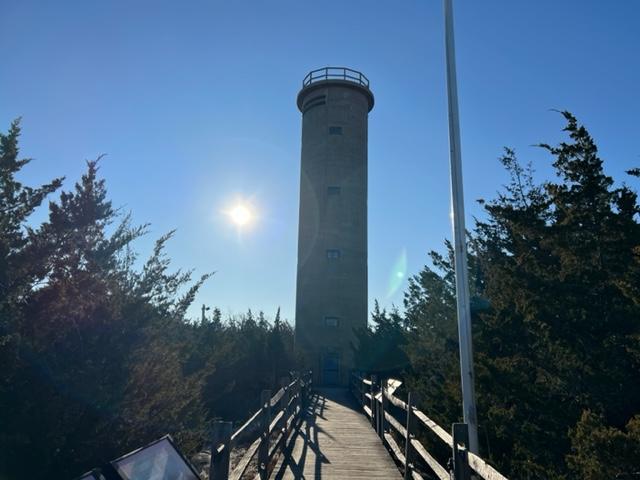
The Lookout Tower from Sunset Beach

The World War II Lookout Tower Museum & Memorial is an interesting look of how our armed forces used these towers to watch the coastlines for U-boats and enemy ships during the war. Several German submarines were spotted along the coasts of New York and New Jersey during the war and the threat of attack was uncertain. As the war progressed on though, we found that this was a war being fought in the air and these towers were actually obsolete by the end of the war.
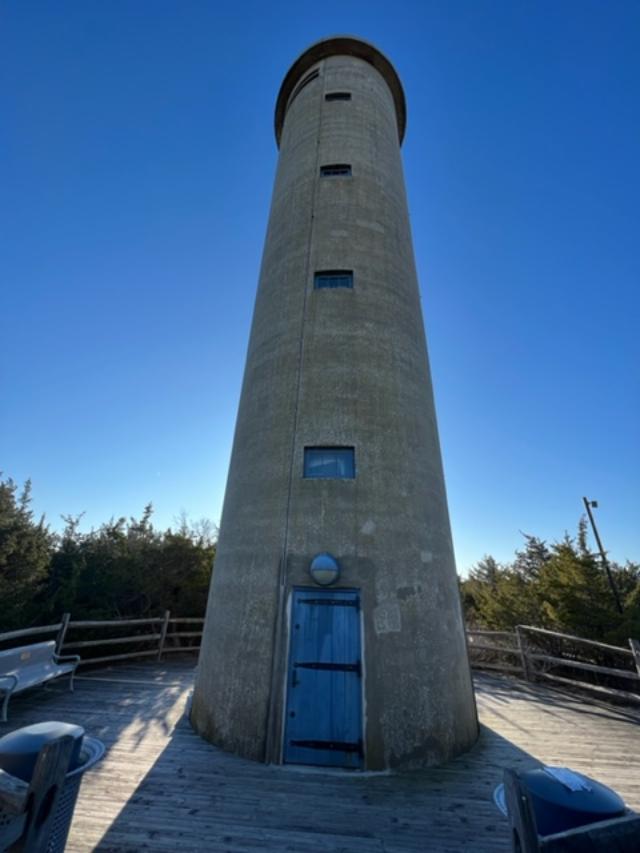
The World War II Tower

The tower is very interesting and very easy to climb. Don’t let the height fool you, there are only about a 100 stairs with landings on all three levels with displays on them. 
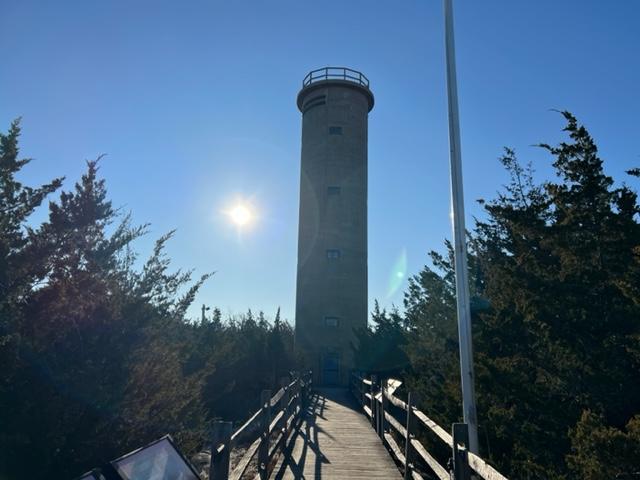
The bottom level has a gift shop and display pictures of the history of the tower. The second level has shots of veterans of the wars before when the were enlisted and today (when they were much older). There were a lot of local veterans to the Cape May area.

World War II Tower

World War II Tower pictures

The top level was manned by a docent who talked about the history of the tower, provided pictures of the area before and after World War II and the role it played during the war. She discussed the only ship attack since Pearl Harbor was right off the coast of New Jersey as well as the ‘Blackouts’ that were conducted in town to stymie any attacks.

World War II Tower

Take time to look over all the displays and pictures and the role Cape May had in the war to help protect the East Coast.

History of the World War II Lookout Tower Museum & Memorial:

Why is Fire Control Tower No. 23 administered by the Mid-Atlantic Center for the Arts & Humanities (MAC):

Like the Cape May Lighthouse, Fire Control Tower No. 23 is owned by the State of New Jersey (specifically the Department of Environmental Protection Division of Parks). As was the case with the Lighthouse, the State lacks the funds to restore and operate these historic structures. Instead it has leased them to the area’s leading cultural and historic preservation organization, the Mid-Atlantic Center for the Arts & Humanities (MAC). Founded in 1970, MAC saved and restored the 1879 Emlen Physick Estate and operates it as Cape May’s only Victorian house museum. Starting in 1986, MAC spent 15 years (and some $2 million) on the restoration of the Cape May Lighthouse.

In 2004, MAC signed a 20 year lease for Fire Control Tower No. 23. After raising one million dollars (from the New Jersey Historic Trust, the Casino Reinvestment Development Authority, a Small Cities Block Grant administered by the New Jersey Department of Community Affairs and Lower Township and a Save America’s Treasures Grant administered by the U.S. Department of the Interior), MAC restored the Tower in 2008-09 and opened it to the public in April 2009. MAC is also mounting permanent Memorial Plaques in the Tower that will allow family members to honor veterans of any war or engagement.
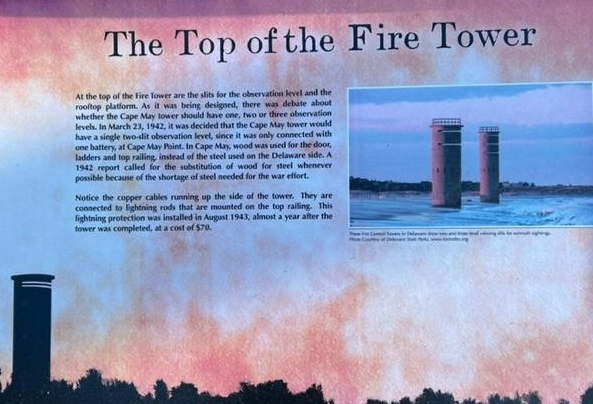
(This information was taken from the World War II Lookout Tower pamphlet proved by the Mid-Atlantic Center for the Arts & Humanities)

Was Fire Control Tower No. 23 used for spotting fires?

No, it was used for spotting enemy ships during World War II and aiming guns to fire on them.

This Fire Tower was part of Fort Miles. So, where was Fort Miles anyway?

Fort Miles was never a building. It was a number of fire control towers, gun batteries plus barracks and support buildings on both sides of Delaware Bay. By World War II, the military used a spread-out series of towers and batteries, whose firing ranges overlapped to protect a large territory. Its largest guns and headquarters were located on the Delaware side (in what is now Cape Henlopen State Park), since the shipping channel hugs the Southern shore of Delaware Bay.

Were there any other Fire Control Towers?

Yes, there were originally 15 concrete fire control towers, 11 on the Delaware side and four here in New Jersey. Of the four in New Jersey, the ones in North Wildwood and Wildwood Crest have been destroyed, while the one on Beach Avenue in Cape May has been engulfed by the Grand Hotel (with only its top visible, sticking above the roof). One of the towers in Cape Henlopen State Park in Delaware has been restored and opened to the public.

Were there any naval battles in the Delaware Bay?

No. German submarines sank many merchant vessels off the coast of Cape May but no German ships ever got up the Delaware River to attack the Philadelphia Navy Yard, Philadelphia or Camden.

Was Fire Control Tower No 23 built here or prefabricated?

The Fire Control was built here in June, 1942 by using a sliding tube shaped form.  A ring of reinforced concrete was poured. When that solidified, the form was slid up and more concrete was poured. The whole Tower was formed this way except for the top, which required a form of its own. The whole process took only two and a half days.

Was the Cape May area important during World War II?

Yes, the Cape May area was a beehive of military activity during World War II. Cape May harbor had a Naval Air Station, a Coast Guard base and an airport. Naval Air Station Wildwood (where the County Airport is now) trained aircraft carrier pilots. Cape May Shipbuilders on Wilson Drive, where the Cape May Whale Watcher is now, built Navy tugboats and dredges. The Northwest Magnesite plant, which made an ingredient used in firebricks for steel mills, was located across Sunset Boulevard from Fire Control Tower No. 23.

(This information was taken from the World War II Tower pamphlet and I give them full credit for it.)

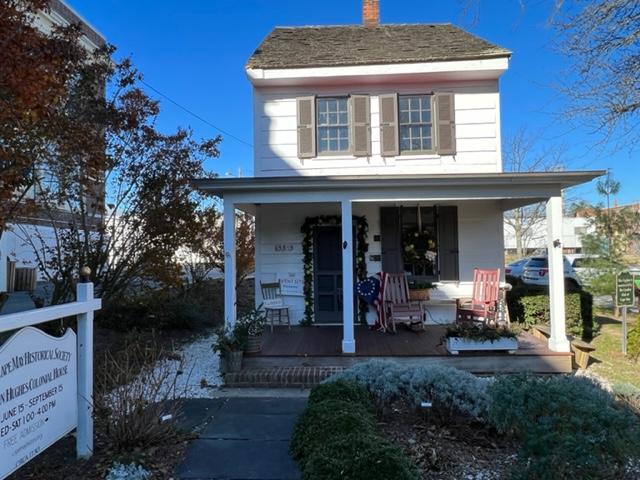
The Greater Cape May Historical Society                         6531/2 Washington Street                                                      Cape May, NJ 08204

The Greater Cape May Historical Society 6531/2 Washington Street Cape May, NJ 08204

The Greater Cape May Historical Society

6531/2 Washington Street

Cape May, NJ  08204

(609) 884-9100

http://www.capemayhistory.org/

http://www.capemayhistory.org/about-us.html

Open: Colonial House Museum hours:

Wednesday-Saturday, 1:00pm-4:00pm June 15th-September 15th

Open during Victorian Weekend in October. Special exhibits at Halloween and Christmas.

My review on TripAdvisor:

https://www.tripadvisor.com/Attraction_Review-g46341-d286395-Reviews-The_Colonial_House-Cape_May_Cape_May_County_New_Jersey.html?m=19905

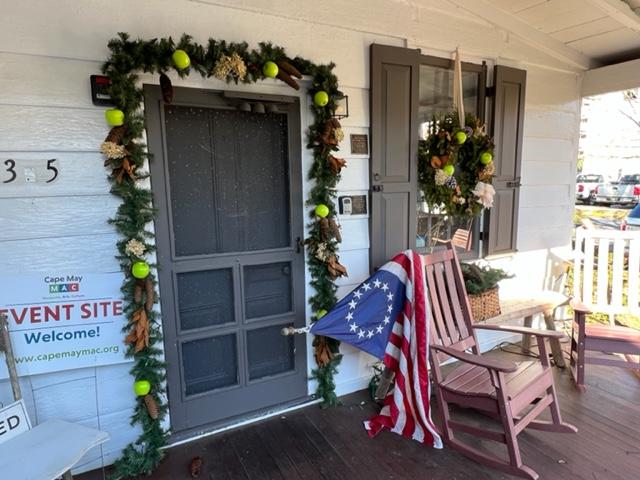
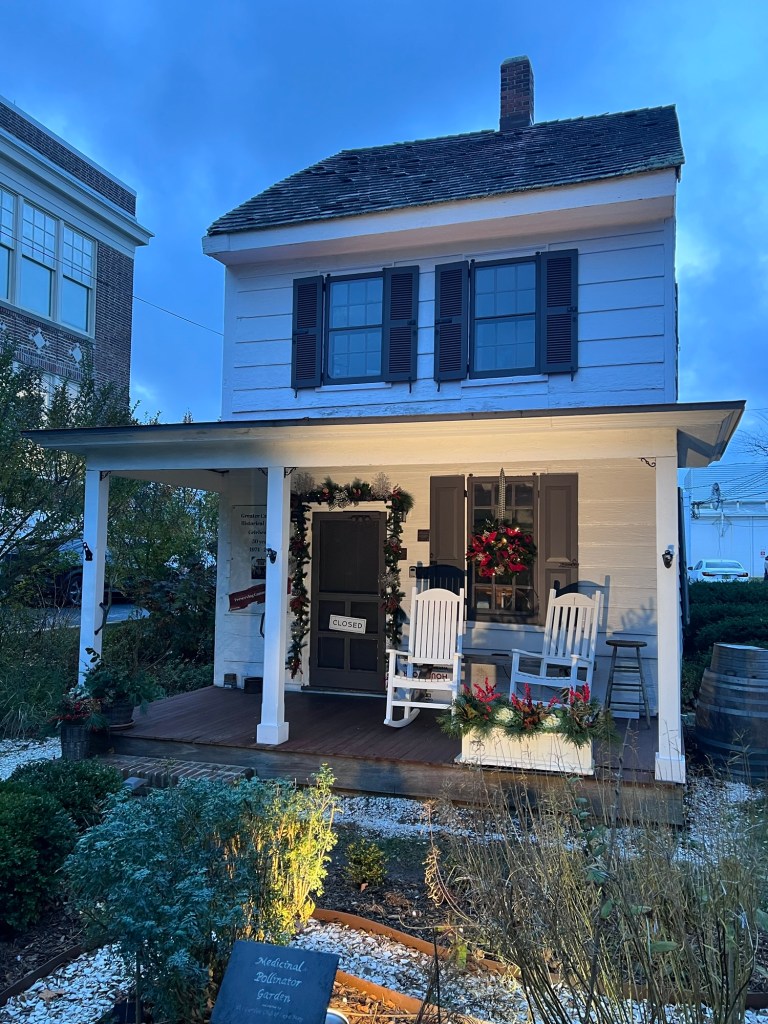
The Historical Society at Christmas time.

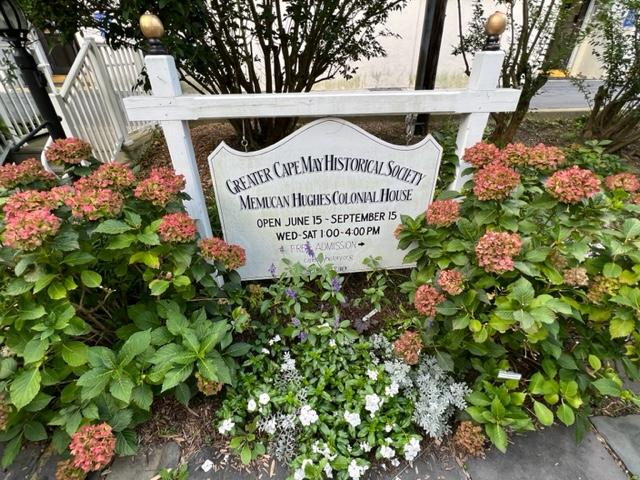
The Cape May Historical Society in the summer of 2023.

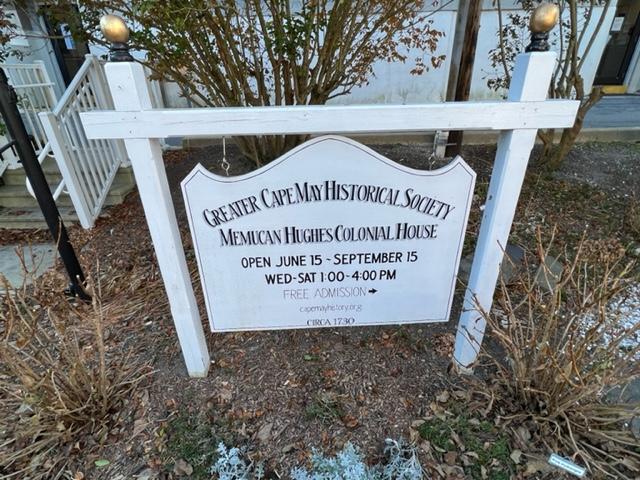
What an interesting visit I had to the Cape May Historical Society’s Memucan Hughes Colonial House. This tiny museum is only open between June 15th-September 15th and after that only for special events.

It is an fascinating little home that was built somewhere between 1730 to 1760. The original house no one is too sure if it had been built for the original owner or had been there and added on to as the records for the age of the house are unclear.

The welcoming sign at Christmas

The sign in the summer of 2023.

The home consists of two small downstairs room filled with period furniture and decorations and there is an upstairs with three small rooms that have just opened up to the public. The front room Mr. Hughes used as a tavern that he kept open until almost the 1800’s. He had catered to a growing whaling industry that needed some form of entertainment in this quiet town that was isolated from the rest of the state.

The Pub in the front room of the house for meals and conversation.

The Front Room of the house served as a pub for visiting travelers.

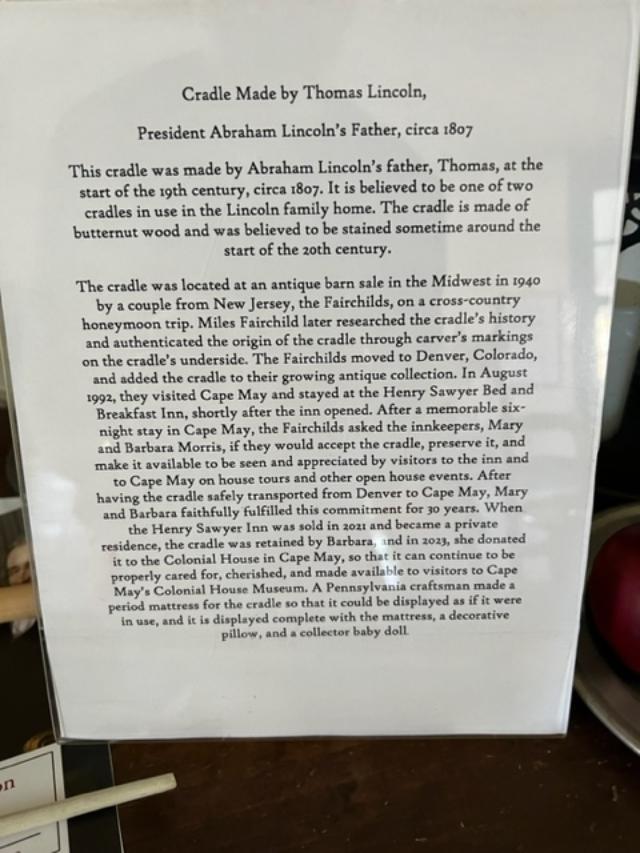
The room was set up for dining and amusements. The Lincoln Crib is in the background.

The Lincoln crib was built by Abraham Lincoln’s father.

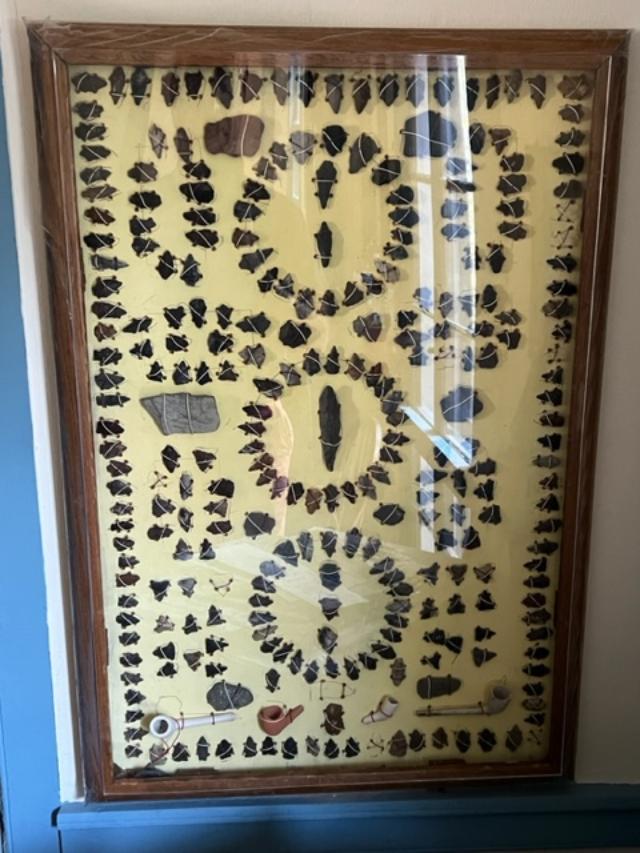
The Arrowhead and Pipe collection in the Pub Room.

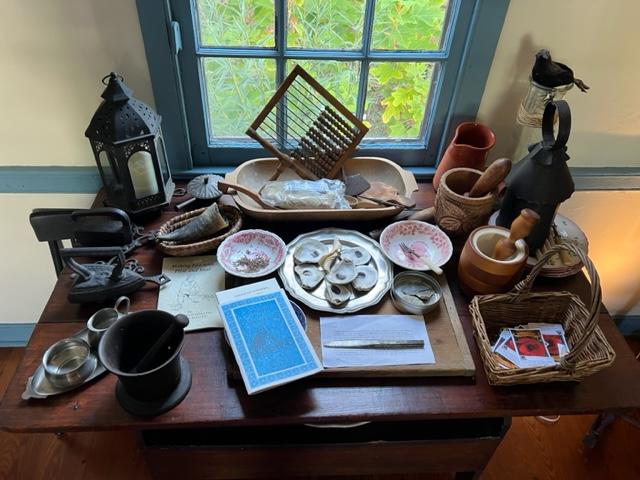
The front of the house is decorated as tavern to greet guests. There were tables filled with games and items that would have catered to the trade but still you knew you were in someone’s home. There are vintage card tables, board games and some household items.

The Living room at the Cape May Historical Society

The back room is a closed off kitchen with a fireplace and spinning wheels and wash tubs, all the things to run a household. There were also children’s toys, kitchen and garden gadgets and family items to personalize the house.

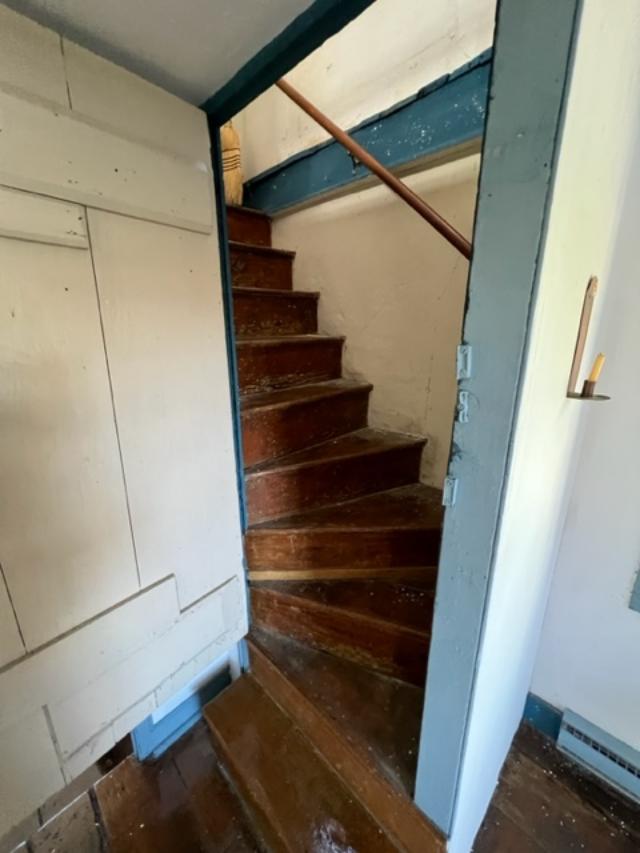
The narrow stairs lead to the upper bedrooms and the attic loft.

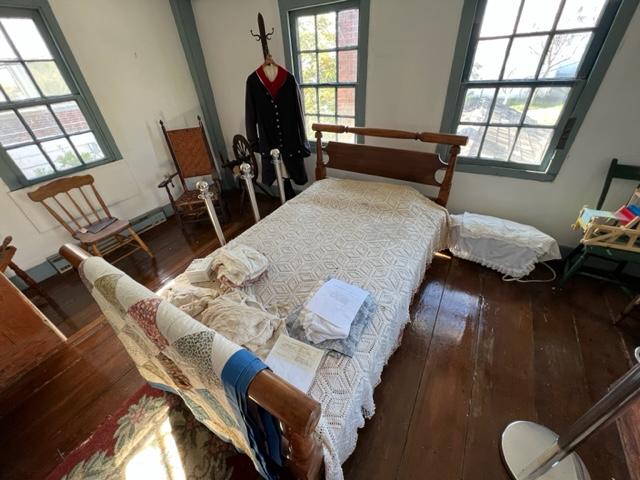
The upstairs bedrooms and the attic room were open in the summer of 2023, and I got to see the whole house. The upstairs is supposedly haunted, but I did not see anything. What I did see was how large the house really was and why the family of eight were able to live in this small house.

The upstairs bedroom

The upstairs bedroom

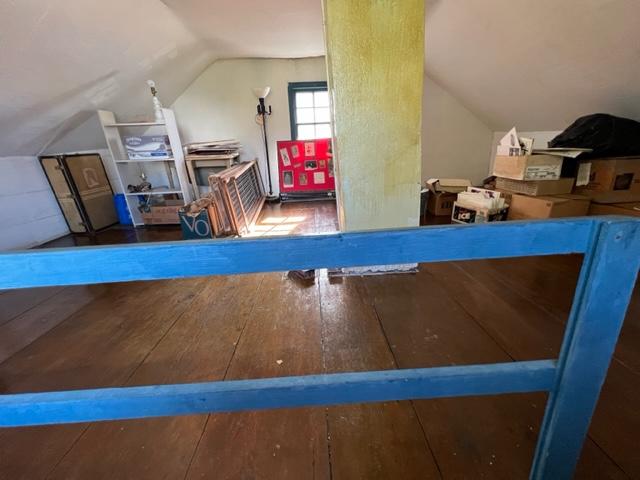
The attic loft room was supposed to be haunted but I saw nothing.

During the Victorian Age, the family came into a more prosperous life and built the big house in the front of the home.

The Hughes mansion in the Victorian times sits right in front of the old house and is now a B & B

The Hughes family lived in the house until the Victorian age and then they built the house on the front of the property and moved the smaller house to the back of the grounds. The house had been moved three times since its original location on the main road a few blocks away.

The tour itself is only about a half hour long and the guides do a nice job explaining the history of the house. On the gloomy day I visited, the museum was very busy with people visiting the house and with its connection to colonial history and the popularity of the musical, “Hamilton”, it is making it a popular destination when visiting Cape May.

History of the Museum:

The sign outside the house

The mission of the Greater Cape May Historical Society is to collect, preserve, document, interpret and share the history of Greater Cape May and to enhance the appreciation of that history through the Society’s historic site, The Colonial House Museum, collections, research, exhibitions, educational programs and publications.

The Hughes family home during the Christmas Holiday season 2022

All are invited to visit the Colonial House Museum, a 1700’s era house. The house was moved to its present site next to City Hall when the Hughes Family built the grand Victorian that is now a Bed & Breakfast.

The Hughes family home of the 1700’s at Christmas time.

The house decorated for the holidays in 2025

Th Ed front of the house decorated for the holidays

Come visit us and see the House as it was with a Tavern Room and a Common Room when it was owned by Memucan Hughes. On display are period furnishings and other period household items.

The Hughes family home of the late 1800’s

The Society presents an annual exhibit dedicated to an unique chapter of Greater Cape May History along with special events for Halloween and Christmas.

Disclaimer: This information was taken directly from the Greater Cape May Historical Society’s pamphlet, and I give them full credit for it. Please call the above number for more information and selected openings.

The Cape May Historical Society in the summer of 2023.

Montclair Art Museum 3 South Mountain Avenue Montclair, NJ 07042

Montclair Art Museum

3 South Mountain Avenue

Montclair, NJ   07042

Phone: (973) 746-5555/Membership: (973) 259-5147

http://www.montclairartmuseum.org

https://www.montclairartmuseum.org

Open Wednesday-Sunday 12:00pm-5:00pm/Monday & Tuesday Closed

Admission: Non-Member Adults $12.00/Seniors (65+) and Students with ID $10.00/Members and Children under 12 Free

My review on TripAdvisor:

The front of the Montclair Art Museum at 3 South Mountain Avenue in the early Fall

I have made many trips to the Montclair Art Museum over the years and have always found it to be a very interesting and engaging museum. The curators mount fascinating exhibitions sometimes from the permanent collection and sometimes from traveling shows.

The statue in front of the entrance of the museum

The galleries are smaller and more compact so the exhibitions are not over-whelming like in the bigger museums. You can see each exhibition in about forty-five minutes to an hour and you will still see a lot. There are also smaller exhibition spaces which specialize in one artist and you might see about a dozen pieces.

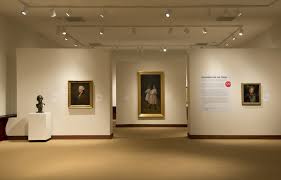
There are two exhibitions going on currently in the museum. One is “Constructing Identity in American”, which is a permanent collection show of more than 80 paintings, sculptures and works on paper that will address a variety of characteristics that contribute to one’s sense of self, including civic, cultural, artistic, religious, professional and sociopolitical identities, sense of place and personal space and non-conformity. This exhibition goes far beyond portraits to explore other aspects of sense of self (Museum pamphlet).

Montclair Art Museum II

“Constructing Identity in America” exhibit

Native American Galleries

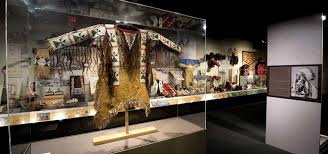
The other exhibition is called “Undaunted Spirit: Art of Native North America” which focuses on the Native American culture from Prehistoric times to the modern era. It , seems that by the end of the Civil War the Victorians were collecting art and objects of the Native Americans fearing that their cultural was disappearing. There is a lot of focus on pottery, both modern and pre-colonial, clothing construction, jewelry making with turquoise and silver and basket-making which was all the rage at the turn of last century. I like the modern aspects of the art as they are ushering a new era of artists of the southwest and giving them a voice. Take time to look at the detail work of the show.

Montclair Art Museum III.jpg

“Undaunted Spirit: Art of Native North America” exhibit

Montclair Art Museum Mission Statement:

(This is from the Montclair Art Museum website)

Mission Statement: The Montclair Art Museum, together with its Vance Wall Art Education Center, engages our diverse community through distinctive exhibitions, educational programs and collection of American and Native American Art. Our mission is to inspire and engage people of all ages in their experience with art, including the rich inter-cultural and global connections throughout American history and the  continuing relevance of art to contemporary life.

Vision, Values and Diversity Statement:

After 100 years of service, MAM is recognized as the leading American art museum and community art school in Northern New Jersey. As a organization, we value: artistic inspiration, diversity of voices, individual and group creativity and the importance of all arts to a civil, inclusive and forward-thinking society.

We respect and welcome individual differences and strive to maintain an environment that fosters productivity, creativity and individual satisfaction by celebrating the diversity of race, gender, nationality, age, religion, sexual orientation and physical abilities.

During our second century, we will invigorate our collections and curatorial presentations; expand our educational services audience; support artists, their work and connections; pursue productive institutional partnerships and embrace new media and technology. We will also secure MAM’s financial stability and preserve its facilities and other assets in a prudent and sustainable way.

A notable community institution with an international reputation, the Montclair Art Museum (MAM) is still located in the same-though now thrice expanded-building in which it opened in 1914. Situated amid a beautiful tree-lined residential area of Montclair New Jersey, just 12 miles west of New York City, the Museum is esteemed for its holdings of American and Native American Art, its exhibitions, its family and public programs and its art school. It welcomes more than 65,000 visitors annually.

The entrance of the Montclair Museum

The History of the Museum:

(from the museum website)

The Museum was a pioneer: one of the country’s first museums primarily engaged in collecting American Art (including the work of contemporary non academic artists) and among the first dedicated to the study and creation of a significant Native American art collection. This pioneering spirit still reverberates in the  Museum’s pursuit and presentation of high-quality art that characterize and celebrates American’s diversity, including the recent launch of its Contemporary Art Program, in 2010, providing MAM an opportunity to showcase dynamic contemporary work and expand the Museum’s contemporary art holdings. A main showcase dynamic contemporary work and expand the Museum’s Contemporary holdings.

A main feature of the MAM program is to explore the interplay between historical and contemporary art to our understanding of the larger historical context in which art is created, presenting work that is being challenging and accessible. A key component of the Contemporary Art Program is it New Direction exhibition series of solo artists, established in 2011. Artists featured in the series include Marina Zurch, Saya Woolfalk, Spencer Finch and Sanford Biggers. Most recently in Spring 2015, MAM presented its largest and most ambitious exhibition of contemporary art to date, “Come as You Are: Art of the 1990’s”.

From its founding, the Montclair Art Museum has maintained a vital presence in its surrounding community. The Museum’s collection began with gifts from prominent Montclair residents that included both American and Native American art, laying the foundation for the Museum’s holdings. MAM’s Inness Gallery is one of the only galleries in the world dedicated to the work of America’s greatest landscape painter, who spent the last nine years of his life in Montclair, from 1885 onward and who drew inspiration from the local landscape. Other well-known artists followed in his footsteps, cementing Montclair’s reputation as an intellectual center and artist’s colony, a reputation its retains to this day.

Mam’s collection has grown to over 12,000 works. The American collection, which started with a gift of 36 paintings from William T. Evan’s, comprises paintings, prints, drawings, photographs and sculpture dating from the 18th century to the present and features excellent works by Benjamin West, Asher B. Durand, John Singer Sargent, Edward Hooper, Georgia O’Keeffe, Andy Warhol and Roy Lichtenstein as well as younger and emerging artists such as Louise Lawler, Chakaia Booker, Whitfield Lovell and Willie Cole.

The museum’s superb holdings of traditional and contemporary American Indian art and artifacts, New Jersey’s largest, represent the cultural achievements in weaving, pottery, wood carving, jewelry and textiles of indigenous Americans. The collection was begun by Annie Valentine Rand and carried on by her philanthropic daughter Florence Rand Lang, one of the Museum’s founders and continues to grow with philanthropic daughter Florence Rand Lang, one of the Museum’s founders and continues to grow with commissioned works, gifts and purchases that celebrate the vitality and modernity of traditional forms and beliefs. Among the contemporary American Indian artists represented are Tony Abeyta, Dan Namingha, Jaune Quick-to-see Smith, Allan Houser , Bently Spang and Marie Watt.

Equally important for its community presence and its reputation are the Museum’s public and family programs and art school, serving everyone from toddlers to senior citizens. Collaborations with numerous cultural and community partners bring artists, performers and scholars to the Museum on a regular basis. Guests have included Holland Cotter, John Elderfield, Bill T. Jones, Jeff Koons, Faith Ringgold, Winfred Rembert, Kiki Smith, Philip Pearlstein, Shirin Neshat and Lorna Simpson. More than 10,000 K-12 students from 190 school districts visit the Museum every year. Free Family Days, a Family Lab, MAM Park Bench, Home School Days and Birthday Art Parties allow families to experience art in variety of different ways. As the New Jersey affiliate of the Scholastic Art & Writing Awards, MAM opens opportunities to creative teenagers to gain national recognition for their work. The Museum also provides programs for seniors and special needs individuals-such as the hearing impaired and people with Alzheimer’s as well as training for teachers in the arts.

MAM’s art school, now the Yard School of Art, has been an integral part of the Museum’s life nearly from the beginning. It was founded in 1924 just 10 years after the Museum itself and has operated continuously since then offering courses year-round to kids, teens, adults and seniors. Courses cross a broad range of the artistic spectrum, including drawing, painting, collage, pastel, printing making and illustration. In 2011, the school launched two new areas: a Ceramics Studio and a Digital Media Lab.

In 2014, MAM celebrated its Centennial with a yearlong program of activities, which included a Birthday Party on January 15, exactly 100 years from the day of its founding that attracted thousands of visitors. In honor of the Centennial the Museum also commissioned internationally renowned artist Spencer Finch to create a site-specific installation that has transformed the Museum’s facade, making it a more inviting point of entry.

The first institution in New Jersey designed as a museum and one of the first in the nation to be accredited by the American Association of Museums, the Montclair Art Museum as it marks its Centennial, continues to seek novel ways, through its exhibitions, educational programs and outreach efforts to inspire and inform its growing and ever more diverse audiences.

(This information on the history of the Montclair Art Museum was taken from their website and I give the Museum full credit for the history of the Montclair Art Museum).


Hamilton-Van Wagoner House Museum                     971 Valley Road                                              Clifton, NJ 07013

Hamilton-Van Wagoner House Museum 971 Valley Road Clifton, NJ 07013

Hamilton-Van Wagoner House Museum

971 Valley Road

Clifton, NJ  07013

(973) 744-5707

https://www.cliftonnj.org/256/Hamilton-House-Museum

Open: Sunday 9:00am-5:00pm/Monday & Tuesday Closed/Wednesday-Saturday 9:00am-5:00pm

Fee: Suggested Donation $5.00

My review on TripAdvisor:

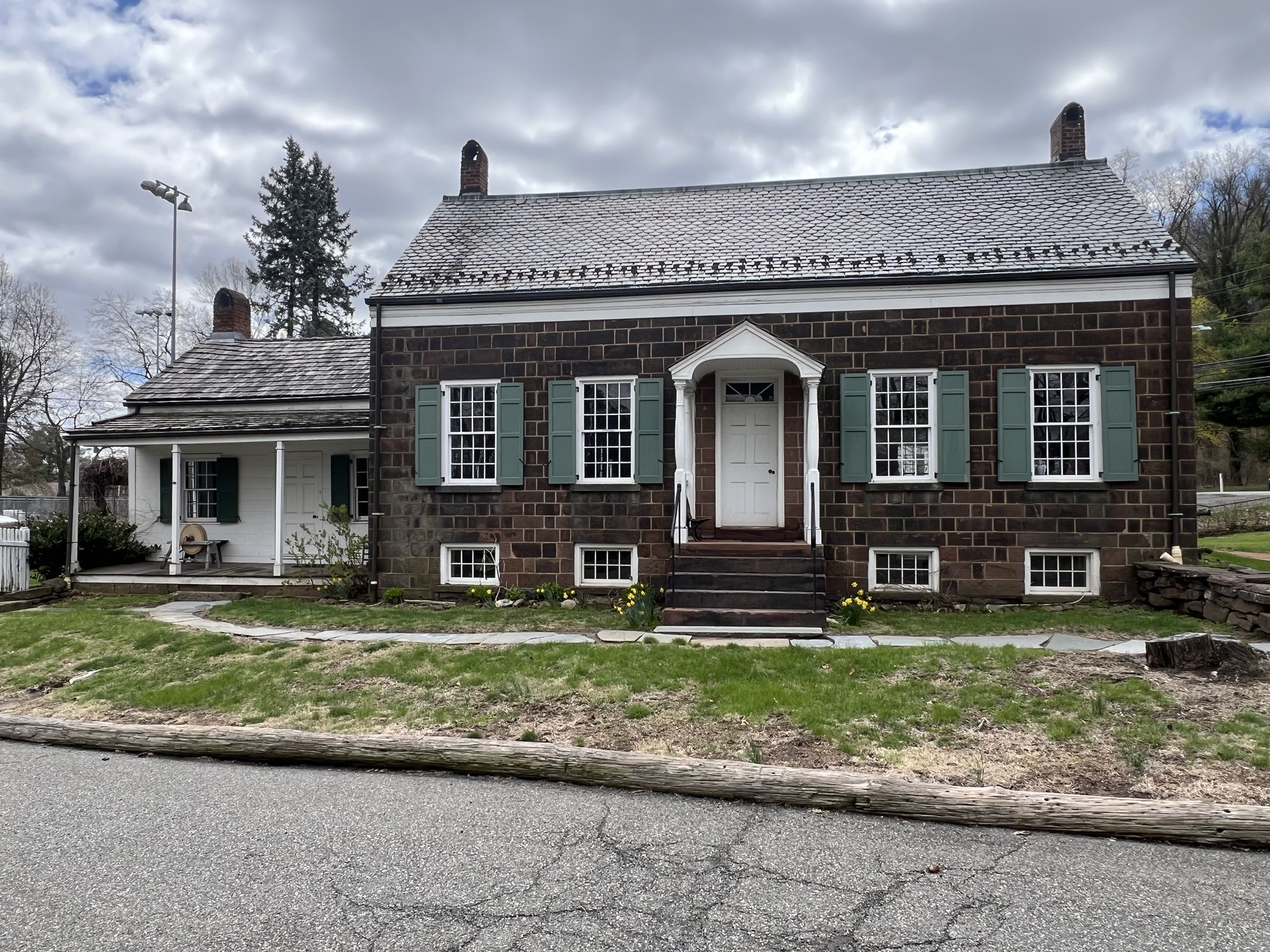
 The front of the Hamilton House in the early Spring

I visited the Hamilton House Museum this afternoon which is right down the road from Montclair State College and sits at the border of the Clifton-Montclair border. The interesting part of the house location is that it still sits the farm land of the Van Wagoner Family but the house was moved from its location to the current one because of the building of Route 46 in 1973.

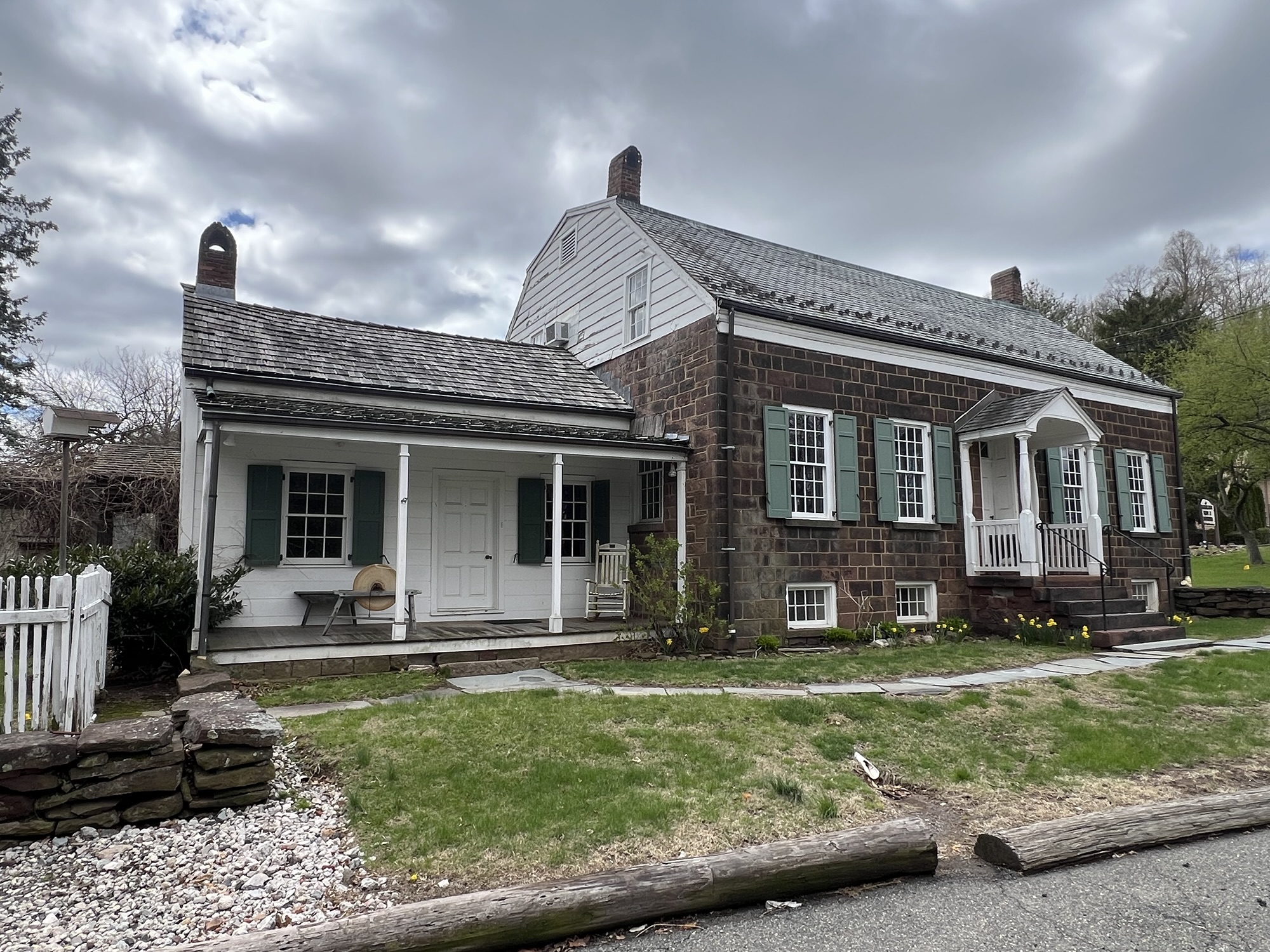
The front of the house in the Spring

When talking with curator, the house is going through a transition from the City of Clifton ownership to the County of Passaic Historical Society’s site. They are currently cataloging every piece in the house and putting it online. They want to view the collection to see what they can work with within the home.

Each room represents a different time in the history of the house. There is a living room from the Victorian age, the kitchen is from the late 1700’s to the early 1800’s and the dining room is from the mid-1800’s. These rooms are furnished to represent a certain time in the house.

There will be many revisions in the future for the house so there are some changes on the way. The upstairs is currently being used for storage and there will be revision there as well. I got a quick tour of the rooms with the curator and he said there will be more changes in the future as they catalog each piece. The grounds are currently being replanted.

The Hamilton House Museum sits at the Clifton and Montclair border

The house is one of the last examples of early 19th century stone houses in Passaic County. The house was built in 1817 by John and Ann Vreeland and then passed to the Van Wagoner family. It changed hands a few times until 1856 when the Hamilton Family bought the house (no relationship to Alexander Hamilton). The house remained in the Hamilton Family until 1972 when the last living relative died and no one in the family wanted possession of the house (Tour Guide & Wiki).

The oldest section of the house

That’s when the City of Clifton bought the house from the family of its historic value. The house was added to the National Register of Historic Places on May 13th, 1982 (Wiki).

The outside grounds of The Hamilton House Museum

The Grape Arbor on the grounds of the Hamilton House

History of the Hamilton House:

(taken from the City of Clifton website)

This 18th Century Dutch gambrel-roofed homestead was once the home of the Van Wagoner and Hamilton families. This basic of the house does not greatly differ from its Dutch antecedents.

The sturdy one and one half story cut sandstone structure, flanked by a grainery, spring-house and gardens reflects almost two hundred years of American history. It brings back memories of an uncluttered horizon with farms, orchards, fresh brooks, forest full of game and filled with scent of wildflowers.

Hamilton House & the Clifton Community:

Although the City of Clifton was incorporated in 1917, a community had existed since 1679. Prior to 1917, the area was known as Acquackanonk Township and included parts of : Little Falls, Passaic, Paterson and West Paterson.

The Indian Chief Captahem deeded 11,000 acres to the early Dutch settlers on the shores of the Passaic River. Predominately rural, this sparsely populated village thrived and grew.

The farmhouse was presented to the City of Clifton by the developers of the late Henry Hamilton. The Hamilton family had bought the 96 acre property in 1856 and for over 100 years until the death of Mr. Hamilton in 1970, it had been the family home.

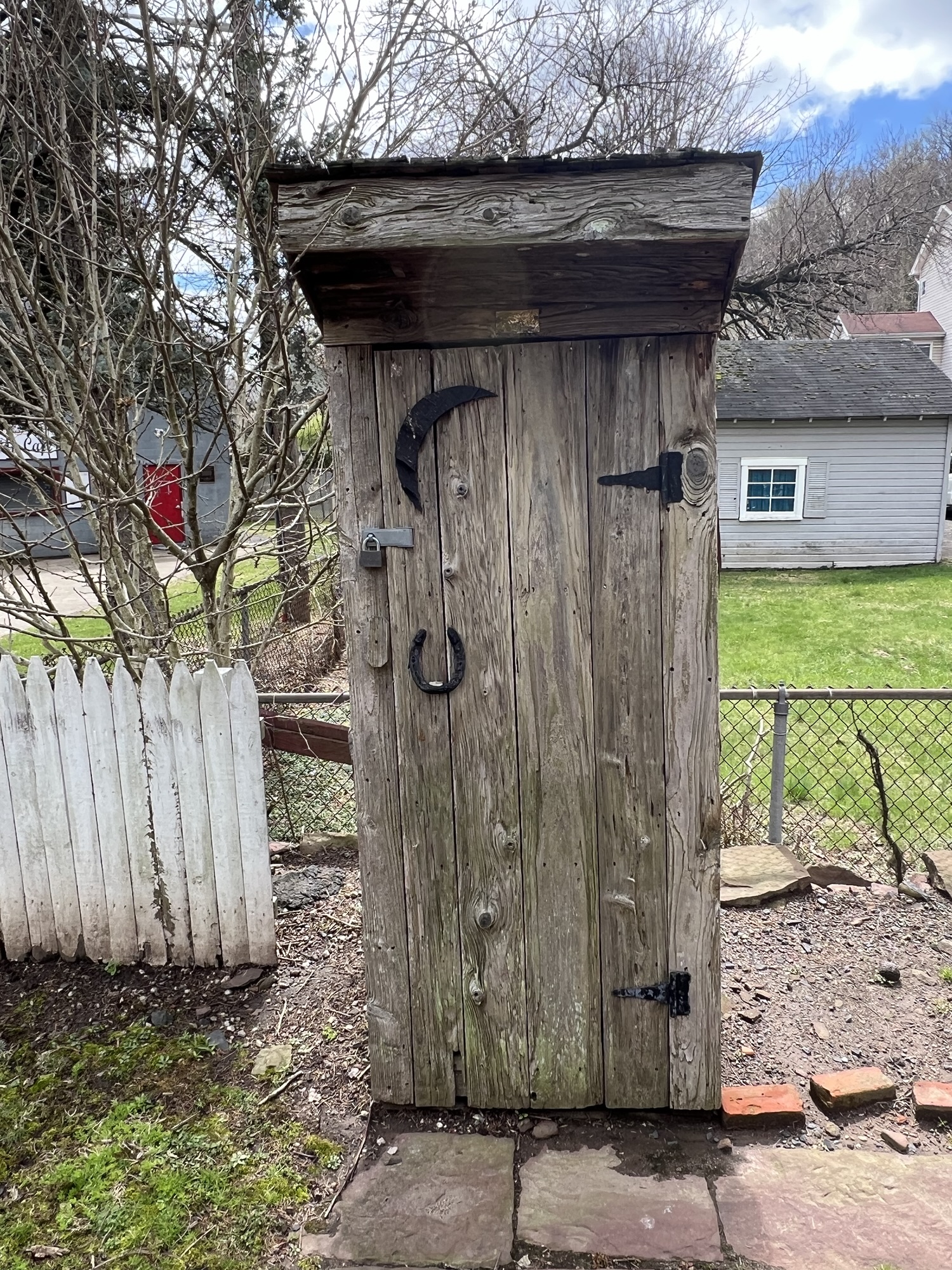
The old outhouse in the back of the property

Current Location and Future Plans:

The house was moved to its present location in Surgent Park in 1973. Infinite plans have been taken with examination and documentation of the building’s structural elements. Extensive research has been conducted including the records and treasured memories of Miss Caroline Hamilton as well as: Artifacts, Deeds, Manuscripts, Maps, Photographs and Wills.

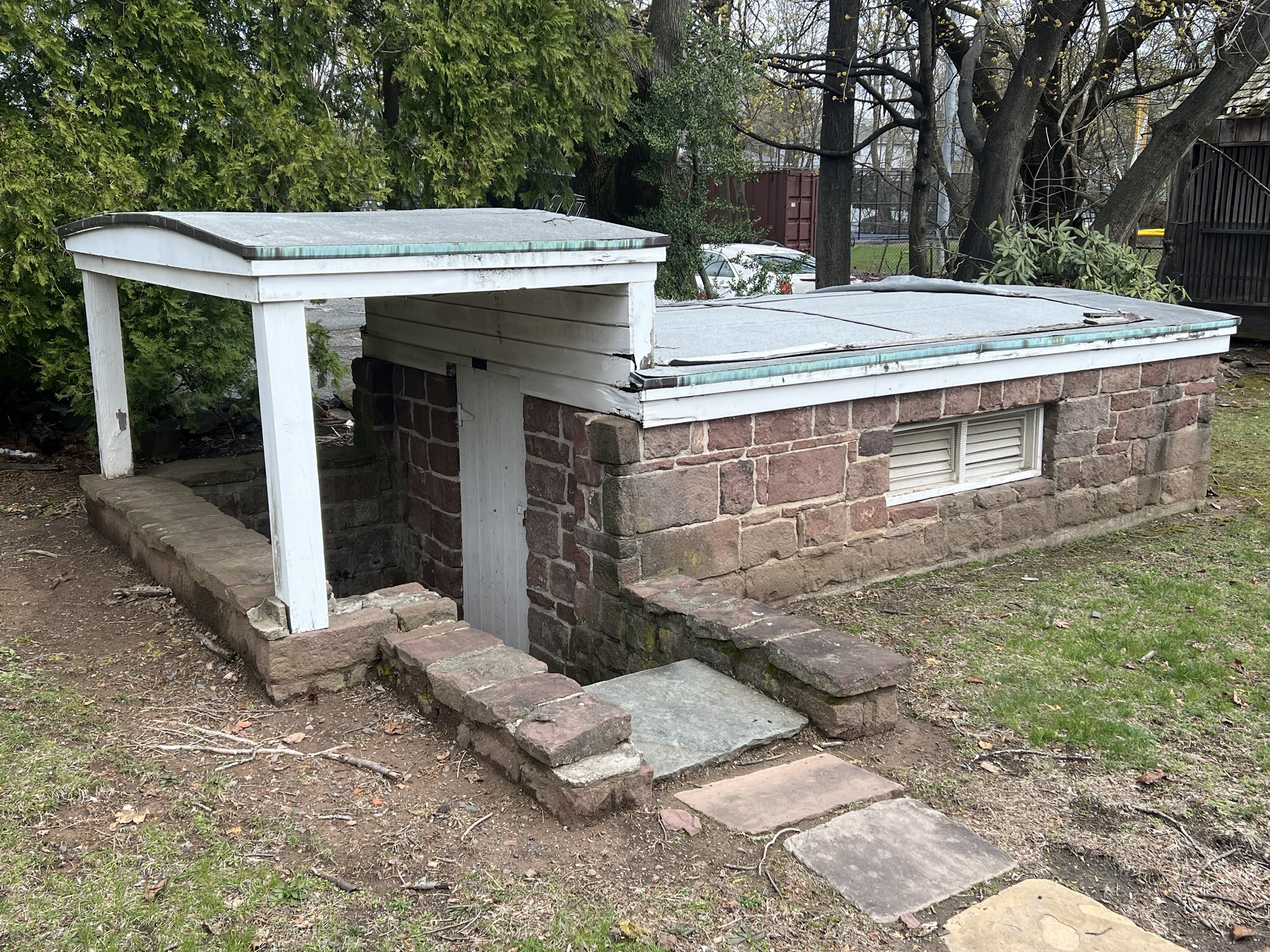
The old Ice House on the property

Scheduling Tours:

The museum is opened for tours on Sunday from 2:00pm-4:00pm (except on holidays). The house is going through a transition right now with the change over.