The John Fell House in April 2023 for the Northwest Bergen Historical Coalition event
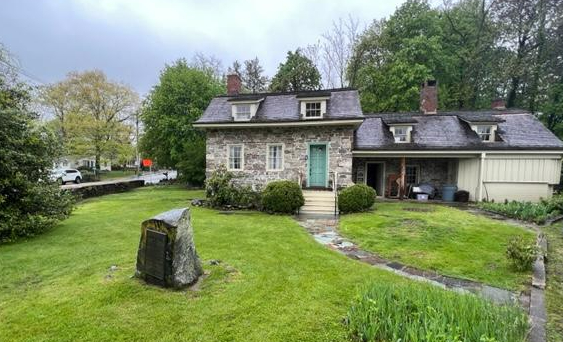
I visited the John Fell House in May 2016 for the Northwest Bergen History Coalition 6th Annual History Day on “Day Forty-Three” of “MywalkinManhattan.com” blog site. The house is a stately home that sits at a busy point of the Franklin Turnpike, once the main artery of this part of Bergen County.
I was not too sure what this was as it was at the back of the house. I thought it might be a food cellar.
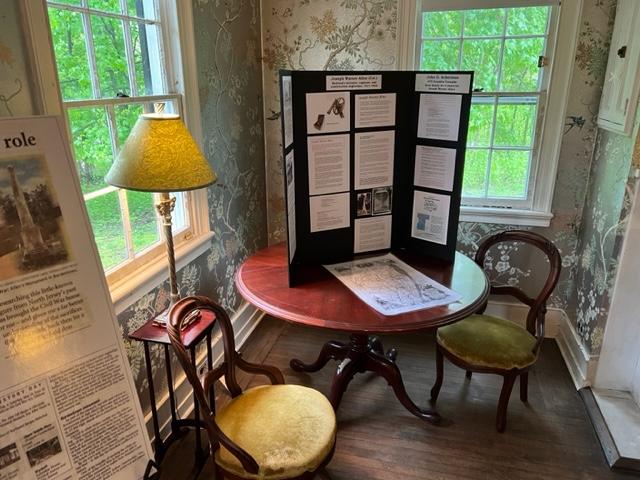
The only problem I found about visiting the John Fell home is that it is barely furnished. Most of these homes in Bergen County have furniture or heirlooms left by the family and this house is more used for entertaining. There are displays all over the house.
The backyard of the John Fell House in Allendale, NJ
The house is operated by the Concerned Citizens of Allendale and sits on 2.8 acres of land which includes the stately home, the Gothic Revival Barn, wetlands and old-growth trees. The house is across from the Celery Farm Bird Sanctuary, which was once part of the estate and is open to walkers year round (BCHS).
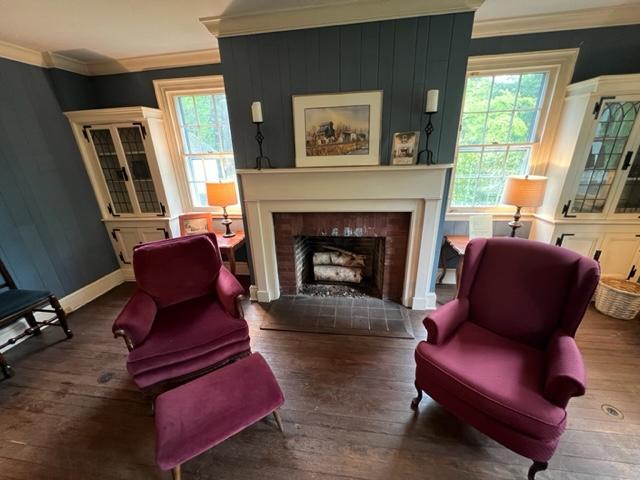
The front room of the John Fell Houser
The historic John Fell House is named in recognition of Founding Father, John Fell, a revolutionary war patriot, who purchased the property in 1766.
The Living Room at the Fell House in the late 1800’s addition
The house is located on the march route of Rochambeau’s army, on its way in 1781 to Yorktown, Virginia and the Seige of Yorktown that would decide the American Revolutionary War (Wiki).
John Fell (1721-1798) was an American merchant and jurist. He was born in New York City in 1721, he was engaged in overseas trade and has acquired a small fleet of ships by the time he moved to Bergen County, NJ in the 1760’s and lived at ‘Peterfield’, a home in present day Allendale, NJ (that is now known as the ‘John Fell House’) (Wiki).
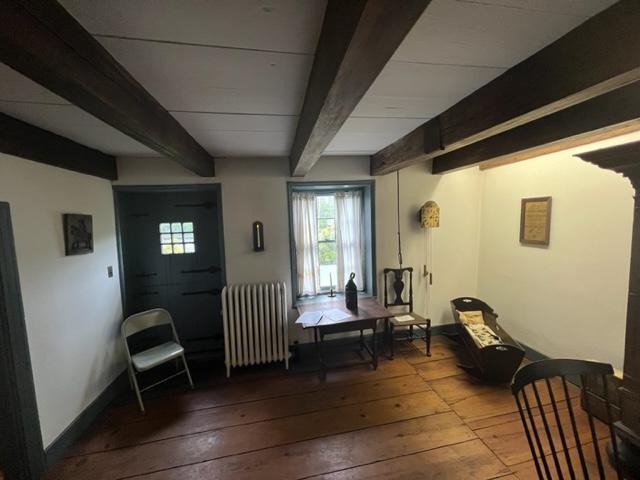
The original part of the house from the 1700’s
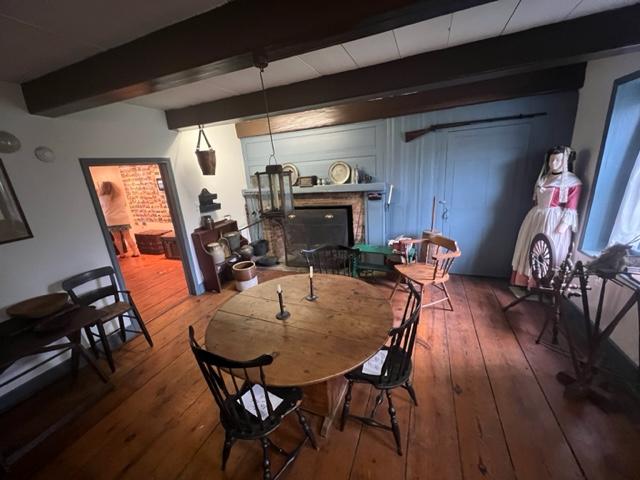
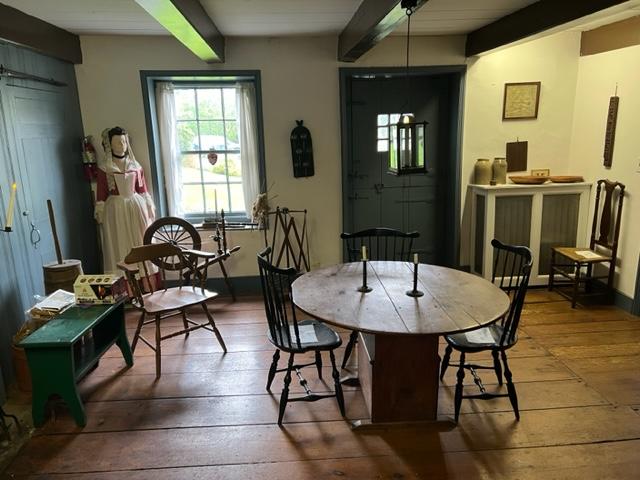
The main room of the original 1700’s part of the house
The Living and Dining Room of the original house
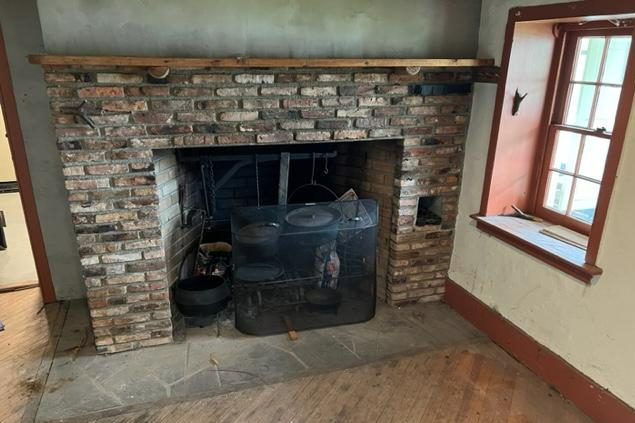
The original fireplace in the older part of the house
The inside of the Fell House
He served as judge of the court of common please in Bergen County from 1766 to 1774. With the coming of the American Revolutionary War, he became chairman of Bergen County’s committee of correspondence and the committee of safety. He was Bergen County’s leading delegate to the Provincial Congress of New Jersey in 1775. In 1776, Fell was elected to a one-year term in the New Jersey Legislative Council representing Bergen County.
The antique dishware and tea pots in the kitchen at the John Fell House
The house is open for all sorts of special events and can be rented out. Please check out their website above for more details.
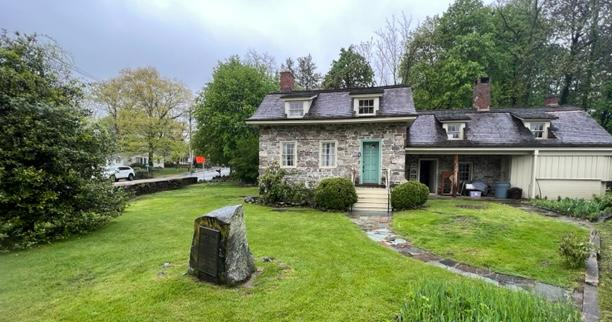
The Van Allen House in 2023 during the next History Coalition
I visited the Van Allen House on my first trip on the Northwest Bergen History Coalition 6th Annual History Day tour of Upper Bergen County in 2016 and in 2019. It is mentioned on ‘Day Forty-Three’ of my blog, ‘MywalkinManhattan.com’. It had been my last stop of the day. The historic home is currently closed due to renovations on the house and will open in the Fall of 2019.
The Van Allen House during the renovation in 2023 with the added dormers
Of all my stops that day, I found that the Van Allen House was in need of a renovation. From the outside, it is very quaint. On the inside, the house needed a lot of fixing up and restoration work. The upstairs had water marks all over the ceilings. The gardens also needed some serious weeding and planting. IN 2023, the renovations of the upstairs had been completed and the home was replastered and painted. Most of the artifacts were stored in a few rooms that were being finished.
The kitchen is as you enter the home
During the renovation, a lot of the artifacts were being stored in the addition to the house that took place in the early 1800’s. Many of the things that had been donated were showcased in this room off the kitchen and shows the wide variety of the society’s collection. There were all sorts of items from the home, decorative pieces and a variety of things that would have been used at the house as it being a working farm. There were also many Native American artifacts.
Some of the artifacts in the downstairs room
Artifacts in the room downstairs
Household items donated to the society
More household items of the Van Allen House
More artifacts of the Van Allen House Collection
The vast array of items in the downstairs addition of the house will be used all over the house once the renovation is completed sometime in the next two years. There was still a lot to do around the house. There had been so much damage to the house over the years that it needed a major renovation.
The upstairs had been finished with the addition of the domers which a few of the society members had said that these were not part of the original house. They can debate about it but the house looks really nice with them and makes the house look realistic. Still from what the people said that they were not part of the original design.
You could see the vast improvement in the house over the last three years and the extent of the work that had been done already. All the outstairs rooms had been plastered and painted. The rooms looked very modern,
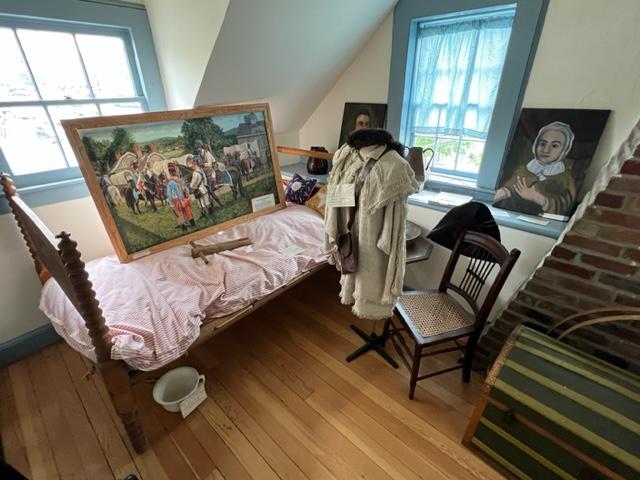
The upstairs has been nicely restored
The upstairs rooms now house many of the home furnishings of the collection along with clothes and personal items of families that have donated them over the years. The upstairs is just finishing the renovation so things will have to be organized in the future but at least you can see the things that the Historical Society has in the collection.
Household items in the collection upstairs
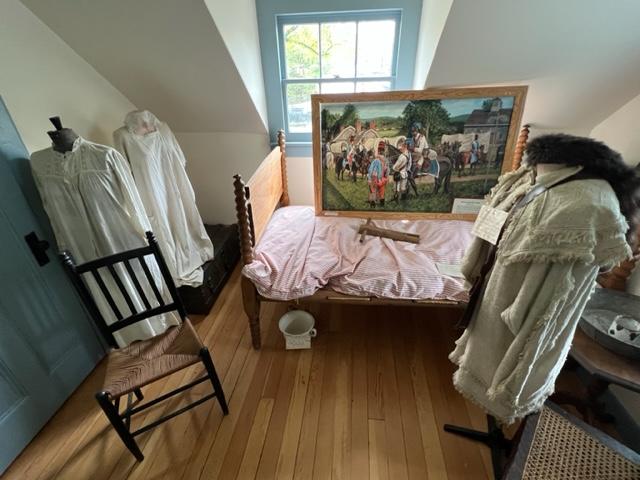
Clothing and bedding items at the Van Allen House
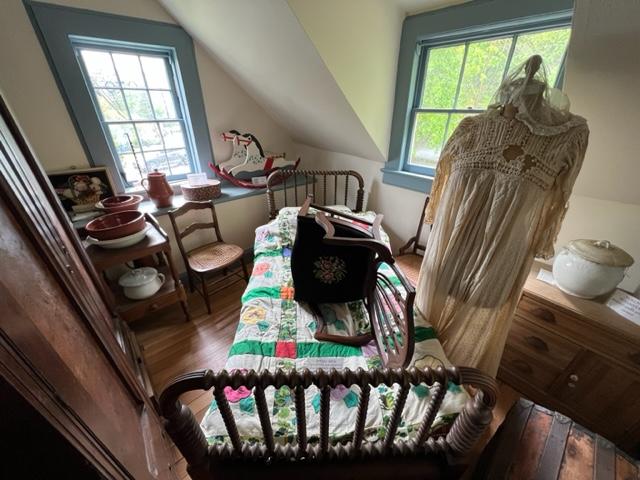
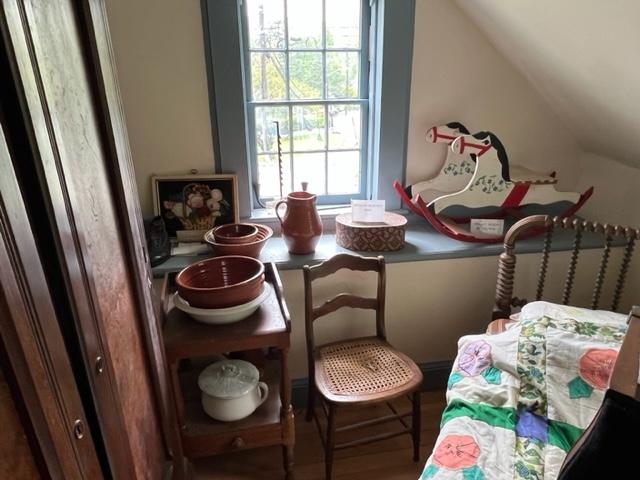
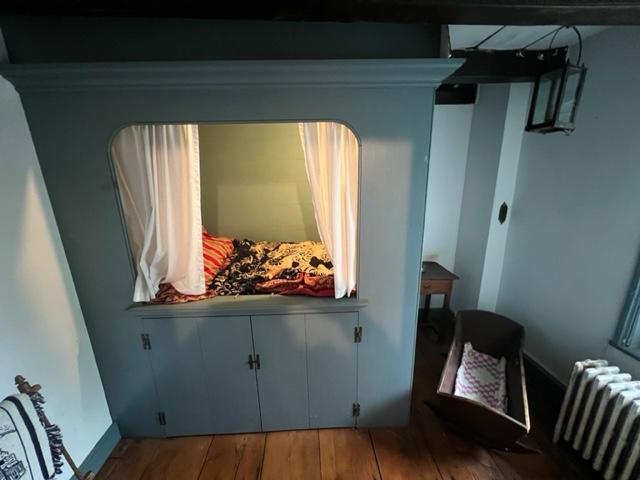
The smaller bedroom of the Van Allen House
One of the best things of the house is its gift shop. It has some of the most unusual handmade gifts that it was worth the trip out to the house. One of the members makes handmade cloth dolls for $5.00 that are just quaint and make a beautiful gift.
The Oakland Historical Society, who operates the house, was putting a lot of time and effort in the renovations of the house and their volunteers I was told would be working on the gardens. Either way, it is an interesting house to visit and it is steeped in history.
The upstairs beams leading to the bedrooms
The toy collection at the top of the stairs
The History of the Van Allen House:
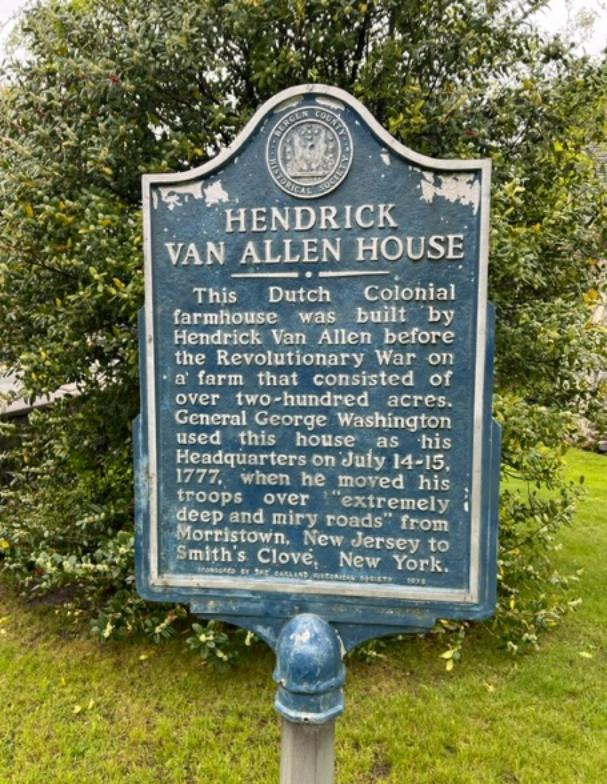
The Van Allen House was built around 1740 as the home of farmer Hendrik Van Allen. During the Revolutionary War, it served as the headquarters for George Washington on July 14, 1777. At the time, he moving his troops from Morristown, NJ to New York (Wiki).
In 1778 and 1779, Bergen County used the house as a court. Edward Day Page, a dairy farmer, businessman and Oakland’s second mayor, owned the house as well as the northern fourth of Oakland in the late nineteenth and early twentieth century (Wiki).
Household items at the Van Allen House
It was saved from demolition by the Oakland Historical Society with aid from the Woman’s Club of Oakland. It is now maintained as a museum displaying colonial Dutch life. The house was added to the National Register of Historic Places on July 24, 1973. There were several branches of the family in the Paterson, Passaic and Bergen Counties in New Jersey (Wiki).
Items in the family collection
The Oakland Historical Society:
The mission of the Oakland Historical Society (Oakland, NJ) is to bring to life and help maintain the history of the Borough of Oakland by activating and preserving especially the Van Allen House site, with the Vygeberg Farm Office Building and by keeping a museum there showing living displays and memories of Oakland’s past. We support living displays and memories of Oakland’s past. We support the Borough’s efforts to continue and complete the renovations of both buildings with the help of the Bergen County Office of Historic Preservation (OHS).
The Children’s bedroom at the Van Allen House
During the year we offer opportunities from people to visit the Van Allen House and experience local life as it was in the 18th and 19th Centuries on a farm settlement in northern New Jersey. The Lenni-Lenape Indians are known to have used the path which followed the Ramapo River Valley north and south and has now become an interstate roadway, Route 202, which goes from Maine south into Maryland and beyond. Copies of letters George Washington wrote at the House are available there during open-houses, usually the 3rd or 4th Sunday afternoon many months during the year. Please check our events page to see when the house will be open (OHS).
The Van Allen House on that gloomy Saturday morning
The site also has a building from 1902, built by Edward Page, one of the industrialists who settled along Route 202 to develop agricultural for the growing cities of Northern New Jersey, such as Paterson or Newark (OHS).
The Van Allen House Marker
The house was really interesting to visit during the Northwest Bergen Historical Coalition. The docents were really nice and they gave some interesting insights about the family and the house itself.
The Christmas holiday eventcelebrating Sinterklaas and the Dutch Christmas:
The outside of the house decorated for Christmas
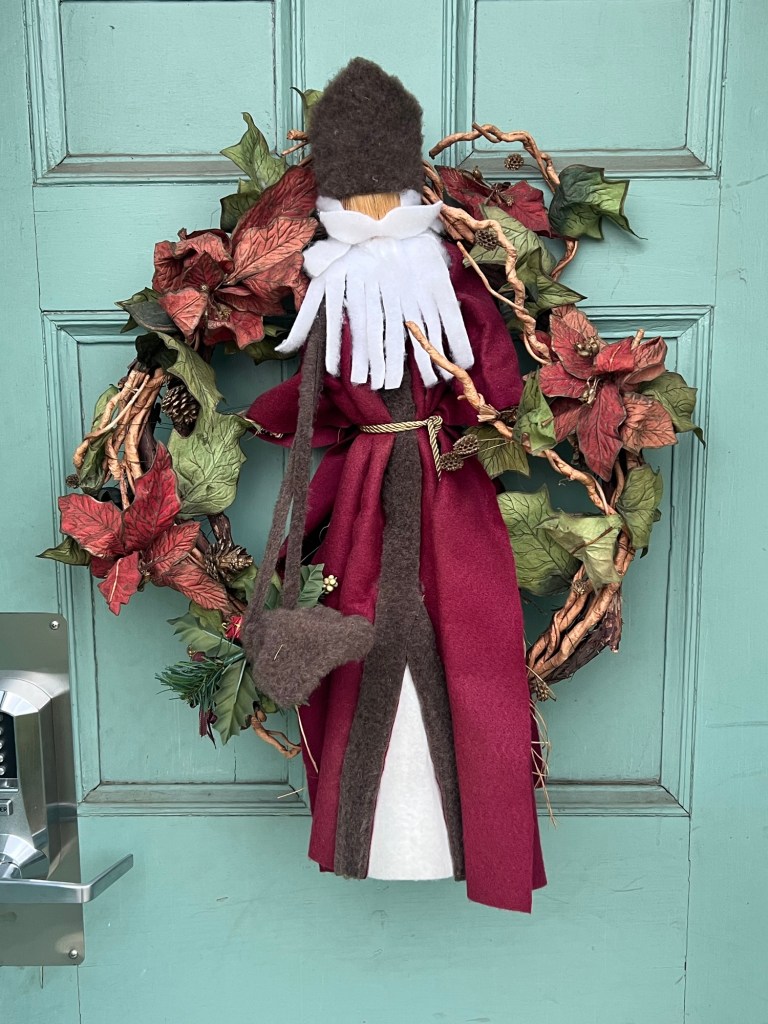
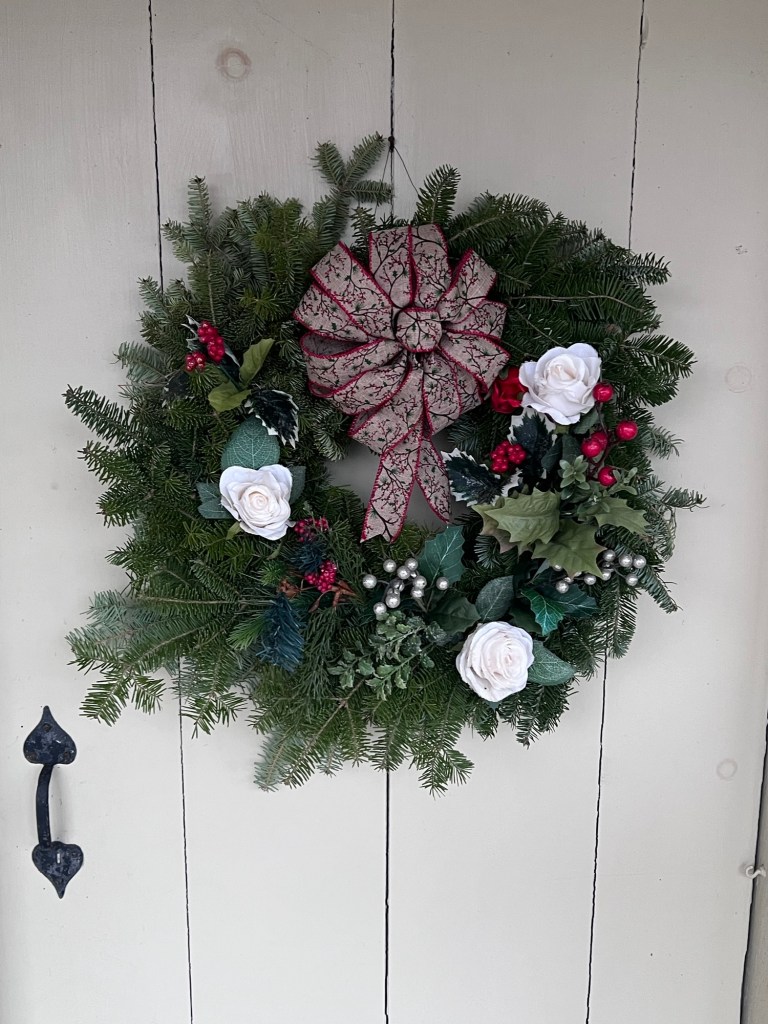
The front door wreath
The wreath
In December of 2025, I visited the historical site for the Sinterklaas celebration for the Christmas season. It was a nice festival with making in the hearth and gingerbread man decorating for the kids. These were delicious.
Baking in the hearth
Decorating gingerbreadmen
Indulging in freshly baked gingerbreamen
There was a woman playing Christmas songs on the harpsichord to the group of patrons in the main room of the house and an old fashioned Christmas tree decorated for the holidays.
The colonial woman playing the harpsichord
The performance
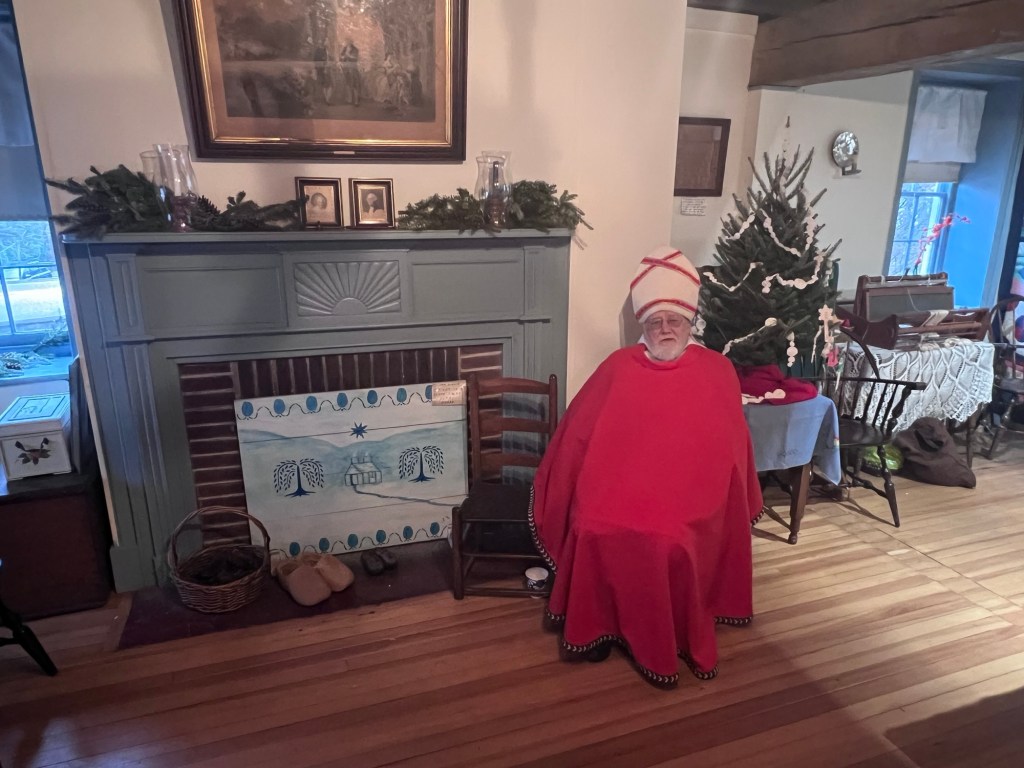
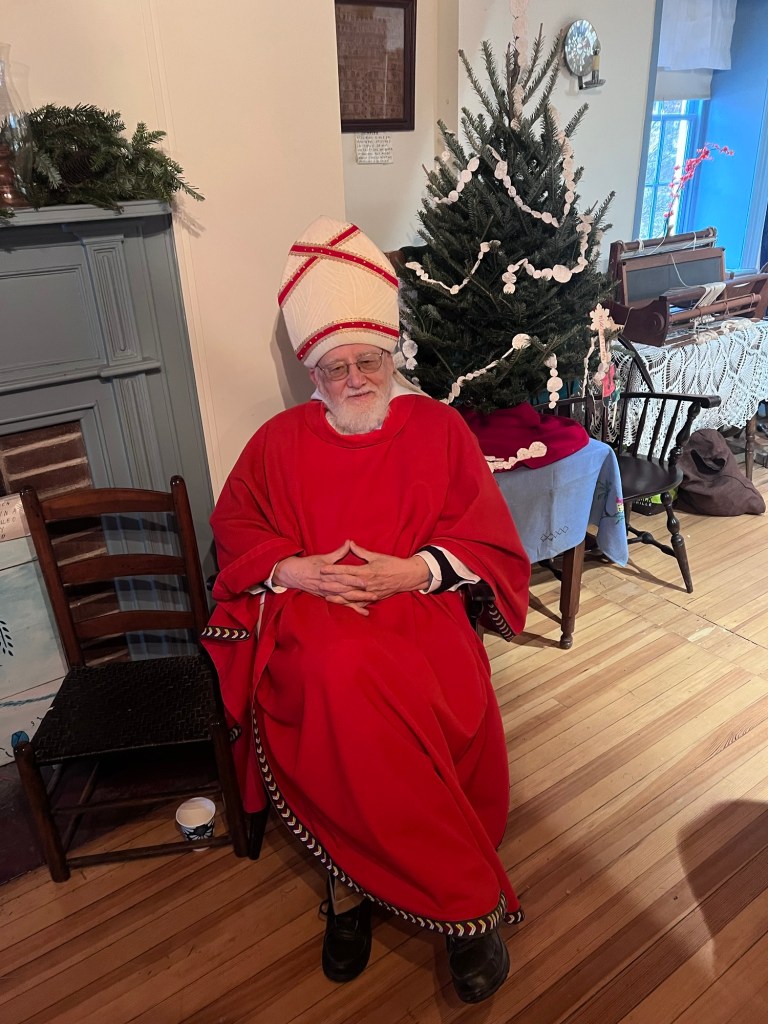
Sinterklaas, the Dutch version of Santa Claus was on hand to talk to the children and give out well wishes to everyone.
Sinterklaas talking to the guests
The jolly man greeting all of us
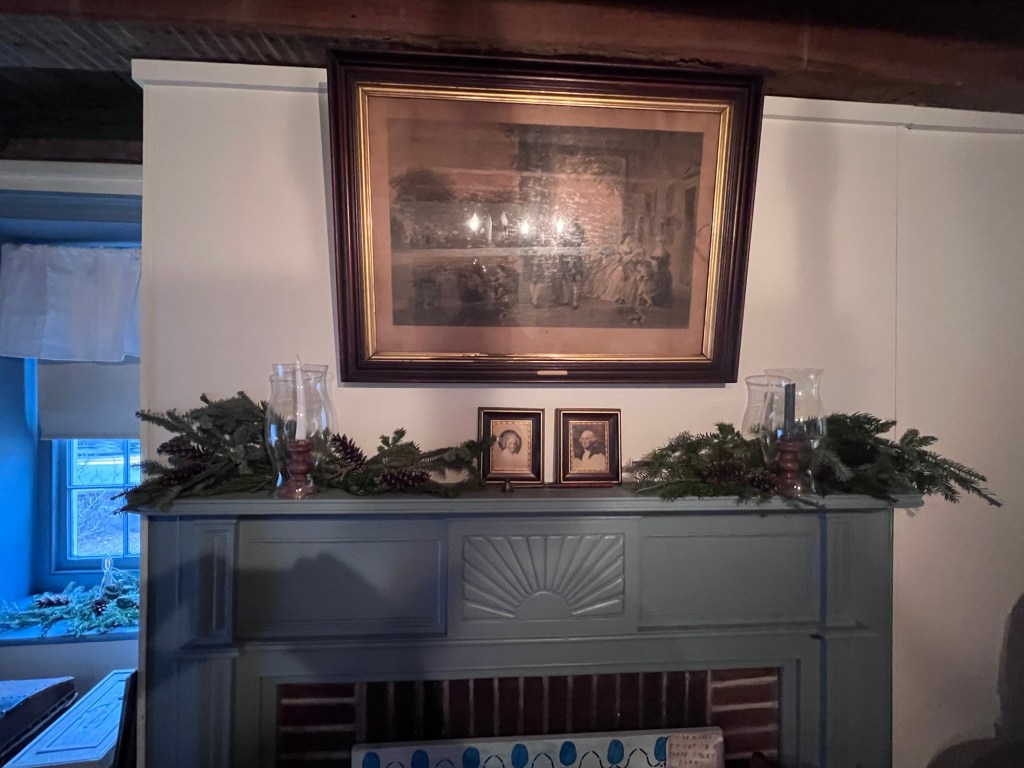
The house both inside and out was decorated for the Christmas holidays and had that early colonial look about it. Back then things were not as elaborate as the Victorian era and were simple pines, green and berries.
The simple table tree
The pines and greens decorating the mantle
The wonderful artifacts that are part of the collection
In the gift shop area there were very reasonably priced handmade dolls and ornaments made by one of the members. These one of a kind pieces are a perfect gift for the holidays. These are a very special gift for a lucky child.
The handmade items in the gift shop area
The grounds of the house and outside doors were decorated with wreaths and greens as well.
The wreath outside the Dutch doors
It was a nice event and the perfect way to start the holiday season. These Oakland Historical Society did a nice job with popular family event. It was a nice way to start the holiday season. The house was beautifully decorated for the season and the Society was planning all sorts of events for the Spring.
I have visited Branch Brook Park many times over the past thirty years and during the Annual Cherry Blossom the park is especially nice. The City of Newark still has the reputation as a rough place and parts of the City I still would not like to walk around in after dark (as are all cities). Branch Book is separated from the rest of the City and sits on the border of Newark sharing the park with the town of Belleville.
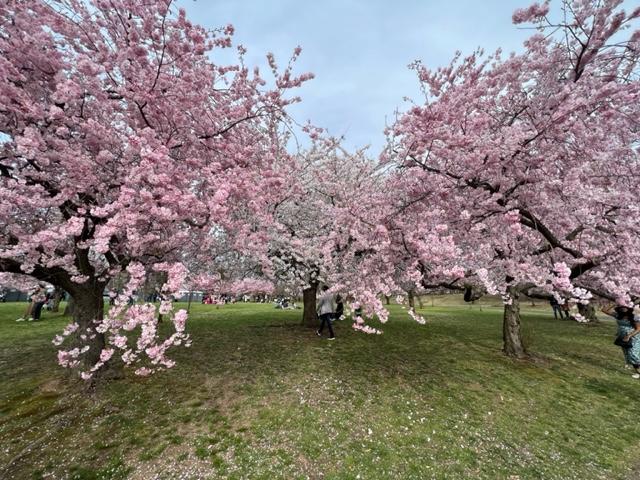
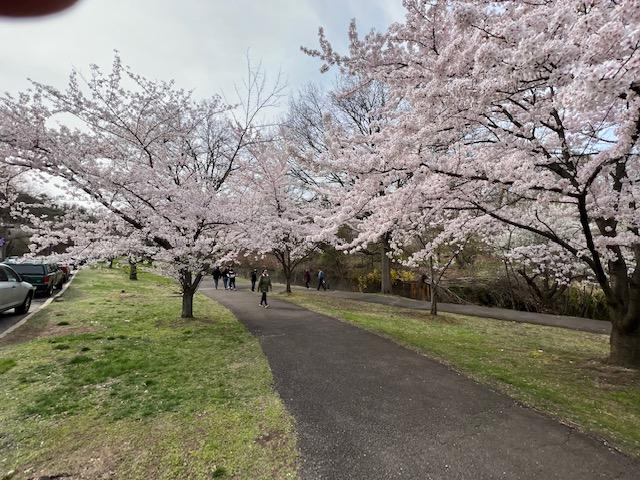
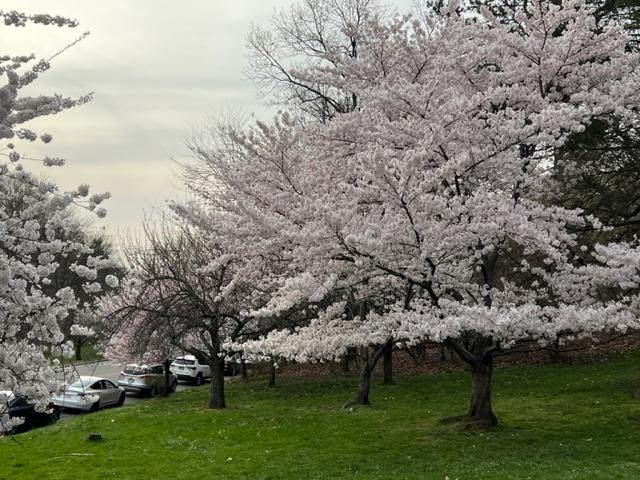
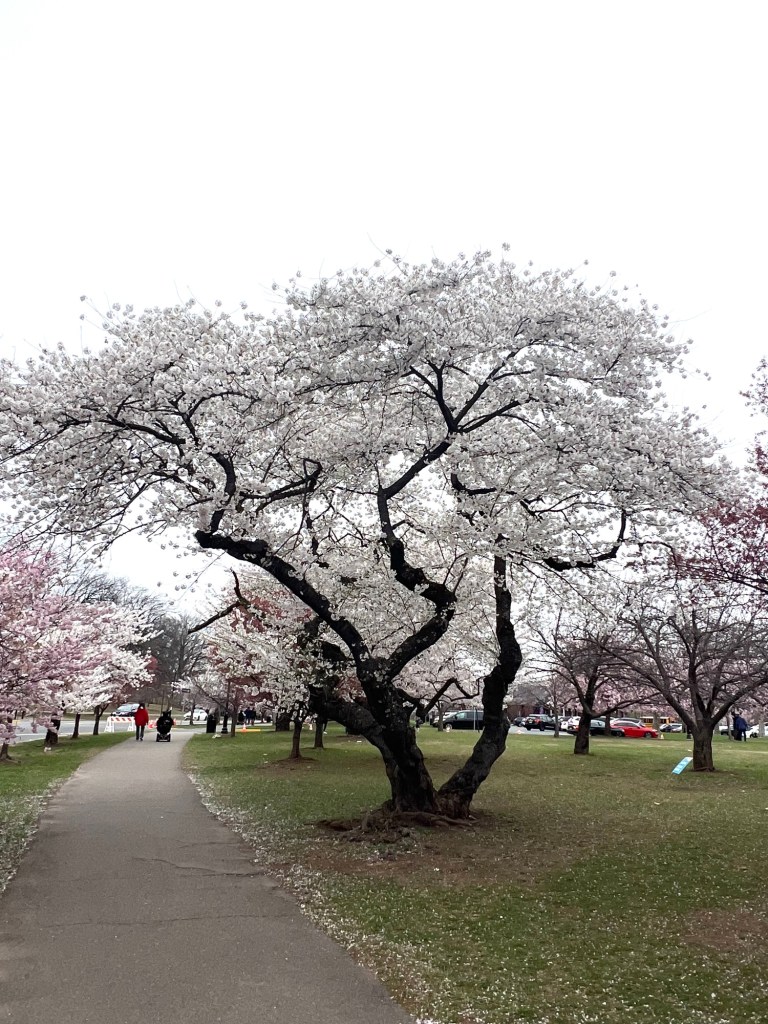
The Cherry Blossoms were in peak blooming today
The Cherry Blossom Festival, which takes place every Spring with the coming of the blooming of all of the Cherry Trees which cover the whole length of the park, is always anticipated by people all over the State of New Jersey. They bloomed a little late this year due to the unseasonably cold weather this year. It was snowing up to two weeks earlier so the buds opened later this year. In come cases, the peak of the blossoms came about two weeks late.
The Cherry Blossom Festival at Branch Brook Park goes on for the two weeks of the blooming of the trees
It was well worth it as spread over thirty two acres of land are over 2,000 cherry trees that bud every year at slightly different times due to the different species of plants. You day will start in the park at the Visitor’s Welcome Center located in the eastern section of the park, where you will read about the history of the park and have a chance to check into the activities of the annual Festival or just relax and go to the bathroom. The Visitor’s Center has just been renovated and is a nice starting point to walk around the park during the festival. There is a lot of public parking in this area and your car will be safe with all the people walking around.
The park was awash with colors
Walking among the paths of blossoming Cherry Trees is quite spectacular. It is Mother Nature showing here best with all sorts of hues of light and dark pink. It is something to walk around the trees as the petals in some cases rain down on you. Because the Festival is such a tradition with visitors some even wear their kimono’s or their wedding gowns in the park for pictures.
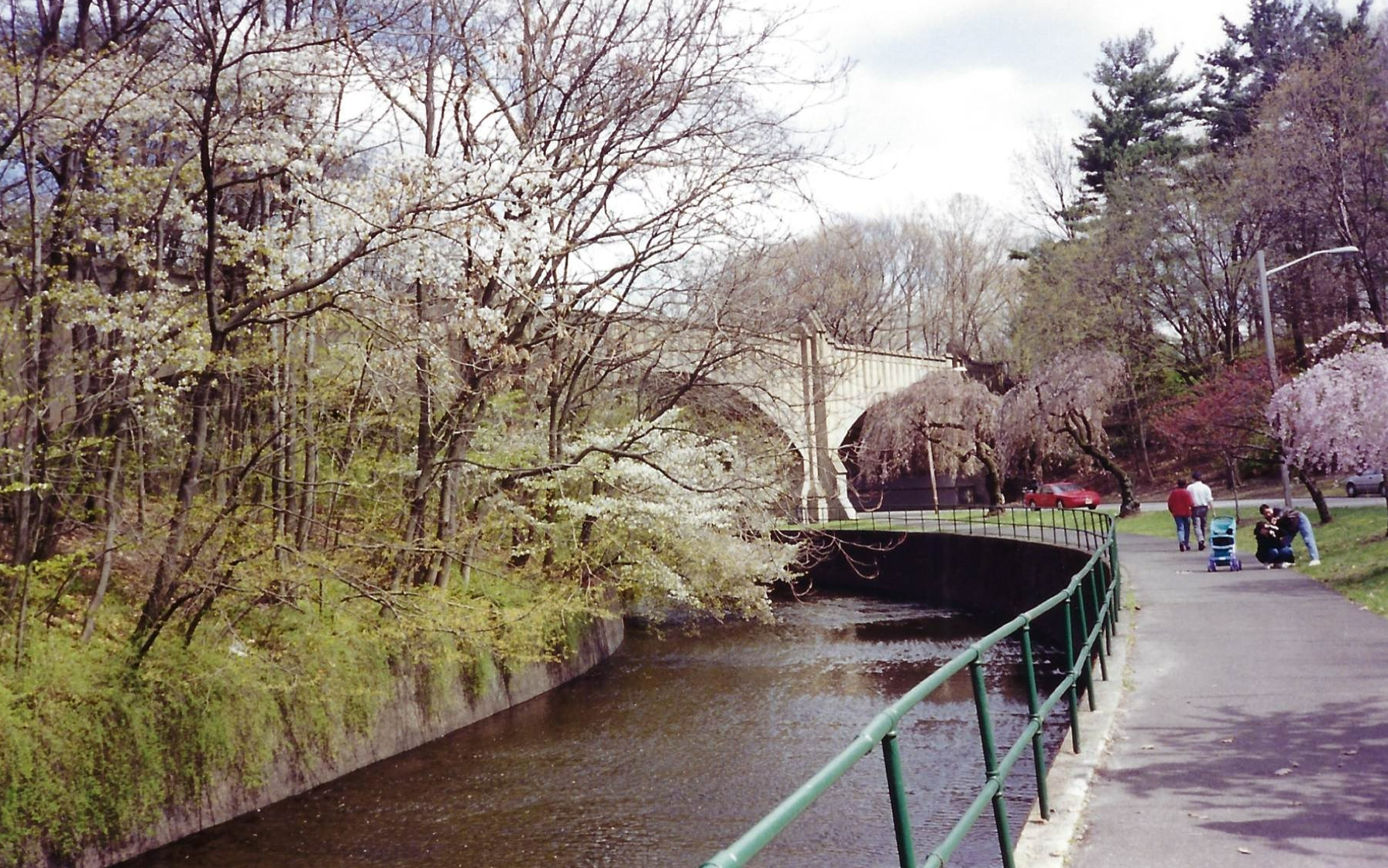
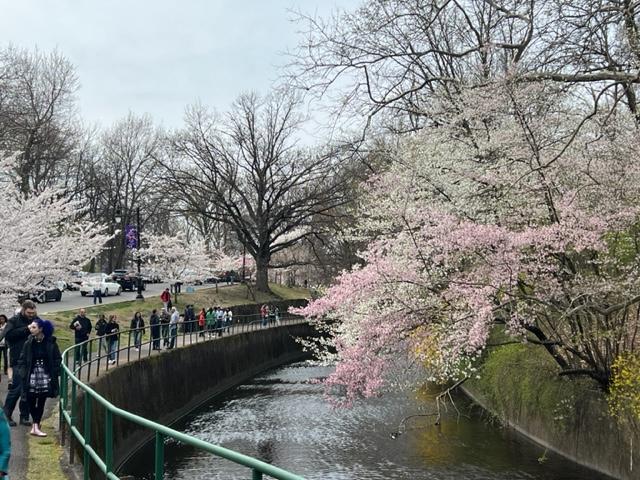
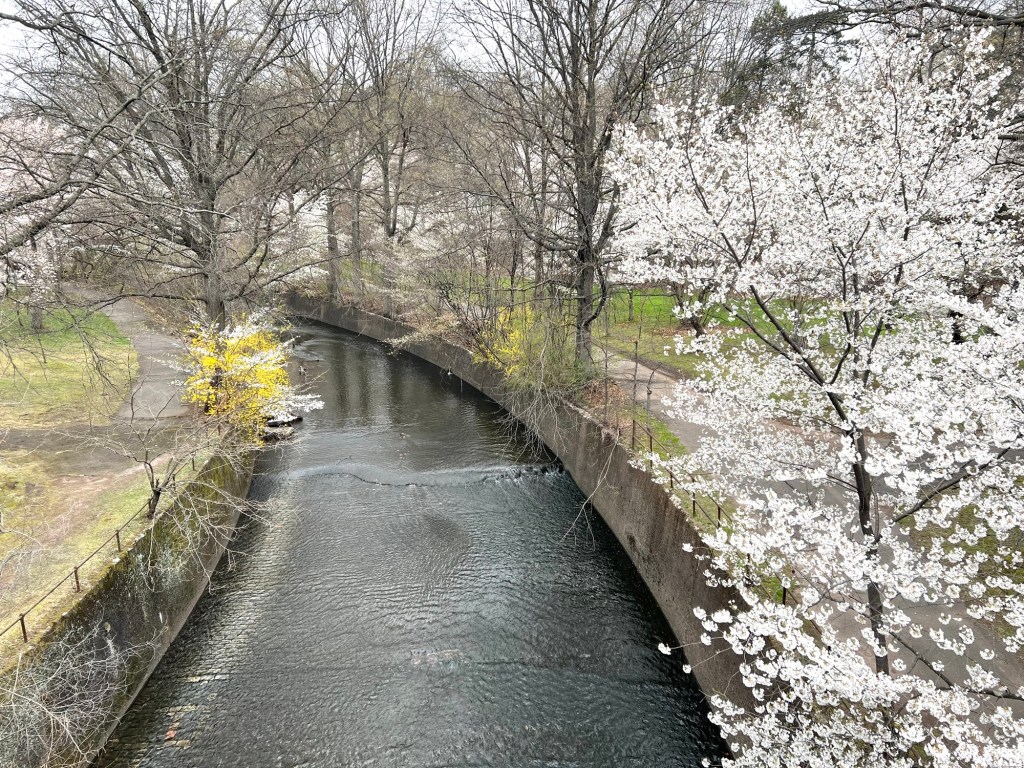
Walking along the stream that runs through the park
The park is in the process of a decade long renovation after years of neglect. The Branch Brook Park Alliance in partnership with Essex County Department of Parks, Recreation and Cultural Affairs, is working to restore the park’s historic design and adapt it to today’s lively use. Our park holds claim to many firsts: America’s first county park opened to the public; first to be listed on both the New Jersey and National Registers of Historic Places and the first to surpass Washington DC in the number and variety of cherry trees (Branch Brook Park Alliance).
Cherry Blossom Festival in Branch Brook Park Newark, NY 2010
Completed projects set the stage for the park’s full restoration. The County has refurbished historic bridges, renovated the Cherry Blossom Welcome Center and created the Cherry Tree Memorial Grove to promote the “Susan G. Komen Race for a Cure”. Extensive plantings of cherry trees, soon to number 4,000, complement the park’s 78 other tree varieties. Restoration of historic sites include the Octagon Shelter and park entrance ways (Branch Brook Park Alliance).
The views by the steam were especially beautiful in 2023
In 2022, the warmer weather that has been coming in earlier in the month keeps moving the blooming up a few weeks. The cherry blossoms seem to be flowering in the three main areas I visited, Newark, Brooklyn and Washington DC came out almost two weeks earlier than usual. With all the rains that we have had in the last three weeks have also done a number on the trees. Most lost their petals earlier than their planned festivals so even in DC they had their cherry blossom festival without cherry blossoms. When I came home from that celebration, even Newark was looking bare compared to my quick trip last weekend when you could not even enter the park. I think more people in these COVID days want to communicate with nature more than ever.
People were taking pictures by this spot for their weddings and parties
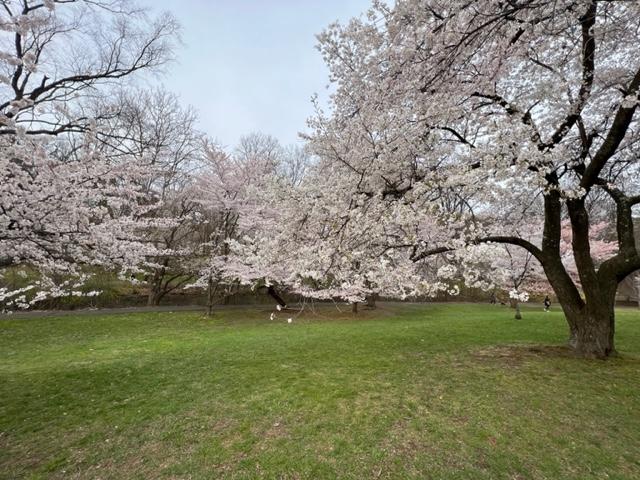
The Branch Brook Park lawn later in the day
When I visited the park in 2023, the place was mobbed with people. The Cherry Blossoms were at their full peak on April 8th, 2023 and I had never seen them this brilliant before. They were gorgeous and such colors of pink, white deep pink and the brilliant yellows from other flowering trees really complimented one another. Walking along the paths through this part of the park was a delight to the eyes.
The brilliance of the flowering trees
The only problem I saw was the visitors behavior towards the trees. People were climbing on the trees, pulling on the branches and tearing off the cherry blossoms. Either it is all the tourism classes that I am taking at NYU or I just am really noticing how obnoxious people are getting. There was so little respect towards nature. People were disrupting the very thing everyone came to see.
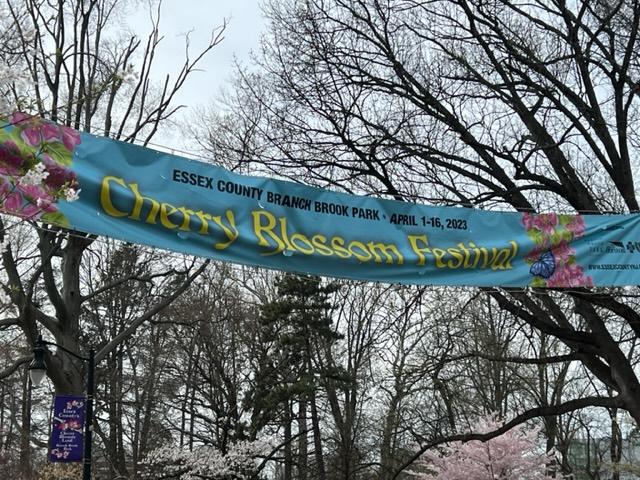
The Cherry Blossom Festival signs lined the park
Still I had a wonderful time and it was nice day to walk around and enjoy Branch Brook Park. It was just disappointing when the skies got cloudy and it got a little cooler. That did not stop people from lining the paths, walking their dogs and just enjoying the day out. I have never seen the park this vibrant before!
There was a nice crowd this afternoon at the park
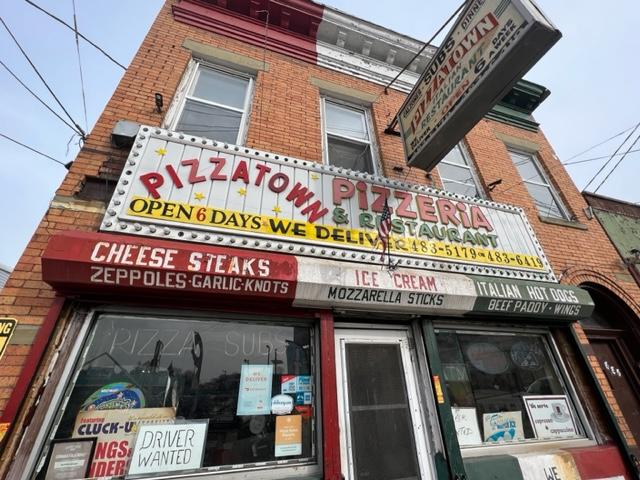
I was able to sneak out of the park for lunch and go to Pizzatown Pizzeria in Newark for lunch. This old pizzeria has been around since about the 1960’s and has the most amazing cheese pizza. I got for a slice when I am visiting the park. The restaurant is a holdover when this was still an Italian enclave (it is now more Spanish) but still popular with the locals.
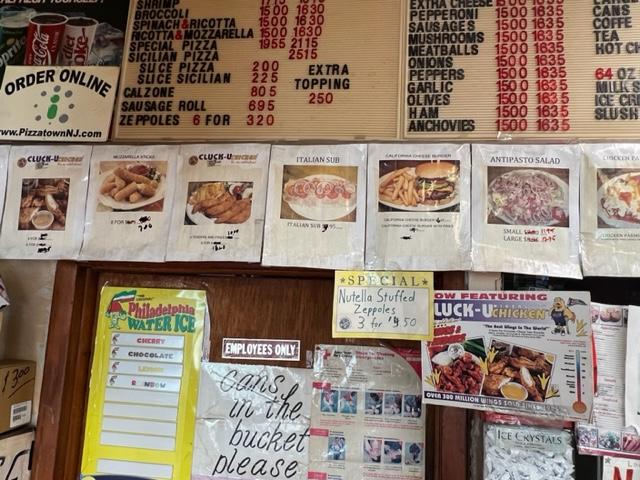
Pizzatown Pizzeria & Restaurant at 883 Mount Pleasant Avenue in Newark, NJ
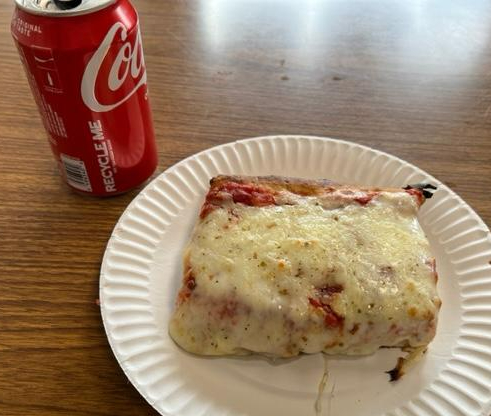
The place is really full of character and the best part is that the pizza is delicious! I always enjoy coming here for lunch or a snack. I had a slice of Sicilian pizza ($3.50) and a Coke and at $4.50 is was a reasonable lunch. This in comparison with the food trucks in the park which are much more expensive. I highly recommend it.
The Sicilian slice at Pizzatown in Newark, NJ
The inside of the restaurant is so old that is looks retro
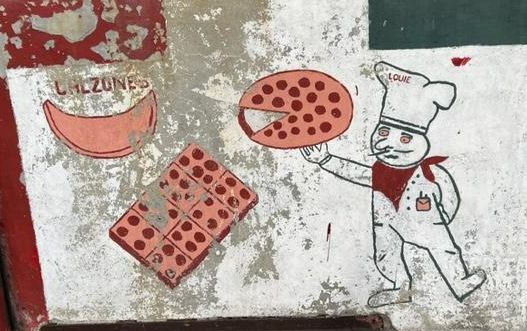
I like the painting on the restaurant. It’s classic.
It was a nice lunch and it gave me the energy to continue walking the length of the park further than I had before. Talk about getting some get pictures. As it got later, the crowds thinned out a bit more so there was more room to take some great shots.
It was a wonderful afternoon!
Branch Brook Park in its prime
The History of Branch Brook Park in Newark, NJ:
The Cherry Blossom Display at Essex County Branch Brook Park:
In 1928, Caroline Bamberger Fuld, after seeing the cherry trees in the Nation’s Capital, offered a gift of 2000 trees for Essex County Branch Brook Park. To showcase the park’s newly acquired Extension, the renowned Olmsted Brothers landscape architectural firm created a planting design using dark evergreen trees as a backdrop for the mix of white and pink cherry blossoms from varieties such as Higan, Yoshino and Kwanzan (Branch Brook Alliance).
The entrance to Branch Brook Park in Newark, NJ
After a 2004 inventory showed 1.000 cherry trees remaining, an ongoing initiative to replace and expand the collection was undertaken by Essex County Executive Joseph N. DiVincenzo Jr. and the Branch Brook Alliance. By 2016, the number of cherry trees was expanded to over 5,000. Cherry trees in 27 varieties now adorn all sections of the park, from the Southern Division at Clifton Avenue in Newark to the park’s Extension at Washington Avenue in Belleville (Branch Brook Park Alliance).
The History of Branch Brook Park (Branch Brook Park Alliance):
1862: The land we know now as Branch was then the property of the Newark Aqueduct Board. Much of that land was commandeered in July of 1862, at the outbreak of the Civil War; known as Camp Frelinghuysen, it was used as a training ground for New Jersey volunteers. Between 1862 and 1864, six regiments encamped there before fighting in every important battle from Antietam to Appomatox.
1867: The New Jersey State Legislature authorized a Newark Park Commission, with a mandate to locate grounds for a municipal park. Fredrick Law Olmsted, the famed landscape architect and designer of Central Park in New York, visited Newark and Essex County and recommended a site encompassing what is now Branch Brook Park, Olmsted and his partner, Calvert Vaux, envisioned Branch Brook Park to be a “grand central park” for the City of Newark. They understood that American cities of the 19th Century were growing quickly and changing rapidly. The parks they designed embodied their view that all people, regardless of their position in society, were entitled to fresh air, quiet places and the beauty that only nature can provide.
The colors were amazing in April of 2023
1889: The Newark Common Council donated 60 acres of the Aqueduct Board property surrounding the circular holding reservoir to “park use”. Known as Reservoir Park, the land was left undeveloped. Much of the surrounding neighborhoods were crowded with bleak, unhealthy tenements. To the north lay a dismal march known as Old Blue Jay Swamp.
1895: The Essex County Park Commission was formed to enable the creation of a county-wide park system, the first in the nation. The City of Newark transferred Reservoir Park, which would become the nucleus of Branch Brook Park to the Commission at ta cost of $350,687. The surrounding properties were acquired by the County while donations of land from prominent Newark families extend the park northward. The Ballantine Family donated 32 acres of their property and another 50 acres were given by Z.M. Keene, William A. Righter and the Messrs. Heller. John Bogart and Nathan Barrett were chosen to provide plans and advise on the development of the park. Their design was gardenesque in style, dominated by the geometrically patterned gardens and numerous architectural elements including arbors, viaducts, gazebos and shelters that shaped the park’s Southern Division.
The drive in the entrance of the park
1896: Demolition and grading began following Bogart and Barrett’s plans.
1898: Dissatisfied with Bogart and Barrett’s work, the Commission hired the Olmsted Brothers firm; John Charles Olmsted and Fredrick Law Olmsted Jr. were Fredrick Law Olmsted Sr’s nephew/stepson and son. While their work continued that naturalistic style of landscape design championed by their father, in Branch Brook Park, they were required to incorporate the elements of Bogart and Barrett’s plan that had already been constructed. This led to the Olmsted firm’s design concept consisting of three divisions: the Southern, from Sussex Avenue to Park Avenue, incorporating the elaborate ‘gardenesque’ elements from Bogart and Barrett’ the middle from Park Avenue to Bloomfield Avenue, which would be a transitional zone, mixing the exotic with the indigenous and as the culmination, the Northern Division, the largest and most naturalistic area of the park.
The views were spectacular in April of 2023
1900: The first Chrysanthemum Show was held in the newly constructed greenhouse in the Northern Division. This annual event brought thousands to the park every fall until 1969.
1903: The United Singing Societies donated the bust of composer Felix Mendelssohn they won in Baltimore, MD at that year’s ‘saengerfest’, the annual, nationwide German singing competition that generated excitement comparable to today’s Super Bowl.
1906: The gran boathouse, designed by the firm of Rossiter and Wright, was added to the southern end of the lake, replacing an earlier structure.
The crowds were large in April 2023
1916: The Essex County Park System build its Administration Building on the parkland that had been set aside to provide a view from Concourse Hill. Designed by New Jersey native Harold Van Buren Magonigle, the exterior has eight different shades of coarse-textured terra brick and expensive terra cotta reliefs especially notable around the main entrance. Under the wide overhang of the tile roof are colorful, allegorical decorations executed by Mrs. Edith Magonigle.
1924: Industrialist and philanthropist Harmon W. Hendricks, owner of a copper rolling mill on the Second River, donated his family home and the adjoining 23 acres to the north of Branch Brook Park. An additional 94 acres were acquired by the county to link Hendricks Field Golf Course and Belleville Park in an unbroken swath of green. This land included what was the first landing site for the U.S. Postal Service where bi-winged airplanes landed on a short field with bales of hay rimming the end of the runway to prevent accidents.
One of the side paths in April 2023
1927: Caroline Bamberger Fuld donates 2,000 Japanese flowering cherry trees to a display in Newark that would rival that in Washington DC. The Olmsted Brothers’ firm laid out the trees naturalistically on the tiered slopes along the narrow valley of the Second River, evoking the way the trees would be seen in Japan and distinguishing Branch Brook Park’s display from all others. Eventually the collection would grow to more than 3,000 trees.
1928: The Morris Canal that ran from Jersey City to the Delaware River and formed the park’s western boundary was abandoned and became the Newark City Subway. Now Newark Light Rail, there are six stops along the park that provide easy access by mass transit.
1940: The Rossiter and Wright boathouse was deemed unsafe and dismantled. A smaller building replaced the grand structure.
1956: More than 3,000 people attended the Fall Chrysanthemum Shoe in the greenhouses.
The crowds along the pathways at Branch Brook Park
1967: Riots broke out in Newark and devastated the community. Many buildings were burned, boarded up and sections of the city were deserted. The National Guard was called in to maintain order and bivouacs in Branch Brook Park, where Civil War volunteers mustered 100 years earlier.
1974: Community members rallied to save their beloved park and the Friends of Branch Brook Park was formed.
1976: The Newark Cherry Blossom Festival was established.
1980: Branch Brook Park was placed on the New Jersey Register of Historic Places.
1981: The Park was placed on the National Register of Historic Places.
1986: The Boathouse was destroyed by fire and replaced by a concrete block structure.
One of my favorite shots of the park in 2023
1999: Branch Brook Park Alliance (BBPA) was formed.
2002: BBPA hired Rhodeside & Harwell (RHI), nationally recognized landscape architects, to produce a Cultural Landscape Report, Treatment and Management Plan, to serve as a blueprint for the park’s restoration.
2003: The lake edge near the boat house in the Southern District was replanted to recreate the original Olmstead plan; this pilot project was designed by RHI and funded by BBPA.
2004: A tree inventory was conducted by BBPA as part of the Cultural Landscape Report and revealed that less than 1,000 cherry trees remained from the original gift of 2,000 trees and subsequent plantings.
2005: Responding to community interest, the first farmers’ market took place, along with other activities to help reactivate the park.
2006: BBPA, together with the Essex County, the North Ward Center and the Newark Boys and Girls Clubs developed the Middle Division ball fields, now home to 7,500 ballplayers annually.
A grant from the Essex County Recreation and Open Space Trust Fund enabled the first planting of what would total more than 3,000 new cherry trees over the next four years.
2007: The Ball fields in the Extension were redesigned and upgraded while the surrounding landscape is restored. The Cherry Tree Demonstration Project showed what a fully restored collection should look like with extensive companion plantings and appropriate hardscaping.
2008: The Octagon Shelter was reconstructed. The Waterway Rehabilitation Feasibility Study was completed, setting forth a path for the restoration of one of the park’s most salient features.
2009: Prudential Global Volunteer Day drew more than 300 participants from diverse sectors of the community. A Maintenance Plan for the park was completed and implementation begun at six volunteer days.
2010: Design work was completed for project that will transform western lake edge in the Southern Division. The rehabilitation of the Octagon Field House in the Middle Division was completed.
The Cherry Blossom Festival in Branch Brook Park, Newark, NJ 2010
(The History of Branch Brook Park in Newark, NJ by the Branch Brook Park Alliance)
Disclaimer: This information was taken from the Branch Brook Park Alliance and I give them full credit for their work. Don’t miss the Cherry Blossom Festival each Spring April/May depending on the weather.
Branch Brook Park in 2025:
I had a chance after work on afternoon when the Cherry trees were in peak form. The park was quiet on a Thursday afternoon and was perfect time to walk around and see the beautiful trees.
I walked along the paths on a gloomy afternoon where the rain always threatened us the whole time but I would not have wanted to miss this display.
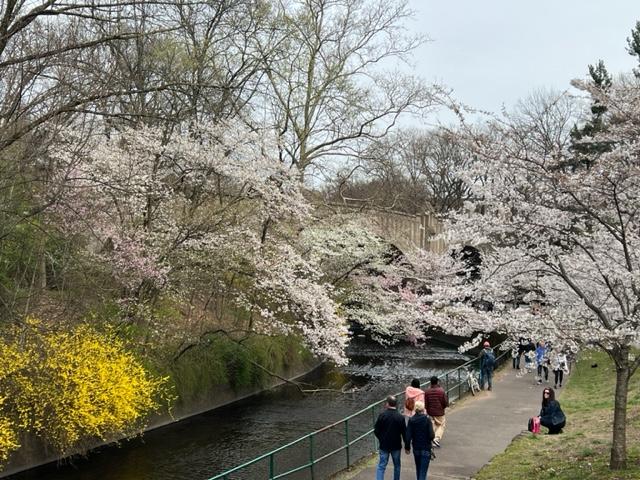
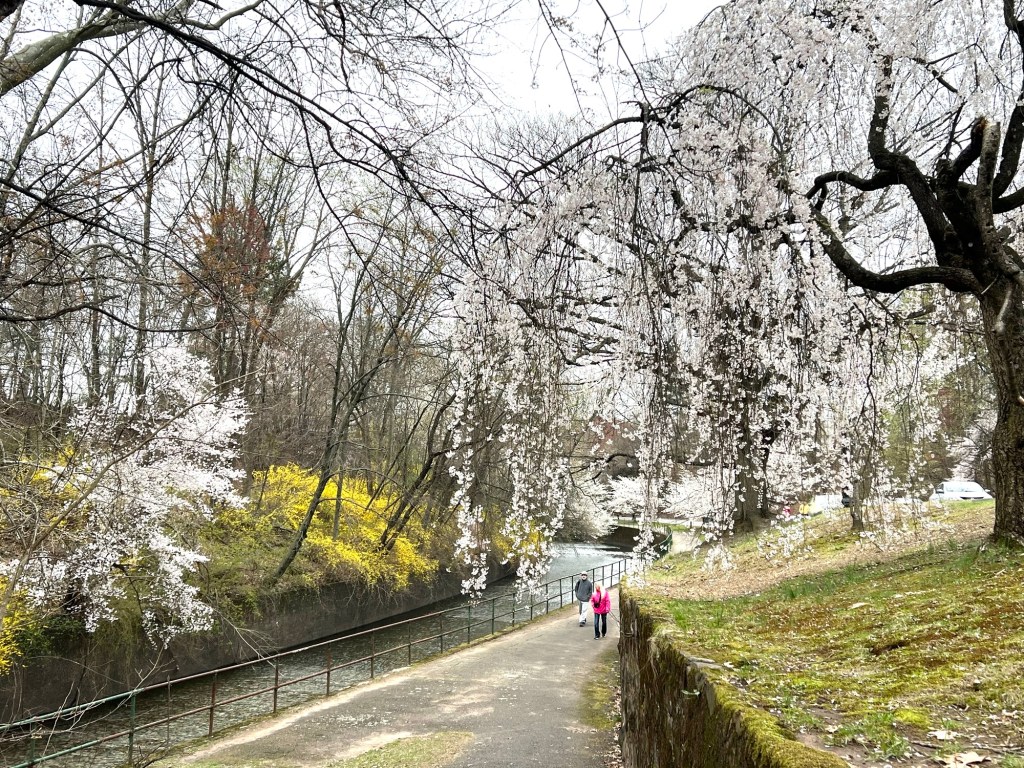
The paths along the stream at Branch Brook Park
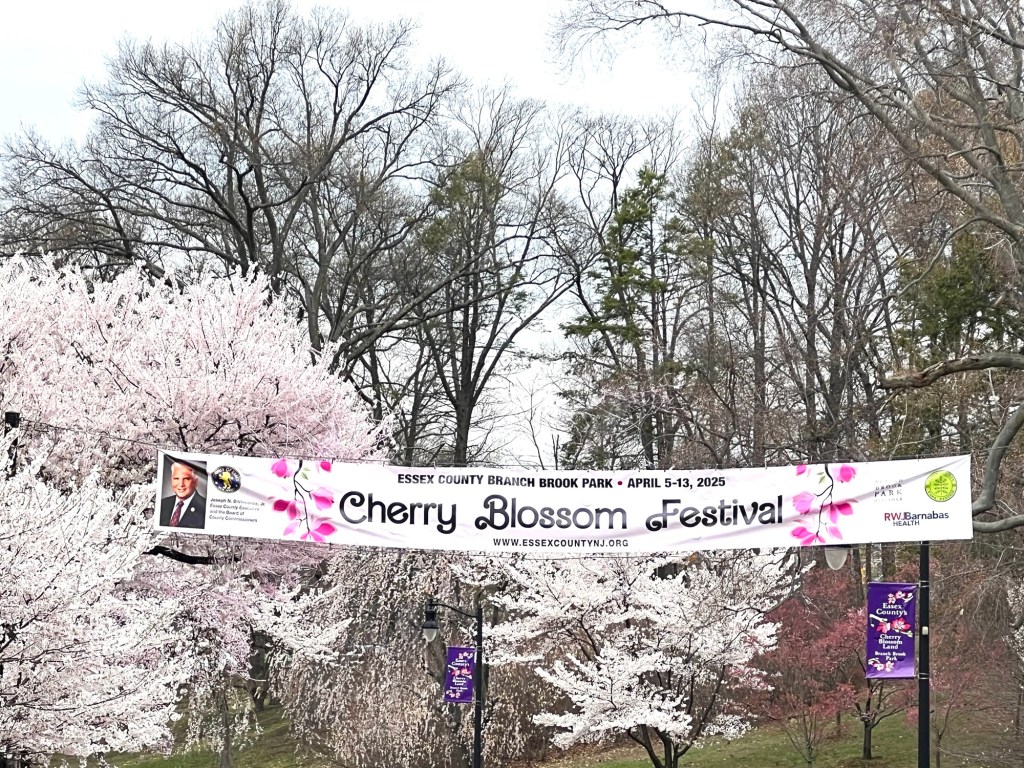
The start of the Cherry Blossom Festival in 2025
Branch Brook Park Cherry Blossom trees at peak in Spring 2025
The banners line the roads in the park for the festival and walking tours in 2025
The Cherry trees on a gloomy day
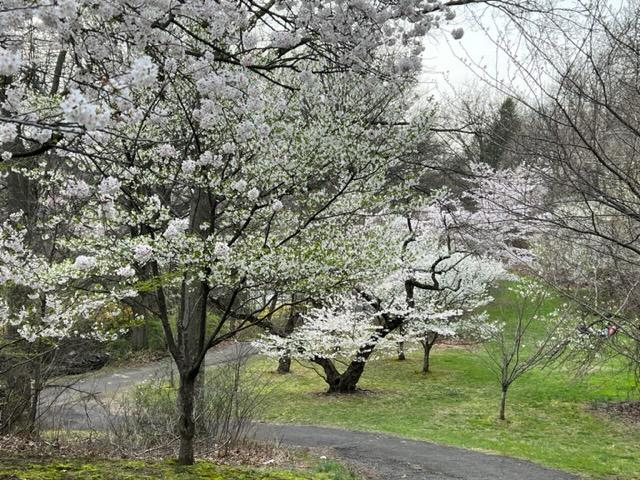
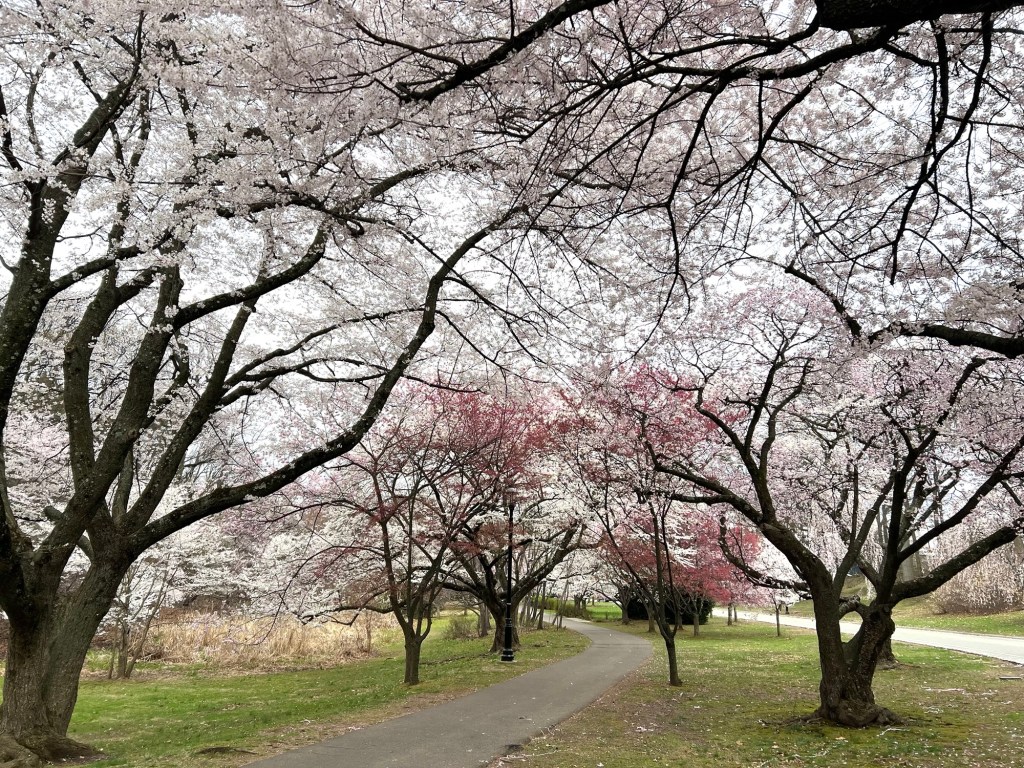
The Cherry Blossoms path
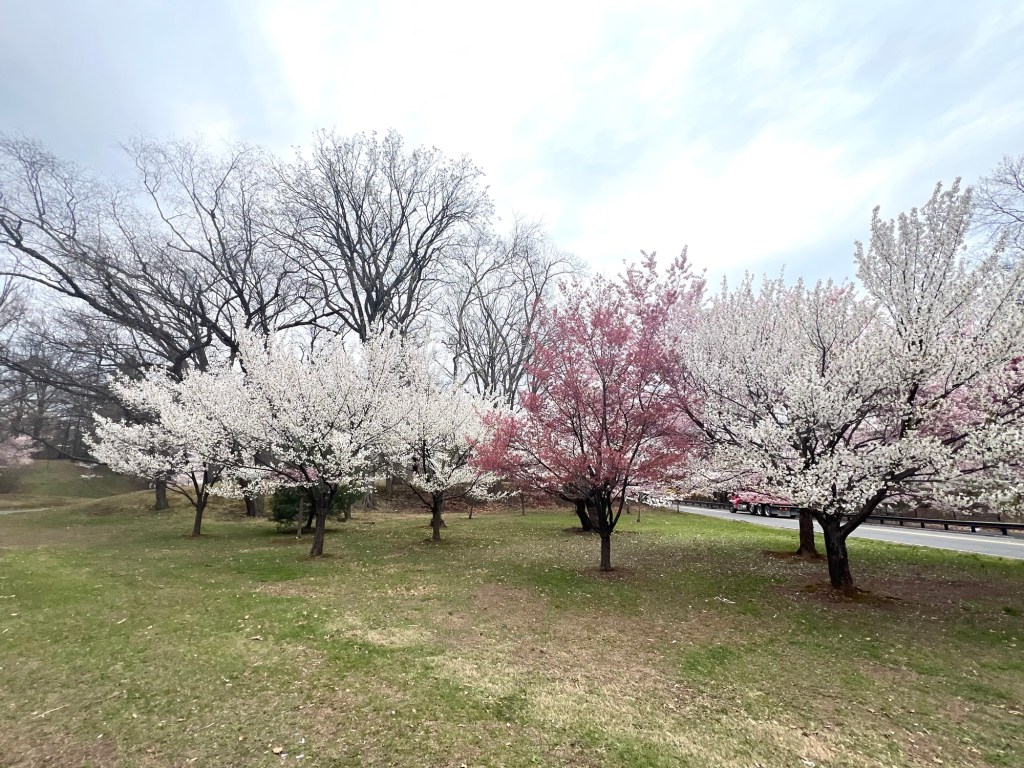
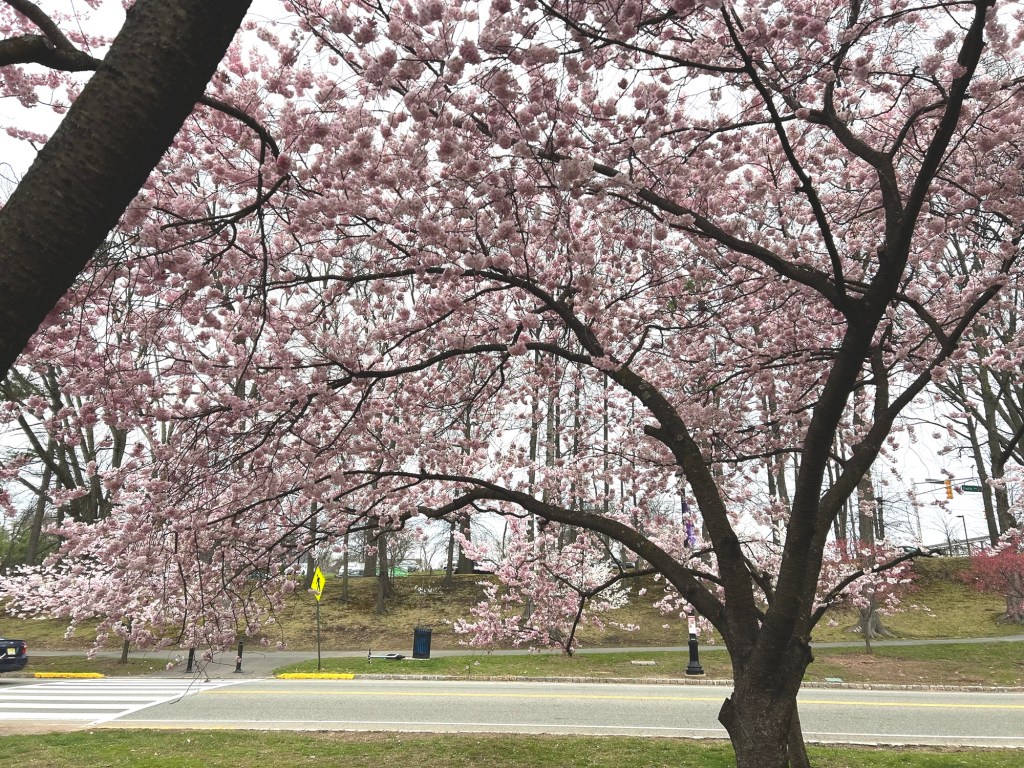
The beauty of the trees in 2025
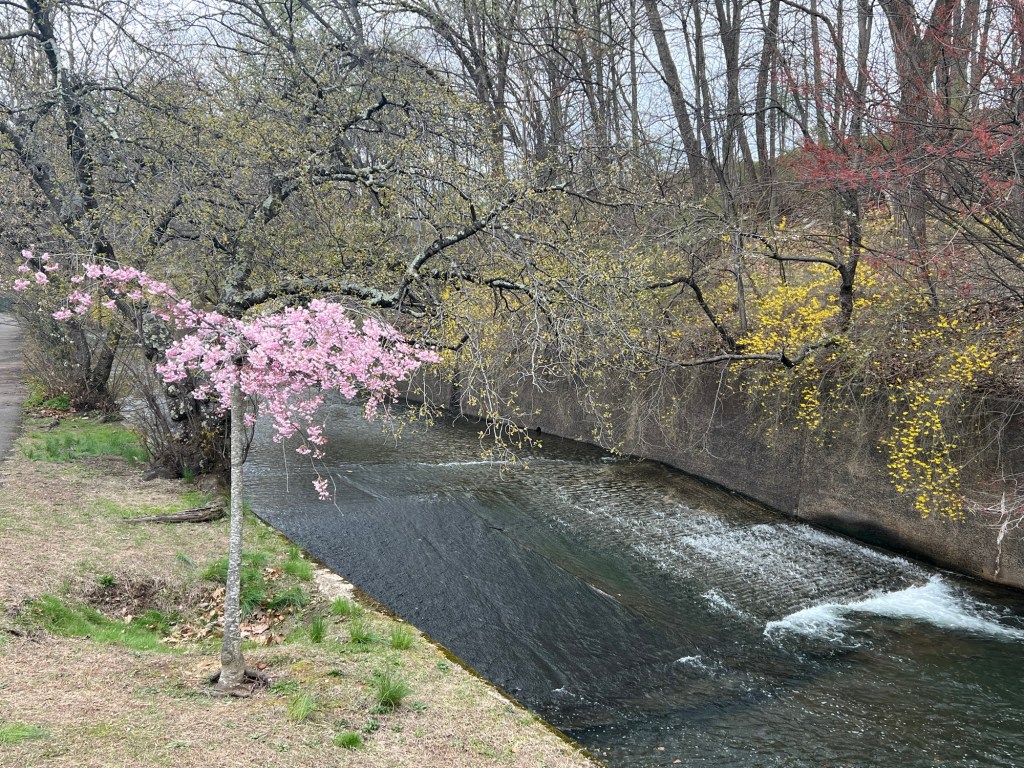
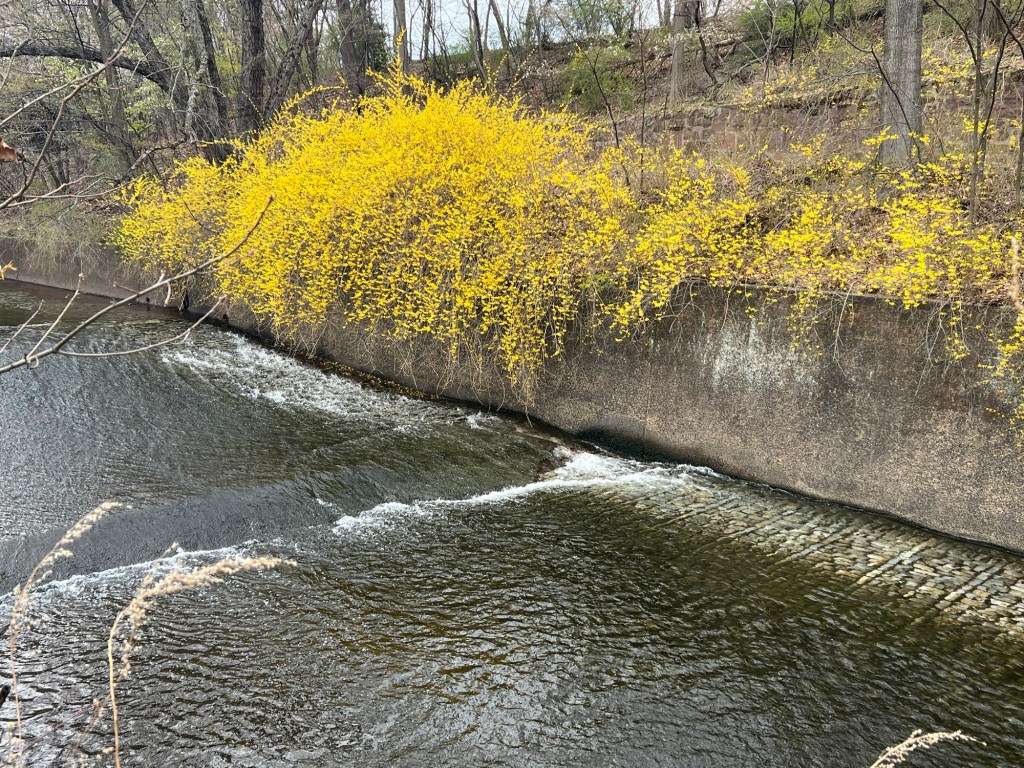
The river that runs through the park
The water rushing through the park
The flowering plants in the park
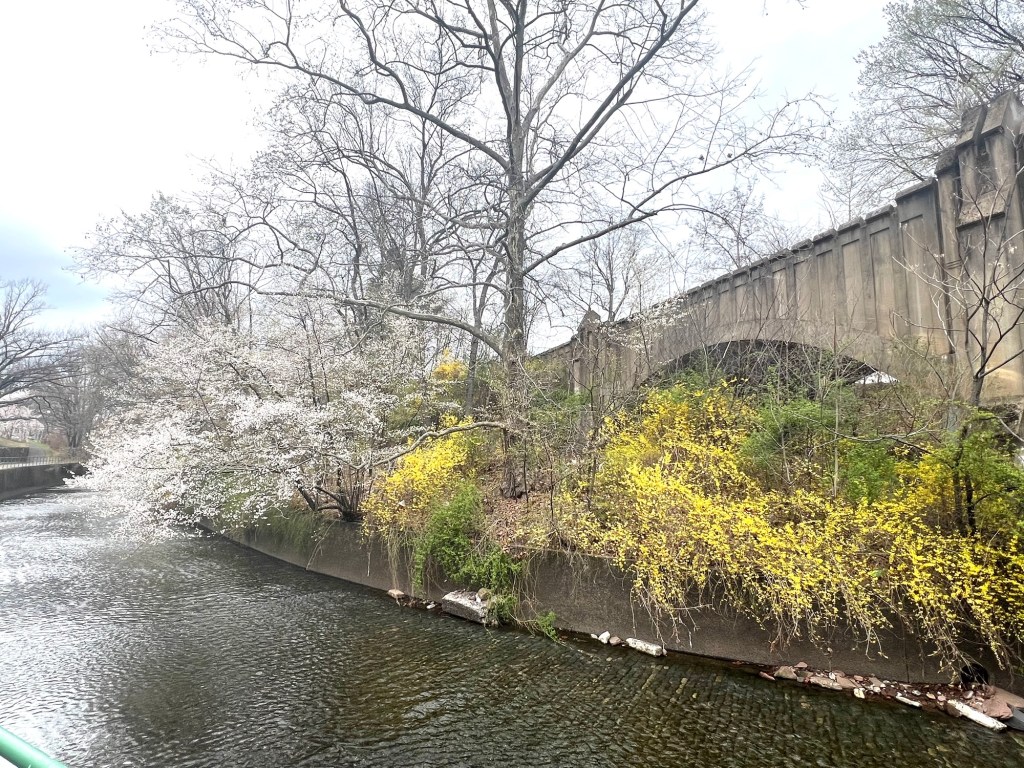
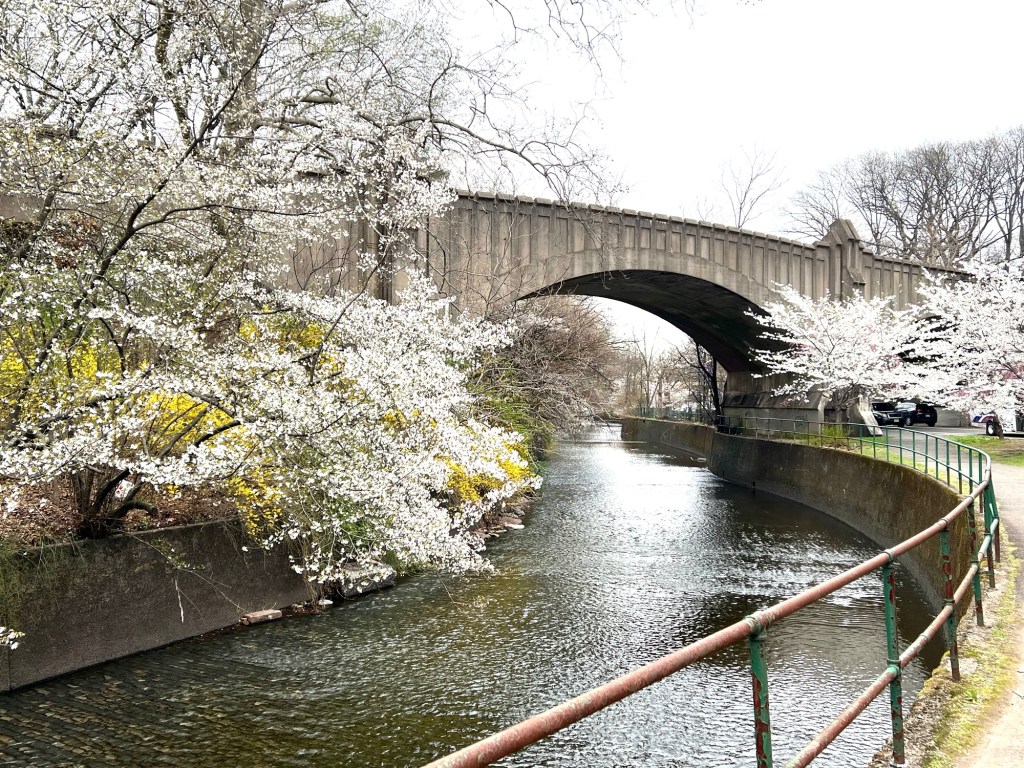
The bridge in the park
The flowering trees by the river
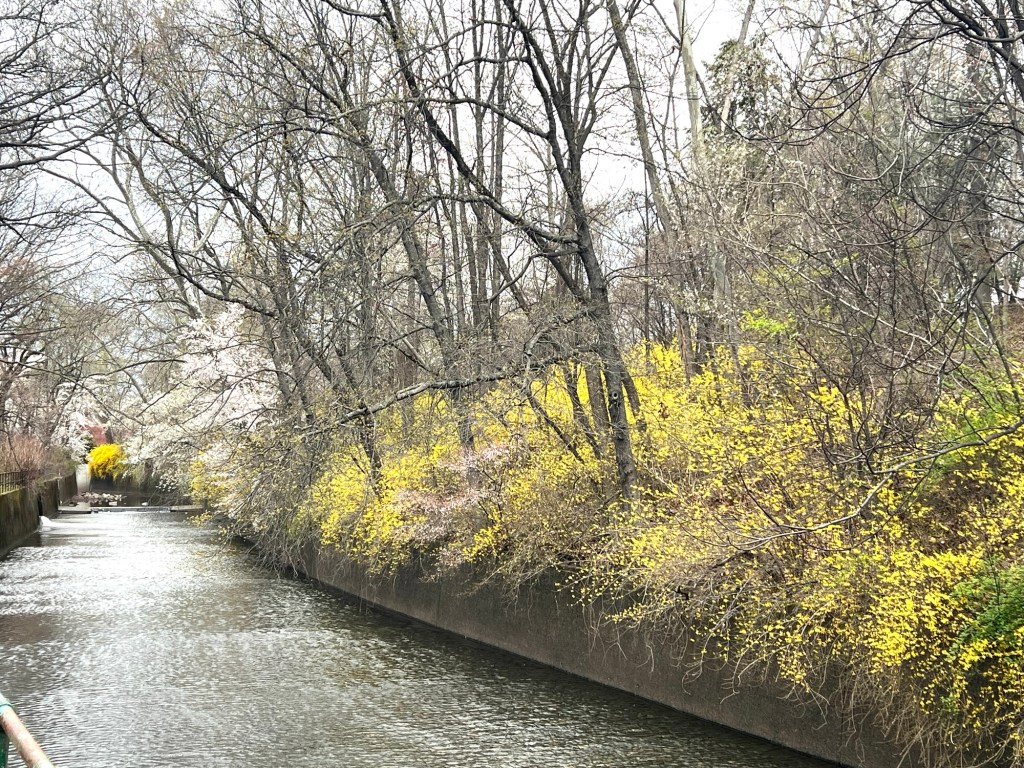
The paths along the river on a gloomy day
The flowering bushes along the river in 2025
The flowering trees around the river
Entering the core of the park
The County’s Cherry Blossom festival in 2025
The beautiful trees along the paths
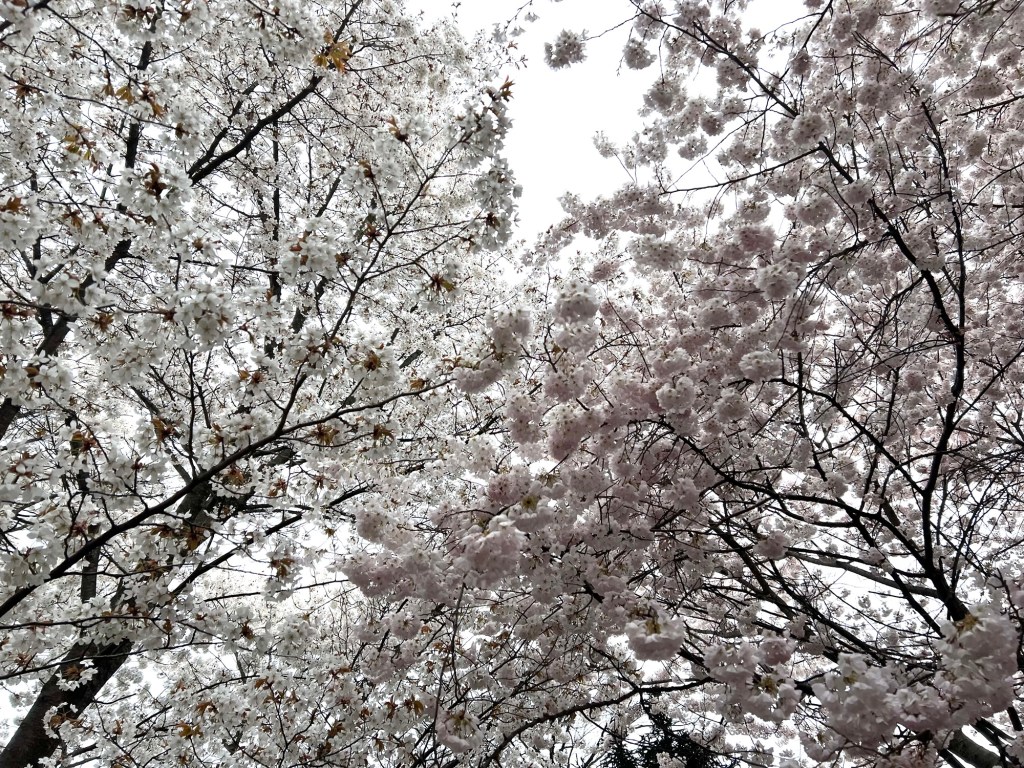
The flowering canopy
The flowering Cherry Trees in peak form
The flowering trees in the park
The core of the park in bloom
The pathway through the core of the park
The pathway in the park in full bloom
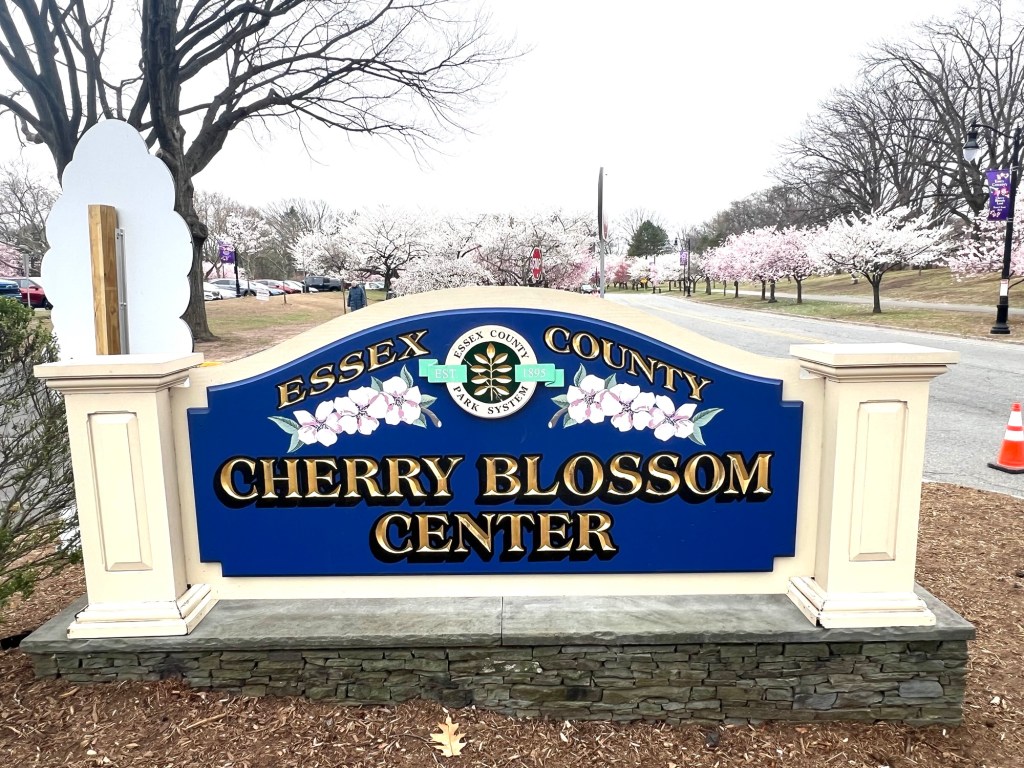
Entering the Visitors Center
The Cherry Blossom Visitors Center in the park
The unusual trees in Branch Brook Park
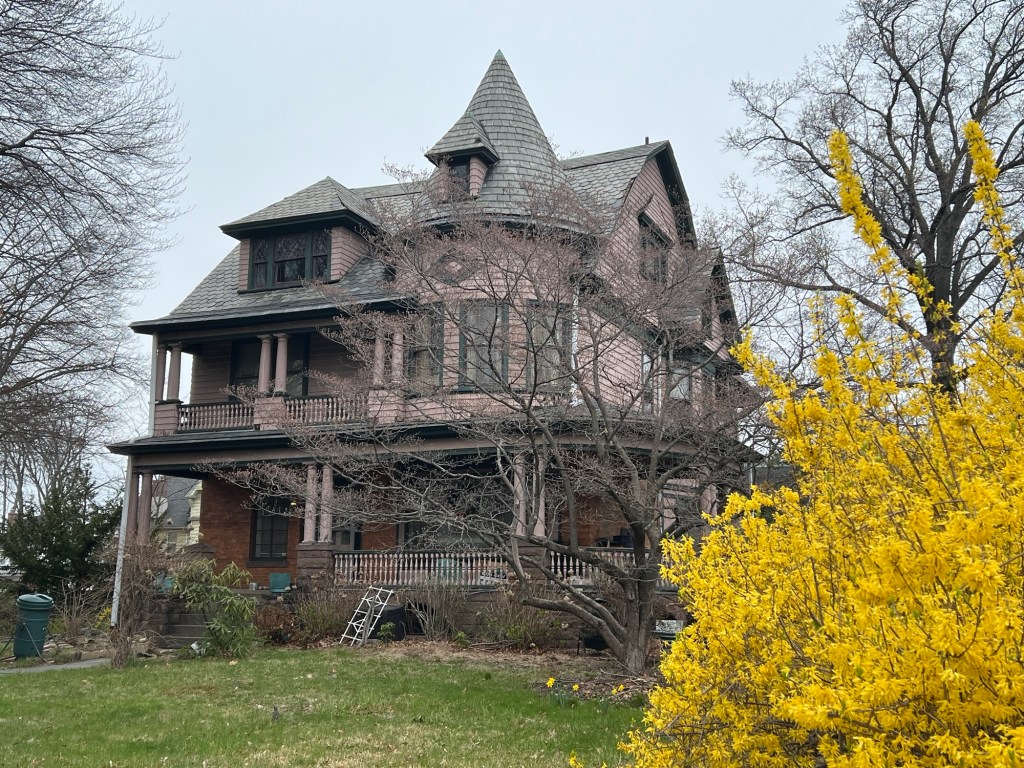
I even had time to really walk through this section of Newark and look at some of the old and beautiful mansions that dot this part of the park. With a little TLC, these houses will be spectacular again.
Walking through the Branch Brook Park neighborhood
The beautiful old mansions in the neighborhood
The walk back to the car
The pathway back along the river
It was so beautiful on a gloomy day
The walk back through the park
Even on a gloomy day the park was spectacular
Getting back to the car before it started to rain hard that afternoon
After the tour of Branch Brook Park in 2015, it was time for some lunch and I visited Rutt’s Hut at 417 River Road in Clifton, NJ.
I was in the mood for one of their Cheeseburgers and their Onion Rings
The cheeseburger was perfectly cooked
They give you a nice sized portion of Onion Rings
The burger hit the spot on a gloomy day
Going to the park on any type of day is spectacular. It is best when it is sunny and warm out. Still it is one of the most impressive displays of Cherry Blossoms in the country.
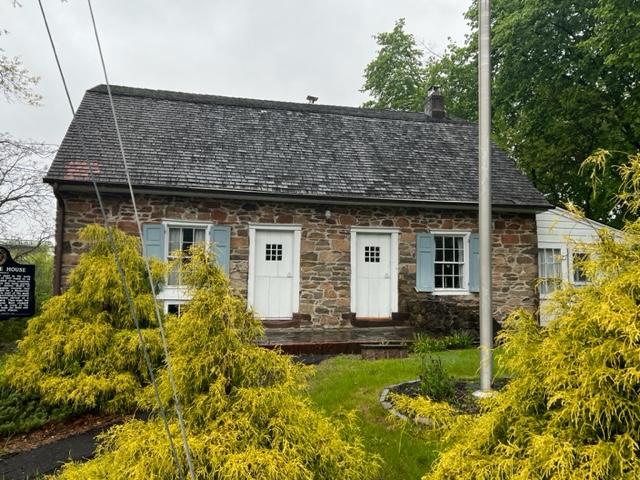
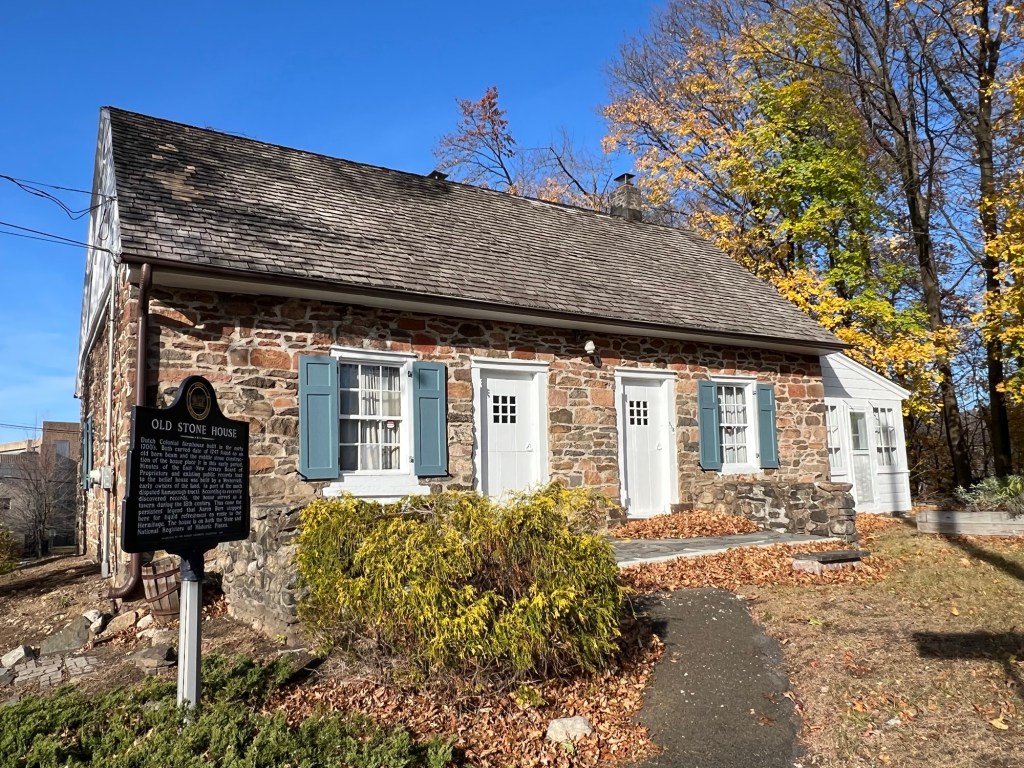
The Old Stone House in April 2023 for the Northwest Bergen History Day tours
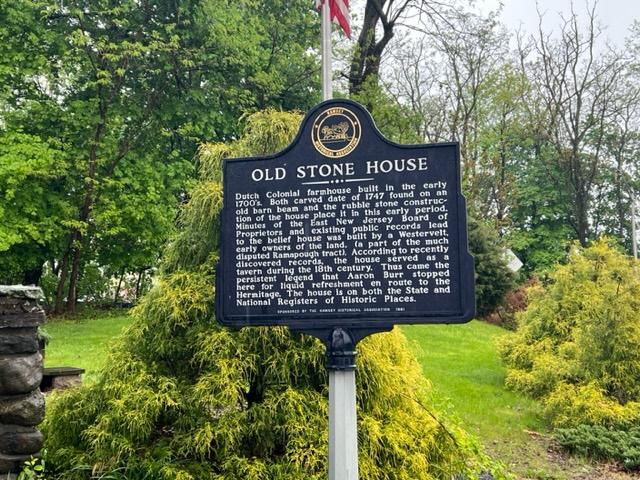
I visited ‘The Old Stone House’ during the Northwest Bergen History Coalition’s 8th Annual History Day. This Dutch stone farmhouse is one of the oldest buildings in Ramsey, NJ. It has been known as the Westervelt-Ackerson House to the families that built it and have lived in it in the past. The house is on the State and National Registers of Historic Places.
The house sits on a bluff that overlooks the highway but at one time was a 300 acre farm. The house’s furnishings on the first floor are period to the house with some of the original doors and windows of the house. There are still many original features in the house.
The Old Stone House signage
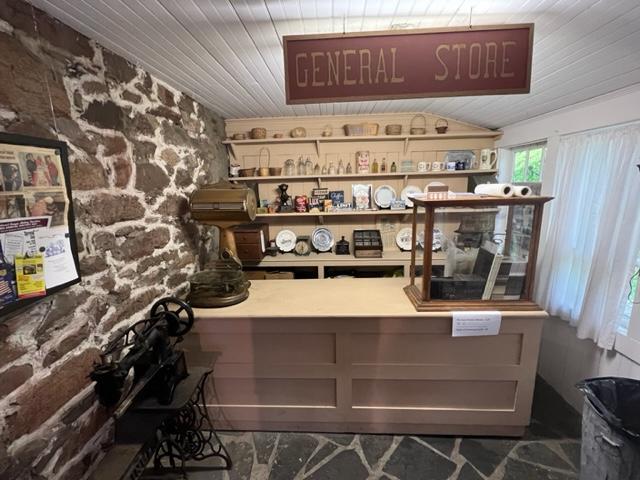
The first floor has a exhibit on the armed services and off to the side of the house which had once served as a antique shop to the last two owners of the house is a general store exhibition.
The General Store display on the first floor
The Armed Forces Display was very touching
The first floor is designed as most Dutch homes were at the time in the farming community. The kitchen was the center point of the home as a source of heating and cooking. The other rooms were connected so that the heat from the fireplace could spread through the home. It was simply furnished to reflect the life on the farm.
Another view of the Dining Room
As time went on and the family got more affluent, better furnishings were bought for the home. The house today reflects that home that would have been during the late 1700’s early 1800’s life on the farm.
The Old Stone House kitchen
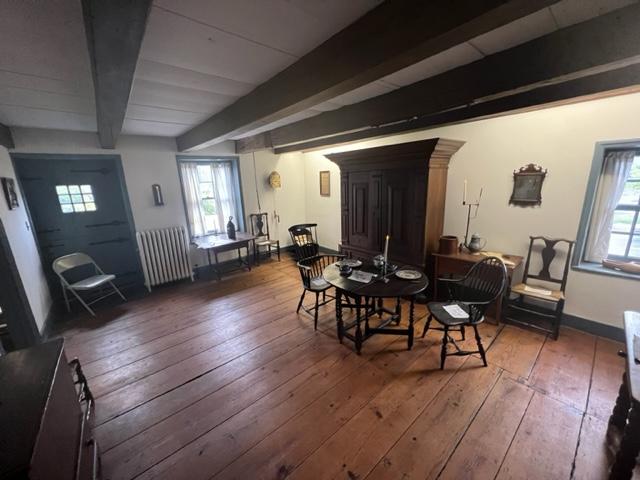
The Old Stone House parlor
The Old Stone House Bedroom
The Old Stone House Living Room
Old Stone House Living Room
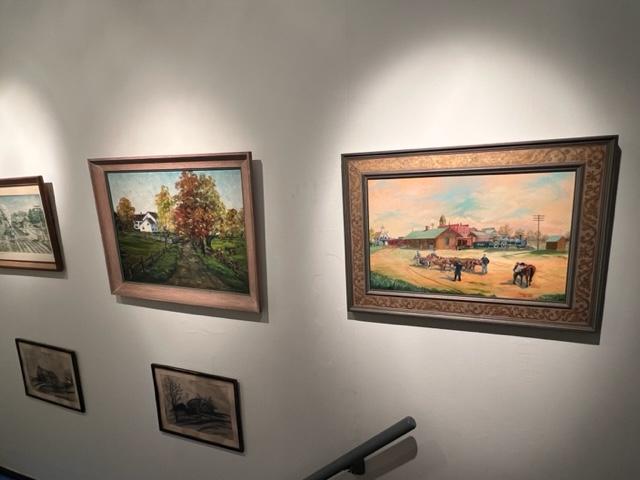
The upstairs painting and art collection
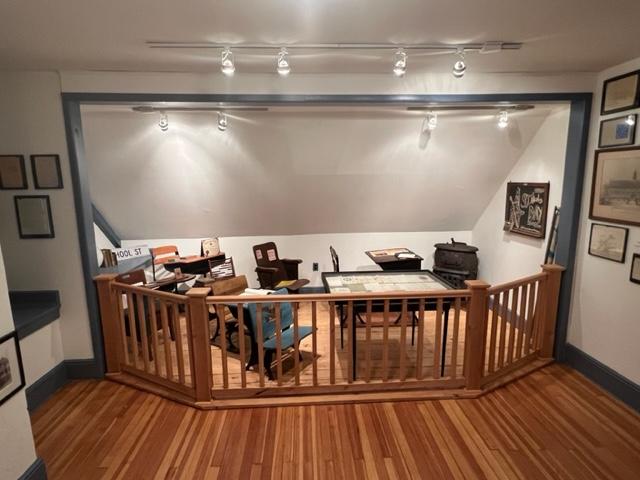
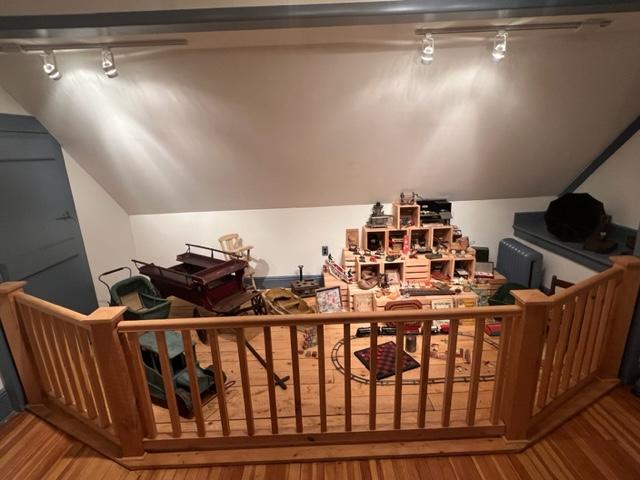
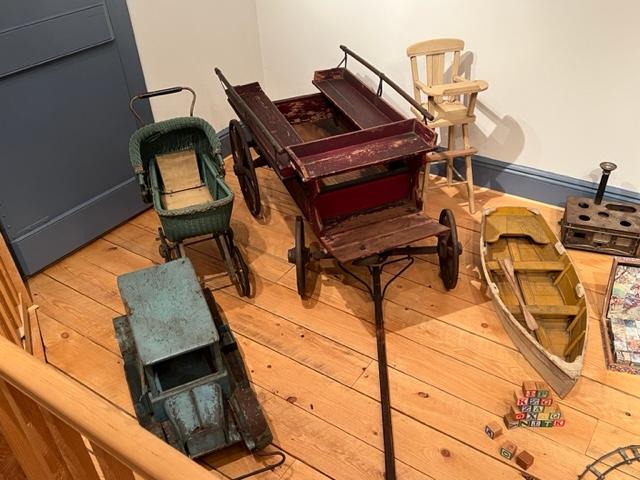
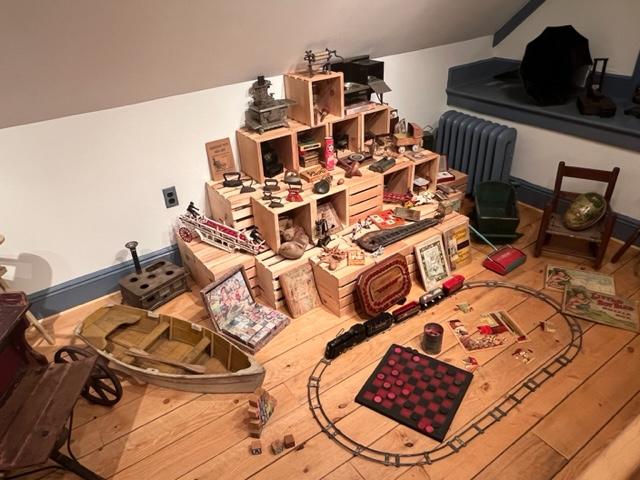
On the second floor are two children’s displays, one of toys and the other is set up like a school. There are period furnishings and children’s playthings in both rooms. The upstairs was finished off the house in the 1920’s.
The Old Stone House Schoolhouse display
The Old Stone House Toy Display
Antique Toys
Antique Toy Display
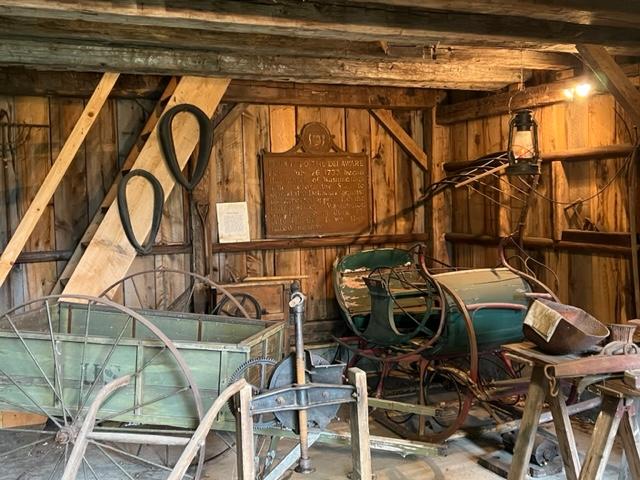
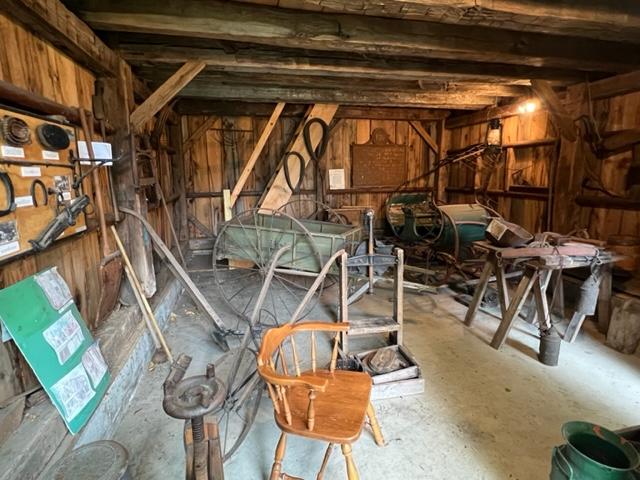
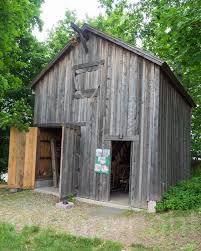
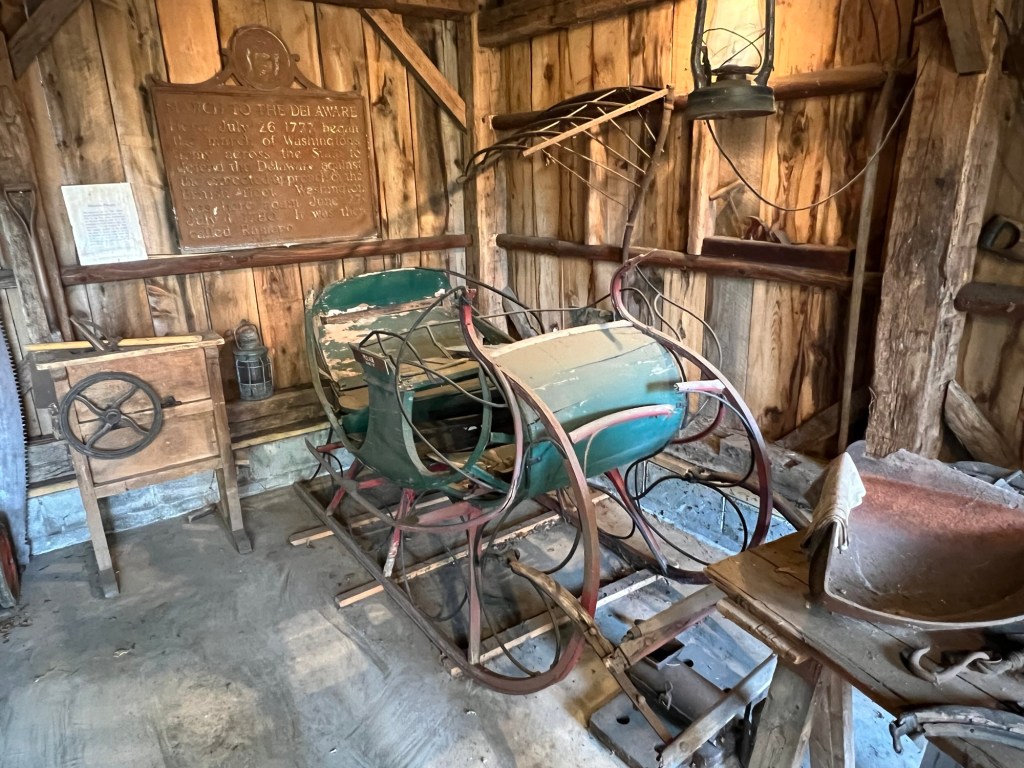
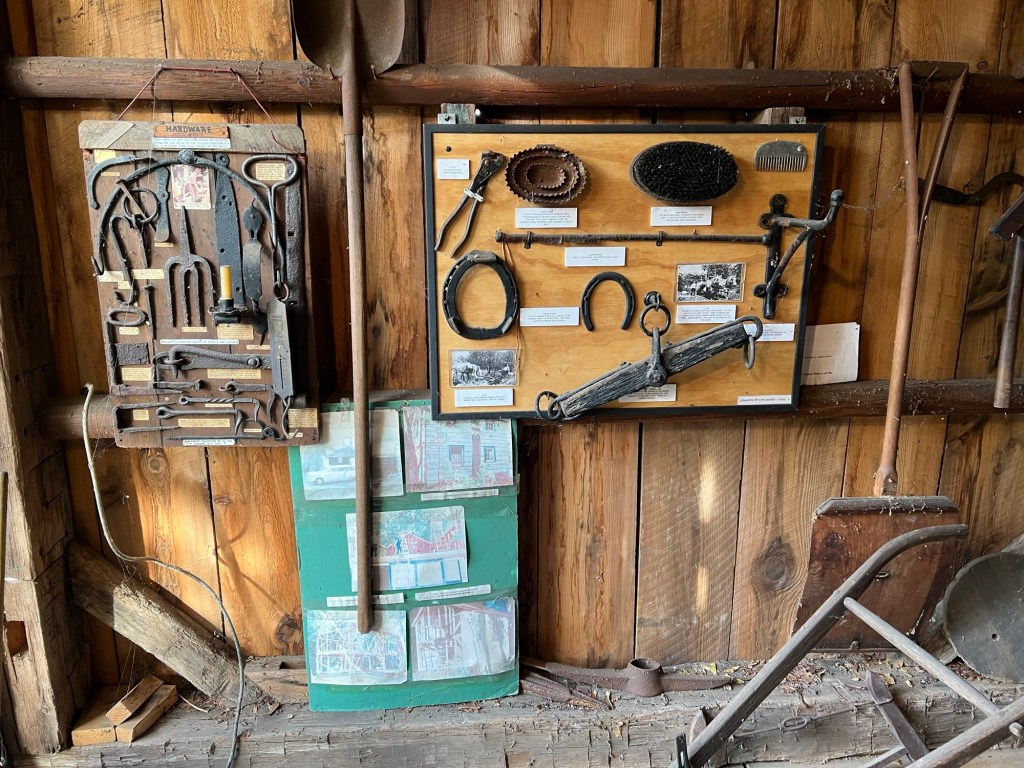
The barn off to the side of the house was moved to the property and holds a collection of period farm equipment.
The Old Stone House barn and farming equipment
The Old Stone House barn equipment
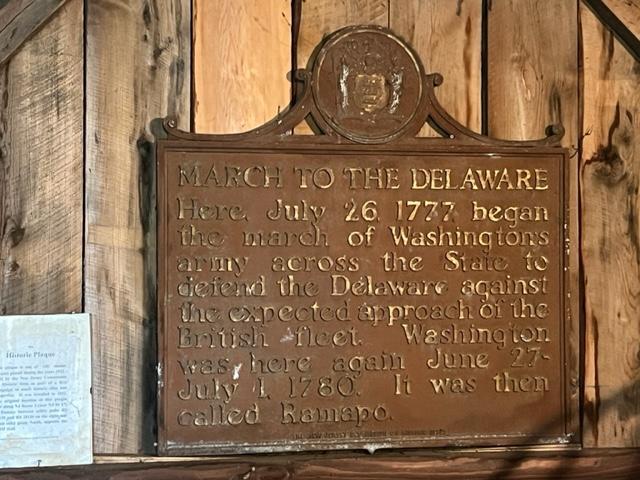
A historic marker in the barn
The house had been used as a private home for most of its history as well as a tavern during the late 1700 to early 1800’s. In the modern age, it was used as a antique store for the last two residents.
During the holidays, there is a big Christmas ‘Sinterklaas Festival’ (Dutch Christmas) that happens in early December.
The Old Stone House Barn
The History of the house:
(from the museum website)
The house has had many owners who have put their own touches to the ownership of the house. The original part of the house was built around 1746 by the original owner of the house, Jan Westervelt. This may have been part of the land leased to Uriah and Ruloff Westervelt in 1744. The land was part of the Ramapough Tract for the Proprietors and was from Peter Fauconier, one of its original purchasers (RHS).
The Ramapough Tract is situated between the Ramapo Mountains and the Saddle River. It was purchased from the Indians on November 18, 1709 and it was acknowledged by the Indians at Tappan before Cornelius Harring, the Justice of the Peace. The land was passed through the Westervelt family through the early 1800’s until it was sold outside the family in 1837.
From there the house had multiple owners until it was sold to the State of New Jersey in 1955 and is now leased to the borough of Ramsey for a dollar and is maintained by the Ramsey Historical Society.
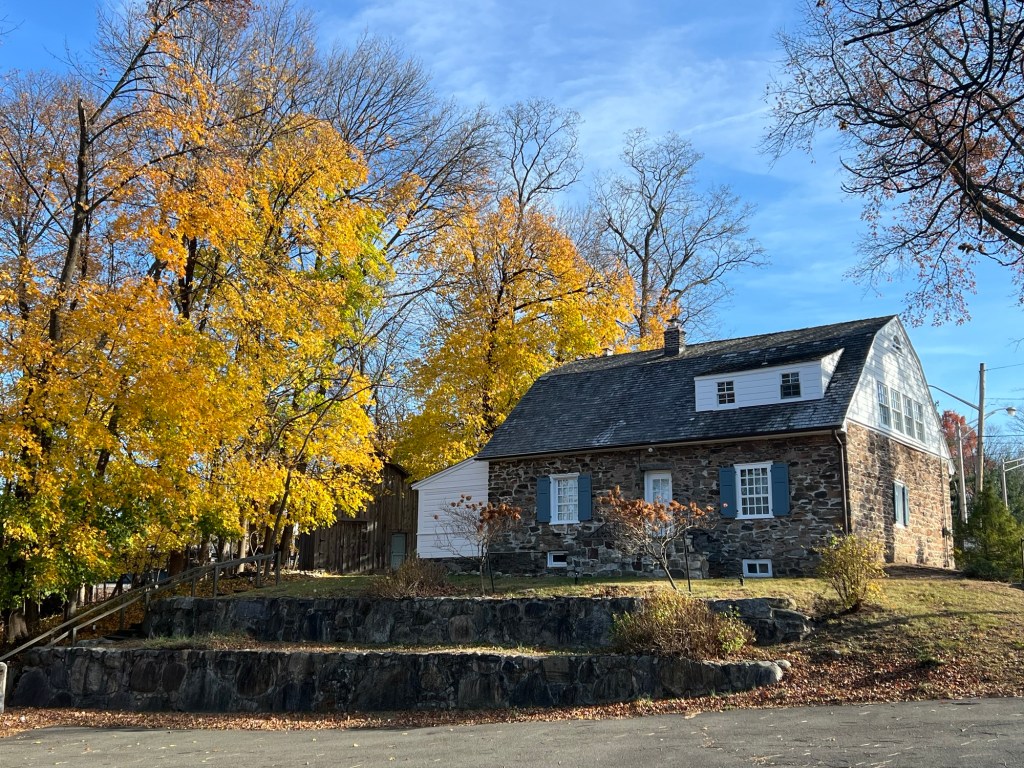
The Old Stone House
My class promotion of the Borough of Ramsey for the project “It’s Razzling in Ramsey: Be a Tourist in your Own Town”:
In the Fall of 2024, I created a Team Project with my students at Bergen Community College that promoted the Borough of Ramsey for Destination Tourism. Part of this project was a trip to the Old Stone House with the assistance of the Ramsey Historical Society, our class toured the museum and understood its rich history not just in Ramsey but in Bergen County.
Touring the Old Stone House right before Thanksgiving
The Old Stone House from the street
The barn on the property
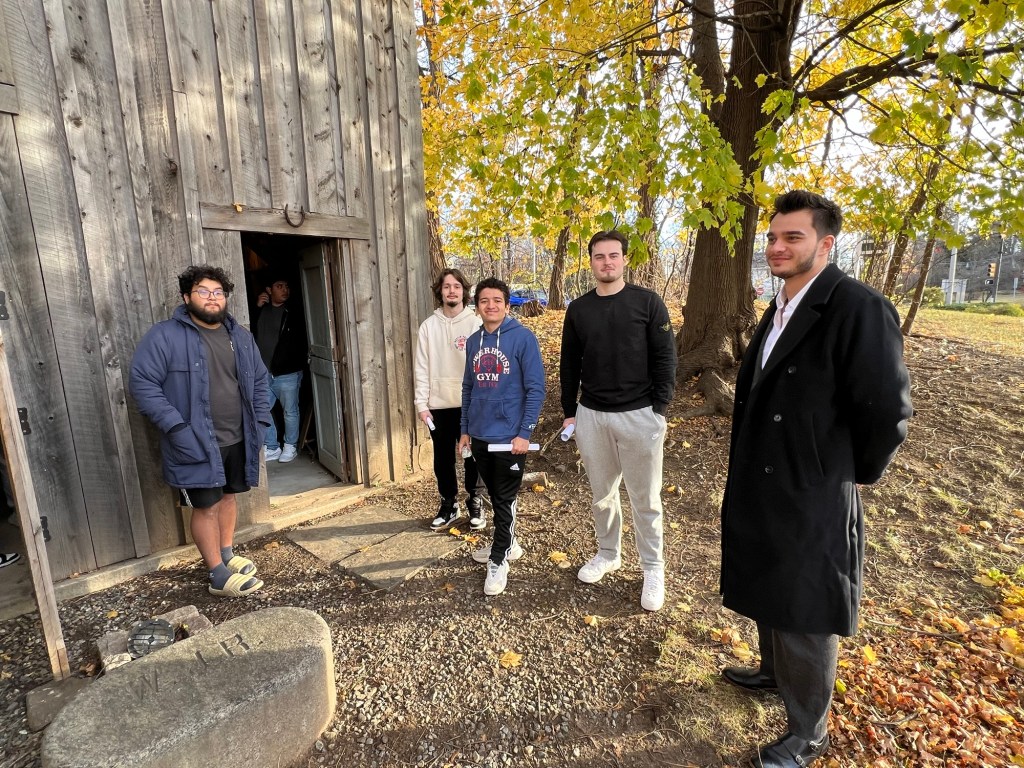
The President of the Ramsey Historical Society tour us on a tour of the barn, the grounds and then around the house. He explained the town’s past and its place from Colonial to modern times.
My students exploring the barn
Taking class pictures outside the barn
Touring inside the barn with its farm equipment and sleighs
Looking at the farm equipment from all ages
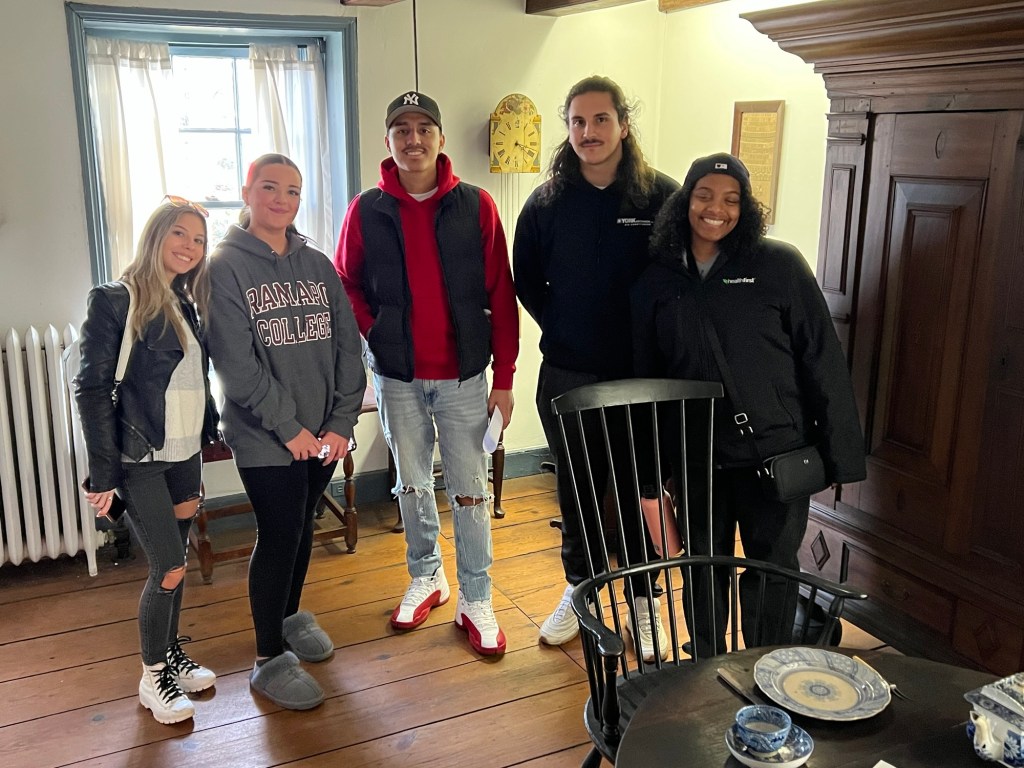
My students touring the Old Stone House
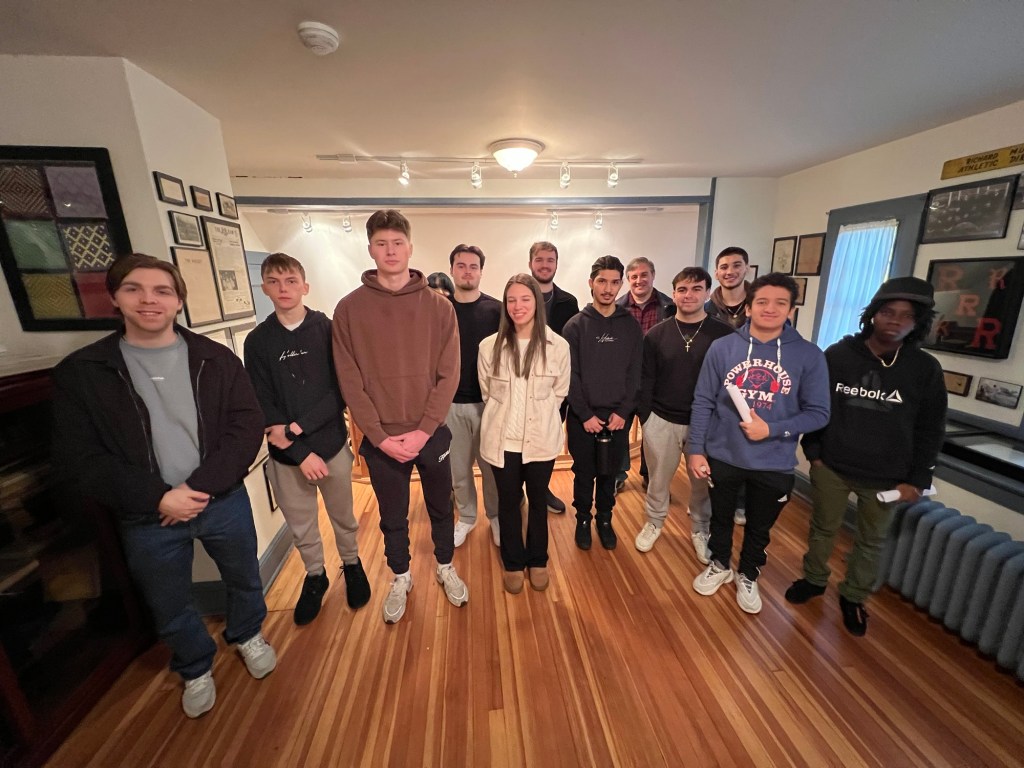
My students touring the museum
A group of my students touring the museum to promote it for tourism
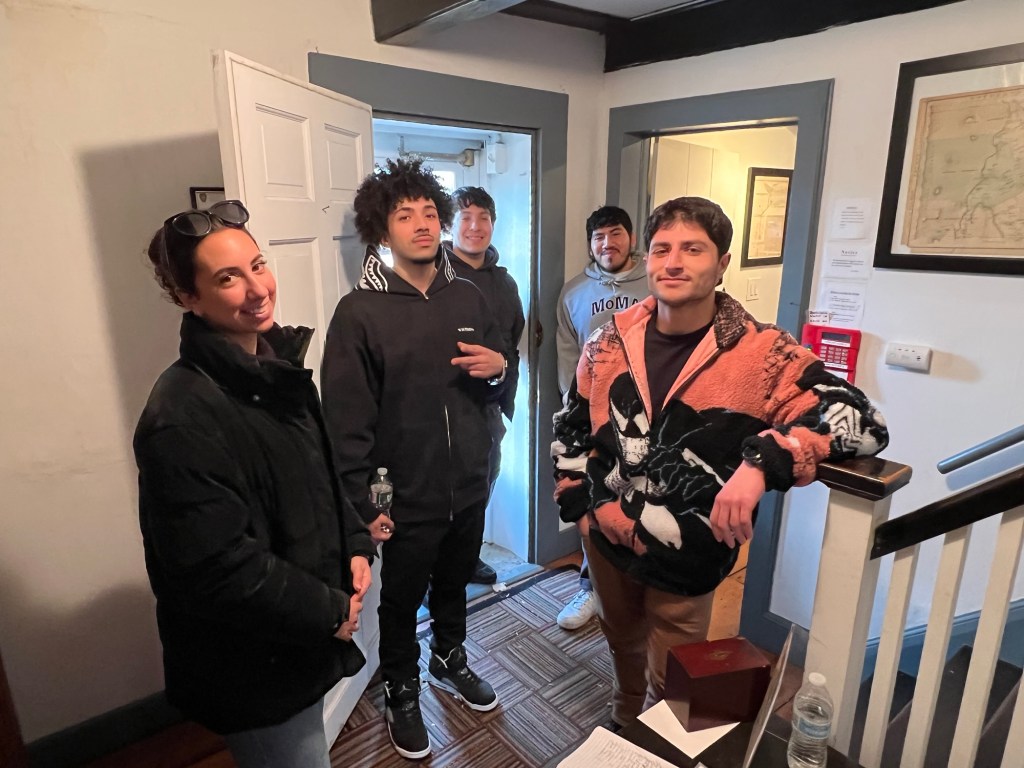
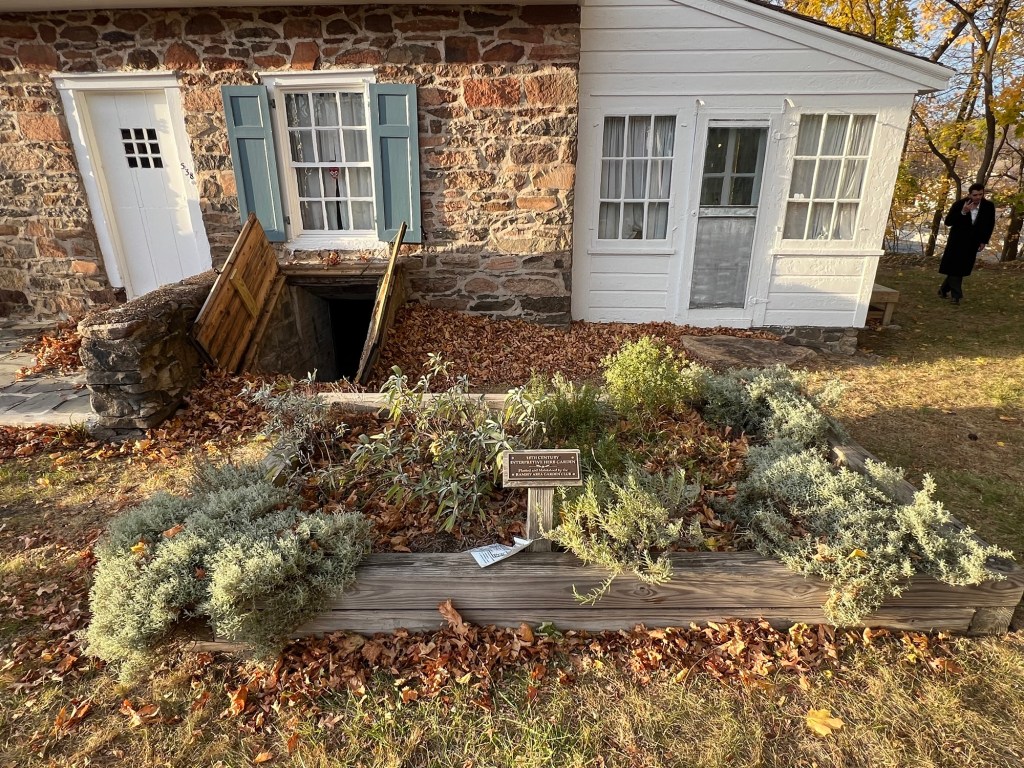
The Historical Society even let us tour the basement
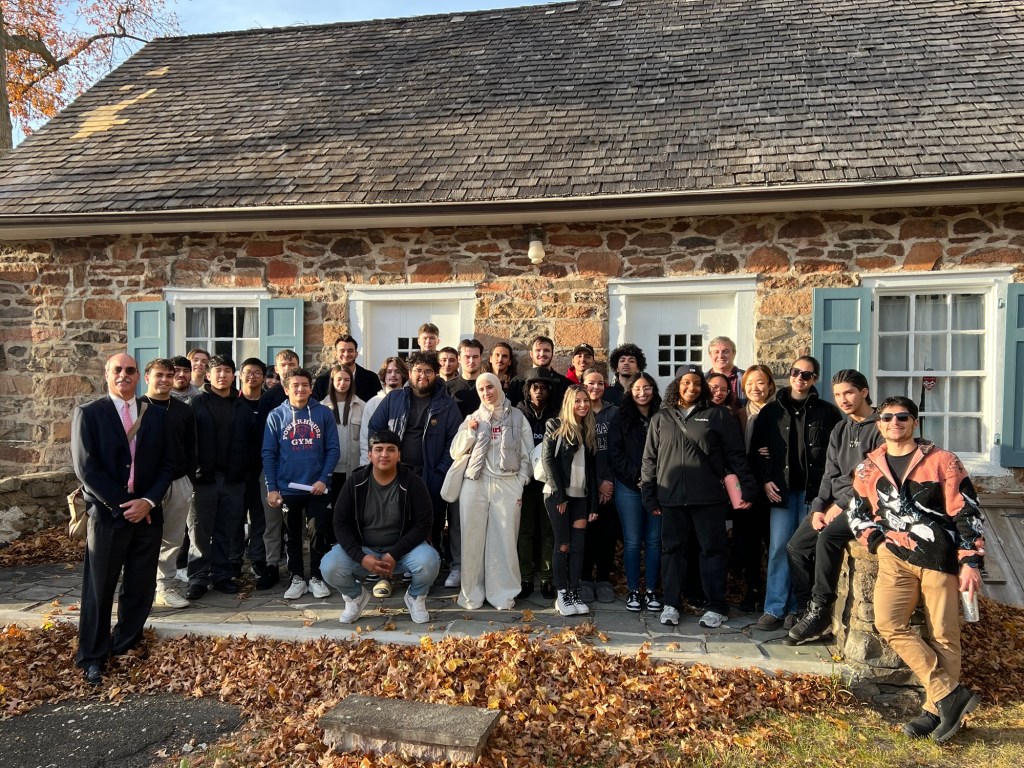
The Team group picture of all my students touring on the walking tour of the Old Stone House in November 2024.
They created the very funny and clever “Visit from Mr. Pumpkin” event for the project. Here is a link to the video:
The students did an excellent job on the project and you can see the whole present above through the blog and its links. It was the perfect showcase to this hidden gem of a museum.

















































 Visiting a Museum: The Unique, Unusual, Obscure and Historical