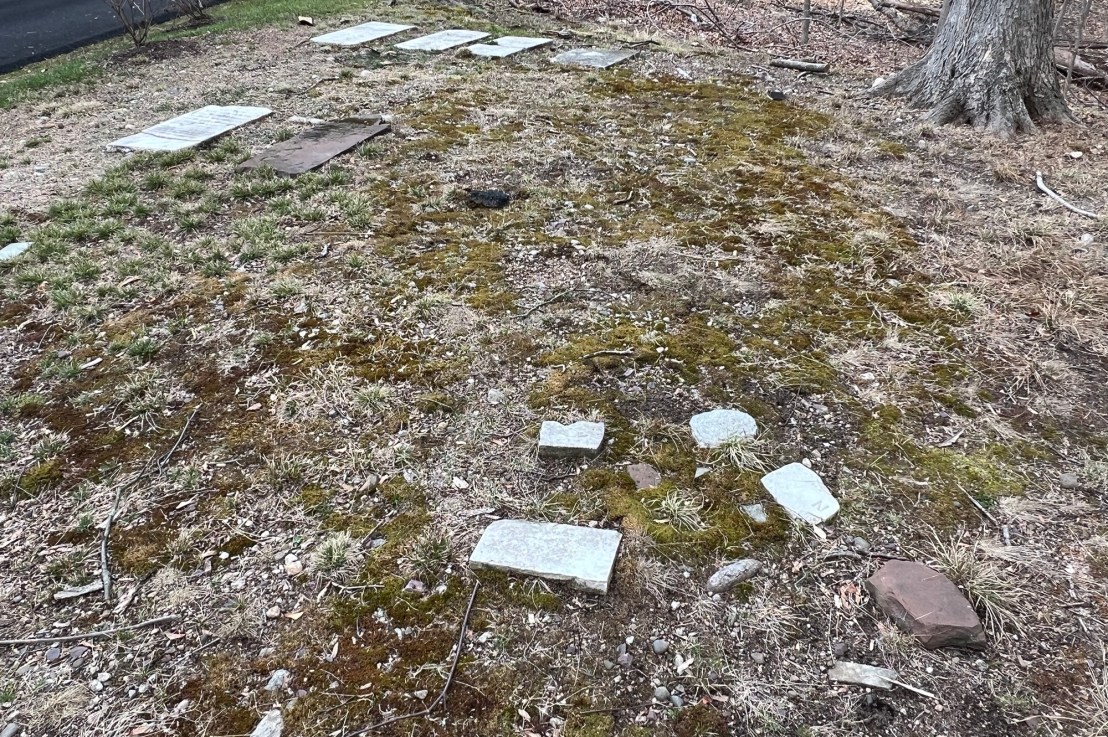
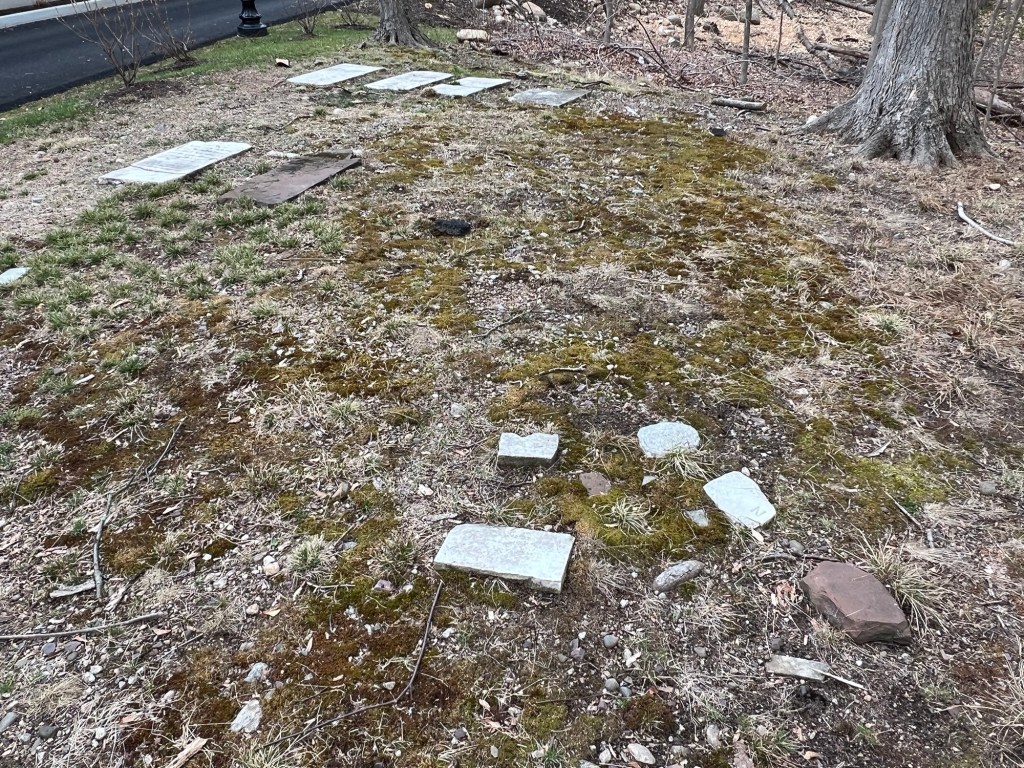
The Sturr Family Cemetery sits on a bend of the driveway of the Chabad Jewish Center of Northwest Bergen County and is a small cemetery that once sat on the edge of the J.H, Sturr farm.
The Sturr Family Cemetery
The farmhouse of the Sturr Family sits on the lot across the street from the cemetery property. This is located on a small buff on what was the edge of the farm.
The Sturr Family cemetery tombstones
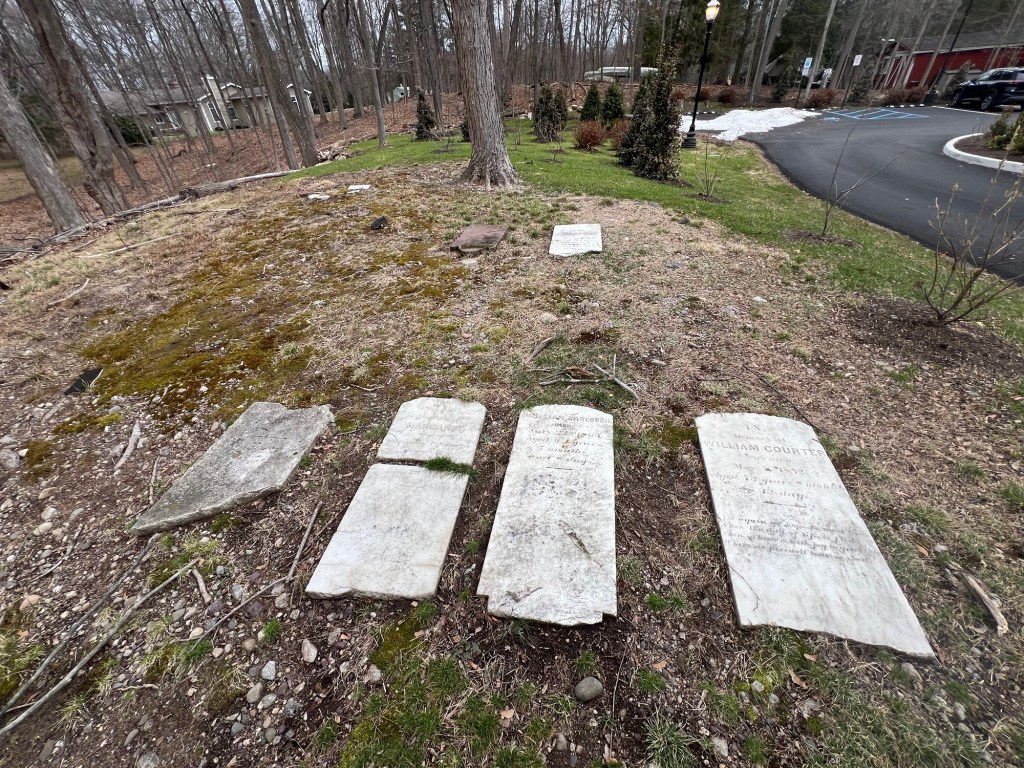
The tombstones of the Courter and Carlouch family members
The grave of William Courter
The only visible tombstones that are left in the cemetery are an Ackerman family member, Anny Ackerman and members of the Courter and the Carlouch family’s (who must have married into the family).
The Ackerman family tombstones (the one to the right was unreadable)
The other tombstones are broken and no one is sure who is buried where in the cemetery.
The History of the Cemetery:
(From Find a Grave website)
The cemetery is located in Franklin Township, Bergen County, New Jersey, on what was once the family farm of J.H. Sturr. As of October 1991 only 6 markers were still remaining.
The Sturr Family Cemetery in full view
History of the House:
(From the Franklin Lakes Municipal Website)
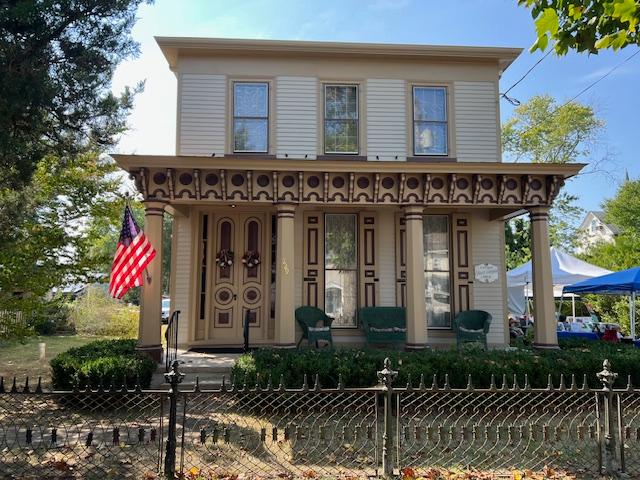
H. Sturr House or Blue Meadow Farm Built 1860 378 Pulis Avenue, Block 1510, Lot 8 Franklin Lakes, New Jersey 07417
The Sturr House – also known as Blue Meadow Farm -is a handsome and little altered example of mid 19th century vernacular architecture which incorporates several stylistic elements such as gable returns and frieze area of the early 19th century Greek Revival style. The Borough of Franklin Lakes lists the erection year of the house as 1860.
The façade of this 2 ½ story house consists of clapboard. The front porch has five bays with square posts and a rectangular entrance door with rectangular sidelights. Two tall 1st story windows are on one side of the porch. A single hitching post with iron rings sits in front of the porch stairs. The building has a frieze area with linear design. Semi-circular headed louvered vents are in all gable ends. The rear of the house has a one story wing. There is a detached garage to the west side of the house as well as a round frame well. Further west of the house is a stable which has been extensively remodeled and converted into a residence in recent times. The house combined with associated structures is a significant remnant of the large farmsteads which ones dotted the Borough’s landscape prior to the recent suburban housing boom.
History of the Family:
(From the Franklin Lakes Municipal website)
This Sturr house and the nearby more altered house at 402 Pulis Avenue were duplicate structures and were probably built around the same time by members of the Sturr family. The 19th century Sturr family was descended from Conraedt Sturr who purchased 190 acres of land in this area with John Coeter from Robert Livingston in 1793.
The non-extant homestead and mill was located at present-day 930 Old Mill Road. It is known that Henry Sturr, the son of Conraedt, had a fanning mill at this location in 1850. In a will dated 1852 he bequeathed his property and mill to his grandsons John, Henry, and Daniel (Maria Braun – 1976 page 26 & 27).
The property along Pulis Avenue upon which these houses are situated was probably included in this will since the homes were built around the mid-19th century. Future deed research is recommended to identify the original builder and the construction date of the house (1861: H. Sturr, 1876 Estate of H.M. Sturr). Presently the house is privately owned and occupied.
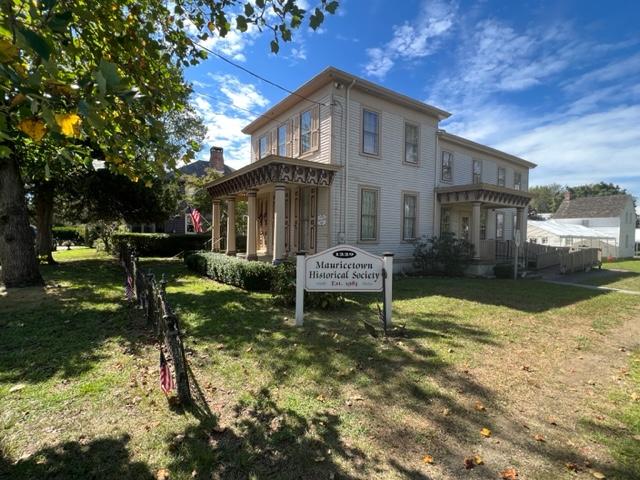
The Mauricetown Historical Society at 1229 Front Street
I visited the Mauricetown (pronounced ‘Morristown’ like its northern neighbor) on a trip to visit historical societies in southern New Jersey. Mauricetown comes from the Dutch word ‘Mauritius’ for the Mauritus River that flowed through the town. “Maurice’ is the English version of the word.
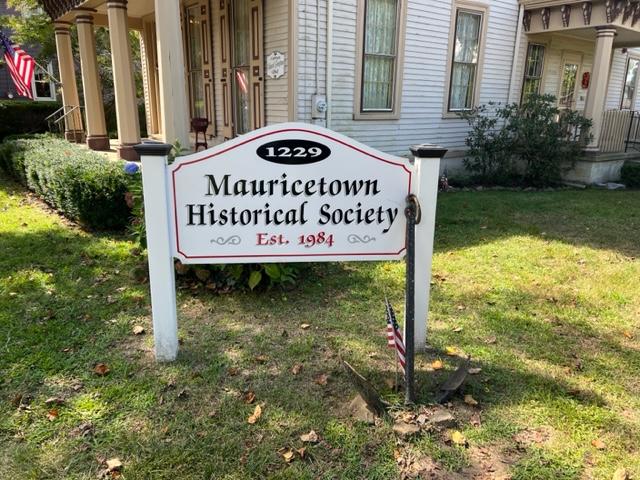
The Society’s welcoming sign
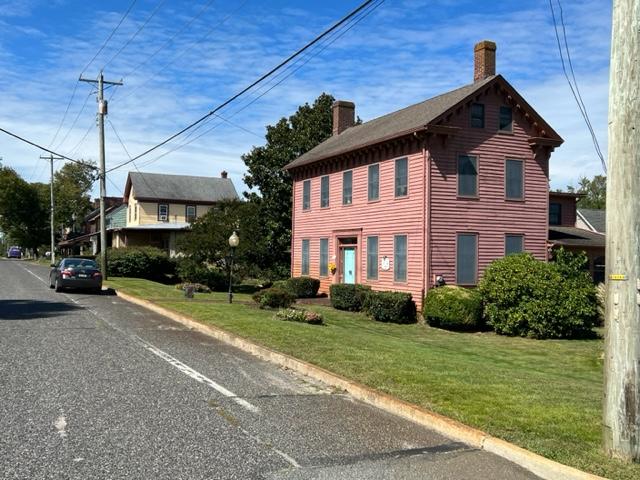
The town itself was used for shipping and trade up and down the East Coast and between 1830 and 1902, 61 ships were built in the boatyard in the village. The town itself is very historic and the walking tour of the early American architecture of the town shows many Federalist and Victorian homes of the former ship captains. Today these homes are in much demand for their beauty and beautiful gardens. The care the homes are getting adds to their beauty. Take time to walk around before you get to the museum.
Downtown Mauricetown with the Ship Captain’s homes along the river
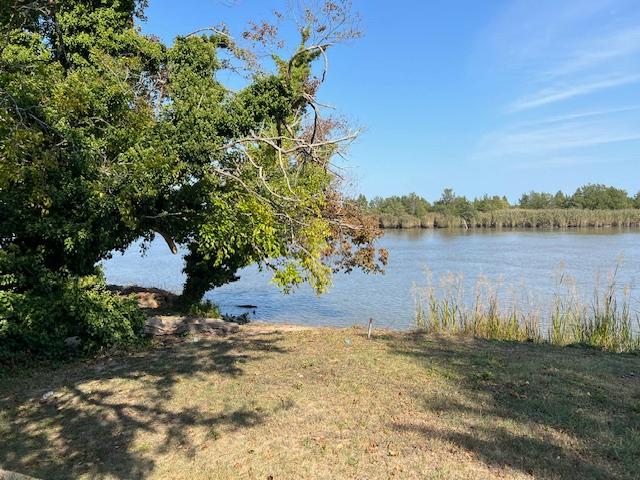
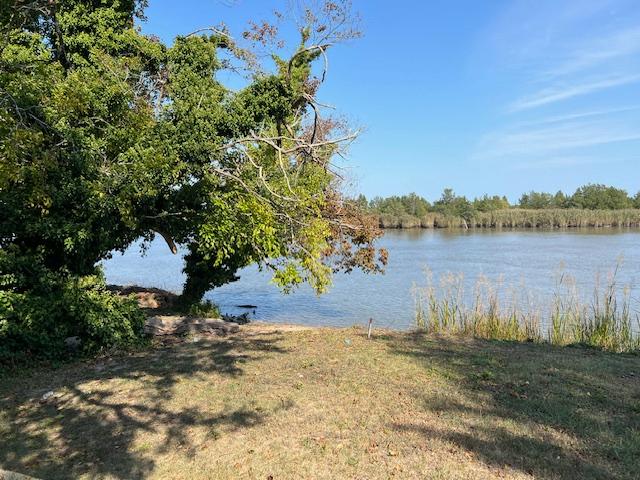
The Mauricetown River in the Summer of 2024
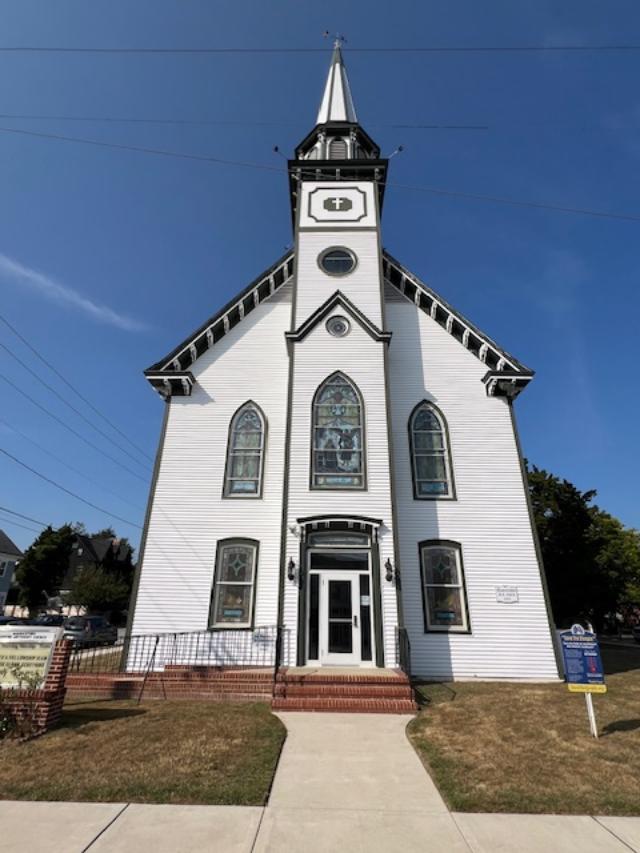
The Mauricetown Historical Methodist Church
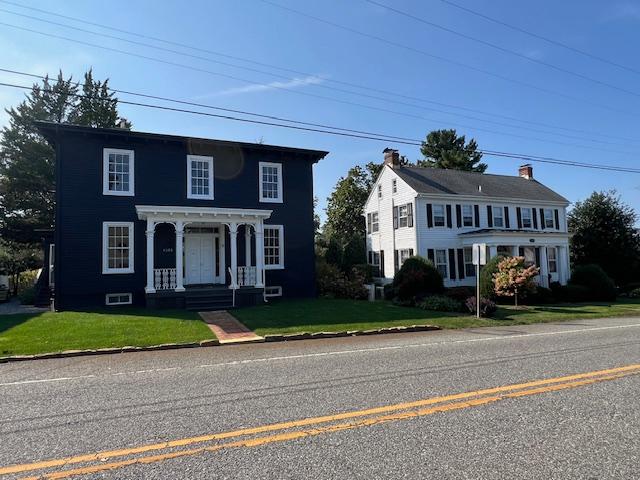
The historical homes of Mauricetown, NJ
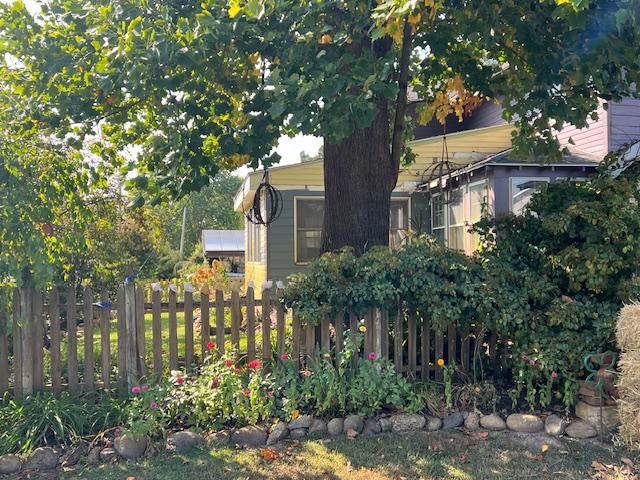
Some of the beautiful gardens in the neighborhood
The neighborhoods gardens in the Summer of 2024
The gardens near the Historical Society
The home that the Society is housed in is one of many ship captains’ homes that was built on this side of town being closer to the river for the other ship captains. Founded in 1984, the Society has taken it upon themselves to start collecting artifacts from the town.
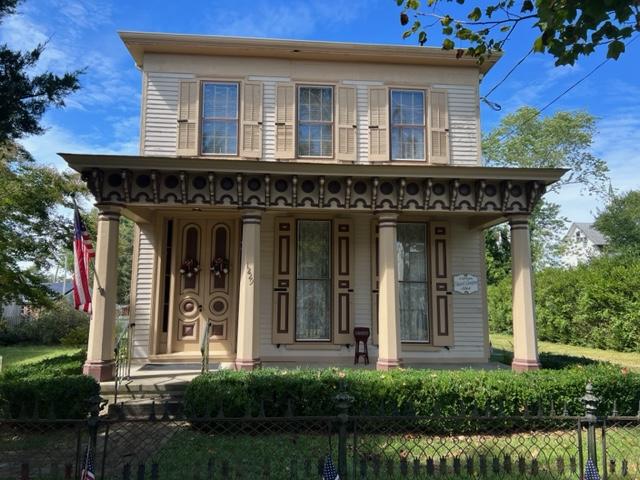
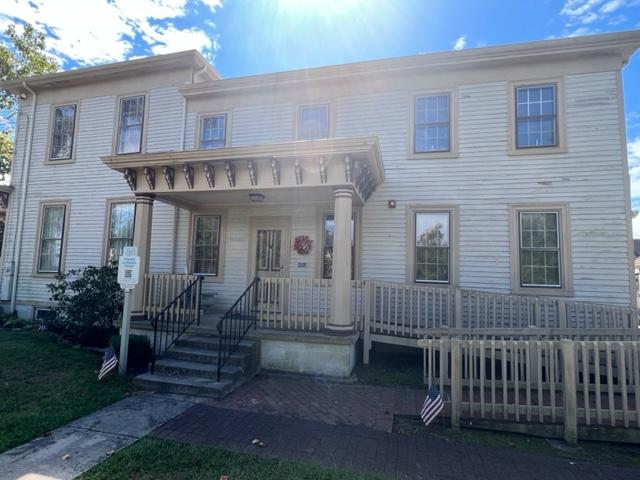
The front of the Historical Society in the Summer of 2024
When you first enter the museum to the right, there is an extensive collection of seafaring items and military artifacts. This includes many items from the Civil War and WWI. There was even a rare pair of original sharp shoot glasses.
The Military Collection at the Mauricetown Historical Society (MHS Picture)
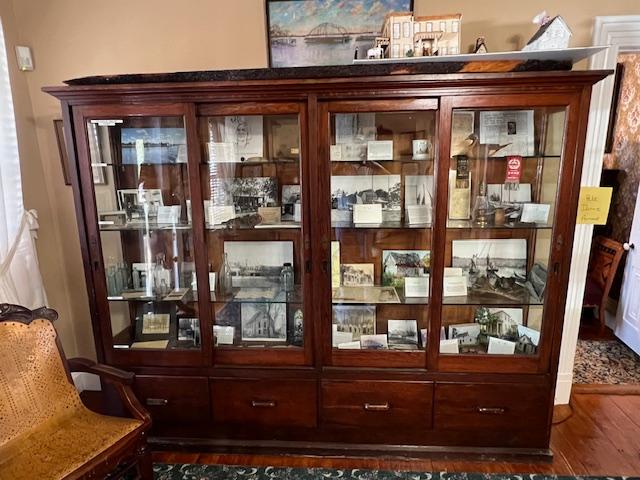
On the other side of the front foyer, is a case line of artifacts from the history of the town from the Lenape Indians to former shipbuilding businesses and local history.
Historical artifacts from the town of Mauricetown, NJ
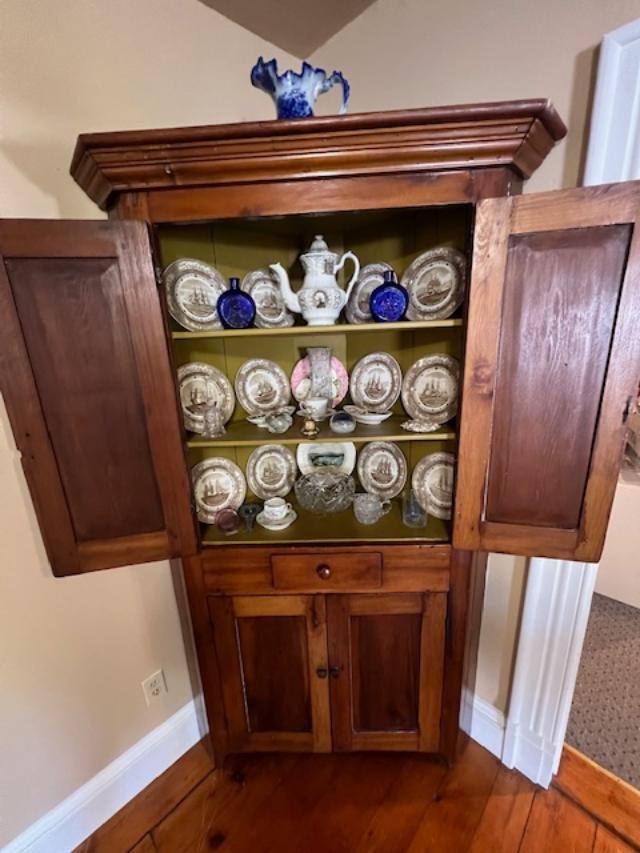
The China Collection in the Main foyer
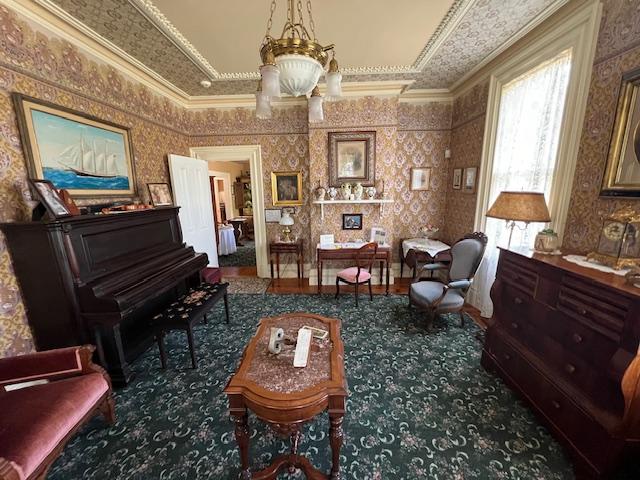
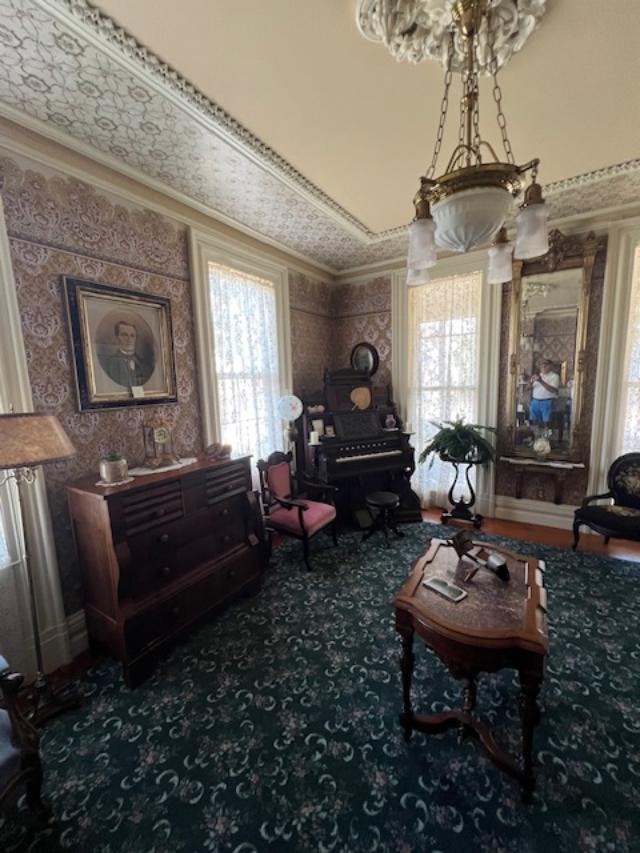
In the Formal Parlor, the room was designed with original molding from decor of the house and a copy of the wallpaper that had been found behind paneling that had been put up in the 1970’s. The room was furnished in period furniture that was a mixture of late 1890’s to the 1920’s.
The Mauricetown Historical Society ‘Parlor Room’ with the original molding and copy of wall paper
The Parlor on the first floor
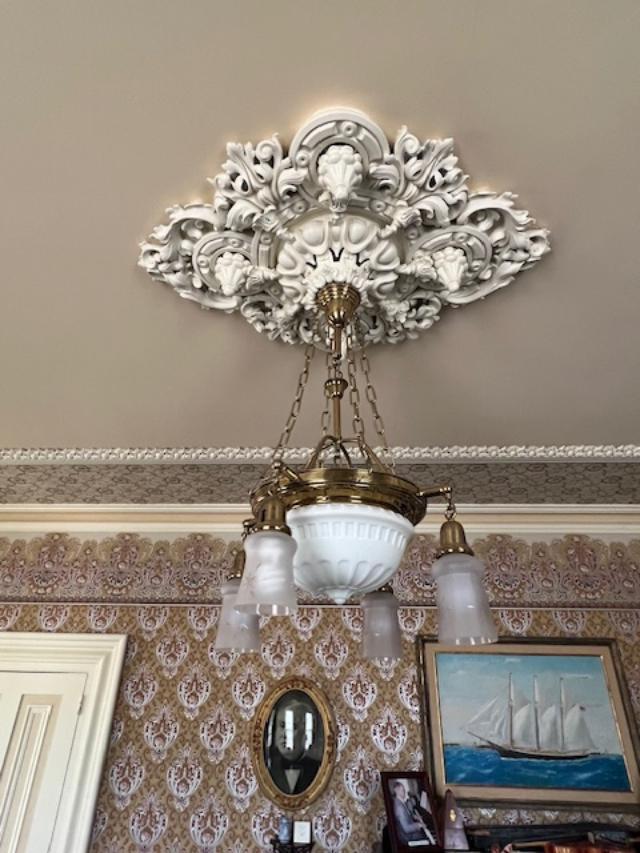
The Chandelier in the Parlor is original to the house
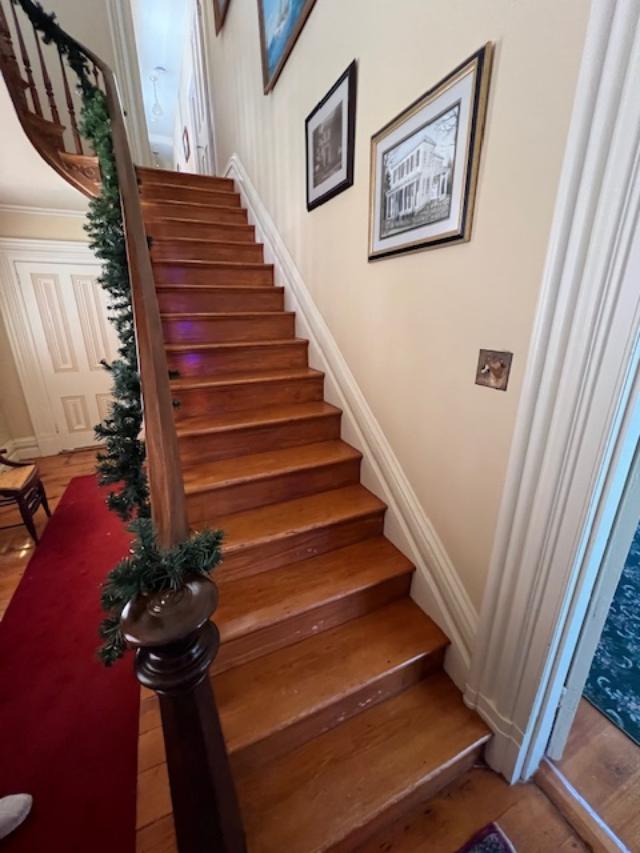
The beautiful back stairs to the second floor
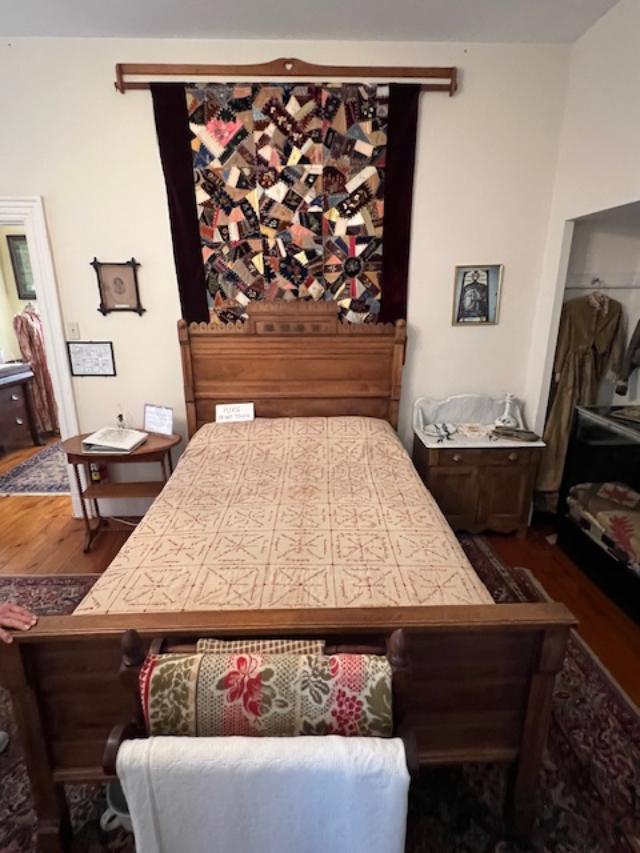
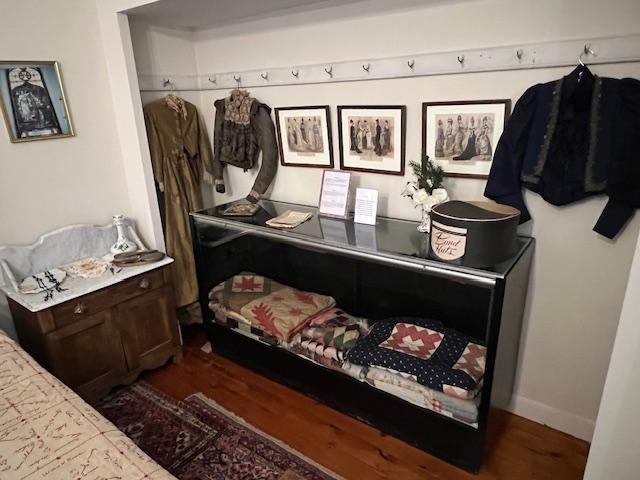
On the second floor, one room was dedicated to a Captain Bacon and his wife, Carolyn, another was full of pictures of the town of Mauricetown through the times, there was a collection of clothing through the ages and a quilt collection that was very impressive.
The beautiful quilt with pieces from everyone in the community
There was one quilt on display that had the names of all the sea captains and their families. Many of the descendants of the town come here to research their families and look at this quilt. There is also another quilt with items native to the area.
The museum’s collection of quilts and clothing on display
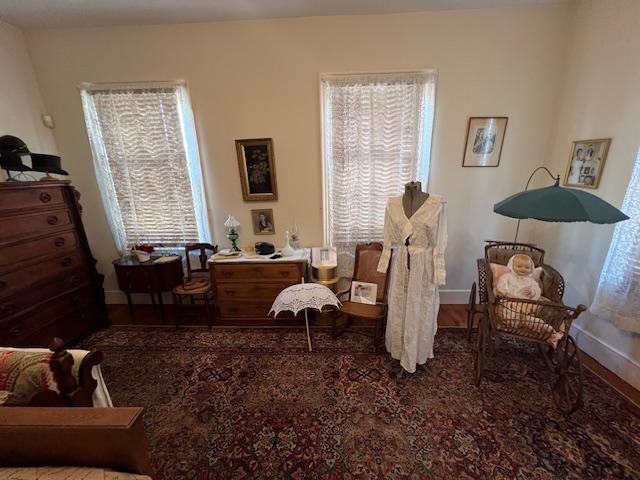
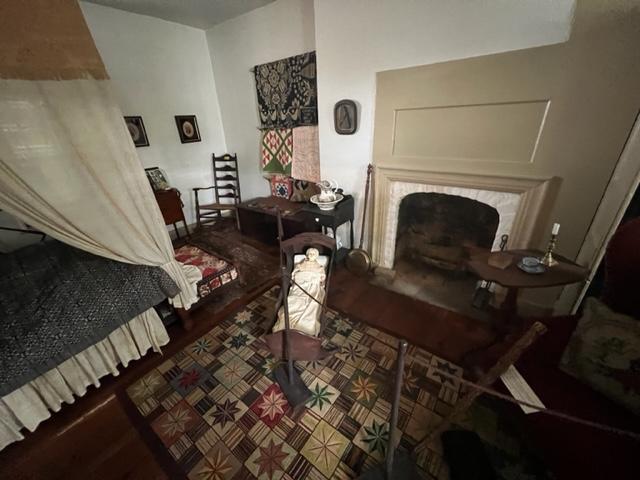
The Second Floor bedroom
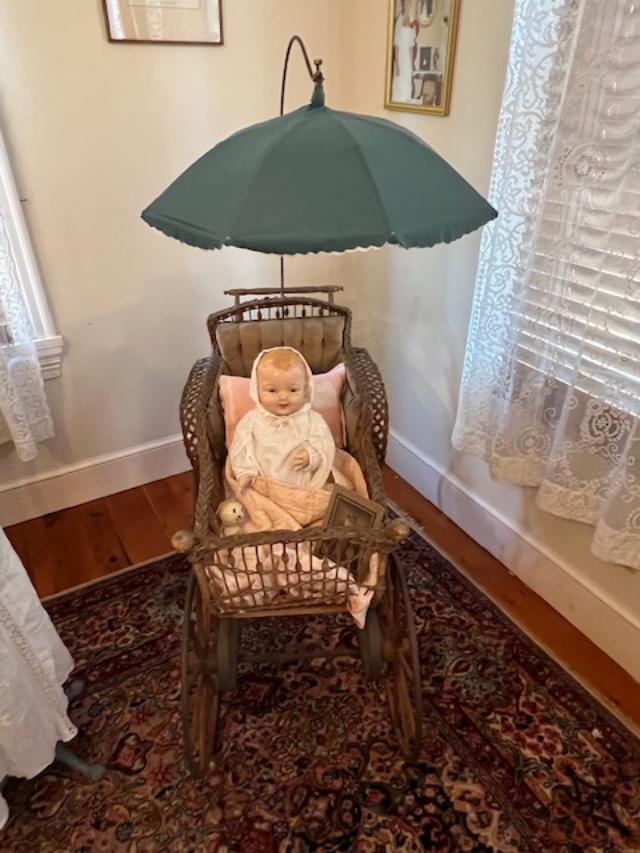
The Emma Hunter Baby Carriage
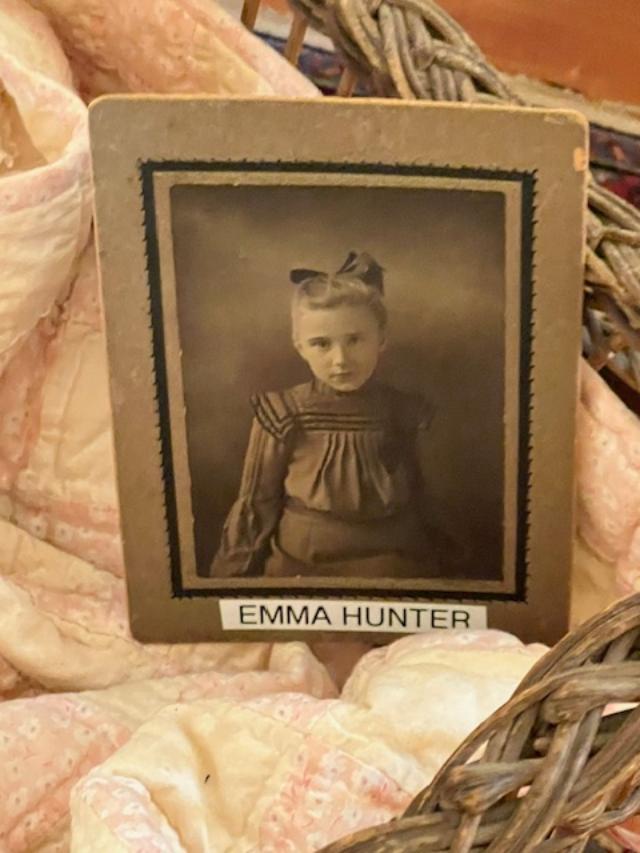
Resident Emma Hunter as a young girl
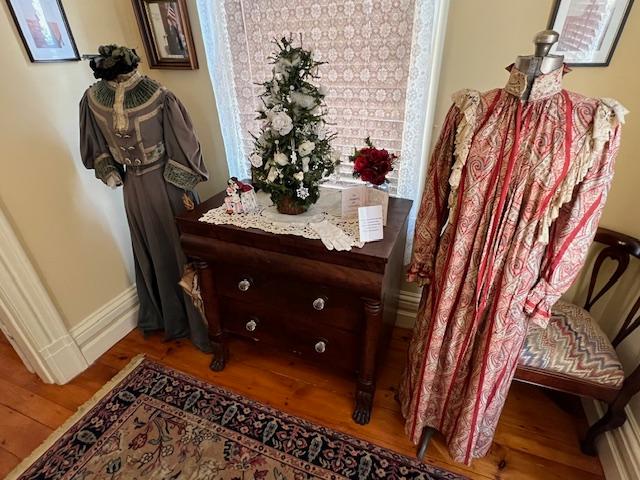
The costumes and clothing of the collection
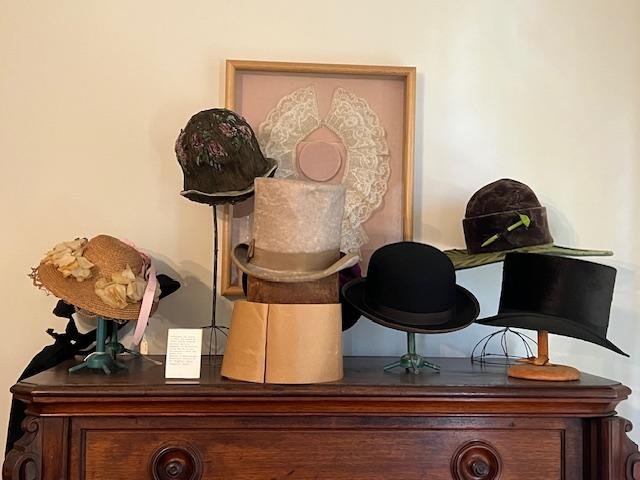
Hats on display
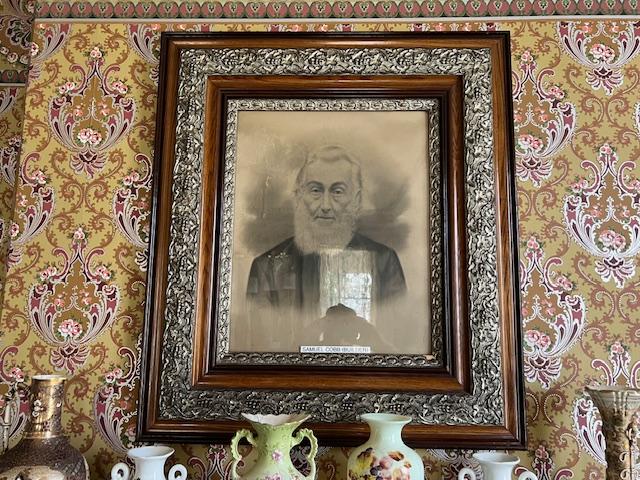
The builder of the house who built many of the homes in Mauricetown, NJ
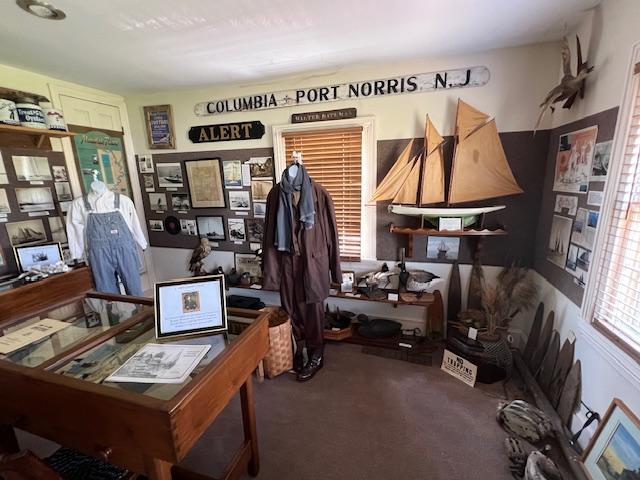
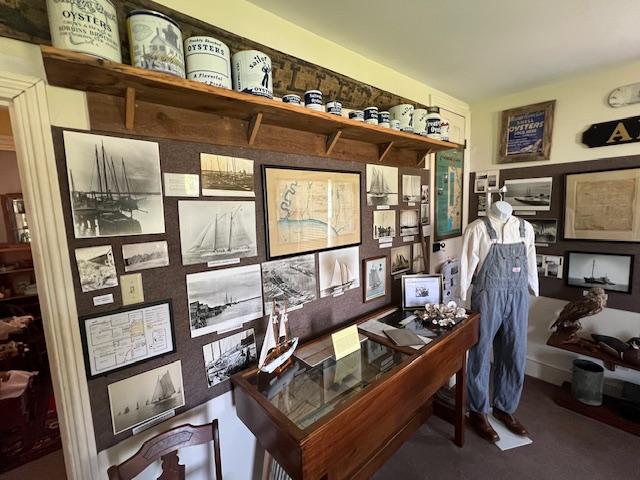
One of the rooms discusses the Mauricetown Shipping and Fishing industry with all sorts of photos and equipment. There was even a display of the ‘Bridge Key’ from the original bridge that lead into town. There was also an interesting display on the town’s Oyster Industry.
The Oyster and Fishing Business in this area of the state
The Fishing and Oyster industry
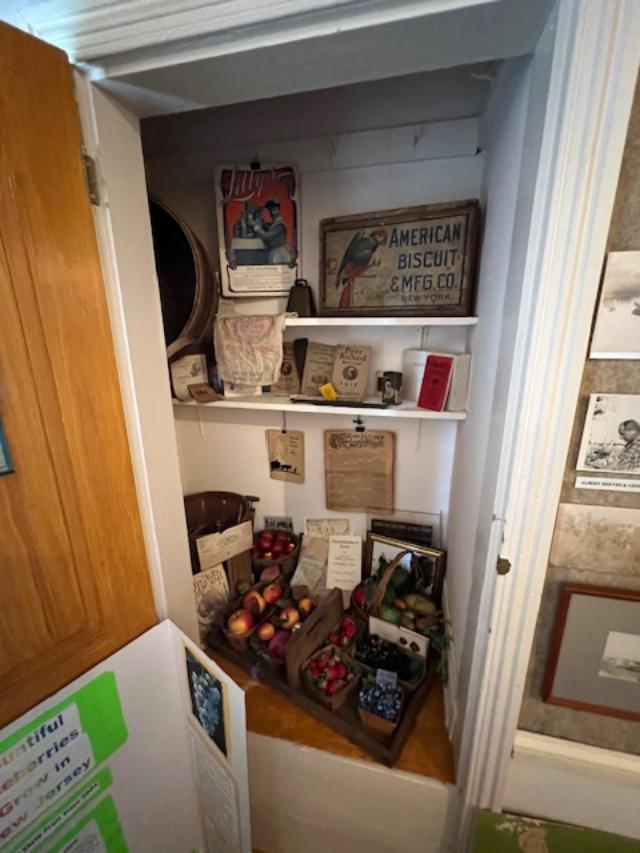
The Grocery industry
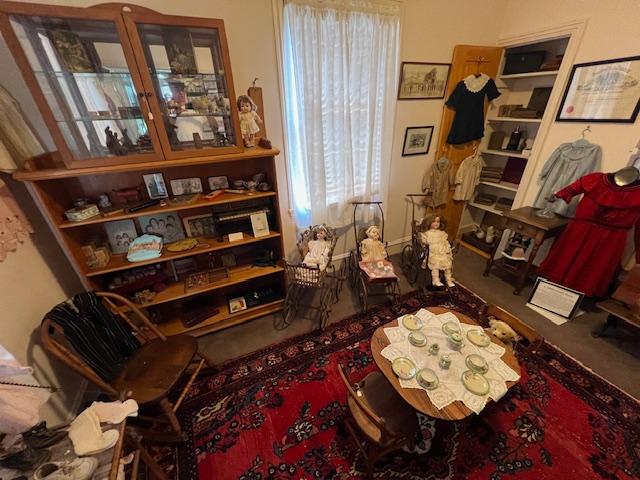
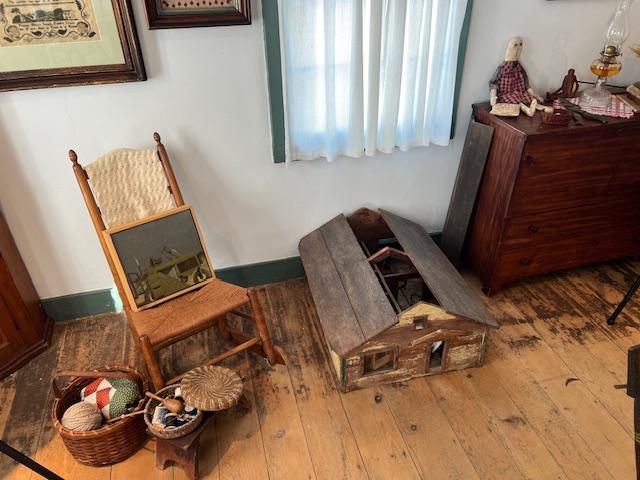
In the Children’s Room, there was an extensive collection of dolls, children’s playthings through the ages, clothing and school pictures of the town through the years.
The Children’s Room is my favorite room in the house. I love the interactive toys that promote imagination. This is lacking in children today.
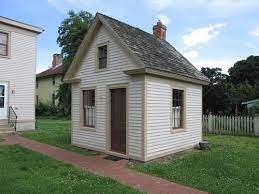
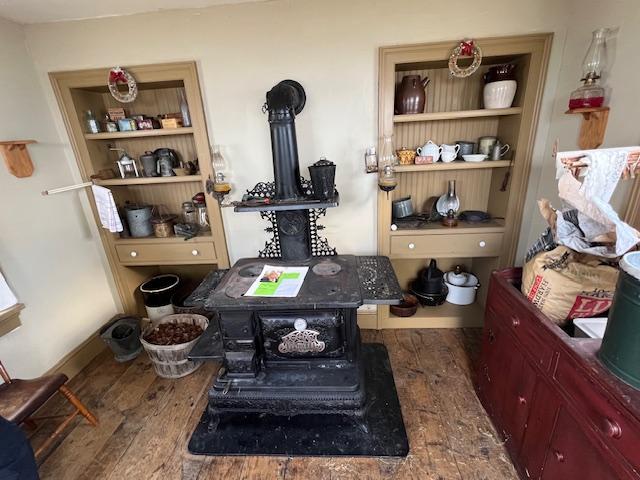
On the outside grounds, there is a Cookhouse that was separate from the main house in the era of when cooking could start a house fire so the rooms were kept separate from the main house. There was a 1880’s cookstove that still works.
The Cookhouse on the grounds of the Mauricetown Historical Society
The inside of the Cookhouse at the museum
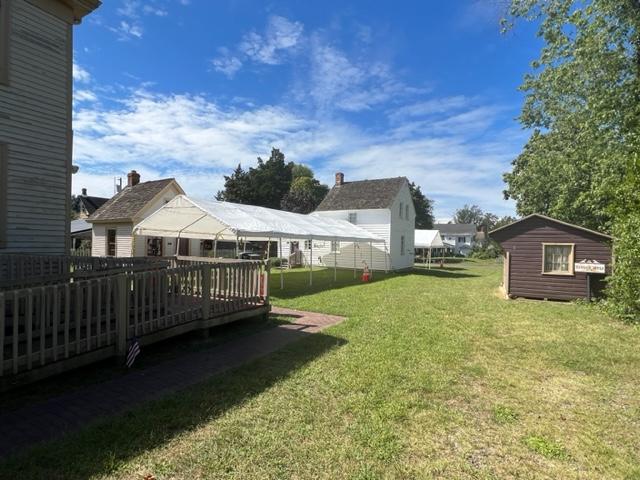
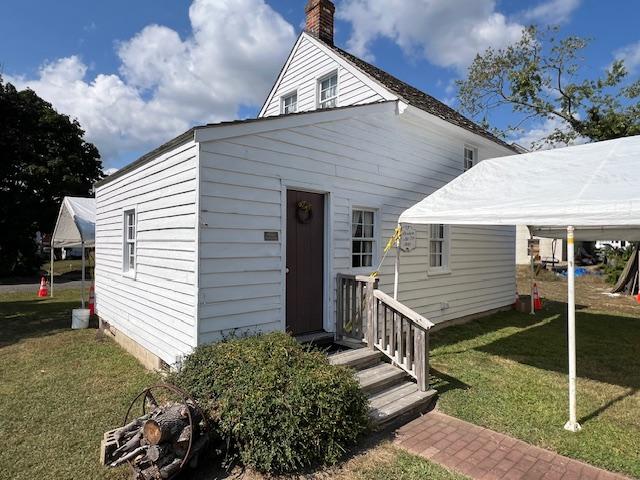
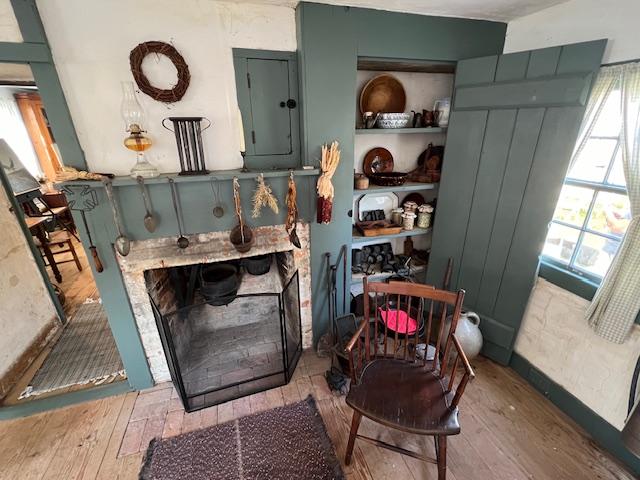
On the back of the ground is the Abraham and Ann Hoy House, a small home from 1840 that had recently been lived in by an elderly couple. The house had two small levels with the main rooms designed around the fireplace and heating unit.
The Mauricetown Historical Society’s backyard of buildings
The Hoy House on the back grounds of the museum
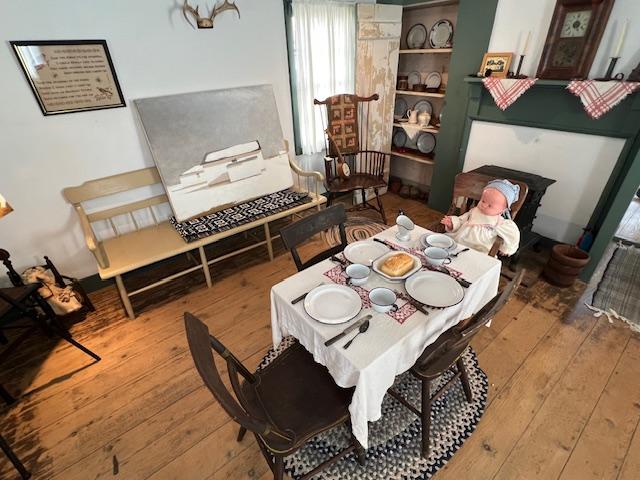
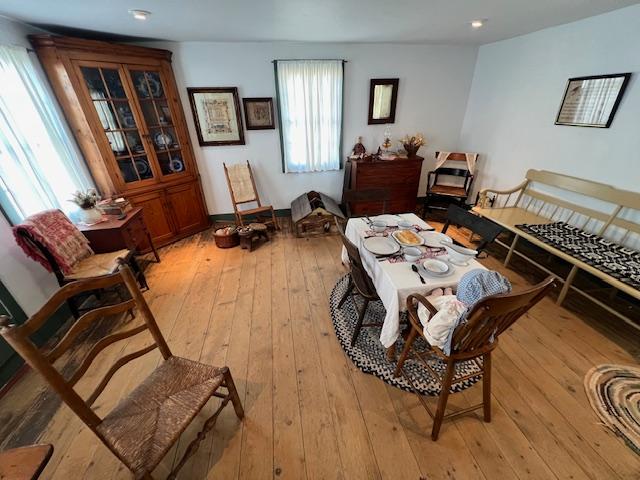
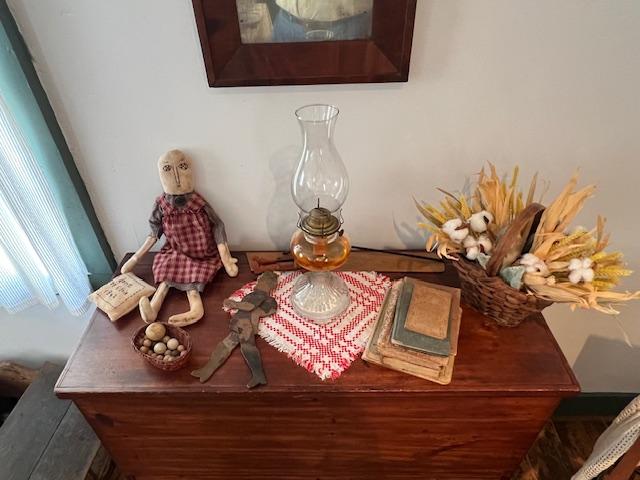
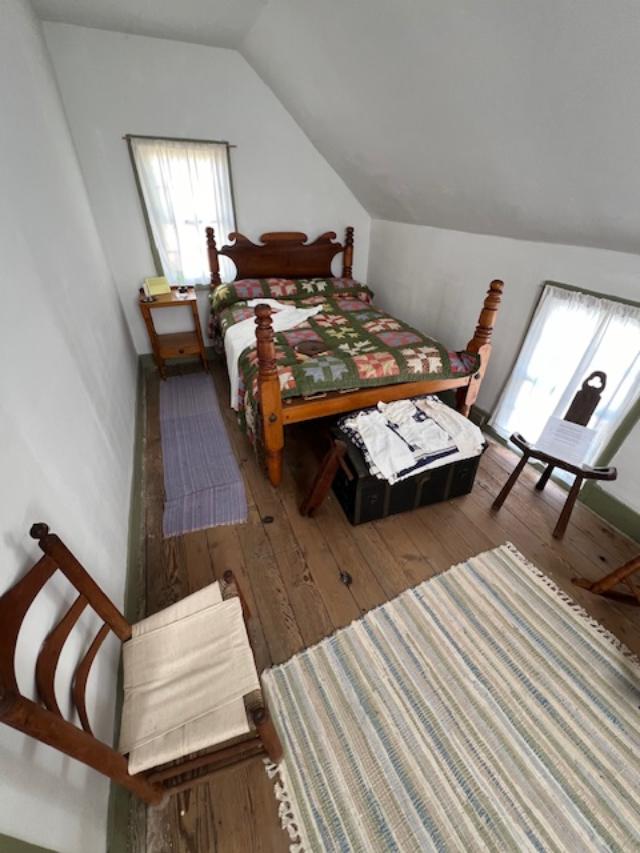
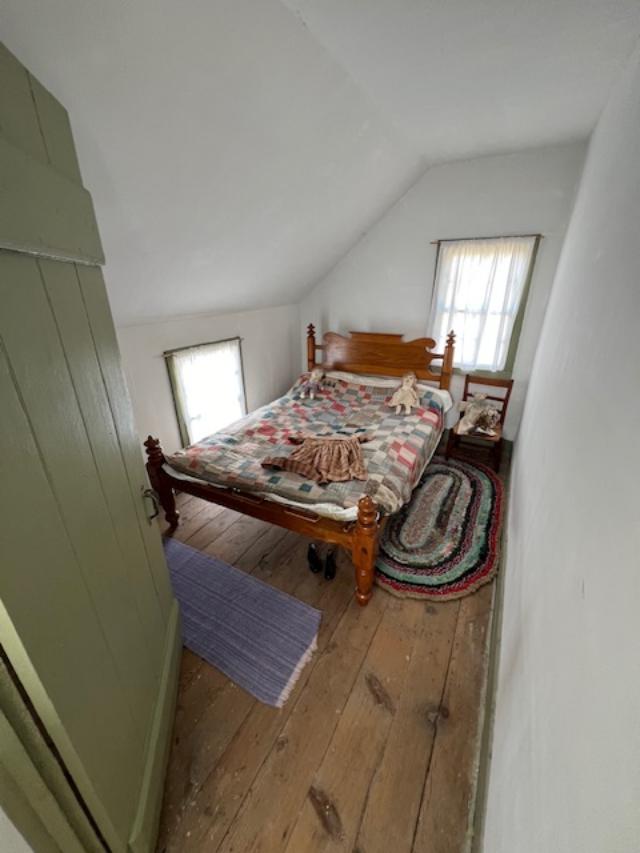
The Hoy House had been stripped of the modern add ons and they Society wanted it to look like it had when it was originally built. The upstairs had two loft bedrooms and even a small loft above the downstairs fireplace where the kids would sleep when it was cold outside.
The kitchen in the Hoy House
The kitchen area
The Living area
The Living area
The main room
The Upstairs
The bedrooms
It really showed how the working people of the town lived in a stark comparison to the sea captains who were running trade for the town. The Society’s members have taken great care in restoring these homes.
The Mauricetown Historical Society at 1229 Front Street
The History of the Mauricetown Historical Society:
(From the Mauricetown Historical Society website):
The Mission of the Mauricetown Historical Society:
It is the mission of the Mauricetown Historical Society to collect, preserve and exhibit artifacts and documentation significant to Mauricetown and the surrounding communities.
The Mauricetown Historical Society is housed in the former home of Captain Edward Compton, who was a local sea captain. This Italianate Victorian structure was built in 1864 by Mauricetown carpender Griffith Pritchard and Samuel Cobb.
The home was purchased in 1984 by the society. At the time, the property was in poor condition and required work inside and outside. Over the past 25 years it has been carefully restored to its present condition by volunteer efforts of society members and others. The restoration is an on-going project and there are still areas of work that are needing completion.
The side entrance of the home where people enter.
Situated directly across Front Street from the location of the old shipyard where sea-going vessels were built in the 19th and 20th centuries, occupants of this house were able to view the activities of the shipyard and the traffic of the river.
I was very impressed by the Nicholas Gibbon House when I took a tour one Saturday afternoon. There were no large crowds to deal with and the parking is perfect with plenty of room to move around. The grounds are beautifully landscaped with all sorts of seasonal flowers surrounding the house. When I visited, I thought I was mistaken, and it was someone’s home. There was a lot of care put into both the exterior and interior of this home.
The fields around the Gibbon House.
Nicolas Gibbon was a local merchant who moved to Greenwich in 1730 and continued to live here until the 1760’s. The tour guide explained to me that the townspeople would not let him build a church here (it was a Quaker region) so he and his wife decided to move out of the area. Richard Wood and his family moved into the house in 1760 and lived in the house until the 1920’s. Over that time, parts of the house were modernized and rebuilt. The Wood family later in the generations founded the WaWa store chain.
With the exception of the Nicolas Gibbon’s nephew and his wife’s portraits, all of the furnishings are not originally from the house. The downstairs is set up with a formal dining room and parlor area fully furnished in Victorian era furniture, paintings, rugs and silver. The silver collection of the house is very elaborate and some of the pieces came from the Hershey family of Pennsylvania.
The family portraits of the Gibbon nephew and his wife.
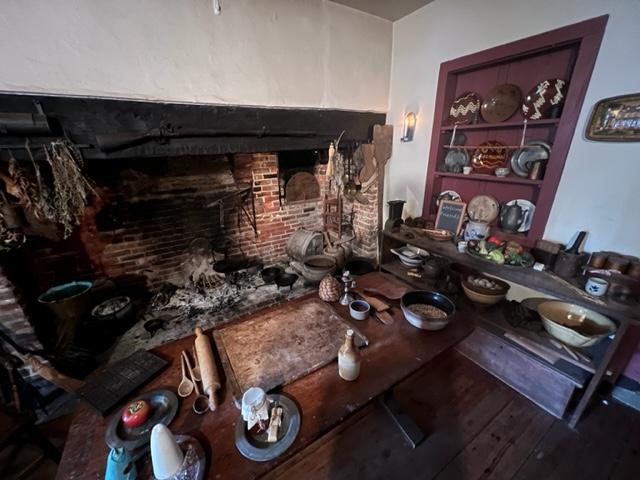
The library and study have rare books that were used for research as well as a working fireplace that was used for both light and heat. Downstairs is the kitchen with a large hearth and all the equipment and serving items for kitchen and dining use for the home.
The Parlor of the Gibbon House.
The Library at the Gibbon House.
The tour guide explained to me that during some of the past fundraisers, the hearth was used to cook foods of the time period that were served for events.
The Kitchen of the Gibbon House was used for cooking fundraisers.
The Kitchen Hearth is quite large.
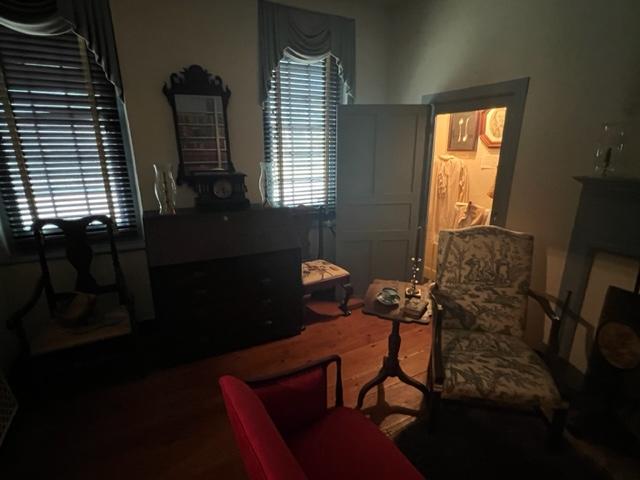
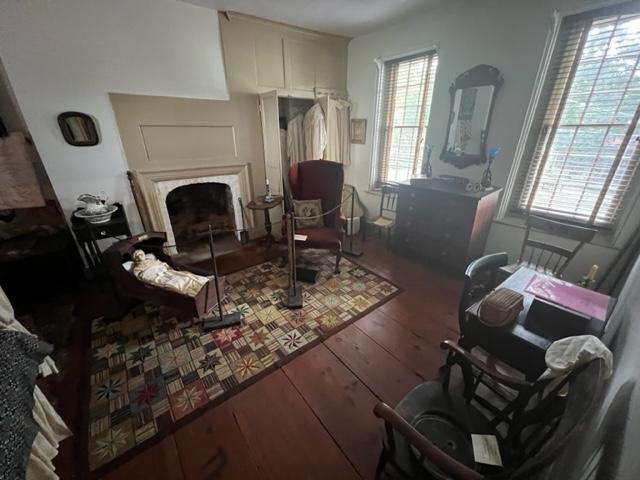
Upstairs you have an elaborate master bedroom with all sorts of formal furnishings for an upper middle-class family living in the area.
The Upstairs bedroom
The Master Bedroom upstairs at the Gibbon House.
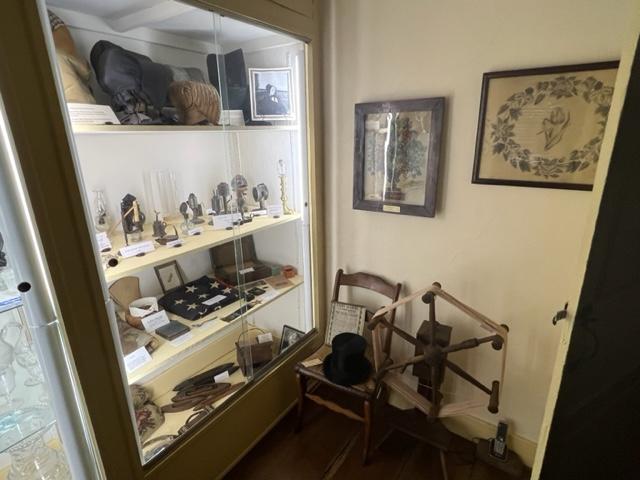
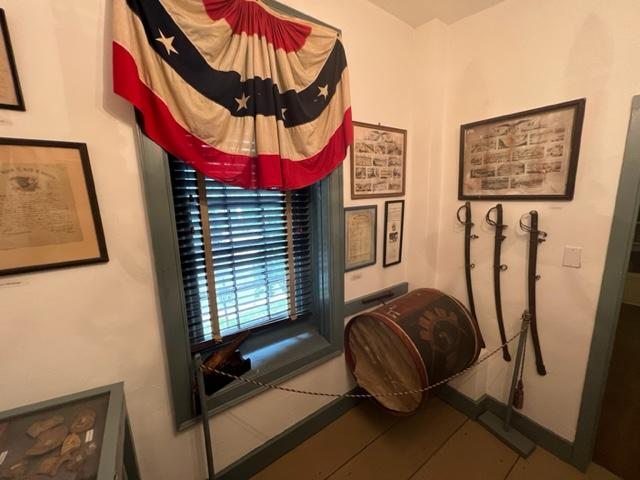
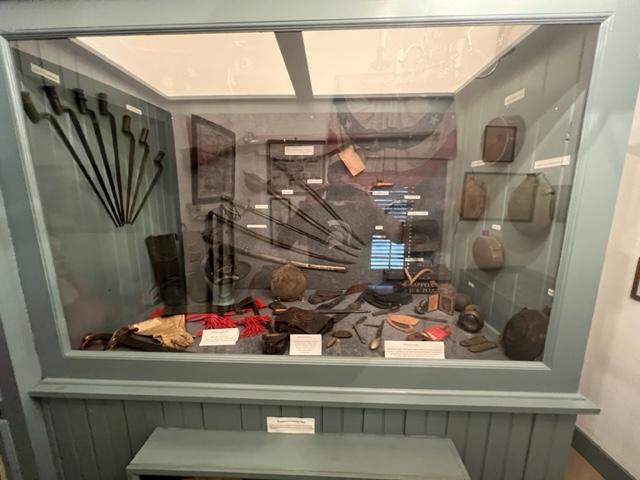
What was the interesting part of the second floor of the home was the “Everything Room”, which contained an extensive collection of toys and dolls, Civil War historic items, period clothing, bonnets, top hats and parasols, an extensive collection of quilts and Hair Art which was a Victorian tradition of making art from the hair of the dead.
The Everything Room at the Gibbon House has all sorts of Victorian artifacts.
There was a collection of ‘Sewing Samplers’, which is how young women learned how to perfect their sewing skills which was part of their domestic training for being a housewife.
The Everything Room on the second floor of the Gibbon House.
The collection of the house really gave a glimpse into the lives of people from the 1840’s until almost WWI. How much life has changed but not too much.
The Everything Room at the Gibbon House.
History of the Gibbon House:
In 1730, Nicholas Gibbon who had inherited more than 3000 acres of land nearby, bought a 16-acre lot in Greenwich on which he built a replica of a London Townhouse he had admired. The brick, fired on the property, was laid in the Flemish Bond pattern brought from Kent, England: this design is achieved by using a red stretcher and blue header producing a definite and attractive pattern. Rubbed brick is a further architectural feature, outlining each door and window opening as well as being used to emphasize the four corners of the house.
The Upstairs bedroom at the Gibbon House
The home, appropriately furnished with products of 18th and 19th century artisans contains a reception hall, a paneled dining room, a formal drawing room and a kitchen dominated by a huge walk-in fireplace in which demonstration of colonial open-fire cooking are conducted.
The walk-in fireplace at the Gibbon House.
There is a small store on the back porch where post cards, gifts and a fine collection of books and pamphlets on the history of the area may be purchased.
The Master Bedroom.
On second floor, in addition to a bedroom, are exhibits of 19th century locally made, rush seated. “Ware” chairs, children’s toys, dolls and clothing as well as Civil War artifacts donated by local families.
I took my first trip down to the Kearney House in Alpine, NJ and was able to walk the grounds, visit the Alpine Landing and see the amazing views of New York and of the Hudson River. This spot gives you breathtaking views upstream of the surrounding Hudson River. The house was closed but the vegetable gardens were full of late Fall produce and the gardens could have used some weeding. I will have to wait until the house opens up again.
The Vegetable Garden in the Fall of 2024 at the Kearny House
I recently visited the Kearny House of their Fall event “Punch & Pie at Mrs. Kearny’s Tavern”. That was an interesting night. First let me say that it is pitch black in that park. The Alpine Basin has no lights in the park and you will be in the dark the whole trip down the hill. I had a minor incident travelling down the hill so take it slow.
The Kearny House at dusk in the Fall of 2024
The Historic sign for the Kearny House at the Alpine Landing
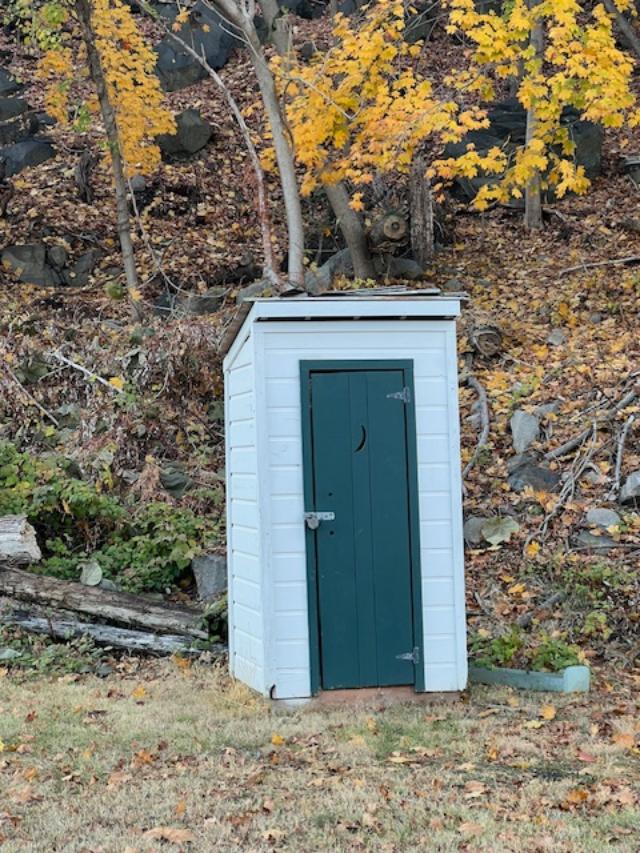
The outhouse on the grounds
Once I was down for the event, it was interesting and fun night. Tavern musician, Thaddeus MacGregor, entertained us with all sorts of songs for the evening and there was storytelling by the gentleman who runs the historical site.
Tavern musician, Thaddeus MacGregor, performing at the Kearny House for the “Thanksgiving Music and Hot Cider” event
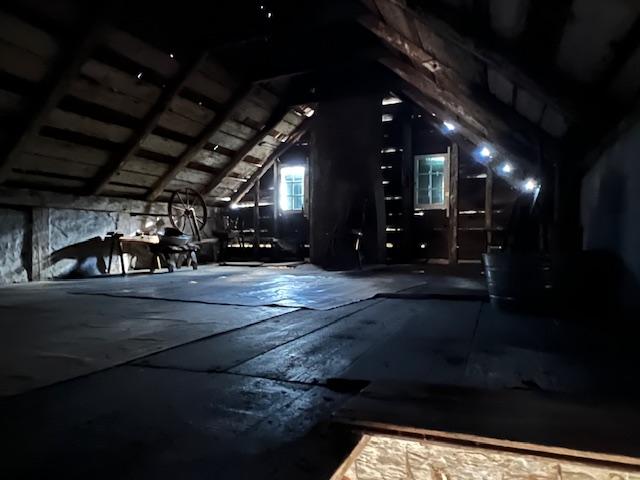
There was a candlelight tour of the house, so we got to see the second level with the upstairs bedroom, the attic area which really was drafty and the room above the new addition that is used for storage. The area was once heated by fireplaces and since the downstairs had a fire lit, the whole house was nice and warm. They had once of the original rope beds that had been tied and antique toys.
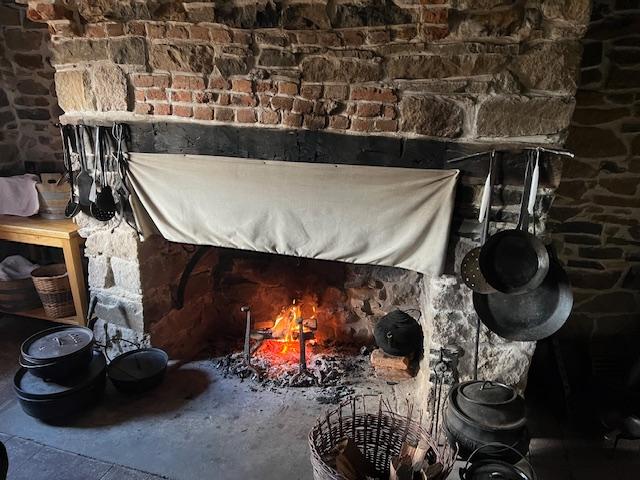
The hearth of the kitchen keeps everyone warm as the stones warm the house
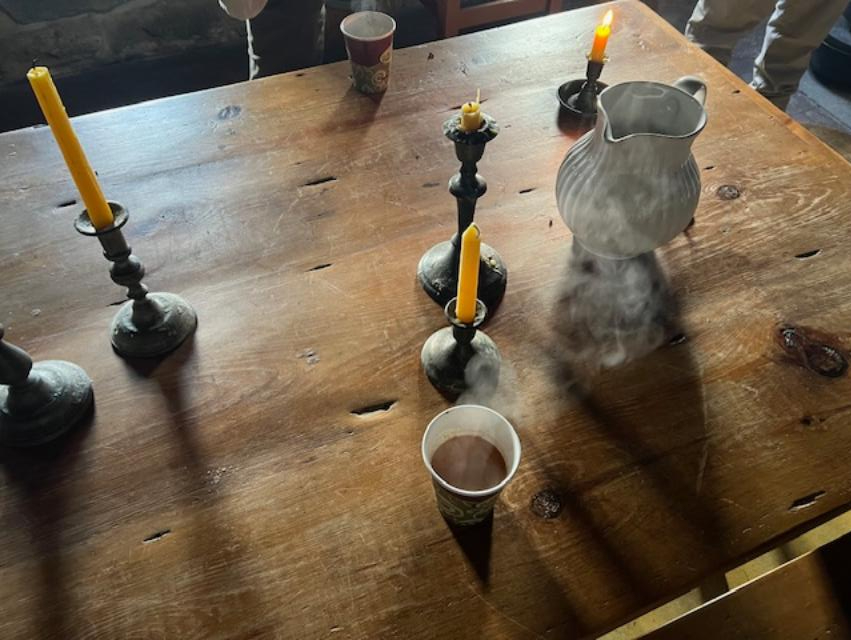
The Dining Room table in the during the “Hot Cider” party
The first floor had the fireplace lit and the whole room was illuminated by candles which made the room very warm and cosy. It was interesting to see one of these homes that has no electricity and how it operates. It must have been very interesting to live at time.
The Dining Room during the day
The delicious hot cider at the Thanksgiving event at the house
The Dining Room at the Kearny House
What calmed me down after a long night was the delicious homemade pies that they served at the event. They had a strawberry rhubarb and apple that were just delicious. So flaky and filled the freshest fruit. It really cheered me up. They also had cheeses, roasted peanuts and a hot spiced cider to drink. I could have used something stiffer but it was still nice to drink and had the most wonderful flavor. Overall it was a nice night of desserts and snacks and good storytelling and the view of New York City was incredible.
The house illuminated by candlelight during the afternoon in the Fall
Do not venture into this park at night! Please take it slow down the hill to the landing. My suggestion is to do a dry run when it is light out so you know where you are going.
The History of the Kearney House:
(I credit this to the Kearney House pamphlet and Wiki)
The Kearney House was built in the 1760’s by the Blackledge family and was the home of Maria Blackledge, who was the daughter of Benjamin Blackledge, who lived in the home with her husband, Daniel Van Sciver.
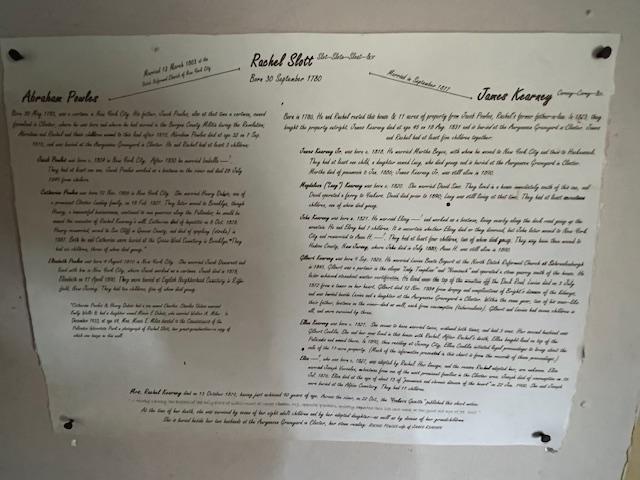
The Kearny Family tree
Maria Blackledge father, Benjamin Blackledge, was an educator and public official, who taught Dutch citizens the “Kings English”. He was the first clerk of Harrington Township, NJ and served as Justice of the Peace and Judge of the County Court of Common Pleas and elected to the assembly of Bergen County, NJ. Mr. Blackledge’s wife, Caroline Tallman (Cathalyntie Tallema), was the daughter of Dowe Hermanszen Tallema and Maritie Haring, of the prominent Haring family of which Harrington, NJ was named after (Wiki).
Mrs. Kearny’s portrait inside the house
The house was built in this location when the farmers of Closter, NJ built the Closter Dock Road through a pass in the cliffs to the Hudson River so they could deliver their goods to New York City. The house was most likely built to be a dockmaster’s house to supervise the busy river landing.
The Blackledge-Kearney House when it was on the waterfront
The house was purchased in 1817 by James and Rachel Kearney. With them were their three children from Rachel’s first husband, Abraham Powles, who died two years earlier. James and Rachel then had five children of their own. Rachel also adopted a daughter.
They had thought that General Cornwallis had used the home as his headquarters but they found this was not true
Mr. Kearney died in 1831 and Mrs. Kearney used the home as a tavern. The northern part of the house was expanded in 1840 to house the tavern part of the building. Besides offering food and spirits, Mrs. Kearney’s tavern served as a meeting place for the captains and crews of the sailing vessels that arrived and departed daily from the docks here and for the local workforce of quarrymen, dock workers and tradesmen.
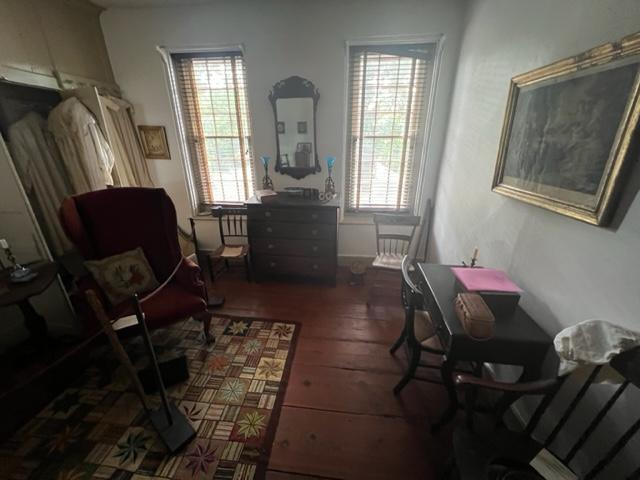
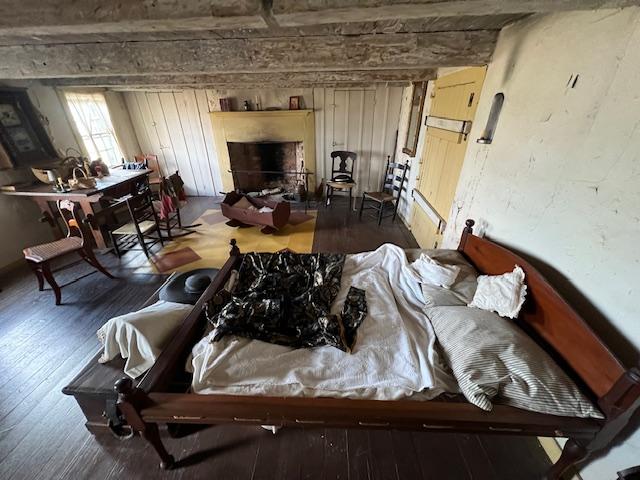
The Upstairs bedroom gallery
The upstairs bedroom gallery
The upstairs room in the new addition may have been for lodgers staying at the tavern.
The Kearney House Attic room that was used for her children
The Palisades Interstate Park Commission bought the house in 1907 after Rachel’s death in 1897 and in 1909 had the big porch built as a grandstand for a dedication ceremony for the new park. Through the 1920’s, the Commission used the house as a police station. The house is now open to the public on select weekends and holidays for touring and special events.
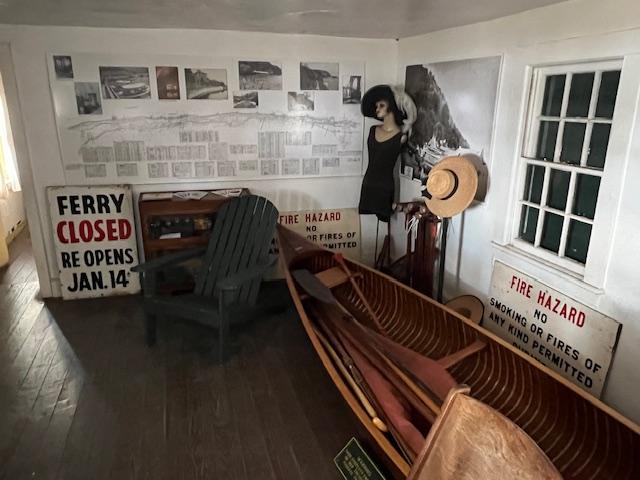
The upstairs bedroom gallery with artifacts from the park
The property offers beautiful views of Yonkers, NY and the Bronx and from the Alpine Landing especially in the coming Fall, amazing views of the foliage and of the cliffs surrounding the Hudson River.
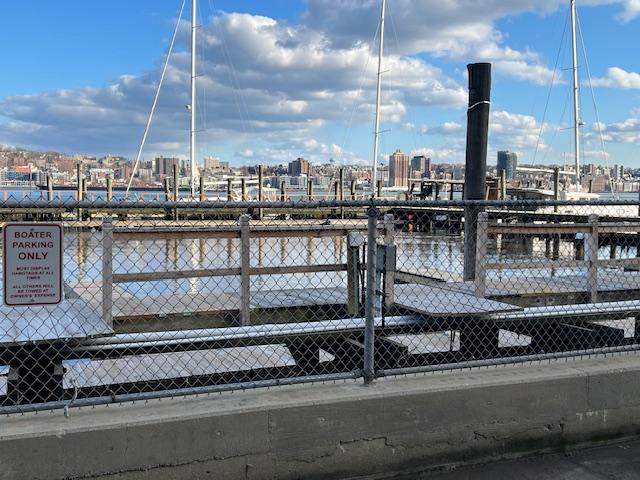
Alpine Boat Basin by the Kearney House
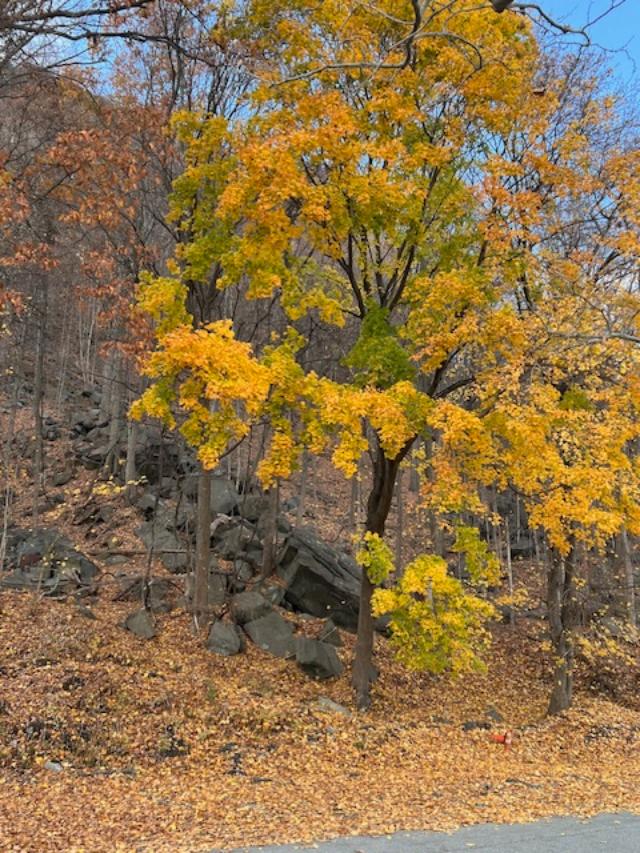
The Alpine Park in the Fall of 2024
The Summer of 2025:
In the summer months, the house was open on Thursday nights for music, games, and summer refreshments. The event ‘Behind the Times at Mrs. Kearney’s Tavern’, was an evening of touring the house and grounds, musically entertainment on the lawn and story telling to end the evening.
Entering the Palisades Interstate Park
The Hudson Riverside and beach area
The park on the Hudson River
The park is breathtaking in the summer months, and everything was lush and in bloom. The views of New York clear as day and the boat basin was busy with people entertaining on their boats and coming in and out of the small harbor.
The park during the Summer of 2025
The park in full bloom that evening
The history of the Kearney House history
The Kearney House and lawn area
The Kearney House was open this evening for one of their many Summer special events. All the windows were open to take advantage of the cool breeze and air the house out on this hot July evening.
The Kearney House from the front lawn
The house getting ready to arriving guests
The tiny barn shed off to the side of house
The waterfall in the back of the house
The tiny shed and hilly woods behind the house
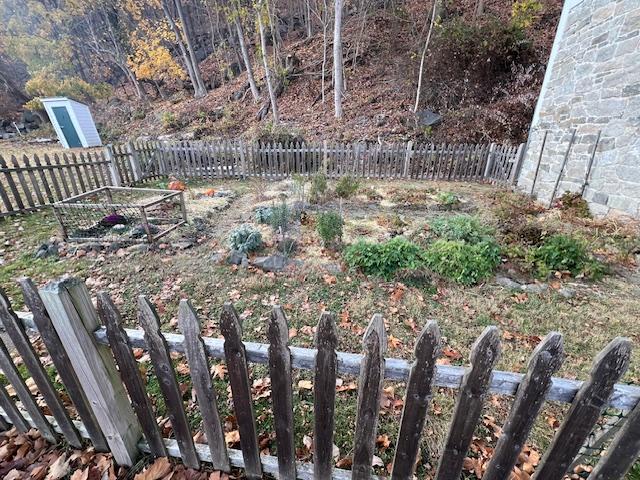
The side of the house and the vegetable garden
The garden with vegetables and herbs
The Vegetable Garden was growing all sorts of vegetables and herbs of the time period and some flowers as well.
The outhouse on the property
The river view of the house
The front of the house with the windows open for river breezes
The inside of the house was cool and welcoming. The hosts of the event had both icy water and Lemonade for guests and slices of sweet watermelon. We were welcomed and offered our choice of beverages and then just relaxed and enjoyed our refreshments that cooled us down for the evening.
Our hostess graciously greeted us and welcomed us to the house
The kitchen set for guests to the tavern
Enjoying summer refreshments
Talking with other guests
It was so nice to just sit back and relax and enjoy the cool breezes coming off the Hudson River. The lemonade really hit the spot.
The cool breezes from the back window
After my snack in the tavern, I toured the upstairs. The two upstairs bedrooms are Mrs. Kearney’s bedroom and the guest room on the other side of the hall.
Mrs. Kearney’s bedroom
The guest room was once used for visitors now holds all their artifacts
This bathing beauty greets you on the second floor
The attic area was far too hot to tour but I had visited it last winter after I had attended visited for a post holiday tour. I did get to tour the upstairs patio and enjoy the breezes outside.
The patio on the second floor
What a view of the river!
The view as the entertainment was about to start
Outside, Thaddeus McGregory started his concert on the front lawn
Thaddeus McGregory singing ‘ Beautiful Dreamer’
Then the Revolutionary War era games took place out on the lawn outside the lawn.
























 Visiting a Museum: The Unique, Unusual, Obscure and Historical