Tag: Historic Sites of New Jersey

Old Paramus Reformed Church                                              660 East Glen Avenue                                                          Ridgewood, NJ 07450

Old Paramus Reformed Church 660 East Glen Avenue Ridgewood, NJ 07450

Old Paramus Reformed Church

660 East Glen Avenue

Ridgewood, NJ  07450

(201) 444-5933

http://www.oldparamus.org/

http://oldparamus.org/home

https://www.revolutionarywarnewjersey.com/new_jersey_revolutionary_war_sites/towns/ridgewood_nj_revolutionary_war_sites.htm

Open: Please check the website for full hours

My review on TripAdvisor:

https://www.tripadvisor.com/Attraction_Review-g46772-d25252234-Reviews-Old_Paramus_Reformed_Church-Ridgewood_New_Jersey.html

The Old Paramus Reformed Church at 660 East Glen Avenue

I have toured the Old Paramus Reformed Church at 660 East Glen Avenue in Ridgewood, NJ many times during the year. I have been on cemetery walks and talks during the summer. I have had Christmas services at the church during the Epiphany. I have also toured the grounds during Halloween when the Ridgewood Historical Society had lead tours at the church.
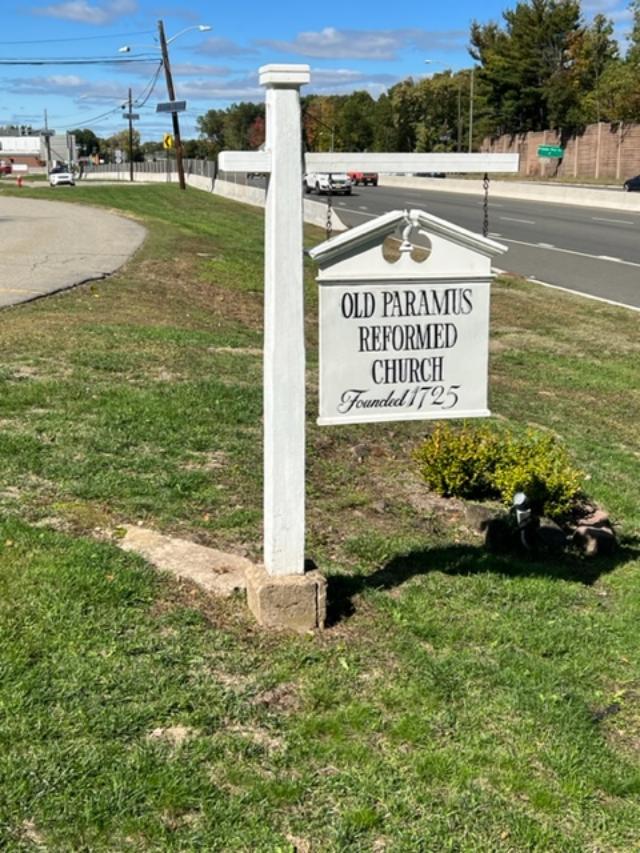
Signage from Route 17

During the Christmas holiday season I was so busy that I was not able to visit my local church. So when I was able to celebrate the Epiphany,  I visited the Old Dutch Reformed Church in Ridgewood, NJ. The Church is one of the oldest in both Bergen County, NJ and the State of New Jersey. It is especially beautiful during the holidays. I love coming here because it just reminds you of Christmas and what a church should look like during the holidays. It looks like a Currier & Ives woodcut during the holiday season. The congregation does a nice job decorating it.
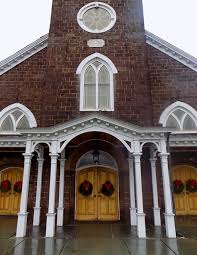
Paramus Reformed Church III

The entrance to the Old Paramus Reformed Church at Christmas time
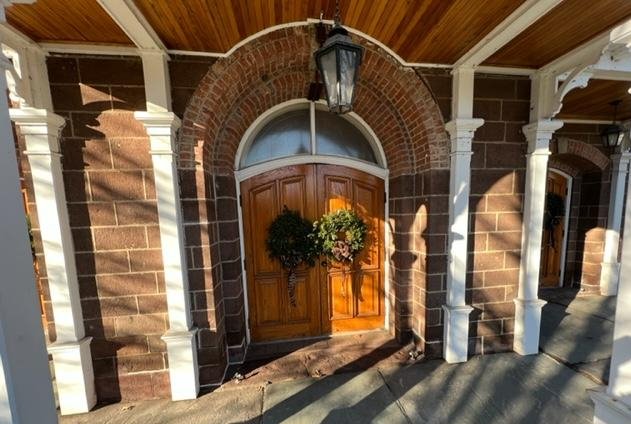
It really was a nice service with music, the choir singing Christmas hymns and a bell service. It reminded me of my years at the Dutch Reformed Church in Woodstock, NY when I celebrated Christmas there. The whole church was decorated in holly and garland with Christmas trees in the corners and white candles lit in the corner.

The entrance of the church in 2023 for Epiphany services.

The Inside of the Old Paramus Reformed Church for the Epiphany holidays in 2023.

The interior of the church during Epiphany services 2022
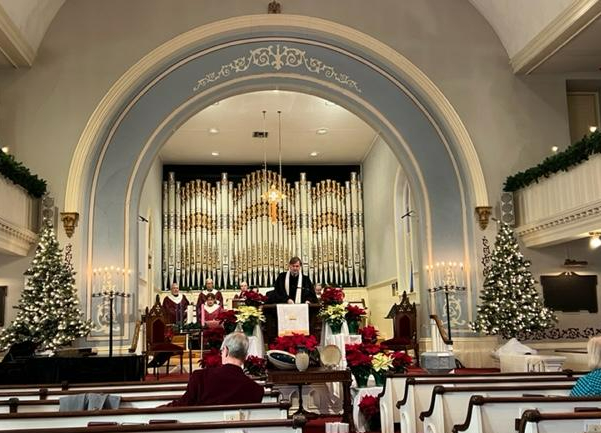
The start of the Epiphany Services January 8th, 2022
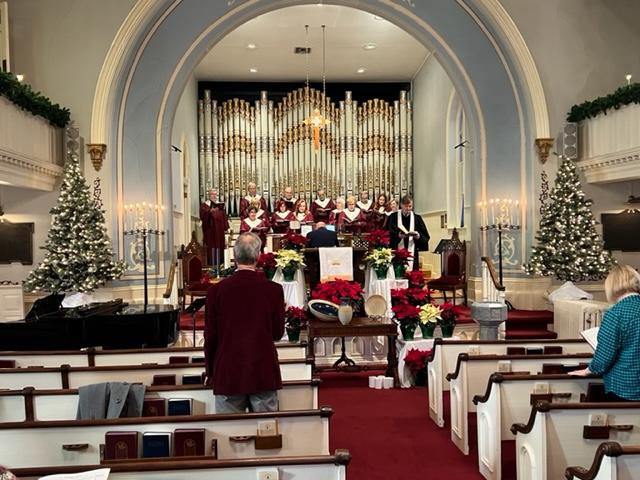
The Choir singing during church services at the Epiphany services
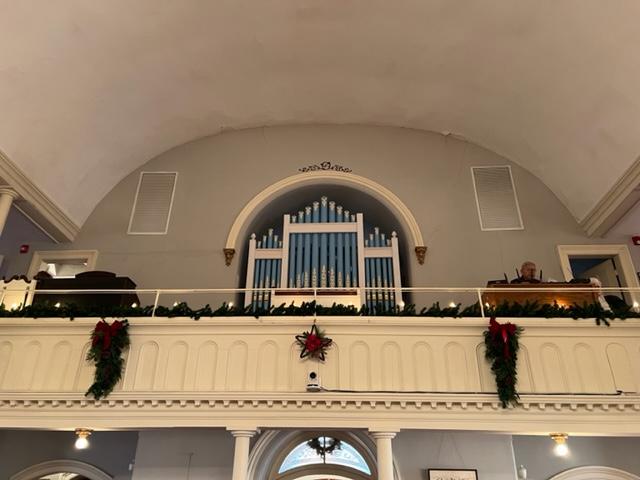
The beautiful decorations at Christmas time at the Paramus Reformed Church

The Front Alter with the Poinsette tree.

The Poinsette tree at the Alter.

What I liked after the service was over was that everyone walked up to me to greet me. I was one of the younger people in the church and I guess that they were happy to see some young blood. The congregation is so welcoming as I think they want newer members to join and I have to say that the services there are very inspiring and though provoking.
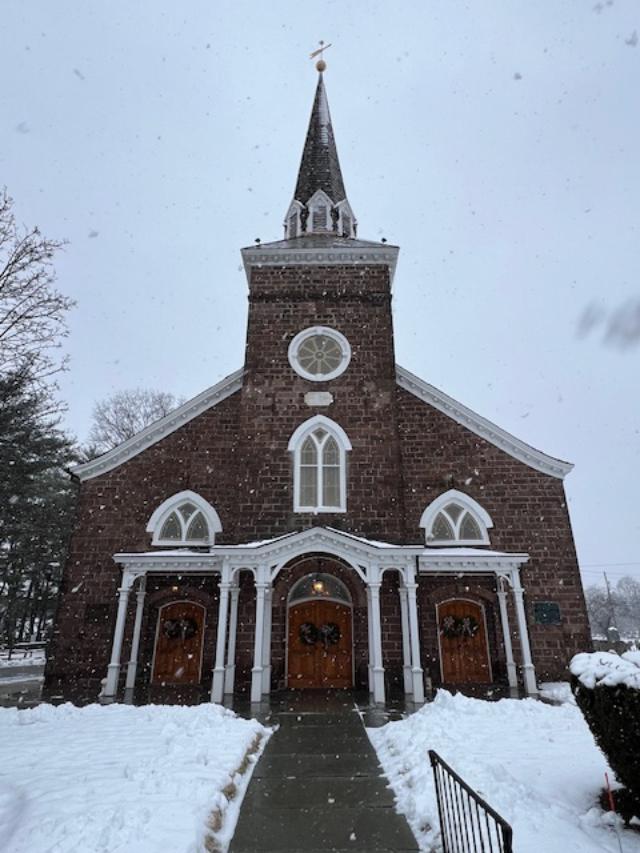
The outside of the church during the Epiphany in 2023. It looked like it was out of a Currier & Ives woodcut.
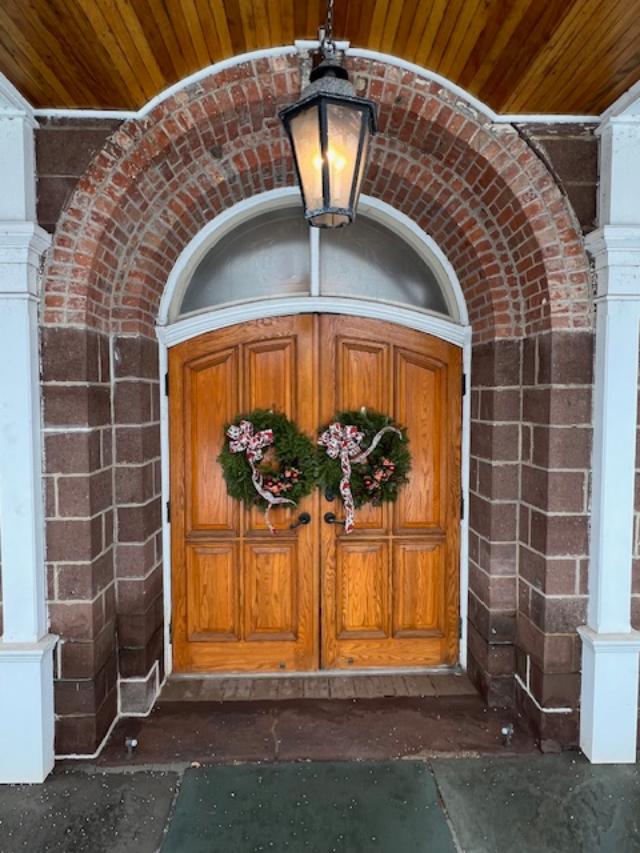
The doorway of the church at Christmas time.

I find that message very positive and very contemporary in an environment that may seem old-fashioned to some. It is called manners, curtesy and a sense of spiritualism that is lacking in the world today. They make the church so welcoming again.

Paramus Reformed Church at nighttime during Christmas 2022
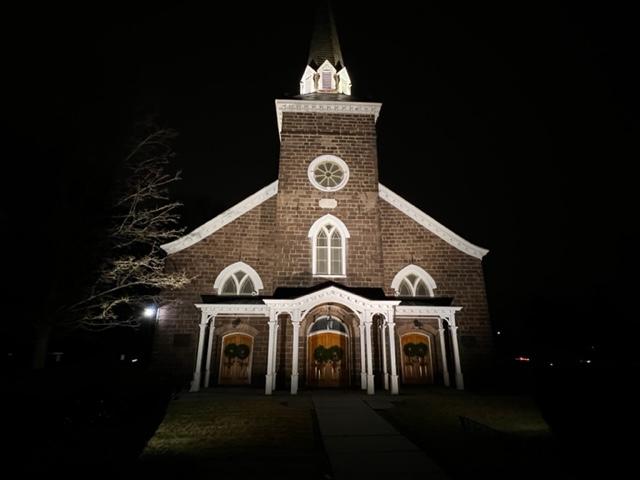
Paramus Reformed Church during night time Christmas services

Nativity scene at the Paramus Reformed Church during Christmas 2022 at night
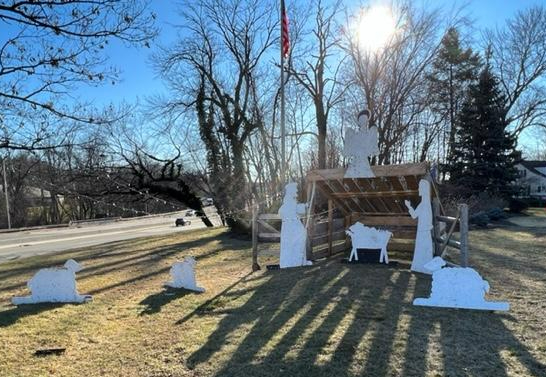
The Nativity scene during the day

The services there are very nice and I thought the church with its wooden benches and older architecture made the service even more special. It was a combination of the decoration, the music, the songs and the friendliness of the congregation that made the last day of the 12 Days of Christmas special for me.

This church makes a statement when passing it on Route 17 South.

I visited in 2024 the Easter service which was a nice change of pace. I really liked the service of the Reformists and the Reverend here is super nice and very inspirational.

The Choir preparing for the Easter Mass in 2024.
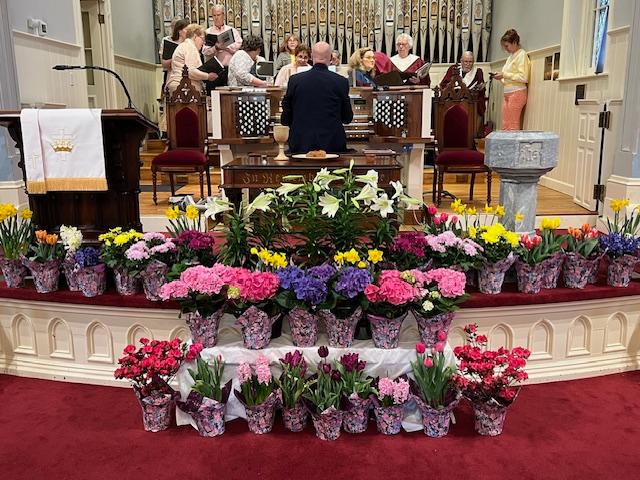
The beautiful flower assortment at the church during the Easter service.

The floral cross on Easter 2024 during the church service.

I had also been to the church a few years prior for a private cemetery walk through the back part of the church looking at the old tombstones, The church is the burial place of many of Bergen County’s original settlers so the headstones are very old. Some of the tombstones were made of sandstone and the other of shale. Many had not survived the weather after all these years.

The cemetery at the Old Paramus Reformed Church is an interesting place

The interesting part of the pre-Halloween walk was that the tour guide from the Ridgewood Historical Society told us the reason the cemetery was shaped the way it was today. The cemetery was placed around the original church and when the new church was built in 1800, the newer part of the cemetery was created. It is interesting to walk amongst the graves and look at all the names of the original families of Bergen County that included the Haring’s, Zabriskie’s, Terhune’s, Blauvelt’s, Van Ripper’s and Demarest’s.
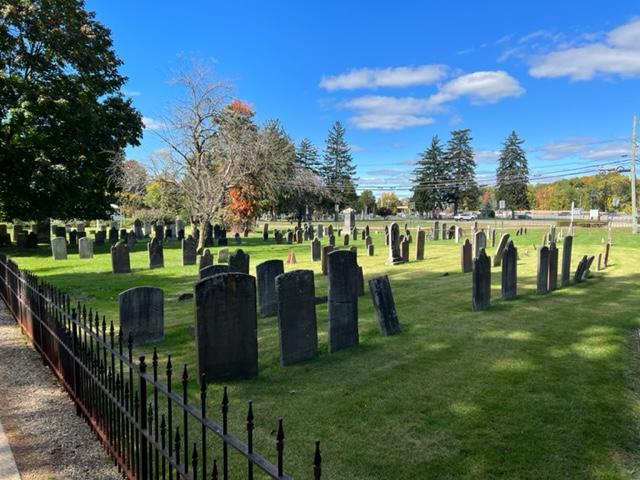
The cemetery at the Old Paramus Reformed Church

The cemetery guide at the Old Paramus Reformed Church

If you get a chance to tour the church or the grounds you will know the reason why this is such a special church. Maybe it was the church’s rich history in Bergen County. It is a really special place during all the holidays.

I returned to church services for the Epiphany in 2025 and I always enjoy the welcoming service and the choir at the church. It is also still decorated for the holidays. Some places do forget that there are Twelve Days of Christmas.

The church decorated for the Christmas holidays

The organ area beautifully decorated

The choir practicing before the service

The History of the Old Paramus Reformed Church of Ridgewood, NJ:

(from the Church website)

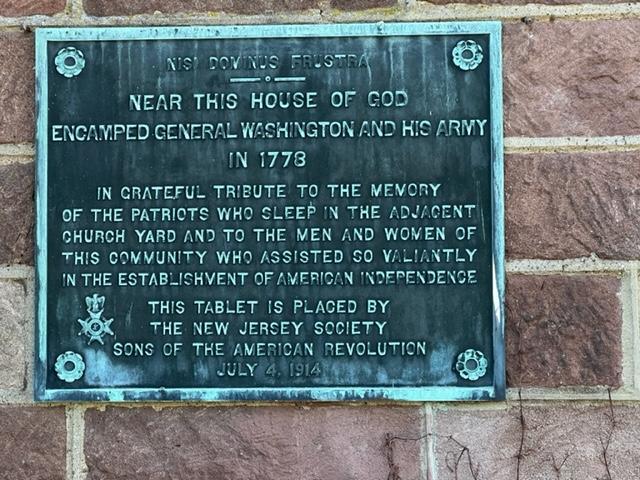
The Old Paramus Reformed Church has a rich past. The congregation was formed in the year 1725. During the American Revolution, the Paramus Church was the site of  a Continental Army military post for four years during which clashes between American and British forces tool place. It was also in the original church building that  General George Washington held a session of the court-martial of General Charles Lee who disobeyed order at the Battle of Monmouth in 1778.  Washington had his headquarters here at the church a total of ten times during various days from 1778-1780.
Other noted Revolutionary War figures such as Alexander Hamilton, the Marquis de Lafayette, Anthony Wayne, Richard Henry Lee and Aaron Burr also were here from time to time during the war. From early colonial times, slaves were members of the church congregation, the upper galleries on both sides being designed for their use during services.

The present church building was built in 1800. An interesting feature is that the pews are numbered. The members of earlier days rented them on an annual basis. The most expensive were numbers 50-57 at $52.00 per year while the least expensive were numbers 38-100 at $4.00 per year> Needless to say, the less expensive pews are at the rear of the sanctuary.
On each side of the pulpit, there are three pews placed at right angles to the rest of the pews in the church. These were reserved for the Elders and Deacons (on the left and right respectively). These persons collectively are known as the Consistory, which is the governing board of the church. It was their duty to sit in these pews each Sabbath with their Bibles and copies of the day’s sermons to check on the “Domine” as to his conduct of the service as well as sticking to his sermon!

That tradition (as to seating) was kept alive for many years in Old Paramus by members of the Consistory who sat in the first pew facing the pulpit each Sunday. The only similar practice in use today is that the Elders serving Communion sit in the first rows on either side of the center aisle.

The decorated organ pipes in the rear of the chancel (choir loft) behind the pulpit date back to 1892. In that year, they were installed when the church received the gift of a new organ from a congregation member.
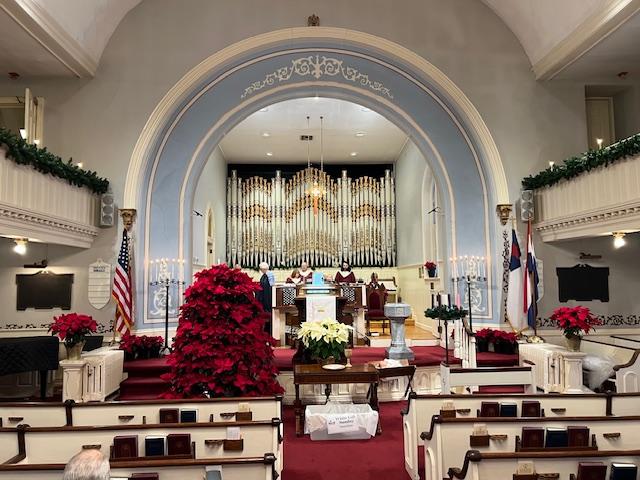
The inside of the Old Paramus Reformed Church

At the top of the arch the pulpit, there is a Dove of Peace. The dove is made of wood and is hand-carved. The exact date of origin of the dove is unknown. One authority claims that, “The bird is an eagle and was a donation by Dr. Garrett D. Banta in 1800.” Records from the Consistory minutes read: 1874, August 3rd: Resolved that the Consistory thankfully recognize the kindness of Mrs. Catherine Wessella for repairing and regilding the Dove, which has been a part of the decoration of the old church.

There are three flags on the pulpit-the American flag, the Christian flag and the flag of The Netherlands, the last representing our Dutch heritage. In a similar vein, for many years the Dutch flag was flown under the American flag on the staff in front of the church. Today only the American flag is flown on the flag pole.

There are several plaques on the inside walls of the church. Some honor the ministers and others honor the various Consistories since 1725. Another just inside the front door notes that this church has been placed on the National Register of Historic Places. In display cases you will find various bits of memorabilia concerning our history.

When attending Old Paramus Reformed Church, you will have come to a warm and comfortable historic church to your whole being.

The Chandelier and the upper pews at the church during Epiphany services in 2024.

On the church campus, you will find modern Educational Building which houses the church offices and facilities need for Christian nurture. Another building is the one-room church like schoolhouse. This building houses the Ridgewood Historical and Preservation Society and is known as The Schoolhouse Museum. It was built in 1872 and was used as a school until 1905. It contains many items of historical note to this area. Make it a point to visit this museum during visiting hours. You should find it to be a very interesting and reward visit.
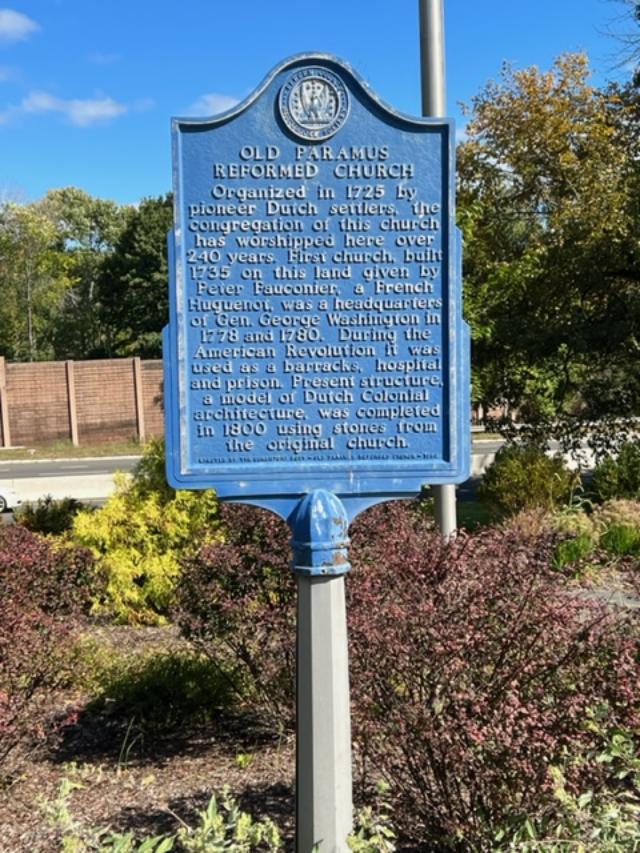
The signage of the historical landmark status

So what kind of church is Old Paramus Reformed Church? It is affiliated with the Reformed Church in America, the oldest Protestant denomination with a continuous ministry in America. The first church was established in New York City, then known as New Amsterdam in 1628. The Collegiate Churches presently represent the origins of that original Congregational. The best known is Marble Collegiate Church, which is where Dr. Norman Vincent Peale was the minister for fifty-two years. The Reformed Church in America (RCA) is an historic denomination coming out of the Reformation when the Church was “re-formed” and re-organized according to the teachings of the Word of God, the Bible. The Reformed Church of is Biblical in doctrine, semi-liturgical in worship. Presbyterian in government and evangelical in practice.

This year, Old Paramus Reformed Church celebrates 295 years of God’s Loving Spirit. Come join us next Sunday at 10:00am. We would be most happy to see you and you will surely feel rewarded for the experience.

(Disclaimer: This information was taken from the Church’s history and I give them full credit for the information).

Kearney House (Blackledge-Kearney House) Alpine Landing                                                Alpine, NJ 07624

Kearney House (Blackledge-Kearney House) Alpine Landing Alpine, NJ 07624

Kearney House (Blackledge-Kearney House)

Alpine Landing

Alpine, NJ  07624

(201) 768-1360 ext. 108

https://www.njpalisades.org/kearney.html

Open: Most weekends & holiday afternoons from May to October

Fee: Free

My review on TripAdvisor:

https://www.tripadvisor.com/Attraction_Review-g29743-d19332567-Reviews-Kearny_House-Alpine_New_Jersey.html

The Kearny House in the Fall of 2024

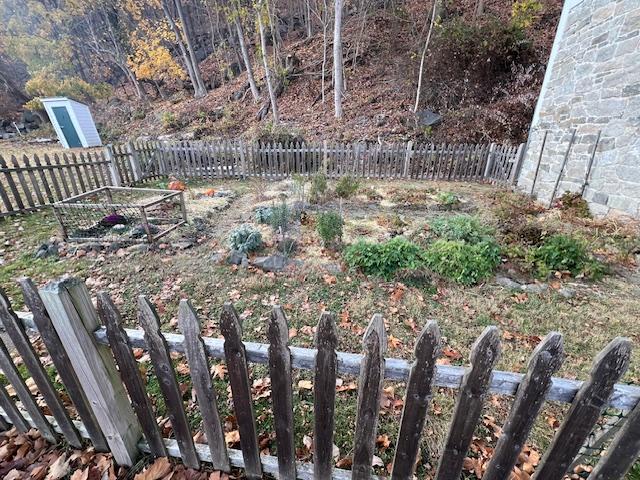
I took my first trip down to the Kearney House in Alpine, NJ and was able to walk the grounds, visit the Alpine Landing and see the amazing views of New York and of the Hudson River. This spot gives you breathtaking views upstream of the surrounding Hudson River. The house was closed but the vegetable gardens were full of late Fall produce and the gardens could have used some weeding. I will have to wait until the house opens up again.

The Vegetable Garden in the Fall of 2024 at the Kearny House

I recently visited the Kearny House of their Fall event “Punch & Pie at Mrs. Kearny’s Tavern”. That was an interesting night. First let me say that it is pitch black in that park. The Alpine Basin has no lights in the park and you will be in the dark the whole trip down the hill. I had a minor incident travelling down the hill so take it slow.

The Kearny House at dusk in the Fall of 2024

The Historic sign for the Kearny House at the Alpine Landing

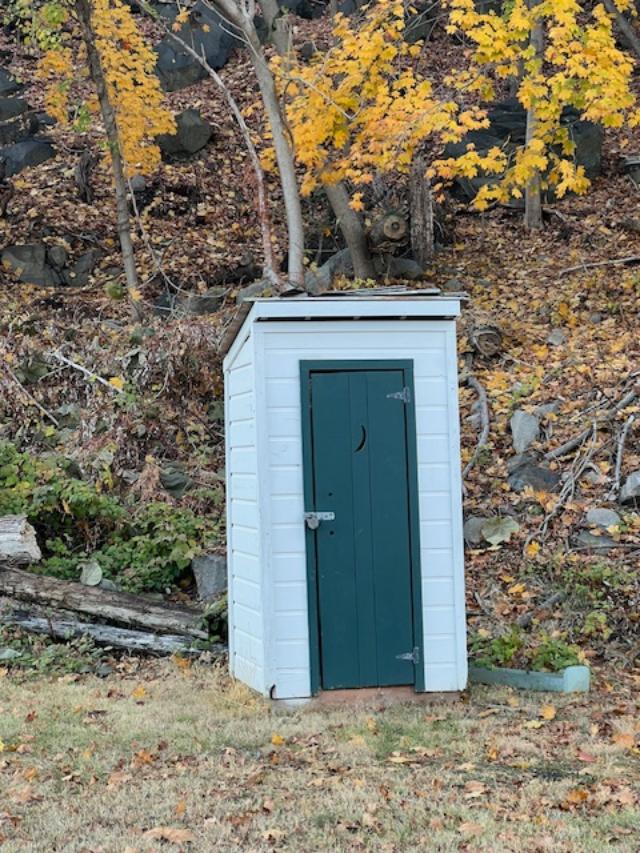
The outhouse on the grounds

Once I was down for the event, it was interesting and fun night. Tavern musician, Thaddeus MacGregor, entertained us with all sorts of songs for the evening and there was storytelling by the gentleman who runs the historical site.

Tavern musician, Thaddeus MacGregor, performing at the Kearny House for the “Thanksgiving Music and Hot Cider” event

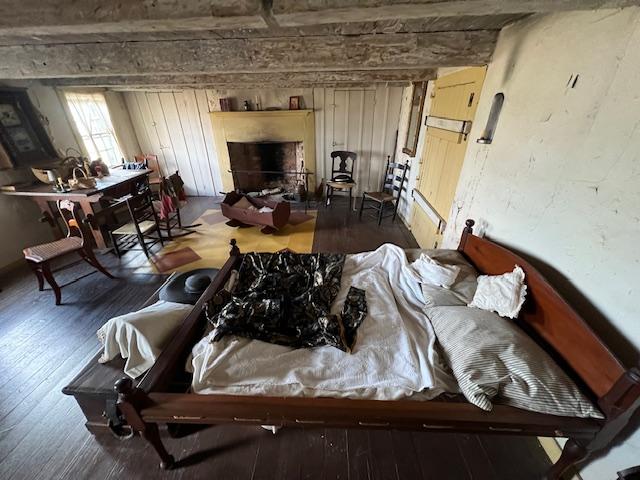
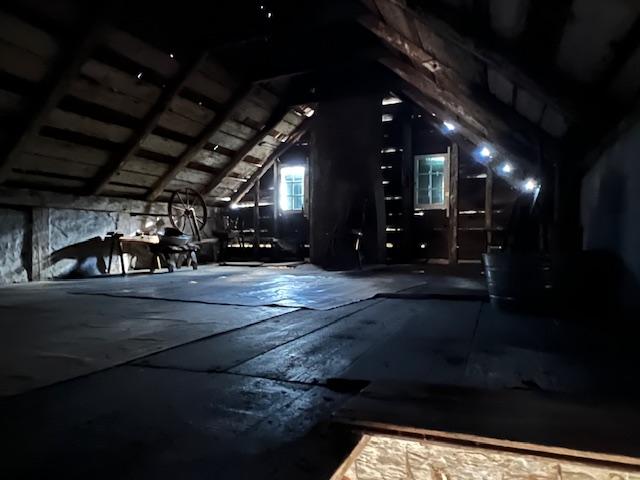
There was a candlelight tour of the house, so we got to see the second level with the upstairs bedroom, the attic area which really was drafty and the room above the new addition that is used for storage. The area was once heated by fireplaces and since the downstairs had a fire lit, the whole house was nice and warm. They had once of the original rope beds that had been tied and antique toys.

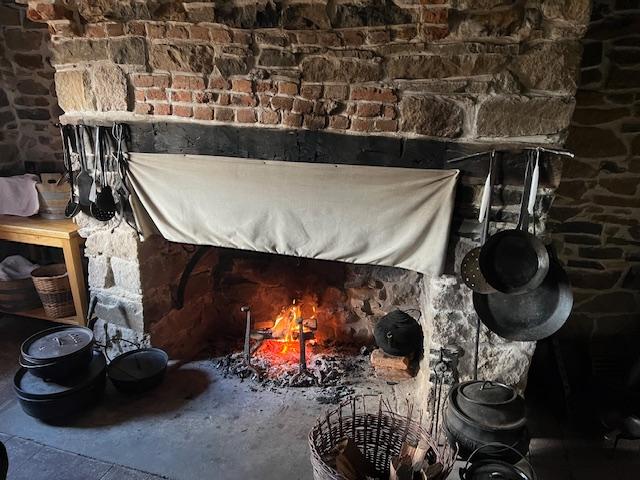
The hearth of the kitchen keeps everyone warm as the stones warm the house

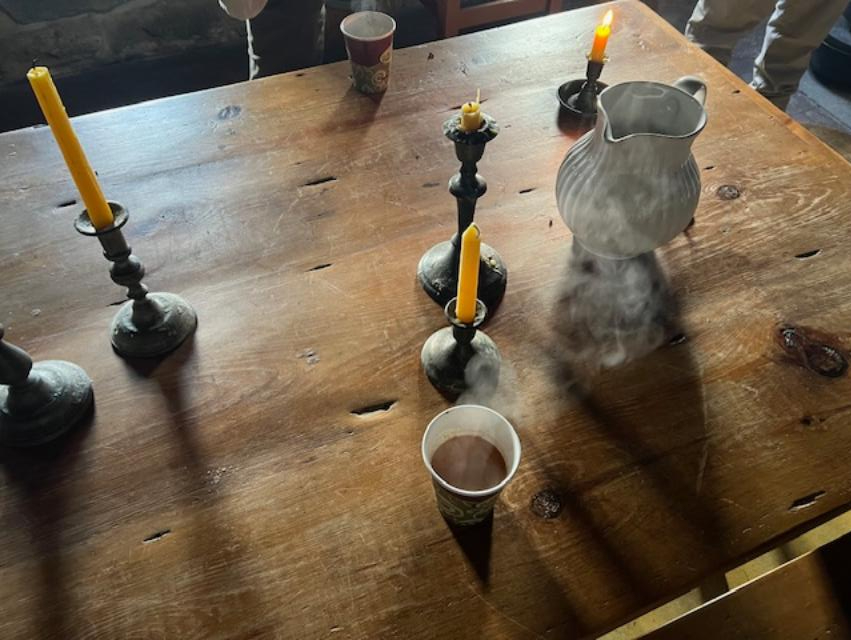
The Dining Room table in the during the “Hot Cider” party

The first floor had the fireplace lit and the whole room was illuminated by candles which made the room very warm and cosy. It was interesting to see one of these homes that has no electricity and how it operates. It must have been very interesting to live at time.

The Dining Room during the day

The delicious hot cider at the Thanksgiving event at the house

The Dining Room at the Kearny House

What calmed me down after a long night was the delicious homemade pies that they served at the event. They had a strawberry rhubarb and apple that were just delicious. So flaky and filled the freshest fruit. It really cheered me up. They also had cheeses, roasted peanuts and a hot spiced cider to drink. I could have used something stiffer but it was still nice to drink and had the most wonderful flavor. Overall it was a nice night of desserts and snacks and good storytelling and the view of New York City was incredible.

The house illuminated by candlelight during the afternoon in the Fall

Do not venture into this park at night! Please take it slow down the hill to the landing. My suggestion is to do a dry run when it is light out so you know where you are going.

The History of the Kearney House:

(I credit this to the Kearney House pamphlet and Wiki)

The Kearney House was built in the 1760’s by the Blackledge family and was the home of Maria Blackledge, who was the daughter of Benjamin Blackledge, who lived in the home with her husband, Daniel Van Sciver.

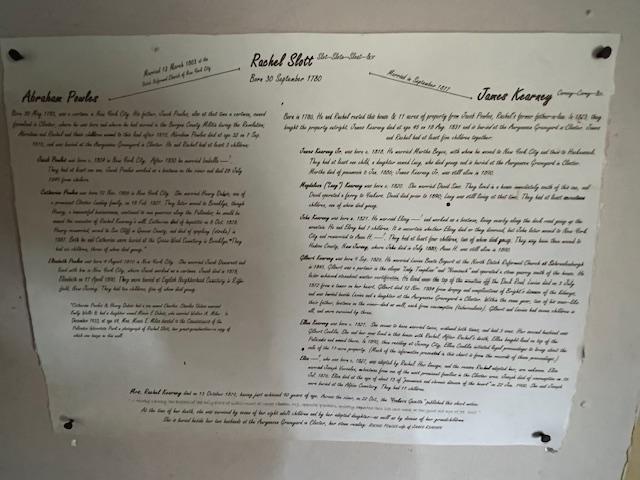
The Kearny Family tree

Maria Blackledge father, Benjamin Blackledge, was an educator and public official, who taught Dutch citizens the “Kings English”. He was the first clerk of Harrington Township, NJ and served as Justice of the Peace and Judge of the County Court of Common Pleas and elected to the assembly of Bergen County, NJ. Mr. Blackledge’s wife, Caroline Tallman (Cathalyntie Tallema), was the daughter of Dowe Hermanszen Tallema and Maritie Haring, of the prominent Haring family of which Harrington, NJ was named after (Wiki).

Mrs. Kearny’s portrait inside the house

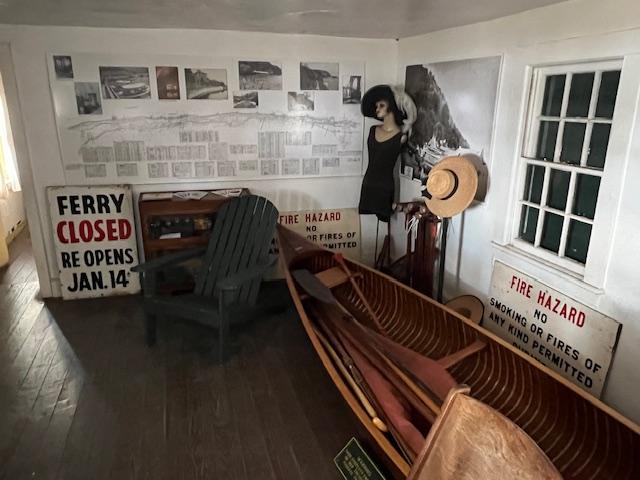
The house was built in this location when the farmers of Closter, NJ built the Closter Dock Road through a pass in the cliffs to the Hudson River so they could deliver their goods to New York City. The house was most likely built to be a dockmaster’s house to supervise the busy river landing.

The Blackledge-Kearney House when it was on the waterfront

The house was purchased in  1817 by James and Rachel Kearney. With them were their three children from Rachel’s first husband, Abraham Powles, who died two years earlier. James and Rachel then had five children of their own. Rachel also adopted a daughter.

They had thought that General Cornwallis had used the home as his headquarters but they found this was not true

Mr. Kearney died in 1831 and Mrs. Kearney used the home as a tavern. The northern part of the house was expanded in 1840 to house the tavern part of the building. Besides offering food and spirits, Mrs. Kearney’s tavern served as a meeting place for the captains and crews of the sailing vessels that arrived and departed daily from the docks here and for the local workforce of quarrymen, dock workers and tradesmen. 

The Upstairs bedroom gallery

The upstairs bedroom gallery

The upstairs room in the new addition may have been for lodgers staying at the tavern.

The Kearney House Attic room that was used for her children

The Palisades Interstate Park Commission bought the house in 1907 after Rachel’s death in 1897 and in 1909 had the big porch built as a grandstand for a dedication ceremony for the new park. Through the 1920’s, the Commission used the house as a police station. The house is now open to the public on select weekends and holidays for touring and special events.

The upstairs bedroom gallery with artifacts from the park

The property offers beautiful views of Yonkers, NY and the Bronx and from the Alpine Landing especially in the coming Fall, amazing views of the foliage and of the cliffs surrounding the Hudson River.

Alpine Boat Basin by the Kearney House

The Alpine Park in the Fall of 2024

The Summer of 2025:

In the summer months, the house was open on Thursday nights for music, games, and summer refreshments. The event ‘Behind the Times at Mrs. Kearney’s Tavern’, was an evening of touring the house and grounds, musically entertainment on the lawn and story telling to end the evening.

Entering the Palisades Interstate Park

The Hudson Riverside and beach area

The park on the Hudson River

The park is breathtaking in the summer months, and everything was lush and in bloom. The views of New York clear as day and the boat basin was busy with people entertaining on their boats and coming in and out of the small harbor.

The park during the Summer of 2025

The park in full bloom that evening

The history of the Kearney House history

The Kearney House and lawn area

The Kearney House was open this evening for one of their many Summer special events. All the windows were open to take advantage of the cool breeze and air the house out on this hot July evening.

The Kearney House from the front lawn

The house getting ready to arriving guests

The tiny barn shed off to the side of house

The waterfall in the back of the house

The tiny shed and hilly woods behind the house

The side of the house and the vegetable garden

The garden with vegetables and herbs

The Vegetable Garden was growing all sorts of vegetables and herbs of the time period and some flowers as well.

The outhouse on the property

The river view of the house

The front of the house with the windows open for river breezes

The inside of the house was cool and welcoming. The hosts of the event had both icy water and Lemonade for guests and slices of sweet watermelon. We were welcomed and offered our choice of beverages and then just relaxed and enjoyed our refreshments that cooled us down for the evening.

Our hostess graciously greeted us and welcomed us to the house

The kitchen set for guests to the tavern

Enjoying summer refreshments

Talking with other guests

It was so nice to just sit back and relax and enjoy the cool breezes coming off the Hudson River. The lemonade really hit the spot.

The cool breezes from the back window

After my snack in the tavern, I toured the upstairs. The two upstairs bedrooms are Mrs. Kearney’s bedroom and the guest room on the other side of the hall.

Mrs. Kearney’s bedroom

The guest room was once used for visitors now holds all their artifacts

This bathing beauty greets you on the second floor

The attic area was far too hot to tour but I had visited it last winter after I had attended visited for a post holiday tour. I did get to tour the upstairs patio and enjoy the breezes outside.

The patio on the second floor

What a view of the river!

The view as the entertainment was about to start

Outside, Thaddeus McGregory started his concert on the front lawn

Thaddeus McGregory singing ‘ Beautiful Dreamer’

Then the Revolutionary War era games took place out on the lawn outside the lawn.

The lawn outside the Kearney house

The beautiful flowers in the lawn

The actors playing ‘ Toss Across’

A video of the games

It was a very nice evening outside with cool breezes and the seeing the concert.

The outside gardens in front of the home

The outside of home

The views from the home of the Hudson River at twilight

Franklin Mineral Museum                                       32 Evans Street                                              Franklin, NJ 07416

Franklin Mineral Museum 32 Evans Street Franklin, NJ 07416

Franklin Mineral Museum

32 Evans Street

Franklin, NJ  07416

(973) 827-3481

franklinmineralmuseum.com

Open: Sunday 11:00am-5:00pm/Monday-Friday 10:00am-4:00pm/Saturday 10:00am-5:00pm

Fee:  Combination Rock Collecting & Museum: Adults $15.00/Children 3-16 $10.00/Seniors (65+) and Veterans $12.00; Museum Only: Adults $10.00/Children 3-16 $8.00/Seniors & Veterans $9.00. See packages on the website.

My review on TripAdvisor:

https://www.tripadvisor.com/Attraction_Review-g46449-d2172670-Reviews-Franklin_Mineral_Museum-Franklin_New_Jersey.html?m=19905

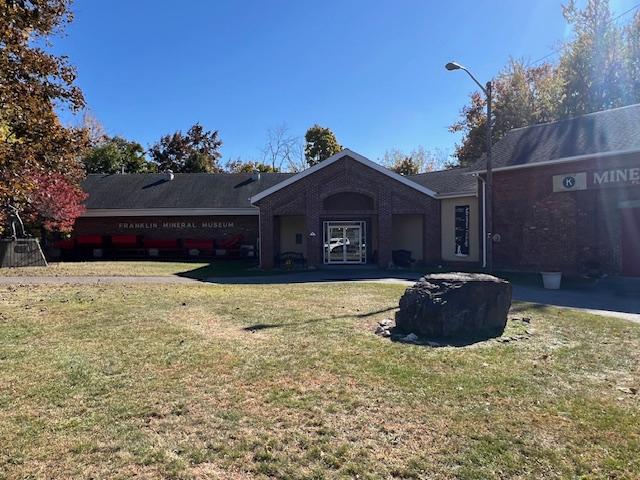
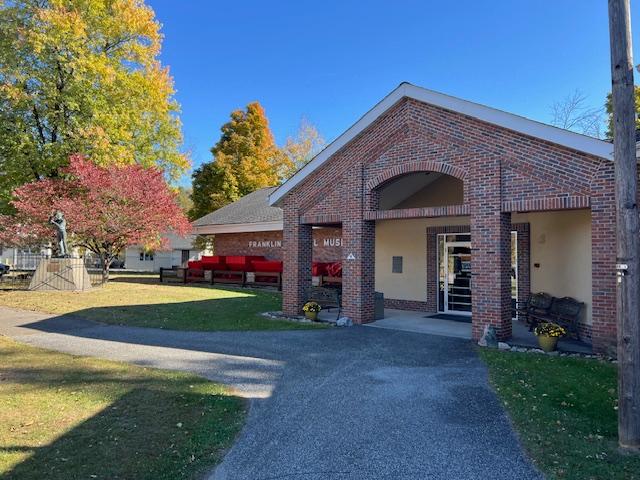
 The front of the Franklin Mineral Museum

The front of the Franklin Mineral Museum

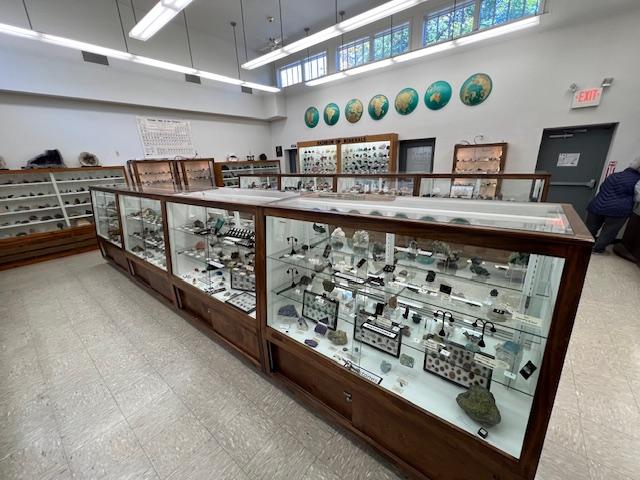
I recently visited the Franklin Mineral Museum on a trip to Sussex County wanting to learn more of the mining history of New Jersey. I never realized that the mines were so close to my home in Bergen County. I have to admit though that the museum is a little dated with the typed signs and no video information on the exhibits. What is lacks in modern QR codes and Virtual Reality it makes up in depth of collection and historical artifacts.

The historical sign outside the museum

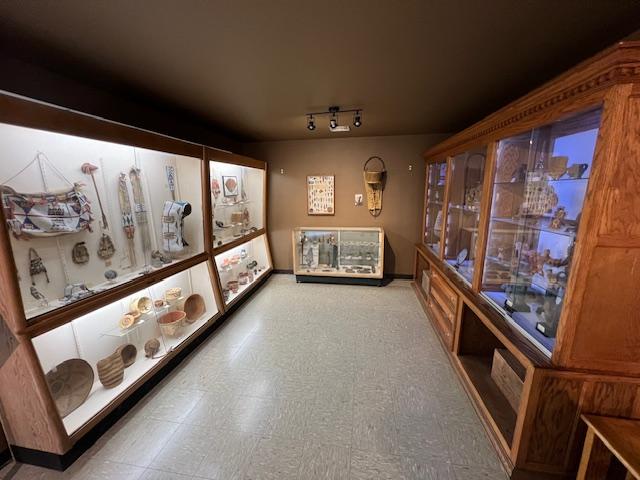
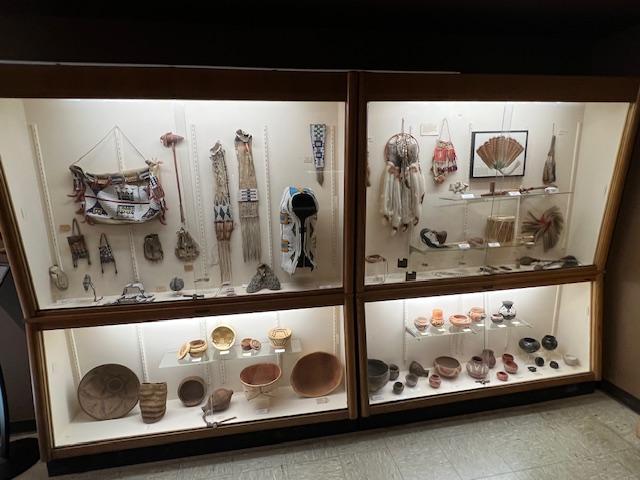
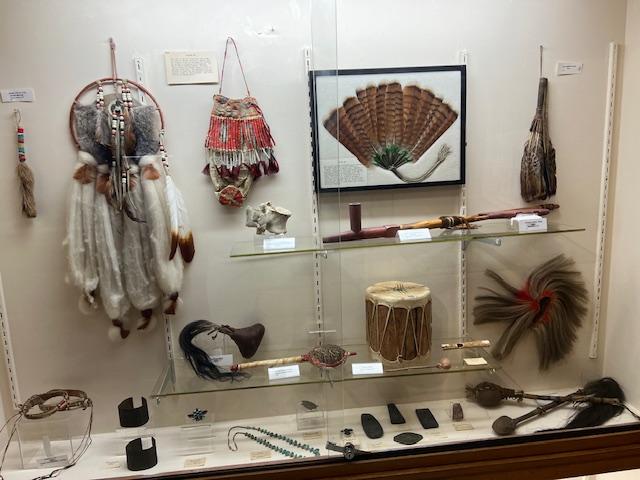
Where the museum shines though is in its depth of display, the interesting artifacts that the museum contains with both fossils and Native American pieces. It really shows the extent of Paleontology in the State of New Jersey and how the make up of the Earth and its history is shown in the displays. Many of the fossils have been found all over the State. The Native American pieces were from both North and South American with a impressive selection of Pre-Columbian art.

The Native American Gallery with pieces from all over the Americas

The Native American collection

The beauty of some of the artifacts

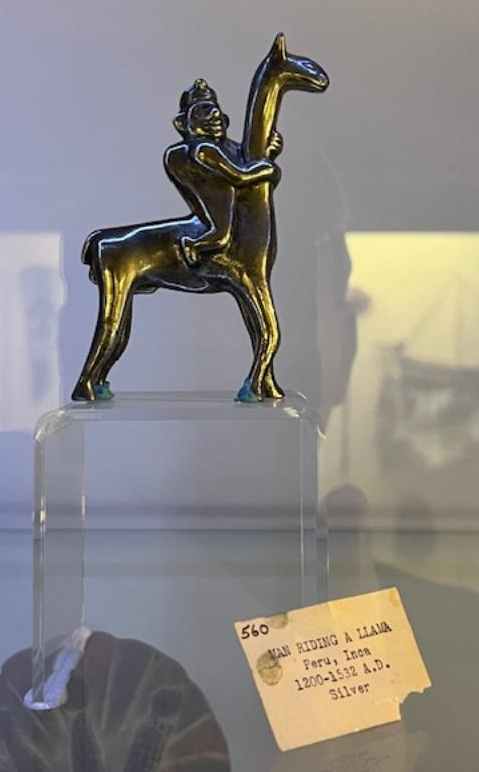
This piece of Inca silver impressed me as most of these artifacts were melted down for the minerals by the Spanish

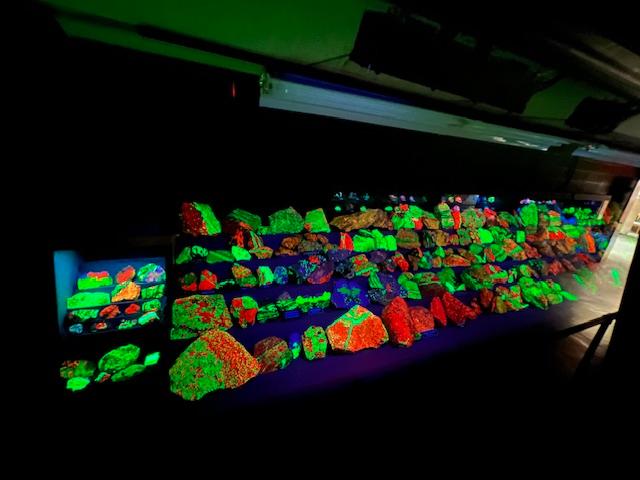
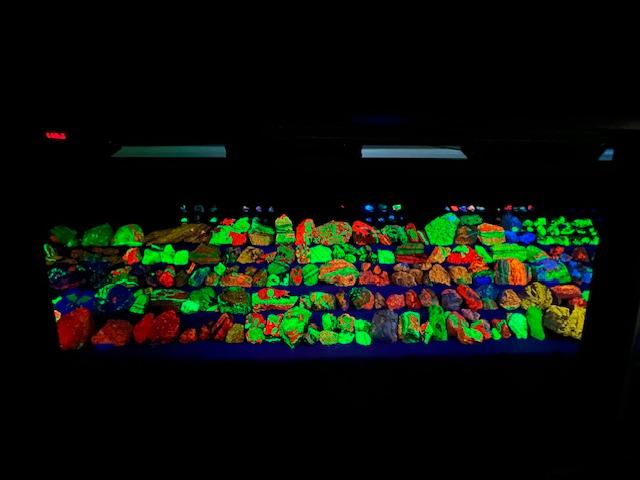
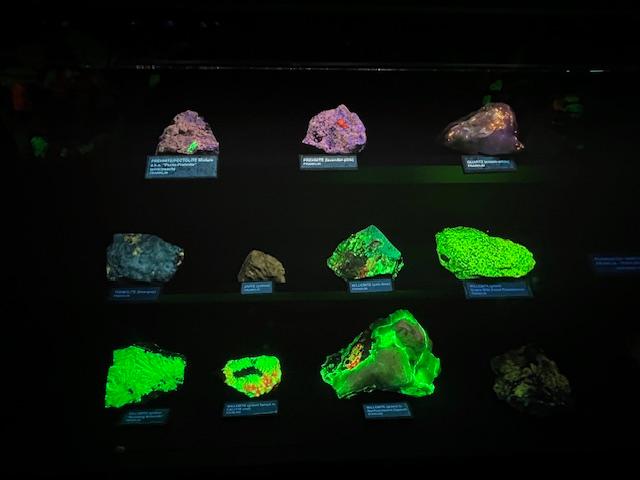
Two of the exhibits that I thought stood out that you must see is the “Fluorescent Room”, which when left alone when the lights go out is an illumination of colors due to the fluorescent make up of the minerals in the rocks. It displays all the colors of the rainbow. When the lights go back on they just look like ordinary rocks. Take time when the lights are out to really look at the colors of the stones. I was told that the blue or violet ones are the rarest.

The Fluorescent Room before the lights got out

The gallery with the lights off when the magic happens

The Collection in full view

Samples of the mineral’s as they glow

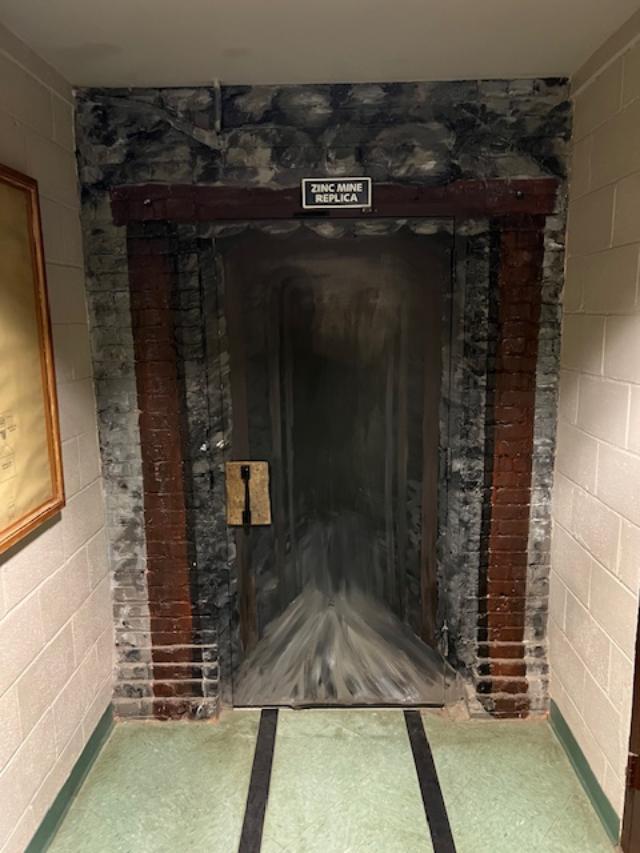
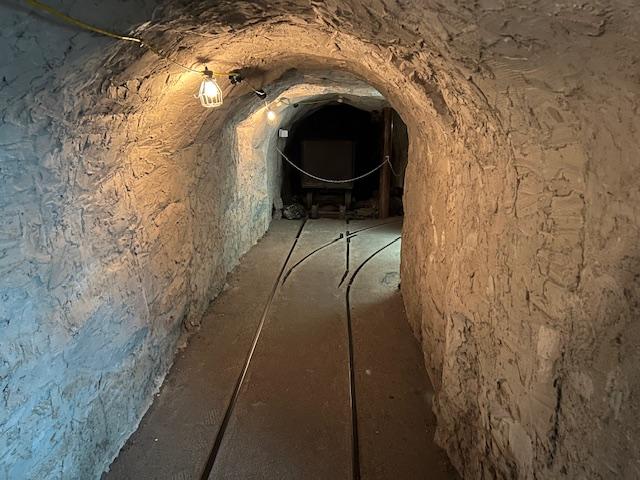
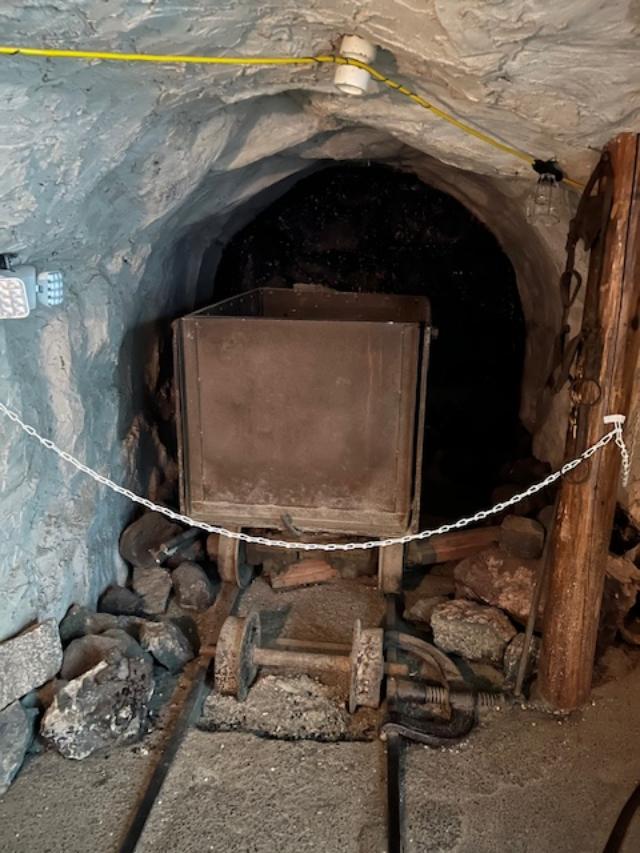
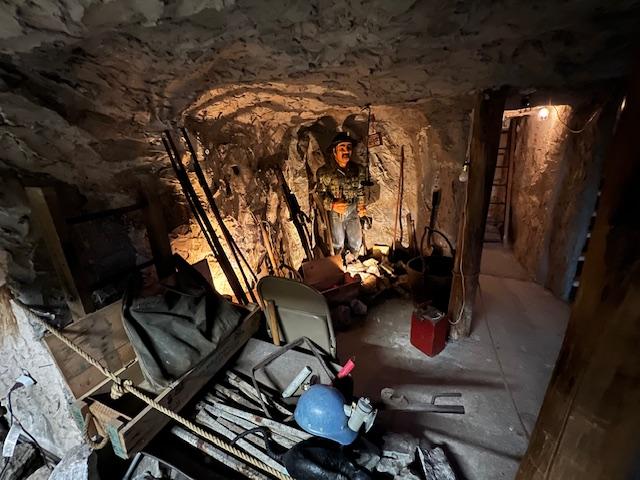
Another stand out display is the simulated “Mine Replica” that takes you in a tunnel and then maze of the make up of working in a mine complete with ladders down the lower tunnels, a working office of the foreman, the mine car tracts and displays on how miners went about there business. It shows how hard and dangerous the mining industry is and was back then to today. Try to see this display first as it takes time to tour.

The Mine entrance

The simulated mine walk through

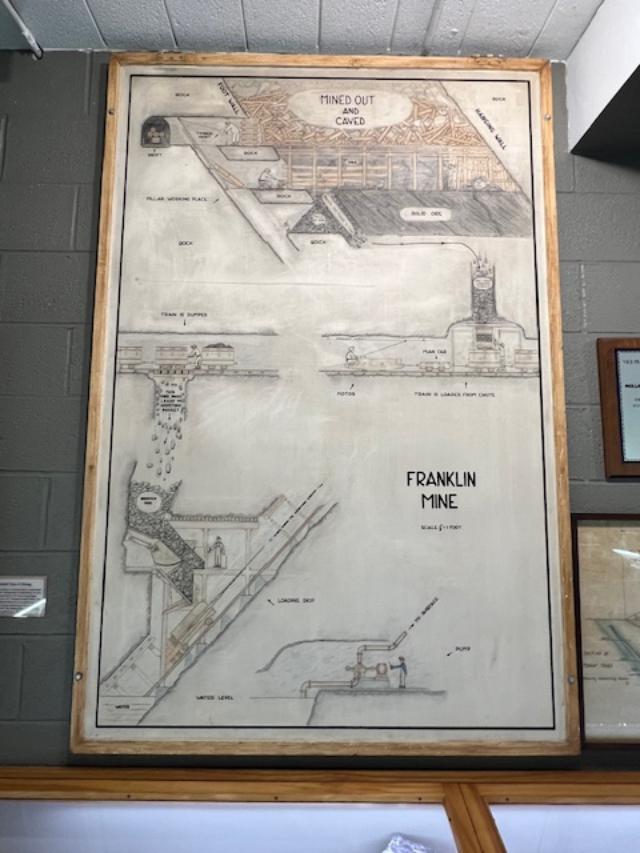
The Franklin Mine sign

The simulated mine walk

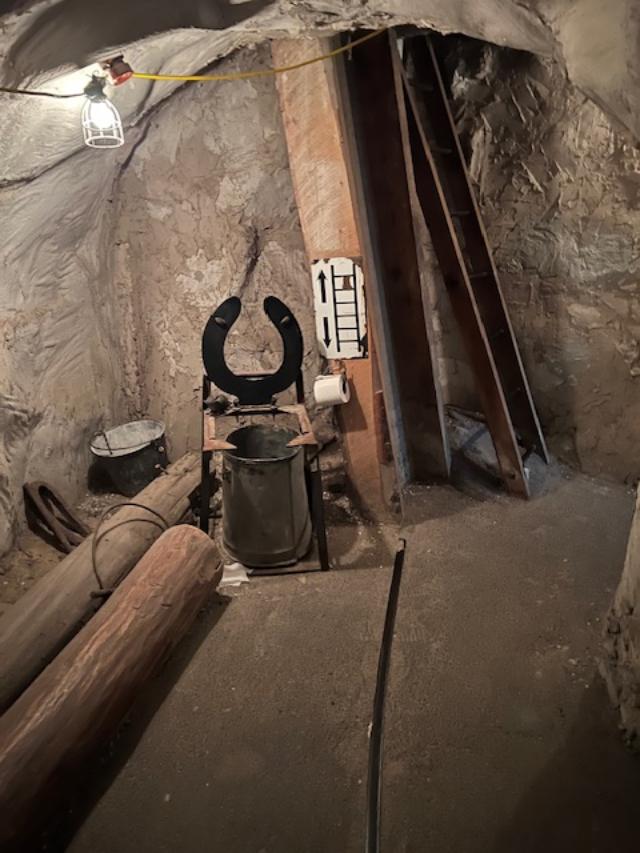
The toilet area of the mine

The miners at work in the mine simulation

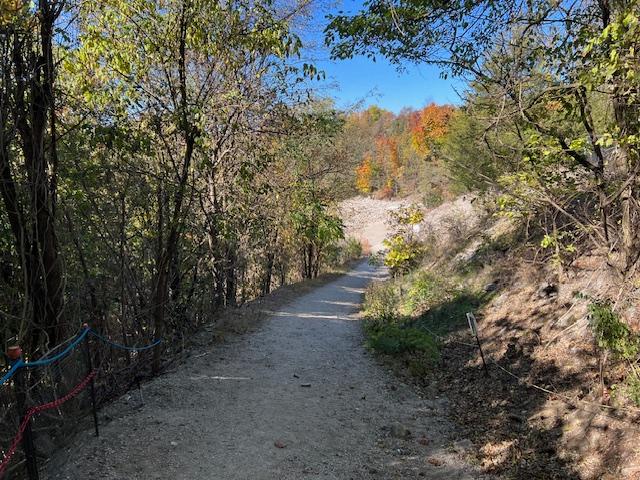
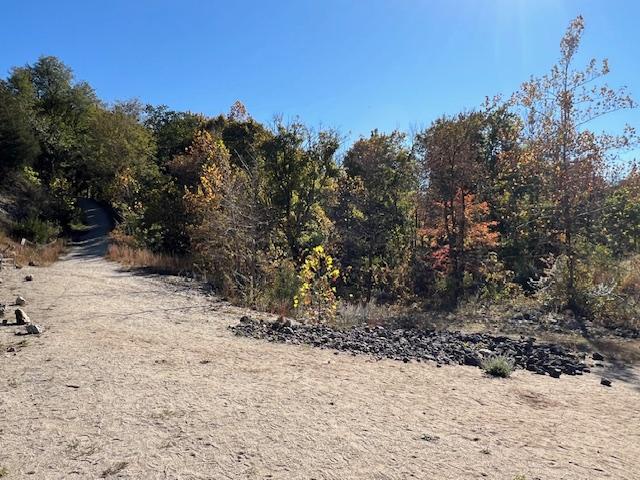
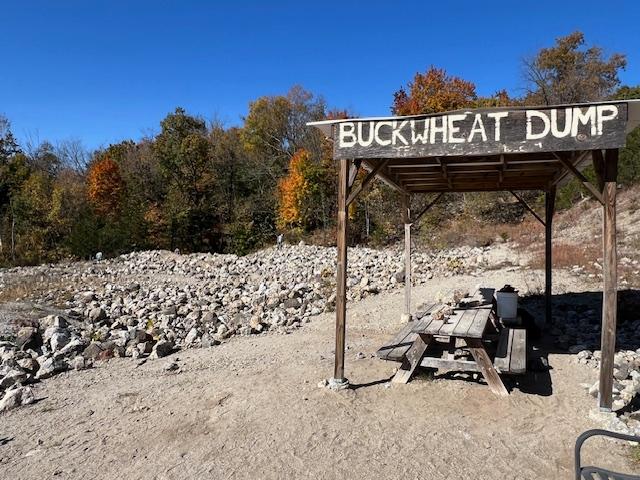
Before you go inside to the museum, take some time to look through the quarry for rocks and minerals. You are given a bag to keep your specimens and there is a fluorescence light to check if you found anything. At first I thought this was just for little kids but later discovered that I found some ‘glowing rocks’ that I could take home and I found this fascinating. I never knew these types of rocks existed in New Jersey.

The Path to the Quarry area where the minerals were located

The path to the quarry area

The quarry area where you can collect specimens of minerals

The quarry was busy in the afternoon

The beauty of the quarry in the Fall of 2024

Give yourself about three hours to really explore these rooms and it will give you a clear indication of how New Jersey formed as a State and its role in the evolution of the Earth. There are some really interesting displays to see and read about. 

History of the Museum & Mines:

(This information was provided by the Franklin Mineral Museum pamphlet)

Due to the depletion of zinc and other ores the Franklin Mine closed operations in 1954. In preservation of the mining heritage the local Kiwanis Club started an annual mineral show donating the funds to charitable causes. Popularity of the show lead to the formation of the Franklin Mineral Museum, a non-profit educational museum, incorporated July 1, 1963, which is governed by a board of trustees and powered by a dedicated staff. Of note: Although the Kiwanis Club is no longer involved with the museum, the original sign still hangs over the outside door to the mine replica.

The former Buckwheat engine house, thought to be the hoist house that supplied the power to lift the mined ore from the Buckwheat open pit was donated to the museum in 1963. The mine replica was installed and made a permanent display inside the hoist house. Of note: Around 1940, the original replica was a modular unit displayed at the local community center “Neighborhood House” and was used to show the miners’ families how they worked inside the mine. Prior to being reconstructed inside the engine house the modular replica was used at the NJ Zinc Company for the purpose of training mine rescue workers.

A mineral repository was also added in 1963 to the museum. The first mineral exhibit was donated by the NJ Zinc Company to the Kiwanis Club for display in the then permanent mine replica. The collection consisted of 71 specimens and mill samplings, including 11 fluorescents. The first mineral exhibit was later used as a traveling exhibit is displayed in the “Local Mining District Mineral” room of the museum. (Of note: The collection was originally on display in 1920 at the local high school and then moved around to several other locations, then the Neighborhood House in 1940.

On October 9, 1965, the Franklin Mineral Museum opened to the public. On June 20, 1968, the State of New Jersey declared the Borough of Franklin, NJ “The Fluorescent Mineral Capital of the World”. The discovery of more than 200 varieties of minerals from the working mines brought forth the great phenomena of mineral wonders from this area, particularly brilliant fluorescent minerals. On September 24, 1971, the State of New Jersey declared the Franklin Mineral Museum an Historic Site. Today this museum houses the most comprehensive display of local fluorescent minerals in the world.

The Museum is broken down into several rooms and displays: 

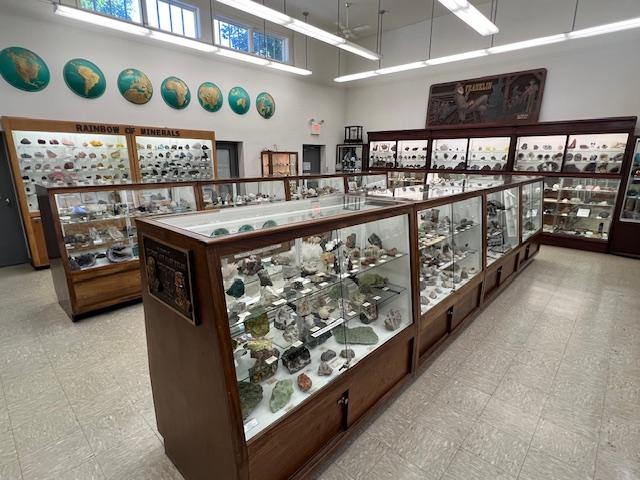
World Minerals “Welsh Hall”:

*There are approximately 6000 world-wide specimens and some from outer space.

*The three rock types are displayed. Igneous, metamorphic and sedimentary.

*Displays include meteorites, solidified lava, a volcanic bomb, pumice the floating rock, gold and birthstones in natural and gem forms.

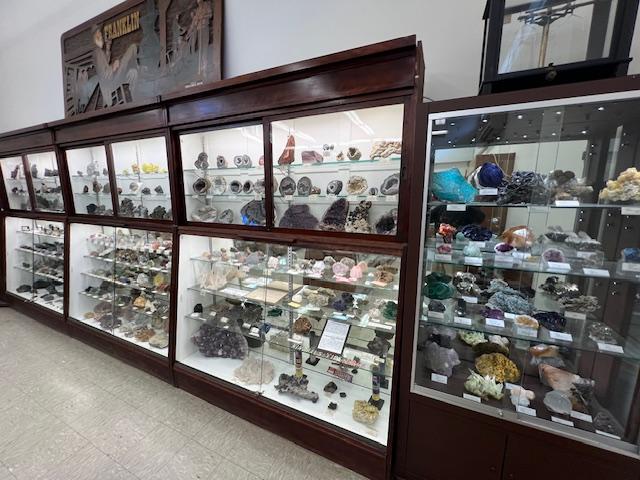
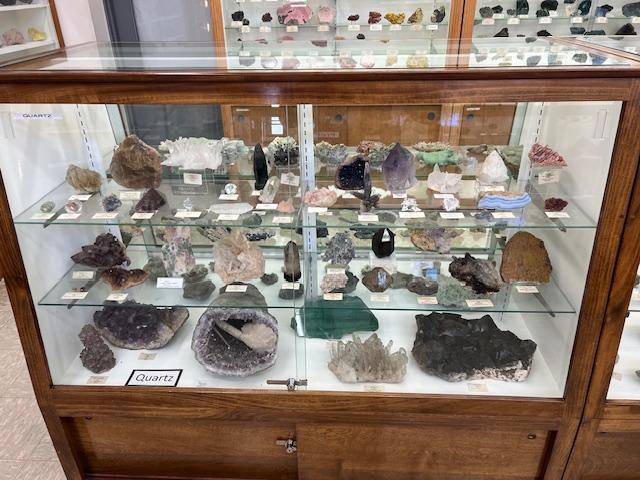
The Mineral Room

The Mineral Room

*The hollow rocks called geodes are formed from air bubbles in lava and often contain crystals. (Wilfred Welsh, a former teacher from Saddle River, NJ and his wife, Mary, collected and donated the majority of specimens in this room. This collection represents the passion they had for minerals. New specimens are continually added to this exhibit).

The Mineral Room

“Mine Replica”:

*In the lower level, left tunnel, the can in the alcove represents the miners’ “bathroom”. If a miner showed up late for work it was his job to carry the cans at the end of the shift (Where the expression “Going to the Can” comes from).

‘Hitting the can’

*This area contains the “Wall of Zinc”. The exhibit demonstrates the layers of various zinc ores that may have been visible in the mine.

*The original ore cars were pulled by mules.

*The miners of the 1800’s used candles & oil wick lamps on top of their helmets. Later in the 1900’s the carbide light was used to do away with candles. Water dripping on carbide produced acetylene gas which provided better light.

*Rats were prevalent in the mines. They stole lunches out of the metal lunch boxes if not locked. Most importantly they were very good indicators of cave-ins and provided early warning signs.

*The office exhibit represents that of a NJ Zinc scientist. This exhibit and open display area with “Sam” show mining artifacts. “Sam” is the original miner statue that stood outside of the museum, now replaced by a bronze statue sculptured by Carey Boone Nelson.

*Upstairs show the stope and pillar mining used in the 1900’s

*The large drill weighed 300 pounds and took two men to operate.

*The man cage (mine elevator) delivered men to their work levels inside the mine. A signal bell was rung to alert the operator.


Artifacts:

The artifacts of Native American, Artic & Aztec tribes, representing various regions are displaying in this exhibit.

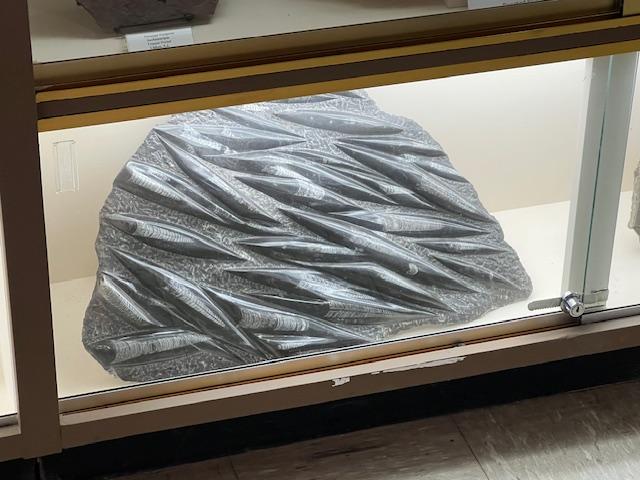
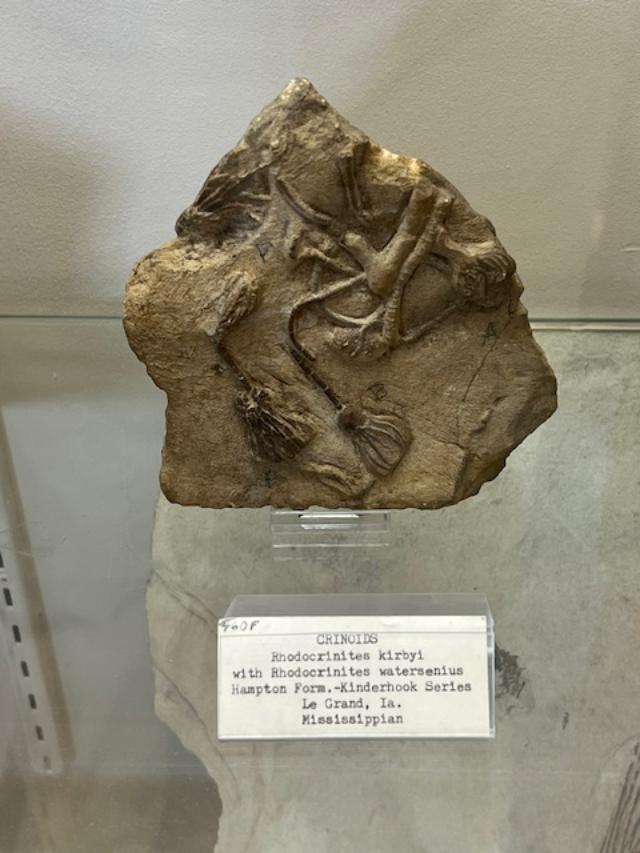
“Fossils & Artifacts”:

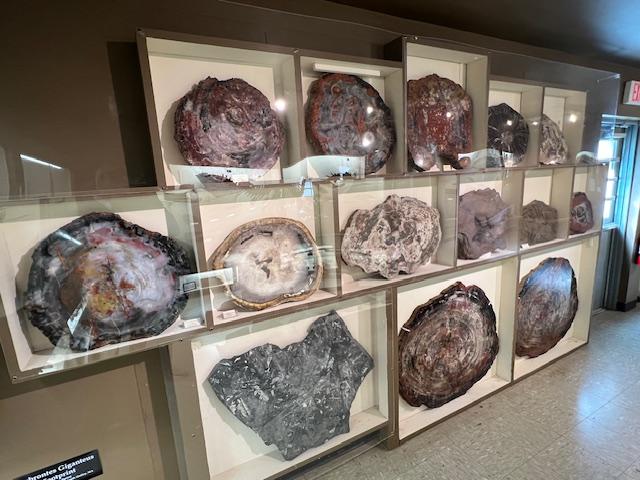
*Petrified wood, the large circles along the wall are slices of fossilized tree trunk. The wood has been replaced with mineral over a long period of time. The tree rounds are estimated to date back to the Triassic Age 230 million years ago.

*The dinosaur footprint is from a Grallator, that roamed NJ. Grallator means “stilt walker”. This was a herding dinosaur known only from its fossilized footprints. Grallator-type footprints have been found in formations dating from the late Triassic through to the early Cretaceous periods. It is said to have up to five toes.

*The large bone is from a Mastodon.  Mastodons are an extinct group of mammal; species related to elephants. They inhabited North and Central America during the late Miocene or late Pliocene up to their extinction at the end of the Pleistocene  10,000 to 11,000 years ago. Their genus name is Mammut and they are members of the order Proboscidea. They lived in herds and were predominately forest dwelling animals.

*Coprolite is fossilized dinosaur dung.

*The giant shark tooth is from the Megalodon one of the largest most powerful predators. It is an extinct species of shark that lived approximately 28 to 1.5 million years ago, during the Cenozoic Era. Fossil remains suggest that this giant shark reached a maximum length of 46-59 feet. Some believe that the Megalodon still swims in the deep waters today and are larger in size than originally thought.

The Fossil Room

The Fossil Room

The Fossil Room

The Fossil Room

The Fossil Room

The Fossil Room

*Trilobites are extinct arthropods, distant relatives of modern lobsters, horseshoe crabs and spiders. Trilobites existed for approximately 300 million years. They lived from the Lower Cambrian Period (521 million years ago) to the end of the Permian (240 million years ago). Trilobites were probably the first life forms with complex eyes with some species having hundreds of individual lenses per eye. 

“Fluorescent Room”:

The Fluorescence of the Franklin ores was discovered accidentally in the early 1900’s. Sparks from primitive electrical equipment in the mines caused the rocks to glow. Sparking equipment in the mines caused the rocks to glow. Sparking equipment was built and the fluorescents were used to follow ore zones and to monitor the quality of mill concentrates. Later, fluorescence was used to determine if exploratory drill holes were close to the ore body. If the holes would glow red. Calcite further from the holes had no fluorescence.

The Fluorescent Room

The reason why some minerals fluoresce is because of the impurities in the mineral. The ultraviolet light rays dislodge and excite electrons from their orbits in a molecular structure of the mineral and in their efforts to get back in the orbit, the electrons give off energy in the form of light.

Fluorescence refers to the emission of visible light from a substance being irradiated by ultraviolet light which the human eye can not see.

In the displays:

The large exhibit displays some of the finest fluorescent minerals from the local mining district, shown under shortwave ultraviolet light. Most local fluorescent minerals look fairly ordinary in natural light and only fluoresce under shortwave ultraviolet light. The exhibit on the opposite wall identifies local specimens in alphabetical order under shortwave ultraviolet light. Only a few local minerals fluoresce under long wave ultraviolet light, some of which are displayed in the first case you enter.

“Local Mining District Mineral Room”:

*Every mineral on display is from the local mining district of Franklin or Sterling-Hill.

*Several geological events produced the wealth of mineral species found in this area.

*The first one mined in Franklin was magnetite iron ore. Searching for more magnetite, zinc was discovered.

The Mineral Room

The discovery of zinc in the minerals franklinite, willemite and zincite brought on a new era of mining. Between 1848 and 1897 several small companies began underground zinc mining and continued to do so until the great consolidation of 1897.

In 1897, these smaller companies consolidate to from the New Jersey Zinc Company which operated in Franklin until 1954 and then closed after exhausting the mineral resources available.

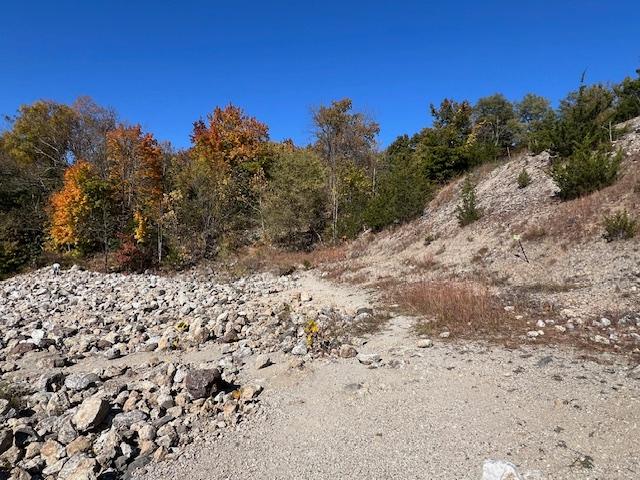
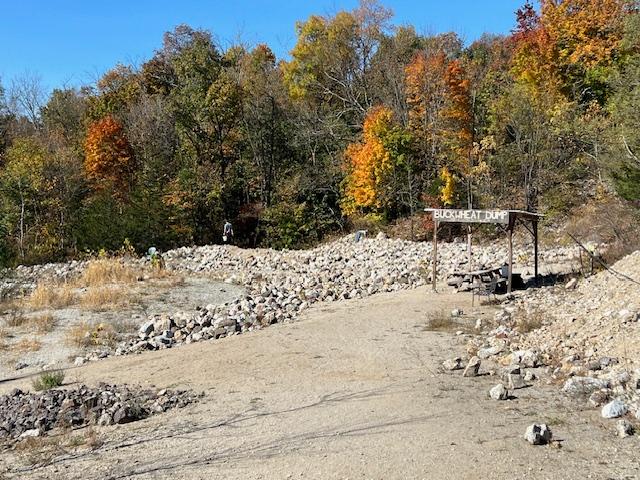
The Franklin open cut “surface mining” with an underground opening to the mine is across the street and currently under water. The open cut was originally named the “Buckwheat Mine”. The “buckwheat dump” is the collecting area of the museum, comprised of discarded rock from that mine.

*The mine produced 22 million tons of ore worth 500 million dollars.

*Many uses for Zinc include sunscreen, pennies, paint, batteries…

*Solid zinc bars are on display in this room.

In this exhibits:

*The left side of the room as you walk in, displays various species of local minerals. The primary economic ores mined were willemite, franklinite and zincite. See a sample that contains all of these minerals in “High Grade Franklin Ore” located on the floor next to the Franklinite Crystal model.

Willemite: Colorless to white, gray, flesh-red, dark brown, honey-yellow, apple-green, blue, Fluorescent (green) under shortwave ultraviolet light.

Franklinite: is an oxide mineral. Commonly occurs with willemite, calcite and red zincite forming small black octahedral crystals. Franklinite was only found here in the local mining district until recently.

Zincite: A mineral form of zinc oxide. Its crystal form is rare in nature except at the Franklin and Sterling Hill Mines. The hexagonal crystal is red-colored (mostly due to iron and manganese) and associated with willemite and franklinite. Some zincite fluoresces yellow under long wave light.

*You can collect for these mineral species on the “buckwheat dump” located on the property of the museum.

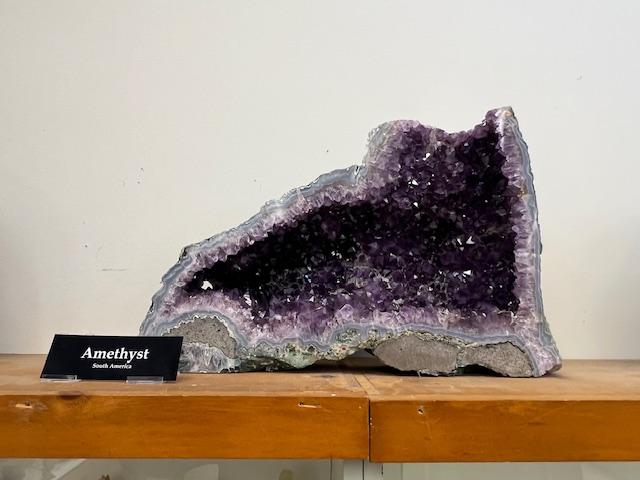
Amethyst on display

*On display are small amounts of gold found here.

*The corner floor display consists of local common rocks and minerals some of which contain iron. There was an iron furnace located at the now Police station at the edge of the Franklin pond. Most of the iron mined here was called magnetite. Magnetite is highly magnetic.

Some minerals on display are on loan from various institutions and major universities. We have out minerals on display in museums all over the world. The majority of the specimens are acquired through donations or purchased for the betterment of the museum.

The Mineral Room

As of this publication, the Franklin-Sterling ore deposits have produced 359 different mineral species about 10% of all those known to man. More mineral species than anywhere else on earth, 19 of these are unique to the area, 92 of which are fluorescent.

(This information on the museum and on their displays is taken from the Franklin Mineral Museum pamphlet and I give the museum full credit for the information. Please check the website for more information about programs at the museum.)


The Arnault/Bianchi House                                  111 First Street                                                 Wood Ridge, NJ 07075

The Arnault/Bianchi House 111 First Street Wood Ridge, NJ 07075

The Arnault/Bianchi House

The Wood Ridge Historical Society

111 First Street

Wood Ridge, NJ  07075

https://en.wikipedia.org/wiki/Fridolin_Arnault_House

Open: Please check out their website; only for special events

Fee: Donations accepted

My review on TripAdvisor:

https://www.tripadvisor.com/Attraction_Review-g46937-d17154691-Reviews-The_Arnault_Bianchi_House-Wood_Ridge_New_Jersey.html?m=19905

I recently visited the Arnault/Bianchi House for a historic lecture by an actress who portrayed Amelia Earhart. It was an interesting afternoon of listening to the actor keep in character and describe her life just before her flight around the world. After the show, the actor was available for conversation with the audience and there was a light lunch after the performance. I thought this was a nice touch to end the afternoon.

The second time I visited the house, it was for the 125th Anniversary Celebration and the Society had all sorts of artifacts out on display. They had the history of the schools, fire department and the police department. They had old council pictures as well as pictures of World War II veterans who fought in the war who lived in town.

There was a also a nice display of the Curtis Wright Plant that once stood at the edge of town and its part in the war effort. There were all sorts of pictures and documents on display of the factory when it was in full function.

After walking the three rooms of artifacts, there was a light reception with cookies, tea and coffee.

The History of the Arnault/Bianchi House:

The town of Wood Ridge, NJ,  where the Arnault/Bianchi House is located has made a commitment for the house to be used for cultural events and hands on programs such as poetry readings and author visits.

The house was built in the 1880’s  by one of Wood Ridge’s founding father’s, French wine merchant, Fridolin Arnault. The Frenchman used  to sell his Bordeaux blends on Fifth Avenue in New York City. His relatives, Rudolphe and Annick Proust, traveled from Paris last year to visit the ‘country house’ of their uncle (The Wood Ridge Historical Society).

The second owner was designer Joseph Briggs, Louis Tiffany’s right hand man. Briggs  is responsible for the stained-glass  window designs  at the Church of St. Paul’s and Resurrection in Wood-Ridge. He eventually sold the house to the Bianchi’s . Not much is known about the Bianchi family (The Wood Ridge Historical Society).

Arnault House II.jpg

The inside of the house.

The backyard features gardens, meticulous landscaping, enough lawn space for a a grand social affair reminiscent of the Great Gatsby, benches, decorative stone and the exterior buildings the outhouse and carriage house. The second and third floors are not open to the public and are used for storage and the home still needs some repairs. In most of the lower floors are period furnishes and art work (The Wood Ridge Historical Society).

Please watch the papers and the town’s website for future events.