I have visited the Vanderbilt Estate many times over the years and every time I visit I learn something new about the family and about the property. It takes many visits to truly see the beauty of the house and grounds.
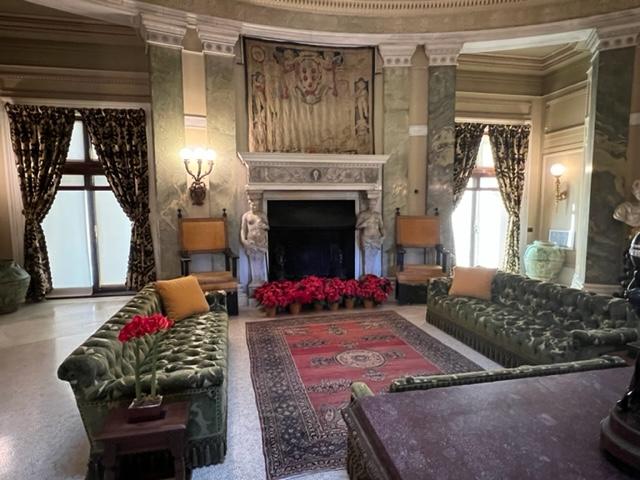
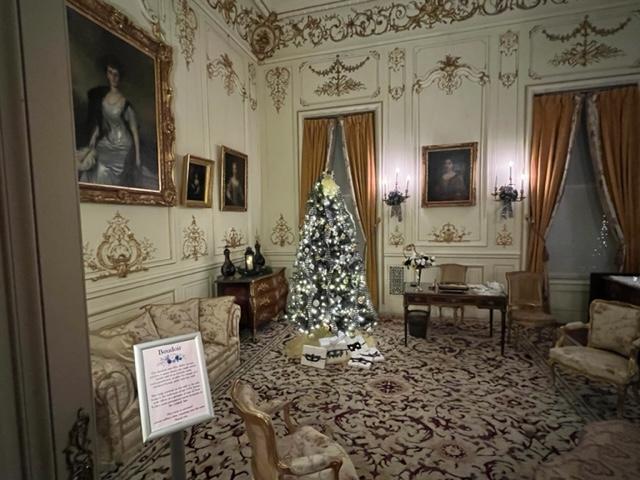
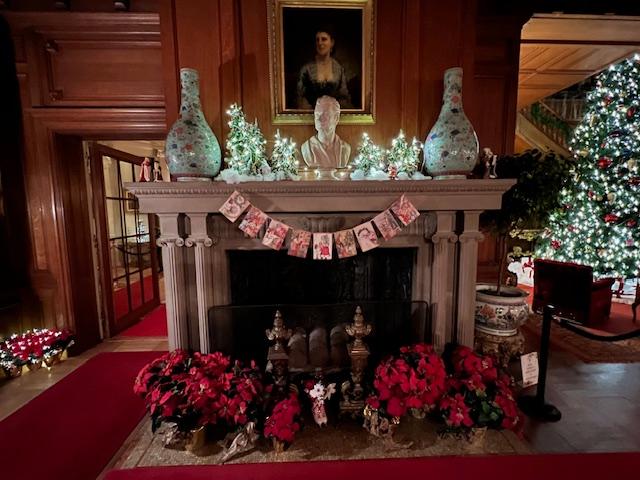
The Vanderbilt Mansion foyer on the first floor decorated for the holidays
I found the best time to visit is in the late Spring as the buds are coming in and Christmas time when the house is decorated for the holidays. It is quite spectacular. The holiday tour is amazing and after Thanksgiving, make a special trip to the Hudson River Valley and go mansion hopping as all the houses are decorated for the holidays.
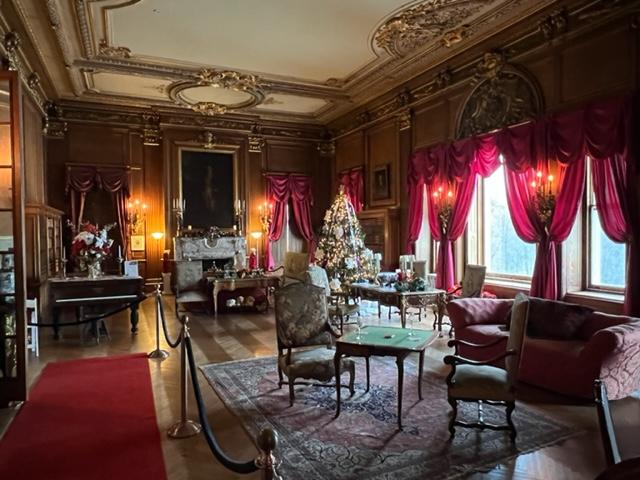
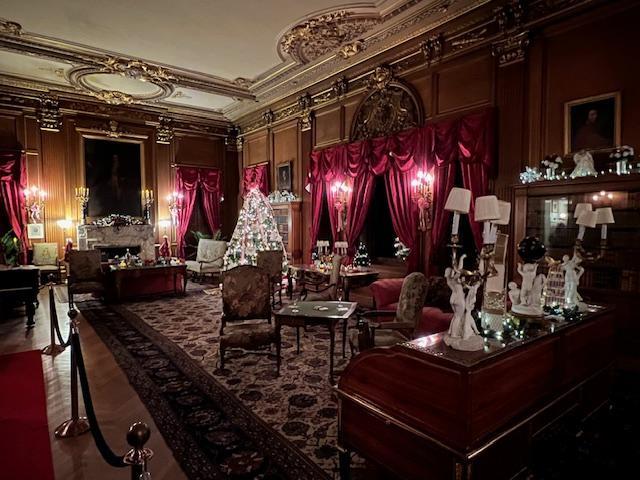
The Christmas tree in the library of the Vanderbilt Mansion
The tour will take you to three floors of the house: the first floor with the living room, dining room, parlors, and studies. Then there is the second floor with Fredrick, Louise and the guest family and single women rooms. The last floor you will visit is the basement workrooms, servant quarters and kitchen.
On the first floor is the formal dining room and the library, the offices of both Fredrick and Louise for their social and business obligations and the formal receiving foyer of the home. Things were decorated for the Christmas holiday season and it gave a very festive appearance.
The Library was set up for the Christmas holidays
The other side of the Library for the Christmas holidays
The house was only used about four months out of the year, being used in the Spring and then again in the Fall from the end of September to right after Thanksgiving and then the family would go to New York City for the social season. After Louise’s death, Fredrick sold his other houses and moved here permanently. The house was used full time and Fredrick must have enjoyed his time here.
When she was alive, they used to have a very active social life and were active in local affairs. The formal dining room was used for parties and get togethers. For the holiday season, the room was decorated for a formal Christmas dinner.
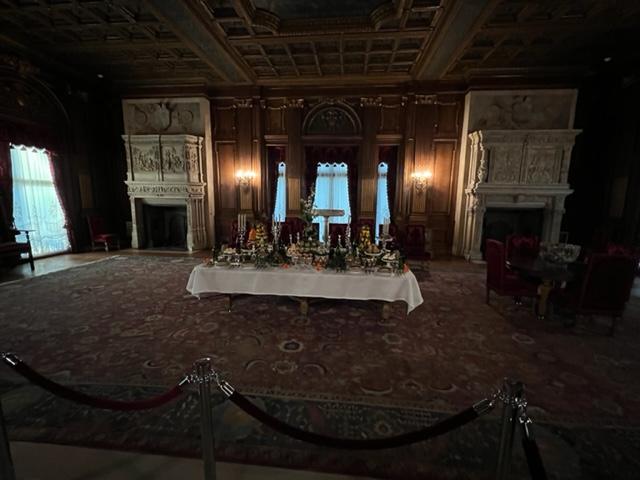
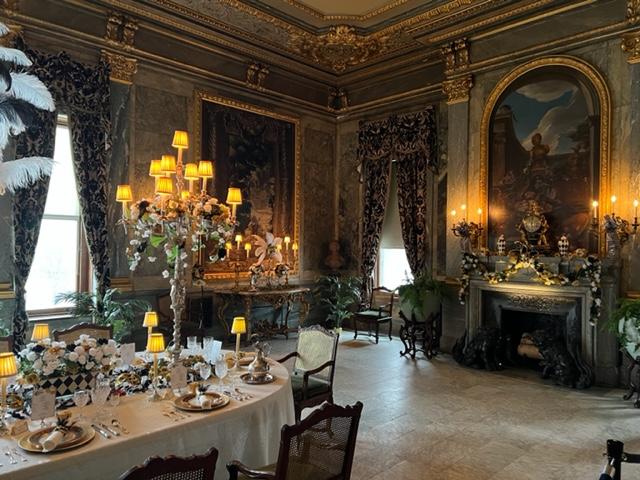
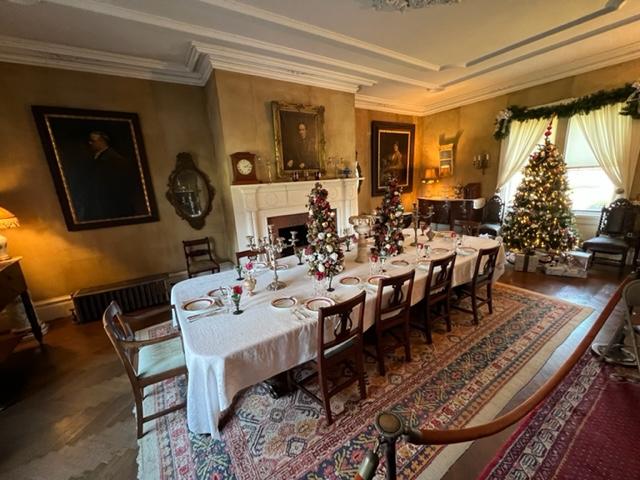
The Dining Room set for holiday dinner
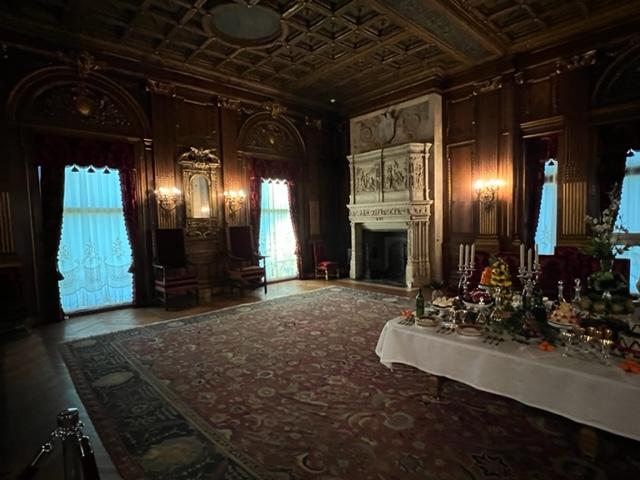
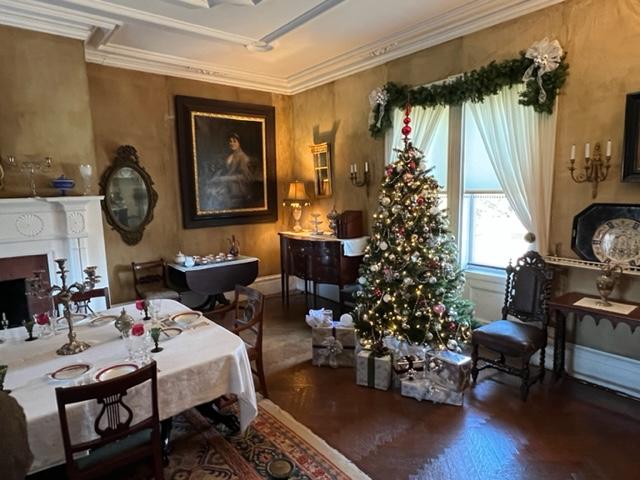
The beautiful fireplaces and paneling of the Dining Room
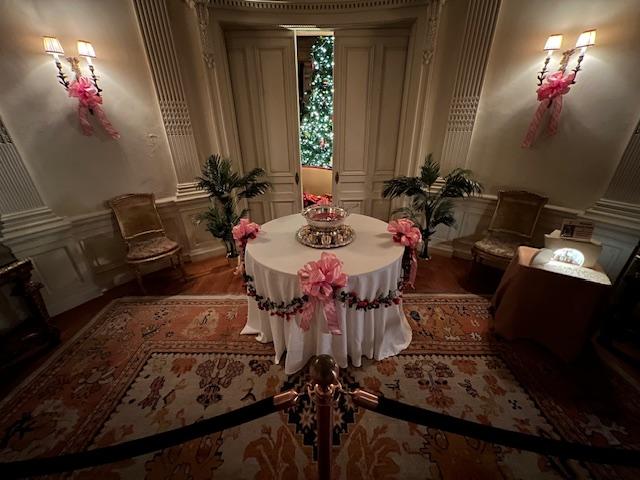
The Dining Room table set for the Christmas holidays
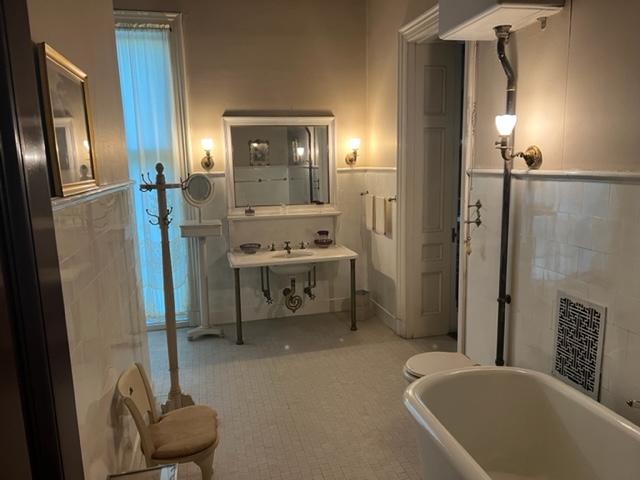
The formal staircase takes you up the to the bedrooms and the formal baths. The house was one of the first in the community to have electricity and hot and cold running water with all modern plumbing.
The stairs were wide and long due to the ladies dresses of the time
The artwork on the walls and landings was just breathtaking
The artwork on the landings and hallways is magnificent
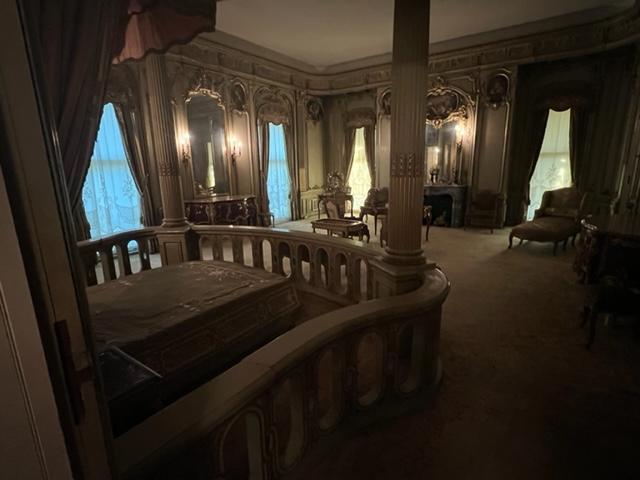
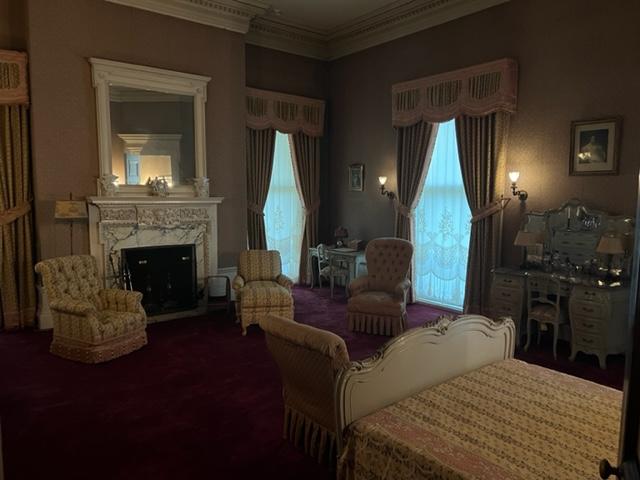
The bedrooms on the second floor are as elaborate as the rest of the house. While Fredrick’s bedroom was very plain in comparison to Louise’s who designed her bedroom after Marie Antoinette’s that she saw at Versailles. The room has a railing around it.
Louise’s Bedroom was based on what she saw in Europe.
Fredrick’s bedroom is less formal
The Bathroom with its modern plumbing and lighting
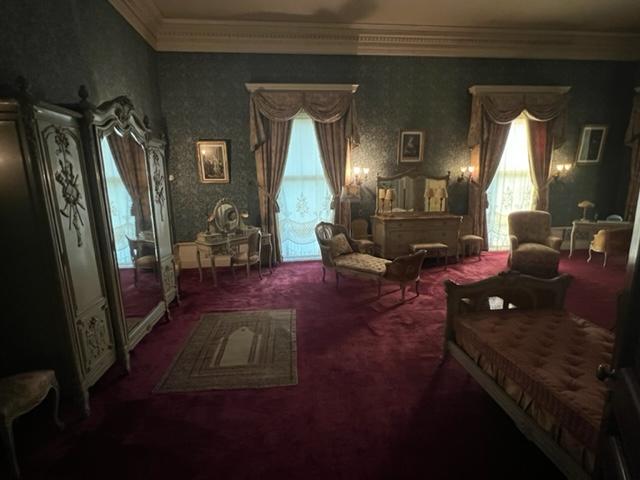
The elaborate rooms of the Vanderbilt Mansion
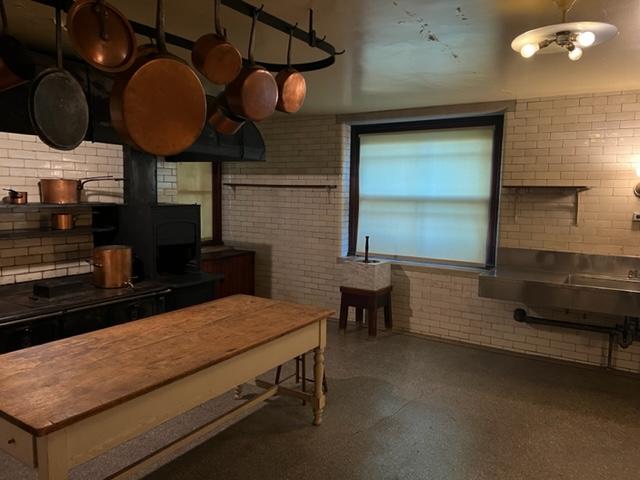
The household had a staff of over thirty people to attend to the household and grounds with their formal gardens. The kitchen staff had a well attended kitchen to work with and according to the tour guide, the staff was well treated at the Vanderbilt mansion. Fredrick was a good boss and provided well for his loyal staff.
The basement kitchen of the Vanderbilt Mansion
Touring the Vanderbilt Mansion at the Christmas holidays is always a treat but if you miss it, you can go during the year and still the elaborate rooms and beautiful grounds during the summer months. Take time to walk around the extensive lawns and gardens.
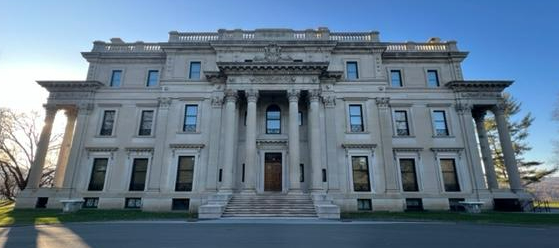
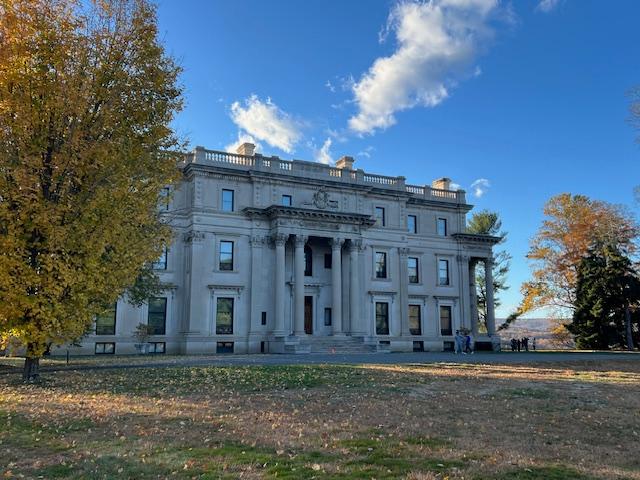
The Vanderbilt Mansion in the Fall of 2024
The Vanderbilt Estate in the Fall of 2024
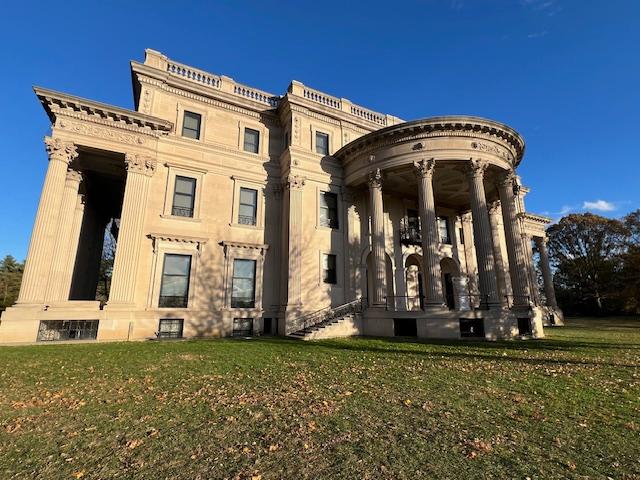
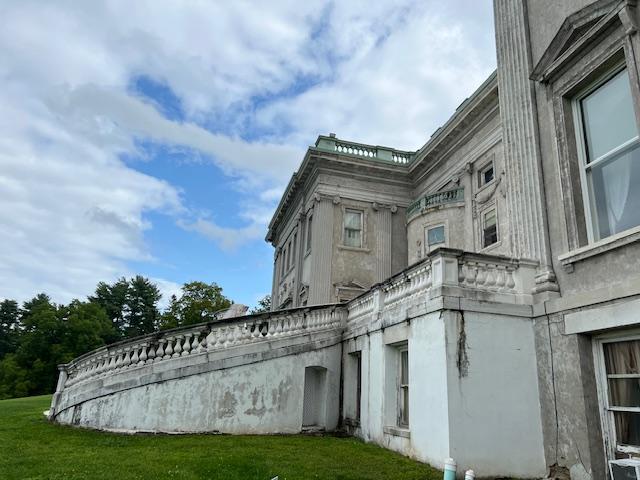
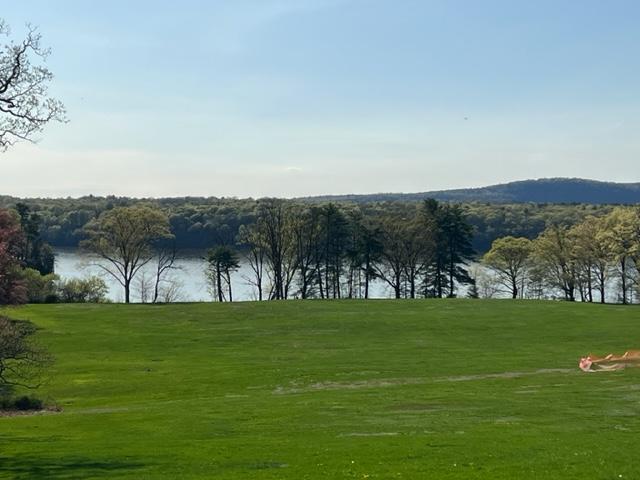
The back of the mansion facing the Hudson River
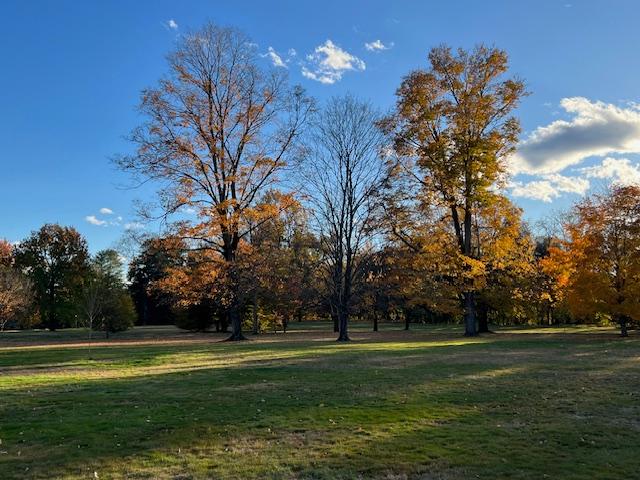
The estate grounds in the Fall of 2024
The estate in the Fall of 2024
History of the Vanderbilt Mansion:
The Gilded Age, the period following the Civil War to the turn of the century, was a time of unparalleled growth in industry, technology and immigration. Captains of industry, men like Cornelius Vanderbilt, Andrew Carnegie, J.P. Morgan, John D. Rockefeller and others who amassed unimaginable wealth, while the average annual income in the US was around $380, well below the poverty line.
The term “Gilded Age” was coined by Mark Twain and Charles Dudley Warner in their 1873 book, The Gilded Age: A Tale of Today. The term refers to the process of gilding an object with a superficial layer of gold to improve its appearance. Established millionaires viewed nouveau riche families like the Vanderbilt’s, who flaunted their wealth by building ostentatious homes, throwing extravagant balls and using their money to buy social prominence, as gilded-all show, no substance.
Cornelius “Commodore” Vanderbilt (1794-1877) rose from poverty to become a shipping and railroad tycoon. He turned a 100 dollar loan from his parents into a multi-million dollar fortune and left the bulk of his money to his eldest son William.
William expanded the railroad operations doubling the Vanderbilt fortune in just eight years but his eight children lived lives of excess, extravagance and self-indulgence. They built 40 opulent mansions and country estates and entertained lavishly, largely depleting the family money.
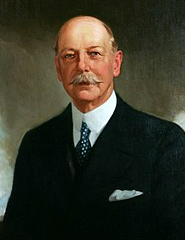
Fredrick William Vanderbilt later in life
In 1895, William’s son, Fredrick (1856-1938) and his wife, Louise (1854-1926) bought Hyde Park to use its their spring and fall country estate. McKim, Mead & White, America’s top architecture firm, designated the mansion in the neoclassical style with Beaux-Arts ornamentation and incorporated the latest innovations: electricity, central heating and indoor plumbing.
They added the Pavilion, a coach house, power station, gate houses, two new bridges over Crum Elbow Creek, boat docks, a railroad station and extensive landscaping. Many of the mansion’s contents were bought in Europe from wealthy families who had fallen on hard times. Furnishings and construction coast totaled around $2,250,000.
Louise Vanderbilt
Hyde Park was in many ways self-sustaining, providing food and flowers for the family’s needs here and at their other homes. When the Vanderbilt’s were in residence, as many as 60 staff worked here. Staff lived on or near the property and attended to the grounds and extensive farm. Personal staff traveled with the Vanderbilt’s and lived in the mansion with the family. Seasonal laborers were hired from the community and lived in the servants’ quarters.
The Vanderbilt Mansion in Hyde Park, NY in Fall 2024
The Vanderbilt Estate in Fall 2024
Fredrick, a quiet man, preferred to avoid social occasions but Louise loved to entertain, throwing lavish weekend parties with horseback riding, golf , tennis and swimming followed by formal dinners and dancing.
When Louise died in 1926, Fredrick sold his other houses and returned to this estate for the last 12 years of his life. He was active in business, directing 22 railroads until his death in 1938. His estate totaled $76 million, over 1.2 billion today. Gilded Age estates like this flourished in the 1890’s until the income tax (1913), World War I (1914) and Great Depression (1930’s) made their upkeep all but impossible.
The couple had no children and left the Hyde Park mansion to Louise’s niece, Margaret Louise Van Alen, who tried to sell the estate but there were no buyers. Her neighbor, Franklin D. Roosevelt, suggested she donate the estate to the National Park Service as a monument to the Gilded Age. She agreed and the Vanderbilt Mansion National Historic Site opened to the public in 1940.
The farmlands were not part of the donation and remain in private hands. The lavish mansion and its contents remain virtually unchanged from the time the Vanderbilt’s lived here.
(The National Park Foundation pamphlet)
The Vanderbilt Family History:
1650: Jan Aertsen Van Der Bilt is the first Vanderbilt ancestor known to reside in American.
1794: Cornelius “Commodore” Vanderbilt born on Staten Island, New York City, to Cornelius and Phoebe Hand Vanderbilt.
1810: Cornelius borrows $100 from parents and buys first two-masted sailing barge to start a ferry service from Staten Island to Manhattan.
1817: Cornelius captains a steamship for Thomas Gibbons and assists in legal battle against steamship monopolies, opening the way for his own shipping business.
1821: William Henry Vanderbilt, one of 13 children and first son, born Cornelius and first wife Sophia.
1830’s-1840’s: Cornelius expands shipping empire, begins railroad management.
1841: William marries Maria Kissam. They have eight children.
1851: Cornelius’ Accessory Transit Company provides shorter, cheaper transportation from New York to San Francisco. He gains national prominence.
1856: Fredrick, sixth child, is born to William and Maria
1861-65: During the Civil War, Cornelius donates steamship to the Union Navy. Receives Congressional Gold Medal. Acquires and consolidates rail lines in the Northeast and Midwest.
1870’s: Cornelius consolidates two core companies, creating New York Central & Hudson Railroad. William slashes cost, increases efficiency, turning it into one of the most profitable large enterprises in America.
1871: Cornelius opens Grand Central Depot on 42nd Street, New York City, the largest train station in North America
1877: Cornelius dies. William inherits most of his father’s fortune, nearly $100 million, to great displeasure of his siblings.
1878: Fredrick graduates from Sheffield Scientific School (Yale). Marries Louise Anthony.
1885: William dies, leaving an estate of $195 million to his eight children.
1895: Fredrick and Louise purchase the Hyde Park estate.
1899: Grand Central Depot is enlarged and becomes Grand Central Station.
1904-13: The new Grand Central Terminal (GCT) is built in sections on Depot site. Design insures trains are not delayed.
1926: Louise dies.
1938: Fredrick dies, leave the Hyde Park estate to niece Margaret Louise Van Alen.
1940: Vanderbilt Mansion National Historic Site established.
1949: 65 million passengers pass through GCT, equivalent 40% of the American population.
1950: Glory days of rail travel end.
1967: GCT designated New York City landmark, saving it from demolition.
1968: New York Central merges with Pennsylvania Railroad to form Penn Central.
1970: Penn Central files for bankruptcy and is dissolved by the courts.
1994: Metro-North takes over the GCT operation and restores it to 1913 splendor.
(The National Park Foundation pamphlet)
A legacy of landscape design:
The estate’s landscape was first developed by Dr. Samuel Bard, who died here in 1821. In the European picturesque style, he planted exotic plants and probably the gingko tree, one of the continent’s oldest dating back to 1799. Bard’s son, William sold the to his father’s medical partner, Dr. David Hosack, who built the first formal gardens and greenhouses. After his death, the estate was broken up. Later Walter Langdon Jr. reunited the estate, laid out the formal garden’s and hired Boston architects to design a gardener’s cottage, tool houses and garden walls. These structures, the only ones to pre-date Vanderbilt ownership, still exists. Vanderbilt redesigned the formal gardens and planted hundreds of trees and shrubs. On weekends, Fredrick and Louise liked to walk through the gardens twice a day. Today the landscape, restored to its 1930’s appearance, encompassing five acres of tiered gardens, gravel paths, shady arbors, ornate statues and bubbling fountains.
(The National Park Foundation pamphlet)
Disclaimer: This information comes directly from the National Park Service pamphlet of the Vanderbilt Estate and I give the author full credit on the information. Please refer to the National Park System website for any further information on the site as the hours vary during the different times of the year.
Hours: Open Thursday-Sunday: 11:00am-5:00pm (the last tour is at 4:00pm)/Open Monday Holidays from April 19th to October 28th. The mansion then closes to prepare for the holiday season. Closed on Thanksgiving and Easter. There are special programs from January to April so please see the website.
Admission: $8.00 for adults/$6.00 for groups and Seniors/Children under 12 are free. Special events have separate fees and can run from $8.00 to $10.00 and above.
I have been a Friend of the Mills Mansion for about five years and have attended many special events at the mansion including their Afternoon Tea & Lectures, the Annual Meeting and Talk, The Holiday Party and the Isadora Duncan Dance and Reception. Their events are a lot of fun and are very engaging. It also includes a tour of the mansion which is very interesting. Try to get on one of their theme tours.
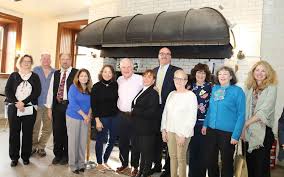
The Friends of Mills Mansion Meeting on April 2019
Their Special Events:
I recently attended their Summer fundraiser “Sunset on the Terrace”, an evening of cocktails, appetizers and music. On a beautiful sunny evening, there is nothing like it. We were entertained by the Perry Beekman Trio with an assortment of jazz music while passed hot and cold appetizers were passed around the room. It is a relaxing night of light food and cocktails and wine while chatting with members as the sun sets on the mansion’s terrace. Now I know why the Mills loved this house so much.
Another event I have attended over the past few years has been their “Christmas Cocktail Party” that is held in the formal dining room which is decorated for a Victorian Christmas.
Mill’s Mansion at the holidays is spectacular
What is nice is that everyone is dressed in suits or tuxes for the evening and like its Summer counterpart, it is a evening of light appetizers both passed and on the tables, light desserts and an assortment of wines from a local vineyard.
The Mills Mansion Holiday Party in 2018
The “Winter Lectures & Teas” have gotten more interesting over the years. The tables are laden with tea sandwiches, scones and small cakes and the Staatsburg blend of tea. They are always refilling everything for you and I have seen some big eaters at the table. The lectures this year were on various subjects taking place during the Victorian era that included “Bicycling and the Women’s Movement”, “Masquerade Balls during the Season” and “Etiquette & Calling Cards during a Social Visit” by visiting lecturers from colleges or local historians.
I have been a Friend of the Mills Mansion now for about four years finding that I was going to a lot of their events it just made it easier to join and get priority on their special events which are enjoyable. The ‘Halloween Tea’ was one of them the opened the holiday season.
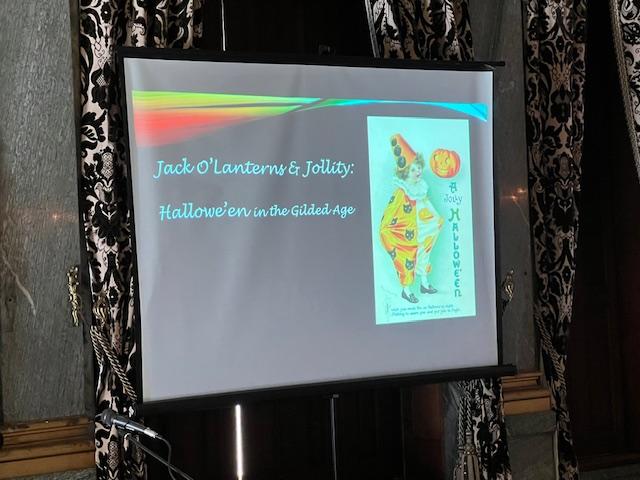
The slide show as we were about to begin the lecture
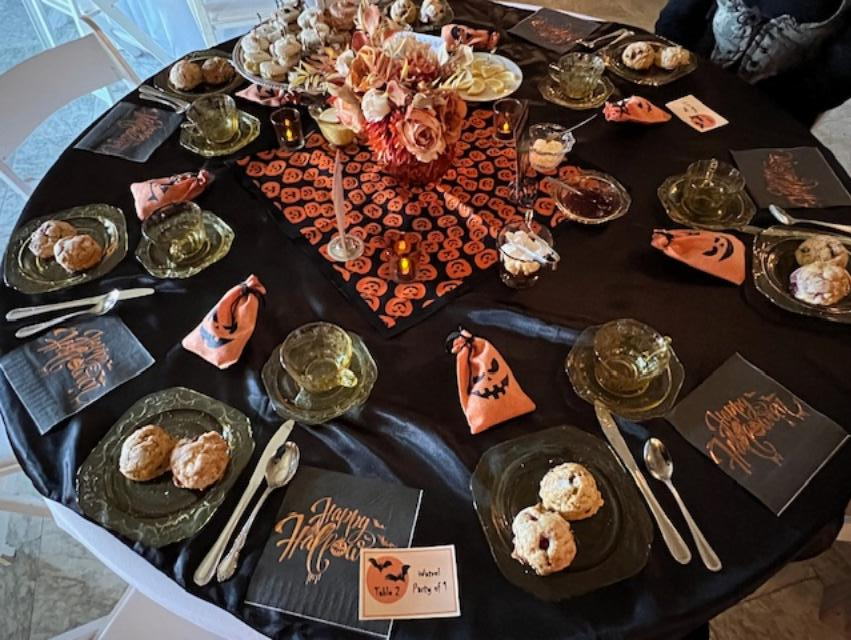
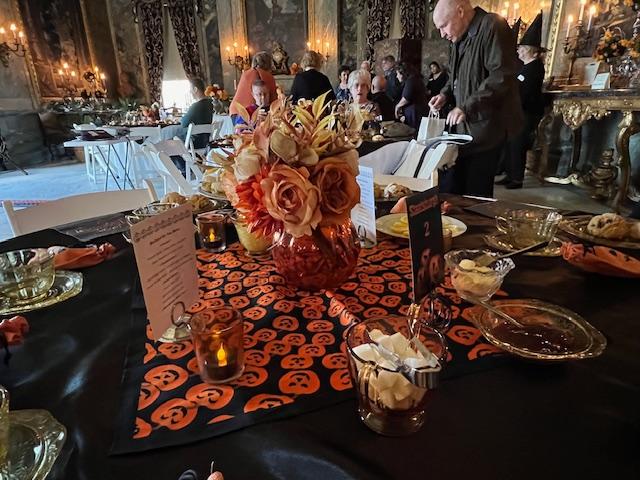
The table set for the Halloween Tea
The guests arriving for the Halloween Afternoon Tea
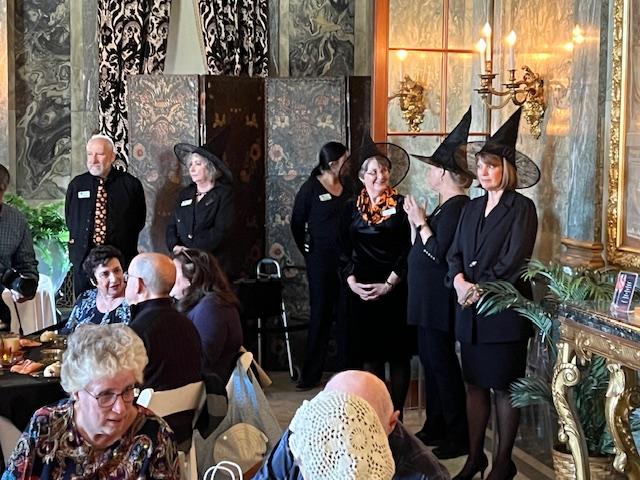
The friendly witches getting ready to greet guests
This event was a tea and lecture of how the Victorians recreated Halloween from a dark more countryside evening wrapped in mystery to an engaging urban event with costumes, specialty foods and traditional events like apple bobbing that guests then made their own. Local Historian Carol Kohan discussed how the event went from a dark rural event to fun and engaging holiday.
The celebration was spooky and fun
From the old traditions to new ones
The Victorian’s made everything elaborate and overdone and the Halloween celebrations were ‘taken up a notch’ with elaborate costumes, parties, bonfires and desserts and candies that were to be served. There were special invitations and cards that were to sent and rules of etiquette.
The Ghosts and Ghouls of the holidays
Following the Civil War and at a time when disease was not understood the way it is now, there was an interest in spiritualism and seances were in vague as people want to reach out to their loved ones. So having a medium at a party was part of the activity. The Victorians knew how to transform a holiday.
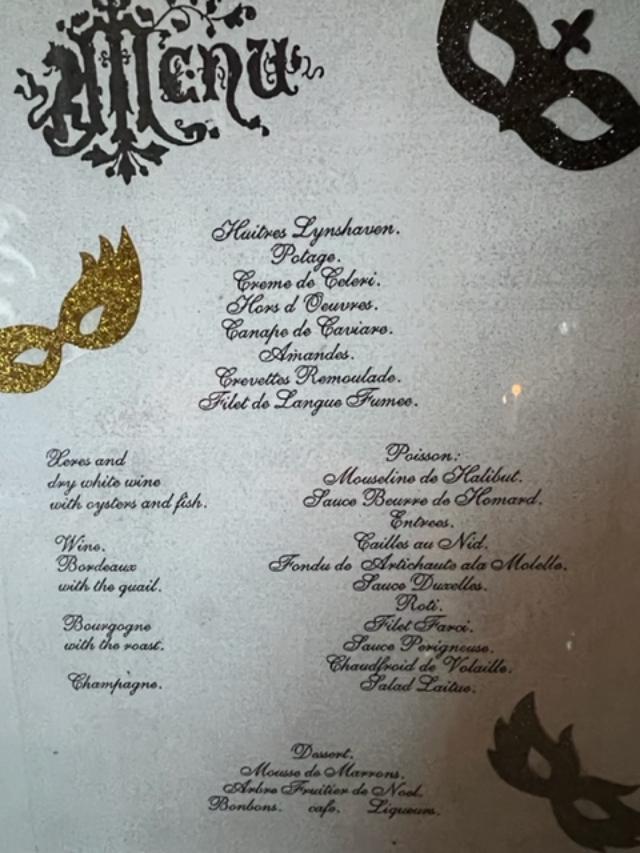
The Menu for the afternoon
Our tables numbers on the table
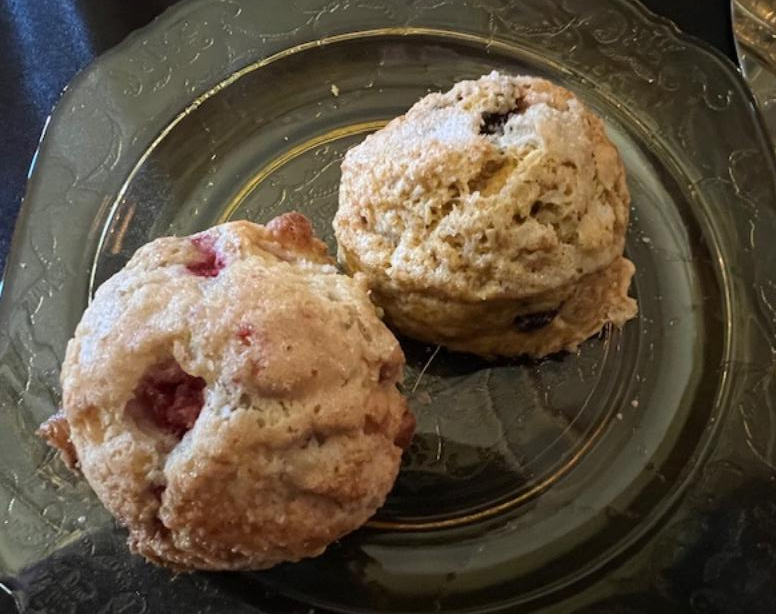
During the discussion, we enjoyed an afternoon tea of the specialty Staatsburg Tea blend, a variety of finger sandwiches, pumpkin and cranberry scones and many types of pastries including mini pumpkin cheesecakes, tiny devil’s food cupcakes and assorted sweet cookies. The caterer always does a nice job with the food and service here.
The food at these function are excellent and plentiful. These were the current and raison scones
The Assorted delicious Tea Sandwiches
Sweets and cakes Afternoon tea here is wonderful
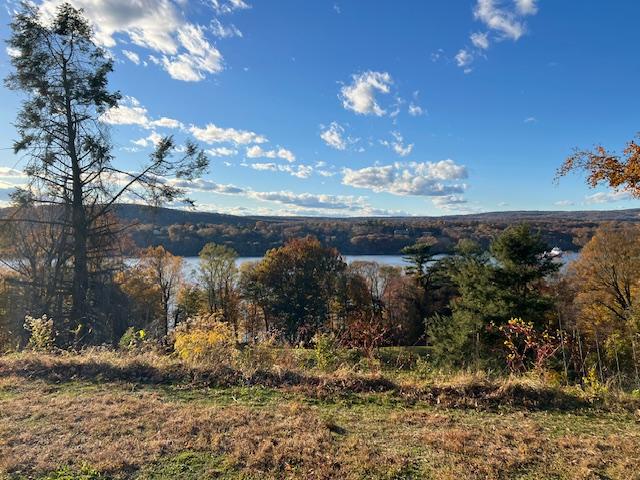
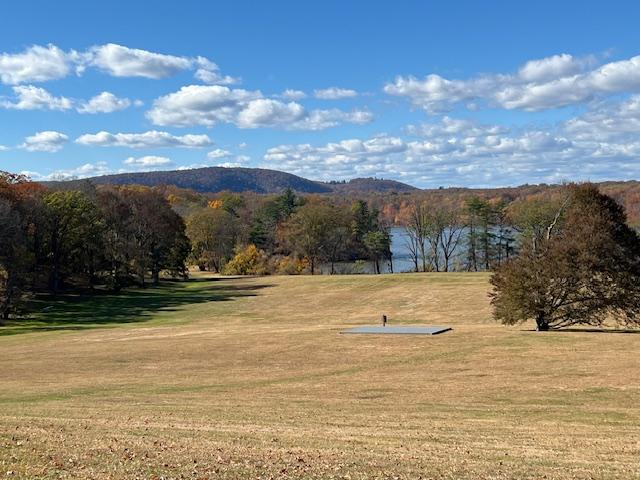
The estate in the Fall of 2024
The estate during the Fall of 2024
The last lecture I went to before things shut down in February 2020 was on “Masquerade Balls of the Gilded Age” which was very interesting. The enormous amount of money that was spent on a one night affair is almost mind boggling. The Vanderbilt Ball alone cost almost three million dollars in today’s money.
These were not just social occasions but a change to show off your wealth and creativity. It was what money could buy back then before the coming of personal and income tax and the Great Depression. The speaker discussed the food and the music and the fact the home was filled with flowers out of season.
The Famous Vanderbilt Ball
She discussed how the balls were created during Roman times in Venice for the start of Carnival (Mardi Gras was the next week) and how they developed during the Renaissance. She then discussed how they played a role in High Society during the Gilded Age and they were considered a little risque at the time. It was a very interesting discussion. As usual, the tea and cakes were delicious and they did a nice job decorating the room.
Hostess Alva Vanderbilt at her famous Ball
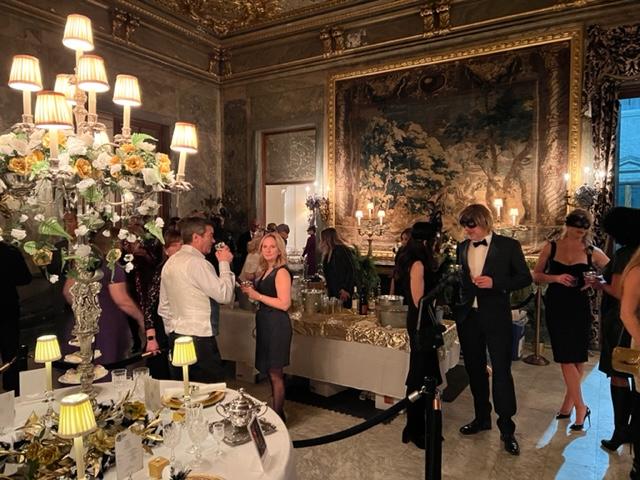
The Masked Cocktail Party for Christmas 2022 fundraiser:
The mansion ready for a Christmas party
The Mills Mansion, Staatsburgh, was decked out for the holidays on the night of December 9th, 2022 for a private fundraiser to raise money to replace the curtains in the library on top of other repairs at the mansion. This sold out event was packed the whole evening and was attending by over a 100 people who spilled over into the library and foyer.
Entering the party through the decorated foyer lead to the festivities as it would have during the Gilded Age
The Christmas Tree in the foyer was amazing
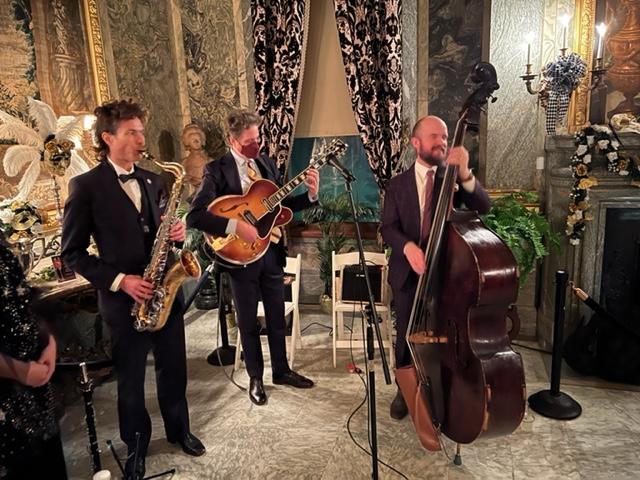
There was an open bar with wines and spirits plus water and non-alcoholic choices, passed appetizers with items like gourmet cheese spreads, chicken on a skewer and Christmas cookies. The band was wonderful and played all sorts of contemporary hits as well as Christmas music.
Everyone dressed for the Mills Mansion Ball-The Masquerade Cocktail Party Fundraiser December 9th, 2022
The three main rooms on the top floor were decorated to the hilt for the party
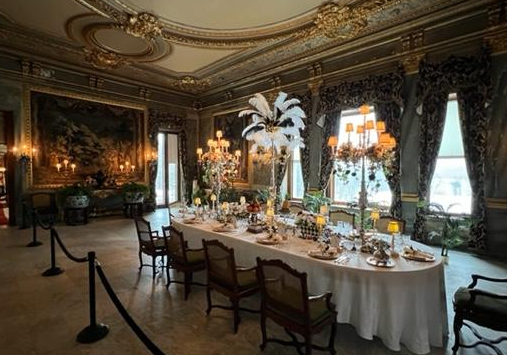
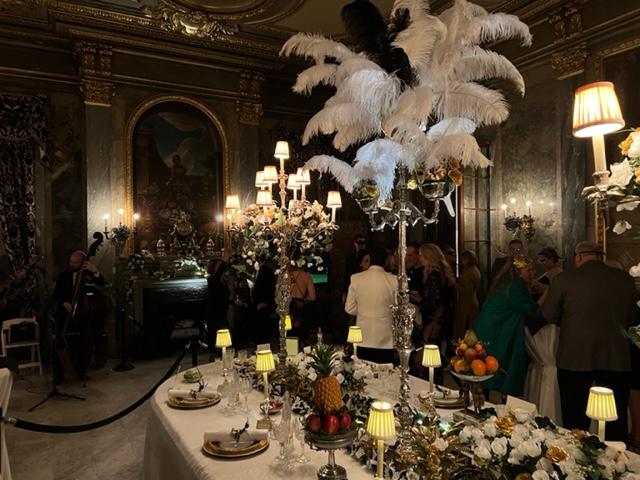
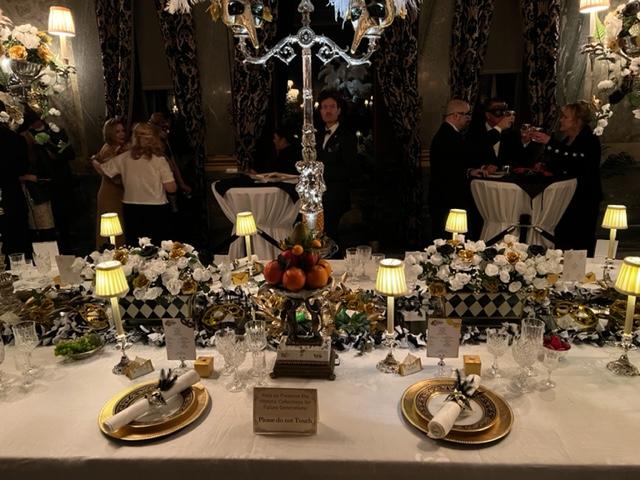
The main dining room was decorated with the theme of masks
People were in a festive mood
The Dining Room table was the focal point of the room
People gathered all over the Dining Room for the event
There was an air of mystery in the Dining Room with everyone wearing masks
The lead singer of the band had the most beautiful 1920’s star outfit
People enjoying themselves in the Dining Room
The Dining Room was packed at the height of the evening
The Band was excellent
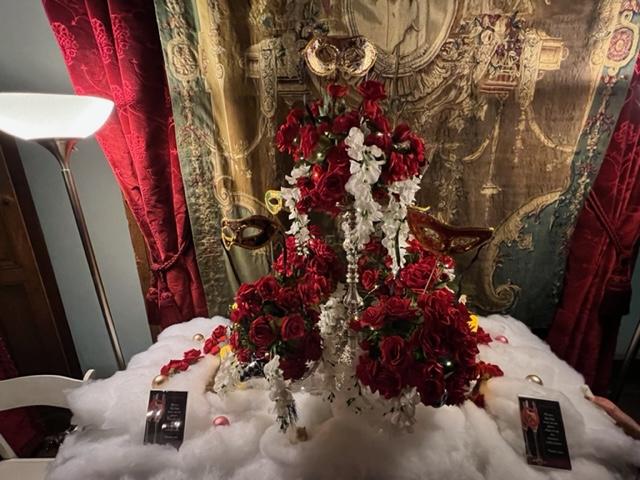
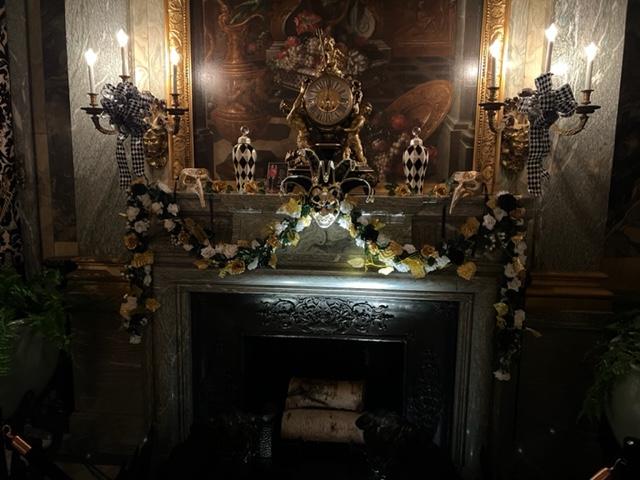
The mask decorations were amazing
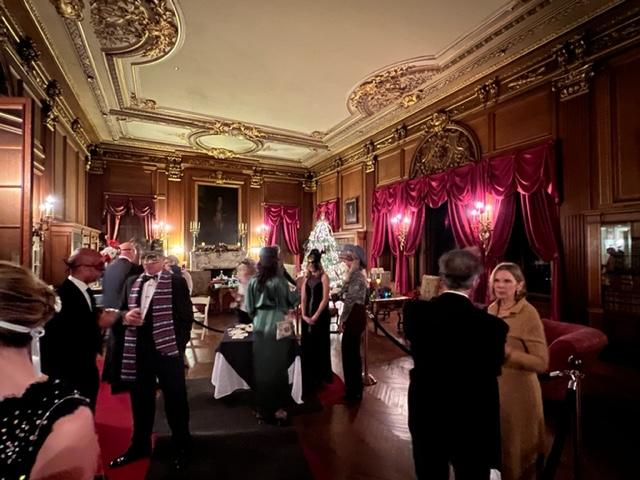
The party continued in the Library which was also decorated for the holidays
The Library Christmas tree was ablaze the evening of the party
I was only at the party for about an hour but I had a really nice time and I needed it. I had to get my mind off school and with the few drinks and lively conversation mixed with wonderful food, it was an enchanting evening. It was so nice to see people all dressed up again and very age appropriate to the time period. I felt like I had been carried back to the mid-1920’s.
I was also nice to tour the mansion in such a lively time of the day. People were having such a good time.
Visiting the Mansion at the Christmas Holidays:
Don’t miss visiting the Mills Mansion during the Christmas holidays. The house is decked out for a Victorian Christmas even though the Mills did not spend much time at the mansion during the holiday season preferring to live in their New York mansion during the holiday social season.
The holidays are a sumptuous display of the beauty of the Christmas season and a way of showcasing all the nooks and crannies of the house. It showed how Victorians may have enjoyed the holiday season.
The Mills Mansion foyer Christmas tree in December 2022
The foyer was adorned with flowers and garland as you entered the home
The Mills daughter and grandson
The family portrait gallery
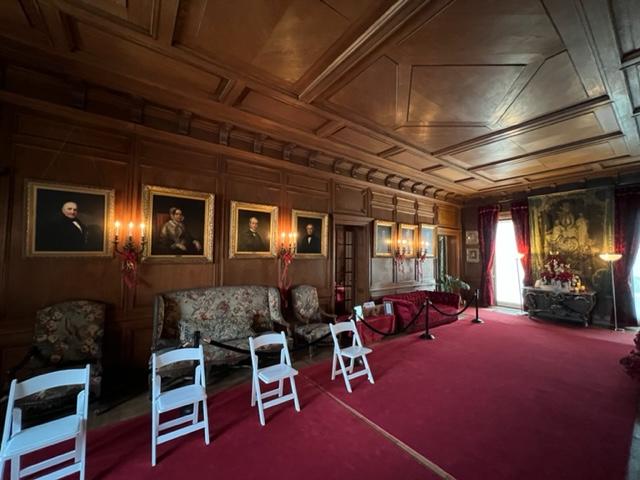
The Reception Room between the Foyer and the Dining Room
The Dining Room:
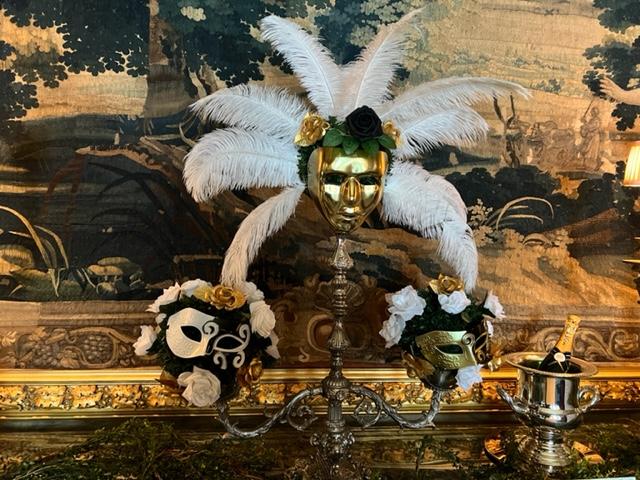
Masks were the theme in December 2022
Masks adorned the Dining Room for Christmas
Still the house is decked out every year with different decorations and the formal dining room has just had the ceiling repaired and new velvet curtains put on the windows. The foyer steps of the older part of the mansion have been repaired with new curtains and rugs as well. Don’t miss seeing the tree in the foyer.
The volunteers are all on staff to answer any questions so feel free to ask about how the Mills entertained and lived in this era. The mansion is so beautifully decorated for the holidays.
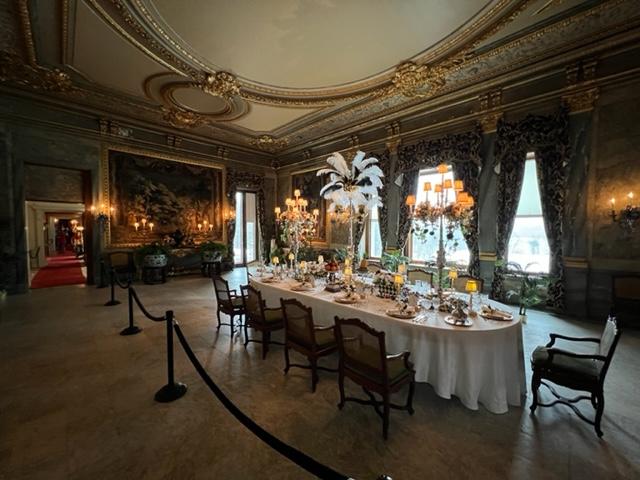
The Mills Mansion dining room at Christmas in December 2022
The Dining Room was designed for a Masquerade Ball theme in December 2022
The Butler’s Pantry off the Dining Room for the holidays in December 2022
Still the house is decked out every year with different decorations and the formal dining room has just had the ceiling repaired and new velvet curtains put on the windows. The foyer steps of the older part of the mansion have been repaired with new curtains and rugs as well.
The Library:
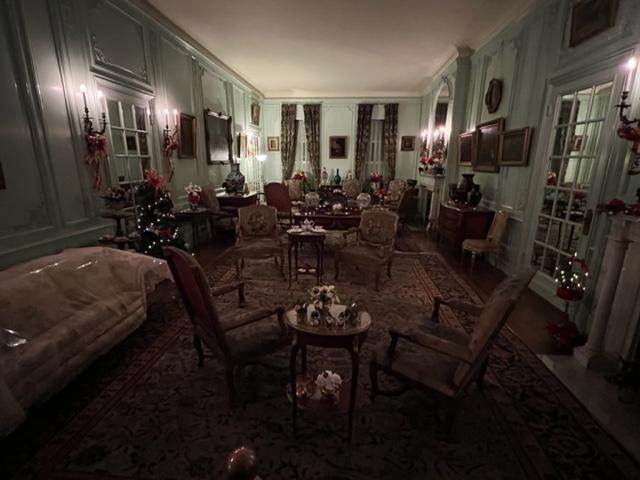
The Mills Mansion Library at Christmas in December 2022
The Christmas tree in the library is very elegant
Family portraits in the Library
Down the hall from the Dining Room and the Library are the bedrooms of the hosts of the house, Ruth and Ogden Mills. These elegant bedrooms shared a modern day bathroom.
Ruth’s Private Office:
Ruth conducted her business from her private office. Her portrait sits proudly in the room.
The Bedrooms and Personal Family Space:
Ogden Mills bedroom on the first floor
The modern bathroom at the Mills Mansion
Ruth Mills grand bedroom
The staircase was fully decorated for the holidays as well with garlands and trees
The landing of the staircase to the first floor
The decorated staircase
The mansion’s beautiful gift shop is located at the bottom of the stairs.
In 2020 and 2021: (During COVID)
With the COVID-19 pandemic and outbreak affecting cultural sites all over the United States, New York State has enacted Phase 4 of reopening with the exception of opening museums, restaurants and bars for business so they all have to take it “outside”. That Staatsburg site is no different as the inside of the mansion has remained closed.
That leads to new creativity and ideas of how to show off the mansion and it’s grounds true beauty. The State Park site has now created two different programs for the Summer months, the ‘Landscape Tour’ of the mansion’s former ice house, greenhouse, boat house and walking paths and the ‘Programs on the Portico’, lectures of the mansion’s past starting with a lecture of “Staatsburg’s Servants”.
In 2020, 2021 and 2024 The Landscape Tour:
The mansion in the summer of 2024
The Landscape tour of the property was very interesting as our group strolled through the grounds first to the site of the old ‘icehouse’ by the river, where ice was cut in the wintertime and used for the ‘ice boxes’ in the home which was those days ‘modern refrigeration’. We also visited the site of the ‘boat house’ where water sports by the river started the day and the yachts that used to flow up and down the Hudson River.
The back of the mansion was our first stop of the tour
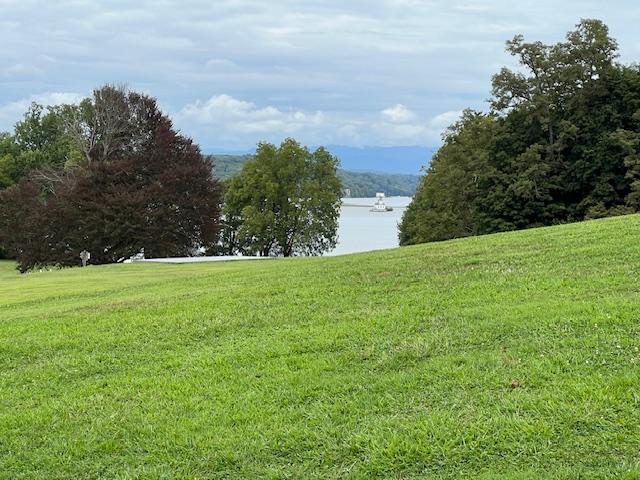
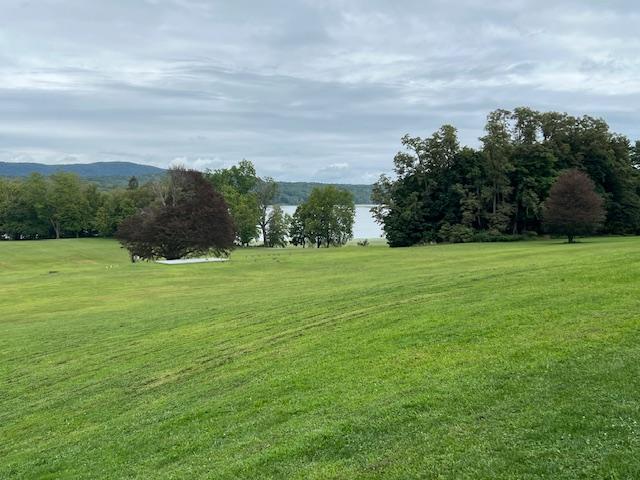
The extensive back lawn overlooking the Hudson River
The views of the Hudson River on the tour
Views of the lawn by the Hudson River
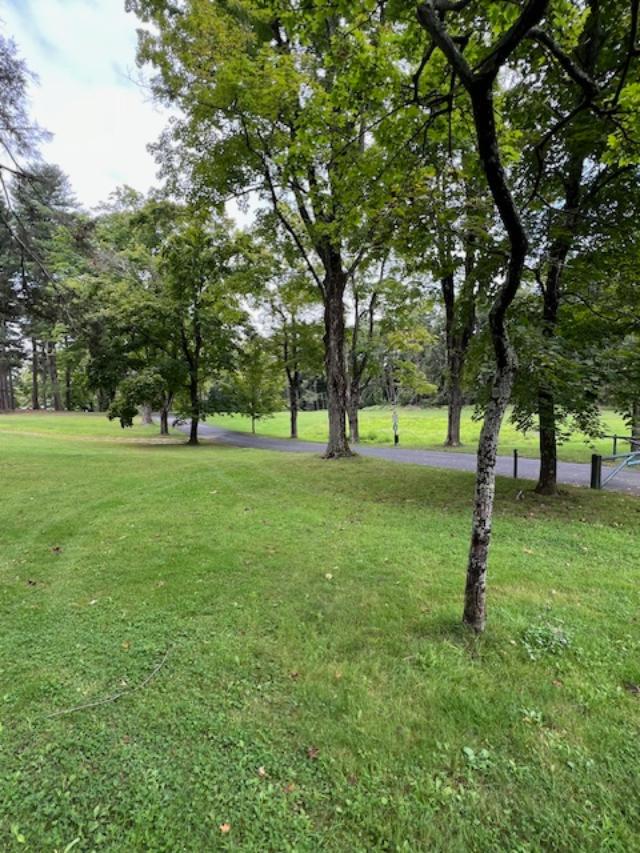
The views through the trees hide all the buildings on the estate grounds
Taking the pathways to the river front
The pathway to the Ice House and Boat House
The walk by the Hudson River where the old Boat House was located
The Hudson River edge by path where ice was harvested
The woods by the Hudson River
The view of the Hudson River by the old Ice House
We next visited the site of the old Carriage Houses that are now in ruin in the back of the estate. These are overgrown and in need of repair but still show their beauty through these ruins.
The old stables are now ruins on the estate
The garages in ruin in the back of the estate
The site of the stables is now an overgrown woods but once lead to bridle paths around the estate.
Our next stop on the tour were the sites of the old greenhouses that used to supply flowers for the mansion and fruits and vegetables for the kitchen. They disappeared over fifty years ago during WWII when the materials were needed for the war effort. They were never rebuilt. The tour is about 90 minutes.
The site of the old greenhouses of the estate
We ended the tour on the back lawn of the estate, admiring the views of the house and of the river. The views of the lighthouses in the river were just spectacular.
The view of the lighthouse in the distance
The view of the full lawn at the Mills Mansion after the tour
The ‘Programs on the Portico’ lectures started with the theme “Staatsburg’s Servants” later in the afternoon. These 3:00pm lectures on the ‘front porch’ of the mansion are socially distanced and under cool shade.
The front portico of the mansion was used for the Lectures series during the COVID years
The lecture was on items that the servants would use when the family was ‘in residence’ in the warmer months and how they would be used day to day. Items like a hand-cranked ice cream maker and a scoop for desserts, a bottle closer for beverages, a rug cleaner and a meat press for meals were just some of the items displayed and discussed. It was explained how the house would go through a deep cleaning when the family was away and when they were ‘at home’ how the house would be cleaned around them.
The ‘Lectures on the Portico’ series:
On a recent “Lecture on the Portico”, the topic of the “Titanic” was discussed. It seems that Mr. And Mrs. Mills had tickets on the return voyage to Europe from New York. They lost many friends and family members like J.J. Astor on the sinking of the ship. Our lecturer talked about what you would wear, you would eat and how you would dine on the ship and all the protocols of behavior. Between the sinking of the ship and WWI this ended the “Gilded Age” and ushered in the “Jazz Age” after the war was over. All of the these lectures and tours are free.
Exploring the Village of Staatsburgh:
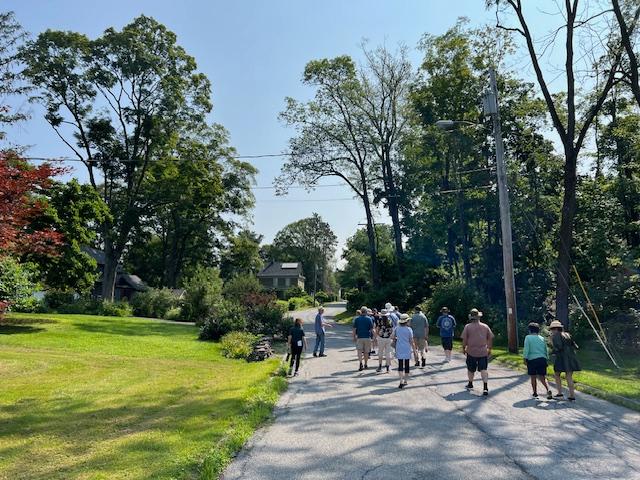
Another tour I was on recently was the “Exploring the Village of Staatsburgh” tour where a small group of us toured the Village of Staatsburgh where the mansion was located and learn about the history of the town. It was taken from the perspective of how the mansion was dependent on it and the town benefited from the Mills family and the people that worked there.
The ‘Walking Tour of Staatsburgh’ is a semi-circle tour of this old hamlet whose fate was changed by the development of the mansions in the late 19th Century, the advent of WWI and WWII and then the coming of the modern era with new highways and less industry which has now created the sleepy village the town has become. Times progress.
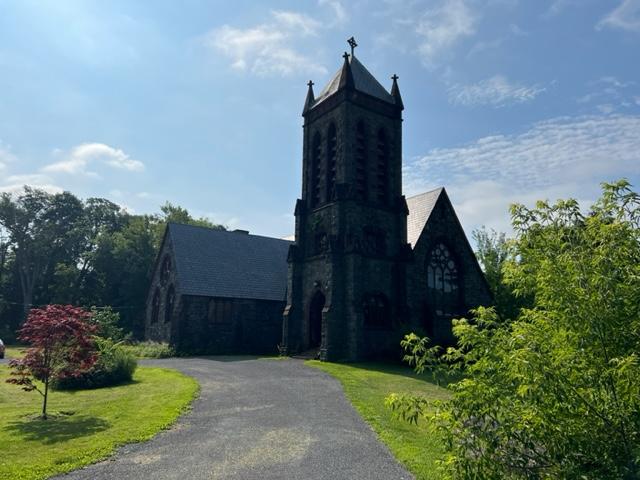
We met at the Staatsburgh Library which was a old church at one time.
The beautiful neighborhood gardens by the library.
We visit the homes of the people who lived there like the Head Housekeeper, the Estate Manager and Butler and the footman. It was interesting to see how these people lived when they were not working.
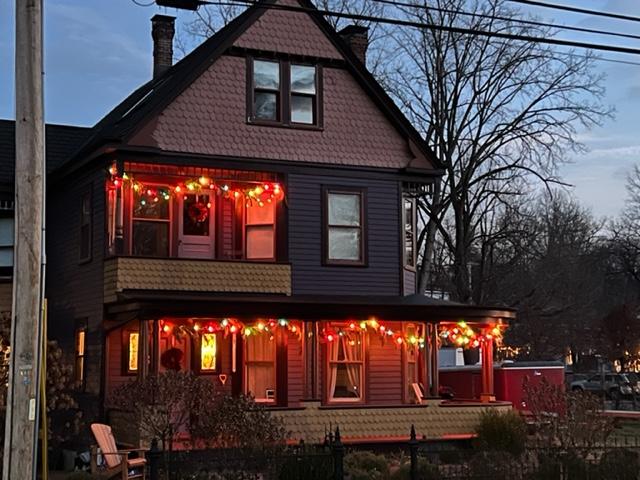
The homes in Staatsburgh were beautifully decorated for the holidays
We learned how the town was created, how the businesses like the railroad and the ice manufacturing businesses were developed and how they grew. We learned a how the town was much more developed before WWII and the effects of the development of Route 9 bypassing the town changed it.
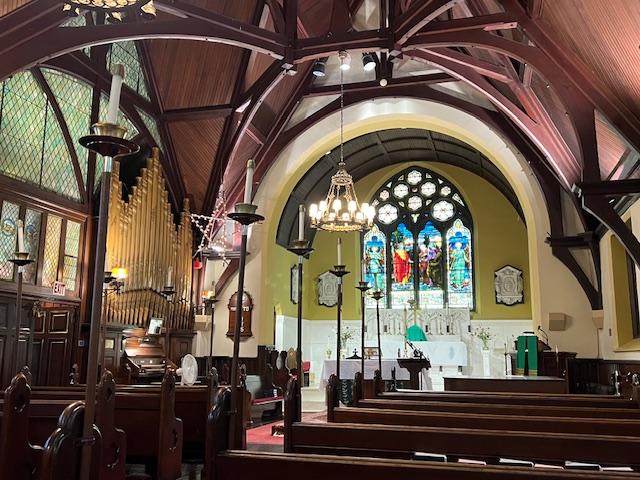
The Stained-glass windows at St. Margaret’s Church were dedicated to members of the Livingston family.
The Stained glass windows at St. Margaret’s Church
The Stained glass windows at St. Margaret’s Church
The back stained glass windows
St, Margaret’s at Christmas time in 2022
The start of the tour after leaving St. Margaret’s Church
We toured through the neighborhood, admiring residents gardens and having discussions on the older homes and buildings in the neighborhood and their significance with the Mills Mansion. A lot of the servants lived in town and built their homes here.
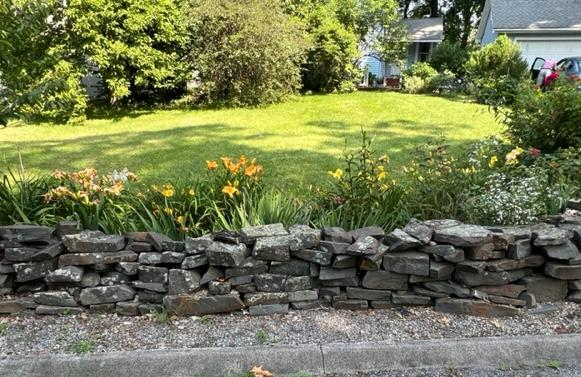
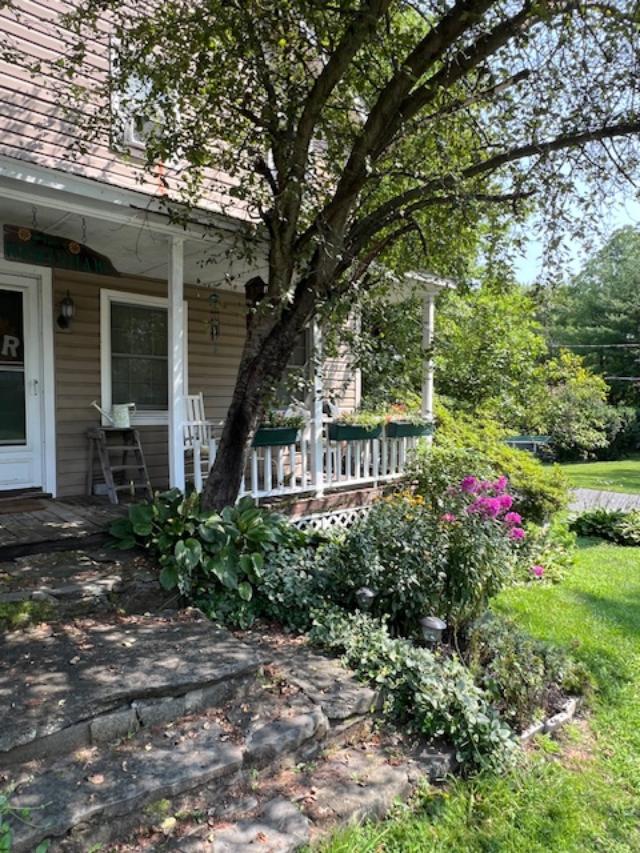
The stone gardens and colorful flowers in the neighborhood
The neighborhood gardens
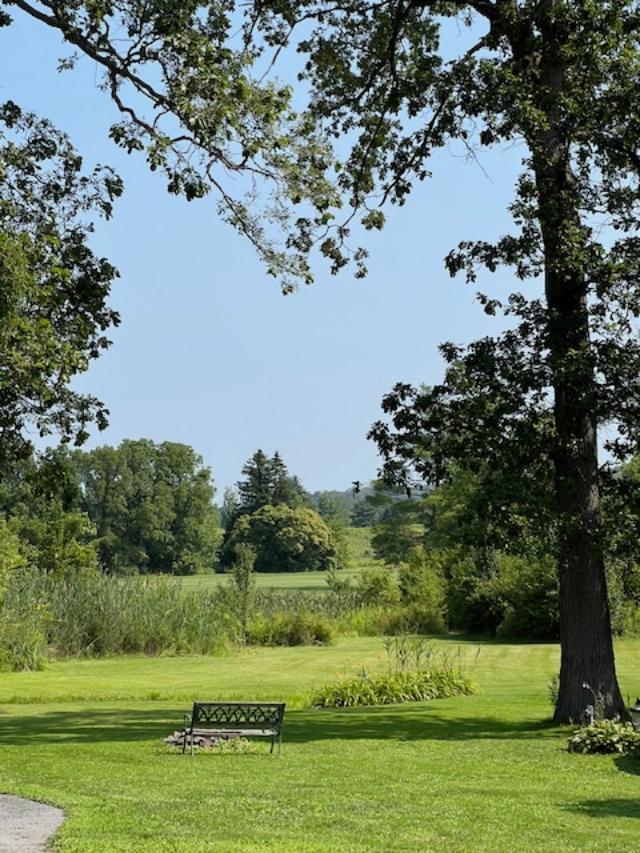
The green lawns and the golf course in the distance
The gardens of the village
The gardens at the beginning of the tour
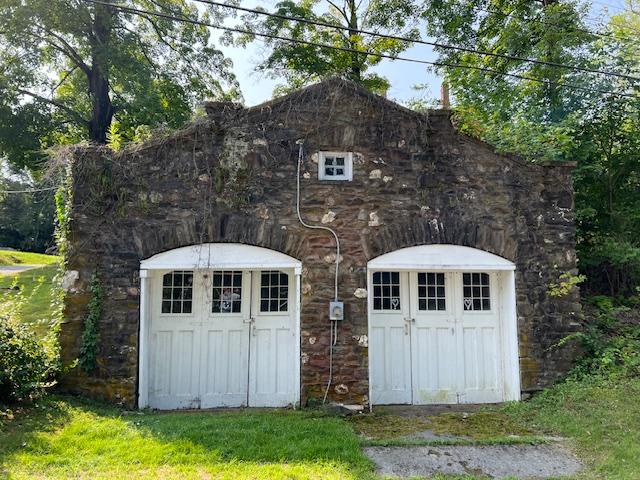
A former garage for the parish and former firehouse storage
The view from the top of the road
The fields in Staatsburgh
The former Mills Gardener Home in Staatsburgh
The Telephone Company house and the Handmaid’s home
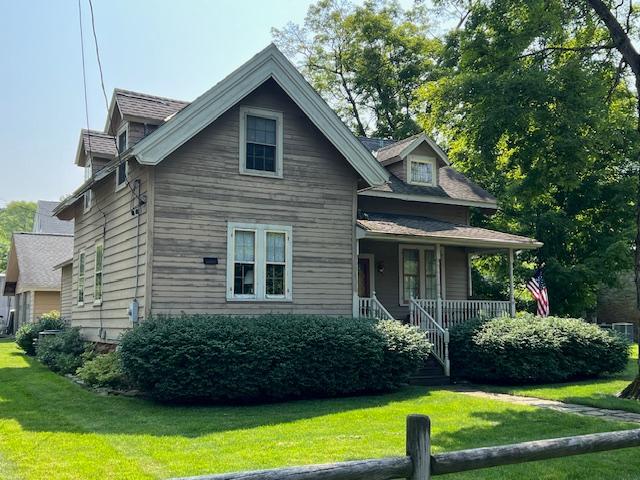
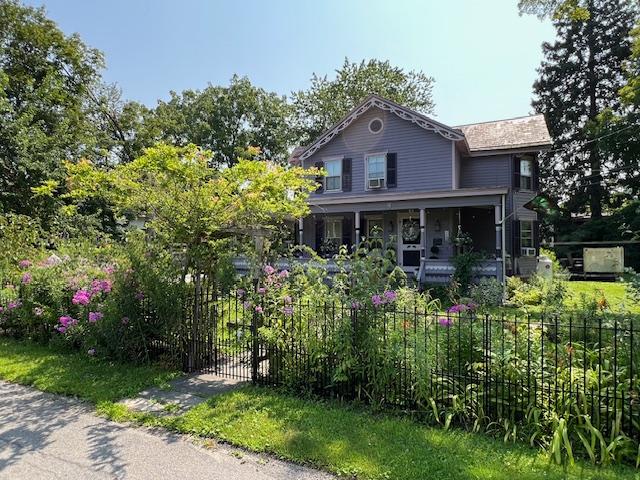
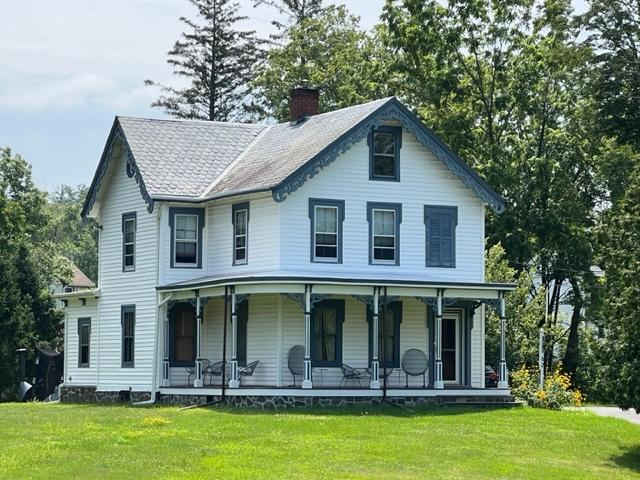
One of the beautiful Victorian homes in Staatsburgh
The Bath House
The Spite House: the house to stop the road from going through the neighborhood. No one really knew the story of why this happened
The Spite House up close
The Mill’s Mansion Head Housekeeper’s House
The Housekeeper’s Barn with symbol
The Catholic Church in Staatsburgh
The local doctor’s house
The Plan House which were made by premade plans from companies
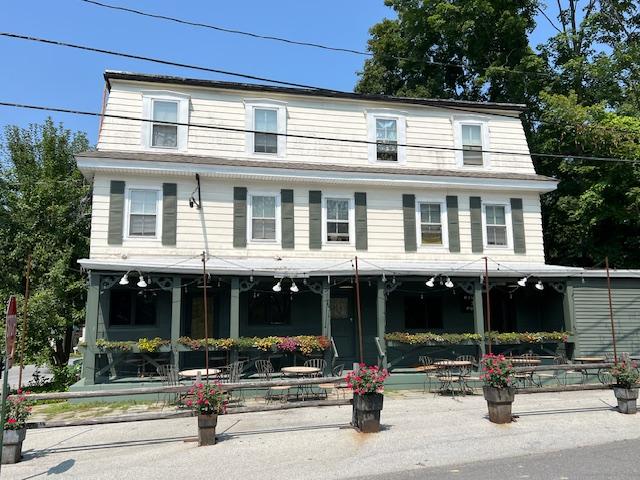
The River & Post Restaurant was originally a hotel for the Town of Staatsburgh and where Mrs. Mills French chefs stayed when they were working in the mansion
We then entered what was once a thriving business district for the town. Since the railroads closed, Route 9 bypassed the town and industry slowed in this hamlet, this area has become more residential and quiet.
The former pub that is now a residential home. This used to cater to people getting off the train
The house across from the old train station and their beautiful gardens
The houses magnificent gardens in full bloom
The old Methodist Church ‘downtown’
When we were on the tour, we saw how the town progressed from being dependent on the mansions and estates to how businesses like ice harvesting became prominent in the area up until the 1950’s. Our last stop was the old Hughes Department store in the old downtown area which is now a sail store for boating.
The former Hughes Department Store which is at the end of the tour.
The old Hughes Family home right down the road from their store.
We finished the tour in front of the old Hughes family mansion which faces the old downtown. Obviously Mr. Hughes built his home here to make a statement and be able to walk to work.
Back to the starting point at St. Margaret’s Church
The Horse and Dog Fountain that was dedicated to a member of the community that is now used as a planter
The historic state markers on the Albany Post Road were saved by Franklin Delano Roosevelt and were used for mileage and postage along the old highway during Victorian times.
The tour is about an hour and on a sunny I highly recommend it.
Special Members Night with the duo “Acute Inflections”:
As a member, we also had a recent concert on the portico to hear the duo “Acute Inflections” perform on the lawn. We all stayed socially distanced on the lawn but still the concert was nice, and this is what being a member of the Friends group is all about. These small events make a big difference.
The duo “Acute Reflections” performed that day
“Acute Reflections” performing
The “Estates of Staatsburgh Tour”:
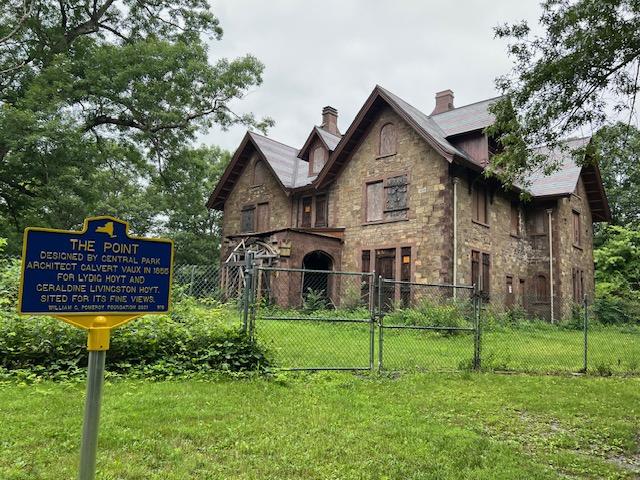
Another recent tour I took at the Mills Mansion was the “Estates of Staatsburgh” tour where we visited the abandoned estates of the Lee and the Hoyt families. The Hoyt’s were distant relatives of Ruth Livingston, and their mansion still stands up on a buff in the woods overlooking the Hudson River. The family lived there until the 1960’s when the land and home were sold to the State of New York to create the park.
The abandoned Hoyt Estate will soon be a Visitors Center for the Park
The Lee Mansion burned down in the late 1950’s and all that is left of their estate if the old icehouse, which is the size of a regular home. Most of these old estates we came to find out were self-sufficient with agriculture and light manufacturing.
The Hoyt Mansion in its heyday
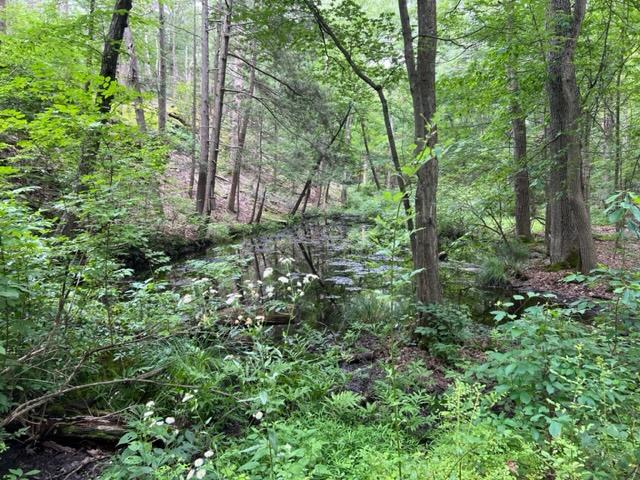
We got to see all the back trails to these old estates and the old driveways that once led to them. They have been abandoned since the 1960’s and have almost a spooky appearance of being lost in time. With the foliage in the background, it gave them a Halloween appearance. The tour was very interesting how the Gilded Age didn’t last too long when modern times came into play with income tax.
The filled in decorative pond is one of the things left of the Lee Estate.
The old Horse trough near St. Margaret’s Church
The “First Day Hike Tour” (COVID event):
To ring in 2021, the park had their “First Day Hike tour, ‘Staatsburgh in Winter”. There were two walking tours around the estate. One entitled “Staatsburgh in Winter” which discussed the wintertime fun at the turn of the century and the activities the Mills family enjoyed when they were at the estate in winter months. It seems that Ruth Mills was quite an accomplished figure skater. The family also owned an ice yacht, “The Beatrice” that they rode on the frozen river.
The Mills Mansion New Year’s Day Walking Tours-Me with the dark jacket and white mask
The second tour we took later that afternoon was “When Ice came from the river: Ice Harvesting in the Gilded Age”. We toured the river and the cove areas of the estate and discussed the ice block harvesting business that Mr. Mill’s had on the river. The family ice house could hold 500 tons of ice that was sold down in New York City. It was interesting to see how the process of clearing the snow and cutting the ice into blocks served as refrigeration for thousands of residents before refrigerators came into use.
Both tours our groups walked the back of the estate and the river front along the Hudson River. The tour guide had a long conversation on how the river was used during the Winter and that life continued in a productive way even after the holidays were over. It was a great way to spend the first day of the New Year. The park continues to amaze me in their adaption on running events during the COVID era.
In 2021, the mansion had been opened for the Christmas tours, but I was not able to attend. There was not that much time to run back and forth to the Hudson River Valley but in February 2022 the mansion finally resumed inside tours of the first floor of the mansion to the public.
The mansion looked like it had gone through a deep cleaning as everything looked shiny and new. It would have made Mrs. Mills proud. I was lucky to come up to Staatsburgh during the ‘Spring Thaw’ and it was 56 degrees out so I could enjoy the grounds as well. I learned some new things about how the Butler’s Pantry worked, and we were able to see the ice chests and china and silver that the family used for service. I swear I learn new things on each tour I take here.
The Annual Friends Meeting in April:
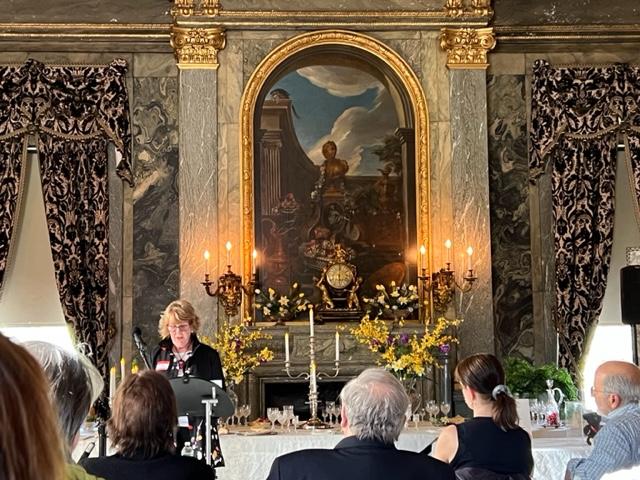
Our Annual Friends April Meeting in 2023 was a nice time. The Executive Board held the meeting in the Mills Dining Room with all the gilded fixtures as a backdrop. Our President of the Friends, Diane Tompkins gave the report of the successful year we had last year with record breaking attendance. I guess the the show “The Gilded Age” has been helping a lot. A lot of these Upstate mansions are getting a lot of attention now.
Friends President Diane Tompkins giving the report of the organization
It seems that the gift shop is really doing well and is also exceeding its numbers so things have been going well in post-COVID. Both the site director and the Friends Treasurer said we are exceeding our numbers on both attendance, membership and profits in the gift shop will be helping fund restoration projects in the mansion.
After the meeting, we had a light reception both in the Dining Room and on the terrace right off the main Dining Room. What a night! Sunny, warm and clear. It was such a beautiful evening with views of the Hudson River in the background and Spring buds popping all over the estate.
The reception on the terrace of the Mills Mansion
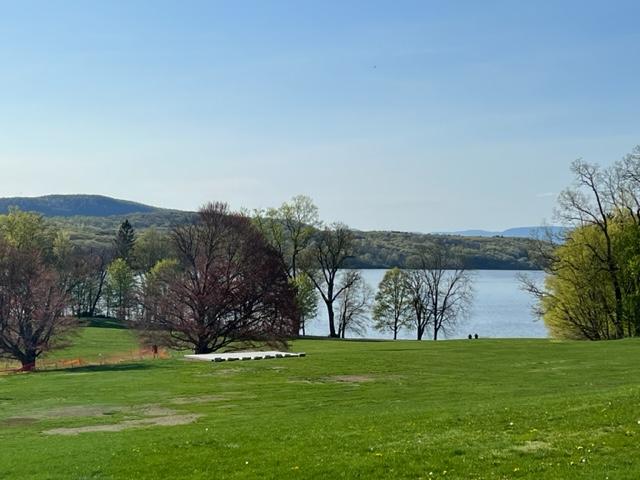
The grounds of the Mills Estate from the terrace
The Hudson River from the terrace
The sun setting over the Hudson River as the reception drew to a close
It was a really nice meeting and reception for the members. I can see that everyone was glad that after COVID that we were able to bounce back and start to exceed after such a rough time.
The “Evening Hours Tour of Decorated Staatsburgh”:
In 2023, the mansion was decorated to the hilt for the Christmas holiday season. Even though in real life, the family would have been in New York City for the Christmas and Winter season, the house was decorated with each room having its own decorations and trees.
According some of the grandchildren, the mansion was open for the Christmas holiday season and the family celebrated the holidays. I visited the mansion during the “Evening Hours” event where the mansion was open for a self-guided tour of the house and you could see the decorations at your own pace. There was music performed by the Hyde Park String Quartet in the formal Dining Room.
Staatsburgh (The Mills Mansion) when I arrived for the tour in 2023.
I toured the house with a group of visitors who had never seen the mansion before so there was a lot of interest in the history of the home and the people that lived there. Ever since the “Gilded Age” came out, the interest in these homes has increased and this evening event was sold out. Since I am a member, I was able to sneak into the first self-guided tour at 6:00pm.
The stairs to the second floor of the Mills Mansion.
The first stop was in the Library where it was reported that the family did have a Christmas tree for a Christmas celebration in the house.
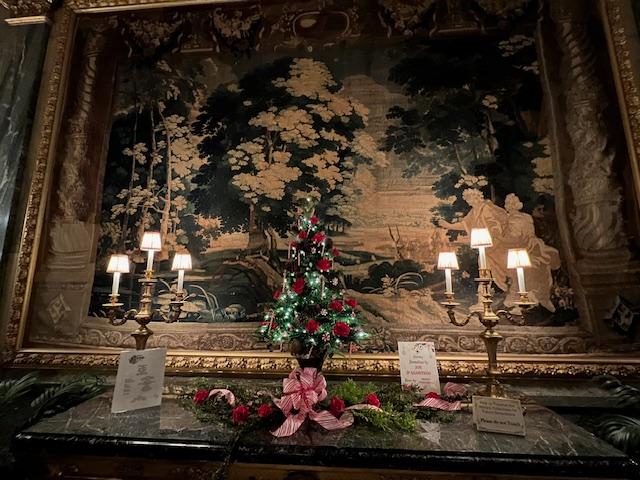
The Christmas tree in the Library.
The Library
The painting of General Montgomery in the Library.
I moved onto the main Hallway and entrance to the mansion which was the original part of the house. This was until Ruth Livingston Mills expanded the house in the late 1800’s to its present size.
The main Foyer of the mansion in the front of the house with the Christmas tree.
The Christmas tree in the Main entrance of the mansion.
The fireplace in the foyer/hallway with a picture of Ruth Mill’s mother.
Ogden Mill’s portrait in the foyer.
Another display in the foyer leading to the Dining Room.
The front and back parlor of the old part of the mansion was used as a Living Room for Ladies to relax while their husbands stayed in the Dining Room to talk and smoke.
The Holding Room decorated for the holidays. This is where guests would wait to come in for dinner.
The Hyde Park Quartet was playing the night of the “Evening Hours” at the Mills Mansion.
The Dining Room table set for a feast.
The Tapestry on display on the wall.
The other angle of the Dining Room table.
The fireplace in the Dining Room.
The Dining Room could not work without the Kitchen and the Butler Pantry to supply the Dining Room with the things that it needs.
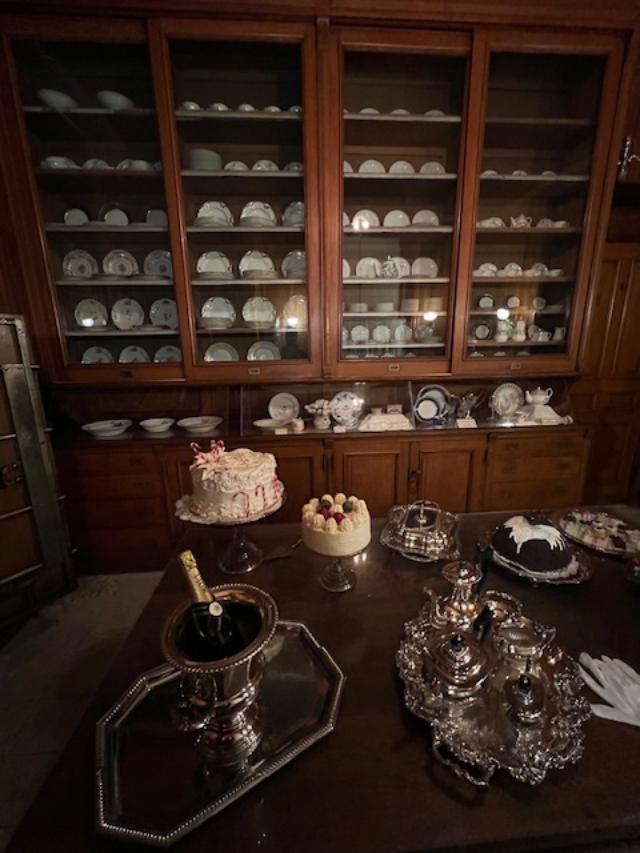
The Butler’s Pantry with all the holiday dishes prepared for the Dining Room.
The Dumbwaiter from the lower level kitchen.
The China and Silver for the Dining Room along with the desserts that would be served at the end of the holiday feast.
Once I left the Dining Room, we toured the back of the first floor where Ruth Mills had her office and both her and Ogden’s bedrooms.
Ruth’s office where she would run the estate. The dollhouse displayed in the office was very detailed. After that, I visited Ruth’s bedroom which was fit for a Queen. Ogden’s was right next door as was Victorian tradition that the couple had separate rooms. They had three children so there was no problem in that department.
Ruth’s bedroom
Ruth’s Bedroom
Once I visited the upstairs bedrooms, I visited the gift shop on my way out. The whole tour took about an hour to see all the decorations. The volunteers had done a wonderful job with the decorations of the house and it was nice to see them especially the Dining Room.
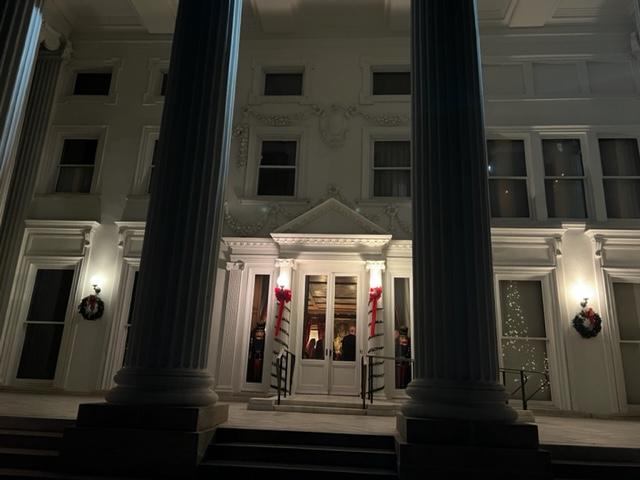
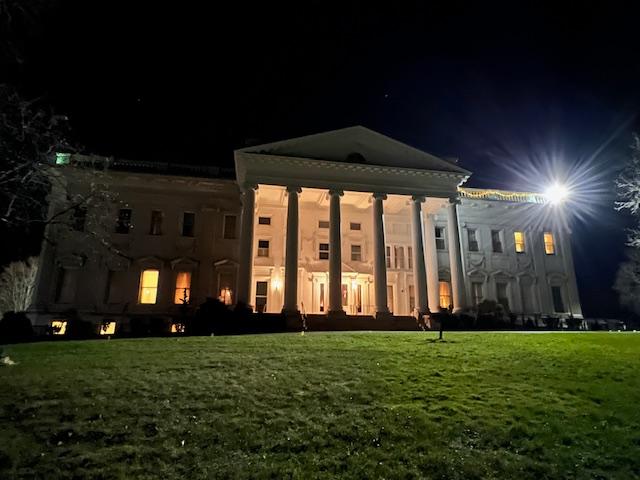
When I left in the evening, the house was ablaze with light and looked festive from the outside.
All of these can be seen on the organization’s website.
It was another great tour in 2023.
History of the Mansion:
(From the museum website)
In 1792, Morgan Lewis, the third Governor of New York, purchased an estate covering of about 334 acres and commissioned the construction of a colonial-style house on the site of the present mansion. In 1832, the first house was destroyed by fire, said to be the act of arson committed by disgruntled tenant farmers.
The current home, originally built in 1832 and greatly expanded in the 1890’s, the Mills Mansion (also known as Staatsburgh) is emblematic of the great country estates built in the nineteenth and early twentieth centuries to house America’s wealthiest families.
Staatsburgh is a New York State Historic Site located within the boutonnieres of Mills-Norrie State Park. It is an elegant example of the great estates built by America’s financial and industrial leaders during the Gilded Age.
A 25 room Greek Revival structure was built on the site in 1832 by Morgan Lewis and his wife, Gertrude Livingston, replacing an earlier house that had burned down. This second house was inherited by Ruth Livingston Mills, wife of noted financier and philanthropist Ogden Mills.
In 1895, Mr. and Mrs. Mills commissioned the prestigious New York City architectural firm of McKim, Mead and White to remodel and enlarge their Staatsburgh home. After the completion in 1896, the house was transformed into a Beaux-Arts mansion of 65 rooms and 14 bathrooms. Its exterior was embellished with balustrades, pilasters, floral swags and a massive portico. The rooms were furnished with elaborately carved and gilded furniture, fine oriental rugs, silk fabrics and a collection of art objects from Europe, ancient Greece and the Far East.
In 1938, the house and 192 acres were given to the State of New York by Gladys Mills Phipps, the daughter of Ruth and Ogden Mills. The estate is now operated by the New York State Office of Parks, Recreation and Historic Preservation. In 1988, the Friends of Mills Mansion were organized to support the preservation and educational work at the site.
(Friends of the Mills Mansion Website)
Design:
The outside of the mansion features a massive portico, balustrades, pilasters and floral festoons. The central part of the mansion is layered into a basement, three floors and an attic. In the north and south wings, there is a sub basement, a basement and two floors. Ceilings in the older part of the building dating prior to the enlargement (the first floor of the central part) are about 14 feet high, whereas the ceilings of the later construction (first floor of the north and south wings) can be about 18 feet high. The interior of the building is decorated in French styles of the 17th and 18th century. However, some architectural elements of the previous home have been preserved in the process.
Preservation:
The Mills Mansion poses several challenges to preservation: On the outside, a gray sprayed concrete finish which was added later as a preservation measure need to be removed and replaced with a more suitable surface treatment. At the same time, the decorative cornice and many decorative elements need to be either restored or replaced. On the inside of the building, wall paint and furnishings fabrics are in need of replacement, marble and wooden surfaces need to be cleaned and the objects of the mansion’s collection need to be conserved.
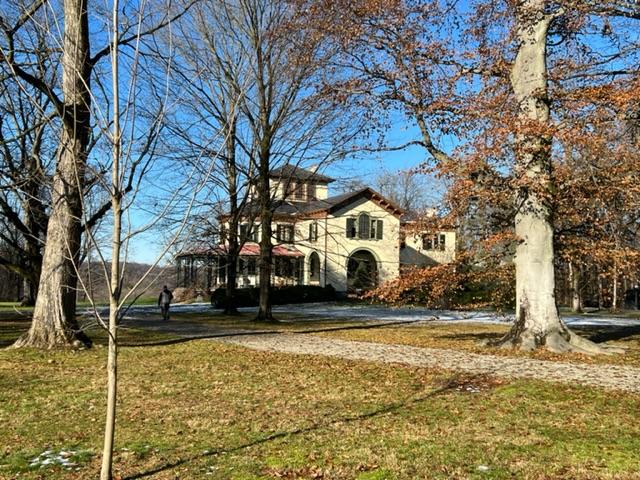
Overlooking the Hudson River, the 180 acre Locust Grove Estate includes an Italianate villa designed in 1851 by architect Alexander Jackson Davis for artist and inventor Samuel F. B. Morse.
The Locus Grove additions of the tower and back rooms
The estate, with miles of carriage roads, landscaped grounds, historic gardens and Hudson River views, was preserved as a museum and nature preserve by the Young family, whose collection of art and antiques is exhibited in the mansion’s 25 rooms.
Entering Locus Grove for the Christmas holidays
I have visited the house twice for Christmas with the mansions elaborate but tasteful displays and once in the last fall when the foliage was in full peak. The house is an interesting example of turn of the century architecture and innovation of both the Morse and Young family’s love of Locust Grove. Each added their own touch to the house.
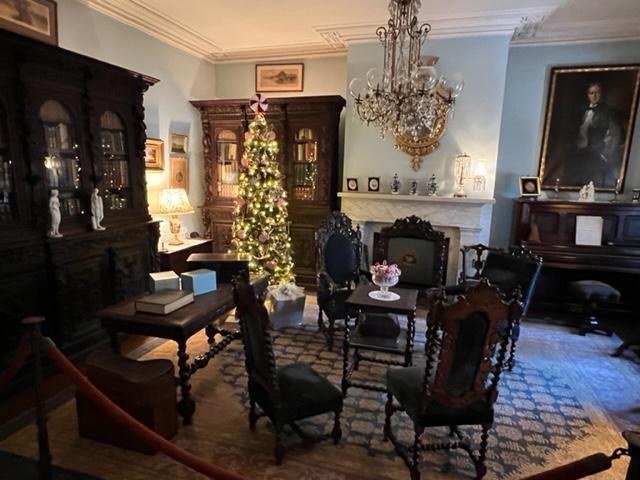
The Library right off the main hallway entrance used to be the original Dining Room when the Morse’s owned the house
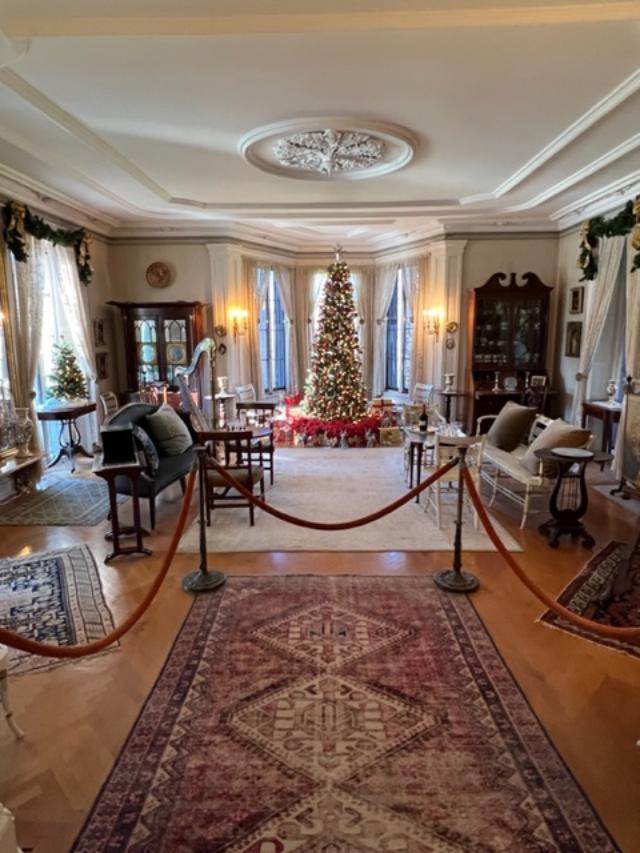
The Christmas tree in the Library
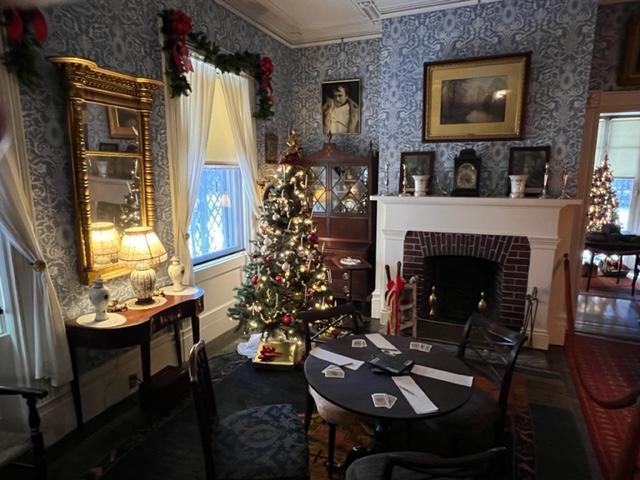
The Parlor across the hall from the Library
A closer look at the Christmas tree
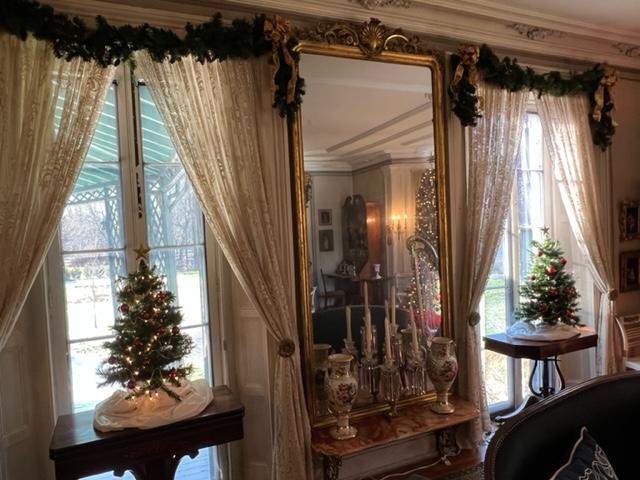
During the Christmas holiday season, the house is beautifully decorated both inside and out for the holidays, with a formal tree in the back Living room, smaller trees and garland around the house on the first floor and smaller trees with presents in the bedrooms and in the Billiards room.
The Library at Locust Grove for the holidays
One of the rooms set for Afternoon Tea
One of the back offices
When the Young’s moved into the house, they needed more room for entertaining so they added the larger dining room (The Morse’s added the Tower to the home). So the old Dining Room became one of the reception rooms and a library. Some of the smaller rooms were used for social occasions so the first floor was reconfigured.
The Living Room in the Tower addition of the home
The mirror in the Living Room was the last thing left by the Morses
The larger Living Room held the most beautiful Christmas tree with a gorgeous view of the Hudson River from the back window. The room is elaborately decorated for the holidays and the volunteers created a very festive decor for the room. I do not know if the family would have decorated this much but still the halls were decked perfectly.
The Dining Room was set for an formal Christmas lunch with the family’s best china, crystal and silver and had displays of fruits and desserts that would have been served during the holidays. The Morse family spent their holidays in New York City so it would have been the Young’s who spent their holidays here.
The Dining Room set for Christmas lunch
The Christmas tree in the Dining Room
The Butler’s Pantry for the Dining Room
The upstairs to the bedrooms
The house had been added onto twice from the small cottage that had been built by the second owners, the Montgomery family. The back tower and wings were built by the Morse family and the formal dining room by the Young’s for their growing family.
The bedrooms were nicely decorated and the rooms had lots of Christmas decorations that you would not ordinarily see in a bedroom. Each room had its own Christmas tree.
The Master Bedroom with a breakfast nook overlooking the Hudson River
The paintings above the bed are of the Young family
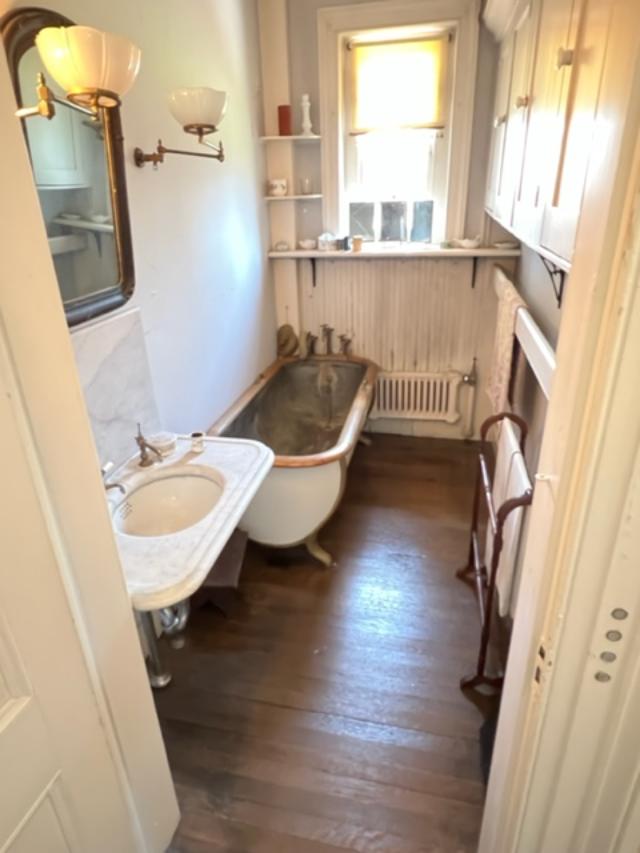
The modern bathroom with hot and cold running water
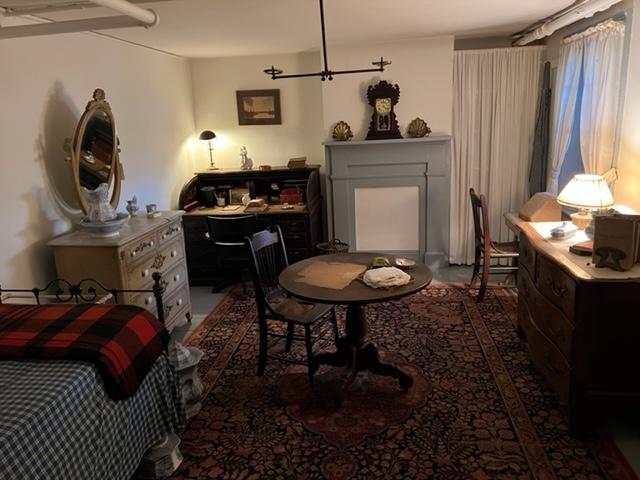
The Young’s son lived in this room until he died
The Young’s daughter lived in this room until her death
The guest rooms were also nicely decorated
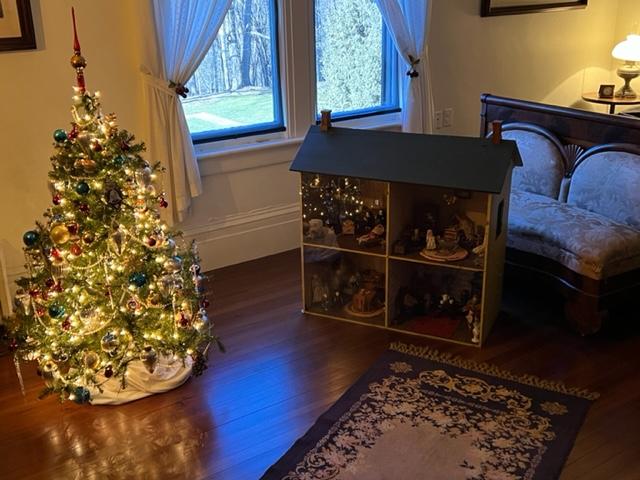
The dollhouse in the guest bedroom
Another guestroom
Guest room
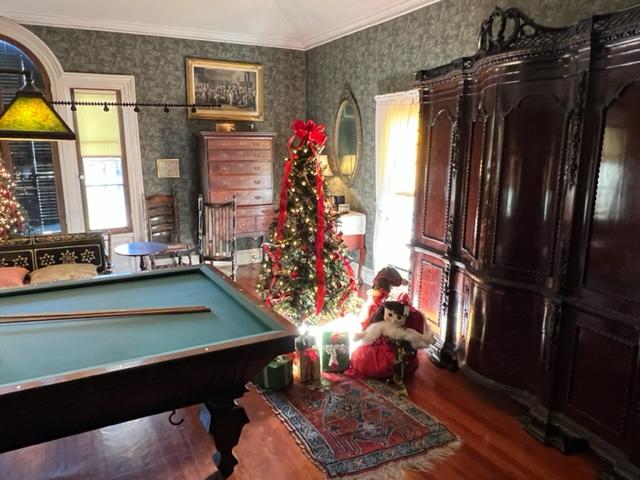
The tour guide told us that the second floor Billiards Room was once a very popular and engaging room in the house for everyone visiting. There was always a lot of action going on in this room.
The Second Floor Billiards Room
The Christmas decorations in the Billiards Room
Our last stop on the second floor was the modern bathroom which was considered extremely innovative for its day. This was the most modern approach to plumbing.
The upstairs bathroom
The last stop on the tour was the downstairs Servants Quarters which were also decorated for the holidays. It showed what the Servants of the household would have been doing on a daily basis to help keep the house running.
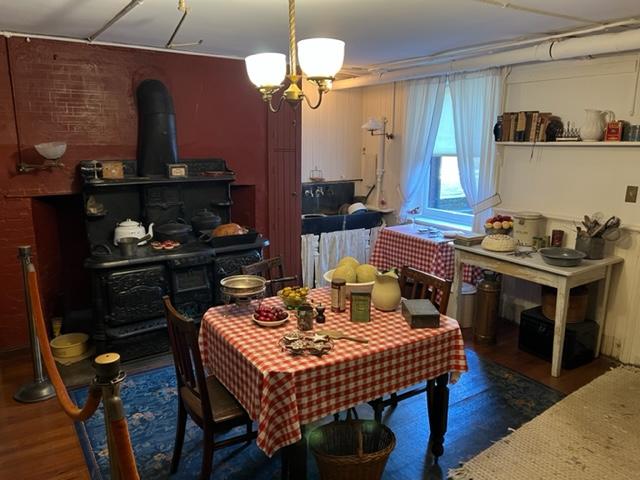
The Servants kitchen
The kitchen table in the Servants Quarters
The Servants Dining Room
Our tour guide, Ethel, did a nice job interpreting how each family would have used the house and for what occasions. The Young’s lived here full time until the last owner, Annette, died in 1975 and the Morse family used it as a summer retreat until Samuel Morse died in 1872.
The view from the back of Locust Grove to the Hudson River during the early fall
The view to the Hudson River from the back of the house during Christmas 2022
The house is tastefully furnished both in turn of the last century decor and some more modern pieces. The grounds in the spring and summer months are in full bloom and in the fall awash with colors from the trees.
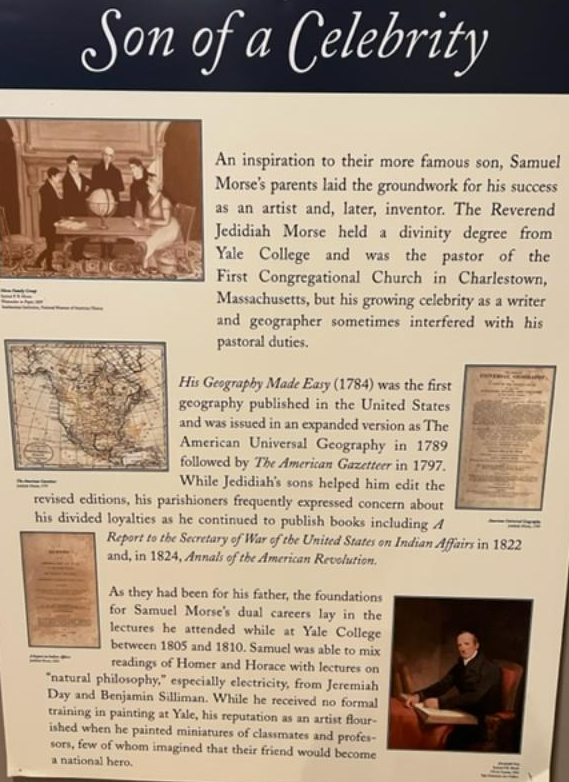
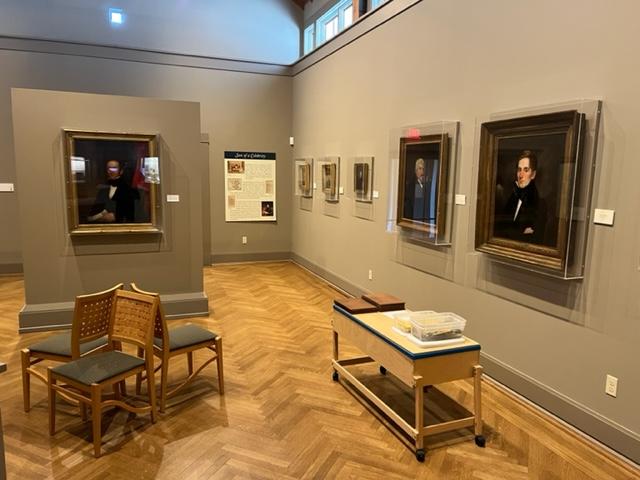
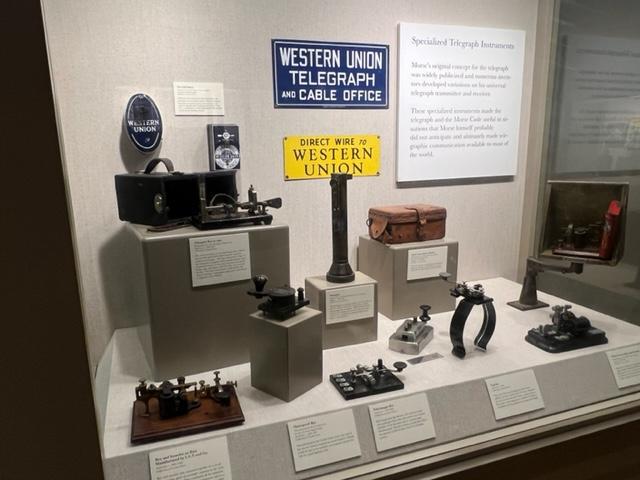
Also, don’t miss visiting the small museum of Samuel Morris’s paintings and his development of the telegraph system, where the patents is where most of the family fortune came from. Mr. Morse was an artist, educator and inventor and his life’s work is displayed in the galleries.
The Morse Family
Morse Museum: Samuel Morse family in the early Colonies
Samuel Morse with his career in portrait painting
Samuel Morse’s Portraits
Samuel Morse’s inventions and innovations with the telegraph
Samuel Morse’s innovations
The History of Locust Grove:
Locust Grove has an interesting history. The estate was first owned by Henry Livingston Jr. when he purchased the property from his father in 1771. The estate was such named because of the black locust trees that grew on the property. After his death, the estate was sold to John and Isabella Montgomery who built the original cottage on the estate. Mr. Livingston’s home had been torn down by this point.
The main house at Locust Grove is a villa in the Italianate style designed in 1850. Morse had recalled the elegant villas that he had visited years earlier in the Italian countryside and he sketched towers, windows and floor plans. Construction on the villa, sited on a dramatic bluff overlooking the Hudson River began in 1851 and was completed the following year.
He continued to expand the cottage and the gardens during his time and the family continued to use the house as a summer retreat and living in the winters in their brownstone in Gramercy Park. After Mr. Morse’s death, the family used the house occasionally and then sold it to one of their renters, the Young family.
William and Martha Young added modern amenities to the house like central heat and running water and updated the bathrooms. They added the new dining room and guest bedrooms in the new North Wing of the house. They also brought with the many family heirlooms and their decorative art collection which is still on display in the house.
After their deaths, the Young’s children, Annette and Ennis worked to preserved and restore their family’s homes in here, in New Haven, New York City and Ulster County. After the death of her brother in 1953, Annette Young continued to live at Locust Grove and began donating to museums the art, land and historic houses she inherited so that they would be protected. When she died in 1975, she established a not-for-profit foundation to ensure that Locust Grove with its collections and archives would be protected. The house is now available for touring and for weddings.
(Locust Grove History and Wiki: I give both organizations full credit for this information)
Location: Locust Grove is located on Route 9 in Poughkeepsie, NY, two miles south of the Mid-Hudson Bridge or 11 miles north of Interstate 84.
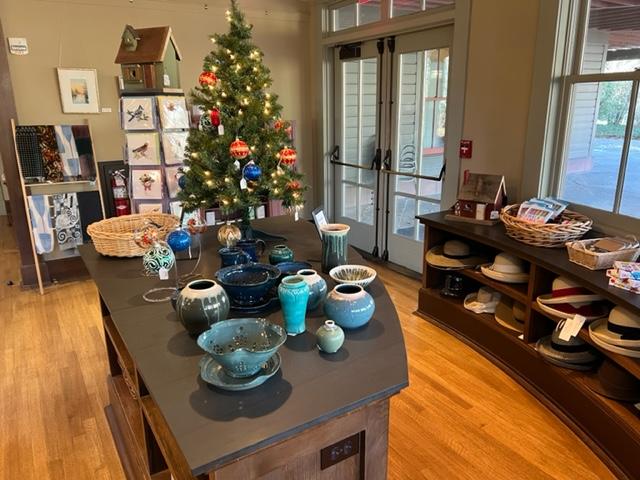
Locus Grove Gift Shop
Disclaimer: this information is taken from the Locust Grove Historic pamphlet. The site is very interesting and should be added to your list of ‘must sees’ in the area. Please call the site for more information.
Open: 11:00am-3:00pm (check the website for seasonality)
Directions: Located on Route 9G, five miles south of Hudson. Take NYS I-87 to Exit 21, Catskill. Take Route 23 over Rip Van Winkle Bridge. Bear right on Route 9G south. Olana is one mile on the left. Or visit our websites at http://www.Olana.org and http://www.nysparks.com.
Hours: House available by guided tour only. Call for days and hours or visit http://www.olana.org. Reservations suggested; group tours by advance reservation only. Grounds open 8:00am-sunset year around.
I had not been to the Olana Mansion since 2014 and it was finally nice to see it during the summer when everything was in bloom. The tours were every hour of the day during the warmer months with several types of tours available at different prices. There was a house and garden tour for two hours which I had just missed so I took the house tour.
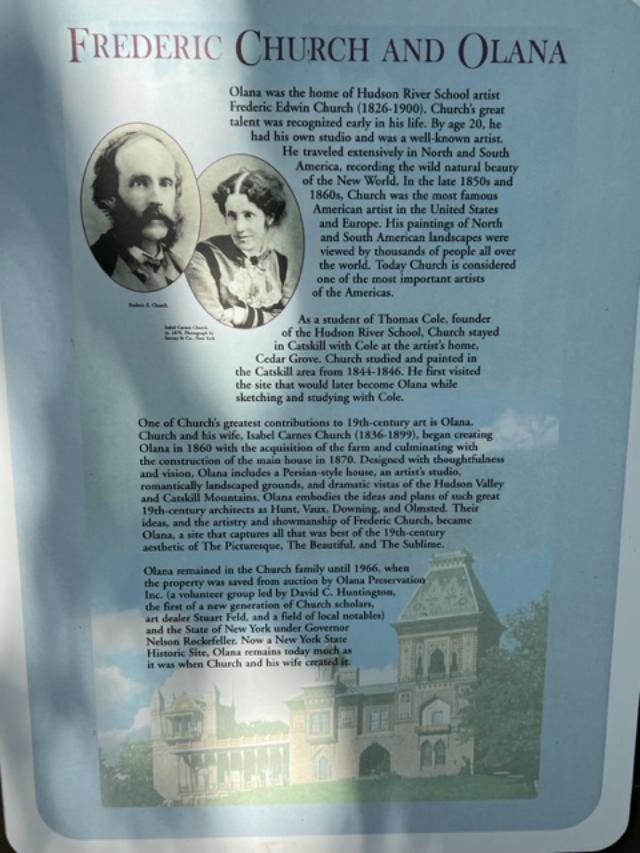
The story board of Olana pf the family
The house is filled with original family furnishings from when the house was almost sold off in the 1960’s. An industrialist saw a reason to save the house for future generations and raised the money to keep everything intact. It gave us a glimpse into the life of artist Fredrick Church and his family. The tour consists of all the bottom floors of the house and the garden. The unique part of the tour is that the man who was our tour guide partner was the last Mrs. Church’s grandnephew. So, he remembered visiting the house as a child.
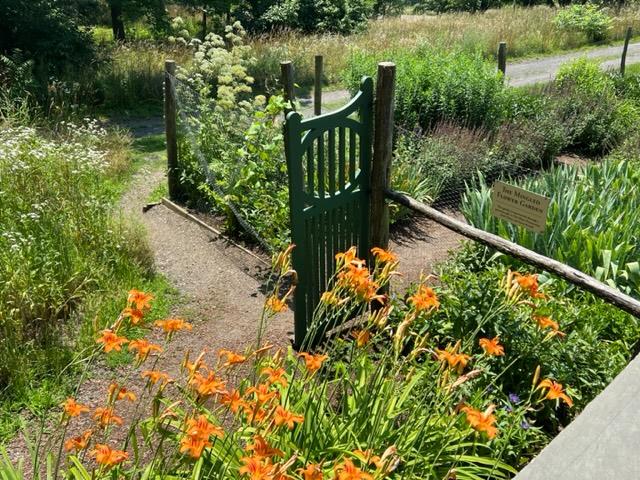
We started the tour in the formal gardens that have been replanted. They were in full bloom giving us insight to how the grounds were once landscaped. The gardens were made up of mostly local flowers that were native to the area.
The formal gardens of Olana
The Olana gardens leading to the house.
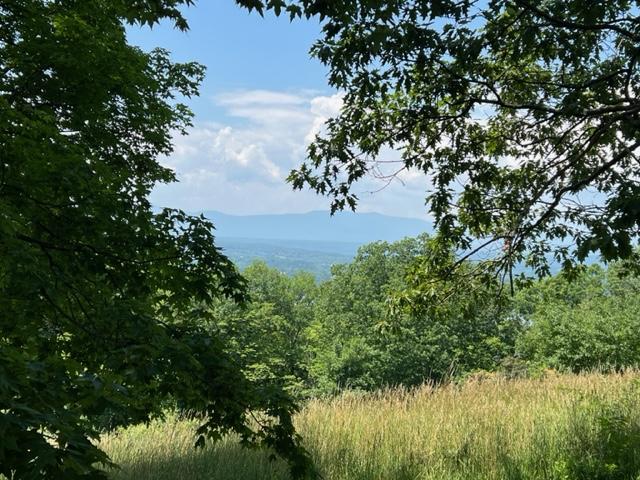
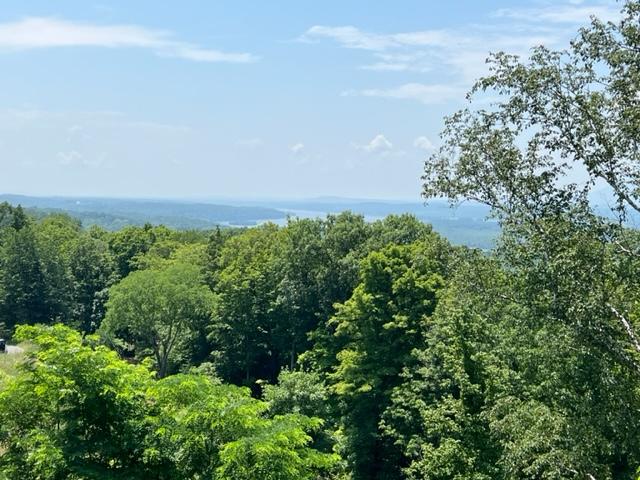
We explored the views from the porch to see what the family would have experienced when they were at the house in season. There are breathtaking views of the Hudson River and the surrounding Catskill Mountains from the porch of the house. Things have grown in since the family’s time, but it still offers amazing vistas.
The views are beautiful from the porch.
We then toured the house’s first floor where the family did their receiving of guests, their social rooms and the offices of both Mr. & Mrs. Church. Each of the rooms still contained family heirlooms and original furnishings. We started with the Receiving Room where guests would wait to be welcomed by the family or leave a calling card that they were making a visit.
The Receiving Room in the front of Olana
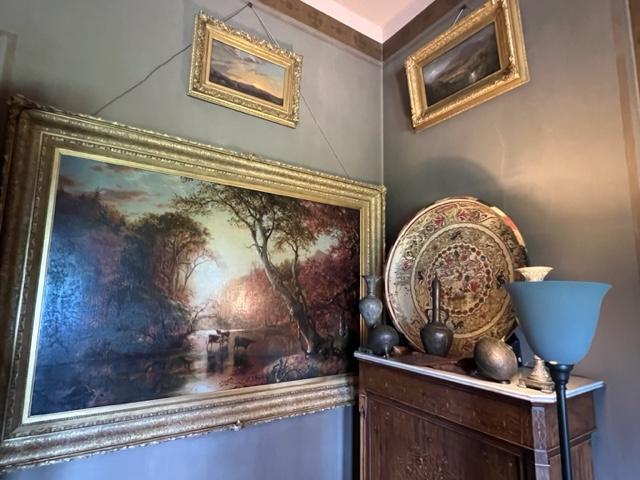
When you look at the walls of the room, it is decorated with Fredrick Church’s artwork. The tour guide told us that the house had the largest collection of Fredrick Church’s paintings in the country. I took this attribute as these were the pieces that he did not sell at the time. The works of the Hudson River School and of his travels abroad were very interesting and lively.
Fredrick Church paintings that line the house.
We toured the house room by room admiring the furnishings and all the artwork of Fredrick Church that lined the walls of the house. This included family members including his wife, Isabel Carnes Church, his partner for the rest of his life.
Isabel Carnes Church, the mistress of the house
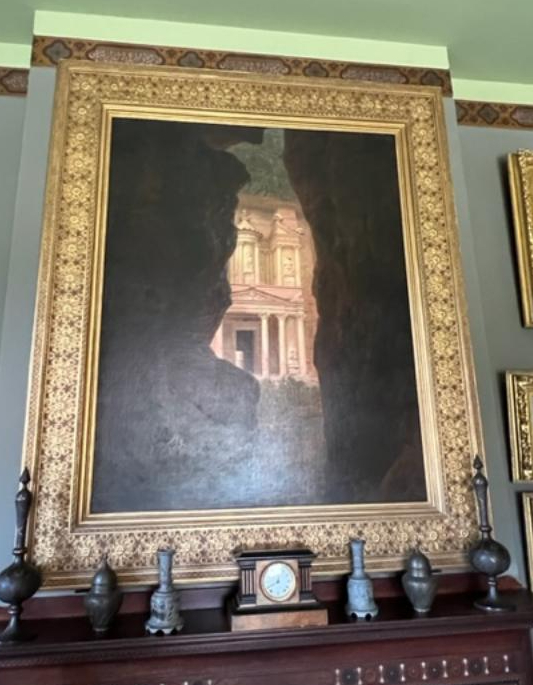
On his many trips abroad, Fredrick Church painted many of the sites he had visited that included the Far and Middle East.
Fredrick Church’s painting of “Petra” in the Middle East.
Both Mr. and Mrs. Church kept up social appearances on top of their work. They had a steady stream of guests visit the house and there was a lot of entertaining here.
The view from the porch
The view from the other side of the porch
We next visited the parlor, where the family would gather when they were staying at the house. There were many exotic furnishings from their trips on top of the personal family items. There were musical instruments to keep the family entertained when they were home.
The family piano in the Parlor
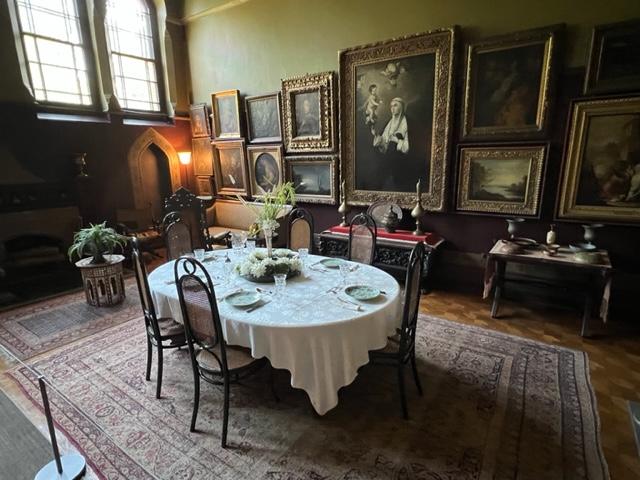
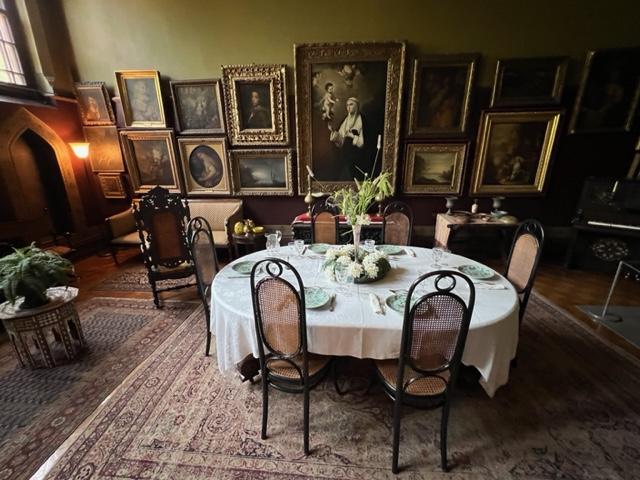
The formal Dining Room was more personal with a dining table that extended out for twenty people or open enough for the family to diner in this room.
The formal Dining Room
The formal Dining Room with the collection of painting that the family acquired when they were aboard.
As we finished the visit to the public rooms of the home, we toured the outside of the home as well as we exited out the side door.
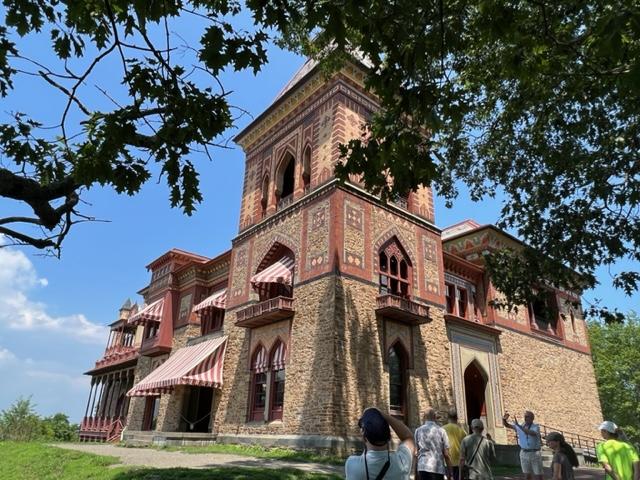
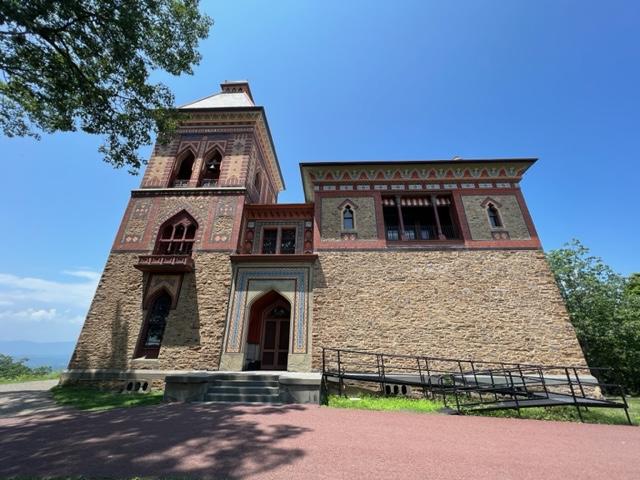
The side view of Olana
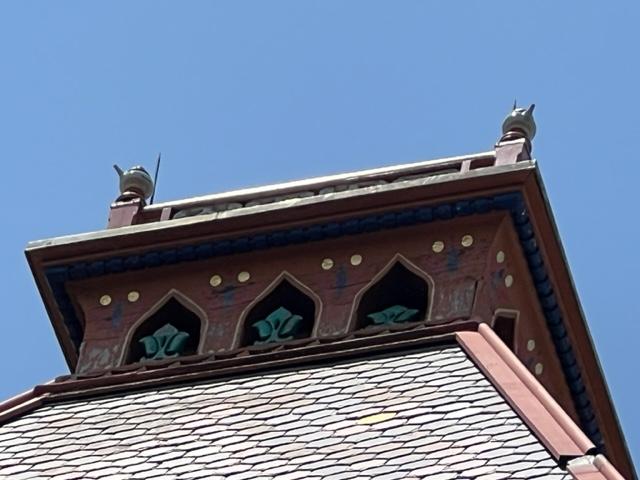
When we looked up at the home with its combination of Morrish and Arabic design we saw four teapots at the top of the tower. When asked what they meant and why they were there, no one including the tour guide knew. It was figured by a group of landscape architects that it may have something to do with longevity or renewal. This secret died with the family.
The teapots line the roof.
The tour is very interesting and gives you a view on the house and on the family who lived there and how they lived when they were in residence here. They entertained, they worked, they traveled, and they made great art. The location on the hill in the Hudson River Valley shows their investment in the location. This was all kept intact after the 1960’s for us to enjoy.
The views of the Hudson River Valley
History of Olana:
Olana, one of the most important artistic residences and planned landscapes in the United States, is the last and perhaps greatest masterpiece created by Hudson River School artist Fredrick Edwin Church (1826-1900). Church designed the landscape and his Persian style home on and around the same hilltop where, as an eighteen year old student, he sketched spectacular views of the Catskills and the river alongside his mentor Thomas Cole.
The view of the house from the back.
Even in an era defined by personal architectural statements, the home of Fredric and Isabel Church was unique. Delight in the Moorish details of the building and each room. View the original furnishings of the house and walk or jog along the paths and carriage drives of the surrounding landscape, also designed by Church. A designated National Historic Landmark, Olana State Historic Site opened to the public in 1967. The house, its contents and the landscape still look very much as they did in Church’s day.
The inside of Olana in the main rooms
The views of the Hudson River from the porch of the house


































































































 Visiting a Museum: The Unique, Unusual, Obscure and Historical