Tag: france

Day Three Hundred and Eighty Six                                              Touring the Cloister Gardens and viewing Mythical Beasts at The Met Cloisters                                                                              June 14th, 2026

Day Three Hundred and Eighty Six Touring the Cloister Gardens and viewing Mythical Beasts at The Met Cloisters June 14th, 2026

The Cloisters Museum & Gardens: A Branch of The Metropolitan Museum of Art

99 Margaret Corbin Drive

Fort Tryon Park

New York, NY  10040

(212) 923-3700

Open: March-October 10:00am-5:15pm/November-February-10:00am-4:45pm

http://www.metmuseum.org

https://www.metmuseum.org/visit/plan-your-visit/met-cloisters

Fee: Adults $30.00/Seniors/Students $17.00/Children $12.00/Members & Patrons and Children under 12 are free (prices do fluctuate). NY, NJ and CT students and NY residents Pay as you wish.

Museum Hours:

Hours: Open 7 days a week

March-October 10:00am-5:15pm

November-February 10:00am- 4:45pm

Closed Thanksgiving Day, December 25th and January 1st.

*Some galleries may be closed for construction or maintenance.

TripAdvisor Review:

https://www.tripadvisor.com/Attraction_Review-g60763-d106609-Reviews-The_Met_Cloisters-New_York_City_New_York.html?m=19905

Touring the Cloisters for the Garden Tour:

https://www.metmuseum.org/about-the-met/collection-areas/medieval-art-and-the-cloisters/met-cloisters-gardens

I went on the Spring Garden tour at the Cloisters Museum with a discussion on Spring plantings and the use of those plants during Medieval times. The museum studied what plants were used for religious and medical practices.

We started the discussion of the plantings out in the first Cloister by the Hudson River

The Tour of the Gardens at The Cloisters in the Spring 2026:

(From the Museum website)

The gardens of the Middle Ages included both real and ideal gardens. Poets and artists delighted in the depiction of fantasy gardens like the Garden of Love or of Paradise, but no real garden of the time remains to us. Historical records are rare and incomplete; the ninth-century plan for the monastery of St. Gall, with its carefully drawn and labeled garden beds, is unique. Archaeological excavations are yielding valuable new evidence, but we still know more about infirmary gardens of medicinal plants and aristocratic pleasure gardens than we do about humble kitchen plots of potherbs and vegetables (Met.org).

The gardens of the Museum, planted in reconstructed Romanesque and Gothic cloisters, evoke those that provided sustenance and spiritual refreshment within the medieval monastery. Designed as an integral feature of the Museum, the gardens have been a major attraction of The Cloisters since its opening in 1938, enhancing both the setting in which the Museum’s collection of medieval art is displayed and the visitor’s understanding of medieval life. The gardens are designed and maintained by a horticultural staff actively engaged in researching and developing the living collection (Met.org).

The plantings of the first Cloister we visited

We walked through the Cloister discussing how plantings were determined by medical and religious purposes

The flower beds in the Cloister

The view of the Hudson River was amazing

The flowers in bloom

Flowers in bloom

Flowers in bloom

Flowers in bloom

We moved the next Cloister looking over the medical plants and flowers

The Cloister in bloom

Walking around the Cloister

The plants around the sills of the Cloisters

Touring the Cloisters and admiring the flowers

Everything in bloom

We toured the last Cloister while the tour guide explained the plantings

The last Cloister we toured

The garden in full bloom

The growth of the hops growing on a trellis

The hops planting up close

The flowers in bloom in the Cloister

We ended the tour admiring the art in the Tapestry Room and having a discussion about the use of plants and flowers in Medieval art. The artists at that time thought of the natural world with awe and respect. They admired the beauty of the natural world where in some points was still feared,

‘The Hunt of the Unicorn’ tapestry discussion

I then visited the ‘Creatures of Myth and Imagination-European and the Americas’ exhibition.

This exhibition was an interesting look at mythical beasts of the era of great exploration from European to the Americas. It reminded me of the book “In Search of Ancient Astronauts” with many golden creatures that look like they are visitors from another planet, Ancient Gods to worship and one civilization’s outlook on the unknown. The artwork was a cross between mysticism and respect.

The exhibition sign for “Creatures of Myth and Imagination: Europe and the Americas”

https://www.metmuseum.org/exhibitions/creatures-of-myth-and-imagination-europe-and-the-americas

(From the museum’s website)

Set in the evocative atmosphere of The Met Cloisters, Creatures of Myth and Imagination: Europe and the Americas sheds light on a selection of works created on either side of the Atlantic Ocean between 500 and 1500 CE. The exhibition’s exploration of hybrid creatures deepens our understanding of their apparent necessity among diverse peoples. In the Americas, a complex gold pendant by a Tairona artist of northern Colombia, depicting a confrontational figure with hands on hips, a crocodile-like head, and an enormous headdress, would have reflected and expressed the wearer’s status and power. In Europe, ferocious dragons such as the one depicted on a monumental fresco from the monastery of San Pedro de Arlanza, Spain, took center stage to convey a multiplicity of meanings both sacred and profane (Met.org).

The exhibition gallery

Unusual mythical creature

(From the museum website)

For as long as humans have told stories, we’ve imagined creatures that transcend the natural world. Fantastical beings combining the features of animals, humans, and even plants appear across cultures, emerging in the most ancient myths and enduring in contemporary epics. The widespread presence of these supernatural beings, possessing the power to transform and be transformed, reflects a global impulse to make sense of both known and unknown worlds. Visual artists have given form to these imaginary creatures, resulting in some of the most fearsome, beloved, and extraordinary works of art ever made (Met.org).

Small gold ancient Gods

Ritual Knives

Double pendants

Earth Deity

I took one last tour of the museum gardens before I left for the afternoon. On the balcony overlooking the Hudson River offered beautiful views and beautiful potted plants.

Walking out of the back Cloister

The back Cloister

The beautiful white flowers

The balcony overlooking the Hudson River

The potted plants by the doorway

The view of the Hudson River

Looking north up the Hudson River

The tour of the Gardens was amazing and the exhibition on the Pre-Columbian art interesting. It was a wonderful tour of the Cloisters.
Montville Township Museum/Montville Historical Society                                                                              6 Taylortown Road                                                Montville, NJ 07045

Montville Township Museum/Montville Historical Society 6 Taylortown Road Montville, NJ 07045

Montville Township Museum/Montville Historical Society

6 Taylortown Road

Montville, NJ 07045

https://montvillenj.org/426/Montville-Museum

https://www.montvilletwphistoricalsociety.com/museums

https://www.montvilletwphistoricalsociety.com/

Open: The third Sunday of each month 1:00pm-4:00pm

My review on TripAdvisor:

https://www.tripadvisor.com/Attraction_Review-g46639-d27079954-Reviews-Montville_Township_Museum-Montville_Morris_County_New_Jersey.html

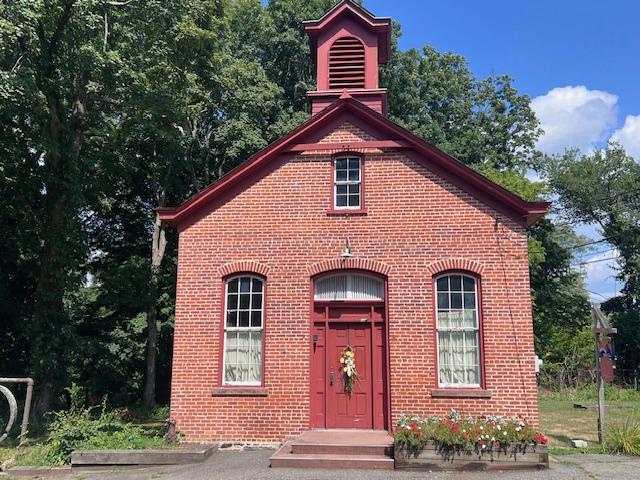
The front of the Montville Township Museum at 6 Taylortown Road

The front sign

I stopped at the Morris Township Museum on a busy Sunday afternoon. The museum, housed in a building that once served the community as a school, post office and a government center.

Each of the cases holds all sorts of artifacts that reflects the towns developments and growth. The first case line is filled with fossils found in the area and small artifacts from the Lenape Indians.

The next case was filled with accessories from Victorian objects from jewelry to household items. Lining the walls are objects from the high school, personal family records for people to search on their loved one’s genealogy. The docents are hand from the Historical Society to answer any questions about the museum.

The History of the Building:

(from the museum website)

The building was originally “Old Schoolhouse #10”.  It was built in 1867 and occupies the site of a former 1837 school.  One of the early superintendents of Morris Canal, Mr. William Hickson , was its builder.​

Located at 6 Taylortown Road just down the street from Route 202 is a red brick building with a sign out front proclaiming it the “Montville Township Historical Museum”. Within its walls are articles, pictures, tapes, and memories that will carry you back through the years to times long past.

The front of the museum

About the Building: The building was constructed following the Civil War, in the year 1867. It was one of the first one-room schools in the area. The land was donated by the eastern district superintendent of the then-thriving Morris Canal, one of the many waterways then in existence to help promote trade and travel in America. William Hixson gave the land to the town for public purposes, with the stipulation that it could be reclaimed if used for a purpose with which his family disagreed.

The historic sign of the school

Reconstruction: The building began serving Montville as a one-room school heated by a potbellied stove. It also served as an auxiliary to the local Methodist Church. It became the gathering place for the local temperance league in the 1890s, and was the scene of many temperance meetings in the town.

The gardens of the front the museum

The historical collection of the museum

The history of the property:

(from the Museum website)

Entrance: Today, as you enter the museum, you walk into an entrance foyer. Probably once used to hold the boots and coats of school children, it is now an entrance hallway. The door to the main room is straight ahead, and upon entering, you step into history.

Building Uses: Forty-four years after being erected, it changed from a school to the center of political activities as the town hall. It was the town hall until 1939, when it became the town’s post office. It served as such until 1961, when a post office was constructed close by (Taylortown Road and Route 202).

Making it a Museum: After the postmen moved out of the building, the township considered selling the property to a business concern but the original Hixson agreement was recalled, and the building remained unused – until the celebration of New Jersey’s 300th Anniversary.

At that time, a Tercentenary committee was founded in the Township to help celebrate the anniversary and the Committee decided to make the establishment of a museum its main project. Armed with donations from local residents, committee members renovated the building and reopened it in 1963 as a museum.

The inside of the museum

The part of the canal that exists around the museum

Around the corner from the museum is the corner from where the Morris Canal lock was located which was on display at the museum.$

The area around where the Morris Canal was located

https://en.wikipedia.org/wiki/Morris_Canal

https://www.morriscanalgreenway.org/

I traveled further down the road to see what is left as the canal that has since grown over. Before railroads and cars, the canal system is where goods and services from the interior of the state to the cities such as New York City and Newark.

The sign marking the site of the canal and the lock system

The lock location

The grown over canal system

It is an interesting museum whose artifacts represent the three communities in Montville township.

Dinker-Irvin Museum                                                  318 Garfield Parkway                                                Bethany Beach, DE 19930

Dinker-Irvin Museum 318 Garfield Parkway Bethany Beach, DE 19930

Dinker-Irvin Museum

318 Garfield Parkway

Bethany Beach, DE 19930

https://www.townofbethanybeach.com/110/Town-Museum

https://en.wikipedia.org/wiki/Dinker-Irvin_House

https://visitsoutherndelaware.com/listing/bethany-beach-dinker-irvin-museum

My review on TripAdvisor:

https://www.tripadvisor.com/ShowUserReviews-g33997-d33496882-r1029950348-Dinker_Irvin_Museum-Bethany_Beach_Delaware.html?m=19905

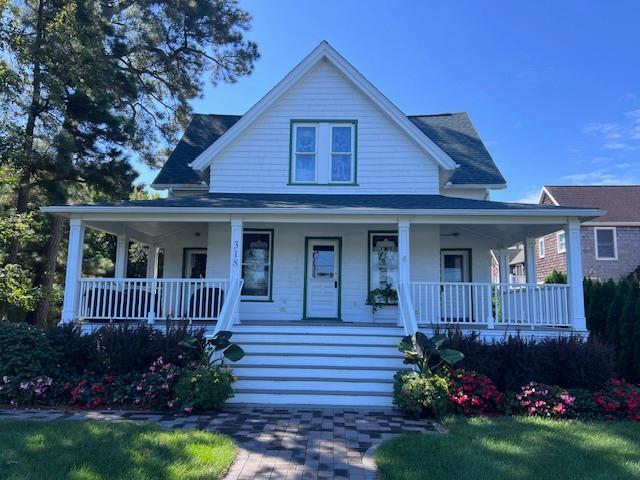
The front of the museum

History of the Museum:

(from the museum website)

Located across from Central Park at 318 Garfield Parkway, this beautifully restored cottage offers visitors an immersive experience of an historically significant early 1900’s home and a glimpse of what life was like during the early days of the town.  It is one of the few remaining original cottages in Bethany Beach and the oldest public building in town.  It served as a U.S. Post Office from 1922-25. 

The sign in the front

The historic sign

The backyard of the home

I arranged a personal tour with members of the Board of the Dinker-Irvin House Museum and I got to see one of the few remaining shore homes from the turn of the last century.

The Virtual tour of the Museum

Sneak Peek view of the museum

The History of Bethany Beach

The Dinker-Irvin House is an example of early beach living on the Delaware coast. This small home was just enough space for a family to live comfortably at the shore for the summer season before and after it was a religious retreat.

The antiques of the time period in the front entrance

This interesting little shore home shows life in early Bethany Beach similar to the development of shore communities up and down the Eastern seaboard first as religious retreats then with the changes of the modern work week with leisure travel.

The history of the cottage:

The background of William Dinker, the original owner of the home

Mr. Dinker’s family history. The house was first owned by the Dinker family and then the Irwin family.

The Irwin family history

The second family, the Irvin’s buys the home

The history of the development of the museum

The front of the museum building was dedicated to the history of beach life in Bethany. This was complete with bathing outfits and the history of swimming for pleasure. One covered up at the shore to show respect and modesty.

The bathing costumes from the turn of the last century

Life at the beach

Swimming at the shore would change a lot in the next 100 years.

Life Guard uniform

The modern life guards were developed in response to the increasing tourism and modern ocean swimming. In 1942, the beach community got its first female life guard, Marjorie Townsend Bramhall Slaughter. Her two sons would follower her into the profession.

The first female life guard in Bethany Beach

The start of tourism in Bethany Beach started first with ship then by rail and then by car. As the modern highways brought more people to the shore, the town continued to progress.

Early tourism and travel to Bethany Beach

The kitchen was original to the house and some of the original items to the home are on display. As small as the house was meals were still a serious affair at the shore. Fresh fish, fruits and vegetables were all available at farm stands as they are today.

The kitchen of a beach town

The kitchen of a beach home

The ice box of the turning of the last century

The hand pump

The kitchen items, foods and recipes

The kitchen provided a look of what was in the pantry at the time. The kitchen even included recipes for meals that would have been popular at the time.

The house served as the post office at that time

The house once served as the post office for the community.

The collection travel postcards in the museum’s collection. This shows the progression of working people at the time and how leisure travel became popular first with the railroads and then by car.

The Horse Racing in the area

The Chautauqua Assembly records on display

The development of religious communities at the beach

The museum gives a glimpse of the past of this diverse beach community from its development as a religious retreat to its development as the modern resort of today.