Tag: Exploring Lower Manhattan

The Museum of Reclaimed Urbanspace                       155 Loisadia Avenue (Avenue C)                                New York, NY 10009

The Museum of Reclaimed Urbanspace 155 Loisadia Avenue (Avenue C) New York, NY 10009

The Museum of Reclaimed Urbanspace

155 Loisaida Avenue (Avenue C)

New York, NY 10009

(917) 577-5621

https://morusnyc.org/

Open: Sunday 12:00pm-5:00pm/Monday-Tuesday Closed/Wednesday-Saturday 12:00pm-5:00pm

Admission: Suggested donation $5.00

My review on TripAdvisor:

https://www.tripadvisor.com/ShowUserReviews-g60763-d4459121-r1027918582-Museum_of_Reclaimed_Urban_Space_MoRUS-New_York_City_New_York.html?m=19905

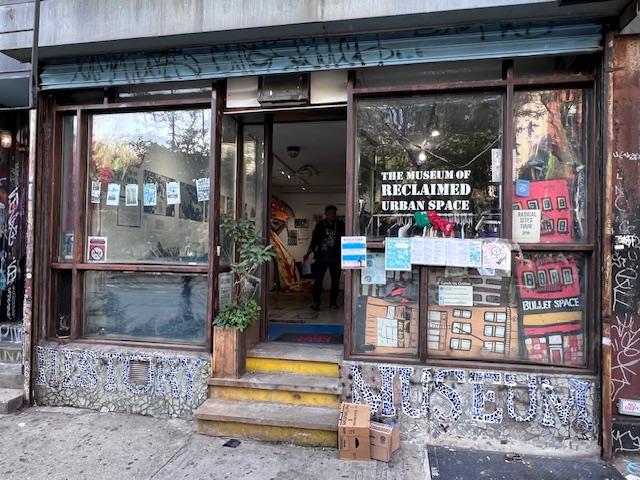
The Museum of Reclaimed Urbsn Space at 155 Loisaida Avenue (Avenue C)

The Mission of the museum:

(from the museum website)

The Museum of Reclaimed Urban Space preserves the history of the Lower East Side’s grassroots activism and promotes environmentally-sound, community-based urban ecologies.

We do this by:

*Archiving and documenting the history of the Lower East Side’s activism.

* Educating visitors with exhibitions and guided tours of the neighborhood.

*Empowering individuals to participate in the drive for sustainable change with workshops and events.

Information of the museum

While walking around Alphabet City for my blog, MywalkinManhattan.com, I came across the Museum of Reclaimed Urban Space on the fast gentrifying Avenue C. Alphabet City, technically part of the East Village, has been going through mass gentrification since the early 2000’s. One of the reasons why the neighborhood has not been fully gentrified as been the Public Housing in the upper parts of the neighborhood and lining Avenue D.

The predicament though is even the public housing is going through a renewal with the renovation of the grounds and the buildings with new lighting, landscaping and sidewalks. Hurricane Sandy had really damaged the infrastructure of the complex and the City has been working on this for a few years (Hurricane Sandy was in 2012).

What has been happening in the lower parts of Manhattan as well as parts of Harlem, East Harlem and Washington Heights is that these have become the ‘last frontiers’ for gentrification as New York City keeps getting more expensive. The museum captures the transition of the neighborhood from a burnt out section of the Lower East Side with the bankruptcy of the City to show the grit of the neighborhood not to let their neighborhood decline.

What I enjoyed seeing is how the neighborhood residents banded together to take empty lots and turn them into community gardens, many of them still exist today. These tiny pockets of green have made the neighborhood more desirable to live in. With the expansion of NYU and Pace into the neighborhood and boom of college students moving into the neighborhood made safer by these long term residents have been changing the makeup of Alphabet City. The museum did a wonderful job showing how they banded together and fought the City as it improved in the 1990’s and tried to ‘plow over’ these gardens. There presence today is what gives the neighborhood its character.

The founding of the museum

The history of the neighborhood

The History of the Museum:

(from the museum website)

he Museum of Reclaimed Urban Space (MoRUS) was founded in 2012 by members of Times Up! environmental organization and based in C-Squat. As a living history of urban activism, MoRUS chronicles the LES community’s history of grassroots action. It celebrates the local activists who transformed abandoned spaces and vacant lots into vibrant community spaces and gardens. Many of these innovative, sustainable concepts and designs have since spread out to the rest of the city and beyond.

The museum showcases an often untold version of New York City history through photography, videography, authentic artifacts, and documents. MoRUS is a 100% volunteer-run organization committed to open, community-based action. With this space, we invite visitors to learn, engage, and participate in grassroots activism of the past, present, and future.

One of the interesting masks that dot the corners of the museum

A view of the inside of the museum

The Collection and Purpose of the Museum:

(from the museum website)

MoRUS was born in the East Village out of the observation that the neighborhood and its inhabitants, undergoing rapid transformations, are beginning to forget about their own history. When New York City almost went bankrupt in the seventies, community members struggled to preserve and restore their neighborhood. These activists have become fewer, and the new residents, who reap the benefits of their predecessors’ efforts, are left unaware.

Noticing it, Bill DiPaola and Laurie Mittelmann, both long-term residents of the East Village and members of Time’s Up! Environmental Organization, were determined to provide new opportunities for long-term activists to share their story and to pass on their experience and knowledge firsthand to new generations.

Located in the historic building C-Squat, MoRUS officially opened its doors in 2012 as a non-profit organization. The museum’s storefront was renovated almost entirely by volunteers. They did electrical work and plumbing, built walls, ceilings, and floors, and constructed furnishings such as a reception desk and an elaborate mosaic sign. This process took eight months, and involved other volunteers simultaneously sourcing funds and exhibitions, designing tours, and creating structure for the volunteer collective that runs the museum, such as guidelines, by-laws and committees.

Decisions are reached, events are planned, and new volunteers are plugged in through weekly general meetings and committee meetings. Committees include marketing, fundraising, administrative, merchandise, programming, tours, and exhibition/graphic design.

The Museum has become an important fixture in the neighborhood, not only to preserve the untold story of the East Village, but also to encourage community activism and sustainable development.

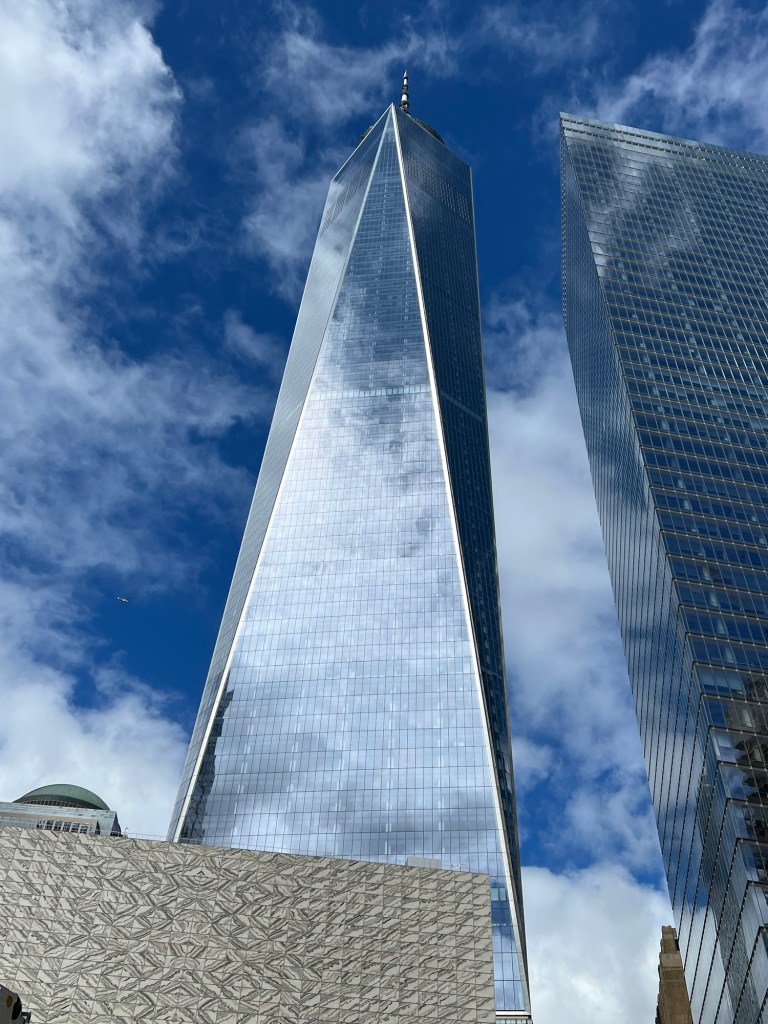
One World Trade Observatory 285 Fulton Street New York, NY 10007

One World Trade Observatory 285 Fulton Street New York, NY 10007

One World Trade Center Observatory

285 Fulton Street

New York, NY 10007

(844) 696-1776

Open: Sunday-Saturday 9:00am-9:00pm (hours change seasonally)

Admission: See the website for prices depending on individual and group prices seasonally

My review on TripAdvisor:

https://www.tripadvisor.com/Attraction_Review-g60763-d8072300-Reviews-One_World_Observatory-New_York_City_New_York.html

Though it is not a museum, it is a view of the world. I had been to the original World Trade Center three times before 9/11 and the views were just amazing. There is nothing like it as the Empire State Building’s are a bit different.

One World Trade-The former Freedom Tower

https://www.officialworldtradecenter.com/en/local/things-to-do/one-world-observatory.html

The building itself is very impressive to visit (quite frankly I would NEVER want to work here) but with its past leery of anything else. Too many people died on this site and I would not want to work in an office here no matter what company. I would want a parachute in my office at all times. Still this was going to be my second trip to the top of the building since 2015 when I visited with my best friend, Kris.

I had won two tickets to the Observatory from a contest at NYU and had set VIP tickets to skip the line to go to the top. At 10:00am in the morning, there was no line to skip. I went right to the top with not that many people there at that time. If you get there early in the morning in the off season, there are no crowds.

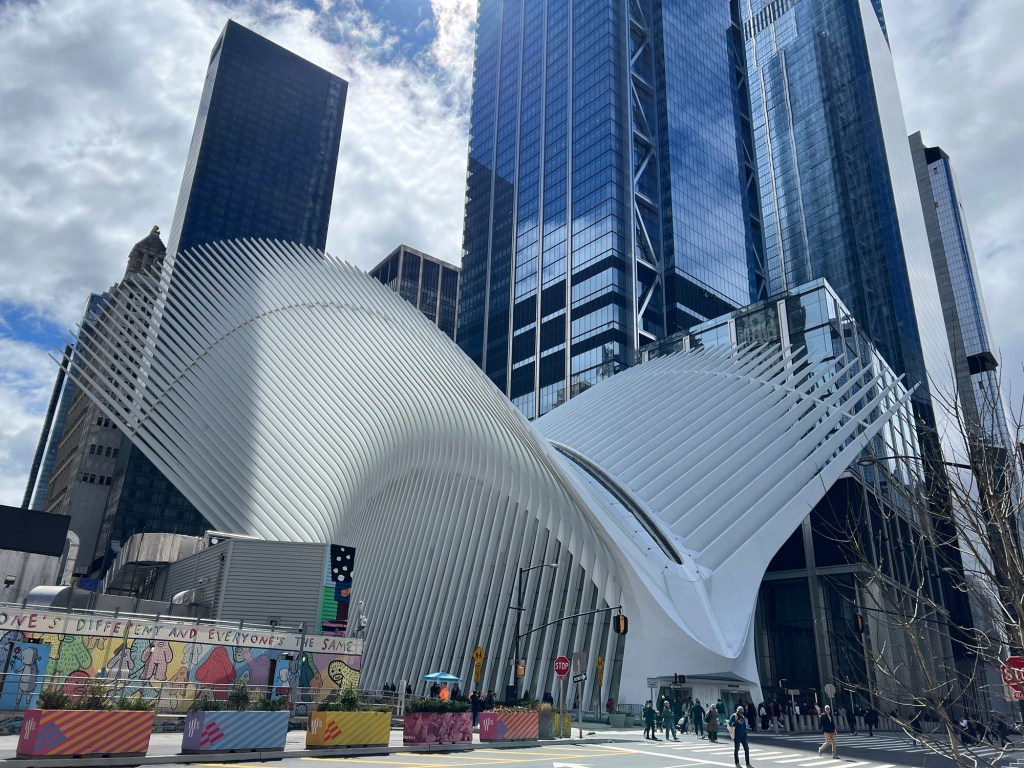
The site is still so impressive. This is the Occulus right by the Tower.

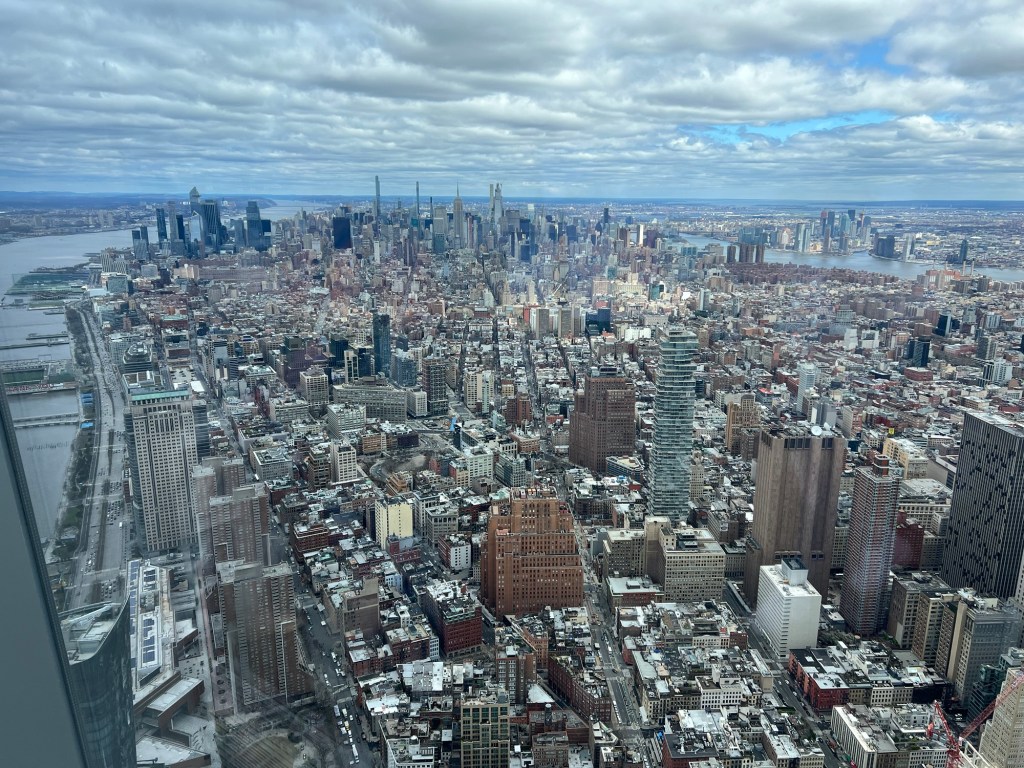
One World Observatory is at the top of the tallest building in the Western Hemisphere, One World Trade Center. The Observatory is located on the 100th, 101st, and 102nd floors encompassing over 125,000 square feet. You’ll take an incredible Sky Pod Elevator ride to the top. Once aloft guests can explore three levels of the Observatory filled with innovation and inspiration. One World Observatory offers views of New York City’s iconic sights, surrounding waters, and iconic skyline – amazing 360 views for up to 45 miles in every direction (One World Trade Center website).

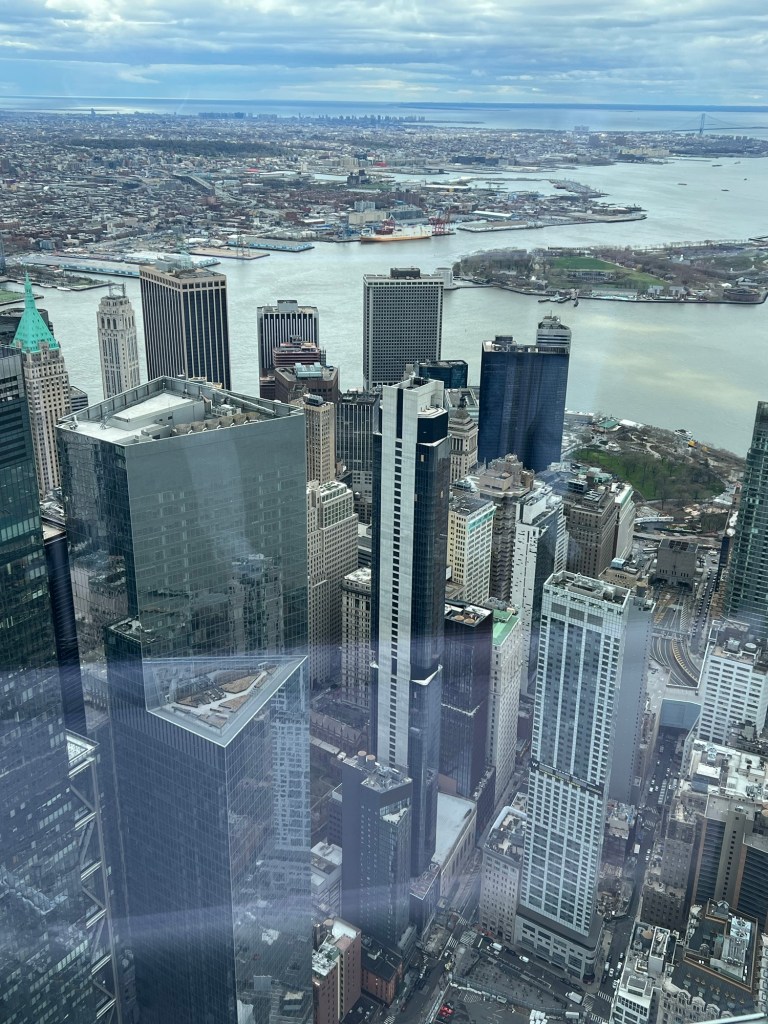
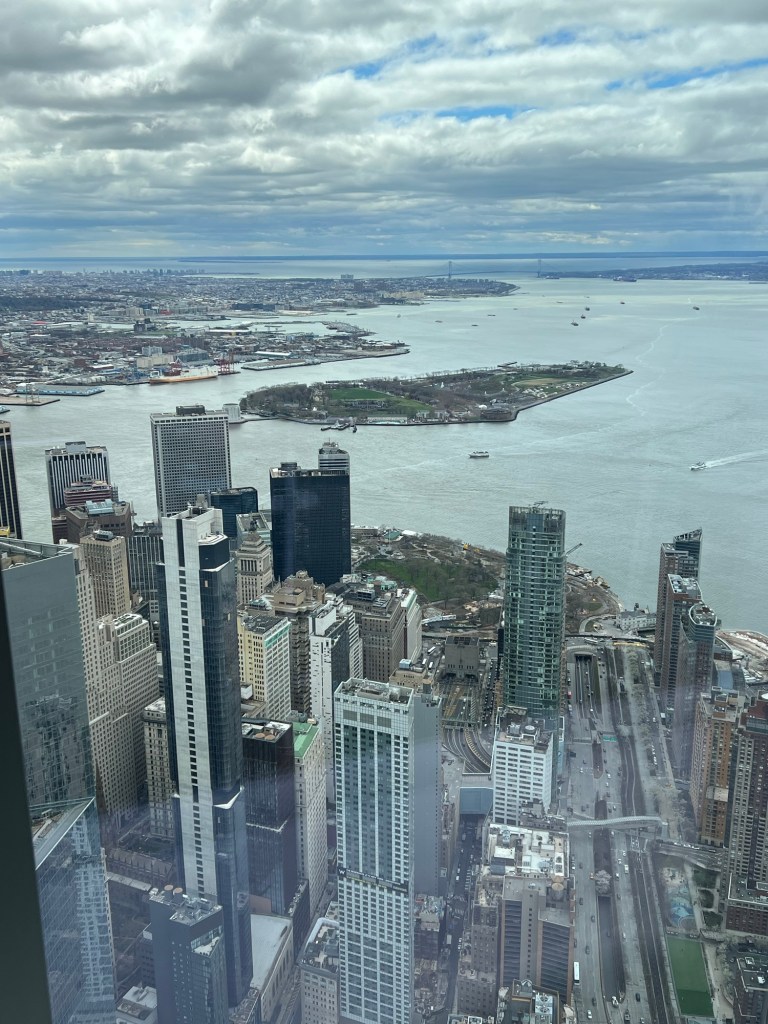
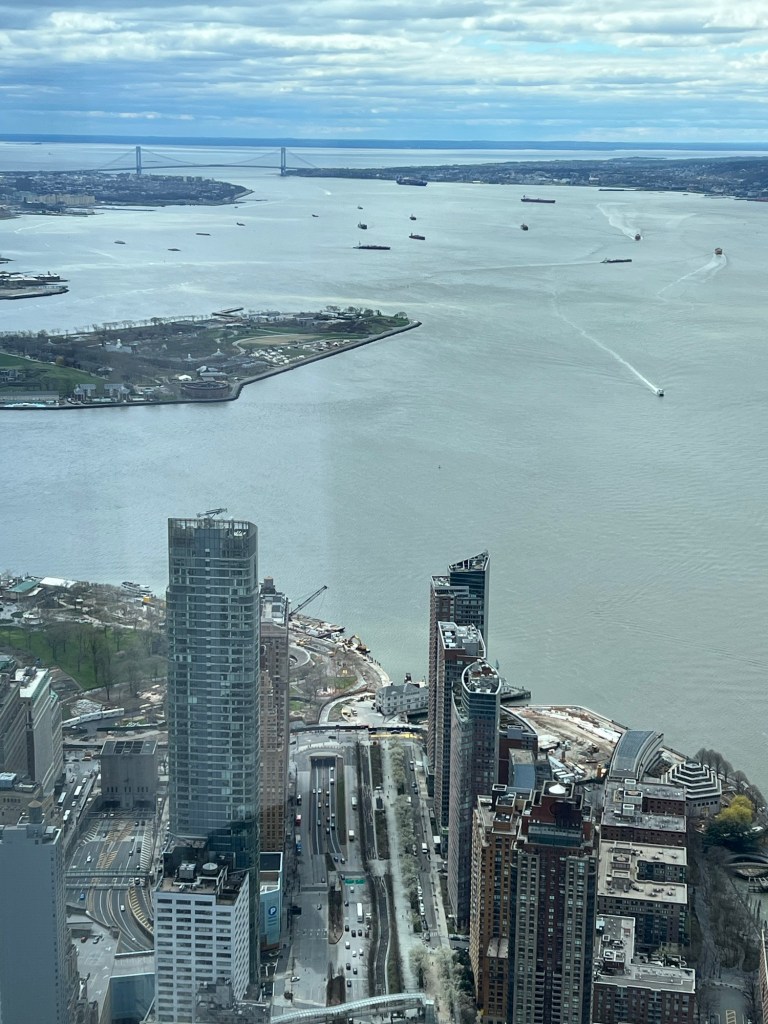
The views from the top are so impressive of downtown and Governors Island.

Governors Island in the foreground and lower Manhattan. This is the original colony.

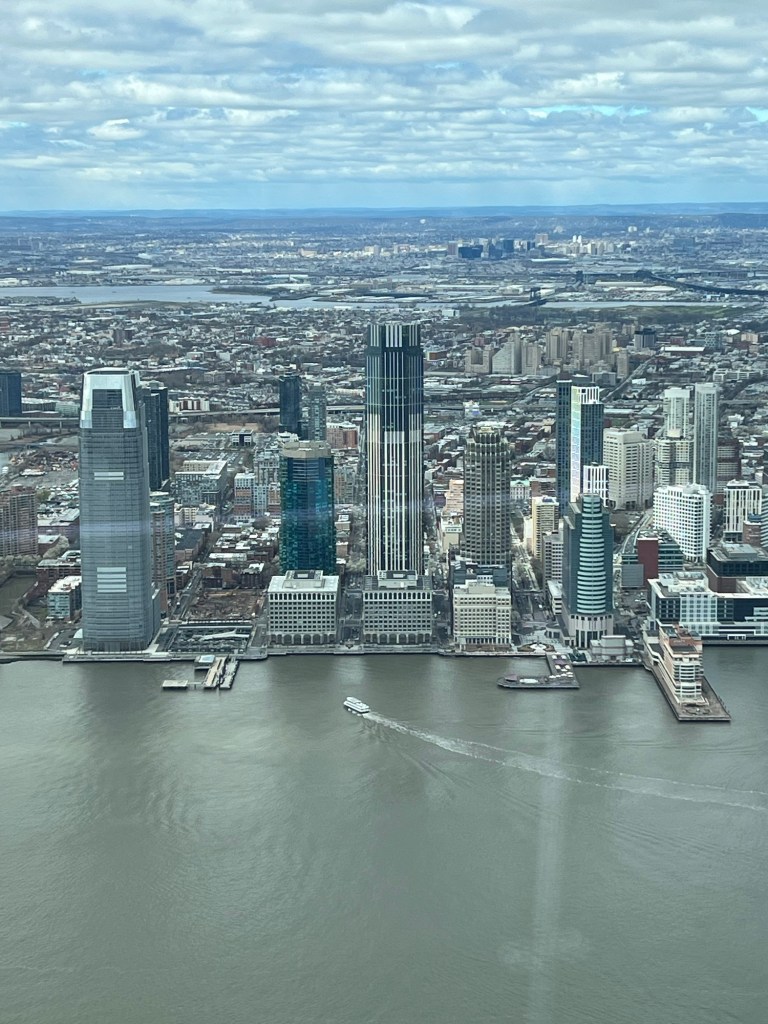
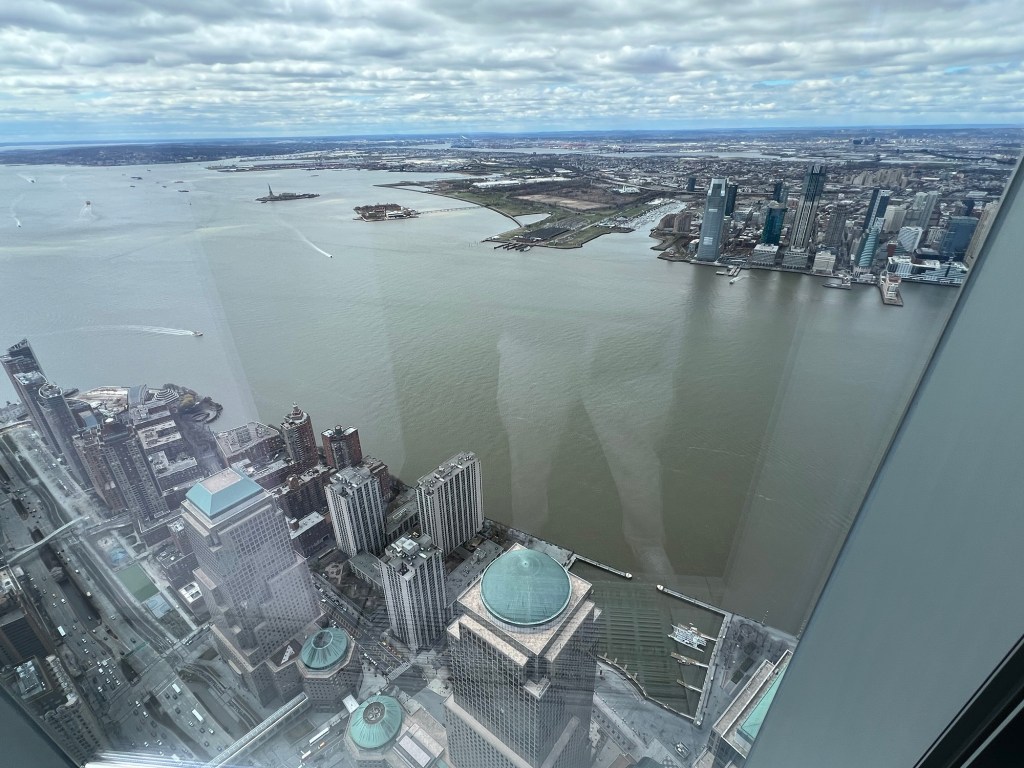
The views of Downtown Jersey City and the Waterfront are so spectacular.

The Statue of Liberty seemed so close.

The views of Downtown Brooklyn were amazing.

Midtown was so impressive on a clear day. You can see all the way up to Central Park.

Even the Battery was so impressive from this vantage point along the Hudson River.

Another shot of the Battery and Jersey City.

The views of New York Harbor are spectacular.

The Oculus and the Memorial Pools of the 9/11 Memorial from the top of the Observatory.

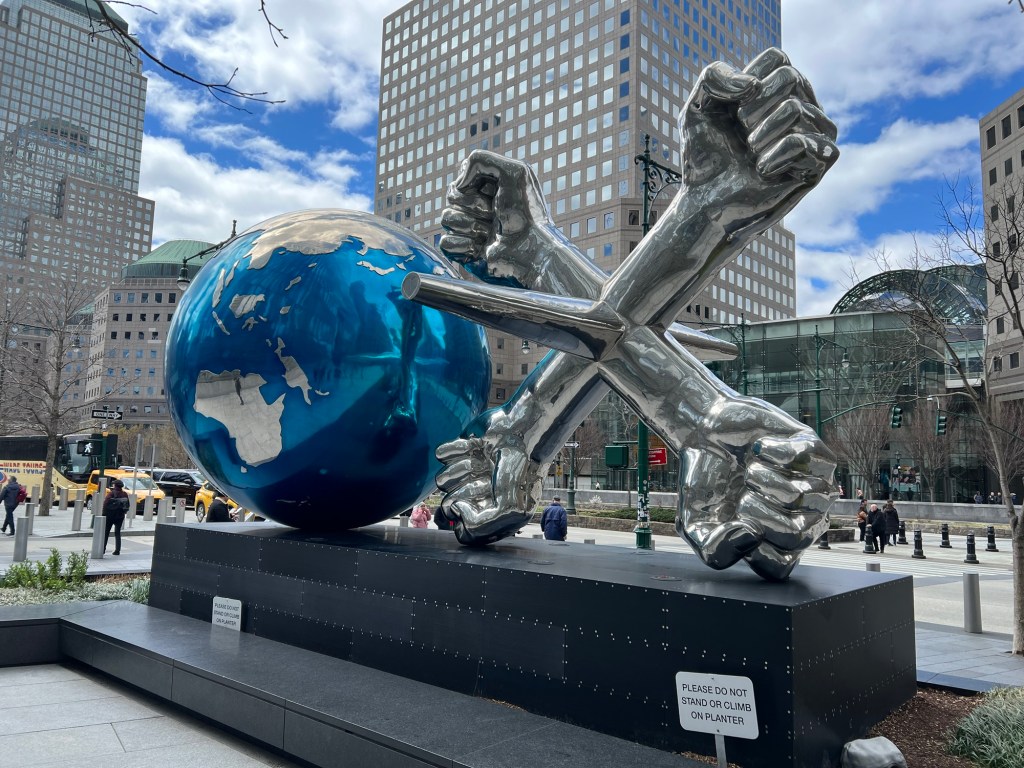
This interesting sculpture, XO World Project, is at the entrance when you leave the building.

https://www.officialworldtradecenter.com/en/local/things-to-do/events/xo-world-project.html#:~:text=The%20XO%20WORLD%20PROJECT%2C%20created,and%20love%20around%20the%20world.

The XO World Project was created by artist Daniel Anderson, features two sculptures, “XO PLAY” and “XO WORLD,” that encourage peace and love around the world. “XO PLAY,” on display in the Oculus, depicts children playing a game of jacks, symbolizing childhood innocence and harmony with the world. “XO WORLD,” on display just outside One World Trade Center at West Plaza, features a 12-foot “Jack” from the game of Jacks with an “X” representing “love” in universal sign language and “O” representing the world (World Trade Center website).

Artist Daniel Anderson

https://www.danielandersonart.com/

Contemporary abstract sculptor and painter Daniel Anderson was born and raised in Pompton Plains, New Jersey. His interest and passion for art began at an early age and led him to be recruited and to receive a scholarship to attend the College of Visual & Performing Arts at Syracuse University in New York. He continued his formal education in Florence, Italy, and was the sole artist from New York City selected to participate in an annual residency program in Melbourne, Australia (Artist’s website).

The sculpture is a visual expression of the powerful message of equality, unity, peace, and love. This use of iconography and symbolism is meant to connect with the hearts and minds of the masses as it is intended to motivate, activate, and further progress humanity (Artist’s website). 

“As our society faces unprecedented challenges stemming from a global pandemic, economic recovery, racial inequity, and territorial conflicts, World Peace Day offers the perfect backdrop to unveil these two inspiring sculptures intended to bring people together,” said Anderson (Business Wire.com)

The view from the bottom when you leave.

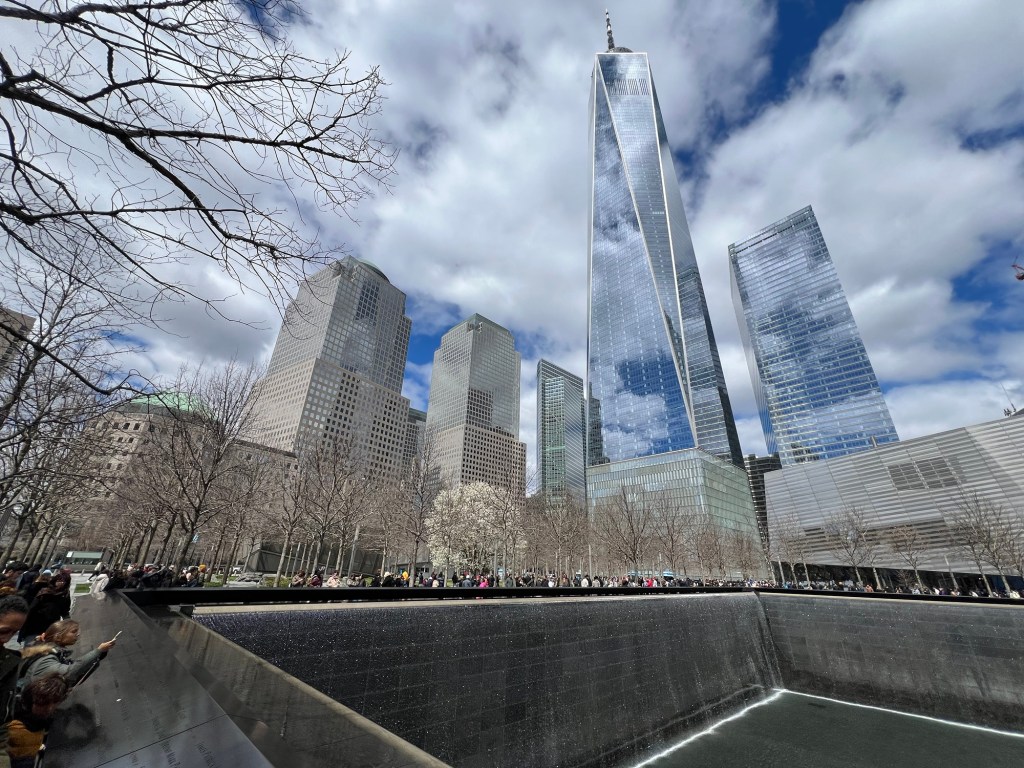
The view from the 9/11 Memorial Park.

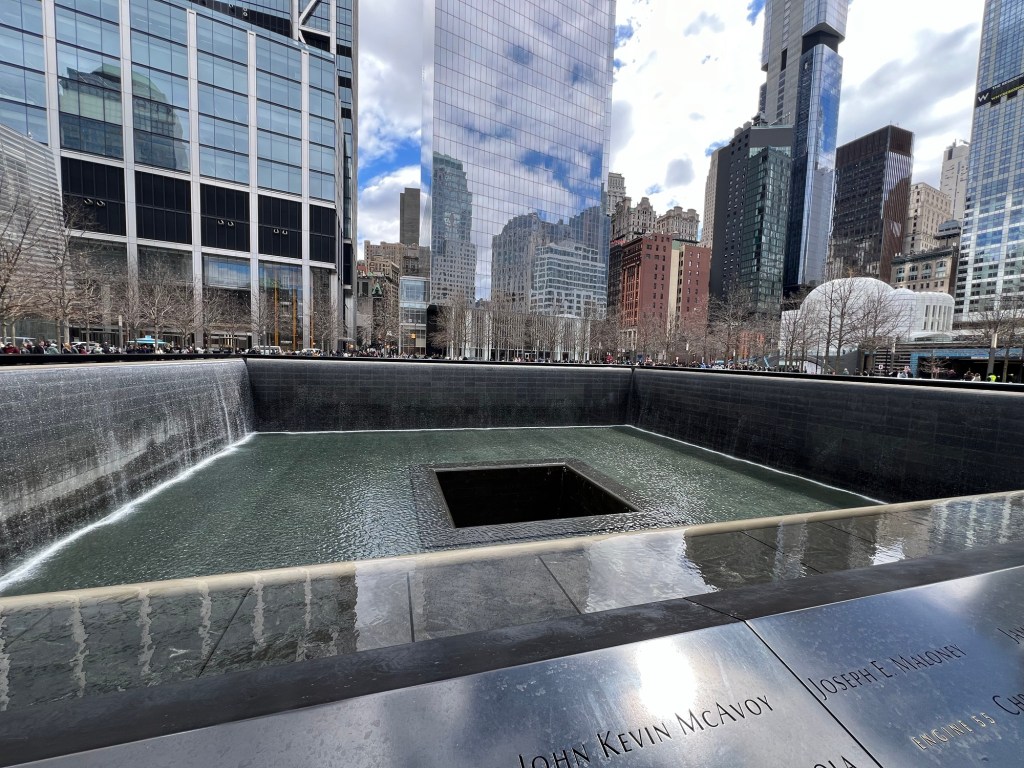
The 9/11 Memorial Pools which are the footprint of the original Trade Center Buildings.

https://www.911memorial.org/visit/memorial/about-memorial

This memorial still gets me choked up with what happened here over twenty years ago. I still see flags and flowers of near loved ones names along the edges of the pools. It is nice that family members still remember their family here.

The skyline of the park from the Memorial pools.

The pools are reminder of time when the world went mad. Those feelings are still simmering under the surface of society today.

Day Two Hundred and Four: Halloween Returns Part I: The Gotham City Ghost Tour/Michigan vs Michigan State Game                                   October 30th, 2021 — mywalkinmanhattan.com

Day Two Hundred and Four: Halloween Returns Part I: The Gotham City Ghost Tour/Michigan vs Michigan State Game October 30th, 2021 — mywalkinmanhattan.com

I had a busy Halloween weekend with the Michigan State versus Michigan game and a Gotham City Ghost tour in the afternoon. Halloween searching for ghosts.

Day Two Hundred and Four: Halloween Returns Part I: The Gotham City Ghost Tour/Michigan vs Michigan State Game October 30th, 2021 — mywalkinmanhattan

Please print this guide to haunted sites of Lower Manhattan and have a nice afternoon walking around. It is a nice tour!

Titanic Memorial Lighthouse                            Pearl Street/South Street Seaport                     New York, NY 10038

Titanic Memorial Lighthouse Pearl Street/South Street Seaport New York, NY 10038

Titanic Memorial Lighthouse

Pearl Street/South Street Seaport

New York, NY 10038

(212) 830-7700

https://www.lighthousefriends.com/light.asp?ID=585

https://en.wikipedia.org/wiki/Titanic_Memorial_(New_York_City)

Open: Sunday-Saturday 24 Hours

My review on TripAdvisor:

https://www.tripadvisor.com/Attraction_Review-g60763-d7738946-Reviews-Titanic_Memorial_Park-New_York_City_New_York.html

The Titanic Memorial Lighthouse

I have been to the South Street Seaport dozens of times over the years and can’t believe that I never noticed this memorial dedicated to those lost in the Titanic disaster. I was visiting the Seaport recently after finishing another walk down the length of Broadway for my blog, “MywalkinManhattan.com” and was walking past the Seaport on my way to Chinatown. Something about it this time caught my attention and I stopped to look at the dedication of this small lighthouse.

It was really touching to see that the people from the 1912 disaster were not forgotten in New York City, its ultimate destination. This was the work of Molly Brown, the ‘Unsinkable Molly Brown’ from the movie. She wanted to be sure that the people who survived were never forgotten. The small lighthouse structure sits at the entrance to the main part of the seaport on an island just off the cobblestone walkway into the complex.

The Memorial plaque on the lighthouse

The tower that it was originally placed a top of the Seamen’s Church Institute Building and it was put up for sale and demolished in 1965 and the small lighthouse memorial was donated to the South Street Seaport Museum. It was placed in its current location in 1976 (Friends of the Lighthouse).

The little lighthouse is a touching reminder of Manhattan’s connection to the event over 100 years ago. Try not to miss it when you are visiting the Seaport.

The history of the Titanic Memorial Lighthouse:

(This is from the Friends of the Titanic Memorial Lighthouse website)

On April 15th, 1913, one year after the sinking of the Titanic, the Titanic Memorial Lighthouse and Time Ball, mounted atop the Seamen’s Church Institute, were dedicated to honor the passengers, officers and crew who perished in the tragedy. The dedicatory service opened with a hymn and prayer and then Rt. Rev. David h Greer, Bishop of New York, read the following lines of dedication:

“To the glory of Almighty God and in loving memory of those passengers, officers and crew who lost their lives in the foundering of the steamship, Titanic, on April 15, 1912, I, David Hummell Greer, Bishop of New York and president of the Seamen’s Church Institute of New York, do solemnly dedicate the Titanic Memorial Lighthouse Tower. As its light by night shall guide pilgrims and seafaring men from every clime into this port, so may they follow Him who is the Light of Life across the waves of this troublesome world to everlasting life and looking at noon toward this place to note the time of day, may they remember that our days pass as the swift ships and in view of the shortness and uncertainty of human life, strive to fulfill their duty well as the beat preparation for Eternity. Amen.”

The Titanic Memorial Lighthouse exhibited a fixed green light that could be seen throughout New York harbor and down as far as Sandy Hook. Five minutes before noon each day, a time ball would be hoisted to the top of a steel rod mounted atop the lighthouse and dropped at the stroke of twelve as indicated over the wires from Washington DC. According to The Lookout, the magazine of the Seamen’s Church Institute, the Titanic Memorial Lighthouse would be a much needed daily reminder for ‘in a busy, carless city the average person so soon forgets’.

The Seamen’s Church Institute was established in 1834 and had announced plans for its new twelve story headquarters at South Street and Coenties Slip in Lower Manhattan several years before the loss of the Titanic. The Flemish style building was meant to reflect new York’s Dutch origins and was to be crowned by a tower whose beacon would welcome incoming seamen. The cornerstone for the building was laid one day after the sinking of the Titanic and a week later the institute announced the lighthouse atop their building would be a memorial to the victims of the tragedy.