Tag: diningonashoestringinnyc.com

Gobbler’s Knob and Trail                                          1548 Woodland Avenue Ext.                        Punxsutawney, PA 15767

Gobbler’s Knob and Trail 1548 Woodland Avenue Ext. Punxsutawney, PA 15767

Gobbler’s Knob and Trail

1548 Woodland Avenue Ext.

Punxsutawney, PA 15767

https://www.facebook.com/weathercapital

https://www.groundhog.org/getting-here-and-around

Open: Sunday 10:00am-4:00pm/Monday-Tuesday Closed/Wednesday-Saturday 10:00am-4:00pm (Visitors Center) Site open: Dawn to Dusk.

Admission: Free

My review on TripAdvisor:

https://www.tripadvisor.com/ShowUserReviews-g53500-d106564-r936944434-Gobbler_s_Knob-Punxsutawney_Pennsylvania.html?m=19905

My review on Exploring Punxsutawney, PA for Groundhog’s Day:

(this will give you some great places to stay, eat and visit)

https://mywalkinmanhattan.com/category/exploring-punxsutawney-pa

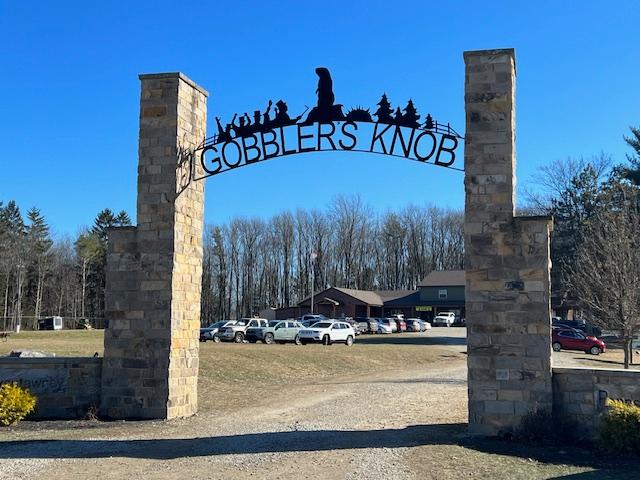
The entrance to Gobbler’s Knob when you arrive in the morning.

“Are you off to see the Groundhog?” is a famous line in the movie “Groundhog’s Day”. The one thing is that the scene in the movie was shot in the square of Woodstock, ID. The real Gobbler’s Knob is located in Punxsutawney, PA, the real home of Phil.

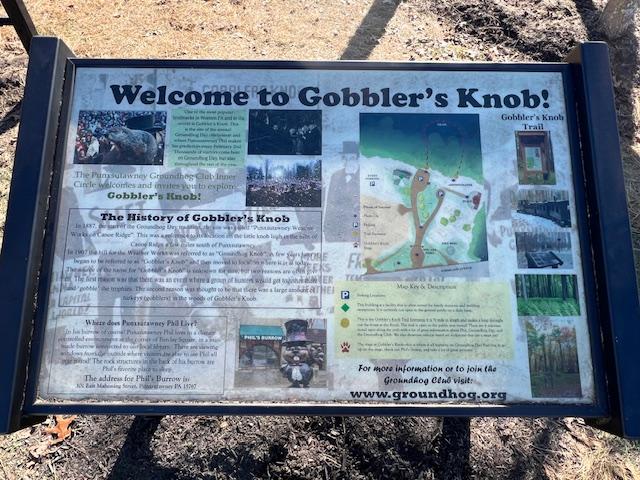
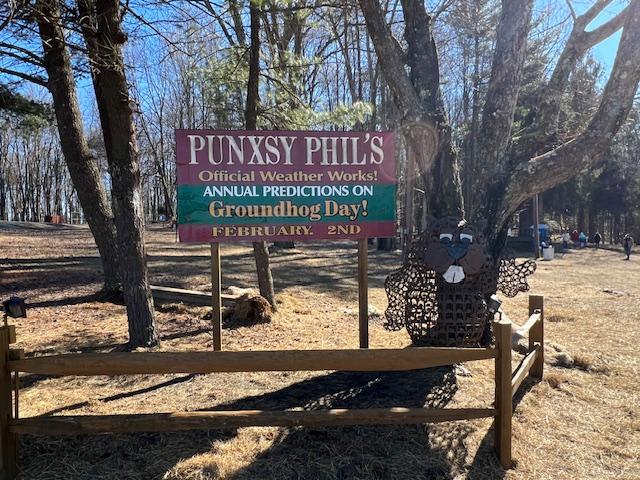
The welcome sign to Gobblers Knob.

Located just outside the downtown (ironically behind a Walmart; talk about progress), Gobblers Knob is located in what was once woods in the back of town has become an open field with a stage, Visitors Center and gift shop. Every years thousands of people flock to this small town literally in the middle of Pennsylvania to see the Groundhog’s Day Festival.

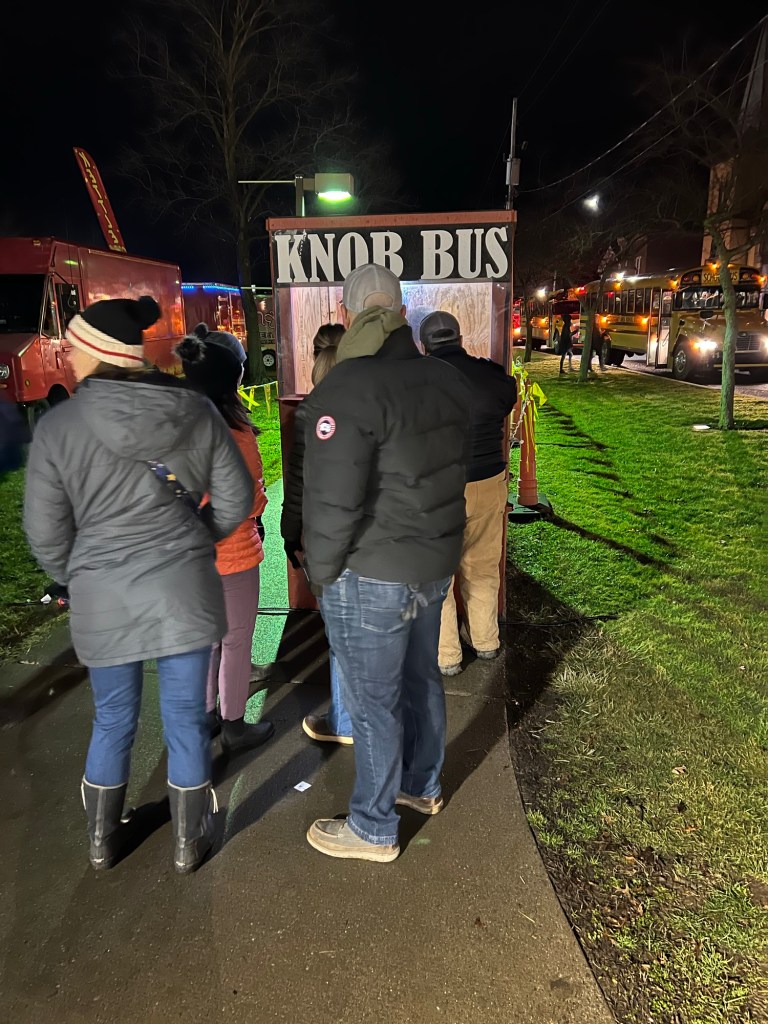
Taking the bus to Gobblers Knob on Groundhog’s Day morning.

Gobbler’ Knob is the famous home of the “Groundhogs Day” festival and swells into a crowd of more than thirty thousand people from all over the world. It is an incredible event to join in.

I attended the festivities here twice. Once in 2016 and again in 2024 and I have to say that it is something you have to do once in your life just to experience the excitement of the morning that Phil sees his shadow.

Arriving in the morning for the prediction.

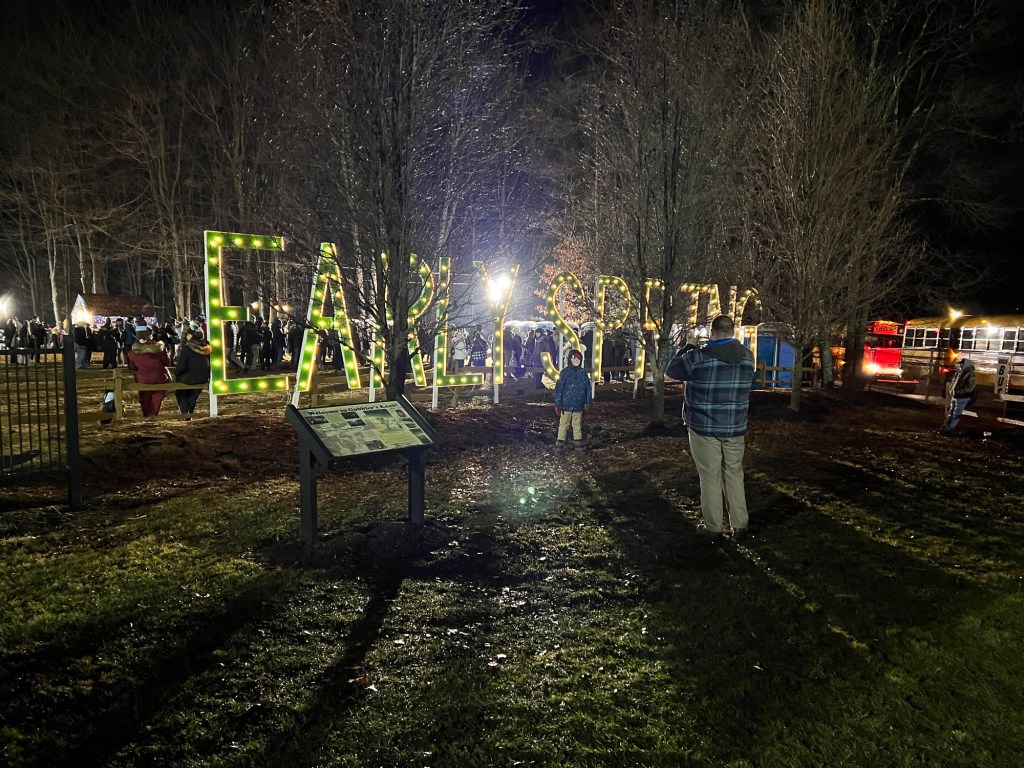
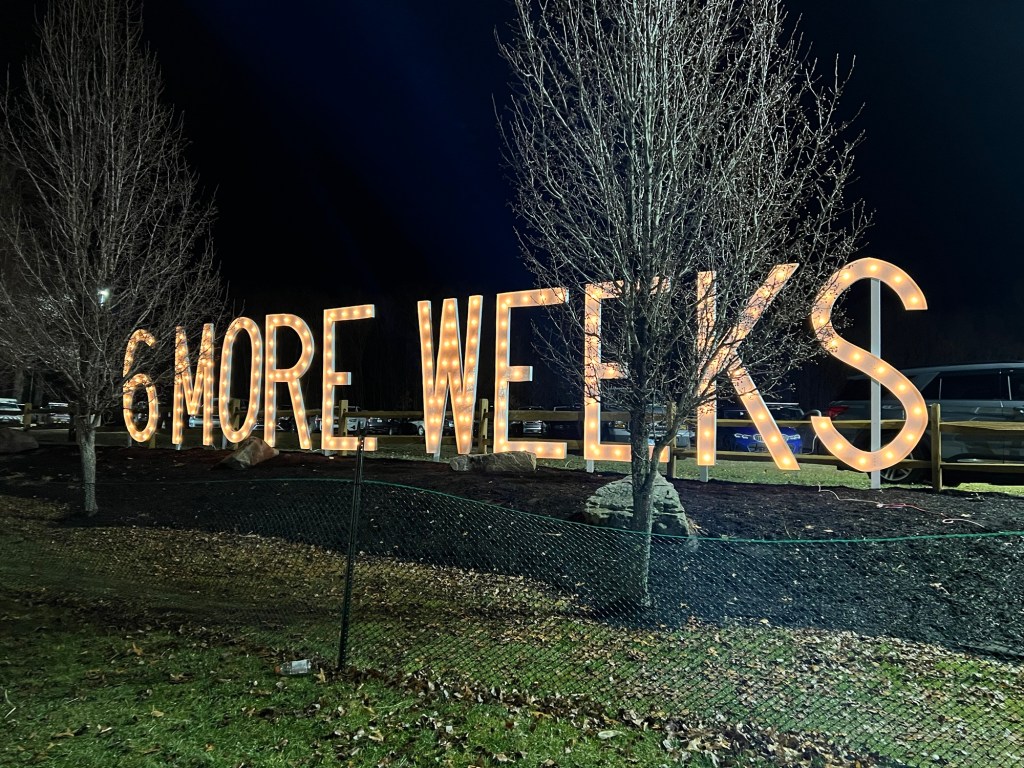
The signs were out and lit for the prediction. No one knew how Phil would react. Would he see his shadow or not?

They emphasize both predictions.

The History of Groundhog’s Day (From the Groundhog’s Club website):

The Christian religious holiday of Candlemas Day has become most commonly associated with the current celebration, but it’s roots are older than that. The celebration started in Christianity as the day, (February 2nd), when Christians would take their candles to the church to have them blessed. This, they felt, would bring blessings to their household for the remaining winter.

As time rolled on the day evolved into another form. The following English folk song highlights the transition to weather prognostication.

If Candlemas be fair and bright,
Come, Winter, have another flight;
If Candlemas brings clouds and rain,
Go Winter, and come not again.

This “interpretation” of Candlemas Day became the norm for most of Europe. As you can read, there is no mention of an animal of any kind in the preceding song. It wasn’t until this traditional belief was introduced to Germany that an animal was introduced into the lore, hence another evolution of February 2nd. If, according to German lore, the hedgehog saw his shadow on Candlemas Day there would be a “Second Winter” or 6 more weeks of bad weather. As German settlers came to what is now the United States, so too came their traditions and folklore. With the absence of hedgehogs in the United States, a similar hibernating animal was chosen. This leads us to yet another evolution in the legend and to present day Punxsutawney.

In Punxsutawney, 1886 marked the first time that Groundhog Day appeared in the local newspaper. The following year brought the first official trek to Gobbler’s Knob. Each year since then has seen a steady increase in participation of the celebration from people all over the world.

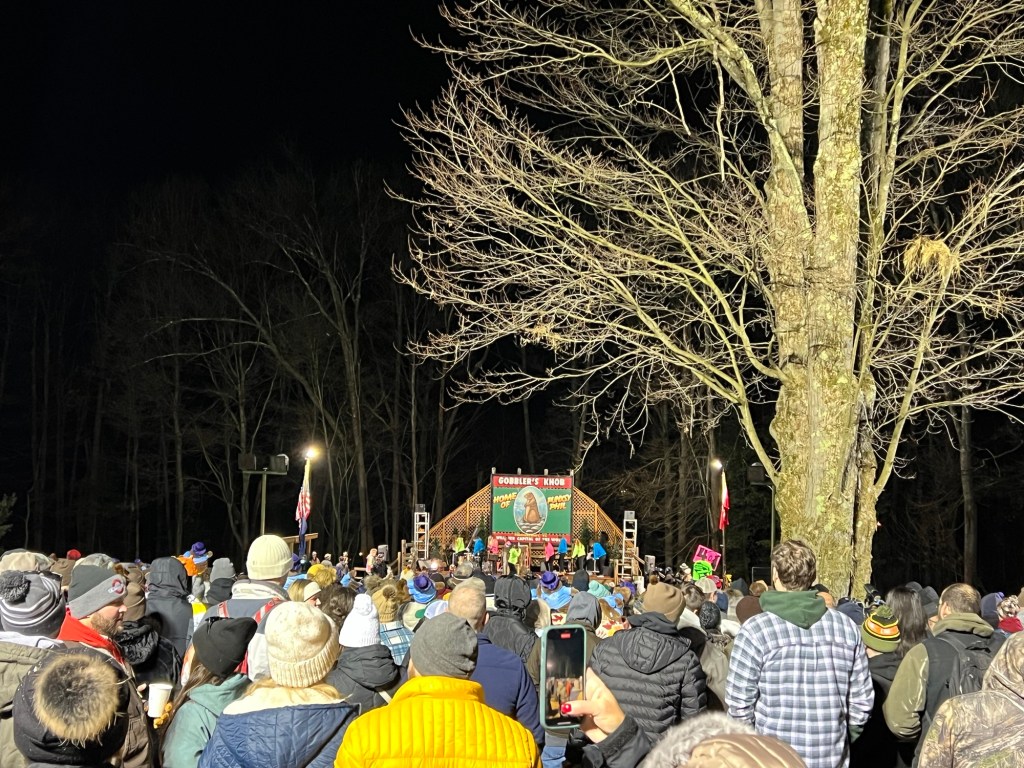
When the knob is full that morning you can feel the excitement of the crowd. From three in the morning until Phil comes out to make his prediction, there are all sorts of bands, comedians and singers to entertain the crowds all morning.

The main stage in the distance.

The crowds get bigger as the morning gets later, most arriving before 6:00am.

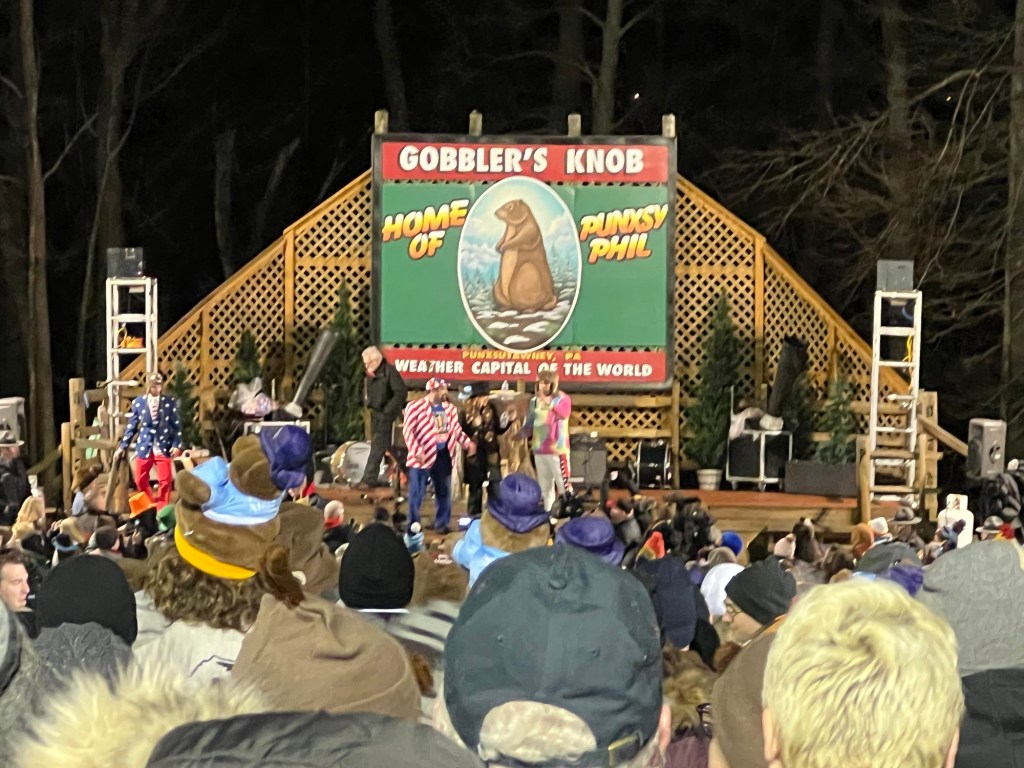
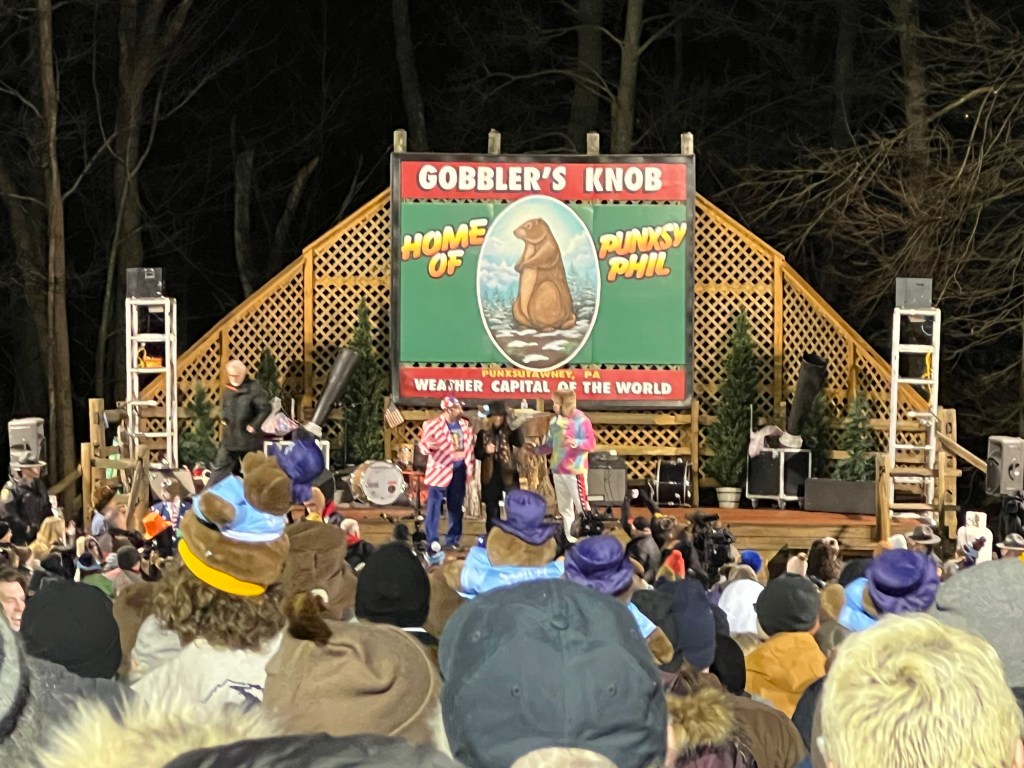
The singers entertaining the crowds.

The stage was always filled with entertainment acts.

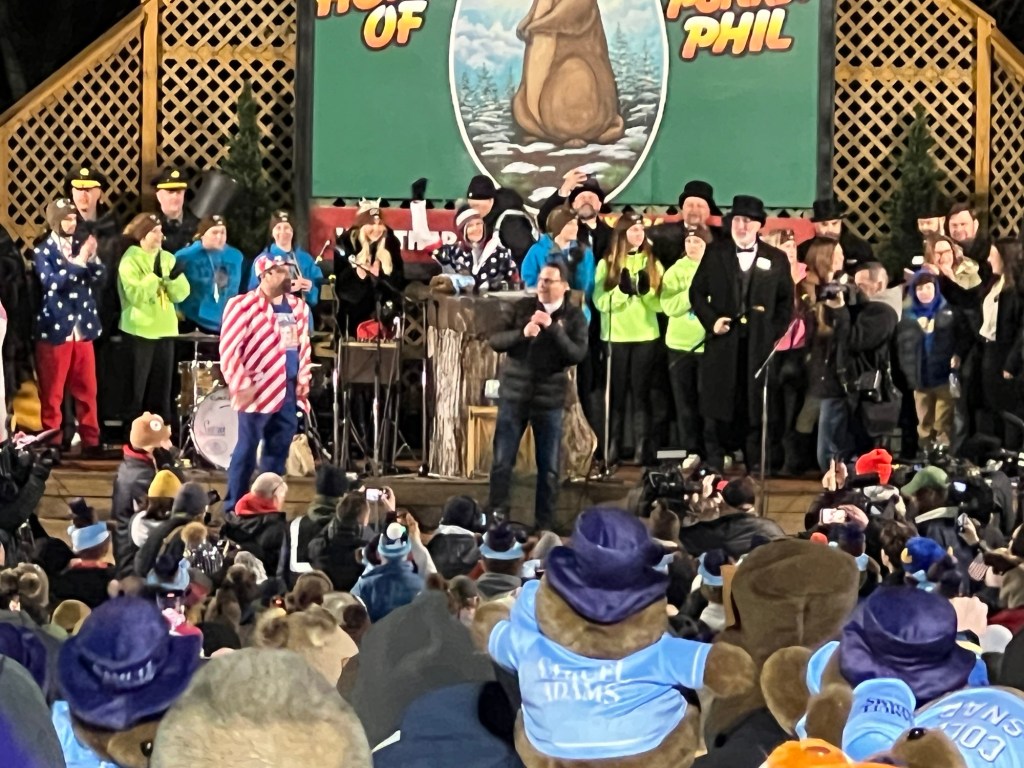
The entertainment for the evening until the top hats arrive and the fun begins. First they are the introductions of the VIPs, like the Governor of Pennsylvania showed up as well as all the other politicians to follow him.

The governor of Pennsylvania talking to the crowd.

Watch my video of Phil seeing his shadow in 2024:

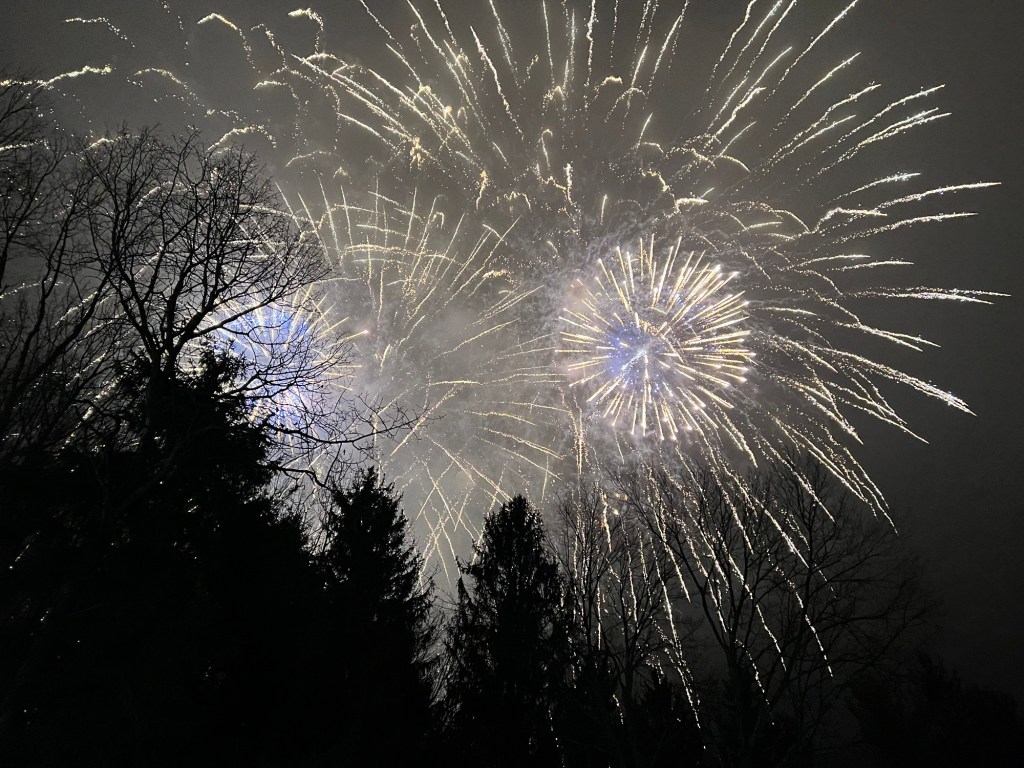
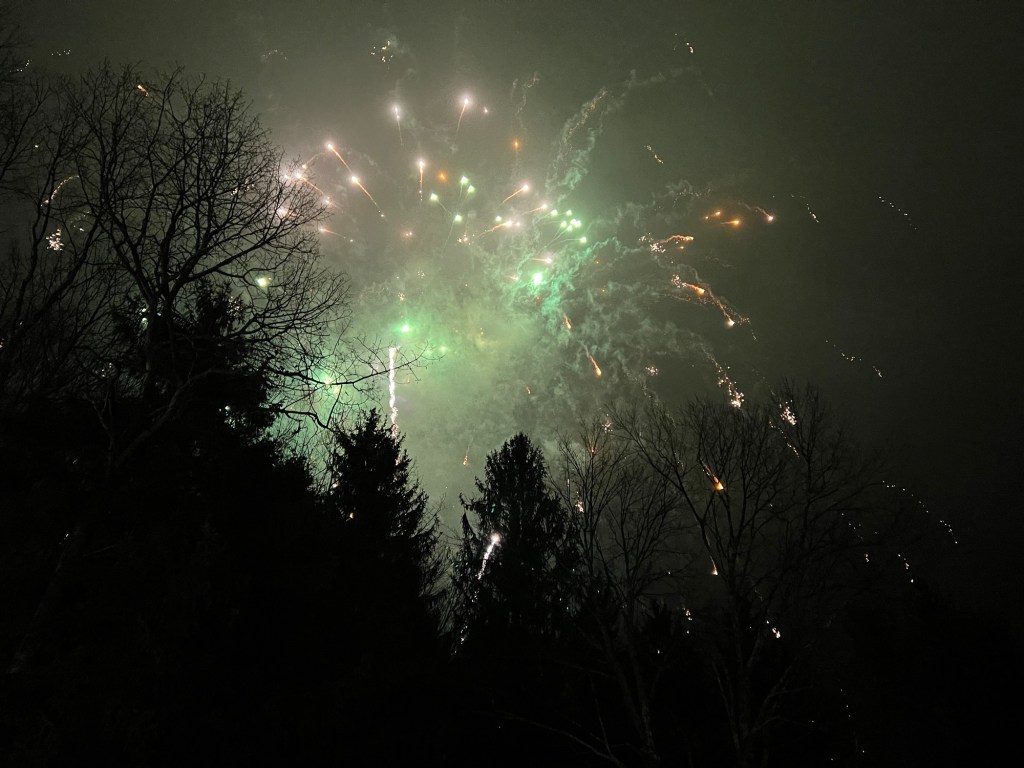
Then there is a fantastic fireworks display. This lasted about a half hour.

The fire works were amazing that morning.

Watch the fireworks display and you will see why you need to be there at 3:00am to enjoy the festivities:

The fireworks display.

The video on the finale was the best:

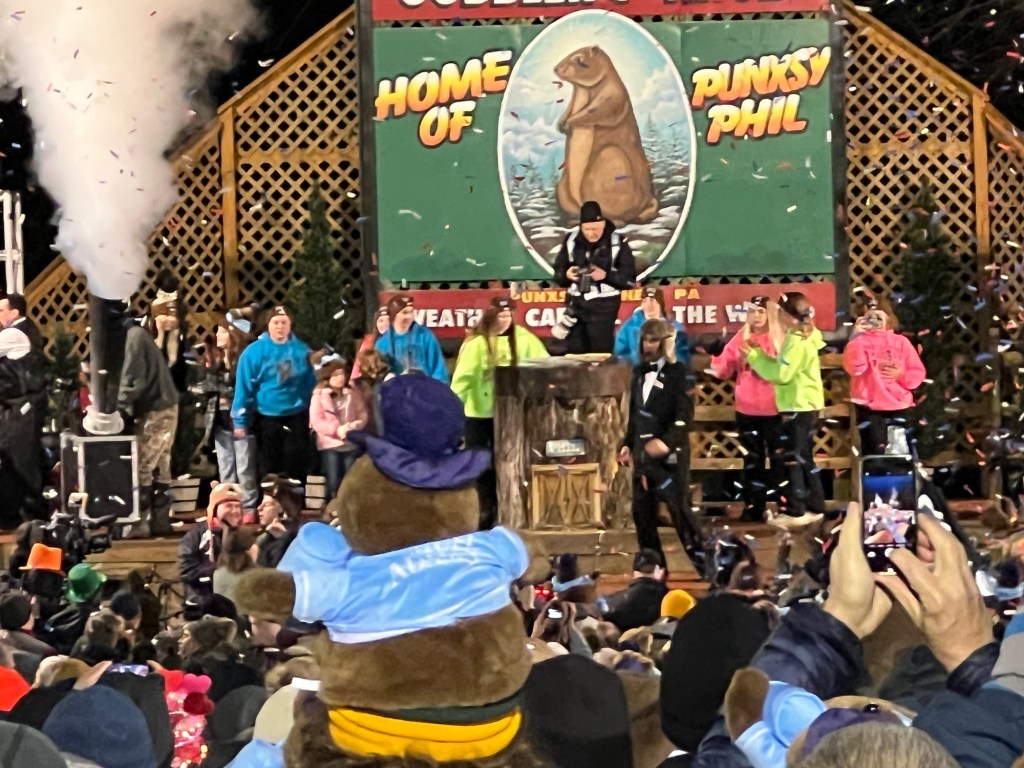
Then the camera’s arrive and it time for the prediction. Will it be an early Spring or will Winter keep going.

It’s time to start the show.

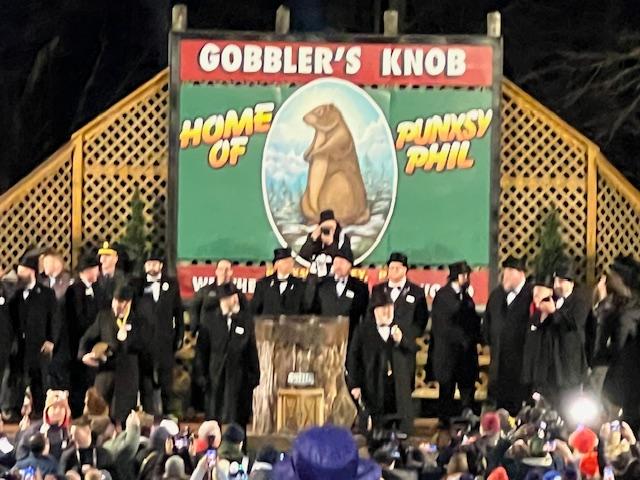
The arrival of the Punxsutawney Groundhog’s Club starts the program.

Phil did not see his shadow in 2024. Spring is on its way!
On the day after Groundhog’s Day, I went back to Gobblers Knob to visit it when it wasn’t so chaotic and crowded. It can magical in its own way in that you see the field and knob empty and realize that people all over the world watch the activities here every February 2nd. It is fascinating to just think about.

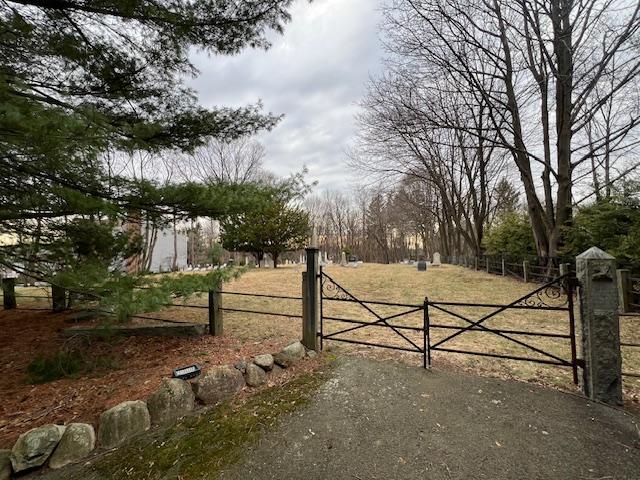
The entrance to Gobblers Knob the Saturday after Groundhog’s Day 2024.

The history of the site.

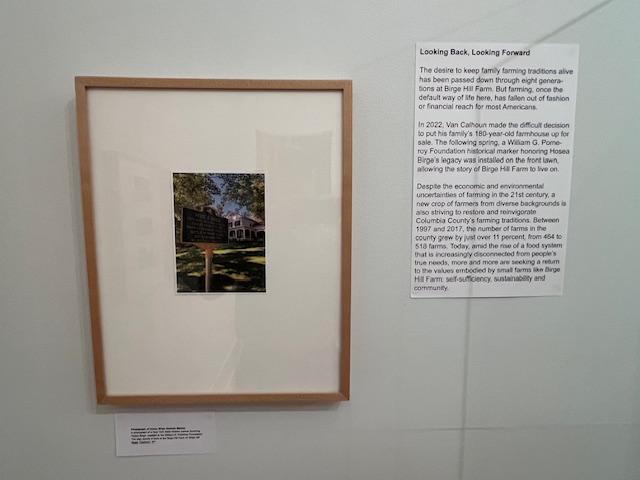
The historical marker of the site.

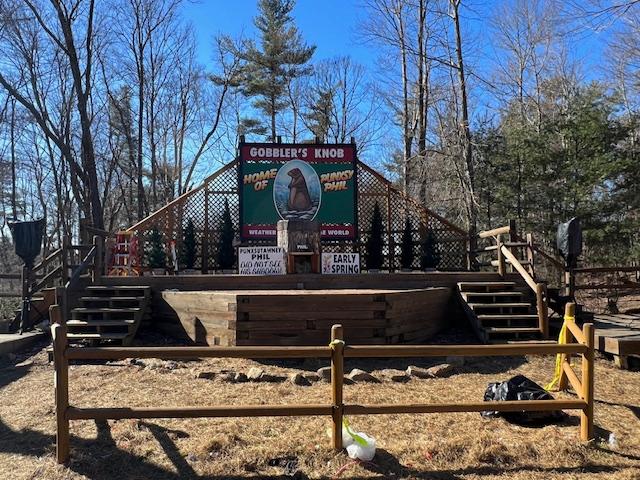
The stage area when it is quiet.

The end of the ceremony on Groundhog’s Day people were still milling around.

Gobbler’s Knob from the stage area.

The entrance display to the field.

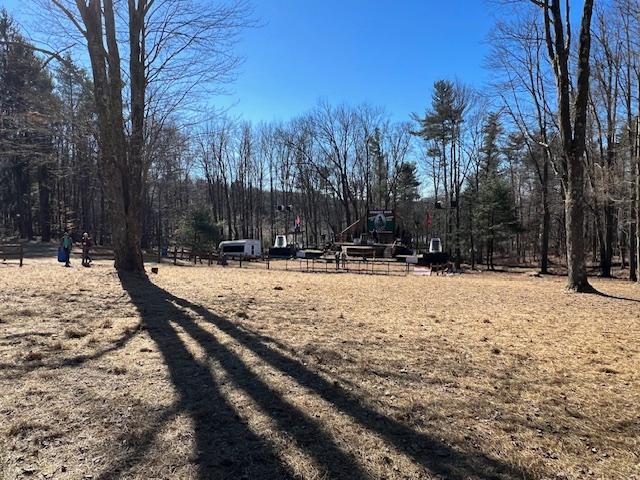
The field when things were quiet after the event the next day.

Groundhogs Day in Punxsutawney, PA is a real experience that you should experience once. To sit out in the field with thousands of others to celebrate the day is a lot of fun. Until next year.

Columbia County Historical Society                       5 Albany Avenue                                   Kinderhook, NY 12106

Columbia County Historical Society 5 Albany Avenue Kinderhook, NY 12106

Columbia County Historical Society

5 Albany Avenue

Kinderhook, NY 12106

(518) 758-9265

Open: Sunday 11:00am-4:00pm/Monday-Friday Closed/Saturday 11:00am-4:00pm

My review on TripAdvisor:

https://www.tripadvisor.com/Attraction_Review-g60899-d12000596-Reviews-Columbia_County_Historical_Society_Museum_Library-Kinderhook_New_York.html

The Columbia County Historical Society Museum

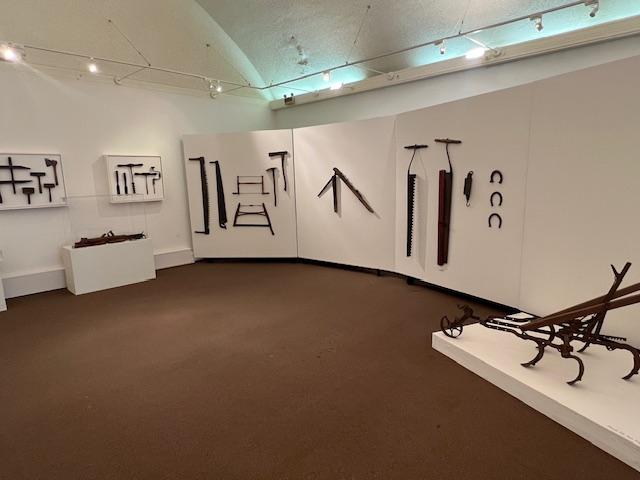
The main building of the Historical Society contains an exhibition on farming. It also contains the society’s library and genealogy center.

The James Vanderpoel House Museum

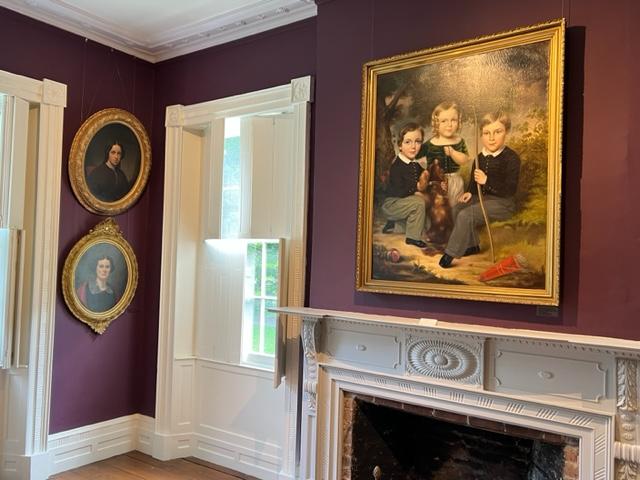
The afternoon I visited the society, the Vanderpoel House was the only building open but it was interesting to visit. I saw the early American portraits.

History of the House:

One of the finest examples of Federal architecture in Columbia County, the James Vanderpoel House was constructed circa 1819–1820 for prominent Kinderhook lawyer and judge James Vanderpoel. 

Trimmed with marble and built with local brick, the side-gabled structure has two stories, five bays, and rests on a fieldstone foundation. Symmetry and graceful architectural details are found throughout the home. Purchased by the Columbia County Historical Society in 1925, the property is now preserved as an exhibition space showcasing paintings and decorative arts from the CCHS permanent collection and is home to the CCHS Museum Store & Bookshop (CCHS website).

There are two exhibitions going on right now:

New York Portraits from the permanent collection:

Columbia County’s painted portraiture legacy spans more than three centuries of historically significant or artistically important works by self-taught, naïve and itinerant painters, as well as important artists of the time, and including some of the earliest works in America.

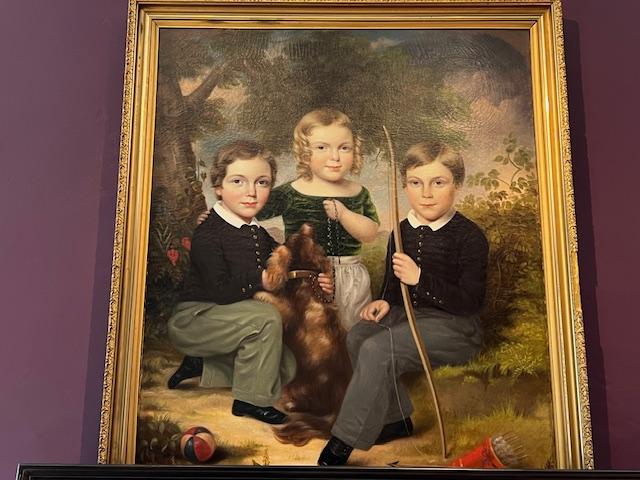
In the Portraits of the Permanent Collection shows us how the middle to upper middle class in the early years before photography was created to be remembered. Portraits were the best way to show the families wealth and prestige in the community plus keep families legacies alive. Today many of these families descendants don’t know what to do with them. This is our benefit that we can enjoy these private works of art.

Portraits from the Permanent Collection sign

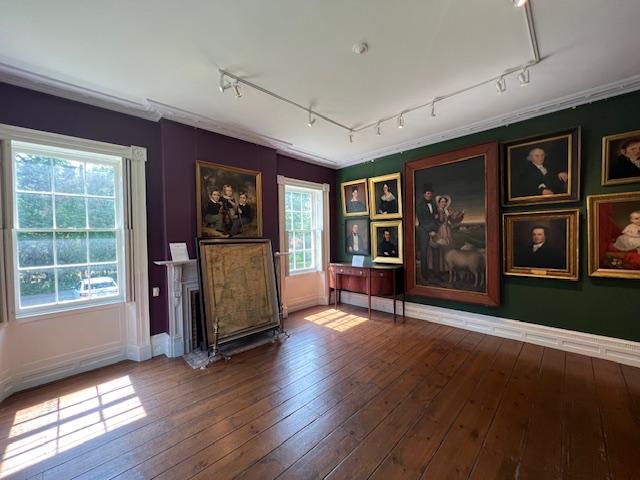
The Gallery

The Gallery

The New York portraits in the collection

The New York Portrait Collection exhibition

The Portrait Collection-Children’s Portrait

Part of the Portrait and Federal Style exhibitions

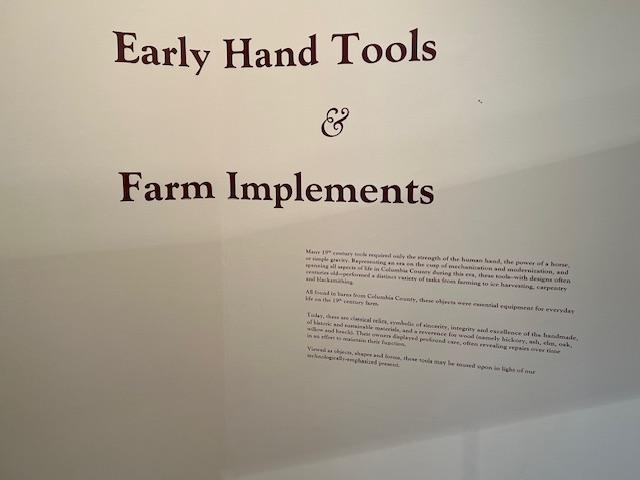
Early Hand Tools & Farm Implements: the permanent collection

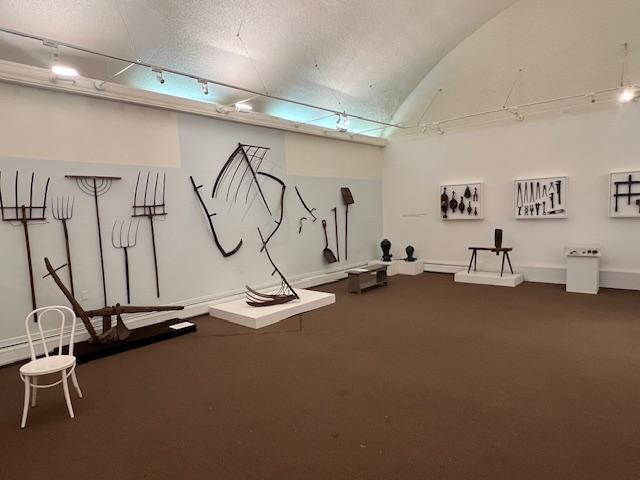
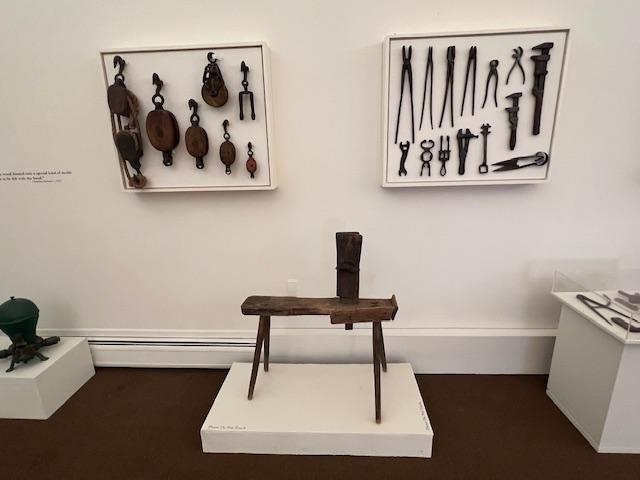
In the main building, there is also a permanent collection of farming equipment and the development of family farms in New York State. It shows how the agricultural profession has changed from doing everything by hand when farms catered solely to the family to the commercial farms that developed after the Civil War that found new markets for their products. Automation grew the industry but its start with equipment shows how much the process really hasn’t changed that much. It is a very thought provoking exhibit on how industries progress.

The “Early Hand Tools & Farm Implements” exhibitions

The farming equipment galleries

The farming equipment galleries

The farm equipment at the turn of last century that has not changed much to today.

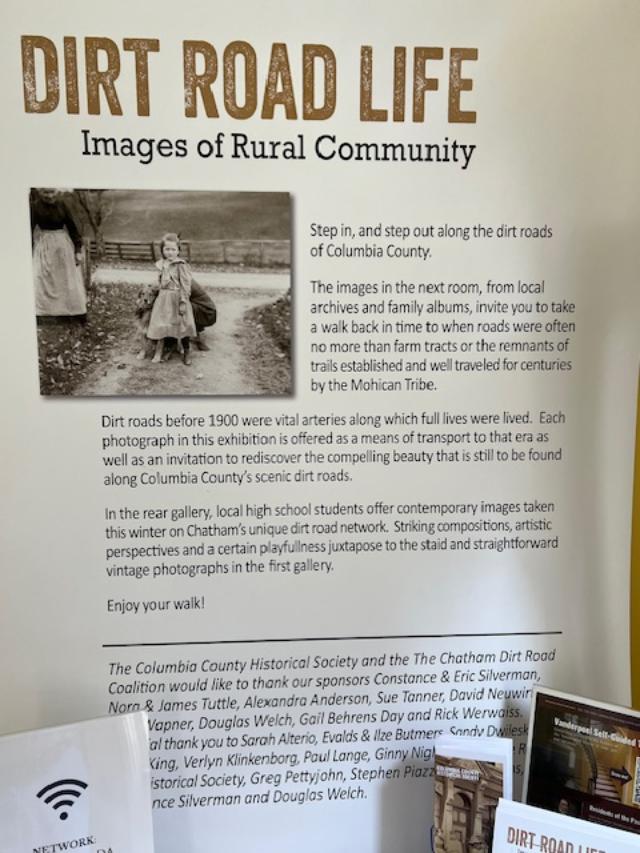
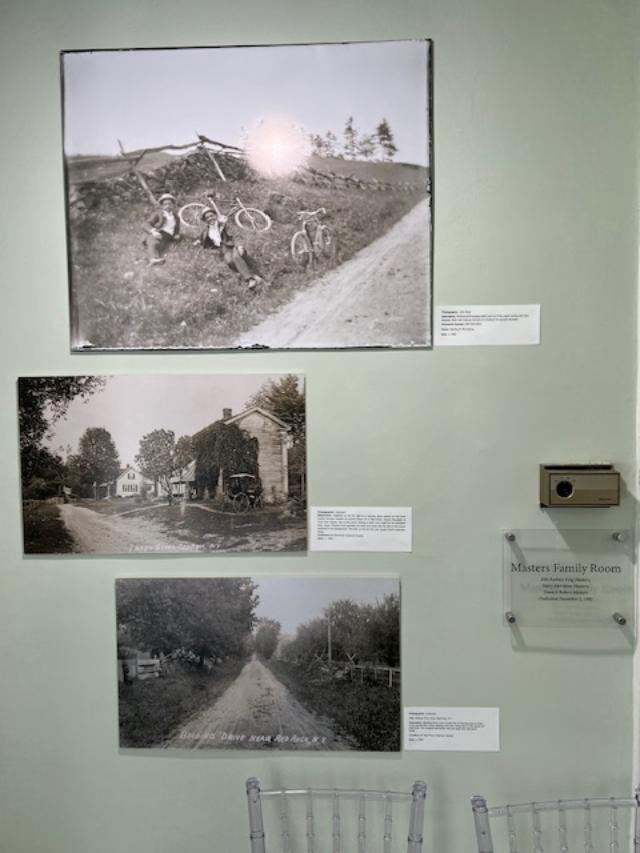
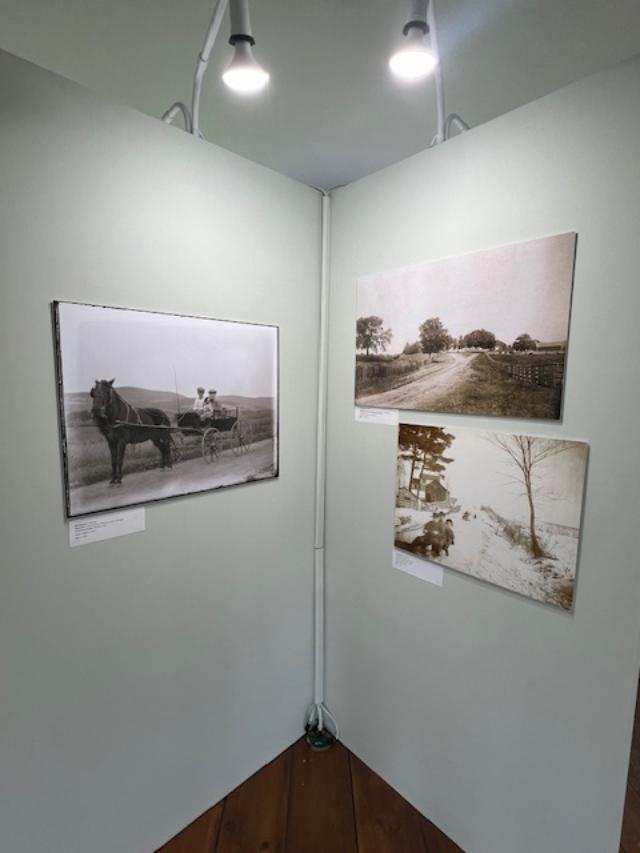
The new exhibition “Dirt Road Life: Images of Rural Community” again shows how life has progressed in this country.

The description of the exhibition and collection of the artwork:

(From the museum website):

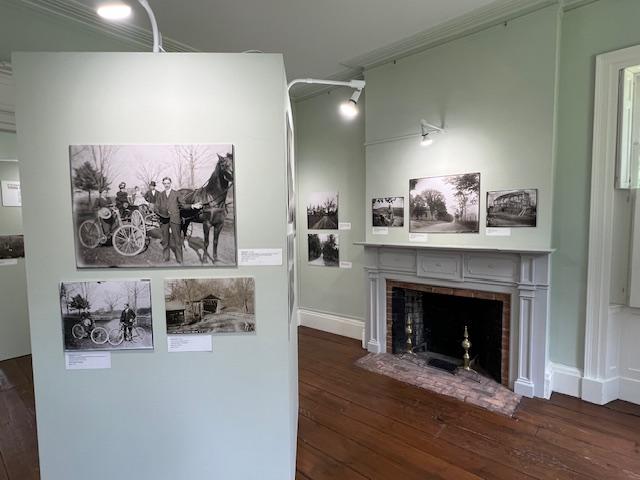
In this exhibit an extensive collection of vintage photographs provided by CCHS and Red Rock Historical Society that document what life was like along these dirt roads a century ago are complemented and contrasted with local high school students’ photos of contemporary winter scenes along Chatham’s unpaved network of roads.   The students’ photographs, curated by nationally celebrated photographer Paul Lange, are drawn from a body of work that is the brainchild of Ichabod Crane art teacher Sandy Dwileski.  Dwileski saw an artistic opportunity—winter road scapes rich in subtle hues, shadow contrasts and complex compositions—and set about organizing an outing with her advanced photography class to follow the system of roads mapped by the Chatham Dirt Road Coalition and photograph the journey.

The new exhibition “Dirt Road Life: Images of Rural Community”

The gallery exhibition on “Dirt Road Life”

Pictures from the exhibition

Pictures from the exhibition

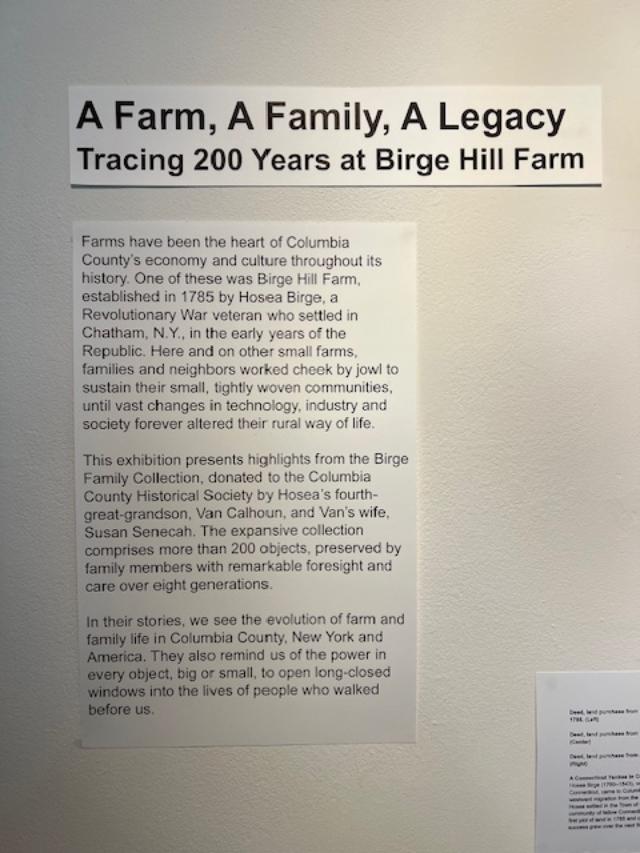
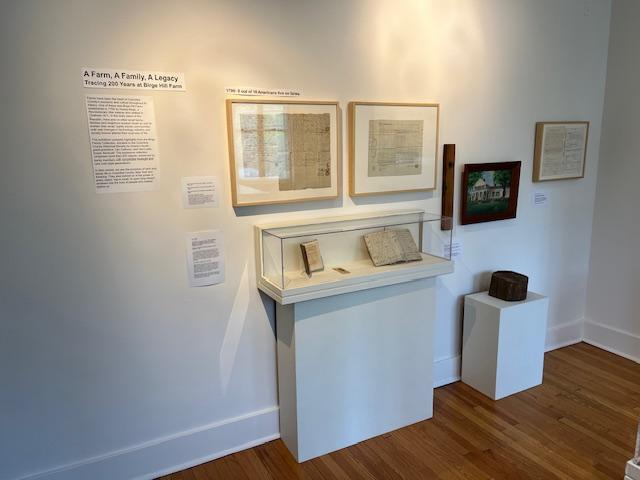
The next special exhibition at the museum was the “A Farm, a Family and a Legacy”:

(from the museum website)

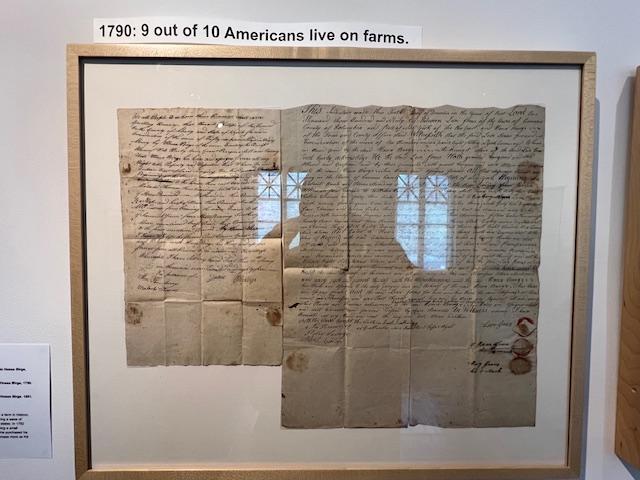
Farms have been the heart of Columbia County’s economy and culture throughout its history. One of these was Birge Hill Farm, established in 1785 by Hosea Birge, a Revolutionary War veteran who settled in Chatham, N.Y., in the early years of the republic.

The write up on the exhibition

The deed to the original farm

Here and on other small farms, families and neighbors worked cheek by jowl to sustain their small, tightly woven communities, until vast changes in technology, industry and society forever altered their rural way of life. 

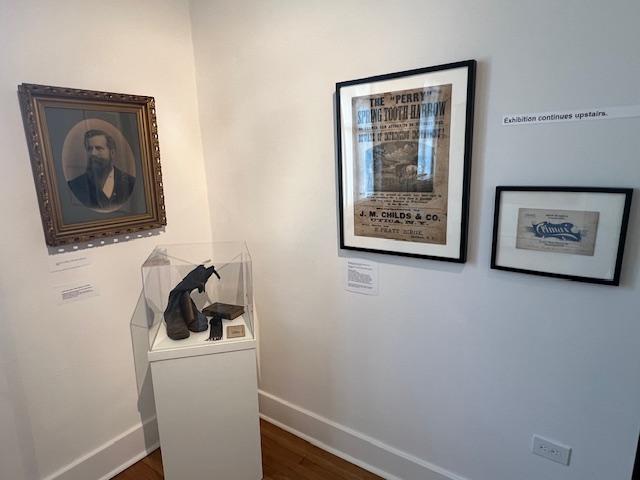
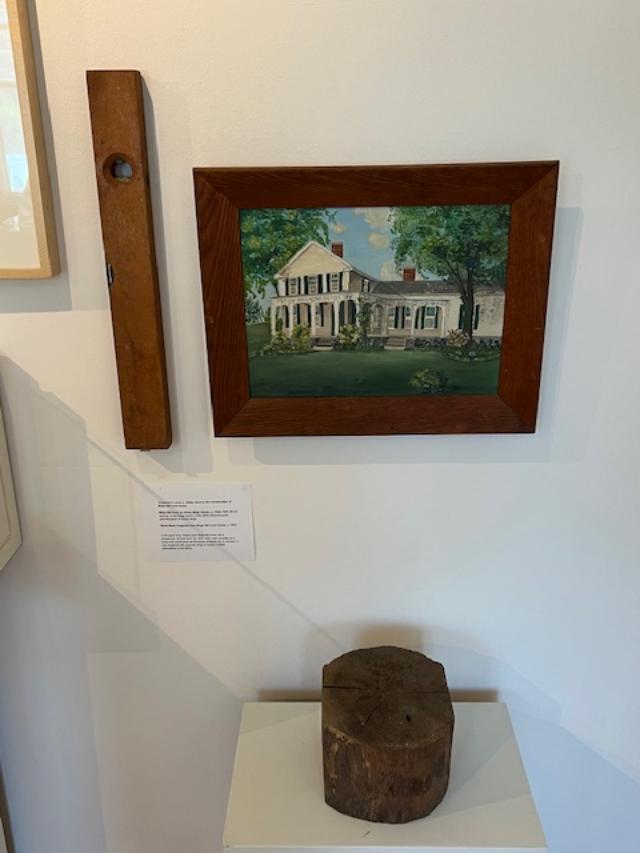
The Birge Family artifacts in this interesting exhibition of family life on a multi generational farm

The farm is currently for sale

This exhibition presents highlights from the Birge Family Collection, donated to the Columbia County Historical Society by Hosea’s fourth great-grandson, Van Calhoun, and Van’s wife, Susan Senecah. The expansive collection comprises more than 200 objects, preserved by family members with remarkable foresight and care over eight generations. In their stories, we see the evolution of farm and family life in Columbia

The family heirloms

The current farmhouse of the family’s

The exhibition was interesting in that it must be hard for a family giving up a way of life and a home that has been in the family for 200 years. It was nice of the family to let us in and see their life in this exhibition.

Federal Style: Refinement, Grace and Symmetry:

America’s newly founded nation beamed with patriotism following its victory in the Revolutionary War. The original foundations of the United States government and culture immediately following its independence is known as the Federal Era (1780–1830).

George Washington and other American icons looked toward the Classical ages of Greece and Rome in forging an identity for the young American Republic through architecture, furniture, textiles, ceramics and works of art. Neoclassical designs and motifs are distinguished through simple lines, a satisfying balance of symmetry and overall elegance that signals strength and democracy. In celebrating 200 years of the James Vanderpoel House, we present its Federal architectural excellence along with diverse material culture representing characteristics of the Federal Style and era in Columbia County and America (CCHS website).

The other buildings that are part of the Society’s museum:

Signage at the Historical Houses

The Crane Schoolhouse

This authentic, circa-1850 one-room schoolhouse served as a public school for the Town of Kinderhook into the 1940s. It replaced an earlier “log cabin-style” single-room school where a man named Jesse Merwin served as school master. Merwin, who was a longtime friend of the writer Washington Irving, is said to have been the “pattern” for Irving’s character of Ichabod Crane in “The Legend of Sleepy Hollow.”

A “Legends & Lore” historic marker, awarded by the New York Folklore Society and William G. Pomeroy Foundation, stands a few yards from the school and commemorates this literary connection. Today, the Ichabod Crane Schoolhouse is a seasonal museum. See exhibitions, period school desks and other objects relating to one-room schoolhouse education in Columbia County.

During the 1950s and ’60s, it was saved from disrepair by a group of local women who retrofitted the space to function as an ad hoc community center. In 1952, former first lady Eleanor Roosevelt visited the schoolhouse to deliver a radio address praising “the work of women” and recognizing their efforts to preserve the historic school.

In 1974, the schoolhouse was moved 200 yards down the road to the Luykas Van Alen House site. That same decade, it was restored to its 1930s appearance. It remains an excellent and intact example of a rural, one-room schoolhouse with a gable roof, clapboard siding and a single pent-roofed entrance. The interior consists of a large classroom with two adjacent cloakrooms — one for boys and one for girls. The building was never modified to have heat or hot water and still retains its original 1929 wood-burning stove, wood flooring, chalkboards and double-hung sash windows(CCHS website).

Luykas Van Alen House

Built circa 1737 and designated a National Historic Landmark in 1967, the Luykas Van Alen house is recognized as one of the best examples of fewer than a dozen historically intact Dutch Colonial houses in the Hudson Valley. 

Located on rural land once used by native Mohican peoples for hunting and seasonal camping, the house was the center of a prosperous farm and home to several generations of the Van Alen family. The last Van Alen descendant to live in the house, Maria Van Alen Herrick, died in 1935. The house was purchased in 1938 by William Van Alen, a descendant of Luykas’ brother, Johannes. In 1964, unable to undertake extensive restorations himself, William generously donated the house to Columbia County Historical Society (CCHS website).

The signage by the Van Alen House

The Century Museum and Collectors Association         Dutchess County Fairgrounds                                               6636 Route 9                                                                Rhinebeck, NY 12572

The Century Museum and Collectors Association Dutchess County Fairgrounds 6636 Route 9 Rhinebeck, NY 12572

The Century Museum and Collectors Association Dutchess County Fairgrounds 6636 Route 9 Rhinebeck, NY 12572

(845) 876-4000

https://centurymuseum.wixsite.com/home

Dutchess Fair Features

Open: When the fairgrounds are open Spring, Summer and Fall for events

Admission: Free

My review on TripAdvisor:

The Century Museum Village inside the Dutchess County Fairgrounds

When the Dutchess County Fairgrounds are open for the season for big events in the Spring, Summer and Fall, the fairgrounds open their historical museums that are located on the property. These include the School House Museum and the Train Station Museum and the when the volunteers are there the Dutchess County Volunteer Firemen’s Museum. The main museum is the Century Museum Village, a look at rural life in Dutchess County at the turn of the last century.

The Schoolhouse Museum in the Century Museum Village

The Train Station Museum at the Century Museum Village

The Century Museum Village gives an interesting look of the changes in life in rural communities all over the United States until the start of WWII. Farming communities had their own way of life, their own clubs and organizations and traditions that were different from City residents. Life on the farm was productive but hard work. As time rolled on, modern conveniences found their way to these communities but as we see by all the machinery, there was still a lot of work to done.

As you progress through the different displays and dioramas, you can see how life improved over time. Progress swept through these communities between WWI and WWII and with the spread of the second industrial revolution after WWII and the change of the consumer market. The advent of the modern highways, the newly built suburbs and movement out of the cities changed these regions even more.

The entrance of the museum and the various dioramas

The museum is lined with different displays of life in the rural community and the advancements made in these communities between about 1880-1930.

The Advancement in farming practices and equipment

The Milk Man buggy

Ice block industry for refrigeration

The household for the farmhouse wife started to become easier with new machinery to help around the house. Modern ways of washing clothes, cooking food and cleaning the house started to make life a bit easier in the household. This left time for a social life and to tend to other things around the house.

The Modern Conveniences of the home

The modern household items to make life easier from 1870-1929

The modern kitchen before electricity came out to the country was still run by coal and wood. Modern electricity would not start until after WWI and even then was not available to everyone. Cooking and washing had gotten easier but still required some work on a everyday basis.

The Kitchen in the Country

The home decor had changed after the Civil War to WWI with the changes in mass production and industrialization. Furniture, rugs, lamps and pictures had become available in all makes and sizes for sale both through catalogs and General stores or maybe a trip to the City to a Department store. People were able to furnish their homes nicer due to mass production and changes in quality of home furnishings.

The Rural Bedroom

Bedrooms have not changed much since then

The idea of the Parlor is equivalent to our modern Living Room. It is usually the room that all socializing is done in, where the family’s best furniture and knick-knacks were placed. It was the nicest room in the house.

The Rural Parlor

The finest home furnishes and the pride of the home was displayed in the parlor.

Both inside and outside the home there would be changes in the way people lived over a fifty year period. There would be changes in plumbing, carpentry and printing. Modernization would change the way people did their jobs and the way they interacted with their customers.

Modern Machinery

A better way to chop wood

Modern pump processes

Shopping was beginning to change after the Civil War as well. The days of people making everything at home was not longer necessary as more and more consumer items became available. Clothing, dishes, toys and hardware could be bought at the General store along with prepared and bakery items. It made life for the rural housewife easier.

The General Store

Prepared items in the General Store

The bakery items and things for sale at the General Store

Quilting has always been a social affair with women meeting and gossiping while working on projects on their own or one big project for the home.

Women working together making quilts and sewn items for the home.

Crocheting for the home

Use of Looms for clothing and rugs

Modern printing took a turn as more modern machines made it easier to produce printing items for playbills, newspapers and magazines. The end of the WWI our modern magazines were being created. The way trades were changing more modern equipment was being used in every industry.

The Printing Press as things start to automat

The Clock Maker

Wood Harvesting

Transportation continued to improve as we moved from the horse and buggy to the modern carriage to the automobile. Improvements continued when mass production started with the Model T Ford and just kept improving. Still even today we like the idea of horse drawn carriages and sleigh rides as a traditional part of our past that we like to maintain especially during the holidays.

Horse Drawn carriages and Model T’s

The Modern modes of transportation

The Outhouse

The School House Museum:

The Modern School has not changed much since its rural past. I just think you can’t hit a student with a ruler anymore and I could not see a student with a Dunce cap in today’s politically correct world. The blackboard has not gone out of style as well as a teacher teaching the next generation.

The One Room School House Museum

The school room set up still remains the same to a certain point.

The Teacher still leads the class

I don’t think would happen to the modern student

The One Room School House set up.

The Schoolhouse Museum

As the museum shows us, somethings have changed and some things remain the same. At some point, we did things right.

The Train Museum

The Pleasant Valley Train Museum at the fairgrounds is a simulated train station that was moved here from the old site. Inside it has been renovated to reflex train travel at the turn of the last century with artifacts from the time period from the late 1800’s to the early 1900’s. You get to see what life was like for the station manager and passengers at that time.

The Pleasantville Train Museum at the Dutchess County Fairgrounds

The hand cart at the turn of the last century.

The inside of the train station.

The train manager’s office at the Train Museum.

The Luggage Room at the Train Museum.

Artifacts at the Train Museum.

Artifacts from the train lines at the Train Museum

Day Two Hundred and Eight: Private Members Museum nights at the Met and the Museum of the City of New York and American Museum of Natural History November 29th, December 2nd and 12th, 2021

Day Two Hundred and Eight: Private Members Museum nights at the Met and the Museum of the City of New York and American Museum of Natural History November 29th, December 2nd and 12th, 2021

Members Nights are one of the best features that you can enjoy at any museum.

This is the benefit of joining a museum as a member!

jwatrel's avatarmywalkinmanhattan

I put my walk of the Garment District on hold as many of the museums are having their Private Members nights before the holidays get into the full swing. It gives the members a chance to really enjoy the museums before the City gets crazy with tourists and people are beginning to return to the City.

Metropolitan Museum of Art at 1000 Fifth Avenue

https://www.metmuseum.org/

My first event that I attended was “The Met After Hours” event. It was a well-attended event that members were able to explore the first floor at their own leisure for three hours.

The Invitation to the Met

https://www.metmuseum.org/

It really was a wonderful night. First it was a warm and clear evening and you could see the stars because it gets dark at 5:00pm. We as members got to the museum before 5:00pm and waited in a long line by the Member’s Entrance on…

View original post 1,933 more words