Tag: bergencountycaregiver

Samuel Dorsky Museum of Art State University of New York at New Paltz 1 Hawk Drive New Paltz, NY 12561

Samuel Dorsky Museum of Art

State University of New York at New Paltz

1 Hawk Drive

New Paltz, NY  12561

(845) 257-3844

http://www.newpaltz.edu/museum

Open: Wednesday-Sunday 11:00am-5:00pm/Closed on Monday & Tuesday

Fee: Suggested fee is $5.00

My review on TripAdvisor:

https://www.tripadvisor.com/Attraction_Review-g48245-d10130343-Reviews-Samuel_Dorsky_Museum_of_Art-New_Paltz_New_York.html?m=19905

The Arts Center at SUNY New Paltz in New Paltz, NY

The Samuel Dorsky Museum on the SUNY Campus
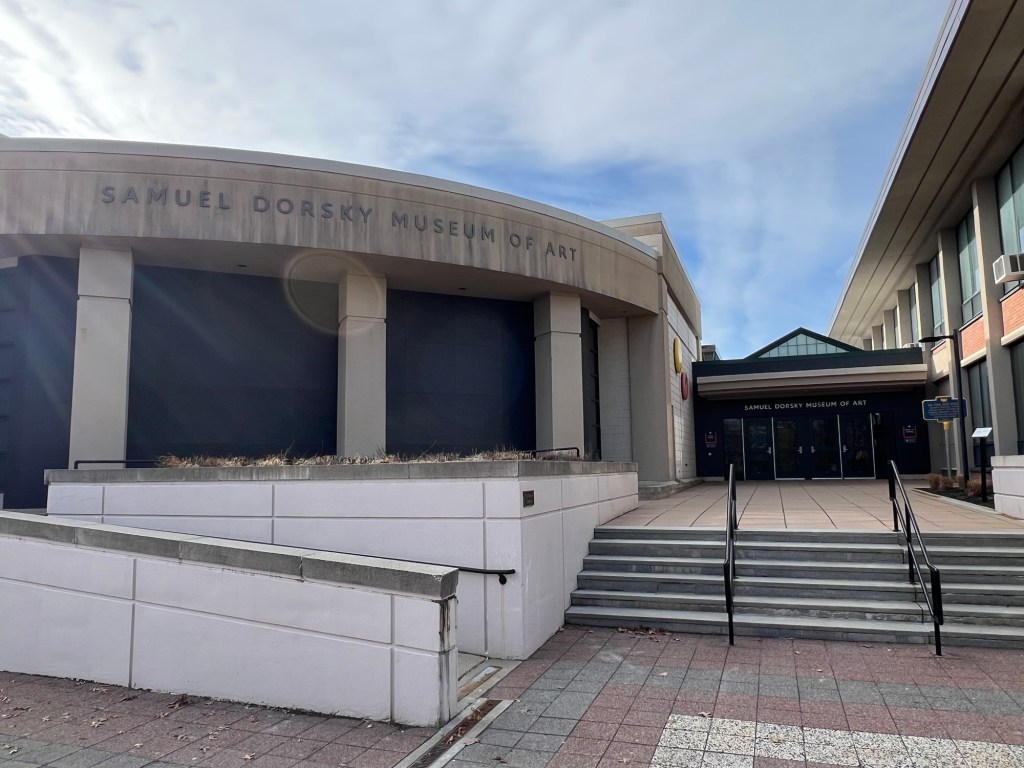
The entrance to the museum

The entrance to the Dorsky Museum

I visited the Samuel Dorsky Museum of Art in New Paltz, NY in 2019 and found it to be an interesting little museum that covers a lot of fields of art from ancient art to paintings and photography. The current exhibitions include “Just my Type: Angela Dufresne” and “In Celebration: A Recent Gift from the Photography Collections of Marcuse Pfeifer”. There is also a exhibition of a local institution “Mohonk Mountain House at 150”, which is on the history and progression of the development of the Mohonk Mountain House Hotel.

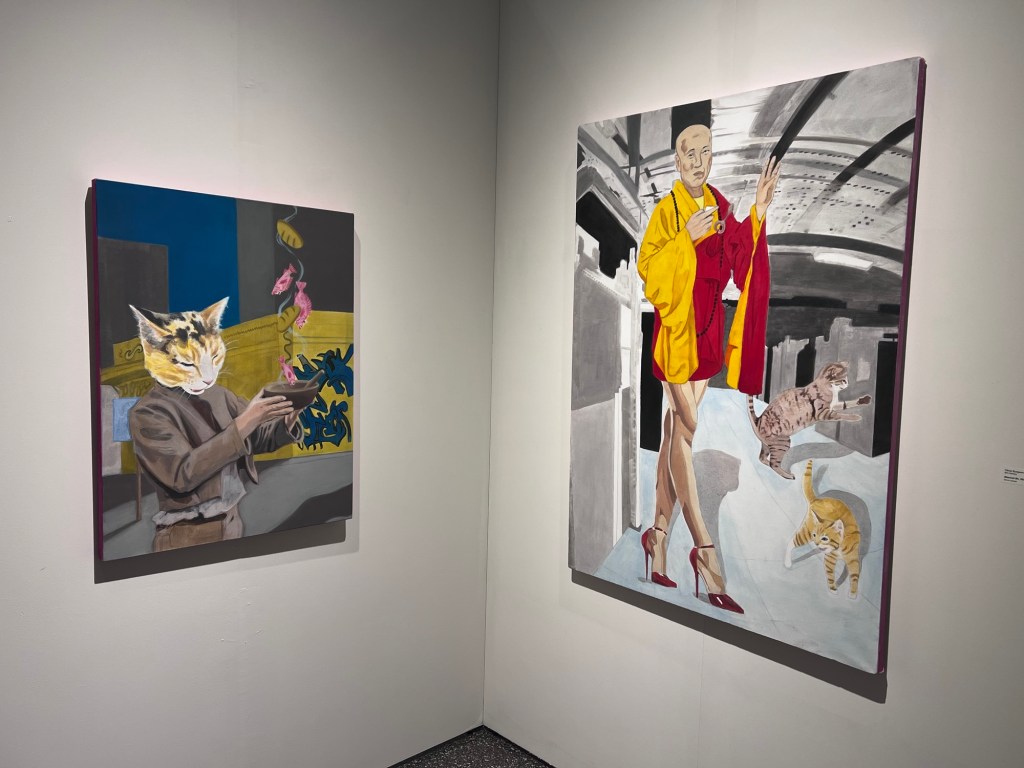
The Angela Dufresne exhibition was created by the artist of people who are the artist’s friends, family and of her community which are colorful and somewhat exaggerated views of people and their expressions. These giant colorful paintings had different expressions on their faces where you can only guess what the sitters were thinking.
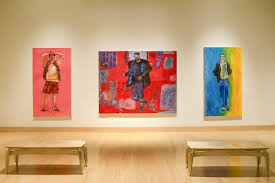
Dorsky Museum III

The Angela Dufresne Exhibition

The photo collection of former gallery owner Marcuse Pfeifer, who has now relocated to the Hudson River Valley addresses the 19th and 20th Century that explore celebrity, location and life in the City. It has some interesting looks of life at a different time as well the expression of the subjects.

I went to the museum recently to see both the “Collecting Local: Twelve years of the Hudson Valley Artists Annual Purchase Awards” and “Jan Sawka: The Place of Memory” which were both interesting exhibitions both extended because of the campus being closed for the COVID-19 pandemic.

The “Collecting Local: Twelve Year’s of the Hudson Valley Artists” exhibition

The nice thing about the Dorsky Museum is its dedication to the Hudson River artist. “Collecting Local” is an exhibition that highlights the accomplishments and collections of the current artists from the Hudson Valley region and showcases their interpretations of art. It is nice to see not just local artists shine but what is being shown at the local galleries around the area.

Jan Sawka is a Polish born artist who was exiled from the county and settled into the Hudson River Valley with his family. His works were taken from the context of being a stranger in a new country.

Jan Sawka’s painting dedicated to his mother in law

Jan Sawka’s painting from his time living in Asbury Park, NJ

The museum offers also objects from the permanent collection and showing the areas in which the museum has collected in the past and currently. There is anything from a Warhol photo to ancient Chinese and Japanese statuary.
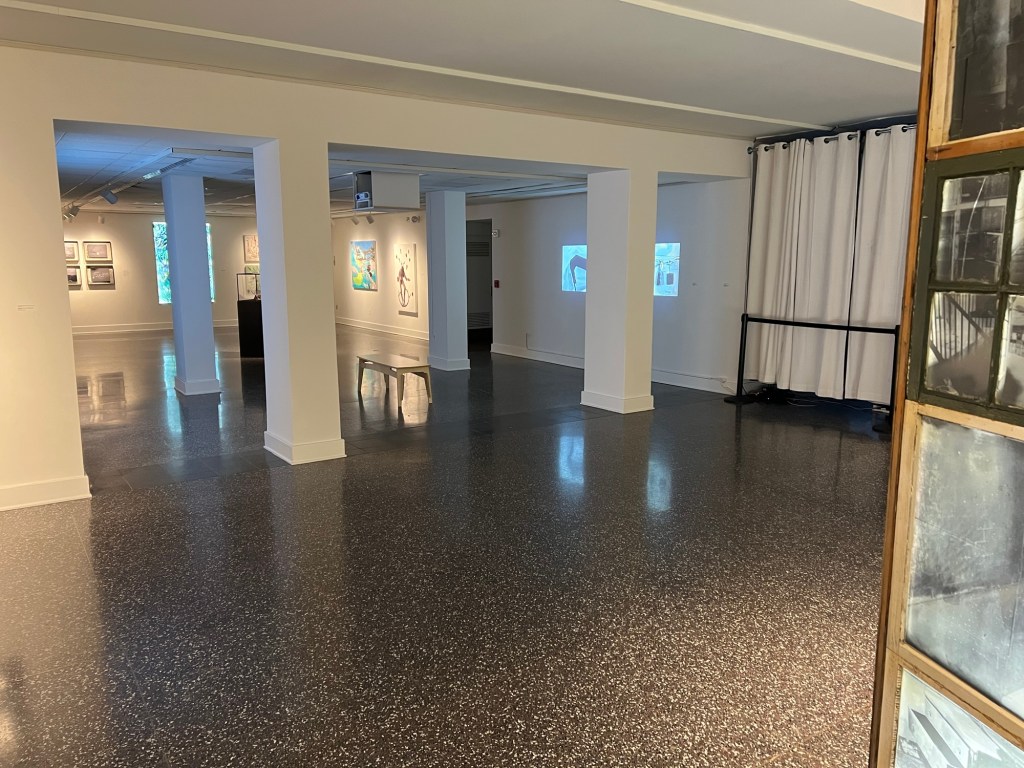
The Museum’s permanent collection

The collections rotate every season. The museum was closed when the college was closed during COVID from 2020-2021. It reopened when the campus fully opened in 2022. I finally got back to the museum in 2025 and saw the show “Movement” featuring New York City and State artists.

The exhibit ‘Movement’

The galley for the exhibition for ‘Movement’

This year’s theme, “Movement,” prompts viewers to consider the profound impact of physical journeys, both personal and collective. Reflecting on what compels people to leave their homes, the exhibition examines migration as a transformative force that shapes communities, melds cultures, and redefines societal landscapes. Through various mediums, including painting, sculpture, video and mixed media, selected artists explore themes of resilience, change and the legacies of movement that resonate across generations (from the Dorsky website).

I picked out the three pieces that really stood out in the show to share with everyone.
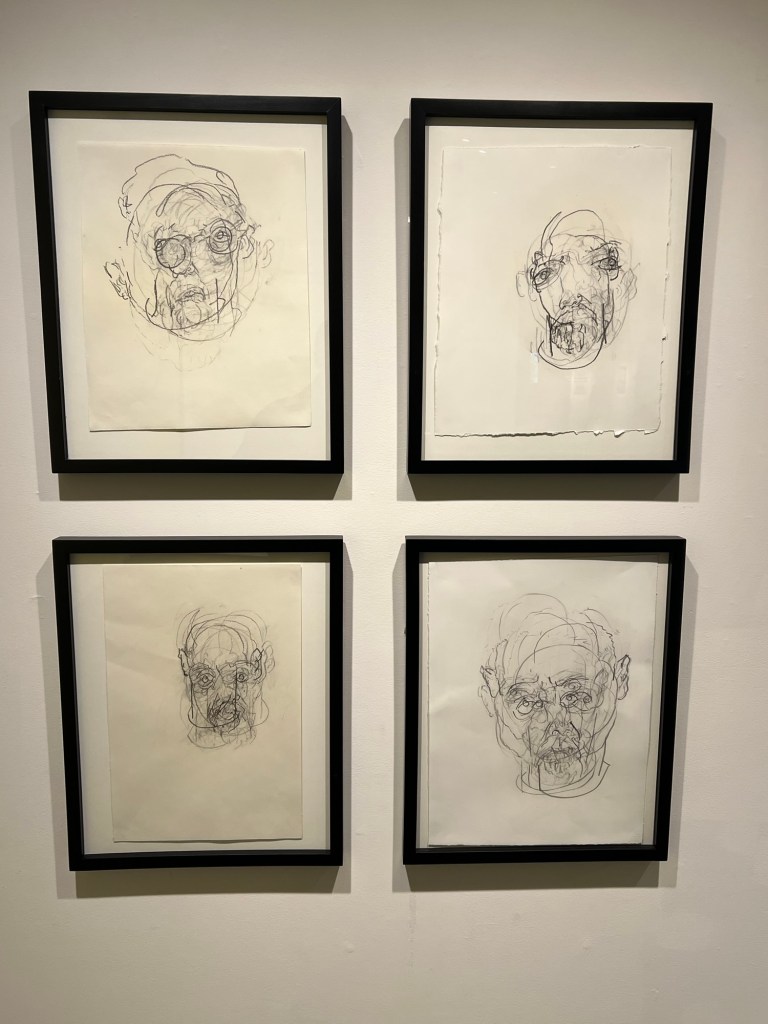
The Self Portrait

The artists of the Self Portraits

“The Dinner Guests” by Aaron Hauck

I loved the colorful look of guests at a dinner party.
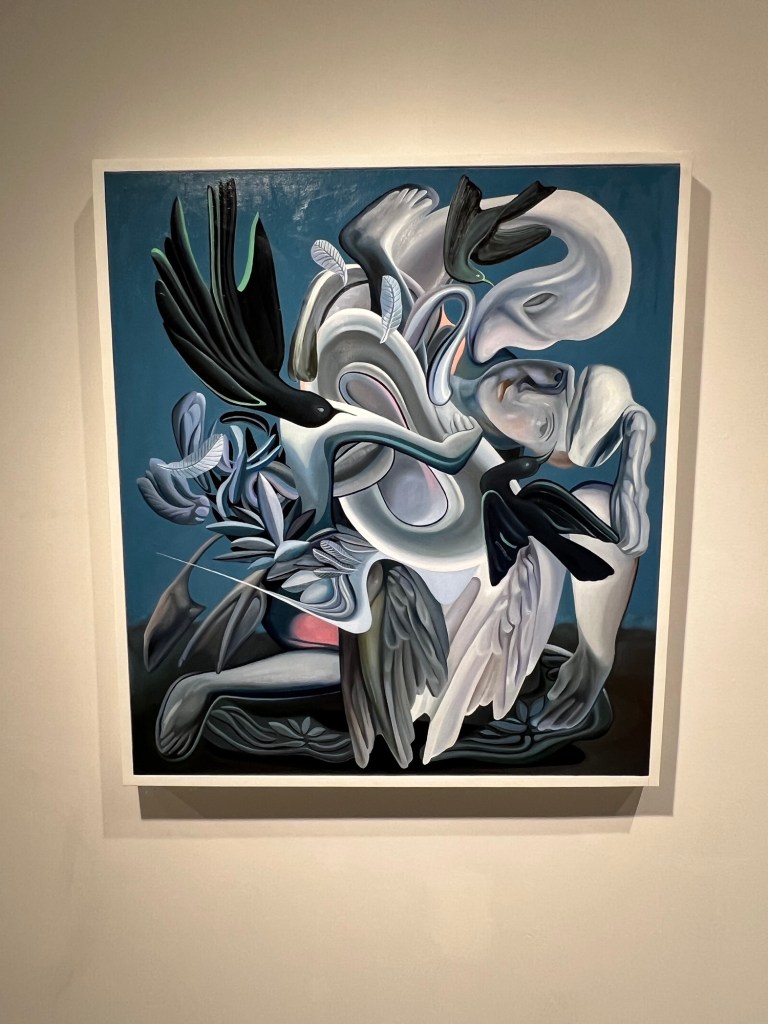
The ‘Witnesses’

“Witnesses” was the one piece that stood out to me in the show. I loved the playfulness of the painting and that it looked whimsical and fun. It looked like something you would see in “Alice in Wonderland”.
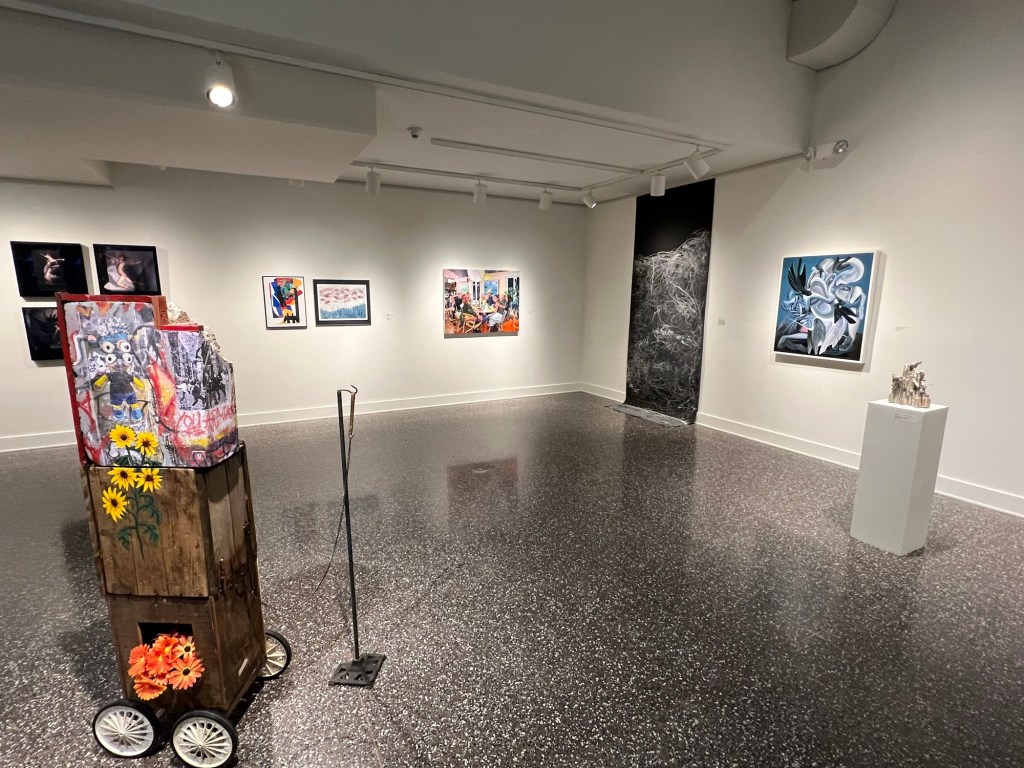
The gallery for ‘Movement’
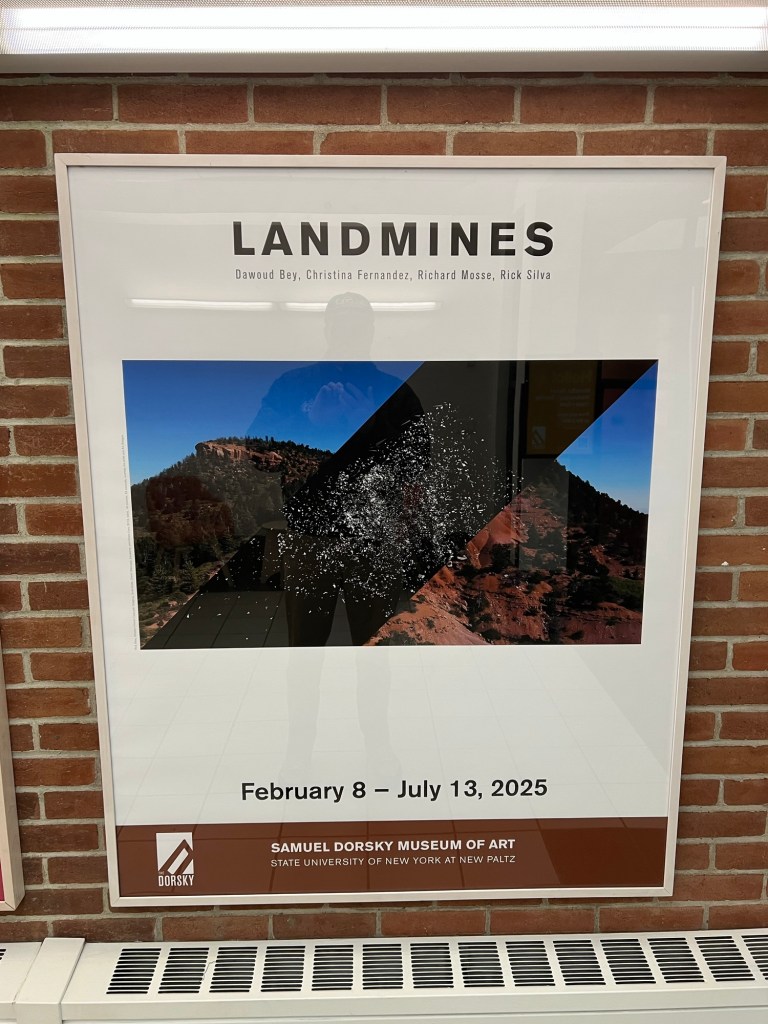
The exhibition ‘Landmines’

Coinciding with the bicentennial of the earliest existing landscape photographs, the founding of the Hudson River School, and a concentrated period in which Native people from New York were forcibly relocated to Wisconsin, Landmines presents camera-based work by artists who explore the role landscape plays in burying or exhuming social history (from the Dorsky Museum website). 
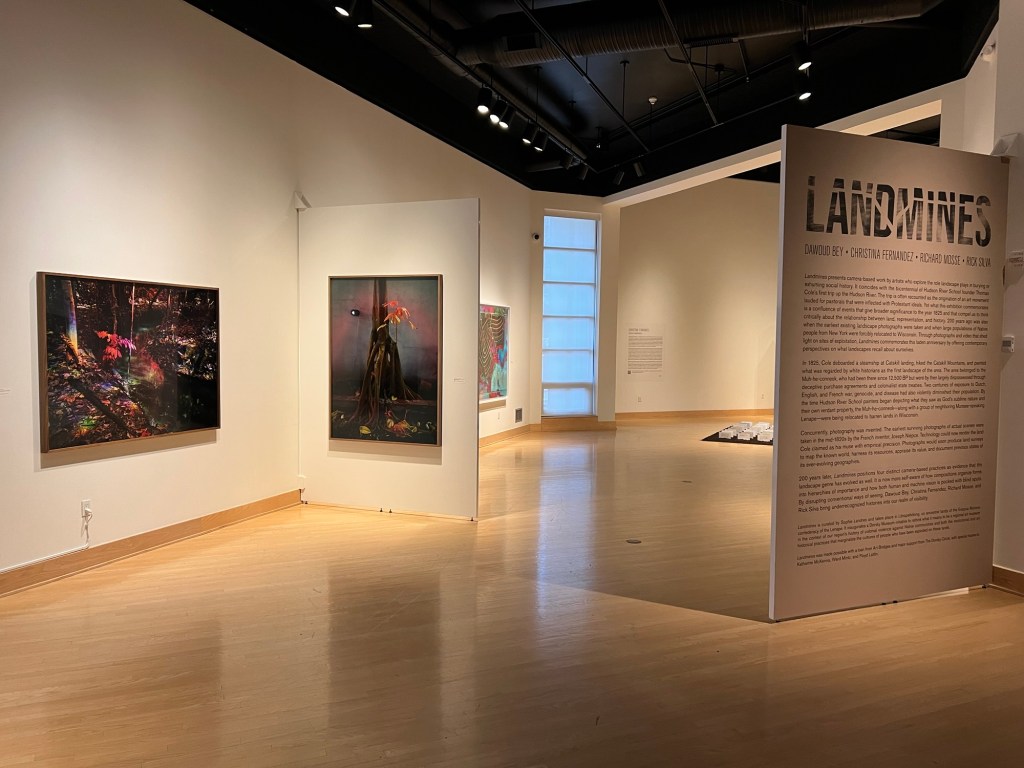
The exhibition ‘Landmines’
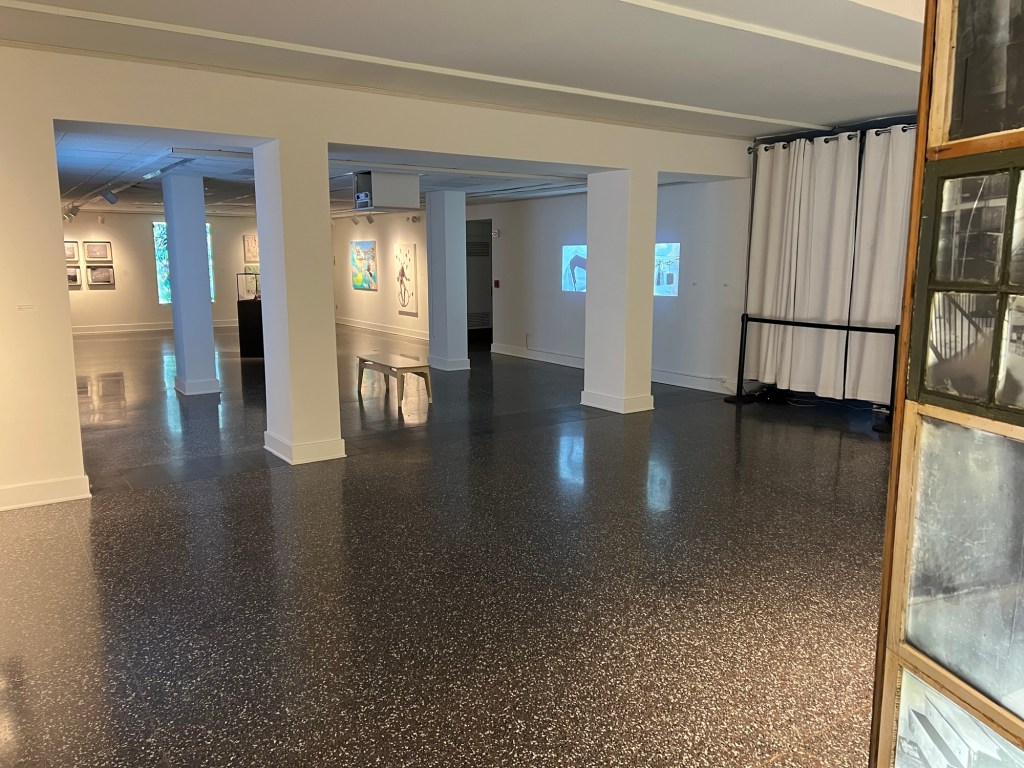
The permanent collection
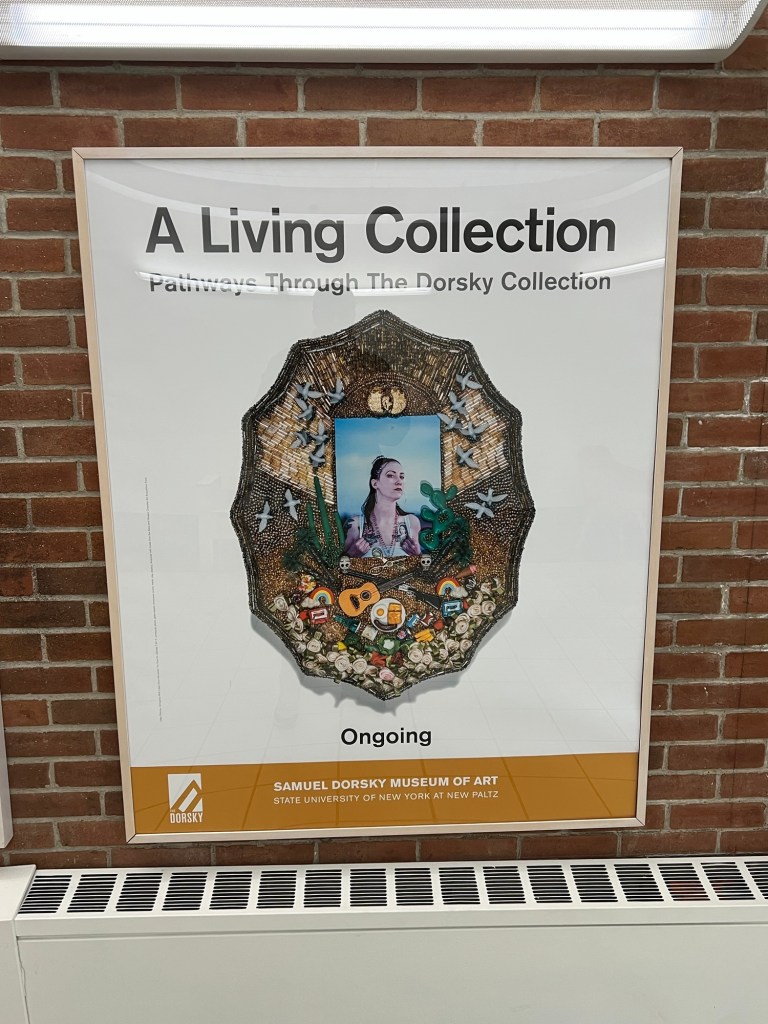
‘The Living Collection’ in the permanent collection

This new display of the Museum’s collection tells the story of The Dorsky from a variety of perspectives, making space for traditionally marginalized voices. Exhibiting collection highlights and audience favorites alongside new acquisitions and commissions, A Living Collection presents the collection as a living entity, continuously evolving and shaped by the viewer’s interpretation (from the Dorsky Museum website).
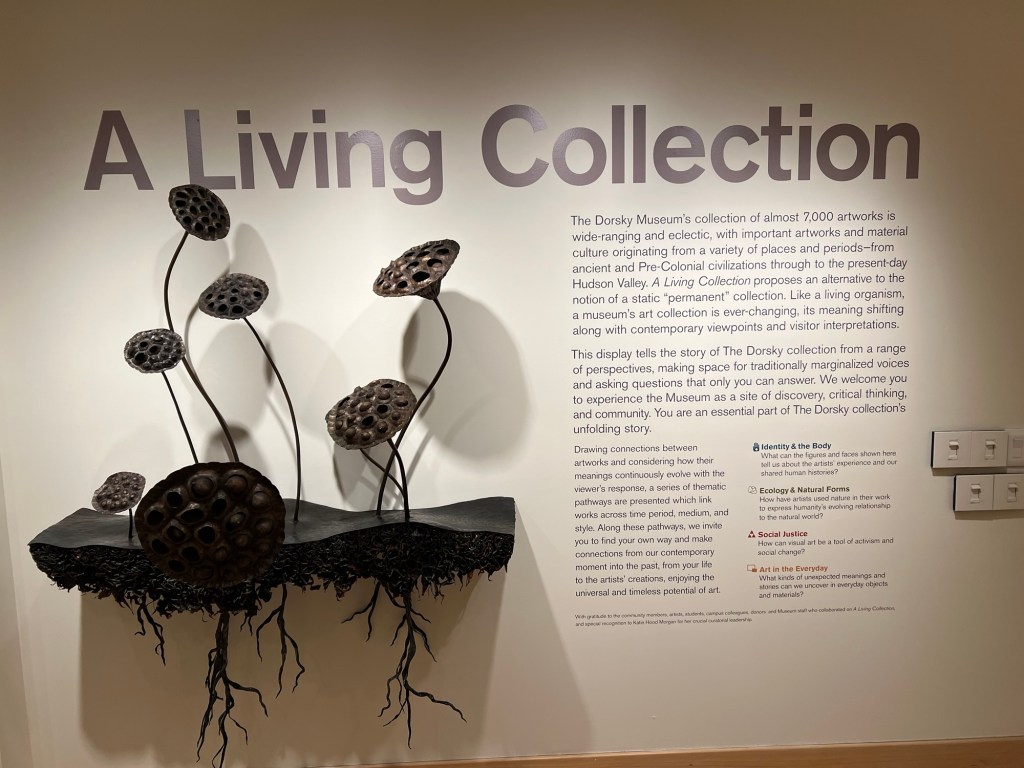
The entrance to ‘A Living Collection’
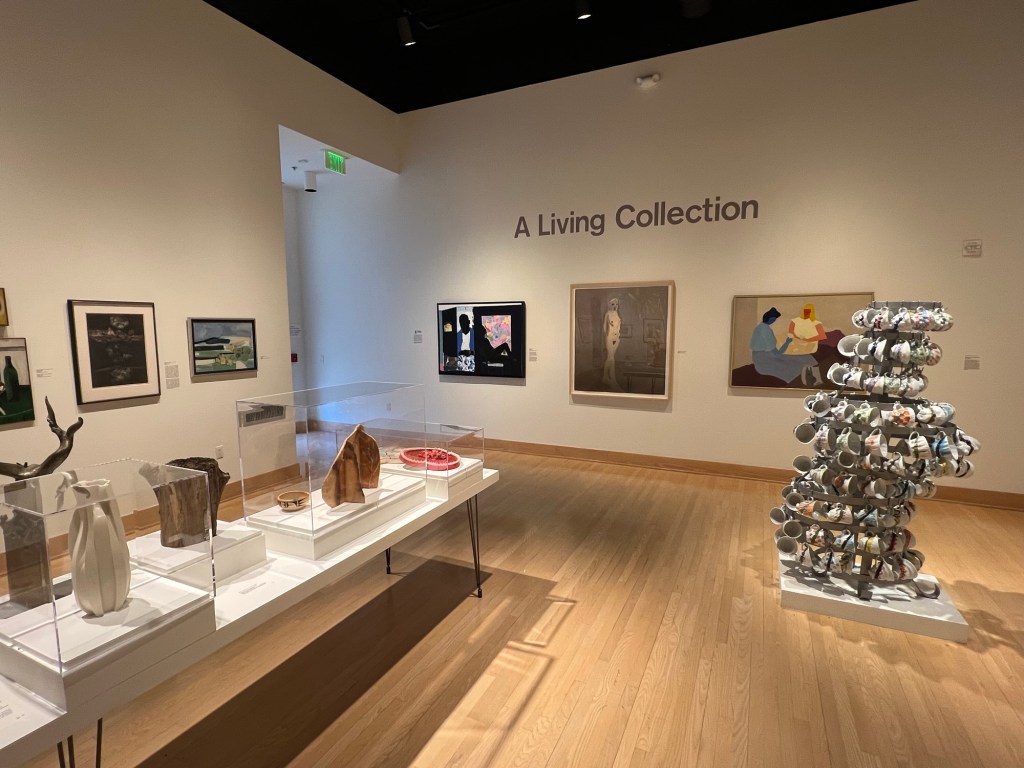
The gallery for ‘A-Living Collection’

A Living Collection:

The ‘A Living Collection’ Gallery
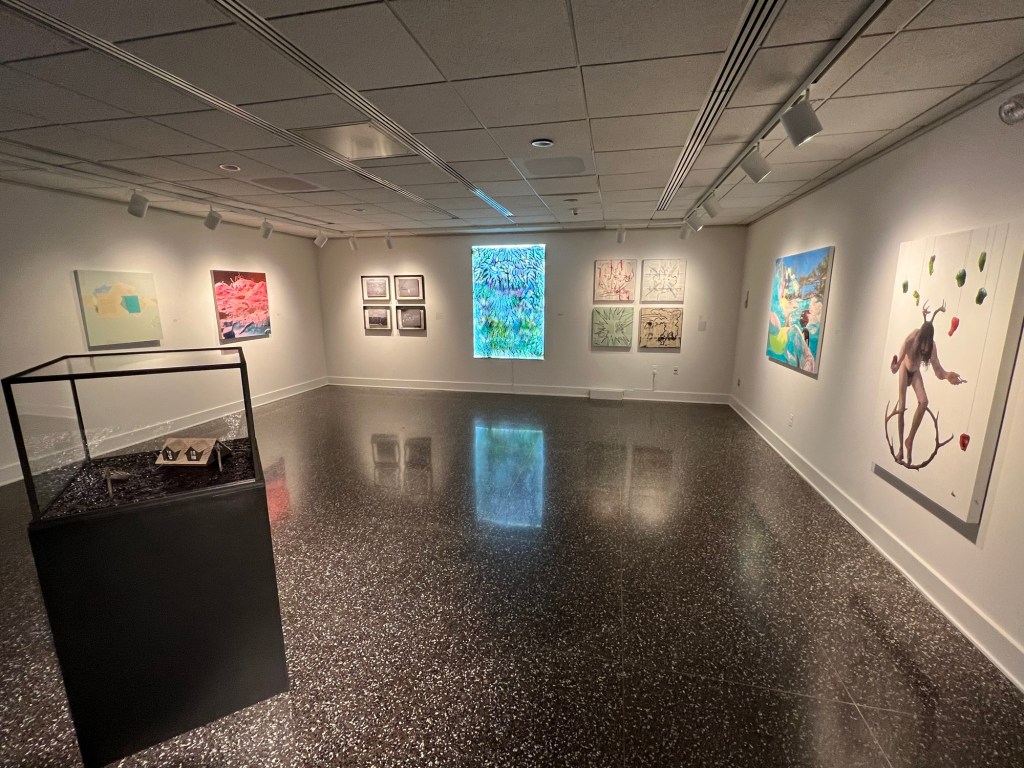
The ‘A Living Collection’ gallery

‘Shaky’s Meadow’ by Beverly Paterson

A video on the art:

A clip of the art display

The full gallery on display at the Dorsky Museum

The museum does a lot in a small area and does a nice job promoting up and coming artists. It also does a lot for its in-house artists especially when I attended the opening of the Student Show for the BFA/MFA art students in December 2025.

The BFA/MFA Thesis Exhibition/fall.25 Show:

https://www.newpaltz.edu/fpa/art/events/bfa-mfa/
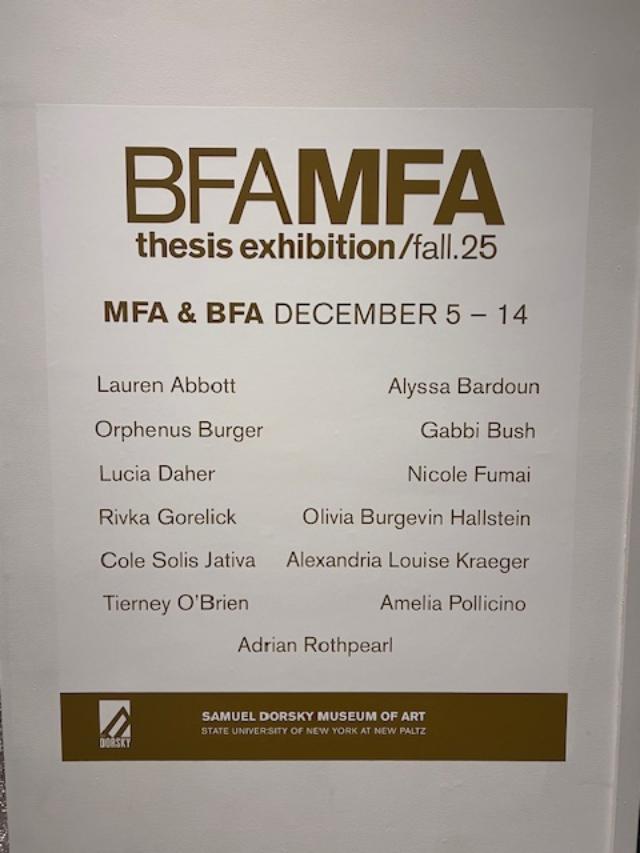
The Opening of the Student Show

As it got darker, I made my way to the SUNY campus and to the art museum. It really was a good show with a nice reception and interesting art. While the students were devouring the food at reception, I had the whole gallery to myself to look at the art. I have to admit that some of the art was quite unusual. The students did have a streak of creativity to them.

The Dorsky Museum Gallery

Some of the unique pieces

Once the students devoured the Reception buffet, everyone came in to see the exhibition

This is the one piece that really stuck with me at the show

Some of the pieces were rather unusual

The unique student works

The students got very creative on the material
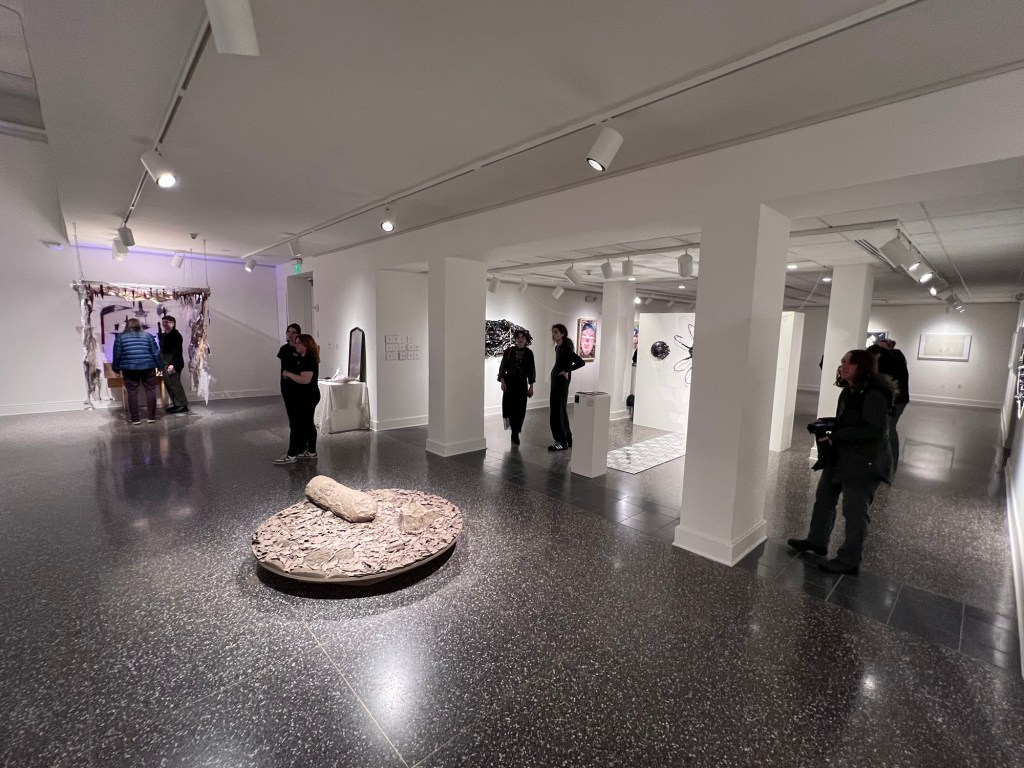
The back room of the gallery

The patrons admiring one of the student works
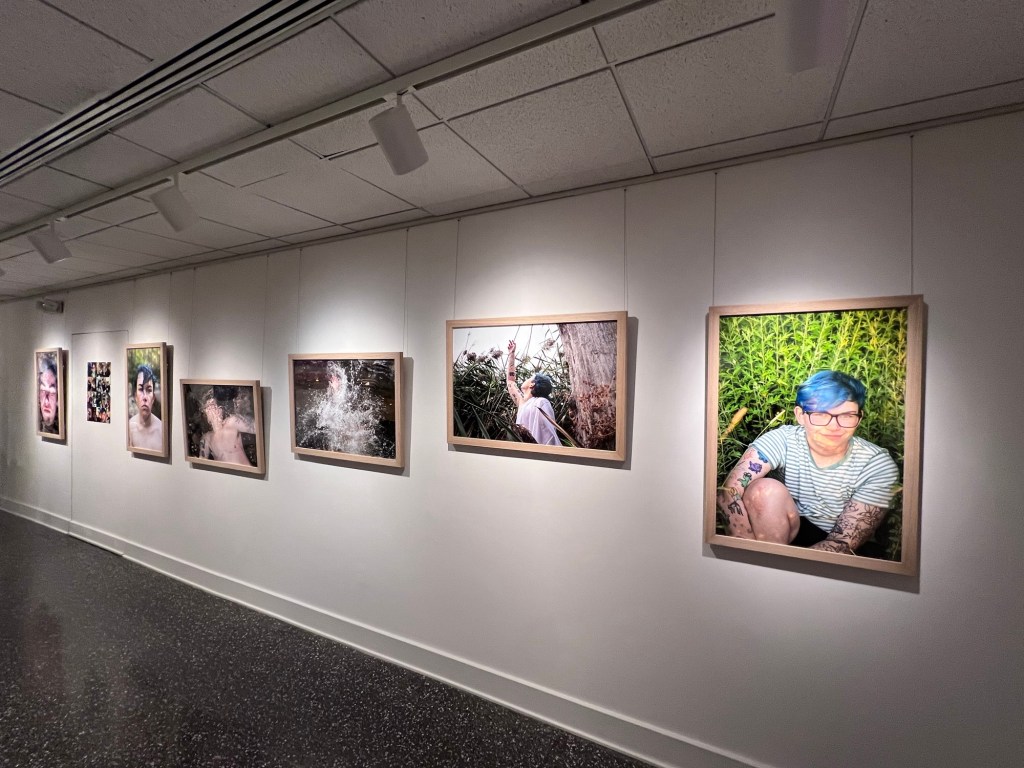
Some of the works of the undergraduate students

Some of the unusual works in the show

More works by the student artists

The gallery at the museum is rather small do I got through the whole show in less than an hour. I had a quick snack with what was left on the buffet table, which was not much. The food was really good and a snared the final meatball.

Just enough of a snack to get through the next two hours

It was a nice opening for the show and my first on the campus. It just happened to fall at the same time I was attending the Snowflake Festival in Kingston on the same night so I was able to do both. I was glad I could support their students.

History of the Samuel Dorsky Museum of Art:

Mission of the Museum:

(from the museum website)

Through its collections, exhibitions and public programs. The Samuel Dorsky Museum of Art supports and enriches the academic programs at the university presents a broad range of national and international art for study and enjoyment and serves as a center for the arts and culture of the Hudson Valley.

About the Museum:

(from the museum website)

Located at the State University of New York at New Paltz. The Dorsky Museum comprises more than 9,000 square feet of exhibition space distributed over six galleries. The museum was launched more than 65 years ago by a dedicated committee of faculty members to enhance the teaching mission of the university. Originally known as the College Art Gallery, The Dorsky Museum was dedicated in 2001. The opening of The Dorsky Museum transformed the original College Art Gallery into one of the leading art museums in the region.

The Dorsky Museum’s permanent collection comprises more than 5,500 works of art from around the world and spans over a 4,000 year time period. While encyclopedic in nature, areas of focus include American art, with an emphasis on the Hudson Valley and Catskill Mountain region, 19th century American prints, photography and contemporary metals. The museum also has a strong World Collection that includes outstanding examples of both two and three-dimensional objects from diverse cultures, dating from classical to modern times.

The museum’s temporary exhibition program has been hailed as one of the best in the region and features exhibitions, installations and projects by internationally recognized artists as well as annual thematic exhibitions of work by regional artists. “The Hudson Valley Masters Series” is one of the unique exhibitions that the museum periodically hosts which focuses specifically on a body of work by an internationally acclaimed artist who resides in the area.

Samuel Dorsky Museum

A painting by Angela Dufresne

Samuel Dorsky:

(from the museum website):

Samuel Dorsky was a self made and self realized individual who came to the art world relatively late after achieving success in the garment business. Emerging from the Great Depression, World War II and the post war boom years with the desire and the where withal to pursue both art and philanthropic, he opened a art gallery in 1963. Until his death in 1994, his gallery presented hundreds of exhibitions featuring such well-known artists as Henry Moor, about whom Dorsky was a recognized authority, Richard Hunt, Willem De Kooing, Larry Rivers and Robert Rauschenberg. Sam also generously championed the work of numerous lesser-known artists who he often befriended. The Dorsky gallery closed its doors to the public in 2001 after which Sam’s children, David, Noah, Karen and Sara established the Dorsky Gallery Curatorial Programs (DGCP) in Long Island City, a not for profit organization dedicated to promoting contemporary visual arts.

The dedication of the Dorsky Museum brought to fruition a project that had dominated the last decade of Sam Dorsky’s life. Sam’s lead gift to the SUNY New Paltz Foundation provided the impetus for the construction of the new museum building as well as the complete renovation of the former College Art Gallery to become part of the museum. The Dorsky Museum now comprises six galleries, offices and a small teaching space.

The Dorsky family continues to be a major supporter of The Dorsky Museum and SUNY New Paltz. David, Karen and Noah Dorsky serve on the Advisory Board of The Dorsky Museum. Karen and Noah also serve as trustees of the SUNY New Paltz Foundation.

(SUNY New Paltz History)

Lefferts Historic House                                         452 Flatbush Avenue                                  Brooklyn, NY 11225

Lefferts Historic House 452 Flatbush Avenue Brooklyn, NY 11225

Lefferts Historic House

452 Flatbush Avenue

Brooklyn, NY  11225

https://en.wikipedia.org/wiki/Lefferts_Historic_House

Open: Sunday 12:00pm-5:00pm/Monday-Wednesday Closed/Thursday-Saturday 12:00pm-5:00pm

Admission: Suggested $3.00 fee towards the renovation of the house

My review on TripAdvisor:

https://www.tripadvisor.com/Attraction_Review-g60827-d103505-Reviews-Lefferts_Homestead-Brooklyn_New_York.html?m=19905

Leffert’s Homestead in Prospect Park, Brooklyn

I have visited the Lefferts Historic House a few times when visiting the Brooklyn Botanical Gardens, The Brooklyn Museum and the Prospect Park Zoo, all of which are in the same cultural district of the neighborhood. The house is located near the entrance of Prospect Park just behind the Brooklyn Botanical Garden and right next to the zoo and the carousel.

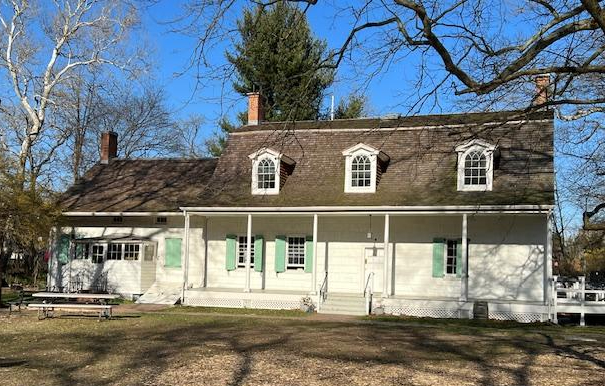
The Lefferts Homestead in 2023

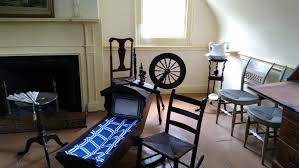
The house sits on a plot of the park to give it the look of the house when it sat in a rural setting in Brooklyn about twelve blocks away. When walking into the house, there are a few rooms that are furnished and have period pieces in them to show what the house must have looked like in the late 1700’s and early 1800’s. Most of the house is used for touring and for groups doing projects and games. You can’t go upstairs anymore. The house will be going through a renovation soon so watch the website for more information on that.

Lefferts Historic House II.jpg

The historic objects of the house

The outside of the house has wooded grounds with a working garden, an outside oven and historic objects that bring the period back to tourists and residents alike of what life must have been like when it was a working farm. When in season, you can walk amongst the vegetable and flower gardens and talk to the docents about the history of the house.

The grounds of the Lefferts Homestead with the stables and smokehouse

The house is part of the Historic House Trust and part of the Prospect Park Alliance.

History of the Lefferts Historic House:

The Lefferts family was one of the original settlers in Brooklyn with Lefferts Pieterson buying 58 acres of land here in 1687 and built the original homestead on that property. In 1776, the house was destroyed by American troops before the Battle of Brooklyn so that the British could not use it. The house was rebuilt in 1783 by one of his descendants (Prospect Park Alliance).

Lefferts Historic House III

The Lefferts Family

The current house was the home of Continental Army Lieutenant Pieter Lefferts and was built in 1783. It was originally located on Flatbush Avenue near Maple Street. When Pieter died the house was passed onto his son, John and then when John passed, the house was inherited by his daughter, Gertrude Lefferts Vanderbilt. The house was lived in by four generations of the Lefferts family.

The Lefferts Homestead

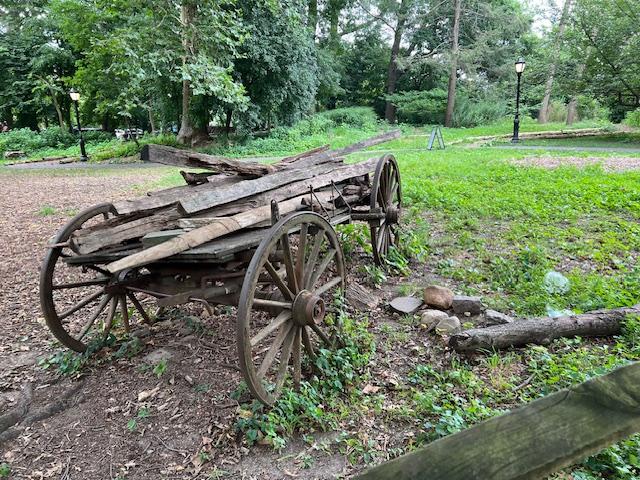
The cart on the front of the property

With impending development of the area around the house at the end of the 19th century, John Lefferts estate offered to donate it to the City on the condition that house be moved to City owned property for historic preservation and protection. It was opened as a museum in 1920 by the Fort Green Chapter of the Daughters of the American Revolution (Wiki).

The history of the house

The house is currently used as a Children’s Museum and Cultural site and open year-round.

The Lefferts House in the winter 2024.

The Wyckoff Historical Society                                              The Barbershop next to the Pond                                               Wyckoff, NJ 07481

The Wyckoff Historical Society The Barbershop next to the Pond Wyckoff, NJ 07481

The Wyckoff Historical Society

The Shop next to the Pond

Wyckoff, NJ  07481

http://www.wyckoffhistory.org

Hours: Please check the website above

Fee: Please check their website

My review on TripAdvisor:

The Wyckoff Historical Society was established to research, preserve and educate about the rich history of Wyckoff, NJ. The organization was founded in 1974 and is incorporated. Recent programs included a walking tour of Wyckoff.

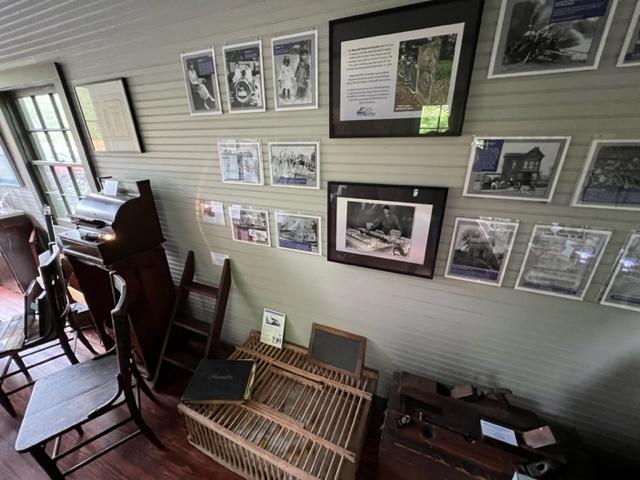
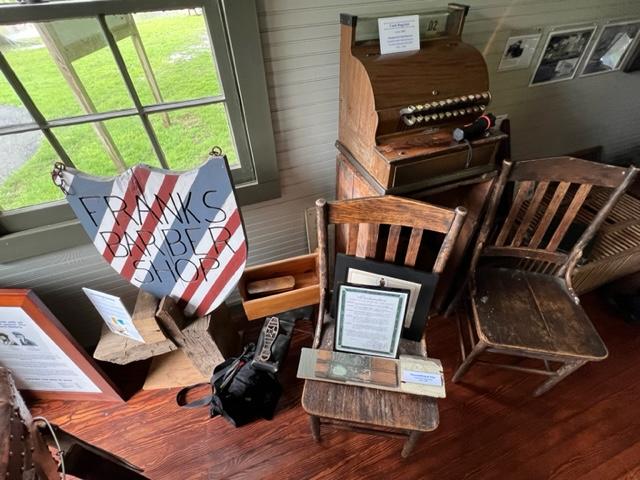
The Society recently restored the old Wyckoff barbershop that was donated to them and now sits on the town property by the Zabriskie Pond and the historic Zabriskie Home. Inside the building houses all sorts of local artifacts, farm tools and vintage furniture along with historic photos of the town of Wyckoff, NJ.

The little building sits right on the Zabriskie Pond.

The Zabriskie Pond in Wyckoff, NJ

History of the Museum:

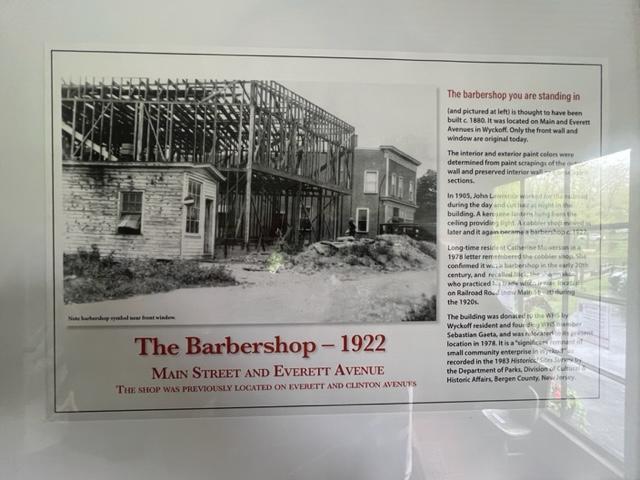
This 1890’s structure was recorded as being a barbershop in 1905 when it was owned by John Lawrence, who worked for the railroad by day and cut hair at night. It was also a cobbler shop for several years and again a barbershop. The building was on Main Street and Everett Avenue relocating to its current home and donated to the Wyckoff Historical Society by resident and member, Sebastian Gaeta.

The farming display at the Barbershop Museum

The history of the building

The building was neglected for several years and was restored several times, most recently in the summer of 2018 by the society including a full paint job of the interior and exterior and refinishing the bare floors.

The barber chair from the old barber shop

On display are artifacts from Russell Farms, a barber chair from longtime Wyckoff barber, Frank Muscara, a 1905 child’s dress, Lenape artifacts, a Hoosier cabinet and photographs.

The Native American Collection

Artifacts from Wyckoff’s past

Artifacts from old businesses in Wyckoff and the surrounding areas

The tiny museum has a display of its own history as a barbershop on the Main Street of Wyckoff, NJ and how the building served as a local center for its citizens. It was eventually moved as times changed and became the museum it is today telling the story of the Town of Wyckoff, NJ.

The history and movement of the building when it left its original location

The history of the barbershop

The history of the building and the barbershop and of Wyckoff, NJ

Where the building was located in Wyckoff, NJ

Please check their website for opening dates.

The beauty of the Zabriskie Pond on a fall day in 2022. The area is just beautiful.

The Zabriskie Pond in Wyckoff, NJ

Disclaimer: This information was taken directly from the Wyckoff Historical Society pamphlet and I give them full credit for the information. Please email them for more information.

Thomas Edison National Historical Park, Laboratory Complex and Glenmont                   211 Main Street                                                  West Orange, NJ 07052

Thomas Edison National Historical Park, Laboratory Complex and Glenmont 211 Main Street West Orange, NJ 07052

The Thomas Edison National Historical Park

211 Main Street

West Orange, NJ  07052

(973) 736-0550

https://www.nps.gov/edis/index.htm

Open: Sunday 10:00am-4:00pm/Closed Monday-Tuesday/Wednesday-Saturday 10:00am-4:00pm

Note: There are renovations going on at the site so please call ahead to check on hours and fees.

The Thomas Edison National Historical Park, Laboratory Complex and Glenmont home are a step back in time when machines were run by belts and pulleys and music was played on phonographs. Where to the passerby, the buildings betray little evidence of the industries they once started. Discover where America’s greatest inventor changed our world forever.

The Laboratory site Complex contains:

  1. Visitor Center (Restrooms & Gift shop)
  2. Chemistry Laboratory
  3. Chemical Storage and Pattern Shop
  4. Metallurgical Laboratory
  5. Main Laboratory
  6. Powerhouse
  7. Blacksmith Shop
  8. Building 11
  9. Vault 12
  10. Black Maria
  11. Water Tower
  12. Vault 32
  13. Vault 33
  14. Building 35 (Maintenance Facility)

Park Information:

The Laboratory Complex is open Wednesday through Sunday. The Glenmont Estate is open Friday, Saturday and Sunday. Glenmont tickers are limited and are distributed on a first-come, first-serve basis from the Laboratory Visitor Center. Please call for specific hours.

Fees:

Entrance Fee-$10 (Under 16 years old free)

Optional Laboratory Audio Tour-$5

Park Annual Pass-$40

Inter-agency Passes Accepted

Group Reservations: Call 973-736-0550 ext. 33

Filming and Photography: Call 973-736-0550 ext. 50

Corporate Events: Call 973-736-0550 ext. 50

For more Information: http://www.nps.gov/edis (973) 736-0550 ext. 11

Calendar of Events: http://www.nps.gov/edis/planyourvisit/events/htm

*Thomas Edison National Historical Park Facebook.

Directions to Glenmont:

*Please respect the privacy of our neighbors by driving directly to and from Glenmont.

Directions to Glenmont:

*Put your pass on the dashboard of your car

*Right out of the parking lot

*Right at the first light and stop at the gatehouse

*Go up Park Way

*Right onto Glen Avenue

*Left onto Honeysuckle Road

*Right into paved parking lot

*Tour begins in front of the home

*Restrooms located in Potting Shed/Visitor Center

*Information is taken from National Park Service, US Department of the Interior, Thomas Edison National Historical Park, West Orange, New Jersey.

My review on TripAdvisor:

https://www.tripadvisor.com/Attraction_Review-g60796-d1023095-Reviews-Thomas_Edison_National_Historical_Park-West_Orange_New_Jersey.html?m=19905

I had visited the Laboratories of Thomas Edison and it is very interesting to tour the floors of inventions. There are very innovative items that I never knew he invented, things like talking dolls and many household items for the kitchen and home.

Edison National Site.jpg

Another room they showed was his private office where he did most of his personal work and spent his sleeping hours when working at the laboratory. Each of the rooms show how and at what stages of the invention process that each object.

Edison National Site II.jpg

Glenmont, the family home, can be a musty place in the colder months. The house smells like it is old. It needed a good airing out. The period furniture are very interesting. The house is full of Victorian elegance but it needs a good renovation. The walls and ceilings  need some plastering and the home needs a good deep cleaning. Still it is interesting that for all their prestige, they still lived more like an upper middle class family.

The history Edison National Historical Park:

Thomas Edison National Historical Park preserves Thomas Edison’s laboratory and residence, Glenmont, in Llewellyn Park in West Orange in Essex County, NJ. These were designed, in 1887, by Henry Hudson Holly. For more than 40 years, the laboratory had a major impact on the lives of people worldwide. Out of the West Orange laboratories came the motion picture camera, improved phonographs, sound recordings, silent and sound movies and the nickel-iron alkaline electric storage battery (Wiki).

Edison’s home was designated as the Edison Home National Historic Site on December 6, 1955. The laboratory was designated as Edison Laboratory National Monument on July 14, 1956. On September 5, 1962, the 21 acre site containing the home and the laboratory were designated the Edison National Historic Site and overseen by the National Park Service. On March 30, 2009, it was renamed Thomas Edison National Historical Park, adding “Thomas” to the title in hopes to relieve confusion between the Edison sites in West Orange and Edison, NJ. Following extensive renovations of the laboratory complex, there was a grand reopening on October 10, 2009 (Wiki).

Historic Glenmont Mansion:

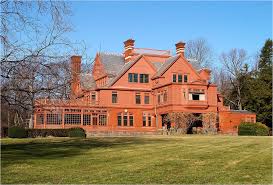
Thomas Edison resided at Glenmont, his 29 room Victorian mansion, for over half his lifetime. Its architect, Henry Hudson Holly, is considered to be the father of the Queen-Anne style architectural movement in the United States. Holly’s crowning achievement, Glenmont, was part of a working estate which presently contains six outbuildings including a barn and a greenhouse. Examples of Thomas Edison’s poured concrete structures, the auto garage and the potting shed are also still in existence. (Wiki).

Glenmont

Thomas Edison’s Home “Glenmont”

The interior of the fully furnished Victorian home is a rare example of Pottier & Stymus interiors, a New York decorating firm that lost the majority of its records in a catastrophic warehouse fire in the year 1888. Glenmont’s interiors display rare examples of the firm’s modern Gothic style furniture suites and also include decorative arts objects chosen by the company to outfit this home in Victorian style. The Edison family appreciated the original interiors, consequently making only minimal changes to the home’s decoration during their residency (Wiki).

Glenmont’s period rooms reflect examples of the era’s Eastlake style and Aesthetic Movement style interiors. The first floor library boasts hand stenciled walls in flat, stylized floral patterns with a ceiling of distemperment. Tall case cabinets store leather bound volumes. The decorative arts collection at Glenmont ranges from major works of art and sculpture to everyday objects. The collection, consisting of 40,000 items, includes remarkable examples of Hudson River School artists and antiques (Wiki).

Glenmont II

Examples of more utilitarian items include the Edison china collection, still housed in the historic Butler’s Pantry, the household linen collection, family toiletry items, books and household receipts that detail purchases made by the Edison family.  These vouchers reveal to us the Edison’s choice of household products and their spending habits (Wiki).

Disclaimer: The above information on the history of the house and labs came from Wiki and I give the format full credit for the information. The above information also comes from the National Parks Services pamphlet and I give them full credit for the Visitor’s information.