Tag: BergencountyCaregiver.com

The Ayres/Knuth Farm Foundation                       25 Cooper Street                                           Denville, NJ 07834

The Ayres/Knuth Farm Foundation 25 Cooper Street Denville, NJ 07834

The Ayres/Knuth Farm Foundation Inc.

25 Cooper Street

Denville, NJ 07834

(973) 625-9345

https://www.ayresknuth.org/

https://www.facebook.com/AyresKnuthFarm/

Open: See website on hours/Seasonal

My review on TripAdvisor:

https://www.tripadvisor.com/ShowUserReviews-g46392-d24065367-r838840100-Ayres_knuth_Farm-Denville_Morris_County_New_Jersey.html?m=19905

Video on the Ayres/Knuth Farm

On the second day of the Morris County, NJ “Pathways to History’ tour, I was on my way back to Morris County for a second day of adventure. My first stop on the tour was the Ayres/Knuth Farm (The Ayres/Knuth Farm Foundation Inc.), a former working farm just off Route 10.

The main farmhouse on the Ayres/Knuth Farm

Not only was the site open for touring but they also had a mini car show with antique cars and fire trucks owned by some of the members. Seeing some of these Model T Ford’s and Steam Engine Fire Trucks in perfect condition shows American quality motorship at its finest.

What I liked about the farm is that it had been a working farm up until the last fifty years and showed the progression that the farm took in its almost 100 years in the county. The farm itself dates back to pre-Revolutionary War days with the farm being purchase in either 1735 or maybe 1759 by Obadiah Lum. The property itself was settled and developed by Daniel Ayres, who was born in New Jersey in 1778 (The Ayres/Knuth Farm Foundation).

The Ayres-Knuth Farm and the outer buildings

105 acres of land was given to him by his father-in-law, David Garrigus upon the marriage of his daughter, Hanna in 1803. His son, William took over the farm in 1856 upon the death of his father in 1856, changing the farm to add husbandry and fruit cultivation. When William retired in 1896, none of his children wanted the farm and it was sold. Changing hands many times, it was bought by Martin and Anna Knuth in 1906. The farm was taken over by two of their children and it remained in the family until the 1990’s upon both of their passings. In 1996, the Township of Denville purchased 52 acres of the original farm and it is now managed by the Ayres/Knuth Foundation Inc. (The Ayres/Knuth Farm Foundation).

On this clear and sunny Sunday morning, it was fun to walk around the former working farm to see how it developed. Both families learned to modernize and add to the operation. I was able to tour the smaller tenet farmhouse (built in 1895), the barn (built in 1895 (and the various outer buildings like the chicken coops (built in 1895), outhouse (built in 1930) and the Smokehouse (built in 1825). The small well was built in 1797 and was the oldest structure left on the property.

What I found interesting is that there still are tenant farmers on another tract on the property still working the land and the property is protected by grants from Morris County. So, it still is technically a working farm. A lot of care was taken to preserve the farm as is and the volunteers told me that there were plans to fix up the other buildings. The Tenant House needed a lot of work and was run down but the main Farmhouse had been renovated and was closed that day.

Most of the farm has either been sold off or is being utilized but the core of the farm buildings can be toured, and it is interesting to see a working farm in New Jersey that dates back to the 1700’s and was still active until the mid-1990’s. That is longevity. Still is a step back into the past to see how a working farm once thrived along with the changes that came with the development of Morris County in the late 20th century. The area still has the rural feel, and the well-maintained property is a glimpse into our rural past.

The History of the Ayres/Knuth Farm:

(From the Ayres/Knuth Farm Foundation Inc. site):

The Ayres/Knuth Farm has a long history not just in the County or State level but in the country. It is believed that the farm was formed around 1759 but could be as early as 1735. It was located in the Franklin section of Denville. Obadiah Lum purchased 180 acres and built the first forge and sawmill on the Den Brook. Lum purchased the property from Thomas and Richard Penn, the sons of proprietor, William Penn with financing from Colonel Jacob Ford, who owned extensive land including mines in Morris County. Franklin developed into one of the primary agricultural hubs of Denville due to the high quality of soil of the area and proximity to numerous towns with markets where the crops could be sold.

The historic marker on the farm

The Ayres Farm was first settled by Daniel Ayres who was born in Middlesex County in 1778. His mother was Anna Jackson, who was the daughter of General Joseph Jackson, who was known as the founder of Rockaway. Daniel married Hanna Garrigus, the daughter of David Garrigus, who was a prominent landowner in Franklin and owner of the Franklin iron forge. In 1803, David Garrigus conveyed 105 acres to his son in law.

Daniel died in 1856 and his son, William Ayres took over the farm. In 1860, he expanded the farm to 300 acres and practiced a mixture of husbandry and a cultivation of different grains. They also raised sheep for wool and cows for butter. He built the existing farmhouse in 1855 and in the 1860’s built the Tenant House for hired hands in the expanding farm. Over time the farm grew to 500 acres.

During the economic depression between 1873-1879, William Ayres adopted to the changes in the market and shifted the focus of the farm to dairying, poultry and vegetable farming. He also sold lumber to the railroads and expanded into fruit cultivation particularly apples, peaches and pears.

The Ayres/Knuth Farm today

William Ayres retired from the farm in 1896 and since none of his children wanted to take over the operation, the property changed hands several times until 1906, when Martin and Anna Knuth purchased the farm and moved in with their five children. They kept the tradition of husbandry and fruit cultivation and a mix of vegetables as a truck farming operation.

The farm faced a lot of tragedies in the 20th Century with the death of Martin Knuth in 1935. Between a destructive fire in 1936 and a lapse of insurance, the barn was not rebuilt. With an economic Depression going on in the 1930’s, the farm was largely reduced to a subsistence-level truck farm operation. Anna Knuth died in 1950 and her two children, Frank and Sue took over the operation. Both remained on the farm until their deaths in the 1990’s. They grew a variety of crops and produced eggs that were sold locally.

The farmhouse was not electrified until the 1960’s and indoor plumbing was never installed. In 1996, a few years after the deaths of Frank and Sue Knuth, the Township of Denville purchased the nearly 52 acres of the original Ayres/Knuth Farm and the property is now managed by the non-profit Ayres/Knuth Farm Foundation Inc. The site now houses a series of historical buildings that is maintained by the foundation that are part of the original farm.
Silas Riggs Saltbox House/Roxbury Township Historical Society                                                  213 Main Street                                      Ledgewood, NJ 07852

Silas Riggs Saltbox House/Roxbury Township Historical Society 213 Main Street Ledgewood, NJ 07852

Silas Riggs Saltbox House/Roxbury Township Historical Society

213 Main Street

Ledgewood, NJ 07852

(973) 927-7603

http://www.roxburynewjersey.com/society.htm

Open: Check their Website/Seasonal

My review on TripAdvisor:

I visited the Silas Riggs Saltbox House on a visit to the Roxbury Township Historical Society during the Morris County’s “Pathways to History” event. The event gave us a chance to visit many different sites in one day.

The Historical marker in front of the house

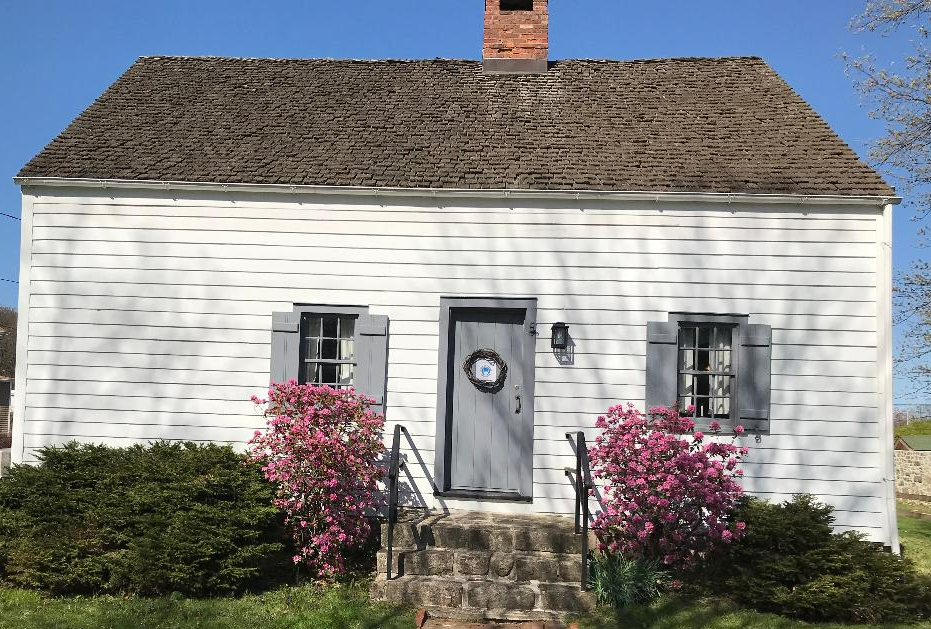
The Silas Riggs Saltbox House is part of the King Victorian Home & King Canal Store complex it shares with the Roxbury Historic Trust. The Silas Riggs home is a preserved colonial era, Revolutionary War period residence. It is managed by the Roxbury Township Historical Society as a “Living History Museum”, hosting events that bring a sense of the past to those who step inside (Roxbury Historical Society).

The Silas Riggs Saltbox House during the tour

The last historical site on my tour that day, it was also one of the most interesting not just because of the history of the home itself but the care and TLC the site is given by its volunteers and docents. The Riggs home is a place that you feel you have stepped into someone’s home who just left for the afternoon. Many historical societies that I have been to in the past are usually dusty and musty with artifacts thrown here and there. The Riggs home was decorated by lifestyle of the periods that it was lived in.

The volunteers were nice enough to stay open for me and we ended up talking for over 45 minutes on the house and how it was decorated. There was a care in this home as the walls and ceilings were in perfect shape and the home was so welcoming that it did not feel like a museum but more like a tour through someone’s grandmother’s home.

You are welcomed in the front room by an office set up with a large knit quilt and period furniture in a sun filled room that is such an engaging place to be greeted and just talk. The period furniture is in perfect shape and fits the mood of the room.

The front parlor room

To the side of the room is the old office area space where work would have been done and the family would have gathered. The sun-drenched room would have been a bit homier in its day but reflected how homes back then were used for both business and pleasure.

The living room/office of the Silas Riggs house

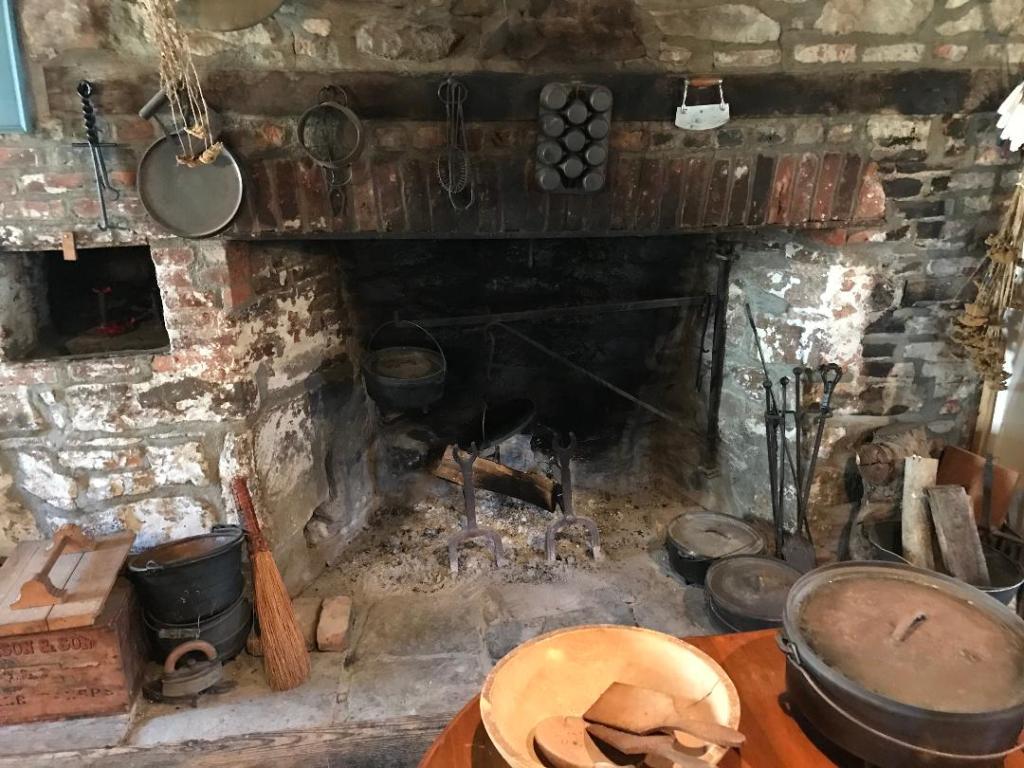
The kitchen was a reflection of kitchen’s today as the center of the home for not just cooking but socializing. The kitchen was not just a source of cooking but heat for the house. There must have been a lot of family gatherings in this room. The Historical Society during the holidays uses the kitchen for a special “Soup Dinner”, where freshly made soup is made in the hearth along with homemade corn bread. This fundraiser is considered very popular, and you have to sign up early to experience being part of the home’s family. On a cold winter night, this must have been the perfect room to be in. Even today, the kitchen is the gathering spot for all families.

The kitchen hearth of the Silas Riggs house

The bedroom that connected the back kitchen to the front parlor was decorated with period furnishings, clothing from the late 1700’s and early 1800’s. The furniture had a heavy look with dark colors and sturdiness to the items in the room as made by hand and meant to last for a long time.

The volunteers were telling me that many people came to the home and said that they could move in right now. This was the care and detail that has been put into this site. It is not just that the home is a reflection of the period, but it is set up in a way that makes you feel that the family is still greeting you when you walk in the door. The museum is a cheery atmosphere that invites its visitors in for the day.

It is such an interesting home to visit.

The History of the Silas Riggs Saltbox Home:

(From the History Girl website)

https://www.thehistorygirl.com/2012/09/three-centuries-of-history-in-roxbury.html

Architectural historians have said that the Saltbox house was one of the earliest homes built in Ledgewood, NJ in the circa 1740. Saltbox houses are a flat in the front with a central chimney set square in the middle of the roofline. The roofline of a saltbox house is asymmetrical with a short, steep roof in the front and a much longer, sloping roof in the back which accommodates the one-story extension of the home.

While the original owners of the Silas Riggs Saltbox House are unknown, but records indicate that by the early 1800’s, the house was owned by Silas Riggs and his wife, Harriet. Silas was a tanner by trade and supplied the local mines with leather pouches used to transport ore. He was also a contractor for a section of the Morris Canal in 1830. He oversaw the operation of three barges in the area. His son, Albert, ran the nearby Canal Store during the canal’s early years.

The design of the house is of post and beam construction, held together with wooden pegs visible in the second story eaves, the Saltbox house, is so called because of its extended, rear sloping roofline, recalling the design of salt containers of colonial times (Roxbury Historical Society).

Florham Park Historic Preservation Commission/Little Red Schoolhouse & Hancock Cemetery                                                              203 Ridgedale Avenue                                                     Florham Park, NJ 07932

Florham Park Historic Preservation Commission/Little Red Schoolhouse & Hancock Cemetery 203 Ridgedale Avenue Florham Park, NJ 07932

Florham Park Historic Preservation Commission/Little Red Schoolhouse & Hancock Cemetery

203 Ridgedale Avenue

Florham Park, NJ 07932

https://www.facebook.com/pages/category/Community-Organization/Little-Red-Schoolhouse-438800069660078/

Open: See Website/Seasonal

My review on TripAdvisor:

The Little Red Schoolhouse Museum

I visited the “Little Red Schoolhouse” Museum in Florham Park as part of the Morris County’s “Pathways to History” event that is held every May. This interesting little museum showcases the town’s historical collection of items from the 1800’s and 1900’s dealing with all aspects of town life.

In the back there is a small classroom set up keeping with the theme of the building. This lets students who are visiting the building of their counterpart’s early education with desks, ink wells and chalk boards that have not changed that much over the years.

Not much has changed in the modern classroom over the years

There is early century clothing, farming equipment from the town’s farming past and event Native American objects found in the town and in private collections. Other items included decorative items from the home including dishware, home products and furnishings. Each section of the museum is divided up by lifestyle.

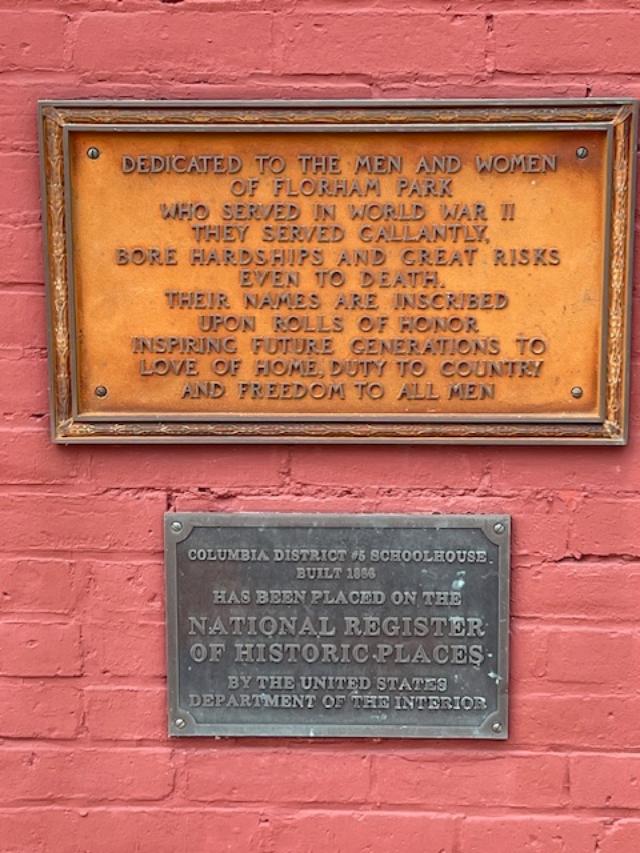
The museum’s historic plaque

The docents that day explained that the items were reflect the town’s past and some came from families that have been in town for years. The museum reflects the community spirit of town’s past. It explains that times have progressed but not changed too much over the years.

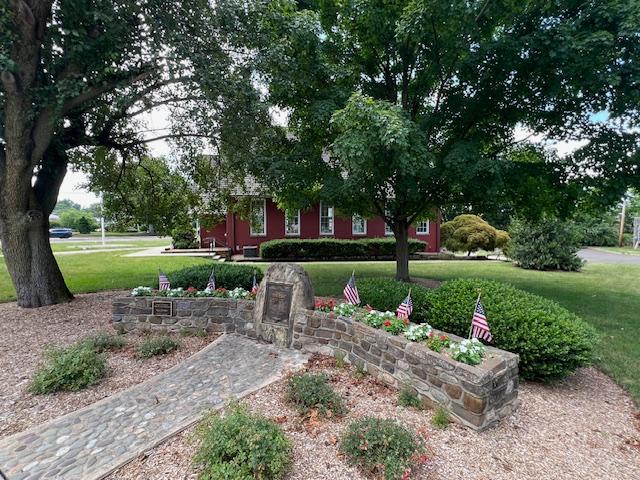
The Veteran’s Monument outside the museum

History of the Little Red Schoolhouse Museum:

(From the Museum Website)

By Kat Kurylko, Research Assistant

In 1830, the residents of Columbia, now Florham Park, sought to improve their thriving farming and broom-making community by establishing a public school for the local children. Therefore, a small schoolhouse, Columbia School #5, was built on the corner of Columbia Turnpike and Ridgedale Avenue and dedicated it on February 17th, 1831. Schooling at the “little red frame building” prospered and so by the 1850’s, the building was “in condition of dilapidation rendering it unfit to be occupied” due to overcrowding.

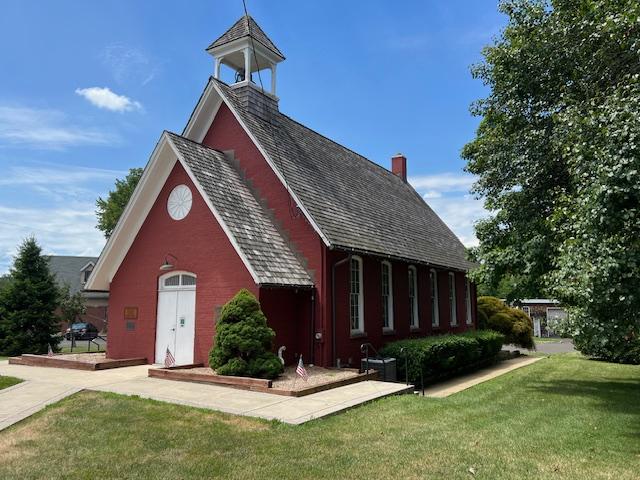
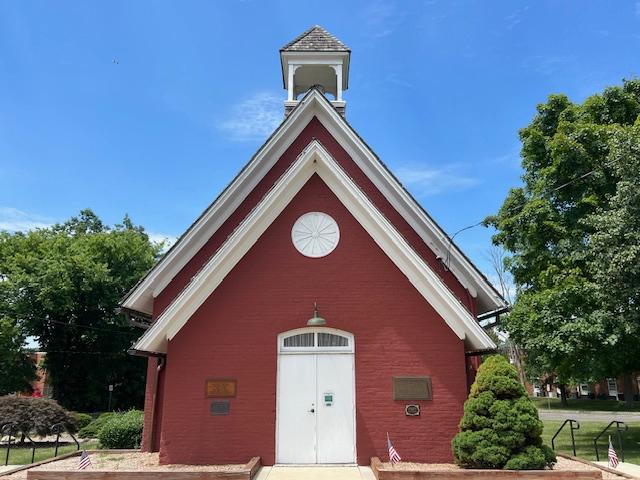
The schoolhouse from the front

On March 1st, 1867, nearly 50 children attended their first class in a new one-room brick schoolhouse. The use of brick added prestige but great expense to the project, accounting for nearly half of the budget. The new building was designed based on principles found in Henry Barnard’s book, “School House Architecture. Much like Thomas Kirkbride’s progressive hospital designs (illustrated locally at Greystone Park Psychiatric Hospital), Barnard’s method School attendance continued to grow and by 1914, a four-room annex building, which could accommodate 78 students was built on the school’s property and the earlier brick building served as an auditorium. Eventually, the community outgrew both buildings and in 1934, the borough’s current middle school was constructed.

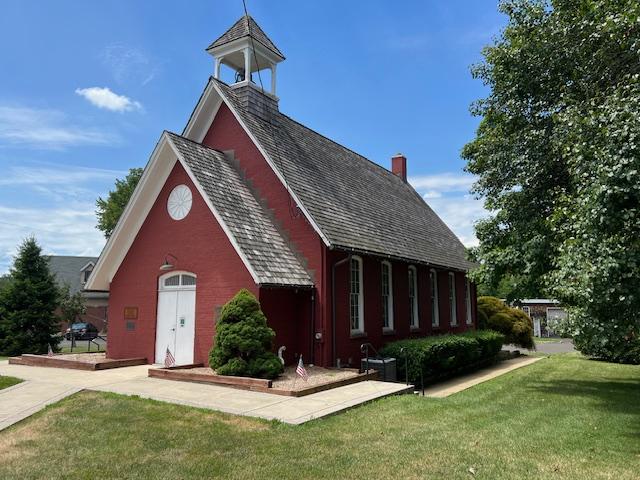
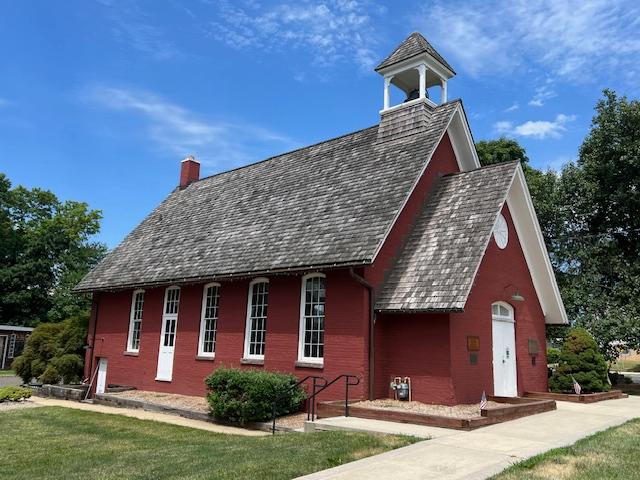
The schoolhouse from the side view

Founded in the 1930’s to preserve the “Little Red Schoolhouse”, the Historical Society of Florham Park now operates the building as a museum. A source of great pride for the local community, the building stands in nearly the same location on the corner of Columbia Turnpike and Ridgedale Avenue, although moved back to accommodate the expansion of Columbia Turnpike. Listed on the NJ and National Registers of Historic Places since the early 1970’s, today the building serves as a reminder of the community’s rural roots.

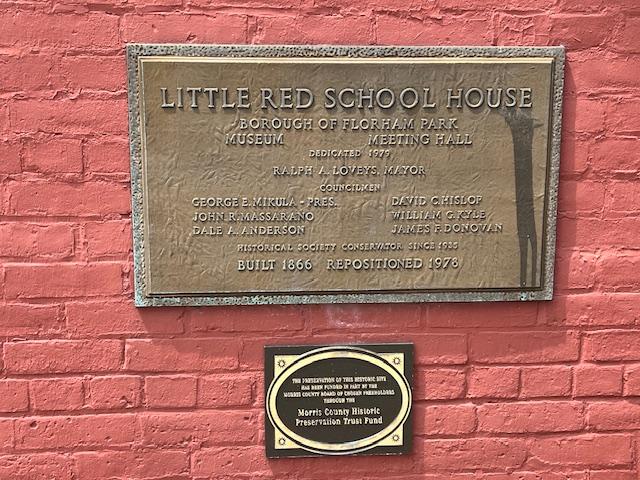
The “Little Red Schoolhouse” Museum historic plaques

(From the Morris County site):

The Little Red Schoolhouse & Museum:

Florham’s Park’s iconic Little Red Schoolhouse was built in 1866 at a cost $2,250. Its open belfry and gable-end entrance instantly identify it as a typical 19th century one-room schoolhouse. The Italianate one-story narrow red brick masonry building is an architectural marvel with its steep roof, tall windows and elaborate arches.

Inside, part of the museum is set up as a 19th century classroom, where small groups can enjoy a lecture. The museum has a variety of artifacts from the 1800’s and 1900’s, vintage school desks and broom-making equipment. Its location at the historic crossroads of Florham Park has remained a key reminder of the borough’s rural origins. The schoolhouse is a stop each fall on the free “Pathways of History” event (which I was on that day I visited).

Of Special Note:

*In 1978, the schoolhouse was moved back several yards to accommodate the expanded Columbia Turnpike.

*The schoolhouse is also known as Columbia School District Number 5 Schoolhouse.

*The schoolhouse is the borough’s icon, appearing on the town flag, letter head, website and public works and first responder vehicles.

Chester Historical Society/Chester’s Rockefeller Center                                                                    137 Main Street                                              Chester, NJ 07630

Chester Historical Society/Chester’s Rockefeller Center 137 Main Street Chester, NJ 07630

Chester Historical Society/Chester’s Rockefeller Center

137 Main Street

Chester, NJ 07630

(973) 829-8120/(908) 879-2761

http://www.historicchesternj.com/

Open: Check their website/Seasonal

Admission:

My review on TripAdvisor:

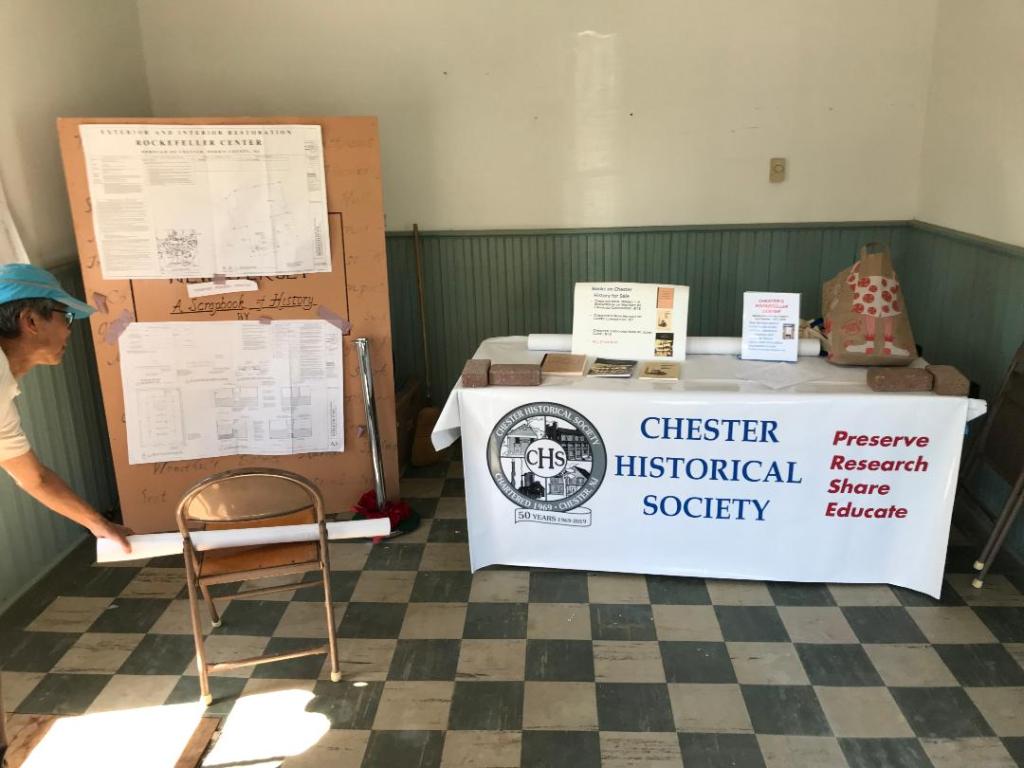
The Chester Historical Society/Chester Rockefeller Center has just been moved to Downtown Chester and is currently being renovated. Their collection is in storage right now while the building is being renovated. When I went to visit the museum, they were displaying their plans for the museum in the future outside the building.

The Chester Historical Society is currently open only at certain times and the collection is in storage while renovating. They are telling the town’s story on both a story board outside and on tables outside the building while it is being set up. Please check out their website for upcoming events and openings.

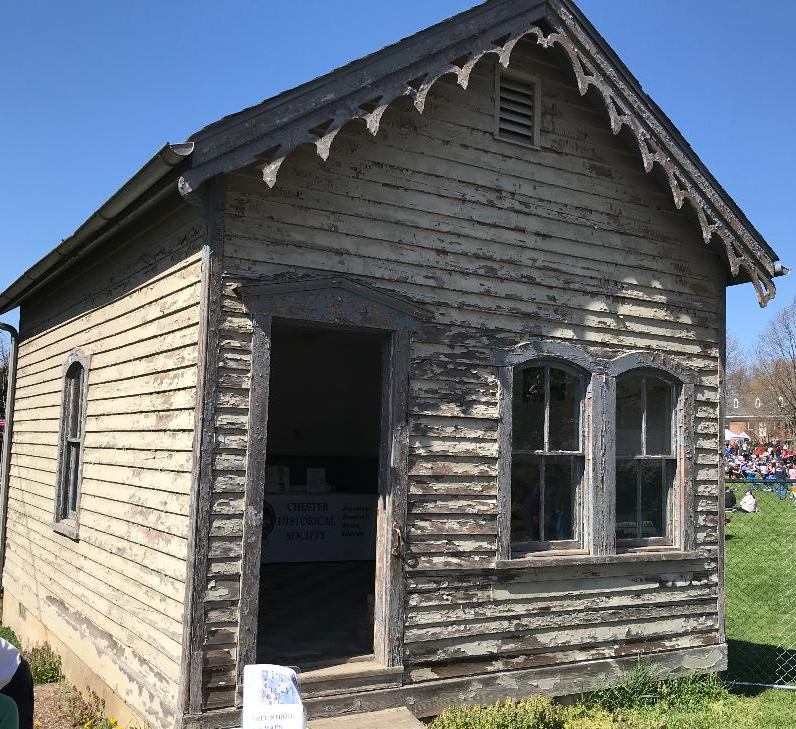
The new building

The Chester Historical Society is now in the process of being renovating and is empty accept when it is open for special events like ‘Pathways of History’ for Morris County, NJ.

The game plan for the museum.

The History of the Building of the Chester Historical Society:

The original Chester, NJ Rockefeller Center

(From the Chester Historical Society’s website)

Chester’s Little “Rockefeller Center” building has seen many unique tenants in its day! In 1897, Mr. W. J. Litzenberger was reported to be doing a located behind the building. This is where he carved gravestones for the locals and used the building as his sales office and display area.

Also in the late 1800’s, the Post Office was located in Alonzo P. Green’s Pharmacy across from the firehouse. “Lawyer” Smith (postmaster), who was the son in law of General Cooper, was soon to move the Post Office across the road to Yawger’s store and later to the “Rockefeller Center” building, which was just east of the firehouse.

When Chester’s Iron “Hey-Day” waned out, fortunate were those who could return to farming. They could put their efforts into raising peaches, apples and garden produce and often used it as barter for “store-bought necessities” to provide for their families. Horses and cattle were important to the farmer and also to the townsmen. From earliest days drovers had driven horses and other livestock through Chester on their way to and from Susses County. From the mid-1800’s horses and mules were brought from as far as the Midwest to be sold.

During the late 1920’s and into the 30’s and 40’s, Abraham Meyer, who boarded with Austin Thompson, bought and sold cattle and had them located at the present Lowensteiner farm on North Road. During that time, he had an office for his cattle dealer’s business in the “Rockefeller Center” building.

After that, the Rockefeller family rented not only the cottage for them to live in but also the little building next to it from George E. Conover. The cottage was ordered and built from the Sears & Roebuck Company and was located to the left of the “Rockefeller Center” building. At this time, Carlos “Rocky” Rockefeller used the building for a bicycle shop where you could not only purchase a bike but also get one fixed! He would also sharpen the local children’s ice skates there.