The Bergen County Historical Society at New Bridge Landing in River Edge, NJ.
Christmas time at the Bergen County Historical Society.
The student consultants from Bergecco-Parc Consulting Inc (Bergen Community College-Paramus Campus), who were part of my Business 101-Introduction to Business class on the Lyndhurst campus, marketed the Bergen County Historical Society for tourism both domestically and internationally. They created a complete marketing plan for the BCHS along with new special events for Halloween and Easter and a fundraiser to raise $25,000 for the new museum. These are their ideas. Team Two won the contest.
Bergen County Department of Parks, Division of Cultural and Historic Affairs
Court Plaza South
21 Main Street, Room 203 W
Hackensack, N.J. 07601-7000
Survey of the Early Stone Houses of Bergen County:
One of the most important early American building types is that of the pre-1840 stone house built in areas with Dutch Cultural affiliation. Bergen County is unique in the abundance, variety and architectural quality of these early stone houses, although adjacent areas of New Jersey and New York have some of the type.
Materials and methods remained constant but the house which were built from the time of Dutch colonization in the 17th century vary in size, plan and stylistic detail. Bergen County’s surviving early stone houses many located along major thoroughfares, provide county residents with tangible links to the formation years of the County, State and Nation.
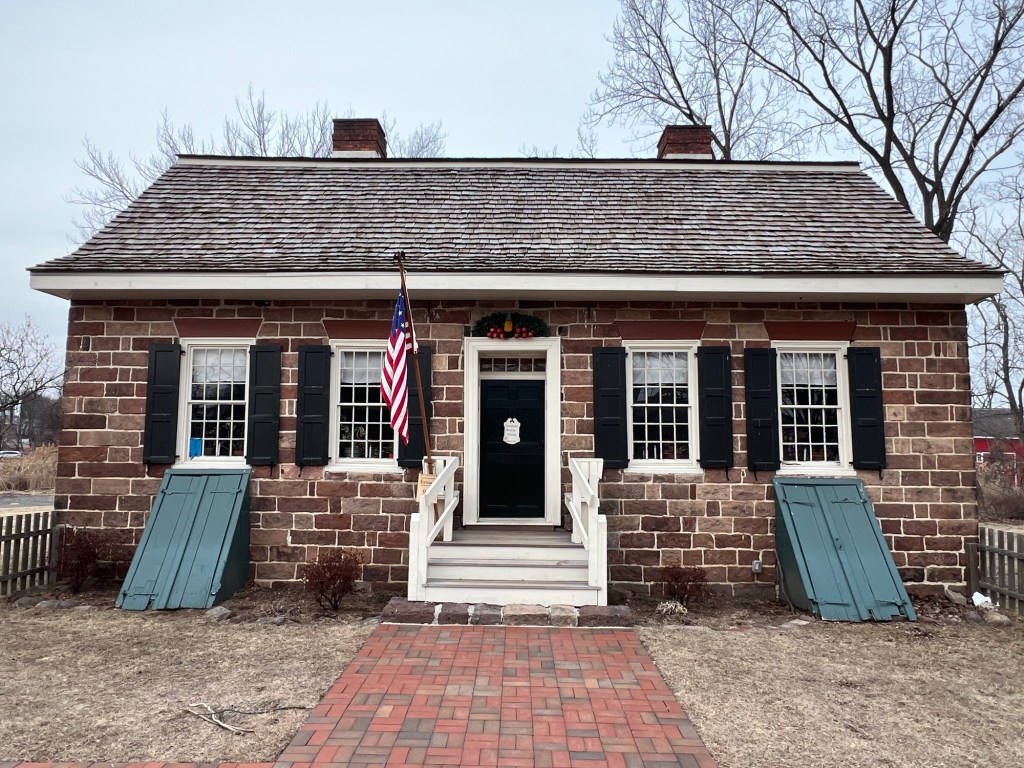
The Campbell-Christi House at New Bridge Landing/Bergen County Historical Society
The Survey of Early Stone Houses of Bergen County conducted in 1978-79 identified and recorded 230 of these early houses. Of these, 208 retained sufficient architectural integrity to be placed as a thematic group on the New Jersey Register of Historic Places in 1983, 1984 and 1985. A clear recognition of the houses importance is given by inclusion on these Registers, which are the State’s and Nation’s official lists of cultural resources worthy of preservation.
For inclusion in the Stone House Survey a building has to have at least two first story walls of pre-1840 stonework. The stone used in constructing the houses varies according to what as locally available. Many of the houses have reddish-brown sandstone walls but in the north-western section of the county rougher local fieldstone was utilized. Some houses have exterior walls of various types of stone and in some brick or frame exterior walls appear with stone ones. Frequently front facades display finer masonry work than do sides and rear. Usually the houses are 1 1/2 stories in height and have gable or gambrel roofs, sometimes with sweeping overhangs. Often there are side wings.
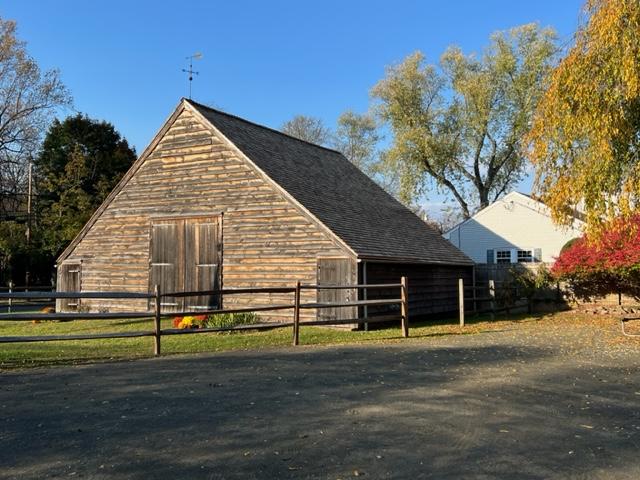
Wortendyke Barn in Oakland, NJ
The Wortendyke Homestead across the street from the barn.
Examples of the house-type are commonly called “Dutch Colonial.” This name most frequently applied to gambrel-roofed houses is a misnomer. Most of the houses were erected in the early 19th century, long after New Jersey passed from Dutch control in 1664. They date to a time when Anglo-American culture was being assimilated into Bergen’s Dutch cultural base. The typical stone house of the Colonial Period in Bergen County is a simple gable-roofed building.
Because they have been continuous use since they were constructed, many early stone houses have been modified and embellished. Often these changes in themselves have architectural distinction and are important to Bergen’s 19th and 20th century architectural history. Even when altered, the basic form and fabric of the original stone dwellings are usually recognizable and the houses are part of the county’s earliest architectural heritage.
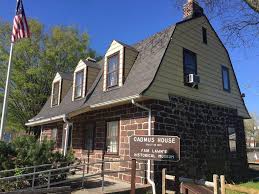
Cadmus House in Fairlawn, NJ
The Stone House survey was sponsored by the Bergen County Board of Chosen Freeholders, the Bergen County Historic Sites Advisory Board and the Division of Cultural and Historic Affairs. It was prepared by the Office of Albin H. Rothe, A.I.A. Claire K. Tholl did the field survey. The survey was made possible by a grant-in-aid from the Office of New Jersey Heritage, Division of Parks and Forestry, N.J. Department of Environmental Protection and matched by funds from the Bergen County Board of Chosen Freeholders.
The report for the Survey of the Early Stone Houses, with background text and inventory forms for houses, may be consulted at the Division of Cultural and Historic Affairs between 9:00am and 4:30pm weekdays.
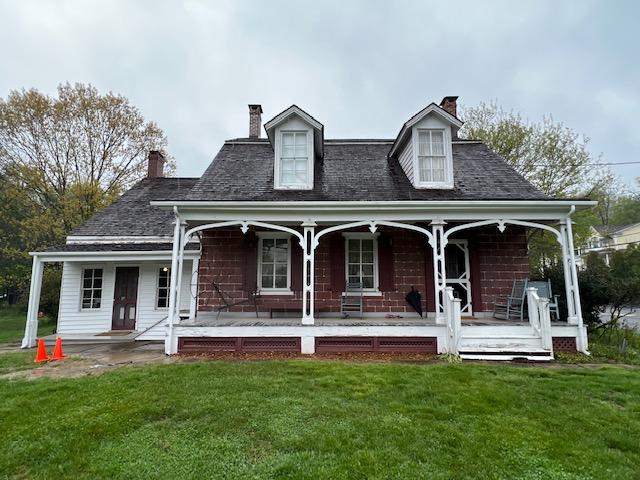
Hopper House in Upper Saddle River, NJ
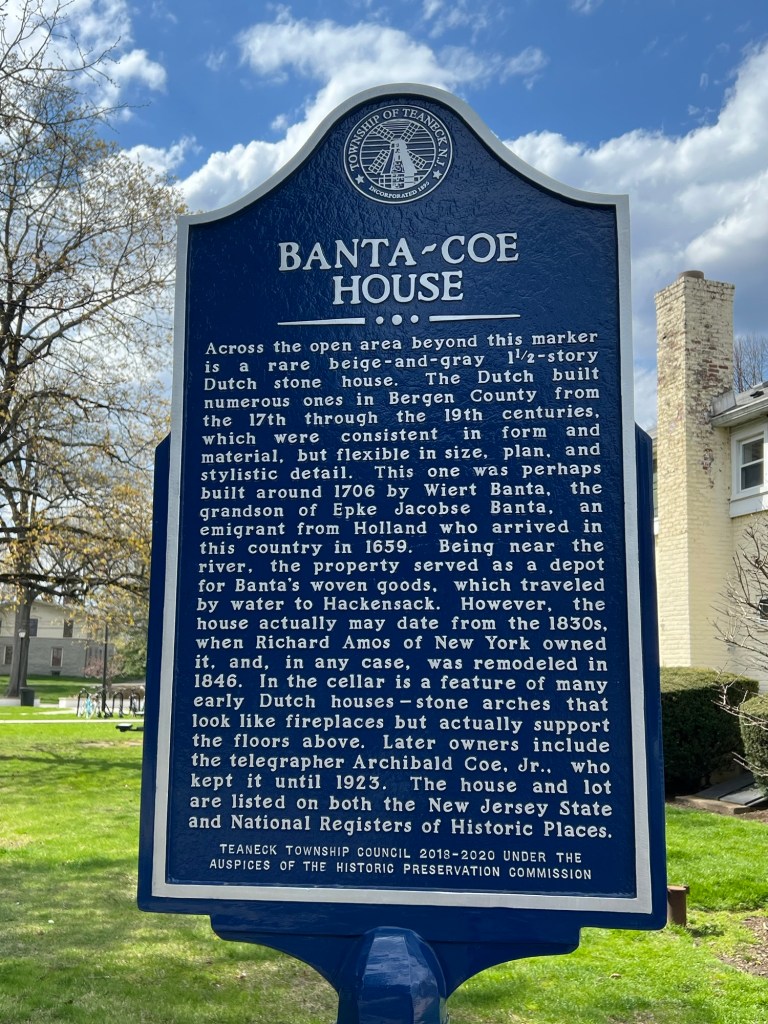
The Banta-Coe House on the Fairleigh Dickinson University campus
The Banta-Coe House prominently faces the Hackensack River
Disclaimer: This information was taken directly from the Bergen County Department of Parks, Division of Cultural and Historic Affairs pamphlet and I give them full credit for this information. Please contact the Department for more information on the subject.
I recently visited the Steuben House for a Christmas concert which was an evening of Christmas songs, a talk on the history of Christmas before, during and after the Revolutionary War. It was a very lively evening of song and lecture and the ladies who entertained us sang beautifully.
The Campbell-Christie House was used as the ‘pub’ for diners that night
Linda Russell & Company sang Christmas songs of the time and then talked in between about how Christmas was celebrated during the War years. She was a delight in her discussion and her and her daughter and their friend did a wonderful job.
The concert was entertaining, and the talk was interesting in the Van Steuben House
A sample of Linda Russell’s music
It seemed that while the Puritans put a damper on the Christmas holidays in New England the Dutch New Jersey and New York thoroughly enjoyed the holiday season after all their hard work during the Fall harvest months.
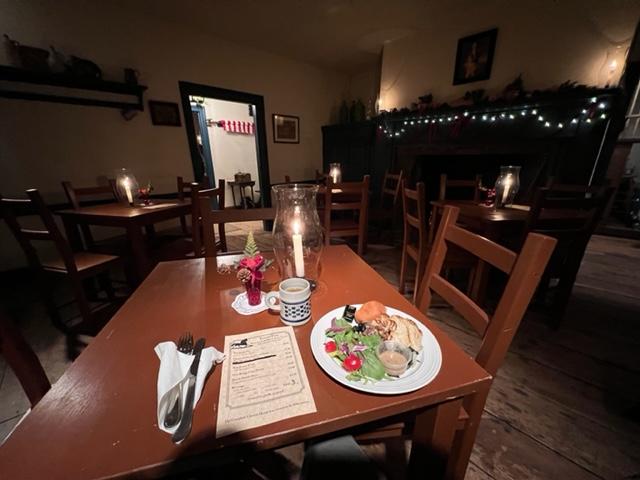
What was really nice was the Campbell-Christie House was open as a pub for dinner and light snacks and you could order things like Shepard Pie, Cheese & Onion Pie and Cake doughnuts and gingerbread for dessert while enjoying conversation by candlelight. It was an interesting and engaging history.
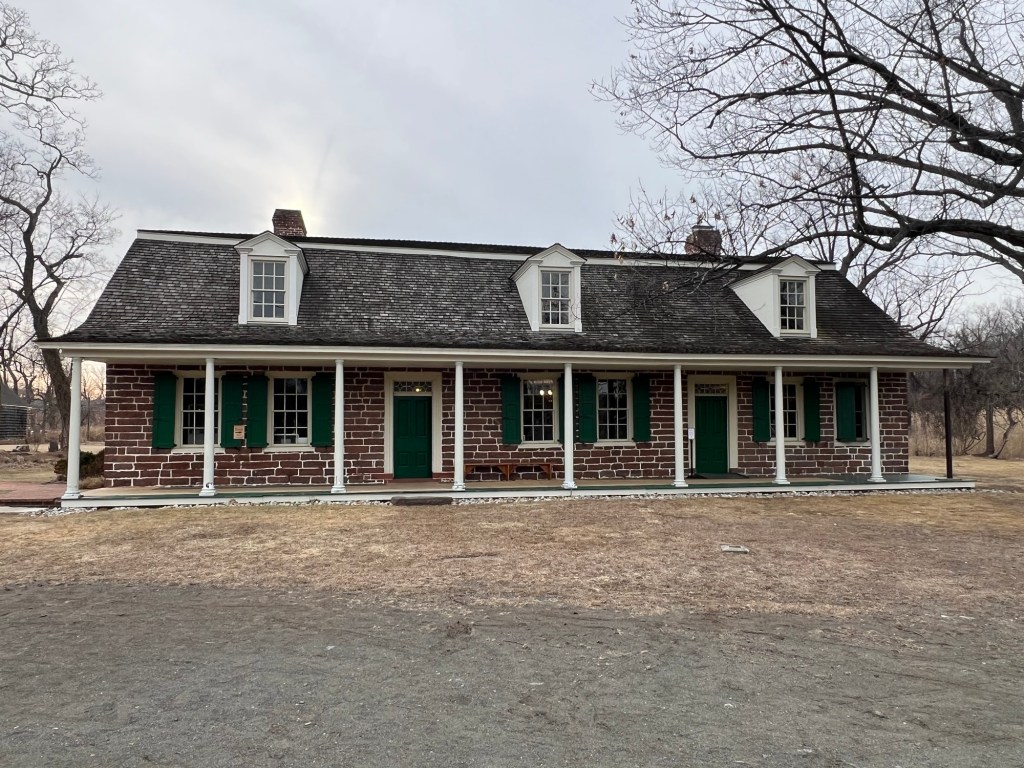
The Van Steuben House for the holidays was where the entertainment was that day
The house is nicely decorated for Christmas circa 1778
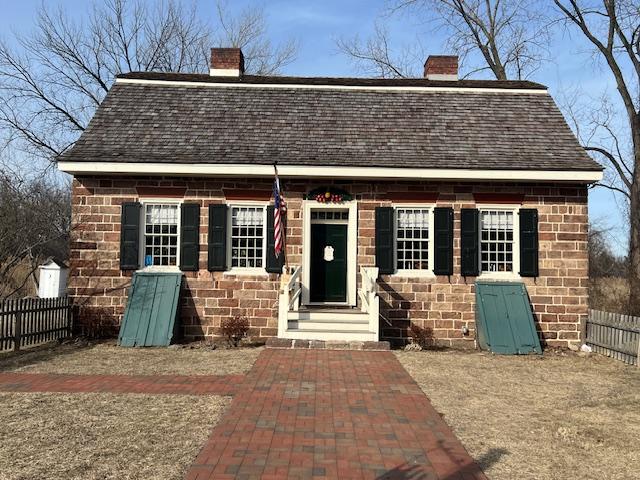
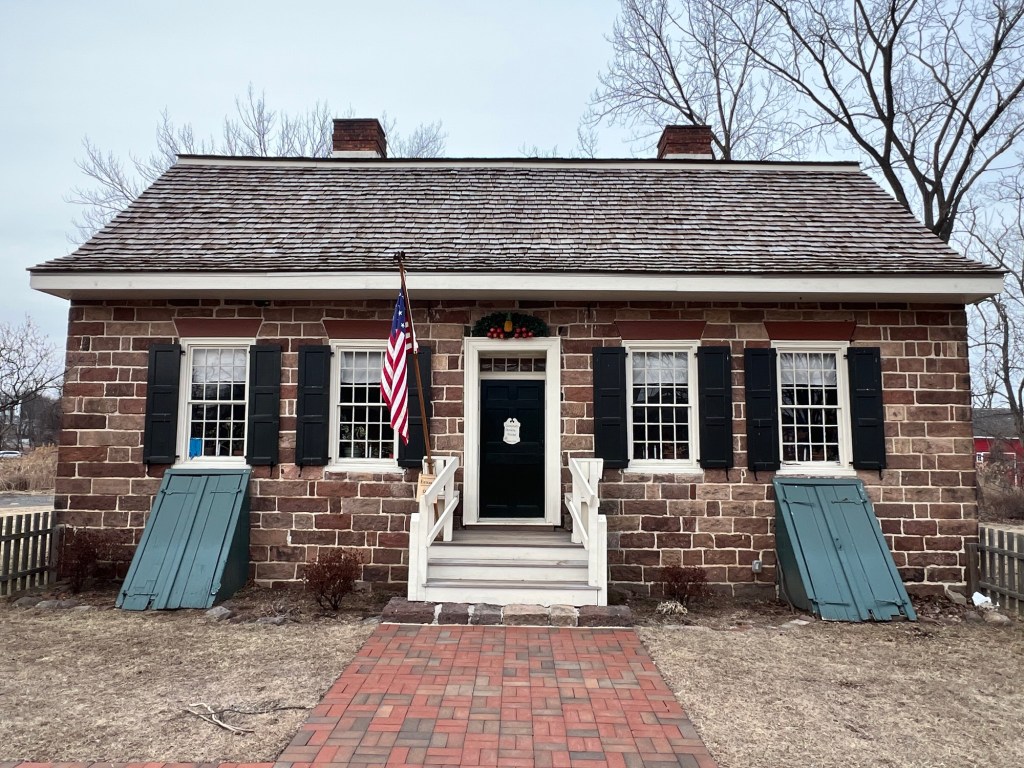
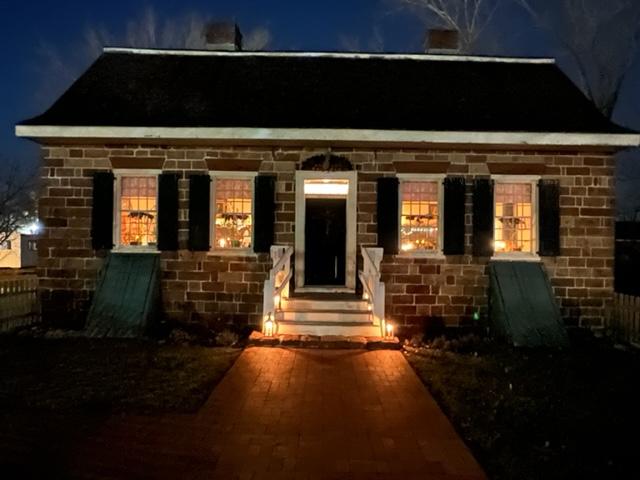
The Campbell-Christie House at Christmas 2020 Historical Event
Singer Linda Russell at the Christmas Tour Event at the BCHS 2020
Don’t miss their historic lectures and reenactments during the year. Check their website above for more activities.
The historic marker of the Campbell-Christie House
The Campbell-Christie House, an 18th century sandstone structure, is located in Historic New Bridge Landing State Park, River Edge. This historic building originally stood at the intersection of Henley Avenue & River Road, in New Milford, NJ. In 1977, in order to save it from demolition, Bergen County purchased and moved it south to this site next to the Hackensack River.
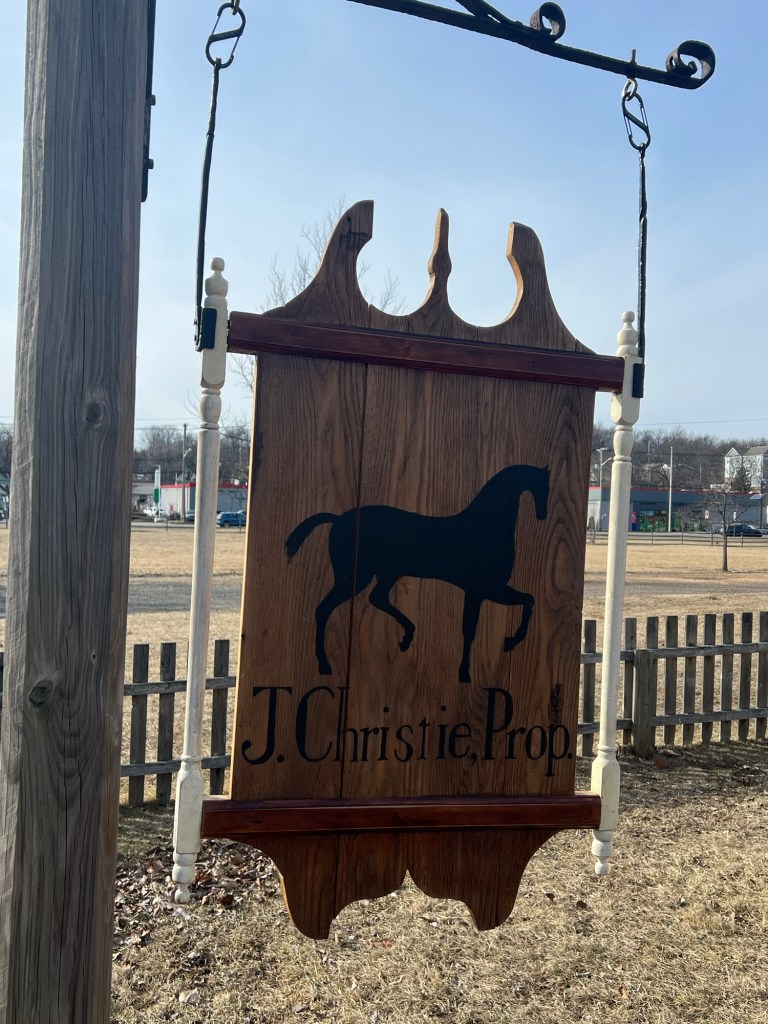
The Christie Family Pub sign
The house was used again for a pub for the Christmas concerts that returned to the site in December 2022. The house was set up as a restaurant with a limited menu before and after the concerts. The light fare was catered in and the menu was similar to what people would have eaten at that time but with a modern twist. The food was really good.
The house was used again for a pub on Christmas 2022 for the concert night
The Campbell-Christie House as the Blackhorse Pub for Christmas dinner
My Shepard’s Pie meal for the Christmas concert at the Blackhorse Pub
The Dutch Sweets dessert plate at the Blackhorse Pub in the Campbell-Christie House Christmas 2022
Sandstone houses were built continuously from the Dutch colonization of the 17th century through the founding of the Republic and the early years of the 19th century. The Campbell-Christie House, an outstanding example of this early regional architecture, is a 5 bay, 4 room center all building with two rooms to either side and two interior chimneys. This stone house form seems to have been built mainly after the Revolution and up to the turn of the century. The front wall is built out of well-dressed local sandstone with inset wooden trapezoidal lintels and side composed of roughly coursed sandstone.
The Campbell-Christie House during Washington’s Birthday Celebration
The Historic New Bridge Landing Site
Jacob Campbell, at the time of his marriage in 1774 built this house along the road (now Henley Avenue) that led from Old Bridge to the Schraalenburgh Church. Historical evidence records that Campbell, a mason by trade, also ran a tavern in his household. In 1795, the house was sold to John Christie, a blacksmith, who continued as a tavern keeper. Jacob Brinkerhoff-Christie, manager of the Comfort & Lumber Company, eventually inherited this large valuable homestead farm property along the Hackensack River. His son. John Walter, born in the house in 1865, was a famous inventor who built and raced cars (at one time holding the world’s speed record), invented the automotive front-wheel drive and is known as the “father of the modern tank”.
Historic New Bridge Landing Park is located at the narrows of the Hackensack River. Because of its strategic site along a tidal waterway it has been an active area of settlement, trade and commercial activities for thousands of years. The construction of the “New Bridge” in 1744 accelerated development of the area. Because of the nearness to Manhattan, New Bridge Landing was a principal base of operation during the Revolutionary War and considered an important strategic route, guarded by troops from both sides at different times. General George Washington, who made his headquarters in Zabriske’s house, led his soldiers in retreat across here on November 20, 1776, saving his troops from entrapment by advancing British troops.
On the Hackensack River’s west bank, near the bridge, is the Steuben House. Originally constructed by Jan Zabriskie in 1753 and doubled in size around 1765, it has been referred to as to as among the five “great houses” of Colonial Bergen County. The third stone house is the 18th century Demarest House, moved to this site in 1956 and owned by the Demarest-Blauvelt Foundation. The Historic New Bridge Landing Park Commission, a partnership of the Bergen County Historical Society, Blauvelt-Demarest Foundation, the County of Bergen, New Jersey Division of Parks & Forestry, New Milford Borough, River Edge Borough and Teaneck Township, operates the New Bridge Landing site.
This site also contains the County-owned 1888-89 Pratt-type, “pony” truss, iron swing bridge, the oldest highway swing bridge in New Jersey. The Campbell-Christie House, along with the other two houses and the bridge, is on the State & National Register of Historical Place. It is the headquarters of the Bergen County Historical Society and furnished with the furniture and collection owned by the Society. Open year round. For the FCHS calendar of event or go to http://www.bergencountyhistory.org.
(2015 Bergen County Division of Cultural & Historic Affairs)
The Bergen County Division of Cultural & Affairs received an operating support grant from the New Jersey Historical Commission, a division of the Department of the State.
Disclaimer: This information is taken directly form my pamphlet from the Bergen County Division of Cultural & Historic Affairs. The site holds it position in its participation in the Revolutionary War and should not missed. I give them full credit for this information. Please call them for more information.
The reenactment of the Historic Bridge attack during the American Revolution at the Bergen County Historical Society. I give the Historical Society full credit for this information.
Open: Please check the website for the seasonality of the park
*Located in Van Saun Park at the entrance.
My review on TripAdvisor:
The historic marker of the Washington Spring
The Washington Spring, a 1/2 area within Van Saun County Park, is associated with General George Washington and the movement of his Continental Army through this area of Bergen County during the Revolutionary War.
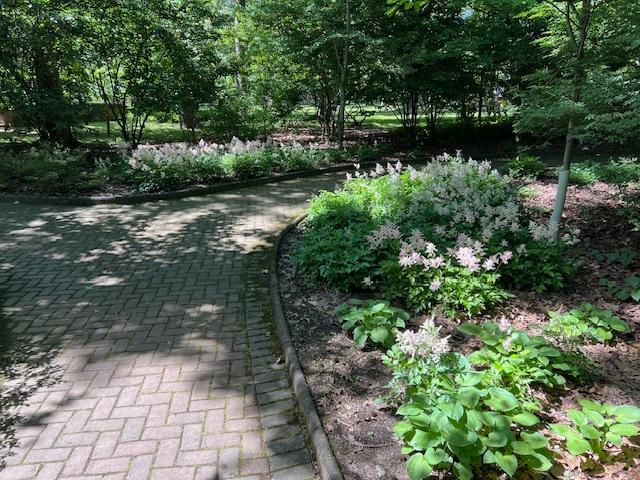
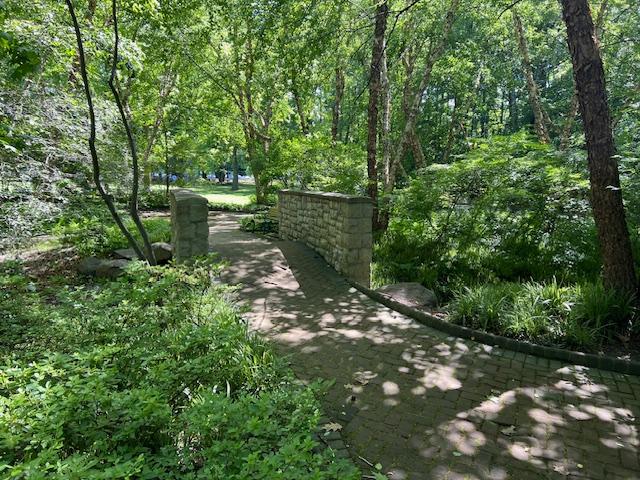
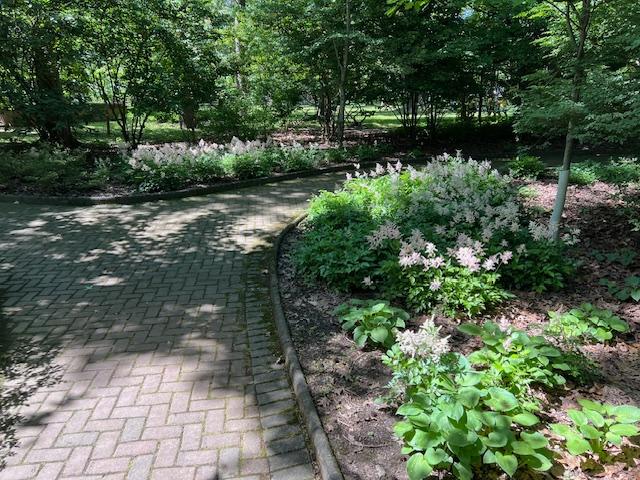
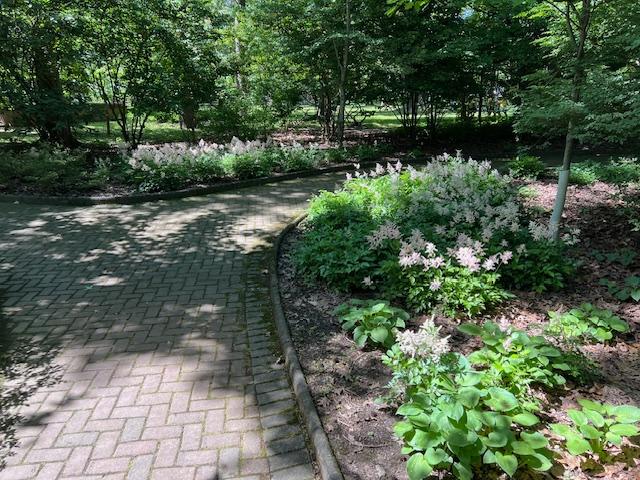
The small section of Van Saun County Park is one of the more quieter places to visit and one of its most historical. The pathways work their way around the springs and the plantings and flowers are especially nice in the early to late Spring months. It really is a beautiful walk.
The entrance to the Washington Spring
The pathways in bloom
History of the Washington Spring:
The hollow between hills known as “Slukup” until it was changed to the more pleasant-sounding “Spring Valley” in 1832. In the Dutch Frisan language “slukup” described a boggy area. The local Banta family was from Friesland in northern Holland and one of the area’s earliest settlers. Natural springs feed the streams in this area that flow through Van Saun Pond and eventually into the Hackensack River. The park’s land was part of 300 acres owned by Albert Zabriskie in 1686. In 1695, he sold 224 acres to Jacob Van Saun of New York City.
The spring running through the garden area.
The road to Slukup, now Howland Avenue, served as the border between Jacob Van Saun’s farm to the south and son-in-law Christian Dederer’s farm to the north. Hendrick C. Banta, who owned a cider mill in the Steenrapie area (River Edge), lived west of the Mill Creek that flows through the park.
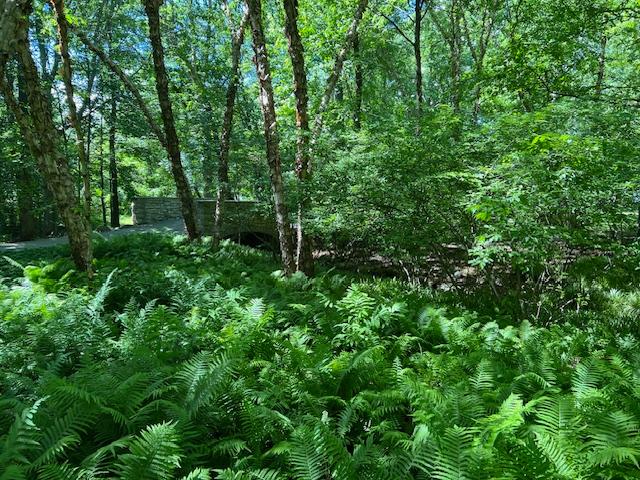
Ferns along the pathways
On September 4, 1780, General Washington moved the troops of the Continental army, numbering approximately 14,000 into a strategic encampment west of the Hackensack River between New Bridge in the south and Kinderkamack to the north in Steenrapie. They were part of the defense to challenge the British military stronghold on Manhattan and prevent any intervention with the landing of allied French troops in Rhode Island. Hendrick Banta reportedly sold a barrel of cider to these troops “every other day”. His 10 year old son, Cornelius, reportedly saw General Washington on his horse three times. During one of these sightings the General was watering his horse at the spring, giving rise to the name “Washington Spring”.
The Washington Spring pathways
On September 17th, General Washington, General Knox and the Marquis de Lafayette, who was headquartered at the northern end of the encampment in the area known as “Soldier Hill” in Oradell, left for Hartford, Connecticut to meet the recently arrived French commanding officers. The rest of the Continental Army decamped on September 20th.
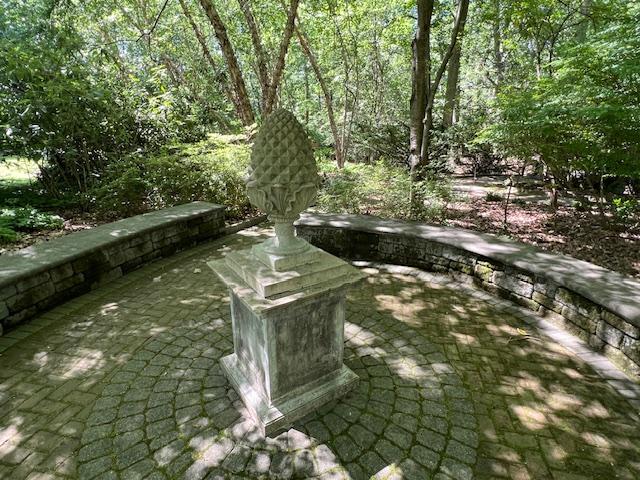
Sitting area and monument in the Washington Springs
The Bergen County Park Commission was created in November 1946 and in 1987 because the Division of Parks. Recreation and Cultural Affairs. Van Saun Park, whose 140 acres include Washington Spring, was created in 1957. Also, within the park is the Bergen Zoological Park, that opened in 1960. Open year round during park hours and is surrounded by accessible pathways.
The Spring area, which is right off the parking lot leading to the zoo, is beautifully landscaped with benches, pathways and flowering plants like azaleas, rhododendrons and flowering trees. In the early spring, the look around the Spring is quite colorful and picturesque. It is a nice way to spend the afternoon, walking quietly around the paths and see where the General once watered his horse. The entrance of the Spring is under plants but becomes a stream further down. Another part of the great history of Revolutionary War and the part New Jersey played in winning the war.
The spring running through the woods
*Disclaimer: this information is taken directly from the Bergen County Division of Cultural & Historic Affairs pamphlet. The Spring is part of Van Saun Park as you drive in and watch for the signs. It really is a beautifully landscaped part of the park and its historical influence in the war should not be missed. (2015 Bergen County division of Cultural and Historic Affairs. The Bergen County Division of Cultural & Historic Affairs received an operating grant from the New Jersey Historical Commission, a division of the Department of State.
There is a real beauty and quietness to the Washington Spring.
















 Visiting a Museum: The Unique, Unusual, Obscure and Historical