
Samuel Dorsky Museum of Art
State University of New York at New Paltz
1 Hawk Drive
New Paltz, NY 12561
(845) 257-3844
http://www.newpaltz.edu/museum
Open: Wednesday-Sunday 11:00am-5:00pm/Closed on Monday & Tuesday
Fee: Suggested fee is $5.00
My review on TripAdvisor:
The Arts Center at SUNY New Paltz in New Paltz, NY

The Samuel Dorsky Museum on the SUNY Campus
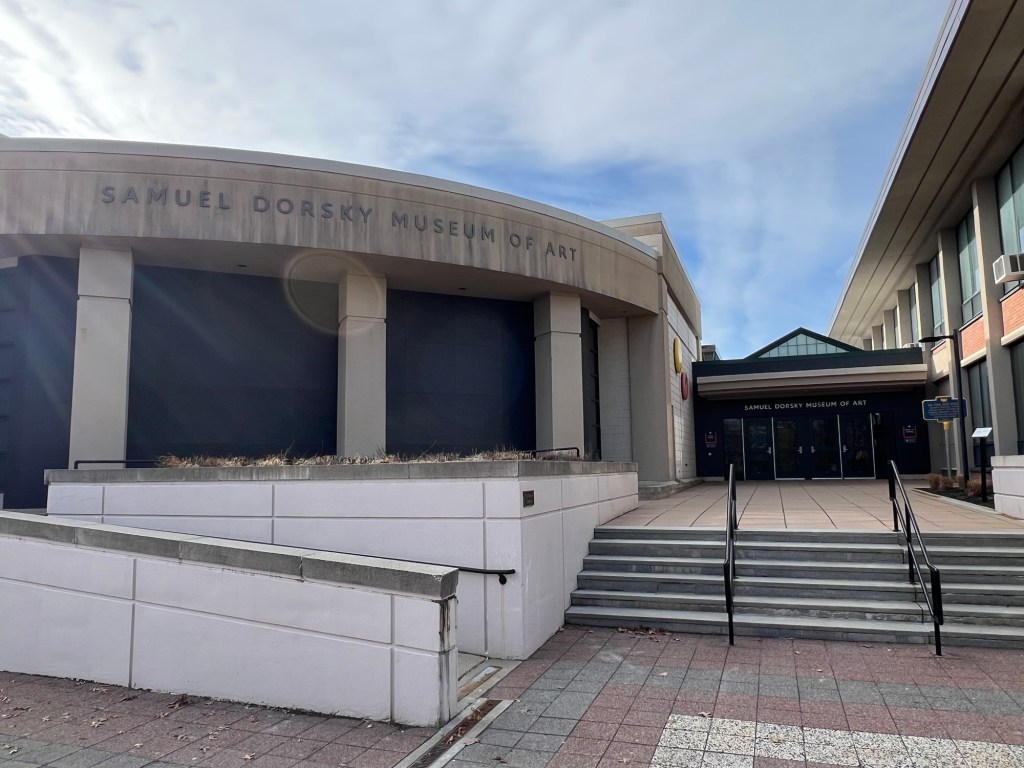
The entrance to the museum

The entrance to the Dorsky Museum
I visited the Samuel Dorsky Museum of Art in New Paltz, NY in 2019 and found it to be an interesting little museum that covers a lot of fields of art from ancient art to paintings and photography. The current exhibitions include “Just my Type: Angela Dufresne” and “In Celebration: A Recent Gift from the Photography Collections of Marcuse Pfeifer”. There is also a exhibition of a local institution “Mohonk Mountain House at 150”, which is on the history and progression of the development of the Mohonk Mountain House Hotel.
The Angela Dufresne exhibition was created by the artist of people who are the artist’s friends, family and of her community which are colorful and somewhat exaggerated views of people and their expressions. These giant colorful paintings had different expressions on their faces where you can only guess what the sitters were thinking.
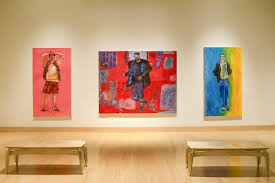
The Angela Dufresne Exhibition
The photo collection of former gallery owner Marcuse Pfeifer, who has now relocated to the Hudson River Valley addresses the 19th and 20th Century that explore celebrity, location and life in the City. It has some interesting looks of life at a different time as well the expression of the subjects.
I went to the museum recently to see both the “Collecting Local: Twelve years of the Hudson Valley Artists Annual Purchase Awards” and “Jan Sawka: The Place of Memory” which were both interesting exhibitions both extended because of the campus being closed for the COVID-19 pandemic.

The “Collecting Local: Twelve Year’s of the Hudson Valley Artists” exhibition
The nice thing about the Dorsky Museum is its dedication to the Hudson River artist. “Collecting Local” is an exhibition that highlights the accomplishments and collections of the current artists from the Hudson Valley region and showcases their interpretations of art. It is nice to see not just local artists shine but what is being shown at the local galleries around the area.
Jan Sawka is a Polish born artist who was exiled from the county and settled into the Hudson River Valley with his family. His works were taken from the context of being a stranger in a new country.

Jan Sawka’s painting dedicated to his mother in law

Jan Sawka’s painting from his time living in Asbury Park, NJ
The museum offers also objects from the permanent collection and showing the areas in which the museum has collected in the past and currently. There is anything from a Warhol photo to ancient Chinese and Japanese statuary.
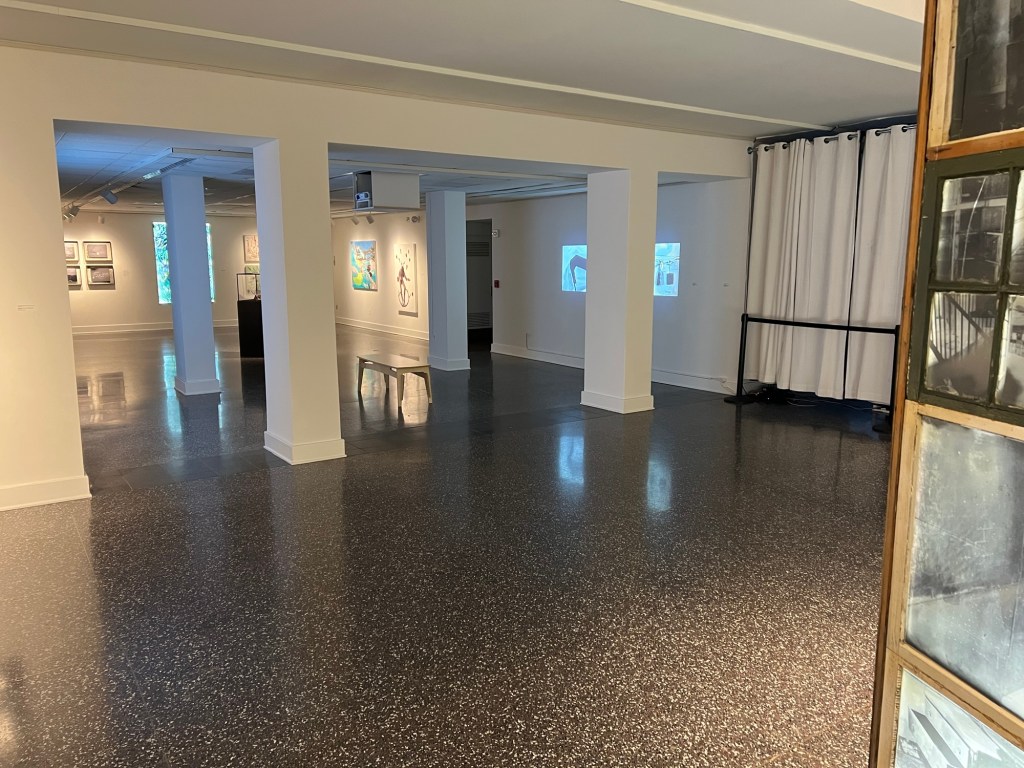
The Museum’s permanent collection
The collections rotate every season. The museum was closed when the college was closed during COVID from 2020-2021. It reopened when the campus fully opened in 2022. I finally got back to the museum in 2025 and saw the show “Movement” featuring New York City and State artists.

The exhibit ‘Movement’

The galley for the exhibition for ‘Movement’
This year’s theme, “Movement,” prompts viewers to consider the profound impact of physical journeys, both personal and collective. Reflecting on what compels people to leave their homes, the exhibition examines migration as a transformative force that shapes communities, melds cultures, and redefines societal landscapes. Through various mediums, including painting, sculpture, video and mixed media, selected artists explore themes of resilience, change and the legacies of movement that resonate across generations (from the Dorsky website).
I picked out the three pieces that really stood out in the show to share with everyone.
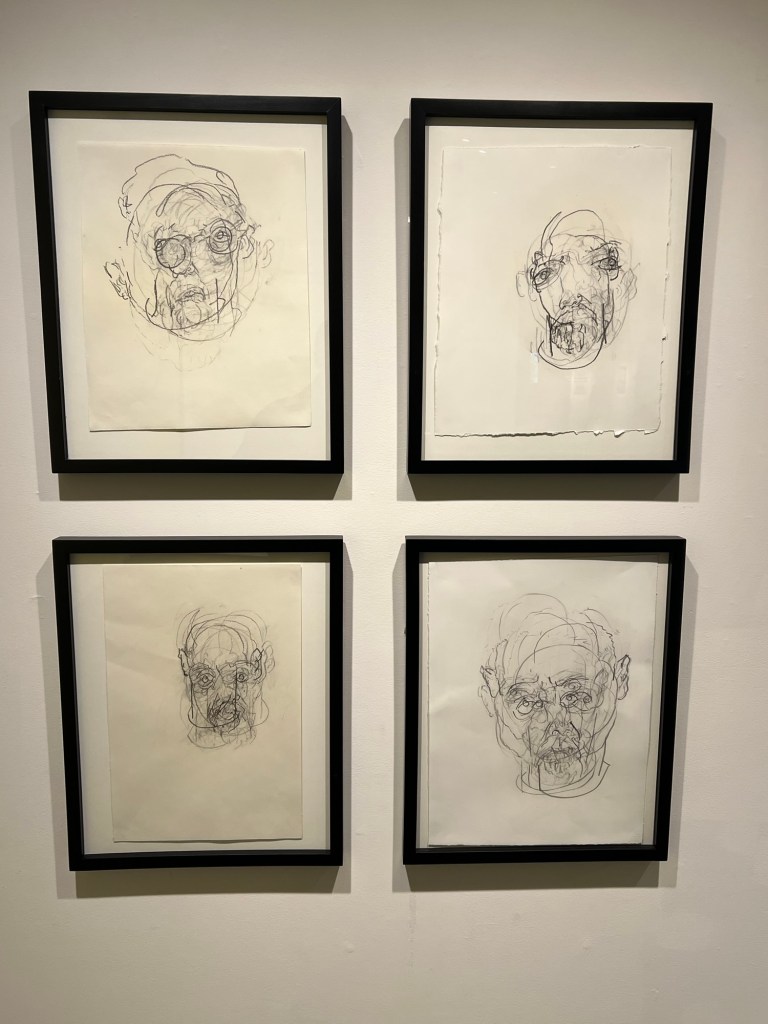
The Self Portrait
The artists of the Self Portraits

“The Dinner Guests” by Aaron Hauck
I loved the colorful look of guests at a dinner party.
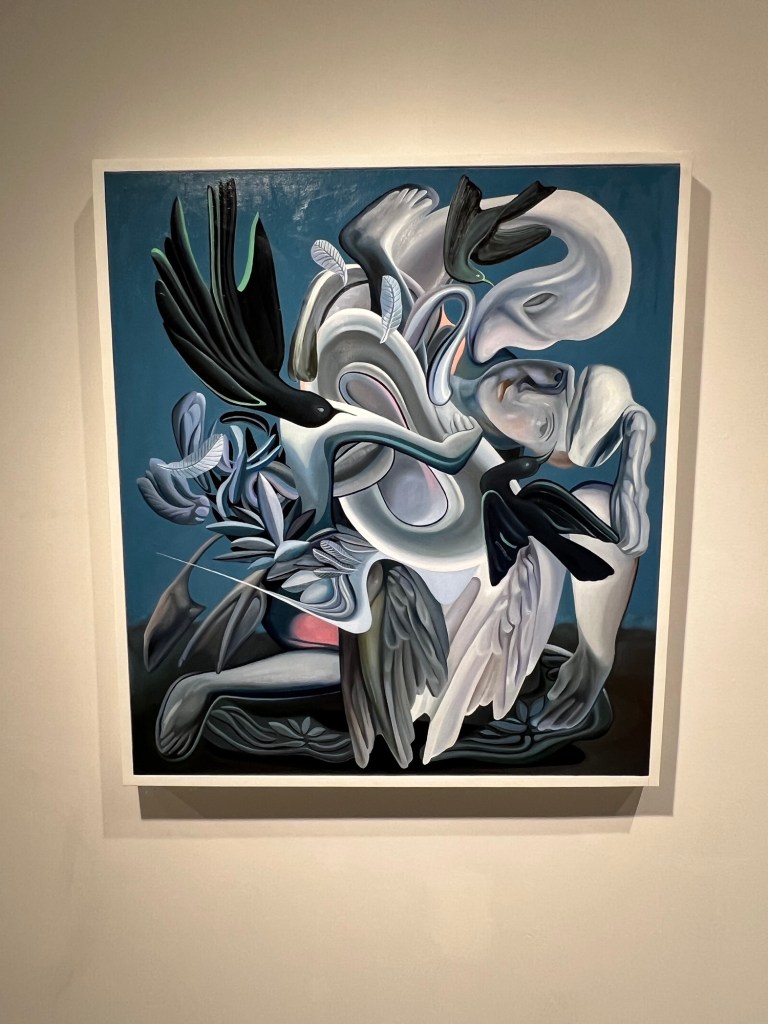
The ‘Witnesses’
“Witnesses” was the one piece that stood out to me in the show. I loved the playfulness of the painting and that it looked whimsical and fun. It looked like something you would see in “Alice in Wonderland”.
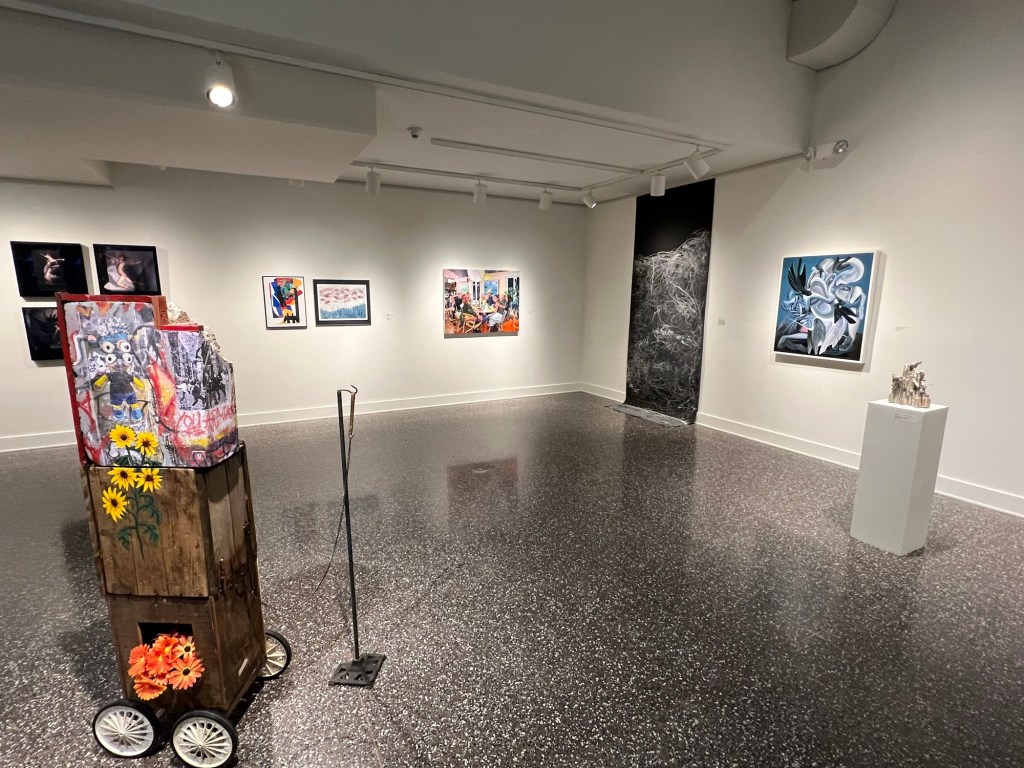
The gallery for ‘Movement’
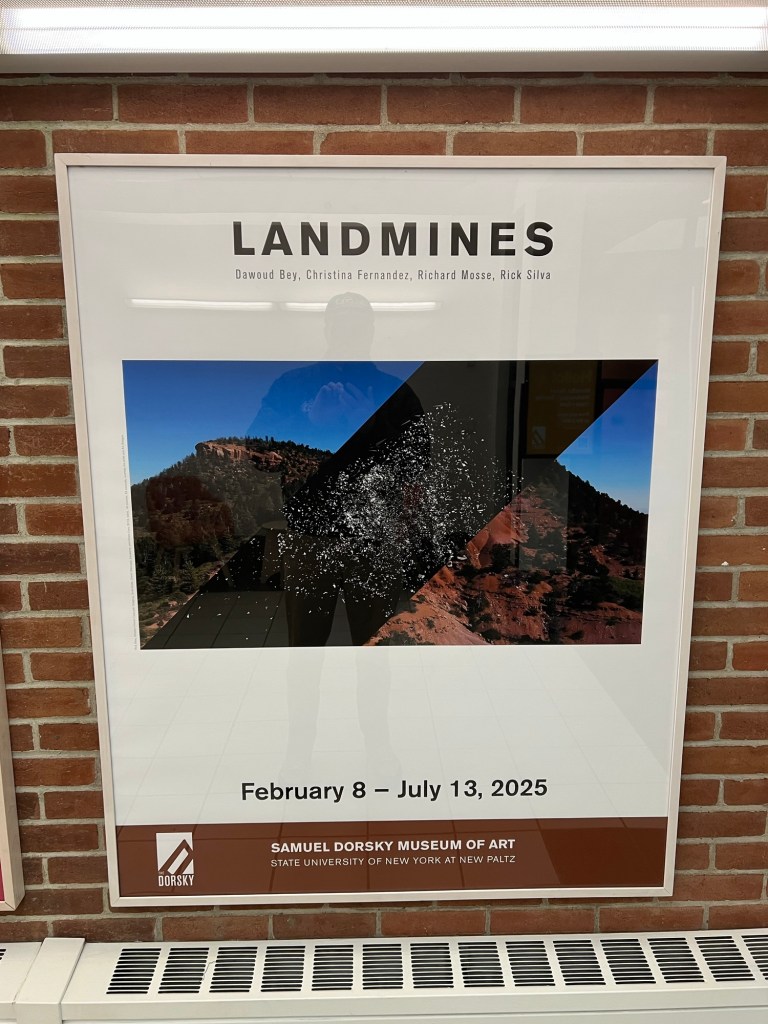
The exhibition ‘Landmines’
Coinciding with the bicentennial of the earliest existing landscape photographs, the founding of the Hudson River School, and a concentrated period in which Native people from New York were forcibly relocated to Wisconsin, Landmines presents camera-based work by artists who explore the role landscape plays in burying or exhuming social history (from the Dorsky Museum website).
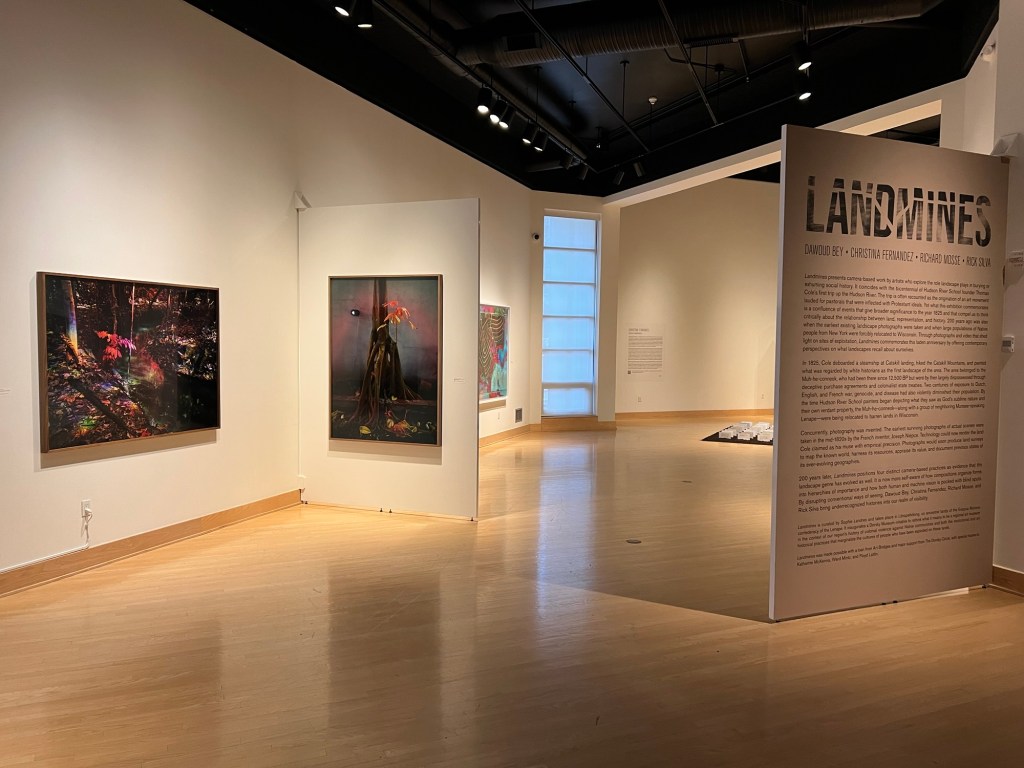
The exhibition ‘Landmines’
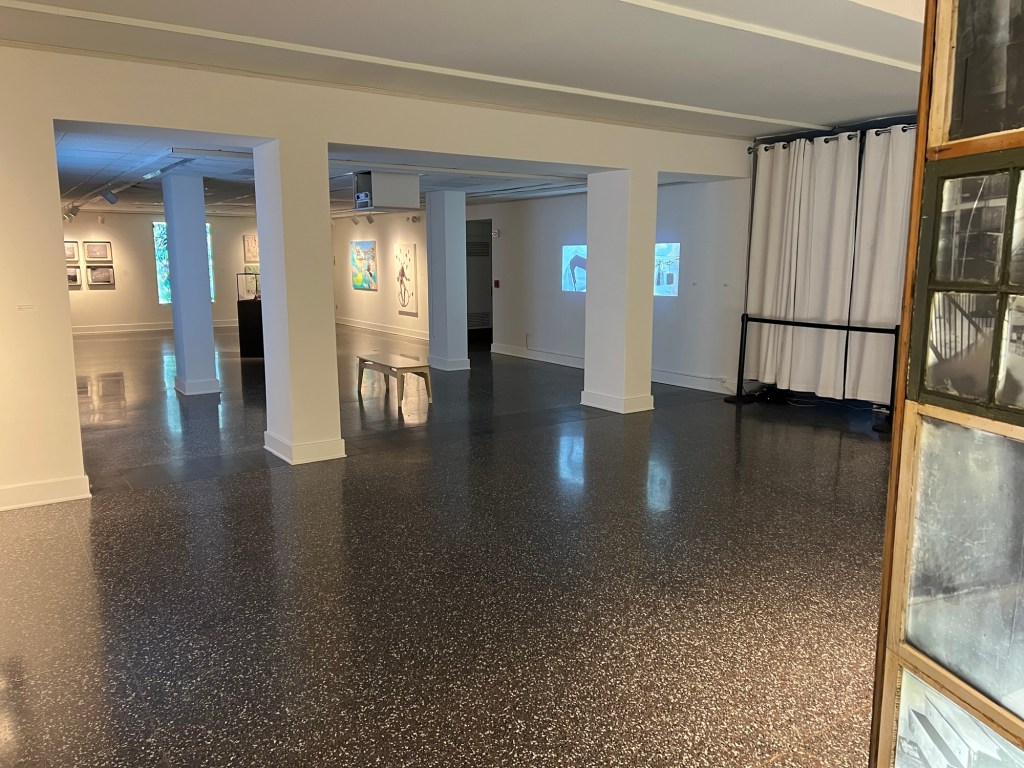
The permanent collection
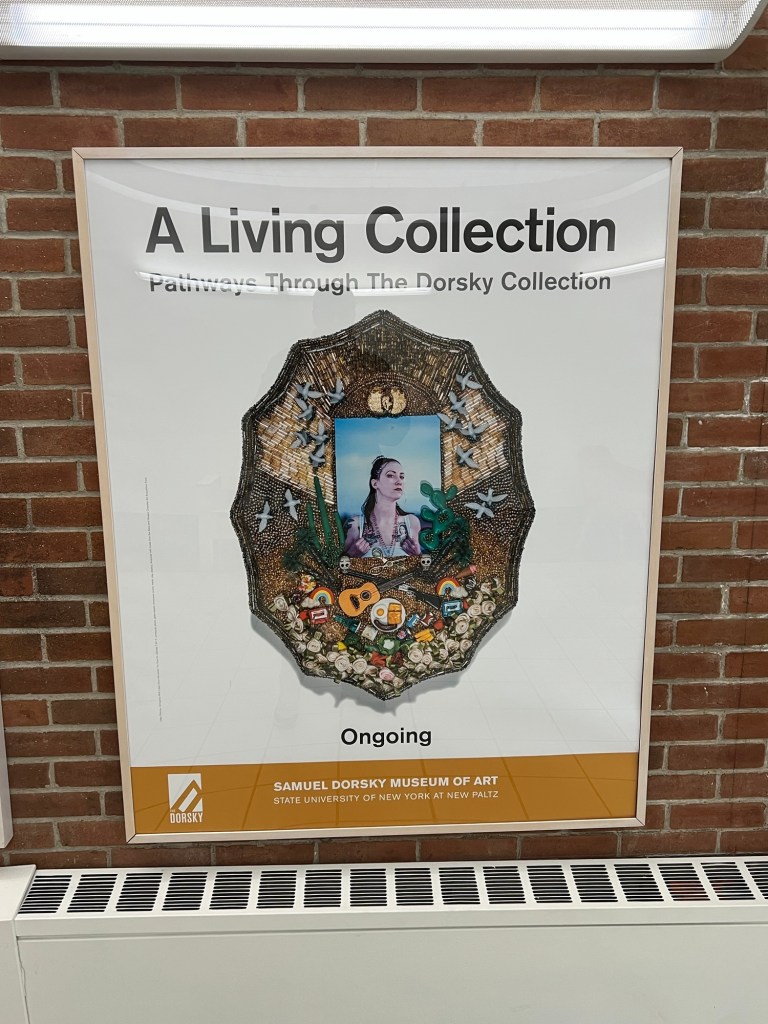
‘The Living Collection’ in the permanent collection
This new display of the Museum’s collection tells the story of The Dorsky from a variety of perspectives, making space for traditionally marginalized voices. Exhibiting collection highlights and audience favorites alongside new acquisitions and commissions, A Living Collection presents the collection as a living entity, continuously evolving and shaped by the viewer’s interpretation (from the Dorsky Museum website).
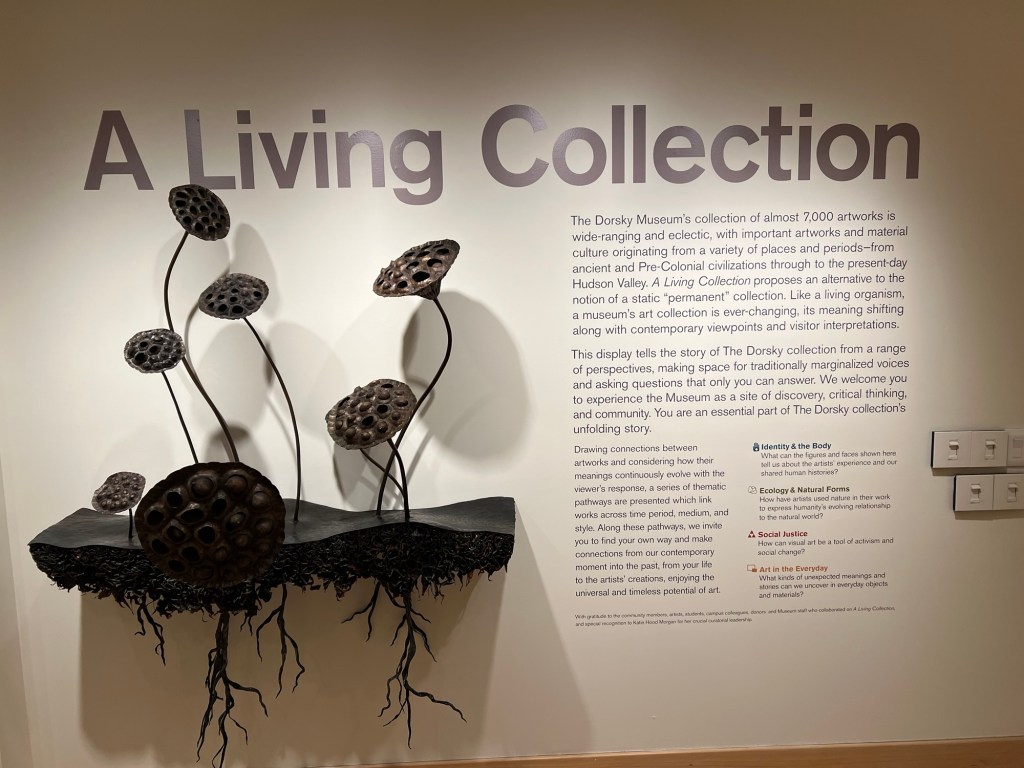
The entrance to ‘A Living Collection’
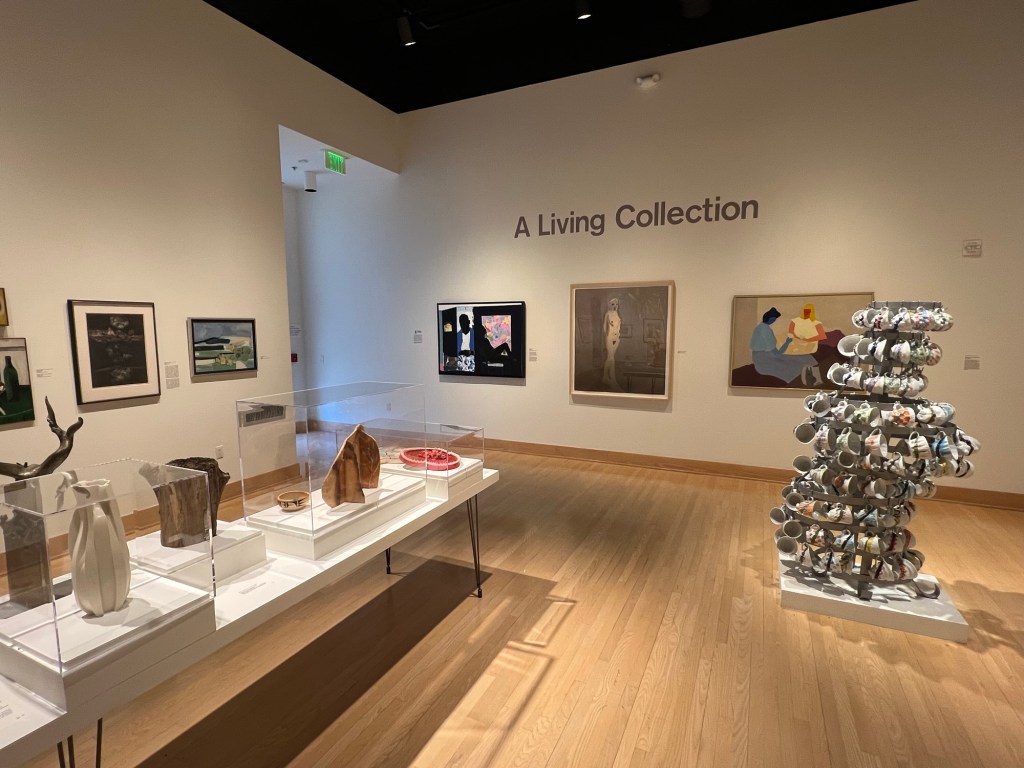
The gallery for ‘A-Living Collection’
A Living Collection:

The ‘A Living Collection’ Gallery
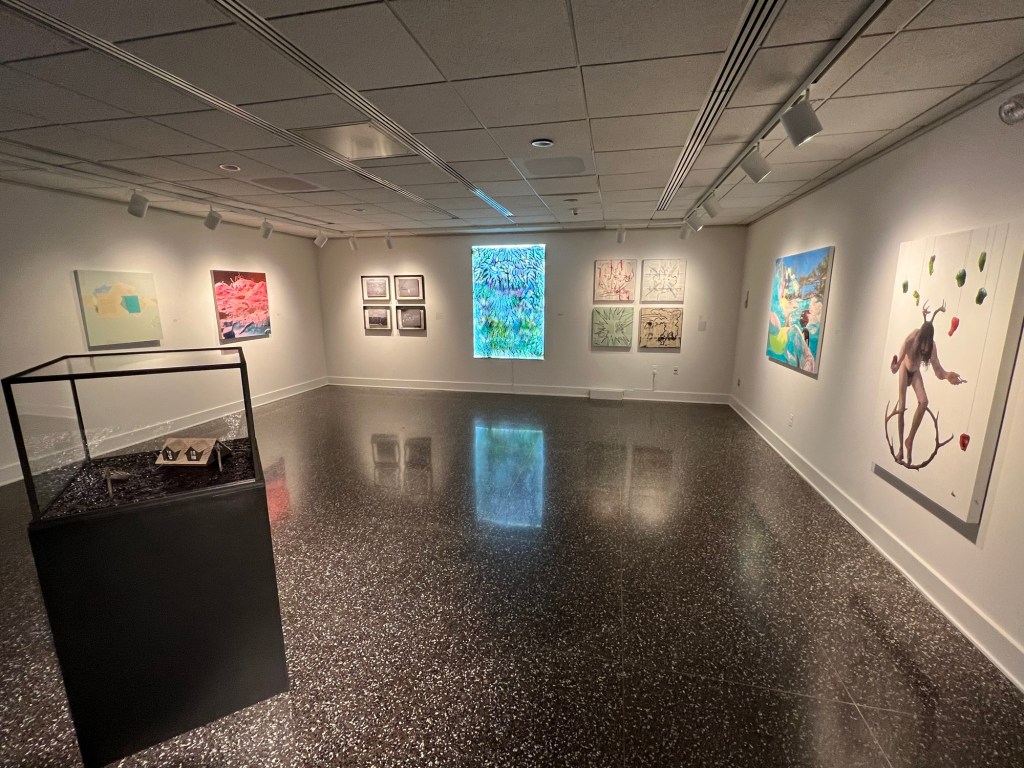
The ‘A Living Collection’ gallery

‘Shaky’s Meadow’ by Beverly Paterson
A video on the art:
A clip of the art display

The full gallery on display at the Dorsky Museum
The museum does a lot in a small area and does a nice job promoting up and coming artists. It also does a lot for its in-house artists especially when I attended the opening of the Student Show for the BFA/MFA art students in December 2025.
The BFA/MFA Thesis Exhibition/fall.25 Show:
https://www.newpaltz.edu/fpa/art/events/bfa-mfa/
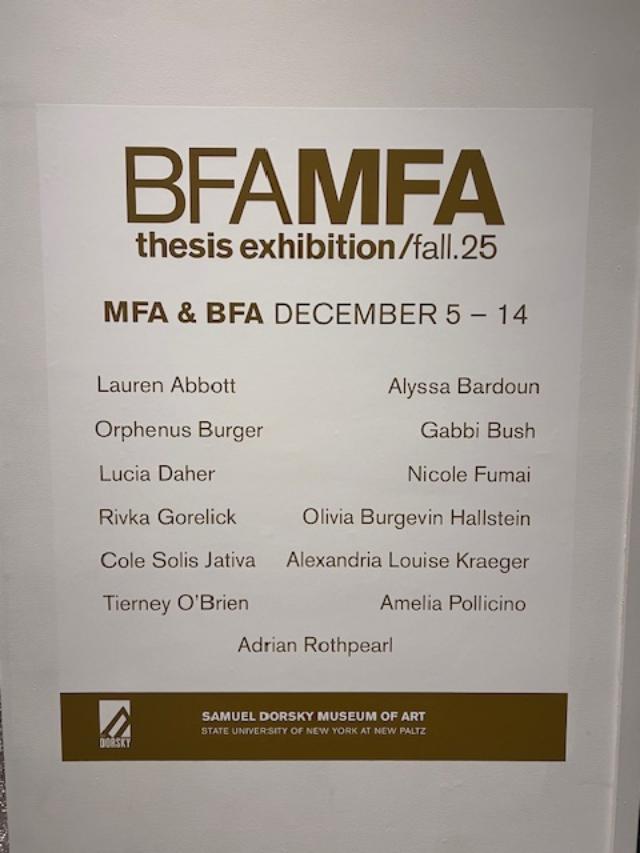
The Opening of the Student Show
As it got darker, I made my way to the SUNY campus and to the art museum. It really was a good show with a nice reception and interesting art. While the students were devouring the food at reception, I had the whole gallery to myself to look at the art. I have to admit that some of the art was quite unusual. The students did have a streak of creativity to them.

The Dorsky Museum Gallery

Some of the unique pieces

Once the students devoured the Reception buffet, everyone came in to see the exhibition

This is the one piece that really stuck with me at the show

Some of the pieces were rather unusual

The unique student works

The students got very creative on the material
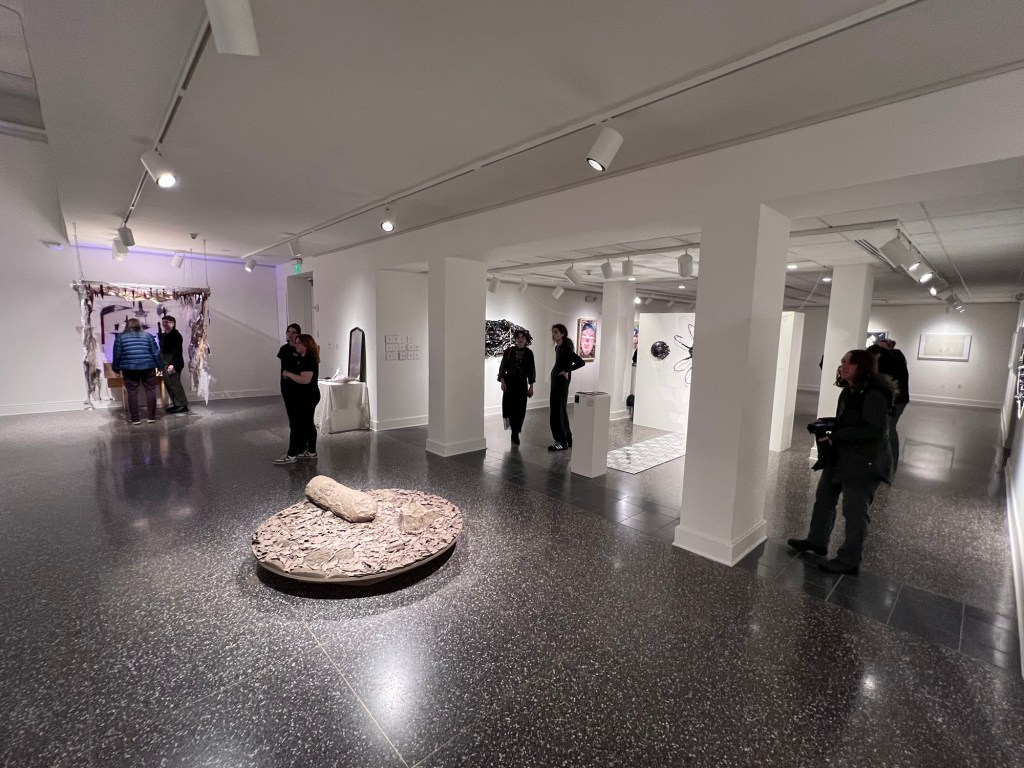
The back room of the gallery

The patrons admiring one of the student works
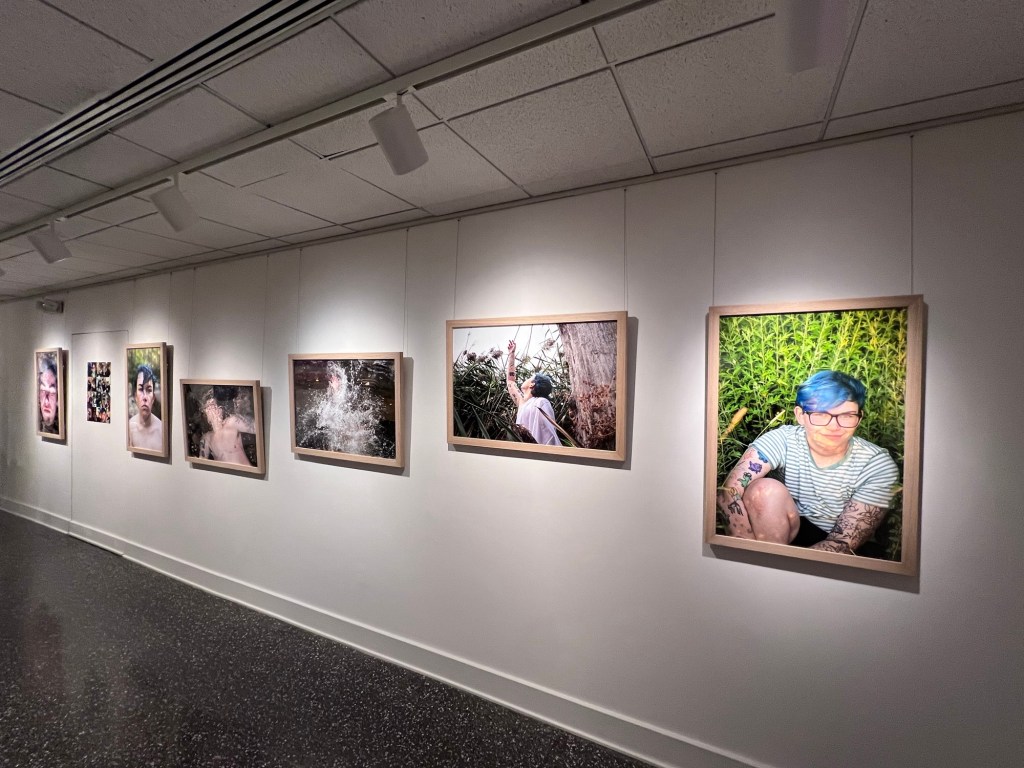
Some of the works of the undergraduate students

Some of the unusual works in the show

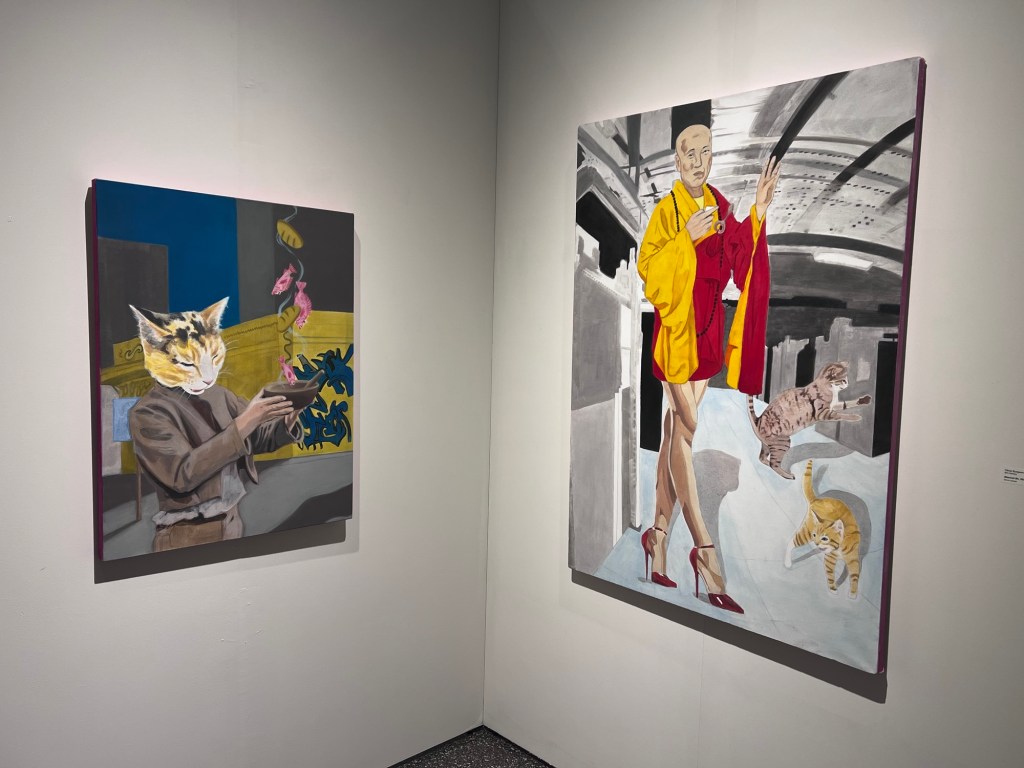
More works by the student artists
The gallery at the museum is rather small do I got through the whole show in less than an hour. I had a quick snack with what was left on the buffet table, which was not much. The food was really good and a snared the final meatball.

Just enough of a snack to get through the next two hours
It was a nice opening for the show and my first on the campus. It just happened to fall at the same time I was attending the Snowflake Festival in Kingston on the same night so I was able to do both. I was glad I could support their students.
History of the Samuel Dorsky Museum of Art:
Mission of the Museum:
(from the museum website)
Through its collections, exhibitions and public programs. The Samuel Dorsky Museum of Art supports and enriches the academic programs at the university presents a broad range of national and international art for study and enjoyment and serves as a center for the arts and culture of the Hudson Valley.
About the Museum:
(from the museum website)
Located at the State University of New York at New Paltz. The Dorsky Museum comprises more than 9,000 square feet of exhibition space distributed over six galleries. The museum was launched more than 65 years ago by a dedicated committee of faculty members to enhance the teaching mission of the university. Originally known as the College Art Gallery, The Dorsky Museum was dedicated in 2001. The opening of The Dorsky Museum transformed the original College Art Gallery into one of the leading art museums in the region.
The Dorsky Museum’s permanent collection comprises more than 5,500 works of art from around the world and spans over a 4,000 year time period. While encyclopedic in nature, areas of focus include American art, with an emphasis on the Hudson Valley and Catskill Mountain region, 19th century American prints, photography and contemporary metals. The museum also has a strong World Collection that includes outstanding examples of both two and three-dimensional objects from diverse cultures, dating from classical to modern times.
The museum’s temporary exhibition program has been hailed as one of the best in the region and features exhibitions, installations and projects by internationally recognized artists as well as annual thematic exhibitions of work by regional artists. “The Hudson Valley Masters Series” is one of the unique exhibitions that the museum periodically hosts which focuses specifically on a body of work by an internationally acclaimed artist who resides in the area.

A painting by Angela Dufresne
Samuel Dorsky:
(from the museum website):
Samuel Dorsky was a self made and self realized individual who came to the art world relatively late after achieving success in the garment business. Emerging from the Great Depression, World War II and the post war boom years with the desire and the where withal to pursue both art and philanthropic, he opened a art gallery in 1963. Until his death in 1994, his gallery presented hundreds of exhibitions featuring such well-known artists as Henry Moor, about whom Dorsky was a recognized authority, Richard Hunt, Willem De Kooing, Larry Rivers and Robert Rauschenberg. Sam also generously championed the work of numerous lesser-known artists who he often befriended. The Dorsky gallery closed its doors to the public in 2001 after which Sam’s children, David, Noah, Karen and Sara established the Dorsky Gallery Curatorial Programs (DGCP) in Long Island City, a not for profit organization dedicated to promoting contemporary visual arts.
The dedication of the Dorsky Museum brought to fruition a project that had dominated the last decade of Sam Dorsky’s life. Sam’s lead gift to the SUNY New Paltz Foundation provided the impetus for the construction of the new museum building as well as the complete renovation of the former College Art Gallery to become part of the museum. The Dorsky Museum now comprises six galleries, offices and a small teaching space.
The Dorsky family continues to be a major supporter of The Dorsky Museum and SUNY New Paltz. David, Karen and Noah Dorsky serve on the Advisory Board of The Dorsky Museum. Karen and Noah also serve as trustees of the SUNY New Paltz Foundation.
(SUNY New Paltz History)






























 Visiting a Museum: The Unique, Unusual, Obscure and Historical