The entrance to the Gallery is at 1 East 53rd Street
The Dragon that guards the door of the gallery.
I came across this little gallery full of Public School K-12 art when walking around the Upper East Side for my walking project, “MywalkinManhattan.com” This small gallery space in the lobby of 1 East 53rd Street has a revolving exhibition of works from students in schools all over New York City.
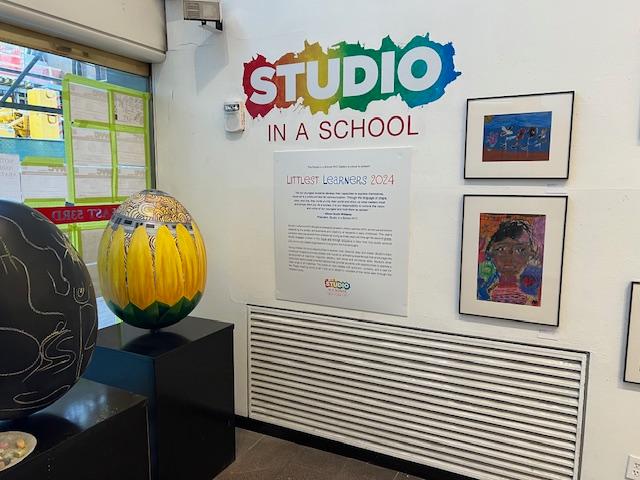
The revolving art at the Studio in a School Gallery is unique.
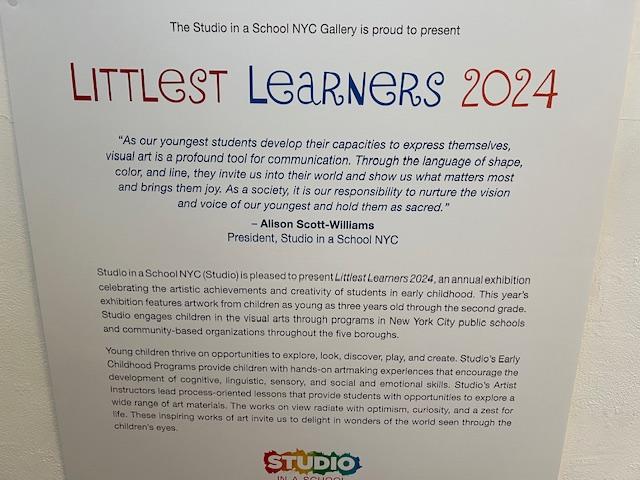
The Littlest Learners 2024 exhibition.
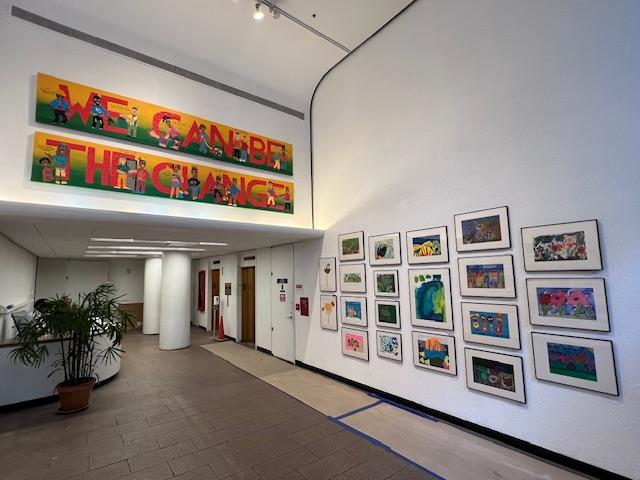
The art gallery revolves its art at different times of the year and you get to see the students creativity. There are paintings, sculptures and paperwork objects. It is amazing to see the talent the students have at all ages.
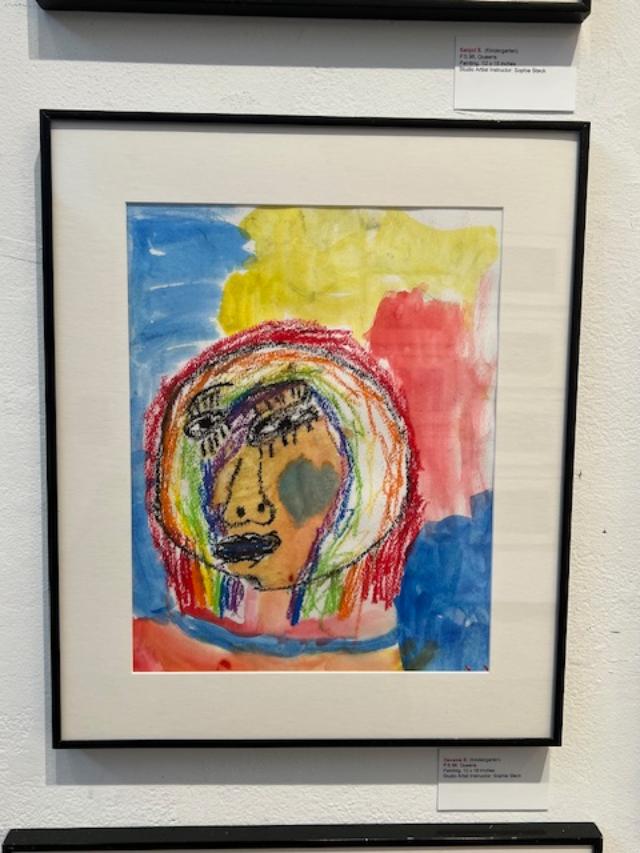
“These kids have talent “Littlest Learners Exhibition 2024”
“Littlest Learners Exhibition” gallery work. Like a Picasso.
“The Littlest Learners” exhibition
The best part of the gallery is that it is free. Just don’t try to go past the security guards at the desk and you will be fine. Take time to look at the over-hanging paper sculptures. They are very unique. Almost like a surrealist kite.
The “Littlest Learners” exhibition was wonderful. It was like visiting a modern art gallery of contemporary works. The 2024 exhibition was colorful, creative and delightful.
What is also nice is that it is free and only takes about 45 minutes to get through the whole gallery so it is a nice place to visit on a rainy day or on lunch hour.
Congratulations to the student artists.
History of the Studio in a School:
Studio in a School fosters the creative and intellectual development of New York City youth through quality visual arts program, directed by arts professionals. The organizer also collaborates with and develops the ability of those who provide or support arts programming and creative development for youth both in and outside of schools.
Studio in a School serves young people by integrating the visual arts into teaching and learning and provides professional development for artists and teachers.
In 1977, during a financial crisis in New York City, public school arts education budgets were dramatically cut. In response, Agnes Gund, philanthropist and President Emerita of The Museum of Modern Art, founded Studio in a School.
Today, under Ms. Gund’s leadership, together with the support of many, our programs continue to thrive, bringing visual arts education taught by professional artists to students in New York City and beyond. We fulfill out mission through two divisions: the NYC Schools Program, offering programs for students in Pre-K through high school and the Studio Institute, which shares professional learning, partnership programs, arts internships and research grants in local and national forums.
It’s such a nice little gallery of student artwork.
Disclaimer: This information was taken from the Studio in a School website and I give them full credit for the information.
I love Fort Tryon Park in Upper Manhattan. It is one of the most beautiful parks in New York City. It is a park of rolling hills, stone paths that hug the hills, interesting garden that are ablaze when in season, shady tree sitting areas and is home to many playgrounds and the Cloisters Museum which is part of the Metropolitan Museum of Art. It has so much to offer a visitor coming into Manhattan from exploring the woods that line the path to looking at interesting art at the museum. This 67 acre park is one of the interesting and complex in New York City.
A city view of the beauty of the park by the Hudson River
The view from The Cloisters by the Hudson River
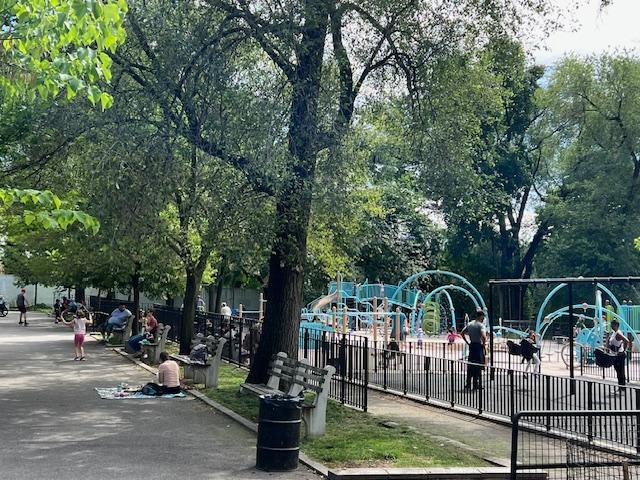
When you enter the park from Inwood by Broadway, you enter through Ann Loftus Park which is named after a local community leader and is one of the popular parks with kids and families in the area. In the summer months, the fountains and water fixtures are going strong and the kids run around them while the parents lie under shade trees talking to one another.
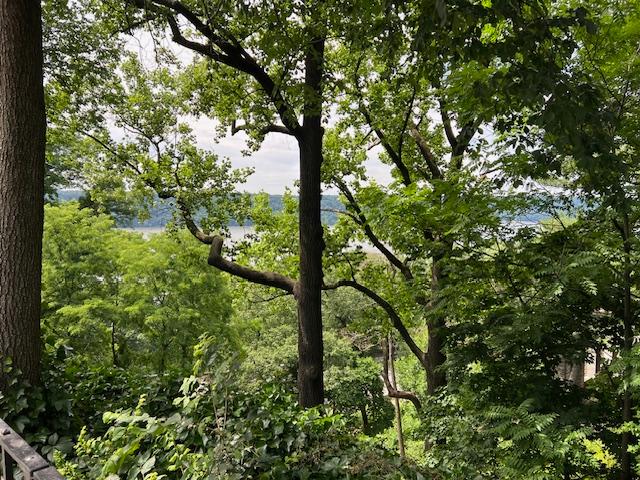
When taking the path from Ann Loftus Park and winding up the hills of woods and rock formations is the Hudson River looming in the distance with spectacular views of the Palisades and the large cliffs of Fort Lee, NJ on the other side.
The bathrooms in Ann Loftus Playground
The history of the park
Anne Susan Cahill Loftus biography:
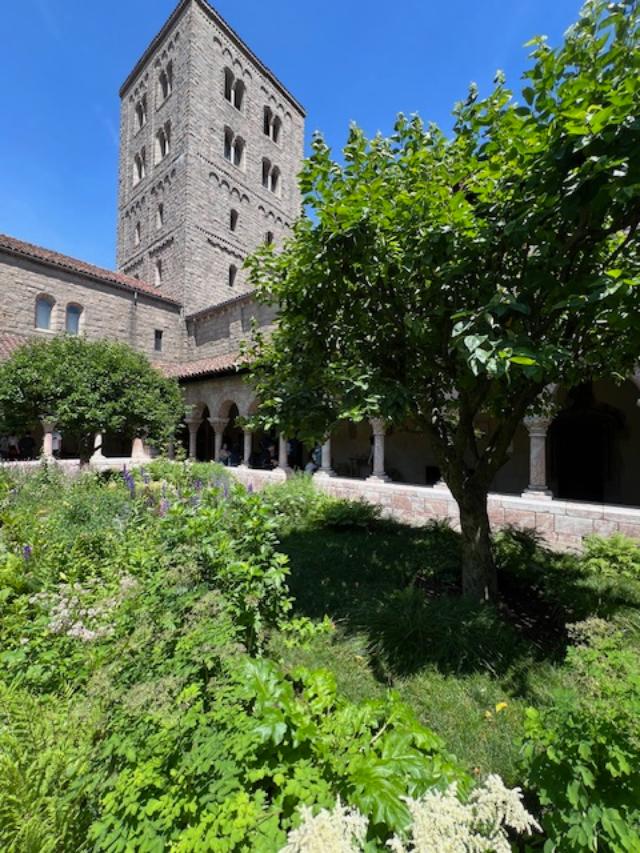
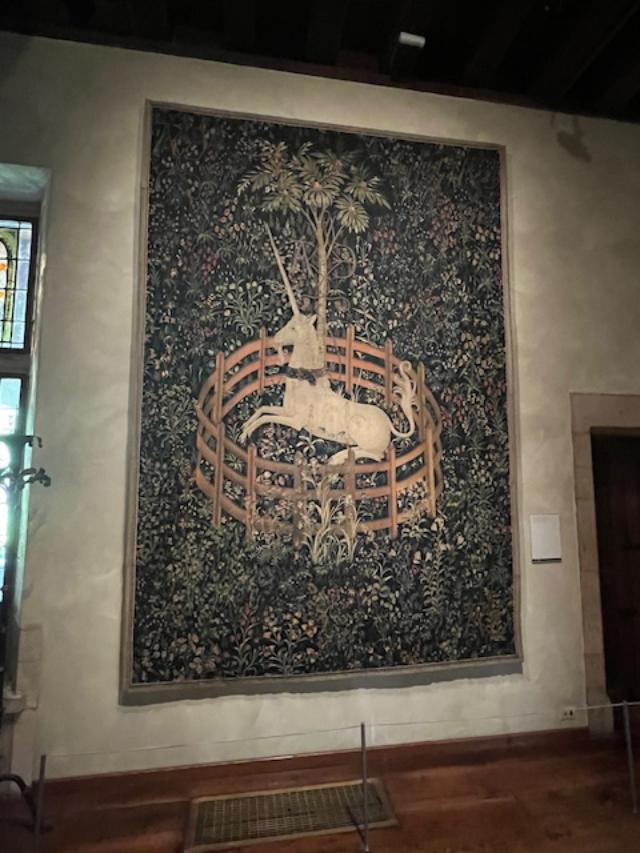
At the top of hill like a crown jewel is the Medieval Galleries of the Metropolitan Museum of Art’s Cloisters Museum. Filled with all the Met’s collections of Religious and Medieval art set into themes of old churches, stained glass windows, flowered courtyards and vistas of the river, it is the perfect place to wonder around.
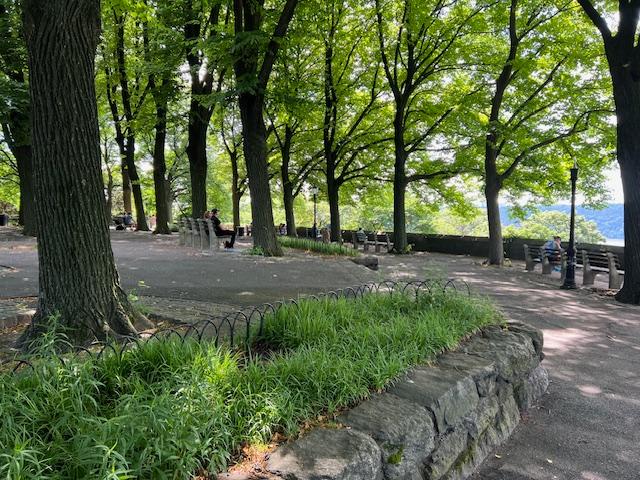
As you pass the Cloisters and walk further in to the park, there is still so much more to see and do. The Linden Terrace overlooks the Hudson River with its large shade trees over head and its stone benches to sit and just look in the distance or read a book. This was the site of the original Fort Tryon and is the highest location in the park.
Linden Terrace is a nice place to relax and read a book
The flowers by the Linden Terrace
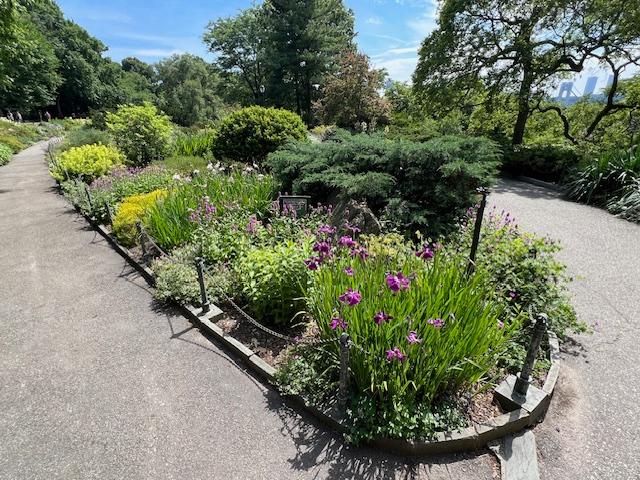
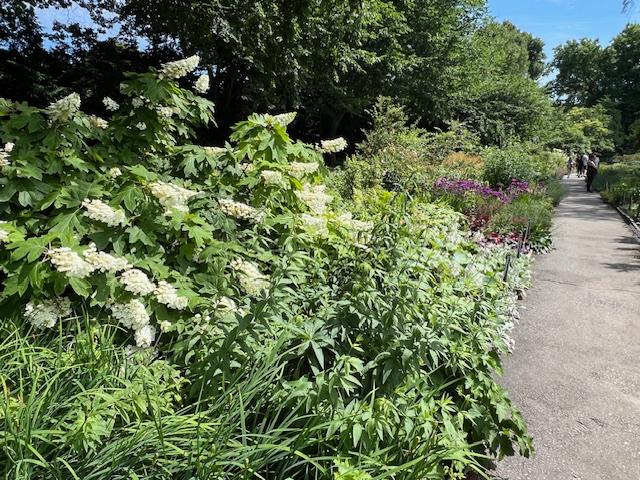
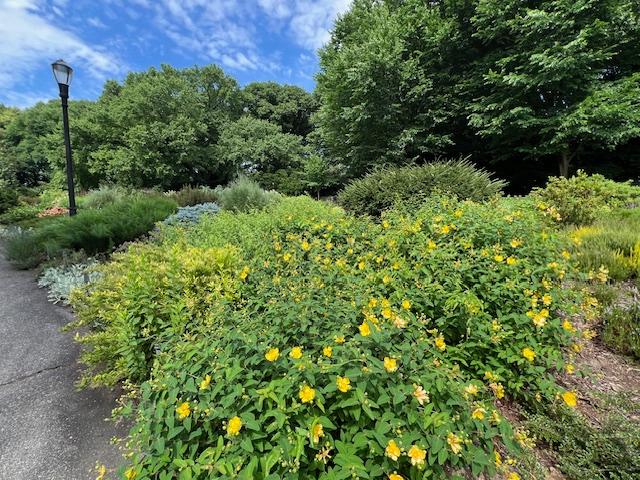
Further down in the other entrance of the park is Heather Garden, a large path of flowers , bushes and trees with benches lining it. The garden was the Olmstead Brothers when the park was taking shape and is a beautiful place to walk in the Spring and Summer months when the park is in full bloom.
The stairs leading to the Linden Terrace
The plaque for Fort Tryon
The anniversary plaque
The Stan Michels Promenade
The Heather Garden in the front
The Heather Garden was recently remodeled to follow the original design by the Olmstead Brothers.
The Heather Gardens
The Heather Gardens in full bloom
The Gardens facing the George Washington Bridge
The Gardens in full view
There is even a terrace restaurant in the middle of the park, the New Leaf Cafe (See review on TripAdvisor-Closed in 2018) which sits off to the side of the Corbin Circle on the other side of the park. The food is over-rated and very expensive. The last time I ate there the menu was pretty standard. It is a great to take out of towners who want a view of something. It is not worth the trip. The views are nice and in the summer months it is pretty but the food and service are standard.
The New Leaf Cafe in Fort Tyron Park (Closed in 2018)
The park has so much to offer in all months of the year especially in the Spring and Summer.
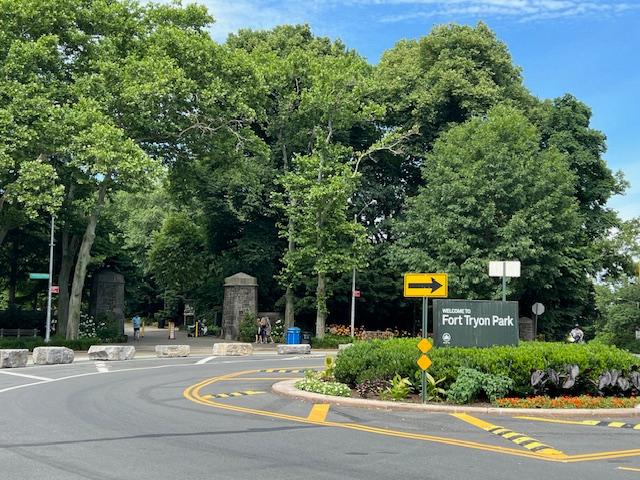
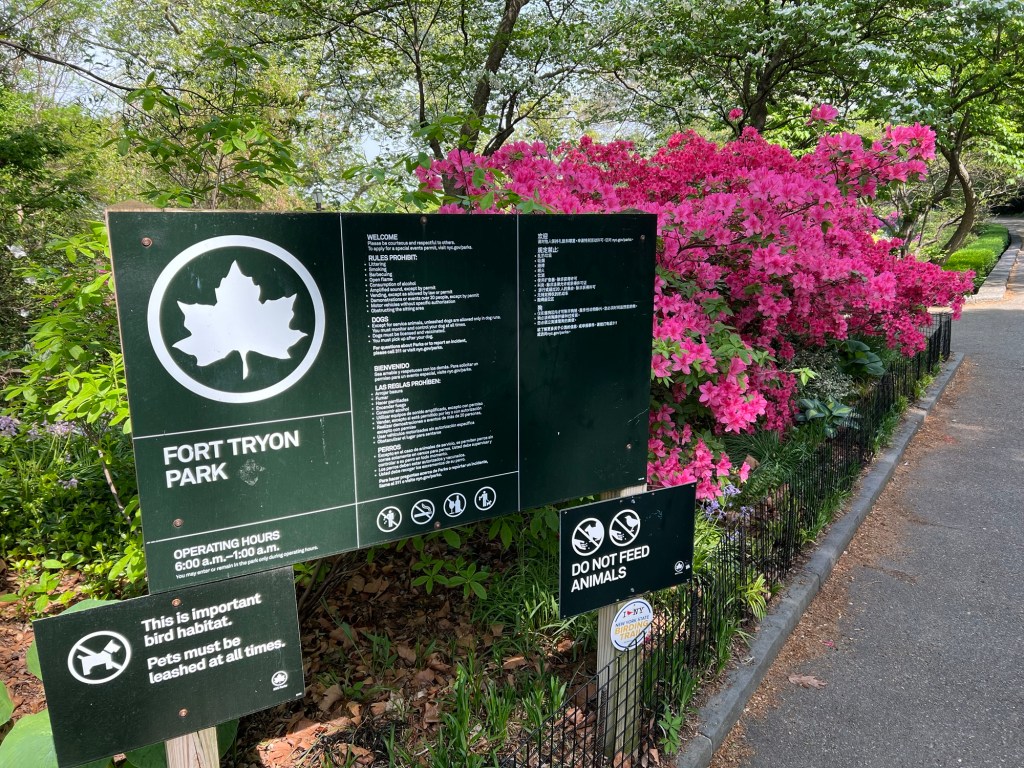
The entrance to Fort Tryon Park
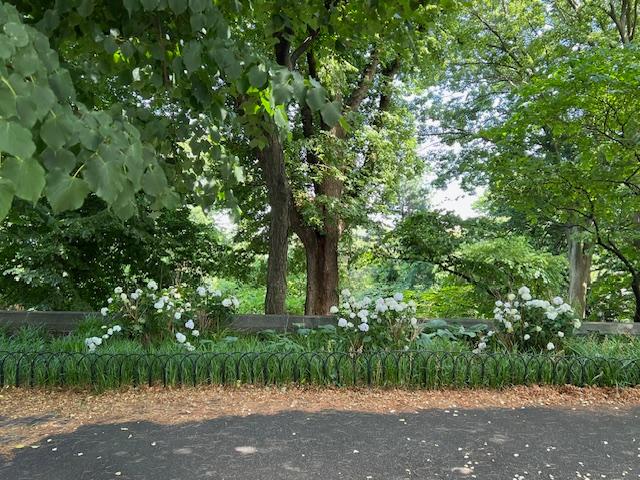
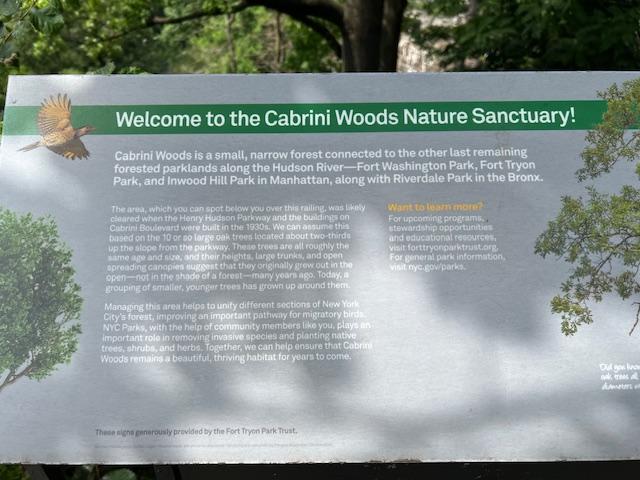
Cabrini Woods Nature Sanctuary in the front of the park
The Cabrini Sanctuary in the Spring 2024
History of Fort Tryon Park:
The area was known by the local Lenape Indians as Chquaesgeck and by the Dutch settlers as Lange Bergh (Long Hill). During the Revolutionary War, the Battle of Fort Washington was fought on this site. The park is built on a high formation of Manhattan schist with igneous intrusions and glacial striations from the last Ice Age (Wiki).
The gardens in the Fort Tryon Park
John D. Rockefeller Jr. bought up most the land in 1917, which by that point had been old estates, to create Fort Tryon Park. He hired the Olmstead Brothers firm, under the direction of Fredrick Law Olmstead Jr., the son of the designer of Central Park, to design the park and James W. Dawson to create a planting plan. Mr. Rockefeller also bought the collection of Medieval art from sculptor George Gray Barnard and it was the cornerstone of The Cloisters Museum which was built in 1939 (Wiki).
The Fort Tryon gardens in full bloom
The stairs in the park
Through the years the park has seen its ups and downs especially in the 1970’s and 80’s with the decline of finances in New York City. There were extensive renovations when finances got better in the late 90’s and parts of the park were fully renovated. The Fort Tyron Park Trust, a non-profit organization was founded in 1998 to help maintain the park (Wiki).
When I walked through the park on the recent Great Saunter walk in 2025, they rerouted us through the park when the Riverwalk was closed for renovation. The park was in full bloom and it was the most spectacular day for a visit.
The entrance of the park on that sunny afternoon
The beautiful colorful tulips at the entrance of the park
The colorful gardens were in full bloom
Everyone was routed through the park on the way to Inwood Park for our rest stop. What I found strange was that the park was so beautiful in full bloom and people were not stopping to relax and just enjoy the views. The gardens were amazing and so colorful.
I stopped to look at the beautiful rock garden
I thought this was so clever. One of the volunteers made this sign up which was so funny!
We walked through the park on our way through the park on the way to Inwood Park.
One thing you should add to your bucket list is visiting Punxsutawney to see the groundhog ceremony once. It is an experience. I visited in 2015 when it was 54 degrees so that was great. I visited Staten Island Chuck the last two years at the Staten Island Zoo.
I returned to Punxsutawney, PA in the Winter of 2024 and it was a much bigger festival than before, More places for breakfast, more places open and much more events over the weekend. I think the town learned a few things over the last eight years.
Downtown Punxsutawney, PA on Groundhog’s Day morning
Downtown Punxsutawney, PA on Groundhog’s Day
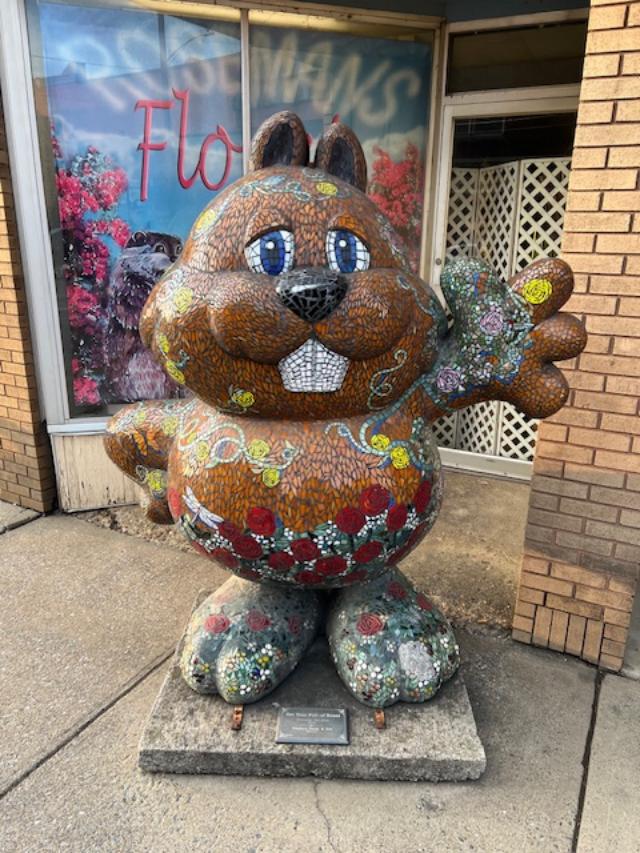
Phil statues are all over the downtown
The Governor of Pennsylvania introducing Phil at Groundhog’s Day 2024
I was working on a new project for the Lodi Memorial Library to have a Groundhog’s Day celebration but try to find a groundhog in New Jersey. No zoo or natural group had one so we revamped the event for the first day of Spring and will have a rabbit (See Lodi Larry comes to the Library Day: Day Forty MywalkinManhattan). When the event fell through and all this talk of Groundhog’s Day I decided to go to the source and off I went to celebrate Groundhog’s Day in Punxsutawney, Pennsylvania.
Punxsutawney is about five hours from my house so it was not the quickest trip but it is all straight highway down Route 80 until you get to Route 219 and then a turn off onto Route 119 South where you twist and turn until you get to Punxsutawney, a sleepy little former coal mining and coke town.
I had planned to go out to Punxsutawney, PA again for Groundhog’s Day but the weather really turned this year. There was an Arctic Vortex (or whatever they are calling it this week) and the weather plunged in Pennsylvania. It was going to be 20 degrees on Groundhog’s Day (that meant 0 degrees that night) and raining when I would drive home on Sunday and I thought that would be over doing it for me.
I later saw that it did go up to 38 degrees that day in Punxsutawney, higher than expected but the overnight Friday night into Saturday was 4 degrees and sorry but the thought of standing in Gobbler’s Knob for five and a half hours in that weather was too much. I did that in 2016 in 30 degrees and that was bad enough. I will wait until next year.























 Visiting a Museum: The Unique, Unusual, Obscure and Historical