Category: Well known Sculptures

The Soldiers’ and Sailors’ Monument Riverside Drive and West 86th Street                                New York, NY 10024

The Soldiers’ and Sailors’ Monument Riverside Drive and West 86th Street New York, NY 10024

The Soldiers and Sailors Monument

Riverside Drive and West 86th Street

New York, NY  10024

https://www.nycgovparks.org/park-features/riverside-park/virtual-tour/soldiers-sailors-monument

https://riversideparknyc.org/places/soldiers-and-sailors-monument/

Open: When the Riverside Park is open. The Monument is fenced off right now because of restoration.

My review on TripAdvisor:
https://www.tripadvisor.com/Attraction_Review-g60763-d7269561-Reviews-Soldiers_and_Sailors_Monument_New_York-New_York_City_New_York.html?m=19905

The Soldiers & Sailors Monument in the Fall of 2024

I had passed the Soldier’s and Sailors’ Monument when I was walking the Upper West Side of Manhattan for my blog ‘MywalkinManhattan.com’. It sits in an almost graceful state of disrepair behind fencing protecting it from people. It seems that it had been in a state of decay since the start of construction in 1900.
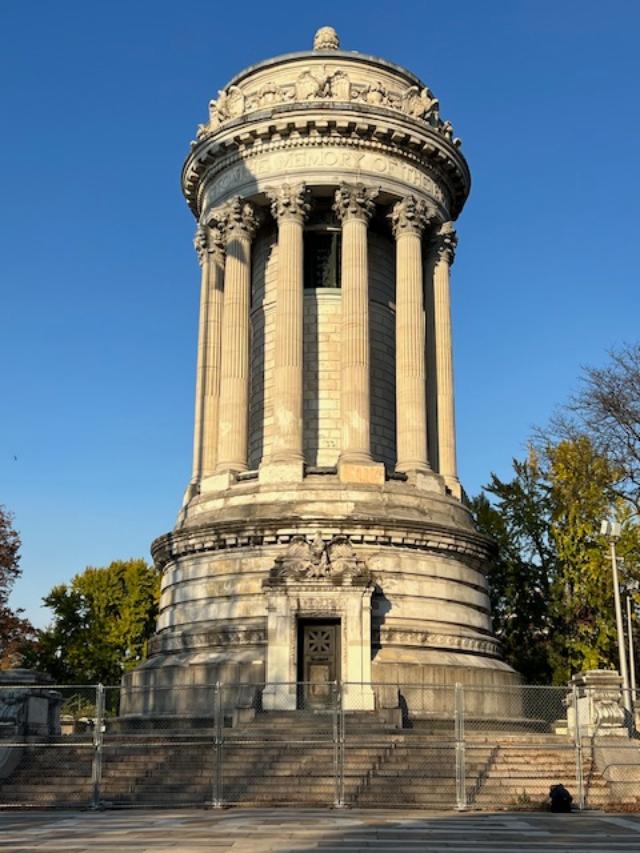
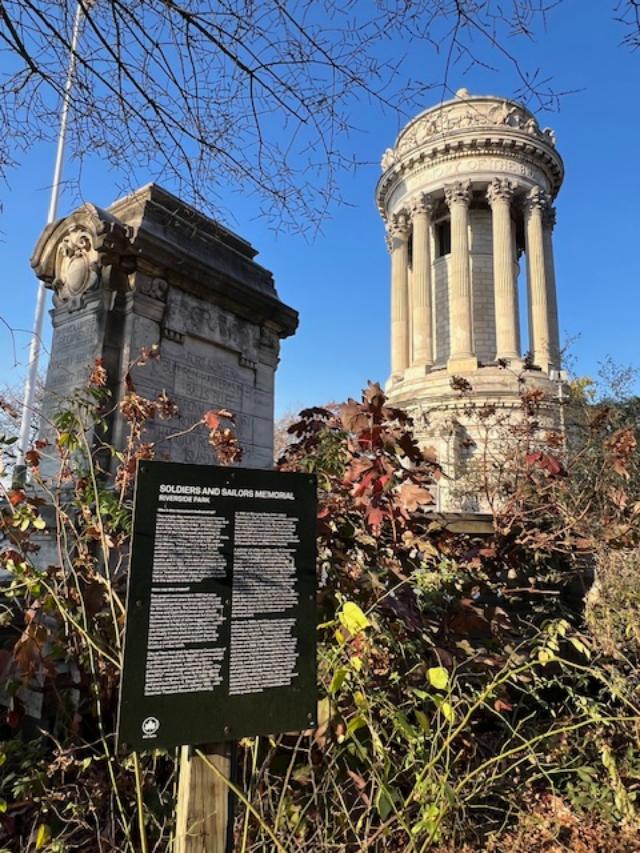
The monument is still under renovation and you can only walk around it

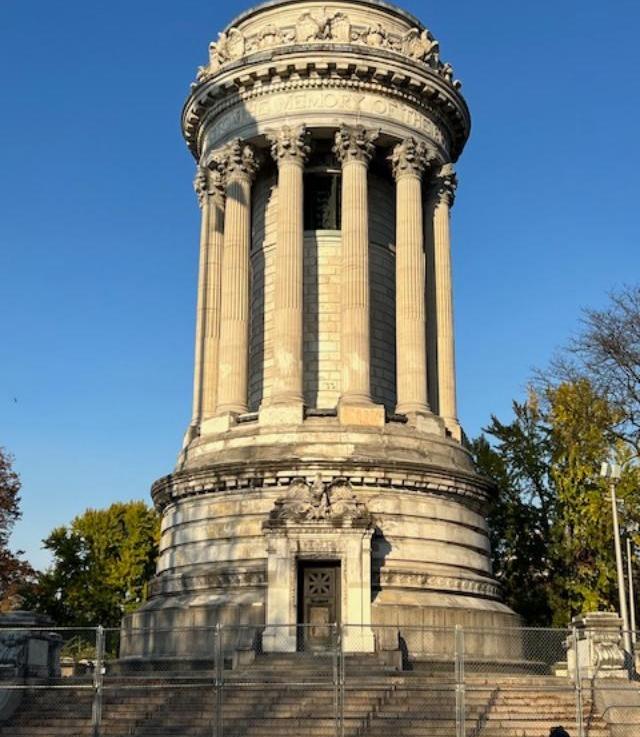
I walked all around the monument while walking Riverside Park thinking it was a small copy of a Greek Temple or another smaller burial site like Grant’s Tomb. You could see where the gaps in the structure were and the need for repair from the stairs to the platform. Still there is a beauty in its details.
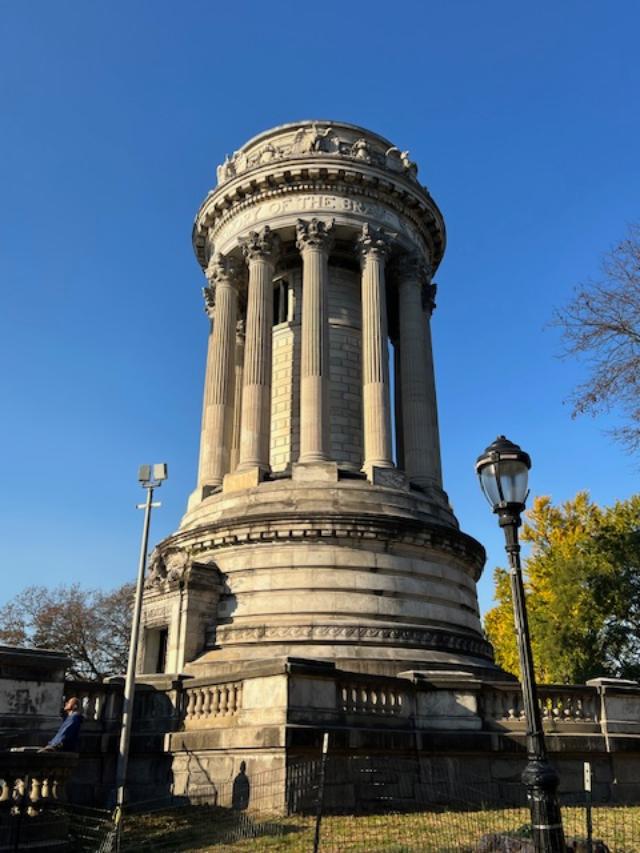
The monument in the late afternoon

Reading in a recent issue of The Spirit, it seems that the New York Landmarks Conservatory and the local government officials want to put money into its repair. This beautiful landmark is going to need a lot of time and care in the future. Let’s hope they agreed to it.
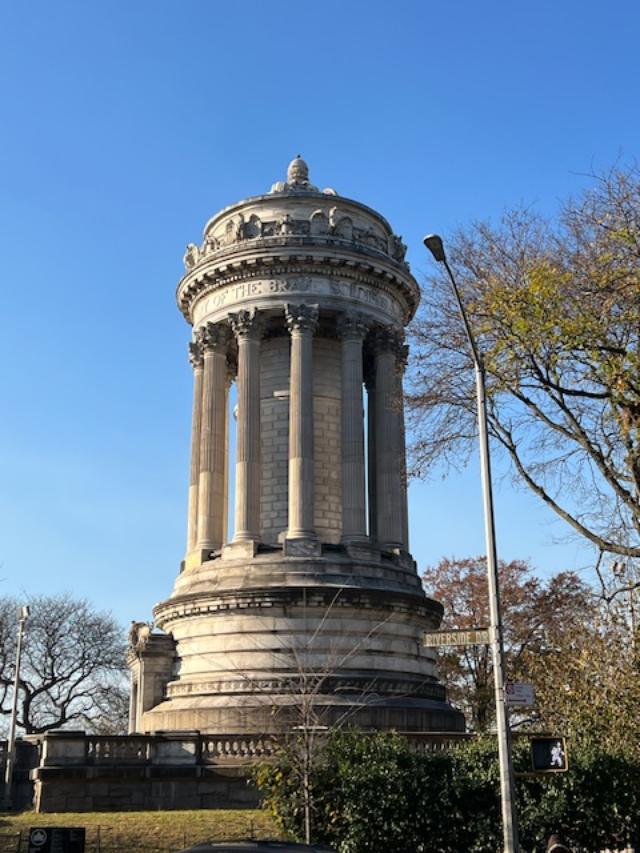
The monument still under renovation

History of the Soldiers’ and Sailors’ Monument:

(from the parks website)

The monument was first suggested in 1869 after the Civil War and was put on the back burner until 1893 when a nostalgia for the Civil War sweep across the country. The State of New York established a Board of Commission to create a monument to the soldiers’ and sailor’s who had served in the Union Army during the American Civil War (Wiki).

The ground was broke for the monument in 1900 and was completed in 1902 and it was dedicated on Memorial Day in 1902 with President Theodore Roosevelt officiating and a parade of Civil War veterans parading up Riverside Drive (Wiki).
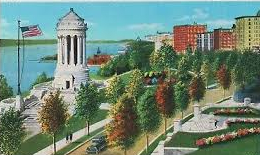
Sailors and Soldiers Monument

The Monument when it opened

The monument was designed by architects Charles and Arthur Stoughton and the ornamental features were carved by architect Paul E. M. Duboy. The monument takes the form of a peripteral Corinthian temple raised on a high base with a tall cylindrical rusticated cella, that carries a low conical roof like a lid ringed by twelve Corinthian columns. The entrance has the names of the New York volunteer regiments and the battles in which they served as well as the Union Generals . The monument was designed a New York City landmark in 1976 and a State landmark in 2001 (Wiki).

The monument has been plagued with repairs since it was built and according to reports it is in need of desperate repairs. I could tell by the cracks and missing marble that their were flaws in its construction since it had been built.

Still it graces the entrance of Riverside Park with it’s beauty. Look at its details in the carvings and it look of a Greek temple. It is really impressive especially in the summer months with the park behind it in full display. You can’t get too close to the monument in its current state.

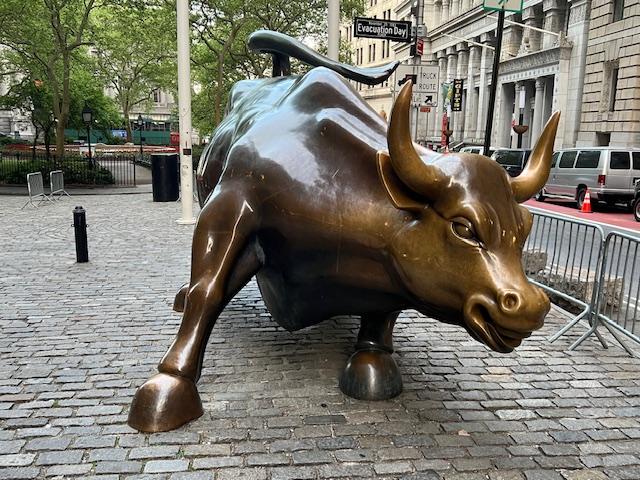
Charging Bull                                                 Bowling Green Park                                            New York, NY 10004

Charging Bull Bowling Green Park New York, NY 10004

Charging Bull

Bowling Green Park

New York City, NY  10004

http://www.chargingbull.com/

TripAdvisor Review:

https://www.tripadvisor.com/Attraction_Review-g60763-d1605557-Reviews-Charging_Bull_Wall_Street_Bull-New_York_City_New_York.html?m=19905

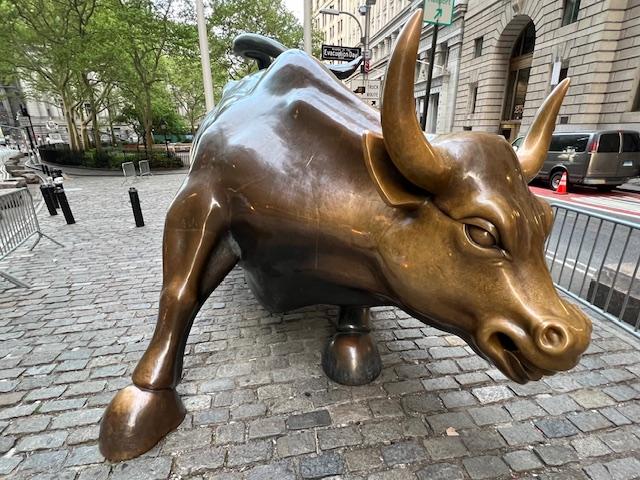
When you are in lower Manhattan and are visiting the Battery Park and/or Wall Street area don’t miss the Charging Bull statue by artist Arturo Di Modica. The artist created this piece of ‘guerrilla’ art after the Crash of 1987, when we were about to enter the depths of another major recession, one that went from the end of 1987 until the summer of 1995.

This interesting piece of New York history is actually a recent addition to the street art of New York City. The statue was created and cast in 1987 following the Crash and made its first appearance outside the New York Stock Exchange on December 15, 1989.

The bull according to the artist, “represents the symbol of the strength and power of the American people’ following the Crash. It has taken on many meanings since such as the power of Wall Street and the progressiveness of money and power in the Financial industry.

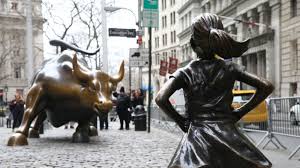
During the high tourist season expect to see the statue surrounded by tourist taking pictures in all directions. The statue of ‘Charging Bull’ is now paired with ‘Fearless Girl’ by artist Kristen Visbal. Some have commented that it has changed the meaning of the statue but I think it is how you interpret both works. Its best to visit and make your own opinion.

Fearless Girl Statue II

The ‘Charging Bull’ with ‘Fearless Girl’

While you are visiting the statue, take time to visit this historic section of Manhattan and visit the other sites that include Bowling Green Park, the Museum of the Native Americans, Frances Tavern and Stone Street as well as the boats to Governor’s, Ellis and Liberty Islands. It is a wonderful way to spend the afternoon.

Please refer to my blog, ‘MywalkinManhattan.com’- “Day One Hundred and Thirteen Tour of Historic Pubs and Bars in Lower Manhattan with the Cornell Club” for a full list of things to see in this section of the City.

History of Charging Bull:

Construction and installation:

The Bull by Bowling Green Park in the early morning hours.

The bull was cast by the Bedi-Makky Art Foundry in Greenpoint, Brooklyn. Di Modica spent around $360,000 to create, cast and install the sculpture following the 1987 stock market crash as a symbol of the ‘strength and power of the American people’. The sculpture was Di Modica’s idea and in an act of ‘guerrilla art’, Bedi Makky Art Foundry and Di Modica trucked it to Lower Manhattan. On December 15, 1989, they installed it beneath a 60 foot (18m) Christmas tree in the middle of Broad Street in front of the New York Stock Exchange as a Christmas gift to New Yorkers. That day, hundreds of onlookers stopped to admire and analyze it as Di Modica handed out copies of a flier about his artwork (Wiki).

NYSE officials called the police later that day and the NYPD seized the sculpture and placed it into a impound lot. The ensuing public outcry led the New York City Department of Parks & Recreation to reinstall it two blocks south of the Exchange in the Bowling Green, with a ceremony on December 21, 1989. It faces up Broadway at Whitehall Street (Wiki).

Confusion over ownership:

The sculpture technically has a temporary permit allowing it to stand on city property since the city does not own the sculpture but the temporary permission has lasted since 1989, when city officials said the new location would not be permanent. Art on loan is usually limited to a year’s display and although the city does not buy art, it does accept donations. A writer in the New York Daily News wrote in 1998 that the statue’s placement was ‘beginning to look a mite permanent.’ According to an article in Art Monthly, Di Modica as well as officials and New Yorkers, ‘view it as a permanent feature of Lower Manhattan (Wiki).

In 2004, Di Modica announced that the bull sculpture was for sale, on condition the buyer does not move it from its present location. Di Modica continues to own the artistic copyright to the statue. In 2006, Di Modica sued Walmart and other companies for illegally benefiting from his copyright, by selling replicas of the bull and using it in advertising campaigns. In 2009, Di Modica sued Random House for using a photo of the bull on the cover of a book discussing the collapse of financial services firm Lehman Brothers (Wiki).

Artist Arturo Di Modica:

Arturo Di Modica artist

Artist Arturo Di Modica

http://www.artnet.com/artists/arturo-di-modica/

Arturo Di Modica first conceived of the Charging Bull as a way to celebrate the can-do spirit of America and especially New York, where people from all over the world come regardless of their origin or circumstances and through determination and hard work overcome every obstacle to become successful. It’s this symbol of virility and courage that Arturo saw as the perfect antidote to the Wall Street Crash of 1987.

The artist was born in Vittoria, Italy in 1941 and studied at the Academia Del Nudo Libra in Florence, Italy in 1960. In 1973, he relocated to New York City to a Lower Manhattan space. ‘Charging Bull’ is his most famous piece (Artnet).