Category: VisitingaMuseum.com

Hessel Museum of Art-Bard College Campus                         33 Garden Road                                                                  Annandale-On-Hudson, NY 12504

Hessel Museum of Art-Bard College Campus 33 Garden Road Annandale-On-Hudson, NY 12504

Hessel Museum of Art-Bard College Campus

33 Garden Road

Annandale-On-Hudson, NY 12504

https://ccs.bard.edu/museum

Open: Sunday 11:00am-5:00pm/Monday-Tuesday Closed/Wednesday-Saturday 11:00am-5:00pm

My review on TripAdvisor:

https://www.tripadvisor.com/Attraction_Review-g29820-d1069234-Reviews-Hessel_Museum_of_Art_at_Bard_College-Annandale_on_Hudson_New_York.html

The Hessel Museum on the Bard Campus

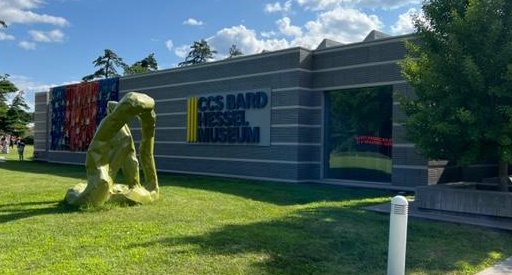
When I was visiting Rhinebeck for the recent Sheep and Wool Festival (See day One Hundred and Forty-Nine on “MywalkinManhattan.com), I decided to visit Bard College and their contemporary art museum, the Hessel Museum. When approaching the museum, it almost appears to be a fortress with several large pieces of contemporary sculpture on the grounds outside the building.

Day One Hundred and Forty-Nine:

https://wordpress.com/post/mywalkinmanhattan.com/10723

Once upon entering the museum, you are greeted by many welcoming volunteers who will check your vaccination card and ID and your mask and then you can enter the museum for viewing. At the time I was there, NY State still had a lot of their mandates.

There were a couple of interesting exhibitions going on when I visited. The first one I visited that afternoon was “Closer to Life: Drawings and Works on Paper in the Marieluise Hessel Collection”, which was many of the works of the founder of Bard’s private collection that had been donated to the school. I have to admit that the works were very contemporary with lots of squiggles and political themes.
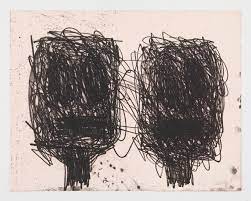
The show piece from the exhibition

Many of the works you had to look at a second time to try to find the meaning in them. I was having a tough time relating the titles to the works. Reading the exhibits press release, the exhibition said “Hessel’s dedication to the depiction of the human figure as an essential act of examining the self and social relations. The exhibit focuses, with a few exceptions, on drawing as a discrete, stand-alone practice and preoccupation of artists rather than as a tool to create studies for works in other mediums. Drawing is a way of thinking and the intimacy of the act is echoed in much of the subject matter depicted in the exhibition (Museum website).

Ms. Hessel traveled extensively and had relationships with many artists along the way, who touched on the themes of the day. She traveled from Germany to Mexico City and then onto New York City at different phases of her life and it shows in the collection that she amassed. The collection twists and turns in its theme from room to room.

The opening exhibition room of the “Closer to Life” exhibition

The other exhibition I toured was the current “With Pleasure: Pattern and Decoration in American Art 1972-1985” which was an interesting exhibition of design of the home and space which seemed to be an art movement in the early to mid 1980’s that I never noticed when I was in high school and college. It seemed that home design went from the home furnishings to a form of art.
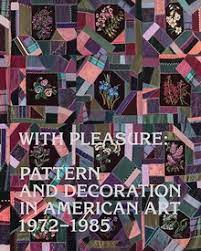
The “With Pleasure: Pattern and Decoration in American Art 1972-1985” logo

This I had seen the artist’s starting to design things like dishware and placemats for everyday use and in things like wallpaper from the dining room. There was a cross over in home design as artists became more commercialized and their work showed up on walls and floors. It is not too different today with people like Martha Stewart and her paint and home furnishing collections or Halston designing for JC Penny with the Halston II Collection.

Some of the art was quite colorful

The art in those galleries really looked something you would find in the average person’s home in the era. Some of the ‘over the top’ really looked like it belonged on a rug or on wallpaper. As the exhibition’s literature stated, “the exhibition examines the Pattern and Decorative movement’s defiant embrace of forms traditionally coded as feminine, domestic, ornamental or craft based and thought to be patterns and arranging them in intricate, almost dizzying and sometimes purposefully gaudy designs” (Exhibition literature).

I returned to the Hessel Museum in the summer of 2023 and they were having some performance art out on the lawn when I got there (I was wondering why there were not parking spaces). One guy walked up to me complaining how lousy it was and it did not make sense. I told him that that was contemporary art for you. It’s not supposed to make sense. He just smiled.

I toured the two new exhibitions that were being shown at the museum.

Artist Erika Verzutti had her “New Moons” exhibition

The first exhibition was by Artist Erika Verzutti with her “New Moons” exhibit. Frankly, I did not get here work. It made no sense to me. I was not sure what she was going after. I read her exhibit work and did not see any planetary connections. There were a few pieces that I thought were colorful and pretty creative in the works of the exhibition but the rest of it I just did not understand. I could tell the security guards were bored because no one was coming into this part of the museum.

“New Moons” exhibition piece
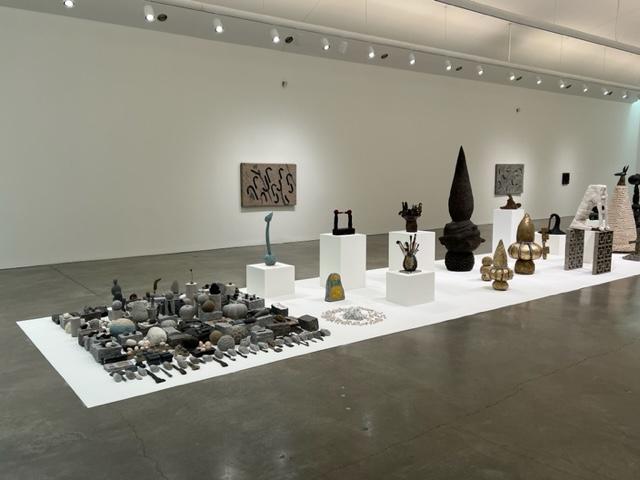
The main gallery of the “New Moons” exhibition
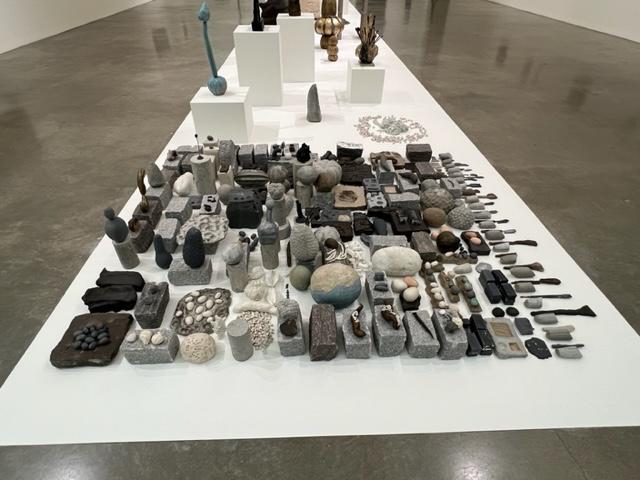
I thought this piece was very interesting

The “Indian Theater: Native Performance, Art and Self-Determination since 1969”

The other exhibition was the “Indian Theater: Native Performance, Art and Self-Determination since 1969”. Outside the museum they were showing the performance from the exhibition (the one that the patron was complaining about) and inside, the works were very contemporary and again some of the works did not make much sense to me. There were a few standouts though that I thought made a statement.
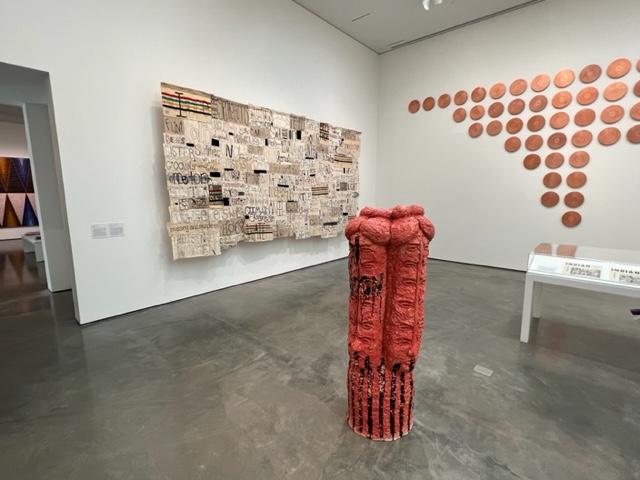
One of the galleries from the “Indian Performance” exhibition

“Indian Headdress” by artist Dan Claxton (Lakota)
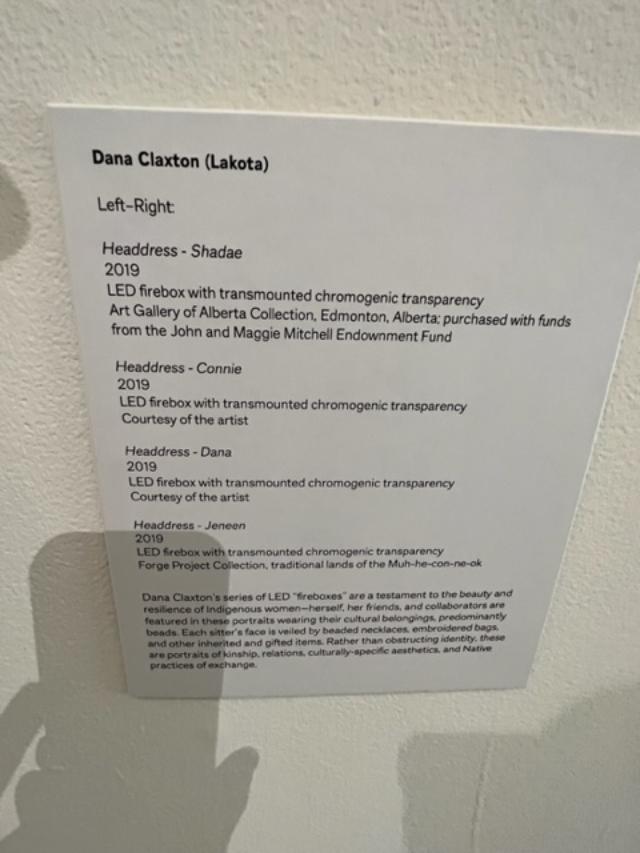
Artist Dan Claxton (Lakota)

“Counterblaste” by artist Gabrielle L’Hirondelle Hill (Metis) was interesting

Artist Gabrielle L’Hirondelle Hill (Metis)

Both exhibitions in the summer of 2023 were a little far reaching even for me who likes contemporary works. I think it is in the eye of the beholder but I like the fact that the Hessel Museum brings these works to the public. They do make you think.

The Hessel Museum doesn’t offer just interesting art but it approaches it in a thought-provoking way, asking the patrons to see beyond not just what is on the walls but think about the exhibit from the era in which the art is from and ask ‘does this still ring true today’. The Hessel asks us to think ‘out of the box’ and look at their works from different perspectives.

Some I understood and some I didn’t but I still enjoyed wondering the galleries and exploring the art on its terms. I think that’s what contemporary or just art in general does. We need to think about it. The museum also has a nice little gift shop to explore.

The History of the Hessel Museum:

About CCS Bard:

Established in 1990, the Center for Curatorial Studies (CCS Bard) is an incubator for experimentation in exhibition-making and the leading institution dedicated exclusively to curatorial studies-a discipline exploring the historical, intellectual and social conditions that inform curatorial practice.

The Center for Curatorial Studies has several interconnected parts:

The Hessel Museum of Art, built in 2006, presents experimental group exhibitions and monographic shows and also draws from the Marieluise Hessel Collection of Contemporary Art, comprised of more than 3,000 objects collected contemporaneously from the 1960’s to the present day. The Hessel Museum is open and free to the public. Public sculptures by Franz West, Cosima von Bonin and other artists surround the Museum. Please see the museum page for more details.

CCS Bard hosts a range of public events throughout the year. All events are free and open to the public. Please see upcoming events on the website.

The CCS Bard Archive provides access to a wide range of primary materials documenting the history of the contemporary visuals arts and the institutions and practices of exhibition-making since the 1960’s. Please see our research center page for further details.

The Graduate program in Curatorial Studies is an intensive course of study in the history of contemporary art, the institutions and practices of exhibition making and the theory and criticism of contemporary art since the 1960’s. Throughout its over thirty-year history, the program has actively recruited perspectives underrepresented in contemporary art and cultivated a student body representing a diverse spectrum of backgrounds in a board effort to transform the curatorial field. Please see the school page for further details.

The Center for Curatorial Studies is part of Bard College and located on their Annandale-on-Hudson campus. Bard acts at the intersection of education and civil society, extending liberal arts and sciences education to communities in which it has been undeveloped, inaccessible or absent. Through its undergraduate college, distinctive graduate programs, commitment to the fine and performing arts, civic and public engagement programs and network of international dual-degree partnerships, early colleges and prison education initiatives, Bard offers unique opportunities for students and faculty to study, experience and realize the principle that higher-education institutions can and should operate in the public interest. For more details on the Bard College, please see their website.

Montgomery Place-Bard College                                                26 Gardener Way & River Road                                            Red Hook, NY 12571

Montgomery Place-Bard College 26 Gardener Way & River Road Red Hook, NY 12571

Montgomery Place-Bard College

26 Gardener Way & River Road

Red Hook, NY 12571

https://www.bard.edu/montgomeryplace/

Open: Sunday-Saturday From Dawn to Dusk/Mansion is closed

My review on TripAdvisor:

https://www.tripadvisor.com/Attraction_Review-g29820-d209648-Reviews-Montgomery_Place-Annandale_on_Hudson_New_York.html

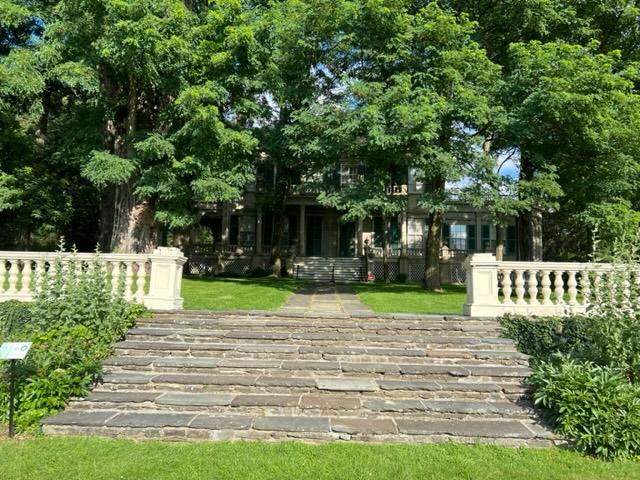
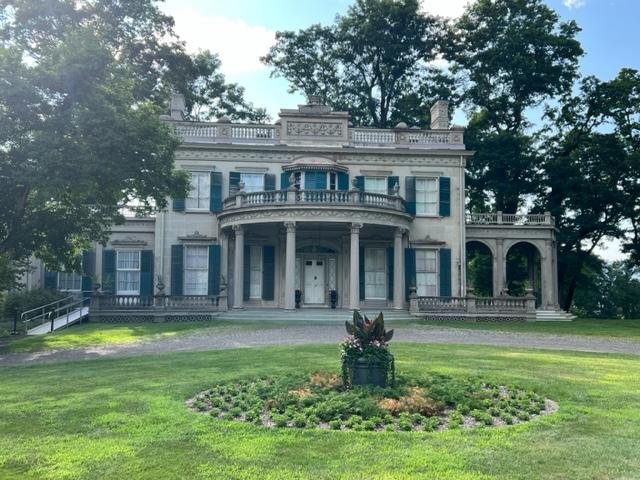
The front of Montgomery Place in the summer of 2023

On a recent trip to the Hudson River Valley for Fall events I took a tour of Bard Campus to visit their campus and tour Montgomery Place which the college bought from the Hudson River Historical Society in 2016. It is now part of the campus and you can tour the grounds but not the inside of the house.

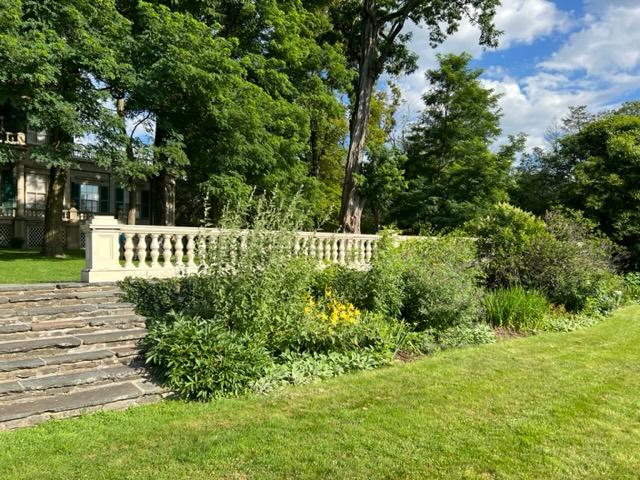
The back of Montgomery Place

Montgomery Place on the Bard College Campus

Before 2016 when the house was owned by the Historic Hudson Valley Society, who used to have tours of the mansion. When the family sold the mansion and all its contents to the Society, they left the house untouched when they moved out you got to see how the Livingston family lived not just in current times but with all the historical furniture that came with the house.

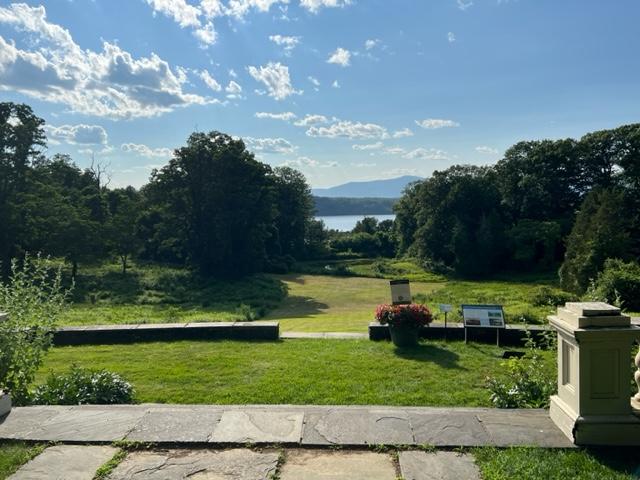
The view from the house to the Hudson River

The gardens from the back of the house

The former tour used to take you through each room that had antique furniture and decorations but much of the house had been modernized over the years. Older furnishings had either been conserved or slipcovered because of age. Since the house has been sold to Bard College, you can only tour the house by appointment only through the college.

The mansion’s portico overlooking the Hudson River

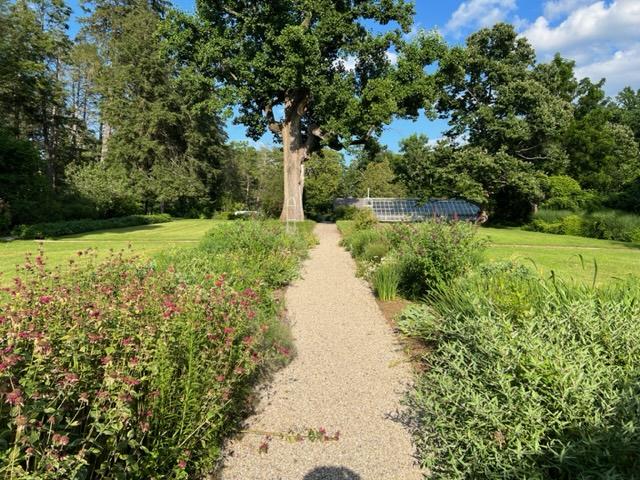
The grounds are still impressive. During the Spring, the formal gardens next to the house are in full bloom and the last time I had taken a tour there, the gardens were being maintained by a local garden club.

The entrance to the Montgomery Place gardens

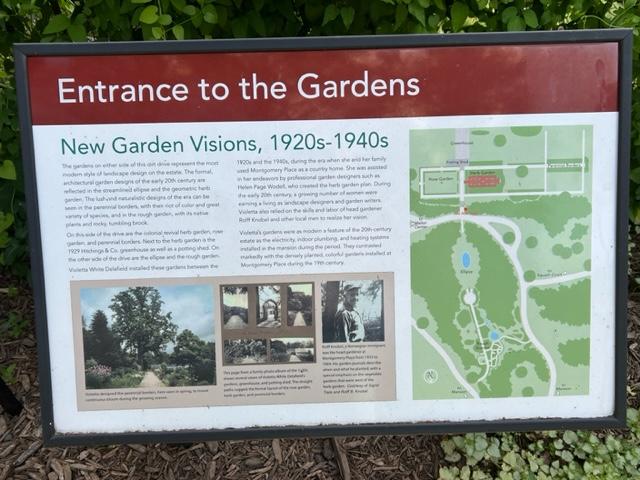
There were flower beds, herb gardens and cutting gardens on top of the flowing lawns from the house to the river. The gardens are broken into three different sections: the Eclipse Gardens, the Wilderness Gardens and the Walled Gardens. Each of them connects to the other and some have returned to their natural state over time and care of them.

The Montgomery Place Gardens are changing from Summer to Fall

Pathways through the gardens

The gardens were developed over time from Louise Livingston’s day to her daughter, Clara Livingston Barton and her husband building on them the to Delafield family, who were the last owners of the house maintaining and adding to them.

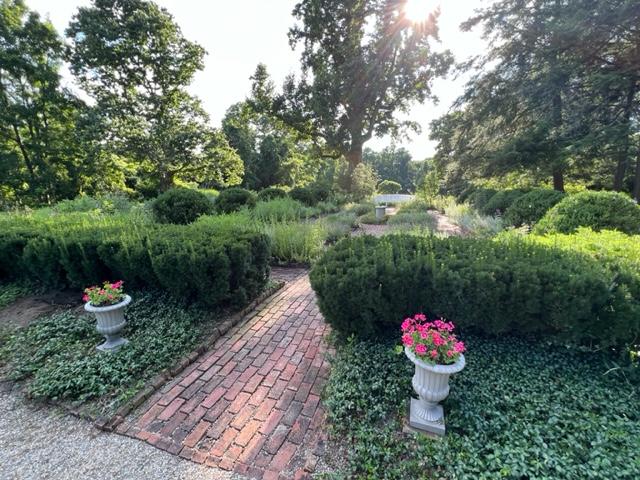
The formal gardens

The Garden Sign of the Ellipse and Rough Gardens

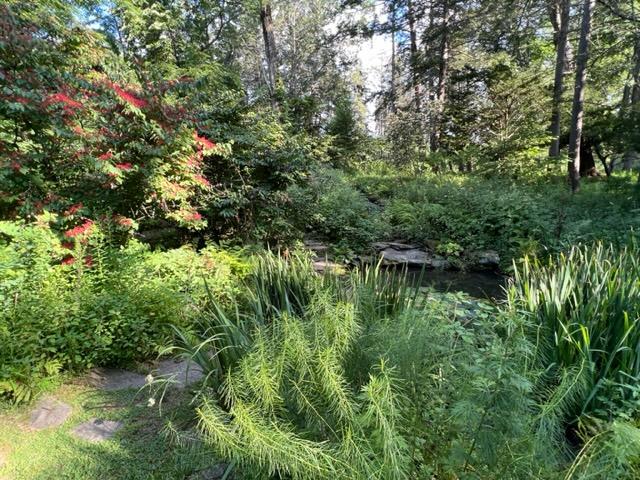
The Rough Garden

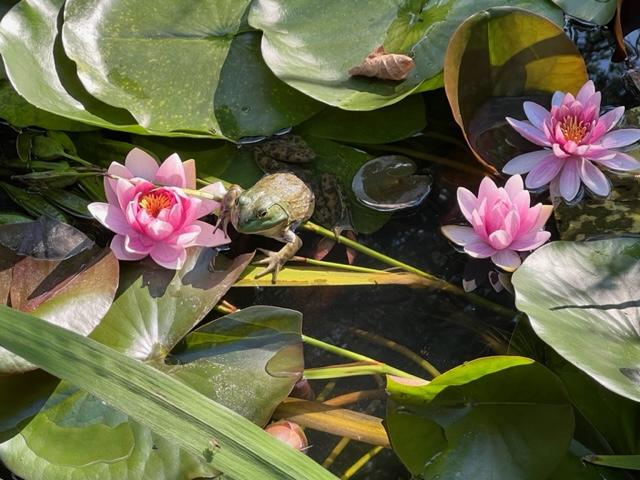
The Rough Garden was in full bloom with lotus and frogs all over the pond

The Ecllipse Garden has gone back to nature in comparison to the garden’s original plans

In the Fall on a recent visit, most of the gardens had been cut back with a few seasonal flowering bushes still showing color. The trees surrounding the house were turning a gold hue while the lawn that had been freshly cut was still emerald green. The house while a little worn from the outside still looked like it was ready to receive guests for the Fall season in the Hudson River Valley. The views from the back of the house are breathtaking from the window views of the Hudson River and the paths leading to it.

The Garden sign

In the Summer of 2023, the mansion grounds are open until dusk for people to walk around the estate and visit the gardens. The gardens were in bloom with summer flowers and plantings. The Rough Garden with it ponds were full of frogs who were making all sorts of noise. I had not seen a frog in the wild in many years and you just don’t see those and turtles anymore in the woods. The mansion is still not open except by appointment through the college.

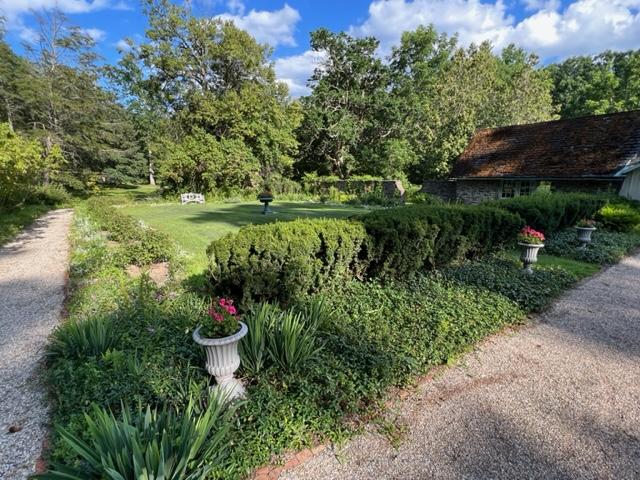
The formal gardens in the summer of 2023

The grounds are well maintained but there is more detail in the maintenance of the gardens that are needed. They could use some weeding with all the crabgrass coming into the beds. Still the gardens are breathtaking on a warm sunny day and make quite an impression. They must have been something when the family maintained them with their gardeners.

the beauty of the formal gardens

There are all sorts of hiking trails to the Sawkill River and through the forests, a trail down to the Hudson River and tours of the property. The grounds are open from dawn to dusk and there is plenty of parking by the Visitor’s Center along with a history of the estate.

The History of the Estate:

(Taken from Wiki)

https://en.wikipedia.org/wiki/Montgomery_Place

The property had been home Native Americans for at least 5,000 years as a seasonal hunting ground. The Dutch settled in the area in the late 18th century using the Saw Kill River for various mills.

In the late 1770’s, Janet Livingston Montgomery purchased from Abraham Van Benthuysen 242 acres of land on the Hudson River after the death of her husband General Richard Montgomery at the Battle of Quebec. She moved into the home they built after the Revolutionary War. She later had plans made for a Federal style mansion on the riverfront property she bought and moved into her new home, Chateau de Montgomery, in 1805. She established a working farm with the help of friends who gave her tree samples (Wiki).

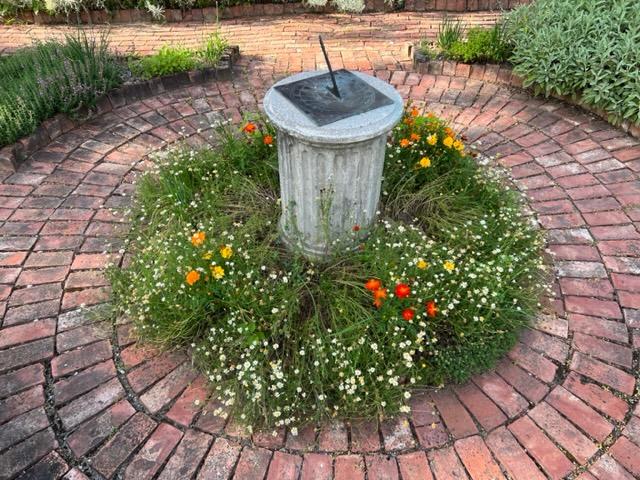
The Sun Dial in the Walled Garden during the summer of 2023.

Upon her death in 1828, the mansion was inherited by her brother, Edward Livingston. He had spent his summers vacationing here with his wife, Louise. They renamed the estate ‘Montgomery Place’. He died the next year and his wife, Louise hired Alexander Jackson Davis to convert the mansion into a more ornate villa. Two wings and exterior decoration were added at this time of the renovation. With the help of Andrew Jackson Downing, a friend of Louise’s and mentor to Davis, she developing the landscapes. Her daughter, Cora Barton worked with the architect on designing garden and conservatory (Wiki).

The front of the mansion

The back of the mansion from the grassy gardens facing the Hudson River

Upon Louise’s death in 1860, Cora and her husband hired Davis again to build some the earlier outbuildings including Coach House, Swiss Cottage and farmhouse and then extended the landscaping to turn the estate into more ‘pleasure grounds’ and have a separation from the farming operations.

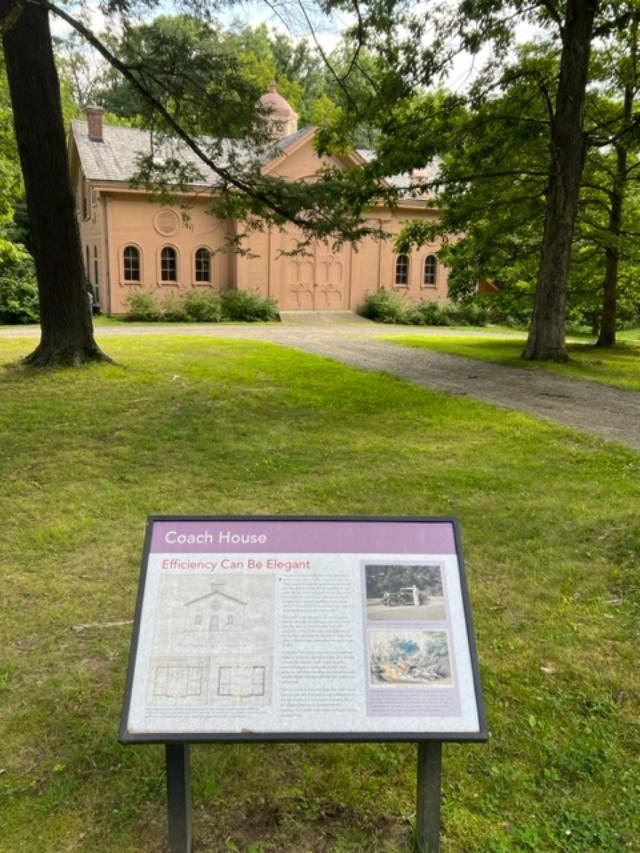
The Coach House for Carriages and then cars

The house then passed on to another relative in 1921, John Ross Delafield who added heating and modern plumbing to the house. He and his wife also extended the gardens on the estate as well (Wiki). The gardens had more ornate features to them.

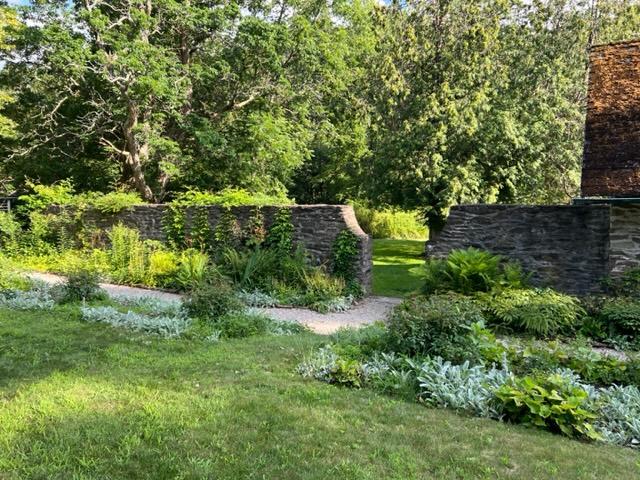
The “Walled Gardens” to the right of the mansion

Upon his death, his son John White Delafield inherited the house and they opened two corporations to own and operate the property.

The expansion of the gardens

In 1981, the estate was sold to the Historic Hudson Valley, the historical society. After an extensive renovation, the house was designated a National Historic Landmark in 1992 and it was bought by Bard College in 2016 who is its current owner (Wiki).

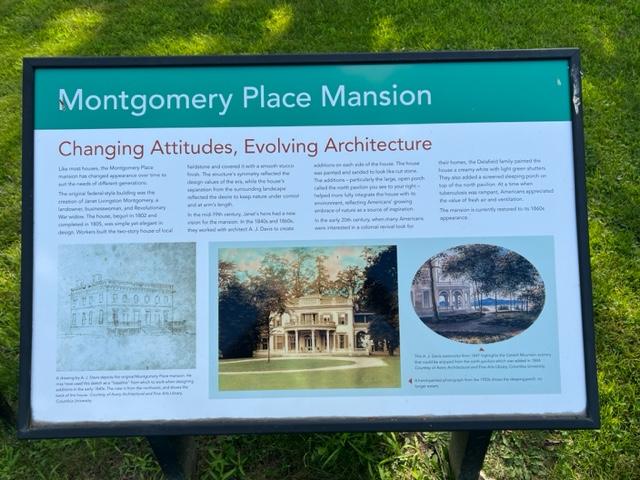
The Montgomery Place Mansion sign and the evolution of the home.

Yale University Art Gallery 1111 Chapel Street New Haven, CT 06510

Yale University Art Gallery

1111 Chapel Street

New Haven, CT 06510

(203) 432-0600

https://artgallery.yale.edu/

Open: Sunday 10:00am-6:00pm/Monday-Thursday Closed/Friday 5:00pm-8:00pm/Saturday 10:00am-6:00pm

My review on TripAdvisor:

https://www.tripadvisor.com/Attraction_Review-g33851-d104343-Reviews-Yale_University_Art_Gallery-New_Haven_Connecticut.html

On trips to New Haven, CT in 2021 and 2025 for the Yale-Cornell game, I had enough time after the game to visit one of the University’s art museum’s that was located down the road from the stadium, the Yale University Art Museum. This four story museum displays the history of art from all over the world. It is by no means a small museum gallery and you will need more than one afternoon this very detailed museum.

The Yale University Art Gallery at 1111 Chapel Street

I started on the first floor with their Ancient Art galleries featuring items from digs that the university sponsored over 100 years ago. There are works from the Ancient Near East, Egypt and Europe from tiles from Mesopotamia to small idols from Egypt and funeral pieces from Europe beautifully displayed and lit.

The Ancient Arts Galleries

Babylonian Tiger

Palace carving of a genie

The gallery showed the level of sophistication of these societies and the advancement thousands of years ago. This lead to the Middle Ages Gallery showing the change of art after the fall of the Roman Empire.

The Ancient Galleries were a favorite of mine

The Ancient Galleries

The Ancient Galleries

In 2021, I raced through most of the other floors because I had an hour before the museum closed. I concentrated on the first floor and then went upstairs to see the special exhibition.

I next ventured next to the “On the Basis of Art: 150 Years of Women at Yale”, a current exhibition that showcased the work of Alumni of the Fine Arts School of Yale whose works were influencing the art community all over the world.

The “On the Basis of Art” exhibition

The show “showcases and celebrates the remarkable achievement of an impressive roster of women artists who have graduated from Yale University. Presented on the occasion of the two major milestones, the 50th Anniversary of coeducation at Yale College and the 150th anniversary of the first women students at the University, who to study at the Yale School of the Fine Arts when it opened in 1869.

The exhibition features works draws entirely from the collection of the Yale University Gallery that span a variety of media, such as painting, sculpture, drawings, prints, photography and video since 1891(Yale University website).

The exhibition spread over several galleries displaying all sorts of interesting art. What I enjoyed most was some of the contemporary drawings and sculpture. Their works were colorful and bold some of which I was impressed with the message the works were trying to portray. Some I understood and some I had to take a second look.

One of the works that really captured my attention was the work of a Black media artist from the 1970’s and her views of racism of always feeling like the only one in the room. It was a sensitive and very emotional viewpoint of a educated and sophisticated woman who always felt marginalized. It was a very honest approach to the work and you felt for her.

The Contemporary Galleries

In 2025, I had a quick tour of the ‘Nusantana’ exhibition of textiles from Southern Asia.

The display sign for the ‘Nusantara’ exhibition

The entrance to the ‘Nusantara’ Indonesian textiles exhibition

The exhibition:

(from the Yale Art Gallery website)

Nusantara: Six Centuries of Indonesian Textiles presents one of Southeast Asia’s most significant artistic accomplishments: woven textiles. Exploring the ancient interisland links found in this culturally diverse maritime region, the exhibition features a wide array of textiles from the 14th to the 20th century drawn from the Yale University Art Gallery’s exceptional holdings—from the batiks of Java to the ikat of Sumba, and from ceremonial cloths and ritual weavings to clothing, shrouds, and architectural hangings.

Especially remarkable are several early textiles that are intricately patterned with tie-dyed designs, while select three-dimensional objects, such as sculptures, headgear, and combs, are also included to provide context. Nusantara—from the original name for the Indonesian archipelago—offers a broad overview of the rich imagery and technical mastery of this remarkable art form.

The textile display

The textile display

For the last half hour in the museum, I was able to quickly tour the each of the other galleries touring the Contemporary Galleries, the Asian Galleries, admiring some of the idols on display and then taking a quick tour of the African Galleries admiring masks and statuary.

I started with a quick tour of the Asian Galleries.

The Asian Galleries

The Asian scrolls in the Asian Gallery

The Asian Gallery

The Asian Gallery

I then toured the Contemporary Galleries with the modern approach to painting.

The Contemporary Gallery

The Contemporary Gallery

They even had a Basquiat in the collection

I rushed through the Middle Ages Gallery as all the religious art has always creeped me out.

The Middle Ages galleries

I then toured the African Collections.

The African Collection

The African Collection

The African Collection

The African Gallery

One of the interesting pieces I saw in the collection

The last collection I toured was the Indo-Pacific Art collection.

The description of the Gallery

The gold art from the collection

The interesting textiles

There is a lot to see here

You will need more than an hour to tour this museum and admire its works. I will be back in the future.

History of the Museum:

(from the Museum’s website)

The Yale University Art Gallery collects, preserves, studies and presents art in all media, from all regions of the globe and across time. The museum’s exceptional collection, numbering nearly 300,000 objects, is the core of its identity. It sustains and catalyzes all we do.

Exploring the galleries

Founded in 1832, The Gallery is the oldest university art museum in America. Today, it is a center for teaching, learning and scholarship and is a preeminent cultural asset for Yale University, the wider academic community and the public. The museum is open to all, free of charge and is committed to engaging audiences through thoughtful, creative, and relevant exhibitions, programs and publications.

The Museum’s Collection:

The Gallery’s encyclopedic collection can engage every interest. Spanning one and a half city blocks and three buildings, the museum features more than 4,000 works on display as well as a rooftop terrace and a sculpture garden.

The Pacific Rim Collection

Galleries showcase artworks from ancient times to the present, including vessels from Tang-dynasty China, early Italian paintings, textiles from Borneo, treasures from American art, masks from West Africa, modern and contemporary art, ancient sculptures, masterworks by Degas, Van Gogh and Picasso and more

The Museum Gift Shop

Naval Air Station Wildwood Aviation Museum                     500 Forrestal Road                                                                Cape May Airport, Rio Grande, NJ 08242

Naval Air Station Wildwood Aviation Museum 500 Forrestal Road Cape May Airport, Rio Grande, NJ 08242

Naval Air Station Wildwood Aviation Museum

500 Forrestal Road

Cape May Airport

Rio Grande, NJ 08242

(609) 886-8787

Open: Sunday-Saturday 10:00am-4:00pm

Take Flight

https://www.facebook.com/aviationmuseum/

My review on TripAdvisor:

https://www.tripadvisor.com/Attraction_Review-g46341-d1881607-Reviews-Naval_Air_Station_Wildwood_Aviation_Museum-Cape_May_Cape_May_County_New_Jersey.html

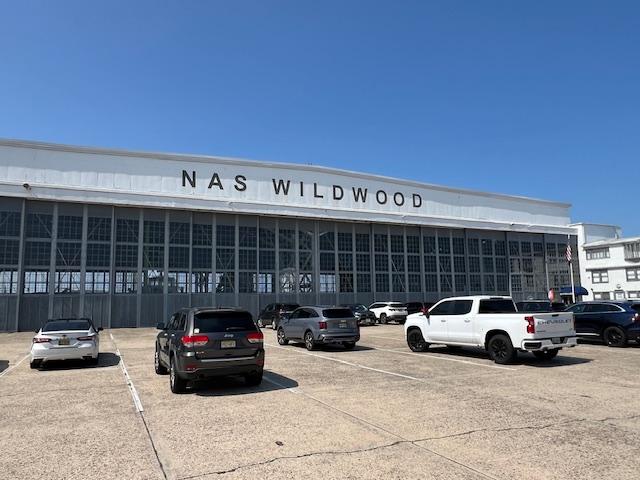
The front of the museum

The Naval Air Station Wildwood Aviation Museum is located at the back of the Cape May Airport. Just follow the road to the back of the airport at 500 Forrestal Road in Hangar #1.

The front of the museum

This interesting museum is a treasure trove of artifacts from WWII to today from jeeps to cars and trucks to airplanes. Some of the vehicles you can step into and see what it was like to ride these pieces of aviation history.

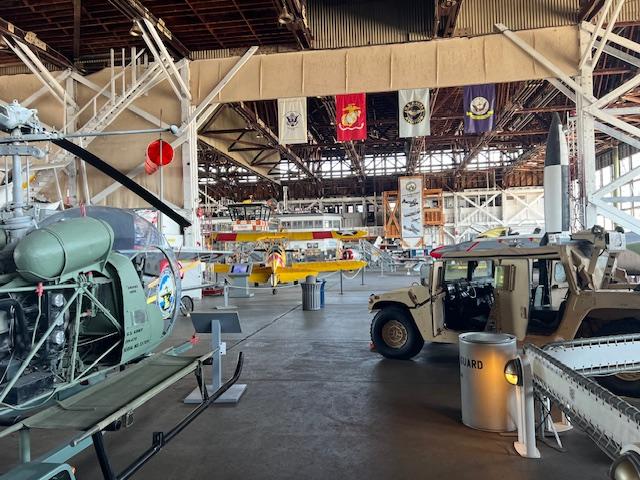
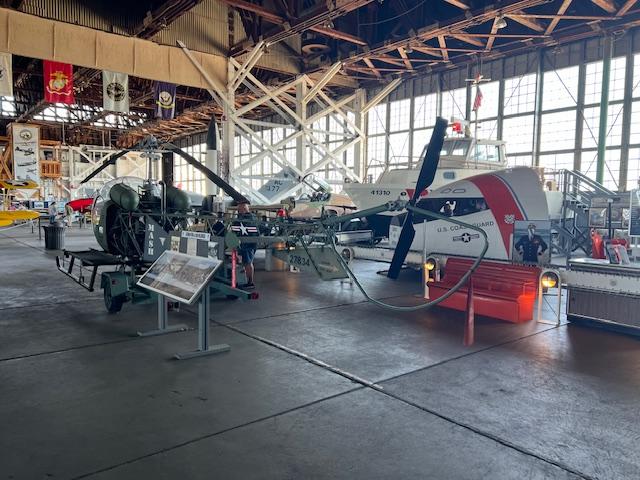
The main gallery of the Aviation Museum

There are several airplanes that with the assistance of the staff you can enter and see what air travel was like for these pilots. All the planes have been carefully restored and displayed for viewing and use by tourists. There is even a air traffic control tower you can enter and see how thing the functioning of the tower was done. These displays were interactive from the perspective of the people who once worked there.

The Hanger with plane displays

In the front of the museum as you enter, along the ways there is a display of the history of the Naval Hangar and how it developed and became part of the community. There were pictures of members walking the boardwalk in Wildwood and having a good time. There were stories of many interactions between the sailors and the locals and what an exciting time it was for everyone.

The history of the time as Wildwood Training Facility

Many local heroes stories were told all over the building of Navy personal from the area and the part that they played in the war years and when they returned. Each story board told of their early lives, how they got involved in the war, the roles that played and jobs that were accomplished and what their lives were like when they returned. The mindset of this generation is very different than from today.

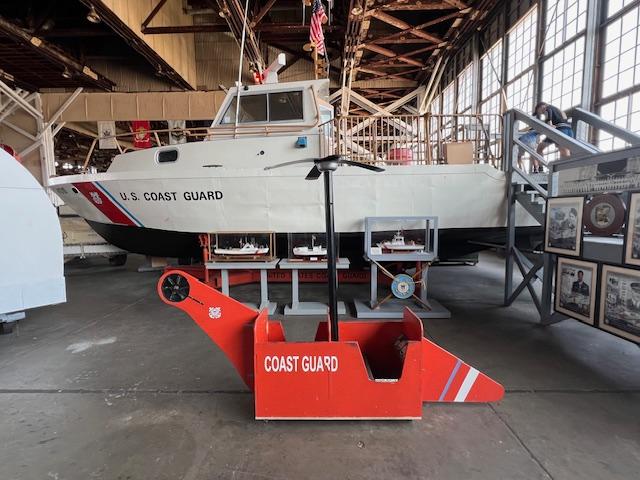
The Coast Guard display

What I really enjoyed was the documentary “Boatlift”, the story of the 9/11 rescue of thousands of people off Manhattan island on 9/11 (it was around the 20th Anniversary of the event when I toured the museum) and the bravery and involvement of boaters and sailors all over the New York maritime region. Hundreds of boats were involved in getting people to safety to New Jersey and other parts of the NYC. It was a lesson in selflessness and involvement in one of the darkest days of American history.

The main gallery of the museum

Outside the hangar, there are more planes to tour and equipment that is used. Each display is carefully explained of its role in the armed forces so take the time to read the plaques as well.

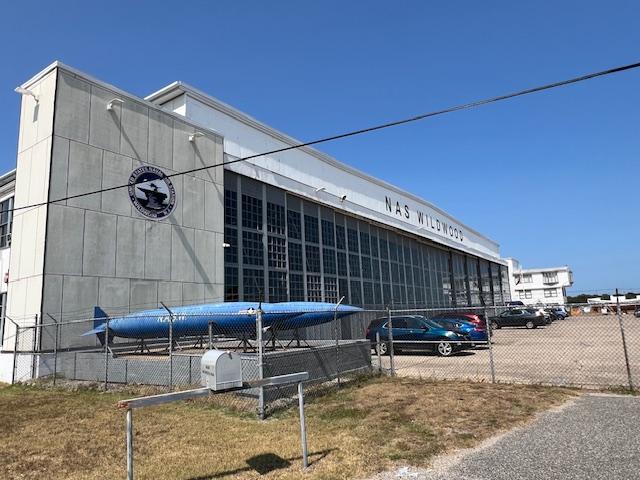
The outside of the hanger of the museum

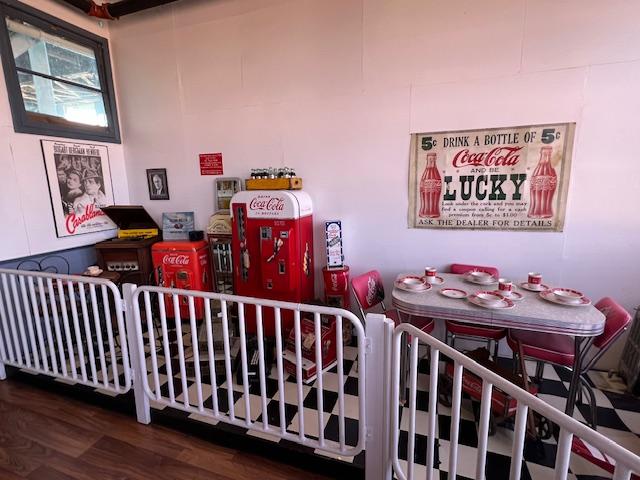
Inside the building towards the back, there is a display of commercial establishments and even the role of Coca Cola during the war and it being used in the ration boxes of the men and women fighting for our country. There were pictures of USO dances and get togethers and parties for the enlisted men.

The Coca Cola display during WWII

There is even a space shuttle piece to explore and admire showing our progression into different types of transportation over time. The museum has carefully displayed items so that there is an order to follow around the room to admire each piece. Take the time to look them over and read about them.

The MASH helicopter on display

This museum is an interesting step back in time to show the role New Jersey and Cape May County played during the war years and then going forward.

The main gallery of the Aviation Museum

The Mission of the Museum:

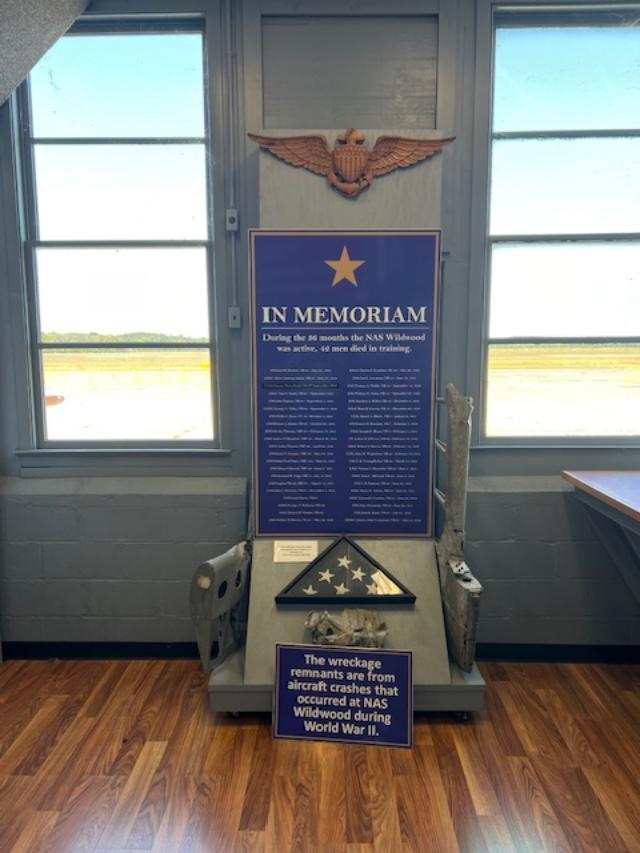
Restoring Hangar #1, educating the public on Cape May Country’s history during WWII and memorializing the 42 naval aviators who were training at the Naval Air Station Wildwood.

WWII Ends display

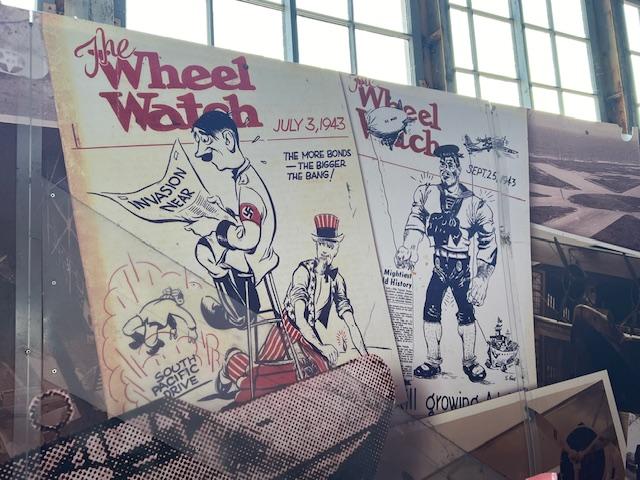
WWII Propaganda Posters

The History of the Naval Air Station Wildwood Aviation Museum:

(Taken from the Museum website)

WWII:

Following the outbreak of World War II, this all wood double wide aircraft hangar was assembled by the U.S. Navy in 1942 from a kit delivered via railroad. On April 1st, 1943, NAS Wildwood was commissioned as a training facility for dive bomber squadrons that would go on to fight in the Pacific. Between 1943 and 1945, activities included night flying and target practice over the Delaware Bay, reaching a peak of almost 17.000 takeoffs and landings in the month of October 1944. Before NAS Wildwood was decommissioned, 129 crashes occurred and 42 airmen died in training exercises.

The Memorial from the WWII

Following World War II, United States Overseas Airlines was operated out of Hangar #1, offering both national and international charter flights. The airline was owned by Dr. Ralph Cox, a dentist and U.S. navy pilot during WWII. Cox also used the hanger to display his collection of early automobiles and other transportation memorabilia including a steam locomotive.

1970-1990:

Southern Jersey Airways operated a commuter airline known as the Allegheny Commuter out of the Cape May Airport. The service was started by Captain Curt Young, ho was a bomber pilot during WWII. The Allegheny Commuter offered twenty-two daily flights between Atlantic City and Philadelphia as well as eight round trips out of Cape May.

1997-Present:

After many years of neglect, Hangar #1 was rediscovered by Dr. Joseph Salvatore and his wife, Patricia Anne, who acquired the building from Cape May County for $1.00. Listed on both the state and national registers of historic places, Hangar #1 is an exhibit in and of itself. Since 1997, the Salvatore’s and the NASW Foundation have worked hard to restore the hangar to its original condition. Today, Hangar #1 is open to the public as part of the NAS Wildwood Aviation Museum.

The main gallery at the museum