Galleries at Fairleigh Dickinson University-University Hall
1000 River Road
Teaneck, NJ 07666
(201) 692-2801
Open: Sunday Closed/Monday-Friday 10:00am-5:00pm
Admission: Free but donations accepted
My review on TripAdvisor:
University Hall on the Fairleigh Dickinson Campus 1000 River Road
The entrance to the museum
The entrance to the Art Gallery
I recently visited the Galleries at Fairleigh Dickinson University and I walked through the new exhibition of being featured by artists Cordelia Barney and Makenna Savnik who are local artists to New Jersey. This was an interesting gallery with walls lined with whimsical art.
The Galleries Museum is located on the first floor of the University Building next to the art Department.
The works by the artists lined the walls
The history of the Arts Department at Fairleigh Dickinson University:
(from the University website)
In September 2018, Fairleigh Dickinson University inaugurated the School of the Arts, a robust center of learning for students who seek arts training grounded in a real-world framework. Today, the School of the Arts is a thriving and exciting community fostering talented students and faculty who are dedicated to a wide variety of artistic expression.
School of the Arts students participate in an innovative curriculum that combines a strong liberal arts education, hands-on creative work, valuable opportunities for internships, and an integrated new approach to arts entrepreneurship.
Outstanding and nationally recognized artists and authors empower our students to reach their full creative potential through speaking engagements, workshops, art shows, and performances. School of the arts students are connected to a network of professional mentors and colleagues who help jump-start their careers. Our Florham Campus features a beautiful and inspiring landscape where students can collaborate across disciplines and flourish while the Metro Campus is located closely to Manhattan. Graduates will be equipped to thrive in today’s — and tomorrow’s — complex interconnected world.
The art works by artist Cordelia Barnet were whimsical and fun with bright colors and inviting patterns. These were the works that stood out in her part of the exhibition.
‘The Flags that Represent Us’ by artist Cordelia Barnet
The sign for the art
The work ‘How would Botticelli See Me?’
The sign for the art
Cordelia Barnet also did an interesting collection of works with Cats as a theme. These were the ones that stood out to me.
The work ‘Hold up the Pinnacle’
The sign for the event
The work ‘Sleeping with the Fishes’
The sign for the work
The works on the other side of the Gallery were by artist Makenna Savnik. Her works were interesting in the repeated symbols and characters she created.
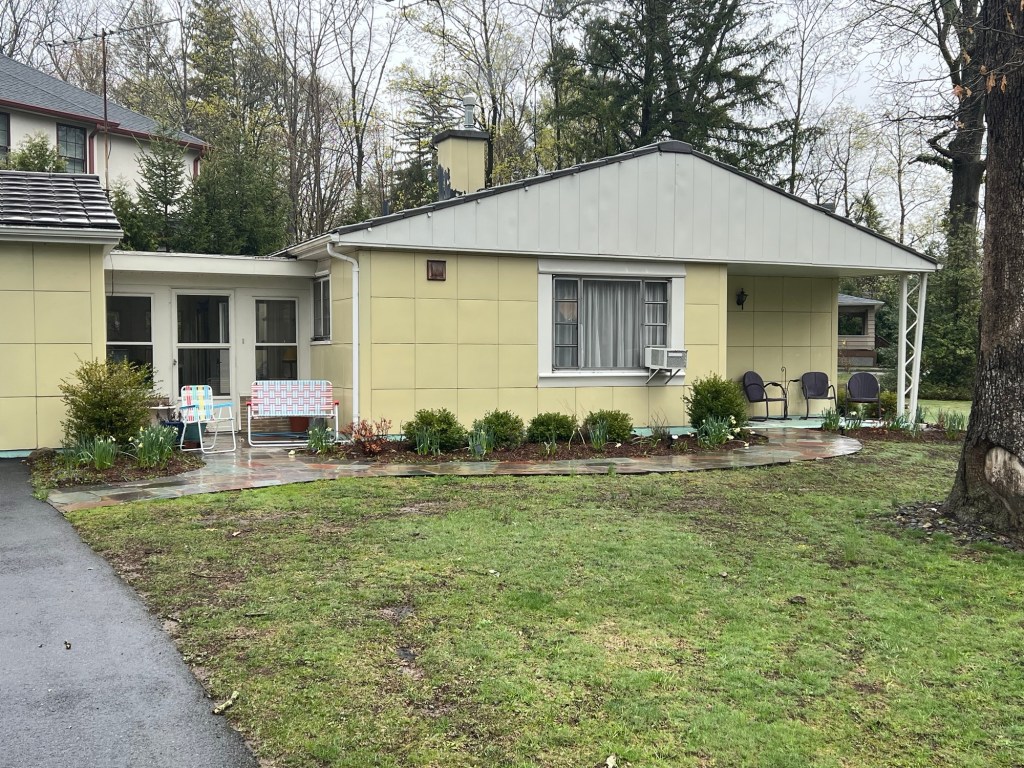
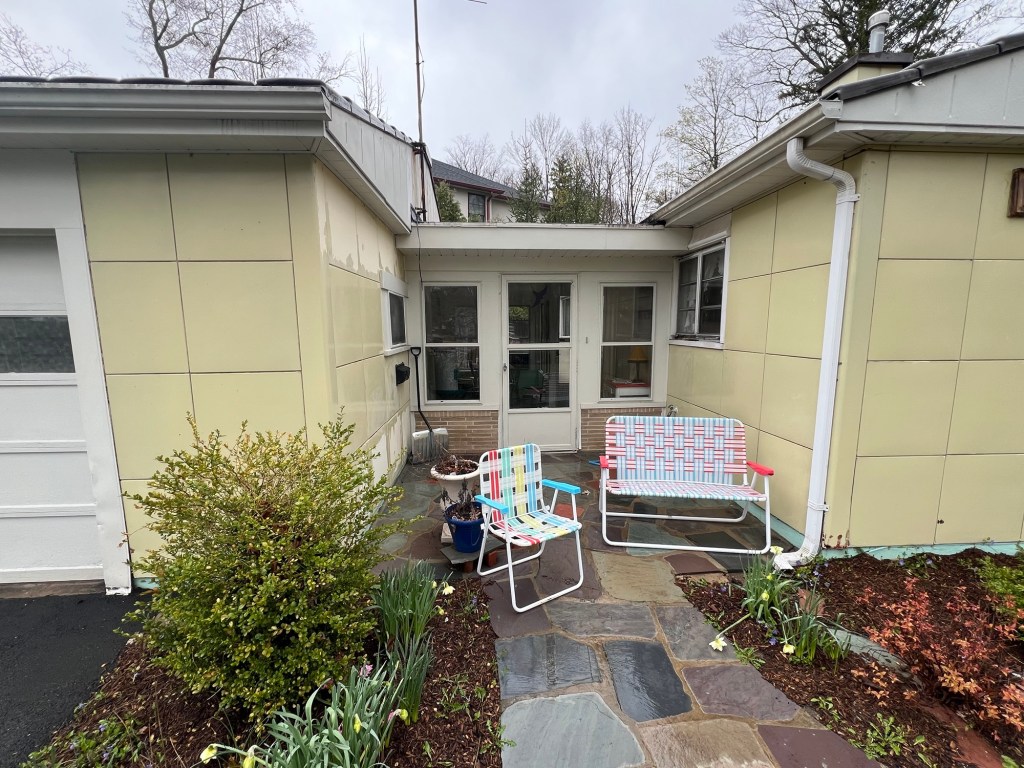
The breezeway of the home. This was for entrance of the home
Location of the house:
(from the Borough of Closter, NJ website)
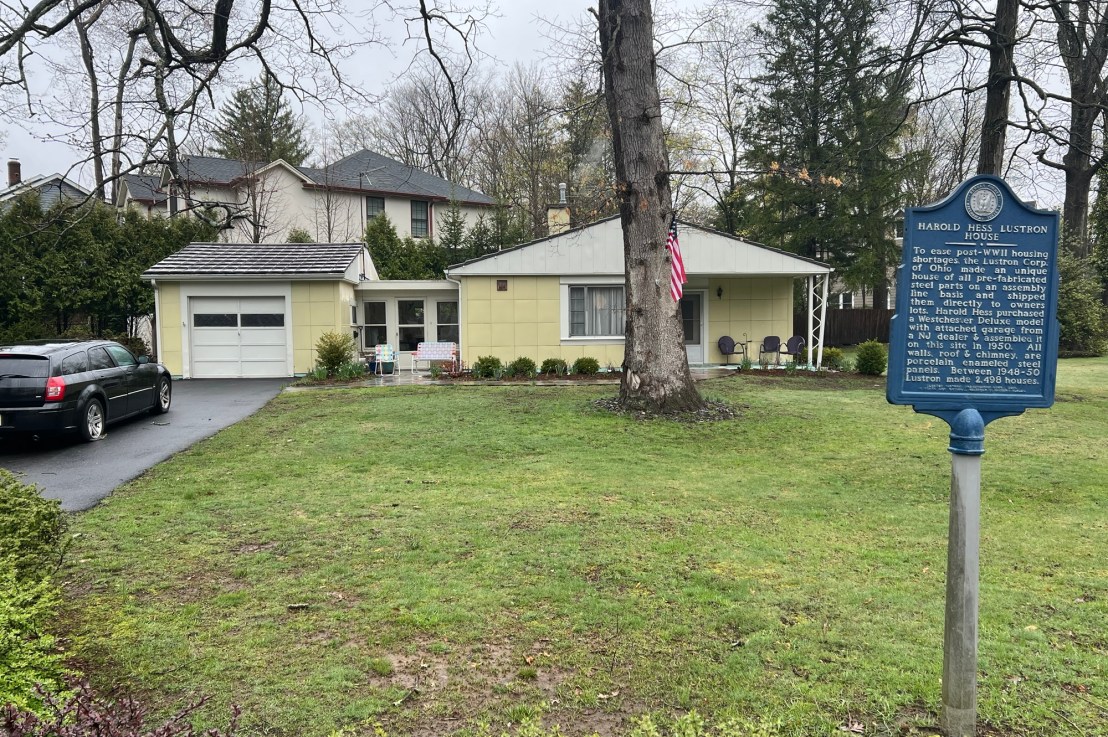
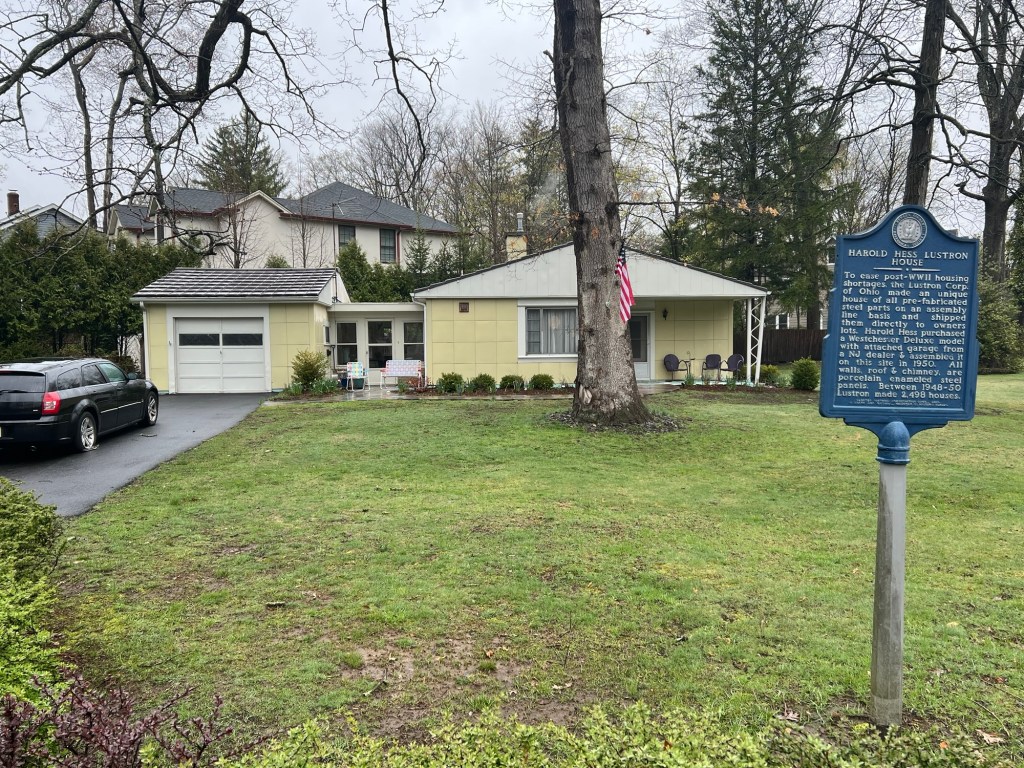
The Harold Hess Lustron House, located at 421 Durie Avenue, Closter NJ 07624, is currently owned by the Borough of Closter and is operated as a house museum by the Friends of the Lustron Committee of the Closter Historic Society. It is open to the public on the second Saturday of each month from noon to 2 p.m. (Boro of Closter, NJ website).
History of the Harold Hess Lustron House:
(from the Borough of Closter, NJ website)
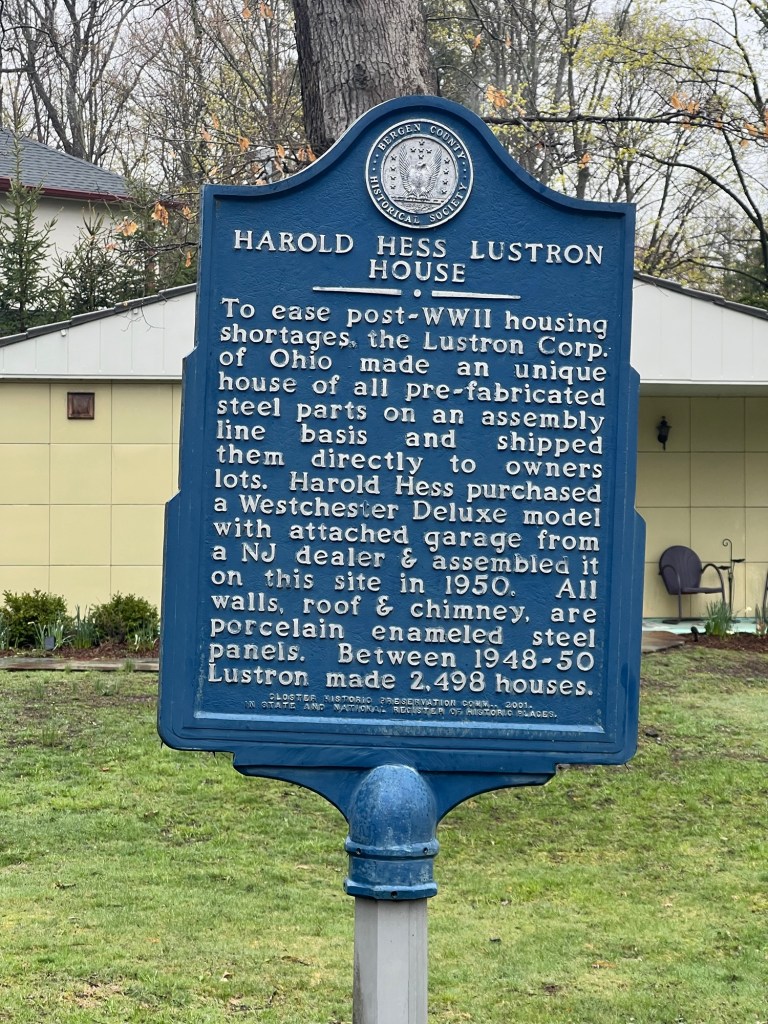
In 1949, Harold Hess, a recently married returning WWII veteran saw a sample Lustron House displayed at Palisades Amusement Park. In 1950, he purchased the Westchester Deluxe model with attached breezeway and one car garage. Originally he wanted the 3 bedroom, two car garage model but felt fortunate to receive what he got as the company was already heading into bankruptcy. Mr. Hess faced six months of planning and zoning board meetings in Fort Lee. He failed to get a permit to erect the modern metal house and turned to the Closter area where more relaxed building codes provided an opportunity to build the novel construction of the all-steel prefabricated house.
World War II vet Hess never lost faith in his house of tomorrow and was the proud owner till his death in 2004. He raised his family here and remained pleased with the house until the end, noting that there were some adjustments such as finding repairmen with enough problem solving creativity to make repairs to a steel house with a combination dishwasher/clothes washing machine next to and filled by the kitchen sink faucet. Other minor matters were hanging pictures with large industrial magnets and interior spring cleaning with automobile wax. The attractive steel walls never need painting or wallpapering so the color scheme never changed.
Closter’s Harold Hess Lustron House, listed on both the state and national registers of historic places, was scheduled for demolition in 2014. Thanks to advocacy by then-mayor Sophie Heymann and positive action by the Zoning Board, an unusual compromise was reached with the developer-owner of the property to donate the historic house to the Borough of Closter. The Borough of Closter applied for a $25,000 grant in 2016 to have a Preservation Plan written for the Lustron House. The grant was awarded by the New Jersey State Historic Preservation Office with monies provided by the National Park Service and did not require any local matching funds. The plan was completed in 2017, work has begun and will be implemented fully over time.
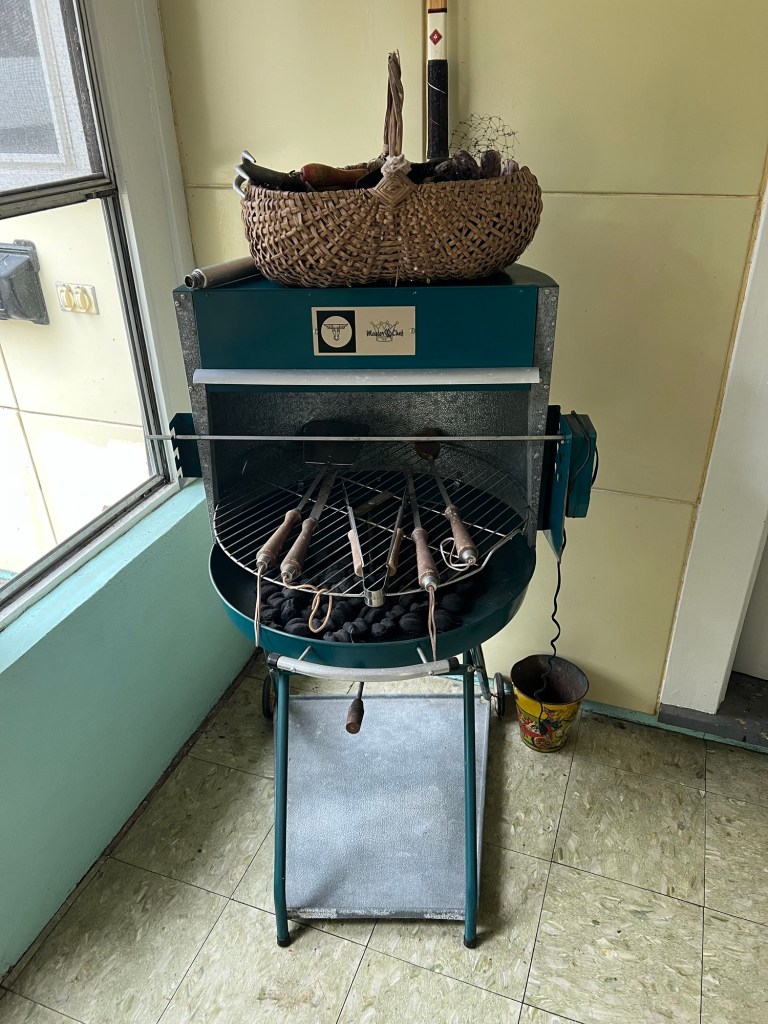
The barbecue grill in the breezeway
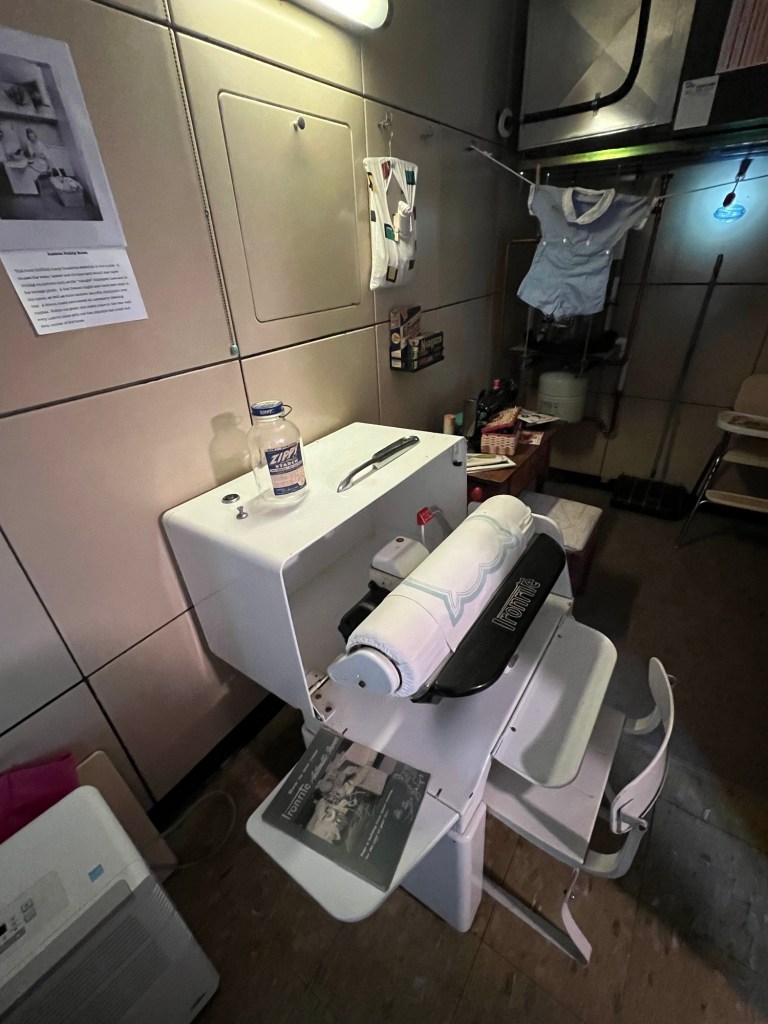
The Laundry Room as you walk into the house
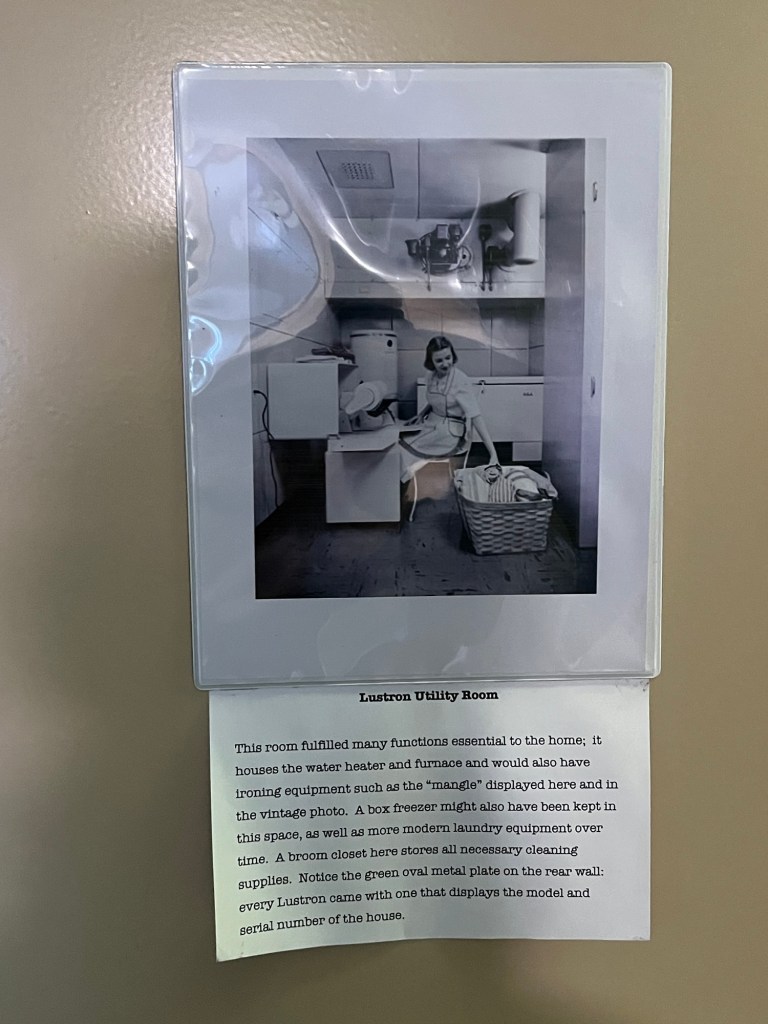
The display on Laundry room
History of the Lustron House: Current day
(from the Borough of Closter, NJ website)
There are only two Lustron houses remaining in Bergen County. The other is located in Alpine and has no local historic preservation protection. Approximately nine have survived statewide and an estimated 1500 remain nationwide.
“Lustron” is a trademarked name that stands for “Luster on Steel.” The shiny efficiency of these homes mirrors the optimism that was felt by this country as its GI’s re- turned home triumphant from the Great War. Lustron homes are one-story ranch-style houses built on concrete slabs. They are very modest in size, averaging 1000 square feet of living space. Most of the Lustrons built were two- bedroom models, although a three-bedroom model did be- come available towards the end of production.
The Lustron house was the brainchild of Carl G. Strandlund, who saw the possibilities of utilizing steel left behind from the war effort to create needed housing. Strandlund had previously worked for the Chicago Vitreous Enamel Products Company that manufactured steel enamelware for refrigerators, stoves, and other household appliances. Connecting this technology to the housing industry was the ticket to success in securing federal funding necessary to start production. The Lustron Corporation opened a one-million-square-foot plant in Columbus, Ohio in 1947. But just as quickly as the company’s star rose, it plummeted, and the Lustron Corporation closed in 1950 due to overwhelming debt.
Elements of streamline design abound in Lustron homes, which feature built-in vanities, bookshelves and dining room/kitchen cabinetry, as well as pocket doors and sliding closet doors – all made of porcelain-enameled steel. Lustron homes were marketed as having “cheerful convenience” and “easy-to-keep-clean brightness.” They cost approximately $10,000 each and came in four colors: maize yellow, surf blue, desert tan and dove gray. All of the pieces of a Lustron home could be carried to the building site in one specially designed truck, and construction could be completed in as little as one week.
Interesting features of the Lustron house included the “Thor” dishwasher-clothes washing machine that was located in the cabinetry next to the kitchen sink. Another unique aspect of these homes was the heating system, which supplied radiant heat through a plenum chamber in the space above the metal ceiling panels. Each Lustron house came fitted with a metal identification tag stamped with the model and serial numbers and located on the back wall of the utility room.
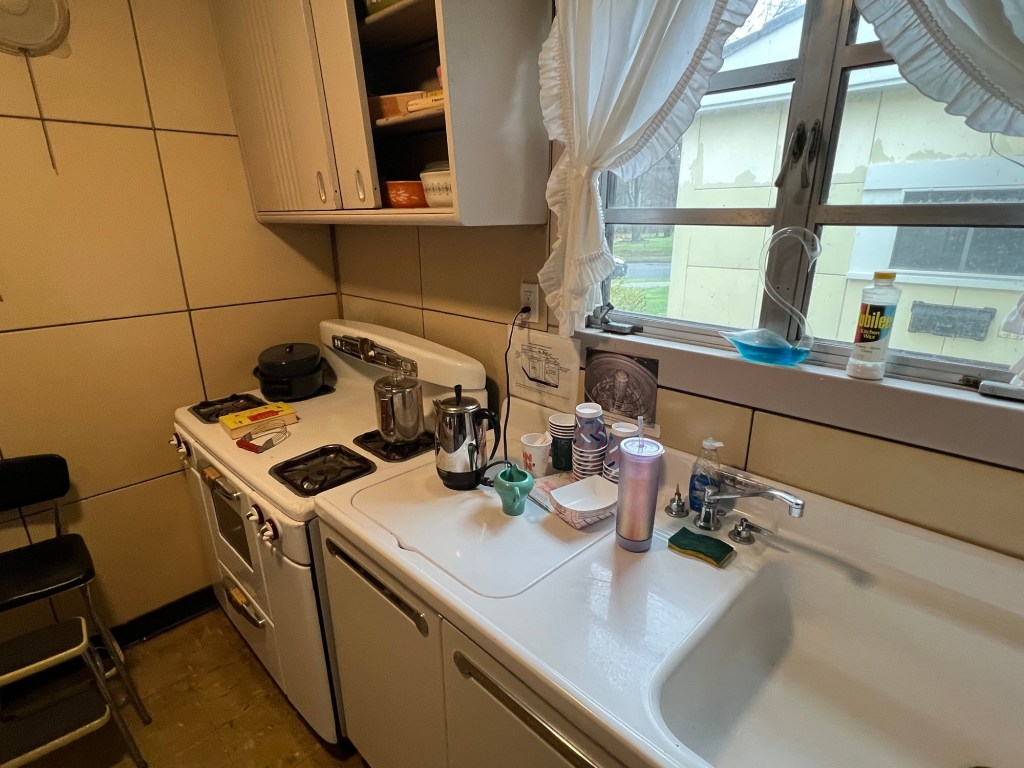
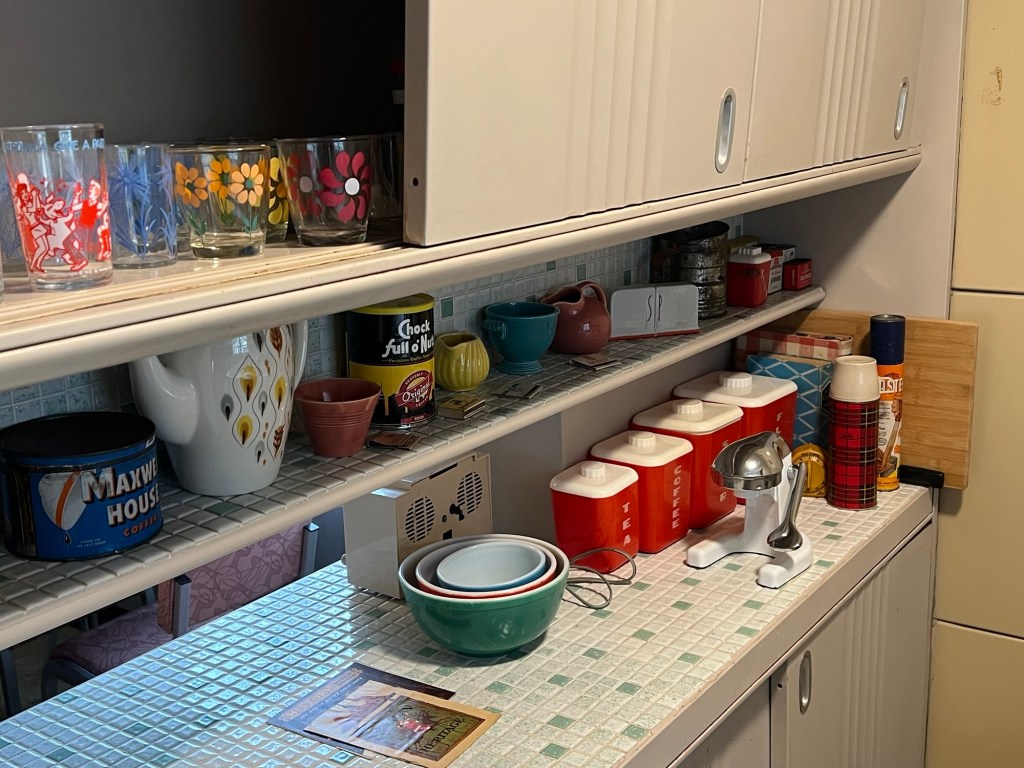
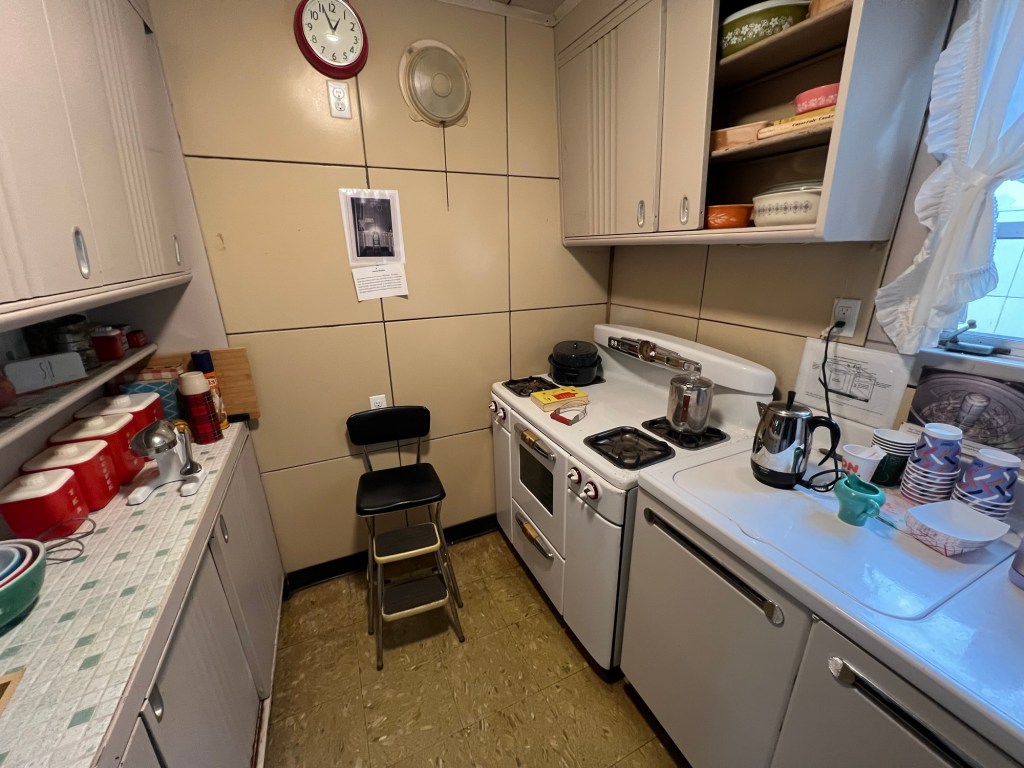
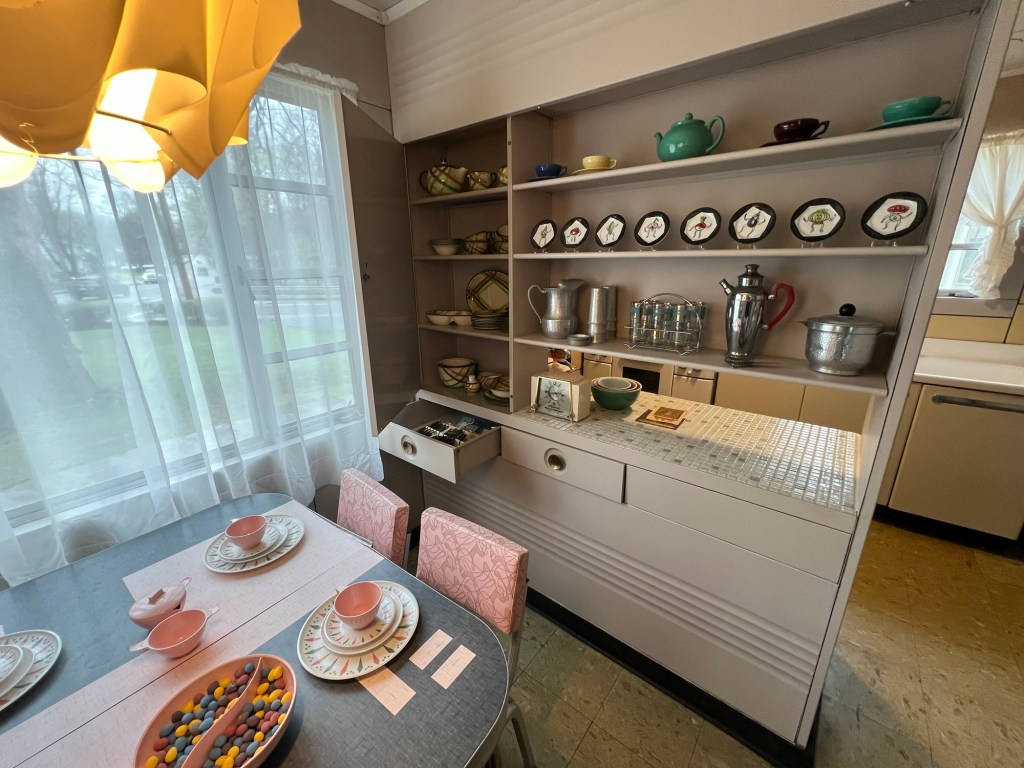
The kitchen looked like a complete replica of my grandmother’s and my aunt and mother’s houses in the late 1960’s and early 70’s.
The late 1950’s kitchen
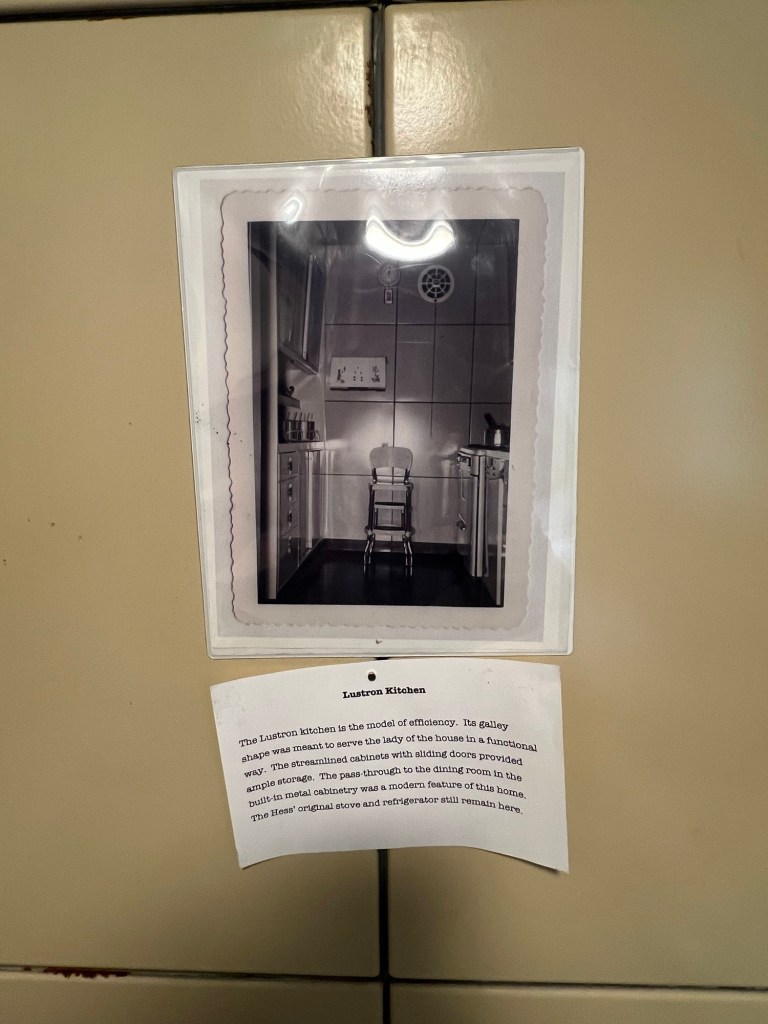
The kitchen of the past
A closer look to the kitchen of the past
The kitchen’s of the past were designed for efficiency but not for socialization. This is why kitchens have grown over the last seventy years to accommodate socialization of everyone ending up in the kitchen.
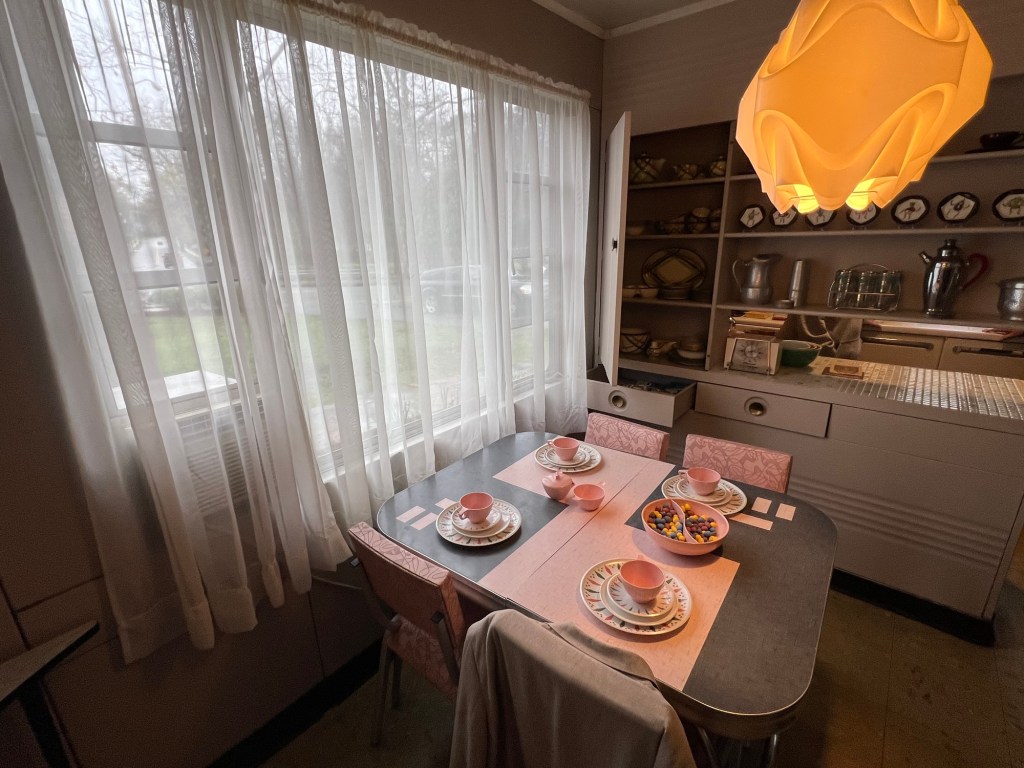
The Dining Room area off the kitchen
The seating area for the family had lots of light but could be quite tight
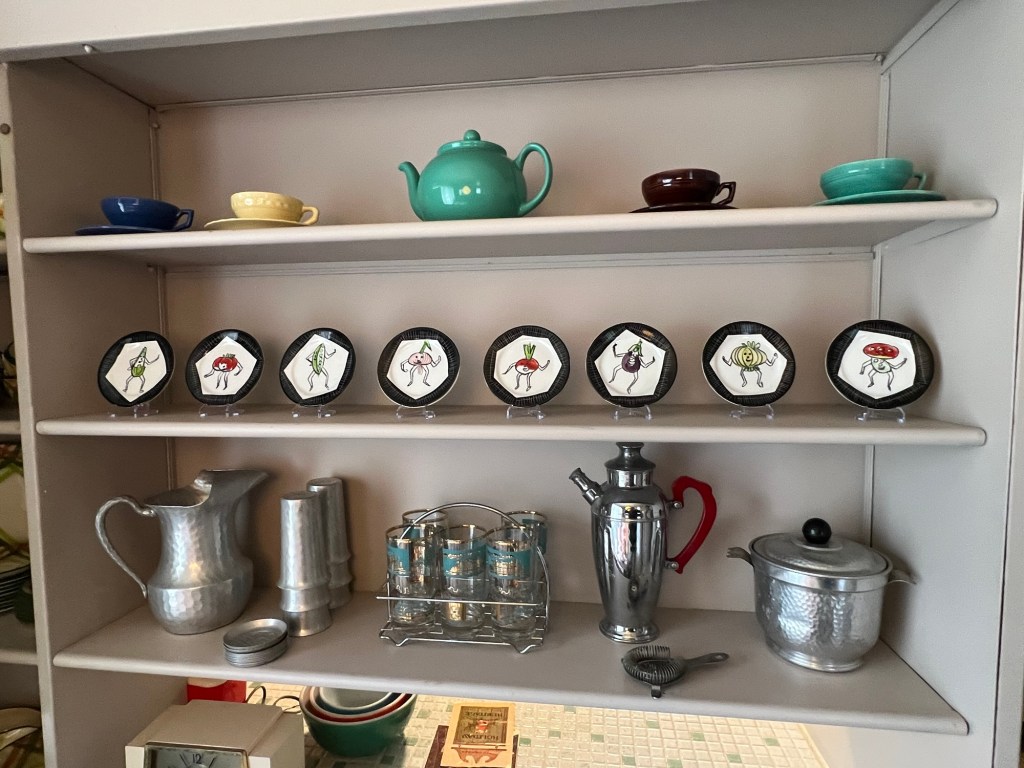
Everything was in its place on the shelves
The next part of the tour was the bedrooms which were off to the back of the house. Each was decorated with period clothing, furniture and other Knick knacks.
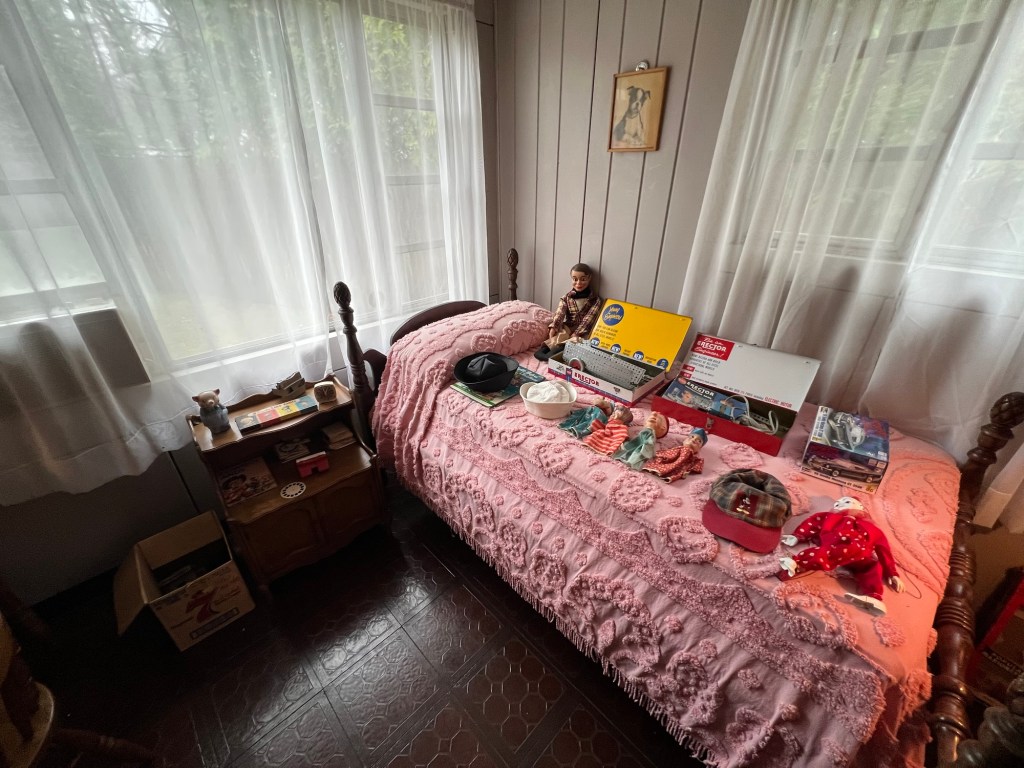
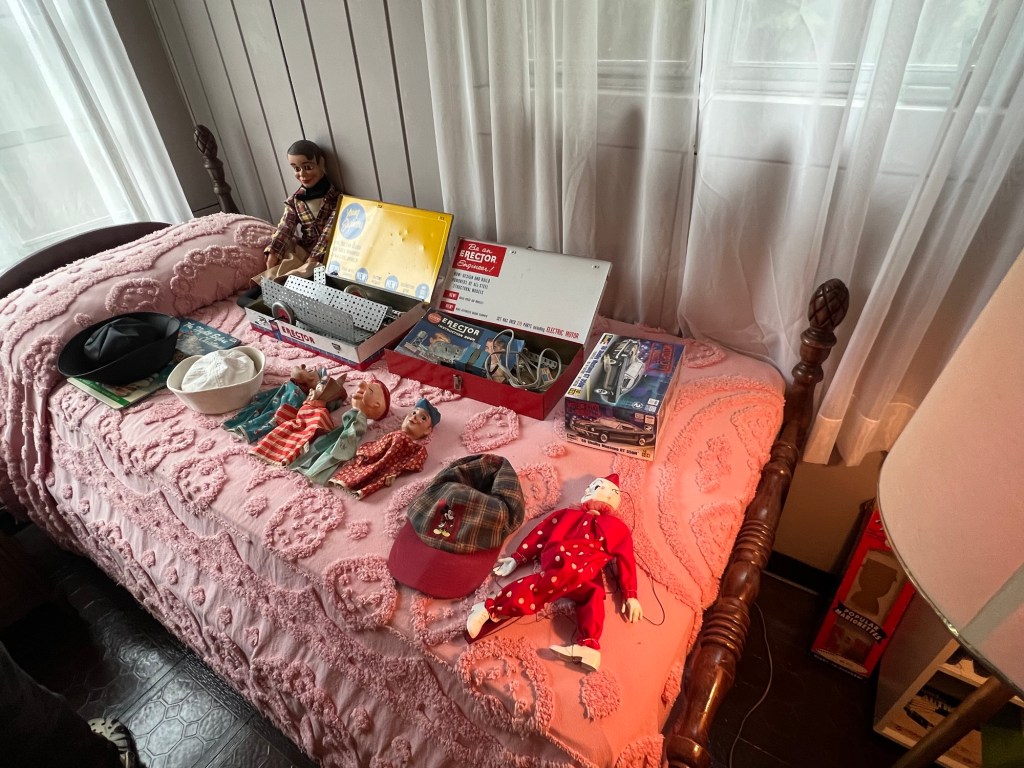
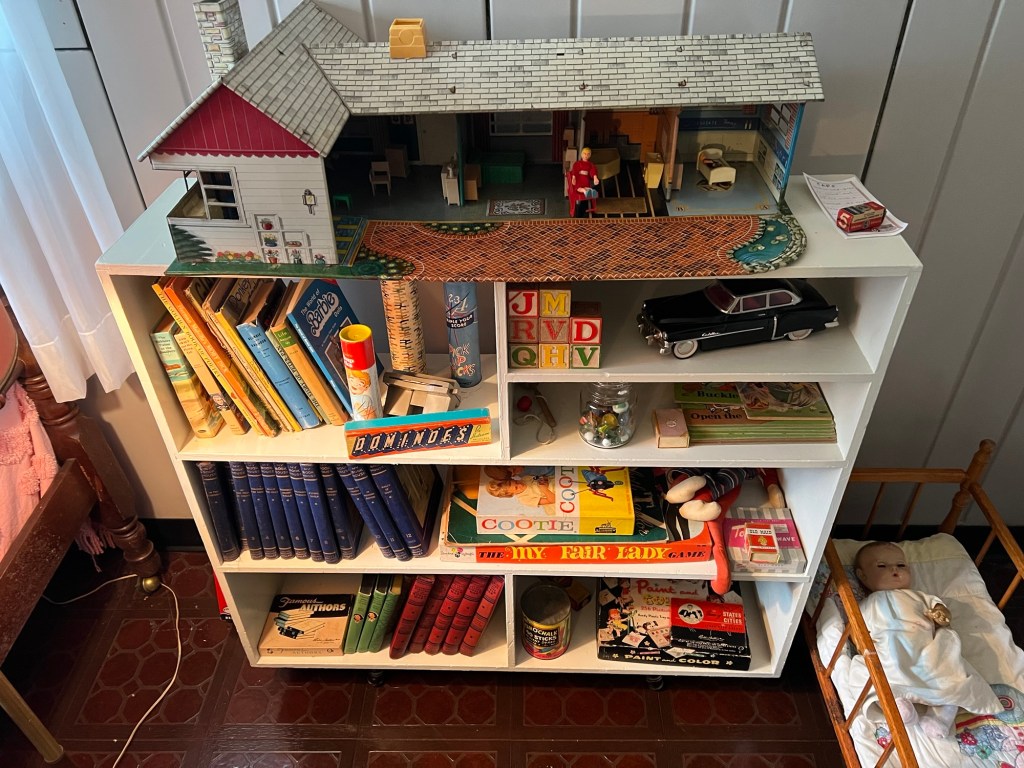
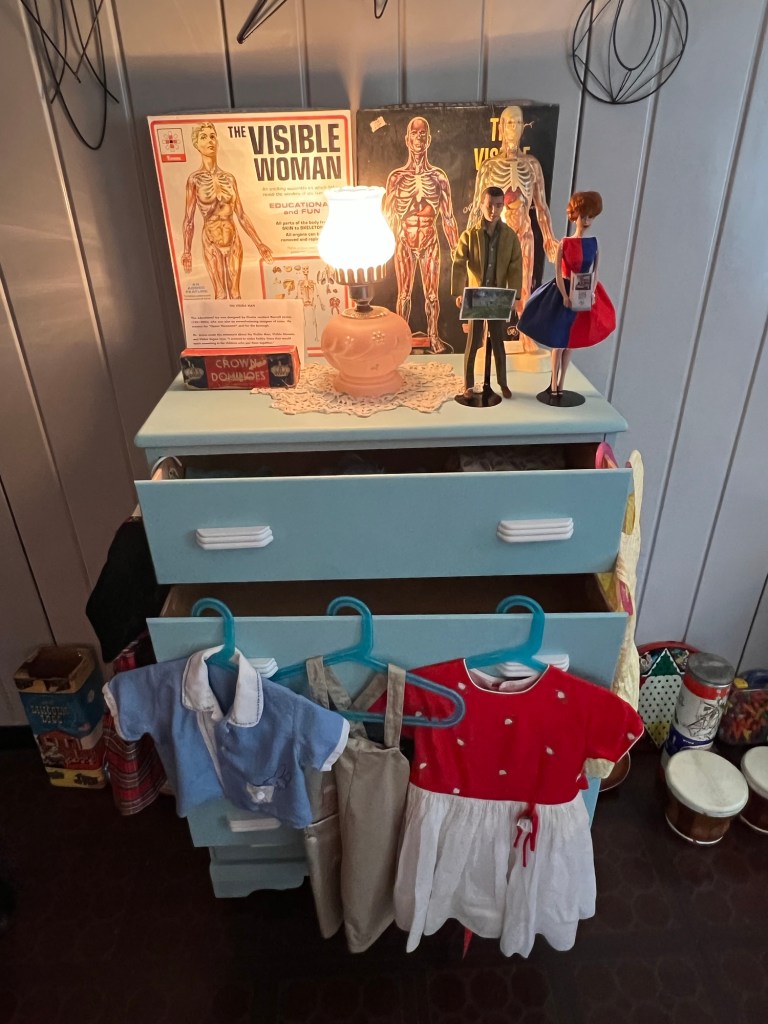
The Children’s bedroom was the first stop. I saw many toys from my childhood.
The bed had all sorts of puppets and games on it
The shelves were lined with books and board games from the era of the late 50’s and 60’s
Vintage science sets and clothing were on display in the Children’s room
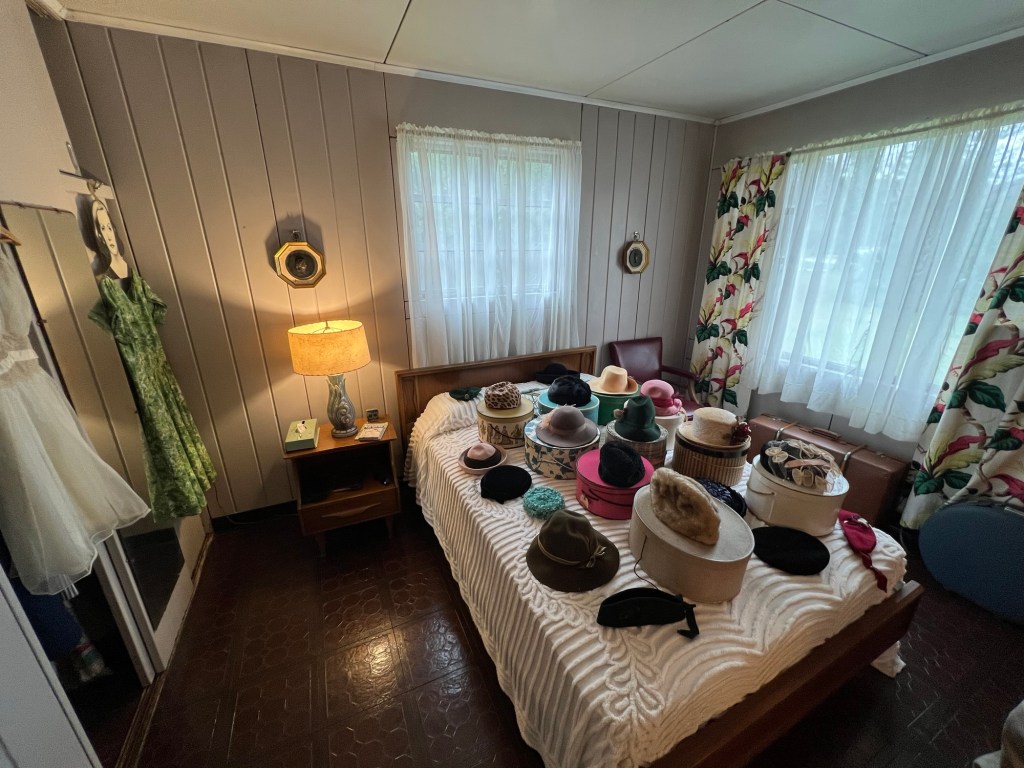
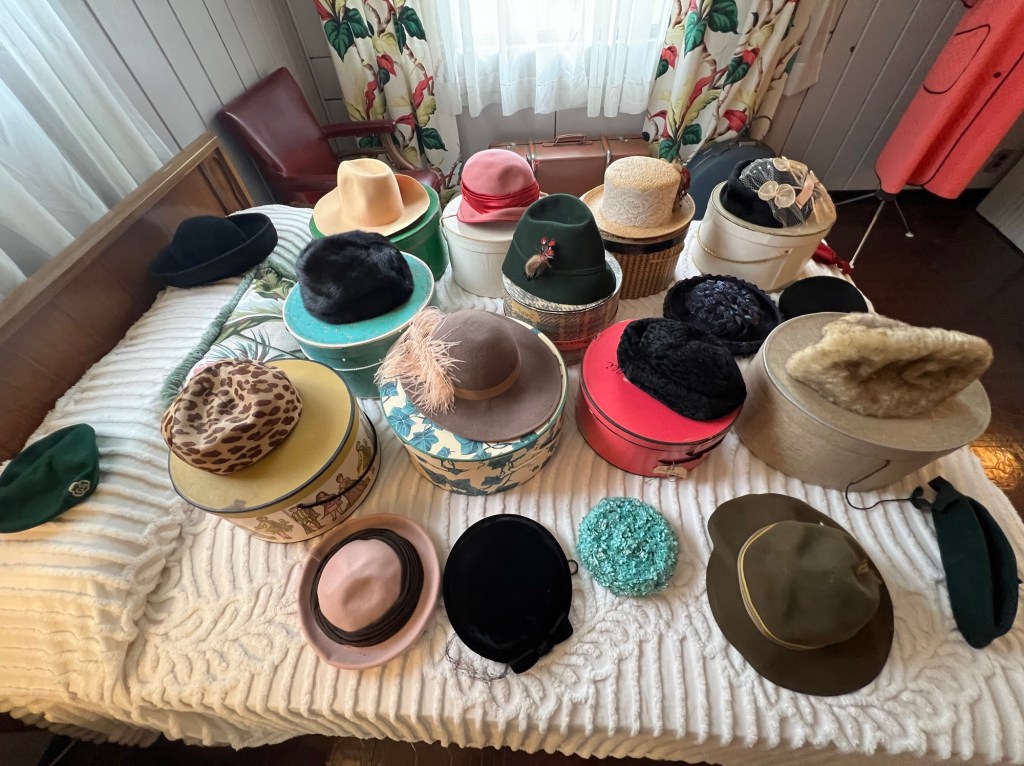
The Master Bedroom had a display of Easter hats
The selection of hats from the 1950’s and 60’s
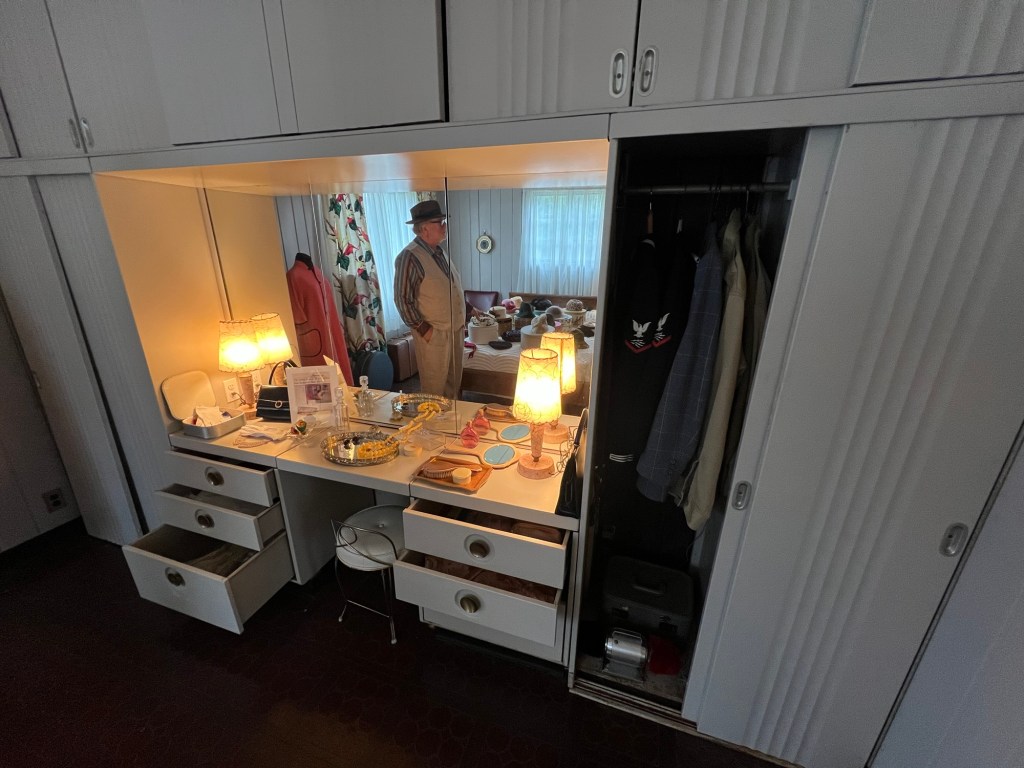
The Vanity was stocked with jewelry and perfume while the drawers were filled with girdles, white gloves and corsets
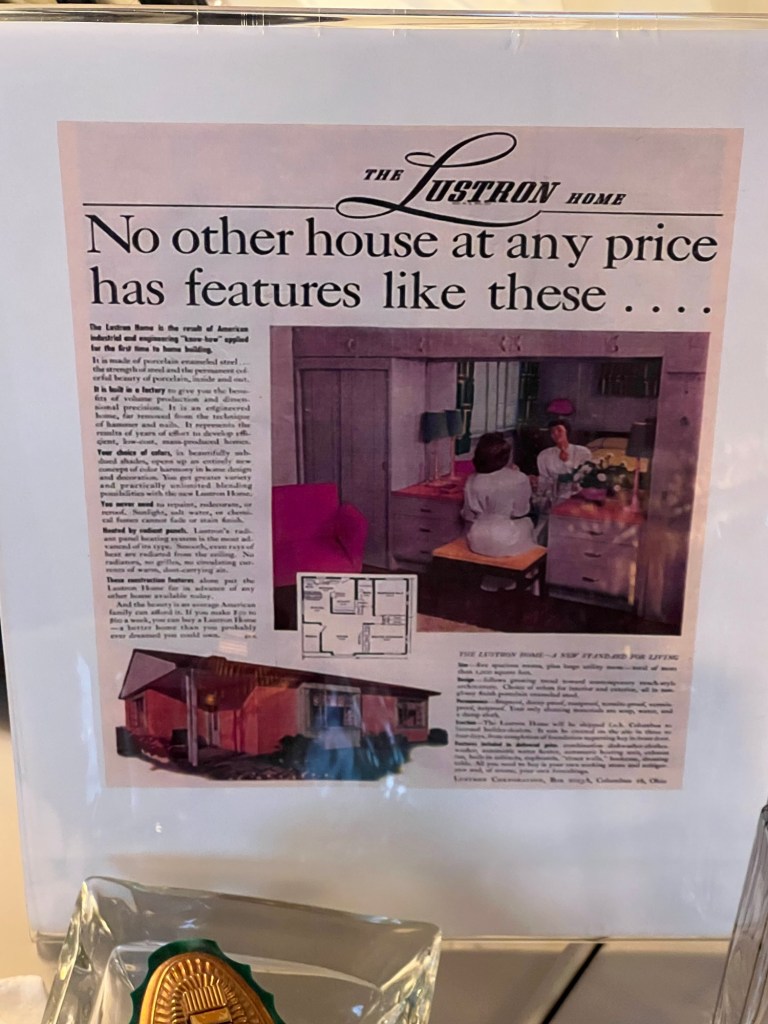
The advertising for this home offered all the wonderful amenities
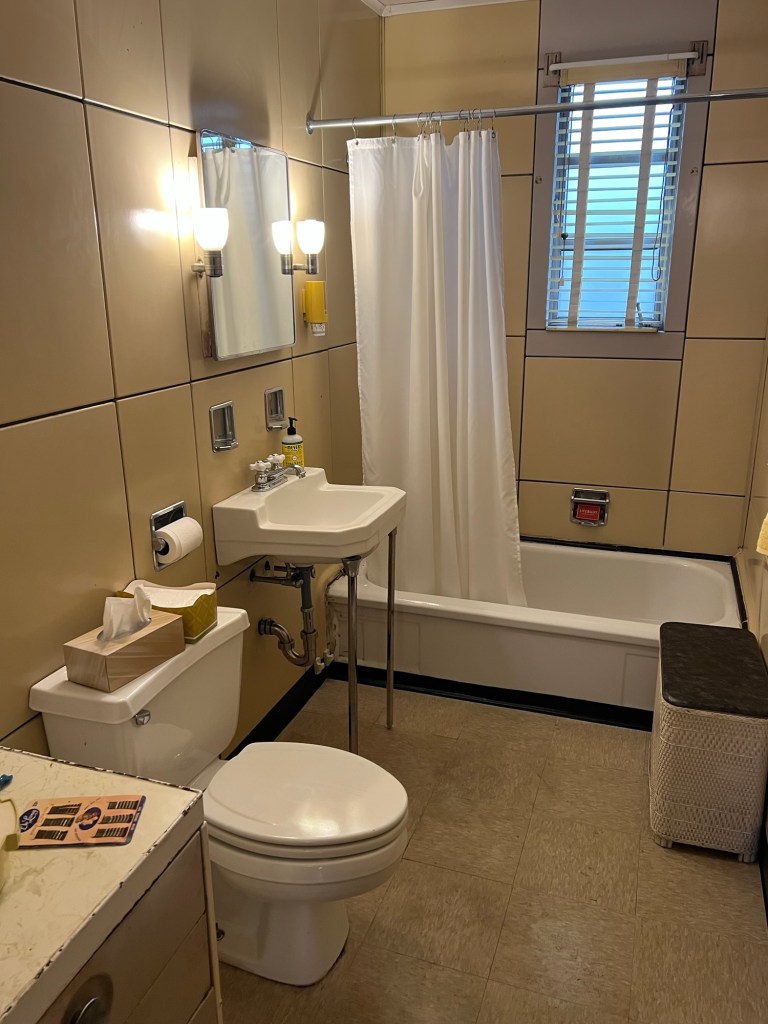
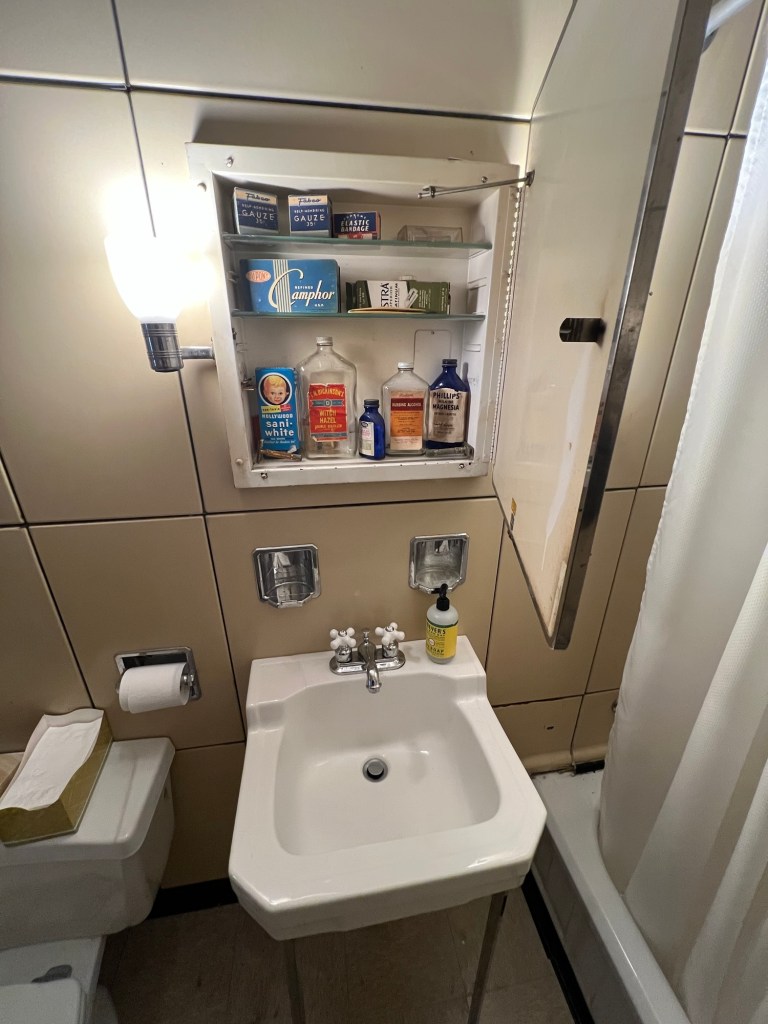
We next moved onto the bathroom which looked like my old bathroom before the renovation
The bathroom
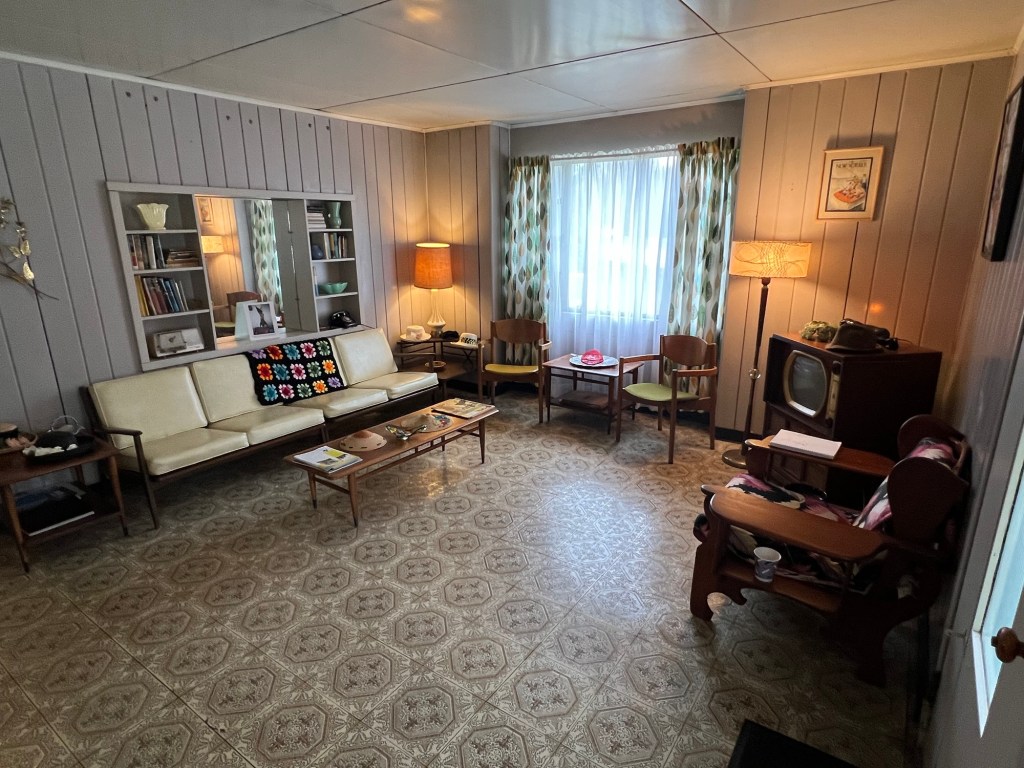
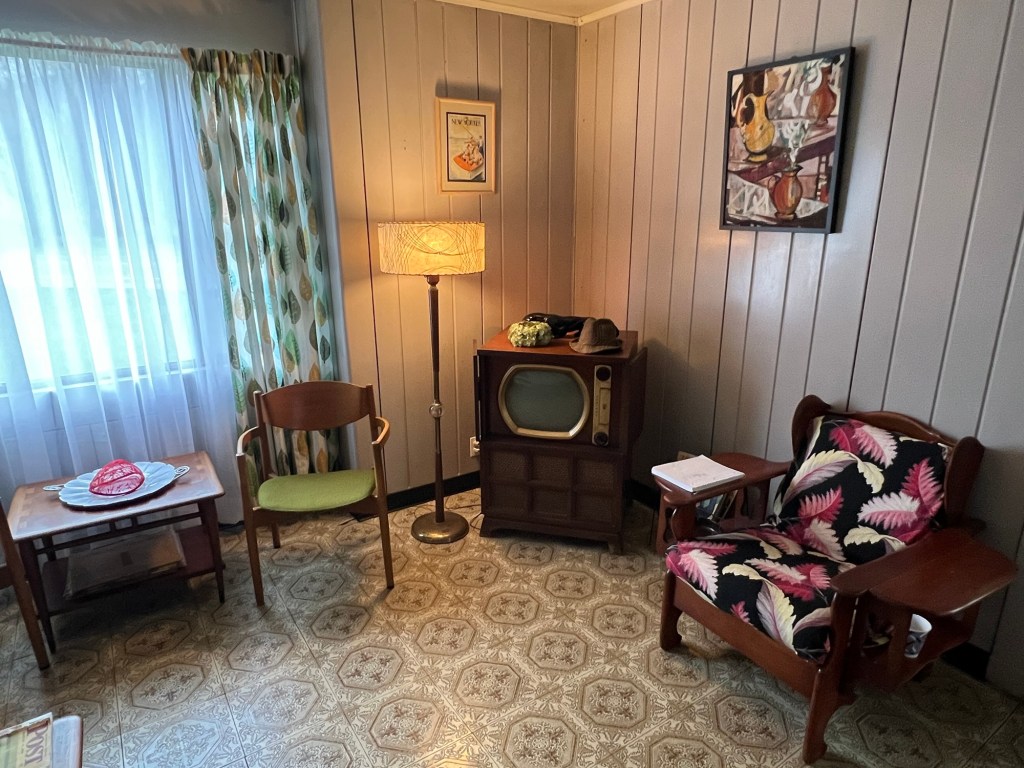
The last room we toured was the Living Room. The room was designed with Danish inspired furniture and clean lines. The room is full of furnishings and decorations from the 1960’s and 70’s done in the Modern Danish look. The room has a very early 1970’s feel about it.
The Living Room
The Living Room
As we finished our tour of the house, we passed through the breezeway again and the patio area. There was an outdoor seating area on the patio.
The Patio just outside the breezeway
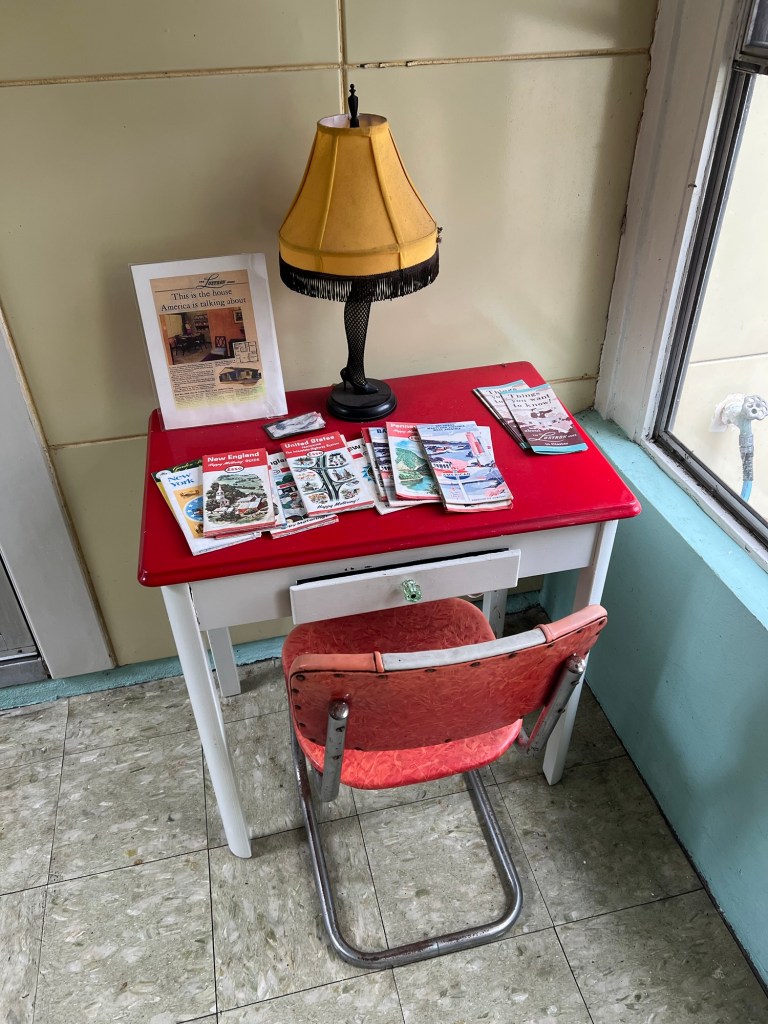
The private desk just outside the breezeway
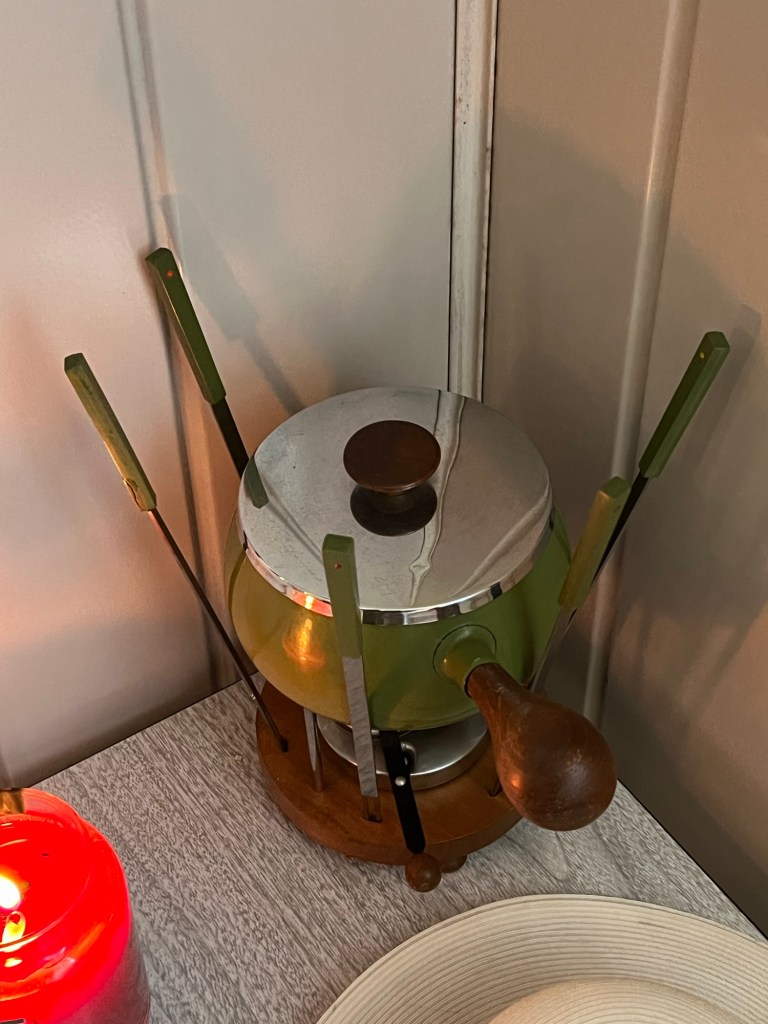
The fondue pot in the corner
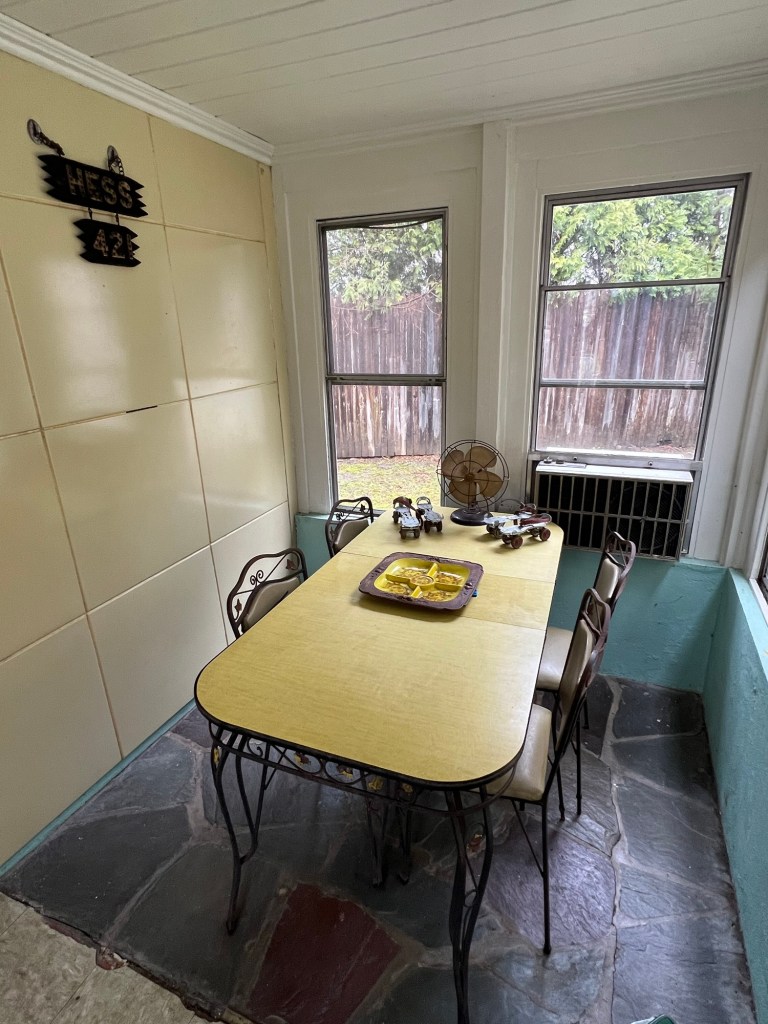
The table on the breezeway
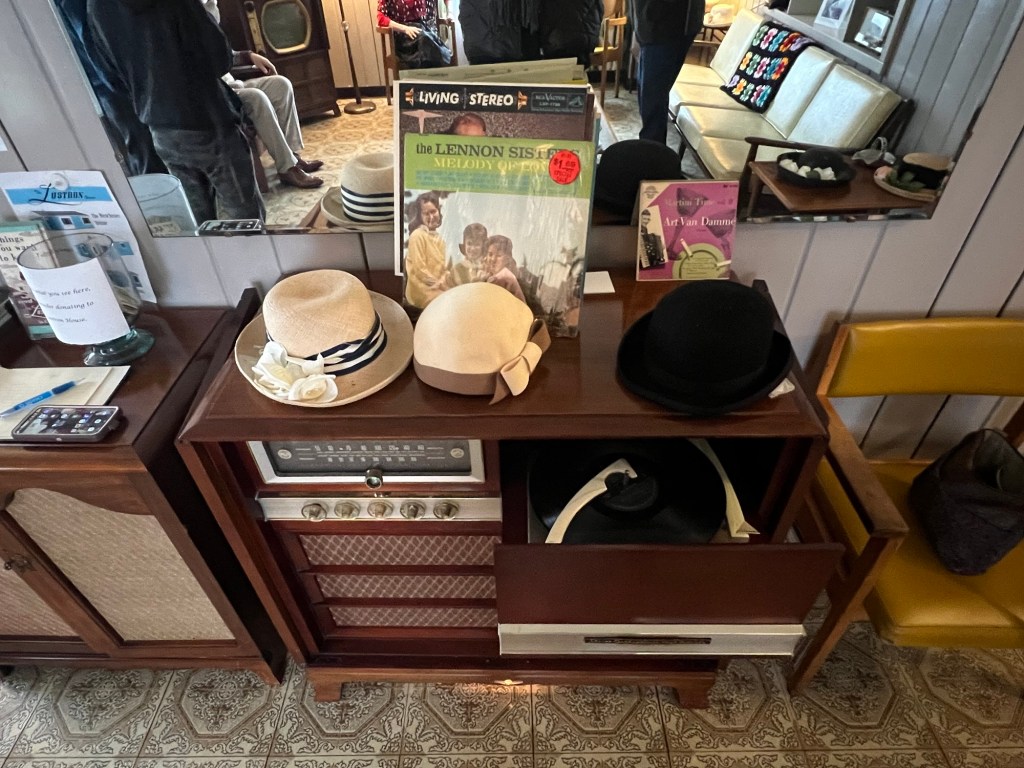
When I got back into the house from the outside, I toured one more time and walked around the Living Room. That’s when they showed us the record player.
Seemed like a good place to hide the household’s records
It really was like walking through a time capsule of my past. As I walked through every room, I felt like I was going to see my Grandmother and Great Aunt walking through the door and my mother in her early 30’s yelling at us again to get off her furniture. For a Gen X visitor, it is a step back into our past. What a unique museum.
The Museum presents an eclectic view of local and regional history through permanent and changing exhibits of artifacts, documents, photographs, books, and videos. The West Milford Museum is the result of over 35 years of collaboration between local volunteers, donors, businesses, and municipal government. Formerly a M.E. Church, circa1860, this local historic landmark has been renovated extensively in the interior to accommodate the museum exhibits.
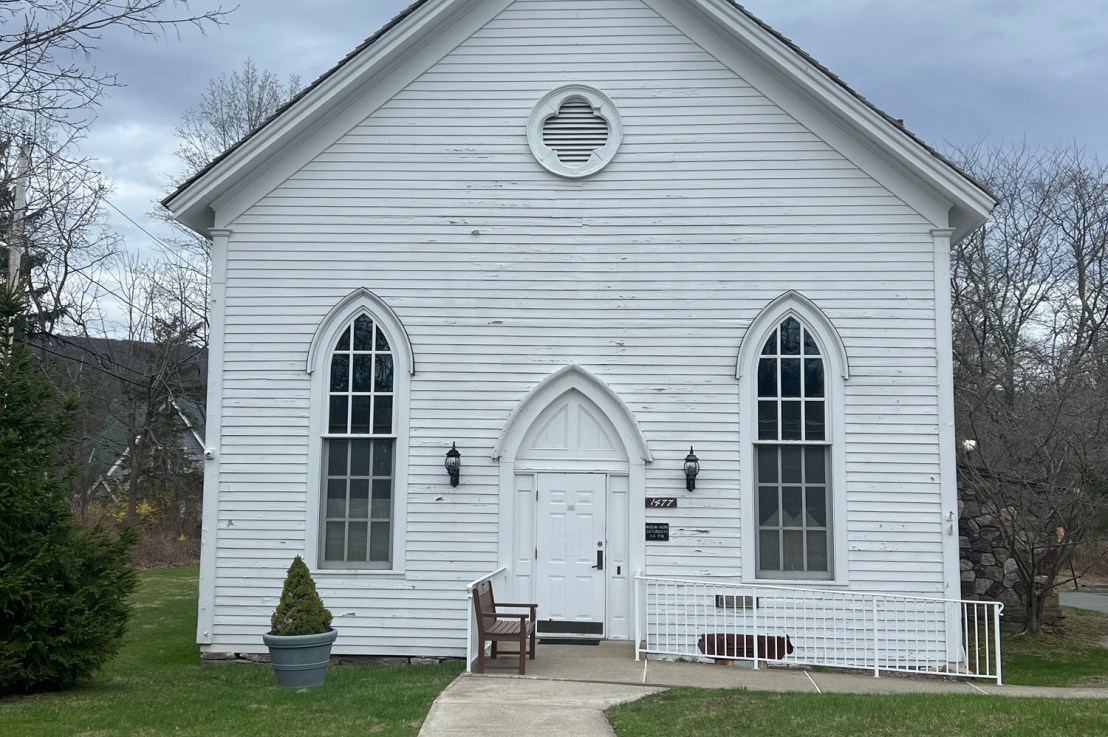
The entrance to the museum
The museum is located in the former Methodist Episcopalian church built during the Civil War. It was designed in the Gothic Revival style with a cedar shingled roof over hand hewn beams and a dried laid foundation. The congregation moved to a new location in 1906 and the building was deeded to the town in 1910 (museum pamphlet).
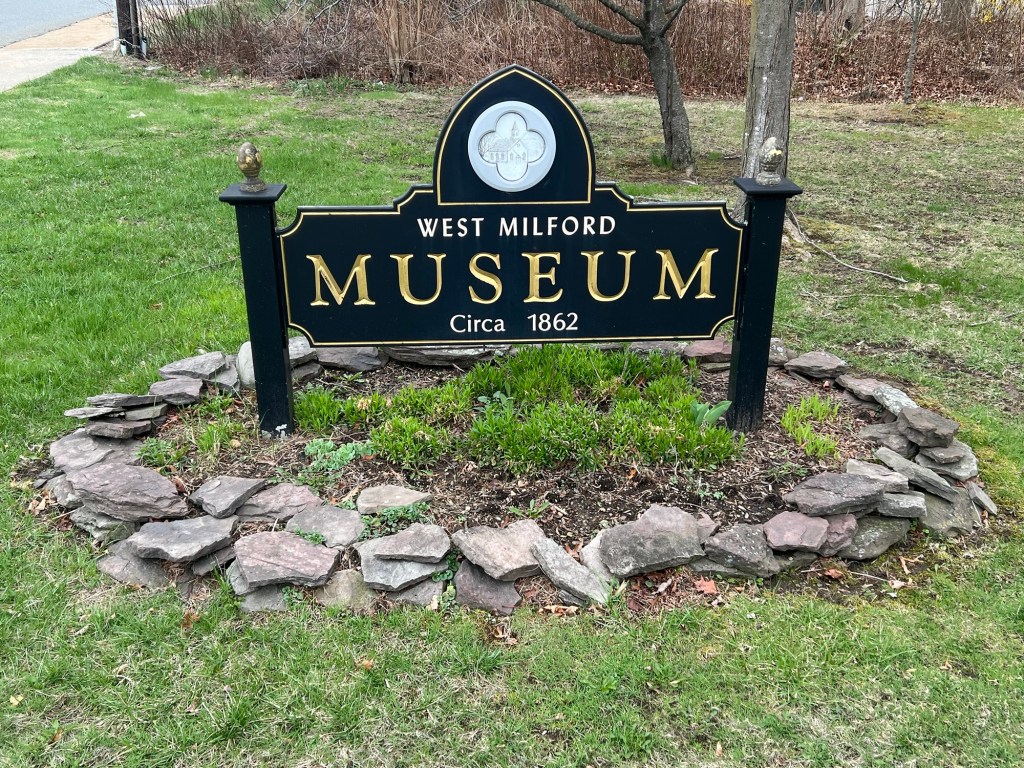
The museum sign
The inside of the West Milford Museum
History of the museum:
(From the museum pamphlet)
Following the 1976 Bicentennial, with a renewed interest in American history, the Town of West Milford, NJ decided to establish a museum in the old Town Hall Annex. Passing a resolution in 1985, the museum started the collection and archiving it and renovating the building. The museum opened in 2000 to patrons.
Maps of the early history and colonization of the town
The Farming Community display of the Dutch and English settlers
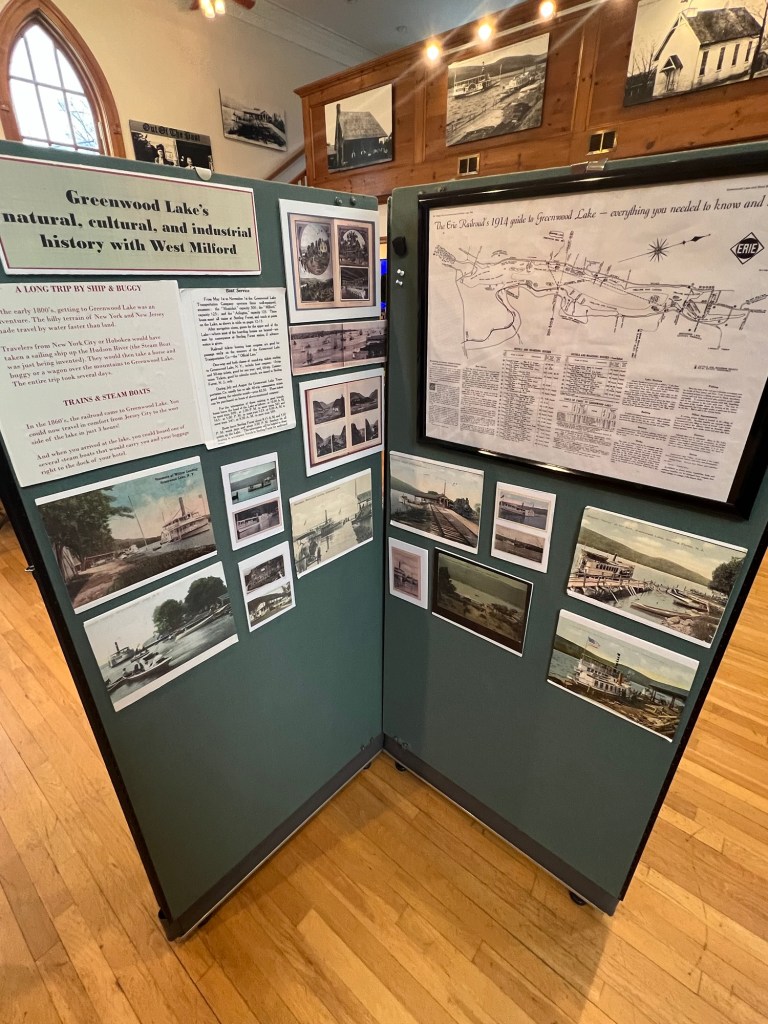
The development and population growth around Greenwood Lake
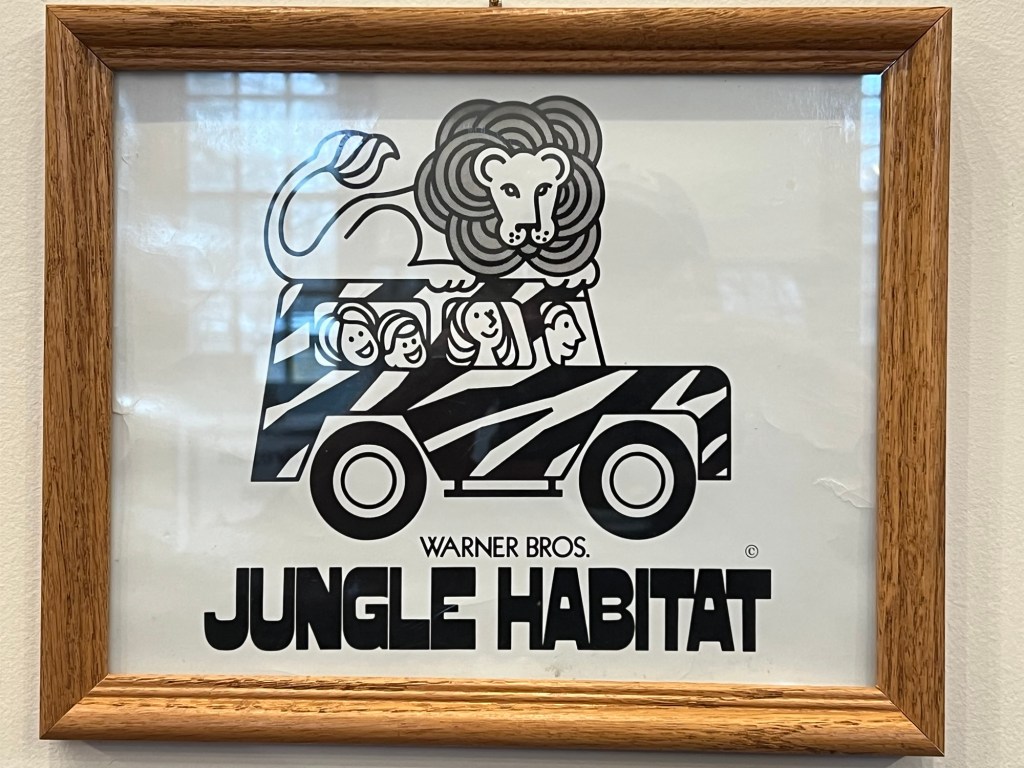
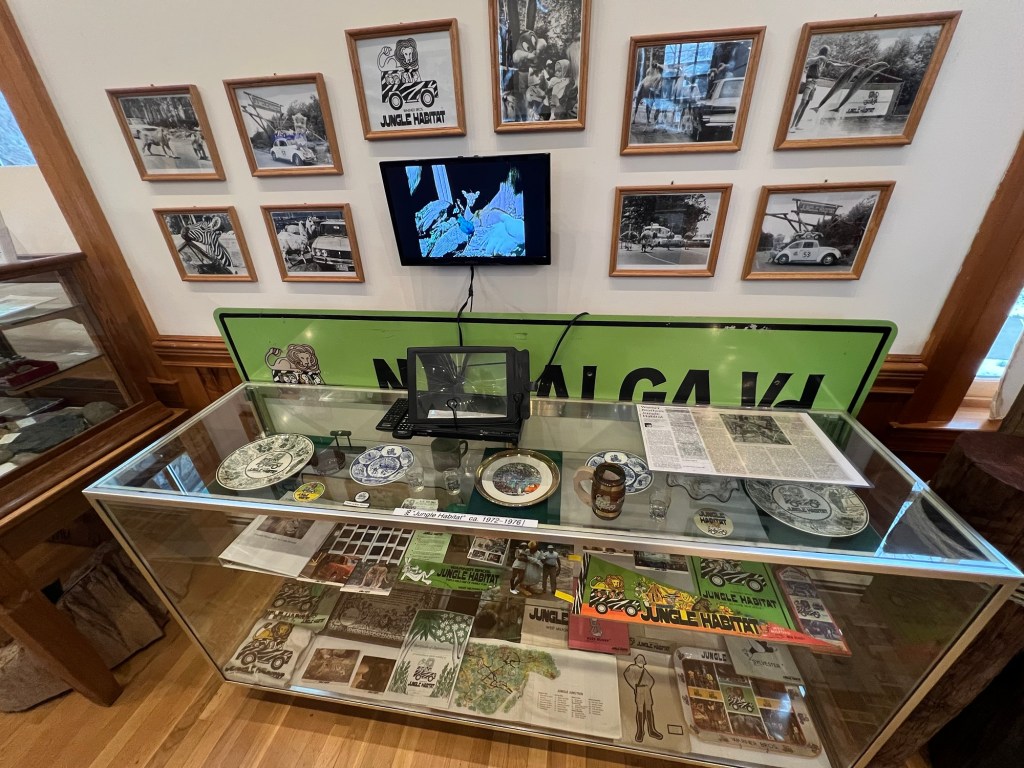
The Warner Brothers ‘Jungle Habitat’ Park of the early 1970’s that was located in the area. This drive through park was very popular in that time. The park was once filled with exotic animals. Warner Brothers moved the operation out of the area when they built Six Flags Great Adventure Park in Jackson, NJ.
The display of the old park with promotional videos
Some of the promotional items and mementos from the park
The Long Pond Ironworks display
The display on the growth of the railroad in the area
The Long Pond Ironworks display at the museum. This was a big business between the World Wars
The Long Pond Ironworks
The History of the Ironworks:
The ironworks got its name from ‘Long Pond’, the Native American translation for Greenwood Lake. The ironworks were an important business in the area serving both the Revolutionary and Civil War armies with much needed iron for equipment and munitions. Because of cheaper options in the Midwest and more abundant ore, the ironworks closed in 1882 (museum pamphlet).
The Native American exhibition
The extensive collection of Lenape artifacts in the collection
The museum has a large collection of arrowheads and other hunting and fishing artifacts
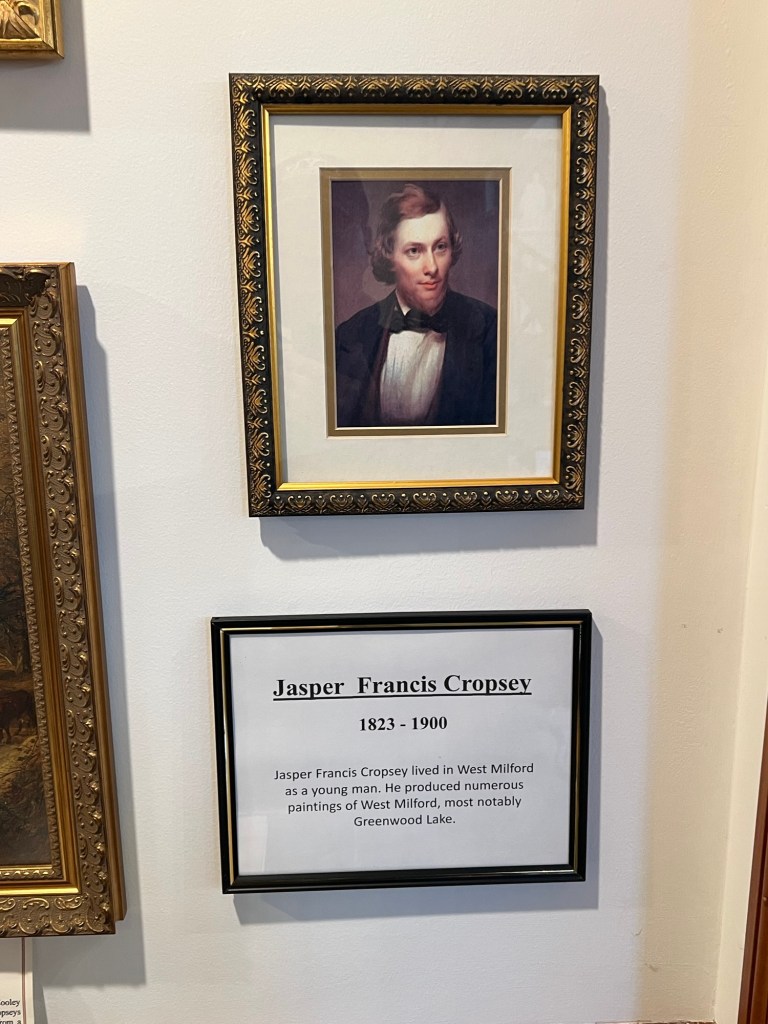
The museum has an extensive collection of reproductions of the Hudson River School painter Jasper Francis Cropsey
The reproduction works of the artist in the collection
Many of the books and notes from the artist and the locations where the works were made
They even had a resident bear as a artist
The museum has an extensive collection of textiles both clothing and quilts
This display quilt has many of the town’s historical sites that are of significance in the town
One of the sites was the Cross Castle that was knocked down years ago from neglect
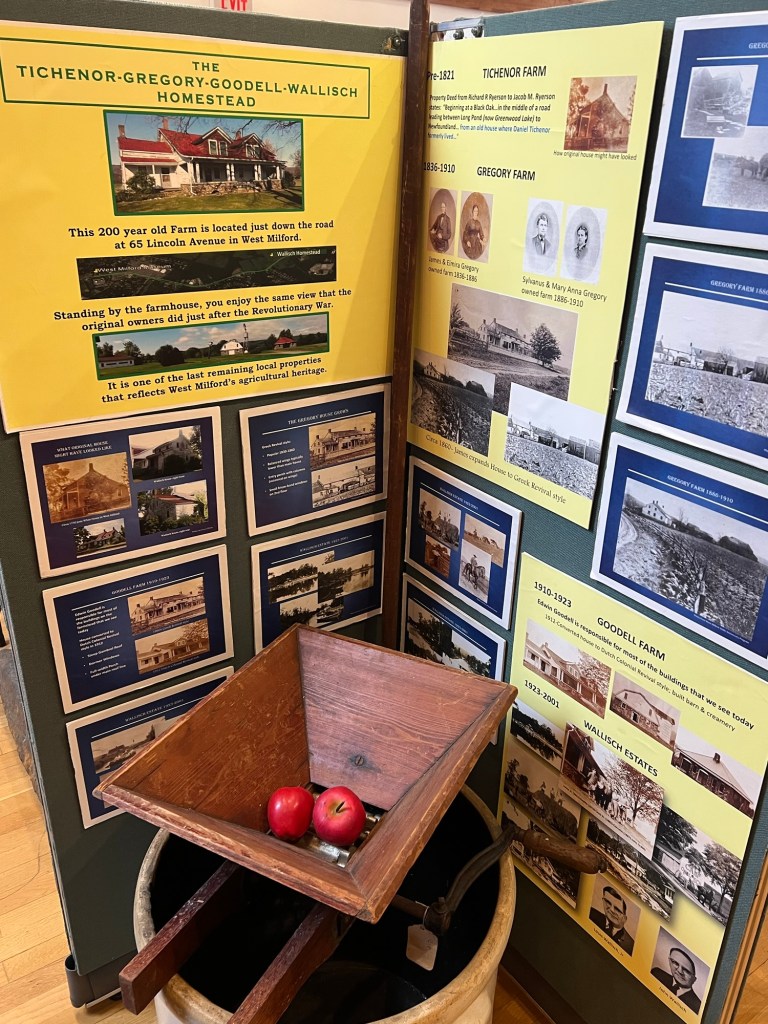
Pictures of one of the local homesteads that has passed through many families hands
The Ice Industry which was a big business on the lake and the Rocket Mail business which was a failure
The resort business and the Greenwood Lake hotels were a big business until the advancement of the automobile made other areas desirable.
Local businesses had an interesting display along with community organizations
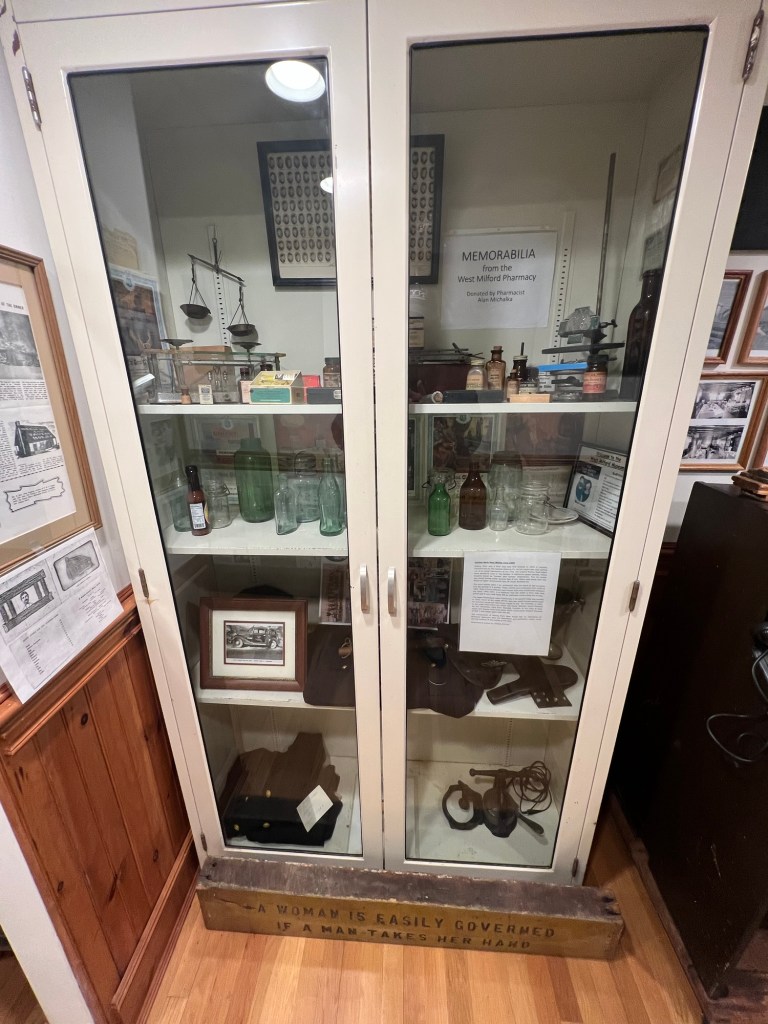
There was an interesting display on the West Milford Pharmacy
Some of the old medical equipment that you would have seen in the past
The museum is also dedicated to the West Milford school system. Their first display is a replication of an old schoolhouse, which has not changed too much in form. Desks still face the chalk board and the teacher still leads the class.
The old classroom
The old fashioned classroom has not changed much in the last 100 years
The museum gives children a glimpse of the past and a better understanding of how it relates to the future. There are all sorts of artifacts in which children can relate to and compare to today’s counterparts. It is a good place to use your imagination and think back to life in the past.
The new exhibition on the West Milford Marching Band will be opening soon
The back of the museum is filled with interesting artifacts
The gallery of Paintings and Native American artifacts
The Town Museum is Secaucus sits in the former Municipal Building shared with the Secaucus Fire Department and the Community Recreation Center.
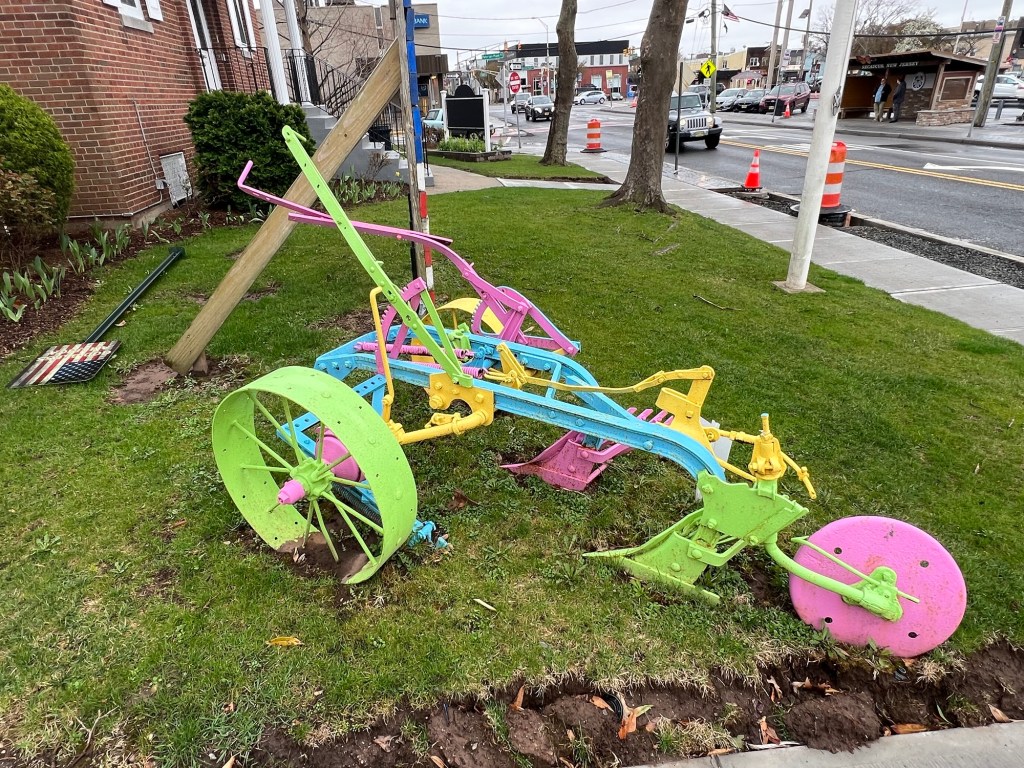
The colorful bicycle sculpture outside the museum
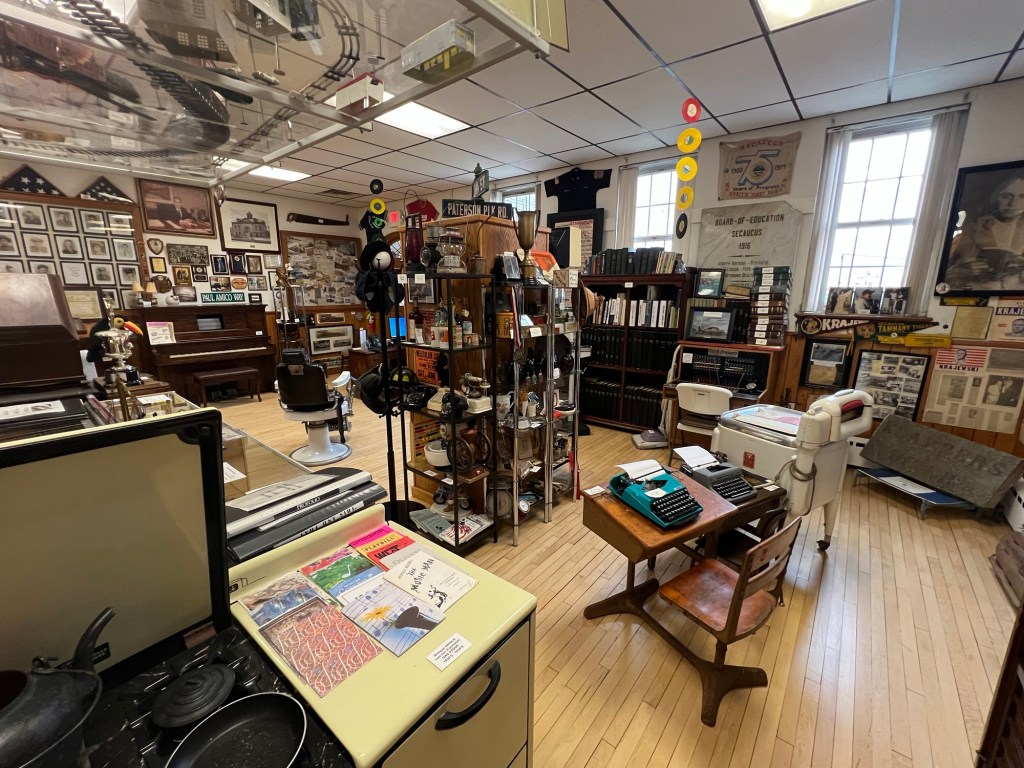
The inside of the museum has a large collection of artifacts and memorabilia from the Town of Secaucus and the surrounding community. Each section of the room has a different theme to it.
The main gallery of the one room museum
The Town Museum of Secaucus used to be the old library space and has now been converted into a town history museum displaying all aspects of life past and present in Secaucus, NJ. There is a wide array of displays in the museum.
The main gallery of the museum with old electronics and housewares
The museum has a very extensive collection of artifacts from the Secaucus Fire Department next door. There is a lot of old and current equipment on display and a very detailed account of the events on 9/11 in New York City.
The 9/11 display from the Secaucus Fire Department
Fire apparatus and bunker gear from the former Mayor of Secaucus
The full Secaucus’s Fire Department display
Being so close to New York City, the community was affected by the events of 9/11. There are many artifacts and pictures from that day displayed here.
Next to the fire department display was an exhibit of the military contributions in town.
The Military and Town history display
The museum has a lot of artifacts of electronic equipment of the past. From rotary phones to old typewriters, the museum showcases items from the 1950’s to the 1970’s.
The electronics of the past
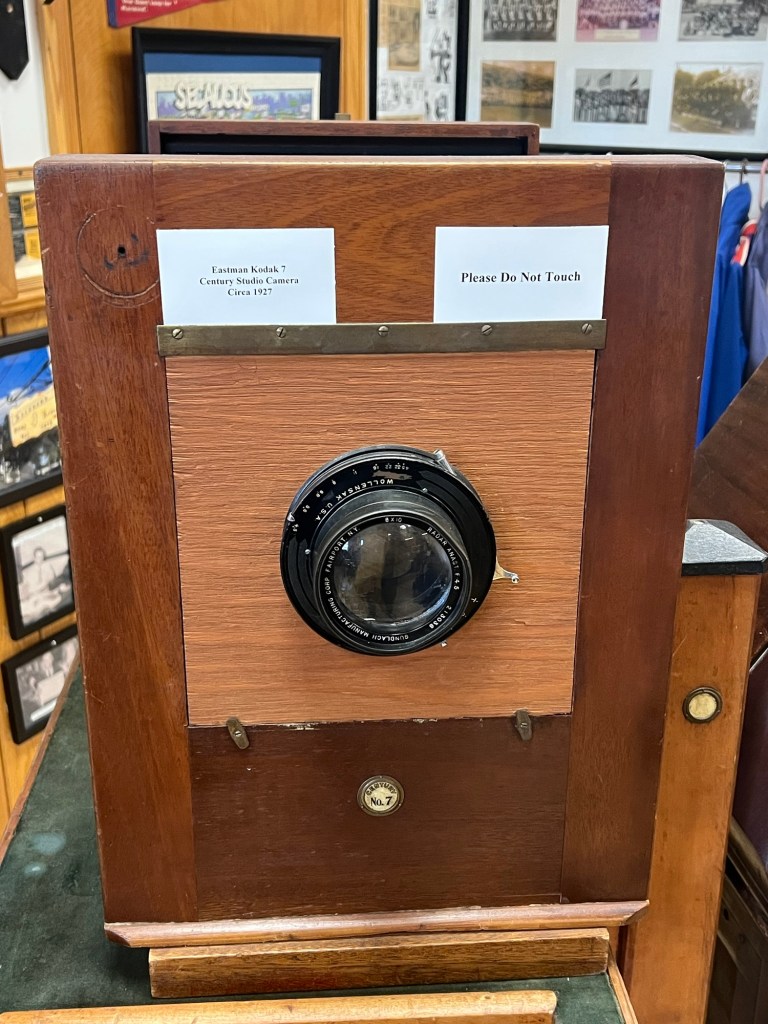
A collection of cameras from a local collector
A movie camera from early picture days
The back part of the museum
The museum’s covered the history of the town and events of different time periods. You could visit important dates in time.
The historical collection
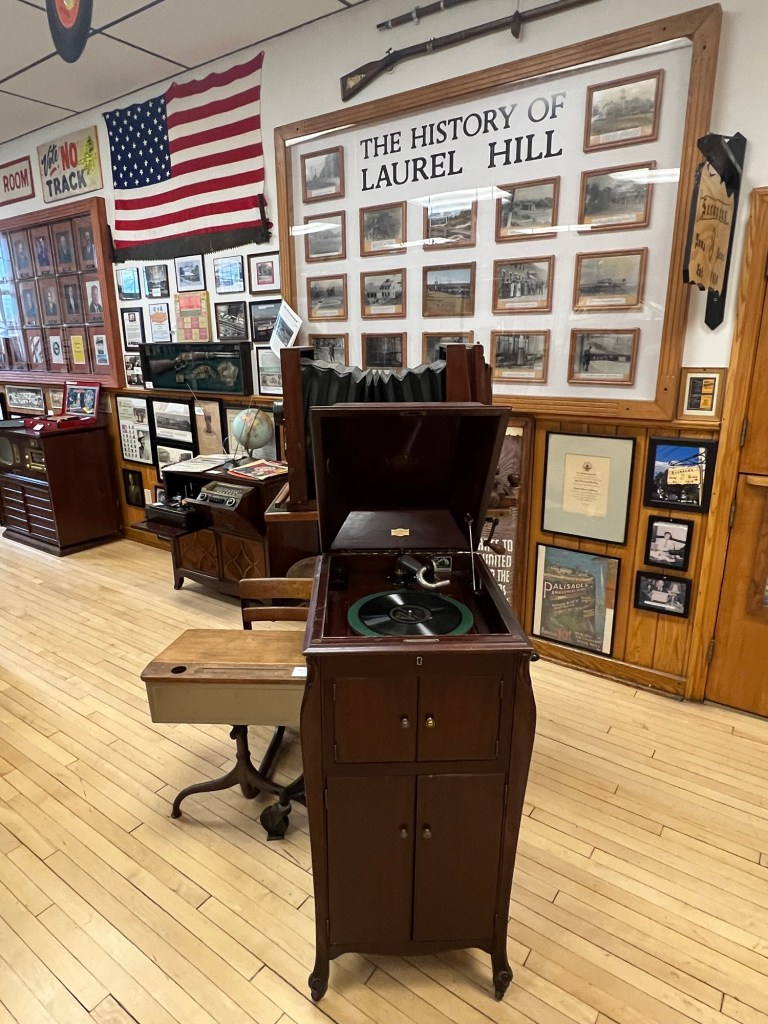
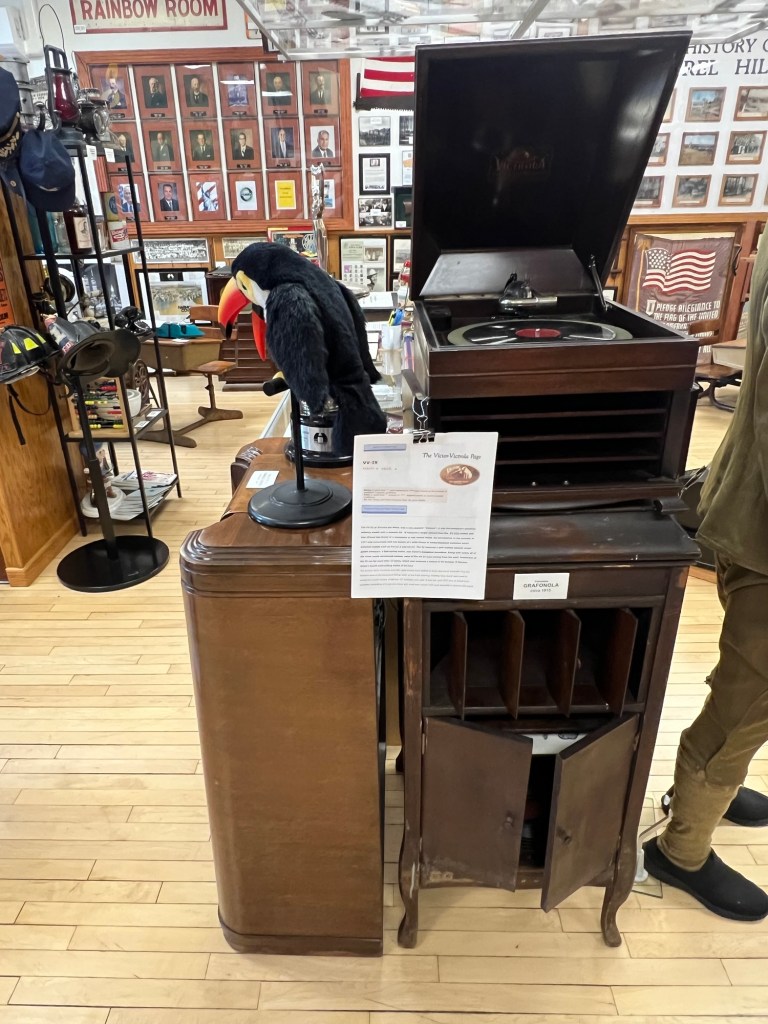
An old Victrola with records was playing
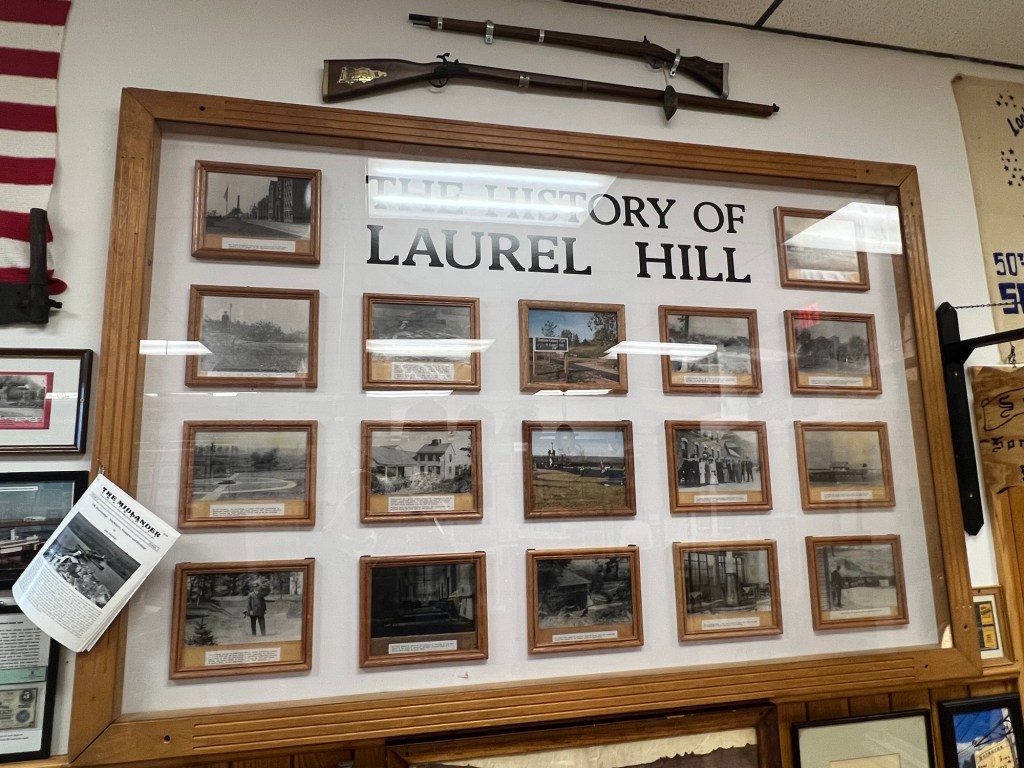
The history of Laurel Hill on display
Laurel Hill was a section of town the used to house several hospitals including an Insane Asylum. These hospitals used to treat all illnesses.
The museum has a collection of household appliances
The progression of the American household is shown in the museum as well. Home furnishings, decorative items and every day equipment like telephones and typewriters, once a big part of our lives have been reduced to relics of the past yet show how they educated us and grew our lives.
This includes an old washing machine
Other pieces of household decor
Local artifacts
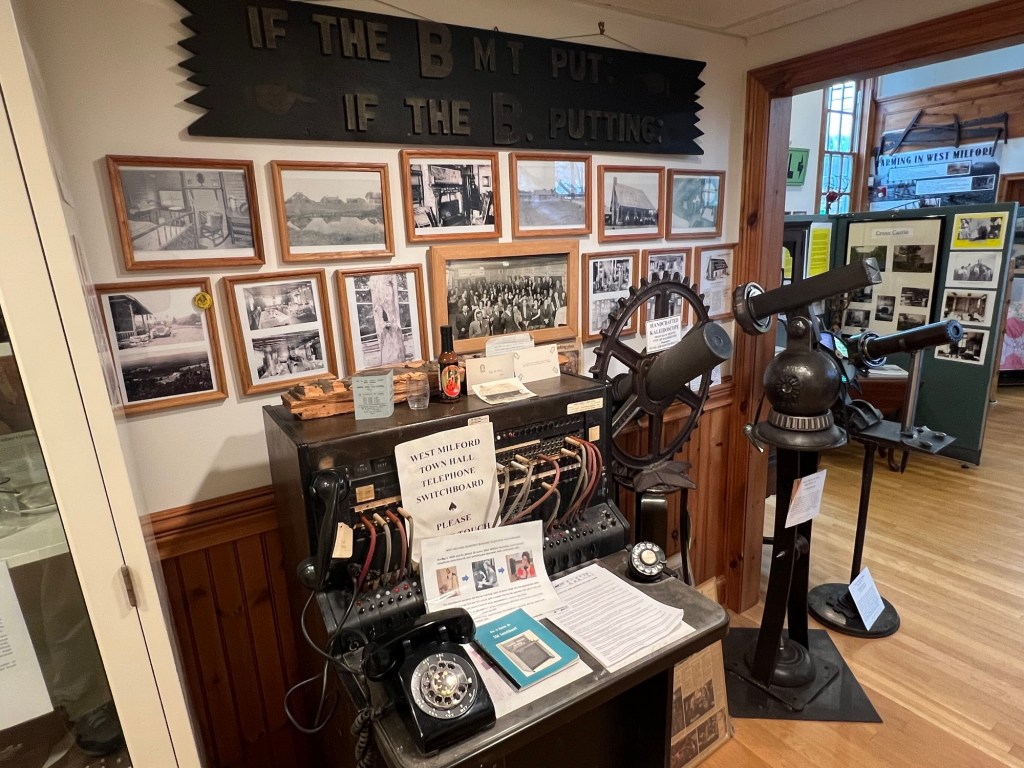
An old switch board from the local company
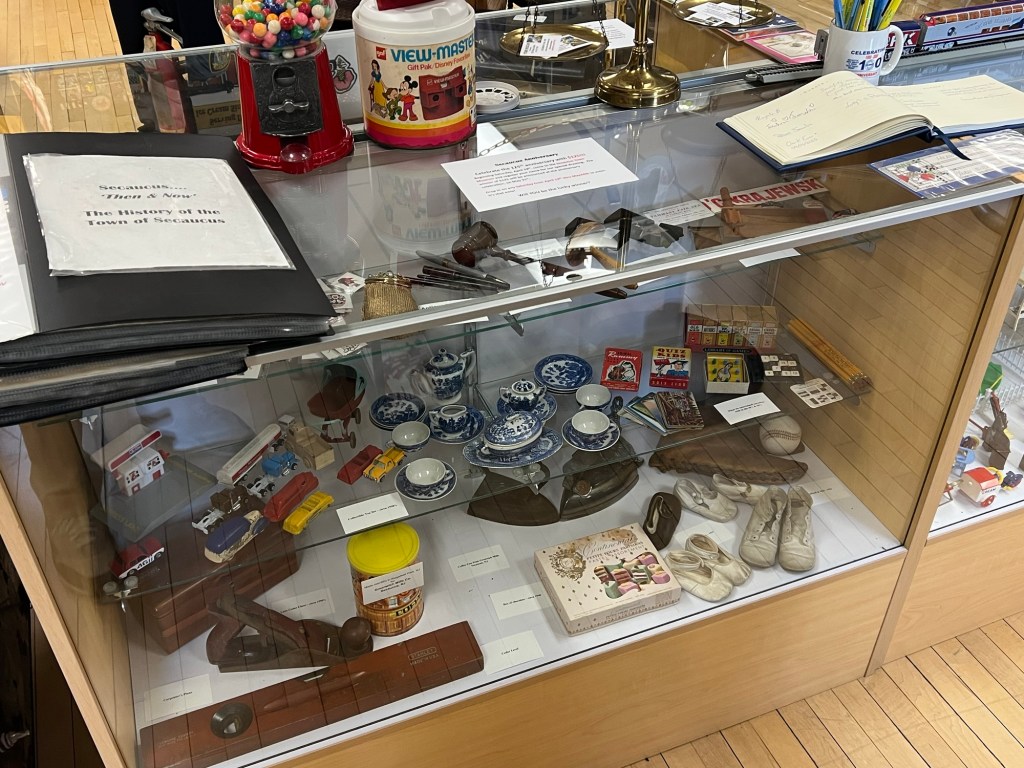
There was even a selection of children’s toys in the cases and a 1950’s Lionel train running overhead.
Children’s toys of the past
Children’s toys of the past
The Children’s playthings of the past show that not much has changed in child development. The use of these items to train children for their futures in commerce and homemaking have been part of our lives since before the Industrial Revolution.
The most interesting display and it is tucked in the corner of the museum is the exhibit of Presidential candidate Henry Krajewski.
Presidential Candidate Henry Krajewski
From tavern owner to Presidential candidate, we see the rise of a local politician. Though he campaign was not a success, there is a lot to be said of the spirit of this man’s political campaigns.
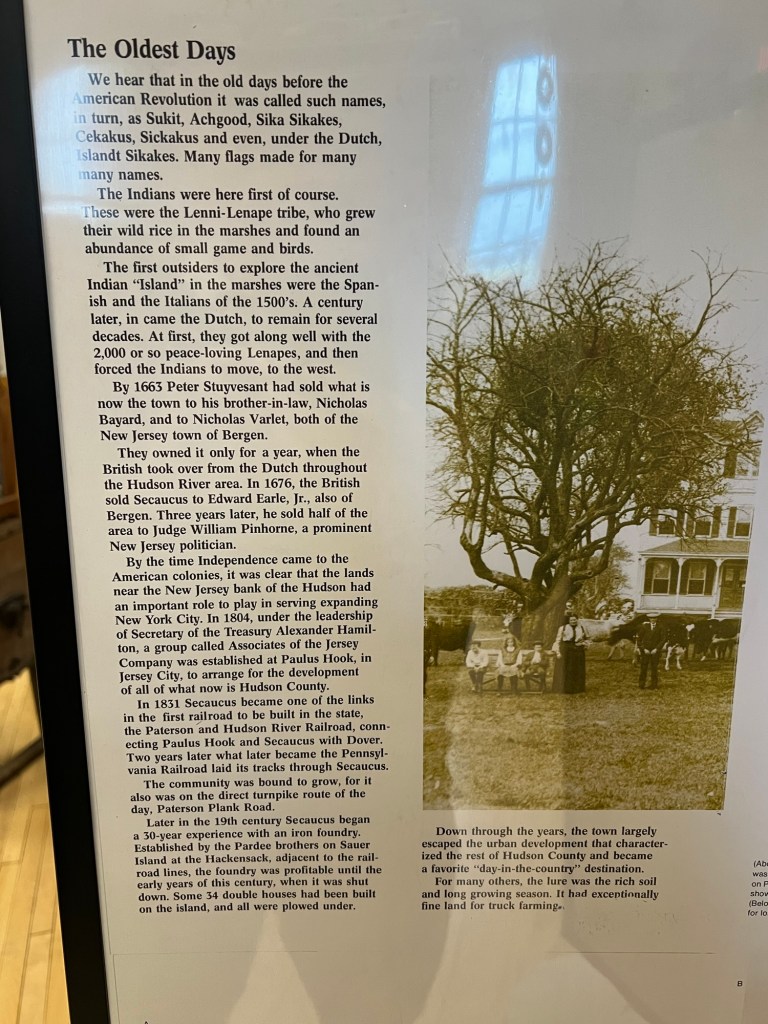
There is a lot to see and do at the Town of Secaucus Museum. There is everything from the history of the beginnings of the town from the Dutch to modern times to where the town will grow. There is a rich collection at the museum and a lot to see.
Some of the history of the town
The museum is situated in Downtown Secaucus where a lot of local shops and restaurants are located. As I walked around the downtown in search of a place for lunch, I weaved through the series of local businesses. There is a nice selection of places to eat.
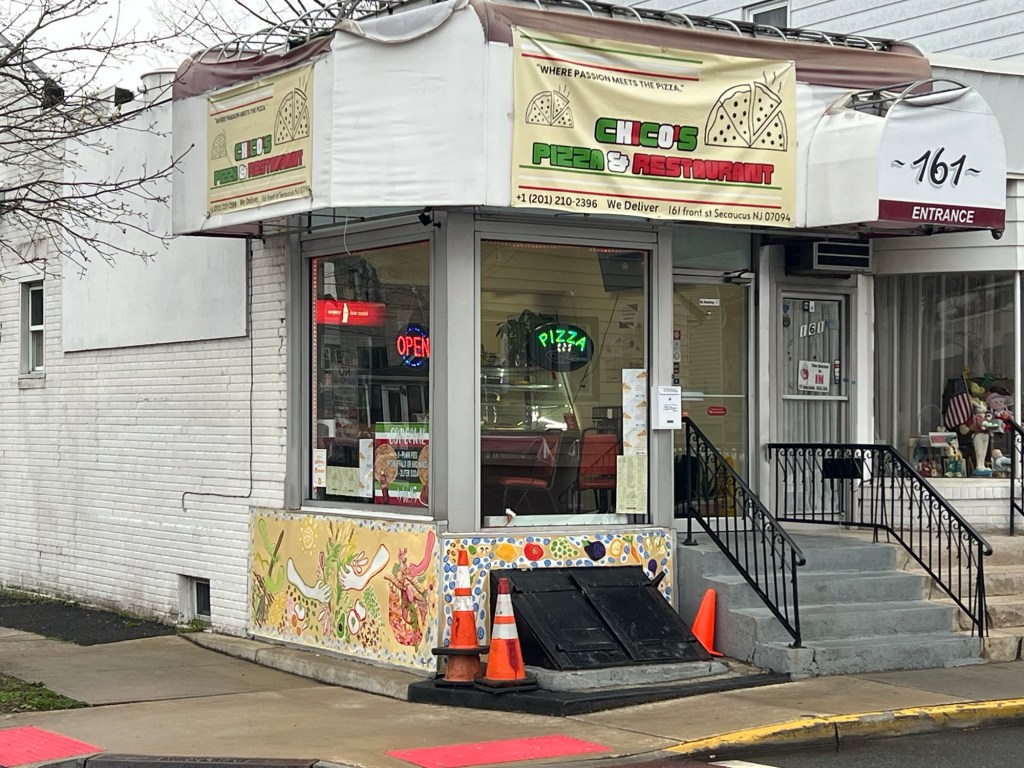
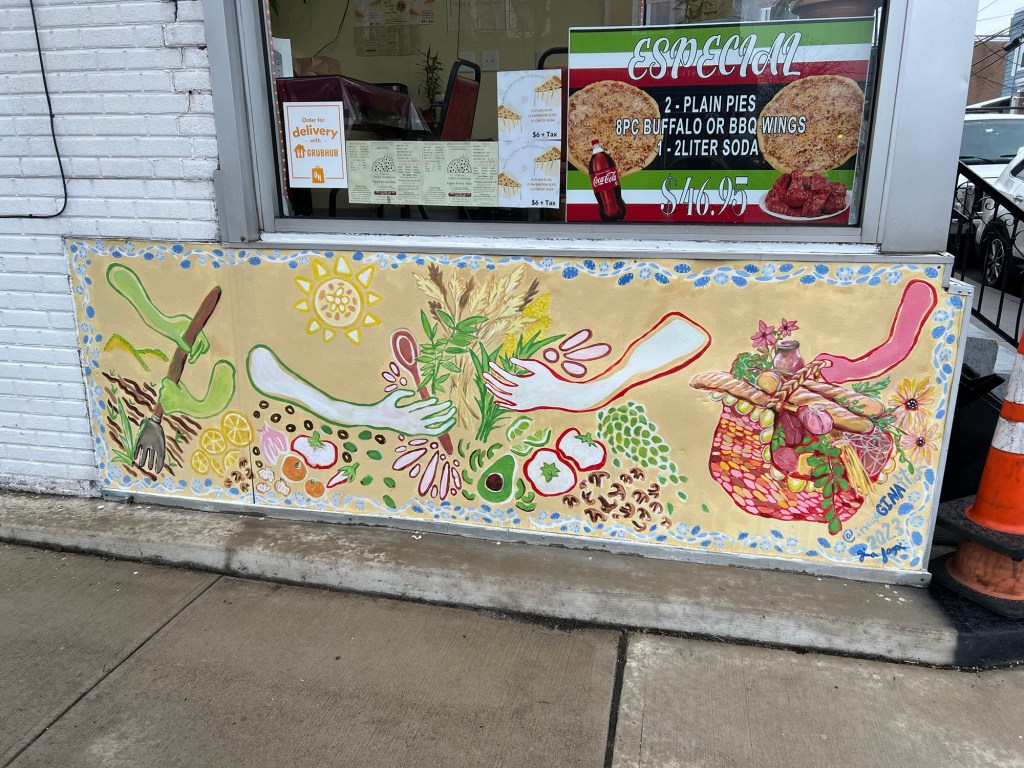
I ate at Chico’s Pizza and Restaurant at 161 Front Street and had the most delicious lunch at this Mexican/Italian restaurant.
The lunch was excellent. I started my meal with a slice of Cheese pizza which seemed to call to me. It was crisp, gooey and the sauce was packed with flavor.
The start to my lunch
After this excellent slice of pizza, I ordered a Sausage Calzone. The calzone filled two plates and was loaded with chopped sausage and three different types of cheese.
The Sausage and Cheese Calzone
The calzone was beyond delicious. When I cut it open, the cheese and sausage oozed out with a wonderful combination of flavors. The red sauce for dipping was so well spiced.
The small restaurant sits at the edge of the downtown and serves the most wonderful food at such reasonable prices.




























 Visiting a Museum: The Unique, Unusual, Obscure and Historical