Category: Smile! Your Visiting New Jersey!

Tuckerton Seaport Museum                                    120 West Main Street                                      Tuckerton, NJ 08087

Tuckerton Seaport Museum 120 West Main Street Tuckerton, NJ 08087

Tuckerton Seaport Museum

120 West Main Street

Tuckerton, NJ 08087

(609) 296-8868

Open: Sunday-Wednesday 10:00am-4:00pm/Thursday-Friday Closed/Saturday 10:00am-4:00 pm

Admission: Based on tours arranged during the season. Please check the website.

My TripAdvisor:

https://www.tripadvisor.com/ShowUserReviews-g46876-d271270-r1033440153-Tuckerton_Seaport-Tuckerton_New_Jersey.html?m=19905

The Tuckerton Museum and the Seaport at 120 West Main Street in Tuckerton, NJ

The entrance to the complex from Route 9

The entrance to the Tuckerton Seaport complex on a sunny Saturday morning

The complex was once a bustling fishing and shipping area that has now been preserved as a cultural site with tours, a series of restaurants and a museum.

The Mission of the Museum:

(from the Tuckerton Seaport Museum website)

Our mission at the Tuckerton Seaport is to preserve, present and interpret the rich maritime history, artistry, heritage and environment of the Jersey shore and the unique contributions of its baymen.

The dock area by the coffee shop

The artwork by the parking lot and coffee shop

I walked over to the main building which served as both the gift shop and museum. It was funny that the gift shop took both the first two front rooms of the museum. I had to look behind shirts to see the displays.

The docks and touring boats by the museum

The Seaport Tuckerton Museum at 120 West Main Street

The History of the Complex:

(from the Tuckerton Museum website)

Originally launched as the Barnegat Bay Decoy and Baymen’s Museum, the Tuckerton Seaport has evolved over the past twenty-two years into a community museum and community center occupying 40 acres located along historic Tuckerton Creek in Tuckerton, New Jersey. Tuckerton Seaport benefits from a prime location at the center of the Jersey shore, easily accessible via Exit 58 on the Garden State Parkway. Tuckerton Seaport works as a coastal cultural center to bring folklife traditions of the past and present to life through programs on land and water.

The museum was just opening up as I arrived and the staff was busy getting everything ready so I just walked around the museum. It is an interesting museum on New Jersey’s nautical past and the growth of the shipping and trading that went on in the turn of the last century. The museum also showed the bustling fishing industry that still exists today.

The Giant Chicken greets you at the door

The Giant Chicken was a road stop symbol of the White Way Farm Market and a tourist attraction

I thought it was rather cute and could see why people stopped

The view from the front porch of the museum was spectacular on this sunny day

The exhibit at the museum ‘Museum in the Making’, which is a through look at Tuckerton, its past and its contributions to the growth of New Jersey

The first room also served as a bustling gift shop with the main attraction this carving of the ‘Jersey Devil’

A display of Duck Decoys

A collection of woodcarvings of fisherman

The popular businesses that once lined Route 9 up and down the shore area

Displaying life down the shore in that era with quilting and sewing

The display of wood carvings and artwork on the first floor

The artworks made of driftwood by local artists

The driftwood art display on the first floor

The rooms both on the first and second floor were displayed by themes of Lenape Indian life at the shore, the Dutch and English traders, growth of shore farming, shipping and trade and fishing industries and the development of tourism in the area with steamships and the railroads.

The first room in the museum is a detailed look at the life of the Lenape and the froth of the fishing industry

The early life at the Jersey shore

The Native American display

The first part of the early development of Tuckerton started as the fishing and hunting grounds of the Native Americans until the settlement of the Dutch

The history of the Lenape

The arrival of the Europeans started the bustling shipping and trade industries that supplied the home country

With the growth of industry and farming many people started businesses to supply the population

Some started popular businesses that lasted over a century

E. Walter Parsons Jr. had a very successful fishing business that was in the family until 1984

With the rich soil in the area, local farmers worked the land providing fruits and vegetables for the growing population

Early farming equipment on display

The second floor galleries depicted the developing life at the shore with creating of modern life saving for the shipping and fishing industries and with coming of railroads, the bustling tourism industry with the change of leisure travel after the Civil War and the Industrial Revolution.

The second floor rail transportation display

The second floor display on shipwrecks off the Jersey coast

The development of modern Life Saving procedures

With storms at sea and affecting life in the area, as it still does today, there was a growth and development of modern Live-saving procedures and rescue methods.

The Life Saving exhibit

The use of the Lyle Gun in rescues

The series of pulleys and wenches are still used today in different forms. They had to create a safe way to rescue people not just from storms but accidents as well.

The Life Saving and Rescue display

Rescue display

The railroad made its way to the Jersey shore bringing tourists from both New York and Philadelphia and bustling North Jersey. This opened the area up to tourism as leisure travel grew at the end of the nineteenth century.

One example of a visiting tourist was the Cinderella Cramer display with long distance travel to the shore.

The first female passenger of the Tuckerton Railroad

Getting the rail ticket

Tourism developing at the Jersey shore

The Cinderella Cramer display representing that eras travels to the shore with Victorian standards and use of steamer trunks

Packing the steamer trunks for the long journey

Artifacts from the shore

Life at the shore still had its perils as it does today with storms affecting development and shifting shore lines

The lighthouse light display

The museum once served as a beacon for shipping and the top level served as a lookout. Today you can walk upstairs and enjoy the views.

Traveling up the tower stairs

On this beautiful sunny and clear morning that I visited, the views were spectacular.

The view of the port area of the complex

The view of the inlet and Lake Pohatcong across from Route 9

My video of the views from the top of the lookout

The Tuckerton Seaport Museum tour was a very thorough look at the community and its development over the last three hundred years. The exhibits showed the progress the community has made and where it is headed in the future as the shore communities keep changing.

With the economy, the rise of AI, climate change and overall population growth toward the shore, it will be interesting to see the changes of the future.

Leaving the museum complex at the end of the trip

Tuckerton has an interesting past as a shipping and fishing destination and now you can tour the buildings and see what life was like back then and there it is moving in to the future today.

Union Cemetery                                                                   316 Darlington Avenue                                             Ramsey, NJ 07446

Union Cemetery 316 Darlington Avenue Ramsey, NJ 07446

Union Cemetery

316 Darlington Avenue

Ramsey, NJ 07446

(291) 327-3879

https://www.findagrave.com/cemetery/1680177/union-cemetery

https://www.countyoffice.org/ramsey-union-cemetery-ramsey-nj-4cf/

Open: Sunday-Saturday Dusk to Dawn

My review on TripAdvisor:

The Union Cemetery of The First Presbyterian Church of Ramsey, NJ

History of the Cemetery:

(from the church website)

Union Cemetery is a religious cemetery located at 316 Darlington Ave. in Ramsey, NJ. The cemetery is owned and managed by the First Presbyterian Church in Ramsey. As a religious cemetery, the cemetery is restricted under New Jersey state law and is not open to the general public. Only members of a Christian church and their immediate relatives may be interred at the cemetery.

The historic cemetery from the road. To the left is the oldest part of the cemetery

Entering the cemetery from Darlington Avenue

The newer part of the cemetery is to the right of the driveway

I was visiting the Union Cemetery in search of veterans of the Revolutionary War and found an interesting cemetery with a deep history in Bergen County. Many first families of Bergen County are buried here and veterans not just from the Revolutionary War but the Civil War all the way up to today are buried in this active town cemetery.

The older part of the cemetery is to the left of the driveway. These tombstones are from the early 1800’s.

The older part of the cemetery dates back to before the Revolutionary War

Many of the early family plots are located here with well known names like Hopper, Christie, Ackerman and the town’s namesake, the Ramsey family, whose family plot is in the oldest section of the cemetery.

The grave of Hannah Jane Ramsey in the Ramsey family plot

Part of the Ramsey family plot

The Ramsey family plot

The Union Cemetery to find the graves of Revolutionary War veterans and found some but not all of them. The tombstones are so worn after over two hundred years that they either had disappeared or were so worn you could not read them.

The oldest section of the cemetery where many veterans both from the Revolutionary and Civil War are buried. It was hard to read many of the tombstones. Some the veterans were buried in their family plots, others with their spouses separately. The burials were concentrated in the oldest part of the cemetery. Most of the veterans have been honored with American flags.

The first tombstones I found were from Ackerman family members

https://www.njgsbc.org/files/familyfiles/g0/p10.htm

The grave of veteran John Ackerman

The grave of veteran James Ackerman

I could not make out the name of this Ackerman member but I figured it was one of the brothers wife

The grave of veteran John P. Post

The Post family history:

(from the Saddle River Historical Society website)

The Post family was of Dutch descent. The first Post was a soldier, who came here to protect the new settlements along the Hudson. They soon turned to milling; the name Post is attached to several mills in Bergen and Rockland Counties. Joseph Post, born in 1775, built a mill on the west branch of the Saddle River about 1800. He also opened a tavern and store on what is now West Saddle River Road, just north of Parker Place, across from the entrance to the mill.

The graves of members of the community at that time including the grave of John P. Post

The grave of veteran William Vanderbeck

The grave of a member of the Van Brock family, who was married to James Ramsey

I was not too sure who this was but by the veteran’s flower I am assuming the grave of veteran John Van Blarcom

The grave of Hannah (I believe Ackerman)

The Christie family plot

The Hopper family plot

The Hopper Family history:

(from the Saddle River Historical Society website)

The Hopper family is one of the oldest of European descent in Bergen County. Andries Hopper came from the Netherlands to New Amsterdam in the 1640’s. His widow and her son Hendrick were in the Polifly area (Hackensack) by the late 1600s. There was land to be had in the unsettled areas of what became Bergen County. Hendrick’s two oldest sons, Andries and Jan settled in the HoHoKus area (part of Paramus) around 1712. The Hopper name appears on many old homes and mills on early maps of the area. It was two of Andries’ children, Abram and Jan, who settled sometime around 1730 along the Saddle River in what is now Upper Saddle River.

The Sam Azeez Museum of Woodbine Heritage 610 Washington Avenue Woodbine, NJ 08270

The Sam Azeez Museum of Woodbine Heritage

610 Washington Avenue

Woodbine, NJ 08270

(629) 626-3831

https://woodbinemuseum.org/

https://visitnj.org/sam-azeez-museum-woodbine-heritage

https://www.facebook.com/p/The-Sam-Azeez-Museum-of-Woodbine-Heritage-of-Stockton-University-100085580916230/

Open: Sunday-Tuesday Closed/Wednesday-Saturday 10:00am-4:00pm/Saturday Closed

My review on TripAdvisor:

https://www.tripadvisor.com/Attraction_Review-g46938-d3915473-Reviews-The_Sam_Azeez_Museum_of_Woodbine_Heritage-Woodbine_Cape_May_County_New_Jersey.html

The front of the Sam Azeez Museum of Woodbine Heritage

The entrance sign that welcomes you

The History of the Sam Azzez Woodbine Museum:

(from the museum’s website):

The Sam Azeez Museum of Woodbine Heritage is an independent non-profit charitable organization preserving the unique history of Woodbine, NJ.

Established in the 1890’s through Baron de Hirsch’s philanthropy, Woodbine began as an agricultural colony for Russian Jewish immigrants seeking freedom denied in their homeland. As poor soil conditions limited farming, Woodbine evolved into Cape May County’s manufacturing center while maintaining founding values of education, religion and inclusion.

The museum occupies the historic Woodbine Brotherhood Synagogue, listed on the Natural Register of Historic Places. The restored sanctuary hosts special services, while the Brotherhood Hall houses exhibitions including the community-contributed Collective Memory Wall.

The historical significance of of the Town of Woodbine

The entrance to the museum

The museum is another interesting look at New Jersey history and the development of the immigrant story of assimilation into American society.

I was given a personal tour by the Assistant Curator and she explained the resettlement of Russian Jewish immigrants by a wealthy patron into this South Jersey community.

The main gallery of the museum

The panels tell the story of how these community came into being and how these people built a community through agricultural and eventually manufacturing and small businesses that supported the community around it. It established a town that was self sustaining and grew to the community center.

The panels show the growth of Woodbine as a community

The residents established their own sports teams, community organizations and civic groups like the councils and fire and police departments.

The records of the many town organizations of Woodbine

Display of one of the first families to settle in Woodbine

Display of the religious faith of the community

One of the most touching displays is of survivors of the concentration camps during the holocaust. These pictures represent these women as children and them today.

The display of the women who survived the camps

The history of the community and the growth of diverse businesses in Woodbine

Creating and building the Synagogue in the community

On the second floor of the building is the old synagogue of the community which is only used during the high holidays. This is used by descendants of the community and family members of theirs.

The inside of the synagogue on the second floor of the building

The front of the temple

The chandelier is original to the temple

The space was being prepared for the Jewish New Year and the crowd of people who would be attending.

The Memorial Wall

The traditions of the religion being practiced in the community

The self-government of the community

Still the younger generation was all American and wanted to assimilate into society with an all American past time of things like baseball.

The Woodbine youth baseball team

The uniform of the old baseball team for youths in the town

The last display is of the famous alumni who once lived in the community. These are the men and women who once lived here and went on after all odds to do great things and make our country better.

The Hall of Fame

The museum I thought had a bit of an identity crisis as I really did not know what the museum was about.

I was pleasantly surprised to find an interesting part of New Jersey history I had never known. It just goes to show you how a museum can educate you with just one visit. The Assistant curator said there will be more to come in the future.

The Friendship School Museum                                       859 South Shore Road (Route 9)                         Palermo, NJ 08223

The Friendship School Museum 859 South Shore Road (Route 9) Palermo, NJ 08223

The Friendship School

859 South Shore Road (Route 9)

Palermo, NJ 08223

(609) 628-3303

http://uppertwphistory.org/Friendship-School.htm

https://hpsout.tripod.com/

https://capemaycountynj.gov/DocumentCenter/View/5497/CMC-Heritage-Brochure

Open: Please call for a appointment and special tour

My review on TripAdvisor:

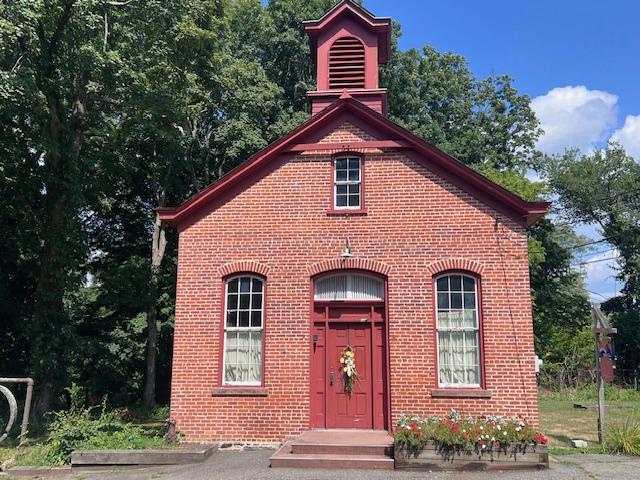
The front of the schoolhouse

The entrance to the property

The historic marker

The outside sign

The Friendship School was an interesting look at early rural education where students of various ages would be educated together.

The hours would vary with the growing seasons and students would be educated in the basics to educate them to the next level.

During the school day, children would have various chores to do such as gather wood, collect water, mind the fire and watch the day’s lunch. It would be a full day for both the teacher and the students.

My tour guide confirmed that nothing was easy during the school day and children had a lot of responsibility for what went on in their lives.

The tour was an interesting look at the lives of children of that period of time and the education they received.

The history of the Friendship School:

(from the Museum’s website)

This historic property contains the circa 1930 Friendship School, a circa 1900 privy, and a circa 1917 coal storage shed.  The Friendship School was originally donated in 1976 by William Wells, grandson of Enoch Clouting to the Upper Township Bicentennial Committee during a time when Upper Township was particularly interested in its earliest buildings.

The historic plaques

The school’s hand pump

The committee, headed by the late Curtis T. Cordon, evolved to become the nucleus of the Historical Preservation Society of Upper Township (HPSUT) in 1977. Virginia M. Wilson was its’ first President.

 The history of the Friendship School begins when it was incorporated in May of 1831 with Jonathon Corson, Lewis Corson, and Seth Young as trustees. The students’ tuition was paid for by parents in 1830, but by 1869, public funding for schools was established. In the 1862-63 school year, 52 students crowded into this 15’x 20’ structure, and of those students in the teacher’s roll book, 24 were Corsons!

The grounds of the school grounds

The school itself is standing on its fourth known location! It was originally located 6 houses southeast of its present location. It was used for classes until it was replaced with a larger building in the 1860’s.

The abandoned school house later owned by resident, Lot Corson, became known as “Lot’s Temple” because church services were held there. Then, it was moved to Enoch Clouting’s farm where a corn crib was placed on one side. It is Enoch’s grandson who kindly donated the school.

 The barn on the grounds

The school building was in extreme disrepair when it was moved from the Clouting property to the corner of Ocean Ave. and Shore Road.  According to an undated news article, “mere fragments of the (original) building remained” although “some of the heavier corner posts were salvaged.”

The school’s outhouse (pricey)

The historic sign

Nevertheless, restoration of this Friendship School was researched and planned by Kyle Fleetwood of Tuckahoe and James Wilson of Marmora; with assistance from Matt Unsworth, Robert Entirkin, Curtis Corson III, Somers Corson, Marshall “Ted” Behr, Guy Himmelberger, Harry “Hap” Folger and other members of the Bicentennial Committee. It was completed in 1980.

 All replacement wood matched the original in size and material and great care was taken to restore it to its original appearance. Locally sourced materials for the restoration/reconstruction came from the Van Vorst sawmill in Petersburg, the Hess sawmill in South Seaville and the Brewer sawmill in Dennisville. Benches donated by Myra Clouting Biggs, were reproduced by Matt Unsworth.

The inside of the school house

The teacher’s desk is a reproduction also made by Matt Unsworth. Hardware for the building was hand-wrought by Robert Entrikin of Petersburg. Although it does not qualify for the State and National Registers listing because it retains little original historic building fabric, the building is important to the historical time line of Upper Township.

 The schoolbooks and school equipment

Also on this site are two old frame buildings: a circa 1900 privy donated from the property of the Seaville School on Kruk Drive and a circa 1917 coal/storage shed donated from the Palermo School on Route 9.  The coal storage shed, was donated by Wes and Doris Nickerson with Jim and Nancy Siegrist helping with its restoration. It was added to the property in 1993. Three three-seat privy (outhouse) from the old unused Seaville School was donated by Sharon Kruk in honor of her father, and was restored by Lewis Albrecht and Jim Siegrist. It is a work of art (with a French style roof), but is non-functional.

 The school room reproduction

A special item, the cedar flag pole, from which flew a U.S. flag that flew above the capitol in Washington, DC, was donated by former Deauville Inn owners, Walter and Gloria Carpenter in December of 1983. (Since replaced)

 The school bell and flag

The Friendship School was dedicated on September 10, 1983 by Virginia M. Wilson, President of the Historical Preservation Society of Upper Township, Upper Township Mayor Leonard Migliaccio, HPSUT members: Ebbie Unsworth and her son, Matt Unsworth, and guest speaker, New Jersey State Senator, James R. Hurley.

 The children would collect water and fire wood for the class room during the school day

The reproduction of the school

Upper Township continues to own and manage the property and the school, while HPSUT members manage the inside and its activities. Each Upper Township Kindergarten class is invited to the annual Kindergarten Day to learn what a student classroom life is like in a one room school house in the early

The outside of the school