The Ridgewood Schoolhouse Museum at 650 Glen Avenue
I have visited this interesting small history museum a few times and they do a wonderful job in presenting their displays with interesting facts catering not just to a local crowd, but anyone interested in history and events.
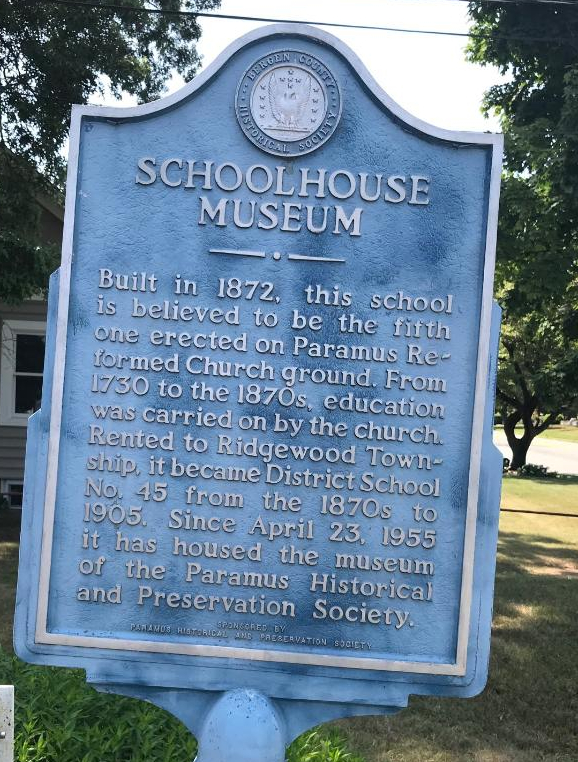
The historic marker outside the museum
The one-room schoolhouse, built in 1872, operated as a public school until 1905. It was part of the district school system formed in 1864 or 1865, which was geographically defined rather than by township. It was operated as School District No. 45. When the towns incorporated in 1894, that district system was dissolved, and the school became part of the Ridgewood school district.
The Ridgewood Schoolhouse Museum’s permanent collection
Tradition has it that the original land grant to the Dutch Reformed congregation from Pierre Fauconier and his daughter, Magdalena Valleau, stated that room should always be given upon the church land for a school. We know that a small school building opened in 1785. A second stone school was built in 1820 and eventually replaced by a frame structure in 1845.
Eventually the present schoolhouse was built in 1872 at a cost of $4600.00. It is likely that other schools existed on the church property from the time the church was built in 1735 to 1785, for the consistory assumed responsibility for education and the exact time when that responsibility was handed over to the public is not known.
The large bell summoned children from miles away to school each morning. The original belfry is gone but the bell stands in the entryway. It was used in other schools and a church after the school closed in 1905 but was returned to the historical society in 1977.
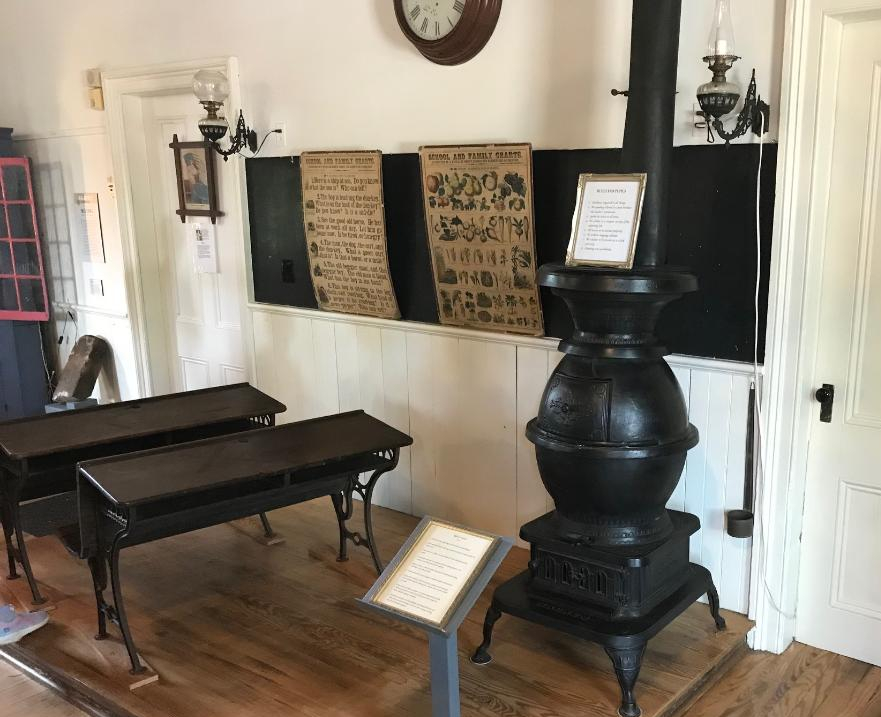
The original entry was divided into separate entrances and cloakrooms for boys and girls. The potbelly stove is original as are the windows and the two central lamps. The black boards around the room have been removed except for one behind the teacher’s platform.
There is a recreation of the old schoolhouse when you walk into the museum
When the Historical Society started the museum, the privy building was attached to the main building to provide more display area. In their special display area, they have an exhibition space for farming and a local comedian.
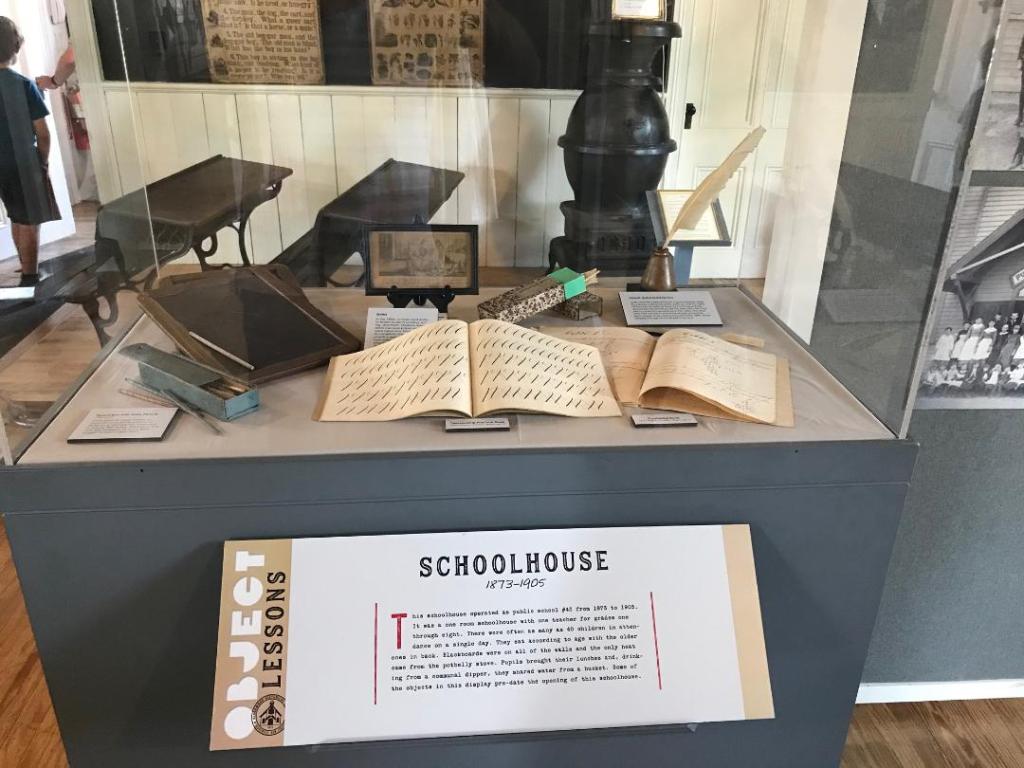
The schoolhouse display
In April 2018, they have a very interesting exhibition call “The Thread of Life” which tells the story of family’s progression in home life from the end of the Civil War until the beginning of the Depression and times changed between the Civil War and WWI. Between the Victorian Era, the sinking if the Titanic and the devastation of WWI, the baby boom of the teens and the ‘Roaring Twenties’ with the stock market built changed the attitudes.
The way of life for an entire generation until the Great Depression put a halt on it. You can see the changes of behavior in the displays of clothes and household decor. It is an interesting display.
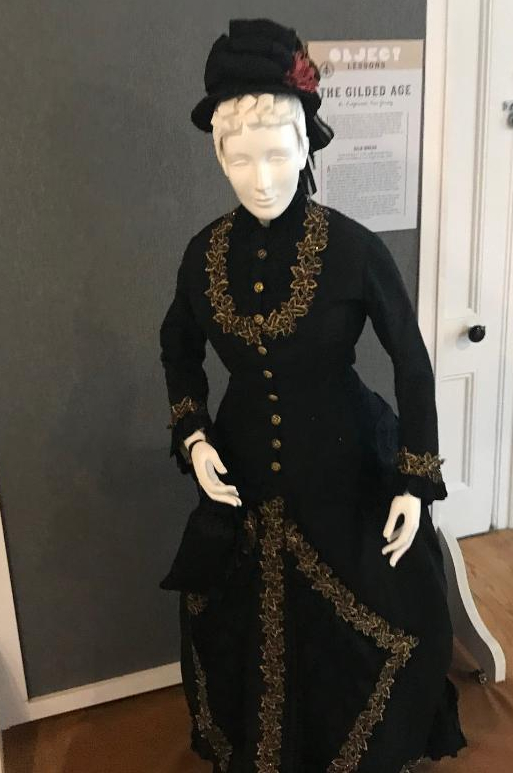
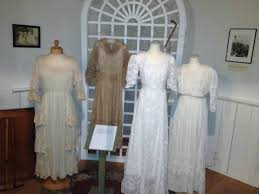
A Morning Outfit during the Victorian Age
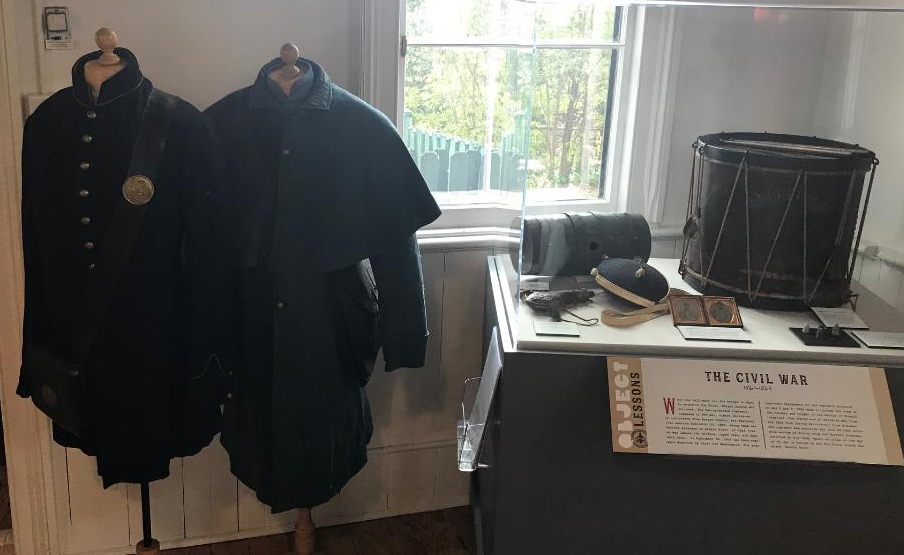
Union Army outfits and display for the “Civil War” artifacts
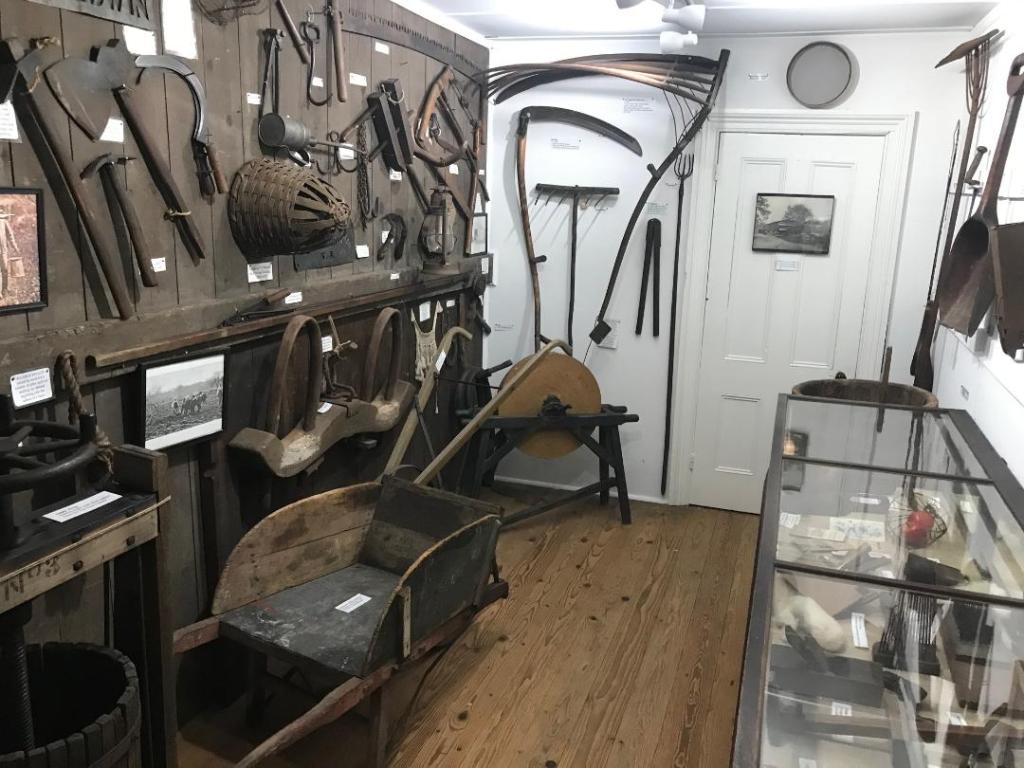
They also have an ongoing exhibition of farm equipment and a continuation of their “Farming in Bergen County” exhibition that just closed before this show. This is how farmers of Bergen County produced their crops.
Dutch items in the collection
The Blauvelt, Zabriskie and Haring families are known farming family names in Bergen County and were important in business and politics during the after the Revolutionary War.
The “Farming and Agricultural” display
Also, see their ‘Halloween Cemetery Walk” in my blog, “MywalkinManhattan.com” entry “This is Halloween” Day Ninety-Six, October 31, 2017. Don’t miss it this year!
Day Ninety-Six: This is Halloween-MywalkinManhattan.com:
The Cemetery Walks in October are extremely popular
Don’t miss the “Here comes the Brides” exhibition that just opened up in May of 2019. It shows the history of formal wear for weddings along with accessories, menswear, invitations and even cakes toppers.
‘Here comes the Bride’ Exhibition 2019
In July of 2020, as Phase Three of the Opening in the State of New Jersey, the Museum is now open from 2:00pm-4:00pm for viewing with a new exhibition “A” is for Artistry: Celebrating Centuries of Art, Artists & Creativity”. The exhibit is a combination of local donated art and heirlooms from Ridgewood and the surrounding towns.
The Exhibition “A is for Artistry”
There are interesting displays of early photography and portrait painting as a way of preserving a persons’ image for the future. The use of oil painting, tin and then photo ‘sittings’ came in vogue as the technology changed.
Portraits were the form of imagetry before photography was invented
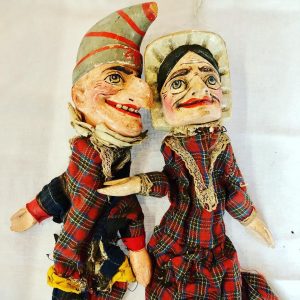
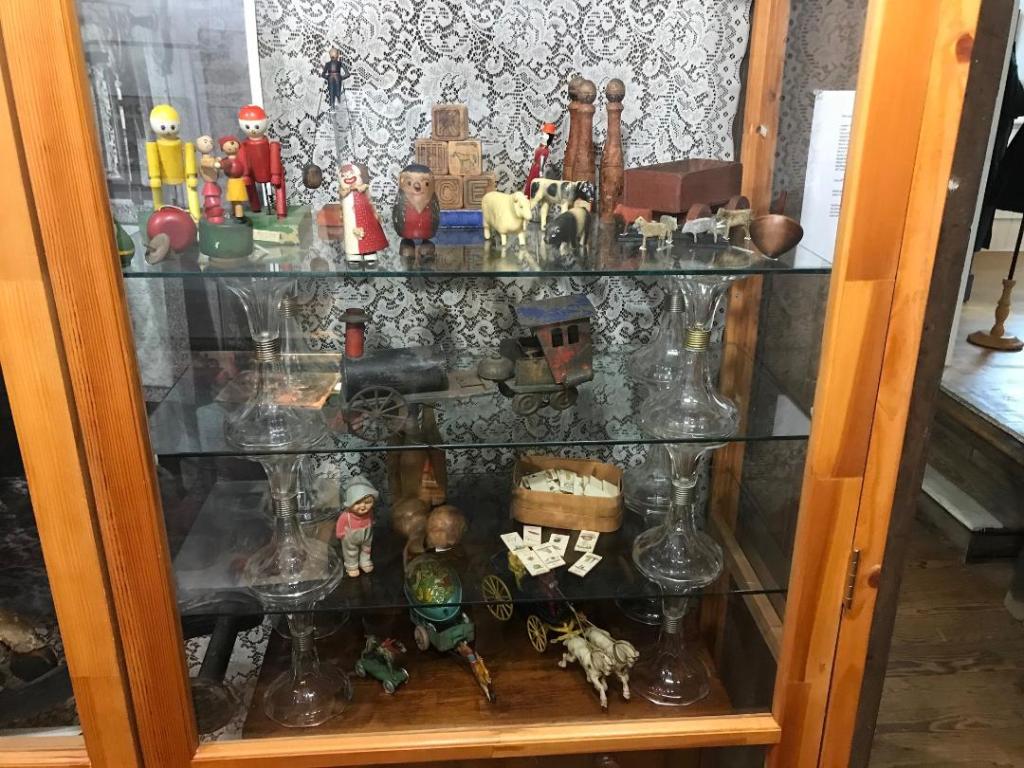
There was an interesting display of Children’s toys from the handmade farm toys of clay and corn husks to the fancier toys of bisque and cloth when imports and specialty toy stores were created for children’s playthings. They even had a collection of the famous “Punch & Judy Dolls”.
The Punch & Judy Dolls at the “A is for Artistry” exhibition
Children’s playthings over the last two hundred years
Another standout of the exhibition was the display from General Westervelt, a local citizen of Bergen County whose shipping expertise helped the North during the Civil War. His use of navigation and sailing was a detriment to the South and there was a $1000.00 bounty on his head. He died during the Civil War.
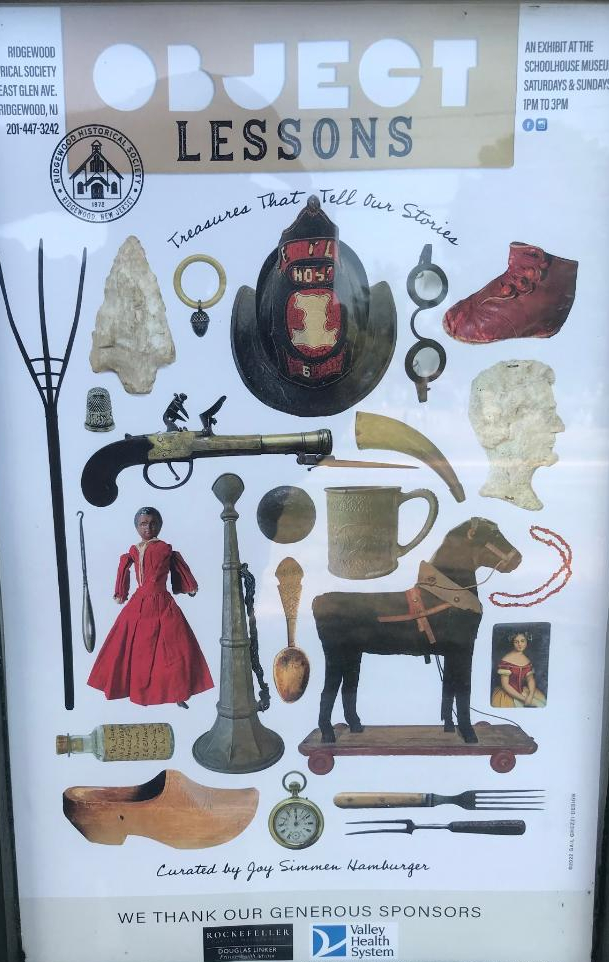
The “Object Lessons-Treasures that tell our Stories” exhibition
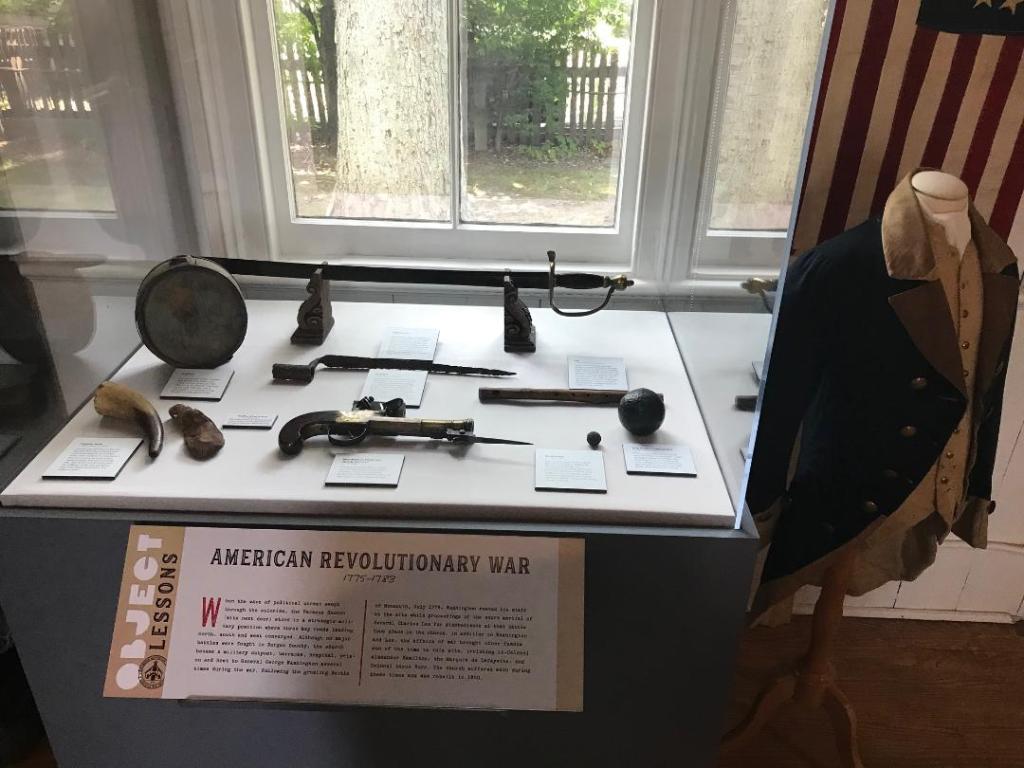
In 2022, when the Museum reopened after a long closure with COVID, they opened with two exhibitions: One was “Object Lessons-Treasures that tell our stories”, in which household objects, farming equipment and all sorts of artifacts from the pre-Revolution, Revolutionary War and Civil War periods were shown. It showed the progression that life took for families between the Revolutionary War and the beginnings of the Victorian Age.
“American Revolutionary War” display
They had local Dutch family heirlooms such as chests, cabinets, china, clothing and even documents. The average Dutch family kept their family linens, china, silver and bedding in a locked chest as these were valuable family luxuries that needed protection and proper care.
Dutch Chest with family items that were locked up.
There was a “Lincoln display” at the museum. They had a copy of the poster from the night that President Lincoln was assassinated at Ford Theater during the performance of “My American Cousin”. There was a family shot of the Lincoln family and items from the period.
The “Lincoln Display” that showed an original poster from “Our American Cousin” the night Abraham Lincoln was assassinated.
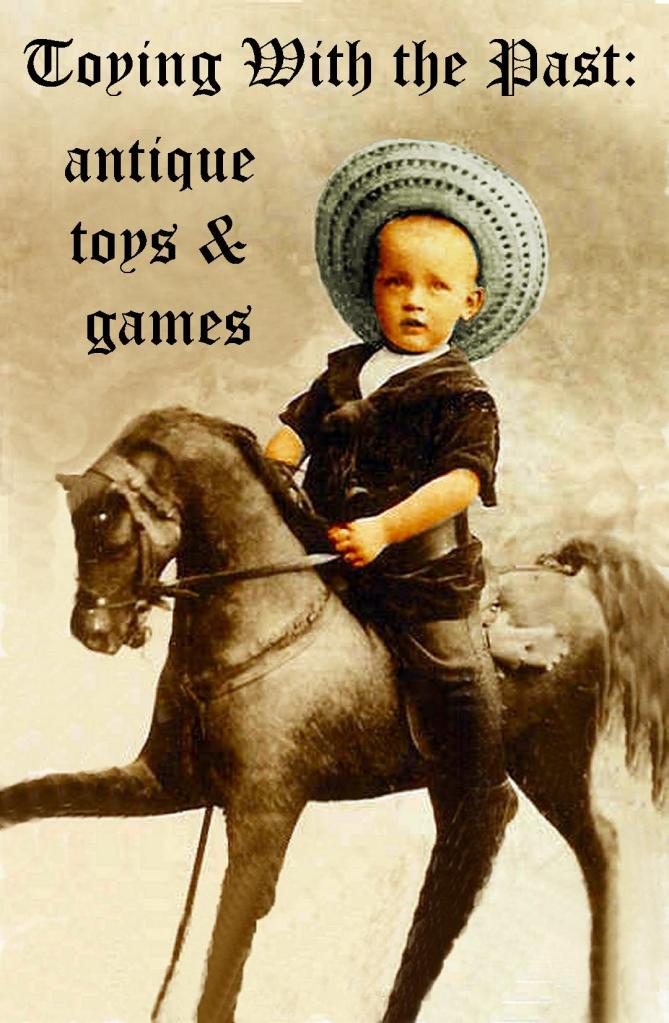
The other exhibition was “Toying with the Past: Antique Toys & Games”:
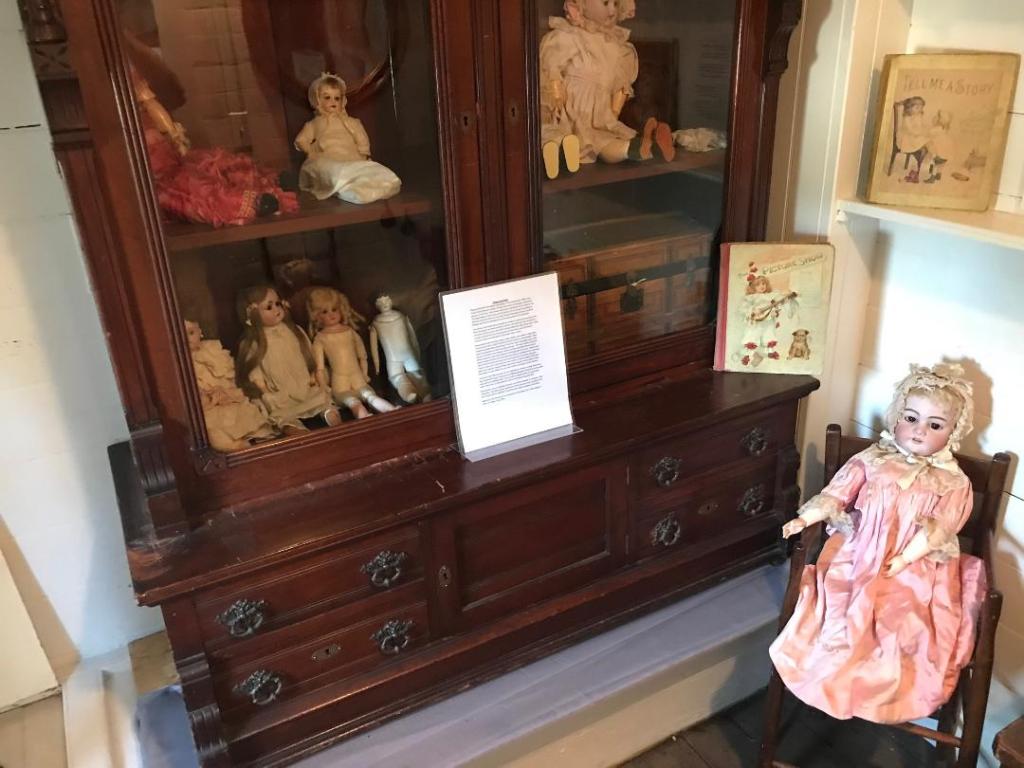
Toying with the Past was an interesting exhibition in that it showed how much toys have developed and changed over the years and how much they have stayed the same. There was a beautiful collection of china and bisque dolls, some that were made as playthings and others used as marketing tools to show women the latest fashions coming out of Europe. The dolls would be dressed in the dressmakers’ newest designs.
The Doll Collection is beautifully displayed
There were older versions of modern board games, everyday items like marbles and Jaxs. There were kitchen-based items that a little girl might be given to improve her domestic skills and there was even an early version of an “Easy Bake Oven”, with an electric oven that could be plugged in and boil water.
The items a young girl would receive to prepare her for homelife
Fancy rocking horses and dolls
Vehicles and Board Games that sparked children’s imagination
More dolls and vehicles over the last 100 years
There was also all sort of toys on wheels and rocking horses that could entertain a grumpy child for hours. They even had a selection of play clothes and school items to show what classroom work was like at the turn of the last century.
Childhood was changing for young people after the Civil War and during the Victorian Age
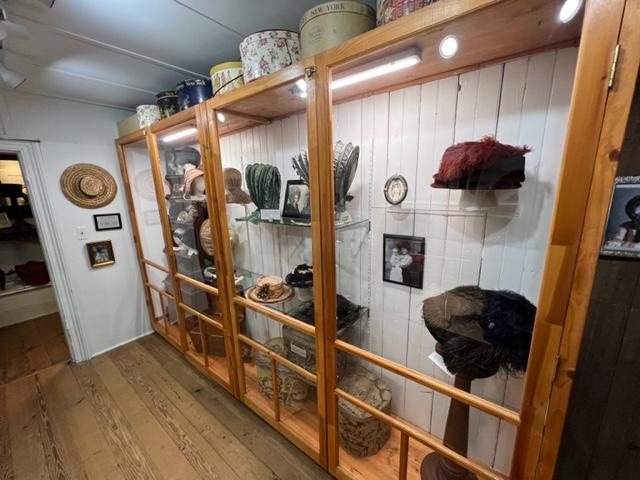
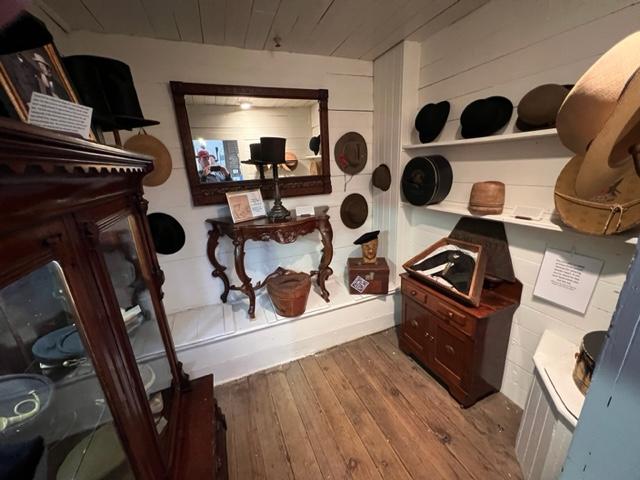
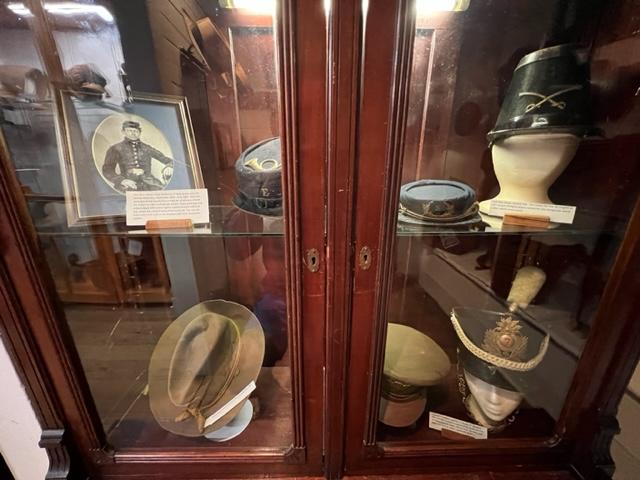
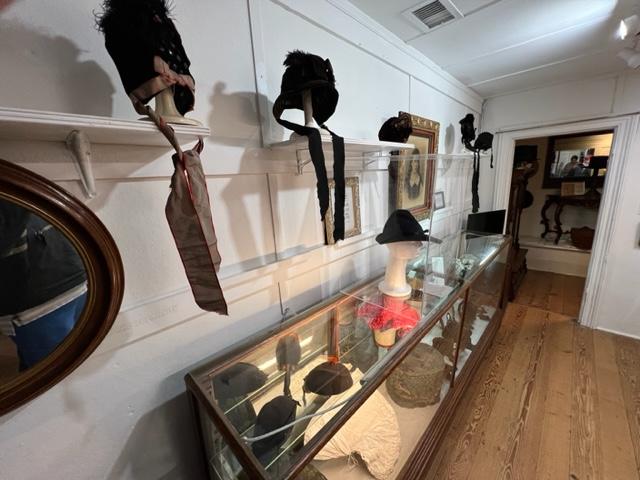
The Latest Exhibition that was on display in April 2023 was the “History of Hats” that replaced the Toy exhibiton:
Hats from all ages
Men’s hats through the ages
Military Hats
General’s Hat
Ladies bonnets
‘Fashion of the 1880’s’
Special Events and Lectures at the Museum:
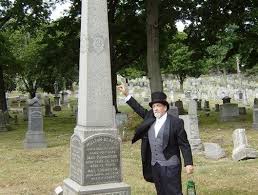
Don’t miss their ‘Cemetery Walks’ during the day. I took one recently at the old Dutch Reformed Church and we discussed the history of the church, the location of the old church versus the building of the new one, which is why the cemetery looks the way it does and the locations of the tombstones as well as how time and advancement in carving went from sandstone, which fades and chips over time when to the production of granite and marble for future tombstones.
The Cemetery Walks in Valleau Cemetery across from the museum
The cemetery is filled with names famous and prominent in Bergen County and North Jersey history which includes participation in the wars and the building of Bergen County including the Westervelt’s, Van Riper’s, Haring’s, Zabriskie’s, Terhune’s, Demerest’s, Blauvelt’s and Tice’s families. It is a fascinating place to learn Bergen County history and its development.
The Cemetery Tours that take place the week before Halloween are interesting as well. The paths of the Valleau Cemetery in Ridgewood are lined with candles and you follow the path with the town historian who takes you on a creepy tour of the famous dead residents of Ridgewood. These include prominent athletes, business people and local laborers. You pretty much tour about a third of the cemetery as you move from one tombstone to another met by costumed actors, who they themselves have to sit in the cemetery in the dark waiting for you. That is a horror movie into itself.
The Valleau Cemetery Walk and Lecture
The best part of the tour is you are greeted at the museum with a tour of the museum and a table laden with fresh apple cider and cider doughnuts that make the perfect refreshment on a cool fall evening. Make sure to take the 7:00pm tour when it is dark out and make the reservation well in advance as these tours fill up fast.
Taking the Cemetery Tours is interesting!
Don’t miss their upcoming tours for Halloween, Christmas and their lecture series.
Please check out the museum’s website for all their very original special programming.
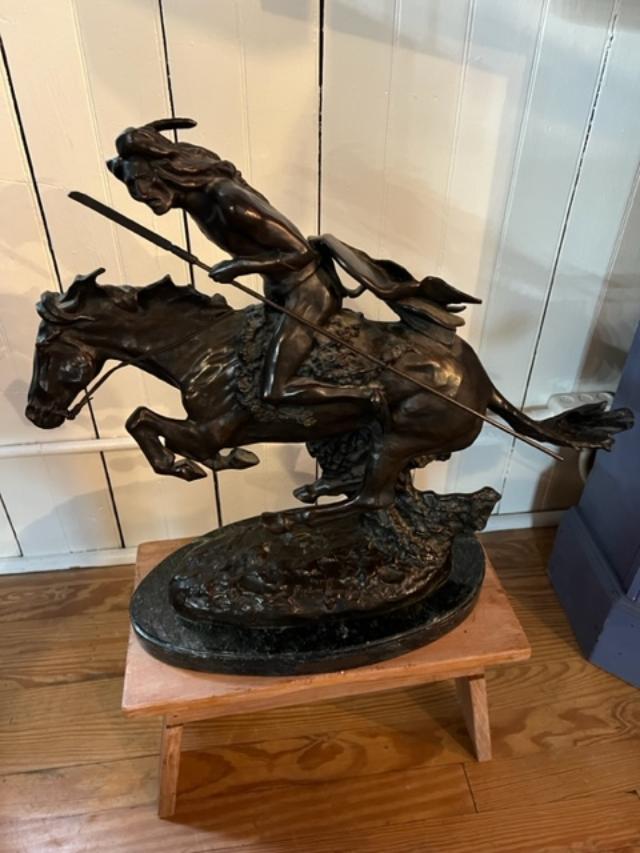
The museum’s latest acquisition, a Native American on horseback
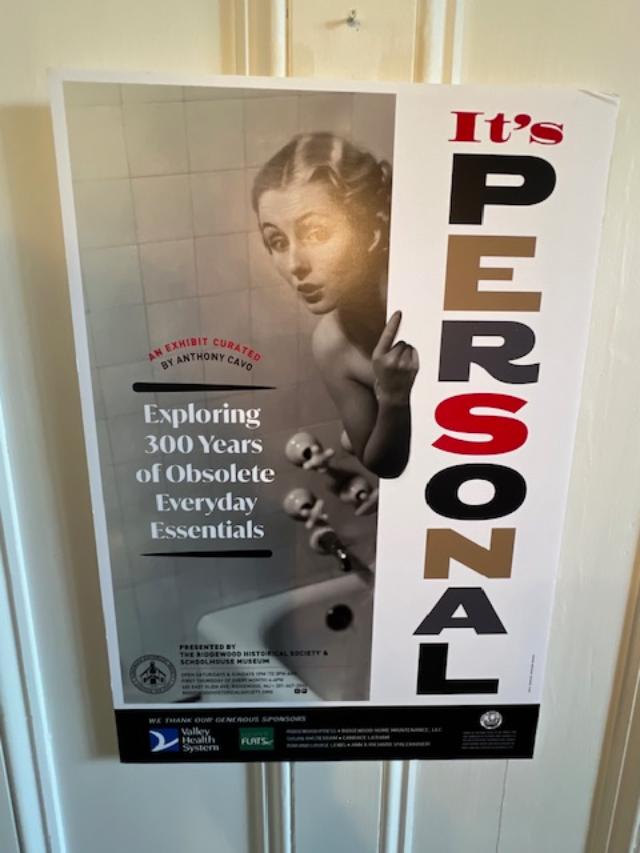
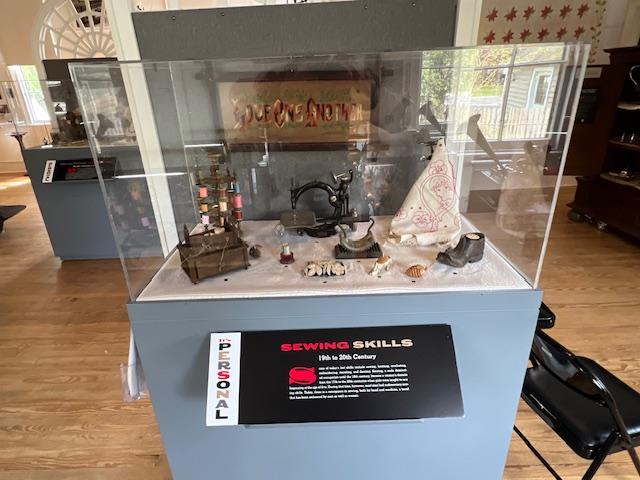
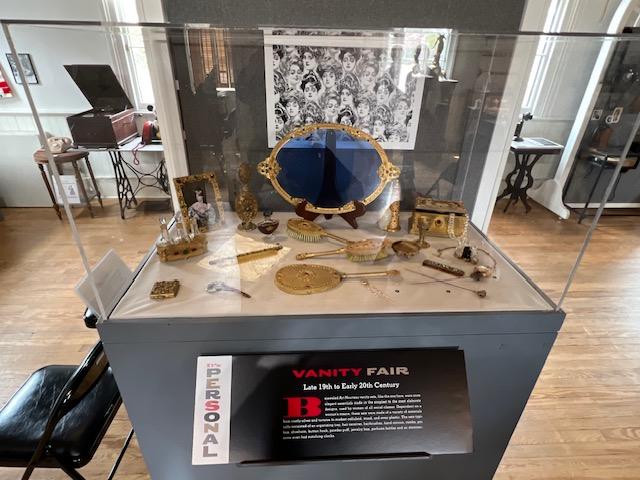
For the 2024 Northwest Bergen Historic Coalition Day, I visited the museum again and they were having an exhibition entitled “It’s Personal-100 years of obsolete Everyday Essentials”. It made me feel old when I saw a rotary phone, ink well and some of the other items that were in the exhibit. Some of them were from my generation and I do not consider myself old.
The sign from the “It’s Personal” exhibition.
The entrance to the Ridgewood Schoolhouse Museum for the “It’s Personal” exhibition
The Ridgewood Schoolhouse Museum “It’s Personal” exhibition.
The Ridgewood Schoolhouse Museum “It’s Personal” exhibition.
The Inkwell display at the “It’s Personal” exhibition to be replaced by the modern pen.
The Sewing Kit at the “It’s Personal” exhibition to be replaced by the modern sewing machine than by Ready to Wear clothing.
The Vanity which is still in use depending on the person in the “It’s Personal” exhibition.
The development of the phone and then the change to the modern cell phone in the “It’s Personal” exhibition.
The exhibition was interesting because its takes the modern perspective of the development of objects and their use over the last 100 years and show them with a modern twist on how times continue to change.
I have been to many special events at the Garretson Forge & Farm over the years, but COVID had put a stop to many of them since 2020. The farm is now back and running beautifully with the help of their roster of volunteers and master gardeners manning the grounds both in the front and back of the homestead.
In previous years when I have visited, I have toured the home visiting the indoor kitchen and display room that is the oldest part of the house which was built in 1719.
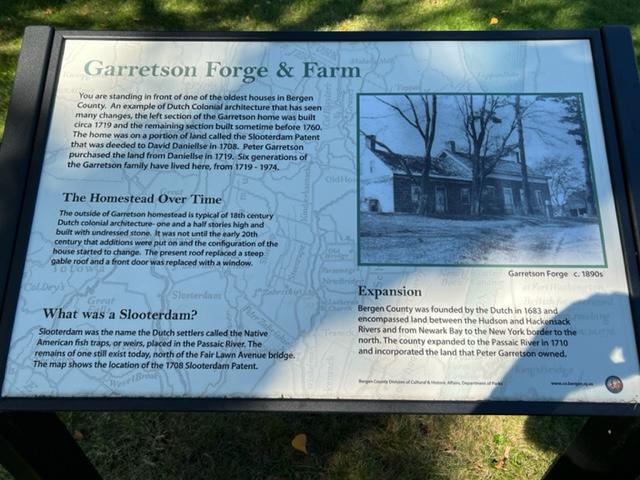
The signage in front of the house
The kitchen of the Garretson Forge is from the original structure of the house.
The kitchen
The cooking utensils at the Garretson Forge kitchen
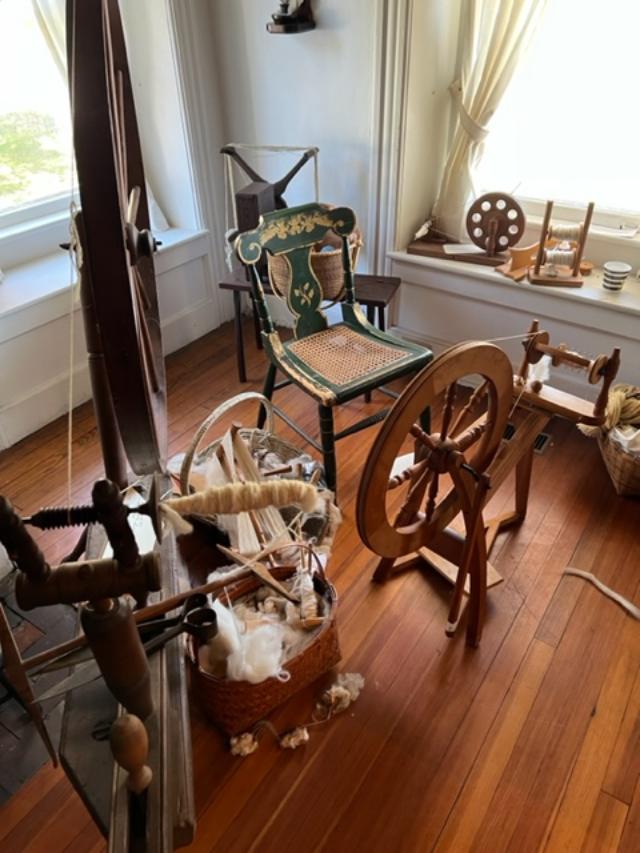
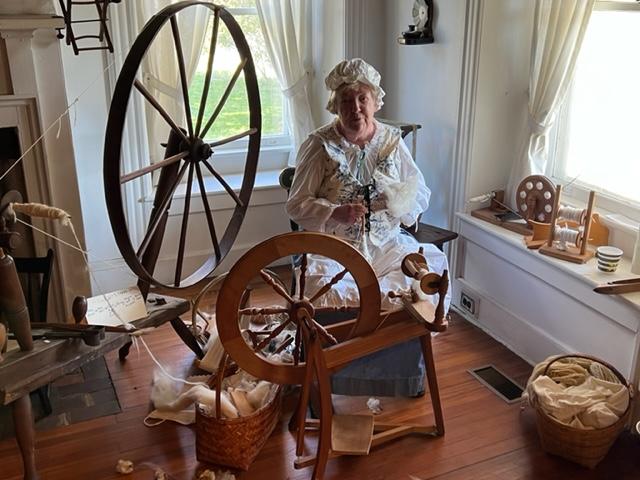
The spinning at the Garretson Forge farm was part of life
The newer part of the house where spinning takes place and where you can see examples of Dutch furniture with chest for clothing and a rope bed, where the expression ‘sleep tight don’t let the bedbugs bite’ comes from. You had to tighten a rope bed with a key to tighten the ropes at night and the mattresses were either made from straw or if you were lucky, goose feathers.
The newer part of the home with the upstairs dormers was built in 1760.
The upstairs is the newest addition to the house
The Upstairs
The Garretson Family tree
Inside the original part of the home is the family tree of the Garretson family who lived in the house for six generations from 1719 to 1972 when the last of the Garretson line, the husband of the wife who was a direct descendant died and the home was bought by a developer. The also have a collection of Presidential signatures that are kept under lock and key at night.
The Presidential Signature Room
The Living Room fireplace is right off the Signature Room
The kitchen in the original 1719 part of the home is decorated with period utensils, herbs and vegetables for drying and all the things you would need to prepare food for the long winter. These things would have been placed in the fruit cellar.
The Herb Garden right off the kitchen
The water pump and herb garden are right in back of the kitchen
Outside the home during the recent Harvest Festival that I attended in October 2022, you can visit all sorts of farming equipment, sleds, and hoes for using on the farm to grow plants.
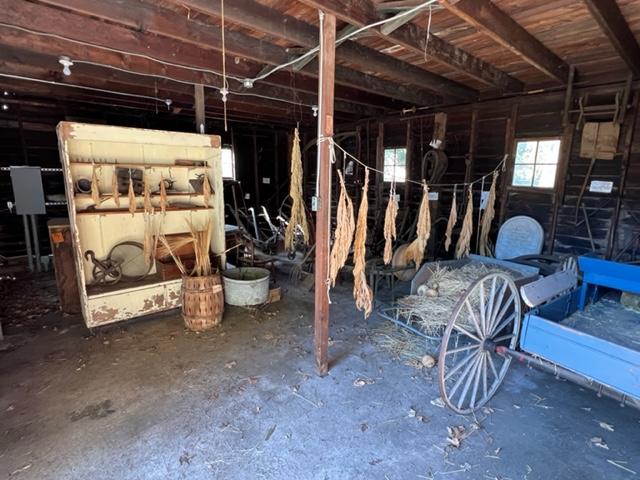
The barn has herbs drying for the season and foods being stored. This along with farm equipment. These items have been brought from all over Bergen County.
The Fall Festival 2022 on October 9th, 2022
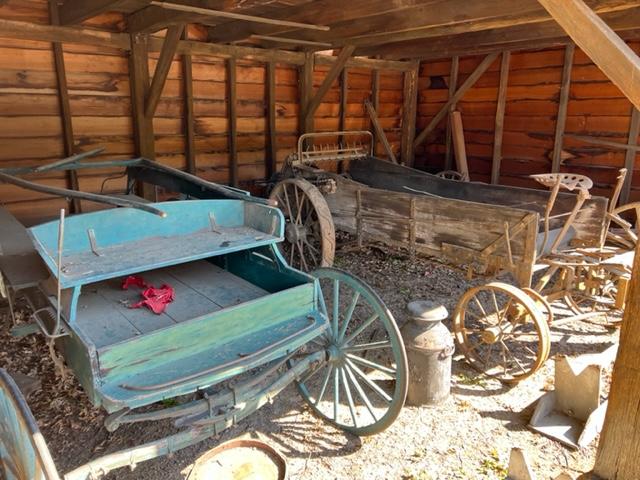
The other barn had period carriages and even a dairy vehicle delivery of milk and eggs to homes. There were items drying out in the barn for basketmaking and even in the back the tombstone of an original member of the family.
The Barn Vehicles
The barn equipment
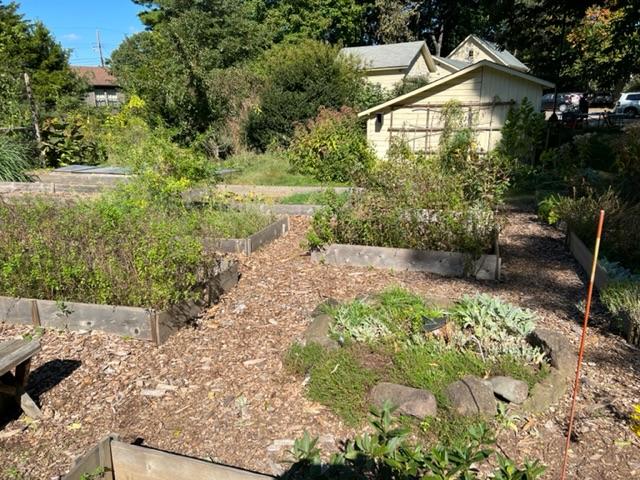
The backyard of the home is an extensive number of plantings that the Master Gardeners maintain and many of the items grown on the property go to a foodbank in Paterson, NJ. I thought that was a very nice donation to give especially these days. I was able to walk through what was left of the vegetables and fruits that had not either been picked or went through their growing cycle.
Items drying in the barn
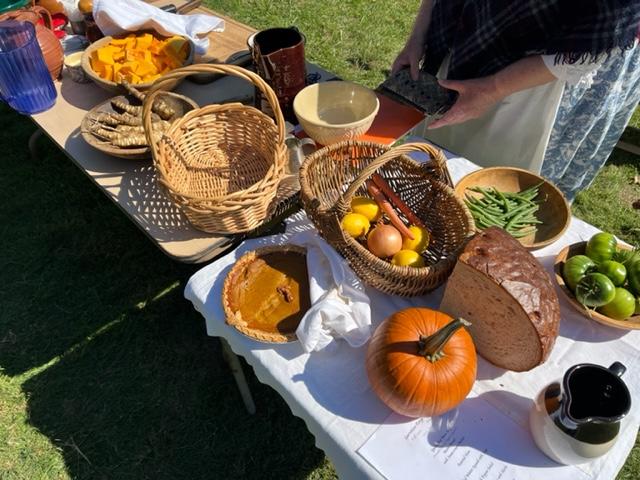
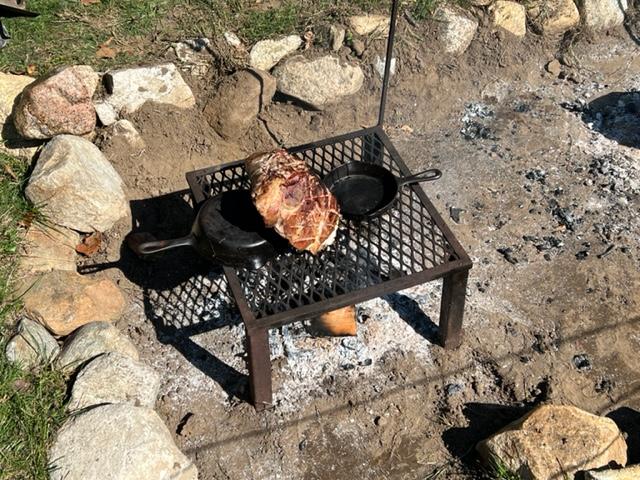
Activities at the Harvest Festival included making colonial dishes from original recipes including a roasting ham on the fire, pumpkin pie, chopped vegetables for stew and a stew that was cooking on the fire.
The bounty of Fall in Colonial America
Unfortunately, we were not able to sample these delicious looking items because of a food license but everything looked really good. They had everything laid out on the table as the ladies explained to me how things were cooked back then.
Roasting meats on the fire a traditional way
Here and there were tables of items for sale including snacks, crafts and vintage decorative items for the home. This helps raise money for the maintenance of the house.
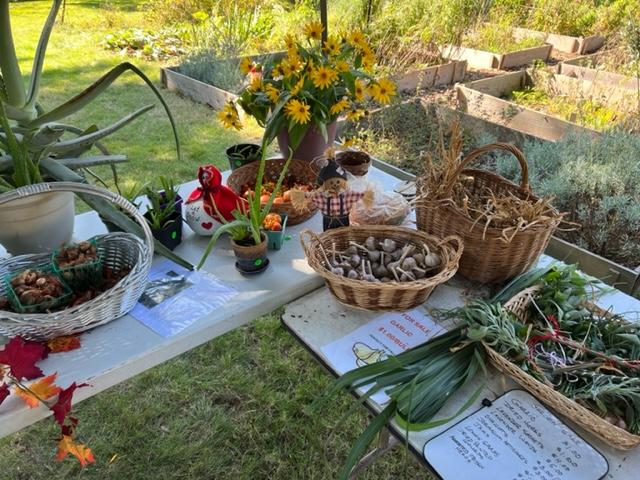
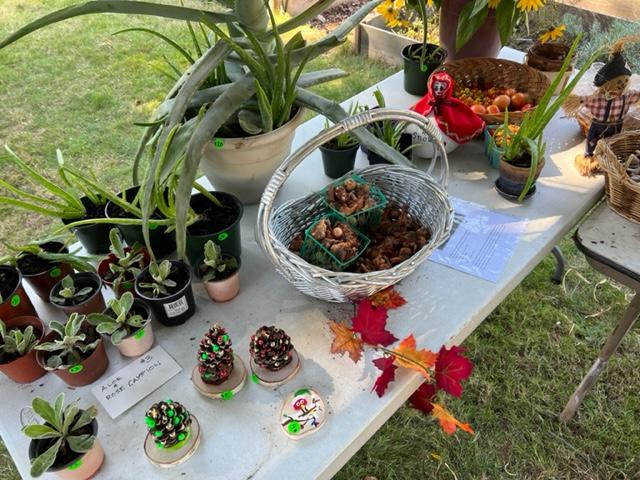
There was also a plant sale where items grown on the property were being sold for people’s decorative gardens.
Before I left, the master gardener explained to me that the Chinese Chestnut Tree in the back of the property was a documented tree and was one of the oldest and largest in the State of New Jersey. They are not too sure who planted it years ago.
Their Harvest Festival was a lot of fun and there were lots to do for families with small children. This takes place every October.
In December I took a special tour of the farmhouse during the holiday season when the forge was decorated for the Sinterklaas event and the Christmas holiday season. I was very lucky that the President of the organization gave me a private tour of the house and gardens. The house had been very busy for the Christmas season.
During the time of the Dutch, homes would not have been as decorated for the holidays as they would during the Victorian Age with trees and massive amounts of decorations. Around the time of the Revolutionary War, ‘greens’ would have decorated the home to bring ‘life’ back into the home during the long winter months. So things like pine, holly and mistletoe would have decorated the house.
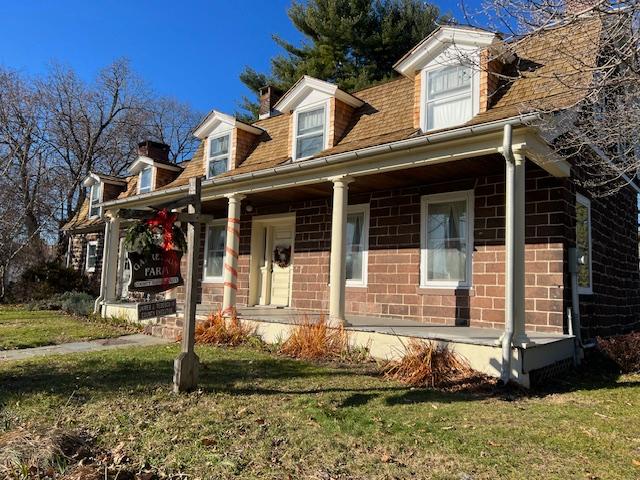
The front of the house for the holiday season.
The front of the house at Christmas time.
The entrance to the house decorated in bows and garland.
The entrance to the house decked in garland, bows and fruit during the holiday season.
Entering the house from the back door.
The entrance to the back door decked out for the holidays.
The entrance to the historic farmhouse.
During the holiday season, the New Jersey Dutch citizens would celebrate “Sinterklaas”, the Dutch Christmas festival in which Sinterklaas (Santa Claus) would bring good little children toys and sweets. During the first week of December, the farmhouse has the traditional “Dutch Christmas Festival” in which children can visit with Sinterklaas and enjoy music and holiday treats.
The front hallway decorated for the Dutch Festival.
The Dutch Kitchen ready for the holidays.
The kitchen getting ready for the holidays.
The back fireplace during the Christmas holidays.
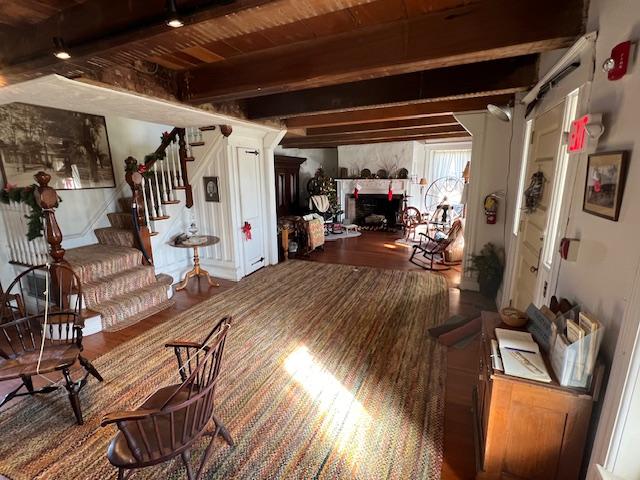
The main room of the Dutch Farmhouse during the Christmas holidays.
The banister was decorated in garland and bows.
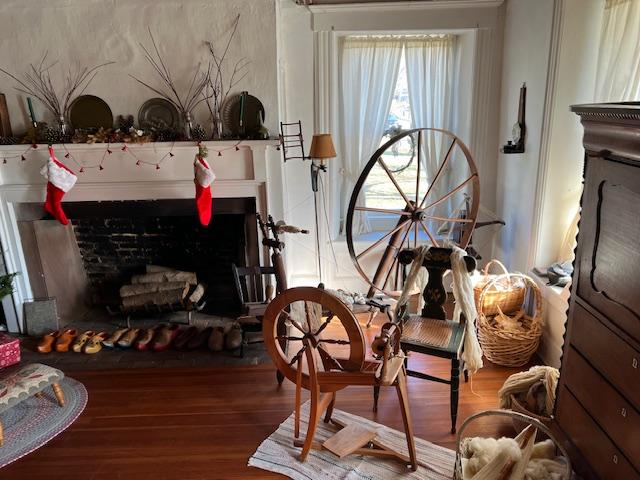
The Spinning Wheel and fireplace during the festivities.
Where Sinterklaas engages the small children at the event.
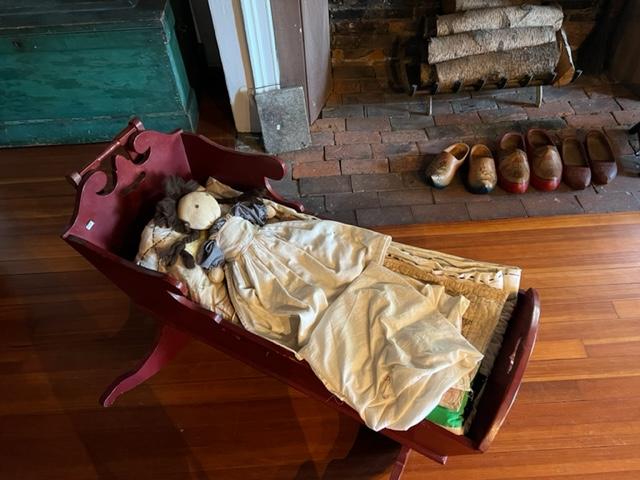
The stockings and wooden shoes which would have been filled with candy and toys by Sinterklaas for good little girls and boys. The Christmas tree would have come in Victorian times along with the presents in the later part of the 1870’s and 80’s with the rise of Queen Victoria.
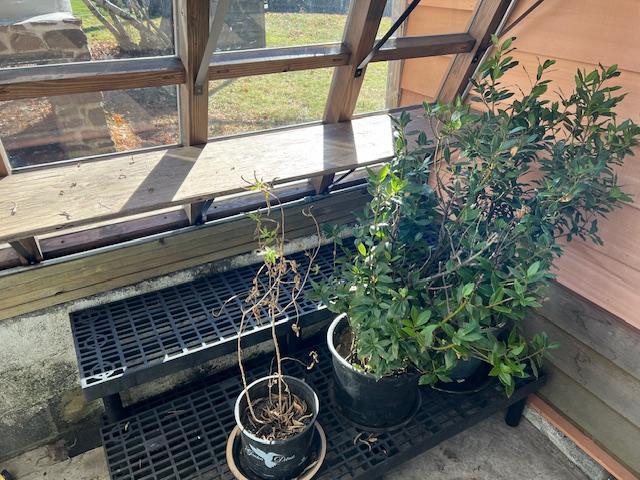
As we exited the house at the end of the tour, the President took me on a tour of the greenhouse that was attached to the house. This is where all the new plants and saplings were being grown during the winter months.
The Greenhouse is attached to the main house.
The decorated window box just outside the kitchen of the farmhouse.
We passed through the gardens that were now dormant for the holidays but would be sprouting in about four months.
During the Revolutionary War and the take over of the English, Christmas would have meant church services on Christmas Day and a light luncheon in the afternoon. Things like gift giving, entertainment and music would have been later in the 1800’s as the ‘Puritan influence’ would have prevailed at this time with little merriment during the holidays.
After the Civil War and the rise of the Industrial Revolution did Christmas get more elaborate and festivities became more colorful. You see this in different stages of the house. The forge is open for the “Sinterklaas Festival” the first week of December every year.
In the Spring, I attended “Pea Day”, the first planting of the gardens took place in March of 2024. The volunteers were cleaning the beds out and planting the first fruits and vegetables that could survive in the cool weather. It gave us a chance to see how things were planted on the farm during the different seasons.
The front of the Garretson Forge & Farm during the last days of Winter.
The property during the late Winter months.
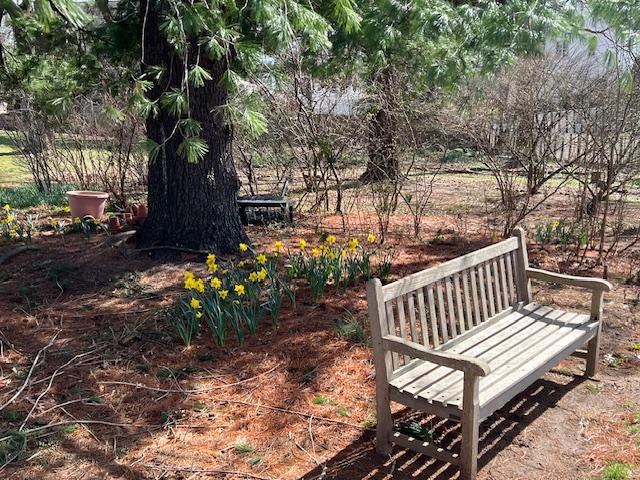
The daffodils were in full bloom on the property.
Cleaning up the property during the late Winter months.
The volunteers planting the beds during “Pea Day”.
The volunteers planting the beds during “Pea Day”.
The students of Bergen Community College learning about the Garretson Forge.
“Pea Day” gave us a chance to see the property and see how the plantings of the farm were timed with the seasons. It also gave the students a chance to see what the farm looked like and understand its logistics.
The farm on “Pea Day”.
The History of Garretson Forge & Farm:
Garretson Forge & Farm is one of the oldest historic sites in Bergen County, New Jersey. Settled in 1719, this Dutch Colonial homestead was home to six generations of the Garretson family. Their homestead remains a rare surviving example of a simple farming life that was prevalent in the 1700’s and 1800’s. It now functions as a living museum and a working farm, preserving our colonial past and agricultural heritage.
The front of the Garretson Forge on River Road in Fair Lawn, NJ.
The Property:
Located along an old Native American trail, about a mile north of Garretson Lane, is one of the original farms in Slooterdam, owned by the Dutch family of Peter Garretson. Today, more than 300 years later, the trail has come to be known as River Road, Garretson Lane is now called Broadway and Slooterdam has evolved into Fair Lawn, yet the original farmhouse and remaining grounds are still referred to as the Garretson Homestead.
In the 17th century, New Jersey was divided into the Provinces of East and West Jersey by its English proprietors, Lords Berkeley and Carteret. These lands were then sold to a group of Quakers headed by William Penn. By 1692, part of East Jersey, known as the Saddle River Tract, had been divided into large lots, one of which was sold to the Stillwell family.
The Garretson homestead stand on a portion of land that was acquired in 1708 by David Daniellse from the Stillwell family. A copy of the original propriety deed signed by King George of England and the Lenni Lenape Chief, Spotted Tail and granting the land to David Daniellse, is hanging in the homestead. The original property was bounded on the west by the Passaic River and on the east by the Saddle River. Peter Garretson purchased the property from Mr. Daniellse in 1719.
After Peter Garretson’s death, title to the land was passed from one generation to the next. From time-to-time parcels of the tract were sold. The present site consists of 1.84 acres along River Road.
The beauty of the Garretson Forge Farm in the Fall
The Homestead:
The house is an example of Dutch Colonial architecture which is charismatic of Bergen, Passaic and Hudson Counties.
One and one-half stories high and built about 1719 of rubble and undressed stone, the current kitchen wing is considered by most to be the homestead. It features a large open-hearth fireplace typical of Flemish design of the late 1600’s. On a late nineteenth-century photograph of the house, remnants of a brick beehive oven can be seen on the outer wall.
Farming equipment outside the barn
In 1760, the larger section of the house was built using dressed stone. The sandstone blocks were held together with mortar made of river mud mixed with straw and hogs hair. It was under this section that fragments of clay pipes (c1720) were uncovered.
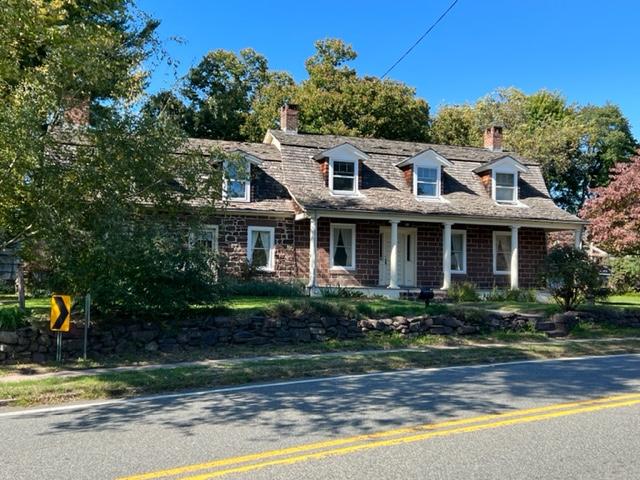
The farmhouse on River Road in Fairlawn, NJ
The Farmhouse
Extensive renovations were made to the house in 1902. The present gambrel roof replaced a steep gable roof; a front door was replaced with a window; an inner stairway to the basement replaced cellar hatches. A large center Victorian stairway to the second floor was also built and the open-hearth fireplaces were enclosed in the Victorian style. A large pillared porch was also added.
An early nineteenth century carriage house still stands on the property along with a large barn and several smaller outbuildings, the oldest of which is a small wooden structure built circa 1800 in the Dutch barn style.
The barn and carriage house
The Garretson Family:
The history of the Garretson family in America began in 1660 with the emigration of Gerrit Gerritse, his wife, Annetje Hermansse and their son, Gerrit from Wageningen, Gelderland (Netherlands). They arrived in New Amsterdam and proceeded to the town of Bergen, where in 1668, Gerrit (Sr) bought from Philip Carteret, eight parcels of land. The family resided in what is now the Communipaw section of Jersey City, where Gerrit died in October of 1696. His wife died on September 7, 1696.
Some of Gerrit Gerritse’s children took the name Van Wagenen, while others retained that of Garretson, from the name of their father. The descendants of Gerrit Gerritse, going by the surname of Garretson, Van Wegenen and Van Wagoner are today numerous throughout Bergen and Hudson Counties.
Mary Garretson’s Tombstone is located in the barn
Peter Garretson, grandson of the elder Gerrit Gerritse, purchased the Slooterdam Patent from David Daniellse in 1719. The house was built shortly afterwards. Six generations of the Garretson family resided on the farm until the death of Mary Garretson Brocker in 1950. Her widower, Feenix Brocker, remained at the homestead and continued farming until 1974.
The Gardens:
Originally a homestead farm, subsistence and market crops were grown from the early 1700’s through the early 1970’s by the Garretson family.
The back of the house
Today, the gardens at Garretson continue an agricultural tradition. A variety of heirloom vegetables, all open-pollinated are grown in the kitchen garden using organic and sustainable practices. Produce in season is donated to a local emergency food pantry. An extensive herb garden contains over 75 types of medicinal and culinary herbs that were grown in the seventeen and eighteen hundreds.
The Garretson farm gardens behind the house are tended to by the master gardeners.
Garretson’s Butterfly Garden provides host plants and nectar sources for many different kinds of butterflies. Since 2005, Garretson has been certified by Monarch Watch as a Monarch Waystation (monarch habitat).
The Children’s Garden at Garretson abounds in spring ephemeral wildflowers, bulbs and ferns. In the heat of summer its offers a welcome place to sit in the shade. Gardeners have been restoring native plants to this woodland area.
The garden sheds behind the house
Many of the garden volunteers are Rutgers-trained Master Gardeners who have done their community service at Garretson and who give back to the community and Bergen County Master Gardener Program by training new gardeners at Garretson.
The gardens at the Garretson Forge farms behind the house
Garretson Forge and Farm Restoration Inc.:
The Garretson property was sold in 1974 to a private builder for residential value, community members became interested in acquiring the property for preservation. This led to the founding of the Garretson Forge and Farm Restoration Inc. in 1974 for the purpose of raising funds for the purchase. Through the efforts of the organization, the community at large and government agencies, the necessary funds were raised for the acquisition of the property.
GFFR Inc. continued to raise funds to maintain the site and to restore the kitchen to its eighteenth-century design. Money was also used to purchase artifacts and articles related to Garretson history.
The open kitchen at the Garretson Farm
In 1977, ownership of the property was accepted by the Freeholders of Bergen County. Now a county historical site, the Garretson homestead continues to be administered by the members of Garretson Forge and Farm Restoration Inc.
GFFR Inc. is a volunteer organization whose mission is to preserve and maintain the Garretson homestead, keeping it open to the public; to educate the greater community about local and state history; to foster environmentally sustainable agricultural practices and biodiversity.
Programs and Special Events:
Throughout the year, Garretson Forge and Farm offers.
Living history events:
*The Spring Festival celebrating colonial life and crafts in the 1700’s.
*The Fall Festival celebrating the harvest and the 1800’s farm.
Fall Festival 2022
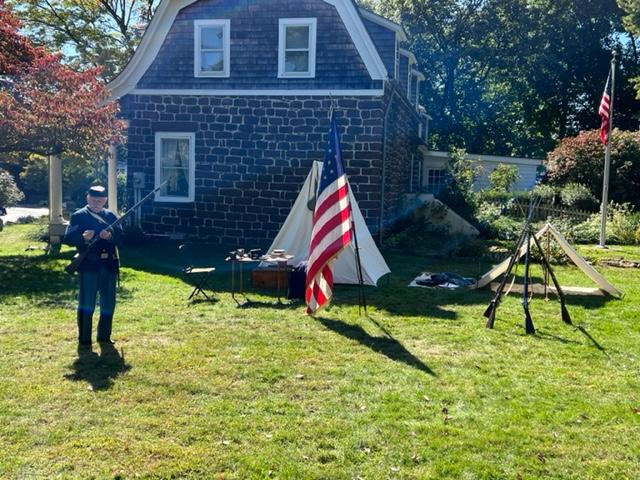
Civil War Activities at the Garretson Forge
Civil War activities at the Fall Festival
Spinning wool and cloth making at the Fall Festival
*Dutch Christmas presenting a traditional Dutch celebration with the homestead decorated in Victorian style.
The house decorated for the Sinterklaas and Christmas festivals.
The house decorated for the Christmas holidays.
Educational Programs:
The Map and Signature galleries
*School Tours
Children’s toys at the Garretson Forge
*Open House and garden tours
*Lectures on the environment and on local history.
The Signature and Map Collection at Garretson Forge
*The Master Gardener Program
*Organic/sustainable gardening
*Garden and craft workshops
*The annual Butterfly Festival for families.
Community Service Programs:
*Eagle Scout Projects
*Community Seed Bank
*Seasonal produce donations to local food banks.
For more information on events, please check out the website:
The Bergen County Division of Cultural & Historic Affairs received an operating support grant from the New Jersey Historical Commission, a division of the Department of State.
Disclaimer: This information is taken directly from the pamphlet from the Garretson Forge & Farm. For more information on the site, please call the above numbers or email them.
In the Spring Semester of 2023, my Introduction to Business class at Bergen Community College in Paramus, NJ created a project to promote the Garretson Forge & Farm for Destination Tourism. It was an extensive project creating new programs, new advertising and promoting the site with commercials and walking tours.
I think a lot of these historical sites do not get the attention they deserve and with the 250 Anniversary of the Revolutionary War happening in two years, these wonderful sites needed to be showcased. They needed to dusted off, revamped and a fresh perspective was needed to tell their story. This is where the project for the “The Bergen 250: Tourism at the Garretson Forge & Farm” came from.
The project “Bergecco-Parc Consulting Inc. presents “Bergen 250-Touring the Garretson Forge & Farm”:
That and the tour the former President gave me during the holiday season when I begged to see the Christmas decorations for the Sinterklaas celebrations were still up. I needed pictures for my blog, “VisitingaMuseum.com” and “MywalkinManhattan.com”.
My blog on Touring the Garretson Forge & Farm on VisitingaMuseum.com:
When I toured the home during the holidays, I approached them on using the home as a future project and she seemed to like the idea. This is where the partnership for the project came from.
Our first visit to the site was on “Pea Day” in March 2024 for an extra credit assignment to start the project off so that the students could see the grounds and experience the farm and its attributes.
Visiting the Garretson Forge & Farm in Fair Lawn, NJ for “Pea Day”
Visiting the farm house and gardens on “Pea Day”
The volunteers planting at the Garretson Forge & Farm on “Pea Day”.
Observing the Master Gardeners and Volunteers on “Pea Day”.
The students coming in on their day off to attend “Pea Day”
Everyone took turns getting their hands dirty on “Pea Day”
We also had a special field trip to the Garretson Forge & Farm on class day so that everyone could tour the farm and the farmhouse. Outside “Pea Day”, it was the first time anyone in my class had ever visited the site.
We started the tour on a rather gloomy night. We had just had a rain storm but that did not stop our visit. Our whole class attended the trip (it is a mandatory part of both the project and the class) and it was a interesting tour for all of us.
Our host was the President of the Friends group that helps raise money for the site. We started the tour after the rain storm with a trip through the barns to see some of the old farm equipment. The were some interesting artifacts that included farm plows and horse drawn articles to carriages and sleds.
Then we toured the gardens where the volunteers had just finished the plantings of the summer fruits and vegetables. The President explained that the fruits and vegetables that were grown here were donated to a soup kitchen in Paterson. I thought this was a great idea.
Then were toured the farmhouse, which I had just been to for a private tour during the holidays. The kitchen was set up for a harvest meal now and I explained to some of the students how food was cooked back then in the hearth.
Then we toured the small museum and looked at the family tree, where generations of Garretson’s had lived. Our last stop on the tour of the farmhouse was the main living room where the Sinterklass event was held and many of the talks on domestic life on the farm.
This is where we concluded the tour and many students asked questions about life at that period of time. After the tour was over, I took the students out to dinner as part of their Team Building. It is important for the students to get to know one another.
The start of the tour near the barns.
Our tour of the grounds, the barns and life on the farm.
The grounds near the second barn. Touring the gardens at twilightTour of the kitchen.
Discussing the expression “Sleep tight don’t let the bed bugs bite” and where it came from.
Discussion on the second floor.
The second floor had been added on years later.
Discussion on farm living.
Discussing the furnishings and how the farmhouse ran as a farm and a home.
Continuing our discussion of life on the farm.
Talking about life on the farm.
The Bergecco-Parc Consulting Inc. tour of the site.
Our group shot with President of the Garretson Forge & Farm April Barth.
After the tour was over, I took my class to Bella Vita Pizzeria in Fair Lawn, NJ for their first Corporate dinner and Team building exercise. The dinner was wonderful, and the pizza was excellent. It really warmed us up after a cold night of touring and the students seemed to enjoy getting to know each other over a hot pizza dinner.
Bella Vita Pizzeria at 1761 River Rd A, Fair Lawn, NJ 07410:
My Teams dining together at a “Corporate” pizza dinner.
The company Team dining together that night.
The aspect of dining together is an important part of the Team Building exercise and you can tell by the pictures that my students enjoyed it.
The next few weeks were preparing the project for the presentation. We had a visit from Vivian Davis, who I had known for years from working in the Division of Disability Services when she was one of our speakers. She now was running the “Bergen 250: The 250th Anniversary of the Revolutionary War in Bergen County” and we had incorporated part of this in the project. I had given her a copy of the project and she came into the class to discuss what she was planning and the significance of the Revolutionary War had on the towns in Bergen County. It was a real history lesson on some of the towns in Bergen County and some of the historical homes and sites in Bergen County.
This project was a bit more intense than my morning class. While they designed the rigors of the Bergen Room Bistro, my evening class was putting together an entire game plan of Revolutionary War events for the ‘Bergen 250’.
I had the students working on an Independence Day event, a Children’s Walking tour of the property, a Mid Summer dinner with a Revolutionary War themed dinner, a continuation of the Sinterklaas event that would extend visiting the decorations in the house another two weekends and then a new Digital Marketing campaign for the site with a commercials and posters.
The night of the presentation on April 24th, it all came to life. The students each showed the PowerPoints with their ideas, menus and commercials to promote the site. They really had some interesting ideas.
Finishing the evening with my Student Consultants was great. The students were so excited to finish and I have to admit it was quite the journey for me too. It was a lot of work (and money) to pull this event off but it went by well. The Board of the Garretson Forge & Farm really seemed to enjoy it and asked lots of questions.
Vivian Davis, who is running the “Bergen 250″ asked the most important question of the night, if I was to run all of these events, would your age group come?” This got the students thinking and one said, “We are a busy group with college and work. If you want our age group to come, you are going to have to cater to things we like.” I thought that was fair and gave her something to think about as well.
We then took our Board picture. I am always so proud of my Student Executive Consultants. They come dressed for work.
The Bergecco-Parc Consulting Inc. “Bergen 250″: Garretson Forge & Farm” Executive Team.
I want to thank my President of the Team Project, President TJ Fischer and SVP of Operations Camila Alvarado and the entire Team of Vice-Presidents, Team Leaders and Team Members for tackling this very difficult and very detailed job of promoting this wonderful historical site with such detail.
The questions on the project were excellent and direct and audience was very impressed by how thorough the project was done that evening. To all my Student Consultants, you did an excellent job!
Great Work!
New Historic Project for 2025:
To Celebrate the “Bergen 250: the Two Hundredth Anniversary of the Revolutionary War in Bergen County”, we are creating a new project with a series of special events and meals at different historical sites in Bergen County. It gives these sites a fresh approach to new visitors.
Our class toured the site and I tried to showcase this site to another Team of students to reimagine it.
We were joined by County Historian Vivian Davis who led the tour to my students
We toured the grounds and gardens where a Country Afternoon Tea would be planned in the backyard of the home with a house and garden tour and plant sale.
My class toured the historic kitchen
We then toured the historic room with the homes past and the family tree
The Bergecco-Parc Consulting 250 Team in the backyard of the Garretson Forge & Farm
Our selfie with Vivian
The end of our tour that afternoon
It was another successful in the field by Bergecco- Parc Consulting Inc.
The Pascack Valley Historical Society is now celebrating their 75th Anniversary.
The Pascack Historical Society Museum (John C. Storms Museum), headquarters of the award-winning Pascack Historical Society, is located in the 1873 church building that was dedicated by the Reverend Henry Ward Beecher. The building and all the exhibitions have gone through an extensive renovation and have been reinstalled with more signage and information. Please check out their new displays.
The sign that greets you in the front of the building.
The Historical Marker in front of the building.
As you enter the building, you are welcomed to a comfortable spot.
The extensive exhibits include a general store, colonial kitchen, a Victorian Living Room, dolls, clothing and other displays of American life in the Pascack Valley. The front gallery as you enter serves as a classroom and lecture hall for the society. There you can see a variety of artifacts in the collection from china to guns and clothing.
Artifacts in the front room.
Artifacts in the first gallery.
A collection of antique guns in the front gallery.
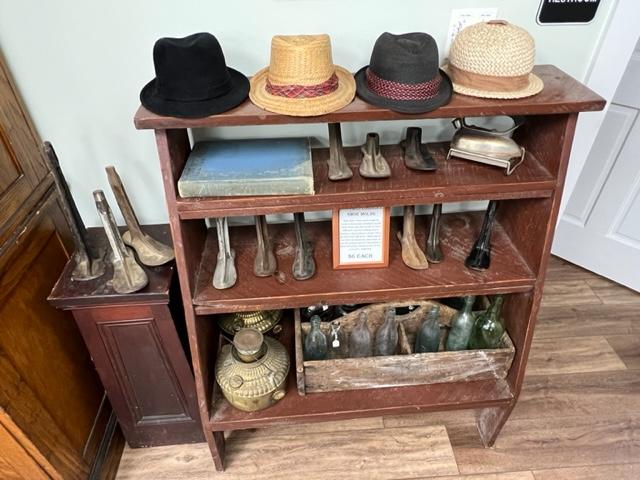
A selection of hats in the front gallery.
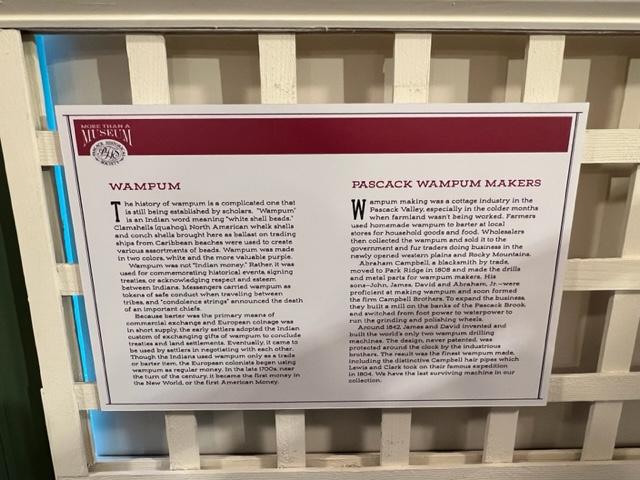
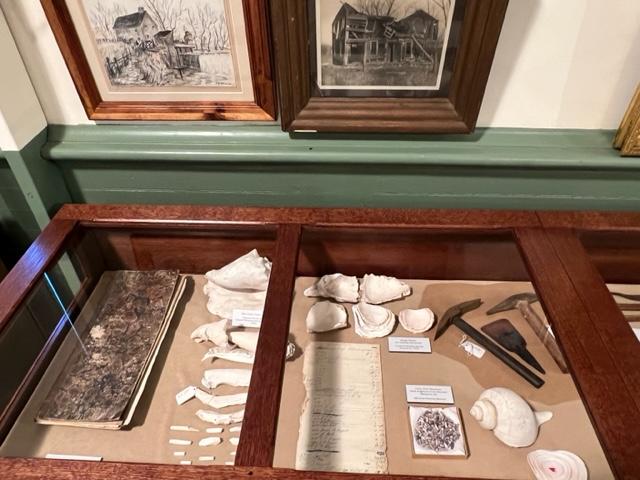
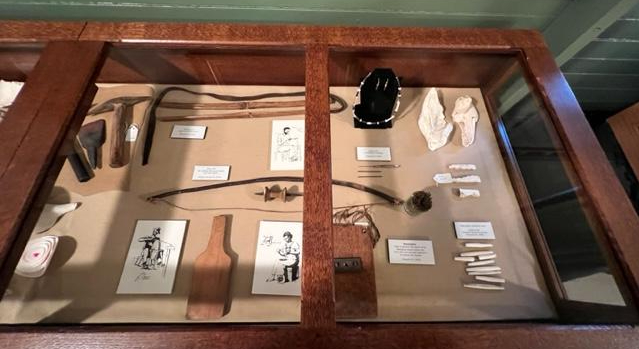
There is also a special exhibition that features the world’s only wampum drilling machine as well as a collection of early colonial currency.
The Wampum Machine sign and how Wampum is made.
Their early Colonial Financial exhibits include an early wampum machine that the tour guide had said that it was the only one of its kind that made a type of rolled wampum from the inner section of a conch shell. Early New Jersey currency is well represented in the collection with several types of dollar bills at a time when states printed their own currency for its citizens. Really take a look at the early detail work of these bills.
The Wampum display of shells and tools.
The uses of Wampum and how it is made.
The oldest working Wampum machine in the world.
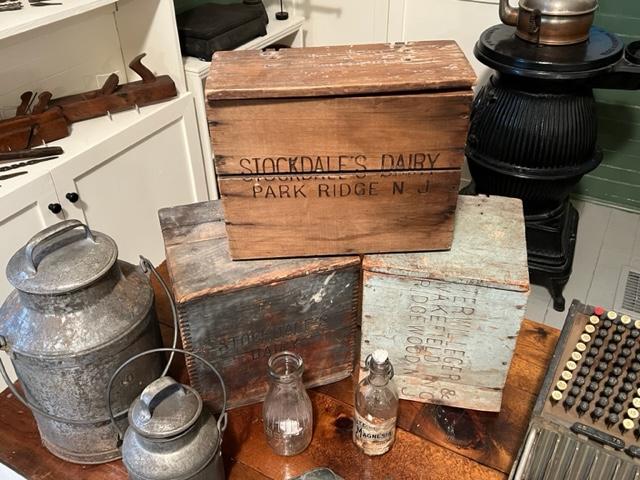
The Van Ripper General Store exhibition features many types of early Colonial artifacts that include weights and measures, food items found in an early grocery store, turn of the last century bottles and many types of appliances for cooking. Several treasures are tucked here and there to create the mood of shopping at the turn of the last century in Bergen County. There are classic groceries, weights and measures to weight groceries and several artifacts from the Van Ripper and Stockdale Farms which used to be located in the area.
The General Store sign
The General Store display.
Stockdale’s Dairy Farm was a popular farm in Park Ridge before the 1960’s.
Tools need on the farm and in the home.
The Tool display at the General Store.
The Toy Collection is extensive and covers several time periods. They have a interesting collection of dolls over the ages that include cloth and china dolls that would cater to children from different economic status. There are also games, wooden and metal pull toys and hobby toys such as marbles and jacks.
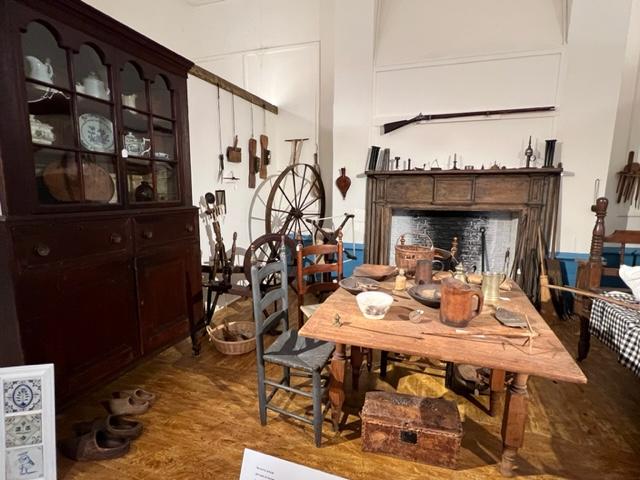
The Early Dutch Farmhouse Kitchen & Dining Room features one of the first beds that has no mattress but constructed by a series of ropes that are tightened. The tour guide explained that this might be where the expression “Sleep tight and don’t let the bed bugs bite” might have come from as the ropes needed to be tightened each evening before the family went to bed.
Early Dutch life sign.
The exhibit also had early furniture hatches, chamber pots, a butter churner, various chairs that were manufactured in the area and several detailed decorative pieces.
The Early Dutch Kitchen and Living Space
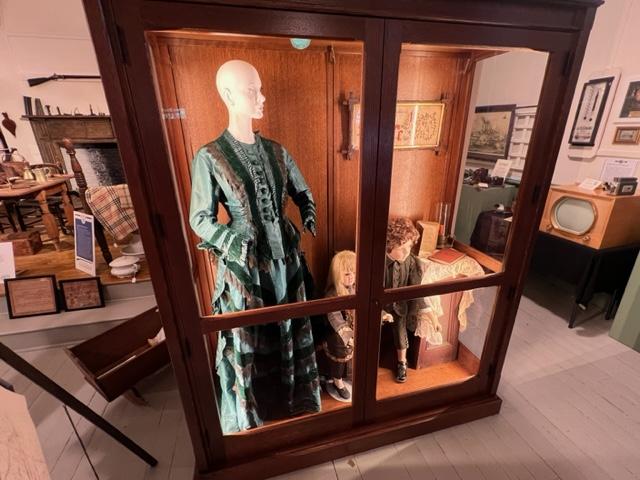
The Victorian Dress of the church visitation.
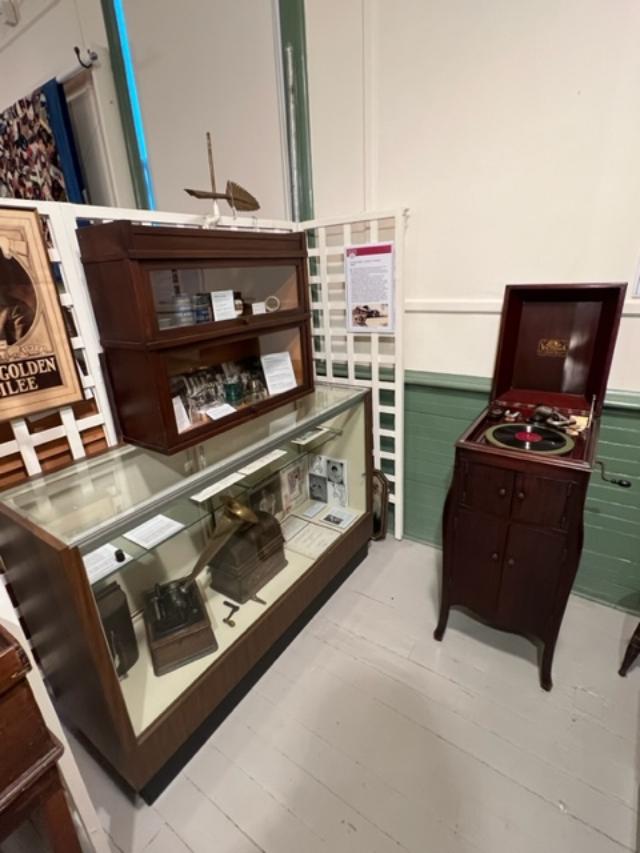
The Victorian Living Room features many plush pieces of furniture, decorative knick-knacks that used to dominate the décor and a graceful piano with mother of pearl keys and decorative carved sides. This model was one of maybe a hundred made for a very elite client. The display also featured one of the early record players that still works.
The ‘Victorian Afternoon’ exhibition in 2024:
The sign for the Victorian home:
The ideal Victorian Home ‘Parlor’
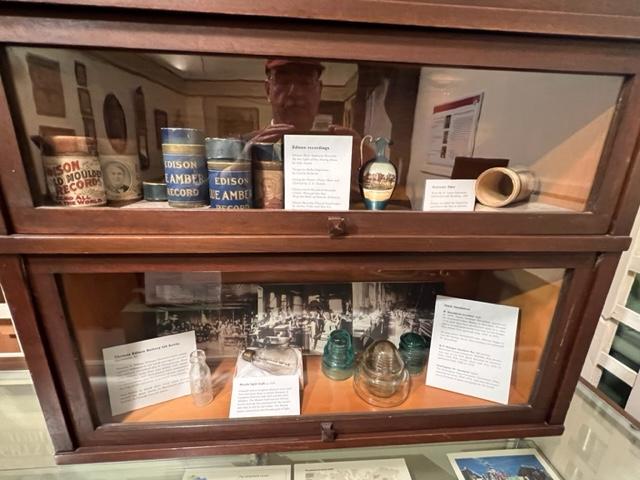
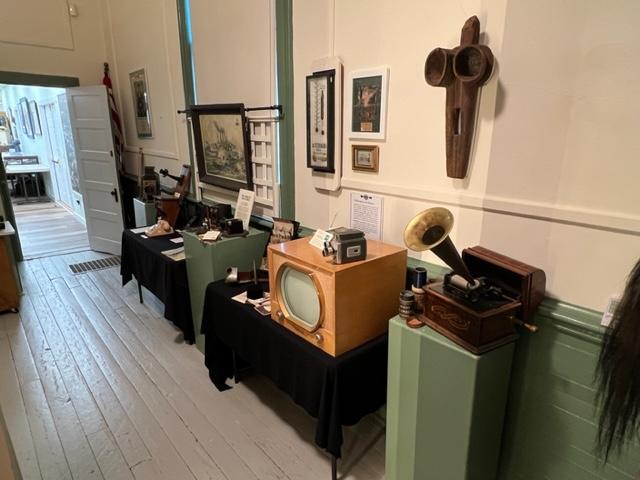
Early Edison products
Early Edison recording equipment was not just musical but decorative.
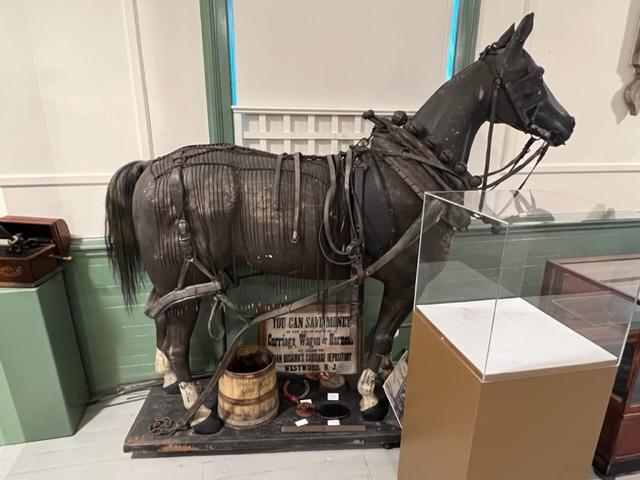
The horse display.
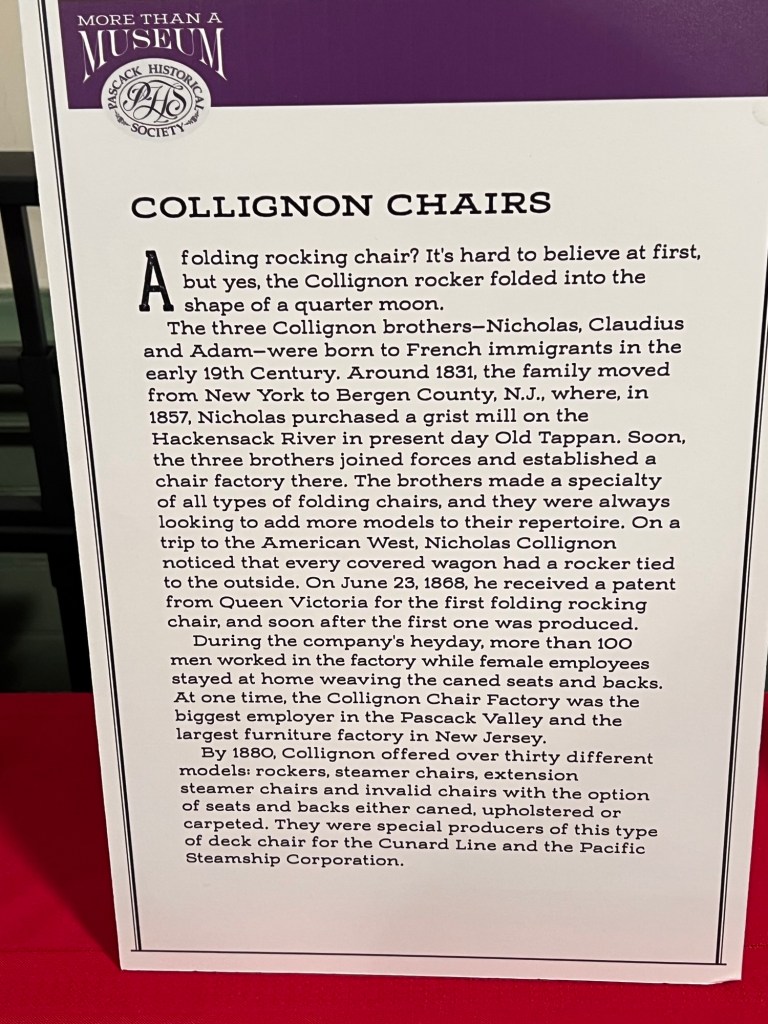
The new exhibition 2025: ‘Collignon Chairs’
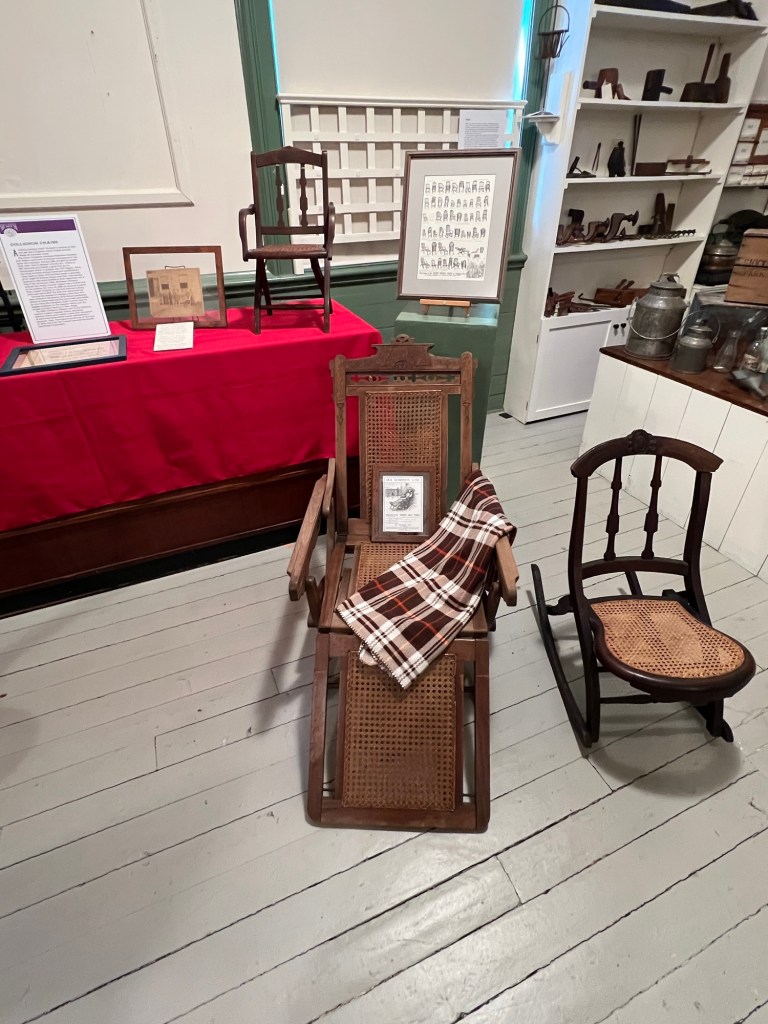
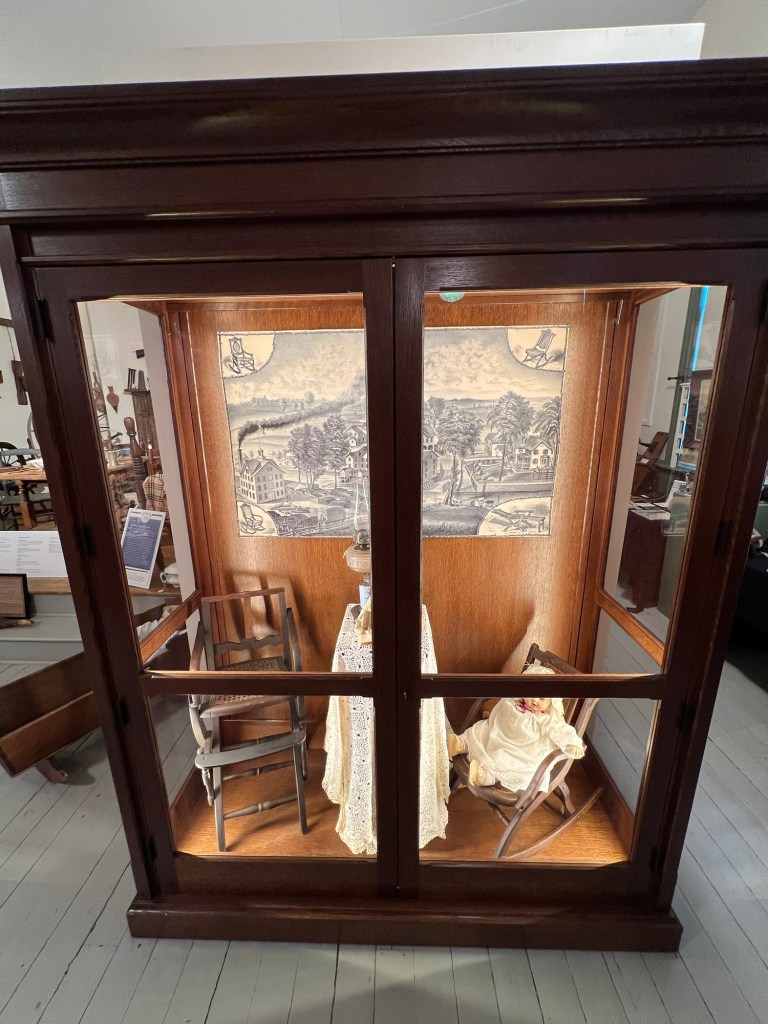
The exhibition is on the Collignon Chair factory of River Vale, NJ and the selection of chairs that the factory once manufactured.
The sign from the exhibition
Some of the collection of Collignon chairs on display including the popular deck chair used on streamlines.
The popular folding rocker from the collection
The display of chairs and a drawing of the old factory
Off to the side, there is an early sleigh and horse display, an exhibit of typewriters and carbon paper as I found out the area was once the leading manufacturer for carbon paper and a complete workshop with tools from all eras.
Typewriter collection at the museum.
Early Electronics
The schoolhouse desk of the school master.
The workshop is a very detailed in its artifacts with early saws, hammers and items that even I could not figure out what they were.
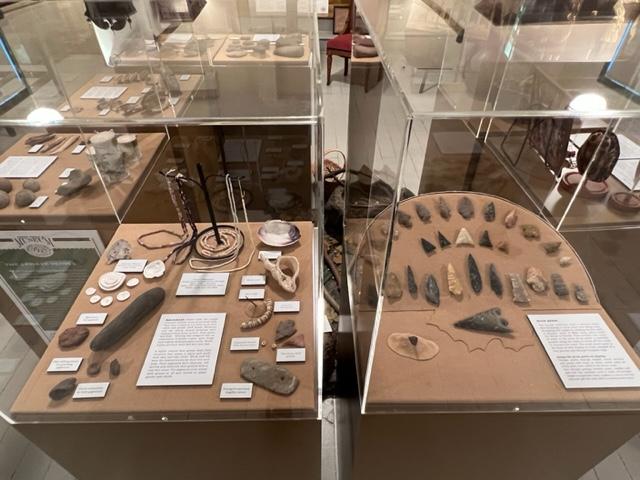
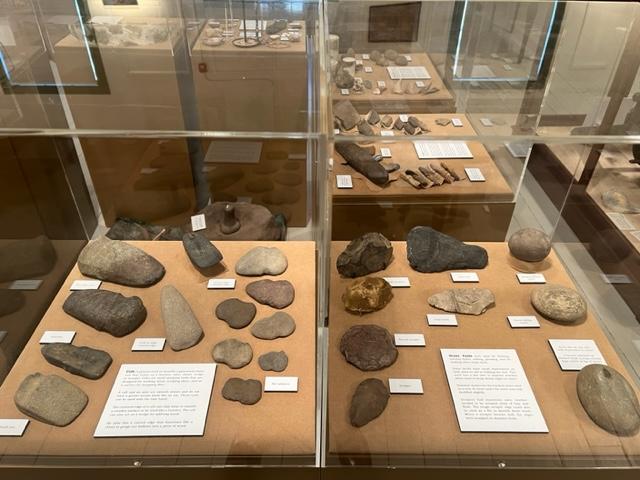
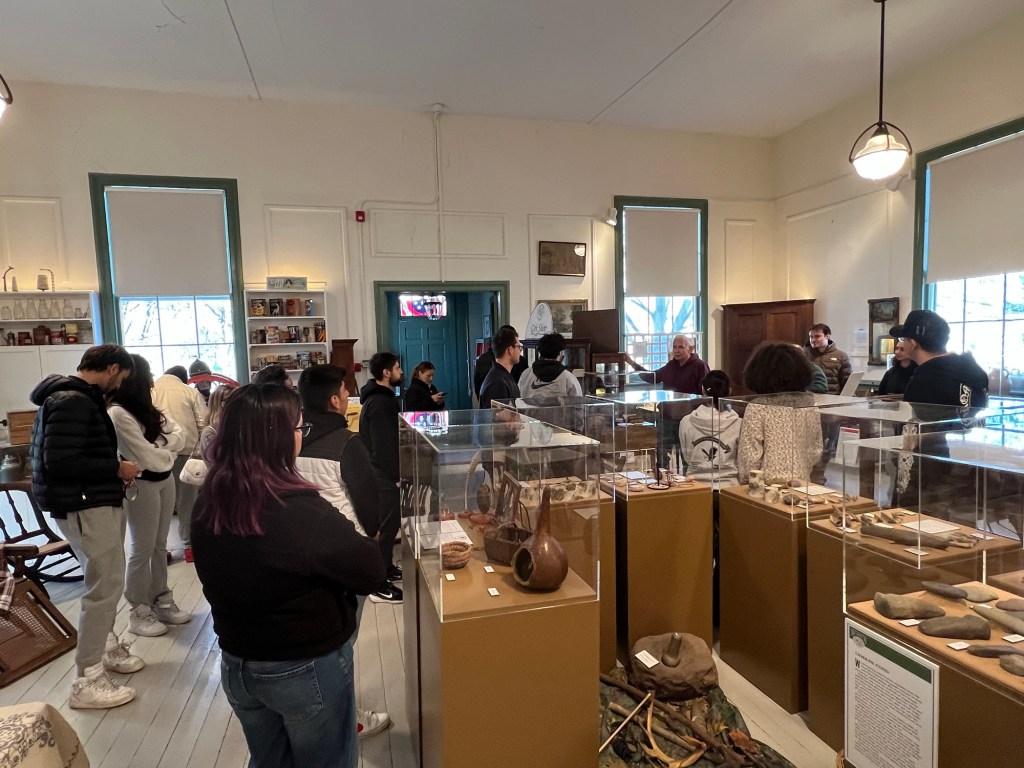
In the main room, there are more cases of toys, Revolutionary items and Native American artifacts to explore.
Native American Artifacts
The Lenape display
The Native American display.
A small gift shop is off to the side selling items donated by members.
Become a Friend: From the Friends of the Pascack Historical Society Museum pamphlet:
Pascack Historical Society Information and History:
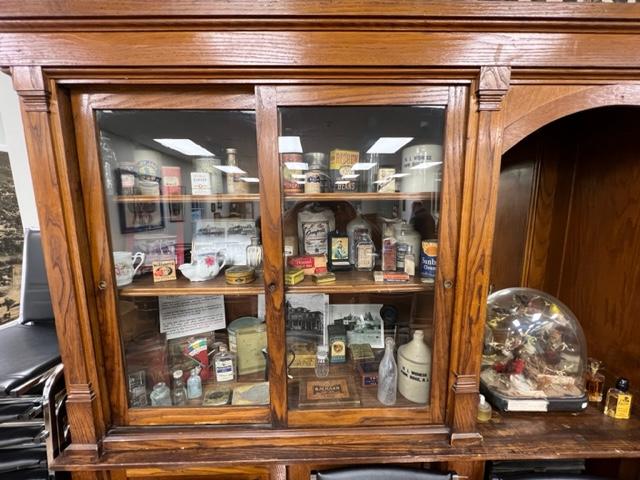
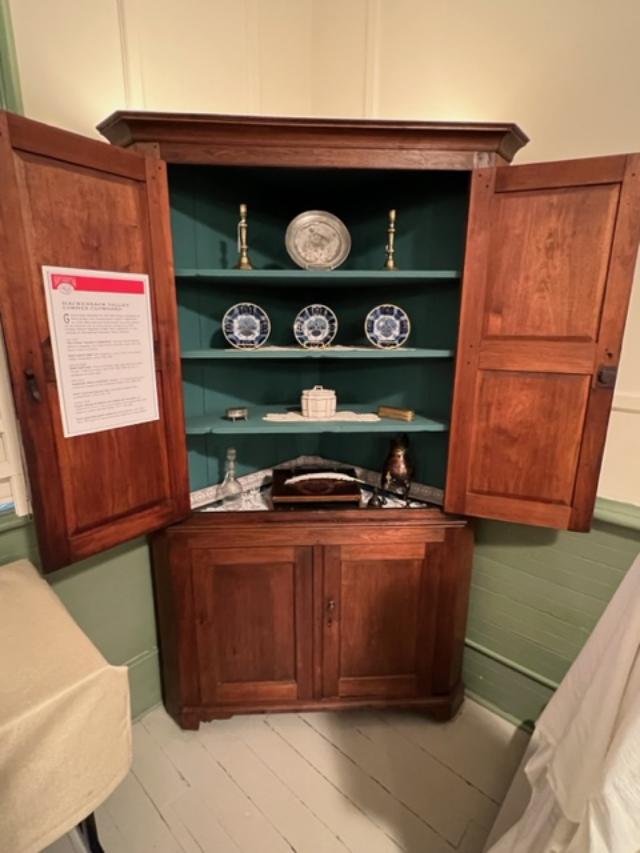
The Corner Cupboard of early American china.
(From their pamphlet):
Membership Benefits:
Become a member of the Pascack Historical Society, a 501C3 organization. Dues are modest and membership has its privileges!
One year of free admission to the museum and most of its activities.
A one year subscription to the Society’s award-winning quarterly newsletter, RELICS.
10% discount on museum gift shop items (Sale items and new books excluded).
50% discounts on programs for children and adults.
You will receive Members Only advance notice mailings and emails about upcoming events and activities.
Members only “behind the scenes tours” of the museum. (By Appointment Only).
You will have the satisfaction of knowing you have joined the ranks of the area’s most passionate historical preservationists, who have a commitment to educate and enrich their neighbors’ lives-young and old.
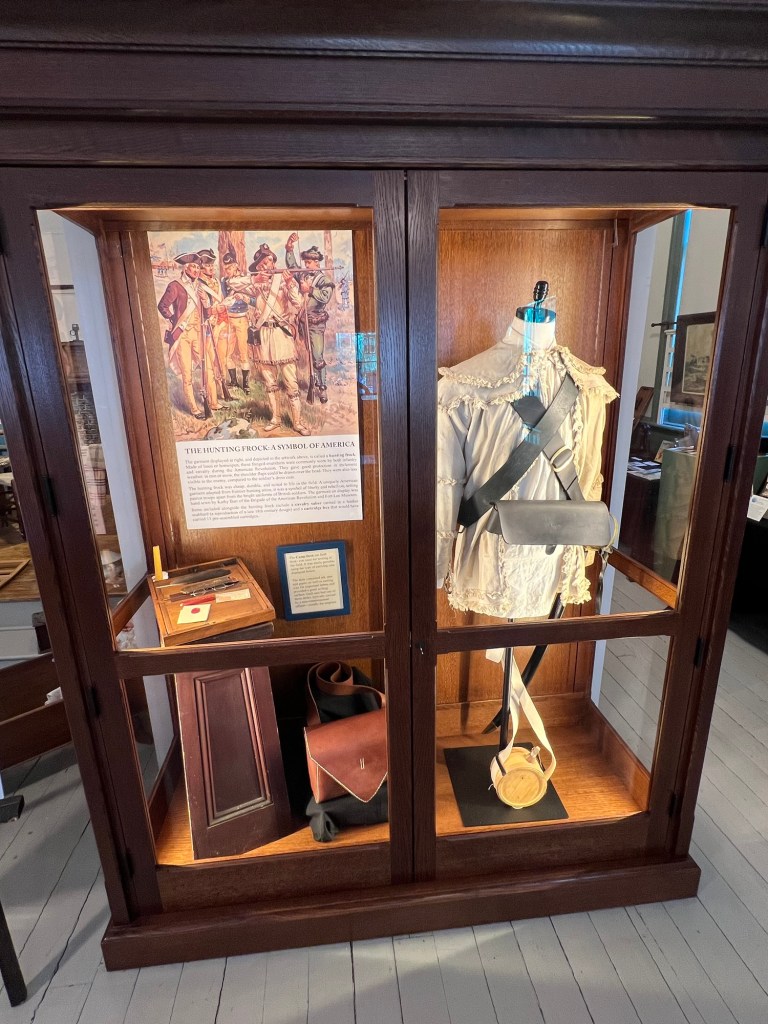
The Military embellishments
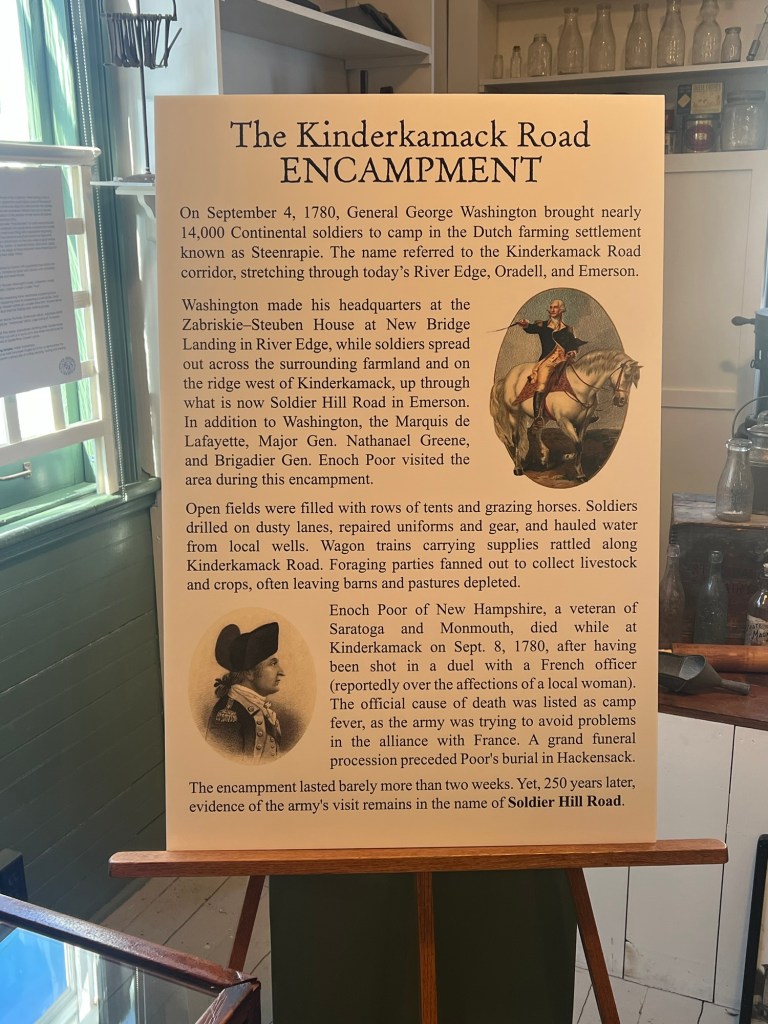
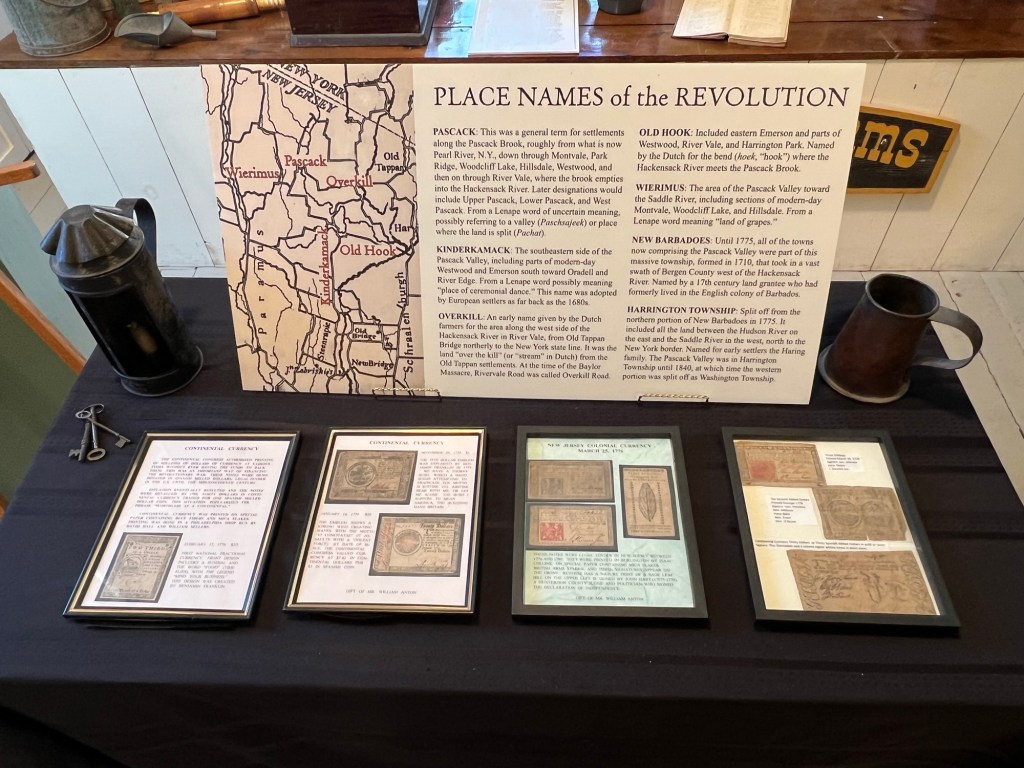
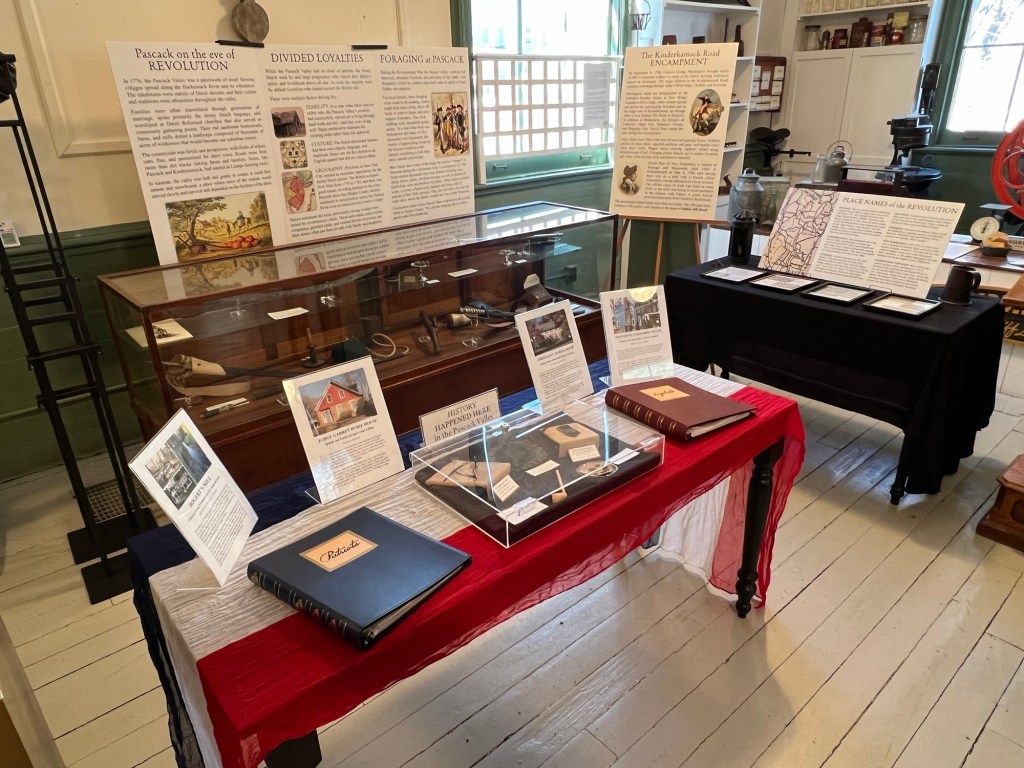
In 2026, the museum was celebrating the ‘250th Anniversary’ of the Revolutionary War and had an exhibition of artifacts from the Pascack Valley.
The ‘250th Anniversary’ of Revolutionary War
This included all the stops that General Washington made in Bergen County, battles and confrontations with British soldiers and family battles by members who were loyalists and patriots.
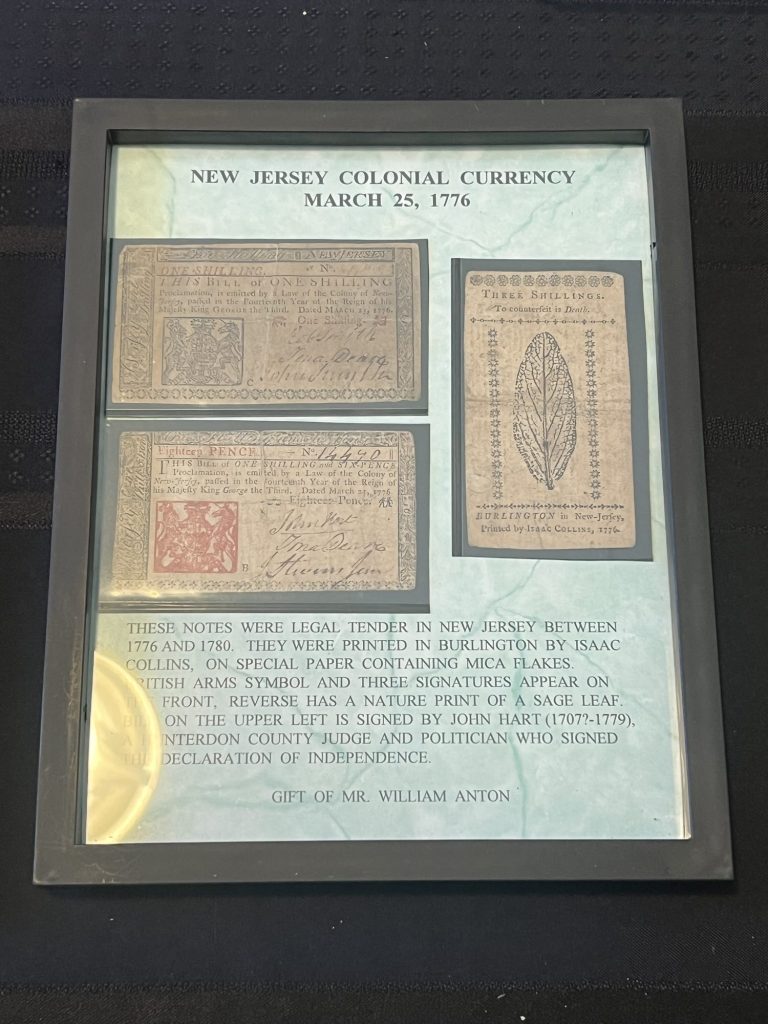
The currency of the war years
The exhibitions shows New Jersey’s contributions to the war effort. This part of the exhibition has Colonial currency from New Jersey.
New Jersey Colonial Currency
The full exhibition of the ‘250th Anniversary’ of the Revolution War
Uniforms and accessories of the War years
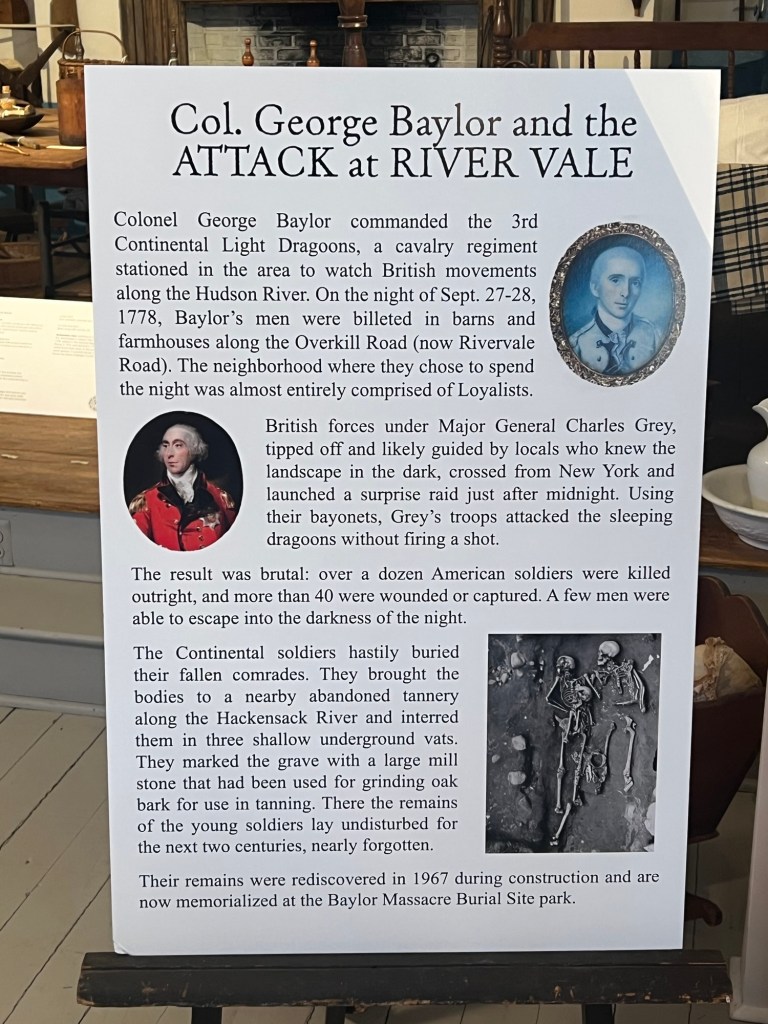
The Baylor Massacre attack
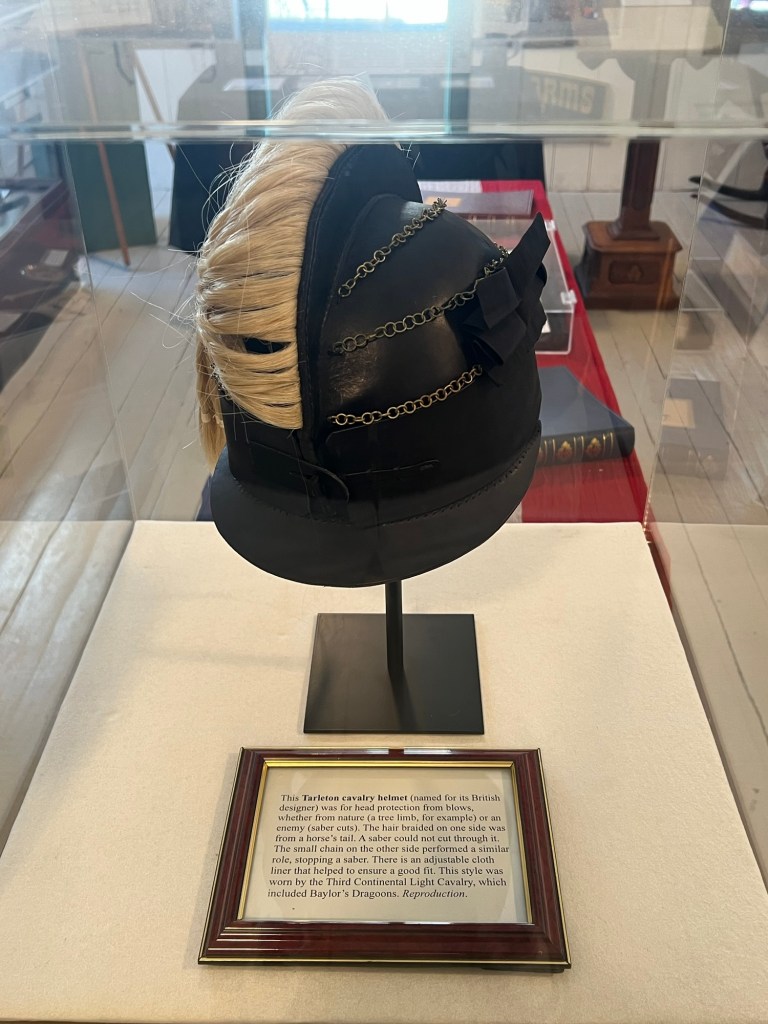
The Tarlatan Calvary helmet
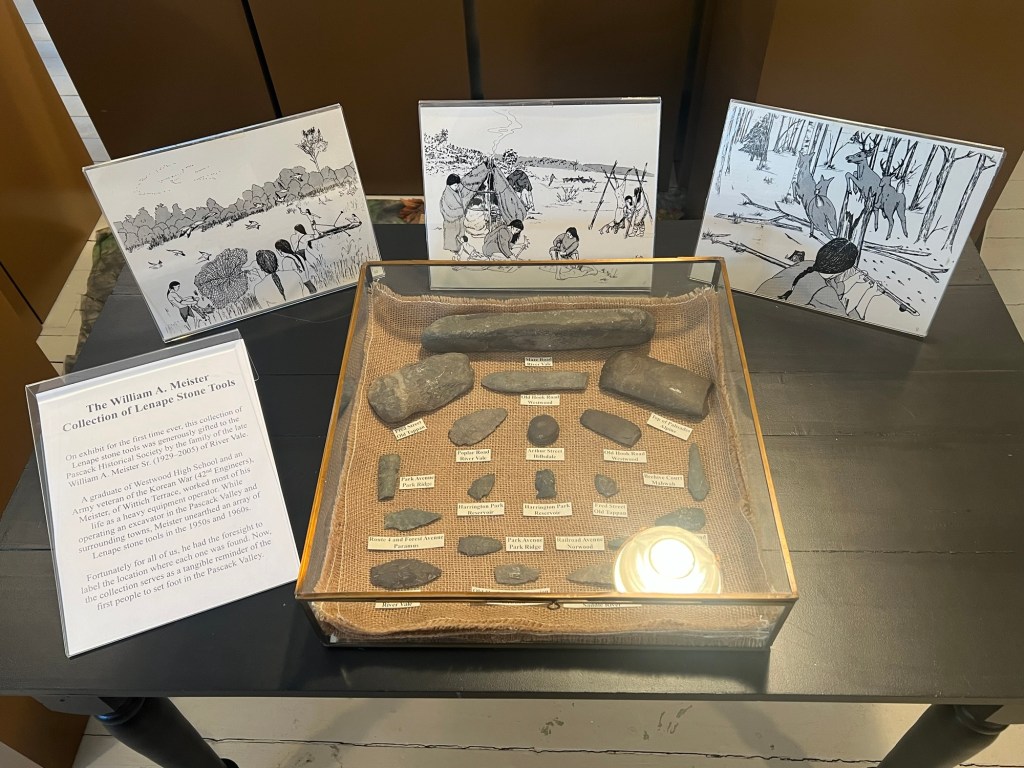
The Lenape artifacts from that era
Membership Opportunities:
Preserving and disseminating local history is a labor of love when you become a PHS member. It is a partnership between you and your fellow members. We encourage you to think about volunteering at some level at the museum or its events. Check out the volunteer opportunities below and give us a call if you would like to participate in any of them.
Docent: Act as a guide when people visit the museum. A simple one-day training session is all it takes.
Researcher: Do you like to wander through books and archives searching for answers to questions?
Archivists: Preserve and catalog the history of the Pascack Valley.
Educators: Work with youngsters and licensed teachers at Society events.
Tech Savvy: Volunteer your time to help with our website or graphic design.
Handy Helpers: Do you like to repair things? Can you sew, do carpentry? This might be for you.
*Disclaimer: Information on Volunteer and Membership opportunities are taken directly from the Pascack Historical Society Museum pamphlet. Most of the descriptions of the displays is what I was able to see in my short time visiting. The museum has a treasure trove of items to look at in detail.
The Reformed Dutch Church with its Colonial cemetery and the Wortendyke Barn is right down the road so take a few hours to explore the area. The members of the Wortendyke family are buried in the church’s cemetery.
Visit from Bergen Community College for the Bergecco- Parc Consulting Inc. on April 9th, 2025: for the ‘Bergen 250’ project:
The project we created for the “Bergen 250: the 250th Anniversary of the Revolutionary War” that was created:
As part of my International Marketing class, I took my students to visit the three sites for our project on the ‘Bergen 250’:
The students toured the museum with the assistance of the Museum’s Board members
As part of the assignment for our ‘Farm to Table Dinner’, the project starts here with a Cocktail Party and tour of the museum. The back room of the museum was where the party takes place and then the guests would tour the museum before heading to dinner at the Wortendyke Barn down the road.
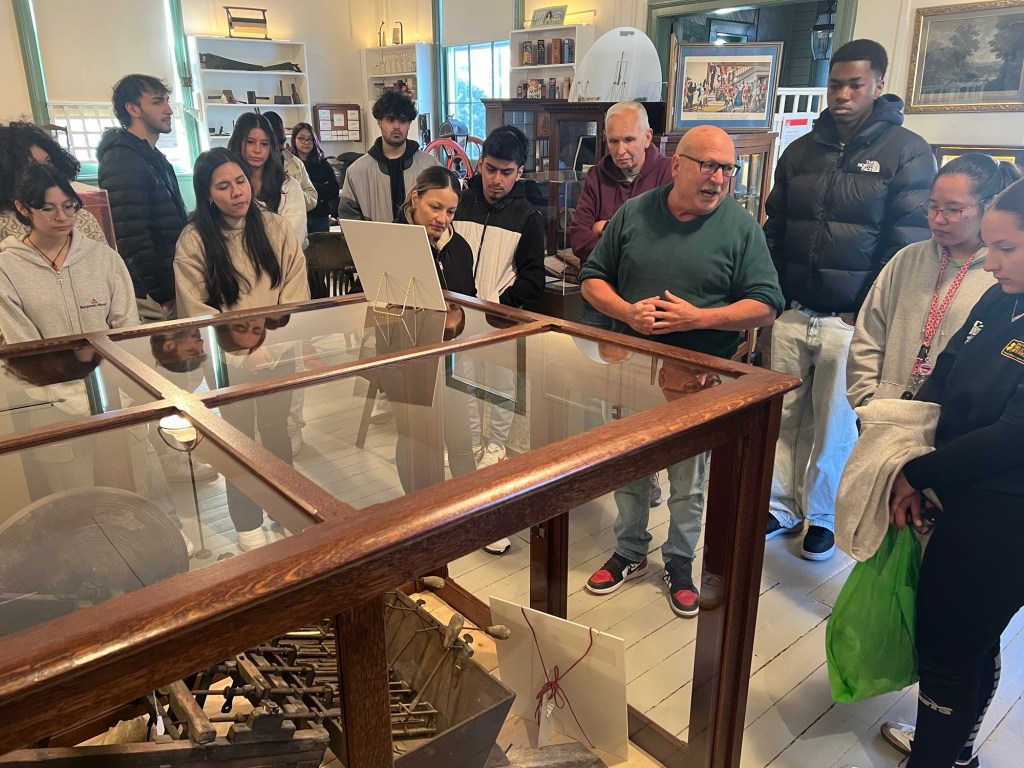
Peter Meany, the First Vice President of the Board explaining the Wampum machine to the students. This form of Native American currency is the only machine in the world like it and is a rare artifact.
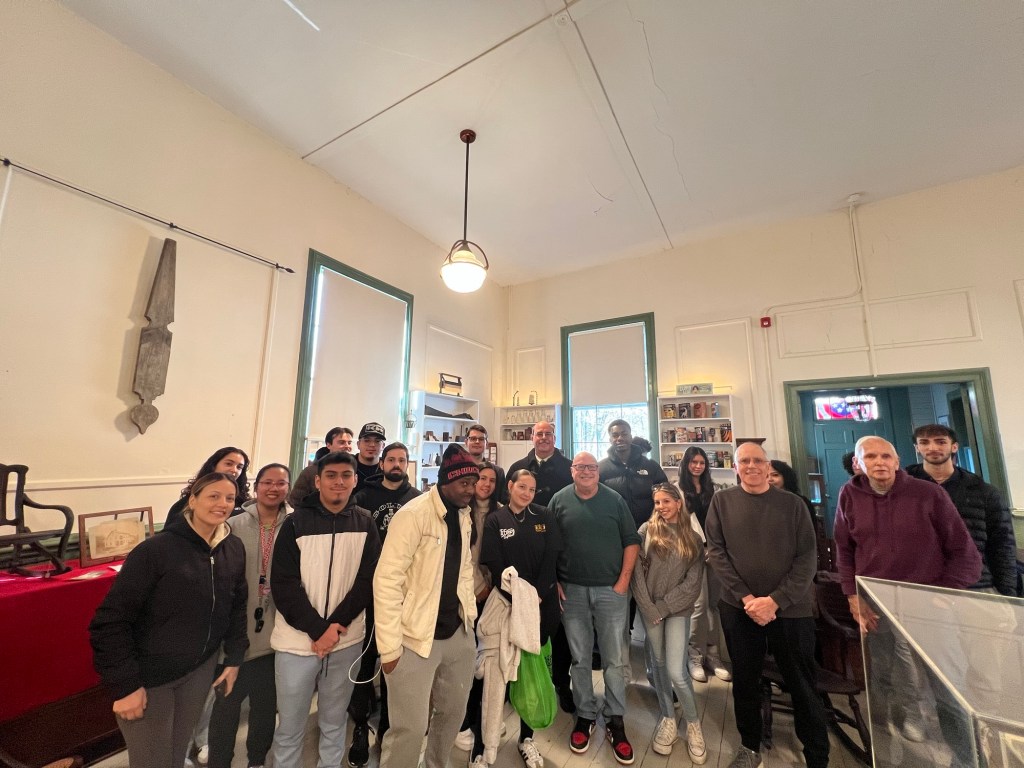
Our Team group picture at the Pascack Valley Historical Society with members of the Museum’s Executive Board Peter Meany, Ralph Donnell Jr. and Christopher Kersting.
We want to thank the Board for taking time out of their busy schedule to support the students on this project.
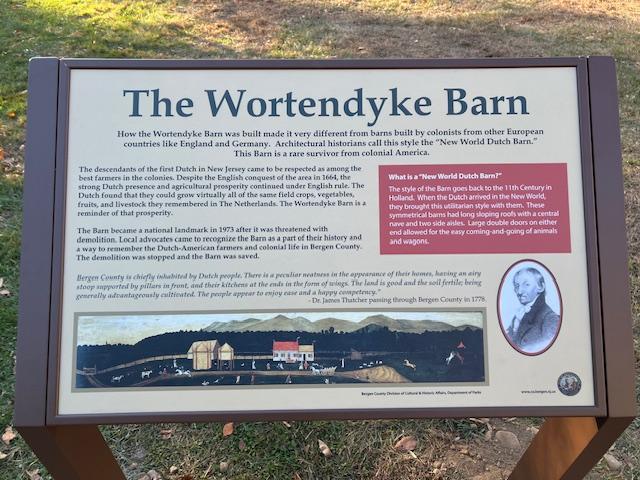
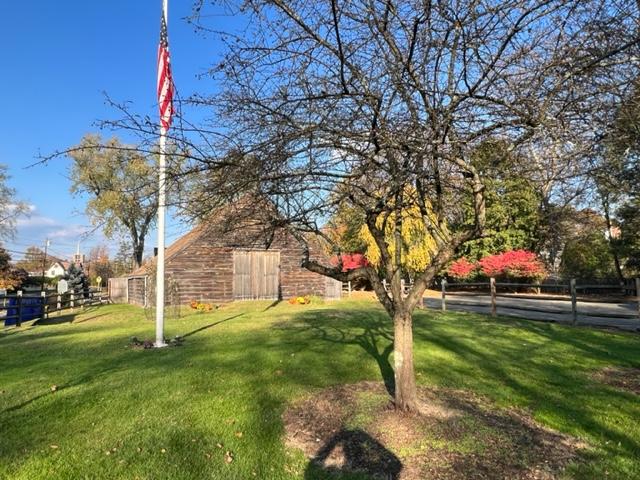
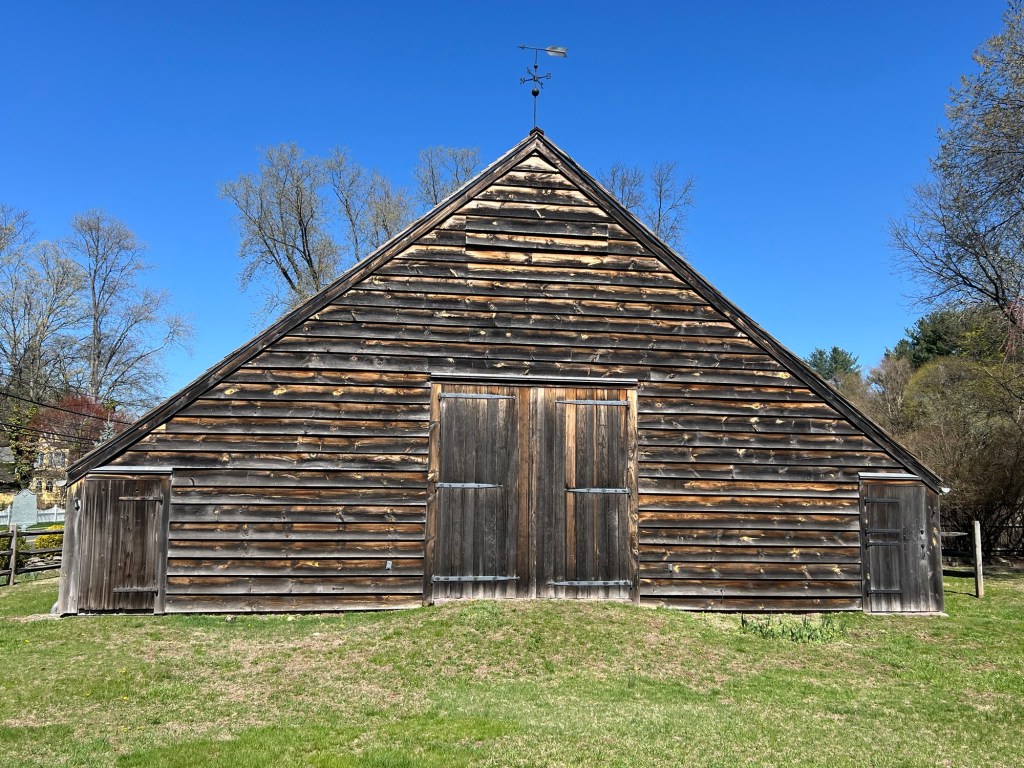
The Wortendyke Barn Museum, a National Register landmark, is all that remains of the original Wortendyke family farm. The barn, built circa 1770, is an outstanding example of the vernacular architecture referred to as a “New World Dutch Barn”, which could be found throughout 18th and 19th century Bergen County.
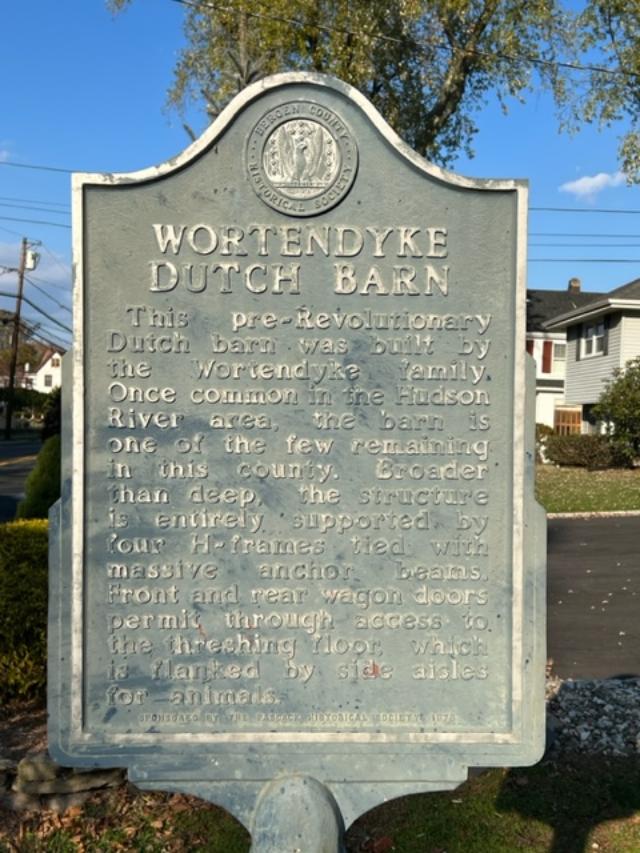
The Historic sign of the barn
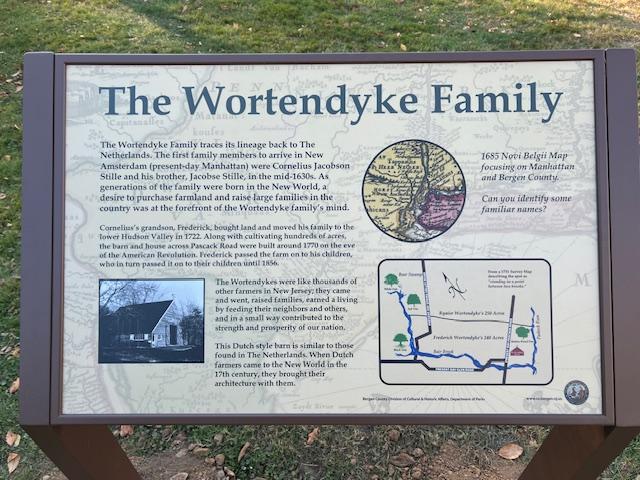
The Wortendyke Family sign
Most were built between 1624 and 1820 wherever Dutch farmers settled along the Hudson, Hackensack, Passaic, Raritan and Mohawk rivers. Today there are probably fewer than 100 of these barns left in various states of use and repair.
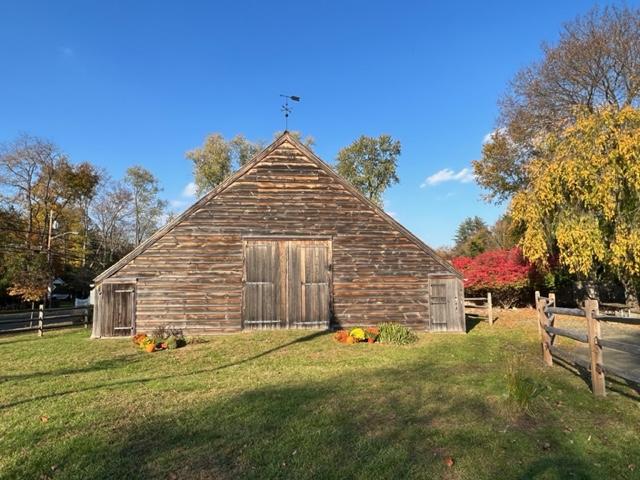
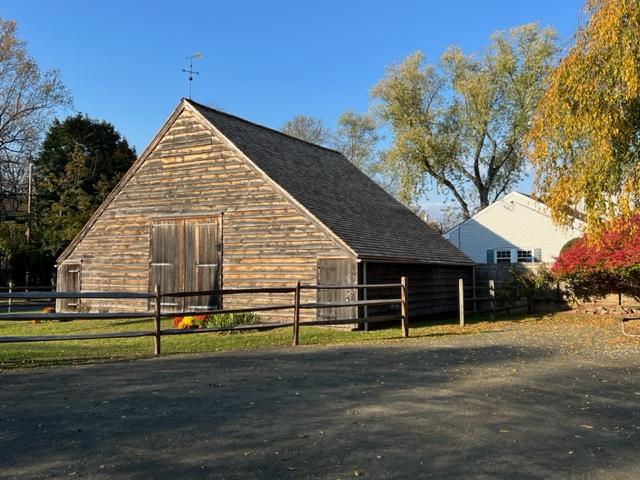
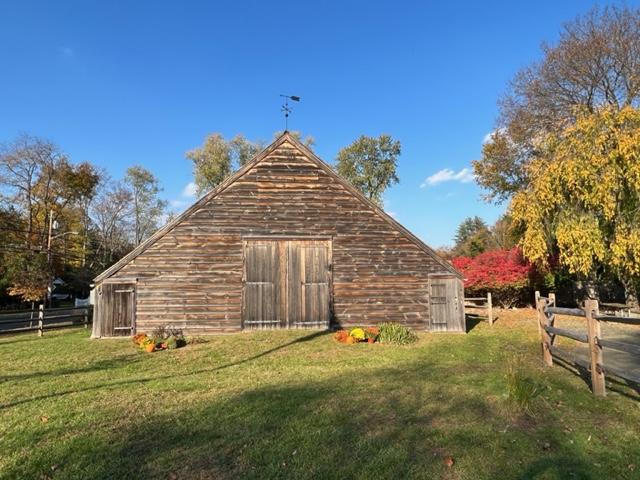
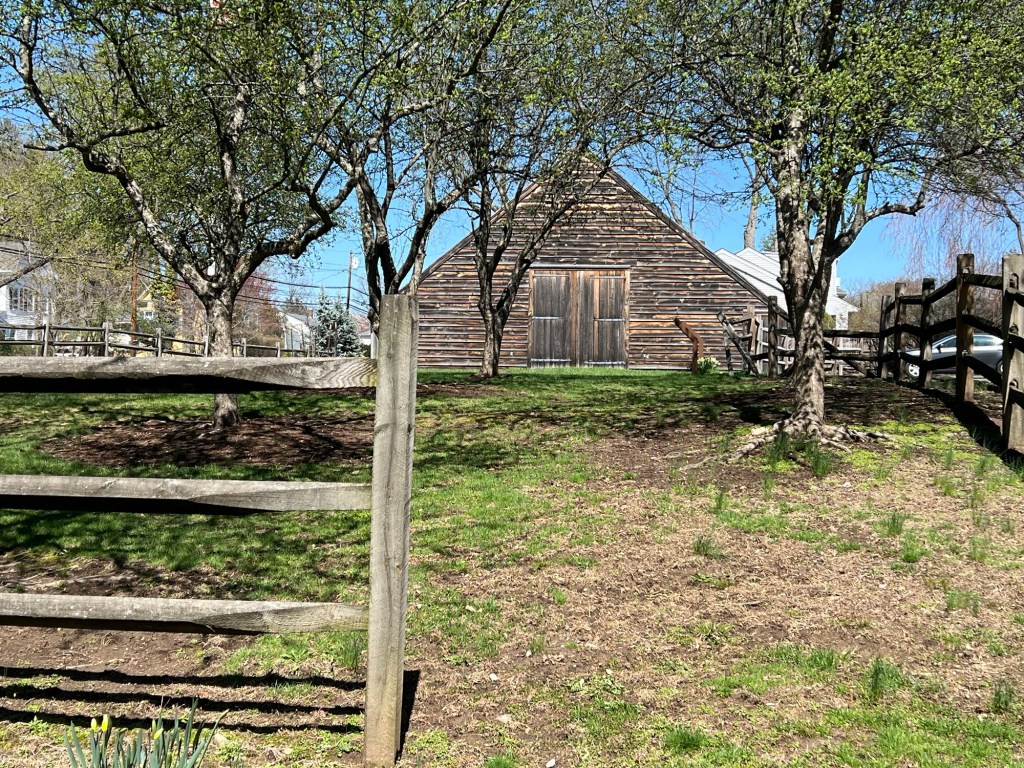
The Wortendyke Barn from Pascack Road
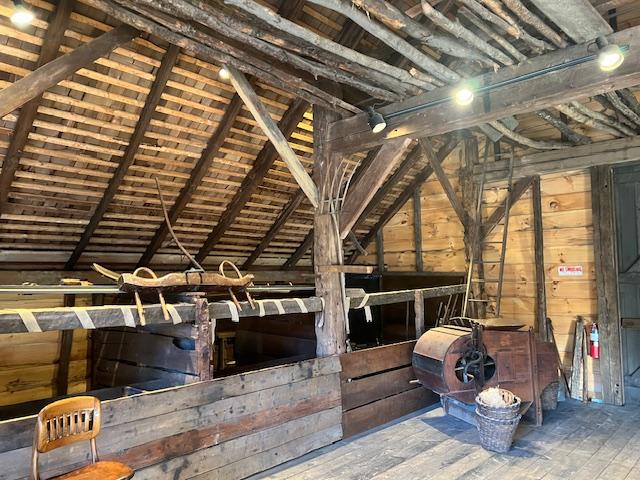
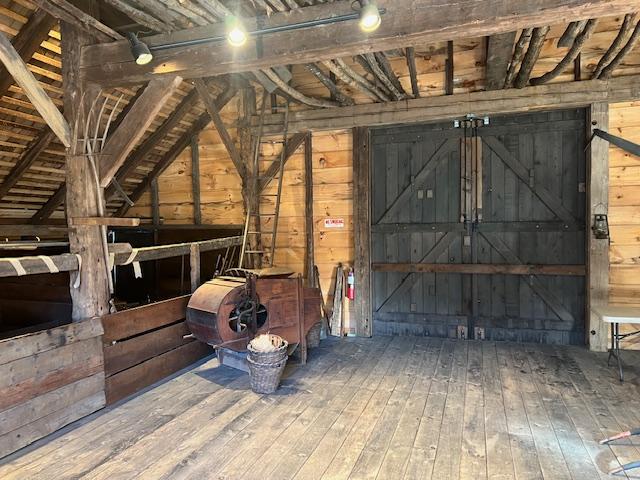
It was completely made of local wood, down to the nails called trunnels. Massive anchor beams support by posts creating an H-Frame, support the entire structure. These beams in turn support the ‘pulin’ plates, which support the roof. These barns were wider than long with steep, sloping roofs and low sidewalls, which created large storage areas. Farmers were able to store a variety of crops, keep many animals in the side bays and store hay in the large, roomy lofts. Because they were raised off the ground on a sill, the wood plan floors could last for decades. Large entrances on both gable ends allowed for the efficient unloading of wagons.
The Wortendyke Barn’s Museum exhibits include handmade 18th and 19th Century farm implements and tools and the history of the Wortendyke family farm and exhibits showing the agricultural history of Bergen County from the first settlers through the 20th century. The Wortendyke family settled in northern New Jersey in 1735 and maintained the land as a working family farm for over 115 years. After 1851, the land was sold several items but the barn continued to be used for its original purpose until well into the 20th century.
At the time the barn was built, most of the families living in the Hackensack Valley were independent farmers some owning hundreds of acres of fertile farmland. People of Dutch ancestry were numerous in Bergen County, speaking Dutch in their homes and churches. The Wortendyke family settled in this area in 1735, when Fredrick Wortendyke Senior moved from Tappan, NY and purchased 465 acres in present day Woodcliff Lake and Park Ridge. The family home, a sandstone house originally built around 1750, still stand directly across the street from the barn.
The Wortendyke Homestead that is privately owned.
The Wortendyke Homestead across the street from the barn.
The Historical marker for the Wortendyke Homestead.
From 1735 to 1851, from before the French and Indian War until nine years before the start of the Civil War, when the farm was sold, the land was maintained by the Wortendyke family as a working farm. After 1851, the land was sold several times. From 1960 until the middle of the 1980’s, the Pascack Historical Society displayed some of their collections in the barn showing it on occasion. After restoration was completed in 1997, Bergen County opened the barn as an accessible museum and County Historic site.
The Wortendyke Barn
The site now contains the barn and landscaped property that surrounds it. The old family homestead is now a private home but you can still see it from across the street. Many of the Wortendyke family are buried in the Dutch Reformed Church up the road, so take some time to visit the cemetery when you are in the area. The whole area is just beautiful this time of the year with all the trees and flowers in bloom and the woody areas close by. The Pascack Historical Society is also right up the road so plan your day wisely.
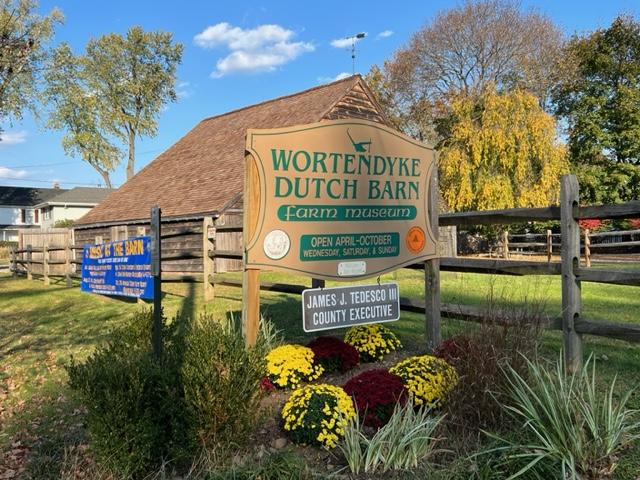
The historic sign of the barn.
During the Summer and early Fall months, they have a nice array of outdoor concerts on the lawn outside the barn. These usually take place on the last Sunday of the Month so please check the County of Bergen Website for details.
The inside of the Wortendyke Barn
The Ceiling of the barn
The back of the barn after one of the concerts
Also visit the Reformed Church up the road and the family homestead across the street while visiting the barn. You will see more of the family history in the homestead and in the family cemetery at the Church.
Bergen Community College Field Trip-Bergecco-Parc ConsultingApril 2025
A tour with my students on the Wortendyke Barn for the Bergecco- Parc Consulting Inc. Team Project on the ‘Bergen 250’: the history of the Revolutionary War in Bergen County’.
On April 9th, 2025, my students in my International Marketing class at Bergen Community College did an extensive tour of Park Ridge, NJ to the Wortendyke Barn, the Pascack Reformed Church and the Pascack Valley Historical Society as part of this extensive marketing project.
We toured the barn and the grounds on this spectacular day with County Historian, Vivian Davis, who I am partnering with on this project. We discussed the history and architecture of the barn and of the Wortendyke family. It was a very interesting tour for all of us.
The barn in the early Spring
The Wortendyke Barn in the Spring
The grounds in the Spring
The Wortendyke Barn
Old farming equipment
Old equipment at the barn
Touring the outside of the barn and grounds with Vivian Davis, the County Historian
My class touring the inside of the barn
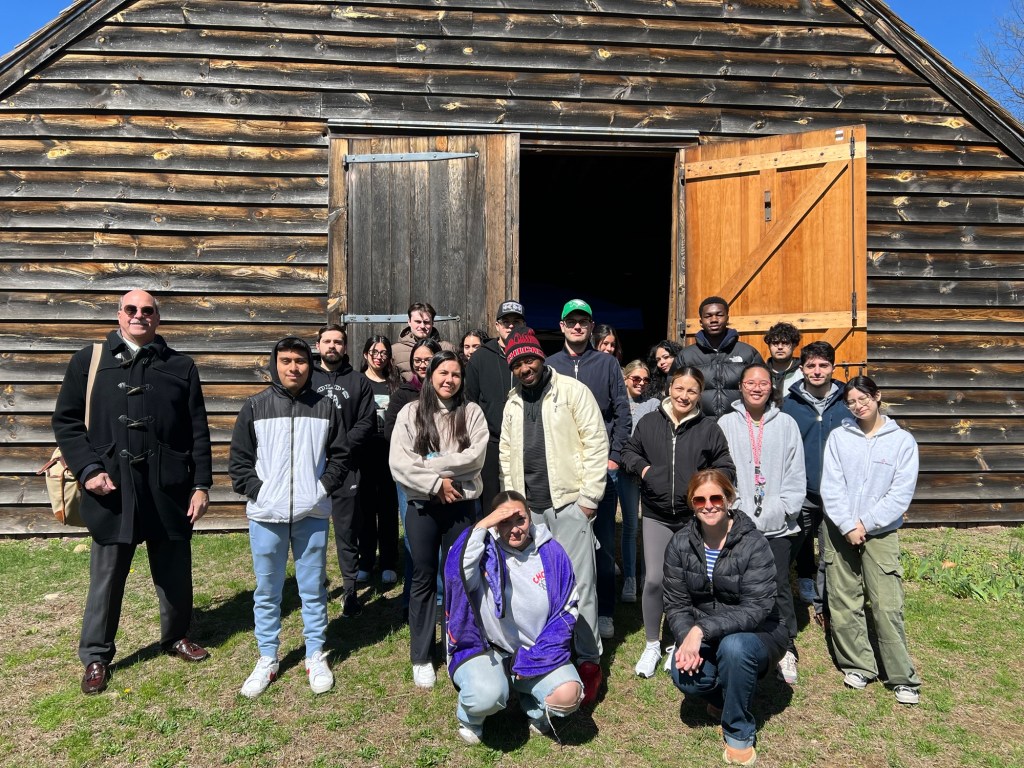
Our class picture after the tour of the barn and grounds
The Bergen County Division of Cultural and Historical Affairs publication is funded by a general operating support grant from the New Jersey Historical Commission, a Division of the Department of State.
*Disclaimer: This information about the Wortendyke Barn Museum was taken directly from the Bergen County Division of Cultural and Historical Affairs pamphlet. The barn is a beautiful example of Dutch architecture and really should be visited in the Spring and Fall for the areas true beauty shines. Please call the above number and ask about extended hours, programming and accessibility for the disabled.-








































































 Visiting a Museum: The Unique, Unusual, Obscure and Historical