Category: Nautical Museums

City Island Nautical Museum/City Island Historical Society                                                  190 Fordham Street                                              City Island, NY 10464

City Island Nautical Museum/City Island Historical Society 190 Fordham Street City Island, NY 10464

City Island Nautical Museum/City Island Historical Society

190 Fordham Street

City Island, NY 10464

(718) 885-0008

https://www.cityislandmuseum.org/

https://www.facebook.com/City-Island-Nautical-Museum-120813594596346/

Open: Sunday 1:00pm-4:00pm/Monday-Friday Closed/Saturday 1:00pm-4:00pm

Admission: $8.00 for visitors/Members Free

My review on TripAdvisor:

https://www.tripadvisor.com/Attraction_Review-g47475-d109882-Reviews-City_Island_Nautical_Museum-City_Island_Bronx_New_York.html

The City Island Nautical Museum at 190 Fordham Street

The City Island Nautical Museum

I recently took a trip to City Island, a small community just off the coast off the mainland of The Bronx (which is part of The Bronx) to visit the City Island Nautical Museum. This tiny museum located in the heart of the island is noted for its collection of ship building artifacts and items that are native to a community that once built the vessels for the America’s Cup.

The main hallway at the City Island Nautical Museum dedicated to the America’s Cup

City Island has a rich history in ship building, sail making and fishing it is reflected in the collection of materials in the museum and its archives. The museum really details the growth and history of the boating industry on the island and its importance in the local economy. What I found interesting was the rich history of the creation of the sailing ships for the America’s Cup tournament and how all the winning boats up until the 1980’s were built on the island and the one that lost the cup for us against Australia was the first one not built on the island.

The Nautical Room Gallery

Even Ted Turner’s boat “Courageous” was built on the island. There was a picture of the reunion of the boat winning twice at the museum with the crew’s signatures (The tour guide even said how he ‘freaked out’ members of the New York Yacht Club who did not consider him one of their own). All the sailing vessels lined the walls of the hallway of the museum.
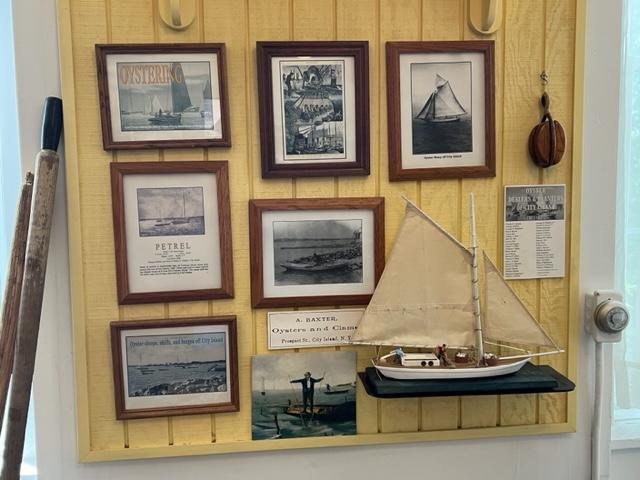
The America’s Cup Race winners

Each room of the museum was dedicated to a different theme. When I toured the Community Room in the back of the museum, it held the records of a lot of old businesses of City Island with pictures and items that were once part of the businesses. There was a small FDNY display, a small WWII display about local residents who fought in the war, wedding garments, maps of the island and a small display of arrowheads.
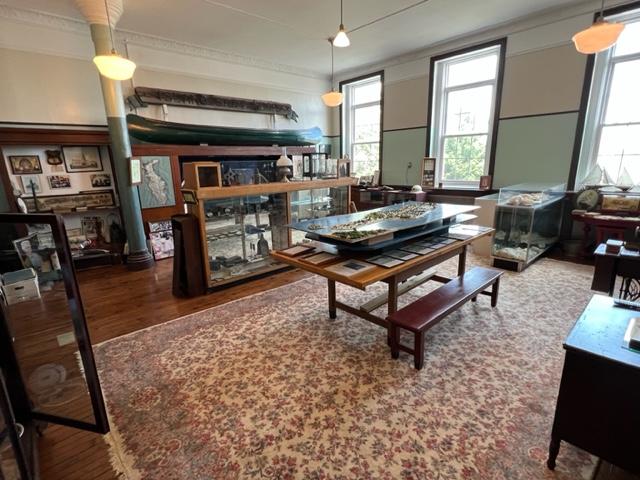
The Community Room Gallery

The Community Room-Map of City Island

The Community Rom-Items from businesses and homes.

The Community Room-Arrowheads and Native American objects
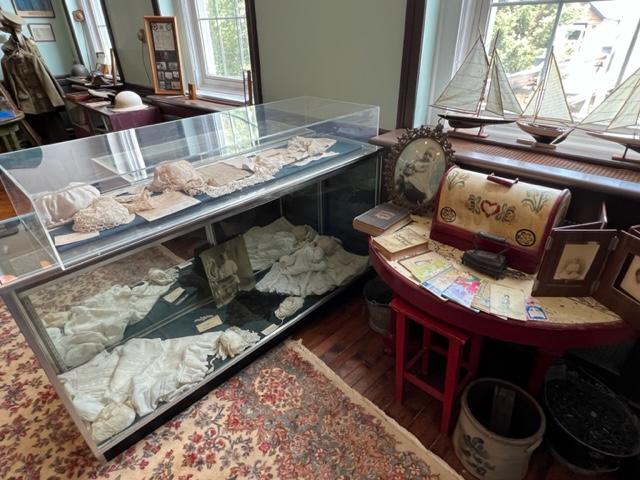
Baby clothes and household items
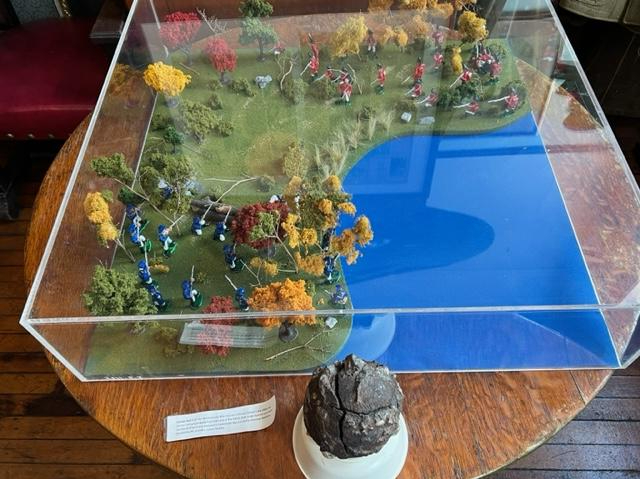
A cannonball from the Revolutionary War battle

Church Chairs in the Community Room

In the School Room, the concentration was on PS 17, which the museum is now housed in and its history with all the classroom group shot pictures, graduation pictures and a small classroom set up. There were more records and event items of the current PS 175, which is the K-8 school that the residents attend. There were also records and pictures of St. Mary, Star of the Sea School, the former Catholic school that used to be on the island as well.

The Schoolroom Gallery

The Schoolroom Gallery

The Nautical Room needed an overall as there was too much going on in the room with pictures all over the walls, equipment for navigation and for fishing and records of the ship building companies that used to dot the island. There were boats in various shapes and sizes on display and the companies that built them like Wood Yacht, Nevins Yacht and Minneford Yacht. There was also the history of shipbuilding and sail making on the island. The tour guide told me there were no more ship builders on the island, but one sail maker left.

The Shipping making equipment

Locally made boats on City Island

The Library where all the research is done on the island and on the families and businesses that were once here was dominated by yachting pictures and nautical photography. It held all the City Island records and even the ship building plans.
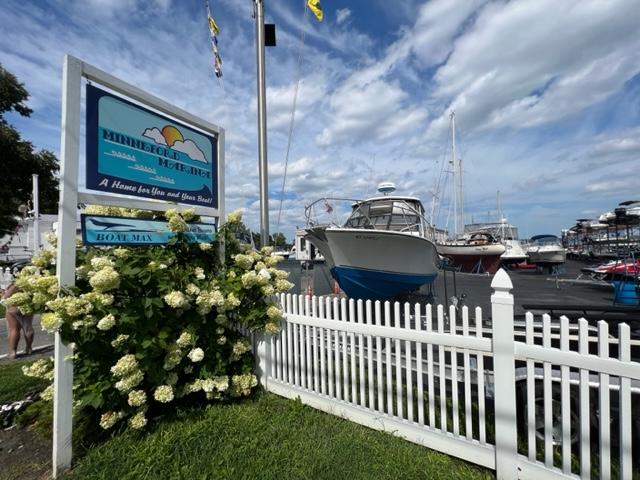
The Minneford Boatyard down the road from the museum is still operation today.

The City Island Nautical Museum Library

The museum has a lot to see but it needs to be a bit more organized to really showcase the collections properly. Still, it is one of the best museums I have seen with a nautical history theme. The best part is that you can see the whole museum in about an hour and this leaves you time to tour the island and see how the museum better explains why the island is the way it is right now.

The Ship display in the City Island Nautical Museum Library.

The History and set up of the City Island Nautical Museum:

(From the Museum pamphlet)

History of the Museum:

(From the Museum Pamphlet)

The City Island Nautical Museum is located in one of the island’s most picturesque and historic buildings, the former Public School 17, built in 1897 on one of the highest points on the island. When the residents of City Island voted in 1895 to separate from the town of Pelham in Westchester County and to become part of New York City, the City administration built the school, which continued in use until 1975. When the building was sold in 1986, the City reserved space for use by the City Island Historical Society and the Community Center and several old classrooms now serve as galleries for the museum.

The front main gallery is reserved for revolving exhibits. This exhibit that was being featured in the summer of 2023 was by local artist Liz Alderman.

The Liz Alderman Exhibit in the Front Gallery:

Local City Island Artist Liz Alderman at the City Island Nautical Museum in 2023.

The Liz Alderman Exhibit in 2023 at the museum

The Liz Alderman Exhibit of the local artist’s work.

The Liz Alderman Exhibit at the museum

The Main Hall and Gallery:

The Main Hall is lined with photographic essays featuring maps, the America’s Cup, City Island’s most beautiful boats, the City Island Bridges and historic buildings as well as a history timeline, models of a minesweeper and several rum runners, built during Prohibition and a handsome wooden kayak built in the 1930’s. The foyer contains the museum’s gift shop, featuring articles for sale such as books, t-shirts, photographs, postcards and nautical gifts and the desk where the docents greet visitors.

The Gallery features display cases with antique shipbuilding and sailmaking tools and the walls are covered with photographs of yachts built or serviced here and portraits of legendary City Islanders who contributed so much to the life and work on the island.

The Main hallway at the City Island Nautical Museum

The Walsh Library:

The recently refurbished library features a collection of books devoted to maritime history and many binders and scrapbooks featuring newspaper clippings, postcards and articles about City Island, Pelham Bay Park and Hart Island. There is an extensive selection of nautical magazines, including Yachting, Rudder, Wooden Boat and Classic Yacht, a data base of all boats built on City Island since 1848 and an impressive display of ship models. Special exhibitions regularly mounted in the library feature the work of local artists and photographs documenting aspects of City Island history.

The Library at the City Island Nautical Museum

The Nautical Room:

Shipyards, sail lofts, yachts and the people behind them are all honored here. Historical photographs, memorabilia and artifacts fill the room and tell the story of City Island’s rich nautical past. Also on display are tools used by sailmakers and shipbuilders, several ship models and some vintage outboard motors. Of particular interest in the room are several skiffs, a partially completed boat and a Buchman sailing canoe from the early 1930’s (all built on City Island).

Ship building display on City Island

The Community Room:

Celebrating City Island from its earliest days, the Community Room displays photographs, maps and memorabilia, including Native American arrowheads found in the area. The walls are covered with images of street scenes, stores, restaurants, private houses, and the waterfront then and now. Displays include a large relief map of City Island in about 1867, a diorama of the Battle of Pell’s Point that took place in October 1776, a niche devoted to City Island’s religious institutions and many antique home furnishings, including sewing machines, an ice box, and a 100-year-old typewriter. A large counter from Gilbert’s Pharmacy serves as a display case in the center of the room.

The Community Room at the City Island Nautical Museum
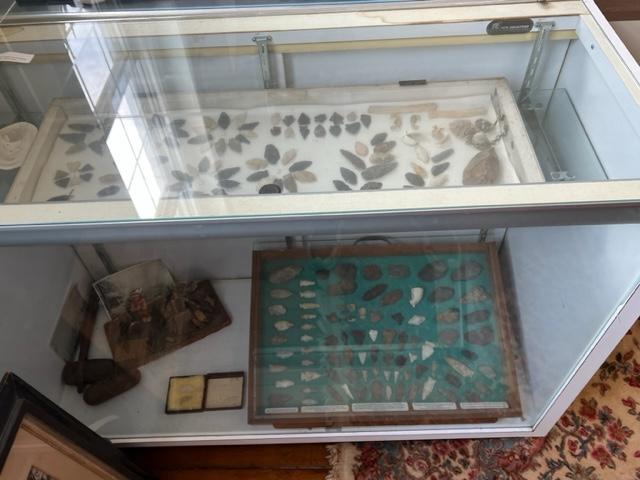
The Native American Collection in the Community Room

The School Room:

Student registers, graduation pictures, autograph books, report cards, the old school bell, and the other artifacts tell the story of City Island’s schools from the first schoolhouse built in 1838 to the present school, P.S. 175, built in 1975 and St. Mary, Star of the Sea RC School, which served the island for over 75 years. A section of the room is set up like a traditional school room, and a unique map of the naval training station that was located in Pelham Bay Park from 1917 to 1918 hangs on the wall.
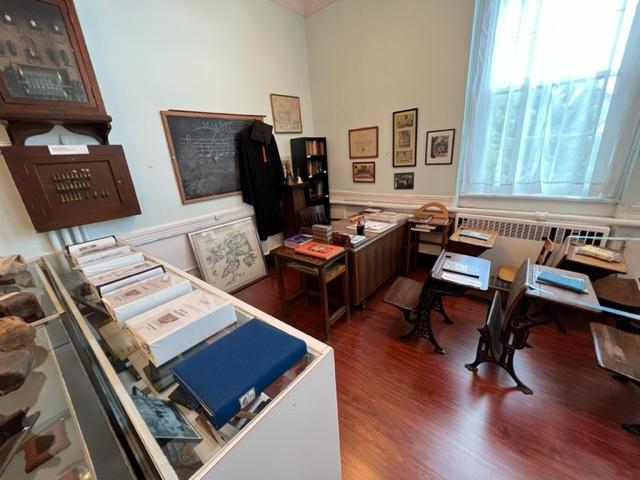
The classroom set up in The School Room
Day Two Hundred and Forty-One Exploring the Somers Point, NJ-A Local Journey of the historical sites of this unique Jersey shore town                                                                      June 25th, 2022 (again on October 5th, 2025)

Day Two Hundred and Forty-One Exploring the Somers Point, NJ-A Local Journey of the historical sites of this unique Jersey shore town June 25th, 2022 (again on October 5th, 2025)

Don’t miss all the historical sites and interesting restaurants of this wonderful NJ beach town.

Somers Point, NJ is such a picturesque and historical town with lots of historical sites and delicious restaurants to visit. It is fun to just get in the car and drive the Historic District and see how the town has grown and developed.

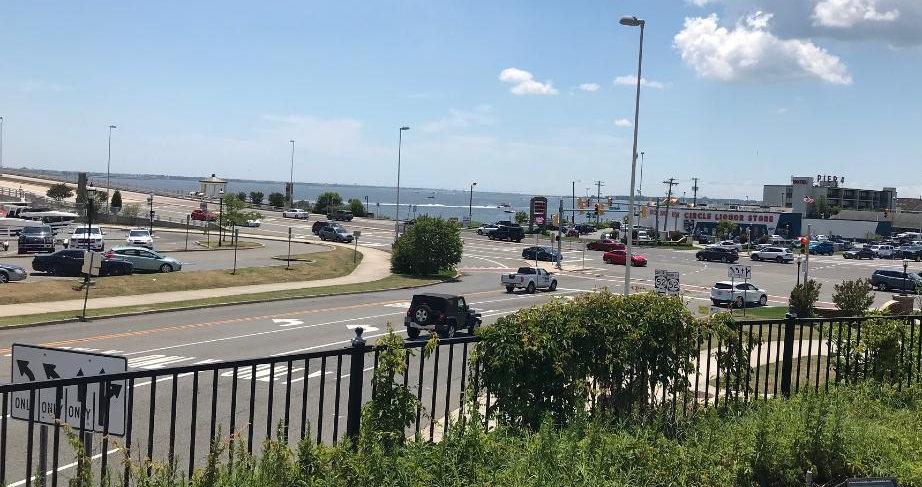
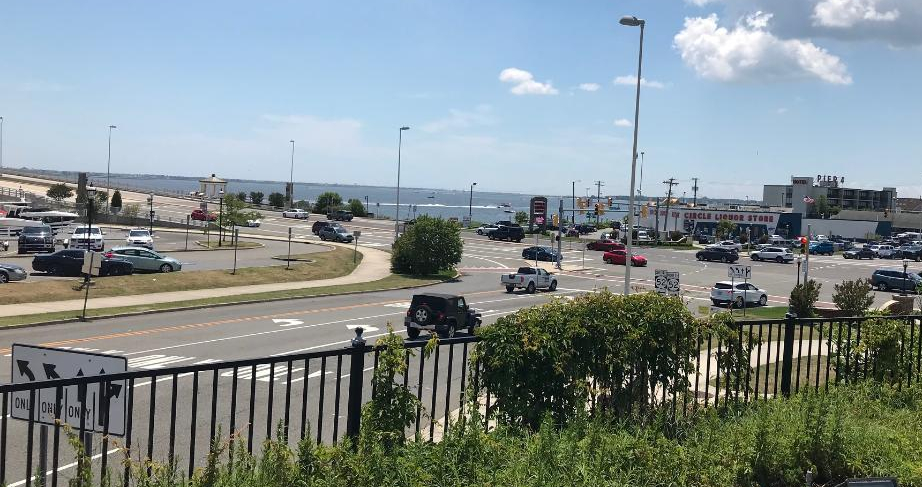
The bay beach in Somers Point, NJ

Lots of historical sites to see

jwatrel's avatarmywalkinmanhattan

I took time out of my walking project in Manhattan after finishing the Chelsea neighborhoods, walking the 13-mile Broadway walk for the sixth time and preparing to do “The Great Saunter” on my own next week to go ‘down the shore’ as we say in New Jersey (it’s never ‘Down to the Shore”, that takes too long).

I had never been to Somers Point, NJ before. It is a small waterfront community across the bay from Ocean City, NJ, which is a popular resort and recreation town. Somers Point is low key with wonderful restaurants and bars, a popular waterfront and beaches on The Great Egg Harbor Bay and beautiful little turn of the century beach homes and a town steeped in history. I read about three historical spots on Shore Drive in the heart of the Historic District and had wanted to visit them.

Somers Point, NJ by The…

View original post 2,936 more words

Somers Mansion                                                                                   1000 Shore Road                                                                            Somers Point, NJ 08244

Somers Mansion 1000 Shore Road Somers Point, NJ 08244

Somers Mansion

1000 Shore Road

Somers Point, NJ 08244

(609) 927-2212

https://www.nj.gov/dep/parksandforests/historic/somersmansion.html

Somers Mansion

Open: Sunday 9:30am-3:30pm/Monday-Friday Closed/Saturday 9:30am-3:30pm

Admission: Free

My review on TripAdvisor:

https://www.tripadvisor.com/ShowUserReviews-g46825-d5970174-r844645596-Somers_Mansion-Somers_Point_New_Jersey.html?m=19905

The Somers Mansion at 1000 Shore Road

(There is no indoor picture taking allowed)

The mansion from the front

I visited the Somers Mansion, the three story former home to five generations of the Somers Family. The mansion sits on a buff overlooking the bay and the bridge to the barrier island where Ocean City is located. The original part of the house was built in 1725 and in 1920 the last family members moved from the home and deeded it to the town. The modern additions of the home have been stripped off so you see the original house.

The historic marker of the home when it was donated by the family

I have to say that I was very disappointed with the condition of both the house and of the rooms and displays inside the house. There was not much to see. The lower level of the home has the main room with the hearth known in most early homes as the “Keeping” or “Everything” room where all the cooking, household chores and socializing was done because of the warmth of the fire.

Here and there were pieces of furniture but nothing labeled or decorated to make the room look ‘period’. Just old furniture here and there to fill the space. Some of the original family china was in the cupboards built into the walls.

The upstairs which must be reached by a rope bannister lead up a narrow stairs to two upstairs bedrooms. The home is not handicapped safe. The front bedroom had a fireplace with a small side room that held spinning wheels and some children’s furniture. There was not much to see in the upstairs.

The tour guide did not offer much in the way of information on the house and the only period pieces of the Somers family that were left inside the house were a chest, a clock, some of the china that was in the side cabinents and a bedwarmer.

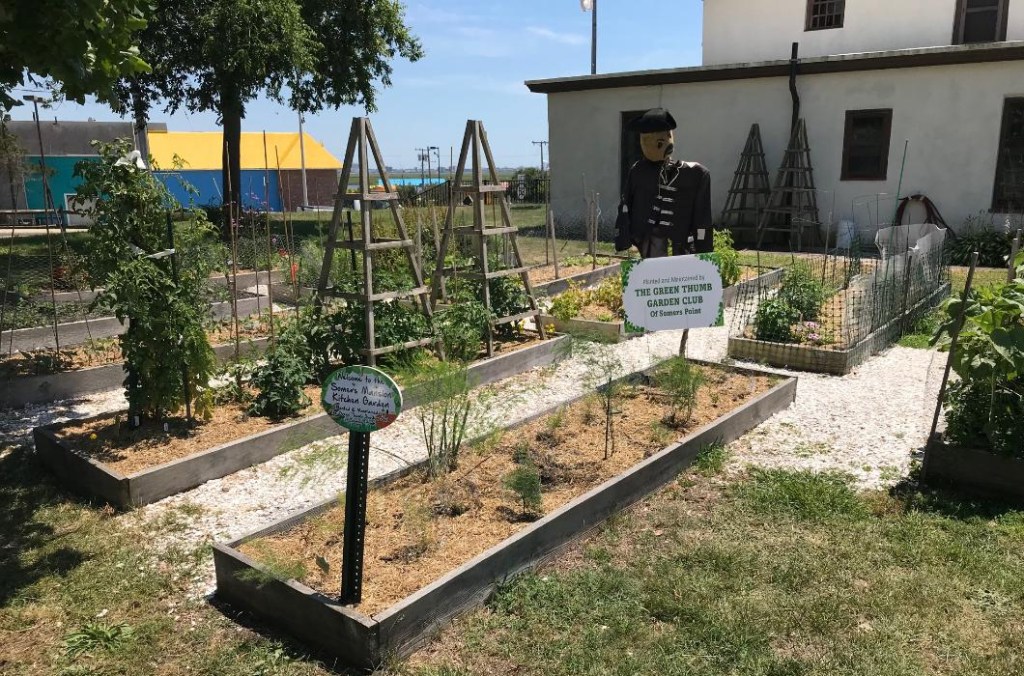
Outside the house the Somers Point Garden Club planted a period garden of fruits and vegetables on the back lawn and lead tours of the gardens.

The Somers Mansion Kitchen Garden

The Garden Club planted fruits and vegetables that would have been grown in the time periods of the late 1700’s to early 1800’s. You can walk amongst the beds to see the plantings.

Somers Mansion Kitchen Garden planted by the Garden Club

The whole tour takes less than a half hour and it is more impressive from the outside. You are also not allowed to take pictures of the house for security reasons.

The back of the mansion

The History of the Somers Mansion:

(From the NJ State Historical Site.com):

The mansion and surrounding city bear the name of the family who owned and occupied the house for 200 years.

The Somers Mansion, a three story home constructed of brick in the Flemish bond pattern, sits overlooking the Great Egg Harbor Bay at Somers Point. In the late 1600’s, the property which surrounds the mansion was acquired by John Somers, who operated a ferry service across The Great Egg Harbor Bay to Cape May. He referred to it as Somers Plantation and Somers Ferry and the surrounding settlement, the olders in what became Altantic County and then Somers Point in the mid-18th Century.

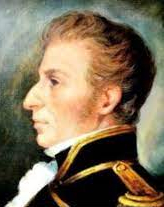
Master Commandant Richard Somers

https://en.wikipedia.org/wiki/Richard_Somers

http://www.richardsomers.org/

The mansion is considered to be the oldest existing house in Atlantic County, predating the County itself. His son, Richard, the first of the family to be born in New Jersey, built what is now referred to as the mansion by 1726. That year the local Society of Friends (Quakers) used the home for a meeting and memorialized it in their minutes, making the earliest recorded date of the home’s existence.

By the end of the 19th century, the mansion’s architecture had been added to and changed to reflect a Victorian style. The house remained in the Somers Family until 1937 when it was deeded by Florence Hayday Brooks and Lulu Hayday Smith, daughters of Hannah Hayday Somers to the Atlantic County Historical Society for the purpose of creating a permanent memorial to the Somers family.

In 1941, it was transferred to the State of New Jersey, dedicated on September 26th, 1942 and in the early 1940’s was restored to its colonial appearance as a Works Progress Administration (WPA) project. Laborers for the WPA both renovated the surviving furnishings and conducted a historical restoration, including the elimination of rooms and architectural details dating to the 19th century. The site was added to the National Register of Historic Places in 1970 and is now a State Historic site.

The Somers Family burial ground further down off Shore Avenue off New York Avenue

A Short History of Somers Point:

(From the Trail of Richard Somers pamphlet)

https://en.wikipedia.org/wiki/Somers_Point,_New_Jersey

Somers Point was originally settled by John Somers, an Englishman and practicing Quaker, who bought the land from Thomas Budd. Early names for the area were Somerset Plantation, Somers Ferry and Somers Plantation named after the first settlers in 1693. The land purchased originally covered all of Somers Point, part of Linwood and went into Egg Harbor Township. In the early years, it was part of Gloucester County, because Atlantic COunt had not yet been named.

The name “Somers Point” was adopted in 1750. It was a seafaring town and sloops, schooners and barges were built in the many shipyards located along the Greate Egg Harbor Bay, Greate Egg Harbor River and Patcong Creek.

The estate overlooking the bay

The back of the mansion and gardens

The Sooy Boatworks was located on Shore Road and the completed ships were rolled on logs down Shore Road to Delaware Avenue and then down to the bay. Shipbuilding and life along the waterways was a very important part of life in early Somers Point.

The statue of Robert Somers in Robert Somers Park

Avalon History Center                                                              215 39th Street                                                                     Avalon, NJ 08202

Avalon History Center 215 39th Street Avalon, NJ 08202

Avalon History Center

215 39th Street

Avalon, NJ 08202

(609) 967-0090

https://www.avalonhistorycenter.org/

https://www.facebook.com/avalonhistorycenter/

Open: Sunday Closed/ Monday-Friday 10:00am-4:00pm/Saturday 10:00am-3:00pm

Admission: Free but donations are appreciated

My review on TripAdvisor:

https://www.tripadvisor.com/Attraction_Review-g29754-d8096123-Reviews-Avalon_History_Center-Avalon_Cape_May_County_New_Jersey.html

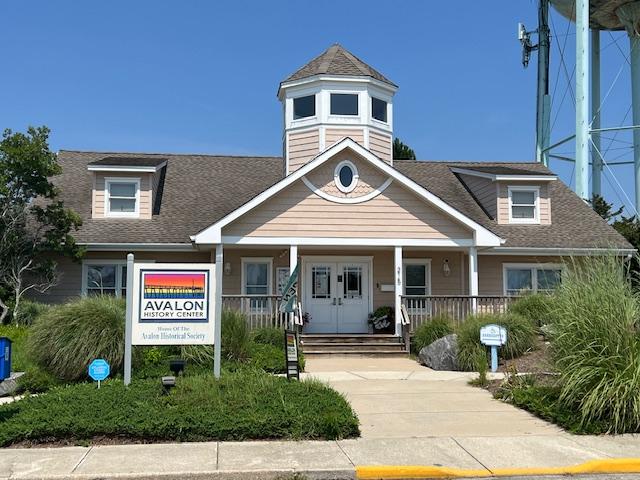
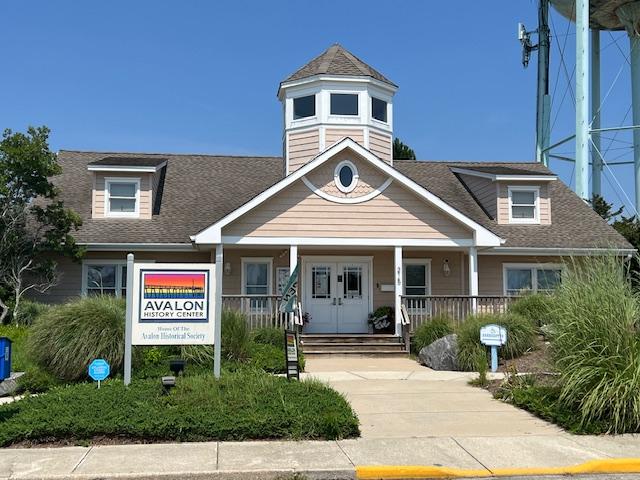
The Avalon History Center is at 215 39th Street in Downtown Avalon, NJ

Recently I took a tour of small Jersey shore towns and their historical societies. These interesting little museums are packed with information on the history and development of these towns. The progress of these towns from fishing and hunting villages for the Native Americans to the modern day resorts and permanent residence’s have a fascinating history.

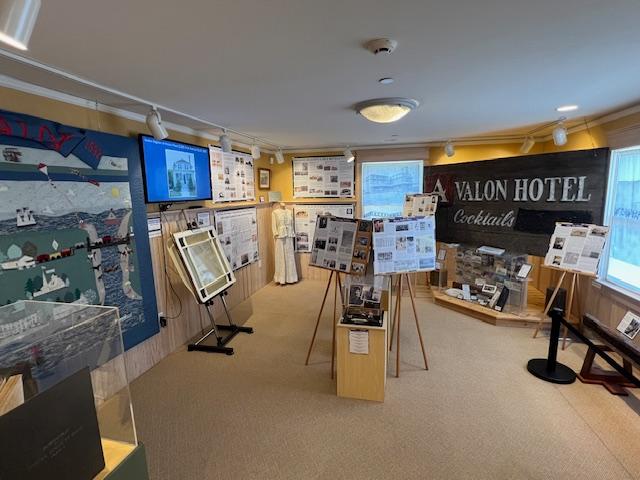
The early history of Avalon display with the development of the hospitality industry in the town

The Avalon History Center was the last museum on my visit to the shore that day and it had become very gloomy outside. The town was relatively quiet when I got there on a late Thursday night. I ended up having the whole museum to myself to tour. The curator came out and greeted me nicely and said that they were working in the back and if I had any questions to come get them. Outside that, I was the only one touring the exhibitions.

When you enter the building, the rooms are broken down in section by display. The Avalon Police Department has a wonderful exhibition of the history of the department. There are all sorts of police gear, mannequins with old uniforms and all sorts of police gear and pictures of the department through the ages. Near that is the Brendan Borek High Tide Memorial Fund.

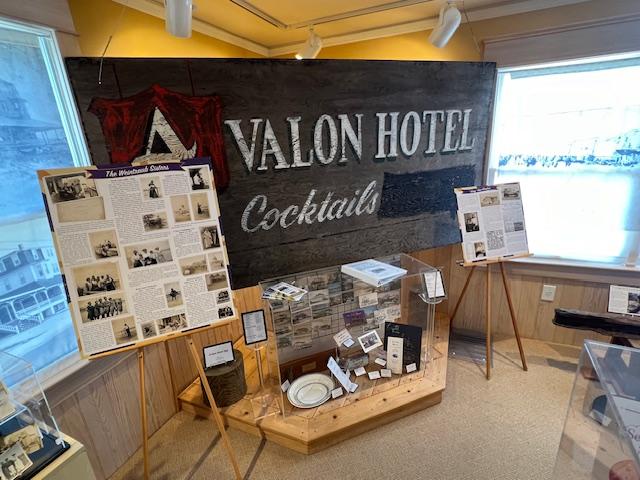
The Early Avalon Room contains the history of the many hotels that used to dot the town during the Victorian era that have either burned down or succumbed to the ocean currents. Of all the hotels that existed only the Sea Lark B &B (See my review on TripAdvisor) still greeting guests. There are all sorts of dishware from the old hotels, menus and silverware that show the opulence of the time when pleasure travel lasted longer than present day.
The history of the Hotel Industry in Avalon with artifacts like menus, china and wonderful pictures of the old hotels. One of the hotels, the Sealark Hotel, still operates as a bed and breakfast. I had stayed there in 2017 for the Firemen’s Convention and had a excellent stay.

The Sealark B &B at 3018 First Avenue in Avalon, NJ

http://www.sealark.com/

My review on TripAdvisor:

https://www.tripadvisor.com/Hotel_Review-g29754-d79340-Reviews-Sealark_Bed_and_Breakfast-Avalon_Cape_May_County_New_Jersey.html?m=19905

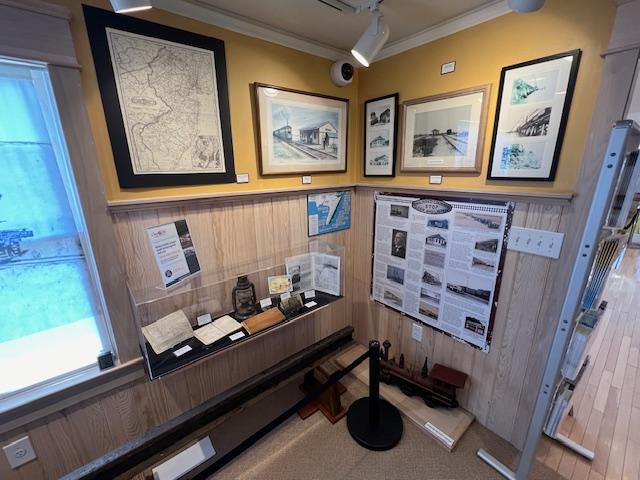
There was a section on the Founding of the town and its development over time. The town used to be Native American place to fish and hunt to the Victorian resort it became with the railroads. There was extensive history of the Railroad system that was so important to the growth of these shore towns. This was until 1937 when the rail system became obsolete with the advent of the automobile. There was a nice display of the old Avalon Pier.

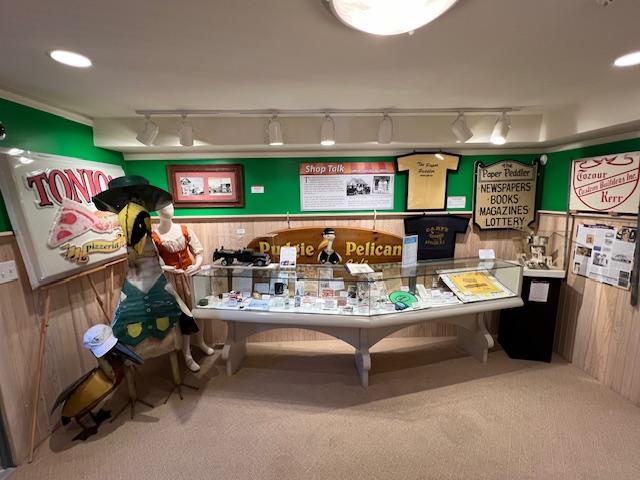
The detailed display of businesses that made Avalon the place to go and party

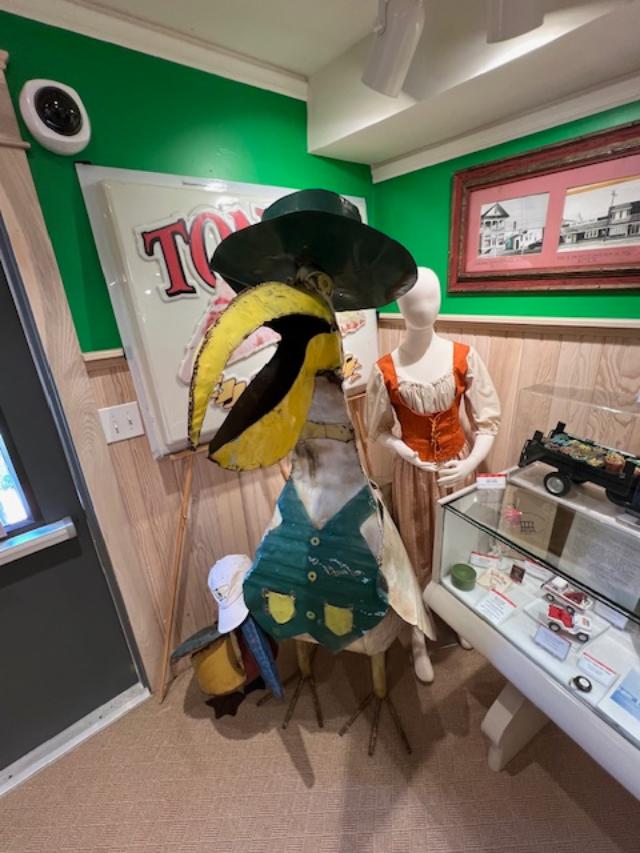
The Mascot for Pudgie Pelican

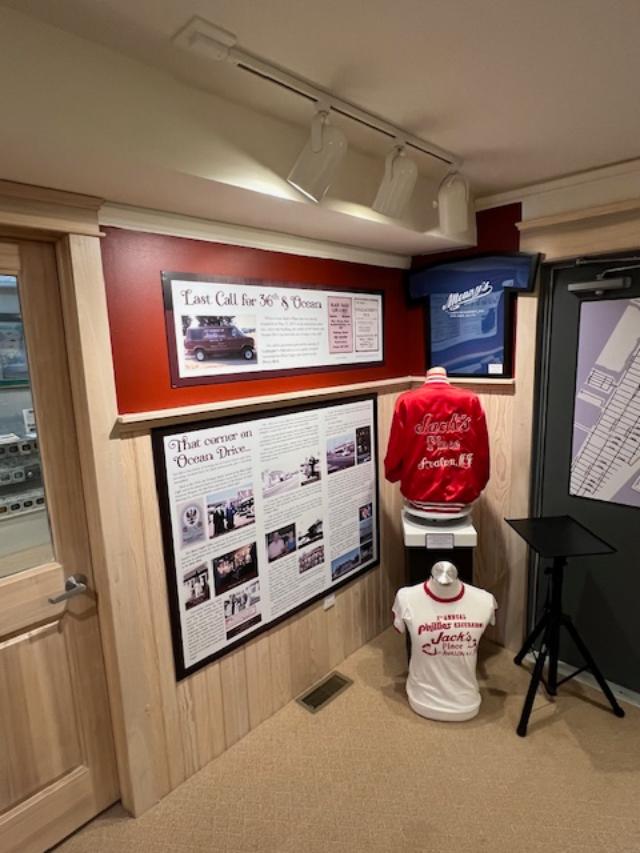
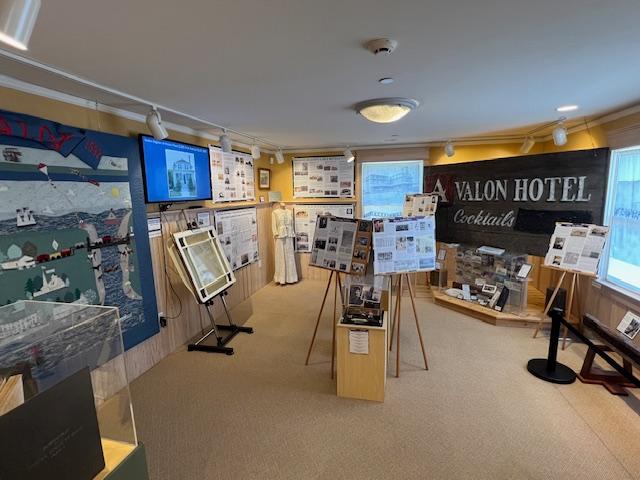
The back of the building was dedicated to local businesses that have since closed, This shows old signs, pictures and menus of watering holes that were popular for generations. There was an interesting display from the Avalon Hotel’s ‘Phil’s Bongo Room’, a popular place for bands.

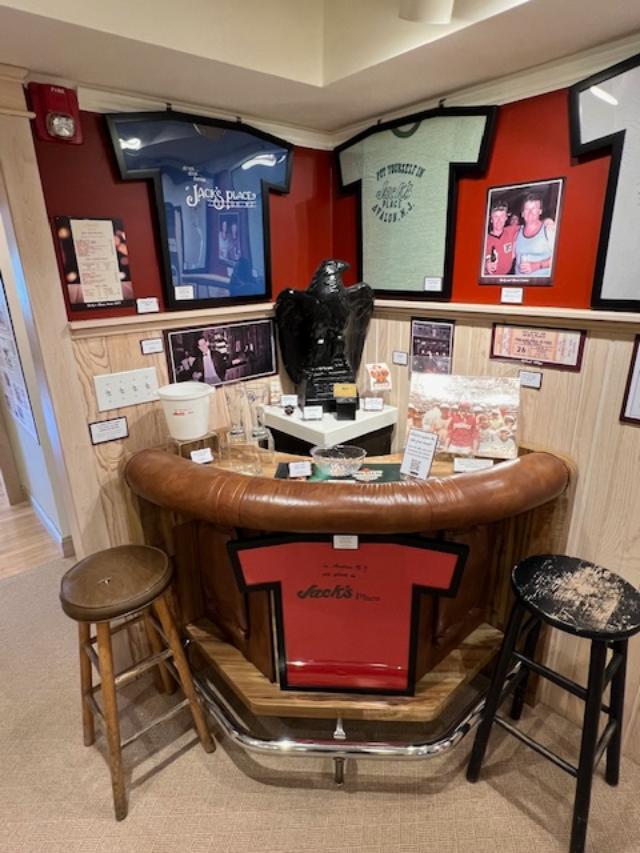
The artifacts from Jack’s

Memories from a forgotten bar scene

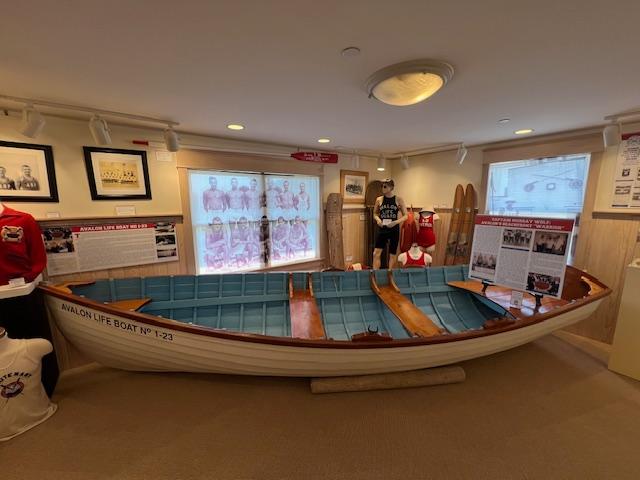
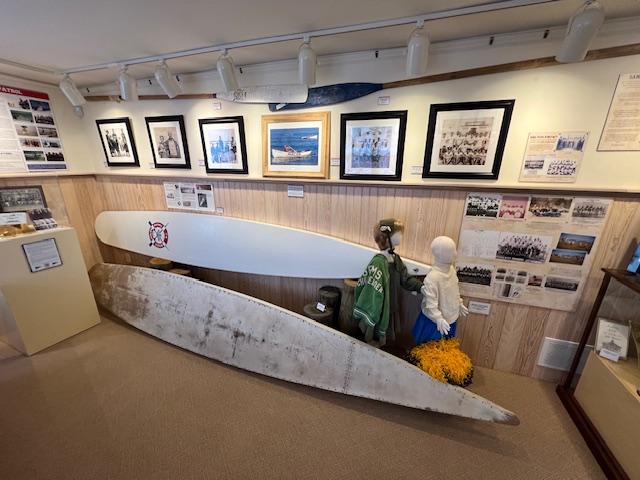
On the other side of the front of the museum is an interesting display on the Avalon Shore Patrol, a much dedicated group of men and women that play such an important role in a shore community. The museum displayed an restored patrol boat surrounded by other artifacts. Pictures of generations of Beach Patrol members proudly line the walls.

The Beach Patrol display

The Beach Patrol display

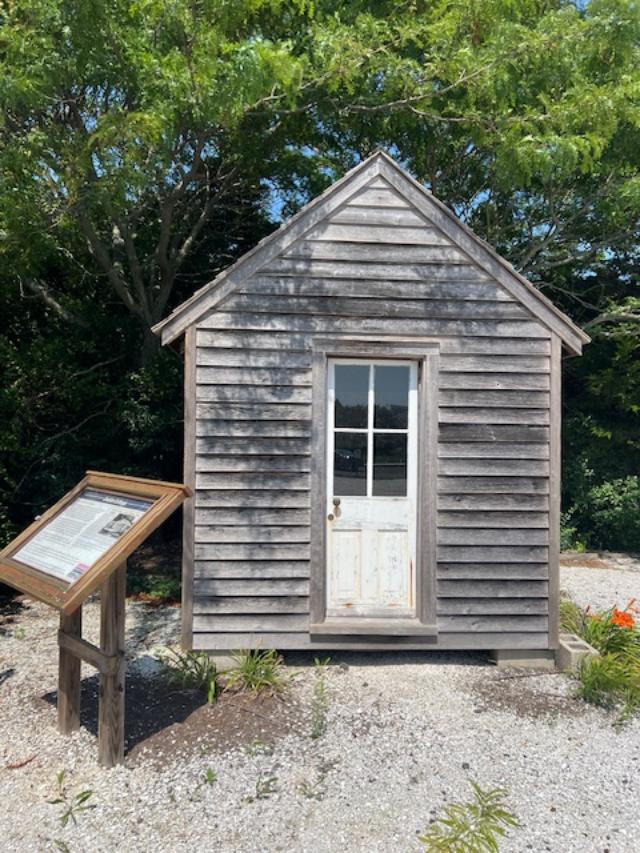
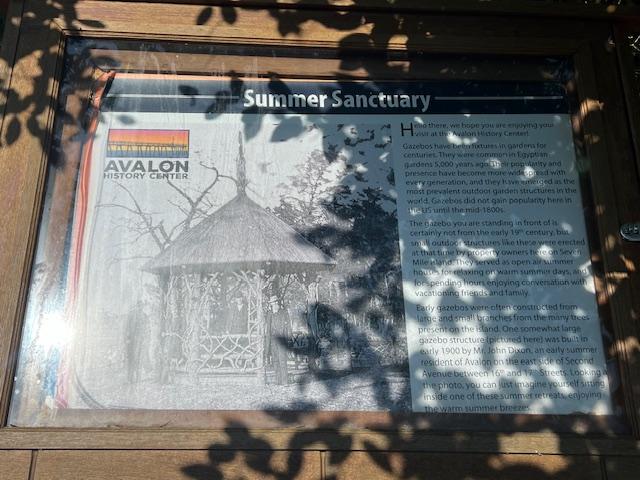
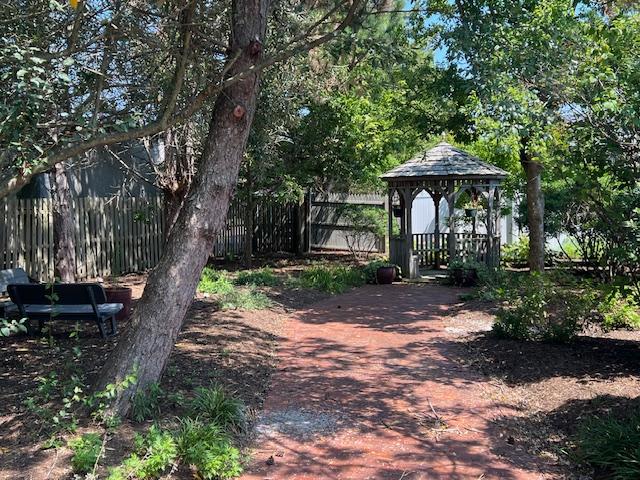
The museum also has landscaped grounds to walk outside either to some of the smaller historical buildings or to the gazebo to relax on a nice day and just enjoy the breezes. It is nice to walk along the flowering beds and just enjoy the sunshine.

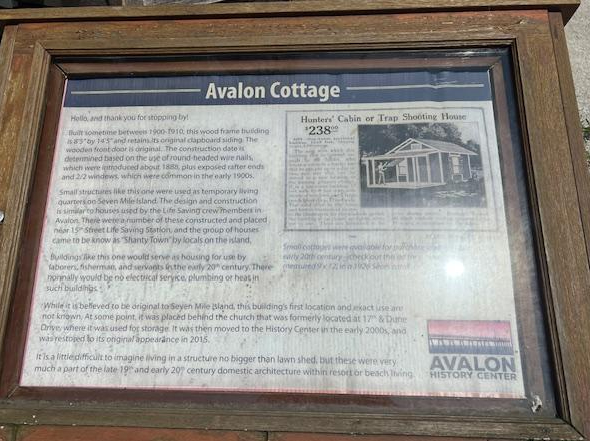
The Avalon Cottage sign outside the museum

The Avalon Cottage located outside the museum

The Summer Sanctuary sign outside the museum

The Summer Sanctuary outside the museum

It was a great visit both times I went to the museum.

History of the Avalon History Center:

(from a recent AHMS Newsletter)

The current facility opened its doors in September of 2001 to the public and began to share Avalon’s past, historical photographs, artifacts, memories and recollections lovingly collected and recorded by members of the Avalon Museum and Historical Society.

The museum main gallery

After several years of discussion, 1997 saw a historical society being formed at last in Avalon, supported by the enthusiastic endorsement of Mayor Marty Pagliughi and Borough Council President Nancy Hudanich, Doris Hanna and Jean Losch even secured a $10,000 donation from the Avalon Women’s Civic Club, as seed money for a building. Borough Council agreed to provide a location at 39th Street as well as a modular building-the old Public Works Headquarters, which did not prove suitable. The Avalon Museum and Historical Society got to work.

In June 1997, the first election of the Avalon Museum and Historical Society officers occured, along with the adoption of a constitution and bylaws. Among those first officers were Robert Jaggard, President, Lucille (Sue) Jacobson, Vice-President, Jan Jaggard, Secretary and Gordon Smith, Treasurer. Among thefirst Trustees were Jean Losch, Doris Hanna, Betty Shoemaker, Marvin Wells Jr., Joseph Koen and Robert Penrose Jr.

In early 1998, as the AMHS held its first fund drive, Doctors John and Elizabeth Ruskey agreed to honor the previous owner’s wish to donate their recently purchased house (location on 111st Street in Stone Harbor) to the effort. The Avalon Museum and Historical Society had support, money, a location and a building. Now all they had to do was move the house from Stone Harbor to Avalon, which is exactly what happened on November 6th, 1998. The groundbreaking took place on January 22nd, 1999.

The main history display at the museum

Once in place, work on putting the building back together and creating a museum space continued, inside and out. Items had been donated, collected and stored in the homes of the officers and trustees. It was the work of the AMHS to organize fundraising events to finance the project.

In mid-September 2001, the officers opening day arrived at last and AMHS President Pary Woehlcke, together with Mayor Marty Pagliughi cut the ribbon on Avalon’s very own local history museum.

Since then, there have been many changes at 215 39th Street, including the merger and incorporation of the Avalon Museum and Historical Society into the Avalon Free Public Library. We are now the Avalon History Center.

One thing that remains constant is the commitment, enthusiasm and passion from History Center staff and the Historical Society Board and members. Our mission remains to bring Avalon’s past alive and make it accessible for all. This year has been a challenge but one we hope we have met as we continue to keep the doors open, broaden our outreach online, entertain, educate and amuse our patrons.

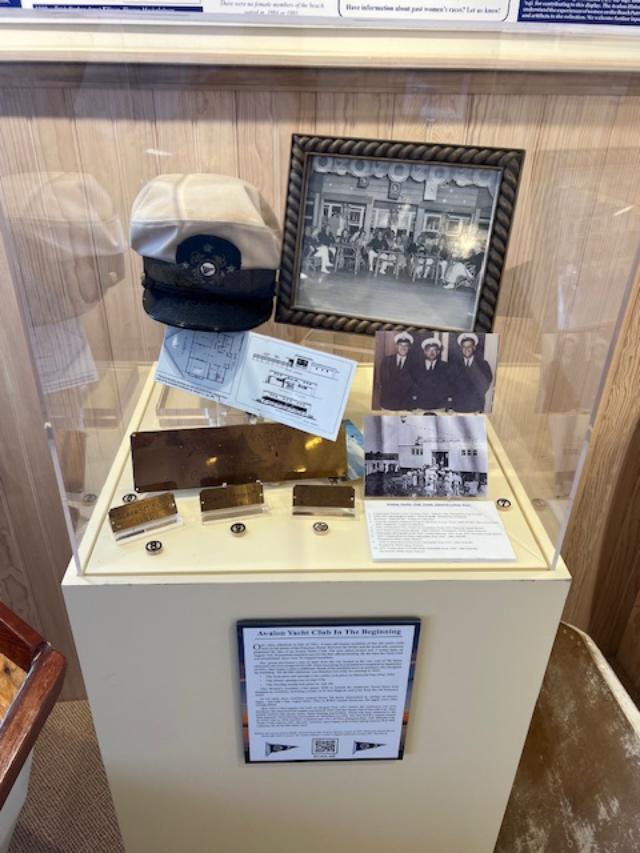
The Avalon Yacht Club display

Mission of the Avalon History Center:

The Mission of the Avalon History Center is to collect, chronical and preserve the history of the Borough of Avalon in the County of Cape May, New Jersey.

Peermont Self-Guided Walking Tour:

This self-guided tour of a section of Peermont (25th to 42nd Streets) will lead you from the Avalon Post Office at 33rd and Dune Drive through to 30th Street and ending at the Boardwalk and Beach Patrol on 32nd Street. It should take about one hour of gentle walking.

History of the Area:

(from the Avalon History Center pamphlet)

In October of 1888, Philadelphia entrepreneur George Rummel and the Avalon Beach Improvement Co. (ABICO) purchased from Joseph Wells at 17 block area of Seven Mile Island from 25th to 42nd Streets. The tract excluded the vast beachfront but included large areas of boggy meadowlands west of Third Avenue. This section of Seven Mile Island became known as the ABICO tract.

Rummel’s first priority was to build a hotel, which he named “The Peermont”. The railroad station which went up at the same time also became known as Peermont and so the ABICO tract followed suit. Peermont was on the map.

The Hotel Peermont in Avalon, NJ

Building lots were very quickly offered for sale so many that those in the Avalon section began to feel somewhat behind. Lots were also sold and bought in the meadowlands between Third and Forth Avenues on the assumption that they would be drained, filled, graded and curbed. Unfortunately 25th Street to Gravens Thoroughfare was the only roadway made passable. Rummel did however tear down the dunes, fill in and grade the ponds and marsh areas along the beachfront section of the ABICO tract, in order to build a seawall and then a boardwalk.