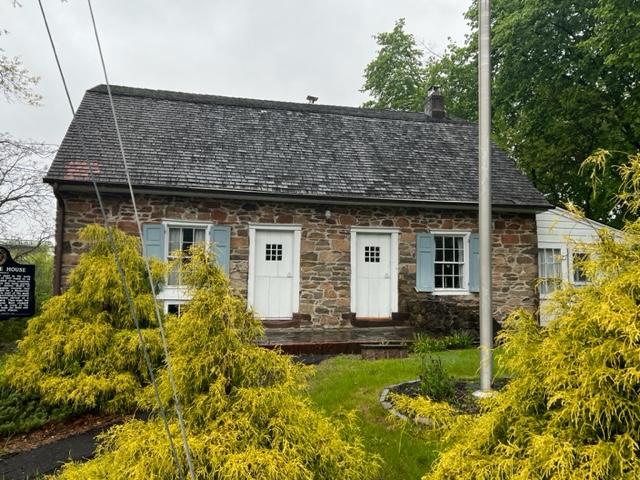
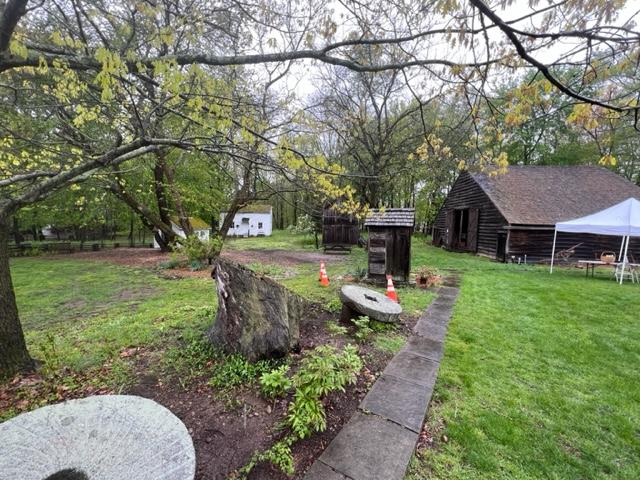
The Old Stone House in April 2023 for the Northwest Bergen History Day tours
I visited ‘The Old Stone House’ during the Northwest Bergen History Coalition’s 8th Annual History Day. This Dutch stone farmhouse is one of the oldest buildings in Ramsey, NJ. It has been known as the Westervelt-Ackerson House to the families that built it and have lived in it in the past. The house is on the State and National Registers of Historic Places.
The house sits on a bluff that overlooks the highway but at one time was a 300 acre farm. The house’s furnishings on the first floor are period to the house with some of the original doors and windows of the house. There are still many original features in the house.
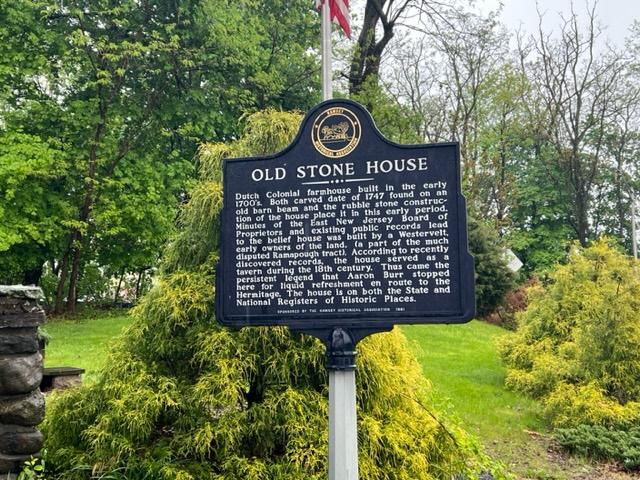
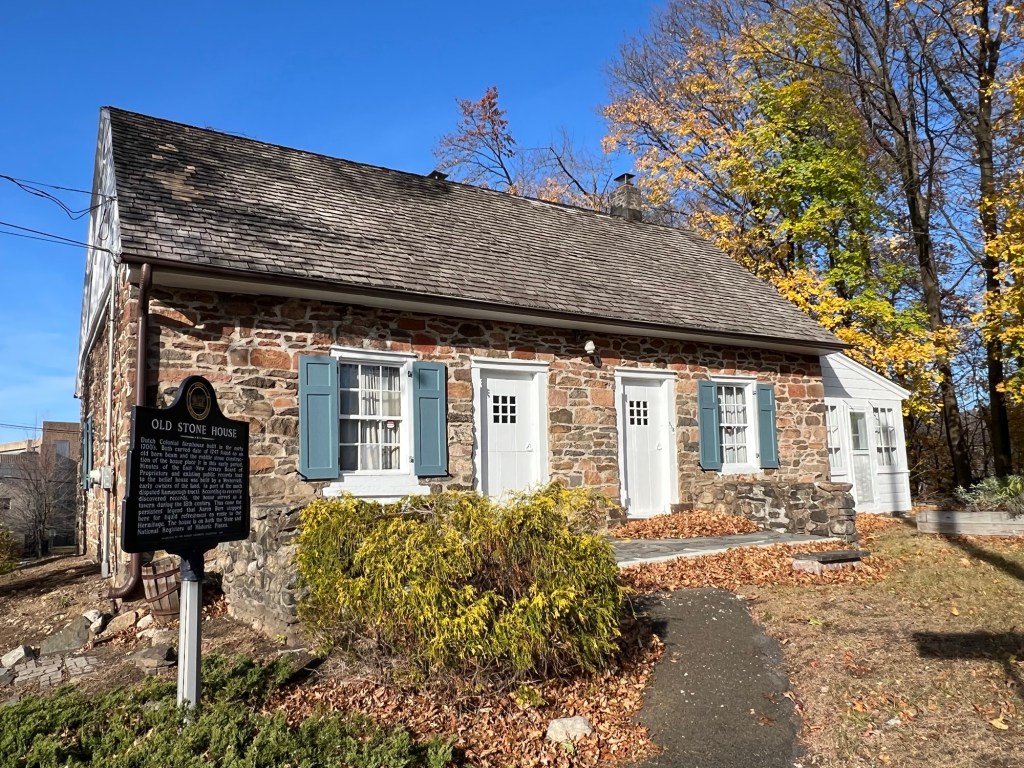
The Old Stone House signage
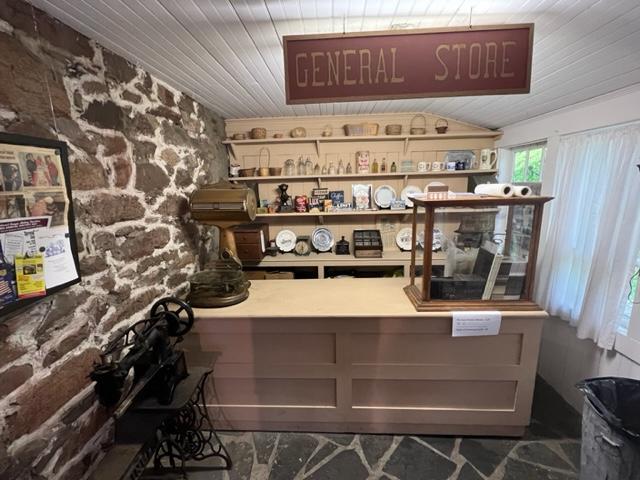
The first floor has a exhibit on the armed services and off to the side of the house which had once served as a antique shop to the last two owners of the house is a general store exhibition.
The General Store display on the first floor
The Armed Forces Display was very touching
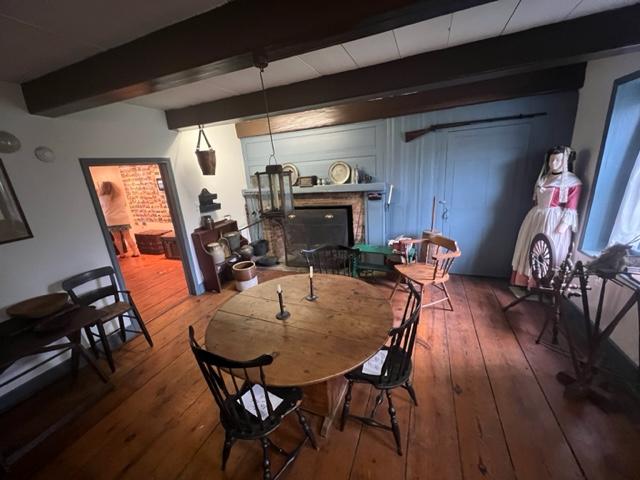
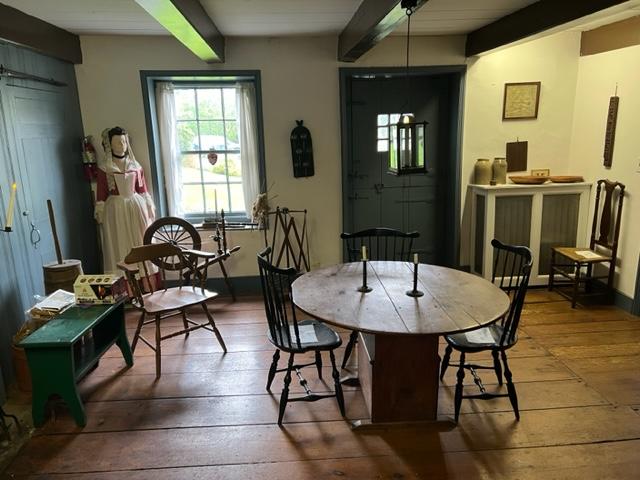
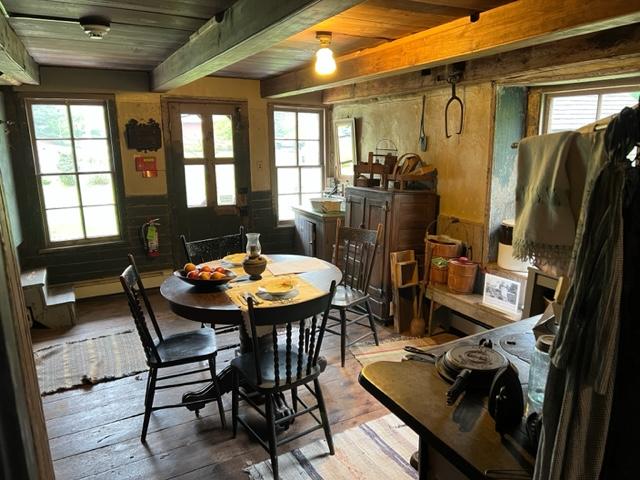
The first floor is designed as most Dutch homes were at the time in the farming community. The kitchen was the center point of the home as a source of heating and cooking. The other rooms were connected so that the heat from the fireplace could spread through the home. It was simply furnished to reflect the life on the farm.
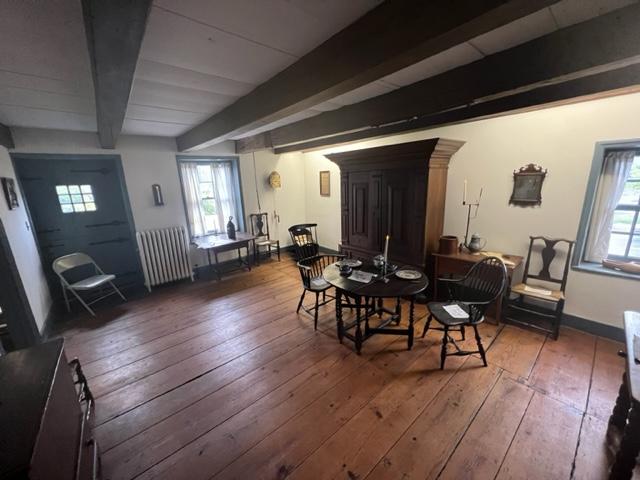
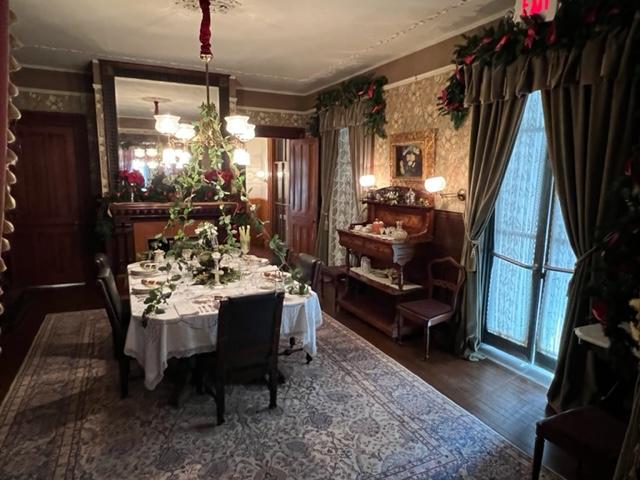
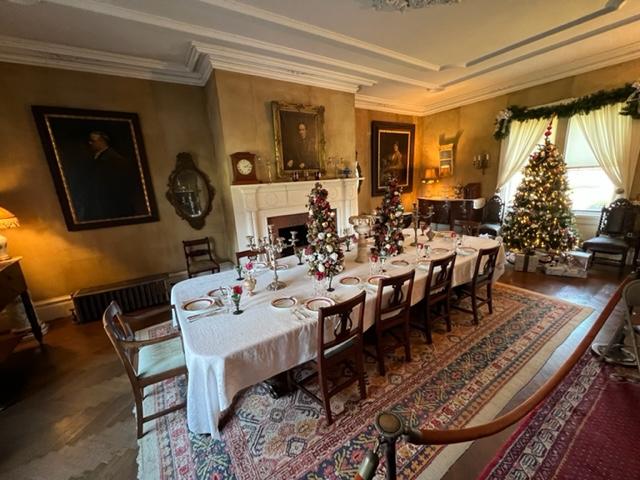
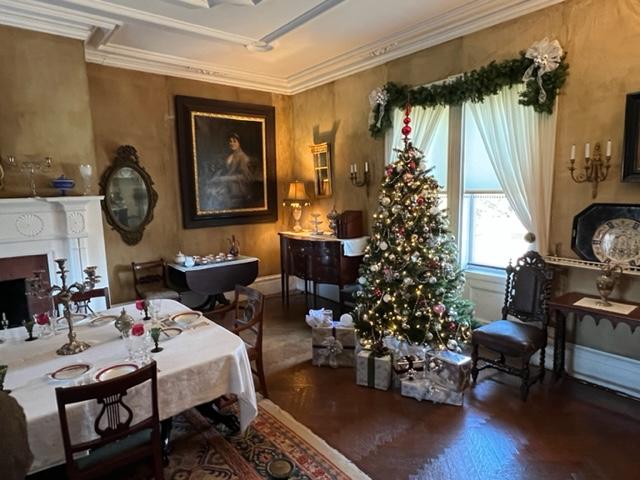
Another view of the Dining Room
As time went on and the family got more affluent, better furnishings were bought for the home. The house today reflects that home that would have been during the late 1700’s early 1800’s life on the farm.
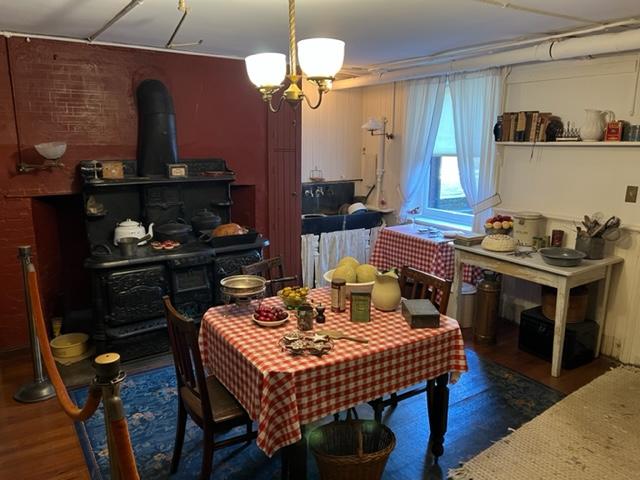
The Old Stone House kitchen
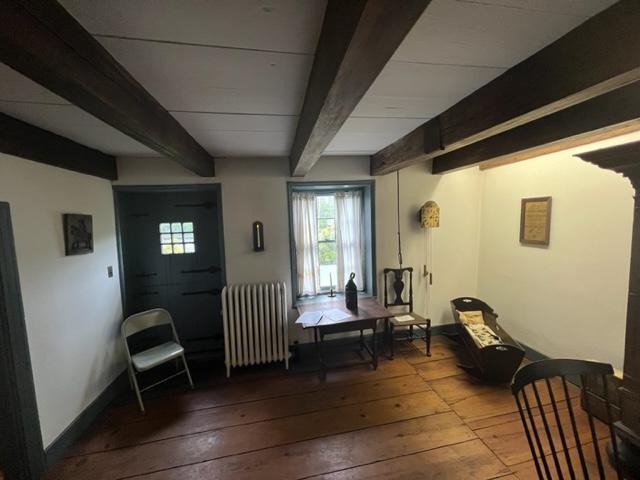
The Old Stone House parlor
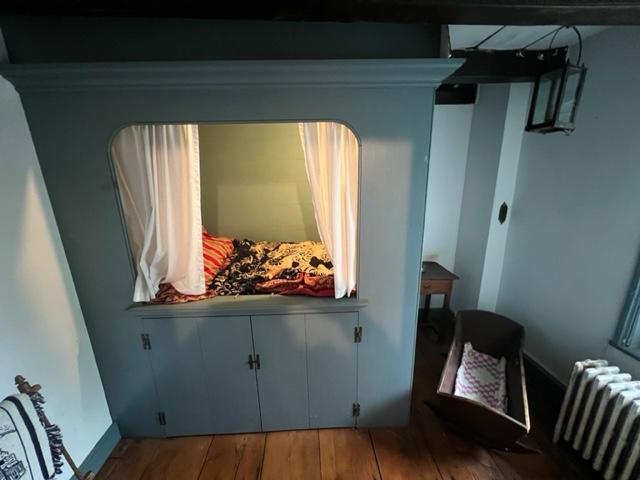
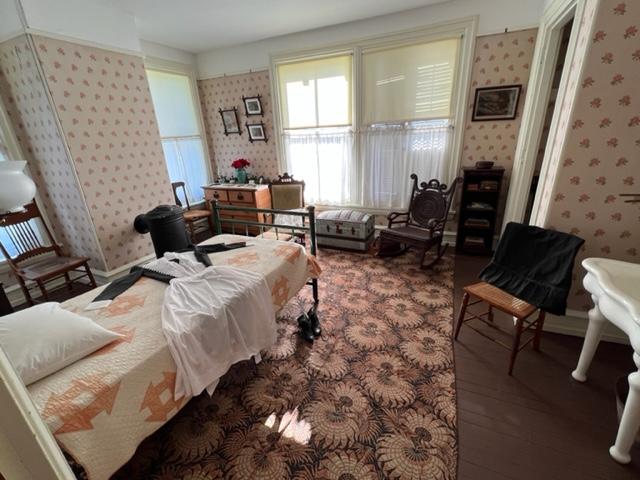
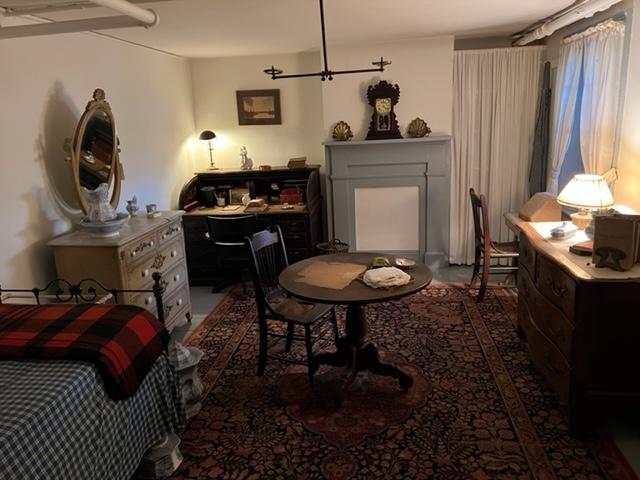
The Old Stone House Bedroom
The Old Stone House Living Room
Old Stone House Living Room
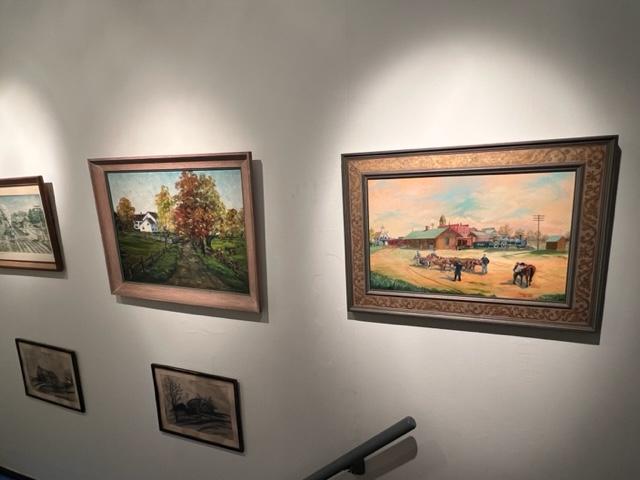
The upstairs painting and art collection
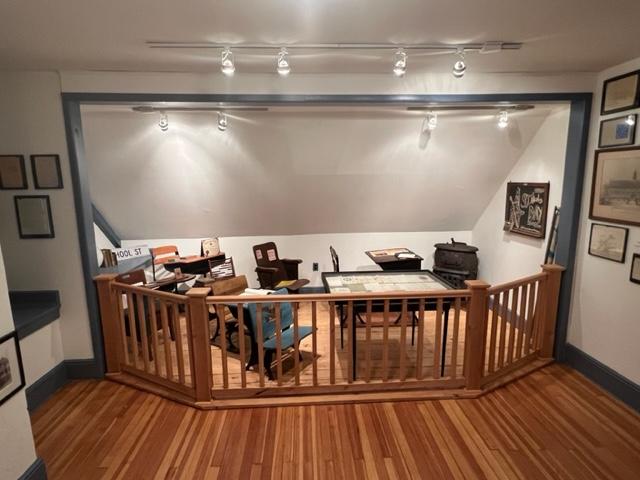
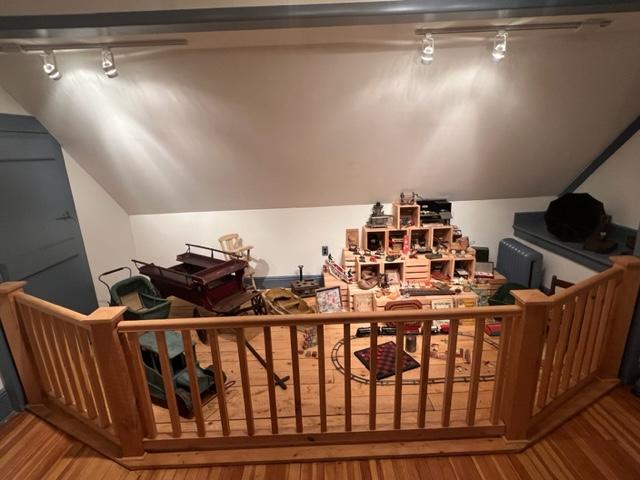
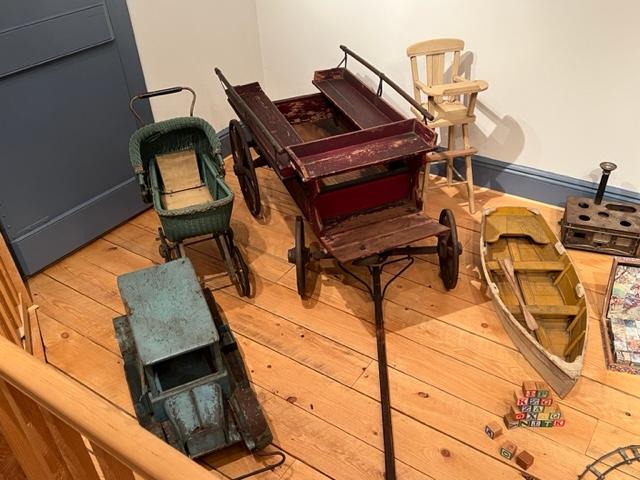
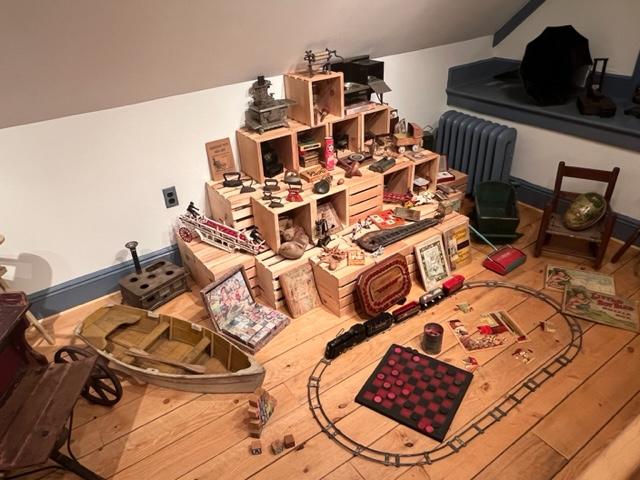
On the second floor are two children’s displays, one of toys and the other is set up like a school. There are period furnishings and children’s playthings in both rooms. The upstairs was finished off the house in the 1920’s.
The Old Stone House Schoolhouse display
The Old Stone House Toy Display
Antique Toys
Antique Toy Display
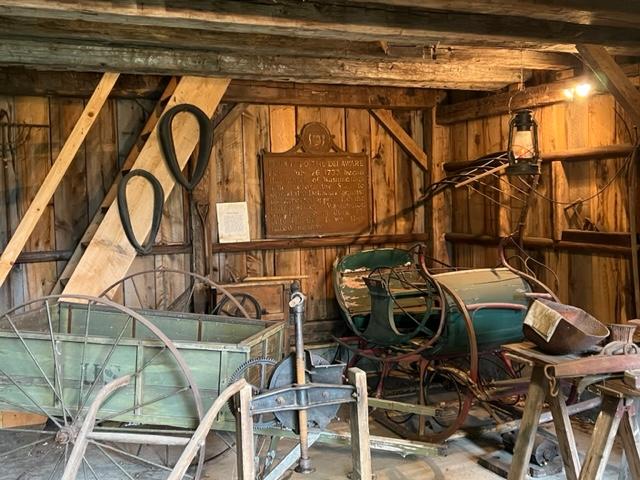
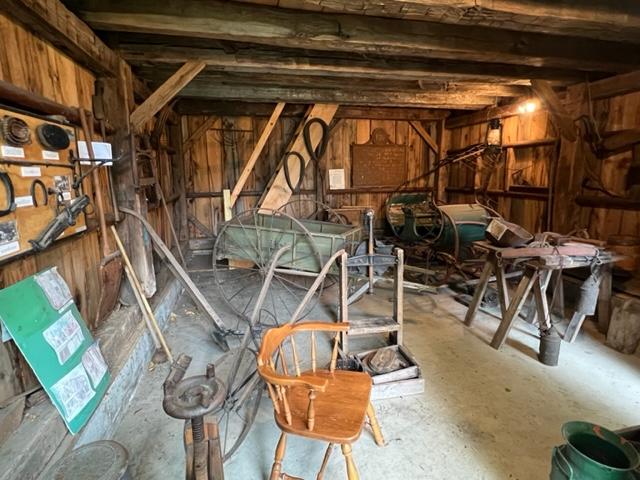
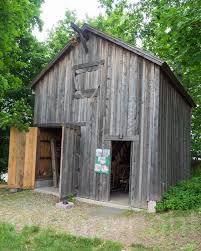
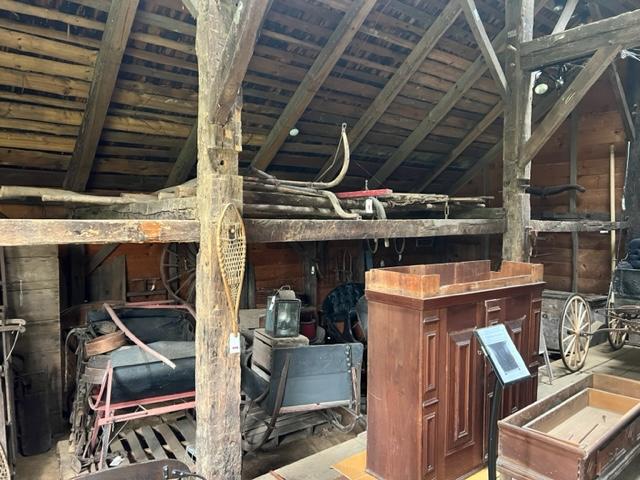
The barn off to the side of the house was moved to the property and holds a collection of period farm equipment.
The Old Stone House barn and farming equipment
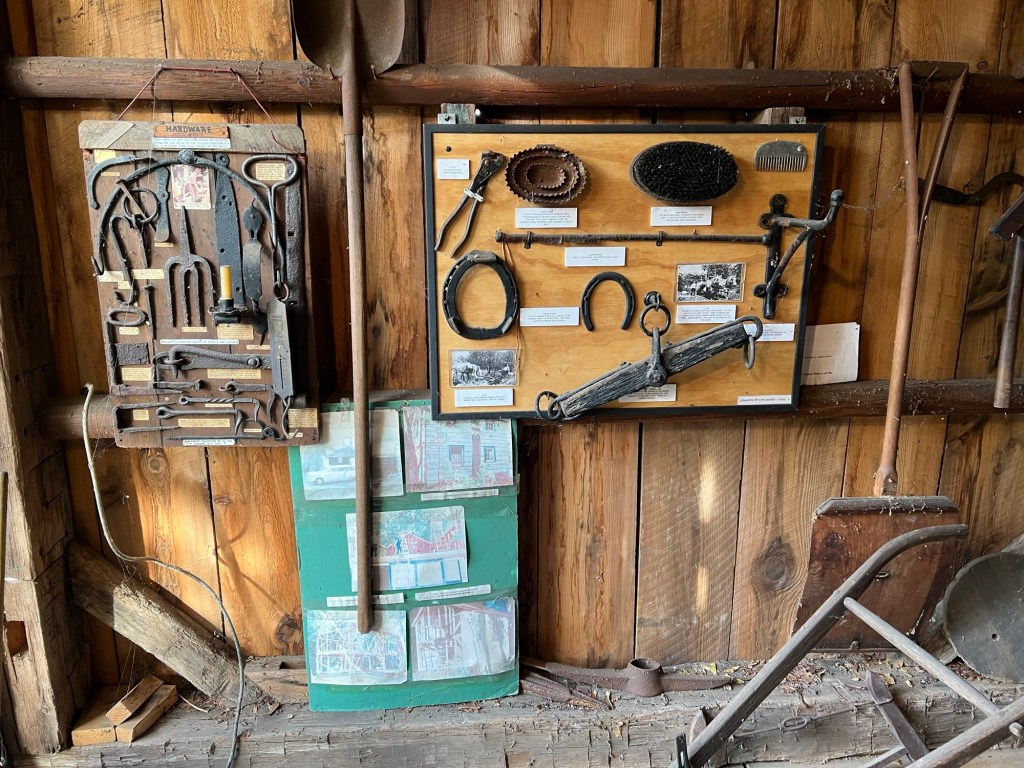
The Old Stone House barn equipment
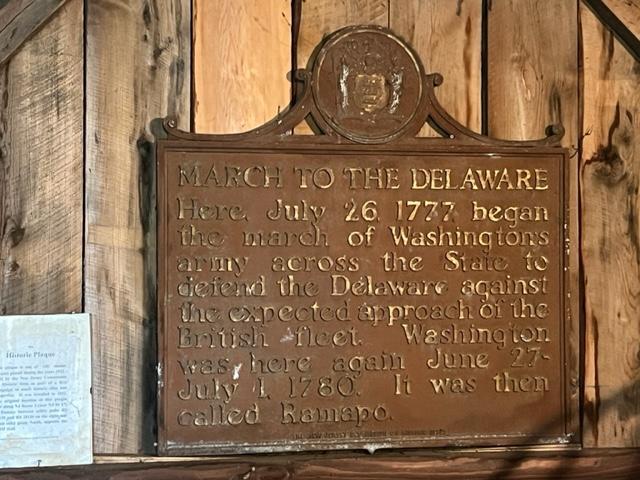
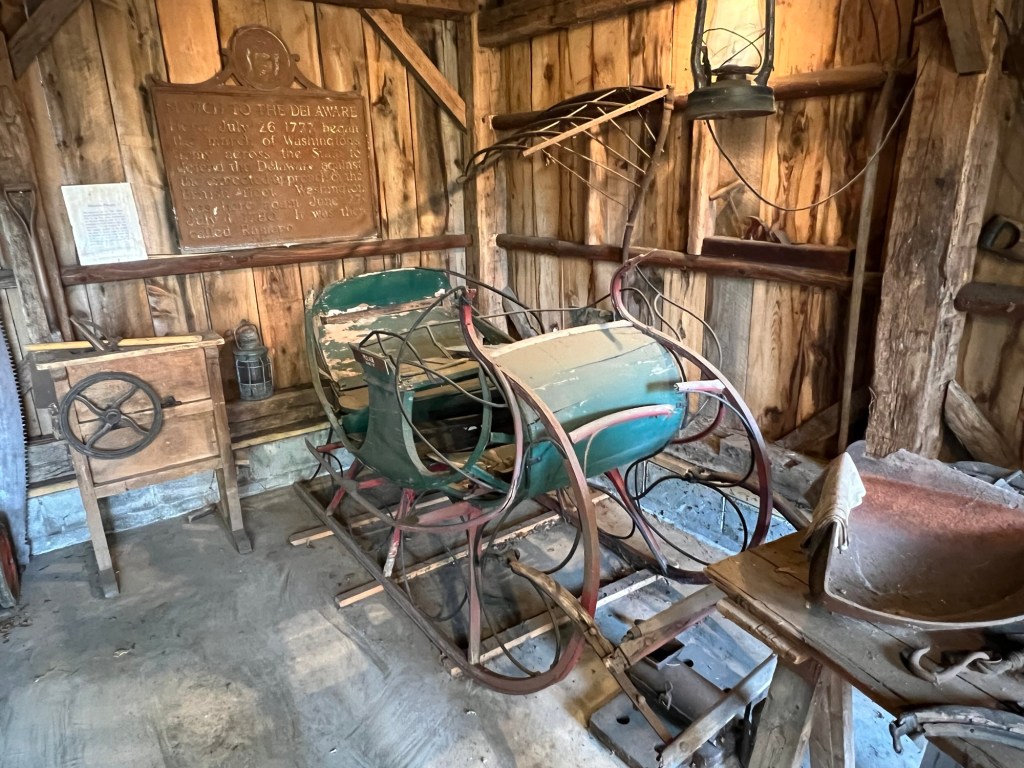
A historic marker in the barn
The house had been used as a private home for most of its history as well as a tavern during the late 1700 to early 1800’s. In the modern age, it was used as a antique store for the last two residents.
During the holidays, there is a big Christmas ‘Sinterklaas Festival’ (Dutch Christmas) that happens in early December.
The Old Stone House Barn
The History of the house:
(from the museum website)
The house has had many owners who have put their own touches to the ownership of the house. The original part of the house was built around 1746 by the original owner of the house, Jan Westervelt. This may have been part of the land leased to Uriah and Ruloff Westervelt in 1744. The land was part of the Ramapough Tract for the Proprietors and was from Peter Fauconier, one of its original purchasers (RHS).
The Ramapough Tract is situated between the Ramapo Mountains and the Saddle River. It was purchased from the Indians on November 18, 1709 and it was acknowledged by the Indians at Tappan before Cornelius Harring, the Justice of the Peace. The land was passed through the Westervelt family through the early 1800’s until it was sold outside the family in 1837.
From there the house had multiple owners until it was sold to the State of New Jersey in 1955 and is now leased to the borough of Ramsey for a dollar and is maintained by the Ramsey Historical Society.
The Old Stone House
My class promotion of the Borough of Ramsey for the project “It’s Razzling in Ramsey: Be a Tourist in your Own Town”:
In the Fall of 2024, I created a Team Project with my students at Bergen Community College that promoted the Borough of Ramsey for Destination Tourism. Part of this project was a trip to the Old Stone House with the assistance of the Ramsey Historical Society, our class toured the museum and understood its rich history not just in Ramsey but in Bergen County.
Touring the Old Stone House right before Thanksgiving
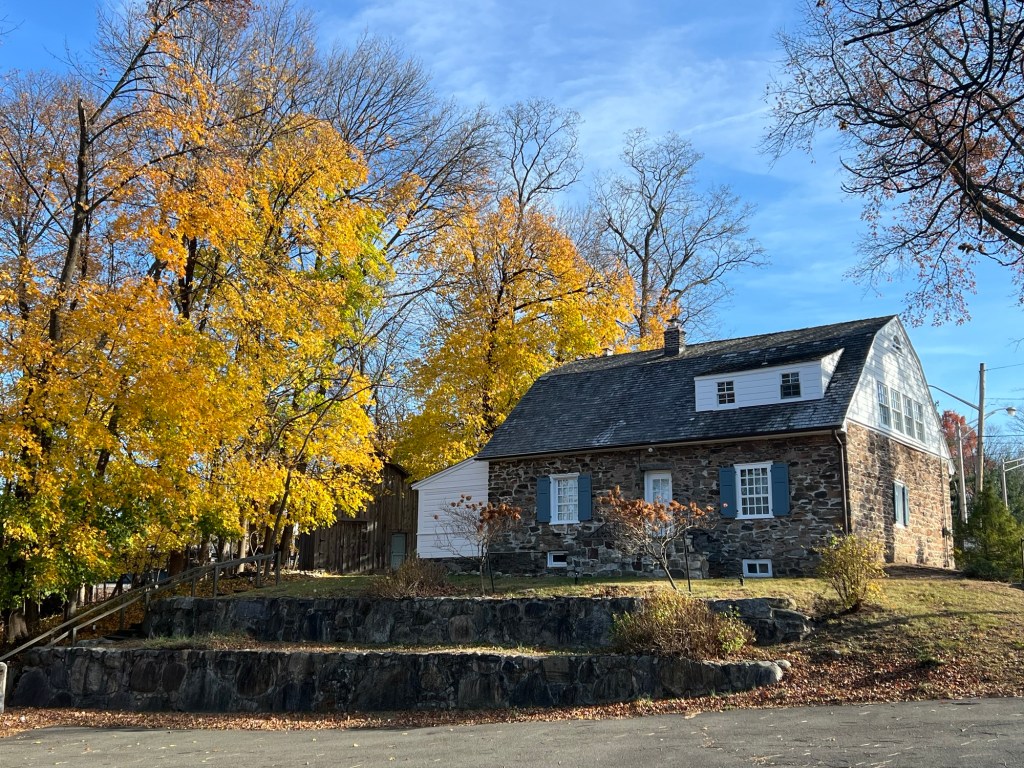
The Old Stone House from the street
The barn on the property
The President of the Ramsey Historical Society tour us on a tour of the barn, the grounds and then around the house. He explained the town’s past and its place from Colonial to modern times.
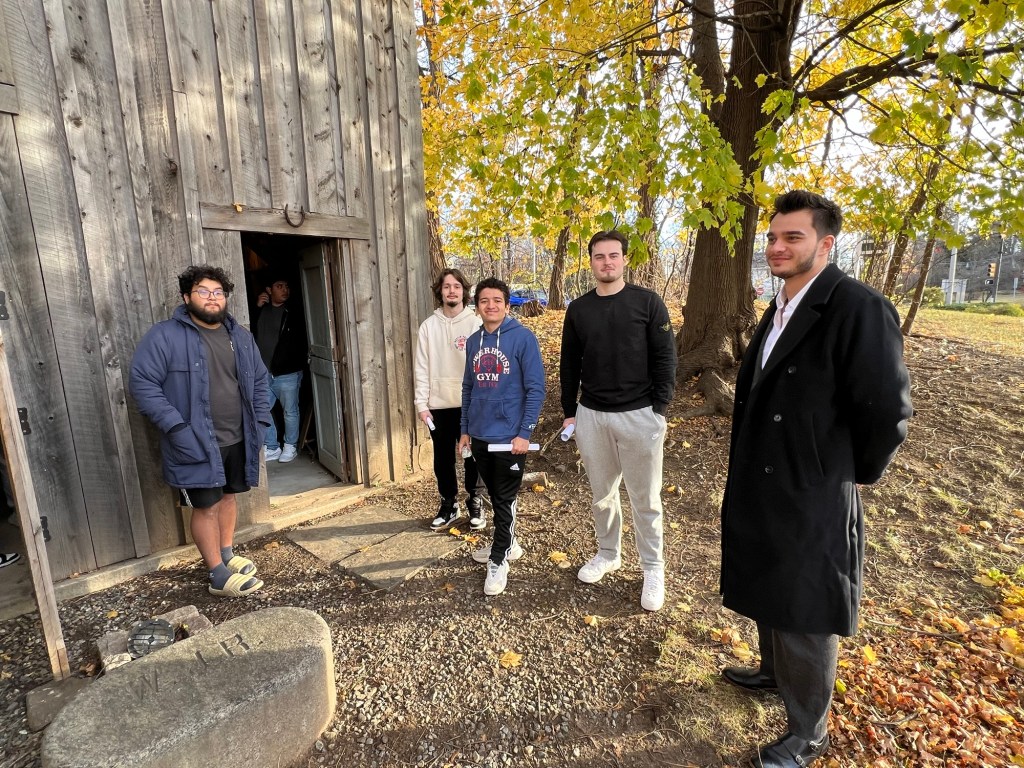
My students exploring the barn
Taking class pictures outside the barn
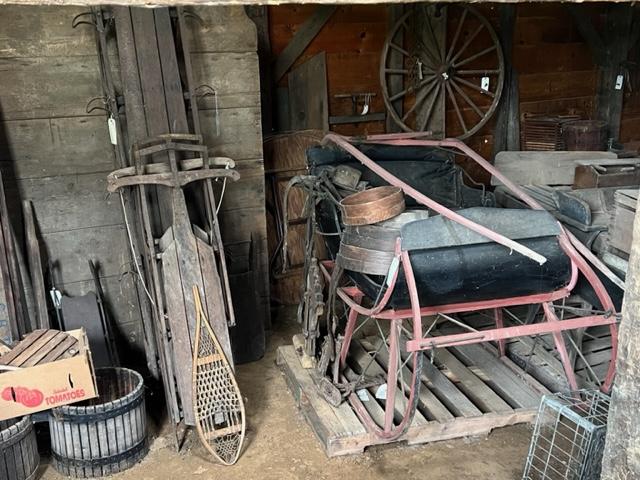
Touring inside the barn with its farm equipment and sleighs
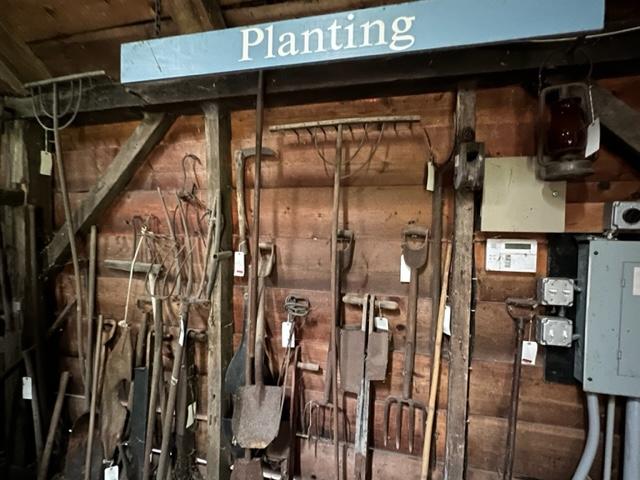
Looking at the farm equipment from all ages
My students touring the Old Stone House
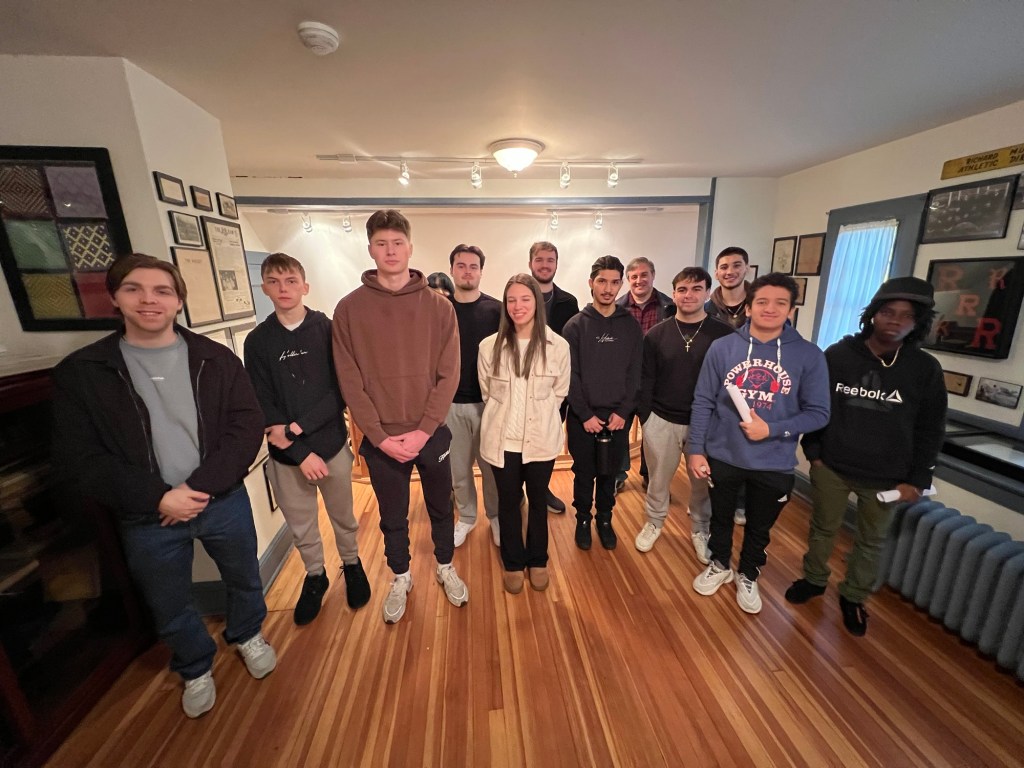
My students touring the museum
A group of my students touring the museum to promote it for tourism
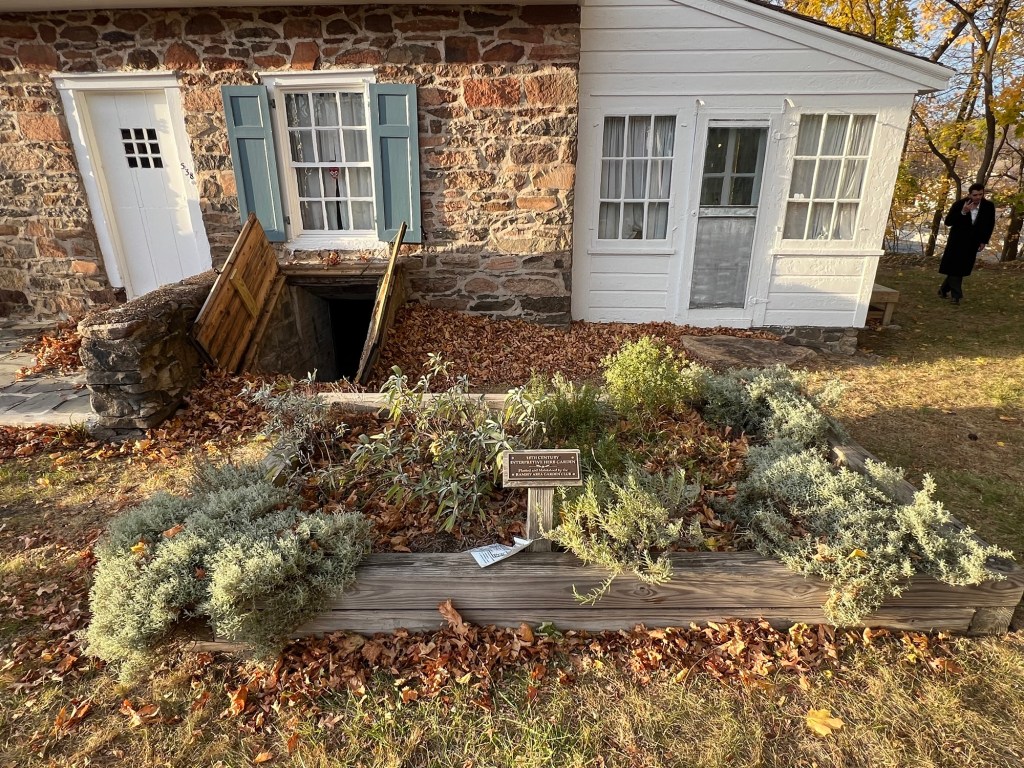
The Historical Society even let us tour the basement
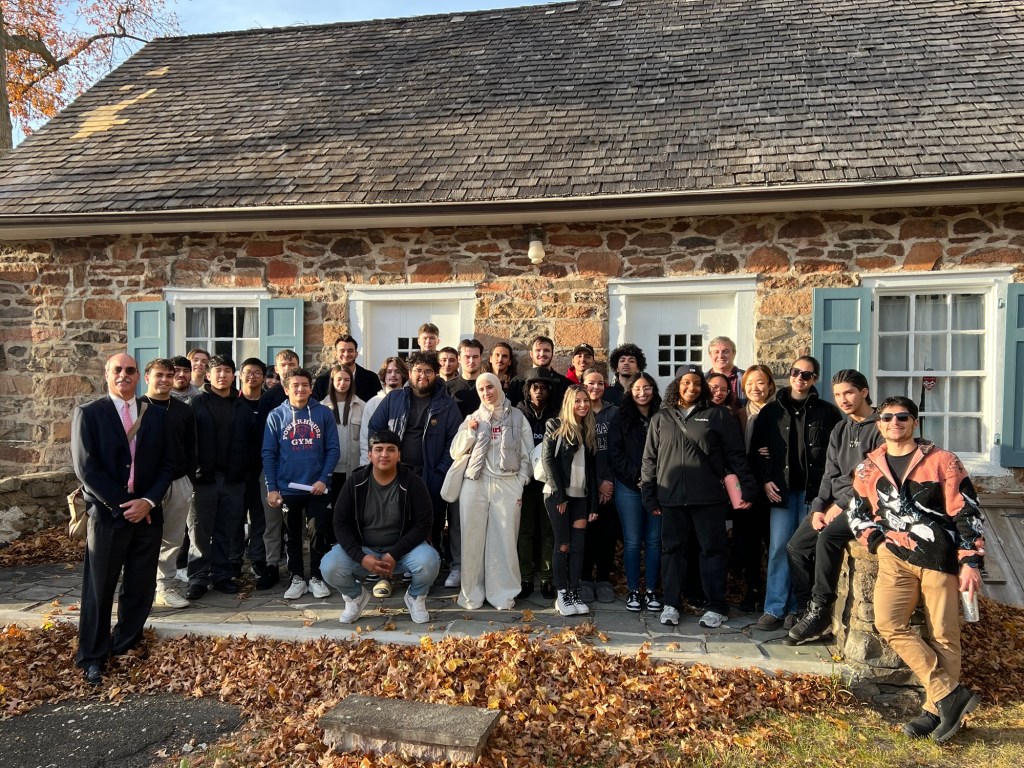
The Team group picture of all my students touring on the walking tour of the Old Stone House in November 2024.
They created the very funny and clever “Visit from Mr. Pumpkin” event for the project. Here is a link to the video:
The students did an excellent job on the project and you can see the whole present above through the blog and its links. It was the perfect showcase to this hidden gem of a museum.
I visited the Hopper-Goetschius House Museum during the 8th Annual Northwest Bergen History Coalition History Day. I had never been here before and it is a real treat. There are many buildings on the property to visit on top of the house and the fact that this was someone’s house into the 1980’s is pretty interesting.
The historic marker in front of the house
The Hopper property in April 2023 for the Northwest Bergen History Day
Christmas Open House December 2019:
The house still holds many secrets. The best part of the tour of the house is the secret stairs in the kitchen that lead to the old second floor. This can only accessed behind a panel that leads to a narrow set of steps. You can see it from the new second floor from the top floor.
I attended Holiday Celebration on December 8th, 2019 and it was a beautiful sunny day for an outside event. It was a really nice afternoon. They had a visit with Santa at the Dutch barn which was decorated with trees surrounding him and presents and a decorated Dutch sleigh. In the schoolhouse, there were all sorts of games and talks to enjoy.
Santa in the Dutch Barn at the Hopper museum
In the outside kitchen, there were chestnuts and fresh popcorn being made that you could munch on while walking around enjoying the festivities and the smells of the cooking food were mouthwatering. The gentleman doing the cooking was doing a demonstration on how the food was cooked and the amount of time it took to make things.
The outside buildings still had a bit of snow left
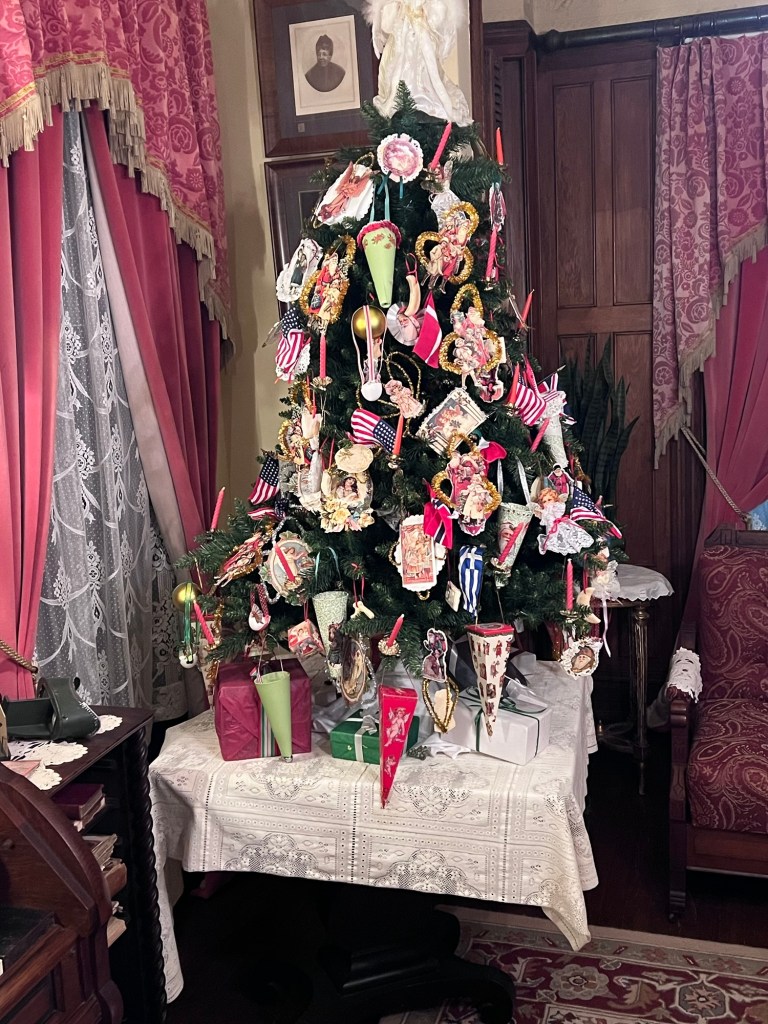
The inside of the house was decorated for the Victorian holidays with a nicely decorated tree in the Living Room and garland all over the place. There was a Victorian music box playing songs and a reading of “The Night Before Christmas” being read on the hour.
In the kitchen of the oldest part of the house, they served hot cider and homemade Christmas cookies of all kinds. They were also selling fresh homemade jam that one of the members made. The kitchen was decorated for the holidays as well. There was an open tour of the house and it was fun to see the upstairs decorated with all sorts of Victorian toys and dolls. The fee was a $5.00 donation and it happens every first week of December at the site.
The Hopper House kitchen
The house is a treasure trove of period furniture and family items and on the property there is a schoolhouse, a barn, a blacksmith shop and an outhouse. During the Summer months, the house is open for special tours on the weekends and in the Fall, they have a Harvest Festival and Christmas holiday events. The house is run and operated by the Upper Saddle River Historical Society.
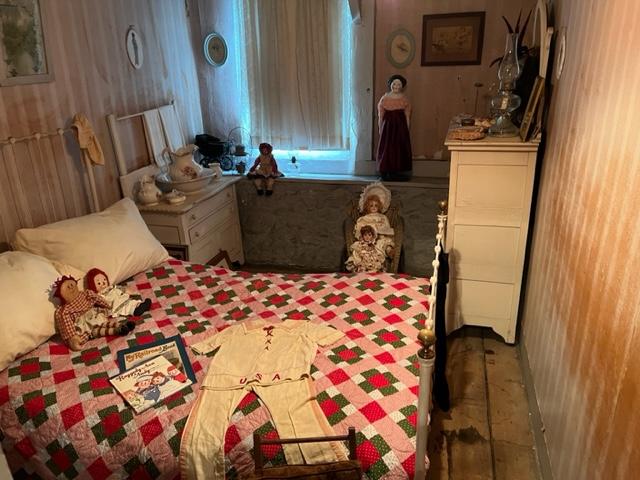
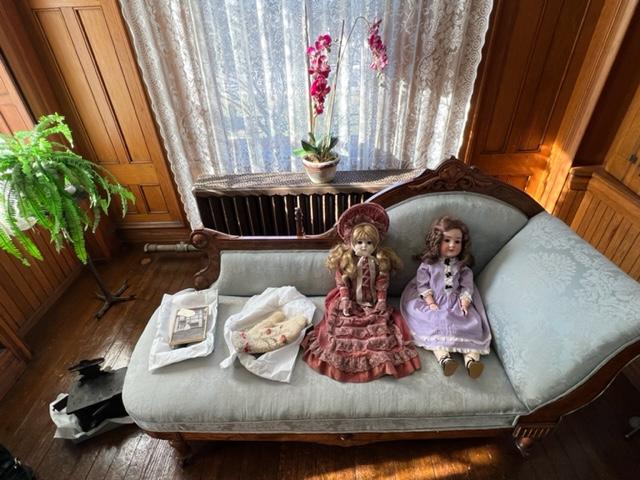
The antique toys in the upstairs bedroom
In April of 2023, I returned to the Hopper-Goetschius House for the Northwest Bergen History Coalition Day for the event. It was a gloomy day with mist and rain but that did not put a damper on the event. There were lots of activities going on in each of the buildings.
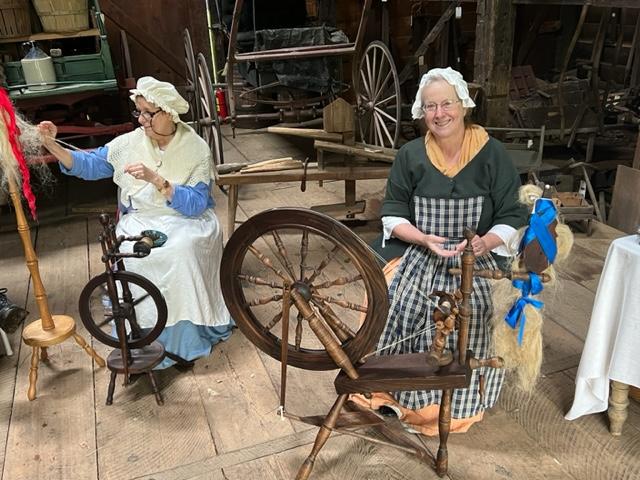
My first stop was at the barn where the ladies were doing a demonstration on spinning thread and we had a conversation of where the expression “Pop goes the weasel” came from (from the spun threat reaching its max and then the machine made a ‘pop’ sound). The ladies were demonstrating the way women spun yarn and made clothes and the work that it entailed.
The yarn spinning demonstration at the Hopper Barn
The ladies explaining how the spinning works
‘Pop goes the weasel’, the weasel at the Van Riper-Tice Barn
When I left the barn, I went over to the school house building to see what was going on. A very bored volunteer took up all my time and would not leave me alone. She had to read from a script and take me all over the house. I just wanted to get out of there. Thank God another person walked in so that I could escape and see the rest of the property.
The Ramsey House was moved to the property to save it from destruction and the society has done a good job transform it to a turn of the century classroom. This is a surprising display in many historical societies as I am sure that people have donated so much of their childhood mementos.
The Ramsey House schoolroom
The schoolroom
The teacher’s seat at the school room. Nothing has really changed.
The farm artifacts at the Ramsey House schoolhouse
After the tour of the Ramsey House, I took the tour of the main house again and its secrets. The Hopper House is a very interesting home as the owner did not want plumbing in the house. Up until 1963, she still used the well. She was forced by her nephew to get a modern bathroom. I thought this was strange that the woman did not want a bathroom. She still used the outhouse into the 1960’s.
The Hopper House kitchen
The home is decorated with all sorts of beautiful antique furnishes and decorations. The house is so well organized and the volunteers do such a nice job telling its story especially at the holidays. I visited all the rooms where the volunteers explained its purpose.
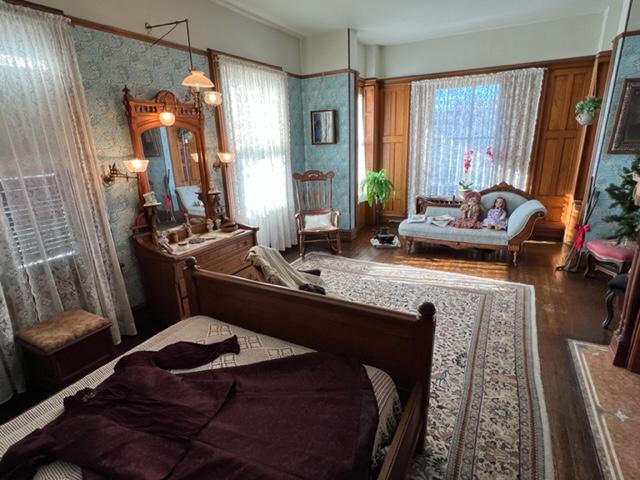
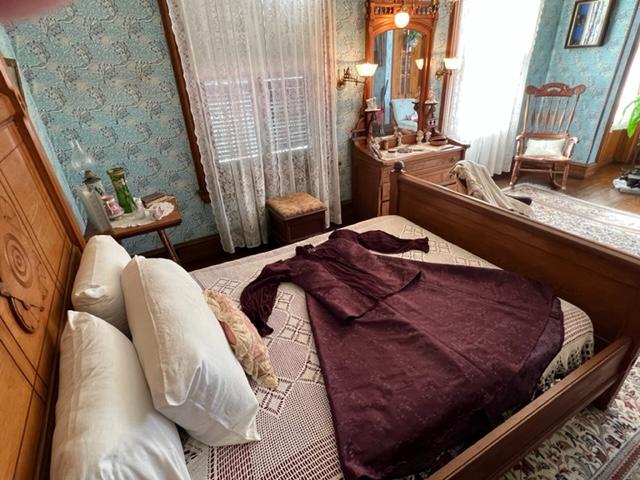
The bedroom upstairs
Bedroom Two
Bedroom Three in the upstairs loft of the house
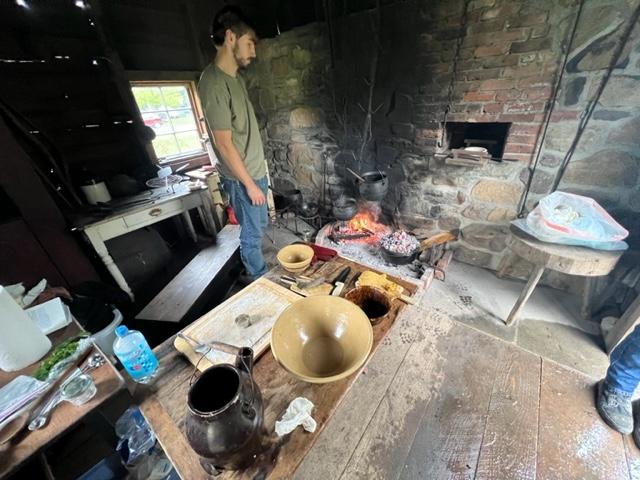
My last part of the tour was visiting the Smokehouse right behind the house. The volunteers were cooking corn bread, homemade potato soup and biscuits in the fireplace. It was interesting to see how food was cooked on the farm in the days before modern kitchens. The two volunteers working there were so happy to see someone. They told me that no one wanted any soup. On a cold rainy and misty day, I was taking them up on it and it was really good! Talk about warming you up.
The Smoke House on the Hopper estate was cooking away that afternoon
The volunteers were making breads, biscuits and soup that afternoon that warmed me up
The delicious Potato Soup warmed me up on this rainy day
The delicious Corn Bread was cooked with bacon fat and tasted so good! I munched on most of this.
I finished eating and talking with the volunteers about all cooking they were doing. They told me that they were following the recipes that were from the late 1700’s that would have been cooked at the farmhouse at that time. It was a really interesting conversation we had on cooking. It was nice to eat something as well. I was starved at this point.
After the meal, I left to go to the next site. I felt for these volunteers. The Hopper House is off the beaten tract and they must have not gotten the visitors that the other homes had seen. Still it was a wonderful visit with members who care so much about the house and its grounds.
Upper Saddle River Historical Society:
The Upper Saddle River Historical Society was organized in 1977 to collect, preserve and distribute the history of the Upper Saddle River area. The Society is also responsible for the management and restoration of the Hopper-Goetschius House Museum located at 245 Lake Street, Upper Saddle River, NJ.
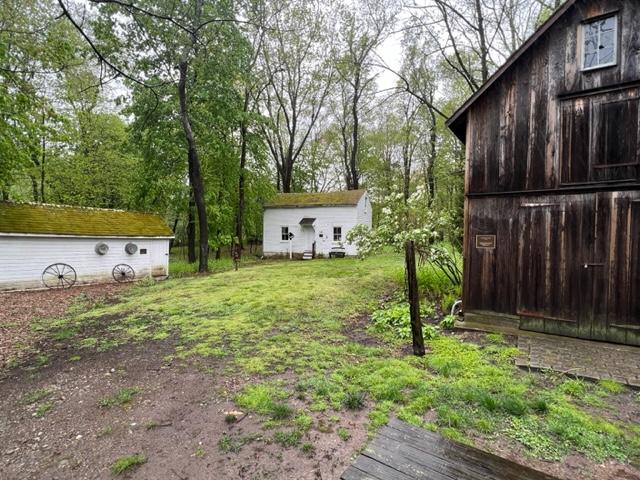
The Hopper estate with the barn, school house and ice house in the distance
The Historical Society has over 500 members and is host to nearly 2000 museum visitors each year. The Society holds program meetings throughout the year along with special events such as a Spring Concert, a wonderful Harvest Fair in the fall and an Old Time Holiday Open House in December, featuring mulled cider with chestnuts roasting on an open fire.
The Museum is open for tours every Sunday during July & August from 2:00pm-4:00pm or by appointment. For group or individual tours contact: Althea Gardner @ (201) 327-7807 or Kay Yeoman @(201) 327-2236.
Hopper-Goetschius House Museum Restoration Fund Drive
The Hopper-Goetschius house on the corner of Lake Street and East Saddle River Road dates back to 1739. Built by the Hopper family, it is the oldest remaining house in Upper Saddle River. We know it existed in 1739 because it was recorded in surveyor Charles Clinton’s journal and possible it is older. Rosalie Fellows Bailey in her book on pre-Revolutionary Dutch houses, says it was marked as the home of Gerrit Hoppa on a rough sheepskin map made about 1713.
The Goetschius family, the second owners of the house
The house underwent several changes in the mid 1800’s. The large central chimney with back to back fireplaces was removed. Probably, with more modern forms of heating available such as wood stoves, the fireplace seemed a bit old-fashioned and the owners took it out. Besides, they wanted to use the entrance hall as a room, so the stairway along the east wall was removed and a central staircase added where the fireplaces had once been. The dormers were added in the Victorian era.
The Hopper house in 2023
The Hoppers farmed the land and had a lot of it by today’s standards. The property extended from the Saddle River (Lion’s Park) up the hill almost to Montvale and up the East Road to where Creative Gardens was located.
The antique dolls at the Hopper House bedrooms
In 1814, the house became the home of the Reverend Stephen Goetschius of the Old Stone Church. It remained in the Goetschius family for a century and a half, always a place of central importance in town as Stephen Goetschius, the great-great grandson of the Reverend Stephen, served as the borough clerk for over 40 years and conducted his town business from the east room of the house.
The Hopper House Living Room
The house was without running water until Stephen’s death in 1962. Until improvements were made at that time, Steve’s wife, Lizzie, as those before her, carried water from the well for washing, cooking and shoveled coal for heat.
The Hopper House Kitchn
In 1985, the Hopper-Goetschius house was presented to the Borough of Upper Saddle River by Clinton and Grace Carlough. Lizzie Goetschius, the last resident of the house was Clint Carlough’s aunt. The house today serves as a museum, run by the Upper Saddle River Historical Society and offers the public historically related events throughout the year.
The Hopper House Living Room
(Upper Saddle River Historical Society)
The property also contains:
*The Privy or Outhouse that was in use at the Hopper-Goetschius House until 1962 when plumbing was installed in the house.
Hopper House estate with all the important buildings
*The Ramsey Sayer house was moved to the grounds in 1999 to become part of the museum complex. This is the oldest existing from house in Upper Saddle River, a good example of a tenant house common on farms in this area. The Ramsey Sayer house belonged to William Ramsey, the grandfather of Kate Fisher Goetschius, mother of Steve Goetschius, who lived in the Hopper Goetschius house for many years.
The Ramsey-Sayre House now serves as the makeshift schoolhouse
The schoolhouse at the turn of the last century
The Native American artifact collection at the Schoolhouse
*The Van Riper-Tice Barn was erected about 1800 by the Van Riper Family on their farm on West Saddle River Road (near the Cultural Center). It was later owned for many years by Harmon Tice. In 1989, it was scheduled to be demolished to make way for a development, the Historical Society dismantled it, moved it to the Museum ground and had it restored and rebuilt on its present location.
The inside of the Van Riper-Tice Barn at the Hopper House estate
Winter transportation at the barn
The farming equipment display
The displays of wool at the Van Riper-Tice Barn
*Snake Fence: a zig-zag fence of split rails once common in this area was added in the property north of the Van Riper Tice barn. The project was completed in 2001 with the help of Will Mazzuto and the vision of John Kroner and Joanne Lombardo.
The Hopper House estate
Disclaimer: This information was taken directly from the Upper Saddle River Historical Society website. Please check the site for the hours and days it is open.
I have visited the Physick Estate for a third time, three times for the Christmas decorations and the other times to take the house tour with a different theme. It is an interesting place. The whole house was decorated with garland and trees done with a Victorian theme of the time period. The home is always so beautifully decorated for the Christmas holidays and should not missed.
The entrance hall at the Physick House decorated for the holidays
The house is set up for Christmas Day and their are actors portraying the Physick family before the holidays. They explain why the house is set up the way it was for the Christmas holidays and who will be coming for dinner. All the rooms are decorated which would not happen in a normal Victorian home but the society shows how each room would have been interpreted for the holiday festivities.
We started the tour on the first floor touring the Entrance Foyer, the Living Room, Dining Room, Music Room, Sewing Room and Library of the home. Since privacy was the order of the day in a Victorian home, all the rooms were connected by the entrance foyer and closed off with a series of doors so that the occupants could have privacy.
We started first in the foyer, with the tour guide describing the architecture, decorations and fixturing of the lamps and chandeliers. We discussed the make of the fixtures and the type of materials used to build and decorate the house.
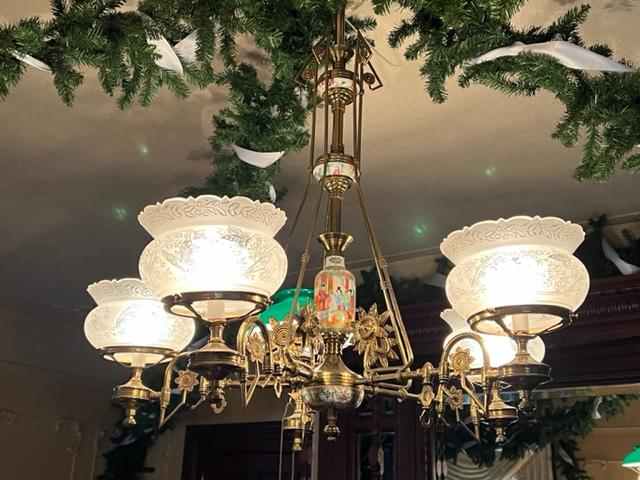
The ceiling and fixturing of the hallway. The Chandelier was created with both gas and electricity when it became available. When the ceiling had to be repaired, the members had to use different materials to match what was already on the ceiling and you would never know the difference.
The fixturing of the house went from gas to electric
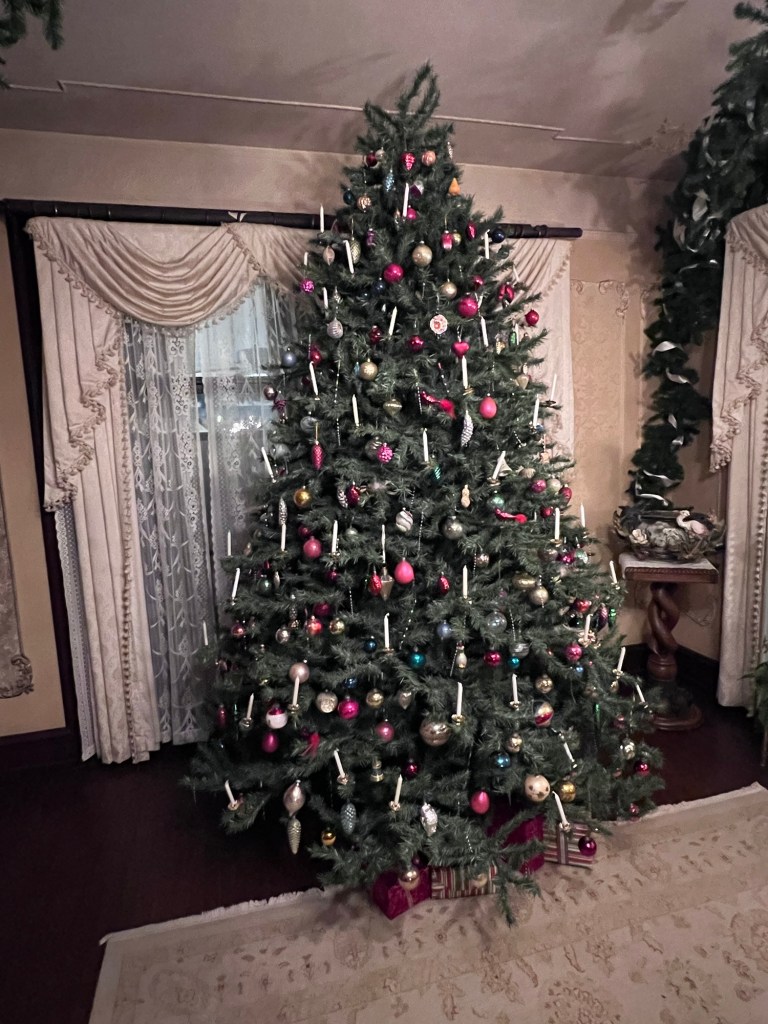
We next moved into the Living Room where the formal Christmas tree would be placed. During the early part of the century, the family like most Victorians would have had a tabletop tree but as time went on decorations became more elaborate.
The elaborate decorations of the full Christmas tree
The Living Room was so beautifully decorated
Elaborate China wedding gift
You can see the bedrooms with clothes and accessories, the game room with the billiards and work out objects and the living room, dining room and music room and library. It is how a proper Victorian home was set up at a time when families wanted privacy. The tour took us to each room where it was explained its purpose in a wealthy Victorian home. Most houses at the time would not have been this elaborate.
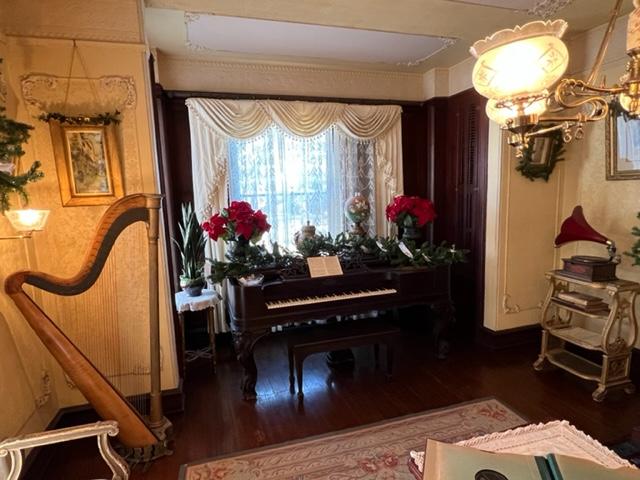
The Music Room would have been another place where the family gathered for entertainment long before the use of TV and radio. Family members would play instruments and sing to entertain guests who came to visit.
The Music Room
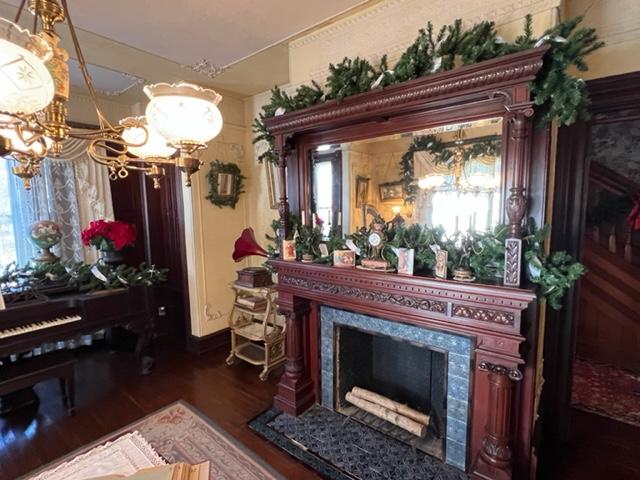
The decorative greens around the fireplace in the Music Room
The Table Top Tree would have been one of the first Christmas trees in Victorian times. Gifts, candies and cards would have been attached to the tree and would have been taken apart on Christmas day.
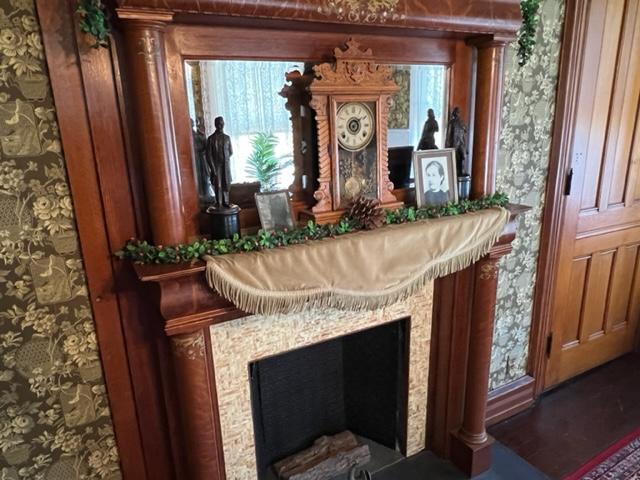
The beautifully carved fireplace in the Music Room
The beautiful flowers in the Music Room
The Parlor on the other side of the hallway was for more informal get togethers and for sewing. This is where the family would do more informal entertaining and use on a day in day out basis.
The Parlor Room for sewing and reading and informal entertaining
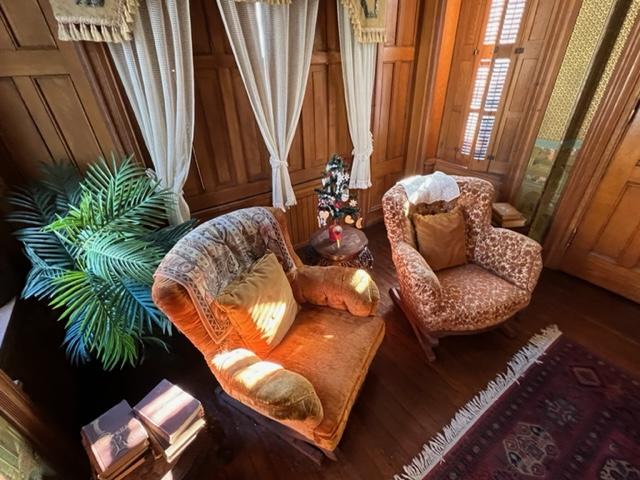
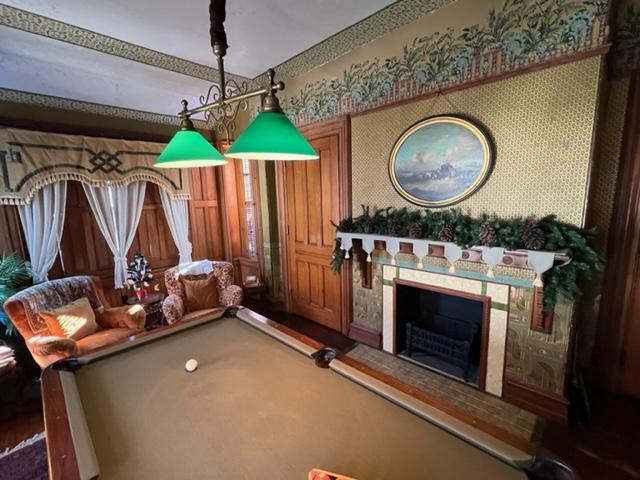
The comfortable seats in the Billiards Room
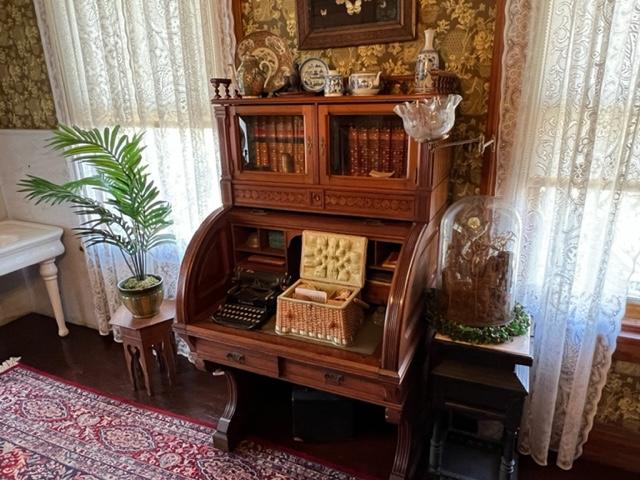
The Sewing Kit in the Parlor
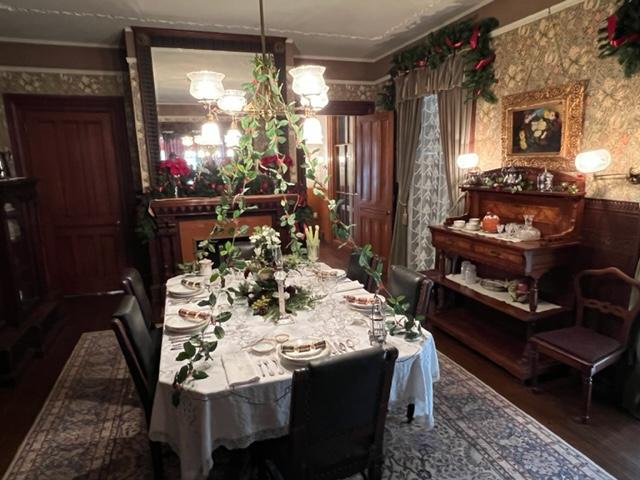
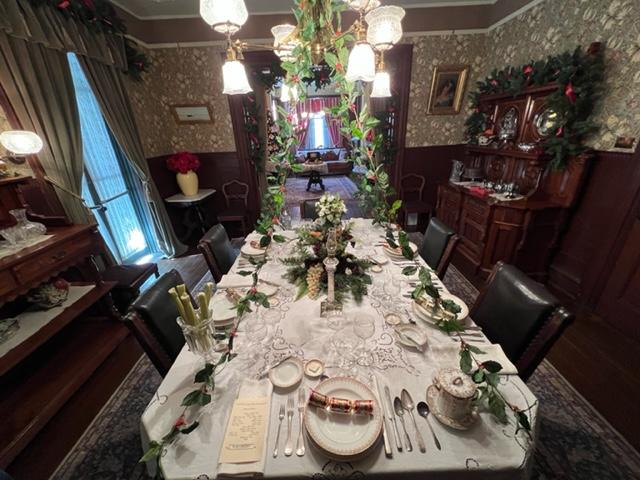
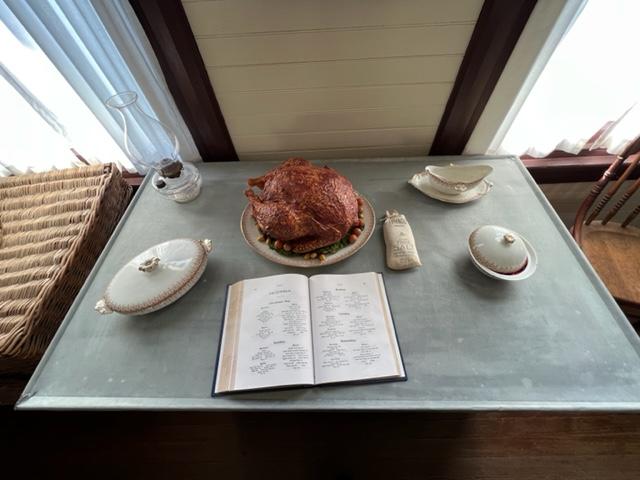
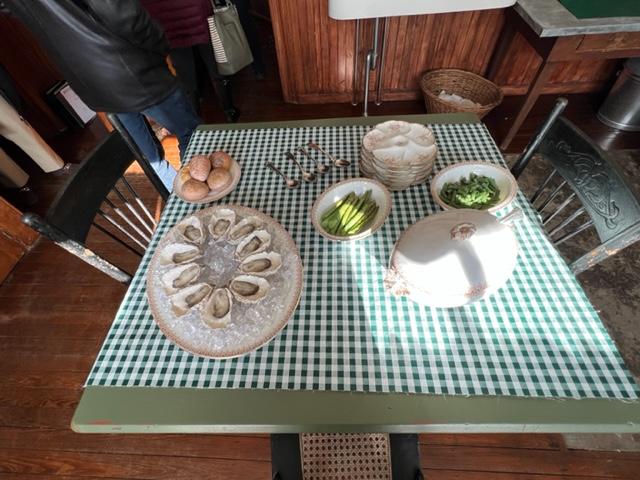
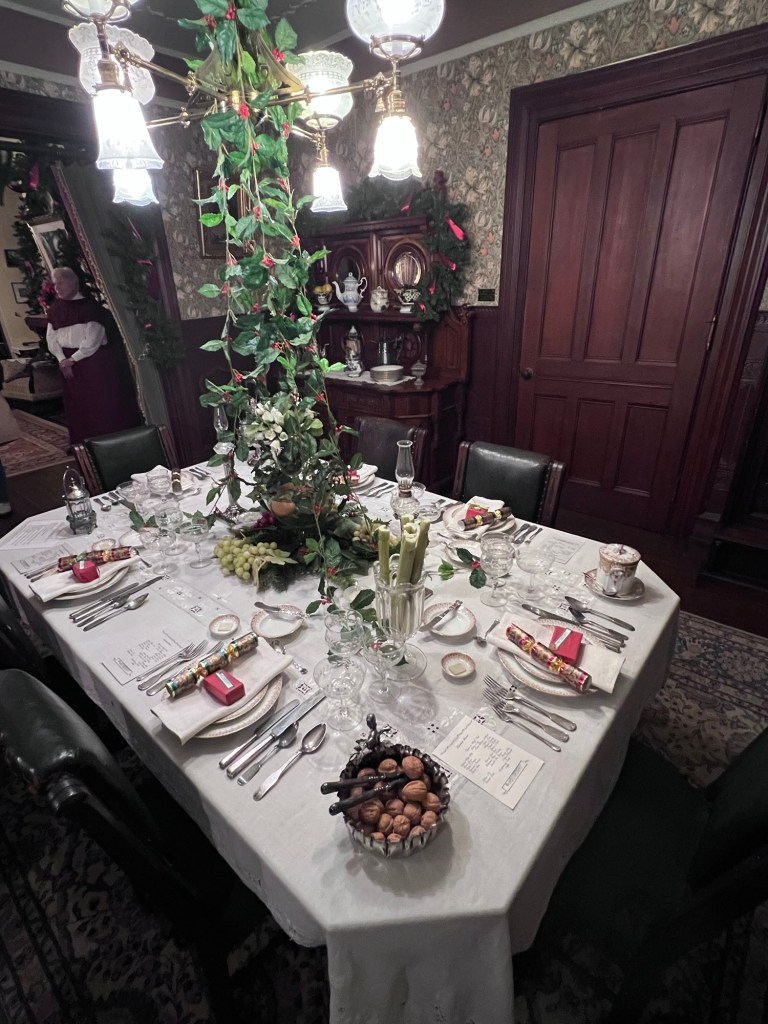
The formal dining room was set for Christmas Dinner and you get to see the kitchen and where everything was prepared for the family.With the house being set up for the holidays, you can see how elaborate the preparations would have been and how the table would have been set and the food would have been served.
The Dining Room at the Physick Mansion set for Christmas dinner
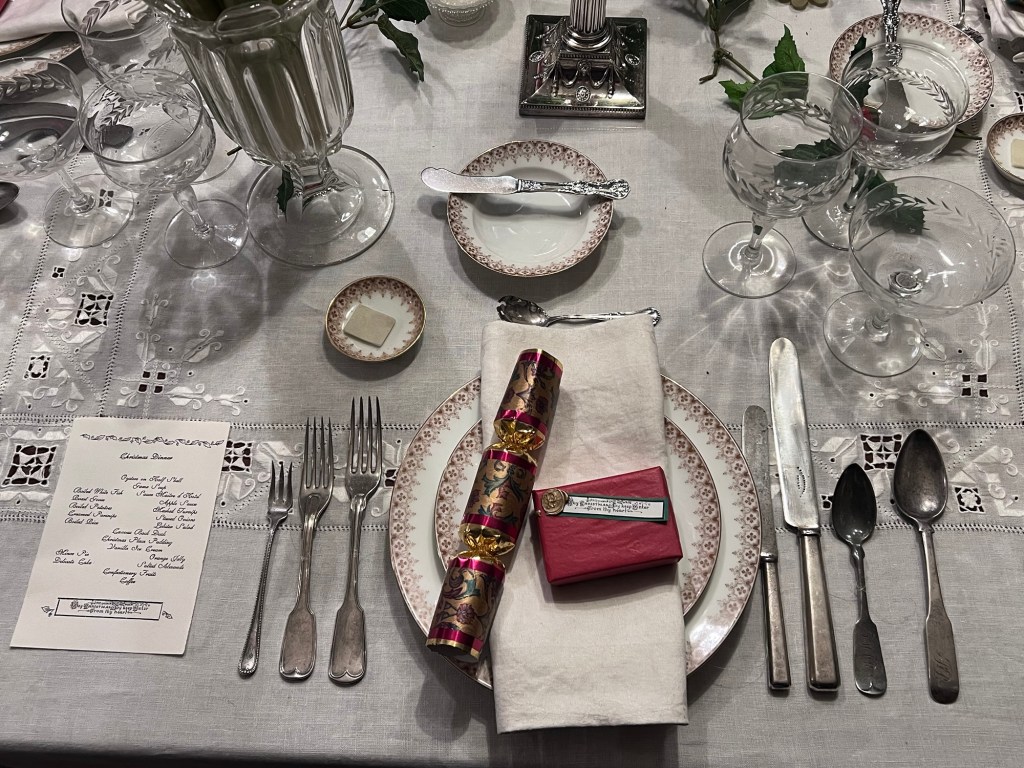
The table was set with the best china, crystal and silver for the holidays
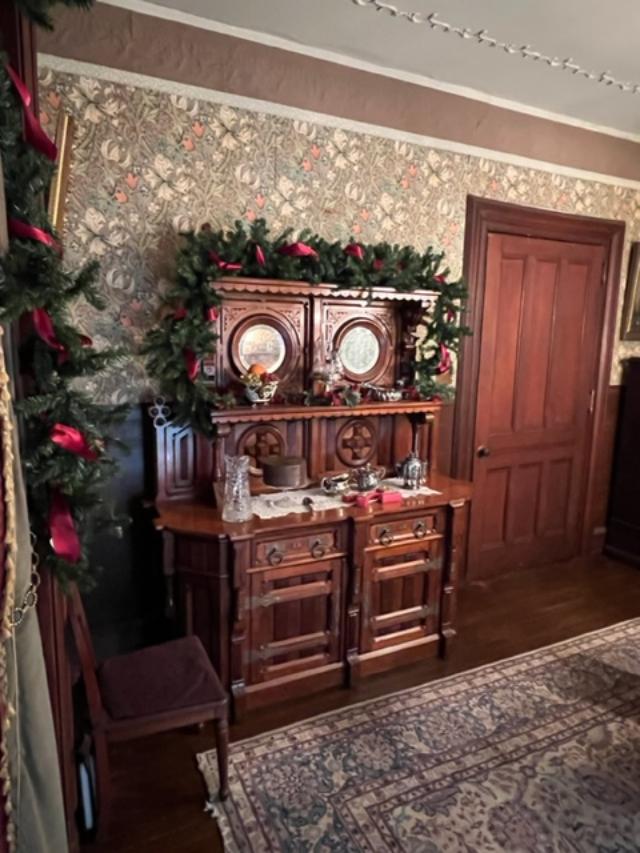
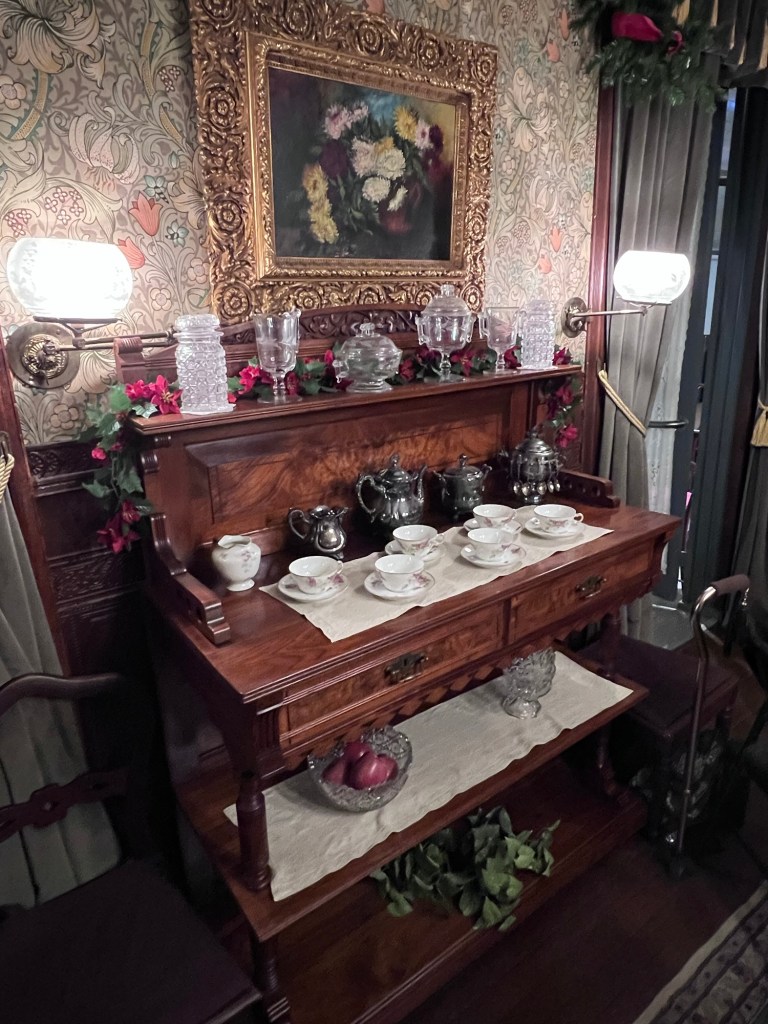
Food would be served from the Dining Room sideboard by the servants
The elaborate sideboard
The sideboard for drinks and dessert
The Dining Room Table set for Christmas dinner
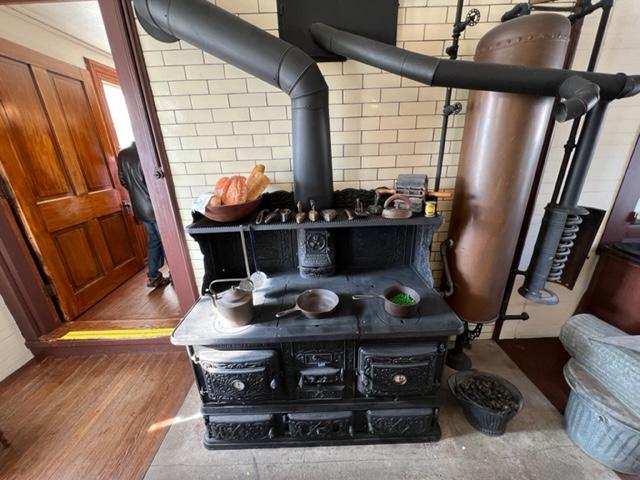
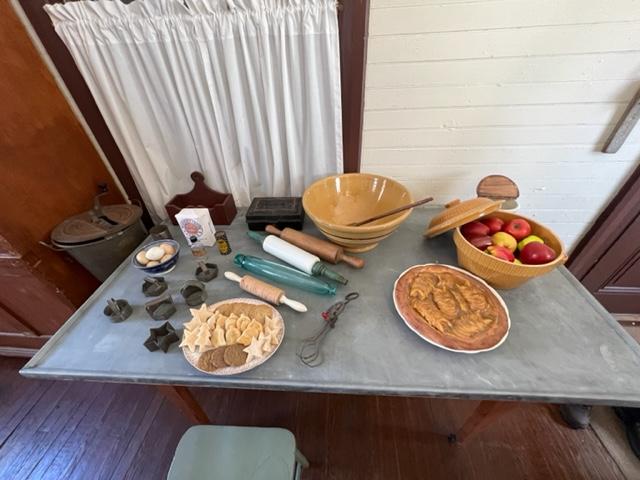
The kitchen was set up for the cooking of the Christmas dinner along with the foods that would have been served and the recipes that would have been used to prepare them. Entertaining during the holidays would not have stopped with just a family dinner as people would be entertaining neighbors, friends and relatives. There would have been teas and receptions on top the formal Christmas dinner to prepare for in a Victorian home.
The Kitchen during the holiday season
Preparations for Christmas dinner
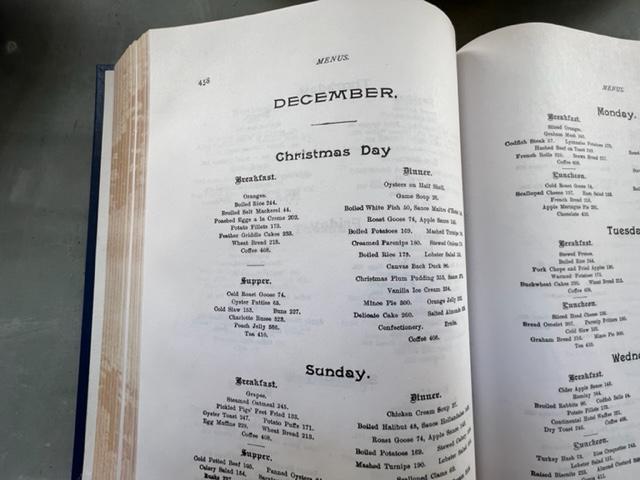
The Christmas Day menu
The coal burning stove in the ‘modern’ kitchen
The smaller original kitchen
Preparations for Christmas dinner and holiday gatherings
Holiday dishes being prepared
Getting the laundry and dishes done
Upstairs are the bedrooms and the Billiard Room that was used for entertaining as well. Men and women would relax and enjoy more informal entertainments. The bedrooms were prepared for the members of the house dressing for dinner, leaving for holiday visits and entertaining.
Mrs. Physick’s bedroom with clothes laid out for dinner or visiting
Christmas presents to family members
Mrs. Physick’s bedroom
Mrs. Physick’s dress
Mrs. Physick’s closet
Dr. Physick’s room with clothes laid out for the evening
The Servants Room
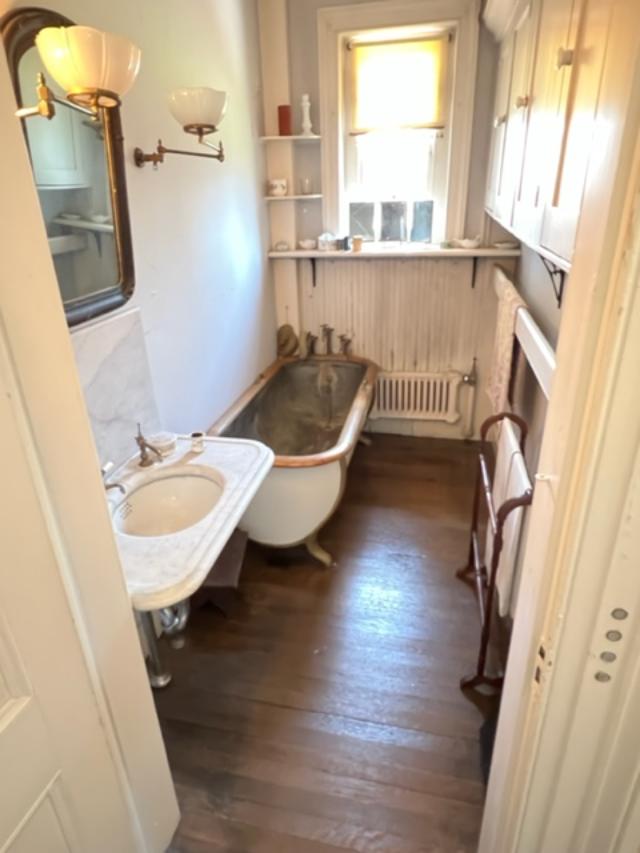
The Modern bathroom with indoor plumbing
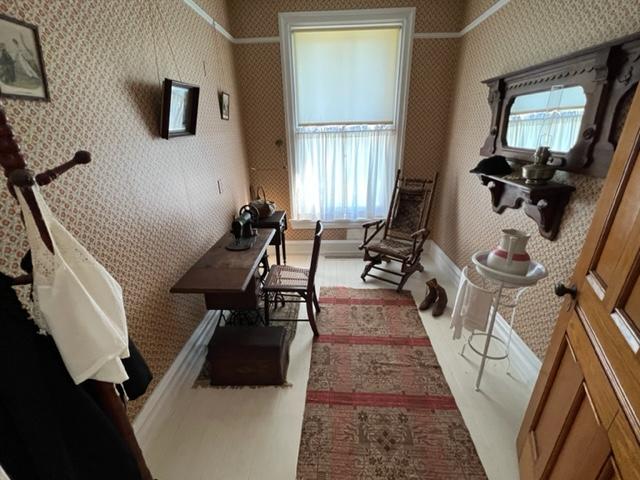
The Servants room for mending
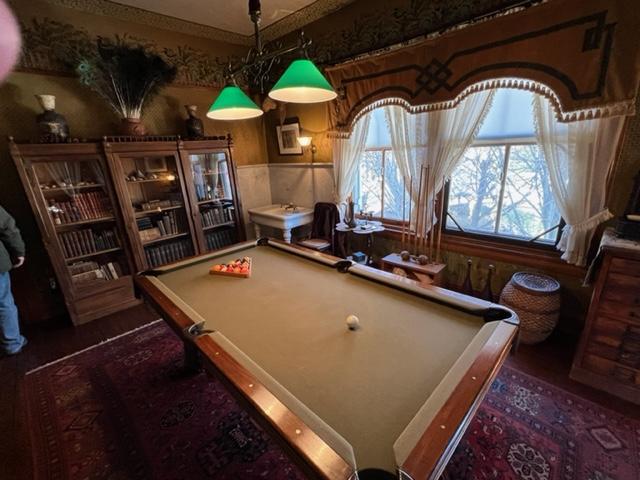
The Billiards Room would have been used for light entertainment and after hours play.
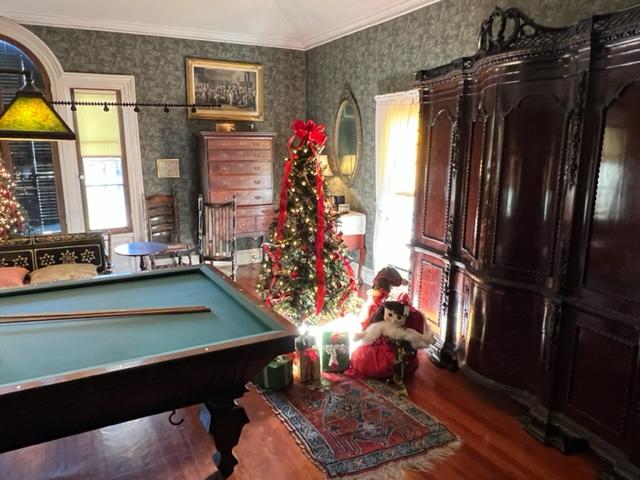
The Billiards Room on the Second floor of the Physick House
The Billiards Room
During the warmer months, they have a cafe and an afternoon tea for visitors to the home and more outdoor activities.
The Mansion’s Publicity Pamphlet:
Celebrating our history….Enriching your life
Emlen Physick Estate
Lovingly restored to its original splendor, the 1879 Emlen Physick Estate is Cape May’s only Victorian house museum. The 18 room Physick House was built in the Stick Style of architecture, with trademark design features of renowned Philadelphia architect Frank Furness. The Estate provides an in-depth glimpse of the period and offers year-round tours and unique living history programs.
The elaborate woodwork in the Physick House
The new theme for Physick Estate Tours in 2017 is “Let’s Go Shopping! Victorian Consumer Culture.” Revolutions in American industrializing, merchandising, advertising, retailing and consuming in the Victorian era forever changed how people shopped. Take a guided tour of the 1879 Emlen Physick Estate with this new theme for 2017 and you’ll discover how consumer culture has changed since the late 1800’s. The house is air conditioned and the first floor is fully accessible.
The Carroll Gallery and Carriage House Café & Tearoom
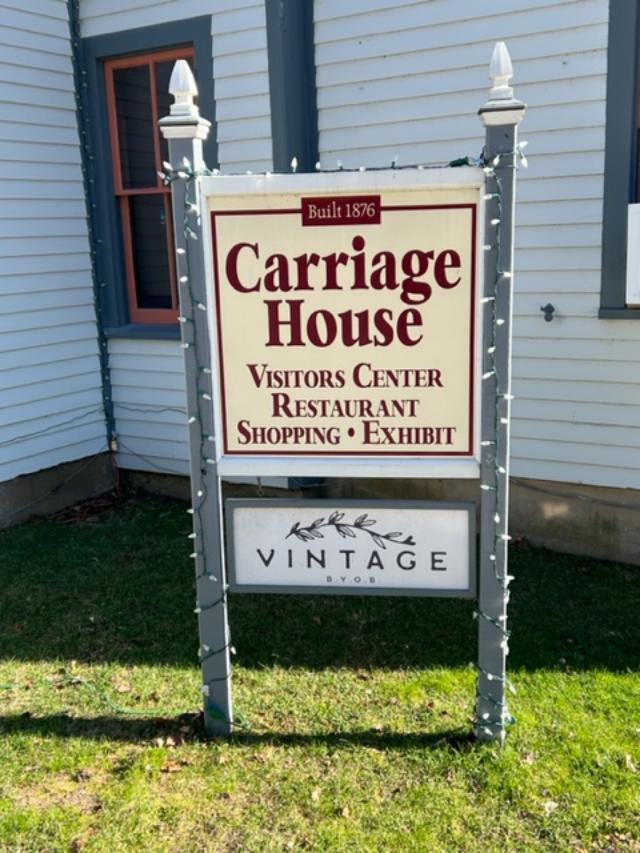
On the grounds of the Emlen Physick Estate. The estate’s 1876 Carriage House now houses a gallery featuring changing exhibits throughout the year and a charming museum shop as well as the Carriage House Café & Tearoom. Dine in the Carriage House or outdoors beneath the gaily-striped tent overlooking the gorgeous gardens. Enjoy a hearty lunch from our Café menu or a traditional English Tea Luncheon or afternoon tea with tea breads and scones freshly baked in our own kitchen. Open late April through October. Air conditioned and fully accessible.
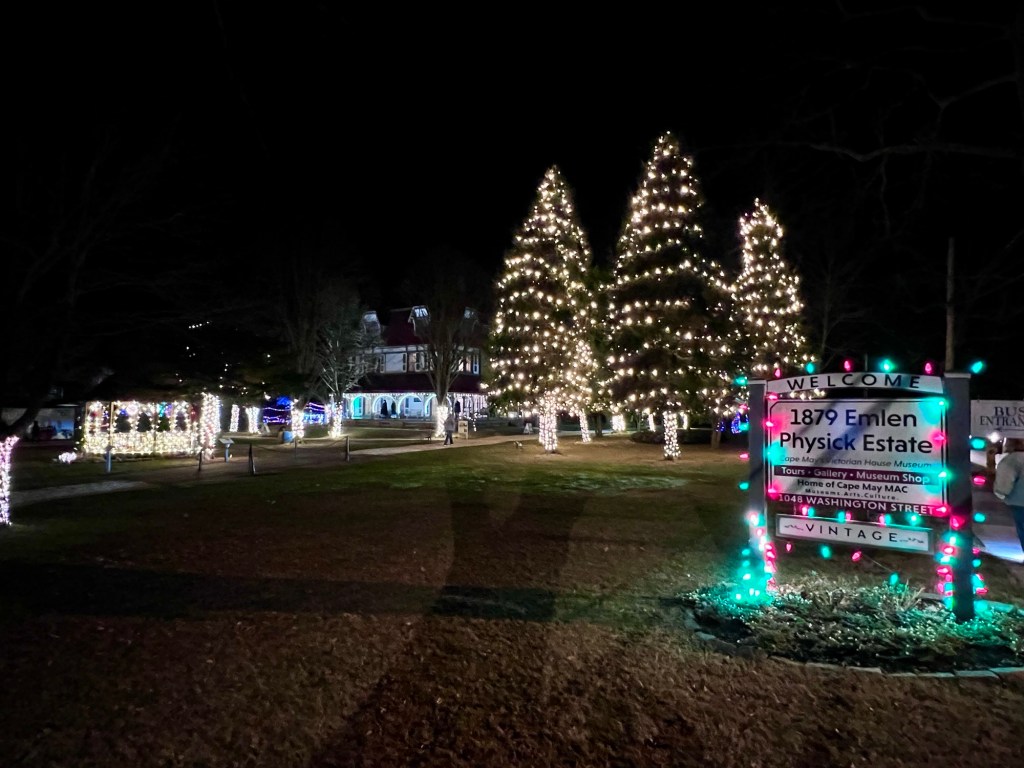
The Emlen Physick Estate in Cape May, NJ
The entrance to the home
MAC is committed to making its programs accessible to as many individuals as possible. For information or if you require assistance, please call 609-884-5404 in advance so we may accommodate you. New Jersey Relay Center for TTY customers, please call 800-852-7899. MAC’s public history programs are funded in part by the New Jersey Historical Commission in the Department of State Restoration work at the Physick Estate has been funded by the New Jersey Historic Trust, the New Jersey Cultural Trust and the 1772 Foundations.
Touring the house for the Cape May Holiday Tour of Homes and Inns in 2025:
I came to Cape May the first weekend in December 2025 to take the Christmas Walking tour of all the places open for touring and the Physick House was the headquarters for the event and was so beautifully decorated for the holidays.
The whole estate so beautifully decorated for the holidays.
The start of the walking tour outside the house
Many houses, inns and museums were open for this walking tour in Cape May and the event takes place for three Saturdays before Christmas. Each of the places are beautifully decorated for the holidays and have tour guides and owners who led you through their establishments with great pride.
These were some of the rooms I was most impressed with in the house when I was on the tour in 2025. Even the gift shop was decorated to the hilt.
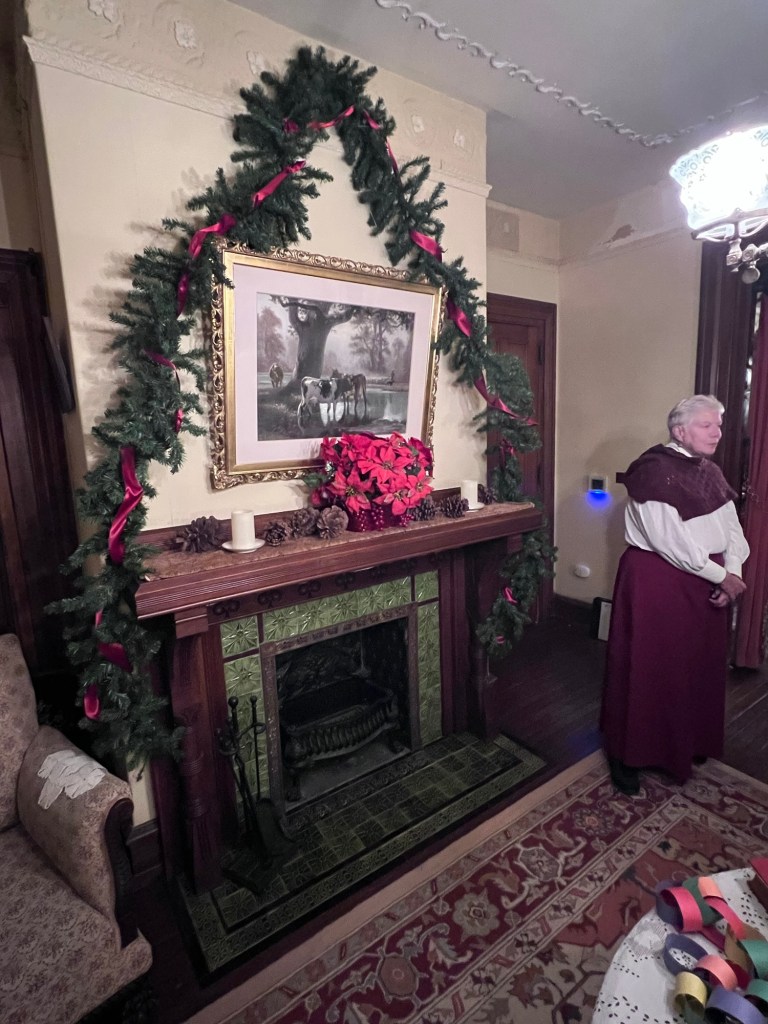
The tour guide in the Living Room welcoming us on the walking tour
The Victorian Christmas tree in the Living Room
The Dining Room set for a Christmas feast
The table setting for Christmas
The side board ready for dessert
The Table Christmas tree in the Parlor
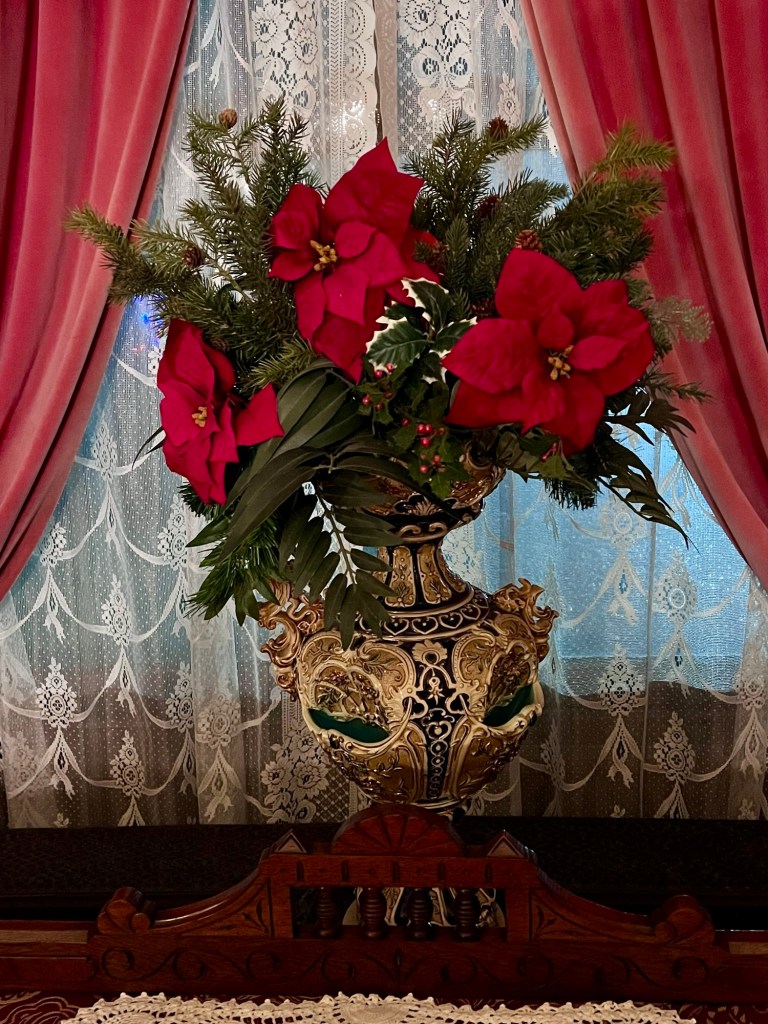
Flowers all over the home
The gift shop was beautifully decorated for the holidays
Disclaimer: This information was taken directly from the Emlen Physick Estate pamphlet. Please call the Estate at the number above for more information.
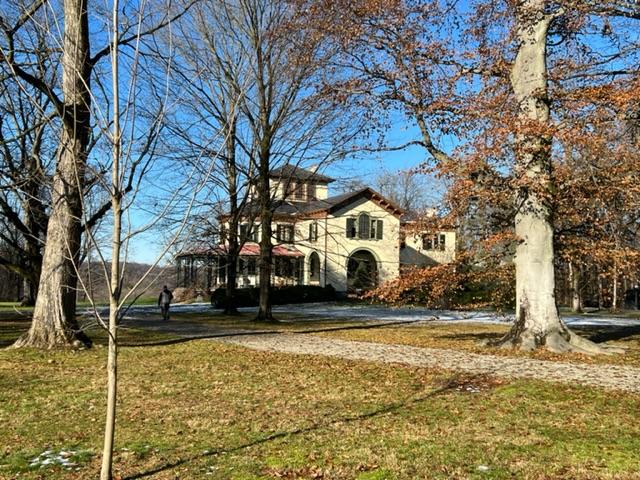
Overlooking the Hudson River, the 180 acre Locust Grove Estate includes an Italianate villa designed in 1851 by architect Alexander Jackson Davis for artist and inventor Samuel F. B. Morse.
The Locus Grove additions of the tower and back rooms
The estate, with miles of carriage roads, landscaped grounds, historic gardens and Hudson River views, was preserved as a museum and nature preserve by the Young family, whose collection of art and antiques is exhibited in the mansion’s 25 rooms.
Entering Locus Grove for the Christmas holidays
I have visited the house twice for Christmas with the mansions elaborate but tasteful displays and once in the last fall when the foliage was in full peak. The house is an interesting example of turn of the century architecture and innovation of both the Morse and Young family’s love of Locust Grove. Each added their own touch to the house.
The Library right off the main hallway entrance used to be the original Dining Room when the Morse’s owned the house
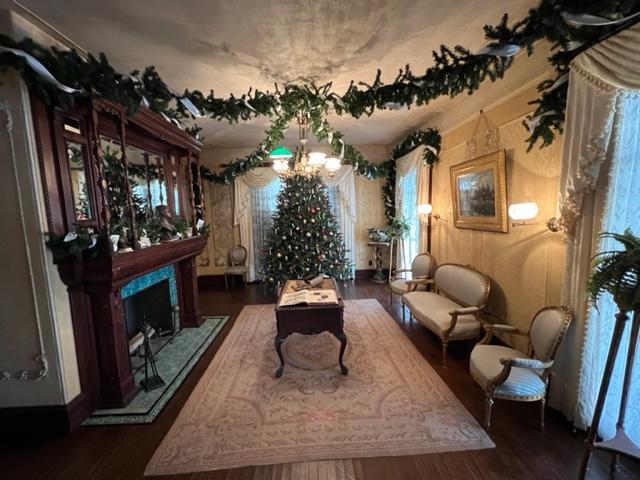
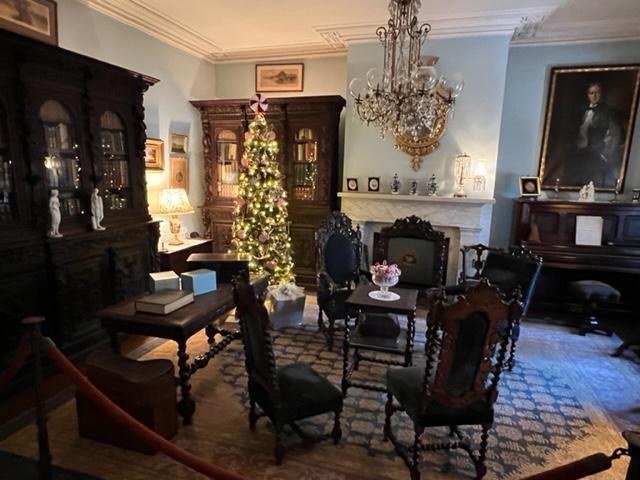
The Christmas tree in the Library
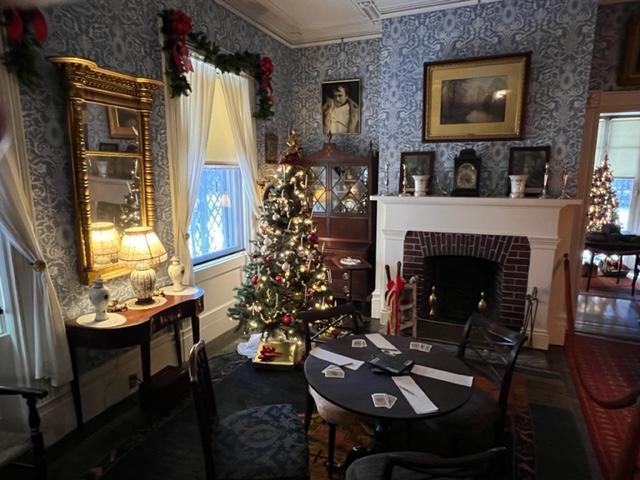
The Parlor across the hall from the Library
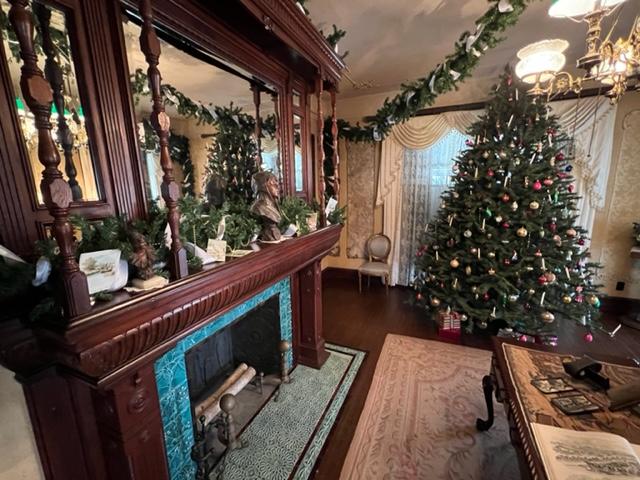
A closer look at the Christmas tree
During the Christmas holiday season, the house is beautifully decorated both inside and out for the holidays, with a formal tree in the back Living room, smaller trees and garland around the house on the first floor and smaller trees with presents in the bedrooms and in the Billiards room.
The Library at Locust Grove for the holidays
One of the rooms set for Afternoon Tea
One of the back offices
When the Young’s moved into the house, they needed more room for entertaining so they added the larger dining room (The Morse’s added the Tower to the home). So the old Dining Room became one of the reception rooms and a library. Some of the smaller rooms were used for social occasions so the first floor was reconfigured.
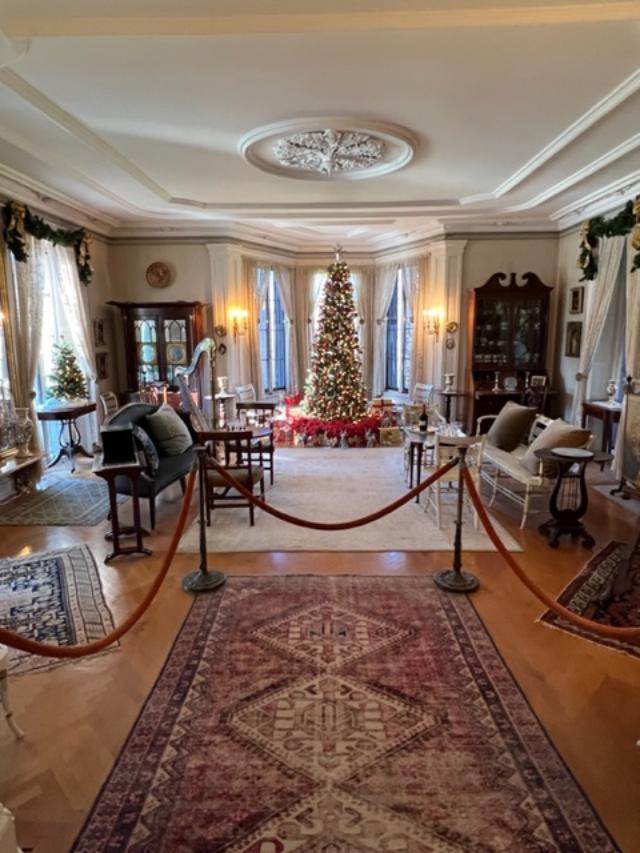
The Living Room in the Tower addition of the home
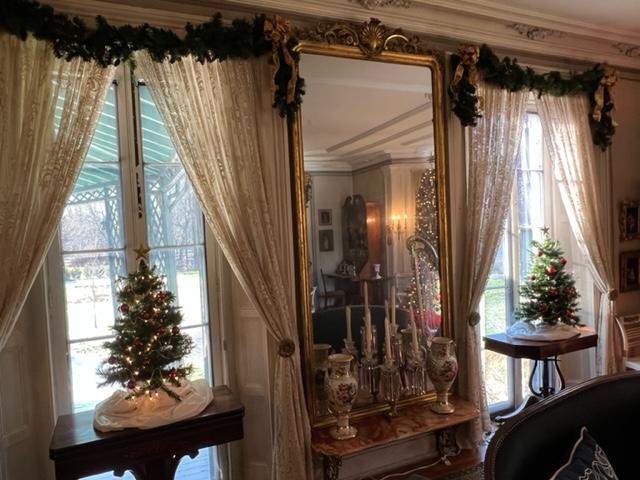
The mirror in the Living Room was the last thing left by the Morses
The larger Living Room held the most beautiful Christmas tree with a gorgeous view of the Hudson River from the back window. The room is elaborately decorated for the holidays and the volunteers created a very festive decor for the room. I do not know if the family would have decorated this much but still the halls were decked perfectly.
The Dining Room was set for an formal Christmas lunch with the family’s best china, crystal and silver and had displays of fruits and desserts that would have been served during the holidays. The Morse family spent their holidays in New York City so it would have been the Young’s who spent their holidays here.
The Dining Room set for Christmas lunch
The Christmas tree in the Dining Room
The Butler’s Pantry for the Dining Room
The upstairs to the bedrooms
The house had been added onto twice from the small cottage that had been built by the second owners, the Montgomery family. The back tower and wings were built by the Morse family and the formal dining room by the Young’s for their growing family.
The bedrooms were nicely decorated and the rooms had lots of Christmas decorations that you would not ordinarily see in a bedroom. Each room had its own Christmas tree.
The Master Bedroom with a breakfast nook overlooking the Hudson River
The paintings above the bed are of the Young family
The modern bathroom with hot and cold running water
The Young’s son lived in this room until he died
The Young’s daughter lived in this room until her death
The guest rooms were also nicely decorated
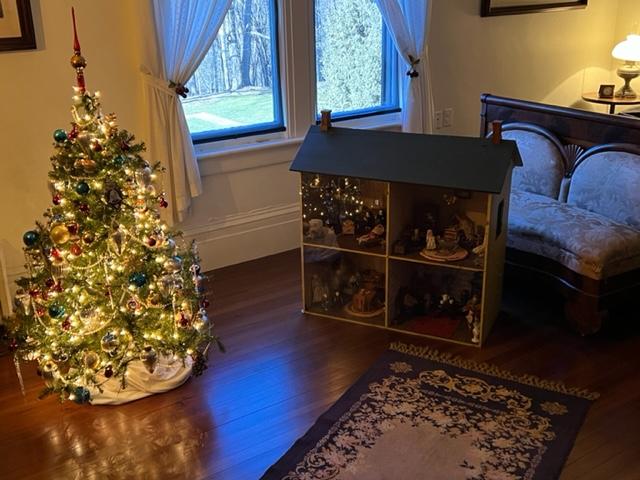
The dollhouse in the guest bedroom
Another guestroom
Guest room
The tour guide told us that the second floor Billiards Room was once a very popular and engaging room in the house for everyone visiting. There was always a lot of action going on in this room.
The Second Floor Billiards Room
The Christmas decorations in the Billiards Room
Our last stop on the second floor was the modern bathroom which was considered extremely innovative for its day. This was the most modern approach to plumbing.
The upstairs bathroom
The last stop on the tour was the downstairs Servants Quarters which were also decorated for the holidays. It showed what the Servants of the household would have been doing on a daily basis to help keep the house running.
The Servants kitchen
The kitchen table in the Servants Quarters
The Servants Dining Room
Our tour guide, Ethel, did a nice job interpreting how each family would have used the house and for what occasions. The Young’s lived here full time until the last owner, Annette, died in 1975 and the Morse family used it as a summer retreat until Samuel Morse died in 1872.
The view from the back of Locust Grove to the Hudson River during the early fall
The view to the Hudson River from the back of the house during Christmas 2022
The house is tastefully furnished both in turn of the last century decor and some more modern pieces. The grounds in the spring and summer months are in full bloom and in the fall awash with colors from the trees.
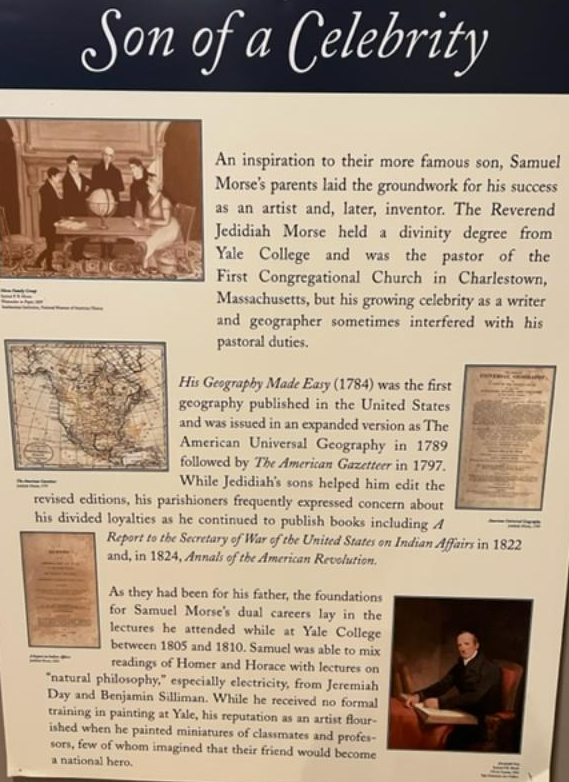
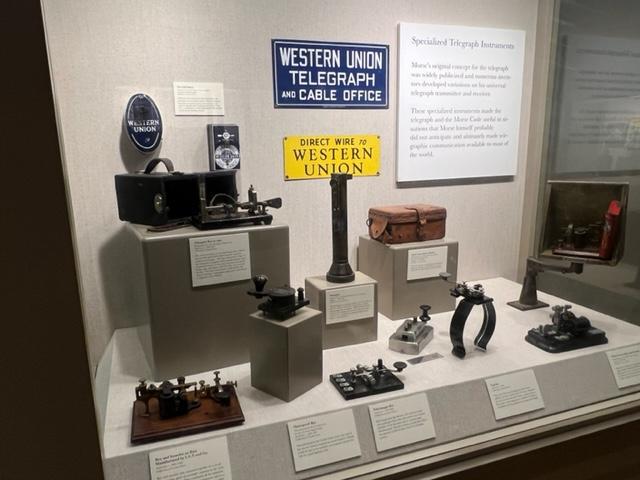
Also, don’t miss visiting the small museum of Samuel Morris’s paintings and his development of the telegraph system, where the patents is where most of the family fortune came from. Mr. Morse was an artist, educator and inventor and his life’s work is displayed in the galleries.
The Morse Family
Morse Museum: Samuel Morse family in the early Colonies
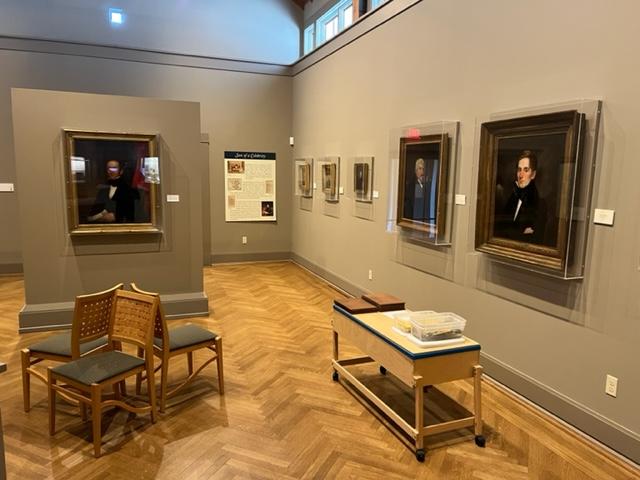
Samuel Morse with his career in portrait painting
Samuel Morse’s Portraits
Samuel Morse’s inventions and innovations with the telegraph
Samuel Morse’s innovations
The History of Locust Grove:
Locust Grove has an interesting history. The estate was first owned by Henry Livingston Jr. when he purchased the property from his father in 1771. The estate was such named because of the black locust trees that grew on the property. After his death, the estate was sold to John and Isabella Montgomery who built the original cottage on the estate. Mr. Livingston’s home had been torn down by this point.
The main house at Locust Grove is a villa in the Italianate style designed in 1850. Morse had recalled the elegant villas that he had visited years earlier in the Italian countryside and he sketched towers, windows and floor plans. Construction on the villa, sited on a dramatic bluff overlooking the Hudson River began in 1851 and was completed the following year.
He continued to expand the cottage and the gardens during his time and the family continued to use the house as a summer retreat and living in the winters in their brownstone in Gramercy Park. After Mr. Morse’s death, the family used the house occasionally and then sold it to one of their renters, the Young family.
William and Martha Young added modern amenities to the house like central heat and running water and updated the bathrooms. They added the new dining room and guest bedrooms in the new North Wing of the house. They also brought with the many family heirlooms and their decorative art collection which is still on display in the house.
After their deaths, the Young’s children, Annette and Ennis worked to preserved and restore their family’s homes in here, in New Haven, New York City and Ulster County. After the death of her brother in 1953, Annette Young continued to live at Locust Grove and began donating to museums the art, land and historic houses she inherited so that they would be protected. When she died in 1975, she established a not-for-profit foundation to ensure that Locust Grove with its collections and archives would be protected. The house is now available for touring and for weddings.
(Locust Grove History and Wiki: I give both organizations full credit for this information)
Location: Locust Grove is located on Route 9 in Poughkeepsie, NY, two miles south of the Mid-Hudson Bridge or 11 miles north of Interstate 84.
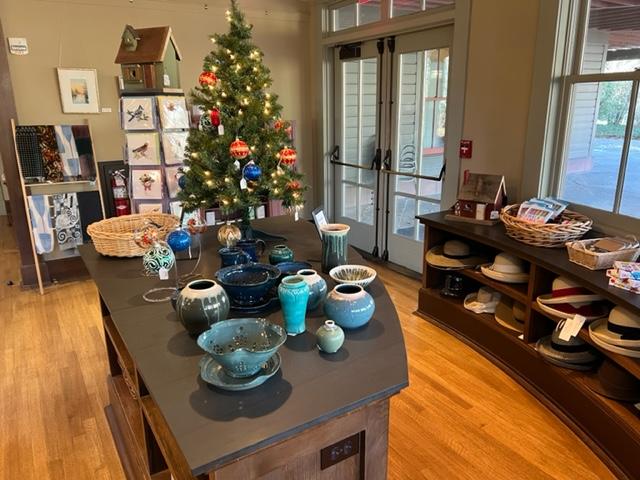
Locus Grove Gift Shop
Disclaimer: this information is taken from the Locust Grove Historic pamphlet. The site is very interesting and should be added to your list of ‘must sees’ in the area. Please call the site for more information.























































 Visiting a Museum: The Unique, Unusual, Obscure and Historical