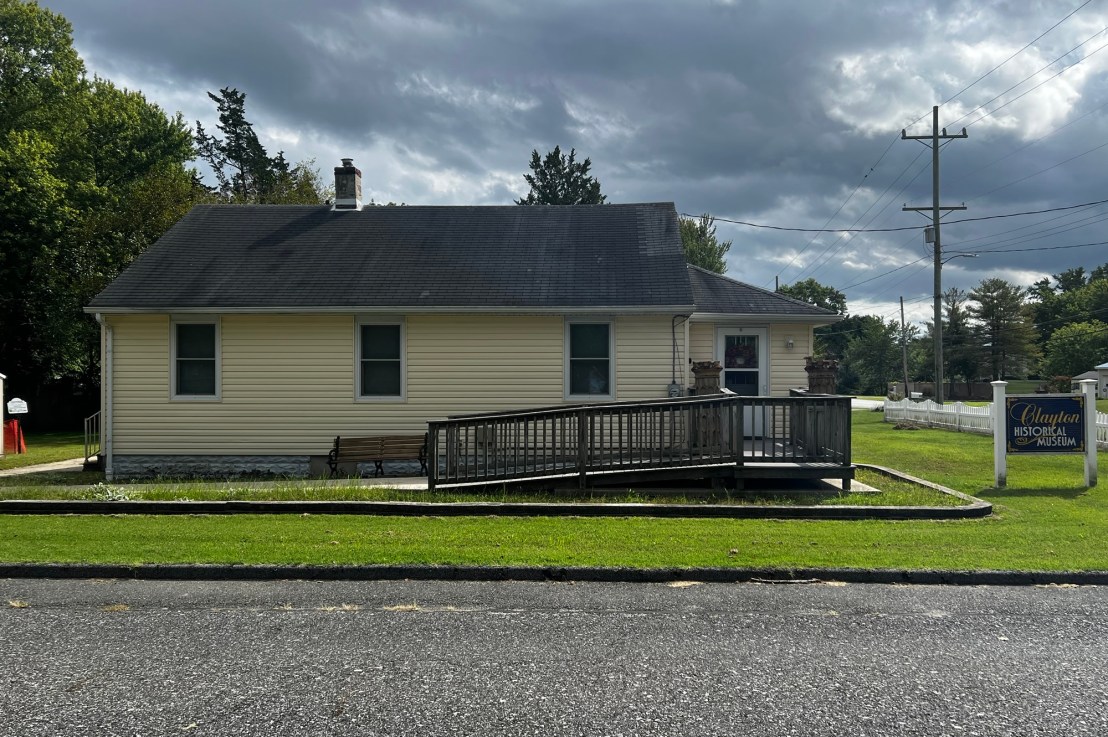
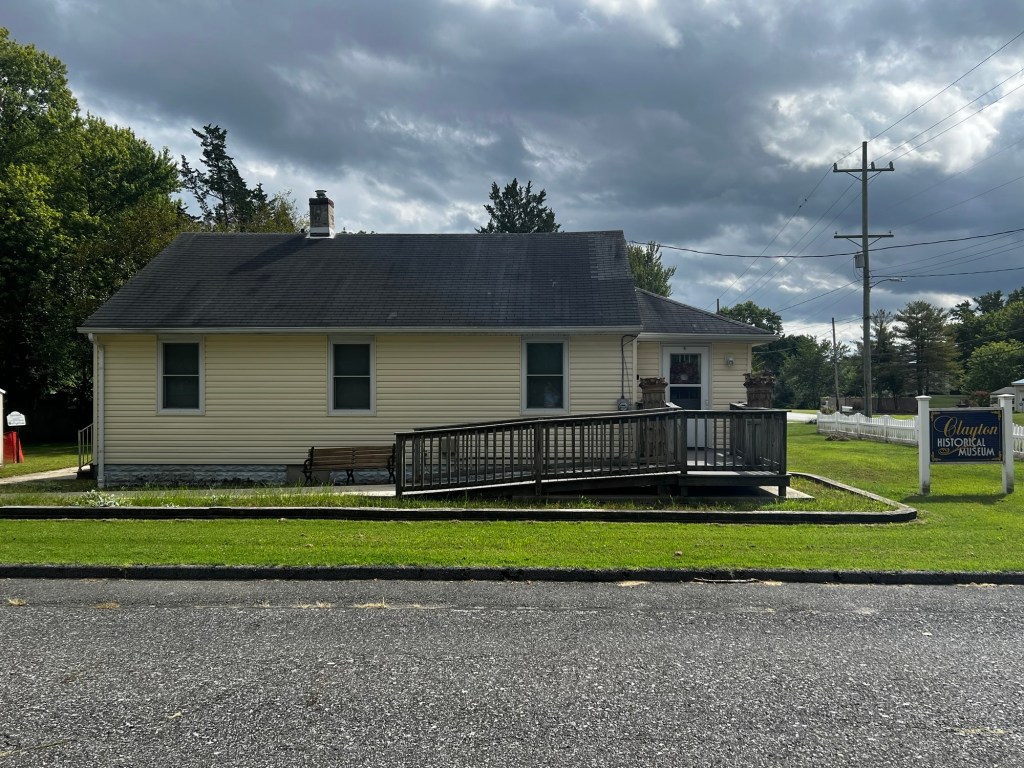
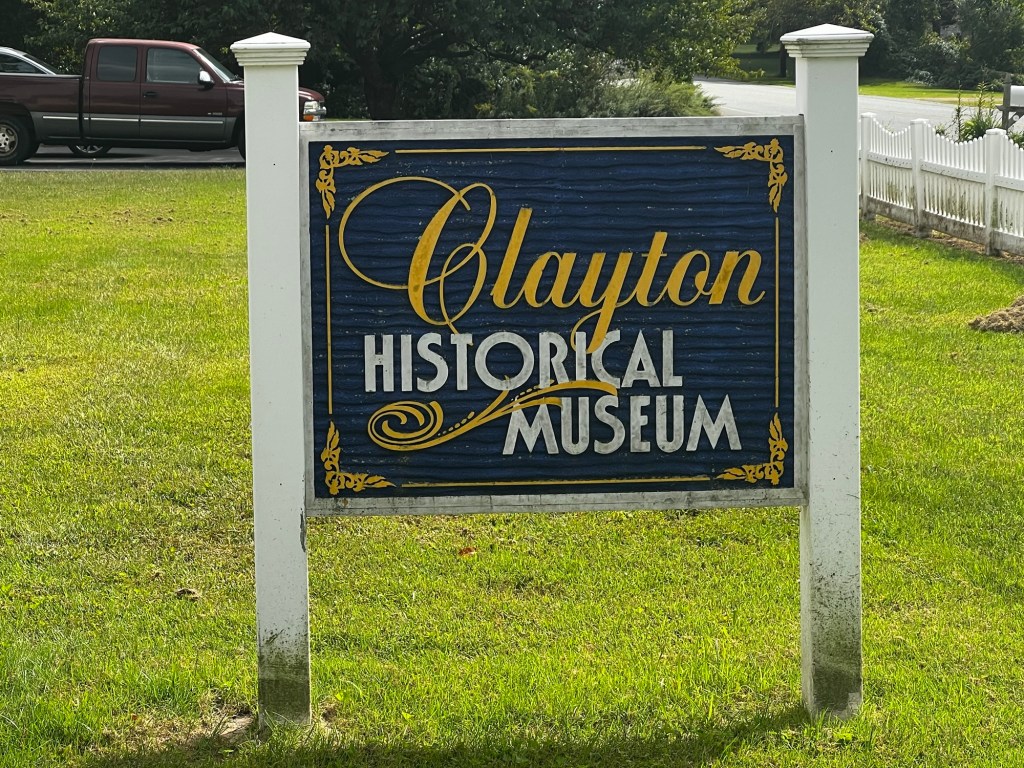
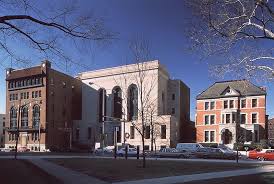
The Clayton Historical Museum is the perfect example of a community recording and preserving its past and showing the direction of its future through historical timeline of this town. From its place in glass manufacturing the the cheer of its high school, the museum displays the community pride of Clayton, NJ.
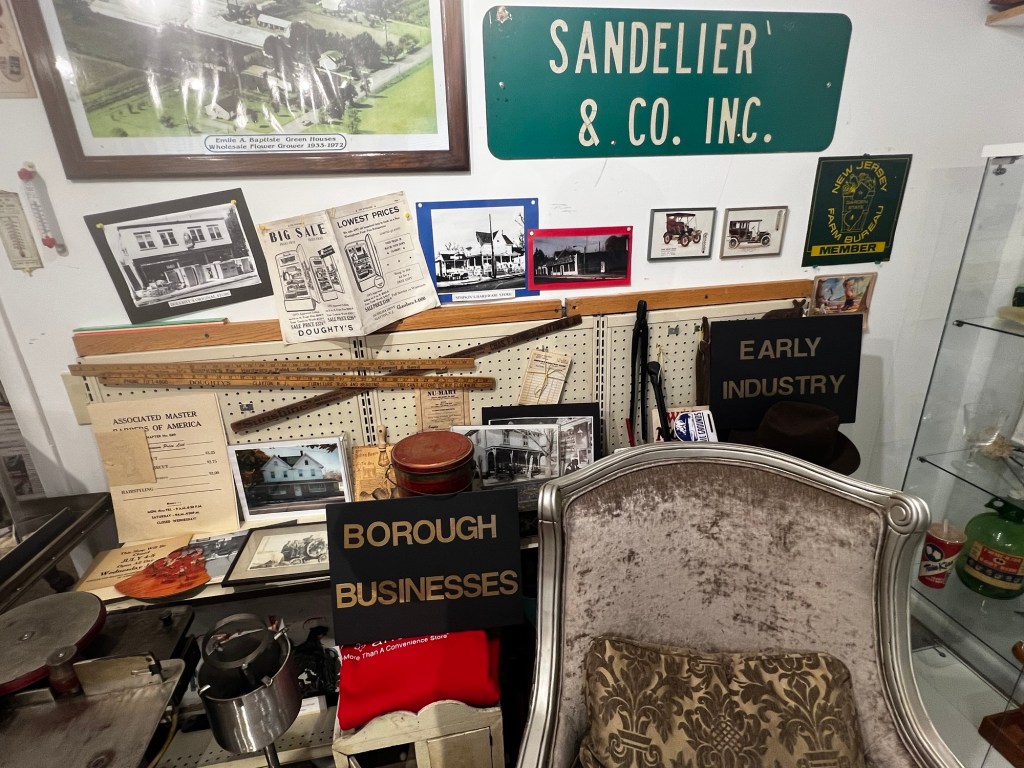
It shows how small towns all over New Jersey can preserve their past while still being part of the community at large. Each of the rooms in the museum displays a part of the community and its progression through time.
The first small gallery is dedicated to the uniformed forces that help protect this small community, the majority of the second gallery is dedicated to the glassworks business that once dominated the area and the back gallery displays its community with schools, the business district and the continuation of the glassworks.
The docents and volunteers give you the freedom to walk around but time is limited because the museum is only open for two hours a month plus special events happening in the town.
The History of the Museum:
(From the Museum website)
Clayton Historic Preservation collects personal papers, local business and organization records, photographs, early maps, genealogies, church histories, family Bibles, historic books, newspapers, artifacts and so much more.
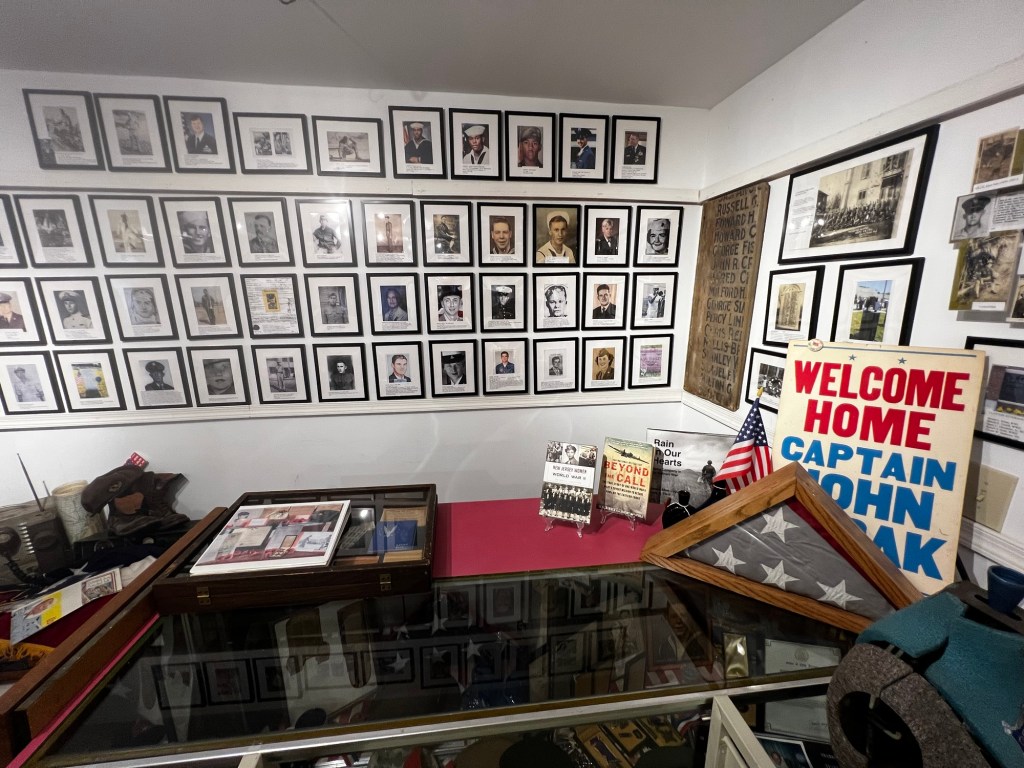
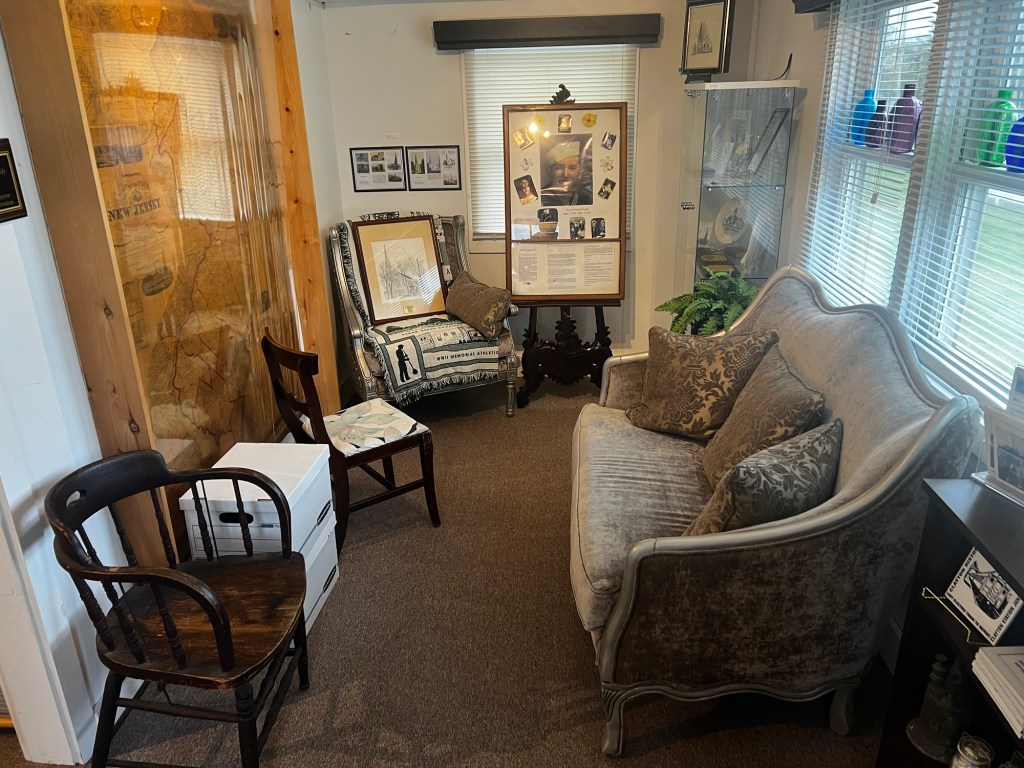
The Veteran’s Exhibition in the middle of the museum
Our museum’s archives showcases the heritage and culture of Clayton, allowing visitors to explore and appreciate the town’s fascinating journey. Clayton Historic Museum is a guardian of the borough’s rich heritage, offering visitors a journey through its exhibits and displays (Clayton Historical Society pamphlet).
The entrance hall to the museum
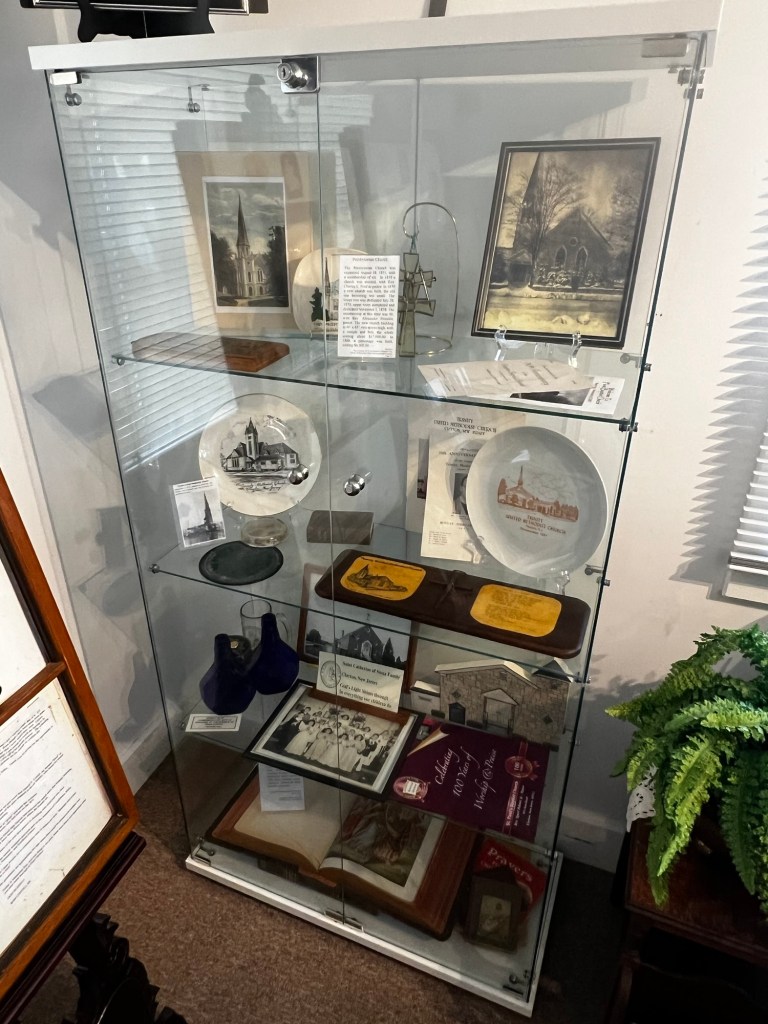
The church artifacts in the first entrance gallery
The Clayton Historic Museum fosters a sense of pride and appreciation for Clayton’s past by preserving artifacts, documenting stories and engaging the community. CHP invites residents and visitors to explore, learn and connect with the borough’s history.
As a testament to the borough’s commitment to preserving its unique identity, CHP is creating an enduring legacy for future generations(Clayton Historical Society pamphlet).
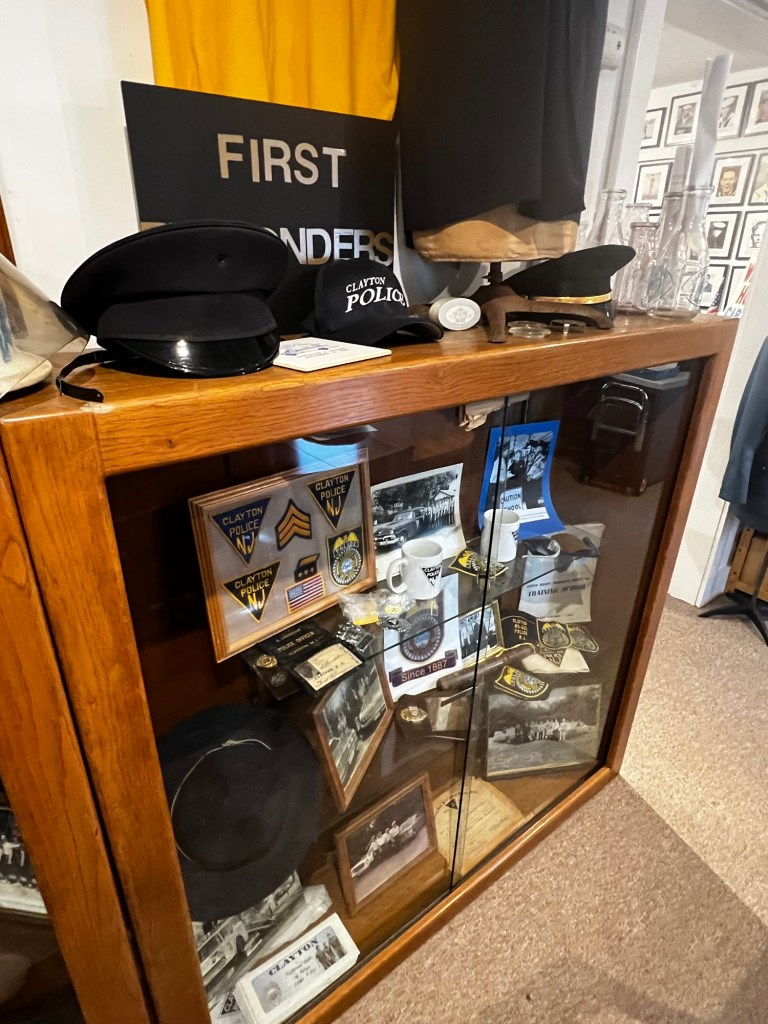
The front gallery dedicated to the town’s First Responders:
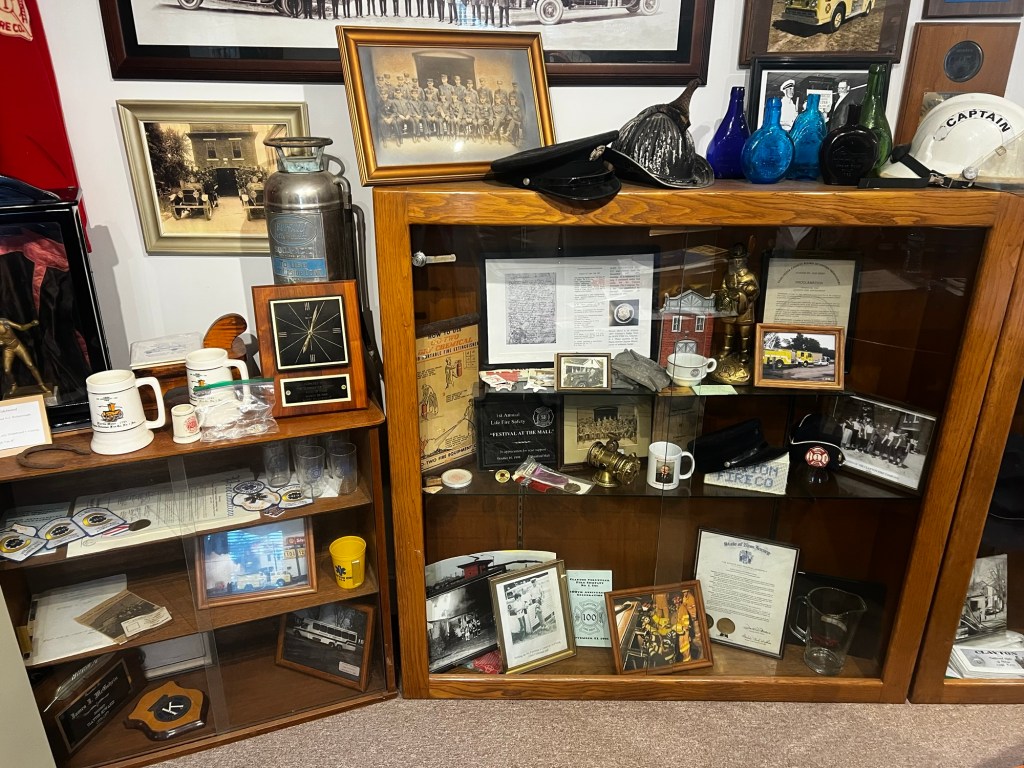
The front gallery of Clayton Fire and EMS displays
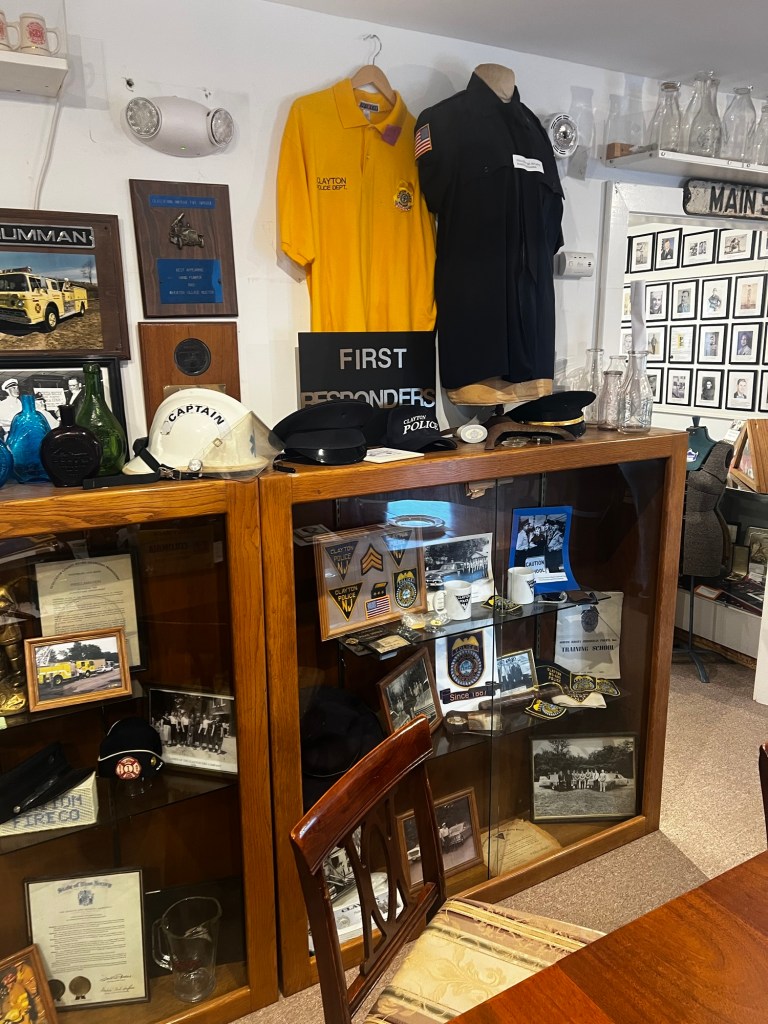
The Clayton Police and Fire Department displays
The Clayton Police display
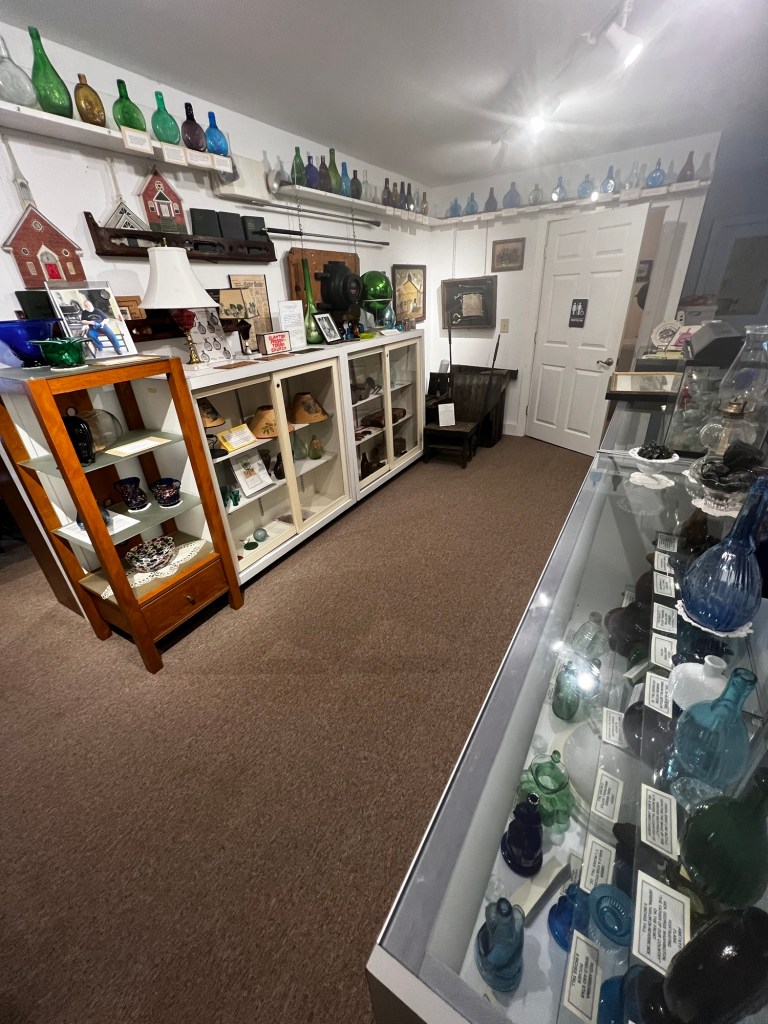
The middle gallery is dedicated to the glassworks businesses:
The middle gallery
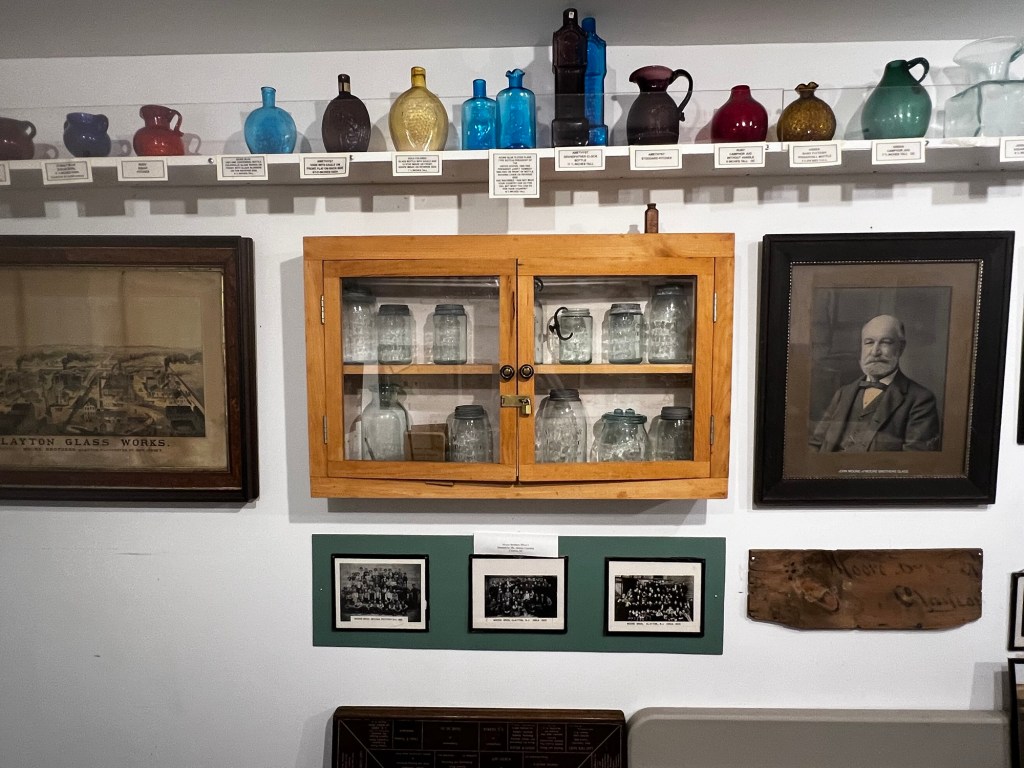
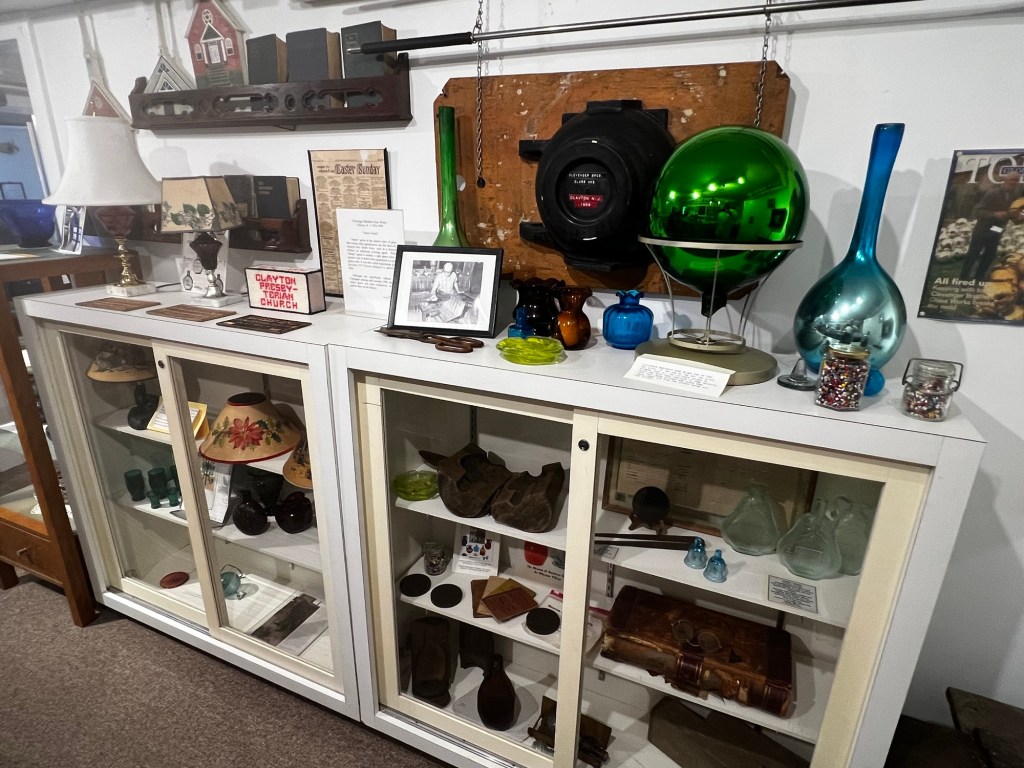
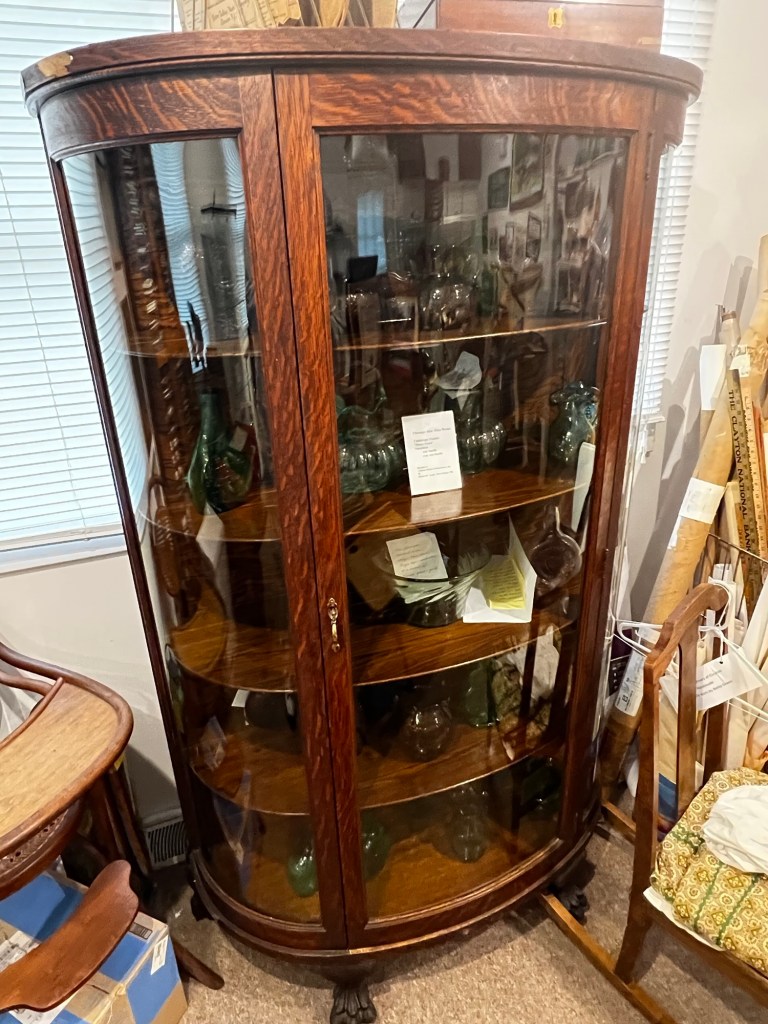
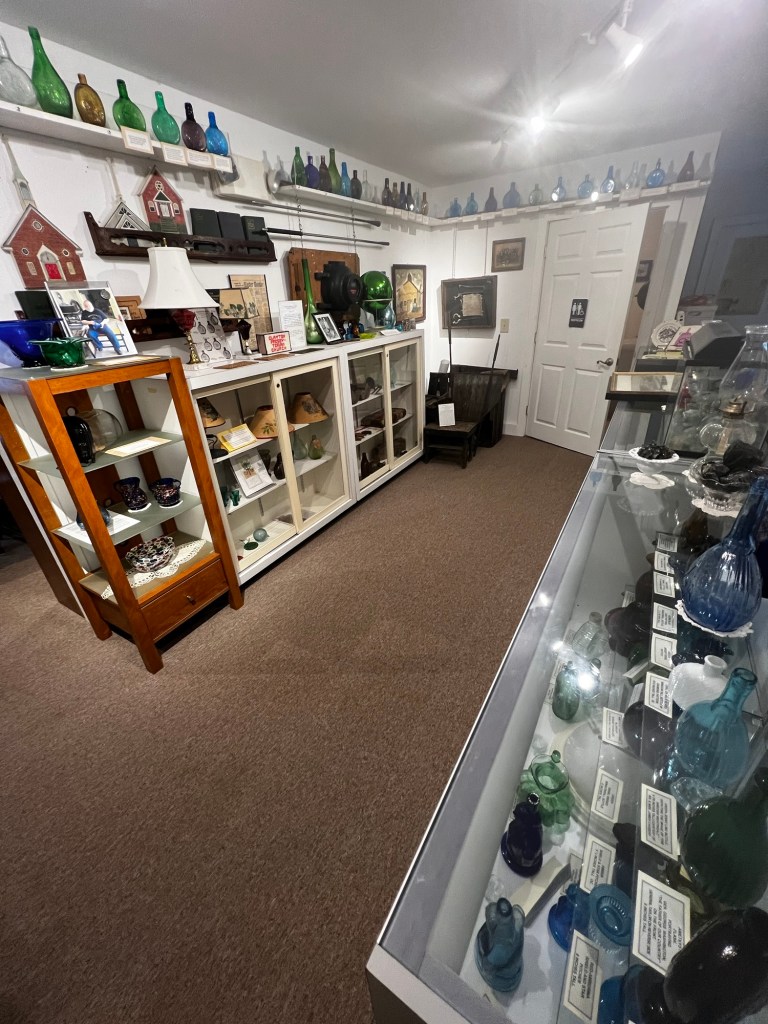
The glass making industry was a majority of the work force at the turn of the last century and shows New Jersey’s craftsmanship over the years.
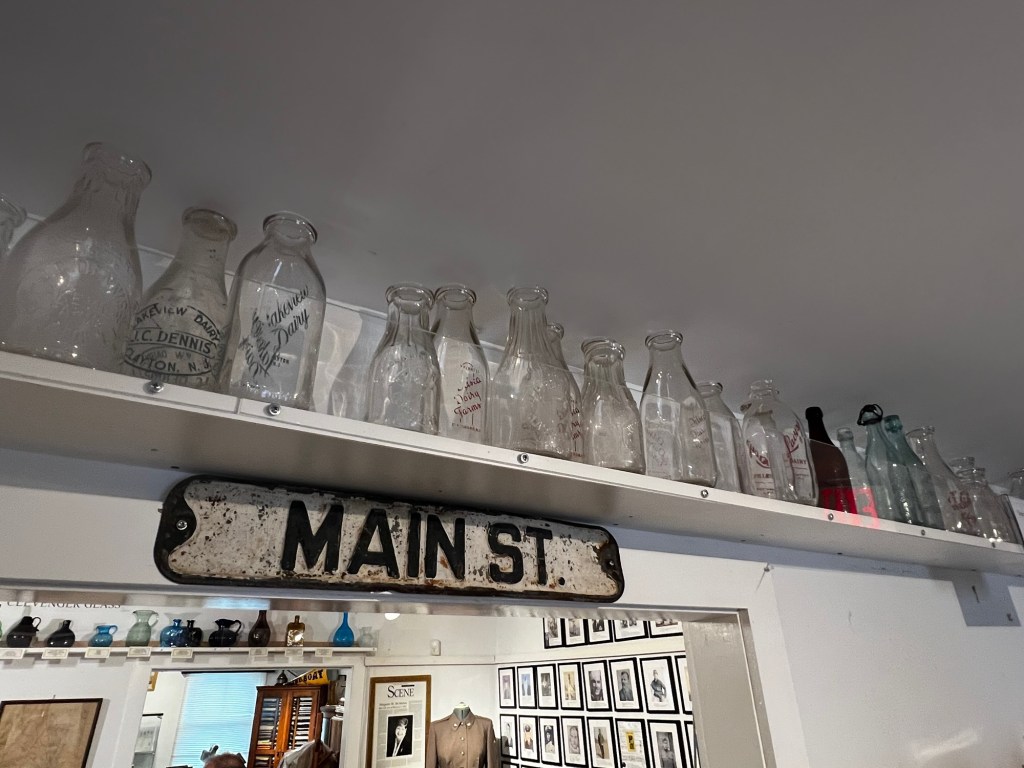
The glass milk bottles showing the areas both dairy and glass bottle industries of the past
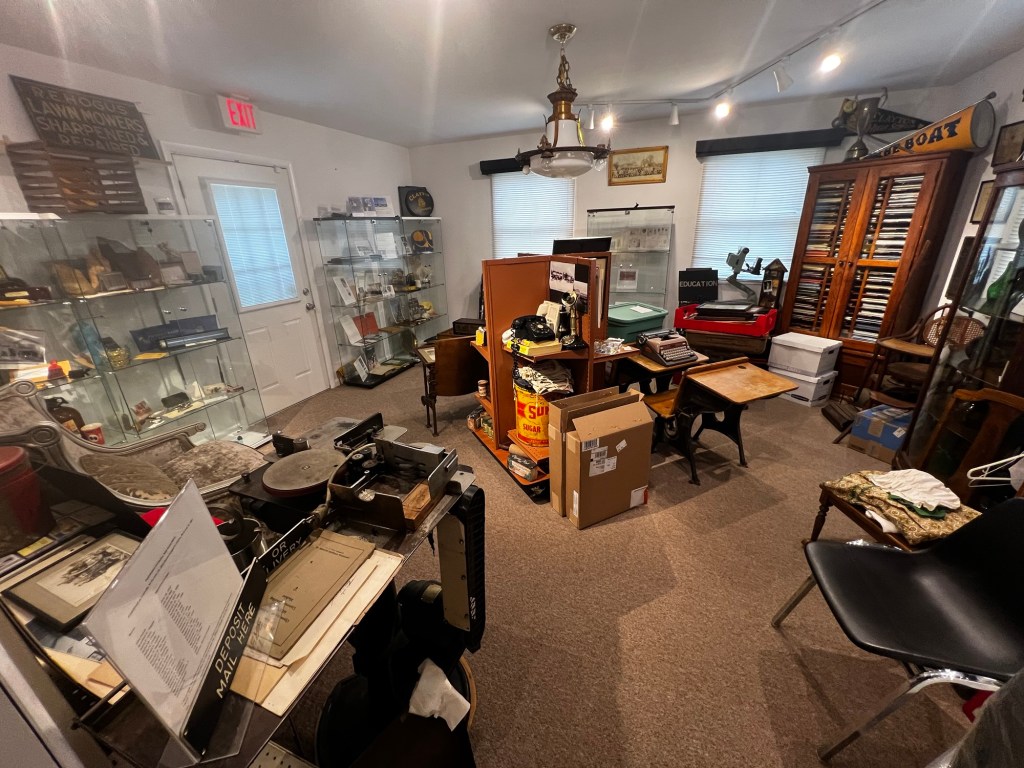
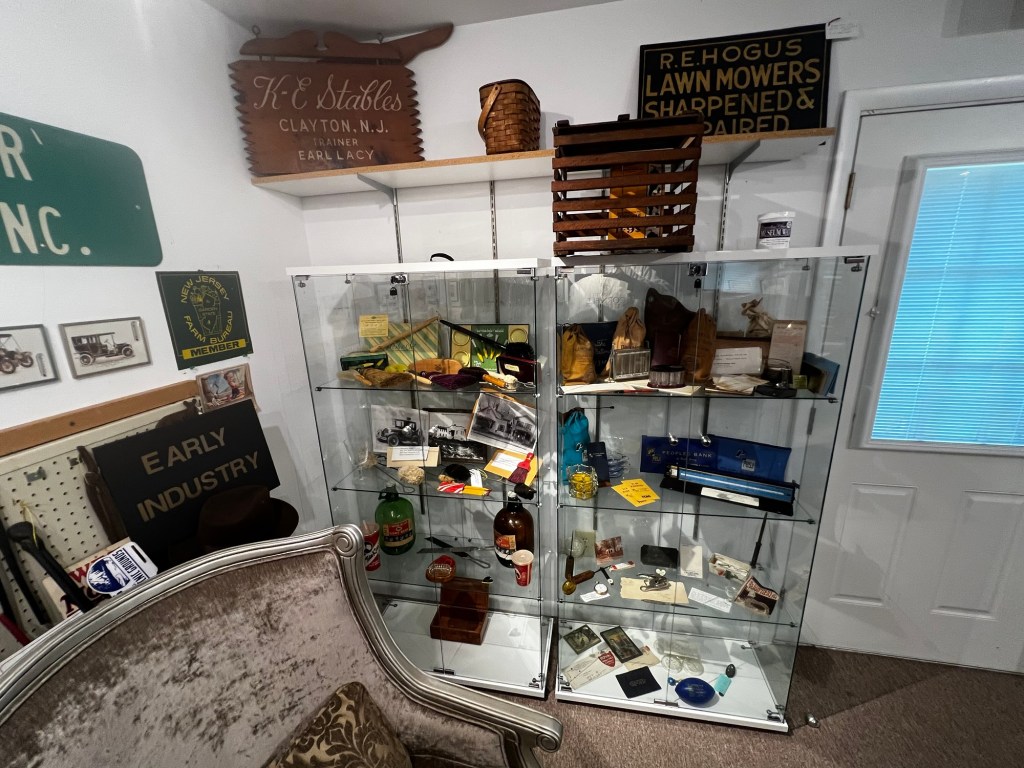
The back gallery contained a lot of Clayton’s manufacturing and retail history
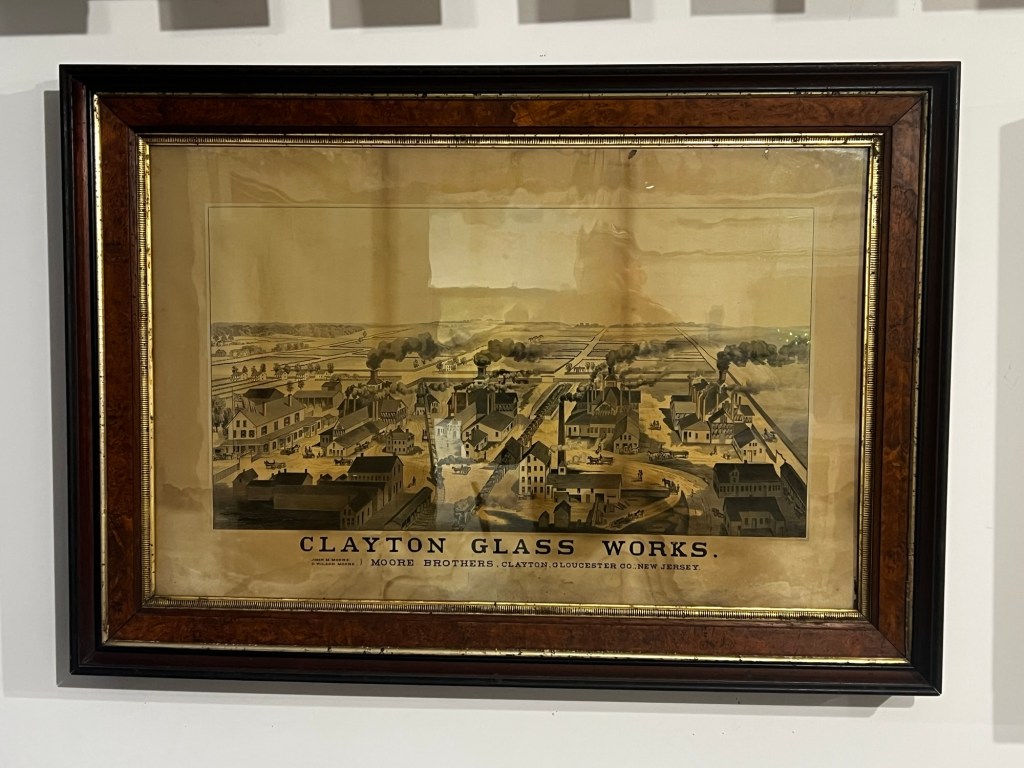
The glassworks history in the community run deep
The Clayton Glass Works factory at the turn of the last century
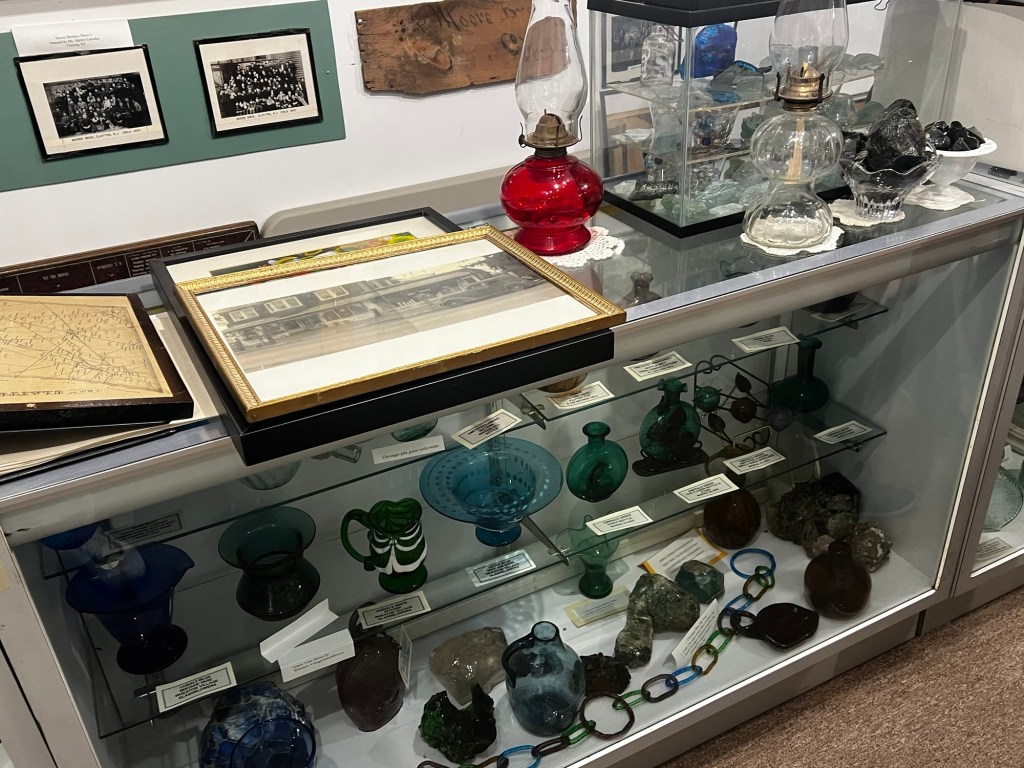
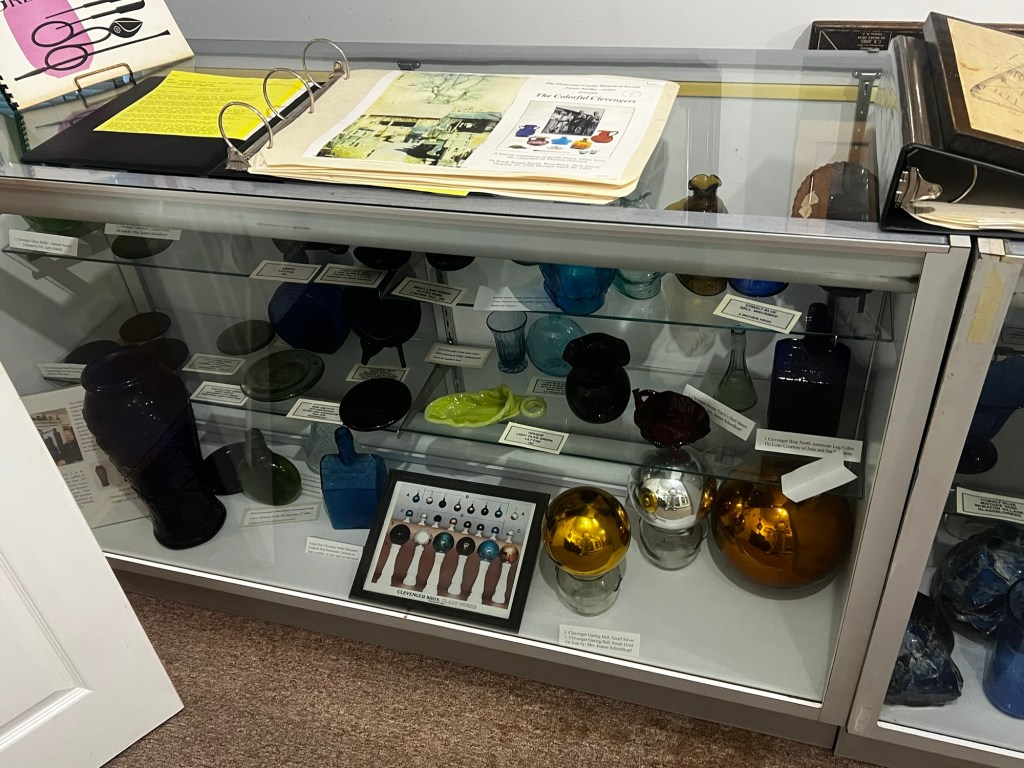
Decorative glass was one of its specialties
Creative glass works are part of the extensive collection at the museum
The everyday decorative items were made right here in New Jersey
The main part of the gallery discusses and displays how important the glass industry was to the community and the creativity of the artisans.
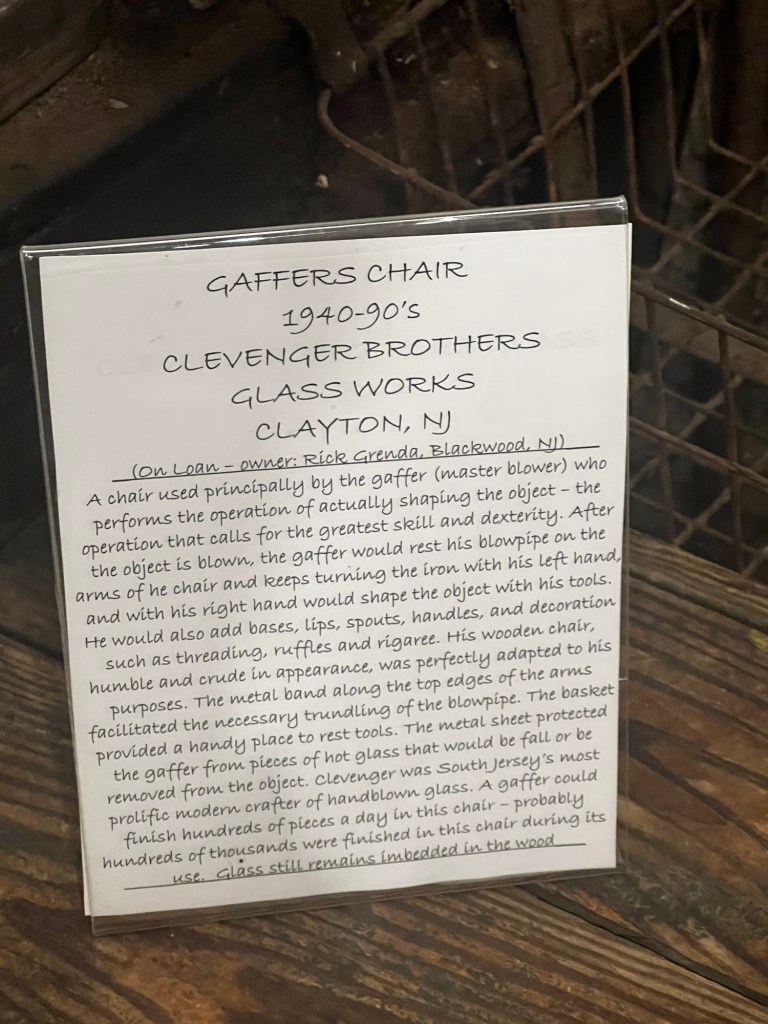
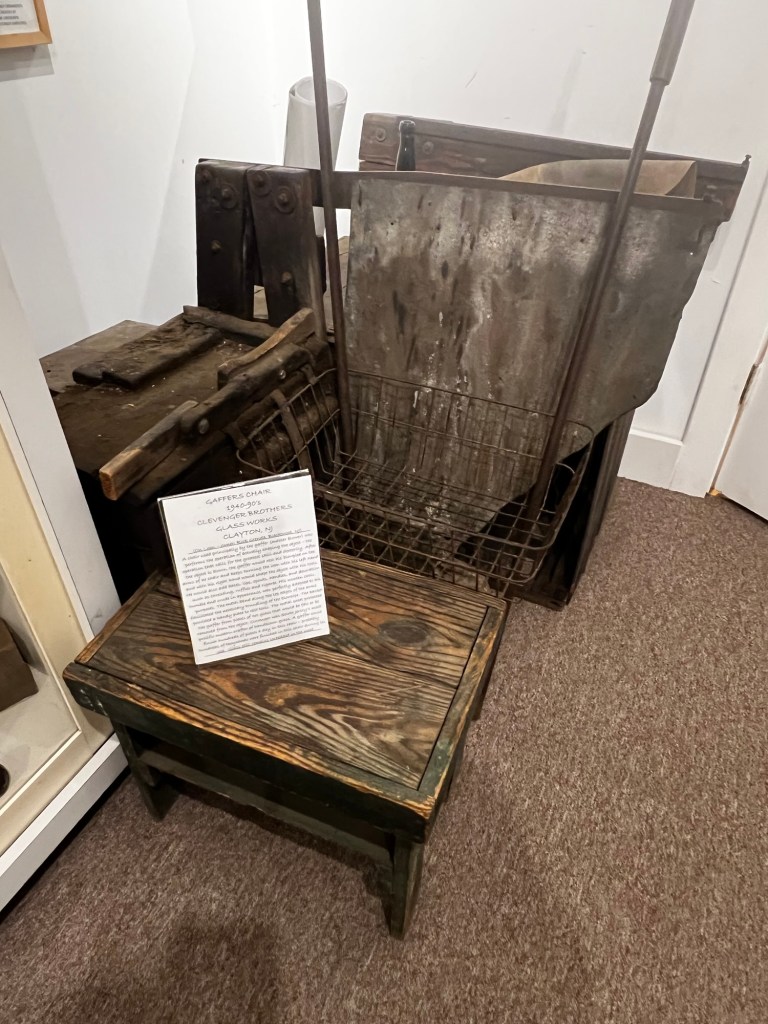
The display of the glass blowers chair and the time and effort once part of this craft
The glass blowers chair on display
The museum’s exhibits offer an overview of Clayton’s history, covering various aspects such as industry, agriculture, transportation and daily life.
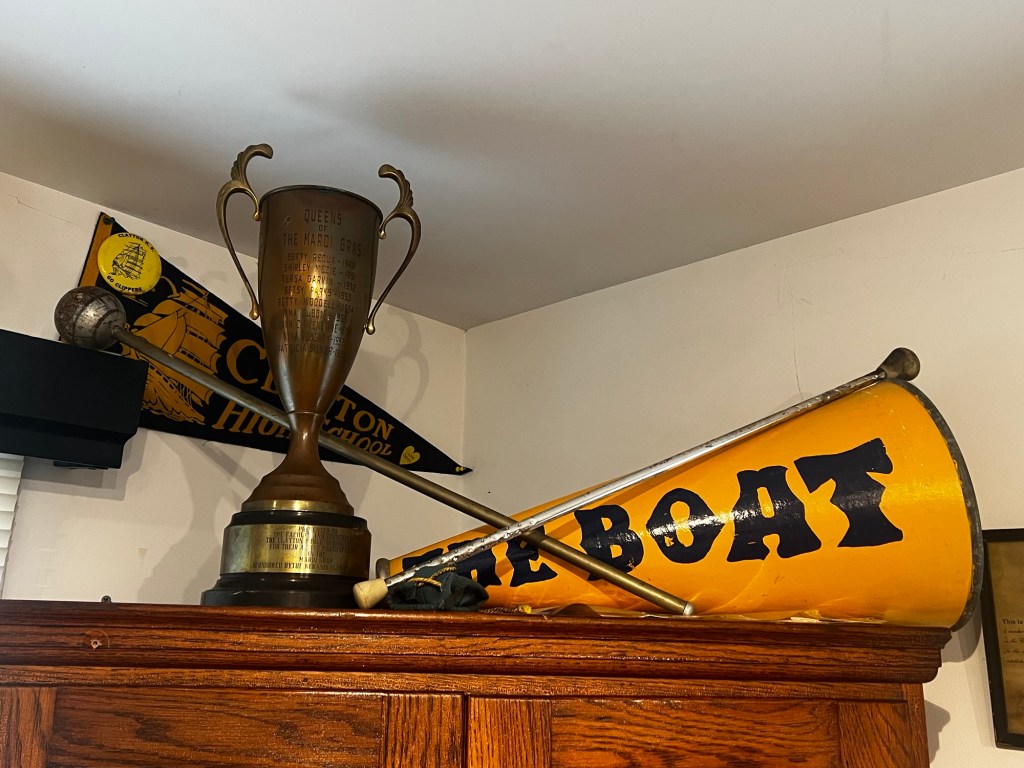
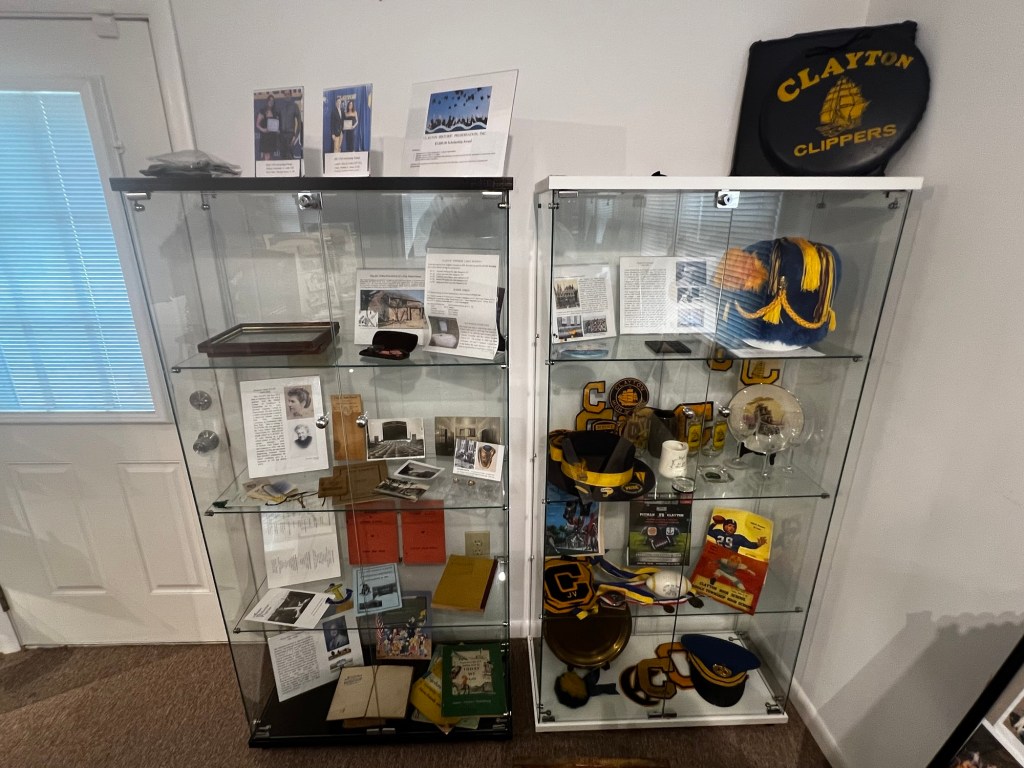
Collections from The local Clayton High School
The Clayton, NJ local business district businesses
Through an assortment of photgraphs and documents, visitors can explore the Borough’s development.
The beautiful decorative glass on display
The Clayton High School display showing small town pride
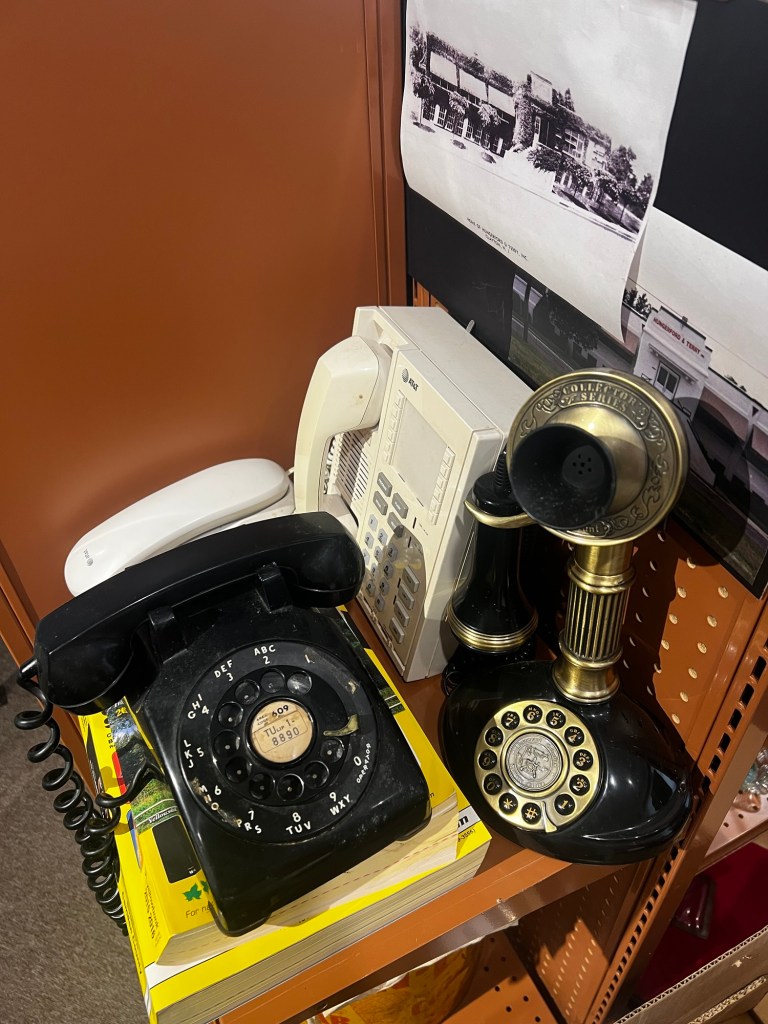
The progression of the telephone
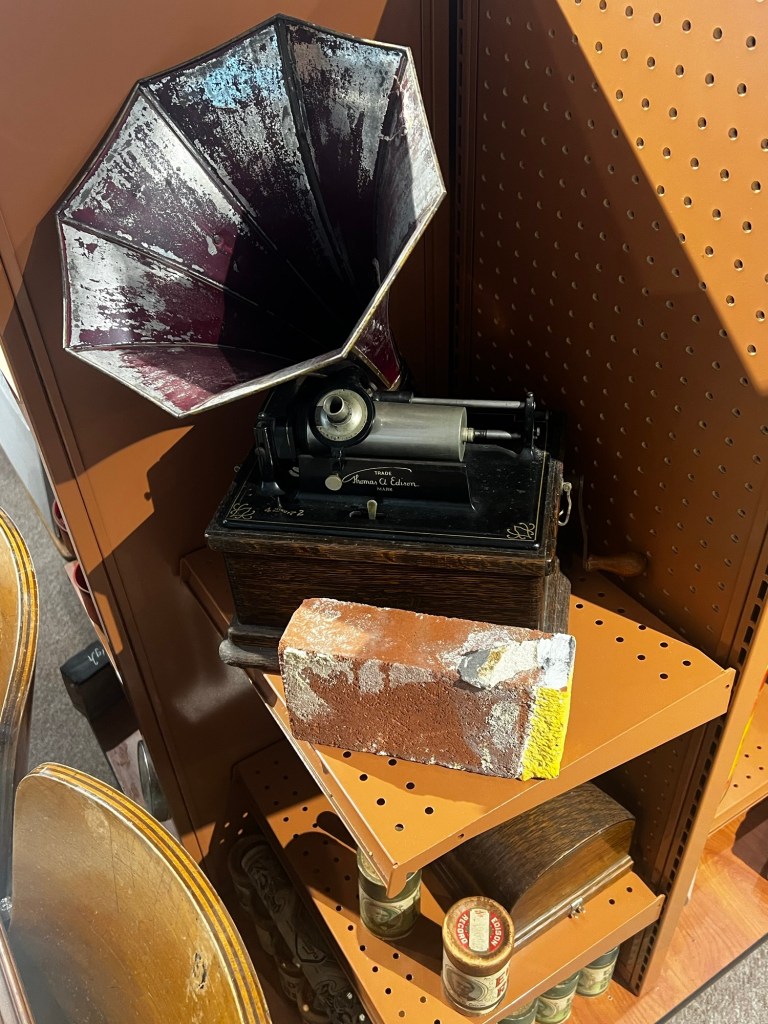
The antique Victrola got its start in the Edison labs here in New Jersey
The exhibits provide a deeper understanding of Clayton’s past, fostering an appreciation for the borough’s heritage.
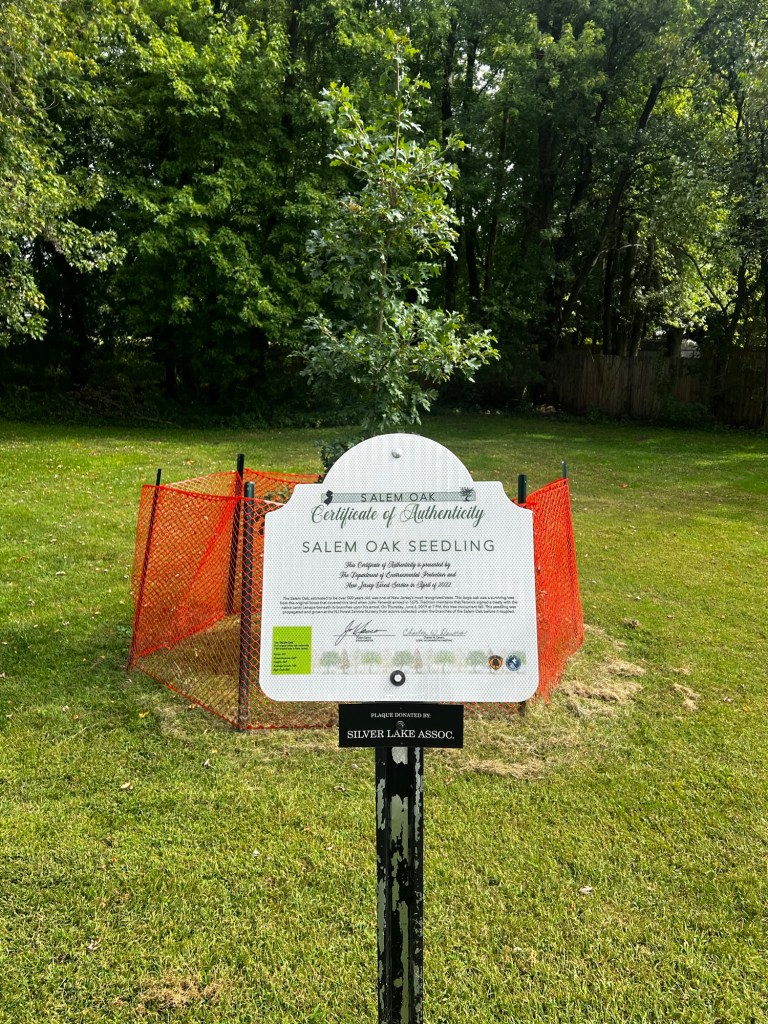
A clipping from the Salem Oak in Salem, NJ is in the yard behind the museum
The Mission Statement of the Museum:
(From the Museum website)
• Acquire and preserve documents, records and relics of the Borough of Clayton, Gloucester County and the State of New Jersey
• Encourage the protection and preservation of the historical landmarks and points of interest
Furnish historical information and documentation to the Borough
• Partner with Clayton Special Events and neighboring Preservation Associations to exchange and display historical related information, documents and artifacts
The middle gallery of the museum’s extensive glassworks collection
Remember that the museum is only open from 11:00am-1:00pm the third Saturday of the month so plan your trip to museum accordingly.
The Coney Island Sand Castle Building contest is a lot of fun to see and experience. You see so many people’s creativity from professional artists to families just having a good time to a group of kids really showing their artistic touch. It seems though that it always falls on a weekend where so much is being planned at other cultural sites that I am a member of that it takes a lot of juggling and running around to get to that day. Being the end of the Summer and getting close to September, so many places are trying to cram in Members events before the kids head back to school.
In 2017, before I left for Brooklyn, I had a busy day running around Newark and then in Brooklyn visiting both the Newark Museum and Coney Island. I love how everything gets planned on the same day.
Everyone was preparing for the Solar Eclipse on Monday, so both the Newark Museum and the American Museum of Natural History are getting ready for the viewings. So I stopped at the Newark Museum first today to see what they were planning knowing that New York was going to be very busy.
The Newark Museum is running a series of members mornings with an early morning tour of the museum and a light breakfast that seems to be catching on with the membership. We had a early morning tour of the kinetic sculpture of Uram Choe, a Korean artist who specializes in metal working sculptures that move on motion.
His one piece upstairs in the Asian galleries opens up like the sun would in the morning and his downstairs on the second floor piece is a serpent eating itself, which is based on an old legend.
Mr. Choe’s is a South Korean born artist from an architect background. He was educated at the Chungang University in Seoul and graduated with both a B.F.A and M.F.A. from the college. Choe’s works push the genre of moving kinetic art toward its newer-generation iterations, such as robotic art (Wiki).] Each one of his pieces moves on a series of motors based on motion and is placed with such detail and the way it moves is so intricate.
The Newark Museum (See TripAdvisor review) is going though a major renovation where they will be opening the original entrance to the museum in the Fall after twenty years and hopefully a new beginning for a museum with a major identity crisis.
The museum has such amazing works to see in a beautiful setting but the problem is that Newark still has a negative image to most suburbanites. No one I know wants to go there and that is a real problem for the city. The museum in a great area of the downtown that is being rebuilt and refigured with all sorts of new housing and lofts but it will take time to shake the riots of the 60’s from people’s minds.
They just opened the new American Indian exhibition and refigured the American Art wing to reflect the development of the United States from Native American time to the present. Their Asian and African galleries are very detailed but the biggest problem they have is the imagine of an ‘African’ museum which they can’t seem to shake. It is such a gem and try not to miss going there.
We had a long talk in the gallery about the artist and about the development of Korean Art from Ancient times until today and then the museum had a beautiful Continental breakfast on the top floor of the Ballentine House. This was Mrs. Ballentine’s daughter’s section of the house that was built in the late 1890’s when they moved in after her husband’s death. The room, now used as the trustee’s room, is a look back on the Gilded Age and the invention of electricity in modern homes. It really showed me the treasure trove of artifacts that exist in this small museum.
After the tour, there was a quick tour of the museum and then a train ride to Manhattan and then a long subway ride on a beautiful clear sunny day to Coney Island. The whole thing took about two hours and I got there by three o’clock.
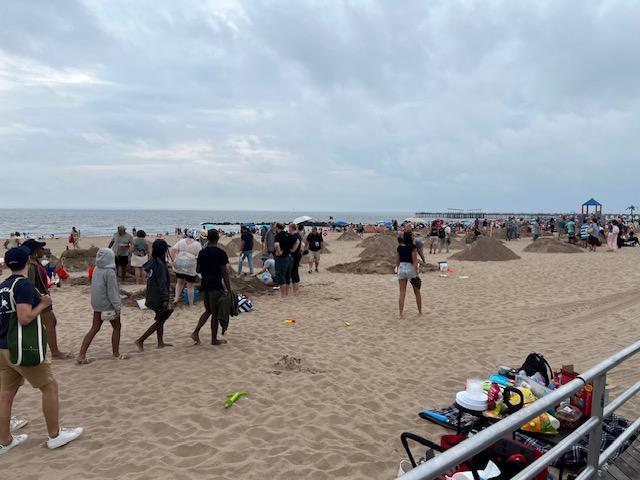
The contest was gloomy at both times I visited but everyone was eager
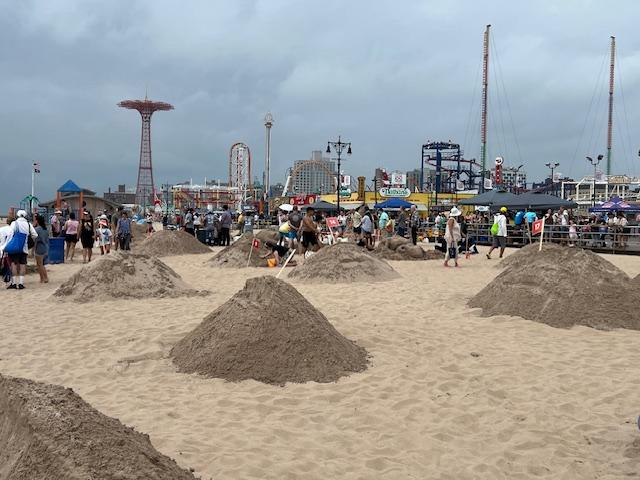
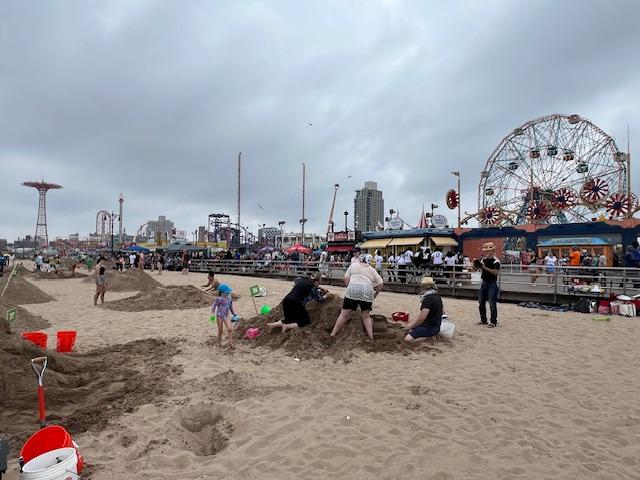
The Annual Sandcastle Building Contest in both 2017 and in 2024, I thought would be much bigger than it was. Only about twenty people were competing in it in 2017 and in 2024 about the same amount. With all the artists living in Brooklyn and in the Metropolitan area, I thought this would be a bigger deal than it was but still the works coming from it were spectacular. Several mounds of sand in one section of the beach outside of Luna Park were used but still the imagination of the work was spellbound.
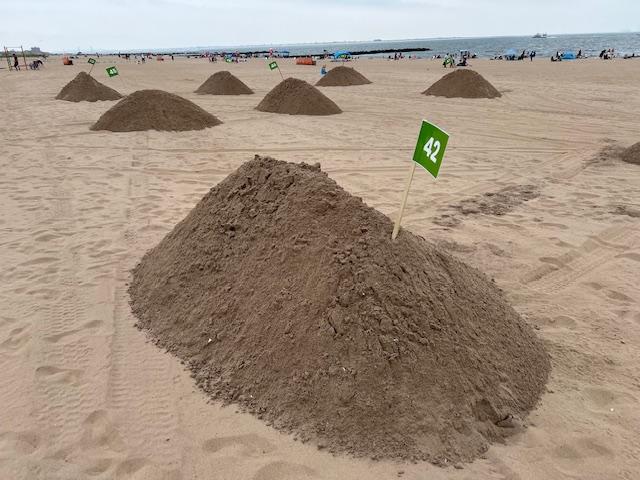
The piles were set with numbers along the beach
Artists and families starting to work around 12:30pm
Getting ready to start
By 1:00pm, everyone was getting to work for the 4:00pm deadline
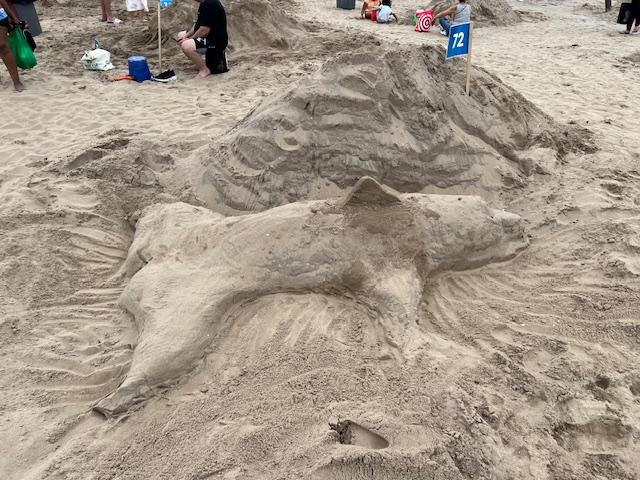
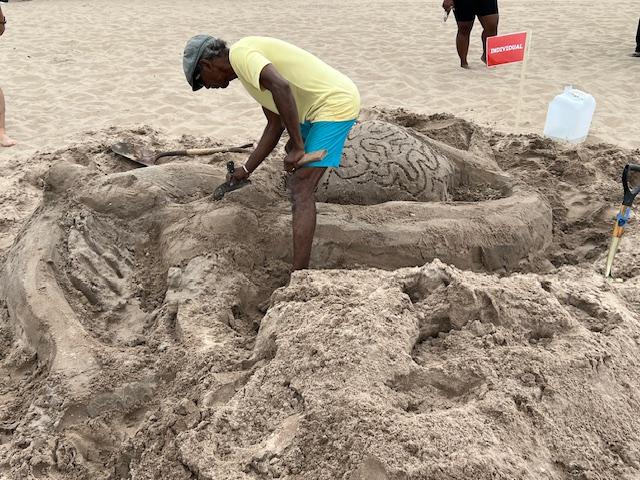
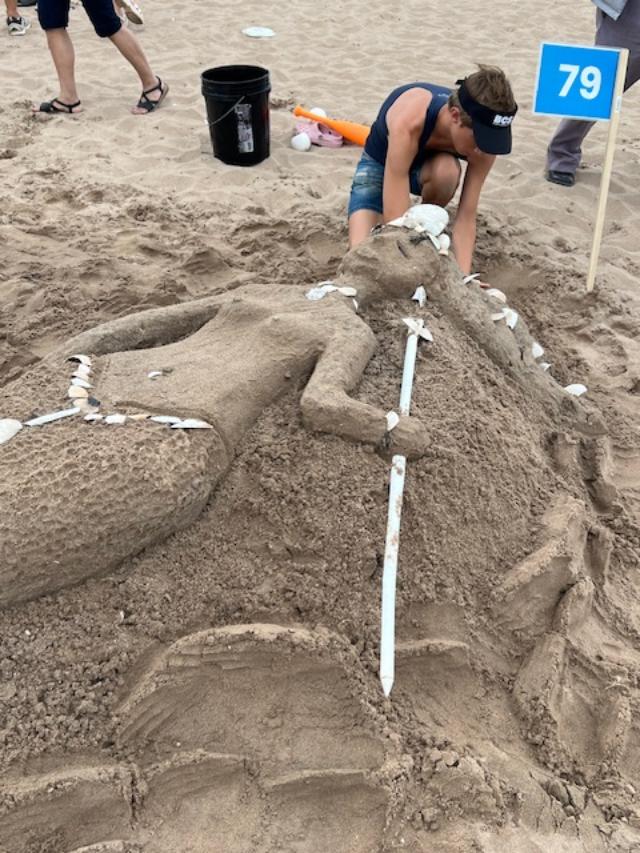
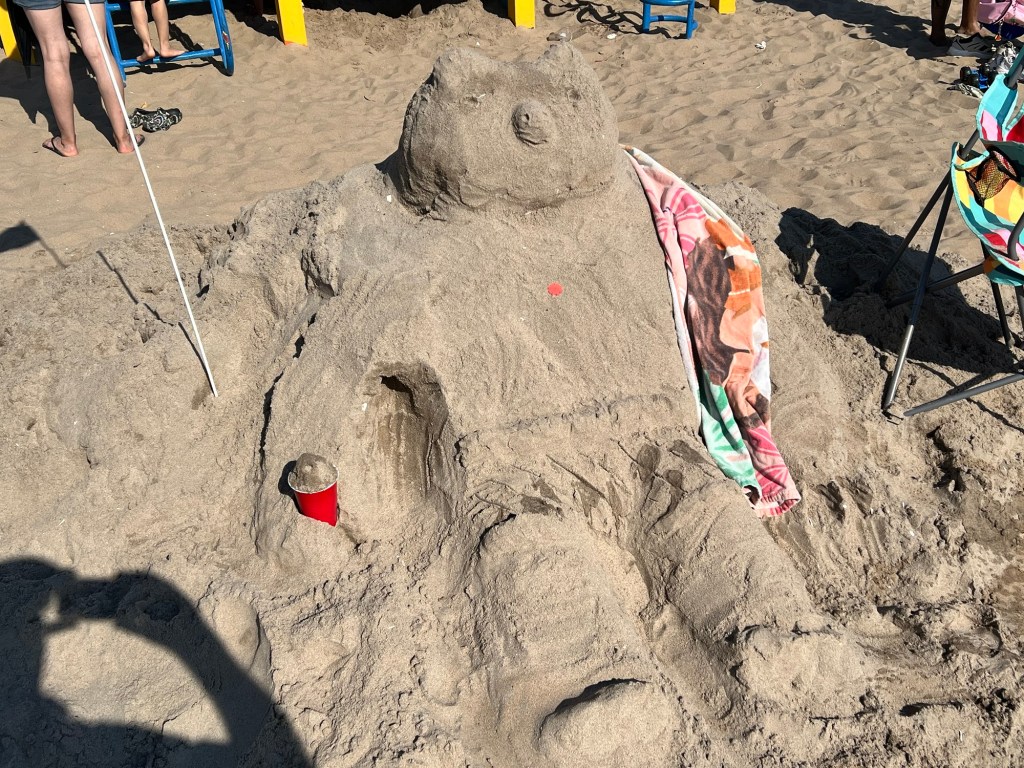
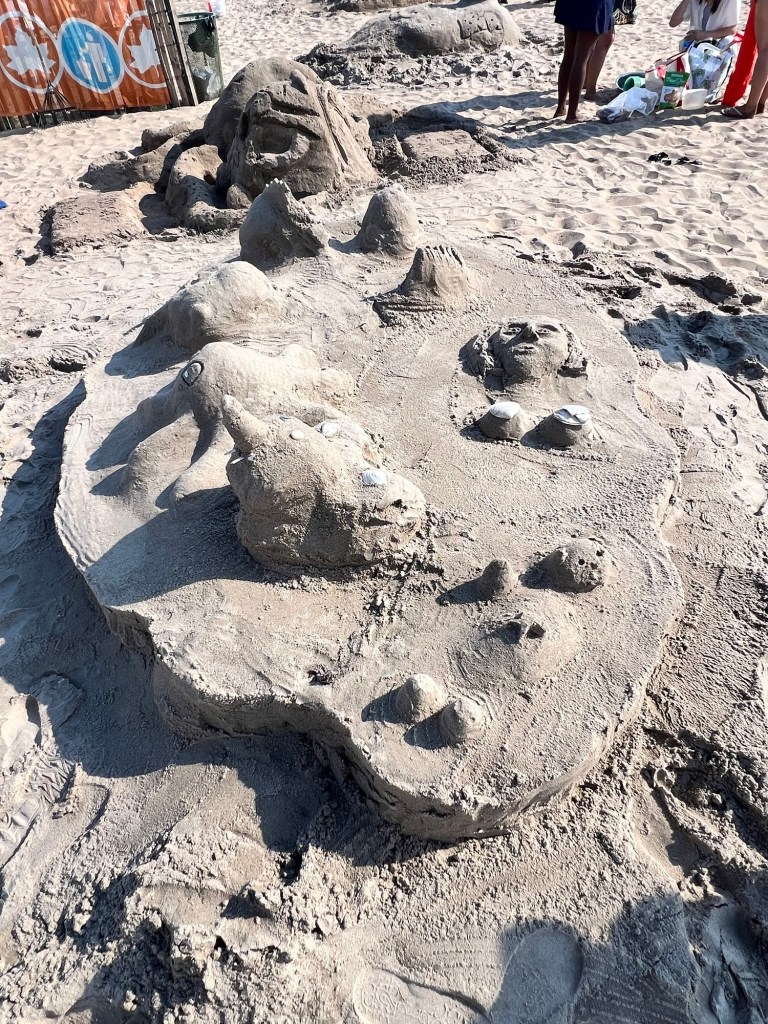
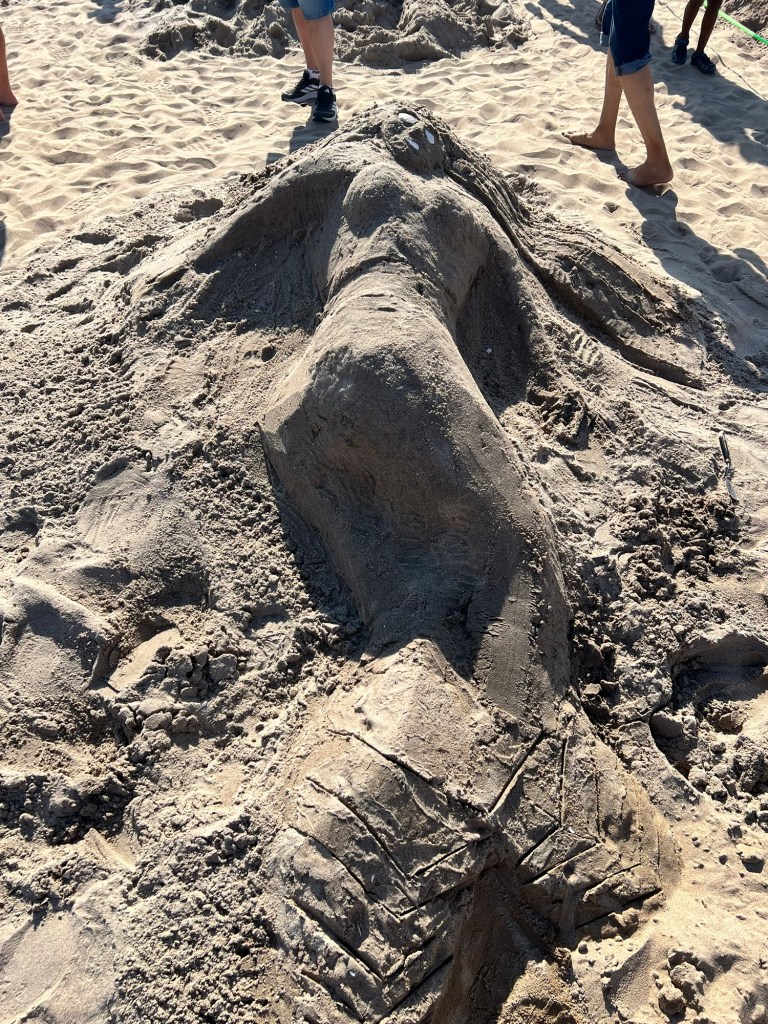
Most of the works that I saw were some forms of castle which seemed to be the object that everyone based their idea on but some people were a little more creative. There were bears, mermaids and in 2017, one artist even dug out a complete hole and had the imagine of a woman lying in the sea.
In 2024, the creativity was the same with themes of brownstone neighborhoods to mermaid queens to just a simple smile in the sand. There were professionals whose sand creativity was part of their artistic employment to families just having fun and spending time together.
This simple face just appeared on one of the piles at the end of the contest
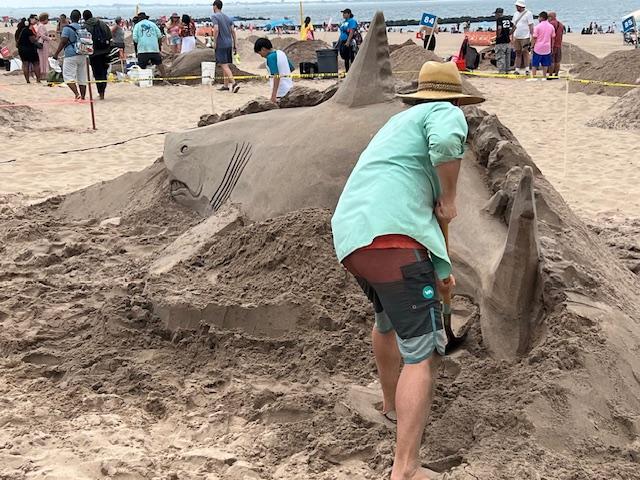
The creation of the Shark sculpture
The Shark Sculpture in process
The Shark almost finished
The finished Shark Sculpture
Another artist created this Shark display
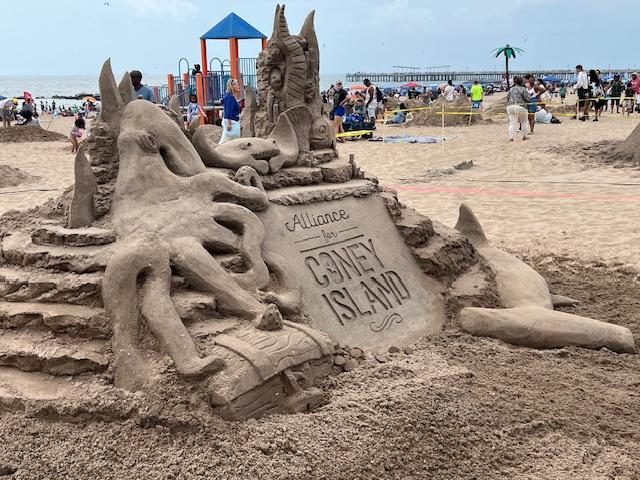
The Coney Island Alliance hired an artist to create this masterpiece. It just shows the creativity of some artists.
The Coney Island Alliance sculpture in form in the beginning
He kept carving and sculpting
The piece took form
Almost finished
The finished sculpture for the Coney Island Alliance was just beautiful
The final work that represented the Coney Island Alliance. This was the ultimate piece done by a professional artist. I loved the details on this. Some of the professional artists did works to welcome everyone to the contest and their detail work was interesting as you see in the picture above. This was not done by a group of ten year old’s.
Still there were all sorts of works of art created by people of all ages and they showed their stuff by creating their interpretations of their views of New York City and mythical animals that roam the woods, beaches and streets of the big City. Some were fun, some were whimsical and some just stood out in their creativity.
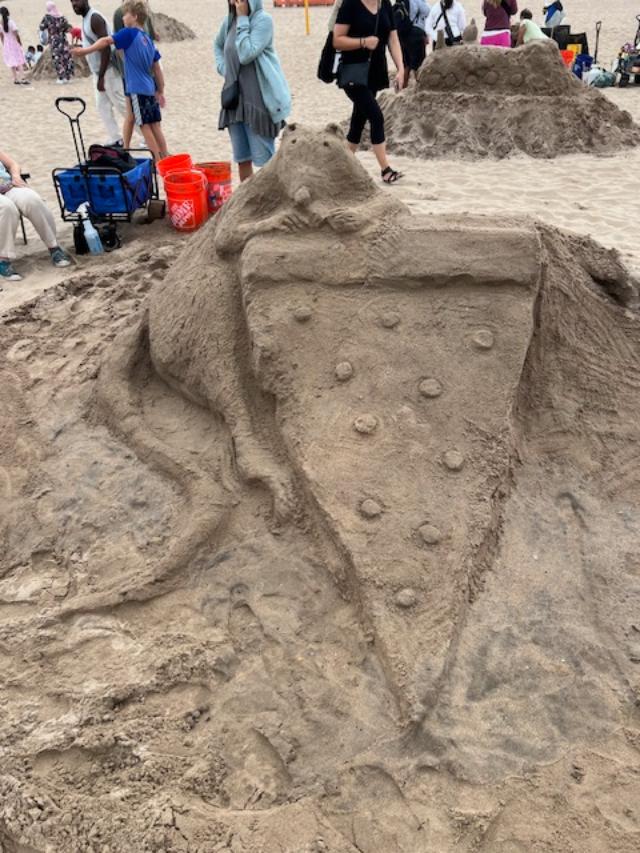
The ladies putting the final touches on the Rat with Pizza sculpture
My favorite sculpture of the contest the rat with a slice of pizza
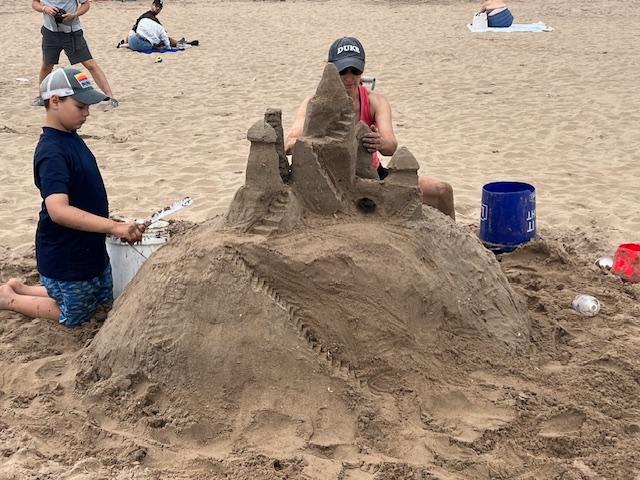
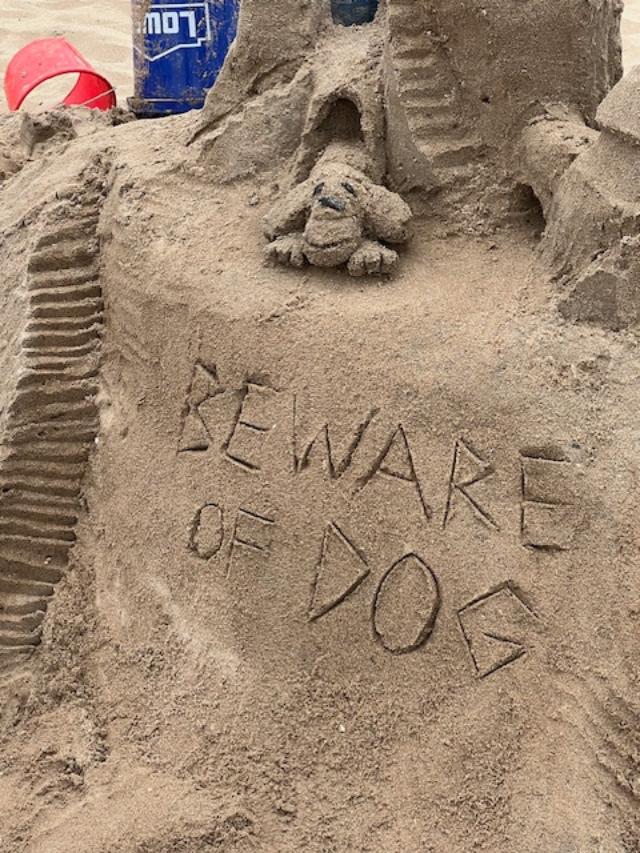
The start of Beware of Dog sculpture done by this mother and son team
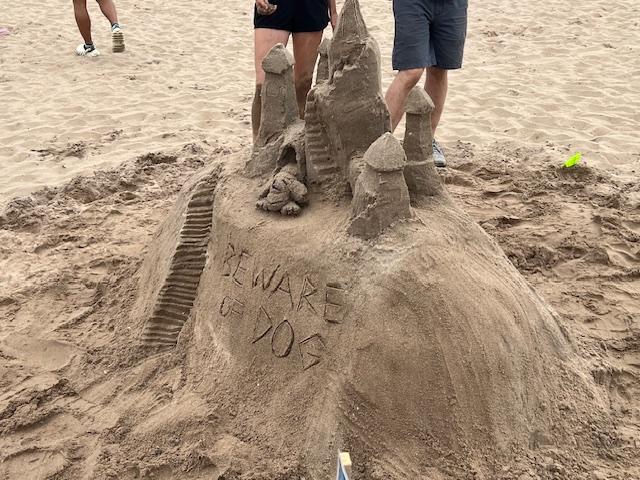
The finished Beware of Dog sculpture
The final touches of Beware of Dog. The details were very clever
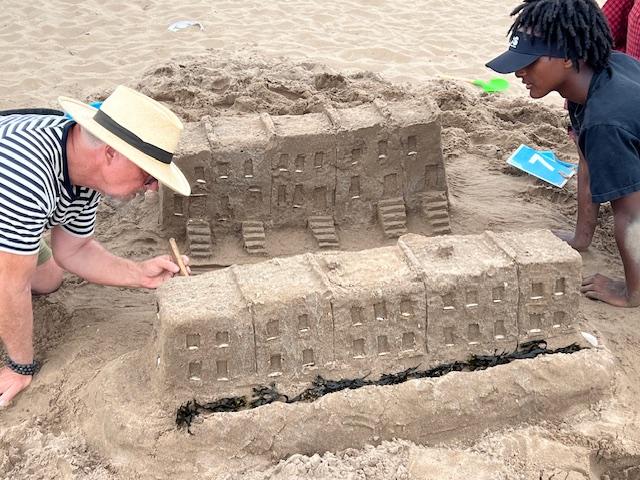
These artists created their own affordable brownstone neighborhood in Brooklyn
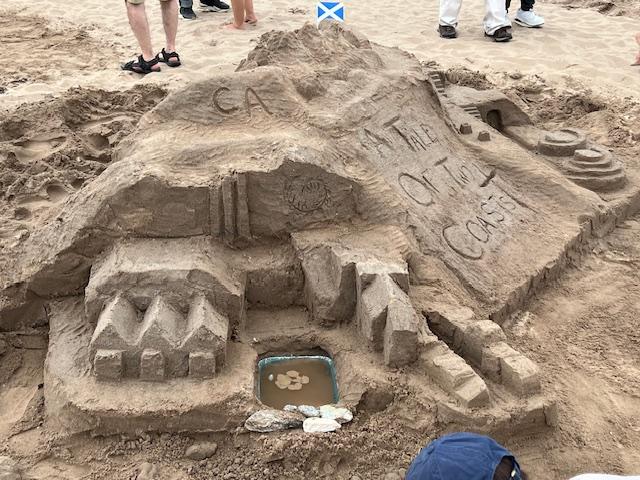
Then there was the Tales of Two Coasts, New York and Los Angeles, which had real estate details of their own.
I loved this look of Los Angeles, CA
This was the New York City side of the sculpture
Home ownership continued with this kitchen sculpture
Some of the mythical creatures included mermaids, animals and creatures large and small.
This family was sculpting the most clever cat
The finished Cat Inquiry sculpture
Another family was finishing this Hammerhead Shark towards the end of the contest
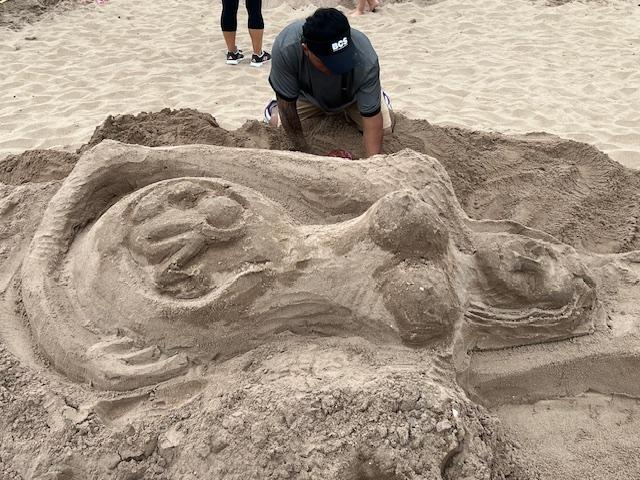
This Sea Maiden appeared in the sand
Rebirth and Birth Sculpture
This penguin found a home in the sand
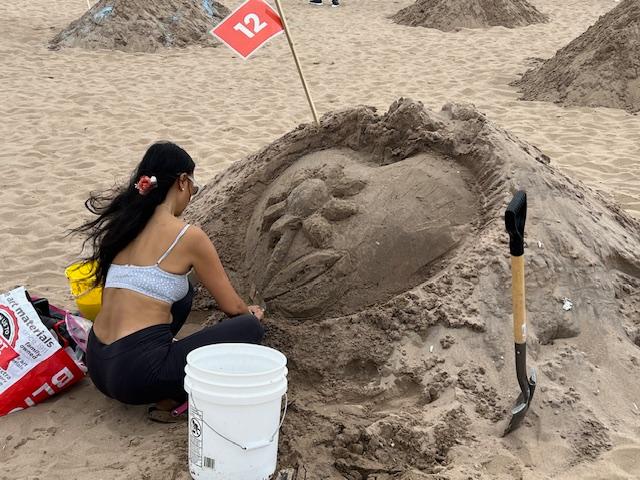
This Heart with a Sunflower was in its final stages when I saw it last
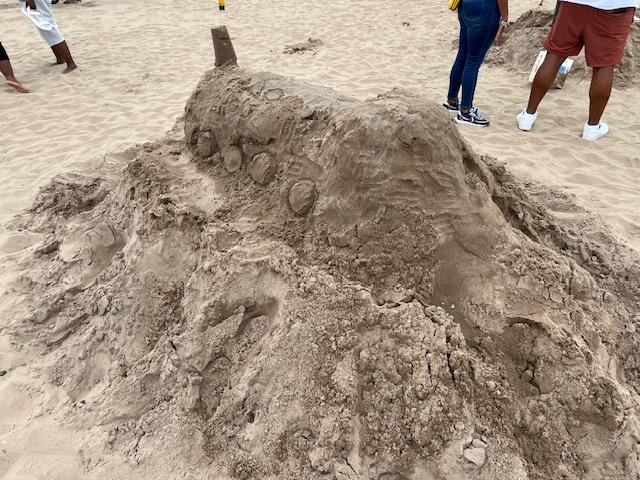
The Magical Train was one of the first sculptures done
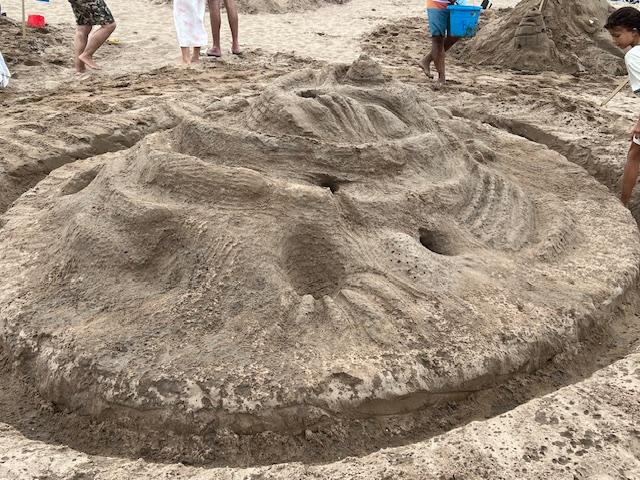
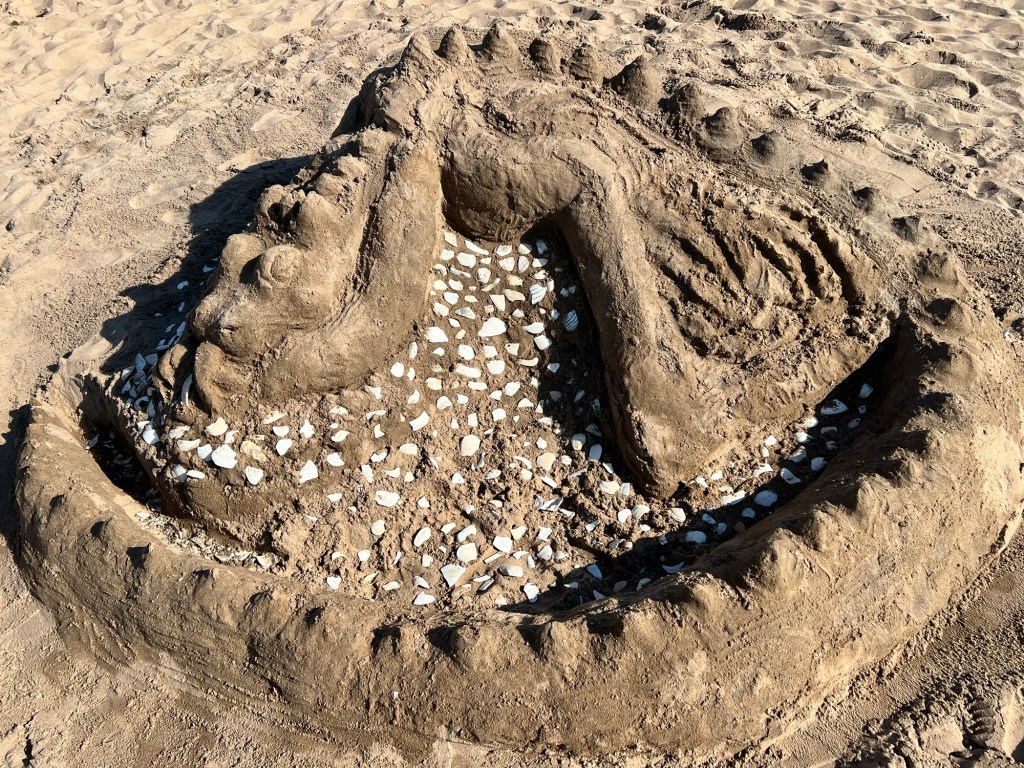
A Castle with a Moat was created
The mighty Elephant was being worked on towards the end of the contest
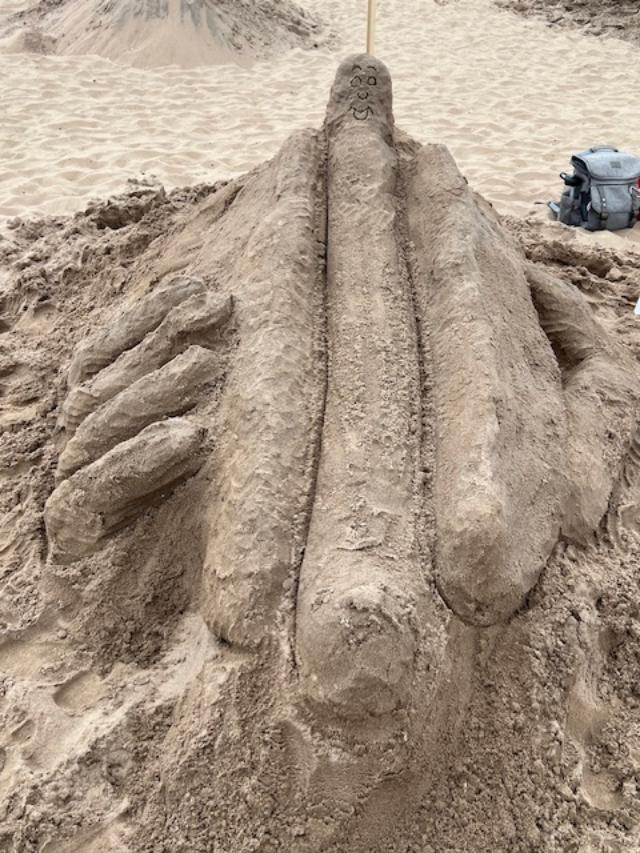
The iconic New York Hot Dog is happily served
The Shellebrity Sightings sculpture
The Phoenix sculpture on the beach
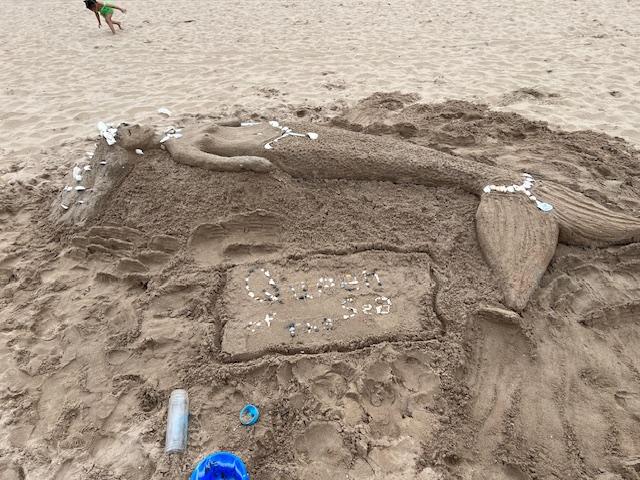
One of the most detailed sculptures I saw the creation of the Mermaid Queen.
The creation of the Mermaid Queen
The Mermaid Queen takes shape
The finished Queen Mermaid with her Crown
The finished Mermaid Queen
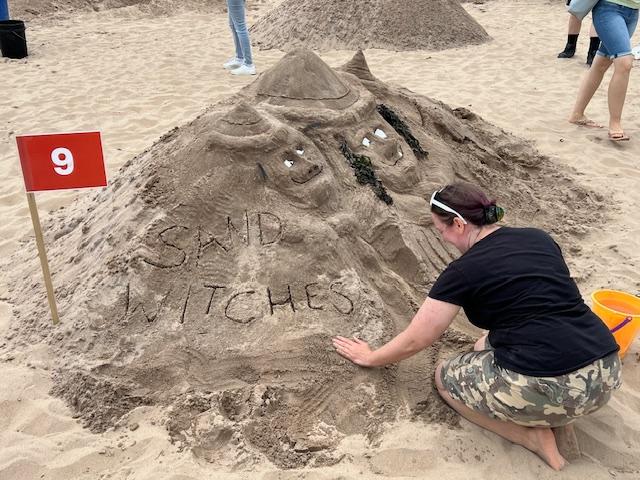
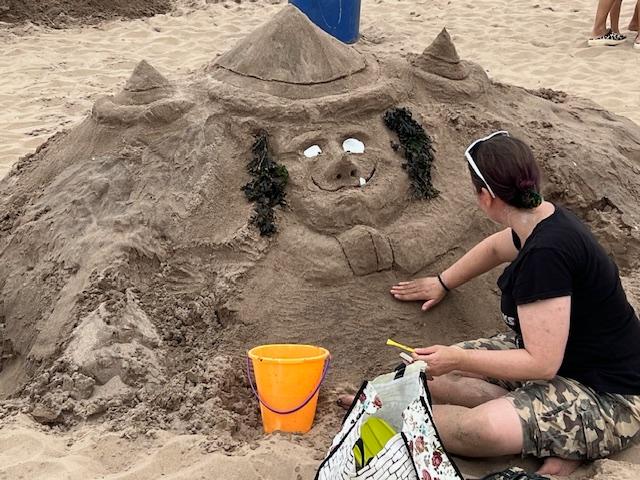
There was also the creation of the Sand Witches with their big smiles.
Creating the Sand Witches
Creating the main character
The Sand Witches sculpture
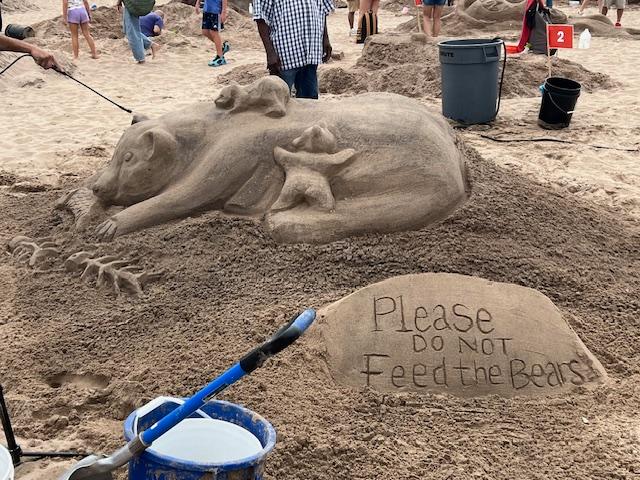
The creation of Do Not Feed the Bears
The finished Do Not Feed the Bears sculpture
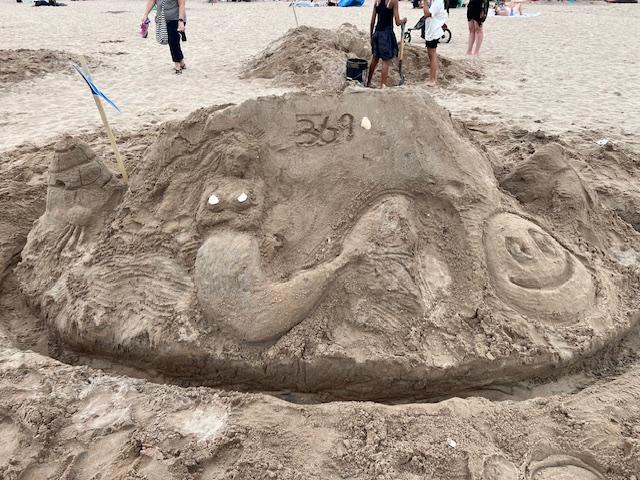
Another Mermaid appears
Here and there during the contest and for the rest of the day, the sun peaked out now and then giving us some sun but the rest of the day remained cloudy. Still that did not dampen the spirits of our artists and by 4:00pm the winners were announced. The Winners were sculptures numbers 63, 07 and 39 with the People’s Choice being 01 (I am not too sure I have everything numbered) but the ones above are my favorites and worthy of all the picture taking.
In 2017, I walked along the beach to relax my feet and as I walked, I could not believe how empty the beaches were for a Saturday afternoon in August. By the water it was full but towards the back by the boardwalk it was empty. In 2024, the incoming hurricane weather kept people away as the beaches were closed for swimming. The surf was really rough that morning and afternoon and the weather was gloomy. Even when I visited on the 4th of July, the beaches were not as crowded as I would have thought. Not the Coney Island of yesteryear when every spot was full. I guess its just not that place anymore.
Taking a walk along the gloomy and almost empty Midway by Luna Park
After a long walk along the beach, I dried off and walked the boardwalk to the end to Seagate, a private community at the end of the boardwalk. Along the way, I passed by the Coney Island Houses, one of the more dangerous housing complexes in Brooklyn. I don’t know whose brilliant idea it was to build low-income housing along the shore front but that made no sense to me.
It looked like the complex was having a barbecue, that is until two guys went after each other in the basketball court area as the DJ was announcing a kids dance. She was beside herself to tell them to calm down. Then you had two groups of people trying to calm the situation down. It was not a pleasant scene.
I got to the end of the boardwalk and decided I wanted to see all of Surf Avenue to see the real changes on the island since the closing of the amusement area. I agree with an article I read years ago; it still is like a war zone.
They built all this public housing outside Seagate and as you walk along Surf Avenue until you get to about where the rehab center is, it just looks like Beirut. The whole area is full of rundown looking public housing and the street itself is a shell of the once glorious resort if it ever was that. If there are ever going to get this island back into shape, the city seriously needs to rethink this part of the island.
I walked the entire length of Surf Avenue down to Brighton Beach and really looked at the stretch of the island facing the shore. By Brighton Beach, the area got so much nicer and more built up. Even in some of the pockets before the amusement area, they are building new condos along the boardwalk in between the projects. Even still, even when you reach Nathan’s, there is just too much wasted opportunity along the shore front.
Walking on the Coney Island Boardwalk in 2017
I turned around and walked up Stillwell Avenue by the subway spot and there they are starting to knock down the block and replacing it with low rise apartment buildings. This is where all the hipster people must be living. It looks like more of this area is about to come down.
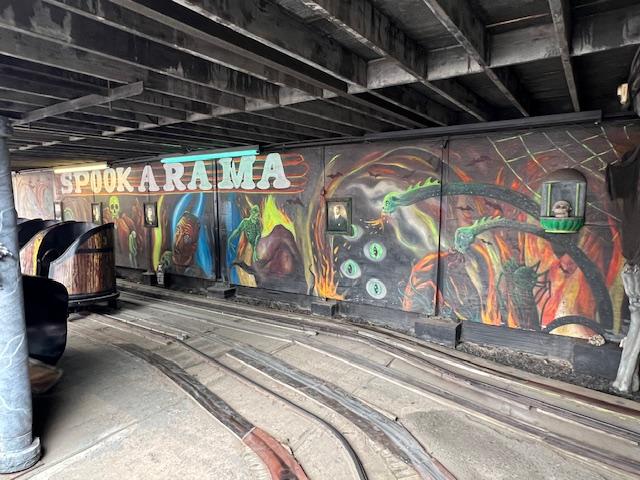
In 2024, I got to the beach at 12:30pm and walked around the shore until about 2:00pm watching everyone build their creations. Then I walked around Deno’s Wonderwheel Park, watching the patrons on the Wonderwheel and going into Spookarama, their haunted house ride.
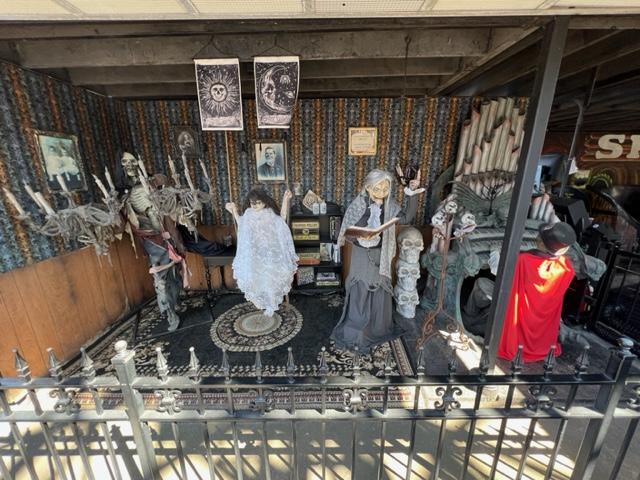
Spookarama in Deno’s Wonderwheel Park
The haunted display by the ride
The haunted display in the park
In 2017 for dinner, I went to Totonno’s Pizzeria Napolitano at 1524 Neptune Avenue between 15th and 16th Streets (See TripAdvisor review). This place is harder to get into than any trendy restaurant in Manhattan. They only make so much dough and as a matter of fact the smaller pizzas sold out before I got there and it was 4:30pm when I ate my lunch/dinner. The place was busy the entire time I got there. The only bad thing about the restaurant is the seating. They need to reconfigure their tables to accommodate more people. You can’t seat a single person like myself at a six top table.
The menu is so simple. Either you get a small or large pizza with a choice of ten toppings for $2.50 extra. The drinks were pricey with a bottle of Coke being $2.50. The pizza was $20.50 for the large or $18.50 for the small. The place is cash only.
The pizza was wonderful and with the size and the quality of ingredients, well worth the money. You get a large pizza that is a large pizza with fresh tomato sauce and fresh mozzarella, which gives it a different flavor from the shredded processed cheese most places use giving it a creamy flavor. The whole thing was topped with fresh basil and I added sausage to it. Cooking it in a coal brick stove gave it a nice smoky flavor. Needless to say, the owner could not believe I ate almost the entire pie at one sitting.
Totonna’s Cheese Pizza
I met Louise Ciminieri, the current owner and the granddaughter of the original owner. She told me how the business passed down from her grandfather to her uncle and then to her. Her uncle had a habit of only making so much dough and after it was gone, the restaurant closed for the day. A little strange for a business to make money.
Owner Louise Ciminieri of Totonno’s Pizza
She could not have been nicer or more welcoming to me and seemed to get a kick at the fact that I made such a fuss in meeting her. I told her of all the reviews online and the fact that my own mom had eaten here probably when her uncle first owned the business. She has not changed the place much over the years and she explained how the neighborhood has changed so much since they opened. What was once an Italian neighborhood is now all car repair places.
After dinner in 2017, I took once last walk around Surf Avenue and then headed back to Manhattan where I ended up spending the rest of the evening at an outdoor concert in Bryant Park. It was nice to just relax and listen to the music.
In 2024, I passed the pizzeria and it still has not opened for in house dining but people were buying pizzas to go. I thought I saw the owner sitting at the only booth left inside but I was not sure. I have to say that without in house dining, there is no reason to go. There is no place to eat around the restaurant (it is not the best part of Coney Island) and I don’t want to drag a pizza three blocks back to the beach to eat it on a bench. The pizzeria is only open on the weekends as well, so I searched around Mermaid Avenue for someplace else to dine.
Here I found Pizza on the Run at 1627 Mermaid Avenue near the side entrance to the subway station. I had passed the place many times but the outside always looked a little shoddy and I avoided it. Big Mistake! The pizza is amazing!
I have to admit that the pizza was a little pricey at $3.50 a slice but the slice was oversized and their sauce on the pizza was delicious. It was so well spiced and gave it so much flavor that I enjoyed every bite.
The Cheese slice was amazing and I plan on going back in the future and trying more items here.
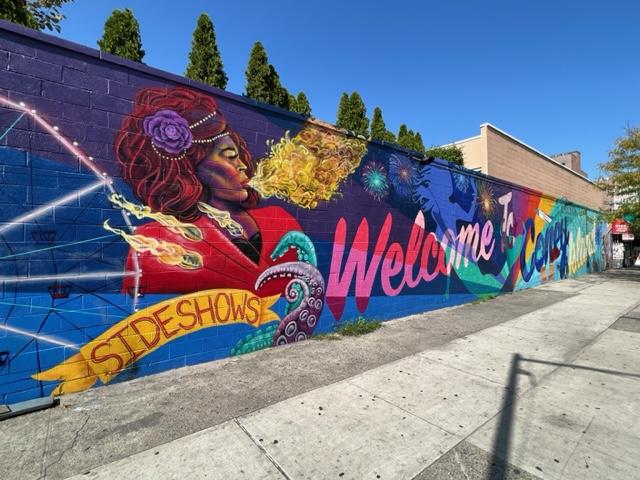
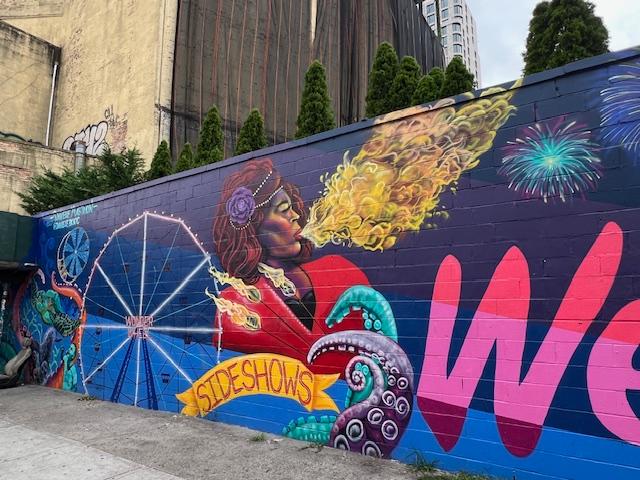
After lunch was over, I gave myself some time before the contest was officially over and walked around this section of Coney Island. Little by little it is getting better. As the luxury rentals along Surf Avenue are getting ready to open for residents, I can see that they are trying to fix up Mermaid Avenue behind it. A lot of the businesses that had been there a few months ago are now closed and the side walks from the subway station down three blocks are being fixed. Along the walls was a bright mural welcoming people to Coney Island from the subway side.
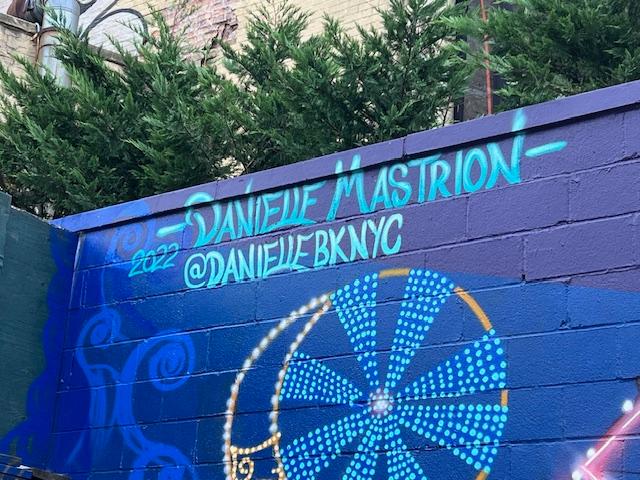
The Welcome to Coney Island mural by Mermaid Avenue
Danielle Mastrion is a Brooklyn-born, New York City based painter and muralist who specializes in large scale, brightly colored murals (Artist bio).
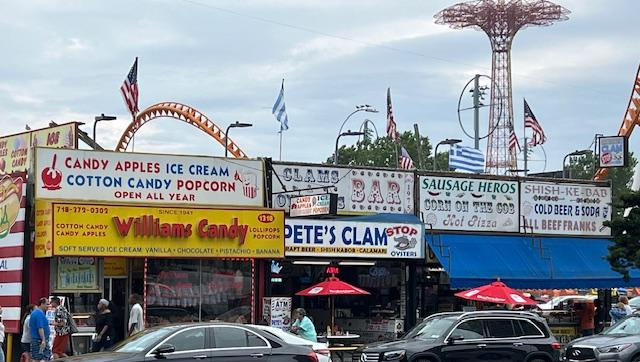
Coney Island Surf Avenue businesses next to Nathan’s
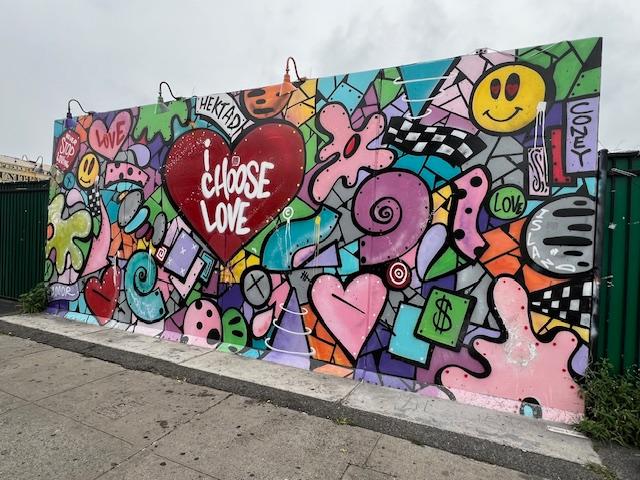
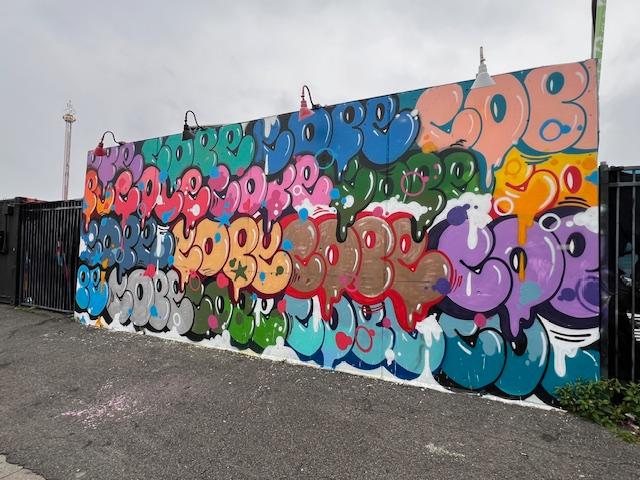
On the way back to the beach, four other murals stood out as well. These are located on the walk down the sidewalk to Nathan’s on Surf Avenue.
Mural One
Mural Two
Mural Three
Mural Four
After the contest winners were announced in 2024 at 4:00pm, I left to head back to Manhattan. It was such a gloomy day. There was not much else going on that afternoon and people were leaving the beaches. As I took a look back at the shore, the waves were really coming in meaning the storm was on its way up the coast (we did get hit in Sunday).
I headed back to Manhattan to see the movie “The Funhouse” at the MoMA. They were having a retrospect on director Toby Hooper’s movies so I had already seen “The Texas Chainsaw Massacre” and “Poltergeist” .
The trailer for “The Funhouse” by director Toby Hooper
After the movie was over, trying to find a restaurant for dinner was trying in of itself. I had not realized how many restaurants in Midtown were closing at 9:00pm even on Friday night post-COVID.
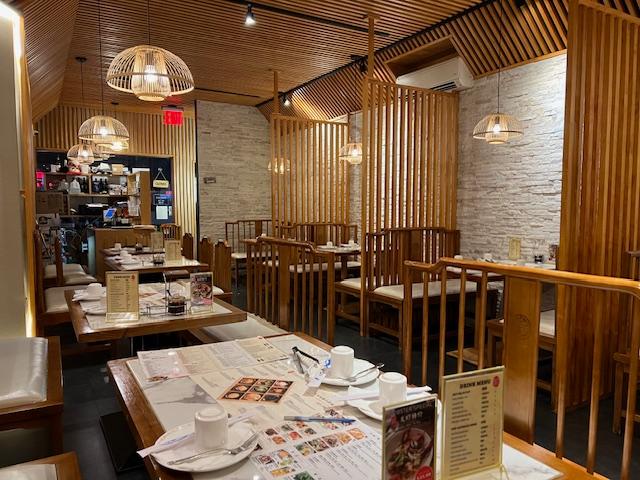
I went into Murray Hill and the restaurant I had planned to go to had already closed at 8:45pm so I looked at my dine around program and found that Dim Sum Garden at 338 Lexington Avenue. I was really in the mood for Chinese food that evening and it came highly recommended.
I was able to order before the kitchen closed and it was a nice dinner. The food was so fresh and it looked like everything was made to order and homemade in the kitchen. The Shrimp Balls were especially good. They were made with sweet shrimp meat, nicely coated with rice flour and deep fried perfectly. It was one of the best Dim Sum meals I have had in a awhile.
My dinner of Soup Dumpling, Shrimp Balls and Roast Duck Rolls
The Shrimp Balls
The Soup Dumplings
The Roast Duck Rolls
It was a fun and very productive day and a great way to end the trip to Coney Island. The weather may have been a bit gloomy both times I visited Coney Island for the contest but it did not damper the spirit of the event. It looked like everyone had fun.
The Sandcastle Contest in 2026:
It was another afternoon of double booking when I attended the Bergen County Firemen’s Home Association picnic in the morning and finished up there at 1:00pm.
My blog on the Bergen County Firemen’s Home Association Barbecue in 2026:
I then raced into the City and hopped the subway to Brooklyn to see the contest results. Somehow I went from the Barbecue to the beaches of Coney Island in two and a half hours. Coney Island was packed that afternoon both on the beach and the boardwalk.
I arrived at the beach at 3:45pm just as the contest was completing
The contestants completing their creations
The professional artists who were commissioned to create their works for the contest were closer to the Boardwalk. They got really creative this year.
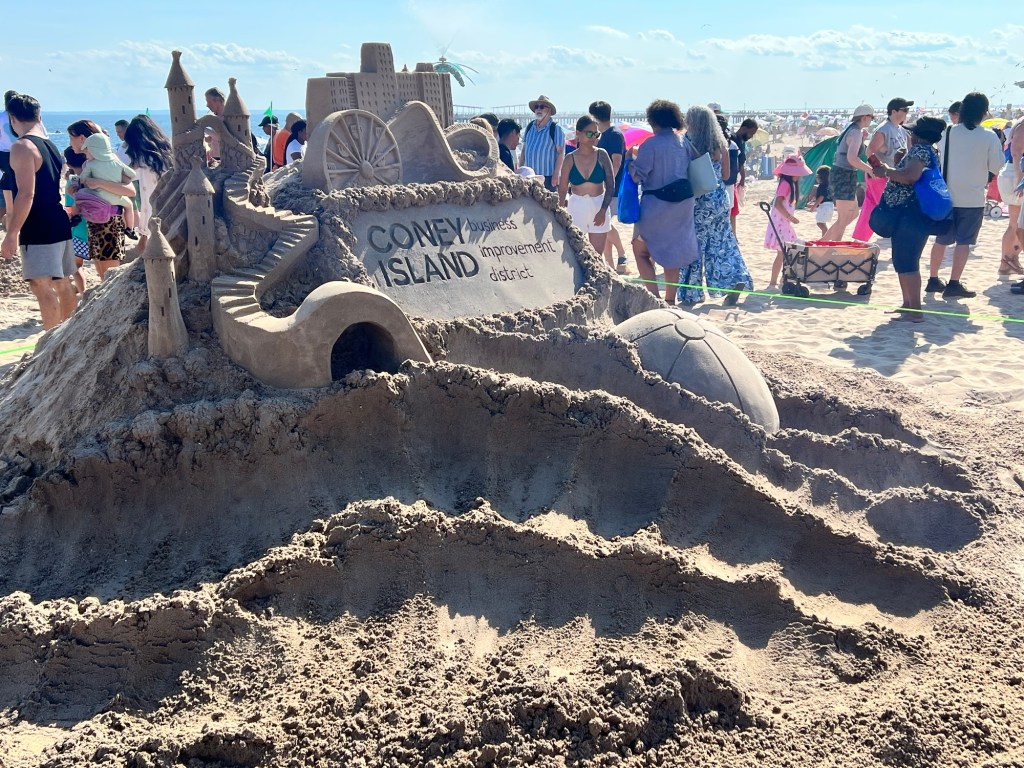
The work for the Coney Island Alliance
The other artist’s work for the Coney Island Alliance
Then I walked around the beach to see the works of the artists who participated in the contest from professional artists to families who partnered up and looked like they were having a good time.
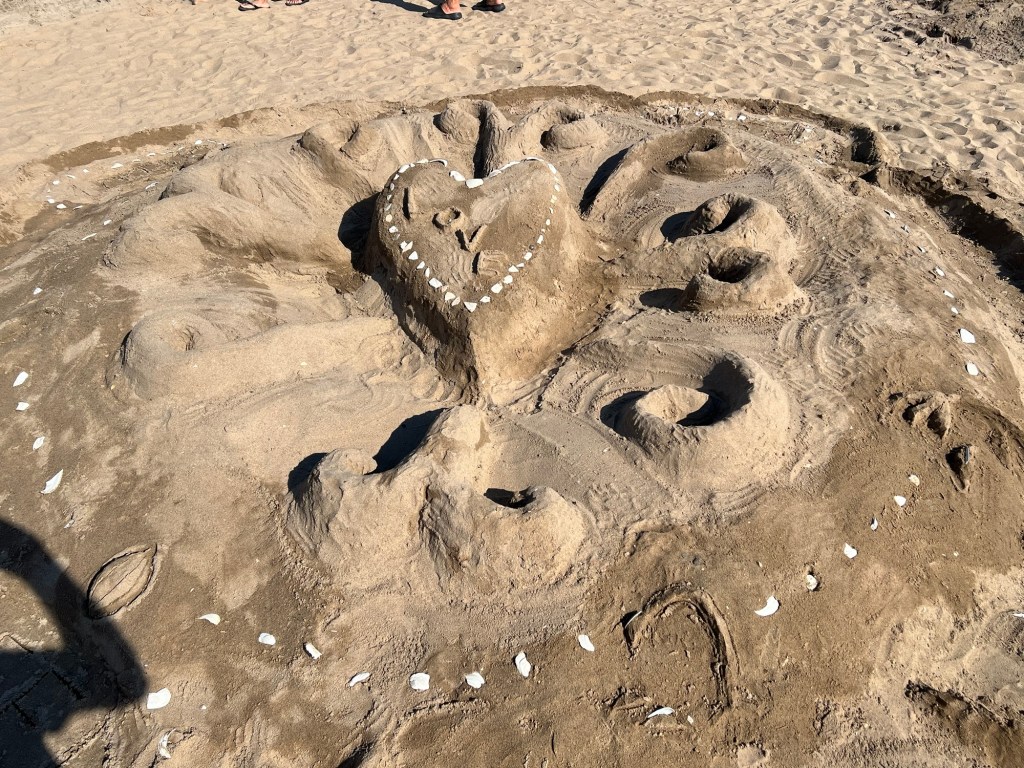
Some of the works on the beach
I roamed around the sand piles and these were the works that I saw that afternoon:
I did not know if this was friendly poo or ice cream
An octopus
Homer Simpson on the beach
The Swan family
I was not exactly sure what this was
A shark eating a hot dog
The Cool Power plane to Puerto Rico
The Neck St Level sculpture
The castle
The beach goer
The monster
The mermaid
The mermaid
The heart
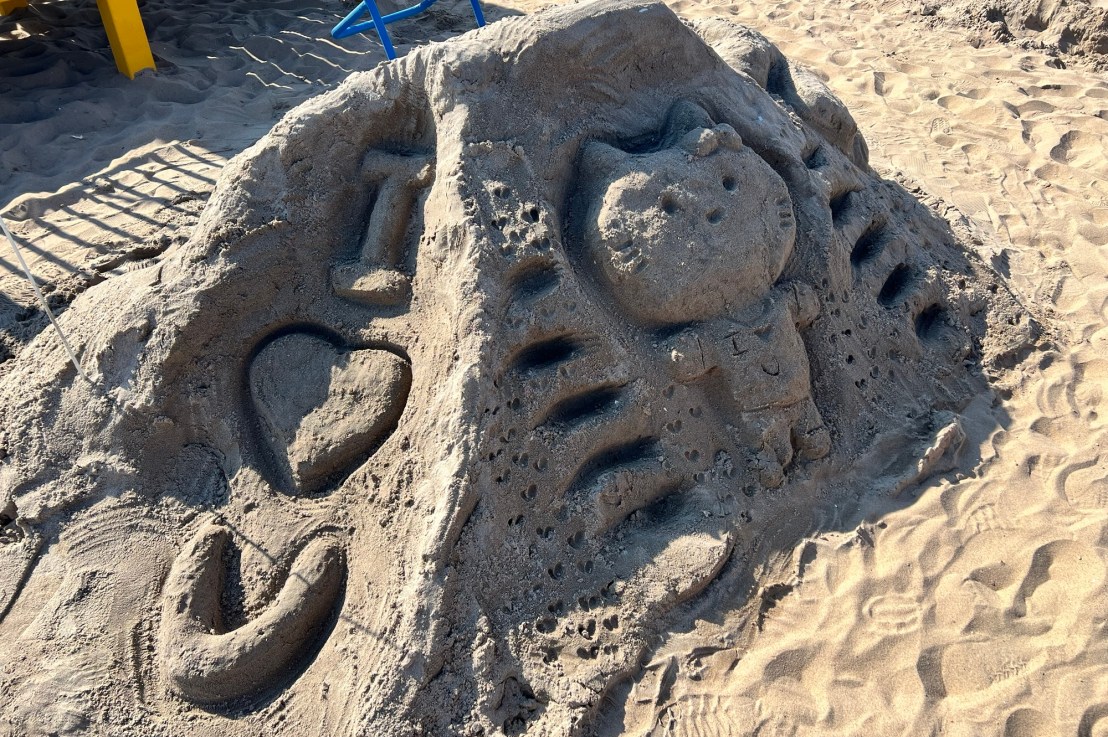
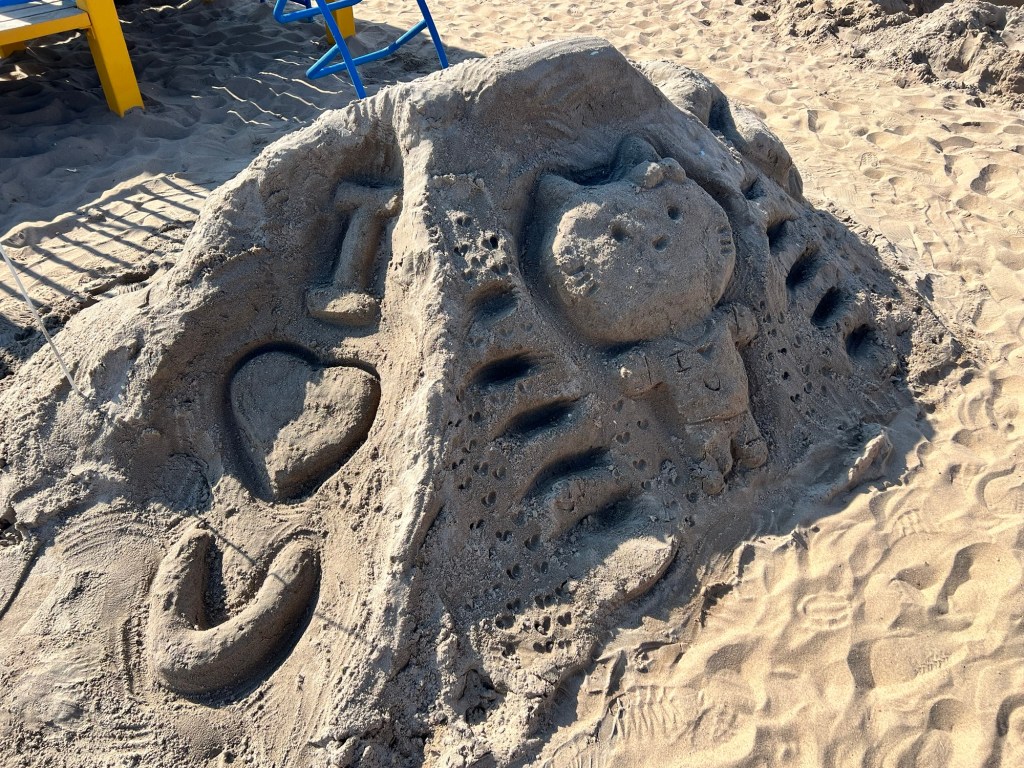
Hello Kitty
Walking around the finished sandcastles
When I was finished watching the judging of the contest, I walked on the beach to relax my feet. It had been a long day. The beach was busier today than it was on the 4th of July but then the weather was cooler the day of the Sandcastle building contest.
Watching a sailboat go by the shore
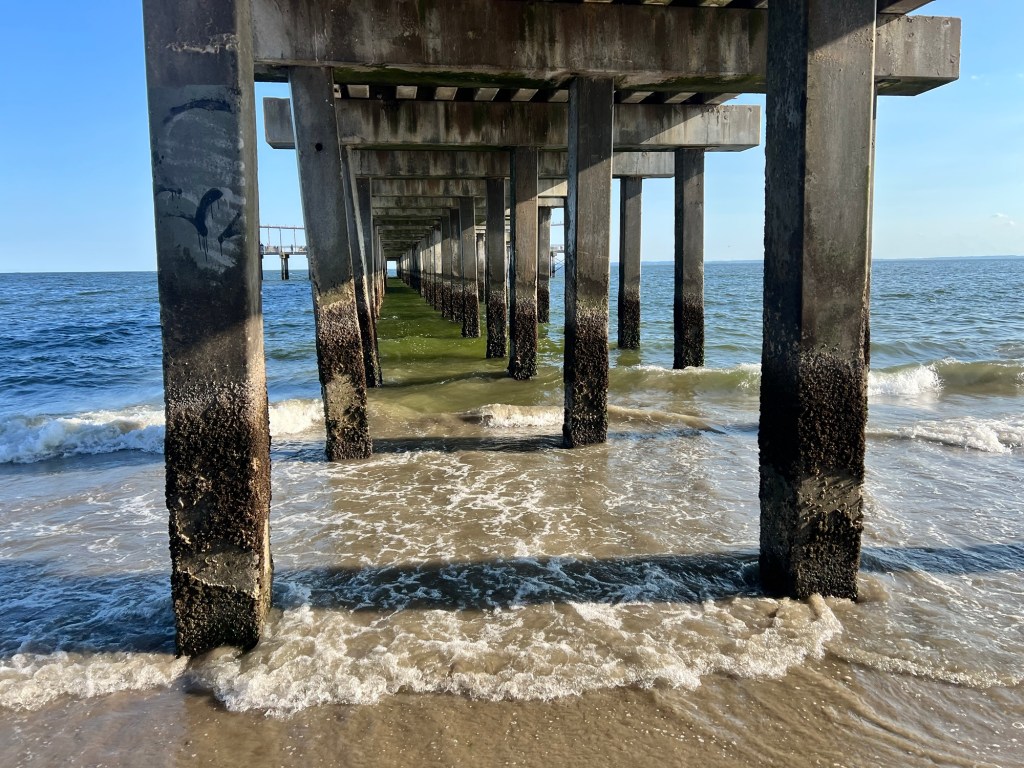
Walking under the pier
The Coney Island Sandcastle Building Contest is held each August.
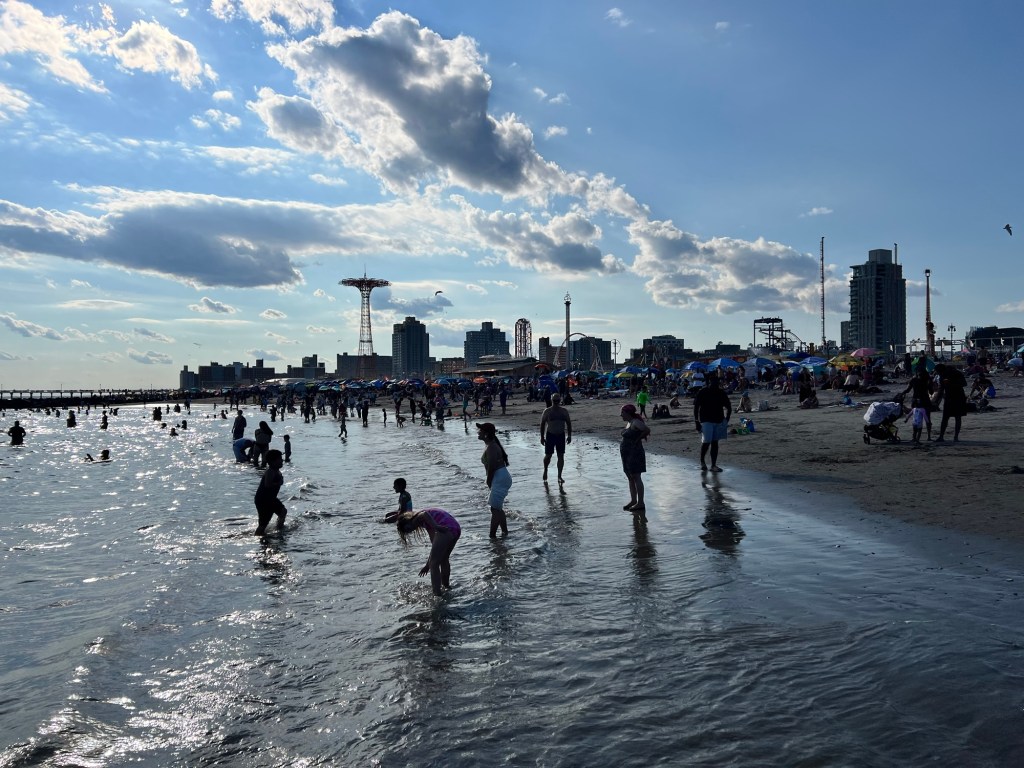
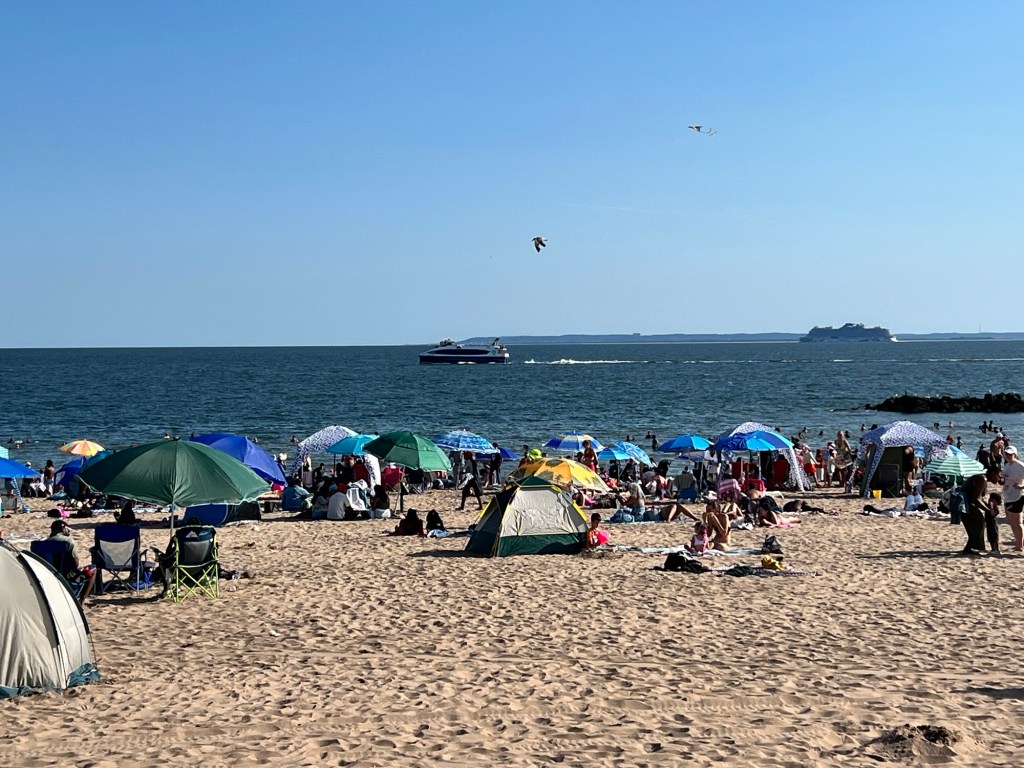
The beach was busy the whole day
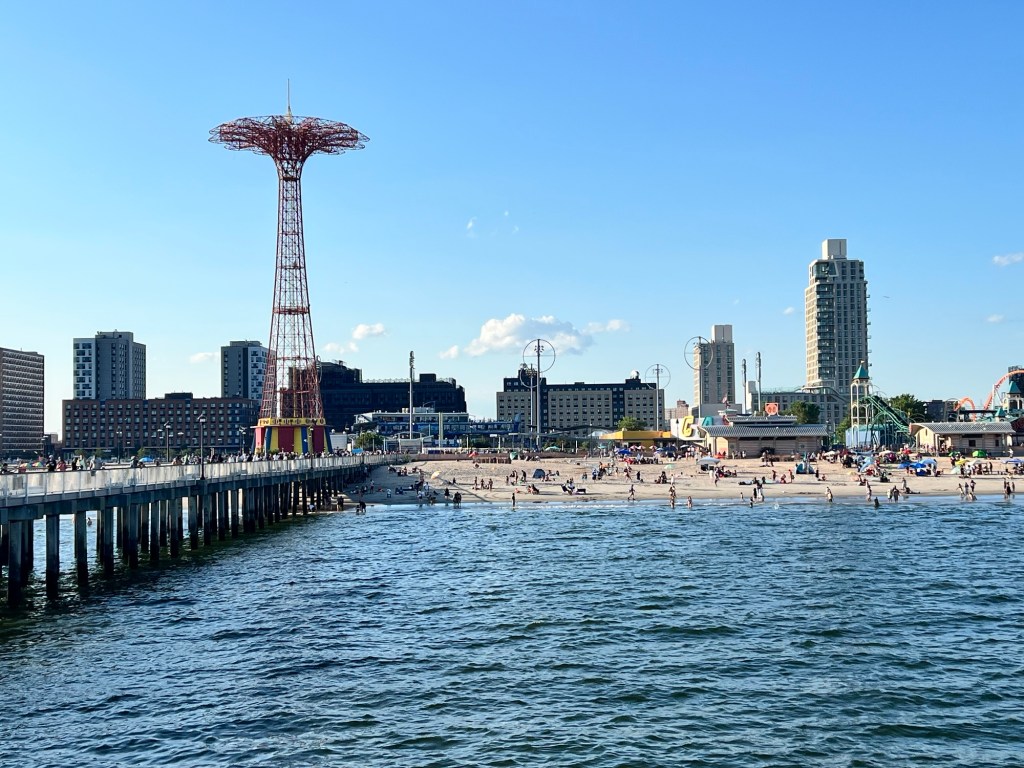
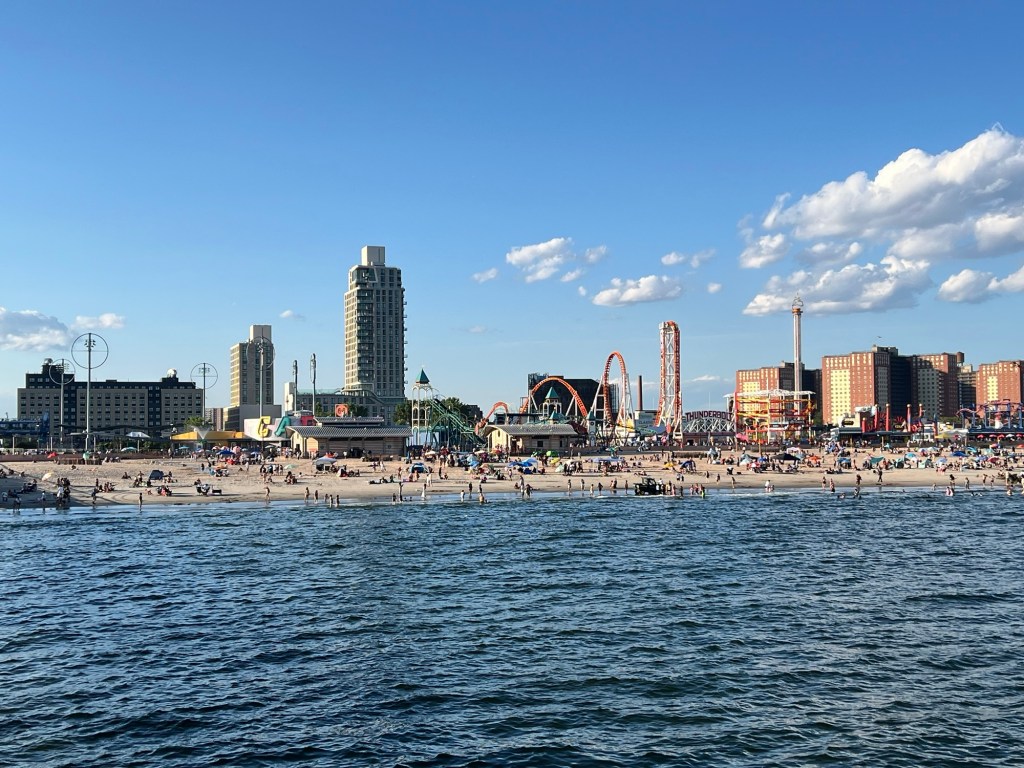
As I walked along the beach, I looked over the amusement area from the shore. I wondered what people thought of Coney Island as the entered the harbor. It still is quite a site.
The view of the amusement area from the pier
The view of the amusement area in the late afternoon
I walked back to the Boardwalk at the end of the afternoon. It was a really beautiful afternoon in Coney Island.
The Coney Island beach in the afternoon
I can’t wait to see the contest again in the Summer of 2027! Who said that the Coney Island beach is not its own gallery of art!
Located on 14 acres along the Black River, the Gristmill is the only restored water-powered mill in New Jersey and is listed on the State and National Registers of Historic Places. It’s a living example of the state’s transition from an agricultural to an industrial economy. Costumed staff lead guided tours of the mill, running restored machinery to harness the power of the Black River to grind grains, using two sets of massive 2,000-pound mills
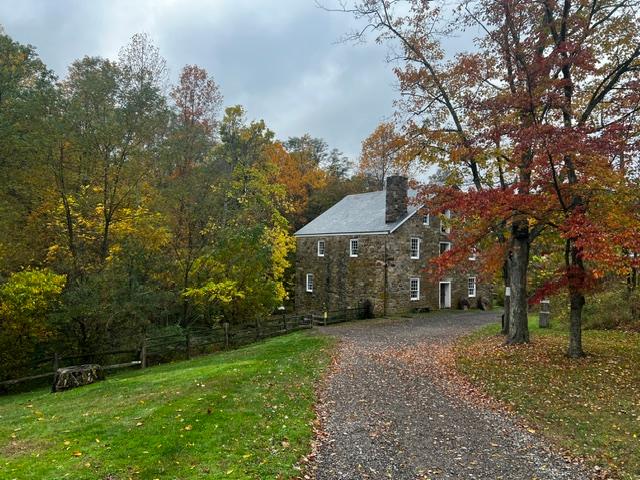
The Nathan Cooper Gristmill
The sign welcoming you to the site
I spent an afternoon walking the grounds of the Nathan Cooper Gristmill after a trip to Hacklebarney Park and was able to tour the outside of the mill and the pathways around the property.
The historic sign welcoming you to the site
The front of the mill building
The front of the old mill had been decorated for the “250th Anniversary” of the nation and the grounds were really beautiful. The mill lined the Black River in the back of it and the lawns were filled with lush trees. The mill was not open for the day but you could walk around the grounds.
The Washington Turnpike historic sign
The front grounds and the water pump
The water pump marker in the front of the building
The water pumps at the front of the mills were closed off at this point but must have been used as a water source for the people working there at the time.
The stairway to the back of the mill
The pump by the front of the stairs
The back of the building is where the water wheel is located by the Black River water source. When I took the tour later the next month, the tour guide showed me how it worked. The mill is still a functioning mill and they still do produce flour for sale but on a limited basis.
The waterwheel that moved all the equipment inside
The Waterwheel and the water source to power it
The waterwheel
The history of the Water Wheel:
The Fitz water wheel was made in 1927 for a mill in Pennsylvania that burned down before it could be installed. It was then purchased for a mill in Pottersville, NJ in 1935 and powered until 1955. In 1974, the wheel was donated to the Morris County Park Commission and moved to the Cooper Gristmill (Cooper Gristmill pamphlet).
The video of the waterwheel working:
The historic sign on the waterwheel and the water source
The pathway to the Black River and the trails
The back trails of the gristmill have the most beautiful views of the river and the steams around the property. At the end of the Summer of 2026, it offers the most amazing views of the grounds. All the trees were still in bloom and the trails take you far back into the park. I just walked to the river stream and looked at the small waterfalls. This was the water source that powered the mill.
The historic sign on the Black River
The grounds and paths along the river are really picturesque but watch the paths when the paths are wet. It can be a muddy experience.
The Black River from the trails
The Black River water source
Video of my walk along the river:
The history of the Cooper Gristmill:
(from the site pamphlet)
A gristmill was apparently built at this site in the early 1700’s by the first Europeans to settle the Chester area. Records show that is was offered for sale in 1761. Later in the 18th century, it was owned by Ellis Howell. The property was purchased by Nathan Cooper in 1825 and then Cooper rebuilt the mill in 1826, since the original structure had been damaged by an earlier fire. This is the mill building that remains standing.
Following the death of Nathan Cooper in 1826, the mill was passed to his nephew, Nathan A. Cooper. The younger Cooper, who became one of Chester’s wealthiest and most important citizens, owned the mill property until his death in 1879.
Mills were built at close intervals. In 1832, the town of Chester reported five sawmills and three gristmills. Surrounding these mills were small settlements that developed followed by good roads so that the farmers could haul their grain to the site. Soon it was followed by a blacksmith shop and a general store. This was the beginning of the town of Milltown, later called “Milldale”.
Once in the forefront of technology and economic progress, village gristmills had become largely obsolete by the end of the 19th century. By then, milling had become a vast factory enterprise and the dynamic railroad system made it possible to ship grain and flour over great distances. No longer the bustling centers of activity, mills like the Cooper Gristmill came to be viewed as relics of a bucolic past.
In modern times and now restored, the mill once again hums with activity. The water wheel has been replaced and some of the mill’s mechanical equipment has been put back into place and now operates. In the place of farmers with wagon loads of grain, busses filled with school children arrive to see the millstones once again grinding flour. Cooper Gristmill and the Village of Milltown are good examples of the many small agricultural and industrial communities that once dotted the landscape of Morris County, NJ.
The back pathway to the front of the site
The first floor:
When I toured the facility a week later when the museum was open, I got a glimpse inside the mill’s past and how it was the economic engine of the area during Colonial times. The inside of the mill was in working shape and was still being used to produce flour when in season.
The first floor of the mill
The inside entrance to the mill on the first floor with the fireplace to the left and the millstones to the right. The stairs led to three floors of the workings of the mills from grinding to bagging and shipping of the flour produced by local wheat.
The inside framework of the mill in the process of milling wheat
The large gears that made these rocks special waterwheel work that harnessed the Black River power source. The river and lake that have been dammed are across the street.
The millstones for the grinding of wheat
The millstones on the first floor of the mill
The millstones used to process flour
The second floor:
The second floor of the mill displays contain the office of the manage of the mill, the flour separating area for the grades of flour and the old bagging area of the flour product for shipping.
The recreation of the manager’s office
The milling and bagging area
The flour processing machine
The flour grade sorting machine is off to the left. The machine would sort the grades of flour based on the weight and bulk.
The machines processing and sorting the milled wheat
Pieces of millstones
Pieces of the millstones used in the production. The pieces would be shipped individually and then assembled when they arrived at the mills because of their sheer weight.
The attic room
The Attic:
The attic was the last part of the tour and where a lot of the inner workings of the mill were located. Just watch your head.
The Visitors Center:
When I finished the inside tour of the mill museum, I returned to the Visitors Center with the tour guide where a small museum on historic Morris County and the county’s rural past and development was displayed.
The small museum inside the Visitors Center
The inside of the museum tells the story of the development of Morris County, NJ
The small gift shop inside the museum
After the tour of the inside of the mill and museum was over, I explored the grounds of the property and admired the foliage. I decided to explore the power source of the mill on the advice of the tour guide who was preparing to close up for the day.
The grounds of the mill building and the beautiful surrounding foliage
The tunnel under the road taking you to the damned river and the lake on the other side of the road.
The video of the walk through the tunnel:
The path underneath the tunnel lead to the lake that was the original and still the power source to the mill. It still makes the water wheel run and is its source of power.
The lake and the waterfall are the source of power for the mill
The Water source of the Cooper Gristmill:
(from the Cooper Gristmill site pamphlet)
Unlike the electric machinery of today. the water powered gristmill drew upon the natural environment for its power. The miller chose a location close to a water course that has a drop in elevation. A dam was built to form a pond that would store the water needed to power the mill even in the dry summer months.
A sturdy building was required to support the water wheel and its associated machinery. The water was brought from the pond in a wooden trough, headrace or flume. The height from which the water would fall when it reached the mill was called the ‘head’. It determined the amount of power that could be generated. A tailrace carried the water away from the wheel and returned it to the stream. The turning shaft of the water wheel transferred its mechanical power into the mill. The gears and belts then transmitted the power throughout the building. The four sets of millstones at the Cooper Gristmill originally required two water wheels to operate.
The mill was often the social center of an agricultural community and the miller was a community leader. The miller lived nearby in order to attend to the constant stream of customers and keep his machinery in good order.
The beautiful foliage on this side of the road
I walked through the pathway and looked into the pond to see the small waterfalls in the distance. The foliage colors on the background of the water was quite spectacular.
The Visitors Center and the mill complex from the other side of the road
It was a very interesting visit to see part of New Jersey’s manufacturing past and how it was still being utilized in the present. The tour guide explained that at certain times of the year, they still mill flour and sell it to the public.
So it is still a working mill in production and you can still see that production in the warmer months. You can also buy the finished product on premise.
Not only is it an interesting tour but the surrounding foliage in the Fall is breathtaking. It really was a fascinating tour of New Jersey’s past.
Take you time and enjoy the paths and trails around the mill building
In the whole time I toured the gristmill did the tour guide say the place was haunted. I never saw or felt anything but according to many videos, the place is haunted.
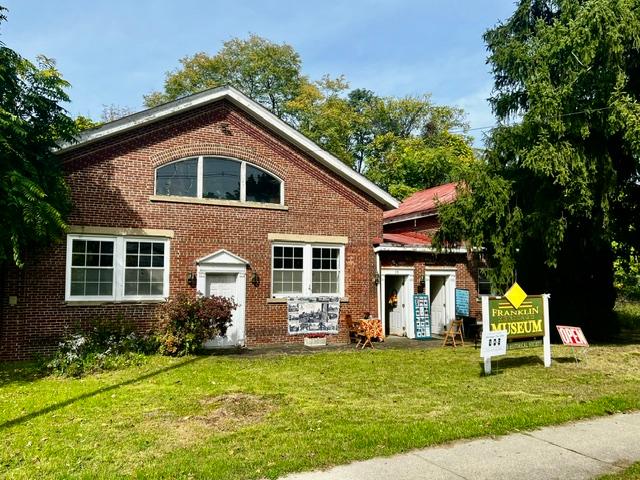
During the Annual Sussex County Heritage Weekend, one of the first stops I made was to the Franklin Heritage Museum in Downtown Franklin, NJ. The museum was the house in one of the offices of the mining company. The museum was a glimpse into community’s mining past and how it shaped this area of the State of New Jersey.
The museum sign out front
The museum building was the old New Jersey Zinc Company ‘Time Office’. This meant that the miners had to punch into their shift at the mine through this building. The old turnstile is to the right of the building.
History of the Franklin Historical Society:
(From the museum pamphlet)
The Franklin Historical Society was organized and incorporated in September 1996 as a non-profit all volunteer education association. It was founded to preserve the heritage of the Franklin Borough to create awareness of both the County and Borough of Franklin and its rich history of culture and ethnic heritage.
The Historical Society’s Museum is located at 95 Main Street in the historic Franklin Mill complex of the former New Jersey Zinc Company.
The Heritage Museum was opened to the public in April 1997 and its displays include:
Iron and Zinc Mining
Railroads
Franklin’s Churches and Schools
Franklin’s Local History
The sign for the old New Jersey Zinc Company ‘Time Office’ historical sign
The history of the Franklin Mine and its place in New Jersey history
The smaller gallery off to the side of the building concentrates on the history of the NJ Mining industry and the many mining areas in Sussex County.
The room contains all sorts of artifacts related to the industry including both pictures and everyday equipment.
The pictures of all the miners at the company
The Mining Gallery
The Mining Gallery with equipment and artifacts for a day of working in the mines
Artifacts from home and work
This gallery was in transition with the volunteers working on the displays. This side of the museum with be on the local NJ Zinc Mine Company and its history.
The main gallery in the old Main Office space
The main gallery of the museum has a mixture of more mining artifacts and town objects that cover the history of the town.
The ‘250th Anniversary exhibition of the town and its mining past
For the ‘250th Celebration’ of our country, the museum created an interesting display of the formation of the community around the mining industry to its growth today.
The Mining and Equipment display
Community artifacts
Pictures of the police and fire department’s in this small mining community
The museum’s main emphasis is on the development of the mining industry both its early development up until when the mines closed in the 1980’s. The display above is on the early mining tools used by the workers.
The Mineral display
What I found interesting was all the minerals that are on display and the glow in the dark components that make these rocks special. When the lights go out, the true magic begins.
The old turnstile to enter the mining compound before the start of the shift
The back of the museum behind the fencing and the weeds, is the entrance to the old mines. Both the entrance building and entrance to the mine has been closed off for years but you can still see behind the fencing. This is the old turnstile off to the side of the building where the miners entered the complex.
Across the street from the museum is the old Hungarian Reformed Church, which is planned to be renovated.
The sign for the church
The old Hungarian church
Down the road from the downtown area where the museum is located is the Franklin Furnace Park, which is a beautiful picturesque park situated around a lake.
All along the highway facing the park and in the park itself was the most beautiful and colorful foliage. Plan to visit the park after the museum for a colorful and relaxing break.
The foliage around the park in early October
The lake view of the park from the highway
The views from every angle of the park are breathtaking.
The view from inside the park and the footbridge to the island
The view of the park from south of the park
A view of the islands in the park
A view of the islands and the foliage
The islands and the foliage in the beginning part of October
The small center pine island
Traveling back down the road back to Route 23 South to continue my tour of museums
The view of the islands to the north in the lake
The view of the lakes from the south
The view of the foliage from the south
For a small town, Franklin offered such an interesting look at this part of New Jersey’s mining past and its transition from a mining industry to tourism based around the mines. The series of museums and cultural sites offers so much for visitors to see and experience.
A start at the Franklin Heritage Museum offers a glimpse into that past and as the museum keeps developing their exhibits will tell that story to visitors.