
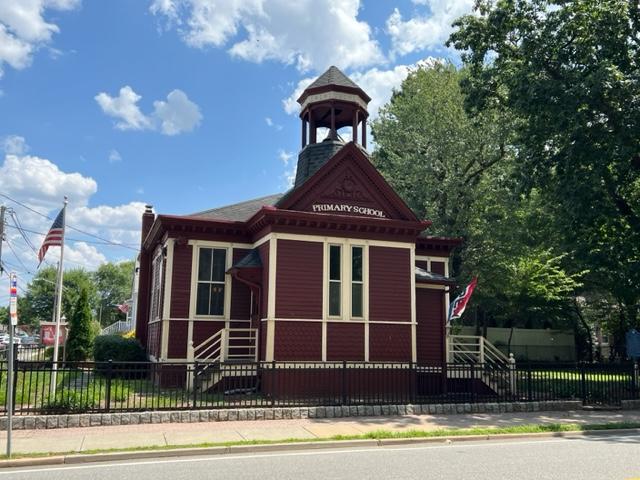
Little Red School House Museum/Lyndhurst Historical Society
400 Riverside Avenue
Lyndhurst, NJ 07071
(201) 804-2513
http://www.lyndhursthistoricalsociety.org
https://www.facebook.com/LyndhurstHistoricalSociety/
Open: The Second and Fourth Sunday of the month from 2:00pm-4:00pm
TripAdvisor Review:
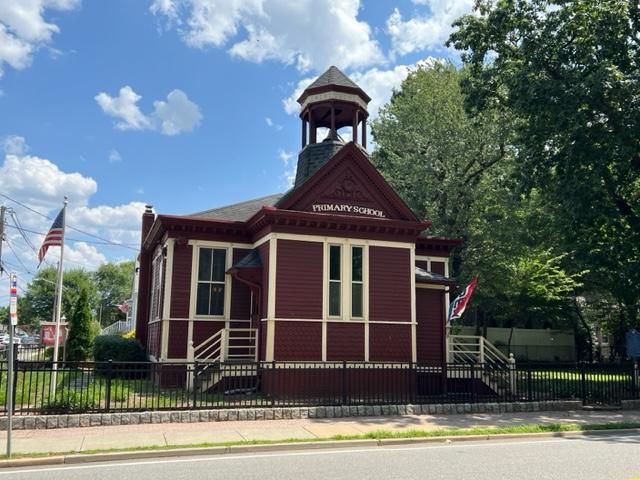
The Lyndhurst Historical Society at 400 Riverside Avenue
The Lyndhurst Historical Society is an interesting look into the early history of both the town of Lyndhurst, NJ and Bergen County. The museum shows how we moved from the agricultural era to the modern era in just one generation. The growth of the county really accelerated after the Civil War into the 1920’s.

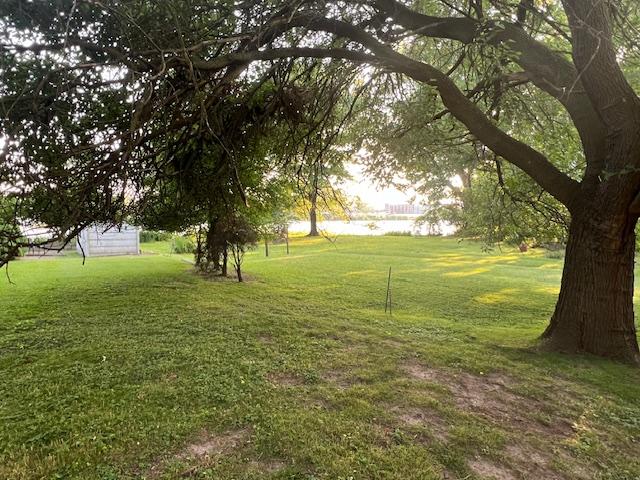
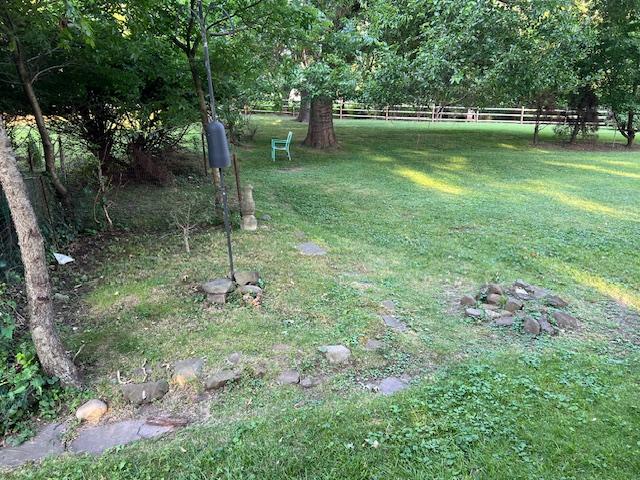
Lyndhurst Schoolhouse grounds
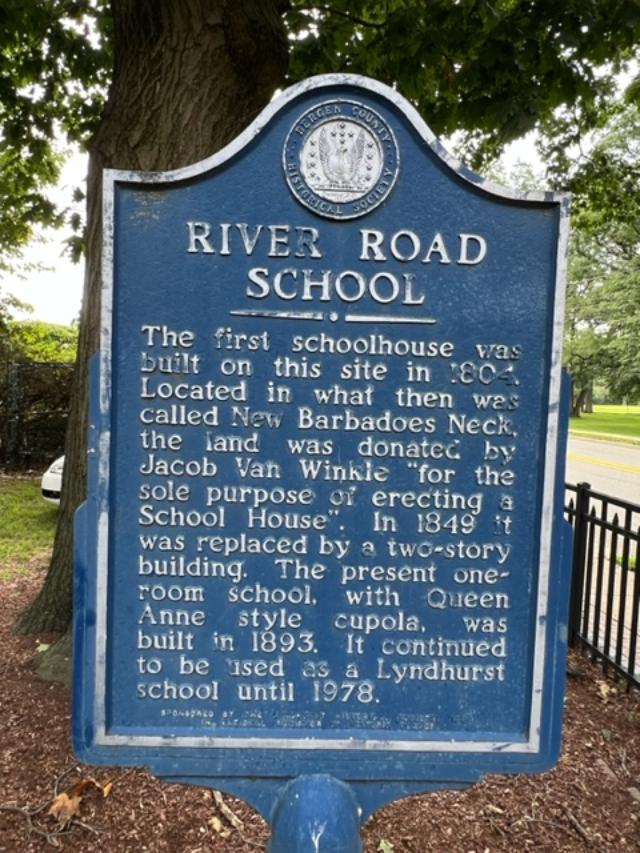
The Lyndhurst Schoolhouse historic marker
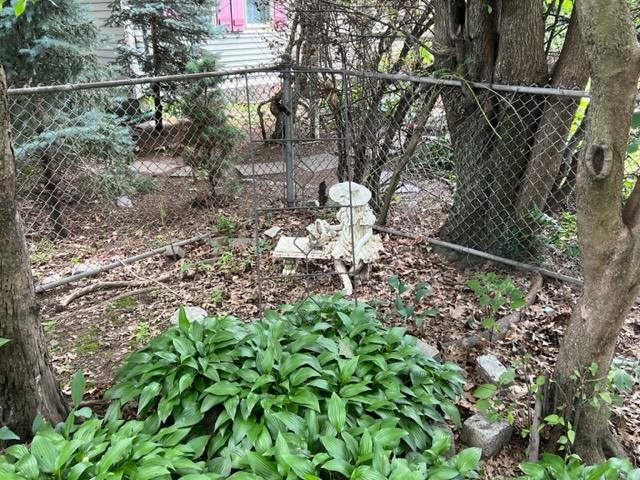
A child’s statue in the gardens on the grounds of the museum.
The building itself is built on the original 1804 school house that was torn down for the newer one built in 1893. The unique part of the museum’s history is that the building was used as a school house for third graders in the town until 1980.
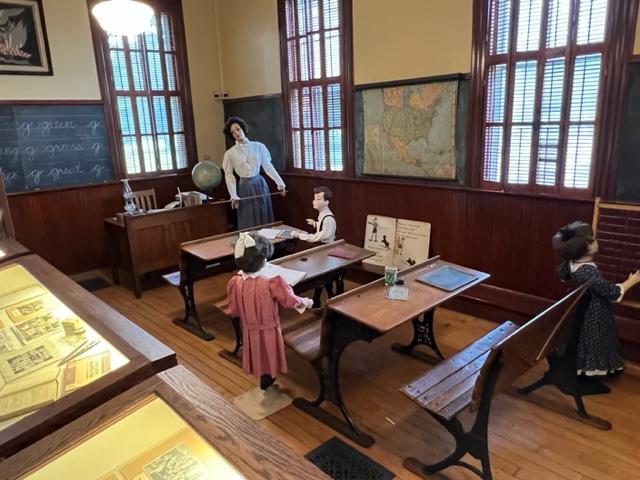
The museum’s school display
The museum is a treasure trove of memorabilia from the town’s past. One part of the museum is set up as an early school room with desks, blackboards and a whole teacher’s work area while the other side of the display is a nurses office for the kids.
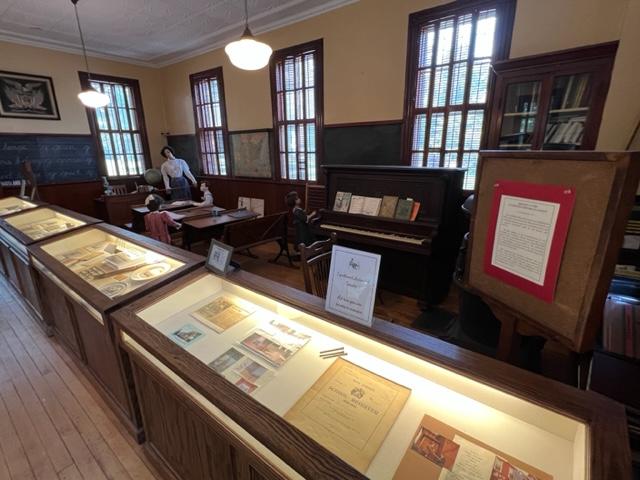
The history of the school over the past hundred years.

The history and school pictures surrounded the display.
What is unique about the museum is that the original bell to call the children for school is still located on the top of the building and the bell can be accessed by the string in the coat room. They even let you ring the original school bell that has been in place all this time.
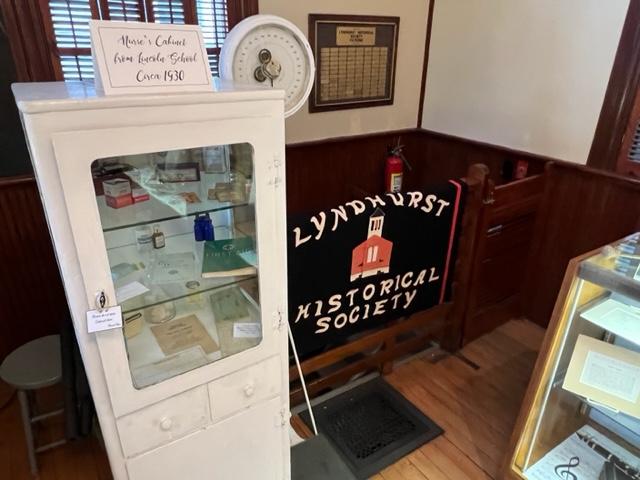
School nurse display
The original built in chalk boards exist with artwork that had been left on them from the 20’s that have now been preserved. What is interesting about them is that they had been covered up since the 1930’s and a child had drawn out in colored chalk two children’s fairy tales that have now been preserved. They had been hiding under the new chalkboard after the renovation for over fifty years.
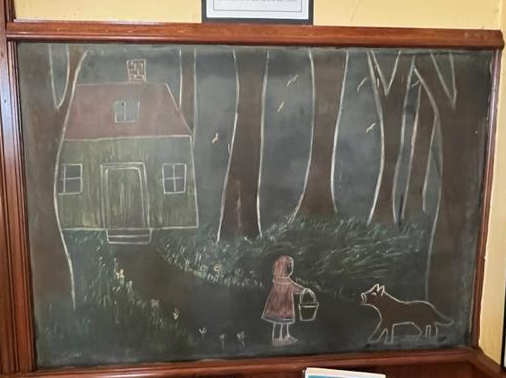
The Little Red Riding Hood chalkboard drawing

The Three Bears chalkboard drawing
The other side of the floor plan is items from the 100th Anniversary of Lyndhurst. This had happened a few years earlier and the display is very prominent when you walk in. There is a lot of pride in this town.
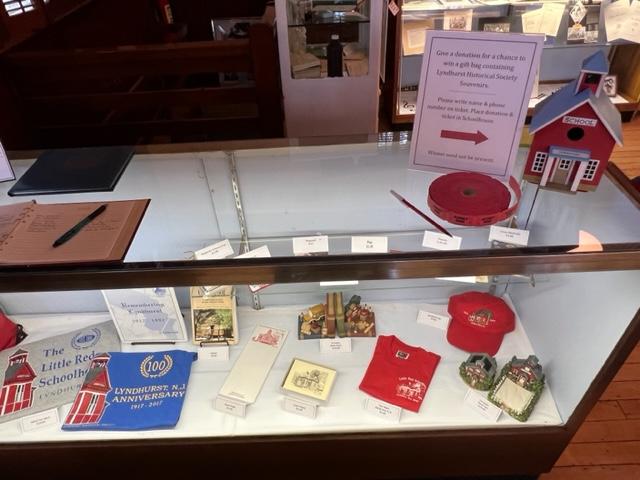
The displays are related to the celebration with displays on businesses that have been in town for many years, Indian relics that were found in the town and memorabilia. Even the basement bathrooms are from the 1920’s and still work!
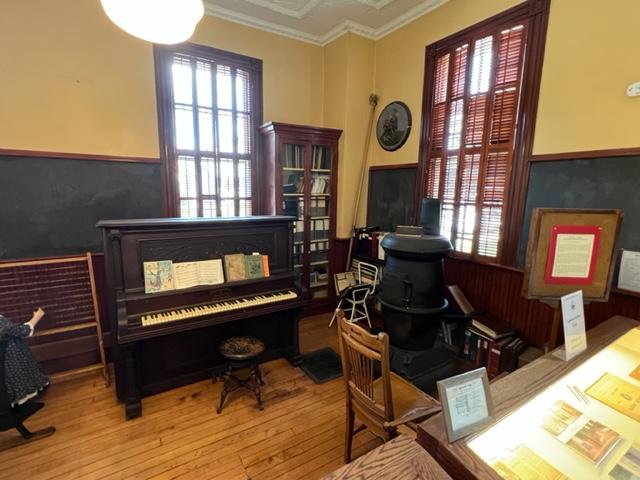
Music display and heating the school house
The big exhibition in the museum was the history of the ‘Lyndhurst High School Marching Band’, its past events and the teachers who run the program now. They have a very talented Music Department.
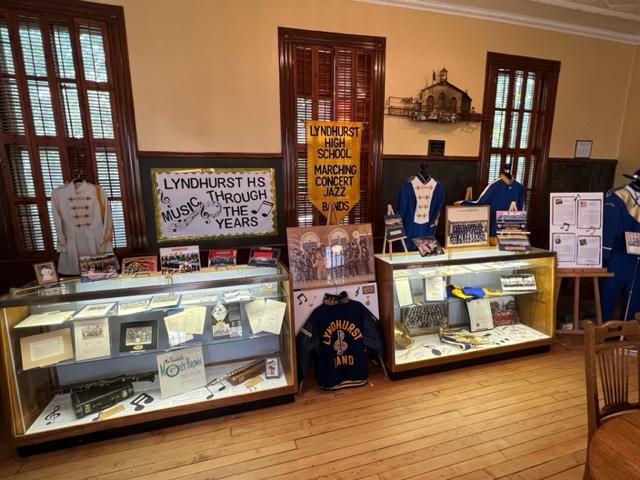
The History of the Lyndhurst High School Marching Band
The other big display was the ‘Kingsland Explosion and Fire’ that had occurred over twenty years ago and it is part of the permanent collection. It was interesting to see how it happened, how it was put out by the fire department and the history of the company.

The Kingsland Explosion and Fire Exhibition
This was a new exhibition that the museum is featuring in the Winter and Spring of 2025 on the history of the Lyndhurst Fire Department. This had unique items from the fire service donated by firefighters from the Lyndhurst Fire Department:
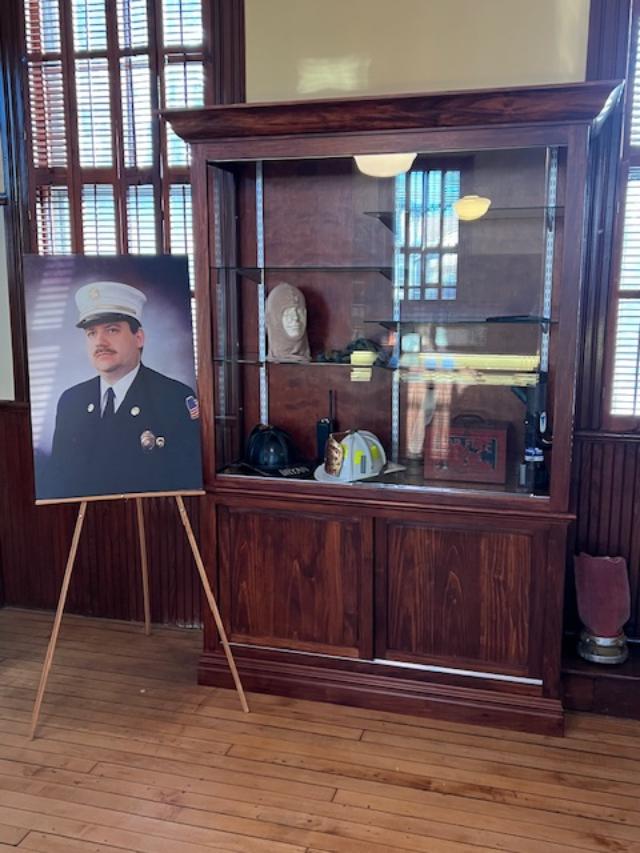
‘The History of the Lyndhurst Fire Department’ exhibition

The exhibition on ‘The History of the Lyndhurst Fire Department’
This exhibition will on display through the Spring of 2025.
Lyndhurst Historical Society:
(from the museum website)
The Lyndhurst Historical Society is a private, non-profit organization dedicated to the preservation of local historic sites and the promotion of community pride in our history and traditions.
In 1984, a group of local citizens formed the Lyndhurst Historical Society. One of the Society’s early projects was to restore the “Little Red Schoolhouse” on Riverside Avenue and establish a museum in the schoolhouse for the exhibition of local history memorabilia.

The School Nurse cabinet in the schoolhouse
With community support as well as county and state grants, the Society’s goal to open the Schoolhouse Museum to the public was achieved in 1993.
The Society meets regularly on the third Wednesday of each month (except July and August) to…
*plan and present educational programs and workshops of historical interest.
*raise funds to meet the goals of the organization.
Active members and supporters are vital to the success and growth of the Lyndhurst Historical Society.
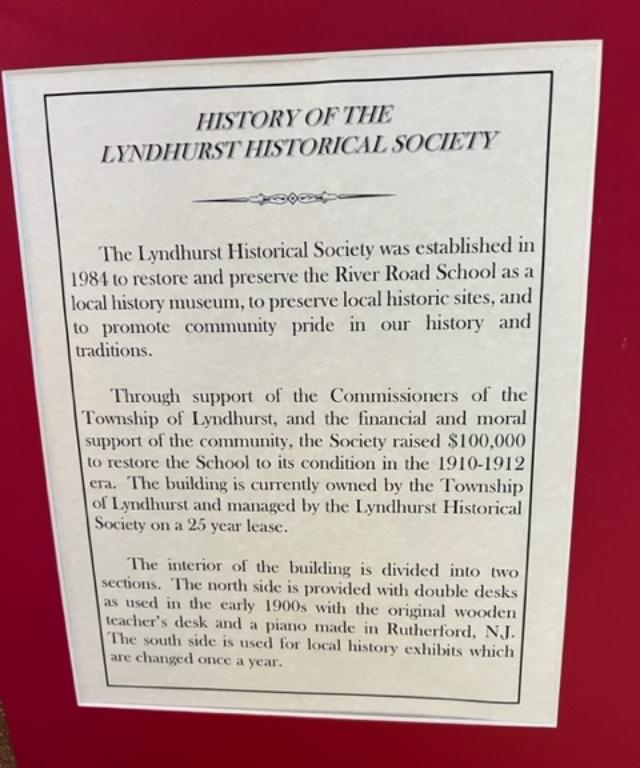
The history of the Lyndhurst Historical Society Museum
We welcome:
*those interested in membership.
*anyone wishing to volunteer time.
*offers of financial support (all memberships and donations are tax deductible in accordance with IRS regulations).
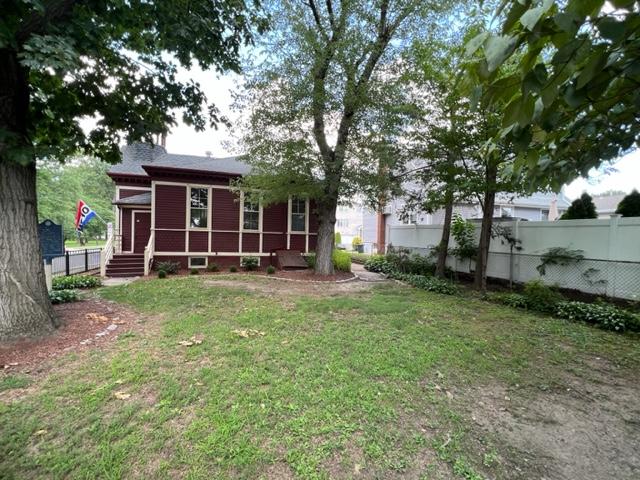
Lyndhurst Historical Society Museum grounds
Little Red Schoolhouse History:
(from the museum website)
A one room schoolhouse crowned by a bell, symbolizes a simpler time, 19th and early 20th century America.
In 1804, Jacob Van Winkle presented a strip of land to the school trustees for the construction of River Road School (“The Little Red Schoolhouse”). The yearly rent was one peppercorn if demanded. Thus was born the first known public school system of southern Bergen County. A subsequent building was erected in 1849. In 1893, the present school was built and used for classes until 1980.

Old Class pictures at the museum
The Township purchased the school in 1984. It was leased to the Lyndhurst Historical Society in order to preserve this landmark, now more than a century old, for future generations to appreciate and to use as a local museum.
Lyndhurst Historical Sites:
The Little Red Schoolhouse is one of three historic sites in Lyndhurst.
Just south of the Schoolhouse is the Jeremiah Yearance House, circa 1841. Years ago, teachers assigned to the School often boarded at the Yearance House during the week because the commute by train to their permanent homes would be too long.
One block north of the Schoolhouse is the Jacob Van Winkle House, built in 1797. Van Winkle presented the property for the Schoolhouse in 1804. River Road School is joined by the Van Winkle and Yearance Houses on both the National and New Jersey registries of historic places.
Historical Events & Trivia:
Did you know…
*Lyndhurst was once called Achter Kol?
*The town has three sites on both the New Jersey and National Historic Sites Registry?
*January 9, 2004 marked the 200th anniversary of the deeding of the land to the school house?
*Lewandowski Commons is named for the brothers killed in World War II?
*Palazzo Corner, built in 1905 and located at 262 Ridge Road, was used as the town’s first police state and court clerk’s office?
*The Jacob Van Winkle House, now the Masonic Club is the oldest building in Lyndhurst?
Events sponsored by the Lyndhurst Historical Society include:
*festivals
*re-enactments & historical portrayals
*cultural, artistic and musical presentations
*educational lectures
*bus and walking tours of Lyndhurst
Schoolhouse Museum Information:
The museum is located on the corner of Fern and Riverside Avenue, is open to the general public on the fourth Sundays of each month from 2:00pm to 4:00pm.
Group tours can be arranged at any time by reservation for schools, organizations and individuals. A visit includes a tour of the Schoolhouse, its exhibits and a presentation of local history by one of the Society’s docents. Call (201) 804-2513 for further information on museum tours and special events.
Disclaimer: The second part of the this information was taken directly from the Lyndhurst Historical Society’s pamphlet. The Little Red Schoolhouse is open from 2:00pm-4:00pm on the last Sunday of each month or by appointment only. Please plan accordingly.
In November of 2024, I had my Introduction to Business at Bergen Community College in Paramus, NJ create a Destination Tourism project for the museum. This is their project:
Here is the Blog on project:
It was going to be a tight project as we only had five weeks to pull it off and we had Thanksgiving Weekend break in the middle of the project. I created one less Team and gave them a fair amount of work to develop and then we started the project.
I had an extra credit Team Field trip to the museum that Sunday and about a third of the students showed up. The museum is a one room schoolhouse so it is easy to tour.
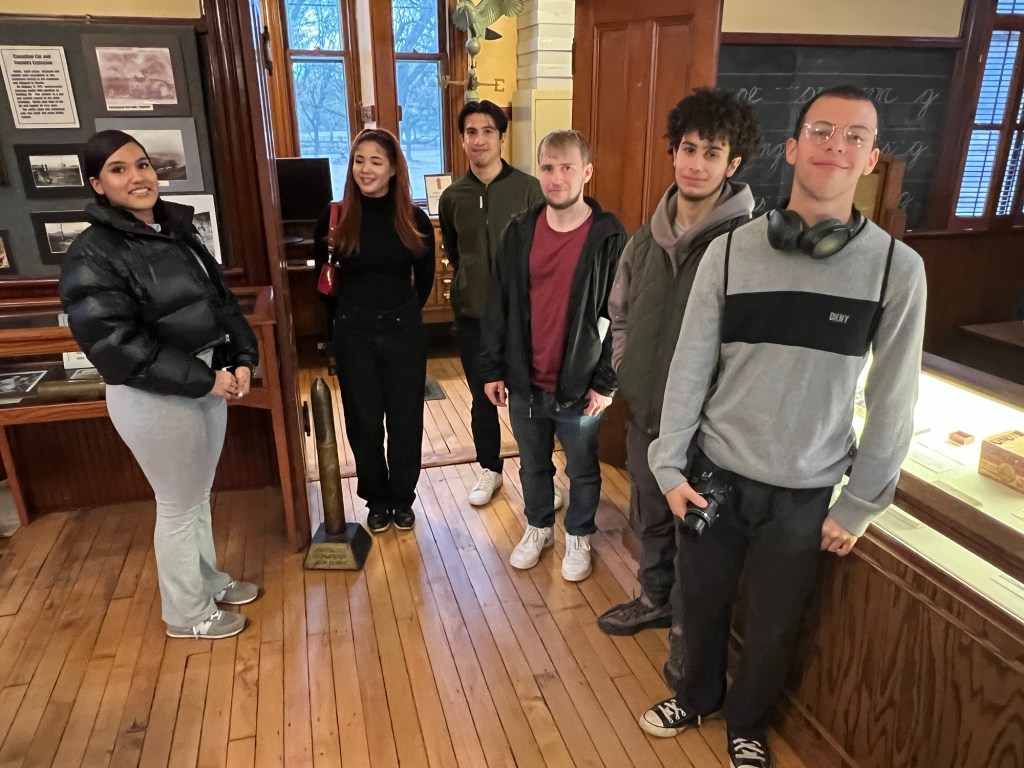
Team members touring the museum on the extra credit trip
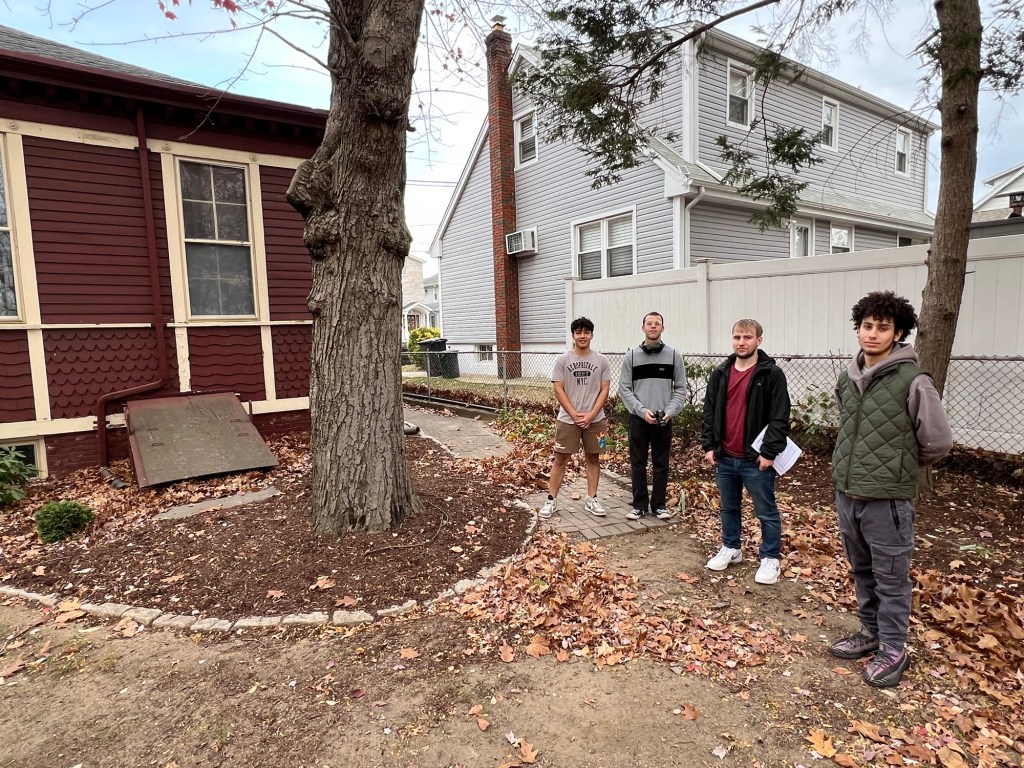
Touring and planning ideas in the museum’s backyard and gardens
The next week during class time, I took the students on a more formal tour and lecture on the museum where they met with the Museum Board, their volunteers and it was time to ask questions and view the museum from the vantage point of how to we promote this museum and how can we bring people in from outside the Bergen County area.

First we met with the staff at the museum on class night
We started with a discussion of the museum, its history and its direction in the community. We also got to meet the Volunteer Board of the museum.

Then we toured the museum
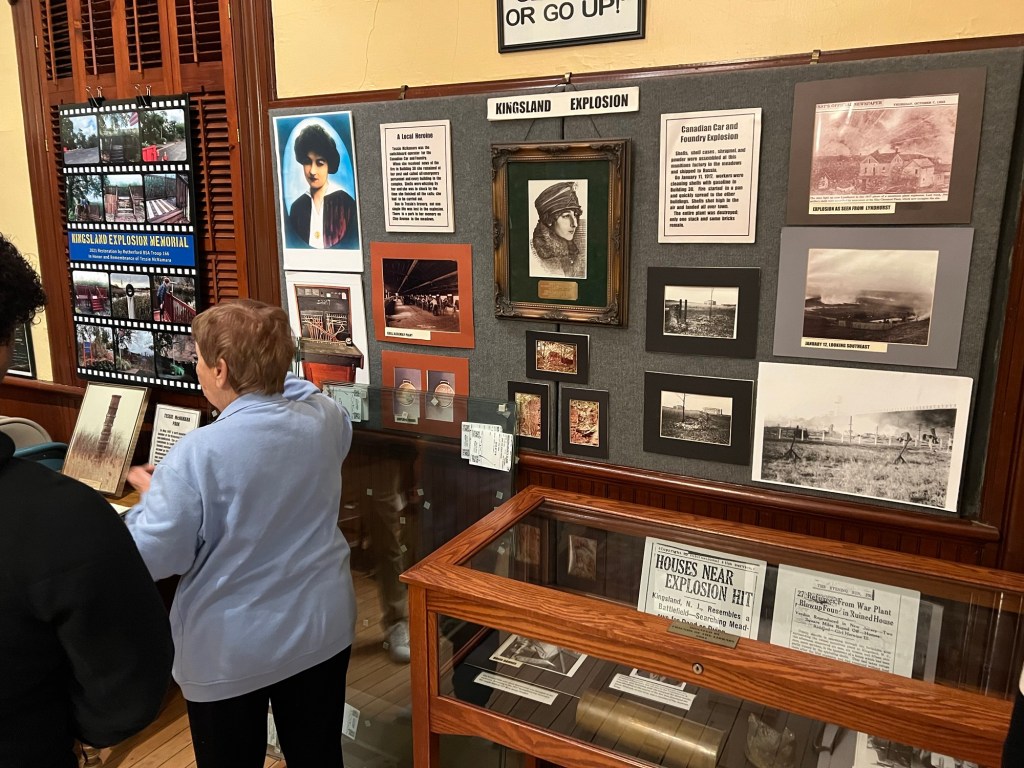
The Kingsland Explosion Fire display

Going over the project steps with the Museum Board

Our Team picture with the Museum Board of the Lyndhurst Red Schoolhouse Museum
Here is the Marketing Team Project that was created by the students:
The next week on December 12th, 2024, the students presented the project to myself, the Board and members of the Lyndhurst Schoolhouse Museum and to parents and other invited guests. For a four week project, the students did a good job.
The Bergecco-Parc Corporate Website for the Lyndhurst Schoolhouse Museum Team:
https://littleredmuseum.wordpress.com/?_gl=11eisv45_gcl_au*MzA4MzYyMTAxLjE3MzMyNzg1MDU
The start of the Presentation that evening:

The start of the Team Presentation that evening
Video of the Presentation:
PowerPoint of the Presentation:

Team One starting their presentation

Team Two ordering their ideas to the museum board

Team Two presenting their Holiday events to the Board

Team Two presenting their Holiday events budgets

Team Three making their presentation

The Lyndhurst Schoolhouse Museum Team at the end of the presentation
At the end of the Presentation, we had a Q &A with the Board of the Museum, who really loved the ideas that the students came up with and how creative they were with such a small museum. The President even admitted to me that she, like all the other museums I worked with this semester, would miss having the students visiting and touring the museum. That made me feel good, that in some small way we made a difference.
















 Visiting a Museum: The Unique, Unusual, Obscure and Historical