Category: Exploring Cape May County, NJ

The Garrett Family Preserve at Cape Island Creek 801 Wilson Avenue                                                       Cape May, NJ 07204

The Garrett Family Preserve at Cape Island Creek 801 Wilson Avenue Cape May, NJ 07204

The Garrett Family Preserve at Cape Island Creek

801 Wilson Avenue

Cape May, NJ 07204

(908) 879-7262

https://www.nature.org/en-us/get-involved/how-to-help/places-we-protect/garrett-family-preserve-at-cape-island-creek/

My review on TripAdvisor:

https://www.tripadvisor.com/Attraction_Review-g46341-d7190574-Reviews-Garrett_Family_Preserve-Cape_May_Cape_May_County_New_Jersey.html

While I was searching for the Cape May Maritime Museum, I made a detour into a parking lot and came across the Garrett Family Preserve

The sign that welcomes you to the park

Visiting the Preserve:

(from the Cape May Visitor website)

The Nature Conservancy protects the 180-acre Garrett Family Preserve situated between Seashore Road and Cape Island Creek, offering a tranquil setting for walking, picnics, painting, biking, and observing nature.

The preserve offers six trails ranging from 0.2-0.5 miles in length, and a two-mile perimeter loop along the forested edge–four miles in total. Explore year-round on foot or by bicycle. Sights vary by season, with bird migration peaking in the spring and fall, and the wildflower field blooming from May through July. Beginning in late August into the fall, Monarch butterflies stop here to feed before their journey south.

Preserve amenities include a mobile bird blind, welcome kiosk, shaded pavilion with picnic tables, benches and picnic tables along the trails, and three adjustable art easels. From November 1st to March 1st, leashed dogs are welcome. Because this is a preserve, the Nature Conservancy does not provide trash receptacles. Be sure to take anything you’ve brought with you.

The size of the preserve

The history of the Garrett Family

History of the Preserve:

(From the Nature Conservatory website)

Originally slated for development, TNC acquired the property in 2000, as the preserve offered an unusual opportunity to manage a significant piece of land for migratory songbirds, whose stopover habitat, especially at the southern tip of the peninsula, has been all but wiped out.

In 2013, the generosity of the Garrett family enabled TNC to further protect Cape Island Creek for future generations by acquiring crucial land, improving and stewarding habitat, performing coastal research and installing enhanced visitor amenities.  

After reading some of the history of the preserve, I decided to take a walk down the paths. I ended up walking down several paths that took me through woods and many natural gardens. I could see by how dry everything was how the lack of rain was affecting the preserve.

The pathways leading to different parts of the preserve

Following the pathways through the preserve

My first stop was the picnic area and rest stop

The Insect Hotel

The Insect Hotel

The description of the insect hotel

I thought this was an interesting concept of creating a place for insects to have a breather. It is a place of reproduction and in helping pollinate the preserve.

The fields of plants and wildflowers that make up the preserve

The flowering plants and wildflowers in the fields

Each of the paths took me through different parts of the preserve that were wooded or with meadows or an array of wildflowers that attracted birds, butterflies and bees.

The batches of wildflowers in the meadow

The Salt Marsh part of the Preserve was filled with more wildflowers that had bees and butterflies swarming them.

The Salt Marsh Habitat

The sign for the Salt Marsh Habitat

The the pathways though the meadows

The fields of flowers and plants in the marsh area

Th e next section of the preserve I visited was the Wildflower Meadows

The Wildflower Meadows in the late summer

The Wildflower Meadows paths

As I left this part of the preserve, I took many paths around the park lands. There are all sorts of fields of flowers and woods to shade the way during touring the preserve.

Going on the different trails throughout the preserve

I walked down the paths to the Bird Habitat area

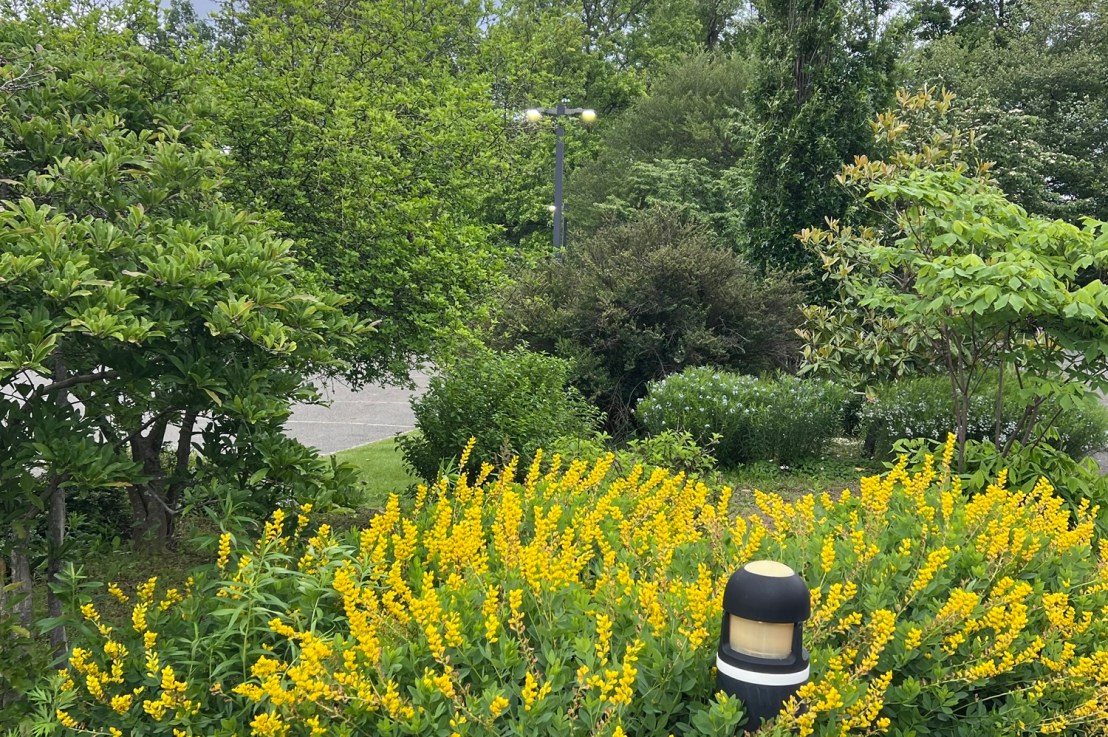
The golden rod flowers attract all sorts of bees and butterflies

Flowering Honey Suckle

Beautiful flowering plants in the woods area

The colorful paths of flowers that lined the Bird Sanctuary

This all led to the end of the trails and a wrap up of how the pollinators work. How the plants, insects and birds play a role in nature.

The last thing I saw at the preserve was this butterfly sculpture by the parking lot

The history of the Garrett family

The park changes its complexity with each season. What I noticed at the end of the summer with no rain is how dry the fields were and the trees were changing colors early because the lack of moisture.

It will be interesting to see the preserve in the Spring and early Summer in the future. It was a nice walk through the preserve.
The Endicott-Reardon Family Museum                                   3036 South Shore Road (Route 9)                        Seaville, NJ 08230

The Endicott-Reardon Family Museum 3036 South Shore Road (Route 9) Seaville, NJ 08230

The Endicott-Reardon Family Museum

3036 South Shore Road (Route 9)

Seaville, NJ 08230

(609) 624-0600

https://www.facebook.com/EndicottReardonMuseum/

https://visitnj.org/endicott-reardon-family-museum

Open: Sunday Closed/Monday 10:00am-2:00pm/Tuesday Closed/Wednesday 10:00am-2:00pm/Thursday Closed/Friday 10:00am-2:00pm/Saturday Closed. Seasonal-Seasonal Please see the website.

Admission: Free

My review on TripAdvisor”

https://www.tripadvisor.com/Attraction_Review-g46811-d20911361-Reviews-Endicott_Reardon_Family_Museum-Seaville_Upper_Township_Cape_May_County_New_Jersey.html

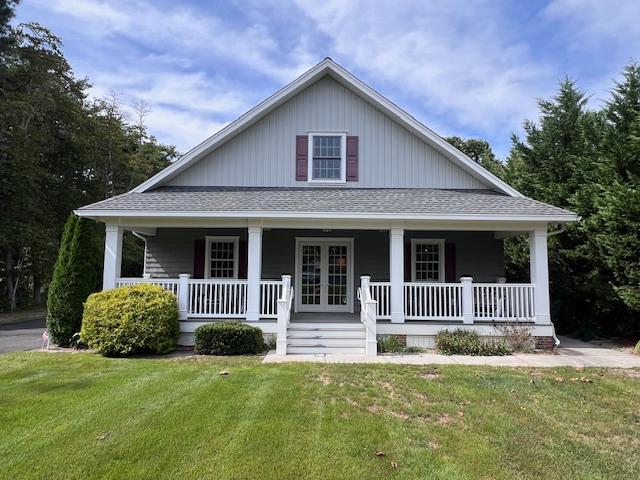
The front the museum

The sign welcoming you the the Endicott-Reardon Family museum

The original Endicott-Reardon Homestead that sits in the front of the museum

The entrance to the museum dedicated to the lives of both the Endicott and Reardon families.

The family artifacts and heirlooms at the museum as you enter the museum

The Endicott family display at the entrance

The museum is a real surprise as entire set of displays is dedicated to the lives of the local Reardon and Endicott families and their family items. A fascinating look of the lives of these early New Jersey families for over a hundred years. This is the collection of Harriett Reardon Bailey and her family. All these wonderful items were saved over the last 100 years and now it was time to share them with the world.

The various family items are organized by sections categorized by lifestyle and collection.

I was given a personal tour that I had arranged with the current curator who had known and worked with the owner of this extensive collection. It had been her dream to open a museum to share her collection with the public.

This beautiful, well lit and displayed collection of family heirlooms and personal items gives a glimpse of the lives of an upper middle class family in Southern New Jersey. It is organized and displayed as a household would be at that time. The first section of the museum was dedicated to items from the kitchen and preparations.

The family Living room furnishings and decorations

The family piano that once graced their Living Room

A decorative toy car used in the Living Room

The kitchen area and artifacts of the cooking and washing done in the house

The table set for a formal dinner

The next part of the exhibit was the formal Dining Room and on display were many of the China patterns that the family owned.

All the china collections the family owned plus other decorative pieces

The family collection of China and glass pieces

The family had various collections of China

Mainly of the bedroom items have been preserved too from linens to comforters to every day clothing. There are also a selection of family member’s clothing, jewelry and personal items.

The Bedroom vignette with clothing and accessories

Another view of the bedroom

Harriett Reardon Bailey had been a school teacher like her mother and there were displays of items that reflected her time in the classroom including a classroom setting.

Time on the classroom and family employment

The classroom set up

Activities and programs at the school

More local school items

There were also displays on her father’s time in the army and her uncle’s time working on the railroad with carefully preserved outfits, programs and railroad artifacts from the job.

The Railroad display

School and family items

Work on the railroad

The display on the family contribution to the armed forces

What I thought was interesting was that the founder of the museum, Harriett Reardon Bailey, had been an only child with relatives that had never been married so that she was the only child and a bit spoiled.

The Toy Room

In a separate room off the side held her extensive collection of dolls and games. She had kept all her childhood items in such beautiful shape and with great care. What impressed me was there was a picture of her as a little girl with all her dolls and stuffed animals her room and since she kept everything, they were able to recreate the display.

The picture of the owner of the museum as a little girl in her bedroom

The exact replicated display of toys in the same spots in the display

The collection of tea sets

The collection of toys and playthings are extensive and they are all in wonderful working shape

There was a large collection of dolls plus all their clothes and accessories that were kept together in her collection. Even into adulthood, all of her childhood items were kept in pristine condition.

The collectible dolls and clothing

The extensive collection of childhood dolls

The collection of China and baby dolls

The collection of baby dolls

The collection of cloth and rag dolls

The handmade dollhouse and rag dolls

The fancier imported and collectible dolls

What I thought was interesting during the tour was that the curator had said that the founder of this museum was dedicated in keeping all these items for so long and packing the house with family memorabilia. I think she knew what she was doing.

She was not just preserving memories, she was preserving a past that was fading away and the memories of a different time. As her family died, she kept their memories alive by preserving their past as well. The curator had said that she had always wanted to create a museum with all her family’s items and share them with the public. Now we get to glimpse into her family’s history and everyday life.

The museum shares with the public the day to day happenings and life of the Endicott-Reardon branches of the family and life as a middle class Victorian family. I think she preserved the best items with such care as to share them with future generations of what life was like at that time. When people knew each other and times were slower and quality mattered. I think she loved her beautiful things and wanted to share them with all of us.

The inside of the Endicott-Readon Family Museum

Video on the Museum

Tuckahoe Train Station                                                 Mill Street and Railroad Avenue                          Tuckahoe, NJ 08250

Tuckahoe Train Station Mill Street and Railroad Avenue Tuckahoe, NJ 08250

Tuckahoe Train Station

Mill Street and Railroad Avenue

Tuckahoe, NJ 08250

http://www.uppertwphistory.org/

https://www.facebook.com/UpperTwpHistory/

Open: Please check the website for the times they are open.

Admission: Free but donations accepted

My review on TripAdvisor:

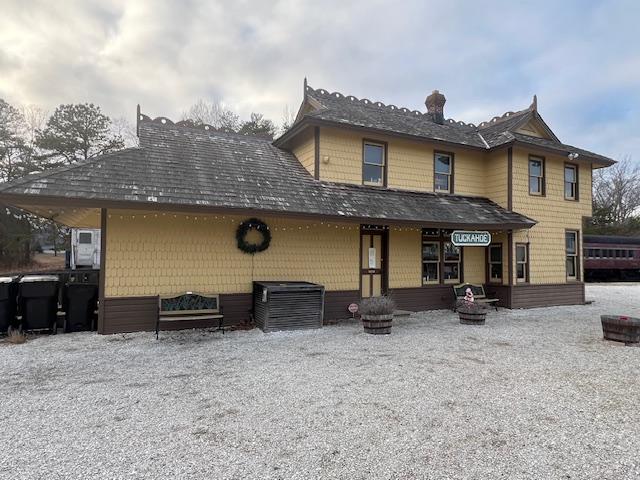
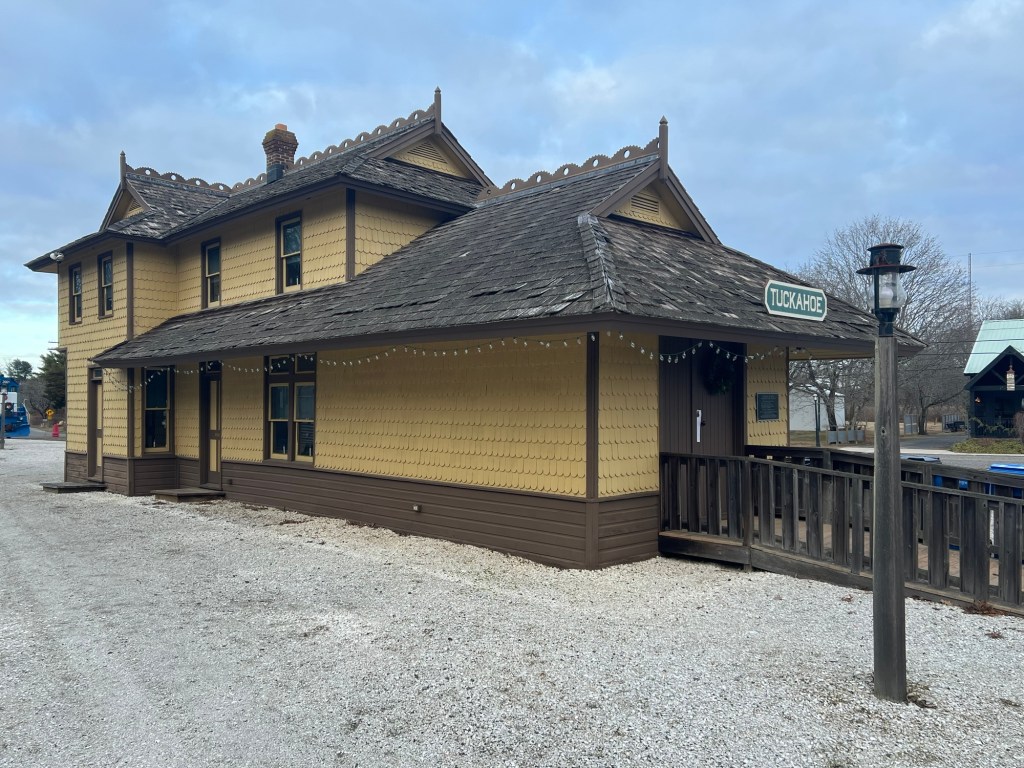
The Tuckahoe Train Station at Mill Street and Railroad Avenue

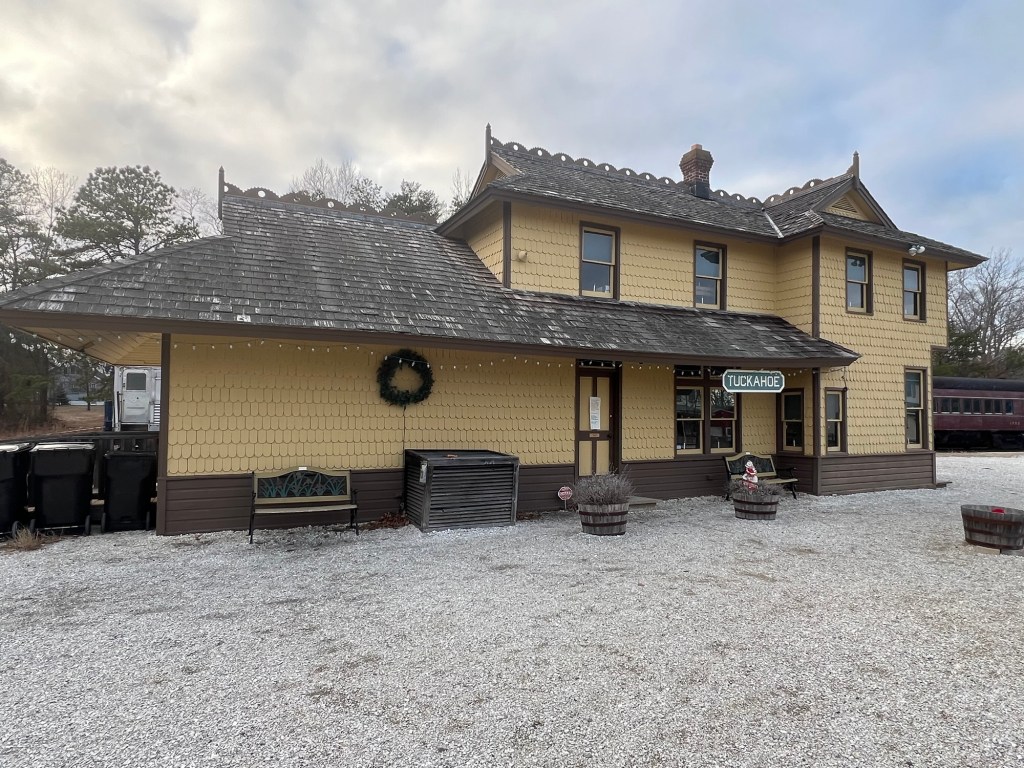
I visited the Tuckahoe Train Station during Christmas of 2024. The holiday events were long over but the station was still decorated for the holidays. In the Summer of 2025, I arranged a full tour of the station museum and the rail yard.

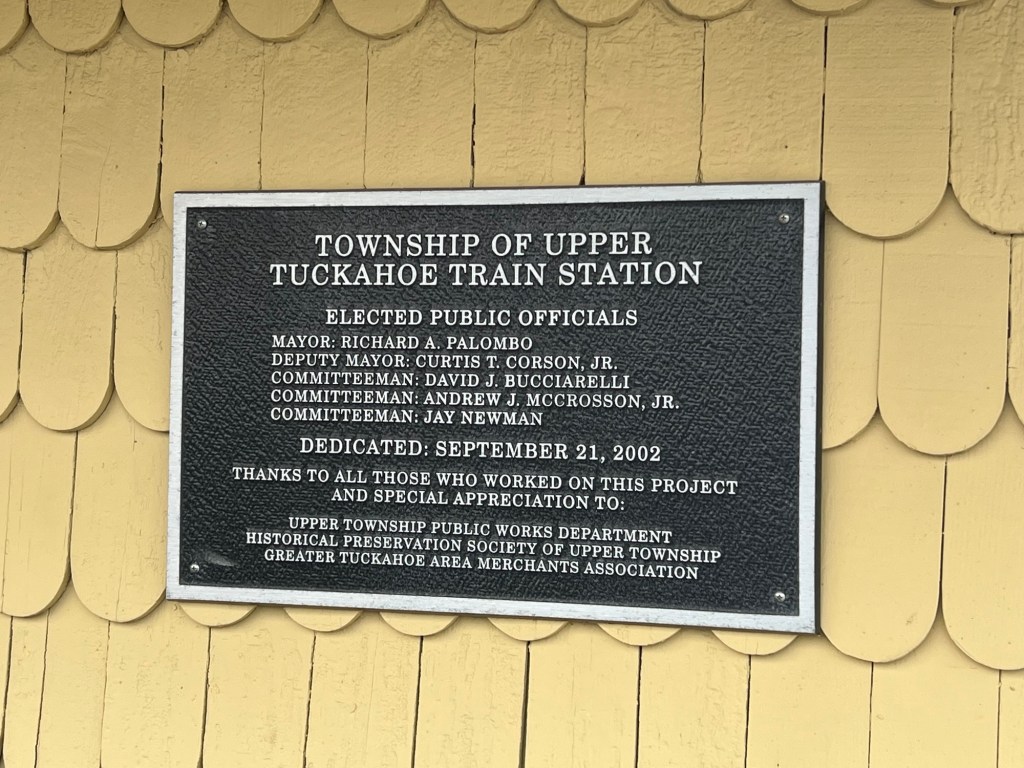
The station’s historic sign

The station’s historic sign

The station was once the hub of the area and visitors would depart from cities like New York and Philadelphia. The trains stopped running to this area in 1981.

The train station from the front of the building in the winter of 2024

The station again in 2025

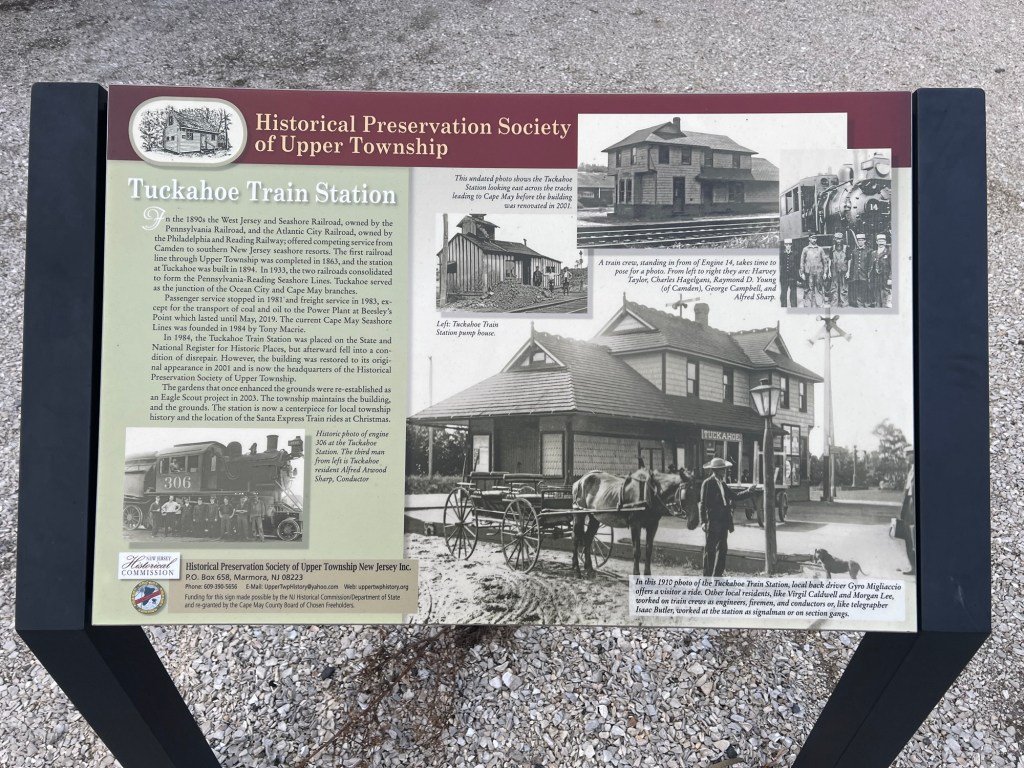
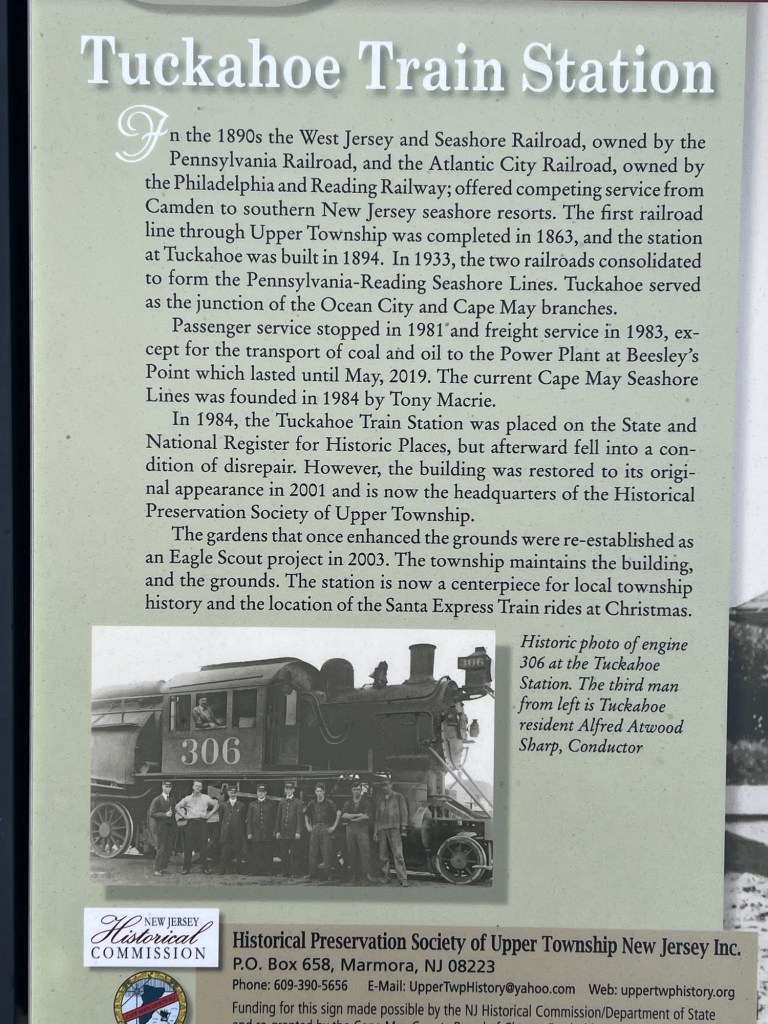
The train station history

The Summer of 2025:

My tour of the train station started with the history of the station and the development of the train station and transportation to the area. The coming of the railroad meant the development of the area as a resort town bringing hundreds of visitors each summer.

The tour started at the inside of the station and took me through the first and second floors of he old station house.

The first floor of the Tuckahoe Train Station

The Ticket a room is now the gift shop

The display cases of memorabilia from the station days

The classic train sets

Ticketing and travel materials

The entrance to the baggage Room

The Baggage Room

The old Ticketing Room

The Ticketing window

The old seating area in the Ticket Room. The tour guide told me that unions version of the benches was built brand new to match the antique one. I could not tell the difference.

The pot belly stove that kept everyone warm in the winter months

The next room over was the Waiting Room where there were more artifacts to see.

The Waiting Room

The seating in the Waiting Room

Then we toured the upstairs where the Conductor’s office and bedroom were located.

The Conductors office on the second floor

The conductor’s uniform

The we moved on to the Conductor’s living quarters when at the station working. This type of work had so much more to it in the days when rail travel was the way to go.

The Rail Conductor’s bedroom

The simple bedroom was enough so the conductor could get some rest

The artifacts from the turn of the last century

After we toured the entire building with the docent really giving me the thorough tour and history on the station and its artifacts, we went outside to discuss the trains.

We headed outside to tour the individual trains and their history. This once major shore hub has quieted down with the reduction in rail transportation due to cars.

The outside of the train station and its collection of train cars.

The train station outside where the cars are located

The Blue Comet Beach Train

The Blue Comet was once the ultimate in luxury travel when you came to the shore. This once ‘grand dame’ of travel is being renovated by the museum.

The Showman’s Car

The Pennsylvania Starline

The long line of train cars

The train cars being renovated

The Beach trains

The last part of these interesting and engaging tour was a tour of the Signal and Control Building, where all communications for the railway took place.

The Control and Signal Building

The inside where controls and repairs take place

The signal board to the train turnaround at the Y

The full tour of the Tuckahoe Train Station Museum will give you a glimpse of a once vibrant rail head and the life of visitors down the shore. The inner workings of a train station at that time are on full display here.

The History of the Tuckahoe Train Station Museum:

(from the museum website)

n the 1890’s the West Jersey and Seashore railroad, opened by the Pennsylvania Railroad, and the Atlantic City Railroad, owned by the Philadelphia and reading railway, offered competing service from, Camden to southern New Jersey seashore resorts. The first railroad line through Upper Township was completed in 1863, and the station at Tuckahoe was built over 30 years later in 1894. In 1933 the two railroads consolidated to form the Pennsylvania-Reading Seashore Lines. Tuckahoe served as the junction of the Ocean City and Cape May branches.

Passenger Service stopped in 1981 and soon after, freight service halted in 1983 except for the transport of coal and then oil to the power plant at Beesley’s Point. which lasted until May, 2019. The current Cape May Seashore Lines was founded in 1984 by Tony Macri.

In 1984, the Tuckahoe Train station was placed on the State and National Register for Historic Places, but afterward fell into a condition of disrepair. However, the building was restored to its original appearance in 2001 and is now the headquarters of the Historical Preservation Society of Upper Township.

‘The gardens that once enhanced the grounds were established as an Eagle Scout Project in 2003. Today, the township maintains the building and the grounds. The station is now a centerpiece for local township history and the location of the Santa Express Train rides at Christmas.

I found the tour fascinating of how this museum was once the hub of transportation for this section of the Jersey Shore.

The Friendship School Museum                                       859 South Shore Road (Route 9)                         Palermo, NJ 08223

The Friendship School Museum 859 South Shore Road (Route 9) Palermo, NJ 08223

The Friendship School

859 South Shore Road (Route 9)

Palermo, NJ 08223

(609) 628-3303

http://uppertwphistory.org/Friendship-School.htm

https://hpsout.tripod.com/

https://capemaycountynj.gov/DocumentCenter/View/5497/CMC-Heritage-Brochure

Open: Please call for a appointment and special tour

My review on TripAdvisor:

The front of the schoolhouse

The entrance to the property

The historic marker

The outside sign

The Friendship School was an interesting look at early rural education where students of various ages would be educated together.

The hours would vary with the growing seasons and students would be educated in the basics to educate them to the next level.

During the school day, children would have various chores to do such as gather wood, collect water, mind the fire and watch the day’s lunch. It would be a full day for both the teacher and the students.

My tour guide confirmed that nothing was easy during the school day and children had a lot of responsibility for what went on in their lives.

The tour was an interesting look at the lives of children of that period of time and the education they received.

The history of the Friendship School:

(from the Museum’s website)

This historic property contains the circa 1930 Friendship School, a circa 1900 privy, and a circa 1917 coal storage shed.  The Friendship School was originally donated in 1976 by William Wells, grandson of Enoch Clouting to the Upper Township Bicentennial Committee during a time when Upper Township was particularly interested in its earliest buildings.

The historic plaques

The school’s hand pump

The committee, headed by the late Curtis T. Cordon, evolved to become the nucleus of the Historical Preservation Society of Upper Township (HPSUT) in 1977. Virginia M. Wilson was its’ first President.

 The history of the Friendship School begins when it was incorporated in May of 1831 with Jonathon Corson, Lewis Corson, and Seth Young as trustees. The students’ tuition was paid for by parents in 1830, but by 1869, public funding for schools was established. In the 1862-63 school year, 52 students crowded into this 15’x 20’ structure, and of those students in the teacher’s roll book, 24 were Corsons!

The grounds of the school grounds

The school itself is standing on its fourth known location! It was originally located 6 houses southeast of its present location. It was used for classes until it was replaced with a larger building in the 1860’s.

The abandoned school house later owned by resident, Lot Corson, became known as “Lot’s Temple” because church services were held there. Then, it was moved to Enoch Clouting’s farm where a corn crib was placed on one side. It is Enoch’s grandson who kindly donated the school.

 The barn on the grounds

The school building was in extreme disrepair when it was moved from the Clouting property to the corner of Ocean Ave. and Shore Road.  According to an undated news article, “mere fragments of the (original) building remained” although “some of the heavier corner posts were salvaged.”

The school’s outhouse (pricey)

The historic sign

Nevertheless, restoration of this Friendship School was researched and planned by Kyle Fleetwood of Tuckahoe and James Wilson of Marmora; with assistance from Matt Unsworth, Robert Entirkin, Curtis Corson III, Somers Corson, Marshall “Ted” Behr, Guy Himmelberger, Harry “Hap” Folger and other members of the Bicentennial Committee. It was completed in 1980.

 All replacement wood matched the original in size and material and great care was taken to restore it to its original appearance. Locally sourced materials for the restoration/reconstruction came from the Van Vorst sawmill in Petersburg, the Hess sawmill in South Seaville and the Brewer sawmill in Dennisville. Benches donated by Myra Clouting Biggs, were reproduced by Matt Unsworth.

The inside of the school house

The teacher’s desk is a reproduction also made by Matt Unsworth. Hardware for the building was hand-wrought by Robert Entrikin of Petersburg. Although it does not qualify for the State and National Registers listing because it retains little original historic building fabric, the building is important to the historical time line of Upper Township.

 The schoolbooks and school equipment

Also on this site are two old frame buildings: a circa 1900 privy donated from the property of the Seaville School on Kruk Drive and a circa 1917 coal/storage shed donated from the Palermo School on Route 9.  The coal storage shed, was donated by Wes and Doris Nickerson with Jim and Nancy Siegrist helping with its restoration. It was added to the property in 1993. Three three-seat privy (outhouse) from the old unused Seaville School was donated by Sharon Kruk in honor of her father, and was restored by Lewis Albrecht and Jim Siegrist. It is a work of art (with a French style roof), but is non-functional.

 The school room reproduction

A special item, the cedar flag pole, from which flew a U.S. flag that flew above the capitol in Washington, DC, was donated by former Deauville Inn owners, Walter and Gloria Carpenter in December of 1983. (Since replaced)

 The school bell and flag

The Friendship School was dedicated on September 10, 1983 by Virginia M. Wilson, President of the Historical Preservation Society of Upper Township, Upper Township Mayor Leonard Migliaccio, HPSUT members: Ebbie Unsworth and her son, Matt Unsworth, and guest speaker, New Jersey State Senator, James R. Hurley.

 The children would collect water and fire wood for the class room during the school day

The reproduction of the school

Upper Township continues to own and manage the property and the school, while HPSUT members manage the inside and its activities. Each Upper Township Kindergarten class is invited to the annual Kindergarten Day to learn what a student classroom life is like in a one room school house in the early

The outside of the school