Category: A Local Journey out of Manhattan

Walkway Across the Hudson State Historic Park 87 Haviland Road                                       Highland, NY 12528

Walkway Across the Hudson State Historic Park 87 Haviland Road Highland, NY 12528

Walkway Across the Hudson State Historic Park

87 Haviland Road

Highland, NY 12528

(845) 834-2867

https://parks.ny.gov/parks/178/details.aspx

Open: Sunday-Saturday Dawn to Dusk/Office Open 8:00am-4:30pm Daily

Fee: Vehicle Fee $5.00/Educational Programs Adults $5.00/Students $2.00

My review on TripAdvisor:

https://www.tripadvisor.com/Attraction_Review-g48443-d2249606-Reviews-Walkway_Over_the_Hudson_State_Historic_Park-Poughkeepsie_New_York.html?m=19905

The history of Walkway over the Hudson River

This is the best way to experience seeing the Hudson River by walking on top of it. It is especially nice on a beautiful day.
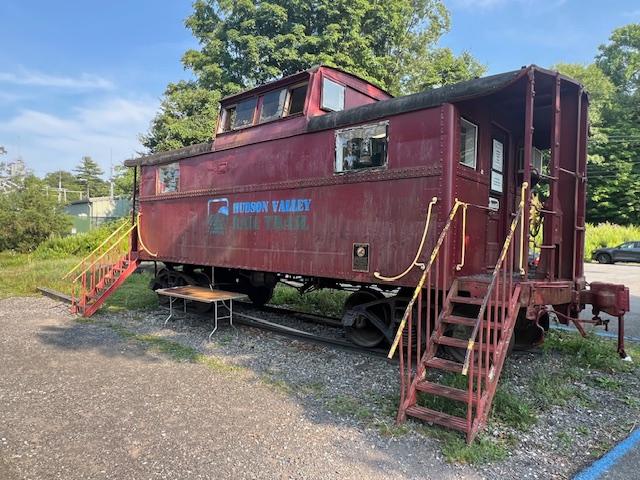
The rail car from the entrance to the Walkway by the Highland Park side of the walk

The day I walked over the “Walkway over the Hudson” it was a rather cool September day in the last days of the summer but still it was a spectacular day to see the river with blue skies and sunshine. I also revisited the Walkway in July of 2024 and the views are just as amazing when everything in full bloom.

The history of the bridge that crosses the Hudson River

The start of the walk by the Highland NY side of the bridge
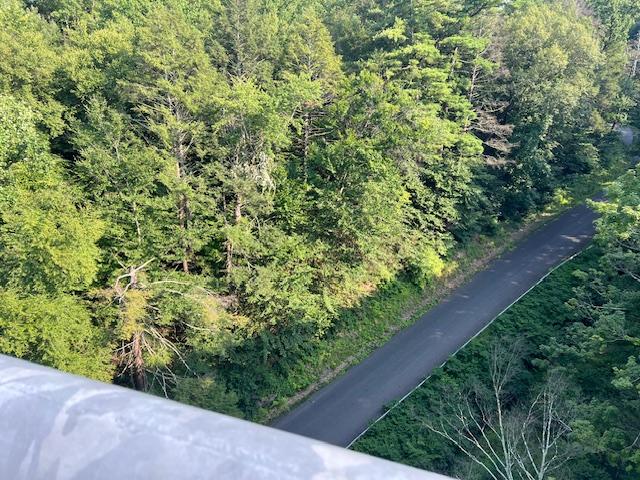
The views from the bridge on the Highland NY side
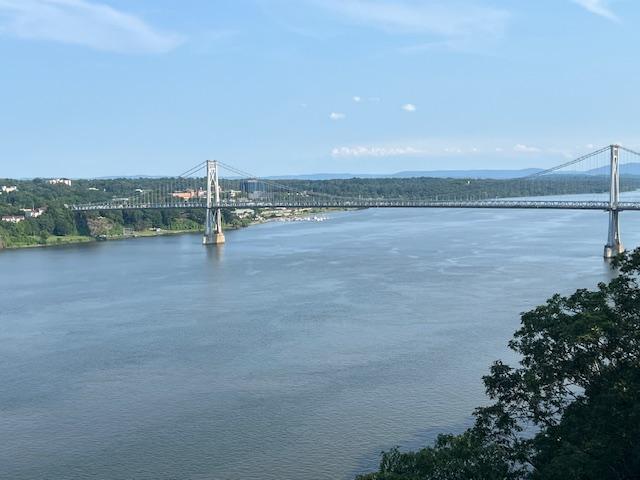
The views of the Mid Hudson Bridge

The views of Poughkeepsie and Hyde Park

On both sides of the bridge, there are small parks to sit and relax. There are signs all over the bridge to tell the story of the bridge and the people who helped save it. The best part is to just sit around the rails and see the views of the Hudson River. On the Poughkeepsie side of the river, you have the entrance to the Little Italy section of city right near the riverfront. Since my initial walk, three of the restaurants have closed since COVID.

The historic sign at the halfway point
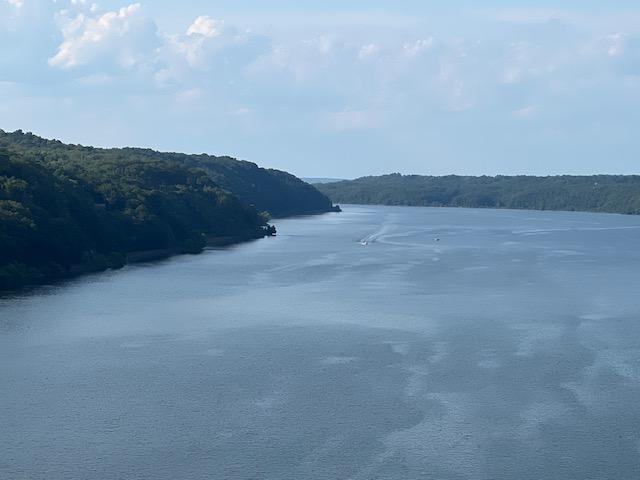
Looking up the Hudson River to the north of the bridge
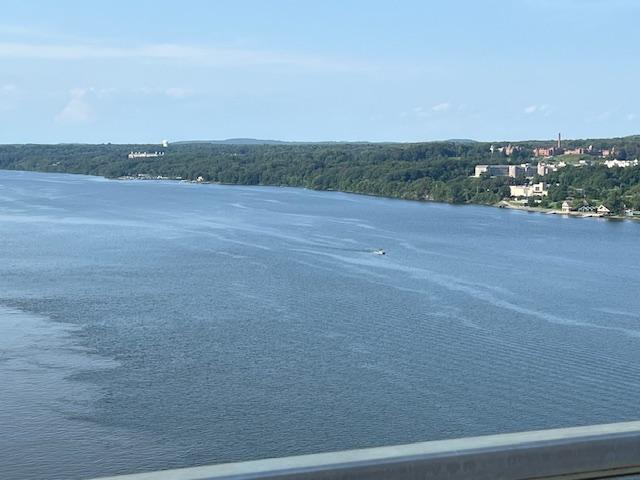
Looking north to Hyde Park, NY

Looking south down the Hudson River

What is nice too is when you are leaving the Walkway is that you can tour Little Italy and Downtown Poughkeepsie. The Riverfront area of the City is changing quickly and new bars and restaurants are opening.
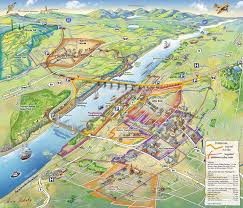
The towns and neighborhoods to visit after leaving the Walkway in Poughkeepsie and Highland NY
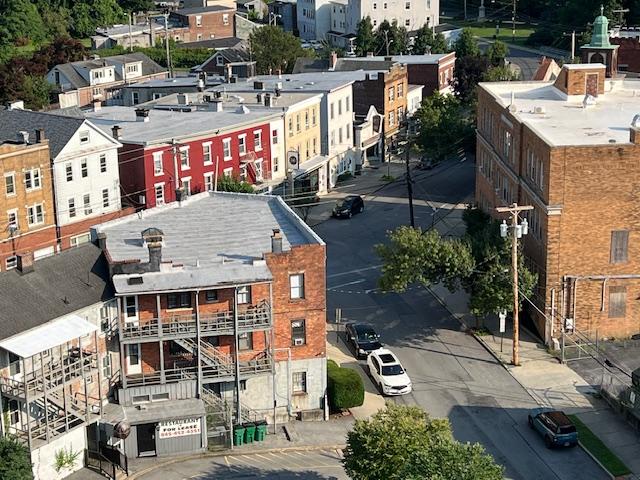
The Little Italy section of Poughkeepsie from the Walkway over the Hudson
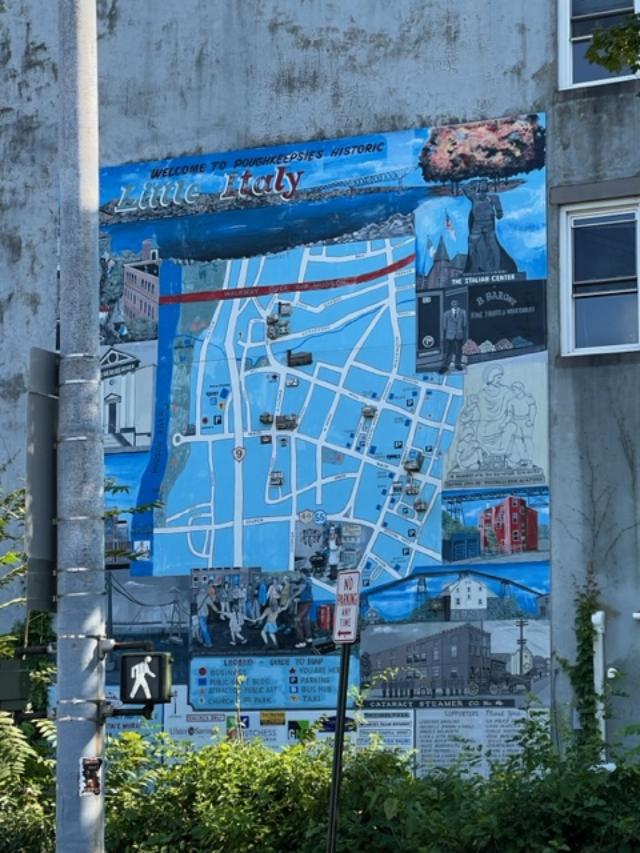
The sign in Little Italy in Poughkeepsie

The history of the ‘Walkway Across the Hudson’:

The bridge now known as the Walkway Over the Hudson opened in 1889 as the Poughkeepsie-Highland Railroad Bridge to transport western raw materials to eastern industrial centers. Rosendale cement was used in the original construction of the piers. At the same time of its opening, it was the longest bridge in the world.
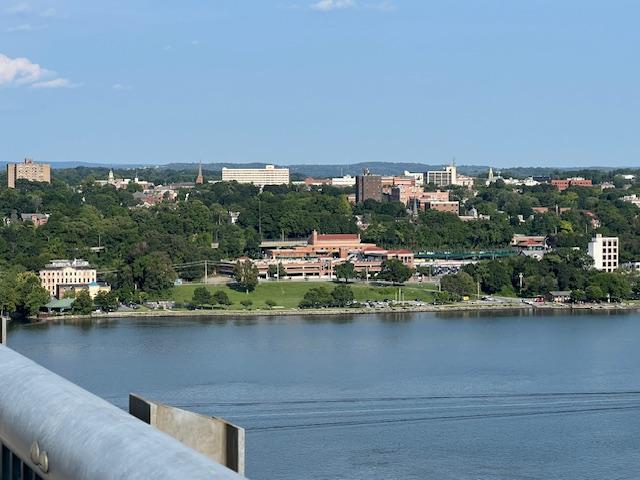
Downtown Poughkeepsie in front of me

In addition to freight trains, the bridge hosted passenger trains connecting Boston, New York, Harrisburg, Philadelphia, Baltimore and Washington as early as 1890. Trolley cars termed “rapid transit” were modified to run on both trolley and railroad tracks and served tourists, students and shoppers (from New Paltz to Lucky Platt’s). Special West Point Football trains ran from 1921-1930. Circus trains, milk trains, trains for hogs and cattle-the uses were varied and the impact was huge. At its peak as many as 3,500 rail cars crossed the bridge each day.

The waterfront of Poughkeepsie

There were two sets of tracks until 1918 when gauntlet track, also called interleaved track, was installed to handle the weight of diesel locomotives. It was removed in 1958.
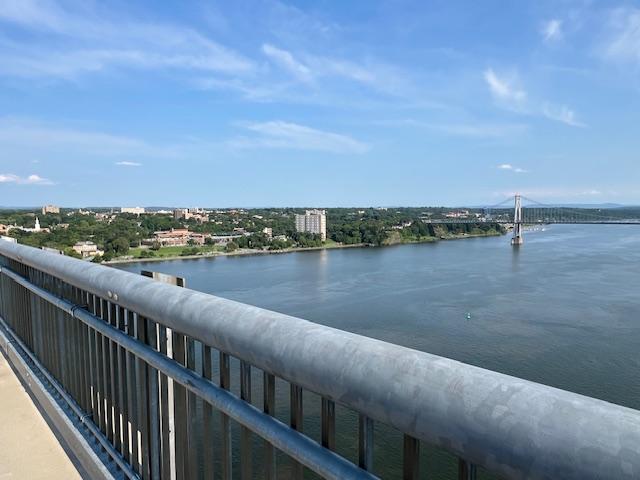
Looking south down the Hudson River

During World War II the bridge was painted black to make it less visible in the event of an attack. Painting continued until the 1960’s. The high quality of the steel used in the original construction does not need to be painted. Metal experts during reconstruction stated that the absence of paint in fact helped keep the steel in the good condition it is in today.

The Poughkeepsie waterfront

The fire that destroyed the tracks in 1974 was probably started by a spark from a train’s brakes. From Carleton Mabee’s ‘Bridging the Hudson’, page 247: “An hour after a Penn Central train with 100 cars crossed the bridge on May 8, 1974, a thick cloud of black smoke hung over the bridge. Wooden ties were smoldering and wooden walkways were burning, fanned by a moderate breeze. Because Penn Central had no guards or maintenance men on the bridge at the time, the fire was not quickly reported. When firemen arrived at the site, they found they could not easily pump water up to the top of such a high bridge.

Downtown Poughkeepsie from the bridge near the waterfront

When firemen arrived arrived at the site, they found they could not easily pump water up to the top of such a high bridge. When they tried turning on the water to flow into the bridge. When they tried turning on the water to flow into the steel pipe which ran the length of the bridge, a line meant to help fight fires, they found that because it had not been drained the previous winter, it had burst at several points-Penn Central had known it but had not repaired it.”

View from the bridge on the Poughkeepsie side right near Little Italy

It was rebuilt and re-opened in October 2009 as the Walkway Over the Hudson State Historic Park thanks to the efforts of a dedicated friends group, the Dyson Foundation, many donors and New York State.
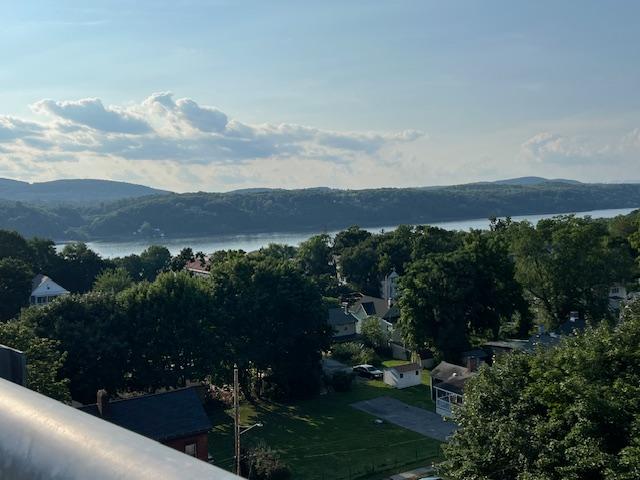
The Highland Park side of the bridge at dusk

At 212 feet above the Hudson River, this 1.28 mile linear park boasts scenic views north to the Catskills and south to the Hudson Highlands.

The Walkway is amazing on a sunny day

The Walkway is part of the Hudson Valley Rail Trail Network and was inducted into the Rail-Train of Fame in 2016, it connects Ulster County’s Hudson Valley Rail Train to the William R. Steinhaus Dutchess Rail Trail.

The ADA compliant 21 story glass elevator provides seasonal access from Poughkeepsie waterfront at Upper Landing Park a short walk from the Metro North train station.

The Walkway welcomes more than 500,000 visitors annually from all over the world who enjoy walking, cycling and running amidst its scenic beauty.

Today, the Walkway is operated and owned by NYS Office of Parks, Recreation and Historic Preservation and the NYS Bridge Authority it is open year round, offering programs, events and tours made possible through membership and donations to the Walkway organization.

(This information was taken from the Walkway over the Hudson website and pamphlet and I give them full credit for all of this information).

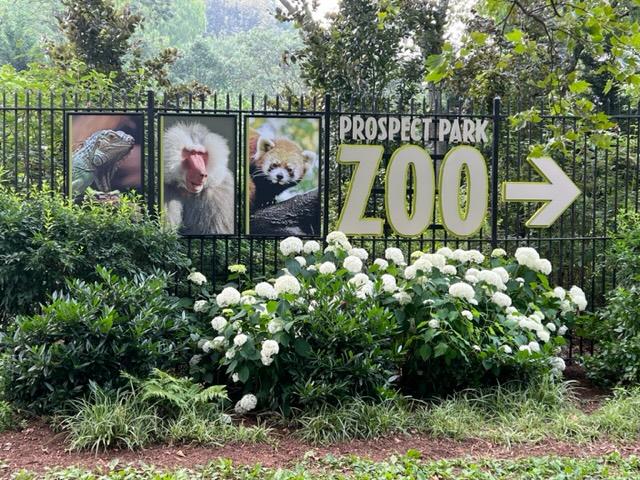
Prospect Park Zoo                                                 450 Flatbush Avenue                                  Brooklyn, NY 11225

Prospect Park Zoo 450 Flatbush Avenue Brooklyn, NY 11225

The Prospect Park Zoo

450 Flatbush Avenue

Brooklyn, NY 11225

(718) 220-5100

https://prospectparkzoo.com/

Open: Sunday 10:00am-5:30pm/Monday-Friday 10:00am-5:00pm/Saturday 10:00am-5:30pm

Admission: Adults $9.95/Seniors $7.95/Children from 3-12 $6.95/Children under 3 are Free/Members Free

My review on TripAdvisor:

https://www.tripadvisor.com/Attraction_Review-g60827-d283820-Reviews-Prospect_Park_Zoo-Brooklyn_New_York.html?m=19905

The entrance to the Prospect Park Zoo

The Prospect Park Zoo is one of my ‘go to’ places along with the Brooklyn Museum and the Brooklyn Botanical Garden when visiting Brooklyn. The three popular destinations are all in the same neighborhood and if you have a full day is worth the subway ride from Manhattan to visit.

On a nice day, the best place to start is the Brooklyn Botanical Garden at opening, then head over through the back part of the garden to Prospect Park and walk to the entrance near Flatbush Avenue and go past the carousel and enter the Zoo past the old Leffert’s Homestead. The Zoo is just past that.

My review on TripAdvisor:

https://www.tripadvisor.com/Attraction_Review-g60827-d103505-Reviews-Lefferts_Homestead-Brooklyn_New_York.html?m=19905

My review of the Leffert’s Homestead on VisitingaMuseum.com:

https://wordpress.com/block-editor/post/visitingamuseum.com/2864

The grounds of the Lefferts Homestead grounds

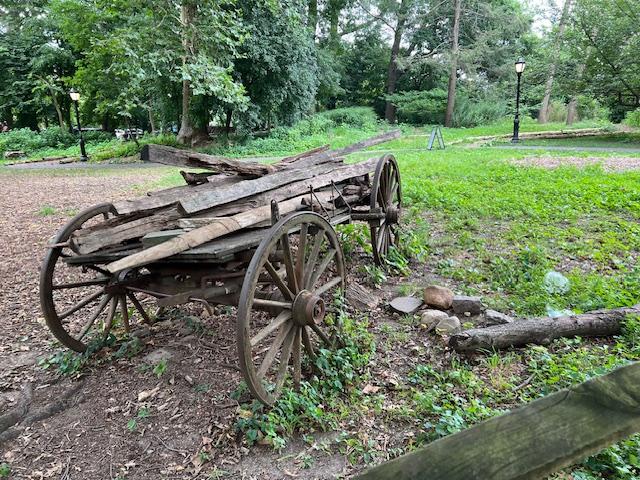
The old cart outside of the Lefferts House

The best part of the Prospect Park Zoo is that like the Central Park Zoo it is small enough to see in one day and be able to enjoy the exhibitions in one afternoon and still have time for lunch.

The Map of the Zoo

The Zoo has gone through a lot of improvements since COVID and reopened. There is a unique sculpture garden when you walk inside.

The Prospect Park Zoo Sculpture Garden at the entrance

Fish Sculptures at the entrance

The sculptures at the entrance of the zoo by artist Mags Harries

Artist Mags Harries

https://www.magsharries.com/maybe-home

https://smfa.tufts.edu/directory/mags-harries

Artist Mags Harries is an Wales born artist who graduated the Leicester College of Art with a Diploma in Art and Design and Illinois University, Carbondale with a Master of Fine Arts. She is known for her creative sculptures and their use in enhancing public spaces (Artist bio/Tufts.edu).

The main focus of the zoo when you walk through the gates is the seal tanks. These playful animals spend most of their time swimming around or sunning themselves on a warm day. During the feeding schedule, it is interesting to see how they interact with the trainers.

The Seal Tanks at the entrance of the Zoo

The Seal tanks when you walk in are very active

Walking further into the zoo you will walk past the Hall of Animals, where all the smaller animals and amphibians like frogs, snakes and turtles are located. These are a lot of fun for the smaller children who may not see these things in their backyards or even in the parks anymore.

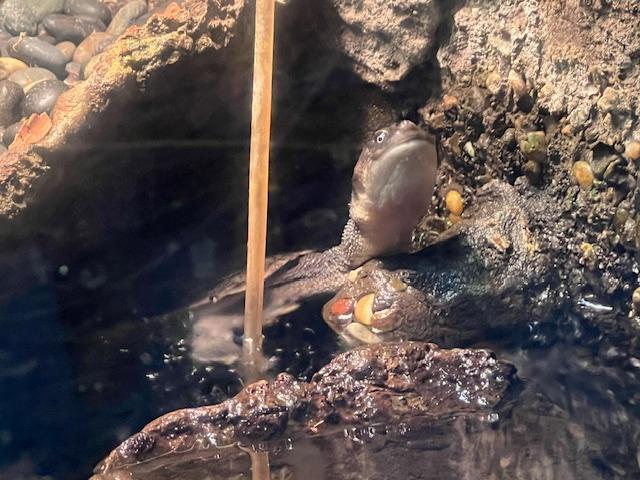
The rare Longnecked Turtle in the Small Animals exhibition

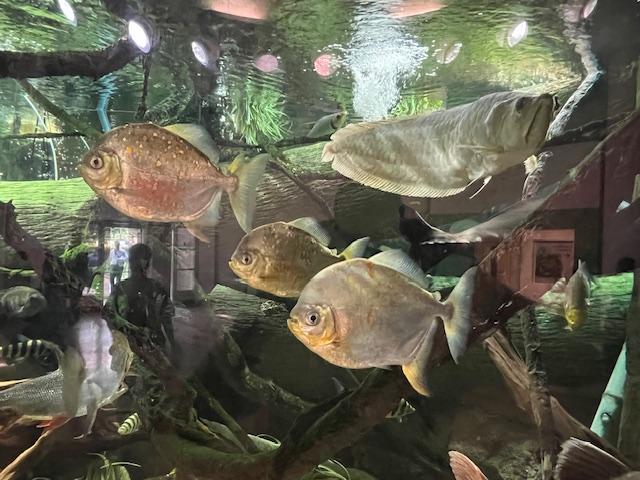
The Fish tank at the Small Animals exhibition

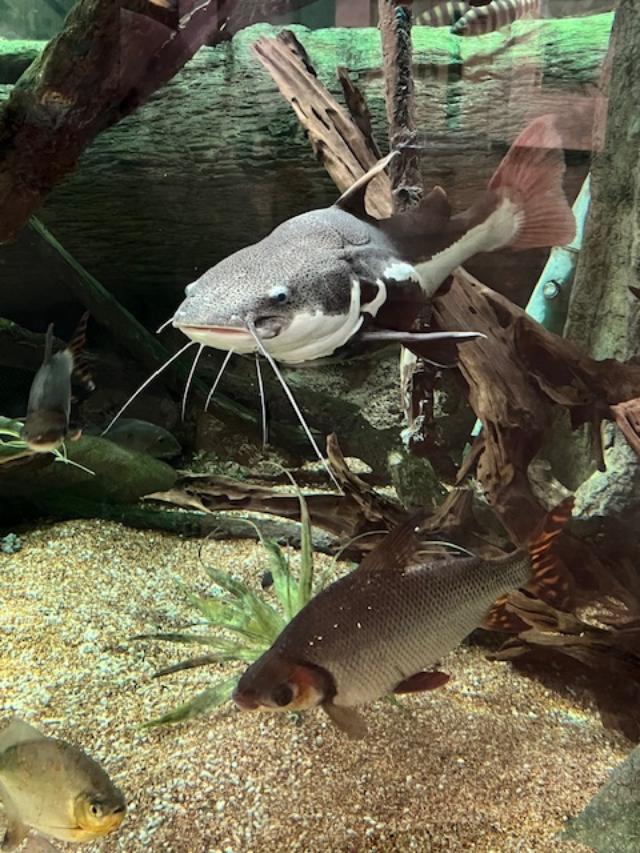
The catfish in the Fish Tank at the Small Animals exhibition

I went to the Bird Cages and saw a Kookaburra bird from Australia. He looked at me like I looked at him. He had the most inquisitive look on his face.

The Kookaburra looking at me

The Kookaburra looking around the cage

The Victorian Pigeons with their beautiful colors and feathers

The tropical hornbill birds

As I sat down to rest after visiting both the Brooklyn Museum and the Brooklyn Botanic Garden, a peacock walked past me looking for food. It must be very used to humans because he just ignored me and kept on walking.

The peacock at the zoo just does his own thing

Beyond that is the Barn, where your horses and cows are located and they even have a pair of turkeys, which makes for interesting conversation for children who wonder where they come from at Thanksgiving. The turkeys here are more bred than the wild ones you will see in the woods. They also have sheep, pigs and lambs that you can feed.

The gardens leading to the Barn area

The gardens leading to the Barn area

The different barnyard animals were in the process of being feed and taken care of by their trainers. If you put food in front of them though, they cam running. The kids were having a ball feeding them snacks.

The Barn pens at the zoo

Lambs and calf’s in the Barnyard at the zoo

The lambs hoping they would be fed by the visitors

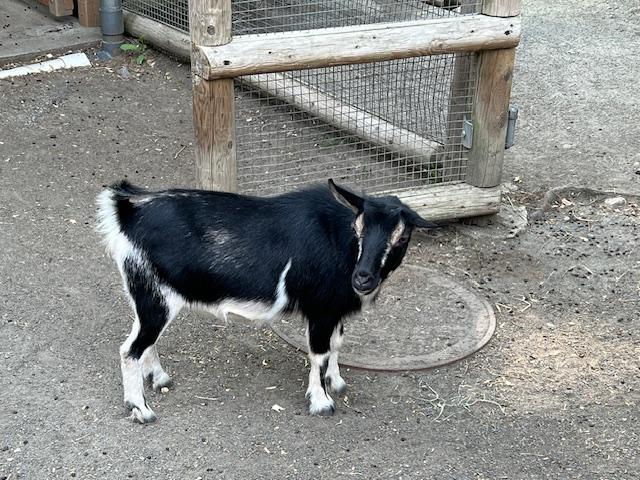
The friendly lamb in the pens

The sheep at the barnyard

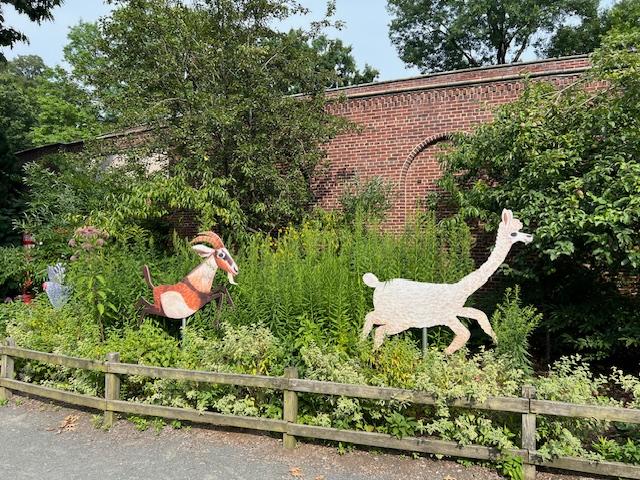
The animal sculptures just outside the Barnyard display

Next to the Hall of Animals is the Animal Lifestyle exhibition where a lot of the gorillas and monkeys are located. It is funny to watch their mannerisms and see ourselves and out behaviors in them. I guess a couple of thousand years never really separated us that much and we still are a lot alike.

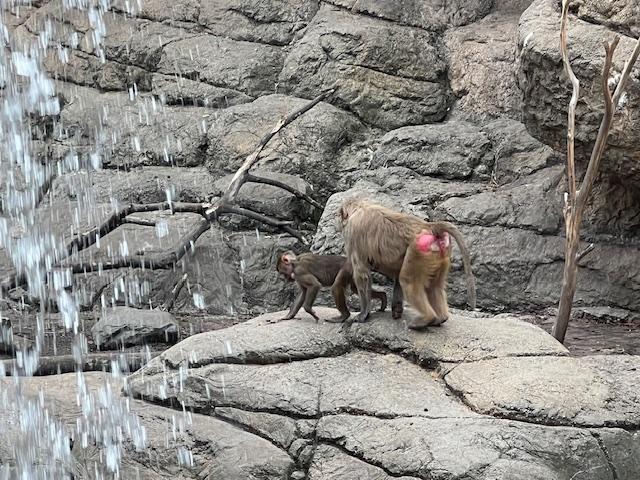
The Baboons at the Hall of Animals

From there you will take the Discovery Trail to see more familiar animals that you might see in every day nature such as deer, foxes, porcupines, ducks and geese in a more natural habitat where they can roam free. The space is limited but they look a lot happy to move around than some of the other animals.

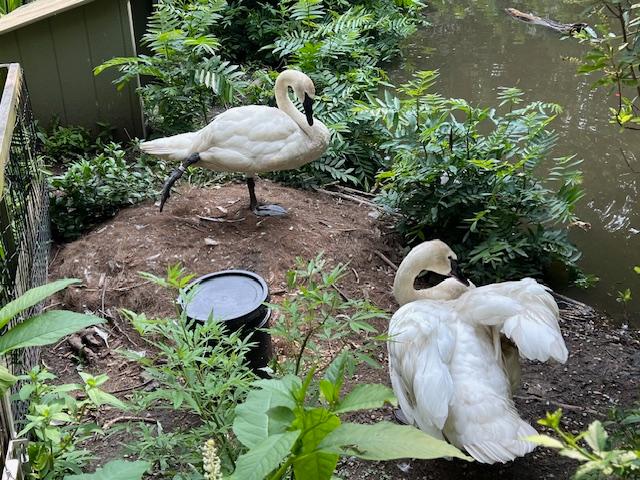
The swans on the Discovery Trail

The swans on the trail

All trails lead back to the Seal Tanks where the popular feeding time gathers a crowd and you will see the care that many of the trainers and zoo keepers give to their residents. There is a lot of love for these animals that is given and I can see a lot of respect.

Relaxing by the Seal Tanks

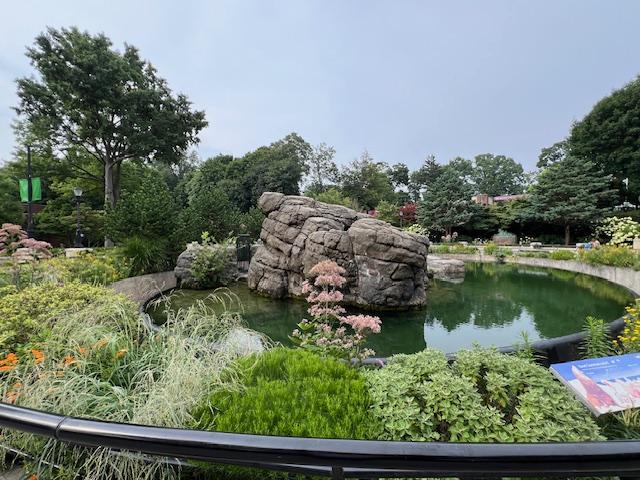
I got to sit and relax by the Seal Tanks and just enjoy the afternoon. The landscaping around the main Seal Tanks were in full bloom. I also never noticed the statuary around the pool.

The landscaped stairs leading to the zoo from the main road

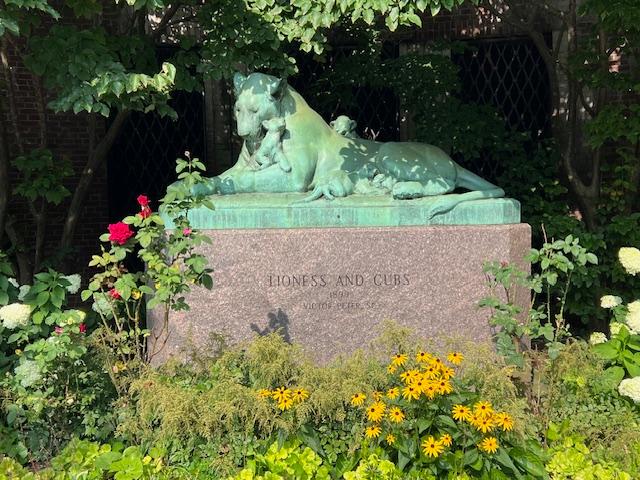
‘Lioness and Cubs’ by French sculptor Victor Peter

https://www.nycgovparks.org/about/history/zoos/prospect-park

Artist Victor Peter

https://www.metmuseum.org/art/collection/search/208856

Artist Victor Peter is a French born artist known for his realistic sculptures.

A trip to the snack shop and gift shops at the zoo are expensive and cater to the tourists. They are not as nicely merchandised as the Bronx Zoo or the Central Park Zoo. Still they are fun to visit once or twice.

The Prospect Park Zoo is still a nice afternoon out for families and a nice way to communicate with nature.

The History of the Prospect Park Zoo:

The Prospect Park Zoo is a 12 acre zoo located in Prospect Park, Brooklyn and as of 2016 houses 864 animals. The zoo was originally part of the plan of Prospect Park as a “Zoological Garden” in the western part of the park. The zoo was not part of the finished plan in the park in 1874 by designers Fredrick Law Olmsted and Calvert Vaux.

The original zoo layout

The park design included a Wild Fowl Pond in the northern part of the park that was stop off for water birds and a Deer Paddock in the southern part of the zoo where deer lived in a penned area.

In the 1890’s, gardens were created for park enjoyment and a informal Menagerie was created by the Brooklyn Parks Commission, George V. Brower, when the donation of small bear, white deer, seven seals, a cow and twelve peacocks came into the possession of the park.

In 1934, Parks Department head Robert Moses set a plan to reconstruct the City’s Parks and under the Works Progress Administration started to revamp the park system. In March of that year architect Aymar Embury II set to design the new zoo with six new buildings and centered by a Seal Pool.

By the 1970’s, the zoo faced disrepair and was neglect for the animals. It was considered one of the worst zoo’s in the country according to the press and finally in 1980, the Koch Administration signed a 50 year agreement with the NY Zoological Society, now called the Wildlife Conservation Society, which was also administrating the Central Park and Queens Zoo.

The park closed in 1988 for a five year, 37 million dollar renovation that gutted all the pits and cages but saved the historic buildings and statuary. The new zoo opened in 1993 with a new name, “The Prospect Park Wildlife Conservation Center” and a philosophy of educating children. The zoo along with the Queens Zoo have had some shortfalls in the past but have the full support of the Society and the public since the early 2000’s. Still the zoo remains popular with families from all over Brooklyn and the world.

The main view of the zoo

(This information is provided by Wiki and the Wildlife Conservatory website and I give them both full credit for the information)

Day One Hundred and Seventeen Walking Governors Island in New York Harbor July 3rd and August 30th, 2018

Day One Hundred and Seventeen Walking Governors Island in New York Harbor July 3rd and August 30th, 2018

Don’t miss visiting Governor’s Island Historic District and Forts. It is a place of amazing food and views of Lower Manhattan.

jwatrel's avatarmywalkinmanhattan

My aunt called me out of the blue and said that she had an extra spot on a trip to Governors Island with her Retired Teachers Association group and I jumped at the chance. I had never been to the island before only having seen it from a distance so it was a chance to visit the island with a tour group. The nice part of the tour was that we could walk independently around the island, which my cousin, Bruce and I decided to do.

When going to Governor’s Island during the week, there is a $3.00 round trip fee to travel to the island, which is now open seven days a week. On the weekends, the ferry is free so it is a treat to go to the island as a type of ‘Staycation’. For people living in New York City, it is an oasis away from the…

View original post 2,637 more words

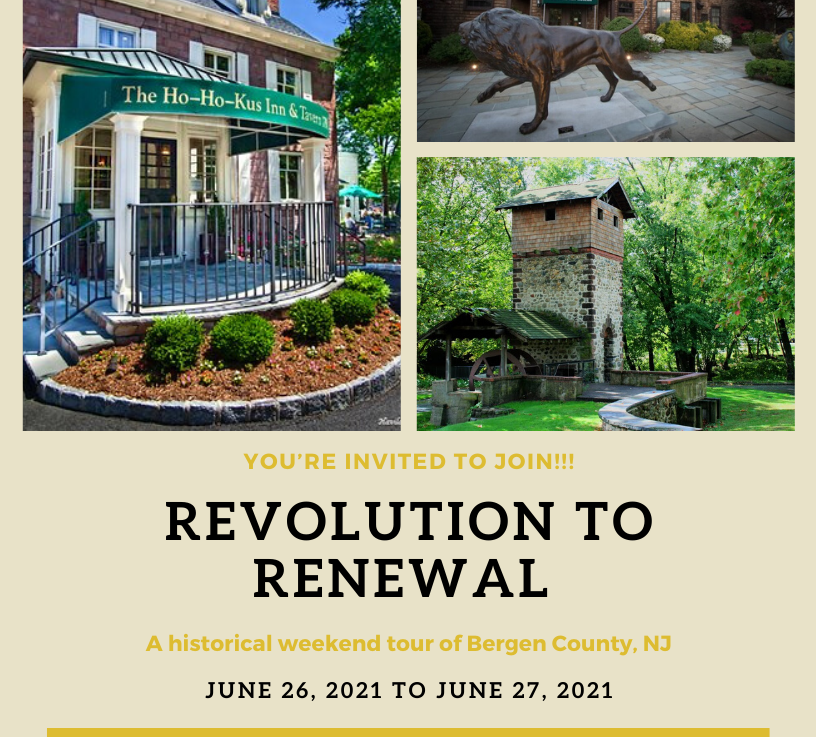
Day One Hundred and Sixty-Five: Bergecco-Parc Consulting Inc. presents “From Revolution to Renewal-Exploring Historic Bergen County, NJ”          Essentials of Marketing Class Project-Bergen Community College                                           April 27th, 2020

Day One Hundred and Sixty-Five: Bergecco-Parc Consulting Inc. presents “From Revolution to Renewal-Exploring Historic Bergen County, NJ” Essentials of Marketing Class Project-Bergen Community College April 27th, 2020

To all your history buffs, please visit Bergen County, NJ for interesting experience of visiting our historical sites and restaurants. Check out our Team Project from Bergecco-Parc Consulting Inc. “From Revolution to Renewal-A Historical Tour of Bergen County”.

Professor Justin Watrel, CEO & Co-Founder Bergecco-Parc Consulting Inc.

jwatrel's avatarmywalkinmanhattan

I had the most interesting semester for Spring Term at the college where I work. Everything started off fine. We had classes in the the afternoon, good discussions on Marketing and had a very successful Team Project marketing the Lyndhurst Snack Shop, the new Bulldog Cafe, for business (See Day One Hundred and Fifty-Nine in MywalkinManhattan.com):

https://wordpress.com/post/mywalkinmanhattan.com/12969

BCC Bulldogs

The Bulldog Cafe on the Third Floor of the Bergen Community College Campus

https://www.facebook.com/gdsbulldogcafe/

My review on TripAdvisor:

https://www.tripadvisor.com/Restaurant_Review-g46586-d20210133-Reviews-Bulldog_Cafe-Lyndhurst_New_Jersey.html?m=19905

The Project I gave the students:

BCC-Bergecco-Parc Consulting Inc. Snack Shop Project 2020

I had just handed out the next Team Project, “From Revolution to Renewal: Exploring the  Historic Bergen County”, a major tourism project I wanted to the students to work on for the remainder of the semester the week before the break. I had the students to break up into groups and get to know one another and get their game plans…

View original post 3,084 more words