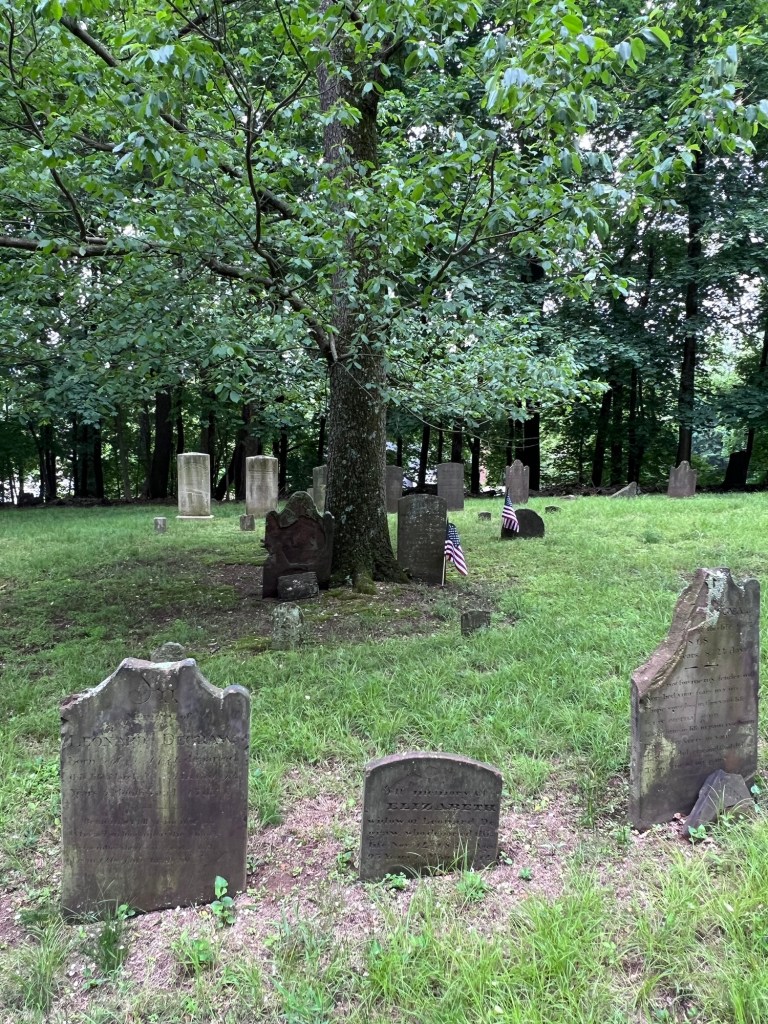
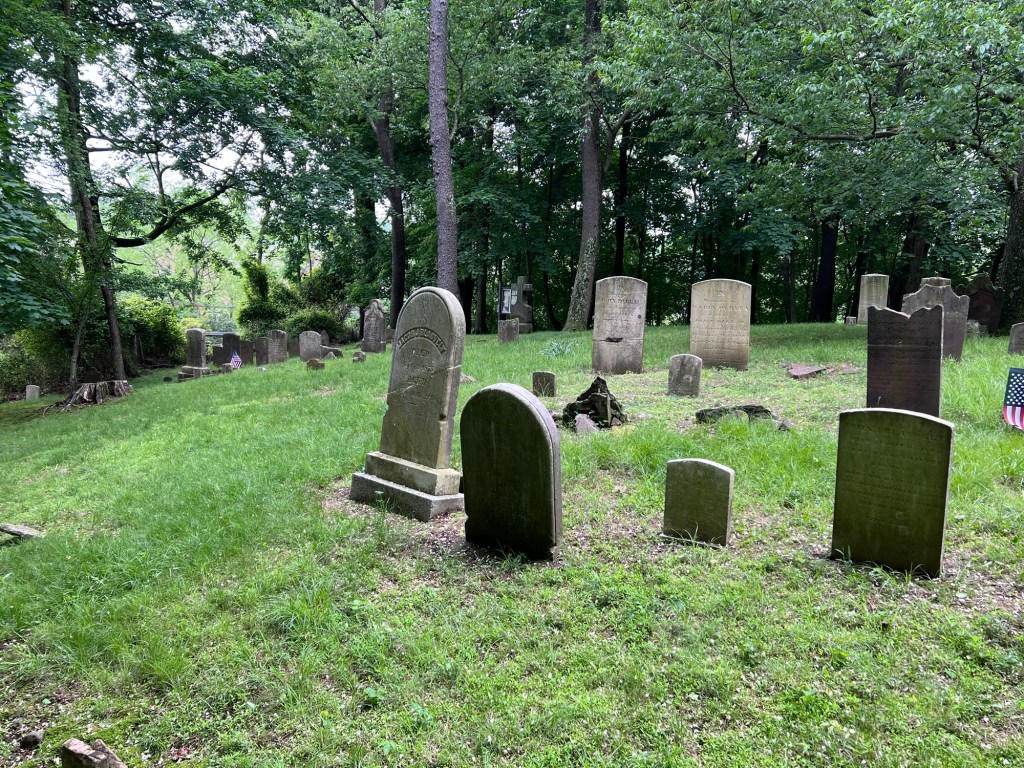
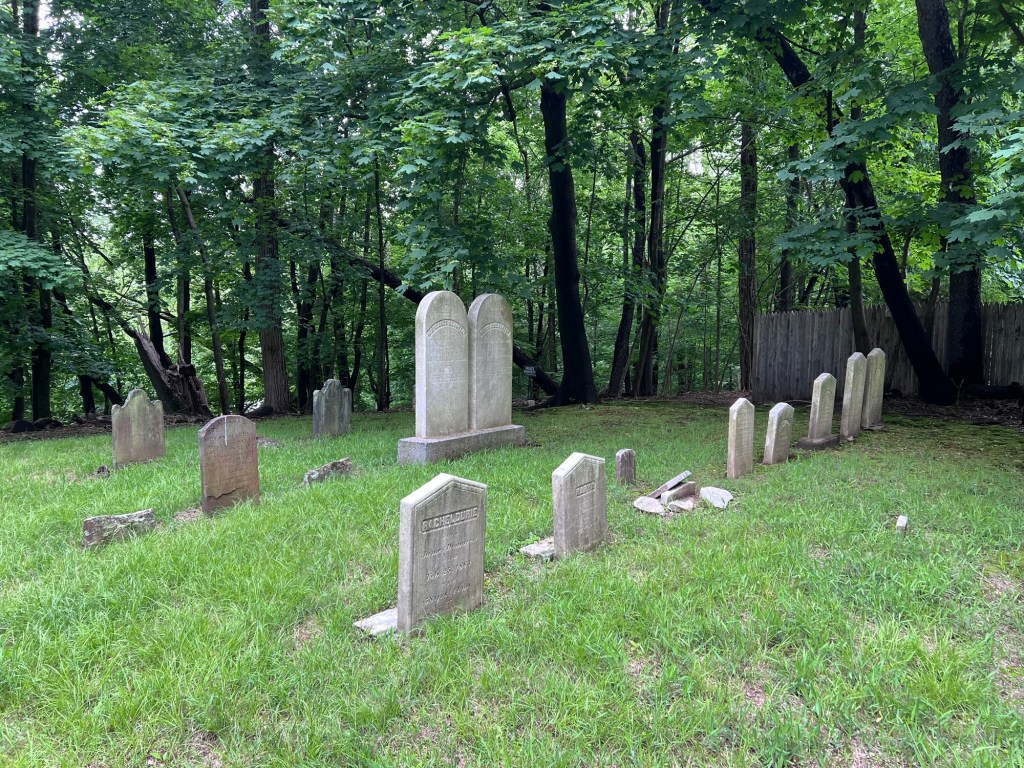
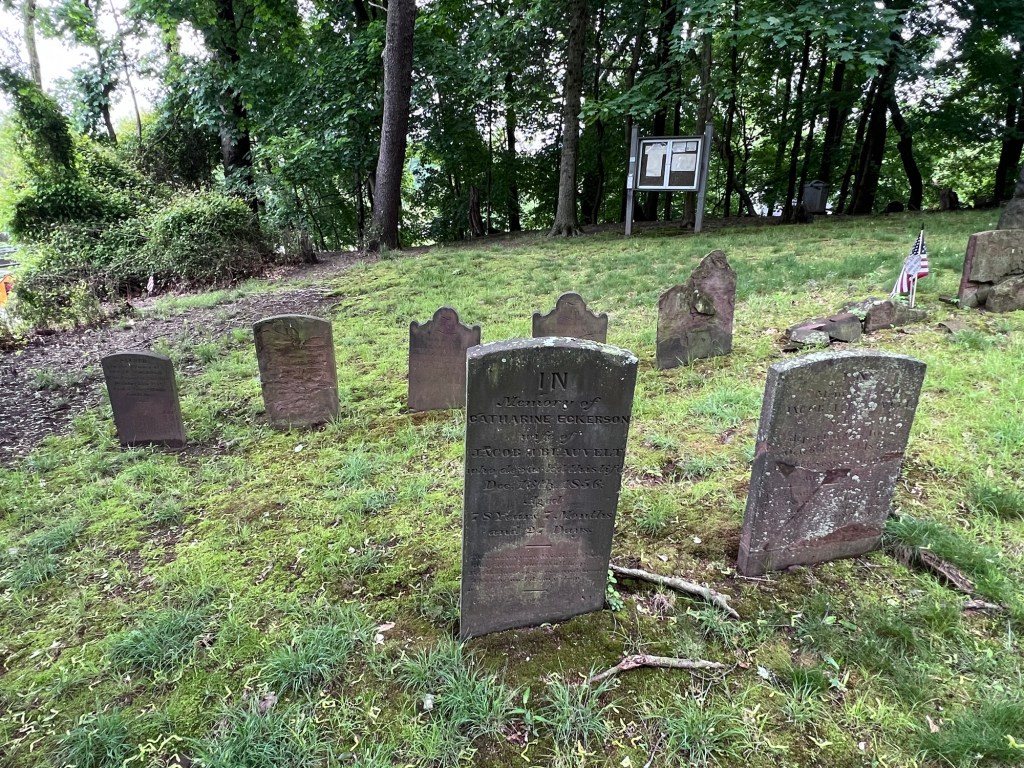
The Perry family cemetery is a small family plot in Harrington Park, NJ and example of a time when families still buried their loved ones on property that family’s thought would be there for generations. Many generations of the family are buried here showing the family’s love of this land but like too many tiny cemeteries throughout Bergen County have been lost in time by the family buried there.
Today it sits quiet and respectful and somewhat over grown. Nature now surrounds it.
The Perry Cemetery History:
(From the Harrington Park Historical Society)
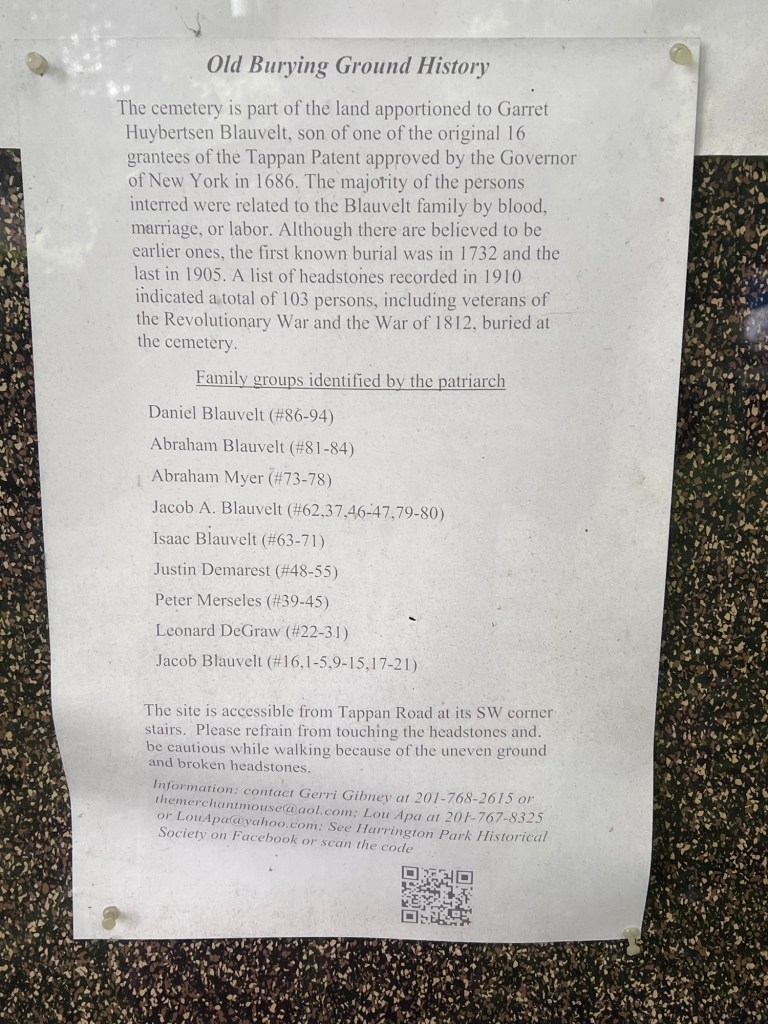
The Perry Cemetery is a small family burial ground located on what was the farm of David Perry (1809-1871). The Old Burying Ground cemetery is part of the land apportioned to Garret Huybertsen Blauvelt, son of one of the original sixteen grantees of the Tappan Patent approved by the Governor of New York in 1686. Although there are believed to be earlier ones, the first known burial was in 1722 and the last in 1905.
The Perry Family Cemetery sits quietly on a stretch of Old Hook Road
(From the Harrington Park Historical Society)
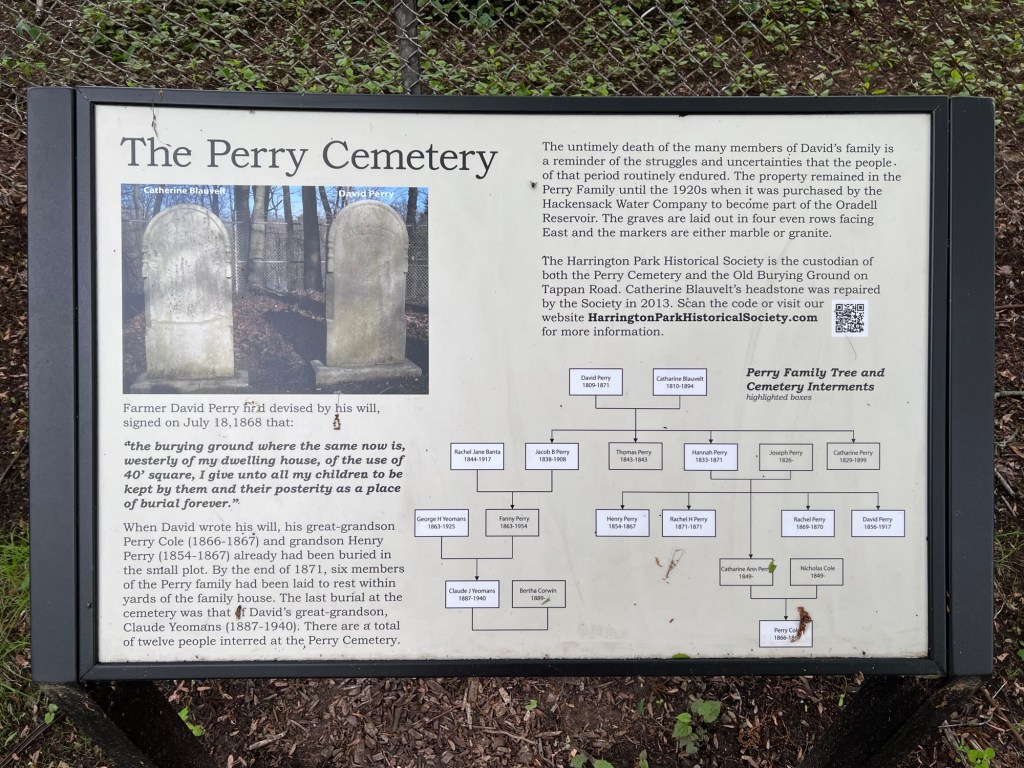
The Perry Cemetery is situated in the Borough of Harrington Park on Old Hook Road, east of Bogert’s Mill Road opposite the United Water Company building. David Perry had devised by his will, signed on July 18,1868 that: “the burying ground where the same now is, westerly of my dwelling house, of the use of 40’ square, I give unto all my children to be kept by them and their posterity as a place of burial forever.”
The Perry family treeofloved ones buried at the cemetery
(From the Historical Marker Database)
When David wrote his will, his great-grandson Perry Cole (1866-1867) already had been buried in the small plot. By the end of 1871, six members of the Perry Family had been laid to rest within yards of the family house. The last burial at the cemetery was that of David’s great-grandson, Claude Yeomans (1887-1940). There are a total of twelve people interred at the Perry Cemetery.
The untimely death of many members of David’s family is a reminder of the struggles and uncertainties that people of that period routinely endured. The property remained in the Perry Family until the 1920s when it was purchased by the Hackensack Water Company to become part of the Oradell Reservoir. The graves are laid out in four even rows facing East and the markers are either marble or granite.
The Perry Family tree starting with the marriage of David Perry to Catherine Blauvelt
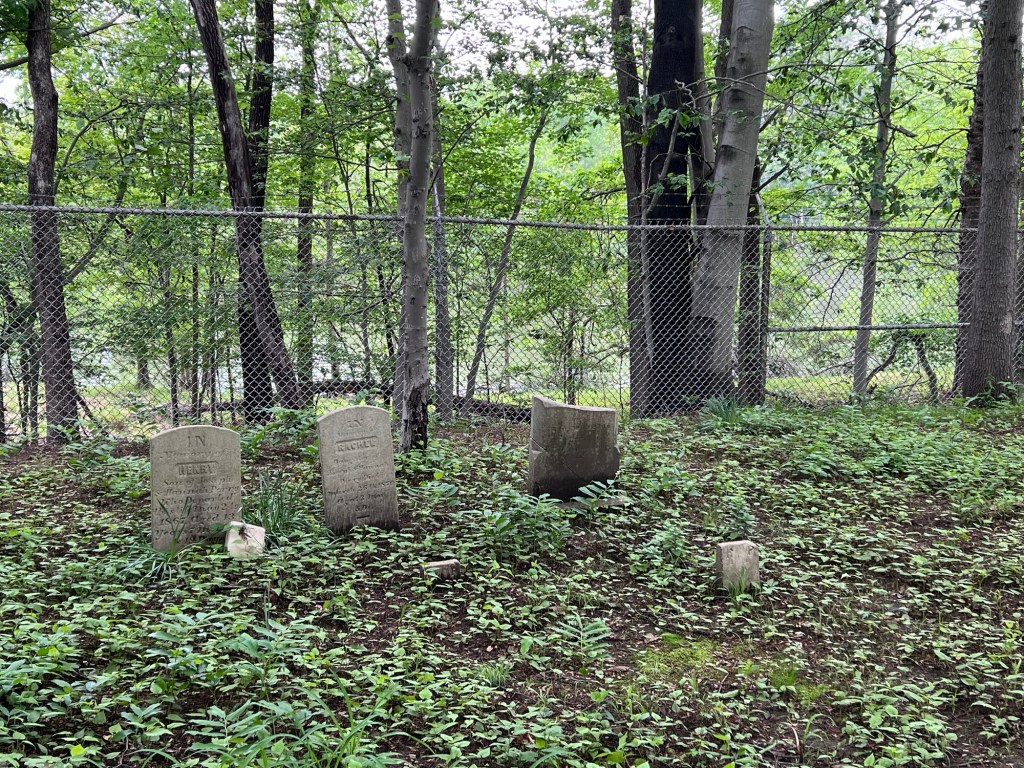
Son Henry and Daughter Rachel’s tombstones
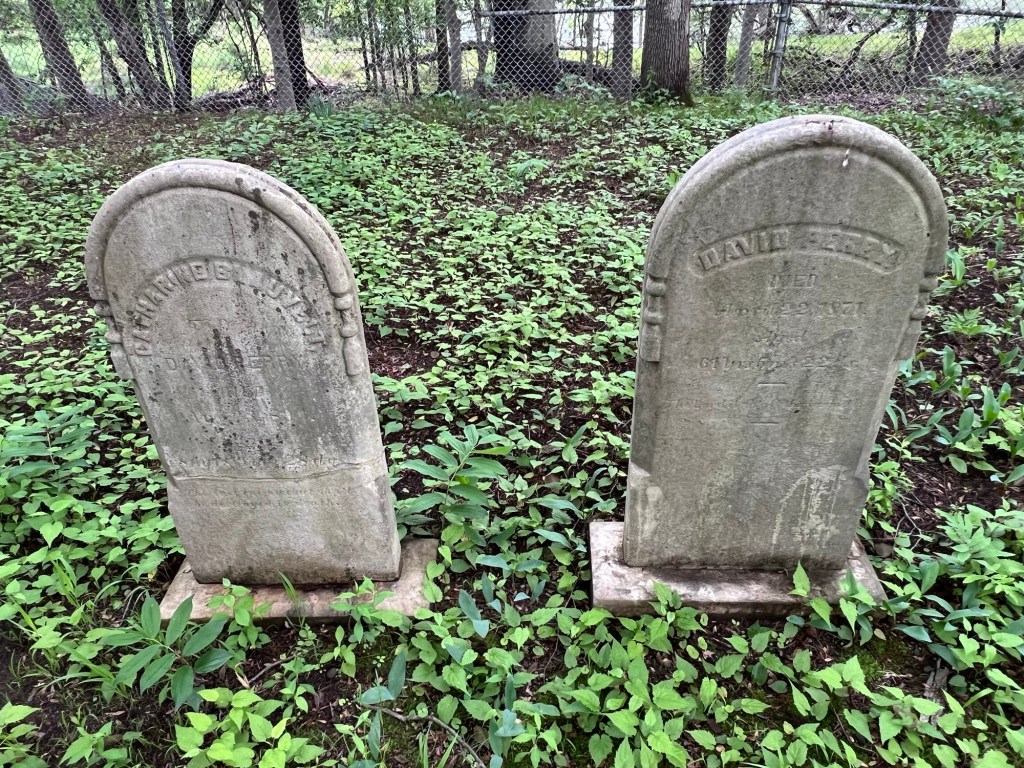
Patriarchs David Perry and his wife, Catherine Blauvelt Perry
The last David Perry to be buried in the family plot
The family plot facing the stream
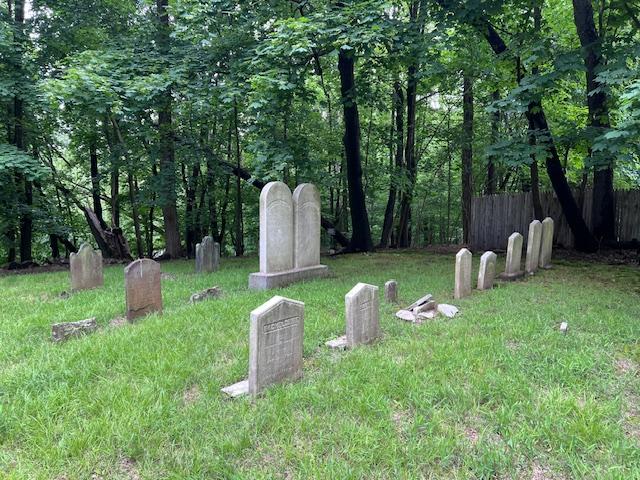
The Patriarchs of the family stand in the middle
The newest graves in the cemetery
The latest burials in the family plot
Video on the Perry Cemetery from the Harrington Park Historical Society
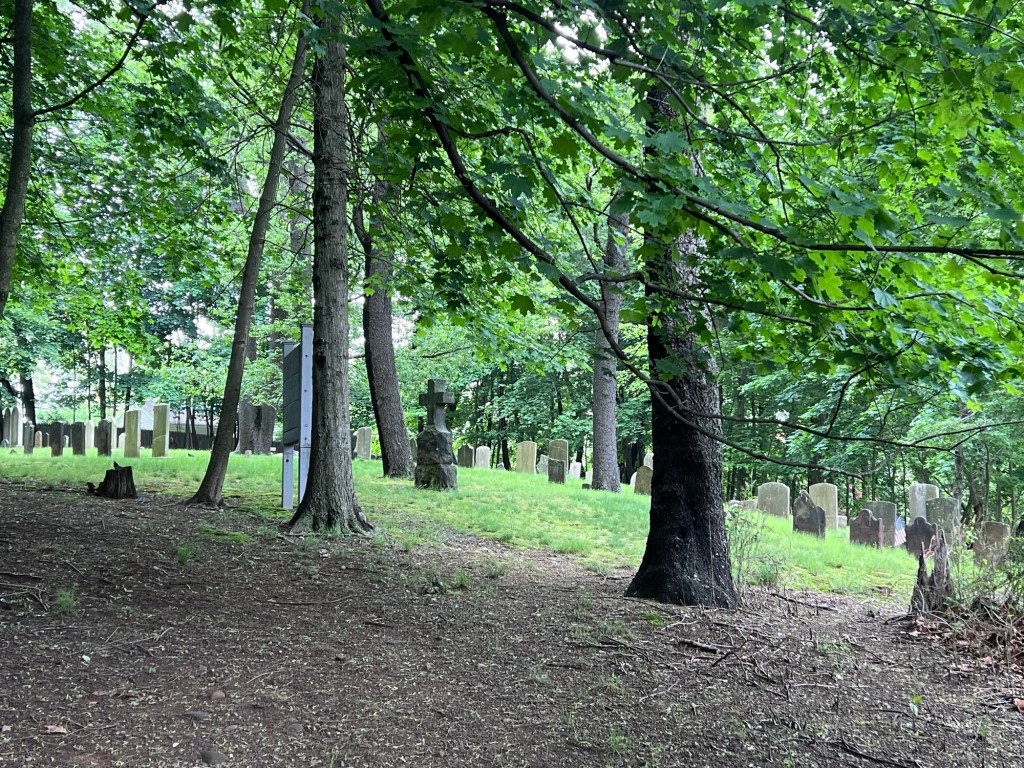
The Old Burying Ground known also as the Blauvelt Cemetery, is an interesting look at the burial rights of prominent farming families of early Bergen County and their forgotten legacy of their contributions to building not just the County to our Country as well.
Many of these families intermarried over time combining properties and farms that over time since the turn of that last century, have become lost corners of our county’s history due to growth after WWII of suburban communities.
It is interesting to see who the movers and shakers of these communities of the past whose descendants were still live in Bergen County. The sad part is that these distant family members may not know their own family history enough to visit these tiny pieces of history that hold members who fought in the Revolutionary War and contributions to the growth of businesses with names that have been reduced to well known street addresses. A lot of history lies in these tiny plots that dot Bergen County. Here you can see the ‘ghosts’ of the past and walk past their graves to hear their stories.
The entrance to the cemetery
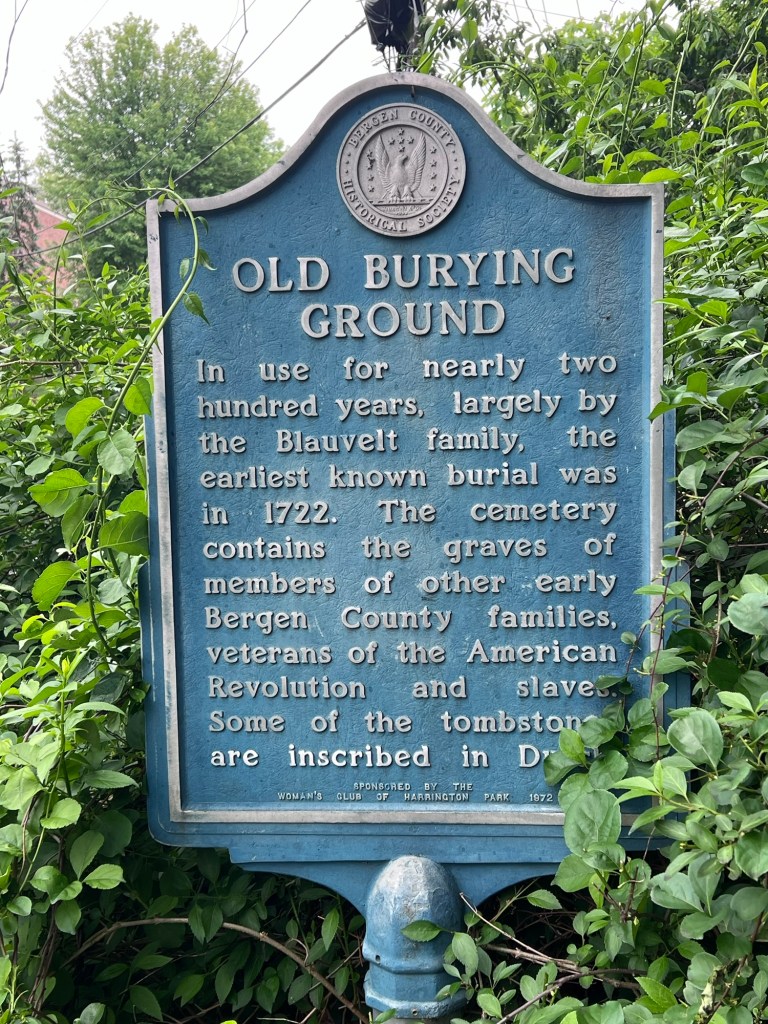
The History of Burying Ground:
(from the Harrington Park Historical Society)
In use for nearly two hundred years, largely by the Blauvelt family, the earliest known burial was in 1722. The cemetery contains the graves of members of other early Bergen County families, veterans of the American Revolution and slaves. Some of the tombstones are inscribed in Dutch.
The description of the family plots
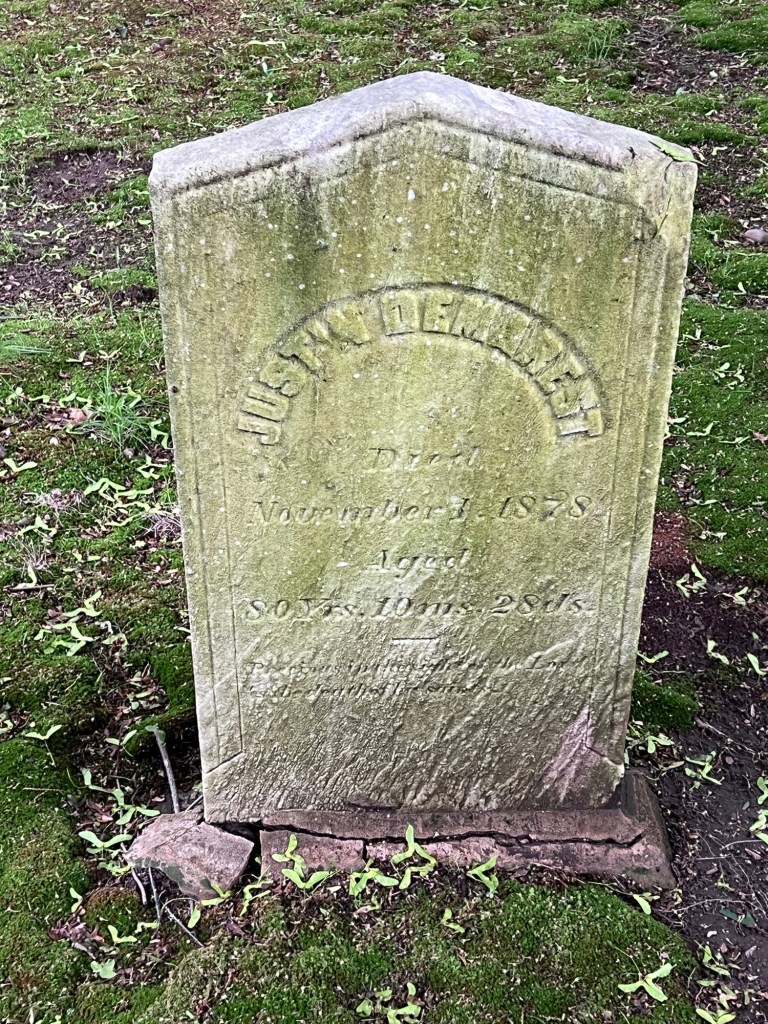
The grave of Patriarch Justin Demarest
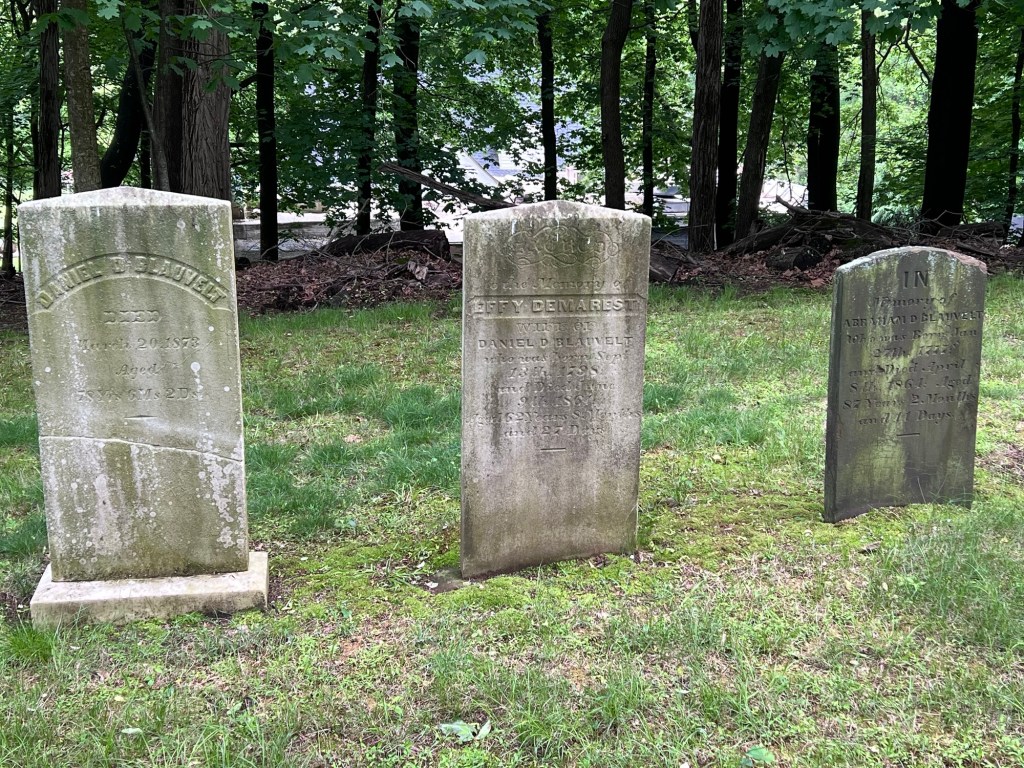
The Blauvelt family plot of Patriarch Daniel Blauvelt
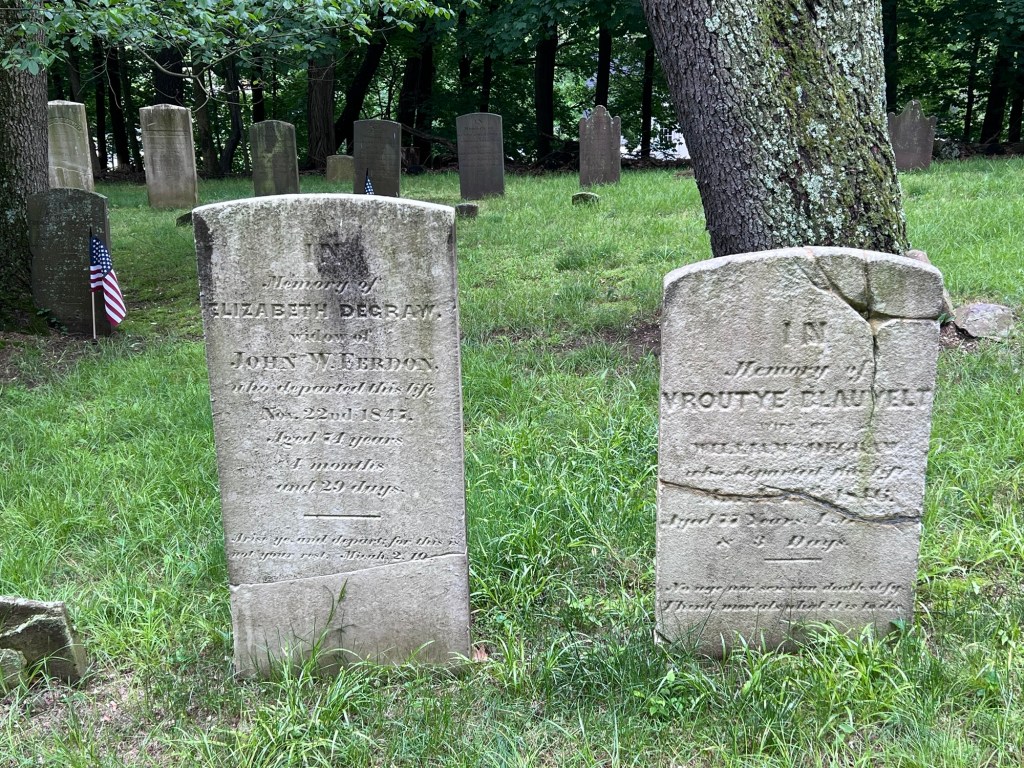
The graves of members of the Blauvelt and DeGraw families
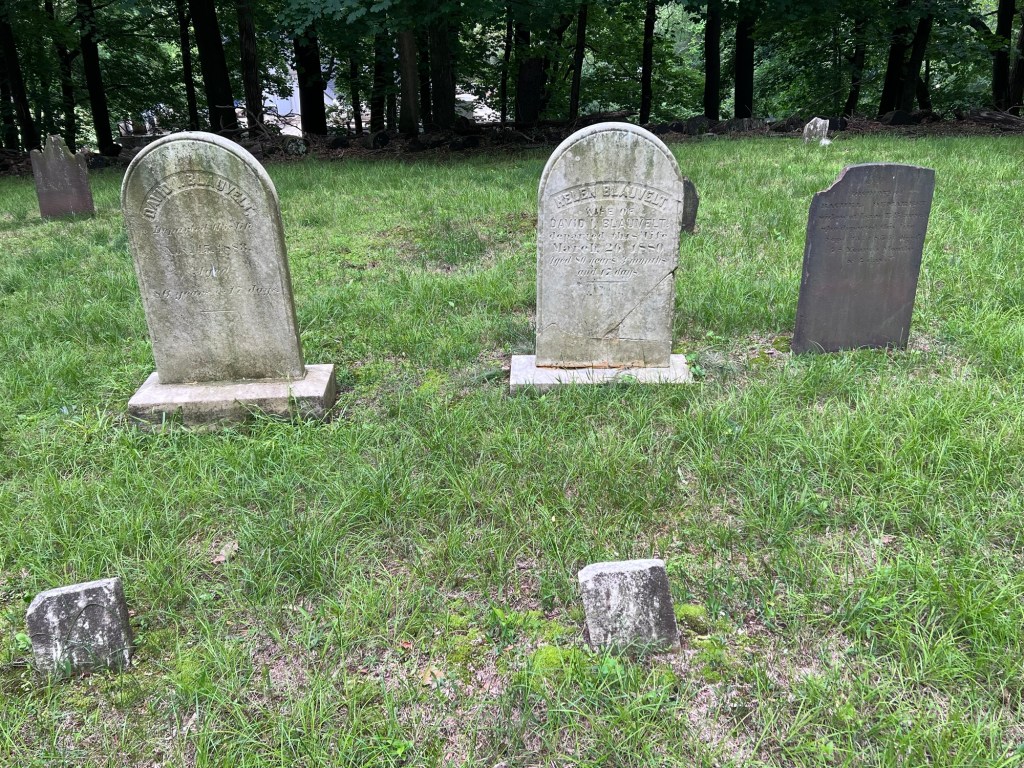
The graves of David and Helen Blauvelt
The middle of the Blauvelt family plot
The cemetery from the other side of the Blauvelt family plot
The Blauvelt and Demarest family plots (damaged tombstones)
(From the Harrington Park Historical Society)
Abraham Quackenbush (1768-1854) and his wife, Elizabeth Myers (1770-1807)) are part of the Abraham Myers family burial plot at the Old Burying Ground. In the middle of the 18th century, Abraham Myers received a royal charter from King George III to build a grist mill on the Hackensack River which his grandson John Bogert later operated, and it thereby became known as “Bogert’s Mill.”
The Myers family members interred in the plot are Abraham Myers, his wife Cathrena Nederman, daughter Cathrena, daughter Elizabeth and Abraham Quackenbush, son John Myers and wife Rebecca Durie.
The Blauvelt-Eckerson-DeGraw family graves
Patriarchs David and Helen Blauvelt family plot
Video on the Cemetery from the Harrington Park Historical Society
The History of the Parsippany Historical and Preservation Society:
(from the Society website)
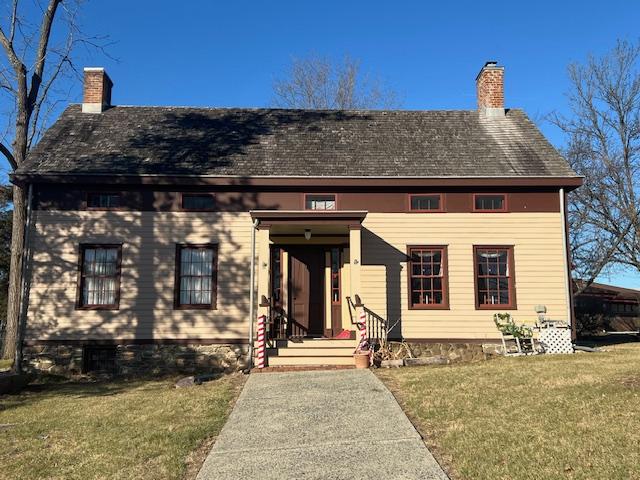
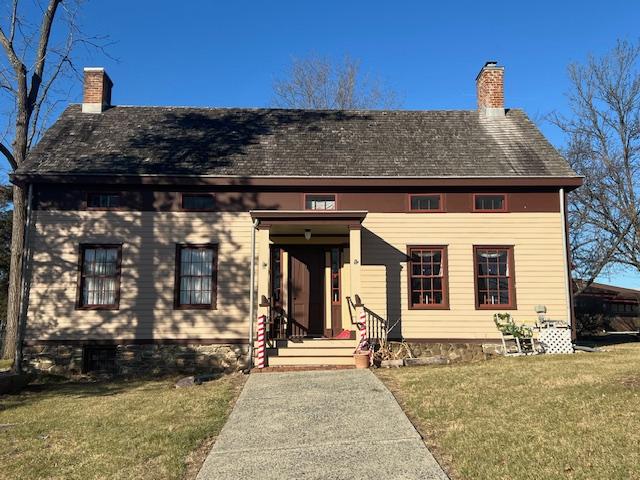
The Bowlsby / DeGelleke House is a one and a half story, clapboard-sided farmhouse set on a stone foundation. The house was built by George Bowlsby, Jr., c.1790. Originally constructed as a 3-bay façade, an 1819 2-bay addition to the right of the door resulted in a central entrance appearance. The porch was constructed in the Greek Revival style in the 1850 renovation.
A center hallway runs from the front door to the rear door of the house and contains a mid- Victorian open staircase to the second floor and stairs to the basement. On either side of the hallway are two interconnecting rooms. The left (west) side contains a front parlor with a simplified Greek Revival fireplace and a small back room. The right (east) side of the house contains a dining room and a kitchen. Original floorboards remain, with a replacement floor in the kitchen.
Three second floor bedrooms were added when enlarged in 1819. In c.1920, walls were added to create two more bedrooms. An existing front bedroom was changed to a bathroom. The kitchen was also modernized, but still utilized a hand water pump from a cistern in the cellar.
In 1977, the house was purchased by the Township from the estate of Alethea DeGelleke, to be used as The Parsippany Historical Museum. In 1978, the building was added to the State and National Historic Registers. Restoration was completed in 2008 with grants from the Morris County Historic Preservation Trust and the Township’s Open Space Program.
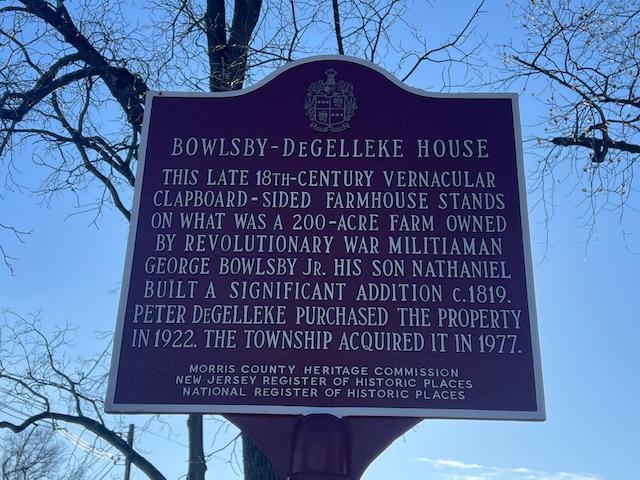
The historic marker for the house
Mission Statement
(from the Society website)
The purposes of the Parsippany-Troy Hills Historical and Preservation Society are to:
*Encourage an appreciation for, and an understanding of, the history of the Township of Parsippany-Troy Hills by holding meetings at which historical lectures, entertainments, discussions, and other programs are scheduled; by marking historical sites, roads, trails, and building; by publishing work concerned with historical research; by working with school administrators and teachers to encourage the study of local history, and by engaging in other appropriate activities; *to seek out, to collect, and to collate material which may help to reveal and illustrate the history of the Township of Parsippany-Troy Hills in terms of exploration, settlement, and development; * to cooperate with public and private agencies in providing for the preservation and for the display of historic sites and materials; * to conduct or encourage archaeological investigations in the Township of Parsippany-Troy Hills; * to hold title to real and personal property of historical interest of significance that the Society may acquire; * to hold title to moneys or instruments acquired for the purpose of furthering and/or maintaining the Society’s properties. History of the Society
The Society was incorporated on June 8, 1998. Since that time the Society has worked toward the mission of preserving and interpreting the Township’s history and historic structures. The Society works with the Township to open the Township’s historic sites, including the Parsippany Museum, also known as the Bolwsby / DeGelleke House, the Smith / Baldwin House, Old Littleton Schoolhouse and the Forge Pond and Dam property. The Society also sponsors programs that highlight the history of the Township and are held at one of the Townships historic properties.
The Society is a 501(c)(3) non-profit organization.
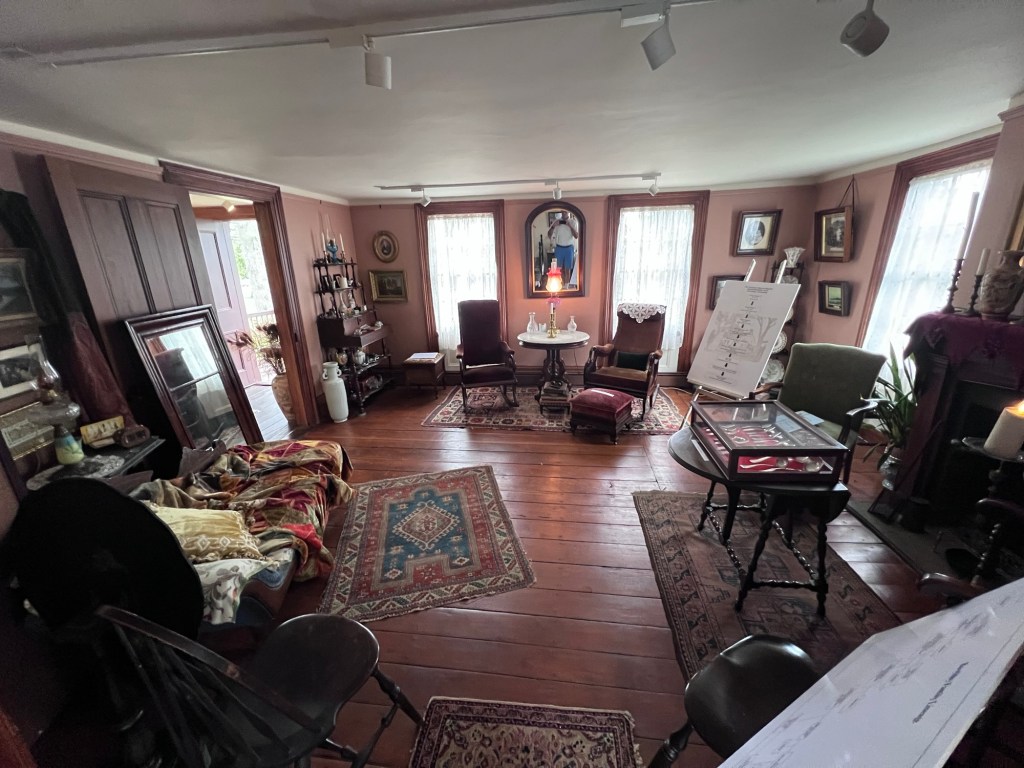
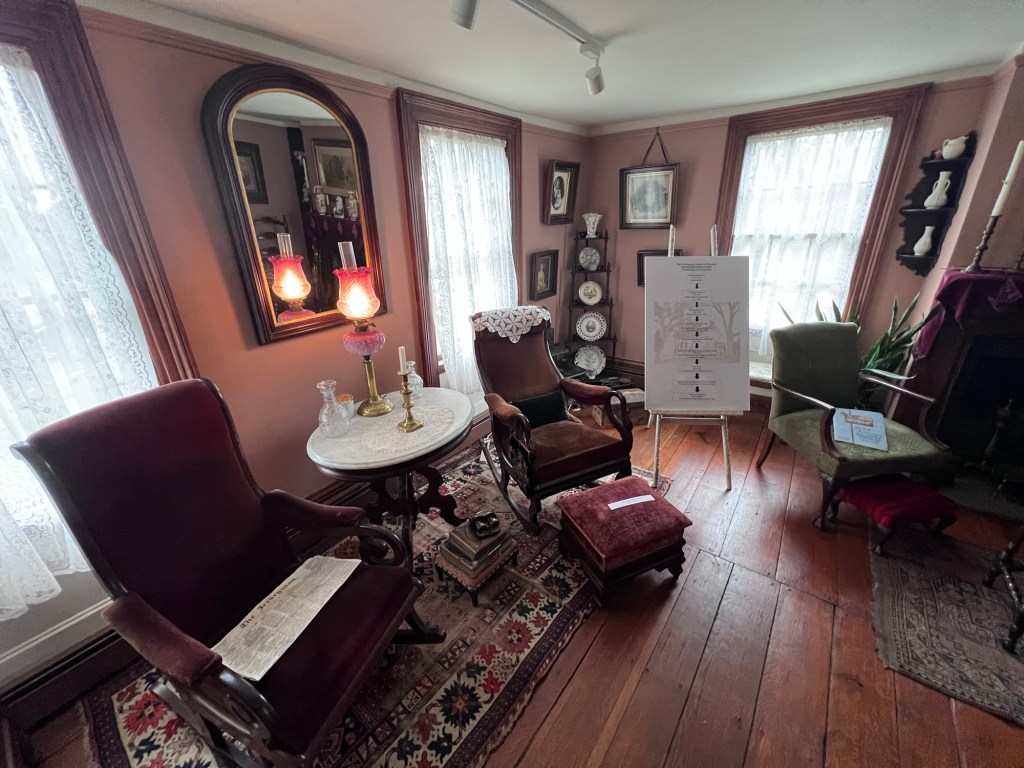
The Living Room of the house
I visited the Bowlsby-DeGelleke home during Morris County’s Pathways tour recently and discovered an interesting historic home that had been in the Bowlsby family for many generations while farming hundreds of acres of land in this area. The tour guide explained that while the house may have been small, the influence of this family was felt around the community.
The front sitting area
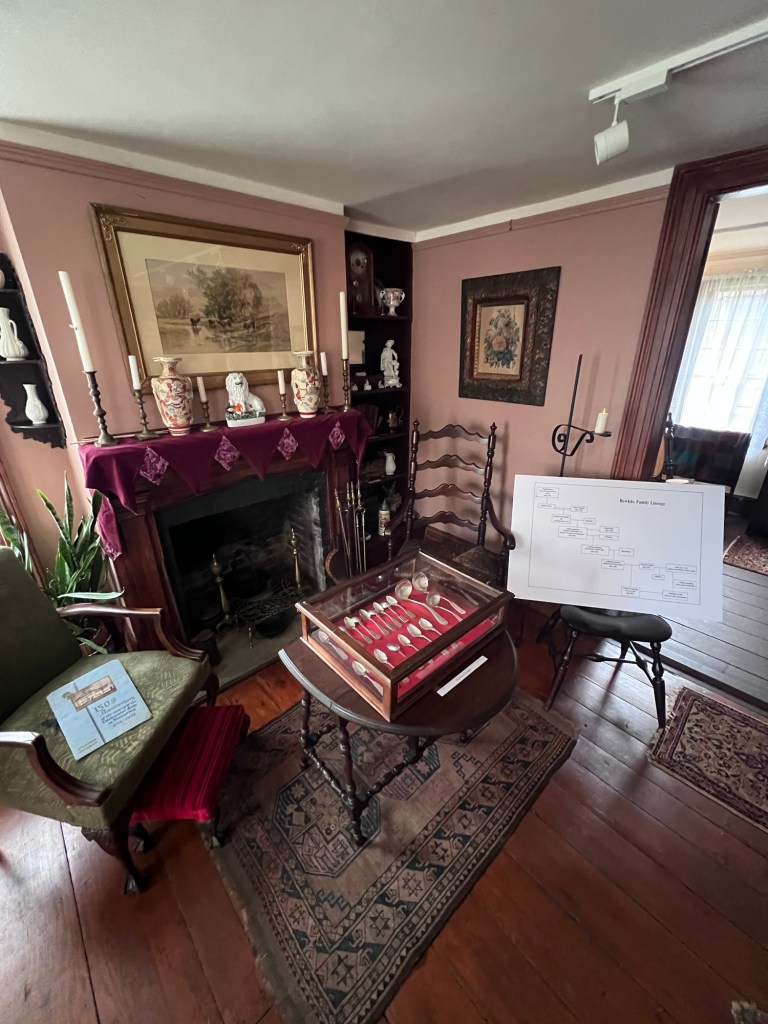
The fireplace in the room with silver collection and the family tree
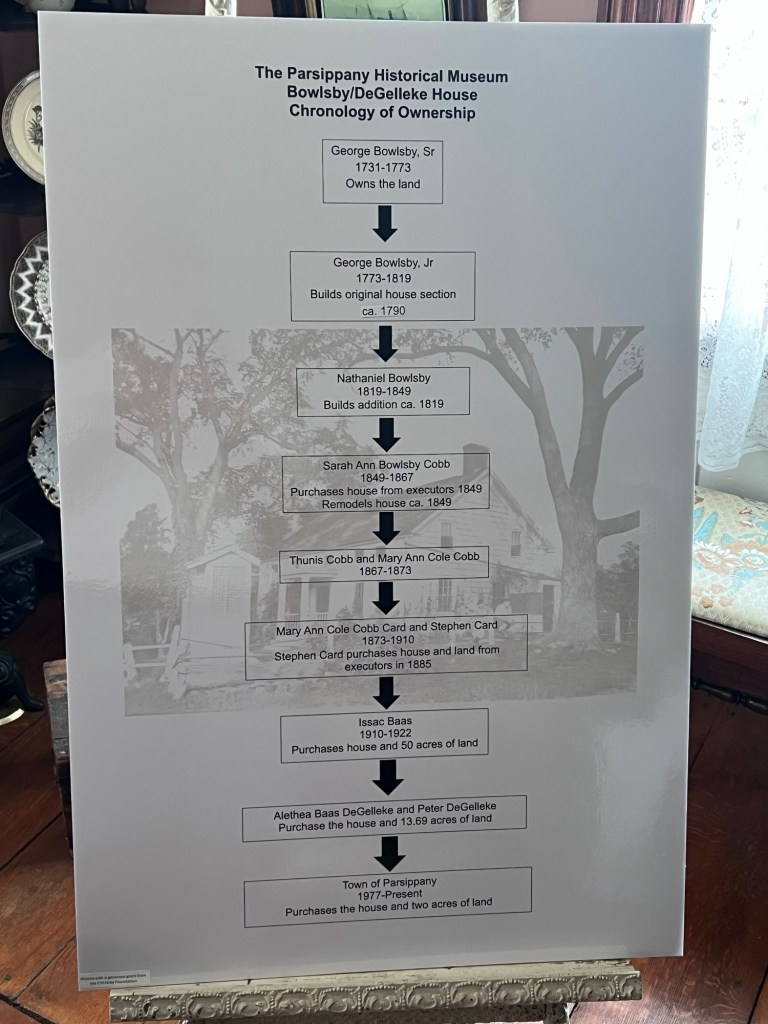
The Bowlsby Family tree
You could see by the family tree that house and land stayed in the family from the mid 1700’s to 1910, with the farmland being broken up with each generation inheriting a piece of the overall farm.
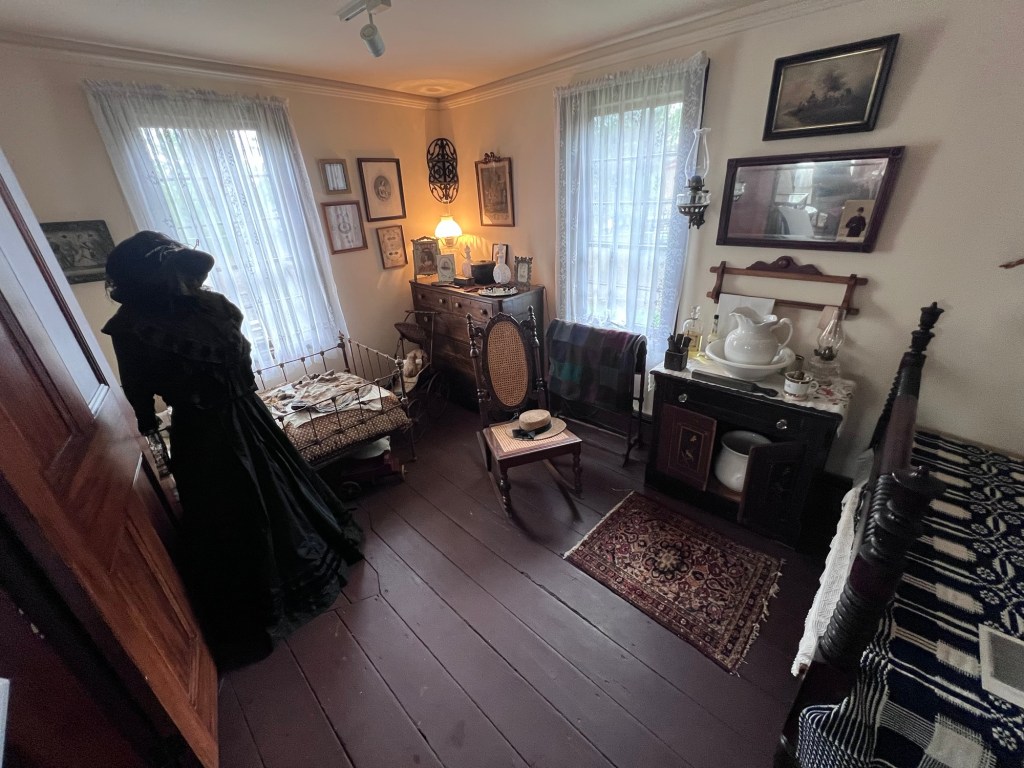
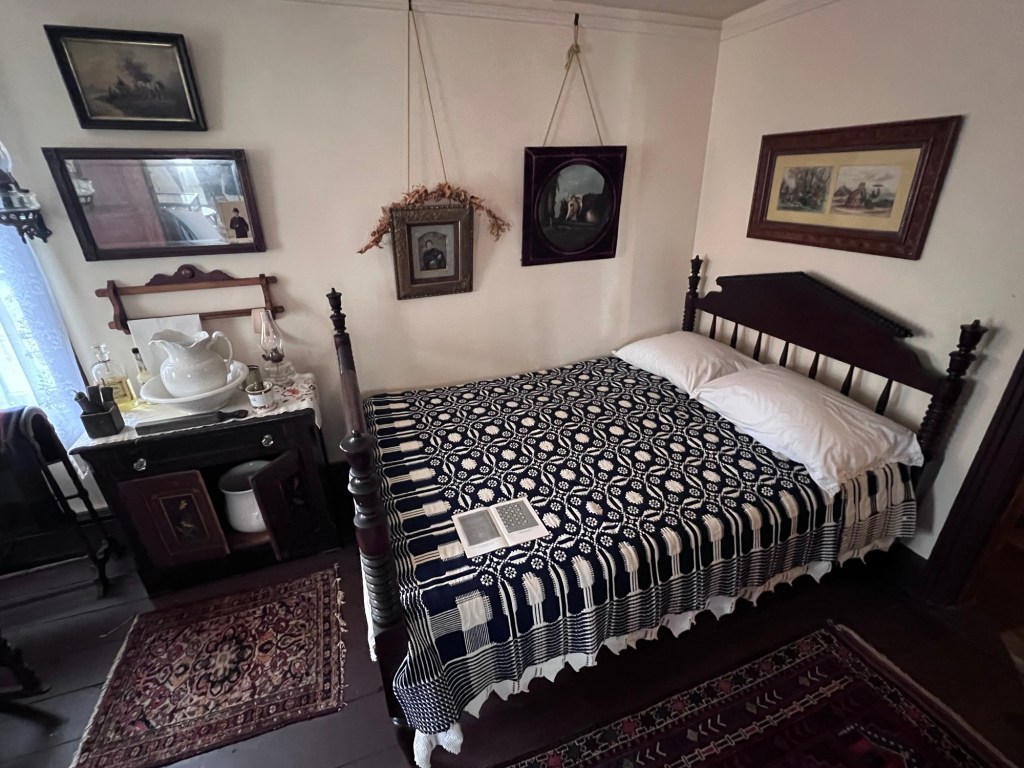
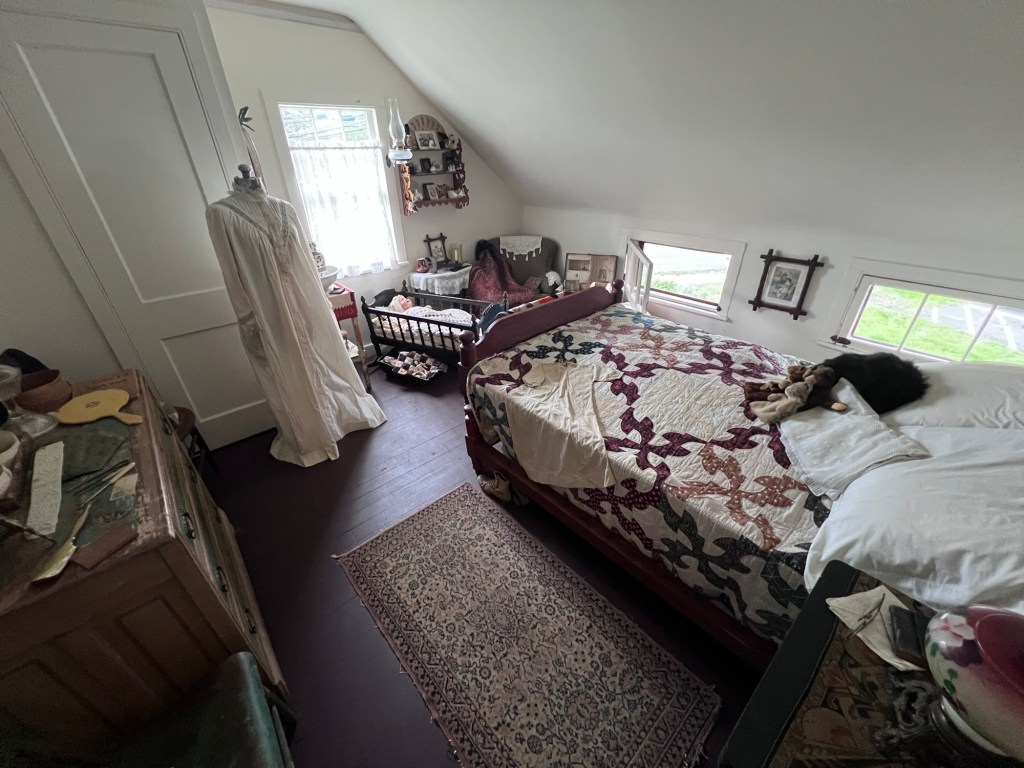
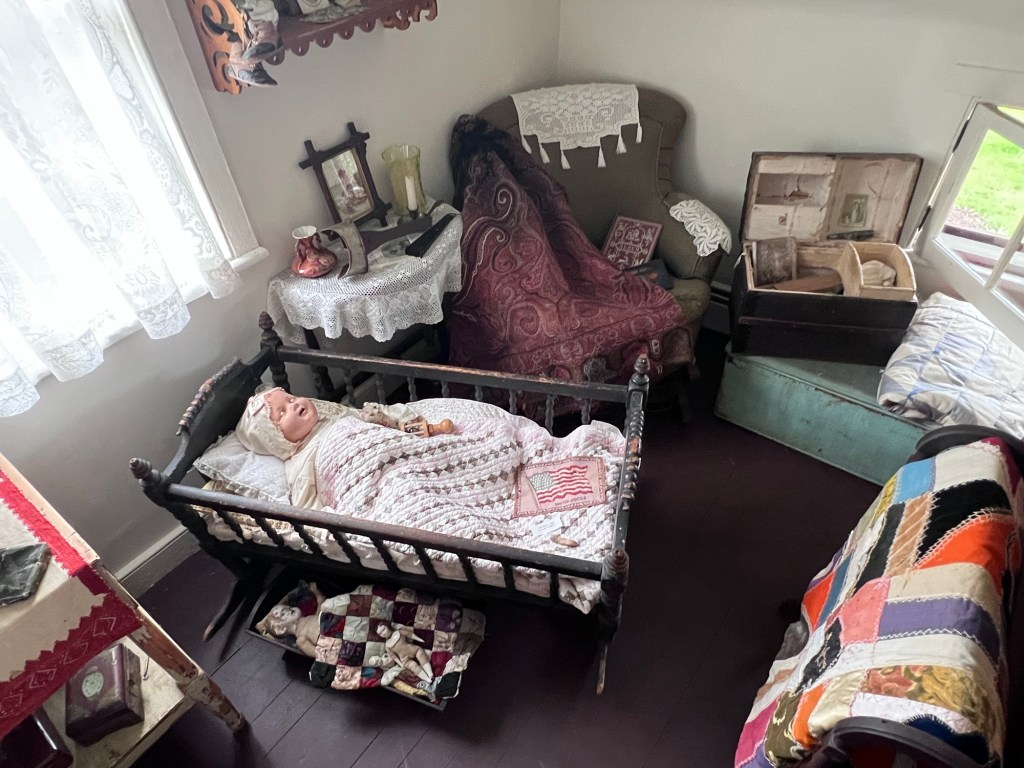
The back bedroom and nursery
The back bedroom on the first floor behind the Living Room
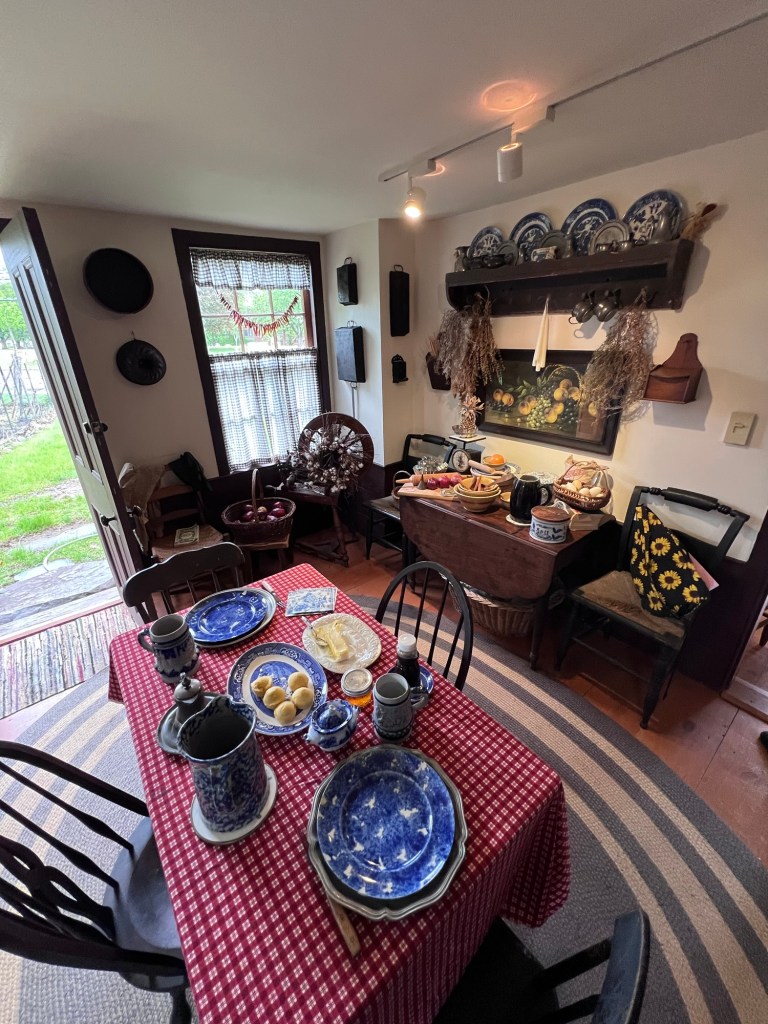
The kitchen in the back of the first floor
I thought they did a wonderful job decorating the kitchen to reflect different time periods.
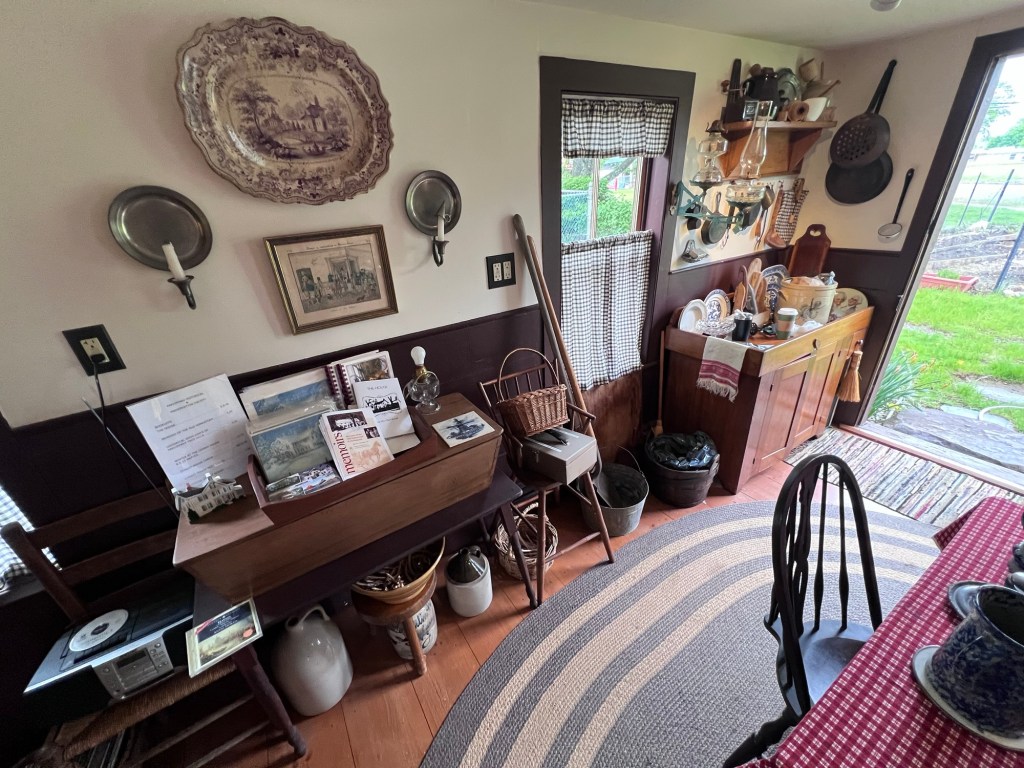
The kitchen wares and items needed for everyday life
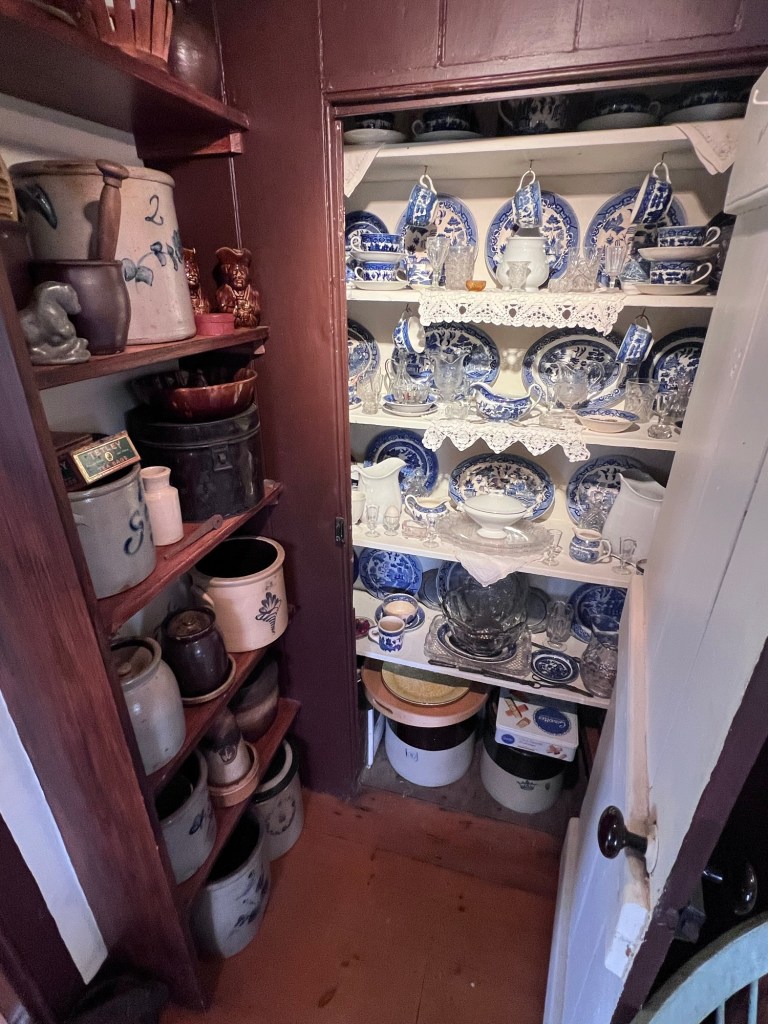
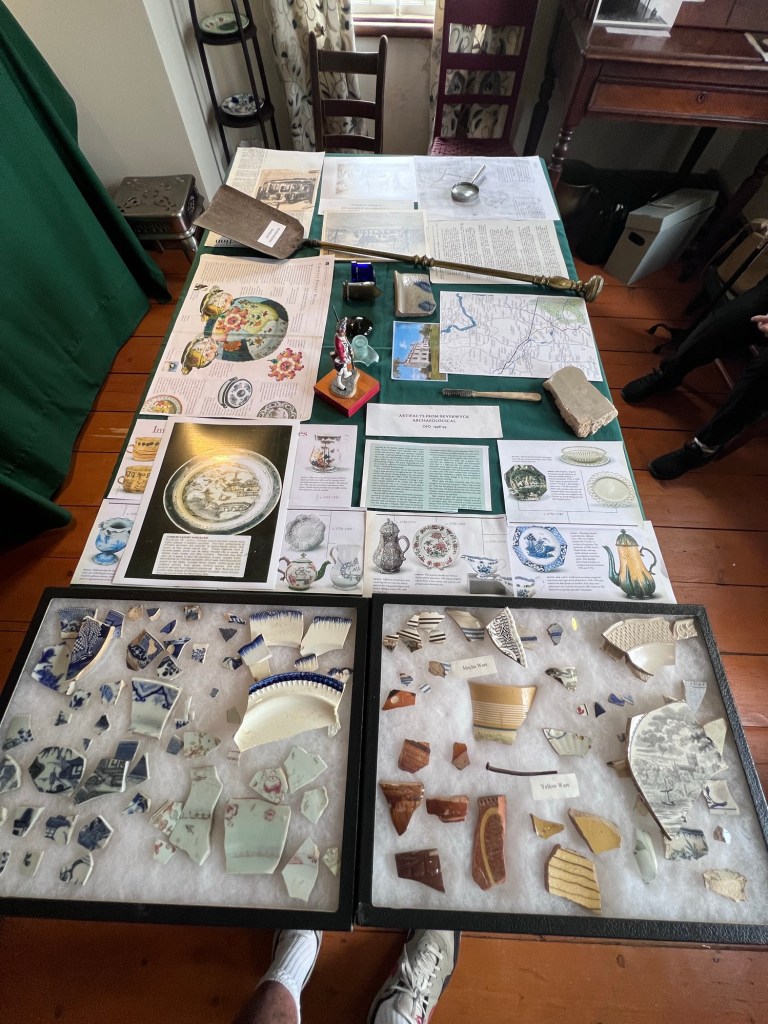
Family China and crockery in the kitchen
The China pattern shown here was not the family’s but close to what the family would have owned and entertained with for meals.
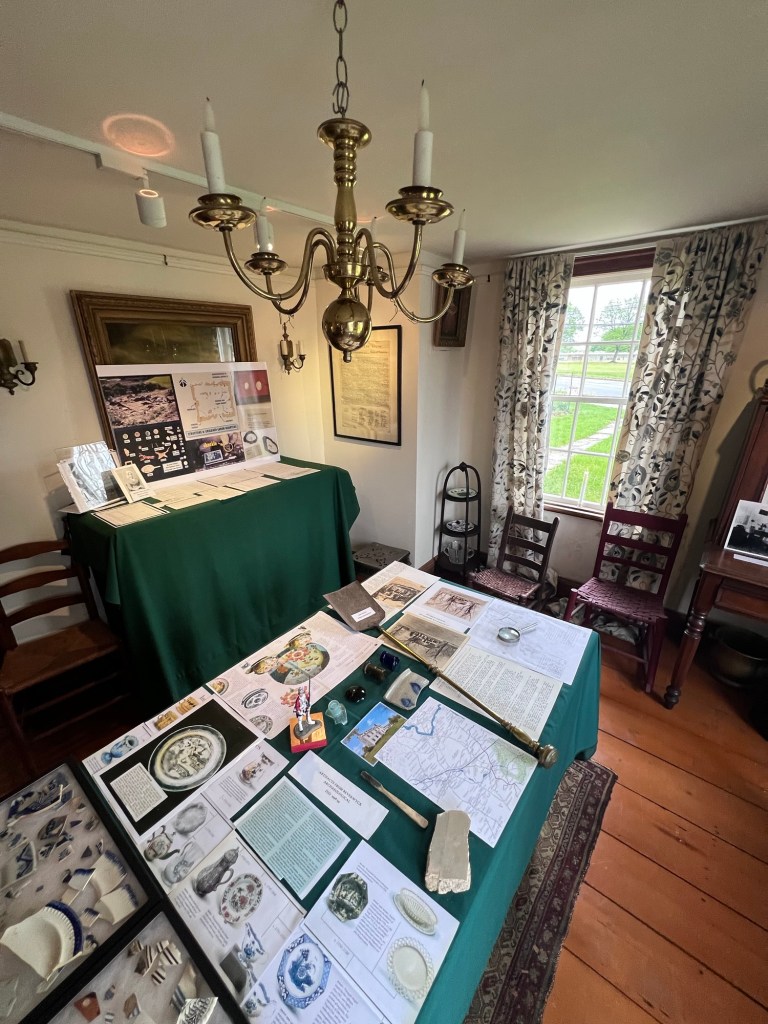
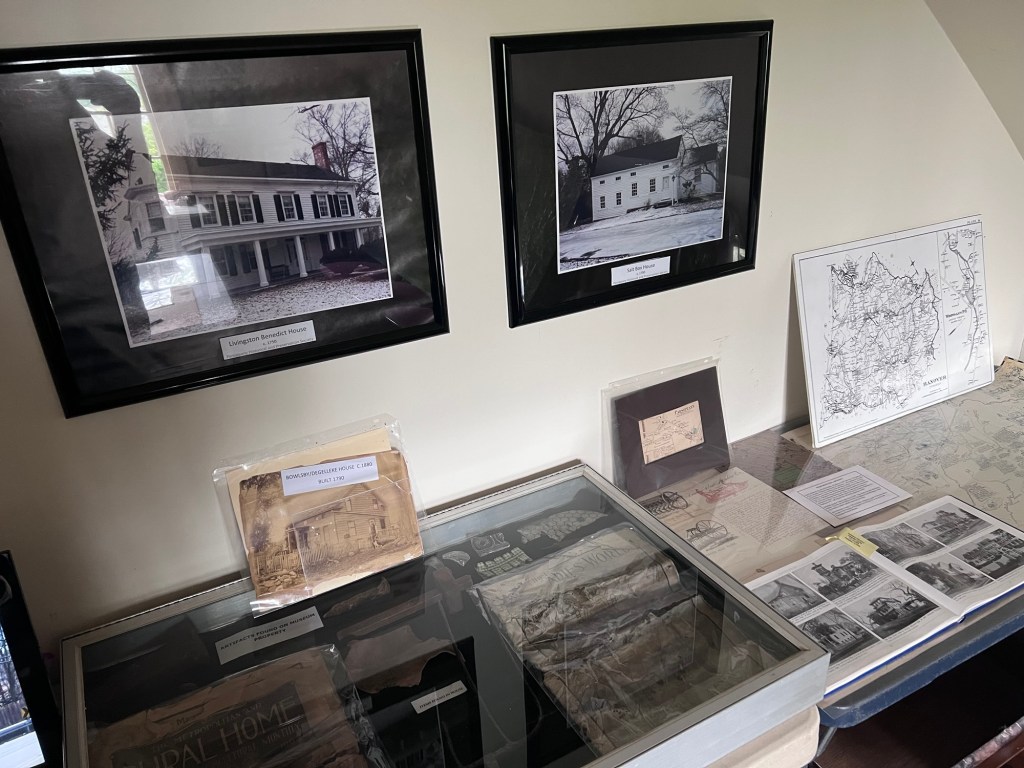
Artifacts found on property and at a dig site at an old mansion in town
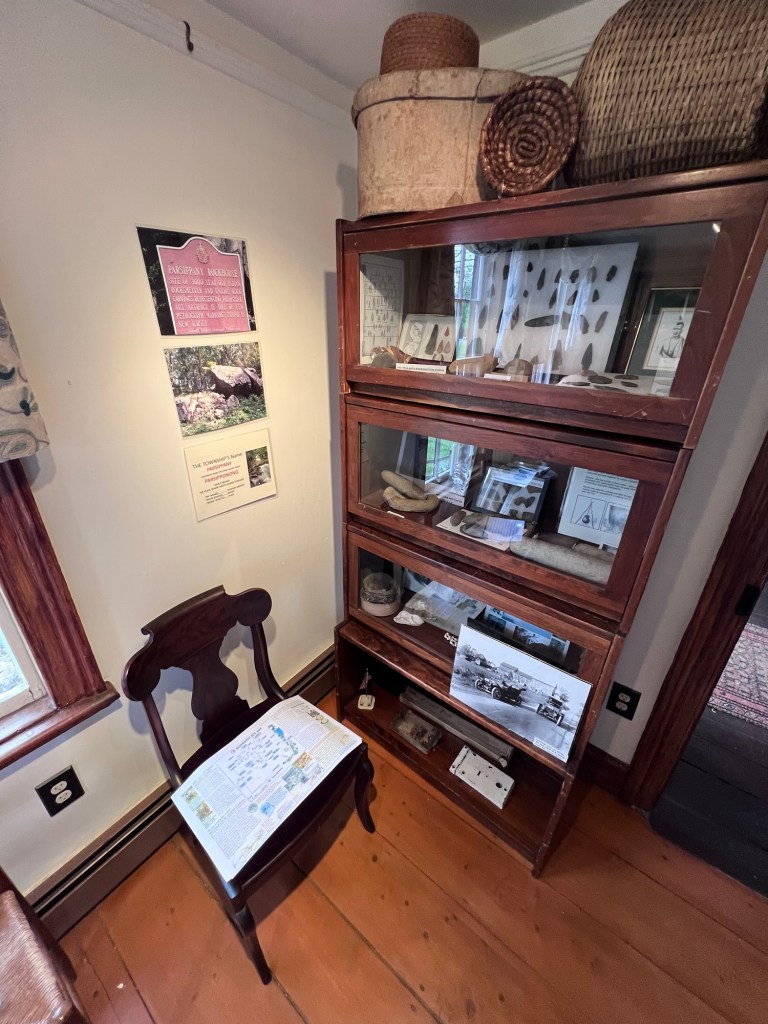
Native American artifacts and weaved baskets from the local area
Information on the local area and items from the dig
The second floor Children’s room display
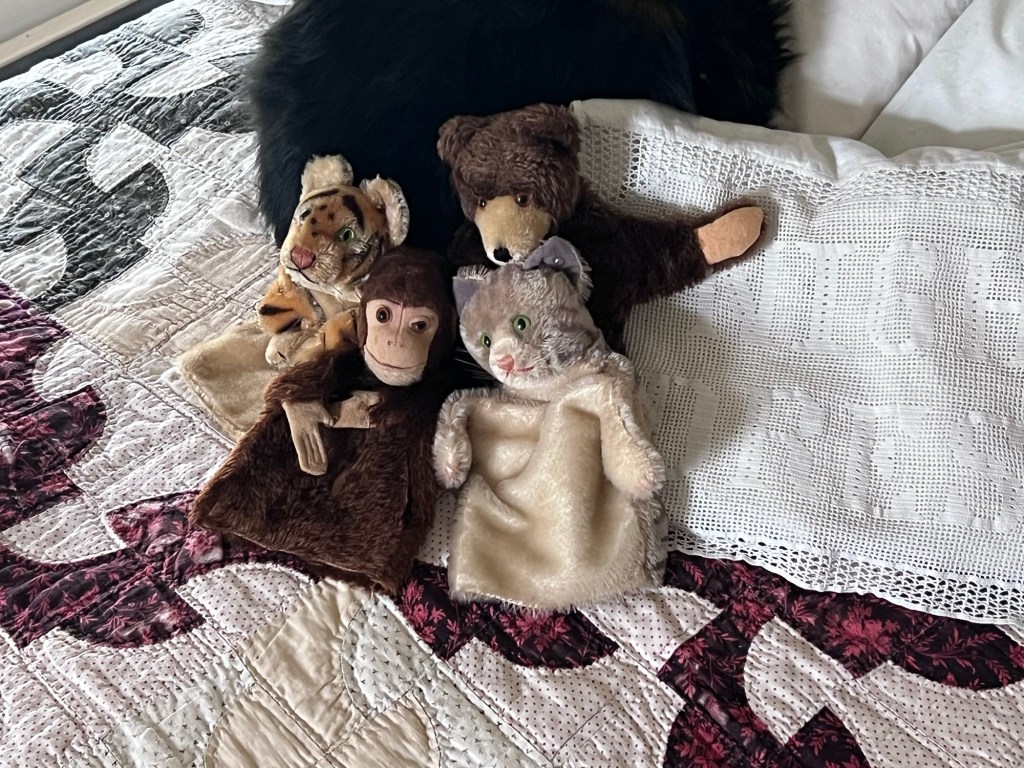
I loved the Children’s Room with the vintage toys and furniture. This interpretation would have been for a wealthy or upper middle class child. I loved the selection of dolls and games throughout the room.
The toys and doll display in the second floor room
The toys on display in the second floor room
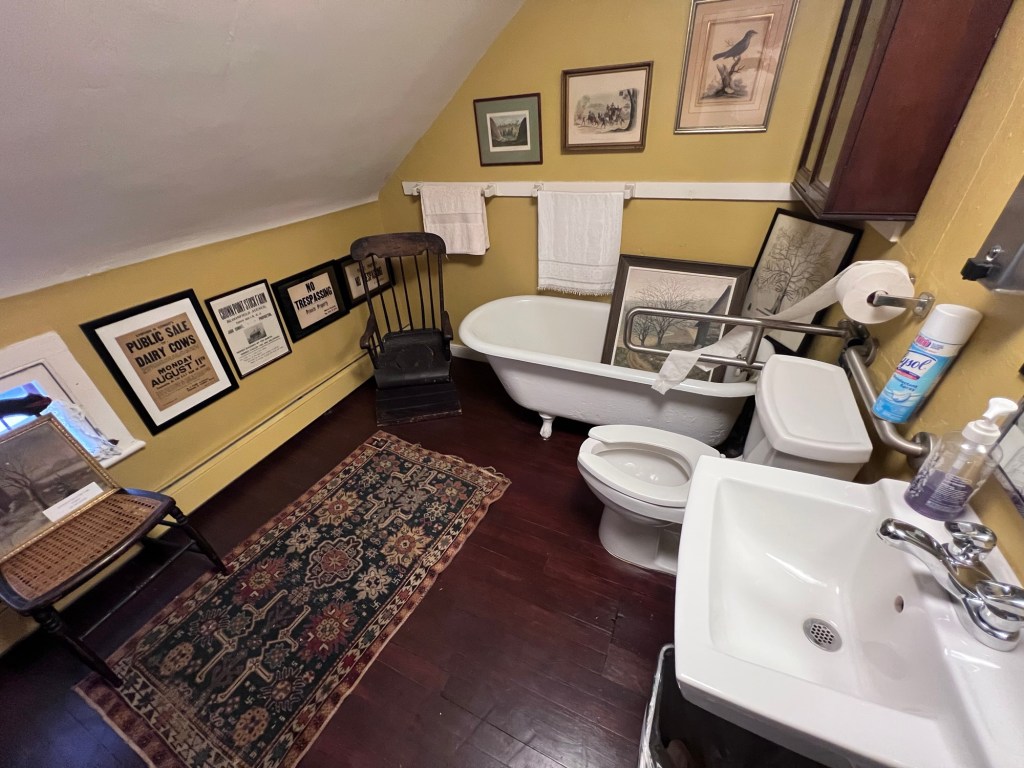
The second floor bathroom
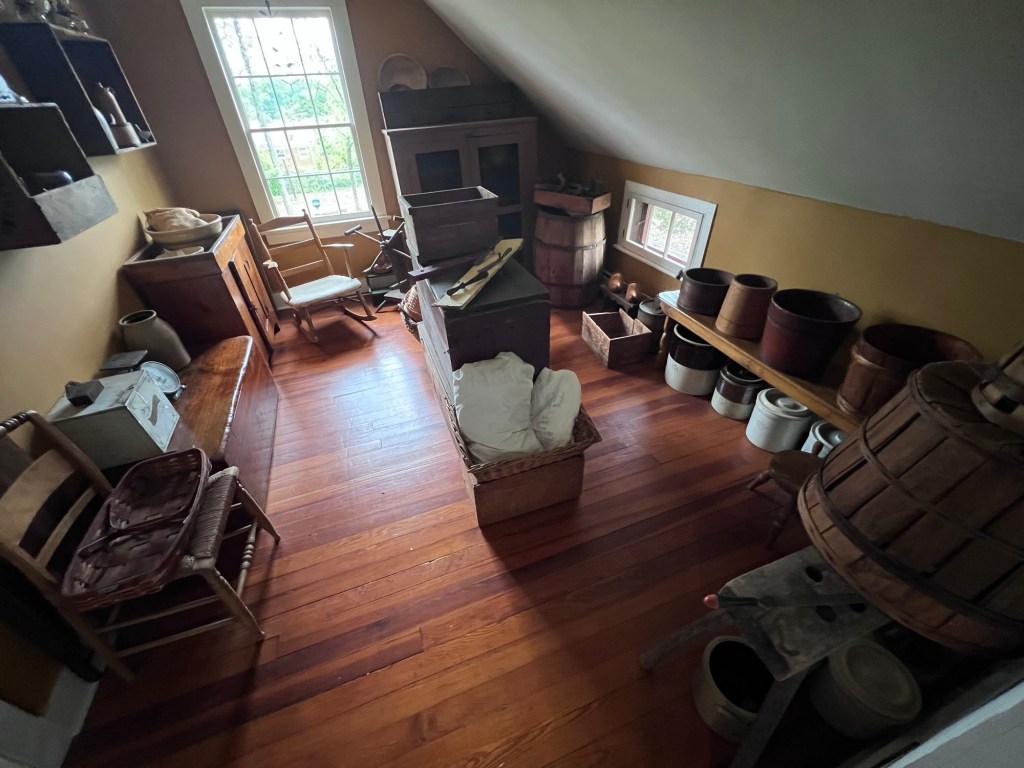
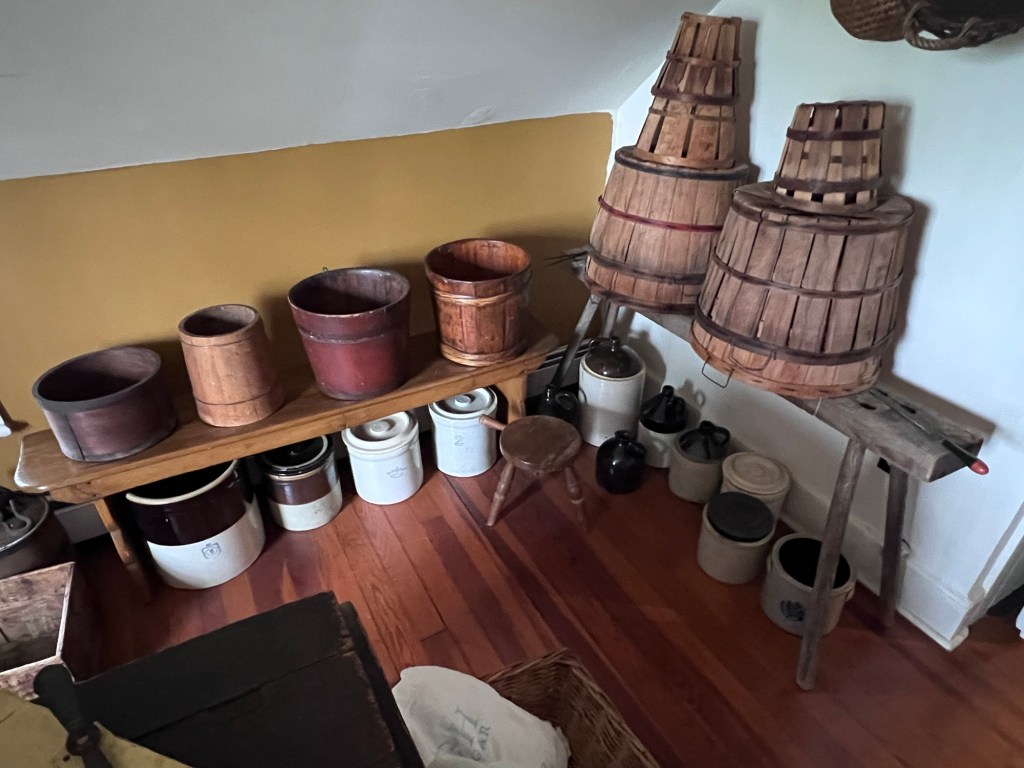
The second floor farm items of baskets and pots. Item used on the farm.
The baskets and crockery used on a farm
This display reminds visitors that this was still a working farm until up to about a hundred years ago.
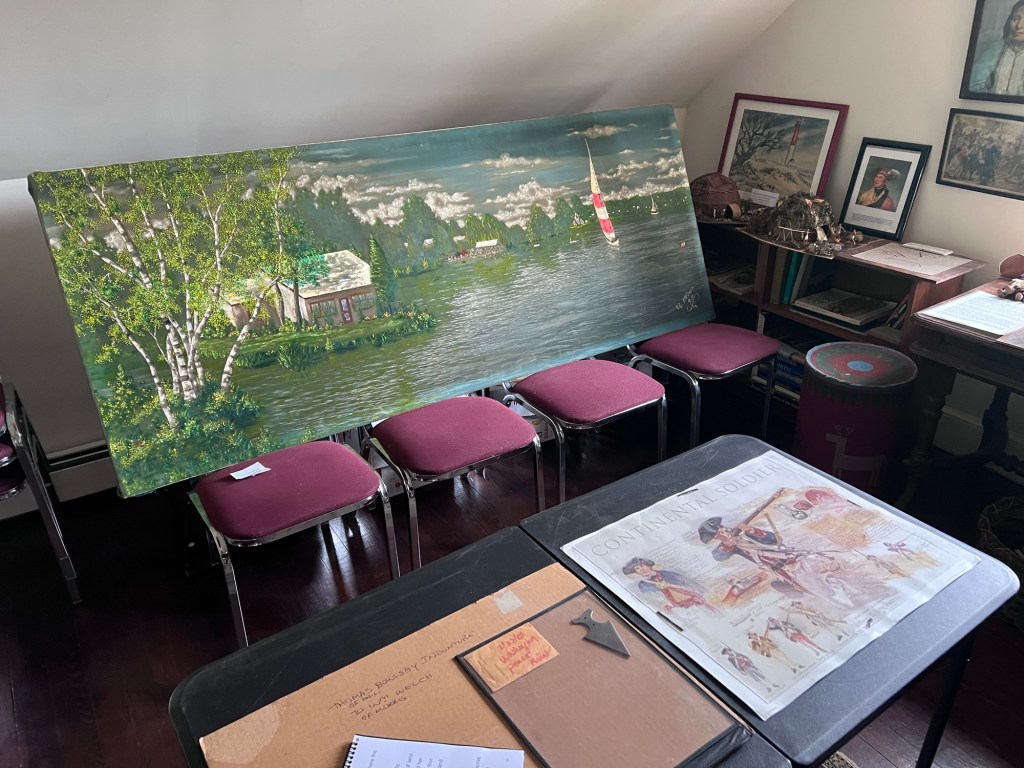
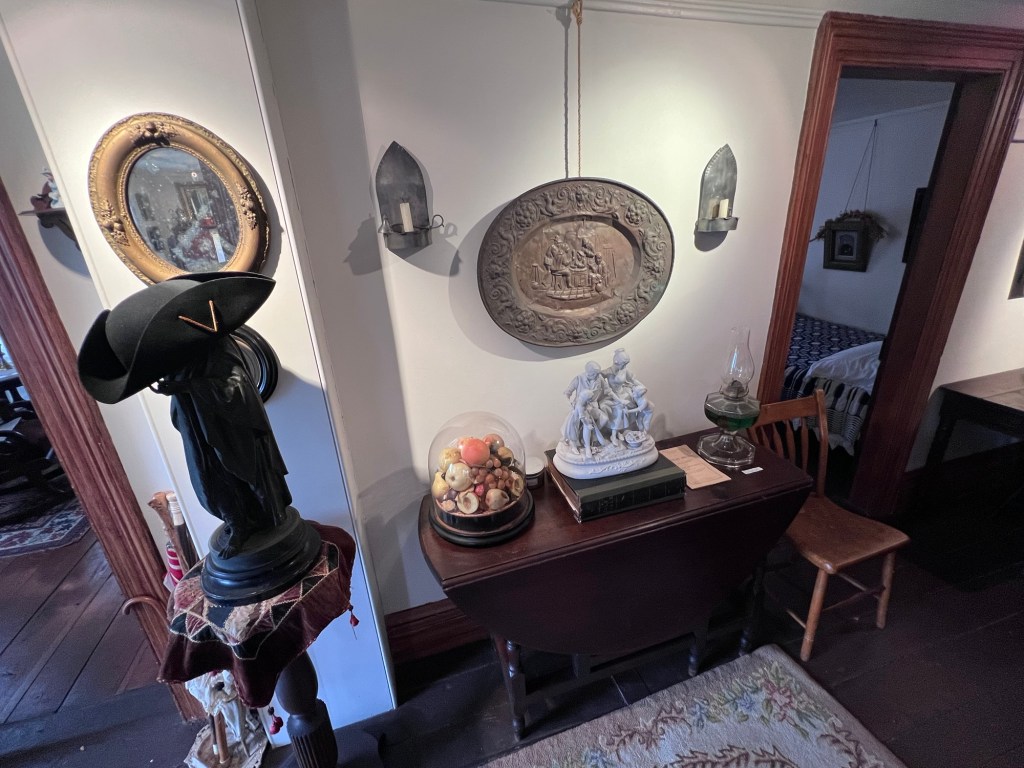
Paintings and artwork on display in the house
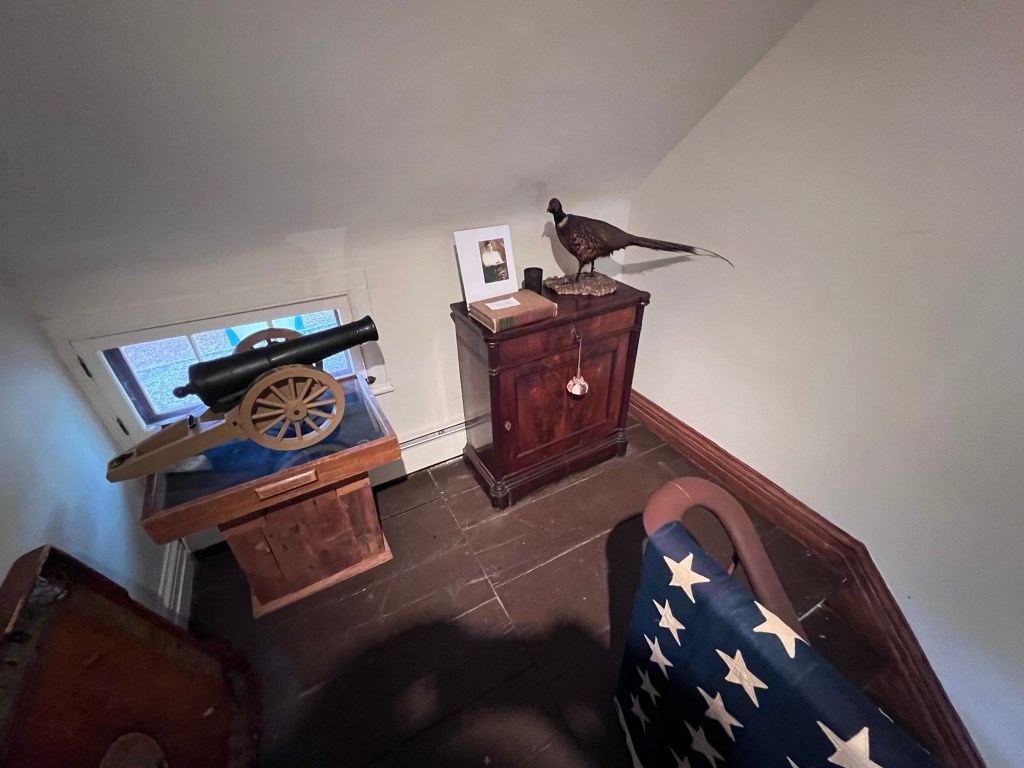
Artifacts in the hallway from the first to the second floor
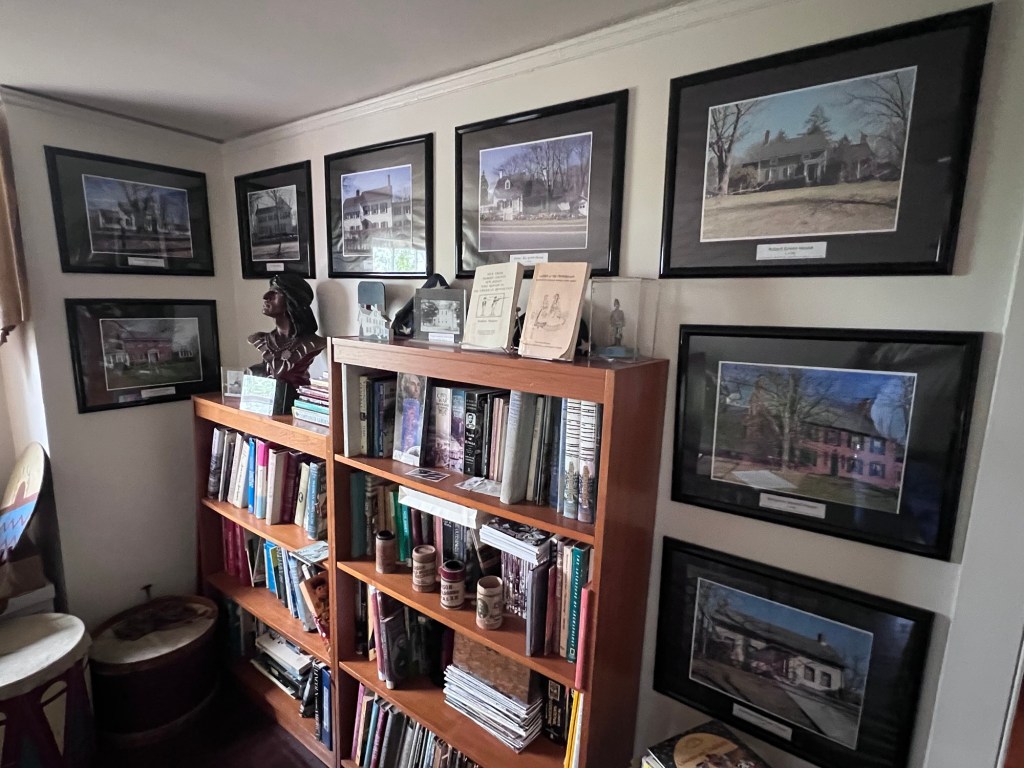
The display of local historical homes and their history
Local historical homes
Artifacts at the bottom of the stairs in the foyer as I left
The house had been in the family for almost five generations until it had been sold to another family who in turn owned it for another set of generations. The memory of this family still lives on in this wonderful museum.
The porch sitting area as you wait for your hosts to greet you
We were warmly greeted by our hosts and owners of the home. I had not realized that this is a private home and less of a museum. The only way to see the inside of the mansions by private arranged tour or when the owners have an open house either at Halloween or Christmas.
The History of the family and their fortunes:
(from WordPress.com article by Kubek: Project)
By the turn of the century, John Žinčak Smith had become the most accomplished Carpatho-Rusyn businessman and community leader in Mahanoy City, and in 1908, Smith moved his family from their modest West Centre Street home to this monumental mansion at the corner of South Main and East Spruce Street. Built at a cost of $40,000, the mansion included fourteen rooms, four chandeliers, wooden cabinets, and a number of stained glass windows (Mahanoy Area 2004, 15).
Just as he changed his name from Ioann Žinčak to John Smith nearly 30 years earlier, his move from the predominantly Slavic, Catholic West End to the Anglo-Saxon, Protestant East End symbolized his meteoric rise from his humble origins to the economic elite of the region.
However, not all Carpathian-Rusyn Americans viewed Smith’s prosperity favorably. One parishioner penned an anonymous letter to the Carpathian-Rusyn newspaper Postup (The Progress) that sharply criticizes Smith as “a former nobody who wants to stand on the brow of the Rusyn people in America.” The author implies that Smith is embarrassed by being Carpathian-Rusyn, for “he doesn’t speak Rusyn with his children at home” and “is ashamed of his father’s last name” (“From Mahanoy City, PA: Our Chairman” 1908: 3).
We started our tour of the house in the main Living Room and foyer. This is one of the most welcoming houses and you can tell it was designed for entertaining and for a large family to live and enjoy.
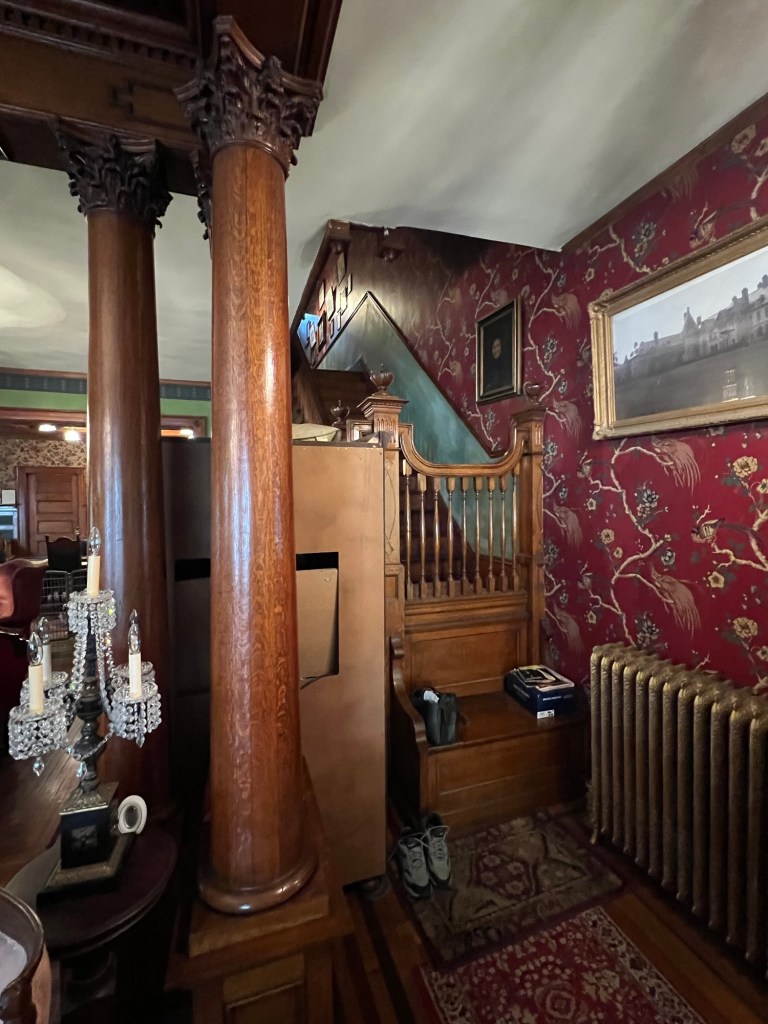
The foyer of the house as you enter the home
On the first floor of the home was the formal Living Room and Dining Room of the home. The very energetic small dogs of the owners welcomed us as well.
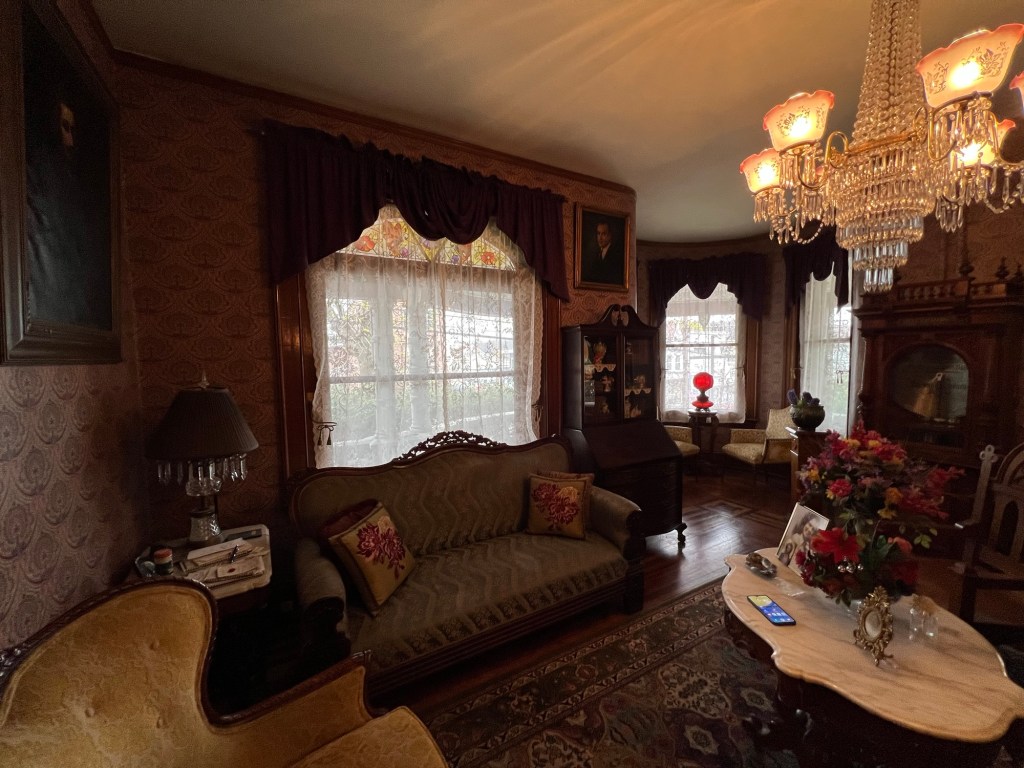
The formal Living Room
The house still has all its beautiful and ornate moldings and fixtures. The owners told us when the family moved out, robbers had come in and stole the mansions elaborate fixtures and chandeliers so they had to replace them.
The green couch is the only thing outside some family portraits and pictures still original to the house
The portrait of Mr. Smith in the Living Room
The portrait of Mrs. Smith in the Living Room
The owners had collected the most beautiful antique and period furniture over the years which decorates all the rooms. Every piece of furniture and decoration fits each room perfectly. From the elaborate window treatments to the beautifully maintained fireplace, the room may be formal but it is still very comfortable and cosy. The house from the time you walk in has a very welcoming feel to it.
The formal Dining Room
The formal Dining Room is set for formal tour and at the holidays. For today, the owners tiny dog greeted us and wanted to play. The details on these chairs were just spectacular. What a design.
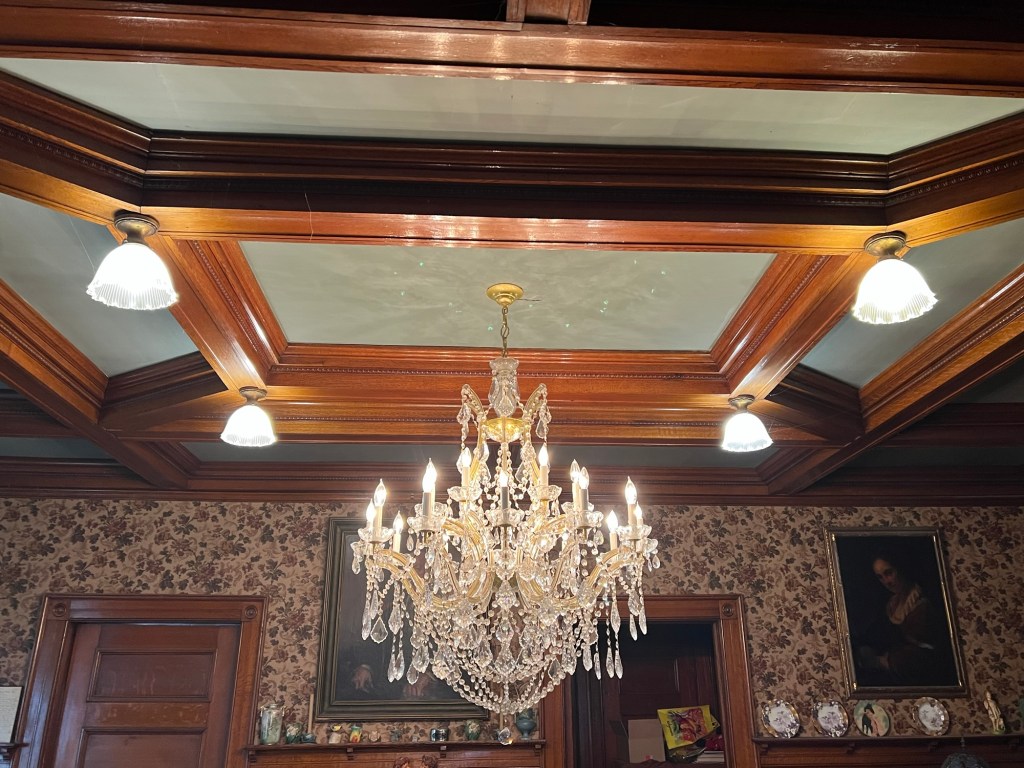
All the moldings are original to the house and all the furniture is beautifully carved and elaborate. The owners told us said the chandelier they picked fit perfectly in the room.
The Dining Room chandelier and the original wood moldings
The window seat of the Dining Room lets in lots of light
The Dining Room may be formal but with all the windows the room lets in lots of natural light and with seating around the room it still feels welcoming and less formal.
We moved from the first floor to the second floor where the library and some of the bedrooms were located.
The staircase to the second floor with the elegant carved staircase
The family portrait of Mr. Smith’s mother greets you up the stairs
In the hallway of the second floor were photos and portraits of the family members which the third generation of the family did not want and sold to the current owners. It is amazing what family will not want of their own past.
Photos of the third generation of Smith’s who moved out of the area. These are of the children and grandchildren of the Smith’s
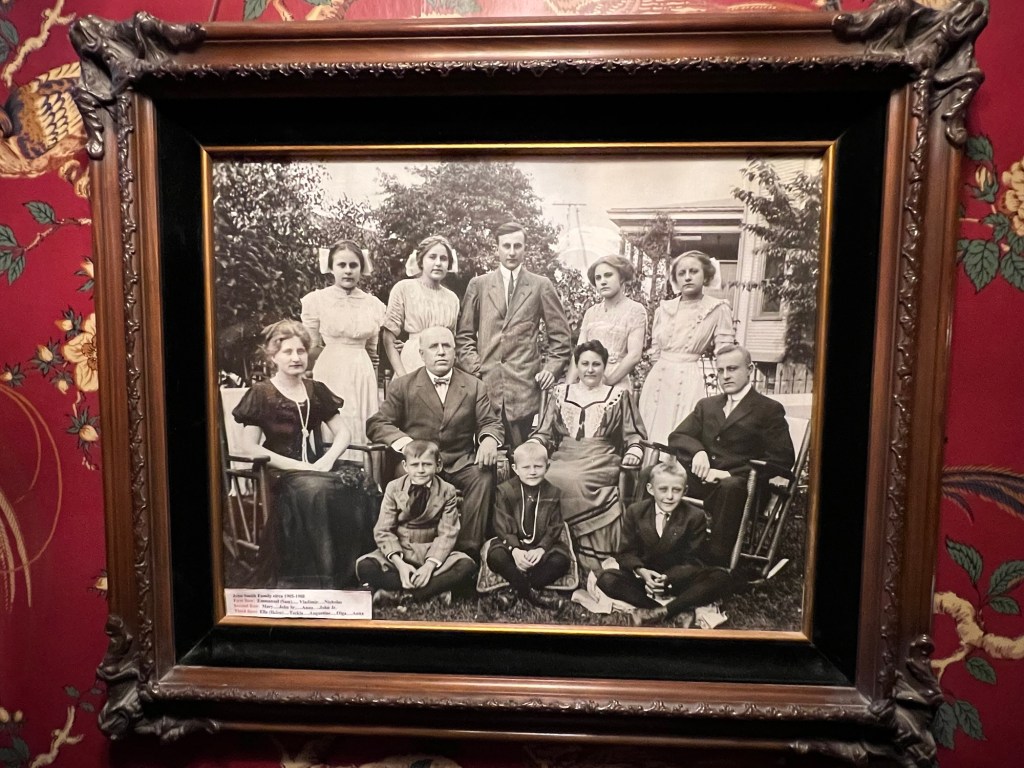
The Smith family photo in the late 1890’s
The Smith family again in the 1930’s
Our next room of the tour was the library where the owners books, paperwork and more art was located.
The second floor library
The work space, book shelves and the alcoves give the room that homey touch
The Alcove in the library looks over the City
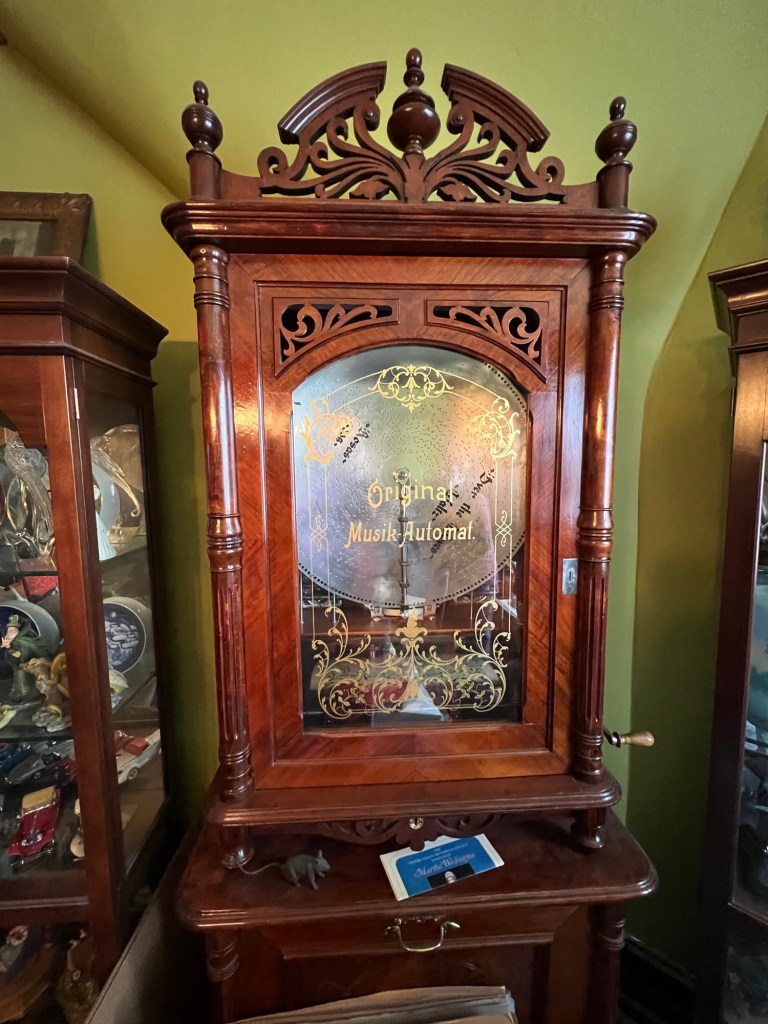
The Library with the music boxes
The owners opened this music box and played for us
The video of the music:
The Library is such a great room just to sit and read, think and relax. I could see why they love it so much.
We then walked to the third floor and we toured the Tower Room, which really has an amazing view of the city. You could see all over town from here. The inside garden in the Tower Room is so beautiful and receives so much sun.
The Tower Room is one of the sunniest rooms of the house.
This room on the third floor of the mansion has the best views of Mahanoy City and looked like Mr. Smith’s message to the town that he had arrived. You could see all over town from this window. Now the room is used as a type of greenhouse for beautiful potted plants and flowers perfect with all the sunlight. This is one of the nicest room in the house.
The Curio Room where the owners keep their collections of knick-knacks and decorative items that line the shelves and tables of the house, there was another music box. One of the owners collected these treasures over the years and the house has lots of examples of these beautiful antiques that were created before radio and records.
The Music box playing:
The music box was once in a hotel lobby
The owners explained that part of the third floor is used for storage and for their collections. There were all sorts of small sculptures and assorted Knick-knacks that decorate rooms lining the shelves. The owners had done and amazing job on the upkeep of this beautiful home.
The last part of the tour was we went outside on this sunny morning to see the outside gardens. They were impressive for such a small space. The flowers were just starting to bloom and the trees were starting to bud over this cold patch of the early Spring. This weekend was the first weekend where the weather had been nice and started to warm up.
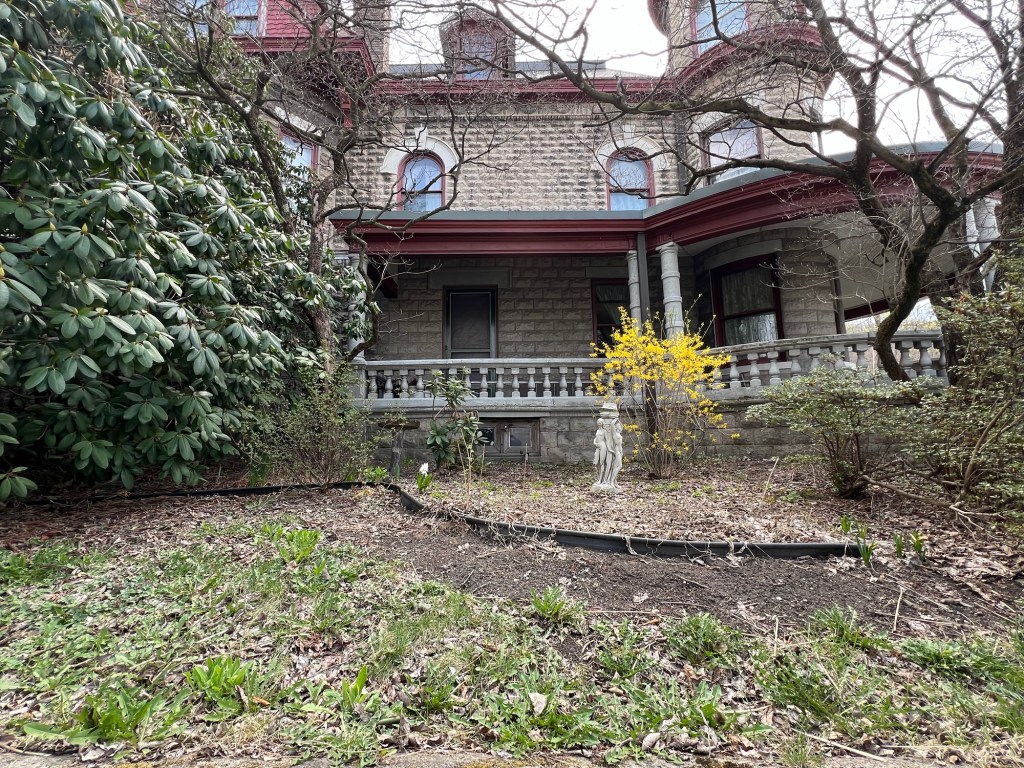
The garden in front of the house just as Spring was starting
The back walled garden and fish pound
The owners own the two homes next door to the mansion and have combined the back gardens. So they had this small fish pond stacked with Japanese fish and walls covered with vines. There is a small gazebo so that you can sit and relax outside in the warmer months.
The other side of the backyard garden just as Spring started
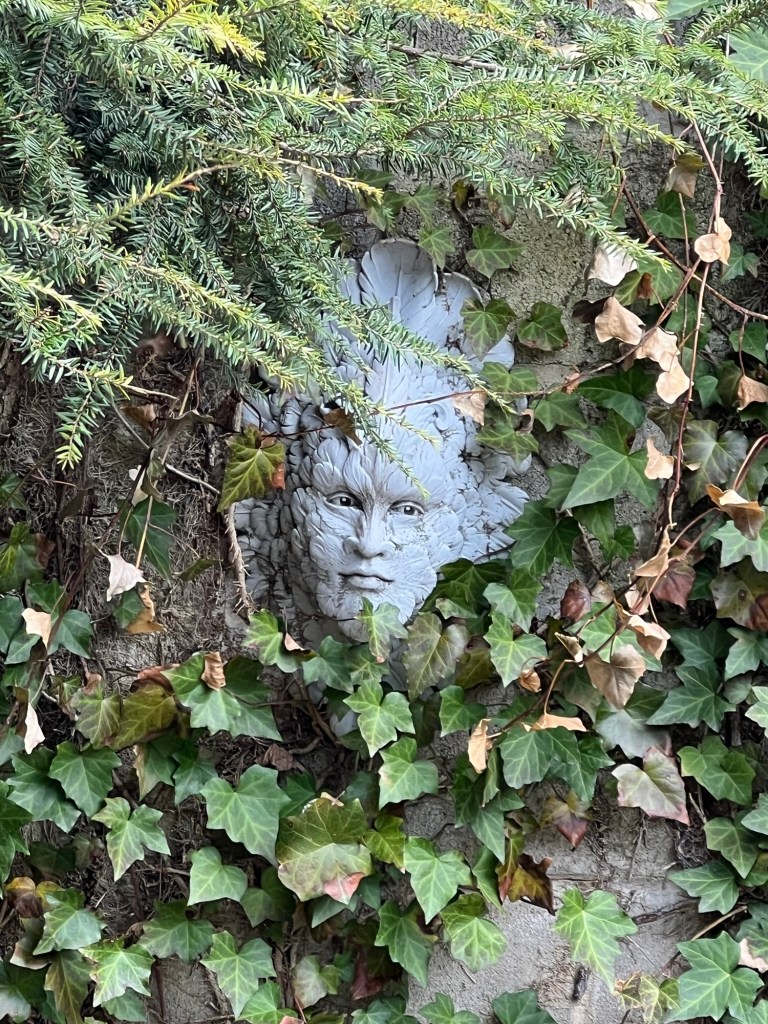
Faces pop up between the vines of the walked garden
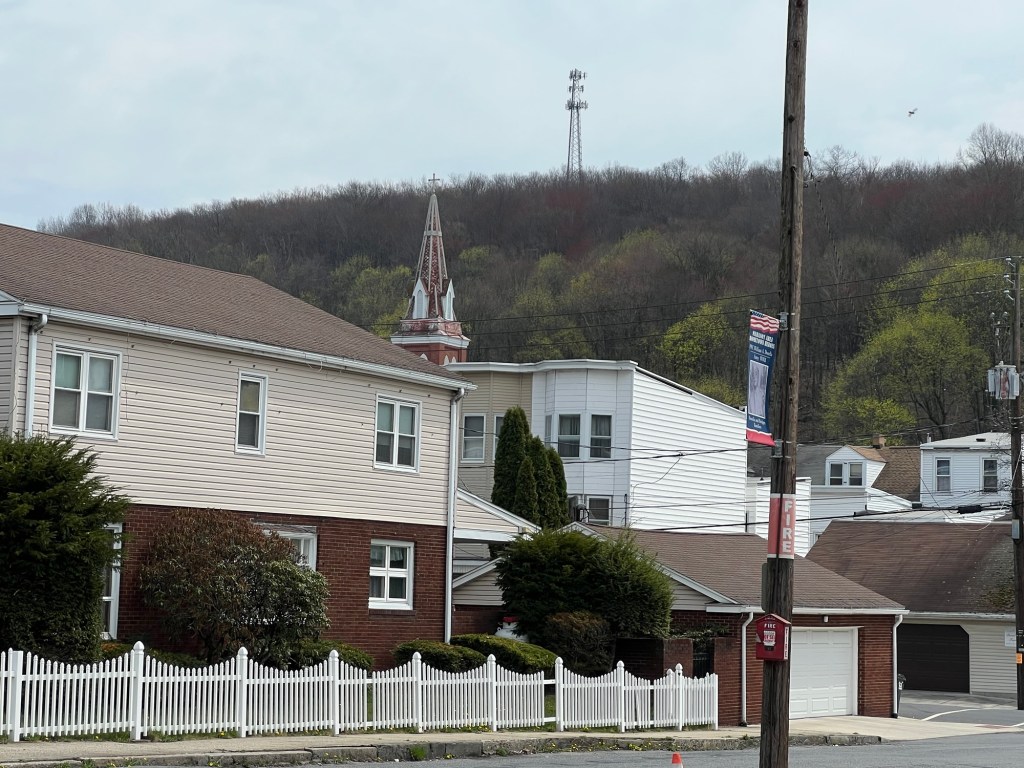
The views of the downtown from the house
The tour concluded in the gardens. The owners were explaining how much more beautiful the gardens are in the late Spring and Fall.
The tour was wonderful and the owners could have not been more gracious with their time. They also explained how they will be opening their home again to the public during the holidays during Christmas and hopefully Halloween and how I should come back to visit.
The formal tour of the Smith Mansion again is by private tour only except at holiday Open Houses and can be arranged through the owners of the home. It really is an interesting look at areas industrial past and what life in local society must have been like at that time. It also shows how things change over time and fortunes are made and lost and business and families move on.
It was a wonderful afternoon of stepping back into the past.




















 Visiting a Museum: The Unique, Unusual, Obscure and Historical