Tag: Smile! Your Visiting New Jersey!

Montville Township Museum/Montville Historical Society                                                                              6 Taylortown Road                                                Montville, NJ 07045

Montville Township Museum/Montville Historical Society 6 Taylortown Road Montville, NJ 07045

Montville Township Museum/Montville Historical Society

6 Taylortown Road

Montville, NJ 07045

https://montvillenj.org/426/Montville-Museum

https://www.montvilletwphistoricalsociety.com/museums

https://www.montvilletwphistoricalsociety.com/

Open: The third Sunday of each month 1:00pm-4:00pm

My review on TripAdvisor:

https://www.tripadvisor.com/Attraction_Review-g46639-d27079954-Reviews-Montville_Township_Museum-Montville_Morris_County_New_Jersey.html

The front of the Montville Township Museum at 6 Taylortown Road

The front sign

I stopped at the Morris Township Museum on a busy Sunday afternoon. The museum, housed in a building that once served the community as a school, post office and a government center.

Each of the cases holds all sorts of artifacts that reflects the towns developments and growth. The first case line is filled with fossils found in the area and small artifacts from the Lenape Indians.

The next case was filled with accessories from Victorian objects from jewelry to household items. Lining the walls are objects from the high school, personal family records for people to search on their loved one’s genealogy. The docents are hand from the Historical Society to answer any questions about the museum.

The History of the Building:

(from the museum website)

The building was originally “Old Schoolhouse #10”.  It was built in 1867 and occupies the site of a former 1837 school.  One of the early superintendents of Morris Canal, Mr. William Hickson , was its builder.​

Located at 6 Taylortown Road just down the street from Route 202 is a red brick building with a sign out front proclaiming it the “Montville Township Historical Museum”. Within its walls are articles, pictures, tapes, and memories that will carry you back through the years to times long past.

The front of the museum

About the Building: The building was constructed following the Civil War, in the year 1867. It was one of the first one-room schools in the area. The land was donated by the eastern district superintendent of the then-thriving Morris Canal, one of the many waterways then in existence to help promote trade and travel in America. William Hixson gave the land to the town for public purposes, with the stipulation that it could be reclaimed if used for a purpose with which his family disagreed.

The historic sign of the school

Reconstruction: The building began serving Montville as a one-room school heated by a potbellied stove. It also served as an auxiliary to the local Methodist Church. It became the gathering place for the local temperance league in the 1890s, and was the scene of many temperance meetings in the town.

The gardens of the front the museum

The historical collection of the museum

The history of the property:

(from the Museum website)

Entrance: Today, as you enter the museum, you walk into an entrance foyer. Probably once used to hold the boots and coats of school children, it is now an entrance hallway. The door to the main room is straight ahead, and upon entering, you step into history.

Building Uses: Forty-four years after being erected, it changed from a school to the center of political activities as the town hall. It was the town hall until 1939, when it became the town’s post office. It served as such until 1961, when a post office was constructed close by (Taylortown Road and Route 202).

Making it a Museum: After the postmen moved out of the building, the township considered selling the property to a business concern but the original Hixson agreement was recalled, and the building remained unused – until the celebration of New Jersey’s 300th Anniversary.

At that time, a Tercentenary committee was founded in the Township to help celebrate the anniversary and the Committee decided to make the establishment of a museum its main project. Armed with donations from local residents, committee members renovated the building and reopened it in 1963 as a museum.

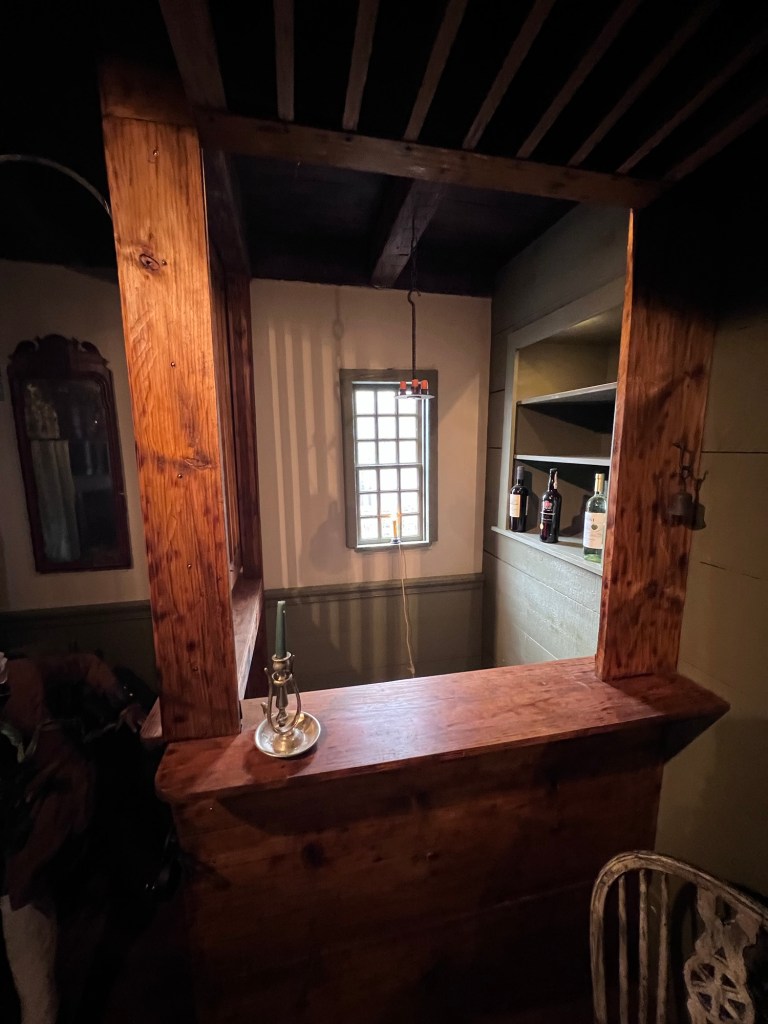
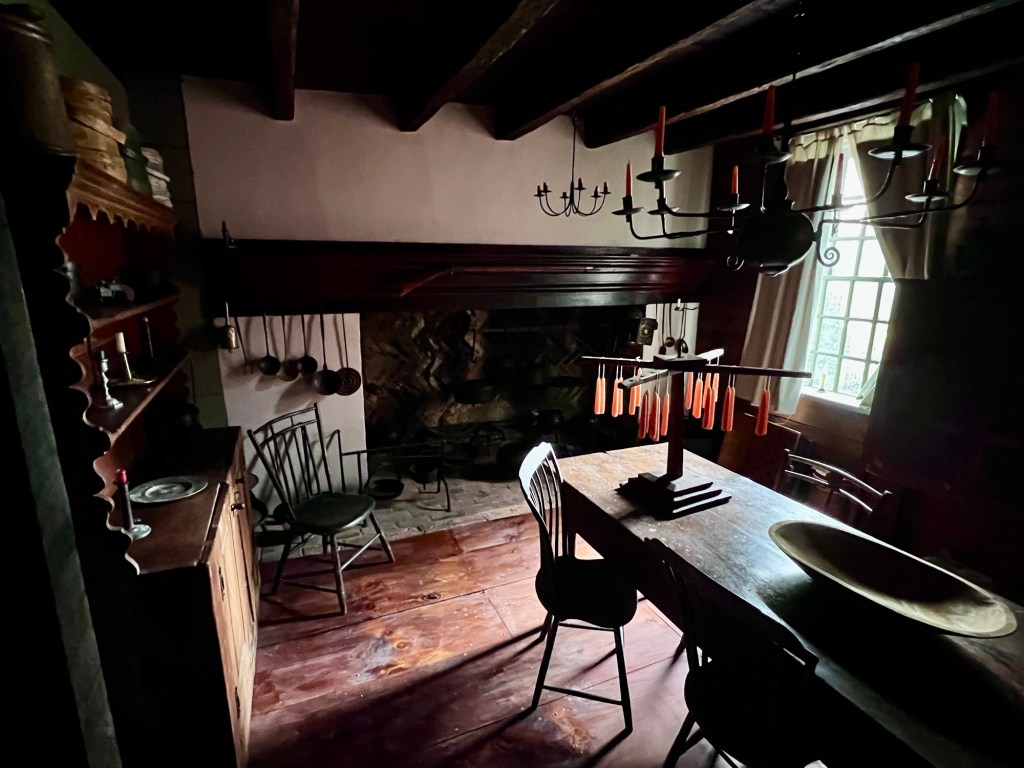
The inside of the museum

The part of the canal that exists around the museum

Around the corner from the museum is the corner from where the Morris Canal lock was located which was on display at the museum.$

The area around where the Morris Canal was located

https://en.wikipedia.org/wiki/Morris_Canal

https://www.morriscanalgreenway.org/

I traveled further down the road to see what is left as the canal that has since grown over. Before railroads and cars, the canal system is where goods and services from the interior of the state to the cities such as New York City and Newark.

The sign marking the site of the canal and the lock system

The lock location

The grown over canal system

It is an interesting museum whose artifacts represent the three communities in Montville township.

The Garrett Family Preserve at Cape Island Creek 801 Wilson Avenue                                                       Cape May, NJ 07204

The Garrett Family Preserve at Cape Island Creek 801 Wilson Avenue Cape May, NJ 07204

The Garrett Family Preserve at Cape Island Creek

801 Wilson Avenue

Cape May, NJ 07204

(908) 879-7262

https://www.nature.org/en-us/get-involved/how-to-help/places-we-protect/garrett-family-preserve-at-cape-island-creek/

My review on TripAdvisor:

https://www.tripadvisor.com/Attraction_Review-g46341-d7190574-Reviews-Garrett_Family_Preserve-Cape_May_Cape_May_County_New_Jersey.html

While I was searching for the Cape May Maritime Museum, I made a detour into a parking lot and came across the Garrett Family Preserve

The sign that welcomes you to the park

Visiting the Preserve:

(from the Cape May Visitor website)

The Nature Conservancy protects the 180-acre Garrett Family Preserve situated between Seashore Road and Cape Island Creek, offering a tranquil setting for walking, picnics, painting, biking, and observing nature.
The preserve offers six trails ranging from 0.2-0.5 miles in length, and a two-mile perimeter loop along the forested edge–four miles in total. Explore year-round on foot or by bicycle. Sights vary by season, with bird migration peaking in the spring and fall, and the wildflower field blooming from May through July. Beginning in late August into the fall, Monarch butterflies stop here to feed before their journey south.
Preserve amenities include a mobile bird blind, welcome kiosk, shaded pavilion with picnic tables, benches and picnic tables along the trails, and three adjustable art easels. From November 1st to March 1st, leashed dogs are welcome. Because this is a preserve, the Nature Conservancy does not provide trash receptacles. Be sure to take anything you’ve brought with you.

The size of the preserve

The history of the Garrett Family

History of the Preserve:

(From the Nature Conservatory website)

Originally slated for development, TNC acquired the property in 2000, as the preserve offered an unusual opportunity to manage a significant piece of land for migratory songbirds, whose stopover habitat, especially at the southern tip of the peninsula, has been all but wiped out.

In 2013, the generosity of the Garrett family enabled TNC to further protect Cape Island Creek for future generations by acquiring crucial land, improving and stewarding habitat, performing coastal research and installing enhanced visitor amenities.  

After reading some of the history of the preserve, I decided to take a walk down the paths. I ended up walking down several paths that took me through woods and many natural gardens. I could see by how dry everything was how the lack of rain was affecting the preserve.

The pathways leading to different parts of the preserve

Following the pathways through the preserve

My first stop was the picnic area and rest stop

The Insect Hotel

The Insect Hotel

The description of the insect hotel

I thought this was an interesting concept of creating a place for insects to have a breather. It is a place of reproduction and in helping pollinate the preserve.

The fields of plants and wildflowers that make up the preserve

The flowering plants and wildflowers in the fields

Each of the paths took me through different parts of the preserve that were wooded or with meadows or an array of wildflowers that attracted birds, butterflies and bees.

The batches of wildflowers in the meadow

The Salt Marsh part of the Preserve was filled with more wildflowers that had bees and butterflies swarming them.

The Salt Marsh Habitat

The sign for the Salt Marsh Habitat

The the pathways though the meadows

The fields of flowers and plants in the marsh area

Th e next section of the preserve I visited was the Wildflower Meadows

The Wildflower Meadows in the late summer

The Wildflower Meadows paths

As I left this part of the preserve, I took many paths around the park lands. There are all sorts of fields of flowers and woods to shade the way during touring the preserve.

Going on the different trails throughout the preserve

I walked down the paths to the Bird Habitat area

The golden rod flowers attract all sorts of bees and butterflies

Flowering Honey Suckle

Beautiful flowering plants in the woods area

The colorful paths of flowers that lined the Bird Sanctuary

This all led to the end of the trails and a wrap up of how the pollinators work. How the plants, insects and birds play a role in nature.

The last thing I saw at the preserve was this butterfly sculpture by the parking lot

The history of the Garrett family

The park changes its complexity with each season. What I noticed at the end of the summer with no rain is how dry the fields were and the trees were changing colors early because the lack of moisture.

It will be interesting to see the preserve in the Spring and early Summer in the future. It was a nice walk through the preserve.

Union Cemetery                                                                   316 Darlington Avenue                                             Ramsey, NJ 07446

Union Cemetery 316 Darlington Avenue Ramsey, NJ 07446

Union Cemetery

316 Darlington Avenue

Ramsey, NJ 07446

(291) 327-3879

https://www.findagrave.com/cemetery/1680177/union-cemetery

https://www.countyoffice.org/ramsey-union-cemetery-ramsey-nj-4cf/

Open: Sunday-Saturday Dusk to Dawn

My review on TripAdvisor:

The Union Cemetery of The First Presbyterian Church of Ramsey, NJ

History of the Cemetery:

(from the church website)

Union Cemetery is a religious cemetery located at 316 Darlington Ave. in Ramsey, NJ. The cemetery is owned and managed by the First Presbyterian Church in Ramsey. As a religious cemetery, the cemetery is restricted under New Jersey state law and is not open to the general public. Only members of a Christian church and their immediate relatives may be interred at the cemetery.

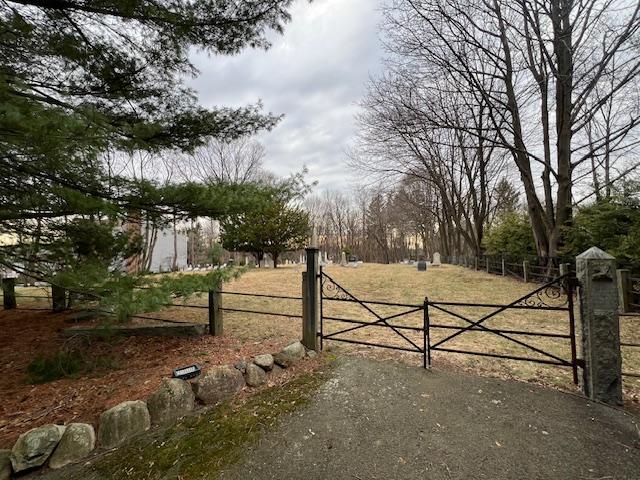
The historic cemetery from the road. To the left is the oldest part of the cemetery

Entering the cemetery from Darlington Avenue

The newer part of the cemetery is to the right of the driveway

I was visiting the Union Cemetery in search of veterans of the Revolutionary War and found an interesting cemetery with a deep history in Bergen County. Many first families of Bergen County are buried here and veterans not just from the Revolutionary War but the Civil War all the way up to today are buried in this active town cemetery.

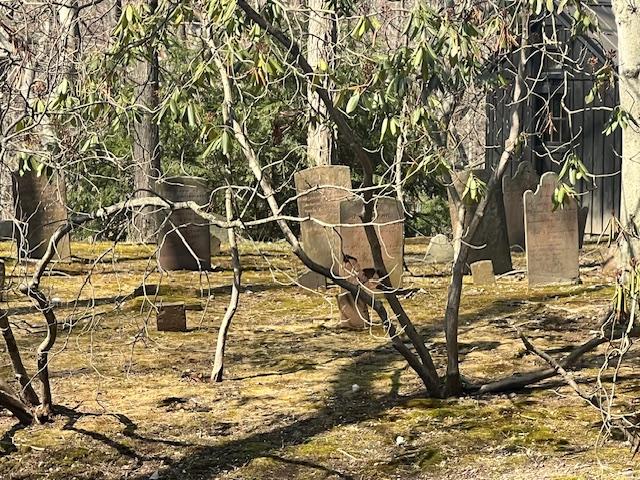
The older part of the cemetery is to the left of the driveway. These tombstones are from the early 1800’s.

The older part of the cemetery dates back to before the Revolutionary War

Many of the early family plots are located here with well known names like Hopper, Christie, Ackerman and the town’s namesake, the Ramsey family, whose family plot is in the oldest section of the cemetery.

The grave of Hannah Jane Ramsey in the Ramsey family plot

Part of the Ramsey family plot

The Ramsey family plot

The Union Cemetery to find the graves of Revolutionary War veterans and found some but not all of them. The tombstones are so worn after over two hundred years that they either had disappeared or were so worn you could not read them.

The oldest section of the cemetery where many veterans both from the Revolutionary and Civil War are buried. It was hard to read many of the tombstones. Some the veterans were buried in their family plots, others with their spouses separately. The burials were concentrated in the oldest part of the cemetery. Most of the veterans have been honored with American flags.

The first tombstones I found were from Ackerman family members

https://www.njgsbc.org/files/familyfiles/g0/p10.htm

The grave of veteran John Ackerman

The grave of veteran James Ackerman

I could not make out the name of this Ackerman member but I figured it was one of the brothers wife

The grave of veteran John P. Post

The Post family history:

(from the Saddle River Historical Society website)

The Post family was of Dutch descent. The first Post was a soldier, who came here to protect the new settlements along the Hudson. They soon turned to milling; the name Post is attached to several mills in Bergen and Rockland Counties. Joseph Post, born in 1775, built a mill on the west branch of the Saddle River about 1800. He also opened a tavern and store on what is now West Saddle River Road, just north of Parker Place, across from the entrance to the mill.

The graves of members of the community at that time including the grave of John P. Post

The grave of veteran William Vanderbeck

The grave of a member of the Van Brock family, who was married to James Ramsey

I was not too sure who this was but by the veteran’s flower I am assuming the grave of veteran John Van Blarcom

The grave of Hannah (I believe Ackerman)

The Christie family plot

The Hopper family plot

The Hopper Family history:

(from the Saddle River Historical Society website)

The Hopper family is one of the oldest of European descent in Bergen County. Andries Hopper came from the Netherlands to New Amsterdam in the 1640’s. His widow and her son Hendrick were in the Polifly area (Hackensack) by the late 1600s. There was land to be had in the unsettled areas of what became Bergen County. Hendrick’s two oldest sons, Andries and Jan settled in the HoHoKus area (part of Paramus) around 1712. The Hopper name appears on many old homes and mills on early maps of the area. It was two of Andries’ children, Abram and Jan, who settled sometime around 1730 along the Saddle River in what is now Upper Saddle River.

Stone Harbor Bird Sanctuary                                         11400 3rd Avenue                                                                Stone Harbor, NJ 08247

Stone Harbor Bird Sanctuary 11400 3rd Avenue Stone Harbor, NJ 08247

Stone Harbor Bird Sanctuary

11400 3rd Avenue

Stone Harbor, NJ 08247

(609) 368-5102

https://www.facebook.com/p/Stone-Harbor-Bird-Sanctuary-100064916130839/

Open:Sunday-Saturday 24 Hours

Admission: Free

My review on TripAdvisor:

The sign welcoming you

The History of the Stone Harbor Bird Sanctuary:

(from the park’s website)

The Stone Harbor Bird Sanctuary is a wonderfully preserved microcosm of what the barrier islands of New Jersey looked like hundreds of years ago.  As you walk along Sanctuary paths, it is easy to imagine the Lenni-Lenape Indians wandering through the maritime forest, crossing wind swept sand dunes, past groves of white cedar, birch, pine, holly and sassafras trees, taking time to drink water from a spring fed freshwater pond and then, fishing in the salt water meadows surrounded by herons and songbirds.

As early as the 1870’s and 1880’s, the Sanctuary area was recognized as a “veritable paradise of birds” for ornithologists.  The primary attractions were Little Blue Herons, Black-crowned Night Herons, Green Herons and egrets.  Once the 96th Street Bridge opened in 1911, those who wanted to study, hunt or collect the eggs of birds no longer had to walk across four miles of marsh.  Easy access to the heronry was a boon to birders but also a threat to birds whose plumes and eggs were valued.

In 1941, the Stone Harbor Bird Club was organized in the home of Lillian R. Leuallen.  The Bird Club was renamed in 1946 as the Witmer Stone Club to honor Witmer Stone, one of the first ornithologists to document birds in the Sanctuary area.  With considerable foresight, the Witmer Stone Club proposed early in 1947 that the Borough of Stone Harbor establish a “sanctuary”.  In October of 1947, the Borough Council passed Ordinance #208 which preserved 31 acres of land as a wildlife sanctuary.  Subsequent to expert study in 1961 which demonstrated that no birds were nesting on the beach side sanctuary acreage, the Stone Harbor Borough Council sold ten acres to the east of Second Avenue.  The remaining 21 acres bounded by Second Avenue to the East, Third Avenue to the West, 111th Street to the North and area between 116th and 117th on the South represents the Sanctuary as we know it today.  The Sanctuary remains one of the few bird sanctuaries in the world that are completely within municipal boundaries.

One can’t overstate the foresight and commitment of the residents and Borough officials to conservation as well as the preservation of open space and wildlife in 1947, 1961 and every year since.  This commitment was reinforced by the United States Park Service in 1965 when it designated the Sanctuary as a National Natural Landmark.

Over the years, the Sanctuary has been home to thousands of birds and visited by more than a million people representing all fifty states and most countries in the world.  It has been estimated that Sanctuary visitors spend more than $5 million each year, locally. Although some like the New York Times in 1960 glorify the Sanctuary, referring to it as “The Everglades of New Jersey”, Stone Harbor residents think of the Sanctuary as a symbol of the character of this quiet, single family town which respects the nature and wildlife that surrounds them while placing a premium on livability, aesthetics and serenity.

The front of the sanctuary from 3rd Avenue

I took a walk when I was in Stone Harbor through the town’s Bird Sanctuary to hopefully view some rare birds. While I did not see much, I heard a lot of singing and scrawling as I walked the path through the trees.

The front gardens in the sanctuary

The gardens were still in bloom in the late Summer and many colorful wildflowers attracted all sorts of butterflies and other insects.

The sign greeting you about the experience

The front path of the sanctuary

You head over the bridge to the paths that take you into the woods

Walking down the pathways through the woods

The path takes you into a deep wooded area in the middle of the town and by the time you get to the middle of the path, you can hear the mating calls of many birds. It’s funny to note that we are a couple of blocks from the shore.

Walking through the pathways

Reaching the middle of the beach woods

The middle of the bird sanctuary noisy with bird calls

Walking back through the pathways through the roads

Touring through the Bird Sanctuary does not take a long time, but offers relief from a busy shore town.

Video on the park: