Salem County Historical Society
83 Market Street
Salem, NJ 08079
(856) 935-5004
http://www.salemcountyhistoricalsociety.com
info@salemcountyhistoricalsociety.com
https://www.salemcountyhistoricalsociety.com/
https://www.facebook.com/Salem-County-Historical-Society-127149567413641/
Open: Sunday-Monday Closed/Tuesday-Saturday 12:00pm-4:00pm
Admission: Donation Suggestion
TripAdvisor Review:
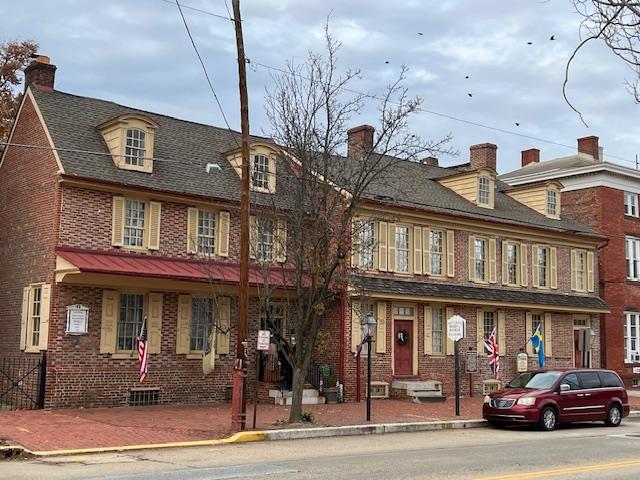
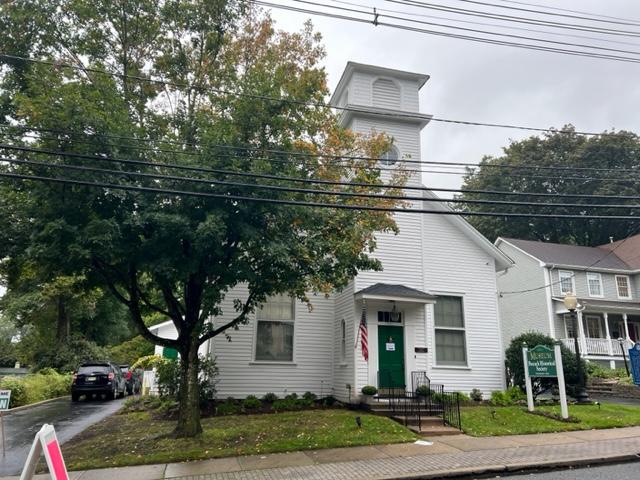
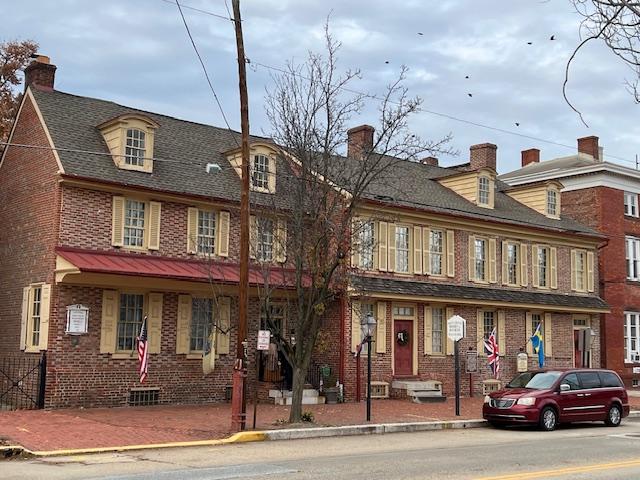
The Salem Historical Society at 83 Market Street in Downtown Salem, NJ.
History and information on the Salem County Historical Society:
(from the museum pamphlet)
The Salem County Historical Society was founded in 1884 and has grown over the last century from generous donation from the community. It has over 10,000 objects in the collection that include fine arts, textiles, Native American artifacts and a variety of material culture artifacts.
The Society maintains extensive museum and library collections related to the region’s heritage. Our exceptional collection includes furniture, paintings, textiles, glass, china, silver, documents, tools and other family heirlooms. This collection enables us to graphically convey to visitors an understanding of the work, play, society and lifestyles of local inhabitants from generations past.
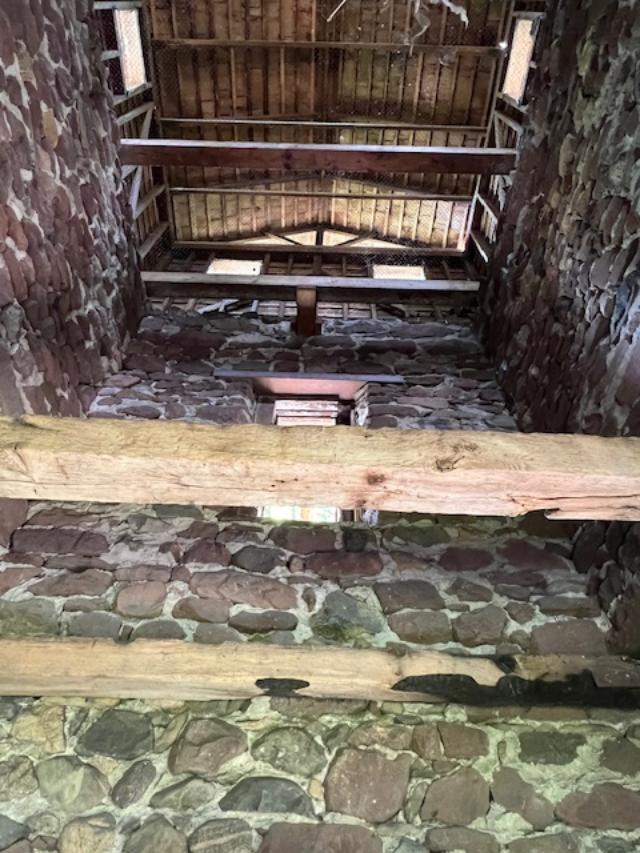
(The Society’s campus houses three other buildings: the Stone Barn, the John Jones Law Office ( a hexagonal structure housing New Jersey’s first law office) and the Log Cabin Educational Center).
I came across this little ‘gem’ when walking around downtown Salem, New Jersey on my Christmas break back in 2019. This historical society put some of the musty ones I have visited to shame. It is so beautifully set up and maintained. It also has some great exhibitions and was so nicely decorated for the Christmas holidays. It is a ‘must-see’ when visiting Southern New Jersey.
Museum logo
The Salem County Historical Society is housed in three interconnected historic houses, the centerpiece of which is the Alexander Grant Mansion (1721).
In June 2022, I finally got to return to the museum after COVID had closed it for months. The museum had been refreshed with new displays and more interesting artifacts mounted all over the museum.
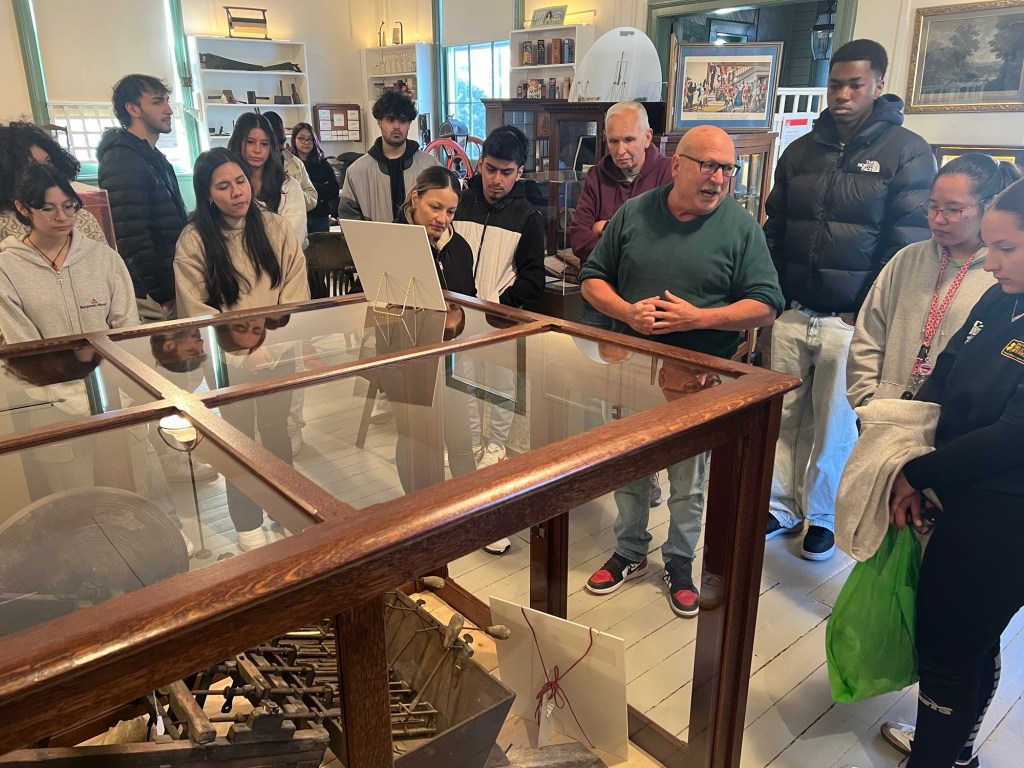
I was lucky that it was quiet that afternoon and I was able to one of the members take me on a personal tour of the museum. He explained to me that during the pandemic since they were closed they were able to work on the displays and update and refresh the exhibitions. This is the one thing I like about the Salem County Historical Museum is that it is not a musty mish-mosh of displays. Displays are well thought out and explained to the public.
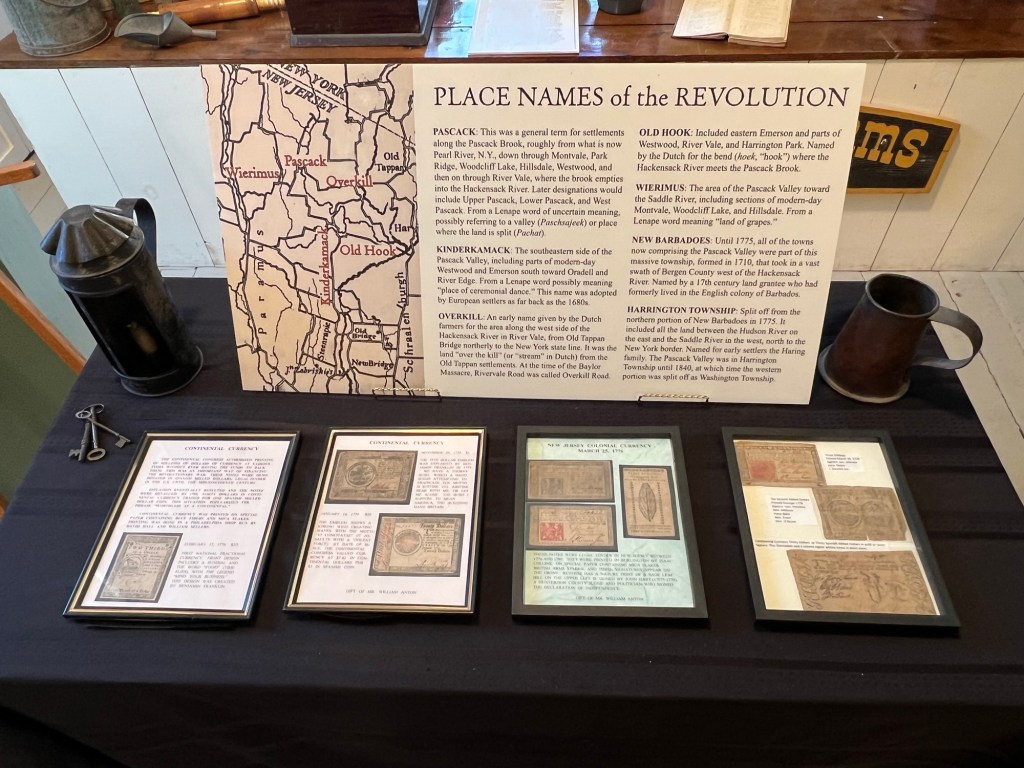
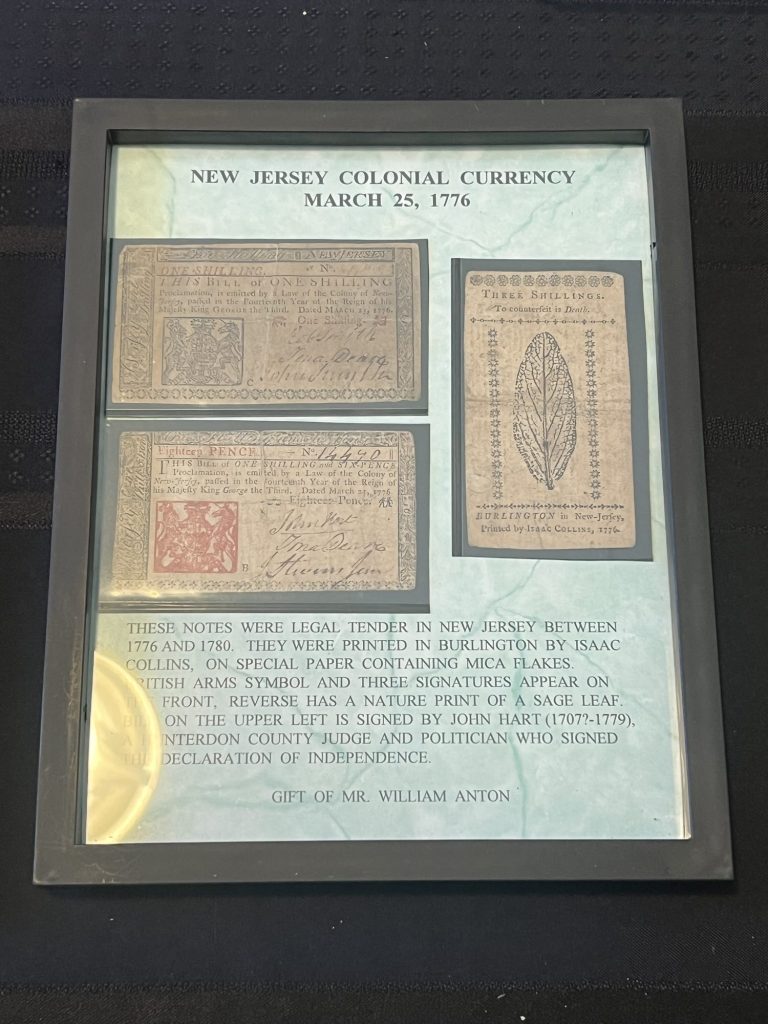
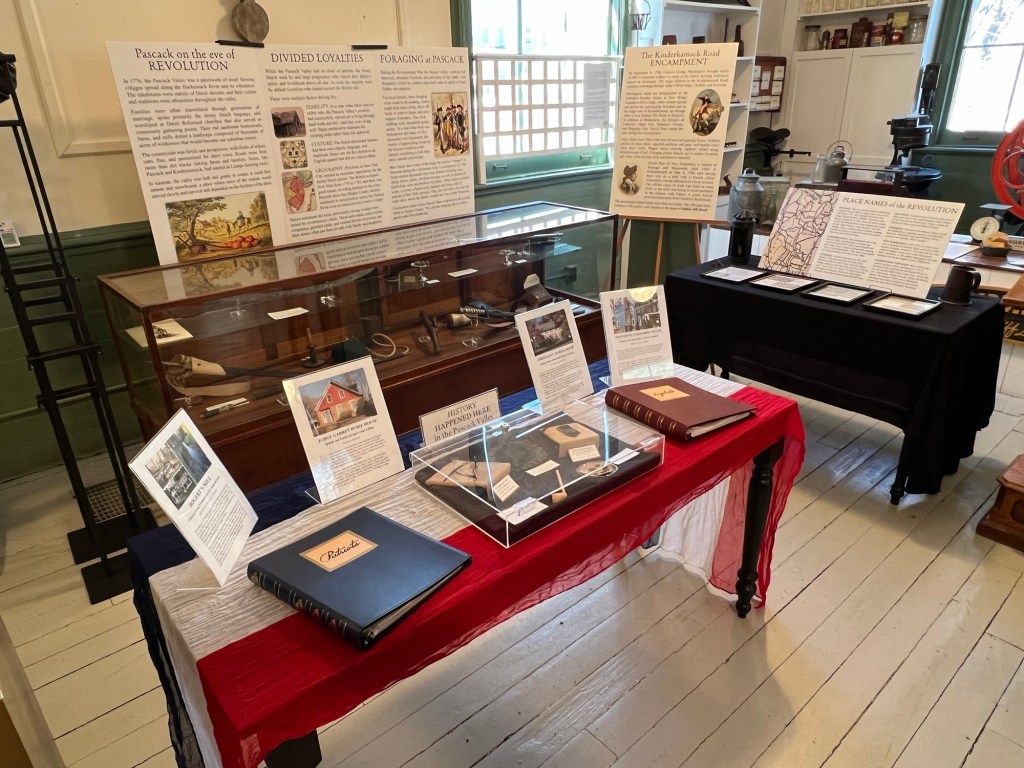
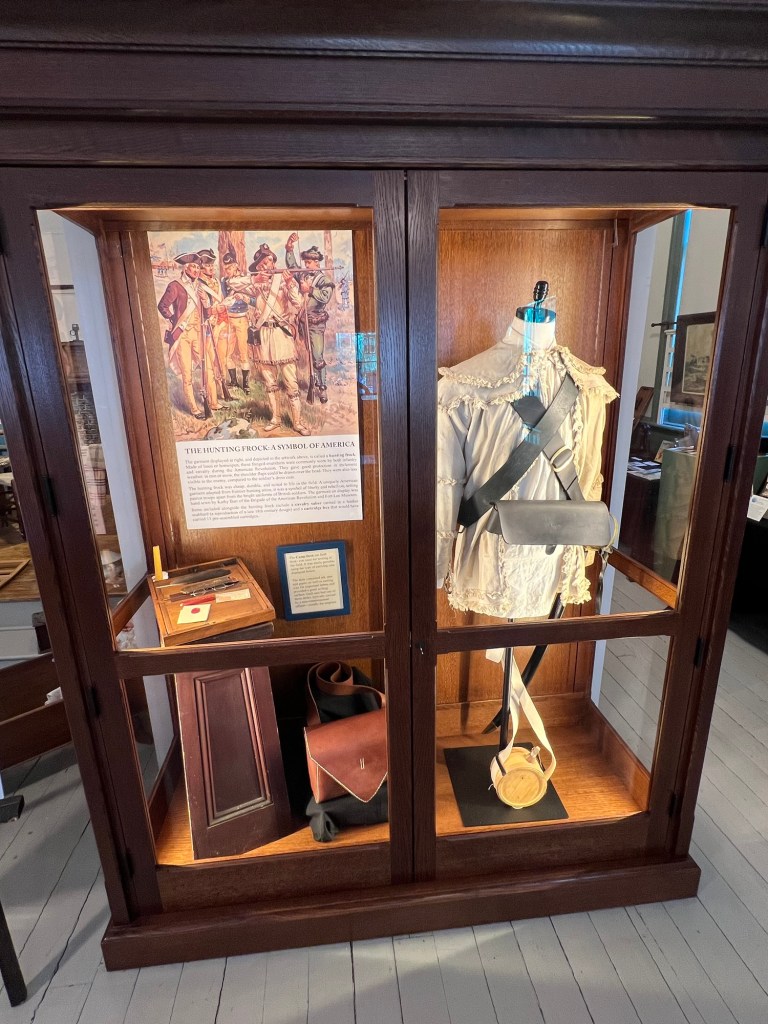
We started in the front room with a display of Revolutionary War memorabilia. Here you will see a ring with a lock of George Washington’s hair, the shoe buckles of General William Hancock, who was a prominent resident of the town who fought in the Revolutionary war.

Various objects from the family and the war years are displayed here.
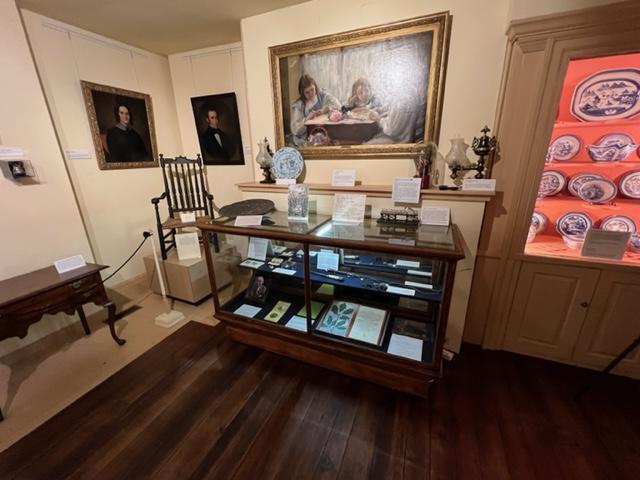
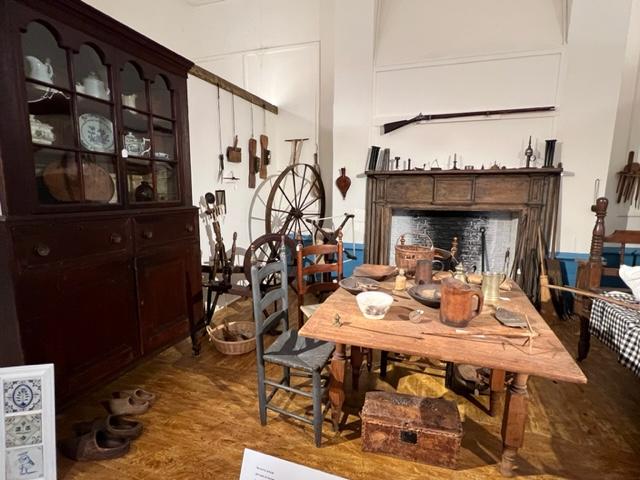
Off to the main part of the museum and the one section of the museum that stuck out to me when visiting the first time was The Keeping Room, the original part of the house that was built in the early 1700’s. The large hearth was just recently opened from what I learned from the tour and was once the center of the original home due to a place of cooking and heat.
During the Christmas holiday season, this room was decorated with garland and a Christmas tree, which would not have fit the time period but still made a festive environment for the room. Here kitchen and home wares are displayed where the family would have concentrated their domestic chores. Cooking and serving items were displayed along with a spinning wheel to make clothes.

The Keeping Room at the Salem County Historical Society

The Keeping Room at Christmas time

The Keeping Room at Christmas time
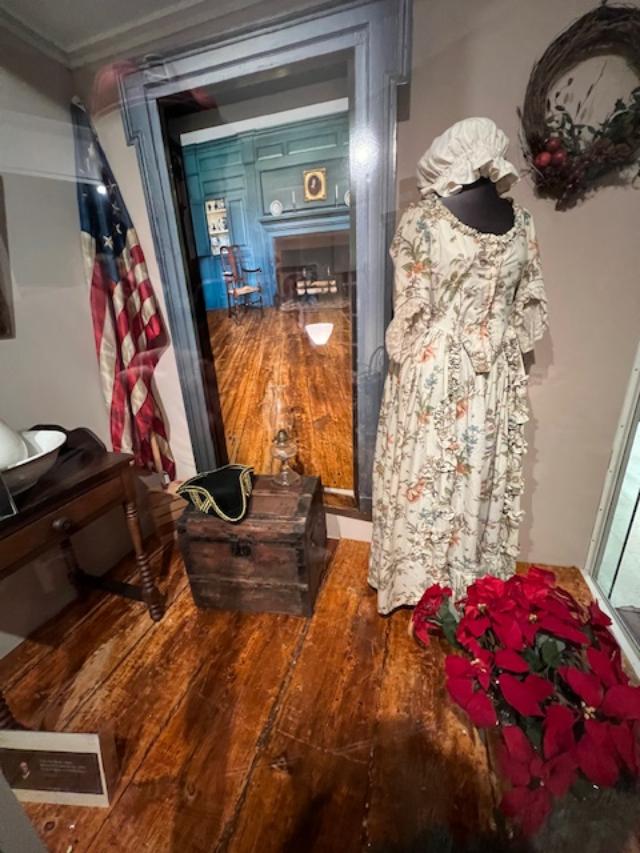
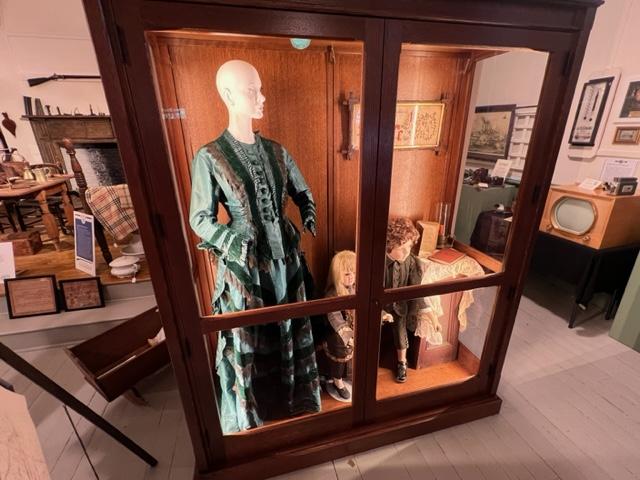
The main room displayed many more pre and post-Revolutionary War items including home furnishings of desks, wardrobes and grand father clocks. The most interesting item that I saw the Inauguration dress of local prominent resident, Sarah Hancock Sinnickson, who was married to Thomas Sinnickson, whose family helped found Salem, NJ. The dress is prominently displayed and it was interesting to see an actual item that was on display the evening of that ball. If it could talk.
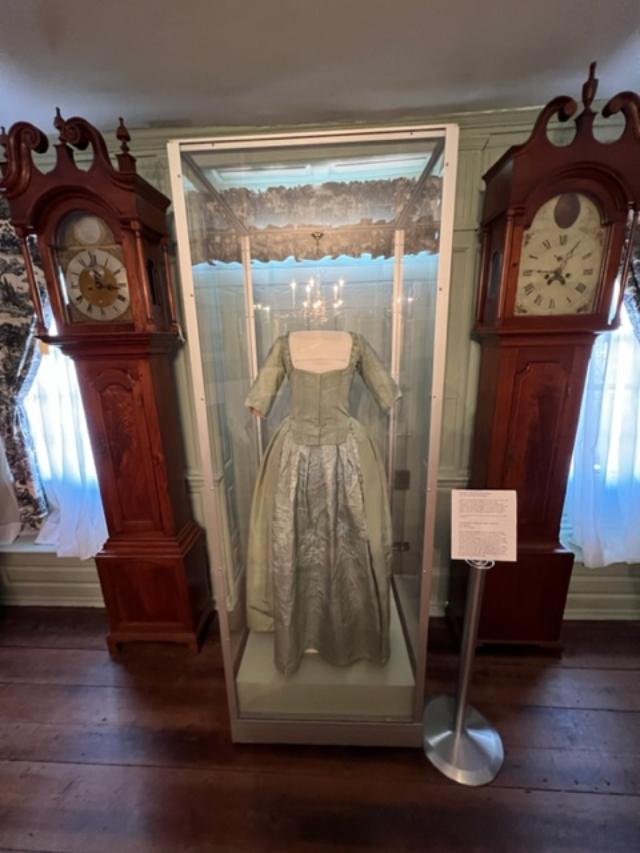
The historic dress of Sarah Hancock Sinnickson that she wore to George Washington’s Inaugural Ball

The Grandfather clocks and Sarah Hancock Sinnickson dress information
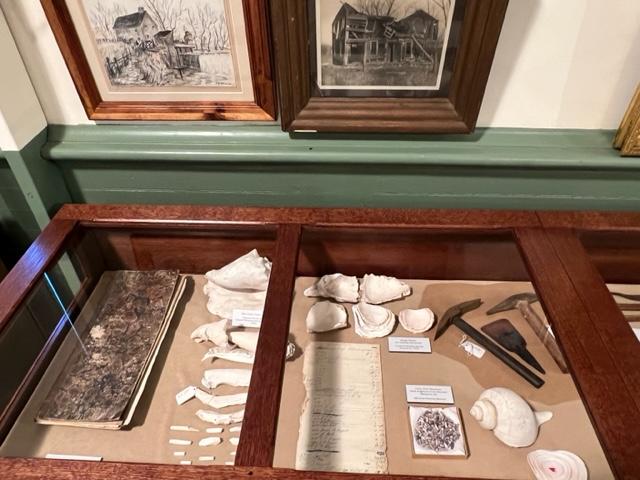
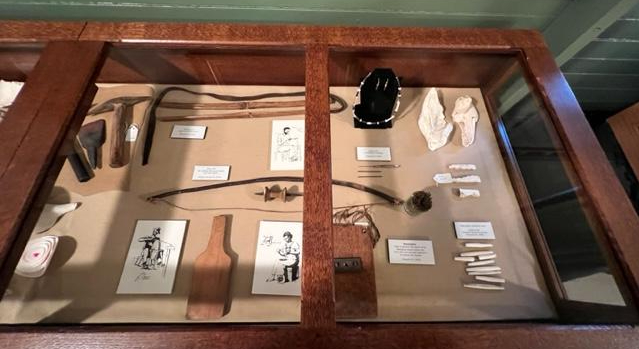
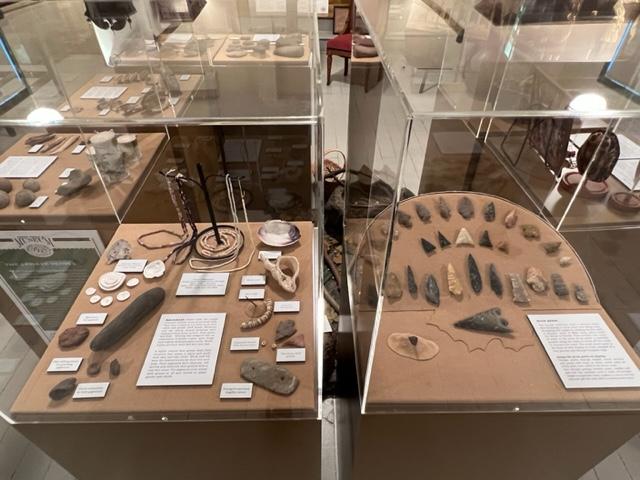
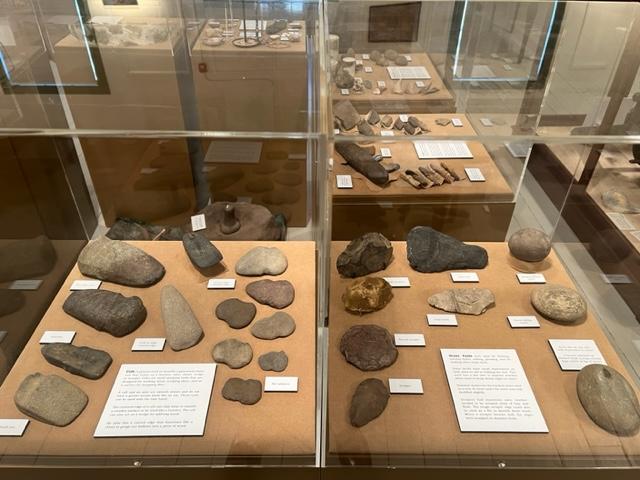
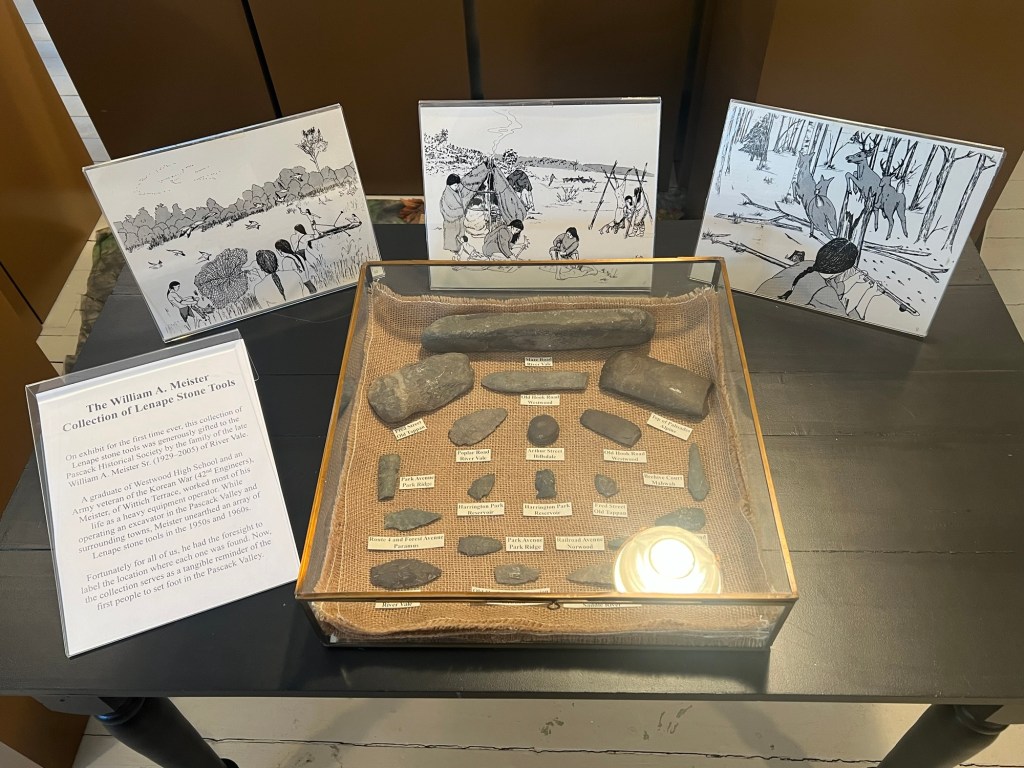
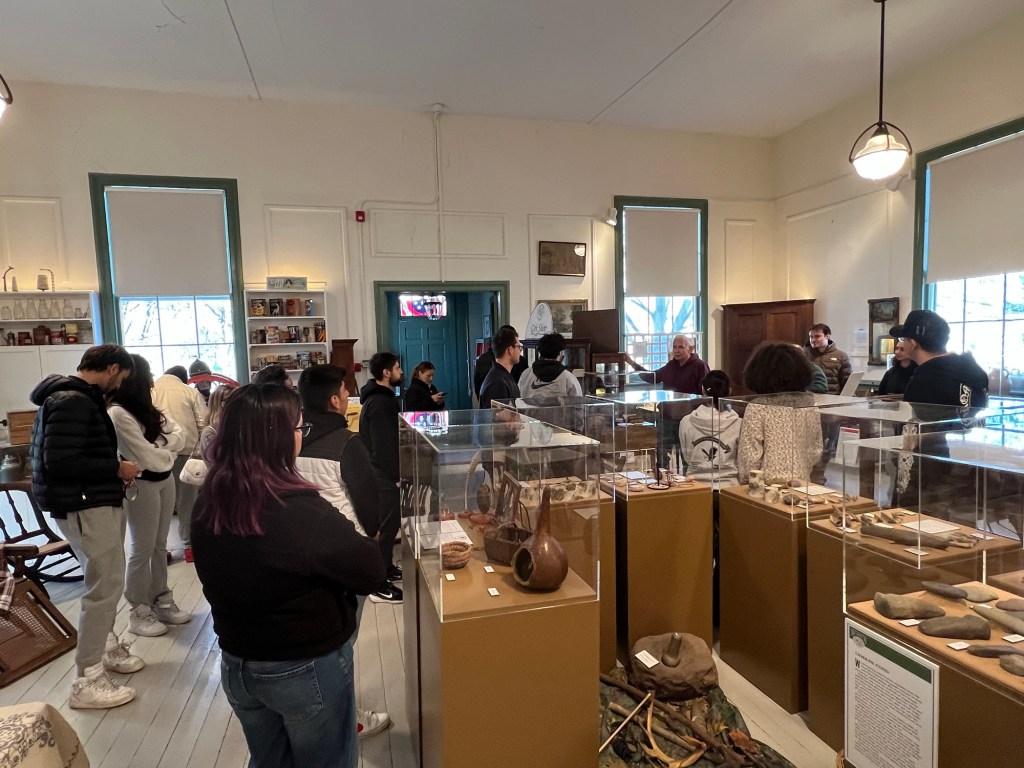
The next two rooms have displays of local materials. One room was dedicated to the local Native American population. There was a large display of arrowheads, hunting spears, cooking materials and grinding equipment to break down corn and wheat for baking. Each piece was displayed related to its use and it was fascinating to see how a society showed its sophistication by creating meals from the use of specialty styled sticks and rocks.
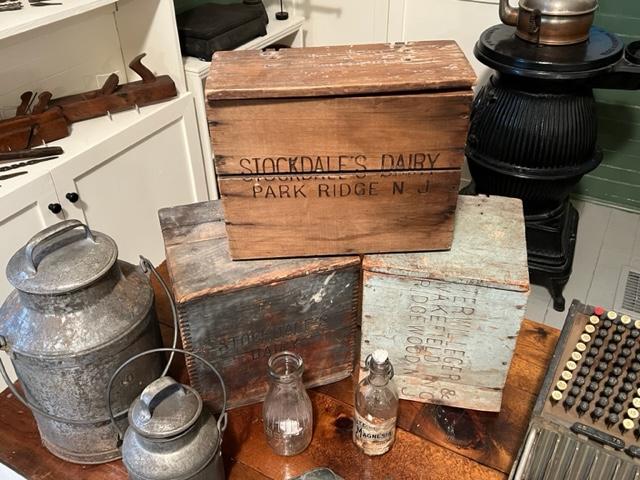
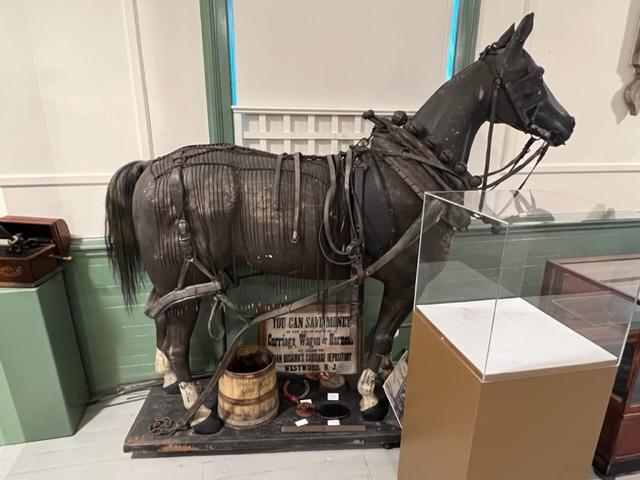
In another room was a display of early ice cream manufacturing including the delivery buckets and carts.

Several families were known for the ice cream making including the local Bassett family whose relatives still make ice cream for their store in the Philadelphia Reading Market and packaged for all over the world.
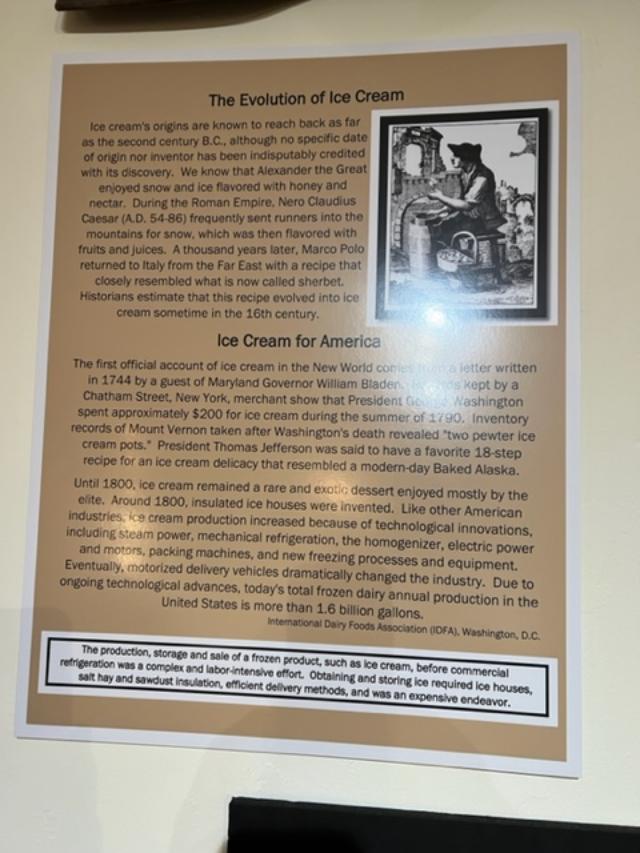
Evolution of Ice Cream

History of the Salem Ice Cream industry
Their first flavor: Tomato. The tour guide explained how companies would color their buckets differently so you knew where the ice cream came from.
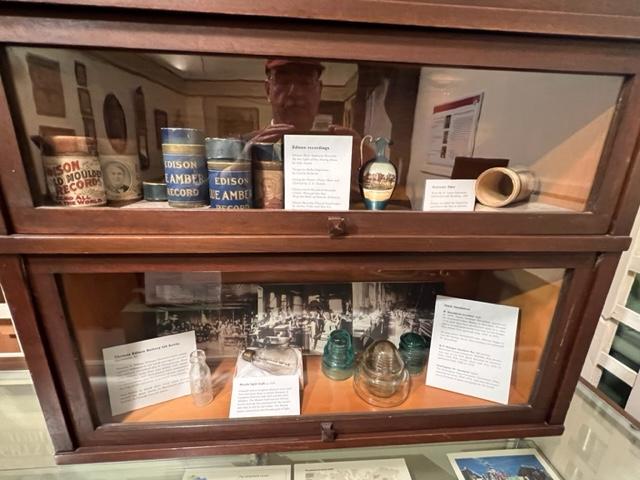
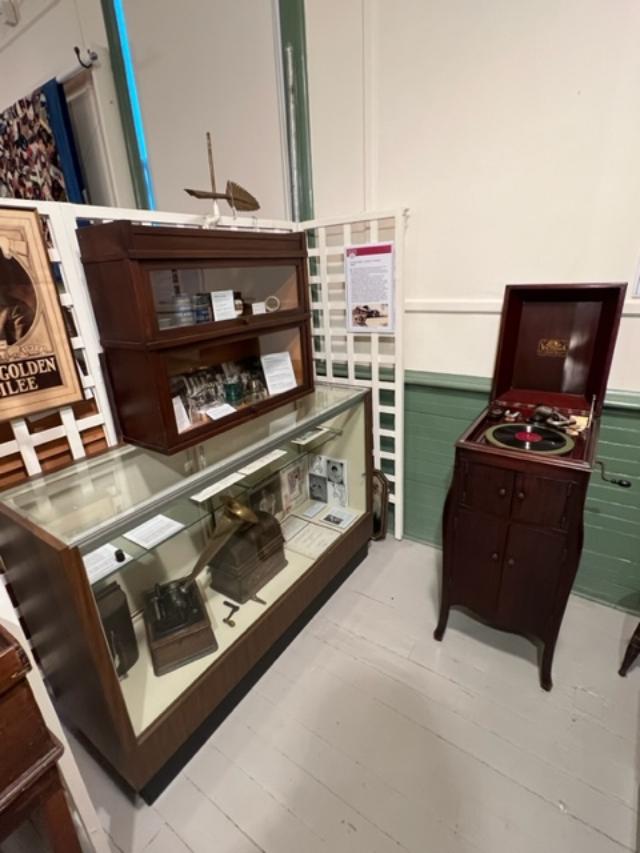
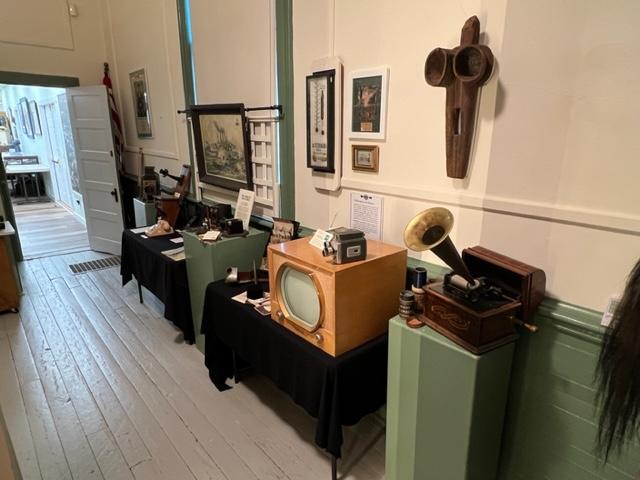
Other standouts in the room was an original Edison Phonograph with the original cylinders which were the precursor to records. It was interesting to see how the modern day record player developed. The item had been housed in someone’s barn before it was donated and still had most of the original cylinders.

The early Edison Phonograph
Another object in the other room was the Lafayette Quilt made by local resident Annabelle Chatter. This quilt was so beautifully designed with pieces of cloth from all over the world including the coat that President Lincoln wore that faithful night. I learned from the tour guide that people were taking small pieces of the coat after the President died. This was strange because I saw the same coat at the Metropolitan Museum of Art’s Costume Exhibition and the coat was on display there and it looked pretty intact.
There was also an extensive display of items from the 1893 Columbian Exposition that showcased all the modern developments coming into society. This included pictures and objects that visitors could buy. Another display was on the Salem Oak Tree that once dominated the cemetery around the corner from the Society that fell in June of 2019. The room was made up of pictures of the tree and items that were made from limbs that had fallen in the past.
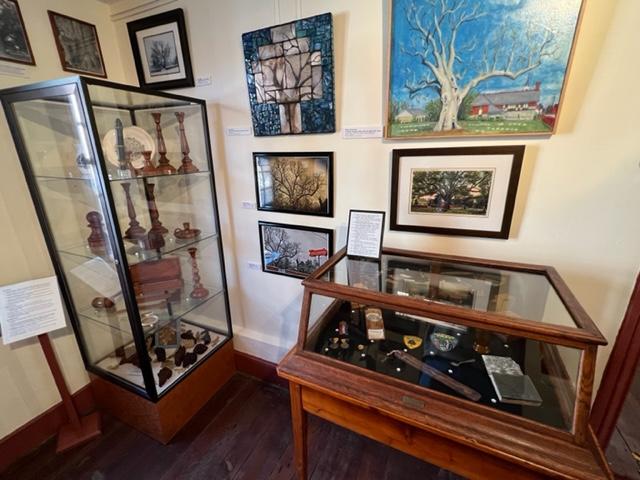
The upstairs had rooms full of Samplers, a way for young girls in the 1800’s to practice their sewing skills for use in homemakingfor things like clothes and domestic items like blankets. There was a Blown Glass display on items made in the area. Companies had use of local sand in manufacturing making blown glass items a big industry in the area.
The last display is dedicated to clocks, both grandfather clocks and the development of the pocket watch. The one thing that I learned was on the creation of the face of the grandfather clock was the use of the Roman Numeral IV as IIII. The tour guide explained that makers of the clock did not find it symmetrical with the other numbers in the placement and that’s why they used the incorrect symbol number.
The latest exhibition that I saw in 2022, is the “Step into our Canvas: 200 years of Salem County Art”, a extensive exhibition of local deceased artists from Salem, NJ. This includes artists who are recognized locally, regionally and nationally for their skills. These range from 18 Century artists to present day with the entire exhibition from the Salem Historical Society Collection. It was an interesting mix of portraits, still life’s and landscapes. This exhibition of the Society’s visual art collection aims to perpetuate Salem County’s heritage and enhance awareness of its artistic roots (Museum pamphlets).
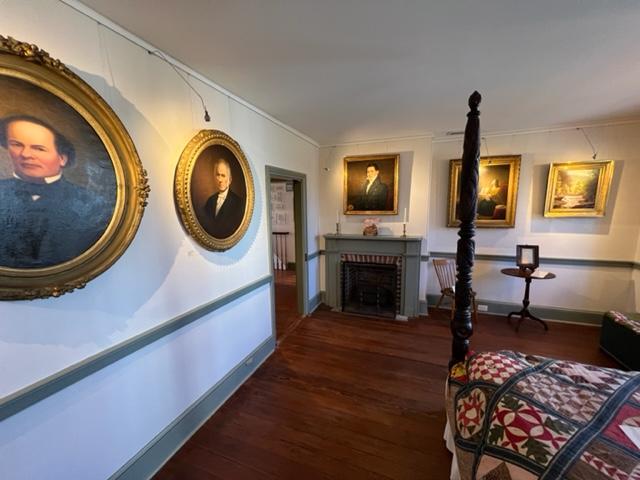
The “Step into our Canvas: 200 years of Salem County Art” exhibition
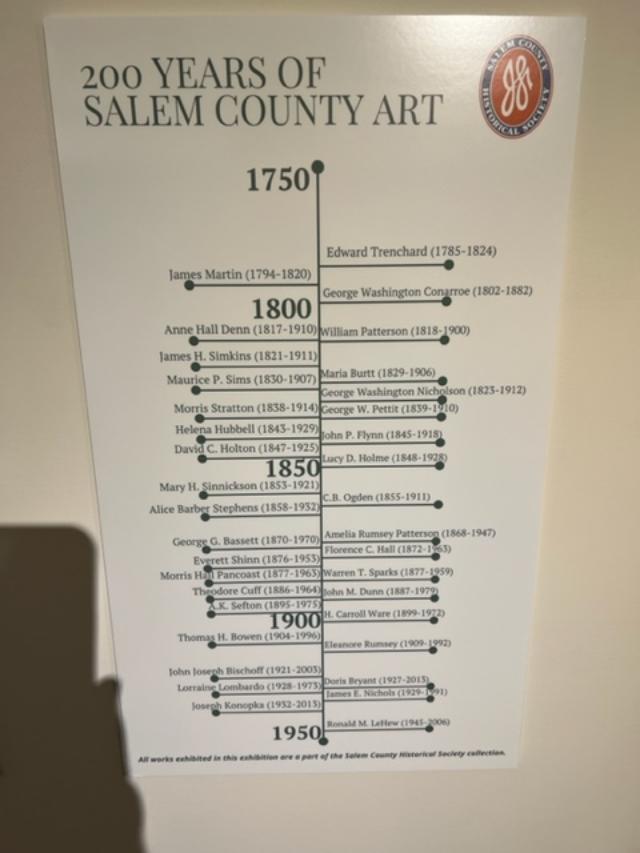
The exhibition timeline
Also in 2022, I visited the courtyard and gardens in the back of the museum which contains several buildings including a barn, a small schoolhouse that was moved here along with the oldest lawyers office in the country, a small octagon structure.

There was a small bathhouse designed in the “Oriental” style of the time.

The barn in the courtyard

The buildings line the courtyard in the back of the historical society and on a nice day is a very pleasant place to stroll around and see the buildings.
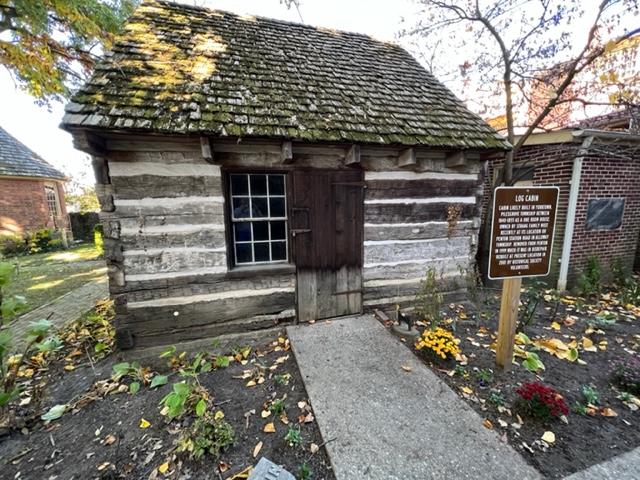
The log cabin that was built on this property
Programs sponsored by the museum:
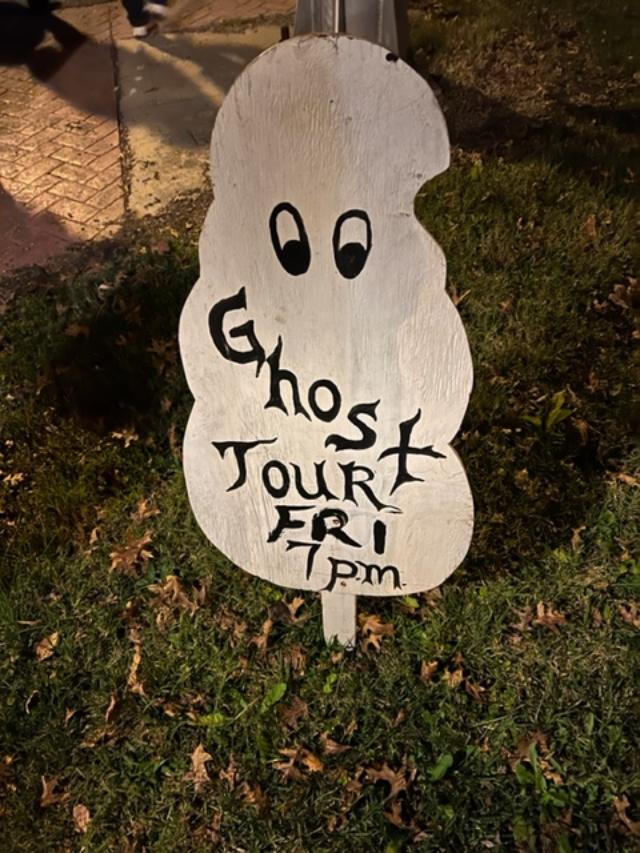
The Annual “Salem Walking Ghost Tour” event:
In 2022, I attended the ‘Annual Salem Walking Ghost Tour’ which tours the historic homes of the Salem Historic District and the church cemeteries of the downtown. At each stop, we got to hear tales of the haunted houses of the district and the owners in the afterlife still are involved in their current owners lives.
We started the night with a concert at St. John’s Episcopal Church with organist Erik Meyer, who played music that we relate to Halloween.
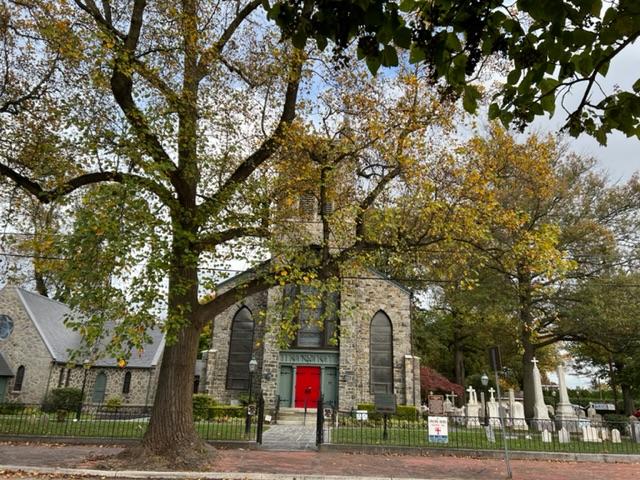
St. John’s Episcopal Church on Market Street the day of the concert.
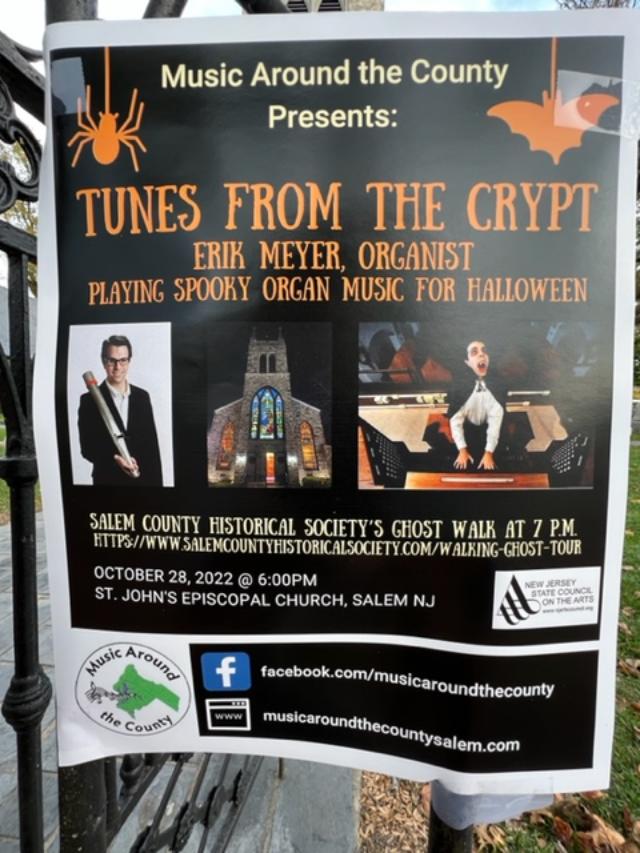
The “Tunes from the Crypt” concert was right before the walking tour.
The concert featured five musical numbers that are classic to all horror films. The music being played is what you might hear in a popular horror film or something to do with Halloween. It seemed a little strange to be in a church but the organist told us that a lot of churches are using this for a fundraiser.

Erik Meyer who was the organist at the concert before the walk
He dressed like a vampire which I thought was strange for a church. These concerts have brought people back to these churches and even the priest said that he had not seen crowds like this on Sundays. The church was packed that evening.

The inside of the St. John’s Episcopal Church for the concert
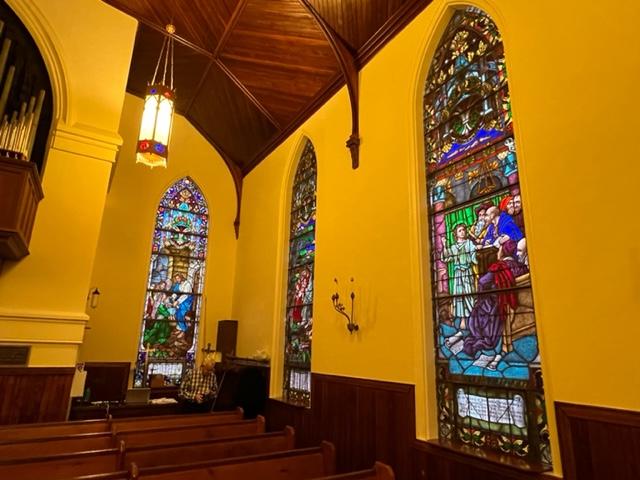
The beautiful stained glass windows the night of the concert
After the concert, we walked down the antique store where the tour started. We stopped at various parts of the historic district to tales of woes, travels and ghosts still haunting the homes they loved so much.

One of the decorated porches on the Haunted Walking Tour
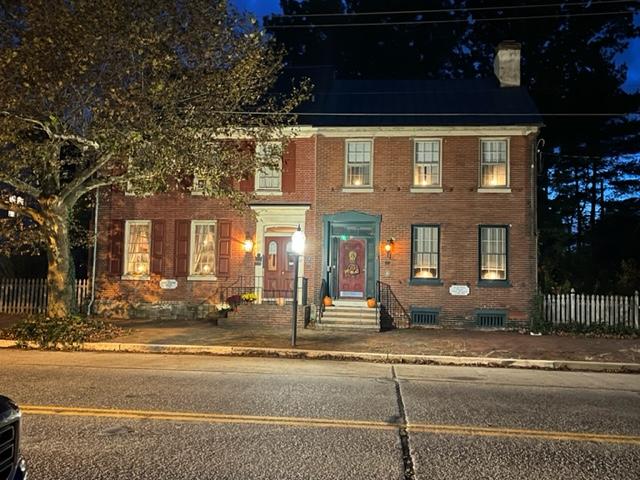
The Historic District of Market Street
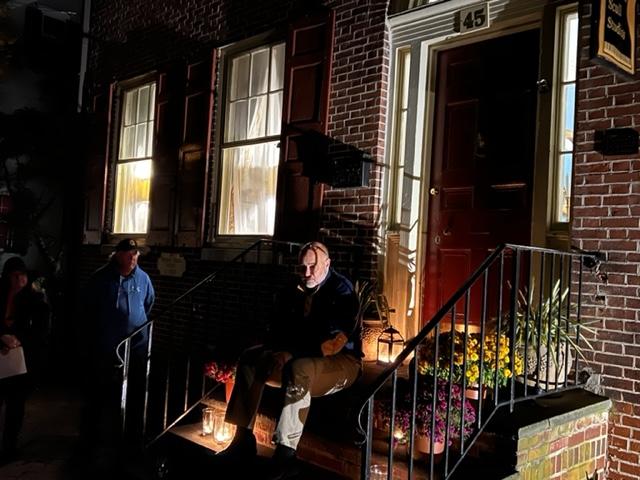
A resident of the house talking about his haunted home the night of the walking tour

No walking tour is complete with a trip to the cemetery
The walking tour really was interesting and residents talked about their experiences in their homes that they say are haunted. The tour was about an hour but is really worth the trip. It was interesting to see how Salem, NJ developed over the years. The tour takes place before Halloween every year and tickets do sell out fast.
sited got a kick out of how things have not changed that much but today kids are more into cell phones and video games.
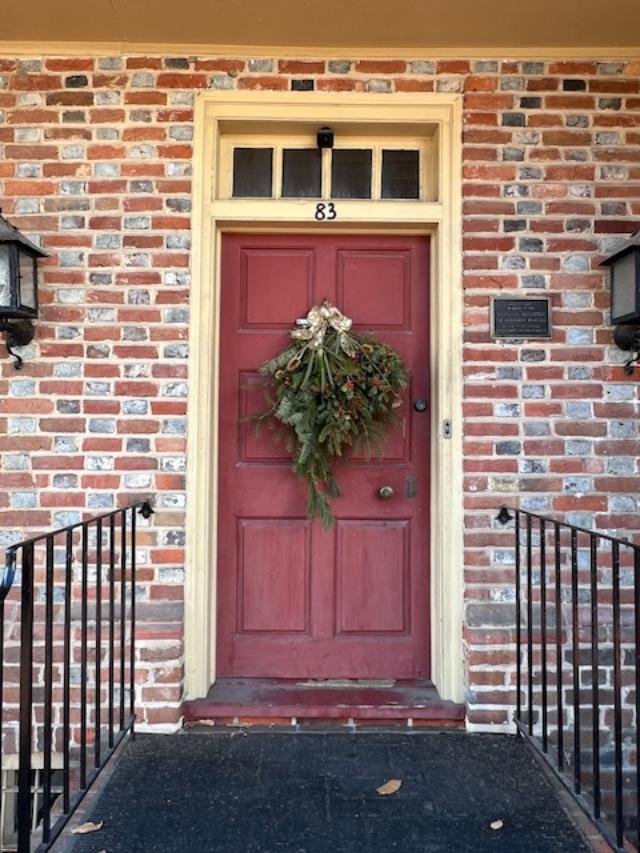
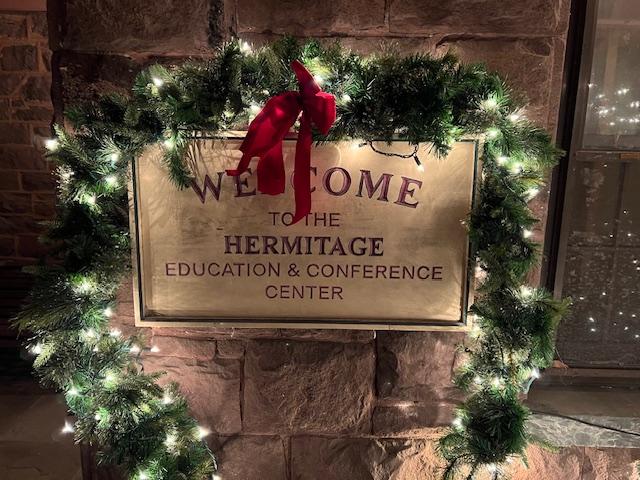
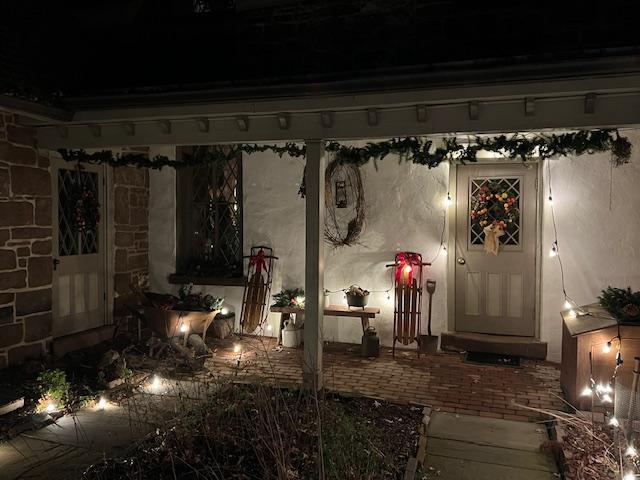
The entrance to the museum during the holiday season is nicely decorated.
For a small museum, the Salem County Historical Society Museum offers a view into our past and how New Jersey played a huge role in the development of the United States as a nation. Really take the time to see each room and admire their objects on display. You’ll learn a thing or two on what modern items are based on.
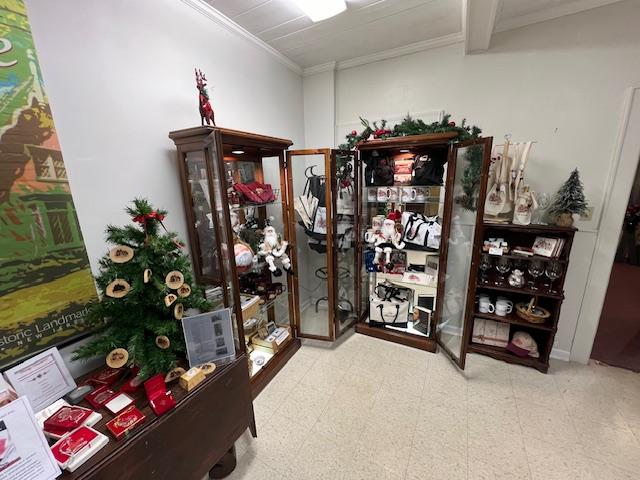
During the Christmas holiday season, the museum is decorated with trees, garland and the “Keeping Room”, the original part of the house, is decorating for the holidays.
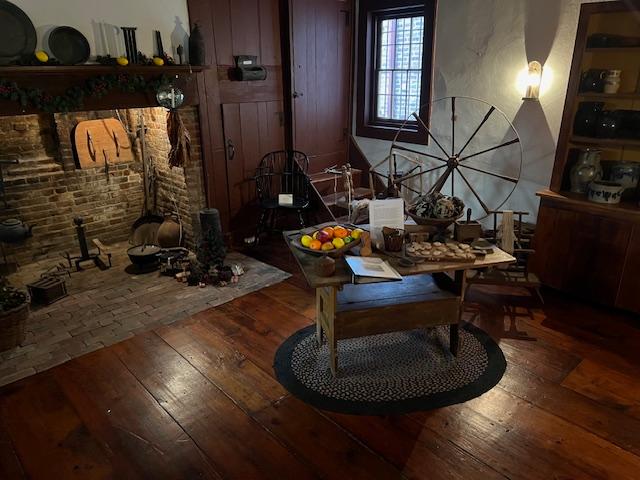
The “Keeping Room”, the oldest part of the museum.

The Hearth decorated for the holidays.
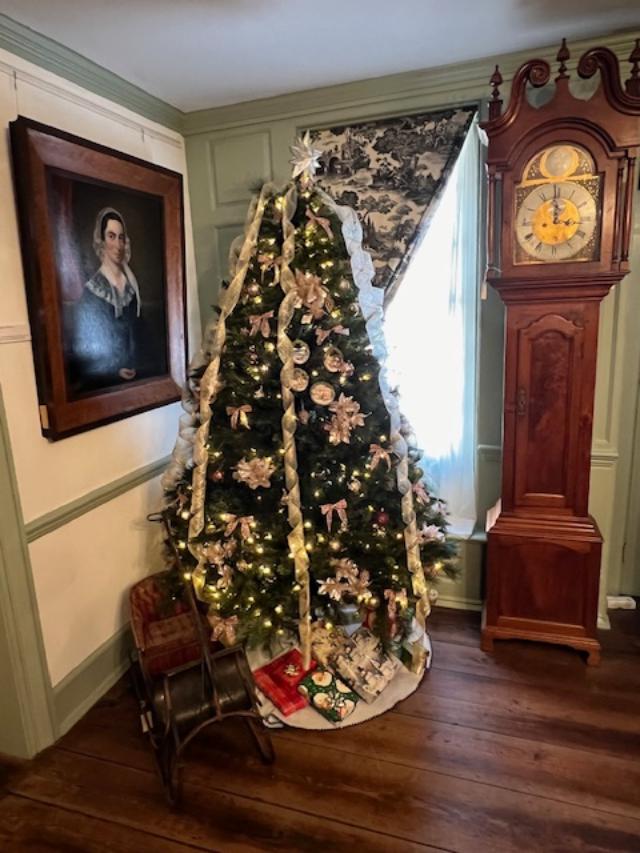
The Victorian Christmas tree in the main room.

The banister to the second floor decorated for the holidays.
The museum was simply but nicely decorated for the Christmas holidays and the exhibits were family friendly for the season.
The Exhibitions:
The Society utilizes its rich museum to present engaging and informative exhibits. Our museum features several ongoing exhibits including The Keeping Room, A Legacy fro Salem County and The Stone Barn. These displays showcase some of the Society’s treasures including fine and decorative arts, Wistar glass and signature quilts.

In addition to our semi-permanent exhibits, the Society features large special exhibits that change every two years. These exhibits take a closer look at specific events or aspects of Salem County history. Check the Society website to get information about current exhibits. The Society has also opened more rooms for small exhibits that rotate and change periodically.
In 2023, the museum exhibited “Through a Child’s Eye: Toys from the Past” toys from the permanent collection. The museum had a collection of dolls, trucks, games and housekeeping play things. Toys from the Victorian era to the 1960’s were based on domestic roles and getting children ready for marriage. Items like dolls were for child rearing, tea sets for etiquette training for entertaining, trucks , cars and trains for transportation jobs and later on tinker toys and erector sets for thinking and construction. Items like board games were for socialization and thinking skills.
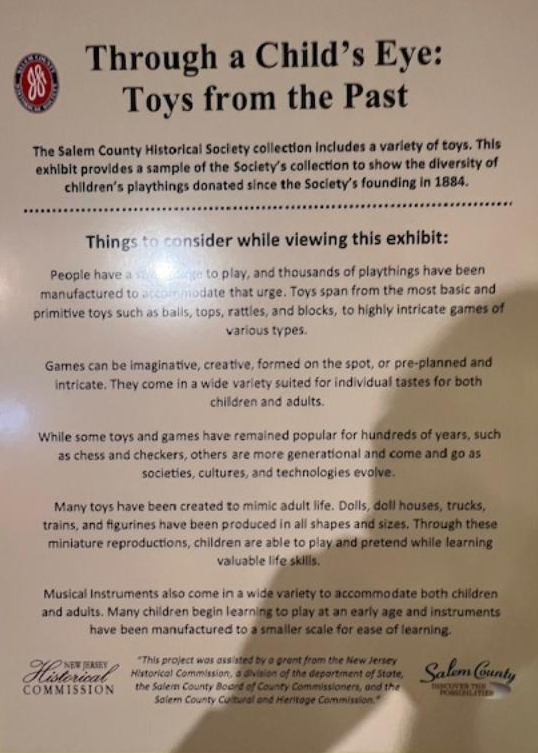
The write up for the exhibition.

The selection of Boys and Girls toys.

Contemporary Board games, musical instruments and dolls.

Dollhouses, trucks and cars for future jobs in industry and in the home.
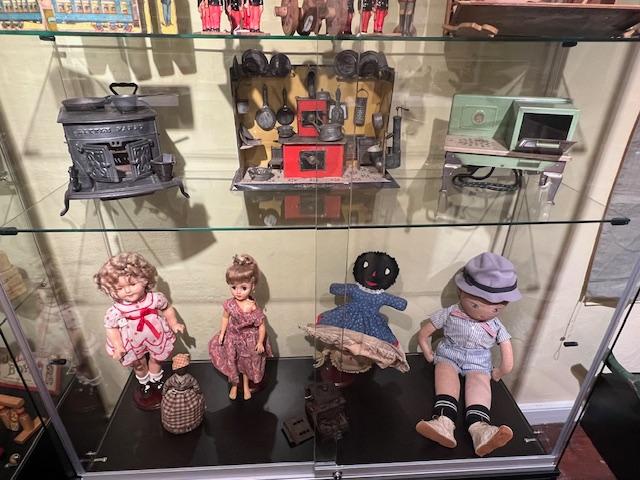
Domestic toys such as kitchen sets and dolls for women to prepare them for motherhood.

Toys were best for creativity and imagination.

Dollhouses were very popular in every generation.

A baby blanket

Dolls, trucks and tea sets were created a future of domestic and work based lifestyle.
The museum had an interesting collection all sorts of toys, games and vehicles from all ages. From what the museum docent told me was that the kids who vi
Research Library and Special Collections
Thousands of researchers make their own connections to Salem County with the help of the Society’s research library. Historians and family researcher trace their ancestors through time with the help of our library’s comprehensive collection of resources, thus helping to bring people closer to Southern New Jersey’s distinctive heritage.
The library’s holdings of family records, manuscripts, deeds and church histories serve scores of genealogical and historical researchers with primary documents.
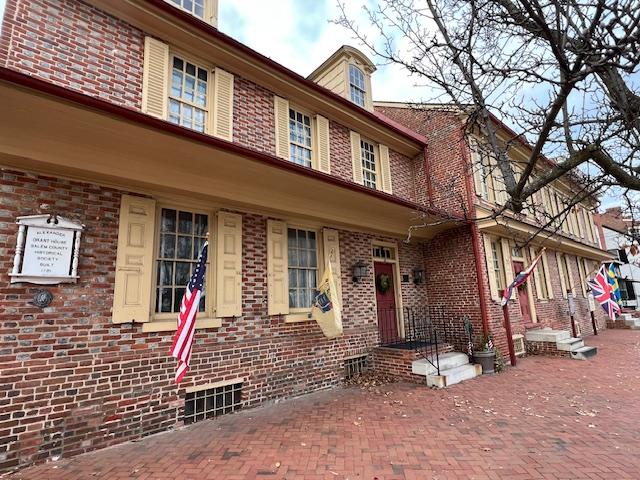
The Museum at Christmas 2024
Programs and Special Events
The Society has an active calendar with many diverse programs. From our Quarterly Meetings to the popular John S. Rock Memorial Lecture series to genealogical workshops, there is something for everyone.
The Society also sponsors events such as the highly regarded Open House Tour which opens Salem County’s historic homes and churches to the public every spring. In the fall, the Society sponsors the Walking Ghost Tour, an evening of spirits and stories in historic Salem.

The Walking Ghost Tour in 2019 at the Society
Tunes from the Crypt in 2022

The Salem Ghost Tour in 2022 behind the Salem Historical Society

Touring the cemetery during the day is less creepy and very interesting.

Actors telling their tales the night of the Salem Ghost Walk
Visit our website http://www.salemcountyhistoricalsociety.com or our Facebook Page for upcoming events.
The Annual Christmas Yuletide Tour of Salem Homes and Museums:
With Sinterklaas being cancelled this year, it gave me a chance to visit Salem and Woodstown, NJ for their Annual House Decorated Tours. I took full advantage of the time and started early on the tour of Downtown Salem, NJ.
I started the tour right after the Salem Christmas Parade by visiting the Salem Fire Museum, which is never open.
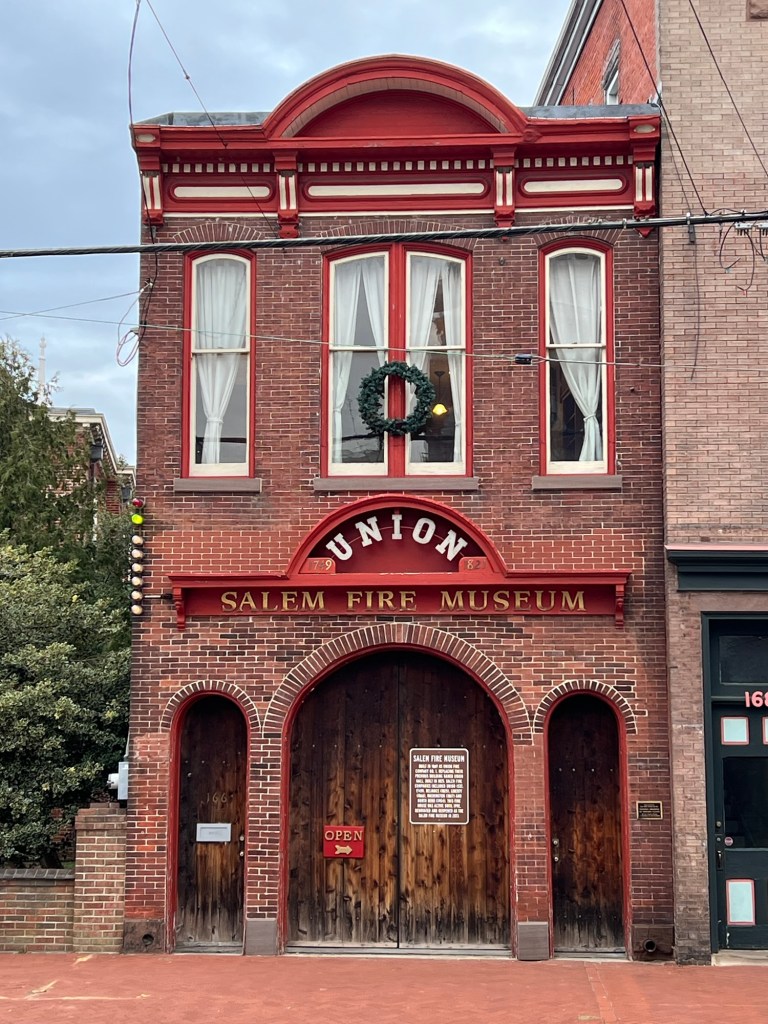
The Salem Fire Museum at 166 East Broadway
https://www.facebook.com/SalemFireMuseum/
My review on TripAdvisor:
My review on VisitingaMuseum.com:
https://wordpress.com/post/visitingamuseum.com/17021
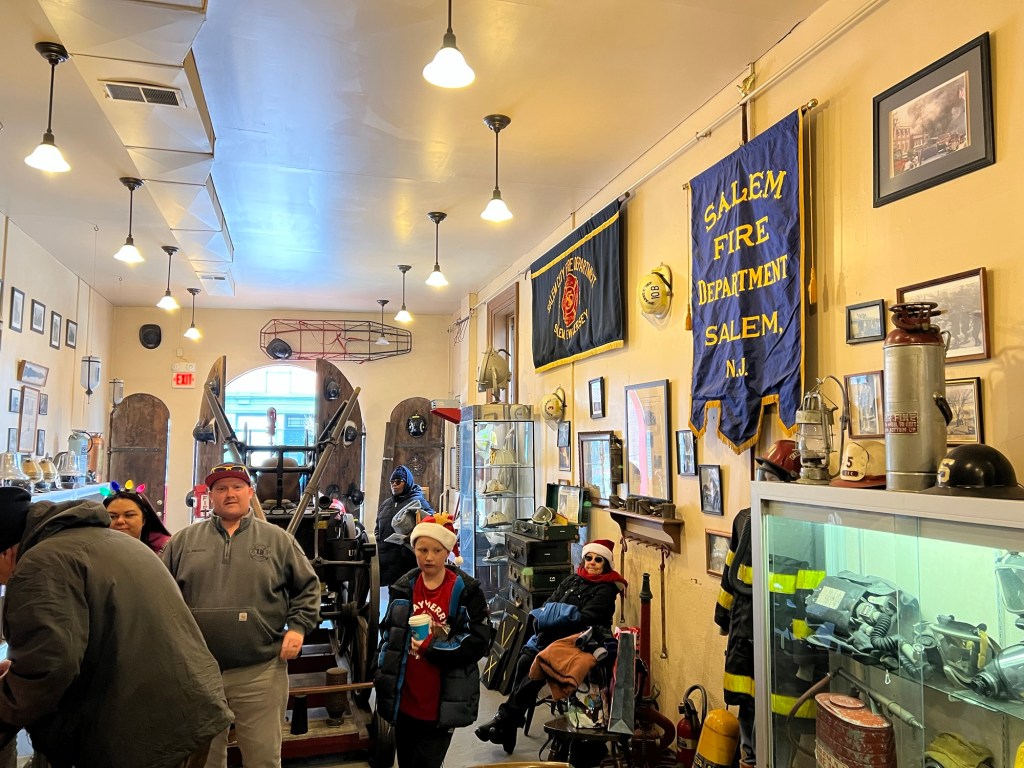
I started my tour of Salem the second the parade was over. I did not want my chance to see the museum’s collection.

The inside of the first floor tells the story of early fire servic
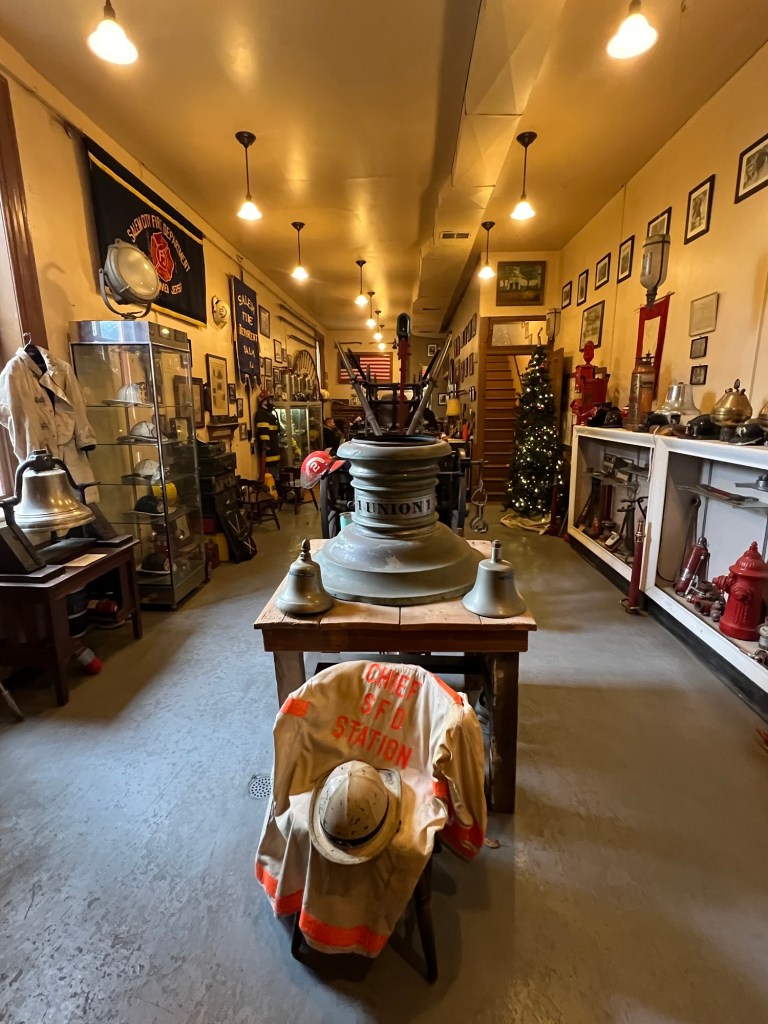
The museum first floor was quiet before the parade to tour

The museum’s second floor with offices and a view of the downtown
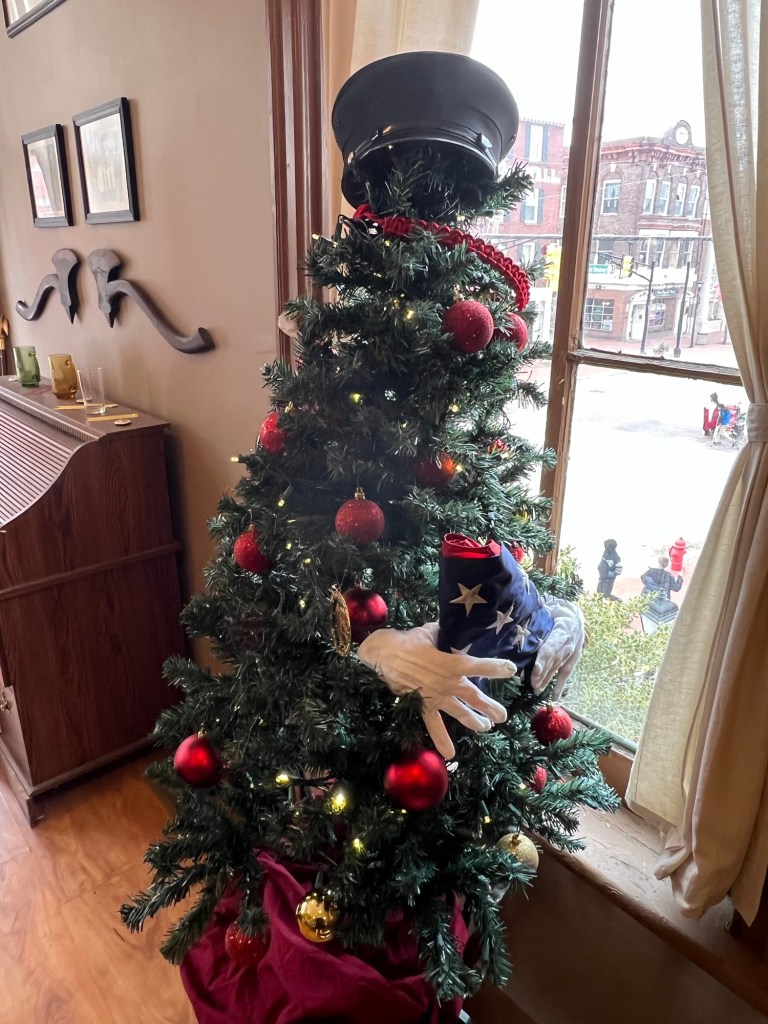
The wild Christmas tree on the second floor
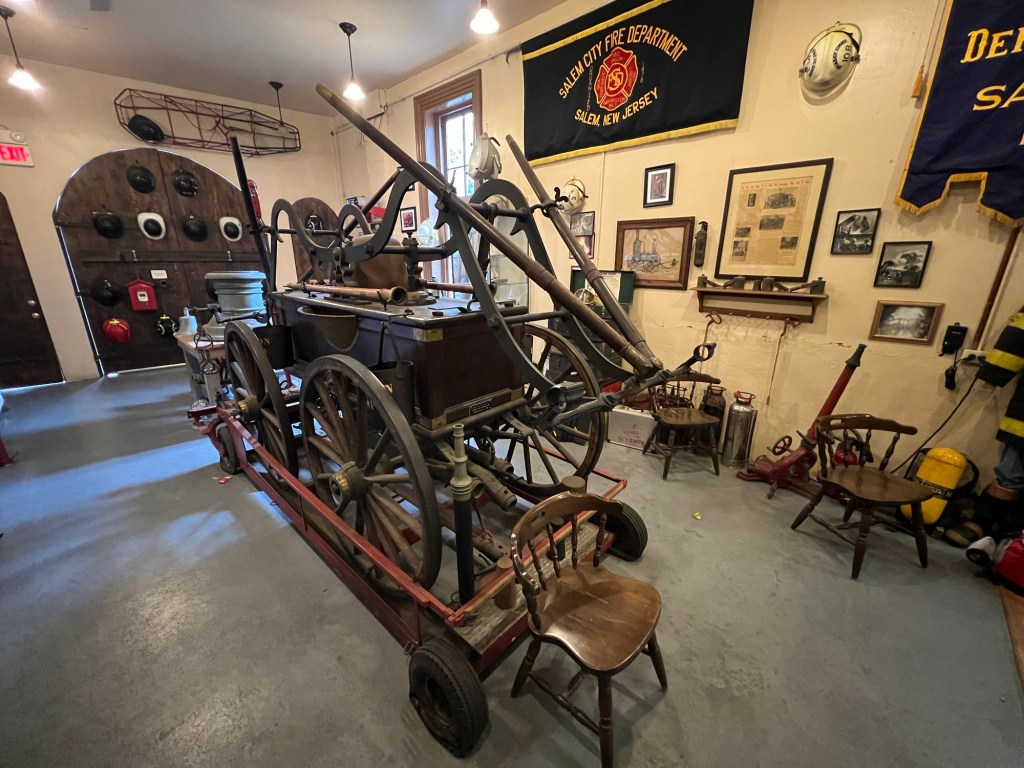
The antique pumper on the first floor was the main attraction

The more formal Christmas tree on the first floor near the rescue equipment
I found the Salem Fire Museum to be a fascinating look at firefighting at many different eras. It is nicely displayed and organized and the members of the Salem Fire Department were around to answer any questions.
I watched the Salem Christmas Parade in the morning after the tour of the museum, wanting to see that first before the crowds came. The parade was fun but sparsely attended and I swear the police blocked off every road so it was hard to cross or find parking.

The Salem Magic of Christmas Parade
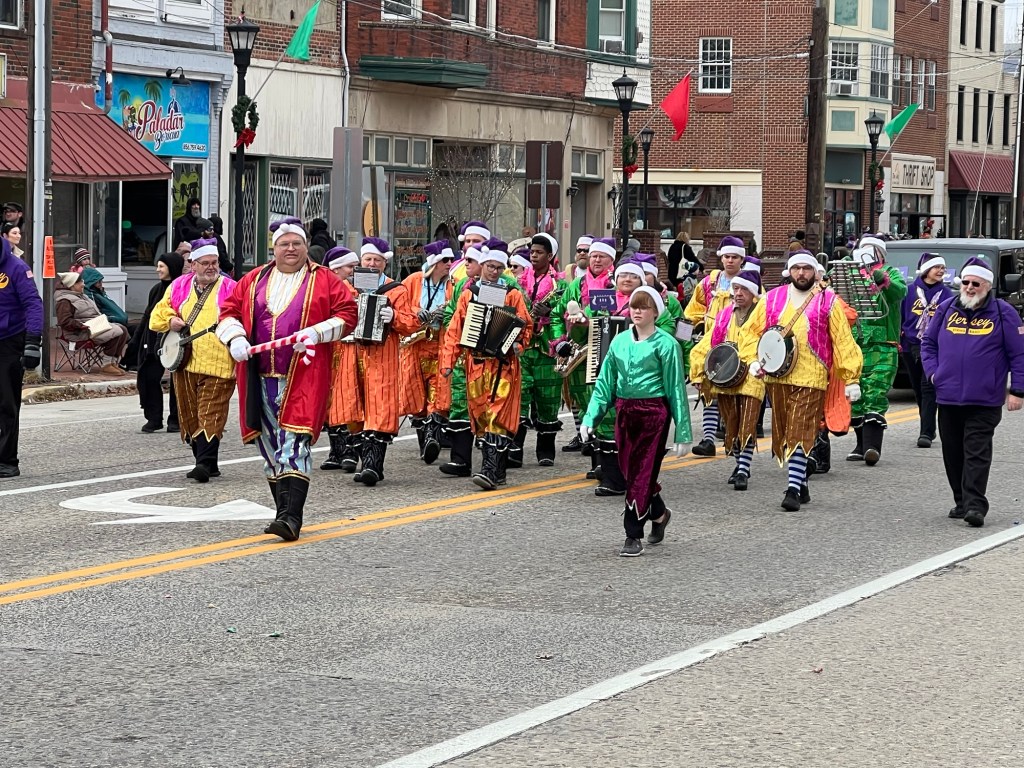
The Salem Magic of Christmas Parade
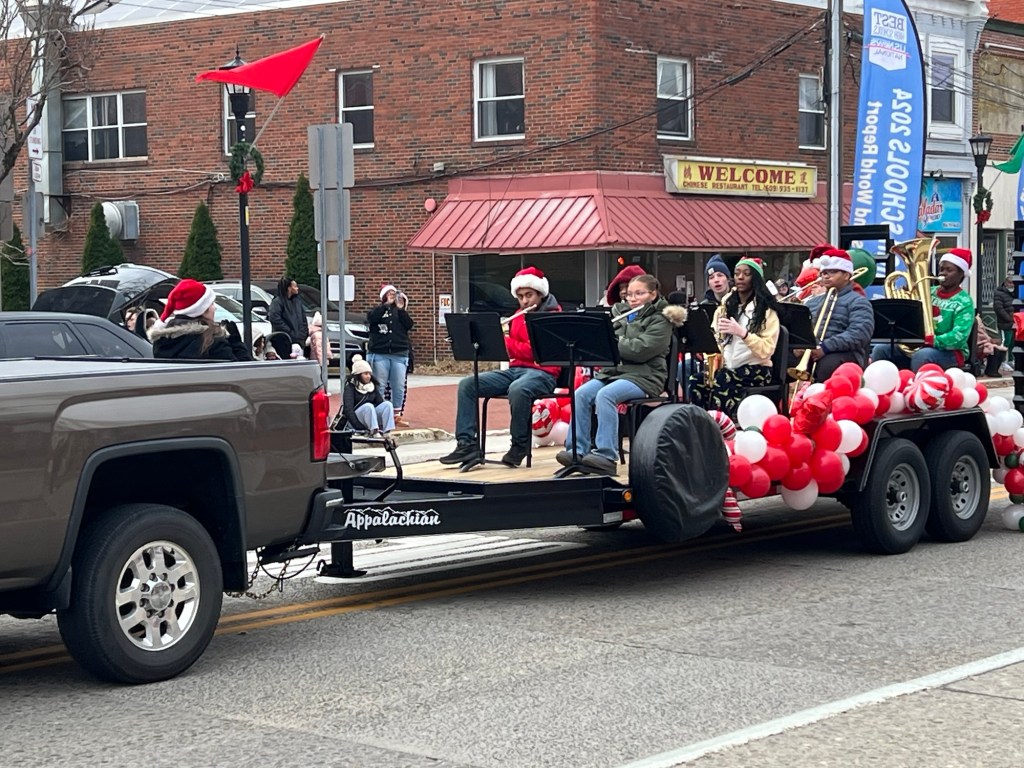
The Salem Magic of Christmas Parade

The characters in the Parade
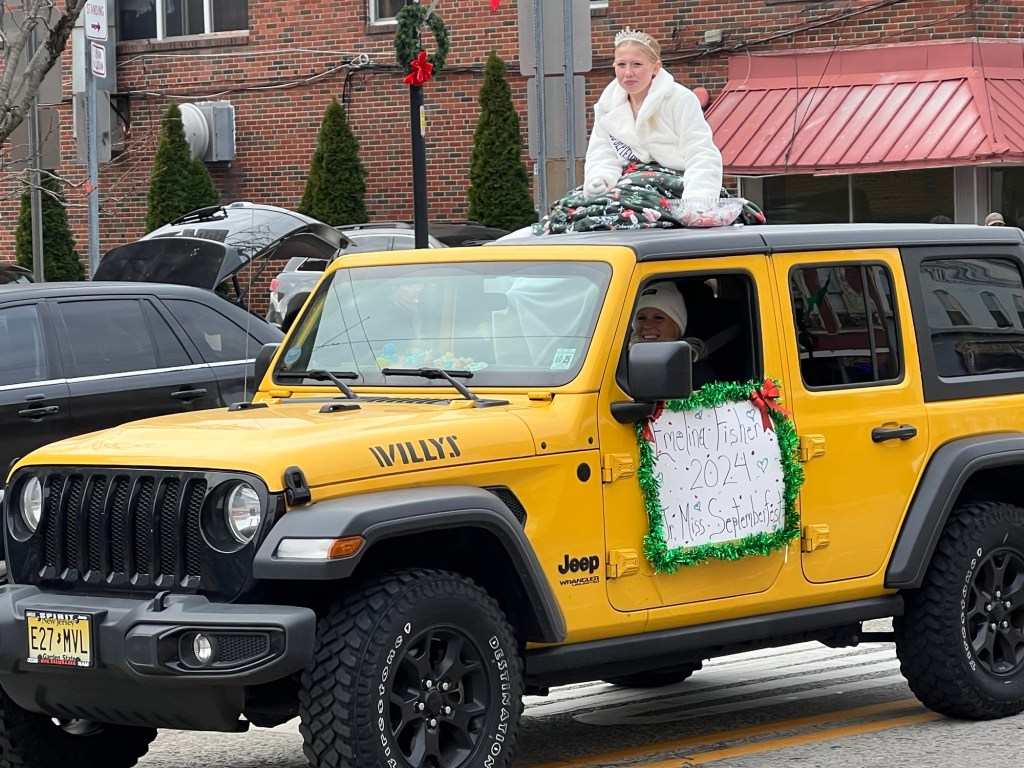
The Parade Queen and her Court rode throughout the parade
After the parade was over and I had a quick snack, it was time to start the Holiday tour of the homes and businesses of Salem.
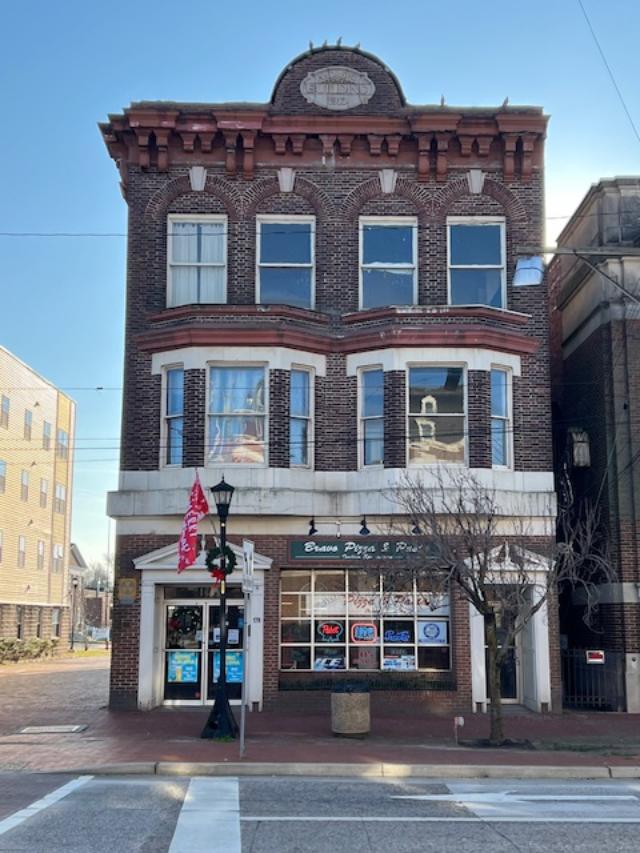
Salem has limited restaurants but Bravo Pizza & Pasta at 179 West Broadway in Downtown Salem, NJ

My favorite place for lunch, Bravo Pizza on East Broadway
My review on TripAdvisor:
While I was downtown, I stopped at the old bank to see their display before I started the walking tour of the homes. This is now an artist school and gallery. Their take on the holidays was quite clever.
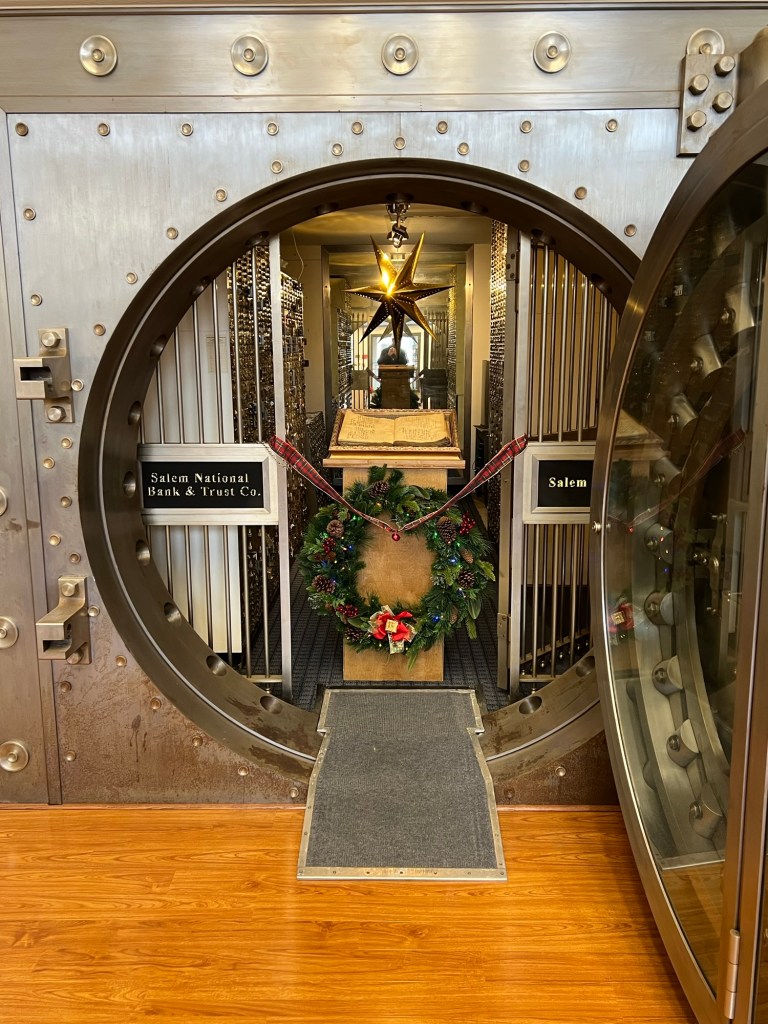
The walk in safe decorated for the holidays

The history of the bank and the downtown
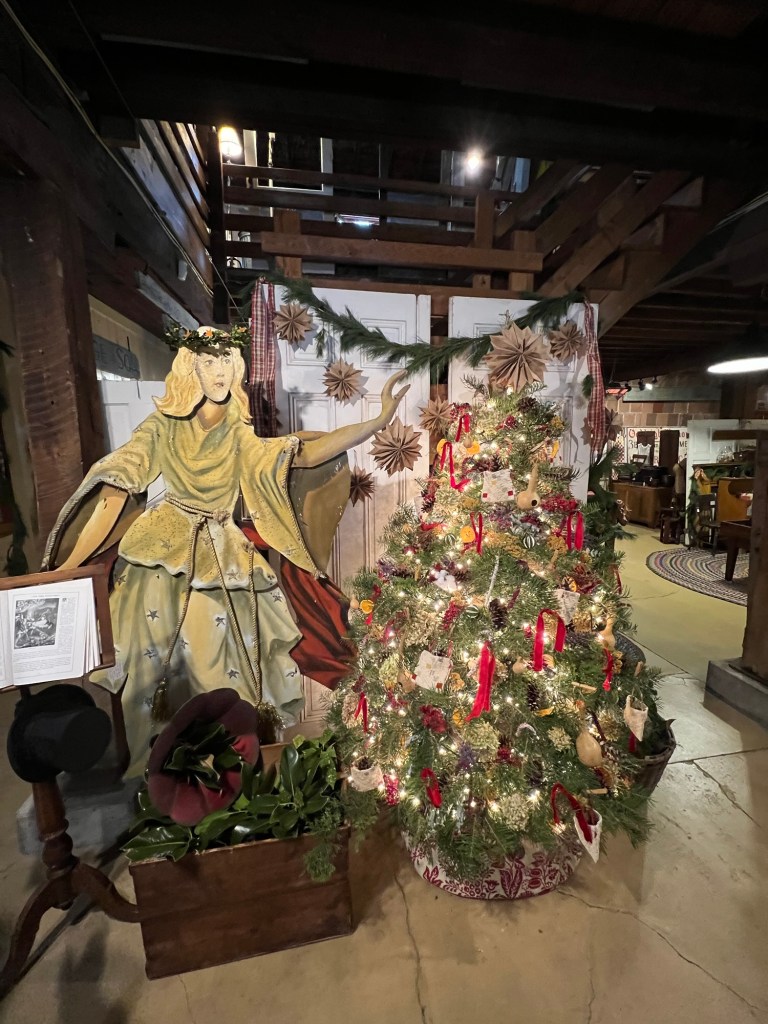
I started the tour of Downtown Salem, NJ homes at the antique store to pick up my map and look around. They have some great things to buy here.
The beautiful Federalist homes the lined northern Market Street had all sorts of elegant decorations on them.
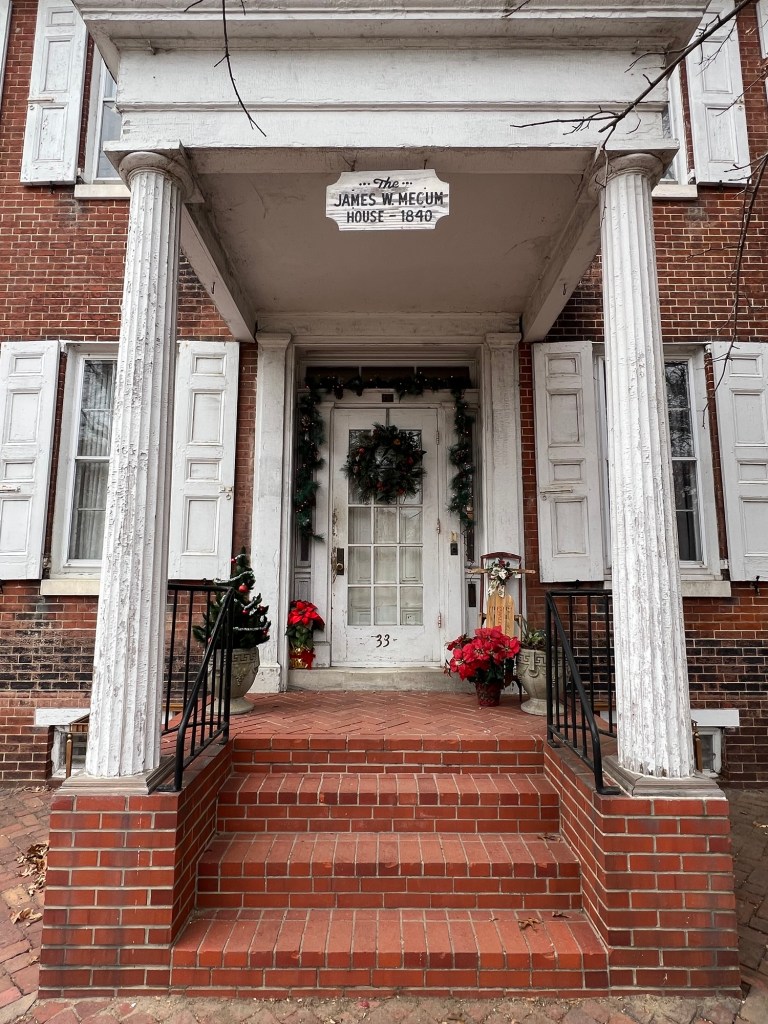

He beautiful and historic Downtown Salem, NJ
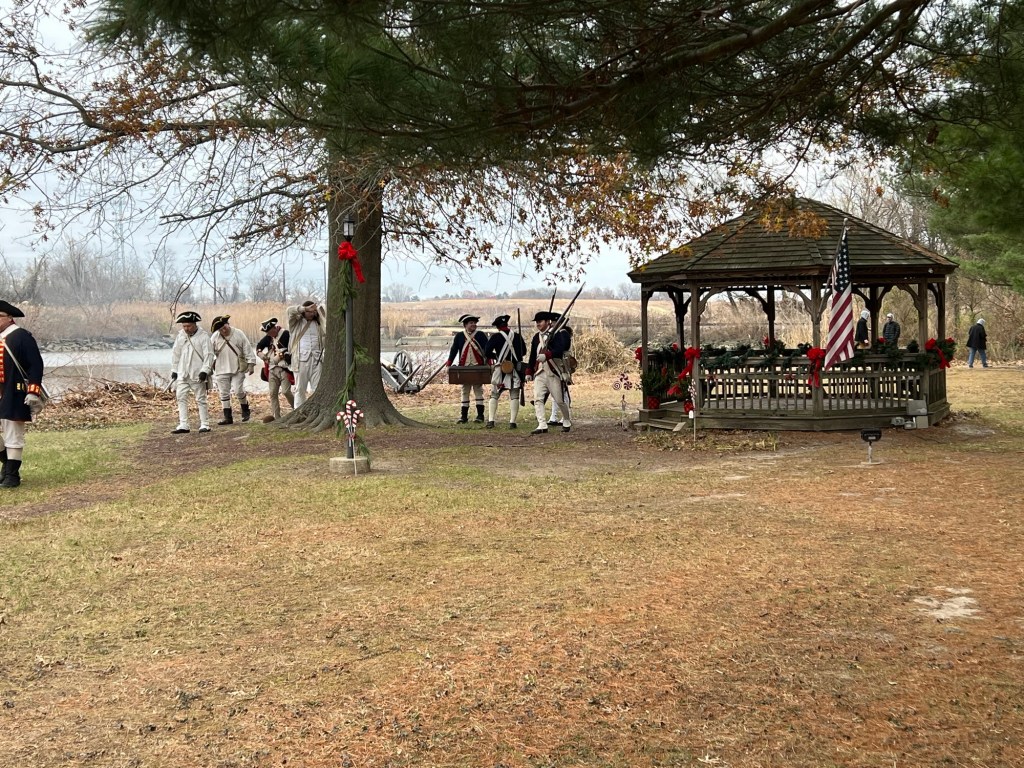
He first stop on the tour was Salem City park to watch the military display of arms
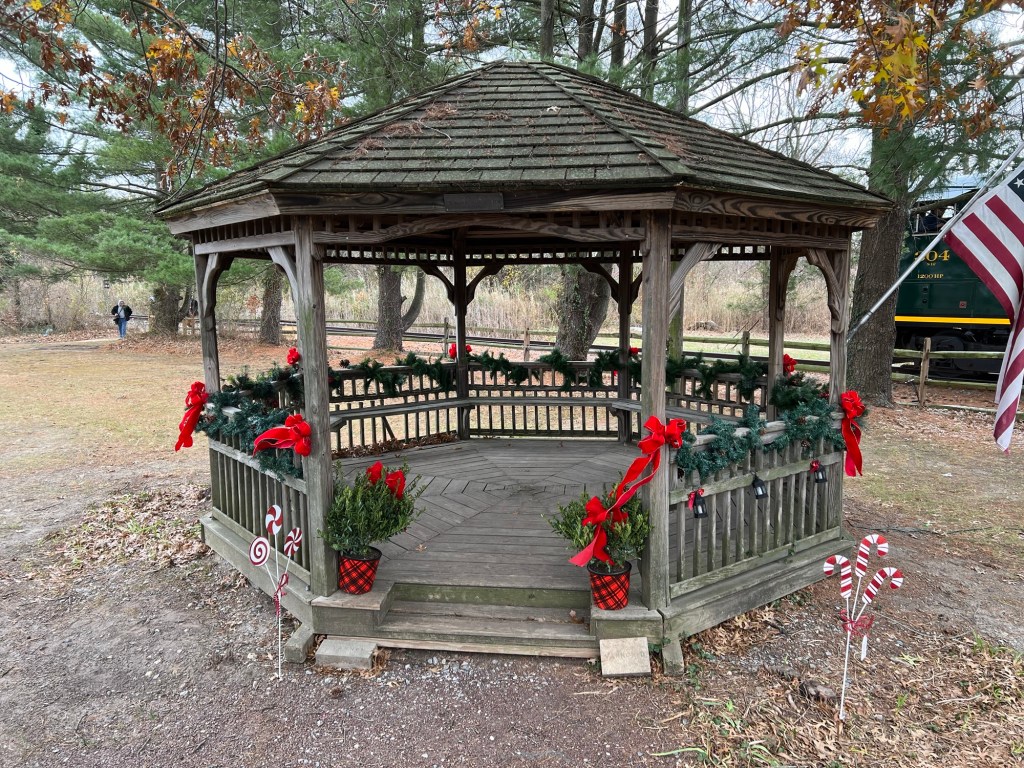
The gazebo was nicely decorated for the holidays
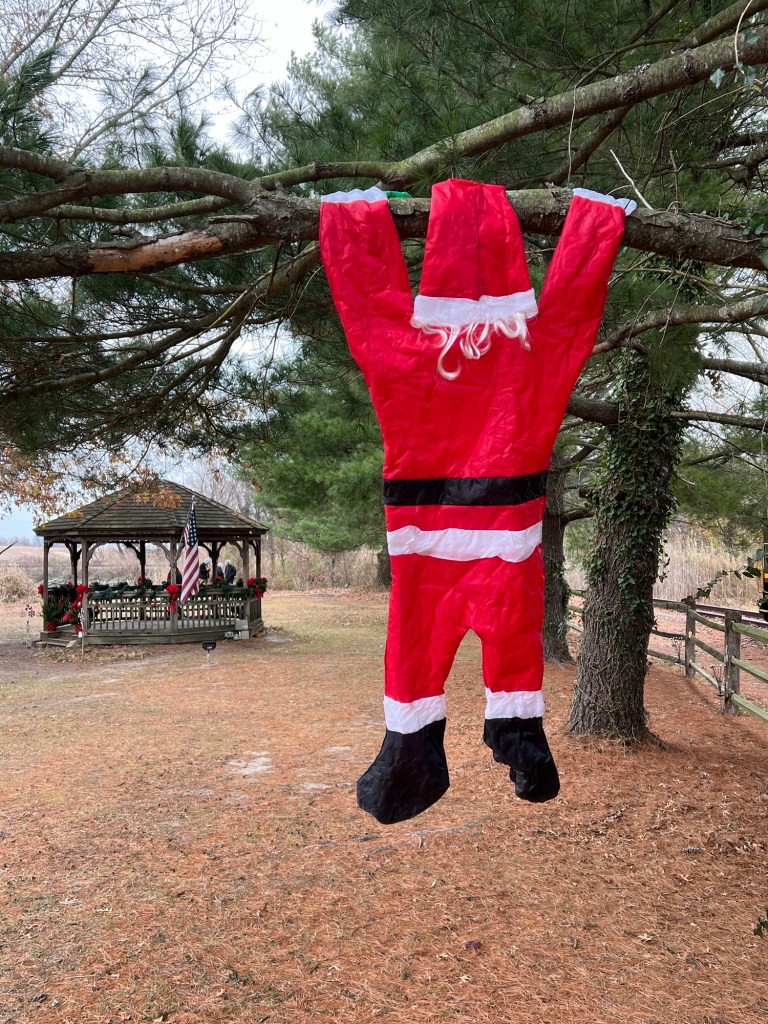
The whimsical decorations in the park that day
My next stop was the historical cabin in the downtown. It had been a recreation of an original cabin used during the Revolutionary War.
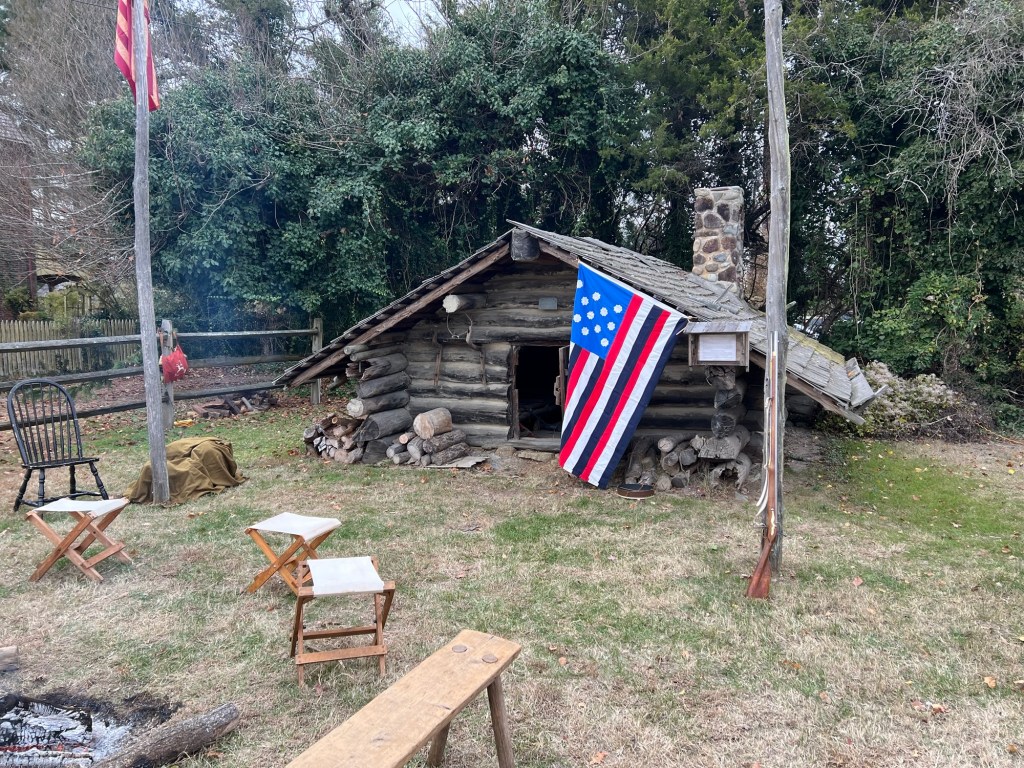
The cabin had been set up for the military display

The inside of the cabin set up to reflex the war years
I then moved on to start the tour of homes and churches along this stretch of North Market Street.
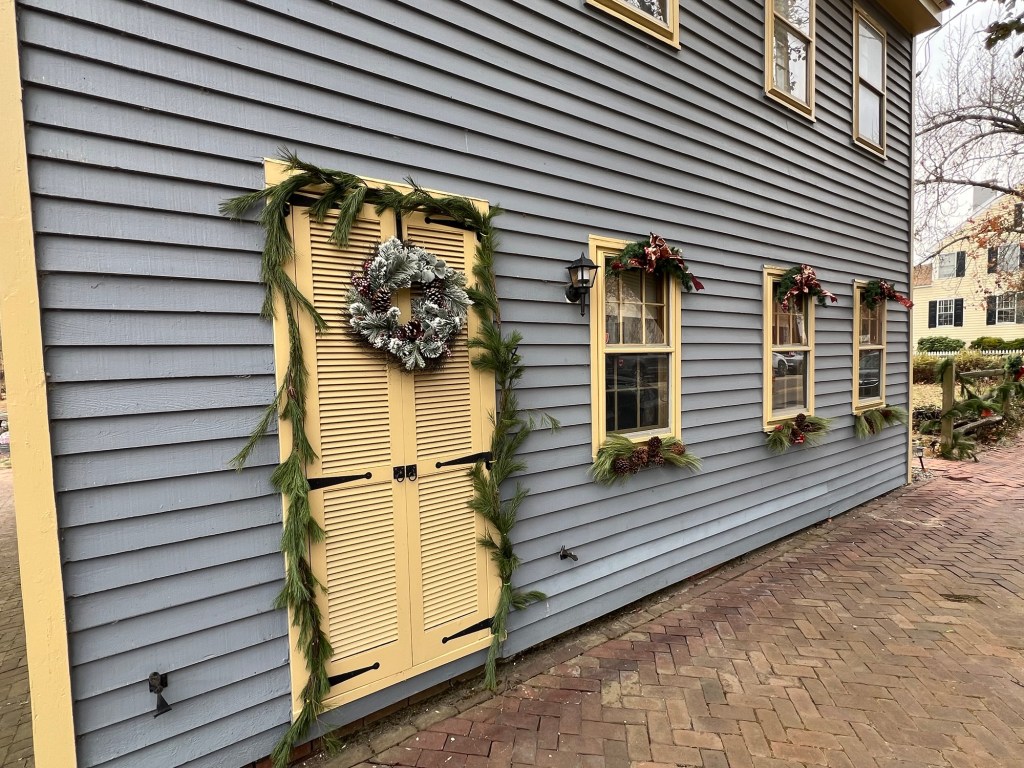
Even the homes not on the tour were decked out for the holidays
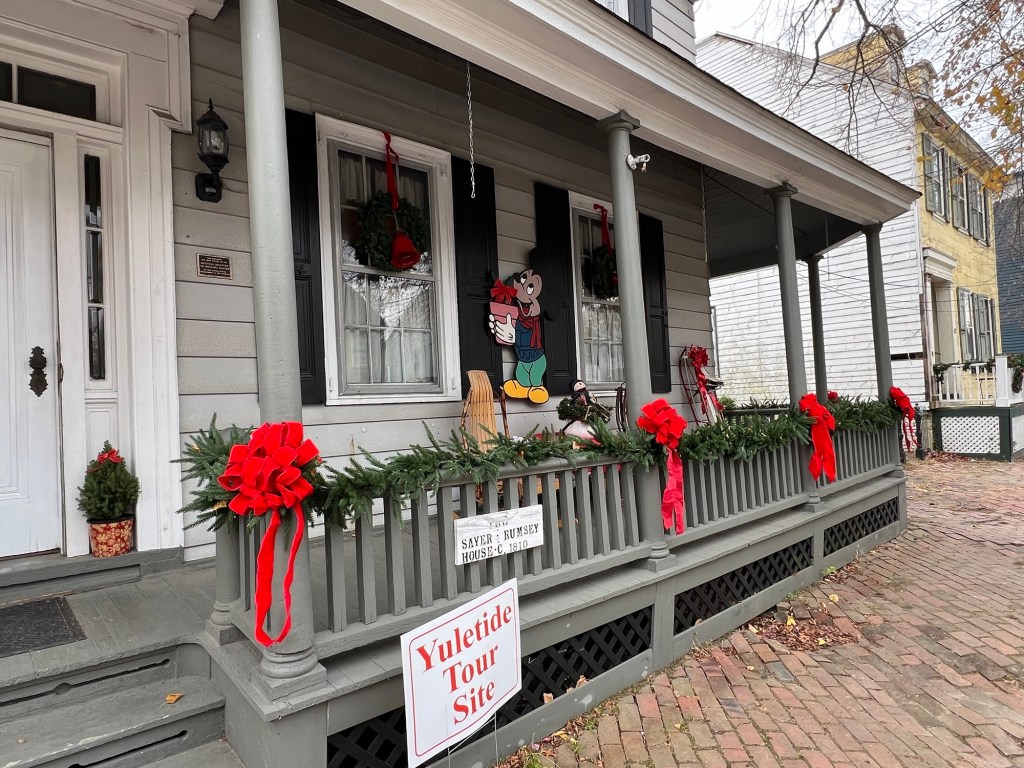
The first house on the tour on North Market Street
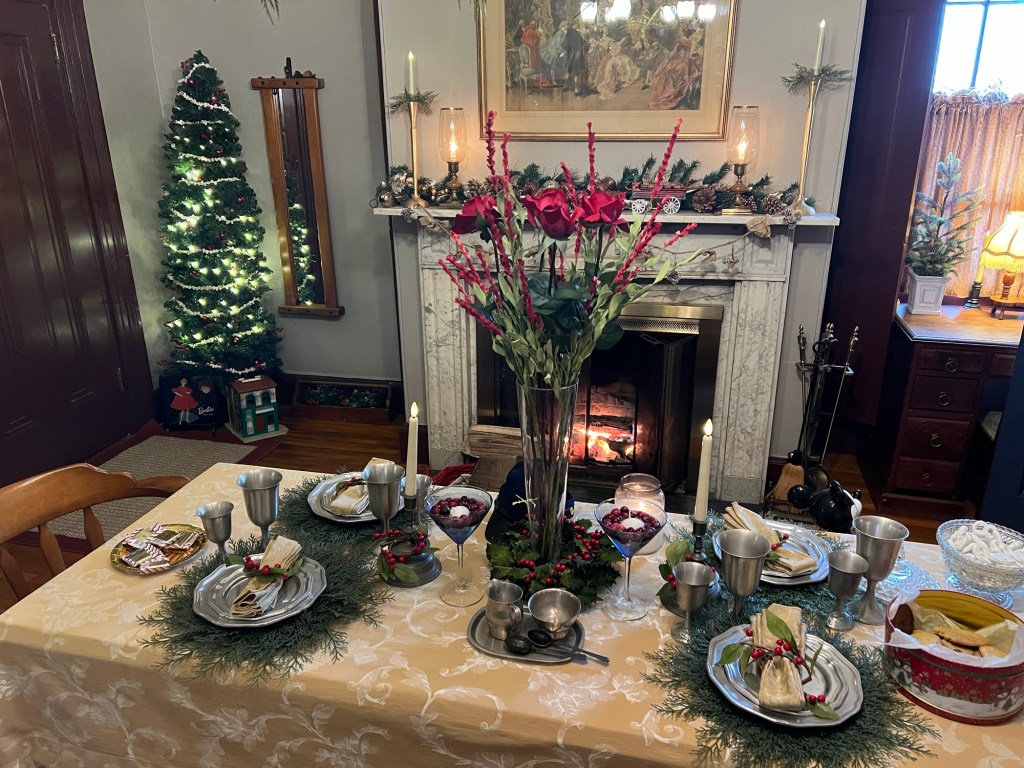
The Dining Room of the home was set up for an elegant Christmas lunch

The Living Room was decorated to receive guests

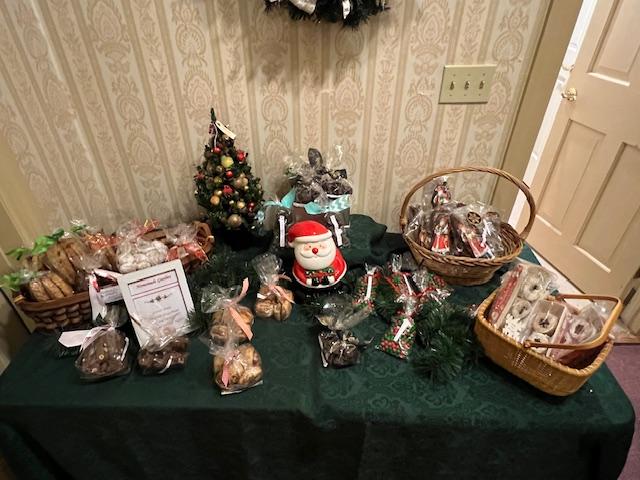
The sideboards were maddened with holiday decorations and Christmas cookies

Most of the homes on the tour provided refreshments complimentary. The first home’s kitchen was laden with trays of homemade Christmas cookies and candies

I loved the use of garland and greens on these homes at the holidays
The second home I visited both floors were designed with elegant holiday displays.
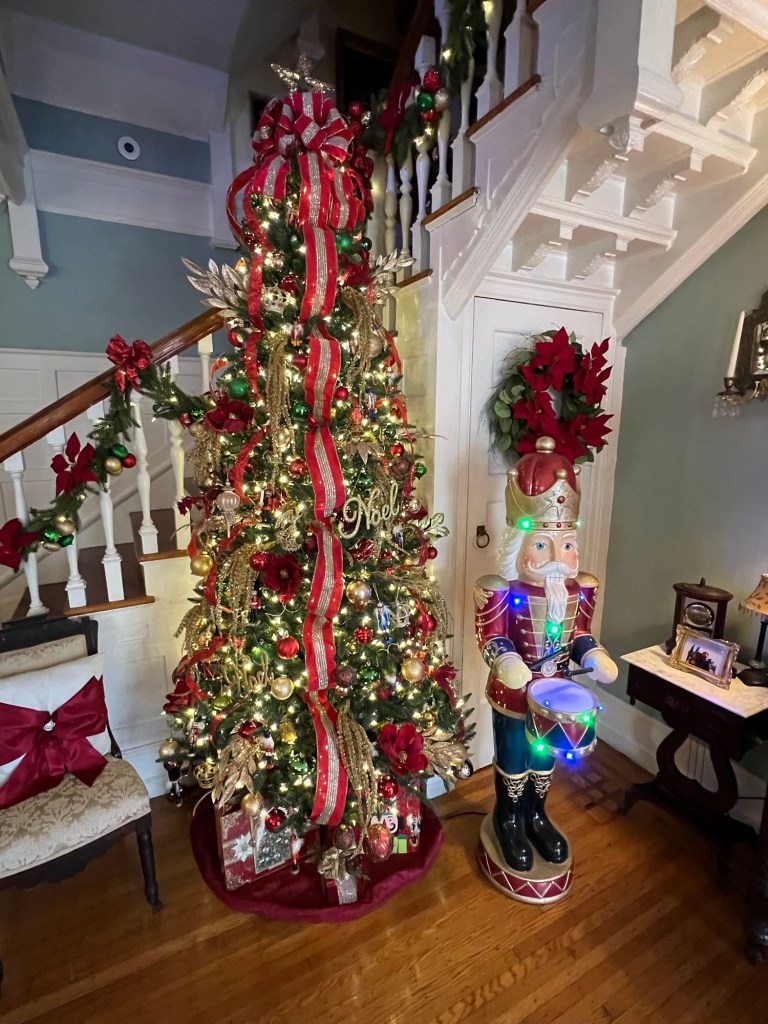
The first floor and second floor had several Christmas trees on display
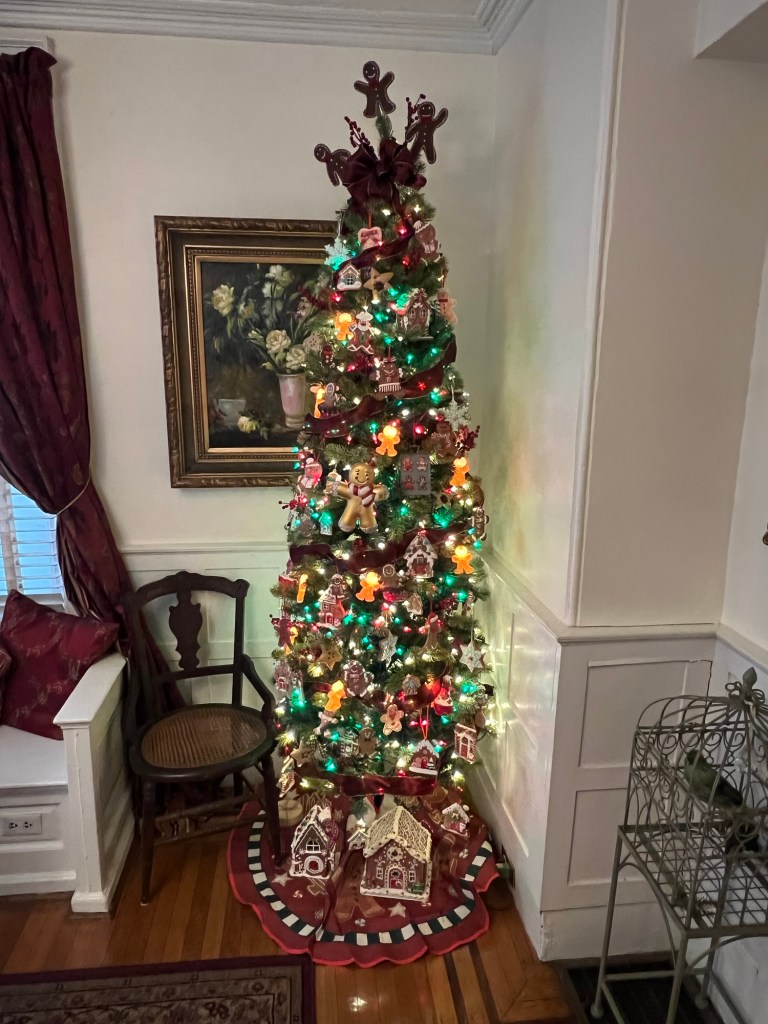
The second tree on the first floor with the theme of Gingerbread homes and people

The elegant tree on the second floor of the home
I then moved on to St. John’s Church to hear the organ music and wondering singers and look at how nicely decorated the church was for holiday services.
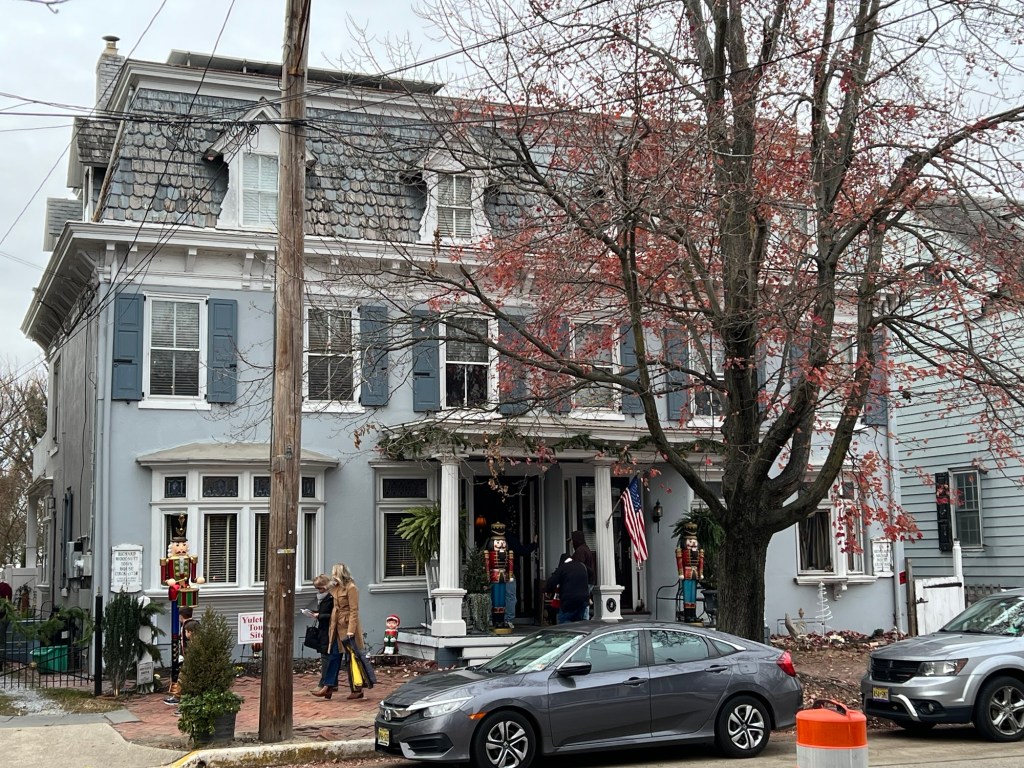
The home at North Market Street from the outside
I had been in the church several years before for the ghost tours and knew of its history.

The sign for the historic St. John’s Church
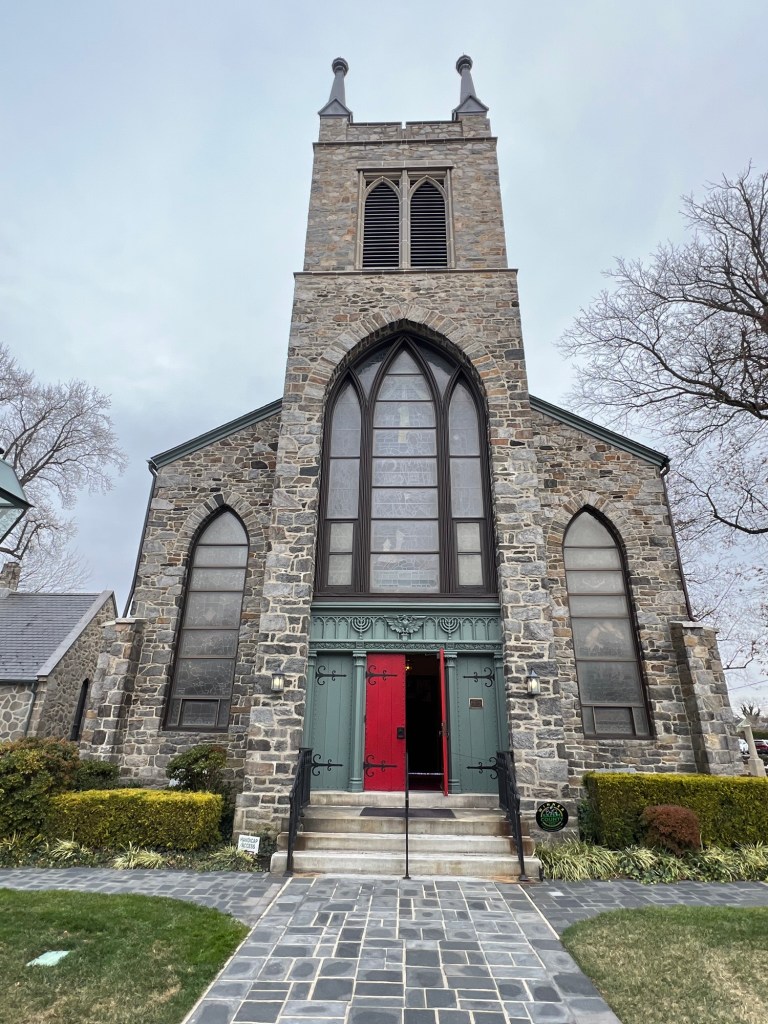
St. John’s Church on the tour
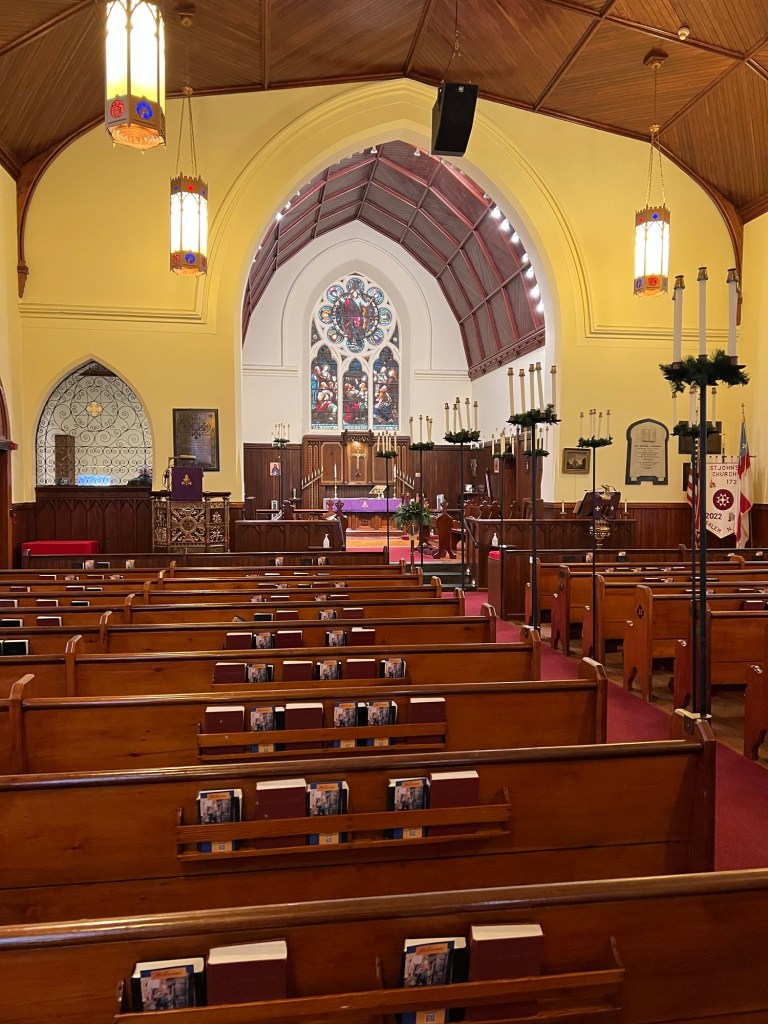
The church was decorated for Christmas Mass
As a fundraiser in their Chapel, the church was selling soup and sandwiches at very reasonable prices. It was a cool morning and I got the New England Clam Chowder and Sourdough bread. It hit the spot!

The homemade New England Clam Chowder was excellent
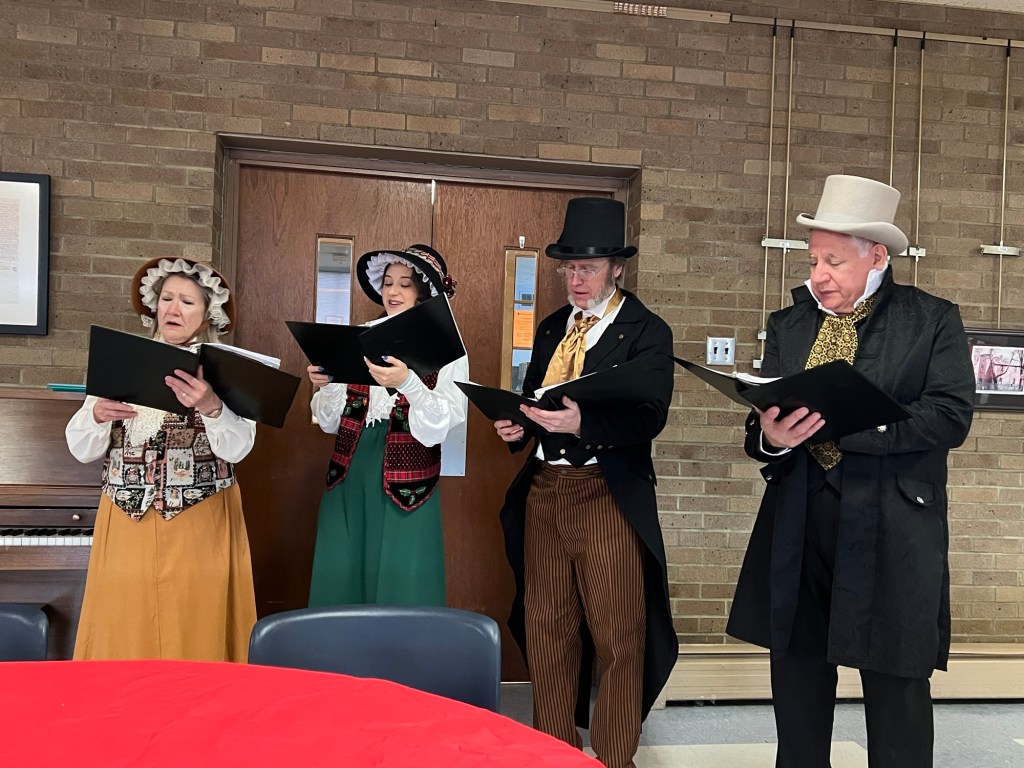
The strolling carolers entertained us throughout the tour at each site. Even they stopped to enjoy lunch here.
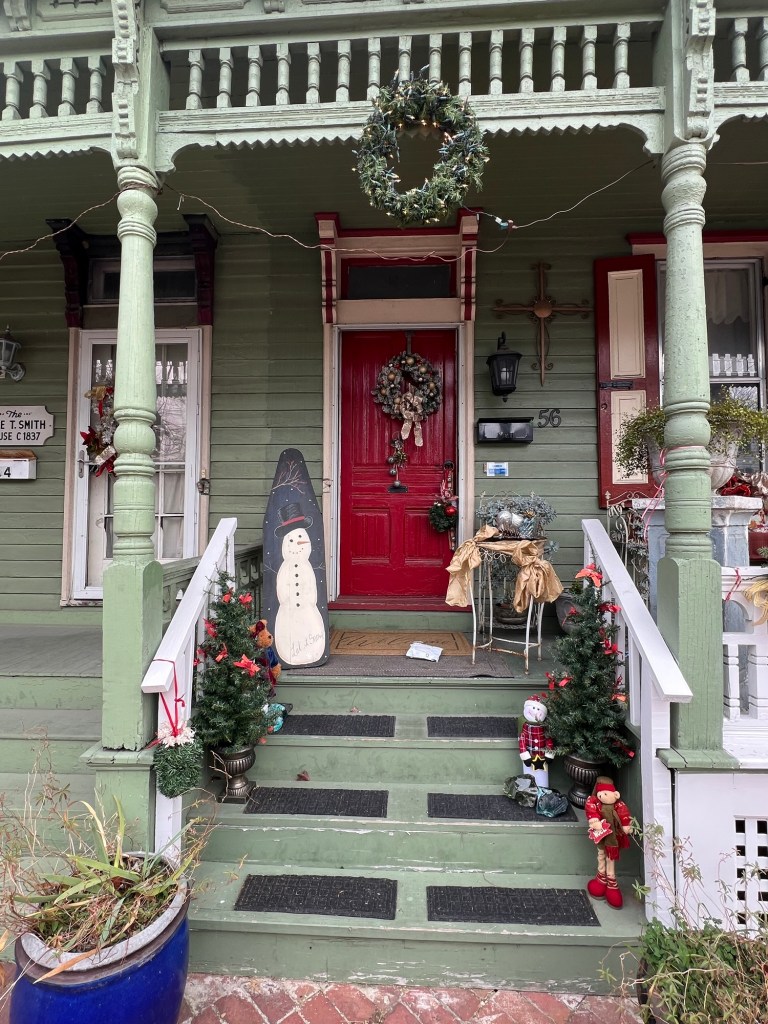
Another house downtown decorated for the holidays
On the way to the next church and some of the historical buildings, I stopped at the new Willows Wisp at 82 Market Street. This cute little shop had just had a soft opening and was just letting hg the community know they were here.

The Willows Wisp Bakery at 82 Market Street
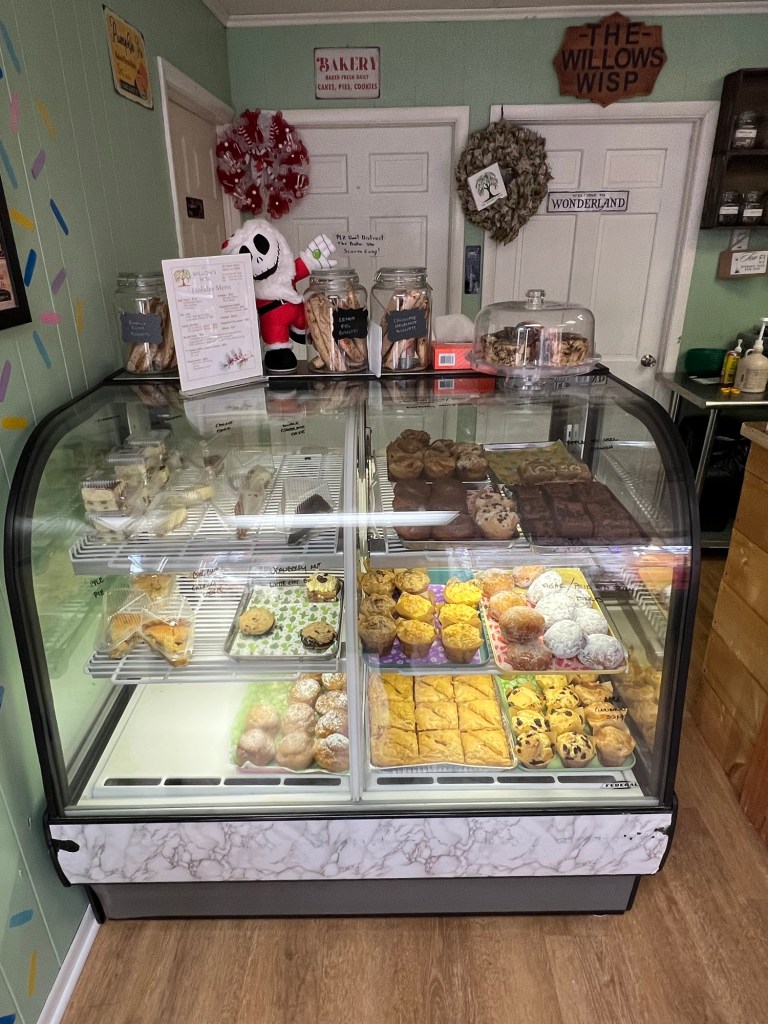
The delicious goodies at the Willows Wisp Bakery
https://www.thewillowswisp.com/
My review on TripAdvisor:

The delicious and creative baked goods at the Willows Wisp
After a quick tour of the bakery, I was off to the Presbyterian Church to hear some music.
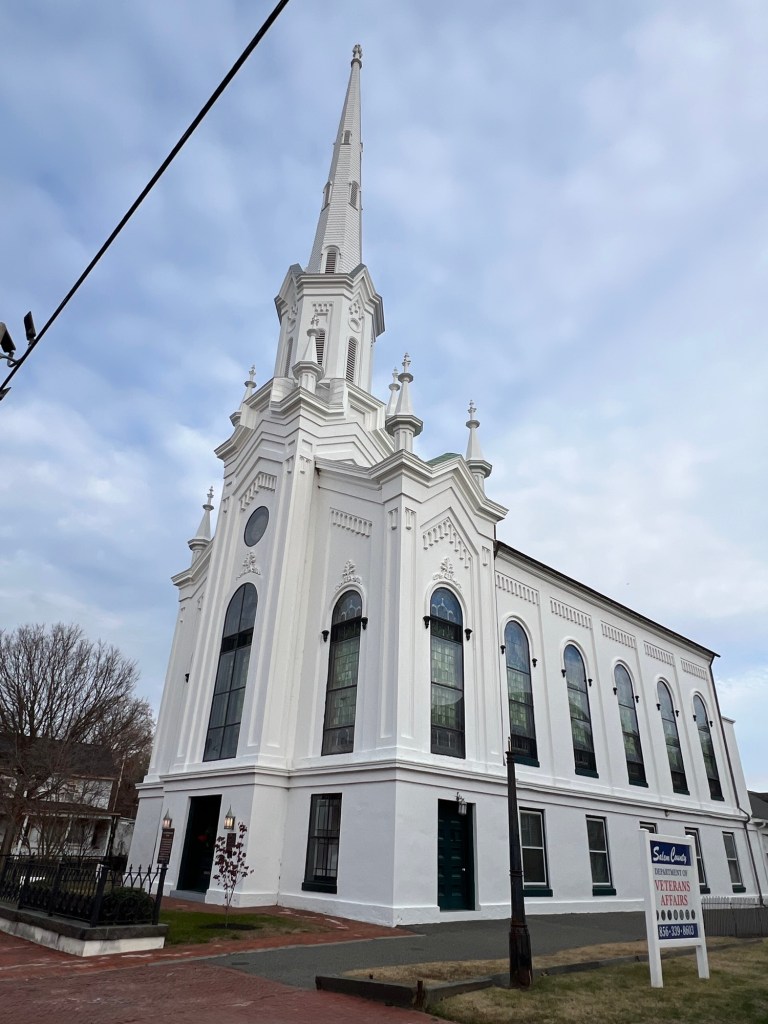
The Ist Presbyterian Church of Salem, NJ at 88 Market Street
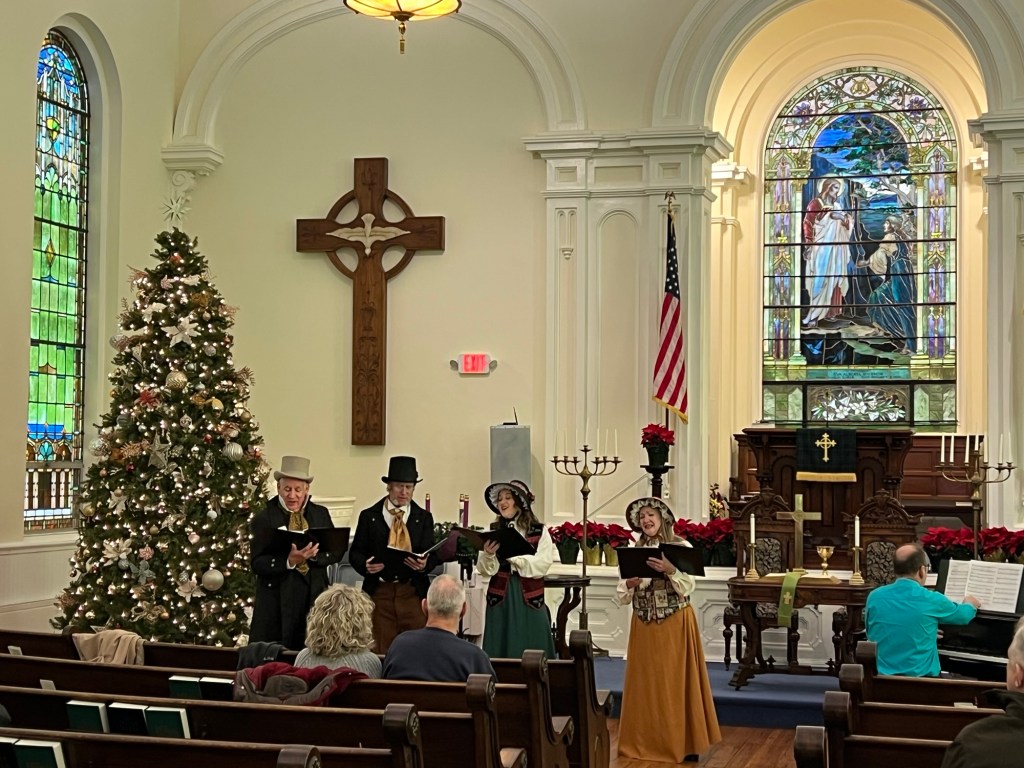
The roaming carolers along with the organ music
I stayed for the first couple of songs to warm up before I moved to the Salem County Historical Society across the street to take a quick tour of the exhibitions.

The Salem County Historical Society at 83 Market Street
https://www.salemcountyhistoricalsociety.com/
The museum was open for the duration of the tour of homes and had their interesting Portrait and Toy exhibitions (as noted above) still open to tour and view with docents.
Since I had toured them earlier to see what exhibitions were still there and found I had seen the all, I looked over the Dutch Keeping Room to see an early display of a Dutch Christmas activities. This is the oldest part of the original home that houses the Salem County Historical Society. It used to be where the original Christmas tree was placed which is now replaced by the Victorian Christmas tree further in the museum.

The Keeping Room at Christmas time
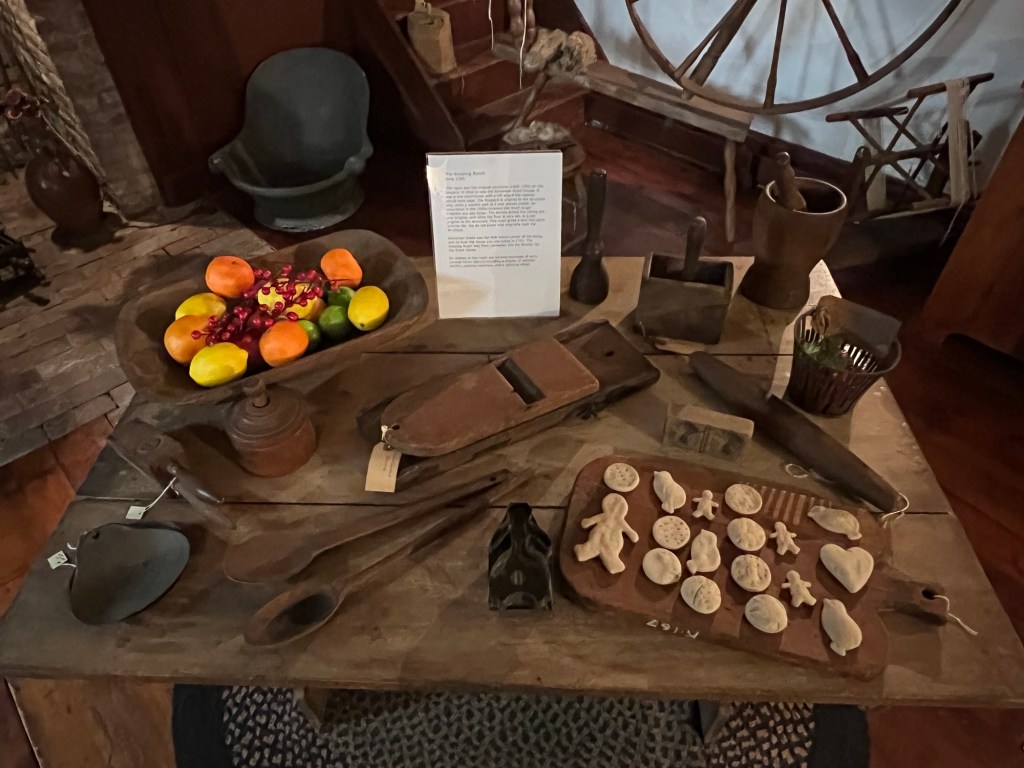
The Keeping Room set up for a Dutch Christmas
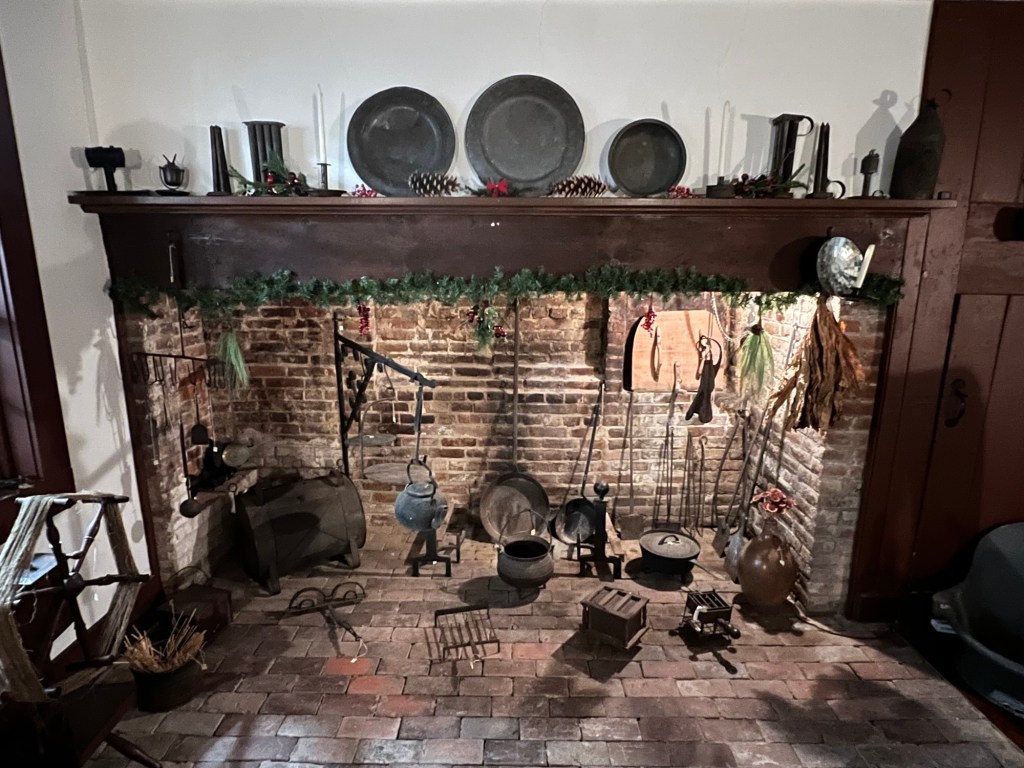
The Keeping Room decorated for Christmas
After visiting the museum. I went over at Old Salem Courthouse and toured the historical building. The building sits on the site of the original building that was built in 1692. This building’s cornerstone was built in 1735 and enlarged in 1817. The building was moved and renovated in 1908. It is now the oldest Courthouse in the United States under continuous use since its inception (Salem Historical Society Guidebook),

The Old Salem Courthouse at 113 Market Street

The beautiful decorations on the side of the building

The inside of the oldest Courthouse being used in the United States
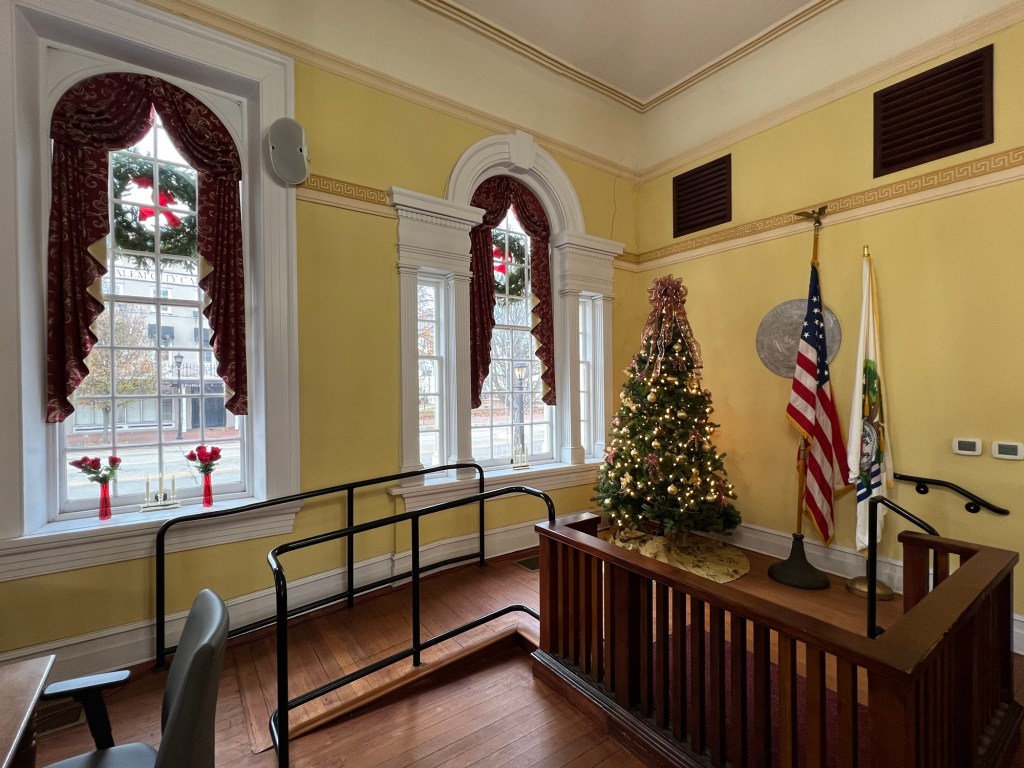
The side of the room decorated for Christmas

The old fashioned bell that was once used outside
When I was finished with my tour of the Old Salem County Courthouse, I was down the block to my next stop, the Salem Friends Meeting Room building, one I had walked past many times.

The historic signs for the Friends Meeting

The Friends Meeting House in downtown Salem

The historic Friends Meeting House

The view from the top of the Friends Meeting House
The Friends Meeting House was indeed old and I was amazed that this building was still being used for worship. I looked like a relic from another era. There was not much decorations either so it did not seem to festive. I walked around the downtown to the next destination.

Historic Downtown Salem, NJ during the tour, the Courthouse to the left and the firehouse to the right
As it got later in the day, I stopped by the old JC Penney building at 225 Broadway, that was now being used as a training ground for carpenters. They were showing us around the old department store.
Then it was a quick tour of the Brown & Smith Building, which was at 193 Broadway. The historic building was now a gift shop and art gallery. I toured the items of the store before I moved onto my last two sites before I got to my B & B. The next place I visited was the Sarah Hall House at 90 West Broadway, which is now an Insurance company. The front of the offices had been decorated for the holidays with vintage decorations.

The former Sarah Hall House at 90 West Broadway in Downtown Salem
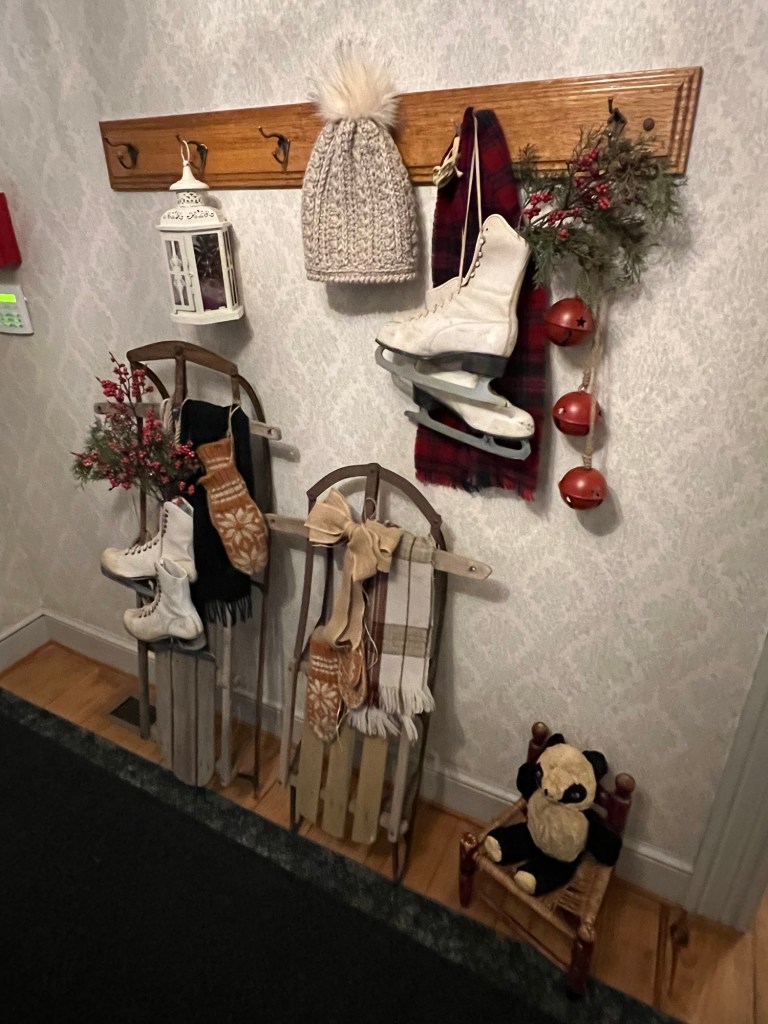
Some of the decorations when we entered the house for the tour
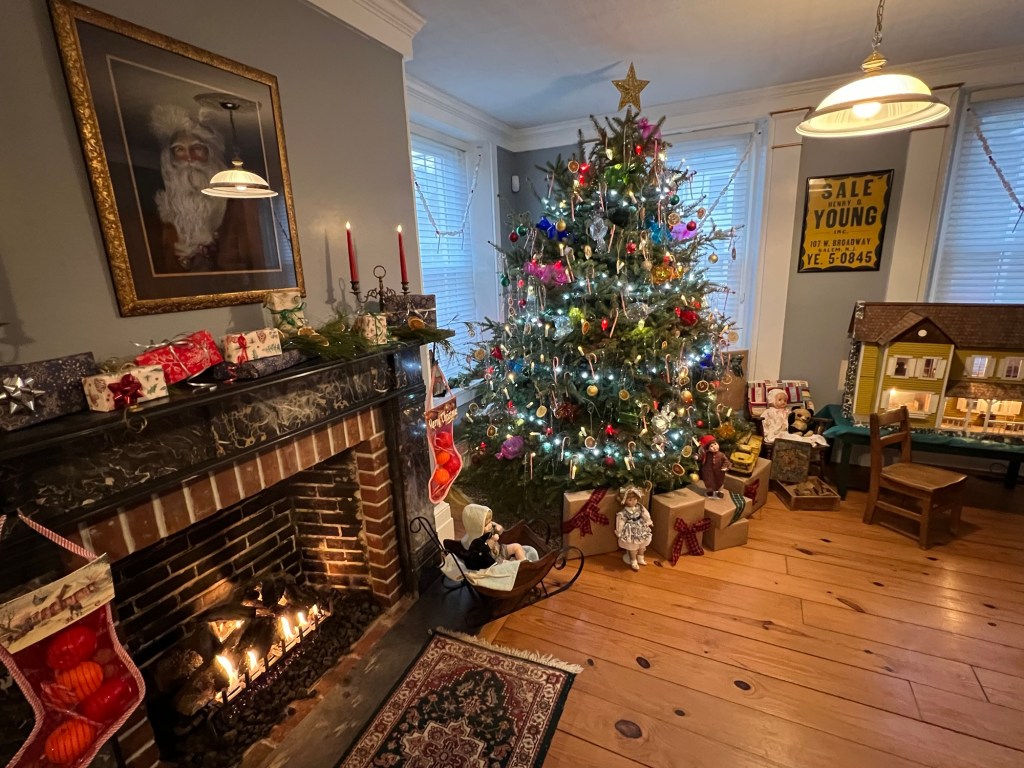
The Christmas tree inside the older home portion of the building

This delightful little doll was owned by one of the members of the Insurance company’s grandmother. The home had also once been the Masonic Lodge. So I could see the addition in the back of the building.
The last private home I saw on the tour was the Matlack House at 24 Oak Street, which had been built in 1868. The couple that owned it now were on property to tell us how they renovated and cared for this home.
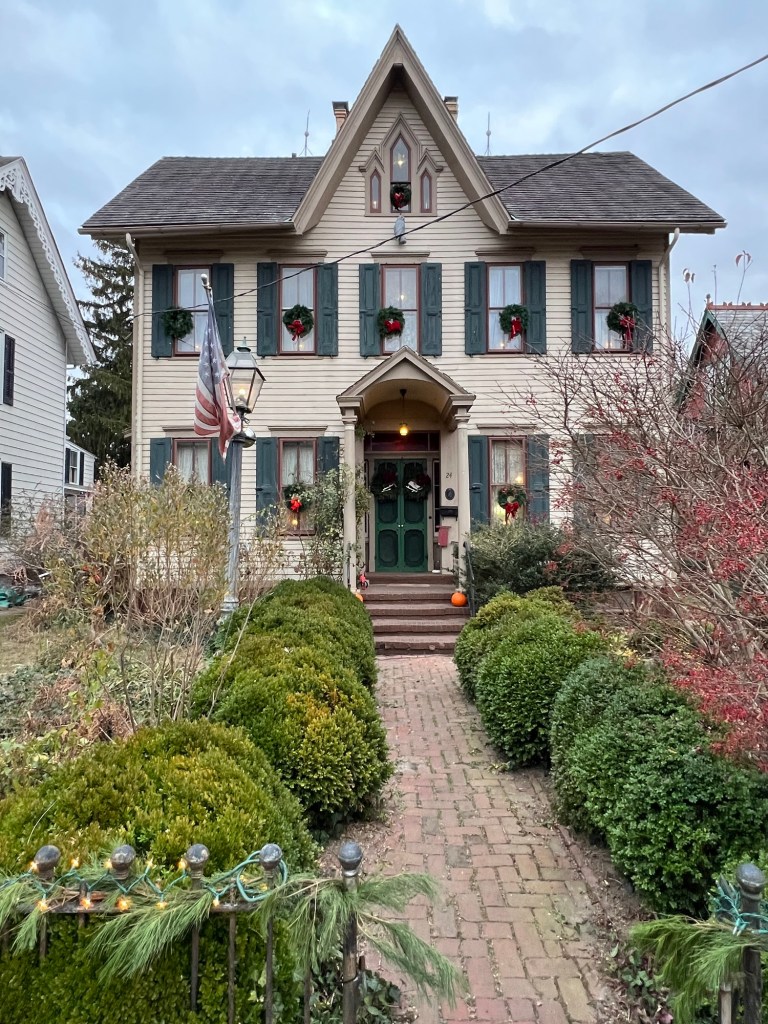
The beautiful Matlack House at 24 Oak Street

The owners had done all the wallpapering herself and it was very impressive
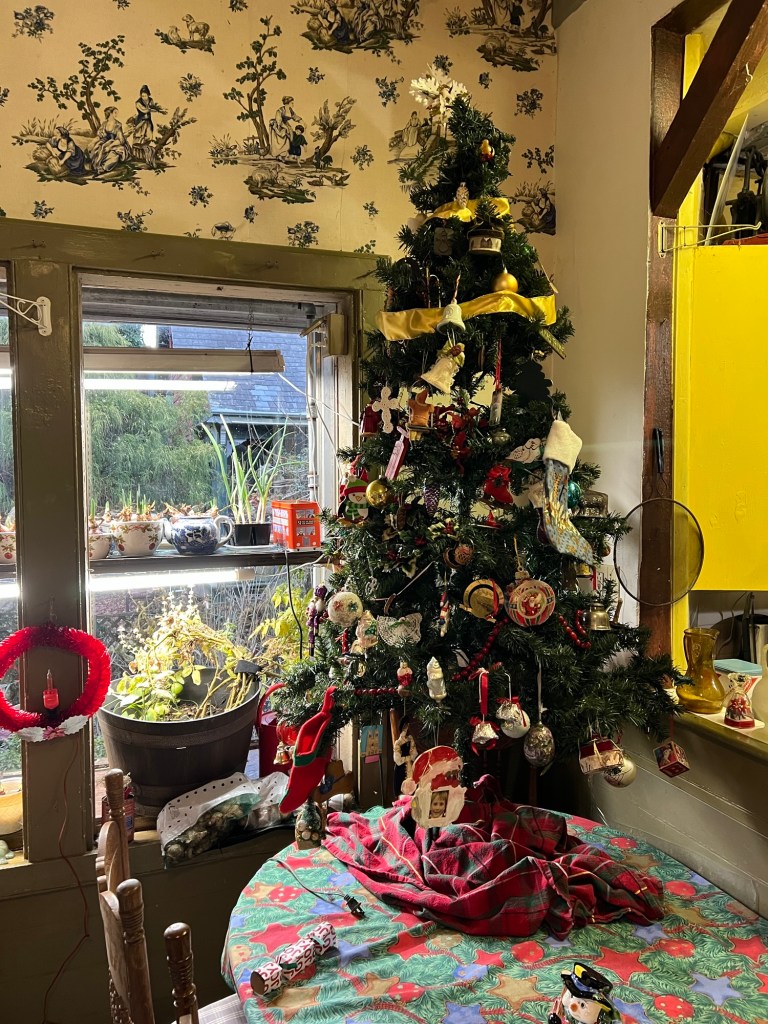
Their Christmas tree just off the kitchen

One of the decorated trees by the old Library
What I liked about visiting this house was the sheer creativity of the decorations and the beauty of the design of the home. The last place on the tour was the Barrett Plantation House, where I would be spending the night. The B & B was on the tour that evening so I could not check until the tour was over.
It was really nice to be part of the tour as I got to see all the rooms in the B & B and hear more of its history. The fireplaces were going when we toured and they had a Revolutionary violinist playing and telling us stories of the holidays back then.

The James Barrett House at 203 Old Kings Highway
Home
My review on TripAdvisor:
I never realized that this house was built in 1735 as a plantation which once encompassed five hundred acres. It was so beautifully decorated for the holidays and what was nice about it was that the fireplaces were going and it was nice and warm in the main room.
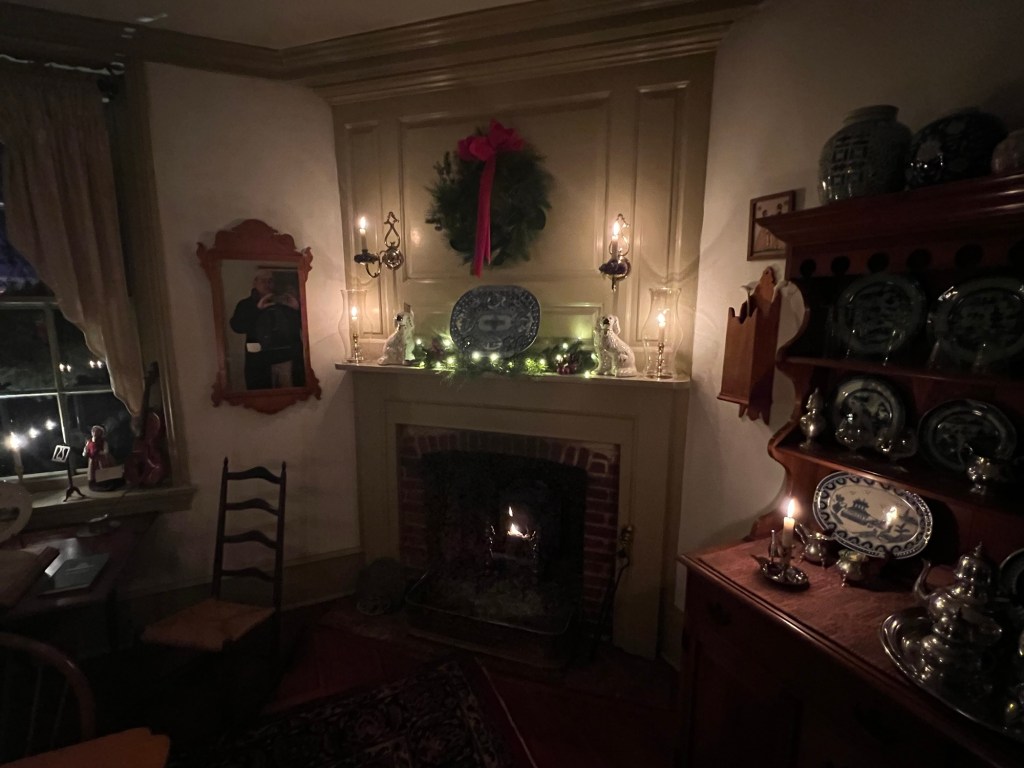
The inside of the main room during the tour with the fire going

The beautiful decorations were all throughout the home

One of the bedrooms decked out for the holidays
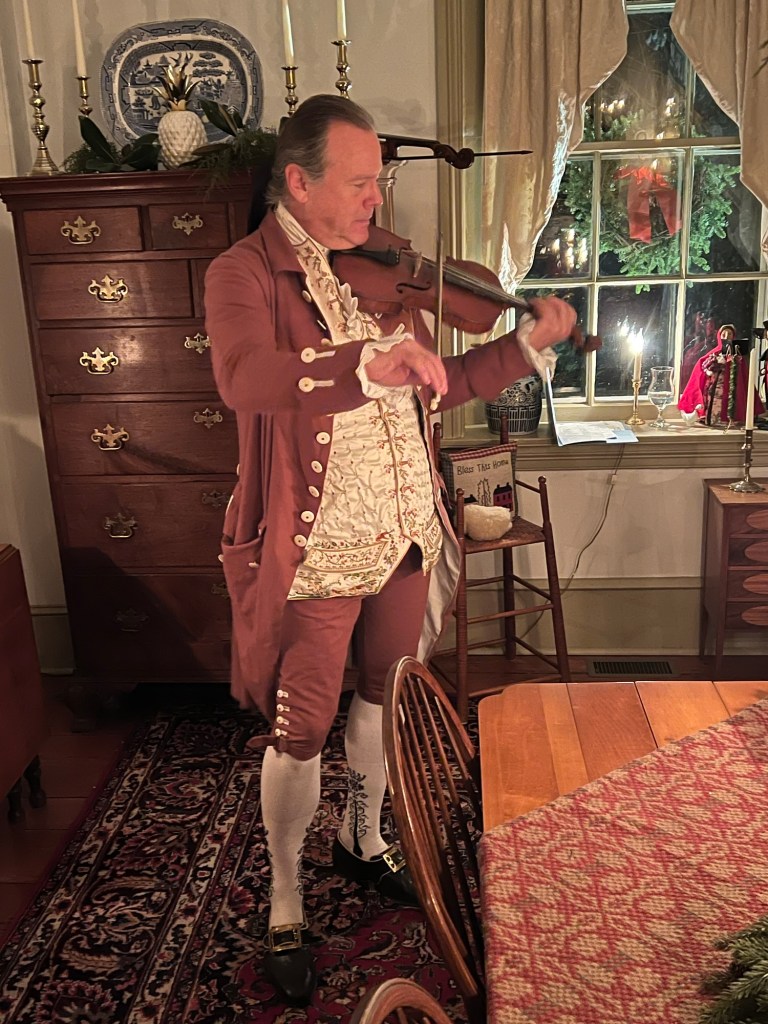
The violinist who entertained us with music and stories of Christmas’s past
This was the end of the former tour and I just relaxed at the Barrett House to warm up and listen to the music. Since my hosts needed some downtime to get the B &. B back in shape, I went back downtown for the Christmas tree lighting outside of the Old Courthouse.
The Salem Tree Lighting was not part of the House Tour but a nice an accompaniment to it and the earlier parade. I have to admit it was a small tree. I thought in a town as old as Salem they would have this large tree in town but it looked like they had just planted it.

The outside of the Salem Courthouse for the Tree Lighting
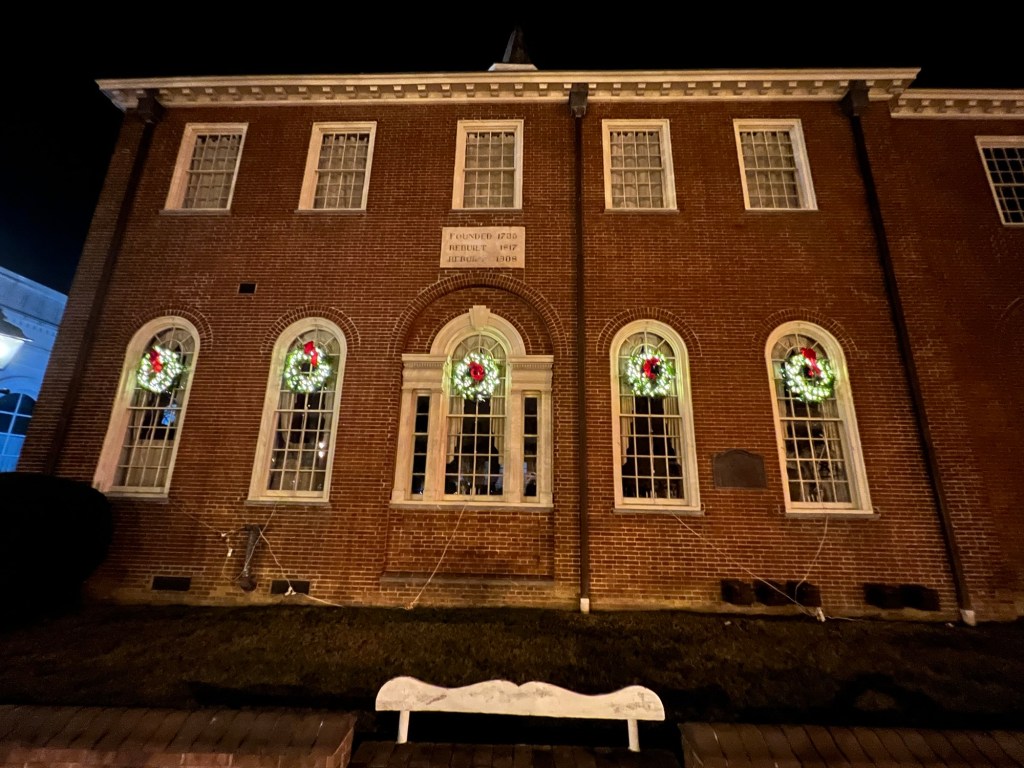
The Courthouse decked out and lit for the evening
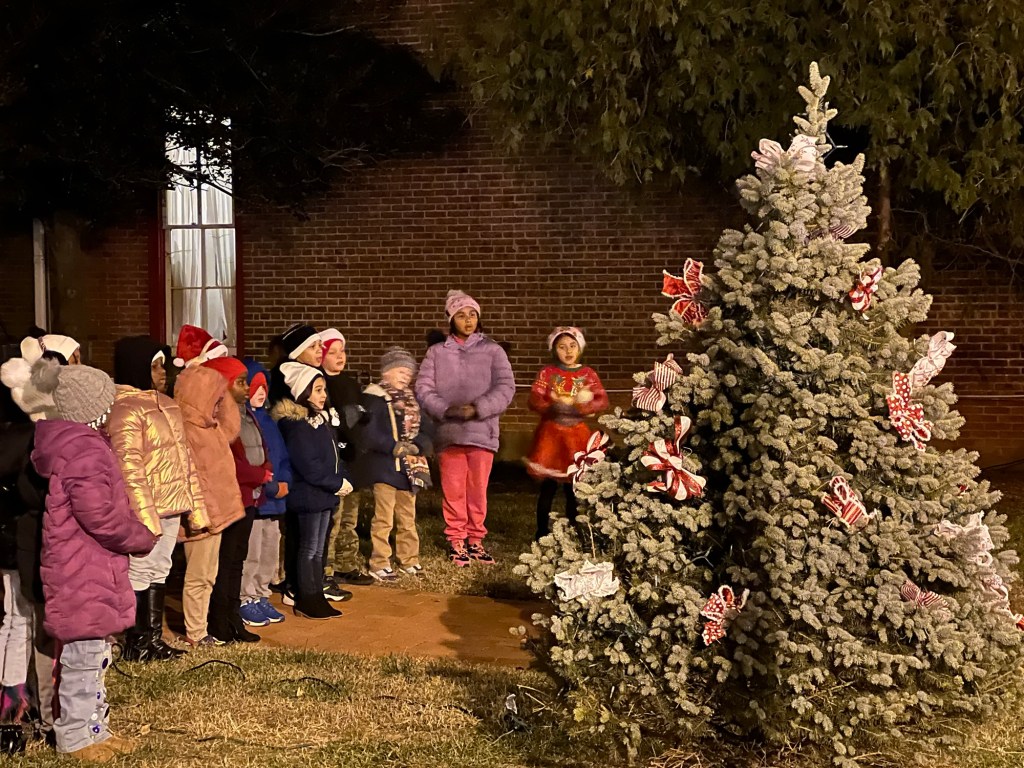
The Choir singing before the lighting
Videos of Santa arriving on the Salem Fire Truck and The Tree Lighting:

The tree lighting with the parade queen and the choir joining in the fun
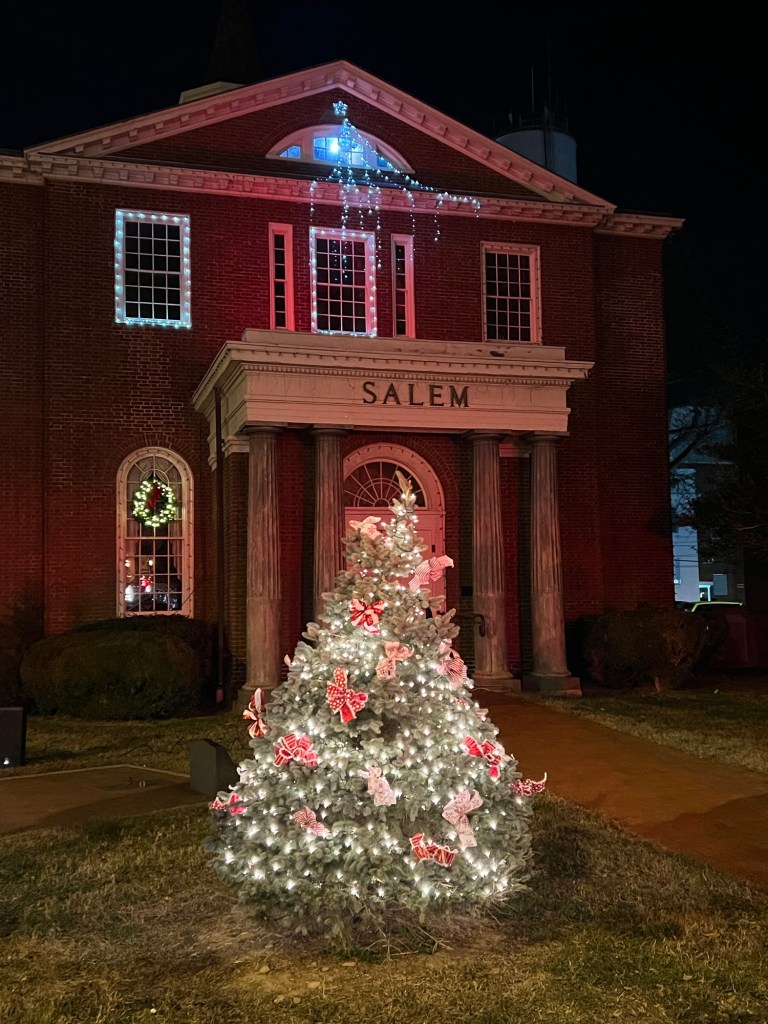
The tree at the end of the Tree Lighting ceremony that evening
The Tree Lighting ended my tour of the day. It really was a wonderful house tour and there were so many beautiful homes and public building to tour and visit and so many gracious hosts. I highly recommend this tour for people who want to see the beauty of Revolutionary homes decked out for the holidays.
My stay in Salem, NJ the night of the Yuletide Tour and Tree Lighting:
After the tour was over, I went back to Barrett’s Plantation B & B for the evening. My host Gaynel and Craig greeted me warmly after a long and cold day of touring homes and the downtown. I was greeted by my hosts in the Living Room with a warm fire going and a glass of wine. We had small snacks of Shrimp Cocktail and a Roast beef sandwich with a side of Red Skin Potato salad.
After a nice conversation and getting to know the other guests a swapping ghosts stories, it was time for bed. I highly recommend the Dickerson Room, one of the two suites. I slept soundly that night.

The Dickerson Suite
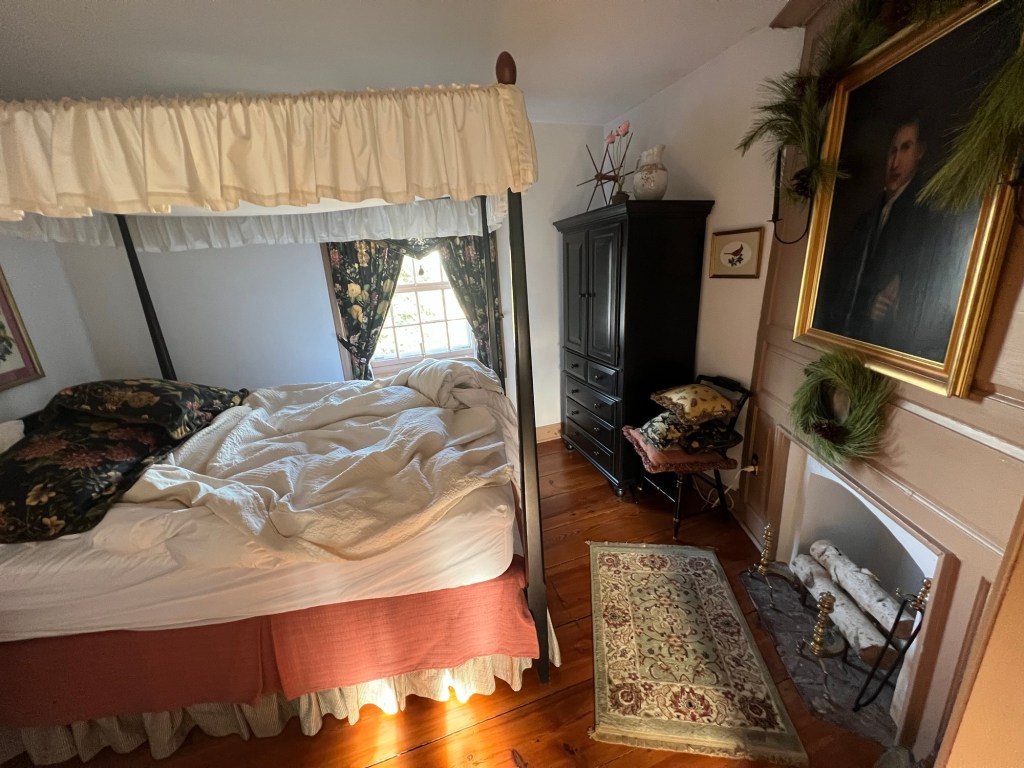
The Dickerson suite when I woke up to start my day touring
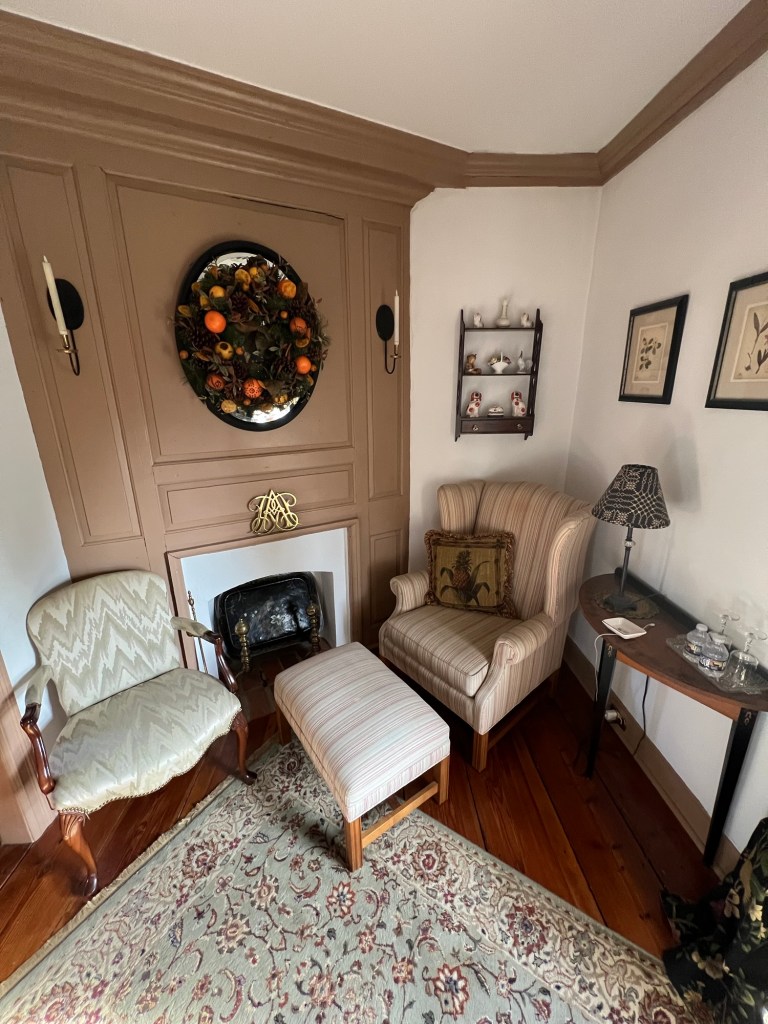
The Sitting Room in the Dickerson Suite
The breakfasts at the Barrett’s Plantation are always wonderful. In the warm and inviting breakfast room, warm fire was going and the table was set for us with juice, fresh fruit and tea. For breakfast with the fresh fruit was Amish Honey Bread and Sunday Casserole with a side of potatoes. What a wonderful way to start the day.
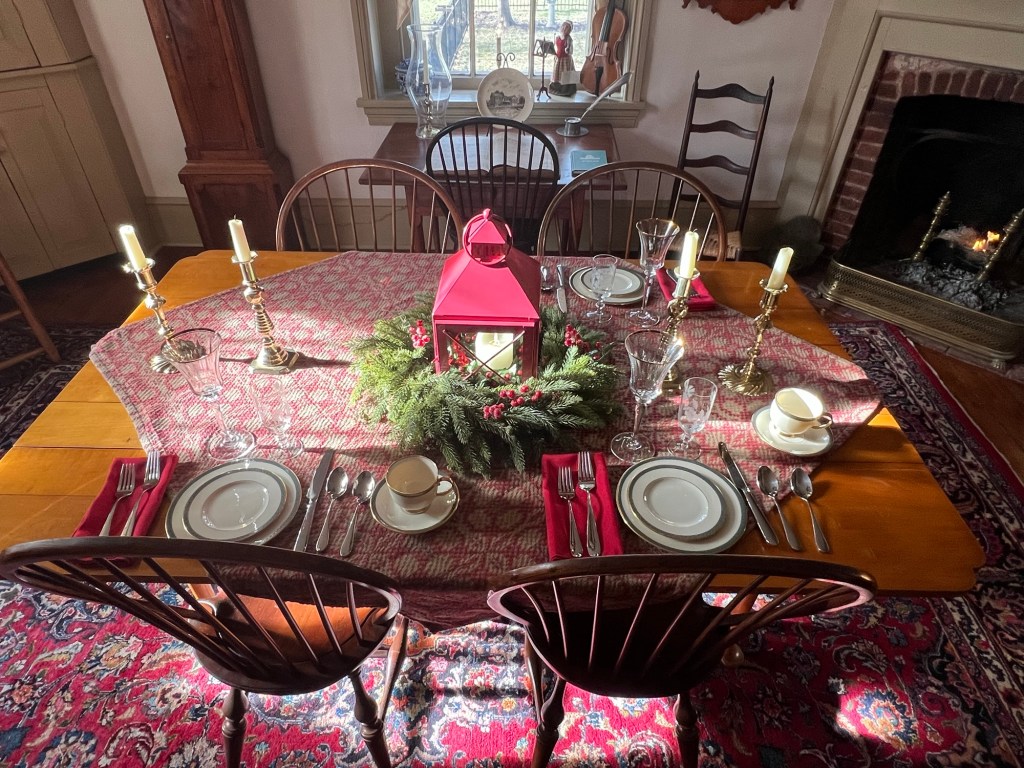
The table set for breakfast
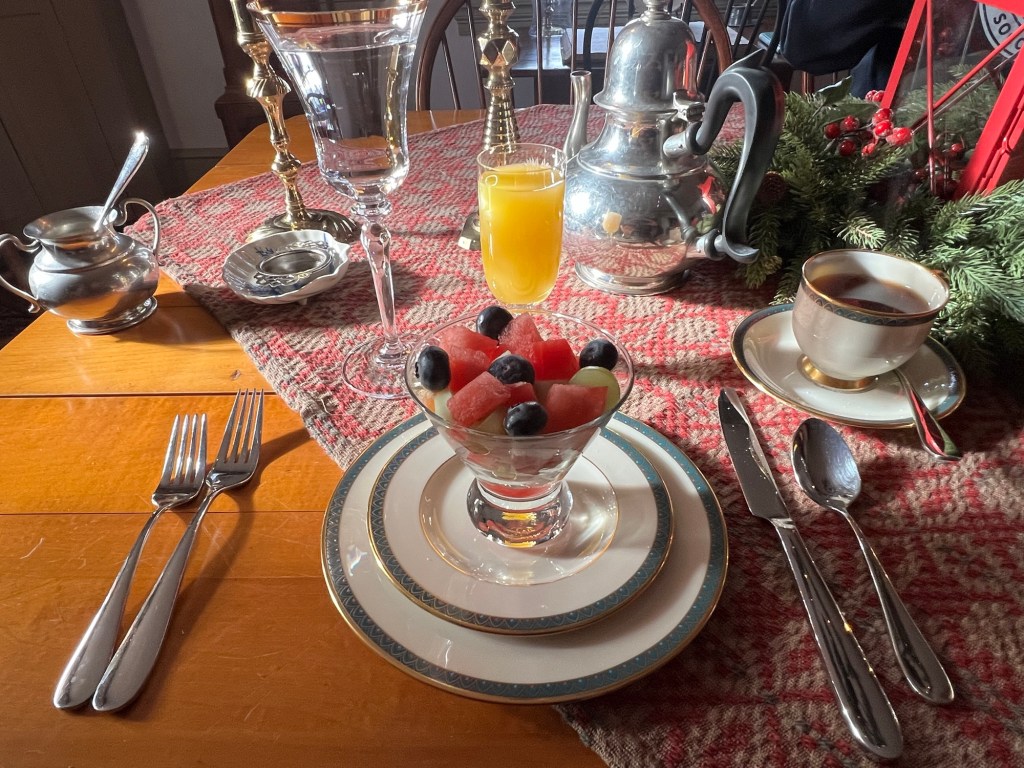
The table setting with fresh fruit

The fresh fruit to start the meal

The Amish Honey Bread

The Sunday Casserole with a side of potatoes for the main dish
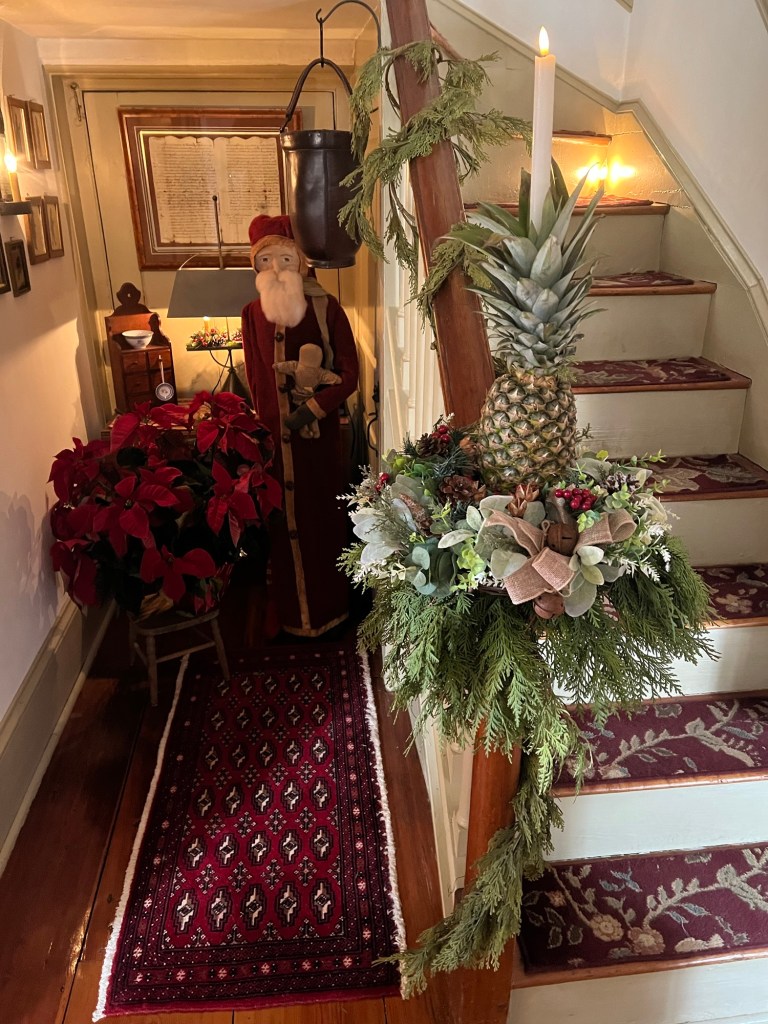
The decorations around the house
After the wonderful breakfast, I was ready to start my day. I just loved the decoration inside and outside the house. The couple really did a wonderful job making the B & B festive for the holidays.

Decorations around the house

The side of Barrett’s at the holidays
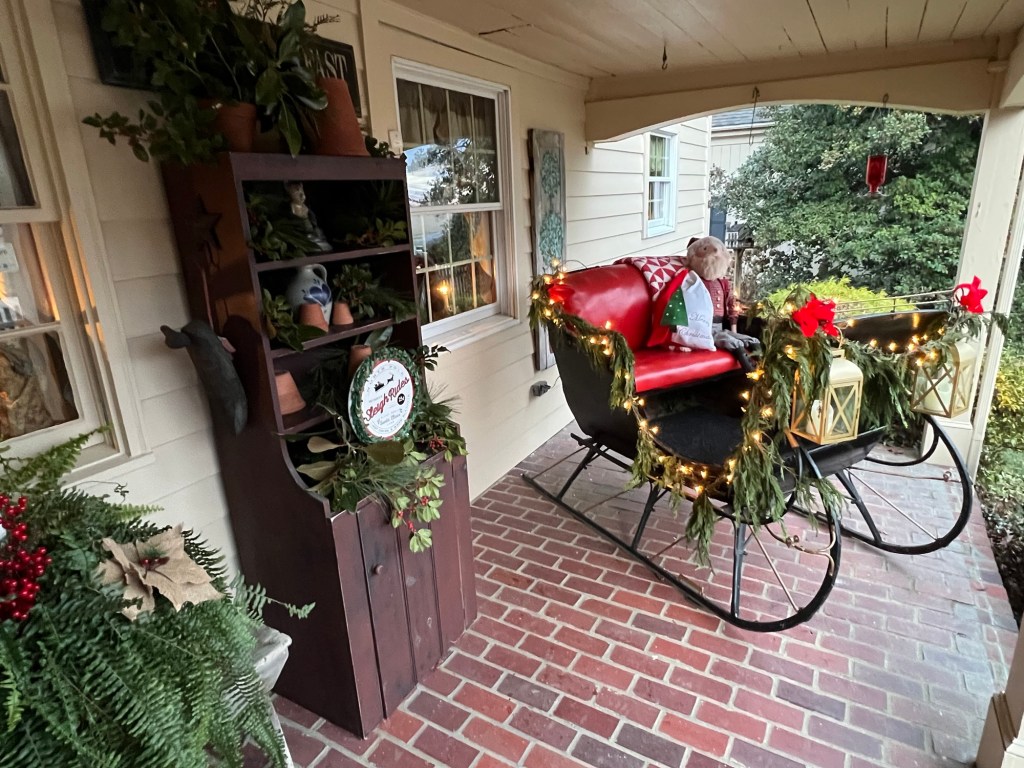
The beautiful decorations outside
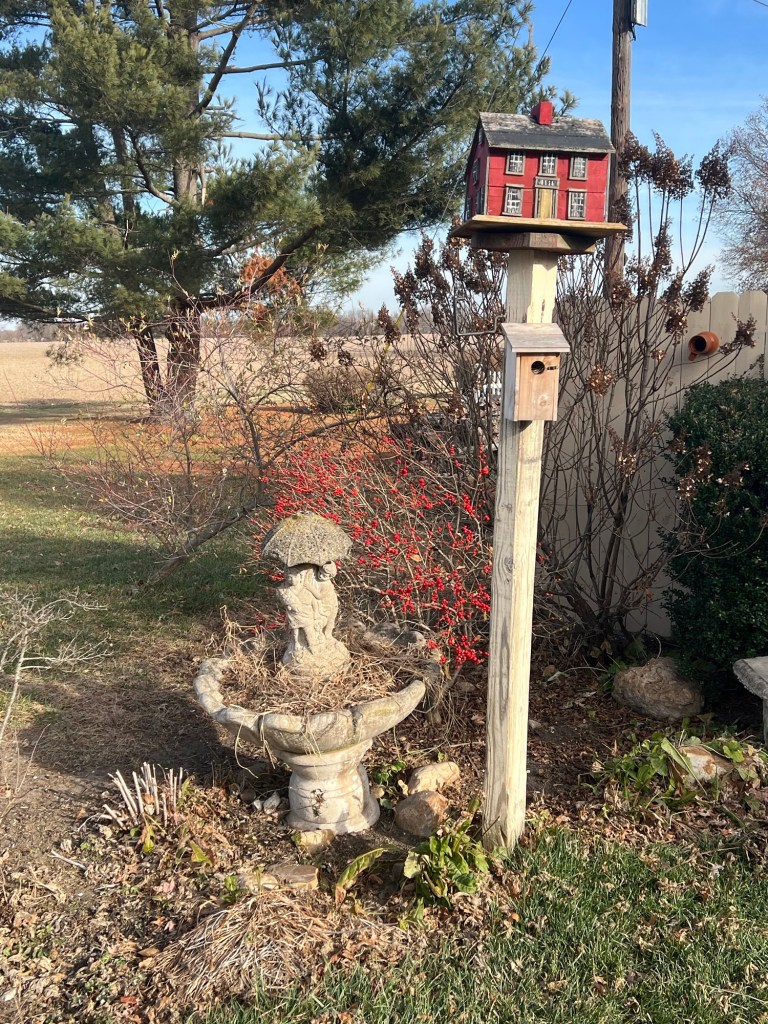
The grounds at Christmas time were nice to walk around in

The grounds at Christmas time
I left that morning to tour other museums and to explore the area more for my blog. It was an excellent tour of the homes and the sites and I highly recommend the Yuletide Tour to really get to know Salem, NJ.
Information on the Society:
(Taken from the Museum pamphlet)
Why become a member of the Salem County Historical Society?
The mission of the Salem County Historical Society is to seek, document, preserve, interpret and perpetuate Salem County’s heritage and to enhance the awareness and appreciation of that heritage through research, collections, functions, exhibits, educational programs and publications, for the benefit of future generations and for the betterment of the community.
The Society offers a wide variety of programming and services that are unduplicated regionally. These programs are presented at locations around the county and are designed to reach and serve a wide range of audiences. This includes guided tours, school lessons on site, outreach programs and our Open House in Fenwick’s Colony tour and Quarterly Meetings. Most programs are free and all are open to the public.
Salem County’s history and the evidence of it that is all around us in the origins and architecture of its buildings, is one of its greatest assets and should be a source of pride for all of us. The growing number of visitors using the Society’s research library, museum displays and public programs is testimony to the increasing interest of the general public in enjoying Salem County’s history.
Membership Benefits
*Receive our award winning quarterly newsletter
*Free admission to our library and museum
*Discounted copies and services in the library
*Discounts on Society events and programs
The funds needed to operate the facility and to maintain and improve the level of services provided by the Society, come in part from annual membership dues. If you are not already a member, please consider a membership. You may join online at http://www.salemcountyhistoricalsociety.com or stop by and visit the Society.
Volunteer
Volunteers play a crucial role in the Society’s operation and overall success. The Society welcomes individuals with varying backgrounds and interests to contribute to our overall mission of preserving and caring for the history of Salem County. Please contact us to learn more about volunteer opportunities.
Resources & Records:
*Bible Records
*Census, Church and Cemetery
*Military Service
*Published family histories and family files
*Rare manuscripts and subject files
*Birth, marriages and death resources
*Newspapers on microfilm
*Online access to Ancestry.com
Special collections:
*Maps
*Photographs
*Rare books
*Recorded and unrecorded deeds
*Diaries and journals
*Historical publications about county, state, military, ethnic and industrial history, as well as topics of local interest such as glass, brick houses and agriculture
*Unique house and church files
Publications
The Society publications an award-winning Quarterly Newsletter featuring Society news, events and scholarly articles. Our bookstore features books and periodicals on Salem County topics from many local authors. Publications are available to purchase on our website and at the Historical Society.
Education
The Society brings history to life for hundreds of children every year, providing hands-on lessons about life in 18th and 19th century Salem County. Utilizing current exhibits and permanent collections, children are introduced to the region’s rich heritage through presentations and hands-on activities.
These programs complement school lessons for traditional and homeschooled groups. All of our education programs meet state curriculum standards for Social Studies, Language Arts, Visual and Performing Arts and Mathematics, grades 4-12.
The Society offers educational programs based on the American Revolution, the Civil War, life in the colonial past, which has students identify objects from the past and modern equivalents. The Society also offers educational programming based on the current exhibits. These programs are available at the Historical Society and the programs on the Revolution, Civil War and “History’s Mysteries” can be presented offsite upon request.
Please check the education section of our website to learn more about these programs. Field trips and group tours can be scheduled by contacting the Society at (856) 935-5004.
Accessibility
The Salem County Historical Society strives to make all of our programs accessible to the public. Our library and museum exhibits are wheelchair accessible. Persons requiring special services should contact the Society in advance of your visit. Group visits are welcome and available by reservation.
The Society’s programs are made possible in part by funds from the Salem County Cultural and Heritage Commission, the National Society of the Daughters of the American Revolution and our generous Corporate Sponsors. If you are interested in corporate sponsorship please call the Society.
Museum & Library Admission: $5.00 per person
Directions:
From the Delaware Memorial Bridge:
Take the Route 40 exit and immediately bear right onto County Route 540. Follow 540 to Route 45 south, which becomes Market Street in Salem City.
From NJ Turnpike and I-295: Take Route 40 exit, proceed across overpass and go straight onto County Route 540. Follow 540 to Route 45 south, which becomes Market Street in Salem County.
Disclaimer: This information was taken directly from the Salem County Historical Society pamphlet and membership forms. It really is a nice place to visit and take about an hour to visit the galleries. Please call the above numbers for more information.