Tag: museums

The Greater Elmer Area Historical Society                               117 Broad Street                                                                   Elmer, NJ 08318

The Greater Elmer Area Historical Society 117 Broad Street Elmer, NJ 08318

The Greater Elmer Area Historical Society

117 Broad Street

Elmer, NJ 08318

(609) 670-0407

https://www.facebook.com/greaterelmerareahistoricalsociety/

http://www.elmerboroughnj.com/GreaterElmerAreaHistoricalSociety.html

Open: Sunday-Friday Closed/Saturday 10:00am-2:00pm (Second Saturday of the Month)

Admission: Free but donations are accepted and encouraged to help fund the museum.

My review on TripAdvisor:

https://www.tripadvisor.com/Attraction_Review-g46415-d28644121-Reviews-Greater_Elmer_Area_Historical_Society-Elmer_New_Jersey.html

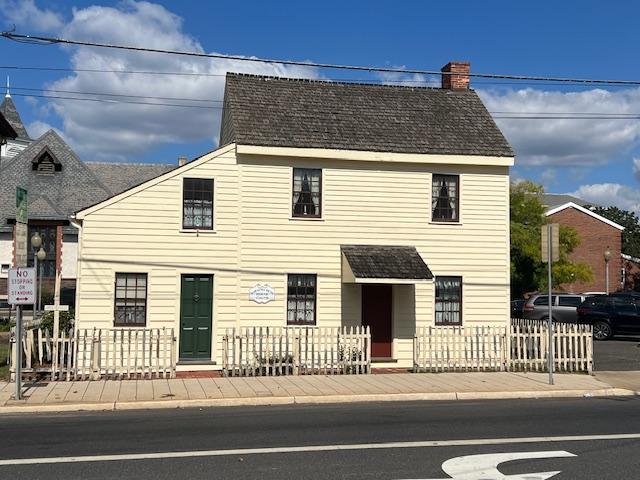
The Greater Elmer Historical Society at 117 Broad Street

The History of The Greater Elmer Area Historical Society:

(from the museum website)

The Greater Elmer Area Historical Society was formed as a committee in 2008. It officially organized as a non-profit Historical Society in 2010.

Our Vision:

(from the museum website)

Serving the Elmer Borough, Pittsgrove Township and Upper Pittsgrove Township, The Greater Elmer Area Historical Society brings together the historical connection of he Borough and two Townships. Our vision is to use that connection to contribute to the understanding and appreciation of the history we share and to promote the cultural growth of our communities.

The entrance of The Great Emler Area Historical Society

Museum & Archives:

The GEAHS Museum & Archives opened in 2018 in the former St. Ann’s Church in Elmer, NJ. It is open to the public on the second Saturday of each month from 10:00am-2:00pm. Stop by and browse our collection of local history including books, photographs, signage, artifacts and much more. The Society meets on the third Thursday of each month at 6:30pm for guest speaker presentations, show and tell and society updates. The public is welcome to attend.

Some the events that the Society runs each year:

Historical Tours: The Curiosity House Tour is usually held in late November featuring houses and churches in the Elmer area. The homes are decorated seasonally and most have a rich historic background. The Historical Cemetery Tour is a guided tour held in late October highlighting the life stories of people buried in local cemeteries.

Elmer Harvest Day: Elmer Harvest Day is a community event that includes live music, crafters, antique car show, children’s activities, fire truck rides, petting zoo, food vendors, special offer from local businesses and lots of fun activities for visitors of all ages. Elmer Harvest Day is held on the first Saturday of October.

Elmer Harvest Day 2024: (I attended the event)

The tractors on display on Elmer Harvest Day October 5th, 2024

The streets were mobbed with residents and visitors on Elmer Harvest Day

The creativity of the crafts vendors

It was not even Halloween yet and here comes Christmas
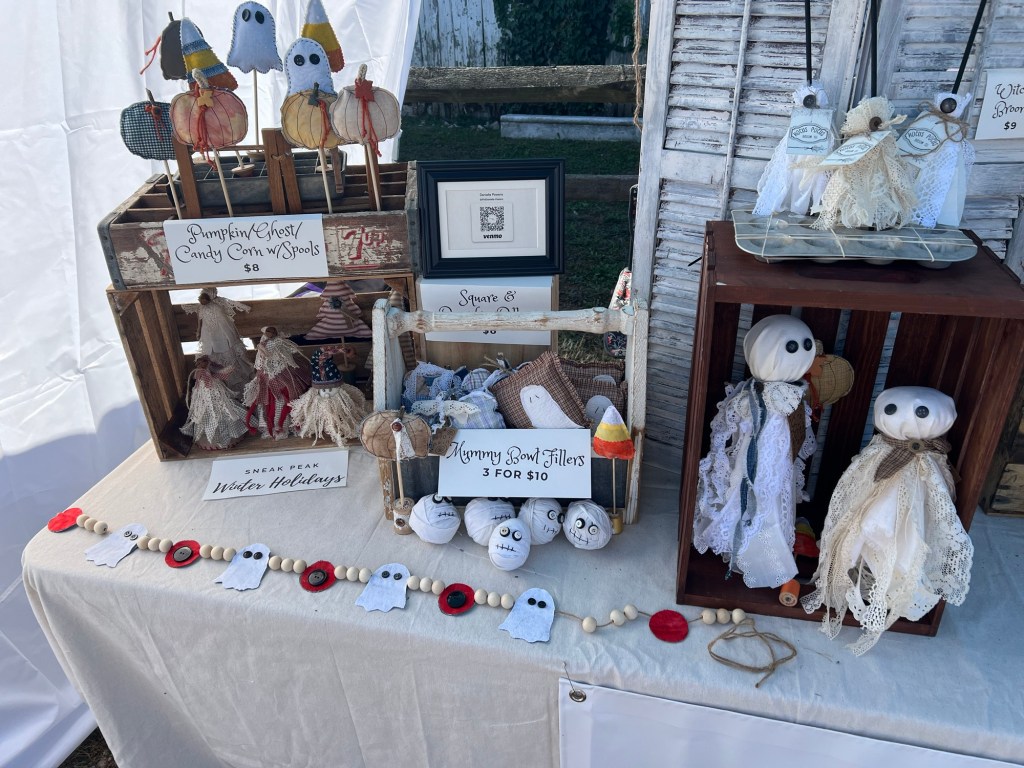
These were some of the most unusual crafts at the festival. I loved the Mummy Bowl Fillers. Very clever!

I took a chance on a recent visit to Elmer, New Jersey to see if there Historical Society was open and I lucked out. On a beautiful early October day, they were sponsoring their annual Harvest Festival and the museum was open. What an interesting little museum. The collection reflects life in a small rural community and how it has grown in the modern time.

The outside of the museum on the day of the Harvest Festival

The museum is housed in an old Catholic Church

The building was built in 1894 as St. Ann’s Catholic Church that was organized in 1892. The church was built Adam Kandle at the cost of $1800. The cornerstone was donated by marble cutter Joseph Gibson. In November 2017, the former church building was donated to the Greater Elmer Area Historical Society to be used as their headquarters (Society pamphlet).
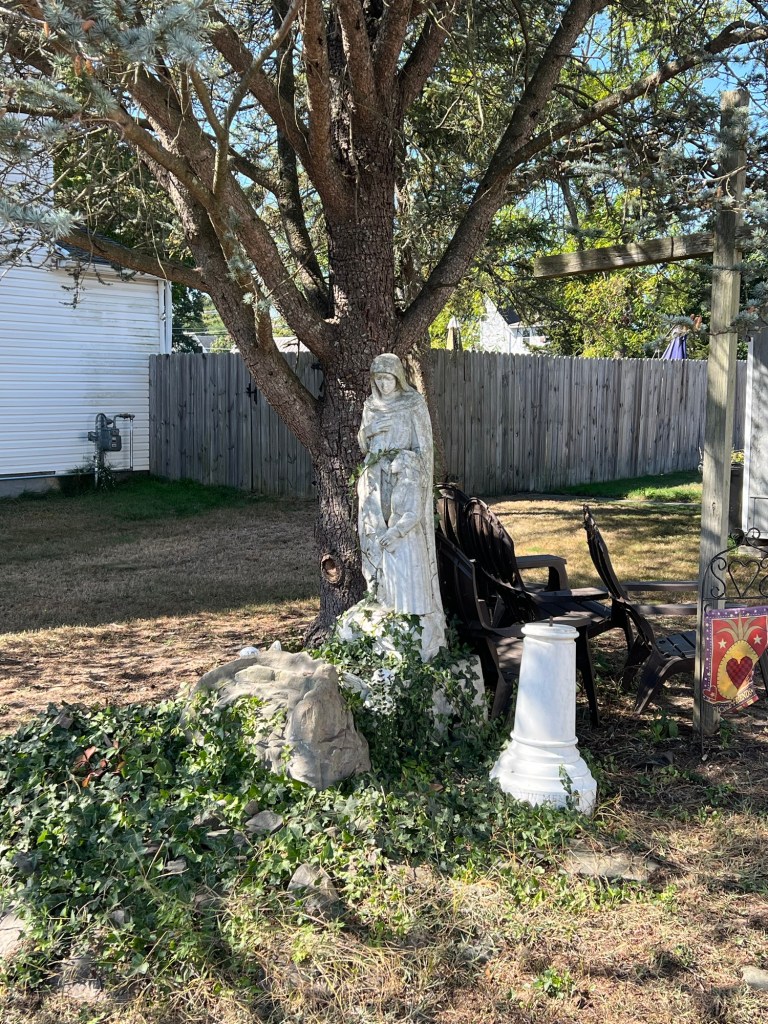
The shine to Saint Ann just outside the door

The inside gallery of the museum still has a feel of the church mixed with the modern era

The town progressed from a sleeping community of hunting and fishing for the Lenape to the coming of the Dutch, French, English and various waves of new immigration to the area.

The Early Settlement sign

The museum may be small but it packed with information on the history of Elmer, the local industries and farms, the Native American population and local population. Each section of the museum has a different theme to it.
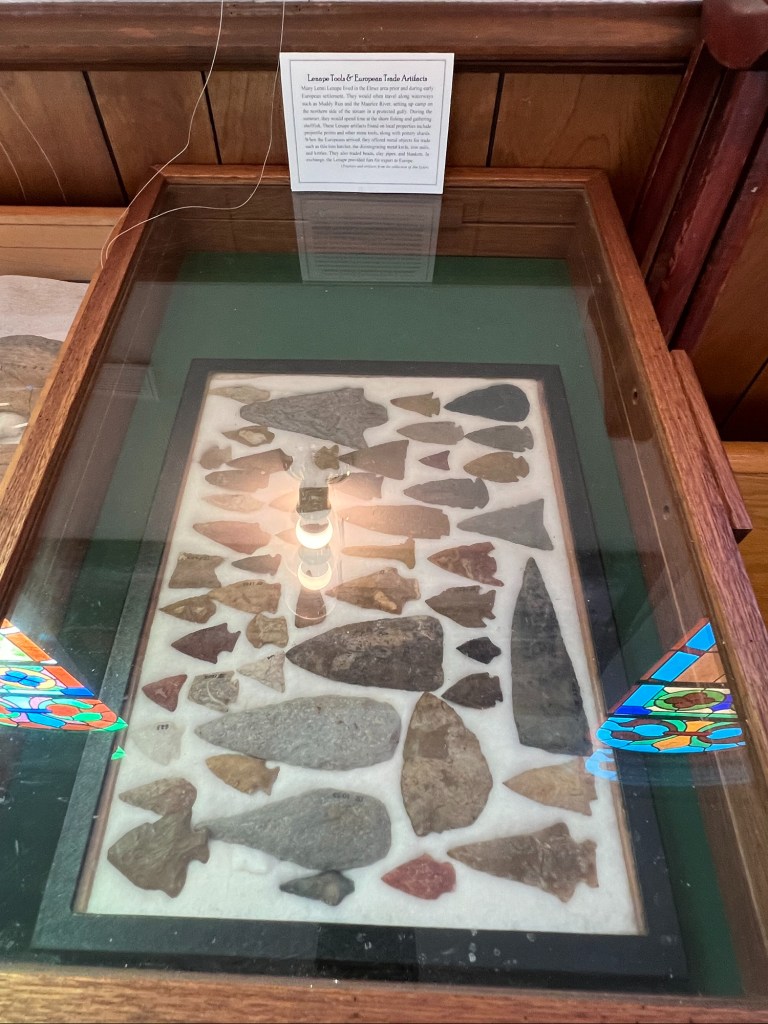
The Native American artifacts
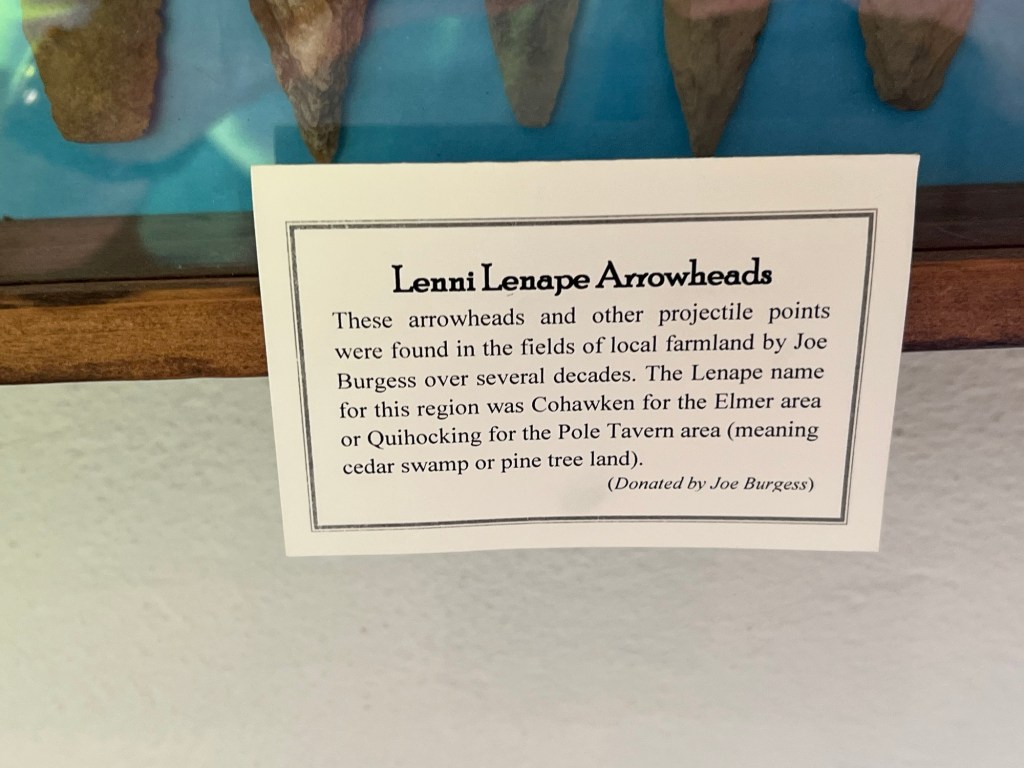
The Arrowhead collection at the museum

It seems that many of these artifacts were found in the local farm fields. The area had been a big settlement for the Lenape tribes, who probably found the same benefits as the settlers.

The Arrowhead Collection

The museum had an interesting collection of artifacts from local businesses from the area.
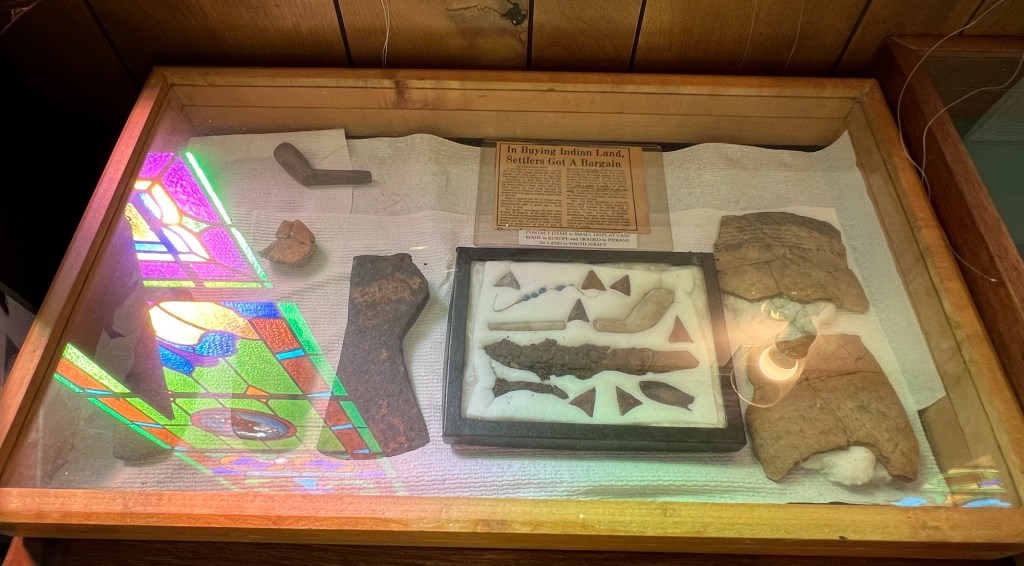
Artifacts from the Native Americans

With colonization, and the growth of agriculture ( which is still strong today), the business and manufacturing communities grew in the area and prospered even before the railroads came.

Early Industries of Elmer, NJ:

The growth of the area and the progress of a small town
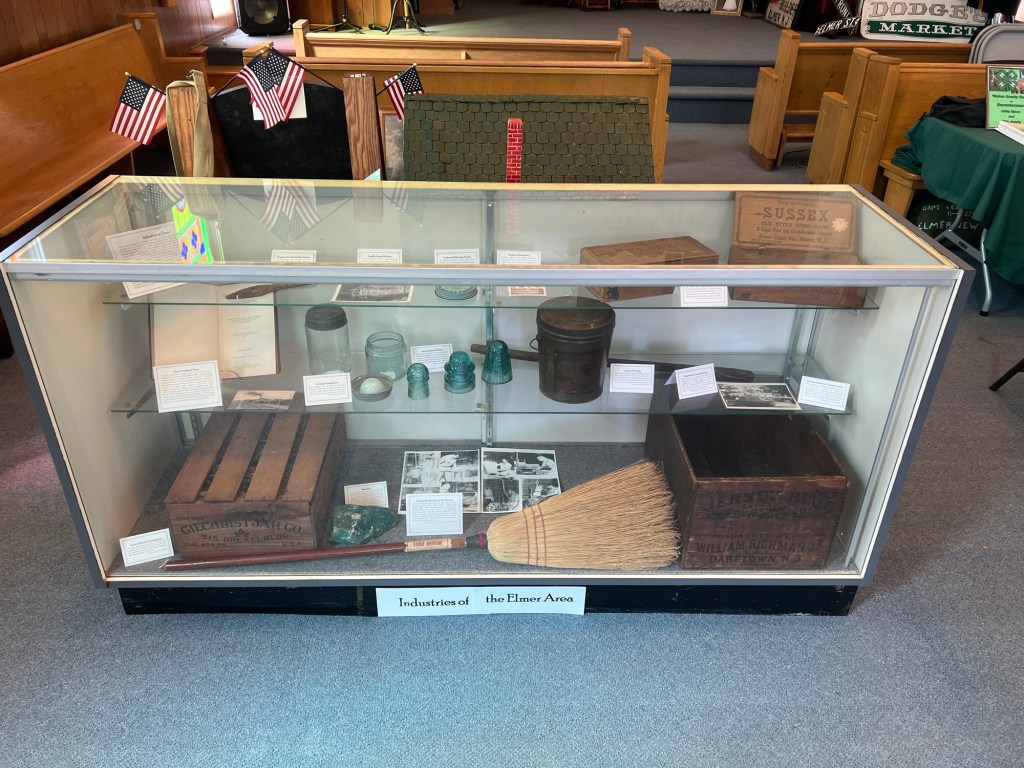
The businesses of early Elmer included glass making, broom manufacturing and agriculture

The artifacts of the past of Elmer, NJ

The Registration Book of the Elmer Lake Hotel shows how the area changed to add leisure as work changed

Roles in the Home and Community:

The museum displays show a woman’s role in both the household and the community.

The roles of women were standardized

The roles of women in rural New Jersey were set in helping on the farm, tending to the house and raising young children until they were ready to work on the farm, cooking, cleaning and dong the domestic chores. With no electricity, what we deem as simple today was much work to the farm house wife. Domestic life and its attributes were noted in the display case,

Domestic items of the home

What needed to be done in the kitchen to feed the family
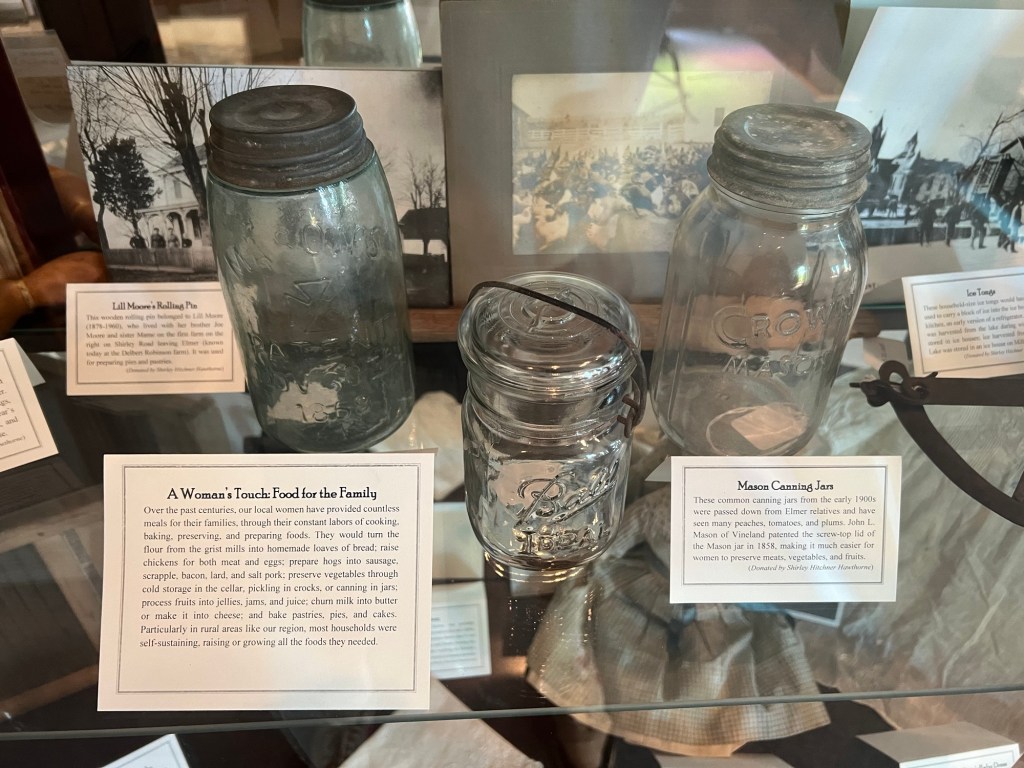
Canning and preserving foods for the winter

Ironing and taking care of clothing

Creating your own playthings, the Mercy Reeve doll. Store bought items were just too expensive for the average person or not available

The Wedding dress

The Hartz wedding dress

The was a nice display of items from the Elmer Fire and EMS departments on display as well. This shows the rich history of both departments.

The Elmer Fire and EMS department display

The museum also covered daily life in Elmer whether it be business or just general living. A rural community things continue to happen. Transportation continually changes from horses and buggies to railroads and then to cars. This has changed the landscape of the town.
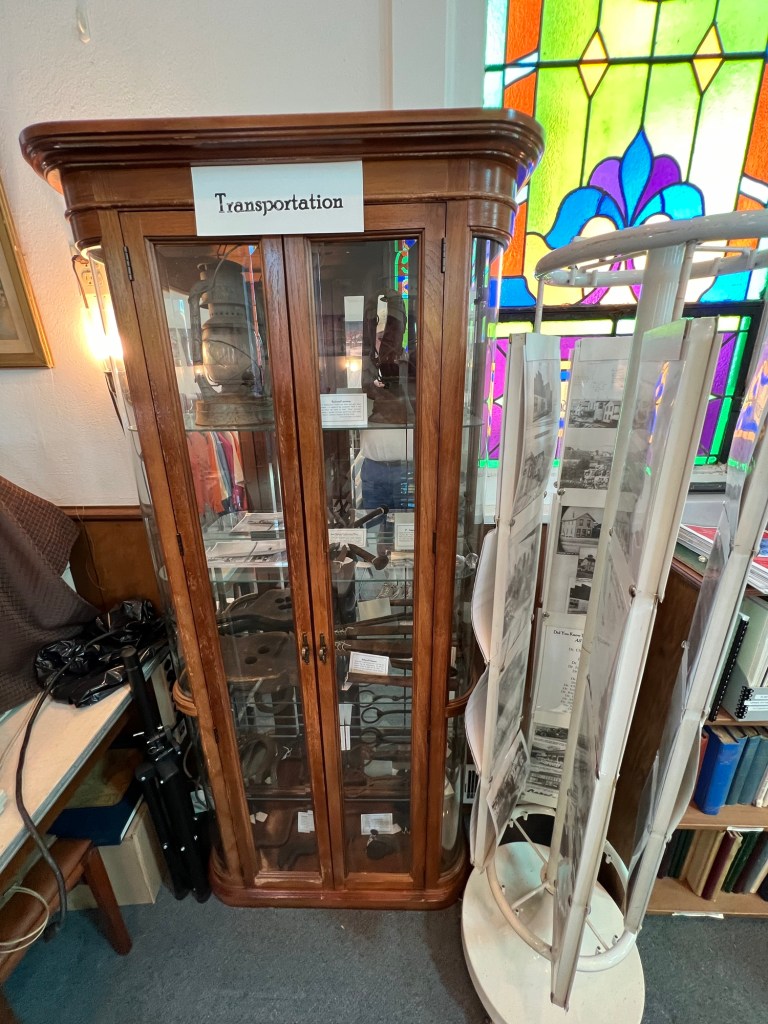
Transportation into Elmer changed life forever

First by horse and buggies

Then by railroad

The daily life included trips into town to buy things for the homestead and visiting merchants and visiting with the doctor.

The Medical life in a rural community
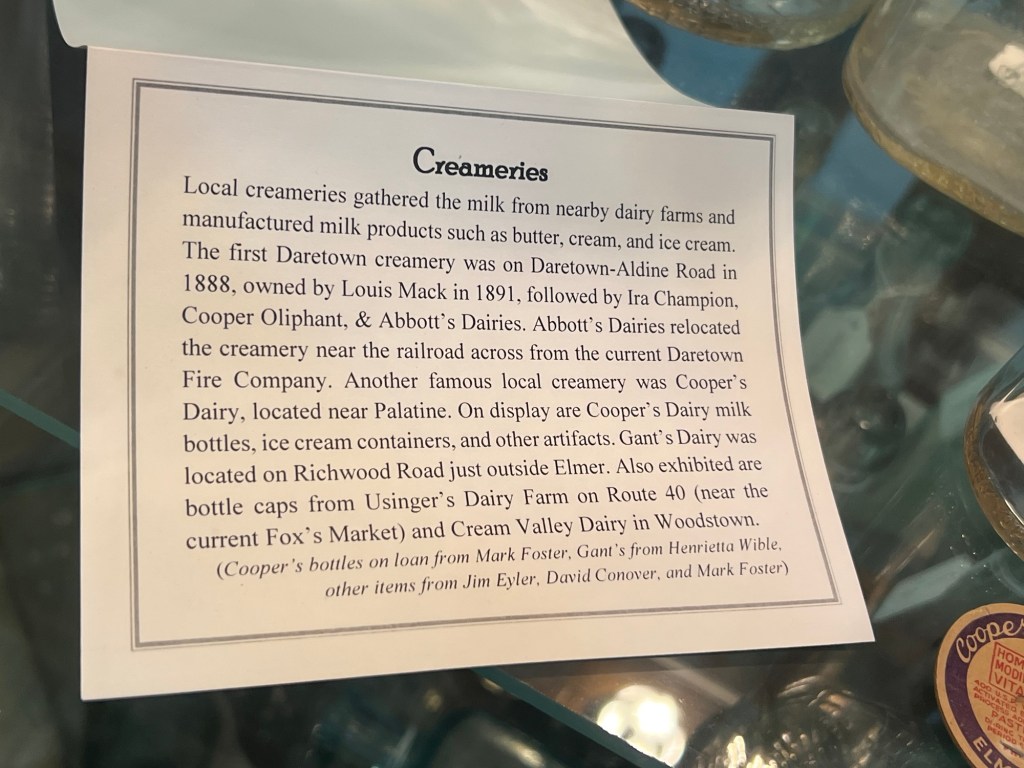
The local dairy business was a big part of the economy

Visiting the creamery and how the dairy business was a big part of the community for work

The glassworks of the various businesses

Daily life in the town and the surrounding area in the beginning was a never ending wave of duties and chores. The household, farms and businesses had to run and everyone knew what needed to be done during the productive warmer months to survive the colder and hasher realities of the Winter. With time and progress each generation progressed to the modern era and this is still changing.

All parts of the everyday lives of people

Bonnet for picking potatoes

Not everything was all work and no play. There were dances, gatherings and socials and later on musical performances then the coming of radio and the movies. Children still had their games and to prepare children for domesticity of the future, there were toys related to the genders with girls playing with dolls and keeping dollhouses and boys with construction games and ready for life on the farm and factories.

The Cain family dollhouse was a cherished family item

The dollhouse with the historical marker

The museum shows the rich history of Elmer and the surrounding community and the spirit of a small town. There are many different displays in the museum to see and experience. Though the town has changed over the years, its progress continues.

Don’t miss their special events as well. I had a wonderful time walking around the downtown for the Harvest Festival. There are all sorts of special events and talks that the museum sponsors so please check out the website above.

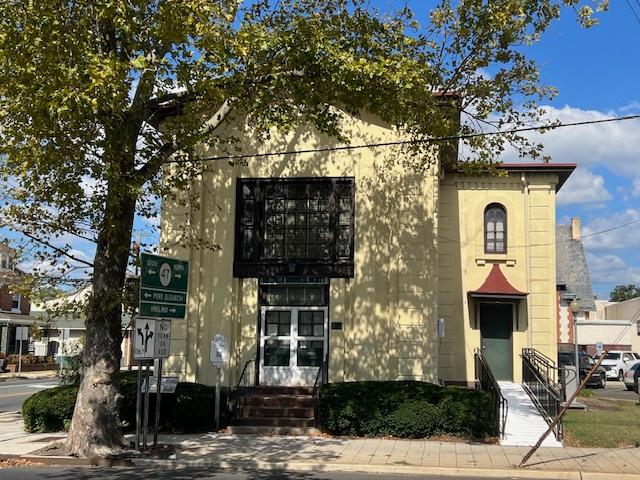
Millville Historical Society                                          200 East Main Street                                              Millville, NJ 08332

Millville Historical Society 200 East Main Street Millville, NJ 08332

Millville Historical Society

200 East Main Street

Millville, NJ 08322

(856) 293-1078

http://millhistsoc.org/

https://www.facebook.com/Millvillehs/

Open: Sunday 1:00pm-4:00pm/Monday-Tuesday Closed/Wednesday 1:00pm-4:00pm/Thursday-Saturday Closed

Admission: Free but donations are accepted and recommended to help operate the museum

My review on TripAdvisor:

https://www.tripadvisor.com.au/Attraction_Review-g46627-d27044122-Reviews-Millville_Historical_Society-Millville_New_Jersey.html

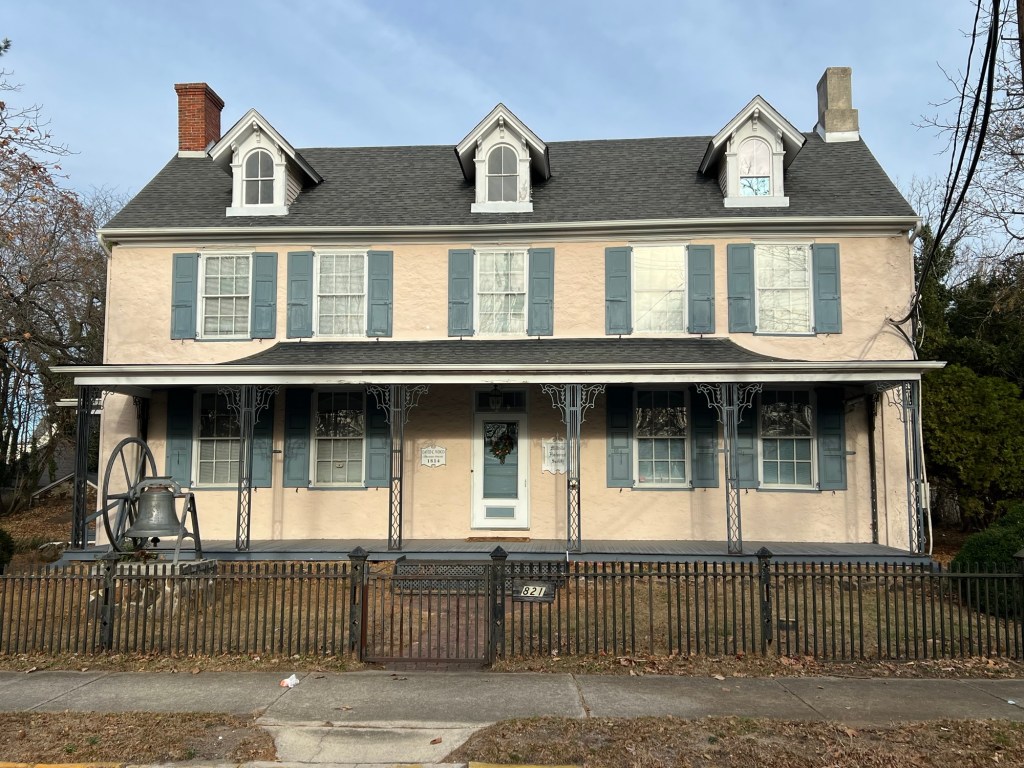
The Millville Historical Society at 200 East in tv Main Street

The Baracha-Dunn House right next door to the Historical Society is open for touring.

History of the museum:

(from the museum’s website)

The Millville Historical Society has been preserving Millville, New Jersey’s past for over nine decades.  Incorporated in 1927, the organization’s headquarters and archives depositary is located in the historic 1857 Millville Bank at 200 E. Main St., Millville.
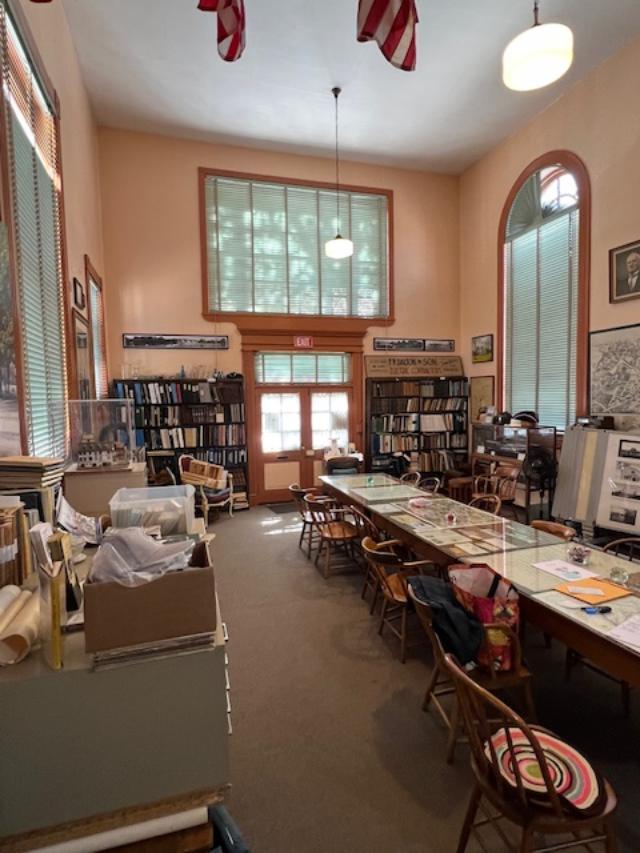
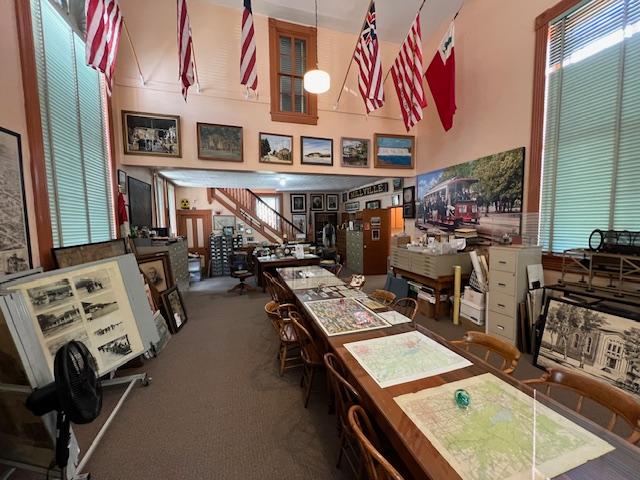
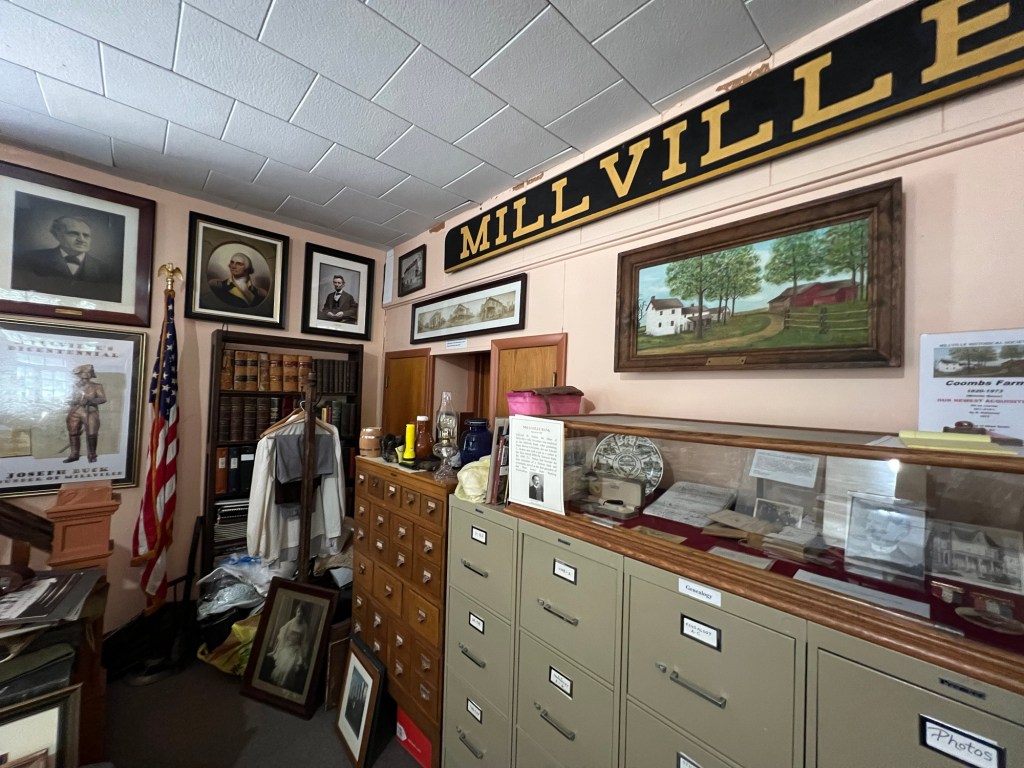
The main gallery of the Millville Historical Society

The Society has been entrusted with the care of three of Millville’s most historic structures: the 1857 Bank building at 200 E. Main Street, the 1798 Baracha Dunn House, and the 1814 Wood Mansion House.  
Admission to all buildings is free.  Donations are gratefully accepted.

The main gallery of the Millville Historical Society from the front door

I recently visited the Millville Historical Society and got to tour the museum and the historical home next door. The main part of the museum is built inside a historic bank that the Society took over in the 1970’s. All the displays are showcased around the museum.

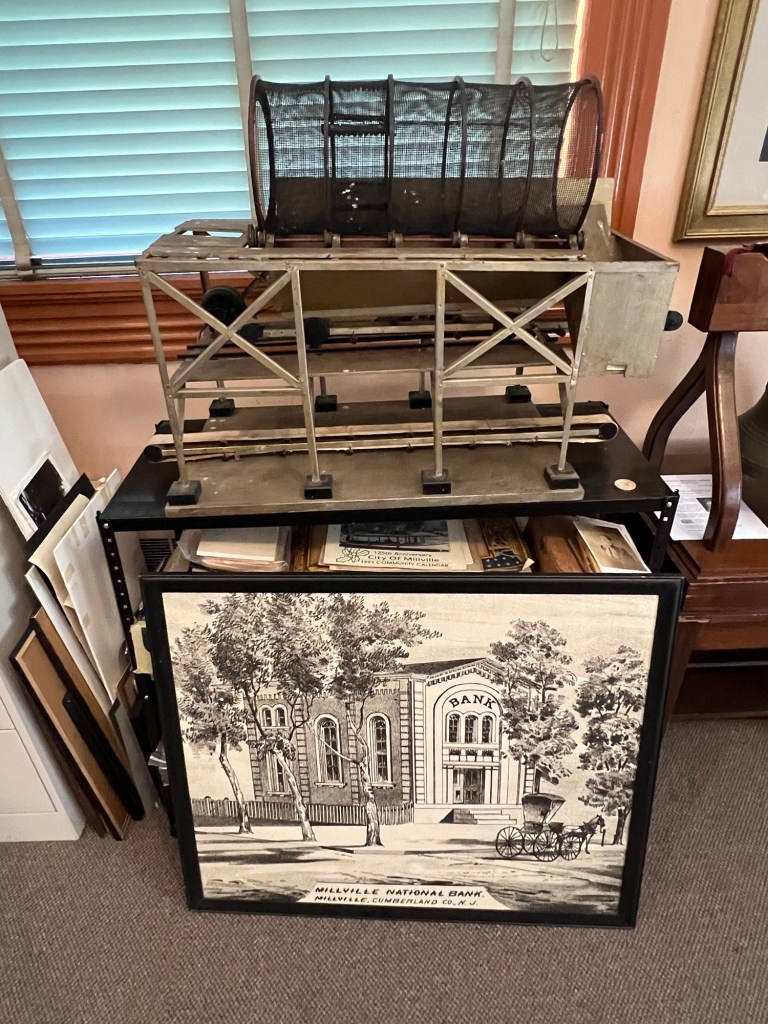
The original picture of the Millville National Bank during the turn of the last century

One of the first displays you will see is the original drawing of the bank. This beautiful historic building sits on the very edge of the downtown as you enter Millville. On the top of the display was a model of a sand separator that was in the creation of glass which the area was known for in the previous century.

The historic map of Downtown Millville, NJ

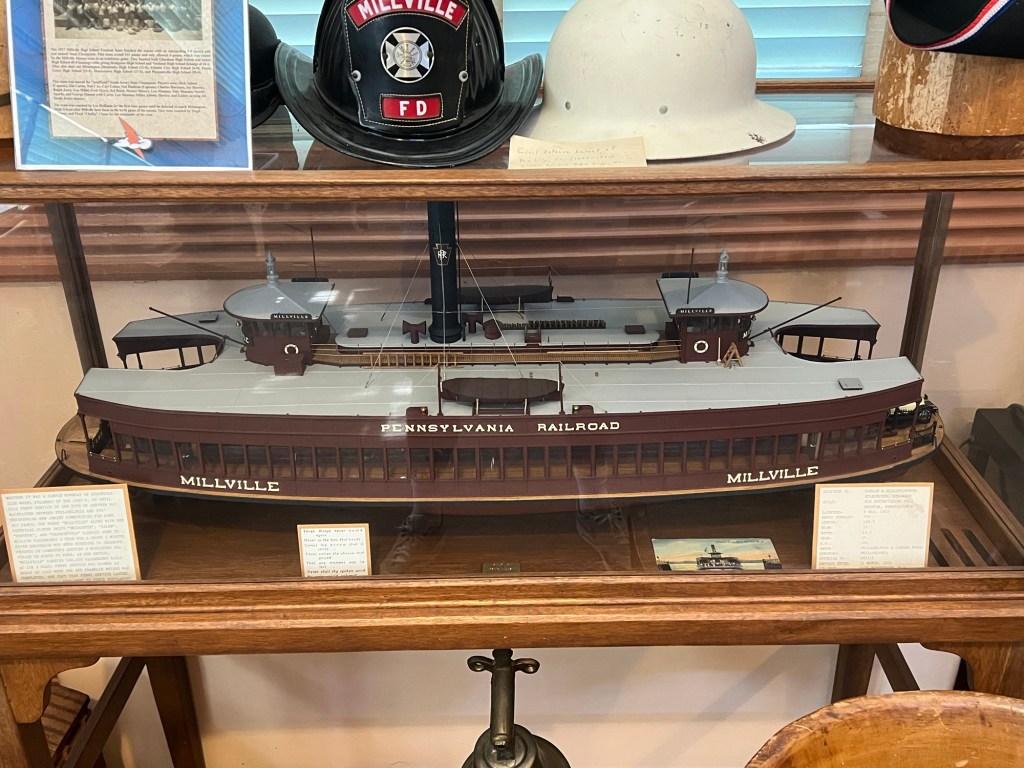
Another display has a model one of the major ferries that once ran in Millville.

The model of the Millville

The ferry that once ran in the area

The pictures of when the boat was christened

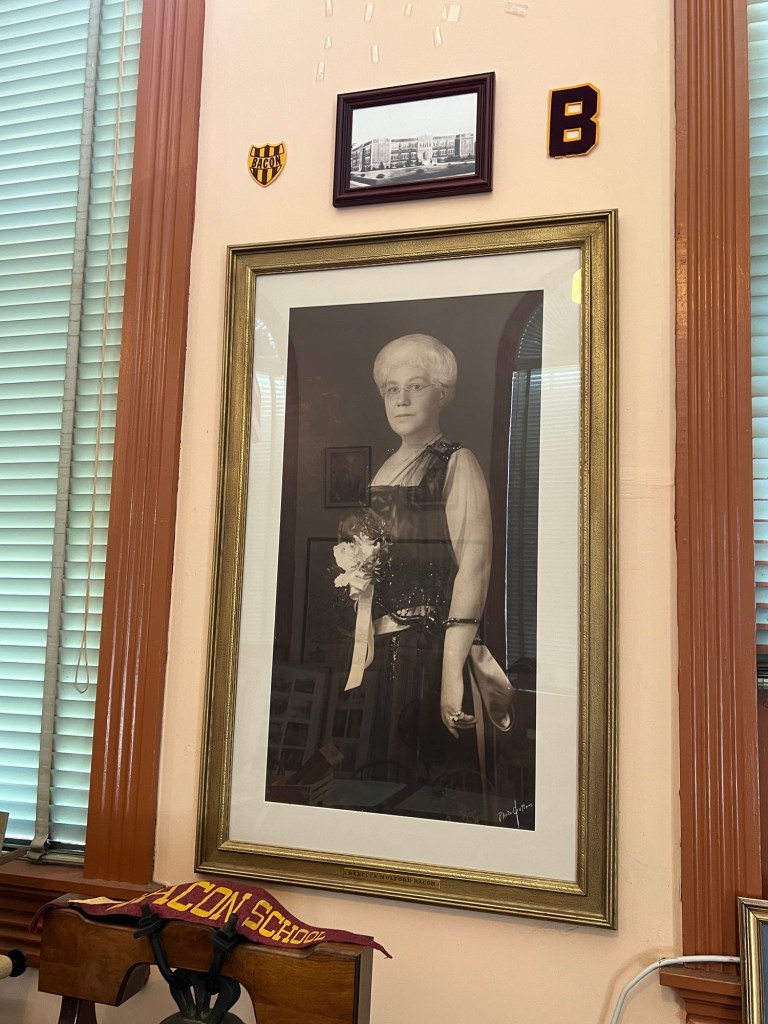
There was school display with one of the old bells of the school’s in Millville and a picture of one of its long serving principles, Rebecca Mulford Bacon.

The bell from the schoolhouse

Principal Rebecca Milford Bacon

The Principal’s plaque

The museum houses the recorded history of the town and the genealogy of the town and its citizens for people to research.

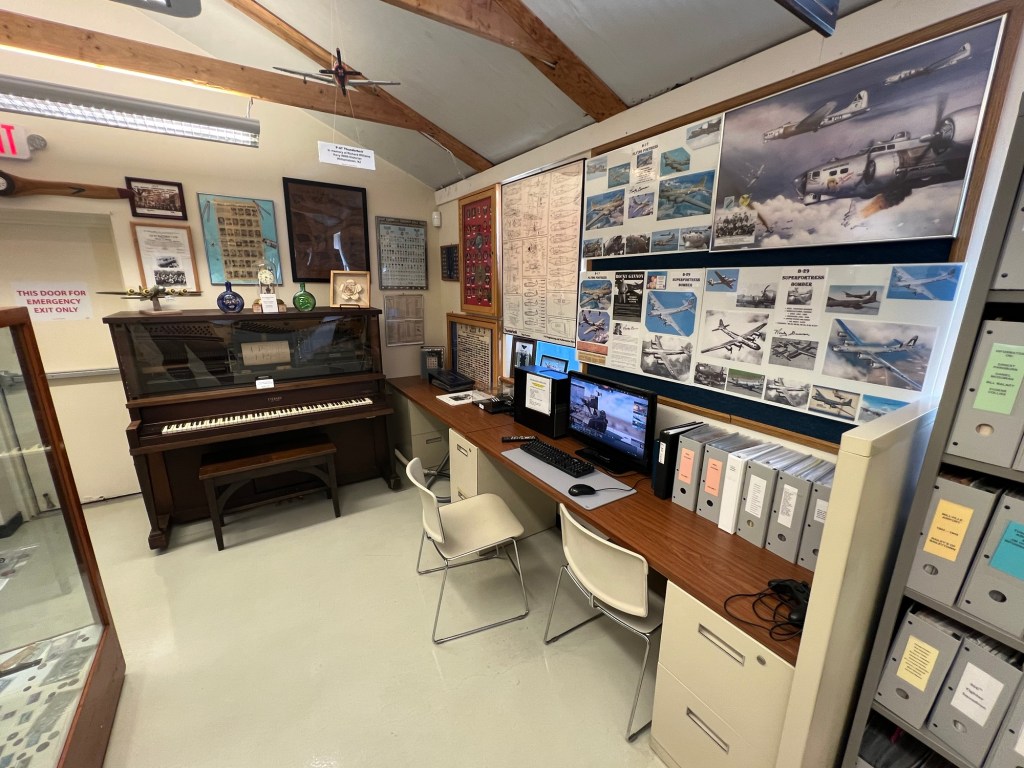
The Research Library along with more artifacts

After I toured the displays along the perimeter of the museum, I had a tour of the Baracha-Dunn House next door which was part of the historical society’s complex. These historic buildings were built in the late 1700’s and the addition in the early 1800’s. The tour takes you through both the main house and the later addition both upstairs and downstairs.

The Barack’s-Dunn house was open for a tour

The entrance the house from the street

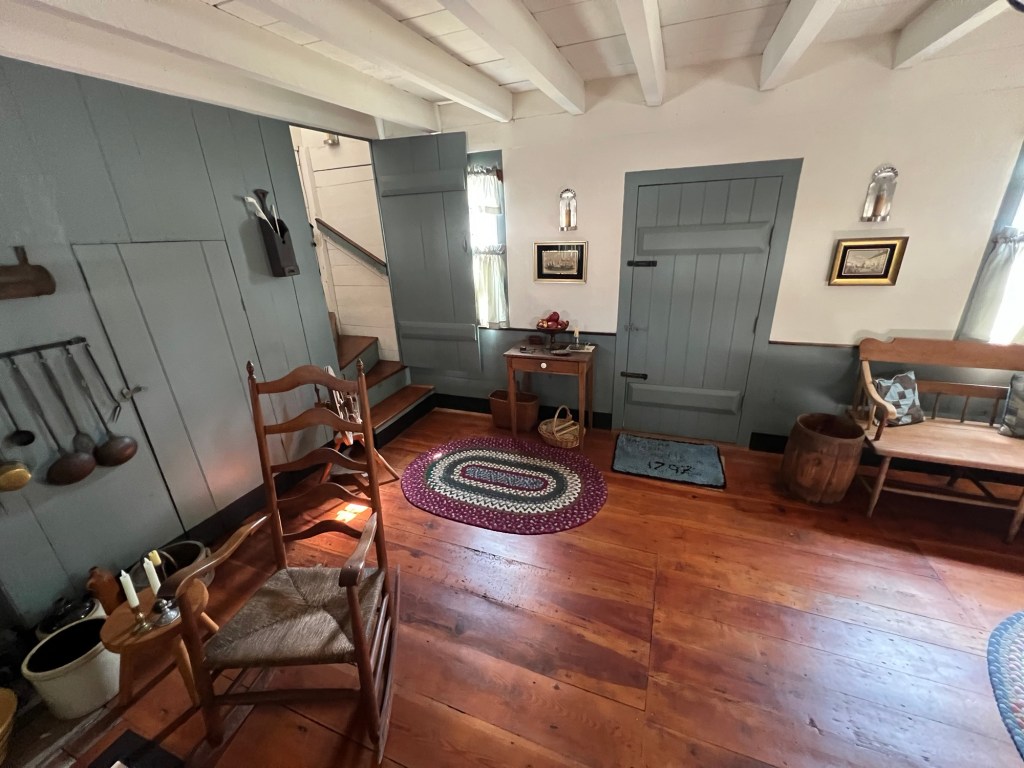
The main room of the original house with the hearth in the main room for cooking and for heat in the house

The hearth is the center of the house

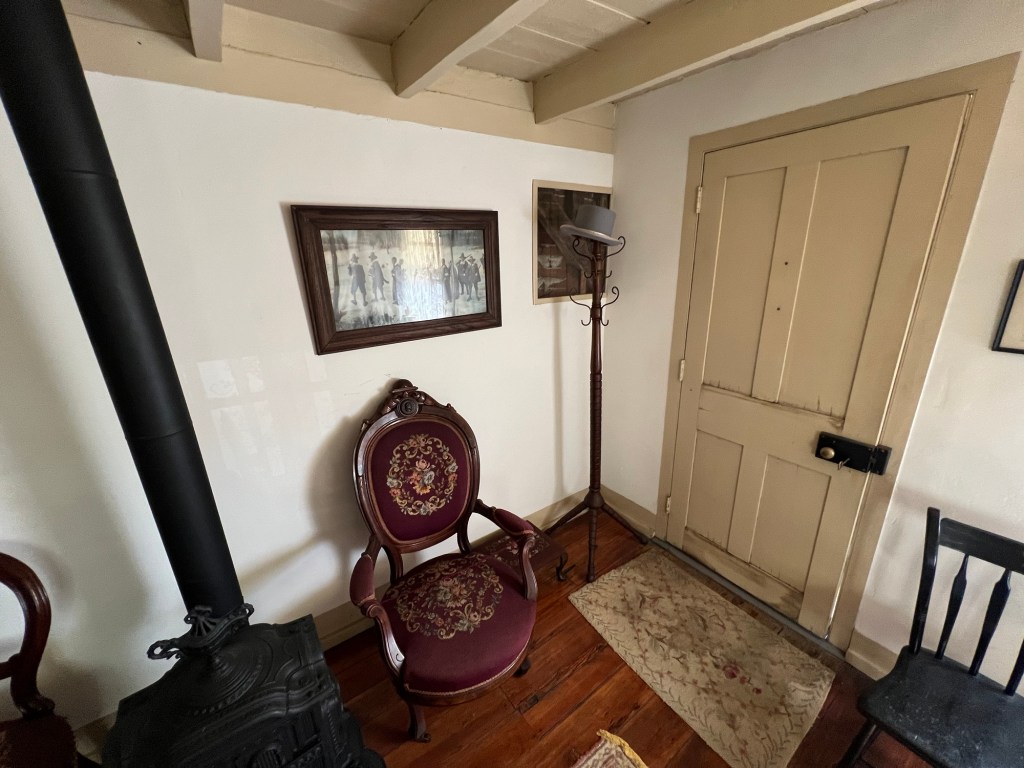
The Living Room of the main home

The Living Room of the home

The Living Room

The other side of the house which was the later addition to the home offered more rooms.

The Living Room from the main door

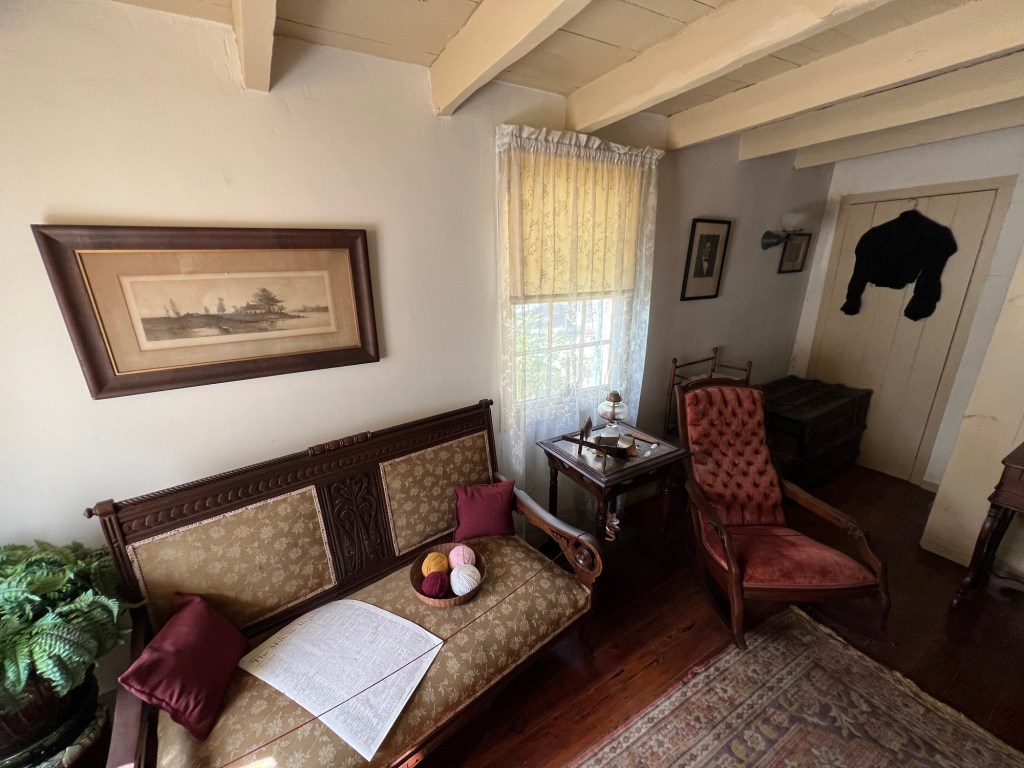
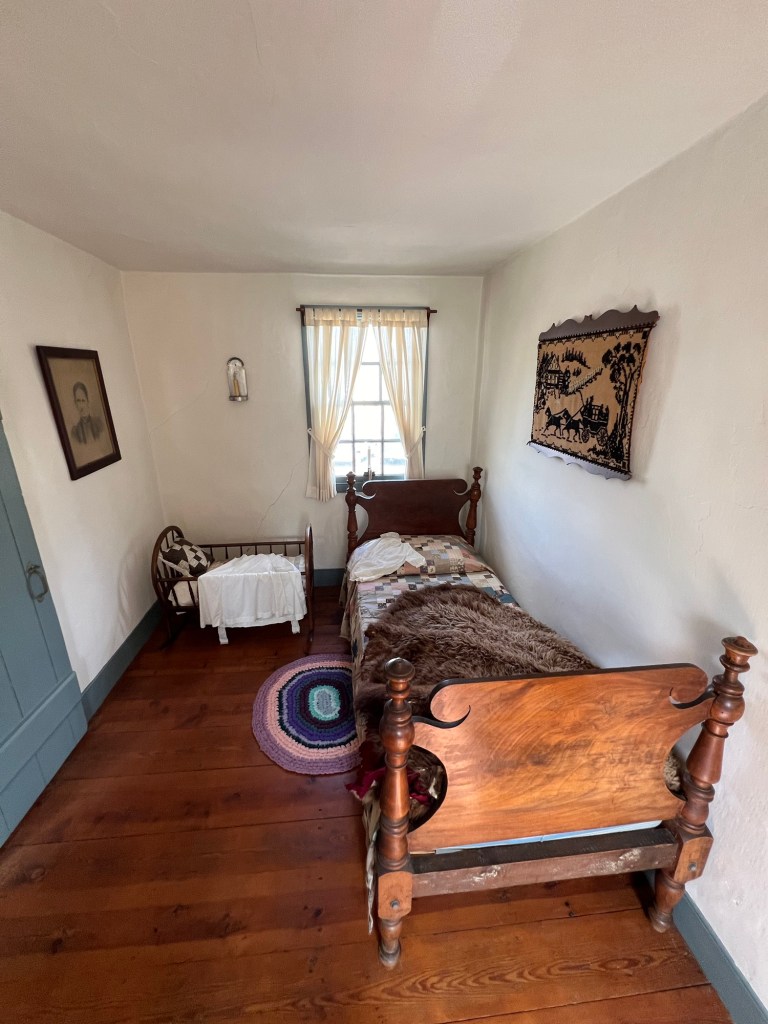
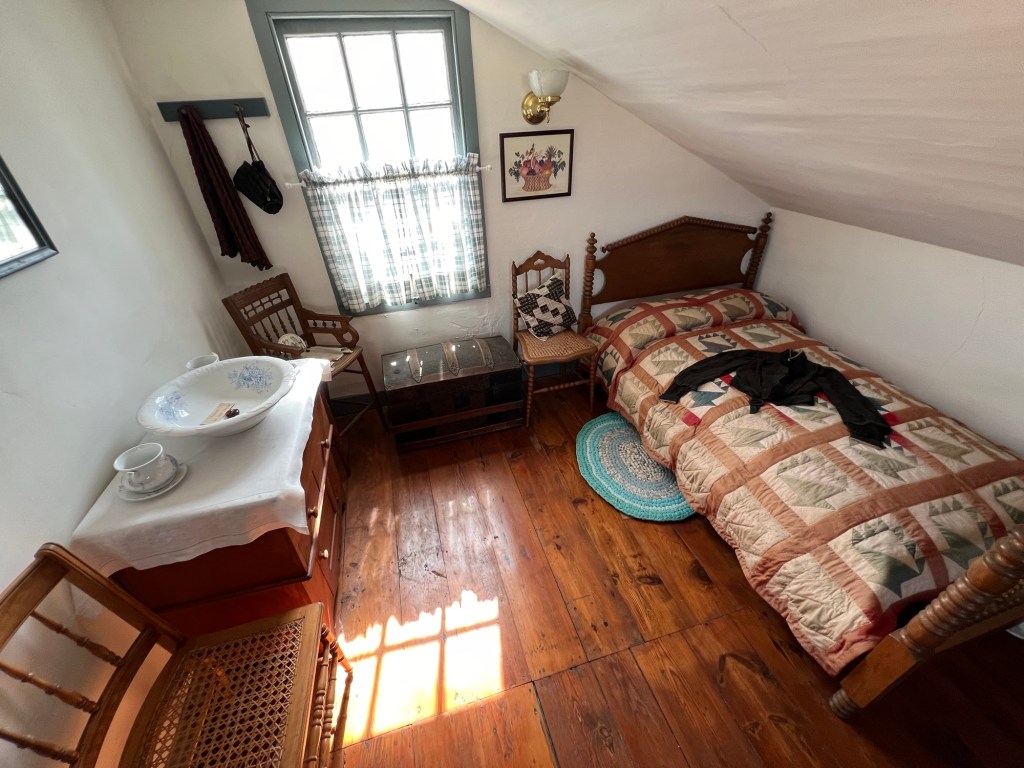
We walked up the narrow stairs to the second floor to the bedrooms. Each small room on the second floor was furnished with period furniture.

The bedroom on one side of the house

The second floor bedroom the leads to the attic

The second floor bedroom

This room led to the connected room on the other side of the floor

The small room on the second floor

The bedroom on the second floor

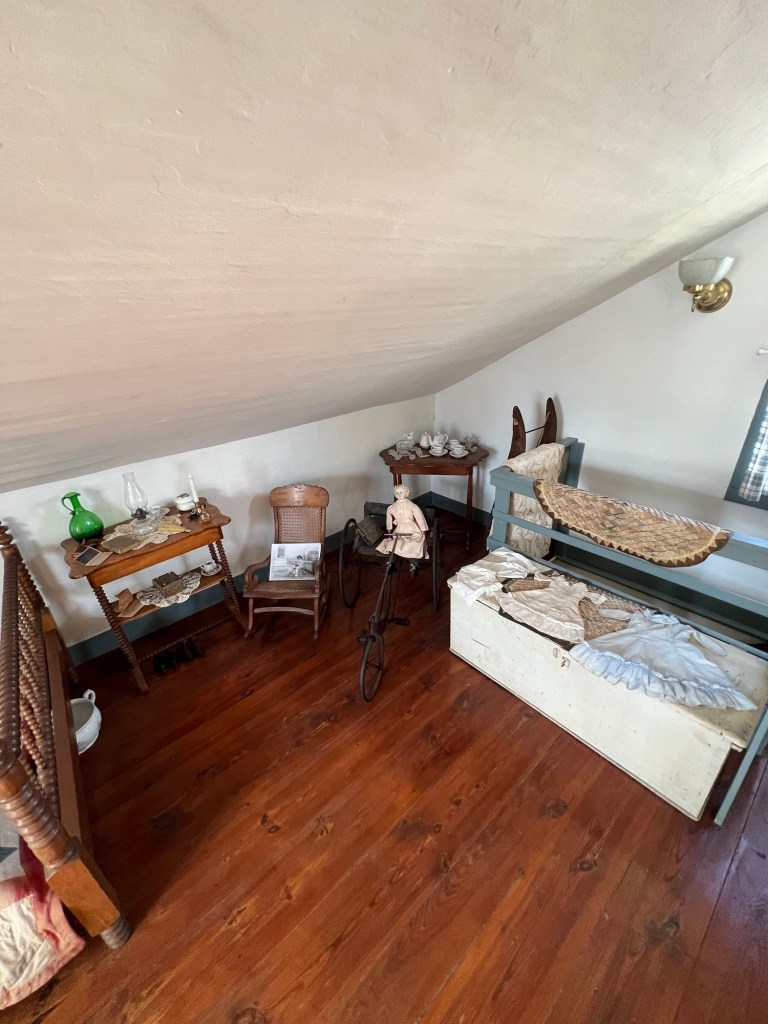
The Children’s room display of toys, furniture and clothing

The display of Children’s item

The house really showed life in the early parts of the 1800. The home’s period furniture decorates all the rooms in this home. The museum has another historical home in the downtown area that was closed that day. The museum offers a glimpse of Millville in its past.

The historical sign outside the museum

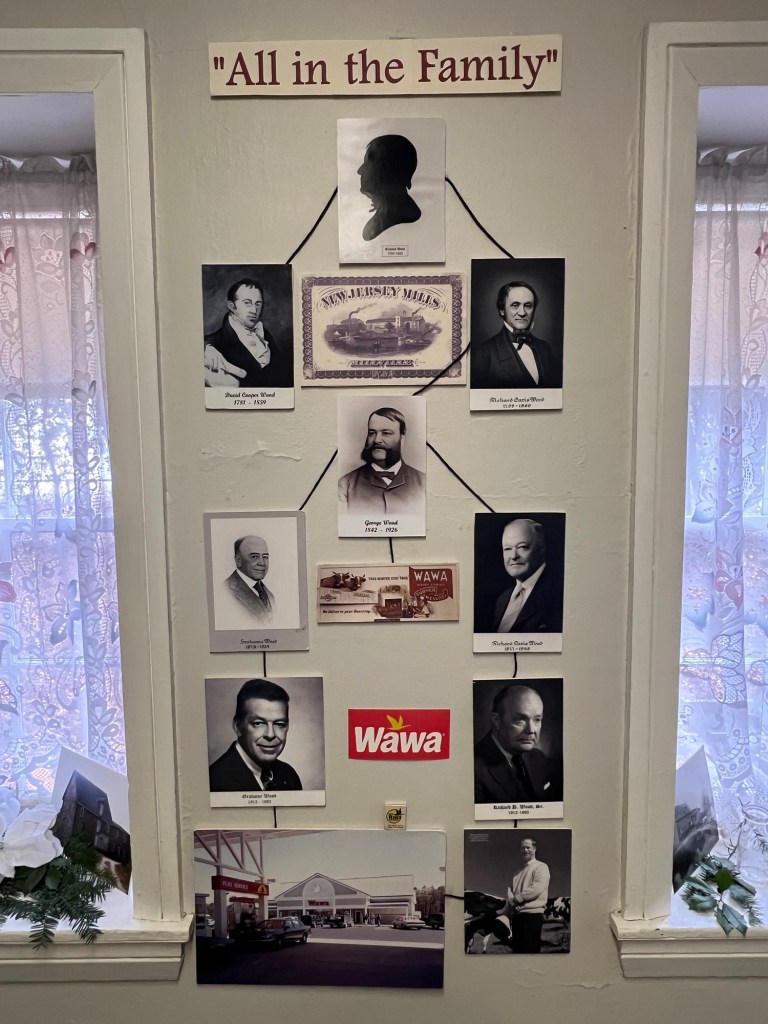
On my second trip to the Millville Historical Society, I was able to visit the Wood Mansion from 1814. The home had been home to generations of the Wood family, the founders of Wawa, among other businesses.

The Wood Family Mansion

The Historical Society Museum sign

The David Wood Historical sign

The Living Room decorated for the holidays

The Victorian Christmas tree in the formal parlo

The Christmas decorations in the Living Room

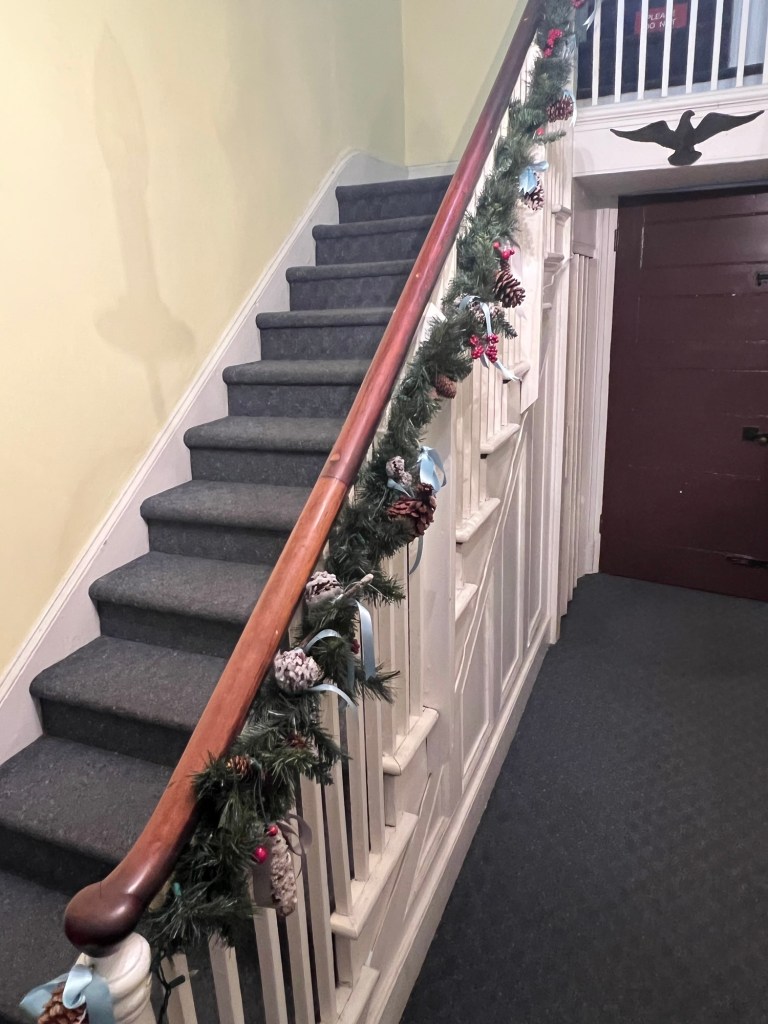
Th bannister decorated for the holidays

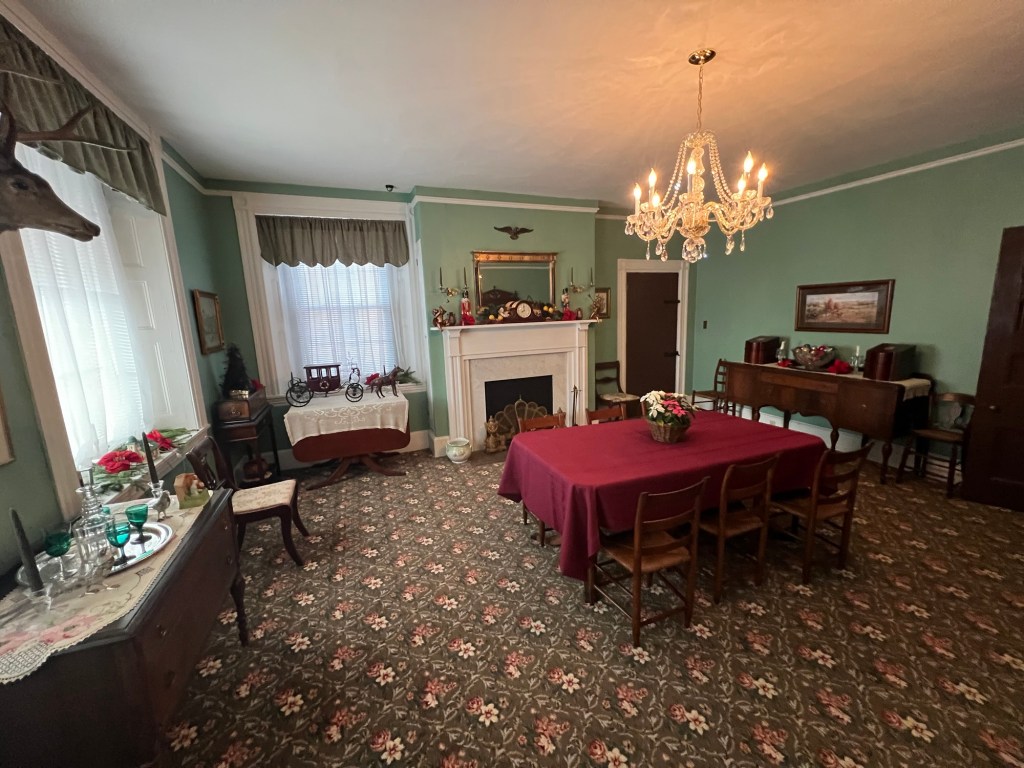
The Dining Room decorated for the holidays

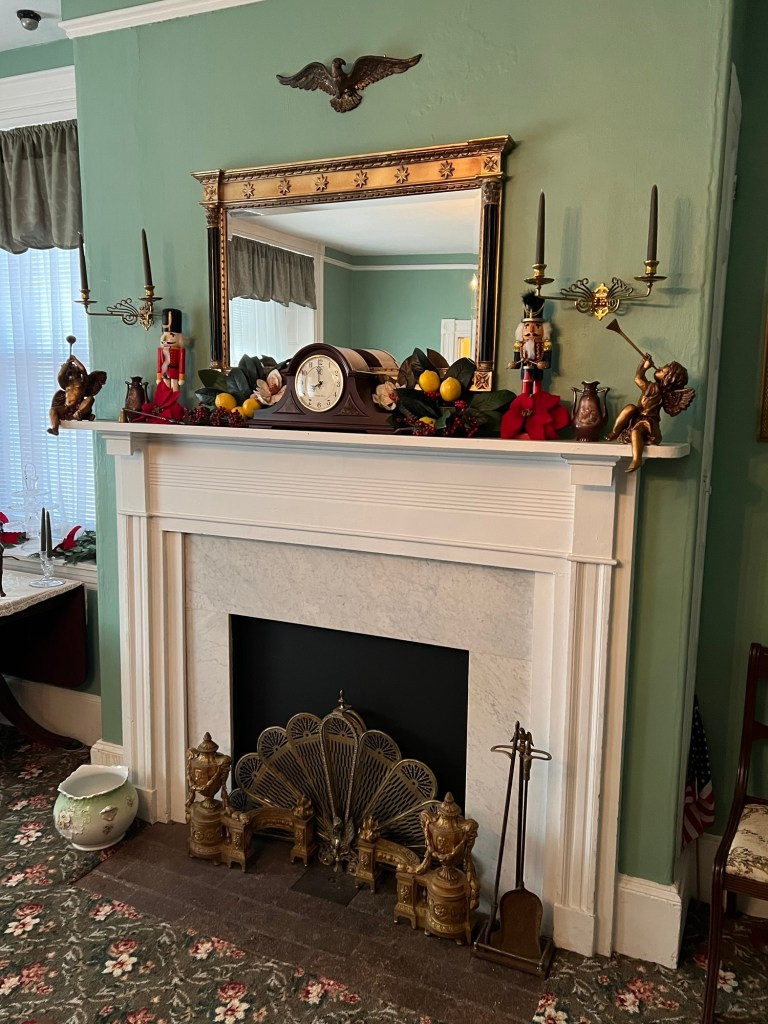
The mantle in the Dining Room decorated for the holidays

The dish-ware area

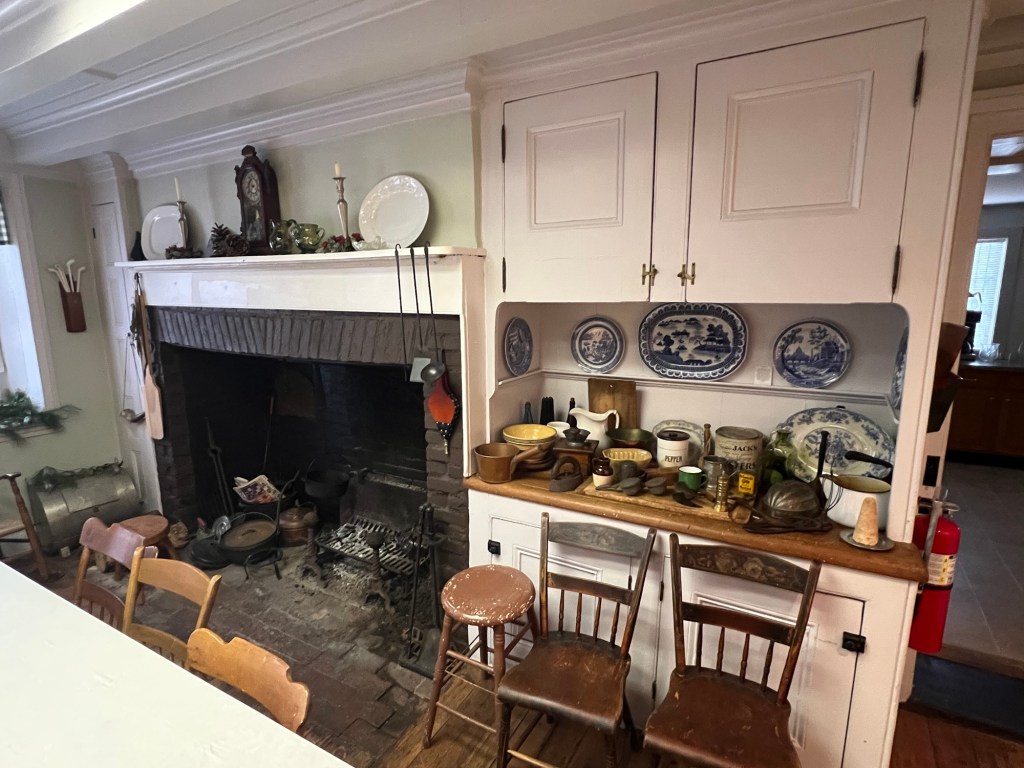
The kitchen fireplace

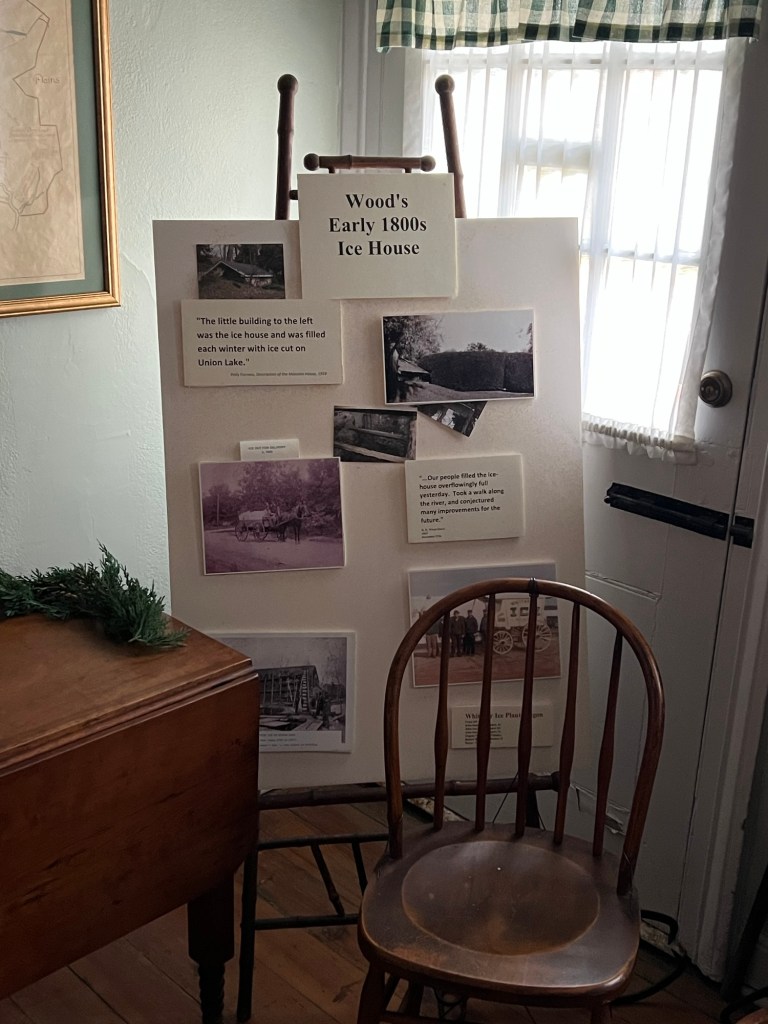
The Ice House display under renovation

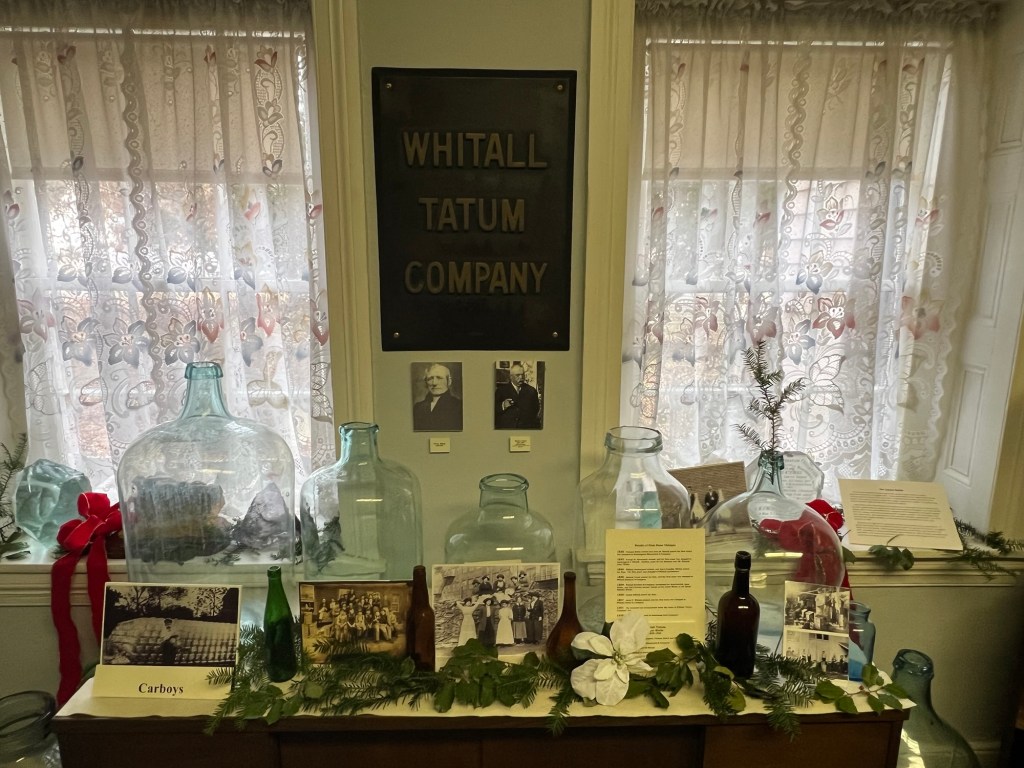
The Whitall Tatum glass display

The Whitall Glass display

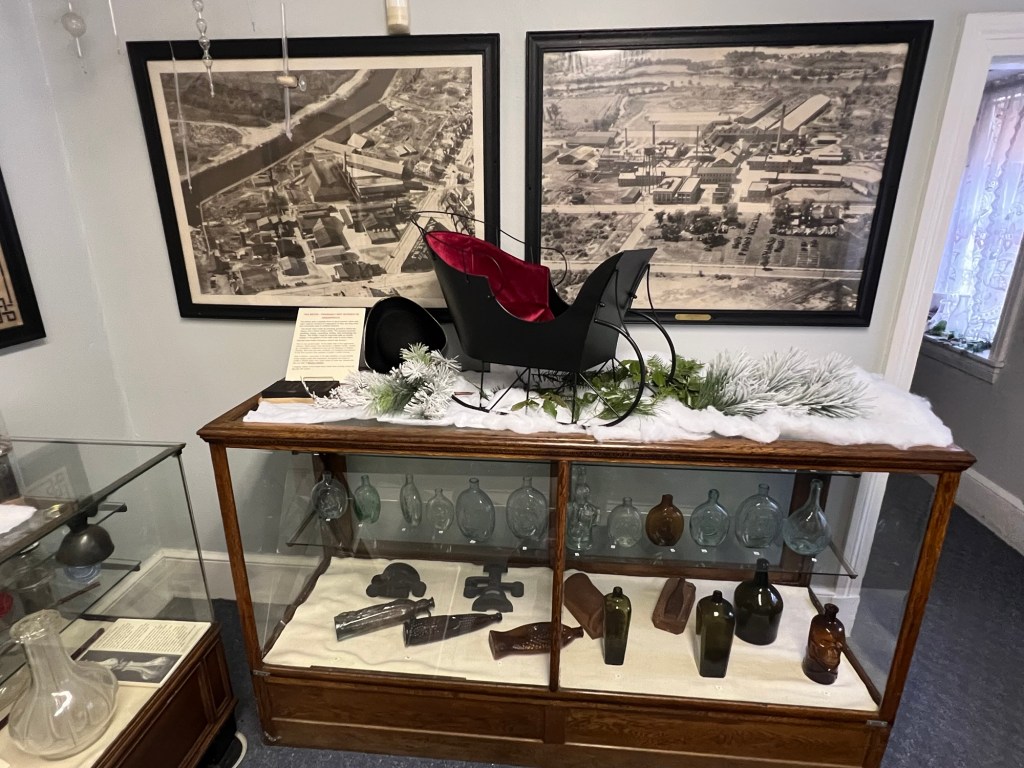
The glass display

The Wood family tree and the progression of the business of the family

The local amusement park display

The local factory display

Pictures of the mansion since 1814

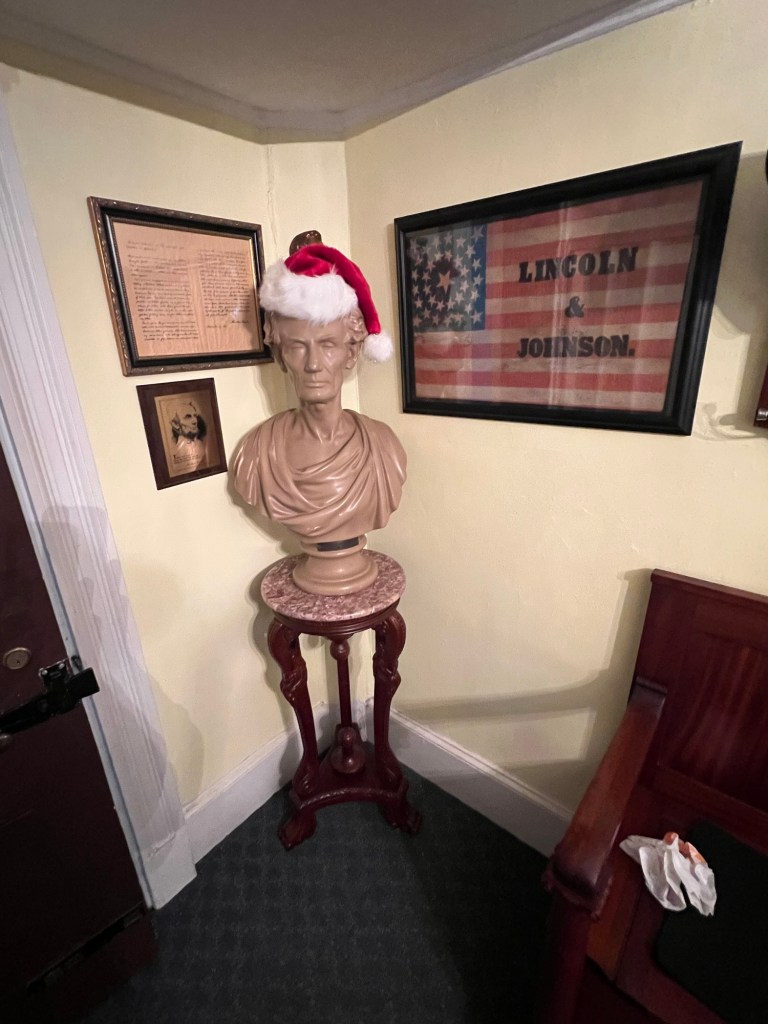
The Lincoln display

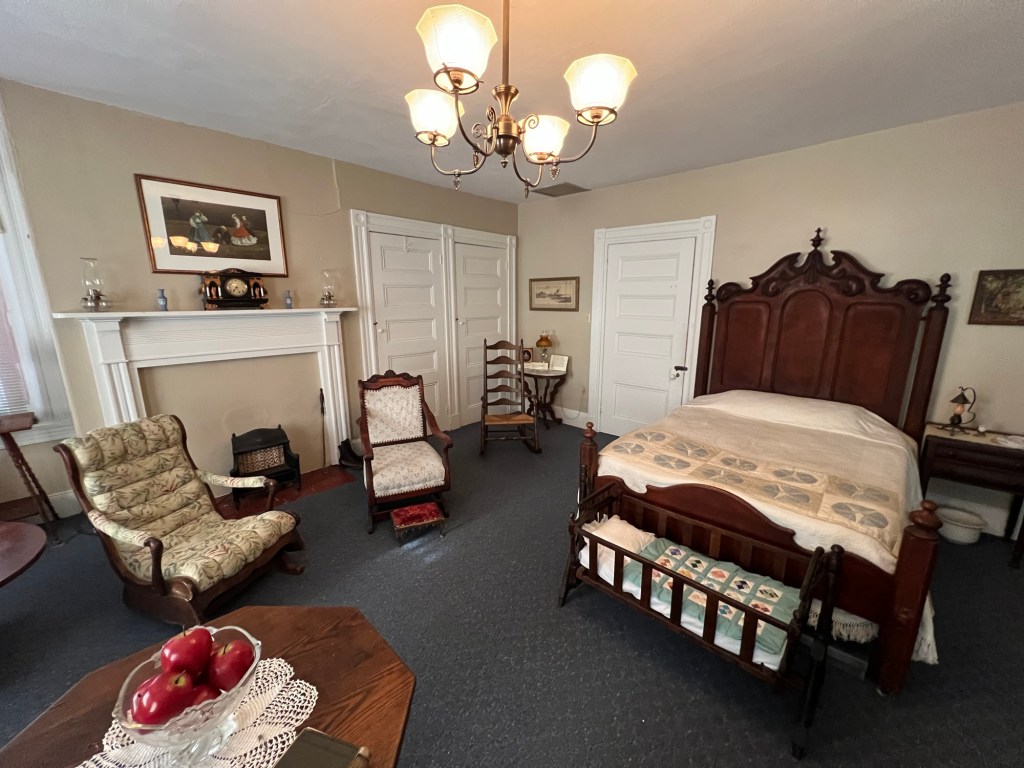
The main bedroom

The main bedroom

The Children’s display

The Children’s Toy Display

The Children’s Toy display

The Trolley display

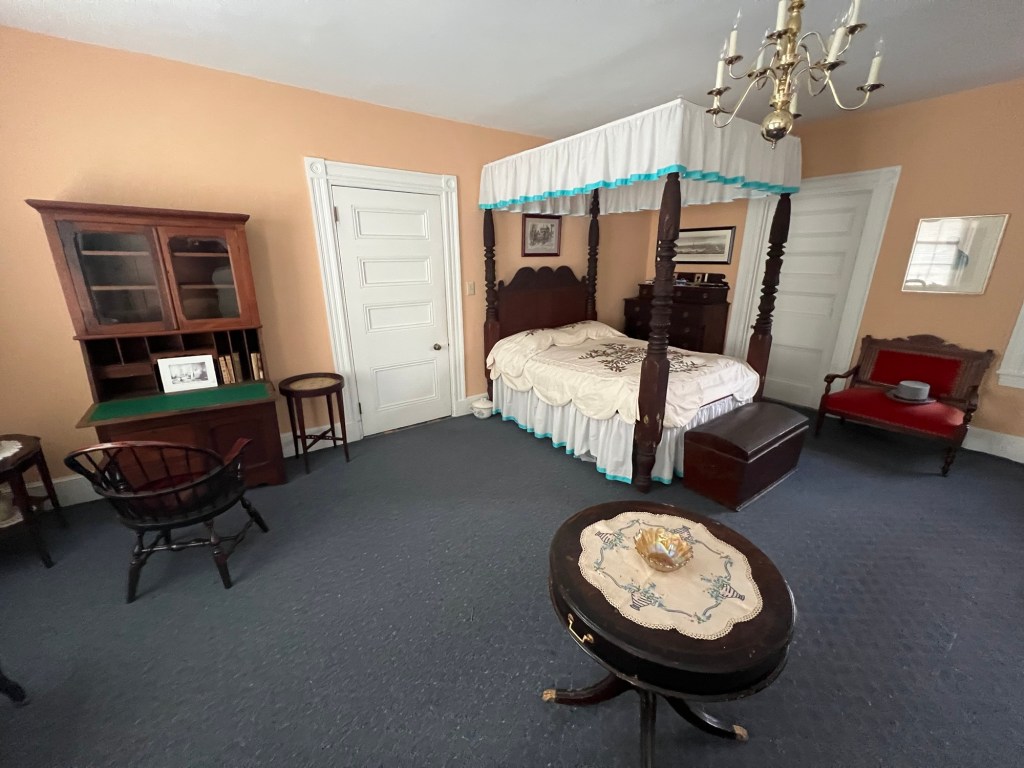
The other Bedroom display

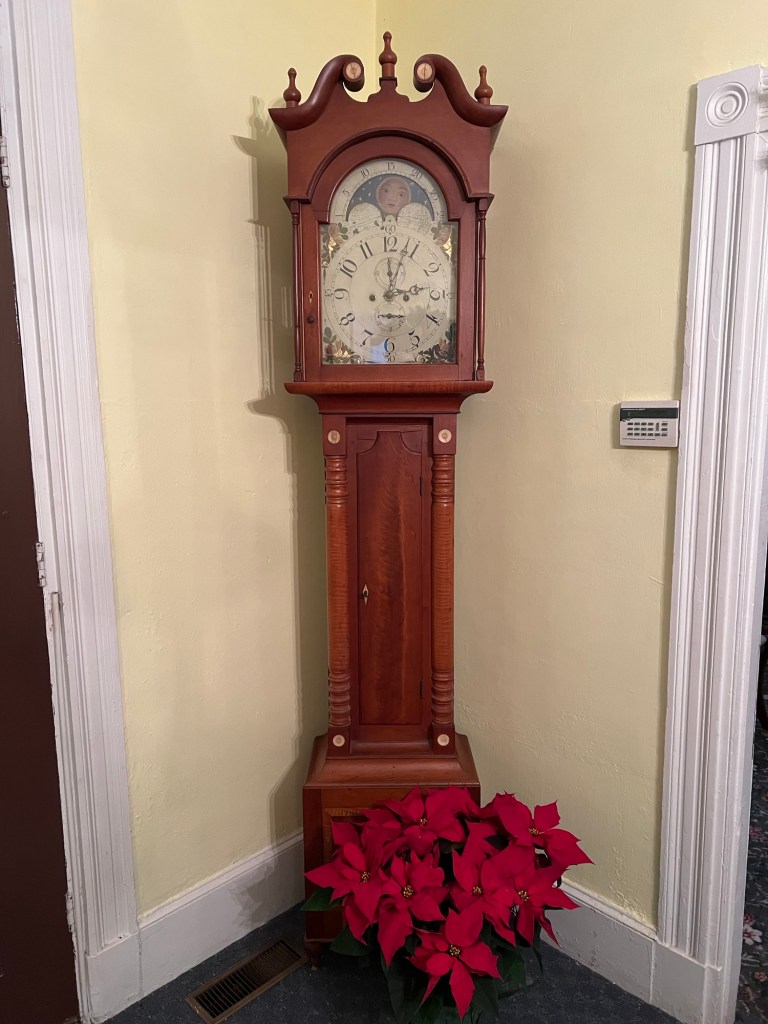
This beautiful Grandfather clock was made Salem, NJ

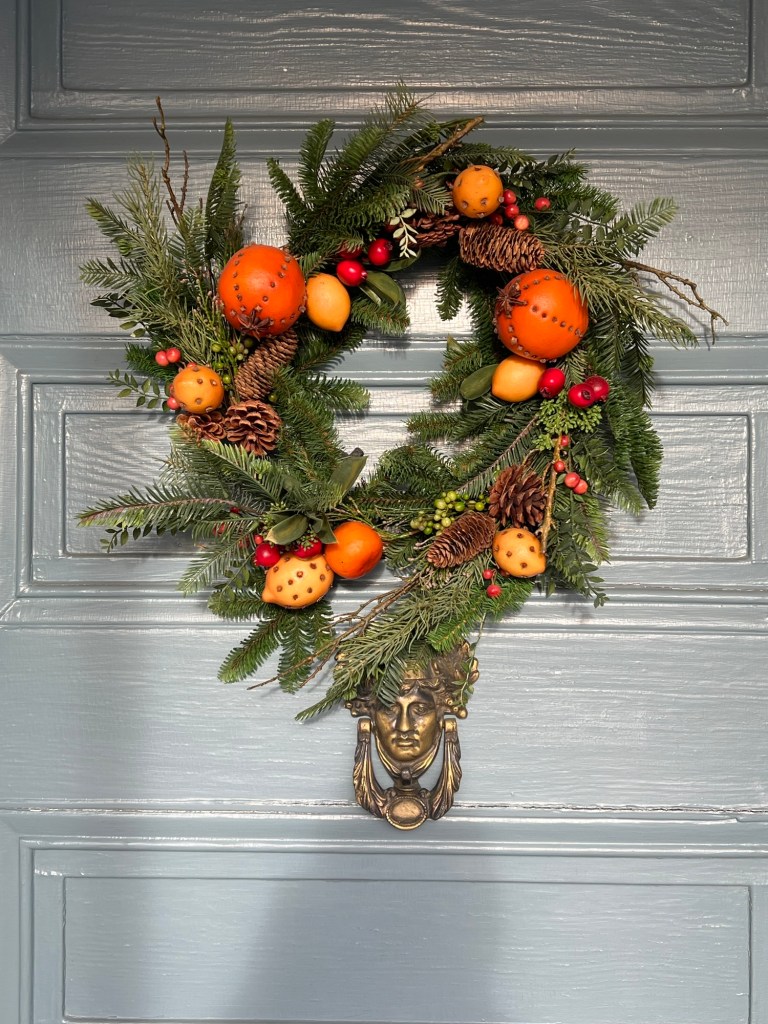
The beautiful display on the front door when you leave the house. Everything had been decorated for the holidays

Rockaway Borough Historical Museum              199 West Main Street                                Rockaway, NJ 07866

Rockaway Borough Historical Museum 199 West Main Street Rockaway, NJ 07866

(Plus a walk around Downtown Rockaway, NJ)

Rockaway Borough Historical Museum

199 West Main Street

Rockaway, NJ 07866

(973) 983-1491

https://www.rockawayborough.org/HistoricalCommittee/

https://www.facebook.com/groups/145768595507253/posts/6933225160094862/?_rdr

Open: Only on the last Sunday of the month from 1:00pm-3:00pm/Monday-Saturday Closed

Admission: Free but donations are suggested and recommended to help operate the museum

My review on TripAdvisor:

https://www.tripadvisor.com/ShowUserReviews-g46783-d27039938-r971916379-Rockaway_Borough_Historical-Rockaway_Morris_County_New_Jersey.html?m=19905

The Borough of Rockaway Historical Museum at 199 West Main Street

The sign that welcomes you to the museum

When I visited the Borough of Rockaway Historical Museum, I like probably everyone else got the Rockaway Township Historical Society and Museum mixed up with the Borough of Rockaway Historical Committee and Museum. One is in the Township of Rockaway and one is in the Borough of Rockaway which are two different towns.

That was confusing enough and the fact that Google had them as closed on the Google website (which I changed). I was lucky to get there with just over an hour to visit the museum.

The museum was worth the trip. Located in Downtown Rockaway, NJ, the museum was near all the restaurants and shops downtown plus a historic cemetery at the Presbyterian Church. The whole museum you can see in an hour so it was just perfect.

The front gallery of the museum

The front gallery is dedicated to town history and the Morris Canal. The Morris Canal was the reason for the growth in this area of New Jersey and was built on the wealth of the farmers crops, coal and light manufacturing. Items were then sent to New York City and Philadelphia.

The railroads would change this later but would be where the early growth of this area would come from.

Pictures of the Morris Canal in the area

Pictures of the early Morris Canal in Rockaway, NJ

Artifacts of early Rockaway history including bottles and newspapers

WWII listing of Veterans lost in the war

The second small gallery showcased former businesses of the Town of Rockaway, NJ from the Downtown merchants to the larger, more commercial businesses. Most do not exist anymore.

The businesses of old Rockaway and the surrounding area

Artifacts from the McKinnon Axe Factory

The businesses with high school memorabilia

The McKinnon Axe Factory

The McKinnon Ace factory was once a major employer and manufacturer in the town. Long out of business, the museum has lots of pictures and artifacts from the company.

Artifacts from the McKinnon Axe Factory

Artifacts from the McKinnon Axe Factory

Old businesses from Downtown Rockaway

Most of these old businesses do not exist anymore but their memories live on in these displays with artifacts from a lot of these businesses.

Old businesses in the Rockaway

The Beaver Brook Dairy Farm

In the back gallery, the museum had more displays of the high school and displays on the history of the Rockaway Police and Fire Department. There was historical maps of the area and a small Military display. They even had an original land deed from one of the earliest settlers living in the area.

There were even pictures of the old quarry of the town that once sat behind the museum. It shows how the town keeps changing.

The display of Rockaway High School memorabilia

Graduation and Washington trip photos

The Military display and historic maps of Rockaway

A closer look at the Military display and the local hero’s of the town. The display showcased some of the residents in town who made important contributions to the military effort including a Four Star General.

The historic map of early Rockaway Village

The Military, Fire and Police Department displays

Artifacts and memorabilia from the Fire and Police Departments of Rockaway

The display of Rockaway schools and pictures of the City Fathers who ran the Borough of Rockaway

The old quarry that sat behind the historical society that is now Recreational space and ball fields showing how the town keeps changing

This little hidden gem is located just off the main downtown and should not be confused with the Historical Society of the Township of Rockaway, which is another town with it’s own Society.

There is a lot to see at the museum and is a nice way to get to know a little about the history of the area. This includes local family history as well.

The Jackson Family land deed of one of the old families of Rockaway

Walking around Downtown Rockaway, NJ after the tour of the museum:

Around the corner in Downtown Rockaway is the First Presbyterian Church of Rockaway at 35 Church Street, where members of three Jackson family members and many original settlers were buried.

https://fpcrockaway.org/

https://fpcrockaway.org/our-cemetery-1

The old cemetery behind the church were many original families are buried

The history of the First Presbyterian Church of Rockaway’s Historical Cemetery:

(from the church website)

Part of the present-day cemetery was believed to be an old Native American burial ground.  Colonial settlement took hold here in Rockaway, Morris County New Jersey, around the year 1720, and considerable business formed around 1730 with the building of the Job Allen Sr. Iron Works.   Tradition states that this particular spot was selected as a burial ground by the earliest families.  On March 2, 1758, the Presbyterian Church was founded and organized. The first Meeting House constructed of wood, was built in 1758-60, primarily by Job Allen Sr.   Job Allen Jr.  would complete the construction of the Meeting House some 36 years later in 1794.  The present church sanctuary was built in 1832. 

The original church property consisted of 10 acres and 30 perch, which used to cover property west of Wall Street, and also included property across the street from the present church.  Some of the earliest settlers whose grave sites are unknown and forgotten can be under the large church parking lot or even under some of the cemetery roads. 

On September 27th, 1773, David Beaman: a founding member, deacon, chorister, elder of the Rockaway Presbyterian Church, was voted “to take care of the burying yard, to tell people where to bury their dead, and to advertise it through the parish.” This makes him the first sexton at the Rockaway Presbyterian Church. Ironically, David Beaman is buried in a grave that was never marked. He passed away in 1802 and has a cenotaph in the cemetery. Thomas Conger became sexton in 1797. Revolutionary War veteran, David Gordon, became sexton in 1802. People used to call him “the old sexton.” His broken tombstone bears the same inscription. He held the position as sexton for over 30 years. He died in 1852 at the age of 92 years and 10 months. In 1832 William Wear became the sexton for the “new church”, having “the privilege of tilling and pasturing the graveyard.” After his service there was Silvanus Howell in 1840, in 1845 Samuel Garrigus, then John B. Kelsey and Fredrick Star, then David Hamilton in 1858, Joseph H. Beach in 1864, then John Gordon Mott (David Gordon’s grandson) in 1875, who held the position for an astounding 47 years! He was also the first sexton who kept accurate records. He was assisted by William Rogers and Peter Beatty in the last few years of his tenure. Peter Carlyon followed John Gordon Mott in 1923 retiring in 1955. The oldest gravestone is dated April 8th, 1762.  David Estill lost his beloved wife Mary at the age of 24 years. 

There  are estimated to be 47 Revolutionary War veterans buried here,  including a Hessian Soldier named Leopold Zindle (d. 1821), some  accounts say around 100 people buried here participated in the  conflict.  The Morris County- New Jersey Militia’s highest ranking  officer, Brigadier General William Winds is buried in the small knoll  behind the church.  He was also elected as one of three delegates from  Morris County to the New Jersey Convention which ratified the  Constitution of the United States for the state of New Jersey in 1788.   He died in 1789. 

There are 16 War of 1812 veterans interred in  the cemetery, 6 War of 1812 “peace time era” service members of the  Morris County N.J. Militia, 132 Civil War veterans, 13 Spanish American  War veterans, 89 WWI veterans, as of December 2021 there are 168 WWII  veterans, 41 Korean War veterans, 20 Vietnam War veterans resting in peace.  There are approximately 7,000 people interred in the cemetery. 

In  1861 – 1865 the cemetery was surveyed and plotted, and walkways and  roads were constructed.  In 1933 part of George W. Stickle’s will was  bequeathed to the cemetery.  Part of the money was used to erect the  iron spiked fence that surrounds half of the property (from the church website). 

The section of the Jackson family plots

The Jackson family plot in the cemetery

The museum is a treasure trove of information of Rockaway’s and central New Jersey’s past. It is interesting to see how the area had changed and how it will continue to progress in the future.

On the recommendation of the head of the museum, who was also a town Councilman, I walked down into the downtown area to have lunch. I stopped at Anthony’s Pizzeria at 51 West Main Street for lunch. I just wanted a slice of pizza.

The historic building at the crossroads of Downtown Rockaway at 51 West Main Street

Anthony’s Pizzeria at 51 West Main Street has been in business for 45 years and a town staple.

https://anthonyspizzarockaway.com/

My review on TripAdvisor:

https://www.tripadvisor.com/Restaurant_Review-g46783-d4174312-Reviews-Anthony_s_Pizzeria-Rockaway_Morris_County_New_Jersey.html?m=19905

The inside of Anthony’s Pizzeria

I ordered a slice of pizza and a Coke and while I was talking to the owner, I looked into the pizza case and saw an unusually large slice of Cheese pizza. He explained it was their specialty stuffed pizza and it had everything in it from ham, pepperoni, sliced meatballs, onions, peppers and olives etc.

When I told him I was not thrilled with cooked vegetables on pizza, he insisted I try a slice and cut me a piece to try complimentary. He was a good salesman. He warmed it up and I have to say that I was pretty impressed by it. The layers of ingredients give it its complex and combination of spicy and tangy flavors

There is a lot in that slice of pizza

I have to say that I was impressed by it. I would have left out the olives but still it had a unique flavor and with a small side of their homemade red sauce makes a perfect meal onto itself. The pizza here is excellent, the service is really friendly and the prices are really reasonable.

It was almost like COVID never happened. It’s nice to know that some restaurant owners are not gouging. My lunch here was excellent.

It really was a nice afternoon in Downtown Rockaway, NJ even on a gloomy afternoon.

Millville Army Air Field Museum                              1 Leddon Street Millville Airport                      Millville, NJ 08832

Millville Army Air Field Museum 1 Leddon Street Millville Airport Millville, NJ 08832

Millville Army Air Field Museum

1 Leddon Street

Millville Airport

Millville, NJ 08832

(856) 327-2347

Open: Sunday 10:00am-4:00pm/Monday By Appointment Only/Tuesday-Saturday 10:00am-4:00pm

Admission: Donation Suggested Adults $10.00/Children 5.00

My review on TripAdvisor:

https://www.tripadvisor.com/ShowUserReviews-g46627-d2647289-r971146426-Millville_Army_Airfield_Museum-Millville_New_Jersey.html?m=19905

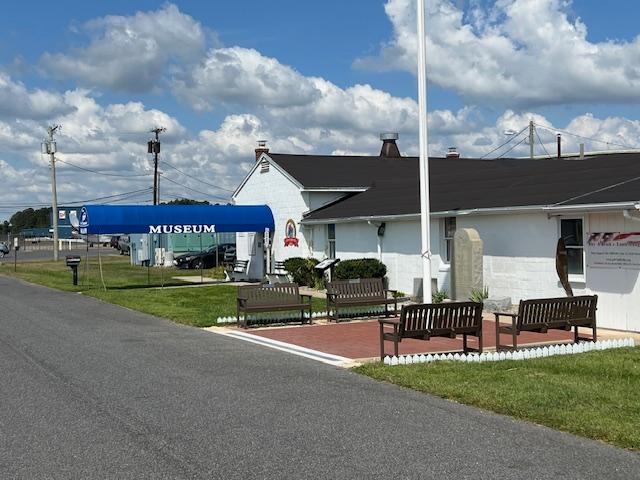
The Millville Army Air Field Museum at 1 Leddon Street

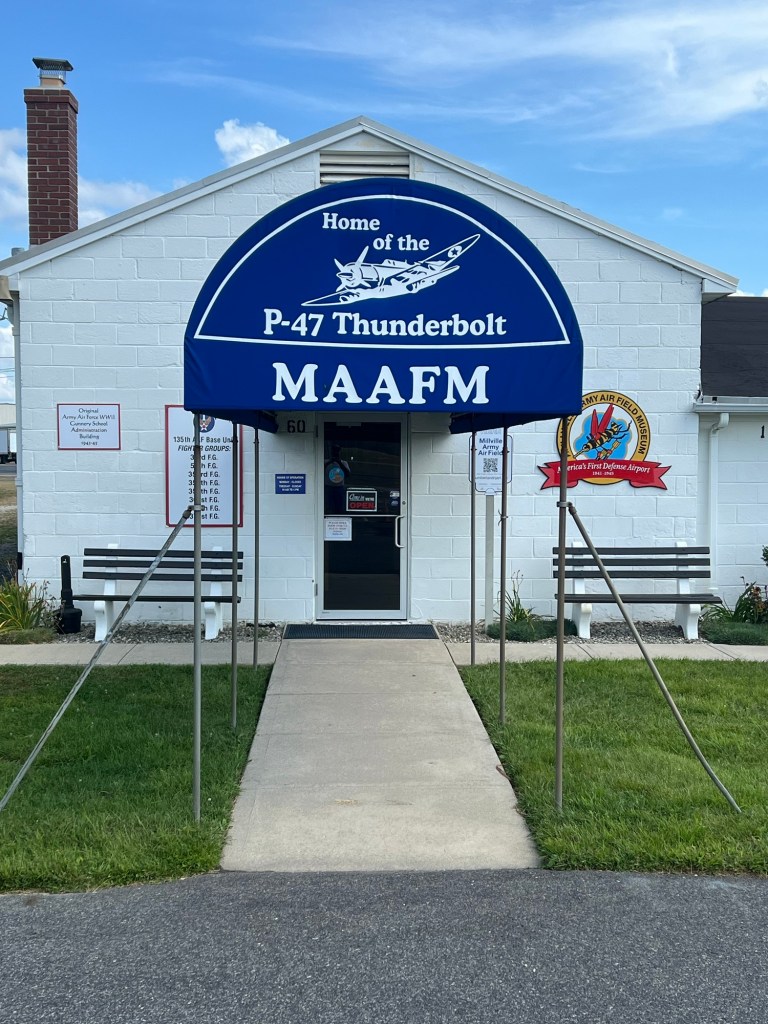
The entrance to the museum

The history of the Millville Army Field Museum:

(from the museum website)

The roots of the Millville Army Air Field Museum go back to the early 1970s. Millville Airport manager Lewis B. Finch had just completed eliminating the last apartments in former base buildings and looked forward to major industrial development at the airport. Most people in the community were aware the airport had been an army base, but knew no details of its history. This was Millville Airport when teenager Michael T. Stowe learned of some underground bunkers just south of the airport.

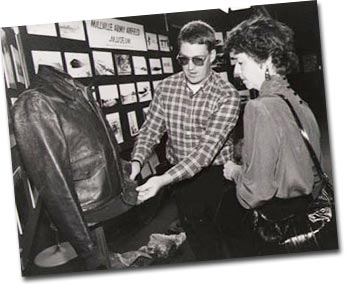
Museum founder, Michael T. Stowe and Frances Burt, examine her father’s leather “A-2” flying jacket. Her father, Second Lieutenant Lee L. Pryor Jr, died in an P-47 accident near Cedarville on May 2, 1945.

Stowe explored those bunkers and surrounding areas and later began to find related artifacts. For nearly ten years, he continued to collect artifacts and information, and in 1983 he approached city officials about a permanent place at the Millville Airport to display his collection. Stowe’s original collection of artifacts and airfield data remains the cornerstone of the Millville Army Air Field Museum (museum website).

The museum’s collection has grown through donations of time, effort, and artifacts from surrounding community and the community of veterans who served at the Millville Army Air Field. Today, both the museum and Millville Airport continue to grow and prosper through the Delaware River & Bay Authority’s management of the airport and the museum gaining recognition as a leader in World War II and post war aviation history.

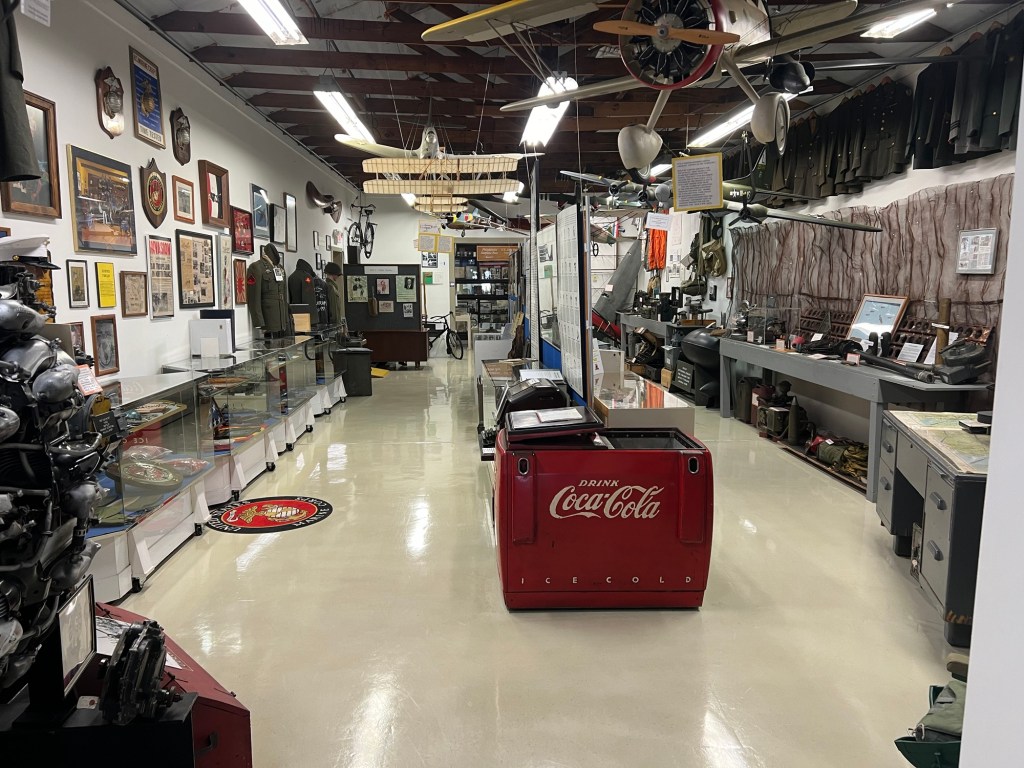
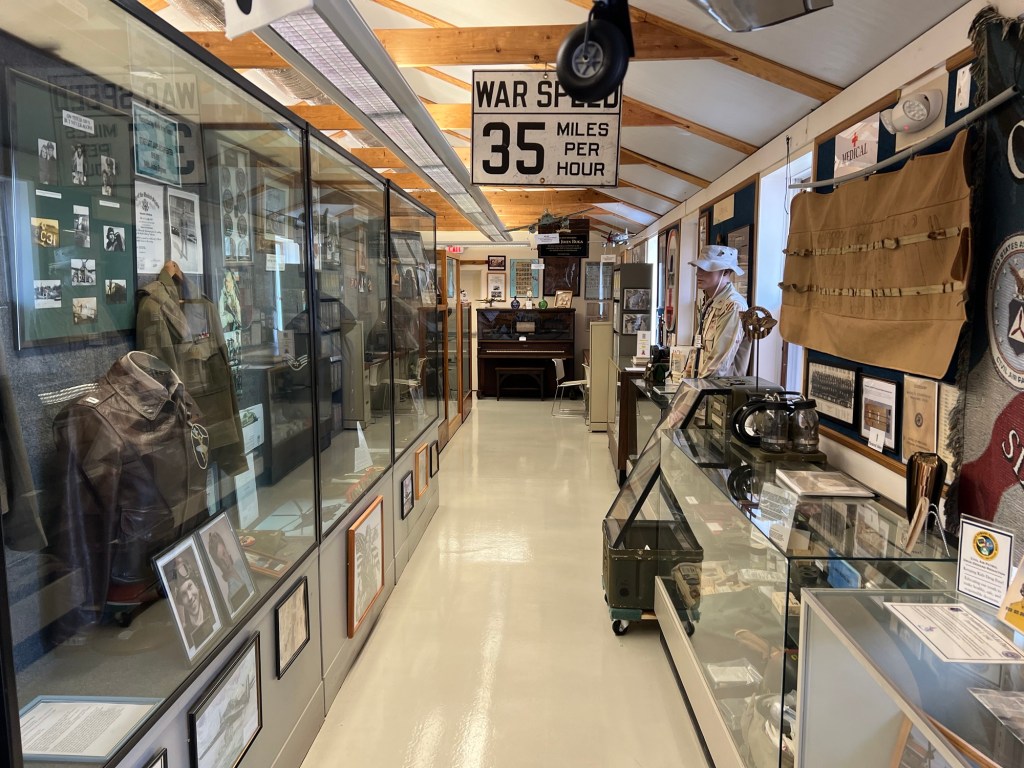
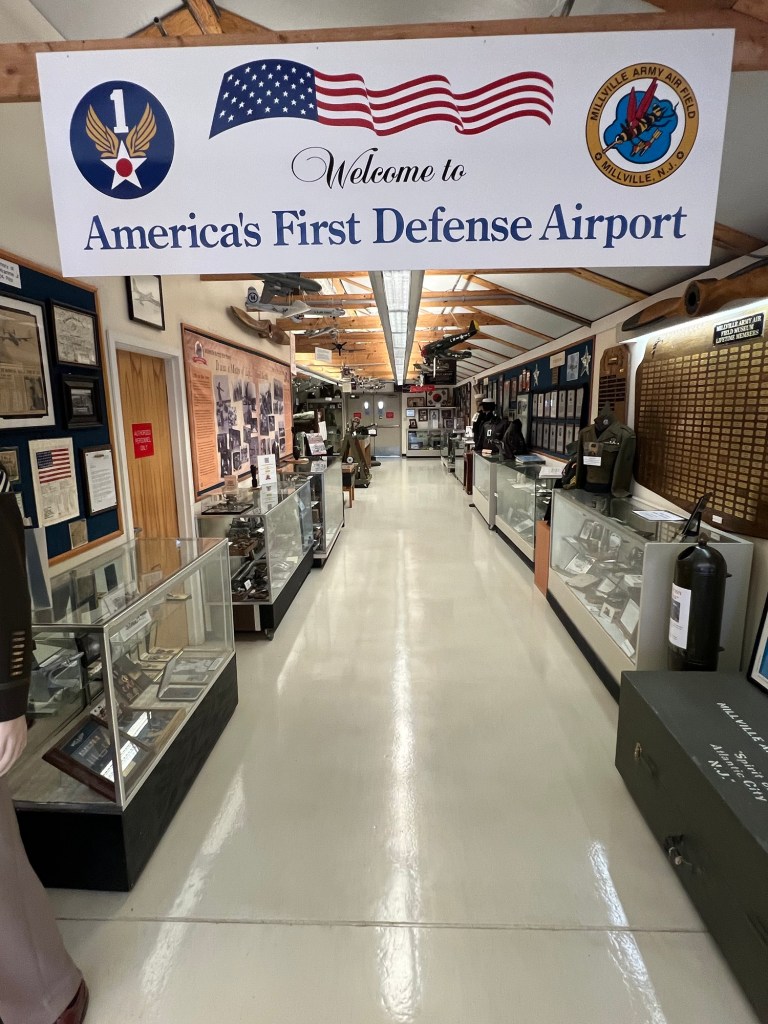
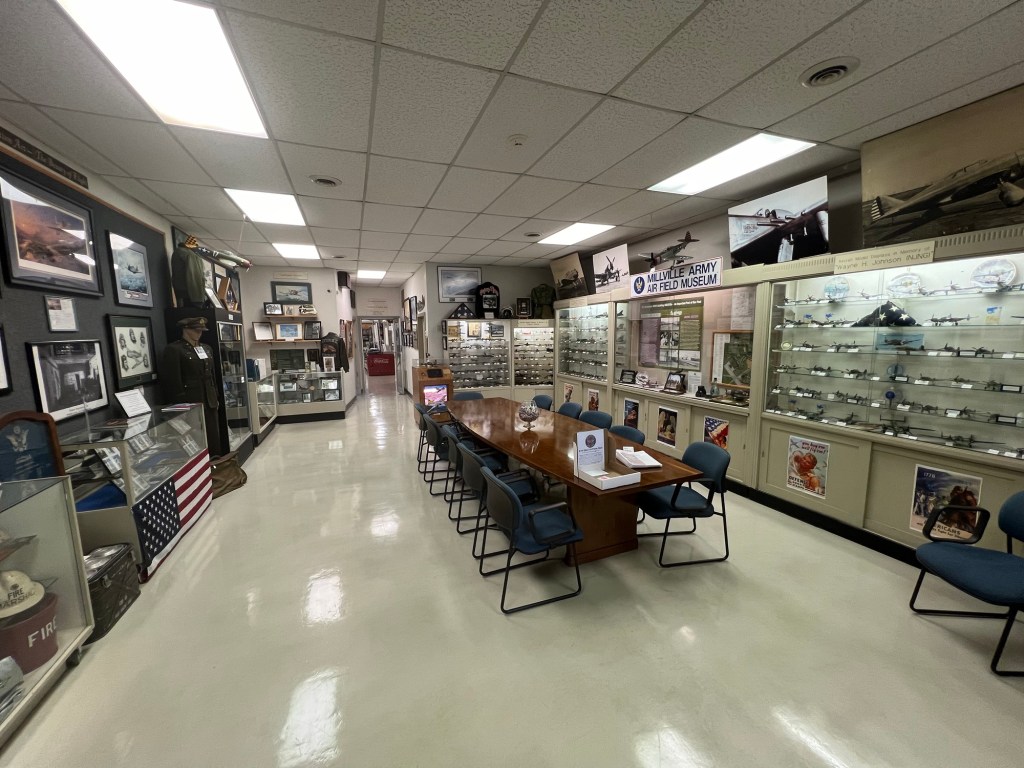
The main gallery of the front part of the museum

Models of all the aircraft during the wars

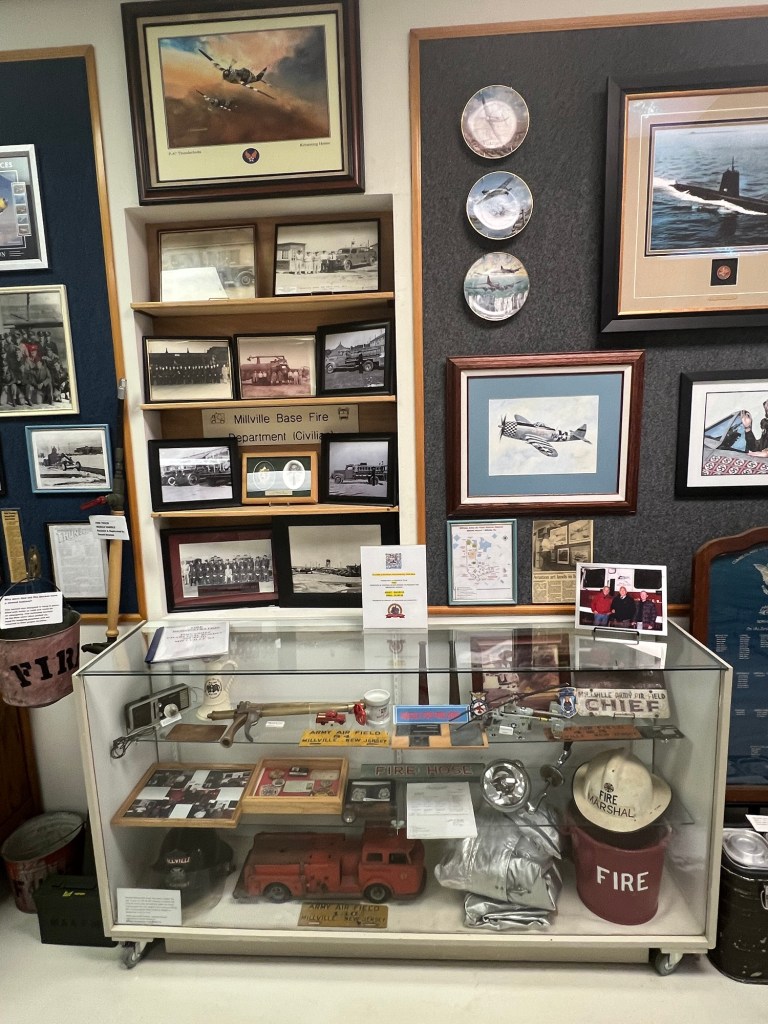
The fire department brigade that protected the airport

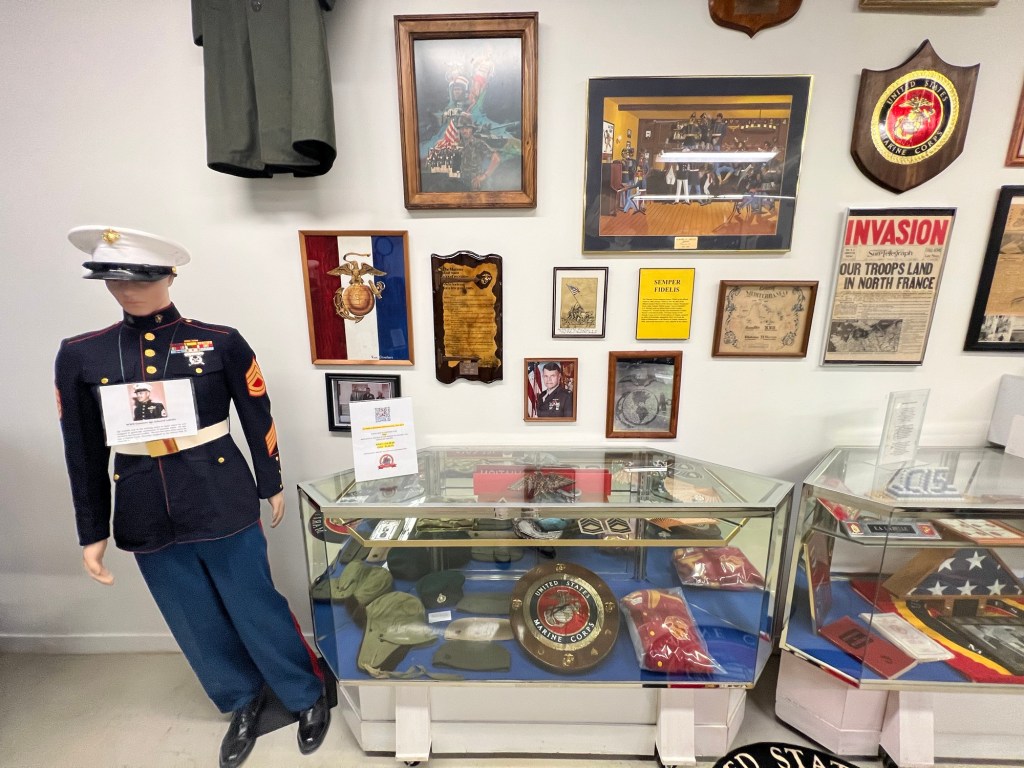
Uniform gallery and objects from modern warfare

Artifacts from the beginning of WWII

Navajo Code Talkers: no one could break the code during WWII

The Radio Headquarters during WWII

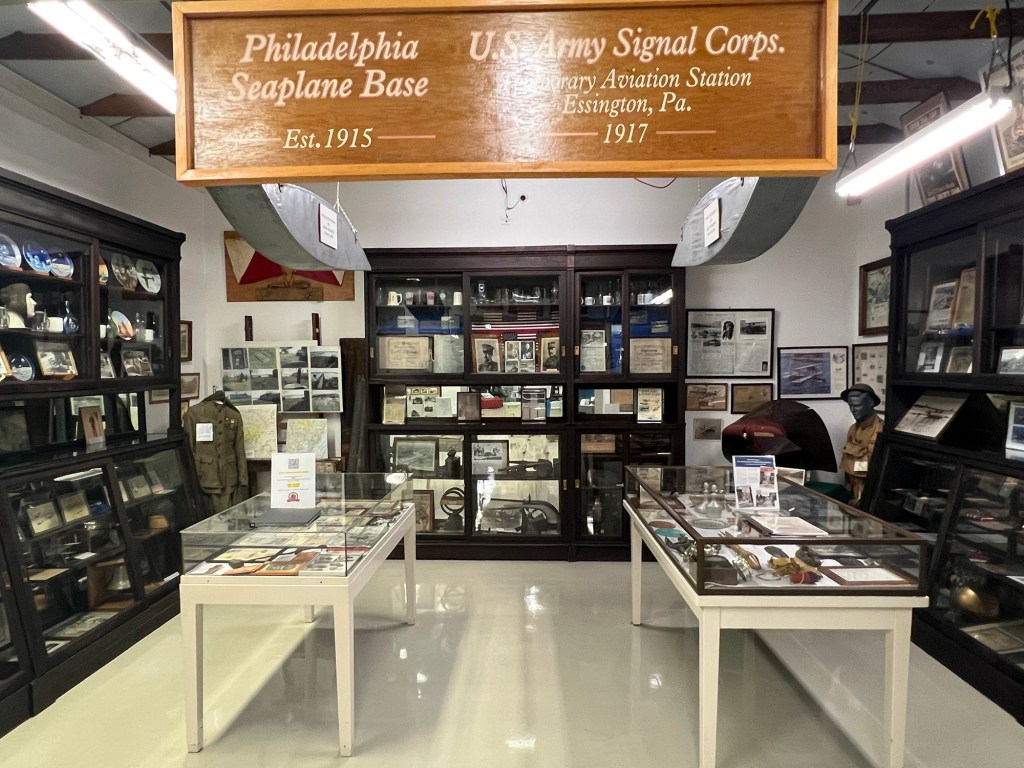
The Philadelphia Seaplane Base/U.S. Army Signal Corps. Display

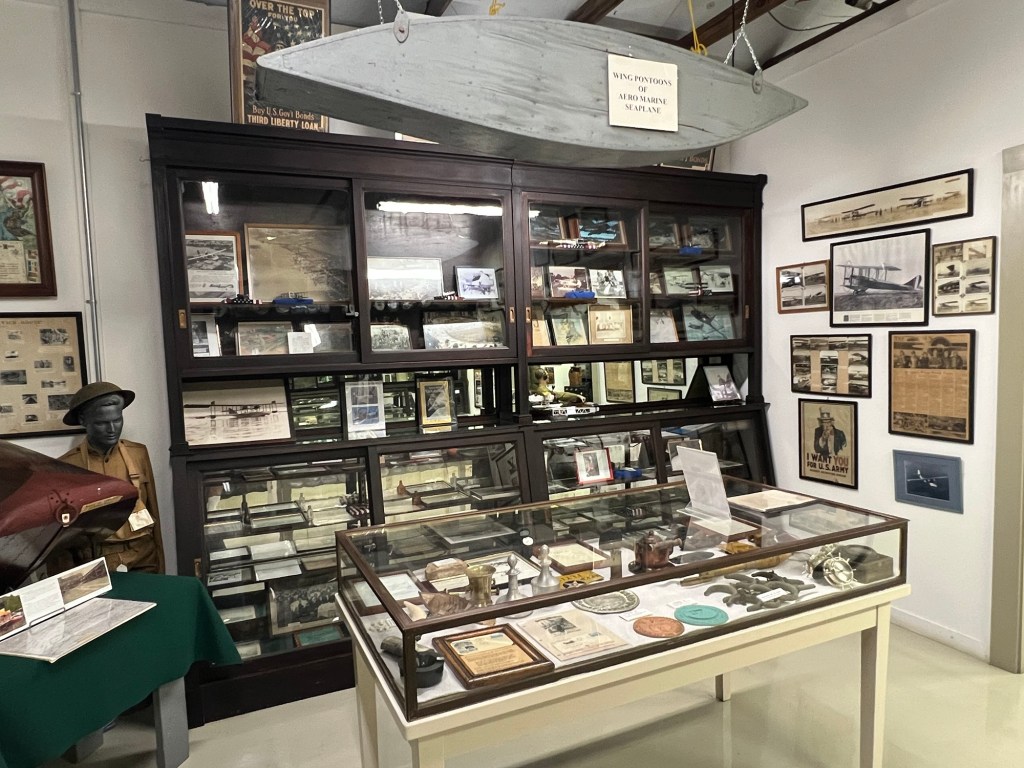
Artifacts from the Philadelphia Seaplane Base

Uniforms and plane display

The second gallery was broken down into themes and each display told its own story.

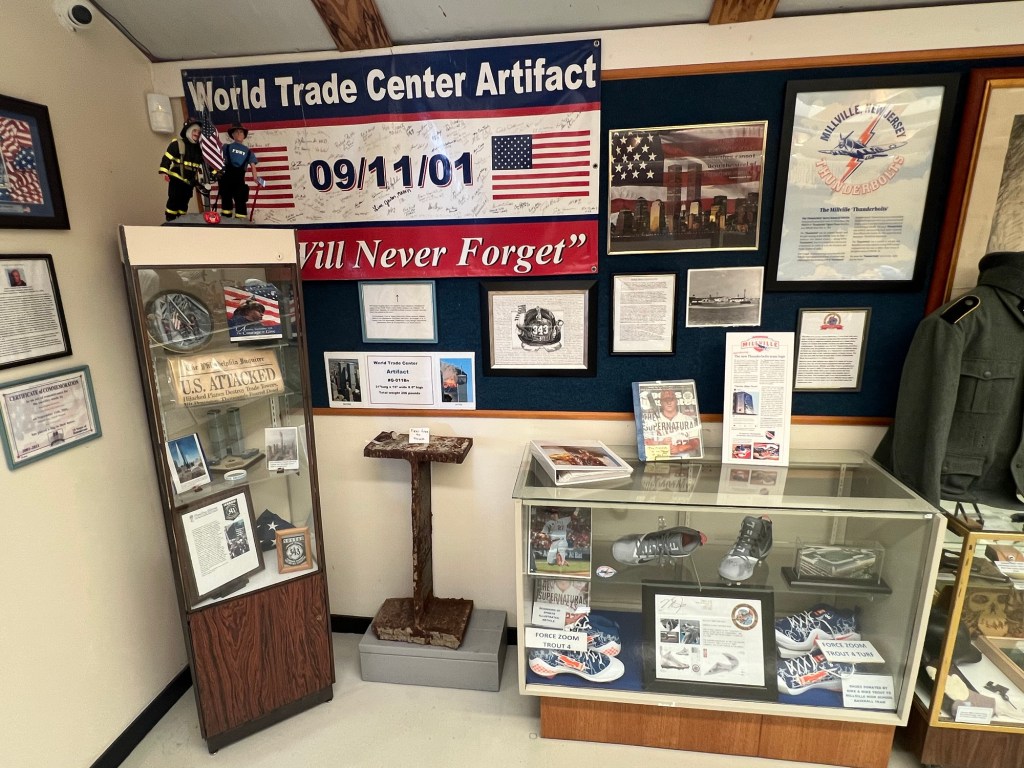
The 9/11 display dedicated to the events on September 11th, 2001 in New York City

This display also contains artifacts from the Towers on that tragic day.

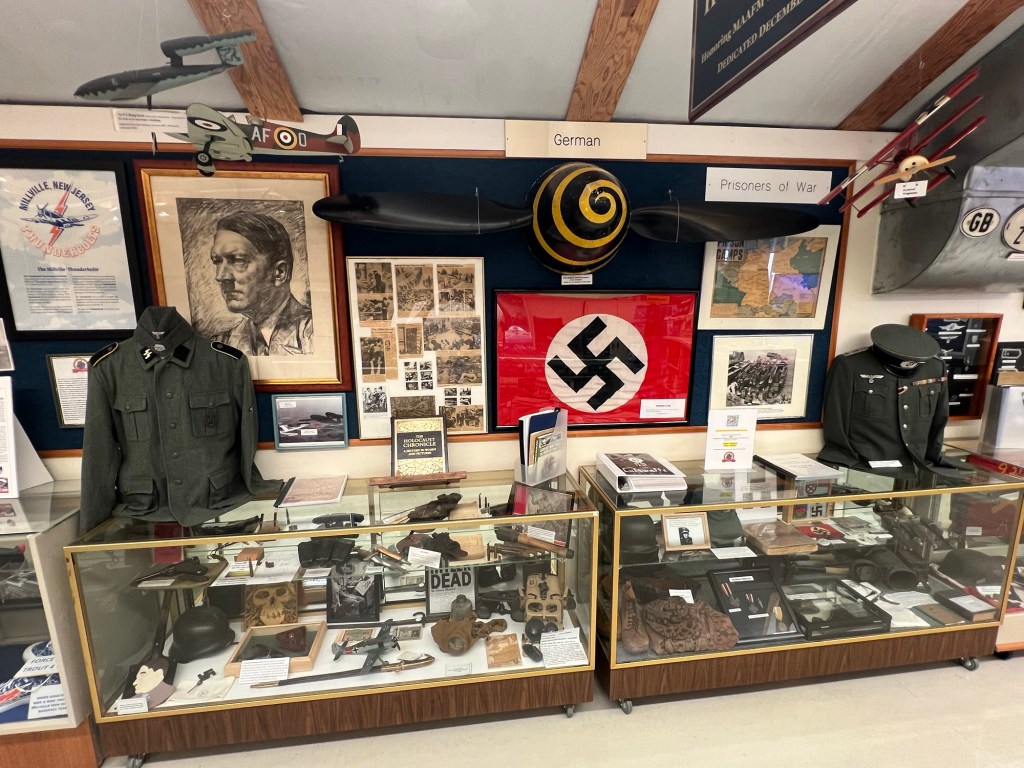
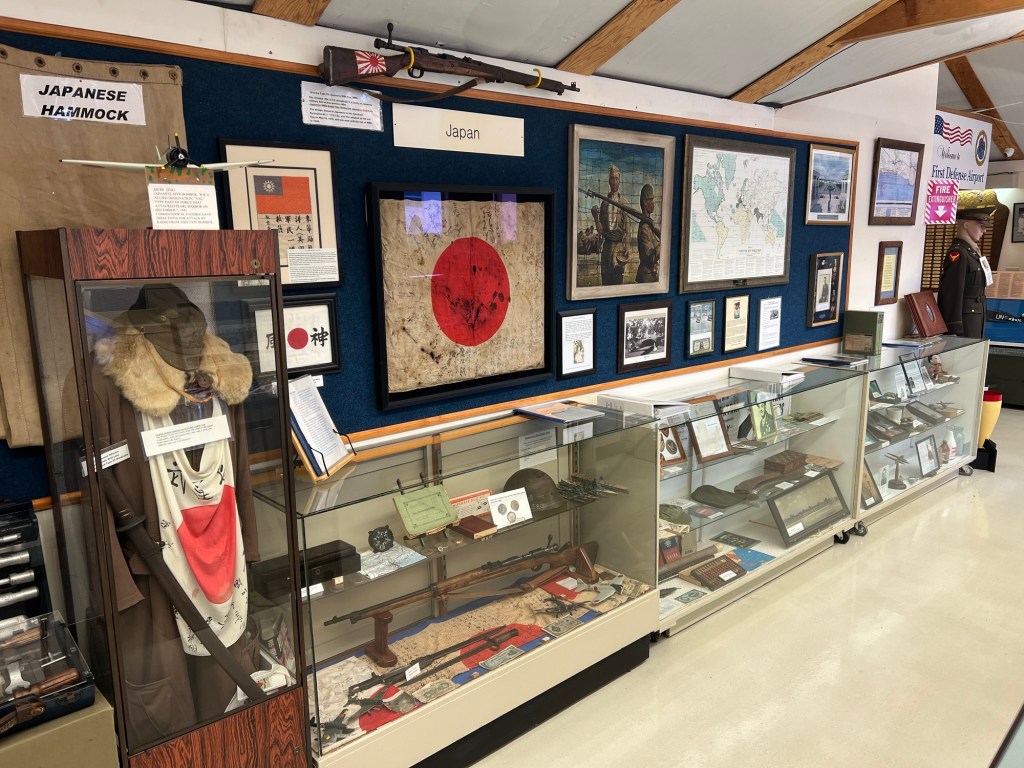
The displays contain propaganda and spoils of war from both the Japanese and the Germans. These donations remind us of a time not too long ago when our now Allies were our enemies.

Display on German memorabilia during WWII

Display of Japanese memorabilia during WWII

The back gallery on Veterans backgrounds and personal life

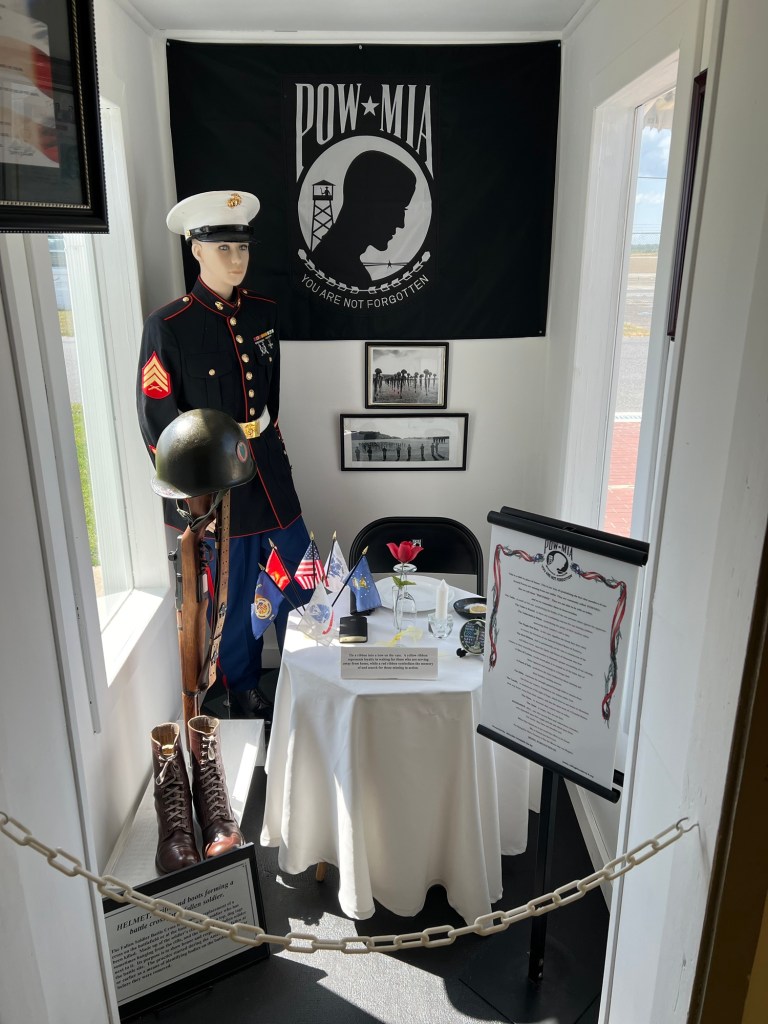
The POW display

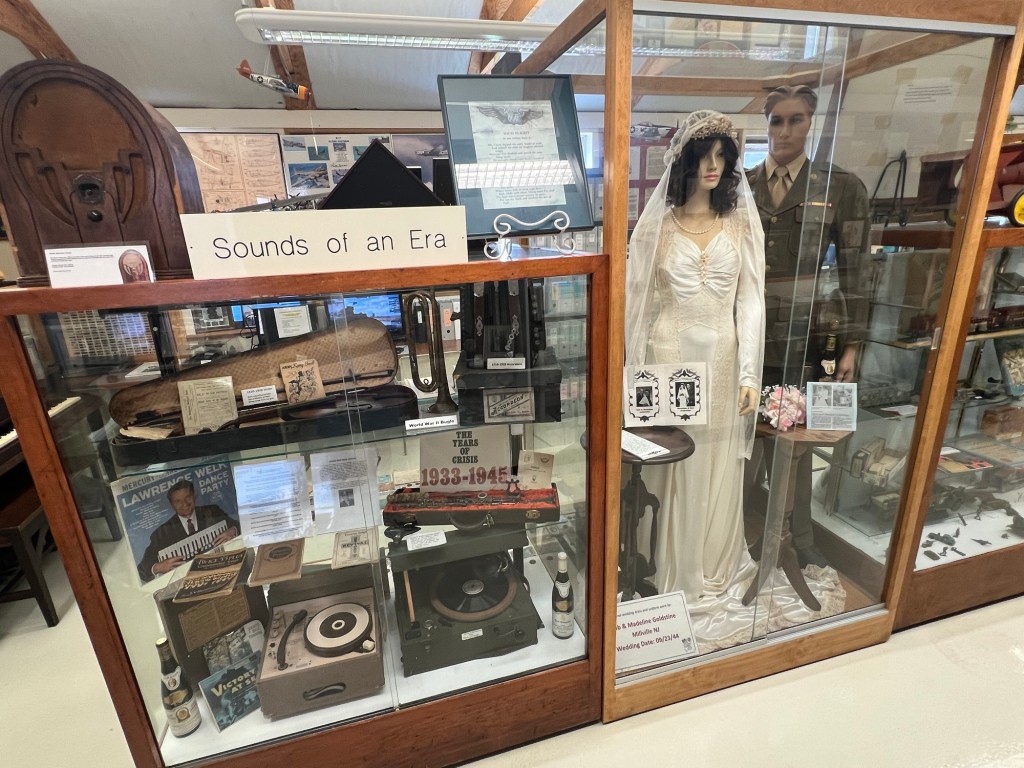
War Marriages displays

During and after the WWII, the number of marriages that took place started the “Baby Boom” Men and women waited for one another. The family unit was tight because emotions still rung high after the war years. People were eager to start their families.

The War Marriages

Toys of the war years

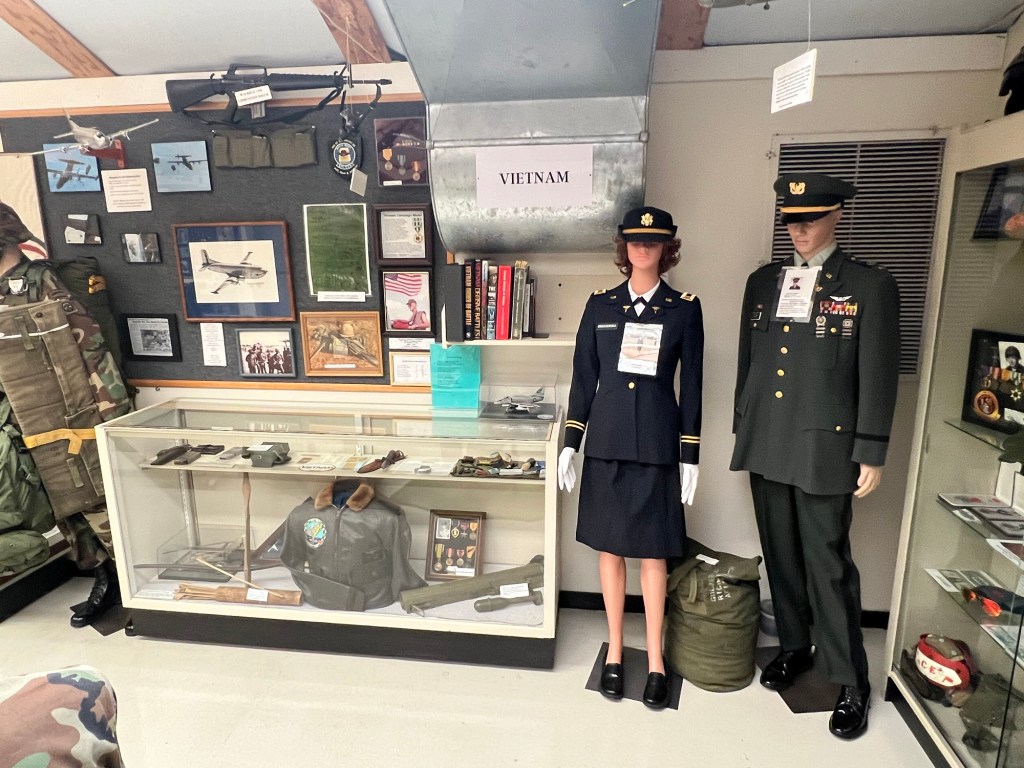
The last gallery was dedicated to each of the wars after WWII from Korea, to Vietnam, to Desert Storm, to Middle East Crisis each having their own display and artifacts showing that the tactics of war may change as well as the equipment.

The gallery dedicated to those who have served in the various wars

Women pilots

Behind the scenes and in front of them women played a big role in the war effort as pilots, engineers, teachers, factory workers, nurses and doctors and in all aspects of business for making the system work. This is their story.

Communications in the war

Military nurses display

Every war effort has been given a display in the museum with artifacts and spoils of war to represent that time. In each display, it tells another story in the protection of the country. We thank all those military personal, men and women, who helped in the war efforts to protect our country.

History of the wars

Army display

Vietnam War display

The Iraq War/Middle East conflict

Desert Storm Conflict

Vietnam War

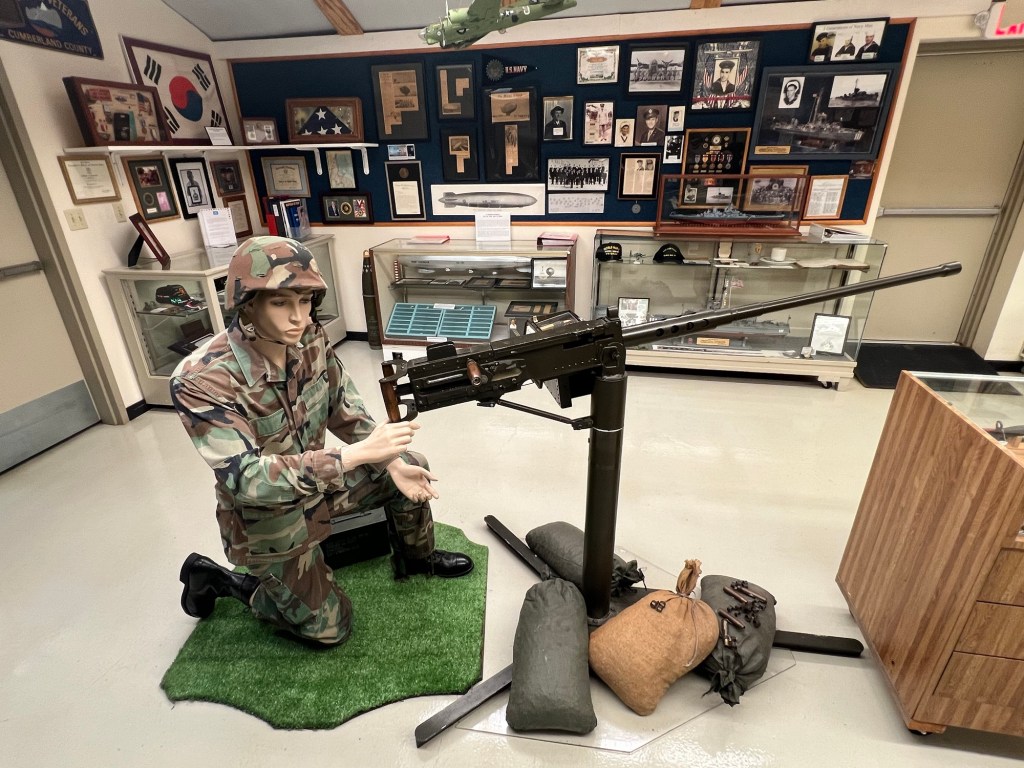
Gunning/Sharp shooter display

The museum continues outside with all sorts of interest equipment on display. Take time walk around the property and look at the displays.

The Creation of the museum:

(from the Millville Army Air Field Museum website):

The Millville Airport was dedicated “America’s First Defense Airport” on August 2, 1941 by local, state, and federal officials. In less than a year, construction of military base facilities began, and in January 1943, the Millville Army Air Field opened as a gunnery school for fighter pilots. Gunnery training began with Curtiss P-40F “Warhawk” aircraft, but after a few weeks, the P-40s were gone, and the Republic P-47 “Thunderbolt” ruled the skies over Cumberland County. During its three year existence, thousands of soldiers and civilians served here, with about 1,500 pilots receiving advanced fighter training in the Thunderbolt.

Following the War, the airfield was declared excess to the governments needs, and returned to the City of Millville. Most of the airport buildings were converted to apartments for the many veterans returning from the war. The last of the apartments vanished in the early 1970s, and the airport soon became a hub of industry and aviation for Southern New Jersey (from the museum website).

Military equipment on display

Military equipment on display

The outside of the museum