Tag: Historic Lighthouses of NJ

U.S. Life Saving Station 30                                            801 East 4th Street                                                       Ocean City, NJ 08226

U.S. Life Saving Station 30 801 East 4th Street Ocean City, NJ 08226

U.S. Life Saving Station 30 Museum

801 East 4th Street

Ocean City, NJ 08226

(609) 398-5553

https://uslifesavingstation30.com/

https://www.facebook.com/U.S.LifeSavingStation30/

https://www.ocmuseum.org/about-us/museum-history

Open: Sunday 10:00am-4:00pm/Monday-Friday Closed/Saturday 10:00am-4:00pm

My review on TripAdvisor:

https://www.tripadvisor.com/ShowUserReviews-g46696-d14961805-r1033640492-U_S_Life_Saving_Station_30-Ocean_City_Cape_May_County_New_Jersey.html?m=19905

The front of the museum

The front sign of the building

Short History of the Museum:

(from the museum website)

Also known as the U.S. Coast Guard Station No. 126, this is the only life-saving station (now museum) of its design in NJ (1 of 6 in the country) still in existence. The designer and architect was James Lake Parkinson in a Carpenter Gothic style. This building is one of 42 stations built in New Jersey. It was also the workplace of the brave surfmen who were the beachfront First Responders of the day.

The anchor outside the building

The historical plaque outside the building

The History of the Building and Museum:

(from the State of NJ Historic website)

The U.S. Life Saving Station in Ocean City is significant as an example of a significant type of life saving station and for its association with the activities of the U.S. Life Saving Service. The building was constructed in 1885 in what was referred to as the “1882 type.” There were 25 life-saving stations constructed in this style. In 1905 the building’s footprint was expanded to nearly twice its original size. The expansion was done in a style unique to New Jersey Life Saving Stations.

In 1915 the U.S. Life Saving Service and the Revenue Cutter Service were combined to form the U.S. Coast Guard. The Coast Guard continued to utilize the building until it was decommissioned during the 1940s and sold. It was used as a private residence until the City purchased it in May 2010.

The first room inside was the formal dining room where guests who visited or who had been rescued had dined. It was a rather formal affair.

I visited the museum on a weekend day to learn of the rescue procedures and the job these men did on a day to day basis. The first thing I learned was how shifting tides can change an island.

This building which now sits about four blocks inland was once at the shoreline a hundred years ago. Talk about change and Mother Nature’s role in this.

The first room I visited was the formal dining room in the newer extension of the building. This would be where the officers and men would entertain guests and visitors to the building. It could be a casual or formal affair.

The first floor formal dining room

The entertainment for the evening was either board games or a music box

Some of the items salvaged from the sea

The Life Guard officer formal outfit was worn for formal affairs

The officers would be dressed formally to receive guests

The next room over was the Rescue room and door where the boats and other equipment would be held when the alarm sounded.

The docent discussed how the doors were opened and the boats needed to be pulled out on a stormy night. Everything you needed had to be close by, in good shape and ready to go.

The rescue boats and pulleys that would be used in the sea

The ropes and pulleys used to assist in the rescue

The lanterns were used as communication between shore watch and the tower

The equipment used to repair the items used for rescue

The rescue boat and the items used for a water rescue

The additional boats used in rescue

Some boats were used for fishing and collecting shell fish

The Sneak Box was used for duck hunting to camouflage yourself

The sneak box

We then toured the second floor sleeping room for the crew. This offered a great view of the sea when the building was at shore line. These men were given good accommodations for the time.

While not very private, it was comfortable and served its purpose for a job where you might not get a good nights sleep.

The sleeping quarters

The main sleeping room was for a crew of six

The loft lead to the tower where the look out for the evening would sleep (it is not open to tours right now).

The loft area from the window

We then headed back downstairs where we toured the station manager’s room and office.

The station manager’s room off from the kitchen

The station manager’s office where all the monthly paperwork was done and business was conducted.

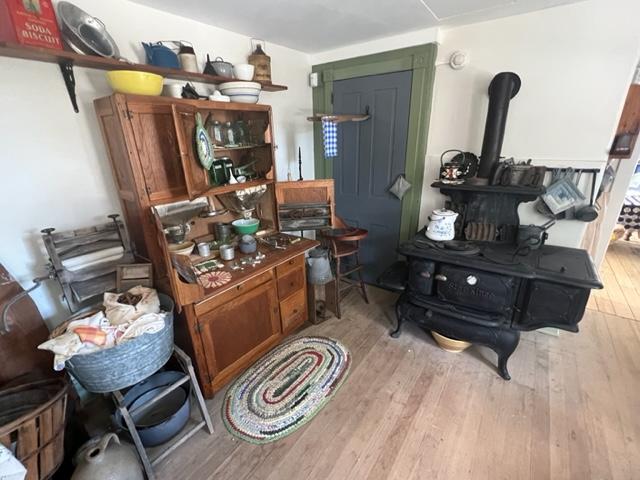
The kitchen

The Station Manager’s office was right next to the kitchen stove so that the room was kept warm during the winter months and on cool nights.

The kitchen stove

All the meals for the crew and visitors were cooked either by the men or their wives might be allowed to visit and assist in duties in the building.

The kitchen

All the storage of the foodstuffs has to be accounted for because getting them was rough with no cars for transportation and no bridges to cross to the mainland.

The gift shop

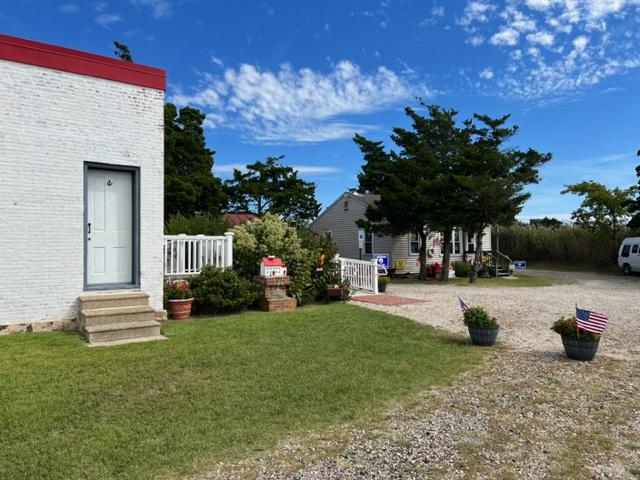
The museum and grounds

The museum offers a glimpse of the everyday life of these brave men who were on call 24/7 and performed such dangerous work. Ocean City has done a wonderful job preserving this legacy.

The museum has docents on hand for more formal tours and are very detailed on their knowledge of the building and its contents. It is a very interesting look at Ocean City’s past.
Finns Point Lighthouse                                                          Fort Mott & Lighthouse Roads                                   Pennsville, NJ 08070

Finns Point Lighthouse Fort Mott & Lighthouse Roads Pennsville, NJ 08070

Finns Point Lighthouse

Fort Mott & Lighthouse Roads

Pennsville, NJ 08070

(856) 935-3218

https://www.lighthousefriends.com/light.asp?ID=374

https://en.wikipedia.org/wiki/Finns_Point_Range_Light

Hours: Sunday-Saturday (Open with Fort Mott State Park-Lighthouse Currently closed, check the website of the park)

Admission: Free when open

My review on TripAdvisor:

https://www.tripadvisor.com/Attraction_Review-g46726-d14113446-Reviews-Finns_Point_Rear_Range_Light-Pennsville_New_Jersey.html

Finns Lighthouse in Fort Mott State Park

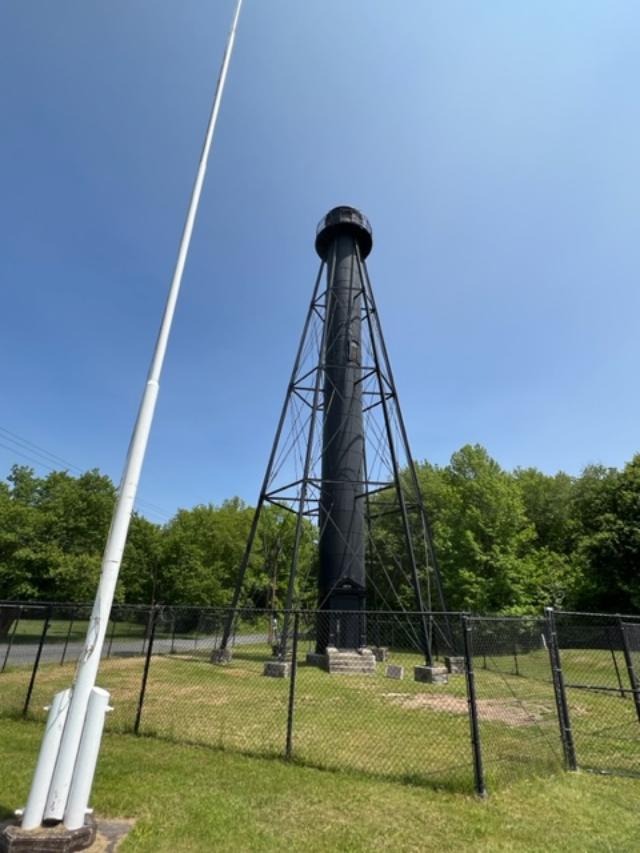
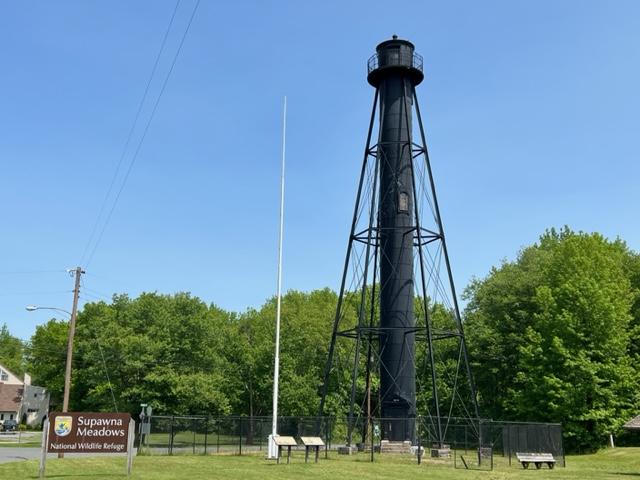
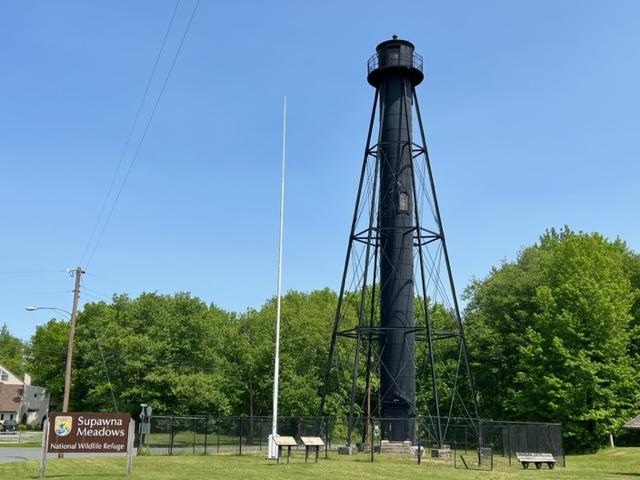
The Finns Point Lighthouse is located in the Fort Mott State Park and the afternoon that I was there which was the third Sunday of the month of June, it was not open. In fact, it looked like it had never opened for the day.

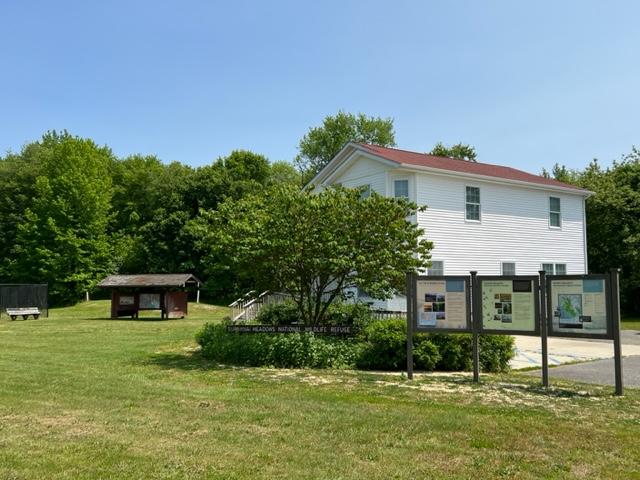
The gift shop/information center had a sign from 2019 with the hours of operation and the steps were not well cared for and the gardens around the building were over-grown. The lighthouse itself is behind a fence that you can look at but not enter and from what I read online is not open even when it should be if it is too hot or too cold because conditions inside can be impossible. The lighthouse and the Visitors Center will reopen for the 2023 season.

The Finns Lighthouse Visitors Center is now open in 2023

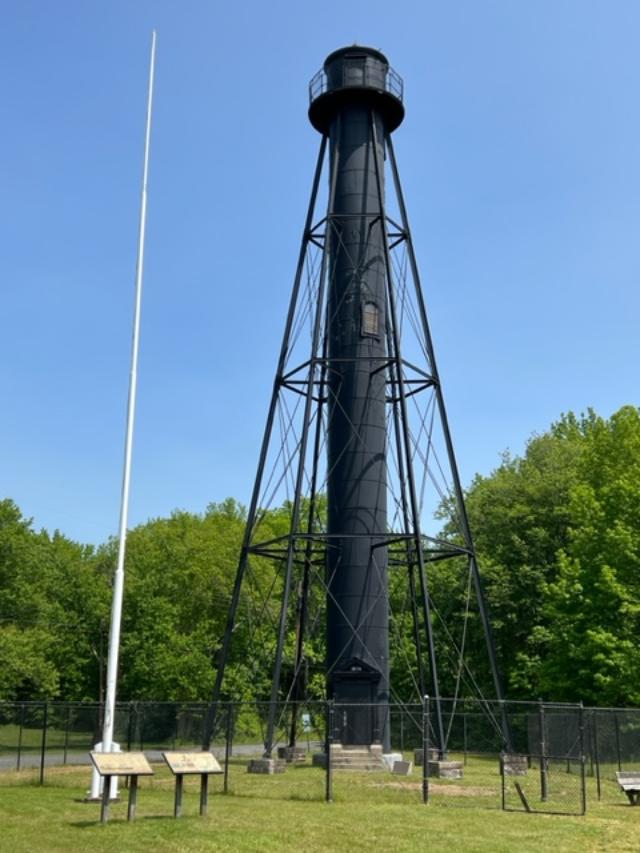
Still, the lighthouse has a majestic look to it and must have some views when it is open. If it is not open, take time to visit Fort Mott and the State Park, which offers spectacular views of Delaware Bay and the surrounding grounds. Take time to explore the fort and the where the guns were mounted. Very interesting.

Fort Mott also has a very good Visitors Center and small museum inside to see the history of the fort, artifacts from the fort and from the war years and all sorts of interesting information on the area.

The Finns Point Lighthouse

The History of the Finns Point Lighthouse”

(From the Friends of the Finns Point Lighthouse website-modified):

https://www.lighthousefriends.com/light.asp?ID=374

(Please read the above Friends Website for the complete history in detail of the ligthouse)

Soon after the 1638 landing of the Finnish colonists near the present site of Wilmington, DE, a small group of settlers crossed over to the east bank of Delaware River, where the land was though to be more fertile and established farms. One group selected land near the sweeping turn in the Delaware River and this area remains known to this day as Finns Point.

By an act of Congress in 1875, $55,000 was set apart for two pairs of range lights to help vessels transition from Delaware Bay into the Delaware River. Port Penn Range, located in Delaware, would guide traffic along the shipping channel from Ship John Shoal to Ready Island, while Finns Point Range would help vessels continue upriver, passing between Reedy Island and Baker Shoal.

Lt. Colonel William F. Reynolds of the U.S. Corps of Engineers oversaw construction of the front and rear range lights at Finns Point. The front light was located near the banks of the Delaware River and was displayed from a frame dwelling of the following description: “one and one half stories high with shingle roof, double weather-boarded on outside and lathed and plastered inside. Its rests on stone walls founded on wooden piles. The first story is divided into three rooms with the hall and stairways to the second floor and cellar and shed over the back door, porch and bay window in the front. The second story is divided similarly to the first, with a step ladder to lantern on the third floor, a gallery supported by brackets surrounds the lantern on front and sides.”

The illuminating apparatus for the front light was a fourth order range lens manufactured by Barbier & Fenestre in Paris, which focused the light from a fourth-order Funk Heap Lamp with one wick. In 1882, a “wooden screen painted white, with open spaces so as to show horizontal stripes” was placed atop the front lighthouse’s red tavern room to make the structure more conspicuous during the day. The daymark was removed in 1897.

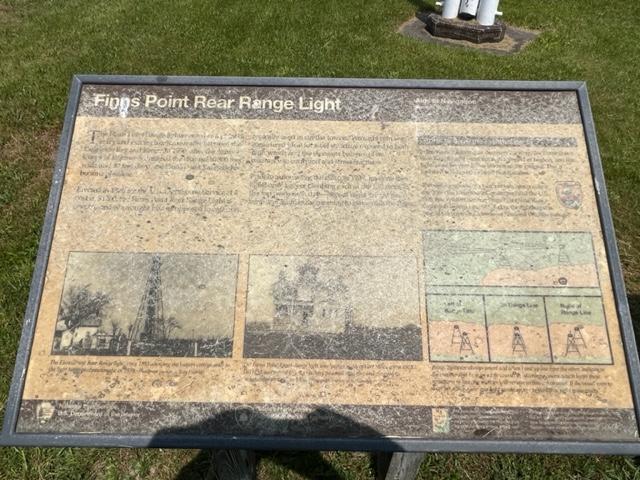
The lighthouse sign

Three acres of land, roughly one and a half miles inland from the front light, were purchased from Joshua and Mary Dickinson on April 20th, 1876, as the site for the rear range light. To provide a focal plane higher than that of the front light, the project plans called for a tall, wrought iron tower to be used for displaying the rear light. The Kellogg Bridge Company of Buffalo, NY was contracted to manufacture the components of the wrought tower, which were then transported to Salem, NJ by railcar. From Salem, teams of mules pulled large wagons loaded with pieces of the iron tower to the construction site.

A frame keeper’s dwelling was built just west of the tower, along with a wood-framed privy and an oil house. The first keeper of Finns Point Rear Range Light was Edward Dickerson, who started serving on December 8th, 1876, even though the light was not lit until April 2nd, 1877.

The lighthouse sign

Fast forward to the 1970’s when the old dwelling was razed because it was unsafe, but locals showed an interesting in the lighthouse and having it moved. Resident Betty Husarik formed the “Save the Lighthouse Committee”. They faulted in moving the lighthouse but placed it on the National Register of Historic Sites in 1978.

In 1981, the committee set out to Washington DC to meet with their local congressman and the drive resulted in a contract for $33,600 being signed between the US Fish and Wildlife Service, on whose land the tower now stood and K & K Painting Company of Baltimore to have the tower repairs, sandblasted and painted. An open house was held at the tower on October 14th, 1984 to honor the determined effort shown by the “Save the Lighthouse Committee” and others in restoring the tower.

Today it is opened for limited tours and special events.

East Point Lighthouse                                            10 Lighthouse Road                               Heislerville, NJ 08324

East Point Lighthouse 10 Lighthouse Road Heislerville, NJ 08324

East Point Lighthouse

11 Lighthouse Road

Heislerville, NJ 08324

(856) 785-0349

http://eastpointlight.com/

https://www.facebook.com/eastpointlight/

Open: Sunday 1:00pm-4:00pm/Monday-Friday Closed/Saturday 1:00pm-4:00pm/Please check the website for seasonal dates

Admission: $8.00

My review on TripAdvisor:

https://www.tripadvisor.com/Attraction_Review-g46502-d12629019-Reviews-East_Point_Lighthouse-Heislerville_New_Jersey.html

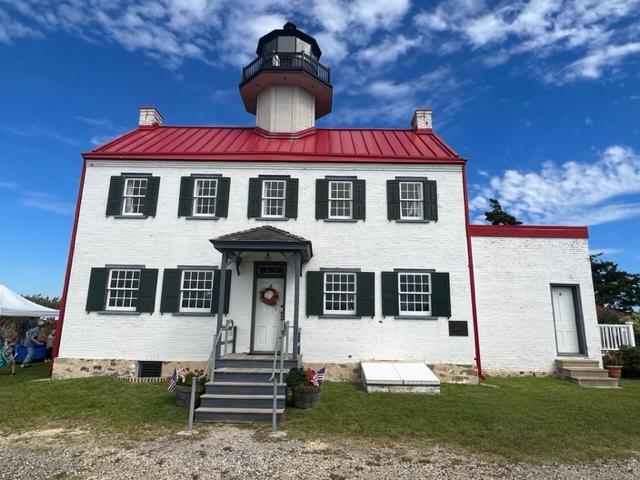
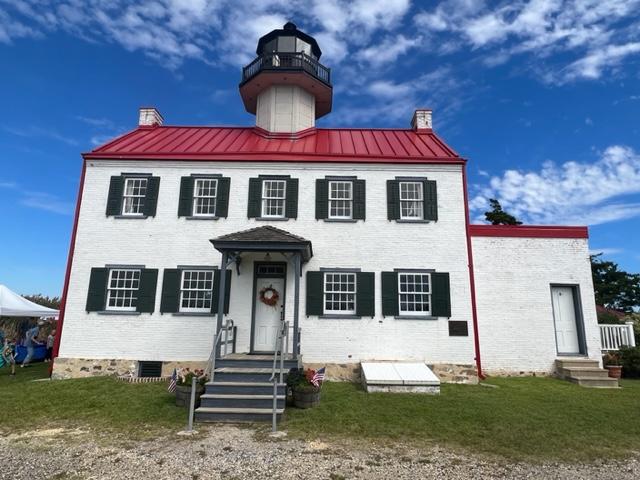
The East Point Lighthouse at 11 Lighthouse Road

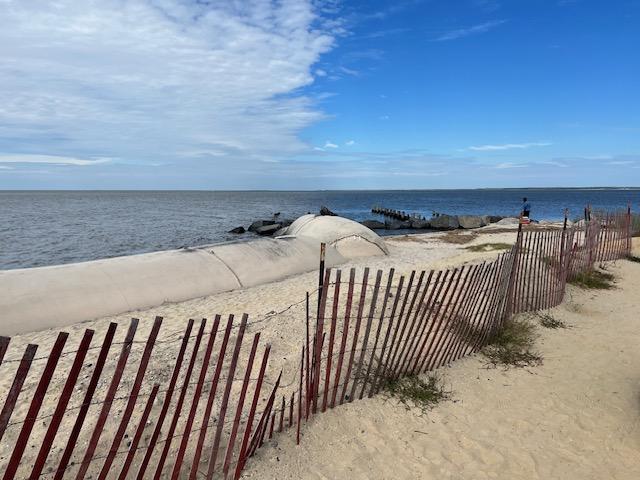
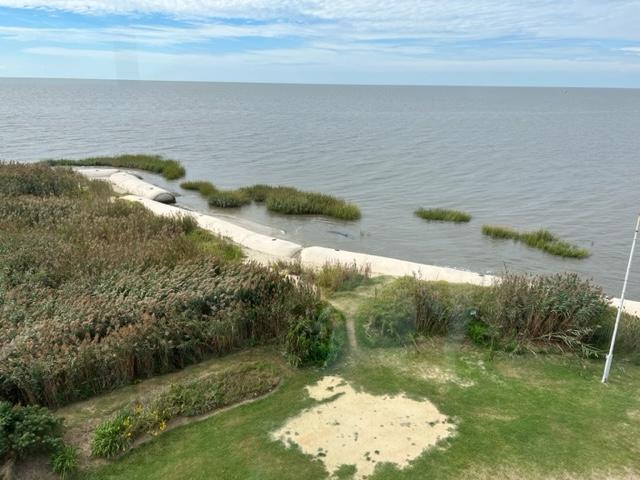
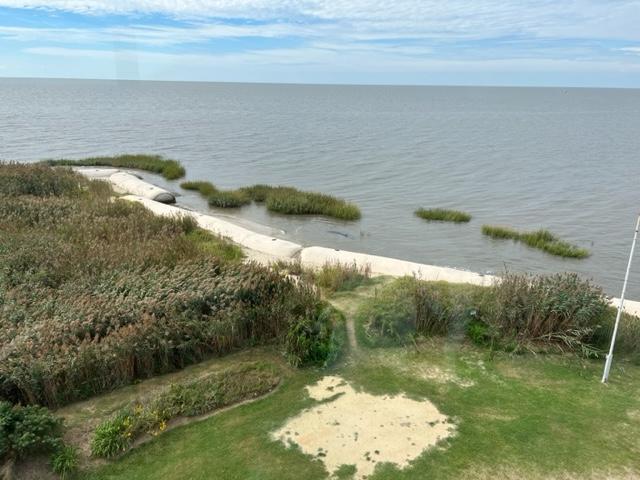
I visited the East Point Lighthouse on a glorious sunny day when there was no wind in the forecast, and it made for an excellent visit to this lighthouse right by the sea. I noticed that on almost all sides, there were man-made barriers to protect the lighthouse grounds from erosion.

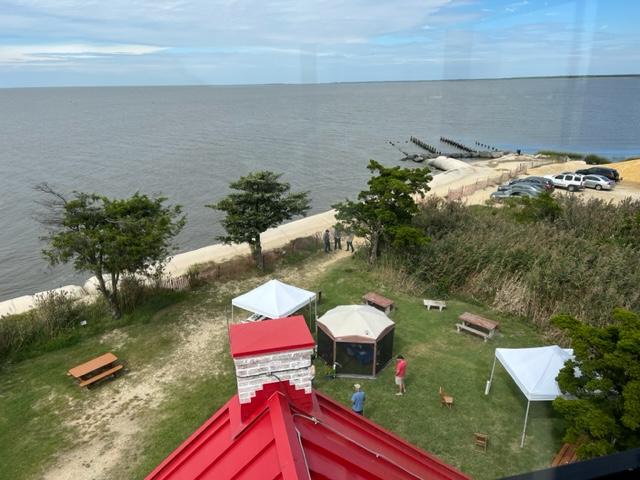
The bunker that surrounds the lighthouse.

The grounds were a combination of dunes with beach grass, rocks and tiger Lillys all over the property to give it a colorful look. There were misty breezes from the water that felt so good as it got hotter that day. The property is pretty contained and there is parking all around the building, but the lots are small.

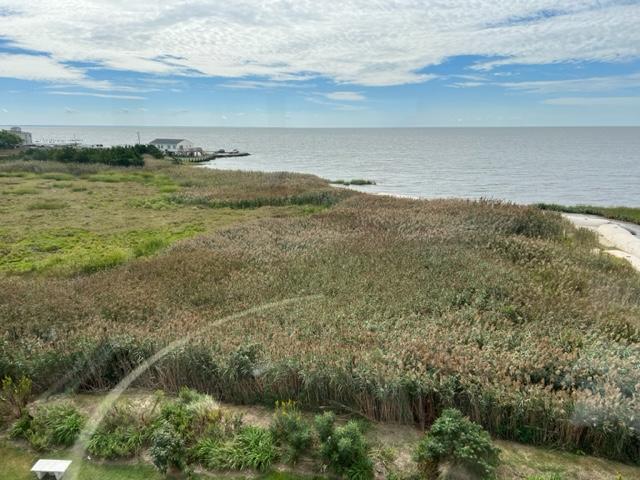
The view from the top of the lighthouse that surrounds it.

I bought my tickets in the gift shop ($8.00), was able to look around at the well-stocked shop with its nautical books and tee-shirts and hats with the lighthouse logo on it. You are also able to go to the bathroom.

The entrance to the lighthouse and the gift shop.

The tour of the lighthouse is a self-guided tour, and you are able to climb the stairs and visit each room of the lighthouse as if the lighthouse keeper and his family still lived there. When I was talking with one of the volunteers that morning on the first floor, he told me as they were renovating the lighthouse after the fire and completing it, they put the word out to the community for donations to furnish the lighthouse with items that may have come from the period that the lighthouse was in operations. The donations poured in with family heirlooms that filled each room up.

The first floor kitchen.

On the first floor is the kitchen with its time period ice box and coal stove which shows what life was life for a housewife before WWII. I am sure that electricity was tough getting to lighthouse especially during storms. You had washboards and basins for wash day and all the equipment to clean the house.

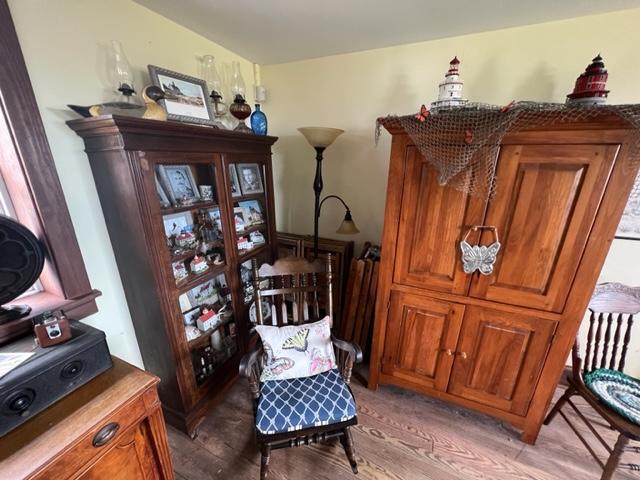
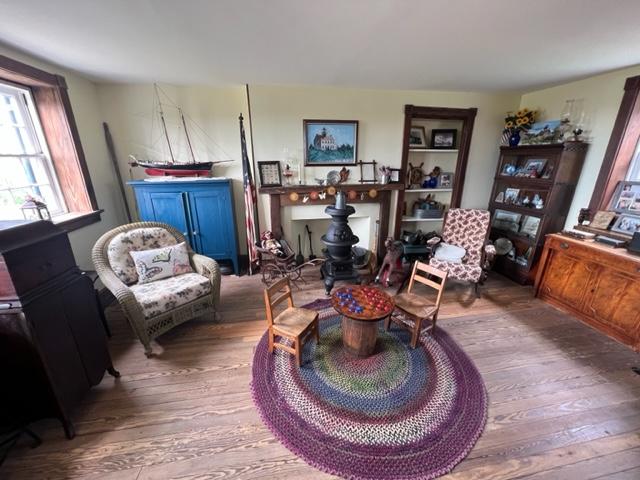
The Parlor at the Lighthouse

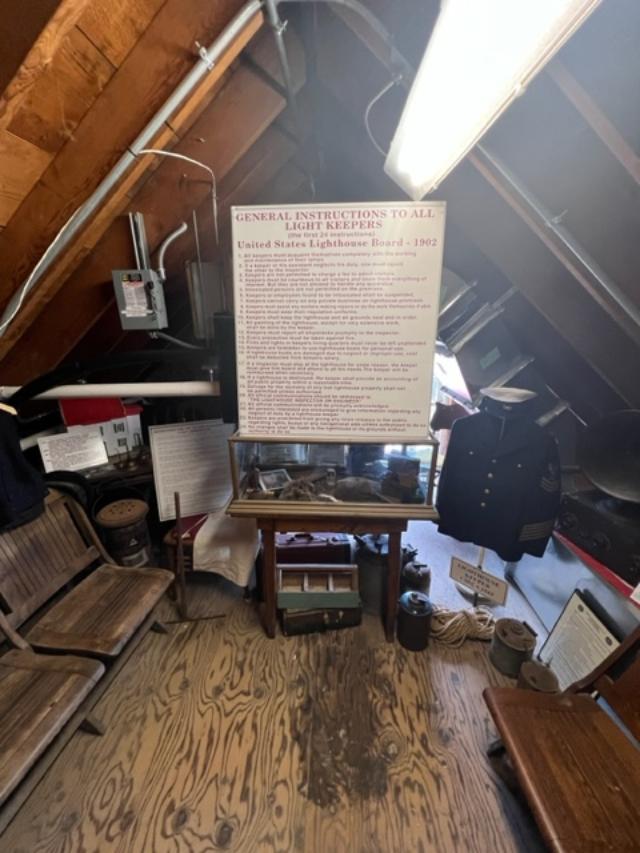
The lighthouse office of the lighthouse keeper was equipped with all things that are needed to keep the place running from maps to communication equipment to a fully stocked desk. There were no days off in this job. There was even a picture of Clara Noon, who as a little girl was the last child to live in the lighthouse. She visited again as a senior in the early 1990’s.

The Parlor in the lighthouse.

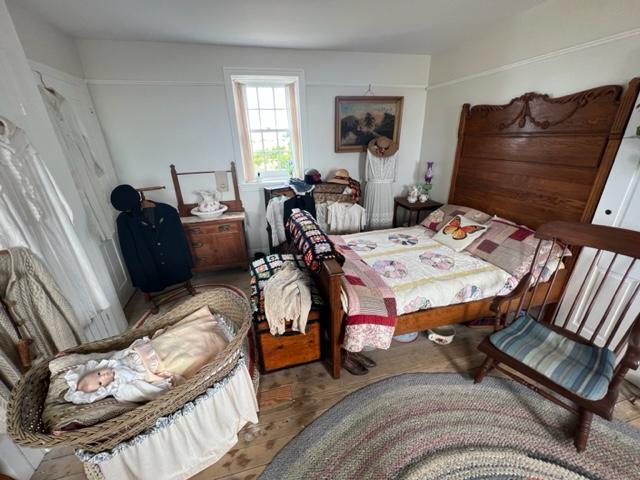
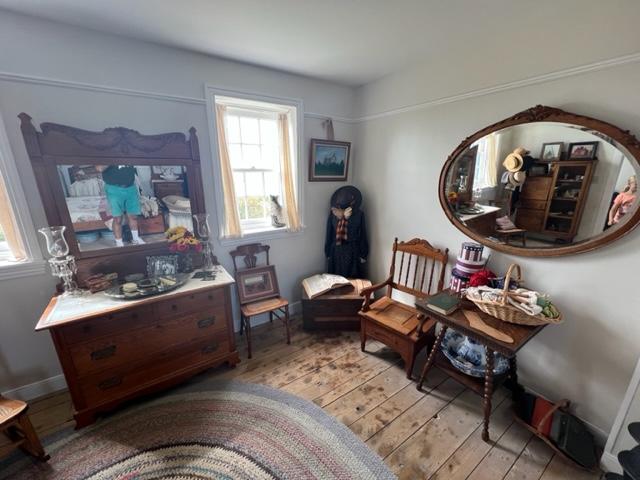
The upstairs had a fully furnished adults’ bedroom with period clothes of the early 1900’s to WWII and the furnishings were of various periods of living in the lighthouse.

The Adult’s bedroom

The Adult’s bedroom

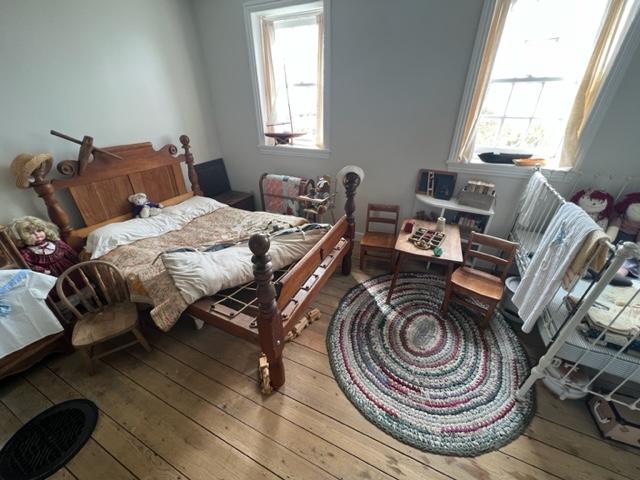
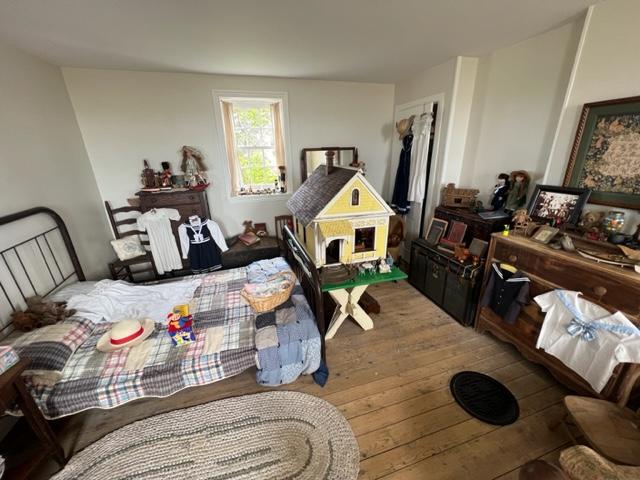
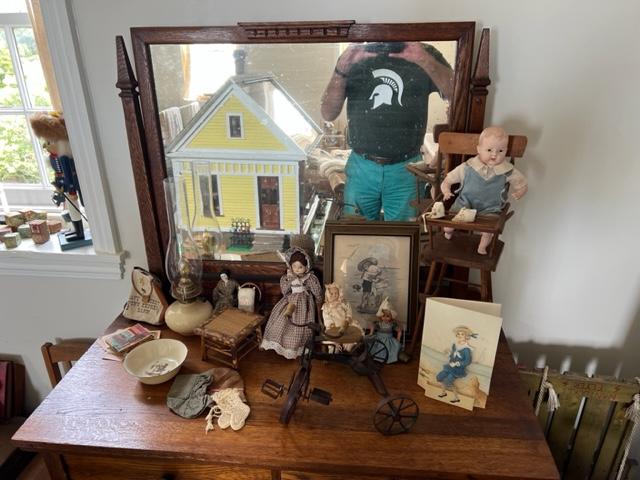
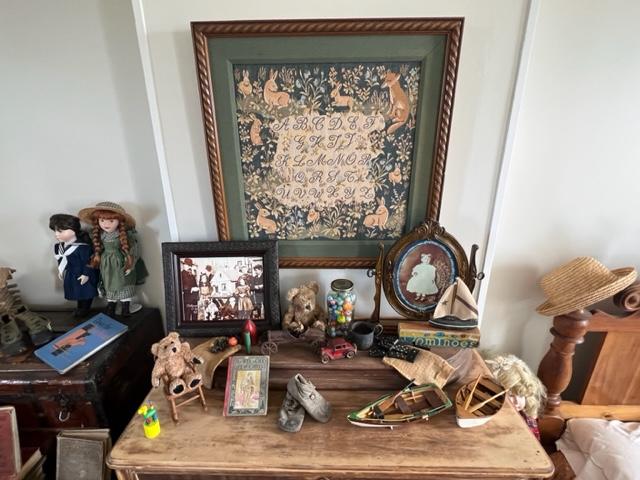
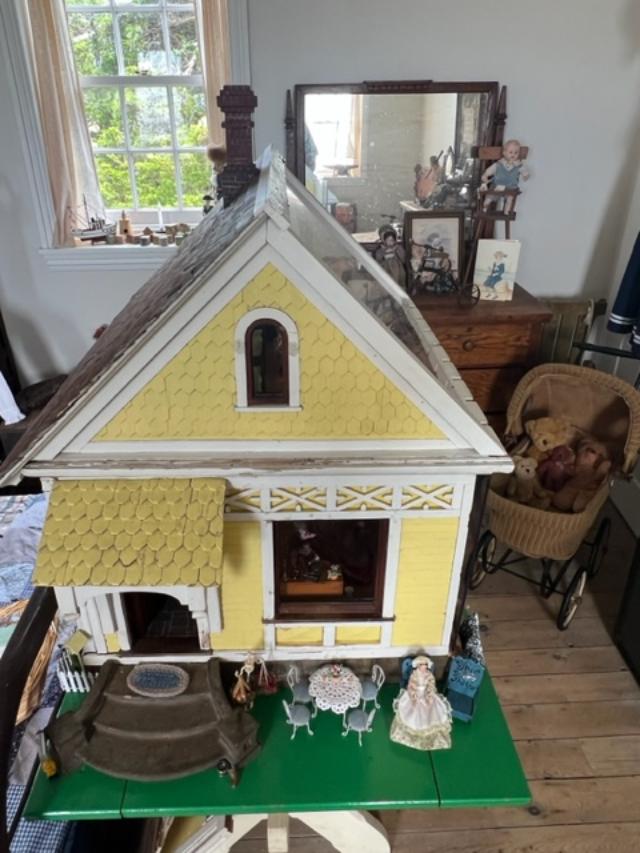
The children’s bedroom was really elaborate with rope beds, children’s furniture, lots of toys from the 1890’s to the 1930’s and a great doll collection. There was even a handmade dollhouse complete with elaborate furniture that was handmade by a local resident. It was very impressive.

The Nursery and Children’s Room

The Children’s Room

Children’s toys in the Children’s room

The Children’s toys and the Sampler

The Dollhouse that is well known in the lighthouse

There were also all sorts of maps and rare books to look at and a complete radio room and then the last set of stairs took you up to the light where you could see the views of the ocean. In fact, the views from all the floors were pretty impressive.

The views from the top of the lighthouse.

It is an amazing self-guided tour that gives you a glimpse into the life of the families that lived here. It may not have been this elaborate as all the items inside the lighthouse, but it gives you a clue on what life must have been like by using your imagination.

The views from the top of the lighthouse.

What was interesting is that the lighthouse opened in 1849 and then became fully automated in 1911 so its use of a lighthouse keeper was pretty much over before WWI. Still over a period of time you can see how the job changed with automation and advancement of technology.

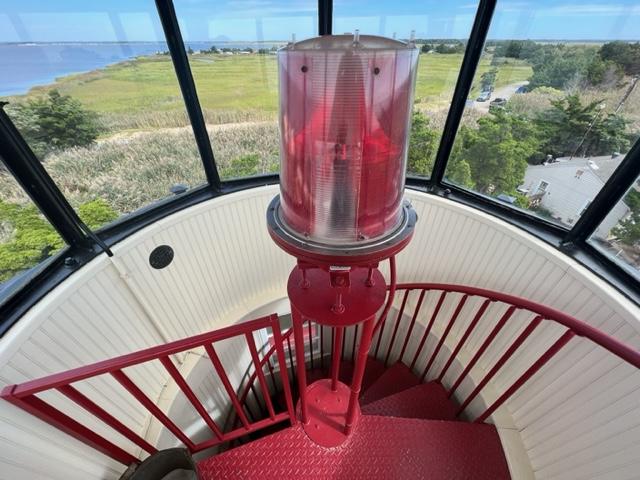
The signal light of the lighthouse.

The top of the lighthouse.

I took time to walk the grounds. The landscaping and the beach dunes gave it a very attractive backdrop.

A wonderful video on the ligthouse tour from YouTube

The History of the East Point Lighthouse:

(From the Cumberland County Historical Division/NJ Lighthouse.com/East Point Tourism Pamphlet):

The East Point Lighthouse is an active lighthouse that was built in 1849, situated on the southern bayshore in Cumberland County, NJ. The ligthhouse originally had a lighthouse keeper to maintain the lights. In exchange for doing this work, they were allowed to live here rent free and were paid the sum of $1.00 per year for their services. It was fully automated by 1911.

The lighthouse was blacked out in WWII and then after the war, the Coast Guard decided the lighthouse was not longer necessary and decommissioned it in 1941. Over the years it deteriorated quickly over time.

In 1955, the Federal Government decided to sell the lighthouse and the property as surplus, and it was purchased by a Long Island construction company but before the sale was consummated it was found that proper disposal procedures were not followed in that the lighthouse was not first offered to the State of New Jersey. The state was interested in the property not because of the lighthouse but because the site was surrounded by the Heisersville Wildlife Refuge and would provide a place for boats to be launched.

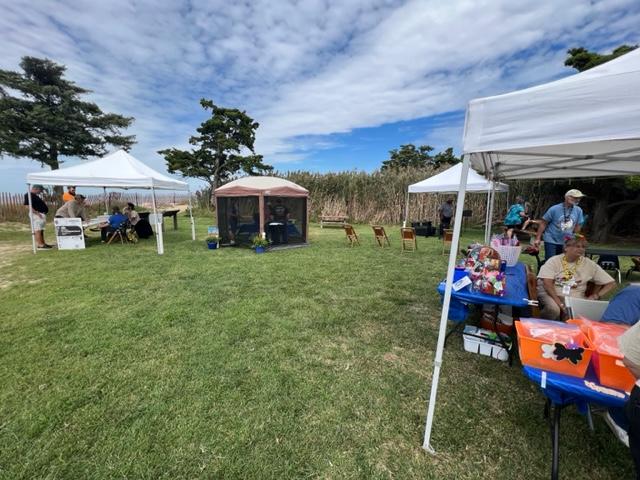
The Annual Monarch Butterfly Festival.

Local residents became concerned with the condition of the lighthouse and in February of 1971, the Maurice River Historical Society was founded with the goal of restoring the lighthouse. In July of 1971 before negotiations were complete, the lighthouse was set on fire. Through a series of grants over the years and a lot of dedication from the volunteers, the lighthouse has been reconstructed.

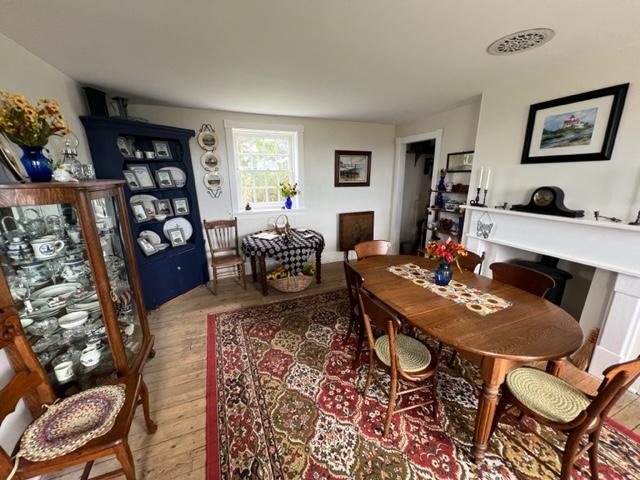
The Dining Room at the ligthouse.

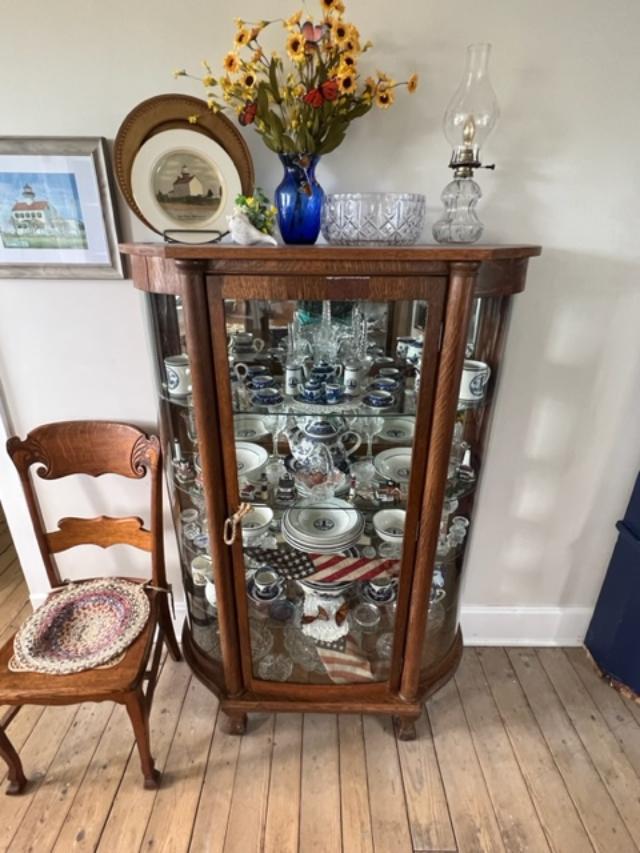
The Lighthouse China

This fully restored and furnished lighthouse with its beacon on each night serves as both an active navigational aid serviced by the United States Coast Guard as well as a year round museum, thanks to the work of the Maurice River Historical Society that manages this historical site.

East Point Lighthouse logo

Through the work of the non-profit historical society that over saw the full restoration, fully furnished, maintains and manages the lighthouse, it’s open to the public to climb/tour and for specials events year round. Both the lighthouse and grounds surrounding the lighthouse are on the National Historic Registry. East Point is the second oldest lighthouse in New Jersey (behind the Sandy Hook Lighthouse) and the only remaining New Jersey land based lighthouse on the Delaware Bay.

The two story Cape Cod style lighthouse with its distinctive red roof by day and blinking red beacon by night, marks the mouth of the Maurice River on the Delaware Bay. East Point is known for its rich maritime history, spectacular views, wide variety of wildlife and beautiful sunsets, making it a popular destination for tourist, artists, photographers, wildlife and history enthusiasts alike.