Every semester I challenge my Business 101-Introduction to Business students to a project. This year we promoted the Garretson Forge & Farm for the “Bergen 250”, the 250th Anniversary of the Revolutionary War in Bergen County, NJ. Our concentration was on the historical Garretson Forge & Farm in Fair Lawn, NJ. The students had to create a series of events to promote the site and they did an excellent job with the project!
I visited the Bergenfield Museum recently, a museum that I have to admit I never knew existed and I know almost all the museum in Bergen County and was surprised what an informative museum it was not just showcasing the history of Bergenfield but of Bergen County. Room by room the museum is filled with displays on the history of the town, and it has progressed through the last two hundred years.
The Bergenfield Museum at 100 Cooper Street
The museum is located in the back of Cooper Park towards the back of the pond. The museum is part of a complex of barns that were once small manufacturing companies owned by the families that owned the house. The grounds have the three barns that are not in use now and the home that overlooks the pond. This beautiful park was created during the Great Depression and is a wonderful place to just walk around in and relax from everyday life.
The view of Coopers Park and Pond from the museum front porch
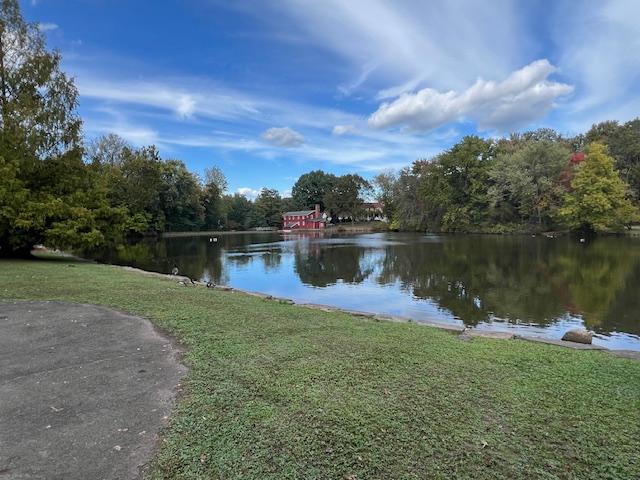
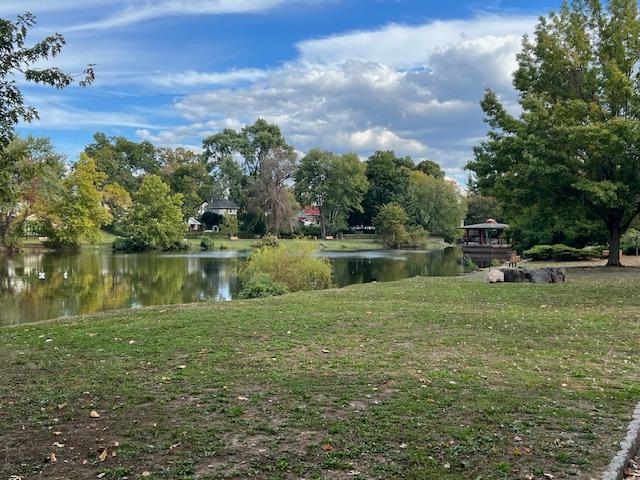
Coopers Pond Park and the museum from the other side of the park
The history of the house and grounds of the Bergenfield Museum
Please note getting to the museum can be confusing as Google Maps and the museum diagram to get there are wrong. You will need to go down Ralph Road and then park before entering the complex. It is hard with the turnaround in the site to drive out with your car.
The entrance to the Bergenfield Museum at 100 Cooper Street
The entrance to the museum off Ralph Street. Please follow the signs.
I was met with a very enthusiastic group of volunteers who are so proud of the house and the way it is presented to the public. When you enter the house, you are met in the foyer of the home which is filled with pictures and small displays and then led to what was the parlor room where the family would have all their entertainment and socializing. Inside the room there is a very interesting portrait of a mysterious woman, who even the museum docents do not who she is, located above the fireplace.
The woman of mystery who holds a prominent place over the fireplace mantle
The room is decorated in period furnishings and even has one of the original phonographs. My docent, David, showed me how it worked and how you were able to get the volume up on the record player by opening one of the small doors in the cabinet.
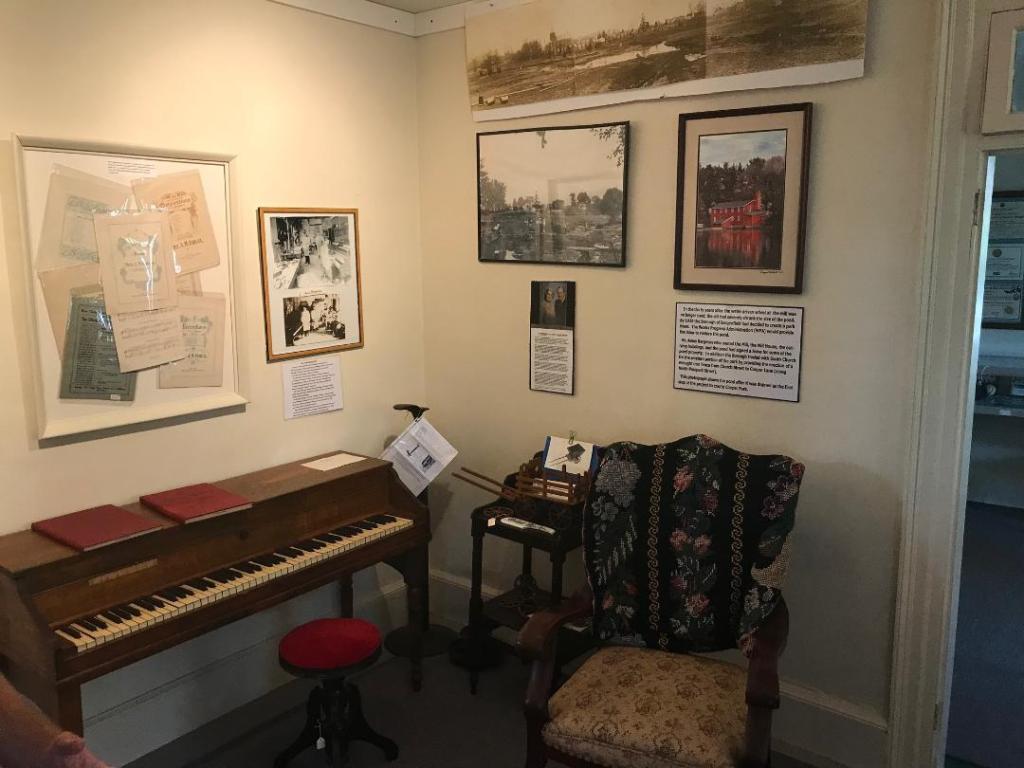
The ‘starter’ organ in the Living Room
The home was once a working farm/business
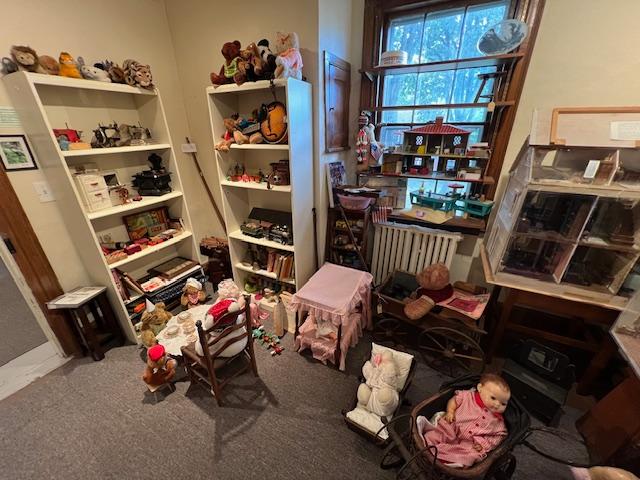
The room towards the back has an extensive collection of toys from the last one hundred years. There were several toys such a china dolls and metal ovens that were popular in the late 1800’s and early 1900’s to modern Fisher Price toys of the 1970’s that I remember growing up with as a kid. The site had once been a toy factory before the turn of the last century and these displays honor that history.
The Toy Room at the Bergenfield Museum is quite extensive
The museum is very much dedicated to the history of the Borough of Bergenfield, NJ. There are nice displays of the town’s school district and its history. The old school system pictures feature items from elementary school to high school and items that students would have used at the school. The elementary school featured in many of the pictures is still used by the town today according to my tour guide, David that afternoon. He told me he had attended the school growing up.
There was a small display of both the Bergenfield Fire and Police Departments and their progression through the years in the town. It is funny how much has changed cosmetically about the look of the job but the job itself is still the same. Helping people and keeping the town safe.
The Fire and Police Department display at the Bergenfield Museum
When you enter what was once the dining room, is the Chair Collection of Tunis Richard Cooper, whose factory was one of the barns on the property.
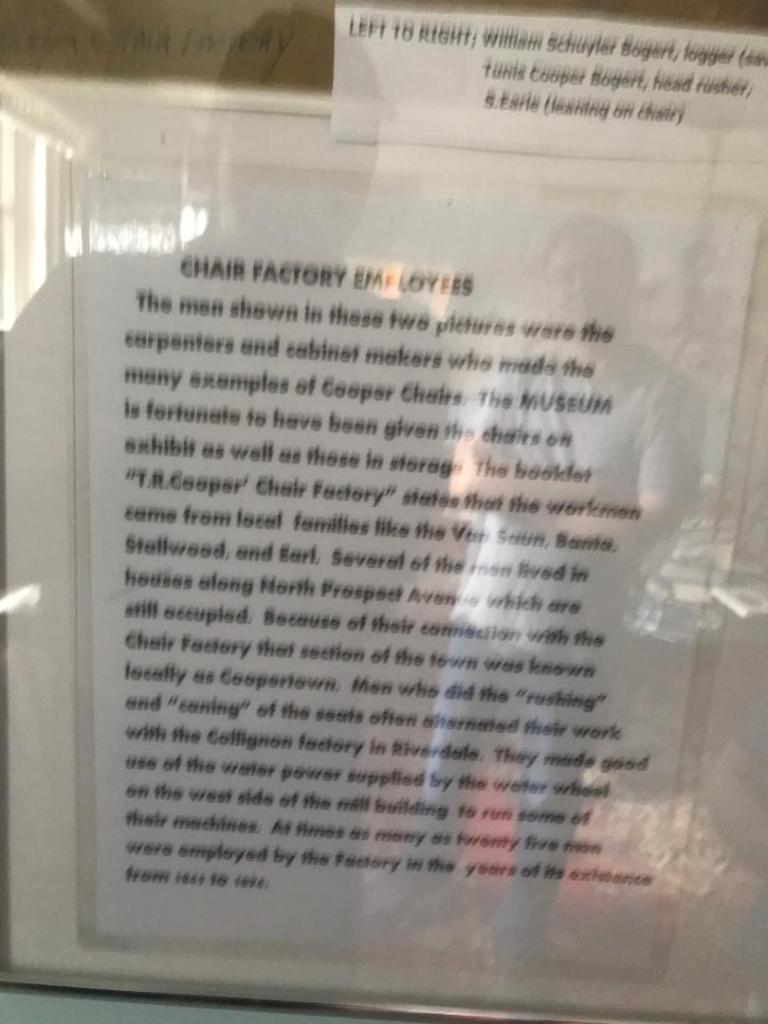
The Chair Factory rules
Some of the samples of the chairs manufactured at the barn factory
There were all sorts of makes and kinds of chairs throughout the room as well as many decorative pieces. The museum has an extensive collection of all the decorative furnishings that were made on the property including what the factory looked like and the rules and conduct of the employees working there.
The working mill building on the property
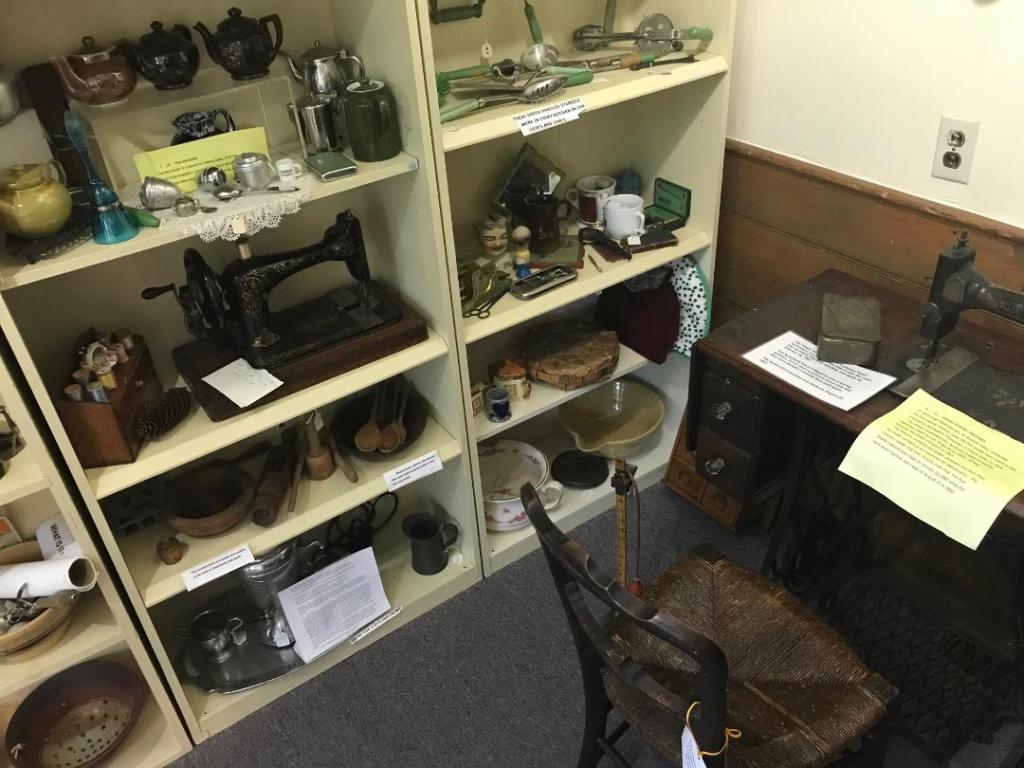
The next room is the working kitchen of the original house with all sorts of kitchen equipment through the ages including a collection of toasters. There is also a working heart where the volunteers do some cooking.
Everything to keep a kitchen running
The hearth of the kitchen is where all the action was in the kitchen
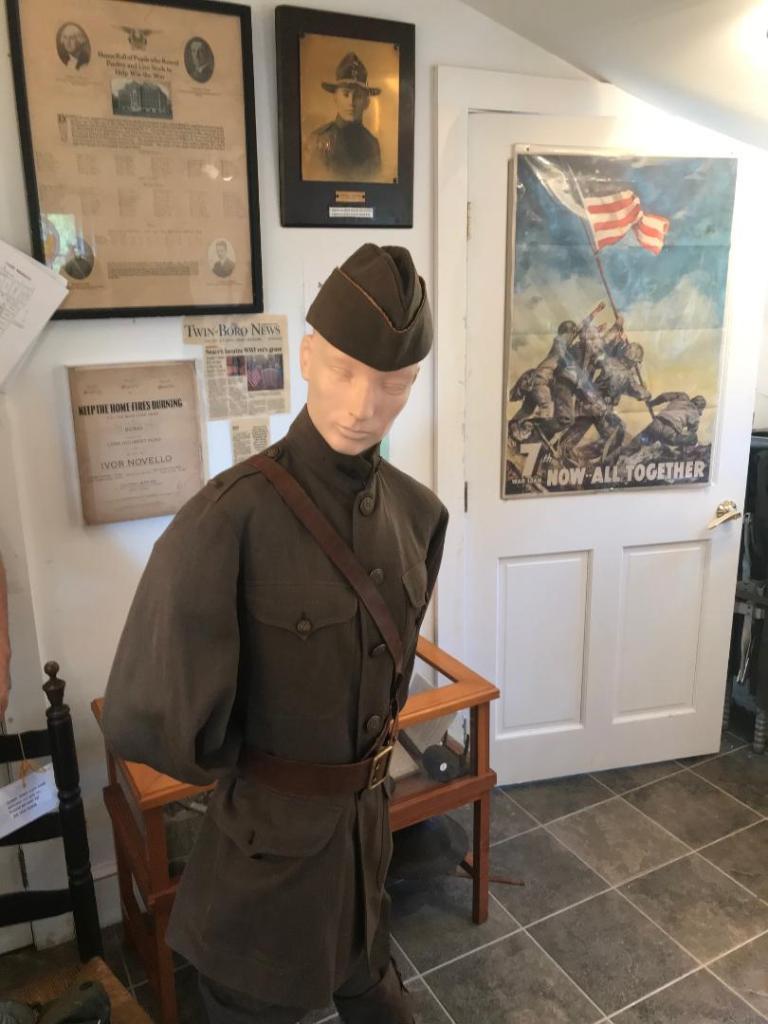
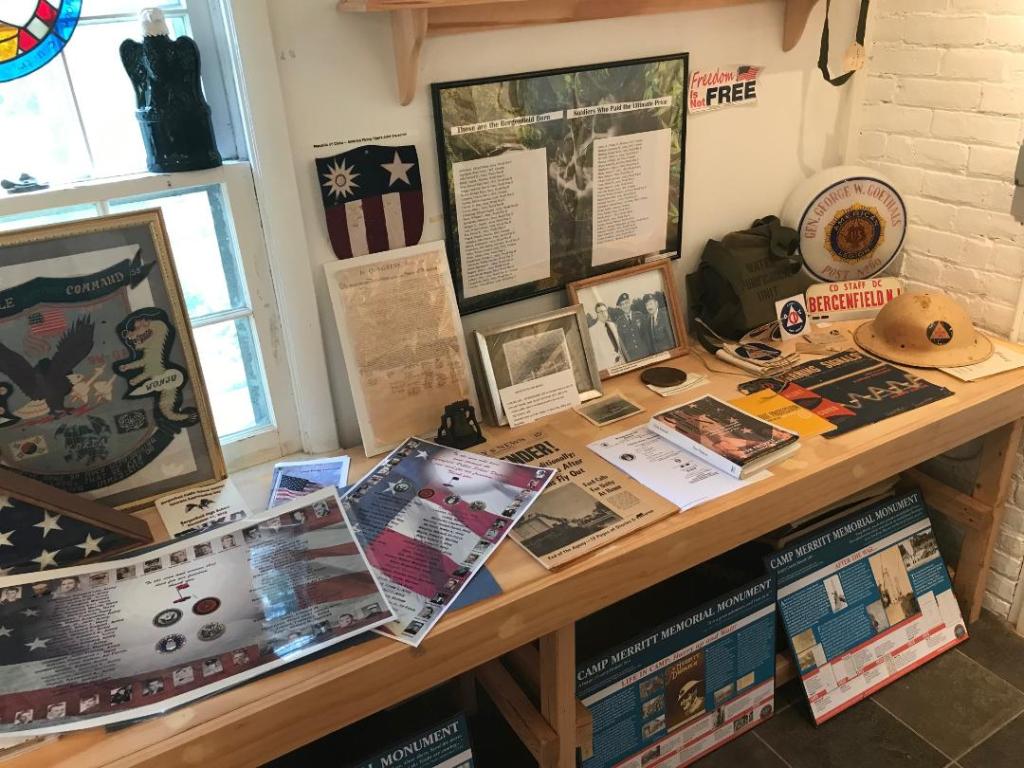
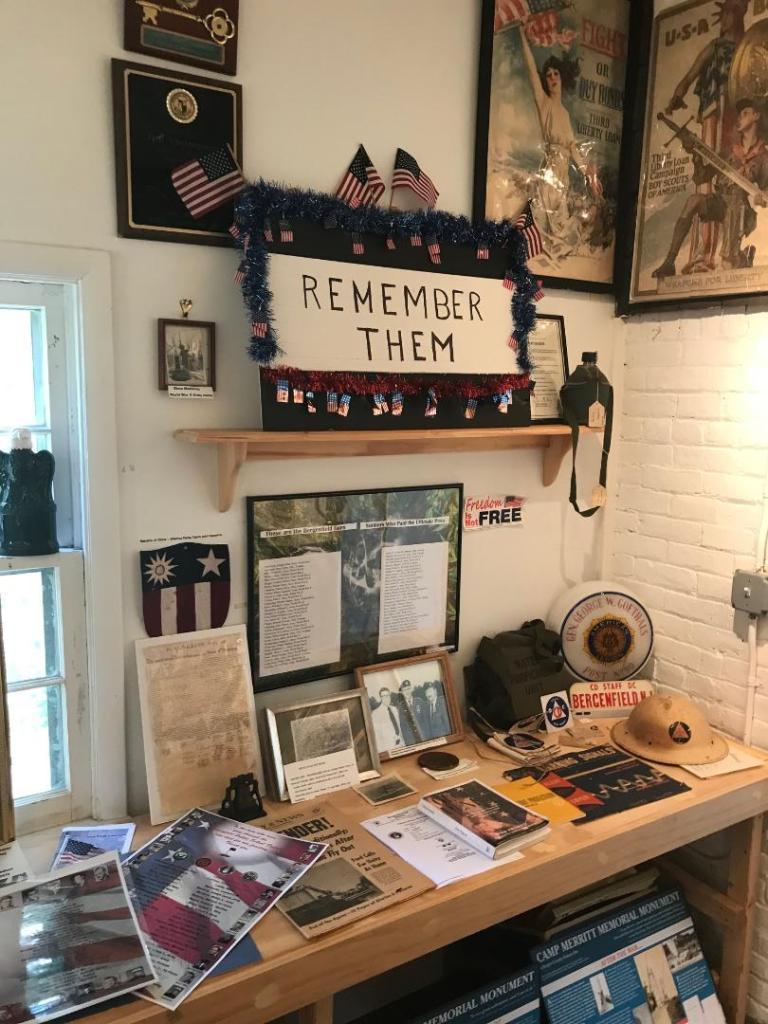
The back room of the house has a large military display that includes local heroes of the Revolutionary War, Civil War, WWI and the Vietnam War. There are all sorts of memorabilia from the soldiers and their families.
The Military display describes Bergenfield’s contribution to military battle from the Revolutionary War to Vietnam
The Military Room showcases our contributions on freedom
The patriotic duties of the town of Bergenfield, NJ
The museum has a 9/11 Memorial to the town and its contributions to that horrible day
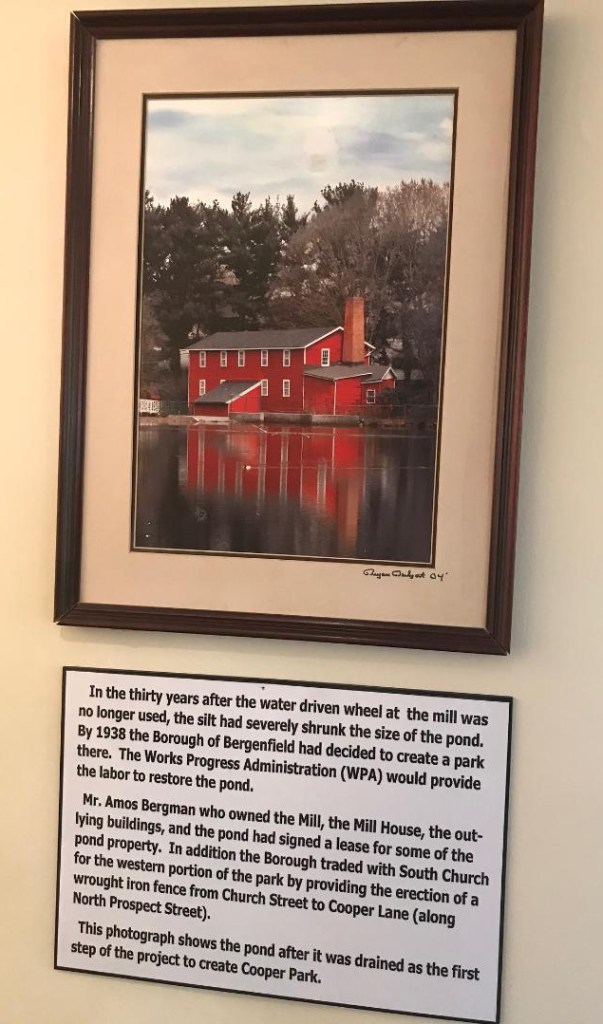
Take time to walk the grounds and admire the park. This beautiful green space was built by the WPA during the Depression and the landscaped park includes Cooper’s pond, extensive gardens and paths of green lawn.
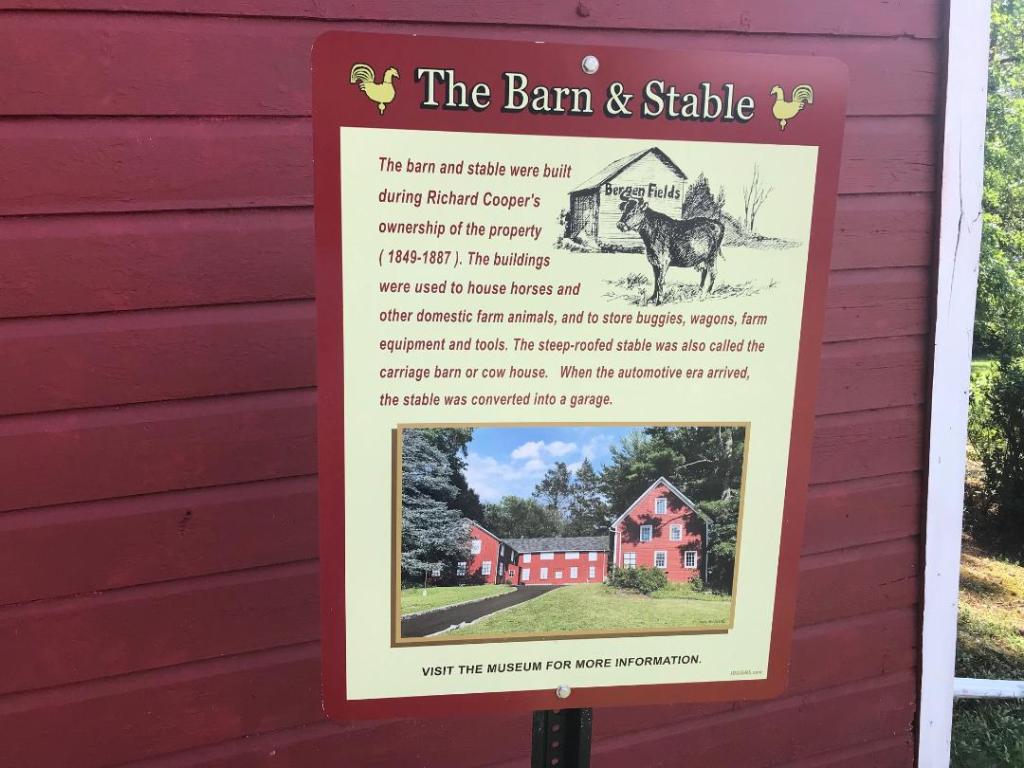
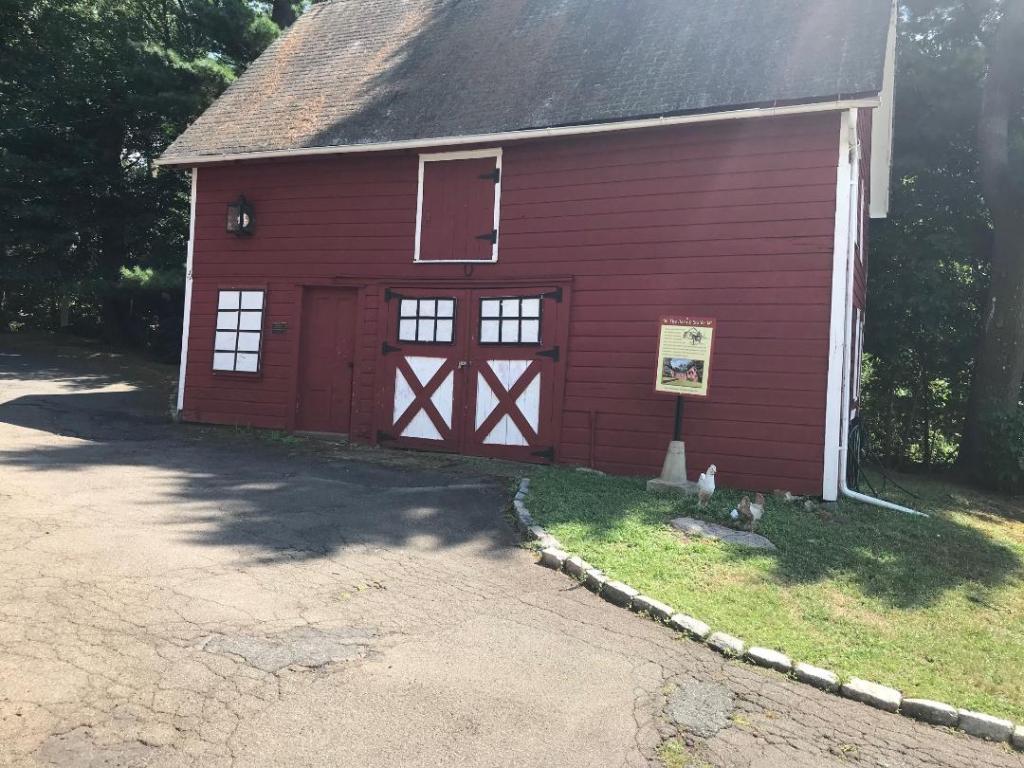
The grounds of the museum were once a farm and a working factory environment
The factory/barn on the Bergenfield Museum property
The grounds of the Bergenfield Museum in Cooper’s Pond Park
The park from the museum site in the early fall months of 2024
Cooper’s Pond Park is a quiet and very green oasis from the distractions of today. It is a nice patch of nature to just walk around in and relax and enjoy the beautiful sunny weather.
The History of the Bergenfield Museum:
(from the museum website)
Two Hundred years after the founding of the United States, local historian, Betty Schmelz began collecting artifacts that were essential for telling Bergenfield’s story. By 1988, her small collection had blossomed into full museum displays comprised of a century’s worth of wedding dresses, Camp Merritt and WWI memorabilia and testaments to the Bergenfield Music Department.
The Bergenfield Music Department display
From 2002 to 2014, the museum closed, and the collection was moved to storage until negotiations were settled with the Borough of Bergenfield. In July of 2013, volunteers reassembled the items for public viewing and began rehabilitation efforts.
The Museum House Timeline:
(From the museum’s pamphlet)
The tools to create those wonderful and decorative chairs
The Tunis R. Cooper property was originally owned by French Huguenot immigrants, the Demarest family. After years of changed ownership and purpose, the legacy of the property is now protected by the Bergenfield Museum Society:
The timeline of the town and its development:
*1677-1693: The Demarest family negotiates a deed for the Cooper Property with local Native Americans and settles throughout Schraalenburgh (now known as Bergen County).
*1840: Richard Tunis Cooper purchases the property and begins hiring local farmers to manufacture chairs.
*1849-1890’s: Richard’s son, Tunis Richard Cooper, purchases the property and establishes a successful chair factory. A major warehouse is opened in New York City.
*1897-1997: Ownership of the estate changes several more times:
-1897: Toymaker Oskar Martin, purchased the property.
-1908: Amos Bergman holds ownership until his death.
-1949: Bergman housekeeper, Daisy Coringrato, sells the property to wool importers, Alec and Catherine Marchbank.
*1997: Marchbank family initiates efforts to preserve the remaining Cooper Chair Factory and surrounding land.
*2004: The Borough of Bergenfield purchases the property with the four remaining buildings and solidifies preservation efforts.
*2013: The Bergenfield Museum successfully opens with a collection of authentic Bergen County artifacts.
My Team Project with my Marketing students at Bergen Community College promoting the Bergenfield Museum for Destination Tourism in November 2024:
This is when I got the idea of doing the same project in a larger form. I saw the Bergenfield Museum, a small gem on the other side of Coopers Pond Park, that did not much traffic considering the museum is open both during the week and the weekend. The building was an original Demarest homestead and the family had their family plot in the South Church which is located right next to the park. So I approached both the museum and the church to partner with me in creating a project to promote this corner of Bergenfield, NJ for tourism.
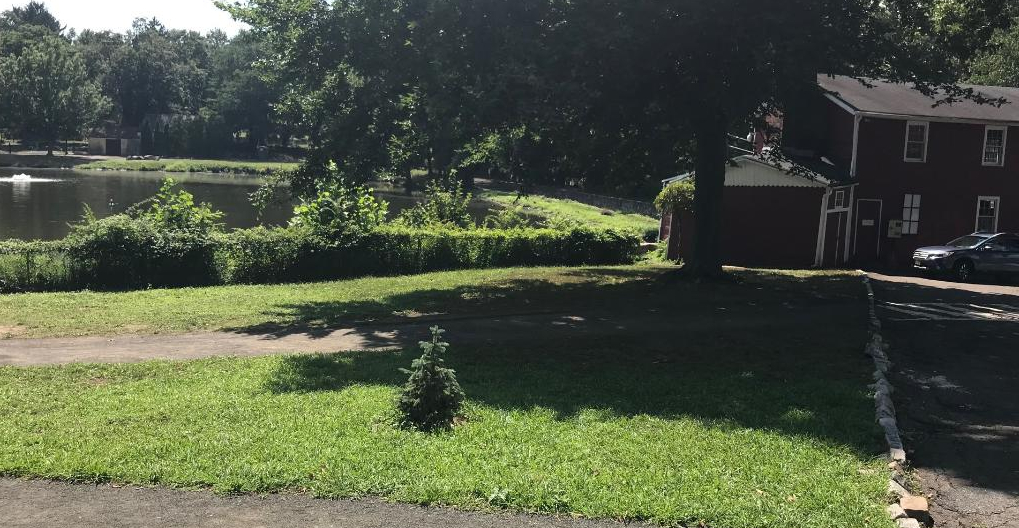
Cooper’s Pond Park during the Summer months
So I set up the next series of tours for my students that encompassed the Bergenfield Museum, Coopers Pond Park and the historical South Church graveyard where the Demarest family plot was located. The Bergenfield Museum building is the original Demarest family homestead so it tied in nicely to the project.
Walking through Coopers Pond Park inspired this fascinating project
Two weeks after the Behnke Museum project, I introduced this project and the next week we took a walking tour of all three sites starting with walking through Cooper Pond Park, a WPA project and one of the most beautiful and underrated parks in Bergen County.
We met with the Bergenfield Volunteer Board at the museum to start the tour
The Bergenfield Museum at 100 Cooper Street in Bergenfield, NJ
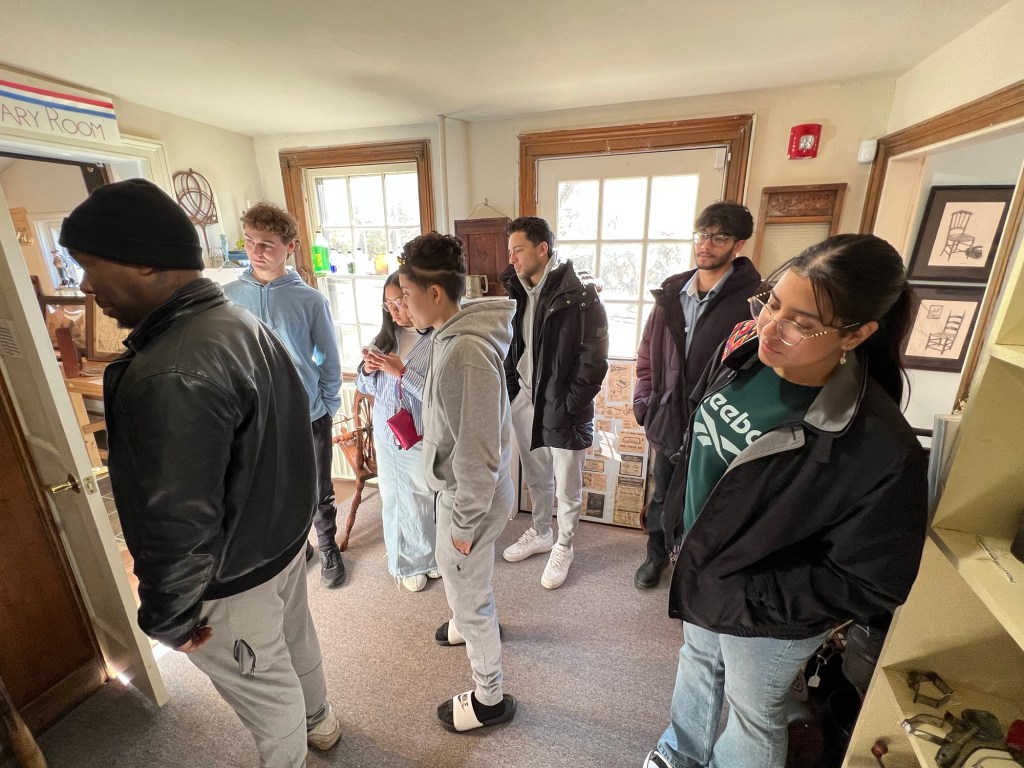
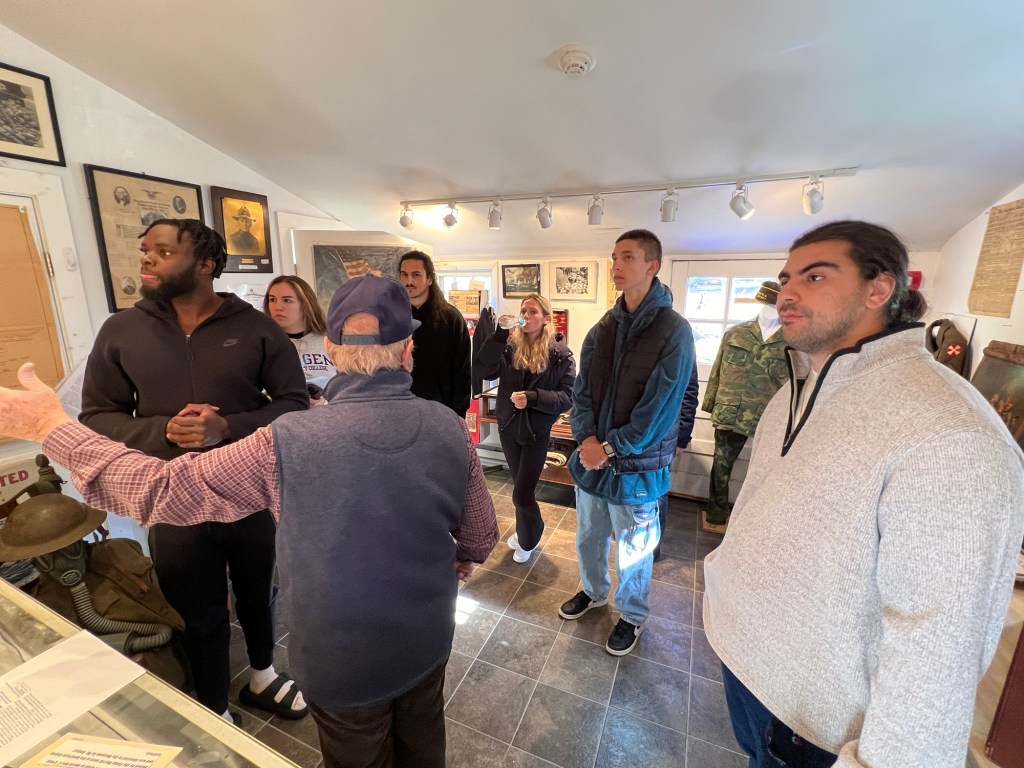
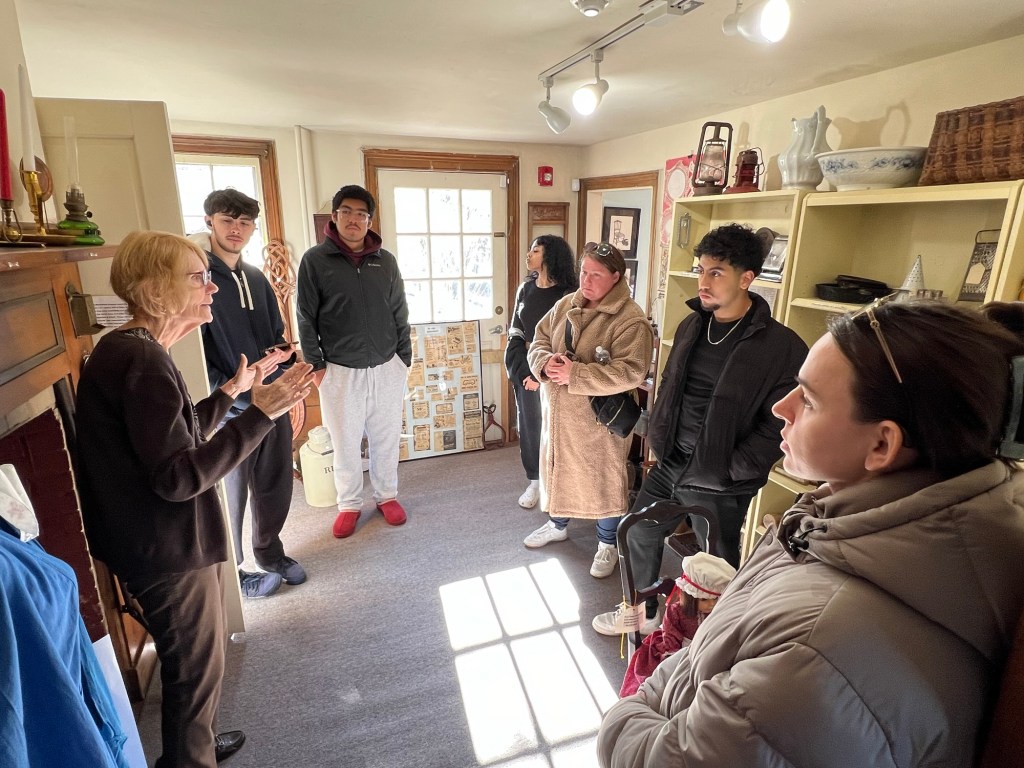
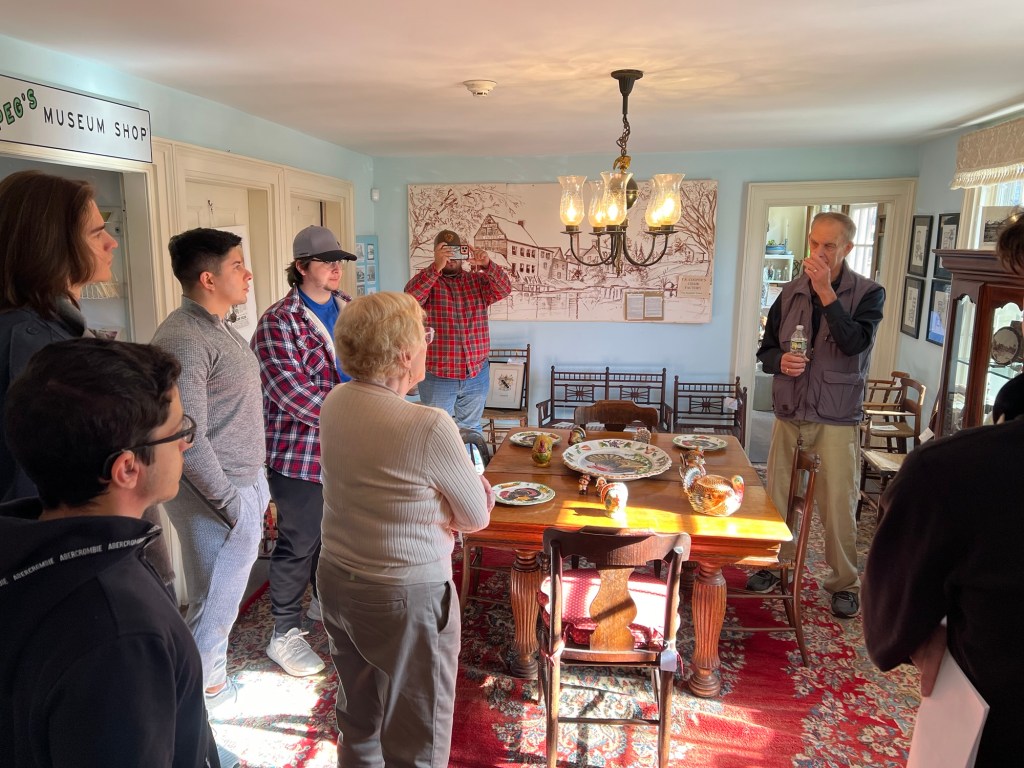
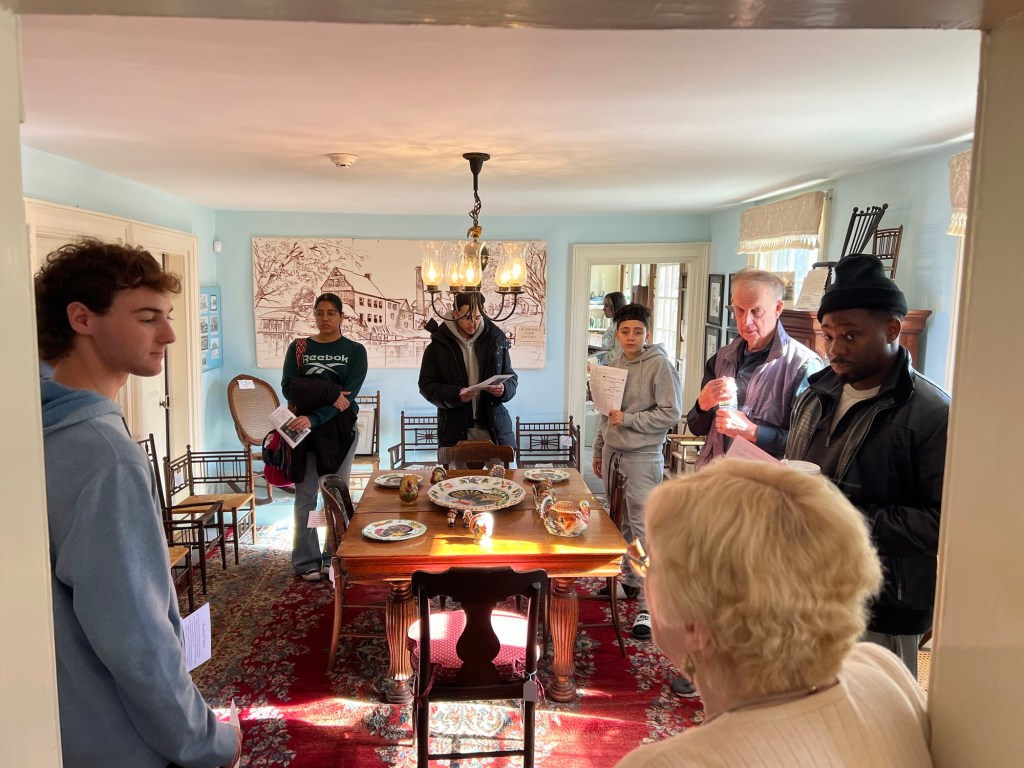
The President of the Bergenfield Museum Board, Joanne, helped me organize the Team Field Trip of the museum. She had four other docents from the Board helping in four different rooms so each Team would follow each other through the rooms. Each Team had about ten minutes in each room for the docent to explain the collection to them. The Student Consultants got to visit the museum on their own time as well.
Our class being greeted by the President of the Bergenfield Museum, Joanne
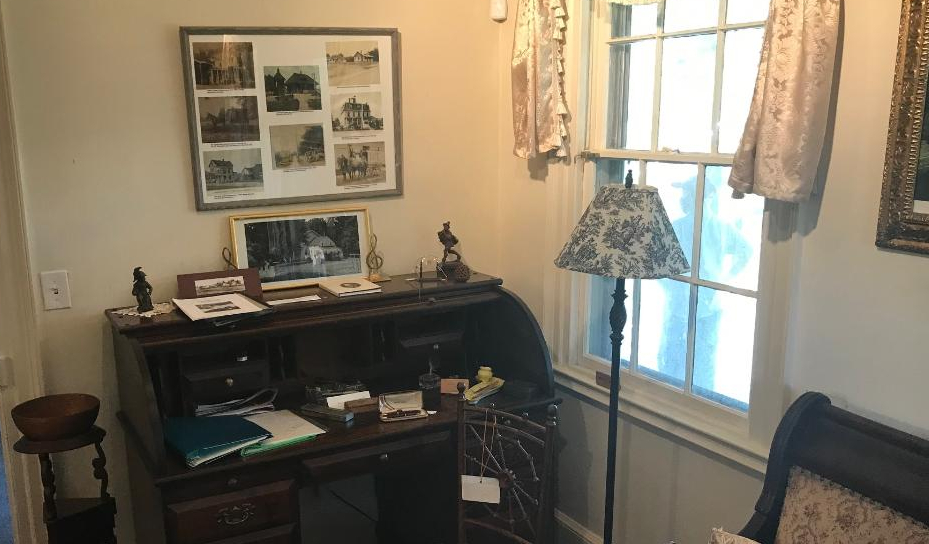
Touring the Living Room of the old Demarest Homestead
Touring the old Dining Room and the Chair Factory display in the museum
Touring the Kitchen area of the old homestead
Touring the Military Room of the museum
Discussions of the function of the kitchen on the farm
Discussing the Chair manufacturing in Bergenfield, NJ
The Student Consultants touring the Living Room
The Teams taking notes during the tour
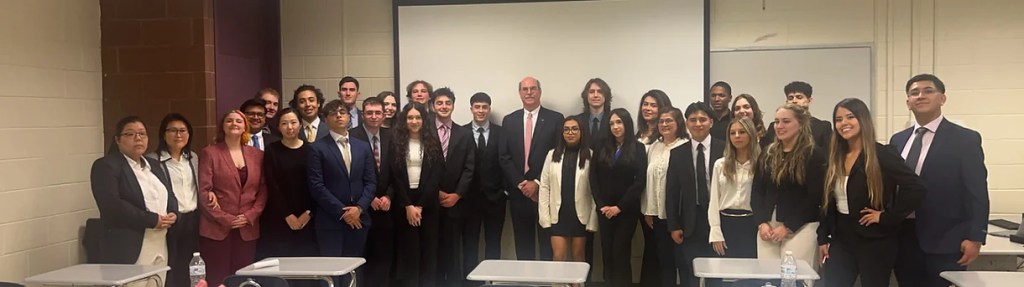
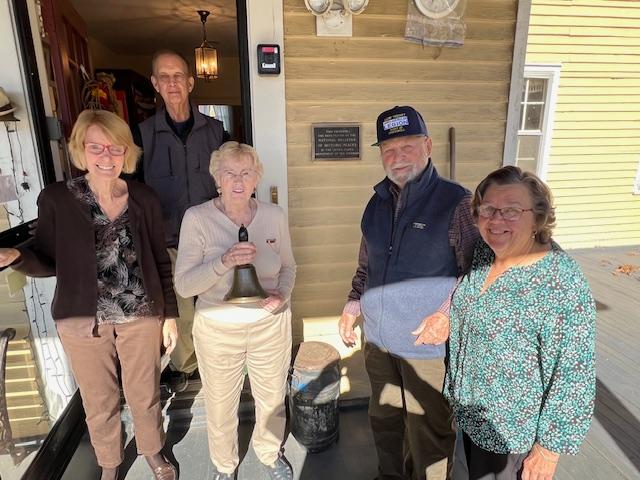
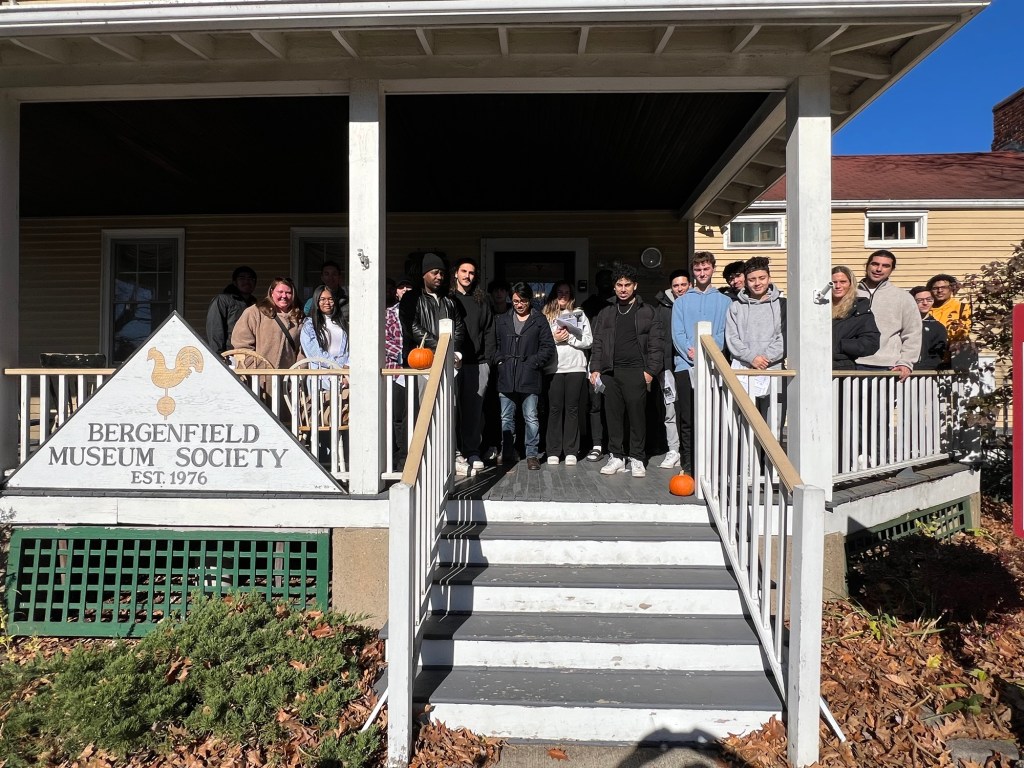
After our tour of the museum was over, we took a group picture outside of the museum with the Board of the museum.
The Student Consultants from Bergecco-Parc Consultants Inc. visiting the Bergenfield museum
Here is the Presentation and Commercials:
The whole idea of the Bergenfield Project was not just to promote the museums, parks and historic churches but to create Destination Marketing Project to promote the Town of Bergenfield as a place to visit for both domestic and foreign tourism. This is the project that promotes that vision:
The Bergenfield Team website for Bergecco-Parc Consulting Inc:
The day of the presentation the students had to be in professional dress with men expected to be in Jacket and tie or a suit and the ladies in blouses, slacks, suits and dresses. We presented this project to the Board and members of the Bergenfield Museum and to the Communications director of Bergenfield, NJ, which really gave the students a stamp of approval.
I thought the commercials the students came up with were very clever.
The Commercials of the Bergenfield Museum:
Team One:
Team Two:
Team Three:
Team Four:
The Children’s Walking Tour of the Bergenfield Museum:
Team One:
Team Two:
Team Three:
Team Four:
It was a great Marketing project and the students did an excellent job helping the museum with their Digital Marketing. They also created pamphlets in English and Spanish, a new webpage and a Instagram account for them.
It was a very successful project and the students did an excellent job on it.
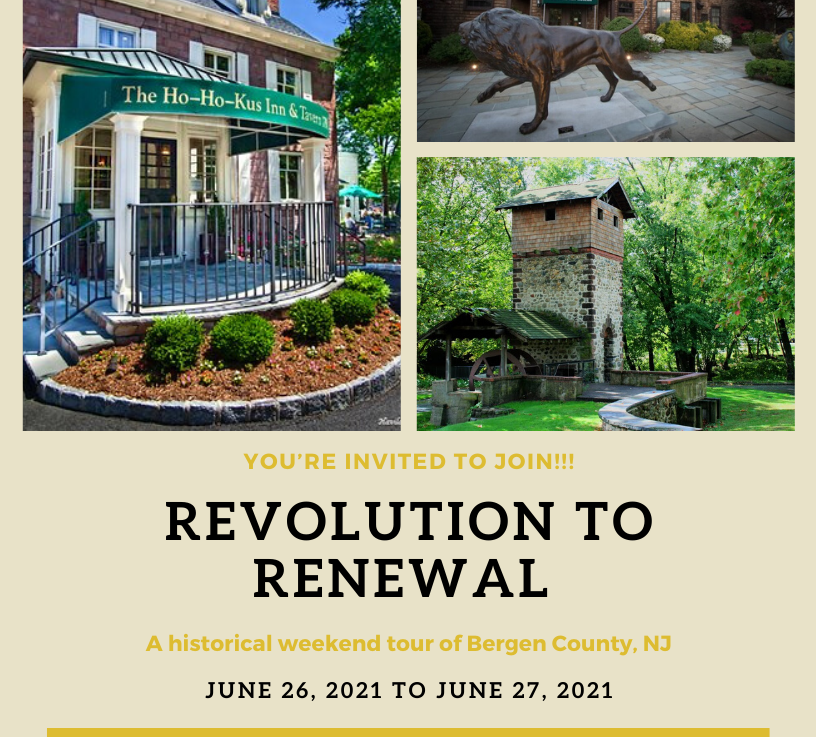
To all your history buffs, please visit Bergen County, NJ for interesting experience of visiting our historical sites and restaurants. Check out our Team Project from Bergecco-Parc Consulting Inc. “From Revolution to Renewal-A Historical Tour of Bergen County”.
Professor Justin Watrel, CEO & Co-Founder Bergecco-Parc Consulting Inc.
I had the most interesting semester for Spring Term at the college where I work. Everything started off fine. We had classes in the the afternoon, good discussions on Marketing and had a very successful Team Project marketing the Lyndhurst Snack Shop, the new Bulldog Cafe, for business (See Day One Hundred and Fifty-Nine in MywalkinManhattan.com):
I had just handed out the next Team Project, “From Revolution to Renewal: Exploring the Historic Bergen County”, a major tourism project I wanted to the students to work on for the remainder of the semester the week before the break. I had the students to break up into groups and get to know one another and get their game plans…
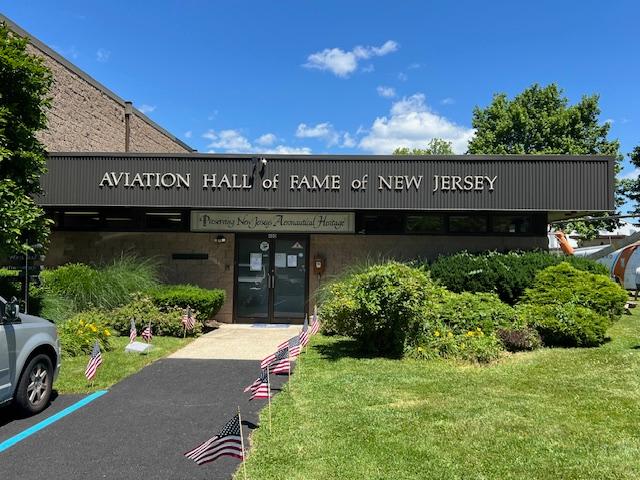
The Aviation Hall of Fame Museum at 400 Fred Wehran Drive
The Wright Brothers display
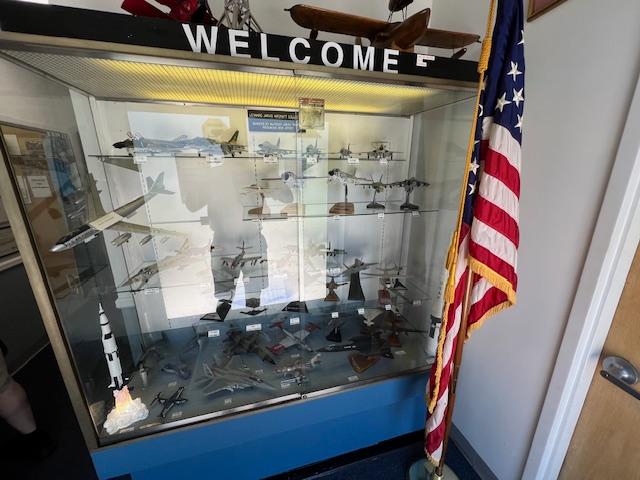
The Welcome display when you walk into the museum.
The Aviation Hall of Fame Museum of NJ is a very unique museum if you are interesting in everything aviation from the history of flight starting with the Wright Brothers, the World War drama and battles and the influence of the NASA and members from New Jersey who have made a difference in the department.
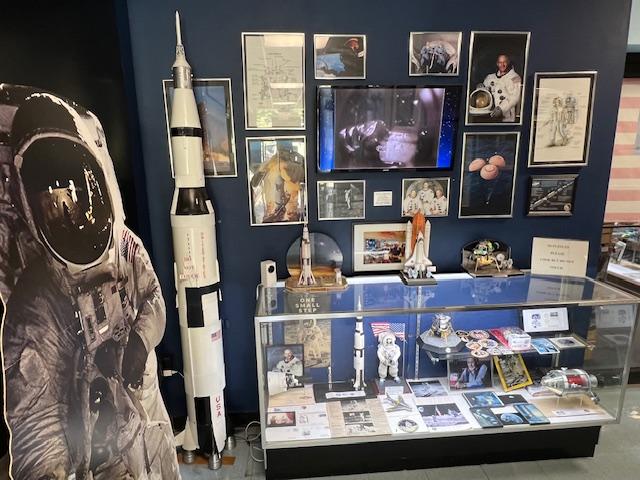
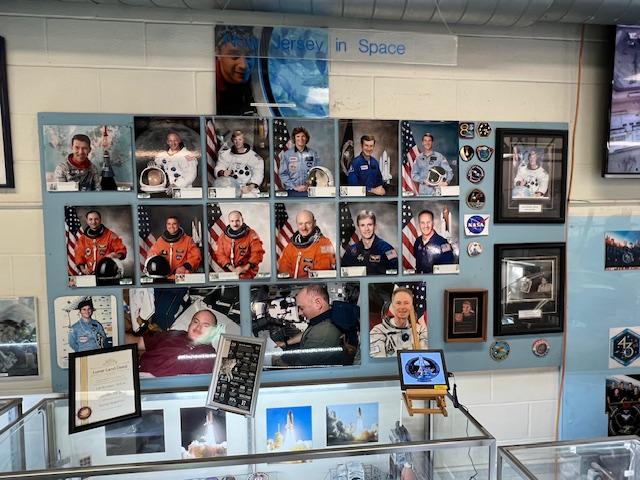
NASA Display featuring Montclair, NJ resident Buzz Aldrich
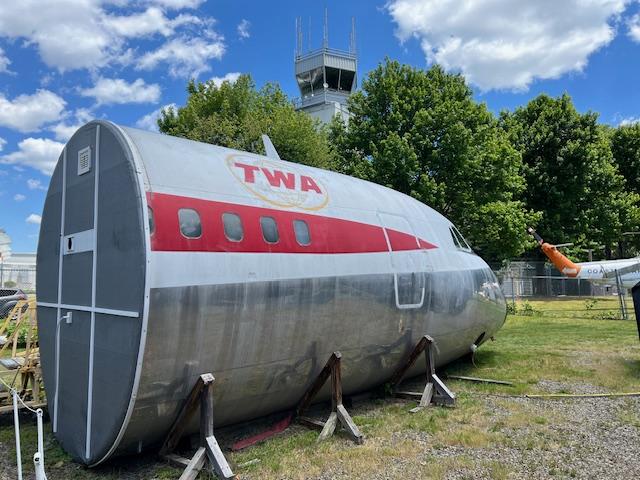
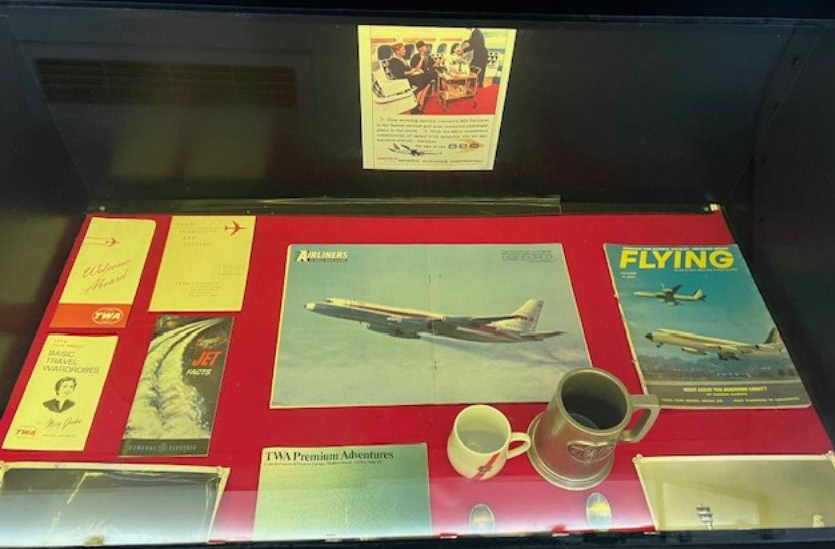
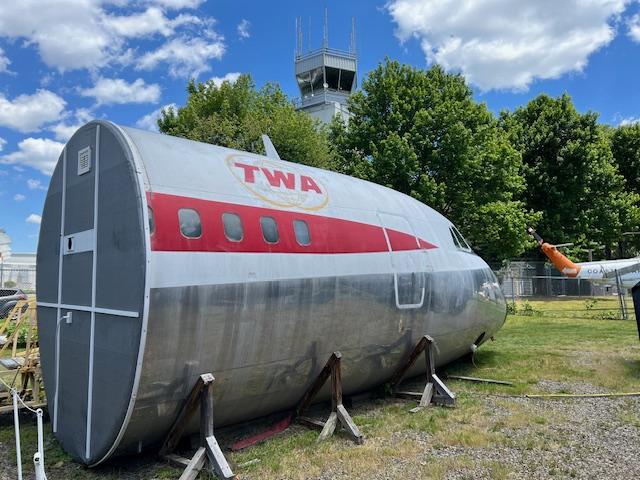
There is a lot of interactive displays during “Open Cockpit Days” at the museum and equipment that you can walk into and explore from planes and rescue trucks. There is even a First Class section of a TWA flight. I was impressed that the airline even had a standard of dress for the flight.
The front of the TWA Flight plane
The TWA Display of items from the ‘Golden Era’ of flying
The History of the Museum:
(from the museum website)
Founded in 1972, the Aviation Hall of Fame & Museum of New Jersey is dedicated to the preservation of the Garden State’s distinguished, two century aviation and space heritage. The men and women whose outstanding aeronautical achievements have brought world-wide recognition to the state are enshrined in the Hall of Fame.
The Aviation Hall of Fame in the main part of the first floor
The inductees in the Hall of Fame
The Kelly Brothers from West Orange, NJ
Some of the most famous inductees
The recently expanded museum offers visitors an opportunity to view historic air and space equipment and artifacts, photographs, fine art and an extensive model collection. The library has more than 4000 volumes and hundreds of aviation video tapes. The New Jersey Aviation Hall of Fame & Museum offers education programs for individuals or groups. Participants learn history and science.
The “Flying Aces” display
Our Aeronautical History Hunt is available to groups that visit the museum. By seeking the answers to historical New Jersey aviation questions, students develop problem solving, logic and communication skills. Our ‘Dare to Fly’ program, developed for children ages 7 to 15 focuses on ballooning and powered flight. Participants design, build and fly their gliders. Organize a small group and call for dates.
(Information from New Jersey’s Aviation Museums)
Museum Guide: A companion virtual tour for your electronic device is available free at http://www.njahof.org/
Welcome to the First State Aviation Hall of Fame in the Nation!
Founded in 1972, the Aviation Hall of Fame and Museum of New Jersey (AHOF-NJ) is dedicated to the preservation of the Garden State’s distinguished aviation and space heritage. The men and women whose outstanding aeronautical achievements have brought world-wide acclaim to the state are enshrined in the AHOFNJ.
The set-up of the Museum:
Raymond R. Wells Theater
The first stop on your self-guided tour is in our 60 seat theater where you will experience the saga of NJ aerospace history in our information and concise nine-minute film “Flight”.
The Naval Display in the Flight Theater
Buzz Aldrin Exhibit:
Jersey boy makes good on the first mission to the moon. The story of his life and his time with the space program
The NASA Display with Buzz Aldrin
The full display
NASA Display
Hall of Fame:
Enter the heart of our museum and meet the men and women who embody NJ’s rich heritage of flight.
The NJ Aviation Hall of Fame
Dehmel Room:
See the world’s first electronic flight simulator built by legendary Curtiss-Wright, at one time the Garden State’s biggest aerospace company. The room also contains information about barnstormers, Tuskegee Airmen, flying aces, Flying Tigers, Enola Gay, etc.
NASA Hall of Fame
New Jersey Women in Aviation display
The Curtis Wright equipment
The Great Room:
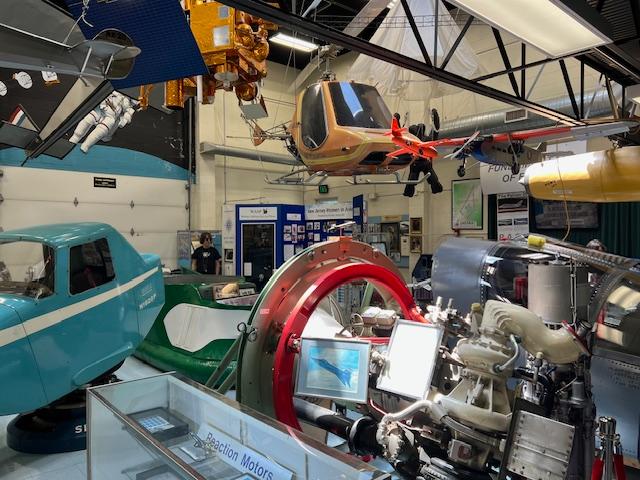
History comes alive with air and space equipment, artifacts, photographs, fine art, multimedia displays, hands-on exhibits and interactive simulators.
Exhibits are:
*The worlds first hover craft
*Women in Aviation
The Amelia Earhart display
The New Jersey Women in Aviation display
*Aircraft and rocket engines built in NJ
*International Space Station Exhibit
*Dassault Fundamentals of Flight Exhibit
*Scorpion helicopter
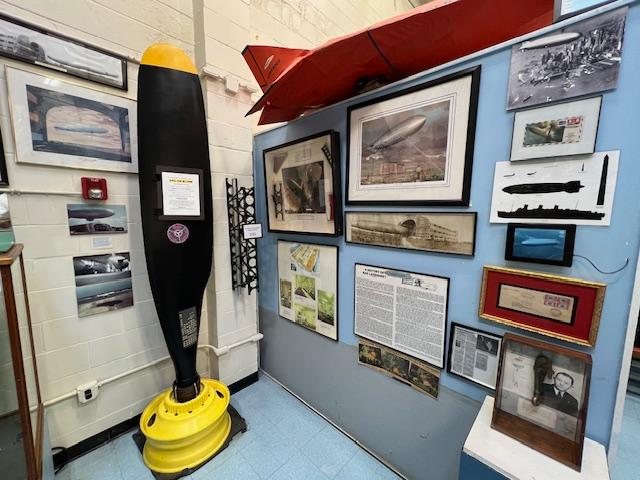
*Actual fragments from the ill-fated German Zeppelin, The Hindenburg
The Hindenburg disaster
The artifacts from the Hindenburg disaster
*Hot-air balloon basket
*Working jet engine
*”Touchable parachute
*Curtis-Wright display
*Rutan “Quickie” home-built experimental aircraft
*Overhead Gallery
Outdoor Displays:
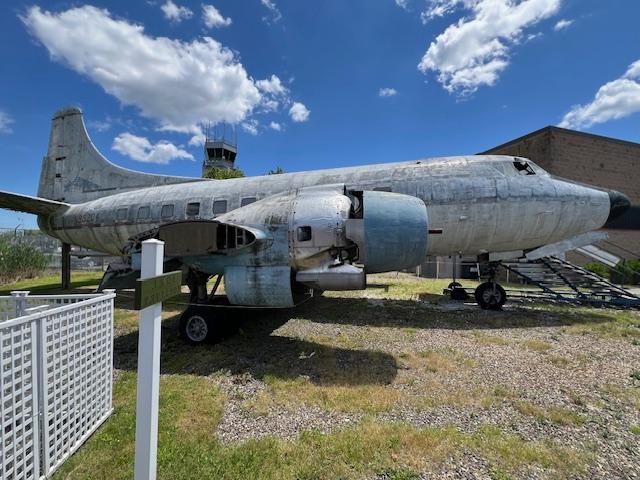
The outdoor plane display
Our outdoor displays incorporate a Martin 202A airliner from the 1950’s. Bell Cobra attack helicopter that flew actual combat missions during the Vietnam War. Bell 47-one of the first practical helicopters. Coast Guard Sikorsky helicopter. Lockheed LASA-60 bush plane. Grumman OV-1A Mohawk. Walters Airport Rescue & Firefighting Vehicle. Convair 880 Jetliner Cockpit (during open cockpit weekends.)
The helicopter display
The Jeeps and planes
The TWA display
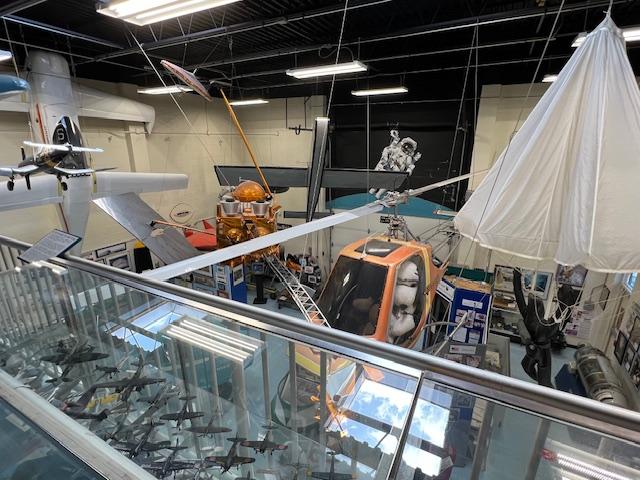
Second Floor: From the balcony, enjoy the view of The Great Room. Sit in the cockpit of our “Little Cut Up” make-believe airplane and make things move on the wings and tail.
View from the second floor
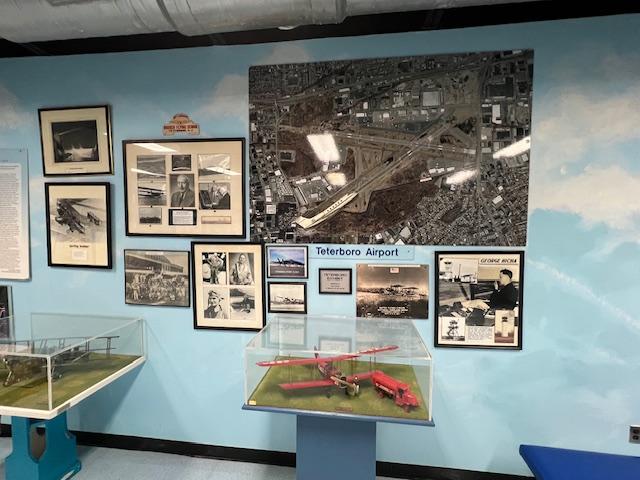
The Teterboro Airport display
The area also includes: Newark Airport Diorama, B-52 ejection seat, Richard E. Byrd Exhibit, barnstormers, model airplane collection, Peoples Express exhibit, the NJ designed “Para-Plane”, a working airport beacon and Clarence Chamberlin Exhibit.
The Jump Seat display on the second floor of the museum
Silvio Cavalier Research Library: This library contains over 3,500 volumes and videos on aviation and space history.
Gift Shop: Don’t forget to visit the gift shop, brimming with aviation related gifts, books and mementos for yourself, family and friends.
Tours-Parties: We offer group tours, birthday parties and our educational Dare-To-Fly program for young groups. Call for details.
Special Events: Four times a year we have Open Cockpit Day where you and your family can sit in the pilot seat of airplane and helicopter cockpits. In December, Santa will fly over the museum in a helicopter, then visit with the children.
The vehicle display on the first floor
The Aviation Hall of Fame and Museum of New Jersey (AHOF) reserves the right to use for promotional purposed any photograph/video taken at AHOF or any AHOF event. By visiting AHOF or participating in any AHOF event, you are permitting AHOF to use these images.
This is such a great museum for families and especially for children.
(Information from the AHOF Museum Guide)
Disclaimer: This information was taken directly from the AHOF pamphlets and I give them full credit for the information. Please call the museum for any further information.































 Visiting a Museum: The Unique, Unusual, Obscure and Historical