
Morgan Farm & Museum/Cedar Grove Historical Society
903 Pompton Avenue
Cedar Grove, NJ 07009
(973) 239-5414
https://www.cedargrovehistoricalsociety.com/history
https://www.facebook.com/MorgansFarmAndMuseum
Open: Sunday-Friday Closed/Saturday 1:00pm-4:00pm (Seasonal-please check the Society’s website)
Admission: Free but a donation is always appreciated. The Society also sells honey as a fundraising.
My review on TripAdvisor:

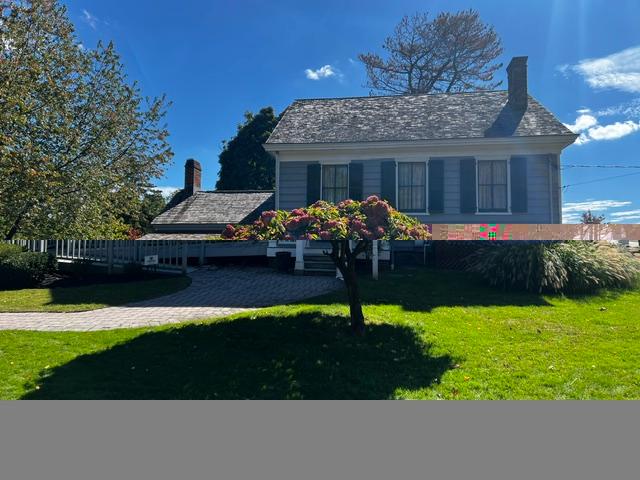
The Morgan Farmhouse at the Morgan Farm Museum, the headquarters of the Cedar Grove Historical Society

The museum sign just off Route 23 South

The farm property the day of the Fall Pumpkin & Apple sale and Open House
I recently visited the Morgan Farm and Museum one Saturday afternoon in the Fall and was surprised to find that they were hosting their Annual Pumpkin & Apple Sale, which has been a tradition on the property since the last owners of the farm, the Morgan family did this every Fall.
It was a lot of fun. The Society members were selling pumpkins and apples, baked goods like Cider doughnuts and cookies (completely sold out by the time I got there), Apple Cider and clothing products. On the farm land there was a petting zoo, picture taking by the Pumpkin Patch and tours of the house. The tour of the house was very interesting in that their docents to assist you on each floor to explain the family dynamic. It was a wonderful afternoon and a enjoyable family event.

The sign of Route 23 South for the Pumpkin & Apple Sale
The History of the Pumpkin and Apple Sale at the Morgan Farm Museum:
(from the museum pamphlet)
Each year the Cedar Grove Historical Society holds a Pumpkin and Apple Sale in honor of Edith Morgan and her son Courtenay Morgan. In the Fall of each year, the Morgan’s sold pumpkins and apples in the front of the Morgan farmhouse. The pumpkins were grown on the farm but the apples came from northern New Jersey. Mrs. Morgan passed away in 1961 but Courtenay, the last farmer in Cedar Grove, continued the tradition until his death in 1985 at the age of 86. The Historical Society continues that tradition each October.
Courtenay left his property to the Township of Cedar Grove with the stipulations that the Township create a park for passive recreation and that the Historical Society create a museum to preserve the history of Cedar Grove. Our pumpkins and apples are from the Chester area. Today the Historical Society’s home is the Morgan Museum located in the Morgan farmhouse. The Township created the J. Courtenay Morgan Park on the property.

The farm’s old barn now used as a meeting place and gift shop
History of the Morgan’s Farm and Museum:
(from the Museum pamphlet)
The Cedar Grove Historical Society welcomes you to Morgan’s Farm & Museum and the Canfield-Morgan House. The guide explains why Morgan’s Farm is unique and leads you to points of interest that you may want to explore.
The Morgan’s Farm is a fourteen acre site that was farmed continuously from the mid-1800’s until 1985. In 1985, Courtenay Morgan donated the farm to the Township of Cedar Grove. This portion of the farm is a park managed by the Township while the farmhouse and other buildings are operated as a museum and education center by the Cedar Grove Historical Society.
The Cedar Grove Historical Society maintains a wonderful collection of agricultural tools and equipment that reflect farming methods over a period of one hundred years. Items on display in the Canfield-Morgan House includes letters, photographs, clothing, furniture and other objects that show us how people lived during the early 1900’s.
The Family History:
(from the Museum pamphlet)
Benjamin Canfield built the farmhouse sometime around 1845 for his family. The Canfields were typical, hardworking farmers who were respected for the quality of their produce. They grew corn, apples, melons and other crops which they sold in the Newark and Paterson markets. The Canfield family farmed the land until 1910 when James and Edith Morgan bought the property James Morgan was an advertising executive who commuted by rail to New York City.
Mr. Morgan was passionate about farming and he worked hard to learn the latest farming methods. he experimented with the different types of crops until tuberculosis took his life in 1920. After Mr. Morgan died, Edith and her son, Courtenay struggled to keep the farm operating. They were well known locally for the vegetable and fruit stand they operated off the front porch.
Long before the Canfield and Morgan families lived here, the Lenape Indians used the site as temporary camp. Courtenay Morgan found many Native American tools as he plowed the fields. These artifacts are now preserved by the Cedar Grove Historical Society. A portion of the Lenape Trail passes through Morgan’s Farm.

The front parking lot of the farm property and the Pumpkin Patch

The inside Barn gift shop was selling apples, pumpkins, gourds, apple cider and doughnuts. By the time I got there, there was not much left. The Society even sells their own honey.

The barn from across the gardens near the farmhouse
The History of the Barn:
(from the Museum pamphlet)
The barns that you see behind the Canfield-Morgan House today were reconstructed by the Cedar Grove Historical Society in 1994 because they were had badly deteriorated. While the center of the barn is not as high as it once was, it has its original foundation and looks much like it did in 1910. This barn was probably used to house livestock at one time. On the west side of the main barn is a structure that once was a carriage house with a small apartment on the second floor for hired help. At some point, possibly in 1911, the second floor was removed. The shed on the east side was used to shelter livestock and later to store farm machinery.
There was all sorts of fun activities for families and especially the kids with a Pumpkin Patch, games and a Petting Zoo plus tours of the house.

The Pumpkin Guessing game
https://www.facebook.com/MorgansFarmAndMuseum

The entrance to the Pumpkin Patch offered kids a chance to take pictures and pick the perfect pumpkin to make a Jack O Lantern

The Pumpkin Patch was perfect for picture taking

The pumpkin decorations in the Pumpkin Patch

The were plenty of places where the kids could take pictures with all sorts of characters of ghosts and ghouls and things that go bump in the night

Halloween is on its way
I loved the small Petting Zoo that they had set up. There was a baby cow, a baby pig, ducks and chickens.

The Petting Zoo

The baby cow was really friendly

The ducks were walking around their pen

The baby pig ran around his pen as well
The highlight of the afternoon was touring the old Morgan Farmhouse, which was furnished with family antiques and heirlooms, plus artifacts from the community of Cedar Grove, NJ.

The back of the house facing the barn
The History of the House and Barn:
The Canfield-Morgan House looks much like it did after Benjamin Canfield finished building it in the mid-1800’s. The modern kitchen and the accessible porch and bathroom are the most visible changes. The size and character of the house are typical of a traditional farmhouse. The features of the French windows in the front parlor and a wide entrance hall suggest that the Canfield’s were interested in current fashion and design of homes. A cistern under the kitchen floor stored water that was collected in gutters and piped into the cistern.
The gardens have many flowers such as daylilies, akebia, peonies, roses and quince that were planted by Edith Morgan and continued to bloom in the garden. The Morgan family added pergolas to the garden in 1911 and grew honeysuckle to cover them.
The fields of the farm is a variety of crops were planted in fields east of the park and south of the farmhouse. Crops included everything from tomatoes to pumpkins and apples. The Canfield family grew corn on what is now the front lawn. While these crops are no longer grown on Morgan’s Farm, the fields remain open space.

The Cedar Grove Historical Society sign on entering the house

The entrance to the house through the main hallway. The original part of the house was built in the 1700’s with an addition which added these rooms in the mid 1800’s. This is the newer side of the house.
The tour of the house was on my own but there were plenty of docents from the Society to explain each room. There were all sorts family furnishings and heirlooms of the Morgan family that were donated when this became a museum. The Society keeps the home in immaculate shape and its looks like the family still lives here and off for the day, letting us see a glimpse into their home.

The Living Room/Music Room

The corner of the Living Room and Music Room

Mr. Morgan’s desk in the home

The antique musical instruments in the collection

The Cedar Grove Music Association in 1900

The Morgan family photos from the family’s private collection, now part of the museum

The Morgan family portrait

Gail Morgan Chandler as a young girl

The Reception and Recreation Room next to the Living Room

Some of the family decorative pieces on display
Across the hall from the Living Room is the Dining Room that displays the home’s baking and serving pieces and some of the family China.

The Dining Room of the farmhouse
You can also see how the fireplace served as not just conversation but as the heat source as being part of the original section of the home.

The Morgan Dining Room

The formally set Dining Room table

The fireplace was the source of heat on the original 1700’s section of the home

Family baking and cooking equipment on display in the Dining Room

Family China and serving pieces on display in the Dining Room
Along the stairs on the way to the seconds floor is lined with all sorts of family and community artifacts.

The stairs to the second floor

The library in the house and a display of hats at the staircase landing
The second floor contained these rooms bedrooms and the museum offices , which were located in the old bedroom loft of the original 1700’s house.

Mr. and Mrs. Morgan’s bedroom at the end of the hall

Mrs. Morgan’s bedroom vanity with some personal items from the Morgan family

Mrs. Morgan’s desk

A small doll by the bed

Mr. James W. Morgan

Mrs. Edith Louise Potter-Morgan

The Morgan children when they were young
The second bedroom was being used as a gallery for local artifacts either found or donated from Cedar Grove. This included old pictures of buildings and homes in the community, Native American artifacts, clothing and uniforms and everyday items.

The second floor Artifact Gallery

The display of local artifacts

The Native American display

Display of local artifacts

Artwork by local artists

The pictures of local hospitals and medical centers

The pictures of local historical houses
When I was through touring the house, I went back outside to join the rest of the visitors, who were picking out pumpkins on the lawn.

The back part of the estate
What I like about the Morgan Farm Museum is that it is not just about walking around an old house, it is about experiencing someone’s life story.
I also got to see how the community of Cedar Grove grew from the farming community it once was to the bedroom community of New York City it is today.
The Morgan family dealt with quite a blow with the death of Mr. Morgan but is son took control and built the farm up to what the museum it is today. A living breathing example of turn of the last century ingenuity and determination and created a successful business that we can all share in today.

