
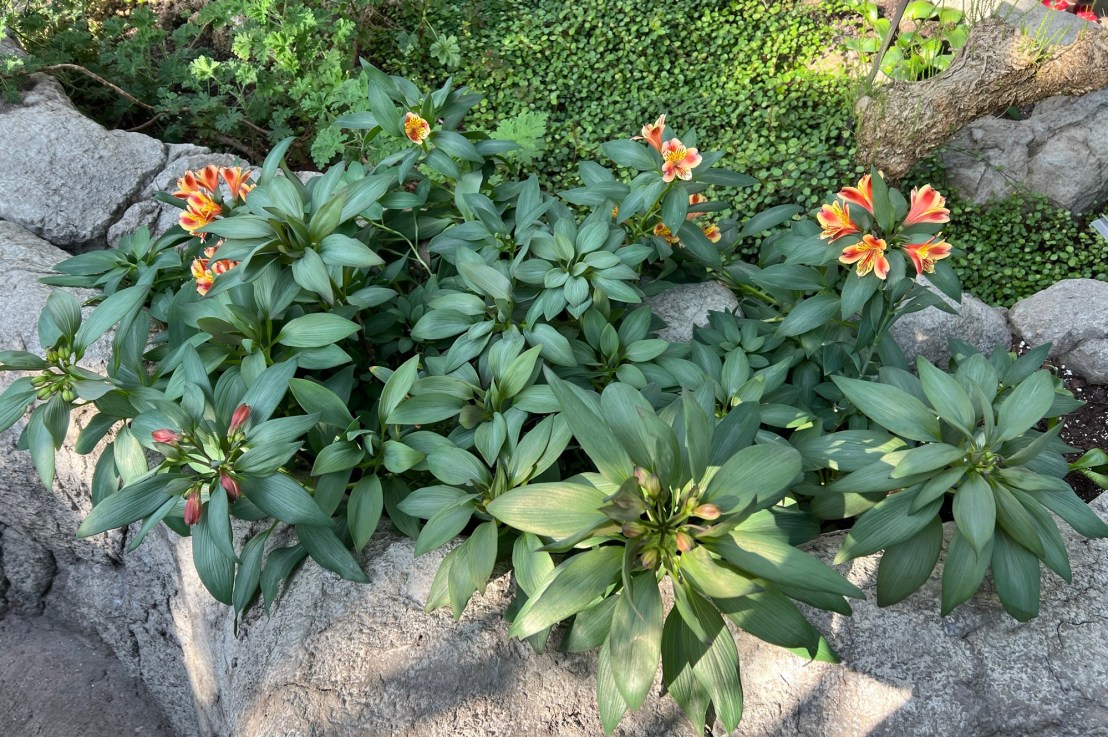
Who says there’s nothing to do in the cold months? It all depends on how much you want to bundle up and enjoy the outdoors.
The last weekend of the ‘Monet & Venice’ showing at the Brooklyn Museum brought me out to Brooklyn on a sunny but chilly Saturday afternoon recently. I knew there would be crowds at the Brooklyn Museum as everyone was probably thinking of doing the same (at the end of the visit I found this to be true) so I got to the museum by noon and got tickets to the first slot open at 2:30pm.
Since I had a couple of hours until my tour of the exhibit, I decided to tour the Brooklyn Botanic Garden next door. There were no walking tours that day and the gardens were under a foot of snow from the recent storm. There was a quiet beauty of all the snow and the way it fell and shined in the sun all over the gardens. There were no lines or crowds (like the recent lightshow a few weeks earlier), so I had the gardens pretty much to myself.
The first stop on my walk was the Japanese Gardens, which has I had visited recently for the lightshow and experienced the fantastic musical display. The pond now sat under snow and ice and still it was impressive looking.

Walking through the Brooklyn Botanic Garden next to the Japanese Gardens

The Japanese Gardens in the early afternoon

The inside of the Japanese Gardens in the middle of winter. It was such a spectacular view of the pond.

The beauty of the snow covered pool

Another view of the Garden
I never realized how beautiful the Japanese Gardens were in the winter. The sun shines so nicely on the snow covered trees. It was just as beautiful snow covered as it is in the Spring and Summer when the garden is in full bloom.

The fountain in the Shakespeare Garden
I then walked through the entire gardens stopping in various gardens to see what they looked like topped with snow. My first stop was the Shakespeare Gardens and I marveled at the elegance of the snow covered fountain I like so much in the Spring. The variety of the colors of this garden are waiting just under the snow for the warmer months.

The view of the snow covered gardens
I then walked around the paths to the back of the gardens along the watershed lawns that were under a foot of snow and still impressive.

Daffodil Hill in the winter. In two months this will be covered by hundreds of brightly colored daffodils

The Magnolia tree court and sun dial
In the Spring, this is my favorite part of the garden with the hues of pinks and whites of the Magnolia trees and the yellows of the daffodils.

My favorite fountain just off the Magnolia Court on the stairs leading to the Lotus polls

The snow covered fountains by the Lotus pools

The snow covered Lotus pools shined in the sun
I then got out of the cold weather and entered into the warmth of the Tropical Garden Collection. This series of gallery of plants is a series of greenhouses at various degrees of temperatures that display a series of themed gardens. They don’t just display plants but also keep you warm in a cold day.

The indoor tropical gardens

The Tropical Garden collection
The first room I visited wasabi the Bonsai Museum room. The temperature controlled room was perfect for a stroll.

The Bonsai museum
These beautiful tiny well pruned trees lined the tables with their elegance and been so well maintained.

The Bonsai trees lining the tables in the galleries

The beautiful bonsai

The flowering bonsai

The beautifully shaped bonsai

The Cherry blossom bonsai in the middle of the winter

The other trees in the gallery
The video tour of one side of the Bonsai Gallery:
The video tour of one side the Bonsai Gallery:
My video of the gallery tour

The Tropical Room

The tropical room
I then toured the Tropical Garden collection with its series of flowering plants and palms. It was so nice and warm inside and a break from the cool temperatures outside.
A video tour of the Tropical Gallery:
The walk is amazing

The Tropical Room

Colorful tropical flowers line the walkway in the dead of winter

The blooming Lotus

The real White Lotus
I then walked through the second tropical room in the rain forest and there were more beautiful plants to see and experience. There was a wedding garden shoot going on so I was not able to tour the complex.

The flowering tiers of plants in the Tropical room

The flowering plants in the Tropical gallery

The beautiful violets
I then began the tour of the Desert Gallery and the beauty and warmth of the room made me very happy.

The Birds of Paradise in bloom

Along the walls of the gallery, more flowering plants were placed.

Flowers in bloom in the winter
The climate controlled Desert collection was filled with cactus and other plantings the defied the weather. They have a pretty extensive collection of desert flowers and cactus in the room.

The Desert Collection gallery

The flowering cactus family

Walking back through the rainforest

Walking back through the Desert Gallery before exiting to tour the snow covered gardens
Video tour of the Desert Gallery:
There was still a foot of snow on the ground when I visited the gardens that day, which did not make it popular with people wanting to visit the gardens but I found a quiet elegance in just walking the paths and admiring the snow covered plantings. It was like they were waiting to awake again in the near future.
I walked through the gardens which while under a blanket of snow still offered the most beautiful views. I was one of the few people walking through the gardens that afternoon so it was quiet and you could just enjoy watching nature.

Walking past the Children’s Garden in the Winter

Walking over the bridge in the Watershed lawn

I saw this little squirrel holding on to the tree looking cold

The geese feeding on the Watershed lawn

The Cherry Blossom lawn in the winter

The Rose Garden Fountain in the winter

Walking through the Cherry Blossom lawn

Walking back through the Magnolia garden

Taking one last walk around the Lotus Pools
Before I left the gardens that afternoon, I stopped in the Gift Shop for some warmth and see the items they were carrying. They have such beautiful selection of flowers and gifts and the perfect place to warm up on a cold day. Everything is so colorfully displayed.

The Gift Shop at the Brooklyn Botanic Garden

Everything was in full bloom and really colorful

Everything was so beautifully displayed here
Before I left for the Brooklyn Museum to start my 2:30 pm tour, I stopped at one of my favorite sandwich shops down the road from the museum, Bahn Mai Place at 824b Washington Avenue for lunch. I love their sandwiches and drinks.
I ordinarily try a restaurant a few times before I recommend it for my dining website, DiningonaShoeStringinNYC@Wordpress.com, but I had the most amazing sandwich for dinner a few years ago and I had to share this place with the world.

Banh Mi Place at 824B Washington Avenue
My review on TripAdvisor:
My review on DiningonaShoeStringinNYC@Wordpress.com:
https://diningonashoestringinnyc.wordpress.com/tag/banh-mi-place/
There are also all sorts of rice dishes on the menu, Pho (soups) and salads on the menu as well most priced around $10.00. On the Beverage menu, there is a selection of Hot, Iced and Milk drinks to choose from as well as a selection of Bubble teas and smoothies.
One sandwich I can recommend on a cold day is the Grilled Chicken Banh Mai. I had the sandwich with a mild hot sauce on a cold wintery day. The warm bun and crunchy fresh vegetables with the spicy sauce really warmed me up on a cold afternoon in Brooklyn.

The Grilled Chicken Bahn Mi with a mild spicy sauce

The grilled chicken with fresh veggies
The mild spicy sauce really brings out the flavor of the grilled meat. With a little plumb and chili sauces, it really brings out the flavor of the sandwich.

The chicken was spicy and moist

It was the perfect lunch
The service was very quick and very friendly. The woman who made my sandwich pushed my order ahead of someone else’s who ordered the same thing as me so I could be on my way which I thought was very nice of her.
After lunch, it was off to the Brooklyn Museum and the tour of the ‘Monet & Venice’ exhibition. I was so lucky that I got to the museum early and got the tickets. The show was completely sold out by the time I left.

The Brooklyn Museum at 200 Eastern Parkway
https://www.brooklynmuseum.org/
My review on TripAdvisor:
The museum was seriously packed that afternoon, not just for the show but all over the museum. I have been coming here for over twenty years and I had never seen it so packed. Every floor was filled with people.

The entrance to the ‘Monet & Venice’ exhibition
https://www.brooklynmuseum.org/exhibitions/monet-venice

The description of the show
(from the Brooklyn Museum website):
Claude Monet once claimed that Venice was “too beautiful to be painted,” a challenge he embraced by creating an extraordinary sequence of works depicting the Italian city. Monet and Venice is the first exhibition to focus on Monet’s luminous Venetian paintings—a radiant yet underexplored chapter in the artist’s late career—since their debut in 1912 (Brooklyn Museum website).
New York’s largest museum show dedicated to Monet in over 25 years, the exhibition features more than 100 artworks, books, and ephemera. Two masterpieces, the Brooklyn Museum’s own Palazzo Ducale and The Grand Canal, Venice from the Fine Arts Museums of San Francisco, are presented alongside selections from throughout Monet’s career—including 19 of his Venetian paintings (Brooklyn Museum website).
The artist’s singular vision of Venice is also set in dialogue with portrayals of the city by renowned artists such as Canaletto, Paul Signac, John Singer Sargent, and Pierre-Auguste Renoir. Where others focused on Venice’s busy streets and canals, Monet’s interpretation is hauntingly devoid of human presence. Instead, he captures the interplay of architecture with color and light, enveloping viewers in the city’s distinctive atmosphere. Sonic installations by Niles Luther, the Museum’s composer in residence, and other immersive elements will further transport you to this fabled place (Brooklyn Museum website).

Walking through the galleries admiring the art
These were some of my favorite pieces from the show. These also were a favorite of Monet himself to the City of Venice.

The paintings of the Grand Canal

The views along the coastline of Italy

One of Monet’s famous ‘Water Lilly’ collection

Views from the Grand Canal

Walking around the gallery

Another view of the Grand Canal
I could not believe how packed the exhibition got behind me as I double backed through the gallery on the way out. Not only did the crowds grow in the exhibition but the line outside the exhibition was over a hundred deep and wrapped around three galleries on the Fifth Floor. It was so busy on the floor, I decided to walk around other exhibitions.

My favorite painting in the American Wing of the Mountain House Hotel in the Catskills
Then I walked down to the Middle Eastern Wing with the Assyrian and Egyptian Art, one of personal favorites in the museum. Unlike the Met, the Egyptian Wing of the museum is not overwhelming and is easier to view as the exhibits are not as packed with artifacts.
I started first admiring the Assyrian panels of the genies gracing the walls of the famous palace. It blows my mind that these are almost over a thousand years old.

The panels of genies along the walls of the old palace

The panels of genies along the walls

The different versions of genies along the walks
I have been visiting the Egyptian Wing of the museum since I attended the opening of the renovation with my father over a decade ago. It has an iconic entrance to the wing of the museum.

The entrance to the Egyptian Wing of the Brooklyn Museum

Walking through the Egyptian Galleries

Admiring the art on the wall

Walking through the Mummy display

The details on the Mummy coffin

Finishing the tour of the Egyptian galleries
I had a nice time at both the Brooklyn Botanic Gardens and at the Brooklyn Museum. There is more than enough to see and do at both cultural locations in the heart of Brooklyn.
It was a wonderful walk around neighborhood and even with all the snow on the ground, it was easy to maneuver around the sidewalks and streets. The snow may have covered the ground but was a backdrop for the beauty that it displayed. The recent storm did not keep us inside but brought us outside to see how it looked and enjoy its beauty.
Places to Visit:
Brooklyn Botanic Garden
990 Washington Avenue
Brooklyn, NY 11225
(718) 623-7210
Open: Sunday and Saturday 10:00am-6:00pm/Monday Closed/Tuesday-Friday 8:00am-6:00pm
Admission: Depending on the time of year/please check the website
My review on TripAdvisor:
My review on VisitingaMuseum.com:
Brooklyn Museum
200 Eastern Parkway
Brooklyn, NY 11238
(718) 638-5000
Open: Sunday 11:00am-6:00pm/Monday-Tuesday Closed/ Wednesday-Saturday 11:00am-6:00pm
Admission: Adults $20.00/$30.00 Ticketed Events/Seniors-and Students Over 21 $14.00/Children Under 19 and Members Free
My review on TripAdvisor:
Places to Eat:
Banh Mi Place
824B Washington Avenue
Brooklyn, NY 11238
(718) 552-2660
Open: Sunday 11:30am-9:00pm/Monday-Thursday 11:30am-9:30pm/Friday & Saturday 11:30am-10:00pm
My review on TripAdvisor:
My review on DiningonaShoeStringinNYC@Wordpress.com:
https://diningonashoestringinnyc.wordpress.com/tag/banh-mi-place/






 Visiting a Museum: The Unique, Unusual, Obscure and Historical