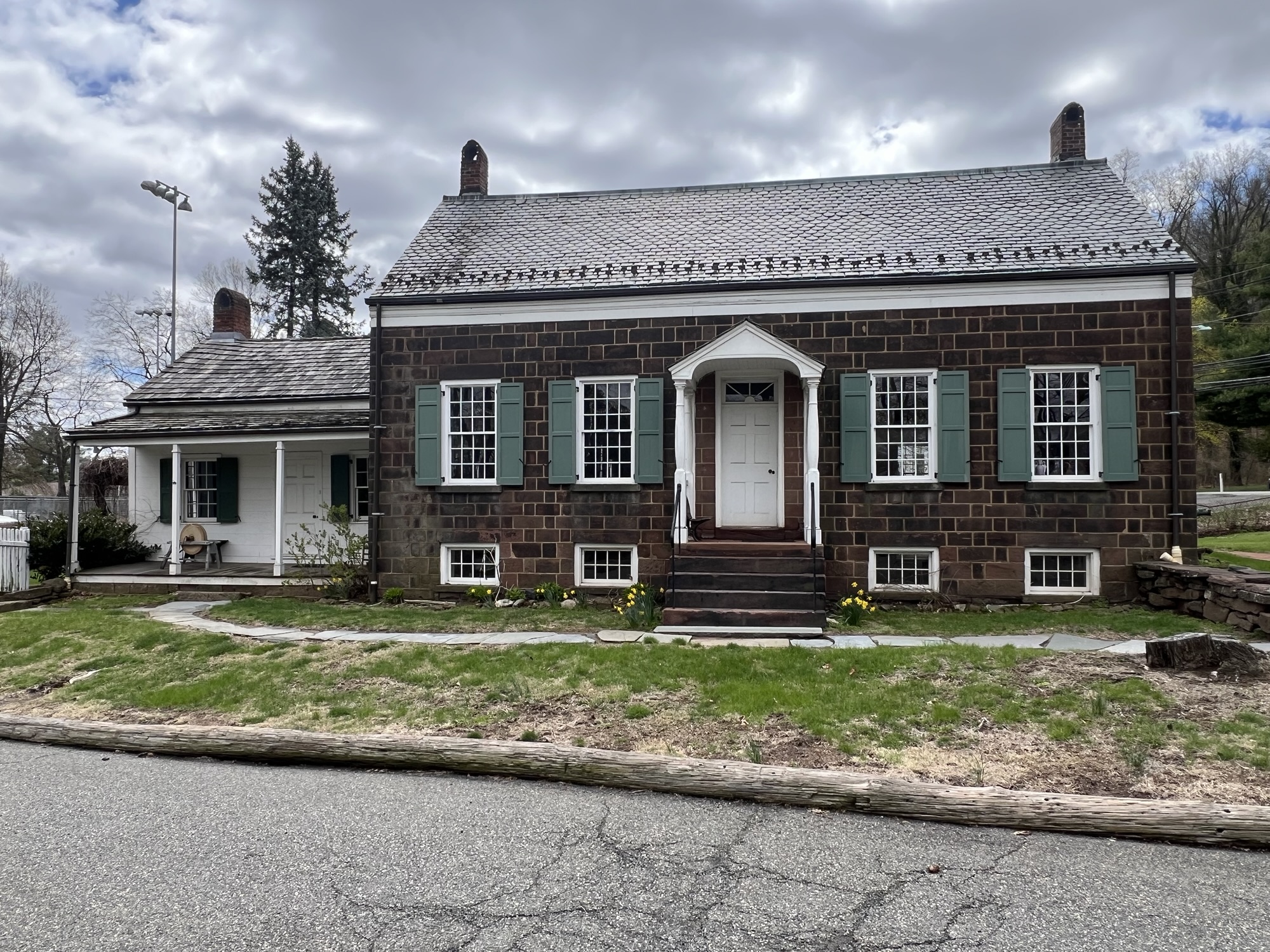
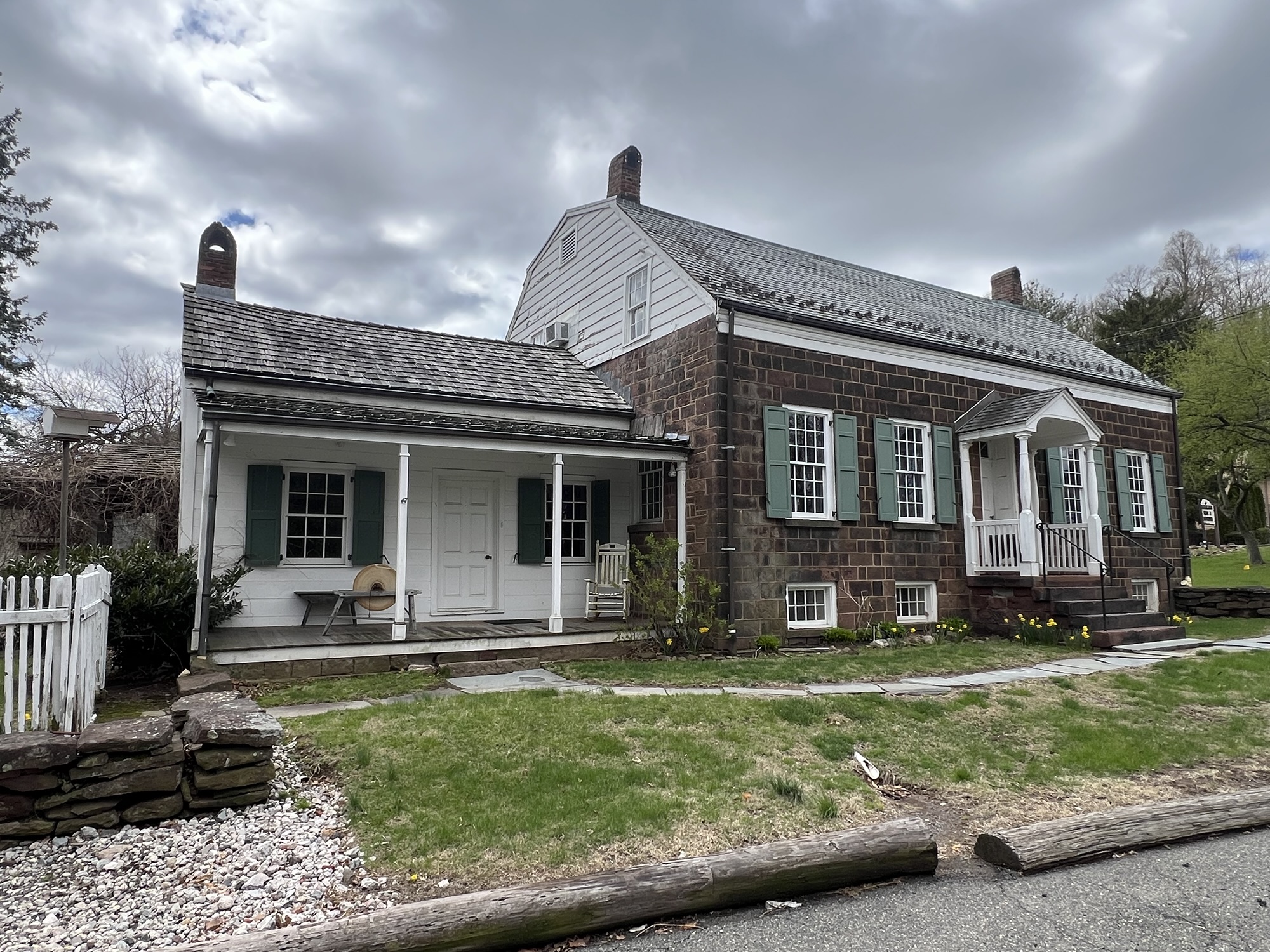
The front of the Hamilton House in the early Spring
I visited the Hamilton House Museum this afternoon which is right down the road from Montclair State College and sits at the border of the Clifton-Montclair border. The interesting part of the house location is that it still sits the farm land of the Van Wagoner Family but the house was moved from its location to the current one because of the building of Route 46 in 1973.
The front of the house in the Spring
When talking with curator, the house is going through a transition from the City of Clifton ownership to the County of Passaic Historical Society’s site. They are currently cataloging every piece in the house and putting it online. They want to view the collection to see what they can work with within the home.
Each room represents a different time in the history of the house. There is a living room from the Victorian age, the kitchen is from the late 1700’s to the early 1800’s and the dining room is from the mid-1800’s. These rooms are furnished to represent a certain time in the house.
There will be many revisions in the future for the house so there are some changes on the way. The upstairs is currently being used for storage and there will be revision there as well. I got a quick tour of the rooms with the curator and he said there will be more changes in the future as they catalog each piece. The grounds are currently being replanted.
The Hamilton House Museum sits at the Clifton and Montclair border
The house is one of the last examples of early 19th century stone houses in Passaic County. The house was built in 1817 by John and Ann Vreeland and then passed to the Van Wagoner family. It changed hands a few times until 1856 when the Hamilton Family bought the house (no relationship to Alexander Hamilton). The house remained in the Hamilton Family until 1972 when the last living relative died and no one in the family wanted possession of the house (Tour Guide & Wiki).
The oldest section of the house
That’s when the City of Clifton bought the house from the family of its historic value. The house was added to the National Register of Historic Places on May 13th, 1982 (Wiki).
The outside grounds of The Hamilton House Museum
The Grape Arbor on the grounds of the Hamilton House
History of the Hamilton House:
(taken from the City of Clifton website)
This 18th Century Dutch gambrel-roofed homestead was once the home of the Van Wagoner and Hamilton families. This basic of the house does not greatly differ from its Dutch antecedents.
The sturdy one and one half story cut sandstone structure, flanked by a grainery, spring-house and gardens reflects almost two hundred years of American history. It brings back memories of an uncluttered horizon with farms, orchards, fresh brooks, forest full of game and filled with scent of wildflowers.
Hamilton House & the Clifton Community:
Although the City of Clifton was incorporated in 1917, a community had existed since 1679. Prior to 1917, the area was known as Acquackanonk Township and included parts of : Little Falls, Passaic, Paterson and West Paterson.
The Indian Chief Captahem deeded 11,000 acres to the early Dutch settlers on the shores of the Passaic River. Predominately rural, this sparsely populated village thrived and grew.
The farmhouse was presented to the City of Clifton by the developers of the late Henry Hamilton. The Hamilton family had bought the 96 acre property in 1856 and for over 100 years until the death of Mr. Hamilton in 1970, it had been the family home.
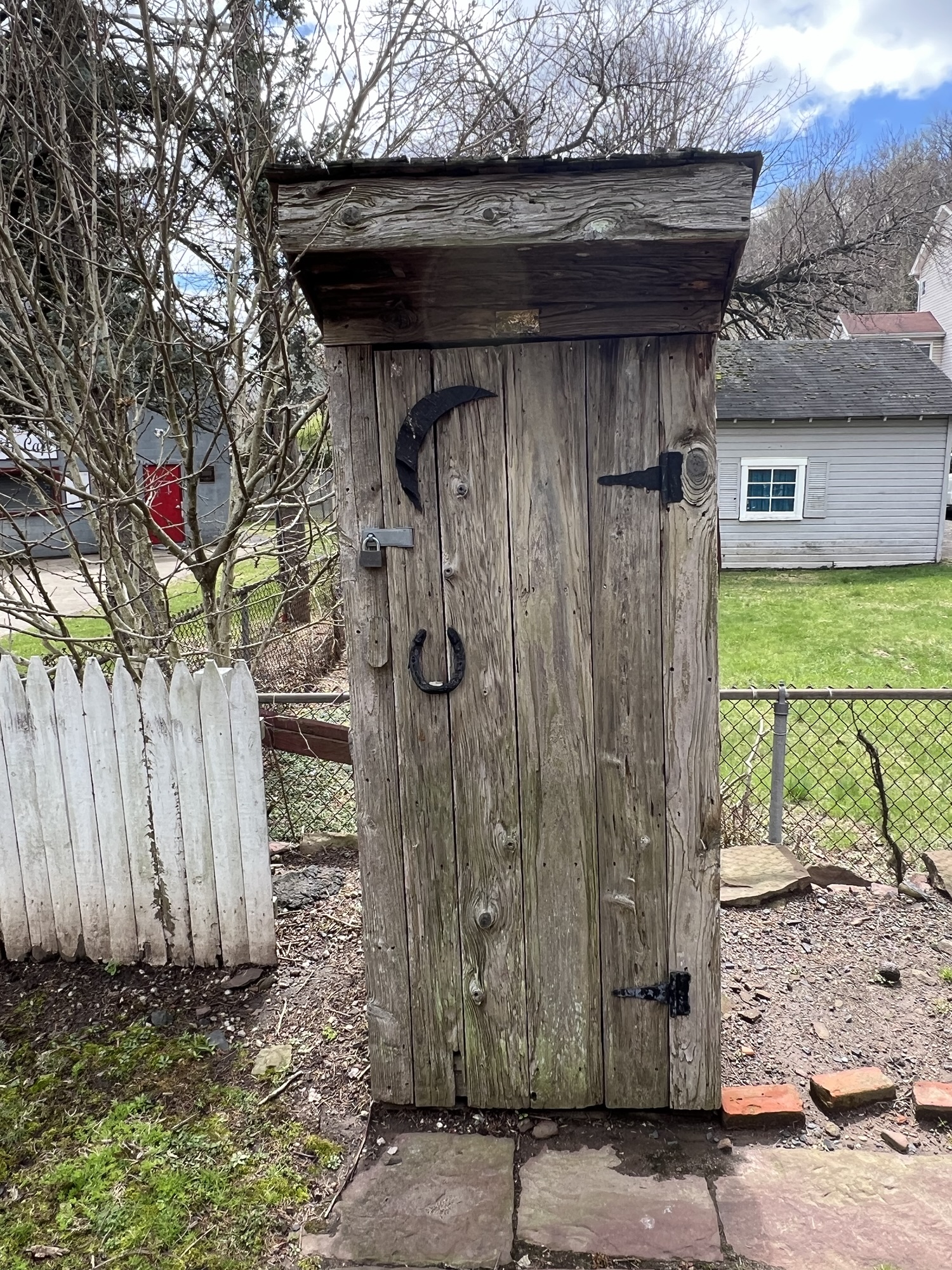
The old outhouse in the back of the property
Current Location and Future Plans:
The house was moved to its present location in Surgent Park in 1973. Infinite plans have been taken with examination and documentation of the building’s structural elements. Extensive research has been conducted including the records and treasured memories of Miss Caroline Hamilton as well as: Artifacts, Deeds, Manuscripts, Maps, Photographs and Wills.
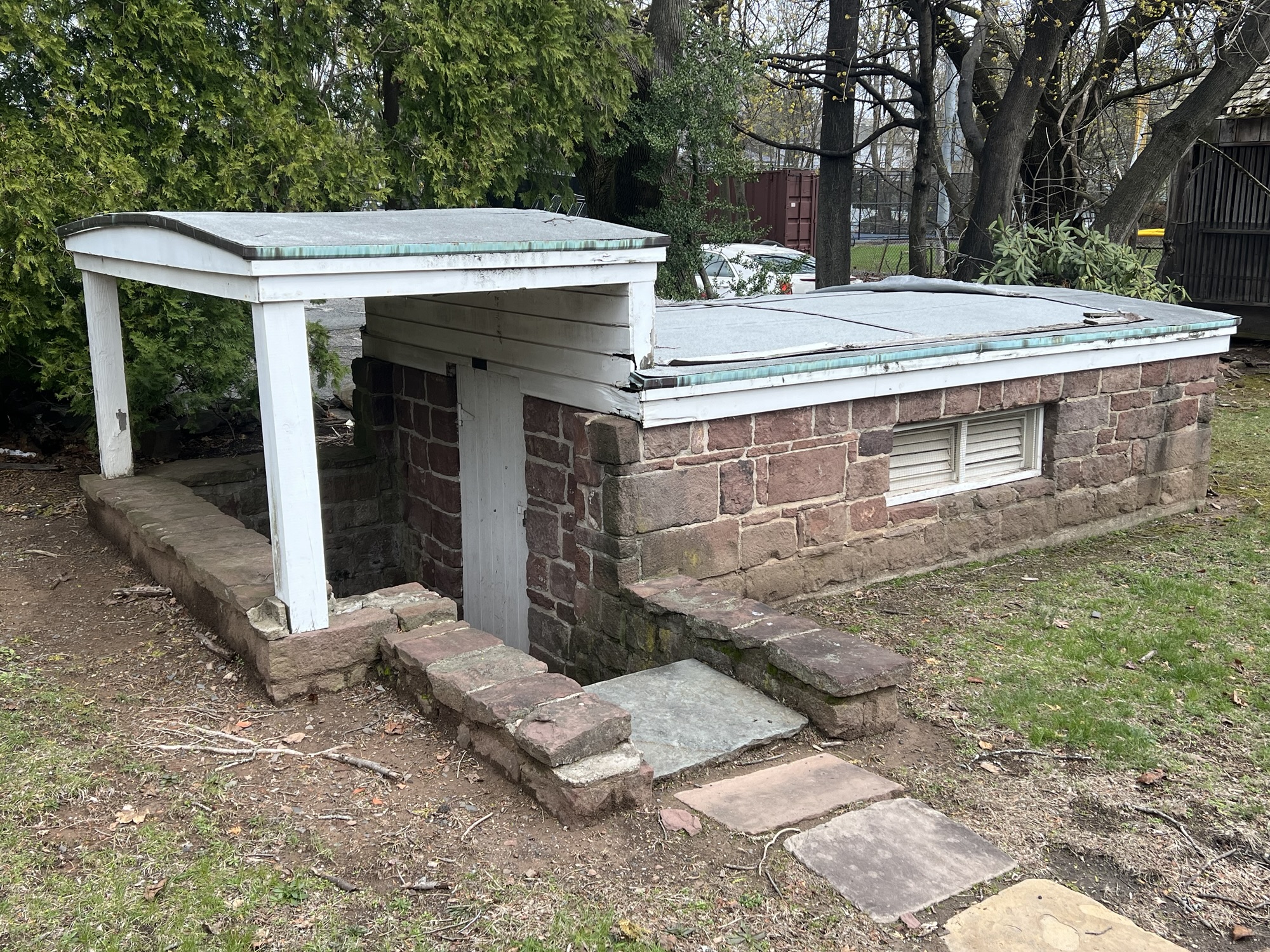
The old Ice House on the property
Scheduling Tours:
The museum is opened for tours on Sunday from 2:00pm-4:00pm (except on holidays). The house is going through a transition right now with the change over.
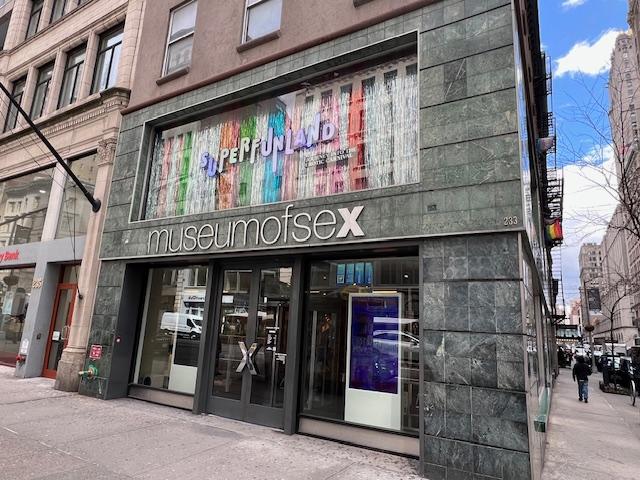
I made my first visit to the Museum of Sex in New York City and highly recommend it. I have to admit it is different but what I like about the museum is that it doesn’t try to hide the subject and it also just doesn’t jump out at you. It is an interesting progression in art and I saw this in the exhibition “The History of Pornography”, where the films were set up in order since the Victorian times. Sometimes it had to go underground due the times but pornography has been around since the days of the media.
The exhibition shows early pictures and viascopes of sexual acts and the early films date back to the Silent era. The exhibition covers from the Silent era to present times and the advancement of sex in films once the Hayes Code was broken in the 1960’s. With the relaxed rules and the mainstream films of “Tie Me Up Tie Me Down” and “Deep Throat”, you can see the progression of this as an art form and progression of the way the films were made.
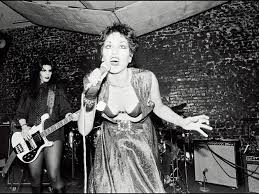
Another great exhibition that I saw was “Punk Lust: Raw Provocation 1971-1985”. This show matches nicely with the current show on the “Punk Movement” at the Museum of Arts & Design. It was interesting to see the posters, flyers, clothes and hear the music of the era. Just at the height of the ‘Sexual Revolution’ and into the fragments of the Disco era came a new sound and way to dress that started in the early 80’s before the progression of the Reagan years in Washington DC, this movement came with a new sound with Punk, New Wave and Technographic and a new way to dress provocative without being too revealing.
“Punk Lust” exhibition
As the museum was quoted saying: “The survey looking at the way Punk Culture used the language of sexuality, both visually and lyrically, to transgress and defy, whether in the service of political provocation, raw desire or just to break through the stifling gender norms and social expectations that punks refused to let define them.”
“Punk Lust” exhibition
On a more recent trip to the museum, three exhibitions were open and all very interesting, highlighting different types of eroticisms. These countered different parts of the artworld. Also, in the post-COVID era, all the interactive displays opened up and I was able to visit and experience each of these as well. These are the most fun!
The Andy Warhol exhibition:
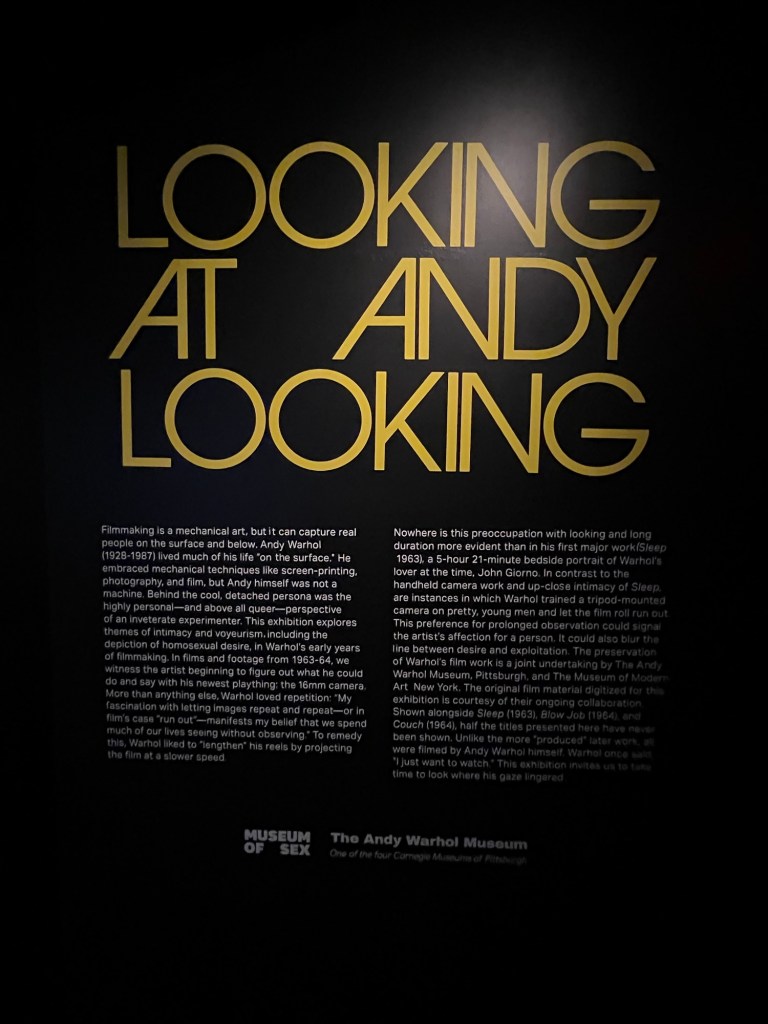
“Looking at Andy Looking” exhibition:
(from the museum website)
This exhibition will explore themes of intimacy and voyeurism, including the depiction of homosexual desire, in Warhol’s early years of filmmaking. In films and footage from 1963-64, we witness the artist beginning to figure out what he could do and say with his newest plaything: the 16mm camera.
“Looking at Andy Looking”
(from the museum website)
Filmmaking is a mechanical art, but it can capture real people on the surface and below. Andy Warhol (1928-1987) lived much of his life “on the surface.” He embraced mechanical techniques like screen-printing, photography, and film, but Andy himself was not a machine. Behind the cool, detached persona was the highly personal—and above all queer—perspective of an inveterate experimenter.
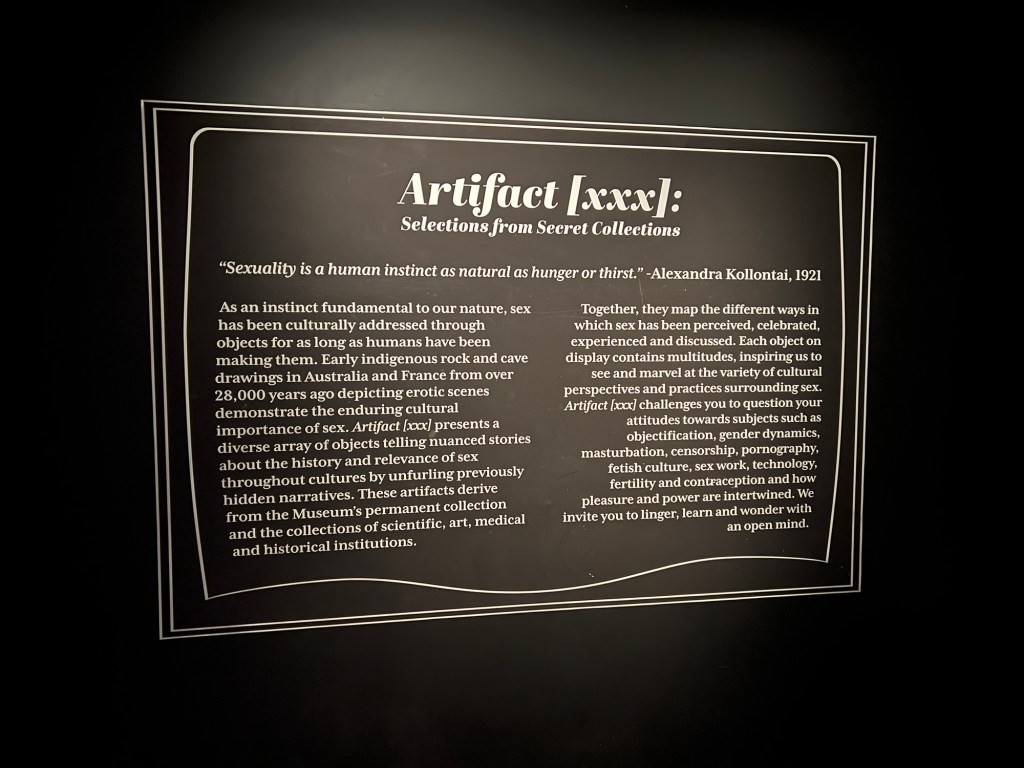
The exhibition I saw was the “Artifact” exhibition from the Museum of Sex’s collection of items exploring how we look at sexual encounters. What is sex and how does a play a role in our lives?
“Artifact: Selection from a Secret Collection”
(from the museum website)
Gathered from the Museum of Sex’s permanent collection of more than 15,000 objects as well as from other notable collections and institutes of antiques, medical history and sexology, Artifact (xxx): Selections from Secret Collections presents an intimate exploration of how sex manifests across culture through art, science, and design. An early vibrator made in Great Britain, a lotus shoe worn by a woman in China, and a Braille issue of Playboy magazine provide insight into prevailing belief systems and societal taboos across geography and time.
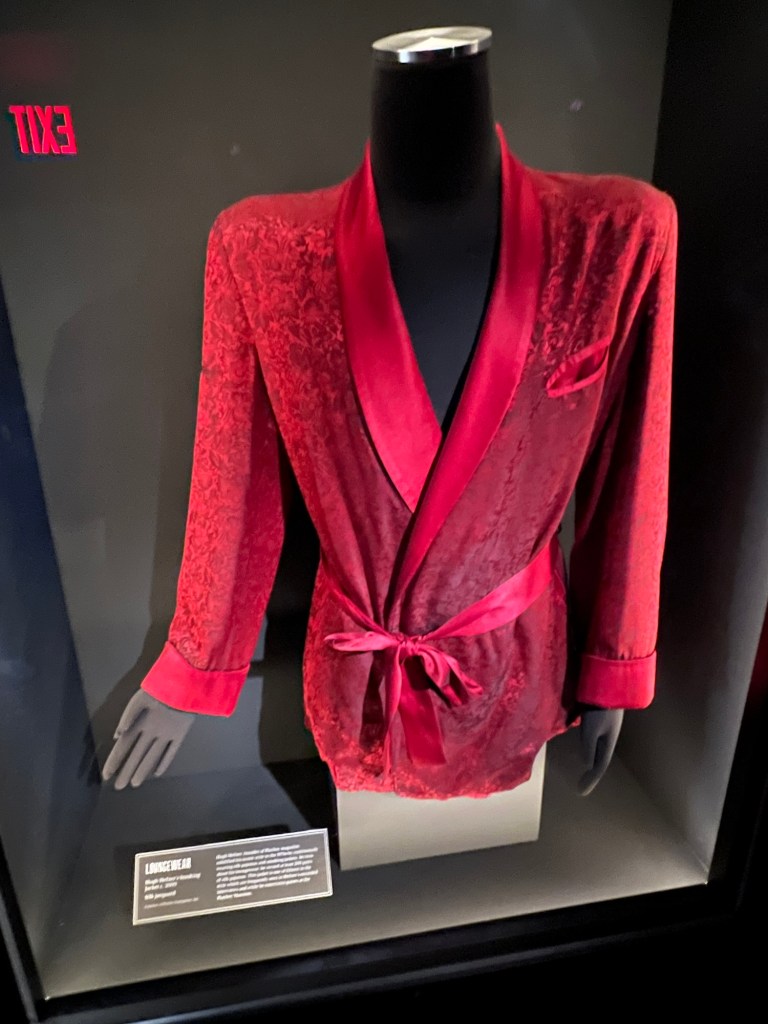
Hugh’s Hefner’s smoking jacket
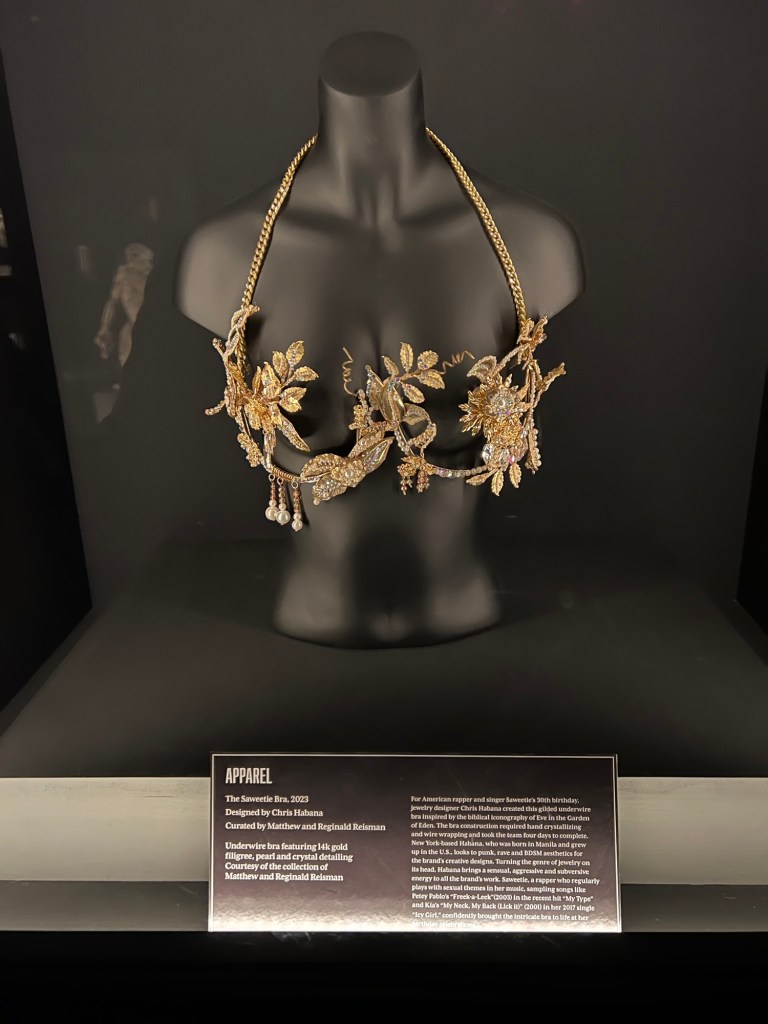
Jeweled Bra
(from the museum website)
Fulfilling a wide range of functions from artwork, medical devices and pop-culture mementos to guidebooks and accessories used for enhancing pleasure or pain, these objects tell the stories of the expansive yet nuanced influence of sexuality throughout history.
Candy pants from the 1970’s
Deep Throat Memorabilia
The memory of the movie a movie ‘Deep Throat’’
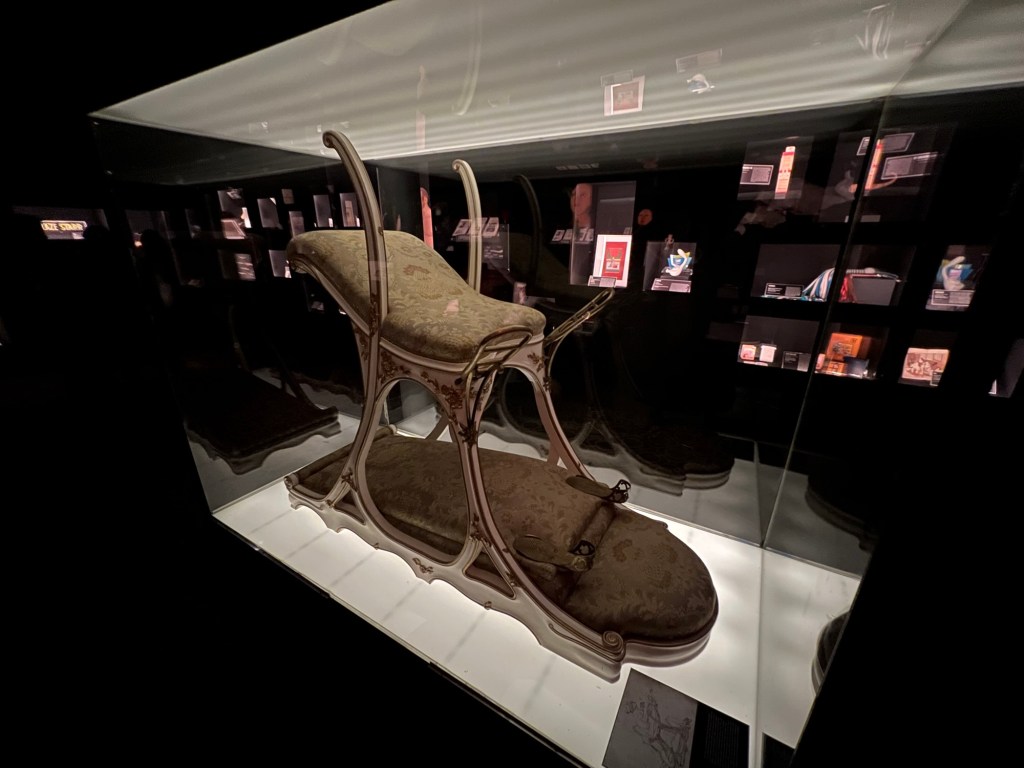
Intercourse Chair
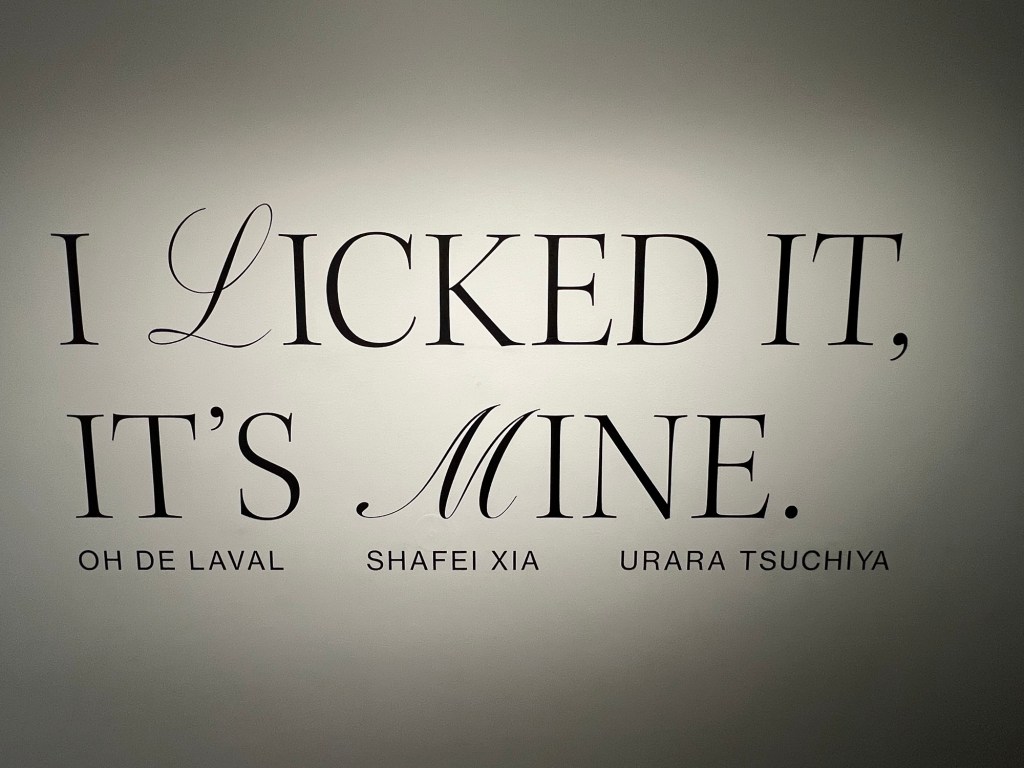
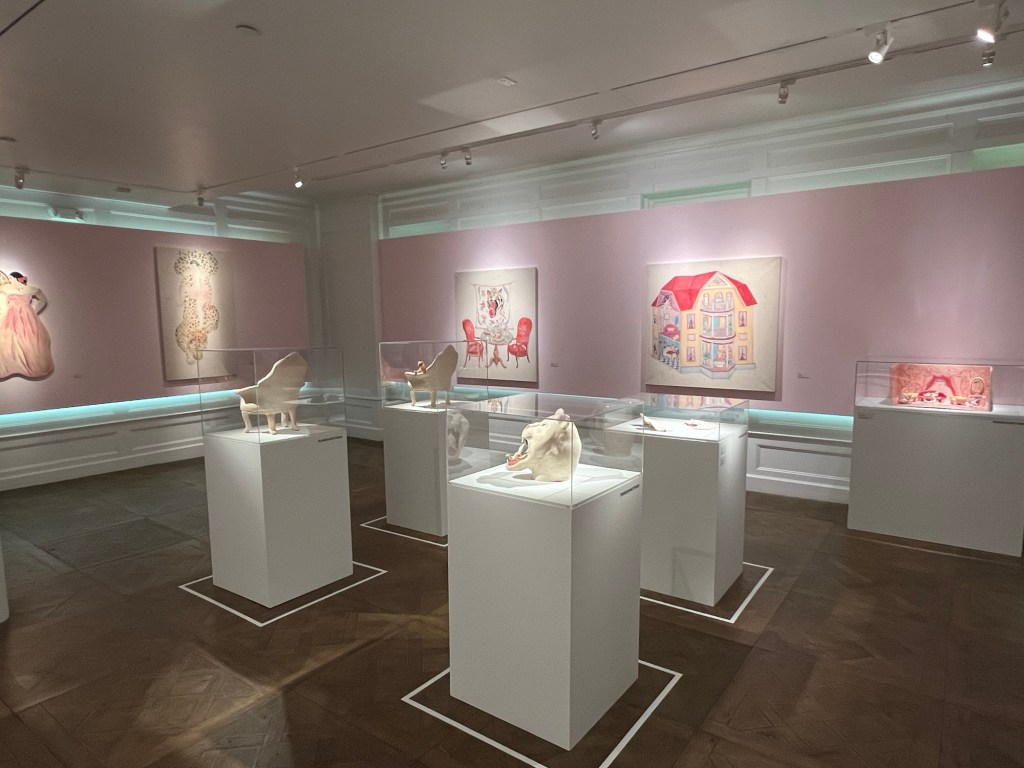
Another exhibition that I enjoyed on my last trip to the Museum of Sex was the “I Licked it, It’s Mine” exhibition on exotic paintings and sculpture.
The ‘Licked it, it’s Mine’ exhibition sign
(from the museum website)
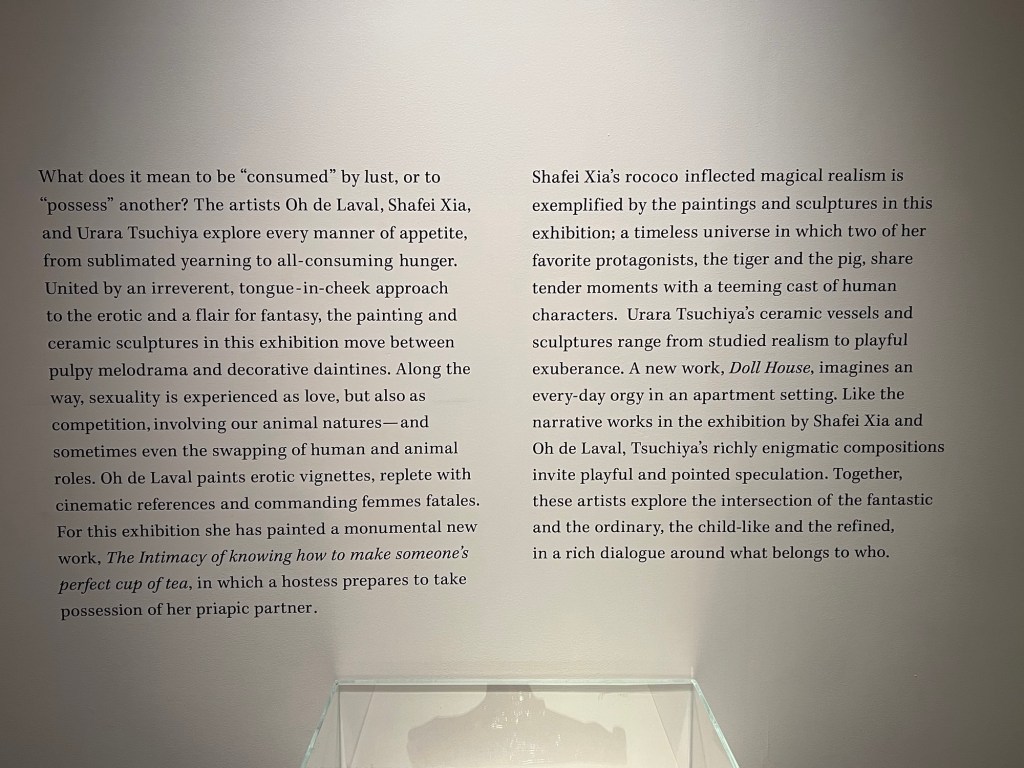
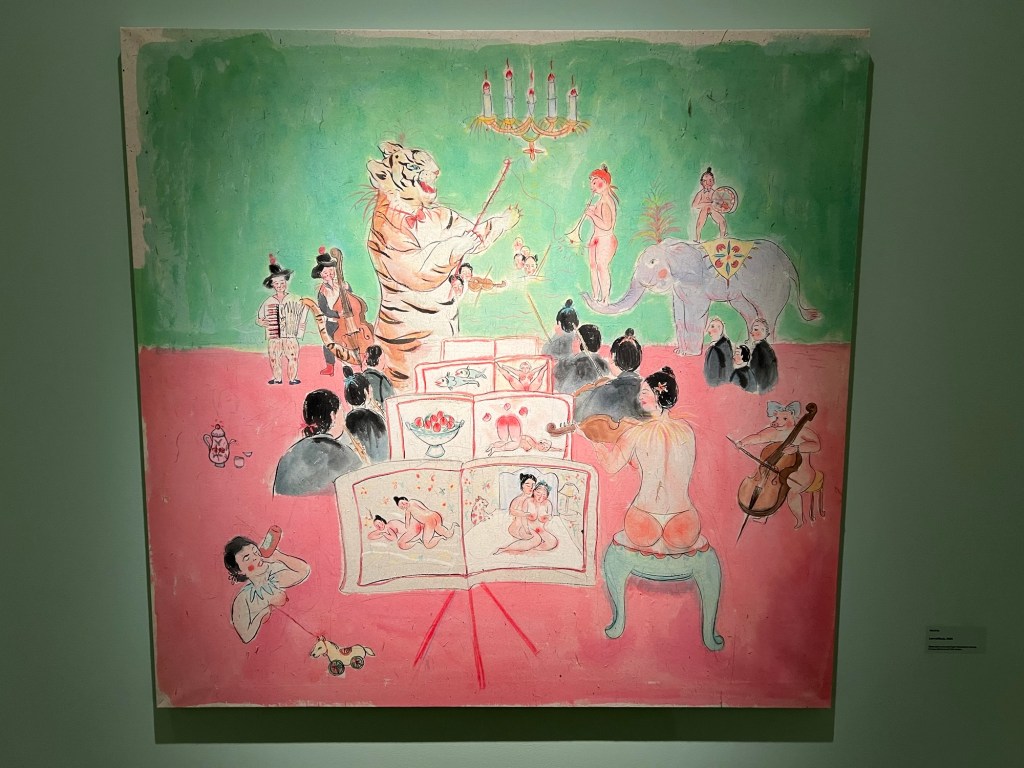
What does it mean to be “consumed” by lust, or to “possess” another? The artists Oh de Laval, Shafei Xia, and Urara Tsuchiya explore every manner of appetite, from sublimated yearning to all-consuming hunger. United by an irreverent, tongue-in-cheek approach to the erotic and a flair for fantasy, the paintings and ceramic sculptures in this exhibition move between pulpy melodrama and decorative daintiness.
Along the way, sexuality is experienced as love, but also as competition, involving our animal natures—and sometimes even the swapping of human and animal roles.
The gallery for ‘I licked it, it’s mine’ exhibition
The literature from the exhibition explaining the works
These were some of my favorite works from the exhibition:
The exotic works
The unusual works
The unique paintings and ceramics
One of my favorite pieces from the exhibition. I thought this was quite exotic.
I walked next through Carn-O-Rama and experienced the workings behind the scenes of a traveling carnival reaching the suburbs. I always thought it was just lights, rides and cotton candy. There is more to it than that.
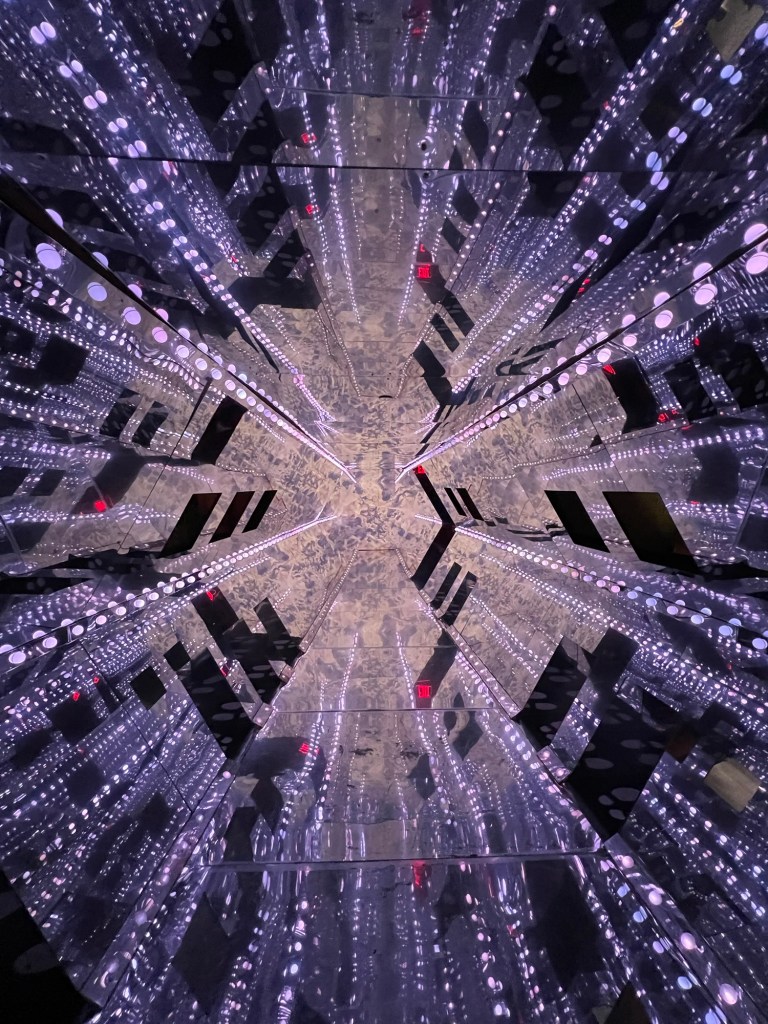
After my visits to the three galleries, I took a took to the interactive section of the museum and experienced Funland, where I walked though Stardust Lane and all the lights and sounds of the mirrored rooms.
A Video walk through Funland is a lot of fun. It really pleases the senses.
I next took a trip to Super Funland and this was my trip through Stardust Lane. This is all lights and mirrors and it was an unusual walk through the museum that challenges the senses. Walking through Super Funland is a voyage in the wild with mirrors and music.
It get pretty interesting walking through here.
In another video walk through of Funland, I met a lot of interesting people on my walk through the museum. It really puts you into a interesting mood.
The pathway around the museum took me to other interactive exhibitions. Jump for joy was a very interesting interactive world of different sexual parts and mood lighting.
The ‘Jump for Joy’ exhibition
Then I walked through ‘Lucky Land’
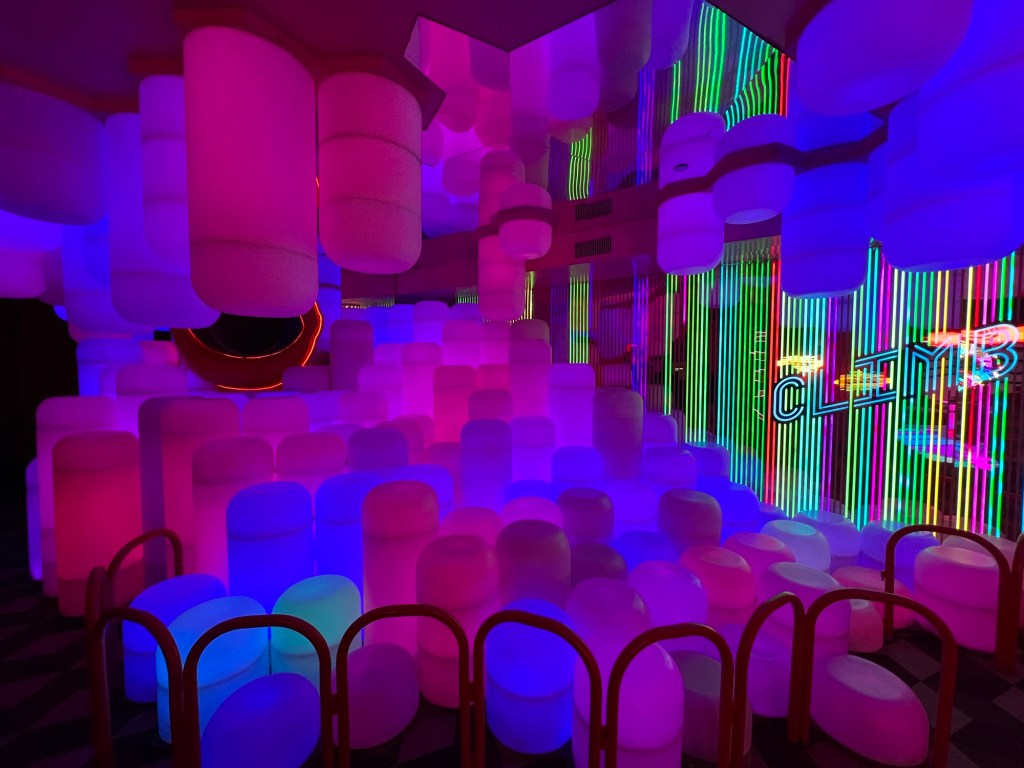
Then I walked through and climbed ‘The Pink Palace’, a series of colored features that led through what looked like another sexual parts. This is called the ‘ClimbX”.
The colored building blocks of the exhibition of “ClimbX”
The colored blocks of the exhibition “ClimbX”
Another object to climb through on your way out of the exhibition.
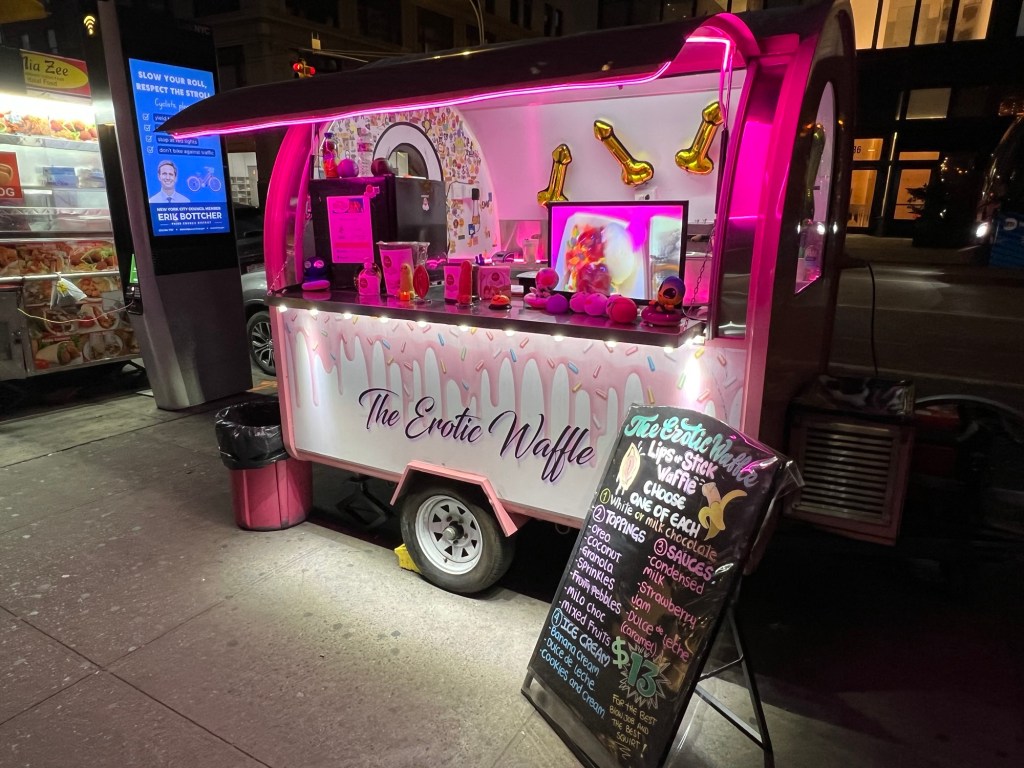
It really is an interesting museum to visit. You really have to stop and enjoy the pleasures of each floor. You have to take the time experience all the sights and sounds. The funny part of leaving the museum is that there is an exotic food vendor on Fifth Avenue with the most unusual items he sells.
The Erotic Waffle food truck just outside the museum. Not your kids food truck. The truck sold sexual organ pastries, waffles and other exotic items. You have to stop by when you are in the neighborhood!
History of the Museum of Sex:
(This comes from the Museum of Sex History Website)
The Mission of the Museum of Sex is to preserve and present the history, evolution and culture significance of human sexuality. The museum produces exhibitions, publications and programs that bring the best of current scholarship to the wildest possible audiences and is committed to encouraging public enlightenment, discourse and engagement.
The Museum of Sex
The Beginning:
When the Museum of Sex first emerged on New York City’s Fifth Avenue on October 5th, 2002, it was without precedent in the museum world. In the development of its inaugural award winning exhibition NYCSEX: How New York Transformed Sex in America, the Museum created a board of comprised of leading scholars and historians. The Museum’s advisory board has guided curators and guest curators towards research resources, pertinent collections and exhibition relevant artists. Advisors such as Steven Heller, Timothy J. Gilfoyle, PhD, Mike Wallace PhD and June Reinisch, Director Emeritus for The Kinsey Institute for Research on Sex, Gender and Reproduction as well as institutional collaborations with New York University’s Center for the Study of Gender and Sexuality, Planned Parenthood Federation of America, New York Historical Society and the Lower East Side Tenement Museum have contributed to making the Museum of Sex one of the most dynamic and innovative institutions in the world.
Design has played a pivotal role in both exhibition development and execution with world-renowned design firms such as Pentagram Design Inc, Casson Mannand 2×4, helping to transform the galleries and historic building over the last six years. The museum’s building, built in the area of New York formerly known as the “Tenderloin,” a district of NYC made notorious by the 19th century for its bordellos, dance halls, theaters and saloons, serves as a New York City landmarked site.
Our Work:
Since its inception, the Museum of Sex has generated over 30 exhibitions and 6 virtual installments, each in keeping with the Museum’s mission of advocating open discourse surrounding sex and sexuality as well as striving to present to the public the best in current scholarship, unhindered by self-censorship. With each new exhibition, lecture series, event and publication, the Museum of Sex is committed to addressing a wide range of topics, while simultaneously highlighting material and artifacts from different continents, cultures, time periods and media.
Our Collection:
The Museum’s permanent collection of over 20,000 artifacts is comprised of works of art, photography, clothing and costumes, technological inventions and historical ephemera. Additionally, the museum houses both a research library as well as an extensive multimedia library, which includes 8mm, Super 8mm, 16mm, BETA, VHS and DVD’s. From fine art to historical ephemera to film, the Museum of Sex preserves an ever-growing collection of sexually related objects that would otherwise be destroyed and discarded due to their sexual content.
Our Public:
In a short time, the Museum has received attention from academic institutions, major publications, media outlets and celebrities, positioning the Museum of Sex within the realm of academia and pop culture alike. The Museum has been featured in numerous publications including The New York Times, The New Yorker, Esquire and Time and on television broadcasts ranging from CNN to IFC to NBC’s Law & Order Criminal Intent. Award-winning advertising campaigns in print and television media have sealed the Museum’s arrival as a cultural touchstone.
Accolades continue to pour in from visitors and the press in every corner of the world, inspiring the Museum of Sex to continually surpass its own high expectations. Future planned exhibitions and events-the likes of which have never been offered by any other institution-are guaranteed to captivate and resonate, securing the Museum of Sex a well-deserved, distinguished place in history (Museum of Sex History)
I am finding more and more that the university art galleries are mounting very interesting and clever exhibitions and some as edgy as their large museum counterparts. I recently attended the ‘Art After Stonewall’ exhibition which is created as a two part exhibition with the Leslie-Lohman Museum of Gay and Lesbian Art to showcase the post Stonewall riots to the beginning of the AIDS crisis.
“Art After Stonewall” exhibition
The exhibition was an interesting mix of pictures, video, graphic paintings and posters and documentary work combined to show the mood of the times. Some of the most impressive works came from clips of documentaries on Andy Warhol’s ‘Factory Movies’, and the documentaries on ‘Tongues Untied’ and ‘Paris is Burning’ about the gay crisis about men of color and the racism that they faced even within the Gay Community.
The East Village Art Community from the 1980’s “Art After Stonewall”
Some of the photos of then fringe neighborhoods are funny to see as they have been gentrified beyond what anyone could have thought thirty years ago from the early 1980’s. The East Village of back then and of today are world’s apart.
The College did a good job mounting the show and telling the story that is both humorous and sad at the same time. Also, the Grey Gallery is small so you can get through the exhibition in about an hour.
The Grey Gallery exhibition “Art After Stonewall” This is a Keith Haring poster.
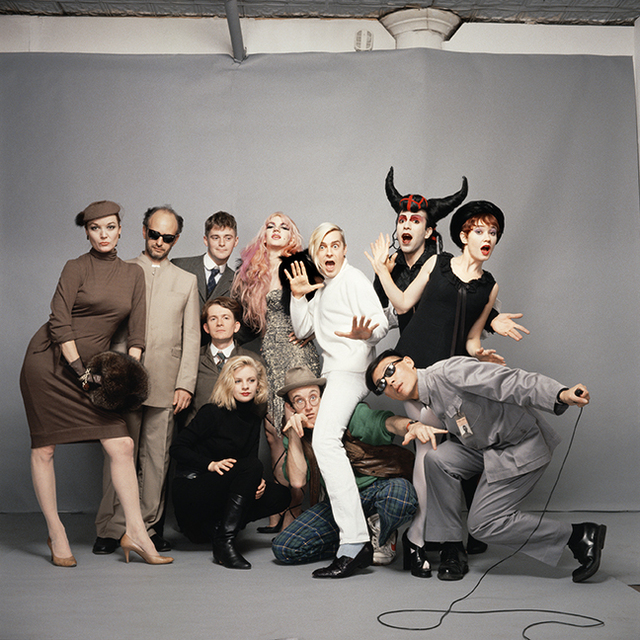
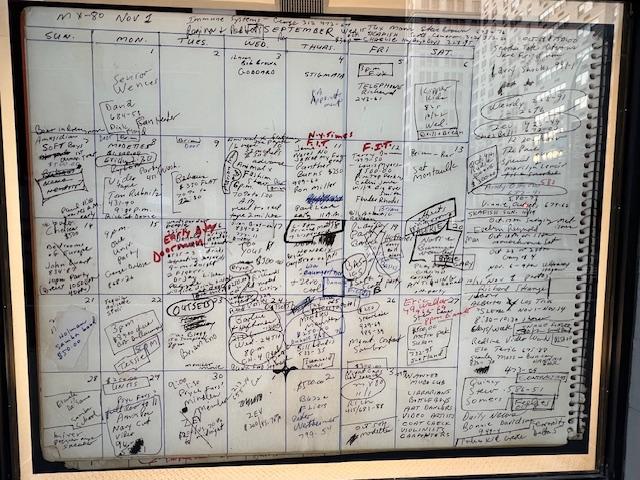
The most recent exhibition that I visited “Mudd Club 1978-1983: The Stephen Mass Papers” and the people who had visited the club at that time.
The Broadway Windows of the “The Mudd Club” exhibition in the NYU Broadway building.
In collaboration with NYU Fales Library and Special Collections, 80WSE Gallery presents an exhibition featuring materials from The Stephen Mass Papers, focusing on the legendary Mudd Club venue in New York City (1978-1983) through photographs and extensive notes. Located at the street-level Broadway Windows gallery and Project Space, the exhibition materializes the file structures of the archive and select visual documents contained within the collection.
The Broadway Windows of “The Mudd Club”.
The archival extracts provide rare insight into an important epicenter of downtown art, music, fashion, and culture at a transitional point in New York City and American life marked by rapid urban gentrification and the dawn of The Reagan Era. Within this atmosphere, post-punk musicians, independent designers, contemporary artists, and celebrities coalesced to animate the Mudd Club ‘cabaret’.
The Broadway windows of the “The Mudd Club”.
Acquired by Fales in 2019, the Stephen Mass Papers spans 16.75 Linear Feet in 24 manuscript boxes, 3 half manuscript boxes, 2 small flat boxes, 2 oversize flat boxes, 1 media box, 1 oversize folder in shared housing, and 1 sound reel in shared housing, including 33.92 Megabytes in 167 computer files, 1 sound tape reels , 1 videocassettes (u-matic), 10 audiocassettes, and 6 film reels.
The Broadway Windows of the “Mudd Club”.
“Stephen Mass is an entrepreneur who co-founded the Mudd Club located at 77 White Street in downtown New York City in 1978 along with art curator Diego Cortez and Anya Phillips. The venue became a focal point of the downtown music, art, and cultural scene in the late 20th century, showcasing the intersections of popular and avant-garde performance culture, gender and sexuality, celebrity culture, music, visual art, fashion, film, and nightlife.
The opening sign from the Grey Gallery on the NYU Campus.
The Stephen Mass Papers (inclusive dates 1940-2019, bulk dates 1978-2009) documents the founding and operation of the Mudd Club in New York City, Mass’s other entrepreneurial ventures in New York, and his nightclubs and restaurants in Berlin, as well as his personal life and family history. Consisting of both paper and electronic formats, the collection includes extensive notebooks and notes containing the planning and working notes for Mass’s various endeavors, financial and legal documents, promotional materials for events (such as posters, flyers, and newsletters), ephemera (differentiated from promotional material, as promotional material Mass collected from other clubs or organizations), press coverage, and photographic materials such as prints, negatives, and slides.”
The Grey Gallery exhibition of the “Mudd Club 1978-1983: The Stephen Mass Papers”.
—Fales Library and Special Collections
The Fales Library & Special Collections comprises 350,000 volumes of book and print items, over 11,000 linear feet of archive and manuscript materials, and about 90,000 audiovisual elements.
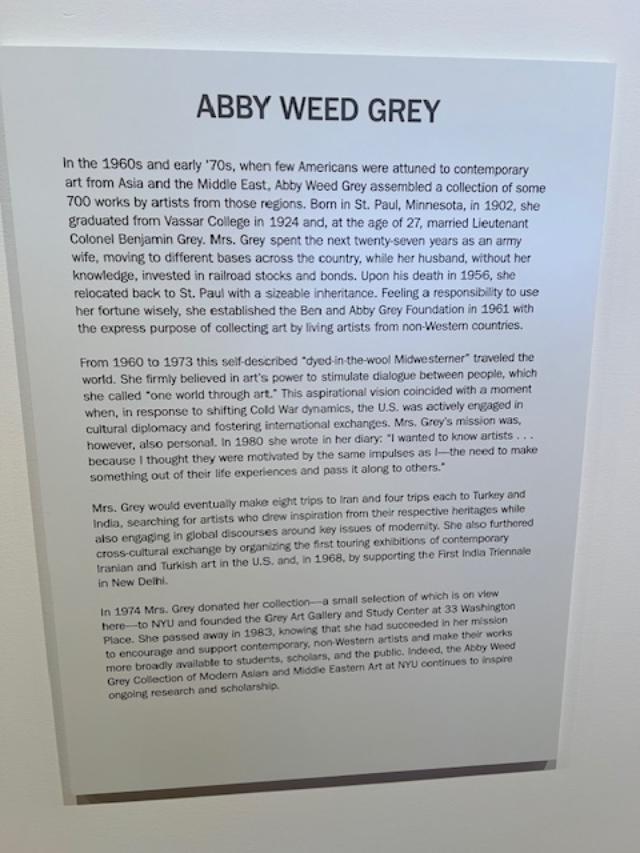
In 2024, the Grey Gallery moved to its new home at 18 Cooper Square and has a whole new contemporary look to it.
The history of the Grey Gallery on the NYU Campus.
Works from the permanent collection at the new “Grey Gallery” at 18 Cooper Square.
The front of the gallery for the “Americans in Paris” exhibition
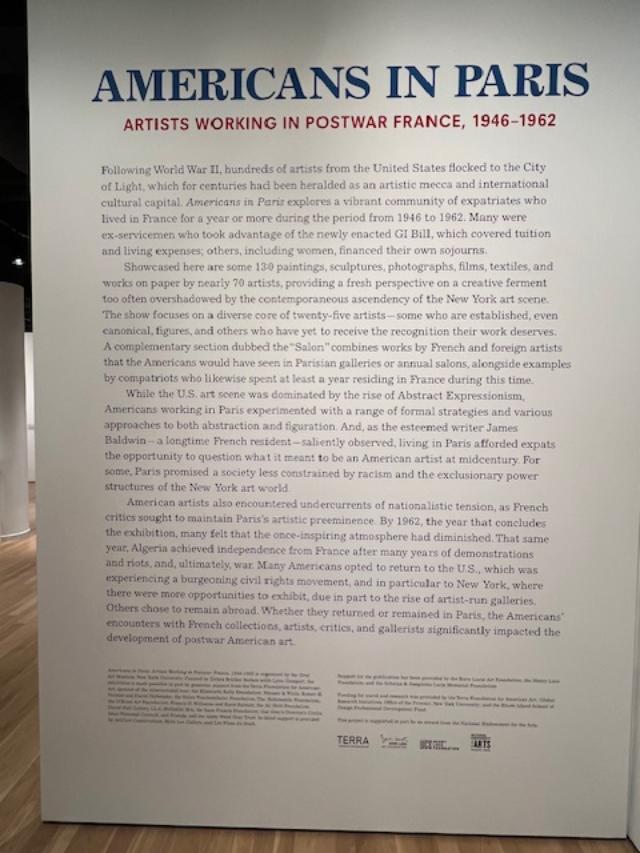
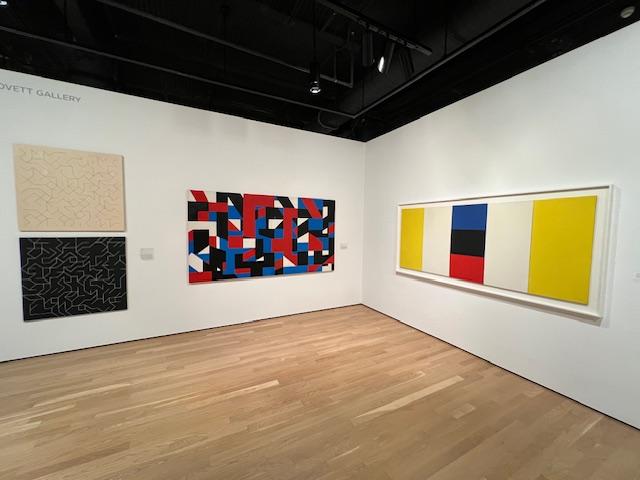
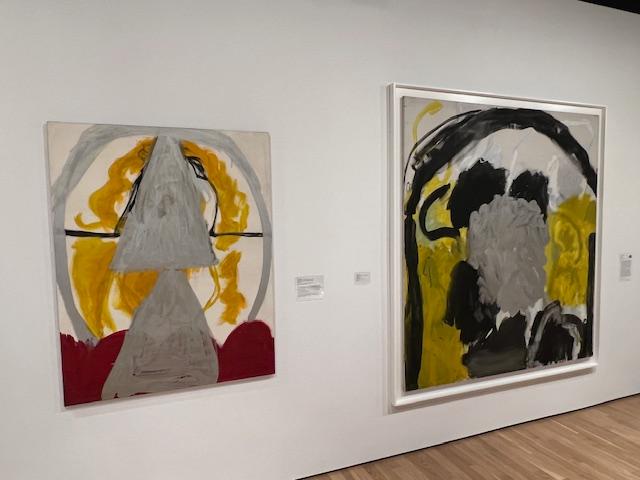
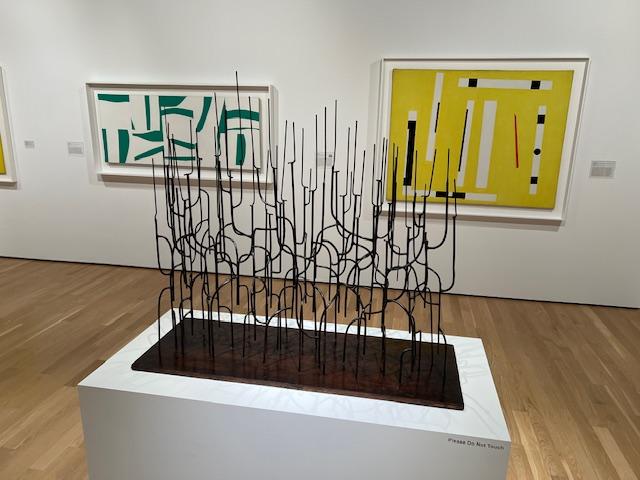
I was invited to a new exhibition open to students at NYU “American’s in Paris”, an exhibition of American artists who had been living and creating their art in the City of Lights after WWII until the 1960’s.
The sign for the “American in Paris” exhibition.
The entrance to the new Grey Galleries.
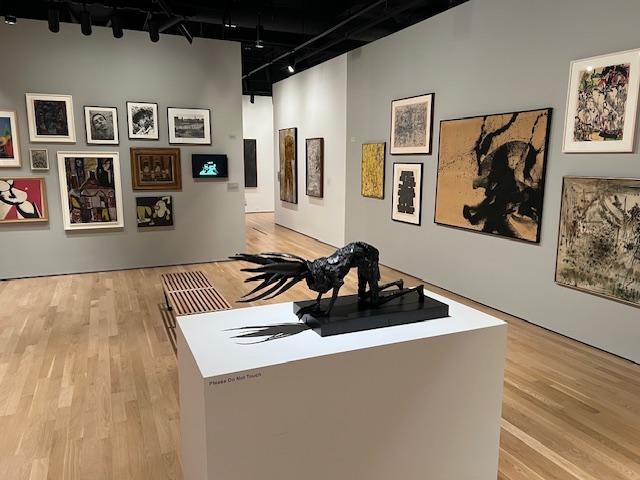
The back Galleries for the “Americans in Paris” exhibition.
The works of the artist “Kimber Smith” in the “American in Paris” exhibition.
The exhibition “American’s in Paris” with artist Joan Mitchell’s work.
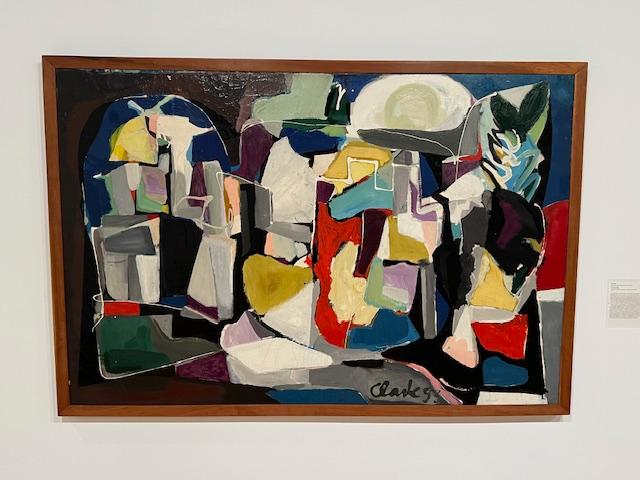
The exhibition “American’s in Paris” work by artist Ed Clark.
The works of artist Henry Cousin’s in the exhibition “American’s in Paris”.
The galleries of the Grey Art Galleries
Peter Saul’s “Man in Electric Chair”
“Man in Electric Chair”
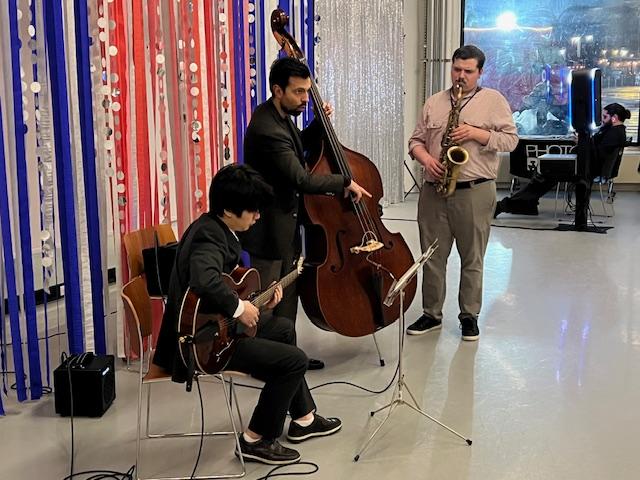
The Jazz band entertaining us at the opening of the “Americans in Paris” exhibition.
As an Alumnus of NYU, I now come for the exhibitions and just enjoy myself. I came in for the newest exhibition.
The exhibition in 2024 was “Make Way for Berthe Weill”: Art Dealer of the Parisian Avant-Garde
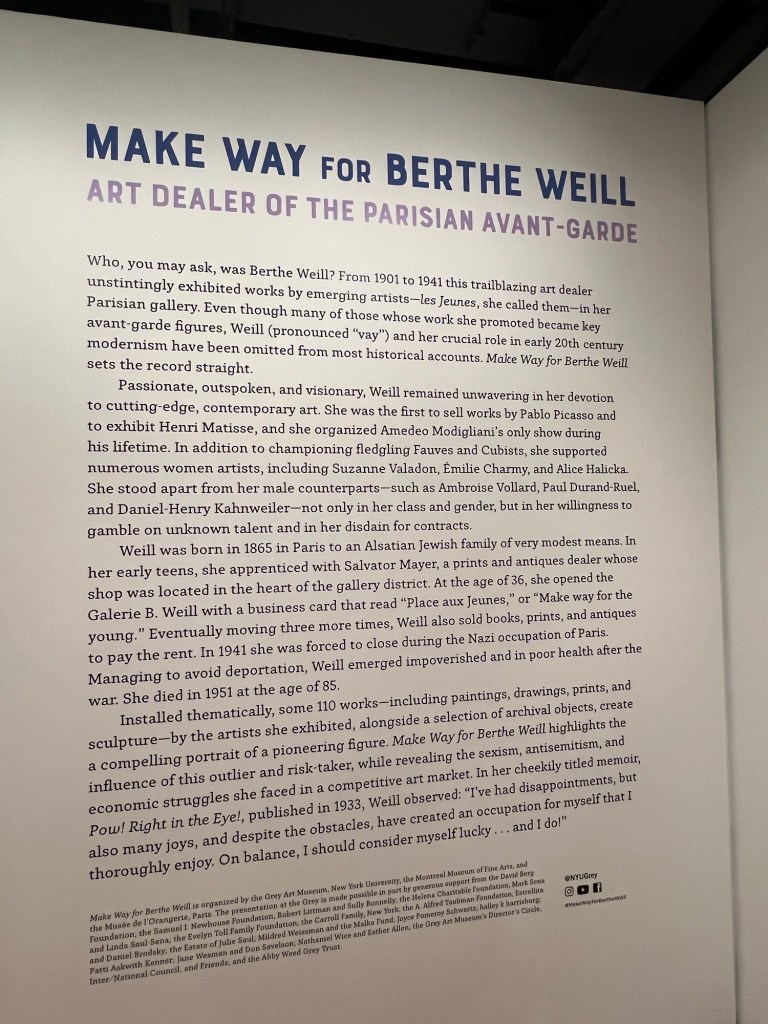
The main sign from the exhibition
(from the Grey Gallery website)
Make Way for Berthe Weill: Art Dealer of the Parisian Avant-Garde surveys the groundbreaking career of the first woman modern art dealer. Berthe Weill (1865–1951) championed many fledgling masters of modern art early on—such as Pablo Picasso, Henri Matisse, and Amedeo Modigliani—as well as numerous others who did not achieve wide acclaim. Yet her role in early 20th century modernism has been omitted from most historical accounts.
The exhibition will feature some 110 paintings, drawings, prints, and sculpture—many of which were shown at her gallery during the first four decades of the 20th century. Examining Weill’s contributions to the history of modernism as a gallerist, a passionate advocate of contemporary art, and a Jewish woman, it brings to light the remarkable achievements of a singular figure who overcame sexism, antisemitism, and economic struggles in her quest to promote emerging artists (From the NYU-Grey Gallery website).
The timeline of her career
The gallery that night
The art featured were artists promoted by the art dealer
The artwork by female artist Emilie Charmy
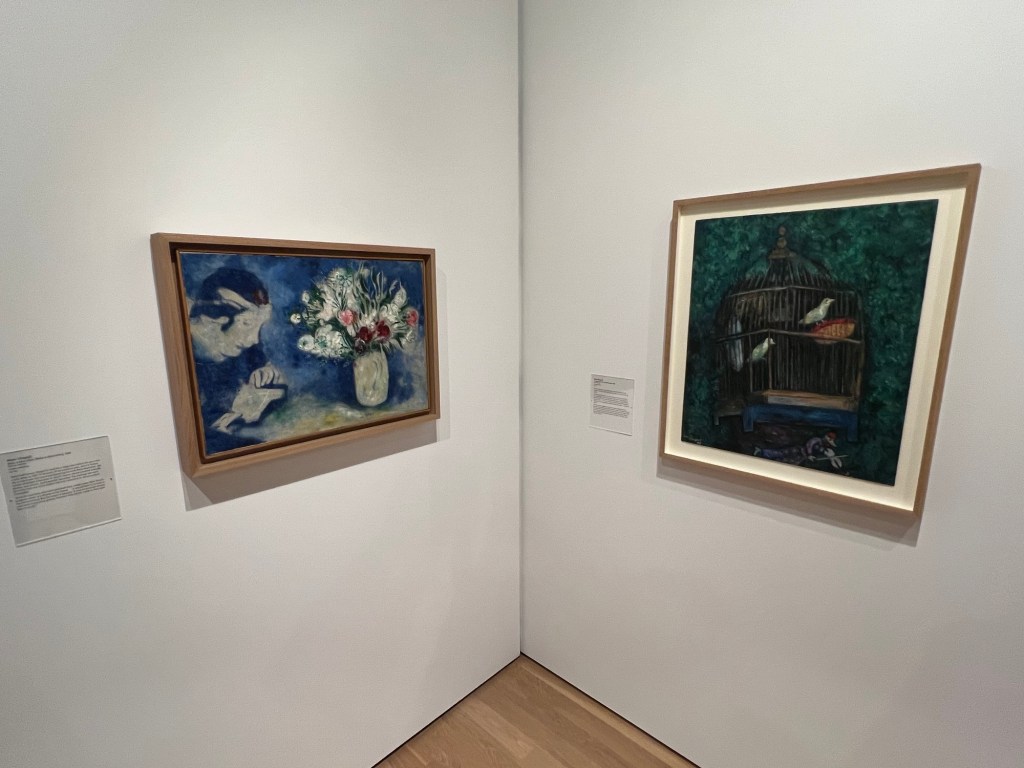
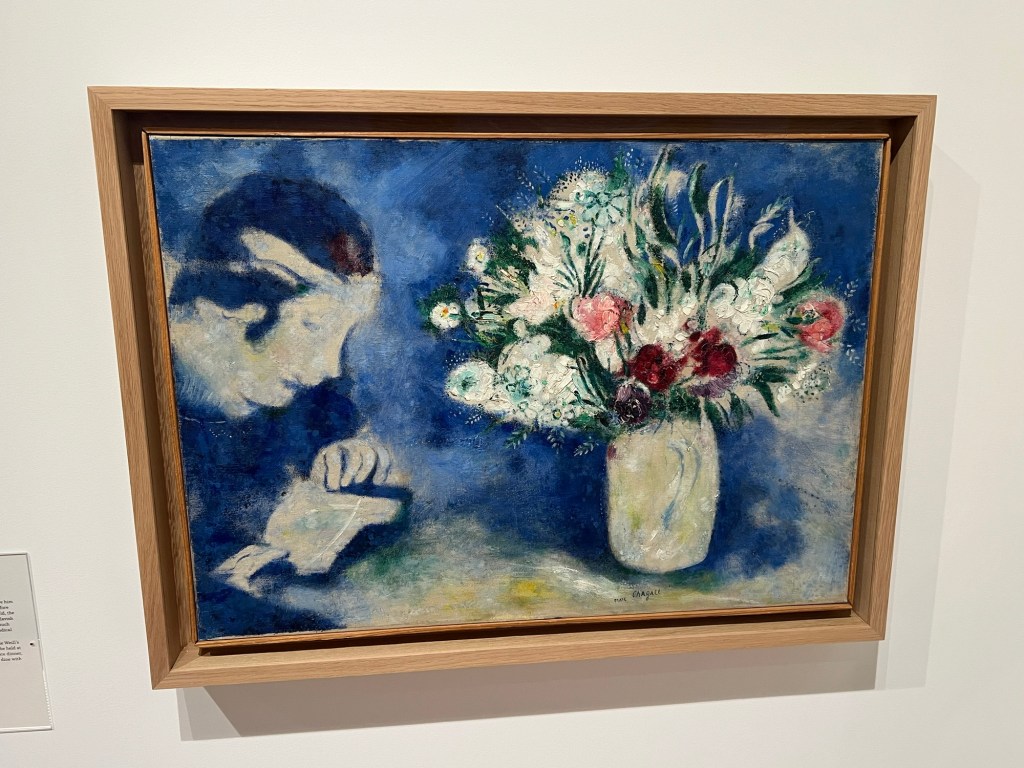
The work by artist Mark Chagall
One of my favorite pieces in the show by Mark Chagall
The Mission of the Grey Art Gallery:
The Grey Art Gallery is New York University’s fine arts museum, located on historic Washington Square Park in New York City’s Greenwich Village. As a university art museum, the Grey Art Gallery functions to collect, preserve, study, document, interpret and exhibit the evidence of human culture. While these goals are common to all museums, the Grey distinguishes itself by emphasizing art’s historical, cultural and social contexts, with experimentation and interpretation as integral parts of the programmatic planning. Thus, in addition to being a place to view the objects of material culture, the Gallery serves as a museum-laboratory in which a broader view of an object’s environment enriches our understanding of its contribution to civilization (NYU Grey Gallery History)
The History of the Grey Art Gallery at New York University:
The Grey Art Gallery is located within New York University’s Silver Center-the site of NYU’s original home, the legendary University Building (1835-1892). Winslow homer, Daniel Huntington, Samuel Colt, George Innes and Henry James all lived and worked there, as did Professor F.B.Morse, who established the first academic fine arts department in America on the site now occupied by the Grey Art Gallery.
Demolished in 1892, the original building was replaced by the Main Building (renamed the Silver Center in 2002). Here was located, from 1927 to 1942, A. E. Gallatin’s Museum of Living Art, NYU’s first art museum and the first institution in this country to exhibit work by Picasso, Leger, Miro, Mondrian, Arp and members of the American Abstract Artists group. Gallatin aspired to create a forum for intellectual exchange, a place where artists would congregate to acquaint themselves with the latest developments in contemporary art. In 1975, with a generous gift from Mrs. Abby Weed Grey, the Museum’s original space was renovated, office and a collection storage facility were added and the doors were reopened as the Grey Art Gallery (Museum history).
Exhibitions organized by the Grey Art Gallery encompass aspects of all the visual arts: painting, sculpture, drawing and printmaking, photography, architecture and decorative arts, video, film and performance. In addition to originating its own exhibitions, some of which travel throughout the United States and abroad, the Gallery hosts traveling exhibitions. Award-winning scholarly publications, distributed worldwide are published by the Grey Art Gallery. In conjunction with its exhibitions, the Grey also sponsors public programs including lectures, symposia, panel discussions and films (Museum history).
The new Gallery is at 18 Cooper Square.
(This was taken from the Museum’s website).
Enjoying a evening at the Grey Gallery
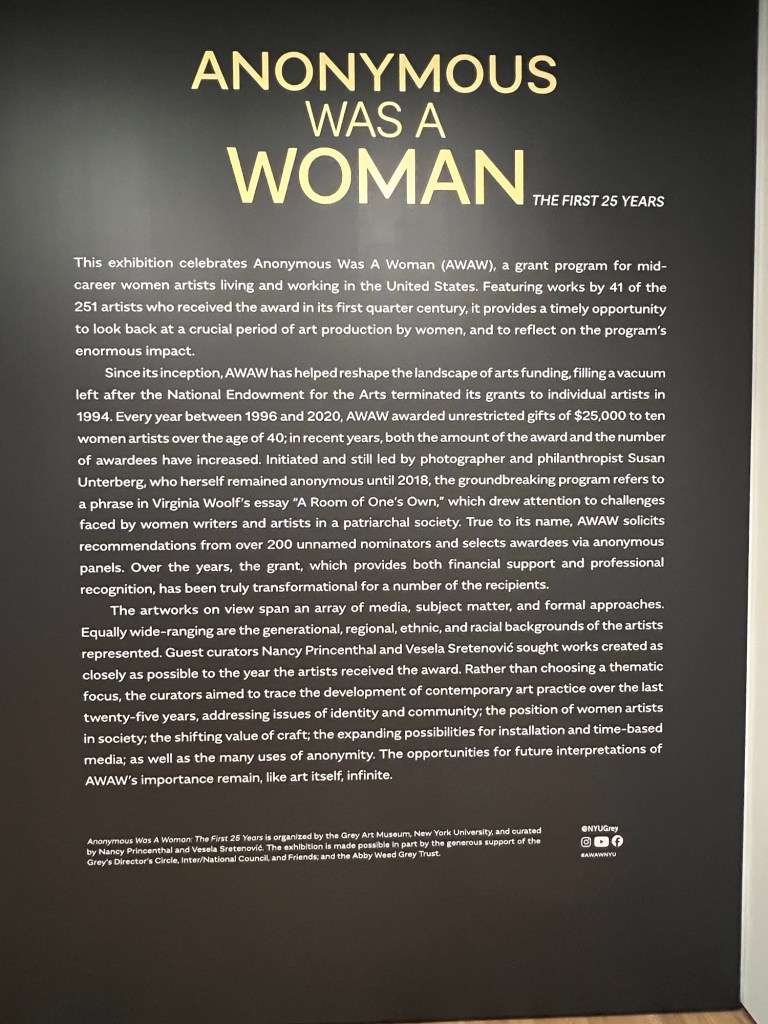
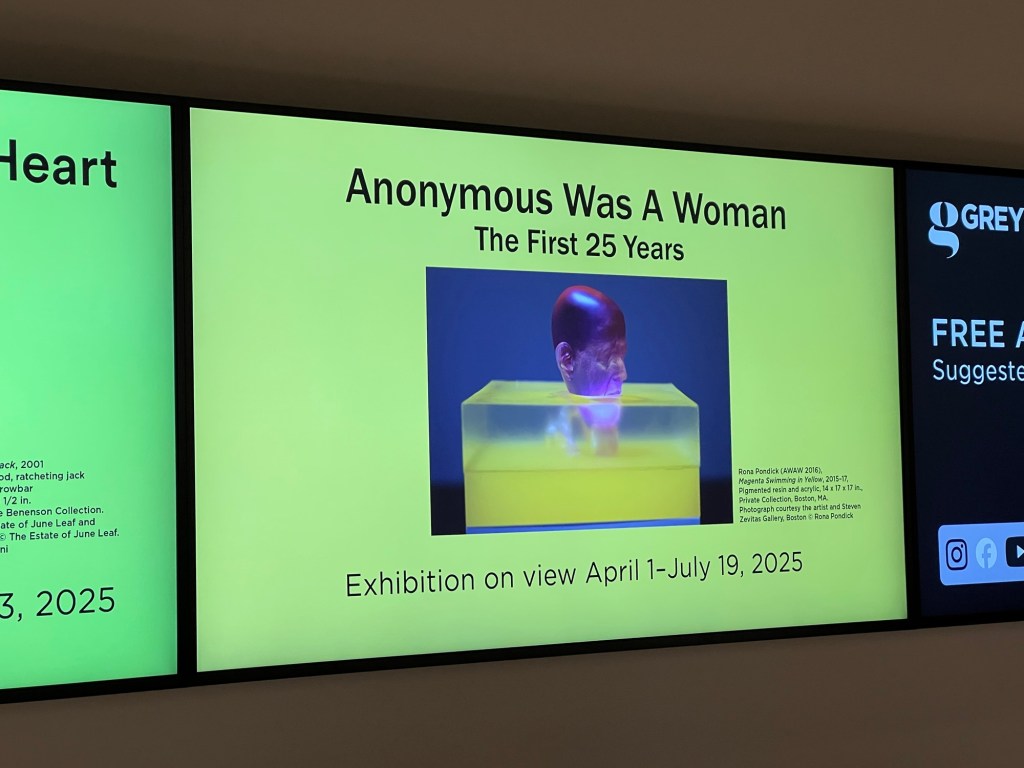
The new exhibition in the spring of 2025 was ‘Anonymous was a Woman’ , an execution on the ‘Anonymous was a Woman’s and the great programs effects on mid-Career female artists in the Unit.
The information sign in the front gallery
The entrance of the gallery the night of the exhibition
The entrance to the Grey Art Museum
This was the sign inside for the exhibition
The inside gallery at the start of the show showcasing the collection on display
The main gallery at Grey Gallery
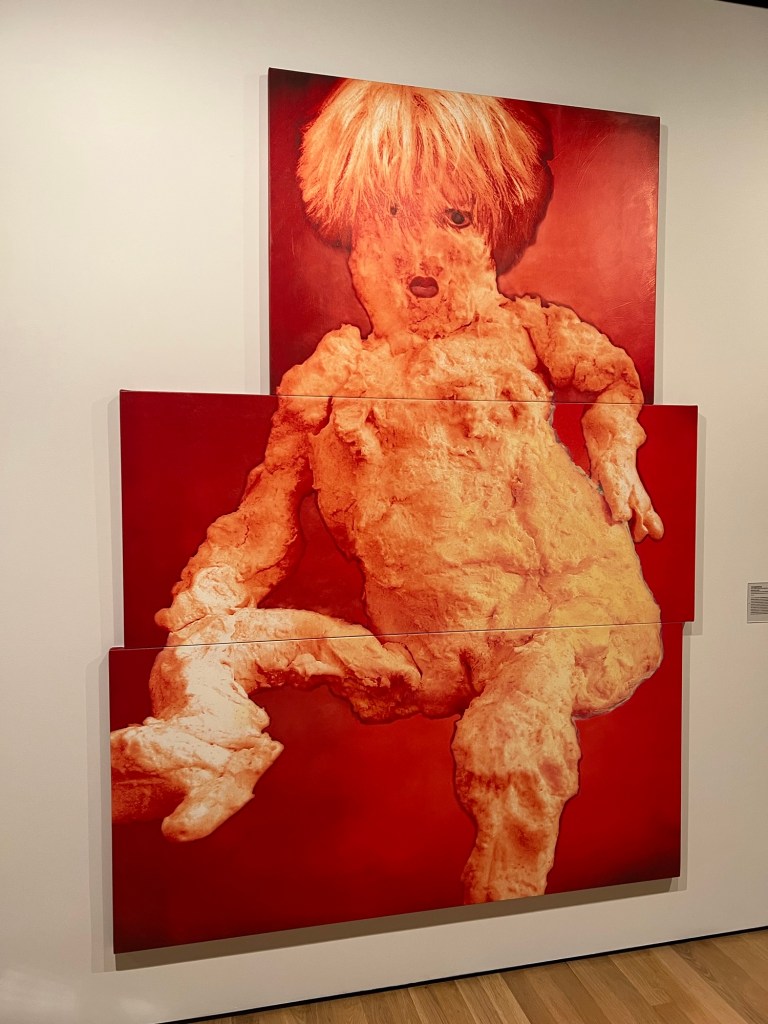
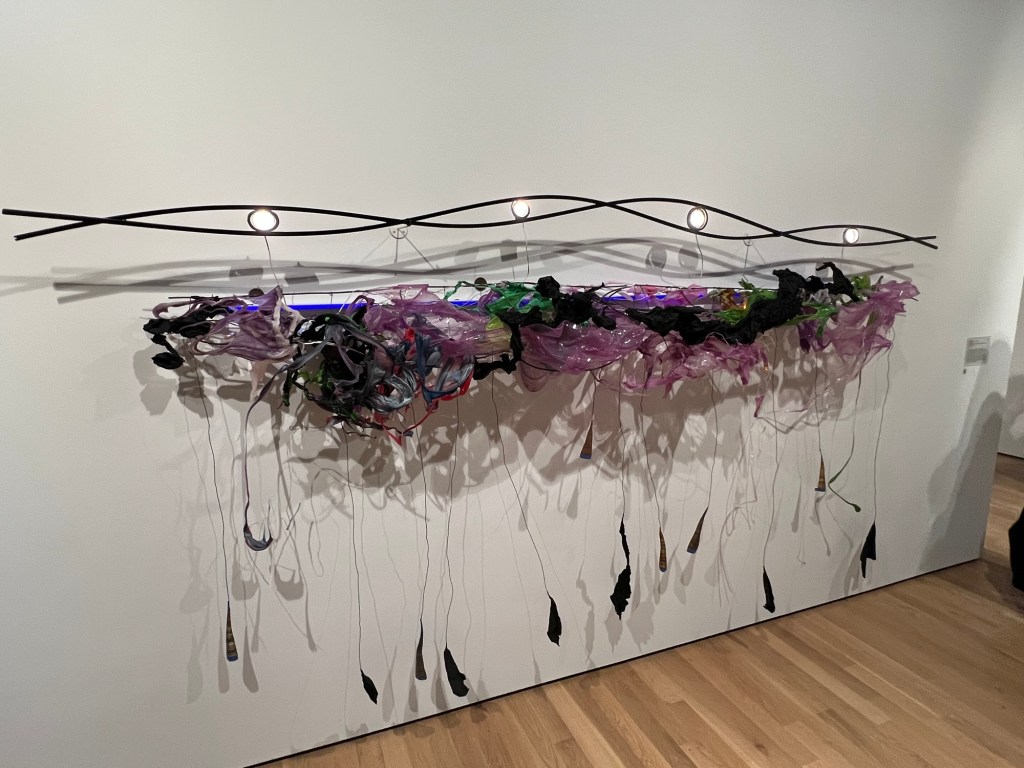
These were the pieces from the show that I found most impressive:
One of the more unusual paintings from the exhibition ‘Monalisa’ by artist Ida Applebroog
The sign for ‘Monalisa’ by Artist Ida Applebroog
The sculpture ‘Rom’s Delhi’ by artist Judy Pfaff
The sign for ‘Rom’s Delhi’
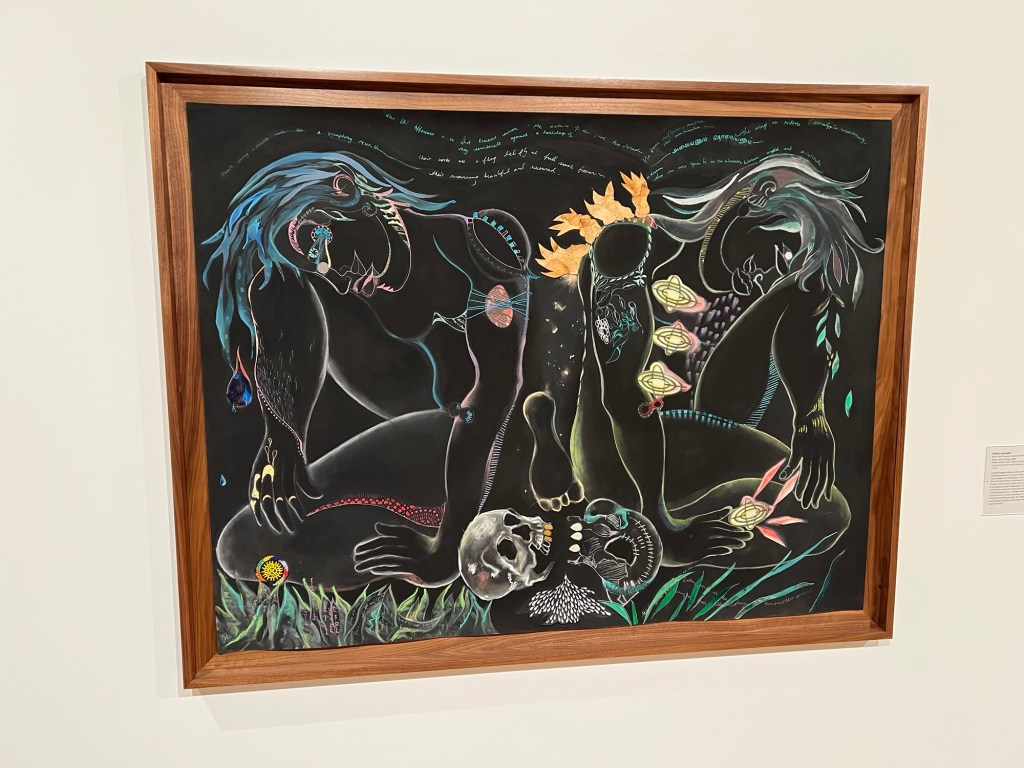
The painting ‘Svati: Now and Then’ by Artist Chita Ganesh
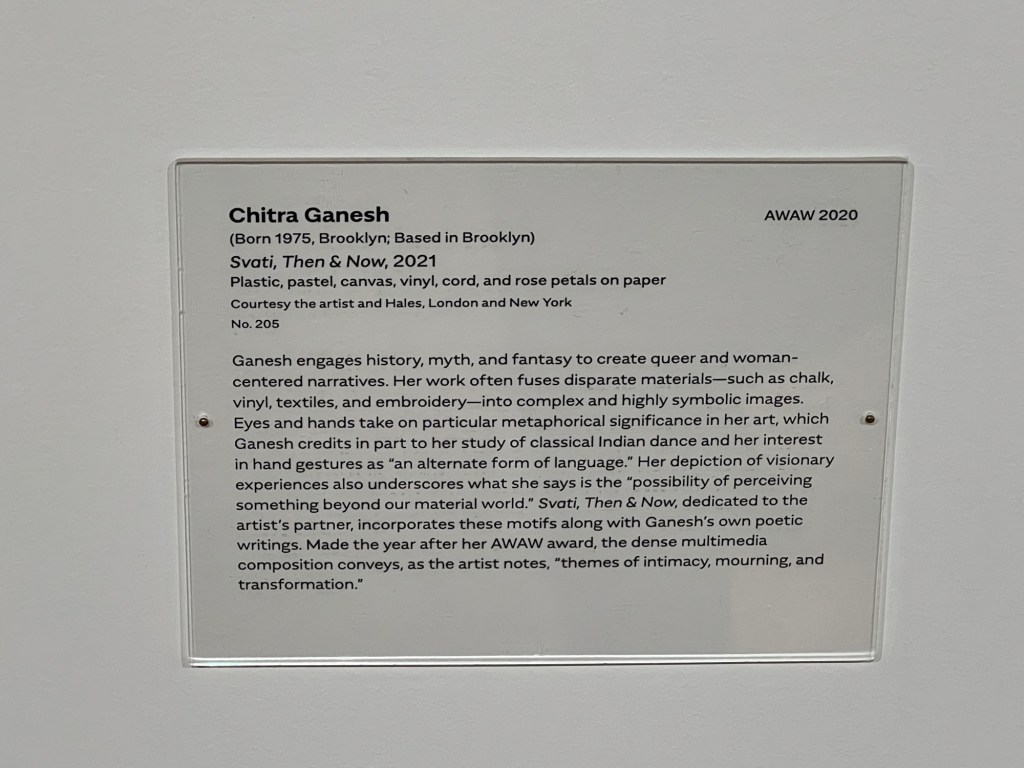
The sign for ‘Svanti: Now and Then’
The sculpture ‘Untitled #1242’ by Artist Petah Coyne
The sign for the sculpture
The sculpture ‘Bones 2000’ by Artist Polly Apfelbaum
The sign for the sculpture
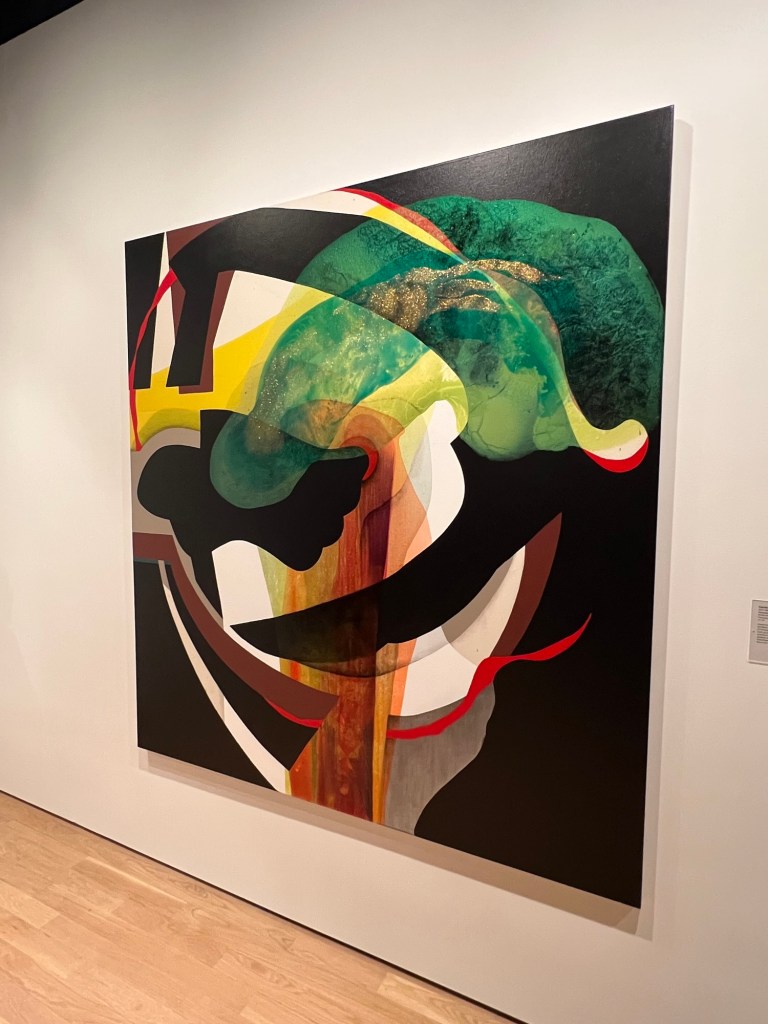
The painting ‘Flamethrower’ by Artist Carrie Moyer
The sign for the painting
The crowd at the end of the evening at the
‘Opening Night’
This unusual sculpture in the middle of the room
Astor Court at the end of the evening at the Grey gallery
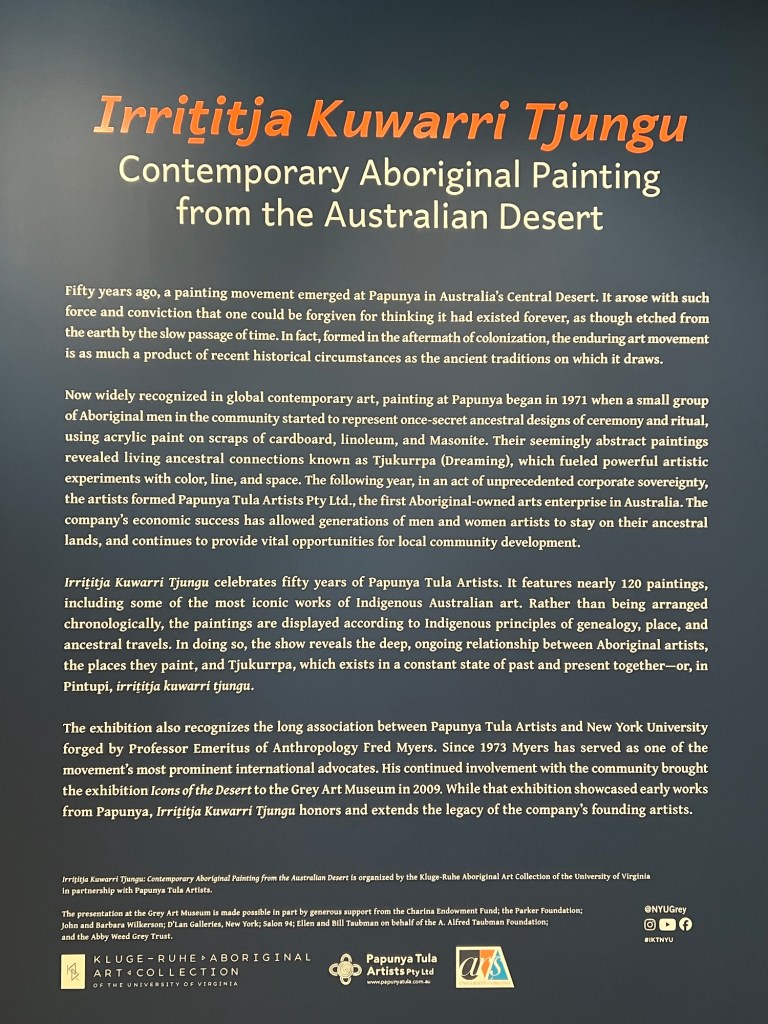
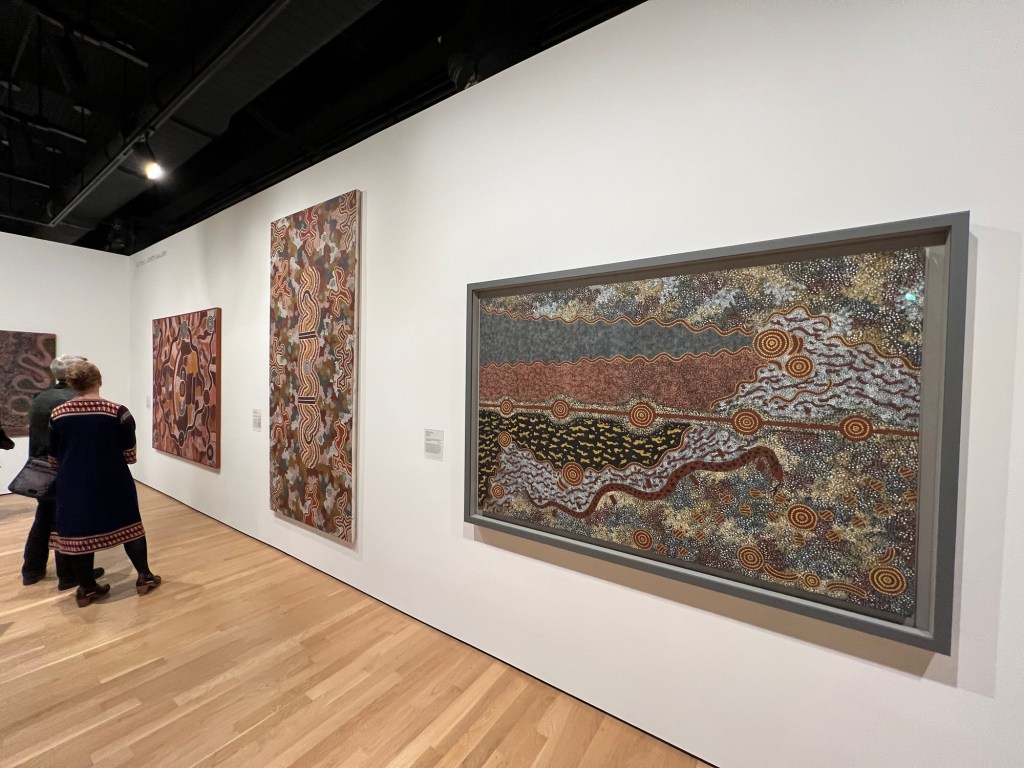
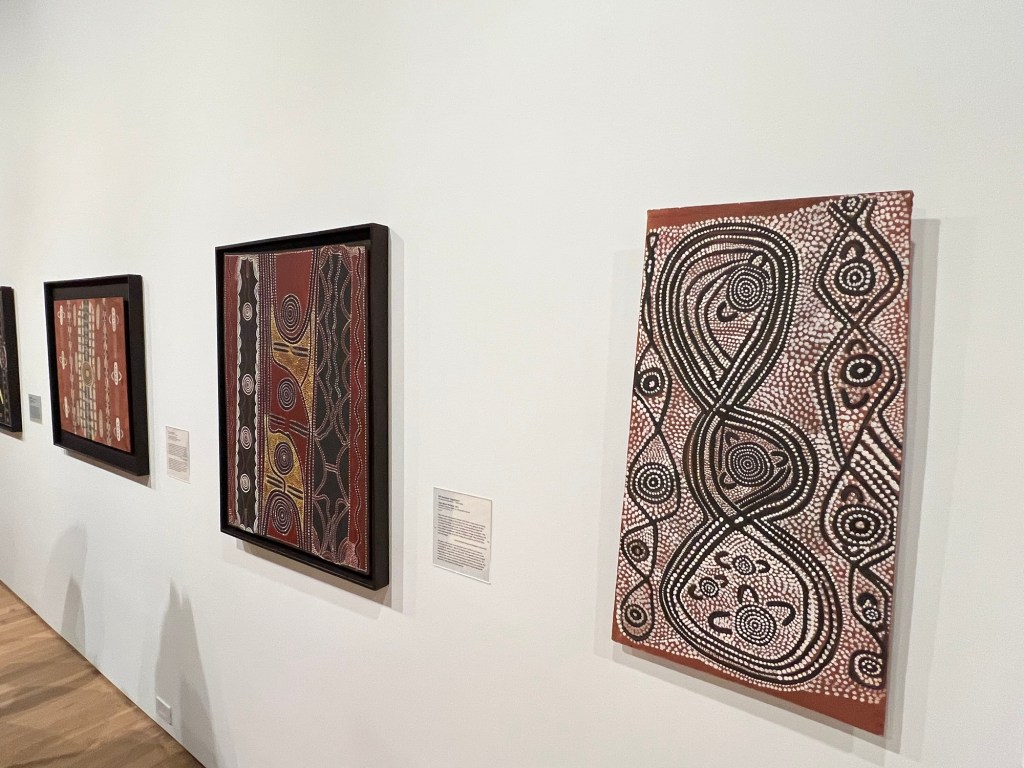
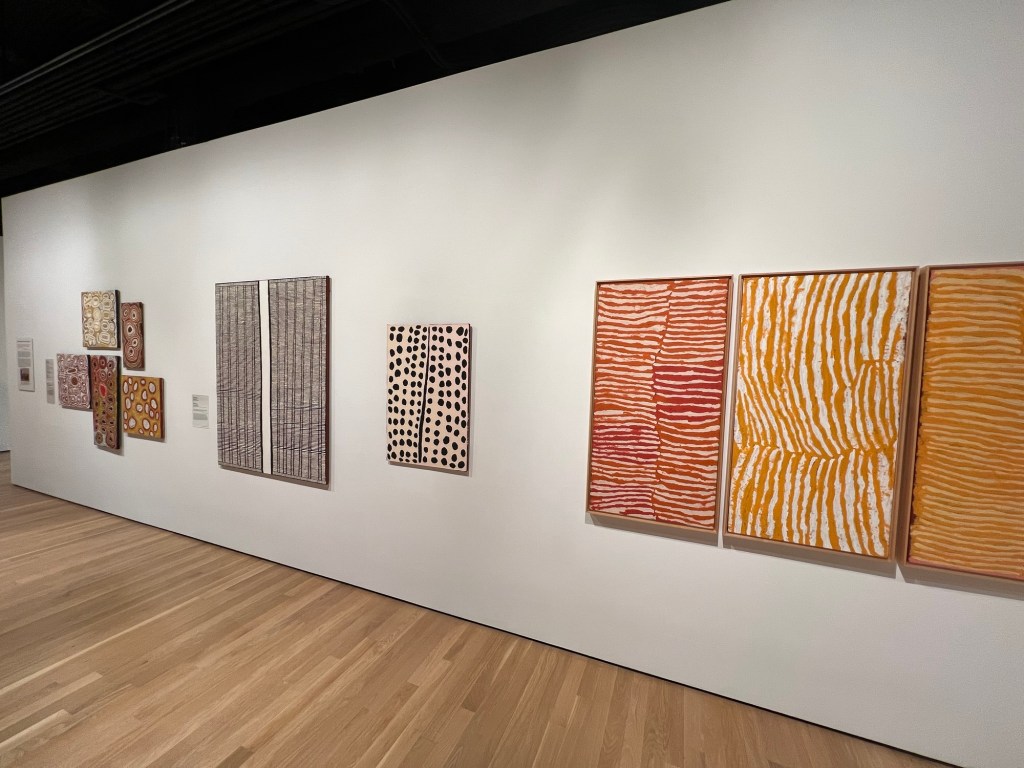
I recently attended the ‘Irrititja Kuwaiti Tjungu‘ exhibition on Aboriginal art. It was a very interesting look at Native Art from Australia. This exhibition opened in February of 2026 and the artists were in attendance to talk about their works.
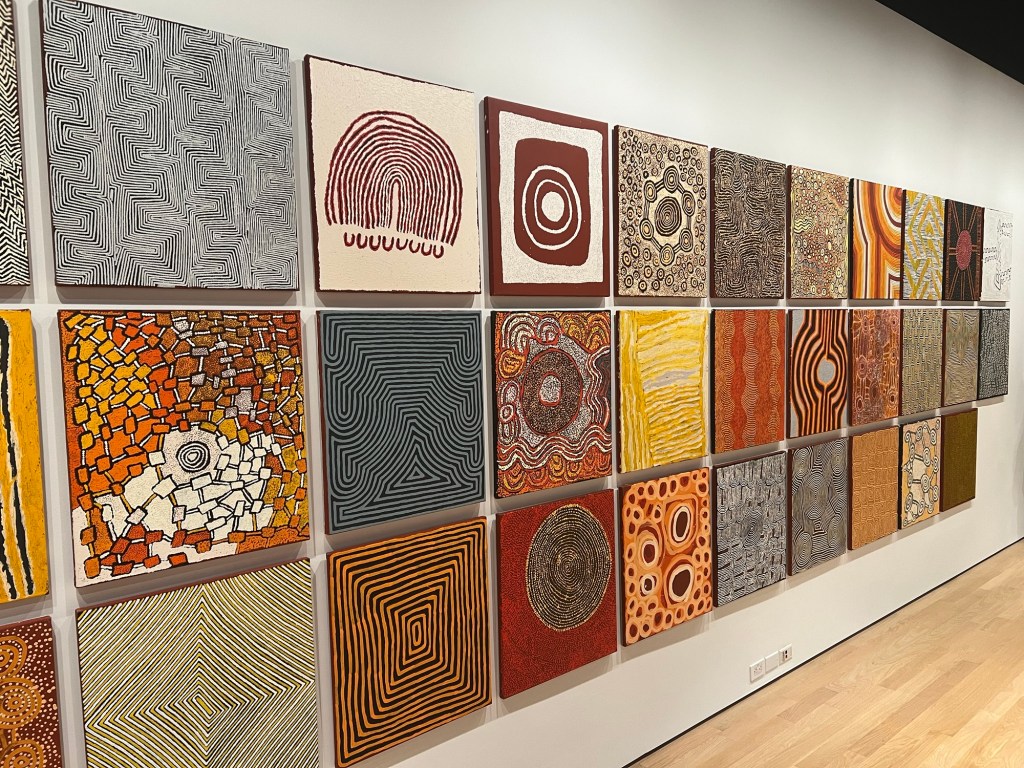
Irriṯitja Kuwarri Tjungu celebrates fifty years of Papunya Tula Artists. It features nearly 120 paintings, including some of the most iconic works of Indigenous Australian art. Rather than being arranged chronologically, the paintings are displayed according to Indigenous principles of genealogy, place, and ancestral travels. In doing so, the show reveals the deep, ongoing relationship between Aboriginal artists, the places they paint, and Tjukurrpa, which exists in a constant state of past and present together—or, in Pintupi, irrititja kuwarri tjungu.
The exhibition also recognizes the long association between Papunya Tula Artists and New York University forged by Professor Emeritus of Anthropology Fred Myers. Since 1973 Myers has served as one of the movement’s most prominent international advocates. His continued involvement with the community brought the exhibition Icons of the Desert to the Grey Art Museum in 2009. While that exhibition showcased early works from Papunya, Irrititja Kuwarri Tjungu honors and extends the legacy of the company’s founding artists.
The promotion sign for the exhibition
The art exhibition in the main gallery
Some of the works in the main gallery
(from the NYU/Grey Gallery website):
Fifty years ago, a painting movement emerged at Papunya in Australia’s Central Desert. It arose with such force and conviction that one could be forgiven for thinking it had existed forever, as though etched from the earth by the slow passage of time. In fact, formed in the aftermath of colonization, the enduring art movement is as much a product of recent historical circumstances as the ancient traditions on which it draws.
Now widely recognized in global contemporary art, painting at Papunya began in 1971 when a small group of Aboriginal men in the community started to represent once-secret ancestral designs of ceremony and ritual, using acrylic paint on scraps of cardboard, linoleum, and Masonite. Their seemingly abstract paintings revealed living ancestral connections known as Tjukurrpa (Dreaming), which fueled powerful artistic experiments with color, line, and space. The following year, in an act of unprecedented corporate sovereignty, the artists formed Papunya Tula Artists Pty Ltd., the first Aboriginal-owned arts enterprise in Australia. The company’s economic success has allowed generations of men and women artists to stay on their ancestral lands, and continues to provide vital opportunities for local community development.
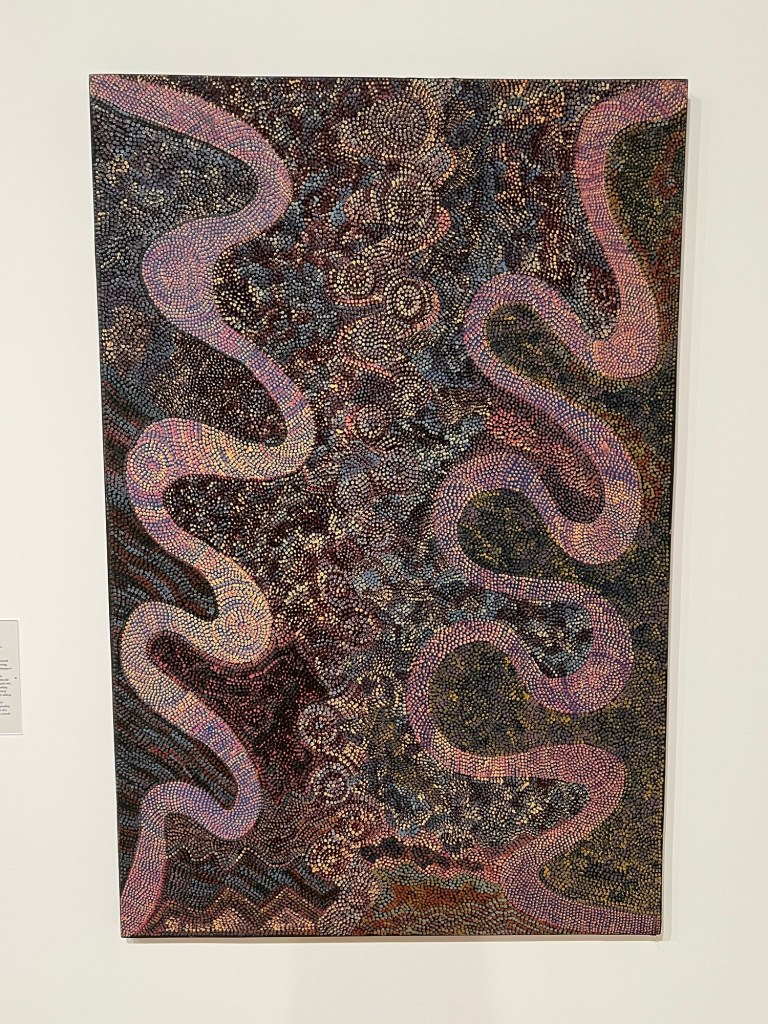
These were some of my favorite pieces of art from the exhibition:
One of the pieces I admired in the exhibit
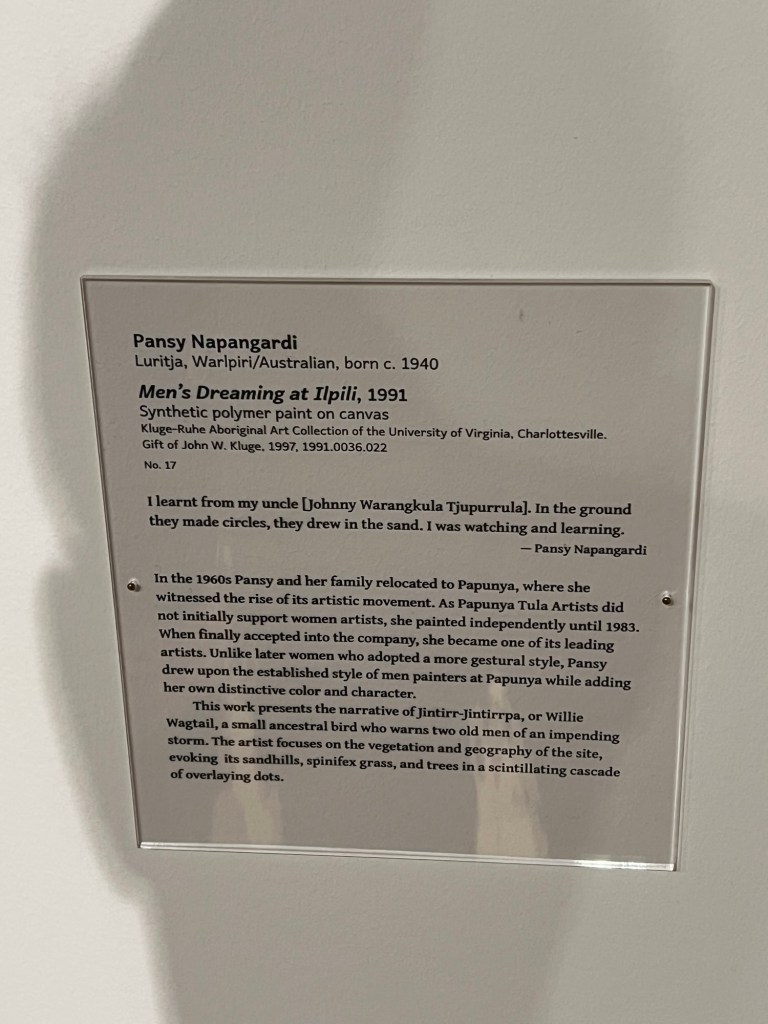
‘The Men’s Dreaming at Iloilo’
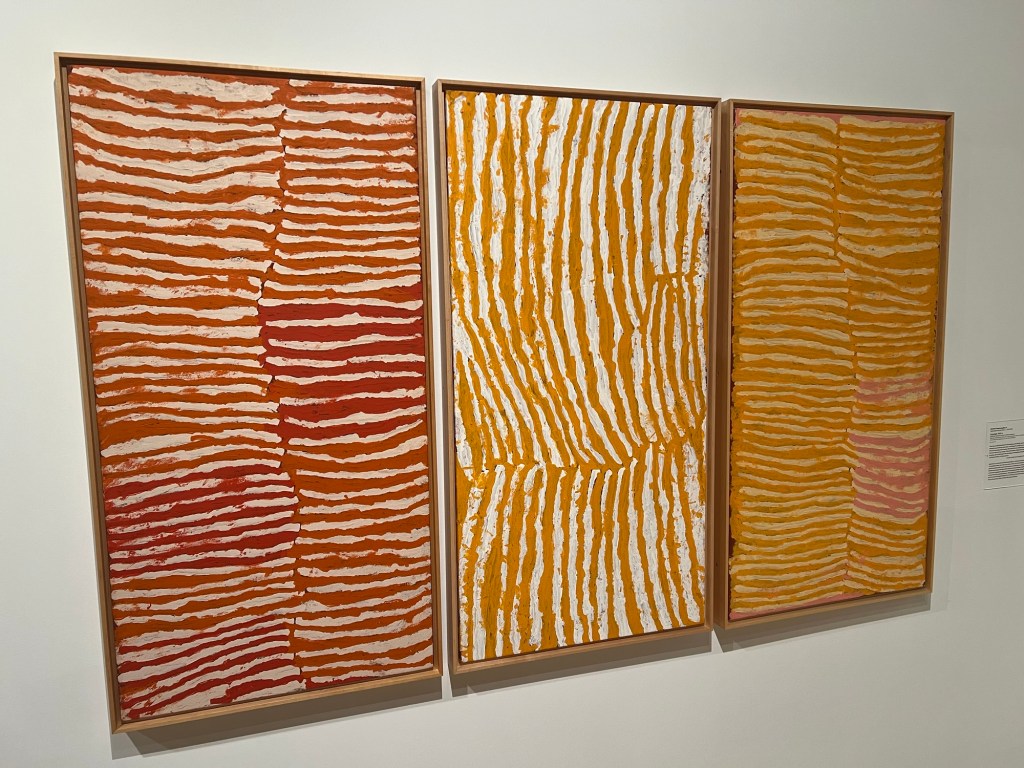
I thought this colorful work was interesting
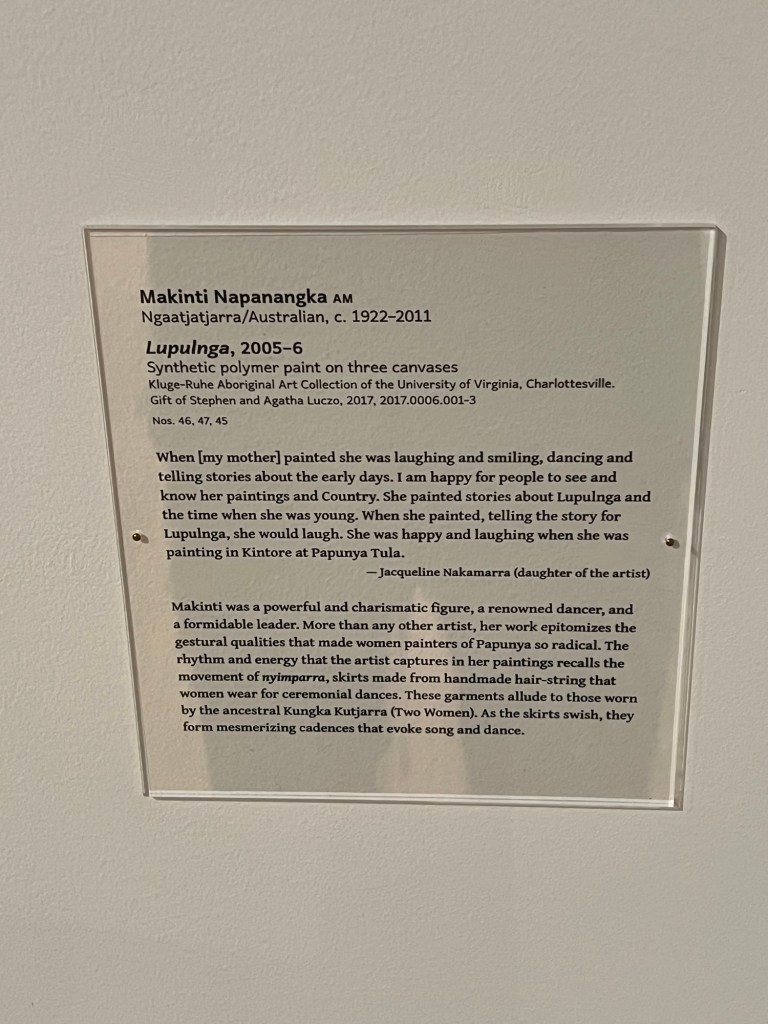
The work ‘Lupuinga’
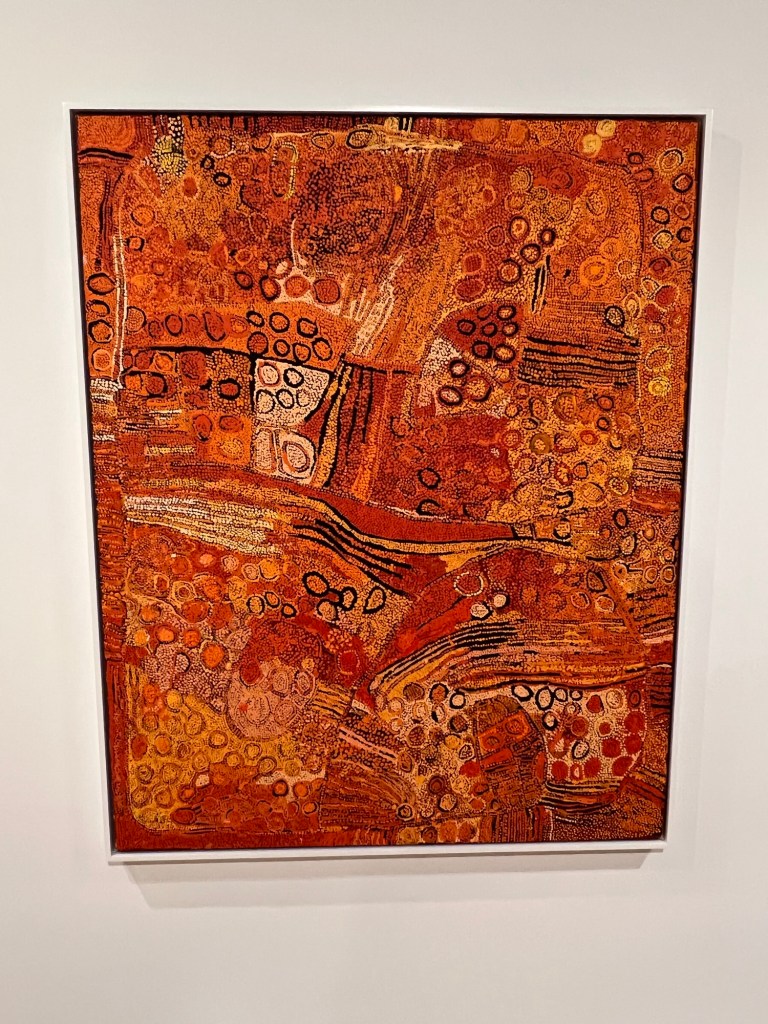
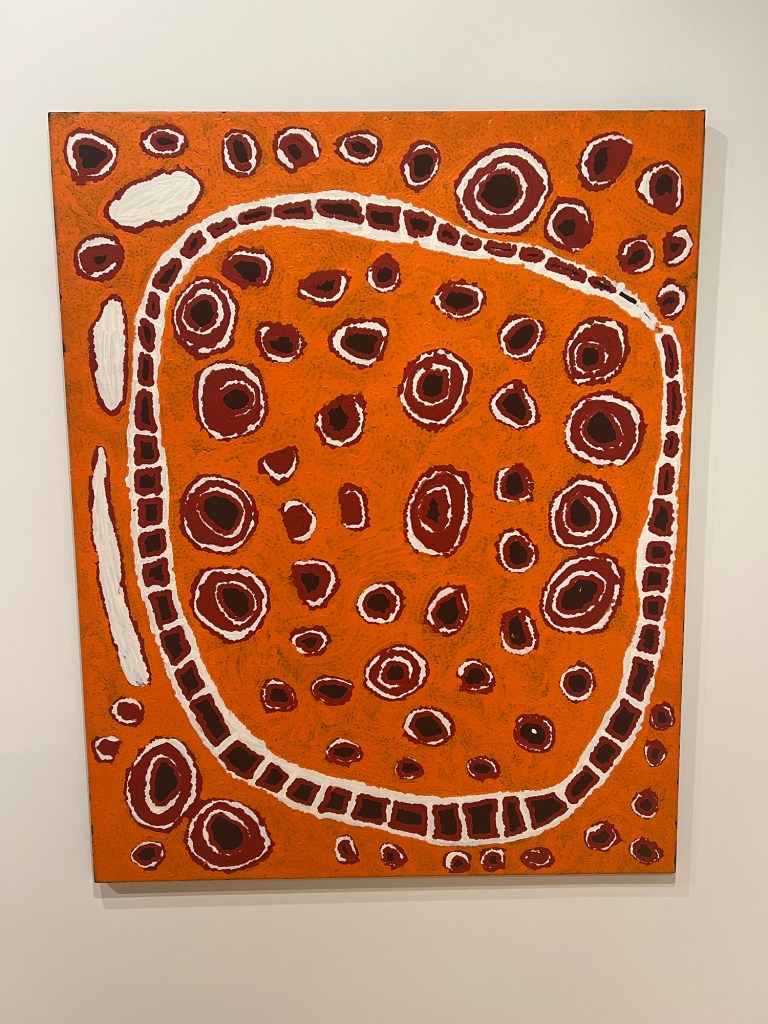
I loved the powerful colors of this painting
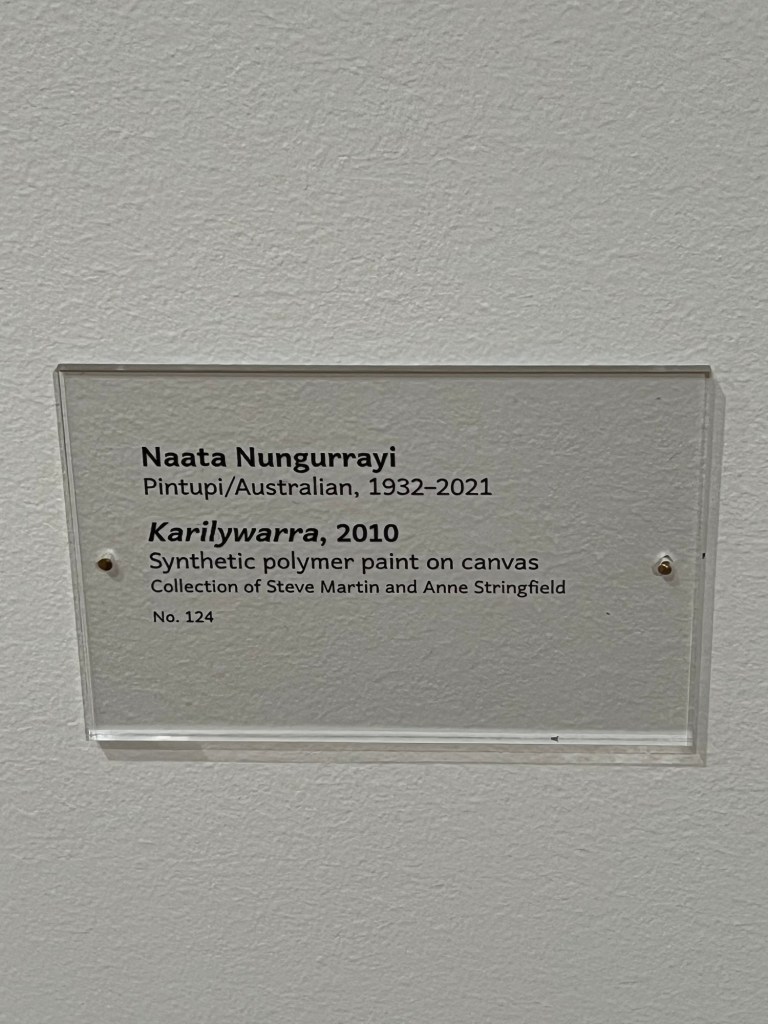
The ‘Karilywarra’ work is very colorful
This painting I thought would be interesting in textiles
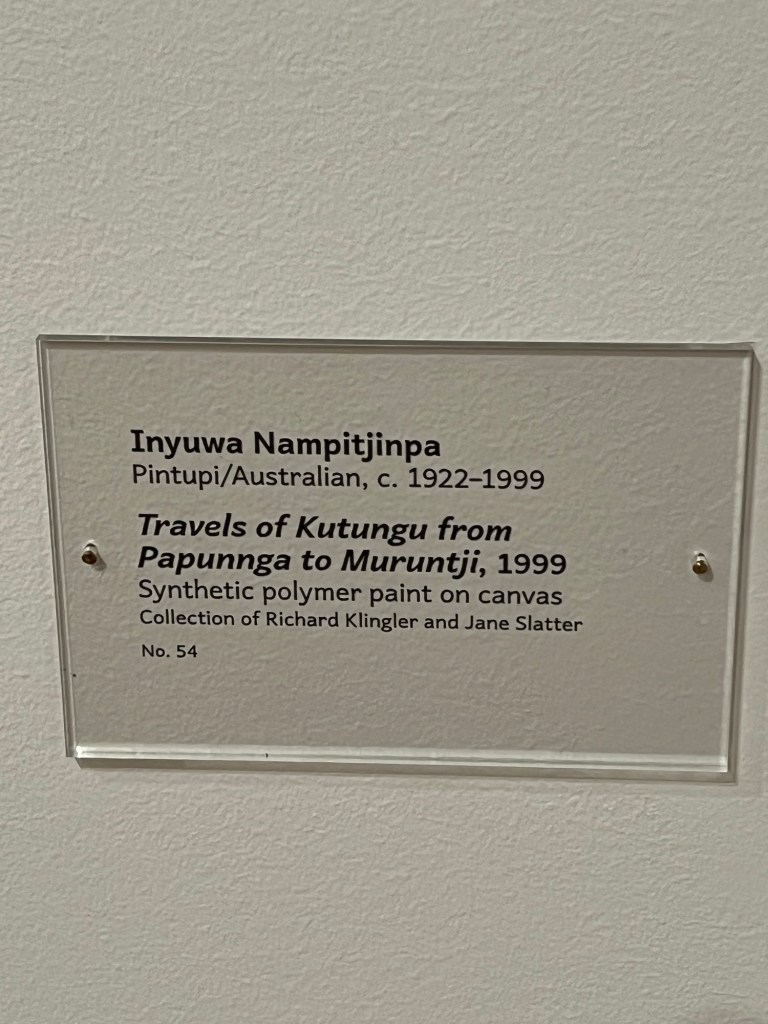
The painting ‘Travels of Kutungu from Papunnga to Muruntji’
I recently visited the American Folk Art Museum in New York City for the “Made in New York City” exhibition and it is a very interesting and engaging museum. The artwork for the museum was a combination of painting, sculpture, pottery and metal work created at different periods of the City’s history. It really showed the extent of manufacturing in New York City and the craftsmanship that was once here.
The entrance to the museum
I recently visited the American Folk Art Museum in New York City for the “Nation”exhibition and it is a very interesting and engaging museum.
The main gallery of the museum with early American art
The main gallery with one of the revolving shows
The artwork for the museum was a combination of painting, sculpture, pottery and metal work created at different periods of the City’s and the Country’s history.
Some of the permanent works were made in the Tri-state area. It really showed the extent of manufacturing in New York City and the craftsmanship that was once here.
The ‘Folk Nation’: Crafting Patriotism in the United States’ exhibition
Patriotism in the United States draws from the American Folk Art Museum’s rich collections to explore links between vernacular art and the construction of an American sense of self. Introducing visitors to the concept of “folk” as a category developed in conjunction with the art and antiques markets, this exhibition positions works as multilayered in their meanings, imbued with cultural significance by not only their creators, but also their collectors and subsequent owners. Americans have long preserved objects as a way of telling stories about themselves. Beginning after the Revolutionary War and gathering momentum in the late nineteenth and early twentieth centuries, people turned to early American things to construct a national history and sense of collective identity—an impulse often driven by lingering insecurity about the young nation’s perceived cultural provinciality compared to Europe (Folk Art Museum.com).
One of the painting’s that stood out to me was more contemporary approach to the Statue of Liberty, entitled ‘Miss Liberty reaches out to the persecuted’. A different approach to folk art.
The painting ‘Miss Liberty reaches out to the persecuted’ by Reverend Benjamin Franklin Perkins
The description of the painting
Some of the interesting things you will see are the paintings by artists in both Colonial New York and from the Hudson River School of prominent New Yorkers through its first 200 years of history. You will see how the styles of art have changed over the years.
Also there is a lot of metal work in the ways of signs and rods for the front of doors and for the roofs. The woodwork carvings that once graced the front doors of merchants all over the City is now a lost art. Here you could see the works of German and Russian carvers and the craftsmanship that was put into every piece. It was interesting too to see the racial themes and stereotypes that were used in the art.
Several revolving shows were being featured on a recent trip to the museum such as ‘Nation’ and ‘Self Made’, themed shows for the 250th Anniversary of the Country.
The show ‘Self Made’ A century of inventing artists’
Self-Made: A Century of Inventing Artists takes a critical look at the historical definition of the “self-taught artist” in the United States from the early twentieth century to today. The exhibition examines how artists without academic training have depicted, conceptualized, and identified themselves on their own terms. In doing so, it aims at challenging reductive, long-standing narratives that have cast these artmakers as amateurs or isolated geniuses working out of time, without lineage, influence, or artistic networks (Folk Art Museum.com).
The sixty artists featured here largely worked outside conventional art-school, gallery, museum, and peer-exchange systems. Their practices are rooted in diverse sites of learning, from professional expertise to community-based traditions. Drawn primarily from the American Folk Art Museum’s collection, this selection of artworks brings together outstanding examples of paintings, sculptures, photographs, videos, and artists’ notebooks by key national and international figures—many of them recent or rarely seen acquisitions (Folk Art Museum.com).
The exhibition is organized around three methods of artistic “self-making” and self-fashioning: self-portraits, alter egos, and autobiographies. Each gallery unfolds chronologically, providing grounding for the artists’ intentions. The works function as primary documents: firsthand accounts of the self, authored by the self. Akin to diaries or other personal statements, they call for close attention, asking viewers to “look at me, in this way, that I have chosen.” By centering the makers’ perspectives and aesthetic choices, Self-Made shifts the focus away from the viewer’s role in completing the creative act and places it squarely on the artist’s agency (Folk Art Museum.com).
Some of the paintings that stood out seemed to be self-portraits.
The painting ‘Untitled’
The painting ‘Untitled’
The museum takes different approaches to the way art is portrayed.
Another program that the museum does well is they have afternoon Jazz Wednesdays and Free Concerts on Friday nights.
There are family programs, walking tours, curator talks and lectures as part of the museum programming so there is something for everyone.
The American Folk Art Mission:
(From the Museum website)
Since 1961, the American Folk Art Museum has been shaping the understanding of art by the self-taught through its exhibitions, publications and educational programs. As a center of scholarship and by showcasing the creativity of individuals whose singular talents have been refined through experience rather than formal artistic training, the museum considers the historical, social and artistic context of American culture. Its collection includes more than seven thousand artworks dating from the eighteenth century to the present, from compelling portraits and dazzling quilts to powerful works by living self-taught artists in a variety of mediums (Museum bio).
Self-Taught art, past and present, tells empowering stories of everyday life. The field of American folk art was first defined at the turn of the twentieth century by collectors, professional artists, critics, dealers and curators whose search for an authentic American Art seemed to be finally answered in works that presented a nuanced of national identity, faith, progress, ingenuity, community and individuality. Under the umbrella of “folk art” expanded to also include artists working in the present. For the last twenty years, the term self-taught has more regularly come to address these artists, whose inspiration emerges from unsuspected paths and unconventional places, giving voice to individuals who may be situated outside the social mainstream. Those individuals have been active participants in the shaping of American visual culture, influencing generations of artists and establishing lively artistic traditions (Museum History).
American Folk Art Museum History:
(From the Museum website)
The museum of Early American Folk Arts as it was known initially held its first exhibition in a rented space on 49 West 53rd Street in 1961. The museum’s collection was launched in 1962 with the gift of a gate in the form of an American flag, celebrating the nation’s centennial. The gift reflected the museum’s early focus on eighteenth and nineteenth century vernacular arts from the northeast America.
In 1966, after receiving a permanent charter, the museum expanded its name and mission. As the Museum of American Folk Arts, it looked beyond the traditional definitions of American folk art. Its exhibitions and collection began to reflect “every aspect of the folk arts in America-north, south, east and west.” Founding curator Herbert W. Hemphill Jr. “expanded the notion of folk art beyond traditional, utilitarian and communal expressions.” Under his direction, the museum began to champion idiosyncratic and individualistic artwork from the fields of traditional and contemporary folk art. In doing so, the museum ushered in a new era in the field of twentieth-century folk art (Museum History).
The 1990’s brought new focus to the diversity and multiculturalism of American Folk Art. Offering a more inclusive vision. the museum began to present African American and Latino artworks in their exhibitions and permanent collections. Director Gerard C. Wertikin announced American folk art’s common heritage as “promoting an appreciation of diversity in a way that does not foster ethnic chauvinism or racial division.” (Museum History).
The museum further established its broadened outlook with the 1998 formation of the Contemporary Center, a division of the museum devoted to the work of 20th and 21st century self-taught artists as well as non-American artworks in the tradition of European art brut. In 2001, the museum opened the Henry Darger Center to house 24 self-taught artist’s works as well as a collection of his books, tracings, drawing and source materials (Museum History).
The gift shop
In 2001, the museum chose its current name, American Folk Art Museum. Recognizing that American Fold Art could be fully understood in an international context, the word American functions as an indication of the museum’s location, emphasis and principal patronage rather than as a limitation on the kind of art it collects, interprets or presents. The museum’s current programming reflects this shift in focus. Past exhibits have included folk arts of Latin America, England, Norway, among other countries and continents (Museum history).
Don’t miss this amazing little museum on the Upper West Side of Manhattan.