Tag: addthistoyourgrocerycart@Wordpress.com

New York Transit Museum Gallery                                           89 East 42nd Street                                                                  New York, NY 10001

New York Transit Museum Gallery 89 East 42nd Street New York, NY 10001

New York Transit Museum Gallery

89 East 42nd Street

New York, NY 10001

(212) 878-0106

https://en.wikipedia.org/wiki/New_York_Transit_Museum

My review on TripAdvisor:
https://www.tripadvisor.com/Attraction_Review-g60763-d9873833-Reviews-New_York_Transit_Museum-New_York_City_New_York.html

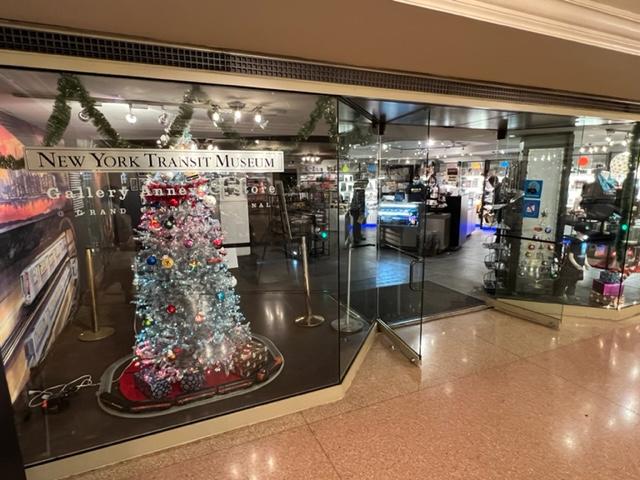
The NY Transit Museum Gallery inside Grand Central Station on the first floor

It is amazing to be in a building a record number of times and miss a small gallery that makes an impact on a visitor. This is how I felt when I entered Grand Central Station recently and discovered the New York Transit Museum Gallery. This little gem is tucked into a corner away from the ticket booths and Grand Hall and is free to the public.

The Gallery is a branch of the larger New York Transit Museum in downtown Brooklyn. This smaller space can be toured in about an hour which is perfect in case you need to spend some time in the terminal before your train.

The Gallery was showing an exhibition entitled “Transit Sketches” by six artists who were based in New York City over the last 100 years. It was nice to see different perspectives of the artist though the overall theme was still the same.

“Transit Sketches” at the New York Transit Gallery

Video by Burning Hammer Productions

Tired people going to and from work. Works featured were from artists Ebony Bolt, Marvin Franklin, Naomi Grossman, Joseph Solman, Amy Tenenouser and Hank Virgona. Each artist represented a different time in the subway system, and it was nice to see that nothing really has changed over the years with the exception of the iPhone has replaced the newspaper as a place to do your work on the subway.

Each artist had their own mini gallery show in each section of the museum gallery and all the works showed people after either getting to work in the morning or after a long day at work. It showed the human side of riding the subway and just wanting to get to our destination.

Artist Ebony Bolt created a series entitled “The Bolt Dairies”, where she drew sketches of people either reading or sleeping on the subways and most of the faces were looking down. I took this that she was secretly drawing them while they were content being distracted by whatever means possible from the other riders and the books were full of overlapping faces.

Artist Ebony Bolt on her work on the inspiration of the people on the subway

https://www.theboltdiaries.com/

Artist Naomi Grossman show her works with an interesting approach of capturing the moods of the passengers as they spent their time on the train almost wishing to get off at the next stop. It was a way of looking at the patrons and capturing them after a long day at work.

Artist Naomi Grossman

https://www.naomigrossman.com/

MTA worker and Artist Marvin Franklin’s work

Artist Marvin Franklin

http://thejadesphinx.blogspot.com/2015/06/sketches-of-marvin-franklin.html

Artist Marvin Franklin was an MTA worker who worked the lines as a track worker who died on the job in 2007. He was on the job with another worker picking up a non-working dolly on the track whose lights were out and the train operator who hit them did not see them (NY Times.com). His vision to see the people who disappeared after work and became part of the fabric of the City. He showed their stories in his art.
Joseph Solman Artist

https://en.wikipedia.org/wiki/Joseph_Solman

Joseph Solman work on riders on the subway

Joseph Solman used to sketch people when they were involved in just trying to ignore what was going on around them. He caught people in a part of time of just trying to keep their space on the subway.

Artist Amy Tenenouser

https://amytenenouser.com/home.html

https://www.facebook.com/people/Amy-Tenenouser/646628208/

Artist Amy Tenenouser’s work also gives the patron a Birdseye view of average people living their lives and capturing them in a moment in time. She has a good view of the riders on the subway and a whimsical approach.

Artist Amy Tenenouser captures the everyday person.

Artist Hank Virgona

https://www.hankvirgonaart.com/

https://www.facebook.com/HankVirgona/

Hank Virgona’s work shows people in a state of mind

Hank Virgona’s career goes back to the Great Depression, and he captures like many of the artists in the exhibition the everyday person on the subway. Being a native New Yorker, he looks at the riders keeping an uncomfortable position keeping their space. I liked his work on the written word.

The newest exhibition is on the tunnel extension from Grand Central Terminal called the “Grand New Connection”:
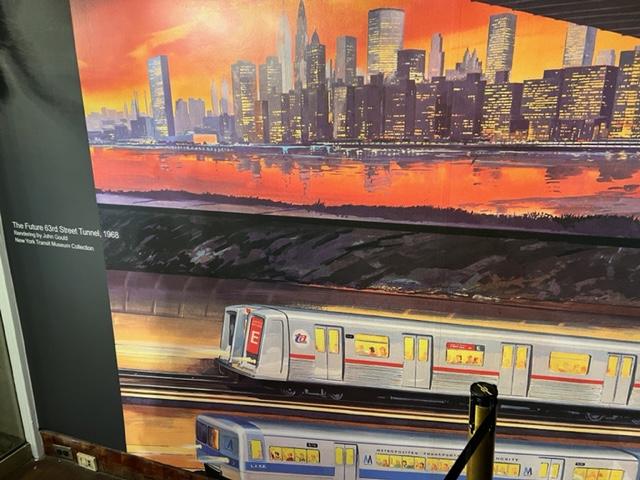
The plans for the new tunnel in 1968
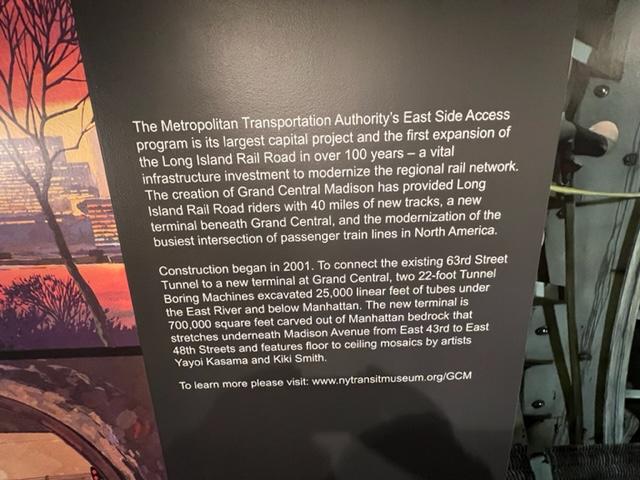
The East Side Access program

The new plans for the tunnel

The updates and pictures of what the tunnels are going to look like when finished

The exhibition was interesting at looking what progress in transportation can be in the modern age of New York City. The new boring machines can do a lot more that manmade labor was able to accomplish at the same time. It was interesting to see all these pictures.

In the corner of the gallery there is a very extensive gift shop that features hats with subway numbers and letters representing the routes they take, games, puzzles and books that are all railroad themed catering to both children and adults. It has a nice selection of products to choose from.

The best part of the New York Transit Gallery is that it is free and a nice way to spend the afternoon while waiting to get on your train.

The gift shop at the NY Transit Museum Gallery

The History of the Transit Museum:

(From the museum’s website)

Founded in 1976, the New York Transit Museum is dedicated to telling and preserving the stories of mass transportation-extraordinary engineering feats, workers who labored in the tunnels over 100 years ago, communities that were drastically transformed and the ever-evolving technology, design and ridership of a system that runs 24 hours a day, every day of the year.

Housed underground in a authentic 1936 subway station in Downtown Brooklyn, the Transit Museum’s working platform level spans a full city block and is home to a rotating selection of twenty vintage subway and elevated cars dating back to 1907.

Visitors can board the vintage cars, sit at the wheel of a city bus, step through a time tunnel of turnstiles and explore changing exhibits that highlight the cultural, social and technology history and future of mass transit.

The New York Transit Museum is a self-supporting division of the Metropolitan Transportation Authority, Friends of the New York Transit Museum, a 501c3 not-for-profit organization was established in 1995 to promote and raise funds for the Museum’s operations and programs.


Ginseng Museum Cafe by CheongKwanJang                        315 Fifth Avenue                                                                           New York, NY  10016 (Store is Closing August 2025)

Ginseng Museum Cafe by CheongKwanJang 315 Fifth Avenue New York, NY 10016 (Store is Closing August 2025)

Ginseng Museum Cafe by CheongKwanJang (Store Closing August 2025)

315 Fifth Avenue

New York, NY 10016

(212) 685-1003

https://kgcus.com/

Open Sunday 12:00pm-6:00pm/Monday-Saturday 11:00am-7:00pm

My review on TripAdvisor:

https://www.tripadvisor.com/Restaurant_Review-g60763-d6809267-Reviews-Korean_Ginseng_Corp-New_York_City_New_York.html?m=19905

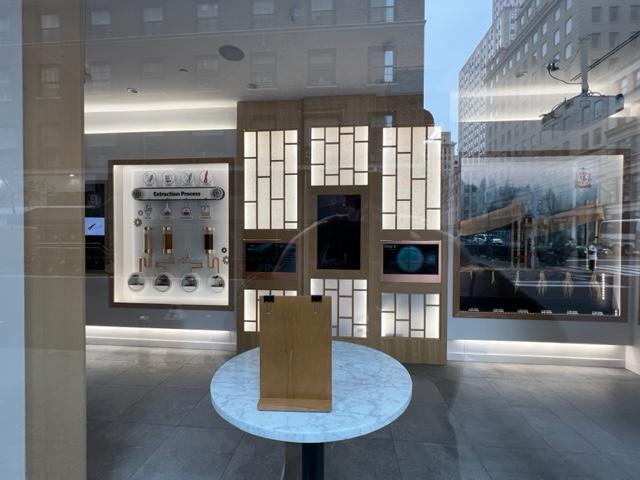
The Ginseng Museum Cafe by CheongKwanJang is a combination small museum of the development of the ginseng root for tea and its history, part cafe for tea and part store. This small store front is packed with information on the history and processing of ginseng.

The Ginseng Museum Cafe at 315 Fifth Avenue

To the right of the store, is the video history of the company and how they process and produce their product which is very interesting. The conditions that the ginseng is processed under may have advanced over the years but not by much. There is still a lot of care that is used to make the tea. There is also a display on the extractions.

The museum section of the store describes the process of producing ginseng

Next to it is the video history of the ginseng from its development to the processing and then the export and business of the product for trade from the 1800’s to today. It is impressive how the product is still very specialized and very expensive to produce and sell.

To the right of the store are all the products that the store sells from the extracts and teas to the roots themselves. Some of these items are worth several hundred dollars telling me that this is for a very particular customer.

The retail section of the Ginseng Museum Cafe

The combination store/museum tells the whole story of ginseng and a nice place to stop and not just sample the product but learn its story and history. There are also beautifully wrapped products for sale for all occasions.

It’s a beautiful little store in the heart of Koreatown in Manhattan.

The National Museum of Mathematics                                     225 Fifth Avenue                                                                   New York, NY 10010

The National Museum of Mathematics 225 Fifth Avenue New York, NY 10010

The National Museum of Mathematics

225 Fifth Avenue

New York, NY 10010

(212) 542-0566

https://momath.org/

https://www.facebook.com/MoMath1/

Open: Sunday-Saturday 10:00am-5:00pm

Fee: Adults $25.00/Seniors-Children-Students $20.00/Members are Free

My review on TripAdvisor:

https://www.tripadvisor.com/Attraction_Review-g60763-d3726207-Reviews-National_Museum_of_Mathematics-New_York_City_New_York.html?m=19905

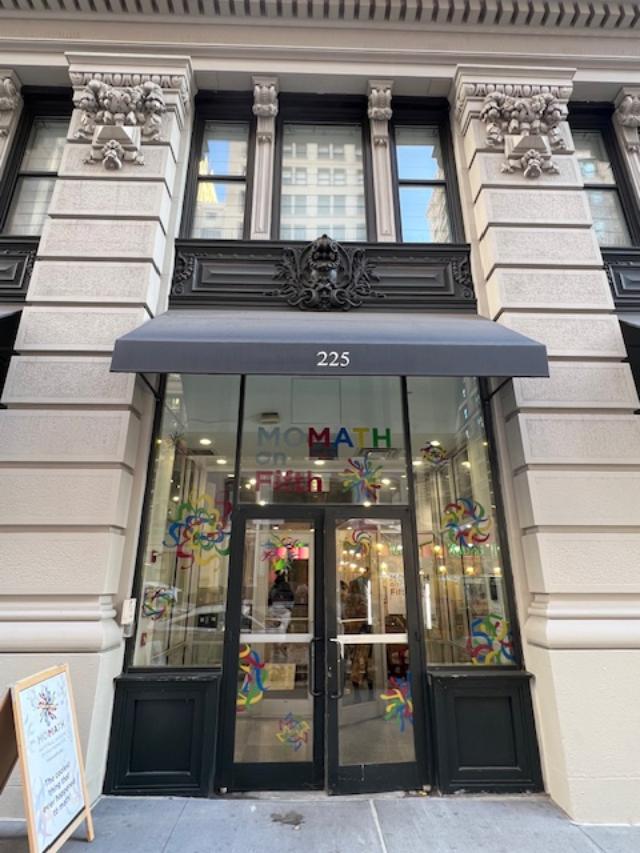
The Museum of Mathematics at 225 Fifth Avenue

https://momath.org/

In 2020, COVID had closed this unique little family orientated museum when I visited the NoMAD neighborhood earlier last year and it finally reopened for business right before the holidays. I could see the reasons why in that the museum is very interactive and there are a lot of activities and displays that warrant families touching objects and getting involved with the exhibitions.

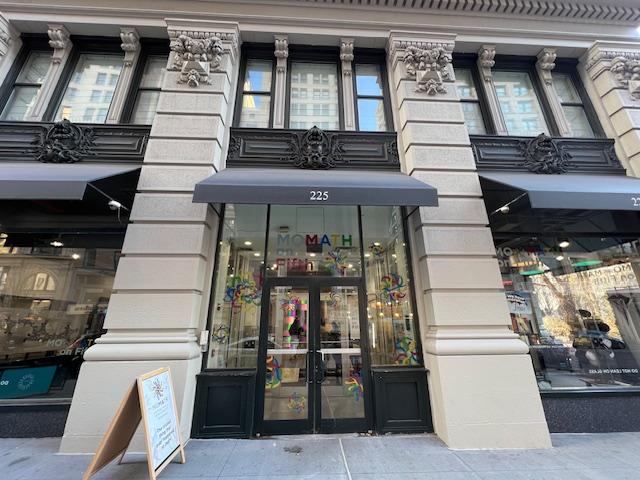
The entrance to the new museum at 225 Fifth Avenue

Like most museums in Manhattan, the MoMATH or the Museum of Mathematics is quite pricey at $25.00 ($26.00) for an adult and for students, children over 12 and seniors over 60 it is $20.00. While it may be lot for an average family, a trip there is an eye-opening experience at least to me it was that day.

The sign welcoming you on Fifth Avenue

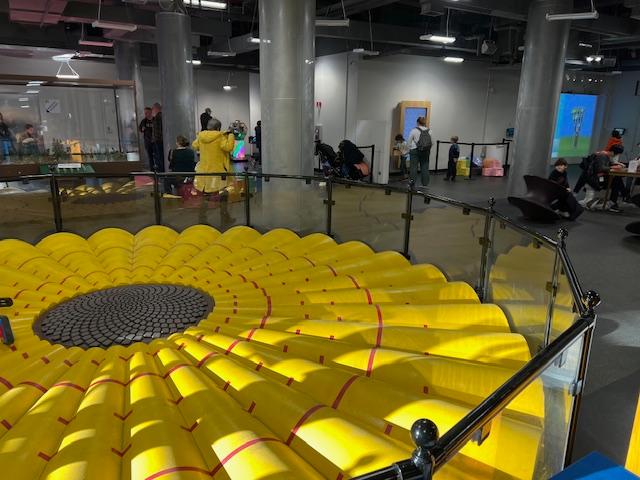
In 2021 when it reopened, the museum was two full floors of exhibitions with a spiral staircase separating the floors and a gift shop at the entrance. On the main floor there are interesting interactive exhibitions such as the Shapes of Space that show how different shapes fit together on a curved surface. I was not too sure what the point of it was, but the kids seemed to enjoy it and it was interesting to see how they connected. The Square wheeled Trike was interesting as you rode a square wheeled type of bike on a bumpy surface to check velocity. The kids and young parents really liked this.

The “Shapes of Space” exhibition

In 2024, the museum was moved around the corner until the permanent location could be finished. The museum was on one floor with a art gallery in the front of the museum and the back of the museum was all the interactive activities.

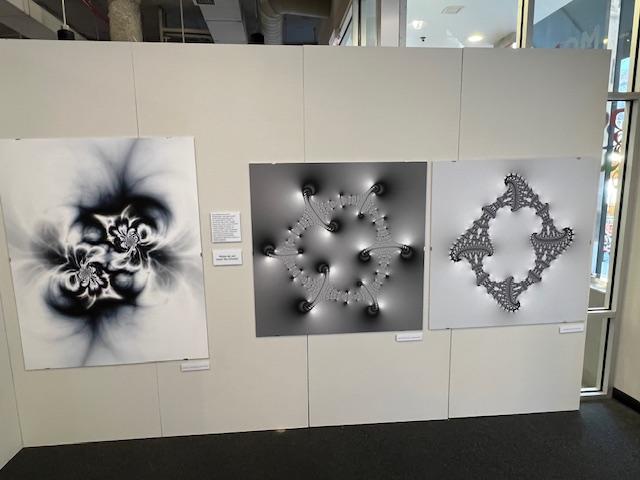
The Math “Fractorals” Gallery Exhibit at the Museum of Math

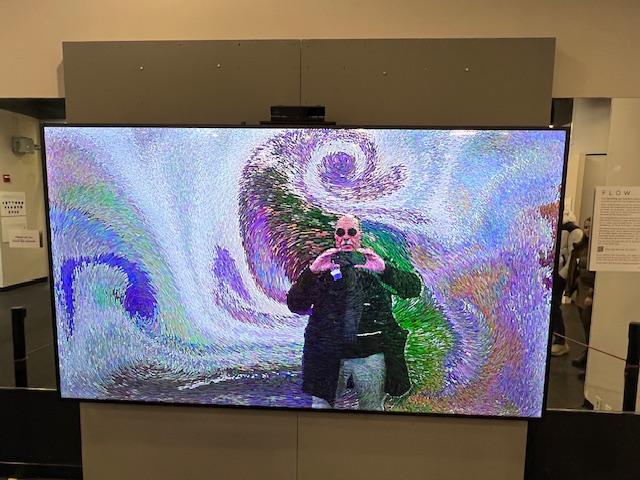
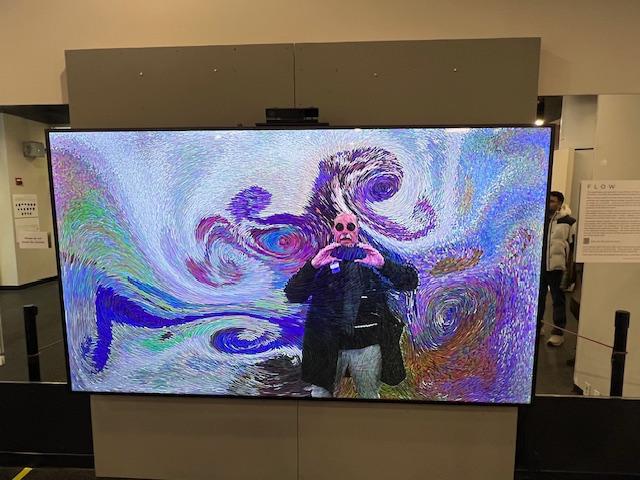
The “Fluids and Fractals” exhibition of artist Karl Sims

The Art Gallery exhibition

The art in the Gallery

The art gallery at the Museum of Mathematics

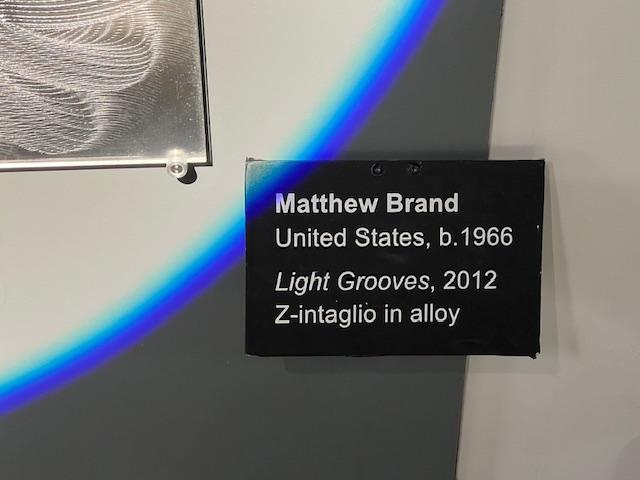
‘Light Grooves’ by artist Matthew Brandt

Artist Matthew Brandt

https://matthewbrandt.com/

Matthew Brandt is an American born artist. Matthew Brandt received his BFA from Cooper Union and MFA from UCLA. Brandt has been the subject of institutional solo shows at the Newark Museum, the Columbus Museum of Art, Virginia Museum of Contemporary Art and SCAD Museum of Art, Savannah (Artist bio).

“Light Grooves”

The interactive display

The interactive display

The displays I enjoyed in the old museum were Motionscape, where you had to walk as fast as you could on the track to check the relationship between velocity, your position and acceleration. It was interesting to see how your body movements when walking affects the way you react. The other display that was really popular was Hoop Curves which was always busy. The exhibit used statistics and a robot arm to shoot the basketball. The kids got a real kick out of this when trying to make a basket.

In 2021, the museum was two stories but in 2024, the museum moved to the new Fifth Avenue location and all the interactive displays were on the first floor, along with an explanation of the math along with the creators of the theory. I found that interesting because you could see who all the mathematicians were who the projects were based on or who had contributed to them.

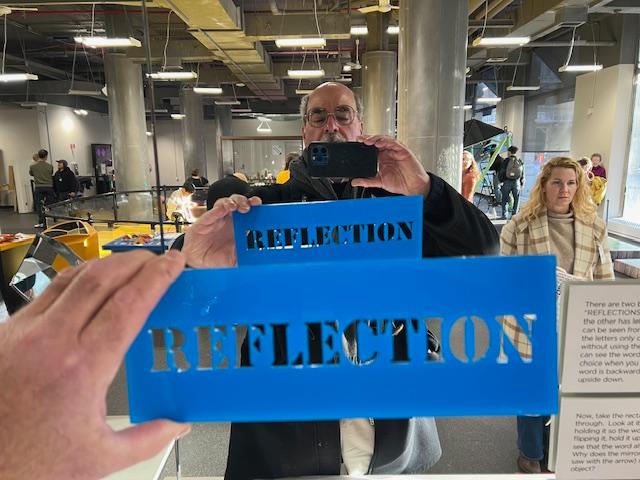
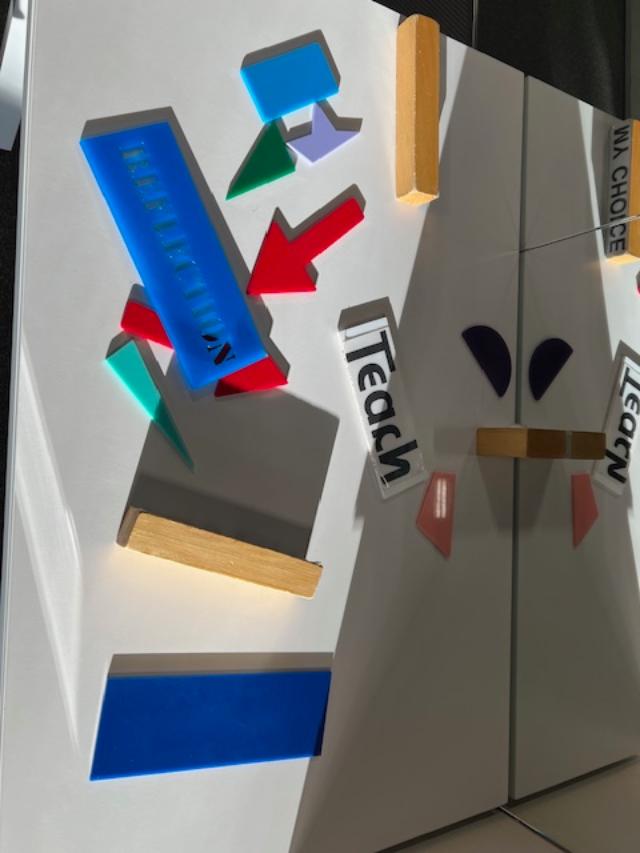
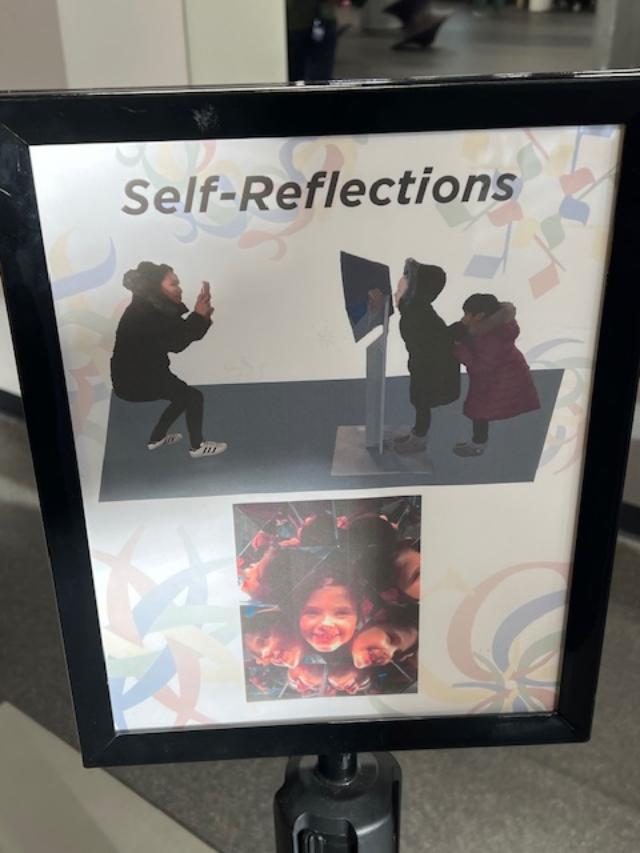
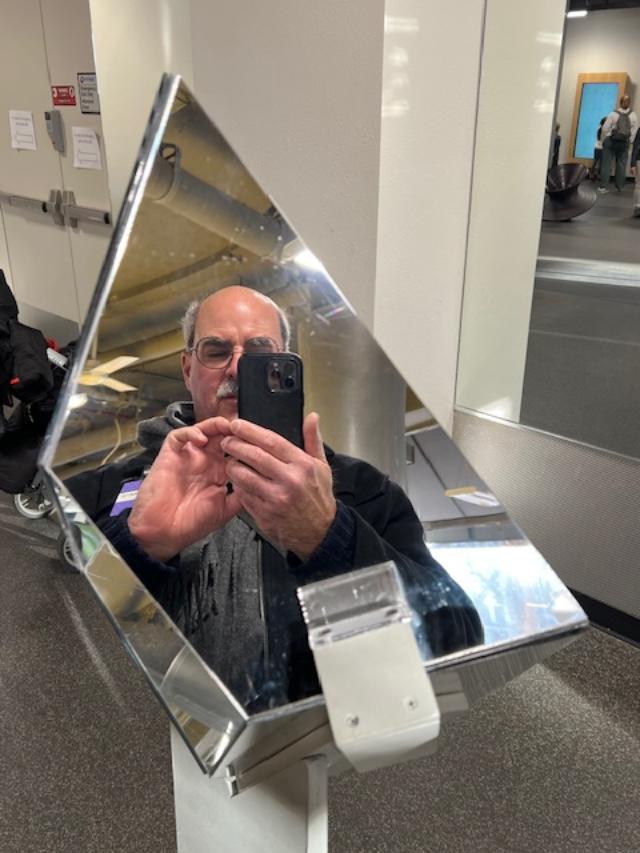
I started with the “Self-Reflections” exhibit where shapes and sizes mattered, and the use of symmetrical patterns shaped our faces and observations. I got to see how the shapes altered my reflection in the mirrors.

The use of mirrors and shapes

The use of shapes and colors in the experiment

The signage

How we look at ourselves in the mirror

Taking pictures in the ‘mirror’

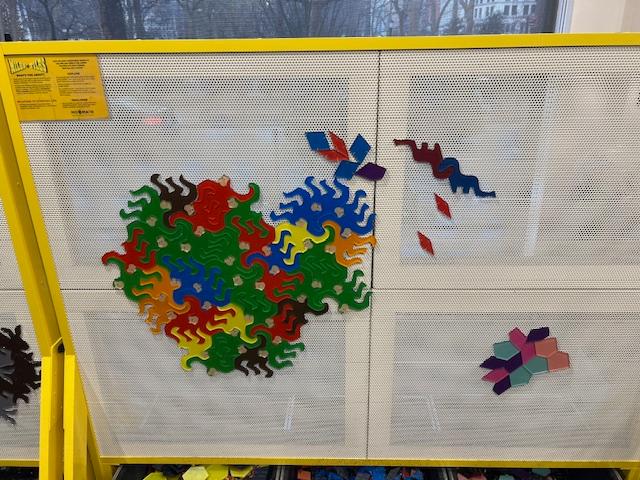
One of the first interactive displays that I enjoyed was the Tessellation Station, where you could create displays with magnetic tiles on a large board. Later I learned about Tessellation as a form of making shapes fit together in a pattern and then the theory behind that. It was a fun way to use your creativity. This exhibition was very popular in the old museum as well but had been a much bigger interactive display.

The “Tessellation Station” exhibition is a lot of fun

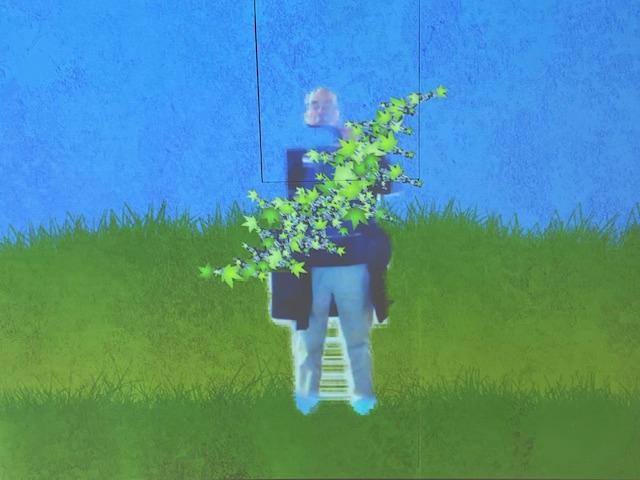
Another was the Tree of Life, where the computer copied the movements of myself and then used them to show the how I moved my arms and legs in a pattern. It was funny to see myself repeated over and over again like a tree with branches. It really did measure the movement of my body. This was a lot of fun because you got to see smaller versions of yourself attached to you.

Me playing with the Tree of Life

Me having fun by the Tree of Life exhibition

The Twist and Roll display showed how to put different shapes and sizes together and show their movement on the board.

The Twist and Roll hands on display

The one display that all the kids got a kick out of was the Math Board, where the colors and shapes of the section of the floor lit up when you walked on them and was controlled by the way you walked on them.

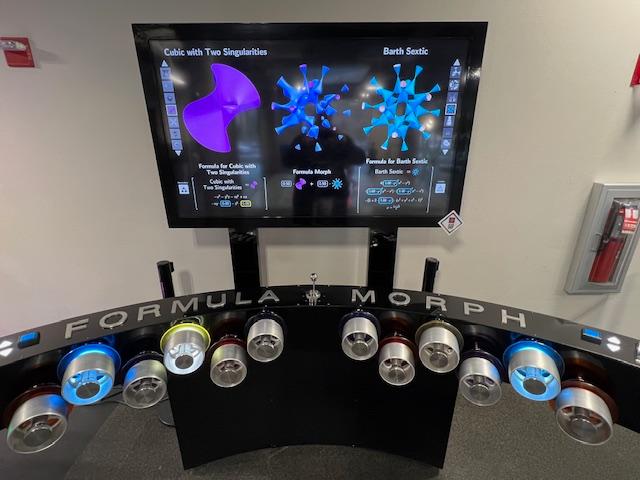
The “Math Morphing-Formula Morph” replaced the “Math Board”

The Museum of Mathematics is a great museum for younger children who want to get physical and have a good time and like the interaction. I learned a few things too about the fundamentals of math and some of its background theories.

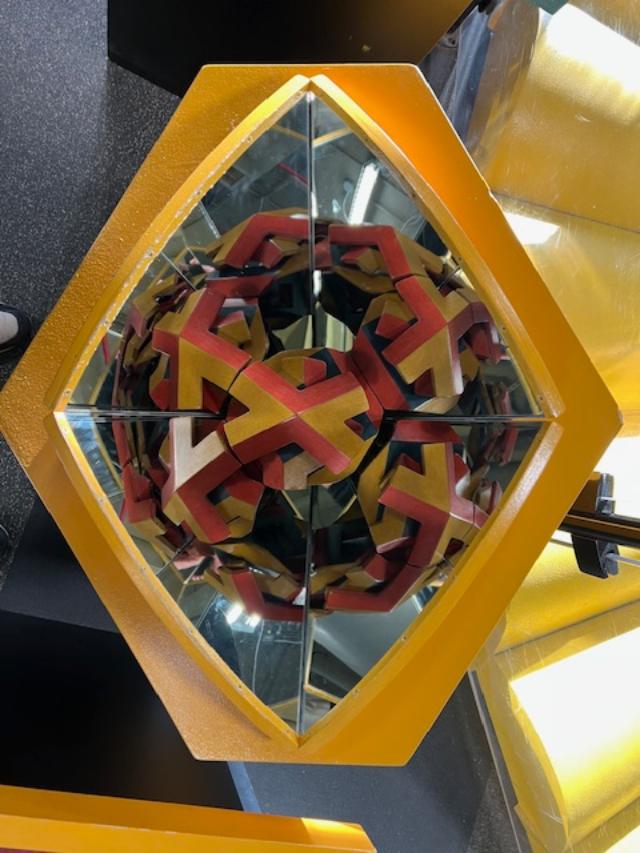
The geometrics of the Museum of Mathematics

Still, it is a great museum for kids under the age of twelve and their younger parents. I think anything over that age would warrant a trip to the American Museum of Natural History or the Liberty Science Center with more exhibits that are age appropriate. It is a museum you should visit once or twice with small children who are at the learning stage and just want to have fun.

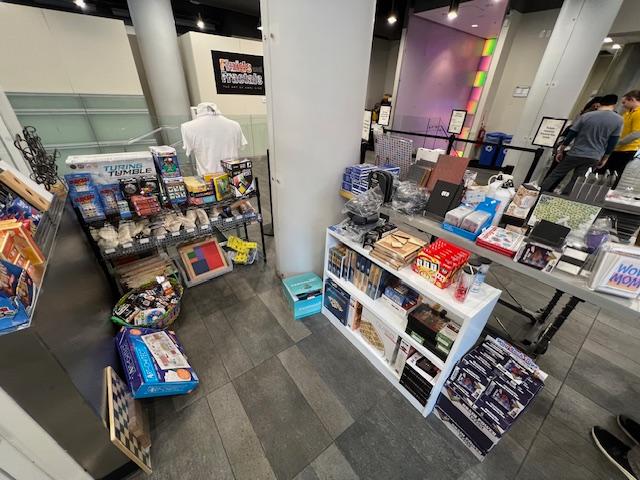
The Gift Shop

The Museum Gift Shop

The History of the National Museum of Mathematics:

(From the museum website)

The National Museum of Mathematics began in response to the closing of a small museum of mathematics on Long Island, the Goudreau Museum. A group of interested parties (the “working group”) met in August 2008 to explore the creation of a new museum of mathematics-one that would go well beyond the Goudreau in both its scope and methodology. The group quickly discovered that there was no museum of mathematics in the United States, and yet there was a incredible demand for hands0n math programming.

Interactive objects at the Museum of Mathematics

Accomplishments to date include: opening Manhattan’s only hands-on science center, welcoming more than one million visitors; creating the popular Math Midway exhibition, which has delighted millions of visitors at museums throughout the United States and internationally; leading math tours in various U.S. cities; running dozens of Math Encounters and Family Fridays events; delivering a broad array of diverse and engaging programs for students, teachers, and the public to increase appreciation of mathematics and creating the largest public outdoor demonstration of the Pythagorean Theorem ever.

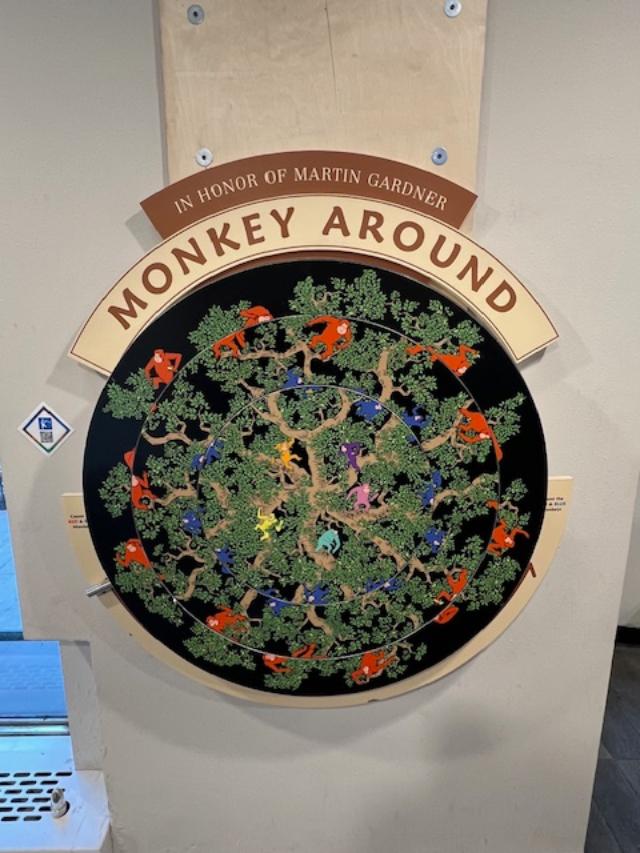
The “Monkeying Around” exhibition at the museum

The Museum Mission:

(From the Museum website)

Mathematics illuminates the patterns that abound in our world. The National Museum of Mathematics strives to enhance public understanding and perception of mathematics. Its dynamic exhibits and programs stimulate inquiry, spark curiosity and reveal the wonders of mathematics. The Museum’s activities lead a broad and diverse audience to understand the evolving, creative, human and aesthetic nature of mathematics.

The “Weights and Balances” exhibition at the museum

Math Geographics

Video on the displays

The displays are so interesting

Hessel Museum of Art-Bard College Campus                         33 Garden Road                                                                  Annandale-On-Hudson, NY 12504

Hessel Museum of Art-Bard College Campus 33 Garden Road Annandale-On-Hudson, NY 12504

Hessel Museum of Art-Bard College Campus

33 Garden Road

Annandale-On-Hudson, NY 12504

https://ccs.bard.edu/museum

Open: Sunday 11:00am-5:00pm/Monday-Tuesday Closed/Wednesday-Saturday 11:00am-5:00pm

My review on TripAdvisor:

https://www.tripadvisor.com/Attraction_Review-g29820-d1069234-Reviews-Hessel_Museum_of_Art_at_Bard_College-Annandale_on_Hudson_New_York.html

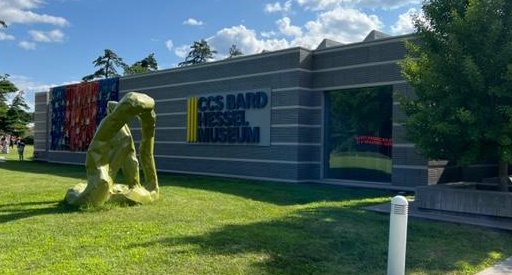
The Hessel Museum on the Bard Campus

When I was visiting Rhinebeck for the recent Sheep and Wool Festival (See day One Hundred and Forty-Nine on “MywalkinManhattan.com), I decided to visit Bard College and their contemporary art museum, the Hessel Museum. When approaching the museum, it almost appears to be a fortress with several large pieces of contemporary sculpture on the grounds outside the building.

Day One Hundred and Forty-Nine:

https://wordpress.com/post/mywalkinmanhattan.com/10723

Once upon entering the museum, you are greeted by many welcoming volunteers who will check your vaccination card and ID and your mask and then you can enter the museum for viewing. At the time I was there, NY State still had a lot of their mandates.

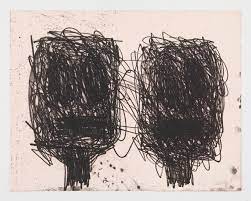
There were a couple of interesting exhibitions going on when I visited. The first one I visited that afternoon was “Closer to Life: Drawings and Works on Paper in the Marieluise Hessel Collection”, which was many of the works of the founder of Bard’s private collection that had been donated to the school. I have to admit that the works were very contemporary with lots of squiggles and political themes.

The show piece from the exhibition

Many of the works you had to look at a second time to try to find the meaning in them. I was having a tough time relating the titles to the works. Reading the exhibits press release, the exhibition said “Hessel’s dedication to the depiction of the human figure as an essential act of examining the self and social relations. The exhibit focuses, with a few exceptions, on drawing as a discrete, stand-alone practice and preoccupation of artists rather than as a tool to create studies for works in other mediums. Drawing is a way of thinking and the intimacy of the act is echoed in much of the subject matter depicted in the exhibition (Museum website).

Ms. Hessel traveled extensively and had relationships with many artists along the way, who touched on the themes of the day. She traveled from Germany to Mexico City and then onto New York City at different phases of her life and it shows in the collection that she amassed. The collection twists and turns in its theme from room to room.
The opening exhibition room of the “Closer to Life” exhibition

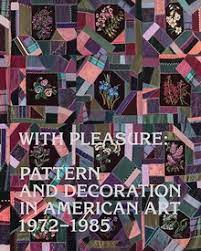
The other exhibition I toured was the current “With Pleasure: Pattern and Decoration in American Art 1972-1985” which was an interesting exhibition of design of the home and space which seemed to be an art movement in the early to mid 1980’s that I never noticed when I was in high school and college. It seemed that home design went from the home furnishings to a form of art.

The “With Pleasure: Pattern and Decoration in American Art 1972-1985” logo

This I had seen the artist’s starting to design things like dishware and placemats for everyday use and in things like wallpaper from the dining room. There was a cross over in home design as artists became more commercialized and their work showed up on walls and floors. It is not too different today with people like Martha Stewart and her paint and home furnishing collections or Halston designing for JC Penny with the Halston II Collection.

Some of the art was quite colorful

The art in those galleries really looked something you would find in the average person’s home in the era. Some of the ‘over the top’ really looked like it belonged on a rug or on wallpaper. As the exhibition’s literature stated, “the exhibition examines the Pattern and Decorative movement’s defiant embrace of forms traditionally coded as feminine, domestic, ornamental or craft based and thought to be patterns and arranging them in intricate, almost dizzying and sometimes purposefully gaudy designs” (Exhibition literature).

I returned to the Hessel Museum in the summer of 2023 and they were having some performance art out on the lawn when I got there (I was wondering why there were not parking spaces). One guy walked up to me complaining how lousy it was and it did not make sense. I told him that that was contemporary art for you. It’s not supposed to make sense. He just smiled.

I toured the two new exhibitions that were being shown at the museum.

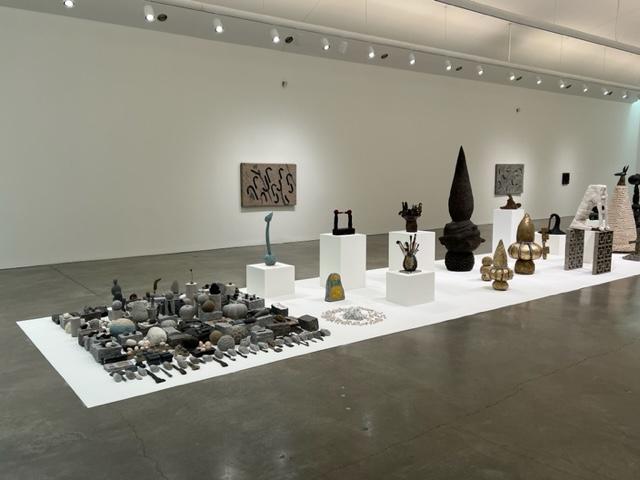
Artist Erika Verzutti had her “New Moons” exhibition

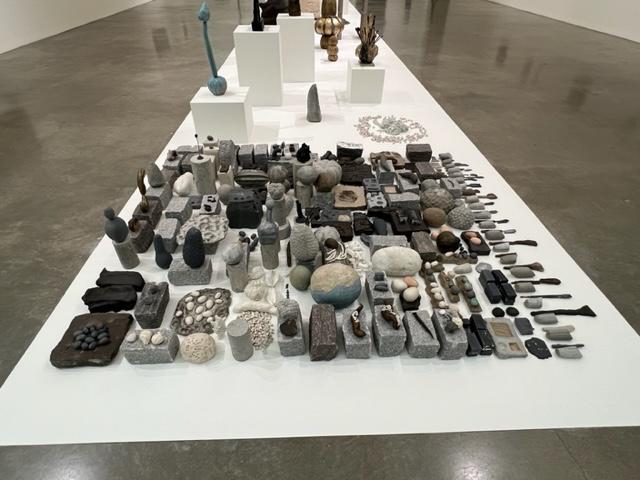
The first exhibition was by Artist Erika Verzutti with her “New Moons” exhibit. Frankly, I did not get here work. It made no sense to me. I was not sure what she was going after. I read her exhibit work and did not see any planetary connections. There were a few pieces that I thought were colorful and pretty creative in the works of the exhibition but the rest of it I just did not understand. I could tell the security guards were bored because no one was coming into this part of the museum.

“New Moons” exhibition piece

The main gallery of the “New Moons” exhibition

I thought this piece was very interesting

The “Indian Theater: Native Performance, Art and Self-Determination since 1969”

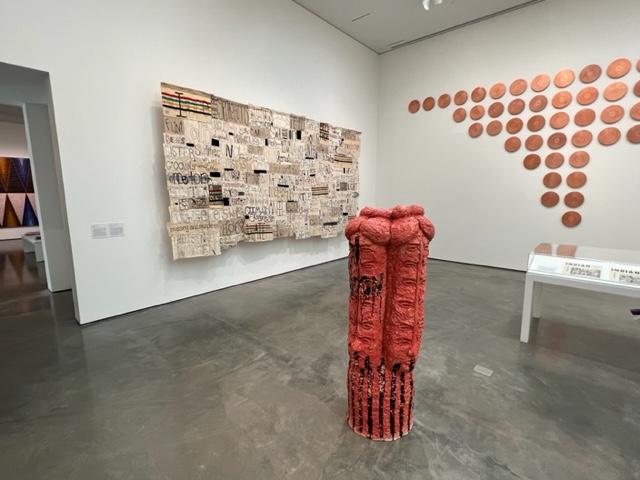
The other exhibition was the “Indian Theater: Native Performance, Art and Self-Determination since 1969”. Outside the museum they were showing the performance from the exhibition (the one that the patron was complaining about) and inside, the works were very contemporary and again some of the works did not make much sense to me. There were a few standouts though that I thought made a statement.

One of the galleries from the “Indian Performance” exhibition

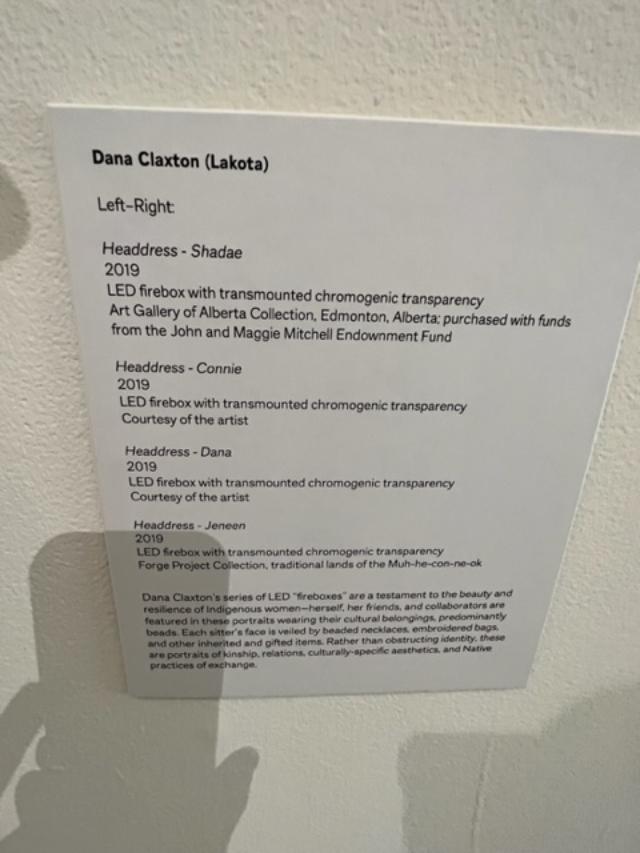
“Indian Headdress” by artist Dan Claxton (Lakota)

Artist Dan Claxton (Lakota)

“Counterblaste” by artist Gabrielle L’Hirondelle Hill (Metis) was interesting

Artist Gabrielle L’Hirondelle Hill (Metis)

Both exhibitions in the summer of 2023 were a little far reaching even for me who likes contemporary works. I think it is in the eye of the beholder but I like the fact that the Hessel Museum brings these works to the public. They do make you think.

The Hessel Museum doesn’t offer just interesting art but it approaches it in a thought-provoking way, asking the patrons to see beyond not just what is on the walls but think about the exhibit from the era in which the art is from and ask ‘does this still ring true today’. The Hessel asks us to think ‘out of the box’ and look at their works from different perspectives.

Some I understood and some I didn’t but I still enjoyed wondering the galleries and exploring the art on its terms. I think that’s what contemporary or just art in general does. We need to think about it. The museum also has a nice little gift shop to explore.

The History of the Hessel Museum:

About CCS Bard:

Established in 1990, the Center for Curatorial Studies (CCS Bard) is an incubator for experimentation in exhibition-making and the leading institution dedicated exclusively to curatorial studies-a discipline exploring the historical, intellectual and social conditions that inform curatorial practice.

The Center for Curatorial Studies has several interconnected parts:

The Hessel Museum of Art, built in 2006, presents experimental group exhibitions and monographic shows and also draws from the Marieluise Hessel Collection of Contemporary Art, comprised of more than 3,000 objects collected contemporaneously from the 1960’s to the present day. The Hessel Museum is open and free to the public. Public sculptures by Franz West, Cosima von Bonin and other artists surround the Museum. Please see the museum page for more details.

CCS Bard hosts a range of public events throughout the year. All events are free and open to the public. Please see upcoming events on the website.

The CCS Bard Archive provides access to a wide range of primary materials documenting the history of the contemporary visuals arts and the institutions and practices of exhibition-making since the 1960’s. Please see our research center page for further details.

The Graduate program in Curatorial Studies is an intensive course of study in the history of contemporary art, the institutions and practices of exhibition making and the theory and criticism of contemporary art since the 1960’s. Throughout its over thirty-year history, the program has actively recruited perspectives underrepresented in contemporary art and cultivated a student body representing a diverse spectrum of backgrounds in a board effort to transform the curatorial field. Please see the school page for further details.

The Center for Curatorial Studies is part of Bard College and located on their Annandale-on-Hudson campus. Bard acts at the intersection of education and civil society, extending liberal arts and sciences education to communities in which it has been undeveloped, inaccessible or absent. Through its undergraduate college, distinctive graduate programs, commitment to the fine and performing arts, civic and public engagement programs and network of international dual-degree partnerships, early colleges and prison education initiatives, Bard offers unique opportunities for students and faculty to study, experience and realize the principle that higher-education institutions can and should operate in the public interest. For more details on the Bard College, please see their website.