Tag: addthistoyourgrocerycart@Wordpress.com

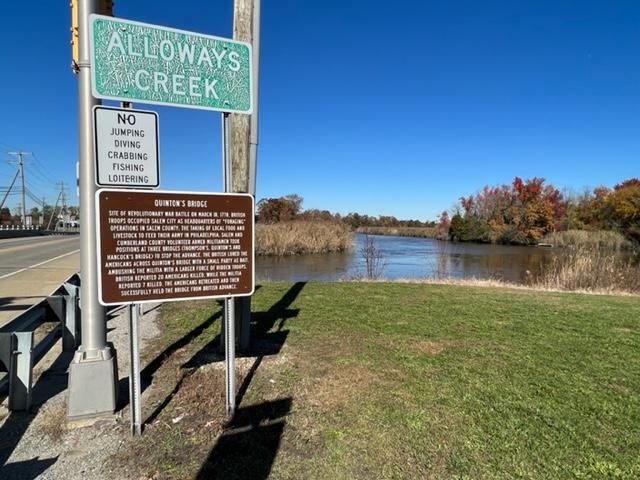
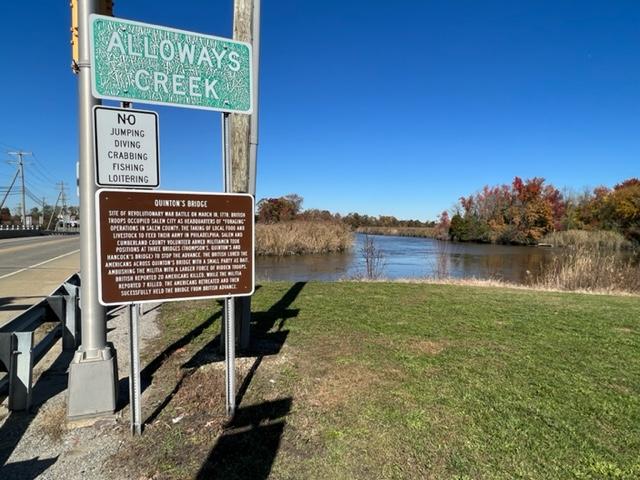
Quinton’s Bridge at Alloways Creek                                     Route 49 at Quinton-Alloway Road                                   Salem, NJ 08079

Quinton’s Bridge at Alloways Creek Route 49 at Quinton-Alloway Road Salem, NJ 08079

Quinton’s Bridge at Alloways Creek

Route 49 at Quinton-Alloway Road

Salem, NJ 08079

No Phone Number

https://www.revolutionarywarnewjersey.com/new_jersey_revolutionary_war_sites/towns/quinton_nj_revolutionary_war_sites.htm

https://www.hmdb.org/m.asp?m=88443

Open: Sunday-Saturday 24 hours

My review on TripAdvisor:

https://www.tripadvisor.com/ShowUserReviews-g46799-d24137890-r844180359-Quinton_s_Bridge_At_Alloways_Creek-Salem_New_Jersey.html?m=19905

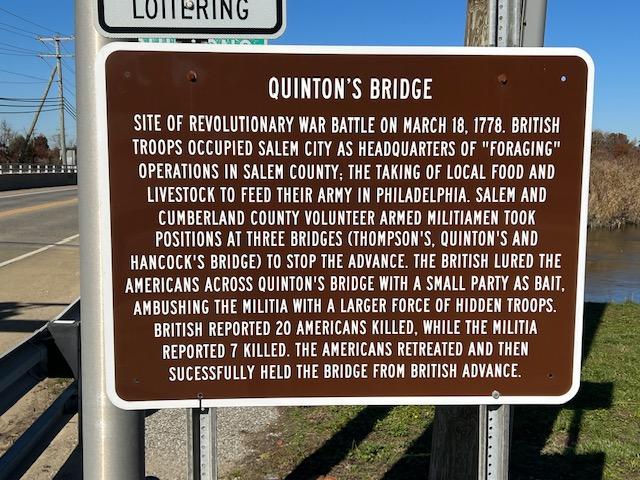
If you blink your eye, you will pass this bridge along the Alloway Creek just outside of Alloway, NJ, a sleepy little town just outside the County seat of Salem, NJ. What may seem like just a bridge with an historical marker once held a big place in the history of the Revolutionary War for this part of New Jersey. This was once a major travel and transport point during the area’s heyday of the farming industry in the early part of the country’s history, supplying food for the Philadelphia and lower New Jersey area.

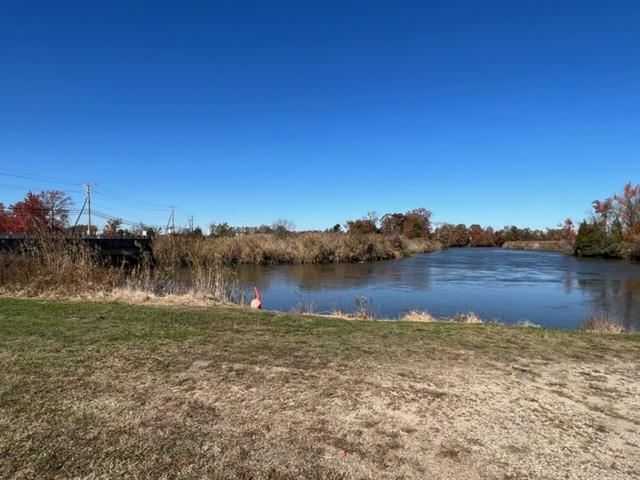
Today the Alloway Creek is used more for fishing and recreation from I saw the afternoon I visited the site but once upon a time, this was a busy throughfare for travel. The creek was used for transport and the road was a crossways between all the small communities in the area.

Take time to stop in the parking lot next to the bridge and take a look at the significance of this area and what this meant in the context of the war years.

Alloway Creek today in 2022

History of Quinton’s Bridge at Alloway Creek:

(From Revolutionary War New Jersey.com):

In March of 1778, a group of about 1500 British troops under the command of Charles Mawhood occupied the town of Salem. Their objective was to confiscate cattle, hay and corn to bring across the Delaware River to Philadelphia, which was then controlled by the British.

Local citizen had moved some of the cattle south of Salem, past Alloways Creek to keep it from the British. Alloways Creek extends abou thirty miles inland from the Delaware River, creating a natural southern boundary that could only be crossed at three bridges in the area; Quinton’s Bridge, Hancock’s Bridge about four miles east of here and Thompson’s Bridge about five miles to the west. Salem and Cumberland County militiamen took positions at the bridges to stop the British from moving past them.

The British made an attack on Quinton’s Bridge on March 18th. During the attack, the British lured about 200-300 of the militamen across the bridge into an ambush feigning a retreat. The British had actually hidden some of their soldiers in a house near the creek and when the militiamen moved past them, the soldiers rushed out of the house to cut off the militiamen’s retreat to the bridge. Militiamen were captured or killed but their defense of the bridge held and the British were not able to cross Alloways Creak at Quinton’s Bridge.

Three days later an attack was made on the militiamen at Hancock’s Bridge in which militiamen were bayoneted to death in their sleep in a nearby house.

Hancock House State Historic Site                                              3 Front Street                                                                 Hancocks Bridge, NJ 08038

Hancock House State Historic Site 3 Front Street Hancocks Bridge, NJ 08038

Hancock House State Historic Site

3 Front Street

Hancocks Bridge, NJ 08038

(856) 935-4373

https://nj.gov/dep/parksandforests/historic/hancockhouse.html

https://www.facebook.com/FOHHNJ/

https://en.wikipedia.org/wiki/Hancock_House_(Lower_Alloways_Creek_Township,_New_Jersey)

Open: Sunday 1:00pm-4:00pm/Monday-Tuesday Closed/Wednesday-Saturday 10:00am-12:00pm/1:00pm-4:00pm

Admission: Free but donation suggested

My review on TripAdvisor:

https://www.tripadvisor.com/Attraction_Review-g46491-d14113448-Reviews-Hancock_House-Hancocks_Bridge_New_Jersey.html

The Hancock House

I took an extensive tour one weekend of historical sites of southern New Jersey to see how the lower part of the state was impacted by the Revolutionary War and one of the most important sites was the Hancock House. The family was extremely prominent not just in Salem, NJ but in New Jersey politics as well.

The Hancock House and grounds during the early Fall 2022

The house once stood on an very busy road between Salem and Bridgeton and where most commerce passed by. When I was taking the tour, you could see that the house was built in two parts. When I was listening to the lecture I found that the side of the house that faced the road had once been a leased space for a tavern.

The tavern section of the house that faces the road

This commercial enterprise brought in income for the family. Later on when the Hancock family sold the house in the early 1800’s, they sold it to the tavern keeper. After he and his family sold the house, it went on to various owners before the State of New Jersey bought it in the 1930’s.

Recreation of the Tavern section of the house

A copy of the old menu at the Tavern

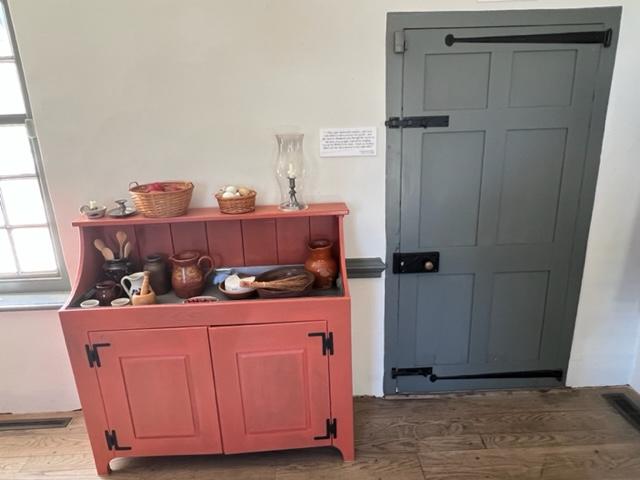
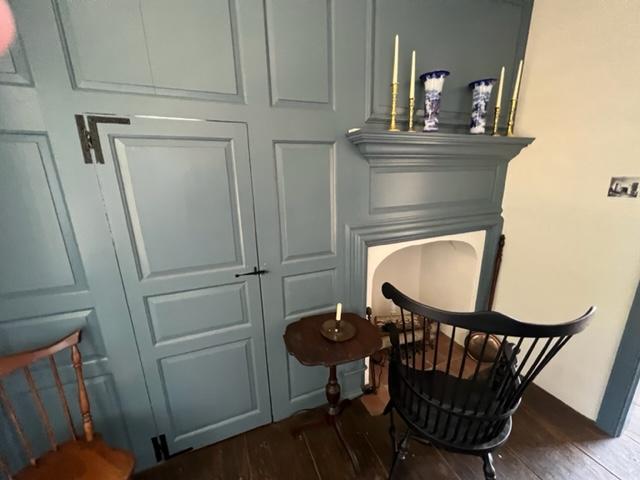
There are no family heirlooms in the house and while some of the rooms have period pieces and are decorated to show how the family might have lived at the time as well as how the tavern functioned, many rooms in the house needed some direction on what they wanted to say about living at the time. There needed to be more artifacts to complete the look of the room.

The Downstairs at the Hancock House:

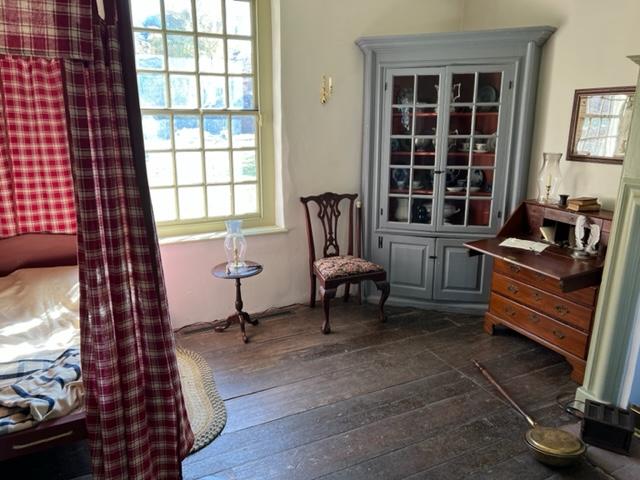
The example of the main bedroom downstairs was used for business as well. The room was furnished with period furniture.

The downstairs bedroom at the Hancock House. The built in shelves are the only thing from the Hancock family

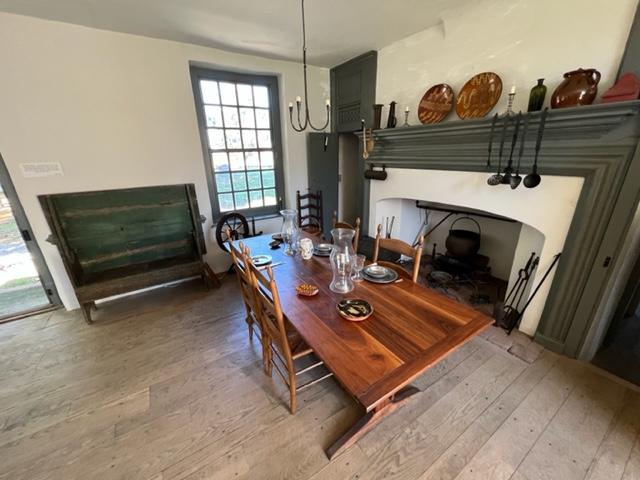
The Kitchen area was set for dinner and functioned as the Dining Room as well,

The kitchen set for lunch

The kitchen area for entertaining

The old kitchen at the Hancock House

The Dining Room at the Hancock House:

The Living Room

The Living Room at the Hancock House

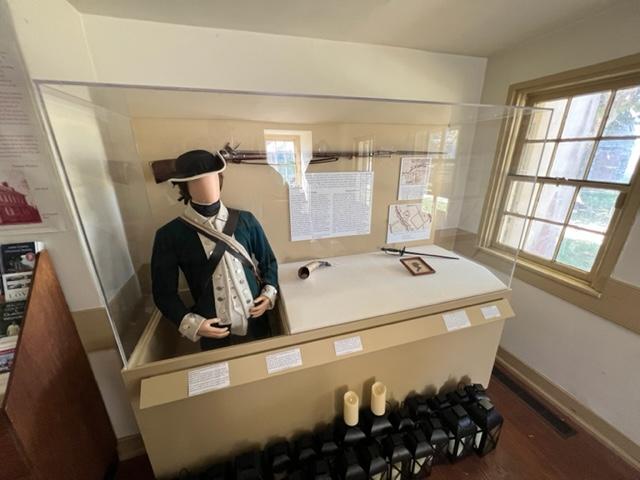
The Gallery at the Hancock House with artifacts from the era.

The Gallery at the Hancock House

The Upstairs at the Hancock House:

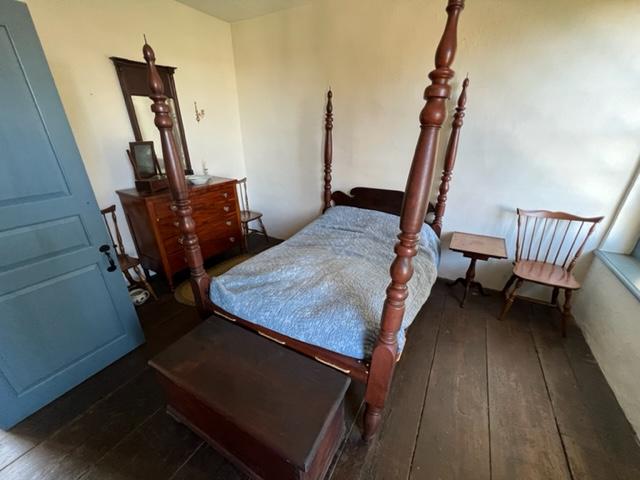
The upstairs bedrooms were an example of that. One of the rooms was fully furnished to look like a period bedroom while the other had a mish-mosh of decorations and furniture. There needed to be more to capture the time period of the house.

The upstairs bedroom is the only one furnished upstairs

Still, the house was steeped in history and it was fascinating to hear what the tour guide said about the goings on during the war years to the family. Many of the rooms also could have used a good plastering and painting to bring them back to life.
When I visited the Hancock House in October of 2022, they were having a Halloween festival with pumpkin patches, face painting, watching the film “The Legend of Sleepy Hallow” by Disney films. The kids were engaged with all sorts of activities and there would be Trick or Treating on Halloween day.

Halloween festivities at the Hancock House

The pumpkin patch at the Hancock House for Halloween

Halloween festivities at the Hancock House

History of The Hancock House:

(from The Hancock House Pamphlet)

The story of the Hancock House begins in 1675 when John Fenwick, a lawyer and Quaker from England, arrived in West Jersey (now Salem Country), With land purchased two years earlier, he established the first permanent English Settlement here, called “Fenwick’s Colony,” and founded the town of Salem. Eager to populate the area with skilled, industrious individuals, he advertised the area’s assets by stating, “if there be any terrestrial “Canaan” ’tis surely here, where the Land floweth with Milk and Honey.”

The Hancock House sits on property that was purchased from John Fenwick in 1675 by William Hancock, an English showmaker. Upon his death, the property passed to his wife and then to his nephew, John Hancock.

John’s inheritance of approximately 500 acres made him a major landholder in Fenwick’s Colony. he contributed to the development of the area by building a bridge across Alloways Creek in 1708. Now known as “Hancocks Bridge,” it permitted passage on an important highway between Salem and Greenwich and gave the settlement its name.

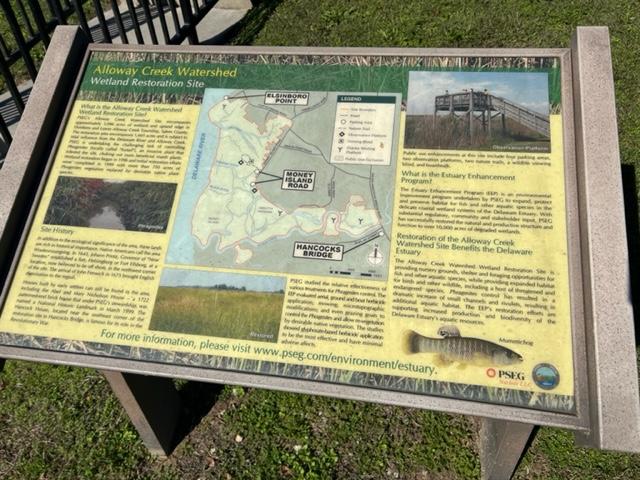
The site of the Hancock Bridge

When John Hancock died in 1709, he left his property to his son William. William became a Justice of the Peace for Salem County and served in the Colonial Assembly for 20 years.

The site of the historic Hancock Bridge

In 1734, William and his wife, Sarah built the Hancock House. Their initials (WHS) and the construction date (1734) can be seen in the brickwork on the house’s west elevation.

Upon his death in 1762, William left his house to his son, William who succeeded him in the Assembly and became His Majesty’s Judge of the County Court for the County of Salem. It was this William who figured in the massacre of March 1778.

The Hancock House remained in the family until 1931, although the extent to which the house was used as a private residence and the property farmed is uncertain. There is evidence to suggest a section of the house was leased for a tavern during the 18th & 19th centuries.

A recreation of the old Tavern section of the home

The State of New Jersey acquired the Hancock House for $4,000 in 1931 and opened it as a museum in 1932.

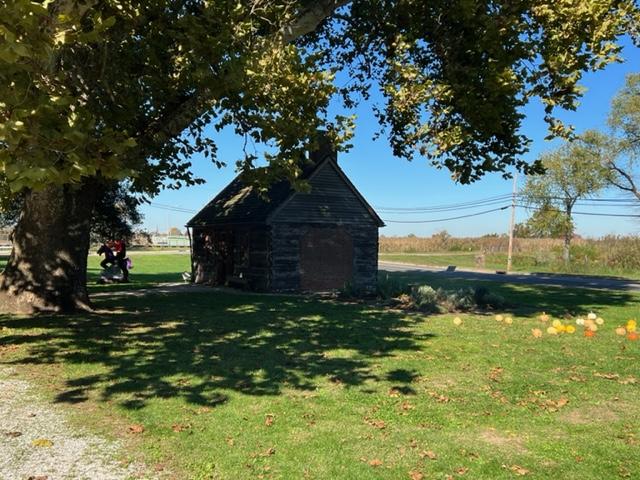
The Smoke House at the Hancock House property:

The Historic Significance of the house:

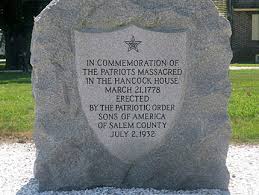
Historic Marker at the Hancock House

The Architectural Significance:

The Hancock House earned a place in history on the fateful day in March 1778.

The Hancock House

Yet the story of its architecture also is important. With its distinctive patterned and wall brickwork, simple lines and little ornamentation, it reflects the building traditions of the Quaker’s English Homeland.

The land around the Hancock House

Other elements of this architectural style include Flemish bond brickwork; a pent-roof that wraps around the front and back of the house; simple entrance steps; interior paneling and the use of such local materials as Wistarburg glass.

The Hancock House

The Hancock House property:

Day Two Hundred and Thirty-Five Exploring the Historical sites of Morris County, NJ for “The Pathways of History” event April 30th-May 1st, 2022

Day Two Hundred and Thirty-Five Exploring the Historical sites of Morris County, NJ for “The Pathways of History” event April 30th-May 1st, 2022

Don’t miss this two-day event in the first weekend in May when Morris County, NJ showcases all the ‘hidden gems’ that it has to offer. It was a great weekend!

http://pathwaysofhistorynj.net/

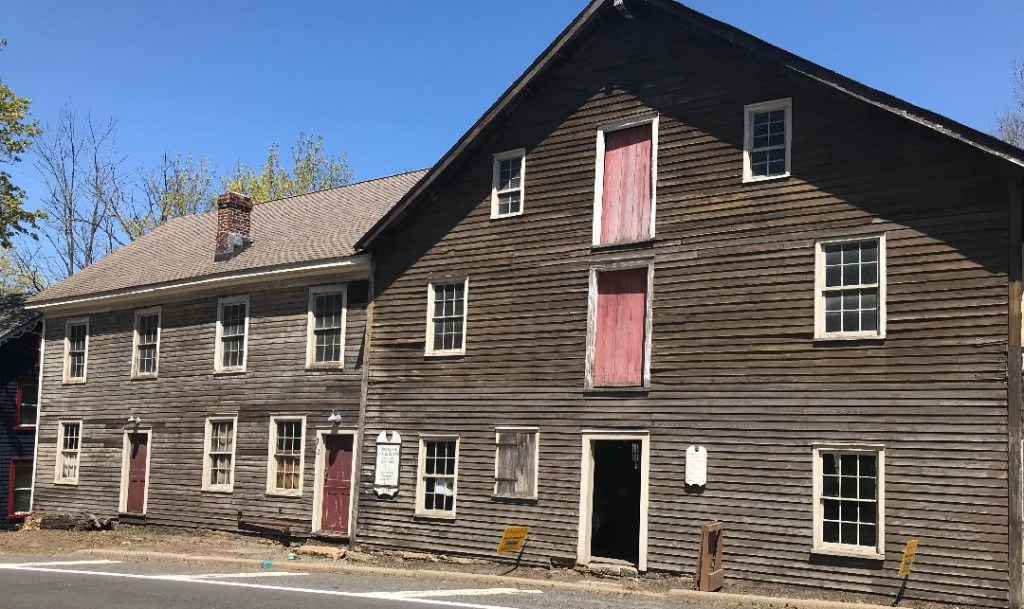
The Obadiah La Tourette Grist & Sawmill

Don’t miss this wonderful weekend tour of Historic Morris County, NJ

jwatrel's avatarmywalkinmanhattan

I had been sent the notice that the County of Morris, New Jersey was having a two-day Open House of many of their historical sites for touring and for special events for a program entitled “The Pathways of History: Museum and Site Tours of Morris County, NJ”.

The “Pathways to History” event takes place every May

http://pathwaysofhistorynj.net/

The weekend event spread to small museums, historical homes and cemeteries all over the County with walking tours and lectures at various sites. Having never been or even heard of many of these sites, I was interested in visiting as many as I could for my blog, “VisitingaMuseum.com” which is here on WordPress.com as well.

I plotted my two days of the event and tried to organize the trip so that we could see as many sites as we could. The event asked the sites to open one of the two days as…

View original post 6,327 more words

The Ayres/Knuth Farm Foundation                       25 Cooper Street                                           Denville, NJ 07834

The Ayres/Knuth Farm Foundation 25 Cooper Street Denville, NJ 07834

The Ayres/Knuth Farm Foundation Inc.

25 Cooper Street

Denville, NJ 07834

(973) 625-9345

https://www.ayresknuth.org/

https://www.facebook.com/AyresKnuthFarm/

Open: See website on hours/Seasonal

My review on TripAdvisor:

https://www.tripadvisor.com/ShowUserReviews-g46392-d24065367-r838840100-Ayres_knuth_Farm-Denville_Morris_County_New_Jersey.html?m=19905

Video on the Ayres/Knuth Farm

On the second day of the Morris County, NJ “Pathways to History’ tour, I was on my way back to Morris County for a second day of adventure. My first stop on the tour was the Ayres/Knuth Farm (The Ayres/Knuth Farm Foundation Inc.), a former working farm just off Route 10.

The main farmhouse on the Ayres/Knuth Farm

Not only was the site open for touring but they also had a mini car show with antique cars and fire trucks owned by some of the members. Seeing some of these Model T Ford’s and Steam Engine Fire Trucks in perfect condition shows American quality motorship at its finest.
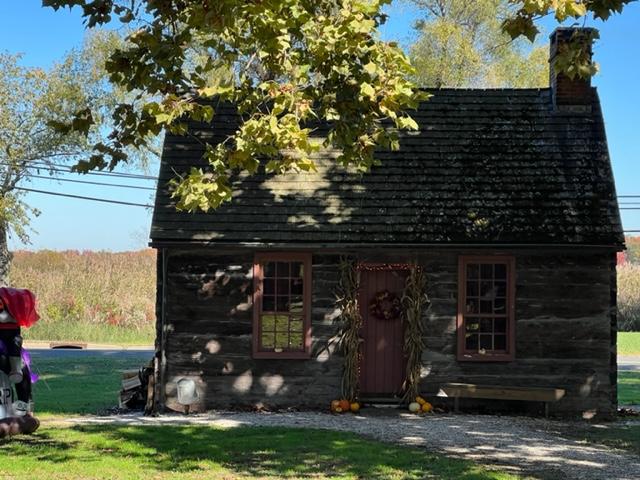
What I liked about the farm is that it had been a working farm up until the last fifty years and showed the progression that the farm took in its almost 100 years in the county. The farm itself dates back to pre-Revolutionary War days with the farm being purchase in either 1735 or maybe 1759 by Obadiah Lum. The property itself was settled and developed by Daniel Ayres, who was born in New Jersey in 1778 (The Ayres/Knuth Farm Foundation).

The Ayres-Knuth Farm and the outer buildings

105 acres of land was given to him by his father-in-law, David Garrigus upon the marriage of his daughter, Hanna in 1803. His son, William took over the farm in 1856 upon the death of his father in 1856, changing the farm to add husbandry and fruit cultivation. When William retired in 1896, none of his children wanted the farm and it was sold. Changing hands many times, it was bought by Martin and Anna Knuth in 1906. The farm was taken over by two of their children and it remained in the family until the 1990’s upon both of their passings. In 1996, the Township of Denville purchased 52 acres of the original farm and it is now managed by the Ayres/Knuth Foundation Inc. (The Ayres/Knuth Farm Foundation).

On this clear and sunny Sunday morning, it was fun to walk around the former working farm to see how it developed. Both families learned to modernize and add to the operation. I was able to tour the smaller tenet farmhouse (built in 1895), the barn (built in 1895 (and the various outer buildings like the chicken coops (built in 1895), outhouse (built in 1930) and the Smokehouse (built in 1825). The small well was built in 1797 and was the oldest structure left on the property.

What I found interesting is that there still are tenant farmers on another tract on the property still working the land and the property is protected by grants from Morris County. So, it still is technically a working farm. A lot of care was taken to preserve the farm as is and the volunteers told me that there were plans to fix up the other buildings. The Tenant House needed a lot of work and was run down but the main Farmhouse had been renovated and was closed that day.

Most of the farm has either been sold off or is being utilized but the core of the farm buildings can be toured, and it is interesting to see a working farm in New Jersey that dates back to the 1700’s and was still active until the mid-1990’s. That is longevity. Still is a step back into the past to see how a working farm once thrived along with the changes that came with the development of Morris County in the late 20th century. The area still has the rural feel, and the well-maintained property is a glimpse into our rural past.

The History of the Ayres/Knuth Farm:

(From the Ayres/Knuth Farm Foundation Inc. site):

The Ayres/Knuth Farm has a long history not just in the County or State level but in the country. It is believed that the farm was formed around 1759 but could be as early as 1735. It was located in the Franklin section of Denville. Obadiah Lum purchased 180 acres and built the first forge and sawmill on the Den Brook. Lum purchased the property from Thomas and Richard Penn, the sons of proprietor, William Penn with financing from Colonel Jacob Ford, who owned extensive land including mines in Morris County. Franklin developed into one of the primary agricultural hubs of Denville due to the high quality of soil of the area and proximity to numerous towns with markets where the crops could be sold.

The historic marker on the farm

The Ayres Farm was first settled by Daniel Ayres who was born in Middlesex County in 1778. His mother was Anna Jackson, who was the daughter of General Joseph Jackson, who was known as the founder of Rockaway. Daniel married Hanna Garrigus, the daughter of David Garrigus, who was a prominent landowner in Franklin and owner of the Franklin iron forge. In 1803, David Garrigus conveyed 105 acres to his son in law.

Daniel died in 1856 and his son, William Ayres took over the farm. In 1860, he expanded the farm to 300 acres and practiced a mixture of husbandry and a cultivation of different grains. They also raised sheep for wool and cows for butter. He built the existing farmhouse in 1855 and in the 1860’s built the Tenant House for hired hands in the expanding farm. Over time the farm grew to 500 acres.

During the economic depression between 1873-1879, William Ayres adopted to the changes in the market and shifted the focus of the farm to dairying, poultry and vegetable farming. He also sold lumber to the railroads and expanded into fruit cultivation particularly apples, peaches and pears.

The Ayres/Knuth Farm today

William Ayres retired from the farm in 1896 and since none of his children wanted to take over the operation, the property changed hands several times until 1906, when Martin and Anna Knuth purchased the farm and moved in with their five children. They kept the tradition of husbandry and fruit cultivation and a mix of vegetables as a truck farming operation.

The farm faced a lot of tragedies in the 20th Century with the death of Martin Knuth in 1935. Between a destructive fire in 1936 and a lapse of insurance, the barn was not rebuilt. With an economic Depression going on in the 1930’s, the farm was largely reduced to a subsistence-level truck farm operation. Anna Knuth died in 1950 and her two children, Frank and Sue took over the operation. Both remained on the farm until their deaths in the 1990’s. They grew a variety of crops and produced eggs that were sold locally.

The farmhouse was not electrified until the 1960’s and indoor plumbing was never installed. In 1996, a few years after the deaths of Frank and Sue Knuth, the Township of Denville purchased the nearly 52 acres of the original Ayres/Knuth Farm and the property is now managed by the non-profit Ayres/Knuth Farm Foundation Inc. The site now houses a series of historical buildings that is maintained by the foundation that are part of the original farm.