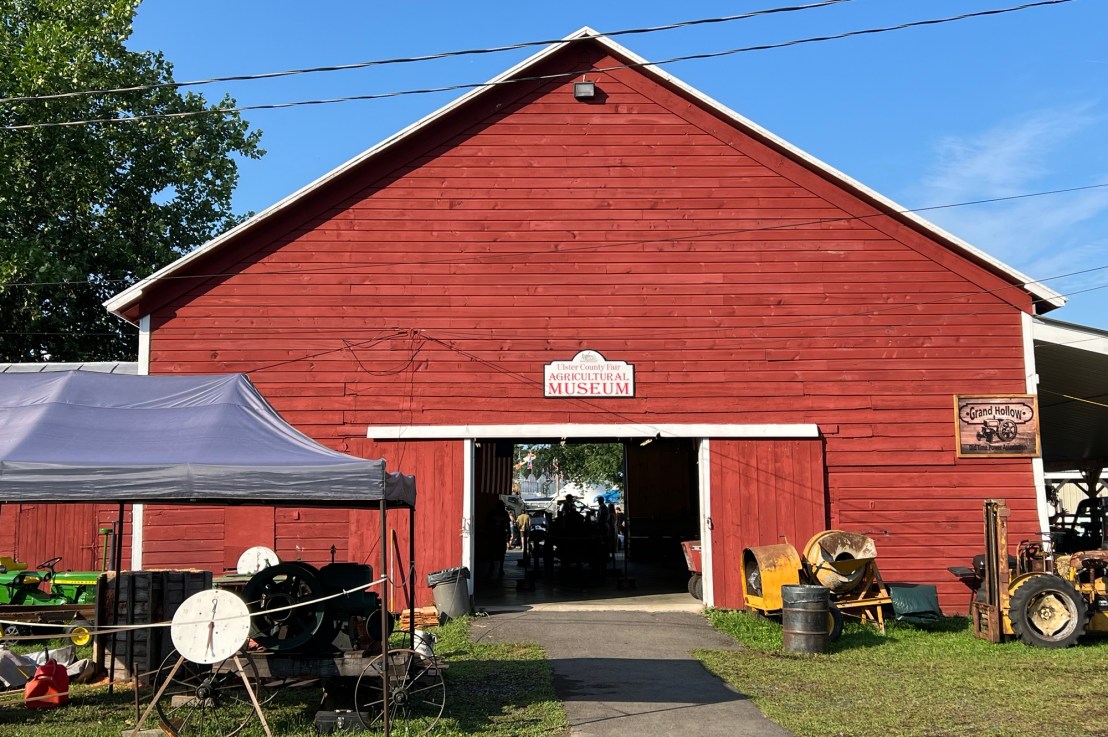
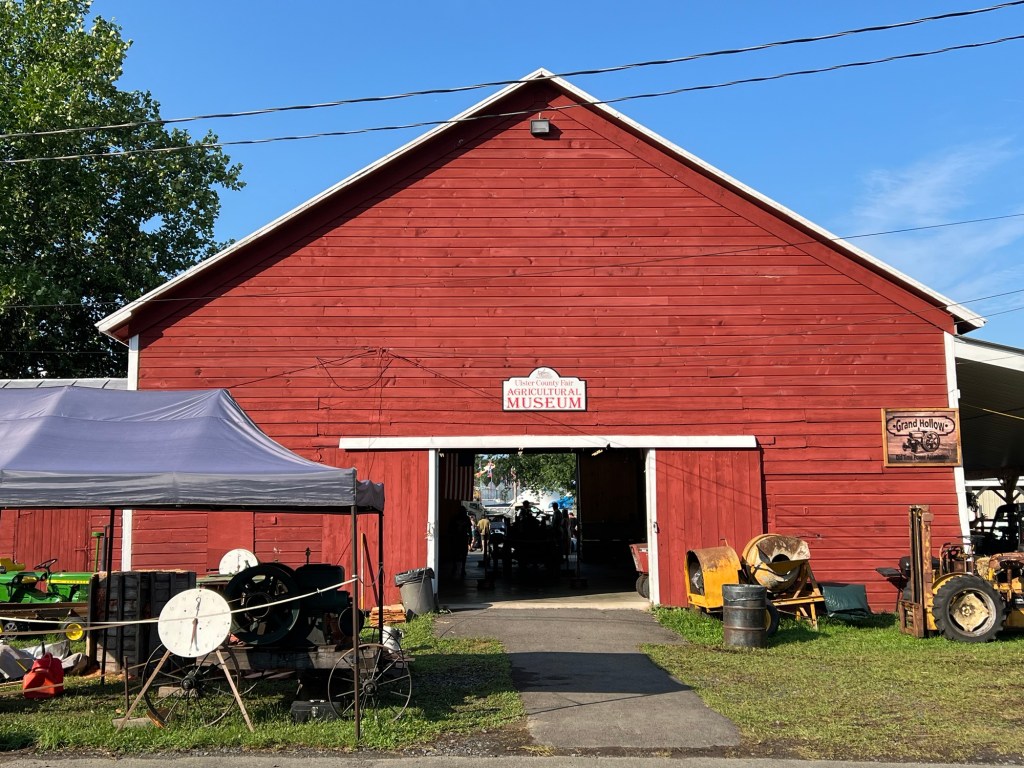
The Ulster County Fair Agricultural Museum at the Ulster County Fairgrounds
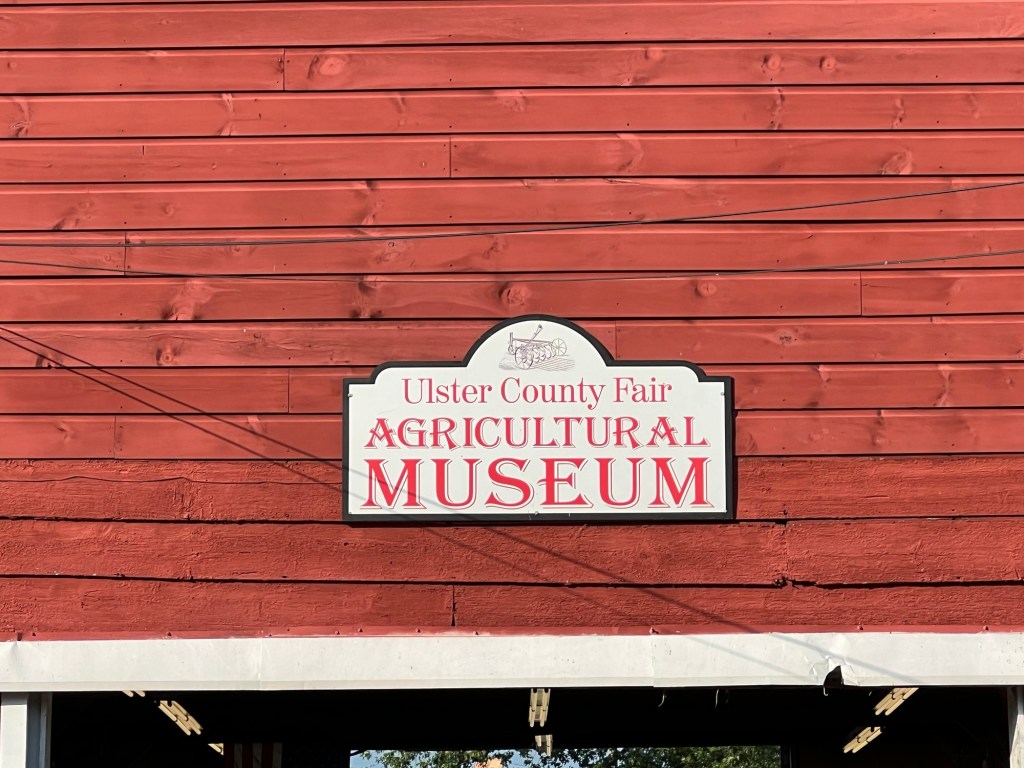
The sign at the entrance of the museum
Display outside the entrance of the museum
The Ulster County Fair Agricultural Museum is one of the more interesting and detailed agricultural based museums I have seen. The museum houses an extensive collection of farm equipment that includes machinery for the fields, milking equipment including how to milk a cow properly and the progress on egg hatchery and production. The museum highlights these changes especially in the last hundred years.
The main gallery of the museum
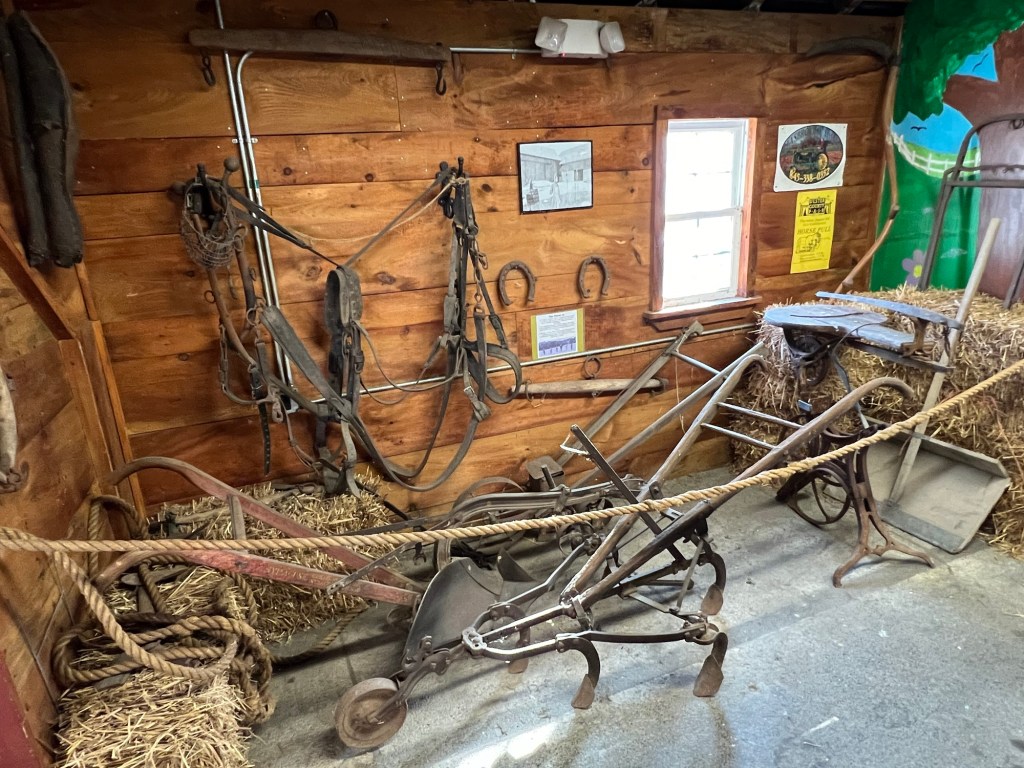
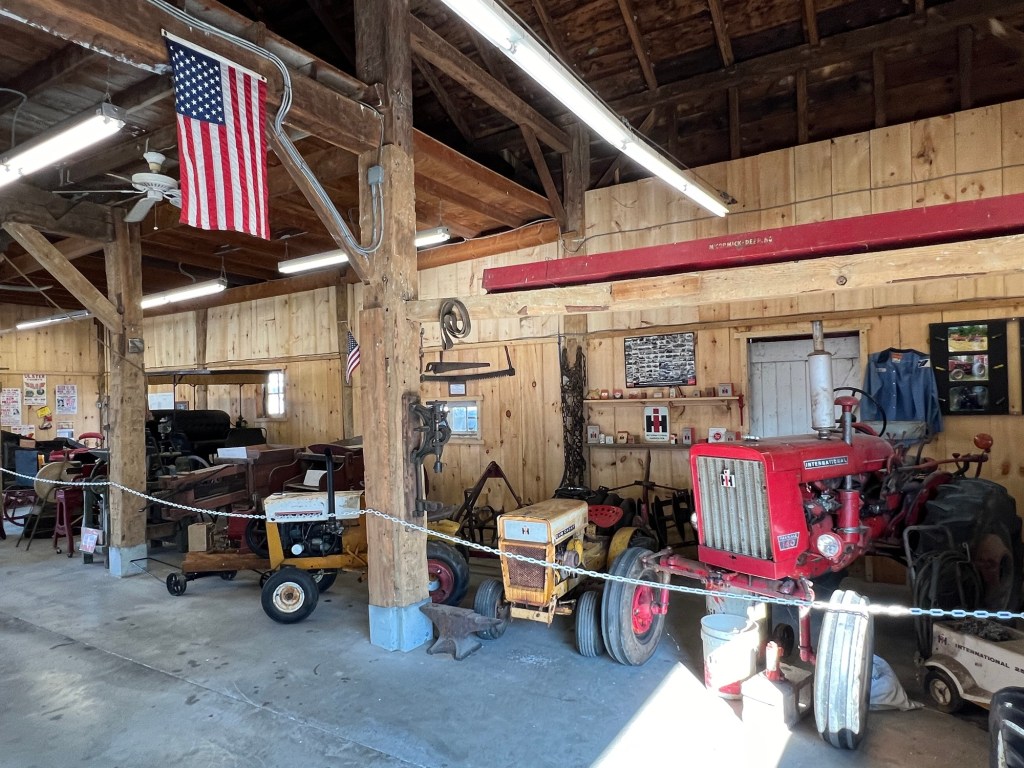
The main part of the museum was dedicated to farm equipment from the early plows and hoes to the changes in the modern day tractor.
The early hoes both hand and horse drawn
The changes in tractors for farm use over the last century
All sorts of businesses were on the farms from egg hatcheries to dairy farming were shown in their early stages at the museum.
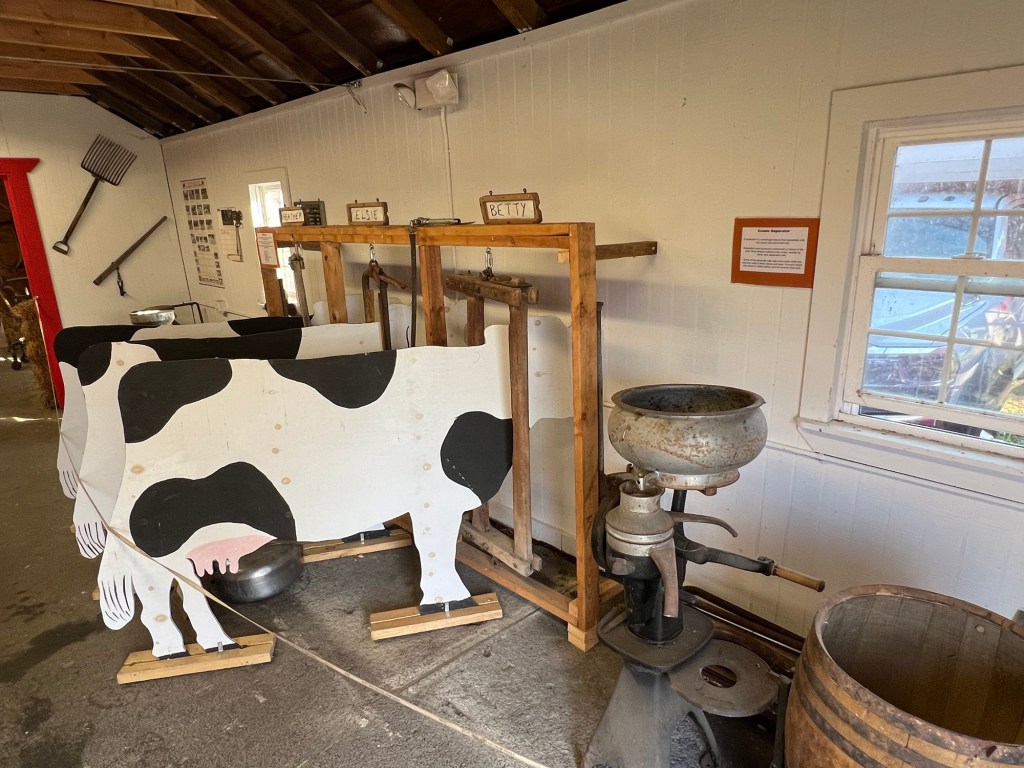
Early dairy farming and milking cows
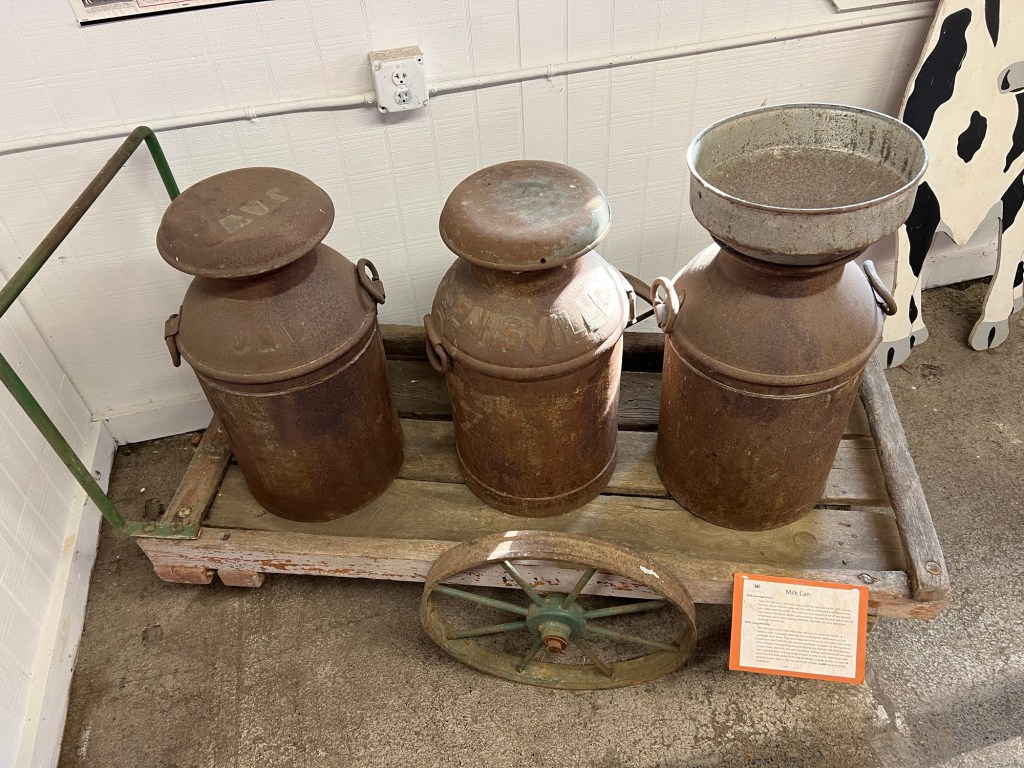
Milk jugs for fresh milk
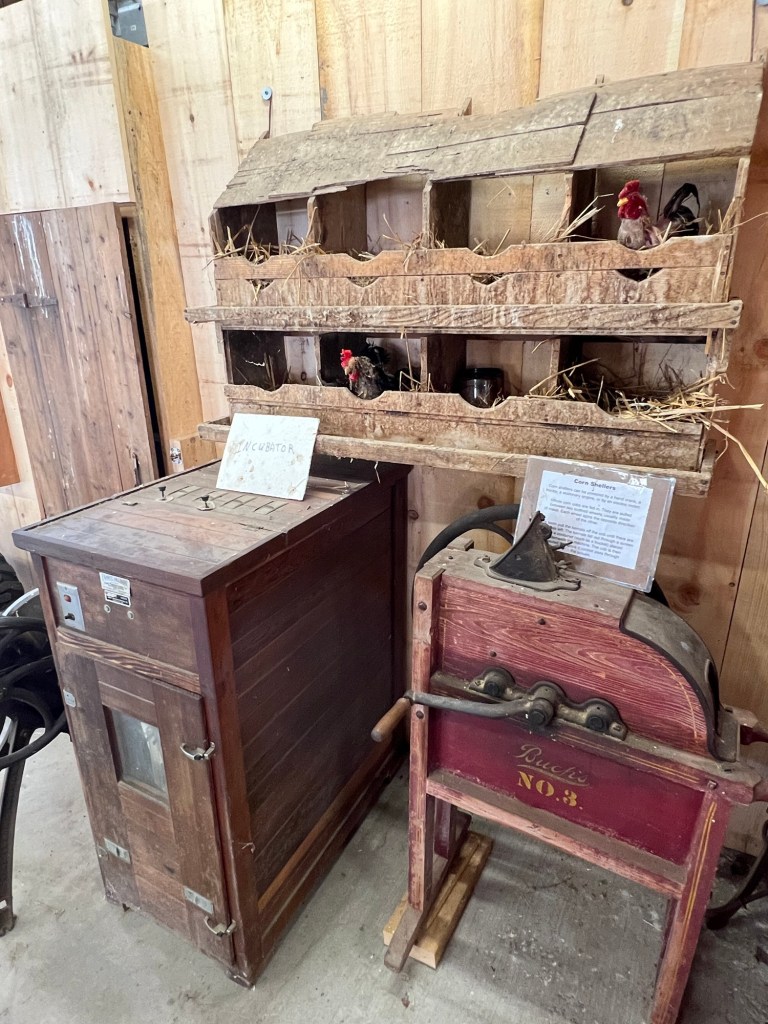
An early egg hatchery and sorters
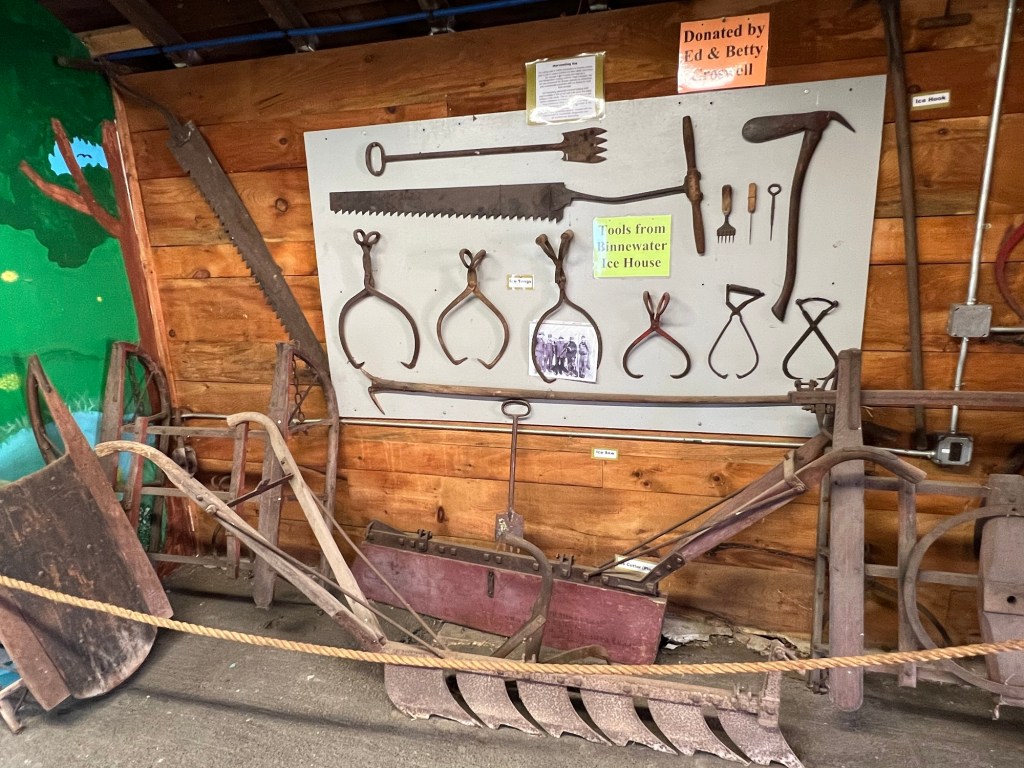
The museum also displayed other business that farmers could make money from including ice cutting for ice boxes. All sorts of equipment was on display for this early money making industry.
The ice carving industry
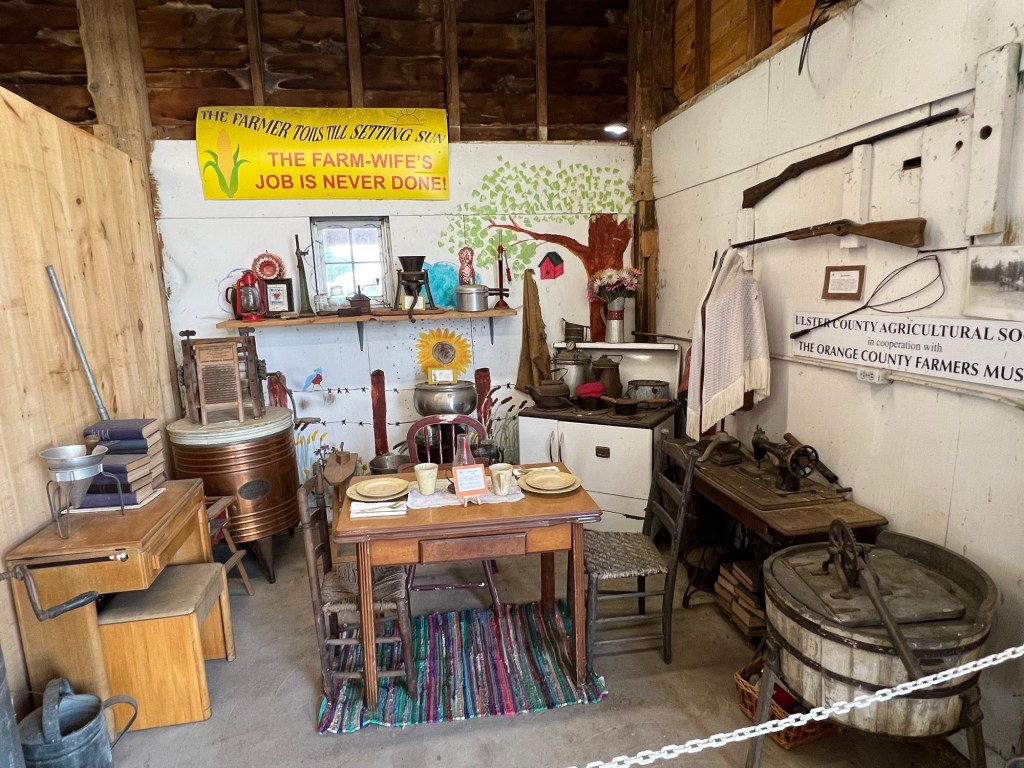
Life on the farm was not so easy for women either as cooking, washing and cleaning were all chores left to women while the men worked in the fields. All foods were made from scratch from farm produce and water for cooking, washing and bathing came from wells and springs and sometimes needed to be boiled. Work in the household was never finished and took many hands to do.
The farmhouse kitchen
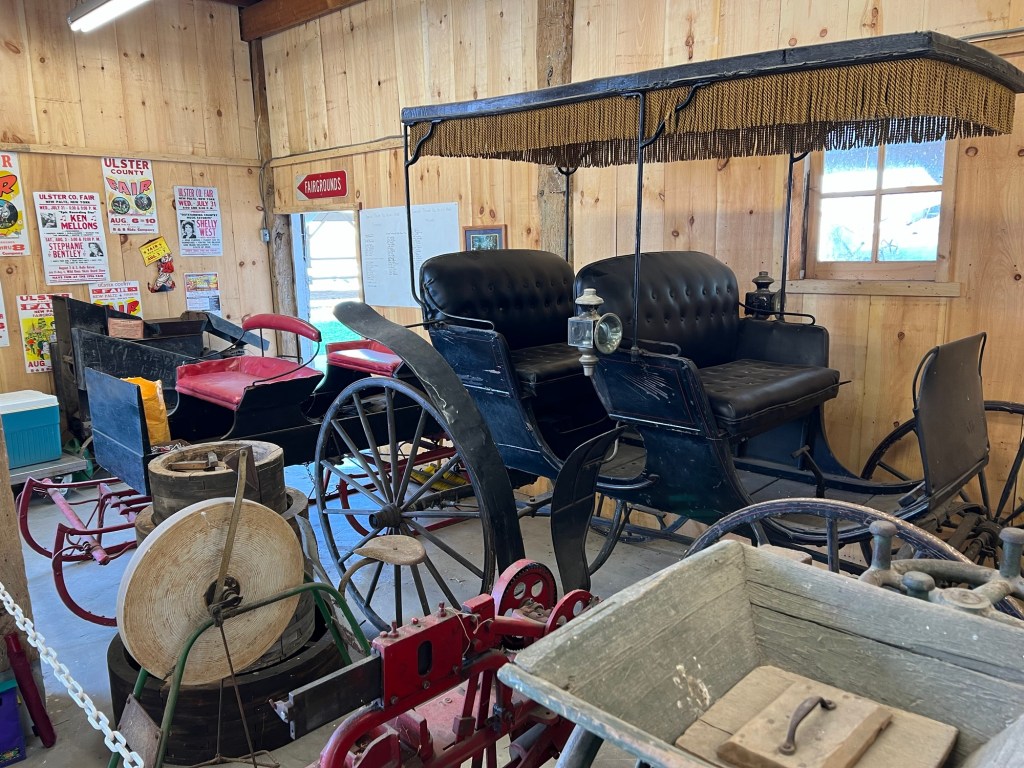
Life on the farm included travel to and from church, going to town and travel to the cities for visits to the markets. Carts and carriages were the mode of transportation back then before automobiles. Even today in some communities this is still a mode of transportation.
Carriages and wagons for transportation
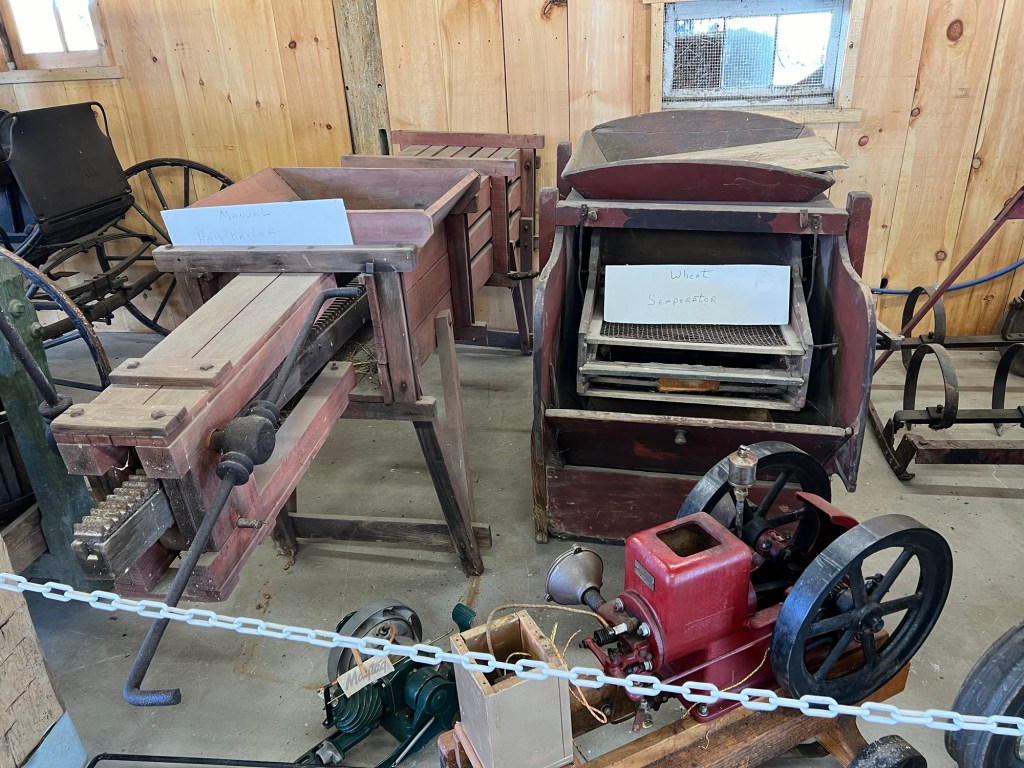
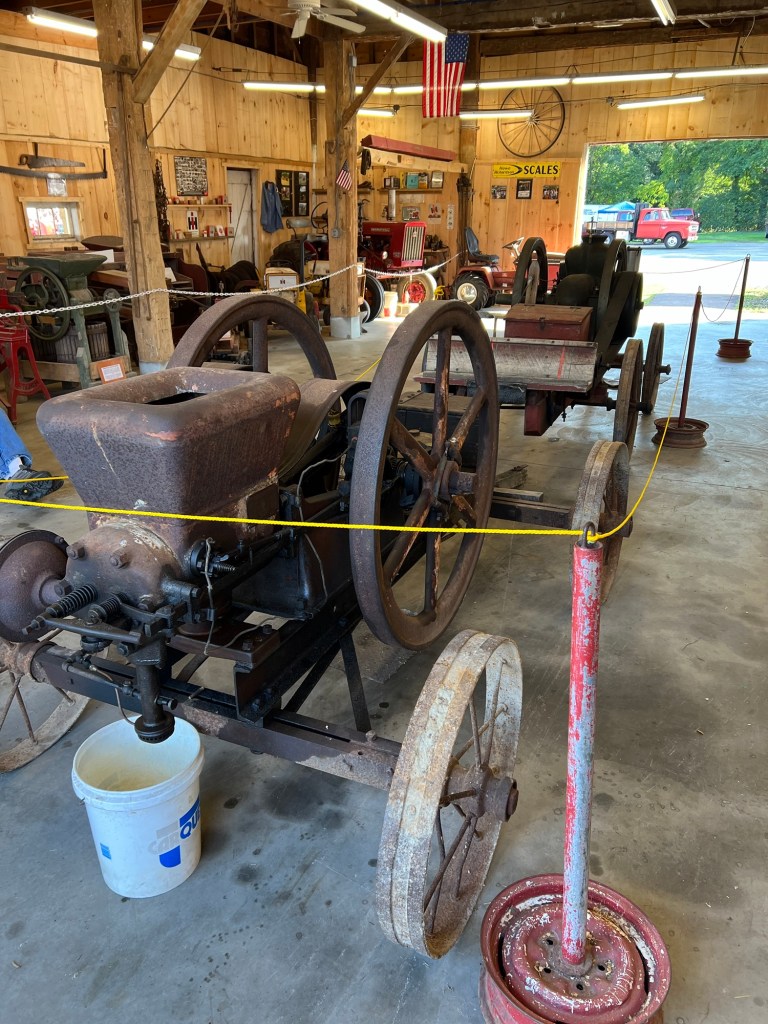
Working in the fields and the yields produced kept changing as modern equipment became part of farm life. Gas powered and electric equipment changed the way the modern farmer produced crops.
Modern sorters and weights
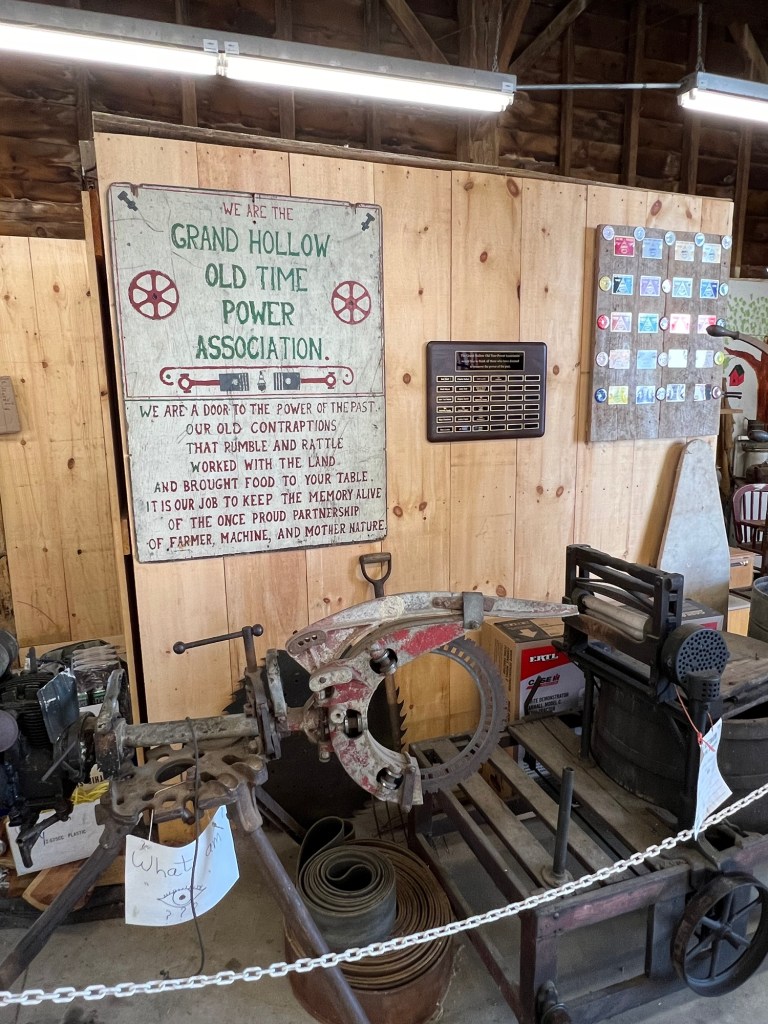
The gas powered saw
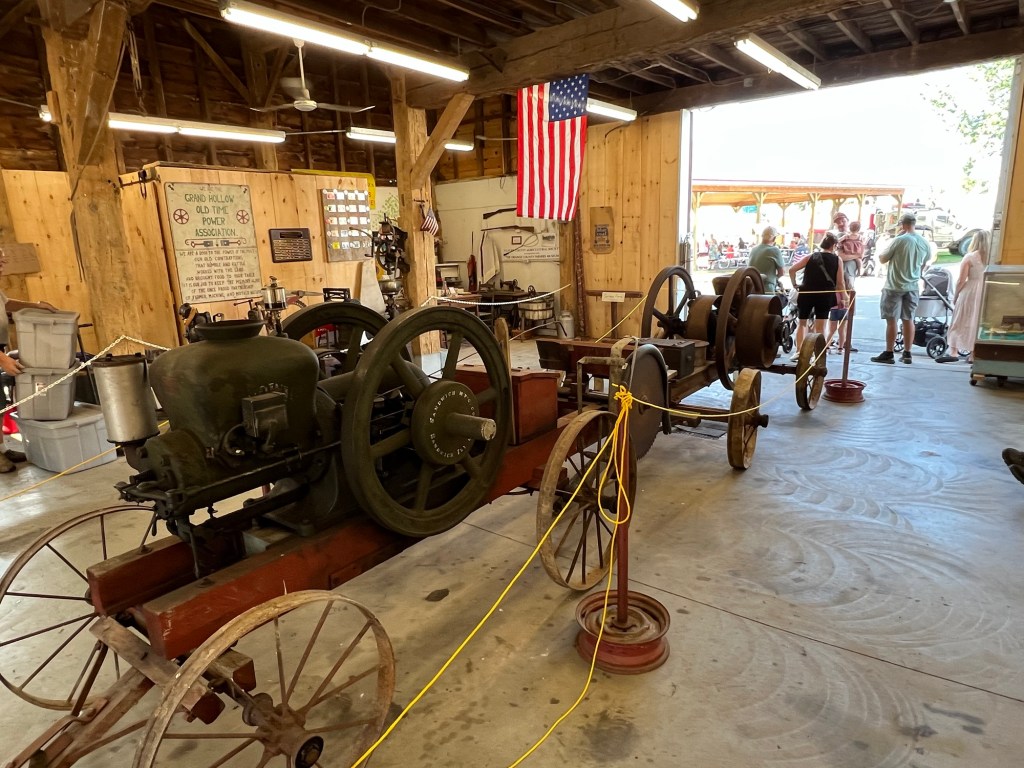
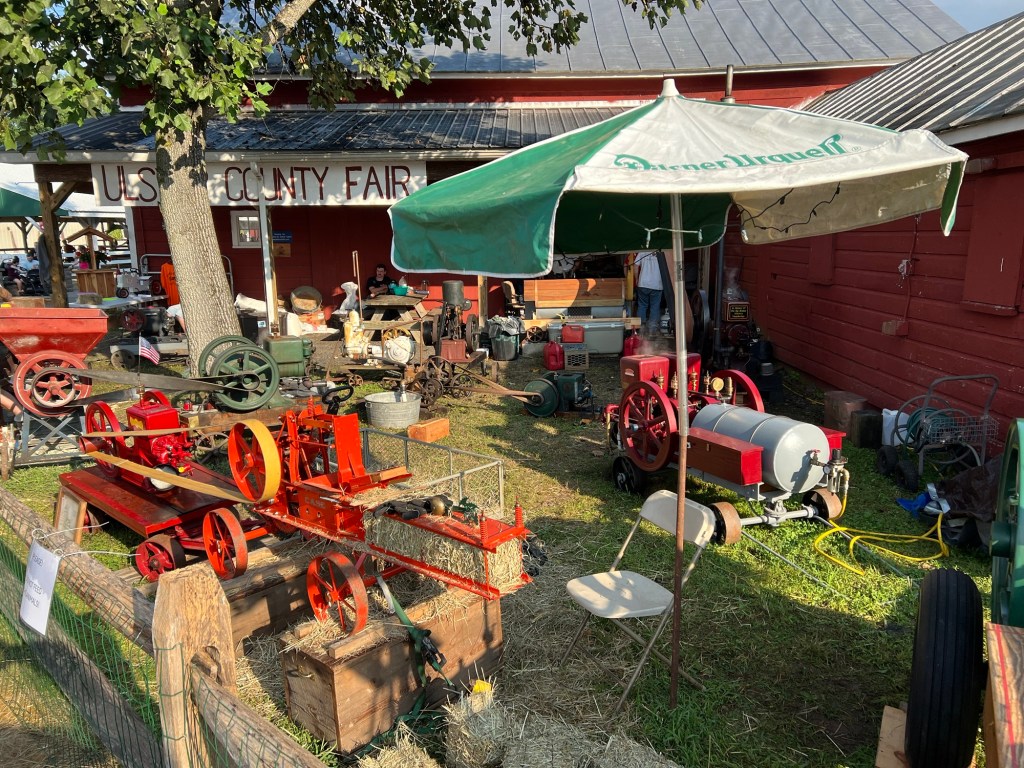
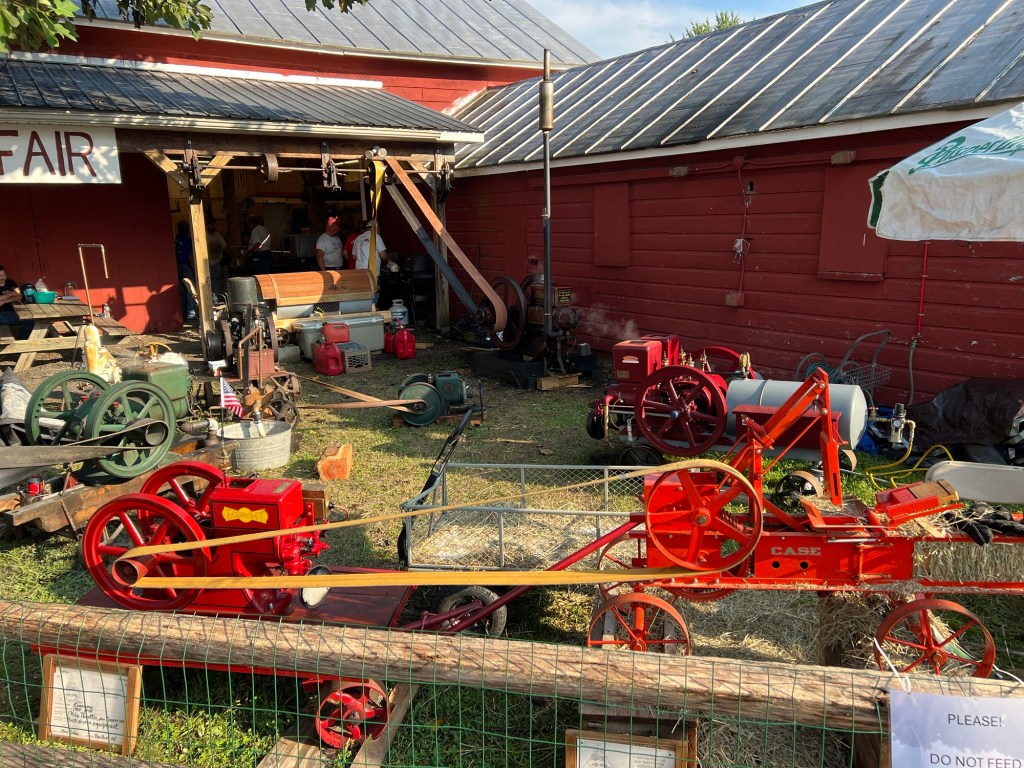
The members who run the museum were working the gas run engines and were demonstrating equipment used over the years. Members were showing visitors how these machine work and there purpose on the farm.
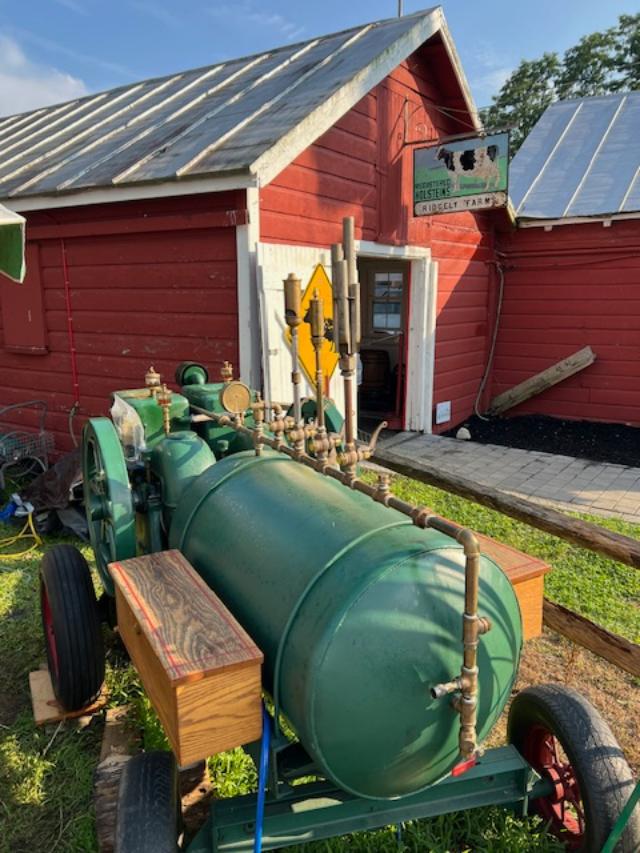
The outdoor gas powered equipment
The gas powered equipment
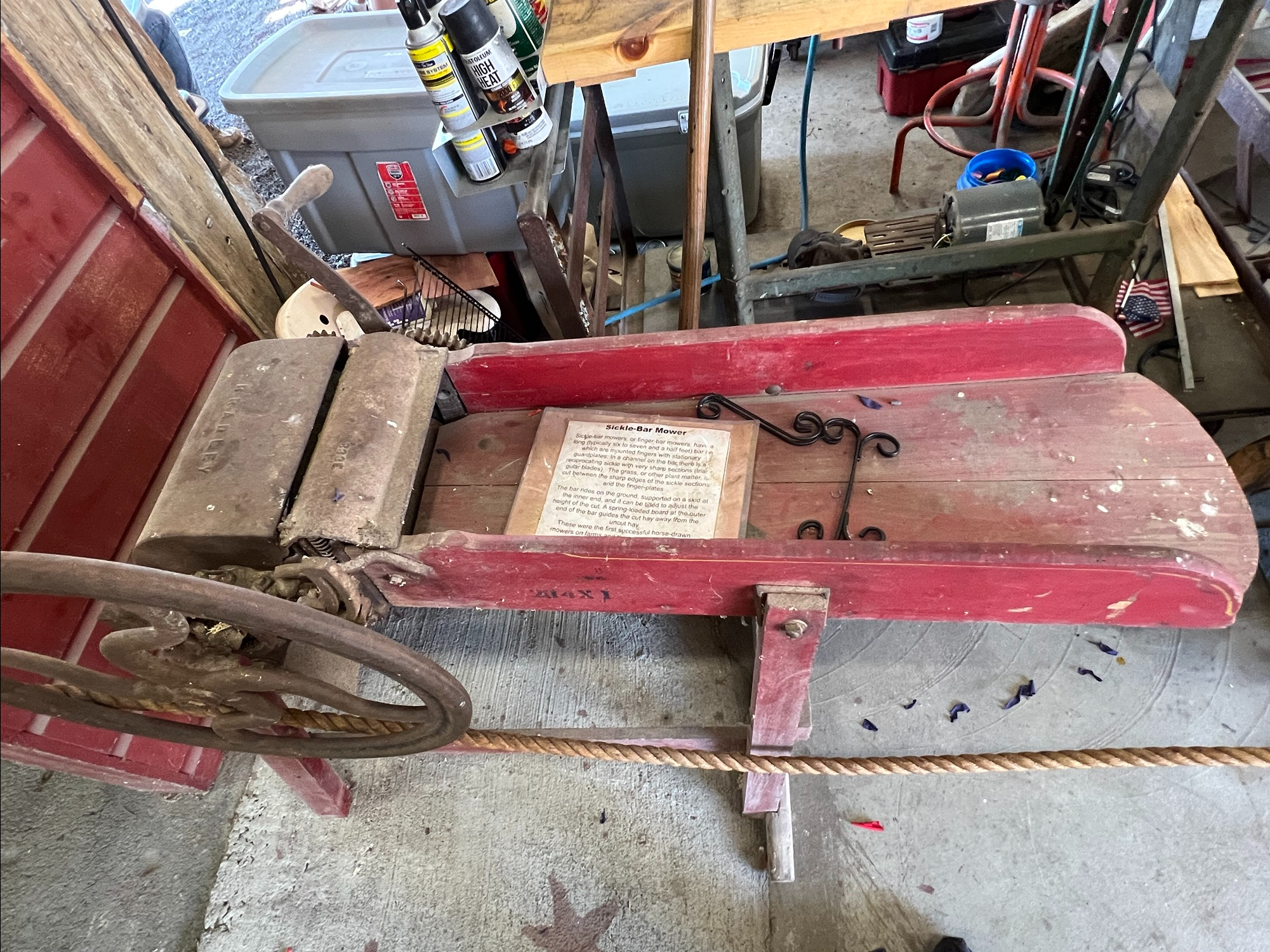
The inside of the museum had all sorts of displays on working on the farm. There was the equipment to cut the law, sort the crops and maintenance on the farm.
Sickle mower
The gas powered machines for maintaining of the farm and fields
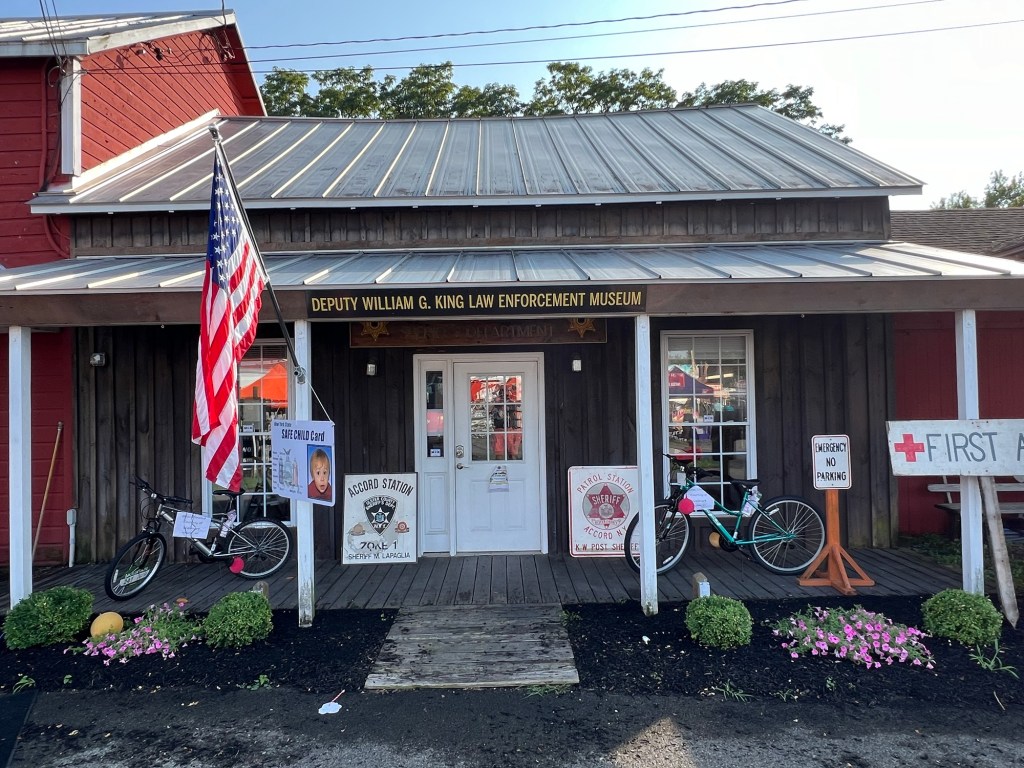
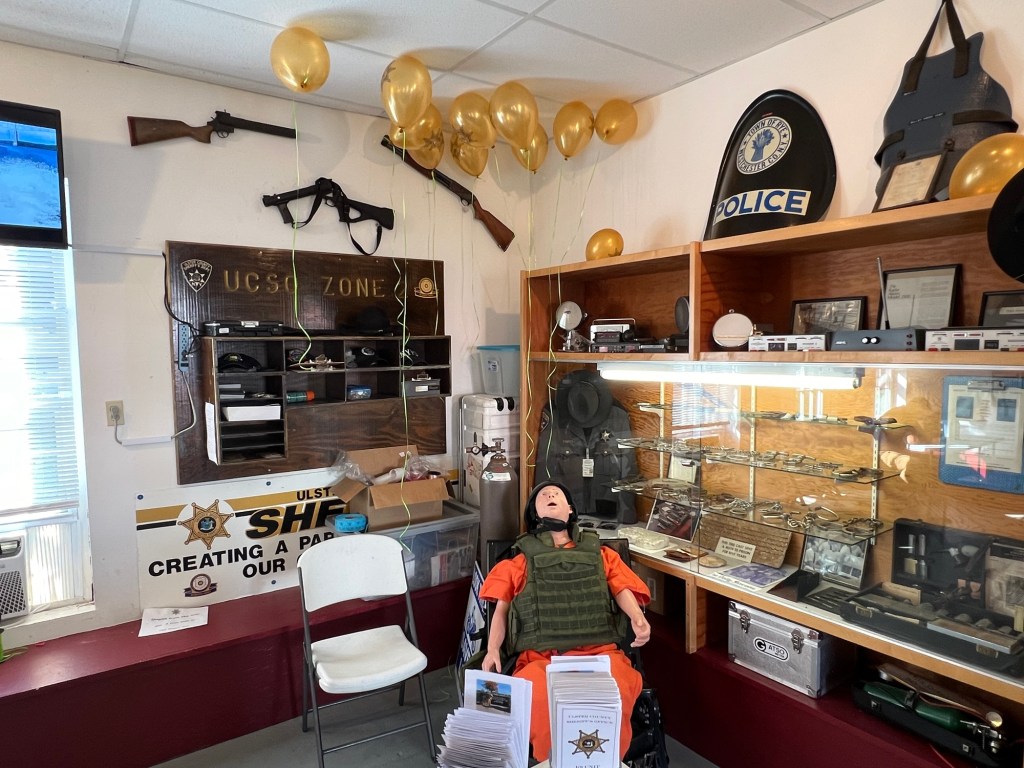
The Deputy William G. King Law Enforcement Museum is a small museum on the fairgrounds of Ulster County and is only open when the fairgrounds are open. The museum is manned by officers of the Sheriff’s Department. The museum houses the collection of retired Deputy William G. King law enforcement memorabilia.
The entrance to the museum
The collection includes a wide variety of guns, ammunition, equipment used on the job and riot gear.
The main gallery of the one room museum
The display cases house police department patches, pins for uniform, pictures of policemen and incidents. There is a collection of badges from various departments around the country.
A collection of awards and night sticks
What I found impressive was the collection of riot gear and equipment used on emergency calls. People do not understand the life of a police officer when duty calls and their perspective might be during a riot to protect people.
Riot gear, the gun collection and police equipment collections
The officer who manned the museum from the sheriff’s office was explaining how the equipment was used and how it has progressed in time.
Items from the Ulster County Sheriff’s Department
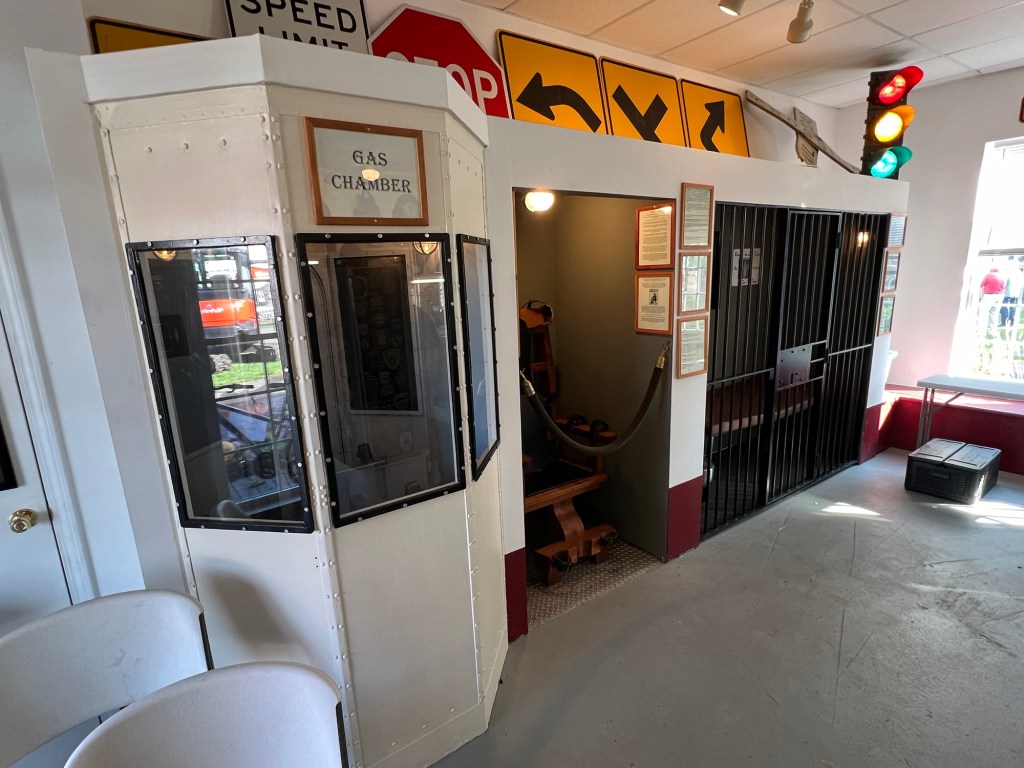
The museum also has a simulation of the New York State Gas Chamber, Electric Chair and the jails. I thought this was pretty interesting in that Capital punishment is still legal in New York State.
The display on Capital Punishment in New York State
A better view of the display
The Sheriff’s Department of Ulster County does a nice job maintaining and explaining all the items in the museum. They also make it less intimidating for children to approach a police officer when they need help. The museum is packed with information and the officers manning it could not have been nicer. Its just too bad that it is only open during the times the fairgrounds are open.
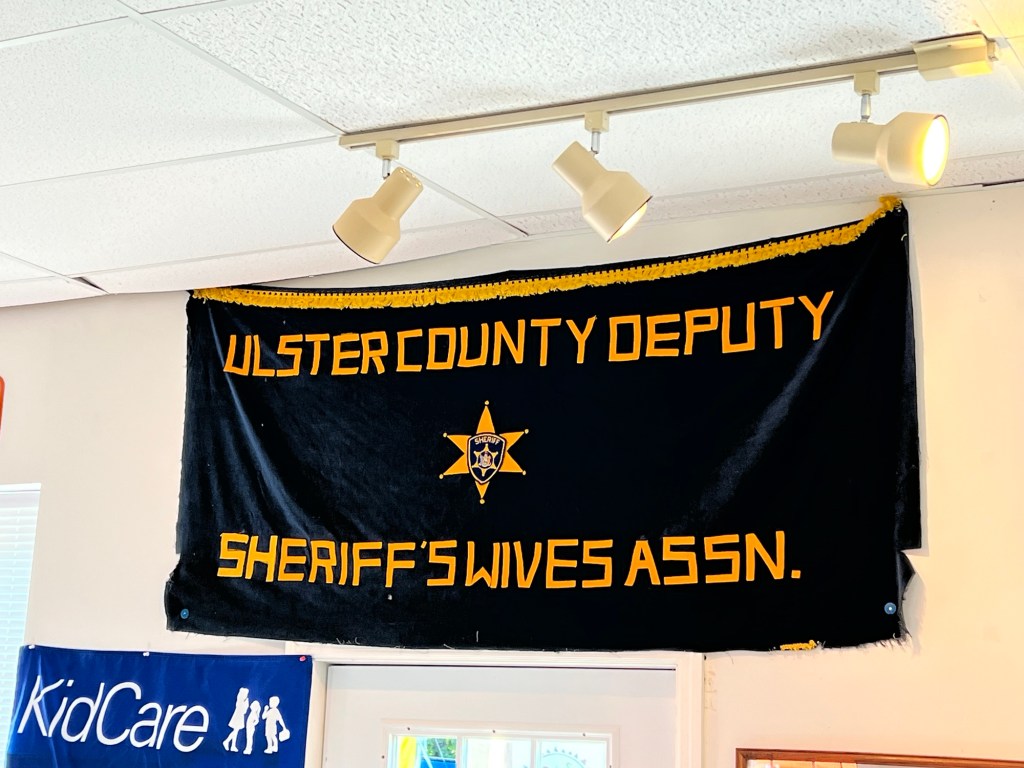
The banner from the Ulster County Deputy Sheriff’s Wives Association
I recently spent my afternoon at the Senate House and Museum in Kingston, NY taking a tour of the museum and the House next door. The Senate House itself had just finished its renovation and the gardens were in full bloom in 2023. It was a quiet afternoon, and I was the only patron for most of the afternoon. The grounds were full of beautiful foliage and flowers, so it was nice to walk around the grounds.
The Senate House story board
The Senate House had just reopened in 2023 after almost a four year renovation and because of the closure during COVID. The grounds are very pretty and well-landscaped and the outside has had a lot done to the gardens. The house was built for merchant Abraham Van Gaasbeek and his family. It stayed in the family for generations.
The Senate House at 296 Fair Street
We were able to tour the inside of the house and see the renovations that the State of New York made on this important structure. The home has been renovated by the state but the tour guide told us not with the historical integrity it should have had. It was not to the total interpretation of the life in the house. Still, it told the story about the people that lived there.
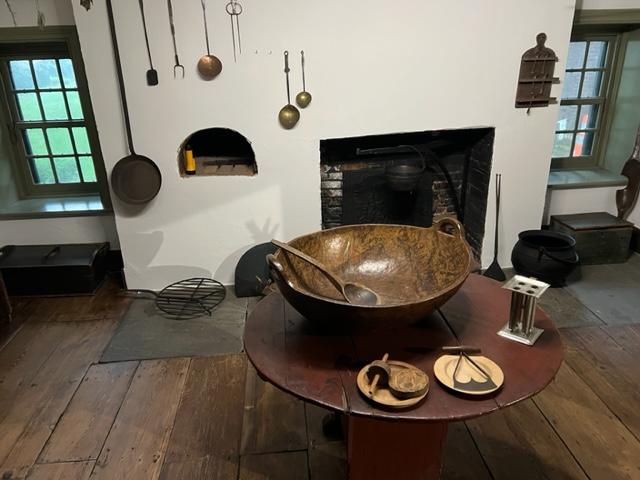
The Senate House Kitchen
Here you see the beehive oven, the working fireplace and many household items including waffle makers, cookie molds and candle making tools. The daily household tasks would be time consuming.
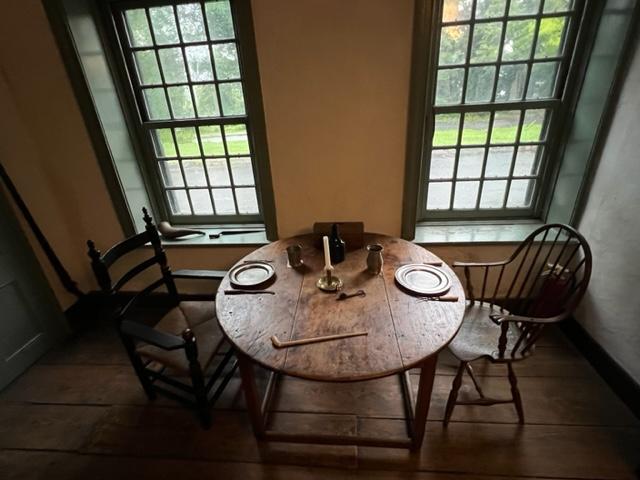
The Dining Space
The bedroom
In the original part of the house, the dining space and bedroom would be in a one room section of the home and as the family got larger, the house was added on to on both sides.
The Parlor
The Parlor was the fanciest room in the house with the best furnishings, decorations and a place of social interactions with guests. This rooms was for adult use at that time.
The Meeting Room for the leaders in change.
This was the room where plans by the patriots were made that changed the course of New York and the rest of the country. Now that the Senate House home is open again, you get a feel for what these people must have went through in developing the country during the Revolutionary War years.
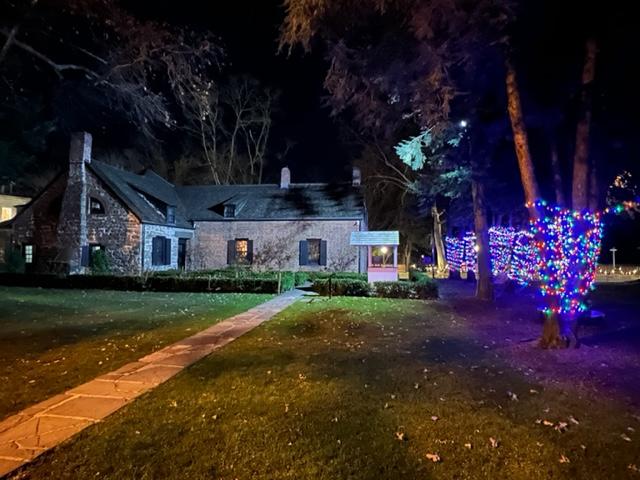
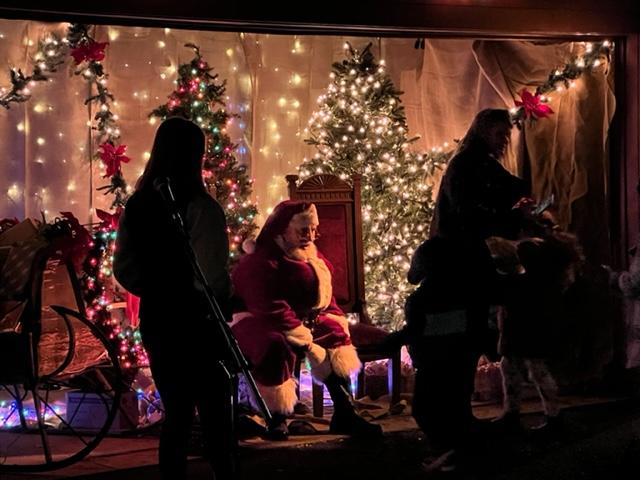
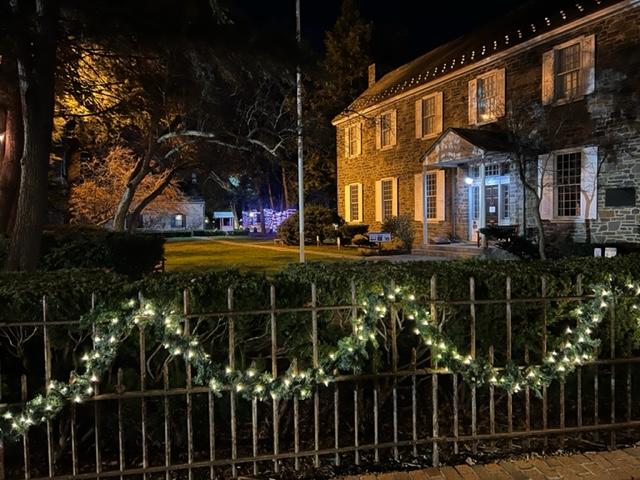
When I visited the Senate House at the holidays for the “Snowflake Festival”, it was still closed for renovation but the grounds were open for touring, music and for a visit with Santa. It was a magical night on the grounds of the historical site and people had a nice time that evening. The grounds and the other buildings were decked out for the holidays.
The Senate House decked out for the Christmas holidays at the “Kingston Snowflake Festival” in 2022
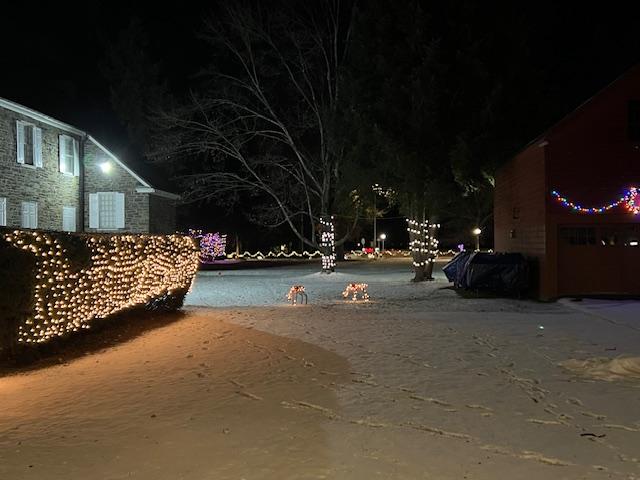
The Senate House property decorated for the Kingston Snowflake Festival in 2022
Santa’s visit at the Senate House property in 2022
The history of the Kingston Stockade section of the city.
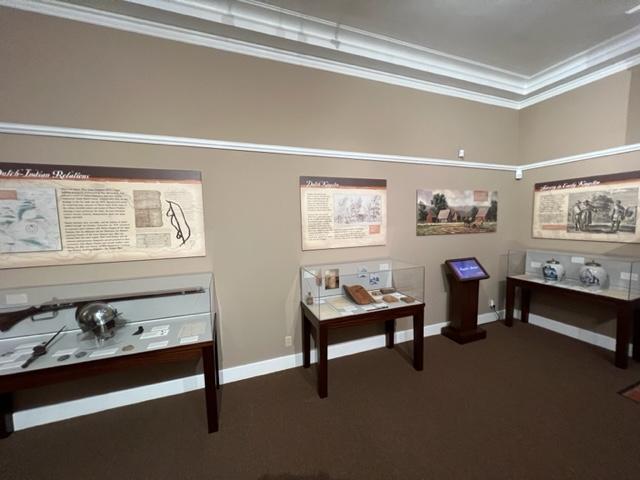
The main part of the park is the Senate House Museum, which is broken into three sections. The right side of the museum is the history of the City of Kingston and the matching artifacts. There is a description of manufacturing, merchant class and its military prominence. Here I learned about the growth of Kingston and its founding, its strategic spot on the Hudson River in the early colony, its role as diplomats to the Native Americans, which was not so pleasant and its growth after the war.
The first floor exhibitions on early life in Kingston
The history of the City of Kingston is described with the Native American settlements and the trade with the Dutch, the unsettling relationships that the two groups had with each other, the War years, the growth of industry and trade in early New York and manufacturing in the area.
The Native American exhibition
Early manufacturing and life in Kingston
The Artist’s sign
The Vanderlyn Exhibition of artist John Vanderlyn’s art
Artist John Vanderlyn’s works are featured on this part of the museum.
The left side of the museum is dedicated to the locally born artist, John Vanderlyn. His paintings line the walls of the museum of the artist at different stages of his career. His work was ahead of its time for the area, and it was noted in the collection that he forced himself to commission portraits to survive. His works advanced for the time because of his studying abroad now line the walls of the best museums in the country.
The exhibition of John Vanderlyn’s portraits
Artist John Vanderlyn’s bio in the museum
Members of the extended Vanderlyn family portraits
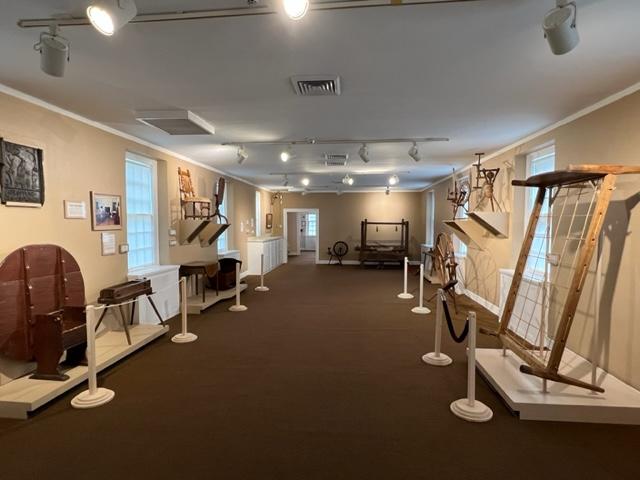
The second floor holds the furniture that is not historically correct with the Senate House and comes from different time periods. There is furniture, beds and chairs, spinning wheels, chamber pots and all sorts of accessories for the home and their uses in everyday life. Vintage furnishings with explanations on their use are a big part of the exhibit.
Artifacts from the past are displayed here
The everyday items used to spin material and create clothing
The Loughran House next door houses more of the furniture of the house and has a new exhibition “Back to the Future: The Evolution of Senate House”. This houses artifacts from the house.
The Senate House property during the “Kingston Snowflake Festival” in 2022
The Senate House property during Christmas 2024
The Senate House property during Christmas 2024
History of the Senate House:
(From Wiki/Office of Parks, Recreation and Historic Preservation pamphlet)
Amidst the turmoil of a British military invasion in the fall of 1777, the elected representations of rebellious New Yorkers met in Kingston to form a new state government. While convened in Kingston in September and October, New York’s first Senate met in the simple stone house of merchant Abraham Van Gaasbeek.
Here they adopted a system comprising of a senate, assembly, governor and judiciary that still exists today. Every one of the assembled delegates risked his life and property by being so openly disloyal to the Crown. Indeed, all were forced to flee for their lives when the British attacked and burned Kingston on October 16th.
While convened in Kingston in September and October, New York’s first Senate met in the simple stone house of Abraham Van Gaasbeek, a prosperous merchant trader who had suffered financial losses as a result of the war and personal losses in the recent deaths of his wife, Sara, his daughter and infant granddaughter. It was Sara’s grandfather, Wessel Ten Broeck, who built the original section of the house in 1676.
At first called Wiltwyck, Kingston was the third “city” established in the Dutch Colony of New Netherland. Planned and developed by the Dutch Governor Peter Stuyvesant in 1656, the town was renamed Kingston after the colony was seized by the English in 1664.
Wessel Ten Broeck’s one room Dutch style house was enlarged by succeeding owners in the 18th century. Each change reflected the increasing fortunes of the Ten Broeck/Van Gaasbeek family and demonstrated a gradual acceptance of English styles and customs over the persistent influence of the early Dutch. Kingston at the time of the American Revolution was still a noticeably “Dutch” town and most of its citizens supported the American cause. British Major General John Vaughan justified his destruction of the city because it was a “nursery for almost every villain in the country.”
In 1887, to recognize Senate House’s role in the formation of New York State, New York State acquired the property, which quickly became a vital community museum. A two-story Museum Building was constructed in 1927 to house and display the site’s burgeoning collection. Among its treasures are: major works by John Vanderlyn and other members of the Vanderlyn family of Kingston. The museum also includes the site’s popular new exhibit: “Kingston Stockage: New Netherlands’ Third City,” discussing Kingston’s early history.
(New York State Park History)
The Kingston Stockade: The City’s formation from the beginning
For current information on guided tours, group tour reservations, school groups, special events or accessibility, call (845) 255-1660 or visit http://www.huguenotstreet.org.
The history of Slavery in the area
App:
Our free Walking Tour mobile app features histories of the houses on the street with archival photos as well as photos of the house interiors and the collection pieces within. Mobile users can download the app on both the App Store and Google Play.
The entrance to the site
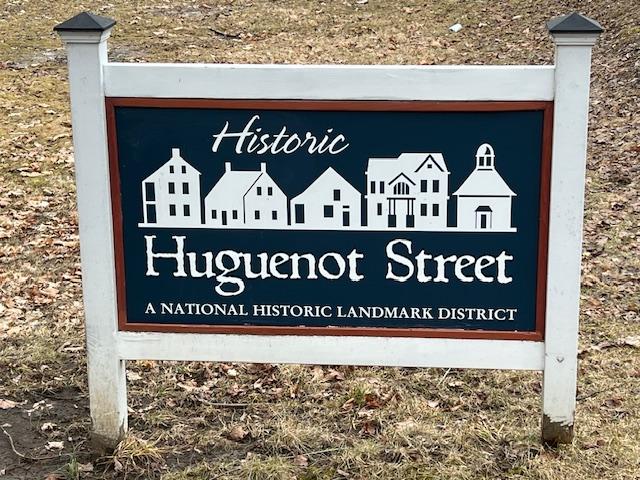
The historic sign at the entrance
History of the site:
At our 10 acre National Historic Landmark District, visitors experience more than 300 years of history through the lens of a French Huguenot community as it evolved over time. Guided tours begin with an introduction to the pre-colonial Munsee Esopus landscape dating back 7000 years and the religion, culture and architecture of New Paltz’s earliest European settlers and enslaved Africans. The experience continues as guests visit fully furnished houses reflecting unique human narratives and changing tastes across the Colonial and Federal periods, through the Gilded Age and into the early 20th century.
(Promotional Materials)
I visited Historic Huguenot Street one afternoon after visiting here about five years earlier during the holidays. The houses are easy to tour and the street is blocked so that you can walk amongst the houses. There are tours every half hour when the site is open. Here you can tour inside the houses instead of just the grounds. On a nice day, it is interesting to look over the architecture of the homes.
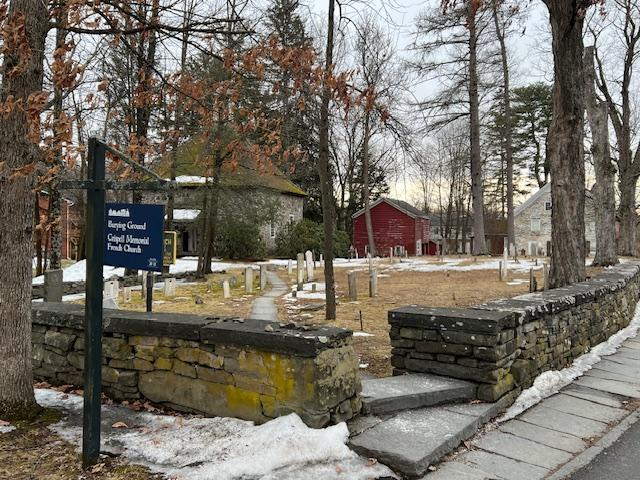
Make sure that you take time to look at the historical cemetery by the church at the end of the block. Some of the original settlers are buried here. It is also nice to tour around the Waykill River.
Take the extra time to visit the gift shop and see the information video on the site and look over the literature of the site.
The area has a pretty interesting history.
The map of the site
History of the Huguenot Street Historic District:
The site is owned and operated by Historic Huguenot Street (HHS), which was founded in 1894. In 1899, Historic Huguenot Street purchased the Jean Hasbrouck House as the first house museum on the street. In the 1950’s and 60’s, the organization and related family associations purchased most of the remaining stone houses in the district and subsequently opened them as museums. These acquisitions were funded in large part by descendants of the original Huguenot founders. Their family associations play a key role in supporting the institution today.
The Individual Houses:
Bevier-Elting House:
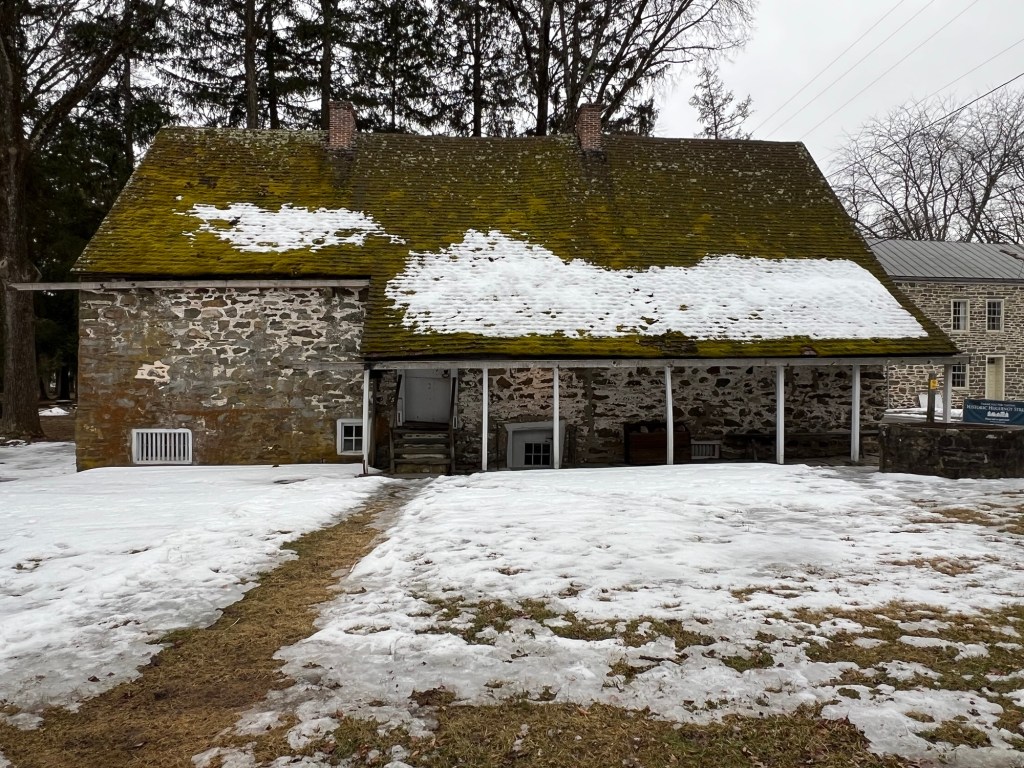
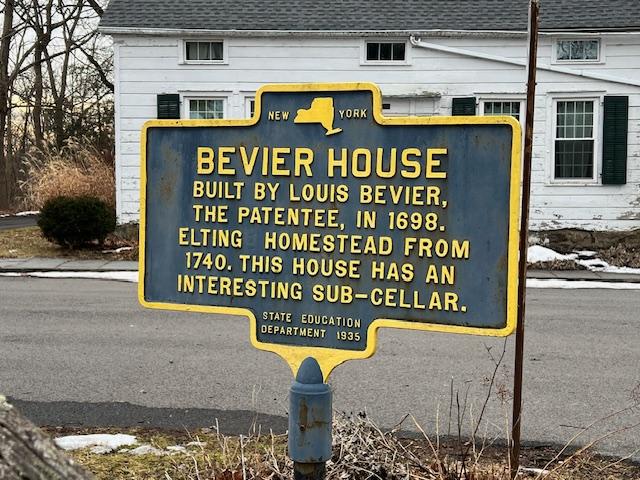
Dating to the early 18th century, the house was originally a one room building built with the narrow or gable end facing the street-then the prevailing style of the low countries of Northern Europe. Two expansions were built later as was a small cellar that was used to house African slaves. The house was built by the Beiver family, one of the founding families and subsequently sold to the Dutch Elting family.
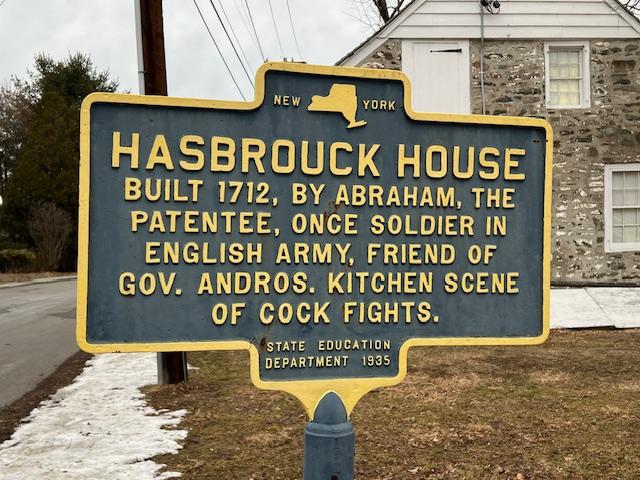
The structure as the Abraham Hasbrouck House was built in three phases in the 1720’s and 30’s. The first of the house-the center room-was constructed in 1721 by Daniel Hasbrouck, the son of Abraham Hasbrouck the patentee. The date 1721 is based on recent dendrochronology, which is a process by which wooden structural members are dated. This house represents a New World innovation in Dutch-style architecture. The initial houses in the Dutch region of New York, such as New Amsterdam, Albany and Kingston were built in the tradition of Dutch cities with the gable-ends to the street, which conserves street frontage. The basic structure of the house consists of a series of H-bents which spread the weight of the house across the entire expanse. The original one room house exhibited several defining elements of Dutch architecture, the jambless fireplace being the principal and most recognized feature in the house. Recently re-opened to the public in July 2012 following a restoration and reinterpretation focusing on the life of Widow Wyntje.
Also built in 1721 by Jean’s son Jacob (and perhaps incorporating elements of an early home built by New Paltz founder Jean Hasbrouck), this home is an excellent example of Hudson Valley Dutch architecture and the showpiece of Historic Huguenot Street. A National Historic Landmark in its own right, it boasts the only remaining original jambless fireplace of any of the Huguenot Street houses and is one of the few surviving examples in what was formerly the New Netherland.
In 2006, the north wall of the house was carefully dismantled, repaired and reconstructed. Reproduction Dutch-style casement windows were installed. Interior restoration followed, resulting in a house that is an excellent example of how a comfortable family in the region lived in the mid-18th century.
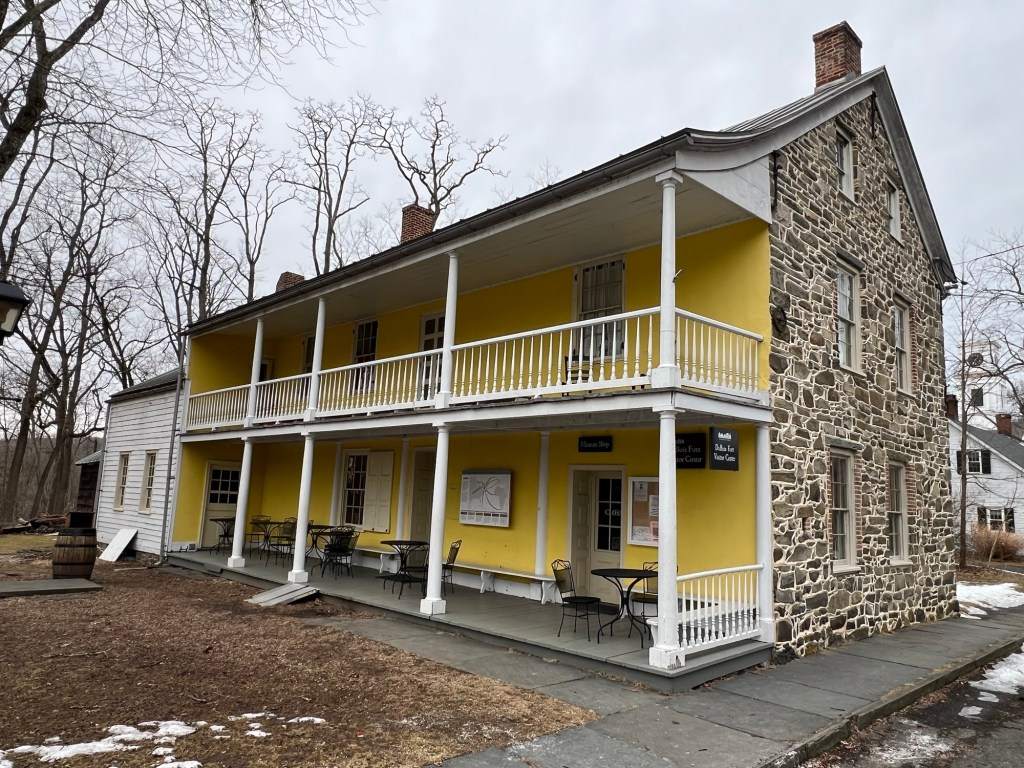
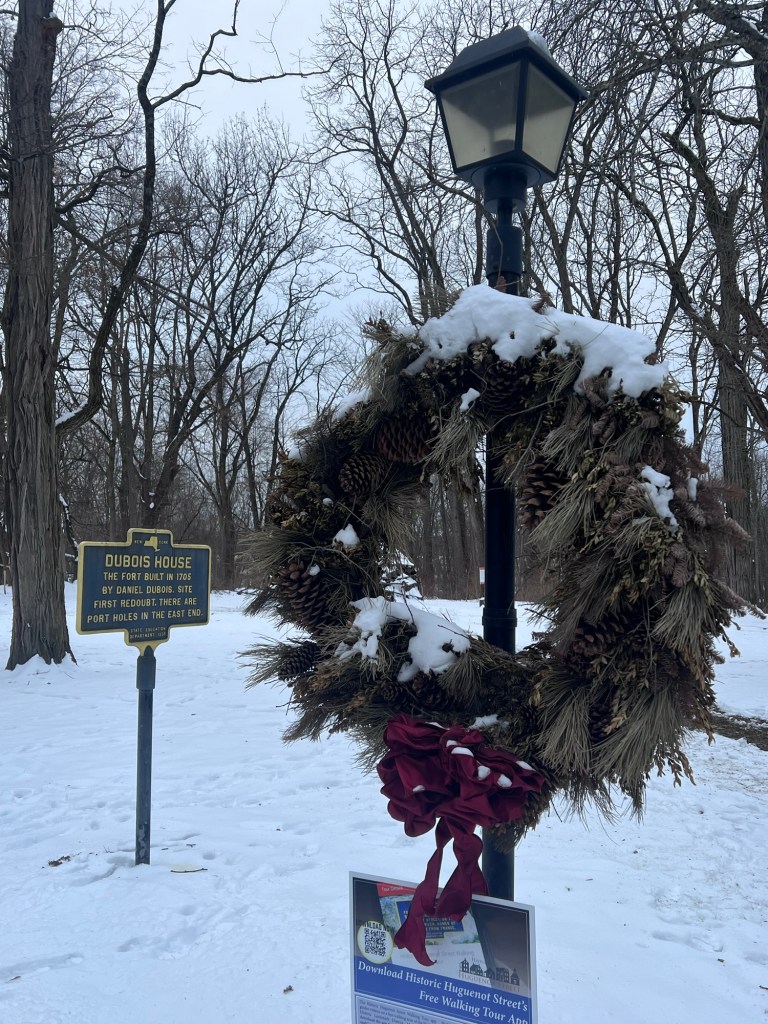
Built circa 1705 for the DuBois family, it might have served as a fortified place for the small community if needed. Originally a smaller 1 1/2 story structure, this building was expanded to its current size in the late 1830’s. Some historians and antiquarians believe that the presence of “gun ports” made it a fort but there is no evidence of the presence of any such portholes before the 19th century. The DuBois Fort currently serves as the orientation center and gift shop as well as a location for special events. Guest can purchase their admission tickets and memberships at this building. Over the last 300 years, it has also been used as a residence and a restaurant.
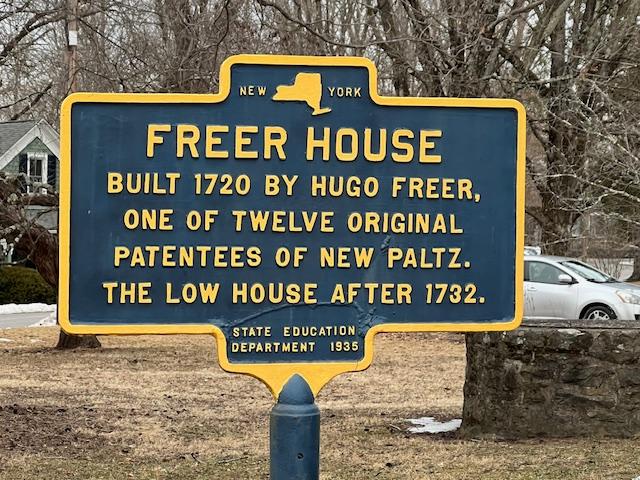
The Freer House is one of the six 18th century stone houses owned by Historic Huguenot Street. It was altered in various points in its approximately 250 years of occupancy with its most recent major alterations occurring in 1943 when it was purchased by Rev. John Wright Follette, a direct descendant of it s original builder, Hugo Freer. Over the years, the interior was modernized into a 20th century idea of a colonial home. This structure is not currently open to the public.
The original portion of the house was built around 1720 by Patentee Pierre Deyo. It began as a one room house was subsequently expanded to two rooms and ultimately to three when a stone addition was added off the rear by Pierre’s grandson Abraham. Circumstances for this house changed dramatically when at the height of the Colonial Revival movement, two descendants of Pierre Deyo, Abraham and Gertrude Brodhead, inherited the house.
The Deyo House at Christmas
Wanting to live on the street of their ancestors but also wanted a modern, gracious home that reflected their affluence, the Brodheads partially dismantled the original stone house and build a grand Queen Anne home around it in 1894. They also significantly changed their surrounding property in essence changing a small village farm into a handsomely appointed and landscaped mini estate.
The house passed out of Deyo family ownership in 1915. It was a private home until 1971, when it was purchased by the Deyo-Family Association and donated in order to be opened to be opened to the public as a house museum. The home was most recently restored in 2003 and features circa 1915 interiors.
The patentee Pierre Deyo died in 1700, so couldn’t have built the house in 1720 as stated. Per the plaque mounted outside the house it was built in 1692.
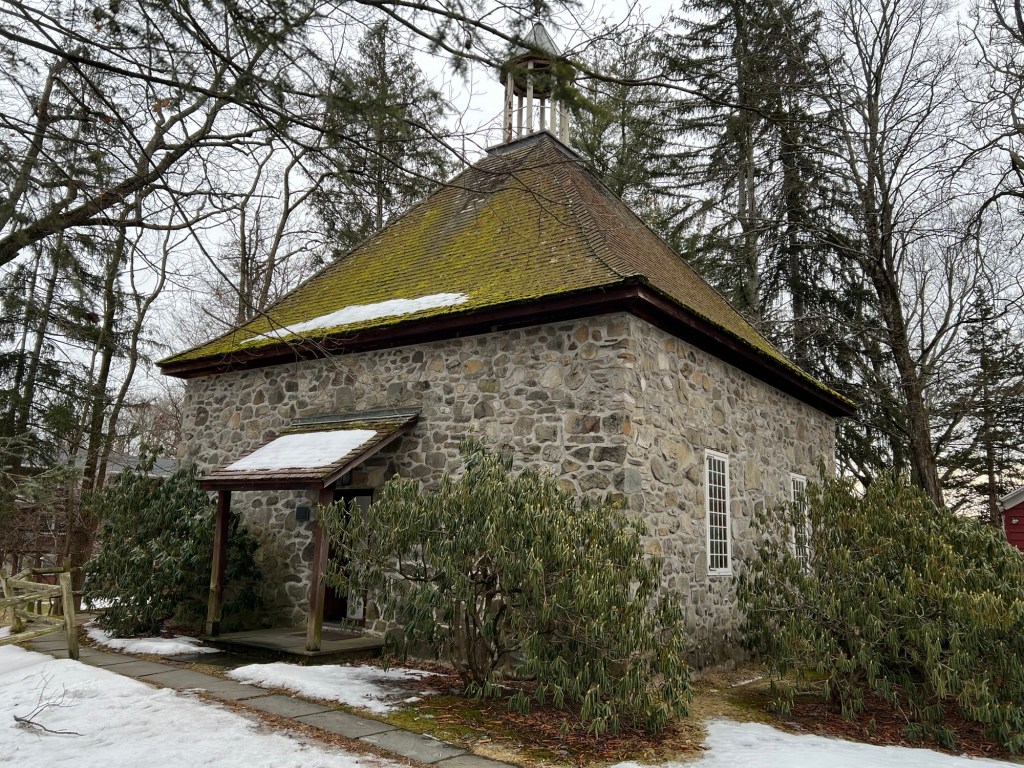
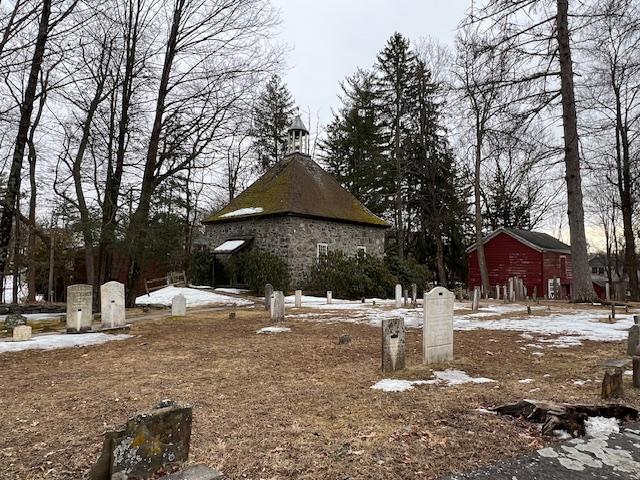
Since the community’s founding, there have been four sanctuaries built on what is today called Huguenot Street. The French-speaking Protestants who settled in New Paltz built their first church in 1683-a simple log building. This was replaced in 1717 with a straightforward, square stone building that reflected the permanence of the settlement. This existing building in the burying ground is a highly conjectural reconstructed of the 1717 building near its original location.
The Historic Walloon Church
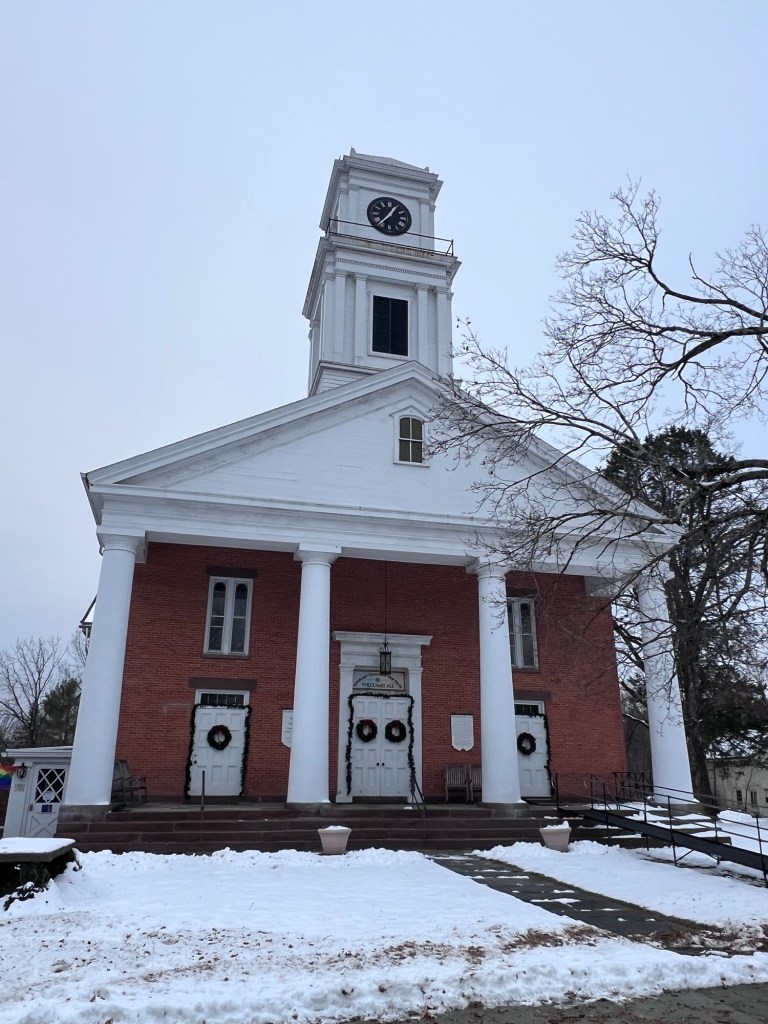
As the New Paltz community increased in size throughout the 18th century, a larger church became necessary. A second stone church was built down the street in 1772. When it became too small, it was demolished and replaced by a third church built in 1839. This church survives today and is home to an active Reformed congregation.
The Church and the graveyard
The reconstructed church is named in honor of Antoine Crispell, one of the twelve founders or patentees of New Paltz and a direct ancestor of Franklin Delano Roosevelt. It was built as the result of a fundraising campaign led by the Crispell Family Association. The Crispell Family Foundation opted to create this reconstruction church in their ancestor’s honor. It was completed in 1972.
The 1717 church was designed to reflect Reform thinking; the pulpit was placed in a central location and the pews were placed so that everyone could see and hear more equally. This expressed the concept that each person had a direct relationship with God, rather than one mediated through a church hierarchy.
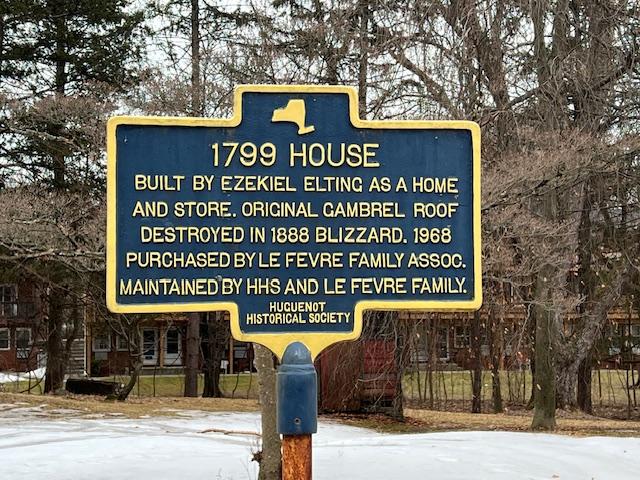
Built int 1799 by Ezekiel Elting, a prosperous merchant who was born in the Bevier-Elting House, this stone and brick building is quite different from the earlier stone houses on Huguenot Street. Its Georgian-style architecture reflects the transition of New Paltz from a French and Dutch settlement to an Anglo-American community and increasing refinement in architecture in this period as settlements matured. The house shows the changes in architectural style from the early 18th century. This house reflects the several changes in the society and home life of New Paltz in the early 19th century.
Located in the Roosa House, the Library and Archives at Historic Huguenot Street is a research facility devoted primarily to the history and genealogy of the Huguenot and Dutch settlers of the Hudson Valley. It also functions as a general repository for local history, regardless of ethnicity or religious persuasion. The collections consist of family genealogies, church, cemetery and bible records, wills and deeds, census records, genealogical periodicals, county histories and publications relating to Huguenot ancestry. Genealogists, local historians and other interested parties can access the collections by appointment. The colorful paint replicates the original colors of the house in 1891.
Native American presence on Huguenot Street:
Historians and archaeologist have learned more about the continuing relations between the Esopus, the original inhabitants of the area and the Huguenots. Some results of research can be found at the HHS site at “Relations between the Huguenots of New Paltz, NY and the Esopus Indians (http://www.huguenotstreet.org/library_archives/exhibits_research/Indian_affairs.html). The “Before Hudson” exhibit, currently on view at the DuBois Fort Visitor Center, shows some of the highlights of archaeological excavation in our area with artifacts dating back 6,000-8,000 years ago.






























 Visiting a Museum: The Unique, Unusual, Obscure and Historical