Category: Walking Long Beach Island, NJ

Historic Cold Spring Village                                 720 Route 9                                                         Cape May, NJ 08204

Historic Cold Spring Village 720 Route 9 Cape May, NJ 08204

Historic Cold Spring Village

720 Route 9

Cape May, NJ  08204

(609) 898-2300

hcsv.org

https://hcsv.org/

Open: 10:00am-4:30pm, Tuesdays through Sundays/Monday Closed

Seasonal: June 23rd to September 2nd

Fee: $14.00 for adults and $12.00 for children 3-12. Children under 3 admitted for free.

Admission is free with membership. Please call (609) 898-2300, ext. 10 for accessibility. Pet Friendly and free parking.

TripAdvisor Review:
https://www.tripadvisor.com/Attraction_Review-g46341-d268948-Reviews-Historic_Cold_Spring_Village-Cape_May_Cape_May_County_New_Jersey.html?m=19905

Historic Cold Spring Village in the summer of 2023. The 1800’s came to life when you visit.

Historic Cold Spring Village IV

The welcoming sign

Historically clothed interpreters demonstrate blacksmithing, pottery, printing, basket weaving and more! Visit an Early American schoolhouse, take part in hands-on activities and crafts and sample historic games and horse-drawn wagon rides on weekdays.
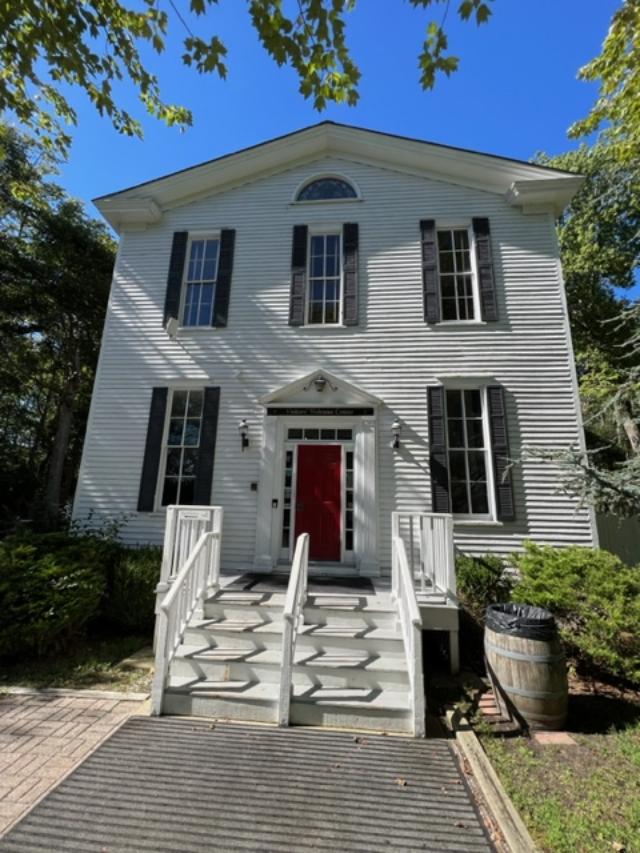
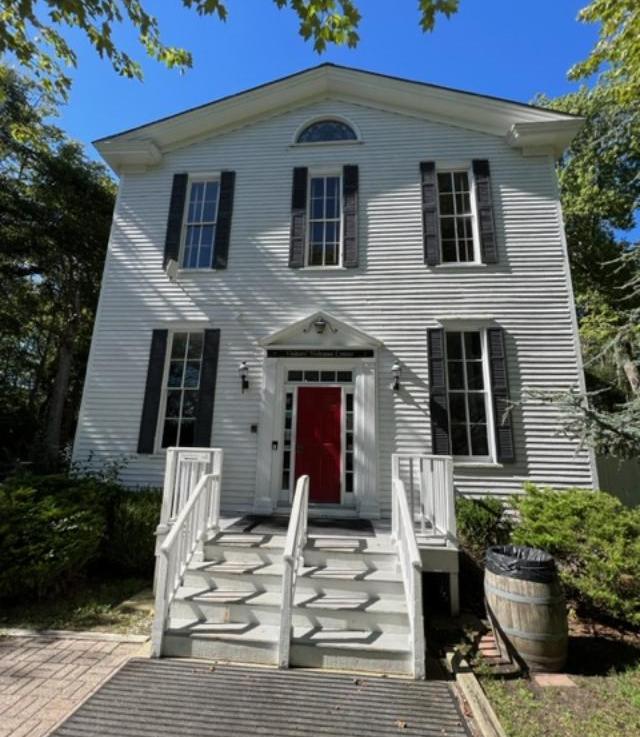
The Visitor’s Center at Historic Cold Spring Village

The village is also home to an organic farm complete with a horse, chickens, sheep and more! Visitors will also find a Welcome Center, Country Store, Bakery, Ice Cream Parlor, Cold Spring Grange Restaurant and Cold Spring Brewery.

Historic Cold Spring Village

The Map of the Village

Historic Cold Spring Village is a non-profit, open air living history museum dedicated to preserving the rich heritage of southern New Jersey. During the summer months, interpreters and artisans in period clothing preserve the trades, crafts and heritage of “the age of homespun.” From October-May, the emphasis is on teaching history through school trips to the Village, classroom visits by the education department and interactive teleconferences with schools throughout the U.S.
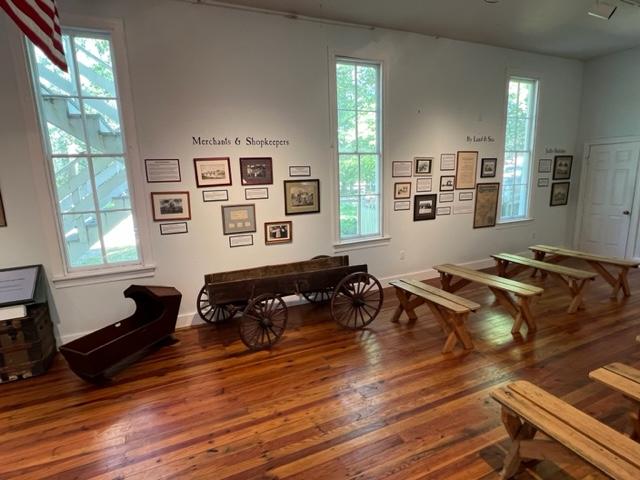
The Visitor’s Center exhibition is open in off season.

Our Education Program relates the history of the region to the broader scope of New Jersey, American and World History. Historic Cold Spring Village offers programs for students of all ages and programs can be adapted to any grade level. Please contact the Village for a more detailed description of each program.

Historic Cold Spring Village’s educational offerings are designed to comply with the 2009 New Jersey Core Curriculum Content Standards for Social Studies as established by the New Jersey Department of Education.

The Visitor’s Center exhibitions at Historic Cold Spring Village.

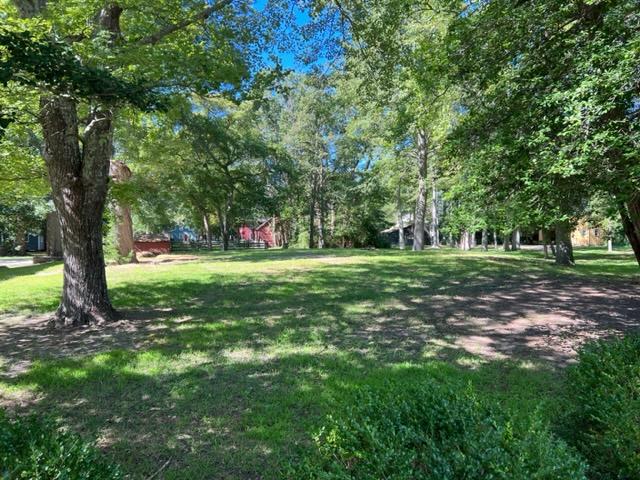
Stroll the shaded lanes of Historic Cold Spring Village’s 30 acres as you step back in time to an early American South Jersey farm community. Craft persons, tradesmen, housewives and farmers are eager to share their experience as you visit the Village’s 27 historic buildings. The Village is located on Route 9, four miles south of Rio Grande and three miles north of Cape May City. Visitors from the north, take the Garden State Parkway to Exit 4A and follow the signs to the Village.

For additional information on Historic Cold Spring Village programs, projects or events, please call, fax, email or visit our website.

Telephone: (609) 898-2300

Fax  (609) 884-5926

Email 4info@hcsv.org

Web: http://www.hcsv.org

Give the Past a Future: Invest in the future of HCSV by making a tax-deductible charitable contribution, volunteering or becoming a member. For additional information, call (609) 898-2300, ext. 10.

The Village’s educational programs meet the following standards:

6.1 US History, America in the World

6.2 World History/Global Studies

6.3 Active Citizenship in the 21st Century

The Marshallville One-Room Schoolhouse Experience

In the circa 1850 Marshallville Schoolhouse, students experience a typical Early American school day. Students ‘make their manners’, discover the subject studied by Early American students, write with quill pens and learn the consequences of not following classroom rules.

Historic Cold Spring Village V

The Schoolhouse

The Marshallville Schoolhouse is available free of charge for teachers who wish to personally recreate a ‘school day of the past’ for their class. Village staff is available to run the program for a fee.

‘Visits to the Past’

Field trips to Historic Cold Spring Village offer students and teachers the opportunity to experience the past first hand. Select Village buildings, like the print shop, schoolhouse, blacksmith shop and inn are open exclusively for school groups. Costumed interpreters interact with students while demonstrating the trades and crafts of Early America. Field trips are held mid-May through early June. Call or email for fees and dates.
Historic Cold Spring Village III

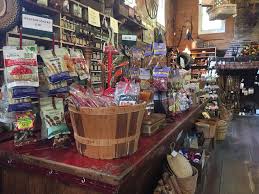
The gift shop offers all sorts of old fashioned goodies

We see America Learning: Teaching Early American History through ‘I Visits’

Distance learning programs are offered to schools nationwide. The programs are delivered via a state of the art broadband IP (Internet Protocol) systems and are adaptable to any grade level. If your school does not have a teleconference camera, our distance learning programs are also available through Skype using just your classroom computer and a webcam.

An Early American School Day: A typical day in an Early American rural school.

The Story of Old Glory: The origins and early history of the flag of the United States, using a collection of reproduction historic flags from the 17th Century through the Civil War.

Past Versus Present: A comparison of contemporary everyday objects with their Early American equivalents for example, a flashlight vs a lantern; digital camera vs daguerreotype.

Four Great Inventions (and one that almost was): Explores the creation of the steam boat, the steam locomotive, the daguerreotype camera, the telephone and difference engine, an 1832 attempt to build a mechanical computer.

Hearth and Home: An exploration of the role of the domestic arts practiced by 1800’s housewife with an emphasis on food preparation including hearth cooking.

Gone for a soldier: A day in the life of a Civil War Infantryman: Includes discussions of uniforms, equipment, camp life, food and weapons.

Welcome Centers: Taverns, Inns and Wayside Stops: A presentation utilizing our circa 1836 Dennisville Inn, A former stagecoach stop in Dennisville, NJ to explain the important part buildings such as these played in a community.

Historic Cold Spring Village II

The Inn at the Historic Cold Spring Village

Revisiting the Country Store: An Important Community Resource: A look at the vital role of a general store in the life of rural America as a purveyor of goods, social center, post office, etc.

The War of 1812: More than the Star-Spangled Banner: An overview of the “Second War of Independence”,

Fiber Arts: A domestic program primarily including weaving and spinning interpretations.

The First Frontier: Whaler Yeomen in Colonial New Jersey: The story of the first permanent European settlers in New Jersey as well as a discussion of how the Eastern Seaboard was the original American Frontier.

Early American Trades: Explores the important role a printer, woodwright, blacksmith, bookbinder or tinsmith, had in an Early American community. Includes in-workshop demonstrations.

Disclaimer: This information is taken directly from the Cold Springs Village pamphlet. Please call them at the above number or email address for more information.

The Cape May Lighthouse                                                      215 Light House Avenue                                                       Cape May Point, NJ 08212

The Cape May Lighthouse 215 Light House Avenue Cape May Point, NJ 08212

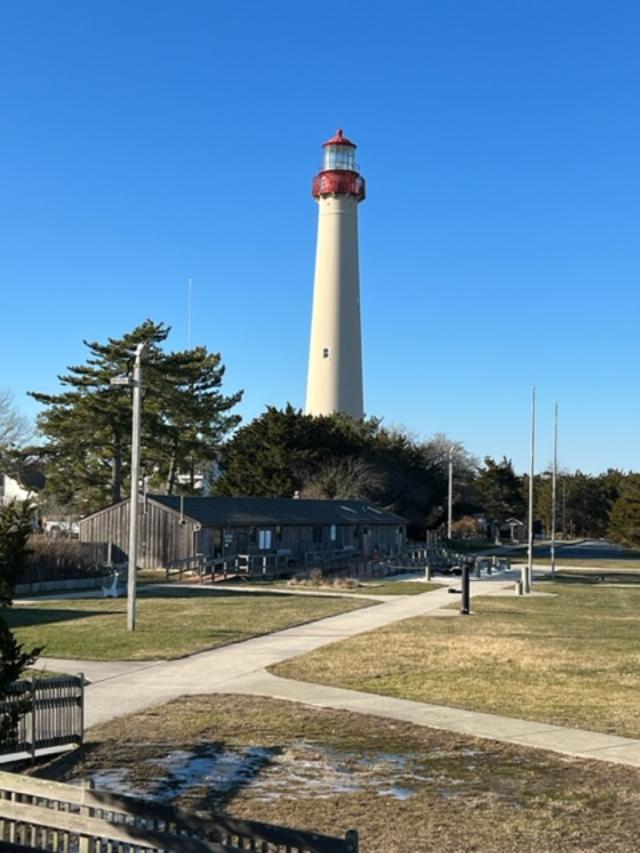
The Cape May Lighthouse

This historic site has been restored and administered by the Mid-Atlantic Center for the Arts & Humanities in conjunction with N.J. Department of Environmental Protection Division of Parks & Forestry.

The Cape May Lighthouse: Climb the 199 steps of this 1859 vintage tower for a breathtaking view of the Jersey Cape, where the Delaware Bay meets the Atlantic Ocean.

The History of Lighthouses in New Jersey

Over the past 30 years, MAC has totally restored the Cape May Lighthouse. A fully accessible Visitors Center is located in the adjacent Oil House as well as a Museum Shop stocked with lighthouse and maritime must haves.

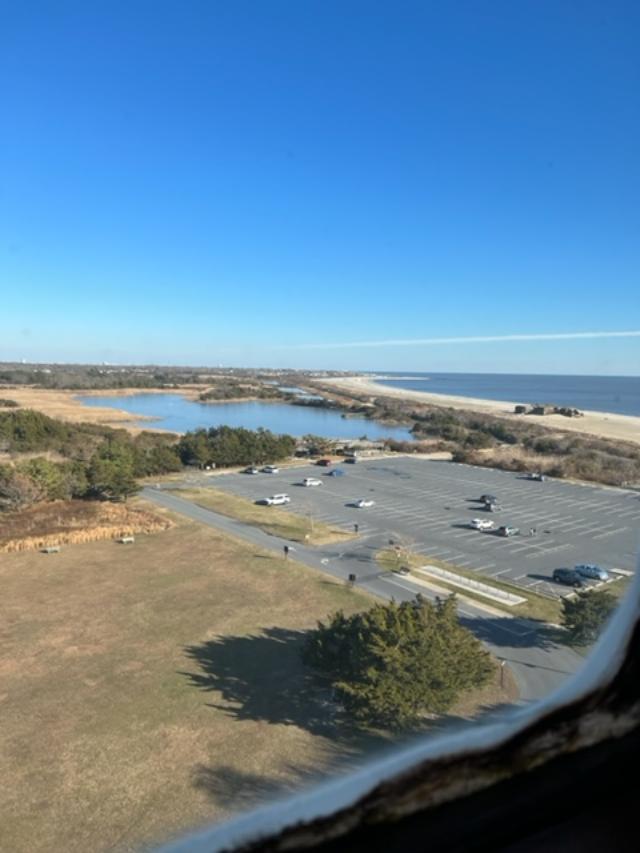
The view of the beach from the lighthouse

The Cape May Lighthouse

Lighthouse information story boards

Lighthouse FAQ

Frequently asked questions about the Cape May Lighthouse

Questions about the structure:

*How Tall is the lighthouse? The lighthouse is 157 feet 6 inches tall from the ground line to the ventilator.

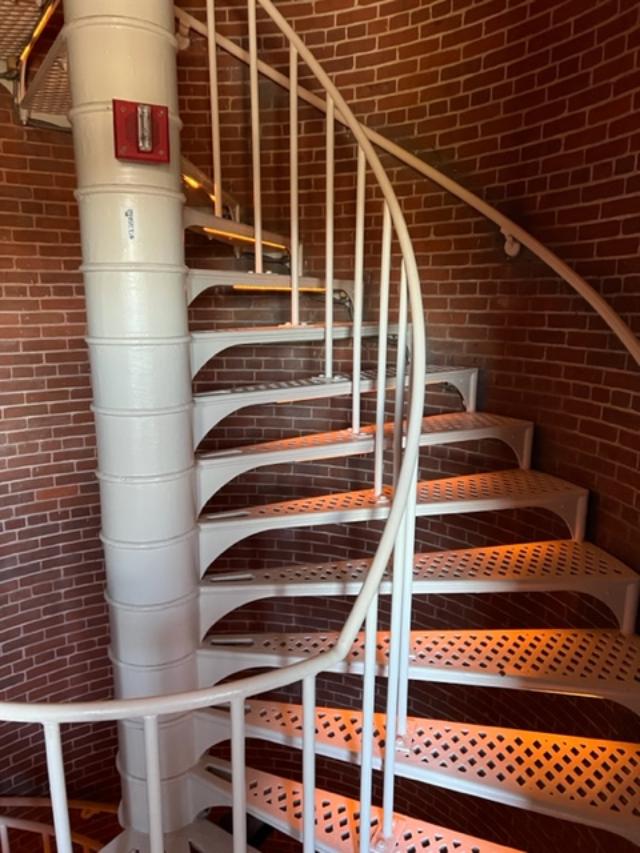
*How many steps are there to the top? There are 217 steps from the ground to the top with 199 steps in the tower’s cast iron spiral staircase.

The staircase going to the lighthouse lens

Looking down the stairs on the way back down

* How old is the Lighthouse? The Cape May Lighthouse was built in 1859 and is the third fully documented lighthouse to be built at Cape May Point. The first was built in 1823; the second in 1847. The exact locations of the first two lighthouses are now underwater due to erosion.

*How thick are the brick walls? The Lighthouse actually has two separate walls. The outside wall is cone-shaped and is 3 feet 10 inches thick at the bottom and 1 foot 6 inches thick at the top. The inside wall is a cylinder with 8.5 inch thick walls which support the spiral staircase. The walls were designed to withstand winds several times above hurricane force.

The view on the way up the lighthouse

*Is the beacon still working? Yes, The Coast Guard continues to operate the light as an active aid to navigation. The light is visible 22 miles out to sea and flashes every 15 seconds. A lighthouse’s flash pattern is called its ‘characteristic’, every lighthouse has its own light characteristic and exterior paint scheme (called a daymark) so that ship captains can tell them apart.

The lighthouse lens

The lighthouse lens

*What were the two small rooms on either side of the entrance hallway used for? They were storage rooms that held tools, implements and fuel for the lantern before the Oil House was built. The keeper also used one as a small office.

The lighthouse office

*Who owns the Lighthouse?  The State of New Jersey owns the Lighthouse but the Coast Guard maintains the beacon apparatus. The Mid-Atlantic Center for the Arts & Humanities (MAC) in Cape May leases the Lighthouse from the State with the mission of restoring the structure and operating it as a historic site.

View from the top of the lighthouse

View from the top of the lighthouse

Cape May Lighthouse

*Questions about Lighthouse Keepers and their responsibilities

*Who worked at the Lighthouse?  The Lighthouse was staffed by keepers who worked for the U.S. Lighthouse Service. Cape May’s lighthouse generally had one head keeper and two assistants. They carried the oil to the top of the tower every day to power the light and kept the lens apparatus clean and in working order. Keepers’ pay averaged $600.00 a year around the turn of the 20th century.

*Where did the keepers live?  There were two houses built right next to the Lighthouse around 1860 for the keepers and their families. One has since burned but the other is still standing on the other side of the fence near the entrance to the tower.

Important Dates: Cape May Lighthouse

1853-First recorded lighthouse constructed. The 1823 tower was 68 feet tall and its location is now underwater due to erosion.

1847-The second lighthouse was built. It was a 78 foot tower located directly in front of the present tower, just beyond the present shoreline. It was replaced by the present lighthouse because it was poorly constructed.

1857-The Army Corps of Engineers began construction on the present tower, which cost $40,000 to build. The first order Fresnel lens, which is now in the Cape May County Museum, cost about $15,000.

1859-The Lighthouse was first lighted on October 31. The next year, two lighthouse keepers dwellings were built. The one remaining is now used by the State Park Service.

1893-The oil house was constructed.

The Oil House

1902-One of the keepers’ dwellings was enlarge to provide more space for housing the keepers’ families. Three keepers and their families. Three keepers and their families lived at the lighthouse site.

1902-An incandescent oil vapor lamp was installed and replaced the Funck multiple wick first order hydraulic float lamp that dated back to 1878.

1933-The light apparatus was electrified.

1936-The light apparatus was automated which eliminated the need for lighthouse keepers being permanently stationed at the tower.

1939-The United States Lighthouse Service was discontinued and its equipment and personnel transferred to the U.S. Coast Guard.

1941-The Lighthouse was darkened until 1945 because of the World War II. The Atlantic coast was on black-out due to the presence of enemy submarines.

1946-A DCB-36 rotating light (like an airport beacon) was installed. The original first order Fresnel lens was placed in the Cape May County Museum.

1986-The Lighthouse was leased to MAC by the State of New Jersey Department of Environmental Protection, Division of Parks and Forestry, who in turn leased the structure from the Coast Guard.

1988-MAC undertook public safety improvements that allowed the public to climb to the top.

1989-A grant from the Bicentennial Lighthouse Fund underwrote the restoration of the Lighthouse’s windows and doors.

1990-The oil house was restored and adapted for use as orientation center and museum shop, with funding from the Bicentennial Lighthouse Fund and the New Jersey Historic Trust.

1992-The ownership of the Lighthouse was transferred from the Coast Guard to the State of New Jersey.

1994-Grants from the New Jersey Historic Trust and the federal ISTEA program administered by the State DOT funded painting of the tower and restoration of the lantern and roof.

1998-Grants from the same agencies funded all remaining restoration of the lighthouse structure.

2000-2001-A grant from the New Jersey Historic Trust funded the grounds restoration project.

2002-The Coast Guard installed a modern light known as a DCB-224. It uses parabolic mirrors to focus the beams rather than lenses.

2010-The Friends of the Cape May Lighthouse group was formed. You are cordially invited to join. Call 609-884-5404 or visit http://www.capemaymac.org.

2016-The Coast Guard installed a new, state of the art beacon known as VRB-25 (Variable Rotating Beacon) replacing the DCB-224 that had suffered irreparable damage due to a lighthouse strike.

2017-Lighthouse Tower was repainted with grants from the Cape May County Open Space Board, the National Maritime Heritage Grant program of the National Park Service and South Jersey Industries, augmented by the fundraising efforts of the Lighthouse Keepers and the Friends of the Lighthouse.

*Is the Lighthouse haunted? Exit Zero Ghost Writer and psychic medium Craig McManus has visited the Lighthouse and detected the ghosts of several former keepers and their families. Perhaps you may encounter them yourself on a Ghosts of the Lighthouse Trolley Tour!

Questions about Lighthouse Restoration

*Why is the Lighthouse leased to the Mid-Atlantic Center for the Arts & Humanities (MAC)?

In the 1980’s , the Coast Guard began a nationwide program of leasing lighthouses to private organizations, like MAC, which are capable of preserving them. In 1986, the Coast Guard leased the Lighthouse to MAC, which assumed the responsibility for its restoration, maintenance and operation as a lighthouse museum. In 1992, ownership of the Lighthouse was transferred from the Coast Guard to the State of New Jersey in order to make the restoration project eligible for state historic preservation funding. The state monitors the historical authenticity of the restoration and also makes available to Lighthouse visitors the parking and restroom facilities of the adjacent state park.

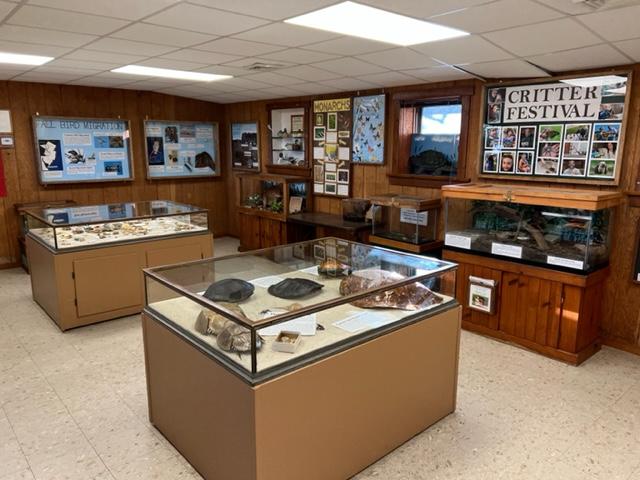
The Museum at the bottom of the lighthouse

*What is MAC?

MAC is a non-profit organization with nearly 4,000 members that was founded in 1970 to save and restore Cape May’s Physick Estate and operate it as a historic house museum. The Physick Estate is also home to the Carroll Gallery with an array of changing exhibitions, a museum shop and the Carriage House Café & Tearoom. MAC has also restored the World War II Lookout Tower (Fire Control Tower Number 23) located nearby on Sunset Boulevard. In addition, MAC promotes Cape May’s Victorian heritage through a year round schedule of special events and trolley, walking and historic house tours. MAC is also one of the area’s leading sponsors of the performing arts with its Cape May Music Festival every May and June. Please call 609-884-5404 for details on MAC’s calendar of events or visit our website at http://www.capemaymac.org.

*How much did it cost to restore the Lighthouse?

Since 1987, closed to two million dollars has been spent to restore the Lighthouse and oil house and allow the public to climb safely to the top.

*Is the Lighthouse open to the public?

Yes, Hours of operation vary throughout the year. The tower is open daily, April through November and on weekends most of the rest of the year. The grounds ground floor, tower and watch room gallery are open to the public. All tours of the tower are self-guided.

Mid-Atlantic Center for the Arts & Humanities

P.O. Box 340

1048 Washington Street

Cape May, NJ  08204

(609) 884-5404

http://www.capemaymac.org

Disclaimer: This information was taken directly from a pamphlet from the MAC Cape May Lighthouse Museum. Please call the above number or email address for more information on the site. It is well worth seeing just for the view alone.

Emlen Physick Estate                                                               1048 Washington Street                                                         Cape May, New Jersey 08204

Emlen Physick Estate 1048 Washington Street Cape May, New Jersey 08204

Emlen Physick Estate

1048 Washington Street

Cape May, New Jersey 08204

(609) 884-5404

capemaymac.org

https://www.facebook.com/PhysickEstate/

This historic site is administered by the Mid-Atlantic Center for the Arts & Humanities

TripAdvisor Review:

https://www.tripadvisor.com/Attraction_Review-g46341-d614851-Reviews-Emlen_Physick_Estate-Cape_May_Cape_May_County_New_Jersey.html?m=19905

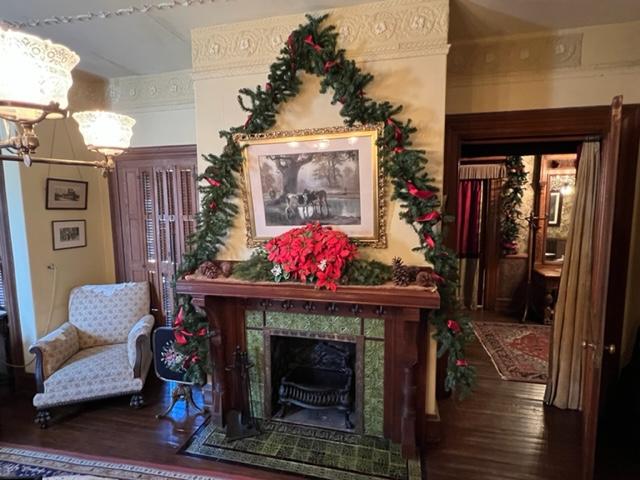
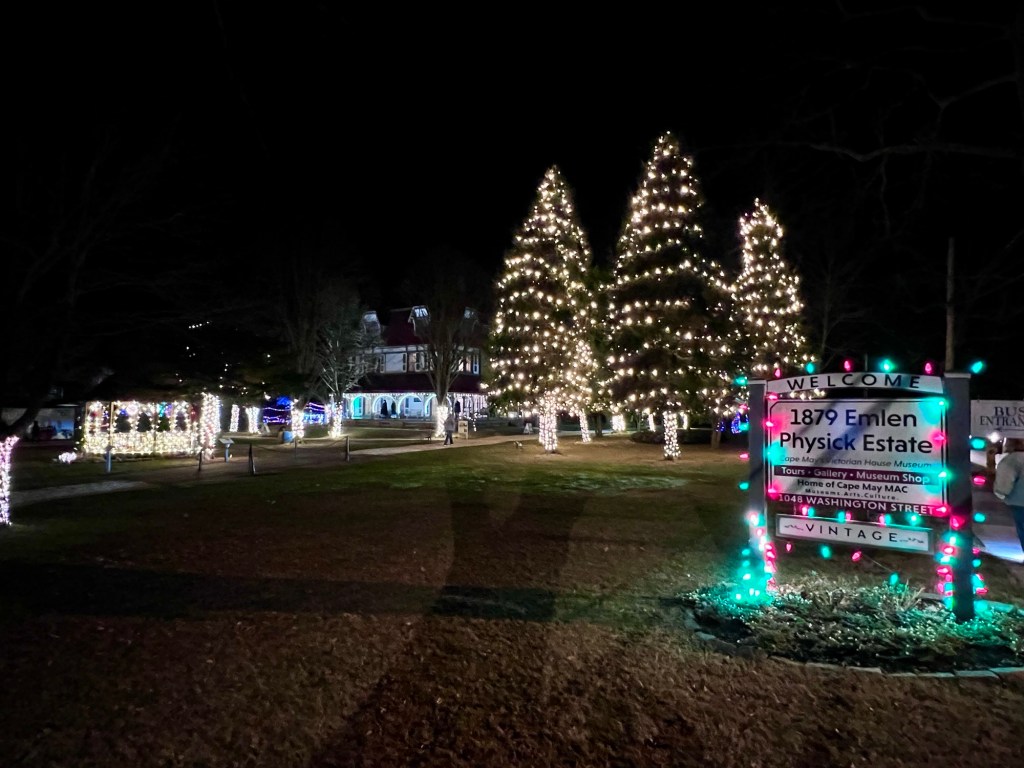
The Physick Estate at Christmas time

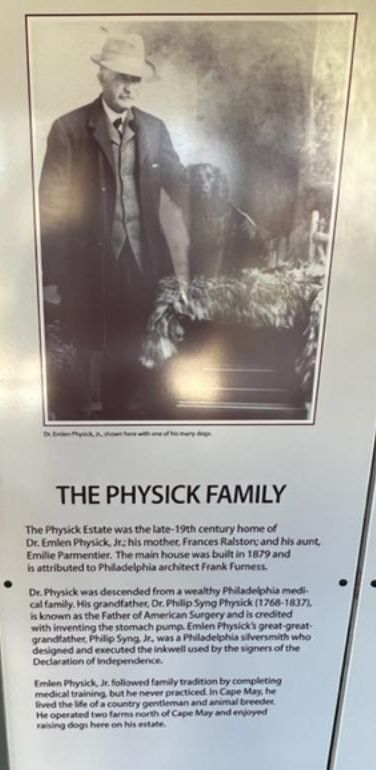
Dr. Physick and his family

I have visited the Physick Estate for a third time, three times for the Christmas decorations and the other times to take the house tour with a different theme. It is an interesting place. The whole house was decorated with garland and trees done with a Victorian theme of the time period. The home is always so beautifully decorated for the Christmas holidays and should not missed.

The entrance hall at the Physick House decorated for the holidays

The house is set up for Christmas Day and their are actors portraying the Physick family before the holidays. They explain why the house is set up the way it was for the Christmas holidays and who will be coming for dinner. All the rooms are decorated which would not happen in a normal Victorian home but the society shows how each room would have been interpreted for the holiday festivities.

We started the tour on the first floor touring the Entrance Foyer, the Living Room, Dining Room, Music Room, Sewing Room and Library of the home. Since privacy was the order of the day in a Victorian home, all the rooms were connected by the entrance foyer and closed off with a series of doors so that the occupants could have privacy.

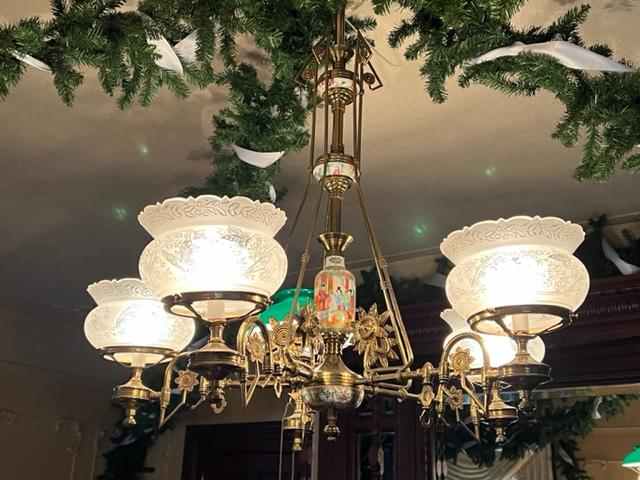
We started first in the foyer, with the tour guide describing the architecture, decorations and fixturing of the lamps and chandeliers. We discussed the make of the fixtures and the type of materials used to build and decorate the house.

The ceiling and fixturing of the hallway. The Chandelier was created with both gas and electricity when it became available. When the ceiling had to be repaired, the members had to use different materials to match what was already on the ceiling and you would never know the difference.

The fixturing of the house went from gas to electric

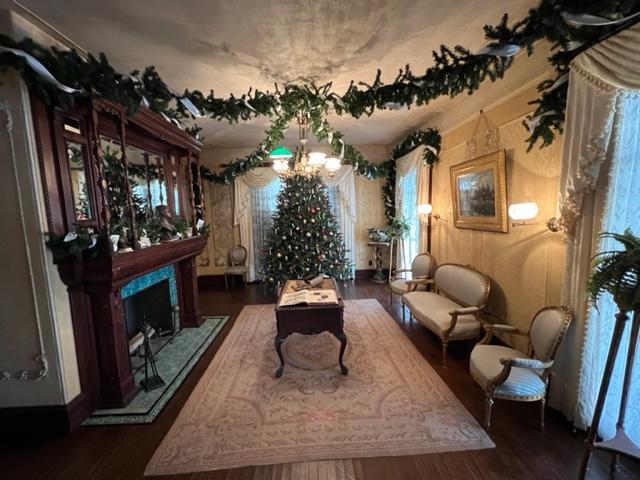
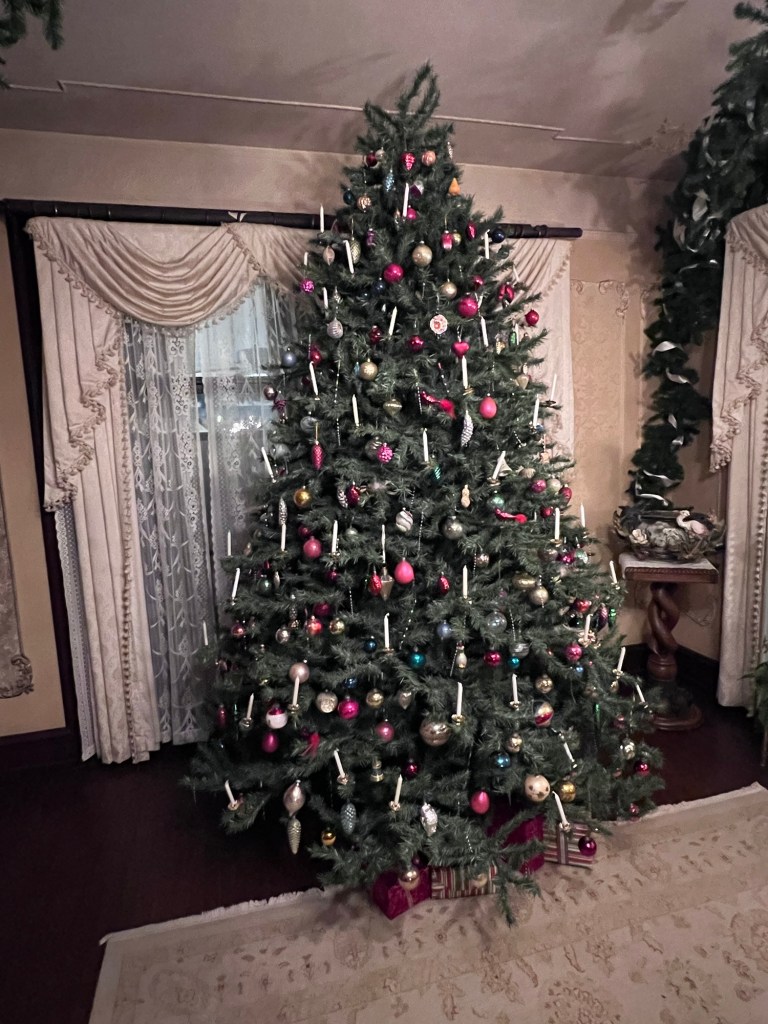
We next moved into the Living Room where the formal Christmas tree would be placed. During the early part of the century, the family like most Victorians would have had a tabletop tree but as time went on decorations became more elaborate.

The elaborate decorations of the full Christmas tree

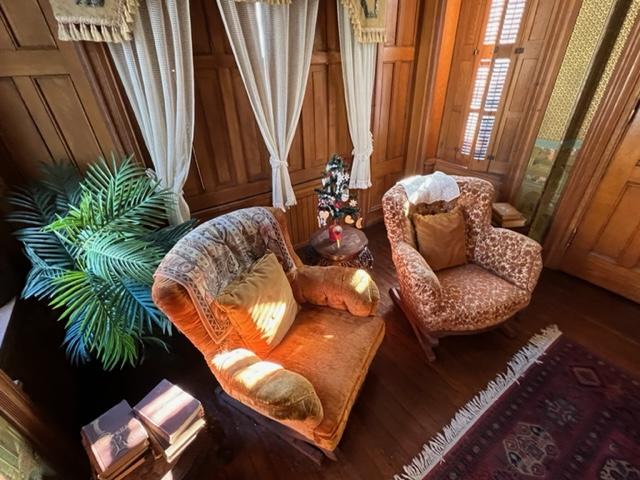
The Living Room was so beautifully decorated

Elaborate China wedding gift

You can see the bedrooms with clothes and accessories, the game room with the billiards and work out objects and the living room, dining room and music room and library. It is how a proper Victorian home was set up at a time when families wanted privacy. The tour took us to each room where it was explained its purpose in a wealthy Victorian home. Most houses at the time would not have been this elaborate.

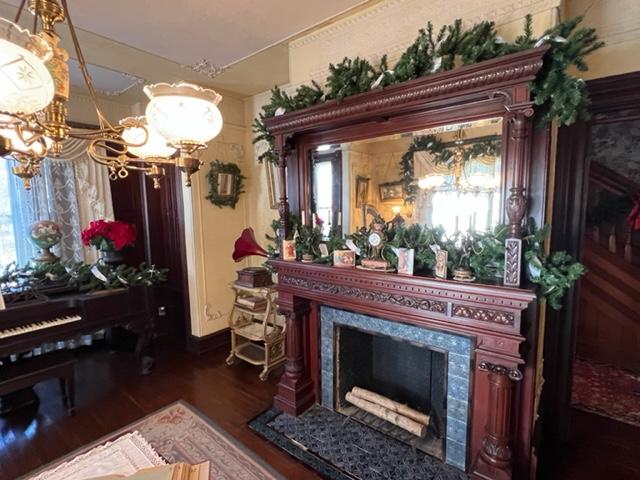
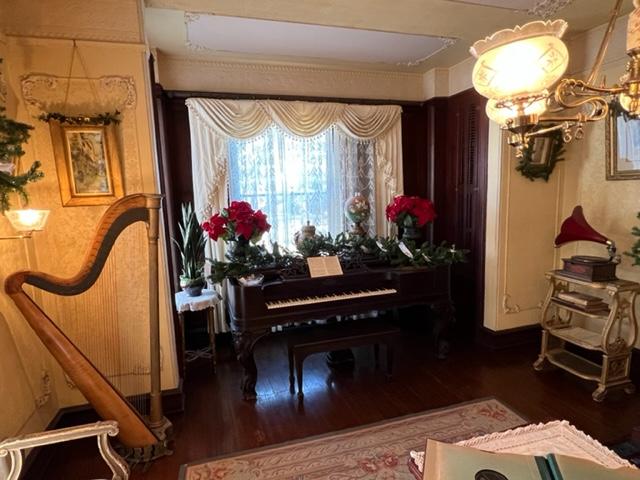
The Music Room would have been another place where the family gathered for entertainment long before the use of TV and radio. Family members would play instruments and sing to entertain guests who came to visit.

The Music Room

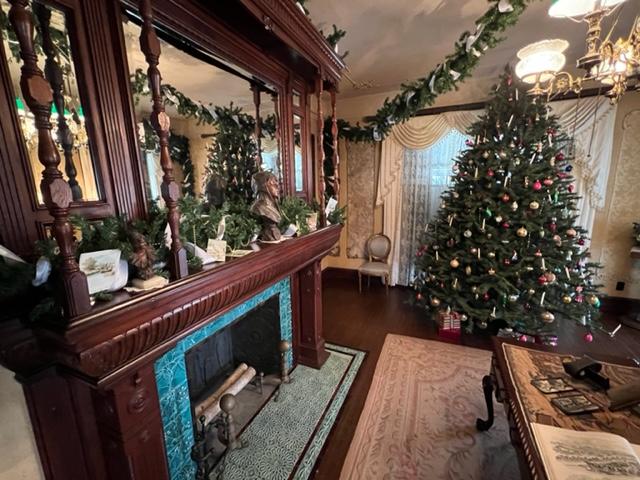
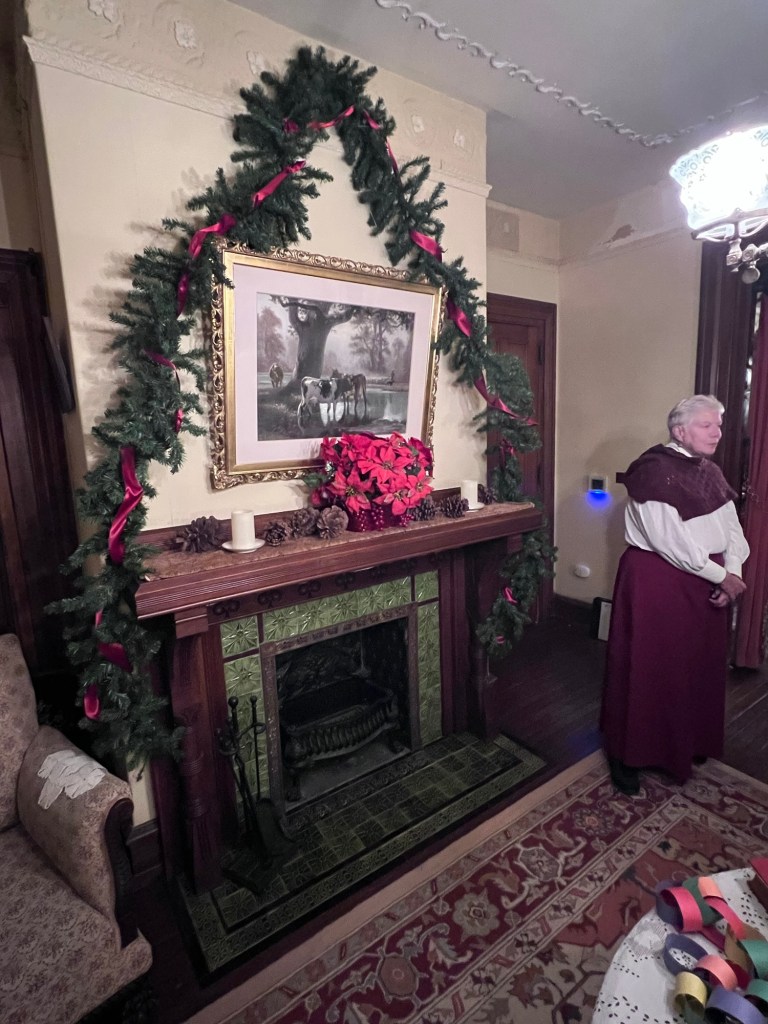
The decorative greens around the fireplace in the Music Room

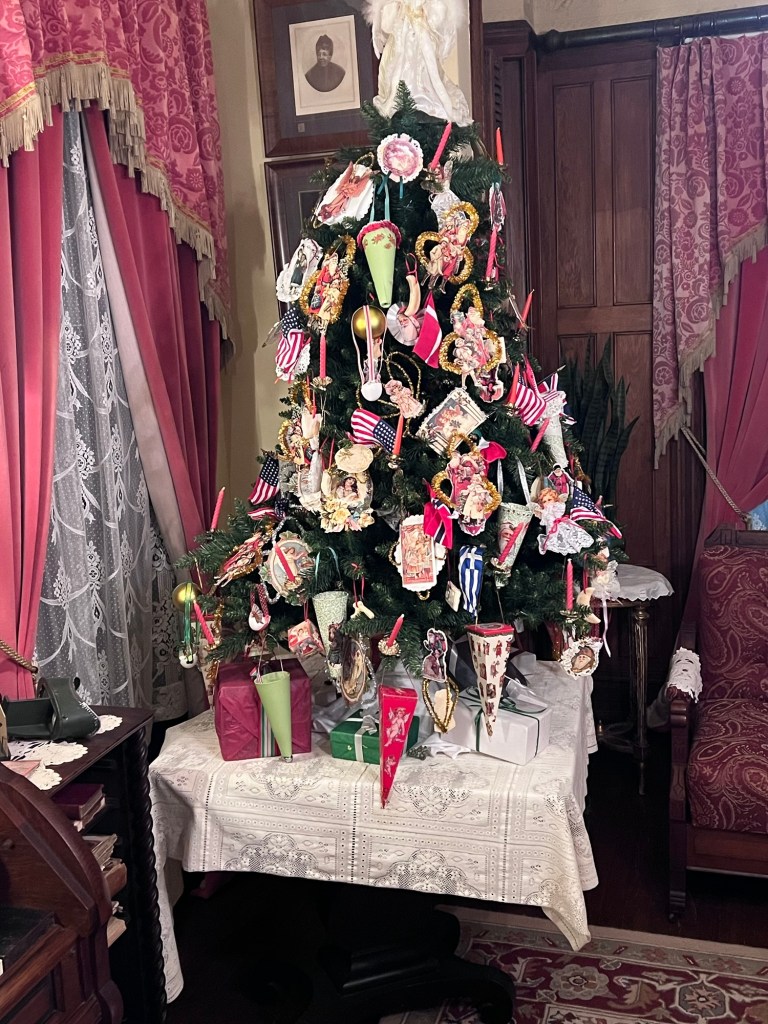
The Table Top Tree would have been one of the first Christmas trees in Victorian times. Gifts, candies and cards would have been attached to the tree and would have been taken apart on Christmas day.

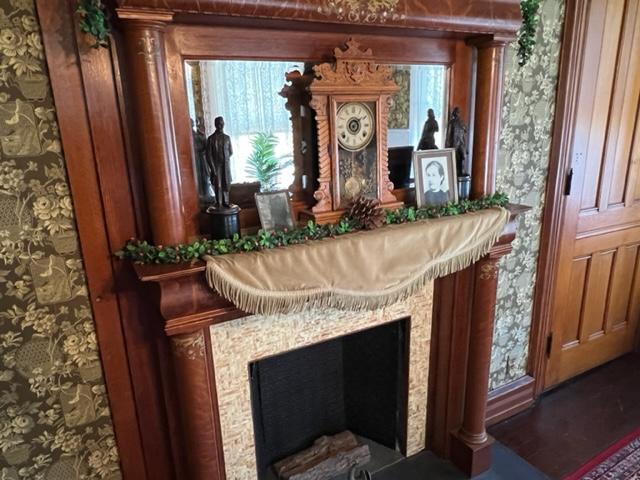
The beautifully carved fireplace in the Music Room

The beautiful flowers in the Music Room

The Parlor on the other side of the hallway was for more informal get togethers and for sewing. This is where the family would do more informal entertaining and use on a day in day out basis.

The Parlor Room for sewing and reading and informal entertaining

The comfortable seats in the Billiards Room

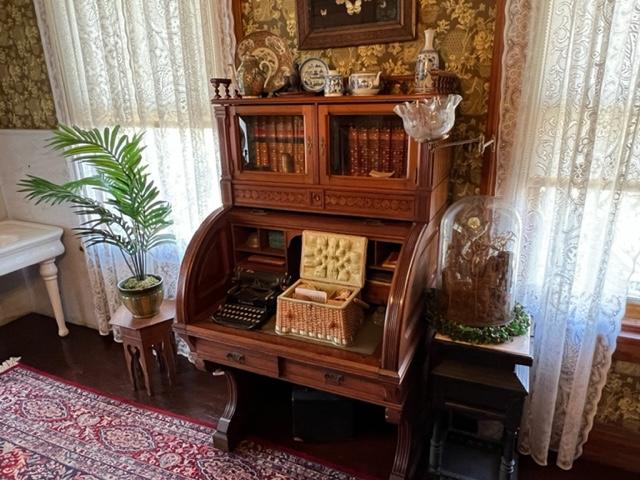
The Sewing Kit in the Parlor

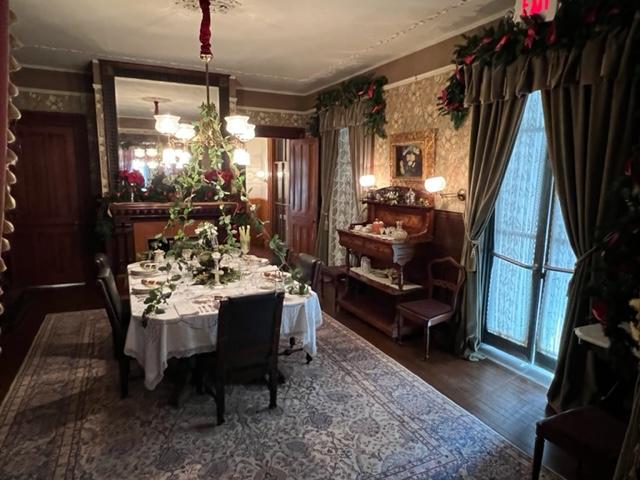
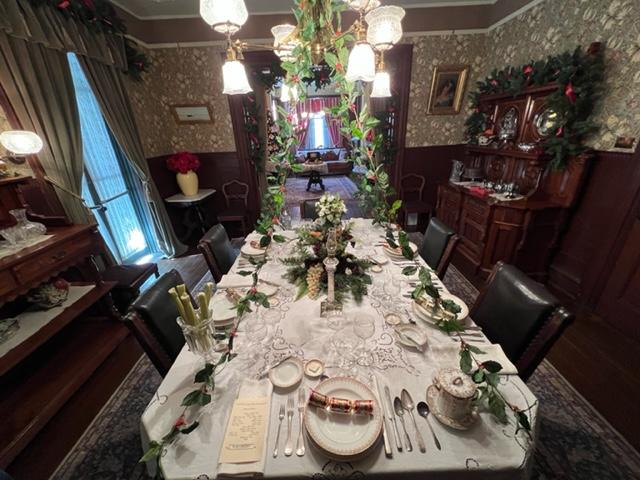
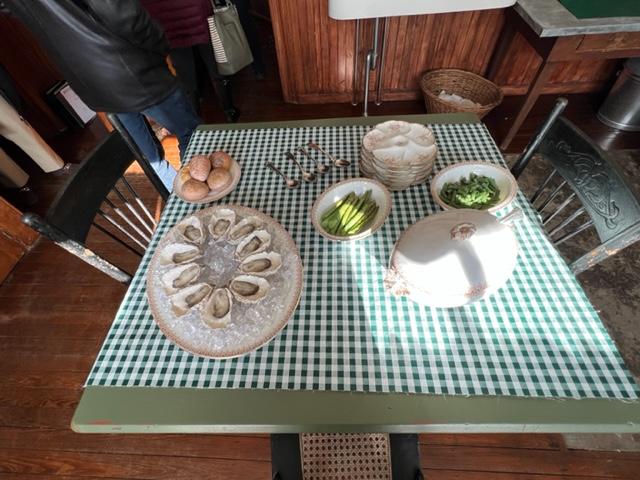
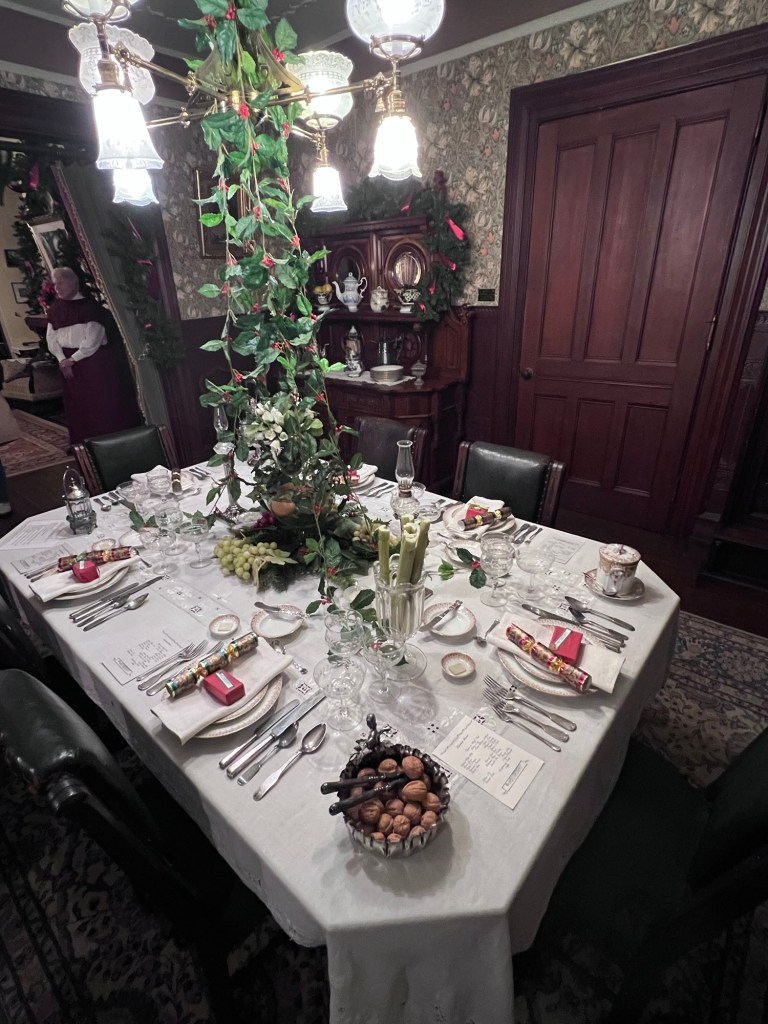
The formal dining room was set for Christmas Dinner and you get to see the kitchen and where everything was prepared for the family.With the house being set up for the holidays, you can see how elaborate the preparations would have been and how the table would have been set and the food would have been served.

The Dining Room at the Physick Mansion set for Christmas dinner

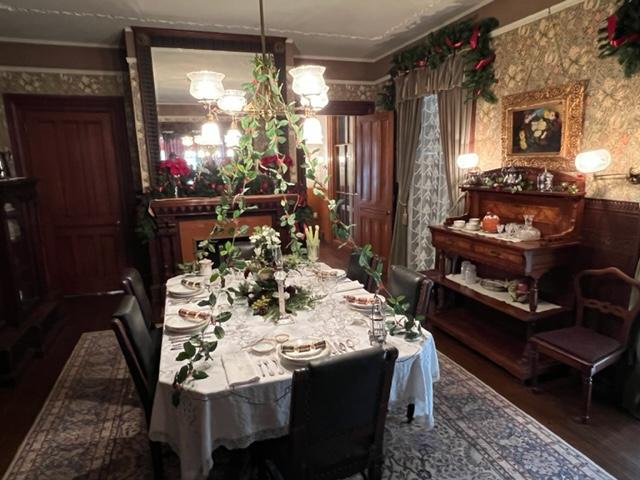
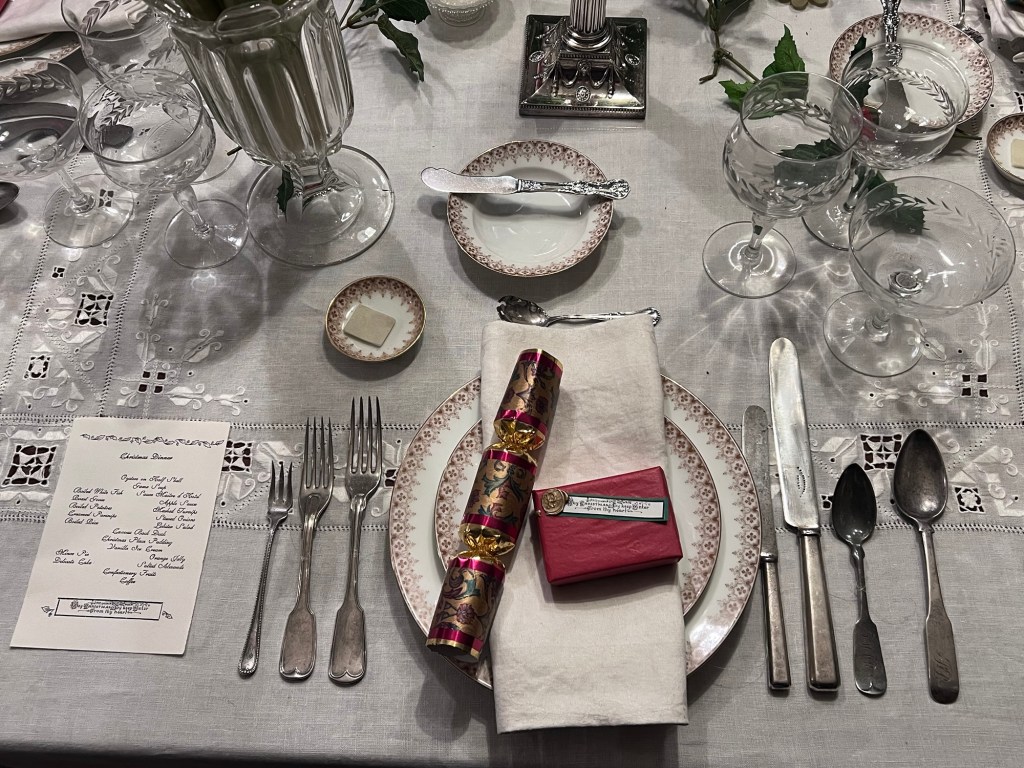
The table was set with the best china, crystal and silver for the holidays

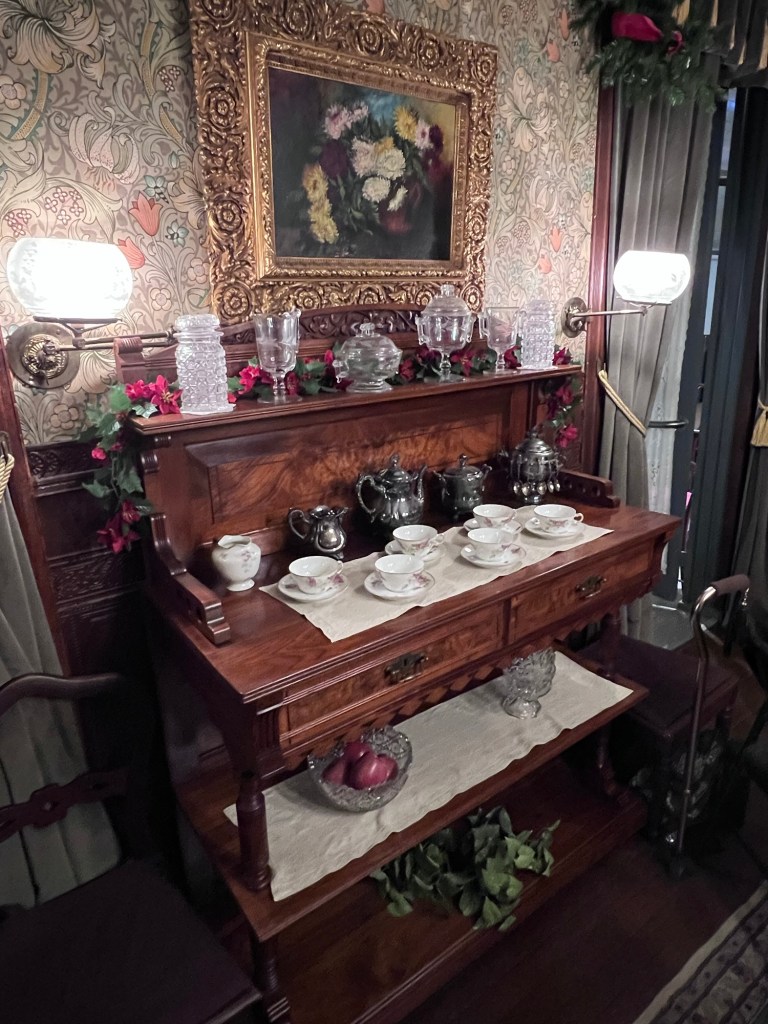
Food would be served from the Dining Room sideboard by the servants

The elaborate sideboard

The sideboard for drinks and dessert

The Dining Room Table set for Christmas dinner

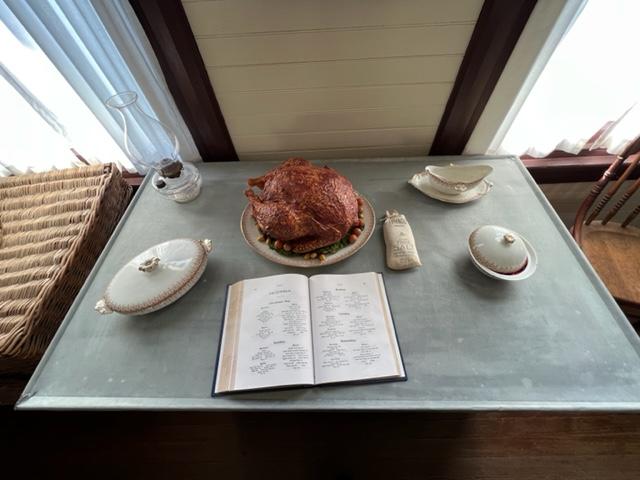
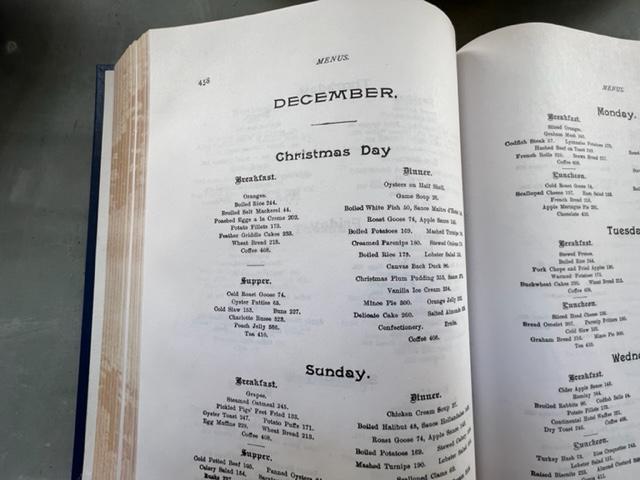
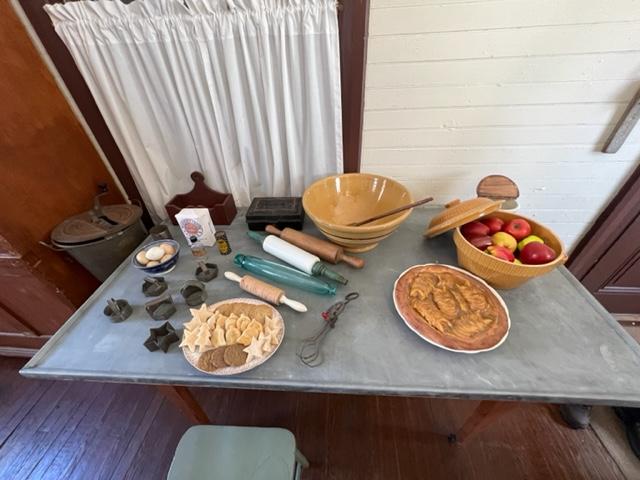
The kitchen was set up for the cooking of the Christmas dinner along with the foods that would have been served and the recipes that would have been used to prepare them. Entertaining during the holidays would not have stopped with just a family dinner as people would be entertaining neighbors, friends and relatives. There would have been teas and receptions on top the formal Christmas dinner to prepare for in a Victorian home.

The Kitchen during the holiday season

Preparations for Christmas dinner

The Christmas Day menu

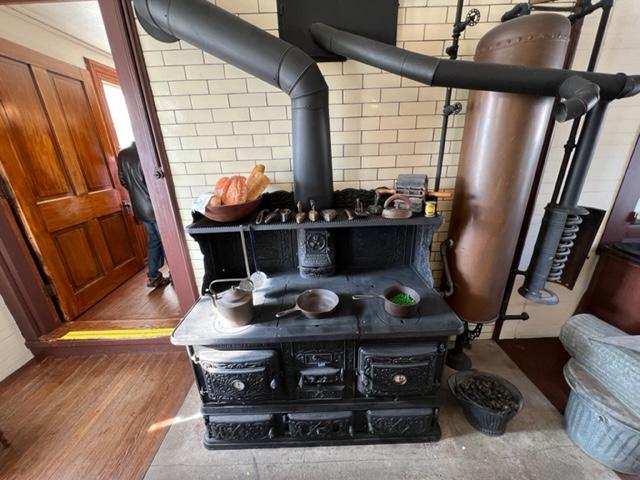
The coal burning stove in the ‘modern’ kitchen

The smaller original kitchen

Preparations for Christmas dinner and holiday gatherings

Holiday dishes being prepared

Getting the laundry and dishes done

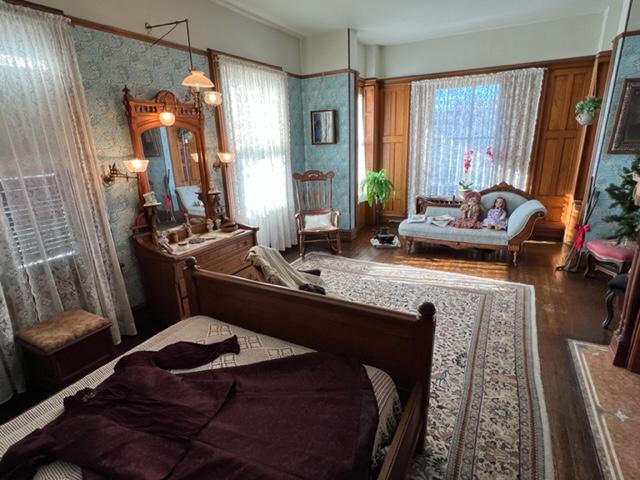
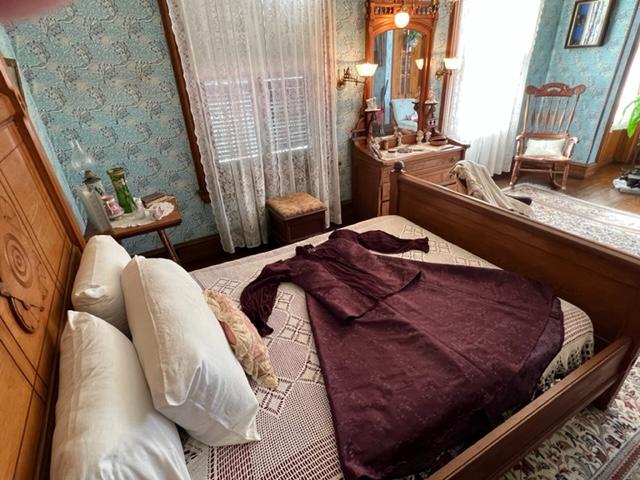
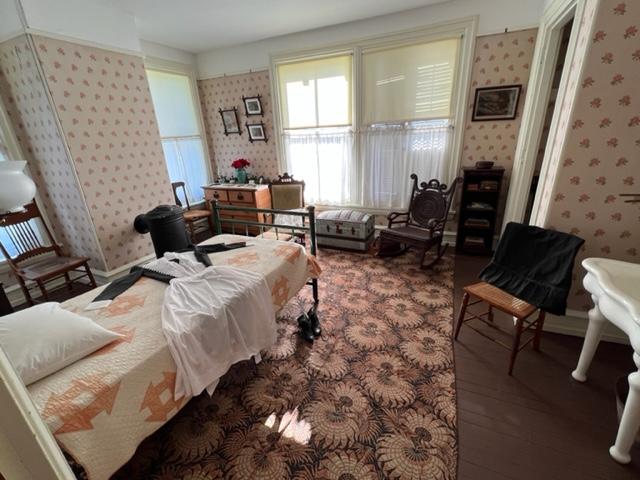
Upstairs are the bedrooms and the Billiard Room that was used for entertaining as well. Men and women would relax and enjoy more informal entertainments. The bedrooms were prepared for the members of the house dressing for dinner, leaving for holiday visits and entertaining.

Mrs. Physick’s bedroom with clothes laid out for dinner or visiting

Christmas presents to family members

Mrs. Physick’s bedroom

Mrs. Physick’s dress

Mrs. Physick’s closet

Dr. Physick’s room with clothes laid out for the evening

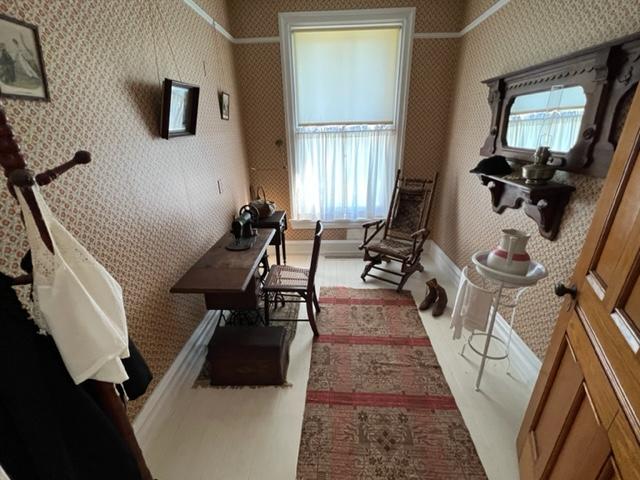
The Servants Room

The Modern bathroom with indoor plumbing

The Servants room for mending

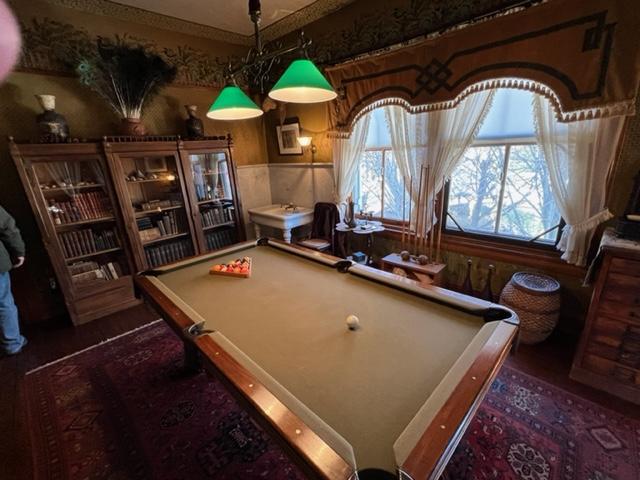
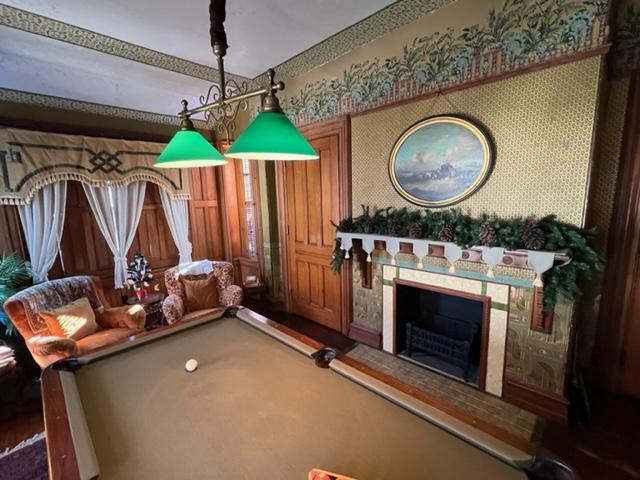
The Billiards Room would have been used for light entertainment and after hours play.

The Billiards Room on the Second floor of the Physick House

The Billiards Room

During the warmer months, they have a cafe and an afternoon tea for visitors to the home and more outdoor activities.

The Mansion’s Publicity Pamphlet:

Celebrating our history….Enriching your life

Emlen Physick Estate

Lovingly restored to its original splendor, the 1879 Emlen Physick Estate is Cape May’s only Victorian house museum. The 18 room Physick House was built in the Stick Style of architecture, with trademark design features of renowned Philadelphia architect Frank Furness. The Estate provides an in-depth glimpse of the period and offers year-round tours and unique living history programs.

The elaborate woodwork in the Physick House

The new theme for Physick Estate Tours in 2017 is “Let’s Go Shopping! Victorian Consumer Culture.” Revolutions in American industrializing, merchandising, advertising, retailing and consuming in the Victorian era forever changed how people shopped. Take a guided tour of the 1879 Emlen Physick Estate with this new theme for 2017 and you’ll discover how consumer culture has changed since the late 1800’s. The house is air conditioned and the first floor is fully accessible.

The Carroll Gallery and Carriage House Café & Tearoom

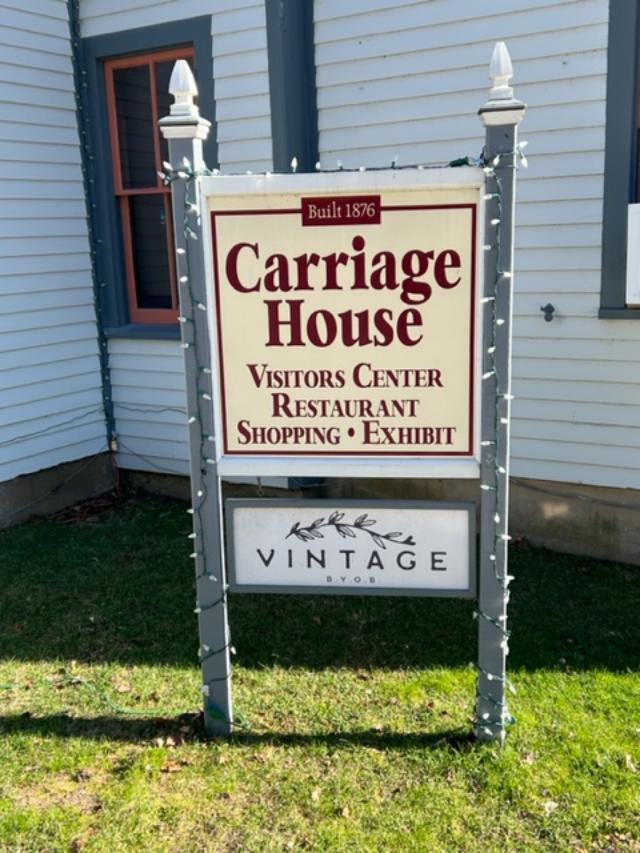
On the grounds of the Emlen Physick Estate. The estate’s 1876 Carriage House now houses a gallery featuring changing exhibits throughout the year and a charming museum shop as well as the Carriage House Café & Tearoom. Dine in the Carriage House or outdoors beneath the gaily-striped tent overlooking the gorgeous gardens. Enjoy a hearty lunch from our Café menu or a traditional English Tea Luncheon or afternoon tea with tea breads and scones freshly baked in our own kitchen. Open late April through October. Air conditioned and fully accessible.

The Emlen Physick Estate in Cape May, NJ

The entrance to the home

MAC is committed to making its programs accessible to as many individuals as possible. For information or if you require assistance, please call 609-884-5404 in advance so we may accommodate you. New Jersey Relay Center for TTY customers, please call 800-852-7899. MAC’s public history programs are funded in part by the New Jersey Historical Commission in the Department of State Restoration work at the Physick Estate has been funded by the New Jersey Historic Trust, the New Jersey Cultural Trust and the 1772 Foundations.

Touring the house for the Cape May Holiday Tour of Homes and Inns in 2025:

I came to Cape May the first weekend in December 2025 to take the Christmas Walking tour of all the places open for touring and the Physick House was the headquarters for the event and was so beautifully decorated for the holidays.

The whole estate so beautifully decorated for the holidays.

The start of the walking tour outside the house

Many houses, inns and museums were open for this walking tour in Cape May and the event takes place for three Saturdays before Christmas. Each of the places are beautifully decorated for the holidays and have tour guides and owners who led you through their establishments with great pride.

These were some of the rooms I was most impressed with in the house when I was on the tour in 2025. Even the gift shop was decorated to the hilt.

The tour guide in the Living Room welcoming us on the walking tour

The Victorian Christmas tree in the Living Room

The Dining Room set for a Christmas feast

The table setting for Christmas

The side board ready for dessert

The Table Christmas tree in the Parlor

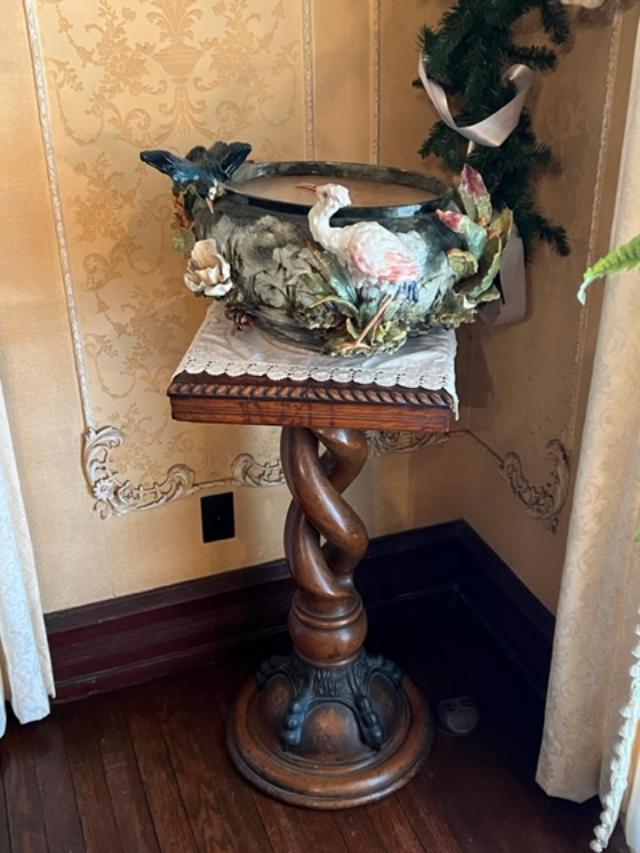
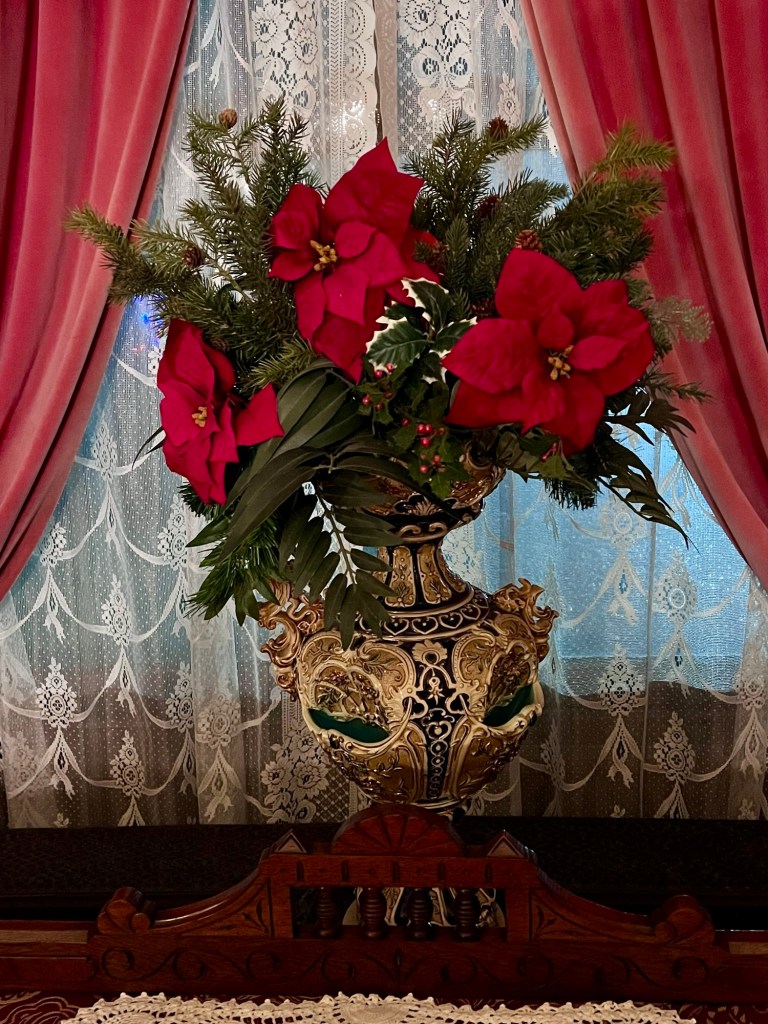
Flowers all over the home

The gift shop was beautifully decorated for the holidays

Disclaimer: This information was taken directly from the Emlen Physick Estate pamphlet. Please call the Estate at the number above for more information.

Lucy the Elephant:                                                            A National Historical Landmark                                                            9200 Atlantic Avenue                                  Margate, NJ 08402

Lucy the Elephant: A National Historical Landmark 9200 Atlantic Avenue Margate, NJ 08402

Lucy the Elephant: A National Historical Landmark

9200 Atlantic Avenue

Margate, NJ  08402

(609) 823-6473

http://www.LucyTheElephant.org

https://www.facebook.com/elephantlucy/

Open: The hours for the structure change throughout the year, so please check the website for time availability of the park and structure.

Admission: $8.00 Adults/$4.00 Children/Children under 2 free

Group Tours & Information:

Lucy is available year round for groups of 10 or more by appointment. For special holiday hours and weather closings, please call or check our website.

How to get to Lucy:

It is best to check the website for your location to the structure. For detailed instructions, please visit http://www.lucythe elephant.org.

TripAdvisor Review:

https://www.tripadvisor.com/Attraction_Review-g46600-d518065-Reviews-Lucy_the_Elephant-Margate_City_New_Jersey.html?m=19905

Lucy from the beach side view

The welcome sign

I visited Lucy the Elephant in the fall of 2015 right before Christmas on a tour I was taking of Southern New Jersey and the shoreline. This unique structure was built to attract people to the shore to buy land and for development.

The view from the parking lot

There were two other ‘Lucy’s’ built one of them being the former ‘Elephant Hotel’ in Coney Island that burned down in the last century.

The front view of the elephant

This well preserved building has been renovated and part of the Jersey shore lore. It is well worth the visit in the off season on a nice day. I unfortunately visited on a rainy day in 2015 and was not able to go to the top and still have a free pass to go whenever I want to visit again. 

Entering the elephant through the winding stairs

Still I was able to take the spiral staircase to her belly to learn the history of the structure and that is very interesting.

Lucy the Elephant in its full glory

I started my tour in 2025 at the door of her base

I visited Lucy again in 2025 and was finally able to visit the top of the statue, the howdah, and able to take in the view of the ocean and the surrounding area. Try to visit “Lucy” when it is a sunny day out. You will be able to take in the spectacular view of the ocean.

The tour starts in her inside, looking over the displays and where the bar was located where the owner would ply investors with liquor to have them invest in beach real estate.

Inside of Lucy the Elephant: the history and displays

The inside of Lucy on a recent tour

Touring the inside of Lucy

I was able to take my time because I visited in the off season on a nice day and since J was the only one on the tour, I got to take my time and talk with the tour guide.

I got to look through Lucy’s eyes and see the views of the ocean and of the surrounding areas was interesting.

Lucy’s eyes and truck

Lucy’s left eye

Lucy’s right eye

The former bathroom inside of Lucy

The inside displays of Lucy

The skylight that illuminates the inside

Then it was time to walk up to the howdah and enjoy the view. It was a somewhat over cast day but you could still enjoy the view.

The view from the howdah on the top of the elephant

The roof of the howdah

The view of the beach from the howdah

The view of Margate from the howdah

The view from the howdah showcases the view of both the beach and the City of Margate. You can see from mikes around and on a hot day, the breezes are amazing.

The restored wood work

The video of the views

The tour of Lucy is about an hour but the history of this shore landmark and its influence in shore real estate and the development of these towns is so interesting.

Leaving the elephant we could see her behind

The History of Lucy the Elephant:

Lucy was built by a real estate speculator who owned a great many parcels of open land at the Jersey shore. In order to attract visitors and potential buyer, he built Lucy as a novelty amusement. He patented his idea, ensuring that Lucy would remain a unique piece of architecture.

Eventually, a popular hotel business was built around Lucy. Presidents and royalty came from around the world to stay at the neighboring Elephant Hotel and climb the stairs to Lucy’s howdah.

Lucy facing the ocean

During her history, Lucy has survived hurricanes, ocean floods and even a fire accidentally stated by some inebriated party-goers when she served as tavern. However, by the 1960’s, it became apparent there was one disaster Lucy could not overcome-neglect. By that time, the once proud jewel of the South Jersey Isles had become an almost hopeless, condemned structure.

Eventually a developer purchased Lucy’s lot and intended to build a new condominium building on the site. The beach and the ocean could stay-but the elephant had to go!

Lucy the Elephant III.jpg

Lucy the Elephant near the wrecking ball

To the rescue came the Save Lucy Committee. Within weeks, this small, concerned group of ordinary citizens had raised enough money to move the entire decaying structure two blocks away to a new site owned by the city. Thirty years and over one million dollars later, Lucy has been completely restored to her original splendor, inside and out.

In 1976, Lucy was designated a National Historic Landmark by the United States Government as the oldest surviving example of a unique form of “zoomorphic” architecture. Today, she is every bit as popular and beloved as she ever was.

The history of the elephant

The history of the park

The history of Lucy

The history of the park and who saved it

About the Park:

Lucy the Elephant is located along the beach in Josephine Harron Park (named for our co-founder) in Margate, NJ. Lucy is six stories high and is listed on the National Park Registry of Historical Landmarks. Our park is fenced and contained, making child supervision easy. Picnic tables are on site for eating outdoors. We also have friendly, trained volunteers and staff to assist you during your visit. On the tour, you will learn about Lucy’s unique architecture and her colorful history.

Lucy facing the sea

You will get to climb a spiral staircase through her insides and all the way up to the howdah on her back, providing a spectacular 360 degrees view of the surrounding shore area. Kids and adults alike are sure to enjoy visiting the only elephant in the world “you can walk through and come out alive”.

Lucy is also available by appointment for schools, groups and special events such as weddings or birthday parties. There are guided tours, a gift shop, free parking and all major credit cards are accepted.

Lucy the Elephant symbol of the town

Lucy from the front of the parking lot

Lucy from the ticket booth across the street

This information was taken from the pamphlet from The Save Lucy Committee.  For more information, visit the online website at http://www.LucyTheElephant.org

*Disclaimer from author: All this information is located both on the pamphlet and on the website. Visiting Lucy is a treat and should be visited by all residents of New Jersey.

The gift shop the supports raising much needed funds for restoration.

Visit downtown Margate for lunch after your visit

Downtown Margate after my tour

I went to Pierre’s Pizza at 7 North Washington Avenue for lunch. Their cheese pizza is wonderful. The restaurant is two blocks from Lucy.
Pierre’s Pizza at 7 North Washington Street in Margate, NJ

https://www.pierrespizzamenu.com/

My review on TripAdvisor:

https://www.tripadvisor.com/Restaurant_Review-g46600-d475155-Reviews-Pierre_s_Pizza-Margate_City_New_Jersey.html?m=69573

The inside of the pizzeria

Their delicious cheese pizza is over-sized, crisp and has a nice tasting sauce.