Category: Walking Chelsea

Third Shearith Israel Cemetery                                             98-110 West 21st Street                                            New York, NY 10011

Third Shearith Israel Cemetery 98-110 West 21st Street New York, NY 10011

Third Shearith Israel Cemetery

98-110 West 21st Street

New York, NY 10011

https://www.findagrave.com/cemetery/2260432/third-cemetery-of-congregation-shearith-israel

Open: Closed to the Public but you can see it from outside the fence.

My review on TripAdvisor:

Closed to the public

The cemetery sits behind the former ‘Ladies Shopping District’ department stores

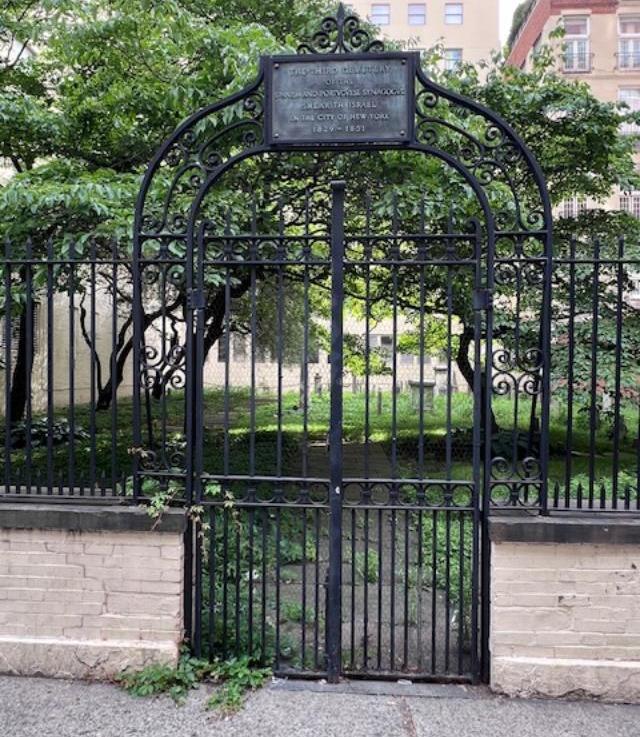
The front of the cemetery

When I was finishing my walk of the streets of Lower Chelsea, I came across this quiet and respectful cemetery in the middle of a busy neighborhood. This small graveyard was the third of series of moves that Shearith Israel made to bury their dead since the original cemetery open on the edge of what is today Chinatown.

Like its earlier counterparts, the cemetery is locked to visitors. So you can only admire it from a far. The graves date back to the early 1800’s.

The History of the cemetery:

(From the New York City Cemetery Project and Find a Grave)

This cemetery is located on 21st Street between 6th and 7th Avenues, in use 1829-1851. Shearith Israel, the first Jewish congregation in North America, was formed in 1654 by Spanish and Portuguese Jews who journeyed from Recife, Brazil, seeking refuge from the Inquisition.

The entrance to the cemetery is always locked

The sign for the cemetery

While New Amsterdam’s city fathers did not recognize freedom of worship, they respected the Jews’ right to their own consecrated burial ground. Shearith Israel purchased the cemetery plot on West 21st Street in 1829 for $2,750. It, too, was on the outskirts of the expanding city, which for sanitary reasons had prohibited interment below Grand Street after the yellow fever epidemic of 1822.

The view of the cemetery from the fence

In 1832 the congregation bought land extending the cemetery east to Sixth Avenue and south to 20th Street. Fifty years later the land was sold to Hugh O’Neal, who built a dry goods store there. Shearith Israel used the cemetery for burials until 1851.

The graves are from the early 1800’s

That year, New York City prohibited burials south of 86th Street and the establishment of any new cemeteries within city limits (Find a grave.com).

The side section of the cemetery and pathway

The view of the cemetery and its quiet respect to those buried there

The history of the Cemetery from the Congregation of Shearith Israel The Spanish & Portuguese Synagoge website:

According to rules of ritual purity, Cohanim are prohibited from coming into contact with the deceased (except for their immediate family.)  This means that ordinarily Cohanim cannot participate in any of the mitzvoth related to burial.  One particularly commendable priest, Mr. Lewis I. Cohen, realized that the consecration of a new and unused cemetery afforded him an opportunity to participate in a mitzvah usually off limits to Cohanim.  So it was Mr. Cohen who volunteered to dig the first grave for the first burial of the new cemetery in November 1829.

Some of the notable persons laid to rest in the 21st Street cemetery were Moses Levy Maduro Peixoto and Isaac Seixas, ministers of our congregation, and Harmon Hendricks, founder of one of America’s first great industrial companies and whose descendants are still members of our congregation today. Perhaps the most influential person to be buried in the 21st Street cemetery was the great Jewish diplomat and proto-Zionist, Mordecai Manual Noah.

In 1851, the city prohibited burial in Manhattan below 86th Street.  Rather than continue to look north (as Trinity Church did), the Congregation searched outside of Manhattan for its next burial ground.  Together with Bnai Jeshurun and Shaarei Tefila, the congregation purchased a large plot of land in Ridgewood, Queens.
Poster House                                                         119 West 23rd Street                                          New York, NY 10011

Poster House 119 West 23rd Street New York, NY 10011

Poster House

119 West 23rd Street

New York, NY 10011

(917) 722-2439

https://www.facebook.com/posterhousenyc/

Open: Sunday 10:00am-6:00pm/Monday-Wednesday Closed/ Thursday-Saturday 10:00am-6:00pm

Admission: Adults $12.00/Children Over 18/People with Disabilities/Students & Educators/Veterans $8.00. Children under 18 and Members are free (please check website for changes)

My review on TripAdvisor:

https://www.tripadvisor.com/Attraction_Review-g60763-d17794247-Reviews-Poster_House-New_York_City_New_York.html

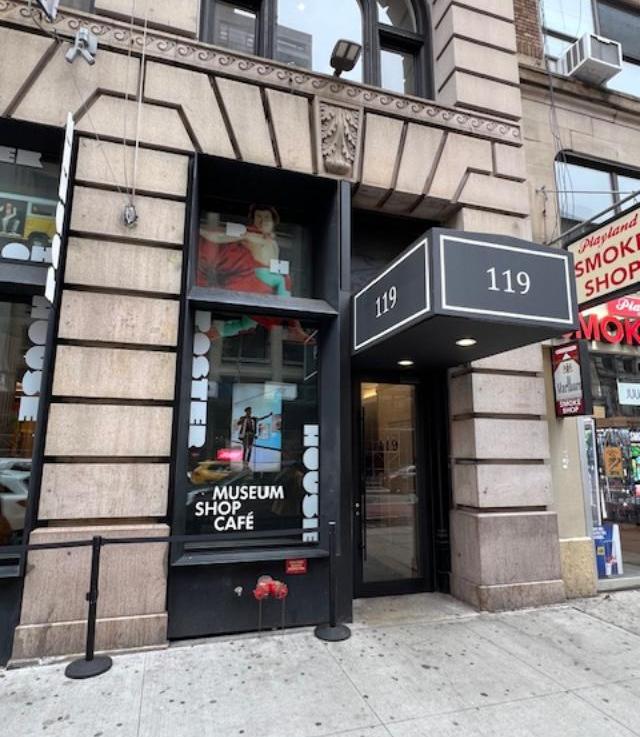
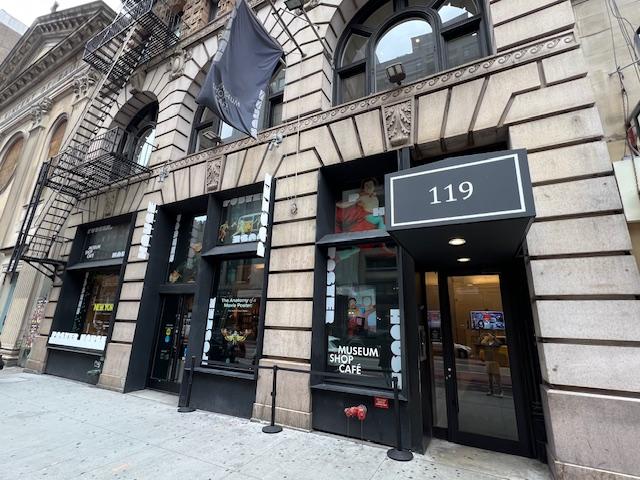
The Poster House Museum at 119 West 23rd Street.

The Poster House is a little gem of a museum that I must have passed many times and never knew it was a museum. I had never heard of this museum before. The Poster House is dedicated to the history and art of posters and how they impact our lives as a way of communication. I got a chance to see the whole museum in about two hours.

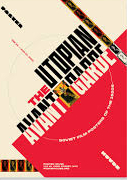
The first exhibition on the first floor of the museum was “Utopian Avant-Guard: Soviet Film Posters of the 1920’s”, a retrospect on the film industry during the Silent Era. It was a time with the fall of the Czar and the coming of Communism where artists tried to shape the new face of Communism before the rigidity of the party controlled the whole film industry from the end of Silents until the Fall of Communism in the early 1990’s.

“The Utopian Avant-Guard: Soviet Film Posters of the 1920’s” exhibition

During the early years of the Communism, the country was going through radical changes that were not facing the rigid standards of the future Communist Party. Artists and film makers were getting their creativity from the West from countries in Europe and the United States. The creative class got to experiment with film and adapted what they saw to their own markets. This did not last long as Communism took hold and then started to control the content that was shown in the country. This continued from the Silent Era until the mid 1990’s when Communism fell.

Movie Poster from the 1920’s: ‘Six Girls Seeking Shelter’ from 1928

There were two interesting exhibitions on the lower level on artist and poster maker Ethel Reed. The exhibition was a collection of her work for magazines, books and film. She handled all sorts of mediums and was prominent for many years in the industry until her work fell out of fashion and her behavior became erratic with addiction.

“Ethel Reed: I am my own Woman”

The last exhibition that I toured was “Experimental Marriage: Women in Early Hollywood”, women whose role in in the film industry included writers, directors and producers. It showed how the influential women were in the industry before it became corporate. It also showed how actors had a lot of say in their films and the themes of the films were more female based. As things got concentrated in California and became more unionized, it became more of ‘Good Old Boys’ network as the industry became more streamlined.

“Experimental Marriage: Women in Early Hollywood” exhibition

What I liked about the museum is that it showed the politics from all angles and explained its progression and future in these industries.

The museum also has a nice gift shop and bookstore and a small restaurant, Café des Affiches.

History & Mission of the Poster House:

(From the Museum website)

The Poster House is dedicated to presenting the impact, culture and design of posters, both as historical documents and contemporary visual communication.

Through temporary exhibitions, a growing permanent collection and educational events, Poster House explores the enormous impact of posters on society and culture and how they have been adapted to contemporary use. As the first poster museum in the United States, The Poster House provides a space for inquiry for all those interested in design, advertising and public interventions with an aim to improve design literacy among the general public.

Posters explore:

*Mass communication and persuasion

*the intersection of art and commerce

*control of the public domain

Poster House was founded in 2015 with an eye towards filling a long-acknowledged gap in the New York cultural landscape for accessible art and design. After several years of planning and construction, Poster House opened its doors on June 20th, 2019.

Poster House is proud to receive support from the New York State Council of the Arts. Poster House is an affiliate member of the International Vintage Poster Dealers Association.