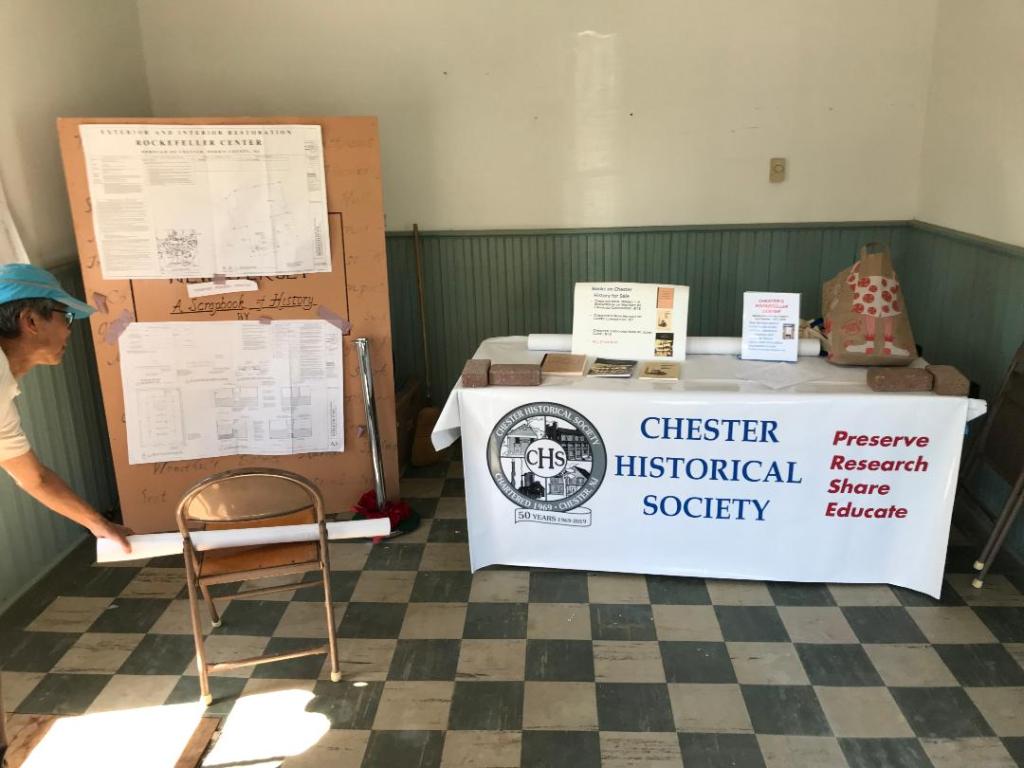
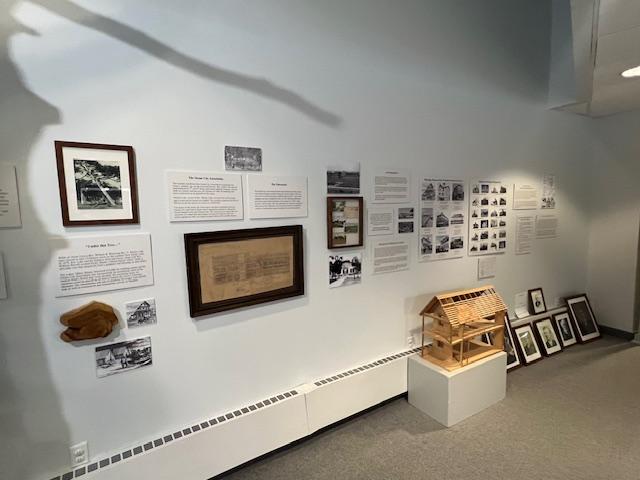
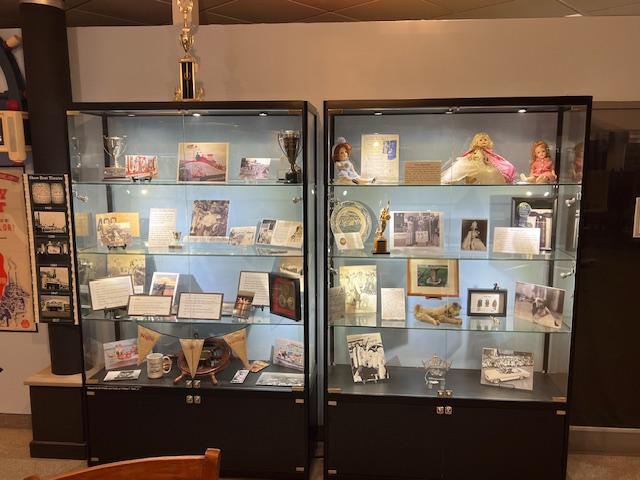
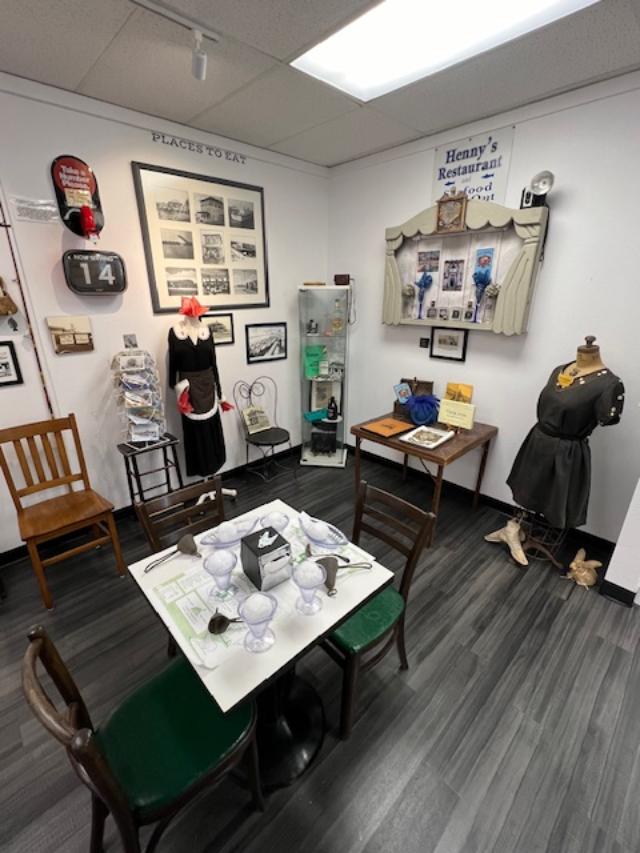
*Bloggers Note: the museum is still being renovated. Both the inside and outside looked finished in the Summer of 2026 but the displays are still not up inside. The one below was temporary for the Pathways Open House in 2022.
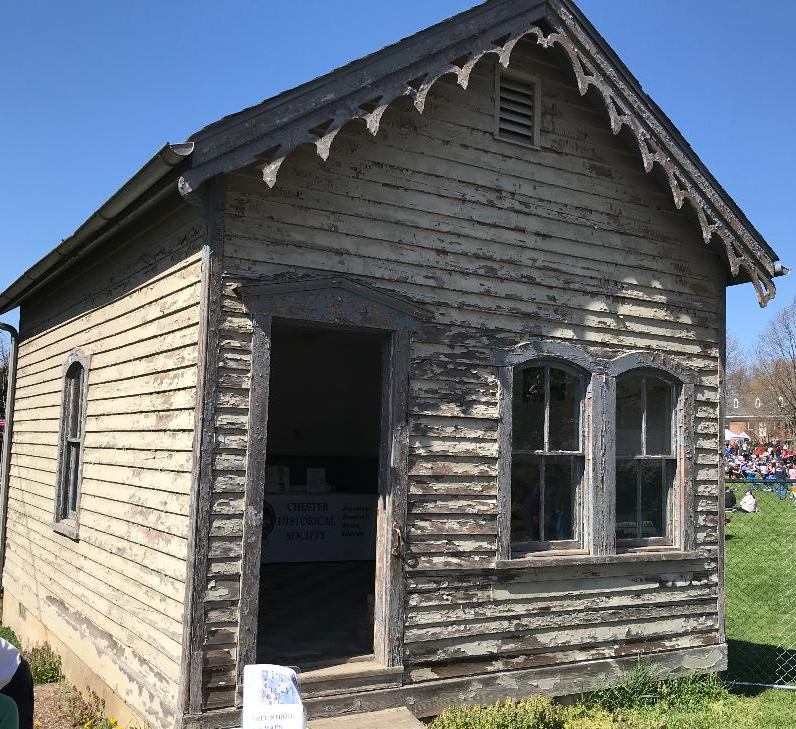
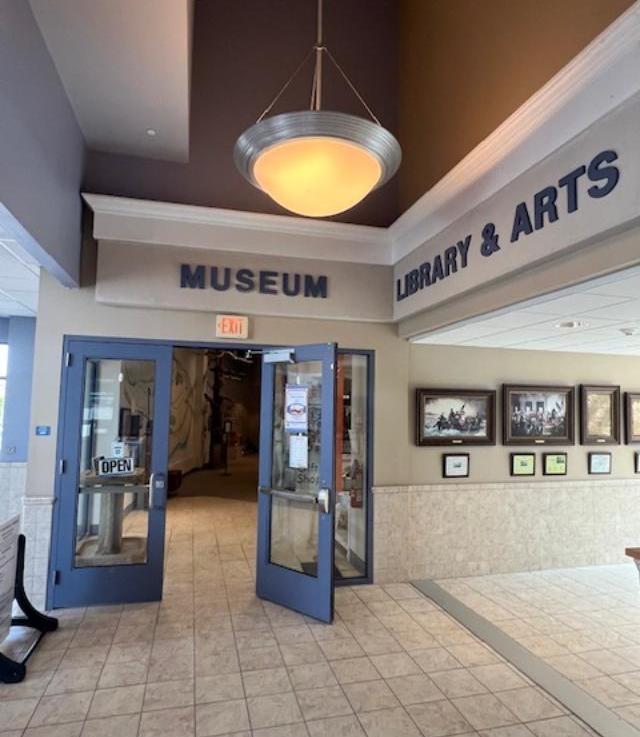
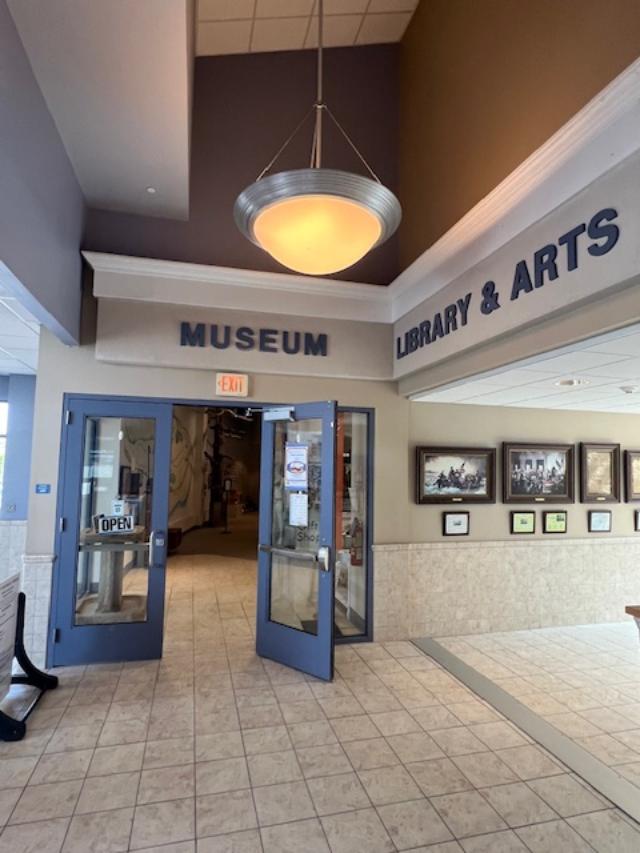
The Chester Historical Society/Chester Rockefeller Center has just been moved to Downtown Chester and is currently being renovated. Their collection is in storage right now while the building is being renovated. When I went to visit the museum, they were displaying their plans for the museum in the future outside the building.
The Chester Historical Society is currently open only at certain times and the collection is in storage while renovating. They are telling the town’s story on both a story board outside and on tables outside the building while it is being set up. Please check out their website for upcoming events and openings.
The new building in the Summer of 2026
The game plan for the museum.
The History of the Building of the Chester Historical Society:
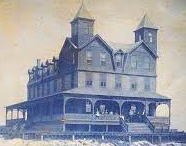
The original Chester, NJ Rockefeller Center
The History of the Building:
(From the Chester Historical Society’s website)
Chester’s Little “Rockefeller Center” building has seen many unique tenants in its day! In 1897, Mr. W. J. Litzenberger was reported to be doing a located behind the building. This is where he carved gravestones for the locals and used the building as his sales office and display area.
Also in the late 1800’s, the Post Office was located in Alonzo P. Green’s Pharmacy across from the firehouse. “Lawyer” Smith (postmaster), who was the son in law of General Cooper, was soon to move the Post Office across the road to Yawger’s store and later to the “Rockefeller Center” building, which was just east of the firehouse.
When Chester’s Iron “Hey-Day” waned out, fortunate were those who could return to farming. They could put their efforts into raising peaches, apples and garden produce and often used it as barter for “store-bought necessities” to provide for their families. Horses and cattle were important to the farmer and also to the townsmen. From earliest days drovers had driven horses and other livestock through Chester on their way to and from Susses County. From the mid-1800’s horses and mules were brought from as far as the Midwest to be sold.
During the late 1920’s and into the 30’s and 40’s, Abraham Meyer, who boarded with Austin Thompson, bought and sold cattle and had them located at the present Lowensteiner farm on North Road. During that time, he had an office for his cattle dealer’s business in the “Rockefeller Center” building.
After that, the Rockefeller family rented not only the cottage for them to live in but also the little building next to it from George E. Conover. The cottage was ordered and built from the Sears & Roebuck Company and was located to the left of the “Rockefeller Center” building. At this time, Carlos “Rocky” Rockefeller used the building for a bicycle shop where you could not only purchase a bike but also get one fixed! He would also sharpen the local children’s ice skates there.
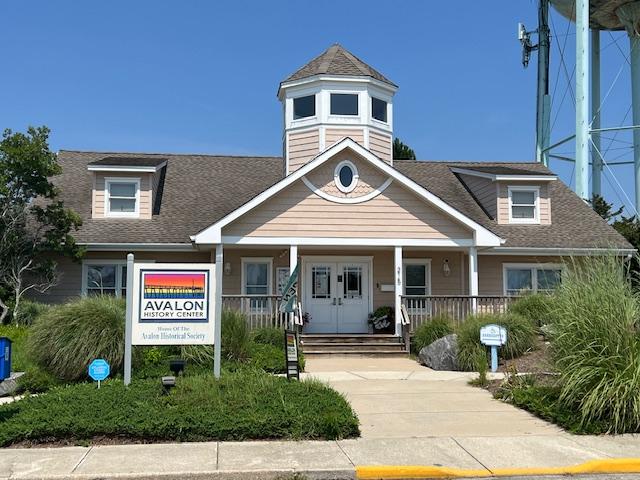
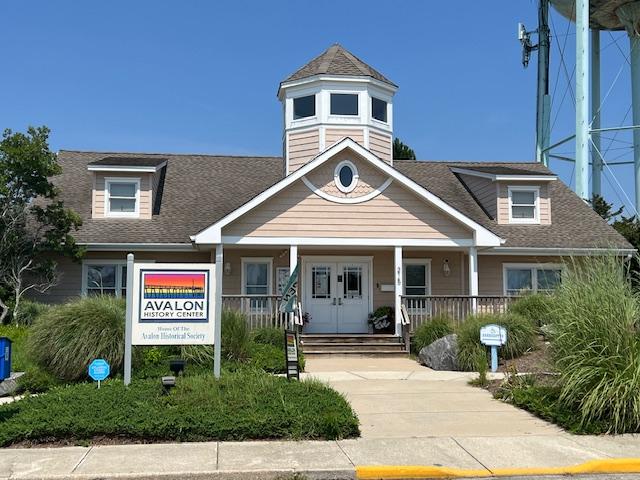
The Avalon History Center is at 215 39th Street in Downtown Avalon, NJ
Recently I took a tour of small Jersey shore towns and their historical societies. These interesting little museums are packed with information on the history and development of these towns. The progress of these towns from fishing and hunting villages for the Native Americans to the modern day resorts and permanent residence’s have a fascinating history.
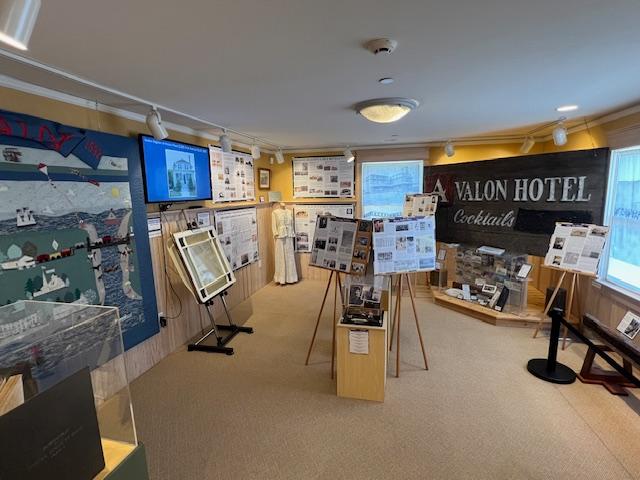
The early history of Avalon display with the development of the hospitality industry in the town
The Avalon History Center was the last museum on my visit to the shore that day and it had become very gloomy outside. The town was relatively quiet when I got there on a late Thursday night. I ended up having the whole museum to myself to tour. The curator came out and greeted me nicely and said that they were working in the back and if I had any questions to come get them. Outside that, I was the only one touring the exhibitions.
When you enter the building, the rooms are broken down in section by display. The Avalon Police Department has a wonderful exhibition of the history of the department. There are all sorts of police gear, mannequins with old uniforms and all sorts of police gear and pictures of the department through the ages. Near that is the Brendan Borek High Tide Memorial Fund.
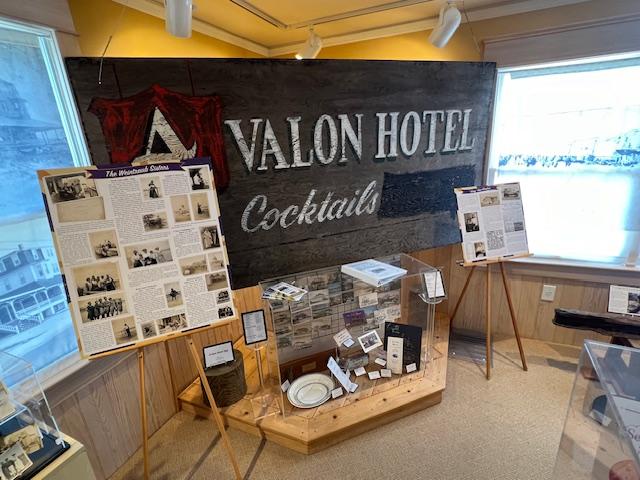
The Early Avalon Room contains the history of the many hotels that used to dot the town during the Victorian era that have either burned down or succumbed to the ocean currents. Of all the hotels that existed only the Sea Lark B &B (See my review on TripAdvisor) still greeting guests. There are all sorts of dishware from the old hotels, menus and silverware that show the opulence of the time when pleasure travel lasted longer than present day.
The history of the Hotel Industry in Avalon with artifacts like menus, china and wonderful pictures of the old hotels. One of the hotels, the Sealark Hotel, still operates as a bed and breakfast. I had stayed there in 2017 for the Firemen’s Convention and had a excellent stay.
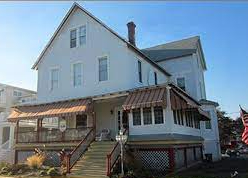
The Sealark B &B at 3018 First Avenue in Avalon, NJ
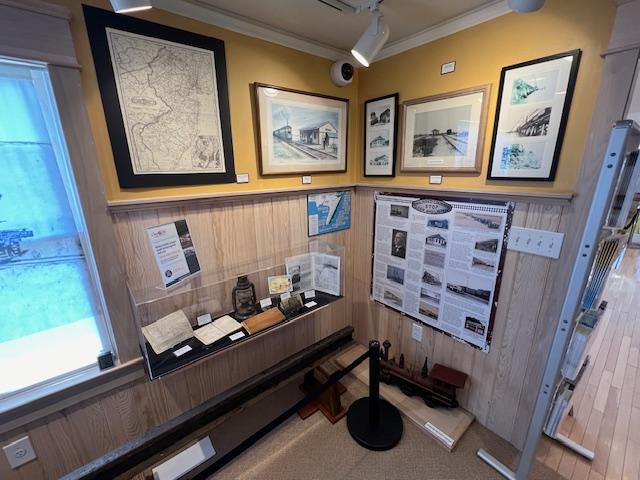
There was a section on the Founding of the town and its development over time. The town used to be Native American place to fish and hunt to the Victorian resort it became with the railroads. There was extensive history of the Railroad system that was so important to the growth of these shore towns. This was until 1937 when the rail system became obsolete with the advent of the automobile. There was a nice display of the old Avalon Pier.
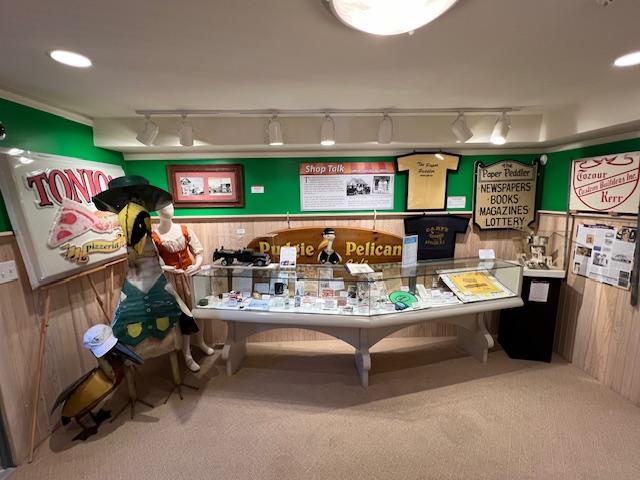
The detailed display of businesses that made Avalon the place to go and party
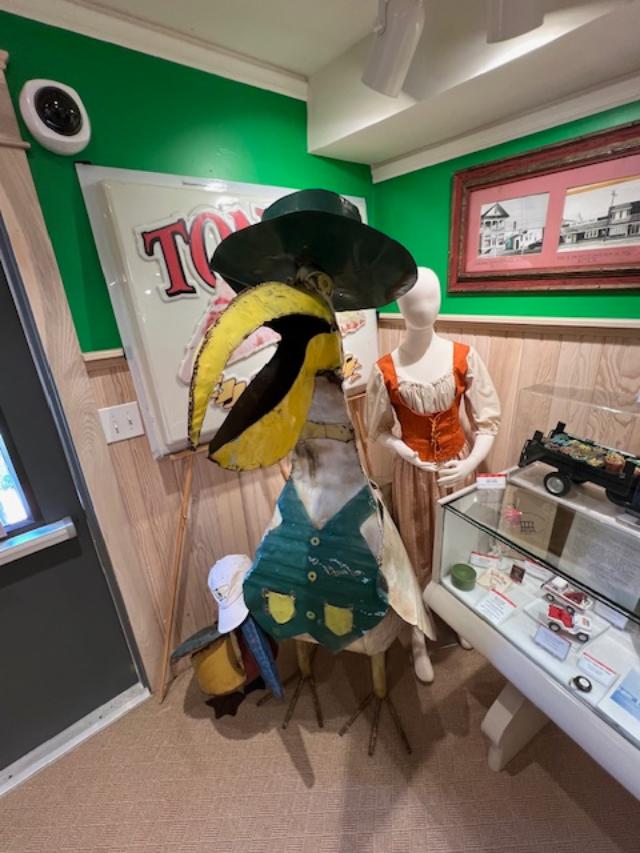
The Mascot for Pudgie Pelican
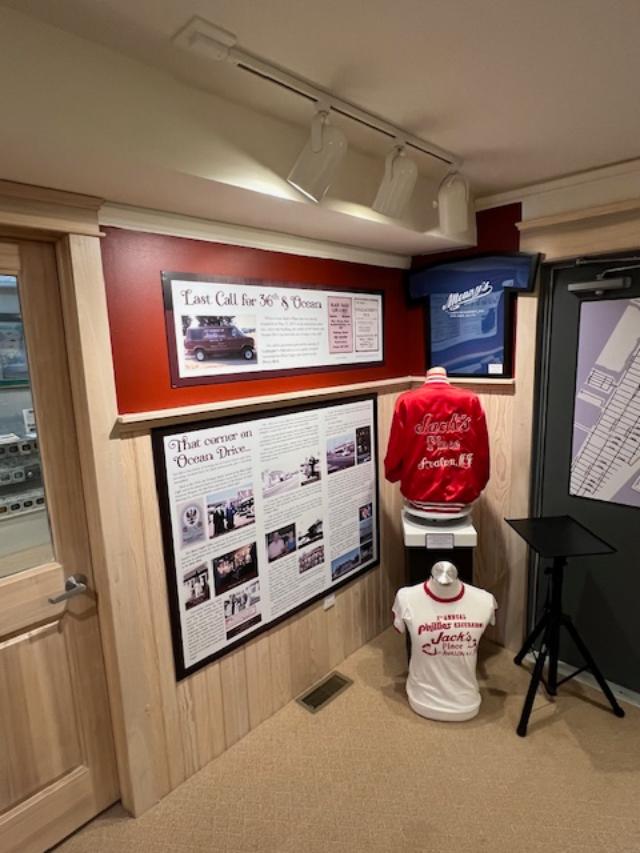
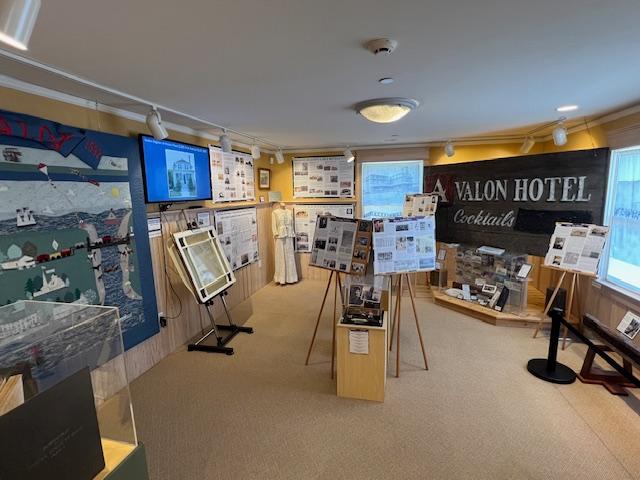
The back of the building was dedicated to local businesses that have since closed, This shows old signs, pictures and menus of watering holes that were popular for generations. There was an interesting display from the Avalon Hotel’s ‘Phil’s Bongo Room’, a popular place for bands.
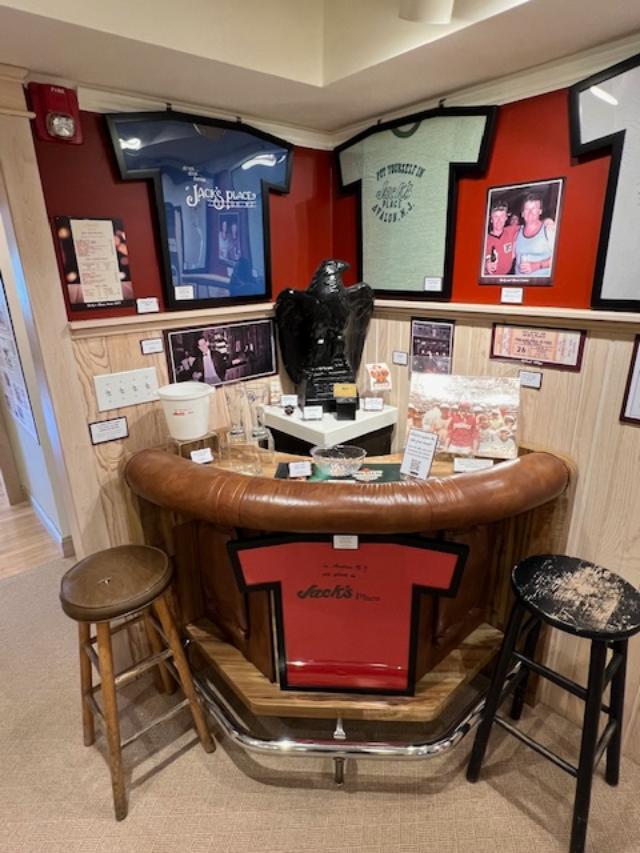
The artifacts from Jack’s
Memories from a forgotten bar scene
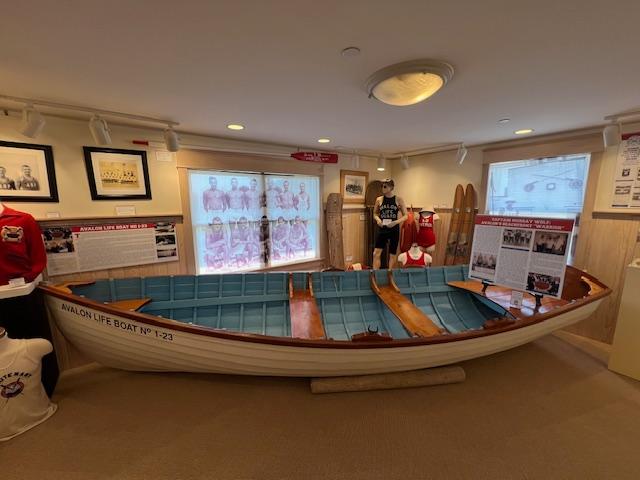
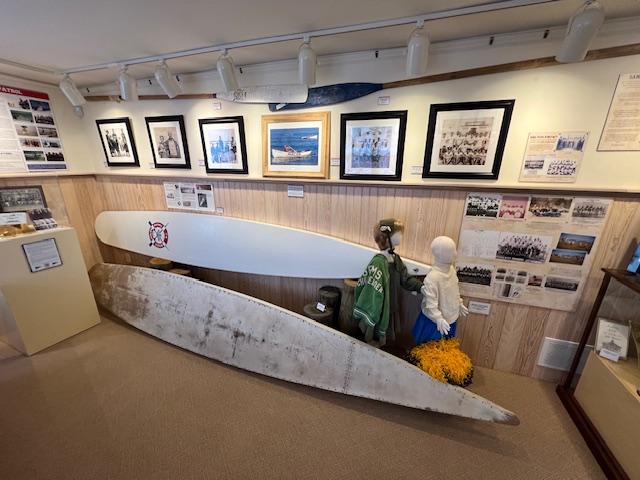
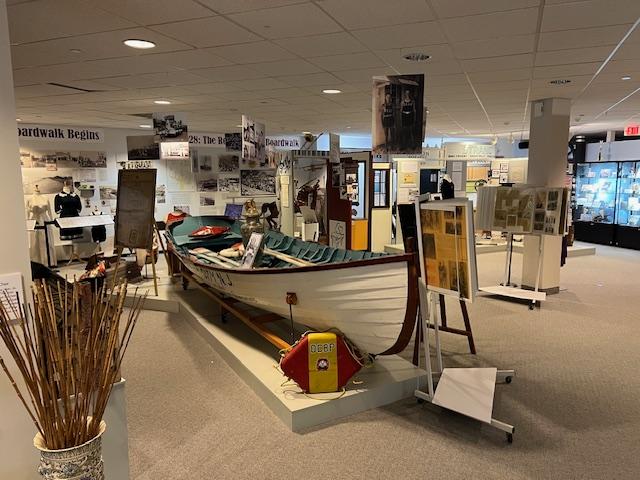
On the other side of the front of the museum is an interesting display on the Avalon Shore Patrol, a much dedicated group of men and women that play such an important role in a shore community. The museum displayed an restored patrol boat surrounded by other artifacts. Pictures of generations of Beach Patrol members proudly line the walls.
The Beach Patrol display
The Beach Patrol display
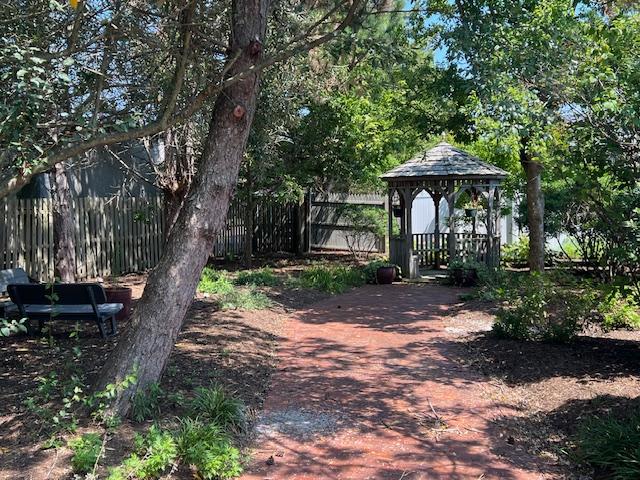
The museum also has landscaped grounds to walk outside either to some of the smaller historical buildings or to the gazebo to relax on a nice day and just enjoy the breezes. It is nice to walk along the flowering beds and just enjoy the sunshine.
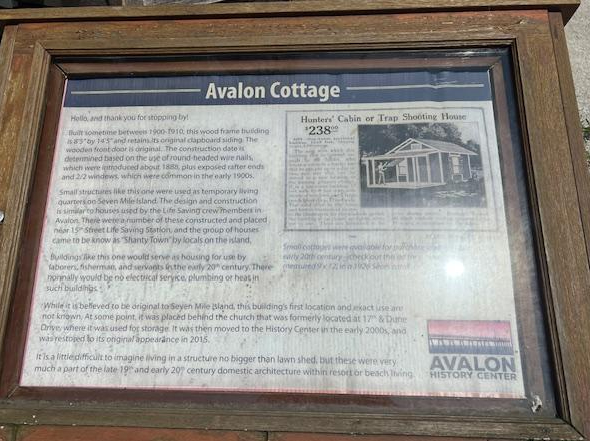
The Avalon Cottage sign outside the museum
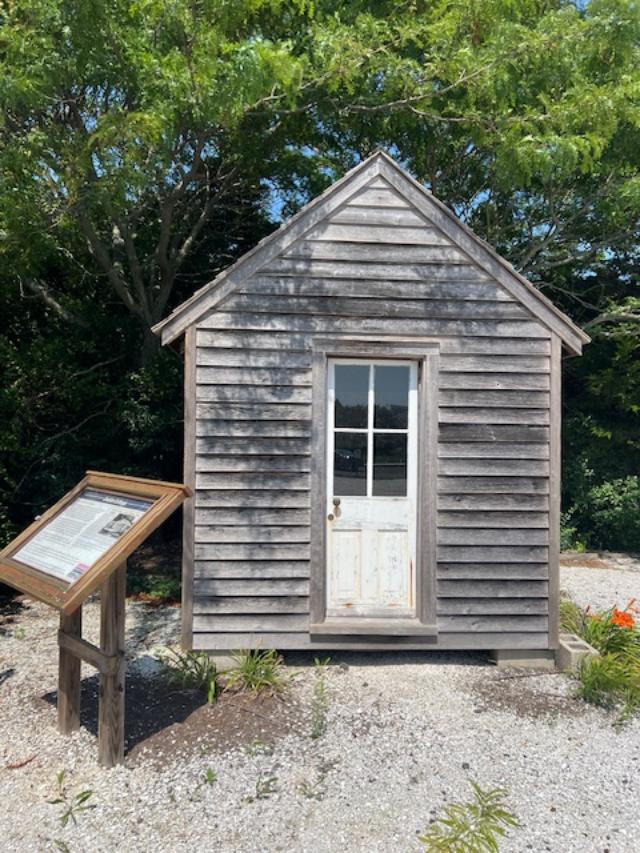
The Avalon Cottage located outside the museum
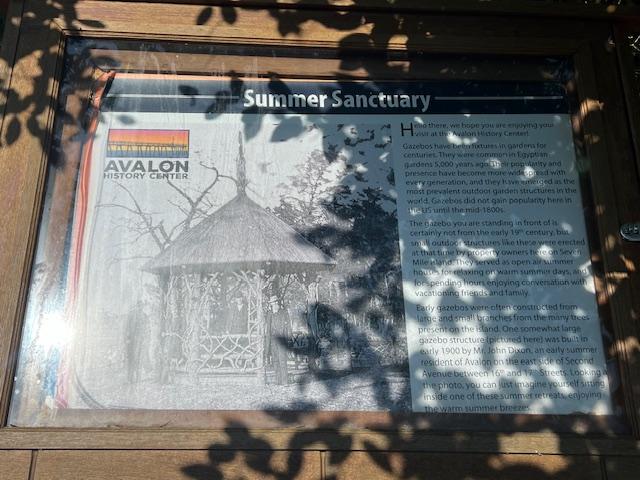
The Summer Sanctuary sign outside the museum
The Summer Sanctuary outside the museum
It was a great visit both times I went to the museum.
History of the Avalon History Center:
(from a recent AHMS Newsletter)
The current facility opened its doors in September of 2001 to the public and began to share Avalon’s past, historical photographs, artifacts, memories and recollections lovingly collected and recorded by members of the Avalon Museum and Historical Society.
The museum main gallery
After several years of discussion, 1997 saw a historical society being formed at last in Avalon, supported by the enthusiastic endorsement of Mayor Marty Pagliughi and Borough Council President Nancy Hudanich, Doris Hanna and Jean Losch even secured a $10,000 donation from the Avalon Women’s Civic Club, as seed money for a building. Borough Council agreed to provide a location at 39th Street as well as a modular building-the old Public Works Headquarters, which did not prove suitable. The Avalon Museum and Historical Society got to work.
In June 1997, the first election of the Avalon Museum and Historical Society officers occured, along with the adoption of a constitution and bylaws. Among those first officers were Robert Jaggard, President, Lucille (Sue) Jacobson, Vice-President, Jan Jaggard, Secretary and Gordon Smith, Treasurer. Among thefirst Trustees were Jean Losch, Doris Hanna, Betty Shoemaker, Marvin Wells Jr., Joseph Koen and Robert Penrose Jr.
In early 1998, as the AMHS held its first fund drive, Doctors John and Elizabeth Ruskey agreed to honor the previous owner’s wish to donate their recently purchased house (location on 111st Street in Stone Harbor) to the effort. The Avalon Museum and Historical Society had support, money, a location and a building. Now all they had to do was move the house from Stone Harbor to Avalon, which is exactly what happened on November 6th, 1998. The groundbreaking took place on January 22nd, 1999.
The main history display at the museum
Once in place, work on putting the building back together and creating a museum space continued, inside and out. Items had been donated, collected and stored in the homes of the officers and trustees. It was the work of the AMHS to organize fundraising events to finance the project.
In mid-September 2001, the officers opening day arrived at last and AMHS President Pary Woehlcke, together with Mayor Marty Pagliughi cut the ribbon on Avalon’s very own local history museum.
Since then, there have been many changes at 215 39th Street, including the merger and incorporation of the Avalon Museum and Historical Society into the Avalon Free Public Library. We are now the Avalon History Center.
One thing that remains constant is the commitment, enthusiasm and passion from History Center staff and the Historical Society Board and members. Our mission remains to bring Avalon’s past alive and make it accessible for all. This year has been a challenge but one we hope we have met as we continue to keep the doors open, broaden our outreach online, entertain, educate and amuse our patrons.
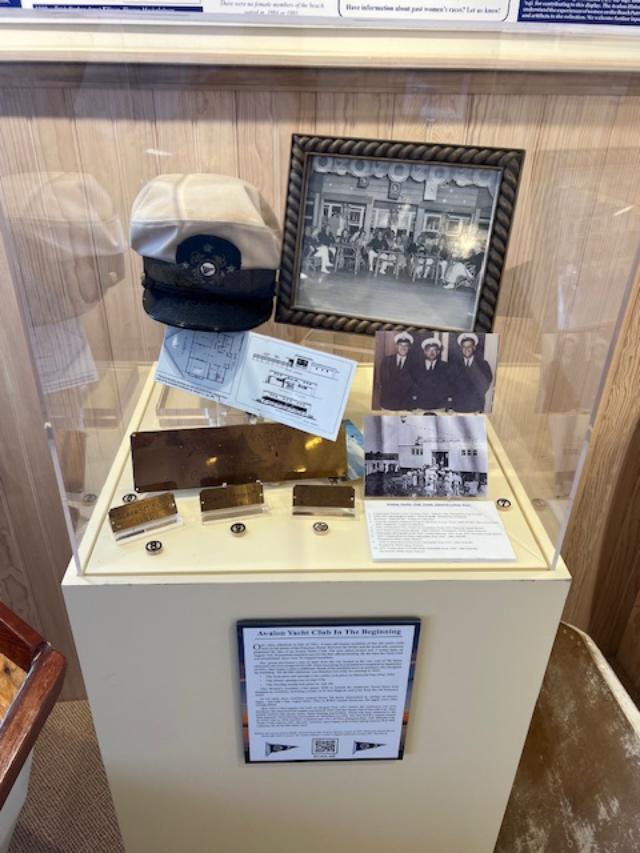
The Avalon Yacht Club display
Mission of the Avalon History Center:
The Mission of the Avalon History Center is to collect, chronical and preserve the history of the Borough of Avalon in the County of Cape May, New Jersey.
Peermont Self-Guided Walking Tour:
This self-guided tour of a section of Peermont (25th to 42nd Streets) will lead you from the Avalon Post Office at 33rd and Dune Drive through to 30th Street and ending at the Boardwalk and Beach Patrol on 32nd Street. It should take about one hour of gentle walking.
History of the Area:
(from the Avalon History Center pamphlet)
In October of 1888, Philadelphia entrepreneur George Rummel and the Avalon Beach Improvement Co. (ABICO) purchased from Joseph Wells at 17 block area of Seven Mile Island from 25th to 42nd Streets. The tract excluded the vast beachfront but included large areas of boggy meadowlands west of Third Avenue. This section of Seven Mile Island became known as the ABICO tract.
Rummel’s first priority was to build a hotel, which he named “The Peermont”. The railroad station which went up at the same time also became known as Peermont and so the ABICO tract followed suit. Peermont was on the map.
The Hotel Peermont in Avalon, NJ
Building lots were very quickly offered for sale so many that those in the Avalon section began to feel somewhat behind. Lots were also sold and bought in the meadowlands between Third and Forth Avenues on the assumption that they would be drained, filled, graded and curbed. Unfortunately 25th Street to Gravens Thoroughfare was the only roadway made passable. Rummel did however tear down the dunes, fill in and grade the ponds and marsh areas along the beachfront section of the ABICO tract, in order to build a seawall and then a boardwalk.
The entrance to the museum is inside the Municipal Building and Library 1735 Simpson Avenue
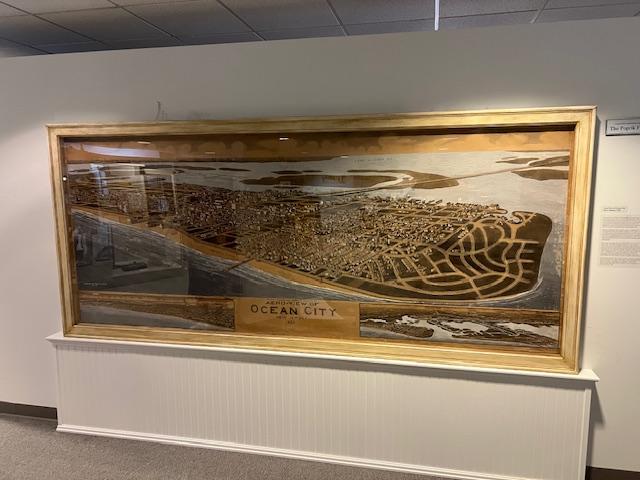
The original map of Ocean City, NJ
I made a trip to many of the beach towns at the Jersey Shore recently visiting the small historical societies that explain the history and development of these small towns. It is amazing to see how they have developed in just 150 years from Native American fishing villages to thriving vacation spots and permanent residential districts. Ocean City, NJ itself has an interesting history.
The entrance gallery with the history of the town
As you enter the museum from the back of the library, you are warmly greeted by a docent who will explain the museum to you. Then you will follow a semicircle through the exhibitions in a genealogical order from when the town was founded to modern times and events.
The first exhibition is called “From Hunting Ground to the Modern Resort:
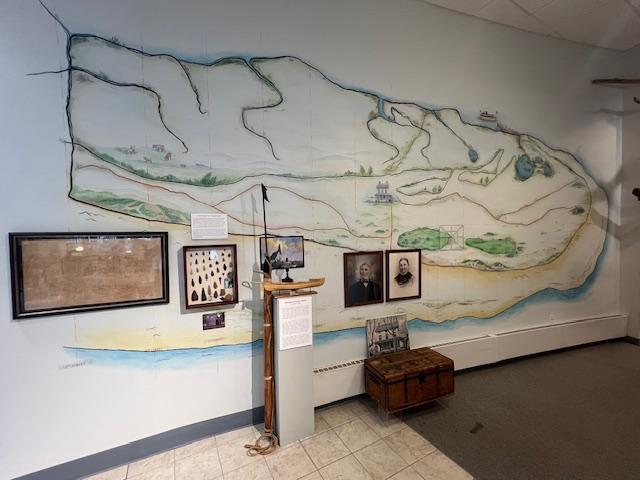
The early history from the time the Native Americans used the shore line for fishing and hunting to the history of the Miller family who owned parts of the island. The exhibit explained how the Miller family owned this section the island and how it was developed. These were the early years of the island until the coming of the Methodist colony.
The original map of the barrier island and artifacts of the local Native American tribes
The second Exhibition was “The Founders and the Early Years”:
In 1879, four Methodist ministers came to Ocean City to develop a Summer Colony and resort for their members based on Christian values. This lead to the development of the “Blue Laws” in which some traces are found today. The displays discussed the how the resort moved into modern times and how this development shaped the resort as it is today. There are interesting pictures of the development of the Camp in the turn of the last century.
The early growth of the island as a resort
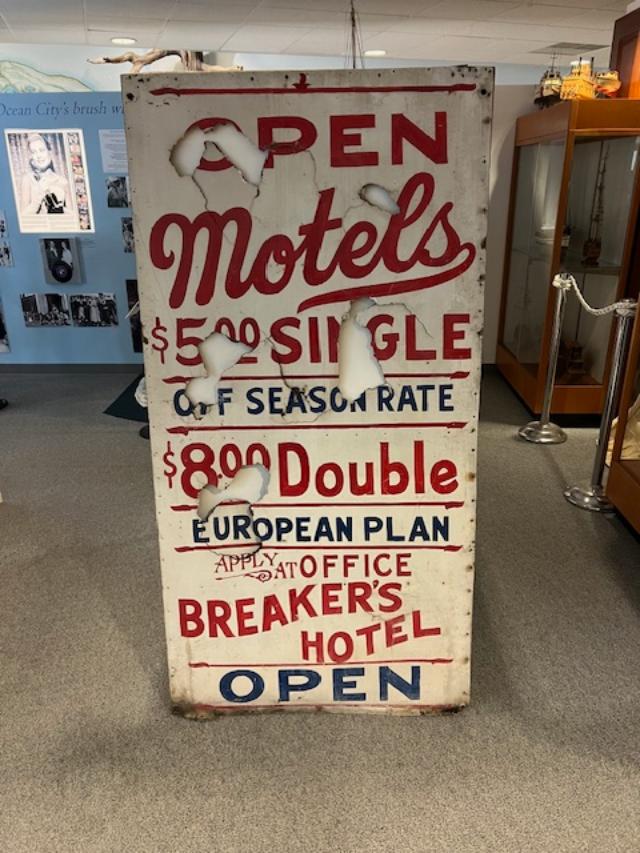
Early Motel sign
The early Bathing exhibition
The third Exhibition was “The Boardwalk”:
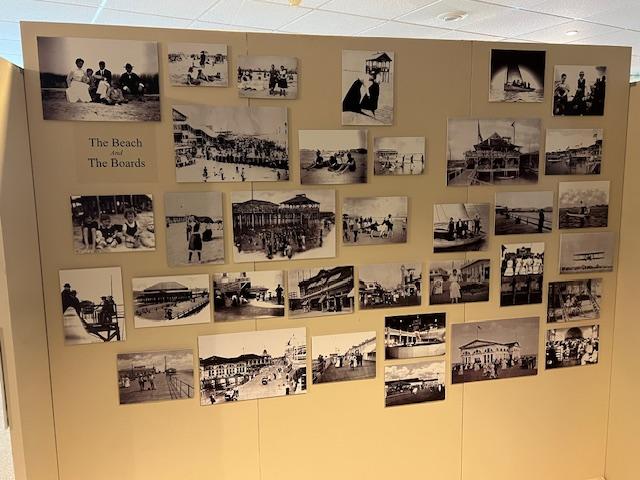
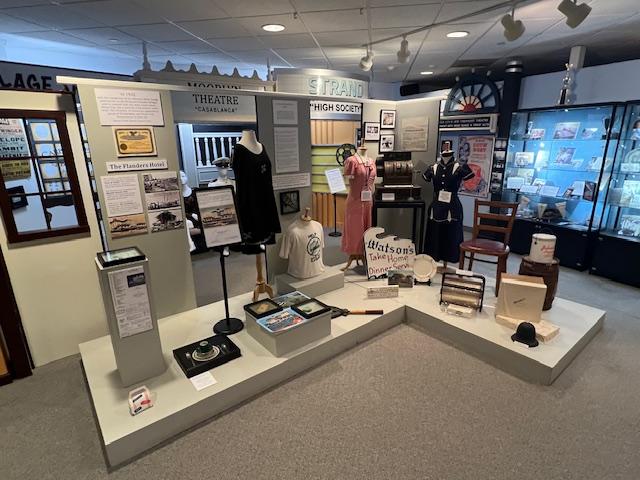
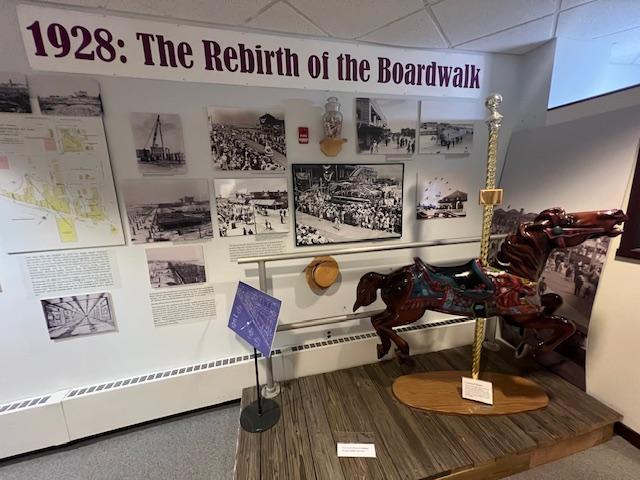
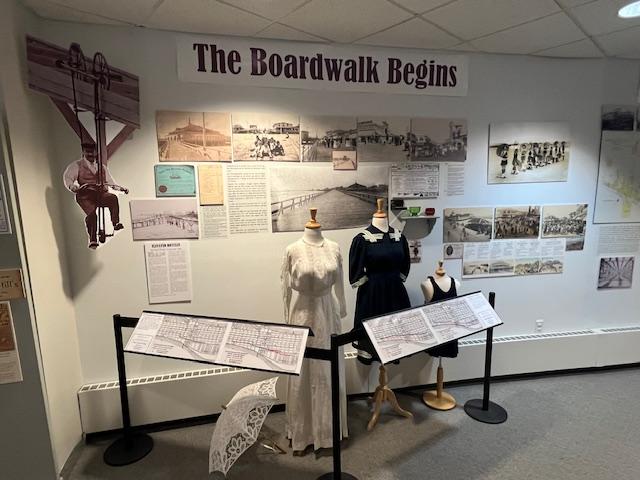
The development of the first Boardwalk in 1887 to give access to the shoreline lead to early development around it. You could follow the developments of many versions of the Boardwalk over the years due to storms and development. There were displays of old movie theaters that used to dot the Boardwalk along with other family businesses that opened over the years. Old hotels that have since closed or being used for other uses had their histories told. The Flanders Hotel’s history was displayed.
The Boardwalk rebuilt into its present form
The Boardwalk in the beginning
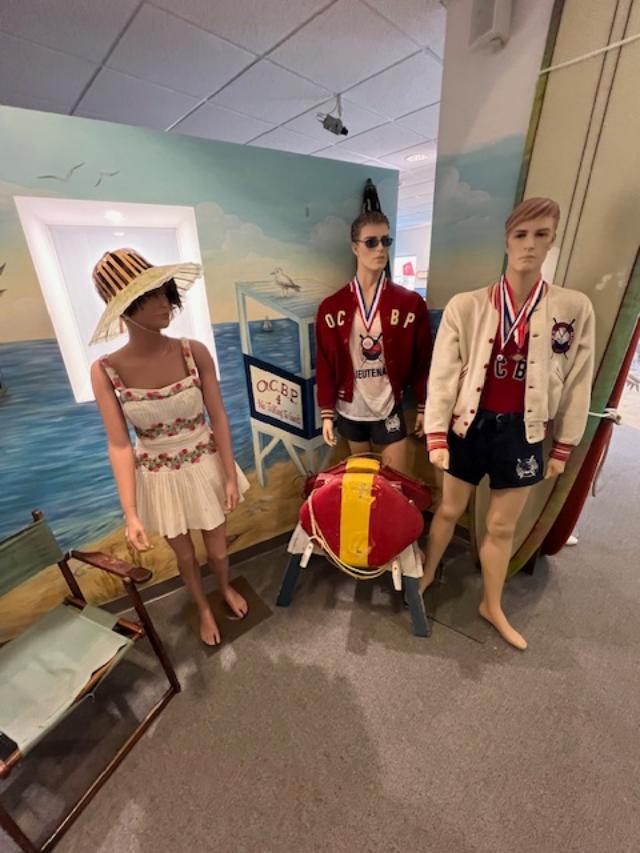
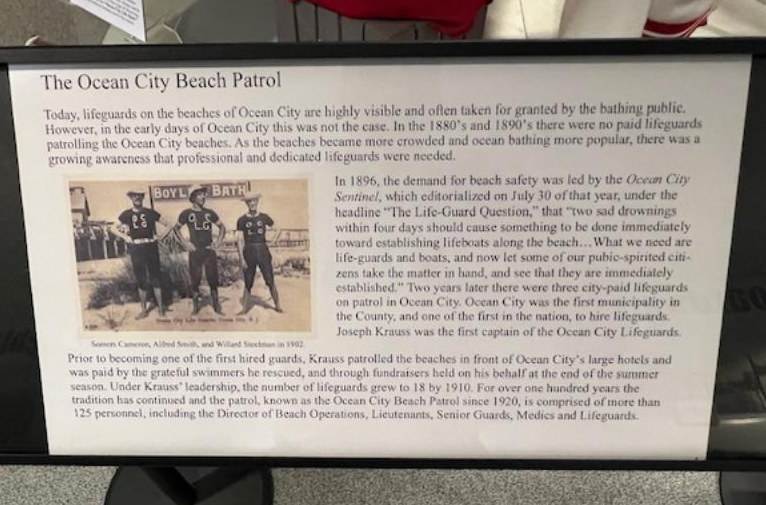
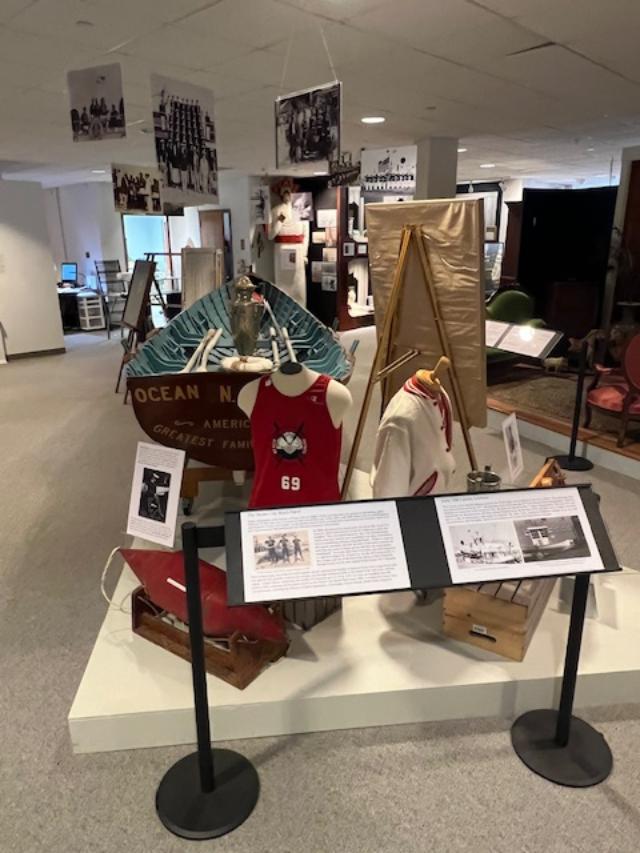
The Beach Patrol display
The Beach Patrol sign
The Ocean Patrol exhibition and artifacts
The forth Exhibition was “The Sindia”:
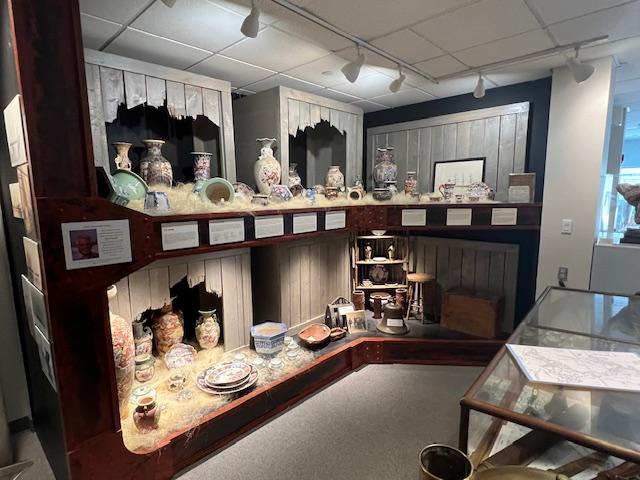
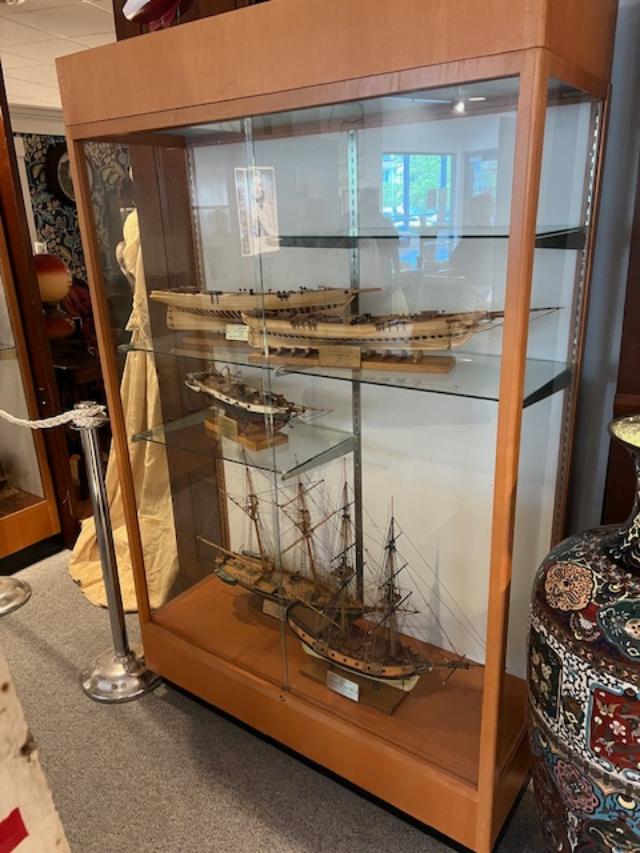
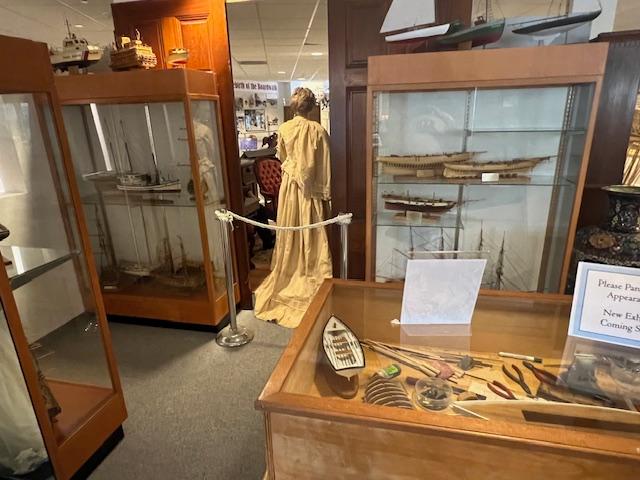
The Sindia was a shipwreck off the coast of Ocean City that ran aground in 1901. It still lies off the coast but many of the artifacts of the wreck are displayed here. There is all sorts of bottles, dishware and other household and decorative items displayed here. There is also an interesting display of model ships.
The Porcelain artifacts
The model ship display
The model ship display
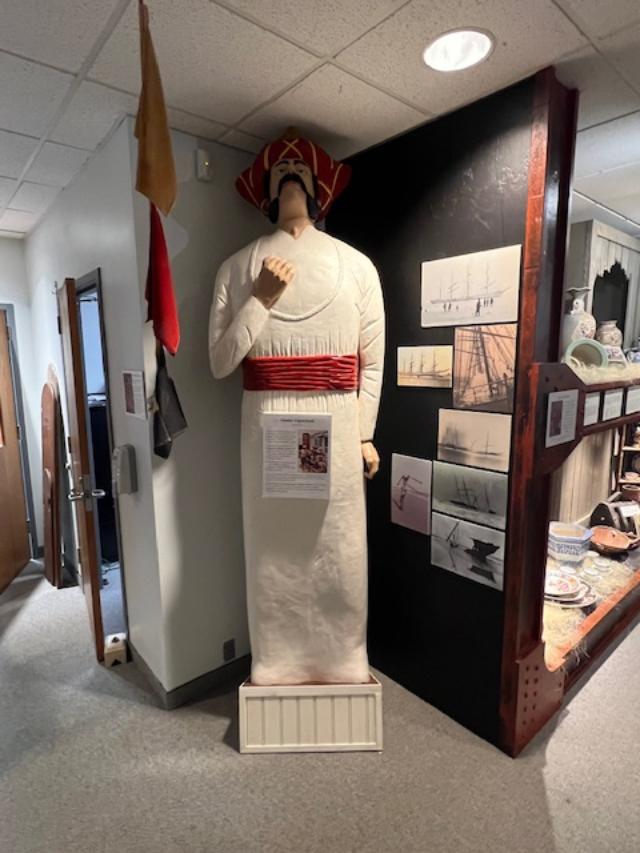
The ship mass display
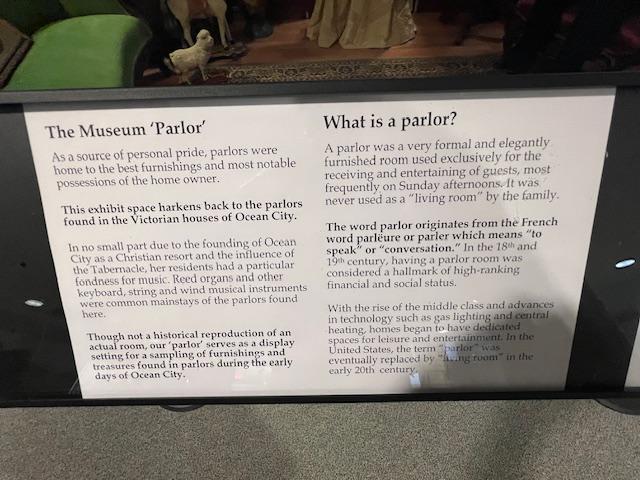
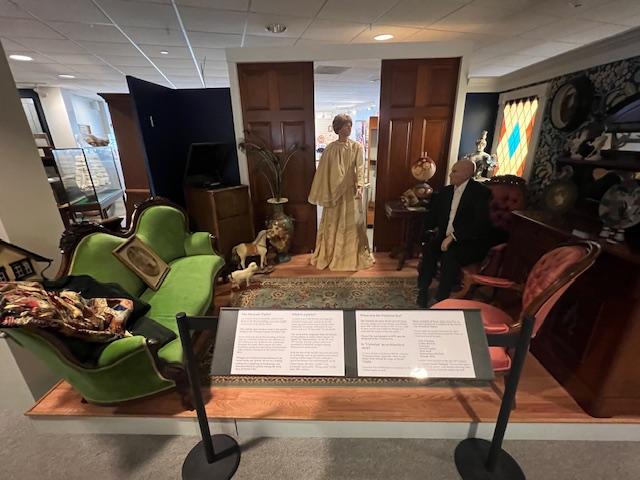
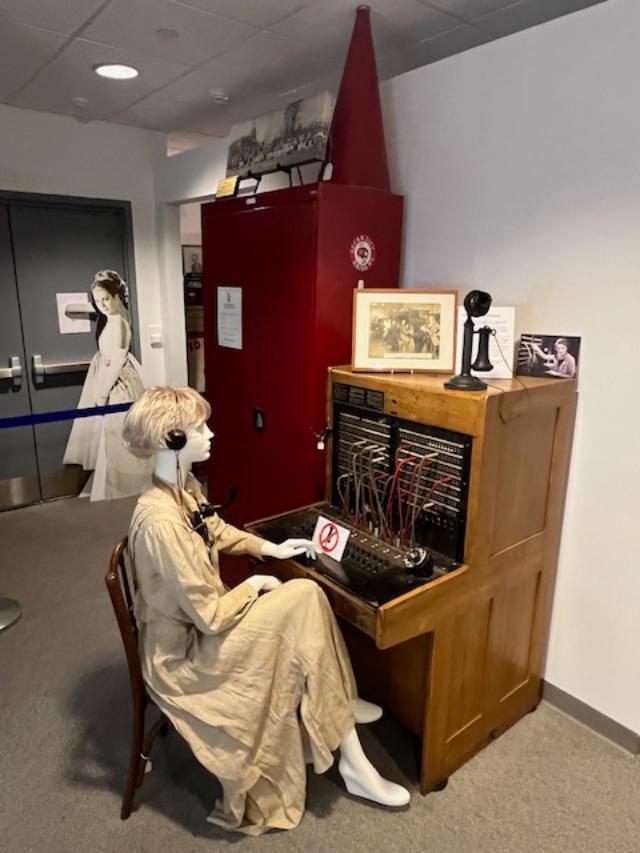
The museum Parlor exhibition
The museum Parlor exhibition
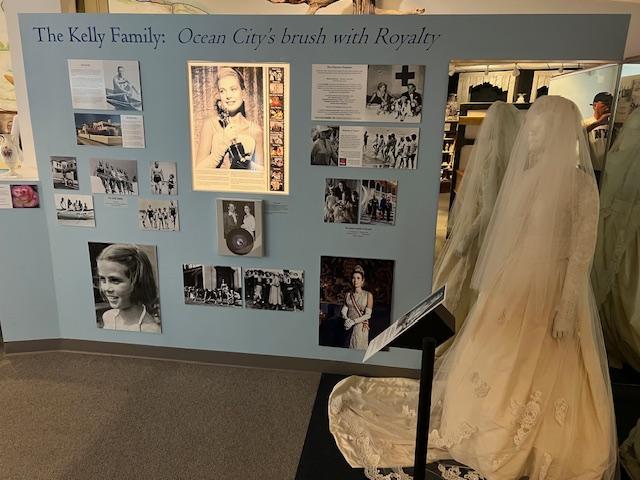
The last Exhibition was on actress Grace Kelly and her family:
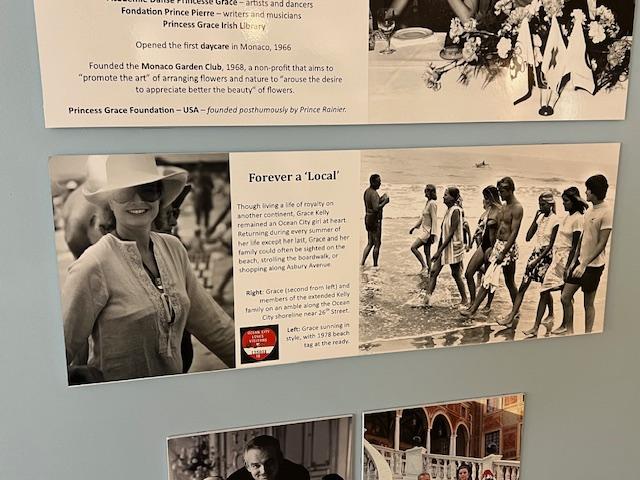
Princess and Actress Grace Kelly used to vacation with her family in Ocean City from the time she was a little girl until her death. I never realized that her father was an Olympic Rower and used to row at the Jersey Shore. Her brother was a lifeguard for the town as well. There are all sorts of family pictures of her and her siblings growing up here. What I thought was interesting was she bought her royal family to the Jersey shore to vacation with her family and there were pictures before she passed enjoying her time here. That I thought was very interesting that she never forgot her roots.
The Grace Kelly exhibition
The Princess and Movie Star never forgot her roots
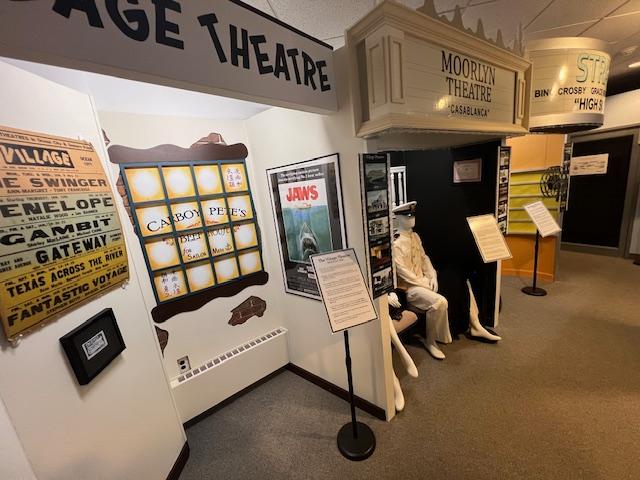
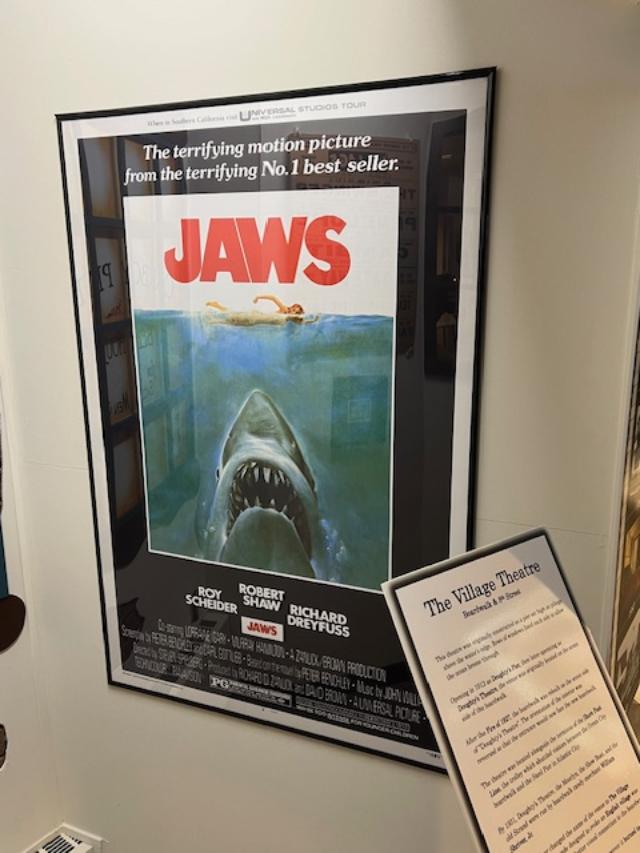
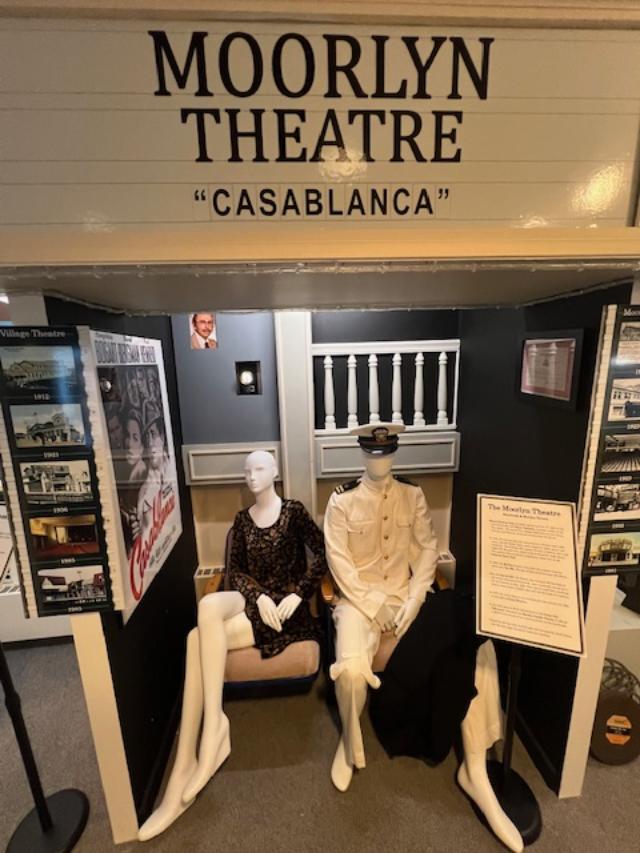
There was a special exhibition on the local theaters that once used to dot Ocean City, NJ:
The history of movie theaters in Ocean City, NJ
The Village Theater exhibition
The theaters of Ocean City, NJ
It was an interesting look at the development and then the closure of the local theaters that had become a part of everyone’s lives.
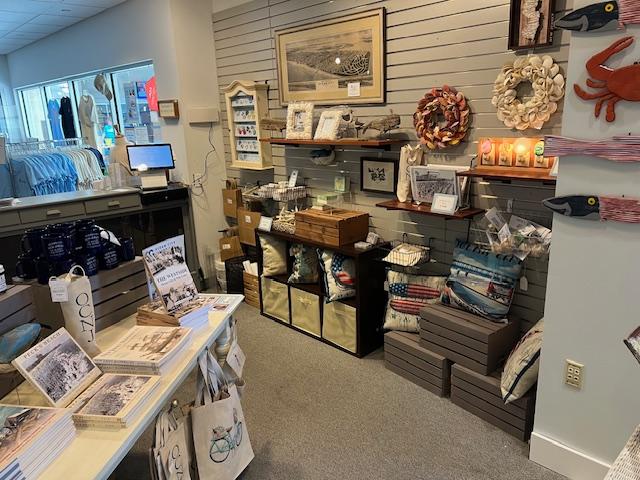
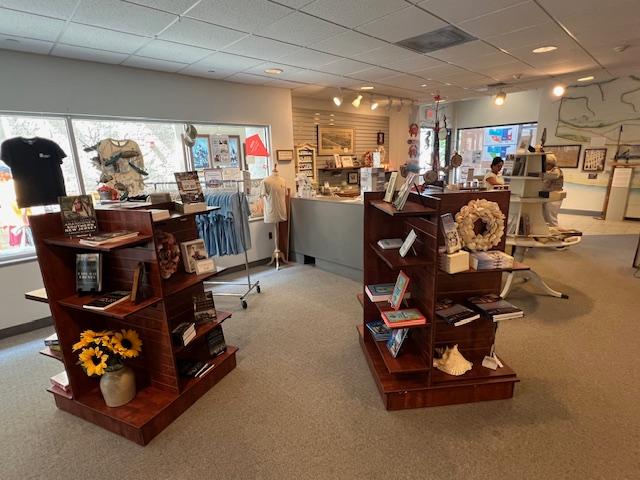
Don’t miss their nice gift shop that has all sorts of decorative items and jellies and honey.
The Gift Shop at the Museum
The Gift Shop
History of the Museum:
(from the Museum’s Website)
The Ocean City Historical Museum is a nonprofit 501(c) 3 corporation established in April of 1964. It was created by a group of enthusiastic volunteers with the support of the local government. The purpose of the Museum is to preserve the city’s history for future generations for both visitors and residents.
The first museum was located on the first floor of the old elementary school at 409 Wesley Avenue. It was only open during the summer of its first full year, as the building was still being used as a school. In July of 1965, it was opened for year round visitors when the school moved to its new location. The museum moved to its current location at the Ocean City Community Center at 1735 Simpson Avenue in 1990.
Mission:
The mission of the Ocean City Historical Museum is to delight, inspire and educate the public about the story of Ocean City, NJ and to collect, preserve and promote items relevant to its heritage, traditions and memories.
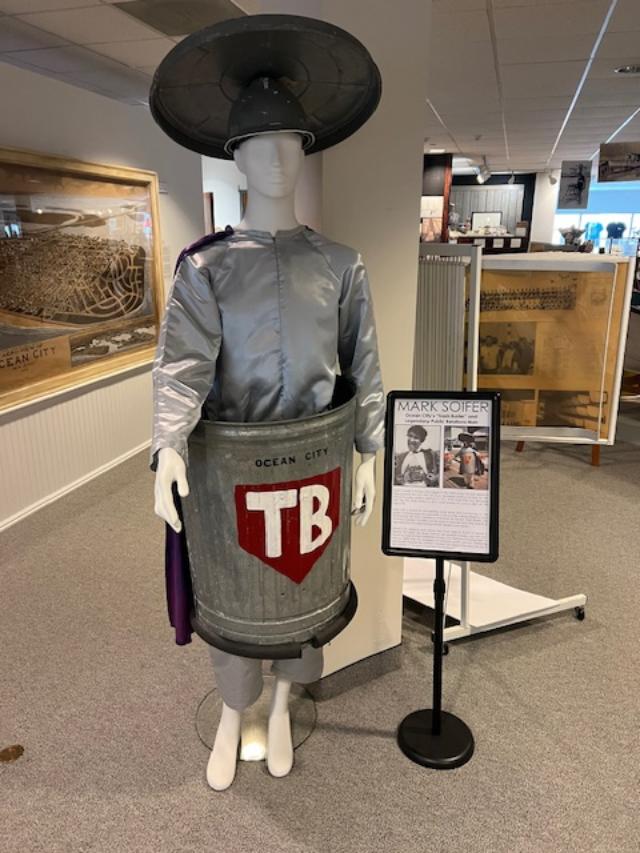
The Recycle Man display
Vision:
The Vision of the Ocean City Historical Museum is to be an inviting, informative and innovative community resource that is recognized and respected as the place for exploring and celebrating the rich history and heritage of Ocean City, NJ.
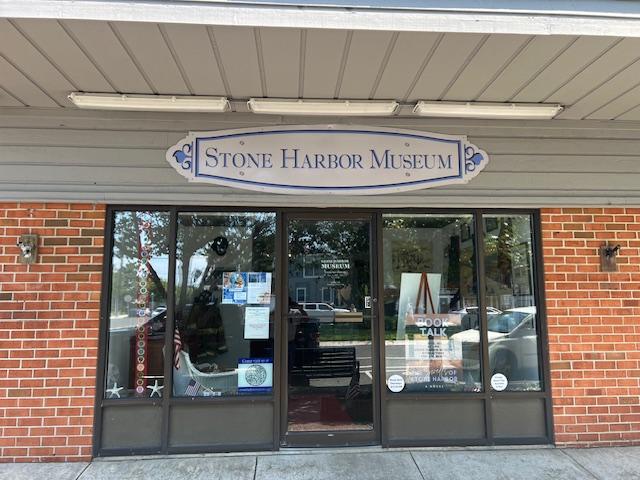
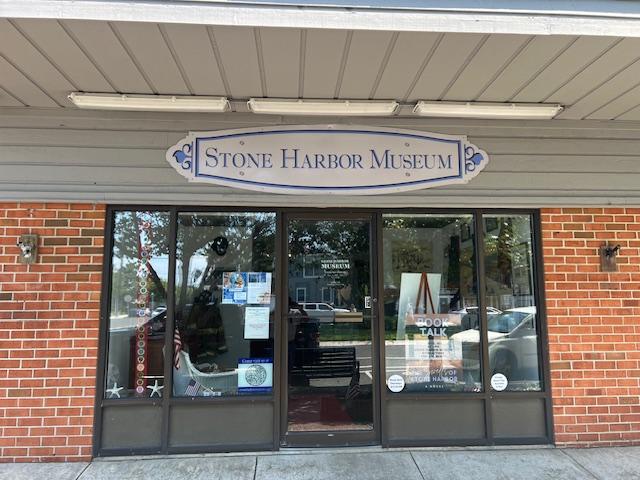
The entrance to the Stone Harbor Museum at 9410 Second Avenue
On a recent trip to the Jersey Shore, I took an long drive down the coastline visiting small historical museums of the shore towns and they gave me an interesting perspective of how these towns were developed from the time of Native American fishing and hunting villages to the advent of railroads and Victorian hotels to the modern development of the town today. Stone Harbor, NJ has had an interesting path since its development in the late 1800’s.
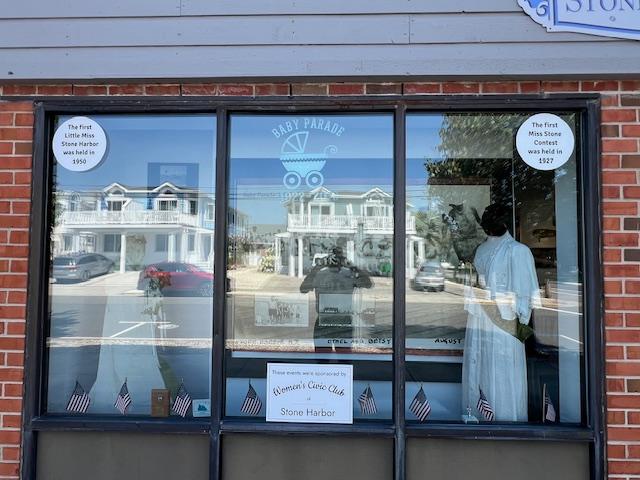
The Stone Harbor Museum display from the Women’s Civic Club of Stone Harbor
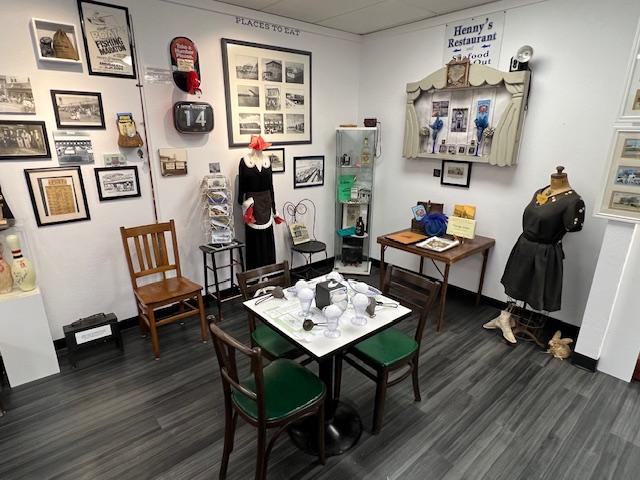
The Stone Harbor Museum was founded in 1996 by a group of involved residents who wanted to showcase their town’s history. The current museum was opened in 2016 and has many different exhibitions going on, some permanent and others are seasonal and keep rotating within the museum. When you walk in, the museum is divided by sections and displays of their museum.
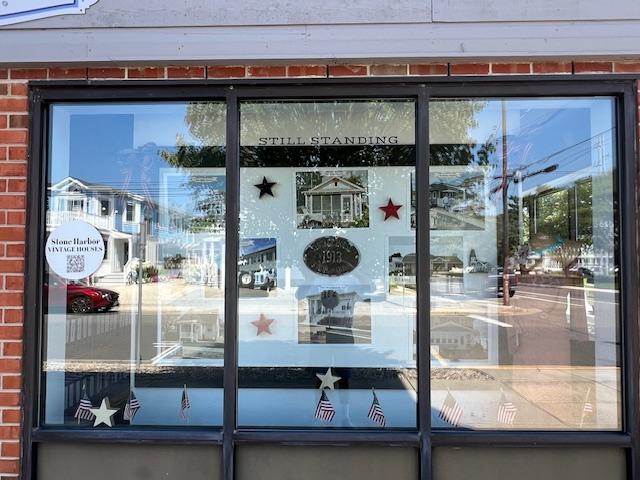
The Stone Harbor Museum Historical Window
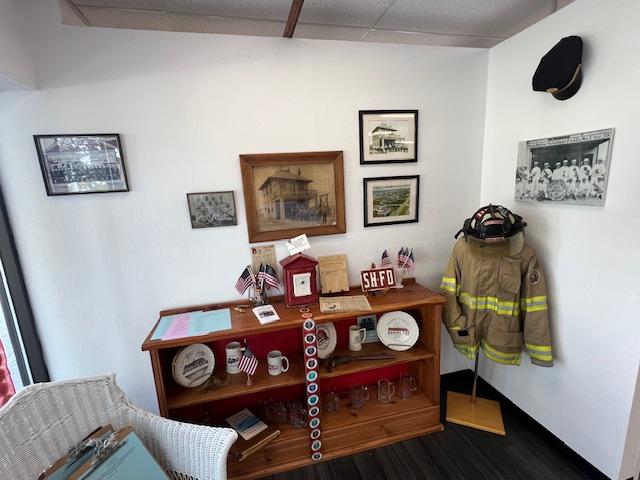
Leading into the entrance, there was a very interesting exhibit on “9/11” for the Twentieth Anniversary of the event by a Chief from the Stone Harbor Fire Department. It was a series of articles from local and national papers, some artifacts and information on the fire service. It was a very touching reminder of what fire fighters did that horrible day.
The Stone Harbor Fire Department display in 2024 (the 9/11 exhibit closed a year later)
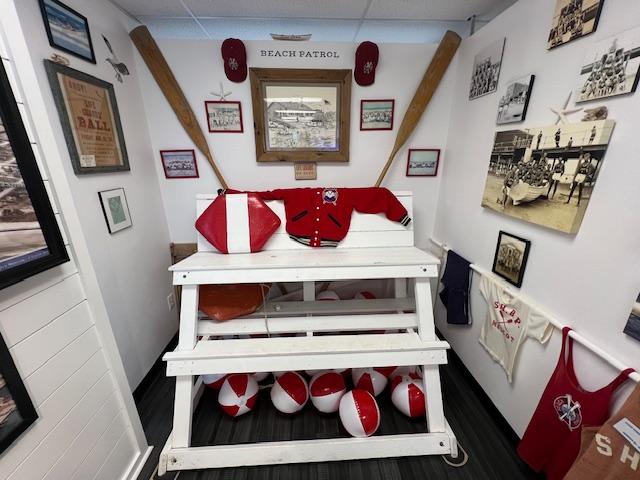
There were many displays on the history of Stone Harbor with the Stone Harbor School System and the Borough of Stone Harbor exhibiting artifacts. Interesting pictures and items of the Stone Harbor Beach Patrol were proudly displayed which I noticed from my many stops at various historical societies on the Jersey Shore is very much a part of the town culture. These teams take their competitions amongst the towns very seriously with events like boating and swimming.
The Stone Harbor Beach Patrol display
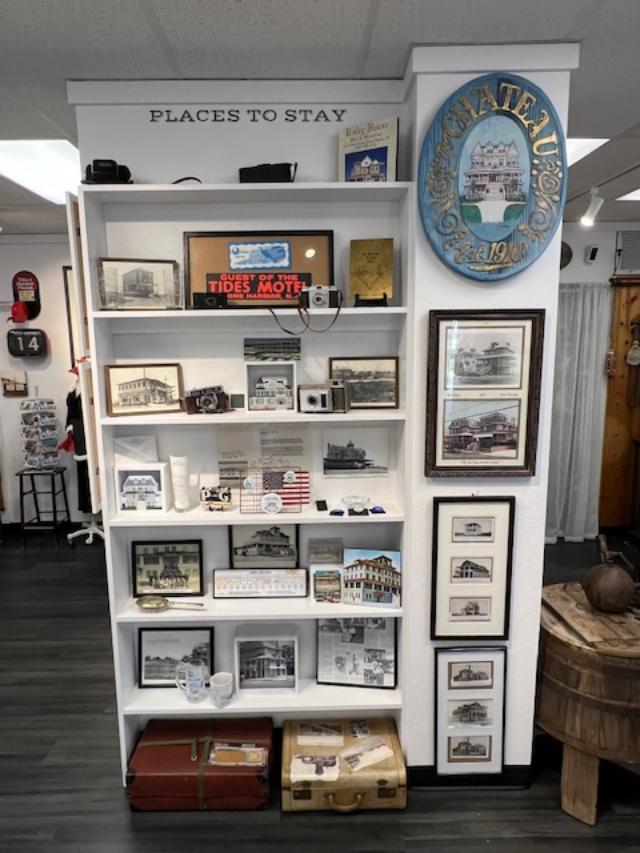
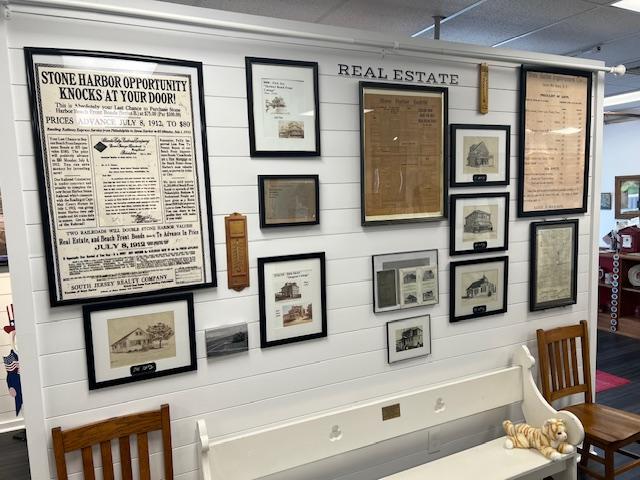
There were many pictures of old homes at a time when the town was a Victorian beach resort and people came to the Jersey shore for extended vacations. You could see the progression of the town over a century from a seaside resort to a permanent residential town. The architecture has significantly changed over the years to slightly smaller homes but no less impressive all over the town.
The Stone Harbor Hotels
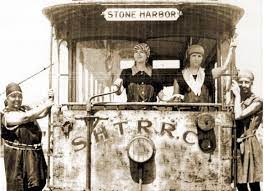
There were extensive pictures and displays of the importance of the rail system and the role it played in the growth of the area and to all shore communities. Its history pretty much ended with the advent of the Model T and the growth of cars to the Jersey shore. Soon the modern highways made the rail system obsolete.
Ladies at the shore enjoying a ride
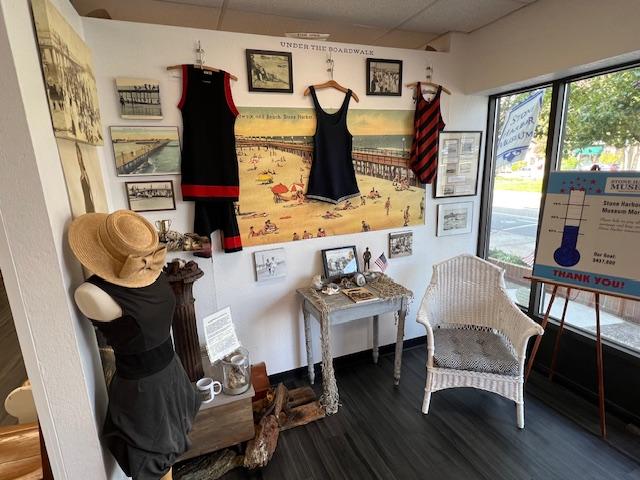
Still there are many displays of ‘fun in the sun’ and the growth of beach activities and recreation with the growth of sun bathing, swimming, boating and fishing. People’s leisure time was growing and the Jersey shore filled their time with sun bathing and swimming. The changes of attitude in swimwear have been tremendous especially from the one piece and hats to the modern bikini in just 80 years.
Swimwear at the turn of the last century
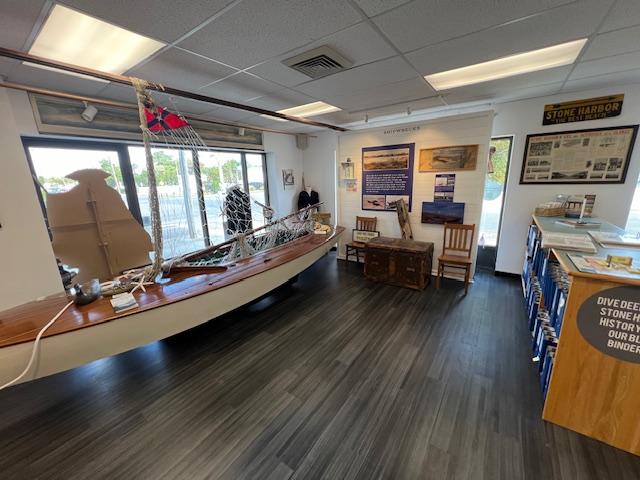
There were pictures and artifacts from various shipwrecks off the coast of the town. It showcased the maritime history of the town and of the Jersey shore in general. It showed the importance of the town in a era of trade that is long gone. This shipping lines too became obsolete as rail service replaced them.
The main gallery of the museum
There was a interesting collection of items entitled Church and Faith of all the churches in the town that played such a important role in the social life of the turn of the last century. This was a time before TV, radio, the advent of movies and especially the Internet. This was at time when people’s social life revolved the social life of places of worship.
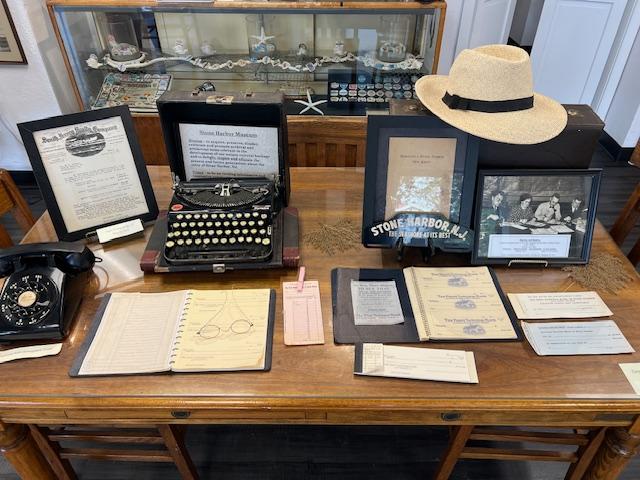
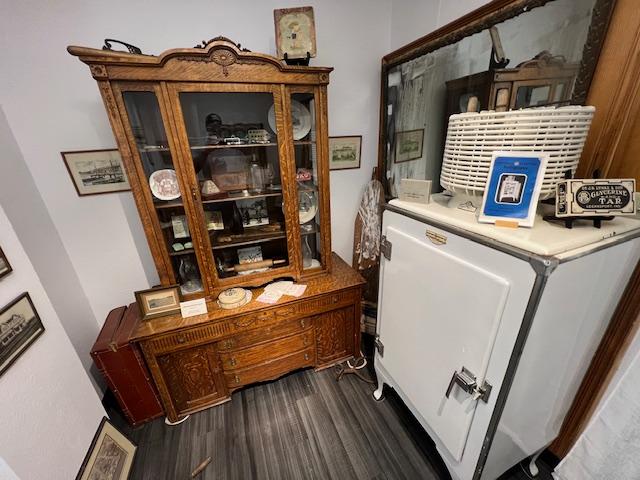
The Office Display
In the center of the museum there is an extensive library with shelves lined with notebooks full of pictures and historical details neatly bound. This is the records of the town and the citizens who have lived here over the years.
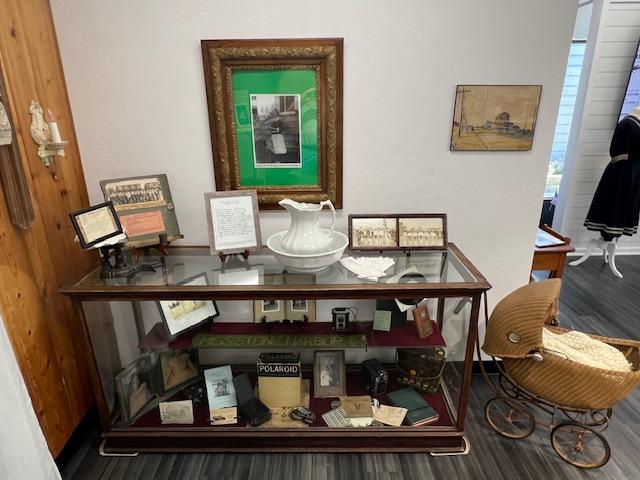
Artifacts from the town
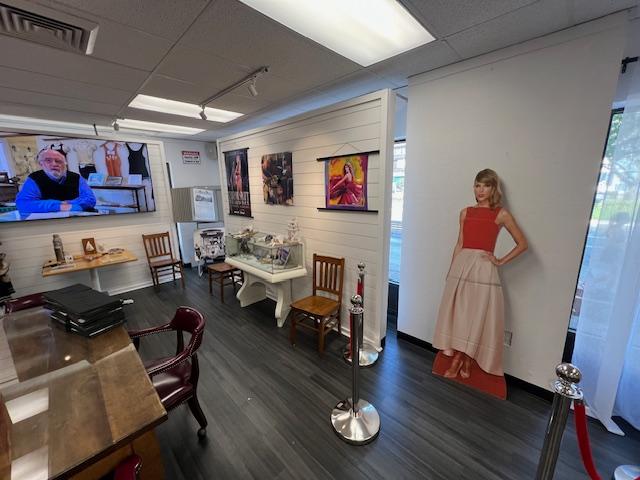
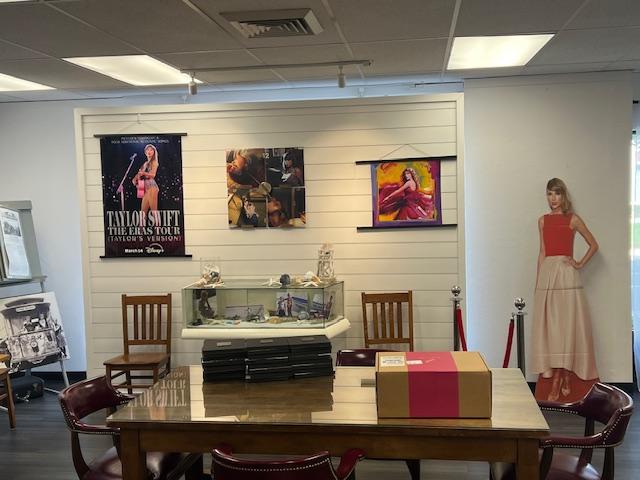
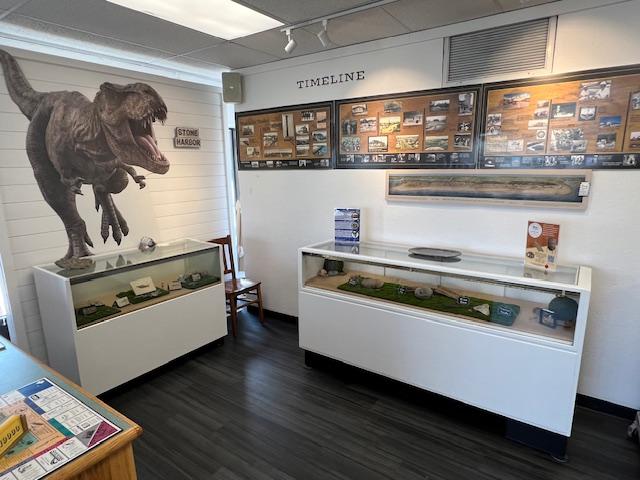
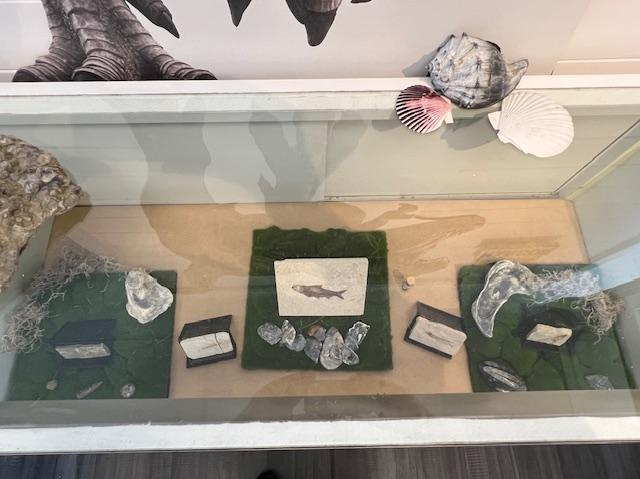
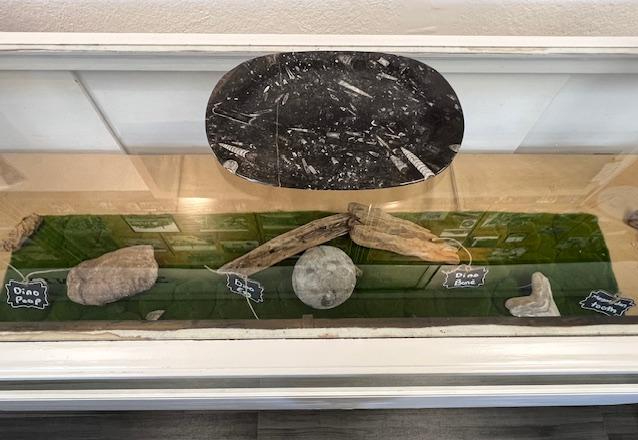
The two big displays right now for kids has been the Taylor Swift, the famous singer, display of items that her family donated to the museum. It seems that she summered here as a child and played in the local clubs. The other was the dinosaur bone display of items found locally in the area and around New Jersey. The museum has a popular scavenger hunt for the kids where they have to find items on display.
The new Taylor Swift display on the years she vacationed here
The Taylor Swift exhibition
The Dinosaur Display
The Dinosaur display
The Dinosaur display
The one thing I liked about the museum is that it does not overwhelm you when you are visiting. The exhibits are detailed but compact. You learn a lot about the town with enough information and artifacts but you can still enjoy the display in about twenty minutes to about a half hour. The whole museum takes about an hour to two hours to visit maybe more if you are really enjoying yourself.
The staff could not have been nicer and take such pride in the museum. The afternoon I visited the museum one of the long time residents who volunteers at the museum was able to share her knowledge of the town. For a small town, it is chockful of interesting history.
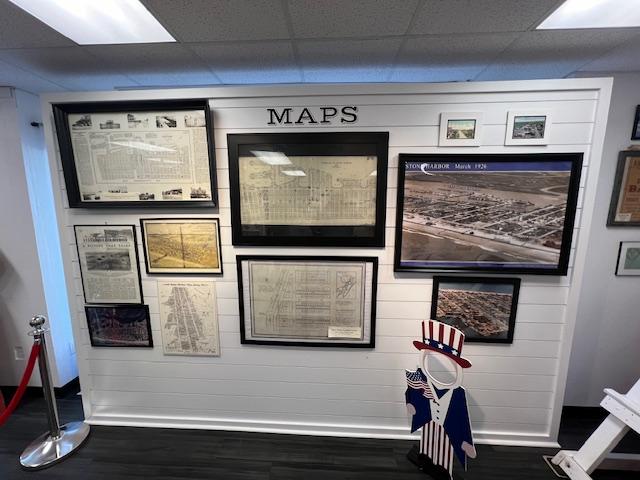
The Maps display
The Stone Harbor Museum History:
(from their website and pamphlets)
The Mission:
To acquire, preserve, display, celebrate and promote archival and artifact items relevant to the development of our unique cultural heritage and to delight, inspire and educate the present and future generations about the story of Stone Harbor, NJ.
The Vision:
To be inviting, informative and innovative community resource that is recognized and respected as the place for exploring and celebrating rich cultural heritage of Stone Harbor, NJ.