Category: Small Museums and Galleries in New Jersey

The New Jersey Historical Society                                       52 Park Place                                                 Newark, NJ 07102

The New Jersey Historical Society 52 Park Place Newark, NJ 07102

The New Jersey Historical Society

52 Park Place

Newark, NJ  07102

Phone: (973) 596-8500

Fax: (973) 596-6957

http://www.jerseyhistory.org

New Jersey Historical Society

Fee: Adults $3.00/Research Library $5.00

Open: Sunday-Monday Closed/Tuesday-Saturday 10:00am-5:00pm

Library: Sunday-Monday Closed/Tuesday-Saturday 12:00pm-5:00pm


TripAdvisor Review:

https://www.tripadvisor.com/Attraction_Review-g46671-d217958-Reviews-Newark_Museum-Newark_New_Jersey.html?m=19905

I was able to visit the New Jersey Historical Society (See TripAdvisor review) after a morning at the Newark Museum. It has some interesting exhibitions right now on the Newark riots of the 60’s , the New Jersey Watershed and Louis Bamberger, the founder of Bamberger’s. It was an interesting history of a former grand department store.

The New Jersey Historical Society has changing exhibitions and lectures, talks and walking tours. It is an interesting museum dealing with the history of New Jersey.


The New Jersey Historical Society

Founded 1845

New Jersey Historical Society

The New Jersey Historical Society is the oldest private, non-profit cultural institution in the state. It was founded in 1845 as an archive, which later evolved into a research library and museum. Award-winning exhibits, education programs, publications, lectures and events for all communities in New Jersey have been our legacy over the past century.

Mission:

The New Jersey Historical Society collects, preserves, teaches and interprets New Jersey history through our archives, research library and educational programs. We do so in the belief that an understanding and appreciation of historical issues, decisions and actions can inform and inspire the people of New Jersey.

Vision:

To be a state of the art center for the study of New Jersey history with convenient access to all archival collections and educational programs for all ages.

New Jersey Historical Society II

New Jersey Historical Society

Current Museum Exhibitions: (January 2018)

*”Meet Me under the Bamberger’s Clock”: a celebration of the life and contribution of Louis Bamberger.

New Jersey Historical Society III

The Bamberger Exhibition

*Ebb and Flow: New Jersey and its Rivers

*Send the Word: NJ during the Great War

*Newark: Revolution to Revival
New Jersey Historical Society IV

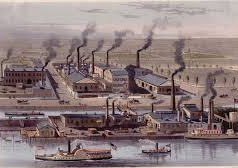
Newark Industry

*Military Park Tours: available every Friday and Saturday at 12:00pm, May-November

Education Programs:

Our affordable educator-led programs include hands-on activities tailored to the age and development level of your students, challenging and inspiring them to grow as learners and thinkers.

Discover:

Students will discover the state’s unique past through handling objects, exploring exhibits and engaging in fun, stimulating activities. Teaches will discover all the interdisciplinary connections to the Common Core State Standards for English Language Arts & Literary in History/Social Studies.

Learn:

Educators and students will learn together how to analyze photographs, paintings and historical objects and interact with history in a variety of ways, including role play, observation and group participation.

Research:

Students will learn to research history and present their ideas and findings through oral presentations, writing and art.

Building and Exhibition Tours are available upon request. Call (973) 596-8500 to schedule!

Research Library:

The New Jersey Historical Society contains manuscripts, rare books, photographs, maps, broadsides, pamphlets and other materials that document the cultural and historical heritage of New Jersey from the colonial era through the 21st century. The collections form the most comprehensive privately-funded library on New Jersey’s past. The research library is open to the public by appointment and serves a diverse clientele including scholars, students, historians and genealogists.

Membership:

Why become a member? In addition to individual benefits such as free admission to the research library and museum exhibits, you are helping to sustain 350 years of New Jersey history, a history we’ve been collecting and preserving since 1845. NJHS has a commitment to the people of our state to treasure our shared history; your membership helps us keep that commitment.


Contact:

For research library appointment, email: library@jerseyhistory.org

For all other questions, email: contactnjhs@jerseyhistory.org

Membership Email information: doug@jerseyhistory.org (973) 596-8500 ext. 224

Disclaimer: This information was taken directly from the New Jersey Historical Society (NJHS) pamphlet. Please call the society for any information of hours and admissions in case they change. It really is a very interesting museum.

The Blauvelt Art Museum                                   705 Kinderkamack Road                               Oradell, NJ 07649

The Blauvelt Art Museum 705 Kinderkamack Road Oradell, NJ 07649

The Blauvelt Art Museum

705 Kinderkamack Road

Oradell, NJ  07649

Phone: (201) 261-0012

(w) blauveltartmuseum.com

(e) info@blauveltartmuseum.com

https://www.blauveltartmuseum.com/current.html

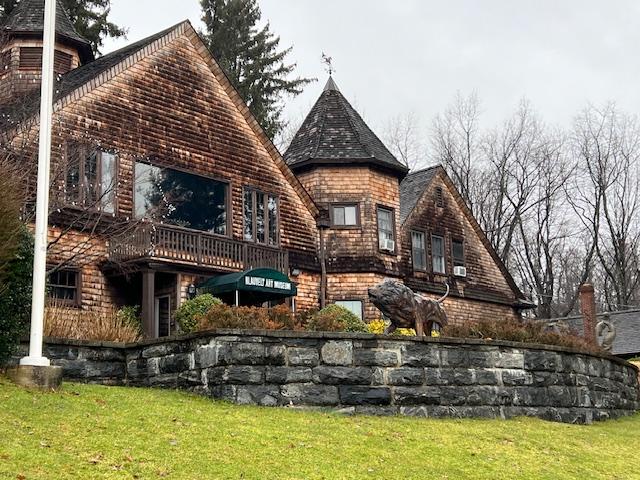
This interesting little ‘gem’ is located up on the hill next to Blauvelt Mansion and is easy to miss. You will see the signs as you drive past it.

Open: Wednesday, Thursday and Friday: 10:00am-4:00pm/Saturday and Sunday: 2:00pm-5:00pm

Fee: Free donations accepted

The Blauvelt Art Museum is funded by the Blauvelt-Demarest Foundation and is a member of the New Jersey Association of Museums, the Mid-Atlantic Association of Museums and the American Association of Museums.

TripAdvisor Review:

https://www.tripadvisor.com/Attraction_Review-g46706-d10628647-Reviews-Hiram_Blauvelt_Art_Museum-Oradell_New_Jersey.html?m=19905

The Blauvelt Art Museum was established in 1957 by the Blauvelt-Demarest Foundation, a legacy of the late Hiram Blauvelt, philanthropist, conservationist and collector. Through the contribution of his private wildlife art and big game collections, he hoped to promote the cultural value of wildlife art and the need for conservation of its subject and their habitats.

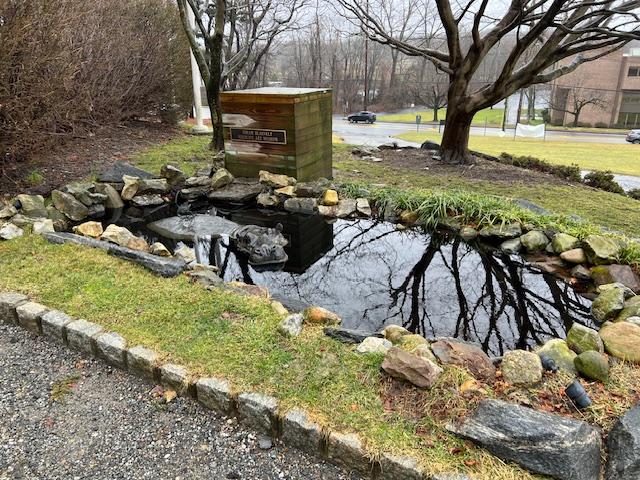
The fountain outside the museum

The entrance to the museum.

During the early part of the 20th Century, wildlife was believe to be abundant. Many dedicated conservationists, notable Theodore Roosevelt, gathered animals from their natural habitats for museums. The beauty of the animals could then be viewed by many.

The entrance to the museum.

Like Roosevelt, Hiram Blauvelt realized the value of his collection and wanted to share it with the public. It was his interest and desire to share his far ranging adventures, his stories of explorations and his collection of these animals. Hiram hoped to educate the coming generations to the diversity and beauty of the wildlife kingdom. He especially wanted to enlighten the public to the challenges we face to preserve the marvels of wildlife and their natural environments.

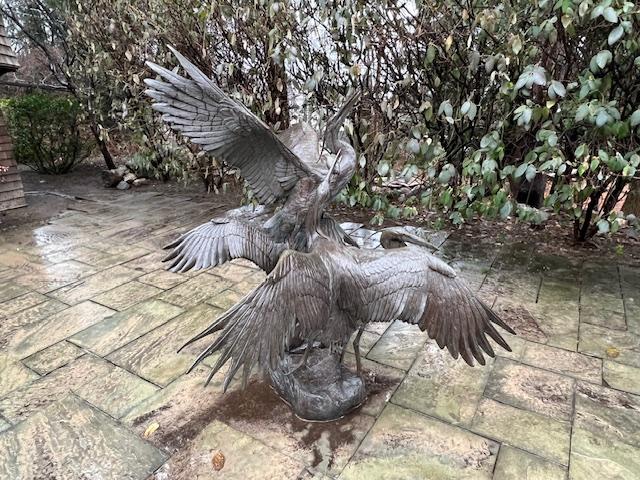
The interesting artwork by the carriage house of pelicans.

The Pelican art outside the museum.

Founded in 1957 as a natural history museum, it introduced students, scouts and youth groups to the need to support wildlife and habitats conservation. Visiting artists created drawings and paintings from close observations of the specimens.

Embracing Penguins outside the museum dedicated to Wildlife Art.

Twenty-five years later, the Board of Directors of the Blauvelt-Demarest Foundation decided that the original objectives would be best achieved by redesigning the museum to feature the works of contemporary wildlife artists, built on the artistic foundation of the Blauvelt’s early collection of works by Charles Livingston Bull (notably a resident of Oradell at one time), Carl Rungius and a complete Audubon Folio of birds of America.

The interesting wildlife artwork just outside the museum.

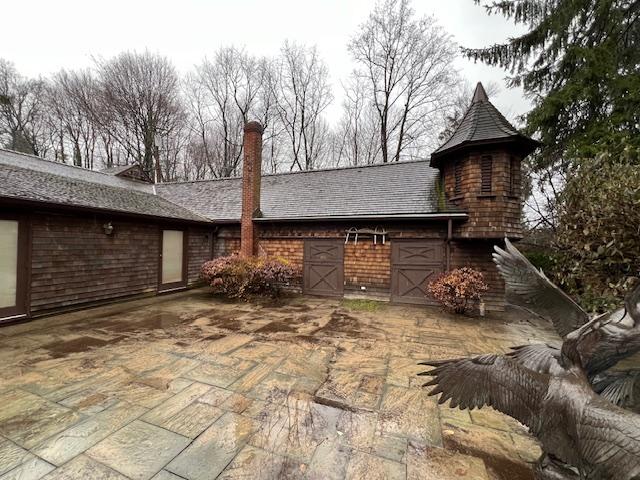
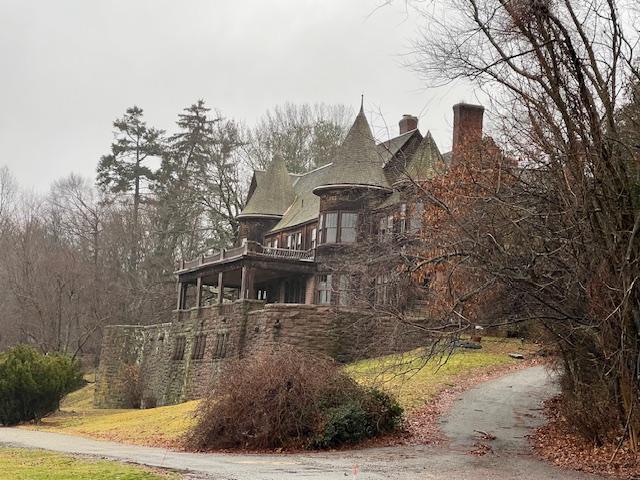
The Blauvelt Museum, located in an 1893 cedar shingle and turret carriage house, underwent extensive renovations to accommodate its new and expanded mission. The original carriage house was re-designed to include a large reception area, 4 mini galleries and museum offices, all with original materials from the historic building and preserving its aura.

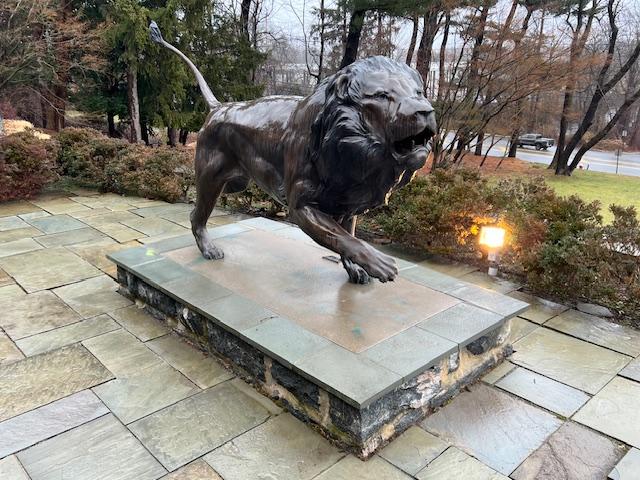
The Blauvelt Art Museum lion statue “Fides et Virtus” by artist Aaron Yount outside the museum.

Four new galleries were added, providing wall space for mounting museum quality flatwork and generous room for pedestals to hold creative sculpture. Substantial artificial lighting is augmented by natural light from the north.

High on a hill overlooking the Hackensack River, the Oradell Reservoir and parklands to the east, the entrance to the museum is through a curving stone and slate terrace, framed by large oak trees and other indigenous foliage, which serves as a natural sculpture garden.

The open air museum just outside the museum itself dedicated to wildlife art.

Many of  its visitors today, accompanied by their children, are revisiting the museum which they first visited with their parents in past decades. The Blauvelt treasures their comments remarking on the greater beauties of its collections, while preserving the ambiance of their memories.

Blauvelt Museum II

The inside galleries of the museum (from their Facebook page).

Artist in Residence:

The Blauvelt Art Museum established an Artist-in-Residence program in 1985. Artists were selected on the basis of their artistic ability and promise and on their commitment to the museum’s mission for the need for conservation to protect wildlife and their habitats. The museum provides a furnished home for the artist on the museum property, including a studio, painting supplies, etc. Artist-in-Residence have given lectures, led round table discussions, visited schools and demonstrated painting and drawing techniques.

The Carriage House from the outside.

The Current Exhibition (2018):

Artist Brian Jarvi’s African Menagerie is showing right now and the collection has some very interesting and detailed pieces on Mr. Jarvi’s visits to Africa. Don’t miss this exhibition!

The Blauvelt Museum is on the Blauvelt-Demarest Estate.

Disclaimer: This information was take directly from the pamphlet provided by the Blauvelt Art Museum. Please call the museum for any changes to their time schedule and don’t miss the current exhibition.

Camp Merritt Memorial Monument Intersection of Knickerbocker Road and Madison Avenue                                Cresskill, NJ 07626

Camp Merritt Memorial Monument Intersection of Knickerbocker Road and Madison Avenue Cresskill, NJ 07626

Camp Merritt Memorial Monument

Intersection of Knickerbocker Road and Madison Avenue

Cresskill, NJ  07626

http://www.bergen.nj.us

http://www.bergencountyhistory.org/Pages/campmerritt.html

My review on TripAdvisor:

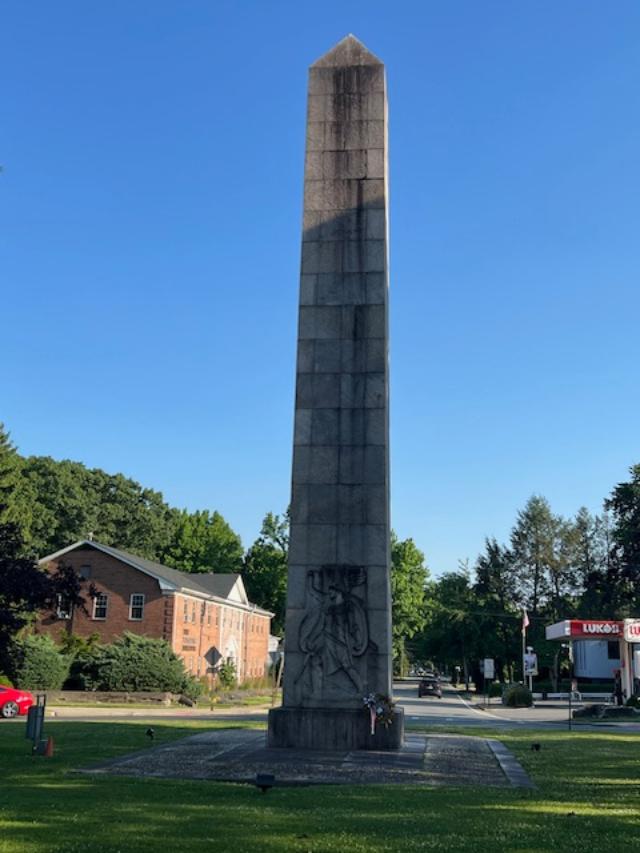
Camp Merritt Memorial Monument marks the center of an important World War I embarkation camp, where more than one million U.S. soldiers passed through on their way to and from the battlefields of Europe.

The Front of the Camp Merritt Memorial Site

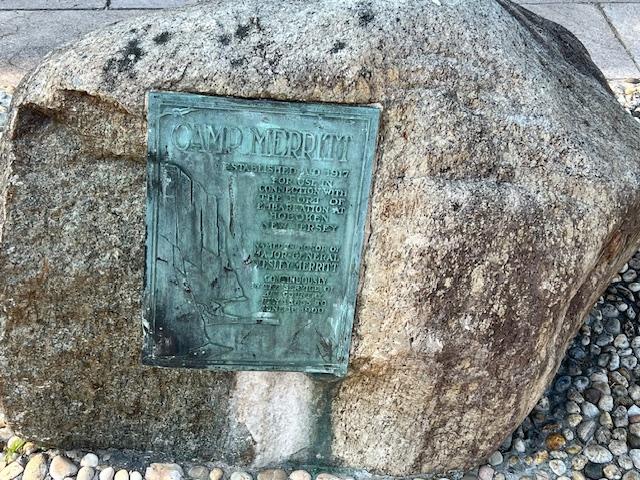
The inscription on the memorial

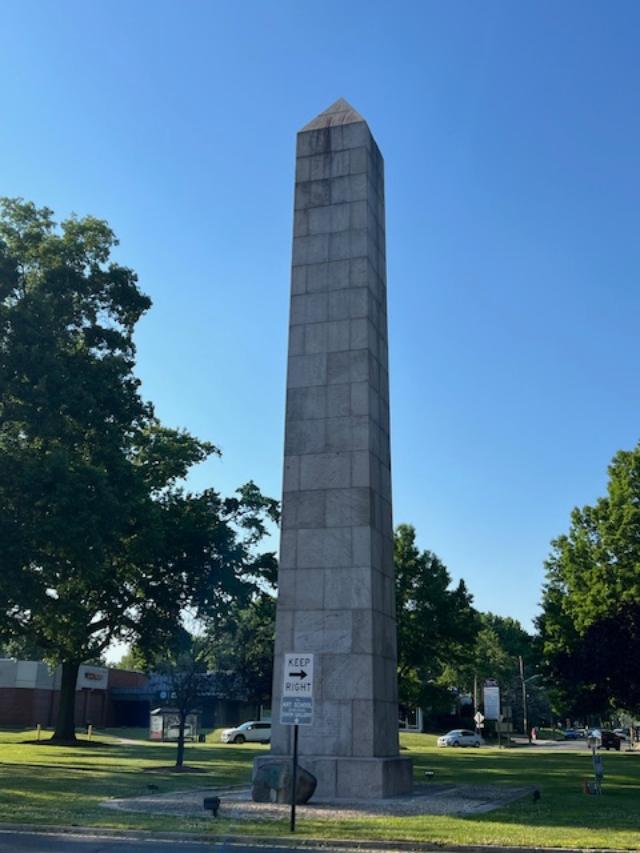
In August 1919, the Bergen County Freeholders purchased land for the monument from what was the approximate center of the camp at the intersection of Madison Avenue and Knickerbocker Road in Cresskill. In 1922, work on the shaft commenced. Modeled on the Washington Monument, the memorial is a 65′ high granite obelisk. On the base are the names of the 578 people who died in the camp, mostly as a result of the 1918 worldwide influenza epidemic.

The historic memorial facing the circle lawn

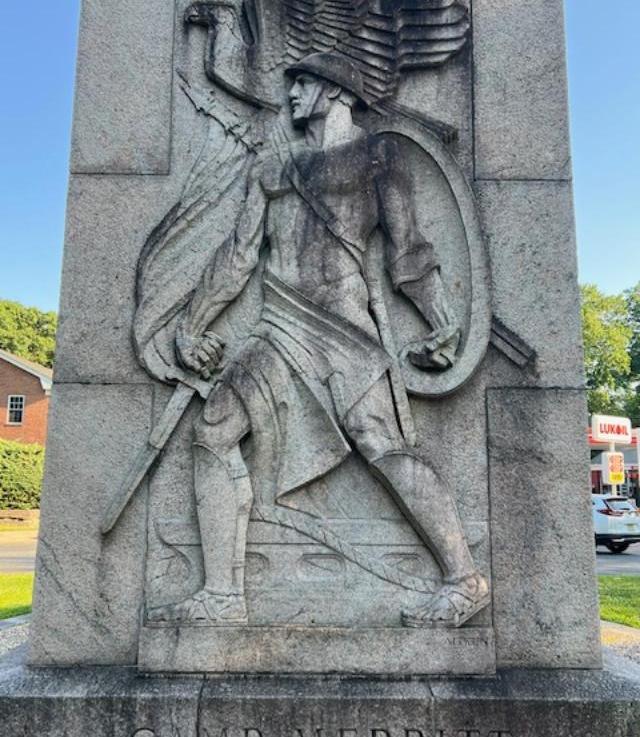
A large Art Deco style carved relief by the sculptor Robert Ingeroll Aitkin (1878-1949) shows a striding “doughboy” with an eagle flying overhead. Set into a large boulder is a copper plaque with a relief of the Palisades, illustrating that Camp Merritt was used as an area for embarkation, designed and made by the local artist Katherine Lamb Tait. In the ground is a three dimensional stone carving of the map of Camp Merritt.

The artist Robert Ingeroll Aitkin

https://en.wikipedia.org/wiki/Robert_Ingersoll_Aitken

https://americanart.si.edu/artist/robert-aitken-40

Artist Robert Ingeroll Aitkin was an American born artist who studied at the California School of Design. He was known for his historical sculptures (Wiki).

The “Doughboy” on the back of the memorial

Camp Merritt Site III

The troops training at the site during WWI

The Camp Merritt Monument was dedicated on May 30, 1924 by a number of state and federal dignitaries. General John J. “Black Jack” Pershing gave the dedicatory address to a crowd of 20,000 people. Camp Merritt, located midway between Cresskill and Dumont and 12 miles from Hoboken, received its first soldiers in October 1917. Originally called Camp Tenafly”, and covering an area that included Cresskill, Demarest, Dumont, Haworth and Tenafly, it was eventually named for General Wesley Merritt, a gallant Civil War officer who was in the service of his country from 1855 to 1900.

The historic marker sits before the memorial

Little publicity surrounded the camp as it was deemed vitally important to keep troop movements a secret. The soldiers would march with their heavy packs and supplies to the trains or over the Palisades to the Hudson River to board boats that would take them to their European-bound ships docked in Hoboken. The last soldier passed through in the beginning of 1920.

The map of the camp behind the memorial

The camp was 770 acres in size and had a capacity of 42,000 men (two thousand of them officers). It was strategically built near major rail lines, facilitating the transport of soldiers to the camp. It contained 1300 buildings of all varieties.  The base hospital alone was composed of 93 buildings. A staff of 300 nurses treated 55,000 sick men. 8000 men representing 40 different nationalities were nationalized in the Camp and made citizens of the US. Camp Merritt had its own newspaper, the Merritt Dispatch established and edited by Charles Philip Barber, which was the only printed record of the camp’s activities. The editor and staff of the Merritt Dispatch were the first to promote the idea of the monument.

Another view of the back of the memorial

After the camp was sold, it suffered three suspicious fires while the buildings were idle, each one worse than the last. The second fire in March of 1921 destroyed a hundred buildings. The third fire was the most spectacular, destroying almost all of what was left of the camp and detonating two stores of dynamite that had been stored for demolition purposes. Eighteen fire companies (including three from New York City, which came by way of the Dyckman Street Ferry) struggled to prevent the fires from spreading to adjacent homes. Other fire companies came from Tenafly, Closter, Bergenfield, Cresskill, Demarest, Teaneck, Hackensack and Palisades.

The Monument is located on the traffic circle and can be reached by foot and is illuminated at night.

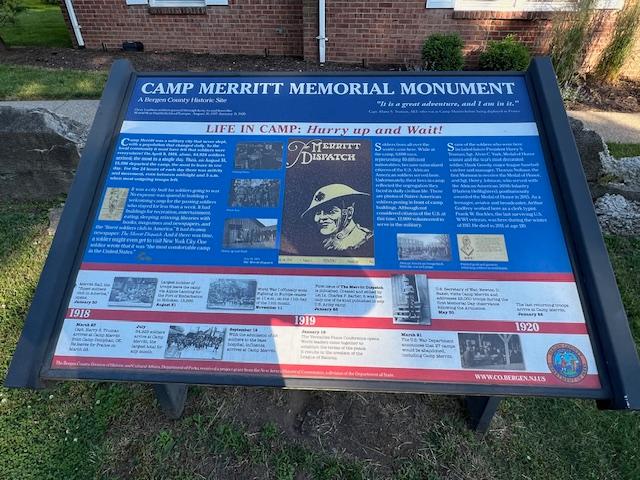
The signs from around the circle describing the site:

Sign One:

Sign Two:

Sign Three:

Sign Four:

The closing of the site and purchase from Bergen County, NJ for development.

http://www.bergen.nj.us

2015 Bergen County Division of Cultural and Historic Affairs

Disclaimer: This information was taken directly from a pamphlet from The Bergen County Division of Cultural Affairs & Historic Affairs in Bergen County, New Jersey. You must stop off on one of the side streets to see the monument and the information boards on the site are off to the west side of the circle. Try to walk around the monument on the circle itself to see the most detail.

Historic Cold Spring Village                                 720 Route 9                                                         Cape May, NJ 08204

Historic Cold Spring Village 720 Route 9 Cape May, NJ 08204

Historic Cold Spring Village

720 Route 9

Cape May, NJ  08204

(609) 898-2300

hcsv.org

https://hcsv.org/

Open: 10:00am-4:30pm, Tuesdays through Sundays/Monday Closed

Seasonal: June 23rd to September 2nd

Fee: $14.00 for adults and $12.00 for children 3-12. Children under 3 admitted for free.

Admission is free with membership. Please call (609) 898-2300, ext. 10 for accessibility. Pet Friendly and free parking.

TripAdvisor Review:

https://www.tripadvisor.com/Attraction_Review-g46341-d268948-Reviews-Historic_Cold_Spring_Village-Cape_May_Cape_May_County_New_Jersey.html?m=19905

Historic Cold Spring Village in the summer of 2023. The 1800’s came to life when you visit.

Historic Cold Spring Village IV

The welcoming sign

Historically clothed interpreters demonstrate blacksmithing, pottery, printing, basket weaving and more! Visit an Early American schoolhouse, take part in hands-on activities and crafts and sample historic games and horse-drawn wagon rides on weekdays.

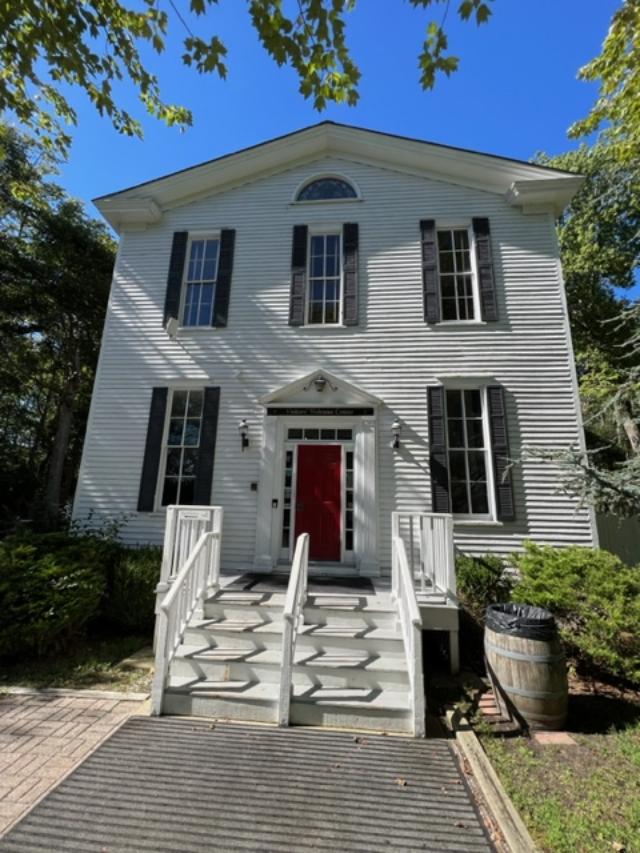
The Visitor’s Center at Historic Cold Spring Village

The village is also home to an organic farm complete with a horse, chickens, sheep and more! Visitors will also find a Welcome Center, Country Store, Bakery, Ice Cream Parlor, Cold Spring Grange Restaurant and Cold Spring Brewery.

Historic Cold Spring Village

The Map of the Village

Historic Cold Spring Village is a non-profit, open air living history museum dedicated to preserving the rich heritage of southern New Jersey. During the summer months, interpreters and artisans in period clothing preserve the trades, crafts and heritage of “the age of homespun.” From October-May, the emphasis is on teaching history through school trips to the Village, classroom visits by the education department and interactive teleconferences with schools throughout the U.S.

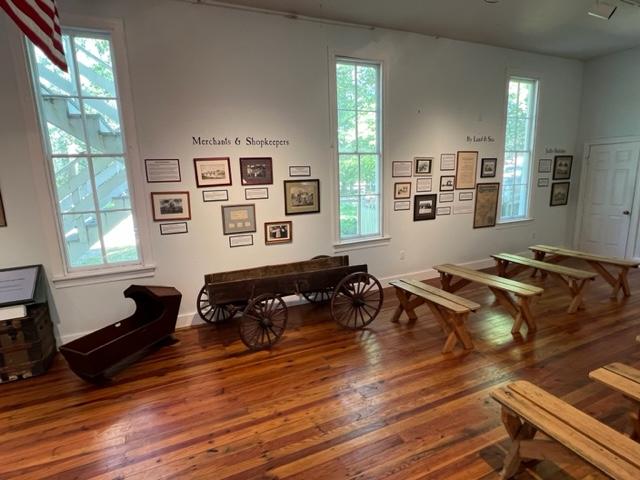
The Visitor’s Center exhibition is open in off season.

Our Education Program relates the history of the region to the broader scope of New Jersey, American and World History. Historic Cold Spring Village offers programs for students of all ages and programs can be adapted to any grade level. Please contact the Village for a more detailed description of each program.

Historic Cold Spring Village’s educational offerings are designed to comply with the 2009 New Jersey Core Curriculum Content Standards for Social Studies as established by the New Jersey Department of Education.

The Visitor’s Center exhibitions at Historic Cold Spring Village.

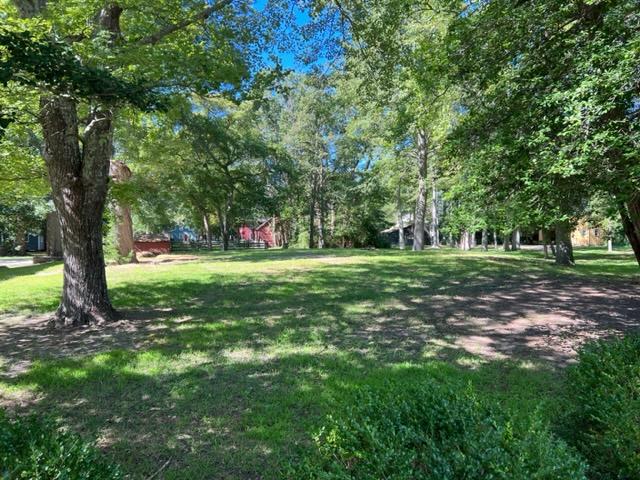
Stroll the shaded lanes of Historic Cold Spring Village’s 30 acres as you step back in time to an early American South Jersey farm community. Craft persons, tradesmen, housewives and farmers are eager to share their experience as you visit the Village’s 27 historic buildings. The Village is located on Route 9, four miles south of Rio Grande and three miles north of Cape May City. Visitors from the north, take the Garden State Parkway to Exit 4A and follow the signs to the Village.

For additional information on Historic Cold Spring Village programs, projects or events, please call, fax, email or visit our website.

Telephone: (609) 898-2300

Fax  (609) 884-5926

Email 4info@hcsv.org

Web: http://www.hcsv.org

Give the Past a Future: Invest in the future of HCSV by making a tax-deductible charitable contribution, volunteering or becoming a member. For additional information, call (609) 898-2300, ext. 10.

The Village’s educational programs meet the following standards:

6.1 US History, America in the World

6.2 World History/Global Studies

6.3 Active Citizenship in the 21st Century

The Marshallville One-Room Schoolhouse Experience

In the circa 1850 Marshallville Schoolhouse, students experience a typical Early American school day. Students ‘make their manners’, discover the subject studied by Early American students, write with quill pens and learn the consequences of not following classroom rules.

Historic Cold Spring Village V

The Schoolhouse

The Marshallville Schoolhouse is available free of charge for teachers who wish to personally recreate a ‘school day of the past’ for their class. Village staff is available to run the program for a fee.

‘Visits to the Past’

Field trips to Historic Cold Spring Village offer students and teachers the opportunity to experience the past first hand. Select Village buildings, like the print shop, schoolhouse, blacksmith shop and inn are open exclusively for school groups. Costumed interpreters interact with students while demonstrating the trades and crafts of Early America. Field trips are held mid-May through early June. Call or email for fees and dates.

Historic Cold Spring Village III

The gift shop offers all sorts of old fashioned goodies

We see America Learning: Teaching Early American History through ‘I Visits’

Distance learning programs are offered to schools nationwide. The programs are delivered via a state of the art broadband IP (Internet Protocol) systems and are adaptable to any grade level. If your school does not have a teleconference camera, our distance learning programs are also available through Skype using just your classroom computer and a webcam.

An Early American School Day: A typical day in an Early American rural school.

The Story of Old Glory: The origins and early history of the flag of the United States, using a collection of reproduction historic flags from the 17th Century through the Civil War.

Past Versus Present: A comparison of contemporary everyday objects with their Early American equivalents for example, a flashlight vs a lantern; digital camera vs daguerreotype.

Four Great Inventions (and one that almost was): Explores the creation of the steam boat, the steam locomotive, the daguerreotype camera, the telephone and difference engine, an 1832 attempt to build a mechanical computer.

Hearth and Home: An exploration of the role of the domestic arts practiced by 1800’s housewife with an emphasis on food preparation including hearth cooking.

Gone for a soldier: A day in the life of a Civil War Infantryman: Includes discussions of uniforms, equipment, camp life, food and weapons.

Welcome Centers: Taverns, Inns and Wayside Stops: A presentation utilizing our circa 1836 Dennisville Inn, A former stagecoach stop in Dennisville, NJ to explain the important part buildings such as these played in a community.

Historic Cold Spring Village II

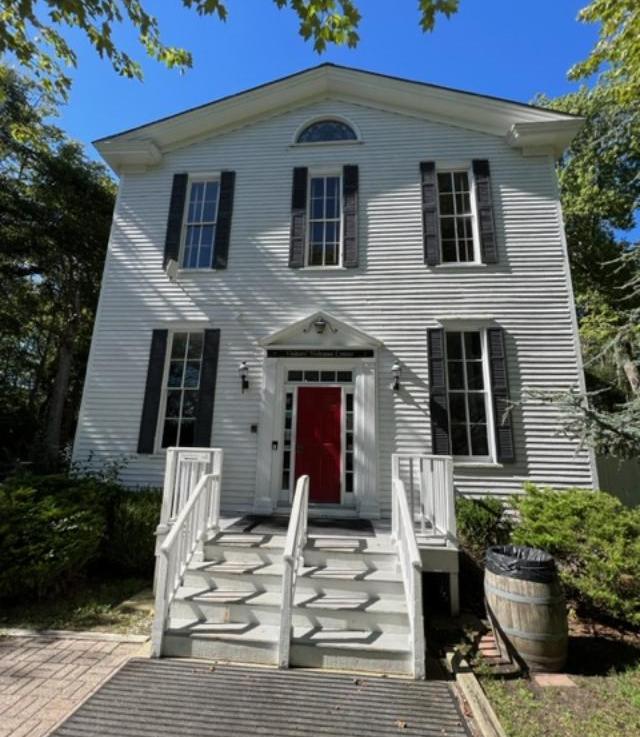
The Inn at the Historic Cold Spring Village

Revisiting the Country Store: An Important Community Resource: A look at the vital role of a general store in the life of rural America as a purveyor of goods, social center, post office, etc.

The War of 1812: More than the Star-Spangled Banner: An overview of the “Second War of Independence”,

Fiber Arts: A domestic program primarily including weaving and spinning interpretations.

The First Frontier: Whaler Yeomen in Colonial New Jersey: The story of the first permanent European settlers in New Jersey as well as a discussion of how the Eastern Seaboard was the original American Frontier.

Early American Trades: Explores the important role a printer, woodwright, blacksmith, bookbinder or tinsmith, had in an Early American community. Includes in-workshop demonstrations.

Disclaimer: This information is taken directly from the Cold Springs Village pamphlet. Please call them at the above number or email address for more information.