Category: Small Museums and Galleries in New Jersey

Yogi Berra Museum & Learning Center                      8 Yogi Berra Drive                                              Little Falls, NJ 07424

Yogi Berra Museum & Learning Center 8 Yogi Berra Drive Little Falls, NJ 07424

lol Yogi Berra Museum & Learning Center

8 Yogi Berra Drive

Little Falls, NJ  07424

(973) 655-2378

https://yogiberramuseum.org/

Open: Sunday 12:00pm-5:00pm/Monday & Tuesday Closed/Wednesday-Saturday 12:00pm-5:00pm

Fee: Adults $10.00/Children under 18 $5.00/Veterans and Montclair State College students free

My review on TripAdvisor:
https://www.tripadvisor.com/Attraction_Review-g46574-d3267390-Reviews-Yogi_Berra_Museum_Learning_Center-Little_Falls_New_Jersey.html?m=19905

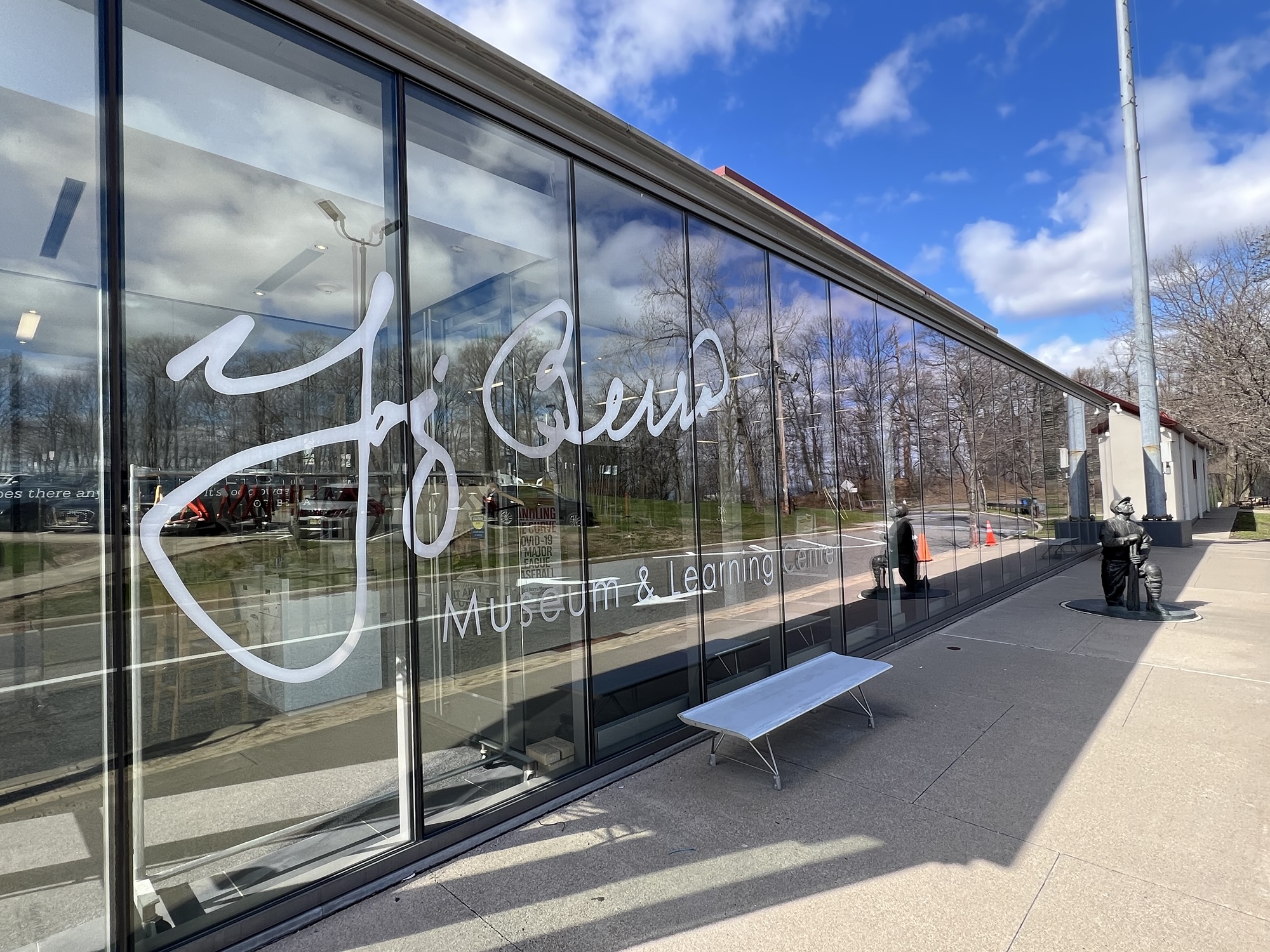
 The front of the museum

I went to the Yogi Berra Museum for the first time and I really enjoyed myself not just as a Yankee fan but learning the life behind the man. I did not know very much about Yogi Berra and his life but it is an interesting look at someone’s life and how his sport molded him to be the player and the family man he was in life.

The entrance to the museum for a life well lived

I never realized he was born in St. Louis and how his life in baseball came about. The museum takes Yogi Berra’s life from the time he was born and his family life growing up to how he became a ball player to his life in the minors and then to his life as a Yankee.

The career of Yogi Berra

The movie theater

He really was the ultimate leader and Yankee at the golden years of the team when they won five consecutive championships.
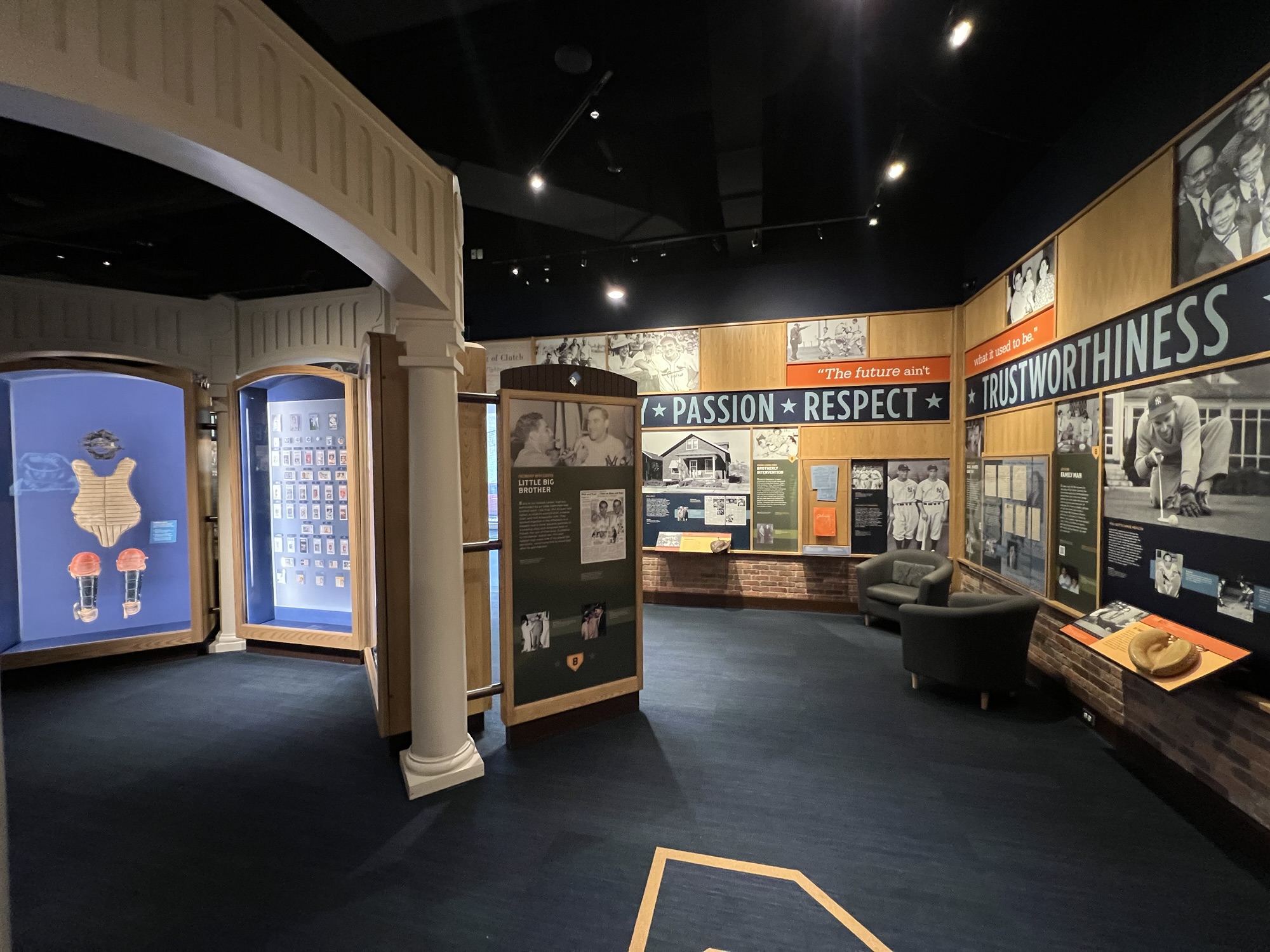
The case lines at the Museum

The museum also covered his post player life and his time coaching the Mets and winning other championships. It was also interesting to see how his family life shape him. He had been married over 60 years to his wife and had three boys and eleven grandchildren and how close he was with his family. I also liked his interaction with the new players and mentoring young players.
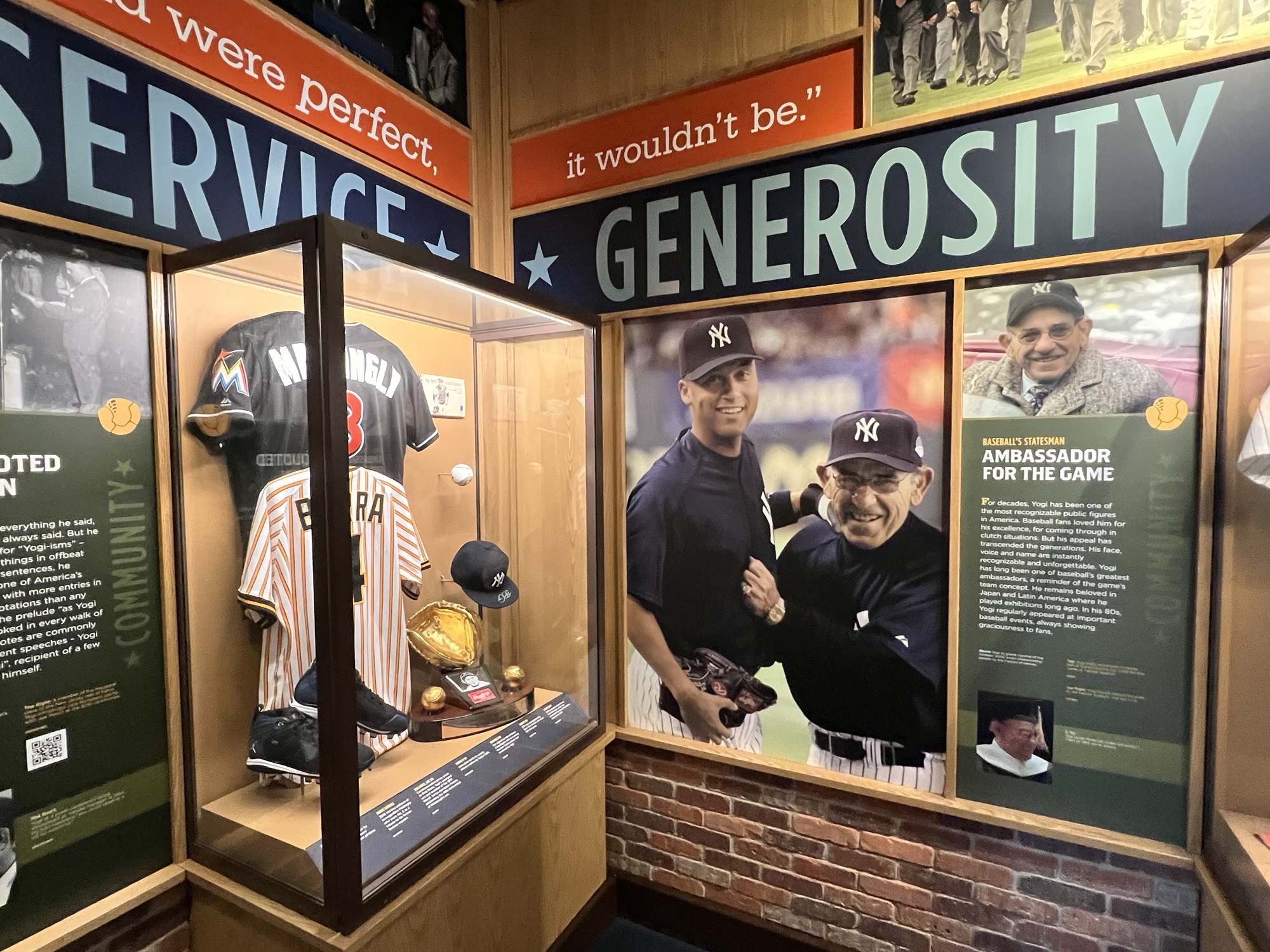
Taking a picture with ‘The Captain’ Derek Jeter

The best pictures that stood out was his photo with Derek Jeter and the second was the group photo of the three perfect game pitchers and catchers with Yogi Berra and Don Larsen in the middle of the photo.
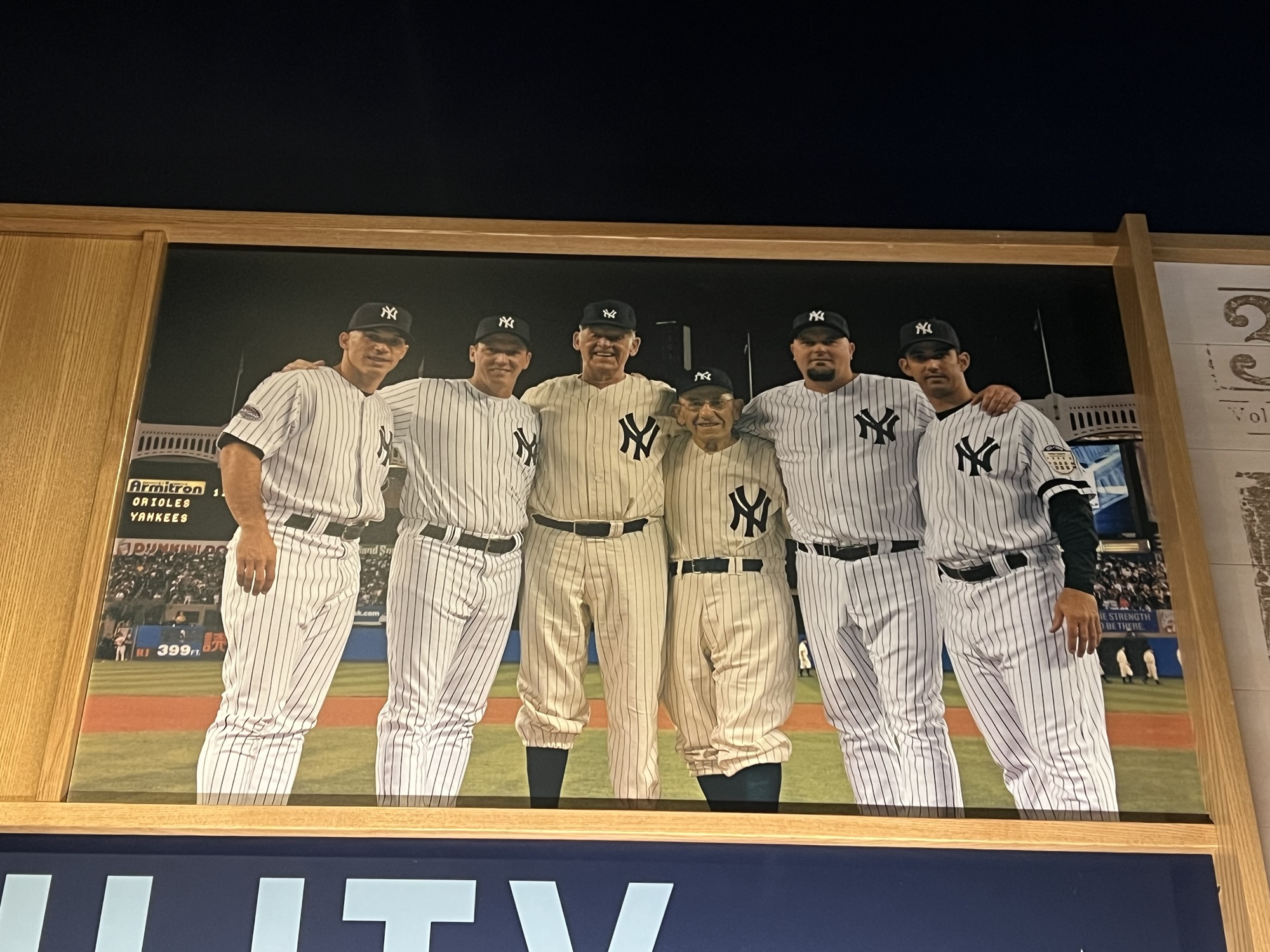
The pitchers and catchers with the ‘perfect game’

That captured the true spirit of the Yankees. They knew how to win.
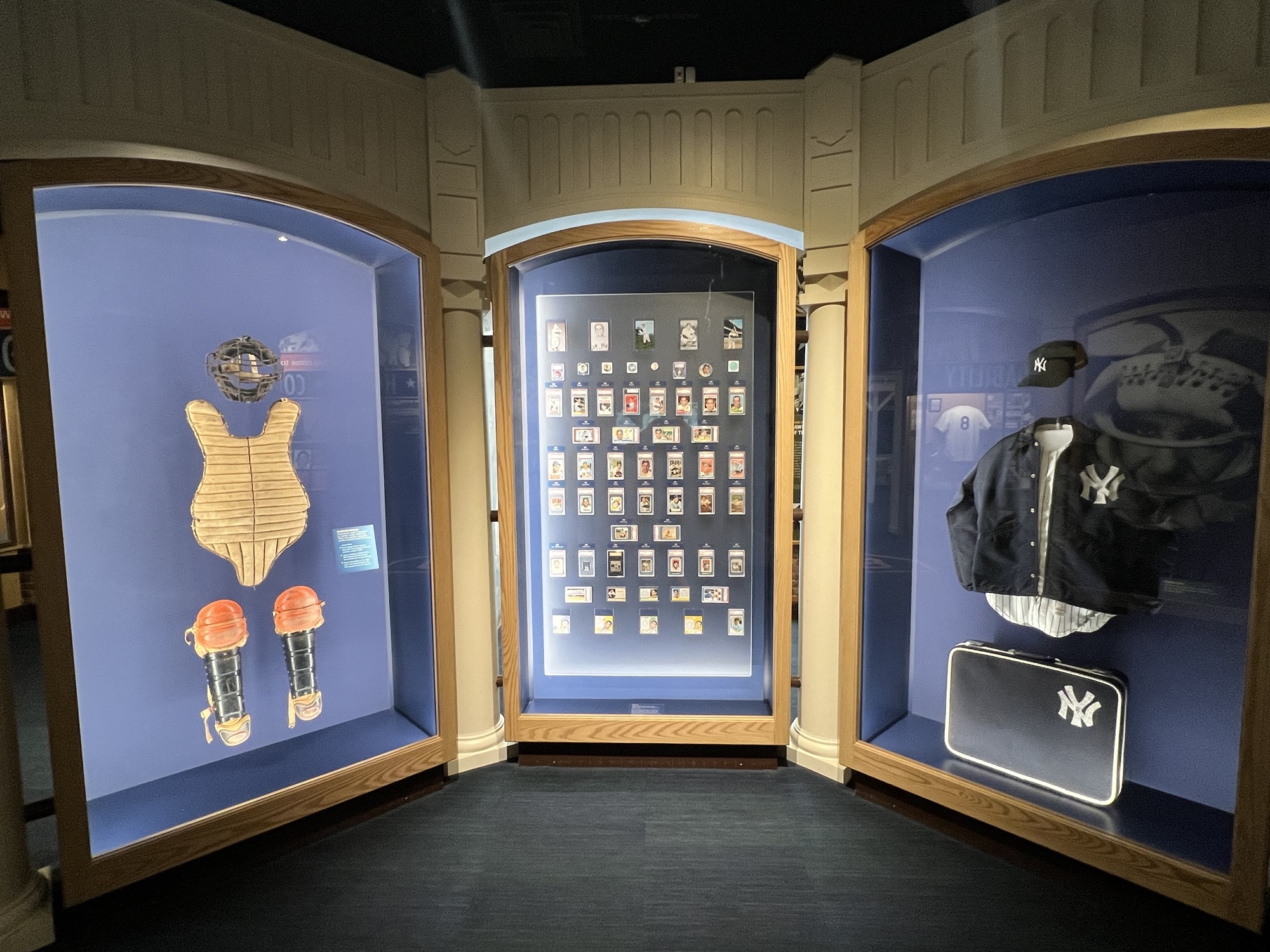
Memorabilia at the Museum

What was fun to see is all the World Series Rings that he won on display. It was a tribute to such a storied career and life. The Yogism’s that he was quoted as saying as “It ain’t over till it’s over” told of his character and his spirit in life.

The growing accomplishments in his life

The one thing that stood out in the museum was that it was the story of a man who had a life well lived and had the balance of family, career and friends along the way that showed how even from humble beginnings you can achieve great things. He even got the Medal of Freedom after his death in 2015 which showed the effect he had on people.

All the World Series rings he won

For any true Yankee fan, I highly recommend a visit to the museum, not just for the pictures and stores and baseball memorabilia but to see a person who was his own man in life.
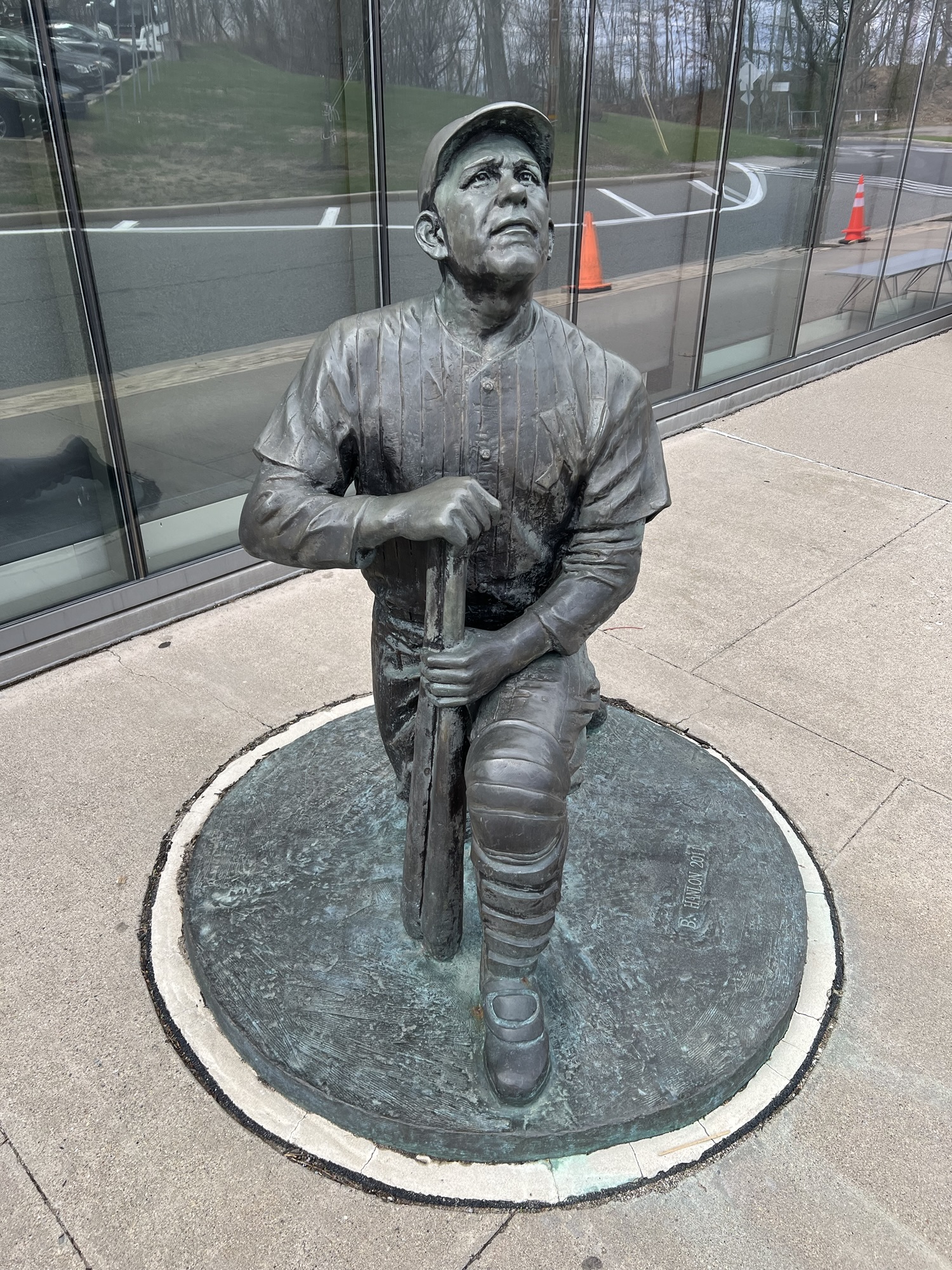
The statue of Yogi Berra outside the museum

Hats off to Yogi Berra that the town of Montclair would honor one of its citizens in such a way. It is really was a great museum.

The Yogi Berra Museum on the Montclair University Campus

The handprints of the family

History of the Museum: (Wiki)

The Yogi Berra Museum and Learning Center is a museum on the main campus of Montclair State University in Little Falls, NJ. It serves to honor the career of Yogi Berra, who played for the New York Yankees of Major League Baseball and was inducted into the National Baseball Hall of Fame. The museum which contains artifacts from Berra’s career, opened on December 4th, 1998. It is adjacent to Yogi Berra Stadium.

“The Friends of Yogi Inc”, a nonprofit organization, raised two million through donations to build the museum to honor Yogi Berra, who played his entire Major League Baseball career for the New York Yankees. John McMullen, the owner of the New Jersey Devils of the National Hockey League was among the museum’s benefactors. The museum was built adjacent to Yogi Berra Stadium, which hosts the New Jersey Jackals, a Minor League Baseball team in the American Association of Independent Professional Baseball and the Montclair State Red Hawks baseball team.

The museum was dedicated in October 1998, with fellow Baseball Hall of Famers Ted Williams and Larry Doby in attendance. It opened to the public on December 4th. In 2010, IKON 5 Architects redesigned the museum and Brian Hanlon sculpted a statue of Berra to go in front of the museum.
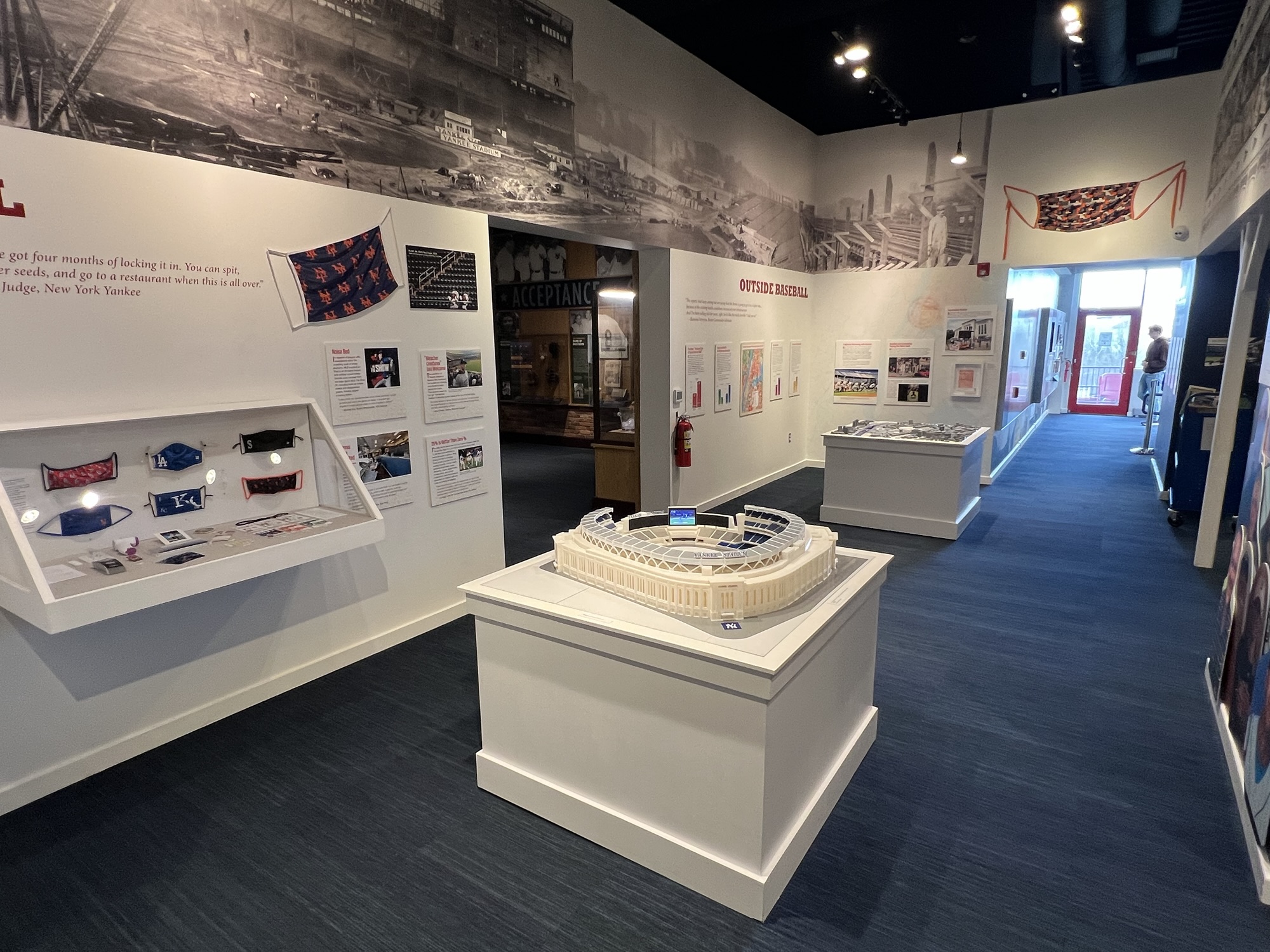
The entrance to the museum

Berra had feuded with Yankees owner, George Steinbrenner since Steinbrenner fired him 16 games into the 1985 season. Berra refused to be involved in Yankees events, including Yankee games. In January 1999, Berra and Steinbrenner resolved their feud with a public event at the Yogi Berra Museum.

Berra frequented visited the museum for signings, discussions and other events. It was his intention to teach children important values such as sportsmanship and dedication, both on and off the baseball diamond.

On October 8th, 2014, a burglary occurred at the museum, in which a team of “professional” thieves stole specific pieces of Berra’s memorabilia.

Exhibits: (Wiki)

The museum contains items from Berra’s career, including baseball cards, a jacket worn by Berra while throwing out the first pitch of Game 1 of the 2009 World Series, two of his MLB MVP awards and all ten World Series rings he received as a player. Following the resolution of Berra’s feud with Steinbrenner, the Yankee loaned the Commissioner’s Trophy from the 1998 World Series to the museum.
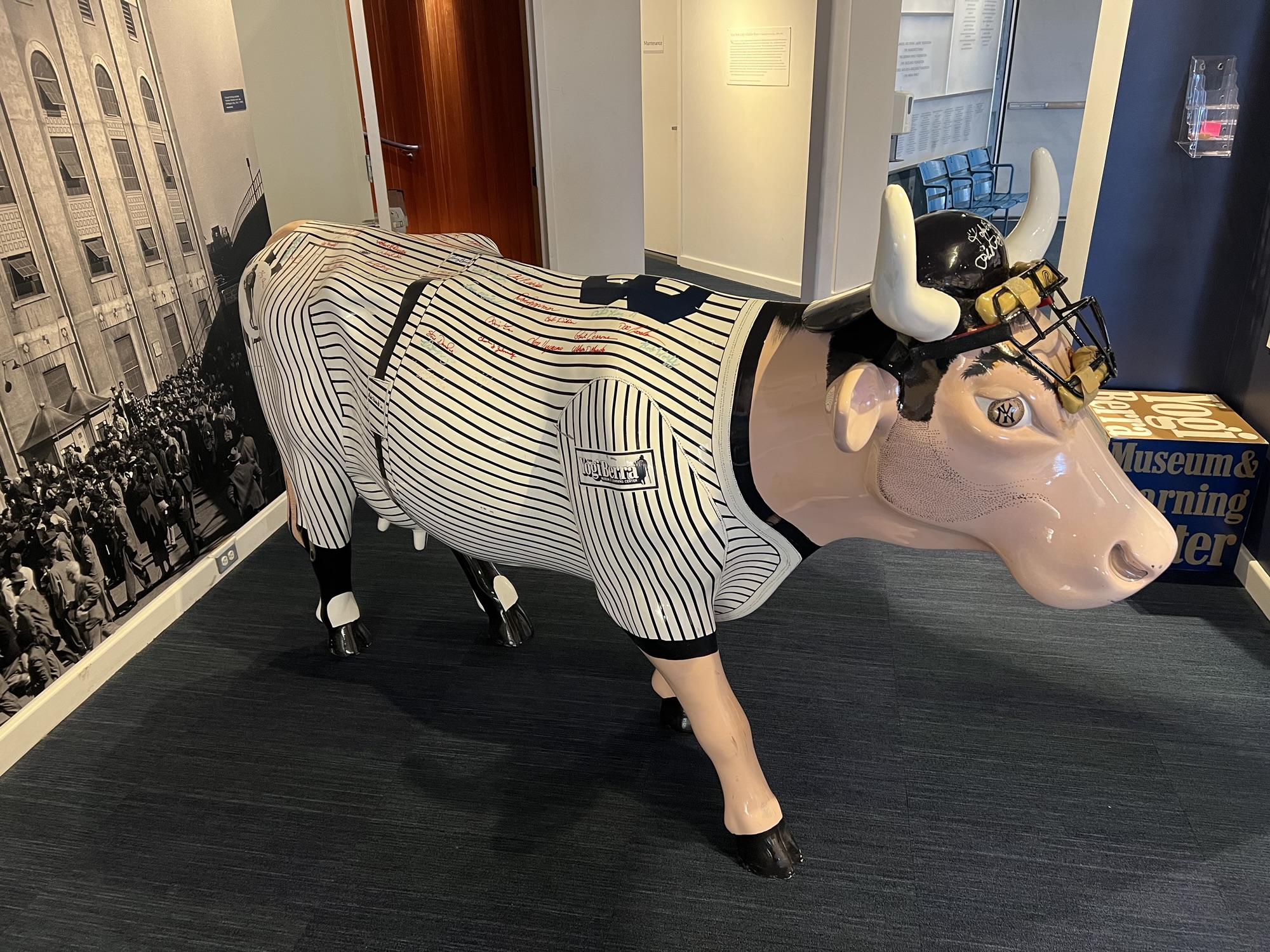
The statue signed by visiting ball players

In 2013, the museum teamed up with Athlete Ally to develop an exhibit called “Championing Respect”. which aims to support the inclusion of LGBT athletes in sports. An exhibit in 2014 celebrated the 75th Anniversary of Lou Gehrig’s farewell speech.

The museum offers a wide range of school and public programs on all aspects of sports and society. It conducts guided school tours and education programs, provides off-site assemblies on anti-bullying and sportsmanship and also collaborates with Montclair State University on programs examining topical issues in media and sports.

Yogi Berra with Babe Ruth

In promoting the values of respect and sportsmanship, the Museum in partnership with Investors Bank and the Super Essex Conference, developed a Best Teammate Award program in 2013, recognizing outstanding leadership by student-athletes. The museum also offers an array of summer camps, including youth baseball and softball camps.
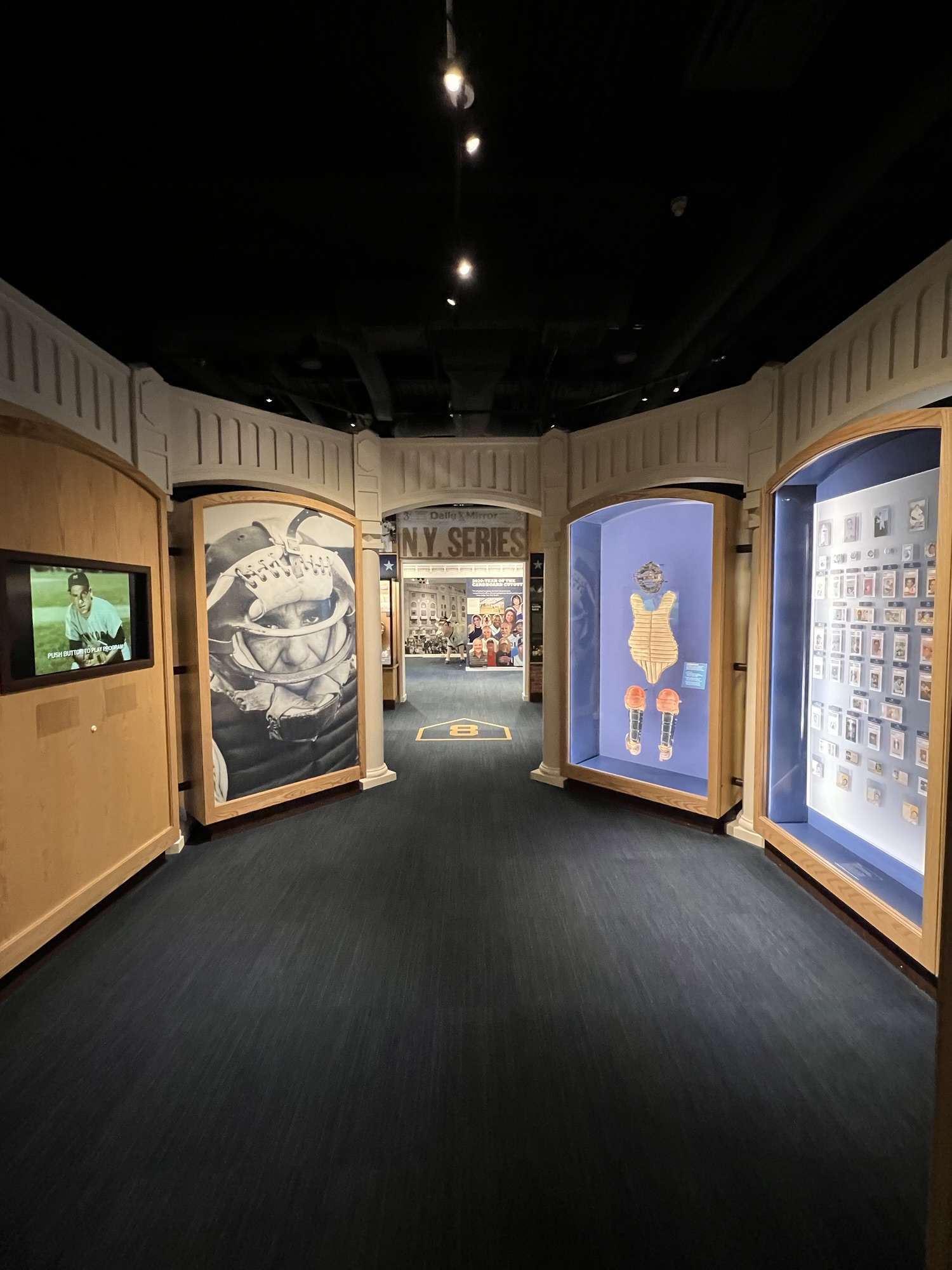
(This information comes from Wiki)

After a visit to the museum, I stopped in the stadium behind the museum and watched Montclair University’s Baseball team play Stockton University.

The Yogi Berra Stadium at Montclair State University

I relaxed with a $1.00 hot dog and Coke and watched the game at Yogi Berra Stadium. It was a great way to spend the afternoon. It was fun to just relax in the afternoon and watch people having a good time.

I think watching the game with a good hot dog and Coke is the best.

Hamilton-Van Wagoner House Museum                     971 Valley Road                                              Clifton, NJ 07013

Hamilton-Van Wagoner House Museum 971 Valley Road Clifton, NJ 07013

Hamilton-Van Wagoner House Museum

971 Valley Road

Clifton, NJ  07013

(973) 744-5707

https://www.cliftonnj.org/256/Hamilton-House-Museum

Open: Sunday 9:00am-5:00pm/Monday & Tuesday Closed/Wednesday-Saturday 9:00am-5:00pm

Fee: Suggested Donation $5.00

My review on TripAdvisor:

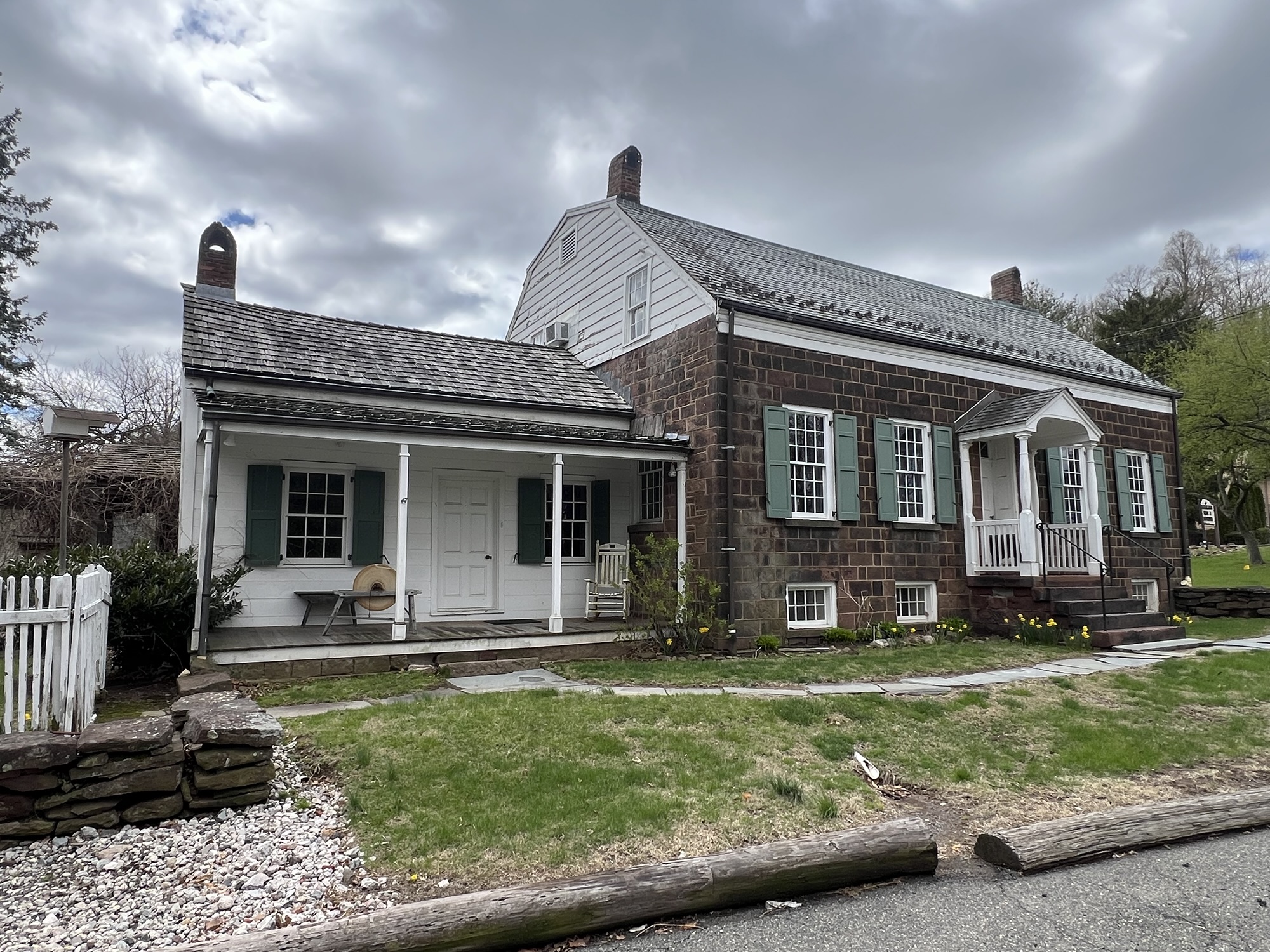
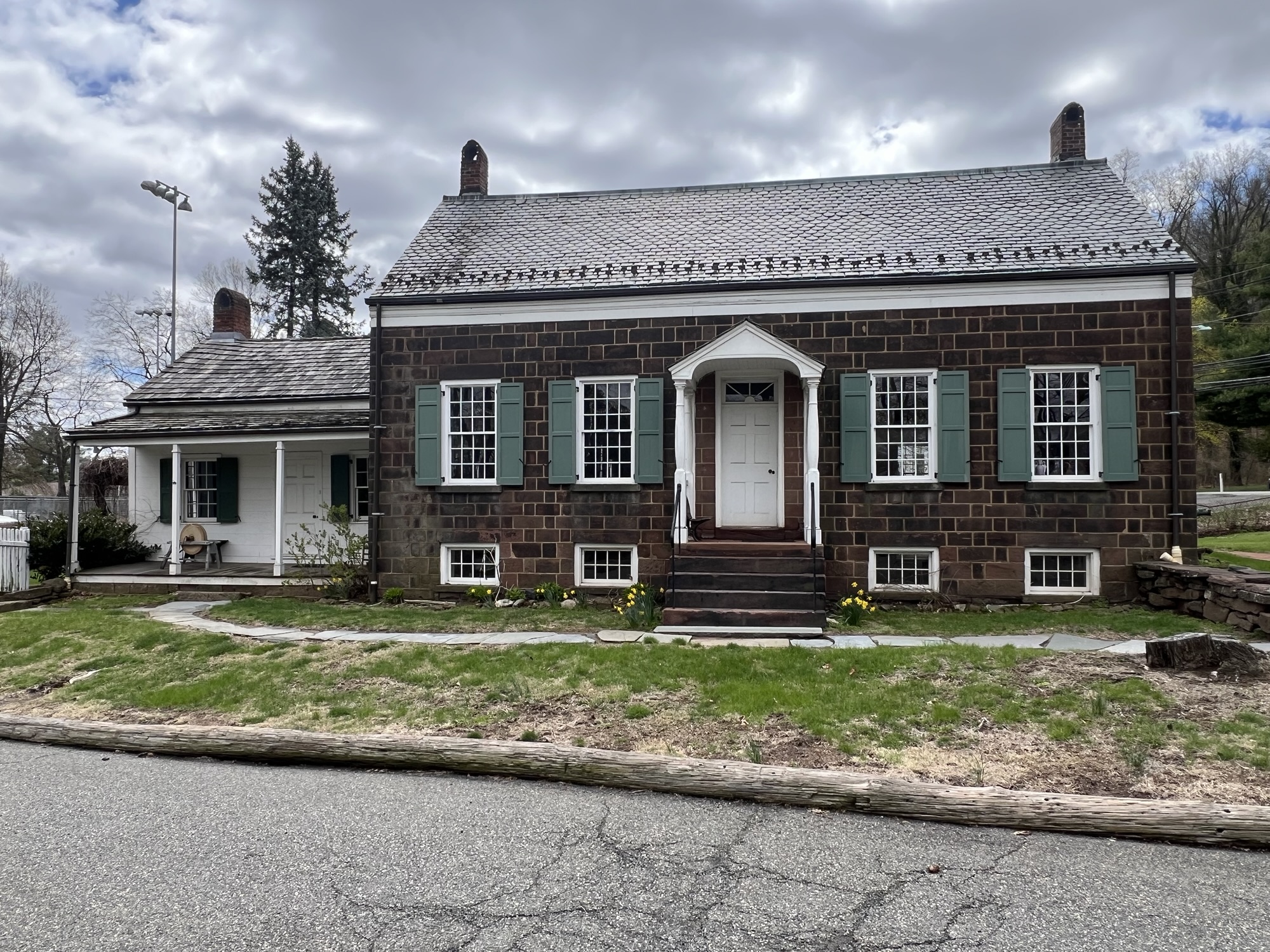
 The front of the Hamilton House in the early Spring

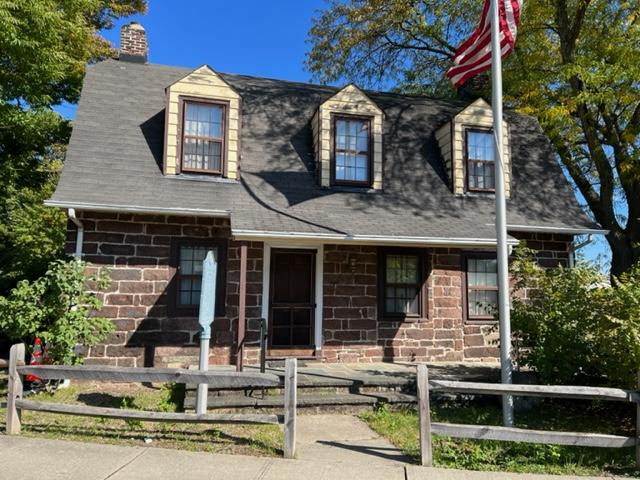
I visited the Hamilton House Museum this afternoon which is right down the road from Montclair State College and sits at the border of the Clifton-Montclair border. The interesting part of the house location is that it still sits the farm land of the Van Wagoner Family but the house was moved from its location to the current one because of the building of Route 46 in 1973.

The front of the house in the Spring

When talking with curator, the house is going through a transition from the City of Clifton ownership to the County of Passaic Historical Society’s site. They are currently cataloging every piece in the house and putting it online. They want to view the collection to see what they can work with within the home.

Each room represents a different time in the history of the house. There is a living room from the Victorian age, the kitchen is from the late 1700’s to the early 1800’s and the dining room is from the mid-1800’s. These rooms are furnished to represent a certain time in the house.

There will be many revisions in the future for the house so there are some changes on the way. The upstairs is currently being used for storage and there will be revision there as well. I got a quick tour of the rooms with the curator and he said there will be more changes in the future as they catalog each piece. The grounds are currently being replanted.

The Hamilton House Museum sits at the Clifton and Montclair border

The house is one of the last examples of early 19th century stone houses in Passaic County. The house was built in 1817 by John and Ann Vreeland and then passed to the Van Wagoner family. It changed hands a few times until 1856 when the Hamilton Family bought the house (no relationship to Alexander Hamilton). The house remained in the Hamilton Family until 1972 when the last living relative died and no one in the family wanted possession of the house (Tour Guide & Wiki).

The oldest section of the house

That’s when the City of Clifton bought the house from the family of its historic value. The house was added to the National Register of Historic Places on May 13th, 1982 (Wiki).

The outside grounds of The Hamilton House Museum

The Grape Arbor on the grounds of the Hamilton House

History of the Hamilton House:

(taken from the City of Clifton website)

This 18th Century Dutch gambrel-roofed homestead was once the home of the Van Wagoner and Hamilton families. This basic of the house does not greatly differ from its Dutch antecedents.

The sturdy one and one half story cut sandstone structure, flanked by a grainery, spring-house and gardens reflects almost two hundred years of American history. It brings back memories of an uncluttered horizon with farms, orchards, fresh brooks, forest full of game and filled with scent of wildflowers.

Hamilton House & the Clifton Community:

Although the City of Clifton was incorporated in 1917, a community had existed since 1679. Prior to 1917, the area was known as Acquackanonk Township and included parts of : Little Falls, Passaic, Paterson and West Paterson.

The Indian Chief Captahem deeded 11,000 acres to the early Dutch settlers on the shores of the Passaic River. Predominately rural, this sparsely populated village thrived and grew.

The farmhouse was presented to the City of Clifton by the developers of the late Henry Hamilton. The Hamilton family had bought the 96 acre property in 1856 and for over 100 years until the death of Mr. Hamilton in 1970, it had been the family home.

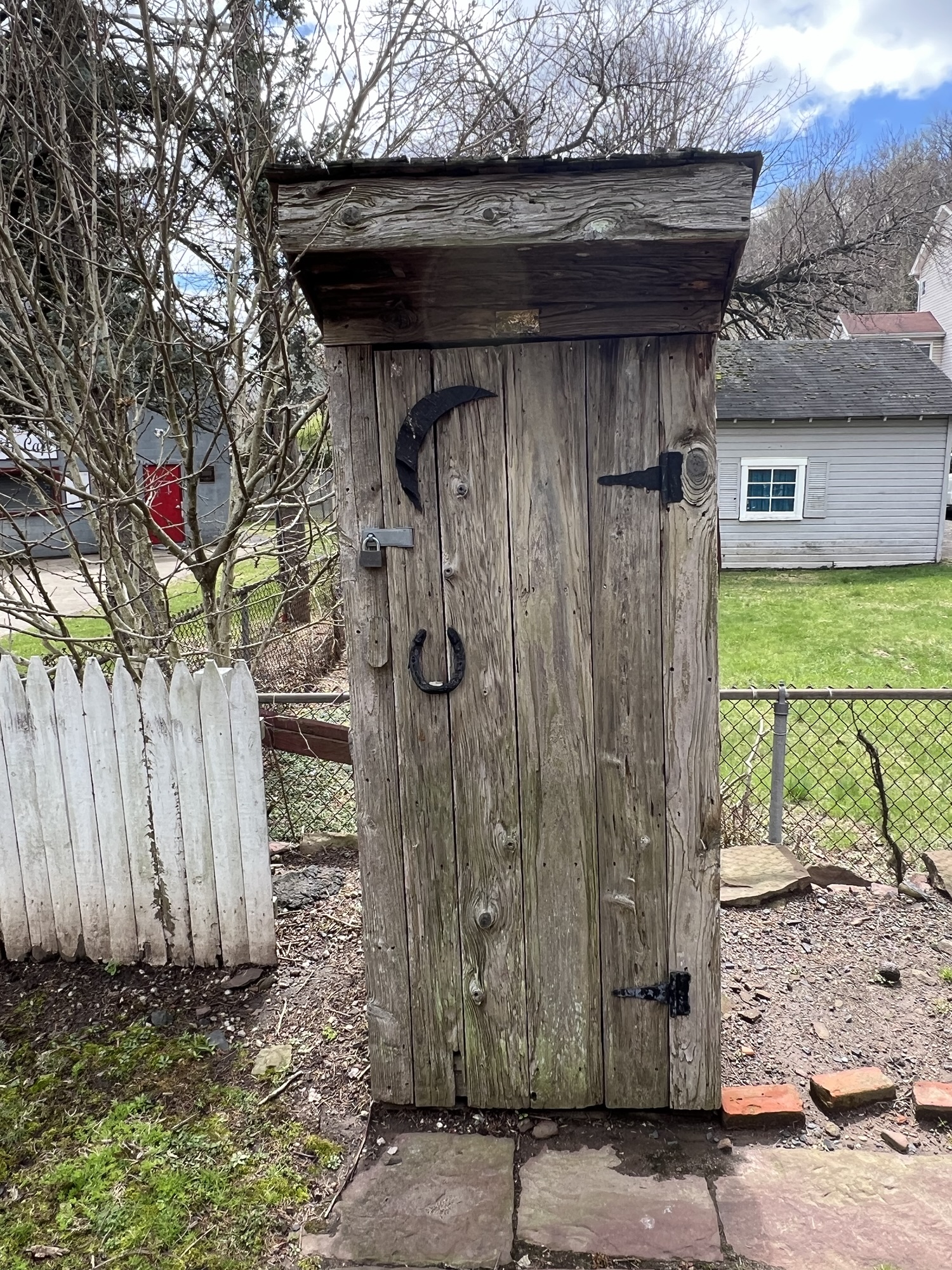
The old outhouse in the back of the property

Current Location and Future Plans:

The house was moved to its present location in Surgent Park in 1973. Infinite plans have been taken with examination and documentation of the building’s structural elements. Extensive research has been conducted including the records and treasured memories of Miss Caroline Hamilton as well as: Artifacts, Deeds, Manuscripts, Maps, Photographs and Wills.

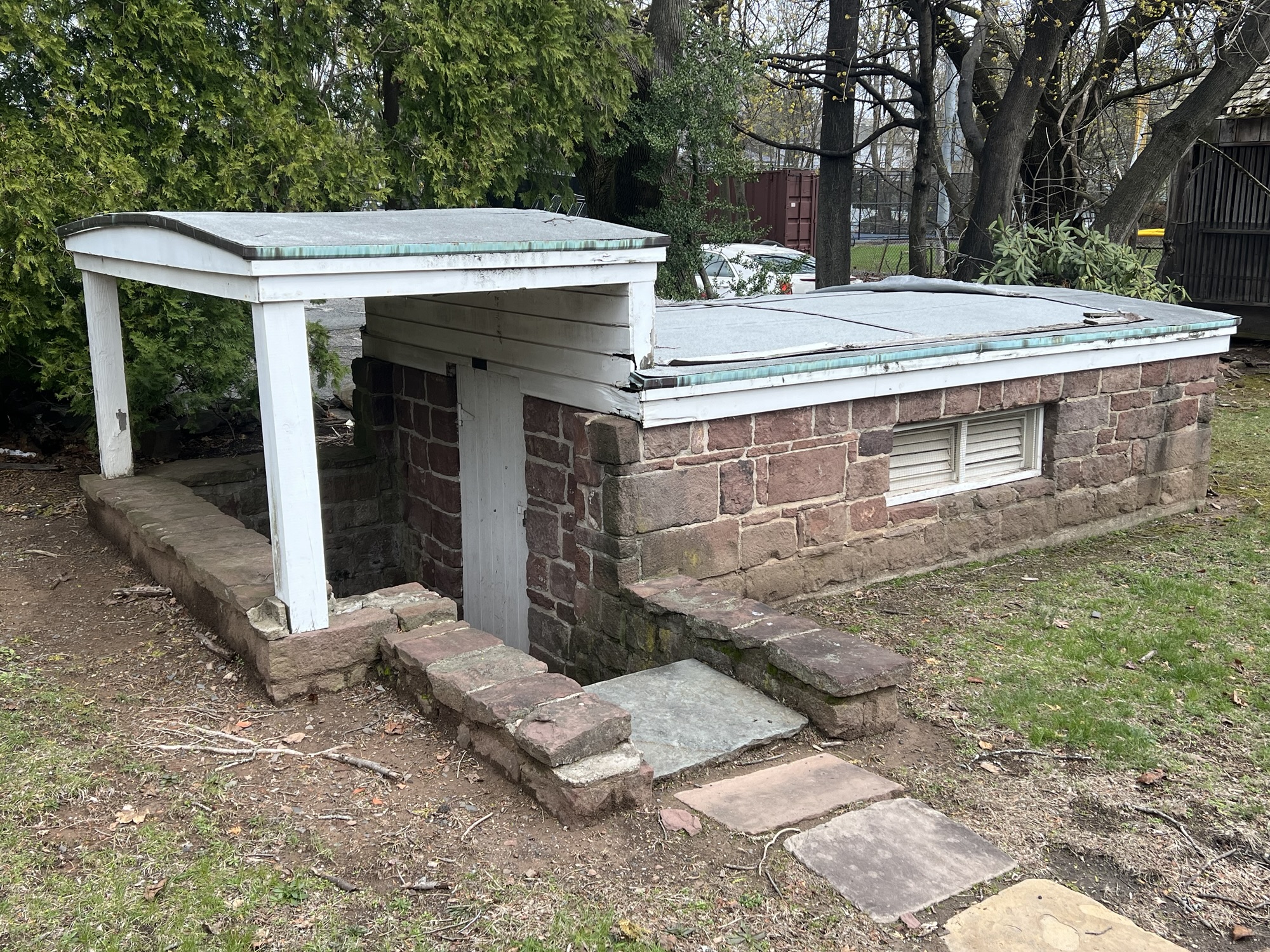
The old Ice House on the property

Scheduling Tours:

The museum is opened for tours on Sunday from 2:00pm-4:00pm (except on holidays). The house is going through a transition right now with the change over.


Grover Cleveland Birthplace                                 207 Bloomfield Avenue                              Caldwell, NJ 07006

Grover Cleveland Birthplace 207 Bloomfield Avenue Caldwell, NJ 07006

Grover Cleveland Birthplace

207 Bloomfield Avenue

Caldwell, NJ   07006

(973) 226-0001

https://www.nps.gov/nr/travel/presidents/grover_cleveland_birthplace.html

Open:  Sunday 1:00pm-4:00pm/Monday & Tuesday Closed/Wednesday-Saturday 10:00am-12:00pm-1:00pm-4:00pm. Closed on all major holidays.

Fee: Free New Jersey State Park System/Free Parking on premise

My review on TripAdvisor:

https://www.tripadvisor.com/Attraction_Review-g46338-d2661291-Reviews-The_Grover_Cleveland_Birthplace-Caldwell_New_Jersey.html?m=19905

I recently visited the birthplace of of our 22nd and 24th President of the United States of America and it is an interesting look into one man’s past. The Grover Cleveland Birthplace Museum was originally the pastor’s residence for the First Presbyterian Church in Caldwell, NJ.

Grover Cleveland

President Grover Cleveland

https://www.whitehouse.gov/about-the-white-house/presidents/grover-cleveland/

https://en.wikipedia.org/wiki/Grover_Cleveland

What I found interesting about this historical home is that the President’s sister, Susan, saved everything of the family’s past. Things like furniture, home furnishings, cooking utensils, paintings and photos of the family plus personal items of the President such as his clothes, pipes, shaving kits and traveling cases so there is a lot of interesting items to see and well thought up display cases.

The house is broken up into the kitchen area, the living chambers, the former living room area which has most of the displays and then the front hallway where more family displays are located.

Grover Cleveland Birthplace IV

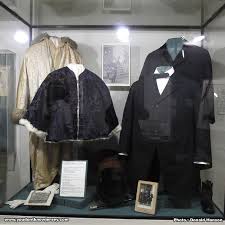
President  Cleveland and Mrs. Cleveland’s personal clothes

Try to take a tour with the tour guide, Paula, who knows the house backwards and forwards and gives you an interesting take on the family. She will be able to point out all the family objects and personal items that have been donated by family members. Things from formal clothes to a piece of the President’s wedding cake.

Grover Cleveland Birthplace III

A piece of the President’s wedding cake

The whole tour takes about an hour and you will find yourself memorized  by the displays and the family history of the children and grandchildren. It is interesting to see how the family grew when they were living in Caldwell, NJ.

History of the Cleveland Birthplace Museum:

Grover Cleveland’s birthplace was built in 1832 as the Manse or pastor’s residence for the First Presbyterian Church of Caldwell. Cleveland’s father, the Reverend Richard Fally Cleveland was the minister here from 1834-1841.

Originally this frame home had a two-story main section with a one-story kitchen to the east and a one-story lean-to at the rear. It was enlarged several times between 1848-1870 to meet the growing needs of the Presbyterian clergy. The house is a good example of local vernacular architecture.

Grover Cleveland Birthplace

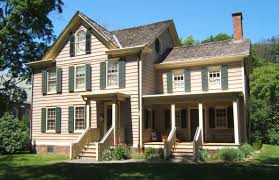
The Birthplace house

The historical significance of the Manse was first noted in 1881 when Cleveland was running for Governor of New York. As his political star  ascended, so did the interest in preserving his birthplace as a museum. A group of Cleveland’s friends and admirers began negotiations to purchase the Manse in 1907. Their efforts culminated in the opening of the house to the public on March 18, 1913.

Most of the first floor rooms portray the Manse as it was in 1837, the year Grover Cleveland was born. The decidedly middle-class character of the rooms reflect the day to day life of the Reverend Richard Cleveland and his family. Among the artifacts on display from Cleveland’s early years are his cradle and original family portraits.

Grover Cleveland Birthplace II

Grover Cleveland’s crib where he was born

Contrasting sharply with the humble beginnings portrayed in these rooms, the exhibit gallery features a striking display of artifacts that reflect the financial and political success Cleveland achieved during the last quarter of the 19th Century. Here, the mud-slinging campaign of 1884, the public’s intense interest in his wife and children and America’s political climate throughout his split terms of office are explored.

The Grover Cleveland Birthplace State Historic Site is the only house museum in the country dedicated to the interpretation of President Cleveland’s life. It is the nation’s leading repository of Cleveland artifacts and political memorabilia. The Grover Cleveland Birthplace is listed on the New Jersey and National Registers of Historic Places.

The President’s time in New Jersey:

Stephen Grover Cleveland was born on March 18, 1837 to the Reverend Richard Cleveland and his wife, Ann. Named for the first ordained pastor of the First Presbyterian Church at Caldwell, he would in time become known by his middle name, Grover.

Cleveland was raised in a strict, modest home. As the son of a minister and the fifth of nine children, he had a religious and principled upbringing with few luxuries. When Grover was four, Reverend Cleveland moved his family to Fayetteville, NY.

(The Grover Cleveland Birthplace Museum pamphlet)

The Cadmus House: Fair Lawn Museum                               14-01 Politt Drive                                                                     Fair Lawn, NJ 07410

The Cadmus House: Fair Lawn Museum 14-01 Politt Drive Fair Lawn, NJ 07410

The Cadmus House: The Fair Lawn Museum

14-01 Politt Drive

Fair Lawn, NJ  07410

(201) 796-7692

http://www.cadmushouse.org

https://www.facebook.com/profile.php?id=133299403367223

http://www.fairlawn.org/content/203/267/521.aspx

https://www.co.bergen.nj.us/discovering-history/cultural-historic-sites

Open: Check the Fair Lawn Town Website

Fee: Free to the public

My review on TripAdvisor:

https://www.tripadvisor.com/Attraction_Review-g46430-d17707566-Reviews-Cadmus_House-Fair_Lawn_New_Jersey.html?m=19905

I visited the Cadmus House today and it is a very interesting look back on the history of Dutch Bergen County and the town of Fair Lawn, NJ.

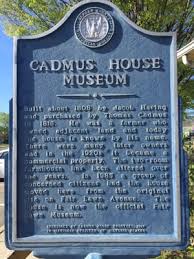
The Marker

The Cadmus House Museum

Jacob Haring: Bergen County resident

https://www.wikitree.com/wiki/Haring-684

http://trees.wmgs.org/getperson.php?personID=I108461&tree=Schirado

The Cadmus House was built in 1808 by landowner Jacob Haring and his wife, Margarat. It was originally a two room farmhouse when it was built on their extensive farm land. The Harings’ sold the house to Abraham and Harmones Van Derbeek in 1815 and they turned around and sold the house to Thomas Cadmus and his  wife, Margaret in 1816 and the name stuck from there.

Cadmus House

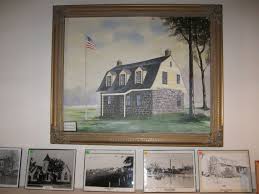
The Haring house originally and then it had a gable and second floor built in the late 19th century

More information on the Haring Family from the novel “A Dutch Family for the Middle Colonies” by author Firth Haring:

https://books.google.com/books/about/A_Dutch_Family_in_the_Middle_Colonies_16.html?id=hAZ5AAAAMAAJ

Over the years, the house had had many owners and many uses. Before the house was moved in 1985 to its current location, it served as a real estate office at that time. When they were building new construction on the spot, the house was saved by a group of concerned Fair Lawn residents to preserved the town’s past and it was turned into the Cadmus House-Fair Lawn Museum.

The house is broken down into different themed rooms. The downstairs rooms are devoted to the Fair Lawn’s past with pictures of old homes that used to line the streets of the neighborhood. There are pictures of old farms and farm houses, relics from town such as arrowheads, farming equipment and old farm house decor such as ice boxes and apple presses for cider.

Cadmus House II

Pictures of Fair Lawn’s past

In the room that once served as a dining room, there are period Dutch items that would be needed to run a household or a business.

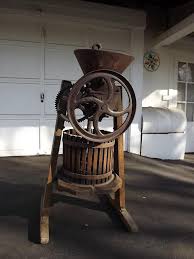
Cadmus House Cider Press.jpg

The apple press which was a big part of the farming community in Bergen County

The upstairs rooms have different displays. One room is devoted to Victorian living with furniture and bedroom decors along with dolls and cribs. The other room is dedicated to the history of the Fair Lawn Fire and Police Departments as well as memorabilia from Fair Lawn High School such as trophies, yearbooks and old films of football games.

There is plenty of parking in the front of the house and the parking lot is shared with the railroad station next door. The house is only open the third Sunday of each month and it is closed for the months of July and August.

If you want to take a glimpse of Bergen County’s past Colonial, Victorian, Motor Age or current, the Cadmus House will give you a perspective on living in Bergen County in the past into current times.

The house now sits by the train station in Fairlawn, NJ