I was able to visit the New Jersey Historical Society (See TripAdvisor review) after a morning at the Newark Museum. It has some interesting exhibitions right now on the Newark riots of the 60’s , the New Jersey Watershed and Louis Bamberger, the founder of Bamberger’s. It was an interesting history of a former grand department store.
The New Jersey Historical Society has changing exhibitions and lectures, talks and walking tours. It is an interesting museum dealing with the history of New Jersey.
The New Jersey Historical Society
Founded 1845
The New Jersey Historical Society is the oldest private, non-profit cultural institution in the state. It was founded in 1845 as an archive, which later evolved into a research library and museum. Award-winning exhibits, education programs, publications, lectures and events for all communities in New Jersey have been our legacy over the past century.
Mission:
The New Jersey Historical Society collects, preserves, teaches and interprets New Jersey history through our archives, research library and educational programs. We do so in the belief that an understanding and appreciation of historical issues, decisions and actions can inform and inspire the people of New Jersey.
Vision:
To be a state of the art center for the study of New Jersey history with convenient access to all archival collections and educational programs for all ages.
New Jersey Historical Society
Current Museum Exhibitions: (January 2018)
*”Meet Me under the Bamberger’s Clock”: a celebration of the life and contribution of Louis Bamberger.
The Bamberger Exhibition
*Ebb and Flow: New Jersey and its Rivers
*Send the Word: NJ during the Great War
*Newark: Revolution to Revival
Newark Industry
*Military Park Tours: available every Friday and Saturday at 12:00pm, May-November
Education Programs:
Our affordable educator-led programs include hands-on activities tailored to the age and development level of your students, challenging and inspiring them to grow as learners and thinkers.
Discover:
Students will discover the state’s unique past through handling objects, exploring exhibits and engaging in fun, stimulating activities. Teaches will discover all the interdisciplinary connections to the Common Core State Standards for English Language Arts & Literary in History/Social Studies.
Learn:
Educators and students will learn together how to analyze photographs, paintings and historical objects and interact with history in a variety of ways, including role play, observation and group participation.
Research:
Students will learn to research history and present their ideas and findings through oral presentations, writing and art.
Building and Exhibition Tours are available upon request. Call (973) 596-8500 to schedule!
Research Library:
The New Jersey Historical Society contains manuscripts, rare books, photographs, maps, broadsides, pamphlets and other materials that document the cultural and historical heritage of New Jersey from the colonial era through the 21st century. The collections form the most comprehensive privately-funded library on New Jersey’s past. The research library is open to the public by appointment and serves a diverse clientele including scholars, students, historians and genealogists.
Membership:
Why become a member? In addition to individual benefits such as free admission to the research library and museum exhibits, you are helping to sustain 350 years of New Jersey history, a history we’ve been collecting and preserving since 1845. NJHS has a commitment to the people of our state to treasure our shared history; your membership helps us keep that commitment.
Contact:
For research library appointment, email: library@jerseyhistory.org
For all other questions, email: contactnjhs@jerseyhistory.org
Disclaimer: This information was taken directly from the New Jersey Historical Society (NJHS) pamphlet. Please call the society for any information of hours and admissions in case they change. It really is a very interesting museum.
This interesting little ‘gem’ is located up on the hill next to Blauvelt Mansion and is easy to miss. You will see the signs as you drive past it.
Open: Wednesday, Thursday and Friday: 10:00am-4:00pm/Saturday and Sunday: 2:00pm-5:00pm
Fee: Free donations accepted
The Blauvelt Art Museum is funded by the Blauvelt-Demarest Foundation and is a member of the New Jersey Association of Museums, the Mid-Atlantic Association of Museums and the American Association of Museums.
The Blauvelt Art Museum was established in 1957 by the Blauvelt-Demarest Foundation, a legacy of the late Hiram Blauvelt, philanthropist, conservationist and collector. Through the contribution of his private wildlife art and big game collections, he hoped to promote the cultural value of wildlife art and the need for conservation of its subject and their habitats.
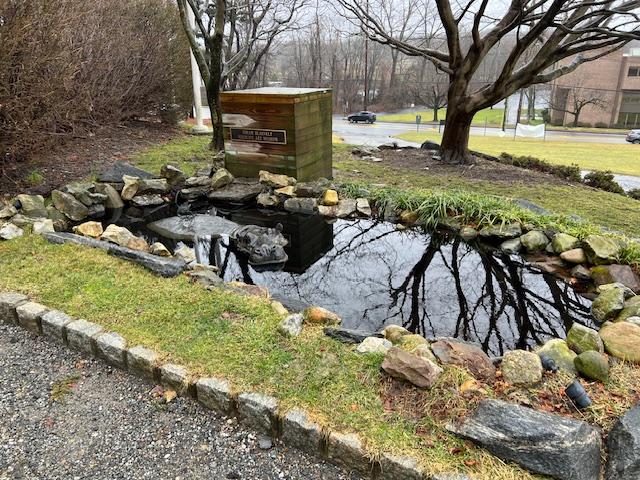
The fountain outside the museum
The entrance to the museum.
During the early part of the 20th Century, wildlife was believe to be abundant. Many dedicated conservationists, notable Theodore Roosevelt, gathered animals from their natural habitats for museums. The beauty of the animals could then be viewed by many.
The entrance to the museum.
Like Roosevelt, Hiram Blauvelt realized the value of his collection and wanted to share it with the public. It was his interest and desire to share his far ranging adventures, his stories of explorations and his collection of these animals. Hiram hoped to educate the coming generations to the diversity and beauty of the wildlife kingdom. He especially wanted to enlighten the public to the challenges we face to preserve the marvels of wildlife and their natural environments.
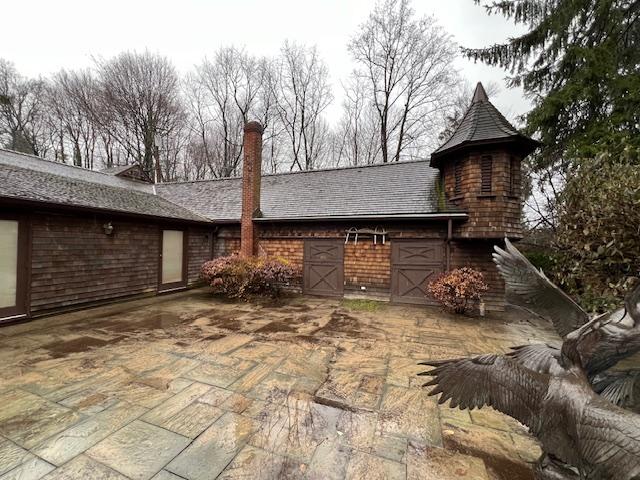
The interesting artwork by the carriage house of pelicans.
The Pelican art outside the museum.
Founded in 1957 as a natural history museum, it introduced students, scouts and youth groups to the need to support wildlife and habitats conservation. Visiting artists created drawings and paintings from close observations of the specimens.
Embracing Penguins outside the museum dedicated to Wildlife Art.
Twenty-five years later, the Board of Directors of the Blauvelt-Demarest Foundation decided that the original objectives would be best achieved by redesigning the museum to feature the works of contemporary wildlife artists, built on the artistic foundation of the Blauvelt’s early collection of works by Charles Livingston Bull (notably a resident of Oradell at one time), Carl Rungius and a complete Audubon Folio of birds of America.
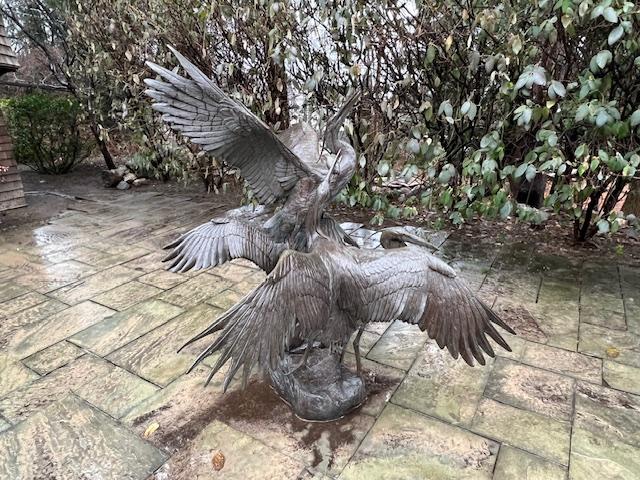
The interesting wildlife artwork just outside the museum.
The Blauvelt Museum, located in an 1893 cedar shingle and turret carriage house, underwent extensive renovations to accommodate its new and expanded mission. The original carriage house was re-designed to include a large reception area, 4 mini galleries and museum offices, all with original materials from the historic building and preserving its aura.
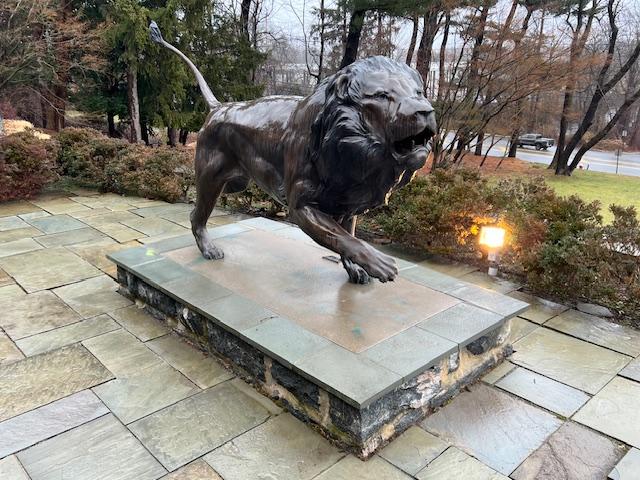
The Blauvelt Art Museum lion statue “Fides et Virtus” by artist Aaron Yount outside the museum.
Four new galleries were added, providing wall space for mounting museum quality flatwork and generous room for pedestals to hold creative sculpture. Substantial artificial lighting is augmented by natural light from the north.
High on a hill overlooking the Hackensack River, the Oradell Reservoir and parklands to the east, the entrance to the museum is through a curving stone and slate terrace, framed by large oak trees and other indigenous foliage, which serves as a natural sculpture garden.
The open air museum just outside the museum itself dedicated to wildlife art.
Many of its visitors today, accompanied by their children, are revisiting the museum which they first visited with their parents in past decades. The Blauvelt treasures their comments remarking on the greater beauties of its collections, while preserving the ambiance of their memories.
The inside galleries of the museum (from their Facebook page).
Artist in Residence:
The Blauvelt Art Museum established an Artist-in-Residence program in 1985. Artists were selected on the basis of their artistic ability and promise and on their commitment to the museum’s mission for the need for conservation to protect wildlife and their habitats. The museum provides a furnished home for the artist on the museum property, including a studio, painting supplies, etc. Artist-in-Residence have given lectures, led round table discussions, visited schools and demonstrated painting and drawing techniques.
The Carriage House from the outside.
The Current Exhibition (2018):
Artist Brian Jarvi’s African Menagerie is showing right now and the collection has some very interesting and detailed pieces on Mr. Jarvi’s visits to Africa. Don’t miss this exhibition!
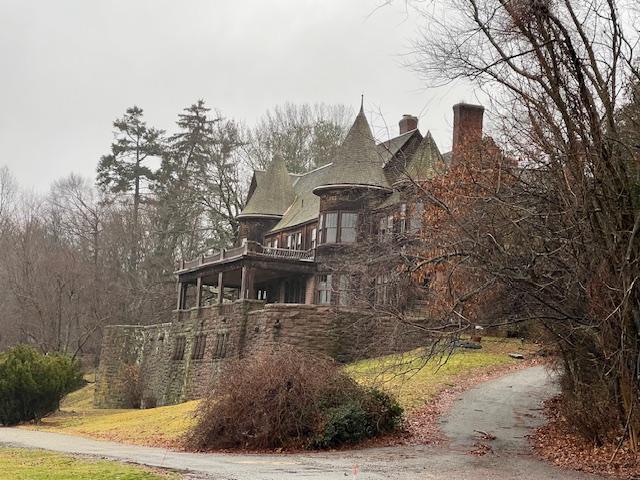
The Blauvelt Museum is on the Blauvelt-Demarest Estate.
Disclaimer: This information was take directly from the pamphlet provided by the Blauvelt Art Museum. Please call the museum for any changes to their time schedule and don’t miss the current exhibition.
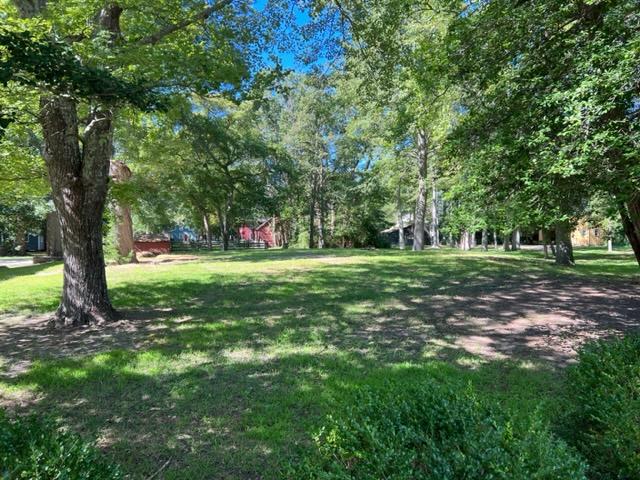
Historic Cold Spring Village in the summer of 2023. The 1800’s came to life when you visit.
The welcoming sign
Historically clothed interpreters demonstrate blacksmithing, pottery, printing, basket weaving and more! Visit an Early American schoolhouse, take part in hands-on activities and crafts and sample historic games and horse-drawn wagon rides on weekdays.
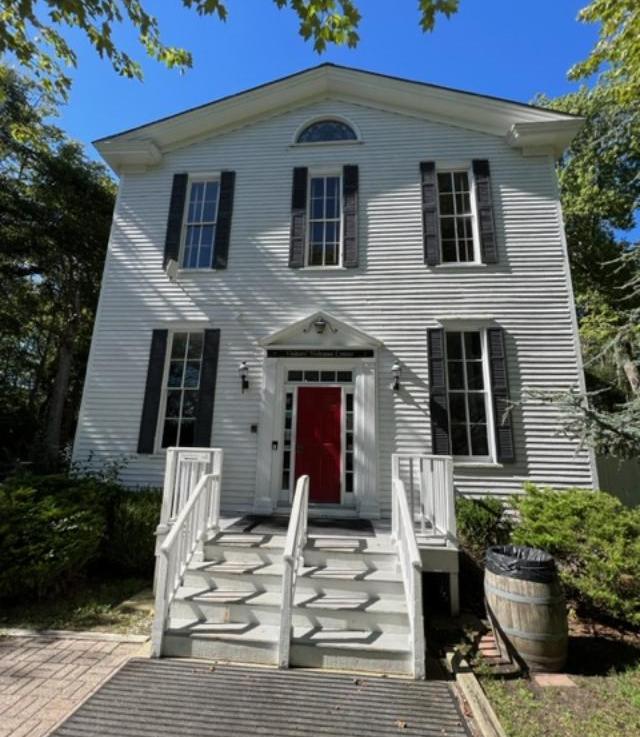
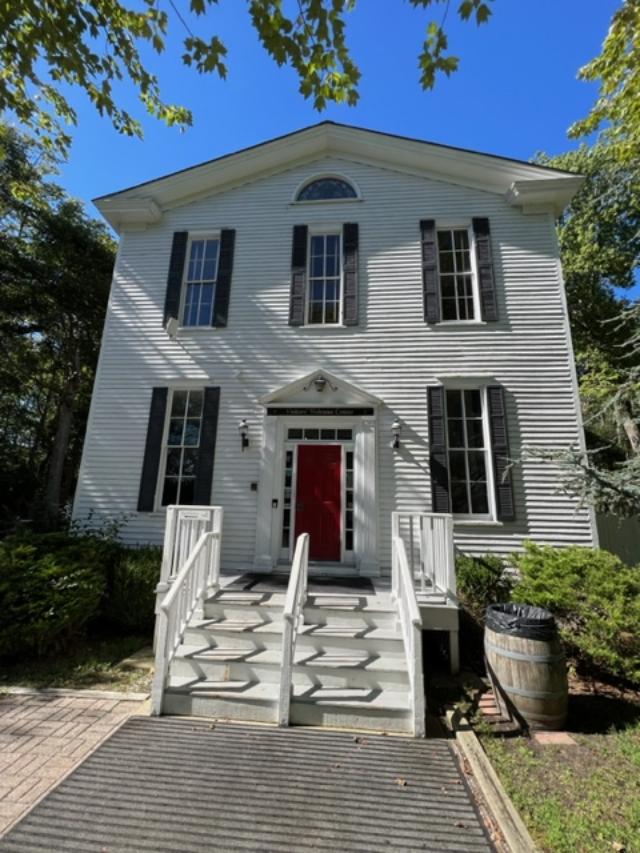
The Visitor’s Center at Historic Cold Spring Village
The village is also home to an organic farm complete with a horse, chickens, sheep and more! Visitors will also find a Welcome Center, Country Store, Bakery, Ice Cream Parlor, Cold Spring Grange Restaurant and Cold Spring Brewery.
The Map of the Village
Historic Cold Spring Village is a non-profit, open air living history museum dedicated to preserving the rich heritage of southern New Jersey. During the summer months, interpreters and artisans in period clothing preserve the trades, crafts and heritage of “the age of homespun.” From October-May, the emphasis is on teaching history through school trips to the Village, classroom visits by the education department and interactive teleconferences with schools throughout the U.S.
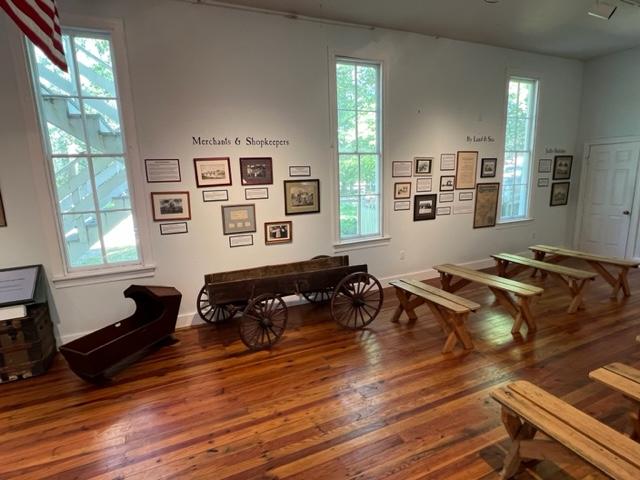
The Visitor’s Center exhibition is open in off season.
Our Education Program relates the history of the region to the broader scope of New Jersey, American and World History. Historic Cold Spring Village offers programs for students of all ages and programs can be adapted to any grade level. Please contact the Village for a more detailed description of each program.
Historic Cold Spring Village’s educational offerings are designed to comply with the 2009 New Jersey Core Curriculum Content Standards for Social Studies as established by the New Jersey Department of Education.
The Visitor’s Center exhibitions at Historic Cold Spring Village.
Stroll the shaded lanes of Historic Cold Spring Village’s 30 acres as you step back in time to an early American South Jersey farm community. Craft persons, tradesmen, housewives and farmers are eager to share their experience as you visit the Village’s 27 historic buildings. The Village is located on Route 9, four miles south of Rio Grande and three miles north of Cape May City. Visitors from the north, take the Garden State Parkway to Exit 4A and follow the signs to the Village.
For additional information on Historic Cold Spring Village programs, projects or events, please call, fax, email or visit our website.
Give the Past a Future: Invest in the future of HCSV by making a tax-deductible charitable contribution, volunteering or becoming a member. For additional information, call (609) 898-2300, ext. 10.
The Village’s educational programs meet the following standards:
6.1 US History, America in the World
6.2 World History/Global Studies
6.3 Active Citizenship in the 21st Century
The Marshallville One-Room Schoolhouse Experience
In the circa 1850 Marshallville Schoolhouse, students experience a typical Early American school day. Students ‘make their manners’, discover the subject studied by Early American students, write with quill pens and learn the consequences of not following classroom rules.
The Schoolhouse
The Marshallville Schoolhouse is available free of charge for teachers who wish to personally recreate a ‘school day of the past’ for their class. Village staff is available to run the program for a fee.
‘Visits to the Past’
Field trips to Historic Cold Spring Village offer students and teachers the opportunity to experience the past first hand. Select Village buildings, like the print shop, schoolhouse, blacksmith shop and inn are open exclusively for school groups. Costumed interpreters interact with students while demonstrating the trades and crafts of Early America. Field trips are held mid-May through early June. Call or email for fees and dates.
The gift shop offers all sorts of old fashioned goodies
We see America Learning: Teaching Early American History through ‘I Visits’
Distance learning programs are offered to schools nationwide. The programs are delivered via a state of the art broadband IP (Internet Protocol) systems and are adaptable to any grade level. If your school does not have a teleconference camera, our distance learning programs are also available through Skype using just your classroom computer and a webcam.
An Early American School Day: A typical day in an Early American rural school.
The Story of Old Glory: The origins and early history of the flag of the United States, using a collection of reproduction historic flags from the 17th Century through the Civil War.
Past Versus Present: A comparison of contemporary everyday objects with their Early American equivalents for example, a flashlight vs a lantern; digital camera vs daguerreotype.
Four Great Inventions (and one that almost was): Explores the creation of the steam boat, the steam locomotive, the daguerreotype camera, the telephone and difference engine, an 1832 attempt to build a mechanical computer.
Hearth and Home: An exploration of the role of the domestic arts practiced by 1800’s housewife with an emphasis on food preparation including hearth cooking.
Gone for a soldier: A day in the life of a Civil War Infantryman: Includes discussions of uniforms, equipment, camp life, food and weapons.
Welcome Centers: Taverns, Inns and Wayside Stops: A presentation utilizing our circa 1836 Dennisville Inn, A former stagecoach stop in Dennisville, NJ to explain the important part buildings such as these played in a community.
The Inn at the Historic Cold Spring Village
Revisiting the Country Store: An Important Community Resource: A look at the vital role of a general store in the life of rural America as a purveyor of goods, social center, post office, etc.
The War of 1812: More than the Star-Spangled Banner: An overview of the “Second War of Independence”,
Fiber Arts: A domestic program primarily including weaving and spinning interpretations.
The First Frontier: Whaler Yeomen in Colonial New Jersey: The story of the first permanent European settlers in New Jersey as well as a discussion of how the Eastern Seaboard was the original American Frontier.
Early American Trades: Explores the important role a printer, woodwright, blacksmith, bookbinder or tinsmith, had in an Early American community. Includes in-workshop demonstrations.
Disclaimer: This information is taken directly from the Cold Springs Village pamphlet. Please call them at the above number or email address for more information.
This historic site has been restored and administered by the Mid-Atlantic Center for the Arts & Humanities in conjunction with N.J. Department of Environmental Protection Division of Parks & Forestry.
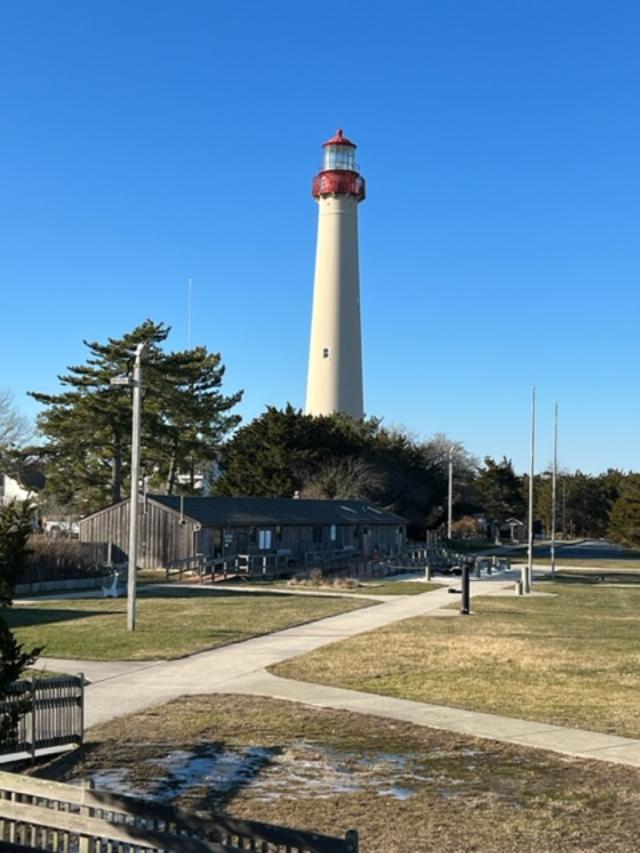
The Cape May Lighthouse: Climb the 199 steps of this 1859 vintage tower for a breathtaking view of the Jersey Cape, where the Delaware Bay meets the Atlantic Ocean.
The History of Lighthouses in New Jersey
Over the past 30 years, MAC has totally restored the Cape May Lighthouse. A fully accessible Visitors Center is located in the adjacent Oil House as well as a Museum Shop stocked with lighthouse and maritime must haves.
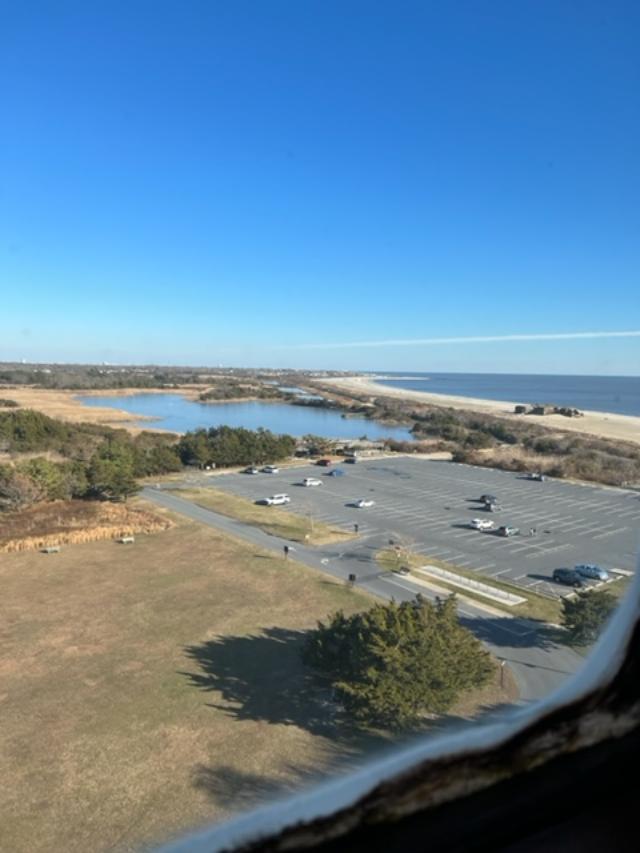
The view of the beach from the lighthouse
The Cape May Lighthouse
Lighthouse information story boards
Lighthouse FAQ
Frequently asked questions about the Cape May Lighthouse
Questions about the structure:
*How Tall is the lighthouse? The lighthouse is 157 feet 6 inches tall from the ground line to the ventilator.
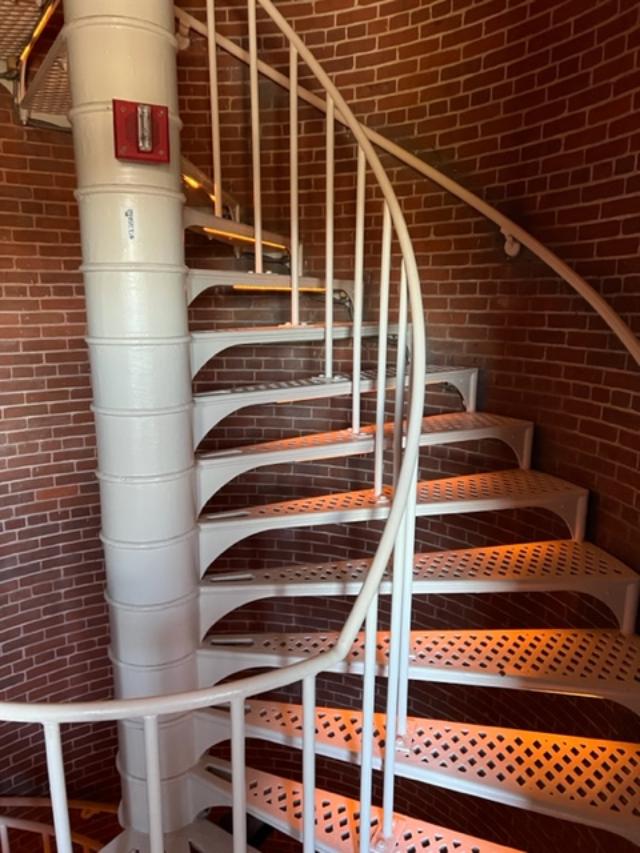
*How many steps are there to the top? There are 217 steps from the ground to the top with 199 steps in the tower’s cast iron spiral staircase.
The staircase going to the lighthouse lens
Looking down the stairs on the way back down
* How old is the Lighthouse? The Cape May Lighthouse was built in 1859 and is the third fully documented lighthouse to be built at Cape May Point. The first was built in 1823; the second in 1847. The exact locations of the first two lighthouses are now underwater due to erosion.
*How thick are the brick walls? The Lighthouse actually has two separate walls. The outside wall is cone-shaped and is 3 feet 10 inches thick at the bottom and 1 foot 6 inches thick at the top. The inside wall is a cylinder with 8.5 inch thick walls which support the spiral staircase. The walls were designed to withstand winds several times above hurricane force.
The view on the way up the lighthouse
*Is the beacon still working? Yes, The Coast Guard continues to operate the light as an active aid to navigation. The light is visible 22 miles out to sea and flashes every 15 seconds. A lighthouse’s flash pattern is called its ‘characteristic’, every lighthouse has its own light characteristic and exterior paint scheme (called a daymark) so that ship captains can tell them apart.
The lighthouse lens
The lighthouse lens
*What were the two small rooms on either side of the entrance hallway used for? They were storage rooms that held tools, implements and fuel for the lantern before the Oil House was built. The keeper also used one as a small office.
The lighthouse office
*Who owns the Lighthouse? The State of New Jersey owns the Lighthouse but the Coast Guard maintains the beacon apparatus. The Mid-Atlantic Center for the Arts & Humanities (MAC) in Cape May leases the Lighthouse from the State with the mission of restoring the structure and operating it as a historic site.
View from the top of the lighthouse
View from the top of the lighthouse
Cape May Lighthouse
*Questions about Lighthouse Keepers and their responsibilities
*Who worked at the Lighthouse? The Lighthouse was staffed by keepers who worked for the U.S. Lighthouse Service. Cape May’s lighthouse generally had one head keeper and two assistants. They carried the oil to the top of the tower every day to power the light and kept the lens apparatus clean and in working order. Keepers’ pay averaged $600.00 a year around the turn of the 20th century.
*Where did the keepers live? There were two houses built right next to the Lighthouse around 1860 for the keepers and their families. One has since burned but the other is still standing on the other side of the fence near the entrance to the tower.
Important Dates: Cape May Lighthouse
1853-First recorded lighthouse constructed. The 1823 tower was 68 feet tall and its location is now underwater due to erosion.
1847-The second lighthouse was built. It was a 78 foot tower located directly in front of the present tower, just beyond the present shoreline. It was replaced by the present lighthouse because it was poorly constructed.
1857-The Army Corps of Engineers began construction on the present tower, which cost $40,000 to build. The first order Fresnel lens, which is now in the Cape May County Museum, cost about $15,000.
1859-The Lighthouse was first lighted on October 31. The next year, two lighthouse keepers dwellings were built. The one remaining is now used by the State Park Service.
1893-The oil house was constructed.
The Oil House
1902-One of the keepers’ dwellings was enlarge to provide more space for housing the keepers’ families. Three keepers and their families. Three keepers and their families lived at the lighthouse site.
1902-An incandescent oil vapor lamp was installed and replaced the Funck multiple wick first order hydraulic float lamp that dated back to 1878.
1933-The light apparatus was electrified.
1936-The light apparatus was automated which eliminated the need for lighthouse keepers being permanently stationed at the tower.
1939-The United States Lighthouse Service was discontinued and its equipment and personnel transferred to the U.S. Coast Guard.
1941-The Lighthouse was darkened until 1945 because of the World War II. The Atlantic coast was on black-out due to the presence of enemy submarines.
1946-A DCB-36 rotating light (like an airport beacon) was installed. The original first order Fresnel lens was placed in the Cape May County Museum.
1986-The Lighthouse was leased to MAC by the State of New Jersey Department of Environmental Protection, Division of Parks and Forestry, who in turn leased the structure from the Coast Guard.
1988-MAC undertook public safety improvements that allowed the public to climb to the top.
1989-A grant from the Bicentennial Lighthouse Fund underwrote the restoration of the Lighthouse’s windows and doors.
1990-The oil house was restored and adapted for use as orientation center and museum shop, with funding from the Bicentennial Lighthouse Fund and the New Jersey Historic Trust.
1992-The ownership of the Lighthouse was transferred from the Coast Guard to the State of New Jersey.
1994-Grants from the New Jersey Historic Trust and the federal ISTEA program administered by the State DOT funded painting of the tower and restoration of the lantern and roof.
1998-Grants from the same agencies funded all remaining restoration of the lighthouse structure.
2000-2001-A grant from the New Jersey Historic Trust funded the grounds restoration project.
2002-The Coast Guard installed a modern light known as a DCB-224. It uses parabolic mirrors to focus the beams rather than lenses.
2010-The Friends of the Cape May Lighthouse group was formed. You are cordially invited to join. Call 609-884-5404 or visit http://www.capemaymac.org.
2016-The Coast Guard installed a new, state of the art beacon known as VRB-25 (Variable Rotating Beacon) replacing the DCB-224 that had suffered irreparable damage due to a lighthouse strike.
2017-Lighthouse Tower was repainted with grants from the Cape May County Open Space Board, the National Maritime Heritage Grant program of the National Park Service and South Jersey Industries, augmented by the fundraising efforts of the Lighthouse Keepers and the Friends of the Lighthouse.
*Is the Lighthouse haunted? Exit Zero Ghost Writer and psychic medium Craig McManus has visited the Lighthouse and detected the ghosts of several former keepers and their families. Perhaps you may encounter them yourself on a Ghosts of the Lighthouse Trolley Tour!
Questions about Lighthouse Restoration
*Why is the Lighthouse leased to the Mid-Atlantic Center for the Arts & Humanities (MAC)?
In the 1980’s , the Coast Guard began a nationwide program of leasing lighthouses to private organizations, like MAC, which are capable of preserving them. In 1986, the Coast Guard leased the Lighthouse to MAC, which assumed the responsibility for its restoration, maintenance and operation as a lighthouse museum. In 1992, ownership of the Lighthouse was transferred from the Coast Guard to the State of New Jersey in order to make the restoration project eligible for state historic preservation funding. The state monitors the historical authenticity of the restoration and also makes available to Lighthouse visitors the parking and restroom facilities of the adjacent state park.
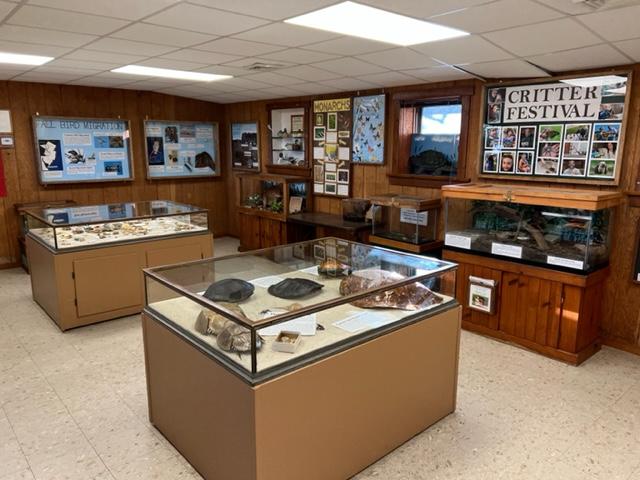
The Museum at the bottom of the lighthouse
*What is MAC?
MAC is a non-profit organization with nearly 4,000 members that was founded in 1970 to save and restore Cape May’s Physick Estate and operate it as a historic house museum. The Physick Estate is also home to the Carroll Gallery with an array of changing exhibitions, a museum shop and the Carriage House Café & Tearoom. MAC has also restored the World War II Lookout Tower (Fire Control Tower Number 23) located nearby on Sunset Boulevard. In addition, MAC promotes Cape May’s Victorian heritage through a year round schedule of special events and trolley, walking and historic house tours. MAC is also one of the area’s leading sponsors of the performing arts with its Cape May Music Festival every May and June. Please call 609-884-5404 for details on MAC’s calendar of events or visit our website at http://www.capemaymac.org.
*How much did it cost to restore the Lighthouse?
Since 1987, closed to two million dollars has been spent to restore the Lighthouse and oil house and allow the public to climb safely to the top.
*Is the Lighthouse open to the public?
Yes, Hours of operation vary throughout the year. The tower is open daily, April through November and on weekends most of the rest of the year. The grounds ground floor, tower and watch room gallery are open to the public. All tours of the tower are self-guided.
Disclaimer: This information was taken directly from a pamphlet from the MAC Cape May Lighthouse Museum. Please call the above number or email address for more information on the site. It is well worth seeing just for the view alone.



 blauveltartmuseum.com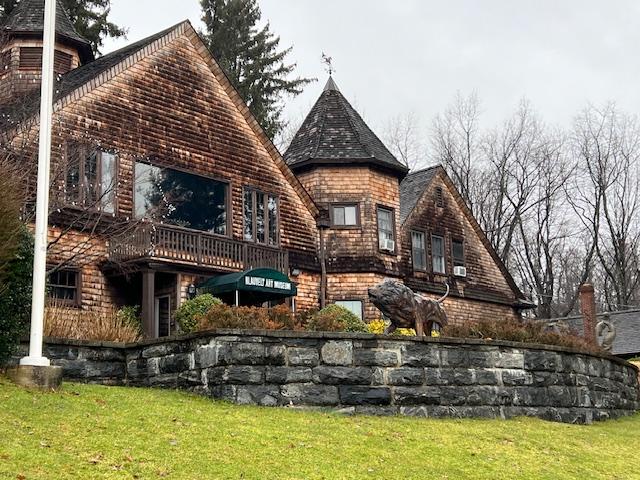















 Visiting a Museum: The Unique, Unusual, Obscure and Historical