The Stone Harbor Bird Sanctuary is a wonderfully preserved microcosm of what the barrier islands of New Jersey looked like hundreds of years ago. As you walk along Sanctuary paths, it is easy to imagine the Lenni-Lenape Indians wandering through the maritime forest, crossing wind swept sand dunes, past groves of white cedar, birch, pine, holly and sassafras trees, taking time to drink water from a spring fed freshwater pond and then, fishing in the salt water meadows surrounded by herons and songbirds.
As early as the 1870’s and 1880’s, the Sanctuary area was recognized as a “veritable paradise of birds” for ornithologists. The primary attractions were Little Blue Herons, Black-crowned Night Herons, Green Herons and egrets. Once the 96th Street Bridge opened in 1911, those who wanted to study, hunt or collect the eggs of birds no longer had to walk across four miles of marsh. Easy access to the heronry was a boon to birders but also a threat to birds whose plumes and eggs were valued.
In 1941, the Stone Harbor Bird Club was organized in the home of Lillian R. Leuallen. The Bird Club was renamed in 1946 as the Witmer Stone Club to honor Witmer Stone, one of the first ornithologists to document birds in the Sanctuary area. With considerable foresight, the Witmer Stone Club proposed early in 1947 that the Borough of Stone Harbor establish a “sanctuary”. In October of 1947, the Borough Council passed Ordinance #208 which preserved 31 acres of land as a wildlife sanctuary. Subsequent to expert study in 1961 which demonstrated that no birds were nesting on the beach side sanctuary acreage, the Stone Harbor Borough Council sold ten acres to the east of Second Avenue. The remaining 21 acres bounded by Second Avenue to the East, Third Avenue to the West, 111th Street to the North and area between 116th and 117th on the South represents the Sanctuary as we know it today. The Sanctuary remains one of the few bird sanctuaries in the world that are completely within municipal boundaries.
One can’t overstate the foresight and commitment of the residents and Borough officials to conservation as well as the preservation of open space and wildlife in 1947, 1961 and every year since. This commitment was reinforced by the United States Park Service in 1965 when it designated the Sanctuary as a National Natural Landmark.
Over the years, the Sanctuary has been home to thousands of birds and visited by more than a million people representing all fifty states and most countries in the world. It has been estimated that Sanctuary visitors spend more than $5 million each year, locally. Although some like the New York Times in 1960 glorify the Sanctuary, referring to it as “The Everglades of New Jersey”, Stone Harbor residents think of the Sanctuary as a symbol of the character of this quiet, single family town which respects the nature and wildlife that surrounds them while placing a premium on livability, aesthetics and serenity.
The front of the sanctuary from 3rd Avenue
I took a walk when I was in Stone Harbor through the town’s Bird Sanctuary to hopefully view some rare birds. While I did not see much, I heard a lot of singing and scrawling as I walked the path through the trees.
The front gardens in the sanctuary
The gardens were still in bloom in the late Summer and many colorful wildflowers attracted all sorts of butterflies and other insects.
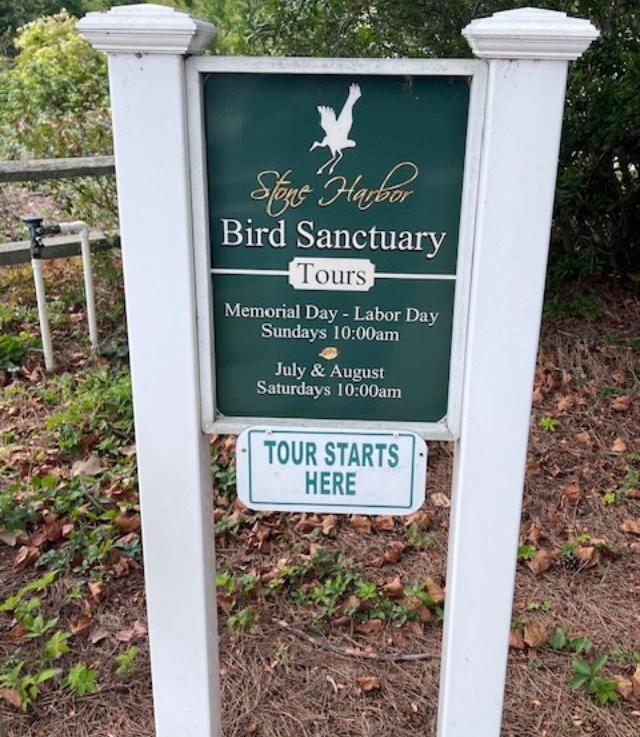
The sign greeting you about the experience
The front path of the sanctuary
You head over the bridge to the paths that take you into the woods
Walking down the pathways through the woods
The path takes you into a deep wooded area in the middle of the town and by the time you get to the middle of the path, you can hear the mating calls of many birds. It’s funny to note that we are a couple of blocks from the shore.
Walking through the pathways
Reaching the middle of the beach woods
The middle of the bird sanctuary noisy with bird calls
Walking back through the pathways through the roads
Touring through the Bird Sanctuary does not take a long time, but offers relief from a busy shore town.
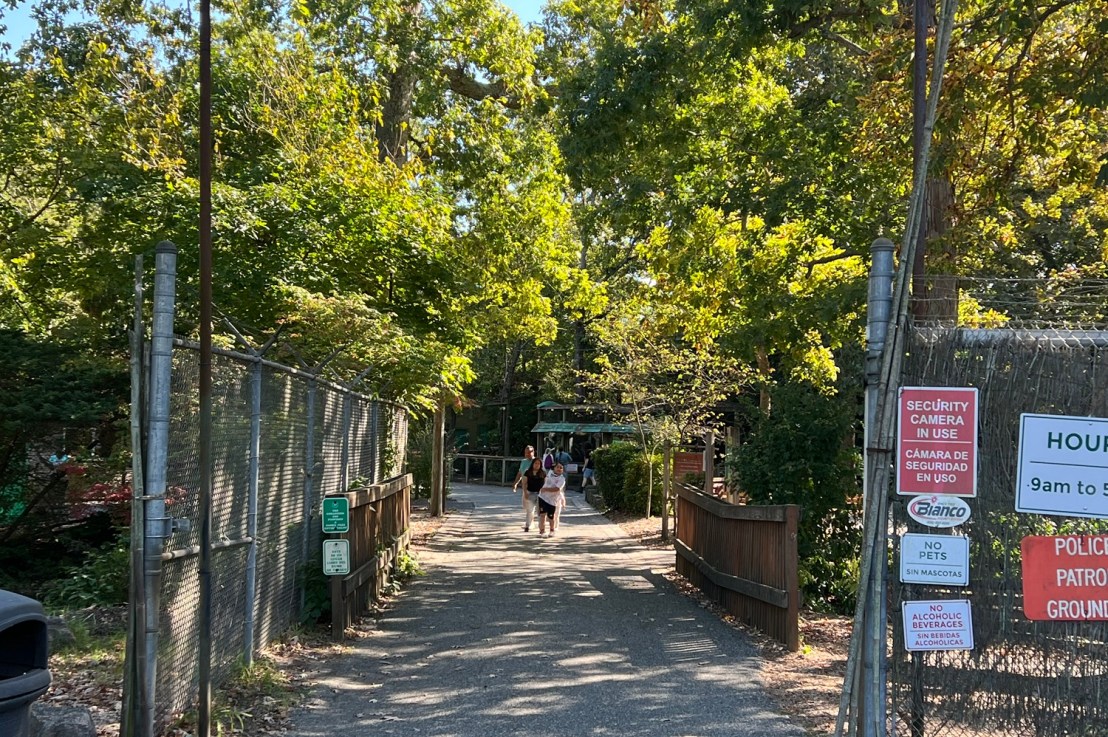
The Cohanzick Zoo is part of the Bridgeton Park system and can be found inside the parks grounds.
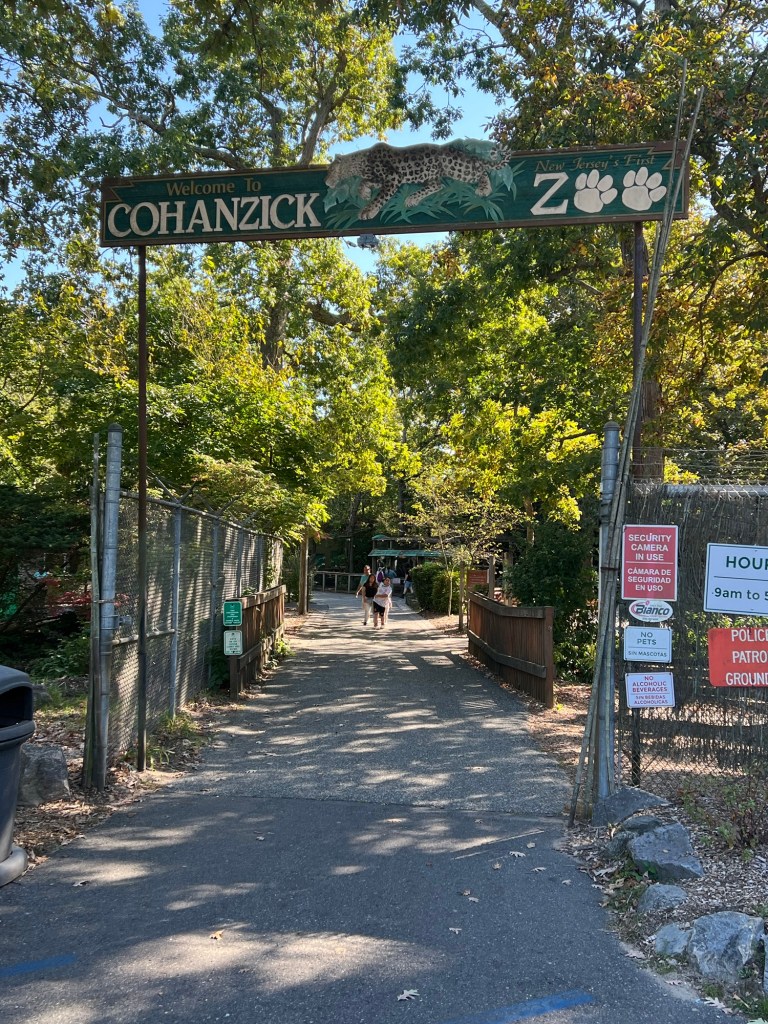
The main entrance to the zoo.
The zoo has an old fashioned feel with smaller rescue animals and equally not too large cages. The zoo is mostly comprised of smaller animals who were rescued from either being poached, illegally transported or had been used as pets, many of them being neglected and abused.
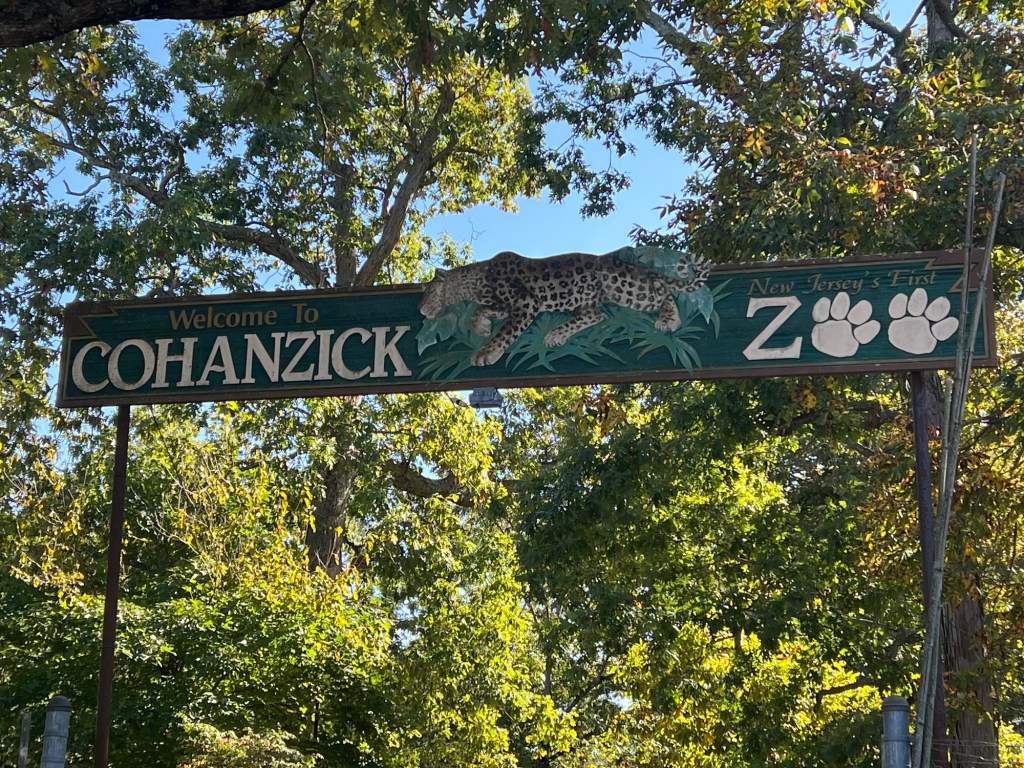
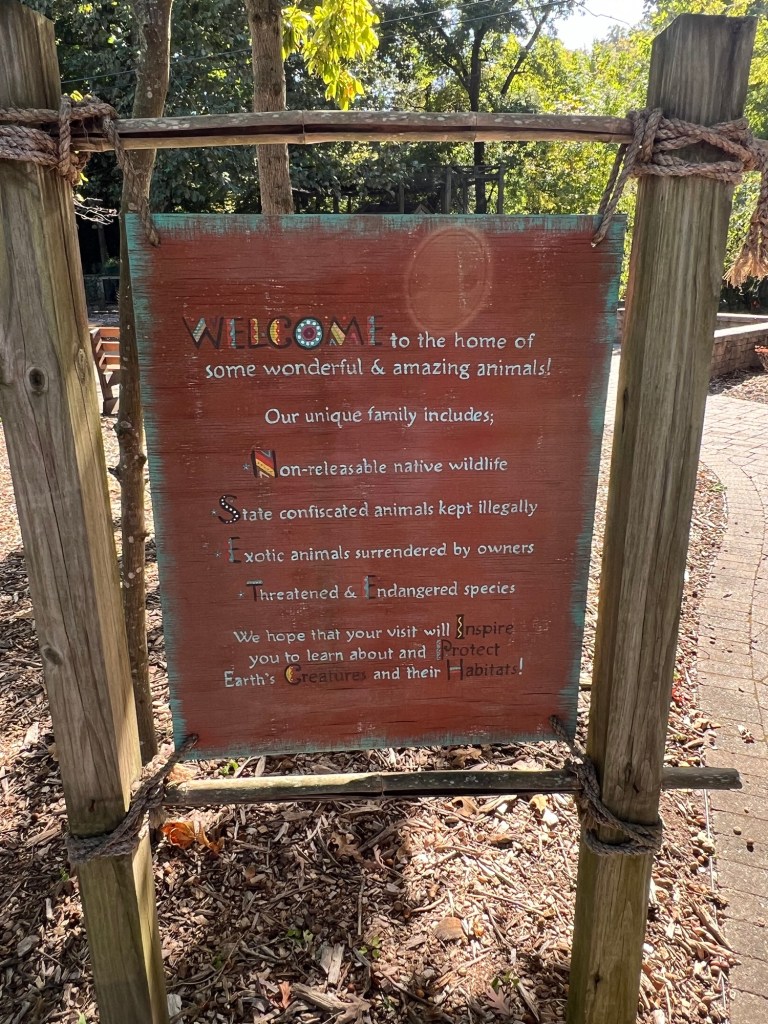
The sign that welcomes you to the park
Throughout the park amongst the cages of wildlife are strolling gardens and animal related statuary.
The pathways and gardens were still in bloom the afternoon that I was there and it is a nice way to spend do the afternoon.
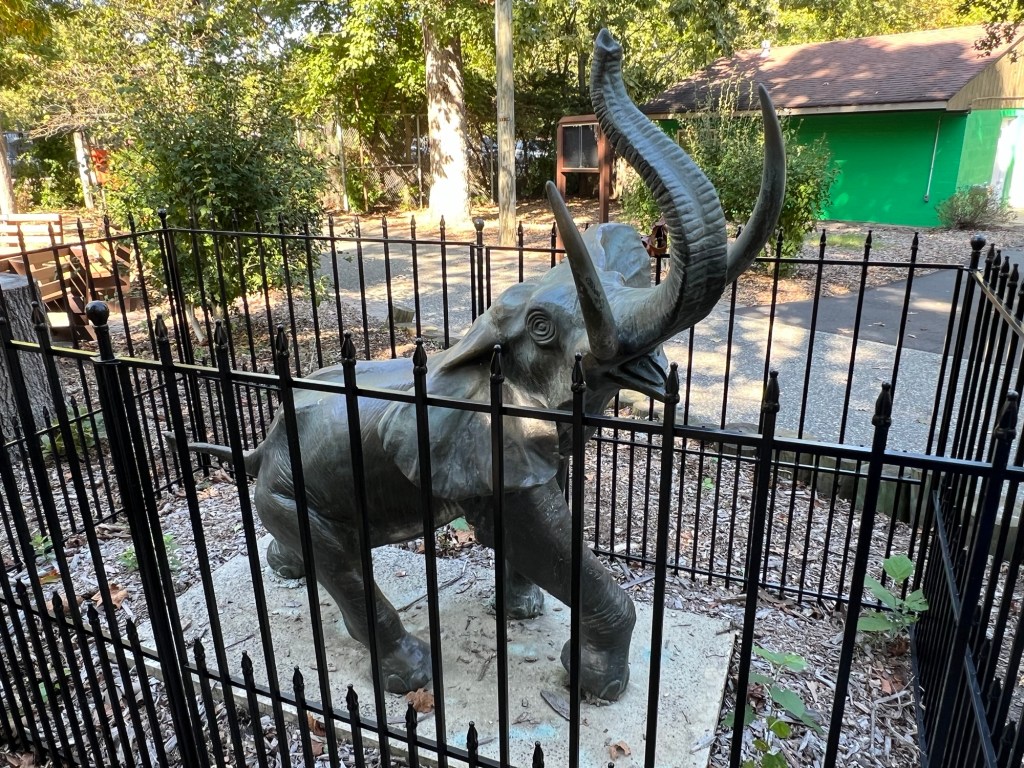
The Elephant statuary at the entrance of the zoo
The status of how some animals found their home here
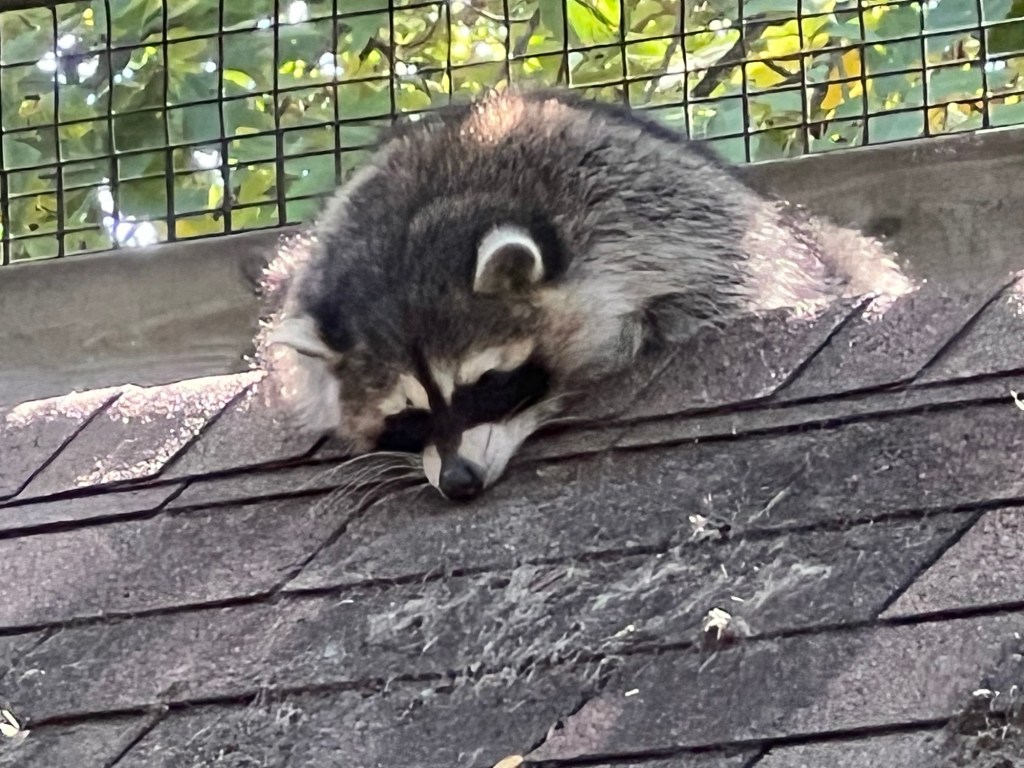
The first resident I finished was the Raccoon House, where it looked like the raccoon was taking a snooze. He really looked out of it when J passed the cage.
The Raccoon House
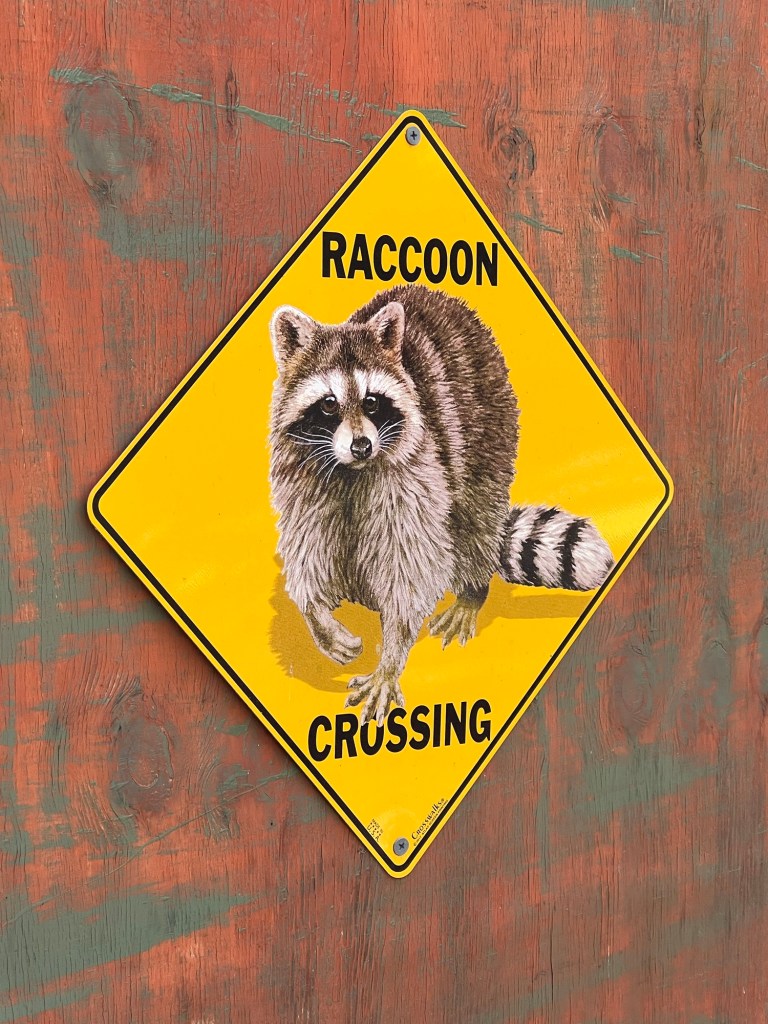
The Raccoon Crossing sign
This poor little guy was out like a light
The zoo is one of the smaller more localized ones that I have visited so you can see the whole zoo in about an hour. Then you can walk leisurely around the paths and revisit the exhibitions again. Some of the animals like the peacock family, just wonder around the park and do their thing.
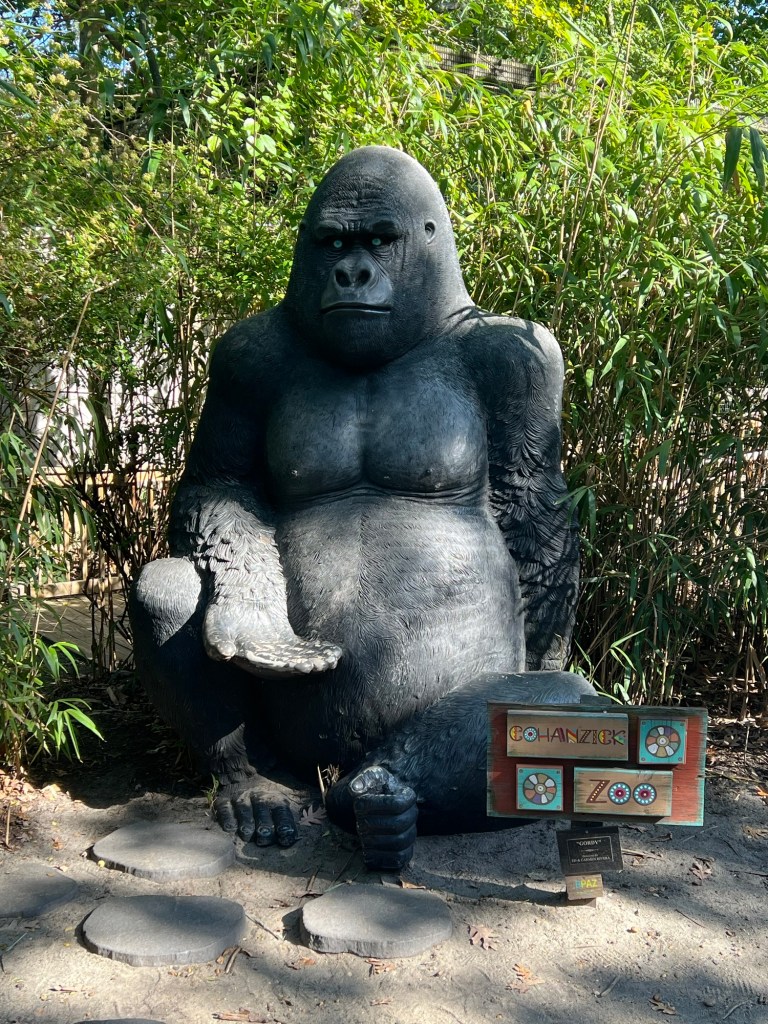
This gorilla sculpture that greets you in the back part of the zoo
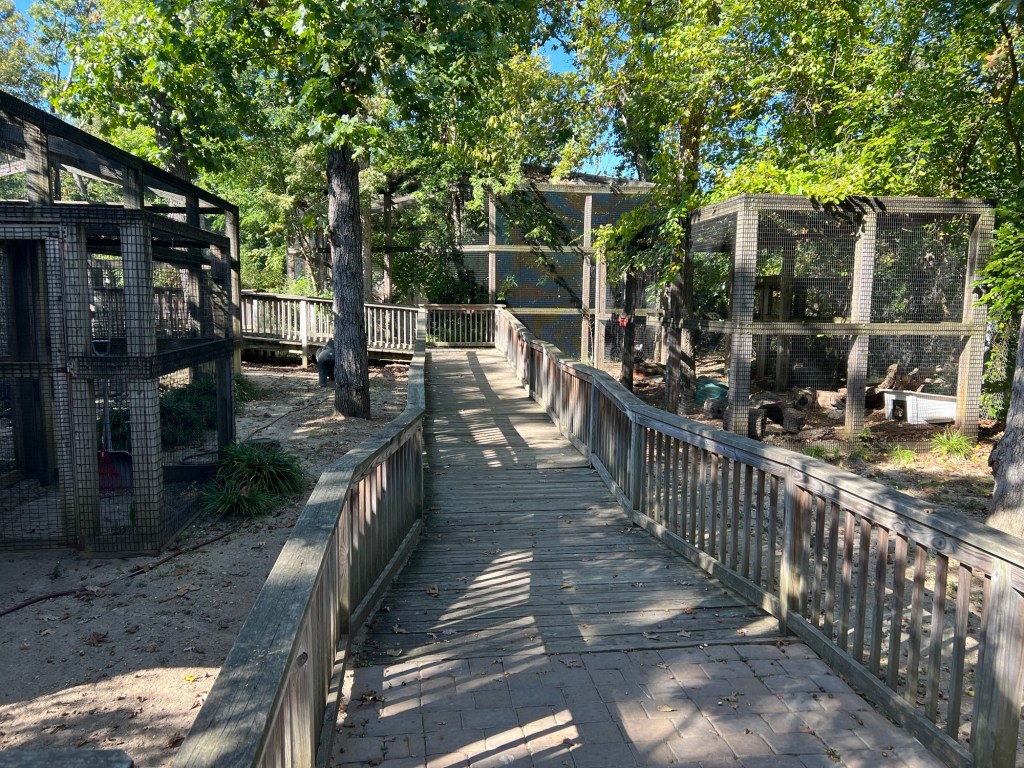
Following the walkway to the back pens where a lot of the small animal and bird displays were located
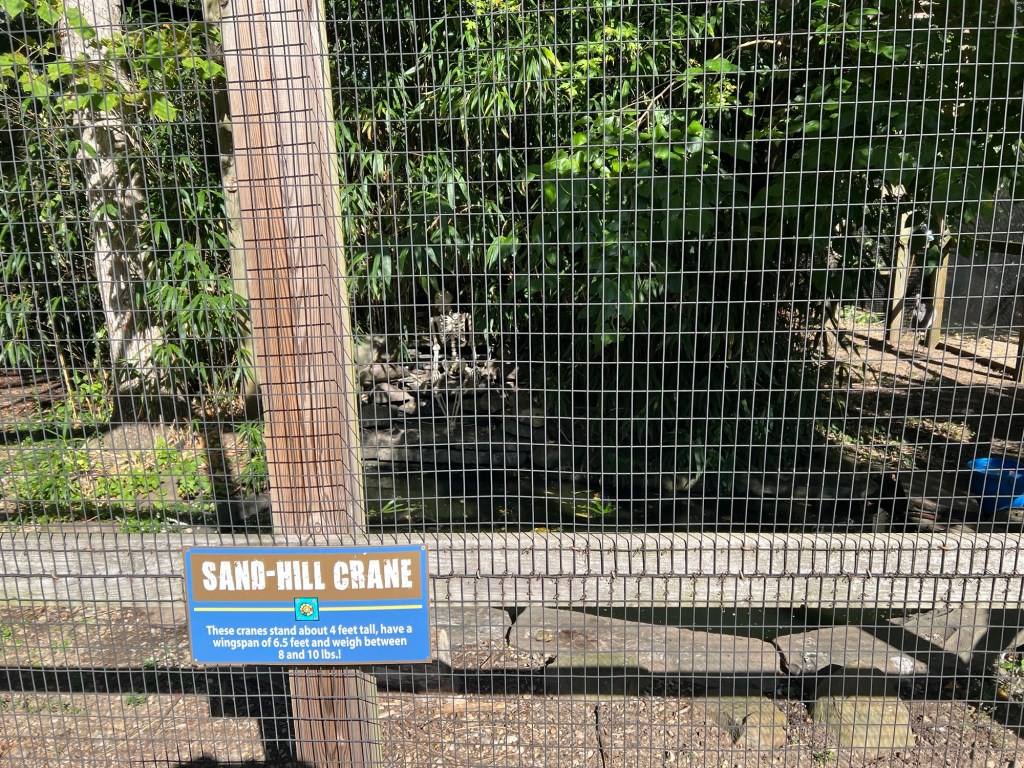
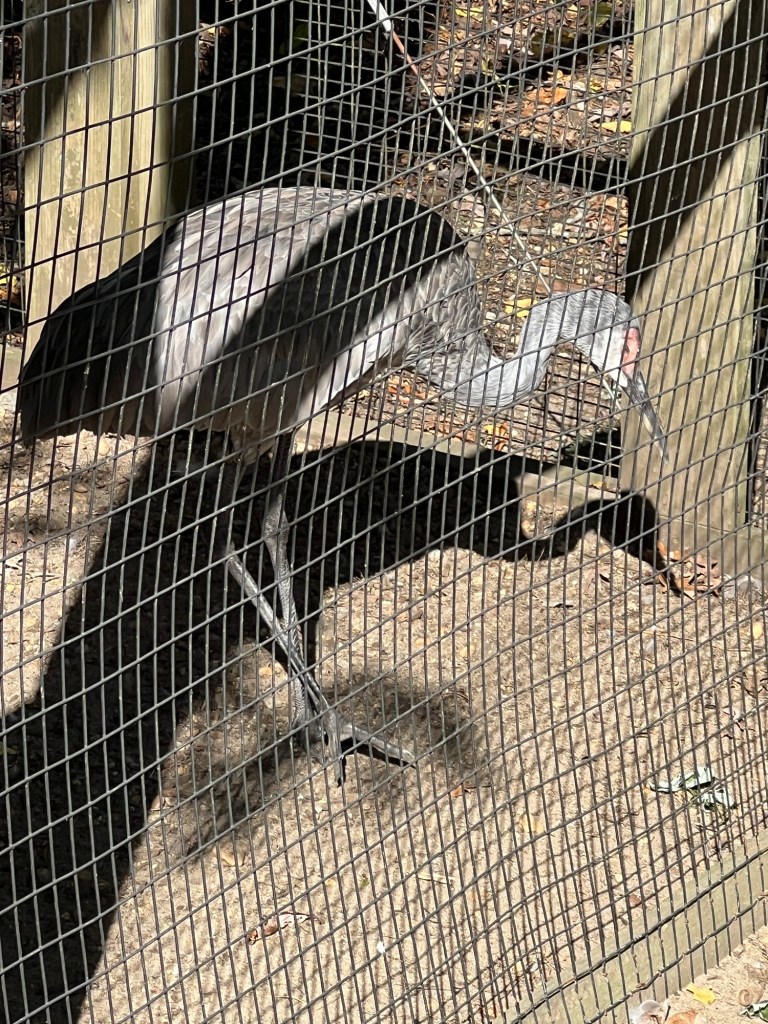
The next exhibition that I visited was the Sand Hill Crane and I read that the poor little guy had been injured. He seemed a bit more optimistic when I passed the cage. I think that the animals just want some attention.
The Sand Hill Crane display
The Crane was watching all of us as we passed his cage
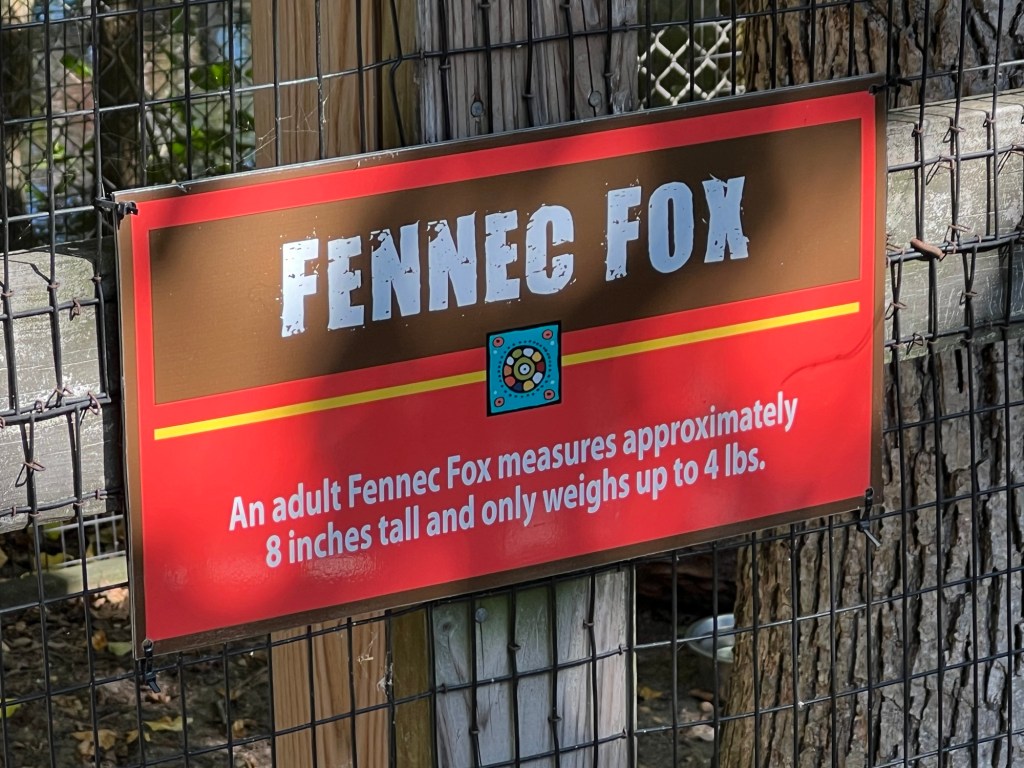
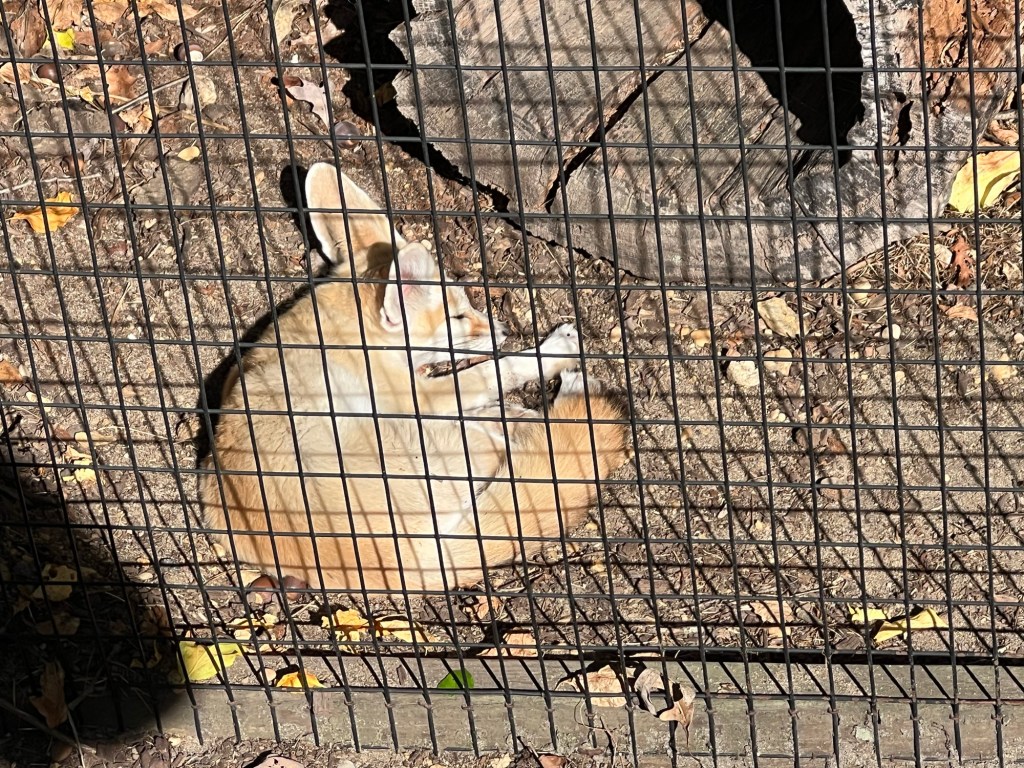
The next small animal that I visited was the Fennec fox and the two that I saw were fast asleep on this warm afternoon. They must have had a busy morning.
The Fennec fox cage
The foxes that I saw that day were fast asleep
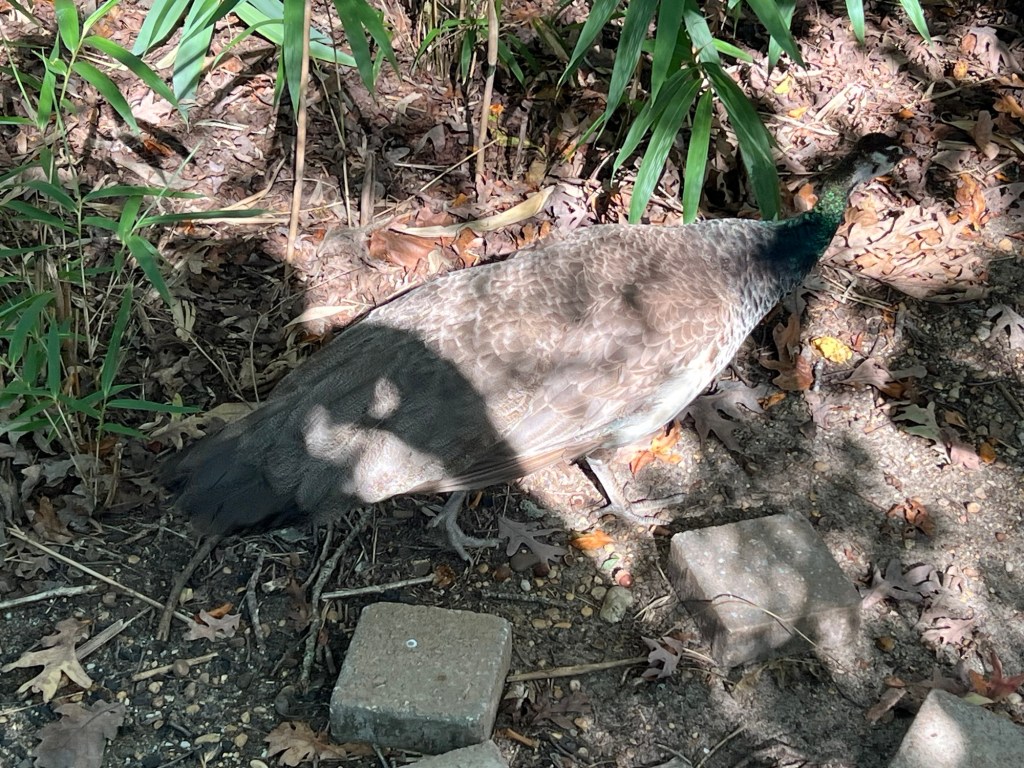
While I was walking around the back part of the zoo, there was a peacock family walking around the cages. The father peacock had two small birds with him and they just meandered amongst the cages.
The male Peacock walking around the zoo with his children. They were allowed to walk around on their own without being locked up. They looked like they were having an adventure as a family.
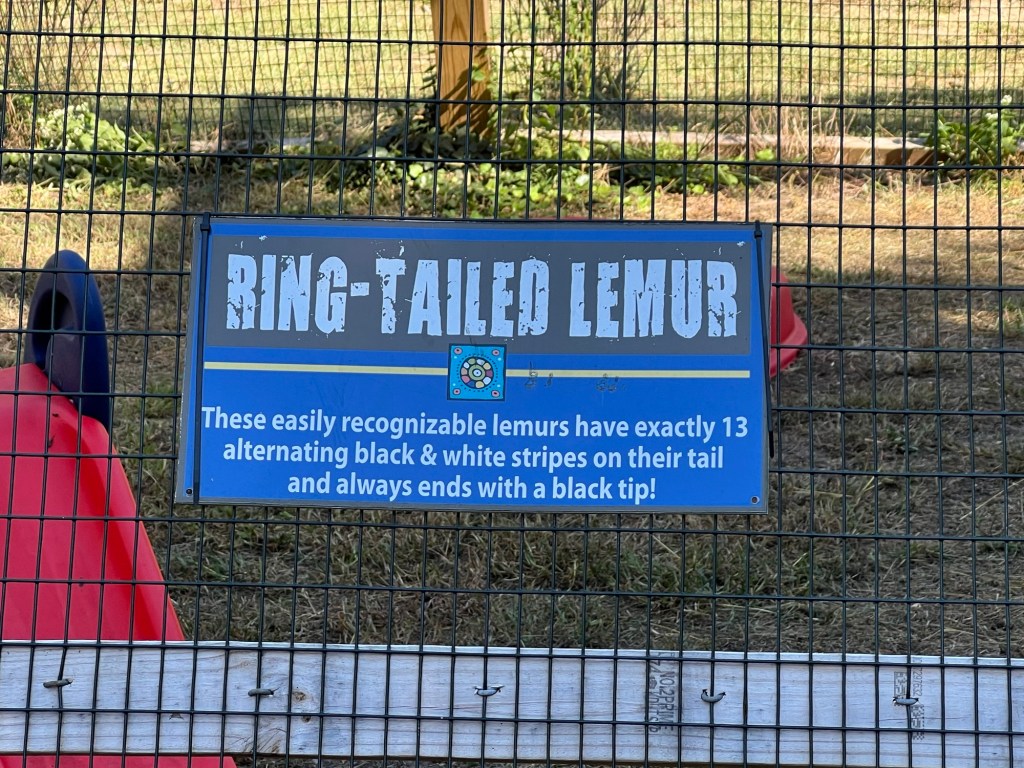
The Ring Tailed Lemur display
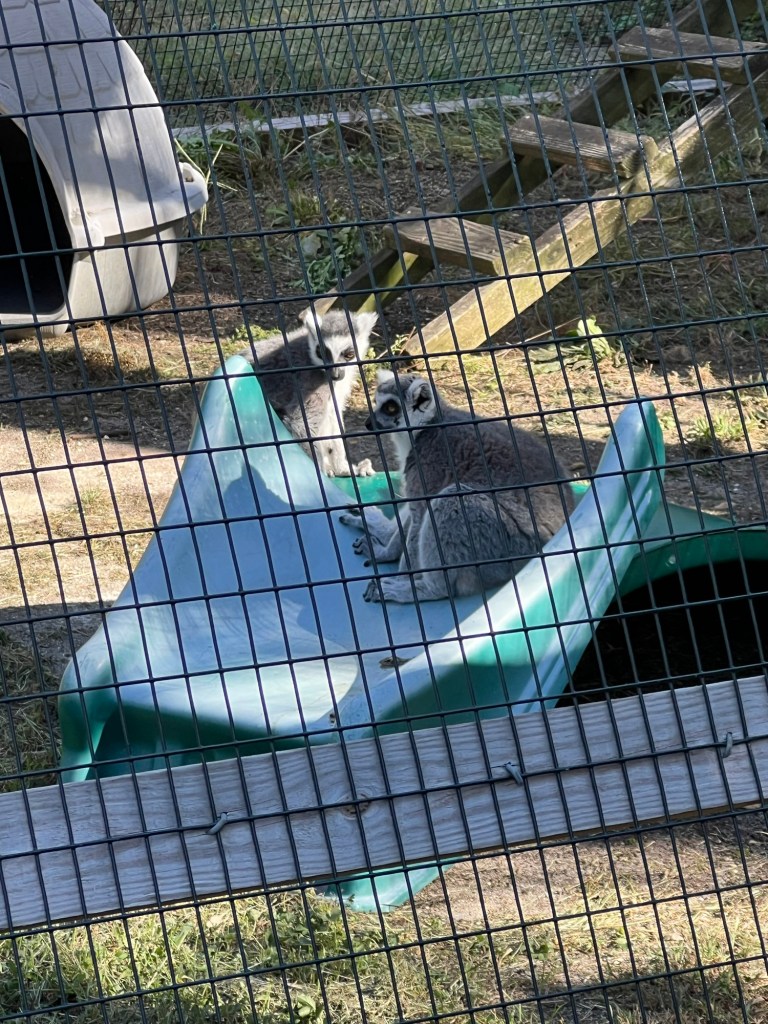
I visited the Ring- Tailed Lemur pens and these little monkeys looked like they were plotting an escape. They stayed in a bunch the whole time I watched them and they just stared.
The lemurs just stared back at me as I watched them
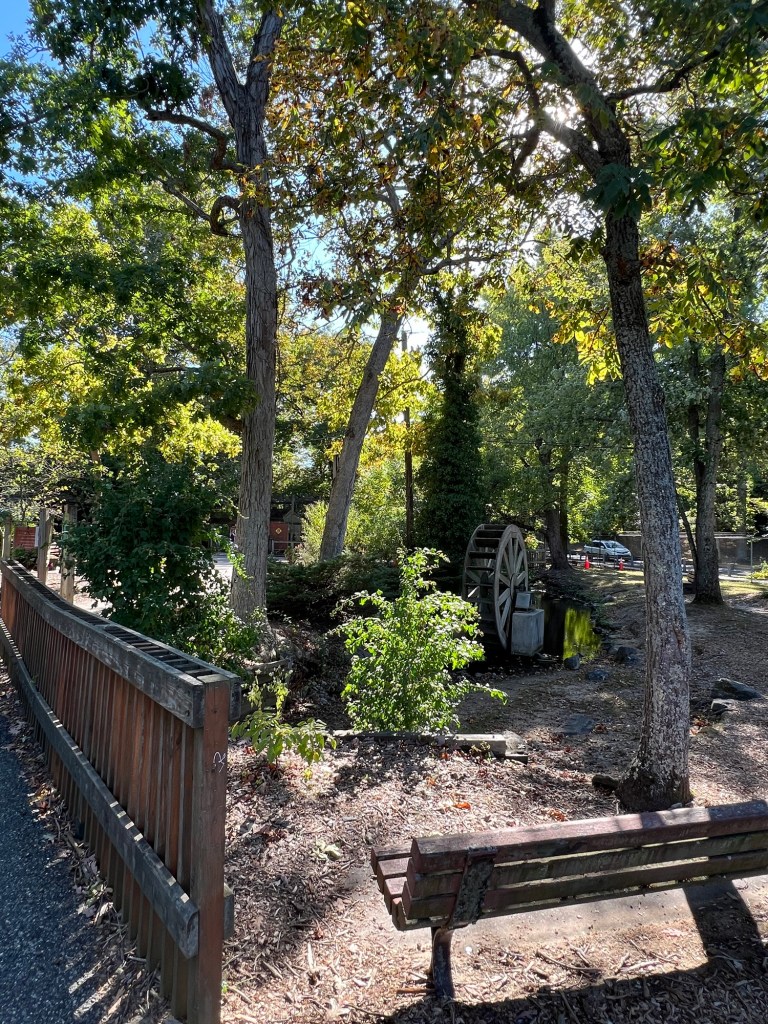
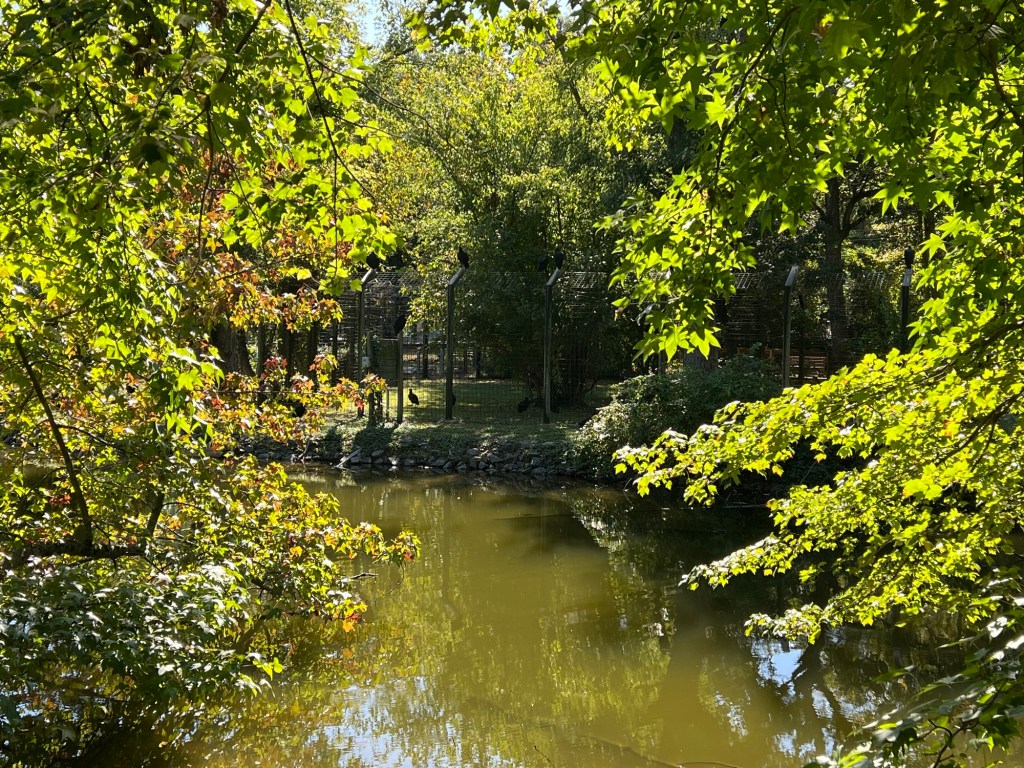
The back part of the museum was beautiful in the early fall
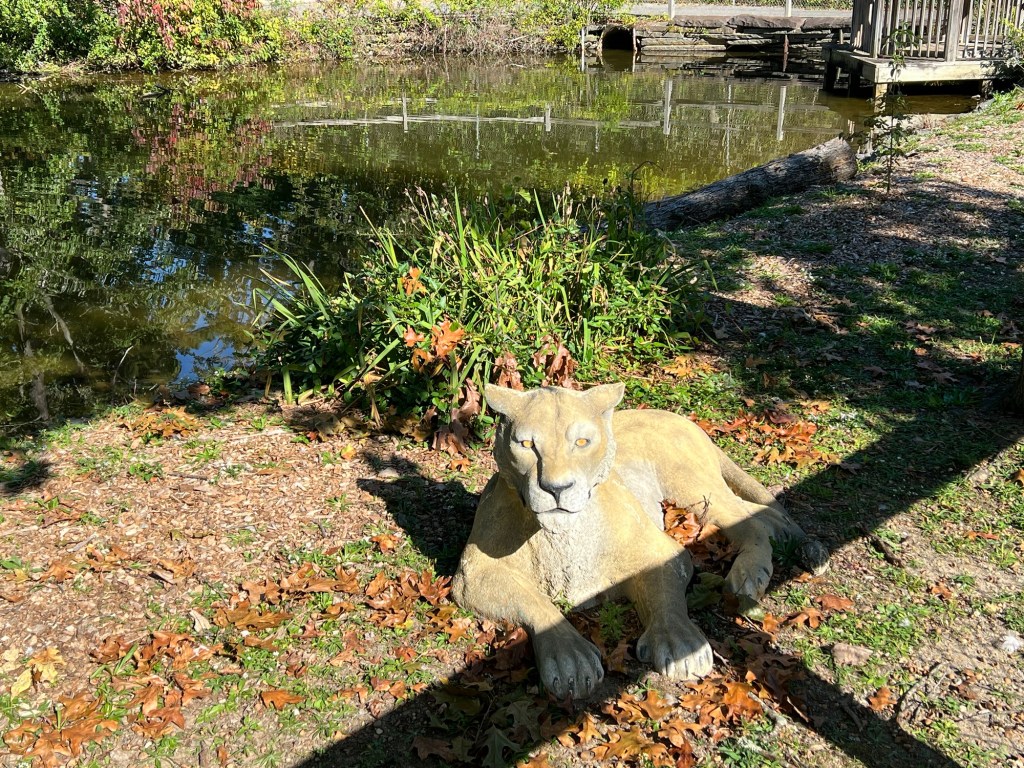
The tiger sculpture along the path at first freaked me out that he had gotten out and just looked at us. He looked real.
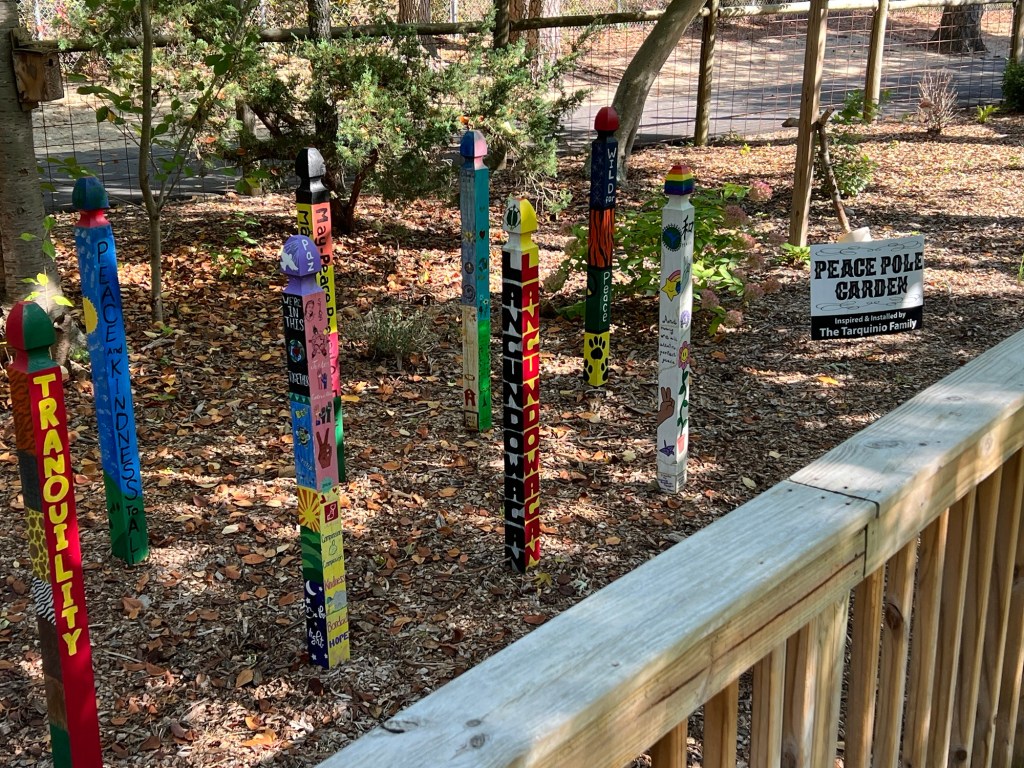
The Totem Pole Garden
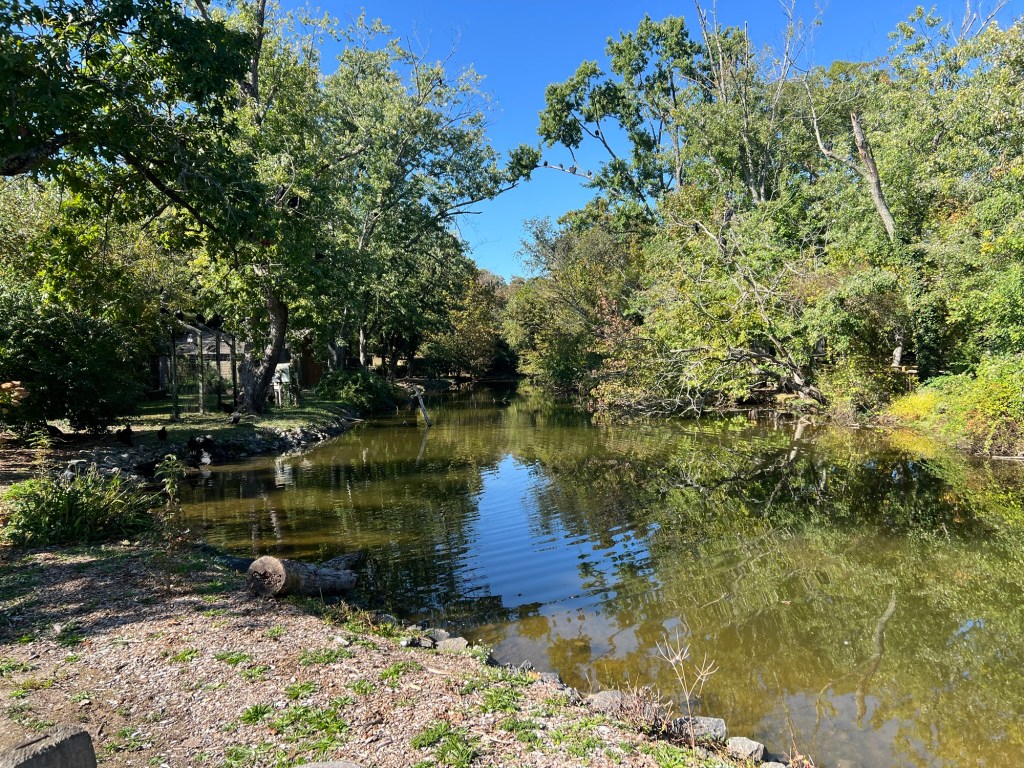
The river running through the gardens in the Fall 2024
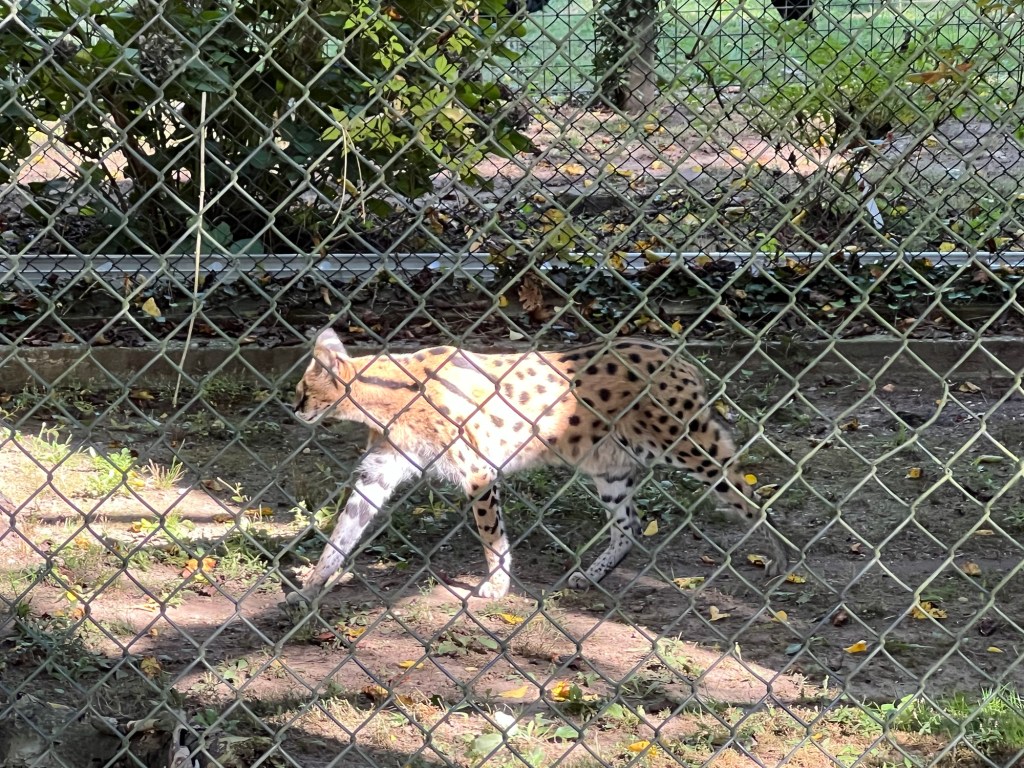
The leopard looked bored in his cage. He justly walked aimless around their cages. They are not being given enough space to move around.
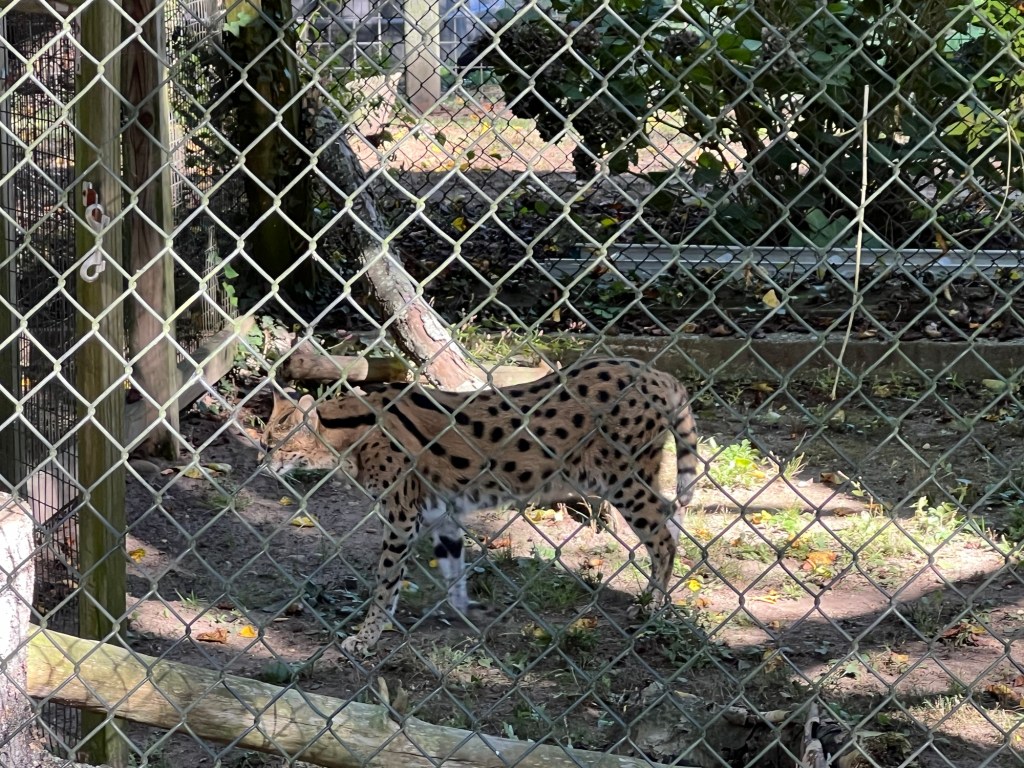
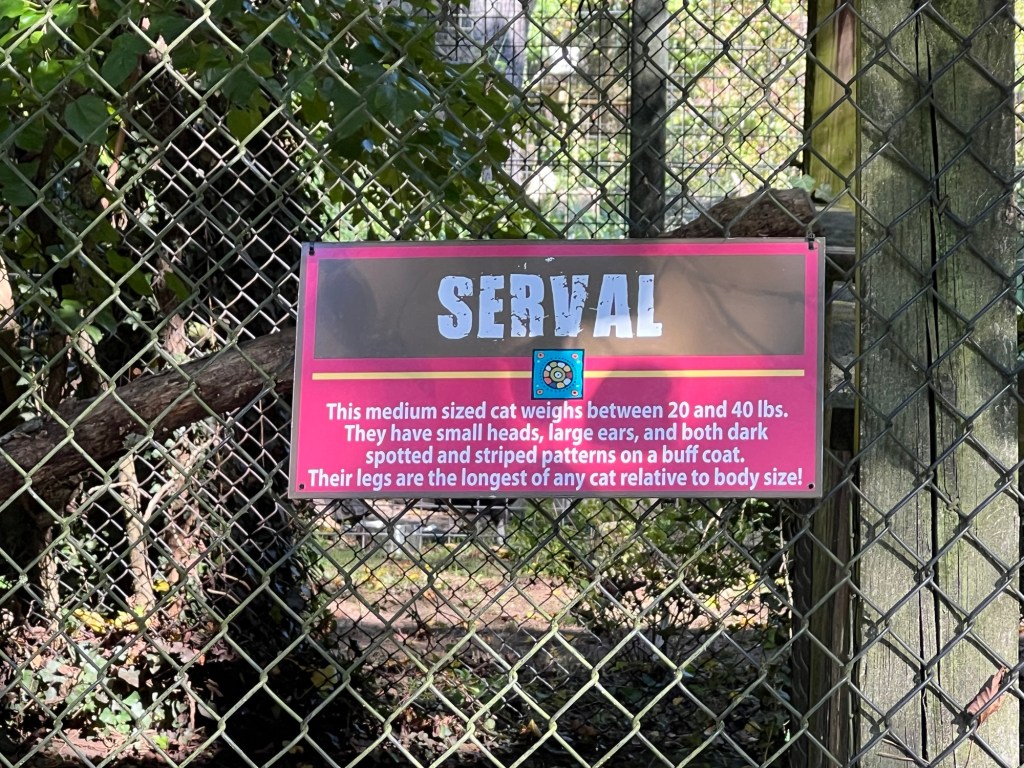
The serval cage
The Serval also looked bored. It just walked in circles around the cage. I was not sure if he was bored or just confused.
The zoo is such a nice way to relax and enjoy a warm afternoon. The animals here are not shy but need to have more space to move around. I think we as humans visiting them amuse them more.
The History of the Cohanzick Zoo:
(from the zoo website)
The Cohanzick Zoo is privileged to hold the title of New Jersey’s first zoo, and to this day remains one of the only municipal-ran zoos in the state. It all began back in 1934 when the City of Bridgeton found itself in possession of a small herd of deer which the citizens thought should be exhibited. And thus… a zoo was created!
The Zoo is part of the Department of Recreation and Public Affairs. Located in Bridgeton’s city park, which spans over 1,100 acres, the zoo is home to over 100 different mammals, birds, and reptiles. Over 45 different species from all around the world are represented here.
The Zoo, originally named the “Bridgeton Zoo”, was later named the Cohanzick Zoo in 1972. “Cohanzick” coming from the band of Lenape Indians who resided in the area alongside the Cohansey River, which resulted in the band of the tribe being named the Cohanzick Indians. This river flows through and around the park, adding a unique water feature.
Up until about 1970 the Zoo was a fairly small operation, running more like a petting zoo than a modern zoological care facility. This change was facilitated by Jerry Alden, who became Director of Parks and Recreation for Bridgeton. Knowing a local with a love and talent for taming wildlife, Henry R. Ricci was offered the position of curator, which he happily accepted. His defining point for change was, “Close it up, or make it a zoological garden and educational center,”.
Between 1970 and 1973 big changes came to the small zoo. Part of this is thanks to a visit to the Governor’s office in Trenton by zoo resident, Maggie, a jaguar. Her visit was rewarded with a $25,000 gift to the Zoo from the state government, per Gov. Cahill. A sanitation program was put in place, proper care and diet programs were developed for the animals, and more natural habitats were built. Dr. Ernest Zirkle, a local veterinarian who up until then had cared for the animals as a public service, was made a formal member of the zoo staff. Another big change, was the formation of the Cohanzick Zoological Society. The Society, which still exists today, comprised of local volunteer citizens, has the mission of supporting the Zoo through driving public awareness and fundraising efforts.
Since then, the Zoo has been on an ever-evolving mission to better its experience for both its animals, and its visitors. Thanks to funding from both local government and public donations, the Zoo is able to provide free admission to visitors, maintain necessary renovations, and keep up appropriate care for the animals.
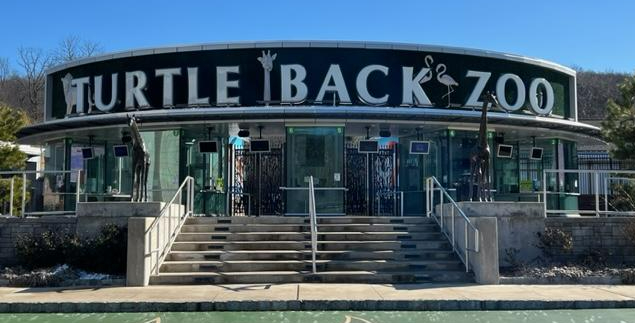
I have been coming to the Turtle Back Zoo since I was in elementary school when we used to come here on field trips. I remember as a child having lunch on the lawn with my class and feeding the animals. That was back in the 1970’s with the old zoo set up. I had read that the zoo was falling apart by 1995 and they were ready to close it down. Like anything else, these zoos and parks need an update every few years to keep them relevant.
The directions on where to go when you enter the zoo
In 2000, as master plan was started in what direction the zoo wanted to go and in the next twenty years, I have seen the results of that hard work. You have many nicer displays, some still being too small for the respective animals, but a more realistic environment created for them. Back in 2016 when I joined the board of another zoo, I visited the Turtle Back Zoo for the first time since 1976. I visited a much improved and engaging zoo with nice displays and more diverse animals.
The new zoo set up has a good flow
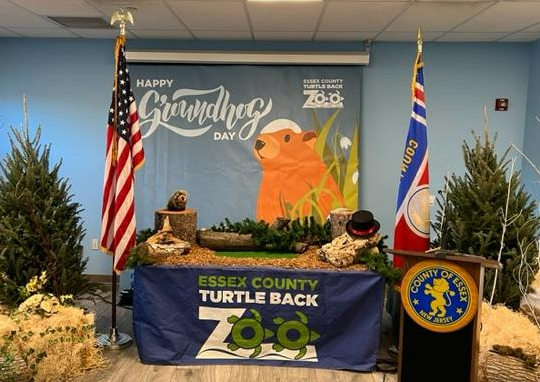
On Groundhog’s Day, I went to see the small festival that the zoo was running that ended up being a ten-minute talk with an audience of the staff, volunteers and local politicians. I thought the zoo could do so much more to build on the reputation of this event. They introduced the new groundhog, Miss ‘Edwina of Essex’, who replaced ‘Essex Ed’. They said he had retired to Florida (I was not sure if he died or was somewhere else that day). Still, it was a cute little event with the groundhog trying to walk off and escape and a weather prediction of an early spring.
Groundhog’s Day Celebration 2023:
Miss ‘Edwina of Essex’ will be the star of Groundhog’s Day festivities in the future
The indoor set up for Groundhog’s Day at the Turtle Back Zoo in 2023
Read my blog on MywalkinManhattan.com” Day “Two Hundred and Sixteen: Meeting ‘Edwina from Essex’ at the Turtleback Zoo-Happy Groundhog’s Day”:
After the event was over, I got a chance to walk around the zoo for an hour and even though it was the middle of the winter, there was a lot going on at the zoo. I spent the next hour or so walking the exhibits and watching the feedings. Being the middle of the winter with snow all around, a lot of the displays were closed, and the animals were inside as it was too cold for them.
The flowers that line the paths of the zoo from the old days
I started the tour of the zoo at the Flamingo pool. Watching these graceful animals communicate in their own language amongst themselves was interesting. The flamingos looked at us humans with amusement almost as if they were cracking a joke at our expense. They walked around their pool in groups, and it was fascinating to see how they moved in cliques. Some stayed at one part of the display while others moved around conversing about something.
The flamingos sleeping on this cold morning
The flamingos carried on a nice conversation at our expense
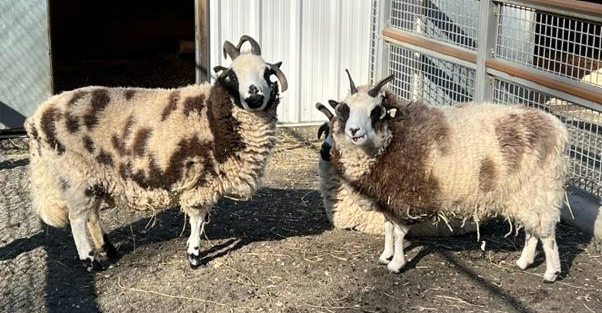
I visited the Petting Zoo that was pretty much closed, but the animals were out having their afternoon meal. I swear the rams and sheep looked at me like an alien from Outer Space. I have never gotten such an inquisitive look from another animal before. They all just stared at me and stopped eating. I guess they had not seen a visitor in a long time with the exception of the staff with the weather being what it has been.
The goats gave me the strangest looks that afternoon
The lions and giraffes were all inside warming up as this weather was not something they are used to, and I will have to revisit these exhibits in warmer weather. The Penguin House was a lot of fun to visit. The penguins are so engaging and had just finished their feeding time. They looked like they were ready to play.
The pelicans were swimming around in the Penguin tanks
Penguins’ dove and swam all around me, looking at me through the glass and trying to communicate with a lot of chirping. They looked so happy to see another person beside the trainers. As I followed them as they swam around the tank, they looked to me like they were trying to show me their swimming skills. I felt like they were trying to befriend me as some sort of strange new penguin. They are really used to seeing humans and find ways to engage with us.
The penguins at the Turtle Back Zoo are so friendly
I got to watch the sea lion feeding and watch the seals and otters swim around their tanks. The otters, which are an outdoor animal looked so cold that they swam for a bit after their feeding and then raced inside their burros to get out of the weather.
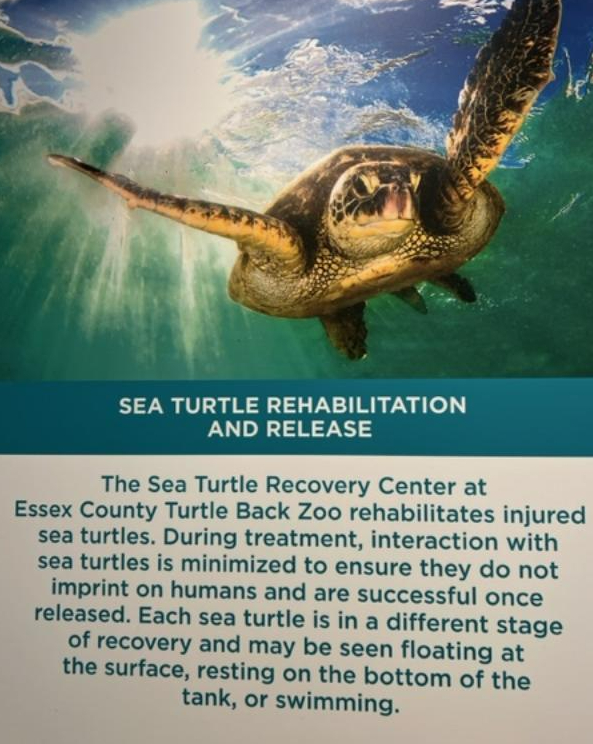
I stopped into to the Sea Turtle Recovery Building to see what the zoo was doing to help the turtles with their health and how the recovery was done. Separate tanks where the turtles are monitored for their therapy are on display and you can see the different stages they go through before being released into the wild.
The display sign by the tanks
The Sea Turtles in the rehabilitation center
The Big Cat Country exhibition had the poor cougars and mountain lions walking around in circles in the snow looking like they were not too sure what to do next. They did not look that happy to be outside, but I am sure being cooped up was not good for them either.
The Cheetah looked so cold that day
The Train Ride through the park was closed for the season as was the carousel and the restaurant. Those will have to be revisited in the Spring. I revisited the Reptile House one more time before I left for the day.
The giant turtle in the Reptile House
There is a variety of snakes, lizards and other wild creatures on display here and it the one exhibit where the animals seemed happy in their environment as they had plenty of room to move around and stretch. I swear that those snakes know that you are there. They just stare at you when you walk by looking like they are plotting to get out of the glass displays.
The giant lizard in the Reptile House
I will visit again in the Spring and talk about the comparisons with the weather and how it affects the animal’s behavior. They are no different than us with adapting to the change of the seasons. Many of these animals come from environments where this type of cold is not what they are used to and it is hard for them.
The Puff Fish in the Fish Tanks in the Touch Tank Display
There will be a lot more to see in the warm weather when I return.
The Bear Statute by the Bear Den
The History of Turtle Back Zoo:
(From the Zoo’s Website)
The Turtle Back Zoo came into conception in 1962 when the Essex County Parks Commission President, William Wachenfeld, awarded a $400,000 contract to Max Drill Inc. to build a 15.5-acre zoo in the South Mountain Reservation Park. It was designed to be a seasonable park for children.
The Turtle Back Zoo logo
Designer Tjark Reiss was hired to design the park and he created exhibits based on Hans Christian Anderson’s nursery rhyme themes and other children’s stories. There were to be farm animals and an antique train ride that took visitors on a mile round trip ride through the zoo’s surrounding woodlands.
The Turtle Back Zoo opened June 3rd, 1963, with a collection of 140 animals of 40 species. The zoo took its name from a rock formation located on the mountain side east of the zoo. The Lenape Indians called this formation Turtle Back Rock. The pattern on the rocks created by large basaltic crystals makes it appear that you are standing on the back of an enormous tortoise.
In 1973, the zoo’s animal collection had grown to 850 animals of 275 species. In 1975, a Zoological Society was established to promote the zoo and provide funding support through memberships and other fund-raising efforts. The first board meeting took place in September of 1975. In 1978, the Board of Commissioners that directly administered the park was replaced with Department of Parks, Recreation and Cultural Affairs under the direction of the County Executive.
The Children’s Statute by the entrance of the zoo
In 1995, the zoo fell into disrepair and the zoo was almost shut down in 1995 (Wiki).
In 2000, the zoo completed a new master plan with accreditation from the American Zoo and Aquarium Association as its major focus. The zoo started to replace the antiquated 1960’s style cages with larger, more naturalistic habitats for its animals. In 2005, the zoo completed a new 1.8-million-dollar Essex County Animal Hospital at the Turtle Back Zoo to serve the zoo’s animal residents and serve as a animal quarantine facility for the growing animal collection.
That year the zoo demolished the original administration building and education center and replaced them with a new 11,000 square foot complex that included a walk-through gift shop, a new visitor friendly entrance and exit, a 4,000 square foot reptile center, administration offices a new group entrance and two classrooms opening to an auditorium. A new picnic pavilion and an animal themed playground were opening in 2006.
In September of 2006, the Turtle Back Zoo was granted accreditation by the American Zoo and Aquarium Association. This distinct honor places the Turtle Back Zoo amongst the elite zoos and aquariums of the United States and means that the zoo adheres to the highest standards of zoos in the country.
The Touch Tanks with stingrays in them
Come to the Zoo on Groundhog’s Day to meet “Edwina of Essex”












 Visiting a Museum: The Unique, Unusual, Obscure and Historical