Category: Historic Homes of New Jersey

East Point Lighthouse                                            10 Lighthouse Road                               Heislerville, NJ 08324

East Point Lighthouse 10 Lighthouse Road Heislerville, NJ 08324

East Point Lighthouse

11 Lighthouse Road

Heislerville, NJ 08324

(856) 785-0349

http://eastpointlight.com/

https://www.facebook.com/eastpointlight/

Open: Sunday 1:00pm-4:00pm/Monday-Friday Closed/Saturday 1:00pm-4:00pm/Please check the website for seasonal dates

Admission: $8.00

My review on TripAdvisor:
https://www.tripadvisor.com/Attraction_Review-g46502-d12629019-Reviews-East_Point_Lighthouse-Heislerville_New_Jersey.html

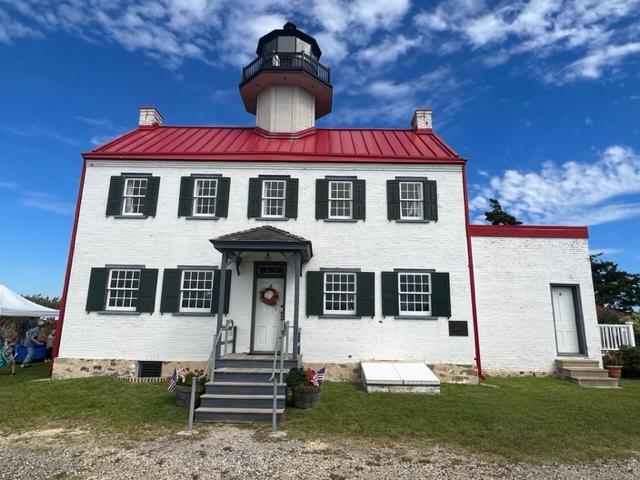
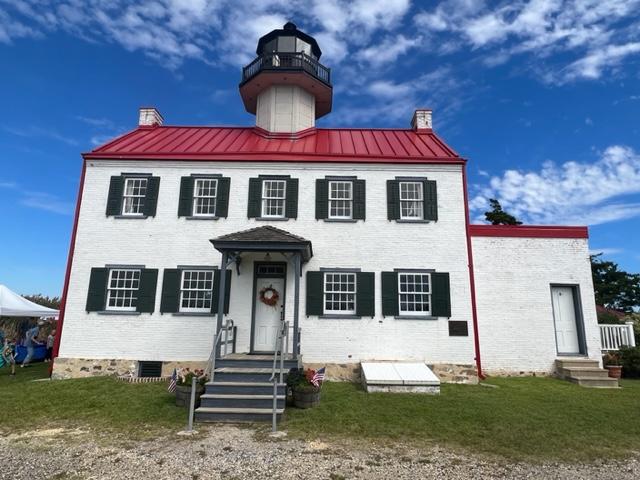
The East Point Lighthouse at 11 Lighthouse Road

I visited the East Point Lighthouse on a glorious sunny day when there was no wind in the forecast, and it made for an excellent visit to this lighthouse right by the sea. I noticed that on almost all sides, there were man-made barriers to protect the lighthouse grounds from erosion.
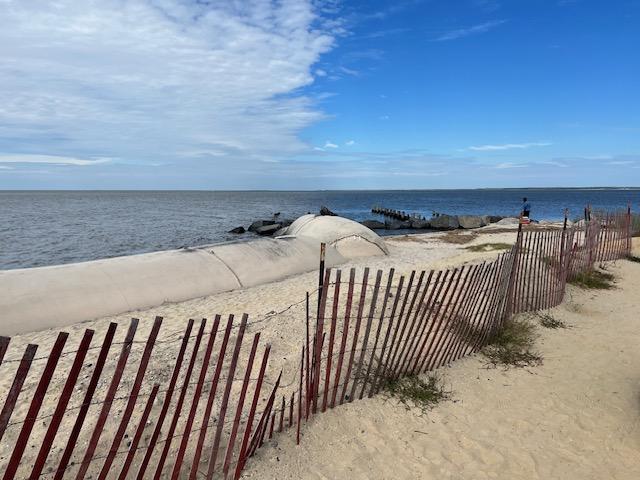
The bunker that surrounds the lighthouse.

The grounds were a combination of dunes with beach grass, rocks and tiger Lillys all over the property to give it a colorful look. There were misty breezes from the water that felt so good as it got hotter that day. The property is pretty contained and there is parking all around the building, but the lots are small.
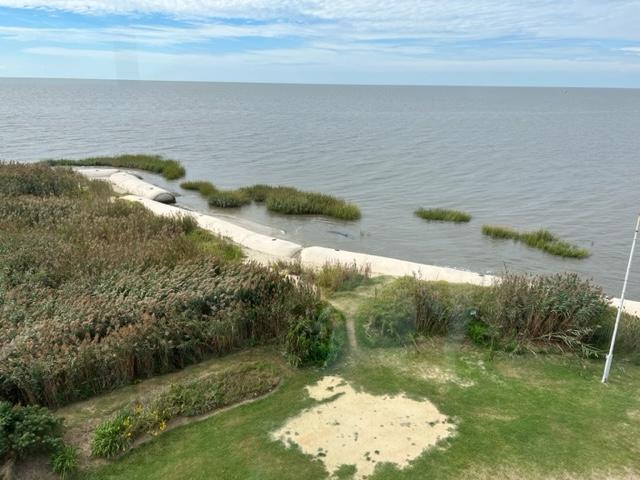
The view from the top of the lighthouse that surrounds it.

I bought my tickets in the gift shop ($8.00), was able to look around at the well-stocked shop with its nautical books and tee-shirts and hats with the lighthouse logo on it. You are also able to go to the bathroom.
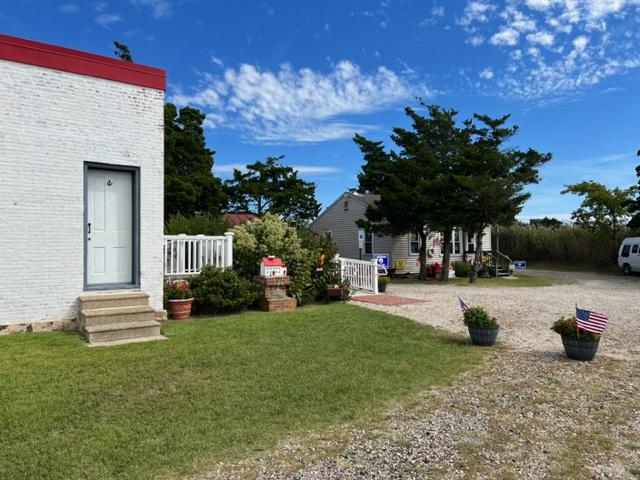
The entrance to the lighthouse and the gift shop.

The tour of the lighthouse is a self-guided tour, and you are able to climb the stairs and visit each room of the lighthouse as if the lighthouse keeper and his family still lived there. When I was talking with one of the volunteers that morning on the first floor, he told me as they were renovating the lighthouse after the fire and completing it, they put the word out to the community for donations to furnish the lighthouse with items that may have come from the period that the lighthouse was in operations. The donations poured in with family heirlooms that filled each room up.
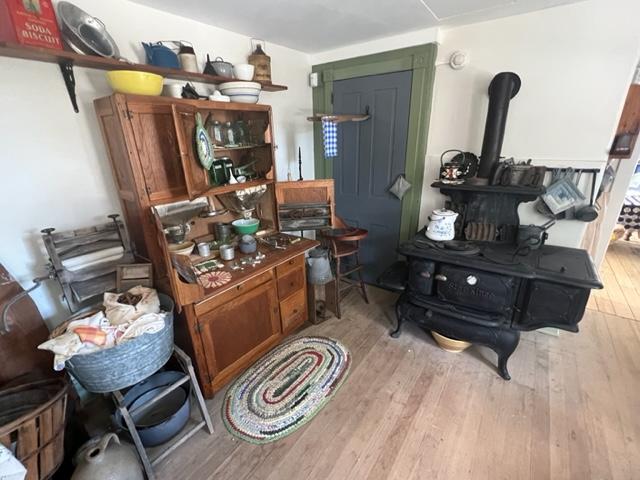
The first floor kitchen.

On the first floor is the kitchen with its time period ice box and coal stove which shows what life was life for a housewife before WWII. I am sure that electricity was tough getting to lighthouse especially during storms. You had washboards and basins for wash day and all the equipment to clean the house.
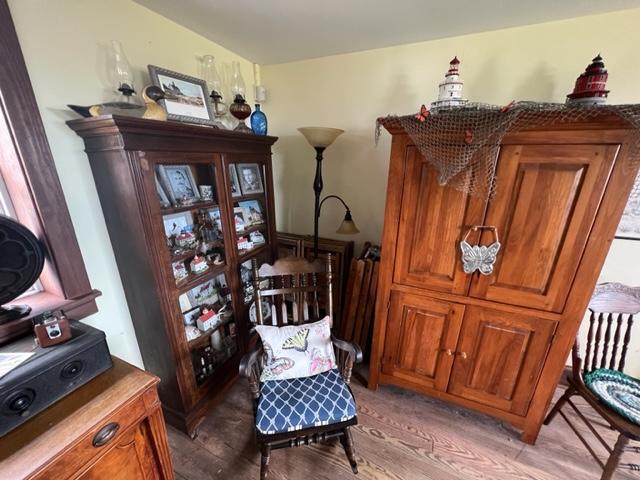
The Parlor at the Lighthouse

The lighthouse office of the lighthouse keeper was equipped with all things that are needed to keep the place running from maps to communication equipment to a fully stocked desk. There were no days off in this job. There was even a picture of Clara Noon, who as a little girl was the last child to live in the lighthouse. She visited again as a senior in the early 1990’s.
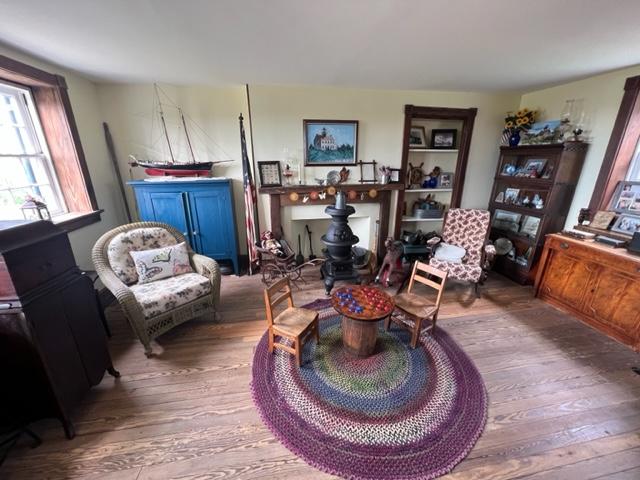
The Parlor in the lighthouse.

The upstairs had a fully furnished adults’ bedroom with period clothes of the early 1900’s to WWII and the furnishings were of various periods of living in the lighthouse.
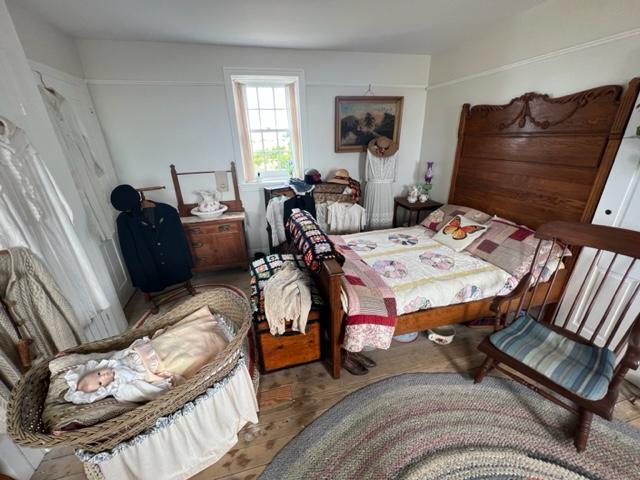
The Adult’s bedroom
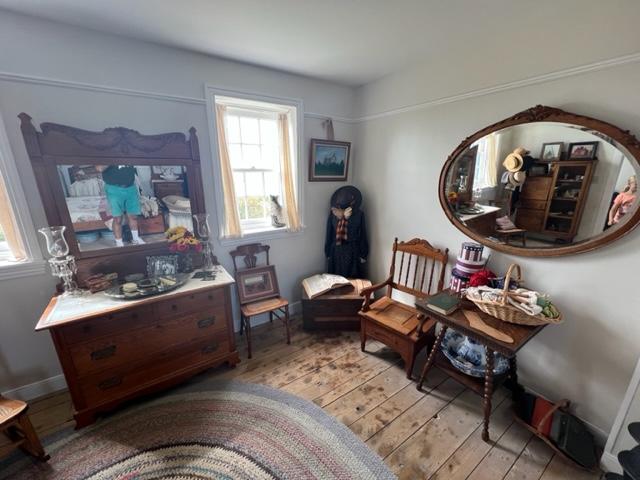
The Adult’s bedroom

The children’s bedroom was really elaborate with rope beds, children’s furniture, lots of toys from the 1890’s to the 1930’s and a great doll collection. There was even a handmade dollhouse complete with elaborate furniture that was handmade by a local resident. It was very impressive.
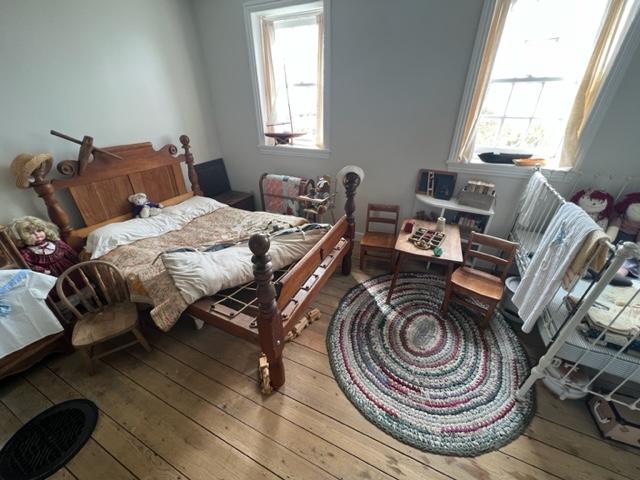
The Nursery and Children’s Room
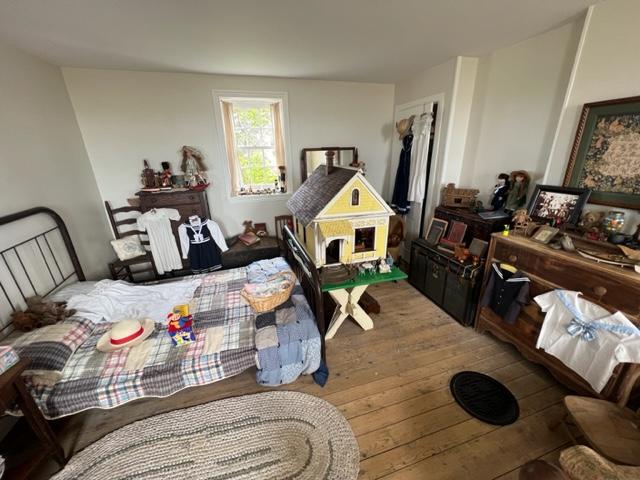
The Children’s Room
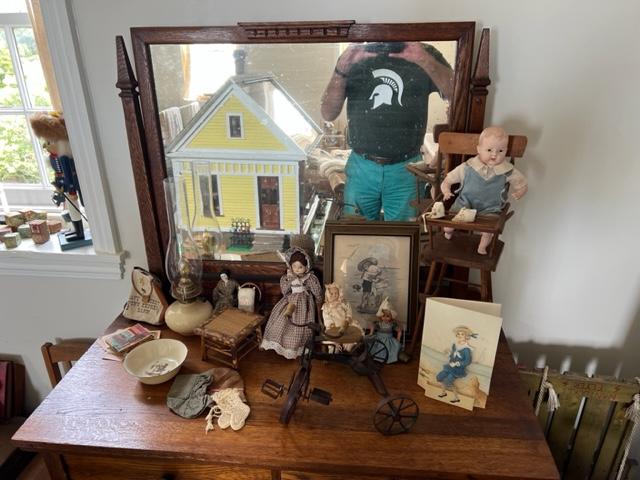
Children’s toys in the Children’s room
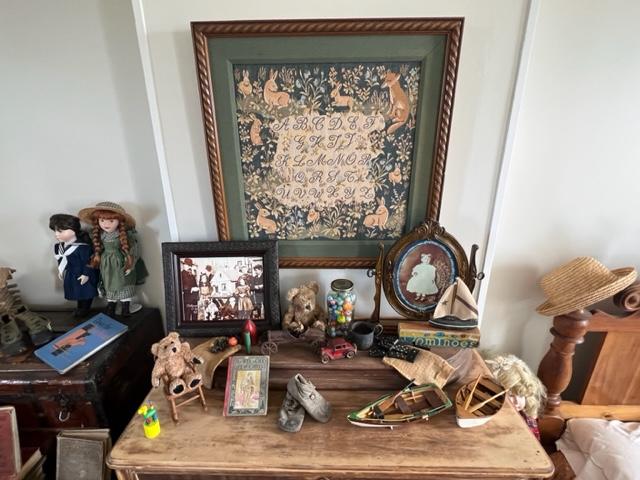
The Children’s toys and the Sampler
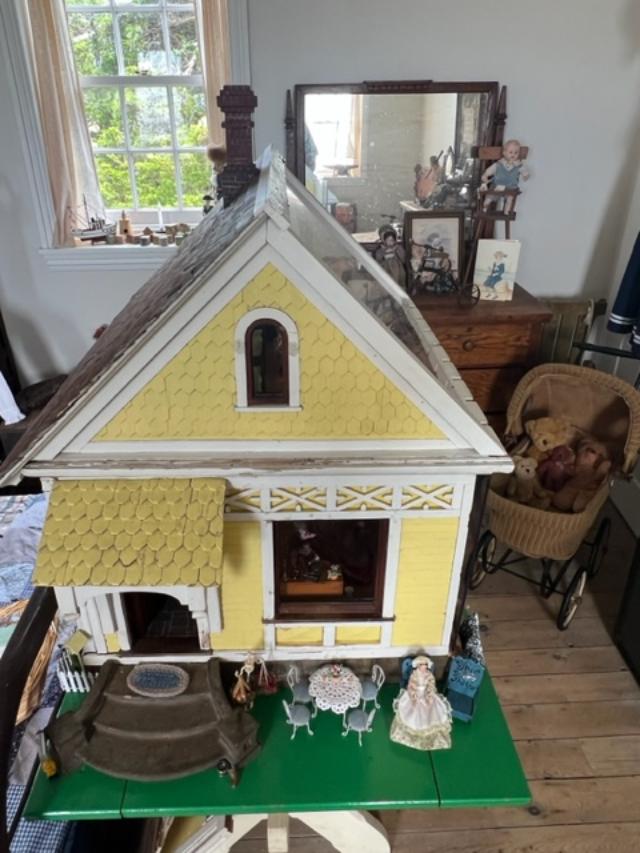
The Dollhouse that is well known in the lighthouse

There were also all sorts of maps and rare books to look at and a complete radio room and then the last set of stairs took you up to the light where you could see the views of the ocean. In fact, the views from all the floors were pretty impressive.
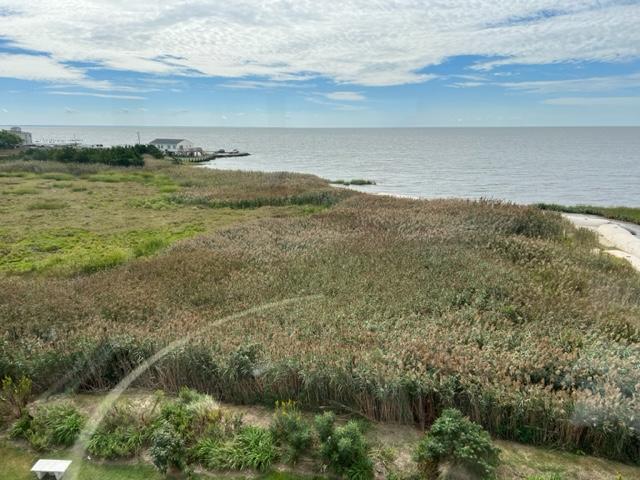
The views from the top of the lighthouse.

It is an amazing self-guided tour that gives you a glimpse into the life of the families that lived here. It may not have been this elaborate as all the items inside the lighthouse, but it gives you a clue on what life must have been like by using your imagination.
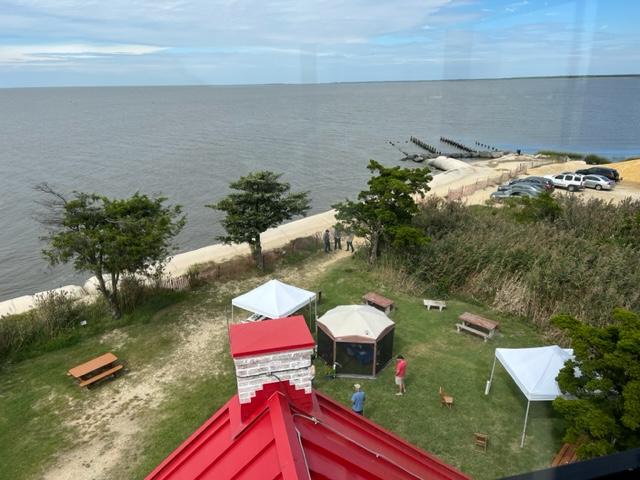
The views from the top of the lighthouse.
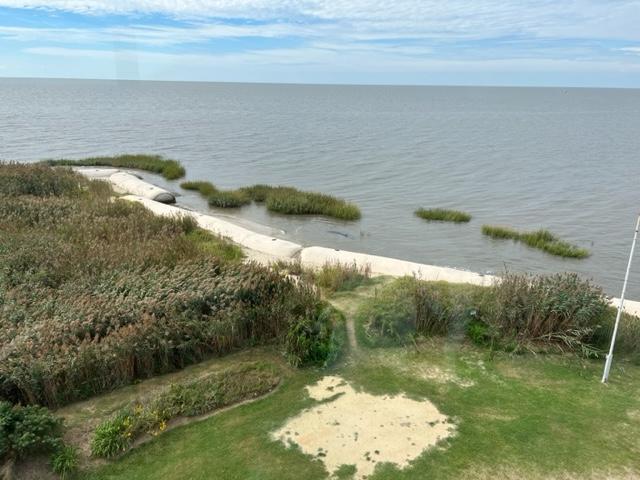
What was interesting is that the lighthouse opened in 1849 and then became fully automated in 1911 so its use of a lighthouse keeper was pretty much over before WWI. Still over a period of time you can see how the job changed with automation and advancement of technology.
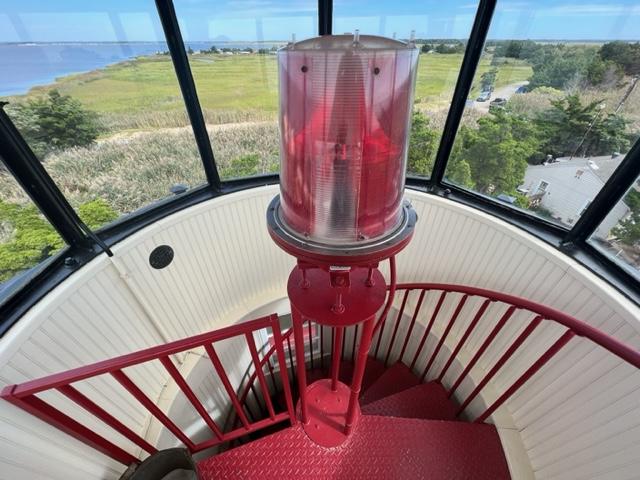
The signal light of the lighthouse.
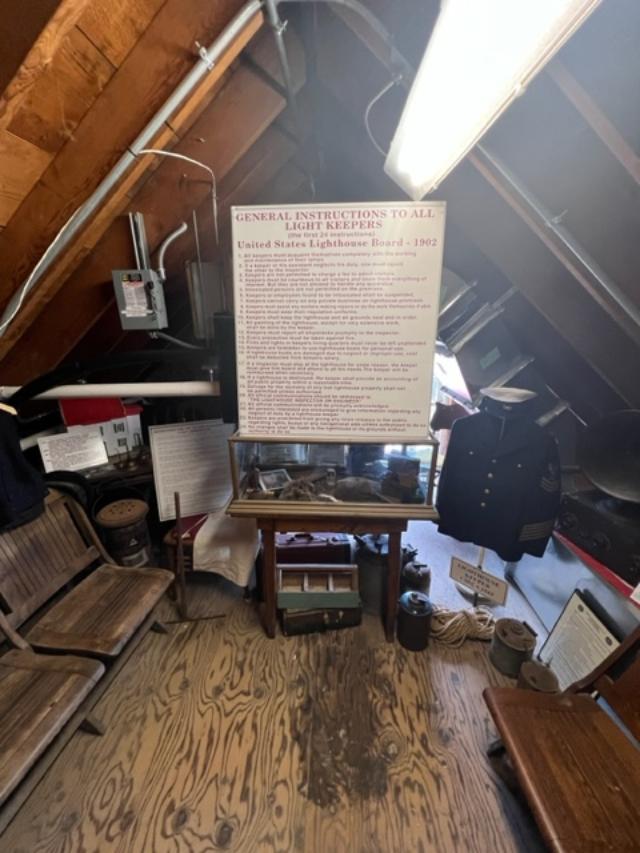
The top of the lighthouse.

I took time to walk the grounds. The landscaping and the beach dunes gave it a very attractive backdrop.

A wonderful video on the ligthouse tour from YouTube

The History of the East Point Lighthouse:

(From the Cumberland County Historical Division/NJ Lighthouse.com/East Point Tourism Pamphlet):

The East Point Lighthouse is an active lighthouse that was built in 1849, situated on the southern bayshore in Cumberland County, NJ. The ligthhouse originally had a lighthouse keeper to maintain the lights. In exchange for doing this work, they were allowed to live here rent free and were paid the sum of $1.00 per year for their services. It was fully automated by 1911.

The lighthouse was blacked out in WWII and then after the war, the Coast Guard decided the lighthouse was not longer necessary and decommissioned it in 1941. Over the years it deteriorated quickly over time.

In 1955, the Federal Government decided to sell the lighthouse and the property as surplus, and it was purchased by a Long Island construction company but before the sale was consummated it was found that proper disposal procedures were not followed in that the lighthouse was not first offered to the State of New Jersey. The state was interested in the property not because of the lighthouse but because the site was surrounded by the Heisersville Wildlife Refuge and would provide a place for boats to be launched.
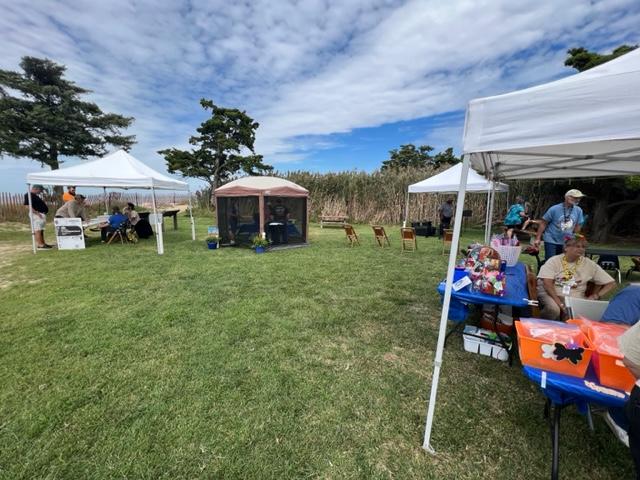
The Annual Monarch Butterfly Festival.

Local residents became concerned with the condition of the lighthouse and in February of 1971, the Maurice River Historical Society was founded with the goal of restoring the lighthouse. In July of 1971 before negotiations were complete, the lighthouse was set on fire. Through a series of grants over the years and a lot of dedication from the volunteers, the lighthouse has been reconstructed.
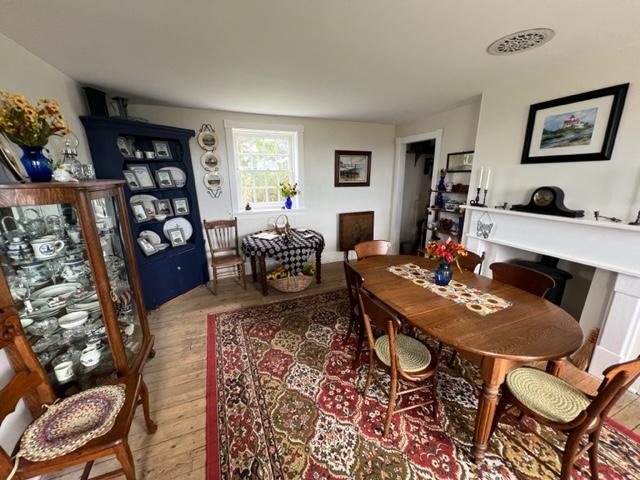
The Dining Room at the ligthouse.
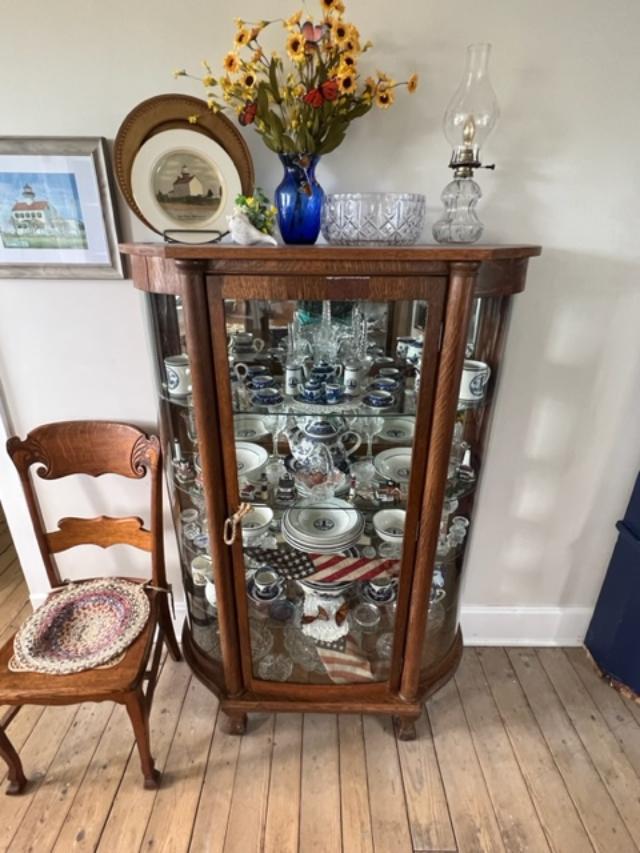
The Lighthouse China

This fully restored and furnished lighthouse with its beacon on each night serves as both an active navigational aid serviced by the United States Coast Guard as well as a year round museum, thanks to the work of the Maurice River Historical Society that manages this historical site.
East Point Lighthouse logo

Through the work of the non-profit historical society that over saw the full restoration, fully furnished, maintains and manages the lighthouse, it’s open to the public to climb/tour and for specials events year round. Both the lighthouse and grounds surrounding the lighthouse are on the National Historic Registry. East Point is the second oldest lighthouse in New Jersey (behind the Sandy Hook Lighthouse) and the only remaining New Jersey land based lighthouse on the Delaware Bay.

The two story Cape Cod style lighthouse with its distinctive red roof by day and blinking red beacon by night, marks the mouth of the Maurice River on the Delaware Bay. East Point is known for its rich maritime history, spectacular views, wide variety of wildlife and beautiful sunsets, making it a popular destination for tourist, artists, photographers, wildlife and history enthusiasts alike.

Somers Point Historical Society 745 Shore Road Somers Point, NJ 08244

Somers Point Historical Society

745 Shore Road

Somers Point, NJ 08244

(609) 927-2900

http://www.somerspointhistory.org/

https://www.facebook.com/groups/239626702903267/

Open: Sunday-Wednesday Closed/Thursday 7:00pm-9:00pm/Friday Closed/Saturday 10:00am-1:00pm

Admission: Free

My review on TripAdvisor:

https://www.tripadvisor.com/Attraction_Review-g46825-d24142966-Reviews-Somers_Point_Historical_Society-Somers_Point_New_Jersey.html

The Somers Point Historical Society at 745 Shore Road

I visited Somers Point, NJ recently to see the historical shore town and explore their small museums. The Somers Point Historical Society differs from its neighbor down the road, the Atlantic County Historical Society in that its concentration is on the Town of Somers Point and not the entire county.

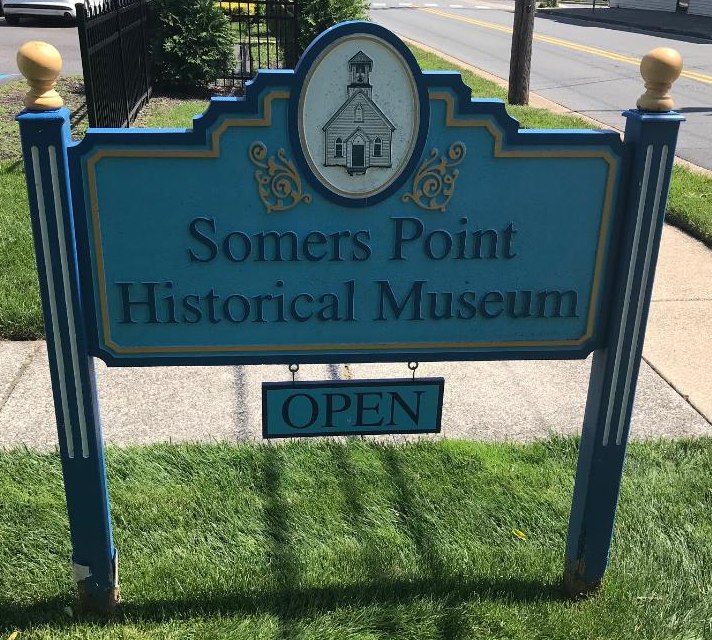
The Somers Point Historical Society sign welcomes you

The Somers Point Historical Society started in 1987 as part of the “Save City Hall” campaign to save the historic City Hall building. The plan was to highlight the history of Somers Point and its place in the community and to save some of the older buildings in the town.

The City Hall was saved and it was renovated for the new library. The organization was also helped with funding and applying for National Historic Recognition for the Bayfront Historic District that lies between Shore Drive and Bay Avenue on the waterfront district of the town (Somers Point Historical Society website).

The building that the society is housed in was originally a Baptist Church that was built in 1886 and later became the Somers Point Library. When the new library was built, the Society bought the building and the organization was formed. The museum started with about 600 artifacts and it has grown much largers since.
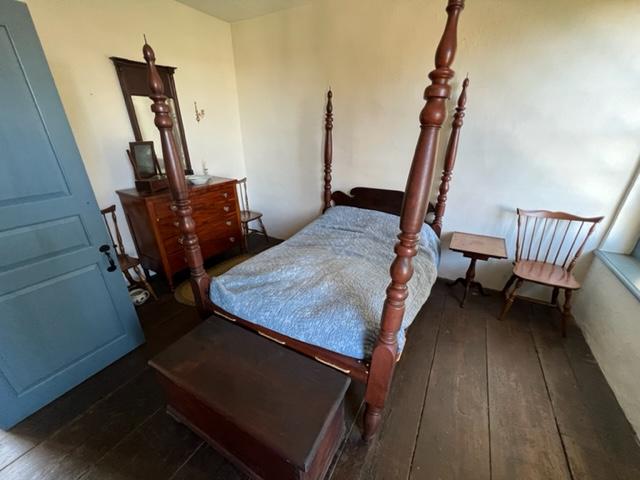
The Somers Point Historical Society main room

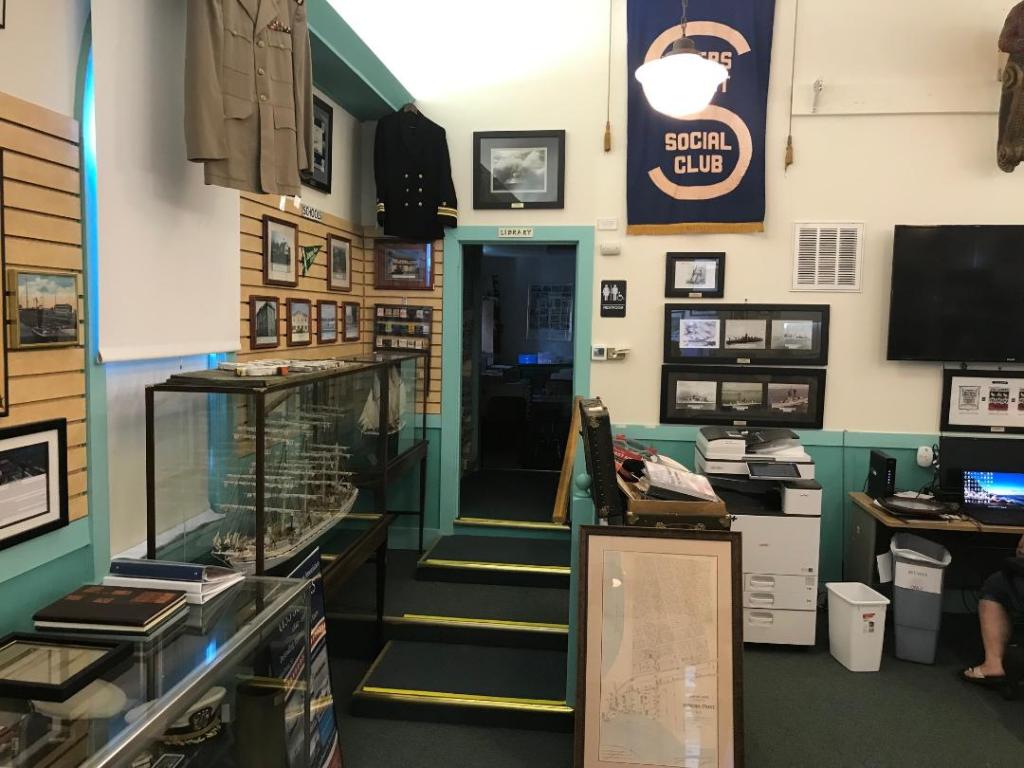
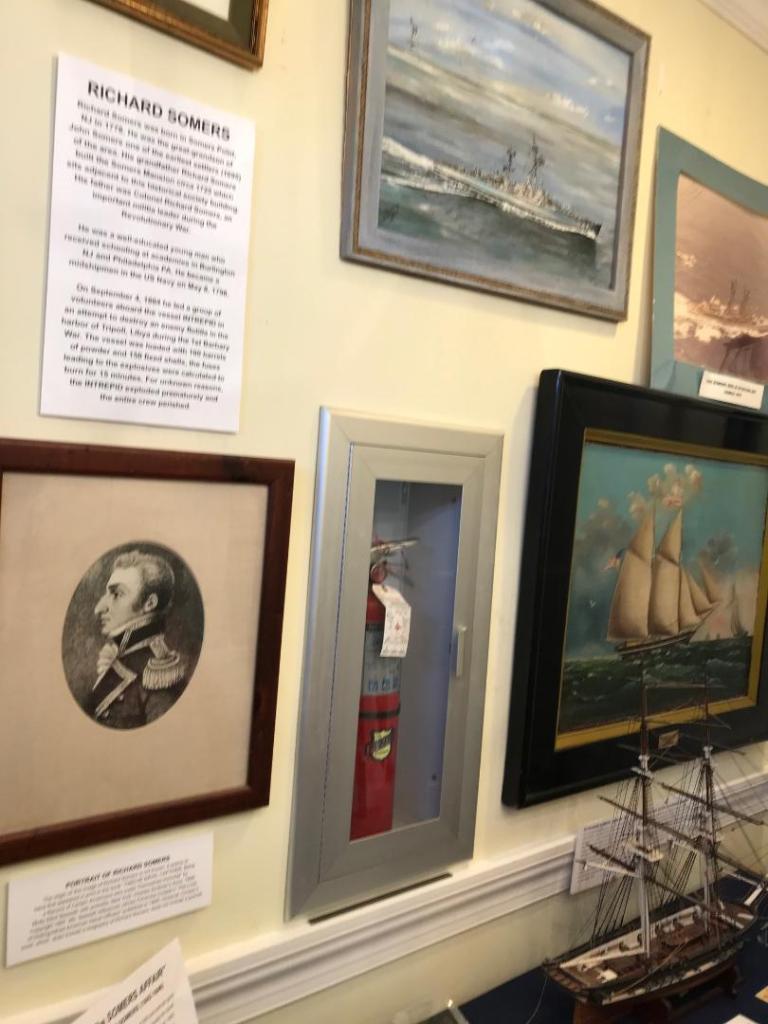
The museum is based around the one main room that tells the history of the Town of Somers Point. One display is on the USS Somers named after Commandant Richard Somers. Our tour guide told us that there is always a Somers named vessel in service with the Navy. There was a complete display on the navel vessels including a section on Master Commandant Richard Somers.

Master Commandant Richard Somers

http://www.richardsomers.org/

https://en.wikipedia.org/wiki/Richard_Somers

Richard Somers and the Intrepid video

Display on items from the USS Somers plus ships and boats

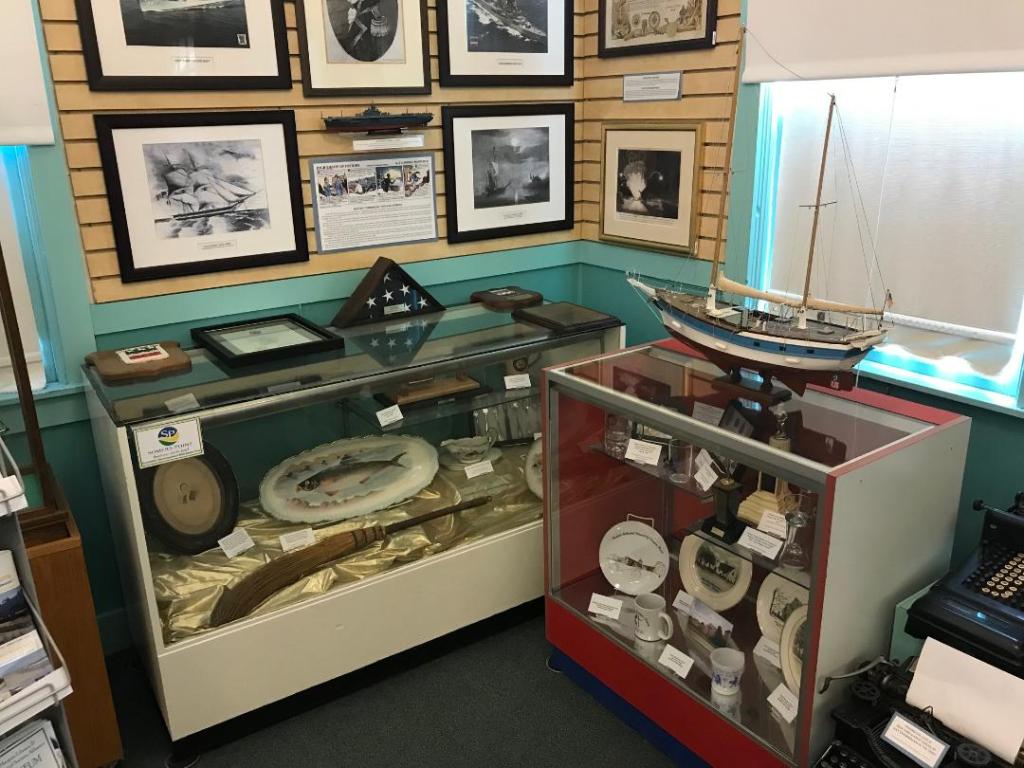
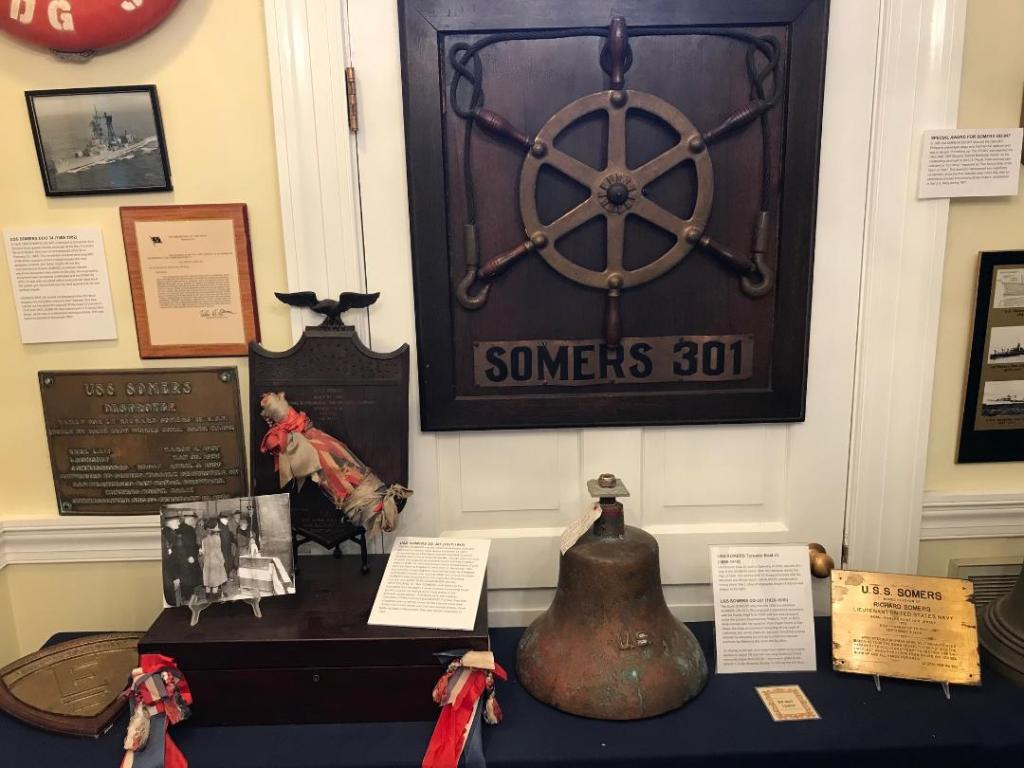
The number of items in the collection includes weapons, dishes, photographs, nautical items and pictures of all the Navy vessels named after Richard Somers. These historical items show the contribution that Richard Somers made to the armed forces of the United States. There were also family hierlooms among the artifacts. It was told to me there will always be a USS Somers in service dedicated to him.

More items from the USS Somers

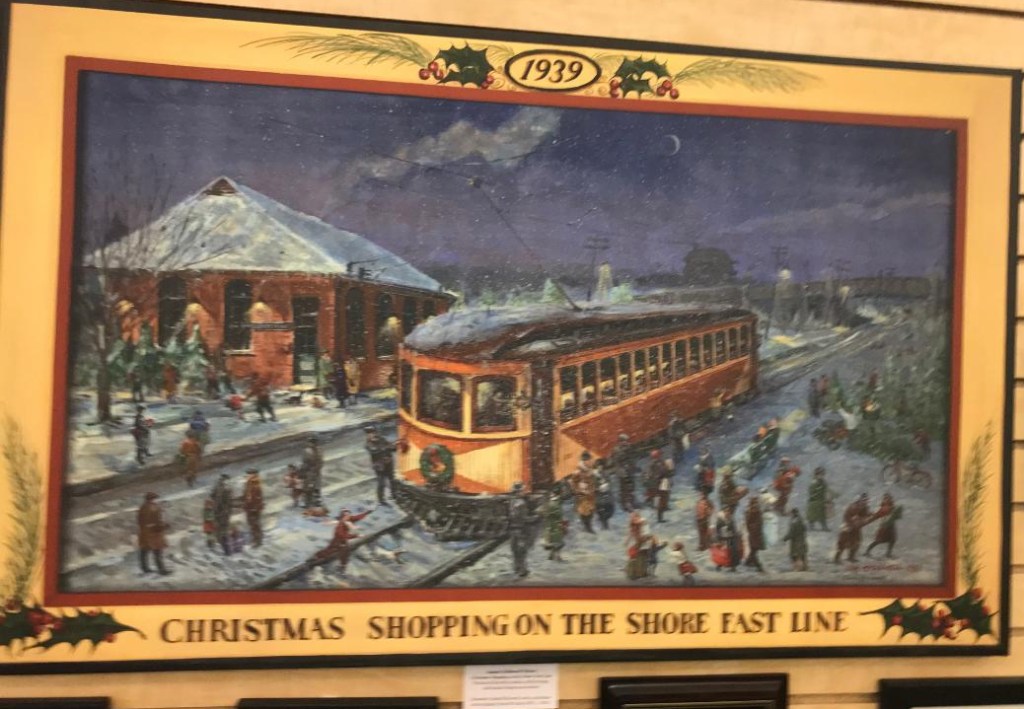
There was a nice display on the trolley car system that used to line the shore traveling from Atlantic City down the coast to Somers Point. This was a picture taken during the holiday season when shopping at the shore was pleasant experience.

Christmas shopping at the shore must have been fun

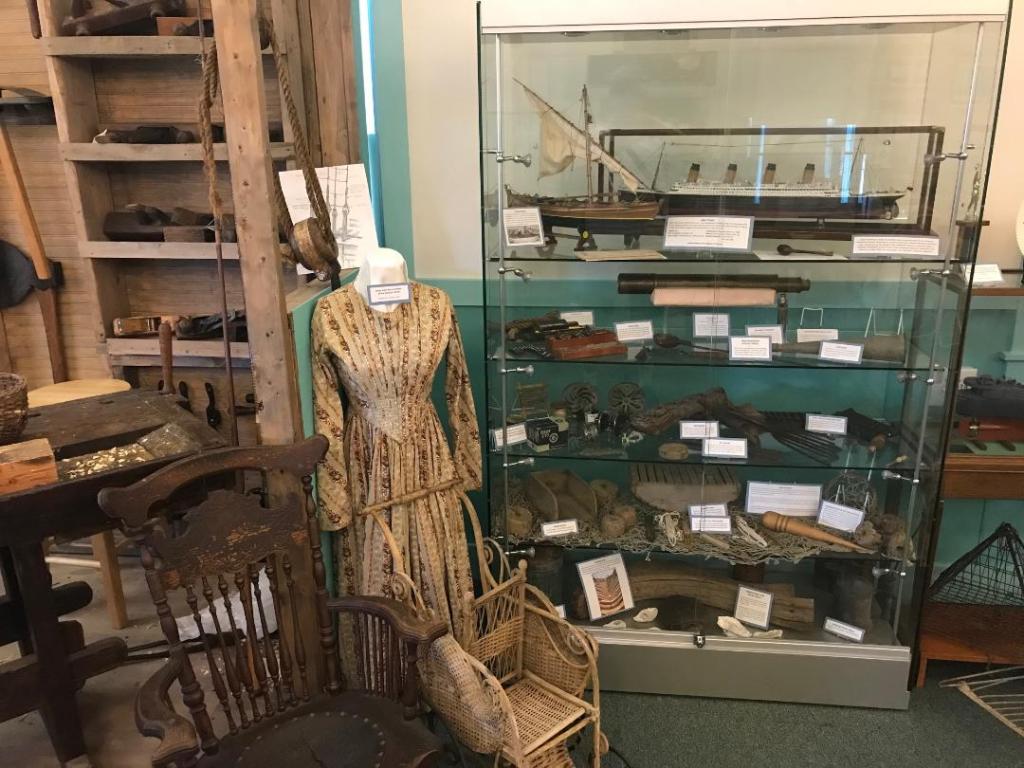
When the Lindenwood Historical Society folded for business, the Society inherited their impressive collection of ship models. There are all sorts of styles and designs of ships that line the entire room. There is very interesting display of clamming and shellfish harvesting equipment that is on display along with period clothing. It really showed how much shellfish production has not changed much over the years. There was an extensive display of shipbuilding materials showing the town’s shipbuilding yards and production that used to be part of the town’s businesses.

Fishing equipment and shipbuilding tools along with period clothing

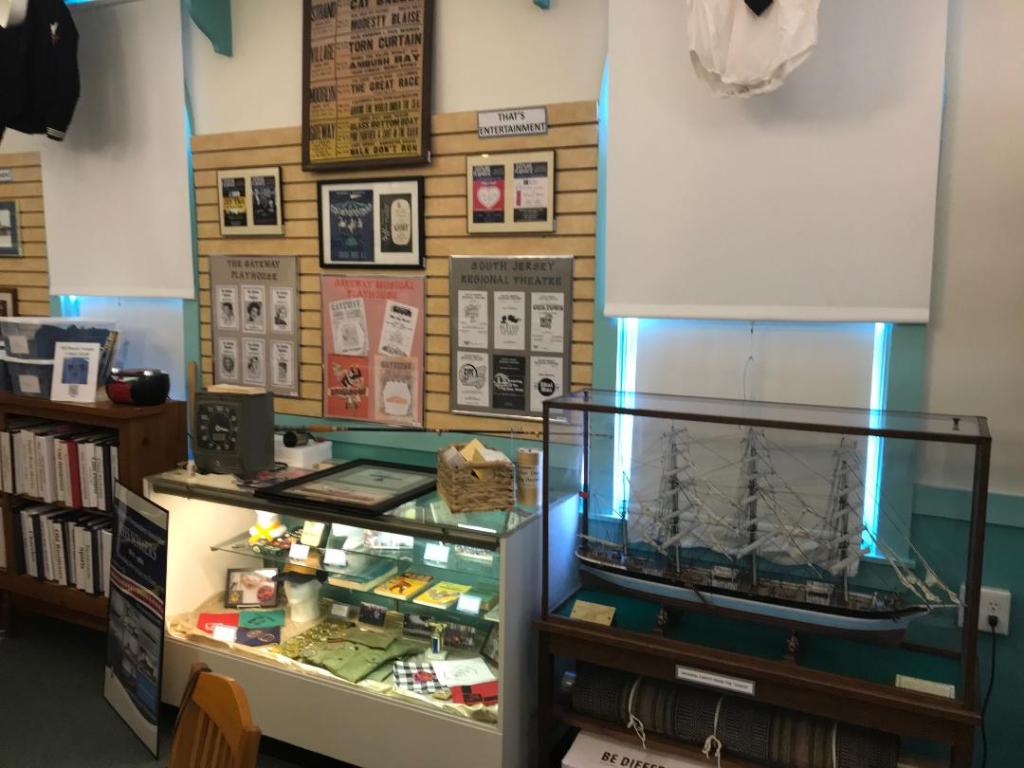
There is also a very extensive theater and arts program that is part of the town’s past and current social life. Being so close to Ocean City, NJ and its most famous summer resident, Grace Kelly there is a strong sense of theater and the arts around the community.

The theater playbills and items dealing with the local ‘arts’ scene.

The one thing that the historical society helps you remember that this is still a shore community and tourism plays a huge role in the history and make up of the town. You can see by the artifacts that things are geared towards the water and the extensive shipbuilding and fishing industries.

The Society also runs all sorts of fundraisers, movie nights and car shows to help raise money for the Society and does a lot of outreach to the community.

It is a fascinating look into the past of the shore community of Somers Point, NJ.

Somers Mansion                                                                                   1000 Shore Road                                                                            Somers Point, NJ 08244

Somers Mansion 1000 Shore Road Somers Point, NJ 08244

Somers Mansion

1000 Shore Road

Somers Point, NJ 08244

(609) 927-2212

https://www.nj.gov/dep/parksandforests/historic/somersmansion.html

Somers Mansion

Open: Sunday 9:30am-3:30pm/Monday-Friday Closed/Saturday 9:30am-3:30pm

Admission: Free

My review on TripAdvisor:

https://www.tripadvisor.com/ShowUserReviews-g46825-d5970174-r844645596-Somers_Mansion-Somers_Point_New_Jersey.html?m=19905

The Somers Mansion at 1000 Shore Road

(There is no indoor picture taking allowed)

The mansion from the front

I visited the Somers Mansion, the three story former home to five generations of the Somers Family. The mansion sits on a buff overlooking the bay and the bridge to the barrier island where Ocean City is located. The original part of the house was built in 1725 and in 1920 the last family members moved from the home and deeded it to the town. The modern additions of the home have been stripped off so you see the original house.

The historic marker of the home when it was donated by the family

I have to say that I was very disappointed with the condition of both the house and of the rooms and displays inside the house. There was not much to see. The lower level of the home has the main room with the hearth known in most early homes as the “Keeping” or “Everything” room where all the cooking, household chores and socializing was done because of the warmth of the fire.

Here and there were pieces of furniture but nothing labeled or decorated to make the room look ‘period’. Just old furniture here and there to fill the space. Some of the original family china was in the cupboards built into the walls.

The upstairs which must be reached by a rope bannister lead up a narrow stairs to two upstairs bedrooms. The home is not handicapped safe. The front bedroom had a fireplace with a small side room that held spinning wheels and some children’s furniture. There was not much to see in the upstairs.

The tour guide did not offer much in the way of information on the house and the only period pieces of the Somers family that were left inside the house were a chest, a clock, some of the china that was in the side cabinents and a bedwarmer.

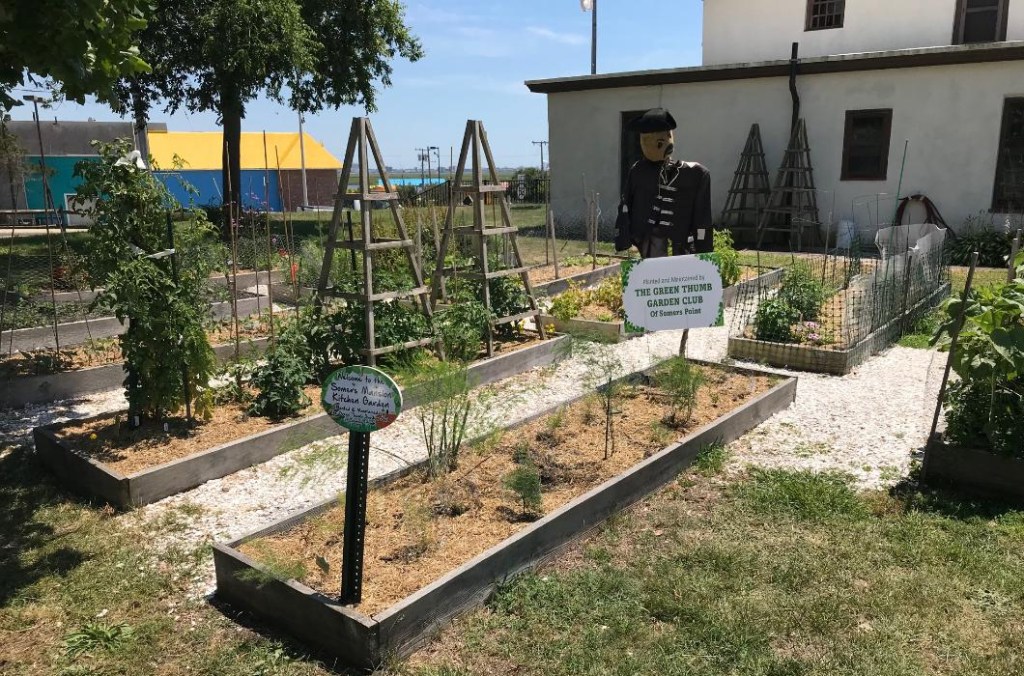
Outside the house the Somers Point Garden Club planted a period garden of fruits and vegetables on the back lawn and lead tours of the gardens.

The Somers Mansion Kitchen Garden

The Garden Club planted fruits and vegetables that would have been grown in the time periods of the late 1700’s to early 1800’s. You can walk amongst the beds to see the plantings.

Somers Mansion Kitchen Garden planted by the Garden Club

The whole tour takes less than a half hour and it is more impressive from the outside. You are also not allowed to take pictures of the house for security reasons.

The back of the mansion

The History of the Somers Mansion:

(From the NJ State Historical Site.com):

The mansion and surrounding city bear the name of the family who owned and occupied the house for 200 years.

The Somers Mansion, a three story home constructed of brick in the Flemish bond pattern, sits overlooking the Great Egg Harbor Bay at Somers Point. In the late 1600’s, the property which surrounds the mansion was acquired by John Somers, who operated a ferry service across The Great Egg Harbor Bay to Cape May. He referred to it as Somers Plantation and Somers Ferry and the surrounding settlement, the olders in what became Altantic County and then Somers Point in the mid-18th Century.

Master Commandant Richard Somers

https://en.wikipedia.org/wiki/Richard_Somers

http://www.richardsomers.org/

The mansion is considered to be the oldest existing house in Atlantic County, predating the County itself. His son, Richard, the first of the family to be born in New Jersey, built what is now referred to as the mansion by 1726. That year the local Society of Friends (Quakers) used the home for a meeting and memorialized it in their minutes, making the earliest recorded date of the home’s existence.

By the end of the 19th century, the mansion’s architecture had been added to and changed to reflect a Victorian style. The house remained in the Somers Family until 1937 when it was deeded by Florence Hayday Brooks and Lulu Hayday Smith, daughters of Hannah Hayday Somers to the Atlantic County Historical Society for the purpose of creating a permanent memorial to the Somers family.

In 1941, it was transferred to the State of New Jersey, dedicated on September 26th, 1942 and in the early 1940’s was restored to its colonial appearance as a Works Progress Administration (WPA) project. Laborers for the WPA both renovated the surviving furnishings and conducted a historical restoration, including the elimination of rooms and architectural details dating to the 19th century. The site was added to the National Register of Historic Places in 1970 and is now a State Historic site.

The Somers Family burial ground further down off Shore Avenue off New York Avenue

A Short History of Somers Point:

(From the Trail of Richard Somers pamphlet)

https://en.wikipedia.org/wiki/Somers_Point,_New_Jersey

Somers Point was originally settled by John Somers, an Englishman and practicing Quaker, who bought the land from Thomas Budd. Early names for the area were Somerset Plantation, Somers Ferry and Somers Plantation named after the first settlers in 1693. The land purchased originally covered all of Somers Point, part of Linwood and went into Egg Harbor Township. In the early years, it was part of Gloucester County, because Atlantic COunt had not yet been named.

The name “Somers Point” was adopted in 1750. It was a seafaring town and sloops, schooners and barges were built in the many shipyards located along the Greate Egg Harbor Bay, Greate Egg Harbor River and Patcong Creek.

The estate overlooking the bay

The back of the mansion and gardens

The Sooy Boatworks was located on Shore Road and the completed ships were rolled on logs down Shore Road to Delaware Avenue and then down to the bay. Shipbuilding and life along the waterways was a very important part of life in early Somers Point.

The statue of Robert Somers in Robert Somers Park

Hancock House State Historic Site                                              3 Front Street                                                                 Hancocks Bridge, NJ 08038

Hancock House State Historic Site 3 Front Street Hancocks Bridge, NJ 08038

Hancock House State Historic Site

3 Front Street

Hancocks Bridge, NJ 08038

(856) 935-4373

https://nj.gov/dep/parksandforests/historic/hancockhouse.html

https://www.facebook.com/FOHHNJ/

https://en.wikipedia.org/wiki/Hancock_House_(Lower_Alloways_Creek_Township,_New_Jersey)

Open: Sunday 1:00pm-4:00pm/Monday-Tuesday Closed/Wednesday-Saturday 10:00am-12:00pm/1:00pm-4:00pm

Admission: Free but donation suggested

My review on TripAdvisor:

https://www.tripadvisor.com/Attraction_Review-g46491-d14113448-Reviews-Hancock_House-Hancocks_Bridge_New_Jersey.html

The Hancock House

I took an extensive tour one weekend of historical sites of southern New Jersey to see how the lower part of the state was impacted by the Revolutionary War and one of the most important sites was the Hancock House. The family was extremely prominent not just in Salem, NJ but in New Jersey politics as well.

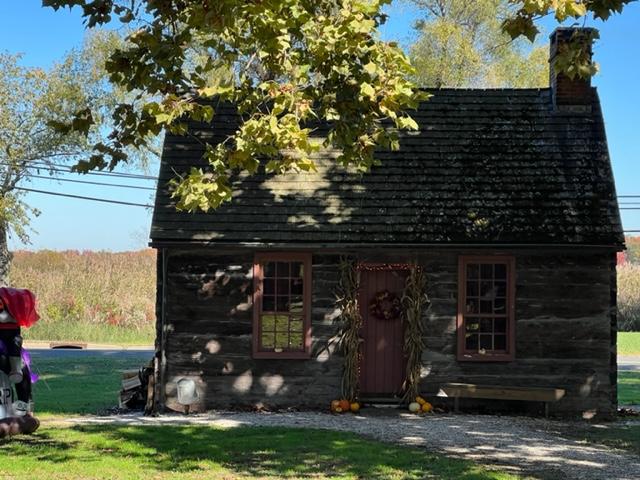
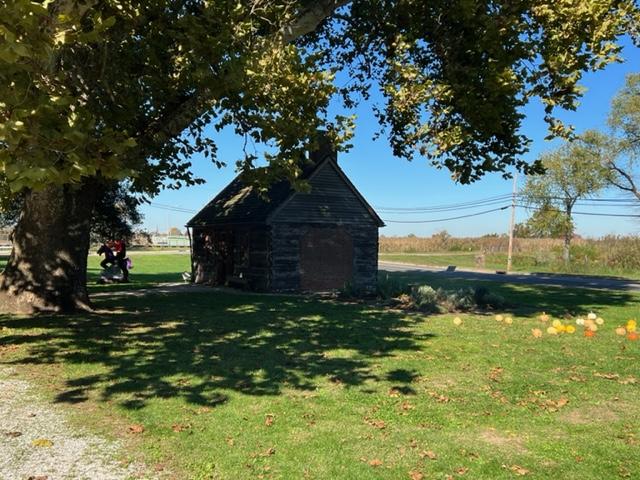
The Hancock House and grounds during the early Fall 2022

The house once stood on an very busy road between Salem and Bridgeton and where most commerce passed by. When I was taking the tour, you could see that the house was built in two parts. When I was listening to the lecture I found that the side of the house that faced the road had once been a leased space for a tavern.

The tavern section of the house that faces the road

This commercial enterprise brought in income for the family. Later on when the Hancock family sold the house in the early 1800’s, they sold it to the tavern keeper. After he and his family sold the house, it went on to various owners before the State of New Jersey bought it in the 1930’s.

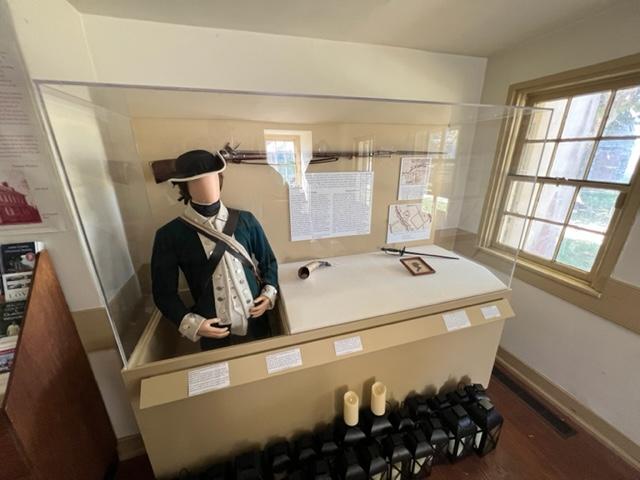
Recreation of the Tavern section of the house

A copy of the old menu at the Tavern

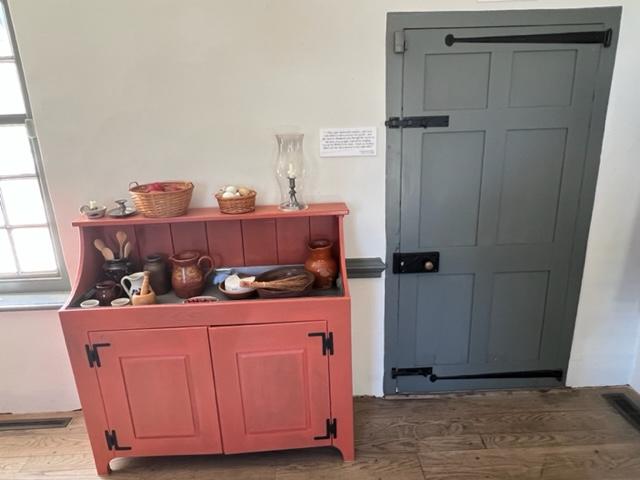
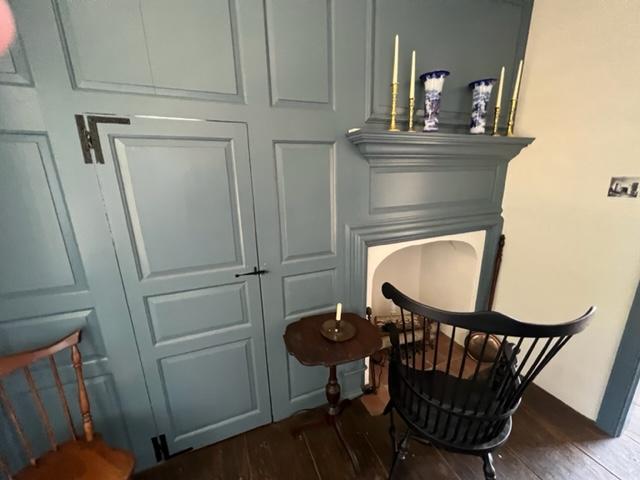
There are no family heirlooms in the house and while some of the rooms have period pieces and are decorated to show how the family might have lived at the time as well as how the tavern functioned, many rooms in the house needed some direction on what they wanted to say about living at the time. There needed to be more artifacts to complete the look of the room.

The Downstairs at the Hancock House:

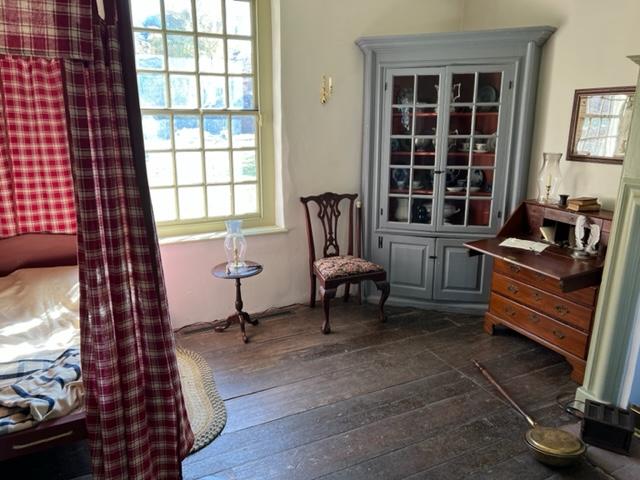
The example of the main bedroom downstairs was used for business as well. The room was furnished with period furniture.

The downstairs bedroom at the Hancock House. The built in shelves are the only thing from the Hancock family

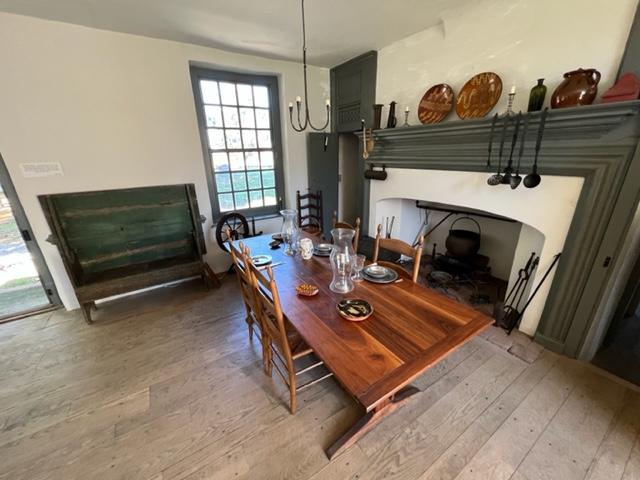
The Kitchen area was set for dinner and functioned as the Dining Room as well,

The kitchen set for lunch

The kitchen area for entertaining

The old kitchen at the Hancock House

The Dining Room at the Hancock House:

The Living Room

The Living Room at the Hancock House

The Gallery at the Hancock House with artifacts from the era.

The Gallery at the Hancock House

The Upstairs at the Hancock House:

The upstairs bedrooms were an example of that. One of the rooms was fully furnished to look like a period bedroom while the other had a mish-mosh of decorations and furniture. There needed to be more to capture the time period of the house.

The upstairs bedroom is the only one furnished upstairs

Still, the house was steeped in history and it was fascinating to hear what the tour guide said about the goings on during the war years to the family. Many of the rooms also could have used a good plastering and painting to bring them back to life.

When I visited the Hancock House in October of 2022, they were having a Halloween festival with pumpkin patches, face painting, watching the film “The Legend of Sleepy Hallow” by Disney films. The kids were engaged with all sorts of activities and there would be Trick or Treating on Halloween day.

Halloween festivities at the Hancock House

The pumpkin patch at the Hancock House for Halloween

Halloween festivities at the Hancock House

History of The Hancock House:

(from The Hancock House Pamphlet)

The story of the Hancock House begins in 1675 when John Fenwick, a lawyer and Quaker from England, arrived in West Jersey (now Salem Country), With land purchased two years earlier, he established the first permanent English Settlement here, called “Fenwick’s Colony,” and founded the town of Salem. Eager to populate the area with skilled, industrious individuals, he advertised the area’s assets by stating, “if there be any terrestrial “Canaan” ’tis surely here, where the Land floweth with Milk and Honey.”

The Hancock House sits on property that was purchased from John Fenwick in 1675 by William Hancock, an English showmaker. Upon his death, the property passed to his wife and then to his nephew, John Hancock.

John’s inheritance of approximately 500 acres made him a major landholder in Fenwick’s Colony. he contributed to the development of the area by building a bridge across Alloways Creek in 1708. Now known as “Hancocks Bridge,” it permitted passage on an important highway between Salem and Greenwich and gave the settlement its name.

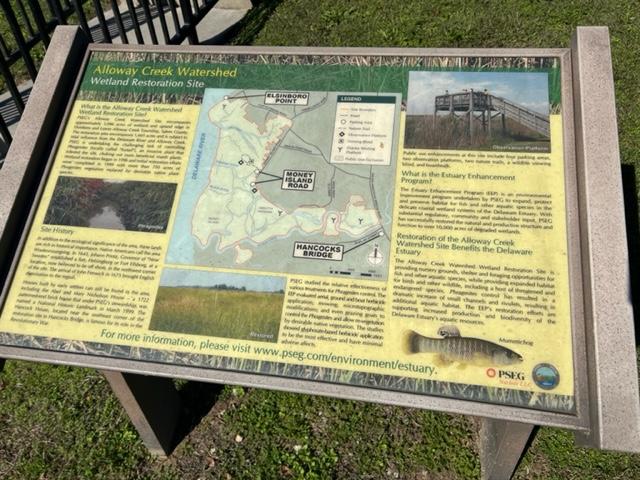
The site of the Hancock Bridge

When John Hancock died in 1709, he left his property to his son William. William became a Justice of the Peace for Salem County and served in the Colonial Assembly for 20 years.

The site of the historic Hancock Bridge

In 1734, William and his wife, Sarah built the Hancock House. Their initials (WHS) and the construction date (1734) can be seen in the brickwork on the house’s west elevation.

Upon his death in 1762, William left his house to his son, William who succeeded him in the Assembly and became His Majesty’s Judge of the County Court for the County of Salem. It was this William who figured in the massacre of March 1778.

The Hancock House remained in the family until 1931, although the extent to which the house was used as a private residence and the property farmed is uncertain. There is evidence to suggest a section of the house was leased for a tavern during the 18th & 19th centuries.

A recreation of the old Tavern section of the home

The State of New Jersey acquired the Hancock House for $4,000 in 1931 and opened it as a museum in 1932.

The Smoke House at the Hancock House property:

The Historic Significance of the house:

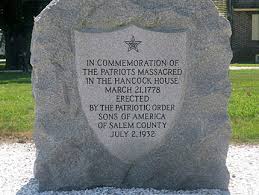
Historic Marker at the Hancock House

The Architectural Significance:

The Hancock House earned a place in history on the fateful day in March 1778.

The Hancock House

Yet the story of its architecture also is important. With its distinctive patterned and wall brickwork, simple lines and little ornamentation, it reflects the building traditions of the Quaker’s English Homeland.

The land around the Hancock House

Other elements of this architectural style include Flemish bond brickwork; a pent-roof that wraps around the front and back of the house; simple entrance steps; interior paneling and the use of such local materials as Wistarburg glass.

The Hancock House

The Hancock House property: