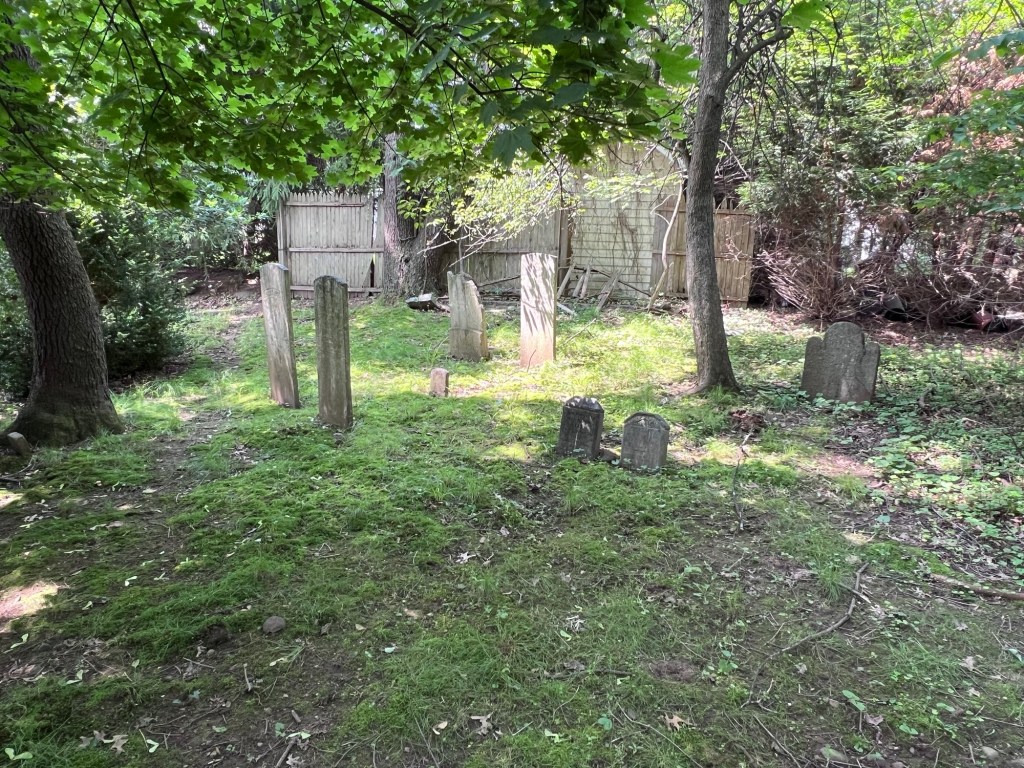
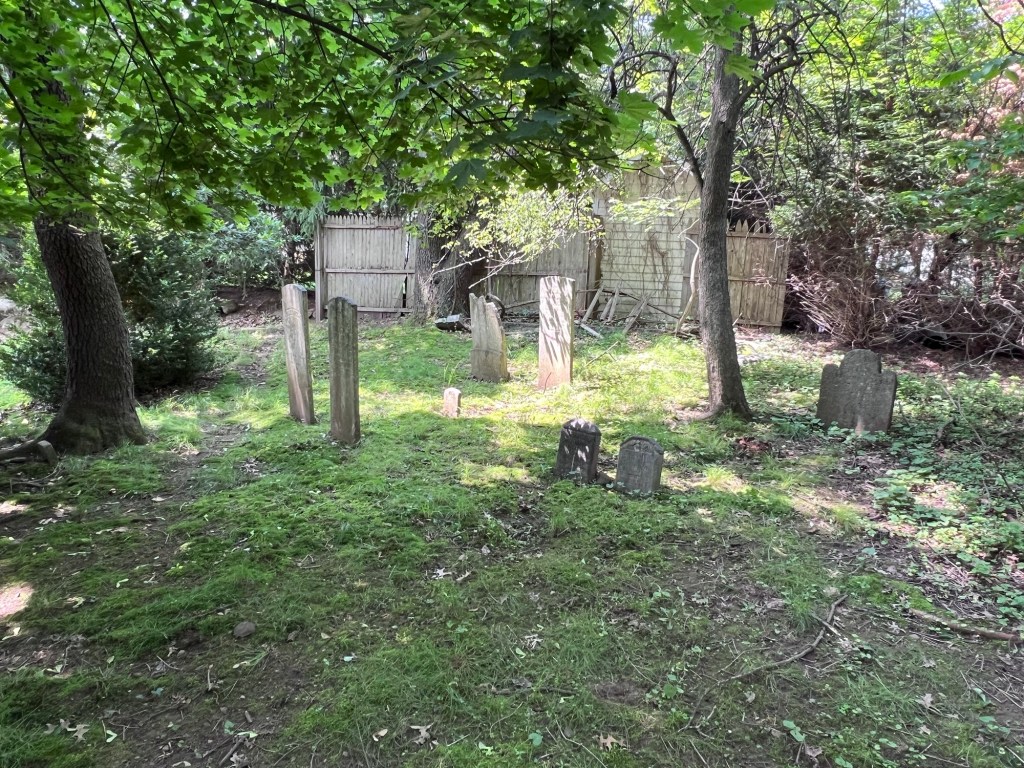
The cemetery is in a quiet corner between two house in what was once the Haring Farm
The family that is buried here:
(From the Dutch Door Genealogy website)
When some of this property, which originally had belonged to Abraham Jans Haring
according to the Zabriskie genealogy, was sold in 1785, ownerhip of the burial plot
was retained, and is described as being one square chain, which is 66 feet on each
side.
HARING FAMILY BURIAL PLOT AT NORWOOD, BERGEN COUNTY, N.J.
ON THE PROPERTY NOW KNOWN AS THE ALLISON FARM.

10718  Abraham J. Haring    d.1.1.1801  b.9.30.1720  a.80.3.1 (Tap. #358)

       Broken stone

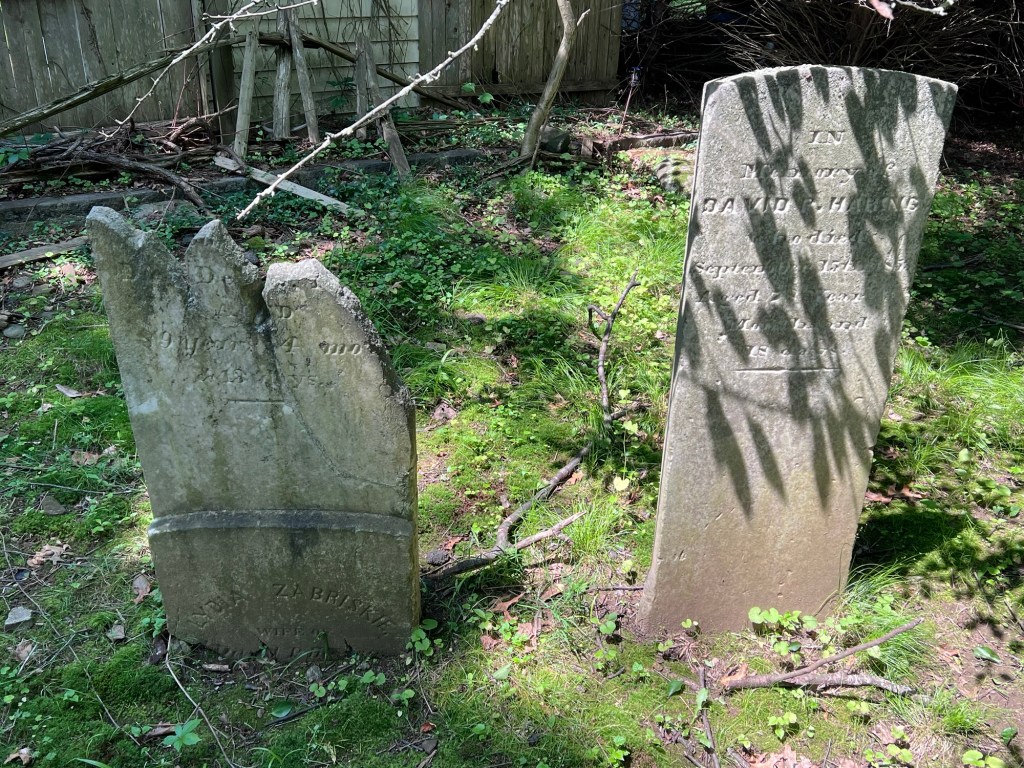
10719  David P. Haring      d.9.15.1853   a.78.3.18  (Tap.#2418)

10720  Lydia Zabriskie  w. of        (Sch.p.186)
       David P. Haring      d.12.30.1869  a.89.4.13

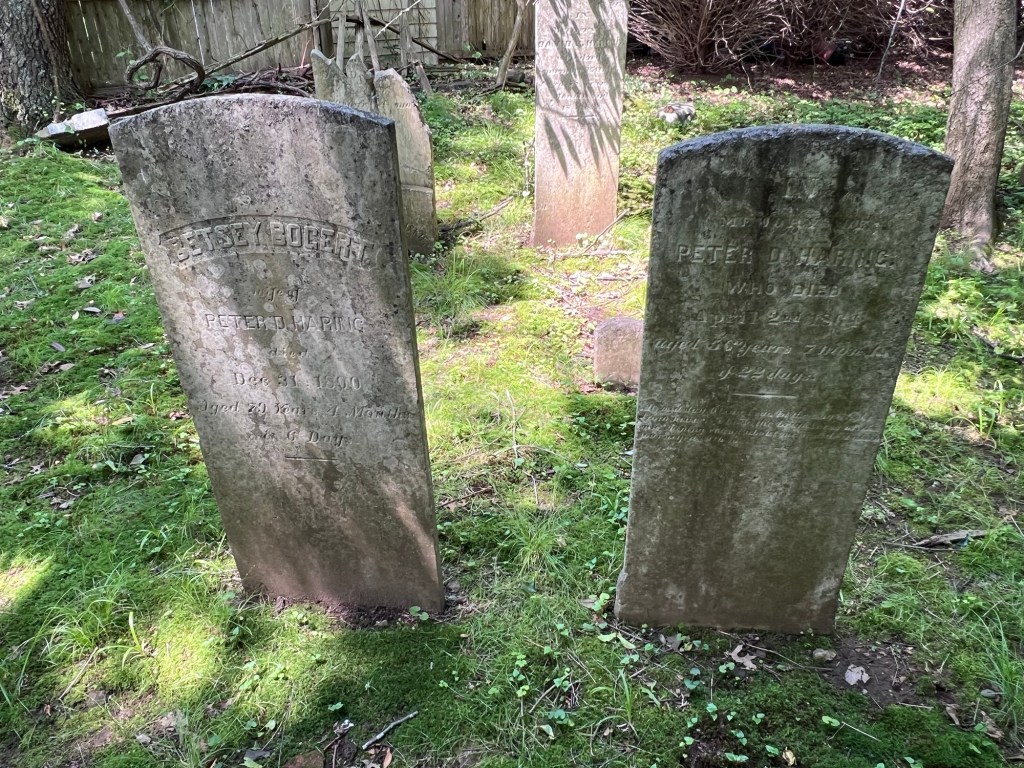
10721  Peter D. Haring      d.4.2.1864   a.56.7.22  (Tap.#3727)

10722  Betsey Bogert   w.
       Peter D. Haring      d.12.31.1890   a.79.4.6

10723  Ruth Haring          d.3.3.1876    a.0.2.14

10724  Bessie Haring        d.10.2.1877   a.0.7.24
Betsey Bogart Haring and Peter Haring
Ruth and Bessie Haring who died as children
The tombstone of Cornelius Haring (I could barely read this)
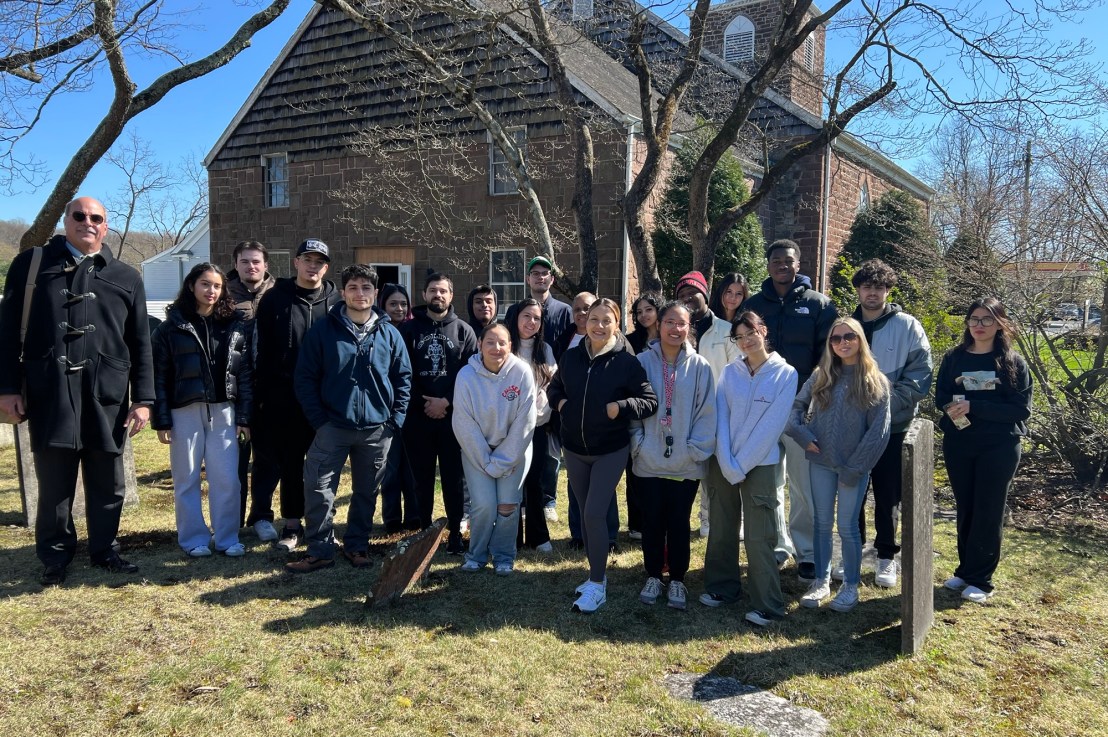
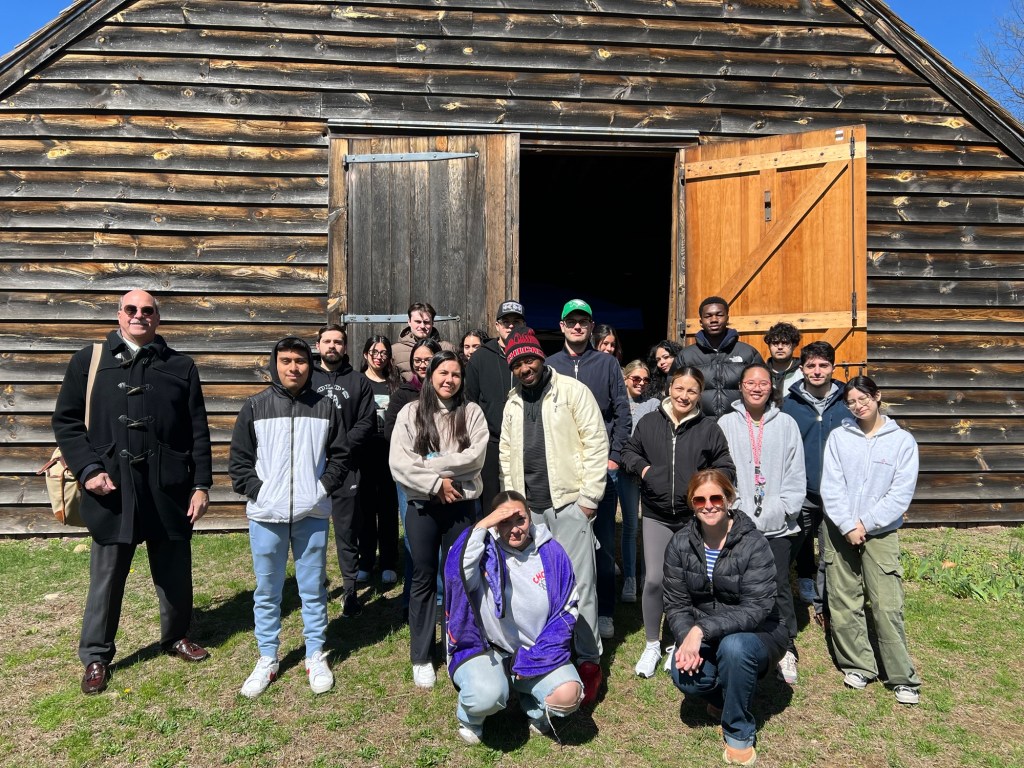
Bergecco-Parc Consulting Inc. CEO/Co-Founder Professor Justin Watrel and his Executive Team outside the Wortendyke Barn in Park Ridge, NJ for a Team Field Trip.
The Perry family cemetery is a small family plot in Harrington Park, NJ and example of a time when families still buried their loved ones on property that family’s thought would be there for generations. Many generations of the family are buried here showing the family’s love of this land but like too many tiny cemeteries throughout Bergen County have been lost in time by the family buried there.
Today it sits quiet and respectful and somewhat over grown. Nature now surrounds it.
The Perry Cemetery History:
(From the Harrington Park Historical Society)
The Perry Cemetery is a small family burial ground located on what was the farm of David Perry (1809-1871). The Old Burying Ground cemetery is part of the land apportioned to Garret Huybertsen Blauvelt, son of one of the original sixteen grantees of the Tappan Patent approved by the Governor of New York in 1686. Although there are believed to be earlier ones, the first known burial was in 1722 and the last in 1905.
The Perry Family Cemetery sits quietly on a stretch of Old Hook Road
(From the Harrington Park Historical Society)
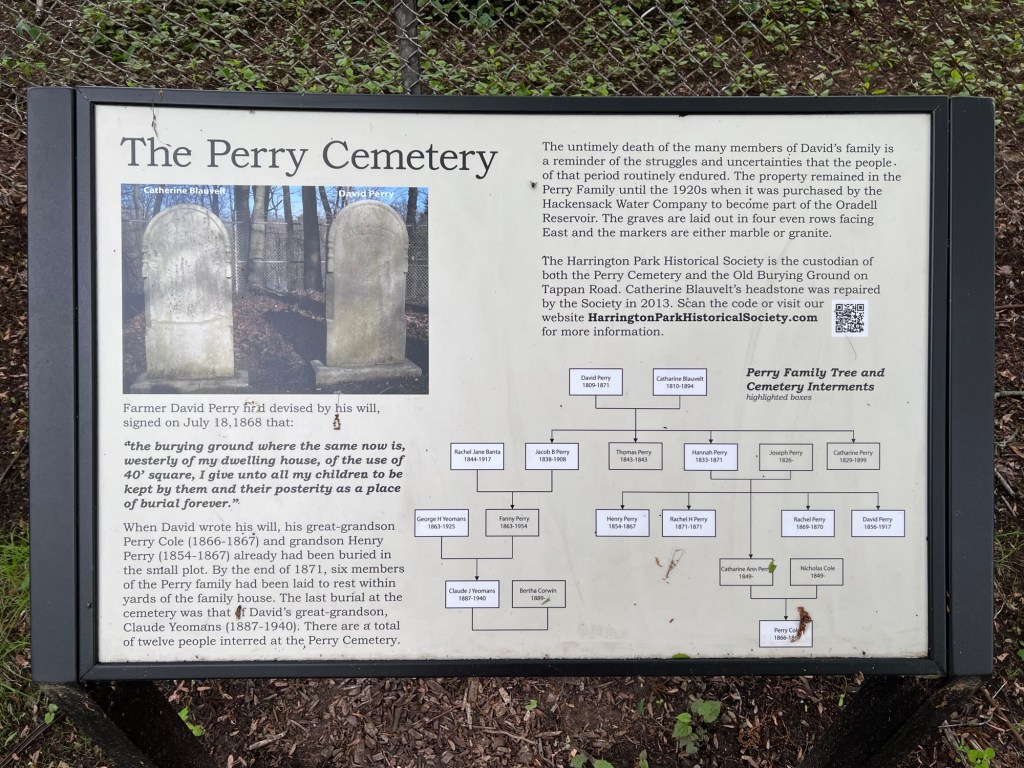
The Perry Cemetery is situated in the Borough of Harrington Park on Old Hook Road, east of Bogert’s Mill Road opposite the United Water Company building. David Perry had devised by his will, signed on July 18,1868 that: “the burying ground where the same now is, westerly of my dwelling house, of the use of 40’ square, I give unto all my children to be kept by them and their posterity as a place of burial forever.”
The Perry family treeofloved ones buried at the cemetery
(From the Historical Marker Database)
When David wrote his will, his great-grandson Perry Cole (1866-1867) already had been buried in the small plot. By the end of 1871, six members of the Perry Family had been laid to rest within yards of the family house. The last burial at the cemetery was that of David’s great-grandson, Claude Yeomans (1887-1940). There are a total of twelve people interred at the Perry Cemetery.
The untimely death of many members of David’s family is a reminder of the struggles and uncertainties that people of that period routinely endured. The property remained in the Perry Family until the 1920s when it was purchased by the Hackensack Water Company to become part of the Oradell Reservoir. The graves are laid out in four even rows facing East and the markers are either marble or granite.
The Perry Family tree starting with the marriage of David Perry to Catherine Blauvelt
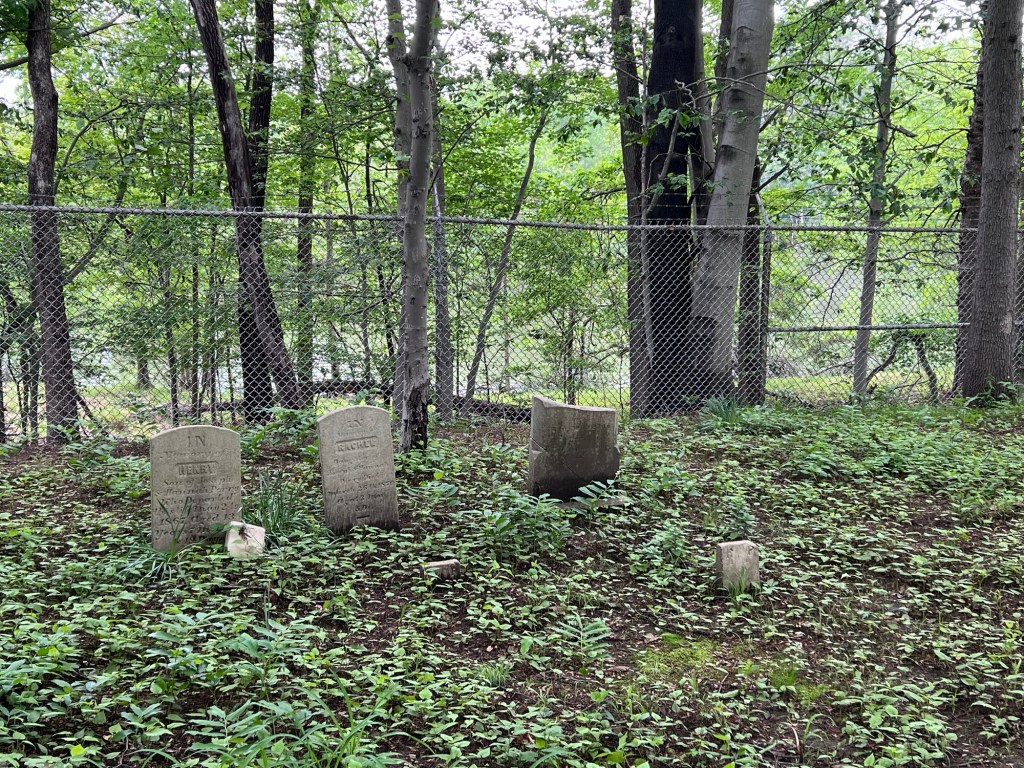
Son Henry and Daughter Rachel’s tombstones
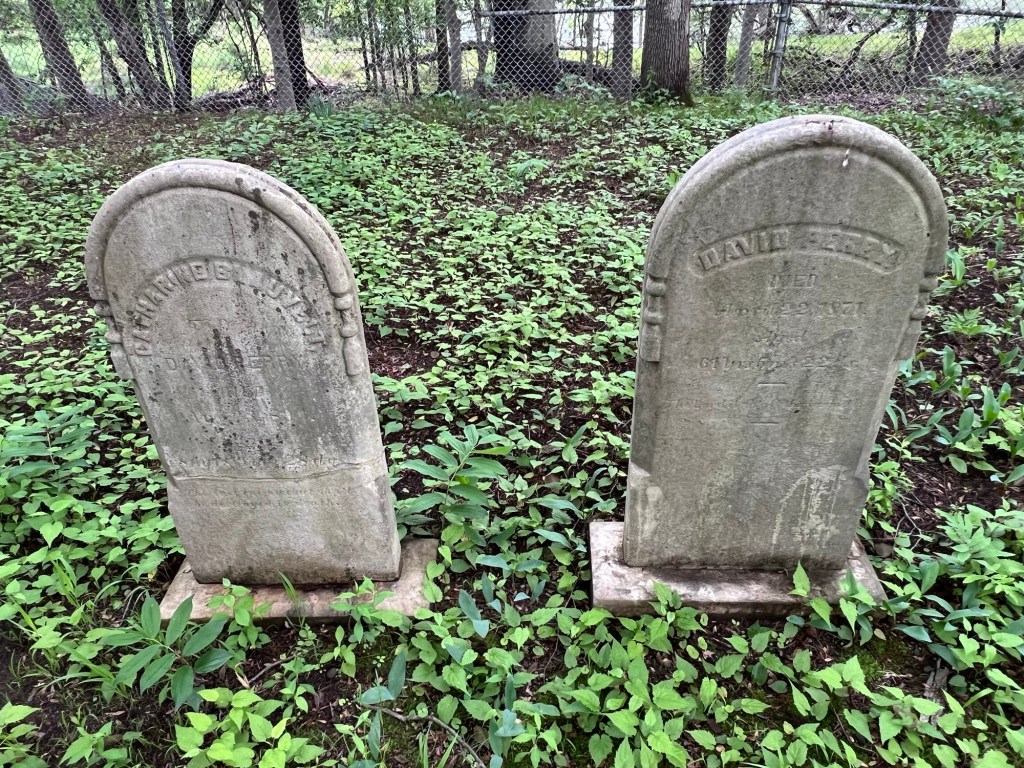
Patriarchs David Perry and his wife, Catherine Blauvelt Perry
The last David Perry to be buried in the family plot
The family plot facing the stream
The Patriarchs of the family stand in the middle
The newest graves in the cemetery
The latest burials in the family plot
Video on the Perry Cemetery from the Harrington Park Historical Society
Hours: Seasonal Hours Sunday-Monday-Tuesday/Wednesday 10:00am-2:30pm/Thursday Closed/Friday 10:00am-2:30pm/Saturday Closed. Tours are at 10:00am and 12:00pm.
Admission: Donations Accepted/ (I paid $5.00 for the hour tour)
After three years of trying to visit the museum, I finally got on a last minute walking tour of the Museum of Cape May County and have to say that it was well worth the wait. What an interesting set of buildings that have a fascinating set of artifacts and so nicely displayed in a series of buildings.
The museum campus is broken up in a series of buildings on a two acre site. There is the main office which has an art exhibition, the family homestead of the family, who lived here for several generations, the carriage house which displays several carriages and stage coaches that were used in the area.
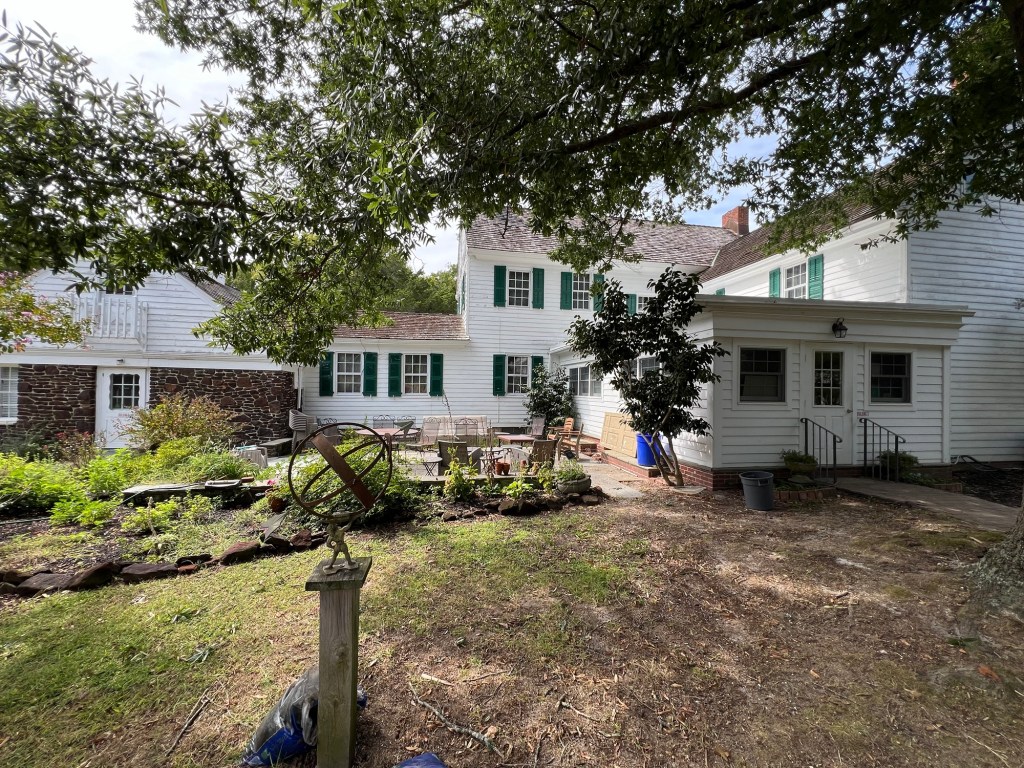
The back of the main house where you can see the three additions to the house
The barn where the Military, Native American and Farming displays are showcased
The Carriage House is to the left and the barn is to the right
The Carriage House on the property
The History of the House and of the Cape May County Museum site:
(from the museum website)
Housed in a building that dates back to 1704, the Cresse House, and its 1830 Holmes addition, as well as a historic 1780 barn and carriage house have rooms devoted to a subject or time that will hold you spellbound as you make your way through the past. The 11 room Cresse Holmes house treats you to a glimpse of life as it was in Cape May County from colonial to modern times. From the 1704 colonial kitchen and loft bedroom to the Victorian dining and sitting rooms all are decorated and furnished with period pieces. Special exhibit rooms include a children’s playroom teeming with toys, a doctor’s room with instruments, glassware and vials filled with a colorful array of pharmaceuticals and a Victorian music room with dozens of fascinating players and instruments (Cape May County Museum website).
Our first part of the tour was the family home which had been lived in for generations. The first part of the house was built in 1740 and you could tell by the open hearth and the flooring.
The hearth of the original section of the Cresse home
The kitchen was set up and furnished as the main part of the house. Because of the heat, this was the main part of the house that habituated. Here the family would gather, eat and socialize.
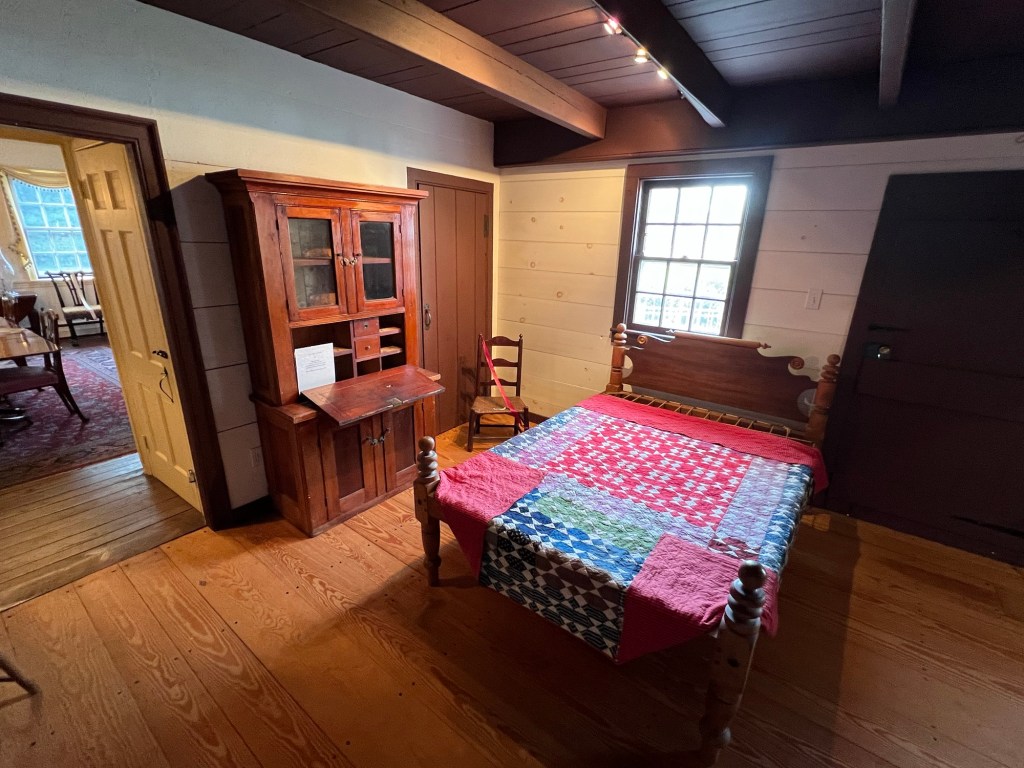
The back bedroom shows the families affluence in the late 1700’s
Having a separate room for sleeping was considered quite extravagant. The heat would circulated through the home and warmed this room next door. The main part of the house was built in 1840 in the Federalist design.
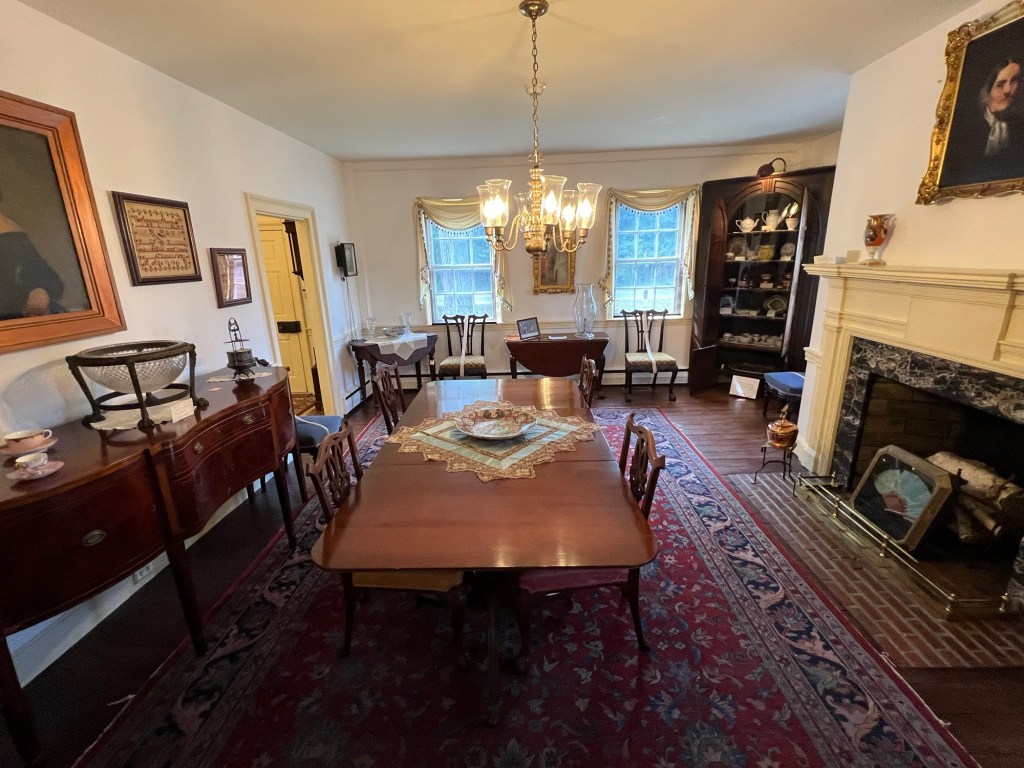
The main dining room showed the affluence of the Holmes family in the early pre-Civil war era
The main part of the house that faced the road was the 1840 Holmes family addition with the Federalist design. This part of the house was the main part house that was used for every day living and entertaining. The house was furnished in a combination of family heirlooms and donated period pieces..
The house well furnished with period pieces
The beautiful side table of the Dining Room
Both the Living Room, Dining Room and the Parlor were all tastefully furnished and what I thought were interesting parts of their collection. It was like someone had just left the room.
The Parlor of a Victorian house held its finest pieces
The furnishings in the Parlor
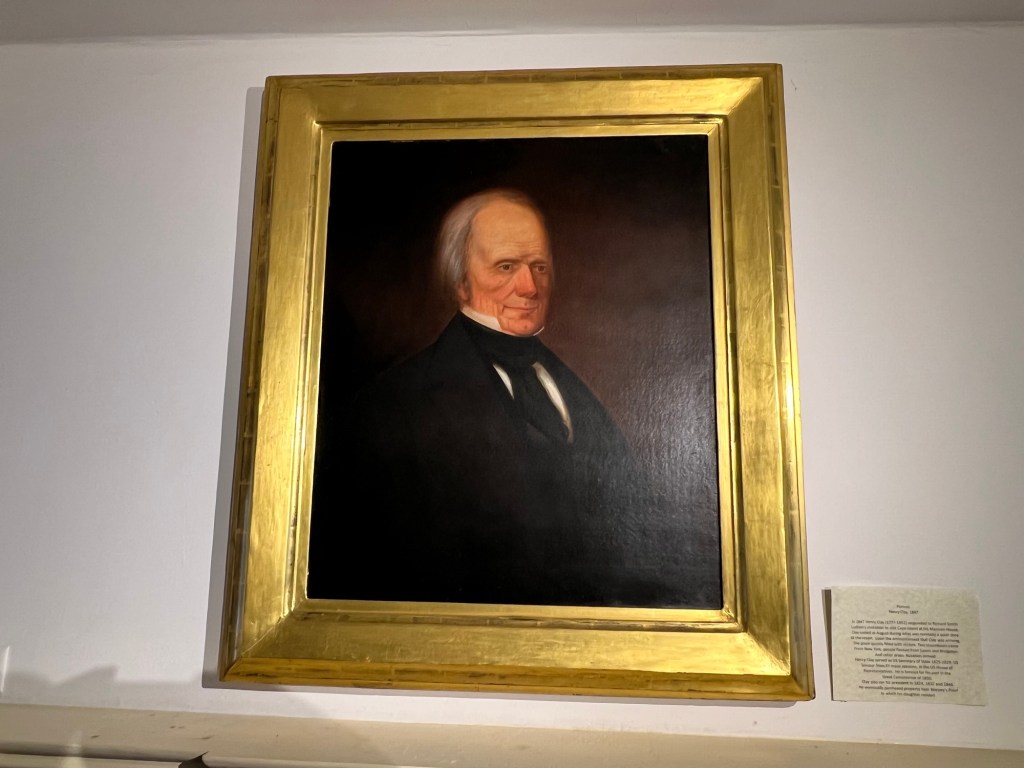
The painting of Henry Clay stood above the fireplace
Since I joined the tour late, I had seen just the first floor of the home before we continued on to see the rest of the building.
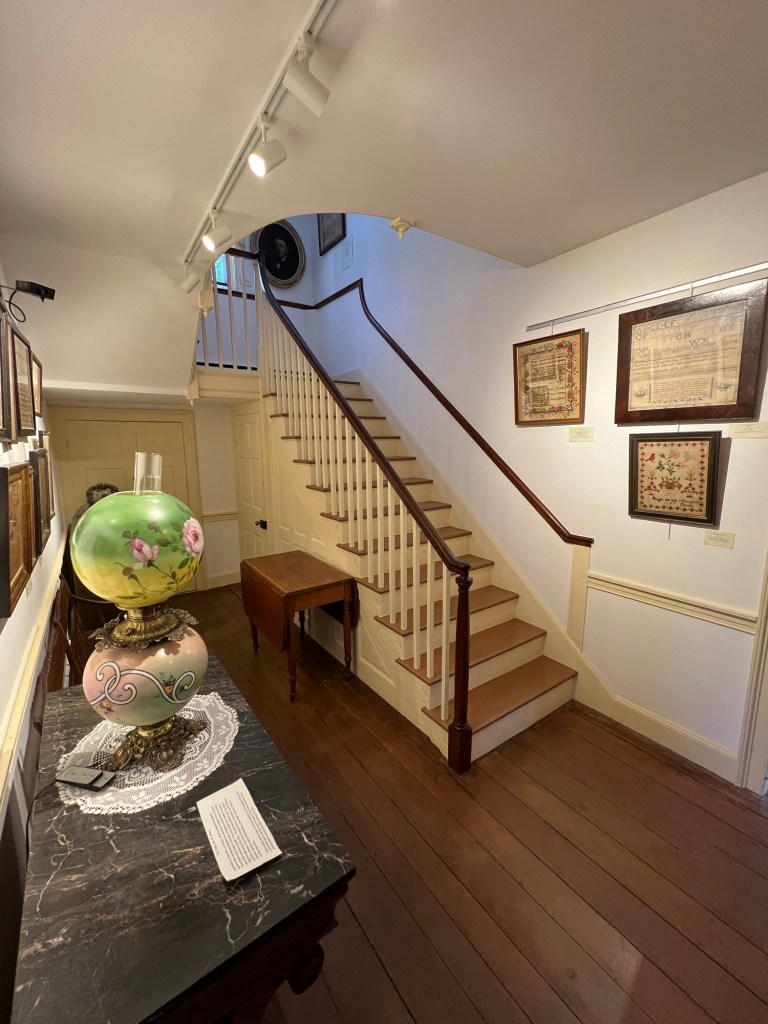
The front entrance room of the house
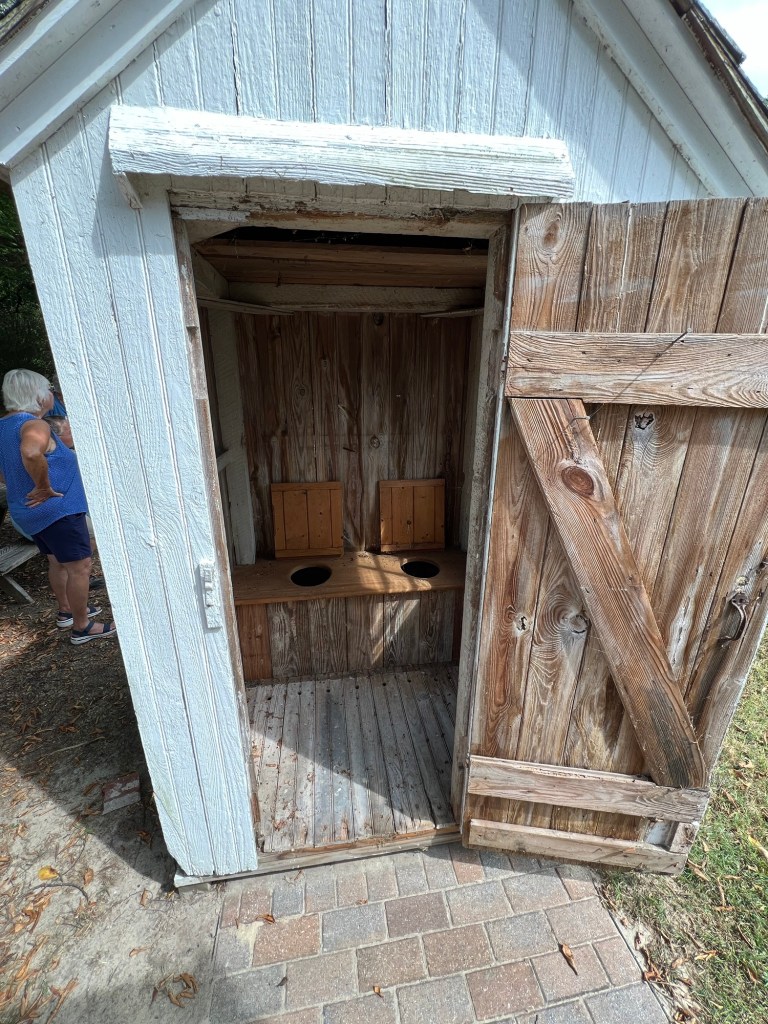
As we exited the house, we moved on to the most important room of the house, the outhouse which was located behind the main home.
The outhouse in the back of the home
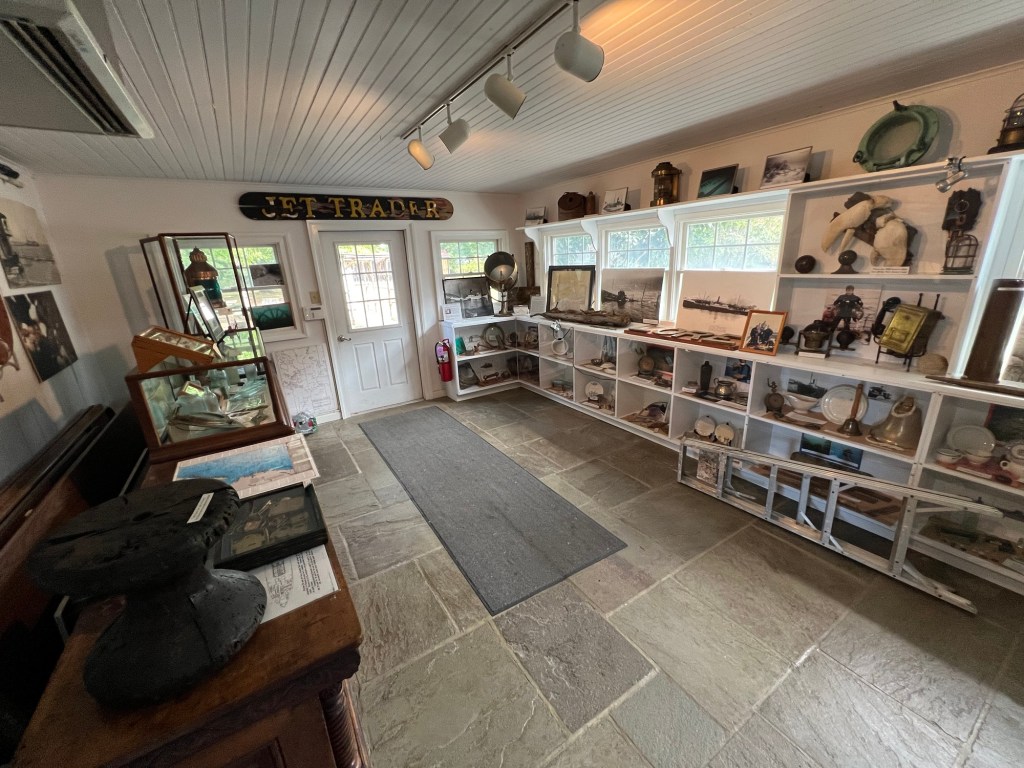
We next moved on to one of the galleries of the Nautical collections.
The collection of nautical artifacts
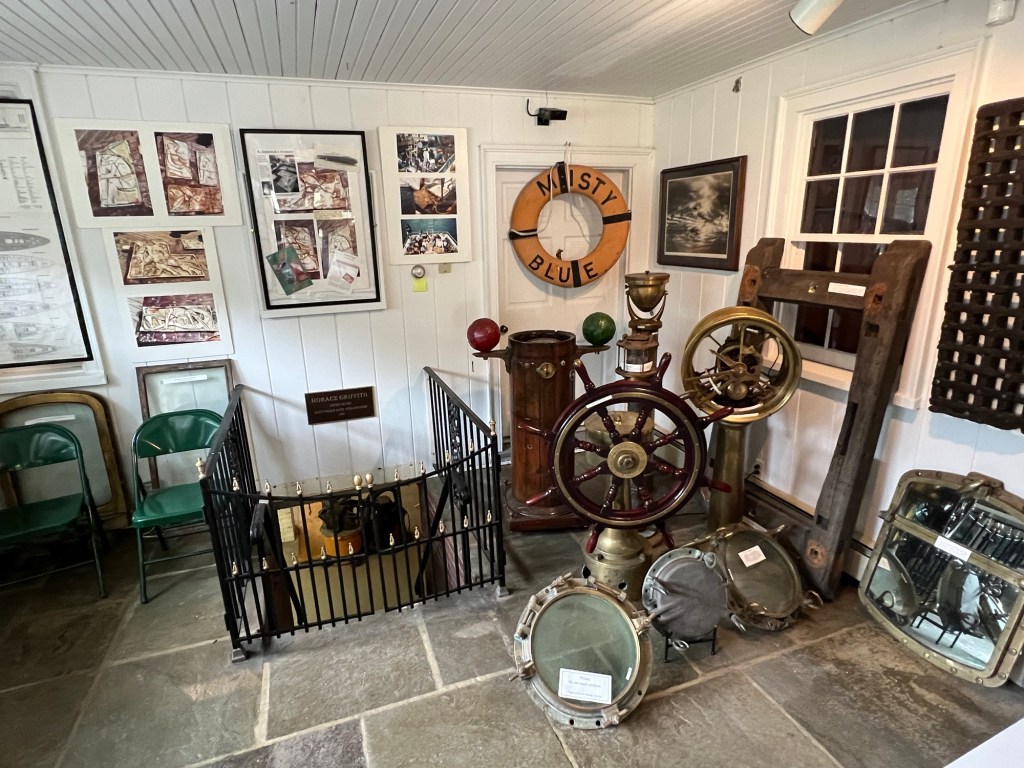
Mantel’s for navigation
Items from the shipping industry
What beautiful items
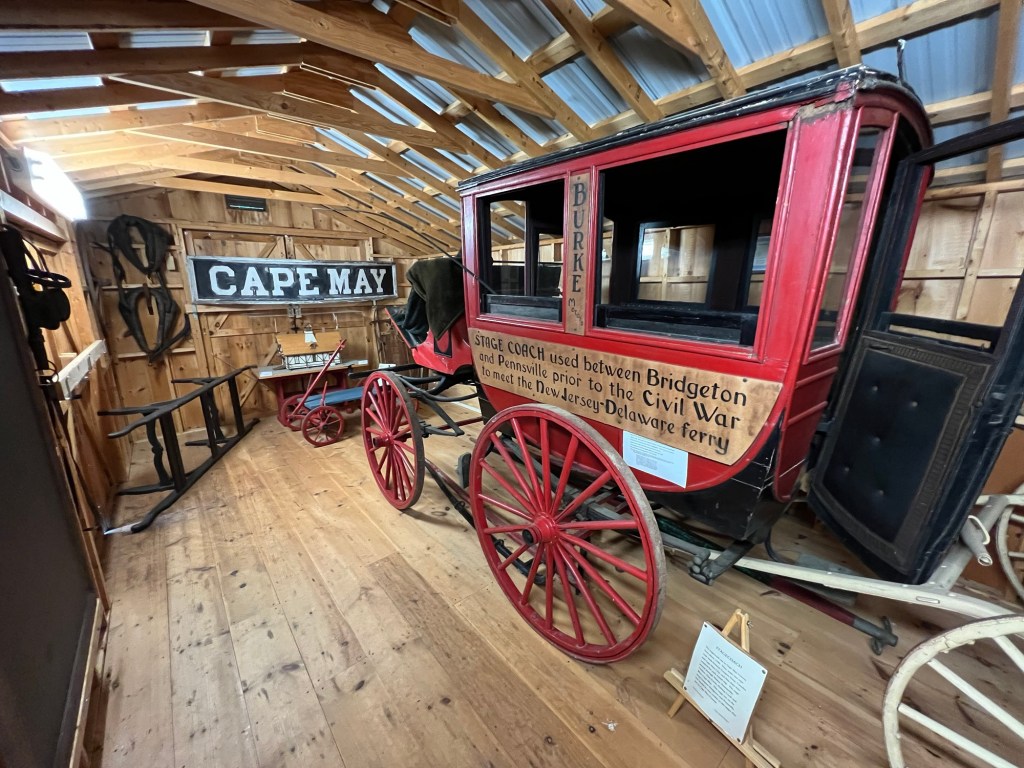
Our next part of the tour was of the Carriage House and its collection of buggies and carriages owned by by local residents.
The Barn and Carriage exhibits:
(from the Cape May County Museum website)
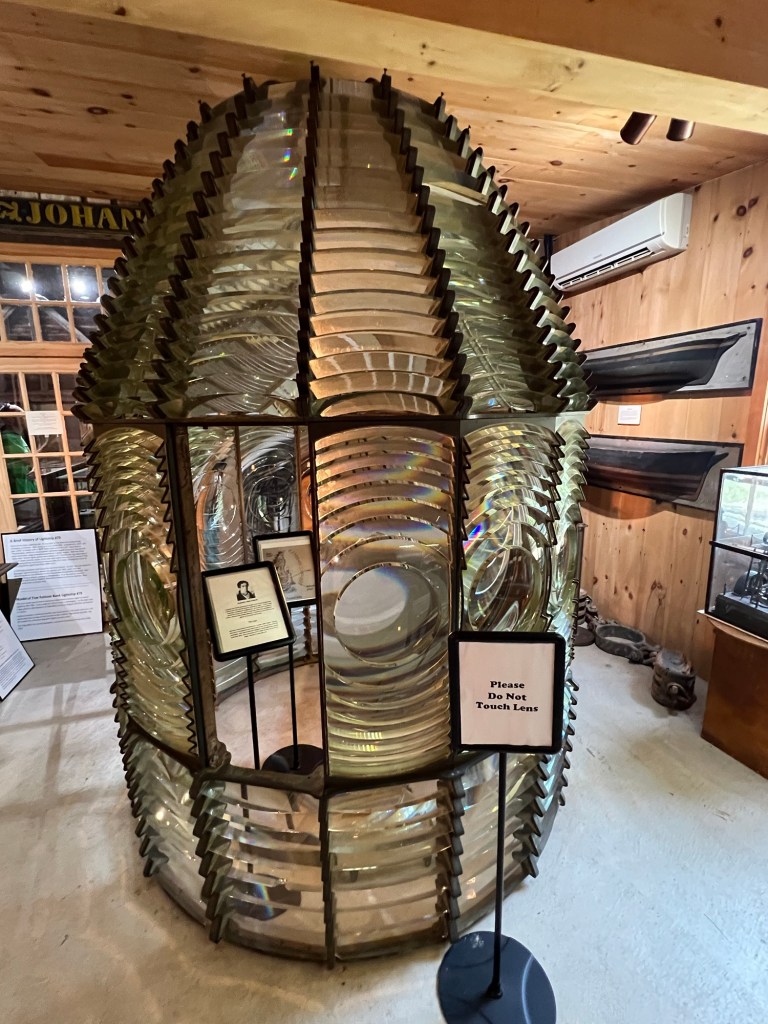
Our barn is home to a maritime exhibit including Cape May County’s crown jewel, the original first-order Fresnel lens from Cape May Light House. In addition to our collection of farm implements the barn is also the site of our recently dedicated military room that pays homage to those who served our nation in time of war.
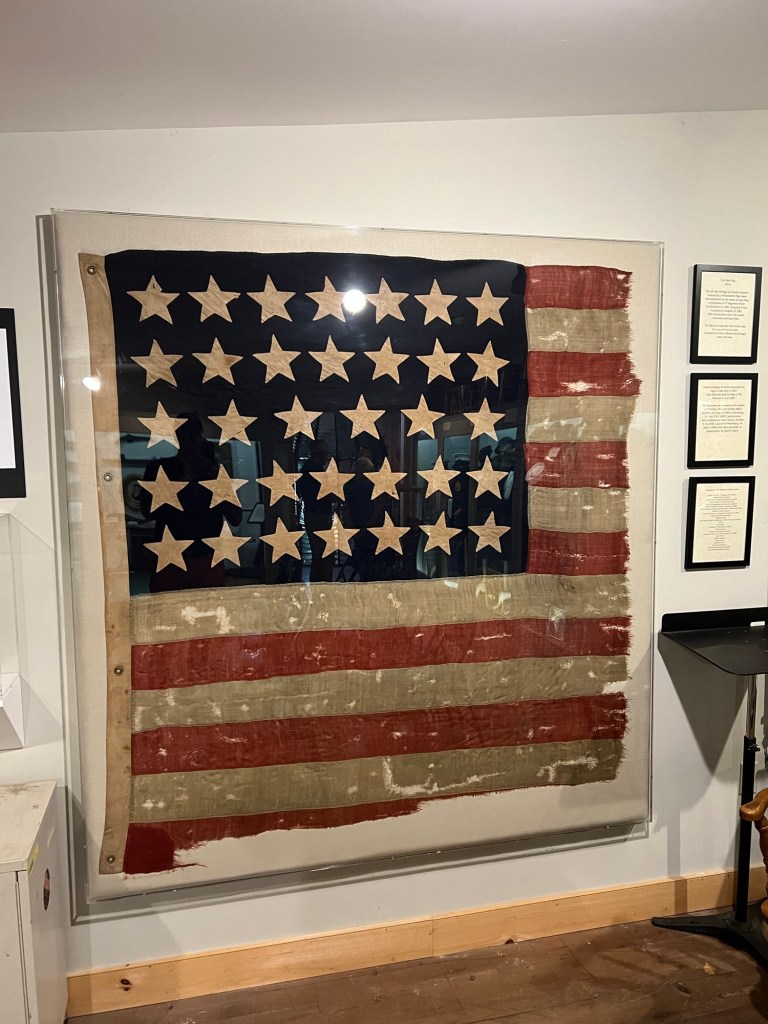
Period pieces range from the Revolutionary War to our country’s most recent involvement in Iraq and Afghanistan. Of special interest is the American flag that was carried by soldiers who hailed from Cape May County during the Civil War. The flag survived numerous battles, including Gettysburg, Spotsylvania, Bull Run and was at Lee’s surrender at Appomattox. The Carriage Shed houses items related to transportation – a vintage horse-drawn market wagon, a doctor’s sulky and an early stagecoach that ran between Bridgeton and Pennsville (from the museum website).
The collection of carriages and buggies
A local buggy from a member of the community
The history of the Cape May Stagecoach
The Cape May Stagecoach
This stagecoach was used on the route between Bridgeton and Pennsville
The funeral cart used to transport bodies once people die to their last destination
The last building on the museum’s property housed military artifacts, farm equipment and artifacts from what would shape the local community
The Maritime History of Cape May and of the Museum:
(from the museum website)
Since its earliest days the area we now call Cape May County has been linked to the water. With the tumultuous Atlantic Ocean on one side, the Delaware Bay on the other and lush forest and field between it served its residents well. Early Native Americans thrived, whalers found whales in the ocean and refuge in the bay. All worked the shores and tributaries for birds and shellfish. As the population grew, shipbuilding and coastal trade took on greater importance. Come visit us and explore this aspect of our museum (from the museum website).
Many of the artifacts, photographs and manuscripts associated with maritime activities have found their way our museum collection. From the original first-order Fresnel lens that sat atop the Cape May light to whaling implements, marine skeletons, ship parts and Native American exhibits there is something for everyone. Of special interest is our recently acquired Cresse Journal, an original manuscript by Lewis Cresse detailing the life of a whaler in the mid-eighteenth century (from the museum website)
Hunting and military items from around the turn of the last century
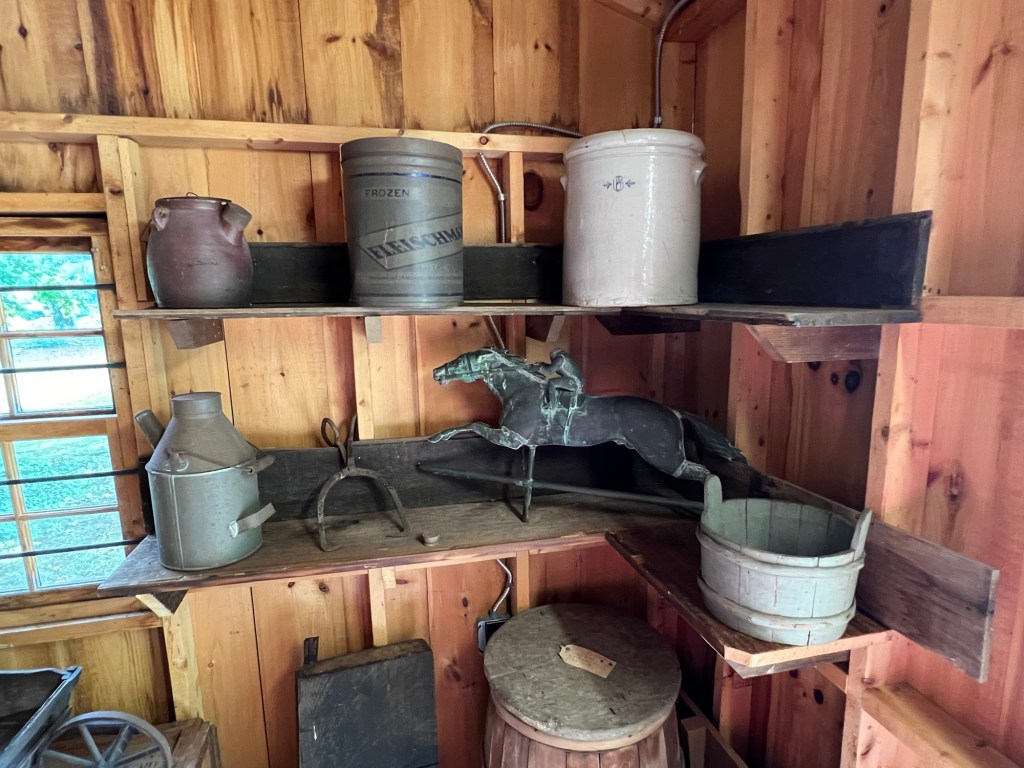
Household and farming items
Artifacts from the Shipping industry
Artifacts from the Counties Ship Building past
Items from the Whaling Industry in Cape May
The museum also houses the original Cape May Lighthouse light
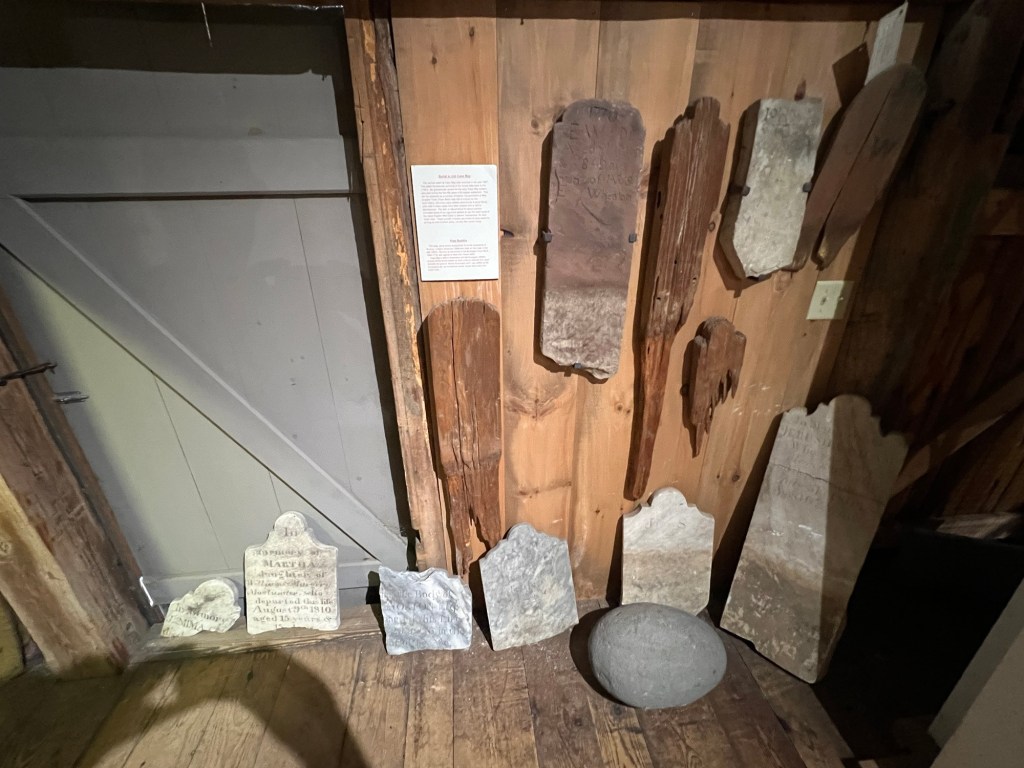
The history of burial and old cemeteries in Cape May
Old tombstones from Cape May cemeteries
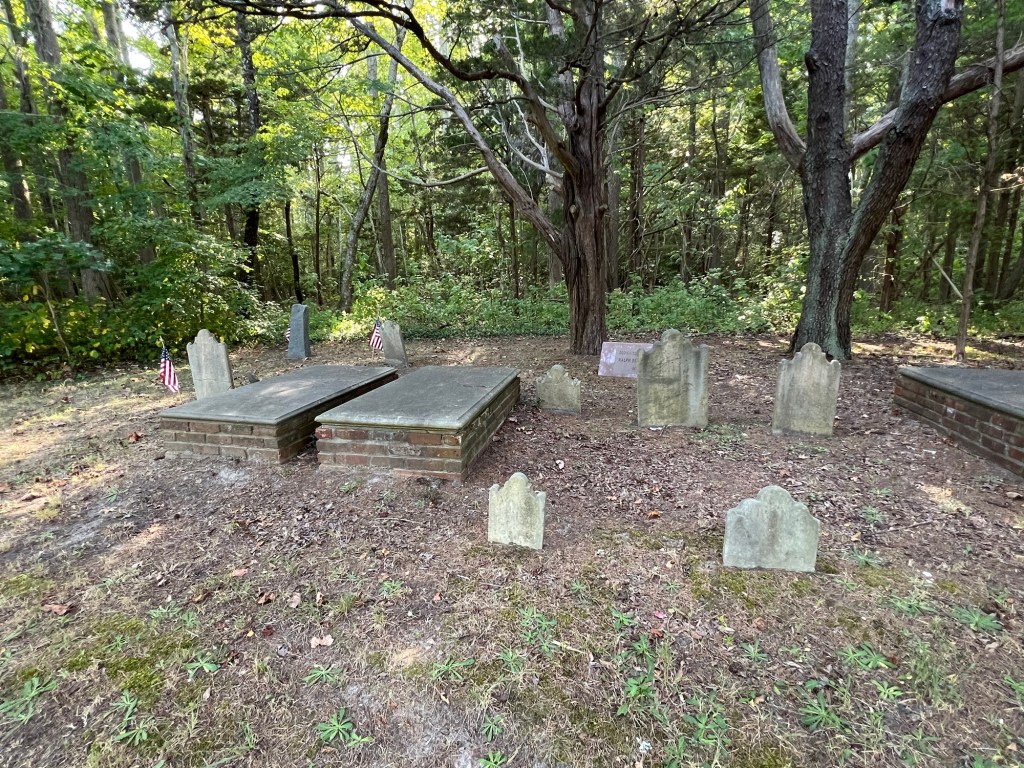
The family cemetery on what was once the family farm that now sits down the road and across the street
The family plot
The museum’s extensive collection of arrowheads and other Native American artifacts
The Cape May Civil War flag is most of the most interesting pieces in the museum’s military collection
The Cape May Civil War flag
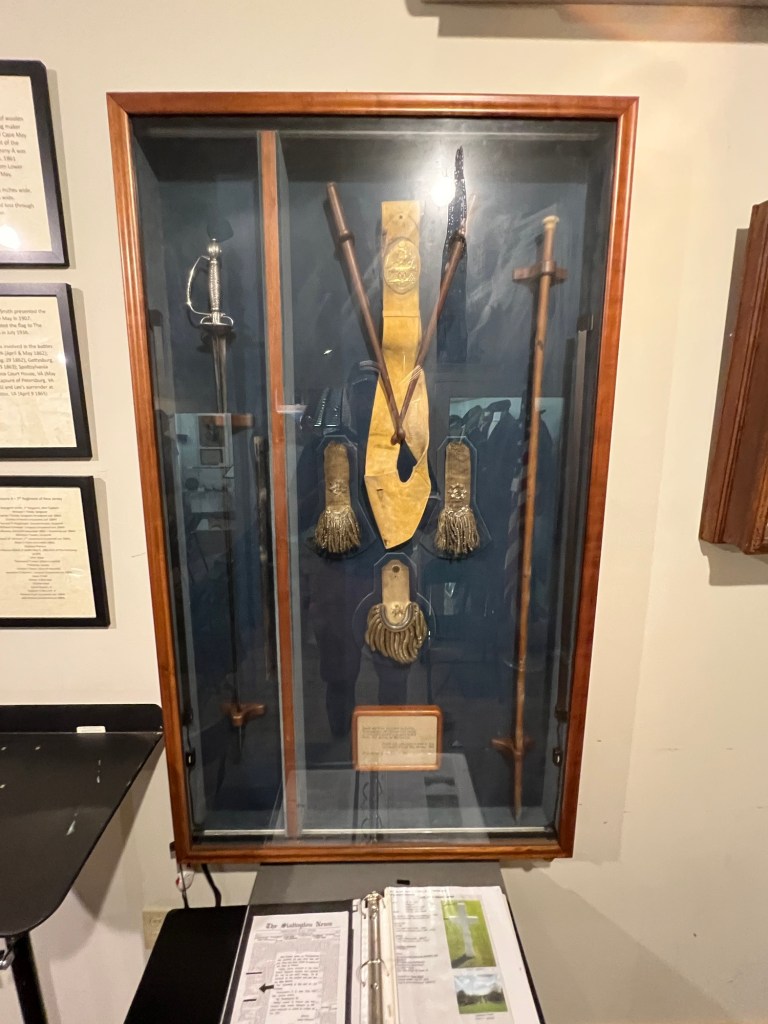
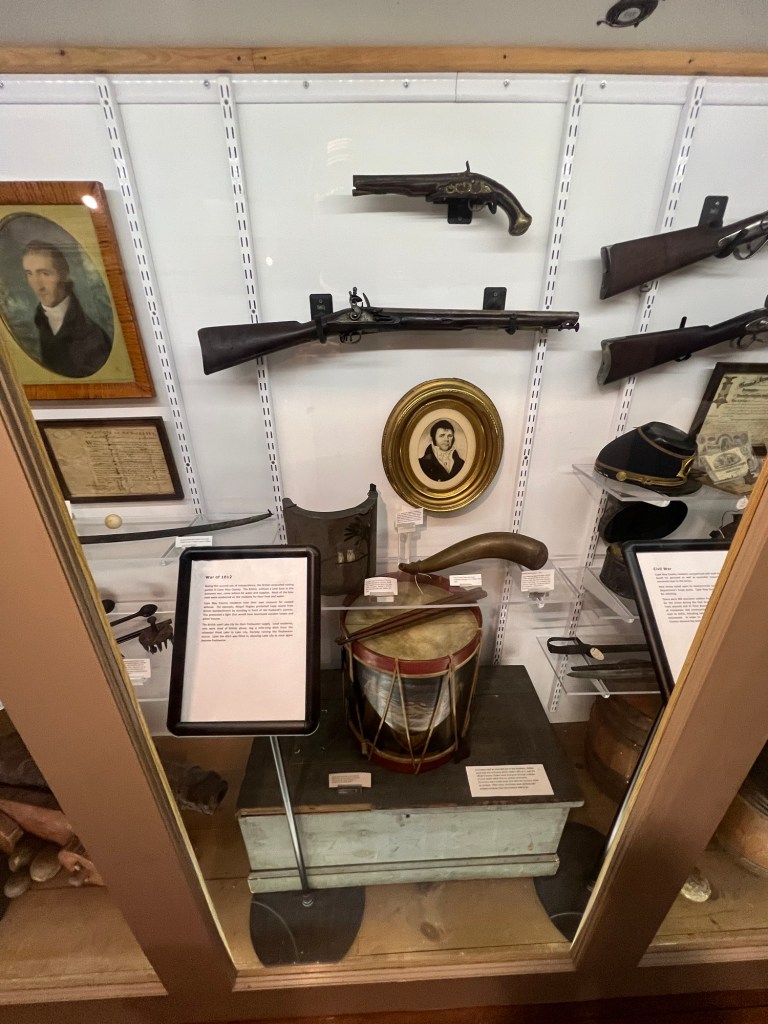
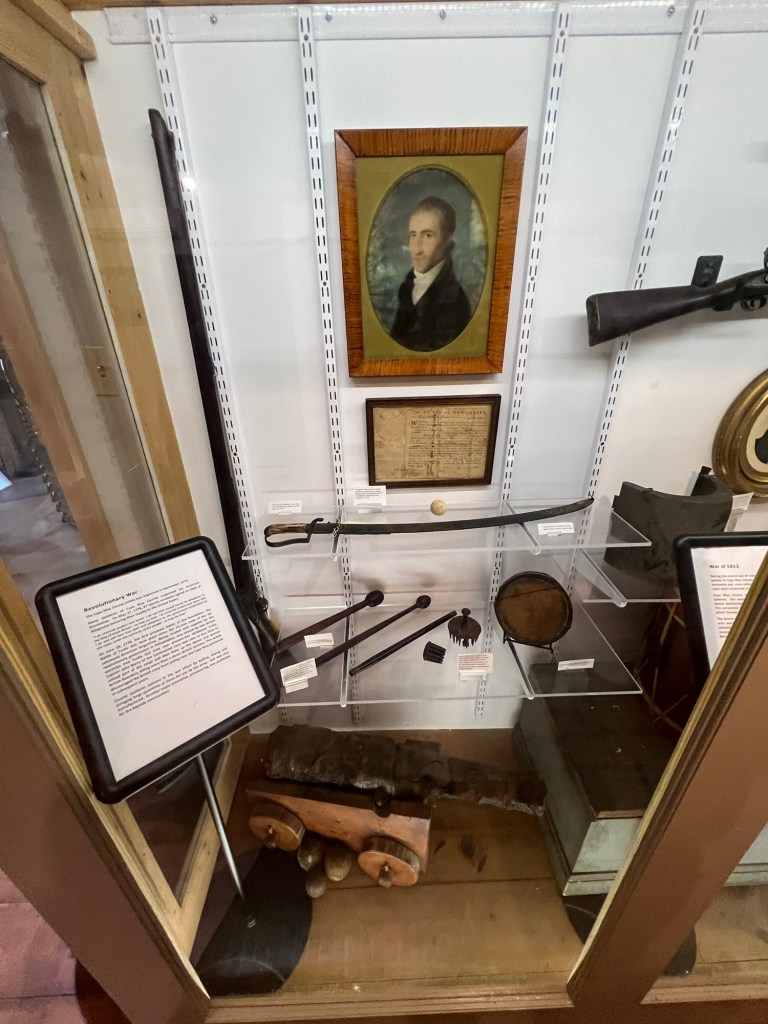
Military artifacts from the war years
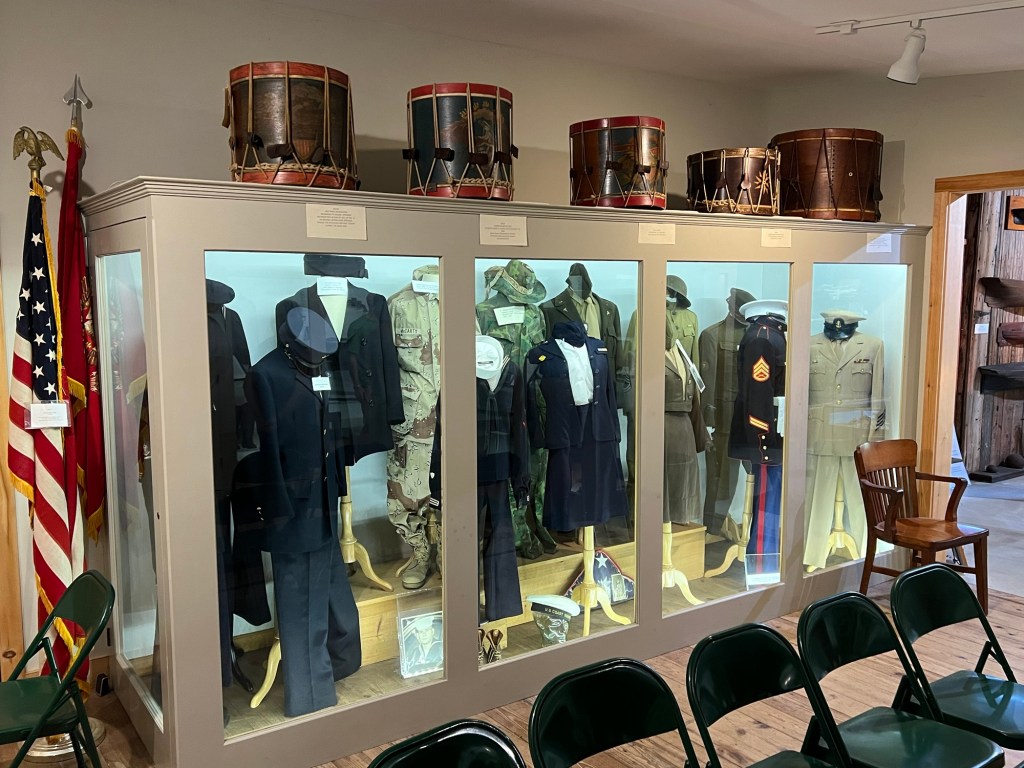
The extensive collection of military uniforms from the different wars in the museum collection with ceremonial drums on display on the top of the case
The gun and pistol collection at the museum
The Pistol collection at the museum
The collection of military items in the collection
The early military collection at the museum
The grounds of the museum before I left for the day
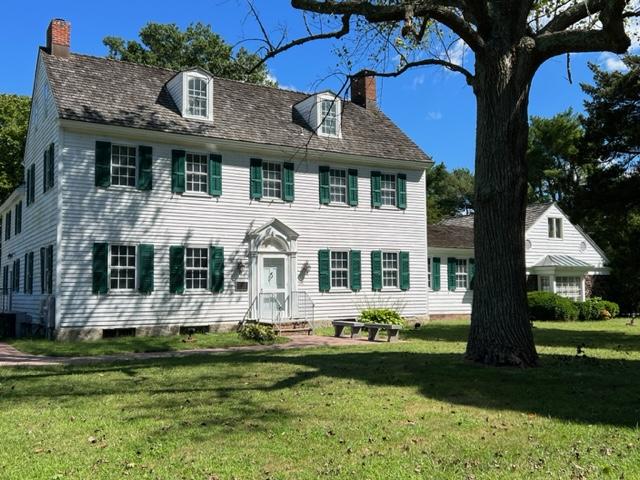
The family home that faces the Highway
The museum is not just an extensive collection of City of Cape May but the history of the County as a whole and its rich development from a farming, whaling and shipping town to a major tourist hub and recreation community.
It also shows it has never lost it nautical or farming past as well as this legacy still carries on in Cape May. The development of the community and the progress it has made over the years is showcased in the galleries and buildings on the museum property.
The Development of the Cape May County Museum:
(from the museum website)
The Cape May County Historical & Genealogical Society (CMCHGS), doing business as The Museum of Cape May County, was founded in 1927 as a private, non-profit organization by a number of local families who wanted to ensure the history of Cape May County was preserved and documented. In 1930 the CMCHGS established a museum and genealogical library which were housed in the basement of the County Court House building for 45 years.
In 1976, the current facility, the Cresse-Holmes House containing eleven rooms along with a five-room barn was purchased to accommodate the growing collection. By 1988 the construction and dedication of the genealogical library and administrative offices had taken place. In the last 90 years, thanks to the generosity of many individuals and families with a connection to Cape May County. the collections have grown to contain many thousands of Cape May County artifacts and documents.
Today the museum and library are run by full time, part time and seasonal staff members along with an enthusiastic group of active volunteers to assist with greeting visitors, guiding tours, researching, assisting with programs, and staffing events.
































 Visiting a Museum: The Unique, Unusual, Obscure and Historical