
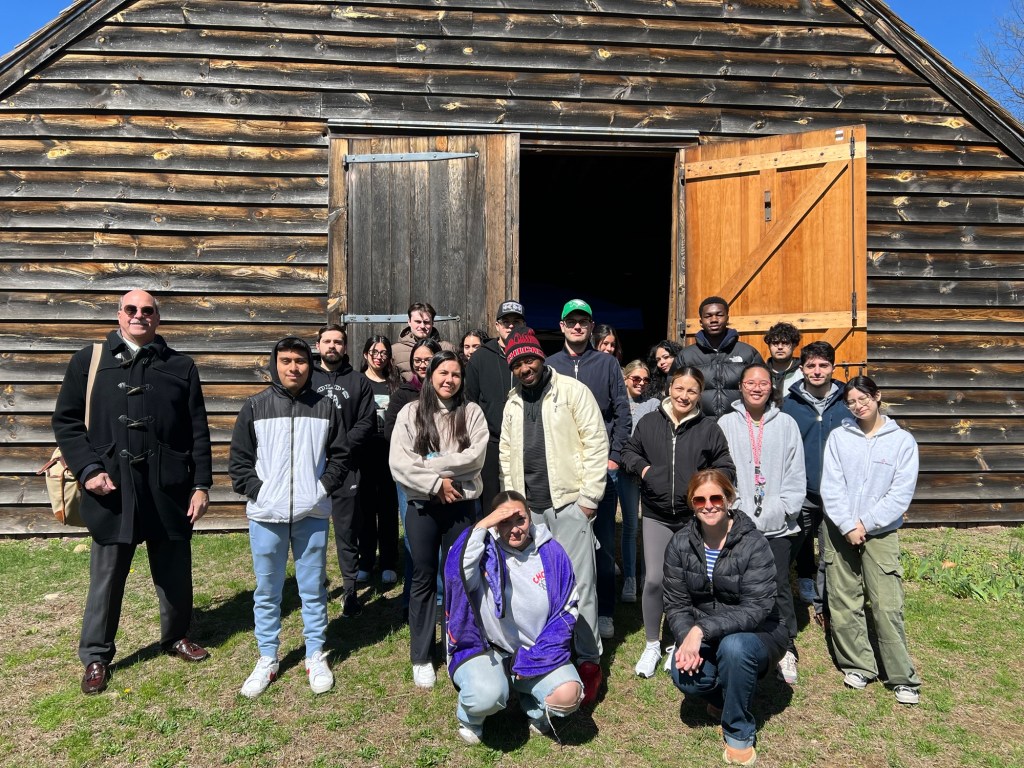
Bergecco-Parc Consulting Inc. CEO/Co-Founder Professor Justin Watrel and his Executive Team outside the Wortendyke Barn in Park Ridge, NJ for a Team Field Trip.
Discovering hidden historical and cultural gems in Manhattan & Beyond
Category: Historic Churches and Cemeteries
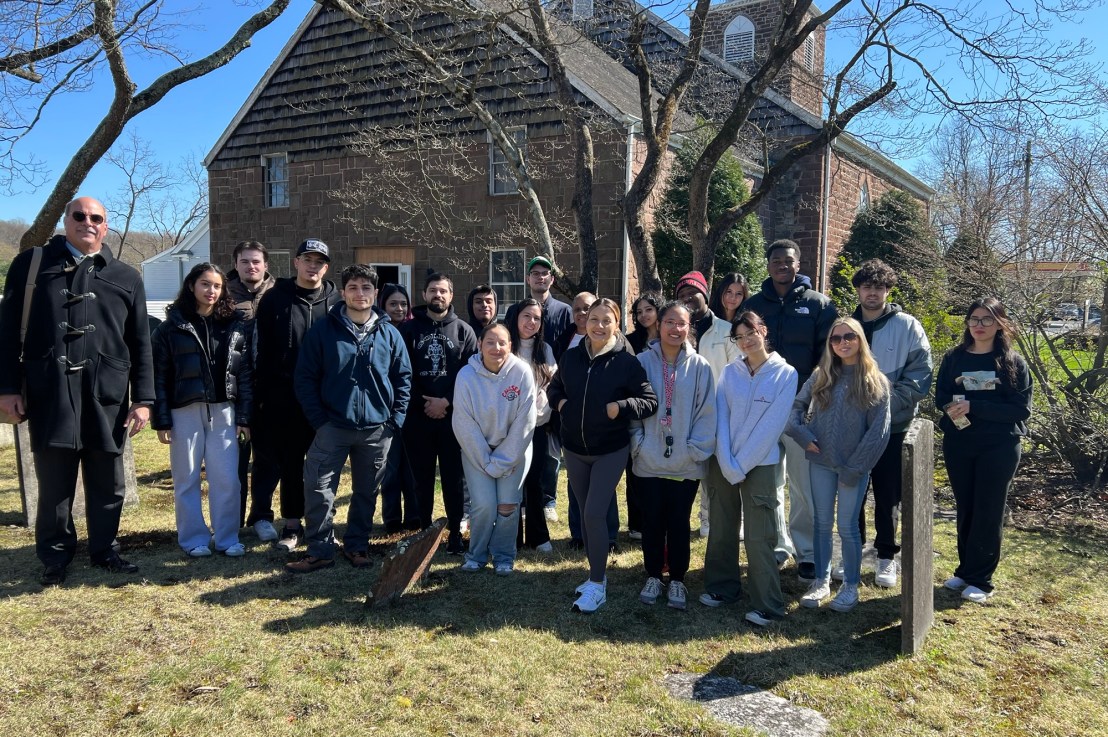
Bergecco-Parc Consulting Inc. CEO/Co-Founder Professor Justin Watrel and his Executive Team outside the Wortendyke Barn in Park Ridge, NJ for a Team Field Trip.

Perry Cemetery-Harrington Park Historical Society
Old Hook Road
Harrington Park, NJ 07640
(201)768-2615
http://www.harringtonparkhistoricalsociety.com/
https://www.hmdb.org/m.asp?m=241777
Open: Dusk to Dawn
Admission: Free
My review on TripAdvisor:
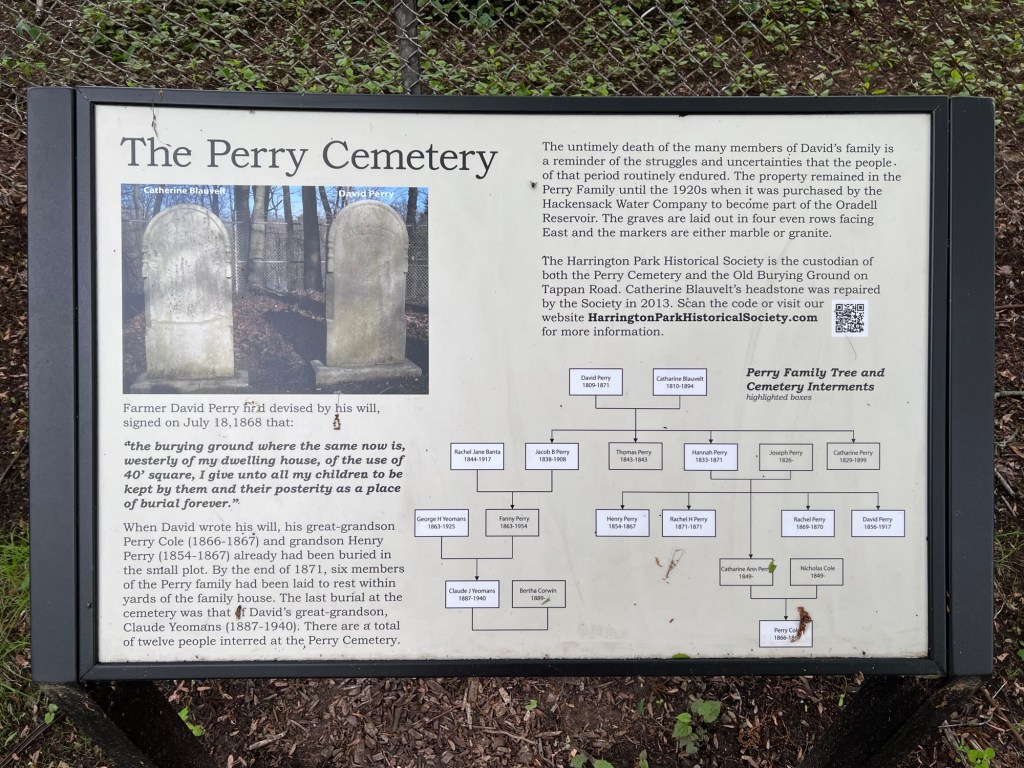
The historical significance of for the cemetery
The Perry family cemetery is a small family plot in Harrington Park, NJ and example of a time when families still buried their loved ones on property that family’s thought would be there for generations. Many generations of the family are buried here showing the family’s love of this land but like too many tiny cemeteries throughout Bergen County have been lost in time by the family buried there.
Today it sits quiet and respectful and somewhat over grown. Nature now surrounds it.
The Perry Cemetery History:
(From the Harrington Park Historical Society)
The Perry Cemetery is a small family burial ground located on what was the farm of David Perry (1809-1871). The Old Burying Ground cemetery is part of the land apportioned to Garret Huybertsen Blauvelt, son of one of the original sixteen grantees of the Tappan Patent approved by the Governor of New York in 1686. Although there are believed to be earlier ones, the first known burial was in 1722 and the last in 1905.

The Perry Family Cemetery sits quietly on a stretch of Old Hook Road
(From the Harrington Park Historical Society)
The Perry Cemetery is situated in the Borough of Harrington Park on Old Hook Road, east of Bogert’s Mill Road opposite the United Water Company building. David Perry had devised by his will, signed on July 18,1868 that: “the burying ground where the same now is, westerly of my dwelling house, of the use of 40’ square, I give unto all my children to be kept by them and their posterity as a place of burial forever.”

The Perry family tree of loved ones buried at the cemetery
(From the Historical Marker Database)
When David wrote his will, his great-grandson Perry Cole (1866-1867) already had been buried in the small plot. By the end of 1871, six members of the Perry Family had been laid to rest within yards of the family house. The last burial at the cemetery was that of David’s great-grandson, Claude Yeomans (1887-1940). There are a total of twelve people interred at the Perry Cemetery.
The untimely death of many members of David’s family is a reminder of the struggles and uncertainties that people of that period routinely endured. The property remained in the Perry Family until the 1920s when it was purchased by the Hackensack Water Company to become part of the Oradell Reservoir. The graves are laid out in four even rows facing East and the markers are either marble or granite.
The Perry Family tree starting with the marriage of David Perry to Catherine Blauvelt
Son Henry and Daughter Rachel’s tombstones

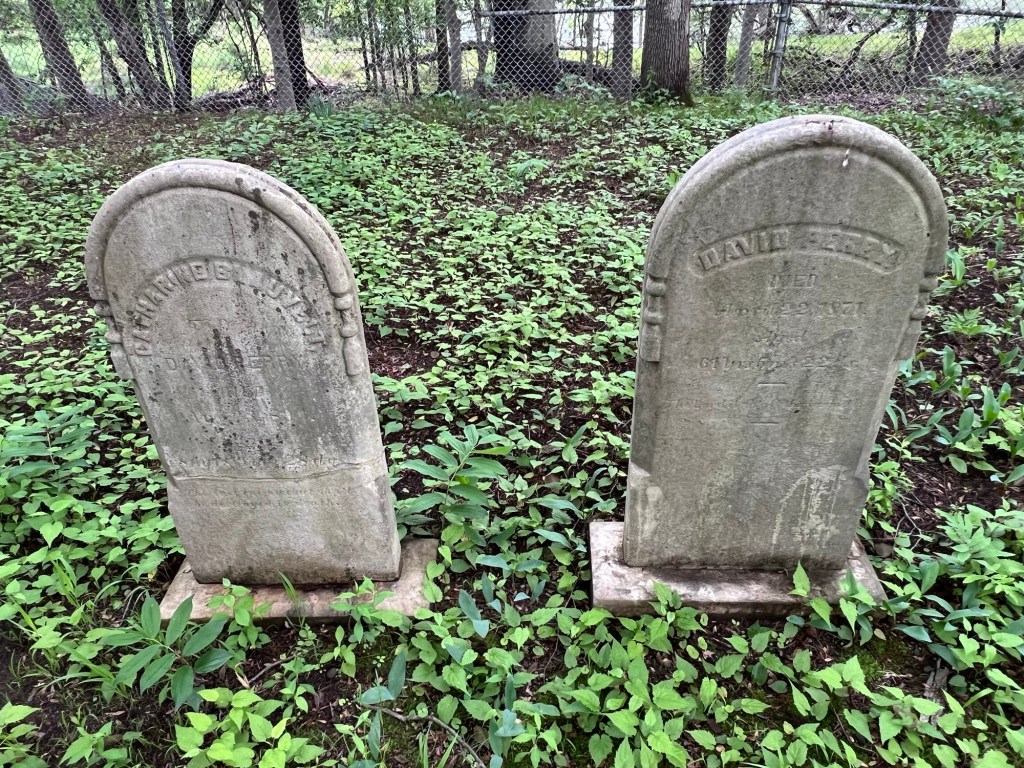
Patriarchs David Perry and his wife, Catherine Blauvelt Perry

The last David Perry to be buried in the family plot
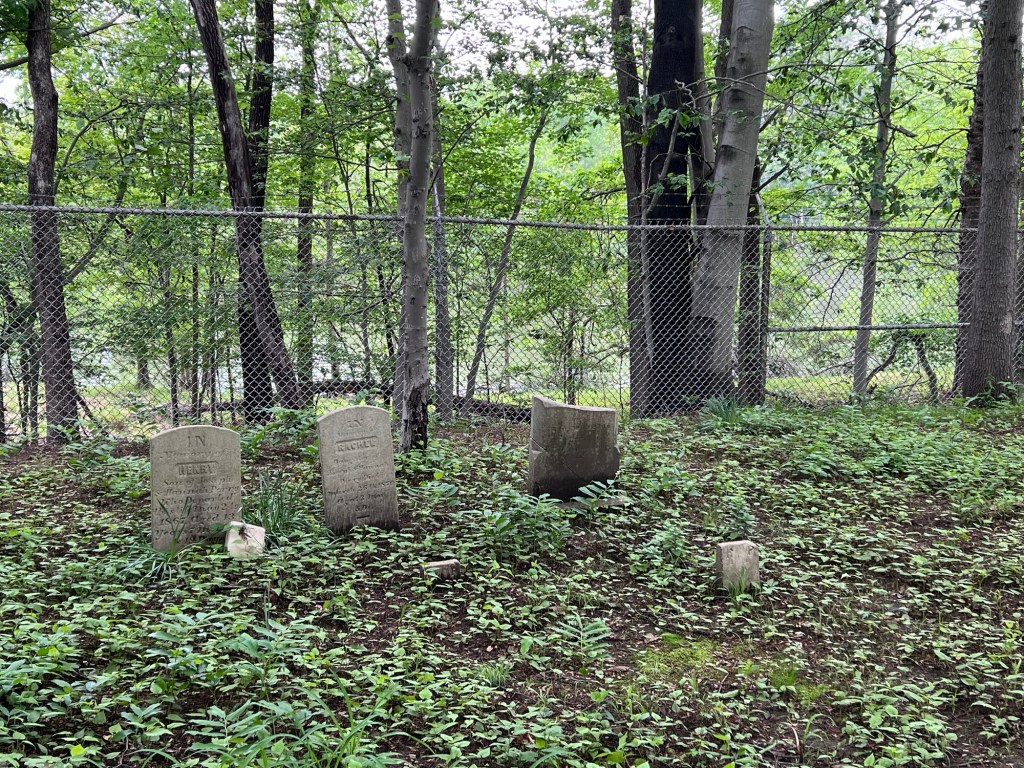
The family plot facing the stream

The Patriarchs of the family stand in the middle

The newest graves in the cemetery

The latest burials in the family plot
Video on the Perry Cemetery from the Harrington Park Historical Society
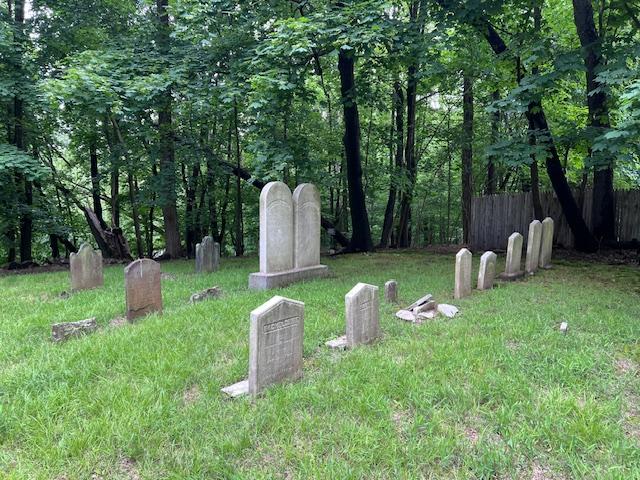
Old Burying Ground/Blauvelt Cemetery-Harrington Park Historical Society
Tappan Road
Harrington Park, NJ 07640
(201). 768-2615
https://www.findagrave.com/cemetery/1653309/harrington-park-old-burial-ground
http://www.harringtonparkhistoricalsociety.com/
Open: Dawn to Dusk
Admission: Free
My review on TripAdvisor:
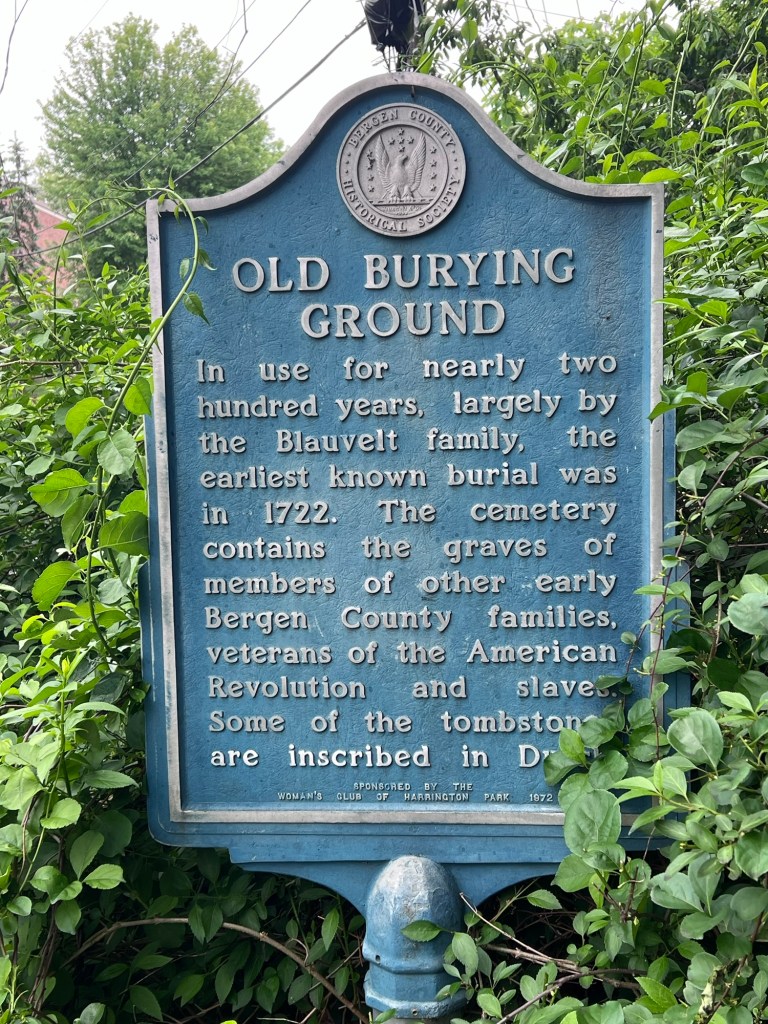
The historical marker for the Old Burying Ground
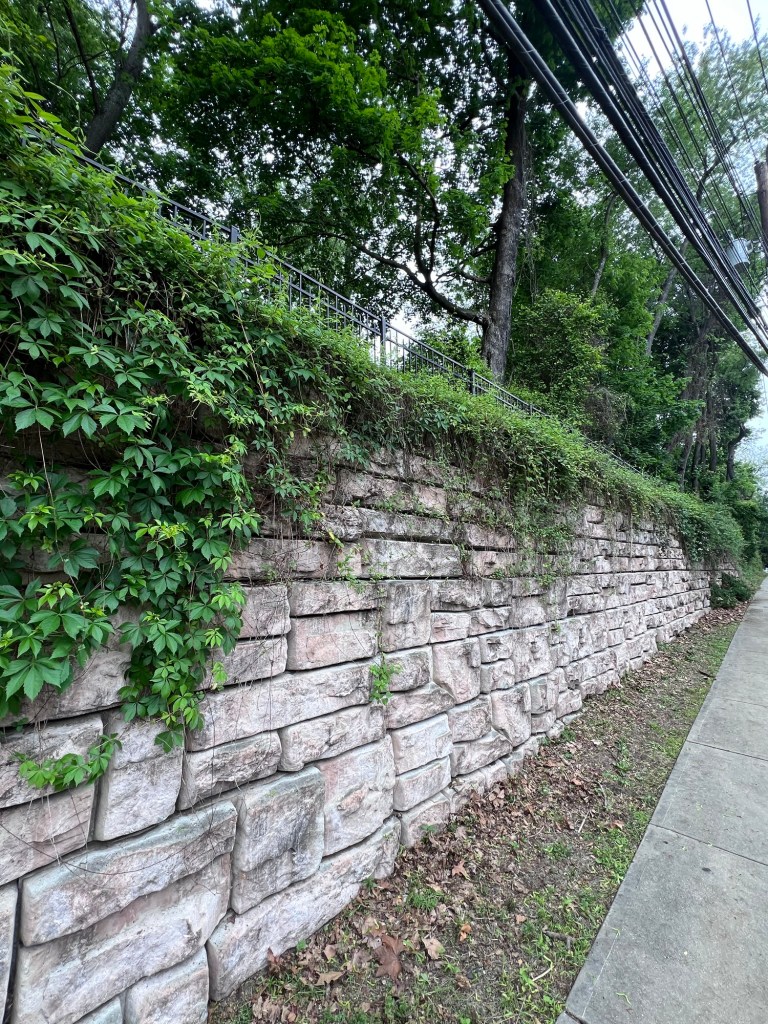
The wall outside the cemetery
The Old Burying Ground known also as the Blauvelt Cemetery, is an interesting look at the burial rights of prominent farming families of early Bergen County and their forgotten legacy of their contributions to building not just the County to our Country as well.
Many of these families intermarried over time combining properties and farms that over time since the turn of that last century, have become lost corners of our county’s history due to growth after WWII of suburban communities.
It is interesting to see who the movers and shakers of these communities of the past whose descendants were still live in Bergen County. The sad part is that these distant family members may not know their own family history enough to visit these tiny pieces of history that hold members who fought in the Revolutionary War and contributions to the growth of businesses with names that have been reduced to well known street addresses. A lot of history lies in these tiny plots that dot Bergen County. Here you can see the ‘ghosts’ of the past and walk past their graves to hear their stories.
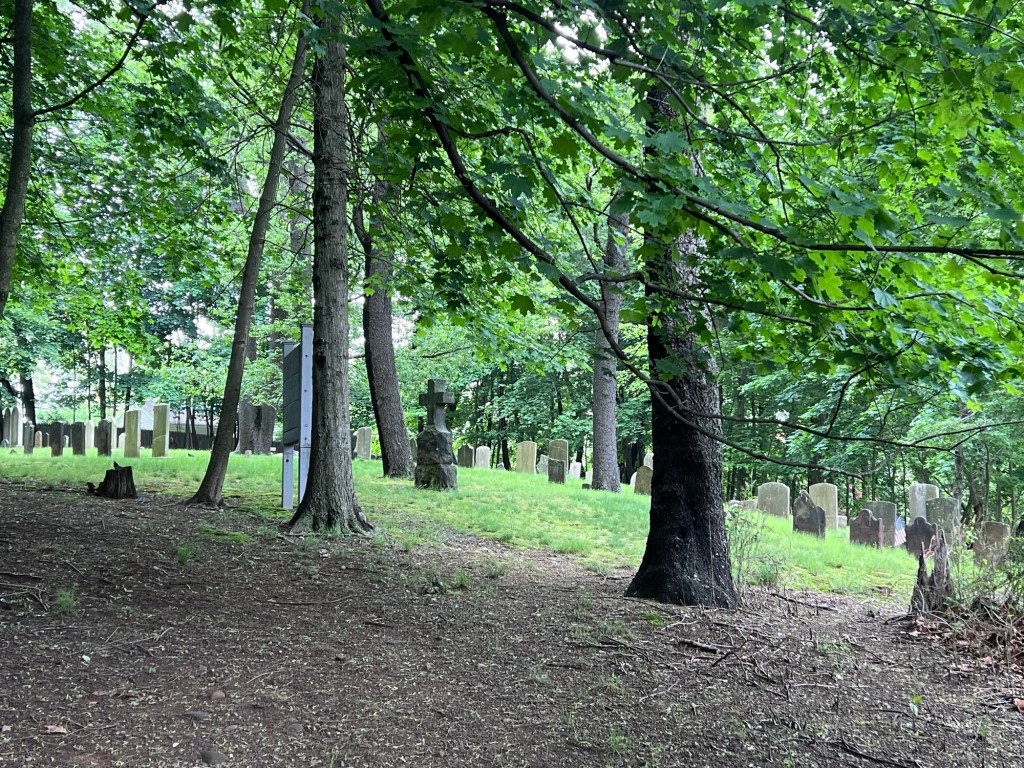
The entrance to the cemetery
The History of Burying Ground:
(from the Harrington Park Historical Society)
In use for nearly two hundred years, largely by the Blauvelt family, the earliest known burial was in 1722. The cemetery contains the graves of members of other early Bergen County families, veterans of the American Revolution and slaves. Some of the tombstones are inscribed in Dutch.
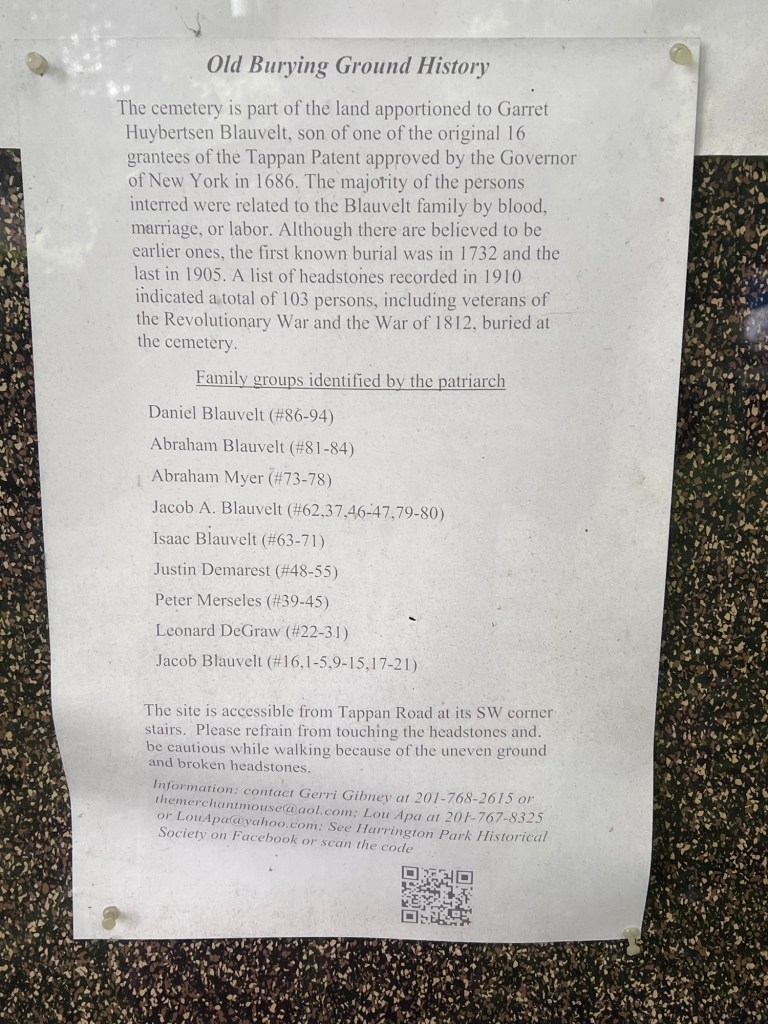
The description of the family plots
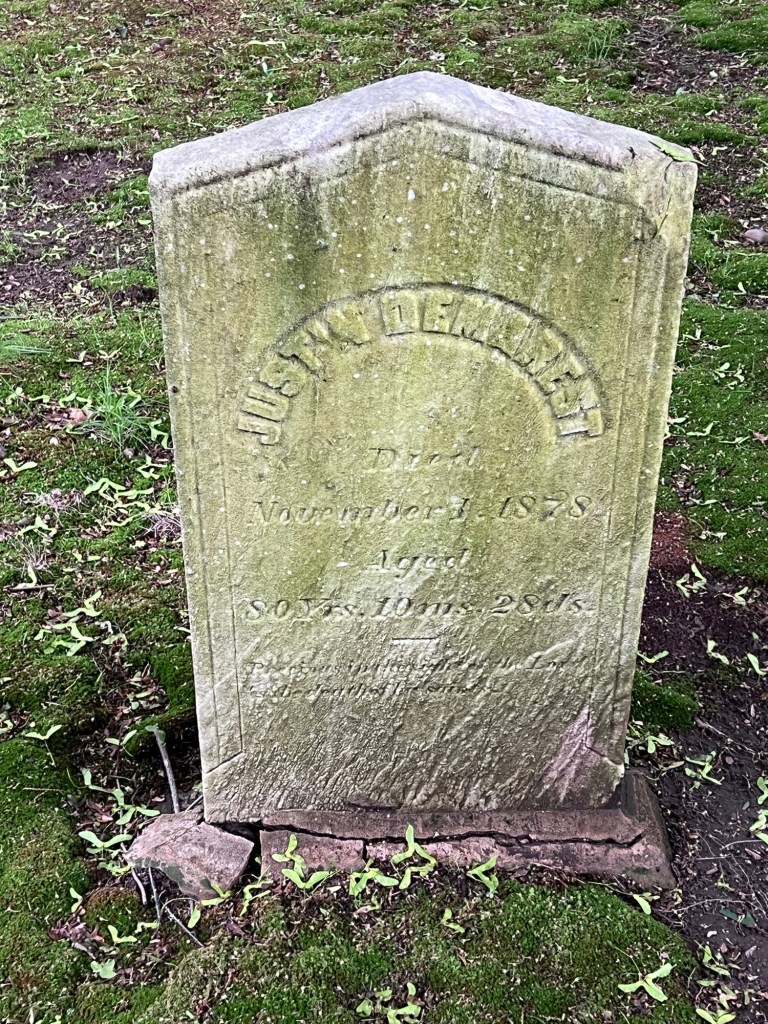
The grave of Patriarch Justin Demarest
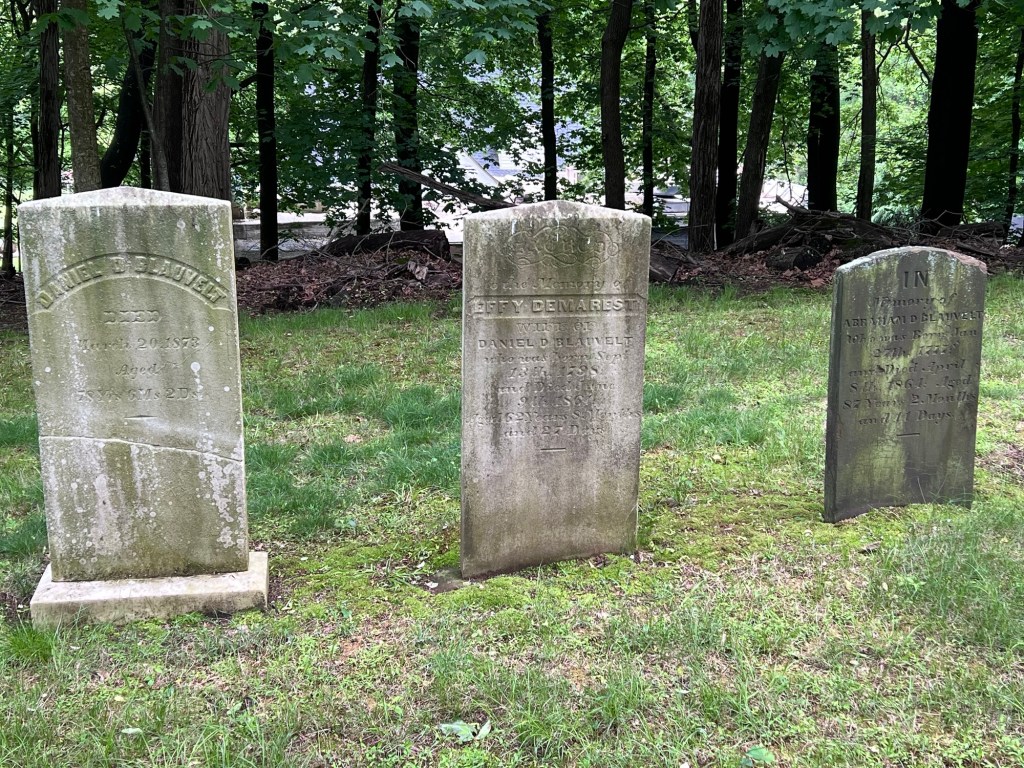
The Blauvelt family plot of Patriarch Daniel Blauvelt
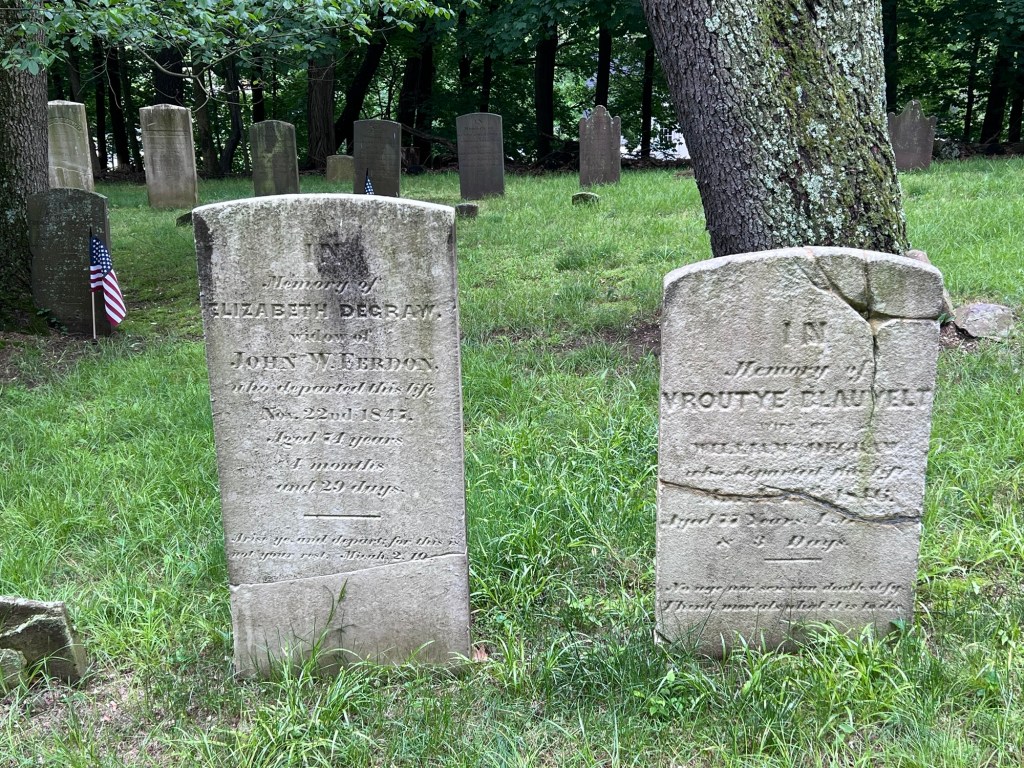
The graves of members of the Blauvelt and DeGraw families
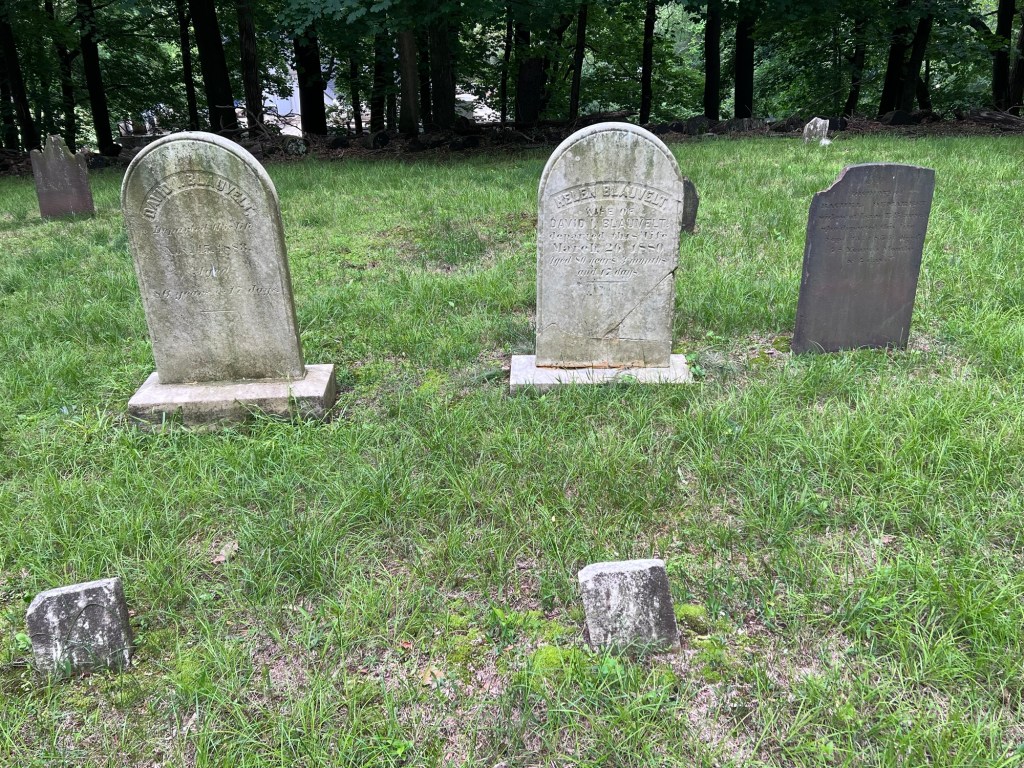
The graves of David and Helen Blauvelt
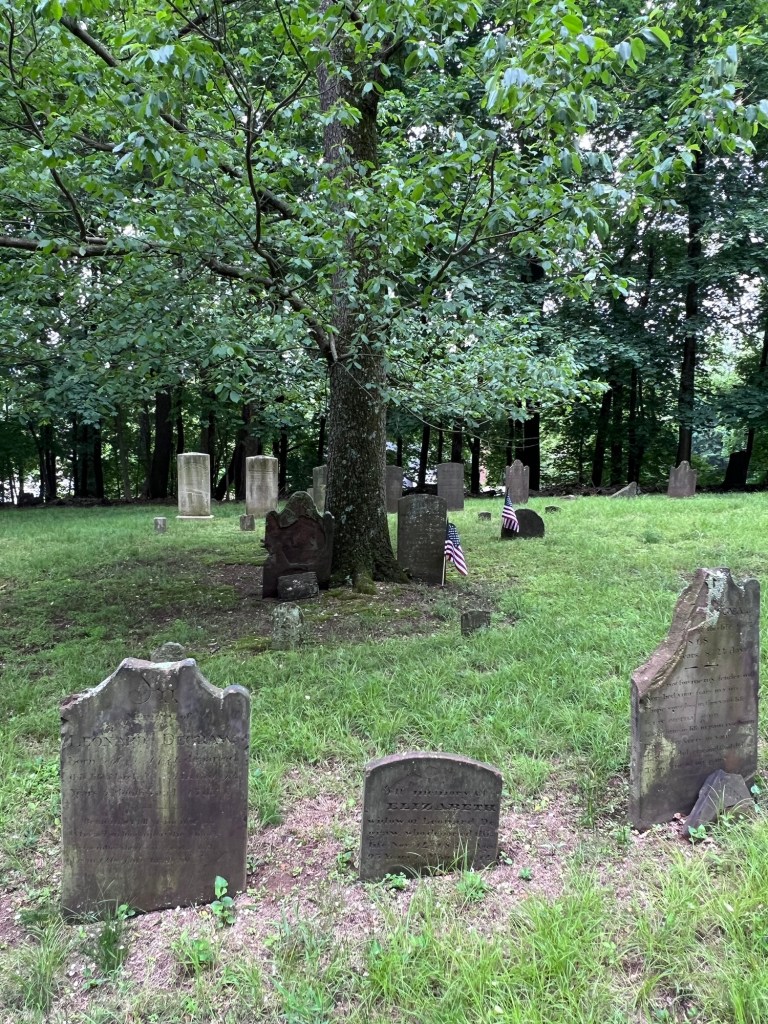
The middle of the Blauvelt family plot
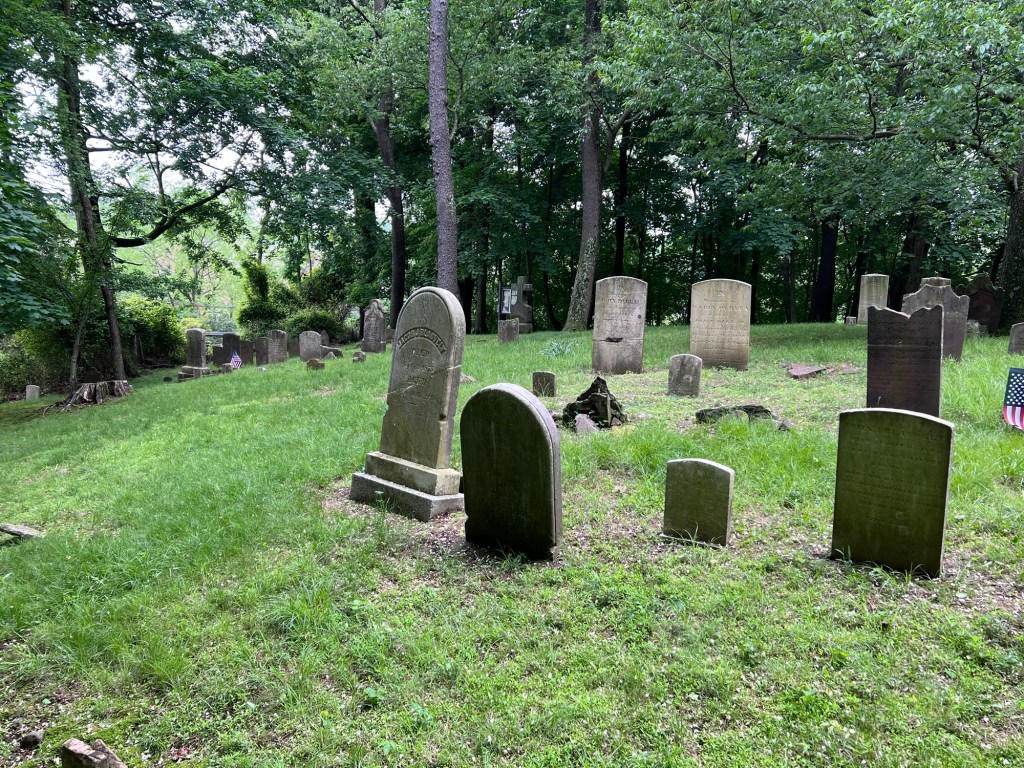
The cemetery from the other side of the Blauvelt family plot
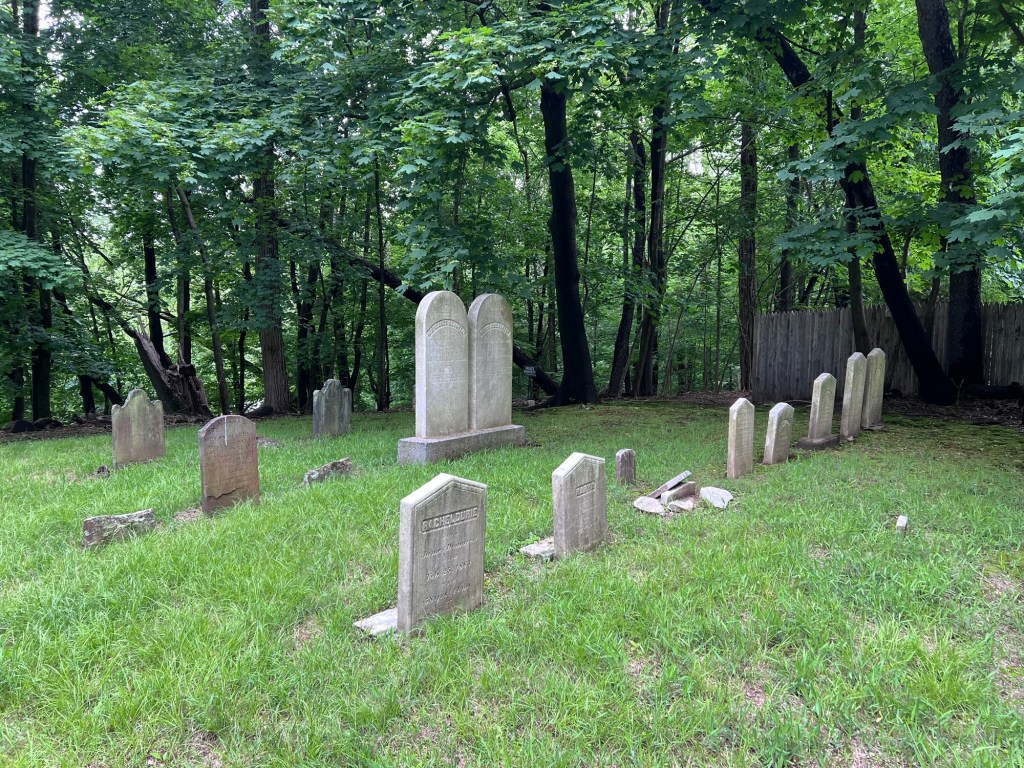
The Blauvelt and Demarest family plots (damaged tombstones)
(From the Harrington Park Historical Society)
Abraham Quackenbush (1768-1854) and his wife, Elizabeth Myers (1770-1807)) are part of the Abraham Myers family burial plot at the Old Burying Ground. In the middle of the 18th century, Abraham Myers received a royal charter from King George III to build a grist mill on the Hackensack River which his grandson John Bogert later operated, and it thereby became known as “Bogert’s Mill.”
The Myers family members interred in the plot are Abraham Myers, his wife Cathrena Nederman, daughter Cathrena, daughter Elizabeth and Abraham Quackenbush, son John Myers and wife Rebecca Durie.
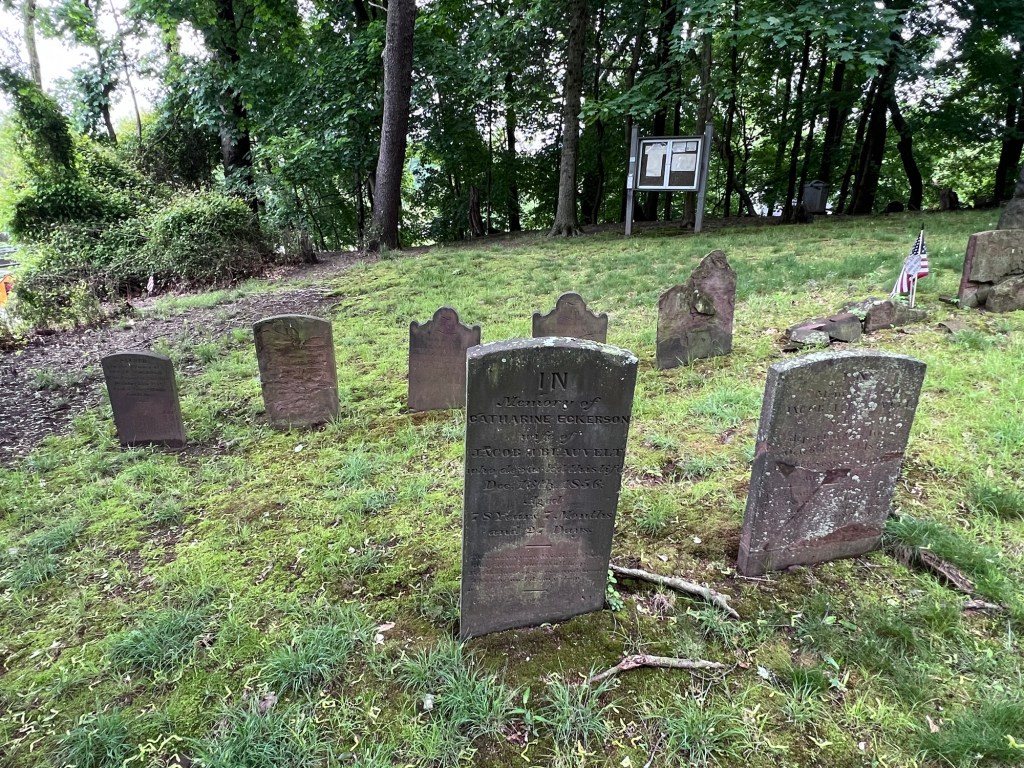
The Blauvelt-Eckerson-DeGraw family graves

Patriarchs David and Helen Blauvelt family plot
Video on the Cemetery from the Harrington Park Historical Society
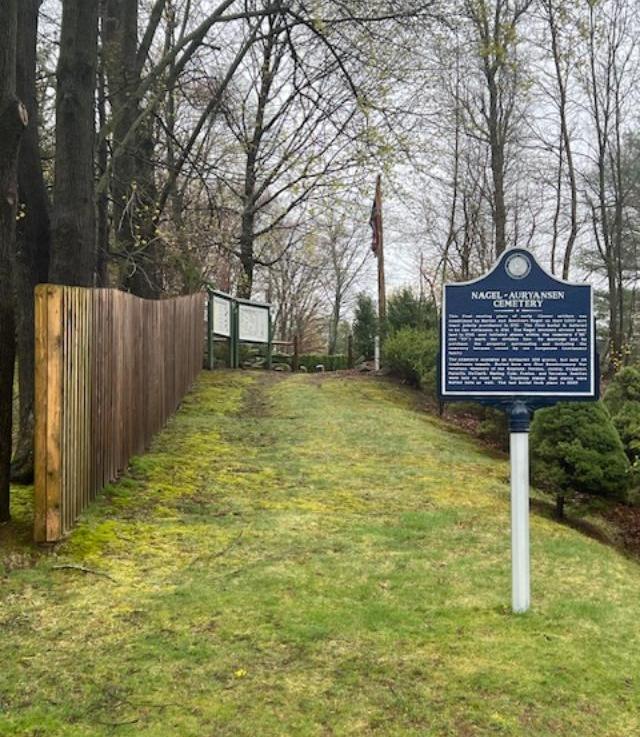
The Nagel/Auryansen Cemetery
42-50 Susan Drive
Closter, NJ 07624
https://closterhistory.com/properties/cemetary/index.html
https://www.findagrave.com/cemetery/2445456/nagel-auryansen-cemetery
https://www.hmdb.org/m.asp?m=63546
Open: Sunday-Saturday Open 24 hours during twilight hours
My review on TripAdvisor:
The Metropolitan Farm at 119 Hickory Lane in Closter, NJ:
https://www.metropolitanfarm.com/
https://www.facebook.com/MetropolitanFarm/
My review on TripAdvisor:

The entrance to the Nagel/Auryansen Cemetery in Closter, NJ

The historic marker sign
The History of the Cemetery:
(From the Boro of Closter, NJ website)
The Naugle/Auryansen Cemetery is significant in the early settlement period of Closter’s history. Documented burials date to circa 1722 and include Dutch pioneer families with names like Vervalen, Naugle (Nagle), DeClark, Ferdon, Parsells, Auryansen, Demarest, Haring, Cole, Kearney, Montague and Bogert. Seven Soldiers, Closter farmers, who served in the Bergen County Militia during the Revolutionary war and one veteran from the War of 1812 are known to be among the interred.
The cemetery once known only as the “Burying Place,” was part of the original lands purchased in 1710 by the Naugle brothers, Barent and Resolvent. They divided their lands in 1748 and the division stones carved with their initials (“BN” and “RN”) are still visible in the middle of the cemetery.
Later, the place became known as the Auryansen Grave Yard because this family took title to the land upon which it sits. Many of the sandstone and frame houses built by these families and their descendants are still standing in the Borough today.

The description sign of the cemeteries plot locations
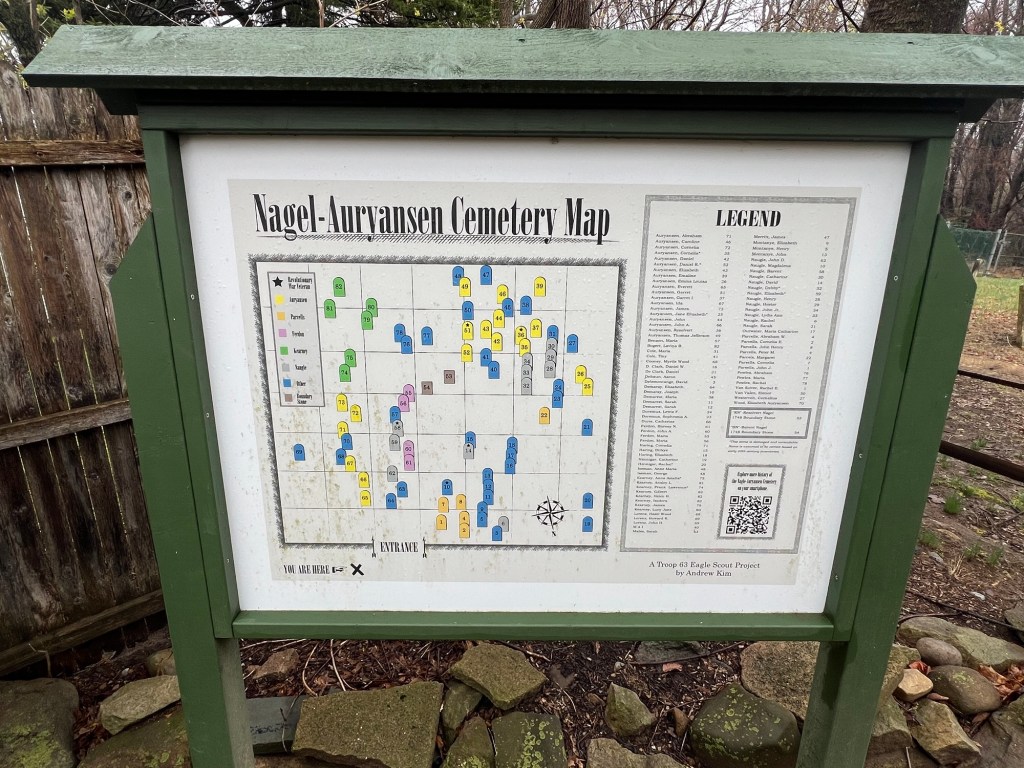
The plot location sign
The Historical Maintenance and care of the cemetery in the modern era:
(from the Boro of Closter, NJ website)
In 1996, the Closter Historical Society undertook a three year project to restore the 19th century sandstone gravemarkers. At that time a complete survey was done of the tombstones in the Cemetery and Tim Adriance is in the process of preparing this information for publication.
In 1961 Ralph Heaton of the American Legion obtained official granite plaques from the Veterans Administration and placed them at the foot of five Revolutionary soldiers’ graves.
Various caretakers have helped maintain and clean the cemetery through the years. Presently, Tim Adriance, the Auryansen family historian is the caretaker. This is still an active cemetery. From: 1999 “Revisions and Update” of the Historic Sites Survey, by Pat Morillo for the Closter Historic Preservation Commission – attached to the Bergen County Historic Sites Survey: Borough of Closter dated 1981-1982.
Recent work on the cemetery grounds has been overseen by the Closter Historic Preservation Commission and undertaken by the Closter DPW, as well as local Eagle Scouts. The cemetery now has an attractive rustic wooden fence and gate at the Susan Drive entrance, a newly refurbished flagpole with an historic American flag, new fencing along the perimeter, and other improvements to the Susan Drive entrance.
In 2010, the Bergen County Historical Society erected an historic blue marker describing the site. This marker is located at the Susan Drive entrance.
The Cemetery is open to the public through the new gate at the entrance on Susan Drive, between house numbers 42 and 50 Susan Drive, off Ruckman Road. This gate is unlocked, though the gate off the Hickory Lane entrance remains padlocked to prevent damage from off-road vehicles passing through the cemetery.

The inside of the cemetery on s gloomy afternoon

The Nagel family plot inside the cemetery
I visited the Nagel-Auryansen Cemetery one gloomy afternoon. This small cemetery is one of about a half dozen in Bergen County, NJ that were once part of family homesteads that are long gone.
These once important family farms started to disappear after the Civil War and with the coming of income tax, smaller families and automation of farming, these farms disappeared. These small cemeteries are what remains of these families legacies.

The grave of resident Abraham Auryansen
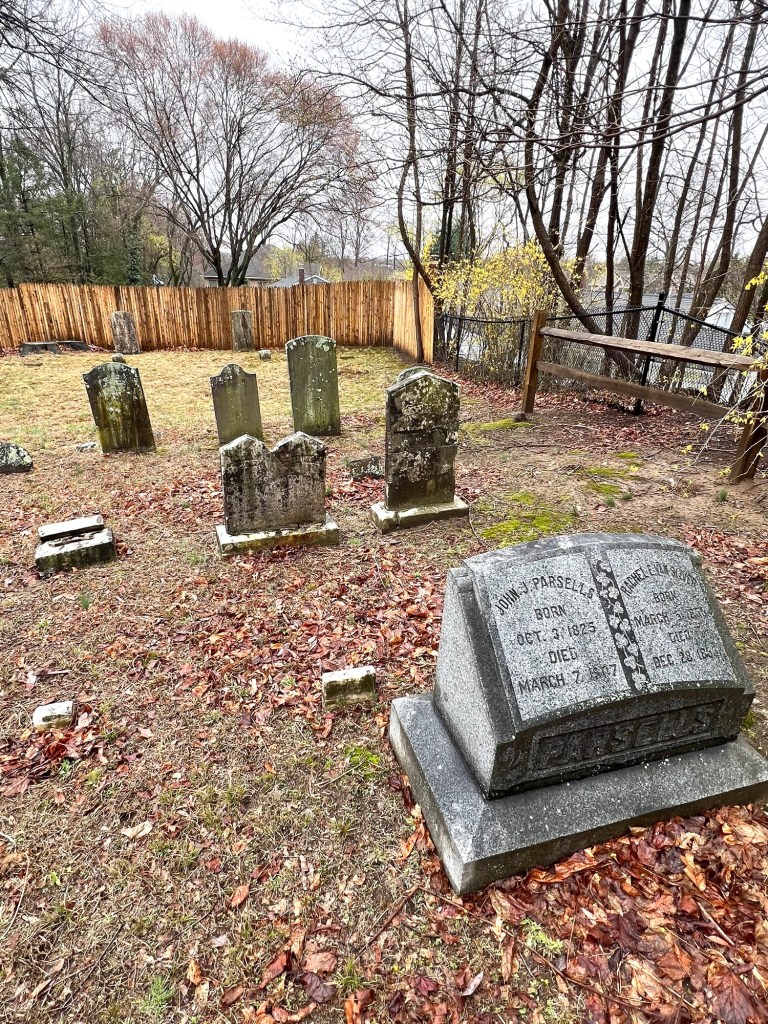
The Auryansen family plot inside the cemetery

The Nagel family plot inside the cemetery

The Auryansen family plot inside the cemetery towards the back
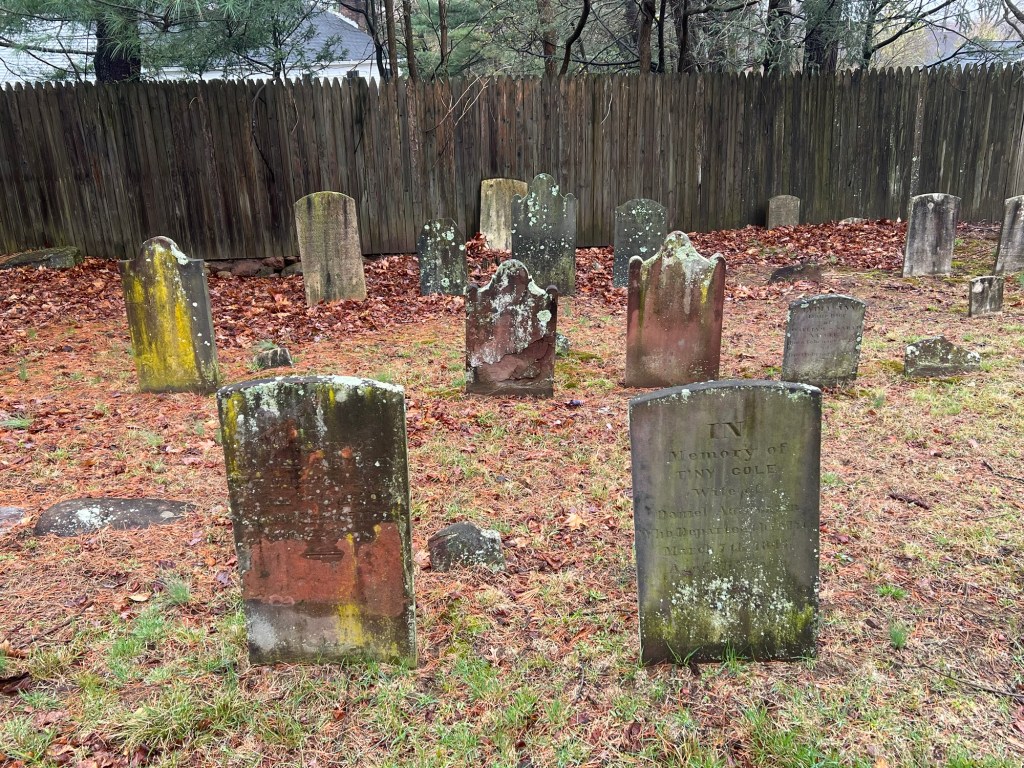
The Nagel and Haring family gravestones

The gravestones closer to the entrance of the cemetery
On the next block over, the original family farmhouse along with the Metropolitan farm still exists. The family farmhouse and nursery are still part of the community. It is the oldest continuous farms in the State of New Jersey.
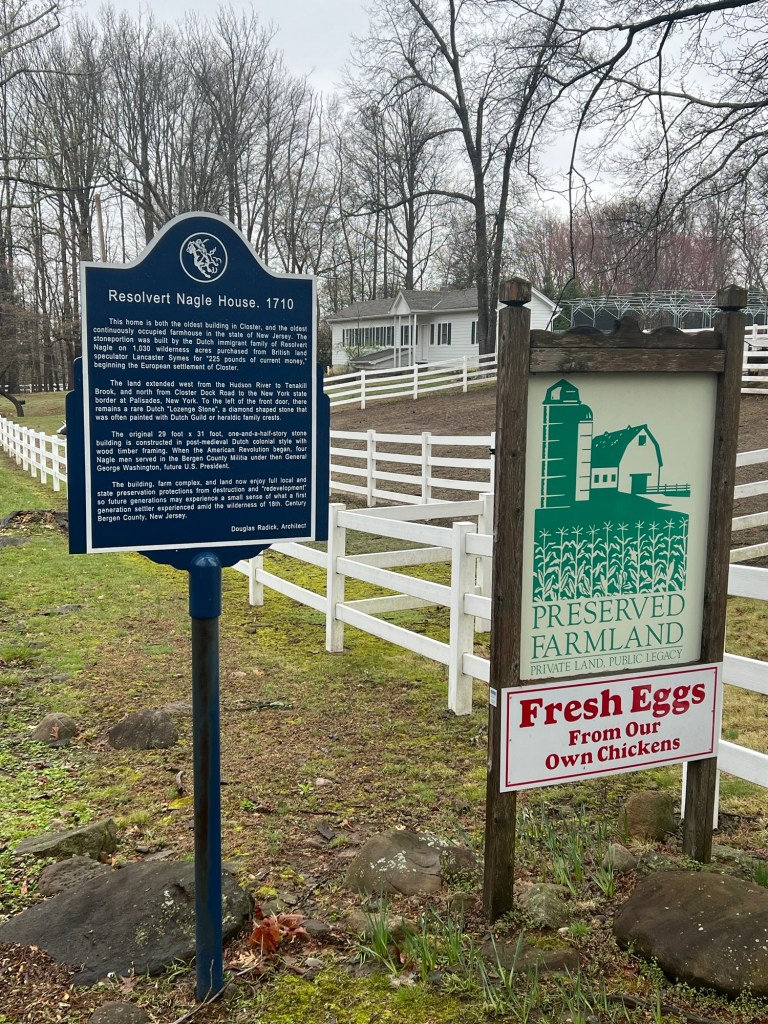
The Metropolitan Farm is home to the Resolvert Nagel Farmhouse and farm
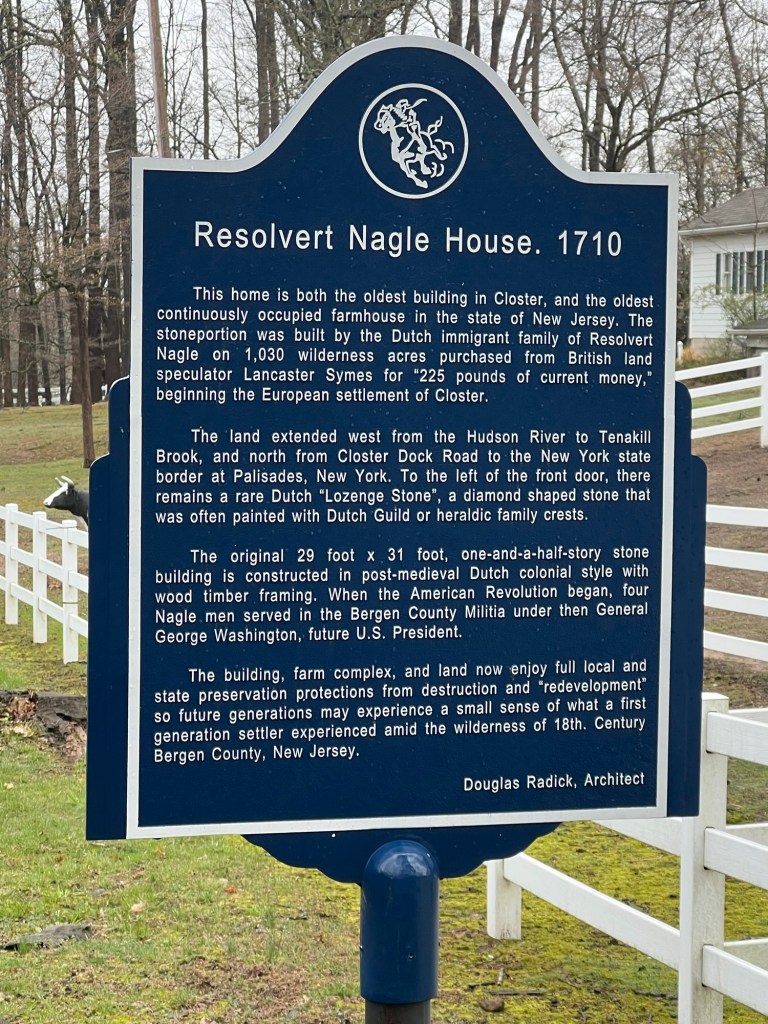
The historic marker to the home
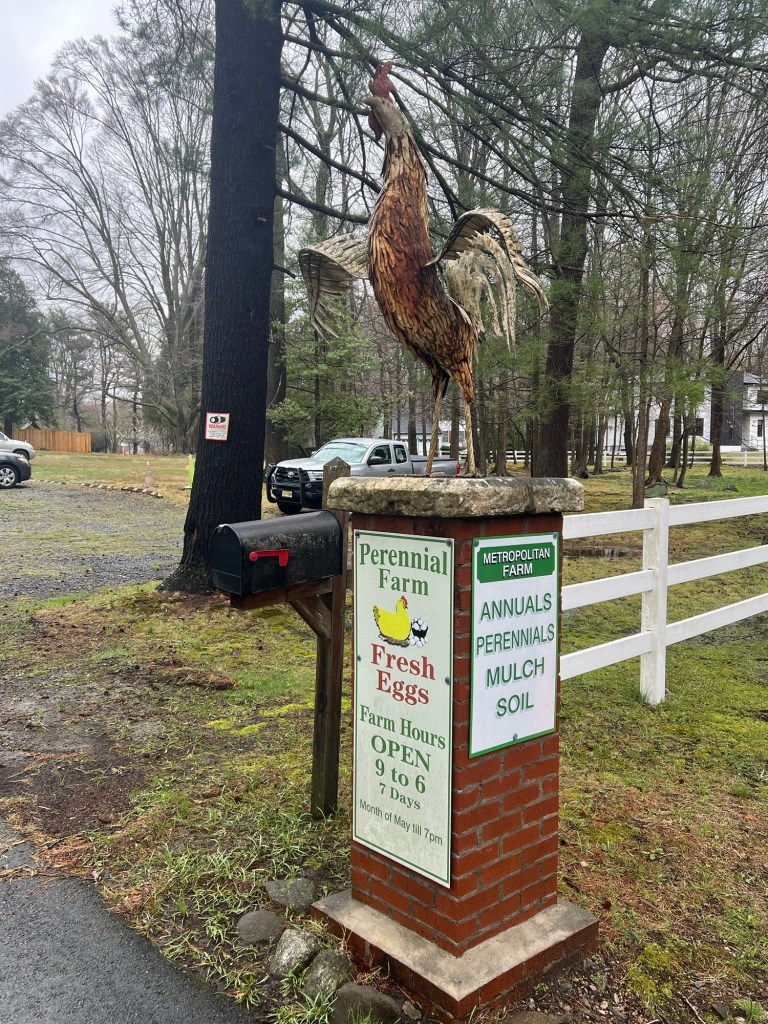
The entrance to the Metropolitan Farm at 119 Hickory Lane in Closter, NJ
https://www.metropolitanfarm.com/
My review on TripAdvisor:
History of the Farm:
(from the Metropolitan Farm website)
Started in 2012, our farm is located on the property which is the oldest working farm in the State of New Jersey. Every year, we are improving our ability to help you and make it more convenient to access our 70.000 perennials.
Our perennial growers have been working with perennials in Northern New Jersey for over 30 years. In that time, they have discovered what works the best and what thrives in our hot summers and survives our bitter cold winters. We overwinter all our perennials that we carry and our products are ready to be planted and enjoyed wherever you may place them.

The original section of the Nagel family farmhouse
The History of the farmhouse:
(from the Metropolitan Farm website)
The Stone Farmhouse dates back to the early 1700’s. The Auryansen/Naugle family lived here for generations and owned over 1000 acres from the hudson river to the farm. (Currently parts of Alpine and Closter). It was sold to several other families and was put into the Historic Commission in 1980. The house was sold to the current owners in 2012 along with the rest of the property and was renovated to restore some of its original beauty and architecture. Part of the current family lives there now.

The modern farmhouse today with modern addition

The Metropolitan Farm and Nursery

The outside plants at the farm
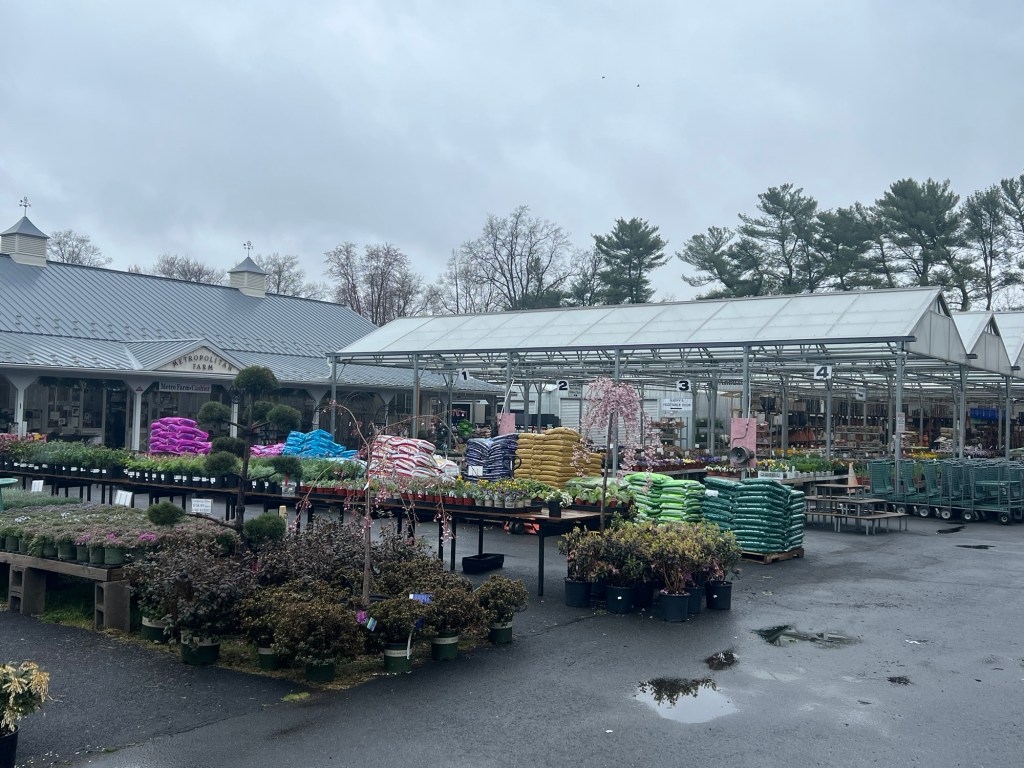
The outside plant and shrubs
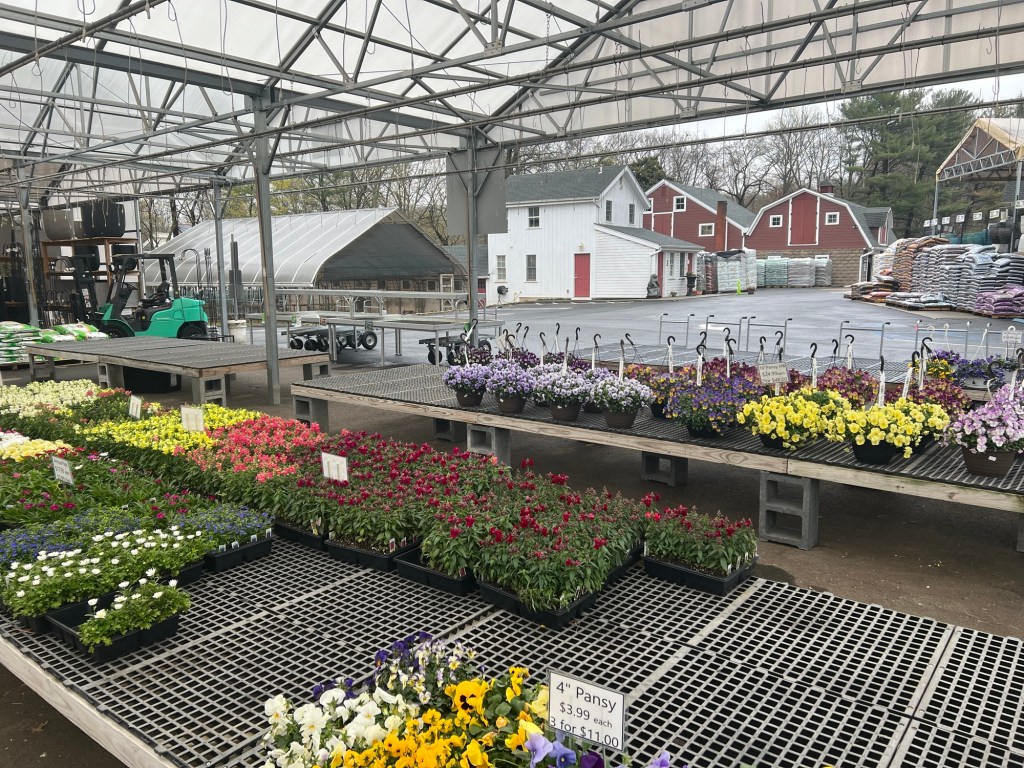
The perennials for sale on the farm

The greenhouse flowers
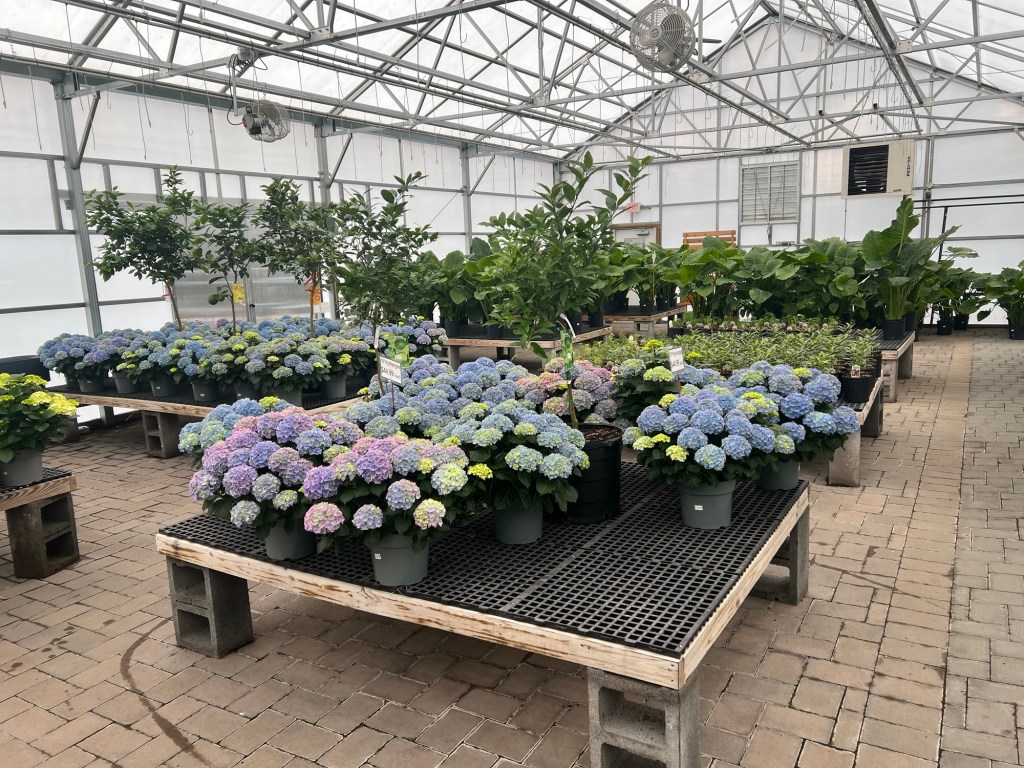
The greenhouse flowers and plants

The inside of the farm store
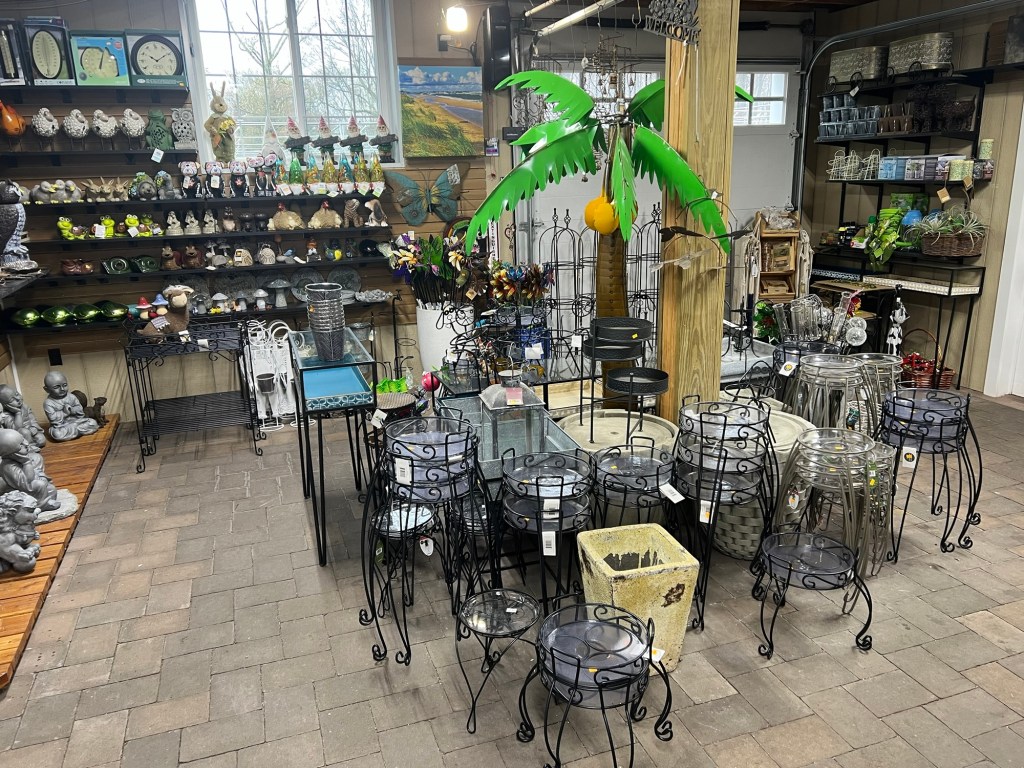
Inside the farm store

The beautiful flowers on sale at the store
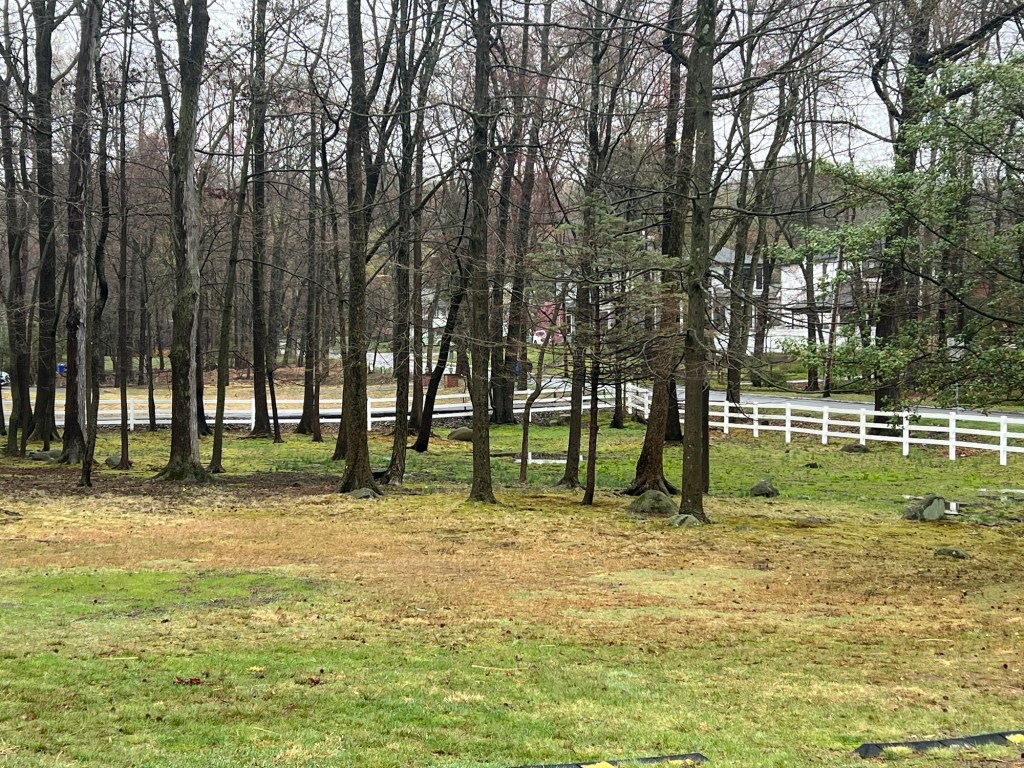
The outside grounds and the property left of this historical farm in Closter, NJ
It is interesting to see how the legacy of this family still lives on in the Twentieth century as a nursery farm but it shows how it has matured and adapted to today’s population.
Some of the descendants of these families still call Bergen County home and are also names we see on streets, towns and schools in the area.
 Visiting a Museum: The Unique, Unusual, Obscure and Historical