To all of you history buffs and readers who like architecture, take this Victorian Walking Tour I took last Christmas. It really shows how the City keeps changing.
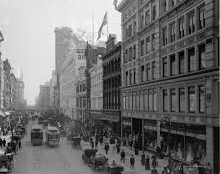
Ladies Shopping Mile in it’s heyday
The Ladies Shopping Mile today
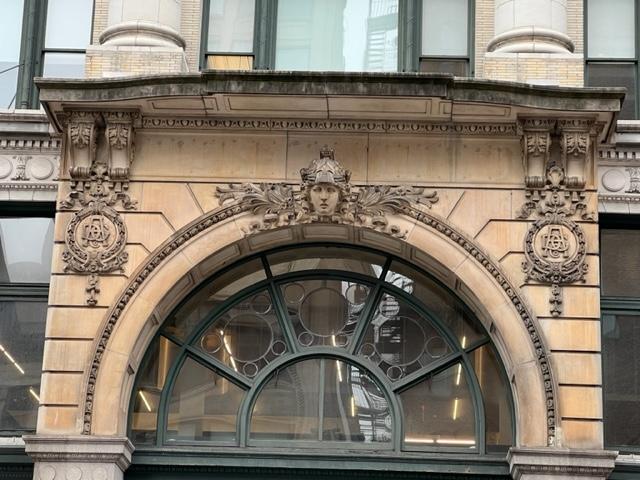
The beauty of the architecture of these stores. This is the Adams Dry Goods store.
On Saturday, December 15th, I met with other members of the Cornell Club to travel back to the Victorian Era and learn about the traditions of the Christmas past. We explored the Gramercy Park, Union Square and lower Sixth Avenue sections of the City to visit where a New York Victorian Christmas would be celebrated and honored.
We would be walking the old “Ladies Shopping Mile” that had been built up right after the Civil War when the disposable income for Middle and Upper Middle Class residents had increased after the Civil War and people wanted to spend their money at the newly built department stores, shops and restaurants. The Industrial Revolution was in full swing and shopping had changed with the development of the department store.
The tour took us past brownstones, parks, restaurants and old department stores that line the streets of Manhattan between East and West 21st Street…
For current information on guided tours, group tour reservations, school groups, special events or accessibility, call (845) 255-1660 or visit http://www.huguenotstreet.org.
The history of Slavery in the area
App:
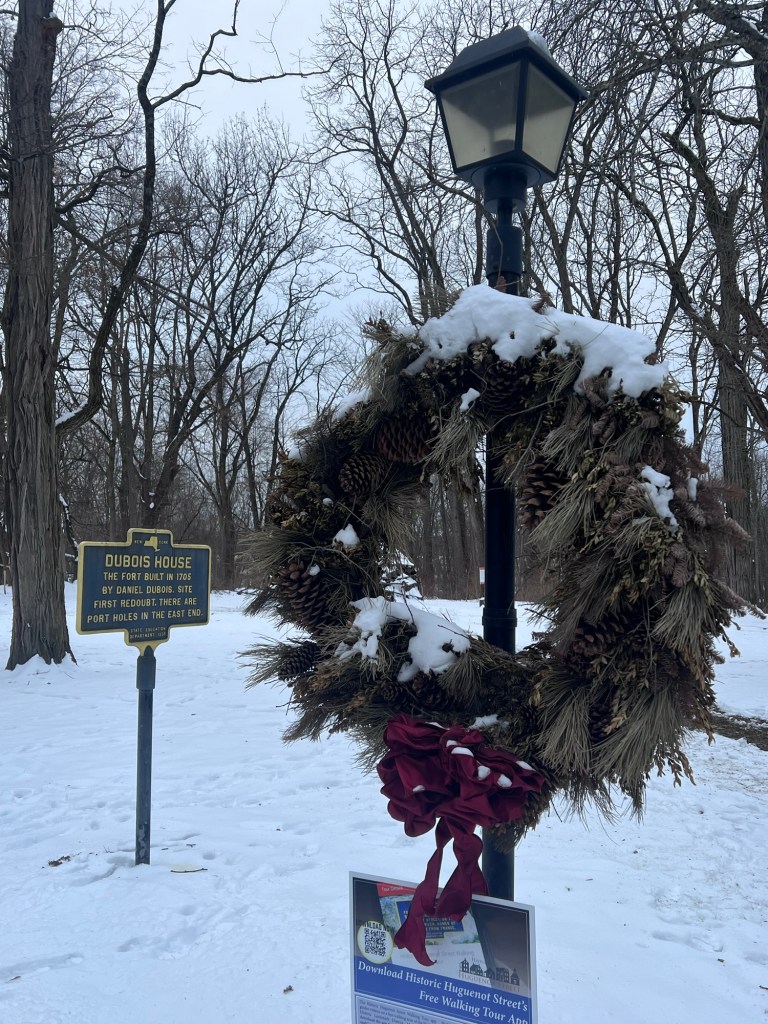
Our free Walking Tour mobile app features histories of the houses on the street with archival photos as well as photos of the house interiors and the collection pieces within. Mobile users can download the app on both the App Store and Google Play.
The entrance to the site
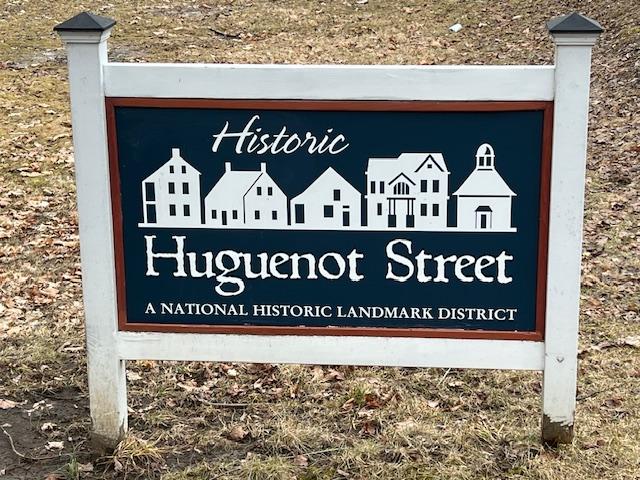
The historic sign at the entrance
History of the site:
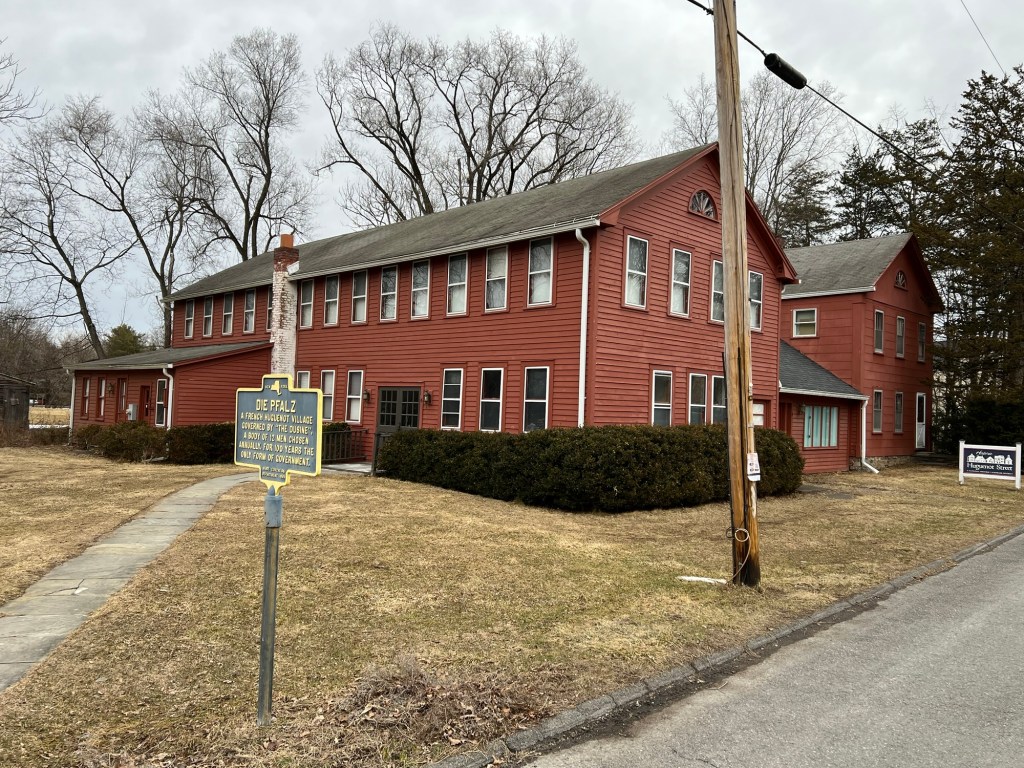
At our 10 acre National Historic Landmark District, visitors experience more than 300 years of history through the lens of a French Huguenot community as it evolved over time. Guided tours begin with an introduction to the pre-colonial Munsee Esopus landscape dating back 7000 years and the religion, culture and architecture of New Paltz’s earliest European settlers and enslaved Africans. The experience continues as guests visit fully furnished houses reflecting unique human narratives and changing tastes across the Colonial and Federal periods, through the Gilded Age and into the early 20th century.
(Promotional Materials)
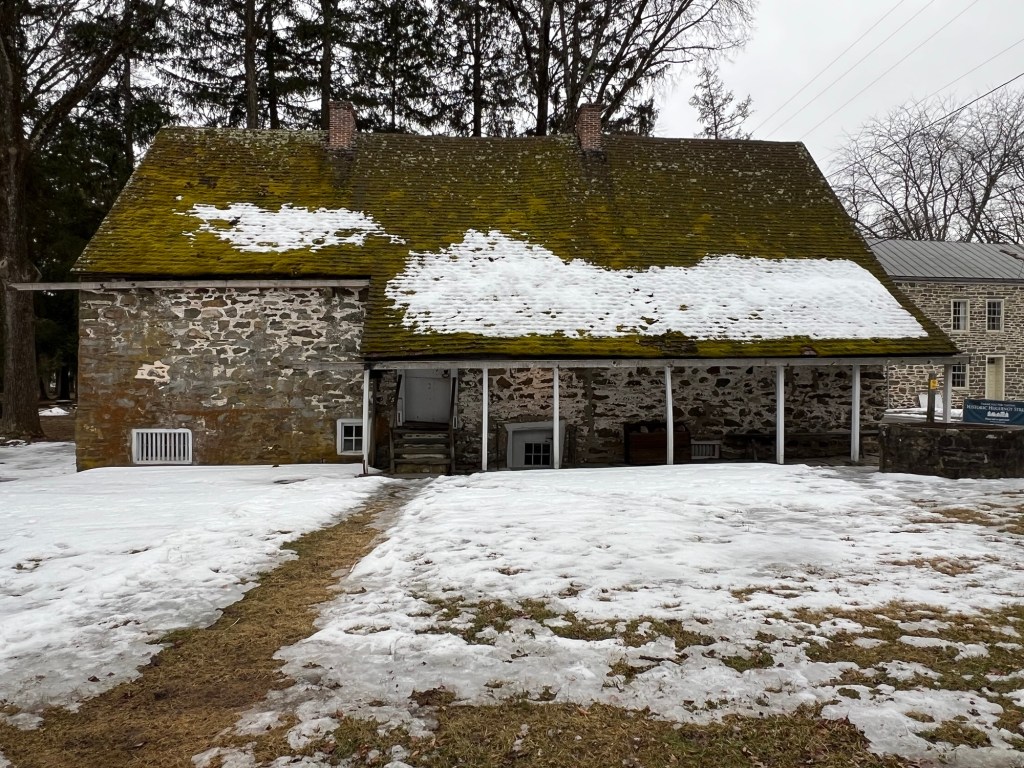
I visited Historic Huguenot Street one afternoon after visiting here about five years earlier during the holidays. The houses are easy to tour and the street is blocked so that you can walk amongst the houses. There are tours every half hour when the site is open. Here you can tour inside the houses instead of just the grounds. On a nice day, it is interesting to look over the architecture of the homes.
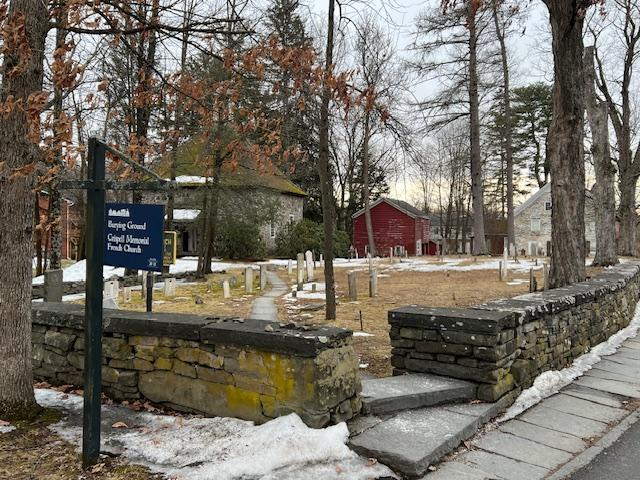
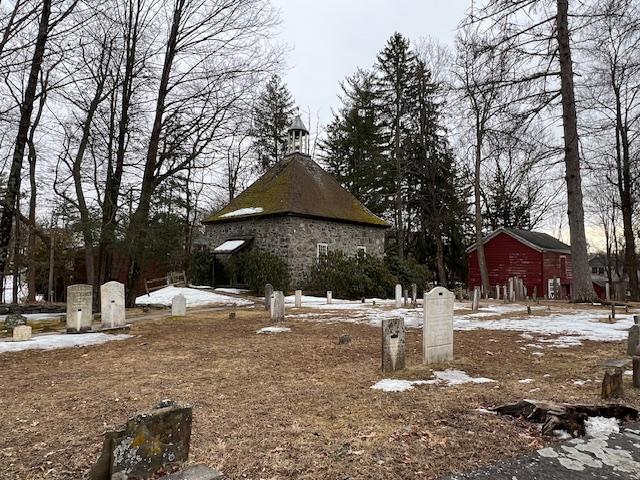
Make sure that you take time to look at the historical cemetery by the church at the end of the block. Some of the original settlers are buried here. It is also nice to tour around the Waykill River.
Take the extra time to visit the gift shop and see the information video on the site and look over the literature of the site.
The area has a pretty interesting history.
The map of the site
History of the Huguenot Street Historic District:
The site is owned and operated by Historic Huguenot Street (HHS), which was founded in 1894. In 1899, Historic Huguenot Street purchased the Jean Hasbrouck House as the first house museum on the street. In the 1950’s and 60’s, the organization and related family associations purchased most of the remaining stone houses in the district and subsequently opened them as museums. These acquisitions were funded in large part by descendants of the original Huguenot founders. Their family associations play a key role in supporting the institution today.
The Individual Houses:
Bevier-Elting House:
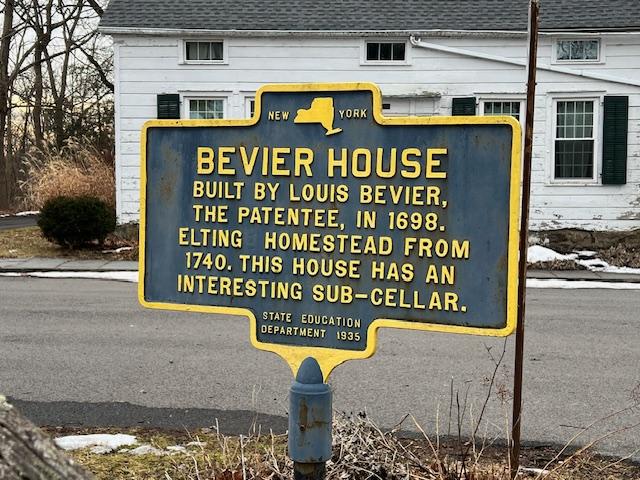
Dating to the early 18th century, the house was originally a one room building built with the narrow or gable end facing the street-then the prevailing style of the low countries of Northern Europe. Two expansions were built later as was a small cellar that was used to house African slaves. The house was built by the Beiver family, one of the founding families and subsequently sold to the Dutch Elting family.
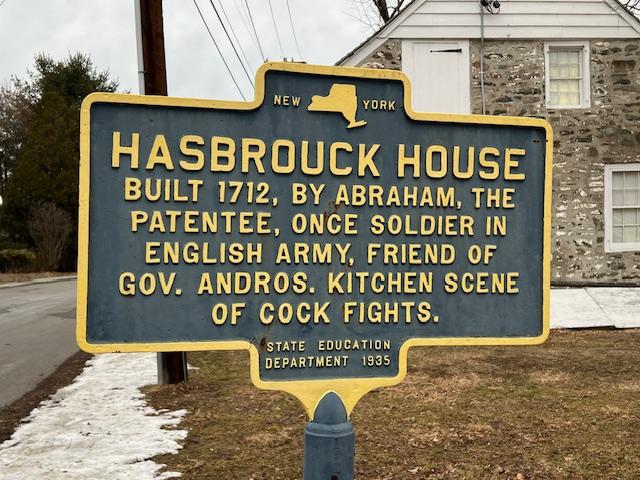
The structure as the Abraham Hasbrouck House was built in three phases in the 1720’s and 30’s. The first of the house-the center room-was constructed in 1721 by Daniel Hasbrouck, the son of Abraham Hasbrouck the patentee. The date 1721 is based on recent dendrochronology, which is a process by which wooden structural members are dated. This house represents a New World innovation in Dutch-style architecture. The initial houses in the Dutch region of New York, such as New Amsterdam, Albany and Kingston were built in the tradition of Dutch cities with the gable-ends to the street, which conserves street frontage. The basic structure of the house consists of a series of H-bents which spread the weight of the house across the entire expanse. The original one room house exhibited several defining elements of Dutch architecture, the jambless fireplace being the principal and most recognized feature in the house. Recently re-opened to the public in July 2012 following a restoration and reinterpretation focusing on the life of Widow Wyntje.
Also built in 1721 by Jean’s son Jacob (and perhaps incorporating elements of an early home built by New Paltz founder Jean Hasbrouck), this home is an excellent example of Hudson Valley Dutch architecture and the showpiece of Historic Huguenot Street. A National Historic Landmark in its own right, it boasts the only remaining original jambless fireplace of any of the Huguenot Street houses and is one of the few surviving examples in what was formerly the New Netherland.
In 2006, the north wall of the house was carefully dismantled, repaired and reconstructed. Reproduction Dutch-style casement windows were installed. Interior restoration followed, resulting in a house that is an excellent example of how a comfortable family in the region lived in the mid-18th century.
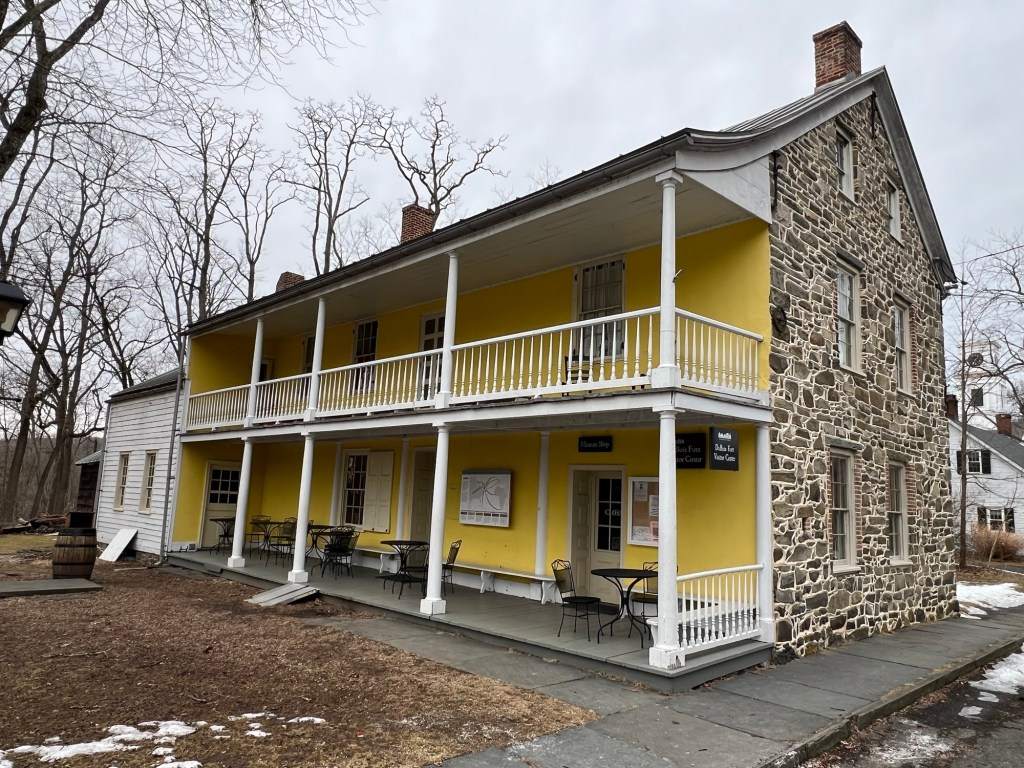
Built circa 1705 for the DuBois family, it might have served as a fortified place for the small community if needed. Originally a smaller 1 1/2 story structure, this building was expanded to its current size in the late 1830’s. Some historians and antiquarians believe that the presence of “gun ports” made it a fort but there is no evidence of the presence of any such portholes before the 19th century. The DuBois Fort currently serves as the orientation center and gift shop as well as a location for special events. Guest can purchase their admission tickets and memberships at this building. Over the last 300 years, it has also been used as a residence and a restaurant.
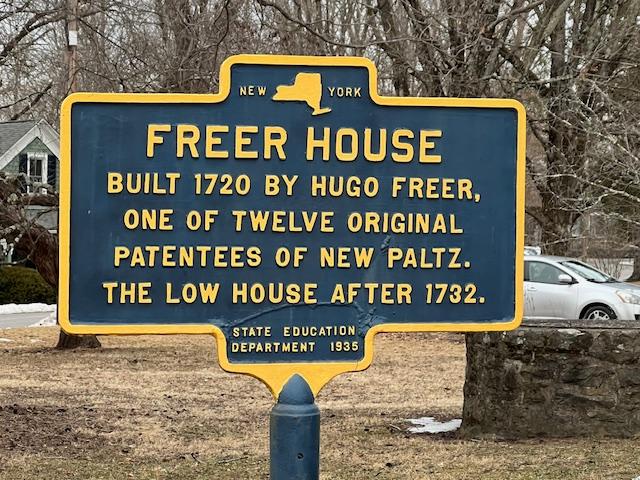
The Freer House is one of the six 18th century stone houses owned by Historic Huguenot Street. It was altered in various points in its approximately 250 years of occupancy with its most recent major alterations occurring in 1943 when it was purchased by Rev. John Wright Follette, a direct descendant of it s original builder, Hugo Freer. Over the years, the interior was modernized into a 20th century idea of a colonial home. This structure is not currently open to the public.
The original portion of the house was built around 1720 by Patentee Pierre Deyo. It began as a one room house was subsequently expanded to two rooms and ultimately to three when a stone addition was added off the rear by Pierre’s grandson Abraham. Circumstances for this house changed dramatically when at the height of the Colonial Revival movement, two descendants of Pierre Deyo, Abraham and Gertrude Brodhead, inherited the house.
The Deyo House at Christmas
Wanting to live on the street of their ancestors but also wanted a modern, gracious home that reflected their affluence, the Brodheads partially dismantled the original stone house and build a grand Queen Anne home around it in 1894. They also significantly changed their surrounding property in essence changing a small village farm into a handsomely appointed and landscaped mini estate.
The house passed out of Deyo family ownership in 1915. It was a private home until 1971, when it was purchased by the Deyo-Family Association and donated in order to be opened to be opened to the public as a house museum. The home was most recently restored in 2003 and features circa 1915 interiors.
The patentee Pierre Deyo died in 1700, so couldn’t have built the house in 1720 as stated. Per the plaque mounted outside the house it was built in 1692.
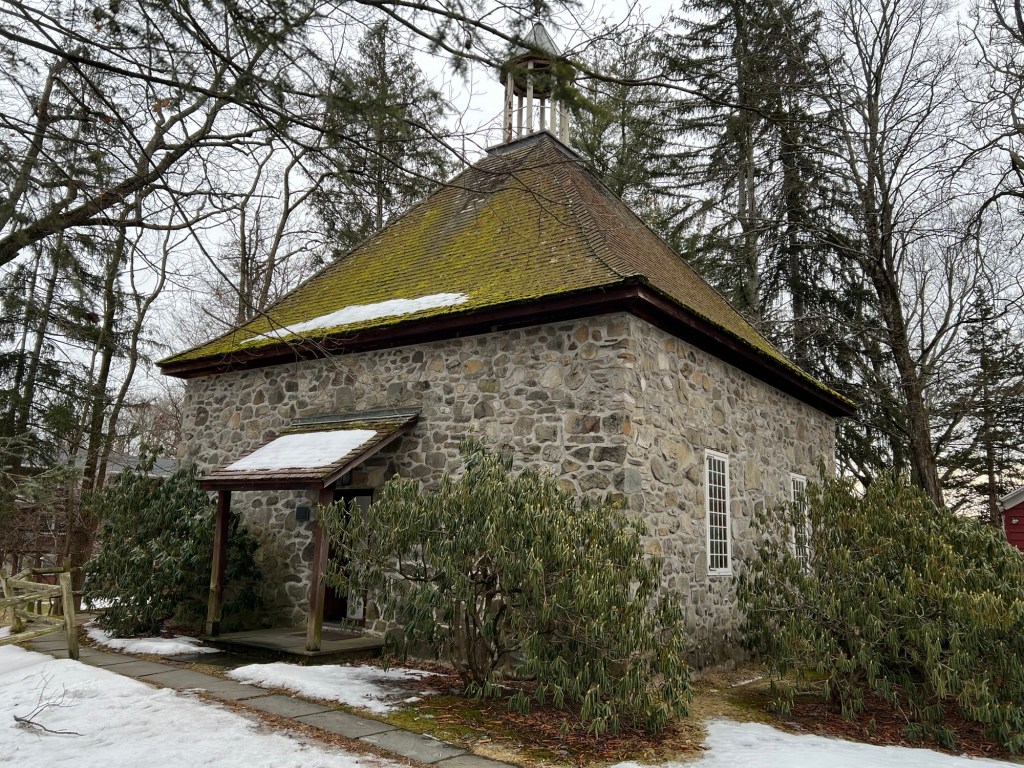
Since the community’s founding, there have been four sanctuaries built on what is today called Huguenot Street. The French-speaking Protestants who settled in New Paltz built their first church in 1683-a simple log building. This was replaced in 1717 with a straightforward, square stone building that reflected the permanence of the settlement. This existing building in the burying ground is a highly conjectural reconstructed of the 1717 building near its original location.
The Historic Walloon Church
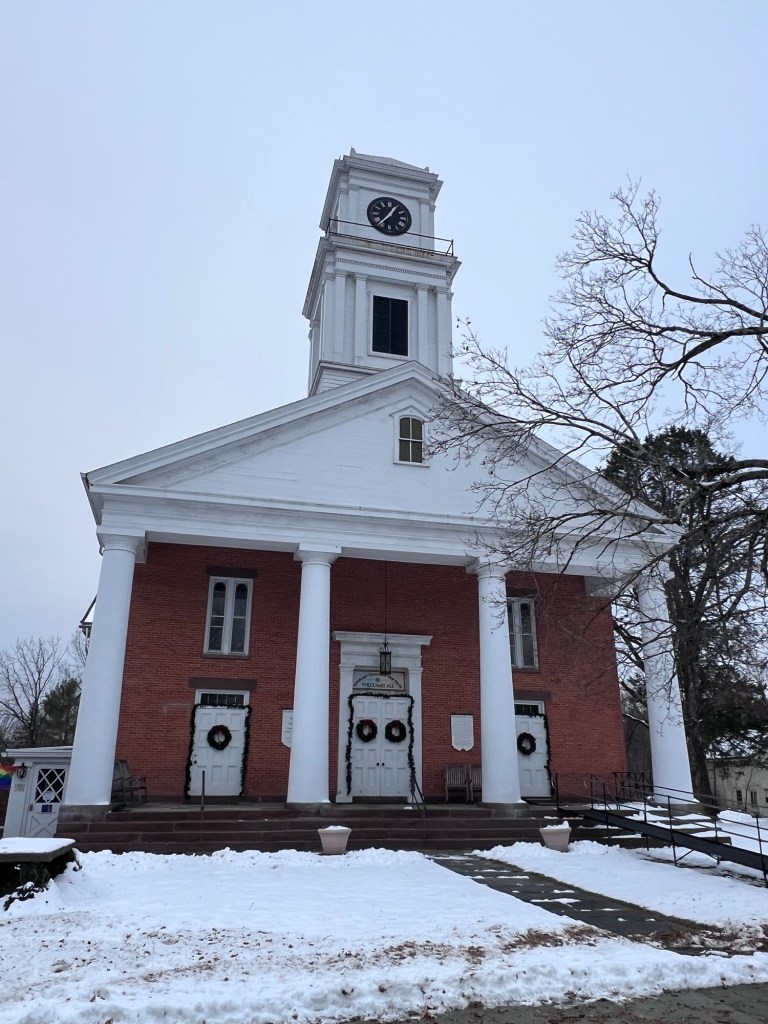
As the New Paltz community increased in size throughout the 18th century, a larger church became necessary. A second stone church was built down the street in 1772. When it became too small, it was demolished and replaced by a third church built in 1839. This church survives today and is home to an active Reformed congregation.
The Church and the graveyard
The reconstructed church is named in honor of Antoine Crispell, one of the twelve founders or patentees of New Paltz and a direct ancestor of Franklin Delano Roosevelt. It was built as the result of a fundraising campaign led by the Crispell Family Association. The Crispell Family Foundation opted to create this reconstruction church in their ancestor’s honor. It was completed in 1972.
The 1717 church was designed to reflect Reform thinking; the pulpit was placed in a central location and the pews were placed so that everyone could see and hear more equally. This expressed the concept that each person had a direct relationship with God, rather than one mediated through a church hierarchy.
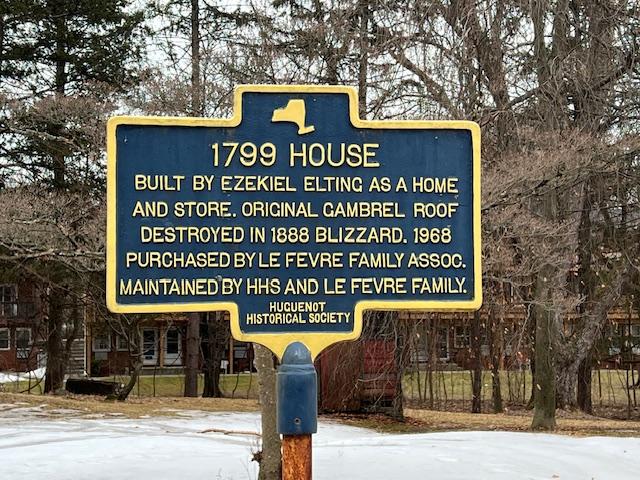
Built int 1799 by Ezekiel Elting, a prosperous merchant who was born in the Bevier-Elting House, this stone and brick building is quite different from the earlier stone houses on Huguenot Street. Its Georgian-style architecture reflects the transition of New Paltz from a French and Dutch settlement to an Anglo-American community and increasing refinement in architecture in this period as settlements matured. The house shows the changes in architectural style from the early 18th century. This house reflects the several changes in the society and home life of New Paltz in the early 19th century.
Located in the Roosa House, the Library and Archives at Historic Huguenot Street is a research facility devoted primarily to the history and genealogy of the Huguenot and Dutch settlers of the Hudson Valley. It also functions as a general repository for local history, regardless of ethnicity or religious persuasion. The collections consist of family genealogies, church, cemetery and bible records, wills and deeds, census records, genealogical periodicals, county histories and publications relating to Huguenot ancestry. Genealogists, local historians and other interested parties can access the collections by appointment. The colorful paint replicates the original colors of the house in 1891.
Native American presence on Huguenot Street:
Historians and archaeologist have learned more about the continuing relations between the Esopus, the original inhabitants of the area and the Huguenots. Some results of research can be found at the HHS site at “Relations between the Huguenots of New Paltz, NY and the Esopus Indians (http://www.huguenotstreet.org/library_archives/exhibits_research/Indian_affairs.html). The “Before Hudson” exhibit, currently on view at the DuBois Fort Visitor Center, shows some of the highlights of archaeological excavation in our area with artifacts dating back 6,000-8,000 years ago.
Hours: Open Thursday-Sunday: 11:00am-5:00pm (the last tour is at 4:00pm)/Open Monday Holidays from April 19th to October 28th. The mansion then closes to prepare for the holiday season. Closed on Thanksgiving and Easter. There are special programs from January to April so please see the website.
Admission: $8.00 for adults/$6.00 for groups and Seniors/Children under 12 are free. Special events have separate fees and can run from $8.00 to $10.00 and above.
I have been a Friend of the Mills Mansion for about five years and have attended many special events at the mansion including their Afternoon Tea & Lectures, the Annual Meeting and Talk, The Holiday Party and the Isadora Duncan Dance and Reception. Their events are a lot of fun and are very engaging. It also includes a tour of the mansion which is very interesting. Try to get on one of their theme tours.
The Friends of Mills Mansion Meeting on April 2019
Their Special Events:
I recently attended their Summer fundraiser “Sunset on the Terrace”, an evening of cocktails, appetizers and music. On a beautiful sunny evening, there is nothing like it. We were entertained by the Perry Beekman Trio with an assortment of jazz music while passed hot and cold appetizers were passed around the room. It is a relaxing night of light food and cocktails and wine while chatting with members as the sun sets on the mansion’s terrace. Now I know why the Mills loved this house so much.
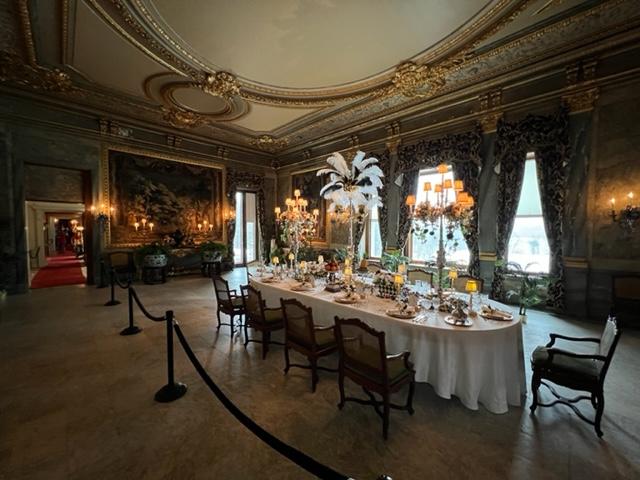
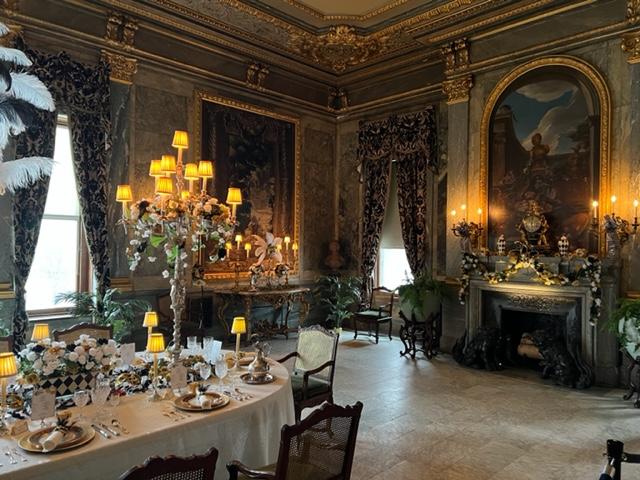
Another event I have attended over the past few years has been their “Christmas Cocktail Party” that is held in the formal dining room which is decorated for a Victorian Christmas.
Mill’s Mansion at the holidays is spectacular
What is nice is that everyone is dressed in suits or tuxes for the evening and like its Summer counterpart, it is a evening of light appetizers both passed and on the tables, light desserts and an assortment of wines from a local vineyard.
The Mills Mansion Holiday Party in 2018
The “Winter Lectures & Teas” have gotten more interesting over the years. The tables are laden with tea sandwiches, scones and small cakes and the Staatsburg blend of tea. They are always refilling everything for you and I have seen some big eaters at the table. The lectures this year were on various subjects taking place during the Victorian era that included “Bicycling and the Women’s Movement”, “Masquerade Balls during the Season” and “Etiquette & Calling Cards during a Social Visit” by visiting lecturers from colleges or local historians.
I have been a Friend of the Mills Mansion now for about four years finding that I was going to a lot of their events it just made it easier to join and get priority on their special events which are enjoyable. The ‘Halloween Tea’ was one of them the opened the holiday season.
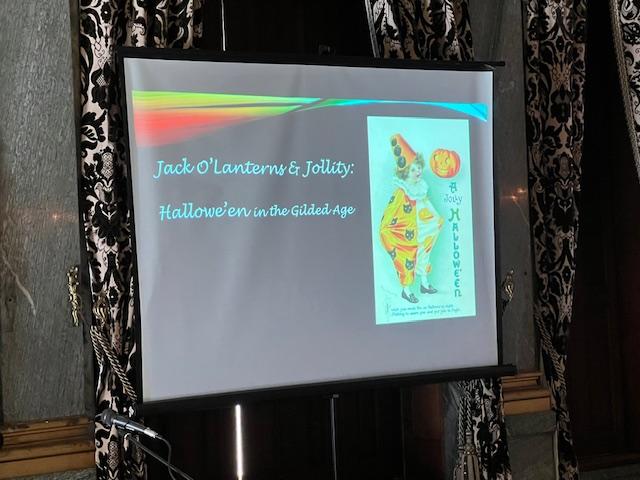
The slide show as we were about to begin the lecture
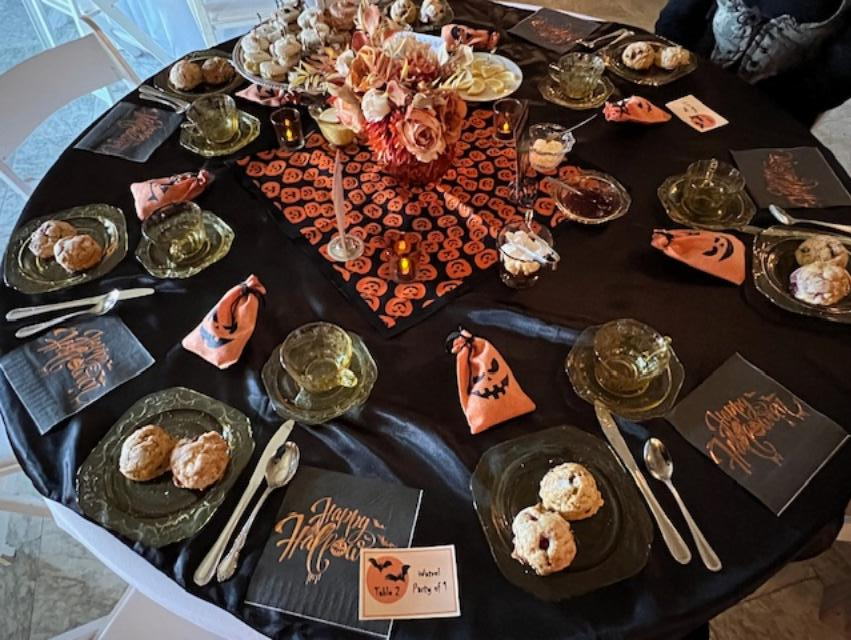
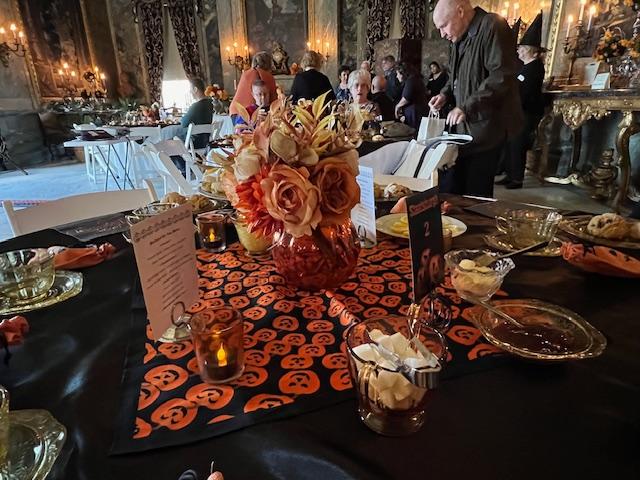
The table set for the Halloween Tea
The guests arriving for the Halloween Afternoon Tea
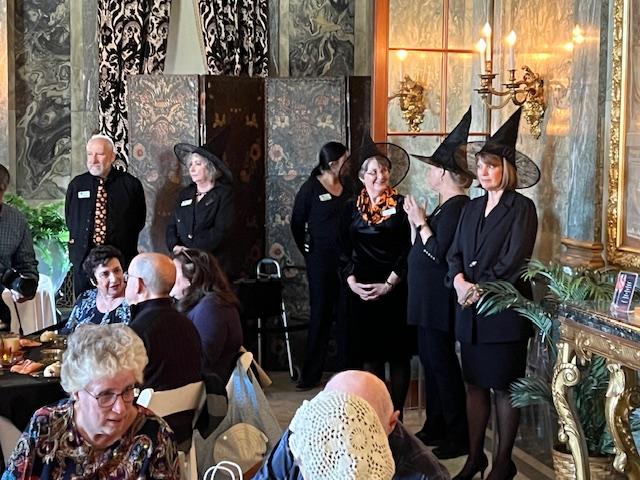
The friendly witches getting ready to greet guests
This event was a tea and lecture of how the Victorians recreated Halloween from a dark more countryside evening wrapped in mystery to an engaging urban event with costumes, specialty foods and traditional events like apple bobbing that guests then made their own. Local Historian Carol Kohan discussed how the event went from a dark rural event to fun and engaging holiday.
The celebration was spooky and fun
From the old traditions to new ones
The Victorian’s made everything elaborate and overdone and the Halloween celebrations were ‘taken up a notch’ with elaborate costumes, parties, bonfires and desserts and candies that were to be served. There were special invitations and cards that were to sent and rules of etiquette.
The Ghosts and Ghouls of the holidays
Following the Civil War and at a time when disease was not understood the way it is now, there was an interest in spiritualism and seances were in vague as people want to reach out to their loved ones. So having a medium at a party was part of the activity. The Victorians knew how to transform a holiday.
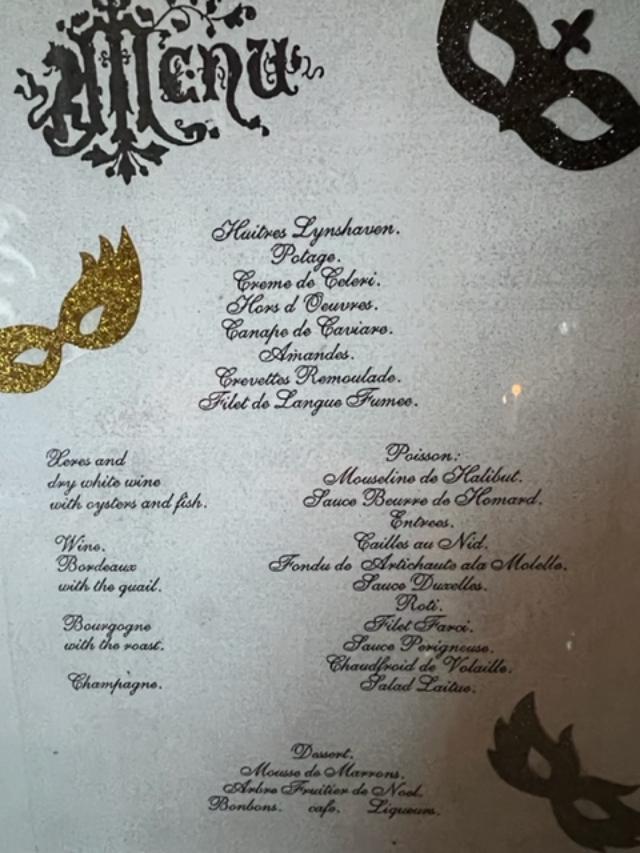
The Menu for the afternoon
Our tables numbers on the table
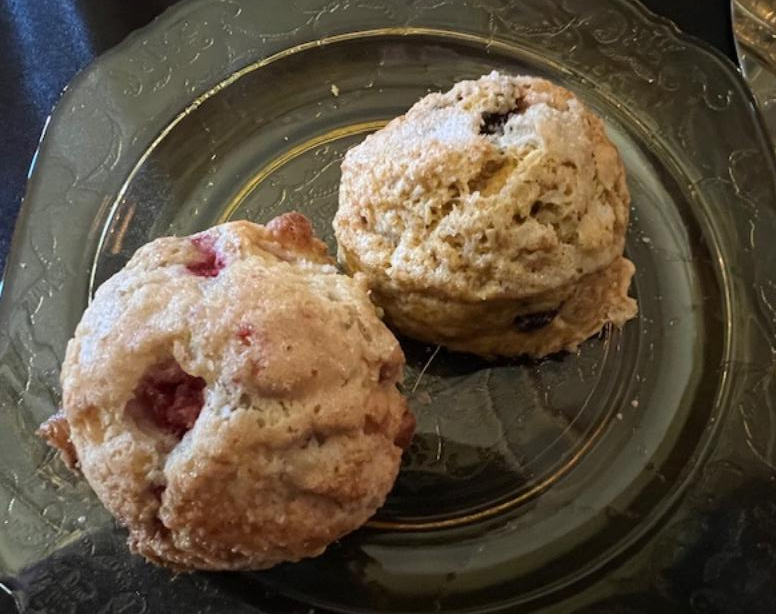
During the discussion, we enjoyed an afternoon tea of the specialty Staatsburg Tea blend, a variety of finger sandwiches, pumpkin and cranberry scones and many types of pastries including mini pumpkin cheesecakes, tiny devil’s food cupcakes and assorted sweet cookies. The caterer always does a nice job with the food and service here.
The food at these function are excellent and plentiful. These were the current and raison scones
The Assorted delicious Tea Sandwiches
Sweets and cakes Afternoon tea here is wonderful
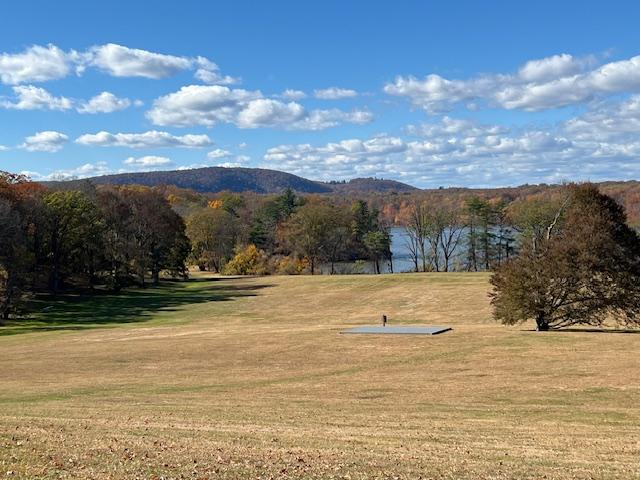
The estate in the Fall of 2024
The estate during the Fall of 2024
The last lecture I went to before things shut down in February 2020 was on “Masquerade Balls of the Gilded Age” which was very interesting. The enormous amount of money that was spent on a one night affair is almost mind boggling. The Vanderbilt Ball alone cost almost three million dollars in today’s money.
These were not just social occasions but a change to show off your wealth and creativity. It was what money could buy back then before the coming of personal and income tax and the Great Depression. The speaker discussed the food and the music and the fact the home was filled with flowers out of season.
The Famous Vanderbilt Ball
She discussed how the balls were created during Roman times in Venice for the start of Carnival (Mardi Gras was the next week) and how they developed during the Renaissance. She then discussed how they played a role in High Society during the Gilded Age and they were considered a little risque at the time. It was a very interesting discussion. As usual, the tea and cakes were delicious and they did a nice job decorating the room.
Hostess Alva Vanderbilt at her famous Ball
The Masked Cocktail Party for Christmas 2022 fundraiser:
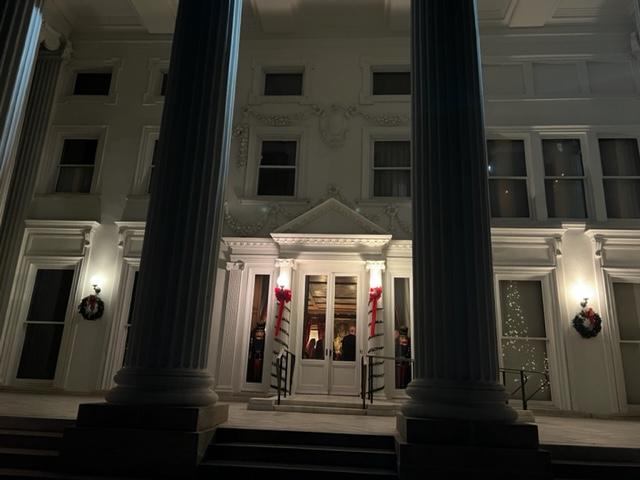
The mansion ready for a Christmas party
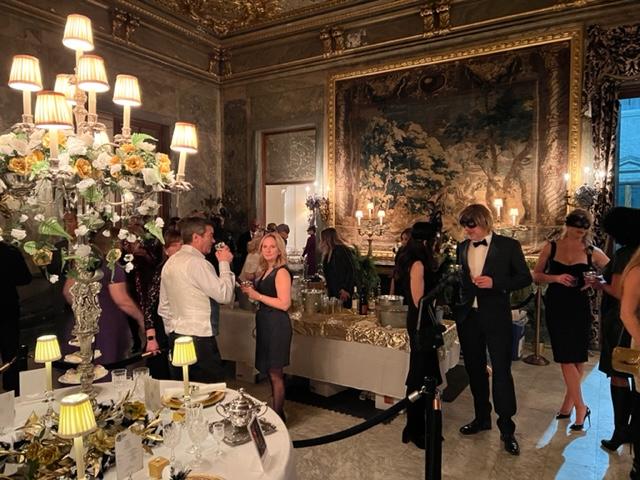
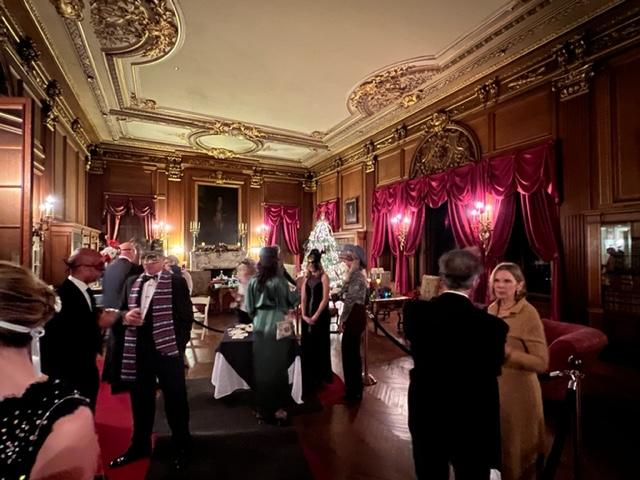
The Mills Mansion, Staatsburgh, was decked out for the holidays on the night of December 9th, 2022 for a private fundraiser to raise money to replace the curtains in the library on top of other repairs at the mansion. This sold out event was packed the whole evening and was attending by over a 100 people who spilled over into the library and foyer.
Entering the party through the decorated foyer lead to the festivities as it would have during the Gilded Age
The Christmas Tree in the foyer was amazing
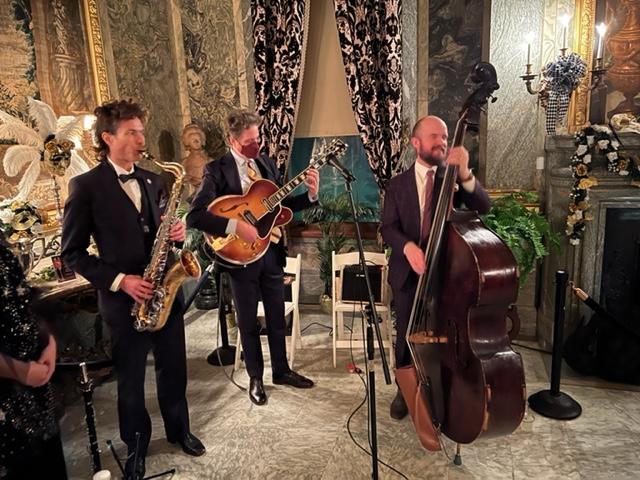
There was an open bar with wines and spirits plus water and non-alcoholic choices, passed appetizers with items like gourmet cheese spreads, chicken on a skewer and Christmas cookies. The band was wonderful and played all sorts of contemporary hits as well as Christmas music.
Everyone dressed for the Mills Mansion Ball-The Masquerade Cocktail Party Fundraiser December 9th, 2022
The three main rooms on the top floor were decorated to the hilt for the party
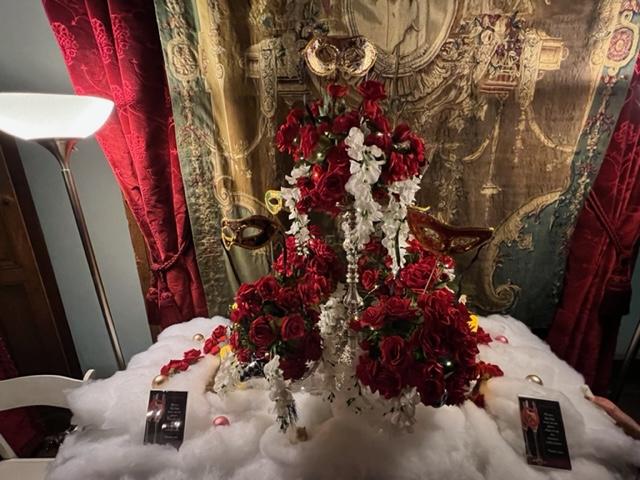
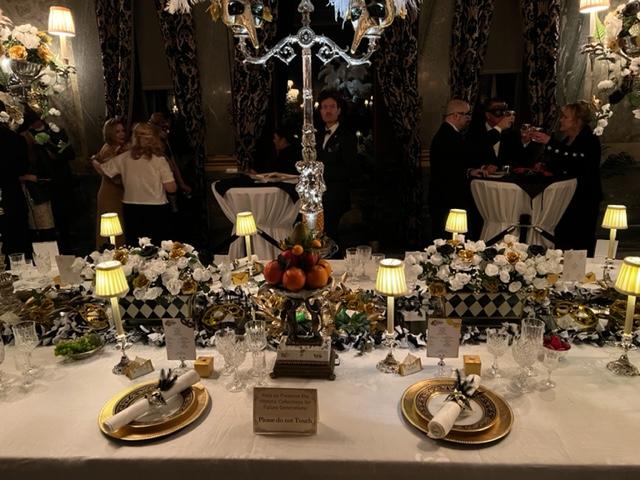
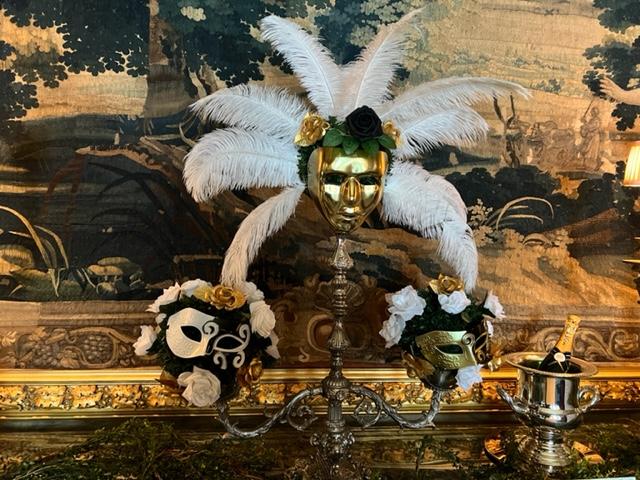
The main dining room was decorated with the theme of masks
People were in a festive mood
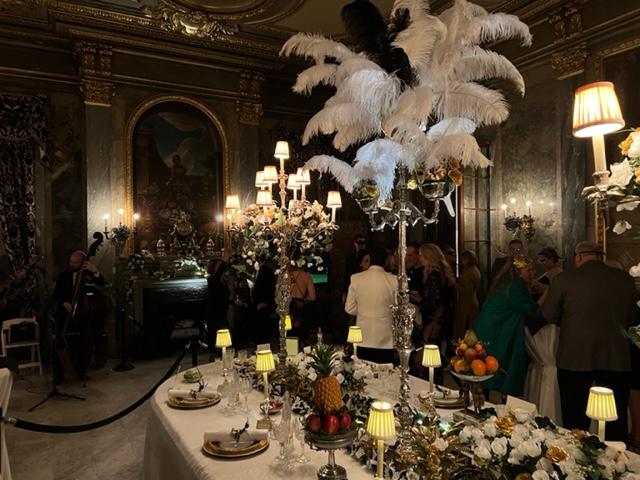
The Dining Room table was the focal point of the room
People gathered all over the Dining Room for the event
There was an air of mystery in the Dining Room with everyone wearing masks
The lead singer of the band had the most beautiful 1920’s star outfit
People enjoying themselves in the Dining Room
The Dining Room was packed at the height of the evening
The Band was excellent
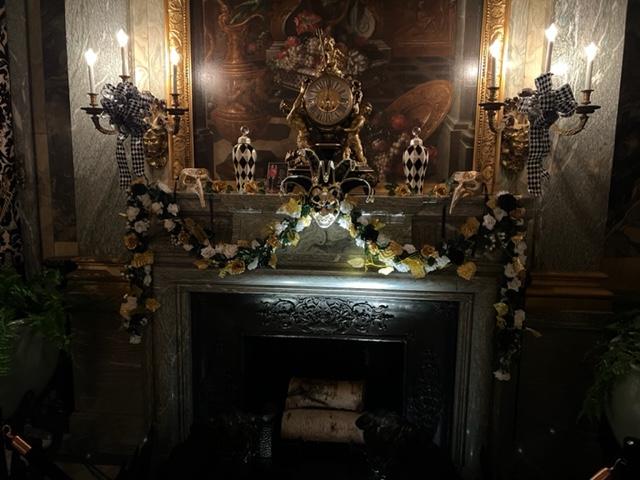
The mask decorations were amazing
The party continued in the Library which was also decorated for the holidays
The Library Christmas tree was ablaze the evening of the party
I was only at the party for about an hour but I had a really nice time and I needed it. I had to get my mind off school and with the few drinks and lively conversation mixed with wonderful food, it was an enchanting evening. It was so nice to see people all dressed up again and very age appropriate to the time period. I felt like I had been carried back to the mid-1920’s.
I was also nice to tour the mansion in such a lively time of the day. People were having such a good time.
Visiting the Mansion at the Christmas Holidays:
Don’t miss visiting the Mills Mansion during the Christmas holidays. The house is decked out for a Victorian Christmas even though the Mills did not spend much time at the mansion during the holiday season preferring to live in their New York mansion during the holiday social season.
The holidays are a sumptuous display of the beauty of the Christmas season and a way of showcasing all the nooks and crannies of the house. It showed how Victorians may have enjoyed the holiday season.
The Mills Mansion foyer Christmas tree in December 2022
The foyer was adorned with flowers and garland as you entered the home
The Mills daughter and grandson
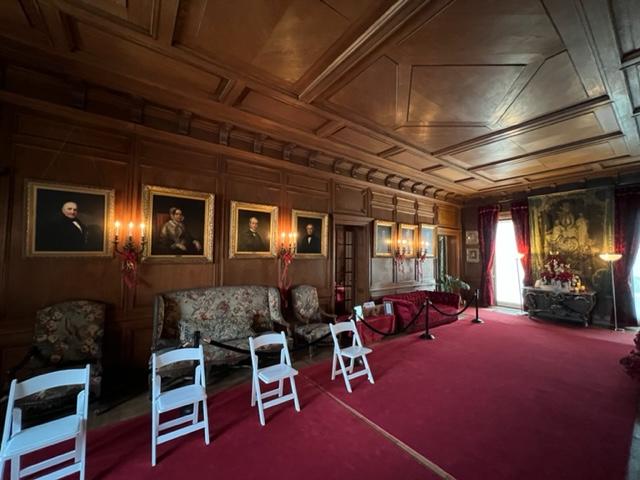
The family portrait gallery
The Reception Room between the Foyer and the Dining Room
The Dining Room:
Masks were the theme in December 2022
Masks adorned the Dining Room for Christmas
Still the house is decked out every year with different decorations and the formal dining room has just had the ceiling repaired and new velvet curtains put on the windows. The foyer steps of the older part of the mansion have been repaired with new curtains and rugs as well. Don’t miss seeing the tree in the foyer.
The volunteers are all on staff to answer any questions so feel free to ask about how the Mills entertained and lived in this era. The mansion is so beautifully decorated for the holidays.
The Mills Mansion dining room at Christmas in December 2022
The Dining Room was designed for a Masquerade Ball theme in December 2022
The Butler’s Pantry off the Dining Room for the holidays in December 2022
Still the house is decked out every year with different decorations and the formal dining room has just had the ceiling repaired and new velvet curtains put on the windows. The foyer steps of the older part of the mansion have been repaired with new curtains and rugs as well.
The Library:
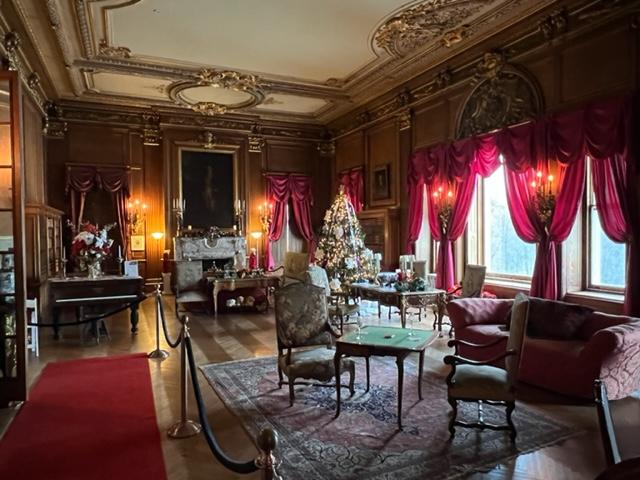
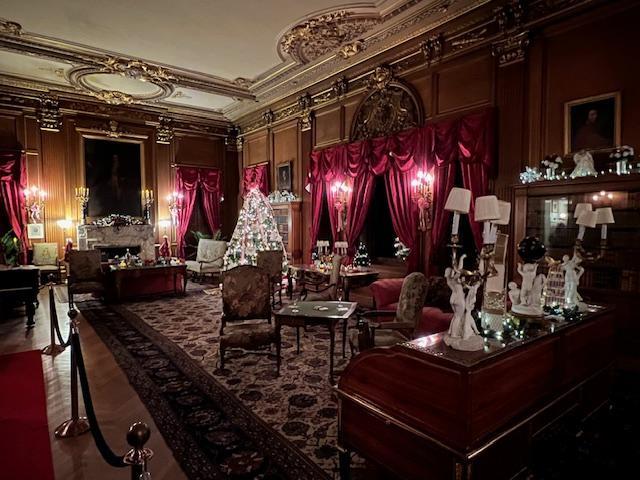
The Mills Mansion Library at Christmas in December 2022
The Christmas tree in the library is very elegant
Family portraits in the Library
Down the hall from the Dining Room and the Library are the bedrooms of the hosts of the house, Ruth and Ogden Mills. These elegant bedrooms shared a modern day bathroom.
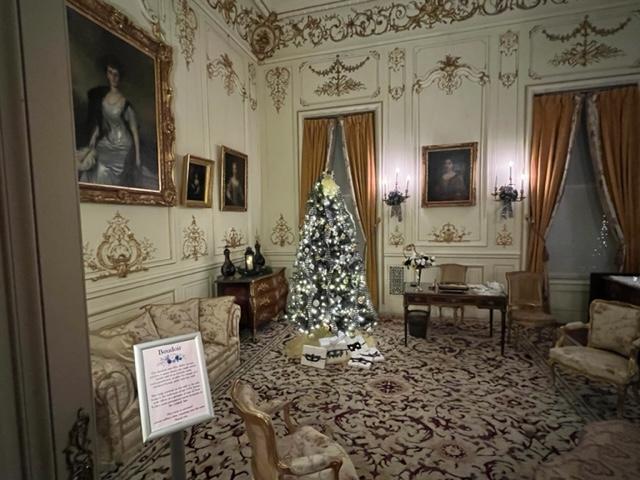
Ruth’s Private Office:
Ruth conducted her business from her private office. Her portrait sits proudly in the room.
The Bedrooms and Personal Family Space:
Ogden Mills bedroom on the first floor
The modern bathroom at the Mills Mansion
Ruth Mills grand bedroom
The staircase was fully decorated for the holidays as well with garlands and trees
The landing of the staircase to the first floor
The decorated staircase
The mansion’s beautiful gift shop is located at the bottom of the stairs.
In 2020 and 2021: (During COVID)
With the COVID-19 pandemic and outbreak affecting cultural sites all over the United States, New York State has enacted Phase 4 of reopening with the exception of opening museums, restaurants and bars for business so they all have to take it “outside”. That Staatsburg site is no different as the inside of the mansion has remained closed.
That leads to new creativity and ideas of how to show off the mansion and it’s grounds true beauty. The State Park site has now created two different programs for the Summer months, the ‘Landscape Tour’ of the mansion’s former ice house, greenhouse, boat house and walking paths and the ‘Programs on the Portico’, lectures of the mansion’s past starting with a lecture of “Staatsburg’s Servants”.
In 2020, 2021 and 2024 The Landscape Tour:
The mansion in the summer of 2024
The Landscape tour of the property was very interesting as our group strolled through the grounds first to the site of the old ‘icehouse’ by the river, where ice was cut in the wintertime and used for the ‘ice boxes’ in the home which was those days ‘modern refrigeration’. We also visited the site of the ‘boat house’ where water sports by the river started the day and the yachts that used to flow up and down the Hudson River.
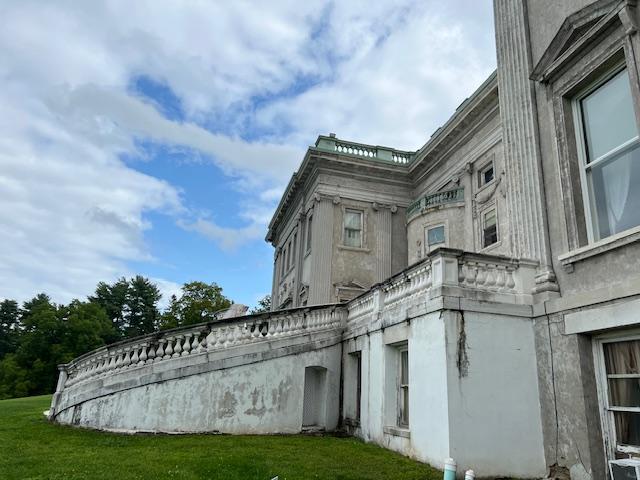
The back of the mansion was our first stop of the tour
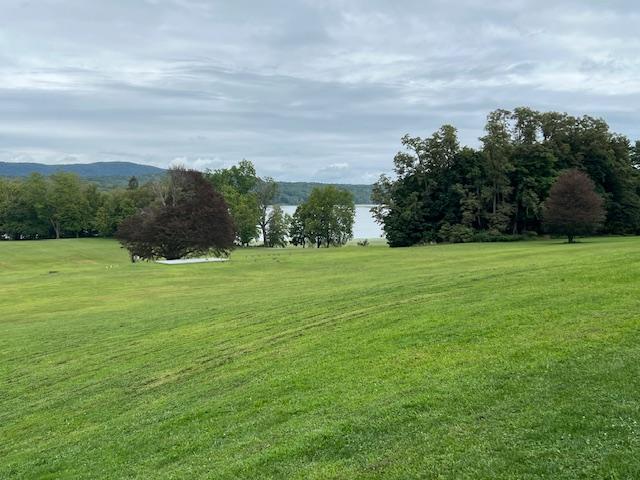
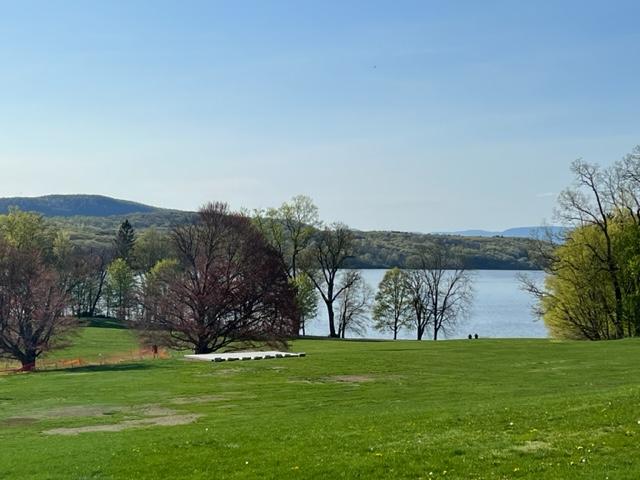
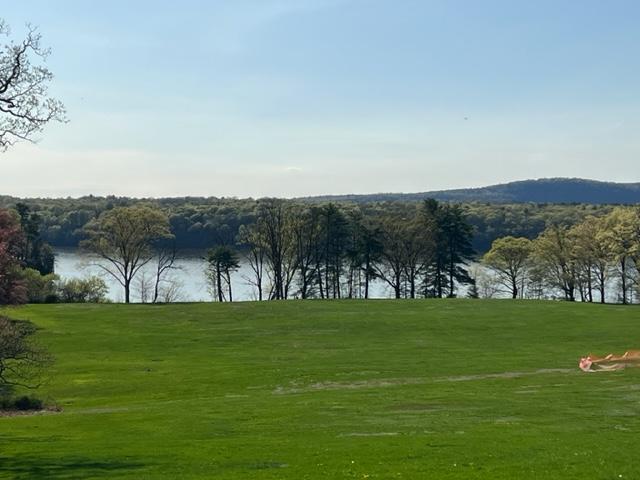
The extensive back lawn overlooking the Hudson River
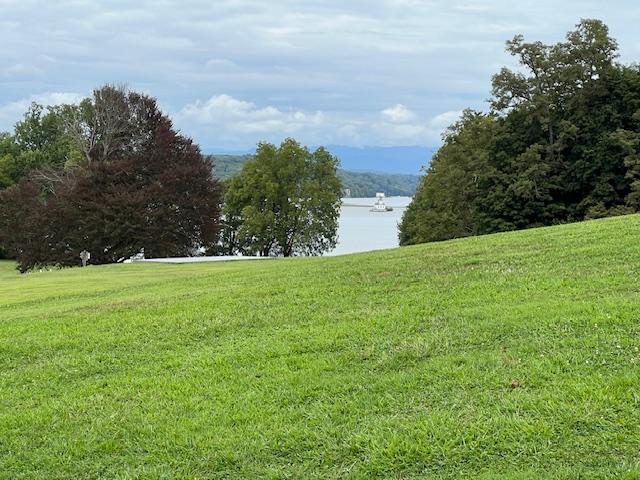
The views of the Hudson River on the tour
Views of the lawn by the Hudson River
The views through the trees hide all the buildings on the estate grounds
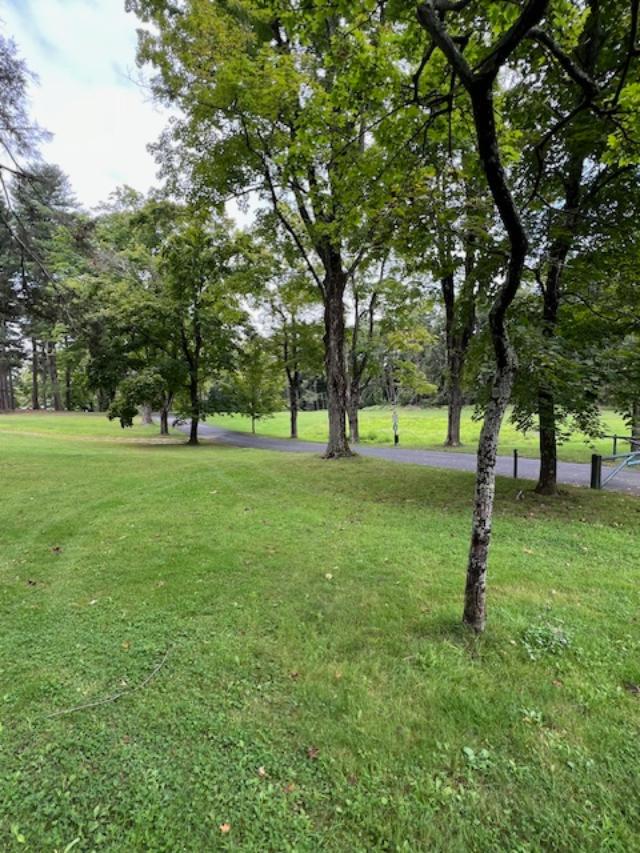
Taking the pathways to the river front
The pathway to the Ice House and Boat House
The walk by the Hudson River where the old Boat House was located
The Hudson River edge by path where ice was harvested
The woods by the Hudson River
The view of the Hudson River by the old Ice House
We next visited the site of the old Carriage Houses that are now in ruin in the back of the estate. These are overgrown and in need of repair but still show their beauty through these ruins.
The old stables are now ruins on the estate
The garages in ruin in the back of the estate
The site of the stables is now an overgrown woods but once lead to bridle paths around the estate.
Our next stop on the tour were the sites of the old greenhouses that used to supply flowers for the mansion and fruits and vegetables for the kitchen. They disappeared over fifty years ago during WWII when the materials were needed for the war effort. They were never rebuilt. The tour is about 90 minutes.
The site of the old greenhouses of the estate
We ended the tour on the back lawn of the estate, admiring the views of the house and of the river. The views of the lighthouses in the river were just spectacular.
The view of the lighthouse in the distance
The view of the full lawn at the Mills Mansion after the tour
The ‘Programs on the Portico’ lectures started with the theme “Staatsburg’s Servants” later in the afternoon. These 3:00pm lectures on the ‘front porch’ of the mansion are socially distanced and under cool shade.
The front portico of the mansion was used for the Lectures series during the COVID years
The lecture was on items that the servants would use when the family was ‘in residence’ in the warmer months and how they would be used day to day. Items like a hand-cranked ice cream maker and a scoop for desserts, a bottle closer for beverages, a rug cleaner and a meat press for meals were just some of the items displayed and discussed. It was explained how the house would go through a deep cleaning when the family was away and when they were ‘at home’ how the house would be cleaned around them.
The ‘Lectures on the Portico’ series:
On a recent “Lecture on the Portico”, the topic of the “Titanic” was discussed. It seems that Mr. And Mrs. Mills had tickets on the return voyage to Europe from New York. They lost many friends and family members like J.J. Astor on the sinking of the ship. Our lecturer talked about what you would wear, you would eat and how you would dine on the ship and all the protocols of behavior. Between the sinking of the ship and WWI this ended the “Gilded Age” and ushered in the “Jazz Age” after the war was over. All of the these lectures and tours are free.
Exploring the Village of Staatsburgh:
Another tour I was on recently was the “Exploring the Village of Staatsburgh” tour where a small group of us toured the Village of Staatsburgh where the mansion was located and learn about the history of the town. It was taken from the perspective of how the mansion was dependent on it and the town benefited from the Mills family and the people that worked there.
The ‘Walking Tour of Staatsburgh’ is a semi-circle tour of this old hamlet whose fate was changed by the development of the mansions in the late 19th Century, the advent of WWI and WWII and then the coming of the modern era with new highways and less industry which has now created the sleepy village the town has become. Times progress.
We met at the Staatsburgh Library which was a old church at one time.
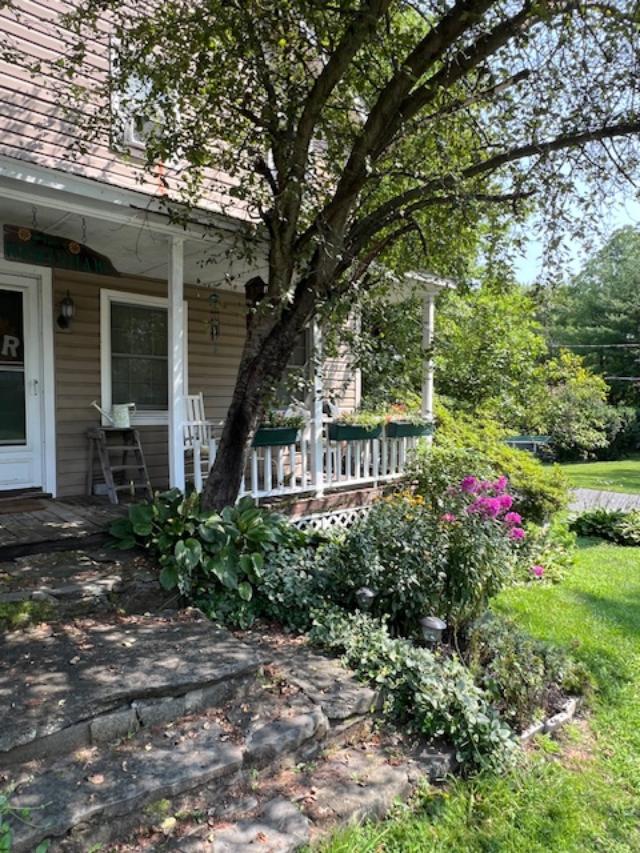
The beautiful neighborhood gardens by the library.
We visit the homes of the people who lived there like the Head Housekeeper, the Estate Manager and Butler and the footman. It was interesting to see how these people lived when they were not working.
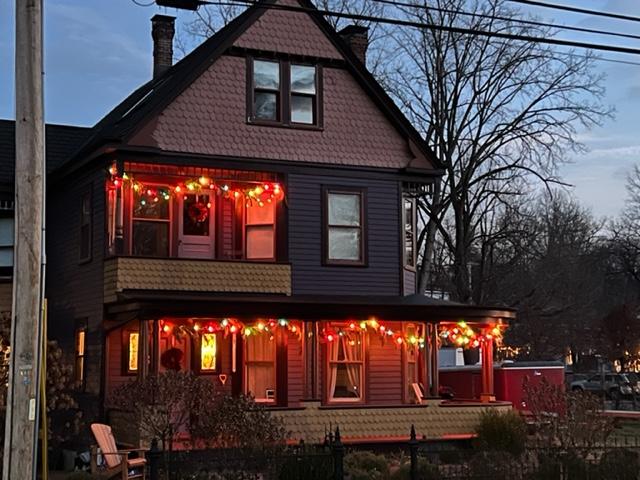
The homes in Staatsburgh were beautifully decorated for the holidays
We learned how the town was created, how the businesses like the railroad and the ice manufacturing businesses were developed and how they grew. We learned a how the town was much more developed before WWII and the effects of the development of Route 9 bypassing the town changed it.
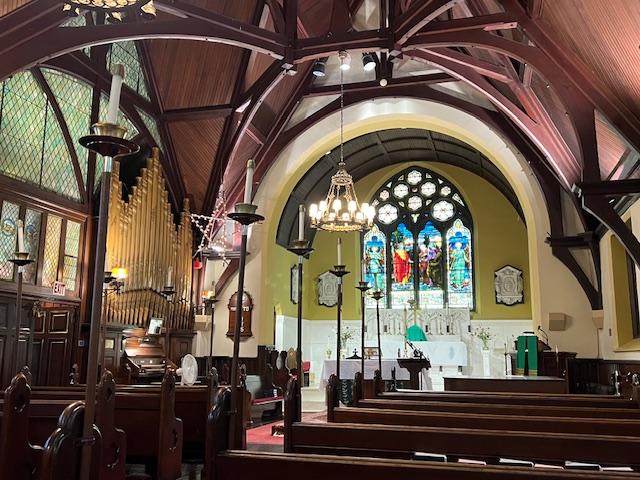
The Stained-glass windows at St. Margaret’s Church were dedicated to members of the Livingston family.
The Stained glass windows at St. Margaret’s Church
The Stained glass windows at St. Margaret’s Church
The back stained glass windows
St, Margaret’s at Christmas time in 2022
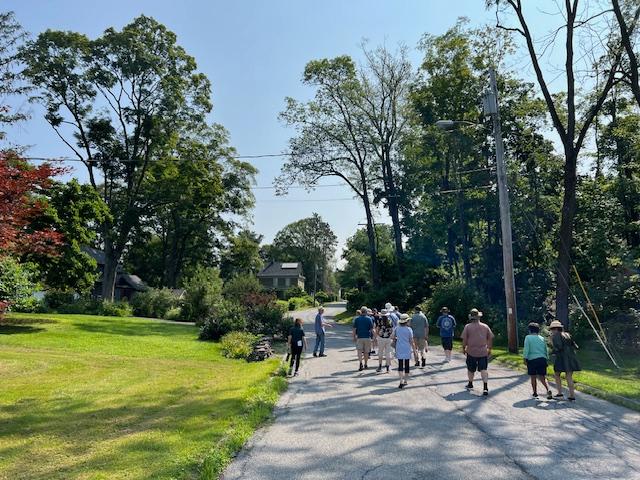
The start of the tour after leaving St. Margaret’s Church
We toured through the neighborhood, admiring residents gardens and having discussions on the older homes and buildings in the neighborhood and their significance with the Mills Mansion. A lot of the servants lived in town and built their homes here.
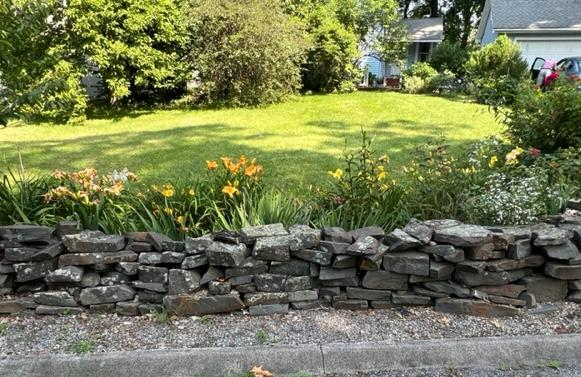
The stone gardens and colorful flowers in the neighborhood
The neighborhood gardens
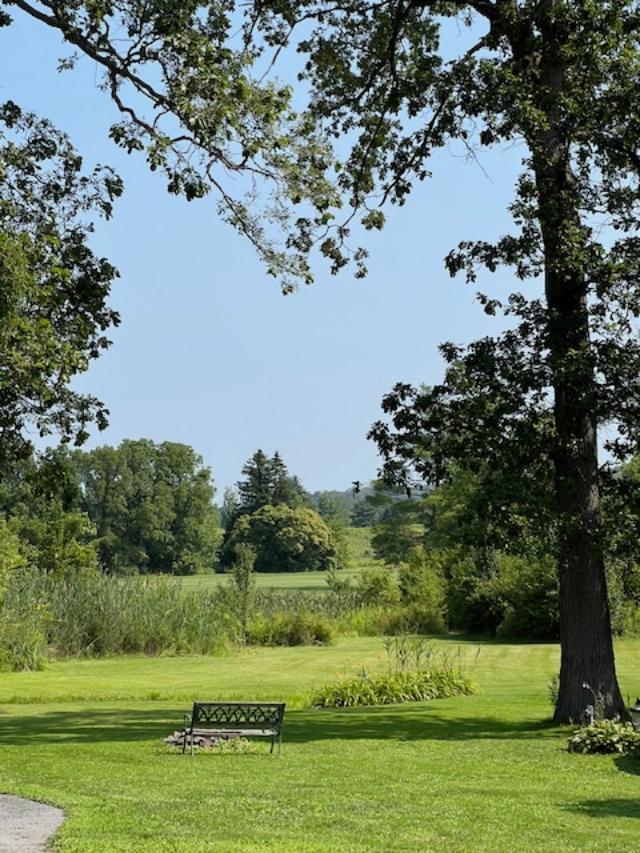
The green lawns and the golf course in the distance
The gardens of the village
The gardens at the beginning of the tour
A former garage for the parish and former firehouse storage
The view from the top of the road
The fields in Staatsburgh
The former Mills Gardener Home in Staatsburgh
The Telephone Company house and the Handmaid’s home
One of the beautiful Victorian homes in Staatsburgh
The Bath House
The Spite House: the house to stop the road from going through the neighborhood. No one really knew the story of why this happened
The Spite House up close
The Mill’s Mansion Head Housekeeper’s House
The Housekeeper’s Barn with symbol
The Catholic Church in Staatsburgh
The local doctor’s house
The Plan House which were made by premade plans from companies
The River & Post Restaurant was originally a hotel for the Town of Staatsburgh and where Mrs. Mills French chefs stayed when they were working in the mansion
We then entered what was once a thriving business district for the town. Since the railroads closed, Route 9 bypassed the town and industry slowed in this hamlet, this area has become more residential and quiet.
The former pub that is now a residential home. This used to cater to people getting off the train
The house across from the old train station and their beautiful gardens
The houses magnificent gardens in full bloom
The old Methodist Church ‘downtown’
When we were on the tour, we saw how the town progressed from being dependent on the mansions and estates to how businesses like ice harvesting became prominent in the area up until the 1950’s. Our last stop was the old Hughes Department store in the old downtown area which is now a sail store for boating.
The former Hughes Department Store which is at the end of the tour.
The old Hughes Family home right down the road from their store.
We finished the tour in front of the old Hughes family mansion which faces the old downtown. Obviously Mr. Hughes built his home here to make a statement and be able to walk to work.
Back to the starting point at St. Margaret’s Church
The Horse and Dog Fountain that was dedicated to a member of the community that is now used as a planter
The historic state markers on the Albany Post Road were saved by Franklin Delano Roosevelt and were used for mileage and postage along the old highway during Victorian times.
The tour is about an hour and on a sunny I highly recommend it.
Special Members Night with the duo “Acute Inflections”:
As a member, we also had a recent concert on the portico to hear the duo “Acute Inflections” perform on the lawn. We all stayed socially distanced on the lawn but still the concert was nice, and this is what being a member of the Friends group is all about. These small events make a big difference.
The duo “Acute Reflections” performed that day
“Acute Reflections” performing
The “Estates of Staatsburgh Tour”:
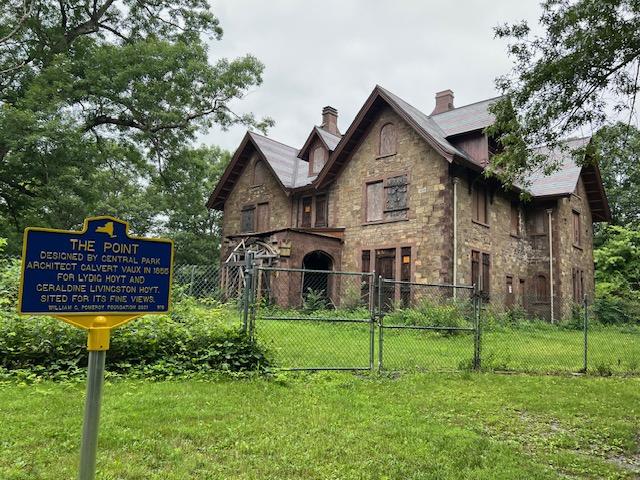
Another recent tour I took at the Mills Mansion was the “Estates of Staatsburgh” tour where we visited the abandoned estates of the Lee and the Hoyt families. The Hoyt’s were distant relatives of Ruth Livingston, and their mansion still stands up on a buff in the woods overlooking the Hudson River. The family lived there until the 1960’s when the land and home were sold to the State of New York to create the park.
The abandoned Hoyt Estate will soon be a Visitors Center for the Park
The Lee Mansion burned down in the late 1950’s and all that is left of their estate if the old icehouse, which is the size of a regular home. Most of these old estates we came to find out were self-sufficient with agriculture and light manufacturing.
The Hoyt Mansion in its heyday
We got to see all the back trails to these old estates and the old driveways that once led to them. They have been abandoned since the 1960’s and have almost a spooky appearance of being lost in time. With the foliage in the background, it gave them a Halloween appearance. The tour was very interesting how the Gilded Age didn’t last too long when modern times came into play with income tax.
The filled in decorative pond is one of the things left of the Lee Estate.
The old Horse trough near St. Margaret’s Church
The “First Day Hike Tour” (COVID event):
To ring in 2021, the park had their “First Day Hike tour, ‘Staatsburgh in Winter”. There were two walking tours around the estate. One entitled “Staatsburgh in Winter” which discussed the wintertime fun at the turn of the century and the activities the Mills family enjoyed when they were at the estate in winter months. It seems that Ruth Mills was quite an accomplished figure skater. The family also owned an ice yacht, “The Beatrice” that they rode on the frozen river.
The Mills Mansion New Year’s Day Walking Tours-Me with the dark jacket and white mask
The second tour we took later that afternoon was “When Ice came from the river: Ice Harvesting in the Gilded Age”. We toured the river and the cove areas of the estate and discussed the ice block harvesting business that Mr. Mill’s had on the river. The family ice house could hold 500 tons of ice that was sold down in New York City. It was interesting to see how the process of clearing the snow and cutting the ice into blocks served as refrigeration for thousands of residents before refrigerators came into use.
Both tours our groups walked the back of the estate and the river front along the Hudson River. The tour guide had a long conversation on how the river was used during the Winter and that life continued in a productive way even after the holidays were over. It was a great way to spend the first day of the New Year. The park continues to amaze me in their adaption on running events during the COVID era.
In 2021, the mansion had been opened for the Christmas tours, but I was not able to attend. There was not that much time to run back and forth to the Hudson River Valley but in February 2022 the mansion finally resumed inside tours of the first floor of the mansion to the public.
The mansion looked like it had gone through a deep cleaning as everything looked shiny and new. It would have made Mrs. Mills proud. I was lucky to come up to Staatsburgh during the ‘Spring Thaw’ and it was 56 degrees out so I could enjoy the grounds as well. I learned some new things about how the Butler’s Pantry worked, and we were able to see the ice chests and china and silver that the family used for service. I swear I learn new things on each tour I take here.
The Annual Friends Meeting in April:
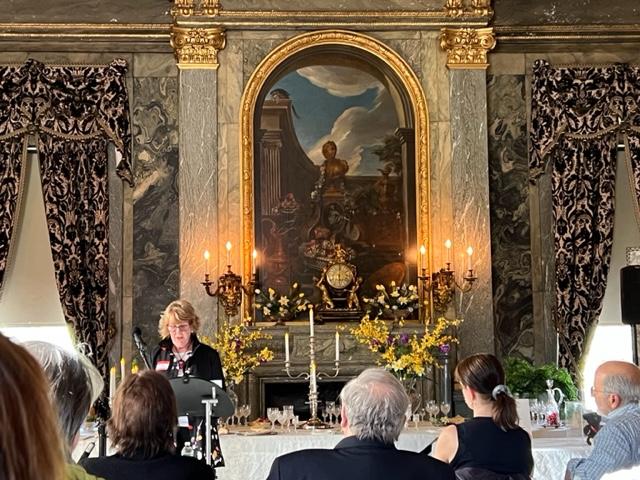
Our Annual Friends April Meeting in 2023 was a nice time. The Executive Board held the meeting in the Mills Dining Room with all the gilded fixtures as a backdrop. Our President of the Friends, Diane Tompkins gave the report of the successful year we had last year with record breaking attendance. I guess the the show “The Gilded Age” has been helping a lot. A lot of these Upstate mansions are getting a lot of attention now.
Friends President Diane Tompkins giving the report of the organization
It seems that the gift shop is really doing well and is also exceeding its numbers so things have been going well in post-COVID. Both the site director and the Friends Treasurer said we are exceeding our numbers on both attendance, membership and profits in the gift shop will be helping fund restoration projects in the mansion.
After the meeting, we had a light reception both in the Dining Room and on the terrace right off the main Dining Room. What a night! Sunny, warm and clear. It was such a beautiful evening with views of the Hudson River in the background and Spring buds popping all over the estate.
The reception on the terrace of the Mills Mansion
The grounds of the Mills Estate from the terrace
The Hudson River from the terrace
The sun setting over the Hudson River as the reception drew to a close
It was a really nice meeting and reception for the members. I can see that everyone was glad that after COVID that we were able to bounce back and start to exceed after such a rough time.
The “Evening Hours Tour of Decorated Staatsburgh”:
In 2023, the mansion was decorated to the hilt for the Christmas holiday season. Even though in real life, the family would have been in New York City for the Christmas and Winter season, the house was decorated with each room having its own decorations and trees.
According some of the grandchildren, the mansion was open for the Christmas holiday season and the family celebrated the holidays. I visited the mansion during the “Evening Hours” event where the mansion was open for a self-guided tour of the house and you could see the decorations at your own pace. There was music performed by the Hyde Park String Quartet in the formal Dining Room.
Staatsburgh (The Mills Mansion) when I arrived for the tour in 2023.
I toured the house with a group of visitors who had never seen the mansion before so there was a lot of interest in the history of the home and the people that lived there. Ever since the “Gilded Age” came out, the interest in these homes has increased and this evening event was sold out. Since I am a member, I was able to sneak into the first self-guided tour at 6:00pm.
The stairs to the second floor of the Mills Mansion.
The first stop was in the Library where it was reported that the family did have a Christmas tree for a Christmas celebration in the house.
The Christmas tree in the Library.
The Library
The painting of General Montgomery in the Library.
I moved onto the main Hallway and entrance to the mansion which was the original part of the house. This was until Ruth Livingston Mills expanded the house in the late 1800’s to its present size.
The main Foyer of the mansion in the front of the house with the Christmas tree.
The Christmas tree in the Main entrance of the mansion.
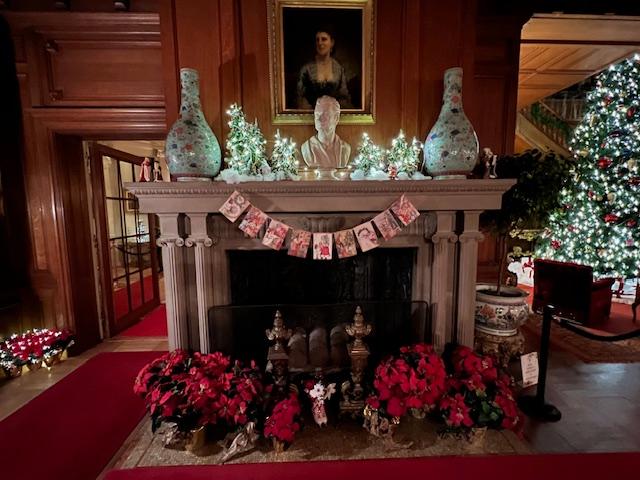
The fireplace in the foyer/hallway with a picture of Ruth Mill’s mother.
Ogden Mill’s portrait in the foyer.
Another display in the foyer leading to the Dining Room.
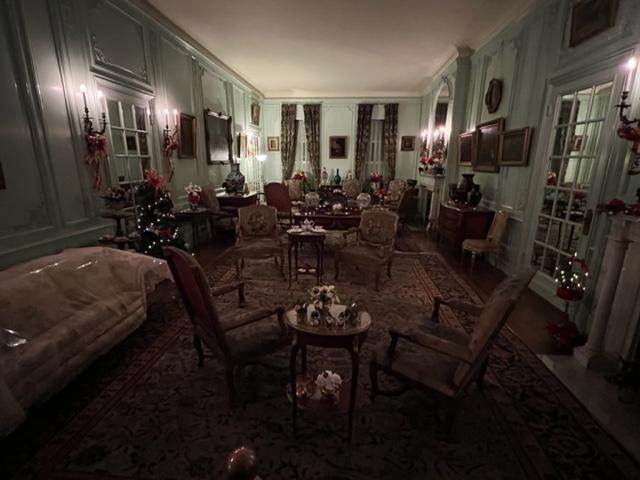
The front and back parlor of the old part of the mansion was used as a Living Room for Ladies to relax while their husbands stayed in the Dining Room to talk and smoke.
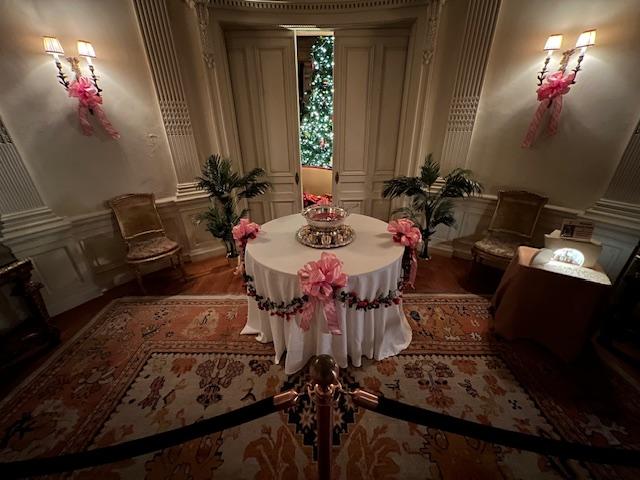
The Holding Room decorated for the holidays. This is where guests would wait to come in for dinner.
The Hyde Park Quartet was playing the night of the “Evening Hours” at the Mills Mansion.
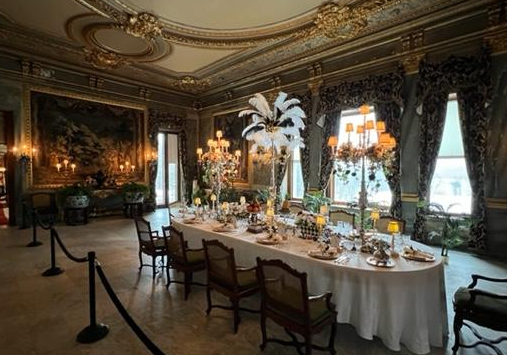
The Dining Room table set for a feast.
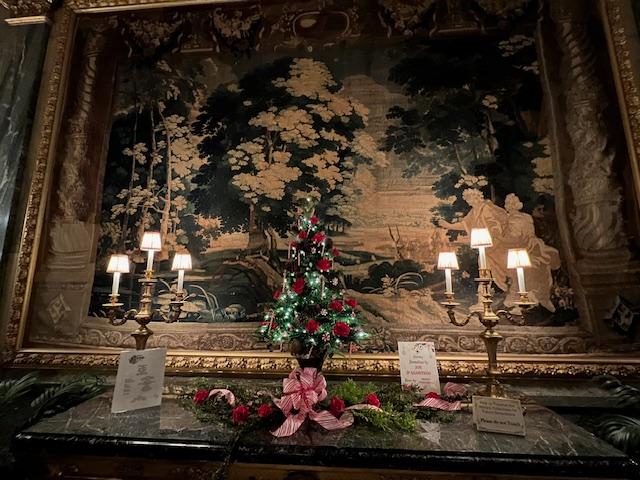
The Tapestry on display on the wall.
The other angle of the Dining Room table.
The fireplace in the Dining Room.
The Dining Room could not work without the Kitchen and the Butler Pantry to supply the Dining Room with the things that it needs.
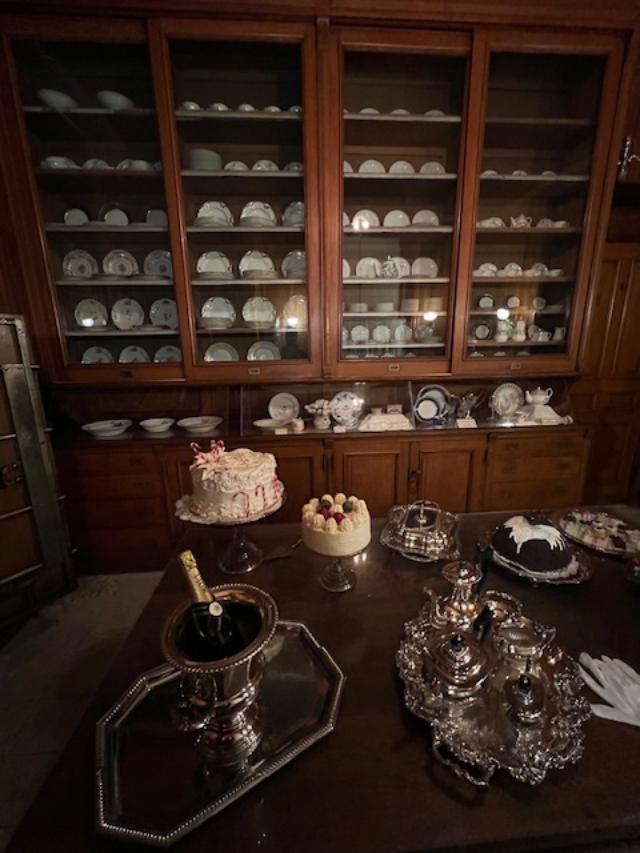
The Butler’s Pantry with all the holiday dishes prepared for the Dining Room.
The Dumbwaiter from the lower level kitchen.
The China and Silver for the Dining Room along with the desserts that would be served at the end of the holiday feast.
Once I left the Dining Room, we toured the back of the first floor where Ruth Mills had her office and both her and Ogden’s bedrooms.
Ruth’s office where she would run the estate. The dollhouse displayed in the office was very detailed. After that, I visited Ruth’s bedroom which was fit for a Queen. Ogden’s was right next door as was Victorian tradition that the couple had separate rooms. They had three children so there was no problem in that department.
Ruth’s bedroom
Ruth’s Bedroom
Once I visited the upstairs bedrooms, I visited the gift shop on my way out. The whole tour took about an hour to see all the decorations. The volunteers had done a wonderful job with the decorations of the house and it was nice to see them especially the Dining Room.
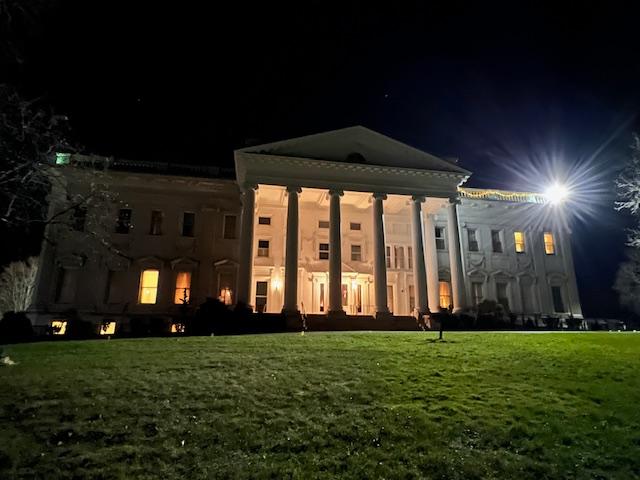
When I left in the evening, the house was ablaze with light and looked festive from the outside.
All of these can be seen on the organization’s website.
It was another great tour in 2023.
History of the Mansion:
(From the museum website)
In 1792, Morgan Lewis, the third Governor of New York, purchased an estate covering of about 334 acres and commissioned the construction of a colonial-style house on the site of the present mansion. In 1832, the first house was destroyed by fire, said to be the act of arson committed by disgruntled tenant farmers.
The current home, originally built in 1832 and greatly expanded in the 1890’s, the Mills Mansion (also known as Staatsburgh) is emblematic of the great country estates built in the nineteenth and early twentieth centuries to house America’s wealthiest families.
Staatsburgh is a New York State Historic Site located within the boutonnieres of Mills-Norrie State Park. It is an elegant example of the great estates built by America’s financial and industrial leaders during the Gilded Age.
A 25 room Greek Revival structure was built on the site in 1832 by Morgan Lewis and his wife, Gertrude Livingston, replacing an earlier house that had burned down. This second house was inherited by Ruth Livingston Mills, wife of noted financier and philanthropist Ogden Mills.
In 1895, Mr. and Mrs. Mills commissioned the prestigious New York City architectural firm of McKim, Mead and White to remodel and enlarge their Staatsburgh home. After the completion in 1896, the house was transformed into a Beaux-Arts mansion of 65 rooms and 14 bathrooms. Its exterior was embellished with balustrades, pilasters, floral swags and a massive portico. The rooms were furnished with elaborately carved and gilded furniture, fine oriental rugs, silk fabrics and a collection of art objects from Europe, ancient Greece and the Far East.
In 1938, the house and 192 acres were given to the State of New York by Gladys Mills Phipps, the daughter of Ruth and Ogden Mills. The estate is now operated by the New York State Office of Parks, Recreation and Historic Preservation. In 1988, the Friends of Mills Mansion were organized to support the preservation and educational work at the site.
(Friends of the Mills Mansion Website)
Design:
The outside of the mansion features a massive portico, balustrades, pilasters and floral festoons. The central part of the mansion is layered into a basement, three floors and an attic. In the north and south wings, there is a sub basement, a basement and two floors. Ceilings in the older part of the building dating prior to the enlargement (the first floor of the central part) are about 14 feet high, whereas the ceilings of the later construction (first floor of the north and south wings) can be about 18 feet high. The interior of the building is decorated in French styles of the 17th and 18th century. However, some architectural elements of the previous home have been preserved in the process.
Preservation:
The Mills Mansion poses several challenges to preservation: On the outside, a gray sprayed concrete finish which was added later as a preservation measure need to be removed and replaced with a more suitable surface treatment. At the same time, the decorative cornice and many decorative elements need to be either restored or replaced. On the inside of the building, wall paint and furnishings fabrics are in need of replacement, marble and wooden surfaces need to be cleaned and the objects of the mansion’s collection need to be conserved.
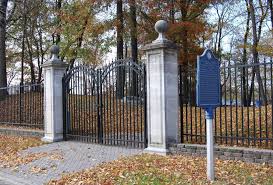
The three times I have visited the Gethsemane Cemetery, it was a very quiet place to reflect on the people who are buried here. Located by a stretch of Route 46 West, you would hardly notice it was there. Sitting on a small hill above the highway lies some of our Counties most prominent Black citizens as well as just ordinary people and freed slaves who were denied entry into other church cemeteries. They were interned here in their own cemetery.
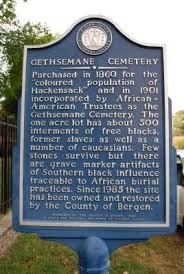
Gethsemane Cemetery is located west of the Hackensack River in southwest Bergen County on a one acre sandy hill located in Little Ferry, NJ. The 1860 deed of sale identifies it as a “burial ground for the colored population of the Village of Hackensack.” In 1901, it was turned over to seven African-American trustees and incorporated as Gethsemane Cemetery.
The entrance to the Gethsemane Cemetery in Little Ferry, NJ
Although there are only 50 graves stones, the graves of over 500 people have been documented, including that of Elizabeth Dulfer, who was born a slave (c 1790), freed in 1822 and died in 1880. She became one of the wealthiest business owners and landholders in Bergen County. Three Civil War veterans, Peter Billings, Silas M. Carpenter and William Robinson are also buried here.
Gethsemane Cemetery figured the center of controversy surrounding the burial of Samuel Bass, sexton of Hackensack’s First Baptist Church. When he died on January 22, 1884, his family wanted to bury him in the Hackensack Cemetery but was refused due to his race. Mr. Bass was then buried in Gethsemane Cemetery.
New Jersey Governor, Leon Abbett, protested the denial: “The Legislator should see that the civil and political rights of all men, whether white or black are protected…It ought not be tolerated in this State that a corporation whose existence depends on the Legislature’s will…should be permitted to make a distinction between a white man and a black man.” Two months later in March 1884, New Jersey’s “Negro Burial Bill” was passed desegregating cemeteries in New Jersey.
In 1985, Bergen County acquired the neglected cemetery and dedicated it as a County Historic Site. It was entered into the New Jersey and National Registers of Historic Places in 1994 for the historical significance it played in the enactment of N.J.’s early Civil Rights legislation and for containing evidence of West African burial customs.
The County of Bergen marker
In 2003, the county celebrated the dedication of new meditation areas and historic interpretive panels that tell Gethsemane’s story and lists the names of 515 people known to be buried here.
The cemetery markers
New mediation areas and historic panels tell the story of the cemetery and list the names of 515 people who were buried here.
The cemetery is open only a few times a year to the public for special holidays and events. I came for the Juneteenth Celebration of the emancipation of slavery from the Union on June 19th. There was an independent tour on your own of the cemetery and the panels. If you had any questions, there are County representatives to guide you through.
The Gethsemane Cemetery in the Fall
(Information taken from the Bergen County Parks System guide).
Disclaimer: This information was taken directly from the Bergen County Parks Directory. Please call or email the above information for more details on visiting the cemetery. It can be opened for private tours.
















































































 Visiting a Museum: The Unique, Unusual, Obscure and Historical