Category: Exploring Historic Kingston, NY

Hudson River Maritime Museum                           50 Roundout Landing                                  Kingston, NY 12401

Hudson River Maritime Museum 50 Roundout Landing Kingston, NY 12401

Hudson River Maritime Museum

50 Roundout Landing

Kingston, NY 12401

(845) 338-0583

http://www.hrmm.org/

Open: Sunday 11:00am-5:00pm/Monday-Thursday Closed/Saturday 11:00am-5:00pm

Fee: Adults $9.00/Seniors (over 62) & Children (18 & under) $6.00/Members-Children under 4 years/Active Military Free

My review on TripAdvisor:

https://www.tripadvisor.com/Attraction_Review-g48003-d285787-Reviews-Hudson_River_Maritime_Museum-Kingston_Catskill_Region_New_York.html?m=19905

The Kingston Hudson River Maritime Museum 50 Roundout Landing

I recently visited the Hudson River Maritime Museum after a boat cruise around the Hudson River and I found this wonderful little under-rated museum to packed with information not just about the history of the Hudson River Valley but the rich history of boating and boat building, the economic impact of the area in mining, brick building, ice manufacturing and cement development.

The Tug Boat display

It was interesting to see how the natural wonders of the area have given the rise to so much development in not just building the area but its long lasting contribution to New York City. This was not just in industry but in the pleasure and shipping boat industries as well.

The Ferry display

One part of the museum is dedicated to transportation up and down the river with sailing and steamboats in the forefront especially how the luxury steamboat industry went full force until about 60 years ago. It was considered the nicest form of transportation to and from New York City. It was interesting how the modern train and car lead to the demise of something that today would be embraced as unique and fun. The pleasure steamboat industry continued on until 1971.

The leisure ferry industry down the Hudson River

Another part of the museum was dedicated to the history and development of the area from the Native American tribes living along the shore and the Dutch settlements to the rise of modern development of manufacturing along the shores to its after effects and clean up in the 1960’s and 70’s. These included fishing, ice manufacturing and brick making.

The Ice Industry on the Hudson River

There were really nice displays on the ship building, sail companies and maritime industries that supported them. The manufacture of raw materials and building supplies because of the natural resources of the Hudson River Valley show how rich in minerals, clay, cement and stone from the cliffs built New York City and how they nearly destroyed nature.

The Brick industry in the Hudson River Valley

The displays tell the stories of activists who saved the area, Robber Barons that exploited it and the everyday people who contributed to making the valley the interesting place that it is today. It showed how protests and free speech saved the Valley from devastating development.

The Alexander Hamilton Ferry ride down the Hudson River

With each room at the museum, there is a story to tell and pictures to explain why the Hudson River Valley and the Kingston Roundout is such an interesting place to see. Outside you can find an example of the Tug Boat industry

The Tug Boat “Mathilda” on the museum grounds

The tugboat display by the riverfront

Take time to guide through the rooms and read the signs and stories. There is a lot to see and do here and make sure to leave plenty of time to walk the grounds and see the tug boat and sailing displays and walk the river front. There is even a display of ships models to explore. It makes for an interesting afternoon.

The ‘Ship Models’ display

History of the Hudson River Maritime Museum

(This information was taken from the Museum’s website and pamphlet)

Hudson River Maritime Museum

The Hudson River Maritime is dedicated to the preservation and interpretation of the maritime history of the Hudson River, its tributaries and related industries.

Ship building was very important in the region

The Hudson River Maritime Museum was founded in 1980 to preserve the history and maritime heritage of the Hudson River. Our collections range from steamboats, tugboats and sailboats to the canal system and waterfront industries, dating back to the early 19th Century.

The ferry display

The museum has a library and archives open to researches by appointment. Some of our collections have been digitized and are available online at http://www.hrvh.org/hrmmkingston.

http://www.hrmm.org/

HRMM exhibits cover topics including:

Passenger steam boats, Hudson River rowing, ferries, ecology and conservation, ice boats, tugboats, fishing, ice harvesting, brick making, early exploration, cement production, lighthouses and more. HRMM features a new temporary exhibit every year. Information on exhibits, including online exhibits is available at hrmm.org.

The ‘Cabin Room’ display

Some of the attributes of the museum:

Wooden Boat School:

The Wooden Boat School was opened by the Hudson River Maritime Museum to preserve the rich boat building heritage of the Hudson River Valley. Wooden boat building occurred on Roundout Creek in particular throughout the 19th and 20th centuries including World War I & II and the Korean War.

The ‘Hudson River Weather’ display

Today, the Wooden Boat School offers adult classes, Youth boat program for teens and serves as the headquarters for the Sailing & Rowing School, Sea Scouts Ship 609 and the Kingston Sailing Club.

Kingston Home Port:

A timber framed carbon neutral structure, the Kingston Home Port and Education Center was completed in 2012 to serve as the winter home port and maintenance center for HHRM partner the Hudson River Sloop Clearwater during the winter season. During the summer months, the Home Port serves as an event, lecture and educational space for the museum.

The ‘Steamboat Captain’ display

The Kingston Home Port also functions as the main operational headquarters for the Roundout Rowing Club and the Kingston High School Crew Team.

The ‘Erie Canal’ display

The ‘Erie Canal’ display

The Hudson River Maritime Museum (HRMM) features a variety of programs and events throughout the year including:

*Lighthouse Tours

*Local History tours, including guided walking and car tours.

*Woodworking, maritime art and boat building classes at the Wooden Boat School

*Sailing, boating and rowing classes at the Sailing & Rowing School

*Follow the River Lecture Series

*School Field trips

*Museum Mates monthly family programs

*Free Public Festivals

*Visiting Vessels

*Special members only events-Join today!

The ‘Lighthouse’ display

Walkway Across the Hudson State Historic Park 87 Haviland Road                                       Highland, NY 12528

Walkway Across the Hudson State Historic Park 87 Haviland Road Highland, NY 12528

Walkway Across the Hudson State Historic Park

87 Haviland Road

Highland, NY 12528

(845) 834-2867

https://parks.ny.gov/parks/178/details.aspx

Open: Sunday-Saturday Dawn to Dusk/Office Open 8:00am-4:30pm Daily

Fee: Vehicle Fee $5.00/Educational Programs Adults $5.00/Students $2.00

My review on TripAdvisor:

https://www.tripadvisor.com/Attraction_Review-g48443-d2249606-Reviews-Walkway_Over_the_Hudson_State_Historic_Park-Poughkeepsie_New_York.html?m=19905

The history of Walkway over the Hudson River

This is the best way to experience seeing the Hudson River by walking on top of it. It is especially nice on a beautiful day.

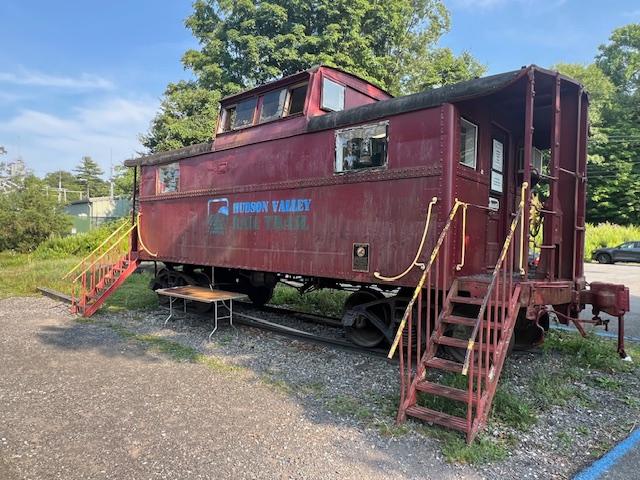
The rail car from the entrance to the Walkway by the Highland Park side of the walk

The day I walked over the “Walkway over the Hudson” it was a rather cool September day in the last days of the summer but still it was a spectacular day to see the river with blue skies and sunshine. I also revisited the Walkway in July of 2024 and the views are just as amazing when everything in full bloom.

The history of the bridge that crosses the Hudson River

The start of the walk by the Highland NY side of the bridge

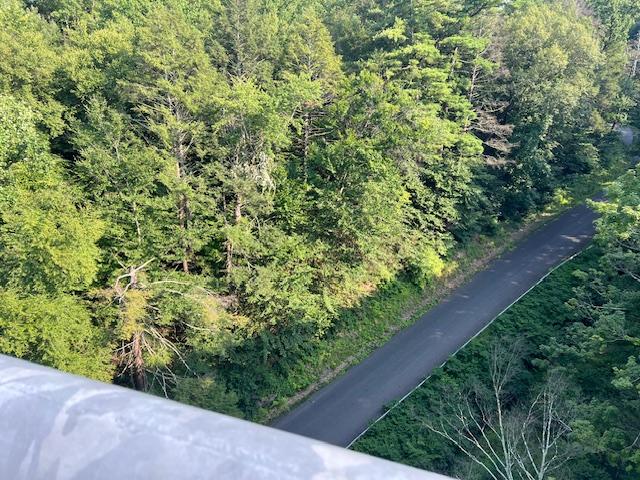
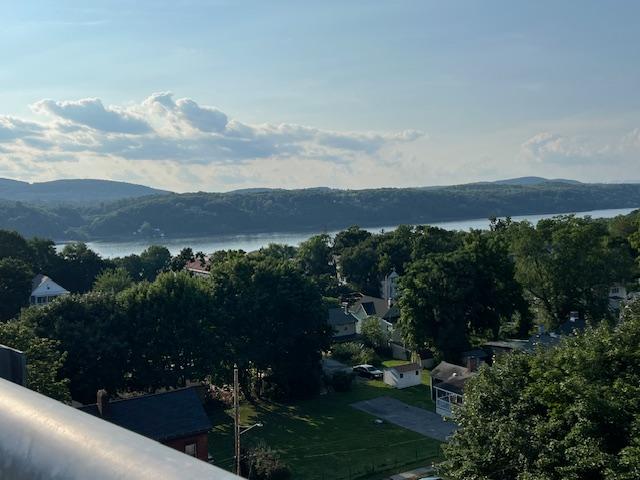
The views from the bridge on the Highland NY side

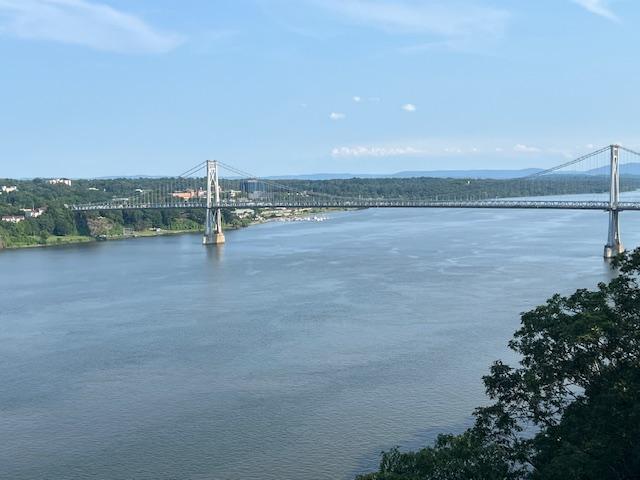
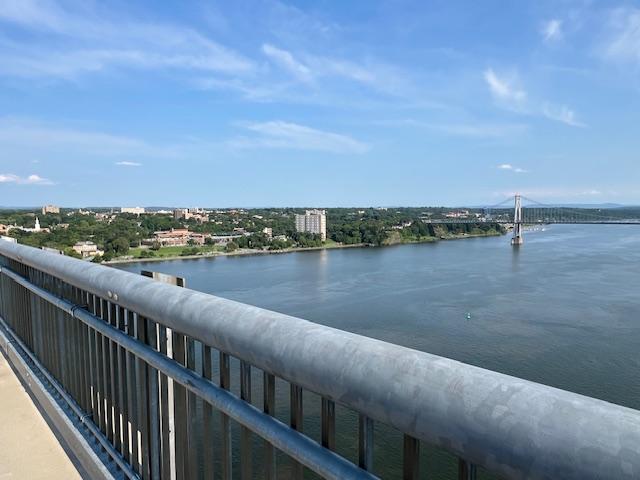
The views of the Mid Hudson Bridge

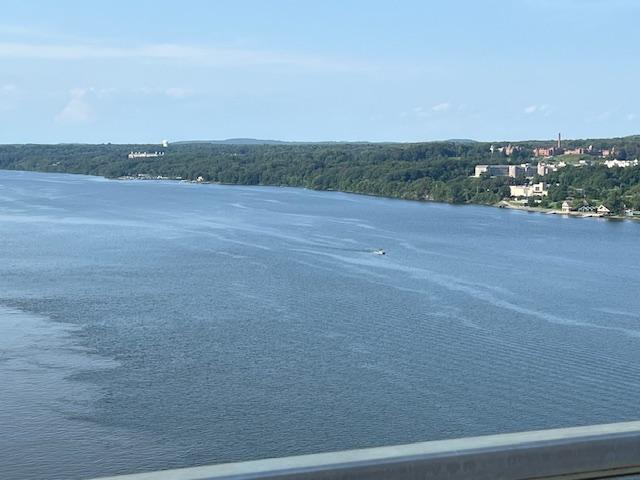
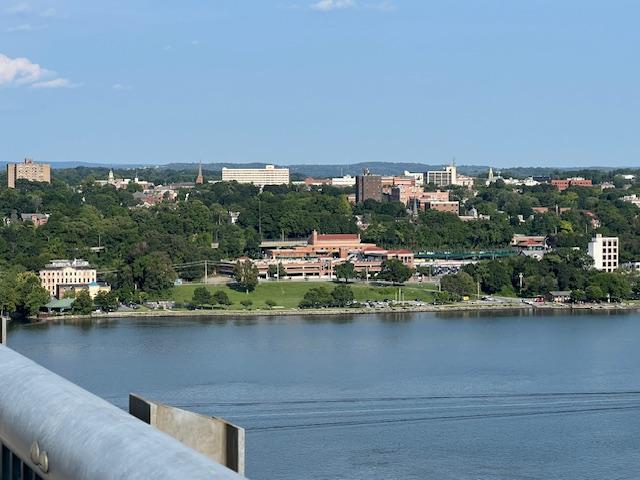
The views of Poughkeepsie and Hyde Park

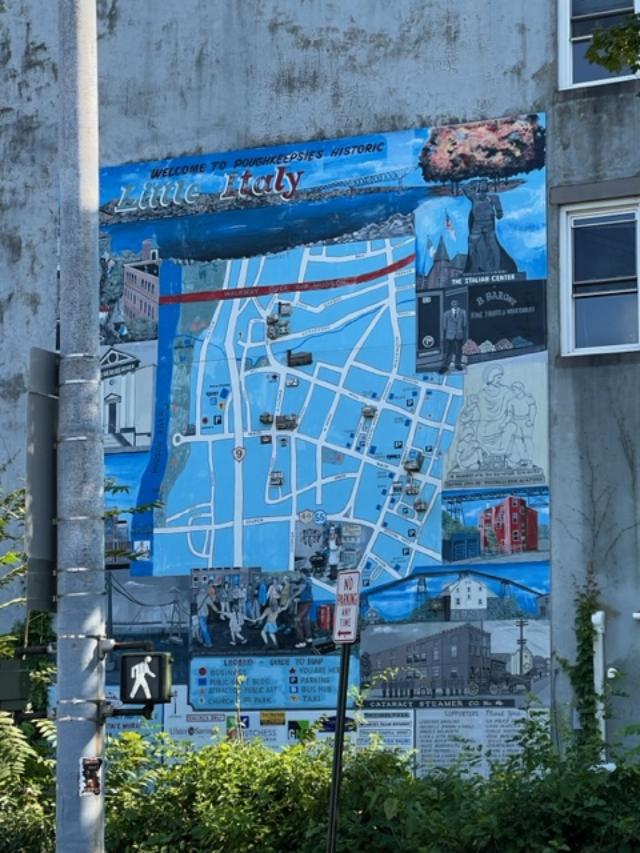
On both sides of the bridge, there are small parks to sit and relax. There are signs all over the bridge to tell the story of the bridge and the people who helped save it. The best part is to just sit around the rails and see the views of the Hudson River. On the Poughkeepsie side of the river, you have the entrance to the Little Italy section of city right near the riverfront. Since my initial walk, three of the restaurants have closed since COVID.

The historic sign at the halfway point

Looking up the Hudson River to the north of the bridge

Looking north to Hyde Park, NY

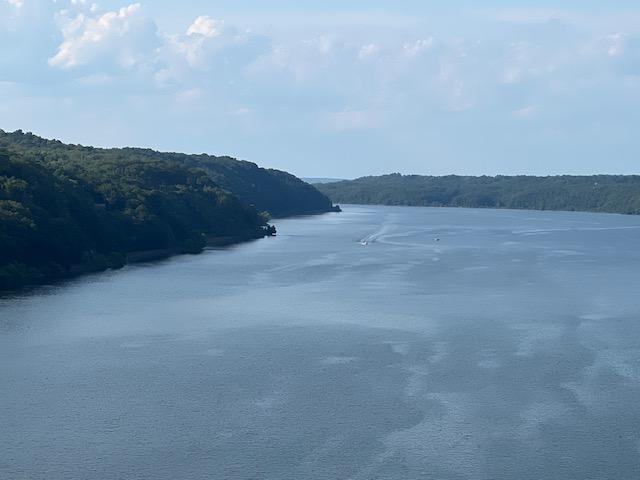
Looking south down the Hudson River

What is nice too is when you are leaving the Walkway is that you can tour Little Italy and Downtown Poughkeepsie. The Riverfront area of the City is changing quickly and new bars and restaurants are opening.

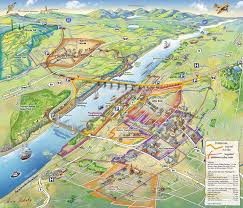
The towns and neighborhoods to visit after leaving the Walkway in Poughkeepsie and Highland NY

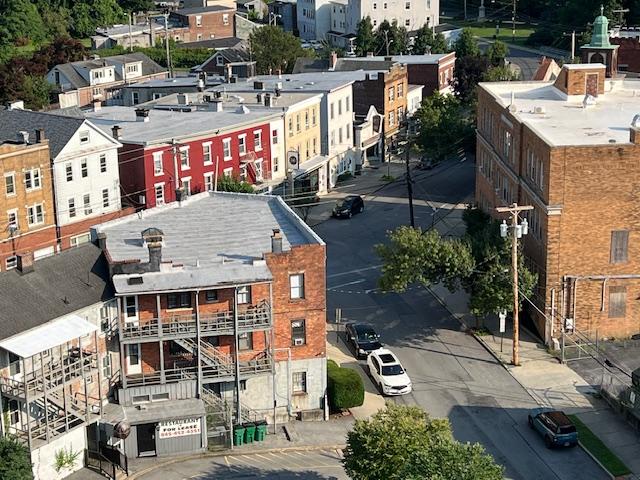
The Little Italy section of Poughkeepsie from the Walkway over the Hudson

The sign in Little Italy in Poughkeepsie

The history of the ‘Walkway Across the Hudson’:

The bridge now known as the Walkway Over the Hudson opened in 1889 as the Poughkeepsie-Highland Railroad Bridge to transport western raw materials to eastern industrial centers. Rosendale cement was used in the original construction of the piers. At the same time of its opening, it was the longest bridge in the world.

Downtown Poughkeepsie in front of me

In addition to freight trains, the bridge hosted passenger trains connecting Boston, New York, Harrisburg, Philadelphia, Baltimore and Washington as early as 1890. Trolley cars termed “rapid transit” were modified to run on both trolley and railroad tracks and served tourists, students and shoppers (from New Paltz to Lucky Platt’s). Special West Point Football trains ran from 1921-1930. Circus trains, milk trains, trains for hogs and cattle-the uses were varied and the impact was huge. At its peak as many as 3,500 rail cars crossed the bridge each day.

The waterfront of Poughkeepsie

There were two sets of tracks until 1918 when gauntlet track, also called interleaved track, was installed to handle the weight of diesel locomotives. It was removed in 1958.

Looking south down the Hudson River

During World War II the bridge was painted black to make it less visible in the event of an attack. Painting continued until the 1960’s. The high quality of the steel used in the original construction does not need to be painted. Metal experts during reconstruction stated that the absence of paint in fact helped keep the steel in the good condition it is in today.

The Poughkeepsie waterfront

The fire that destroyed the tracks in 1974 was probably started by a spark from a train’s brakes. From Carleton Mabee’s ‘Bridging the Hudson’, page 247: “An hour after a Penn Central train with 100 cars crossed the bridge on May 8, 1974, a thick cloud of black smoke hung over the bridge. Wooden ties were smoldering and wooden walkways were burning, fanned by a moderate breeze. Because Penn Central had no guards or maintenance men on the bridge at the time, the fire was not quickly reported. When firemen arrived at the site, they found they could not easily pump water up to the top of such a high bridge.

Downtown Poughkeepsie from the bridge near the waterfront

When firemen arrived arrived at the site, they found they could not easily pump water up to the top of such a high bridge. When they tried turning on the water to flow into the bridge. When they tried turning on the water to flow into the steel pipe which ran the length of the bridge, a line meant to help fight fires, they found that because it had not been drained the previous winter, it had burst at several points-Penn Central had known it but had not repaired it.”

View from the bridge on the Poughkeepsie side right near Little Italy

It was rebuilt and re-opened in October 2009 as the Walkway Over the Hudson State Historic Park thanks to the efforts of a dedicated friends group, the Dyson Foundation, many donors and New York State.

The Highland Park side of the bridge at dusk

At 212 feet above the Hudson River, this 1.28 mile linear park boasts scenic views north to the Catskills and south to the Hudson Highlands.

The Walkway is amazing on a sunny day

The Walkway is part of the Hudson Valley Rail Trail Network and was inducted into the Rail-Train of Fame in 2016, it connects Ulster County’s Hudson Valley Rail Train to the William R. Steinhaus Dutchess Rail Trail.

The ADA compliant 21 story glass elevator provides seasonal access from Poughkeepsie waterfront at Upper Landing Park a short walk from the Metro North train station.

The Walkway welcomes more than 500,000 visitors annually from all over the world who enjoy walking, cycling and running amidst its scenic beauty.

Today, the Walkway is operated and owned by NYS Office of Parks, Recreation and Historic Preservation and the NYS Bridge Authority it is open year round, offering programs, events and tours made possible through membership and donations to the Walkway organization.

(This information was taken from the Walkway over the Hudson website and pamphlet and I give them full credit for all of this information).

Volunteer Firemen’s Hall & Museum of Kingston                                                    265 Fair Street                                                                          Kingston, NY 12402

Volunteer Firemen’s Hall & Museum of Kingston 265 Fair Street Kingston, NY 12402

Volunteer Firemen’s Hall & Museum of Kingston

265 Fair Street

Kingston, NY  12402

(831) 331-0866

https://kingstonvolunteerfiremensmuseum.weebly.com/

Open:  The hours vary by the season so please look to the website for the openings. School groups please call for an appointment.

Fee: Free but donations accepted

My review on TripAdvisor:

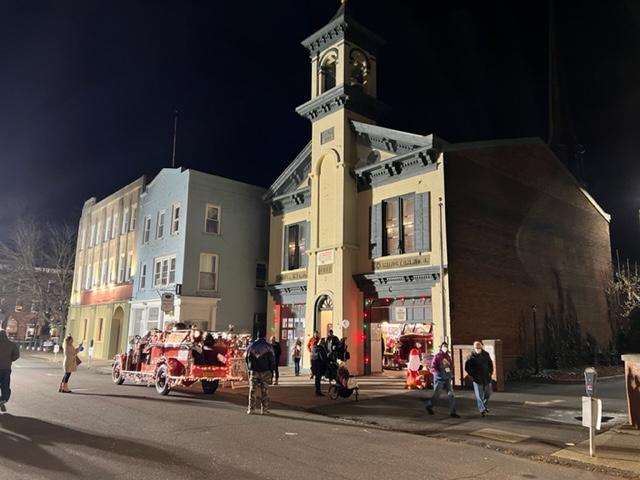
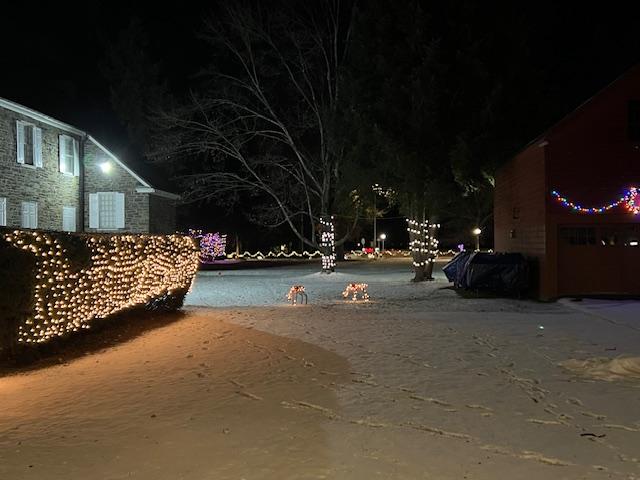
The Kingston Volunteer Museum during the ‘Kingston Snowflake Festival’

https://www.tripadvisor.com/Attraction_Review-g48003-d3367598-Reviews-Volunteer_Fireman_s_Hall_Museum_of_Kingston-Kingston_New_York.html?m=19905

The antique fire truck outside the firehouse during the Kingston “Snowflake Festival”

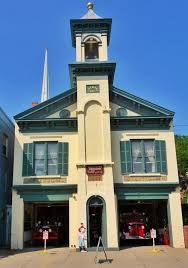
I was recently visiting Kingston, NY for an event and while walking around the downtown the doors of the Volunteer Firemen’s Hall & Museum of Kingston was open for visitors. Even if you are not a fire fighter it is such an interesting museum on the history of fire fighting and the role the Kingston Fire Department had in the formation of the City of Kingston.

Kingston Firemen's Museum II.jpg

The early horse drawn fire equipment

The museum welcoming people to the Kingston “Snowflake Festival” in 2022

On the main floor is four pieces of equipment from various stages of the department. The engines are from the turn of the last century featuring horse drawn ladders and steam engines and then the latest equipment from the early teens and twenties from the automotive stage. Each piece of equipment has been carefully maintained and is in pristine shape.

The museum decorated for Christmas for the recent “Kingston Snowflake Festival”

It is interesting to see how different each rig is at that stage of its history but how much has not really changed with the use of the equipment when fighting a fire.

The bay area of the old firehouse with the antique equipment

One of the more interesting pieces in the collection is the beautifully detailed Parade piece from the late 1800’s (circa around 1890’s) which has gorgeous details and intricate craftsmanship work to it. This interesting piece of equipment was the pride of the department on parade day and is one of the few of its type in the country.

The Fire Department Parade Piece

Along the walls is all sorts of pictures of old fires, men who were once members of the department, ribbons and awards, old systems for calling for firemen from the horns that used to sound the alarms to the more modern telegraph equipment to the current paging systems.

The roster upstairs

Kingston Firemen's Museum III.jpg

The fire department equipment pieces

Upstairs you can visit the furnished headquarters of a firehouse circa 1890’s to 1920 with vintage furniture, decorations and composites of firemen long ago. There is even a mannequin of a fire fighter sliding down a pole that leads to the first floor. Here and there are more decorative equipment pieces, furnishings and awards.

The upstairs of the Kingston Volunteer Museum

The museum has a little something for everyone and if you are interesting in knowing more of the history of the fire service and want to hear the stories by members current and retired from the Kingston Fire Department, then the Volunteer Firemen’s Hall & Museum is the place to visit.

Kingston Firemen's Museum IV.jpg

Old decorations from fire equipment at the Volunteer Firemen’s Hall & Museum

History of the Museum and Fire Fighting in Kingston, NY:

Ulster County has a remarkable over 350 year history of noble fire fighting. See it up-close and personal at the Volunteer Firemen’s Hall & Museum of Kingston.

The award case upstairs at the firehouse

When Kingston City Hall burned on June 4th, 1927, the third alarm was sounded from the building’s own bell tower before it crashed to the ground. Fire calls in Kingston today are answered through the 911 system with a three minute response time. Ever watched a TV show about firemen and their firehouse? The ‘squawk’ to a call is unmistakable.

The upstairs in the firehouse

Seven volunteer fire companies and the Exempt Association of Kingston recognized the importance of preserving and protecting firematic artifacts as well as establishing a meeting hall for volunteer fire organizations in Kingston and Ulster County. They were charged with finding a permanent home and signed a lease with the City of Kingston for Fair Street’s historic circa 1850 Wiltwyck Fire Station and the rest is history.

The Ladies Auxiliary and rosters

Walk through the large wooden doors to the home away from home of the 19th century firefighters.

Kingston Firemen's Museum.jpg

The old Kingston, NY firehouse that now houses the museum

Disclaimer: this information was taken directly from the Volunteer Firemen’s Hall & Museum of Kingston pamphlet and I give them full credit for it. Please check out their website for more information.

The living area upstairs in the firehouse decorated for Christmas

The Senate House                                                                      296 Fair Street                                                                Kingston, NY 12401

The Senate House 296 Fair Street Kingston, NY 12401

The Senate House

296 Fair Street

Kingston, NY  12401

(845) 338-2786

http://www.palisadeparksconservancy.org

http://senatehousekingston.org/

Open: Sunday 1:00pm-5:00pm/Wednesday-Saturday 10:00am-5:00pm (April 15-October 31). Open by Appointment only (November 1-April 14)

Fee: Adults $4.00/Seniors (62+) $3.00/Children under 12 and under Free

My review on TripAdvisor:

https://www.tripadvisor.com/Attraction_Review-g48003-d3225491-Reviews-Senate_House_State_Historic_Site-Kingston_Catskill_Region_New_York.html

The recently reopened Senate House in 2023

I recently spent my afternoon at the Senate House and Museum in Kingston, NY taking a tour of the museum and the House next door. The Senate House itself had just finished its renovation and the gardens were in full bloom in 2023. It was a quiet afternoon, and I was the only patron for most of the afternoon. The grounds were full of beautiful foliage and flowers, so it was nice to walk around the grounds.

The Senate House story board

The Senate House had just reopened in 2023 after almost a four year renovation and because of the closure during COVID. The grounds are very pretty and well-landscaped and the outside has had a lot done to the gardens. The house was built for merchant Abraham Van Gaasbeek and his family. It stayed in the family for generations.

The Senate House at 296 Fair Street

We were able to tour the inside of the house and see the renovations that the State of New York made on this important structure. The home has been renovated by the state but the tour guide told us not with the historical integrity it should have had. It was not to the total interpretation of the life in the house. Still, it told the story about the people that lived there.

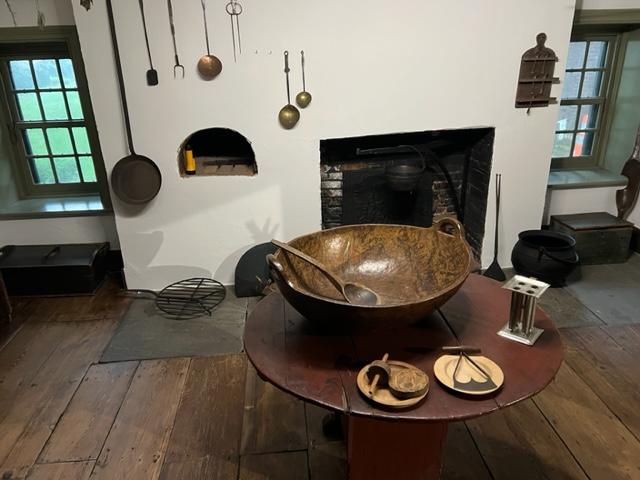
The Senate House Kitchen

Here you see the beehive oven, the working fireplace and many household items including waffle makers, cookie molds and candle making tools. The daily household tasks would be time consuming.

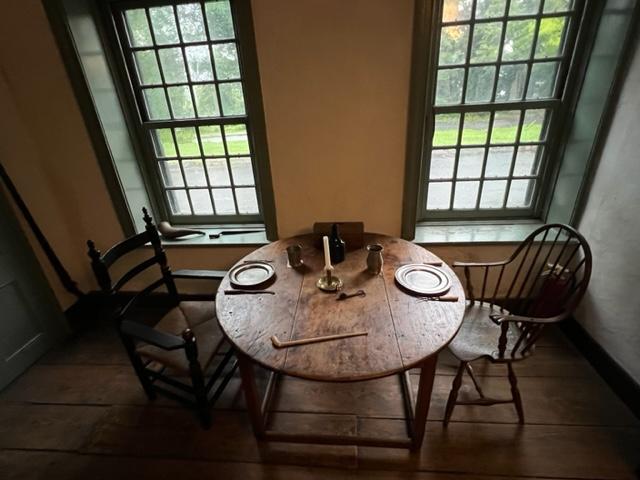
The Dining Space

The bedroom

In the original part of the house, the dining space and bedroom would be in a one room section of the home and as the family got larger, the house was added on to on both sides.

The Parlor

The Parlor was the fanciest room in the house with the best furnishings, decorations and a place of social interactions with guests. This rooms was for adult use at that time.

The Meeting Room for the leaders in change.

This was the room where plans by the patriots were made that changed the course of New York and the rest of the country. Now that the Senate House home is open again, you get a feel for what these people must have went through in developing the country during the Revolutionary War years.

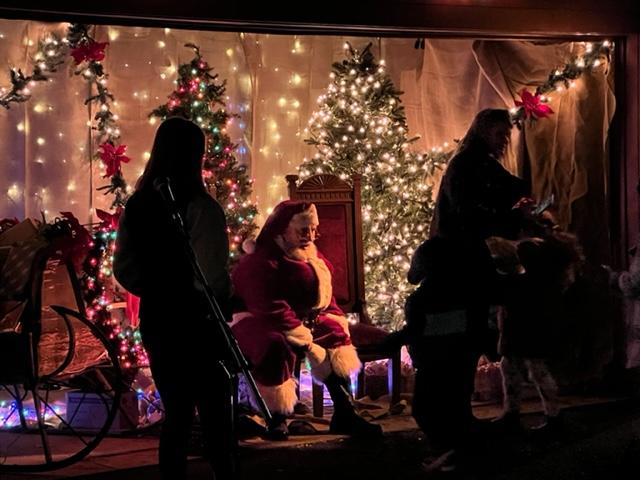
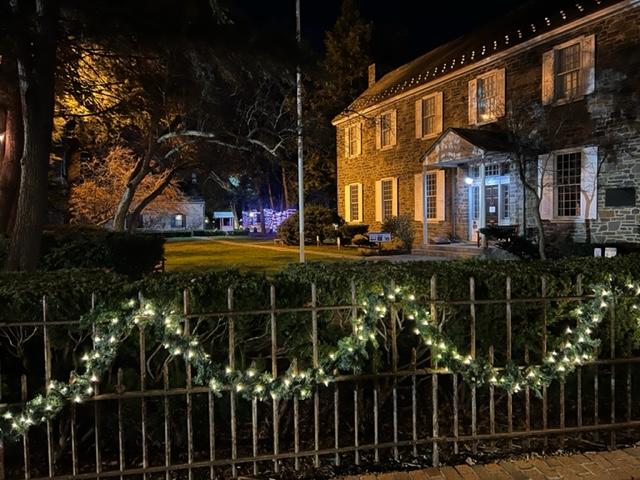
When I visited the Senate House at the holidays for the “Snowflake Festival”, it was still closed for renovation but the grounds were open for touring, music and for a visit with Santa. It was a magical night on the grounds of the historical site and people had a nice time that evening. The grounds and the other buildings were decked out for the holidays.

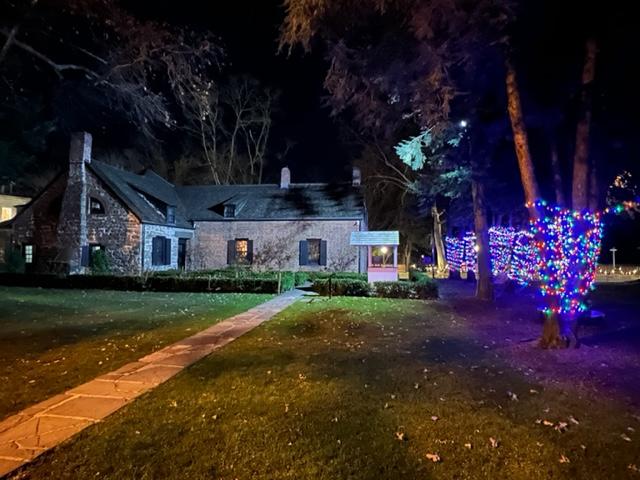
The Senate House decked out for the Christmas holidays at the “Kingston Snowflake Festival” in 2022

The Senate House property decorated for the Kingston Snowflake Festival in 2022

Santa’s visit at the Senate House property in 2022

The history of the Kingston Stockade section of the city.

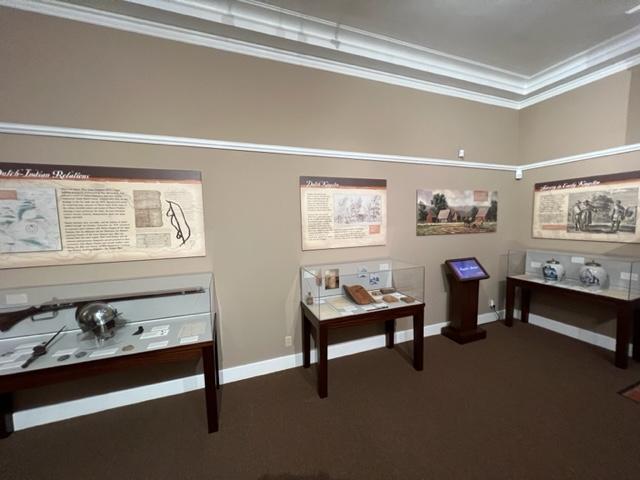
The main part of the park is the Senate House Museum, which is broken into three sections. The right side of the museum is the history of the City of Kingston and the matching artifacts. There is a description of manufacturing, merchant class and its military prominence. Here I learned about the growth of Kingston and its founding, its strategic spot on the Hudson River in the early colony, its role as diplomats to the Native Americans, which was not so pleasant and its growth after the war.

The first floor exhibitions on early life in Kingston

The history of the City of Kingston is described with the Native American settlements and the trade with the Dutch, the unsettling relationships that the two groups had with each other, the War years, the growth of industry and trade in early New York and manufacturing in the area.

The Native American exhibition

Early manufacturing and life in Kingston

The Artist’s sign

The Vanderlyn Exhibition of artist John Vanderlyn’s art

Artist John Vanderlyn’s works are featured on this part of the museum.

The left side of the museum is dedicated to the locally born artist, John Vanderlyn. His paintings line the walls of the museum of the artist at different stages of his career. His work was ahead of its time for the area, and it was noted in the collection that he forced himself to commission portraits to survive. His works advanced for the time because of his studying abroad now line the walls of the best museums in the country.

The exhibition of John Vanderlyn’s portraits

Artist John Vanderlyn’s bio in the museum

Members of the extended Vanderlyn family portraits

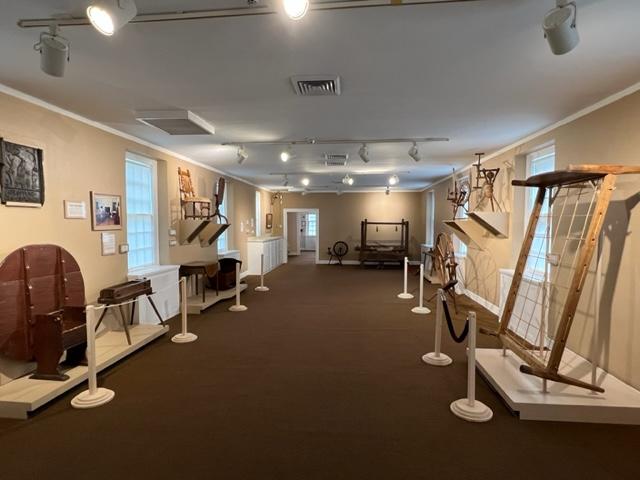
The second floor holds the furniture that is not historically correct with the Senate House and comes from different time periods. There is furniture, beds and chairs, spinning wheels, chamber pots and all sorts of accessories for the home and their uses in everyday life. Vintage furnishings with explanations on their use are a big part of the exhibit.

Artifacts from the past are displayed here

The everyday items used to spin material and create clothing

The Loughran House next door houses more of the furniture of the house and has a new exhibition “Back to the Future: The Evolution of Senate House”. This houses artifacts from the house.

The Senate House property during the “Kingston Snowflake Festival” in 2022

The Senate House property during Christmas 2024

The Senate House property during Christmas 2024

History of the Senate House:

(From Wiki/Office of Parks, Recreation and Historic Preservation pamphlet)

Amidst the turmoil of a British military invasion in the fall of 1777, the elected representations of rebellious New Yorkers met in Kingston to form a new state government. While convened in Kingston in September and October, New York’s first Senate met in the simple stone house of merchant Abraham Van Gaasbeek.

Here they adopted a system comprising of a senate, assembly, governor and judiciary that still exists today. Every one of the assembled delegates risked his life and property by being so openly disloyal to the Crown. Indeed, all were forced to flee for their lives when the British attacked and burned Kingston on October 16th.

While convened in Kingston in September and October, New York’s first Senate met in the simple stone house of Abraham Van Gaasbeek, a prosperous merchant trader who had suffered financial losses as a result of the war and personal losses in the recent deaths of his wife, Sara, his daughter and infant granddaughter. It was Sara’s grandfather, Wessel Ten Broeck, who built the original section of the house in 1676.

At first called Wiltwyck, Kingston was the third “city” established in the Dutch Colony of New Netherland. Planned and developed by the Dutch Governor Peter Stuyvesant in 1656, the town was renamed Kingston after the colony was seized by the English in 1664.

Wessel Ten Broeck’s one room Dutch style house was enlarged by succeeding owners in the 18th century. Each change reflected the increasing fortunes of the Ten Broeck/Van Gaasbeek family and demonstrated a gradual acceptance of English styles and customs over the persistent influence of the early Dutch. Kingston at the time of the American Revolution was still a noticeably “Dutch” town and most of its citizens supported the American cause. British Major General John Vaughan justified his destruction of the city because it was a “nursery for almost every villain in the country.”

In 1887, to recognize Senate House’s role in the formation of New York State, New York State acquired the property, which quickly became a vital community museum. A two-story Museum Building was constructed in 1927 to house and display the site’s burgeoning collection. Among its treasures are: major works by John Vanderlyn and other members of the Vanderlyn family of Kingston. The museum also includes the site’s popular new exhibit: “Kingston Stockage: New Netherlands’ Third City,” discussing Kingston’s early history.
(New York State Park History)

Senate House V

The Kingston Stockade: The City’s formation from the beginning