I have visited the Philipsburg Manor House and Estate many times over the years. During the “Headless Horseman” Halloween activities, the house is open for tours. You are able to tour the rooms and see the home in a spooky environment. The house was lit by candles and the tour guides lead you through the house.
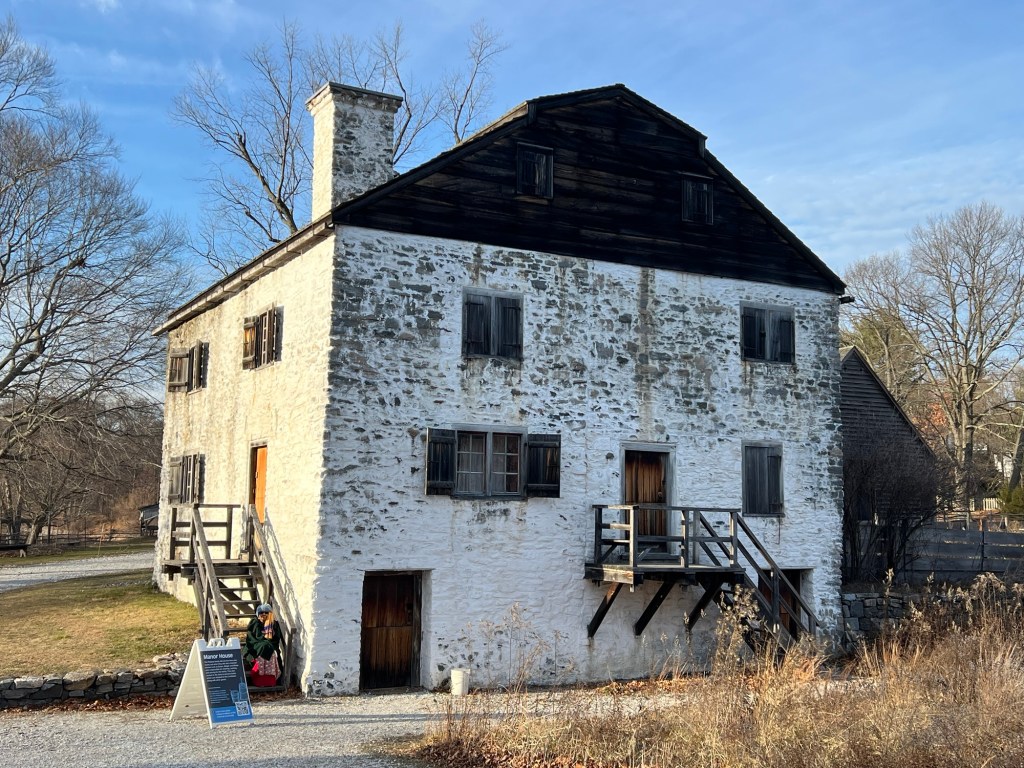
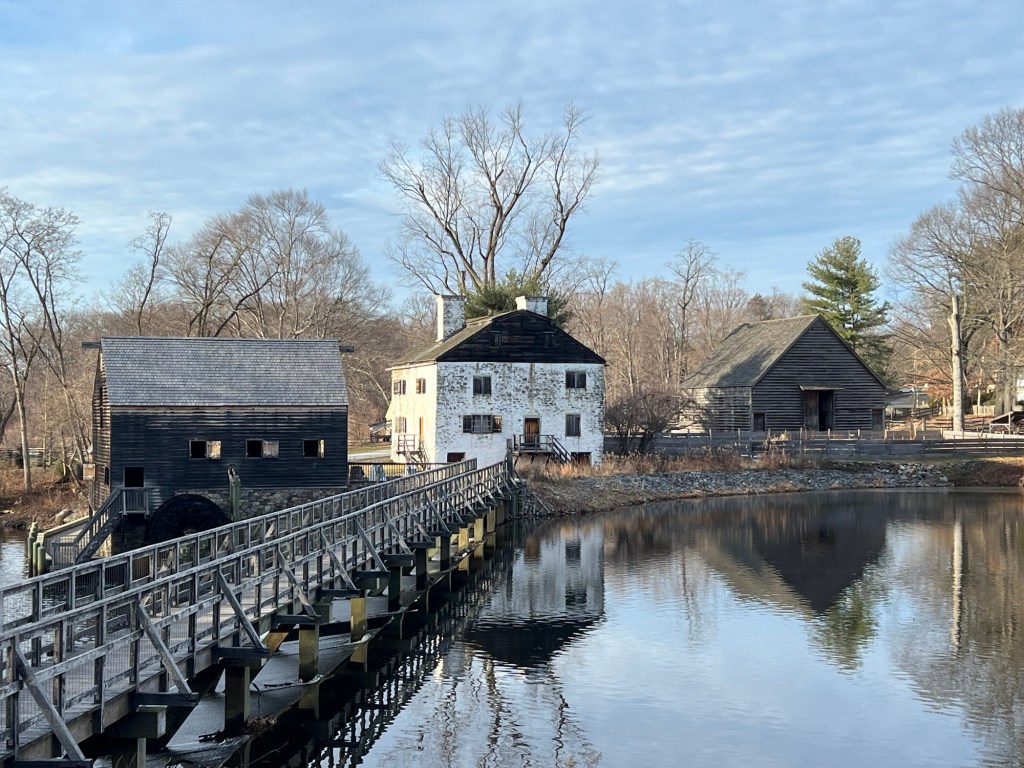
The Manor House from the bridge over the creek
During a special event at the holidays, the house had seasonal decorations, lit by a combination candles and open hearth fires in the fireplace and tour guides explained a Colonial holiday season.
The estate during the day
The Manor House as it was explained to me was a place where the Philipse family stayed when they were away from the main family mansion and was doing business on the estate. So the home was comfortable and workable and functional but not luxurious as the main manor house where the family lived.
The back gardens are used during the Spring and Summer to grow fruits and vegetables
The kitchen, common room and bedrooms were nicely furnished at the time for the owners visits but was not elegant in the form of the main manor house.
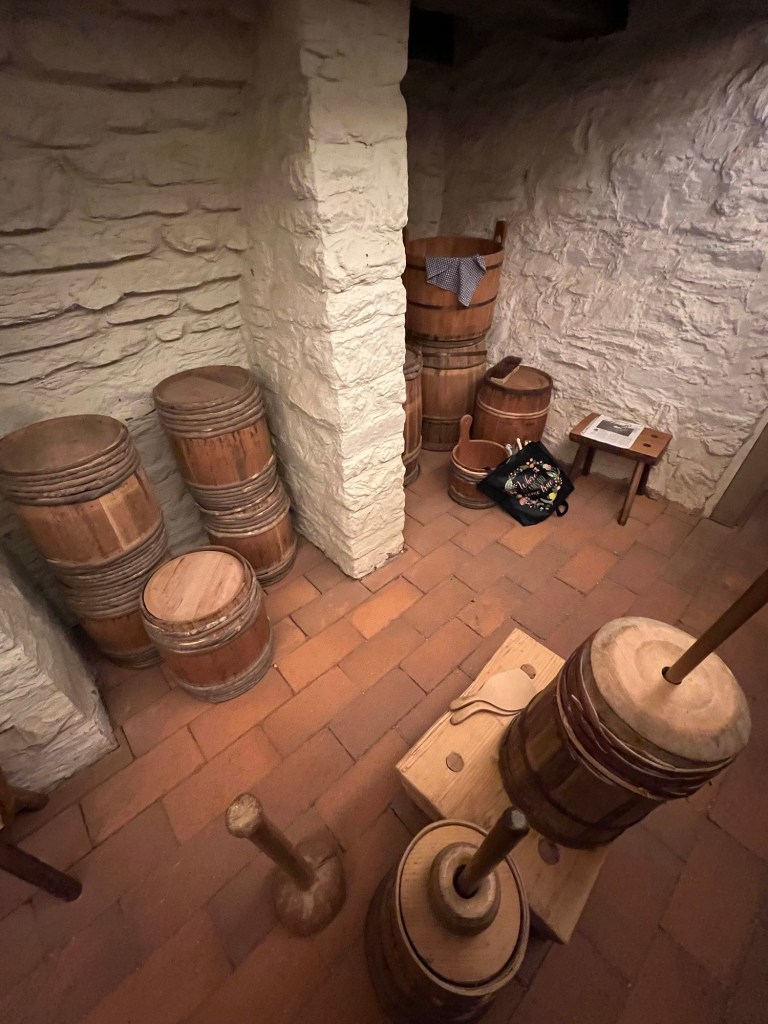
The butter-churning work area
This was full working estate at all times. The Mill is located near the manor house and their are walking paths around the house.
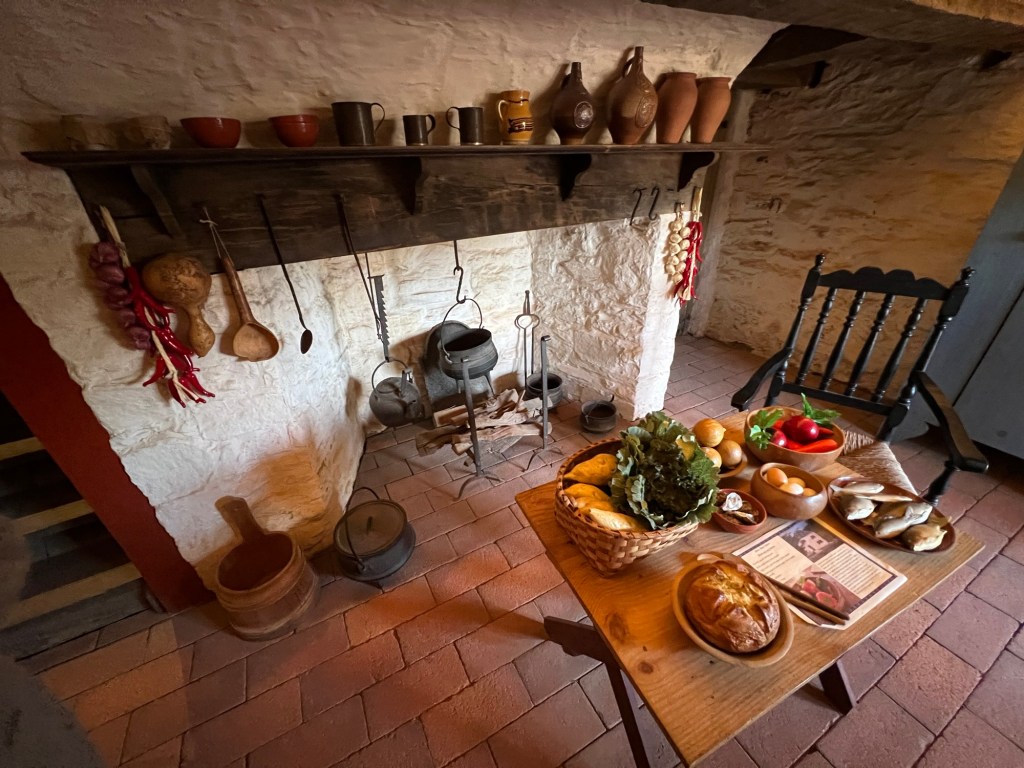
The downstairs kitchen at the manor house was functional but not elaborate
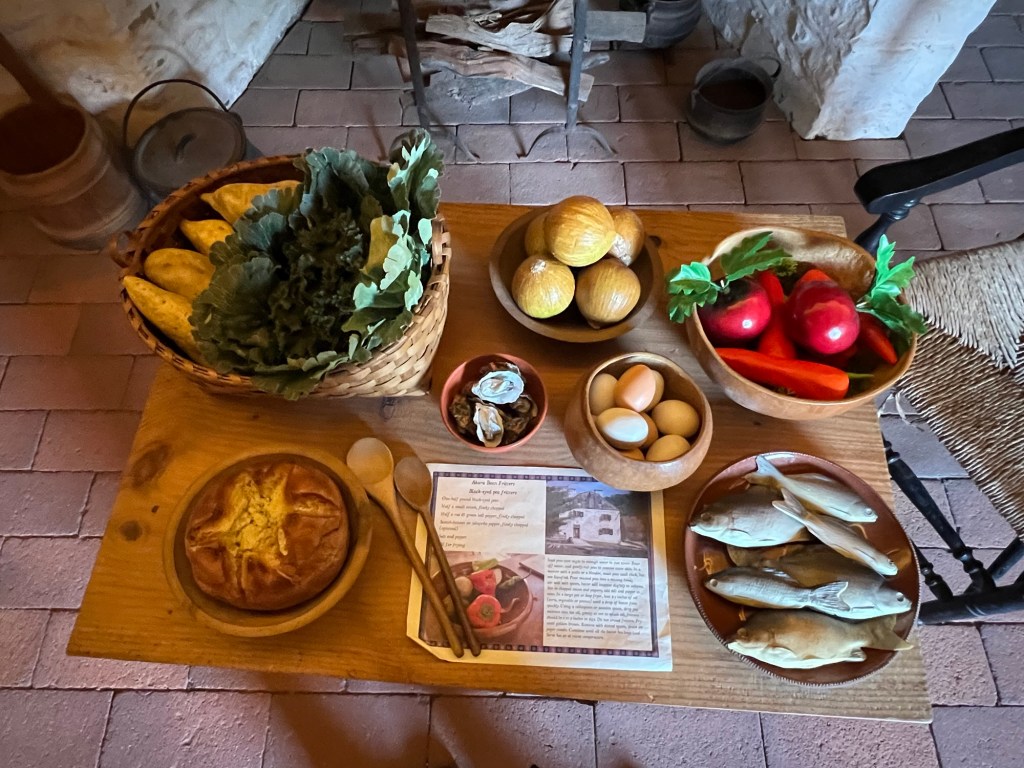
The farm bounty was plentiful during the seasons
The upstairs kitchen is where all the owners meals were prepared along with all the dish ware and crockery.
The upstairs kitchen
The items of a wealthy Dutch kitchen
During the Halloween season, both Tarrytown and Sleepy Hollow are busy with activities with readings, cemetery tours, ‘haunted events’ and other activities. Please check out the Historic Hudson Valley website for the roster of events. Things have changed since the era of COVID.
A recreation of the owners bedroom at the Philipsburg Manor
During the Christmas holidays, the house in the past was decorated for Christmas but in the post-COVID time, the house was just open for tours. In December 2022, I got to visit the house the week before Christmas before it closed for the season. Like most older historical homes and sites will be closed until the Spring so this was the last opportunity to see the house and grounds. Unlike the past, the house was kept in regular touring state.
The guest bed chamber
When I revisited the estate in 2025, it was the last weekend it was open for touring and the house had no decorations for the holidays as again this was not their primary residence.
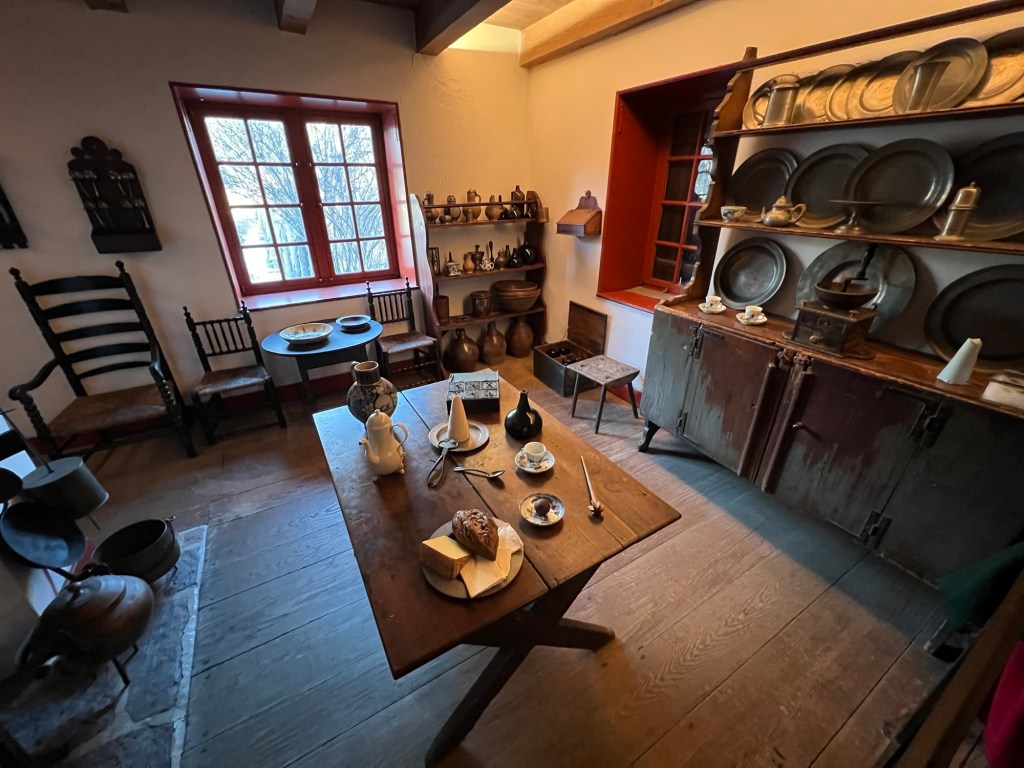
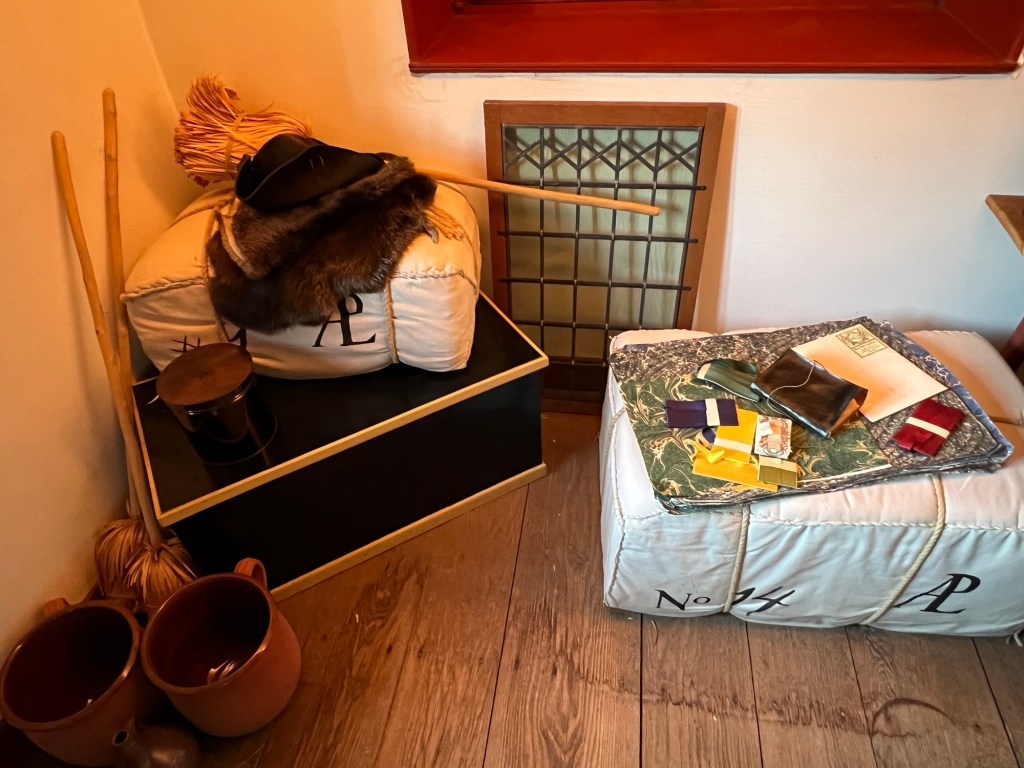
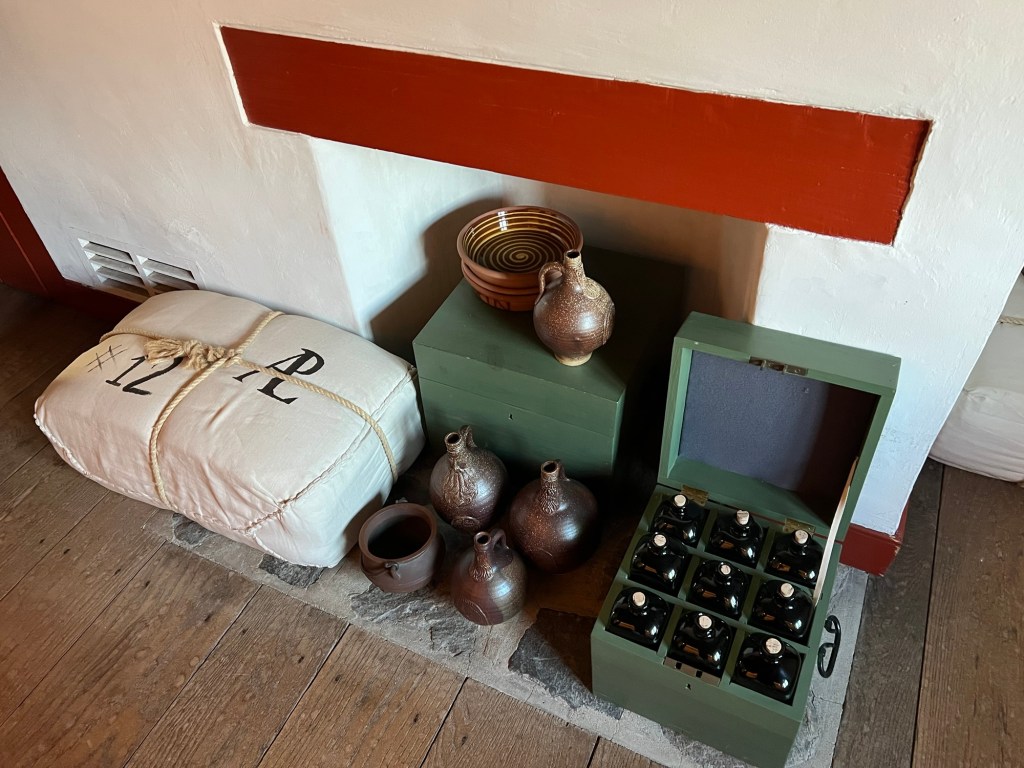
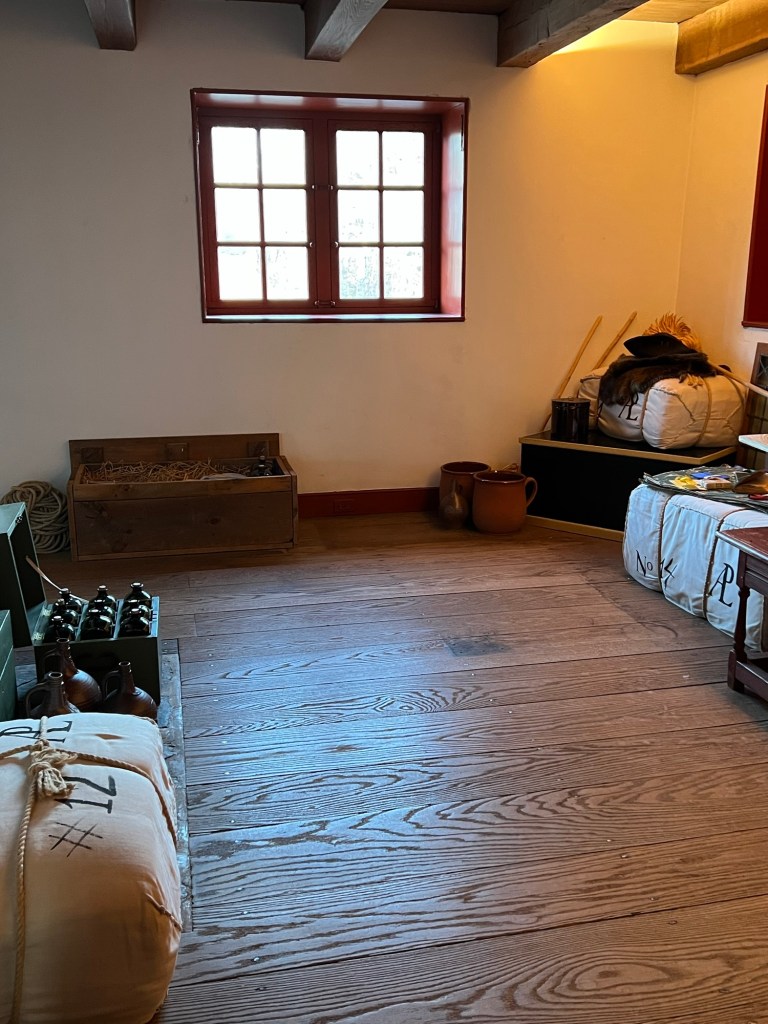
We got to tour the kitchens and bedrooms of the home and heard a talk on how the how was run when Mr. Philispe was not in residence. There was also a market within the house where tenant farmers could buy their wares for their homes.
The tenant farmer shop
The tenant farmer shop
This was strictly a working farm and mill for the family with the main residence being closer to the City.
The difference in 2025, we were finally able to take pictures indoors and that helped give mug readers a clear view of what to expect they come to visit.
The estate at the close of winter
Most of the action was outdoors with tours of the mill, the outside ovens used for the family’s bakery business and outdoor gardens that were cleared out for the winter months.
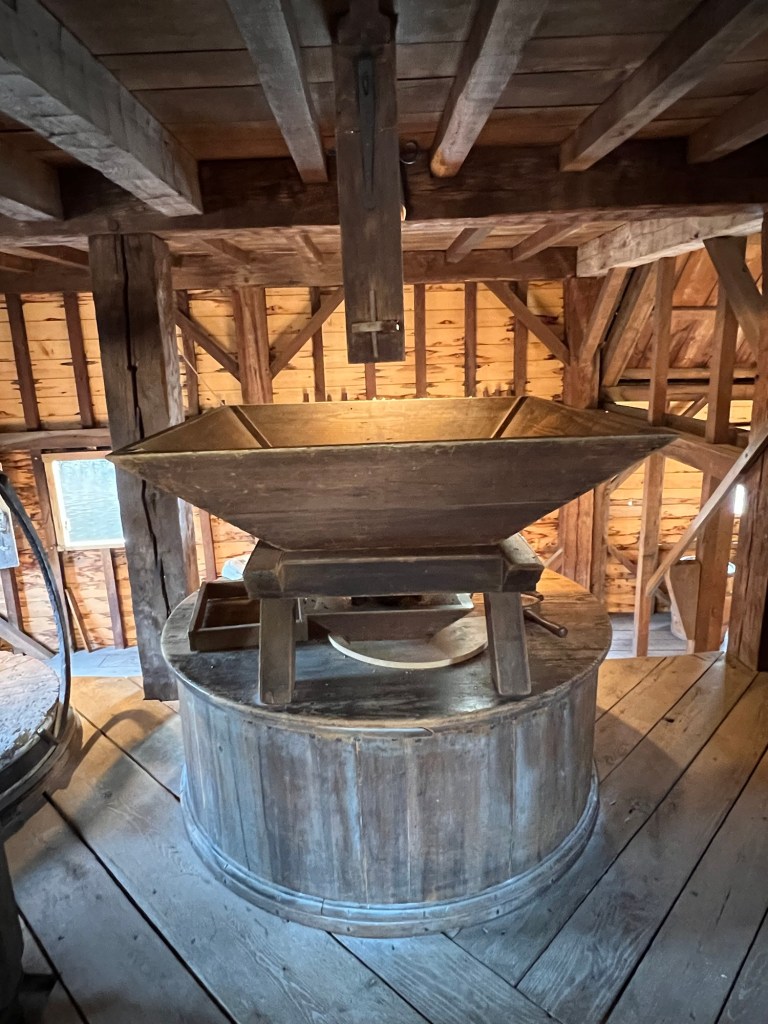
The wheat processing area
The processing area
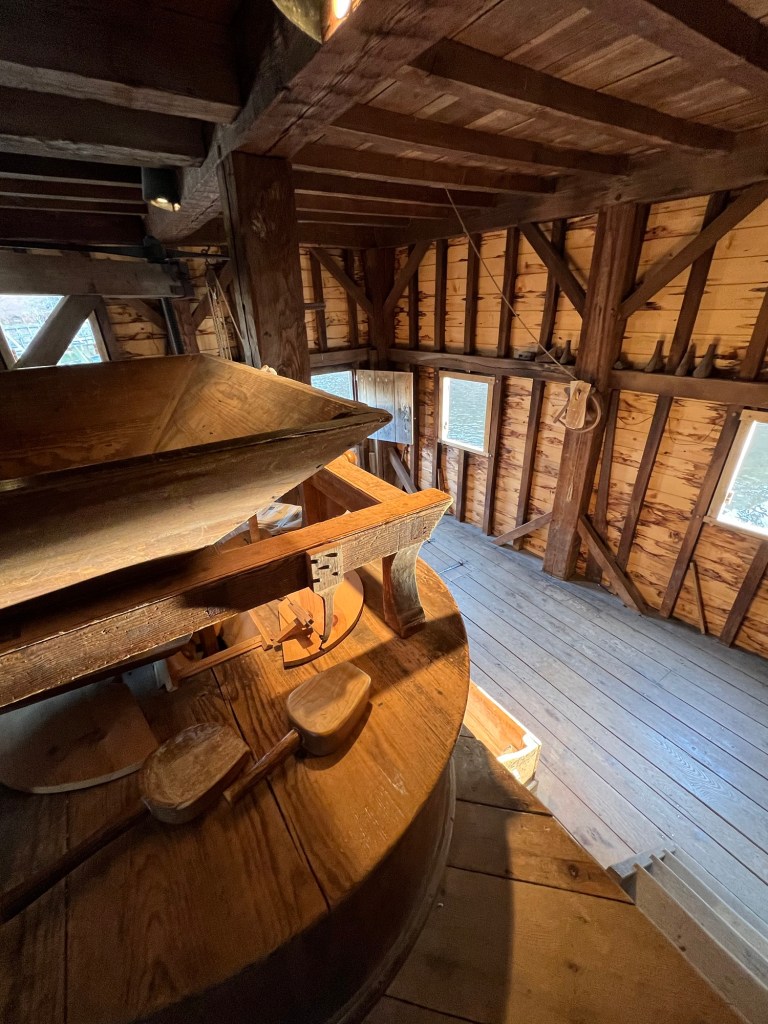
The Mill is where the process of converting wheat grown on the estate was made into flour for the New York market.
The Milling wheel to process wheat to flour
The system of wheat processing
The History of the Philipsburg Manor House:
(WIKI/Historic Hudson River Valley Society)
The manor house in the Fall of 2024
The grounds around the park
The sunset over the estate in the Fall of 2025
The Philipsburg Manor House is an historic house in the Upper Mills Section of the former sprawling Colonial-era estate known as Philipsburg Manor. Together with the water mill and the trading site the house is operated bas a non-profit museum by the Historical Hudson River Valley. It is located on US 9 in the Village of Sleepy Hollow, NY. (Wiki)
The Philipsburg Manor House and Mill area of the estate
The Manor House dates from 1693 when wealthy Province of New York merchant Frederick Philipse was granted a charter for 52,00 acres along the Hudson River by the British Crown. He built this facility at the meeting of the Pocantico and Hudson Rivers as a provisioning depot for the family Atlantic sea trade and as headquarters for a worldwide shipping operation.
For more than thirty years, Frederick and his wife, Margaret and later his son Adolph shipped hundreds of African men, women and children as slaves across the Atlantic. The manor was tenanted by farmers of various European backgrounds and operated by enslaved Africans (Wiki).
Recreation of the baking operations on the estate
The baking oven
Baking hardtack at the ovens. This would have been used for shipping voyages.
(From the museum website)
At the outbreak of the American Revolutionary War, the Philipses supported the British Crown and their landholdings were seized and auctioned off. The manor house was used during the war, most notably by British General Sir Henry Clinton during the militaries in 1779.
It was there that he wrote what is known as the Philipsburg Proclamation, which declared all Patriot-owned slaves to be freed and that blacks taken prisoner while serving in Patriot forces would be sold in slavery (Wiki/Hudson River Valley History).
Touring the Dutch barns for wheat seed processing
The processing of wheat and straw
A National Historic Landmark in 1961, the farm features a stone manor house filled with a collection of 17th and 18th Century period furnishings, a working water-powered grist mill and millpond, an 18 century barn, a slave garden and reconstructed tenant farm house (Wiki/Hudson River Valley History).
Philipsburg Manor in the Fall of 2024
During the season when the estate is open for visitors, there are costumed interpreters who reenact life in pre-Revolutionary War times doing various chores around the estate. During the Halloween season, the home is open for haunted tours of the manor during the “Headless Horseman” event. During the Christmas holiday season, the home is open for seasonal activities. Please check the website during COVID for activities (Historic Hudson River Valley).
The Philipsburg Manor and grounds in the Fall of 2024
I was recently travelling through Saugerties, New York recently and saw the small sign for the historical Saugerties Lighthouse and decided to take the road path down to the river. This interesting little site is hidden behind a wetlands area and neighborhood of homes and a Coast Guard station.
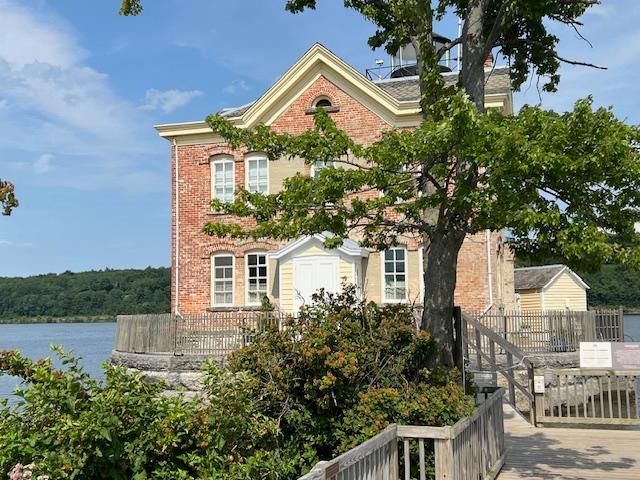
The Historical Saugerties Lighthouse in Saugerties, NY
I walked through the wetlands park through a pathway of bridges and paths and suggest by the walk do not go after it has just rained. Also do not go after dark as the path is not lite. Still it is fascinating walk through the wetlands passing streams and patches of beautiful flowers and trees.
In the summer the path is full of wildflowers, birds, dragonfly’s and the sounds of the Hudson River swaying across the shore. The views are just beautiful.
Take your time to admire the flowers and plants along the paths and look at the views of the river as you exit the paths.
The pathway to the lighthouse
The lighthouse itself needs some work but it is elegant old building that sits stately against the mountain views. In the middle of the summer, all the colors are bright and vibrant. You can walk around most of the building but the walkway in the front offers a nice view of the whole structure.
Pathway to the lighthouse
The pathway to the lighthouse
The only way to go inside is to book a room at the B & B so check the website out.
The beautiful views of the Hudson River along the pathway and the tiny beaches
The History of the Saugerties Lighthouse:
(From the Friends of the Saugerties Lighthouse)
The Saugerties Lighthouse on a sunny afternoon in July
Looking down the Hudson River
The lighthouse was practically a pile of crumbling bricks poised to tumble into the Hudson River, the Saugerties Lighthouse barely escaped the demolition ball in the 1960’s. Today, completely renovated and delighting B & B guests, it stands as a testament to the perseverance and hard work of many dedicated individuals.
The historic sign for the 1896 Lighthouse
The name Saugerties is derived from the Dutch “Zager’s Killetje”, meaning a sawmill on a creek and in fact, there was a mill built on Esopus Creek to harness the creek’s waterpower. The mill formed the cornerstone of a thriving paper industry, which produced as much as eight tons of paper daily, making it one of the leading producers of paper in the 1800’s.
The walkway to the lighthouse from the road near the Hudson River
On June 30, 1834, Congress appropriated $5000 for the construction of a lighthouse at the mouth of the creek to guide mariners past the nearby shallows and into Esopus Creek and the busy port of Saugerties. Charles Hooster built the lighthouse on a forty by fifty foot timber-framed pier and its light, produced by five whale oil lamps set in parabolic reflectors, commenced operation in 1835 with Abraham Persons as its first keeper.
The historic sign at the lighthouse
A fire in 1848 destroyed the original lighthouse but it was rebuilt on the old site by 1850 at which time four lamps were being displayed from atop the two-story structure. Light lists described the second lighthouse as a “light on keeper’s house.” A sixth-order Fresnel lens replaced the array of lamps and reflectors in the lantern room in 1854.
Ice floes and tidal currents took their toll on the foundation pier and on March 2, 1867, Congress appropriated $25,000 to build a replacement lighthouse just a few yards closer to the shore. This structure, still standing today, was built on a circular granite crib, with a depth of twelve foot and a diameter of sixty feet that rests on fifty-six pilings sunk into the riverbed and topped with three layers of six-inch timbers. The two story lighthouse has twenty-inch thick natural colored brick cavity walls and a sixth-order Fresnel lens cast its beacon from the lantern room. No longer needed, the old wooden lighthouse was sold.
Saugerties Lighthouse was considered a plum assignment due to its proximity to town. In 1888, Saugtegies Harbor was enlarged through the construction of jetties and the keeper’s jaunt to town was made easier when a small road was built along the north jetty to the lighthouse.
The lightkeepers were friendly with their neighbors and even enlisted their help. A neighbor downriver would hand a bed sheet out their window whenever they saw the lighthouse tender coming upriver, giving the lightkeeper about a half-hour notice before the inspector arrived.
Daniel Crowley was serving as keeper of the light when the current brick lighthouse was built. He had been placed in charge of the light in 1865, replacing his father Dennis, who was removed from service after just three months. Daniel’s sister, Katie, grew up at the lighthouse and seemed to be amphibious. She would often venture out into the river along in a skiff and when her little craft was upset, there were no worries as she could swim like a duck. Katie was made the official keeper of the light in 1873 and her lack of fear of the water lead to some remarkable rescues.
Around the turn of the century, the boathouse, located atop the foundation of the first lighthouse, a small island east of the current lighthouse was moved to the circular lighthouse pier. In 1910, a wooden platform was extended from the top of the tower to support a fog bell and an enclosed shaft was mounted below the platform to protect the suspended weights that powered the bell striking mechanism.
Conrad Hawk’s twenty-six year stint as keeper, lasting from 1914 to 1940 was far longer than that of any other keeper of Saugerties Lighthouse. In 1916, his son Earl and daughter Ilal were playing with a small battery and brought it into contact with the large battery used for the station’s fog bell. The resulting short-circuit caused an explosion that blew the battery to pieces, cutting Ilal’s face and produced a current that burned Earl’s arms. Earl nearly lost a big toe in 1922 when his foot came into contact with a boat’s propeller as he tried to climb aboard while swimming near the lighthouse.
Through they both had a few scars, Earl and Ilah survived at Saugerties Lighthouse. Earl Hawk graduated from the Navy’s school at Annapolis and entered the submarine service, while Ilal attended Cortland State teacher’s College and became a physical education instructor. Just before Christmas in 1939, Keeper Hawk’s went to the hospital to receive treatment for stomach ulcers but the treatments failed and he passed away on January 8th, 1940.
When electricity was extended to the lighthouse in the 1940’s, the dwelling was “modernized” with steam heat, plumbing and a telephone. In February 1954, Keeper Ed Pastorini was informed his light would be automated come spring. Wanting to leave the station in tip-top shape, he lovingly painted the three large upstairs bedrooms. Tears flooded his eyes when he closed the door and left the lighthouse for the last time.
The Historic Saugerties Lighthouse in all its beauty
The lighthouse tender soon arrived and its crew tore out the plumbing, furnace and fixtures. In stark contrast to Keeper Pastorini’s care, gallons of water were drained out on the floors and left to soak through the floorboards. The building was sealed up and left to deteriorate which it did quickly.
A decade later, the Coast Guard planned to demolish the vandalized and dilapidated lighthouse, when it stepped Ruth Reynolds Glunt, wife of Chester B. Glunt, a former Coast Guard light attendant stationed at Turkey Point near Saugerties. Mrs. Glunt a longtime friend of many lighthouse keepers along the Hudson River, carried a passion for saving lighthouse and mounted a campaign to halt the demolition. Through her efforts and those of architect Elise Barry, the structure was placed on the National Register of Historic Places in 1978.
The Saugerties Lighthouse Conservancy was established in 1985 with the mission to restore and maintain the lighthouse and the following year the conservancy was able to purchase the lighthouse and surrounding wetlands for $1.00. The conservancy received a building on the verge of tumbling down but managed in just a few years to turn it into a beautifully restored lighthouse.
Roughly 10,000 old bricks, which had crumbling after being penetrated by moisture, were replaced. The lantern room was removed and refurbished. Stairs, handrails, floors and walls were completely reconstructed. To top of the transformation, a solar powered light installed in the lantern room by the Coast Guard was activated on August 4th, 1990.
Saugerties Lighthouse furnished in 1920’s decor is now open to the public and welcomes overnight guests as a bed and breakfast. Visitors can walk to the lighthouse along a one half mile long through the Ruth Reynolds Glunt Nature Preserve, where they will be greeted by a modern day resident keeper who runs the bed and breakfast and maintains the lighthouse.
The pathway to the lighthouse
A big thank you to the Friends of the Saugerties Lighthouse for their dedication in this important site
*This is just a portion of the blog from the Friends of Saugerties Lighthouse. Please see the attached website for more information.
This is the best way to experience seeing the Hudson River by walking on top of it. It is especially nice on a beautiful day.
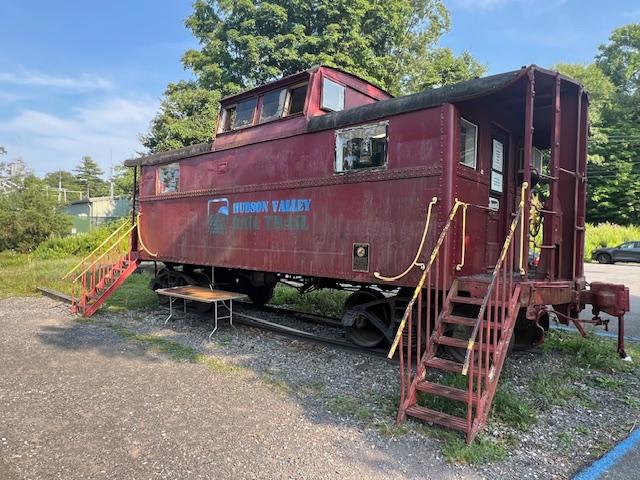
The rail car from the entrance to the Walkway by the Highland Park side of the walk
The day I walked over the “Walkway over the Hudson” it was a rather cool September day in the last days of the summer but still it was a spectacular day to see the river with blue skies and sunshine. I also revisited the Walkway in July of 2024 and the views are just as amazing when everything in full bloom.
The history of the bridge that crosses the Hudson River
The start of the walk by the Highland NY side of the bridge
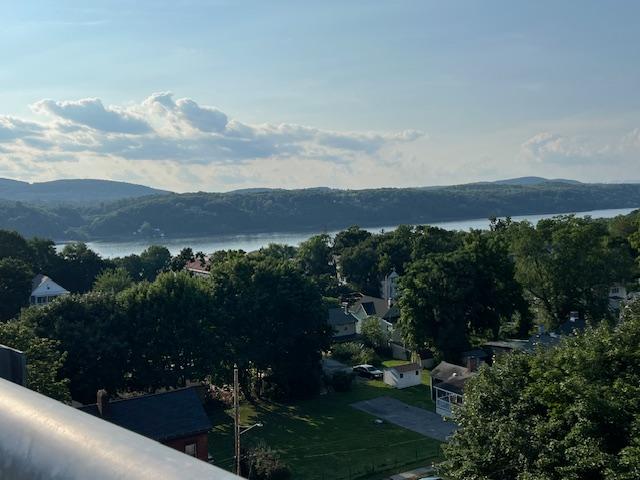
The views from the bridge on the Highland NY side
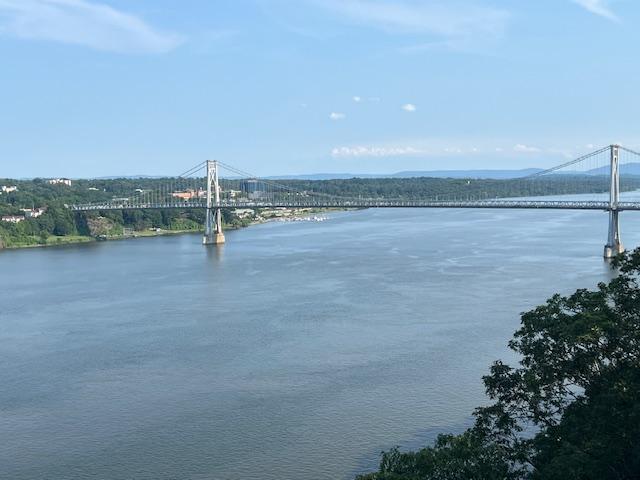
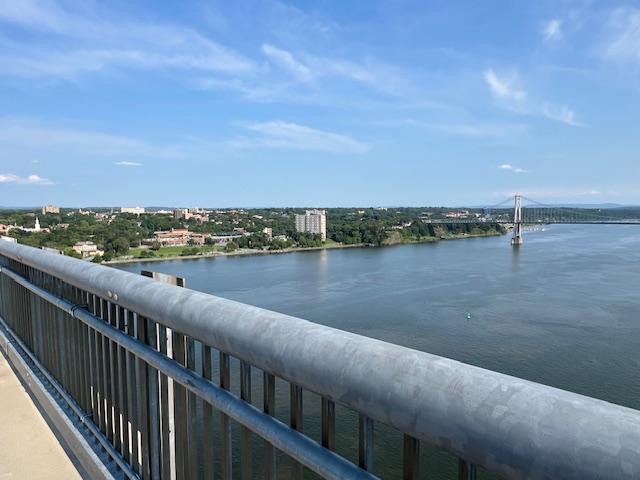
The views of the Mid Hudson Bridge
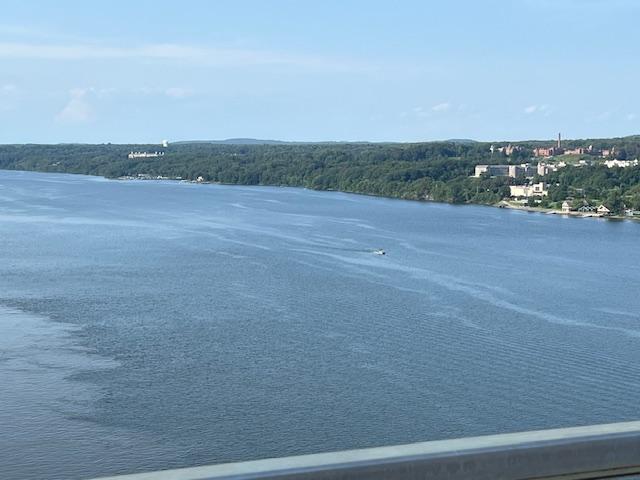
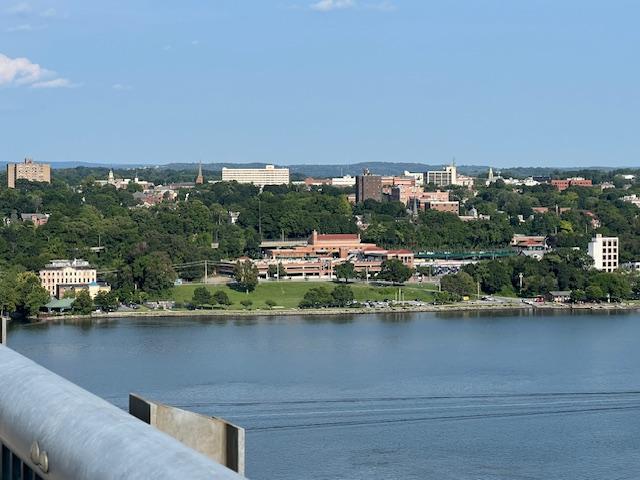
The views of Poughkeepsie and Hyde Park
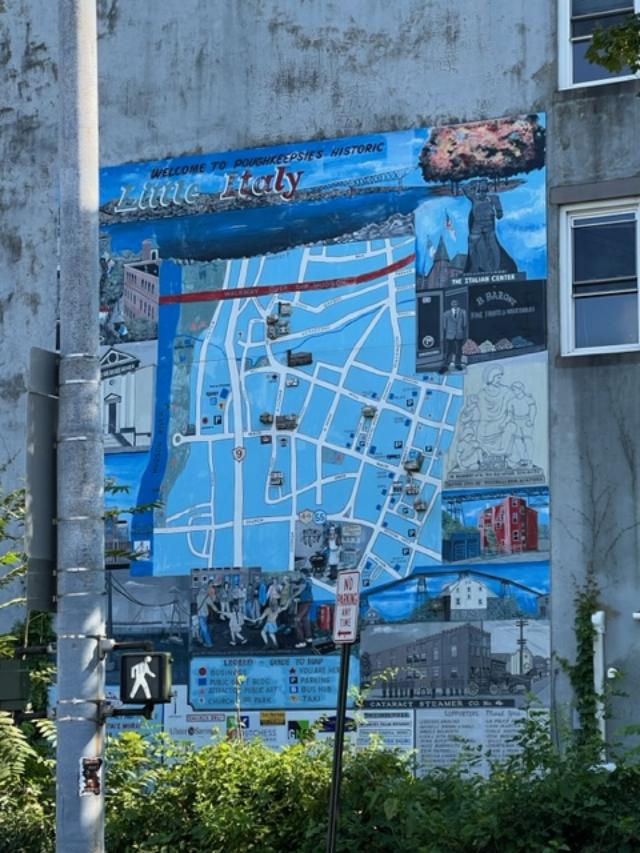
On both sides of the bridge, there are small parks to sit and relax. There are signs all over the bridge to tell the story of the bridge and the people who helped save it. The best part is to just sit around the rails and see the views of the Hudson River. On the Poughkeepsie side of the river, you have the entrance to the Little Italy section of city right near the riverfront. Since my initial walk, three of the restaurants have closed since COVID.
The historic sign at the halfway point
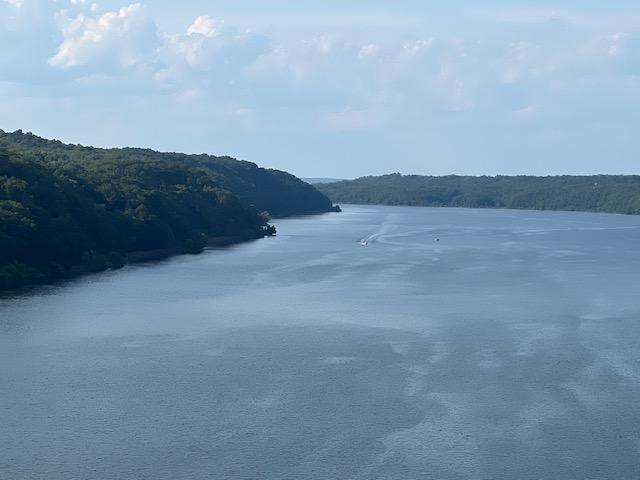
Looking up the Hudson River to the north of the bridge
Looking north to Hyde Park, NY
Looking south down the Hudson River
What is nice too is when you are leaving the Walkway is that you can tour Little Italy and Downtown Poughkeepsie. The Riverfront area of the City is changing quickly and new bars and restaurants are opening.
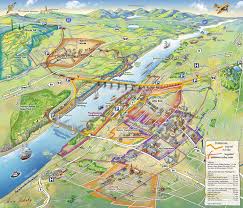
The towns and neighborhoods to visit after leaving the Walkway in Poughkeepsie and Highland NY
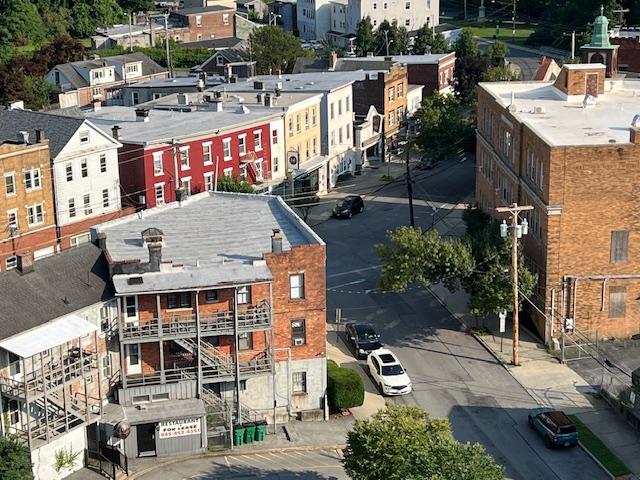
The Little Italy section of Poughkeepsie from the Walkway over the Hudson
The sign in Little Italy in Poughkeepsie
The history of the ‘Walkway Across the Hudson’:
The bridge now known as the Walkway Over the Hudson opened in 1889 as the Poughkeepsie-Highland Railroad Bridge to transport western raw materials to eastern industrial centers. Rosendale cement was used in the original construction of the piers. At the same time of its opening, it was the longest bridge in the world.
Downtown Poughkeepsie in front of me
In addition to freight trains, the bridge hosted passenger trains connecting Boston, New York, Harrisburg, Philadelphia, Baltimore and Washington as early as 1890. Trolley cars termed “rapid transit” were modified to run on both trolley and railroad tracks and served tourists, students and shoppers (from New Paltz to Lucky Platt’s). Special West Point Football trains ran from 1921-1930. Circus trains, milk trains, trains for hogs and cattle-the uses were varied and the impact was huge. At its peak as many as 3,500 rail cars crossed the bridge each day.
The waterfront of Poughkeepsie
There were two sets of tracks until 1918 when gauntlet track, also called interleaved track, was installed to handle the weight of diesel locomotives. It was removed in 1958.
Looking south down the Hudson River
During World War II the bridge was painted black to make it less visible in the event of an attack. Painting continued until the 1960’s. The high quality of the steel used in the original construction does not need to be painted. Metal experts during reconstruction stated that the absence of paint in fact helped keep the steel in the good condition it is in today.
The Poughkeepsie waterfront
The fire that destroyed the tracks in 1974 was probably started by a spark from a train’s brakes. From Carleton Mabee’s ‘Bridging the Hudson’, page 247: “An hour after a Penn Central train with 100 cars crossed the bridge on May 8, 1974, a thick cloud of black smoke hung over the bridge. Wooden ties were smoldering and wooden walkways were burning, fanned by a moderate breeze. Because Penn Central had no guards or maintenance men on the bridge at the time, the fire was not quickly reported. When firemen arrived at the site, they found they could not easily pump water up to the top of such a high bridge.
Downtown Poughkeepsie from the bridge near the waterfront
When firemen arrived arrived at the site, they found they could not easily pump water up to the top of such a high bridge. When they tried turning on the water to flow into the bridge. When they tried turning on the water to flow into the steel pipe which ran the length of the bridge, a line meant to help fight fires, they found that because it had not been drained the previous winter, it had burst at several points-Penn Central had known it but had not repaired it.”
View from the bridge on the Poughkeepsie side right near Little Italy
It was rebuilt and re-opened in October 2009 as the Walkway Over the Hudson State Historic Park thanks to the efforts of a dedicated friends group, the Dyson Foundation, many donors and New York State.
The Highland Park side of the bridge at dusk
At 212 feet above the Hudson River, this 1.28 mile linear park boasts scenic views north to the Catskills and south to the Hudson Highlands.
The Walkway is amazing on a sunny day
The Walkway is part of the Hudson Valley Rail Trail Network and was inducted into the Rail-Train of Fame in 2016, it connects Ulster County’s Hudson Valley Rail Train to the William R. Steinhaus Dutchess Rail Trail.
The ADA compliant 21 story glass elevator provides seasonal access from Poughkeepsie waterfront at Upper Landing Park a short walk from the Metro North train station.
The Walkway welcomes more than 500,000 visitors annually from all over the world who enjoy walking, cycling and running amidst its scenic beauty.
Today, the Walkway is operated and owned by NYS Office of Parks, Recreation and Historic Preservation and the NYS Bridge Authority it is open year round, offering programs, events and tours made possible through membership and donations to the Walkway organization.
(This information was taken from the Walkway over the Hudson website and pamphlet and I give them full credit for all of this information).
I enjoy coming up to Germantown to visit the Clermont Mansion at any time of the year especially at Christmas time. I came for a tour of Clermont in the Christmas season of 2019 (pre-COVID) to tour the home. The old mansions of the Hudson River Valley show their real beauty at this time of the year.
The Clermont Library decorated for Christmas
In 2020, the home closed like everything else for COVID and because of extensive renovations on the property and in the home, did not open again until June of 2023. I came up finally in July of 2023 for another tour of the home. The mansion looked very refreshed and bright on a blue, sunny afternoon. The grounds were in full bloom and everything looked so green.
The views of the river when you arrive
Walking around Clermont is like walking through a history book. To think you are walking around the very rooms that family members who wrote the Declaration of Independence, were Governors and Ambassadors from our country and who owned most of Upstate New York lived is really incredible. The Livingston Family did so much for the United States in the formation of this country is a testament to the family.
Once you arrive at the Visitors Center and pay for your tour, you will have time to walk around the exhibition of the history of the family in the old stables. Here you will learn about the family who built and lived in this wonderful home. The family lived here for seven generations and like most families over time when the money depleted, they had to move out. The last daughter of the family, Honoria, sold the estate to the State of New York as a park. The upkeep got to be too much for the family.
The Visitor’s Center display on the family
The family story boards in the old stables
The history of the estate and the Livingston family in the Visitor’s Center
The history of the estate
The tour 2019 was wonderful because of the one on one conversation I had with my tour guide, Molly. It was the same in 2023 when Aaron took me on a one on one tour of the mansion. We started in the entry hallway where the family hang many of the family portraits and the long hall lead to wonderful views of the Hudson River.
The Entrance Hall of Clermont
Just off to the right of the front entrance of the home (the front entrance faces the river not the back entrance where you start the tour) is the Receiving Room. This was the room in 2023 during my summer tour of the house. The Receiving Room is where guests would wait to be welcomed by family members or people would call on the family and leave their calling cards.
The Receiving Room was also used as a Music Room as well
The Receiving Room was decorated for the holidays in 2019 with more beautiful views of the river and a very interesting clock on the mantle that there are only two in the world. This clock represented the first balloon launch in France and this was the clock where the balloon went up. In France was the other clock with the balloon going down. I thought that was pretty interesting.
The Balloon Clock on the mantle decorated for Christmas
Our next stop was the Library which seemed very homey and relaxing. It looked like a room that a family would want to spend their time in after a long day. The windows faced the river and the formal gardens at that time and let in a lot of light. The room was decorated with a elegant tree and looked like the family was ready to walk in and join us for the holidays.
The Library of Clermont
The Office/Library on the first floor
Next it was off to the formal Dining Room where the portraits of Margaret Beekman Livingston (a VERY distant relative of mine by marriage) and her husband, Robert Livingston hung. She had saved these along with the grandfather clock before her first house was burned by the British during the war years. It was set for Christmas lunch when the family would dine together.
The Clermont Dining Room is very elegant at Christmas. This is in 2019 (pre-COVID)
In the summer months, the room was pretty plain with no set up on the table. The Dining Room has just had some renovation work so the walls and ceiling looked really nice.
The Clermont Dining Room in the summer of 2023
The Dining Room portraits
Margaret Beekman Livingston’s Wedding portrait in the Dining Room
Robert Livingston’s Wedding portrait in the Dining Room
We also toured where the food was prepared and prepped from the kitchen to the Dining Room, which was all done in organized fashion. I was told by the tour guide that for the most part the family lived here year round unlike some of the other mansions who only lived here during certain times of the season.
The Kitchen at Clermont
We took a walk upstairs to see the upstairs bedrooms and see where the third Mrs. Livingston lived. I thought it was interesting that she had two beds in her room in which neither was big enough to accommodate her. One was the main bed and the smaller one was a Day bed when she wanted to take a nap but did not want to mess up her main bed.
The last Mrs. Livingston’s bedroom until the 1960’s
We then toured what had been Honoria’s and Alice’s bedroom when they were children and then became the Guest Room. It still looked like a Children’s Room.
The Daughter’s/Guest Bedroom
Then it was back down to the formal hallway for the end of the tour. The one thing I have to say about Clermont is that it looks like someone’s home not some grand mansion like the Mills or Vanderbilt mansions that looked like they for a moment time or only for a season. This family lived here all the time.
The upstairs bathroom was one of the remodeling features
The family lived here until the 1960’s when upkeep of the estate got to be too much for the family and it was sold to the state. The New York Park is now maintained by the New York State Park system.
The Gardens:
The formal gardens were in bloom when I got there that weekend. Since the house opened in June most of the Spring plantings were already gone but the Summer plantings were in full bloom. There were three gardens on the property, two of which had been brought back to nature, the Wilderness Garden and the South Spring Garden and then the Walled Garden was well maintained and planted.
The Wilderness Garden was well-maintained and planted with natural plants
The South Spring Garden
The South Spring Garden has given way to nature
The Walled Garden was the most formal of all the gardens
The Walled Garden
The Walled Garden
The Walled Garden
The Walled Garden
The Walled Garden
In the Fall, I went back up to Clermont for the Ghost Tour and the foliage was amazing, but the rain knocked a lot of it off. Still the colors were glorious.
Clermont in the Fall of 2023
The formal gardens in the Fall
The formal gardens in the Fall
The gardens in the Fall.
The I toured the rest of the estate and saw the ruins of the other mansion, Arryl, that is on the other side of the parking lot and then saw the ruins of the Old House and the Root Cellar.
The Ice House
The Root Cellar
The flowers by the Root Cellar
View of the Hudson River
The History of Clermont:
The name Clermont derives from “clear mountain” in French and was inspired by the view of the Catskill Mountains across the Hudson River from the estate.
The front of Clermont that faces the Hudson River
The estate was established by Robert Livingston following the death of his father, the first Lord of the Manor was inherited by the eldest son, Philip Livingston, 13,000 acres in the southwest corner later named Clermont was willed to Robert. The original house was built around 1740.
The path leading to the main house
Robert Livingston of Clermont died on June 27, 1775 and the estate passed to his son, Robert, who was known as ‘Judge Livingston’ to distinguish him from his father. Judge Livingston was a member of the New York General Assembly from 1759 to 1768, served as Judge of the admiralty court from 1760 to 1763 and was a delegate to the Stamp Act Congress of 1765. He married Margaret Beekman, daughter of Colonel Henry Beekman. Their son, Robert R. Livingston, later known as “Chancellor”, served on the committee that drafted the Declaration of Independence. Judge Robert died about six months after his father, on December 9, 1775.
Burning and Rebuilding:
In October 1777, British ships sailed upriver from New York City in support of General John Burgoyne who was north of Albany. That same force had already stormed two forts in the Hudson Highlands and burned Kingston, New York. Major General John Vaughan led a raiding party to Clermont and burned Livingston’s home because of the family’s role in the rebellion.
The history of the ‘famous’ Robert’s of Clermont
Margaret Beekman Livingston rebuilt the family home between 1779 and 1782. Robert R. Livingston became the estate’s most prominent resident. Chancellor Livingston administered the oath of office to President General Washington, became Secretary of Foreign Affairs and negotiated the Louisiana Purchase.
Margaret Beekman Livingston
He also partnered with Robert Fulton in 1807 to create the first commercially successful steamboat on the Hudson River, the North River Steamboat (later known as the Clermont) which stopped at the house on its inaugural trip.
Robert Livingston in the famous Gilbert Sullivan painting.
The home’s final Livingston owners were John Henry Livingston and his wife, Alice. They added to the home and greatly valued the homes important historical role. The Livingston’s built second mansion on the property known as Arryl House, which burned down in 1909. The ruins of Arryl House are still visible at the south end of the property.
The burnt ruins of Arryl Mansion on the other side of the property.
The Arryl Mansion in the Fall of 2023
Alice Livingston was responsible for creating many of the landscaped gardens that are continued to this day. Following John Henry’s death, Alice turned the Mansion and property over to the State of New York in 1962 so that all the people of New York could enjoy it.
The landscaping around the old Ice House
The house is now a New York State Historic Site and was designated a United States National Historic landmark in 1972. It is a contributing property to another National Historic Landmark, the Hudson River Historic District. Although locate in the town of Clermont, its mailing address is in the nearby town of Germantown.
The views from the back of Clermont to the Hudson River
(This information is a combination from the Clermont Website and Wiki and I give them full credit for this information. Please check the website above for more information on the site and its activities through their Friends site.)
The Clermont Grounds
The Fall in the Hudson River Valley is one of the most brilliant times to visit and the foliage is so colorful. The constant rain knocked a lot of it down already but all around the house their were still signs of the reds, golds and oranges. I came up for the Ghost Tours which the mansion resumed this year to sold out crowds.
The Clermont Estate in the Fall.
The river front of the estate in the fall.
The Hudson River in all its glory.
The Ghost Tour of the estate:
The Ghost Tour took us on a tour through the house to meet the costumed characters throughout the mansion. The mansion was decorated for the Halloween and with the lights dimmed, it gave the house an eerie appearance to it.
When I arrived at the estate, the house loomed in the distance in its it glories with the golden colors of autumn.
Jack-a Lanterns lined the pathways and lit the way to the house.
We were greeted with fresh Apple Cider Doughnuts and Apple Cider from a local farm in Kingston, NY.
We were also treated to old fashioned Halloween candy with Mary Janes, Tootsie Rolls and other treats.
We started our tour at 7:00pm at twilight with the lanterns lit and the house waiting in the distance.
The hallway was decorated for Halloween.
First we met an embittered Robert Livingston (who over acted)
We stopped in the haunted Living Room to talk to the maid.
We met the ghost of Janet Livingston Montgomery in the Parlor.
Then it was off to the Dining Room to meet the last inhabitant of the house, Janet Livingston.
Margaret Beekman Livingston guarding the Dining Room.
On the way to the kitchen, we met Captain Kidd, the Livingston children and the last owners of the house on the way out the back door to end the tour. The whole tour took less than an hour.
We exited the house through the kitchen and out the door to a moon lit night with jack-a-lanterns taking us back to the Visitors Center. The night had fallen in the early evening at the mansion as we were the second to last tour of the evening and the moon had come out giving the sky a ominous and spooky look about it.
The Christmas Open House: 2024
I visited again for the Christmas Open House in early December to see the decorations. I had not been there since 2018 and wanted to see how things had changed for the winter months. Everything was decked out for Christmas. The rooms were decorated but not in an over the top way as some of the other Hudson River homes.
The Clermont Estate at Christmas time.
The Clermont Estate at Christmas time.
The Front porch at Christmas time.
The Christmas tree on the porch.
Even the logs on the porch were decorated for the holidays.
The entrance foyer from the stairs.
Upon entering the front door, you could see the beauty and simplicity of the Christmas holidays in the early 1800’s before Victorian traditions took over and the house was overdone with decorations. Garland, Holly and simple pine trees adorned the rooms and welcomed everyone to the Christmas Holiday Open House sponsored by the Friends of Clermont. The home was nicely decorated for the holidays circa 1840’s.
Entering the Front Door at Clermont at Christmas.
The wreath was beautiful on the door.
Livingston Painting in the foyer
The Sugar Spun Clermont Sculpture.
Painting in the Foyer of Robert Livingston
Portrait of Margaret Livingston in the Foyer.
The holiday display.
The Office of Clermont
The Table Top tree in the Office.
The Library was set for Christmas morning with a large tree, homemade presents from the family and a morning of Christmas cheer. The views from the windows would have shown the beautiful views of the river.
The Library at Clermont
The Clermont Library at Christmas time.
The Christmas tree in the library.
The Library decorations.
Library decorations.
The Living Room was set for Afternoon Tea and for greeting guests who would have entered through the front door right off the main hallway.
The Living Room decorated for Christmas.
The Living Room was set for Afternoon Tea.
The portrait of Robert Livingston in the Living Room.
The portraits of Alida and Robert Livingston.
The Dining Room was not set for dinner but in anticipation of the holidays. The elegant runners, china, crystal and silver were off to the side awaiting the servants to set the table and prepare for Christmas dinner.
The Dining Room decorated for the holidays.
Holiday display in the Dining Room.
The Wedding Painting of Margaret Beekman Livingston in the Dining Room.
The family’s private bedrooms were decorated with garland and a small tree in the foyer.
Heading to the Second Floor of Clermont.
The view of the foyer from the upstairs.
The Livingston girls Bedroom.
The Livingston girl’s doll adorns the room.
The Christmas tree in the upstairs Foyer outside the bedrooms.
The Gingerbread House display in the Foyer.
When touring the kitchen which is located to the side of the house, the counters and tables were filled with all the delicious foods that would have been served at Christmas. Roasts, Trifles, Cakes and Pies would have been served by the staff for holiday get togethers and dinners at the mansion.
The Kitchen staff preparing the family’s Christmas dinner feast.
Preparations for Christmas dinner for the family.
Preparing Christmas dinner in the kitchen at Clermont.
After the Christmas Open House tour was over, the Friends sponsored Marshmallow roasting on the front lawn of the mansion and refreshments and talks up at the Visitors Center.
Roasting Marshmallows over the firepit on the mansion’s grounds after the walking tour of the mansion.
Christmas cookies, Apple Cider and Classic Candies in the Visitors Center ended the tour and the Open House for the day.
After the tour was over, I toured the gardens, which were dormant at the time and the grounds along the Hudson River. The views were just amazing and the gardens awaited the coming of the Spring when flowers would be blooming again.
Both the Open Houses at Halloween and at Christmas are a lot of fun and very special at Clermont. The Friends of Clermont do a nice job depicting the holidays and how the family would have celebrated them.
The Garden Tours:
In the Summer of 2024, I took a special Garden Tour of the Livingston Gardens. A new Lead Gardener had been hired by the State of New York and she was starting to renovate the gardens. So we took a tour of the four gardens near the mansion. While we toured the estate grounds, we visited the South Spring Garden, the Walled Garden, the Children’s Garden and the Cutting Garden to see how they were progressing. The staff here is doing a good job bringing these gardens back to life to how Alice Livingston envisioned them.
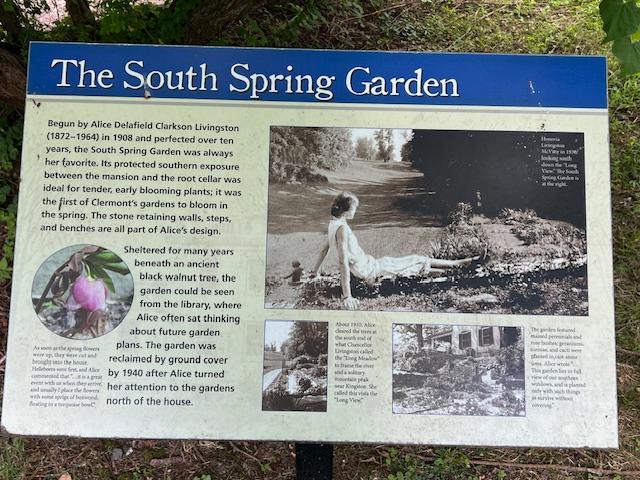
The first was the South Spring Garden which is closest the house. This was built when the stairs to the side of the home were built and one of Alice Livingston’s first gardens.
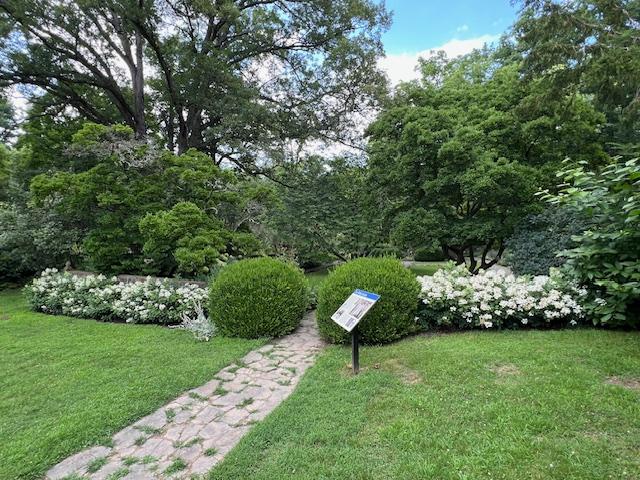
The South Spring Garden sign
The South Spring Garden in Summer 2023
The South Spring Garden being cleaned up in Summer 2024
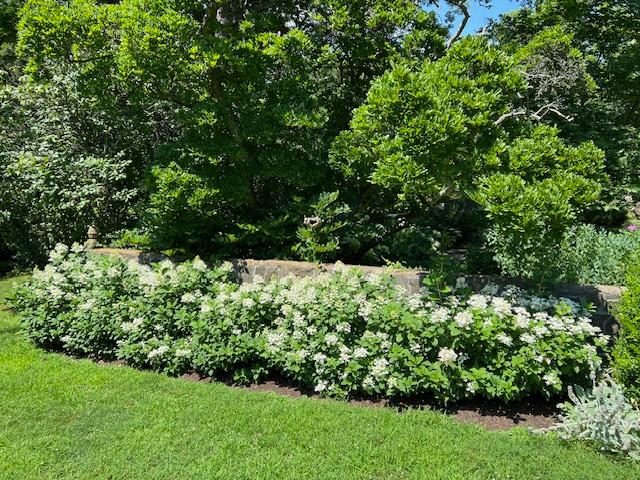
The grown in wall of the South Spring Garden
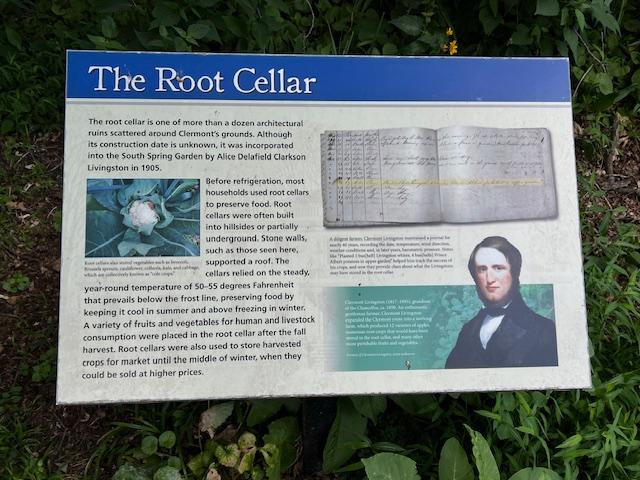
The Root Cellar sign
The Root Cellar remains by the South Spring Gardens
The flowers in the South Spring Gardens
The sign for the Walled Garden
The Walled Garden
The Walled Garden
The Walled Garden
The Walled Garden
The Walled Garden Statuary
The Walled Garden
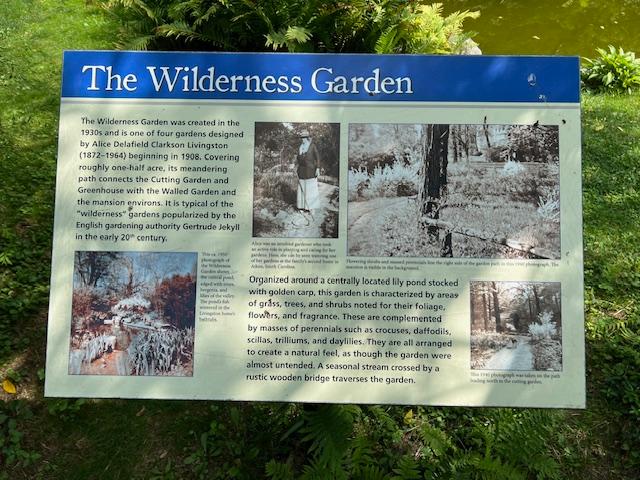
Then we visited the Wilderness Gardens that were just beyond these and they also had been brought back to life by the gardeners. This was to be a transition from the formal gardens to the woods.
The Wilderness Gardens:
The Wilderness Gardens sign
The Wilderness Gardens
The Wilderness Gardens
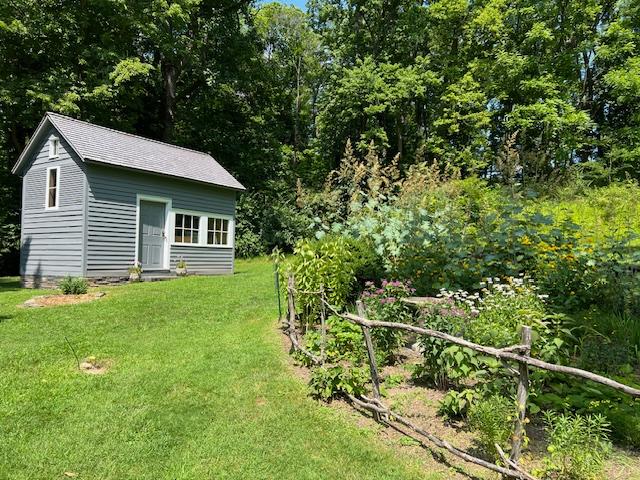
The we visited the Children’s Garden and the Cutting Gardens which were the newest gardens on the estate. The Children’s Garden playhouse had just been renovated and the beds had been replanted.
The Children’s Garden with the Children’s playhouse
The Children’s Garden from the entrance
The Children’s Garden Garden
The Children’s Garden
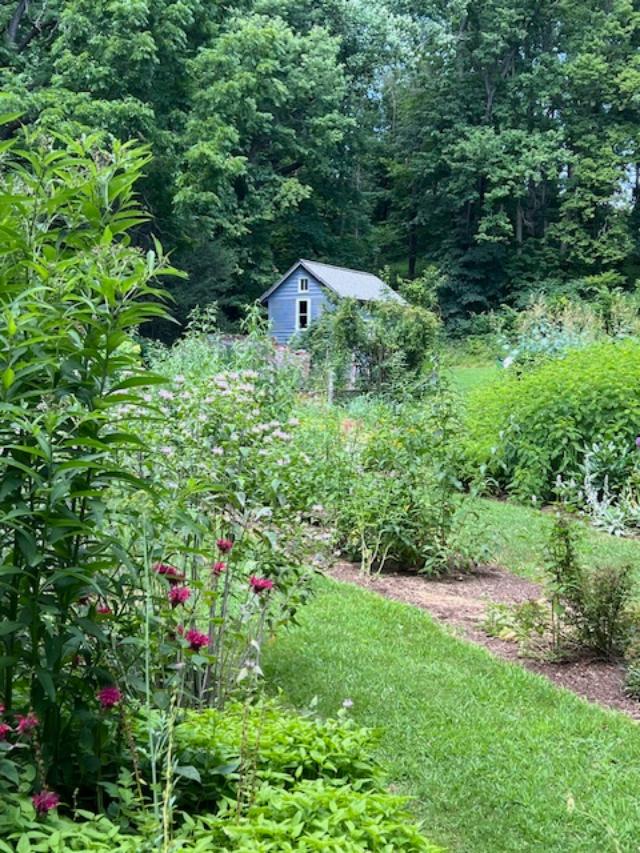
The Cutting Gardens were created so that Alice Livingston could grow the types of flowers that would decorate the house at various points in the season. These gardens have been brought back to their original purpose and the flowers and assortments that have been planted are colorful and the fragrances are so nice. On a beautiful day, walking amongst the beds is so nice and relaxing.
The Cutting Garden
The Cutting Garden
The Cutting Garden
The Cutting Garden trellis
The bridge between the Walled Gardens and the Children’s and Cutting Gardens
The Gardens Tour was very informative. Alice Livingston’s love of flowers and how they accented the house were her pride and joy. The Cutting Garden were all the flowers that she used to decorate the house with and the Children’s Gardens taught her daughters responsibilities and knowledge of horticulture.
The biggest problem in recent years is how to maintain all these gardens. This takes a lot of effort and work to weed. plant and prune these beds and make them look nice. The new gardener hired by the State and her team of two staff and volunteers are doing a nice job cleaning out the old beds and replanting and pruning all the plants and bushes that were already there. You can tell by the pictures there is a lot more to do but the gardens are on their way back to their original look.
The Garden Tour in 2026: “Gardens and Growth-The Evolving Landscape of Clermont”
The Clermont Garden Walking Tour 2026:
I returned in the Spring of 2026 for the an updated walking tour of the gardens “Gardens and Grounds: Evolving Landscaping of Clermont”, where the State of New York horticulturalist who had just been hired to maintain the gardens, explained to us the developments and goals that the State wanted for the direction of the landscaping on the property. They wanted it brought back to the 1930’s blueprint of what Alice Livingston had originally envisioned for the estate when she returned from Europe.
Arriving to the Clermont estate for the walking tour
We started the tour with a history of the house and Alice Livingston’s return from Europe to create her famous gardens
The front of the mansion in the Spring of 2026
We started the tour at the Walled Garden which was just finished being restored. The back wall had just been finished and the site’s main horticulturalist explained that she was working with a group of volunteers to maintain the gardens.
The Walled Garden designed by Alice Livingston
The Walled Garden in the Spring of 2026
The inside to the entrance of the Walled Garden
The back part of the Walled Garden
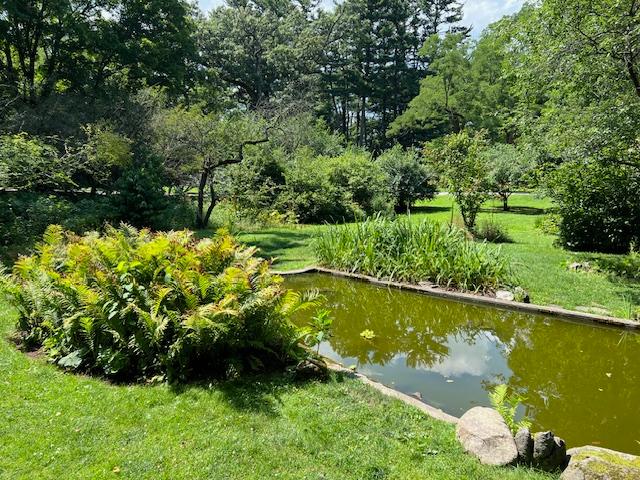
The next garden we toured was the Wilderness Garden which included wildflowers and a fish pond
The Wilderness Garden sign
The back part of the Walled Garden leads to the Wilderness Garden
The entrance to the Wilderness Gardens
The lecture on the design and plantings of the Wilderness Garden
The colorful wildflowers that line the grass paths
The fish pond in the Wilderness Garden
We then followed the path and walked up and toured the Cutting and Children’s Garden. These colorful gardens once supplied the house with an assortment of fresh flowers. It also taught the Livingston girls the attributes of gardening.
The Cutting Garden and Greenhouse sign
The main Cutting Garden
The Cutting garden
The Cutting Garden in the late Spring
The in season flowers in the Cutting Garden
The Children’s Playhouse and Garden is next to the Cutting Garden
The Children’s Garden in the Spring
Touring past the old Greenhouses
Part of the former greenhouse
The tour through the grounds with my group
The pathway back to Clermont
Touring along the river
The former roadway between the house and the river
The South Spring Garden
Our last garden toured was the one closest to the house and that was the South Spring Garden of which Alice could see from her window. When the porch was removed from the home and Alice developed plans for other gardens, this garden went ‘native’.
The South Garden
The South Garden in bloom
The views from the South Garden
The flower planters near the South Garden
The planters filled with Spring geraniums
Walking back after the tour was over and looking at the beautiful grounds
Ending the tour that day with a walk along the river
It was a beautiful day to walk the gardens and the perfect way to spend the afternoon. Each time I take a tour of the gardens, I am amazed how different they seem. I love the different times of the year and how it changes these gardens.
Exploring Germantown, NY:
After touring the mansion at Christmas time in December 2023, I visited Downtown Germantown, which itself was decorated for the both holidays.
Downtown Germantown, NY decorated for the Christmas holidays.
Downtown Germantown during the Christmas holidays.
Downtown Germantown at the Christmas holidays.
Downtown Germantown for the Christmas holidays and church service.
After the tour in July 2024 for the Summer Garden tour, I revisited Germantown again to see what it was like during the summer months. It is a very active and historical downtown with nice restaurants and shops, a wonderful gourmet grocery store and beautiful historical churches. It is a nice place to spend the weekend when touring the mansions in Columbia and Duchess Counties.
Germantown in the Summer of 2024:
Downtown Germantown, NY in the summer
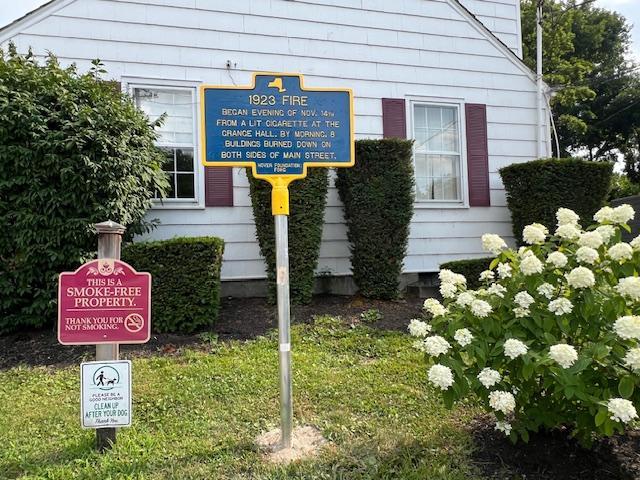
The town square and historical sign
The Inn downtown
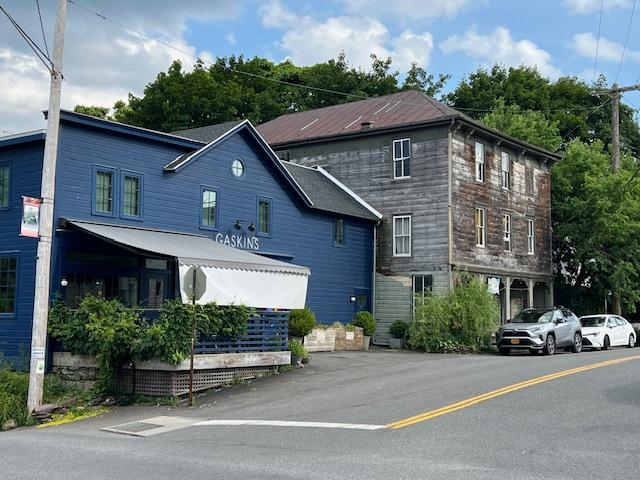
The restaurant row of Germantown with Gaskin’s in the background
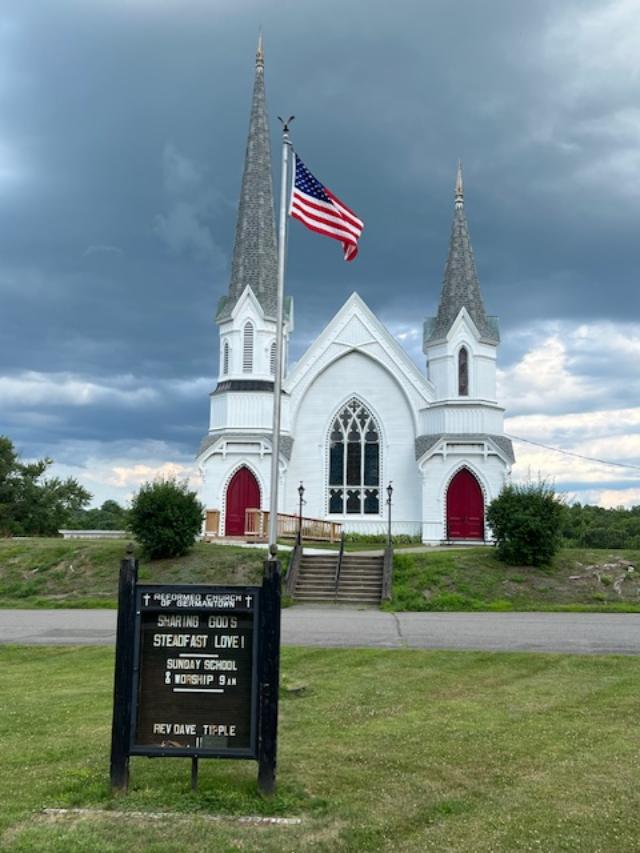
The Reformed Church of Germantown. For some reason the clouds started to roll in after a sunny day.
The church grounds across the street
Germantown is a small town that keeps changing as more people from the City move up to the Hudson River Valley. A lot of the buildings in town are becoming art galleries, furniture shops and new restaurants. With each season, there are more changes coming to the town.