Category: Exploring Historic Dutchess County NY

Madam Brett Homestead                                        50 Van Nydeck Avenue                                  Beacon, NY 12508

Madam Brett Homestead 50 Van Nydeck Avenue Beacon, NY 12508

Madam Brett Homestead

50 Van Nydeck Avenue

Beacon, NY 12508

(845) 831-6533

https://www.hudsonrivervalley.com/sites/Madam-Brett-Homestead-/details

https://en.wikipedia.org/wiki/Madam_Brett_Homestead

Admission: Adults $10.00

Open: Sunday-Friday Closed/Saturday (Every Second Saturday) 1:00pm-4:00pm

My review on TripAdvisor:

https://www.tripadvisor.com/Attraction_Review-g47291-d263800-Reviews-Madam_Brett_Homestead-Beacon_New_York.html

The Madam Brett Homestead at 50 Van Nydeck Avenue in Beacon, NY.

The Brett Homestead marker

The sign that welcomes visitors

I recently visited the Madam Brett Homestead on a walking tour and discovered that the family had a lot to do with the growth of not just Dutchess County but New York State as well. The house was the homestead for five generations of family members each who added to the home.

The homestead’s historic plaque

Since the family practiced thrift in the home and decor, we get to see the house with period furniture that has been donated back to the house from the family. Also, period pieces have been donated by other members of the community to show the home at different periods of time. It gave us a look into the home life of a prosperous farming and milling family.

The entrance of the Brett Homestead

The tour starts with a short video on the family and how Madam Brett got her inheritance from her father and built on the wealth that he had created. She leased out land with water and mineral rights thus adding to her wealth and had a grist mill that was the only one on the patent, so everyone had to go through her for grain processing.

The china cabinet with family related items.

The homestead was built by Roger Brett and Catherine Rombout Brett on land inherited by her father, which was part of the Rombout Patent (which covered much of lower Dutchess County). The couple had been married in 1703 and had originally moved in with her mother in the family’s manor home in Manhattan. Upon the death of her mother, Catherine inherited the land and the manor house in Manhattan. Land rich and cash poor, she and her husband mortgaged the manor house in Manhattan and built a small home and gristmill. They moved into their Dutch style home on Christmas Day 1709. The house was expanded in 1715. The home was later added on again in the 1800’s to the present house (Brett Homestead Pamphlet).

In the hallway on display is the original Rombout Patent, which everyone on our tour thought was very impressive. It had been found and was given back to the house. It shows the land deal that the settlers made with the Native Americans.

A copy of the Rombout Patent

We next headed to the Dining Room, where the family entertained guests. The room is full of period furniture and silver both family owned and donated to the homestead. The formality of entertaining is shown in the room set up.

The Dining Room at the Brett Homestead

Hannah Brett’s (Madam Brett’s granddaughter) bridesmaid dress was on display as well. This had been worn when she danced the Minuet with Marquis de Lafayette. I thought this was interesting in that she had this altered for the occasion and that it had lasted all these years. She had worn this for the wedding of Cornelia DePeyster, whose wedding dress in the New York Historical Society (Brett Homestead pamphlet). It was donated back to the house by the family descendants for display.

Hannah Brett-Schenck’s bridesmaid dress

Period furniture and decorations adorn the Brett Homestead

The decorative pieces in the Dining Room

The Dining Room fireplace

The kitchen was very interesting because when you walk through it you will see the modern kitchen in the front of the room that was put in around the late 1950’s and early 1960’s compared to the other side of the room which has the original fireplace and kitchen equipment. It shows the contrast in cooking and entertaining over the last two centuries.

The old versus the new in the Brett Homestead kitchen.

The house was constructed in three sections. The original section of the house from 1709, the addition in 1715 and then the grander addition in the 1800’s that gives the house the look it has now. You can see how the house evolved from a small residence to a grand showplace and you can see this in the way it was designed.

The upstairs hallway shows the contrast between the old home and the additions.

Each of the rooms were decorated with period pieces and some of the rooms has themes to them such as one was a Children’s Room, another was the family office and one contained farm equipment. All the items represented a different time in the home’s history.

The Children’s Room with a collection of dolls that creeped visitors out.

The upstairs bedrooms

The period farm equipment display.

The other bedrooms showed guest rooms for visitors to the area, the office where the Brett’s would have conducted business and rooms would have housed many family members.

The Master Bedroom with canopy bed and bedwarmer

The Guest Bedroom

The home office of the family.

The house stayed in the family until the death of Alice Sutcliffe Crary at 85 in 1953. The Melzingah Chapter of the Daughters of the American Revolution purchase the homestead to save it from becoming a supermarket. They have been lovingly restoring and holding events at the homestead as well as contributing to the community at large and promoting Historic Preservation, Education and Patriotism (Madam Brett Homestead pamphlet).

I recently visited the house with a group of people on a tour and we visited the house for Christmas and the local garden club had decorated part of the house for holidays with garland on the bannisters and on some of the mantels. The outside of the house was quite festive.

The house during the holiday season.

The house adorned with wreaths and garland on the holiday tour.

The welcoming entrance to the house during the holiday season.

The docent tours are very interesting and really give you a view of what life was like in the house for the families that lived here. They only take place on the second Saturday of the month so you need to plan ahead.

Hopewell Depot Museum                                                                                 36 Railroad Avenue                                                                 Hopewell Junction, NY 12533

Hopewell Depot Museum 36 Railroad Avenue Hopewell Junction, NY 12533

Hopewell Depot Museum

36 Railroad Avenue

Hopewell Junction, NY 12533

(845) 226-7003

Home

Open: Please check website for hours (right now every Saturday 10:00am-2:00pm)

Admission: Free but donations are accepted

My review on TripAdvisor:

https://www.tripadvisor.com/Attraction_Review-g47922-d13000900-Reviews-Hopewell_Depot-Hopewell_Junction_New_York.html

The Hopewell Depot at 36 Railroad Avenue

The Hopewell Depot and grounds

I visited the Hopewell Depot one weekend and found it to be a very interesting look at the rail service during its development in the Hudson River Valley. The rail service changed the way business was done in the valley for farmers and opened the whole area up for development.

The rival commuter lines than merged together to make a better lines of transportation and bring people not just through the area but to help build the communities and their businesses that they are today. Each section of this small museum tells the story of that development.

The front gallery of the museum

The potbelly stove that warmed riders before their rides.

The community gallery

The front section of the museum which houses the gift shop and welcome area once served as the waiting room for the train station. This had been a smaller line once serving between Poughkeepsie and Connecticut and then later on to the rest of New York State and as a line to transport agricultural products between the Valley and the growing market in New York City.

The tops of telephone poles

The middle section of the museum houses the Train Manager’s office and an office for communication to outside communities. Here the train depot manager would run the day in day out services of the trains and their functions with the bigger lines and the Western Union communications area would service the community with messages and services to the outside.

The Train Station Manager’s office

The Western Union/Communications office

The back section is where you could buy your tickets and converse with other people taking the railroad. Here are displays on the railroad lines, the products that were serviced through the rails like the big Borden Foods display, whose factory was located right next to the train station and had serviced all the dairy farmers in the community bringing fresh milk to New York City and beyond.

The back gallery of the museum

The back gallery

The Train Lamp display

The Borden Milk display in honor of the dairy industry locally owned Borden plant.

The museum also has displays on the workings of the railroads and how they functioned, how the community was formed and grew around the railroads and all sorts of equipment and items that made the operation work. The museum volunteers have done an excellent job telling the story of how Hopewell Junction and the surrounding towns developed and grew.

The Community Development display

The “Working” display of the growth of trains

Outside the building, the museum volunteers are working on renovating a donated caboose that was once used on another line. Here I saw the Train conductors operation area, the sleeping quarters and a small kitchen. I thought that was fascinating because I never knew what this car contained and never knew it was living quarters for the conductor. I can see the potential of kids wanted to climb all over this and want to know what life was like on the trains.

The Caboose on the back of the property

The inside sleeping quarters of the caboose

The overall sleeping area

The kitchen area

History of the Hopewell Depot:

The Hopewell Depot was built in 1873 by a Millbrook-led rail investment group that changed names several times between 1869 and 1873. Originally, the Dutchess & Columbia RR established a north-south short-haul coal route to Connecticut also serving the communities in the center of the country. The Hopewell community grew up around the Depot.

The grounds of the museum

In 1888, after Poughkeepsie’s great railroad bridge (now the “Walkway Over the Hudson) was built, the Dutchess County RR pushed southeastward and arrived in Hopewell Junction in 1892, creating a 4 way hub. In the next decade, the lines through Hopewell became part of the Central New England Railway system. In 1927, they came under full control of the New Haven RR until it failed in 1968. The Poughkeepsie RR Bridge burned in 1974 and the local rail service ended here in 1982.

The Hopewell Depot Mission:

Privately owned and operated since 1996, Hopewell Depot has progressed entirely through the work of volunteers from all walks of life.

The old baggage cart

The Visitor Center offers a variety of information on the local area and items for sale. The interior museum rooms present a host of interactive displays and artifacts about the region and the great era of railroads in general. The grounds contain the Interlocking Signal Tower with a special exhibit loft and public restrooms and the Rudberg Pavilion is open to visitor as a rest area.

Hopewell Depot Museum is on the National Register of Historic Places and is a fully chartered NYS museum. Its mission is to present the complex as a historical and educational experience for the regional community and provide an informative, recreational venue the public can enjoy with pride.

The Depot in the summer months.

The tiny caboose

Getting to know the museum on YouTube

Fred J. Johnson House/The Friends of Historic Kingston Gallery                                                      63 Main Street                                               Kingston, NY 12402

Fred J. Johnson House/The Friends of Historic Kingston Gallery 63 Main Street Kingston, NY 12402

Fred J. Johnson House/The Friends of Historic Kingston Gallery

63 Main Street

Kingston, NY 12402

(845) 339-0720

My review on TripAdvisor:

https://www.tripadvisor.com/Attraction_Review-g48003-d8546539-Reviews-The_Fred_J_Johnston_Museum-Kingston_Catskill_Region_New_York.html

Admission: $10.00/Members are free

Hours: Sunday-Thursday Closed/Friday-Saturday 11:00am-4:00pm (May-October)

The Fredrick J. Johnson Museum and the Friends of Kingston

About Friends of Historic Kingston

We are a not-for-profit organization founded in 1965 whose members share a common mission: preserving and promoting the local history and landmarks of Kingston, New York.

Our Mission

The Friends of Historic Kingston champions our unique architectural, historical and cultural legacy and shares it with residents of all ages of the Kingston community and with visitors to the Hudson Valley.

What We Do

The exhibition at the Fredrick J. Johnson Museum and at the Friends of Kingston Gallery was “Still Standing”. How the Friends have saved many historical buildings in Kingston, NY from destruction. This contribution from the members of the Friends organization have saved many historical sites in the city that make up the character of the City of Kingston. These contributions have helped developed the historical sections of the city and made them the desirable destination they are today (FOHK website).

“Still Standing”

The Louw-Borgardus Ruins that have been saved and preserved by the Friends that are located on the edge of Downtown Kingston in the Stockade section of the city. This is an example of the Friends efforts to restore these treasures that would have otherwise disappeared.

The rest of the exhibition can be seen in the Friends of Kingston Gallery. The walls were lined with homes and businesses that were served by the conservation efforts of the Friends organization.

The Friends of Kingston Gallery to the right and the Fred Johnson Museum is to the left. These are open seasonally.

House & Gallery

The Friends offers changing exhibits, house tours, guided walk tours of the Stockade and Rondout Historic Districts, special events and publications related to the stories of the city of Kingston (FOHK website).

The “Still Standing” exhibition:

“Still Standing” exhibition: The Sharp Burying Ground

“Still Standing” exhibition: The Office of Simeon and William B. Fitch

“Still Standing” exhibition: The Pieter Cornelise Louw House

After walking through the “Still Standing” exhibit and noting the structures that had been saved.

The Fred J. Johnston House

A Treasury of American Decorative Arts

Fred J. Johnston (1911-1993)
Antiquarian and Preservationist

The Fred J. Johnston House located in the heart of the Stockade District, Kingston, New York is a classic Federal style clapboard house. It was built circa 1812 as the residence for John Sudam (1782-1835) and his family. Sudam was a prominent attorney, New York State Senator and New York State Regent. In the 1880’s, the house was acquired by the Van Leuven family. In 1938, the site was to be sold, the building razed and a gas station constructed. Although the home was in a deteriorated condition, Fred J. Johnston, a local antiques dealer bought the house to save it from demolition.

 The front room gallery of the Fredrick J. Johnson Museum

Johnston devoted the remainder of his life to restoring the property for use as his home and antiques shop. Under his care, the house became a visual landmark of uptown Kingston which was listed on the Stockade National Historic District Register in 1975. When Johnston died in 1993, he left the property to the Friends of Historic Kingston.

The Reception Room of the Johnson Museum

In fulfilling our mission, Friends of Historic Kingston maintains the integrity of the property and continues this unique preservation story by displaying the house and its contents as they were left by Fred J. Johnston. A visit to the Johnston House today is very much like the singular experience his clients enjoyed while shopping for antiques. The tour of the house is an immersion in the taste and connoisseurship of antiquarian Fred J. Johnston who celebrated America’s material past (FOHK Website).

Portraits of Mr. and Mrs. Perry who were local residents.

I was lucky enough to get a private tour of the house with a seasoned docent who I toured the house with that afternoon. We went room by room and she told me the story of how the museum came about. Fred Johnson had been an antiques dealer who filled the house with furniture and objects of art for sale and the rooms became his showroom. Both his unmarried sister and his mother moved into the house and helped entertain and run the household. So, the business became a family affair. Both his mother and sister lived with him until they died.

The Johnson Living Room

What I thought was unique about the museum was the whole house was for sale. The docent told me that one day his sister came home and found that her bed had been sold. As we toured the house, I could still see tags on all the furniture. The contents were still marked for sale.

The Johnson family kitchen

The stairs to the upstairs bedrooms

The house still holds much of the Johnson Collection of antiques and upon the death of his sister, the home became a museum to maintain this very unique collection of objects.

Mr. Johnson’s mother’s bedroom

Mr. Johnson’s sister’s bedroom

The Guest Bedroom

Mr. Johnson’s bedroom

After we toured the very tasteful and stylish upstairs, we went back downstairs to tour the outside gardens. The docents did a very nice job with the landscaping of the house and the gardens were beautifully maintained. It was a nice way to get some fresh air and sunshine while admiring the beds.

The back of the Johnson House Museum and the back gardens.

The Johnson Museum Gardens

The back of the Johnson House from the gardens

After the touring the whole house, we were able to take one last look at the first floor and all the beautiful antiques that filled the rooms. The museum gives you the perspective of not just how the Johnson family must have lived but how people had lived in past centuries.

The house is also beautifully decorated and maintained by the staff of docents and members of the Friends and is a wonderful view of the past.

The Donald & Barbara Tober Exhibit Room/Conrad N. Hilton Library-The Culinary Institute of America Campus 1946 Campus Drive                                                               Hyde Park, NY 12538

The Donald & Barbara Tober Exhibit Room/Conrad N. Hilton Library-The Culinary Institute of America Campus 1946 Campus Drive Hyde Park, NY 12538

The Donald & Barbara Tober Exhibition Room/Conrad N. Hilton Library-The Culinary Institute of America Campus

1946 Campus Drive

Hyde Park, NY 12538

(845) 452-9600

https://library.culinary.edu/ciaexhibits

Open: When the library is open. Please check the website.

Admission: Free

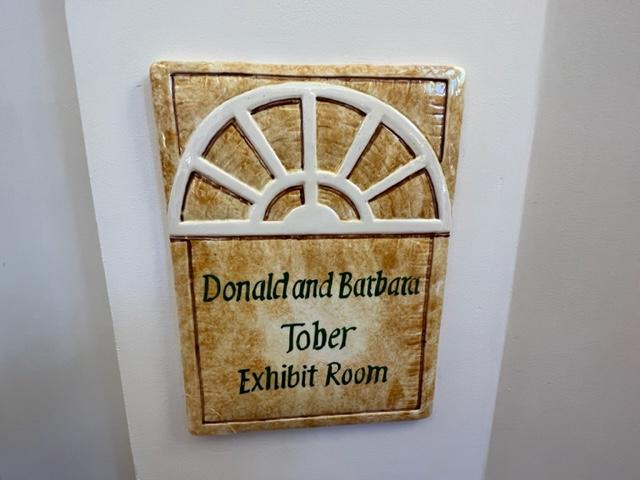
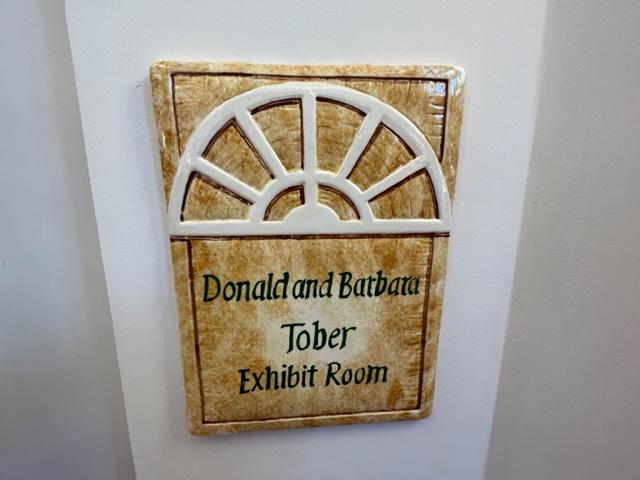
The Donald & Barbara Tober Exhibit Room plaque inside the Conrad N. Hilton Library hallway

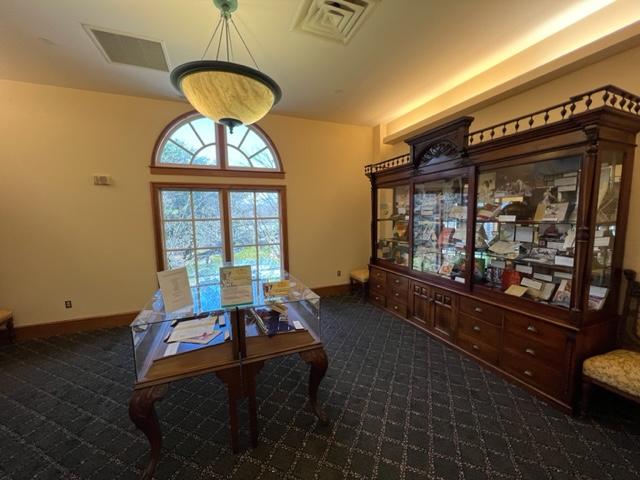
The Donald and Barbara Tober Exhibit Room is on the main floor of the Conrad N. Hilton Library. The exhibit room is open to the CIA community and to the public. The exhibition room has ongoing displays of culinary themed exhibits that cover topics involving the culinary world and food service. This is run by both the college and by students. It is not quite a museum but more of a display room of artifacts that are held by the Conrad N. Hilton Library and its archives.

The Hallway exhibition

The Hallway exhibition

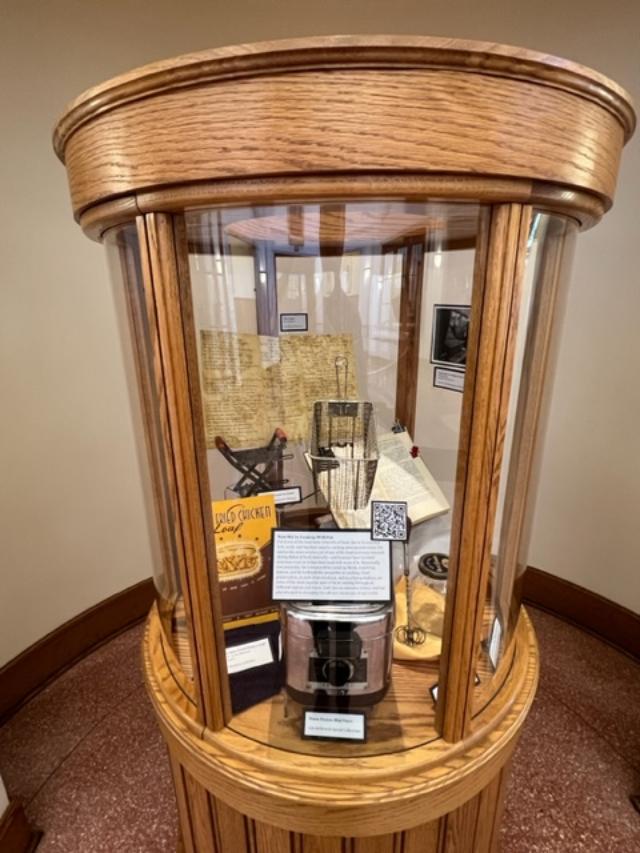
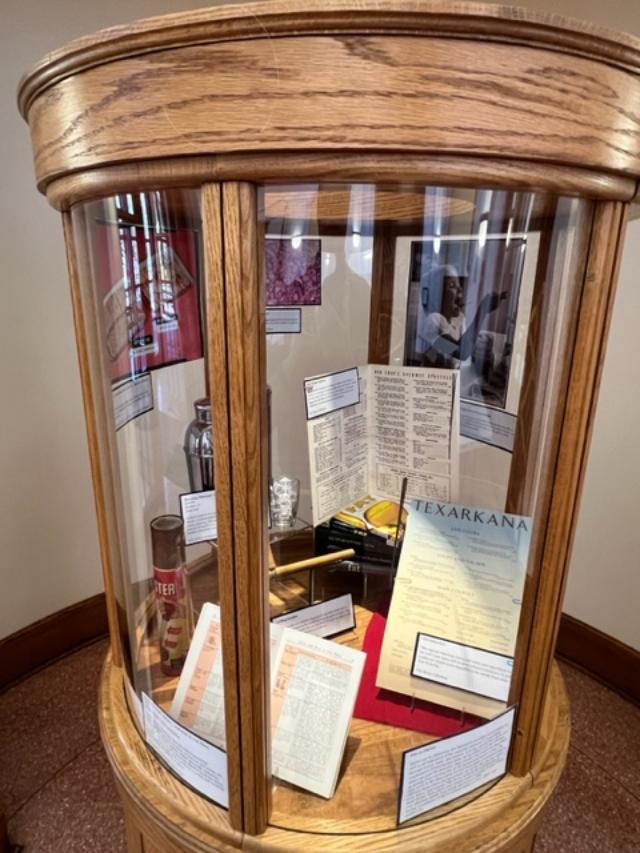
The two display cases are in the main entrance of the Conrad N. Hilton Library and hold more of the exhibition. These are displays of industry pamphlets and flyers plus menus and equipment.

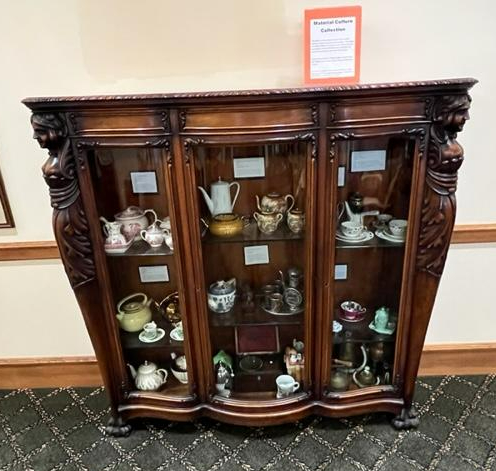
The library exhibition of China pieces

The Menu Collection:

The Tober Room Exhibition space

The CIA’s menu collection began in the small library at the New Haven campus and was used as a reference tool by the culinary students.  By 1978, then in Hyde Park, the library had amassed a file of over 3,000 menus which were openly available to students and used regularly in their studies.  These menus still remain in the collection and are known as the “Original CIA Menu Collection.” They provided the foundation for the growing menu collection that was later added to by many prominent menu collectors and friends of the CIA.

Seth Bradford and Edward S. Dewey Menu Collection

Roland Chenus Menu Collection

Craig Claiborne Menu Collection

Roy Andries de Groot Menu Collection

This collection of nearly 800 menus, acquired by the CIA in 1984, were collected by the culinary writer and critic, Baron Roy Andries de Groot (1910-1983), during the course of editing his column, “A Moveable Feast,” for Esquire Magazine. The menus date primarily from the 1960s and 1970s and are from major U.S. cities (many from New York City), as well as Canada, France, Belgium, Spain, Puerto Rico, Hong Kong, and Thailand. Some menus include supplemental materials, as well as annotations by de Groot or his staff noting the date of visit, names of other guests, the chef’s name, and his evaluations and/or ratings.

Herbert Ernest Menu Collection

In 1987, Herbert Ernest donated to the CIA over 300 menus collected by his father, Semy Ernest. The menus date from 1889-1977 and include menus from restaurants and clubs in New York City, Boston, Indianapolis, Los Angeles, and San Francisco; international menus from France and Germany; and several menus from on board the Santa Magdalena ocean liner. This collection is rich in pre-1920 menus.

Greenebaum Menu Collection

The Greenebaum Menu Collection was donated to the CIA by Henry Greenebaum in 1989.  Greenebaum’s father, Michael H. Greenebaum, started the collection and it was continued by his two sons, Henry and Richard. It includes menus from 1905-1988, many international and many from railroads and ships.  Several menus are signed by the chef or proprietor.

Auguste Guyet Menu Collection

Donated to the CIA in 1989, this personal menu collection from Chef Auguste Guyet includes over 200 menus, mostly from France. The earliest are a Restaurant Julien special event menu and a Waldorf-Astoria wine list for the 27th annual banquet of the Hotel Association of New York City, both from 1906.

Bruce P. Jeffer Menu Collection

Bruce P. Jeffer donated his collection of 2,500 menus to the CIA in 2013. Jeffer, a California lawyer and wine connoisseur, began collecting menus during his travels as a child. The menus date from 1950s-1990s. Much of the collection is international menus from over 70 countries on 6 continents. A selection of these were featured in an exhibit in the Conrad N. Hilton Library in August 2013.

George Lang Menu Collection

George Lang, restaurateur and author, donated his personal collection of over 3,000 menus to the CIA in 1989. Many of these menus are international, including often under-represented countries such as Australia, Cuba, Hong Kong, Hungary and the Philippines. Although most menus date from 1950s-1970s, the earliest two menus are from Hotel Knickerbocker in New York City, 1907.

Vinnie Oakes Menu Collection

In 2000, Vinne Oakes donated his collection of over 200 menus to the CIA. The collection is strong in menus from restaurants in Nevada, as well as ship menus from the 1960s.

John Edward Oxley Menu Collection

Chapman S. Root Menu Collection

The Chapman S. Root Menu Collection of nearly 10,000 menus was donated by The Root Company in 2000. The largest collection recieved so far, it includes menus from almost every state (strongest in California, Florida and Nevada), and several foreign countries. The bulk of the menus date from 1960s-1980s, although the earliest are from 1878. Over 3,000 U.S. Railroad menus are an important highlight of the collection.

Chapman S. Root’s grandfather, Chapman J. Root, designed the classic green, ridged Coca-Cola bottle in 1915. At his grandfather’s death in 1945, Chapman S. Root inherited Associated Coca-Cola Bottling Plants, Inc. He traveled a great deal, mostly by car or train, and amassed an enormous menu collection. Friends, knowing of his interest, also contributed to his collection.

Jacob Rosenthal Menu Collection

Jacob Rosenthal, former president of the Culinary Institute of America, donated nearly 500 menus to the CIA menu collection. The bulk of these menus are from food and wine societies in the 1960s-1970s, including Confrerie des Chevaliers du Tastevin, Confrerie de la Chaine des Rotisseurs, and the International Food & Wine Society.  Also of note are several international menus from the 1930s-1950s.

Smiley Family Menu Collection

The Smiley Family Menu Collection was donated to the CIA in 1982 and 1993, a gift of Mohonk Mountain House. (The Smiley family are the founders and proprieters of the Mohonk Mountain House in upstate New York.) Three generations of Smileys traveled the world, by land and by sea, and collected menus along the way. This collection is rich in pre-1920 menus; menus from historically world-renowned resorts including Laurel-in-the-Pines (Lakewood, N.J.), Haverford Court (Pennsylvania) and Hotel Colonial and Royal Vicotoria Hotel (Nassau, Bahamas); beautifully-illustrated ship menus; and a selection of early menus from Mohonk Mountain House.

Lois Westfall Menu Collection

The display case in the main library showcases the collection of China and Silverware and decorative objects that are in the collection.

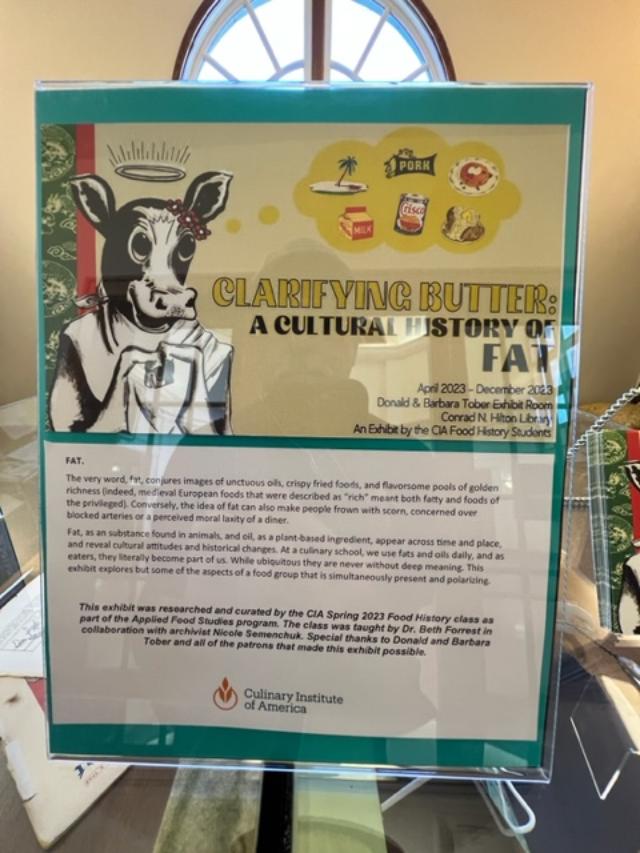
The Tober Room exhibition on “Fat” at the Conrad N. Hilton Library on the CIA campus

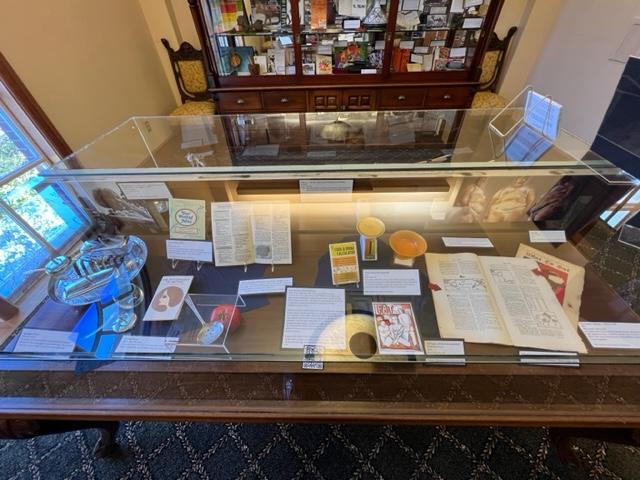
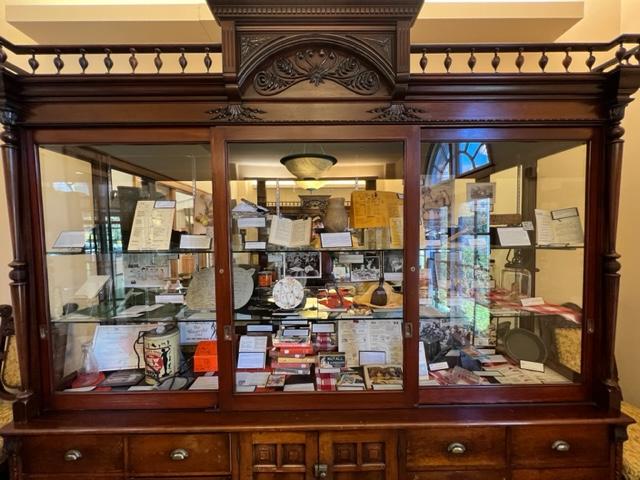
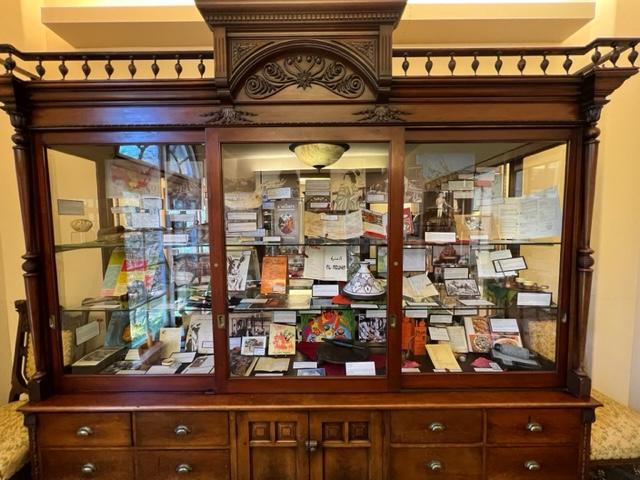
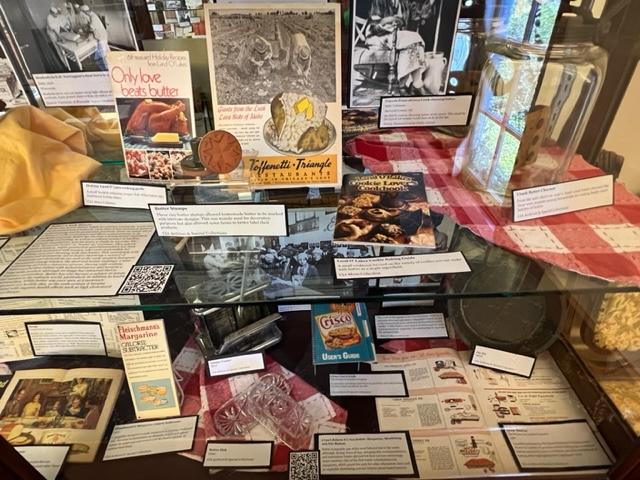
The exhibition that they were showing when I came up to visit was “Clarifying Butter: A Cultural History of Fat”. There were a lot of recipes, objects and equipment to make butter, understand the use of fats in cooking, recipes, menus and corporate information.

The description of the exhibition:

FAT. The very word, fat, conjures images of unctuous oils, crispy fried foods and flavorsome pools of golden richness (indeed, medieval European foods that were described as “rich” meant both fatty and foods of the privileged). Conversely, the idea of fat can also make people frown with scorn, concerned over blocked arteries or a perceived moral laxity of a diner.

Fat. as an substance found in animals and oil, as a plant based ingredient, appear across time and place and reveal cultural attitudes and historical changes. At a culinary school, we use fats and oils daily and as eaters, they literally become part of us. While ubiquitous they are never without deep meaning. This exhibit explores but some of the aspects of a food group that is simultaneously present and polarizing.

Both the two display cases and the middle display case were set with all sorts of information through the ages of the subject of fat, fried foods and items used to produce and make them.

The Display Cases in the Tober Room

The Display Cases in the Tober Room

The exhibitions here are very detailed and display over a hundred years of culinary arts research. The displays are revolving every quarter. The room is off to the right of the entrance to the library and is open for free to the public. It is a wonderful way to learn the aspects of food than in one of the best culinary libraries in the world.

A close up shot of the display case.